EP3865998A1 - Cluster management method, apparatus and system - Google Patents
Cluster management method, apparatus and system Download PDFInfo
- Publication number
- EP3865998A1 EP3865998A1 EP19871446.1A EP19871446A EP3865998A1 EP 3865998 A1 EP3865998 A1 EP 3865998A1 EP 19871446 A EP19871446 A EP 19871446A EP 3865998 A1 EP3865998 A1 EP 3865998A1
- Authority
- EP
- European Patent Office
- Prior art keywords
- distributed consistency
- host
- consistency system
- information
- cluster
- Prior art date
- Legal status (The legal status is an assumption and is not a legal conclusion. Google has not performed a legal analysis and makes no representation as to the accuracy of the status listed.)
- Granted
Links
Images


Classifications
-
- H—ELECTRICITY
- H04—ELECTRIC COMMUNICATION TECHNIQUE
- H04L—TRANSMISSION OF DIGITAL INFORMATION, e.g. TELEGRAPHIC COMMUNICATION
- H04L41/00—Arrangements for maintenance, administration or management of data switching networks, e.g. of packet switching networks
- H04L41/08—Configuration management of networks or network elements
- H04L41/0803—Configuration setting
- H04L41/0813—Configuration setting characterised by the conditions triggering a change of settings
- H04L41/082—Configuration setting characterised by the conditions triggering a change of settings the condition being updates or upgrades of network functionality
-
- G—PHYSICS
- G06—COMPUTING OR CALCULATING; COUNTING
- G06F—ELECTRIC DIGITAL DATA PROCESSING
- G06F8/00—Arrangements for software engineering
- G06F8/60—Software deployment
- G06F8/65—Updates
-
- G—PHYSICS
- G06—COMPUTING OR CALCULATING; COUNTING
- G06F—ELECTRIC DIGITAL DATA PROCESSING
- G06F9/00—Arrangements for program control, e.g. control units
- G06F9/06—Arrangements for program control, e.g. control units using stored programs, i.e. using an internal store of processing equipment to receive or retain programs
- G06F9/44—Arrangements for executing specific programs
- G06F9/4401—Bootstrapping
- G06F9/4411—Configuring for operating with peripheral devices; Loading of device drivers
-
- H—ELECTRICITY
- H04—ELECTRIC COMMUNICATION TECHNIQUE
- H04L—TRANSMISSION OF DIGITAL INFORMATION, e.g. TELEGRAPHIC COMMUNICATION
- H04L41/00—Arrangements for maintenance, administration or management of data switching networks, e.g. of packet switching networks
- H04L41/06—Management of faults, events, alarms or notifications
- H04L41/0604—Management of faults, events, alarms or notifications using filtering, e.g. reduction of information by using priority, element types, position or time
- H04L41/0627—Management of faults, events, alarms or notifications using filtering, e.g. reduction of information by using priority, element types, position or time by acting on the notification or alarm source
-
- H—ELECTRICITY
- H04—ELECTRIC COMMUNICATION TECHNIQUE
- H04L—TRANSMISSION OF DIGITAL INFORMATION, e.g. TELEGRAPHIC COMMUNICATION
- H04L41/00—Arrangements for maintenance, administration or management of data switching networks, e.g. of packet switching networks
- H04L41/08—Configuration management of networks or network elements
- H04L41/085—Retrieval of network configuration; Tracking network configuration history
- H04L41/0853—Retrieval of network configuration; Tracking network configuration history by actively collecting configuration information or by backing up configuration information
- H04L41/0856—Retrieval of network configuration; Tracking network configuration history by actively collecting configuration information or by backing up configuration information by backing up or archiving configuration information
-
- H—ELECTRICITY
- H04—ELECTRIC COMMUNICATION TECHNIQUE
- H04L—TRANSMISSION OF DIGITAL INFORMATION, e.g. TELEGRAPHIC COMMUNICATION
- H04L41/00—Arrangements for maintenance, administration or management of data switching networks, e.g. of packet switching networks
- H04L41/08—Configuration management of networks or network elements
- H04L41/085—Retrieval of network configuration; Tracking network configuration history
- H04L41/0859—Retrieval of network configuration; Tracking network configuration history by keeping history of different configuration generations or by rolling back to previous configuration versions
- H04L41/0863—Retrieval of network configuration; Tracking network configuration history by keeping history of different configuration generations or by rolling back to previous configuration versions by rolling back to previous configuration versions
-
- H—ELECTRICITY
- H04—ELECTRIC COMMUNICATION TECHNIQUE
- H04L—TRANSMISSION OF DIGITAL INFORMATION, e.g. TELEGRAPHIC COMMUNICATION
- H04L41/00—Arrangements for maintenance, administration or management of data switching networks, e.g. of packet switching networks
- H04L41/08—Configuration management of networks or network elements
- H04L41/0866—Checking the configuration
-
- H—ELECTRICITY
- H04—ELECTRIC COMMUNICATION TECHNIQUE
- H04L—TRANSMISSION OF DIGITAL INFORMATION, e.g. TELEGRAPHIC COMMUNICATION
- H04L43/00—Arrangements for monitoring or testing data switching networks
- H04L43/08—Monitoring or testing based on specific metrics, e.g. QoS, energy consumption or environmental parameters
- H04L43/0805—Monitoring or testing based on specific metrics, e.g. QoS, energy consumption or environmental parameters by checking availability
-
- H—ELECTRICITY
- H04—ELECTRIC COMMUNICATION TECHNIQUE
- H04L—TRANSMISSION OF DIGITAL INFORMATION, e.g. TELEGRAPHIC COMMUNICATION
- H04L43/00—Arrangements for monitoring or testing data switching networks
- H04L43/08—Monitoring or testing based on specific metrics, e.g. QoS, energy consumption or environmental parameters
- H04L43/0805—Monitoring or testing based on specific metrics, e.g. QoS, energy consumption or environmental parameters by checking availability
- H04L43/0817—Monitoring or testing based on specific metrics, e.g. QoS, energy consumption or environmental parameters by checking availability by checking functioning
-
- H—ELECTRICITY
- H04—ELECTRIC COMMUNICATION TECHNIQUE
- H04L—TRANSMISSION OF DIGITAL INFORMATION, e.g. TELEGRAPHIC COMMUNICATION
- H04L43/00—Arrangements for monitoring or testing data switching networks
- H04L43/08—Monitoring or testing based on specific metrics, e.g. QoS, energy consumption or environmental parameters
- H04L43/0823—Errors, e.g. transmission errors
-
- H—ELECTRICITY
- H04—ELECTRIC COMMUNICATION TECHNIQUE
- H04L—TRANSMISSION OF DIGITAL INFORMATION, e.g. TELEGRAPHIC COMMUNICATION
- H04L41/00—Arrangements for maintenance, administration or management of data switching networks, e.g. of packet switching networks
- H04L41/08—Configuration management of networks or network elements
- H04L41/0803—Configuration setting
- H04L41/0823—Configuration setting characterised by the purposes of a change of settings, e.g. optimising configuration for enhancing reliability
- H04L41/0836—Configuration setting characterised by the purposes of a change of settings, e.g. optimising configuration for enhancing reliability to enhance reliability, e.g. reduce downtime
-
- H—ELECTRICITY
- H04—ELECTRIC COMMUNICATION TECHNIQUE
- H04L—TRANSMISSION OF DIGITAL INFORMATION, e.g. TELEGRAPHIC COMMUNICATION
- H04L41/00—Arrangements for maintenance, administration or management of data switching networks, e.g. of packet switching networks
- H04L41/08—Configuration management of networks or network elements
- H04L41/0876—Aspects of the degree of configuration automation
- H04L41/0886—Fully automatic configuration
-
- H—ELECTRICITY
- H04—ELECTRIC COMMUNICATION TECHNIQUE
- H04L—TRANSMISSION OF DIGITAL INFORMATION, e.g. TELEGRAPHIC COMMUNICATION
- H04L41/00—Arrangements for maintenance, administration or management of data switching networks, e.g. of packet switching networks
- H04L41/22—Arrangements for maintenance, administration or management of data switching networks, e.g. of packet switching networks comprising specially adapted graphical user interfaces [GUI]
-
- H—ELECTRICITY
- H04—ELECTRIC COMMUNICATION TECHNIQUE
- H04L—TRANSMISSION OF DIGITAL INFORMATION, e.g. TELEGRAPHIC COMMUNICATION
- H04L67/00—Network arrangements or protocols for supporting network services or applications
- H04L67/01—Protocols
- H04L67/10—Protocols in which an application is distributed across nodes in the network
Definitions
- Embodiments of the present application provide a cluster management method, apparatus, and system to at least solve the technical problems of data loss or service interruption in a distributed consistency system, which are caused by the higher error rate of manual operations used in cluster management methods for distributed consistency systems.
- a cluster management system comprising: an operation and maintenance control platform, configured to issue an operation request to a distributed consistency system in a cluster and display an operating state of the distributed consistency system; and a decider module, connected with the operation and maintenance control platform and configured to determine deciding information for processing the operation request and send the deciding information to the operation and maintenance control platform, wherein the deciding information is determined based on data consistency and availability of the distributed consistency system.
- a storage medium having a program stored therein is further provided, wherein when running, the program controls a device on which the storage medium is located to execute any one of the above-mentioned cluster management methods.
- a computer system comprising: a processor; and a memory, connected to the processor and configured to provide the processor with instructions for processing the following processing steps: acquiring an operation request issued by a distributed consistency system in a cluster, and determining deciding information for processing the operation request, and sending the deciding information to an operation and maintenance control platform, wherein the deciding information is determined based on data consistency and availability of the distributed consistency system.
- Cluster the deployment of system services in cloud computing scenarios is classified by cluster; there are a certain number of hosts in a cluster, and systems and products are deployed on the hosts.
- Server role also referred to as a component module; many component modules are present in a distributed consistency system, and each component module needs to coordinate and process user requests through related protocols.
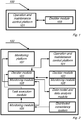
- FIG. 1 is a schematic diagram of a cluster management system according to an embodiment of the present application.
- a cluster management system 100 comprises: an operation and maintenance control platform 101 and a decider module 103, wherein: the operation and maintenance control platform 101 is configured to issue an operation request to a distributed consistency system in a cluster and display an operating state of the distributed consistency system; and the decider module 103, connected with the operation and maintenance control platform 101 and configured to determine deciding information for processing the operation request and send the deciding information to the operation and maintenance control platform, wherein the deciding information is determined based on data consistency and availability of the distributed consistency system.
- the number of hosts present in the cluster represents the number of service roles deployed on each host.
- the decider module periodically polls the operation and maintenance control platform by using the API interface provided by the operation and maintenance control platform.
- the polling interval may be set by minutes.
- the operation and maintenance control platform will return to the decider module the operation request for requesting, for example, current operations that need to be approved, operations having been approved, operations in progress, etc.
- the distributed consistency system may achieve the above-mentioned monitoring function through the monitoring module provided on the host of the cluster, acquire the monitoring data of the component module serving as the service role in the distributed consistency system, and then collect the monitoring data acquired by the monitoring module through the monitoring platform (for example, a MonPE monitoring platform).
- the monitoring data may be displayed on said monitoring platform.
- the monitoring platform serves as a global monitoring platform, and provides an API interface for reporting the monitoring states for the distributed consistency system in the cluster.
- the distributed consistency system acquires the monitoring data (for example, various monitoring indicators and health parameters) of the component module serving as the service role in the distributed consistency system by providing a monitoring module (monitoring program), and calls the API interface provided by the monitoring platform to report the monitoring data to the monitoring platform.
- the monitoring platform may learn in real time, from the operating and maintenance personnel or system developers, the current state of the distributed consistency system in the cluster, and respond swiftly to exceptions.
- the API interface may be at least one of the following: a first API interface for the operation behavior needing to be initiated by the distributed consistency system, and is initiated by the operating and maintenance personnel for operating the operation and maintenance control platform; and a second API interface, an interface to which the distributed consistency system needs to respond when receiving a decision from the operation and maintenance control platform.
- the first API interface is configured to acquire deciding information of the service role in the cluster; a name of the first API interface is: GetMachineSRActionInfoForDeciderModule; and a parameter list of the first API interface may be:
- a return result of the first API interface is a JSON (JavaScript Object Notation).
- a return result of the second API interface is data.
- the operation type may be used as a characterization to show on which host an operation is based.
- the deciding information includes one of the following: a permission for executing the operation corresponding to the operation type, and a cancellation for executing the operation corresponding to the operation type.
- the decider module is further configured to determine that an execution of an operation corresponding to the operation request is permitted when the operation type is upgrading configuration information of the distributed consistency system.
- the decider module is further configured to select one host from the cluster for upgrading when the operation type is upgrading services in the distributed consistency system; and before one host is selected from the cluster for upgrading, whether a service of the previous host before said host is upgraded meets the availability condition is determined, and upgrading the selected host when the service meets the availability condition is determined.
- the decider module is further configured to acquire a serial number of a newly added host when the operation type is replacing a host deployed by the distributed consistency system, and establish an association between the serial number of the newly added host and serial numbers of hosts not having been replaced in the distributed consistency system to form a new distributed consistency system.
Landscapes
- Engineering & Computer Science (AREA)
- Computer Networks & Wireless Communication (AREA)
- Signal Processing (AREA)
- Software Systems (AREA)
- Theoretical Computer Science (AREA)
- General Engineering & Computer Science (AREA)
- Environmental & Geological Engineering (AREA)
- Computer Security & Cryptography (AREA)
- Physics & Mathematics (AREA)
- General Physics & Mathematics (AREA)
- Human Computer Interaction (AREA)
- Hardware Redundancy (AREA)
- Debugging And Monitoring (AREA)
Abstract
Description
- The present application claims priority to the
Chinese patent application No. 2018111683170 filed on October 8, 2018 - This application relates to the field of computer technology, and, more particularly, to a cluster management method, apparatus, and system.
- In a distributed consistency system, in order to deal with operation and maintenance, such as recurring version releases, configuration changes, and host replacement, a good autonomous operation and maintenance decision system is needed to control the process and ensure normal services of the system and data security. In a large-scale cloud computing scenario, in order to better manage the autonomous operation and maintenance of the distributed consistency system, a unified operation and maintenance scheduling platform is needed to coordinate and interact with the distributed consistency system to achieve autonomous services thereof.
- However, at present, the main operation and maintenance method for the distributed consistency system in the industry employs developers of a distributed consistency system for writing various scripts to be used by operating and maintenance personnel for these operation and maintenance activities, which are executed thereby by means of running the corresponding scripts. However, errors tend to occur in the existing implementation manners. Additionally, the operating and maintenance personnel needs to spend tremendous time in familiarizing themselves with the script data to prevent operation errors from happening, which in turn might lead to data loss or service interruption.
- With regard to the above-mentioned problems, no effective solution has yet been proposed.
- Embodiments of the present application provide a cluster management method, apparatus, and system to at least solve the technical problems of data loss or service interruption in a distributed consistency system, which are caused by the higher error rate of manual operations used in cluster management methods for distributed consistency systems.
- According to one aspect of the embodiments of the present application, a cluster management system is provided, comprising: an operation and maintenance control platform, configured to issue an operation request to a distributed consistency system in a cluster and display an operating state of the distributed consistency system; and a decider module, connected with the operation and maintenance control platform and configured to determine deciding information for processing the operation request and send the deciding information to the operation and maintenance control platform, wherein the deciding information is determined based on data consistency and availability of the distributed consistency system.
- According to another aspect of the embodiments of the present application, a cluster management method is further provided, comprising: acquiring an operation request issued by a distributed consistency system in a cluster, and determining deciding information for processing the operation request and sending the deciding information to an operation and maintenance control platform, wherein the deciding information is determined based on data consistency and availability of the distributed consistency system.
- According to another aspect of the embodiments of the present application, a cluster management apparatus is further provided, comprising: an acquisition module, configured to acquire an operation request issued by a distributed consistency system in a cluster; and a processing module, configured to determine deciding information for processing the operation request and send the deciding information to an operation and maintenance control platform, wherein the deciding information is determined based on data consistency and availability of the distributed consistency system.
- According to another aspect of the embodiments of the present application, a storage medium having a program stored therein is further provided, wherein when running, the program controls a device on which the storage medium is located to execute any one of the above-mentioned cluster management methods.
- According to another aspect of the embodiments of the present application, a computer system is further provided, comprising: a processor; and a memory, connected to the processor and configured to provide the processor with instructions for processing the following processing steps: acquiring an operation request issued by a distributed consistency system in a cluster, and determining deciding information for processing the operation request, and sending the deciding information to an operation and maintenance control platform, wherein the deciding information is determined based on data consistency and availability of the distributed consistency system.
- In the embodiments of the present application, an operation request issued by a distributed consistency system in a cluster is acquired; and deciding information for processing the operation request is determined and sent to an operation and maintenance control platform, wherein the deciding information is determined based on data consistency and availability of the distributed consistency system.
- Based on the embodiments of the present application, the objects of ensuring availability of service programs and data security through a decider module in a distributed consistency system are achieved, thereby achieving the technical effects of enhancing the cluster management efficiency of the distributed consistency system and avoiding data loss or service interruption of the distributed consistency system, which in turn solves the technical problems of data loss or service interruption in the distributed consistency system caused by the higher error rate of manual operations used in cluster management methods for distributed consistency systems.
- The accompanying drawings described herein are intended to provide a further understanding of the present application, and constitute a part of the present application. The illustrative embodiments of the present application and the descriptions thereof are used to explain the present application, and do not constitute an improper limitation to the present application. In the drawings:
-
FIG. 1 is a schematic diagram of a cluster management system according to an embodiment of the present application; -
FIG. 2 is a schematic diagram of an optional cluster management system according to an embodiment of the present application; -
FIG. 3 is a block diagram of a hardware structure of a computer terminal (or mobile device) for implementing a cluster management method according to an embodiment of the present application; -
FIG. 4 is a flowchart of a cluster management method according to an embodiment of the present application; -
FIG. 5 is a flowchart of an optional cluster management method according to an embodiment of the present application; -
FIG. 6 is a schematic diagram of a cluster management apparatus according to an embodiment of the present application; and -
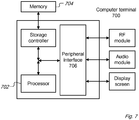
FIG. 7 is a structural block diagram of a computer terminal according to an embodiment of the present application. - In order to enable those skilled in the art to better understand the solution of the present application, the technical solution in the embodiments of the present application will be clearly and completely described below with reference to the accompanying drawings in the embodiments of the present application. Obviously, the described embodiments merely represent some, but not all, of the embodiments of the present application. Based on the embodiments of the present application, all other embodiments obtained by one of ordinary skill in the art without creative efforts should fall within the protection scope of the present application.
- It should be noted that the terms including "first" and "second" in the description, claims, and above-mentioned accompanying drawings of the present application are used to distinguish similar objects, and are not necessarily used to describe a specific order or sequence. It should be understood that the data used in this way can be interchanged where appropriate, so that the embodiments of the present application described herein may be implemented in an order other than those illustrated or described herein. In addition, the terms "comprising" and "having" and any variations thereof are intended to cover non-exclusive inclusions. For example, a process, method, system, product, or device that contains a series of steps or units is not necessarily limited to the steps or units explicitly listed, and may instead include other steps or units not explicitly listed or inherent to these processes, methods, products, or devices.
- First of all, some of the nouns or terms that appear in the description of the embodiments of the present application are explained as follows:
Server collection (Quorum): a server collection of distributed consistency systems; each server collection maintains an in-memory database of a distributed consistency system, as well as the transaction log information and snapshot data stored persistently. - Cluster: the deployment of system services in cloud computing scenarios is classified by cluster; there are a certain number of hosts in a cluster, and systems and products are deployed on the hosts.
- HostName: refers to a logical host name, which is unique.
- Server role: also referred to as a component module; many component modules are present in a distributed consistency system, and each component module needs to coordinate and process user requests through related protocols.
- Monitoring module: used for monitoring the health state of a service role of a distributed consistency system.
- Decider module: used for processing a series of operations performed by the operating and maintenance personnel on a distributed consistency system; these operations rely on decisions of the system in that the system confirms whether and when these operations may be performed; the decider module may be a software slave program running on a host or may be a host used for implementing the above-mentioned decision function.
- Monitoring platform (MonPF): used for displaying basic monitoring collected from a host and for displaying the monitoring display page of a distributed consistency system.
- Operation and maintenance control platform (OMCP): provided for operating and maintenance personnel, who may use the platform for operation and maintenance activities, such as upgrading, host replacement, and the like for a distributed consistent system.
- According to embodiments of the present application, an embodiment of a cluster management system as shown in
FIG. 1 is provided.FIG. 1 is a schematic diagram of a cluster management system according to an embodiment of the present application. As shown inFIG. 1 , acluster management system 100 comprises: an operation andmaintenance control platform 101 and adecider module 103, wherein:
the operation andmaintenance control platform 101 is configured to issue an operation request to a distributed consistency system in a cluster and display an operating state of the distributed consistency system; and thedecider module 103, connected with the operation andmaintenance control platform 101 and configured to determine deciding information for processing the operation request and send the deciding information to the operation and maintenance control platform, wherein the deciding information is determined based on data consistency and availability of the distributed consistency system. - Optionally, the above-mentioned operation and maintenance control platform (OMCP) is a basic deployment and integration platform for operation and maintenance. The operating and maintenance personnel may issue an operation request to a system in a cluster using said operation and maintenance control platform. Operating states of the above-mentioned distributed consistency system may also be shown to the operating and maintenance personnel using said operation and maintenance control platform, for example, by showing the operating and maintenance personnel a view of the displayed page after the distributed consistency system executes the operation request.
- In some embodiments of the present application, the above-mentioned operation request may be used for requesting version upgrade, configuration information upgrade, or server restart of a distributed consistency system.
- It should be noted that the above-mentioned operation and maintenance control platform in the embodiment of the present application may also display to the operating and maintenance personnel a monitoring state of the distributed consistency system in the cluster and upgrade states of each stage through a Web page.
- In an optional embodiment, in a cloud computing scenario, an entire distributed consistency system may be deployed using clusters as a unit for external use, and may be deemed as a management dimension. In order to better achieve service autonomy of the distributed consistency system in the cluster, the attributes of the cluster may be fine-grained and divided into a three-tuple <Cluster, HostName, Serverrole> in the embodiment of the present application, so as to better distinguish a cluster from other clusters. After the attributes are divided, a specific API interface may then be designed for operating the distributed consistency system.
- It should be noted that the number of hosts present in the cluster represents the number of service roles deployed on each host.
- In the above-described optional embodiment, the decider module periodically polls the operation and maintenance control platform by using the API interface provided by the operation and maintenance control platform. Optionally, the polling interval may be set by minutes. Furthermore, the operation and maintenance control platform will return to the decider module the operation request for requesting, for example, current operations that need to be approved, operations having been approved, operations in progress, etc.
- Furthermore, according to the operation request returned by the operation and maintenance control platform, the decider module determines deciding information for processing the operation request based on data consistency and availability of the distributed consistency system, and returns the deciding information to the operation and maintenance control platform through the API interface, such that the operation and maintenance control platform may proceed with corresponding processing according to the deciding information.
- In the embodiments of the present application, an operation request issued by a distributed consistency system in a cluster is acquired; and deciding information for processing the operation request is determined and sent to an operation and maintenance control platform, wherein the deciding information is determined based on data consistency and availability of the distributed consistency system.
- Based on the embodiments of the present application, the objects of ensuring availability of service programs and data security through a decider module in a distributed consistency system are achieved, thereby achieving the technical effects of enhancing the cluster management efficiency of the distributed consistency system and avoiding data loss or service interruption of the distributed consistency system, which in turn solves the technical problems of data loss or service interruption in the distributed consistency system caused by the higher error rate of manual operations used in cluster management methods for distributed consistency systems.
- In an optional embodiment, as shown in
FIG. 2 , the above-mentioned system further comprises: amonitoring module 105, located on a host in the cluster and configured to acquire monitoring data of a component module serving as a service role in the distributed consistency system, wherein the service role is a module for coordinating and processing user requests in each host of the cluster; and amonitoring platform 107, configured to collect and display the monitoring data acquired by the monitoring module. - It should be noted that as the distributed consistency system runs in a complex operating environment, it is necessary to monitor not only the basic indicators of the host and the distributed consistency system (for example, disk space, disk usage, memory consumption of the host and the system, network bandwidth ratio, etc.), but also service availability of the distributed consistency system (for example, whether the server of the distributed consistency system functions normally, the number of requests per second when the server is in operation, and the like).
- In the embodiment of the present application, the distributed consistency system may achieve the above-mentioned monitoring function through the monitoring module provided on the host of the cluster, acquire the monitoring data of the component module serving as the service role in the distributed consistency system, and then collect the monitoring data acquired by the monitoring module through the monitoring platform (for example, a MonPE monitoring platform). The monitoring data may be displayed on said monitoring platform.
- In addition, in the embodiment of the present application, the monitoring data of the component module serving as the service role in the distributed consistency system is acquired using the monitoring module, and the monitoring data may also be connected to a related data analysis platform, such as an open-source big data analysis and processing system (Spark) for log analysis, thereby facilitating fault diagnosis and automatic workload analysis.
- In some embodiments of the present application, the
monitoring platform 107 is further configured to generate alarm information according to the monitoring data, and send the alarm information to a user-side device. - For example, after the monitoring platform generates alarm information according to the monitoring data, an SMS and telephone platform may be connected and the alarm information may be outputted and prompted to the operating and maintenance personnel or system developers; the monitoring indicator display view of the distributed consistency system over a period of time and the like may further be displayed.
- In an optional embodiment, the monitoring platform serves as a global monitoring platform, and provides an API interface for reporting the monitoring states for the distributed consistency system in the cluster. The distributed consistency system acquires the monitoring data (for example, various monitoring indicators and health parameters) of the component module serving as the service role in the distributed consistency system by providing a monitoring module (monitoring program), and calls the API interface provided by the monitoring platform to report the monitoring data to the monitoring platform. As such, the monitoring platform may learn in real time, from the operating and maintenance personnel or system developers, the current state of the distributed consistency system in the cluster, and respond swiftly to exceptions.
- It should be noted that the API interface may be at least one of the following: a first API interface for the operation behavior needing to be initiated by the distributed consistency system, and is initiated by the operating and maintenance personnel for operating the operation and maintenance control platform; and a second API interface, an interface to which the distributed consistency system needs to respond when receiving a decision from the operation and maintenance control platform.
- Herein, the first API interface is configured to acquire deciding information of the service role in the cluster; a name of the first API interface is: GetMachineSRActionInfoForDeciderModule; and a parameter list of the first API interface may be:
- > cluster: required
- > serverrole: required
- A return value of the first API interface may be:
- > err_code: standard error code defined by the operation and maintenance control platform.
- > err_msg: standard error information defined by the operation and maintenance control platform and corresponding to the error code.
- A return result of the first API interface is a JSON (JavaScript Object Notation).
- Herein, the second API interface is configured to set the deciding information of the service role in the cluster; a name of the second API interface is: SetMachineSRActionInfoForDeciderModule; and a parameter list of the second API interface may be:
- > cluster: required
- > decide info: required
- A return value of the second API interface may be:
- > err_code: standard error code defined by the operation and maintenance control platform.
- > err_msg: standard error information defined by the operation and maintenance control platform and corresponding to the error code.
- > data: a ServerRole list of the host that operates successfully.
- A return result of the second API interface is data.
- In an optional embodiment, the decider module is further configured to determine an operation type corresponding to the operation request, and determine deciding information for executing an operation corresponding to the operation type, wherein the deciding information is determined based on an availability condition and a security condition of the distributed consistency system.
- Optionally, the operation type may be used as a characterization to show on which host an operation is based. Herein, the deciding information includes one of the following: a permission for executing the operation corresponding to the operation type, and a cancellation for executing the operation corresponding to the operation type.
- In an optional embodiment, the decider module is further configured to determine that an execution of an operation corresponding to the operation request is permitted when the operation type is upgrading configuration information of the distributed consistency system.
- It should be noted that in the distributed consistency system, some configuration information is managed by a global configuration template; therefore, when some configuration information, but not the code, needs to be modified, only the parameters in the global configuration template need to be modified. Then, the configuration information of the distributed consistency system is upgraded as a whole. The distributed consistency system learns changes in the configuration information and acquires new configuration information.
- In an optional embodiment, if the operating and maintenance personnel initiates an operation request to upgrade configuration information for a distributed consistency system in a certain cluster using the operation and maintenance control platform, the distributed consistency system may acquire deciding information corresponding to the operation request. With regard to the scenario in which the configuration information of the distributed consistency system is to be upgraded, a process of the distributed consistency system does not need to be restarted. Since it does not result in unavailable time and does not affect data security in the disk, the API interface provided by the operation and maintenance control platform may then be directly called: SetMachineSRActionInfoFor; and the decider module may directly respond with the information that permits the execution of the operation corresponding to the operation request, thereby directly approving the operation of upgrading the configuration information.
- In an optional embodiment, the decider module is further configured to select one host from the cluster for upgrading when the operation type is upgrading services in the distributed consistency system; and before one host is selected from the cluster for upgrading, whether a service of the previous host before said host is upgraded meets the availability condition is determined, and upgrading the selected host when the service meets the availability condition is determined.
- When the service in the distributed consistency system is upgraded, the service of the distributed consistency system (i.e., the service program) may be restarted. Further, when the service in the distributed consistency system is upgraded, the unavailable time of the service of the distributed consistency system would be affected temporarily. Therefore, when the decider module obtains the operation request for upgrading a service of the distributed consistency system initiated by the operation and maintenance control platform, whether a service of a previous host before said host being upgraded meeting the availability condition needs to be determined, for example, the service availability in the server collection Quorum of the distributed consistency system and an upgrade sequence in which only a service in one host is upgraded at a time in the server collection Quorum is adopted. Further, each time when a service of a host is selected for upgrading, it needs to be ensured that a service of the previous host before said selected host being upgraded meets the availability condition; and when the service meets the availability condition, it is determined to upgrade the selected host.
- In an optional embodiment, the decider module is further configured to acquire a serial number of a newly added host when the operation type is replacing a host deployed by the distributed consistency system, and establish an association between the serial number of the newly added host and serial numbers of hosts not having been replaced in the distributed consistency system to form a new distributed consistency system.
- Servers used in a cloud computing scenario are all common servers. Therefore, a large number of hosts are out of warranty or damaged each year. It is necessary to replace the hosts and re-deploy the service program of the distributed consistency system on new hosts.
- In the above-described optional embodiment, when a host in the server collection Quorum crashes, the number of service programs of the available distributed consistency system in the server collection Quorum will decrease by one. Therefore, the service program needs to be deployed on a new host.
- Assuming that there are three hosts in a server collection, and the service program of the distributed consistency system is deployed on each host; each of the three hosts has a fixed serial number, which may be, for example, 1, 2, and 3, with respect to the distributed consistency system. When the host with the serial number 3 crashes and needs to be replaced, a newly added host with a serial number 4 and the previous hosts with the serial numbers 1 and 2 may still be determined to form a server collection in the distributed consistency system by modifying the protocol of the distributed consistency system.
- It should be noted that since the previous hosts with the serial numbers 1 and 2 are not aware of the newly added host with the serial number 4, the newly added host with the serial number 4 cannot directly form a server collection with the previous hosts having the serial numbers 1 and 2. Thus, it needs to be ensured that when a host is replaced, the service program can autonomously combine 1, 2, and 4 to form a new server collection, thereby truly implementing an autonomous host replacement service.
- In an optional embodiment, the decider module is further configured to stop external services of the distributed consistency system when the operation type is replacing a disk used by a designated host in the distributed consistency system, acquire log information and snapshot data from other hosts in the distributed consistency system, and resume the external services after storing the log information and the snapshot data to a newly added disk.
- In the embodiment of the present application, the distributed consistency system may request log information and snapshot data persistently and transactionally. Therefore, read and write operations on the host disk need to be involved. Further, as the host disk has a high fault rate, IO fault occurs frequently in the distributed consistency system program, which indicates that the disk is damaged or is out of warranty.
- Therefore, after an alarm is sent for a faulty disk monitored by the monitoring module, the operating and maintenance personnel needs to initiate a request to replace the host disk using the operation and maintenance control platform and sends the request to the decider module of the distributed consistency system. After receiving the request to replace the host disk sent from the operation and maintenance control platform, the decider module would need to deal with issues related to data security. For example, if a disk location of the logs and snapshots of the distributed consistency system is /dfs/disk1, service degradation is performed for a service program of the distributed consistency system when IO fault occurs on the first disk disk1, external services of the distributed consistency system are stopped, and the data are restored in a disk location /dfs/disk2 of a newly added second disk. All log information and snapshot data are acquired from other hosts in the server collection, and the external services are resumed after the data is restored.
- According to the embodiments of the present application, an embodiment of a cluster management method is further provided. It should be noted that the steps shown in the flowchart in the accompanying drawing may be executed, for example, as a set of computer-executable instructions in a computer system. Although a logical sequence is shown in the flowchart, in some cases, the steps shown or described herein may be executed in a different sequence.
- The method embodiment provided in the embodiment of the present application may be executed in a mobile terminal, a computer terminal, or similar computing apparatus.
FIG. 3 shows a block diagram of a hardware structure of a computer terminal (or mobile device) for implementing the cluster management method. As shown inFIG. 3 , a computer terminal 10 (or mobile device 10) may comprise one or more (shown in the figure as 102a, 102b, ..., 102n) processors 102 (the processor 102 may include, but not limited to, processing apparatuses such as a microprocessor including MCUs or a programmable logic device including FPGAs), amemory 104 for storing data, and atransmission module 106 for communications. In addition, it may further include: a display, an input/output interface (I/O interface), a universal serial bus (USB) port (can be included as one of the ports of the I/O interface), a network interface, a power supply, and/or a camera. Those of ordinary skill in the art may understand that the structure shown inFIG. 3 is only illustrative, and does not limit the structure of the above-mentioned electronic apparatus. For example, thecomputer terminal 10 may also include more or fewer components than those shown inFIG. 3 , or have a configuration different from that shown inFIG. 3 . - It should be noted that the above-mentioned one or more processors 102 and/or other data processing circuits may be generally referred to herein as a "data processing circuit." The data processing circuit may be embodied as a whole or in part as software, hardware, firmware, or any other combinations. In addition, the data processing circuit may be a stand-alone processing module, or may be fully or partially integrated into any one of the other elements within the computer terminal 10 (or mobile device). As involved in the embodiment of the present application, the data processing circuit may serve as a processor control (for example, a selection of a variable resistor terminal path connected to an interface).
- The
memory 104 may be configured to store software programs and modules of application software, such as program instructions/data storage apparatuses corresponding to cluster management in the embodiment of the present application. The processor 102 runs the software programs and modules stored in thememory 104 to execute various function applications and data processing, i.e., implementing the above-mentioned cluster management method. Thememory 104 may include a high-speed random-access memory, and may also include a non-volatile memory, such as one or more magnetic storage apparatuses, flash memories, or other non-volatile solid-state memories. In some examples, thememory 104 may further include memories remotely disposed with respect to the processor 102, and these remote memories may be connected to thecomputer terminal 10 via a network. Examples of the above-mentioned network include, but not limited to, the Internet, corporate intranets, local area networks, mobile communication networks, and combinations thereof. - The
transmission apparatus 106 is configured to receive or send data via a network. Specific examples for the above-mentioned network may include a wireless network provided by the communication provider of thecomputer terminal 10. In one example, thetransmission apparatus 106 includes a network adapter (Network Interface Controller, NIC), which may be connected to other network devices through a base station, such that communication with the Internet is made possible. In one example, thetransmission apparatus 106 may be a radio frequency (RF) module, which is used to communicate with the Internet in a wireless manner. - The display may be, for example, a touch screen liquid crystal display (LCD), which enables a user to interact with a user interface of the computer terminal 10 (or mobile device).
- Under the above-mentioned operating environment, the present application provides a cluster management method as shown in
FIG. 4. FIG. 4 is a flowchart of a cluster management method according to an embodiment of the application. As shown inFIG. 4 , the method comprises the following steps: - Step S402. Acquire an operation request issued by a distributed consistency system in a cluster;
- Step S404. Determine deciding information for processing the operation request, and send the deciding information to an operation and maintenance control platform, wherein the deciding information is determined based on data consistency and availability of the distributed consistency system.
- Optionally, the above-mentioned operation and maintenance control platform (OMCP) is a basic deployment and integration platform for operation and maintenance. The operating and maintenance personnel may issue an operation request to a system in a cluster using said operation and maintenance control platform. Operating states of the above-mentioned distributed consistency system may also be shown to the operating and maintenance personnel using said operation and maintenance control platform, for example, by showing the operating and maintenance personnel a view of the displayed page after the distributed consistency system executes the operation request.
- In an optional embodiment, the above-mentioned operation request may be used for requesting version upgrade, configuration information upgrade, or server restart of a distributed consistency system.
- It should be noted that the above-mentioned operation and maintenance control platform in the embodiment of the present application may also display to the operating and maintenance personnel a monitoring state of the distributed consistency system in the cluster and upgrade states of each stage through a Web page.
- In an optional embodiment, in a cloud computing scenario, an entire distributed consistency system may be deployed using clusters as a unit for external use, and may be deemed as a management dimension. In order to better achieve service autonomy of the distributed consistency system in the cluster, the attributes of the cluster may be fine-grained and divided into a three-tuple <Cluster, HostName, Serverrole> in the embodiment of the present application, so as to better distinguish a cluster from other clusters. After the attributes are divided, a specific API interface may then be designed for operating the distributed consistency system. Moreover, the number of hosts disposed in the cluster and the number of service roles deployed on each host may further be determined.
- In the above-described optional embodiment, the decider module periodically polls the operation and maintenance control platform by using the API interface provided by the operation and maintenance control platform. Optionally, the polling interval may be set by minutes. Furthermore, the operation and maintenance control platform will return to the decider module the operation request for requesting, for example, current operations that need to be approved, operations having been approved, operations in progress, etc.
- Furthermore, according to the operation request returned by the operation and maintenance control platform, the decider module determines deciding information for processing the operation request based on data consistency and availability of the distributed consistency system, and returns the deciding information to the operation and maintenance control platform through the API interface, such that the operation and maintenance control platform may proceed with corresponding processing according to the deciding information.
- In the embodiments of the present application, an operation request issued by a distributed consistency system in a cluster is acquired; and deciding information for processing the operation request is determined and sent to an operation and maintenance control platform, wherein the deciding information is determined based on data consistency and availability of the distributed consistency system.
- Based on the embodiments of the present application, the objects of ensuring availability of service programs and data security through a decider module in a distributed consistency system are achieved, thereby achieving the technical effects of enhancing the cluster management efficiency of the distributed consistency system and avoiding data loss or service interruption of the distributed consistency system, which in turn solves the technical problems of data loss or service interruption in the distributed consistency system caused by the higher error rate of manual operations used in cluster management methods for distributed consistency systems.
- In an optional embodiment, a flowchart of an optional cluster management method according to an embodiment of the present application is shown in
FIG. 5 . As shown inFIG. 5 , determining deciding information for processing the operation request comprises the following steps: - Step S502. Determine an operation type corresponding to the operation request;
- Step S504. Determine deciding information for executing an operation corresponding to the operation type, wherein the deciding information is determined based on an availability condition and a security condition of the distributed consistency system.
- Optionally, the operation type may be used as a characterization to show on which host an operation is based. Herein, the deciding information includes one of the following: a permission for executing the operation corresponding to the operation type, and a cancellation for executing the operation corresponding to the operation type.
- In an optional embodiment, the step of determining deciding information for executing the operation corresponding to the operation type comprises: determining that an execution of an operation corresponding to the operation request is permitted when the operation type is upgrading configuration information of the distributed consistency system.
- It should be noted that in the distributed consistency system, some configuration information is managed by a global configuration template; therefore, when some configuration information, but not the code, needs to be modified, only the parameters in the global configuration template need to be modified. Then, the configuration information of the distributed consistency system is upgraded as a whole. The distributed consistency system learns changes in the configuration information and acquires new configuration information.
- In an optional embodiment, if the operating and maintenance personnel initiates an operation request to upgrade configuration information for a distributed consistency system in a certain cluster using the operation and maintenance control platform, the distributed consistency system may acquire deciding information corresponding to the operation request. With regard to the scenario in which the configuration information of the distributed consistency system is to be upgraded, a process of the distributed consistency system does not need to be restarted. Since it does not result in unavailable time and does not affect data security in the disk, the API interface provided by the operation and maintenance control platform may then be directly called: SetMachineSRActionInfoFor; and the decider module may directly respond with the information that permits the execution of the operation corresponding to the operation request, thereby directly approving the operation of upgrading the configuration information.
- In another optional embodiment, the step of determining deciding information for executing the operation corresponding to the operation type comprises: selecting one host from the cluster for upgrading when the operation type is upgrading services in the distributed consistency system; and before selecting one host from the cluster for upgrading, determining whether a service of the previous host before said host is upgraded meets the availability condition; and determining to upgrade the selected host when the service meets the availability condition.
- When the service in the distributed consistency system is upgraded, the service of the distributed consistency system (i.e., the service program) may be restarted. Further, when the service in the distributed consistency system is upgraded, the unavailable time of the service of the distributed consistency system would be affected temporarily. Therefore, when the decider module obtains the operation request for upgrading a service of the distributed consistency system initiated by the operation and maintenance control platform, whether a service of a previous host before said host being upgraded meeting the availability condition needs to be determined, for example, the service availability in the server collection Quorum of the distributed consistency system and an upgrade sequence in which only a service in one host is upgraded at a time in the server collection is adopted. Further, each time when a service of a host is selected for upgrading, a service of the previous host before said selected host being upgraded meeting the availability condition needs to be ensured; and when the service meets the availability condition, it is determined to upgrade the selected host.
- In the embodiment of the present application, optionally, the step of determining deciding information for executing the operation corresponding to the operation type comprises: acquiring a serial number of a newly added host when the operation type is replacing a host deployed by the distributed consistency system, and establishing an association between the serial number of the newly added host and serial numbers of hosts not having been replaced in the distributed consistency system to form a new distributed consistency system.
- Servers used in a cloud computing scenario are all common servers. Therefore, a large number of hosts are out of warranty or damaged each year. It is necessary to replace the hosts and re-deploy the service program of the distributed consistency system on new hosts.
- In the above-described optional embodiment, when a host in the server collection crashes, the number of service programs of the available distributed consistency system in the server collection will decrease by one. Therefore, the service program needs to be deployed on a new host.
- Assuming that there are three hosts in a server collection, and the service program of the distributed consistency system is deployed on each host; each of the three hosts has a fixed serial number, which may be, for example, 1, 2, and 3, with respect to the distributed consistency system. When the host with the serial number 3 crashes and needs to be replaced, a newly added host with a serial number 4 and the previous hosts with the serial numbers 1 and 2 may still be determined to form a server collection in the distributed consistency system by modifying the protocol of the distributed consistency system.
- It should be noted that since the previous hosts with the serial numbers 1 and 2 are not aware of the newly added host with the serial number 4, the newly added host with the serial number 4 cannot directly form a server collection with the previous hosts having the serial numbers 1 and 2. Thus, it needs to be ensured that when a host is replaced, the service program can autonomously combine 1, 2, and 4 to form a new server collection, thereby truly implementing an autonomous host replacement service.
- An optional embodiment is further present in the embodiment of the present application in which the step of determining the deciding information for executing the operation corresponding to the operation type comprises: stopping external services of the distributed consistency system when the operation type is replacing a disk used by a designated host in the distributed consistency system, acquiring log information and snapshot data from other hosts in the distributed consistency system, and resuming the external services after the log information and the snapshot data are stored to a newly added disk.
- In the embodiment of the present application, the distributed consistency system may request log information and snapshot data persistently and transactionally. Therefore, read and write operations on the host disk need to be involved. Further, as the host disk has a high fault rate, IO fault occurs frequently in the distributed consistency system program, which indicates that the disk is damaged or is out of warranty.
- Therefore, after an alarm is sent for a faulty disk monitored by the monitoring module, the operating and maintenance personnel needs to initiate a request to replace the host disk using the operation and maintenance control platform and sends the request to the decider module of the distributed consistency system. After receiving the request to replace the host disk sent from the operation and maintenance control platform, the decider module would need to deal with issues related to data security. For example, if a disk location of the logs and snapshots of the distributed consistency system is /dfs/disk1, service degradation is performed for a service program of the distributed consistency system when IO fault occurs on the first disk disk1, external services of the distributed consistency system are stopped, and the data are restored in a disk location /dfs/disk2 of a newly added second disk. All log information and snapshot data are acquired from other hosts in the server collection, and the external services are resumed after the data is restored.
- It should be noted that for optional or preferred implementations of the embodiment, reference may be made to the related description in Embodiment 1. Details are not elaborated herein again.
- It should be noted that with regard to the above-described method embodiments, in order to provide a concise description, the method embodiments are all expressed as a series of action combinations. Those skilled in the art, however, should know that the present application is not limited by the described sequence of actions as some steps may be executed in another sequence or simultaneously according to the present application. Secondly, those skilled in the art should also know that the embodiments described in the description are all preferred embodiments, and the involved actions and modules are not necessarily required by the present application.
- Based on the description of the foregoing embodiments, those skilled in the art can clearly understand that the methods of the foregoing embodiments can be implemented using software and a needed universal hardware platform, and can certainly be implemented also by using hardware; in many cases, the former is a better implementation, however. Based on such an understanding, the part of the technical solution of the present invention, which is in essential or contributes to the prior art, can be embodied in the form of a software product. The computer software product is stored in a storage medium (such as a ROM/RAM, a magnetic disk, and an optical disk) and includes several instructions for enabling a terminal device (which may be a mobile phone, a computer, a server, a network device, or the like) to execute the method of each embodiment of the present invention.
- According to the embodiments of the present application, an embodiment of a computer system is further provided, comprising: a processor and a memory, connected to the processor and configured to provide the processor with instructions for processing the following processing steps: acquiring an operation request issued by a distributed consistency system in a cluster, and determining deciding information for processing the operation request and sending the deciding information to an operation and maintenance control platform, wherein the deciding information is determined based on data consistency and availability of the distributed consistency system.
- In the embodiment of the present application, an operation request issued by a distributed consistency system in a cluster is acquired; and deciding information for processing the operation request is determined and sent to an operation and maintenance control platform, wherein the deciding information is determined based on data consistency and availability of the distributed consistency system.
- Based on the embodiments of the present application, the objects of ensuring availability of service programs and data security through a decider module in a distributed consistency system are achieved, thereby achieving the technical effects of enhancing the cluster management efficiency of the distributed consistency system and avoiding data loss or service interruption of the distributed consistency system, which in turn solves the technical problems of data loss or service interruption in the distributed consistency system caused by the higher error rate of manual operations used in cluster management methods for distributed consistency systems.
- It should be noted that for optional or preferred implementations of the embodiment, reference may be made to the related description in Embodiments 1 and 2. Details are not elaborated herein again.
- According to the embodiments of the present application, an embodiment of an apparatus for implementing the above-described cluster management method is further provided.
FIG. 6 is a schematic diagram of a cluster management apparatus according to an embodiment of the present application. As shown inFIG. 6 ,apparatus 600 comprises: anacquisition module 602 and aprocessing module 604, wherein:
theacquisition module 602 is configured to acquire an operation request issued by a distributed consistency system in a cluster; and theprocessing module 604 is configured to determine deciding information for processing the operation request and send the deciding information to an operation and maintenance control platform, wherein the deciding information is determined based on data consistency and availability of the distributed consistency system. - It should be noted here that the
acquisition module 602 and theprocessing module 604 correspond to the steps S402 to S404 in Embodiment 2. The two modules and the corresponding steps implement the same examples and are used in the same applied scenarios, but the two modules should not be limited to the content disclosed by above-described Embodiment 2. It should be noted that as a part of the apparatus, the above-mentioned modules may run in thecomputer terminal 10 provided in Embodiment 2. - It should be noted that for optional or preferred implementations of the embodiment, reference may be made to the related description in Embodiments 1 and 2. Details are not elaborated herein again.
- According to the embodiment of the present application, an embodiment of a computer terminal is further provided. The computer terminal may be any computer terminal device in a computer terminal group. Optionally, in this embodiment, the computer terminal may also be replaced with a terminal device such as a mobile terminal.
- Optionally, in this embodiment, the computer terminal may be located in at least one of the multiple network devices in a computer network.
- In this embodiment, the computer terminal may execute program codes of the following steps in a cluster management method: acquiring an operation request issued by a distributed consistency system in a cluster, and determining deciding information for processing the operation request and sending the deciding information to an operation and maintenance control platform, wherein the deciding information is determined based on data consistency and availability of the distributed consistency system.
- Optionally,
FIG. 7 is a structural block diagram of a computer terminal according to an embodiment of the present application. As shown inFIG. 7 , acomputer terminal 700 may comprise: one or more (only one is shown in the figure)processors 702, amemory 704, and aperipheral interface 706. - The memory may be configured to store software programs and modules, such as program instructions/modules corresponding to the cluster management method and apparatus in the embodiments of the present application. The processor runs the software programs and modules stored in the memory to execute various function applications and data processing, i.e., implementing the above-mentioned cluster management method. The memory may include a high-speed random-access memory, and may also include a non-volatile memory, such as one or more magnetic storage apparatuses, flash memories, or other non-volatile solid-state memories. In some examples, the memory may further include memories remotely disposed with respect to the processor, and these remote memories may be connected to the
computer terminal 700 via a network. Examples of the above-mentioned network include, but not limited to, the Internet, corporate intranets, local area networks, mobile communication networks, and combinations thereof. - The processor may call information and application programs stored in the memory through the transmission apparatus to execute the following steps: acquiring an operation request issued by a distributed consistency system in a cluster, and determining deciding information for processing the operation request and sending the deciding information to an operation and maintenance control platform, wherein the deciding information is determined based on data consistency and availability of the distributed consistency system.
- Optionally, the processor may further execute program codes of the following steps: determining an operation type corresponding to the operation request, and determining deciding information for executing an operation corresponding to the operation type, wherein the deciding information is determined based on an availability condition and a security condition of the distributed consistency system.
- Optionally, the processor may further execute a program code of the following step: determining that an execution of an operation corresponding to the operation request is permitted when the operation type is upgrading configuration information of the distributed consistency system.
- Optionally, the processor may further execute program codes of the following steps: selecting one host from the cluster for upgrading when the operation type is upgrading services in the distributed consistency system, and before selecting one host from the cluster for upgrading, determining whether a service of the previous host before said host is upgraded meets the availability condition, and determining to upgrade the selected host when the service meets the availability condition.
- Optionally, the processor may further execute program codes of the following steps: acquiring a serial number of a newly added host when the operation type is replacing a host deployed by the distributed consistency system, and establishing an association between the serial number of the newly added host and serial numbers of hosts not having been replaced in the distributed consistency system to form a new distributed consistency system.
- Optionally, the processor may further execute program codes of the following steps: stopping external services of the distributed consistency system when the operation type is replacing a disk used by a designated host in the distributed consistency system, acquiring log information and snapshot data from other hosts in the distributed consistency system, and resuming the external services after the log information and the snapshot data are stored to a newly added disk.
- A cluster management solution is provided when the embodiment of the present application is used. The cluster management solution comprises acquiring an operation request issued by a distributed consistency system in a cluster, and determining deciding information for processing the operation request and sending the deciding information to an operation and maintenance control platform, wherein the deciding information is determined based on data consistency and availability of the distributed consistency system.
- Based on the embodiments of the present application, the objects of ensuring availability of service programs and data security through a decider module in a distributed consistency system are achieved, thereby achieving the technical effects of enhancing the cluster management efficiency of the distributed consistency system and avoiding data loss or service interruption of the distributed consistency system, which in turn solves the technical problems of data loss or service interruption in the distributed consistency system caused by the higher error rate of manual operations used in cluster management methods for distributed consistency systems.
- A person of ordinary skill in the art can understand that the structure shown in
FIG. 7 is exemplary; and the computer terminal may also be a smart phone (such as an Android phone and an iOS phone), a tablet computer, a palm computer, and a Mobile Internet Device (MID), a PAD, and other terminal devices.FIG. 7 does not limit the structure of the above electronic device. For example, thecomputer terminal 700 may also include more or fewer components (such as a network interface, a display apparatus, etc.) than those shown inFIG. 7 , or have a configuration different from that shown inFIG. 7 . - Those of ordinary skill in the art can understand that all or part of the steps in the various methods of the above-mentioned embodiments can be completed by instructing the relevant hardware of the terminal device through a program. The program can be stored in a computer-readable storage medium, which may include: a flash disk, a read-only memory (ROM), a random-access memory (RAM), a magnetic disk, an optical disk, or the like.
- According to the embodiment of the present application, an embodiment of a storage medium is further provided. Optionally, in this embodiment, the storage medium may be configured to store program codes executed by the cluster management method provided in above-described Embodiment 2.
- Optionally, in this embodiment, the storage medium may be located in any computer terminal of a computer terminal group in a computer network, or located in any mobile terminal of a mobile terminal group.
- Optionally, in this embodiment, the storage medium is configured to store program codes for executing the following steps: acquiring an operation request issued by a distributed consistency system in a cluster, and determining deciding information for processing the operation request and sending the deciding information to an operation and maintenance control platform, wherein the deciding information is determined based on data consistency and availability of the distributed consistency system.
- Optionally, in this embodiment, the storage medium is configured to store program codes for executing the following steps: determining an operation type corresponding to the operation request, and determining deciding information for executing an operation corresponding to the operation type, wherein the deciding information is determined based on an availability condition and a security condition of the distributed consistency system.
- Optionally, in this embodiment, the storage medium is configured to store a program code for executing the following step: determining that an execution of an operation corresponding to the operation request is permitted when the operation type is upgrading configuration information of the distributed consistency system.
- Optionally, in this embodiment, the storage medium is configured to store program codes for executing the following steps: selecting one host from the cluster for upgrading when the operation type is upgrading services in the distributed consistency system, and before selecting one host from the cluster for upgrading, determining whether a service of the previous host before said host is upgraded meets the availability condition, and determining to upgrade the selected host when the service meets the availability condition.
- Optionally, in this embodiment, the storage medium is configured to store program codes for executing the following steps: acquiring a serial number of a newly added host when the operation type is replacing a host deployed by the distributed consistency system, and establishing an association between the serial number of the newly added host and serial numbers of hosts not having been replaced in the distributed consistency system to form a new distributed consistency system.
- Optionally, in this embodiment, the storage medium is configured to store program codes for executing the following steps: stopping external services of the distributed consistency system when the operation type is replacing a disk used by a designated host in the distributed consistency system, acquiring log information and snapshot data from other hosts in the distributed consistency system, and resuming the external services after the log information and the snapshot data are stored to a newly added disk.
- The serial numbers of the embodiments of the present application are merely for description, and do not represent the quality of the embodiments.
- In the above-described embodiments of the present application, the description of each embodiment has its own emphasis. For any part that is not described in detail in one embodiment, reference may be made to related descriptions in other embodiments.
- In the several embodiments provided by the present application, it should be appreciated that the disclosed technical content may be implemented in other manners. The apparatus embodiments described above are only for illustration. For example, the division of the units is merely a logical function division. In actual implementation, there may be other division means. For example, multiple units or components may be combined or may be integrated into another system, or some features may be disregarded or left unimplemented. In addition, the displayed or discussed mutual coupling, direct coupling, or communication connection may be achieved through some interfaces; indirect coupling or communication connection of units or modules may be in electrical or other forms.
- The units described as separate components may or may not be physically separated. The components displayed as units may or may not be physical units; that is, they may be located in one place, or may be distributed on multiple network units. Some or all of the units may be selected according to actual needs to achieve the objects of the solutions of the embodiments.
- In addition, various function units in each embodiment of the present application may be integrated into one processing unit, or each unit may be individually and physically present, or two or more units may be integrated into one unit. The above-mentioned integrated units may be implemented in the form of hardware or may be implemented as software function units.
- If the integrated units are implemented in the form of software function units and sold or used as independent products, they may be stored in a computer-readable storage medium. Based on such an understanding, the part of the technical solution of the present invention or all or part of the technical solution, which is in essential or contributes to the prior art, can be embodied in the form of a software product. The computer software product is stored in a storage medium and includes several instructions for enabling a computer device (which may be a personal computer, a server, a network device, or the like) to execute all or part of the steps of the method described in each embodiment of the present application. The above-mentioned storage medium includes USB flash disks, read-only memories (ROMs), random access memories (RAMs), mobile hard disks, magnetic disks, optical disks, or other media that may store program codes.
- The above-described embodiments are merely preferred embodiments of the present application. It should be noted that for person of ordinary skill in the art, several improvements and modifications may be made without departing from the principles of the present application. These improvements and modifications should also be deemed as falling within the protection scope of the present application.
Claims (17)
- A cluster management system, the system comprising:an operation and maintenance control platform, configured to issue an operation request to a distributed consistency system in a cluster and display an operating state of the distributed consistency system; anda decider module, connected with the operation and maintenance control platform and configured to determine deciding information for processing the operation request and send the deciding information to the operation and maintenance control platform, wherein the deciding information is determined based on data consistency and availability of the distributed consistency system.
- The system according to claim 1, wherein the system further comprises:a monitoring module, located on a host in the cluster and configured to acquire monitoring data of a component module serving as a service role in the distributed consistency system, wherein the service role is a module for coordinating and processing user requests in each host of the cluster; anda monitoring platform, configured to collect the monitoring data acquired by the monitoring module, and display the monitoring data.
- The system according to claim 2, wherein the monitoring platform is further configured to generate alarm information according to the monitoring data, and send the alarm information to a user-side device.
- The system according to claim 1, wherein the decider module is further configured to determine an operation type corresponding to the operation request, and determine deciding information for executing an operation corresponding to the operation type, wherein the deciding information is determined based on an availability condition and a security condition of the distributed consistency system.
- The system according to claim 4, wherein the decider module is further configured to determine to permit an execution of an operation corresponding to the operation request when the operation type is upgrading configuration information of the distributed consistency system.
- The system according to claim 4, wherein the decider module is further configured to select a host from the cluster for upgrading when the operation type is upgrading services in the distributed consistency system, and before selecting the host from the cluster for upgrading, determine whether a service of a previous host before the host is upgraded meets the availability condition, and determine to upgrade the selected host when the service meets the availability condition.
- The system according to claim 4, wherein the decider module is further configured to acquire a serial number of a newly added host when the operation type is replacing a host deployed by the distributed consistency system, and establish an association between the serial number of the newly added host and serial numbers of hosts not having been replaced in the distributed consistency system to form a new distributed consistency system.
- The system according to claim 4, wherein the decider module is further configured to stop an external service of the distributed consistency system when the operation type is replacing a disk used by a designated host in the distributed consistency system, acquire log information and snapshot data from another host in the distributed consistency system, and resume the external service after storing the log information and the snapshot data to a newly added disk.
- A cluster management method, the method comprising:acquiring an operation request issued by a distributed consistency system in a cluster; anddetermining deciding information for processing the operation request, and sending the deciding information to an operation and maintenance control platform, wherein the deciding information is determined based on data consistency and availability of the distributed consistency system.
- The method according to claim 9, wherein the determining deciding information for processing the operation request comprises:
determining an operation type corresponding to the operation request, and determining deciding information for executing an operation corresponding to the operation type, wherein the deciding information is determined based on an availability condition and a security condition of the distributed consistency system. - The method according to claim 10, wherein the determining the deciding information for executing the operation corresponding to the operation type comprises: in response to determining that the operation type is upgrading configuration information of the distributed consistency system, determining to permit an execution for an operation corresponding to the operation request.
- The method according to claim 10, wherein the determining the deciding information for executing the operation corresponding to the operation type comprises:selecting a host from the cluster for upgrading in response to determining that the operation type is upgrading services in the distributed consistency system;before selecting the host from the cluster for upgrading, determining whether a service of a previous host before the host is upgraded meets the availability condition; anddetermining to upgrade the selected host in response to determining that the service meets the availability condition.
- The method according to claim 10, wherein the determining the deciding information for executing the operation corresponding to the operation type comprises:acquiring a serial number of a newly added host in response to determining that the operation type is replacing a host deployed by the distributed consistency system; andestablishing an association between the serial number of the newly added host and serial numbers of hosts not having been replaced in the distributed consistency system to form a new distributed consistency system.
- The method according to claim 10, wherein the determining the deciding information for executing the operation corresponding to the operation type comprises:stopping an external service of the distributed consistency system in response to determining that the operation type is replacing a disk used by a designated host in the distributed consistency system;acquiring log information and snapshot data from another host in the distributed consistency system; andresuming the external service after storing the log information and the snapshot data to a newly added disk.
- A cluster management apparatus, the apparatus comprising:an acquisition module, configured to acquire an operation request issued by a distributed consistency system in a cluster; anda processing module, configured to determine deciding information for processing the operation request, and send the deciding information to an operation and maintenance control platform, wherein the deciding information is determined based on data consistency and availability of the distributed consistency system.
- A storage medium, wherein the storage medium comprises a program stored therein, wherein when running, the program controls a device on which the storage medium is located to execute the cluster management method in any one of claims 9 to 14.
- A computer system comprising:a processor; anda memory, connected to the processor and configured to provide the processor with instructions for processing steps comprising:acquiring an operation request issued by a distributed consistency system in a cluster; anddetermining deciding information for processing the operation request, and sending the deciding information to an operation and maintenance control platform, wherein the deciding information is determined based on data consistency and availability of the distributed consistency system.
Applications Claiming Priority (2)
| Application Number | Priority Date | Filing Date | Title |
|---|---|---|---|
| CN201811168317.0A CN111008026B (en) | 2018-10-08 | 2018-10-08 | Cluster management method, device and system |
| PCT/CN2019/108367 WO2020073821A1 (en) | 2018-10-08 | 2019-09-27 | Cluster management method, apparatus and system |
Publications (3)
| Publication Number | Publication Date |
|---|---|
| EP3865998A1 true EP3865998A1 (en) | 2021-08-18 |
| EP3865998A4 EP3865998A4 (en) | 2022-06-22 |
| EP3865998B1 EP3865998B1 (en) | 2025-12-17 |
Family
ID=70111200
Family Applications (1)
| Application Number | Title | Priority Date | Filing Date |
|---|---|---|---|
| EP19871446.1A Active EP3865998B1 (en) | 2018-10-08 | 2019-09-27 | Cluster management method, apparatus and system |
Country Status (5)
| Country | Link |
|---|---|
| US (1) | US11438249B2 (en) |
| EP (1) | EP3865998B1 (en) |
| JP (1) | JP7341244B2 (en) |
| CN (1) | CN111008026B (en) |
| WO (1) | WO2020073821A1 (en) |
Families Citing this family (6)
| Publication number | Priority date | Publication date | Assignee | Title |
|---|---|---|---|---|
| US10346191B2 (en) | 2016-12-02 | 2019-07-09 | Wmware, Inc. | System and method for managing size of clusters in a computing environment |
| CN114157674B (en) * | 2020-08-17 | 2024-08-09 | 中移(上海)信息通信科技有限公司 | Wireless communication method, device, system, server and medium |
| CN112202909B (en) * | 2020-10-10 | 2021-06-04 | 上海威固信息技术股份有限公司 | Online upgrading method and system for computer storage system |
| US11595321B2 (en) * | 2021-07-06 | 2023-02-28 | Vmware, Inc. | Cluster capacity management for hyper converged infrastructure updates |
| CN114666195B (en) * | 2022-03-21 | 2022-09-16 | 江苏红网技术股份有限公司 | Multi-level safety protection data exchange sharing system and method thereof |
| CN115051838A (en) * | 2022-05-24 | 2022-09-13 | 广州市迪士普音响科技有限公司 | Central control host cluster control method, device, equipment and storage medium |
Family Cites Families (40)
| Publication number | Priority date | Publication date | Assignee | Title |
|---|---|---|---|---|
| AU2003217599A1 (en) | 2002-02-22 | 2003-09-09 | Bea Systems, Inc. | System and method for using a data replication service to manage a configuration repository |
| US7392421B1 (en) | 2002-03-18 | 2008-06-24 | Symantec Operating Corporation | Framework for managing clustering and replication |
| US20040254984A1 (en) * | 2003-06-12 | 2004-12-16 | Sun Microsystems, Inc | System and method for coordinating cluster serviceability updates over distributed consensus within a distributed data system cluster |
| JP4701929B2 (en) * | 2005-09-02 | 2011-06-15 | 株式会社日立製作所 | Boot configuration change method, management server, and computer system |
| US20070168571A1 (en) * | 2005-11-02 | 2007-07-19 | Dell Products L.P. | System and method for automatic enforcement of firmware revisions in SCSI/SAS/FC systems |
| US10180809B2 (en) * | 2006-05-17 | 2019-01-15 | Richard Fetik | Secure application acceleration system, methods and apparatus |
| US7908448B1 (en) | 2007-01-30 | 2011-03-15 | American Megatrends, Inc. | Maintaining data consistency in mirrored cluster storage systems with write-back cache |
| US8156164B2 (en) | 2007-07-11 | 2012-04-10 | International Business Machines Corporation | Concurrent directory update in a cluster file system |
| CN101334797B (en) | 2008-08-04 | 2010-06-02 | 中兴通讯股份有限公司 | A distributed file system and its data block consistency management method |
| US9461881B2 (en) * | 2011-09-30 | 2016-10-04 | Commvault Systems, Inc. | Migration of existing computing systems to cloud computing sites or virtual machines |
| US20130138615A1 (en) | 2011-11-29 | 2013-05-30 | International Business Machines Corporation | Synchronizing updates across cluster filesystems |
| CN102571789B (en) * | 2011-12-31 | 2014-07-09 | 复旦大学 | Degraded service replacement validating method for enhancing survivability of service oriented architecture (SOA) |
| US9742873B2 (en) * | 2012-11-29 | 2017-08-22 | International Business Machines Corporation | Adjustment to managed-infrastructure-as-a-service cloud standard |
| US9407505B2 (en) * | 2013-03-04 | 2016-08-02 | Amazon Technologies, Inc. | Configuration and verification by trusted provider |
| US9507579B2 (en) * | 2013-04-01 | 2016-11-29 | Oc Acquisition Llc | Interface for translating software commands and hardware commands for a distributed computing system |
| CN103400226A (en) * | 2013-07-31 | 2013-11-20 | 湖南省烟草公司永州市公司 | Integrated tobacco industry information security, operation and maintenance application platform system |
| US9363192B2 (en) * | 2013-10-31 | 2016-06-07 | Vmware, Inc. | Automatic remediation in a distributed computer system with multiple clusters of host computers |
| CN103647668A (en) * | 2013-12-16 | 2014-03-19 | 上海证券交易所 | Host group decision system in high availability cluster and switching method for host group decision system |
| CN103888287B (en) * | 2013-12-18 | 2016-01-27 | 北京首都国际机场股份有限公司 | Information systemintegration O&M monitor service early warning platform |
| EP3127018B1 (en) | 2014-03-31 | 2021-05-05 | Wandisco, Inc. | Geographically-distributed file system using coordinated namespace replication |
| US10235333B1 (en) | 2014-04-11 | 2019-03-19 | Twitter, Inc. | Managing consistency models in a distributed database |
| US9836234B2 (en) * | 2014-06-04 | 2017-12-05 | Pure Storage, Inc. | Storage cluster |
| US10353918B2 (en) * | 2014-11-07 | 2019-07-16 | Amobee, Inc. | High availability and disaster recovery in large-scale data warehouse |
| US9823973B1 (en) | 2014-12-22 | 2017-11-21 | EMC IP Holding Company LLC | Creating consistent snapshots in a virtualized environment |
| CN104683446A (en) * | 2015-01-29 | 2015-06-03 | 广州杰赛科技股份有限公司 | Method and system for monitoring service states of cloud storage cluster nodes in real time |
| US10713275B2 (en) | 2015-07-02 | 2020-07-14 | Mongodb, Inc. | System and method for augmenting consensus election in a distributed database |
| CN106470219A (en) * | 2015-08-17 | 2017-03-01 | 阿里巴巴集团控股有限公司 | The dilatation of computer cluster and capacity reduction method and equipment |
| CN105119750B (en) * | 2015-09-08 | 2019-04-19 | 南京联成科技发展股份有限公司 | A kind of safe operation management platform system of distributed information based on big data |
| US20170115978A1 (en) * | 2015-10-26 | 2017-04-27 | Microsoft Technology Licensing, Llc | Monitored upgrades using health information |
| CN105703940B (en) * | 2015-12-10 | 2021-08-20 | 中国电力科学研究院有限公司 | A monitoring system and monitoring method for multi-level scheduling distributed parallel computing |
| CN106933547B (en) * | 2015-12-29 | 2020-12-01 | 阿里巴巴集团控股有限公司 | Method, device and update system for acquiring and processing global information |
| US10505793B2 (en) * | 2016-03-29 | 2019-12-10 | Fortinet, Inc. | Network appliance health monitor |
| US9952767B2 (en) | 2016-04-29 | 2018-04-24 | Netapp, Inc. | Consistency group management |
| US10382269B2 (en) * | 2016-05-26 | 2019-08-13 | Ricoh Company, Ltd. | Configuring devices using device management templates |
| US10216540B2 (en) * | 2016-11-28 | 2019-02-26 | Amazon Technologies, Inc. | Localized device coordinator with on-demand code execution capabilities |
| US11150950B2 (en) * | 2016-12-01 | 2021-10-19 | Vmware, Inc. | Methods and apparatus to manage workload domains in virtual server racks |
| CN108418697B (en) * | 2017-02-09 | 2021-09-14 | 南京联成科技发展股份有限公司 | Implementation architecture of intelligent safe operation and maintenance service cloud platform |
| CN108063787A (en) * | 2017-06-26 | 2018-05-22 | 杭州沃趣科技股份有限公司 | The method that dual-active framework is realized based on distributed consensus state machine |
| CN107729214B (en) * | 2017-10-13 | 2021-03-09 | 中电福富信息科技有限公司 | Visual distributed system real-time monitoring operation and maintenance method and device |
| US11016696B2 (en) * | 2018-09-14 | 2021-05-25 | Commvault Systems, Inc. | Redundant distributed data storage system |
-
2018
- 2018-10-08 CN CN201811168317.0A patent/CN111008026B/en active Active
-
2019
- 2019-09-27 WO PCT/CN2019/108367 patent/WO2020073821A1/en not_active Ceased
- 2019-09-27 JP JP2021543554A patent/JP7341244B2/en active Active
- 2019-09-27 EP EP19871446.1A patent/EP3865998B1/en active Active
-
2021
- 2021-04-07 US US17/224,874 patent/US11438249B2/en active Active
Also Published As
| Publication number | Publication date |
|---|---|
| US11438249B2 (en) | 2022-09-06 |
| WO2020073821A1 (en) | 2020-04-16 |
| US20210226871A1 (en) | 2021-07-22 |
| CN111008026A (en) | 2020-04-14 |
| EP3865998A4 (en) | 2022-06-22 |
| JP2022509321A (en) | 2022-01-20 |
| EP3865998B1 (en) | 2025-12-17 |
| JP7341244B2 (en) | 2023-09-08 |
| CN111008026B (en) | 2024-03-26 |
Similar Documents
| Publication | Publication Date | Title |
|---|---|---|
| EP3865998B1 (en) | Cluster management method, apparatus and system | |
| US12114188B2 (en) | Network connectivity performance determination on computing devices | |
| US9792188B2 (en) | Remote cable access point reset | |
| EP4148576B1 (en) | System, method, apparatus, and computer program product for providing mobile device support services | |
| US9483344B2 (en) | System, method, apparatus, and computer program product for providing mobile device support services | |
| US9223606B1 (en) | Automatically configuring and maintaining cluster level high availability of a virtual machine running an application according to an application level specified service level agreement | |
| TW201502774A (en) | Coordinating fault recovery in a distributed system | |
| US20140289719A1 (en) | Automatic version management | |
| US11381451B2 (en) | Methods, systems, and computer readable mediums for selecting and configuring a computing system to support a replicated application | |
| CN112653577A (en) | Network element management method, device and storage medium | |
| CN117453036A (en) | Method, system and device for adjusting power consumption of equipment in server | |
| CN117421177A (en) | Method and device for monitoring server operating status | |
| US12267394B2 (en) | Device management method and apparatus | |
| CN112564968B (en) | Fault processing method, device and storage medium | |
| CN119668921A (en) | A method, device and storage medium for repairing a faulty node in a container orchestration system | |
| WO2026001020A1 (en) | Edge computing-based resource processing method and apparatus | |
| US12212459B2 (en) | Method to recommend failover and reliable connection for remote management of devices | |
| US20240028723A1 (en) | Suspicious workspace instantiation detection | |
| WO2025088635A1 (en) | A configuration system for updating the configuration information of a network | |
| CN110659174A (en) | Monitoring and alerting method, device and system | |
| WO2026016718A1 (en) | Fault detection method for server cluster, system, electronic device, and storage medium | |
| CN118945150A (en) | Linux-based edge device remote management and monitoring system and method | |
| CN111641526A (en) | Automatic deployment architecture, method, terminal device and computer readable medium of cloud computing data center | |
| CN120335829A (en) | Data updating method, electronic device and computer readable storage medium | |
| CN119690775A (en) | Method, device, equipment and medium for monitoring service state in BMC |
Legal Events
| Date | Code | Title | Description |
|---|---|---|---|
| STAA | Information on the status of an ep patent application or granted ep patent |
Free format text: STATUS: THE INTERNATIONAL PUBLICATION HAS BEEN MADE |
|
| PUAI | Public reference made under article 153(3) epc to a published international application that has entered the european phase |
Free format text: ORIGINAL CODE: 0009012 |
|
| STAA | Information on the status of an ep patent application or granted ep patent |
Free format text: STATUS: REQUEST FOR EXAMINATION WAS MADE |
|
| 17P | Request for examination filed |
Effective date: 20210406 |
|
| AK | Designated contracting states |
Kind code of ref document: A1 Designated state(s): AL AT BE BG CH CY CZ DE DK EE ES FI FR GB GR HR HU IE IS IT LI LT LU LV MC MK MT NL NO PL PT RO RS SE SI SK SM TR |
|
| DAV | Request for validation of the european patent (deleted) | ||
| DAX | Request for extension of the european patent (deleted) | ||
| REG | Reference to a national code |
Ref country code: DE Ref legal event code: R079 Free format text: PREVIOUS MAIN CLASS: G06F0008650000 Ipc: H04L0041082000 Ref document number: 602019079398 Country of ref document: DE |
|
| A4 | Supplementary search report drawn up and despatched |
Effective date: 20220520 |
|
| RIC1 | Information provided on ipc code assigned before grant |
Ipc: H04L 41/22 20220101ALN20220516BHEP Ipc: H04L 41/08 20220101ALN20220516BHEP Ipc: H04L 41/0823 20220101ALN20220516BHEP Ipc: G06F 8/65 20180101ALI20220516BHEP Ipc: H04L 43/0805 20220101ALI20220516BHEP Ipc: H04L 43/0817 20220101ALI20220516BHEP Ipc: H04L 41/0866 20220101ALI20220516BHEP Ipc: H04L 41/082 20220101AFI20220516BHEP |
|
| P01 | Opt-out of the competence of the unified patent court (upc) registered |
Effective date: 20230418 |
|
| STAA | Information on the status of an ep patent application or granted ep patent |
Free format text: STATUS: EXAMINATION IS IN PROGRESS |
|
| 17Q | First examination report despatched |
Effective date: 20240111 |
|
| RIC1 | Information provided on ipc code assigned before grant |
Ipc: H04L 41/22 20220101ALN20250530BHEP Ipc: H04L 41/08 20220101ALN20250530BHEP Ipc: H04L 41/0823 20220101ALN20250530BHEP Ipc: G06F 8/65 20180101ALI20250530BHEP Ipc: H04L 43/0805 20220101ALI20250530BHEP Ipc: H04L 43/0817 20220101ALI20250530BHEP Ipc: H04L 41/0866 20220101ALI20250530BHEP Ipc: H04L 41/082 20220101AFI20250530BHEP |
|
| GRAP | Despatch of communication of intention to grant a patent |
Free format text: ORIGINAL CODE: EPIDOSNIGR1 |
|
| STAA | Information on the status of an ep patent application or granted ep patent |
Free format text: STATUS: GRANT OF PATENT IS INTENDED |
|
| INTG | Intention to grant announced |
Effective date: 20250711 |
|
| GRAS | Grant fee paid |
Free format text: ORIGINAL CODE: EPIDOSNIGR3 |
|
| GRAA | (expected) grant |
Free format text: ORIGINAL CODE: 0009210 |
|
| STAA | Information on the status of an ep patent application or granted ep patent |
Free format text: STATUS: THE PATENT HAS BEEN GRANTED |
|
| AK | Designated contracting states |
Kind code of ref document: B1 Designated state(s): AL AT BE BG CH CY CZ DE DK EE ES FI FR GB GR HR HU IE IS IT LI LT LU LV MC MK MT NL NO PL PT RO RS SE SI SK SM TR |
|
| REG | Reference to a national code |
Ref country code: CH Ref legal event code: F10 Free format text: ST27 STATUS EVENT CODE: U-0-0-F10-F00 (AS PROVIDED BY THE NATIONAL OFFICE) Effective date: 20251217 Ref country code: GB Ref legal event code: FG4D |
|
| REG | Reference to a national code |
Ref country code: DE Ref legal event code: R096 Ref document number: 602019079398 Country of ref document: DE |
|
| REG | Reference to a national code |
Ref country code: LT Ref legal event code: MG9D |
|
| PG25 | Lapsed in a contracting state [announced via postgrant information from national office to epo] |
Ref country code: NO Free format text: LAPSE BECAUSE OF FAILURE TO SUBMIT A TRANSLATION OF THE DESCRIPTION OR TO PAY THE FEE WITHIN THE PRESCRIBED TIME-LIMIT Effective date: 20260317 |
|
| PG25 | Lapsed in a contracting state [announced via postgrant information from national office to epo] |
Ref country code: HR Free format text: LAPSE BECAUSE OF FAILURE TO SUBMIT A TRANSLATION OF THE DESCRIPTION OR TO PAY THE FEE WITHIN THE PRESCRIBED TIME-LIMIT Effective date: 20251217 Ref country code: FI Free format text: LAPSE BECAUSE OF FAILURE TO SUBMIT A TRANSLATION OF THE DESCRIPTION OR TO PAY THE FEE WITHIN THE PRESCRIBED TIME-LIMIT Effective date: 20251217 |
|
| PG25 | Lapsed in a contracting state [announced via postgrant information from national office to epo] |
Ref country code: RS Free format text: LAPSE BECAUSE OF FAILURE TO SUBMIT A TRANSLATION OF THE DESCRIPTION OR TO PAY THE FEE WITHIN THE PRESCRIBED TIME-LIMIT Effective date: 20260317 |
|
| REG | Reference to a national code |
Ref country code: NL Ref legal event code: MP Effective date: 20251217 |
|
| PG25 | Lapsed in a contracting state [announced via postgrant information from national office to epo] |
Ref country code: LV Free format text: LAPSE BECAUSE OF FAILURE TO SUBMIT A TRANSLATION OF THE DESCRIPTION OR TO PAY THE FEE WITHIN THE PRESCRIBED TIME-LIMIT Effective date: 20251217 |
|
| PG25 | Lapsed in a contracting state [announced via postgrant information from national office to epo] |
Ref country code: BG Free format text: LAPSE BECAUSE OF FAILURE TO SUBMIT A TRANSLATION OF THE DESCRIPTION OR TO PAY THE FEE WITHIN THE PRESCRIBED TIME-LIMIT Effective date: 20251217 |