EP3865988A2 - Method and apparatus for processing touch instruction, electronic device, storage medium and computer program product - Google Patents
Method and apparatus for processing touch instruction, electronic device, storage medium and computer program product Download PDFInfo
- Publication number
- EP3865988A2 EP3865988A2 EP21182151.7A EP21182151A EP3865988A2 EP 3865988 A2 EP3865988 A2 EP 3865988A2 EP 21182151 A EP21182151 A EP 21182151A EP 3865988 A2 EP3865988 A2 EP 3865988A2
- Authority
- EP
- European Patent Office
- Prior art keywords
- touch
- fingers
- predetermined type
- instruction
- execute
- Prior art date
- Legal status (The legal status is an assumption and is not a legal conclusion. Google has not performed a legal analysis and makes no representation as to the accuracy of the status listed.)
- Ceased
Links
Images


Classifications
-
- G—PHYSICS
- G06—COMPUTING OR CALCULATING; COUNTING
- G06F—ELECTRIC DIGITAL DATA PROCESSING
- G06F3/00—Input arrangements for transferring data to be processed into a form capable of being handled by the computer; Output arrangements for transferring data from processing unit to output unit, e.g. interface arrangements
- G06F3/01—Input arrangements or combined input and output arrangements for interaction between user and computer
- G06F3/048—Interaction techniques based on graphical user interfaces [GUI]
- G06F3/0487—Interaction techniques based on graphical user interfaces [GUI] using specific features provided by the input device, e.g. functions controlled by the rotation of a mouse with dual sensing arrangements, or of the nature of the input device, e.g. tap gestures based on pressure sensed by a digitiser
- G06F3/0488—Interaction techniques based on graphical user interfaces [GUI] using specific features provided by the input device, e.g. functions controlled by the rotation of a mouse with dual sensing arrangements, or of the nature of the input device, e.g. tap gestures based on pressure sensed by a digitiser using a touch-screen or digitiser, e.g. input of commands through traced gestures
-
- G—PHYSICS
- G06—COMPUTING OR CALCULATING; COUNTING
- G06F—ELECTRIC DIGITAL DATA PROCESSING
- G06F3/00—Input arrangements for transferring data to be processed into a form capable of being handled by the computer; Output arrangements for transferring data from processing unit to output unit, e.g. interface arrangements
- G06F3/01—Input arrangements or combined input and output arrangements for interaction between user and computer
- G06F3/03—Arrangements for converting the position or the displacement of a member into a coded form
- G06F3/041—Digitisers, e.g. for touch screens or touch pads, characterised by the transducing means
- G06F3/0416—Control or interface arrangements specially adapted for digitisers
-
- G—PHYSICS
- G06—COMPUTING OR CALCULATING; COUNTING
- G06F—ELECTRIC DIGITAL DATA PROCESSING
- G06F3/00—Input arrangements for transferring data to be processed into a form capable of being handled by the computer; Output arrangements for transferring data from processing unit to output unit, e.g. interface arrangements
- G06F3/01—Input arrangements or combined input and output arrangements for interaction between user and computer
- G06F3/048—Interaction techniques based on graphical user interfaces [GUI]
- G06F3/0481—Interaction techniques based on graphical user interfaces [GUI] based on specific properties of the displayed interaction object or a metaphor-based environment, e.g. interaction with desktop elements like windows or icons, or assisted by a cursor's changing behaviour or appearance
- G06F3/04812—Interaction techniques based on cursor appearance or behaviour, e.g. being affected by the presence of displayed objects
-
- B—PERFORMING OPERATIONS; TRANSPORTING
- B60—VEHICLES IN GENERAL
- B60K—ARRANGEMENT OR MOUNTING OF PROPULSION UNITS OR OF TRANSMISSIONS IN VEHICLES; ARRANGEMENT OR MOUNTING OF PLURAL DIVERSE PRIME-MOVERS IN VEHICLES; AUXILIARY DRIVES FOR VEHICLES; INSTRUMENTATION OR DASHBOARDS FOR VEHICLES; ARRANGEMENTS IN CONNECTION WITH COOLING, AIR INTAKE, GAS EXHAUST OR FUEL SUPPLY OF PROPULSION UNITS IN VEHICLES
- B60K35/00—Instruments specially adapted for vehicles; Arrangement of instruments in or on vehicles
- B60K35/10—Input arrangements, i.e. from user to vehicle, associated with vehicle functions or specially adapted therefor
-
- B—PERFORMING OPERATIONS; TRANSPORTING
- B60—VEHICLES IN GENERAL
- B60K—ARRANGEMENT OR MOUNTING OF PROPULSION UNITS OR OF TRANSMISSIONS IN VEHICLES; ARRANGEMENT OR MOUNTING OF PLURAL DIVERSE PRIME-MOVERS IN VEHICLES; AUXILIARY DRIVES FOR VEHICLES; INSTRUMENTATION OR DASHBOARDS FOR VEHICLES; ARRANGEMENTS IN CONNECTION WITH COOLING, AIR INTAKE, GAS EXHAUST OR FUEL SUPPLY OF PROPULSION UNITS IN VEHICLES
- B60K35/00—Instruments specially adapted for vehicles; Arrangement of instruments in or on vehicles
- B60K35/20—Output arrangements, i.e. from vehicle to user, associated with vehicle functions or specially adapted therefor
- B60K35/25—Output arrangements, i.e. from vehicle to user, associated with vehicle functions or specially adapted therefor using haptic output
-
- B—PERFORMING OPERATIONS; TRANSPORTING
- B60—VEHICLES IN GENERAL
- B60K—ARRANGEMENT OR MOUNTING OF PROPULSION UNITS OR OF TRANSMISSIONS IN VEHICLES; ARRANGEMENT OR MOUNTING OF PLURAL DIVERSE PRIME-MOVERS IN VEHICLES; AUXILIARY DRIVES FOR VEHICLES; INSTRUMENTATION OR DASHBOARDS FOR VEHICLES; ARRANGEMENTS IN CONNECTION WITH COOLING, AIR INTAKE, GAS EXHAUST OR FUEL SUPPLY OF PROPULSION UNITS IN VEHICLES
- B60K35/00—Instruments specially adapted for vehicles; Arrangement of instruments in or on vehicles
- B60K35/50—Instruments characterised by their means of attachment to or integration in the vehicle
- B60K35/53—Movable instruments, e.g. slidable
-
- G—PHYSICS
- G06—COMPUTING OR CALCULATING; COUNTING
- G06F—ELECTRIC DIGITAL DATA PROCESSING
- G06F3/00—Input arrangements for transferring data to be processed into a form capable of being handled by the computer; Output arrangements for transferring data from processing unit to output unit, e.g. interface arrangements
- G06F3/01—Input arrangements or combined input and output arrangements for interaction between user and computer
- G06F3/03—Arrangements for converting the position or the displacement of a member into a coded form
- G06F3/041—Digitisers, e.g. for touch screens or touch pads, characterised by the transducing means
- G06F3/0412—Digitisers structurally integrated in a display
-
- G—PHYSICS
- G06—COMPUTING OR CALCULATING; COUNTING
- G06F—ELECTRIC DIGITAL DATA PROCESSING
- G06F3/00—Input arrangements for transferring data to be processed into a form capable of being handled by the computer; Output arrangements for transferring data from processing unit to output unit, e.g. interface arrangements
- G06F3/01—Input arrangements or combined input and output arrangements for interaction between user and computer
- G06F3/048—Interaction techniques based on graphical user interfaces [GUI]
- G06F3/0487—Interaction techniques based on graphical user interfaces [GUI] using specific features provided by the input device, e.g. functions controlled by the rotation of a mouse with dual sensing arrangements, or of the nature of the input device, e.g. tap gestures based on pressure sensed by a digitiser
- G06F3/0488—Interaction techniques based on graphical user interfaces [GUI] using specific features provided by the input device, e.g. functions controlled by the rotation of a mouse with dual sensing arrangements, or of the nature of the input device, e.g. tap gestures based on pressure sensed by a digitiser using a touch-screen or digitiser, e.g. input of commands through traced gestures
- G06F3/04883—Interaction techniques based on graphical user interfaces [GUI] using specific features provided by the input device, e.g. functions controlled by the rotation of a mouse with dual sensing arrangements, or of the nature of the input device, e.g. tap gestures based on pressure sensed by a digitiser using a touch-screen or digitiser, e.g. input of commands through traced gestures for inputting data by handwriting, e.g. gesture or text
-
- G—PHYSICS
- G06—COMPUTING OR CALCULATING; COUNTING
- G06F—ELECTRIC DIGITAL DATA PROCESSING
- G06F3/00—Input arrangements for transferring data to be processed into a form capable of being handled by the computer; Output arrangements for transferring data from processing unit to output unit, e.g. interface arrangements
- G06F3/01—Input arrangements or combined input and output arrangements for interaction between user and computer
- G06F3/048—Interaction techniques based on graphical user interfaces [GUI]
- G06F3/0487—Interaction techniques based on graphical user interfaces [GUI] using specific features provided by the input device, e.g. functions controlled by the rotation of a mouse with dual sensing arrangements, or of the nature of the input device, e.g. tap gestures based on pressure sensed by a digitiser
- G06F3/0488—Interaction techniques based on graphical user interfaces [GUI] using specific features provided by the input device, e.g. functions controlled by the rotation of a mouse with dual sensing arrangements, or of the nature of the input device, e.g. tap gestures based on pressure sensed by a digitiser using a touch-screen or digitiser, e.g. input of commands through traced gestures
- G06F3/04886—Interaction techniques based on graphical user interfaces [GUI] using specific features provided by the input device, e.g. functions controlled by the rotation of a mouse with dual sensing arrangements, or of the nature of the input device, e.g. tap gestures based on pressure sensed by a digitiser using a touch-screen or digitiser, e.g. input of commands through traced gestures by partitioning the display area of the touch-screen or the surface of the digitising tablet into independently controllable areas, e.g. virtual keyboards or menus
-
- B—PERFORMING OPERATIONS; TRANSPORTING
- B60—VEHICLES IN GENERAL
- B60K—ARRANGEMENT OR MOUNTING OF PROPULSION UNITS OR OF TRANSMISSIONS IN VEHICLES; ARRANGEMENT OR MOUNTING OF PLURAL DIVERSE PRIME-MOVERS IN VEHICLES; AUXILIARY DRIVES FOR VEHICLES; INSTRUMENTATION OR DASHBOARDS FOR VEHICLES; ARRANGEMENTS IN CONNECTION WITH COOLING, AIR INTAKE, GAS EXHAUST OR FUEL SUPPLY OF PROPULSION UNITS IN VEHICLES
- B60K2360/00—Indexing scheme associated with groups B60K35/00 or B60K37/00 relating to details of instruments or dashboards
- B60K2360/143—Touch sensitive instrument input devices
- B60K2360/1438—Touch screens
-
- B—PERFORMING OPERATIONS; TRANSPORTING
- B60—VEHICLES IN GENERAL
- B60K—ARRANGEMENT OR MOUNTING OF PROPULSION UNITS OR OF TRANSMISSIONS IN VEHICLES; ARRANGEMENT OR MOUNTING OF PLURAL DIVERSE PRIME-MOVERS IN VEHICLES; AUXILIARY DRIVES FOR VEHICLES; INSTRUMENTATION OR DASHBOARDS FOR VEHICLES; ARRANGEMENTS IN CONNECTION WITH COOLING, AIR INTAKE, GAS EXHAUST OR FUEL SUPPLY OF PROPULSION UNITS IN VEHICLES
- B60K2360/00—Indexing scheme associated with groups B60K35/00 or B60K37/00 relating to details of instruments or dashboards
- B60K2360/146—Instrument input by gesture
- B60K2360/1468—Touch gesture
- B60K2360/1472—Multi-touch gesture
-
- B—PERFORMING OPERATIONS; TRANSPORTING
- B60—VEHICLES IN GENERAL
- B60K—ARRANGEMENT OR MOUNTING OF PROPULSION UNITS OR OF TRANSMISSIONS IN VEHICLES; ARRANGEMENT OR MOUNTING OF PLURAL DIVERSE PRIME-MOVERS IN VEHICLES; AUXILIARY DRIVES FOR VEHICLES; INSTRUMENTATION OR DASHBOARDS FOR VEHICLES; ARRANGEMENTS IN CONNECTION WITH COOLING, AIR INTAKE, GAS EXHAUST OR FUEL SUPPLY OF PROPULSION UNITS IN VEHICLES
- B60K2360/00—Indexing scheme associated with groups B60K35/00 or B60K37/00 relating to details of instruments or dashboards
- B60K2360/55—Remote control arrangements
- B60K2360/56—Remote control arrangements using mobile devices
- B60K2360/577—Mirror link with mobile devices
-
- B—PERFORMING OPERATIONS; TRANSPORTING
- B60—VEHICLES IN GENERAL
- B60K—ARRANGEMENT OR MOUNTING OF PROPULSION UNITS OR OF TRANSMISSIONS IN VEHICLES; ARRANGEMENT OR MOUNTING OF PLURAL DIVERSE PRIME-MOVERS IN VEHICLES; AUXILIARY DRIVES FOR VEHICLES; INSTRUMENTATION OR DASHBOARDS FOR VEHICLES; ARRANGEMENTS IN CONNECTION WITH COOLING, AIR INTAKE, GAS EXHAUST OR FUEL SUPPLY OF PROPULSION UNITS IN VEHICLES
- B60K35/00—Instruments specially adapted for vehicles; Arrangement of instruments in or on vehicles
- B60K35/80—Arrangements for controlling instruments
-
- G—PHYSICS
- G06—COMPUTING OR CALCULATING; COUNTING
- G06F—ELECTRIC DIGITAL DATA PROCESSING
- G06F2203/00—Indexing scheme relating to G06F3/00 - G06F3/048
- G06F2203/041—Indexing scheme relating to G06F3/041 - G06F3/045
- G06F2203/04104—Multi-touch detection in digitiser, i.e. details about the simultaneous detection of a plurality of touching locations, e.g. multiple fingers or pen and finger
-
- G—PHYSICS
- G06—COMPUTING OR CALCULATING; COUNTING
- G06F—ELECTRIC DIGITAL DATA PROCESSING
- G06F2203/00—Indexing scheme relating to G06F3/00 - G06F3/048
- G06F2203/048—Indexing scheme relating to G06F3/048
- G06F2203/04808—Several contacts: gestures triggering a specific function, e.g. scrolling, zooming, right-click, when the user establishes several contacts with the surface simultaneously; e.g. using several fingers or a combination of fingers and pen
Definitions
- the present disclosure relates to the technical field of computers, in particular to the fields of Internet of Things, intelligent transportation and the like.
- a vehicle machine refers to a short name of a vehicle-mounted information entertainment product installed at a vehicle side, and the vehicle machine is functionally capable of realizing information interconnection between a person and a vehicle, as well as a vehicle and an intelligent terminal such as a mobile phone and the like.
- a vehicle and an intelligent terminal such as a mobile phone and the like, it includes operations of receiving an instruction by a vehicle machine and transmitting the instruction to the intelligent terminal.
- the vehicle machines do not have a uniform production standard at present, a situation that a touch screen of the vehicle machine cannot confirm a multi-finger touch instruction exists.
- the multi-finger touch instruction some vehicle machines can only be operated according to the recognition of single-finger touch, so that the intelligent terminal cannot analyze the real control intention of a user.
- the present disclosure provides a method and apparatus for processing a touch instruction, a device and a storage medium.
- a method for processing a touch instruction which may include:
- an apparatus for processing a touch instruction which may include:
- an electronic device which may include:
- an embodiment of the present disclosure provides a non-transitory computer-readable storage medium storing computer instructions for enabling a computer to perform the method provided by any one of the embodiments of the present disclosure.
- a computer program product comprising computer instructions which, when executed by a processor, cause the processor to perform the method in any one of the embodiments of the present disclosure.
- the number of fingers which execute a touch event can be determined by utilizing the change situation of the number of fingers corresponding to two adjacent touch events conforming to the predetermined type.
- the vehicle machine transmits a control instruction to the intelligent terminal, thus the intelligent terminal can clearly know that the touch instruction is completed by how many fingers, so that the problem of inconsistent information transmission between the vehicle machine and the intelligent terminal in the related art can be solved.
- the present disclosure provides a method for processing a touch instruction, and the method may include:
- the execution subject of the implementation of the present disclosure may be a vehicle machine.
- the types of touch events received by the touch screen of the vehicle machine may include at least finger dropping, finger lifting and finger sliding.
- the finger dropping may correspond to that the touch screen of the vehicle machine detects the touch operation of a finger;
- the finger lifting may correspond to that the touch screen of the vehicle machine detects a finger leaving the surface of the touch screen;
- the finger sliding may correspond to that the touch screen of the vehicle machine detects a finger sliding on the touch screen.
- the type of the received touch event is detected, and the obtained detection result may at least include finger dropping, finger lifting and finger sliding.
- the predetermined type may be finger sliding. That is, in a case where the touch screen of the vehicle machine detects finger sliding, it can be considered that the detection result of the current touch event meets a predetermined condition, that is, the type of the touch event is determined to be the predetermined type.
- the predetermined condition may also include detecting that the sliding distance of the finger exceeds a corresponding threshold, detecting that the dwell time of the finger on the touch screen exceeds a corresponding threshold, and the like.
- the detection result meets the predetermined condition, it may be determined that the type of the touch event is the predetermined type. Therefore, the number of fingers corresponding to the touch event conforming to the predetermined condition is acquired.
- the detection of the number of fingers may be implemented utilizing a getPointerCount function.
- the judgment basis of two adjacent touch events may be determined by detecting the sliding distance of a finger on the touch screen. For example, in a case where the sliding distance of a finger on the touch screen exceeds a corresponding threshold, one touch event may be determined. The ending position of the first touch event may serve as the starting position of the second touch event. Alternatively, it can also be determined by the dwell time of a finger on the touch screen or other manners.
- a touch instruction corresponding to a touch event is determined by utilizing the change situation of the number of fingers which execute two adjacent touch events of a predetermined type. For example, in a case where the number of fingers is increased or decreased, the number of fingers performing a touch event currently belonging to a predetermined type may be determined according to the change situation of the number of fingers.
- the vehicle machine can only detect touch events of finger dropping of a single finger (corresponding to ACTION_DOWN in FIG. 2 ), finger lifting of a single finger (corresponding to ACTION_UP in FIG. 2 ) and finger sliding (corresponding to ACTION_MOVE in FIG. 2 ).
- the vehicle machine cannot detect the dropping of other fingers and the lifting of other fingers.
- the vehicle machine can only classify the movements of respective finger as the movement of a single finger. Based on this, in a case where the vehicle machine communicates with an intelligent terminal (corresponding to the CPU of a mobile phone in FIG. 2 ) to transmit a control instruction, only corresponding information that a control instruction is executed by a single hand will be transmitted. Based on this, the intelligent terminal cannot correctly analyze the control instruction of the user.
- the number of fingers which execute a touch event can be determined by utilizing the change situation of the number of fingers corresponding to two adjacent touch events conforming to the predetermined type. That is, in a case where a control instruction is transmitted from the vehicle machine to the intelligent terminal, the intelligent terminal can clearly know the number of fingers which execute the touch instruction, and based on this, the recognition precision of the touch instruction can be improved.
- S103 may specifically include:
- the number of fingers which execute this touch event may be recorded. Based on this, the change amount of the number of fingers corresponding to two adjacent touch events conforming to a predetermined type can be determined.
- N is a positive integer.
- information that the number of fingers is reduced is generated, which, for example, may be represented as ACTION_POINTER_UP. That is, it indicates that there is a case where one of the fingers is lifted in the touch event conforming to the predetermined type at this time compared to the touch event conforming to the predetermined type at the last time.
- the touch instruction corresponding to the touch event is determined by utilizing the change situation of the number of fingers (changing from 2 to 1) and the received touch event. That is, the touch instruction corresponding to the touch event is determined by utilizing the touch trajectory of the single finger.
- the getPointerCount function is used to detect that the number of fingers for the N-th touch event conforming to the predetermined type is 2 and the number of fingers for the (N-1)-th touch event conforming to the predetermined type is 1, the change amount of the number of fingers is increased by one.
- information that the number of fingers is increased is generated, which, for example, may be represented as ACTION_POINTER_DOWN That is, it indicates that there is a case where one finger dropping is increased in the touch event conforming to the predetermined type at this time compared to the touch event conforming to the predetermined type at the last time.
- the touch instruction corresponding to the touch event is determined by utilizing the change situation of the number of fingers (changing from 1 to 2) and the received touch event. That is, the touch instruction corresponding to the touch event is determined by utilizing the touch trajectories of two fingers.
- S103 may further include:
- the getPointerCount function is used for detecting that the number of fingers for the N-th touch event conforming to the predetermined type is same as the number of fingers for the (N-1)-th touch event conforming to the predetermined type, it indicates that the number of fingers for the latter touch event of the two adjacent touch events conforming to the predetermined type does not change. Therefore, no information about the number of fingers needs to be additionally generated, and the received touch event may be directly used for determining the touch instruction corresponding to the touch event.
- the data volume of information transmission can be saved.
- the analysis error of the touch event does not exist for the intelligent terminal.
- the predetermined type in S102 may include: the touch event including a finger sliding event.
- the touch event includes a finger sliding event
- the problem to be solved by the present disclosure is that a vehicle machine cannot recognize that one of the fingers is lifted in a case where the number of fingers which execute a touch event is more than one; or the vehicle machine cannot recognize the situation that the number of fingers which execute the touch event is changed from one to more than one.
- the above-described deficiencies may be overcome by a manner of detecting the number of fingers which execute a finger sliding event. That is, in a case where a change in the number of fingers corresponding to two adjacent touch events of a predetermined type (including a finger sliding event) is detected, information about other fingers dropping (ACTION_POINTER_DOWN) is generated in a case where the number increases; and information about finger lifting (ACTION_POINTER_UP) is generated in a case where the number decreases.
- the method for processing a touch instruction may further include: sending the touch instruction to a controlled terminal.
- the execution subject of the present disclosure is a vehicle machine
- the corresponding scene is information interaction between the vehicle machine and an intelligent terminal. Therefore, in a case where a touch instruction is determined, sending the touch instruction to a controlled terminal may be further included, that is, the touch instruction is sent to the intelligent terminal so that the intelligent terminal may analyze and execute the touch instruction.
- the present disclosure provides a method for processing a touch instruction, which may include:
- the predetermined condition may be finger sliding.
- S402 in a case where the type of the touch event is detected to be ACTION_MOVE, S402 is executed. On the contrary, in a case where the type of the touch event is detected to be either finger lifting (ACTION_UP) or finger dropping (ACTION_DOWN), S407 is executed.
- ACTION_UP finger lifting
- ACTION_DOWN finger dropping
- S402 detecting the number of fingers for the N-th touch event. In a case where the number of fingers for the N-th touch event is 1, S403 is executed; and in a case where the number of fingers for the N-th touch event is 2, S405 is executed.
- the present embodiment is described with only a single finger and two fingers as examples, and in the case of a plurality of fingers, the execution principle is same.
- S403 detecting the number of fingers for the (N-1)-th touch event. In a case where the number of fingers for the (N-1)-th touch event is 2, S404 is executed; and in a case where the number of fingers for the (N-1)-th touch event is 1, S407 is executed.
- S404 supplementarily sending a finger lifting event. After this operation is executed, S407 is executed.
- the finger lifting event represents an event that a second finger is lifted, and the finger lifting event may be represented as ACTION_POINTER_UP. That is, it indicates that the number of fingers for the current touch event is changed from 2 to 1 compared to the previous touch event. Therefore, the finger lifting event is supplementarily sent to the intelligent terminal, so that the number of fingers which execute the touch event can be clearly informed to the intelligent terminal.
- S405 detecting the number of fingers for the (N-1)-th touch event.
- S406 is executed; in a case where the number of fingers for the (N-1)-th touch event is 2, S407 is executed.
- S406 supplementarily sending a finger dropping event. After this operation is executed, S407 is executed.
- the finger dropping event represents an event that a second finger is dropped, and the finger dropping event may be represented as ACTION_POINTER_DOWN. That is, it indicates that the number for fingers of the current touch event is changed from 1 to 2 compared to the previous touch event.
- the finger dropping event is supplementarily sent to the intelligent terminal, so that the number of fingers which execute the touch event can be clearly informed to the intelligent terminal.
- a touch instruction corresponding to the touch event may be analyzed, and an analysis result may be executed.
- the above scene of the embodiment of the present disclosure may be applicable to the interaction of a vehicle machine with an intelligent terminal, such as a Carlife scene and the like.
- an intelligent terminal such as a Carlife scene and the like.
- the above example is illustrated with two fingers as an example, and the above solution is equally applicable to a multi-finger scene.
- the present disclosure provides an apparatus for processing a touch instruction, and the apparatus may include:
- the touch instruction determination module 503 may further specifically include:
- the touch instruction determination module 503 may further be specifically configured for:
- the predetermined type may include: the touch event including a finger sliding event.
- the apparatus for processing a touch instruction may further include an instruction sending module configured for sending the touch instruction to a controlled terminal.
- the present disclosure also provides an electronic device and a readable storage medium.
- FIG. 6 is a block diagram of an electronic device for implementing the method for processing a touch instruction according to an embodiment of the present disclosure.
- the electronic device is intended to represent various forms of digital computers, such as laptop computers, desktop computers, workstations, personal digital assistants, servers, blade servers, mainframe computers, and other suitable computers.
- the electronic device may also represent various forms of mobile devices, such as a personal digital assistant, a cellular telephone, a smart phone, a wearable device, and other similar computing devices.
- the components shown herein, their connections and relationships, and their functions are by way of example only and are not intended to limit the implementations of the present disclosure described and/or claimed herein.
- the electronic device may include one or more processors 610, a memory 620, and interfaces for connecting components, including high-speed interfaces and low-speed interfaces.
- the respective components are interconnected by different buses and may be mounted on a common main-board or otherwise as desired.
- the processor may process instructions executed within the electronic device, including instructions stored in or on the memory to display graphical information of a graphical user interface (GUI) on an external input/output device, such as a display device coupled to the interface.
- GUI graphical user interface
- a plurality of processors and/or buses may be used with a plurality of memories, if necessary.
- a plurality of electronic devices may be connected, each providing some of the necessary operations (e.g., as an array of servers, a set of blade servers, or a multiprocessor system).
- An example of one processor 610 is shown in FIG. 6 .
- the memory 620 is a non-transitory computer-readable storage medium provided herein.
- the memory stores instructions executable by at least one processor to cause the at least one processor to execute the method for processing a touch instruction provided herein.
- the non-transitory computer-readable storage medium of the present disclosure stores computer instructions for causing a computer to execute the method for processing a touch instruction provided herein.
- the memory 620 may be configured to store non-transitory software programs, non-transitory computer executable programs and modules, such as program instructions/modules corresponding to the method for processing a touch instruction in the embodiments of the present disclosure (e.g., the touch event type detection module 501, the finger number acquisition module 502 and the touch instruction determination module 503 shown in FIG. 5 ).
- the processor 610 executes various functional applications and data processing of an electronic device by running the non-transitory software programs, instructions and modules stored in the memory 620, that is, implements the method for processing a touch instruction in the above method embodiments.
- the memory 620 may include a program storage area and a data storage area, wherein the program storage area may store an operating system, and an application program required for at least one function; and the data storage area may store data and the like created according to the use of the electronic device for implementing the method for processing a touch instruction.
- the memory 620 may include a high speed random access memory, and may also include a non-transitory memory, such as at least one disk storage device, a flash memory device, or other non-transitory solid state storage devices.
- the memory 620 may optionally include a memory remotely located with respect to the processor 610, and these remote memories may be connected, via a network, to the electronic device for implementing the method for processing a touch instruction in the embodiment. Examples of such networks may include, but are not limited to, the Internet, an intranet, a local area network, a mobile communication network and combinations thereof.
- the electronic device for implementing the method for processing a touch instruction may further include an input device 630 and an output device 640.
- the processor 610, the memory 620, the input device 630 and the output device 640 may be connected by a bus or in other ways, and the bus connection is taken as an example in FIG. 6 .
- the input device 630 may receive input numeric or character information, and generate a key signal input related to a user setting and a function control of the electronic device for implementing the method for processing a touch instruction.
- the input device may be a touch screen, a keypad, a mouse, a track pad, a touch pad, a pointer stick, one or more mouse buttons, a track ball, a joystick, and other input devices.
- the output device 640 may include a display device, an auxiliary lighting device (e.g., a light emitting diode (LED)), a tactile feedback device (e.g., a vibrating motor), etc.
- the display device may include, but is not limited to, a liquid crystal display (LCD), an LED display, and a plasma display. In some embodiments, the display device may be a touch screen.
- Various implementations of the systems and techniques described herein may be implemented in a digital electronic circuit system, an integrated circuit system, an application specific integrated circuit (ASIC), a computer hardware, a firmware, a software, and/or a combination thereof.
- ASIC application specific integrated circuit
- These various implementations may include an implementation in one or more computer programs, which can be executed and/or interpreted on a programmable system including at least one programmable processor; the programmable processor may be a dedicated or general-purpose programmable processor and capable of receiving and transmitting data and instructions from and to a storage system, at least one input device, and at least one output device.
- a computer having: a display device (e. g., a cathode ray tube (CRT) or a liquid crystal display (LCD) monitor) for displaying information to the user; and a keyboard and a pointing device (e. g., a mouse or a trackball), through which the user can provide an input to the computer.
- a display device e. g., a cathode ray tube (CRT) or a liquid crystal display (LCD) monitor
- a keyboard and a pointing device e. g., a mouse or a trackball
- Other kinds of devices can also provide an interaction with the user.
- a feedback provided to the user may be any form of sensory feedback (e.g., visual feedback, auditory feedback, or tactile feedback); and an input from the user may be received in any form, including an acoustic input, a voice input or a tactile input.
- the systems and techniques described herein may be implemented in a computing system (e.g., as a data server) that may include a background component, or a computing system (e.g., an application server) that may include a middleware component, or a computing system (e.g., a user computer having a graphical user interface or a web browser through which a user may interact with embodiments of the systems and techniques described herein) that may include a front-end component, or a computing system that may include any combination of such background components, middleware components, or front-end components.
- the components of the system may be connected to each other through a digital data communication in any form or medium (e.g., a communication network). Examples of the communication network may include a local area network (LAN), a wide area network (WAN) and the Internet.
- LAN local area network
- WAN wide area network
- the Internet the global information network
- the computer system may include a client and a server.
- the client and the server are typically remote from each other and typically interact via the communication network.
- the relationship of the client and the server is generated by computer programs running on respective computers and having a client-server relationship with each other.
- the server may be a cloud server, also called a cloud computing server or a cloud host, which is a host product in a cloud computing service system, for solving the defects of high management difficulty and weak business extension in the conventional physical host and virtual private server (VPS) service.
- the server may also be a server of a distributed system, or a server incorporating a blockchain.
Landscapes
- Engineering & Computer Science (AREA)
- General Engineering & Computer Science (AREA)
- Theoretical Computer Science (AREA)
- Human Computer Interaction (AREA)
- Physics & Mathematics (AREA)
- General Physics & Mathematics (AREA)
- Chemical & Material Sciences (AREA)
- Combustion & Propulsion (AREA)
- Transportation (AREA)
- Mechanical Engineering (AREA)
- User Interface Of Digital Computer (AREA)
- Management, Administration, Business Operations System, And Electronic Commerce (AREA)
Abstract
Description
- The present disclosure relates to the technical field of computers, in particular to the fields of Internet of Things, intelligent transportation and the like.
- A vehicle machine refers to a short name of a vehicle-mounted information entertainment product installed at a vehicle side, and the vehicle machine is functionally capable of realizing information interconnection between a person and a vehicle, as well as a vehicle and an intelligent terminal such as a mobile phone and the like.
- In a scene of information interconnection between a vehicle and an intelligent terminal such as a mobile phone and the like, it includes operations of receiving an instruction by a vehicle machine and transmitting the instruction to the intelligent terminal. Because the vehicle machines do not have a uniform production standard at present, a situation that a touch screen of the vehicle machine cannot confirm a multi-finger touch instruction exists. For the multi-finger touch instruction, some vehicle machines can only be operated according to the recognition of single-finger touch, so that the intelligent terminal cannot analyze the real control intention of a user.
- The present disclosure provides a method and apparatus for processing a touch instruction, a device and a storage medium.
- According to one aspect of the present disclosure, there is provided a method for processing a touch instruction, which may include:
- detecting a type of a received touch event;
- in a case where the type of the touch event is a predetermined type, acquiring a number of fingers which execute the touch event of the predetermined type each time; and
- determining a touch instruction by utilizing a change situation of the number of fingers which execute two adjacent touch events of the predetermined type.
- According to another aspect of the present disclosure, there is provided an apparatus for processing a touch instruction, which may include:
- a touch event type detection module configured for detecting a type of a received touch event;
- a finger number acquisition module configured for, in a case where the type of the touch event is a predetermined type, acquiring a number of fingers which execute the touch event of the predetermined type each time; and
- a touch instruction determination module configured for determining a touch instruction by utilizing a change situation of the number of fingers which execute two adjacent touch events of the predetermined type.
- In a third aspect, an embodiment of the present disclosure provides an electronic device, which may include:
- at least one processor; and
- a memory communicatively connected to the at least one processor, wherein
- the memory stores instructions executable by the at least one processor, the instructions being executed by the at least one processor to enable the at least one processor to perform the method provided by any one of the embodiments of the present disclosure.
- In a fourth aspect, an embodiment of the present disclosure provides a non-transitory computer-readable storage medium storing computer instructions for enabling a computer to perform the method provided by any one of the embodiments of the present disclosure.
- According to another aspect of the present disclosure, there is provided a computer program product comprising computer instructions which, when executed by a processor, cause the processor to perform the method in any one of the embodiments of the present disclosure.
- The number of fingers which execute a touch event can be determined by utilizing the change situation of the number of fingers corresponding to two adjacent touch events conforming to the predetermined type. In a case where the solution is applied to the scene of communication between a vehicle machine and an intelligent terminal, the vehicle machine transmits a control instruction to the intelligent terminal, thus the intelligent terminal can clearly know that the touch instruction is completed by how many fingers, so that the problem of inconsistent information transmission between the vehicle machine and the intelligent terminal in the related art can be solved.
- It should be understood that the content described in this section is neither intended to limit the key or important features of the embodiments of the present disclosure, nor intended to limit the scope of the present disclosure. Other features of the present disclosure will be readily understood through the following description.
- The drawings are used to better understand the scheme and do not constitute a limitation to the present disclosure. In which:
-
FIG. 1 is a flowchart of a method for processing a touch instruction according to the present disclosure; -
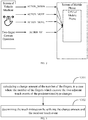
FIG. 2 is a schematic diagram of a vehicle machine being in communication with an intelligent terminal according to the present disclosure; -
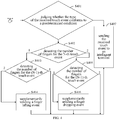
FIG. 3 is a flowchart of determining a touch instruction according to the present disclosure; -
FIG. 4 is a flowchart of a method for processing a touch instruction according to the present disclosure; -
FIG. 5 is a schematic diagram of an apparatus for processing a touch instruction according to the present disclosure; and -
FIG. 6 is a block diagram of an electronic device used to implement the method for processing a touch instruction according to an embodiment of the present disclosure. - Exemplary embodiments of the present disclosure are described below in combination with the drawings, including various details of the embodiments of the present disclosure to facilitate understanding, which should be considered as exemplary only. Thus, those of ordinary skill in the art should realize that various changes and modifications can be made to the embodiments described here without departing from the scope and spirit of the present disclosure. Likewise, descriptions of well-known functions and structures are omitted in the following description for clarity and conciseness.
- As shown in
FIG. 1 , in one implementation, the present disclosure provides a method for processing a touch instruction, and the method may include: - S101: detecting a type of a received touch event;
- S102: in a case where the type of the touch event is a predetermined type, acquiring a number of fingers which execute the touch event of the predetermined type each time; and
- S103: determining a touch instruction by utilizing a change situation of the number of fingers which execute two adjacent touch events of the predetermined type.
- The execution subject of the implementation of the present disclosure may be a vehicle machine. The types of touch events received by the touch screen of the vehicle machine may include at least finger dropping, finger lifting and finger sliding. The finger dropping may correspond to that the touch screen of the vehicle machine detects the touch operation of a finger; the finger lifting may correspond to that the touch screen of the vehicle machine detects a finger leaving the surface of the touch screen; and the finger sliding may correspond to that the touch screen of the vehicle machine detects a finger sliding on the touch screen.
- Based on this, the type of the received touch event is detected, and the obtained detection result may at least include finger dropping, finger lifting and finger sliding.
- The predetermined type may be finger sliding. That is, in a case where the touch screen of the vehicle machine detects finger sliding, it can be considered that the detection result of the current touch event meets a predetermined condition, that is, the type of the touch event is determined to be the predetermined type. In addition, the predetermined condition may also include detecting that the sliding distance of the finger exceeds a corresponding threshold, detecting that the dwell time of the finger on the touch screen exceeds a corresponding threshold, and the like.
- In a case where the detection result meets the predetermined condition, it may be determined that the type of the touch event is the predetermined type. Therefore, the number of fingers corresponding to the touch event conforming to the predetermined condition is acquired. Illustratively, in a case where the operating system of the vehicle machine is an Android system, the detection of the number of fingers may be implemented utilizing a getPointerCount function.
- The judgment basis of two adjacent touch events may be determined by detecting the sliding distance of a finger on the touch screen. For example, in a case where the sliding distance of a finger on the touch screen exceeds a corresponding threshold, one touch event may be determined. The ending position of the first touch event may serve as the starting position of the second touch event. Alternatively, it can also be determined by the dwell time of a finger on the touch screen or other manners.
- A touch instruction corresponding to a touch event is determined by utilizing the change situation of the number of fingers which execute two adjacent touch events of a predetermined type. For example, in a case where the number of fingers is increased or decreased, the number of fingers performing a touch event currently belonging to a predetermined type may be determined according to the change situation of the number of fingers.
- For example, as shown in combination with
FIG. 2 , in the related art, the vehicle machine can only detect touch events of finger dropping of a single finger (corresponding to ACTION_DOWN inFIG. 2 ), finger lifting of a single finger (corresponding to ACTION_UP inFIG. 2 ) and finger sliding (corresponding to ACTION_MOVE inFIG. 2 ). However, the vehicle machine cannot detect the dropping of other fingers and the lifting of other fingers. - For the above reasons, even if a user uses a plurality of fingers (taking two fingers as an example in
FIG. 2 ), the vehicle machine can only classify the movements of respective finger as the movement of a single finger. Based on this, in a case where the vehicle machine communicates with an intelligent terminal (corresponding to the CPU of a mobile phone inFIG. 2 ) to transmit a control instruction, only corresponding information that a control instruction is executed by a single hand will be transmitted. Based on this, the intelligent terminal cannot correctly analyze the control instruction of the user. - However, by adopting the solution of the present disclosure, the number of fingers which execute a touch event can be determined by utilizing the change situation of the number of fingers corresponding to two adjacent touch events conforming to the predetermined type. That is, in a case where a control instruction is transmitted from the vehicle machine to the intelligent terminal, the intelligent terminal can clearly know the number of fingers which execute the touch instruction, and based on this, the recognition precision of the touch instruction can be improved.
- As shown in
FIG. 3 , in one implementation, S103 may specifically include: - S301: calculating a change amount of the number of the fingers, in a case where the number of the fingers which execute the two adjacent touch events of the predetermined type changes; and
- S302: determining the touch instruction by utilizing the change amount and the received touch event.
- For each touch event, the number of fingers which execute this touch event may be recorded. Based on this, the change amount of the number of fingers corresponding to two adjacent touch events conforming to a predetermined type can be determined.
- For example, in a case where the getPointerCount function is used to detect that the number of fingers which execute the N-th touch event conforming to the predetermined type is 1 and the number of fingers which execute the (N-1)-th touch event conforming to the predetermined type is 2, the change amount of the number of fingers is reduced by one. Herein, N is a positive integer.
- In this case, information that the number of fingers is reduced is generated, which, for example, may be represented as ACTION_POINTER_UP. That is, it indicates that there is a case where one of the fingers is lifted in the touch event conforming to the predetermined type at this time compared to the touch event conforming to the predetermined type at the last time.
- Based on this, it may indicate that two adjacent touch events conforming to a predetermined type are executed by a single finger. In this case, the touch instruction corresponding to the touch event is determined by utilizing the change situation of the number of fingers (changing from 2 to 1) and the received touch event. That is, the touch instruction corresponding to the touch event is determined by utilizing the touch trajectory of the single finger.
- For another example, in a case where the getPointerCount function is used to detect that the number of fingers for the N-th touch event conforming to the predetermined type is 2 and the number of fingers for the (N-1)-th touch event conforming to the predetermined type is 1, the change amount of the number of fingers is increased by one.
- In this case, information that the number of fingers is increased is generated, which, for example, may be represented as ACTION_POINTER_DOWN That is, it indicates that there is a case where one finger dropping is increased in the touch event conforming to the predetermined type at this time compared to the touch event conforming to the predetermined type at the last time.
- Based on this, it can indicate that two adjacent touch events conforming to a predetermined type are executed by two fingers. In this case, the touch instruction corresponding to the touch event is determined by utilizing the change situation of the number of fingers (changing from 1 to 2) and the received touch event. That is, the touch instruction corresponding to the touch event is determined by utilizing the touch trajectories of two fingers.
- Through the solution, information that the number of fingers is reduced or information that the number of fingers is increased can be correspondingly generated according to the change amount of the number of fingers corresponding to two adjacent touch events conforming to the predetermined type. Based on this, in a case where the control instruction is subsequently transmitted to the intelligent terminal, the intelligent terminal can be clearly informed of the number of fingers which execute the touch instruction corresponding to the current touch event, so that the intelligent terminal can accurately recognize the intention of the user.
- In one implementation, S103 may further include:
- determining the touch instruction by utilizing the received touch event, in a case where the number of the fingers which execute the two adjacent touch events of the predetermined type does not change.
- In a case where the getPointerCount function is used for detecting that the number of fingers for the N-th touch event conforming to the predetermined type is same as the number of fingers for the (N-1)-th touch event conforming to the predetermined type, it indicates that the number of fingers for the latter touch event of the two adjacent touch events conforming to the predetermined type does not change. Therefore, no information about the number of fingers needs to be additionally generated, and the received touch event may be directly used for determining the touch instruction corresponding to the touch event.
- Based on the above operations, in a case where the control instruction is subsequently transmitted to the intelligent terminal, the data volume of information transmission can be saved. On the other hand, since the number of fingers which execute the touch event does not change, the analysis error of the touch event does not exist for the intelligent terminal.
- In one implementation, the predetermined type in S102 may include: the touch event including a finger sliding event.
- In a case where the touch event includes a finger sliding event, it can be determined that the type of the touch event belongs to a predetermined type.
- The problem to be solved by the present disclosure is that a vehicle machine cannot recognize that one of the fingers is lifted in a case where the number of fingers which execute a touch event is more than one; or the vehicle machine cannot recognize the situation that the number of fingers which execute the touch event is changed from one to more than one.
- Therefore, in the embodiments of the present disclosure, the above-described deficiencies may be overcome by a manner of detecting the number of fingers which execute a finger sliding event. That is, in a case where a change in the number of fingers corresponding to two adjacent touch events of a predetermined type (including a finger sliding event) is detected, information about other fingers dropping (ACTION_POINTER_DOWN) is generated in a case where the number increases; and information about finger lifting (ACTION_POINTER_UP) is generated in a case where the number decreases.
- Through the above solution, the situation that other fingers cannot be detected to lift or drop in the prior art can be overcome by utilizing a manner of generating supplementary information. With the supplementary information, the number of fingers which execute a touch event can be indicated accurately and clearly.
- In one implementation, the method for processing a touch instruction may further include: sending the touch instruction to a controlled terminal.
- Because the execution subject of the present disclosure is a vehicle machine, the corresponding scene is information interaction between the vehicle machine and an intelligent terminal. Therefore, in a case where a touch instruction is determined, sending the touch instruction to a controlled terminal may be further included, that is, the touch instruction is sent to the intelligent terminal so that the intelligent terminal may analyze and execute the touch instruction.
- As shown in
FIG. 4 , in one implementation, the present disclosure provides a method for processing a touch instruction, which may include: - S401: judging whether the type of the received touch event conforms to a predetermined condition, and executing S402 in a case where the type of the received touch event conforms to the predetermined condition; otherwise, executing S407.
- The predetermined condition may be finger sliding. Taking an Android operating system as an example, in a case where the type of the touch event is detected to be ACTION_MOVE, S402 is executed. On the contrary, in a case where the type of the touch event is detected to be either finger lifting (ACTION_UP) or finger dropping (ACTION_DOWN), S407 is executed.
- S402: detecting the number of fingers for the N-th touch event. In a case where the number of fingers for the N-th touch event is 1, S403 is executed; and in a case where the number of fingers for the N-th touch event is 2, S405 is executed.
- The present embodiment is described with only a single finger and two fingers as examples, and in the case of a plurality of fingers, the execution principle is same.
- S403: detecting the number of fingers for the (N-1)-th touch event. In a case where the number of fingers for the (N-1)-th touch event is 2, S404 is executed; and in a case where the number of fingers for the (N-1)-th touch event is 1, S407 is executed.
- S404: supplementarily sending a finger lifting event. After this operation is executed, S407 is executed.
- The finger lifting event represents an event that a second finger is lifted, and the finger lifting event may be represented as ACTION_POINTER_UP. That is, it indicates that the number of fingers for the current touch event is changed from 2 to 1 compared to the previous touch event. Therefore, the finger lifting event is supplementarily sent to the intelligent terminal, so that the number of fingers which execute the touch event can be clearly informed to the intelligent terminal.
- S405: detecting the number of fingers for the (N-1)-th touch event. When the number of fingers for the (N-1)-th touch event is 1, S406 is executed; in a case where the number of fingers for the (N-1)-th touch event is 2, S407 is executed.
- S406: supplementarily sending a finger dropping event. After this operation is executed, S407 is executed.
- The finger dropping event represents an event that a second finger is dropped, and the finger dropping event may be represented as ACTION_POINTER_DOWN. That is, it indicates that the number for fingers of the current touch event is changed from 1 to 2 compared to the previous touch event. The finger dropping event is supplementarily sent to the intelligent terminal, so that the number of fingers which execute the touch event can be clearly informed to the intelligent terminal.
- S407: sending the received touch event to the intelligent terminal.
- In the intelligent terminal side, a touch instruction corresponding to the touch event may be analyzed, and an analysis result may be executed.
- The above scene of the embodiment of the present disclosure may be applicable to the interaction of a vehicle machine with an intelligent terminal, such as a Carlife scene and the like. The above example is illustrated with two fingers as an example, and the above solution is equally applicable to a multi-finger scene.
- As shown in
FIG. 5 , the present disclosure provides an apparatus for processing a touch instruction, and the apparatus may include: - a touch event
type detection module 501 configured for detecting a type of a received touch event; - a finger
number acquisition module 502 configured for, in a case where the type of the touch event is a predetermined type, acquiring a number of fingers which execute the touch event of the predetermined type each time; and - a touch
instruction determination module 503 configured for determining a touch instruction by utilizing a change situation of the number of fingers which execute two adjacent touch events of the predetermined type. - In one implementation, the touch
instruction determination module 503 may further specifically include: - a finger number change amount calculation submodule configured for calculating a change amount of the number of the fingers, in a case where the number of the fingers which execute the two adjacent touch events of the predetermined type changes; and
- a touch instruction determination executing submodule configured for determining the touch instruction by utilizing the change amount and the received touch event.
- In one implementation, the touch
instruction determination module 503 may further be specifically configured for: - determining the touch instruction by utilizing the received touch event, in a case where the number of the fingers which execute the two adjacent touch events of the predetermined type does not change.
- In one implementation, the predetermined type may include: the touch event including a finger sliding event.
- In one implementation, the apparatus for processing a touch instruction may further include an instruction sending module configured for sending the touch instruction to a controlled terminal.
- According to embodiments of the present disclosure, the present disclosure also provides an electronic device and a readable storage medium.
-
FIG. 6 is a block diagram of an electronic device for implementing the method for processing a touch instruction according to an embodiment of the present disclosure. The electronic device is intended to represent various forms of digital computers, such as laptop computers, desktop computers, workstations, personal digital assistants, servers, blade servers, mainframe computers, and other suitable computers. The electronic device may also represent various forms of mobile devices, such as a personal digital assistant, a cellular telephone, a smart phone, a wearable device, and other similar computing devices. The components shown herein, their connections and relationships, and their functions are by way of example only and are not intended to limit the implementations of the present disclosure described and/or claimed herein. - As shown in
FIG. 6 , the electronic device may include one ormore processors 610, amemory 620, and interfaces for connecting components, including high-speed interfaces and low-speed interfaces. The respective components are interconnected by different buses and may be mounted on a common main-board or otherwise as desired. The processor may process instructions executed within the electronic device, including instructions stored in or on the memory to display graphical information of a graphical user interface (GUI) on an external input/output device, such as a display device coupled to the interface. In other implementations, a plurality of processors and/or buses may be used with a plurality of memories, if necessary. Also, a plurality of electronic devices may be connected, each providing some of the necessary operations (e.g., as an array of servers, a set of blade servers, or a multiprocessor system). An example of oneprocessor 610 is shown inFIG. 6 . - The
memory 620 is a non-transitory computer-readable storage medium provided herein. The memory stores instructions executable by at least one processor to cause the at least one processor to execute the method for processing a touch instruction provided herein. The non-transitory computer-readable storage medium of the present disclosure stores computer instructions for causing a computer to execute the method for processing a touch instruction provided herein. - The
memory 620, as a non-transitory computer-readable storage medium, may be configured to store non-transitory software programs, non-transitory computer executable programs and modules, such as program instructions/modules corresponding to the method for processing a touch instruction in the embodiments of the present disclosure (e.g., the touch eventtype detection module 501, the fingernumber acquisition module 502 and the touchinstruction determination module 503 shown inFIG. 5 ). Theprocessor 610 executes various functional applications and data processing of an electronic device by running the non-transitory software programs, instructions and modules stored in thememory 620, that is, implements the method for processing a touch instruction in the above method embodiments. - The
memory 620 may include a program storage area and a data storage area, wherein the program storage area may store an operating system, and an application program required for at least one function; and the data storage area may store data and the like created according to the use of the electronic device for implementing the method for processing a touch instruction. In addition, thememory 620 may include a high speed random access memory, and may also include a non-transitory memory, such as at least one disk storage device, a flash memory device, or other non-transitory solid state storage devices. In some embodiments, thememory 620 may optionally include a memory remotely located with respect to theprocessor 610, and these remote memories may be connected, via a network, to the electronic device for implementing the method for processing a touch instruction in the embodiment. Examples of such networks may include, but are not limited to, the Internet, an intranet, a local area network, a mobile communication network and combinations thereof. - The electronic device for implementing the method for processing a touch instruction may further include an
input device 630 and anoutput device 640. Theprocessor 610, thememory 620, theinput device 630 and theoutput device 640 may be connected by a bus or in other ways, and the bus connection is taken as an example inFIG. 6 . - The
input device 630 may receive input numeric or character information, and generate a key signal input related to a user setting and a function control of the electronic device for implementing the method for processing a touch instruction. For example, the input device may be a touch screen, a keypad, a mouse, a track pad, a touch pad, a pointer stick, one or more mouse buttons, a track ball, a joystick, and other input devices. Theoutput device 640 may include a display device, an auxiliary lighting device (e.g., a light emitting diode (LED)), a tactile feedback device (e.g., a vibrating motor), etc. The display device may include, but is not limited to, a liquid crystal display (LCD), an LED display, and a plasma display. In some embodiments, the display device may be a touch screen. - Various implementations of the systems and techniques described herein may be implemented in a digital electronic circuit system, an integrated circuit system, an application specific integrated circuit (ASIC), a computer hardware, a firmware, a software, and/or a combination thereof. These various implementations may include an implementation in one or more computer programs, which can be executed and/or interpreted on a programmable system including at least one programmable processor; the programmable processor may be a dedicated or general-purpose programmable processor and capable of receiving and transmitting data and instructions from and to a storage system, at least one input device, and at least one output device.
- These computing programs (also referred to as programs, software, software applications, or codes) may include machine instructions of a programmable processor, and may be implemented using high-level procedural and/or object-oriented programming languages, and/or assembly/machine languages. As used herein, the terms "machine-readable medium" and "computer-readable medium" may refer to any computer program product, apparatus, and/or device (e.g., a magnetic disk, an optical disk, a memory, a programmable logic device (PLD)) for providing machine instructions and/or data to a programmable processor, including a machine-readable medium that receives machine instructions as machine-readable signals. The term "machine-readable signal" may refer to any signal used to provide machine instructions and/or data to a programmable processor.
- In order to provide an interaction with a user, the system and technology described here may be implemented on a computer having: a display device (e. g., a cathode ray tube (CRT) or a liquid crystal display (LCD) monitor) for displaying information to the user; and a keyboard and a pointing device (e. g., a mouse or a trackball), through which the user can provide an input to the computer. Other kinds of devices can also provide an interaction with the user. For example, a feedback provided to the user may be any form of sensory feedback (e.g., visual feedback, auditory feedback, or tactile feedback); and an input from the user may be received in any form, including an acoustic input, a voice input or a tactile input.
- The systems and techniques described herein may be implemented in a computing system (e.g., as a data server) that may include a background component, or a computing system (e.g., an application server) that may include a middleware component, or a computing system (e.g., a user computer having a graphical user interface or a web browser through which a user may interact with embodiments of the systems and techniques described herein) that may include a front-end component, or a computing system that may include any combination of such background components, middleware components, or front-end components. The components of the system may be connected to each other through a digital data communication in any form or medium (e.g., a communication network). Examples of the communication network may include a local area network (LAN), a wide area network (WAN) and the Internet.
- The computer system may include a client and a server. The client and the server are typically remote from each other and typically interact via the communication network. The relationship of the client and the server is generated by computer programs running on respective computers and having a client-server relationship with each other. The server may be a cloud server, also called a cloud computing server or a cloud host, which is a host product in a cloud computing service system, for solving the defects of high management difficulty and weak business extension in the conventional physical host and virtual private server (VPS) service. The server may also be a server of a distributed system, or a server incorporating a blockchain.
- It should be understood that the steps can be reordered, added or deleted using the various flows illustrated above. For example, the steps described in the present disclosure may be performed concurrently, sequentially or in a different order, so long as the desired results of the technical solutions disclosed in the present disclosure can be achieved, and there is no limitation herein.
- The above-mentioned implementations are not to be construed as limiting the scope of the present disclosure. It will be apparent to those skilled in the art that various modifications, combinations, sub-combinations and substitutions are possible, depending on design requirements and other factors. Any modifications, equivalent substitutions and improvements, and the like within the spirit and principle of the present disclosure are intended to be included within the scope of the present disclosure.
Claims (13)
- A method for processing a touch instruction, comprising:detecting (S101) a type of a received touch event;in a case where the type of the touch event is a predetermined type, acquiring (S102) a number of fingers which execute the touch event of the predetermined type each time; anddetermining (SI03) a touch instruction by utilizing a change situation of the number of fingers which execute two adjacent touch events of the predetermined type.
- The method of claim 1, wherein the determining the touch instruction by utilizing the change situation of the number of the fingers which execute the two adjacent touch events of the predetermined type, comprises:calculating (S301) a change amount of the number of the fingers, in a case where the number of the fingers which execute the two adjacent touch events of the predetermined type changes; anddetermining (S302) the touch instruction by utilizing the change amount and the received touch event.
- The method of claim 1, wherein the determining the touch instruction by utilizing the change situation of the number of the fingers which execute the two adjacent touch events of the predetermined type, comprises:determining the touch instruction by utilizing the received touch event, in a case where the number of the fingers which execute the two adjacent touch events of the predetermined type does not change.
- The method of any one of claims 1 to 3, wherein the predetermined type comprises: the touch event comprising a finger sliding event.
- The method of any one of claims 1 to 3, further comprising: sending the touch instruction to a controlled terminal.
- An apparatus for processing a touch instruction, comprising:a touch event type detection module (501) configured for detecting a type of a received touch event;a finger number acquisition module (502) configured for, in a case where the type of the touch event is a predetermined type, acquiring a number of fingers which execute the touch event of the predetermined type each time; anda touch instruction determination module (503) configured for determining a touch instruction by utilizing a change situation of the number of fingers which execute two adjacent touch events of the predetermined type.
- The apparatus of claim 6, wherein the touch instruction determination module comprises:a finger number change amount calculation submodule configured for calculating a change amount of the number of the fingers, in a case where the number of the fingers which execute the two adjacent touch events of the predetermined type changes; anda touch instruction determination executing submodule configured for determining the touch instruction by utilizing the change amount and the received touch event.
- The apparatus of claim 6, wherein the touch instruction determination module is specifically configured for:determining the touch instruction by utilizing the received touch event, in a case where the number of the fingers which execute the two adjacent touch events of the predetermined type does not change.
- The apparatus of any one of claims 6 to 8, wherein the predetermined type comprises: the touch event comprising a finger sliding event.
- The apparatus of any one of claims 6 to 8, further comprising:an instruction sending module configured for sending the touch instruction to a controlled terminal.
- An electronic device, comprising:at least one processor (610); anda memory (620) communicatively connected to the at least one processor, whereinthe memory stores instructions executable by the at least one processor, the instructions being executed by the at least one processor to enable the at least one processor to perform the method of any of claims 1 to 5.
- A non-transitory computer-readable storage medium storing computer instructions for enabling a computer to perform the method of any one of claims 1 to 5.
- A computer program product comprising computer instructions which, when executed by a processor, cause the processor to perform the method of any one of claims 1 to 5.
Applications Claiming Priority (1)
| Application Number | Priority Date | Filing Date | Title |
|---|---|---|---|
| CN202011509209.2A CN112527166B (en) | 2020-12-18 | 2020-12-18 | Touch instruction processing method, device, equipment and storage medium |
Publications (2)
| Publication Number | Publication Date |
|---|---|
| EP3865988A2 true EP3865988A2 (en) | 2021-08-18 |
| EP3865988A3 EP3865988A3 (en) | 2022-01-12 |
Family
ID=75001552
Family Applications (1)
| Application Number | Title | Priority Date | Filing Date |
|---|---|---|---|
| EP21182151.7A Ceased EP3865988A3 (en) | 2020-12-18 | 2021-06-28 | Method and apparatus for processing touch instruction, electronic device, storage medium and computer program product |
Country Status (5)
| Country | Link |
|---|---|
| US (1) | US11531463B2 (en) |
| EP (1) | EP3865988A3 (en) |
| JP (1) | JP7261838B2 (en) |
| KR (1) | KR20210151725A (en) |
| CN (1) | CN112527166B (en) |
Citations (4)
| Publication number | Priority date | Publication date | Assignee | Title |
|---|---|---|---|---|
| US20100214322A1 (en) * | 2009-02-24 | 2010-08-26 | Samsung Electronics Co., Ltd. | Method for controlling display and device using the same |
| EP2341413A1 (en) * | 2009-12-31 | 2011-07-06 | Sony Computer Entertainment Europe Limited | Entertainment device and method of content navigation |
| US20130120289A1 (en) * | 2011-11-16 | 2013-05-16 | Canon Kabushiki Kaisha | Information processing apparatus and method of controlling same |
| EP2677405A1 (en) * | 2011-02-18 | 2013-12-25 | NEC CASIO Mobile Communications, Ltd. | Electronic apparatus, control setting method, and program |
Family Cites Families (15)
| Publication number | Priority date | Publication date | Assignee | Title |
|---|---|---|---|---|
| KR101117481B1 (en) * | 2009-10-12 | 2012-03-07 | 라오넥스(주) | Multi-touch type input controlling system |
| CN103365574A (en) * | 2012-03-27 | 2013-10-23 | 百度在线网络技术(北京)有限公司 | Method and equipment for executing page turning operation |
| US20130339859A1 (en) * | 2012-06-15 | 2013-12-19 | Muzik LLC | Interactive networked headphones |
| JP6188288B2 (en) | 2012-07-20 | 2017-08-30 | キヤノン株式会社 | Information processing apparatus and control method thereof |
| JP2015049773A (en) | 2013-09-03 | 2015-03-16 | コニカミノルタ株式会社 | Object operation system, object operation control program and object operation control method |
| US9207794B2 (en) | 2013-12-30 | 2015-12-08 | Google Inc. | Disambiguation of user intent on a touchscreen keyboard |
| KR20160034776A (en) * | 2014-09-22 | 2016-03-30 | 삼성전자주식회사 | Device and method of controlling the device |
| CN104333844A (en) * | 2014-11-12 | 2015-02-04 | 沈阳美行科技有限公司 | Interconnection method of vehicle-mounted terminal and smart phone |
| CN108268205A (en) | 2016-12-30 | 2018-07-10 | 乐视汽车(北京)有限公司 | Vehicle device is to the touch screen countercharge method and system of mobile terminal |
| CN108111750B (en) * | 2017-12-12 | 2020-04-07 | 维沃移动通信有限公司 | Zoom adjustment method, mobile terminal and computer readable storage medium |
| CN109032397A (en) * | 2018-10-22 | 2018-12-18 | 隰佳杰 | A kind of input equipment |
| CN111221430B (en) * | 2018-11-26 | 2023-02-28 | 福建天泉教育科技有限公司 | Method and storage medium for fusing single-finger handwriting and double-finger touch |
| JP2020154727A (en) | 2019-03-20 | 2020-09-24 | アイシン・エィ・ダブリュ株式会社 | Operation reception system and operation reception program |
| CN111338516B (en) * | 2020-02-26 | 2022-05-10 | 业成科技(成都)有限公司 | Finger touch detection method and device, electronic device, storage medium |
| CN112000247B (en) * | 2020-08-27 | 2024-07-23 | 努比亚技术有限公司 | Touch signal processing method, device and computer readable storage medium |
-
2020
- 2020-12-18 CN CN202011509209.2A patent/CN112527166B/en active Active
-
2021
- 2021-06-28 EP EP21182151.7A patent/EP3865988A3/en not_active Ceased
- 2021-07-02 US US17/366,723 patent/US11531463B2/en active Active
- 2021-07-09 JP JP2021113986A patent/JP7261838B2/en active Active
- 2021-11-25 KR KR1020210164385A patent/KR20210151725A/en active Pending
Patent Citations (4)
| Publication number | Priority date | Publication date | Assignee | Title |
|---|---|---|---|---|
| US20100214322A1 (en) * | 2009-02-24 | 2010-08-26 | Samsung Electronics Co., Ltd. | Method for controlling display and device using the same |
| EP2341413A1 (en) * | 2009-12-31 | 2011-07-06 | Sony Computer Entertainment Europe Limited | Entertainment device and method of content navigation |
| EP2677405A1 (en) * | 2011-02-18 | 2013-12-25 | NEC CASIO Mobile Communications, Ltd. | Electronic apparatus, control setting method, and program |
| US20130120289A1 (en) * | 2011-11-16 | 2013-05-16 | Canon Kabushiki Kaisha | Information processing apparatus and method of controlling same |
Also Published As
| Publication number | Publication date |
|---|---|
| KR20210151725A (en) | 2021-12-14 |
| EP3865988A3 (en) | 2022-01-12 |
| US11531463B2 (en) | 2022-12-20 |
| CN112527166A (en) | 2021-03-19 |
| CN112527166B (en) | 2022-11-18 |
| US20210333963A1 (en) | 2021-10-28 |
| JP7261838B2 (en) | 2023-04-20 |
| JP2021180014A (en) | 2021-11-18 |
Similar Documents
| Publication | Publication Date | Title |
|---|---|---|
| EP3926526A2 (en) | Optical character recognition method and apparatus, electronic device and storage medium | |
| EP3869397A2 (en) | Method, apparatus, device and storage medium for processing image | |
| US11468769B2 (en) | Method for detecting vehicle queue length | |
| EP3944211A2 (en) | Traffic data analysis method and apparatus, electronic device, vehicle, storage medium and program product | |
| EP3866065A1 (en) | Target detection method, device, electronic apparatus, and storage medium | |
| EP3872696B1 (en) | Method and apparatus for detecting mobile traffic light, and electronic device | |
| EP3920094A2 (en) | Method and apparatus for updating user image recognition model | |
| CN110737560B (en) | Service status detection method, device, electronic equipment and medium | |
| CN113360116A (en) | Method, device and equipment for controlling terminal and storage medium | |
| US20210195365A1 (en) | Positioning method and device, on-board equipment, vehicle, and positioning system | |
| US20210125353A1 (en) | Method and apparatus for detecting and tracking target, electronic device and storage media | |
| CN111966767B (en) | Trajectory heat map generation method, device, electronic device and storage medium | |
| US11830242B2 (en) | Method for generating a license plate defacement classification model, license plate defacement classification method, electronic device and storage medium | |
| EP3872704A2 (en) | Header model for instance segmentation, instance segmentation model, image segmentation method and apparatus | |
| CN110705551B (en) | Key position identification method and device, electronic equipment and storage medium | |
| CN112489481A (en) | Parking method, device, equipment and storage medium | |
| US20210406480A1 (en) | Method for generating conversation, electronic device, and storage medium | |
| CN111966432A (en) | Verification code processing method, device, electronic device and storage medium | |
| US11531463B2 (en) | Method for determining touch instruction, electronic device and storage medium | |
| EP3974997A1 (en) | A method of signal conversion, a device, an electronic device and a storage medium | |
| CN113312122A (en) | Virtual keyboard calling method and device, computer storage medium and electronic equipment | |
| US11934292B2 (en) | Sampling object determination method, electronic device, and computer-readable storage medium | |
| CN116339603A (en) | Reverse control method and device for vehicle-mounted display and electronic equipment | |
| CN114343483B (en) | Control method, device, equipment and storage medium for movable object | |
| CN111581071B (en) | Data processing methods, devices, equipment and storage media |
Legal Events
| Date | Code | Title | Description |
|---|---|---|---|
| PUAI | Public reference made under article 153(3) epc to a published international application that has entered the european phase |
Free format text: ORIGINAL CODE: 0009012 |
|
| STAA | Information on the status of an ep patent application or granted ep patent |
Free format text: STATUS: REQUEST FOR EXAMINATION WAS MADE |
|
| 17P | Request for examination filed |
Effective date: 20210628 |
|
| AK | Designated contracting states |
Kind code of ref document: A2 Designated state(s): AL AT BE BG CH CY CZ DE DK EE ES FI FR GB GR HR HU IE IS IT LI LT LU LV MC MK MT NL NO PL PT RO RS SE SI SK SM TR |
|
| PUAL | Search report despatched |
Free format text: ORIGINAL CODE: 0009013 |
|
| AK | Designated contracting states |
Kind code of ref document: A3 Designated state(s): AL AT BE BG CH CY CZ DE DK EE ES FI FR GB GR HR HU IE IS IT LI LT LU LV MC MK MT NL NO PL PT RO RS SE SI SK SM TR |
|
| RIC1 | Information provided on ipc code assigned before grant |
Ipc: G06F 3/0488 20130101ALI20211203BHEP Ipc: G06F 3/041 20060101AFI20211203BHEP |
|
| STAA | Information on the status of an ep patent application or granted ep patent |
Free format text: STATUS: EXAMINATION IS IN PROGRESS |
|
| 17Q | First examination report despatched |
Effective date: 20220913 |
|
| STAA | Information on the status of an ep patent application or granted ep patent |
Free format text: STATUS: THE APPLICATION HAS BEEN REFUSED |
|
| 18R | Application refused |
Effective date: 20231103 |