EP3865534A1 - Method for recycling materials obtained through gelification - Google Patents
Method for recycling materials obtained through gelification Download PDFInfo
- Publication number
- EP3865534A1 EP3865534A1 EP21150687.8A EP21150687A EP3865534A1 EP 3865534 A1 EP3865534 A1 EP 3865534A1 EP 21150687 A EP21150687 A EP 21150687A EP 3865534 A1 EP3865534 A1 EP 3865534A1
- Authority
- EP
- European Patent Office
- Prior art keywords
- cation
- polyanionic polymer
- ionic polymeric
- complexing agent
- hydrogel
- Prior art date
- Legal status (The legal status is an assumption and is not a legal conclusion. Google has not performed a legal analysis and makes no representation as to the accuracy of the status listed.)
- Granted
Links
Images

Classifications
-
- C—CHEMISTRY; METALLURGY
- C08—ORGANIC MACROMOLECULAR COMPOUNDS; THEIR PREPARATION OR CHEMICAL WORKING-UP; COMPOSITIONS BASED THEREON
- C08J—WORKING-UP; GENERAL PROCESSES OF COMPOUNDING; AFTER-TREATMENT NOT COVERED BY SUBCLASSES C08B, C08C, C08F, C08G or C08H
- C08J3/00—Processes of treating or compounding macromolecular substances
- C08J3/02—Making solutions, dispersions, lattices or gels by other methods than by solution, emulsion or suspension polymerisation techniques
- C08J3/03—Making solutions, dispersions, lattices or gels by other methods than by solution, emulsion or suspension polymerisation techniques in aqueous media
- C08J3/075—Macromolecular gels
-
- C—CHEMISTRY; METALLURGY
- C08—ORGANIC MACROMOLECULAR COMPOUNDS; THEIR PREPARATION OR CHEMICAL WORKING-UP; COMPOSITIONS BASED THEREON
- C08B—POLYSACCHARIDES; DERIVATIVES THEREOF
- C08B37/00—Preparation of polysaccharides not provided for in groups C08B1/00 - C08B35/00; Derivatives thereof
- C08B37/006—Heteroglycans, i.e. polysaccharides having more than one sugar residue in the main chain in either alternating or less regular sequence; Gellans; Succinoglycans; Arabinogalactans; Tragacanth or gum tragacanth or traganth from Astragalus; Gum Karaya from Sterculia urens; Gum Ghatti from Anogeissus latifolia; Derivatives thereof
- C08B37/0084—Guluromannuronans, e.g. alginic acid, i.e. D-mannuronic acid and D-guluronic acid units linked with alternating alpha- and beta-1,4-glycosidic bonds; Derivatives thereof, e.g. alginates
-
- C—CHEMISTRY; METALLURGY
- C08—ORGANIC MACROMOLECULAR COMPOUNDS; THEIR PREPARATION OR CHEMICAL WORKING-UP; COMPOSITIONS BASED THEREON
- C08J—WORKING-UP; GENERAL PROCESSES OF COMPOUNDING; AFTER-TREATMENT NOT COVERED BY SUBCLASSES C08B, C08C, C08F, C08G or C08H
- C08J11/00—Recovery or working-up of waste materials
- C08J11/04—Recovery or working-up of waste materials of polymers
-
- C—CHEMISTRY; METALLURGY
- C08—ORGANIC MACROMOLECULAR COMPOUNDS; THEIR PREPARATION OR CHEMICAL WORKING-UP; COMPOSITIONS BASED THEREON
- C08J—WORKING-UP; GENERAL PROCESSES OF COMPOUNDING; AFTER-TREATMENT NOT COVERED BY SUBCLASSES C08B, C08C, C08F, C08G or C08H
- C08J2300/00—Characterised by the use of unspecified polymers
- C08J2300/24—Thermosetting resins
-
- Y—GENERAL TAGGING OF NEW TECHNOLOGICAL DEVELOPMENTS; GENERAL TAGGING OF CROSS-SECTIONAL TECHNOLOGIES SPANNING OVER SEVERAL SECTIONS OF THE IPC; TECHNICAL SUBJECTS COVERED BY FORMER USPC CROSS-REFERENCE ART COLLECTIONS [XRACs] AND DIGESTS
- Y02—TECHNOLOGIES OR APPLICATIONS FOR MITIGATION OR ADAPTATION AGAINST CLIMATE CHANGE
- Y02P—CLIMATE CHANGE MITIGATION TECHNOLOGIES IN THE PRODUCTION OR PROCESSING OF GOODS
- Y02P20/00—Technologies relating to chemical industry
- Y02P20/141—Feedstock
- Y02P20/143—Feedstock the feedstock being recycled material, e.g. plastics
-
- Y—GENERAL TAGGING OF NEW TECHNOLOGICAL DEVELOPMENTS; GENERAL TAGGING OF CROSS-SECTIONAL TECHNOLOGIES SPANNING OVER SEVERAL SECTIONS OF THE IPC; TECHNICAL SUBJECTS COVERED BY FORMER USPC CROSS-REFERENCE ART COLLECTIONS [XRACs] AND DIGESTS
- Y02—TECHNOLOGIES OR APPLICATIONS FOR MITIGATION OR ADAPTATION AGAINST CLIMATE CHANGE
- Y02W—CLIMATE CHANGE MITIGATION TECHNOLOGIES RELATED TO WASTEWATER TREATMENT OR WASTE MANAGEMENT
- Y02W30/00—Technologies for solid waste management
- Y02W30/50—Reuse, recycling or recovery technologies
- Y02W30/62—Plastics recycling; Rubber recycling
Definitions
- the present invention relates to a method for recycling a material comprising at least one continuous phase consisting of an ionic polymeric network composed of a polyanionic polymer and at least one cation, comprising the steps of:
- a further advantage connected to the method according to the present invention lies in the fact that the recycled material obtainable from it presents completely similar properties, in particular thermal and acoustic, and in line with the material before recycling. This makes it possible to maintain, even with a renewed material as a result of recycling, the original performance, thus offering - at a lower environmental and economic cost - a further advantage to the user.
- the present invention can exhibit in one or more of its aspects one or more of the following preferred features, which may be combined with each other in accordance with application requirements.
- said at least one cation is selected from the group consisting of: K + , Ca 2+ , Sr 2+ , Cu 2+ , Ba 2+ , Zn 2+ , Co 2+ , Mn 2+ , Ni 2+ .
- said at least one ionic polymeric network comprises calcium alginate.
- the pH level of said solution should never be such that it causes degradation of the anionic polymer chain.
- the maximum pH of the aqueous solution of step b) is in the range of 7 to 9.
- the method according to the present invention comprises the step of: transferring into a mold said hydrogel of said step d).
- the recycled material obtainable by means from it presents properties that are completely similar, in particular in terms of thermal and acoustic properties, and in line with the material before recycling, thus making it possible to maintain the original performance of the starting material, even with a renewed material after recycling.
- This makes it possible to have - at a lower environmental and economic cost - a recycled material including at least one continuous phase consisting of an ionic polymeric network composed of at least one polyanionic polymer and at least one cation.
Landscapes
- Chemical & Material Sciences (AREA)
- Health & Medical Sciences (AREA)
- Chemical Kinetics & Catalysis (AREA)
- Life Sciences & Earth Sciences (AREA)
- Organic Chemistry (AREA)
- Polymers & Plastics (AREA)
- Medicinal Chemistry (AREA)
- Dispersion Chemistry (AREA)
- Biochemistry (AREA)
- Materials Engineering (AREA)
- Molecular Biology (AREA)
- Engineering & Computer Science (AREA)
- Sustainable Development (AREA)
- General Health & Medical Sciences (AREA)
- Separation, Recovery Or Treatment Of Waste Materials Containing Plastics (AREA)
- Processes Of Treating Macromolecular Substances (AREA)
Abstract
Description
- The present invention relates to the technical field of the recycling of materials comprising polymers cross-linked by ionic interaction.
- The use of materials comprising cross-linked polymers, that is polymers that form polymeric networks, is widespread in a very wide range of technological sectors, ranging - by way of example - from the construction sector, to the automotive, aerospace and nautical sectors, to the food, biomedical and pharmaceutical sectors, as well as the packaging sector.
- In these sectors, and in particular in the food, biomedical and pharmaceutical sectors, the use of polymers which are cross-linked through ionic interaction (so-called "ionically cross-linked polymers") has become more and more widespread, which peculiarity lies in the fact that the junction between the different polymer chains occurs through ionic interactions, thus making it possible to exclude the use of cross-linking agents that can sometimes cause toxicity problems.
- Among the polymers cross-linked by ionic interaction, those based on polyanionic polymers, and in particular those based on anionic polysaccharides, have been particularly successful, since polysaccharides represent a widely available, biodegradable and of natural origin raw material. Among the anionic polysaccharides, particular interest has been shown in alginates.
- Although they have been improved in terms of performances and on their related environmental impact, ionic cross-linked polymers still present a number of technical limitations when considering their so-called "end-of-life". As a matter of fact, the disposal of materials comprising these polymers today represents almost exclusively the only economically and technically advantageous choice. This entails a cost both in economic and environmental terms for the entire production chain and, in particular, for the user.
- In this context, the Applicant has found that, although there are already known in literature and in the industry recycling methods that aim at the recovery and valorization at the end of life of articles obtained from materials comprising cross-linked polymers, there is still the need to identify efficient and low-cost recycling methods in the specific case of materials comprising cross-linked polymers through ionic interaction, such as in particular those comprising polysaccharides.
- The aim, therefore, of the present invention is the development of a recycling process capable of providing an efficient and low-cost method allowing the recycling of materials comprising polymers cross-linked by ionic interaction based on polyanionic polymers.
- The applicant has surprisingly observed that it is possible to achieve this and other desirable purposes by reversibly subtracting from the polymeric ionic network the ionic species that acts as a junction between the polymer chains in the polymeric network itself, thereby enabling its subsequent reconstitution and thus the recycling of the material.
- In a first aspect, therefore, the present invention relates to a method for recycling a material comprising at least one continuous phase consisting of an ionic polymeric network composed of a polyanionic polymer and at least one cation, comprising the steps of:
- (a) preparing a powder of at least one material comprising at least one continuous phase consisting of an ionic polymeric network composed of at least one polyanionic polymer and at least one cation;
- (b) preparing an aqueous solution of a complexing agent of said at least one cation;
- (c) adding to the aqueous solution of step (b) the powder obtained from step (a), in order to disaggregate said ionic polymeric network composed of at least one polyanion and at least one cation and obtain an aqueous mixture comprising at least one polyanionic polymer and at least one complex of said at least one cation with said complexing agent;
- (d) adding to the aqueous mixture of step (c) an acidifying agent, so as to decompose said complex and form a hydrogel comprising an ionic polymeric network composed of said at least one polyanionic polymer and said at least one cation; and
- e) dehydrating said hydrogel of step d), so as to obtain a recycled material comprising at least one continuous phase consisting of an ionic polymeric network composed of said at least one polyanionic polymer and said at least one cation.
- The method of the present invention, by bringing into contact with the material to be recycled an aqueous solution of a complexing agent of said at least one cation, disaggregates the ionic polymeric network comprising said at least one polyanionic polymer and said at least one cation thereby subtracting from the ionic polymeric network the ionic species acting as a junction between the polymer chains in said polymeric network. Through the subsequent acidification of the aqueous mixture obtained in this way, the complex is then decomposed, so making available again said cation that can then reconstitute, together with the polyanionic polymer, the ionic polymeric network. This then allows the material to be recycled.
- The possibility to recycle a material comprising at least one continuous phase consisting of an ionic polymeric network composed of at least one polyanionic polymer and at least one cation increases the commercial value of said material at the same amount of raw material used in the production, reducing at the same time the related costs both in economic and environmental terms for the whole production chain and, in particular, for the user.
- Moreover, the Applicant has found that a further advantage connected to the method according to the present invention lies in the fact that the recycled material obtainable by said method presents appreciable properties, entirely similar, in particular in terms of thermal and acoustic properties, and in alignment with those of the material before recycling. This therefore makes it possible to maintain, even with a renewed material following recycling, the original performance while offering - at a lower environmental and economic cost - a further advantage to the user.
- In a further aspect thereof, the present invention therefore also relates to a recycled material comprising at least one continuous phase consisting of a polymeric ionic network composed of at least one polyanionic polymer and at least one cation and wherein said recycled material further comprises a complexing agent of said at least one cation. The said material is advantageously obtainable by means of the method according to the present invention.
- Advantages relating to this further aspect of the invention are the same as those of the method according to the present invention and are therefore not repeated herein.
- The recycled material advantageously obtainable by means of the method according to the present invention, having entirely similar properties, in particular thermal and acoustic properties, and in line with the material before recycling is therefore suitable for use in the manufacture of articles such as, for example, sound absorbing panel, sound insulating panel, and heat insulating panel.
- In a further aspect thereof, the present invention also relates to an article selected from the group consisting of: sound absorbing panel, sound insulating panel and heat insulating panel, wherein at least one element of such article is made from the recycled material according to the present invention.
-
-
Figure 1 shows the sound absorption curves obtained from the characterization of the recycled material (RICIC) of Example 1 and the starting material (ORIG) obtained in Reference Example 1; and -
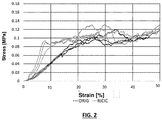
Figure 2 shows compressive strength curves obtained from characterization of the recycled material (RICIC) of Example 1 and the starting material (ORIG) obtained in Reference Example 1. - In a first aspect, therefore, the present invention relates to a method for recycling a material comprising at least one continuous phase consisting of an ionic polymeric network composed a polyanionic polymer and at least one cation, comprising the steps of:
- (a) preparing a powder of at least one material comprising at least one continuous phase consisting of an ionic polymeric network composed of at least one polyanionic polymer and at least one cation;
- (b) preparing an aqueous solution of a complexing agent of said at least one cation;
- (c) adding to the aqueous solution of step (b) the powder obtained from step (a), in order to disaggregate said ionic polymeric network composed of at least one polyanionic polymer and at least one cation and obtain an aqueous mixture comprising at least one polyanionic polymer and at least one complex of said at least one cation with said complexing agent;
- (d) adding to the aqueous mixture of step (c) an acidifying agent, so as to decompose said complex and form a hydrogel comprising an ionic polymeric network composed of said at least one polyanionic polymer and said at least one cation; and
- e) dehydrating said hydrogel of step d), so as to obtain a recycled material comprising at least one continuous phase consisting of an ionic polymeric network composed of said at least one polyanionic polymer and said at least one cation.
- The method of the present invention, by bringing into contact with the material to be recycled an aqueous solution of a complexing agent of said at least one cation, disaggregates the ionic polymeric network comprising said at least one polyanionic polymer and said at least one cation thereby subtracting from the ionic polymeric network the ionic species acting as a junction between the polymer chains in said polymeric network. Through the subsequent acidification of the aqueous mixture obtained in this way, the complex is then decomposed, so making available again said cation that can then reconstitute, together with the polyanionic polymer, the ionic polymeric network and thus allowing the recycling of the material.
- The possibility to recycle a material comprising at least one continuous phase consisting of an ionic polymeric network composed of at least one polyanionic polymer and at least one cation increases the commercial value of said material at the same amount of raw material used in the production, reducing at the same time the related costs both in economic and environmental terms for the whole production chain and, in particular, for the user.
- Moreover, the Applicant has found that a further advantage connected to the method according to the present invention lies in the fact that the recycled material obtainable from it presents completely similar properties, in particular thermal and acoustic, and in line with the material before recycling. This makes it possible to maintain, even with a renewed material as a result of recycling, the original performance, thus offering - at a lower environmental and economic cost - a further advantage to the user.
- The present invention can exhibit in one or more of its aspects one or more of the following preferred features, which may be combined with each other in accordance with application requirements.
- Within the scope of the present description and subsequent claims, all numerical quantities indicating quantities, parameters, percentages, and so forth are to be considered preceded in all circumstances by the term "about" unless otherwise indicated. Further, all numerical quantity ranges include all possible combinations of maximum and minimum numerical values and all possible intermediate ranges, other than those specifically indicated below.
- Within the scope of the present description and subsequent claims, when using the expression:
- "ionic polymeric network" it is meant a three-dimensional polymeric structure formed through the establishment of an electrostatic interaction (or molecular one that is non-covalent in nature) between ionic polymer chains and at least one counterion, which acts as a junction point of a network; and
- "Hydrogel" it is meant a heterophasic system comprising a water based dispersing phase and a dispersed phase composed of a continuous ionic polymeric network, wherein the water based dispersing phase is incorporated within the network.
- The starting material of the method according to the present invention comprises at least one continuous phase consisting of an ionic polymeric network composed of at least one polyanionic polymer and at least one cation.
- Preferably, said at least one polyanionic polymer is an anionic polysaccharide, wherein even more preferably said polysaccharide is selected from the group consisting of: alginate, carrageenan, hyaluronic acid, pectin, cellulose, and xanthan.
- More preferably, said at least one polyanionic polymer is alginate.
- Preferably, said at least one cation is selected from the group consisting of: K+, Ca2+, Sr2+, Cu2+, Ba2+, Zn2+, Co2+, Mn2+, Ni2+.
- More preferably, said at least one cation is Ca2+.
- Said Ca2+ cation may originate from a suitable source, such as calcium carbonate.
- In a particularly preferred form of the invention, said at least one ionic polymeric network comprises calcium alginate.
- Step a) of the method according to the present invention provides for preparing a powder of at least one material comprising at least one continuous phase consisting of an ionic polymeric network composed of at least one polyanionic polymer and at least one cation.
- Preferably, said step a) is conducted using a disc mill.
- Preferably, said step a) is conducted at a temperature of between 10 and 40 °C, so as not to cause degradation of the starting material.
- Step b) of the method according to the present invention provides for preparing a water based of a complexing agent of said at least one cation.
- Said complexing agent is capable of forming a complex with said at least one cation.
- Preferably, the association constant of said complexing agent with said at least one cation satisfies the following inequality (i):

- kcomplx,pH,T is the association constant of the complex formed by said at least one complexing agent and said at least one cation at the temperature and pH level of the solution of step (c), and
- kpol,pH,T is the association constant of the bond formed by said at least one polyanionic polymeric network ion and said at said one cation at the temperature and pH level of the present solution of step c).
- Preferably, said at least one complexing agent is selected from the group consisting of: disodium salt of ethylenediaminetetraacetic acid (2Na - EDTA), ethylenediaminetetraacetic acid (EDTA), Ethylenediaminediacetic acid (EDDA), tricine, ethylene diamino-disuccinic acid (EDDS), and methyl-glycine diacetate (MGDA).
- More preferably, said at least one complexing agent is ethylenediaminetetraacetic acid salt, even more preferably disodium salt of ethylenediaminetetraacetic acid.
- Preferably in said step b) said water based solution has a pH greater than or equal to 7. More preferably said water based solution has a pH ranging from 7.5 to 8.5.
- However, the pH level of said solution should never be such that it causes degradation of the anionic polymer chain. Preferably, when the ionic polymeric network is composed of calcium alginate the maximum pH of the aqueous solution of step b) is in the range of 7 to 9.
- Step c) of the method according to the present invention involves the addition to the aqueous solution of step b) of the powder obtained from step a), so as to disaggregate said ionic polymeric network comprising at least one polyanionic polymer and at least one cation and obtain an aqueous mixture comprising at least one polyanionic polymer and at least one complex of said at least one cation with said complexing agent.
- Preferably, the aqueous mixture has a pH value at which the association constant of said complexing agent complex with said at least one cation satisfies the following inequality (i):

- kcomplx,pH,T is the association constant of the complex formed by said at least one complexing agent and said at least one cation at the temperature and pH level of the solution of step (c), and
- kpol,pH,T is the association constant of the bond formed by said at least one polyanionic polymeric network ion and said at said one cation at the temperature and pH level of the present solution of step c).
- Preferably, however, the pH value should never be such that it causes degradation of the polymer chain of the anionic polymer.
- Preferably, in said step c), the powder obtained from step a) is dispersed while keeping the mixture in continuous stirring/mixing.
- Preferably, in said step c) the aqueous mixture is maintained at a temperature ranging between 10°C and 80 °C.
- Preferably, in said step c), when the said ionic polymeric network is composed of calcium alginate, said aqueous mixture is maintained at a temperature ranging from 10 °C to 30 °C.
- Preferably, in said step c), when said ionic polymeric network comprises calcium alginate, the pH of said aqueous mixture ranges from 7 to 9.
- Preferably, in the mixture of step c) the at least one complexing agent is present in stoichiometric excess with respect to the at least one cation. In other words, in step c) the amount of complexing agent is preferably equal to or in excess of the amount required - according to the stoichiometry of the complex to be formed - to complex all the cation present, such that the said entire cation is complexed.
- Step d) of the method according to the present invention provides for adding to the aqueous mixture of step c) an acidifying agent, so as to decompose said complex and form a hydrogel comprising an ionic polymeric network composed of said at least one polyanionic polymer and said at least one cation.
- Preferably, said acidifying agent is selected from the group consisting of: an organic acid, HCl, or mixtures thereof.
- Preferably said organic acid is glucono delta-lactone (GDL).
- In an embodiment of the method according to the present invention, said acidifying agent is glucono delta-lactone (GDL).
- In a further embodiment of the method according to the present invention, said acidifying agent is HCl. Preferably, when said acidifying agent is HCl, said HCI is added in an amount not exceeding 0.5 %v/v relative to the total volume of the aqueous mixture and, even more preferably, said aqueous mixture is brought to a temperature between 60 °C and 80 °C.
- Preferably, in said step d) said acidifying agent is added to said aqueous mixture in molar excess of moles of complexing agent. Preferably, in said step d) said acidifying agent is added in an amount such that the mole ratio of said acidifying agent to said complexing agent is between 1 and 4.
- Preferably, in said step d) said aqueous mixture is brought to a pH of less than or equal to 5.
- Preferably, the method according to the present invention comprises the step of: transferring into a mold said hydrogel of said step d).
- Step e) of the method according to the present invention provides for dehydrating said hydrogel of step d), so that a recycled material comprising at least one continuous phase consisting of an ionic polymeric network comprising at least one polyanionic polymer and at least one cation is obtained.
- Preferably, said operation of dehydrating said hydrogel of phase e) is carried out by freeze-drying.
- By means of the method according to the present invention, it is therefore possible to recycle a material comprising at least one continuous phase consisting of an ionic polymeric network composed of at least one polyanionic polymer and at least one cation, increasing its commercial value for the same amount of raw material used in the production, while at the same time reducing the costs associated therewith both in economic and environmental terms for the entire production chain and, in particular, for the user.
- The recycled material obtainable by means from it presents properties that are completely similar, in particular in terms of thermal and acoustic properties, and in line with the material before recycling, thus making it possible to maintain the original performance of the starting material, even with a renewed material after recycling. This makes it possible to have - at a lower environmental and economic cost - a recycled material including at least one continuous phase consisting of an ionic polymeric network composed of at least one polyanionic polymer and at least one cation.
- In a further aspect thereof, the present invention therefore also relates to a recycled material comprising at least one continuous phase consisting of a polymeric ionic network composed of at least one polyanionic polymer and at least one cation and wherein said recycled material further comprises a complexing agent of said at least one cation. Said material is advantageously obtainable by means of the method according to the present invention.
- Advantages relating to this further aspect of the invention are the same as those of the method according to the present invention and are therefore not repeated herein.
- The recycled material advantageously obtainable by means of the method according to the present invention, having entirely similar properties, in particular thermal and acoustic properties, and in line with the material before recycling is therefore suitable for use in the manufacture of articles such as, for example, sound absorbing panel, sound insulating panel, and heat insulating panel.
- The material recycled according to the present invention also comprises a complexing agent of said at least one cation. In other words, the recycled material according to the present invention also comprises the complexing agent of said at least one cation, which during step c) of the method disaggregates the ionic polymeric network comprising the at least said one polyanionic polymer and the at least said one cation by subtracting from the ionic polymeric network the ionic species acting as a junction between the polymer chains in said polymeric network.
- The recycled material according to this preferred embodiment exhibits the further advantage that it can be further recycled, without the need for any further additions of complexing agent, thereby further simplifying its recycling cycle.
- In a further aspect, the present invention therefore relates to a method for recycling a material comprising at least one continuous step consisting of an ionic polymeric network composed of at least one polyanionic polymer and at least one cation, and at least one complexing agent of said at least one cation, comprising the steps of:
- A) preparing a powder of a material comprising at least one continuous phase consisting of an ionic polymeric network composed of at least one polyanionic polymer and at least one cation, and at least one complexing agent of said at least one cation;
- B) dispersing the powder obtained from step A) in an aqueous solution, so as to disaggregate said ionic polymeric network composed of at least one polyanionic polymer and at least one cation and obtain an aqueous mixture comprising at least one polyanionic polymer and at least one complex of said at least one cation with said complexing agent;
- C) adding to the aqueous mixture of step B) an acidifying agent, so as to decompose said complex and form a hydrogel comprising an ionic polymeric network composed of said at least one polyanionic polymer and said at least one cation; and
- D) dehydrating said hydrogel of step C).
- In this way, the method according to this further aspect of the invention yields from step C) a further recycled material comprising an ionic polymeric network composed of said at least one polyanionic polymer and said at least one cation.
- Preferably, the conditions and characteristics of steps A, B, C, and D of the method according to said further aspect of the invention are the same as those described above for the corresponding steps (a), (c), (d), and (e) of the method according to the first aspect of the present invention.
- In a further aspect thereof, the present invention also relates to an article selected from the group consisting of: sound absorbing panel, sound insulating panel, and heat insulating panel, wherein at least one element of said article comprises or consists of at least one recycled material according to the present invention.
- Further features and advantages of the invention will become more evident from the following description of some of its preferred embodiments, made below by way of non-limiting example with reference to the following illustrative examples.
- The thermal conductivity of the material was assessed using a thermoflowmeter (NETZSCH HFM 446 Lambda Series) in which, by applying a temperature gradient and the measurement of the heat flow through the sample, the thermal conductivity is calculated using the Fourier's equation for thermal conductivity. Samples, measuring 200 x 200 mm and having a minimum thickness of 5 mm were tested under optimal conditions as soon as the freeze-drying cycle was completed. For the testing purpose, they were placed in between the two thermal plates of the thermal flowmeter and a pressure of 2kPa was applied in order to minimize the contact resistance present at the interfaces. Each data was replicated 3 times on three different samples and the mean value and its standard deviation are reported here.
- A Shimadzu Autograph 2, AG-10TA equipped with a 100 kN load cell was used to perform a compression test on specimens with dimensions of 50 x 50 x 20 mm. The crosshead speed during the test was 1.3 mm/min. Each specimen before the test was conditioned 12h in an oven at 45 °C.
- Sound absorption was measured using a Kundt tube by generating a plane sound signal at various frequencies (from 20 to 4000 hz). This sound front generated by a speaker at one end of the instrument strikes the sample perpendicularly placed at the opposite end of the tube and two microphones placed between the speaker and the sample to be tested record the intensity of the wave incident (linc) on the sample and reflected (Irif) from the sample. The absorption coefficient, specific for each frequency, is expressed as the ratio between the intensity of the absorbed signal (lass) (calculated as the difference between the two recorded intensities) and the intensity of the incident signal: α = lass/linc.
- The sound absorption tests were carried out on circular section samples having a diameter of 45 mm and a thickness of 20 mm.
- The starting material used to test the recycling method according to the present invention comprises an ionic polymeric network composed of calcium alginate within which pulverized glass fiber derived from processing waste is dispersed as an inert material, obtained according to the instruction of patent
EP3216825A1 . In particular, with a final volume of 700 ml, a solution of alginate was prepared at a concentration of 1.4% w/v to which was added a quantity equal to 5% weight/weight (with respect to the weight of the final material without water) of pulverized glass fiber and a quantity of CaCO3 at a concentration of 15 mM. Solubilization of the polymer and homogenization of the solution was assisted by the use of magnetic stirring in a laboratory beaker. To initialize the gelation of the polymer, GDL was added in the concentration of 60 mM. Subsequently, the mixture was poured into a square-shaped mold having side dimensions of 200 x 200 mm. During this step, CaCO3 dissociates, as a result of proton release caused by GDL hydrolysis, releasing Ca2+ which then goes on to form the hydrogel. The hydrogel contained in the mold was then frozen for at least 12h (preferably maximum 48h) at a temperature of -30 °C and subsequently subjected to freeze-drying (Alpha 1-2 LO Plus) for at least 48h (preferably 72h). - To demonstrate the efficacy of the recycling method according to the present invention, 55 grams of a sample of a material obtained in Reference Example 1 were fed to a disc mill and pulverized.
- 330 ml of an aqueous solution of 2Na-EDTA 0.1 M was then prepared, so as to have a solution containing a number of moles of complexing agent equal to 3 times the moles of Ca2+ ions contained in 55 grams of starting material according to reference example 1. Said aqueous solution was stabilized to a pH value of 8 by the addition of 1 M NaOH solution.
- The 55 grams of powder of the sample material obtained in reference example 1 were then added to said aqueous solution. The resulting mixture was stabilized to a pH value of 7.5 at a total volume of 600 mL by the addition of distilled water and a 0.1 M NaOH solution. The solution was then placed under stirring at 20 °C for a time of 60 minutes, observing the formation of a homogeneous system.
- To the resulting mixture, 63 ml of a 2 M GDL aqueous solution was then added, again under stirring, so that the solution contained 4 times as many moles of acidifying agent as 2Na-EDTA. The solution was then immediately poured into a square mold having side dimensions of 200 x 200 mm, similar to what was done in the production of the starting material obtained in Reference Example 1. The formation of a hydrogel was then observed.
- The hydrogel thus obtained was then frozen for 12 h at a temperature of -30 °C and subsequently subjected to freeze-drying (Alpha 1-2 LO Plus) for 72 h. A sample of recycled material was thus obtained.
- The following samples are labelled as follows:
- ORIG: sample of material produced according to Reference Example 1;
- RICIC: samples of recycled material produced according to Example 1.
- ORIG and RICIC were subjected to characterization tests for thermal conductivity, compressive strength, and sound absorption according to the methods described in the above entitled "Methods" section.
- Table 1 shows the thermal conductivity values tested at 20°C.
TABLE 1 Thermal Conductivity Measured at 20 °C mW/(m·K) Dev. st. ORIG 43.3280 0.1694 RICIC 49.2280 1.5441 - As evidenced from the data shown in Table 1, the recycled material (RICIC) shows thermal conductivity values that are quite similar and comparable to the starting material (ORIG).
-
Figure 1 shows the sound absorption curves obtained from the characterization of the recycled material (RICIC) in Example 1 and the starting material (ORIG) obtained in Reference Example 1. Table 2 also shows the respective data divided into third-octave bands.TABLE 2 α Hz RICIC ORIG 50.00 0.03 0.05 63.00 -0.04 0.03 80.00 -0.03 0.00 100.00 -0.03 -0.01 125.00 -0.02 -0.01 160.00 -0.01 -0.01 200.00 0.00 0.00 250.00 0.02 0.01 315.00 0.04 0.03 400.00 0.06 0.05 500.00 0.10 0.08 630.00 0.15 0.12 800.00 0.22 0.18 1000.00 0.32 0.27 1250.00 0.47 0.43 1600.00 0.70 0.70 2000.00 0.90 0.91 2500.00 0.98 0.92 3150.00 0.90 0.78 4000.00 0.79 0.66 - As evidenced from the data shown in
Figure 1 and Table 2, the recycled material (RICIC) shows acoustic absorption values that are quite similar and comparable with the starting material (ORIG). - On the other hand,
Figure 2 shows the compressive strength tests performed in triplicate. - As evidenced from the data shown in
Figure 2 , the recycled material (RICIC) shows acoustic absorption values that are completely similar and comparable with the starting material (ORIG).
Claims (16)
- A method for recycling a material comprising at least one continuous phase consisting of an ionic polymeric network composed of at least one polyanionic polymer and at least one cation, comprising the steps of:(a) preparing a powder of at least one material comprising at least one continuous phase consisting of an ionic polymeric lattice composed of at least one polyanionic polymer and at least one cation;(b) preparing an aqueous solution of a complexing agent of said at least one cation;(c) adding to the aqueous solution of step b) the powder obtained from step a), in order to disaggregate said ionic polymeric network composed of at least one polyanionic polymer and at least one cation and to obtain an aqueous mixture comprising at least one polyanionic polymer and at least one complex of said at least one cation with said complexing agent;(d) adding to the aqueous mixture of step (c) an acidifying agent, so as to decompose said complex and form a hydrogel comprising an ionic polymeric lattice composed of said at least one polyanionic polymer and said at least one cation; and(e) dehydrating said hydrogel of step d), such as to obtain a recycled material comprising at least one continuous phase consisting of an ionic polymeric lattice composed of said at least one polyanionic polymer and said at least one cation.
- The method according to claim 1, in which said at least one polyanionic polymer is an anionic polysaccharide.
- The method according to claim 2, wherein said polysaccharide is selected from the group consisting of: alginate, carrageenan, hyaluronic acid, pectin, cellulose, and xanthan.
- The method according to any one of claims 1 to 3, wherein said at least one cation is selected from the group consisting of: K+, Ca2+, Sr2+, Cu2+, Ba2+, Zn2+, Co2+, Mn2+, Ni2+.
- The method according to any one of claims 1 to 4, wherein said at least one complexing agent is selected from the group consisting of: ethylenediaminetetraacetic acid (2Na - EDTA), ethylenediaminetetraacetic acid (EDTA), Ethylenediaminediacetic acid (EDDA), tricine, ethylene diamino-disuccinic acid (EDDS), and methyl-glycine diacetate (MGDA).
- The method according to any one of claims 1 to 5, in which said phase (b) said aqueous solution has a pH greater than or equal to 7.
- The method according to any one of claims 1 to 6, wherein said phase c) said aqueous mixture is maintained at a temperature ranging from 10 °C to 80 °C.
- The method according to any one of claims 1 to 7, wherein said acidifying agent is selected from the group consisting of: an organic acid, HCl, or mixtures thereof.
- The method according to claim 8, wherein said organic acid is glucono delta lactone (GDL).
- The method according to any one of claims 1 to 9, wherein in said step d) said aqueous mixture is brought to a pH that less than or equal to 5.
- The method according to any one of claims 1 to 10, comprising the step of: transferring into a mold said hydrogel of said phase d).
- The method according to any one of claims 1 to 11, wherein said dehydrating said hydrogel is carried out by freeze-drying.
- A recycled material comprising at least one continuous phase consisting of a polymeric ionic network composed of at least one polyanionic polymer and at least one cation, and wherein said recycled material further comprises a complexing agent of said at least one cation.
- A method for recycling a material comprising at least one continuous step consisting of an ionic polymeric network composed of at least one polyanionic polymer and at least one cation, and at least one complexing agent of said at least one cation, comprising the steps of:A) preparing a powder of a material comprising at least one continuous phase consisting of an ionic polymeric network composed of at least one polyanionic polymer and at least one cation, and at least one complexing agent of said at least one cation;B) dispersing the powder obtained from step A) in an aqueous solution, so as to disaggregate said ionic polymeric lattice and obtain an aqueous mixture comprising at least one polyanionic polymer and at least one complex of said at least one cation with said complexing agent;C) adding to the aqueous mixture of step B) an acidifying agent, so as to decompose said complex and form a hydrogel comprising an ionic polymeric lattice composed of said at least one polyanionic polymer and said at least one cation; andD) dehydrating said hydrogel of step C).
- The method according to claim 14, wherein said dehydrating said hydrogel is performed by freeze-drying.
- An article selected from the group consisting of: sound absorbing panel, sound insulating panel, and heat insulating panel, wherein at least one element of said article comprises or consists of at least one recycled material according to claim 13, or a material obtained by the method according to claim 14 or 15.
Applications Claiming Priority (1)
| Application Number | Priority Date | Filing Date | Title |
|---|---|---|---|
| IT102020000000322A IT202000000322A1 (en) | 2020-01-10 | 2020-01-10 | METHOD FOR THE RECYCLING OF MATERIALS OBTAINED THROUGH GELIFICATION |
Publications (3)
| Publication Number | Publication Date |
|---|---|
| EP3865534A1 true EP3865534A1 (en) | 2021-08-18 |
| EP3865534B1 EP3865534B1 (en) | 2025-03-12 |
| EP3865534C0 EP3865534C0 (en) | 2025-03-12 |
Family
ID=70295709
Family Applications (1)
| Application Number | Title | Priority Date | Filing Date |
|---|---|---|---|
| EP21150687.8A Active EP3865534B1 (en) | 2020-01-10 | 2021-01-08 | Method for recycling materials obtained through gelification |
Country Status (2)
| Country | Link |
|---|---|
| EP (1) | EP3865534B1 (en) |
| IT (1) | IT202000000322A1 (en) |
Citations (4)
| Publication number | Priority date | Publication date | Assignee | Title |
|---|---|---|---|---|
| US5718862A (en) * | 1996-04-24 | 1998-02-17 | Hercules Incorporated | Secondary shaping of ionically crosslinked polymer compositions for medical devices |
| WO2016014158A1 (en) * | 2014-07-24 | 2016-01-28 | Arthrocare Corporation | Resilient polysaccharide foams and uses thereof |
| EP3216825A1 (en) | 2016-03-11 | 2017-09-13 | Universita'Degli Studi di Trieste | Method for recycling waste material |
| CN110183927A (en) * | 2019-06-24 | 2019-08-30 | 四川轻化工大学 | Preparation method and application of fireproof heat-insulating material |
-
2020
- 2020-01-10 IT IT102020000000322A patent/IT202000000322A1/en unknown
-
2021
- 2021-01-08 EP EP21150687.8A patent/EP3865534B1/en active Active
Patent Citations (4)
| Publication number | Priority date | Publication date | Assignee | Title |
|---|---|---|---|---|
| US5718862A (en) * | 1996-04-24 | 1998-02-17 | Hercules Incorporated | Secondary shaping of ionically crosslinked polymer compositions for medical devices |
| WO2016014158A1 (en) * | 2014-07-24 | 2016-01-28 | Arthrocare Corporation | Resilient polysaccharide foams and uses thereof |
| EP3216825A1 (en) | 2016-03-11 | 2017-09-13 | Universita'Degli Studi di Trieste | Method for recycling waste material |
| CN110183927A (en) * | 2019-06-24 | 2019-08-30 | 四川轻化工大学 | Preparation method and application of fireproof heat-insulating material |
Non-Patent Citations (1)
| Title |
|---|
| DATABASE WPI Week 201974, Derwent World Patents Index; AN 2019-76019R, XP002800183 * |
Also Published As
| Publication number | Publication date |
|---|---|
| EP3865534B1 (en) | 2025-03-12 |
| IT202000000322A1 (en) | 2021-07-10 |
| EP3865534C0 (en) | 2025-03-12 |
Similar Documents
| Publication | Publication Date | Title |
|---|---|---|
| Yu et al. | Soy hull nanocellulose enhances the stretchability, transparency and ionic conductance of sodium alginate hydrogels and application in beef preservation | |
| Zhang et al. | Dissolution and regeneration of cellulose in NaOH/thiourea aqueous solution | |
| Cao et al. | Biobased, self-healable, high strength rubber with tunicate cellulose nanocrystals | |
| Reis et al. | Synthesis and characterization of pH-responsive hydrogels based on chemically modified Arabic gum polysaccharide | |
| CN107118357B (en) | A kind of catechol-chitosan self-healing hydrogel material and preparation method thereof | |
| Chen et al. | Reinforcement of cellulose nanofibers in polyacrylamide gels | |
| Fuzlin et al. | Studies on favorable ionic conduction and structural properties of biopolymer electrolytes system-based alginate | |
| Tian et al. | Compressible, anti-freezing, and ionic conductive cellulose/polyacrylic acid composite hydrogel prepared via AlCl3/ZnCl2 aqueous system as solvent and catalyst | |
| Liu et al. | Chitin-natural clay nanotubes hybrid hydrogel | |
| Yang et al. | Properties of cellulose films prepared from NaOH/urea/zincate aqueous solution at low temperature | |
| Geng et al. | Mechanically reinforced chitosan/cellulose nanocrystals composites with good transparency and biocompatibility | |
| Zhang et al. | Comparison of physicochemical and rheology properties of Shiitake stipes-derived chitin nanocrystals and nanofibers | |
| CN108641099B (en) | Cellulose-based temperature-sensitive conductive hydrogel and preparation method and application thereof | |
| Cho et al. | Cell‐encapsulating hydrogel puzzle: polyrotaxane‐based self‐healing hydrogels | |
| NL2030477A (en) | Underwater Elastic Cellulose Aerogel and Preparation Method and Application Thereof | |
| Bocourt et al. | Synthesis and characterization of novel pH‐sensitive chitosan‐poly (acrylamide‐co‐itaconic acid) hydrogels | |
| Yu et al. | Preparation, characterization and biological activity of phosphorylated surface deacetylated chitin nanofibers | |
| CN105732822A (en) | Modified nanocellulose and preparation method thereof | |
| Fu et al. | Fabrication of versatile lignocellulose nanofibril/polymerizable deep eutectic solvent hydrogels with anti-swelling, adhesive and low-temperature resistant properties via a one-pot strategy | |
| Zhang et al. | High water content silk protein-based hydrogels with tunable elasticity fabricated via a Ru (II) mediated photochemical cross-linking method | |
| Marismandani et al. | Development and characterization of biobased alginate/glycerol/virgin coconut oil as biodegradable packaging | |
| Ko et al. | Design and development of trivalent Fe ion-induced novel urushi organogels | |
| Miura et al. | Microscopic structural changes during the freeze cross-linking reaction in carboxymethyl cellulose nanofiber hydrogels | |
| Lin et al. | Injectable, self-healing and degradable dynamic hydrogels with tunable mechanical properties and stability by thermal-induced micellization | |
| Ajkidkarn et al. | Solution plasma synthesis of bacterial cellulose acetate derived from nata de coco waste incorporated with polyether block amide |
Legal Events
| Date | Code | Title | Description |
|---|---|---|---|
| PUAI | Public reference made under article 153(3) epc to a published international application that has entered the european phase |
Free format text: ORIGINAL CODE: 0009012 |
|
| STAA | Information on the status of an ep patent application or granted ep patent |
Free format text: STATUS: THE APPLICATION HAS BEEN PUBLISHED |
|
| AK | Designated contracting states |
Kind code of ref document: A1 Designated state(s): AL AT BE BG CH CY CZ DE DK EE ES FI FR GB GR HR HU IE IS IT LI LT LU LV MC MK MT NL NO PL PT RO RS SE SI SK SM TR |
|
| STAA | Information on the status of an ep patent application or granted ep patent |
Free format text: STATUS: REQUEST FOR EXAMINATION WAS MADE |
|
| 17P | Request for examination filed |
Effective date: 20220218 |
|
| RBV | Designated contracting states (corrected) |
Designated state(s): AL AT BE BG CH CY CZ DE DK EE ES FI FR GB GR HR HU IE IS IT LI LT LU LV MC MK MT NL NO PL PT RO RS SE SI SK SM TR |
|
| GRAP | Despatch of communication of intention to grant a patent |
Free format text: ORIGINAL CODE: EPIDOSNIGR1 |
|
| STAA | Information on the status of an ep patent application or granted ep patent |
Free format text: STATUS: GRANT OF PATENT IS INTENDED |
|
| INTG | Intention to grant announced |
Effective date: 20240902 |
|
| GRAS | Grant fee paid |
Free format text: ORIGINAL CODE: EPIDOSNIGR3 |
|
| GRAA | (expected) grant |
Free format text: ORIGINAL CODE: 0009210 |
|
| STAA | Information on the status of an ep patent application or granted ep patent |
Free format text: STATUS: THE PATENT HAS BEEN GRANTED |
|
| AK | Designated contracting states |
Kind code of ref document: B1 Designated state(s): AL AT BE BG CH CY CZ DE DK EE ES FI FR GB GR HR HU IE IS IT LI LT LU LV MC MK MT NL NO PL PT RO RS SE SI SK SM TR |
|
| REG | Reference to a national code |
Ref country code: GB Ref legal event code: FG4D |
|
| REG | Reference to a national code |
Ref country code: CH Ref legal event code: EP |
|
| REG | Reference to a national code |
Ref country code: DE Ref legal event code: R096 Ref document number: 602021027364 Country of ref document: DE |
|
| REG | Reference to a national code |
Ref country code: IE Ref legal event code: FG4D |
|
| U01 | Request for unitary effect filed |
Effective date: 20250414 |
|
| U07 | Unitary effect registered |
Designated state(s): AT BE BG DE DK EE FI FR IT LT LU LV MT NL PT RO SE SI Effective date: 20250520 |
|
| PG25 | Lapsed in a contracting state [announced via postgrant information from national office to epo] |
Ref country code: RS Free format text: LAPSE BECAUSE OF FAILURE TO SUBMIT A TRANSLATION OF THE DESCRIPTION OR TO PAY THE FEE WITHIN THE PRESCRIBED TIME-LIMIT Effective date: 20250612 |
|
| PG25 | Lapsed in a contracting state [announced via postgrant information from national office to epo] |
Ref country code: ES Free format text: LAPSE BECAUSE OF FAILURE TO SUBMIT A TRANSLATION OF THE DESCRIPTION OR TO PAY THE FEE WITHIN THE PRESCRIBED TIME-LIMIT Effective date: 20250312 |
|
| PG25 | Lapsed in a contracting state [announced via postgrant information from national office to epo] |
Ref country code: NO Free format text: LAPSE BECAUSE OF FAILURE TO SUBMIT A TRANSLATION OF THE DESCRIPTION OR TO PAY THE FEE WITHIN THE PRESCRIBED TIME-LIMIT Effective date: 20250612 |
|
| PG25 | Lapsed in a contracting state [announced via postgrant information from national office to epo] |
Ref country code: HR Free format text: LAPSE BECAUSE OF FAILURE TO SUBMIT A TRANSLATION OF THE DESCRIPTION OR TO PAY THE FEE WITHIN THE PRESCRIBED TIME-LIMIT Effective date: 20250312 |
|
| PG25 | Lapsed in a contracting state [announced via postgrant information from national office to epo] |
Ref country code: GR Free format text: LAPSE BECAUSE OF FAILURE TO SUBMIT A TRANSLATION OF THE DESCRIPTION OR TO PAY THE FEE WITHIN THE PRESCRIBED TIME-LIMIT Effective date: 20250613 |
|
| PG25 | Lapsed in a contracting state [announced via postgrant information from national office to epo] |
Ref country code: SM Free format text: LAPSE BECAUSE OF FAILURE TO SUBMIT A TRANSLATION OF THE DESCRIPTION OR TO PAY THE FEE WITHIN THE PRESCRIBED TIME-LIMIT Effective date: 20250312 |
|
| PG25 | Lapsed in a contracting state [announced via postgrant information from national office to epo] |
Ref country code: PL Free format text: LAPSE BECAUSE OF FAILURE TO SUBMIT A TRANSLATION OF THE DESCRIPTION OR TO PAY THE FEE WITHIN THE PRESCRIBED TIME-LIMIT Effective date: 20250312 |
|
| PG25 | Lapsed in a contracting state [announced via postgrant information from national office to epo] |
Ref country code: CZ Free format text: LAPSE BECAUSE OF FAILURE TO SUBMIT A TRANSLATION OF THE DESCRIPTION OR TO PAY THE FEE WITHIN THE PRESCRIBED TIME-LIMIT Effective date: 20250312 |
|
| PG25 | Lapsed in a contracting state [announced via postgrant information from national office to epo] |
Ref country code: SK Free format text: LAPSE BECAUSE OF FAILURE TO SUBMIT A TRANSLATION OF THE DESCRIPTION OR TO PAY THE FEE WITHIN THE PRESCRIBED TIME-LIMIT Effective date: 20250312 |
|
| PG25 | Lapsed in a contracting state [announced via postgrant information from national office to epo] |
Ref country code: IS Free format text: LAPSE BECAUSE OF FAILURE TO SUBMIT A TRANSLATION OF THE DESCRIPTION OR TO PAY THE FEE WITHIN THE PRESCRIBED TIME-LIMIT Effective date: 20250712 |
|
| PLBE | No opposition filed within time limit |
Free format text: ORIGINAL CODE: 0009261 |
|
| STAA | Information on the status of an ep patent application or granted ep patent |
Free format text: STATUS: NO OPPOSITION FILED WITHIN TIME LIMIT |
|
| REG | Reference to a national code |
Ref country code: CH Ref legal event code: L10 Free format text: ST27 STATUS EVENT CODE: U-0-0-L10-L00 (AS PROVIDED BY THE NATIONAL OFFICE) Effective date: 20260121 |
|
| 26N | No opposition filed |
Effective date: 20251215 |
|
| U20 | Renewal fee for the european patent with unitary effect paid |
Year of fee payment: 6 Effective date: 20260119 |