EP3865145A1 - Hepatitis b virus replication inhibitor and pharmaceutical composition comprising same for treating hepatitis b - Google Patents
Hepatitis b virus replication inhibitor and pharmaceutical composition comprising same for treating hepatitis b Download PDFInfo
- Publication number
- EP3865145A1 EP3865145A1 EP19870375.3A EP19870375A EP3865145A1 EP 3865145 A1 EP3865145 A1 EP 3865145A1 EP 19870375 A EP19870375 A EP 19870375A EP 3865145 A1 EP3865145 A1 EP 3865145A1
- Authority
- EP
- European Patent Office
- Prior art keywords
- hbc
- hbv
- hepatitis
- amino acid
- δhbc
- Prior art date
- Legal status (The legal status is an assumption and is not a legal conclusion. Google has not performed a legal analysis and makes no representation as to the accuracy of the status listed.)
- Pending
Links
Images





Classifications
-
- C—CHEMISTRY; METALLURGY
- C07—ORGANIC CHEMISTRY
- C07K—PEPTIDES
- C07K14/00—Peptides having more than 20 amino acids; Gastrins; Somatostatins; Melanotropins; Derivatives thereof
- C07K14/005—Peptides having more than 20 amino acids; Gastrins; Somatostatins; Melanotropins; Derivatives thereof from viruses
- C07K14/01—DNA viruses
- C07K14/02—Hepadnaviridae, e.g. hepatitis B virus
-
- C—CHEMISTRY; METALLURGY
- C12—BIOCHEMISTRY; BEER; SPIRITS; WINE; VINEGAR; MICROBIOLOGY; ENZYMOLOGY; MUTATION OR GENETIC ENGINEERING
- C12N—MICROORGANISMS OR ENZYMES; COMPOSITIONS THEREOF; PROPAGATING, PRESERVING, OR MAINTAINING MICROORGANISMS; MUTATION OR GENETIC ENGINEERING; CULTURE MEDIA
- C12N15/00—Mutation or genetic engineering; DNA or RNA concerning genetic engineering, vectors, e.g. plasmids, or their isolation, preparation or purification; Use of hosts therefor
- C12N15/09—Recombinant DNA-technology
- C12N15/63—Introduction of foreign genetic material using vectors; Vectors; Use of hosts therefor; Regulation of expression
- C12N15/79—Vectors or expression systems specially adapted for eukaryotic hosts
- C12N15/85—Vectors or expression systems specially adapted for eukaryotic hosts for animal cells
-
- A—HUMAN NECESSITIES
- A61—MEDICAL OR VETERINARY SCIENCE; HYGIENE
- A61K—PREPARATIONS FOR MEDICAL, DENTAL OR TOILETRY PURPOSES
- A61K38/00—Medicinal preparations containing peptides
-
- A—HUMAN NECESSITIES
- A61—MEDICAL OR VETERINARY SCIENCE; HYGIENE
- A61K—PREPARATIONS FOR MEDICAL, DENTAL OR TOILETRY PURPOSES
- A61K38/00—Medicinal preparations containing peptides
- A61K38/16—Peptides having more than 20 amino acids; Gastrins; Somatostatins; Melanotropins; Derivatives thereof
- A61K38/162—Peptides having more than 20 amino acids; Gastrins; Somatostatins; Melanotropins; Derivatives thereof from virus
-
- A—HUMAN NECESSITIES
- A61—MEDICAL OR VETERINARY SCIENCE; HYGIENE
- A61K—PREPARATIONS FOR MEDICAL, DENTAL OR TOILETRY PURPOSES
- A61K45/00—Medicinal preparations containing active ingredients not provided for in groups A61K31/00 - A61K41/00
- A61K45/06—Mixtures of active ingredients without chemical characterisation, e.g. antiphlogistics and cardiaca
-
- A—HUMAN NECESSITIES
- A61—MEDICAL OR VETERINARY SCIENCE; HYGIENE
- A61P—SPECIFIC THERAPEUTIC ACTIVITY OF CHEMICAL COMPOUNDS OR MEDICINAL PREPARATIONS
- A61P1/00—Drugs for disorders of the alimentary tract or the digestive system
- A61P1/16—Drugs for disorders of the alimentary tract or the digestive system for liver or gallbladder disorders, e.g. hepatoprotective agents, cholagogues, litholytics
-
- A—HUMAN NECESSITIES
- A61—MEDICAL OR VETERINARY SCIENCE; HYGIENE
- A61P—SPECIFIC THERAPEUTIC ACTIVITY OF CHEMICAL COMPOUNDS OR MEDICINAL PREPARATIONS
- A61P31/00—Antiinfectives, i.e. antibiotics, antiseptics, chemotherapeutics
- A61P31/12—Antivirals
- A61P31/20—Antivirals for DNA viruses
-
- A—HUMAN NECESSITIES
- A61—MEDICAL OR VETERINARY SCIENCE; HYGIENE
- A61P—SPECIFIC THERAPEUTIC ACTIVITY OF CHEMICAL COMPOUNDS OR MEDICINAL PREPARATIONS
- A61P43/00—Drugs for specific purposes, not provided for in groups A61P1/00-A61P41/00
-
- C—CHEMISTRY; METALLURGY
- C07—ORGANIC CHEMISTRY
- C07K—PEPTIDES
- C07K14/00—Peptides having more than 20 amino acids; Gastrins; Somatostatins; Melanotropins; Derivatives thereof
- C07K14/005—Peptides having more than 20 amino acids; Gastrins; Somatostatins; Melanotropins; Derivatives thereof from viruses
-
- C—CHEMISTRY; METALLURGY
- C07—ORGANIC CHEMISTRY
- C07K—PEPTIDES
- C07K2/00—Peptides of undefined number of amino acids; Derivatives thereof
-
- C—CHEMISTRY; METALLURGY
- C12—BIOCHEMISTRY; BEER; SPIRITS; WINE; VINEGAR; MICROBIOLOGY; ENZYMOLOGY; MUTATION OR GENETIC ENGINEERING
- C12N—MICROORGANISMS OR ENZYMES; COMPOSITIONS THEREOF; PROPAGATING, PRESERVING, OR MAINTAINING MICROORGANISMS; MUTATION OR GENETIC ENGINEERING; CULTURE MEDIA
- C12N2730/00—Reverse transcribing DNA viruses
- C12N2730/00011—Details
- C12N2730/10011—Hepadnaviridae
- C12N2730/10111—Orthohepadnavirus, e.g. hepatitis B virus
- C12N2730/10122—New viral proteins or individual genes, new structural or functional aspects of known viral proteins or genes
-
- C—CHEMISTRY; METALLURGY
- C12—BIOCHEMISTRY; BEER; SPIRITS; WINE; VINEGAR; MICROBIOLOGY; ENZYMOLOGY; MUTATION OR GENETIC ENGINEERING
- C12N—MICROORGANISMS OR ENZYMES; COMPOSITIONS THEREOF; PROPAGATING, PRESERVING, OR MAINTAINING MICROORGANISMS; MUTATION OR GENETIC ENGINEERING; CULTURE MEDIA
- C12N2730/00—Reverse transcribing DNA viruses
- C12N2730/00011—Details
- C12N2730/10011—Hepadnaviridae
- C12N2730/10111—Orthohepadnavirus, e.g. hepatitis B virus
- C12N2730/10133—Use of viral protein as therapeutic agent other than vaccine, e.g. apoptosis inducing or anti-inflammatory
Definitions
- the present invention relates to an inhibitor of hepatitis B virus replication and a pharmaceutical composition for treating hepatitis B containing the same as an active ingredient.
- Hepatitis B is viral hepatitis that is caused by infection with a hepatitis B virus (hepatitis B virus is herein often referred to as "HBV"). Since hepatitis B is transmitted through the blood or body fluid of an HBV infected person, vertical transmission in which a child is infected at the time of birth through the blood of the HBV infected mother (mother-to-child infection), and horizontal transmission caused by sexual contact, tattooing, blood transfusion, multiple use of a syringe in mass vaccination, a needle-stick accident, or the like are known as the main infection routes (Non-Patent Literature 1).
- HBV infection can be largely classified into transient infection and persistent infection. Most infections at the age of 5 years or higher are transient infection, because their immunological competence has been well developed. Among them 70 to 80% are inapparent infections, and the remaining 20 to 30% develop acute hepatitis B. However, in most cases, an HBs antibody is induced, so that permanent immunity is acquired and development to persistent infection does not occur. On the other hand, persistent infection may be established in a case of mother-to-child infection, or a case where HBV infection occurs due to medical intervention or intrafamilial infection at the age of 3 years or lower when the immune system of the self is immature.
- HBV carriers who maintain normal hepatic function, of which 85 to 90% undergo seroconversion and become asymptomatic carriers. However, the remaining 10 to 15% develop chronic hepatitis which progresses to hepatic cirrhosis or hepatocellular carcinoma.
- the number of patients with persistent infection of HBV is estimated to be 1.5 million in Japan, and 300 to 400 million in the whole world (Non-Patent Literature 2).
- nucleotide analog drugs represented by lamivudine or entecavir are widely used as therapeutic agents for chronic hepatitis B. These therapeutic drugs can delay the development and progression of hepatic cirrhosis and hepatocellular carcinoma by decreasing the amount of HBV in the blood through competitive antagonistic effects on the HBV DNA polymerase, or arresting effects on HBV DNA elongation.
- HBV DNA in hepatic cells cannot be eliminated, when the administration of a drug is stopped, the HBV DNA in the blood increases again and hepatitis relapse. Therefore, long-term administration of the therapeutic agent is necessary.
- Non-Patent Literature 3 and 4 it has been desired to develop a novel therapeutic agent for hepatitis B having a mechanism of action different from the conventional nucleotide analog drug.
- An object of the present invention is to develop and provide a novel therapeutic agent for hepatitis B that differs from the conventional therapeutic agent for hepatitis B in the mechanism of action, or target of interest.
- the present inventors attempted to develop a novel therapeutic agent for hepatitis B that inhibits the replication of HBV.
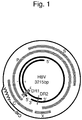
- HBV is a DNA virus, and its genome consists of an approximately 3.2 Kb relaxed circular DNA (rcDNA) in which the positive strand ((+) strand) is shorter than the negative strand ((-) strand), and therefore there is partly a single-stranded structure as shown in Figure 1 .
- rcDNA relaxed circular DNA
- the ORF (open reading frame) of the C gene is the main component of the nucleocapsid of HBV and encodes the core protein (HBc) and an HBe antigen, which are essential for replication of HBV
- the ORF of the P gene encodes the reverse transcriptase (HBV-Pol).
- the ORF of the S gene encodes three S protein regions (preS1, preS2, and S) which constitute the envelope
- the ORF of the X gene (X-ORF) is a transcriptional regulator and encodes the X protein (HBx), which is thought to be important in the establishment of hepatocellular carcinoma.
- HBV As for the mechanism of infection and replication of HBV, HBV first enters and infects a host hepatic cell via an unknown HBV-specific receptor. After the infection, the single-stranded portion is repaired in the host cell nucleus by an endogenous DNA polymerase derived from the host cell to form a covalently closed circular DNA (cccDNA). Next, using the (-) strand of the cccDNA as the template, four kinds of mRNAs with different lengths (3.5 kb, 2.4 kb, 2.1 kb, and 0.7 kb) are synthesized by the RNA polymerase II (RNA pol II) derived from the host cell.
- RNA polymerase II RNA polymerase II
- pgRNA pregenomic RNA
- pgRNA pregenomic RNA
- the RNA encapsidation signal epsilon ( ⁇ ) present at both the 5' and 3' ends of the pgRNA interacts with HBV-Pol and is incorporated into the nucleocapsid composed of HBc ( Beck J, & Nassal M., 2007, World J Gastroenterol., 13: 48-64 ).
- the negative strand DNA is synthesized by the reverse transcriptase activity using the pgRNA as the template.
- This process of genomic replication requires that the pgRNA is incorporated into the nucleocapsid together with HBV-Pol.
- the above mechanism of infection and replication of HBV suggests that the HBc is an extremely important protein which is the main component of the nucleocapsid constituting the main frame of a viral particle, and at the same time plays an essential role in genomic replication.
- the present inventors focused on HBc as the target protein of a novel therapeutic agent for hepatitis B that inhibits replication of HBV, and attempted to produce a mutant HBc that could antagonistically inhibit the replication of HBV
- HBV replication for verifying the above inhibitory effect on HBV replication, an experimental system that can accurately quantify and evaluate HBV replication is indispensable.
- evaluation systems for analyzing HBV infection or HBV replication since infectious HBV is used, all of them are problematic in terms of safety and handling of a large amount of sample.
- the cells that can be efficiently infected with HBV are currently limited to a primary culture system of human hepatic cells, and expensive HepaRG® cells. Namely, there has been a strong limitation regarding applicable cells.
- the present inventors constructed in WO2018/030534 a system for evaluating HBV replication activity that can visualize the HBV genome replication in a short time, and quantify its activity inexpensively, safely, and rapidly using common cells without using infectious HBV. Further, the inventors succeeded in developing a novel HBV-Pol activity inhibitor using the system for evaluating HBV replication activity. This time, the inventors examined the effects of various deficient mutant HBcs on HBV replication using the HBV replication activity evaluation system described in WO2018/030534 , and found mutant HBcs that acted antagonistically on HBc to significantly inhibit HBV replication. The present invention is based on the results of the research and provides the following.
- the inhibitor of HBV replication of the present invention can be a novel anti-HBV agent.
- a pharmaceutical composition for treating hepatitis B having a mechanism of action or a target of interest different from the conventional therapeutic agent for hepatitis B can be provided by using an inhibitor of HBV replication of the present invention as an active ingredient.
- the first aspect of the present invention is an inhibitor of HBV replication.
- the inhibitor of HBV replication of the present invention consists of a peptide fragment constituting a spike region in a core protein (HBc), a peptide fragment in which any amino acid sequence different from said core protein is added to the N-terminus and/or C-terminus of the spike region, or an expression vector capable of expressing the spike region in a cell.
- the inhibitor of HBV replication of the present invention can be an active ingredient of a pharmaceutical composition for treating hepatitis B having a strong inhibitory effect on HBV proliferation in a hepatic cell.
- Hepatitis B virus is a DNA virus belonging to the family Hepadnaviridae, genus Orthohepadnavirus, and a causative virus of hepatitis B.
- HBV eight genotypes (genotype A, B, C, D, E, F, G, and H) are known based on differences in gene sequences. These genotypes differ in terms of regional distribution or pathological conditions. For example, in Japan patients infected with the genotype C (herein often referred to as "HBV/C”. The same applies to other genotypes.) were conventionally dominant, and patients infected with HBV/B were in second place. However, patients infected with the HBV/A have been increasing recently.
- HBV/A it is known that about 20 to 30% of patients after acute hepatitis contraction will develop chronic hepatitis, while in the case of HBV/B or HBV/C, the rate of development of chronic hepatitis after acute hepatitis contraction is lower.
- the “core protein” (herein often referred to as "HBc”) is a protein constituting nucleocapsid, which is essential for HBV replication. As shown in Figure 2A , it is composed of an “assembly domain" on the N-terminal side, and, next to it, an "RNA/DNAbinding domain” on the C-terminal side. The assembly domain is further composed of a “spike region” on the N-terminal side and, next to it, a “hand region (HR)” on the C-terminal side ( Wynne S.A., et al., 1999, Mol Cell. 3: 771-780 ).
- HBc expressed in a virus-infected cell forms a dimer via the assembly domain ( Figure 2C ), and a multimer consisting of 90 to 120 units in which the dimer is one unit is formed.
- the multimer constitutes a regular-dodecahedral HBV nucleocapsid.
- the assembly domain consists of five ⁇ -helices as shown in Figure 2B , in which the spike region comprises four ⁇ -helices on the N-terminal side, and the hand region comprises one ⁇ -helix on the C- terminal side.
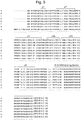
- Figure 3 eight genotypes are known for HBc respectively corresponding to HBV/A to HBV/H.
- each genotype of HBc is referred to as exemplified by the case of HBc of HBV/A referred to as "HBc/A".
- HBc/A genotype of HBV/A
- HBc/F and HBc/H consists of 183 amino acid residues in full length, of which the assembly domain is composed of 144 amino acid residues from position 1 to 144, and the RNA/DNA binding domain is composed of 39 amino acid residues from position 145 to 183.
- HBc/G comprises an additional sequence consisting of 12 amino acid residues on the N-terminal side, and therefore its full length consists of 195 amino acid residues, in which the assembly domain is composed of 156 amino acid residues from position 1 to 156, and the RNA/DNA binding domain is composed of 39 amino acid residues from position 157 to 195.
- HBc/A is represented by SEQ ID NO: 15
- HBc/B and HBc/C having completely identical amino acid sequences is represented by SEQ ID NO: 16, HBc/D by SEQ ID NO: 17, HBc/E by SEQ ID NO: 18, HBc/F by SEQ ID NO: 19, and HBc/H by SEQ ID NO: 20, while HBc/G having a full length different from other genotypes is represented by SEQ ID NO: 21.
- the "C gene” is a gene encoding the core protein, and is one of the four genes encoded in the HBV genome, as described above.
- an "expression vector” herein refers to a vector that comprises a gene or a gene fragment (hereinafter referred to as "gene or the like”) in a state that allows for the expression thereof, and comprises an expression unit that can regulate the expression of the gene or the like.
- a state that allows for the expression herein means that a gene or the like to be expressed is located in the downstream region of a promoter under the control of the promoter.
- a plasmid vector, a virus vector, and so on are known, and any of these vectors can be used. Normally, a plasmid vector, which can be readily manipulated by genetic recombination, may be used.
- a commercially available expression vector for mammalian cells may be used as the expression vector. Examples thereof include pCI vector, and pSI vector of Promega Corporation.
- the expression vector may also be a shuttle vector that can be replicated both in a mammalian cell and a bacterium such as Escherichia coli.
- a “promoter” herein means a gene expression regulatory region that can regulate expression of a gene or the like located downstream (3' end side) in a cell having introduced an expression vector.
- a promoter can be classified into a ubiquitous promoter (systemic promoter) and a site-specific promoter, based on the location where the gene or the like under regulation of expression is expressed.
- a ubiquitous promoter is a promoter that regulates the expression of the gene or the like of interest in all cells, namely in the entire host individual.
- a site-specific promoter is a promoter that regulates the gene or the like of interest to be expressed only in a specific cell or tissue.
- a promoter is also classified into a constitutive active promoter, an expression inducible promoter, and a stage-specific active promoter, based on the timing of expression.
- a constitutive active promoter can constitutively express the gene or the like of interest in a cell.
- An expression inducible promoter can induce expression of the gene or the like of interest in a cell at any time.
- a stage-specific active promoter can induce expression of the gene or the like of interest in a cell only in a specific developmental stage. All of the above promoters may be interpreted as an overexpression promoter, since they can overexpress the gene of interest in a host cell.
- “Inhibition of HBV nucleocapsid formation” herein means inhibition of functional nucleocapsid formation by inhibiting HBc dimer formation, or multimer formation with the dimer as a unit, or by inhibiting normal incorporation of pgRNA into the HBc multimer.
- anti-HBV agent refers to a drug having an effect that suppresses or inhibits replication or proliferation of HBV.
- the anti-HBV agent includes nucleic acid analog drugs, which are publicly known as therapeutic agents for treating chronic hepatitis B such as lamivudine and entecavir, and also the inhibitor of HBV replication of the present invention.
- Treatment means herein alleviation or elimination of symptoms associated with contraction of a disease, and/or prevention or suppression of progression of a disease, and cure of a disease.
- a “disease” means herein hepatitis B, unless otherwise noted.
- the inhibitor of HBV replication of the present invention consists of a peptide fragment, or an expression vector.
- the respective configurations are specifically described below.
- the "peptide fragment" constituting the inhibitor of HBV replication of the present invention consists of a spike region of HBV, or a peptide fragment in which any amino acid sequence different from the HBc is added to the N-terminus and/or C-terminus of the spike region.
- the spike region is a component comprised in the assembly domain of HBc on the N-terminal side.
- the spike regions of HBc/A to HBc/F, and HBc/H correspond to the 111 amino acid residues from position 1 to position 111 of HBc
- the spike region of HBc/G corresponds to the 123 amino acid residues from position 1 to position 123 of HBc.
- the amino acids in the spike region of each genotype is highly conserved, and among HBc/A to HBc/F, and HBc/H, the amino acid similarity is 95% or higher, and the amino acid identity is 84% or higher.
- amino acid sequence of the peptide fragment constituting the inhibitor of HBV replication of the present invention include the following (a) the amino acid sequence according to any of SEQ ID NOs: 1 to 7, (b) an amino acid sequence in which one or multiple amino acids are added, deleted, or substituted in the amino acid sequence according to any of SEQ ID NOs: 1 to 7, and (c) an amino acid sequence having an amino acid identity of 82% or higher, 84% or higher, 86% or higher, 88% or higher, 90% or higher, 92% or higher, 94% or higher, 96% or higher, or 98% or higher with the amino acid sequence according to any of SEQ ID NOs: 1 to 7.
- SEQ ID NO: 1 represents the amino acid sequence of the spike region derived from HBc/A
- SEQ ID NO: 2 represents that derived from HBc/B and HBc/C
- SEQ ID NO: 3 represents that derived from HBc/D
- SEQ ID NO: 4 represents that derived from HBc/E
- SEQ ID NO: 5 represents that derived from HBc/F
- SEQ ID NO: 6 represents that derived from HBc/H
- SEQ ID NO: 7 represents that derived from HBc/G.
- amino acid substitution may be conservative amino acid substitution or nonconservative amino acid residue.
- Constant amino acid substitution is a substitution between amino acids that have similar properties such as electric charge, side chain, polarity, and aromaticity.
- Amino acids with similar properties may be classified into, for example, basic amino acids (arginine, lysine, and histidine), acidic amino acids (aspartic acid, and glutamic acid), polar non-charged amino acids (glycine, asparagine, glutamine, serine, threonine, cysteine, and tyrosine), non-polar amino acids (leucine, isoleucine, alanine, valine, proline, phenylalanine, tryptophan, and methionine), branched amino acids (leucine, valine, and isoleucine), aromatic amino acids (phenylalanine, tyrosine, tryptophan, and histidine), etc.
- basic amino acids arginine, lysine, and histidine
- acidic amino acids aspartic acid, and glutamic acid
- polar non-charged amino acids glycine, asparagine, glutamine, serine, threonine, cysteine
- amino acid substitution in an amino acid sequence constituting a peptide fragment examples include, but not limited to, a point mutation. Specific examples thereof include a point mutation by which the phenylalanine (F) residue at position 23 is substituted with an alanine (A) residue (herein this point mutation is referred to as "F23A". The same applies below.) and/or the leucine (L) residue at position 42 is substituted with an alanine (A) residue (L42A) in the amino acid sequence of the spike region according to any of SEQ ID NOs: 1 to 6.
- the phenylalanine (F) residue at position 35 is substituted with an alanine (A) residue (F35A), and/or the leucine (L) residue at position 54 is substituted with an alanine (A) residue (L54A) in the amino acid sequence of the spike region according to SEQ ID NO: 7.
- amino acid identity herein means, when two amino acid sequences are aligned and gaps are introduced as necessary to achieve the highest amino acid identity between them, the ratio (%) of identical amino acid residues between the above two amino acid sequences with respect to the total amino acid residues of one amino acid sequence.
- the amino acid identity can be calculated using a protein search system based on BLAST or FASTA.
- any amino acid sequence different from HBc added to the N-terminus and/or C-terminus of the spike region examples thereof include a ubiquitinated sequence, a nuclear transport signal, and a tag sequence.
- the peptide fragment can comprise one or more amino acid sequences of the spike region at either or both of the N-terminus and the C-terminus.
- the number of amino acids to be added is not limited, and may be, for example, 20, 19, 18, 17, 16, 15, 14, 13, 12, 11, 10, 9, 8, 7, 6, 5, 4, 3, 2, or 1, respectively.
- the "expression vector" constituting the inhibitor of HBV replication of the present invention is an expression vector that comprises a nucleic acid encoding the peptide fragment described above and a promoter, and is capable of expressing the spike region described above in a cell.
- the expression vector may comprise, if necessary, such components as a marker gene (selection marker), an enhancer, a terminator, a replication origin, and a poly-A signal, in addition to the aforementioned components of nucleic acid and promoter. Each component is described below.
- a "nucleic acid encoding the peptide fragment constituting the spike region of HBc” may be one comprising a nucleic acid encoding the spike region of any of the aforementioned genotypes.
- the base sequence of such nucleic acid examples thereof include the base sequences of the genes of the respective genotypes encoded on the genome. Specific examples include a base sequence of the nucleic acid encoding the spike region of HBc/A of Accession No. AY707087.1; a base sequence of the nucleic acid encoding the spike region of HBc/B of Accession No. GU357842.1; a base sequence of the nucleic acid encoding the spike region of HBc/C of Accession No.
- AB033556.1 a base sequence of the nucleic acid encoding the spike region of HBc/D of Accession No. GU357846.1; a base sequence of the nucleic acid encoding the spike region of HBc/E of Accession No. X75664.1; a base sequence of the nucleic acid encoding the spike region of HBc/F of Accession No. JN792913.1; a base sequence of the nucleic acid encoding the spike region of HBc/G of Accession No. AB625342.1; and a base sequence of the nucleic acid encoding the spike region of HBc/H of Accession No. AP007261.1.
- a base sequence, in which the codons of the genes on the genome described above are optimized for expression in human cells, is also applicable. Specific examples thereof include a base sequence of the nucleic acid encoding the spike region of HBc/A according to SEQ ID NO: 8; a base sequence of the nucleic acid encoding the spike region of HBc/B or HBc/C according to SEQ ID NO: 9; a base sequence of the nucleic acid encoding the spike region of HBc/D according to SEQ ID NO: 10; a base sequence of the nucleic acid encoding the spike region of HBc/E according to SEQ ID NO: 11; a base sequence of the nucleic acid encoding the spike region of HBc/F according to SEQ ID NO: 12; a base sequence of the nucleic acid encoding the spike region of HBc/H according to SEQ ID NO: 13; and a base sequence of the nucleic acid encoding the spike region of HBc/G according to SEQ ID
- a stop codon is added to each 3' end in order to express only the spike region.
- Additional examples include a base sequence in which one or more bases are added, deleted, or substituted in any of the above base sequences, a base sequence having a base identity of 80% or higher, 82% or higher, 85% or higher, 88% or higher, 90% or higher, 93% or higher, 95% or higher, 98% or higher, or 99% or higher with any of the above base sequences, and a base sequence that hybridizes under a high-stringent condition with a base sequence complementary to any of the above base sequences..
- Examples of base substitution in a base sequence constituting the nucleic acid include, but not limited to, a degenerate mutation, genetic polymorphism such as SNIPs, a splicing mutation, and a point mutation.
- Specific examples of a point mutation include a point mutation, by which TTC from position 67 to 69 is substituted with GCC, and/or CTG from position 124 to 126 is substituted with GCC in any of the base sequences according to SEQ ID NOs: 8 to 13.
- An additional example is a point mutation, by which TTC from position 106 to 108 is substituted with GCC, and/or CTG from position 160 to 162 is substituted with GCC in the base sequence according to SEQ ID NO: 14.
- base identity herein means, when two base sequences are aligned and gaps are introduced as necessary to achieve the highest base identity between them, the ratio (%) of identical bases between the above two base sequences with respect to the total bases of the base sequence according to either SEQ ID Number.
- hybridize under a high-stringent condition means herein that hybridization and wash are performed under a condition of low salt concentration and/or high temperature. For example, incubation is performed with a probe at 65°C to 68°C in 6 ⁇ SSC, 5 ⁇ Denhardt reagent, 0.5% SDS, and 100 ⁇ g/mL denatured fragmented salmon sperm DNA, and then washing is performed starting from room temperature in a 2 ⁇ SSC, 0.1% SDS wash solution, and decreasing the salt concentration in the wash solution to 0.1 ⁇ SSC and raising the temperature to 68°C until no background signal is detected.
- high-stringent hybridization conditions Green, M. R., and Sambrook, J., 2012, Molecular Cloning: A Laboratory Manual Fourth Ed., Cold Spring Harbor Laboratory Press, Cold Spring Harbor, New York may be referred.
- a “promoter” is herein a promoter that can induce expression of the nucleic acid encoding the aforedescribed peptide fragment in a cell. Since the target cell to which the inhibitor of HBV replication of the present invention is applied, namely the expression vector is introduced, is in principle a mammalian cell, especially a human or chimpanzee-derived cell, any promoter that can express a downstream gene in those cells may be used. Examples thereof include a CMV promoter (CMV-IE promoter), a SV40 early promoter, a RSV promoter, an EF1 ⁇ promoter, and a Ub promoter.
- CMV-IE promoter CMV promoter
- SV40 early promoter a SV40 early promoter
- RSV promoter an EF1 ⁇ promoter
- Ub promoter a promoter that promoter that can induce expression of the nucleic acid encoding the aforedescribed peptide fragment in a cell.
- a “marker gene” is herein a gene that encodes a marker protein, also called selection marker or reporter protein.
- a “marker protein” refers to a peptide whose activity can be used to determine the presence or absence of expression of a marker gene. For detecting the activity, the activity of the marker protein itself may be directly detected, or may be indirectly detected through a metabolite produced by the activity of the marker protein, such as a pigment.
- Detection may be performed by any of biological detection (including detection by binding of a peptide or a nucleic acid, such as antibody or aptamer), chemical detection (including detection by an enzymatic reaction), physical detection (including detection by behavioral analysis), or sensory detection by an inspector (including detection by vision, touch, olfaction, audition, or gustation).
- biological detection including detection by binding of a peptide or a nucleic acid, such as antibody or aptamer
- chemical detection including detection by an enzymatic reaction
- physical detection including detection by behavioral analysis
- sensory detection by an inspector including detection by vision, touch, olfaction, audition, or gustation.
- a marker protein encoded by a marker gene there is no particular restriction on the type of a marker protein encoded by a marker gene, insofar as its activity can be detected by a method publicly known in the art.
- a marker protein which is less invasive to a transformant for the detection is preferable. Examples thereof include a tag peptide, a drug-resistant protein, a pigment protein, a fluorescent protein, and a luminescent protein.
- a "tag peptide” is a short peptide consisting of a dozen to dozens of amino acids capable of labeling a protein, and is used for detecting or purifying a protein.
- a base sequence encoding a tag peptide is linked to the 5' end or the 3' end of the gene encoding the protein to be labeled, so as to express a fusion protein with the tag peptide, thereby labeling the protein.
- tag peptides have been developed in the field, and any tag peptide may be used. Specific examples of a tag peptide include FLAG, HA, His, and myc.
- a “drug-resistant protein” is a protein that confers the resistance to a drug, such as an antibiotic added to a culture medium or the like, to a cell, and is often an enzyme. Examples thereof include ⁇ -lactamase conferring the resistance to ampicillin, aminoglycoside 3'-phosphotransferase conferring the resistance to kanamycin, tetracycline efflux transporter conferring the resistance to tetracycline, and CAT (chloramphenicol acetyltransferase) conferring the resistance to chloramphenicol.
- a “pigment protein” is a protein involved in the biosynthesis of a pigment, or a protein that enables chemical detection of a transformant by a pigment through addition of a substrate, and is usually an enzyme.
- a “pigment” is a low-molecular-weight compound or a peptide that can provide a pigment to a transformant, regardless of its type. Examples thereof include ⁇ -galactosidase (LacZ), ⁇ -glucuronidase (GUS), a melanin pigment synthesizing protein, an ommochrome pigment, and a pteridine pigment.
- a “fluorescent protein” refers to a protein that emits fluorescence of a particular wavelength when irradiated with excitation light of a particular wavelength. It can be either of a natural type or a non-natural type.
- the excitation wavelength and the fluorescence wavelength are also not particularly limited. Specific examples thereof include CFP, RFP, DsRed (including derivatives such as 3xP3-DsRed), YFP, PE, PerCP, APC, and GFP (including derivatives such as EGFP and 3 ⁇ P3-EGFP).
- a "luminescent protein” refers to a substrate protein that can emit light without the need for excitation light, or an enzyme that catalyzes the light emission of the substrate protein. Examples thereof include luciferin and aequorin as the substrate protein, and luciferase as the enzyme.
- a “terminator” herein means a sequence that can terminate the transcription of a gene or the like that is expressed by the activity of the aforedescribed promoter.
- the type of a terminator is not particularly limited. Preferably, it is a terminator derived from the same species as the promoter. A terminator that is paired with the aforedescribed promoter on the genome in a one-gene expression regulation system is particularly preferable.
- the expression vector according to the present invention is able to transiently express the spike region of HBc in a mammalian cell. Therefore, the replication origin for a mammalian cell is not necessary. However, when it is a shuttle vector which requires expression in a bacterium, such as E. coli, a replication origin is indispensable.
- a replication origin a publicly known sequence may be utilized. For example, f1 origin can be used as the replication origin for E. coli.
- the target molecule for the inhibitor of HBV nucleocapsid formation is HBc.
- HBc is an essential protein for HBV genome replication, and at the same time the main component of a nucleocapsid, which constitutes the main frame of an HBV particle.
- the inhibitory effect on HBV nucleocapsid formation brings about at the same time an inhibitory effect on HBV replication. This effect is also demonstrated in Examples described herein. Therefore, the inhibitor of HBV replication of the present invention can also function as an inhibitor of HBV nucleocapsid formation.
- the configuration of the inhibitor of HBV nucleocapsid formation may be the same as that described in connection with the inhibitor of HBV replication.
- the second aspect of the present invention is a pharmaceutical composition for treating hepatitis B.
- the pharmaceutical composition for treating hepatitis B of the present invention comprises the inhibitor of HBV replication of the first aspect as an essential active ingredient, and can inhibit proliferation of HBV by inhibiting the replication of HBV after infection with HBV, thereby treating hepatitis B.
- the constituents of the pharmaceutical composition for treating hepatitis B of the present invention are described below.
- the pharmaceutical composition for treating hepatitis B of the present invention comprises one or more active ingredients as essential constituents, as well as a solvent and/or a carrier, and further a drug delivery system (DDS) particle. Each constituent is described more specifically below.
- DDS drug delivery system
- the pharmaceutical composition for treating hepatitis B of the present invention comprises the inhibitor of HBV replication described in the first aspect as an essential active ingredient. It may also comprise one or multiple anti-hepatitis B virus agents (anti-HBV agents), as necessary.
- anti-HBV agents anti-hepatitis B virus agents
- the pharmaceutical composition for treating hepatitis B of the present invention may comprise one or multiple inhibitors of HBV replication.
- the pharmaceutical composition for treating hepatitis B of the present invention may comprise only the essential inhibitor of HBV replication as the active ingredient, but it may also be a combination composition comprising additionally one or multiple other anti-HBV agents.
- anti-HBV agents examples thereof include publicly known anti-HBV agents such as a nucleic acid analog for treating hepatitis B, and an inhibitor of polymerase activity of hepatitis B virus (HBV-Pol activity inhibitor).
- nucleic acid analog for treating hepatitis B examples include Entecavir (ETV), Lamivudine (LAM), Adefovir, Tenofovir, Telbivudine, and Clevudine. All of them are pharmaceutical compositions for treating hepatitis B that inhibit the HBV reverse transcriptase activity.
- the "HBV-Pol activity inhibitor” includes the phosphorylation inhibitor that inhibits phosphorylation of the activation site in HBV-Pol as described in WO2018/030534 developed by the present inventors.
- An example is a MAPK kinase inhibitor. More specific examples of the MAPK kinase inhibitor include Hypothemycin shown in the following Formula 1, Trametinib shown in Formula 2, PD98059 shown in Formula 3, PD184352 shown in Formula 4, and U-126 shown in Formula 5.
- the mechanism of action is different from the inhibitor of HBV replication described in the first aspect which acts on HBV replication pathway.
- the HBV-Pol activity inhibitor acts on HBV replication pathway similarly to the inhibitor of HBV replication.
- the target is different from the inhibitor of HBV replication described in the first aspect which uses HBc DNA as the target molecule.
- an inhibitor of HBV replication described in the first aspect is used in combination with another anti-HBV agent such as a nucleic acid analog for treating hepatitis B and/or an HBV-Pol activity inhibitor, a synergistic effect on anti-HBV inhibition can be obtained.
- another anti-HBV agent such as a nucleic acid analog for treating hepatitis B and/or an HBV-Pol activity inhibitor
- an active ingredient in the pharmaceutical composition for treating hepatitis B of the present invention there is no particular restriction on the content of an active ingredient in the pharmaceutical composition for treating hepatitis B of the present invention.
- the content should adjust depending on the type of an active ingredient, dosage form, and the type of a solvent or a carrier, which are other constituents described below. Therefore, it may be determined as appropriate by taking the respective conditions into consideration.
- a single dose of a pharmaceutical composition for treating hepatitis B should contain an effective amount of active ingredient.
- it may be divided into several doses so as to reduce the stress on subject. In this case, the effective amount of the active ingredient should be contained in the total doses.
- the “effective amount” refers to the amount necessary to function as the active ingredient, and at the same time the amount that causes little or no adverse side effects on the subject to be treated. This effective amount can adjust depending on a variety of conditions such as information about the subject, route of application, and number of application. Therefore, when a pharmaceutical composition for treating hepatitis B is used as a medicine, the amount of active ingredient is ultimately determined by the judgment of a physician, a pharmacist, etc.
- a “subject” means herein an object to which an inhibitor of HBV replication described in the first aspect, or a pharmaceutical composition for treating hepatitis B of this aspect is applied.
- examples thereof include a cell (including cultured cell), a tissue, an organ, and an individual.
- a subject person infected with HBV, namely a patient with hepatitis B is particularly preferred.
- the "information on a subject” herein refers to various information about the characteristics and conditions of a subject.
- examples thereof include age, weight, gender, general health conditions, presence or absence of disease, stage of progression or severity of disease, drug sensitivity, presence or absence of concurrent medication, and tolerance to treatment.
- the pharmaceutical composition for treating hepatitis B of the present invention may comprise a pharmaceutically acceptable solvent as needed.
- pharmaceutically acceptable solvent refers to a solvent normally used in the technical field of drug formulation. Examples thereof include water or an aqueous solution, and an organic solvent. Examples of an aqueous solution include physiological saline, an isotonic solution containing glucose or another supplement, a phosphate buffer solution, and a sodium acetate buffer solution. Examples of an adjuvant include D-sorbitol, D-mannose, D-mannitol, sodium chloride, as well as a low-concentration nonionic surfactant, and a polyoxyethylene sorbitan fatty acid ester. Examples of an organic solvent include ethanol.
- the pharmaceutical composition for treating hepatitis B of the present invention may comprise a pharmaceutically acceptable carrier as needed.
- the "pharmaceutically acceptable carrier” refers to an additive normally used in the technical field of drug formulation. Examples thereof include an excipient, a binder, a disintegrating agent, a filler, an emulsifier, a flow regulating additive, a lubricant, and a human serum albumin.
- an excipient examples include a saccharide such as monosaccharide, disaccharide, cyclodextrin, and polysaccharide, a metal salt, citric acid, tartaric acid, glycine, polyethylene glycol, Pluronic, kaolin, silicic acid, and a combination thereof.
- a saccharide such as monosaccharide, disaccharide, cyclodextrin, and polysaccharide
- a metal salt citric acid, tartaric acid, glycine, polyethylene glycol, Pluronic, kaolin, silicic acid, and a combination thereof.
- binder examples include starch paste made from plant starch, pectin, xanthan gum, single syrup, a glucose solution, gelatin, tragacanth, methylcellulose, hydroxypropylmethylcellulose, sodium carboxymethylcellulose, shellac, paraffin, polyvinylpyrrolidone, and a combination thereof.
- Examples of a disintegrating agent include the aforementioned starch, lactose, carboxymethyl starch, crosslinked polyvinylpyrrolidone, agar, laminaran powder, sodium hydrogen carbonate, calcium carbonate, alginic acid or sodium alginate, polyoxyethylene sorbitan fatty acid ester, sodium lauryl sulfate, stearic acid monoglyceride, and a salt thereof.
- Examples of a bulking agent include vaseline, the aforementioned saccharide and/or calcium phosphate.
- an emulsifier examples include a sorbitan fatty acid ester, a glycerol fatty acid ester, a sucrose fatty acid ester, and a propylene glycol fatty acid ester.
- Examples of a flow regulating additive and a lubricant include a silicate, talc, a stearate, and polyethylene glycol.
- a solubilizer a suspending agent, a diluent, a dispersing agent, a surfactant, a soothing agent, a stabilizer, an absorption enhancer, a bulking agent, a moisturizer, a humectant, a wetting agent, an adsorbent, a corrective, a disintegration inhibitor, a coating agent, a colorant, a preservative, an antiseptic, an antioxidant, a fragrance, a flavoring agent, a sweetness agent, a buffer agent, an isotonizing agent, etc. which are used usually in a pharmaceutical composition, etc., may also be comprised as appropriate.
- a carrier is used to avoid or inhibit degradation of the aforementioned active ingredient by an enzyme or the like in a subject, and also to facilitate formulation or administration method, as well as to maintain the dosage form and drug efficacy. It may be used as appropriate if it is necessary.
- DDS particle Drug delivery system particle
- the pharmaceutical composition for treating hepatitis B of the present invention can include a DDS particle as needed.
- the DDS particle is a particle that comprises an active ingredient, other carrier, etc., in the inside, etc., and delivers the content, especially the active ingredient without degrading the same to the target site, and can regulate the distribution of a drug in vivo in terms of time and quantity.
- the active ingredient in the pharmaceutical composition for treating hepatitis B of the present invention is a peptide or a nucleic acid, it is appropriate to use the DDS particle for protecting it from degradation by a protease or a nuclease in vivo after administration.
- Any type of DDS particle can be used. Examples thereof include a liposome, polymeric micelle, and a viral particle.
- the dosage form of the pharmaceutical composition for treating hepatitis B of the present invention allows delivery to the target site without inactivating the active ingredient in the body of the subject.
- the specific dosage form varies depending on the application method described below.
- the application methods can be broadly classified into parenteral administration and oral administration, and the dosage form should be suitable for each administration method.
- the preferable dosage form is a liquid formulation, with which direct administration to the target site, and systemic administration via the circulatory system are possible.
- a preferable example of a liquid formulation is an injectable.
- the injectable can be formed to a preparation by mixing it with a solvent in combination with aforementioned excipient, an emulsifier, a suspending agent, a surfactant, a stabilizer, a pH adjuster, etc., as appropriate, in a unit dosage form required in generally accepted pharmaceutical practice.
- examples of the preferred dosage form include a solid formulation (including tablet, capsule, drop, and lozenge), a granule, a dusting powder, a powder, and a liquid formulation (including mixture for internal use, emulsion formulation, syrup formulations).
- a coated dosage form as publicly known in the art, such as a sugar coated tablet, a gelatin coated tablet, an enteric-coated tablet, a film-coated tablet, a double-layered tablet, and a multi-layered tablet, may be used.
- composition for treating hepatitis B of the present invention formulation may be performed in accordance with the usual method in the technical field.
- the method of application of the pharmaceutical composition for treating hepatitis B of the present invention may be either of oral administration and parenteral administration.
- the oral administration method is systemic administration, while the parenteral administration method can be further divided into systemic administration and local administration.
- Examples of the local administration include intramuscular administration, subcutaneous administration, tissue administration, and organ administration, while examples of the systemic administration by the parenteral administration include intracirculatory administration, such as intravenous administration (i.v.), intraarterial administration, and intralymphatic administration.
- intravenous administration i.v.
- intraarterial administration intraarterial administration
- intralymphatic administration intracirculatory administration
- a pharmaceutical composition for treating hepatitis B of the present invention When a pharmaceutical composition for treating hepatitis B of the present invention is locally administered, it may be administered directly to the liver by injection or the like. When it is systemically administered, it may be administered into the circulatory system by intravenous injection, or the like.
- the dosage may be an amount sufficient
- the pharmaceutical composition for treating hepatitis B of the present invention may also be used in combination with separately used two or more other publicly known anti-HBV agents.
- the third aspect of the present invention is a method for inhibiting HBV replication.
- a method for inhibiting HBV replication of the present invention (I) a peptide fragment constituting a spike region in a core protein of a hepatitis B virus, (II) a peptide fragment in which any amino acid sequence different from the core protein is added to the N-terminus and/or C-terminus of the spike region, or (III) an expression vector comprising a nucleic acid encoding the peptide fragment according to (I) or (II) above, and capable of expressing the peptide fragment in a cell, is introduced into a cell infected with HBV or a cell suspected of infection therewith so that the replication of HBV in the cell is inhibited, thereby inhibiting the replication of HBV, and suppressing the proliferation of HBV
- this method is applied to a patient infected with hepatitis B or a person suspected of infection therewith, it can be a treatment method for hepatitis B.
- the method for inhibiting HBV replication in this aspect comprises an introduction step as an essential step.
- the "introduction step” is a step of introducing (I) a peptide fragment constituting a spike region of HBc, (II) a peptide fragment in which any amino acid sequence different from the core protein is added to the N-terminus and/or C-terminus of the spike region, or (III) an expression vector comprising a nucleic acid encoding the peptide fragment according to (I) or (II) above, and capable of expressing the peptide fragment in a cell, namely the inhibitor of HBV replication described in the first aspect into the host.
- a "host” refers to a cell, tissue, or individual into which an inhibitor of HBV replication can be introduced.
- the cell may be one or multiple mammalian cells. It is preferably a cell derived from a human or a chimpanzee that is the host of HBV There is no particular restriction on the type of the derived cell.
- a cell derived from various organs and tissues can also be the subject.
- the host can be either a cell line or a primary culture cell line.
- the host is preferably, but not limited to, a cell infected with HBV or a cell suspected of infection therewith. When the host is an individual, the aforedescribed subject person is preferable.
- each expression vector into the host.
- a gene introduction method publicly known in the art, such as those described in Green & Sambrook, 2012, Molecular Cloning: A Laboratory Manual Fourth Ed., Cold Spring Harbor Laboratory Press, Cold Spring Harbor, New York , etc.
- Examples thereof include a Lipofectin method ( PNAS, 1989, 86: 6077 ; PNAS, 1987, 84: 7413 ), an electroporation method, a calcium phosphate method ( Virology, 1973, 52: 456-467 ), and a DEAE-dextran method.
- an inhibitor of HBV replication, or a pharmaceutical composition for treating hepatitis B comprising this inhibitor as the active ingredient may be administered to the subject person according to the method described in "2-3.
- Application method" of the second aspect By administering the same to a subject person, the method for inhibiting HBV replication of this aspect can be a method of treating hepatitis B.
- HBcs having various forms of deletion in HBc are produced, and the inhibitory effect on HBV replication is investigated.
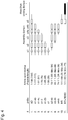
- the genotype C (HBc/C) of HBc according to the amino acid SEQ ID NO: 16 was determined as the subject of the investigation, and the following 11 types of deletion mutant forms of HBc ( ⁇ HBc) shown in Figure 4 were prepared.
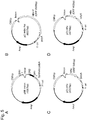
- HBc/C gene shown in SEQ ID NO: 22, in which the codons of the DNA base sequence encoding the full length HBc/C are optimized for a human cell, the region encoding each ⁇ HBc was cut out and subcloned into the mammalian cell expression vector pCI (Promega) shown in Figure 5C by a conventional method.
- the expression vector thus obtained is used as ⁇ HBc expression vector (pCI- ⁇ HBc), and for example, a ⁇ HBc expression vector incorporating ⁇ 1-4b of ⁇ HBc#2 is denoted as ⁇ HBc( ⁇ 1-4b) expression vector (pCI- ⁇ HBc( ⁇ 1-4b)).
- the system for evaluating HBV replication activity consisting of the vector for evaluating HBV replication activity (pBB-intron) encoding the reporter pgRNA shown in Figure 5A , the HBV-P expression vector (pCI-HBV-Pol) shown in Figure 5B , the HBc expression vector (pCI-HBc) shown in Figure 5C , and the HBx expression vector (pCI-HBx) shown in Figure 5D was introduced into HeLa cells together with each pCI- ⁇ HBc.
- the amount of ⁇ HBc is about three times (2.89 times) as much as that of the wild type HBc functioning in HBV replication.
- an empty vector pCI
- the electroporation method was used for gene introduction into HeLa cells. Using an Electroporator Nepa21 (Nepa Gene Co., Ltd.) 10 ⁇ g of DNA was introduced into approximately 1 ⁇ 10 6 cells under the condition of 125 V/2.5 ms pulse length. The HeLa cells after gene introduction were cultured in DMEM to which 2 mL of 10% FBS was added in the presence of 5% CO 2 at 37°C for 24 hours.
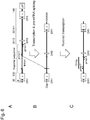
- pBB-intron When the vector for evaluating HBV replication activity (pBB-intron) described above is introduced into HeLa cells, pre-mRNA shown in Figure 6A is synthesized by RNA-pol II in HeLa cells, then an intron comprised in the reporter sequence of pBB-intron is immediately removed by pre-mRNA splicing in HeLa cells. The mature mRNA from which the intron spliced has been spliced out becomes a reporter pgRNA shown in Figure 6B .
- the reporter pgRNA is reverse transcribed by the functions of HBV-Pol, HBc, and HBx respectively expressed by the HBV-P expression vector, HBc expression vector, and HBx expression vector, and a reporter minus strand DNA (reporter (-) DNA) comprising the reporter sequence as shown in Figure 6C , which is different from the reporter sequence of the original vector for evaluating HBV replication activity shown in Figure 6A , and in which the intron has been removed, is synthesized.
- reporter (-) DNA reporter minus strand DNA
- the amount of this reporter (-) DNA reflects the replication activity and replication amount of HBV Therefore, when DNA is extracted from the cells in which the system for evaluating HBV replication activity and pCI- ⁇ HBc are introduced, the amount thereof is quantified with a primer set specific to the reporter (-) DNA, and then compared with the amount of the positive control, the effect of pCI- ⁇ HBc on the HBV replication can be evaluated.
- Primer F a forward primer (Primer F) consisting of the base sequence shown in SEQ ID NO: 23, and a reverse primer (Primer R) consisting of the base sequence shown in SEQ ID NO: 24 were used.
- the Primer F is designed so that the two bases at the 3' end match the two bases at the 5' end of the downstream exon, but do not match the two bases at the 5' end of the intron. Therefore, it functions as a primer only when there is a reporter (-) DNA having the reporter sequence from which the intron has been removed, and the DNA fragment of 131 bases is amplified.
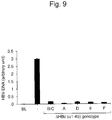
- Example 1 The basic procedures were in accordance with Example 1. As pCI- ⁇ HBc to be introduced into HeLa cells together with the system for evaluating HBV replication activity, only pCI- ⁇ HBc( ⁇ 1-4b) was used. The introduction ratio of the respective expression vectors was set such that the ratio of pCI-HBc: pCI-HBV-Pol: pCI-HBx was 9:3:1, and the ratio of pBB-intron: pCI-HBc/pCI-HBV-Pol/pCI-HBx was 1:1.
- HBc/A, HBc/D, HBc/E, and HBc/F were used as genotypes other than HBc/C. Since HBc/B had completely the same amino acid sequence as HBc/C, it was used for a control as HBc/B/C.
- ⁇ HBc( ⁇ 1-4b) expression plasmids derived from genotypes A, D, E and F were prepared using pCI- ⁇ HBc( ⁇ 1-4b) as the template based on the wild type base sequence information of each genotype of the HBc gene, namely the base sequence of SEQ ID NO: 25 for the HBc/A gene, the base sequence of SEQ ID NO: 26 for the HBc/D gene, the base sequence of SEQ ID NO: 27 for the HBc/E gene, and the base sequence of SEQ ID NO: 28 for the HBc/F gene, and introducing amino acid substitutions by site directed mutagenesis (PrimeSTAR Mutagenesis Basal Kit, Takara Bio Inc.).
- HBc nucleocapsid formation could be inhibited when phenylalanine (F) at position 23 in the spike region ( ⁇ 1-4b) (position 35 in HBc/G), or leucine (L) at position 42 (position 54 in HBc/G) was respectively substituted with alanine (A) ( Alexander C.G., et al., 2013, PNAS, 110 (30): E2782-E2791 ). Therefore, it is investigated whether these point mutations have an inhibitory effect on nucleocapsid formation and HBV replication.
- the F residue at position 23, or the L residue at position 42 was respectively substituted with an A residue (denoted as F23A and L42A, respectively) by a site-directed mutagenesis method using PrimeSTAR Mutagenesis Basal Kit (Takara Bio Inc.) using the full length HBc expression vector (pCI-HBc) of genotype C used in Example 1 as the template.
- the mutants F23A and L42A of the full length HBc having introduced the point mutation are respectively denoted as HBc-F23A and HBc-L42A.
- An anti-HBc monoclonal antibody for HBc detection in Western blotting, etc was prepared.
- a peptide shown in SEQ ID NO: 29 (PAYRPPNAPILSTLP) corresponding to position 130 to 144 in the hand region of HBc/C was synthesized, and BALB/c mice (8 weeks old, female) were immunized with the synthetic peptide.
- a mouse anti-human HBc monoclonal antibody (#511) was prepared by a hybridoma method using the spleen cells of the immunized mice according to the ordinary method.
- HBc-WT wild type full length HBc
- HBc-F23A and HBc-L42A mutant full length HBc
- HBc-L42A mutant full length HBc
- HBc-WT wild type HBc
- HBc-F23A and HBc-L42A mutant full length HBc
- HBc-L42A mutant full length HBc
- HBV replication activity for HBc having introduced point mutations was performed according to the method described in Example 1.
- the HBc expression vector (pCI-HBc) comprised in the system for evaluating HBV replication described in Example 1 was replaced with HBc-F23A or HBc-L42A in this Example.
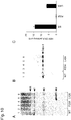
- Figure 10A is the results of Western blotting under non-reducing conditions.
- M HBc monomer band
- Mlt multimer band
- D dimer
- Mlt monomer band
- D dimer
- Mlt monomer band
- Figure 10C is the results of evaluation of inhibitory effects on HBV replication using the system for evaluating HBV replication activity when HBc-F23A or HBc-L42A was introduced into cells in place of HBc-WT.
- HBc-F23A in Figure 10A showed no significant difference from HBc-WT in terms of multimer forming ability, it was found that HBc-F23A almost completely lost the HBV replication activity. It was found that HBc-L42A retained the replication activity, but the activity was significantly reduced compared to that of HBc-WT. From these results it became clear that introduction of the point mutation of F23A or L42A into the full length wild type HBc affected the inhibitory activity on HBV replication.
- the F residue at position 23, or the L residue at position 42 was respectively substituted with an A residue (denoted as F23A and L42A, respectively) by a site-directed mutagenesis method using PrimeSTAR Mutagenesis Basal Kit (Takara Bio Inc.) using the ⁇ HBc( ⁇ 1-4b) expression vector (pCI- ⁇ HBc( ⁇ 1-4b)) of the genotype C used in Example 1 as the template.
- the ⁇ HBc( ⁇ 1-4b) having introduced F23A or L42A are respectively denoted as ⁇ HBc( ⁇ 1-4b)-F23A and ⁇ HBc( ⁇ 1-4b)-L42A.
- Example 2 The evaluation of the HBV replication activity of HBc having introduced the point mutation was performed according to the method described in Example 1.
- the wild type pCI- ⁇ HBc( ⁇ 1-4b), or the variant having the point mutation, pCI- ⁇ HBc( ⁇ 1-4b)-F23A or pCI- ⁇ HBc( ⁇ 1-4b)-L42A was introduced into HeLa cells together with the system for evaluating HBV replication described in Example 1.
- the plasmids to be introduced were serially diluted with the empty vector (pCI) in the same manner as in Example 2, and the respective dose-dependent effects on the inhibition of HBV replication were investigated.
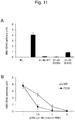
- Figure 11A shows the results of evaluation of HBV replication activity. From this figure, it was found that the inhibitory effect on HBV replication activity was maintained in either case where pCI- ⁇ HBc( ⁇ 1-4b)-F23A or pCI- ⁇ HBc( ⁇ 1-4b)-L42A was introduced, but in the cells having introduced pCI- ⁇ HBc( ⁇ 1-4b)-L42A, the inhibitory activity on HBV replication was reduced compared to the wild type pCI- ⁇ HBc( ⁇ 1-4b). On the other hand, in the cells having introduced pCI- ⁇ HBc( ⁇ 1-4b)-F23A, the HBV replication was more strongly inhibited than in the cells having introduced the wild type pCI- ⁇ HBc( ⁇ 1-4b).
- Figure 11B shows the results of the dose-dependent effect for inhibition of HBV replication.
- the results showed that ⁇ HBc( ⁇ 1-4b)-F23A also inhibited HBV replication depending on its expression level for inhibition similarly to ⁇ HBc( ⁇ 1-4b). Further, similarly to the results in Figure 11A , it was also confirmed that ⁇ HBc( ⁇ 1-4b)-F23A had stronger inhibitory activity on HBV replication than ⁇ HBc( ⁇ 1-4b).
- ⁇ HBc( ⁇ 1-4b) Using the wild type or F23A mutant ⁇ HBc( ⁇ 1-4b) expression vector (pCI- ⁇ HBc( ⁇ 1-4b) and pCI- ⁇ HBc( ⁇ 1-4b)-F23A, respectively), a nucleic acid fragment encoding a PA tag (GVAMPGAEDDVV) consisting of 12 amino acid residues shown in SEQ ID NO: 30 was inserted to the C-terminus of each ⁇ HBc( ⁇ 1-4b). The resulting tagged ⁇ HBc expression vectors were denoted as pCI- ⁇ HBc( ⁇ 1-4b)-PA and pCI- ⁇ HBc( ⁇ 1-4b)-F23A-PA.
- GVAMPGAEDDVV nucleic acid fragment encoding a PA tag
- the inhibitory activity on HBV replication of pCI- ⁇ HBc( ⁇ 1-4b)-PA and pCI- ⁇ HBc( ⁇ 1-4b)-F23A-PA was evaluated using the system for evaluating HBV replication activity described in Example 1.
- the cell transfection ratio of the system for evaluating HBV replication activity to the ⁇ HBc expression vector was determined as 26:26. The results showed that inhibitory activity on HBV replication was maintained even when the PA tag was added to the C-terminus of ⁇ HBc( ⁇ 1-4b) or ⁇ HBc( ⁇ 1-4b)-F23A (figures not shown).
- the anti-HBc monoclonal antibody #511 recognizes the hand region of HBc, it recognizes in this case only the full length HBc and does not recognize ⁇ HBc( ⁇ 1-4b)-PA and ⁇ HBc( ⁇ 1-4b)-F23A-PA in which the hand region is deleted.
- the anti-PA monoclonal antibody NZ-1 recognizes the PA tag, it recognizes only ⁇ HBc( ⁇ 1-4b)-PA and ⁇ HBc( ⁇ 1-4b)-F23A-PA, but does not recognize the full length HBc without the PA tag.
- Figure 12A shows the results of analysis of the influence of expression of PA-tagged ⁇ HBc( ⁇ 1-4b) or ⁇ HBc( ⁇ 1-4b)-F23A on HBc dimer formation and multimer formation performed by Western blotting using the anti-HBc monoclonal antibody #511.
- the results show that in cells in which only full length HBc was expressed (lanes 1 to 3), the full length HBc was present as multimer (Mlt) of dimer (D) or larger, and a monomer (M) was almost not detectable.
- Figure 12B shows the results of analysis of the influence of expression of ⁇ HBc( ⁇ 1-4b) or ⁇ HBc( ⁇ 1-4b)-F23A on HBc dimer formation and multimer formation performed by Western blotting, similarly to Figure 12A , using the anti-PA monoclonal antibody NZ-1. Unlike Figure 12A , NZ-1 did not recognize the full length HBc without PA tag (lanes 1 to 3).
- FIG. 12C shows the results of analysis by Western blotting using the NZ-1 antibody after expression of ⁇ HBc( ⁇ 1-4b)-PA alone, or co-expression with full length HBc in Hela cells. It was shown that ⁇ HBc( ⁇ 1-4b) existed as monomer (M) or homodimer (Homo-D), and did not form a multimer not smaller than tetramer (T).
- FIG. 12D shows from the results of particle blotting that expression of ⁇ 1-4b inhibits capsid formation. From these results it was revealed that the ⁇ HBc( ⁇ 1-4b) expressed in a cell, namely the spike region of HBc, forms a heterodimer with a functional full length HBc, inhibits subsequent formation of multimer and formation of capsid, and thereby inhibits HBV replication.
- HBc-T33N HBc with T33N mutation
- T33N The T residue at position 33 was substituted with an N residue (denoted as T33N) by a site-directed mutagenesis method using PrimeSTAR Mutagenesis Basal Kit (Takara Bio Inc.) using the full length HBc expression vector (pCI-HBc) of genotype C used in Example 1 as the template.
- pCI-HBc full length HBc expression vector
- HBc-T33N The T33N mutant of the full length HBc having introduced the point mutation is denoted as HBc-T33N.
- the measurement of the HBV replication activity by HBc-WT or HBc-T33N was performed in accordance with the method described in Example 1 using HBc-WT or HBc-T33N as HBc comprised in the system for evaluating HBV replication described in Example 1 in the presence of GLS4 at a concentration of 0 ⁇ M, 0.08 ⁇ M, 0.16 ⁇ M, 0.31 ⁇ M, 0.63 ⁇ M, 1.25 ⁇ M, 2.5 ⁇ M, or 5 ⁇ M. Based on the obtained measurement value of HBV replication activity (amount of reverse transcribed HBV DNA), the efficiency for inhibition of HBV replication (%) was calculated.
- the efficiency for inhibition of HBV replication (%) in the presence of a particular concentration of GLS4 is calculated by assuming the amount of reverse transcribed HBV DNA at the GLS4 concentration of 0 ⁇ M (GLS4 not added) as "0% inhibition", and the amount of reverse transcribed HBVDNA of 0 (the case where reverse transcription did not occur at all) as "100% inhibition".”
- Figure 13 shows the results of the investigation in which HBc-WT, or HBc-T33N in place of HBc-WT in the system for evaluating HBV replication activity was introduced into cells, and the inhibitory effect on HBV replication in the presence of various concentrations of GLS4 was investigated.
- GLS4 inhibited HBV replication by HBc-WT in a concentration-dependent manner, while it did not exhibit inhibitory effect on HBV replication by HBc-T33N, indicating that HBc-T33N is resistant to GLS4.
- This result showed that replication of a virus resistant to an inhibitor of nucleocapsid formation is reproduced by using HBc-T33N in place of HBc-WT in the system for evaluating HBV replication activity.
- Example 2 The evaluation of the inhibitory effect on HBV replication of the spike region ⁇ HBc( ⁇ 1-4b) was in accordance with the method described in Example 2. However, in this Example, HBc-WT or HBc-T33N was used as the HBc comprised in the system for evaluating HBV replication described in Example 2.
Landscapes
- Health & Medical Sciences (AREA)
- Life Sciences & Earth Sciences (AREA)
- Chemical & Material Sciences (AREA)
- General Health & Medical Sciences (AREA)
- Organic Chemistry (AREA)
- Medicinal Chemistry (AREA)
- Virology (AREA)
- Pharmacology & Pharmacy (AREA)
- Veterinary Medicine (AREA)
- Public Health (AREA)
- Animal Behavior & Ethology (AREA)
- Engineering & Computer Science (AREA)
- Genetics & Genomics (AREA)
- Molecular Biology (AREA)
- Bioinformatics & Cheminformatics (AREA)
- Proteomics, Peptides & Aminoacids (AREA)
- Gastroenterology & Hepatology (AREA)
- Epidemiology (AREA)
- Chemical Kinetics & Catalysis (AREA)
- General Chemical & Material Sciences (AREA)
- Nuclear Medicine, Radiotherapy & Molecular Imaging (AREA)
- Biochemistry (AREA)
- Biophysics (AREA)
- Biotechnology (AREA)
- Communicable Diseases (AREA)
- Oncology (AREA)
- Immunology (AREA)
- Biomedical Technology (AREA)
- Zoology (AREA)
- Wood Science & Technology (AREA)
- General Engineering & Computer Science (AREA)
- Microbiology (AREA)
- Plant Pathology (AREA)
- Physics & Mathematics (AREA)
- Medicines That Contain Protein Lipid Enzymes And Other Medicines (AREA)
- Peptides Or Proteins (AREA)
Abstract
Description
- The present invention relates to an inhibitor of hepatitis B virus replication and a pharmaceutical composition for treating hepatitis B containing the same as an active ingredient.
- Hepatitis B is viral hepatitis that is caused by infection with a hepatitis B virus (hepatitis B virus is herein often referred to as "HBV"). Since hepatitis B is transmitted through the blood or body fluid of an HBV infected person, vertical transmission in which a child is infected at the time of birth through the blood of the HBV infected mother (mother-to-child infection), and horizontal transmission caused by sexual contact, tattooing, blood transfusion, multiple use of a syringe in mass vaccination, a needle-stick accident, or the like are known as the main infection routes (Non-Patent Literature 1).
- HBV infection can be largely classified into transient infection and persistent infection. Most infections at the age of 5 years or higher are transient infection, because their immunological competence has been well developed. Among them 70 to 80% are inapparent infections, and the remaining 20 to 30% develop acute hepatitis B. However, in most cases, an HBs antibody is induced, so that permanent immunity is acquired and development to persistent infection does not occur. On the other hand, persistent infection may be established in a case of mother-to-child infection, or a case where HBV infection occurs due to medical intervention or intrafamilial infection at the age of 3 years or lower when the immune system of the self is immature. The majority of patients with persistent infection of HBV go on to be "HBV carriers" who maintain normal hepatic function, of which 85 to 90% undergo seroconversion and become asymptomatic carriers. However, the remaining 10 to 15% develop chronic hepatitis which progresses to hepatic cirrhosis or hepatocellular carcinoma. The number of patients with persistent infection of HBV is estimated to be 1.5 million in Japan, and 300 to 400 million in the whole world (Non-Patent Literature 2).
- Currently, nucleotide analog drugs represented by lamivudine or entecavir are widely used as therapeutic agents for chronic hepatitis B. These therapeutic drugs can delay the development and progression of hepatic cirrhosis and hepatocellular carcinoma by decreasing the amount of HBV in the blood through competitive antagonistic effects on the HBV DNA polymerase, or arresting effects on HBV DNA elongation. However, since the HBV DNA in hepatic cells cannot be eliminated, when the administration of a drug is stopped, the HBV DNA in the blood increases again and hepatitis relapse. Therefore, long-term administration of the therapeutic agent is necessary. In addition, relapse during the long-term therapy using the aforementioned nucleotide analog drug is accompanied by the emergence of a drug-resistant virus. This makes the treatment of chronic hepatitis B even more difficult (
Non-Patent Literature 3 and 4). For the above reasons, it has been desired to develop a novel therapeutic agent for hepatitis B having a mechanism of action different from the conventional nucleotide analog drug. -
- Non-Patent Literature 1: Aspinall E. J., et al., 2011, Occup Med (Lond), 61: 531-540.
- Non-Patent Literature 2: Fattovich G., et al., 2008, J Hepatol, 48: 335-352.
- Non-Patent Literature 3: Lau D. T., et al., 2000, Hepatology, 32: 828-834.
- Non-Patent Literature 4: Koumbi L., 2015, World J Hepatol, 7: 1030-1040.
- An object of the present invention is to develop and provide a novel therapeutic agent for hepatitis B that differs from the conventional therapeutic agent for hepatitis B in the mechanism of action, or target of interest.
- In order to solve the above problem, the present inventors attempted to develop a novel therapeutic agent for hepatitis B that inhibits the replication of HBV.
- HBV is a DNA virus, and its genome consists of an approximately 3.2 Kb relaxed circular DNA (rcDNA) in which the positive strand ((+) strand) is shorter than the negative strand ((-) strand), and therefore there is partly a single-stranded structure as shown in
Figure 1 . There are four kinds of genes, C, P, S, and X, on the HBV genome (Arzumanyan A, et al., 2013, Nat Rev Cancer., 13: 123-135). The ORF (open reading frame) of the C gene (C-ORF) is the main component of the nucleocapsid of HBV and encodes the core protein (HBc) and an HBe antigen, which are essential for replication of HBV The ORF of the P gene (P-ORF) encodes the reverse transcriptase (HBV-Pol). Further, the ORF of the S gene (S-ORF) encodes three S protein regions (preS1, preS2, and S) which constitute the envelope, and the ORF of the X gene (X-ORF) is a transcriptional regulator and encodes the X protein (HBx), which is thought to be important in the establishment of hepatocellular carcinoma. - As for the mechanism of infection and replication of HBV, HBV first enters and infects a host hepatic cell via an unknown HBV-specific receptor. After the infection, the single-stranded portion is repaired in the host cell nucleus by an endogenous DNA polymerase derived from the host cell to form a covalently closed circular DNA (cccDNA). Next, using the (-) strand of the cccDNA as the template, four kinds of mRNAs with different lengths (3.5 kb, 2.4 kb, 2.1 kb, and 0.7 kb) are synthesized by the RNA polymerase II (RNA pol II) derived from the host cell. The longest 3.5 kb mRNA is called pregenomic RNA (pgRNA) and serves as the template for the HBV genomic DNA. The RNA encapsidation signal epsilon (ε) present at both the 5' and 3' ends of the pgRNA interacts with HBV-Pol and is incorporated into the nucleocapsid composed of HBc (Beck J, & Nassal M., 2007, World J Gastroenterol., 13: 48-64). Subsequently, the negative strand DNA is synthesized by the reverse transcriptase activity using the pgRNA as the template. This process of genomic replication requires that the pgRNA is incorporated into the nucleocapsid together with HBV-Pol. The above mechanism of infection and replication of HBV suggests that the HBc is an extremely important protein which is the main component of the nucleocapsid constituting the main frame of a viral particle, and at the same time plays an essential role in genomic replication.
- Therefore, the present inventors focused on HBc as the target protein of a novel therapeutic agent for hepatitis B that inhibits replication of HBV, and attempted to produce a mutant HBc that could antagonistically inhibit the replication of HBV
- Meanwhile, for verifying the above inhibitory effect on HBV replication, an experimental system that can accurately quantify and evaluate HBV replication is indispensable. Although there have ever been several evaluation systems for analyzing HBV infection or HBV replication, since infectious HBV is used, all of them are problematic in terms of safety and handling of a large amount of sample. In addition, the cells that can be efficiently infected with HBV are currently limited to a primary culture system of human hepatic cells, and expensive HepaRG® cells. Namely, there has been a strong limitation regarding applicable cells. Although infection can be established in cells where NTCP, which is considered to be an HBV receptor, is overexpressed, the efficiency of infection is very low, and even if an established cell line (HepG2.2.15, HepAD38, etc.) into which the HBV genome has been inserted is used, a long-term culture for 7 to 12 days is necessary before the detection of replication. Therefore, the conventional system for evaluating HBV replication had a serious problem of low throughput.
- In order to solve the aforedescribed problems, the present inventors constructed in
WO2018/030534 a system for evaluating HBV replication activity that can visualize the HBV genome replication in a short time, and quantify its activity inexpensively, safely, and rapidly using common cells without using infectious HBV. Further, the inventors succeeded in developing a novel HBV-Pol activity inhibitor using the system for evaluating HBV replication activity. This time, the inventors examined the effects of various deficient mutant HBcs on HBV replication using the HBV replication activity evaluation system described inWO2018/030534 , and found mutant HBcs that acted antagonistically on HBc to significantly inhibit HBV replication. The present invention is based on the results of the research and provides the following. -
- (1) An inhibitor of HBV replication consisting of any of the following (I) to (III):
- (I) a peptide fragment constituting a spike region in a core protein of an HBV,
- (II) a peptide fragment in which any amino acid sequence different from said core protein is added to the N-terminus and/or C-terminus of said spike region, and
- (III) an expression vector comprising a nucleic acid encoding the peptide fragment according to said (I) or (II), and capable of expressing said peptide fragment in a cell.
- (2) The inhibitor of HBV replication according to (1), wherein said peptide fragment constituting the spike region consists of any of the following amino acid sequences of (a) to (c):
- (a) the amino acid sequence according to any of SEQ ID NOs: 1 to 7,
- (b) an amino acid sequence in which one or multiple amino acids are added, deleted, or substituted in the amino acid sequence according to any of SEQ ID NOs: 1 to 7, and
- (c) an amino acid sequence having an amino acid identity of 82% or higher with the amino acid sequence according to any of SEQ ID NOs: 1 to 7.
- (3) The inhibitor of HBV replication according to (1), wherein said nucleic acid consists of any of the following base sequences (i) to (iv):
- (i) the base sequence according to any of SEQ ID NOs: 8 to 14,
- (ii) a base sequence in which one or multiple bases are added, deleted, or substituted in the base sequence according to any of SEQ ID NOs: 8 to 14,
- (iii) a base sequence having a base identity of 80% or higher with the base sequence according to any of SEQ ID NOs: 8 to 14, and
- (iv) a base sequence that hybridizes under a high-stringent condition with a base sequence complementary to the base sequence according to any of SEQ ID NOs: 8 to 14.
- (4) The inhibitor of HBV replication according to (2), wherein the phenylalanine (F) residue at position 23 is substituted with an alanine (A) residue and/or the leucine (L) residue at position 42 is substituted with an alanine (A) residue in the amino acid sequence according to any of SEQ ID NOs: 1 to 6, or the phenylalanine (F) residue at
position 35 is substituted with an alanine (A) residue and/or the leucine (L) residue at position 54 is substituted with an alanine (A) residue in the amino acid sequence according to SEQ ID NO: 7. - (5) An inhibitor of nucleocapsid formation of a HBV, consisting of any of the following (I) to (III):
- (I) a peptide fragment constituting a spike region in a core protein of an HBV,
- (II) a peptide fragment in which any amino acid sequence different from said core protein is added to the N-terminus and/or C-terminus of said spike region, and
- (III) an expression vector comprising a nucleic acid encoding the peptide fragment according to said (I) or (II), and capable of expressing said peptide fragment in a cell.
- (6) A pharmaceutical composition for treating hepatitis B comprising the inhibitor of HBV replication according to any one of (1) to (4) as an active ingredient, and a carrier and/or a solvent.
- (7) The pharmaceutical composition for treating hepatitis B according to (6), further comprising an anti-HBV agent.
- (8) The pharmaceutical composition for treating hepatitis B according to (7), wherein the anti-HBV agent is a nucleic acid analog and/or an HBV-Pol activity inhibitor.
- (9) A method for inhibiting HBV replication comprising a step of introducing into a host:
- (I) a peptide fragment constituting a spike region in a core protein of an HBV,
- (II) a peptide fragment in which any amino acid sequence different from said core protein is added to the N-terminus and/or C-terminus of said spike region, or
- (III) an expression vector comprising a nucleic acid encoding the peptide fragment according to said (I) or (II), and capable of expressing said peptide fragment in a cell.
- This application claims the priority based on
Japanese Patent Application No. 2018-193812 - The inhibitor of HBV replication of the present invention can be a novel anti-HBV agent.
- With respect to the pharmaceutical composition for treating hepatitis B of the present invention, a pharmaceutical composition for treating hepatitis B having a mechanism of action or a target of interest different from the conventional therapeutic agent for hepatitis B can be provided by using an inhibitor of HBV replication of the present invention as an active ingredient.
-
- [
Figure 1] Figure 1 is a schematic diagram of the genomic DNA structure of HBV. The central segment indicated by a black thick line is a relaxed circular genomic DNA (rcDNA) of HBV with a size of about 3.2 Kb. The gray thick lines are the ORF (open reading frames) of the four genes encoded in the genomic DNA of HBV, where C indicates the location of the C gene, P indicates that of the P gene, S indicates that of the S gene, and X indicates that of the X gene. The thin black line on the periphery indicates pregenomic RNA (herein often referred to as "pgRNA"), which is the longest mRNA having 3.5 kb among the mRNAs synthesized using the (-) strand of HBV genomic DNA as the template. - [
Figure 2] Figure 2A is a schematic diagram of the domain structure of the HBV core protein (HBc). The HBc consists of 183 amino acids in full length, and is compose of an assembly domain (1 to 144 residues) at the N-terminus, and a RNA/DNA binding domain (145 to 183 residues) at the C-terminus. The assembly domain comprises five α-helices (α1 to α3, α4a, α4b, and α5).Figure 2B : a schematic diagram of the three-dimensional structure of HBc (modified from Wynne, et al., 1999). The amino acids 1-111 (111 residues) comprising α1 through α4b on the N-terminal side constitute the spike structure of the capsid, and the amino acids 112-144 (33 residues) comprising α5 on the C-terminal side constitute the hand region.Figure 2C is a schematic diagram of a HBc dimer. HBc forms a stable dimer serving as a unit, 90 or 120 of which assemble to form a regular-dodecahedral nucleocapsid. - [
Figure 3] Figure 3 is a diagram showing the alignments of amino acid sequences each of which constitutes an HBc genotype. The asterisk at the bottom of the sequences indicates that the amino acids at the corresponding position are identical in all genotypes, and the colon indicates that the amino acids at the corresponding position are similar in all genotypes. The period indicates that the amino acids at the corresponding position are lacking in identity and similarity in some genotypes. The hyphen indicates a gap. In the upper part of the sequences, the positions corresponding to the respective domains of HBc are shown. - [
Figure 4] Figure 4 shows the name of each ΔHBc used in Examples, the amino acid sequence and peptide chain length, as well as domain structure corresponding to each ΔHBc. - [
Figure 5] Figure 5 is schematic diagrams showing examples of various expression vectors constituting the system for evaluating HBV replication activity according toWO2018/030534 used in Examples.Figure 5A is a schematic diagram of pBB-intron, which is an example of a vector for evaluating HBV replication activity.Figure 5B is a schematic diagram of pCI-HBV-Pol, which is an expression vector for the P gene encoding HBV-Pol.Figure 5C is a schematic diagram of pCI-HBc, which is an expression vector for the C gene encoding HBc.Figure 5D is a schematic diagram of pCI-HBx, which is an expression vector for the X gene encoding HBx. - [
Figure 6] Figure 6A is a schematic diagram showing an example of a nucleic acid for evaluating HBV replication activity of the present invention.Figure 6B is a schematic diagram of reporter pgRNA, expressed after introducing a vector for evaluating HBV replication activity in which the nucleic acid for evaluating HBV replication activity acid shown inFigure 6A has been incorporated in an expression vector. In the reporter pgRNA, the intron in the reporter sequence has been removed by pre-mRNA splicing.Figure 6C is a schematic diagram of reporter (-) DNA synthesized by the reverse transcription activity of HBV-Pol using the reporter pgRNA shown inFigure 6B as the template. The nucleic acid for evaluating HBV replication activity and the reporter (-) strand DNA can be distinguished by the presence or absence of the intron. - [
Figure 7] Figure 7 show the inhibitory effect of ΔHBc on HBV replication.Figure 7A to 7C show the results of evaluation of the effects of 11 kinds of ΔHBc constructed in Examples on HBV replication carried out by the system for evaluating HBV replication activity. In the figure, BL (Blank) indicates a mock of only HeLa cells without an expression vector introduced. The - indicates a positive control without pCI-ΔHBc introduced. - [
Figure 8] Figure 8 shows a quantitative inhibitory effect on HBV replication by ΔHBc (α1-4b) corresponding to the spike region of HBc, which showed an inhibitory effect on HBV replication inFigure 7 . A ΔHBc(α1-4b) expression vector was introduced into HeLa cells together with the system for evaluating HBV replication activity. The ΔHBc(α1-4b) was introduced such that the quantitative ratio to the full length wild type HBc expression vector comprised in the system for evaluating HBV replication activity, namely ΔHBc(α1-4b)/WT-HBc, was 1/9, 3/9, 9/9, or 26/9. - [
Figure 9] Figure 9 shows the inhibitory effects of ΔHBc(α1-4b) derived from each genotype on HBV replication. - [
Figure 10] Figure 10 shows inhibitory effects on HBV nucleocapsid formation and HBV replication by amino acid point mutations in HBc.Figure 10A shows the results of Western blotting under nonreducing conditions. In the diagram, Mlt stands for the band position of a multimer, T for that of a multimer, D for that of a dimer, and M for that of a monomer. WT stands for a full-length wild-type HBc, F23A for a full-length HBc-F23A, and L42A for a full-length HBc-L42A.Figure 10B shows the results of particle blotting.Figure 10C shows the HBV replication activity when the HBc expression vector comprised in the system for evaluating HBV replication activity is replaced with an F23A or L42A mutated HBc expression vector. - [
Figure 11] Figure 11 shows the inhibitory effect on HBV replication by ΔHBc(α1-4b) having introduced F23A or L42A mutation.Figure 11A shows inhibition of HBV replication by ΔHBc(α1-4b) having introduced point mutations in the system for evaluating HBV replication activity.Figure 11B shows the result of the dose-dependent inhibitory effect on HBV replication. - [
Figure 12] Figure 12 is diagrams showing the inhibitory effect of ΔHBc(α1-4b) or ΔHBc(α1-4b)-F23A on HBc multimer formation, and its inhibitory effect on nucleocapsid formation of HBc.Figure 12A is the results of analysis of the effect of expression of PA-tagged ΔHBc(α1-4b) or ΔHBc(α1-4b)-F23A on HBc dimer formation and multimer formation performed by Western blotting using an anti-HBc monoclonal antibody #511. In the figure, Mlt stands for the band position of a multimer, T for that of a multimer, D for that of a dimer, and M for that of a monomer.Figure 12B is the results of the analysis of the effect of expression of ΔHBc(α1-4b) or ΔHBc(α1-4b)-F23A on HBc dimer formation and multimer formation performed by Western blotting using an anti-PA monoclonal antibody NZ-1.Figure 12C is the results of the analysis by Western blotting using the NZ-1 antibody after expression of ΔHBc(α1-4b)-PA alone, or co-expression with full length HBc in Hela cells.Figure 12D is the results of particle blotting. - [
Figure 13] Figure 13 shows the quantitative inhibitory effect of a nucleocapsid formation inhibitor GLS4 on HBV replication. As the HBc to be included in the system for evaluating HBV replication activity, a wild type HBc (HBc-WT), or HBc (HBc-T33N) having introduced T33N mutation in place of the wild type HBc was used. The vertical axis of the graph shows the efficiency of inhibition on HBV replication. The efficiency of inhibition on HBV replication in the presence of a certain concentration of GLS4 is calculated based on the measured value of HBV replication activity at that concentration by assuming the HBV replication activity when the GLS4 concentration is 0 µM as "0% inhibition", and when the HBV replication activity is 0 as "100% inhibition". - [
Figure 14] Figure 14 shows the quantitative inhibitory effect of ΔHBc(α1-4b) on HBV replication. As the HBc to be comprised in the system for evaluating HBV replication activity, the wild type HBc (HBc-WT), or HBc-T33N in place of HBc-WT was used. A ΔHBc(α1-4b) expression vector was introduced together with the system for evaluating HBV replication activity into HeLa cells. The ΔHBc(α1-4b) was introduced such that the quantitative ratio to HBc-WT or HBc-T33N comprised in the system for evaluating HBV replication activity, namely ΔHBc(α1-4b)/(HBc-WT) or ΔHBc(α1-4b)/(HBc-T33N), was 1/9, 3/9, 9/9, or 26/9. The vertical axis of the graph shows the relative HBV replication activity assuming the replication activity when the ΔHBc(α1-4b) was not introduced as 1. - The first aspect of the present invention is an inhibitor of HBV replication. The inhibitor of HBV replication of the present invention consists of a peptide fragment constituting a spike region in a core protein (HBc), a peptide fragment in which any amino acid sequence different from said core protein is added to the N-terminus and/or C-terminus of the spike region, or an expression vector capable of expressing the spike region in a cell. The inhibitor of HBV replication of the present invention can be an active ingredient of a pharmaceutical composition for treating hepatitis B having a strong inhibitory effect on HBV proliferation in a hepatic cell.
- The terms used in the present specification are defined below.
- "Hepatitis B virus (HBV)" is a DNA virus belonging to the family Hepadnaviridae, genus Orthohepadnavirus, and a causative virus of hepatitis B. As HBV, eight genotypes (genotype A, B, C, D, E, F, G, and H) are known based on differences in gene sequences. These genotypes differ in terms of regional distribution or pathological conditions. For example, in Japan patients infected with the genotype C (herein often referred to as "HBV/C". The same applies to other genotypes.) were conventionally dominant, and patients infected with HBV/B were in second place. However, patients infected with the HBV/A have been increasing recently. On the other hand, in Europe and the U.S., there are many patients infected with HBV/A and HBV/D. In the case of HBV/A, it is known that about 20 to 30% of patients after acute hepatitis contraction will develop chronic hepatitis, while in the case of HBV/B or HBV/C, the rate of development of chronic hepatitis after acute hepatitis contraction is lower.
- The "core protein" (herein often referred to as "HBc") is a protein constituting nucleocapsid, which is essential for HBV replication. As shown in
Figure 2A , it is composed of an "assembly domain" on the N-terminal side, and, next to it, an "RNA/DNAbinding domain" on the C-terminal side. The assembly domain is further composed of a "spike region" on the N-terminal side and, next to it, a "hand region (HR)" on the C-terminal side (Wynne S.A., et al., 1999, Mol Cell. 3: 771-780). HBc expressed in a virus-infected cell forms a dimer via the assembly domain (Figure 2C ), and a multimer consisting of 90 to 120 units in which the dimer is one unit is formed. The multimer constitutes a regular-dodecahedral HBV nucleocapsid. From crystal structure analysis and cryo-EM results, the assembly domain consists of five α-helices as shown inFigure 2B , in which the spike region comprises four α-helices on the N-terminal side, and the hand region comprises one α-helix on the C- terminal side. As shown inFigure 3 , eight genotypes are known for HBc respectively corresponding to HBV/A to HBV/H. Herein each genotype of HBc is referred to as exemplified by the case of HBc of HBV/A referred to as "HBc/A". Each of HBc/A to HBc/F and HBc/H consists of 183 amino acid residues in full length, of which the assembly domain is composed of 144 amino acid residues fromposition 1 to 144, and the RNA/DNA binding domain is composed of 39 amino acid residues fromposition 145 to 183. Only HBc/G comprises an additional sequence consisting of 12 amino acid residues on the N-terminal side, and therefore its full length consists of 195 amino acid residues, in which the assembly domain is composed of 156 amino acid residues fromposition 1 to 156, and the RNA/DNA binding domain is composed of 39 amino acid residues from position 157 to 195. With respect to the full length amino acid sequence of each genotype of HBc, HBc/A is represented by SEQ ID NO: 15, HBc/B and HBc/C having completely identical amino acid sequences is represented by SEQ ID NO: 16, HBc/D by SEQ ID NO: 17, HBc/E by SEQ ID NO: 18, HBc/F by SEQ ID NO: 19, and HBc/H by SEQ ID NO: 20, while HBc/G having a full length different from other genotypes is represented by SEQ ID NO: 21. - The "C gene" is a gene encoding the core protein, and is one of the four genes encoded in the HBV genome, as described above.
- An "expression vector" herein refers to a vector that comprises a gene or a gene fragment (hereinafter referred to as "gene or the like") in a state that allows for the expression thereof, and comprises an expression unit that can regulate the expression of the gene or the like. "A state that allows for the expression" herein means that a gene or the like to be expressed is located in the downstream region of a promoter under the control of the promoter. As a vector, a plasmid vector, a virus vector, and so on are known, and any of these vectors can be used. Normally, a plasmid vector, which can be readily manipulated by genetic recombination, may be used. A commercially available expression vector for mammalian cells may be used as the expression vector. Examples thereof include pCI vector, and pSI vector of Promega Corporation. The expression vector may also be a shuttle vector that can be replicated both in a mammalian cell and a bacterium such as Escherichia coli.
- A "promoter" herein means a gene expression regulatory region that can regulate expression of a gene or the like located downstream (3' end side) in a cell having introduced an expression vector. A promoter can be classified into a ubiquitous promoter (systemic promoter) and a site-specific promoter, based on the location where the gene or the like under regulation of expression is expressed. A ubiquitous promoter is a promoter that regulates the expression of the gene or the like of interest in all cells, namely in the entire host individual. A site-specific promoter is a promoter that regulates the gene or the like of interest to be expressed only in a specific cell or tissue.
- Further, a promoter is also classified into a constitutive active promoter, an expression inducible promoter, and a stage-specific active promoter, based on the timing of expression. A constitutive active promoter can constitutively express the gene or the like of interest in a cell. An expression inducible promoter can induce expression of the gene or the like of interest in a cell at any time. A stage-specific active promoter can induce expression of the gene or the like of interest in a cell only in a specific developmental stage. All of the above promoters may be interpreted as an overexpression promoter, since they can overexpress the gene of interest in a host cell.
- "Inhibition of HBV nucleocapsid formation" herein means inhibition of functional nucleocapsid formation by inhibiting HBc dimer formation, or multimer formation with the dimer as a unit, or by inhibiting normal incorporation of pgRNA into the HBc multimer.
- An "anti-HBV agent" herein refers to a drug having an effect that suppresses or inhibits replication or proliferation of HBV. The anti-HBV agent includes nucleic acid analog drugs, which are publicly known as therapeutic agents for treating chronic hepatitis B such as lamivudine and entecavir, and also the inhibitor of HBV replication of the present invention.
- "Treatment" means herein alleviation or elimination of symptoms associated with contraction of a disease, and/or prevention or suppression of progression of a disease, and cure of a disease. A "disease" means herein hepatitis B, unless otherwise noted.
- The inhibitor of HBV replication of the present invention consists of a peptide fragment, or an expression vector. The respective configurations are specifically described below.
- The "peptide fragment" constituting the inhibitor of HBV replication of the present invention consists of a spike region of HBV, or a peptide fragment in which any amino acid sequence different from the HBc is added to the N-terminus and/or C-terminus of the spike region. As described above, the spike region is a component comprised in the assembly domain of HBc on the N-terminal side. The spike regions of HBc/A to HBc/F, and HBc/H correspond to the 111 amino acid residues from
position 1 to position 111 of HBc, and the spike region of HBc/G corresponds to the 123 amino acid residues fromposition 1 to position 123 of HBc. The amino acids in the spike region of each genotype is highly conserved, and among HBc/A to HBc/F, and HBc/H, the amino acid similarity is 95% or higher, and the amino acid identity is 84% or higher. - Specific examples of the amino acid sequence of the peptide fragment constituting the inhibitor of HBV replication of the present invention include the following (a) the amino acid sequence according to any of SEQ ID NOs: 1 to 7, (b) an amino acid sequence in which one or multiple amino acids are added, deleted, or substituted in the amino acid sequence according to any of SEQ ID NOs: 1 to 7, and (c) an amino acid sequence having an amino acid identity of 82% or higher, 84% or higher, 86% or higher, 88% or higher, 90% or higher, 92% or higher, 94% or higher, 96% or higher, or 98% or higher with the amino acid sequence according to any of SEQ ID NOs: 1 to 7. In the above, SEQ ID NO: 1 represents the amino acid sequence of the spike region derived from HBc/A, SEQ ID NO: 2 represents that derived from HBc/B and HBc/C, SEQ ID NO: 3 represents that derived from HBc/D, SEQ ID NO: 4 represents that derived from HBc/E, SEQ ID NO: 5 represents that derived from HBc/F, SEQ ID NO: 6 represents that derived from HBc/H, and SEQ ID NO: 7 represents that derived from HBc/G.
- Herein, "multiple" means, for example, 2 to 20, 2 to 15, 2 to 10, 2 to 7, 2 to 5, 2 to 4, or 2 to 3. The amino acid substitution may be conservative amino acid substitution or nonconservative amino acid residue. "Conservative amino acid substitution" is a substitution between amino acids that have similar properties such as electric charge, side chain, polarity, and aromaticity. Amino acids with similar properties may be classified into, for example, basic amino acids (arginine, lysine, and histidine), acidic amino acids (aspartic acid, and glutamic acid), polar non-charged amino acids (glycine, asparagine, glutamine, serine, threonine, cysteine, and tyrosine), non-polar amino acids (leucine, isoleucine, alanine, valine, proline, phenylalanine, tryptophan, and methionine), branched amino acids (leucine, valine, and isoleucine), aromatic amino acids (phenylalanine, tyrosine, tryptophan, and histidine), etc.
- Examples of amino acid substitution in an amino acid sequence constituting a peptide fragment include, but not limited to, a point mutation. Specific examples thereof include a point mutation by which the phenylalanine (F) residue at position 23 is substituted with an alanine (A) residue (herein this point mutation is referred to as "F23A". The same applies below.) and/or the leucine (L) residue at position 42 is substituted with an alanine (A) residue (L42A) in the amino acid sequence of the spike region according to any of SEQ ID NOs: 1 to 6. In another example of a point mutation, the phenylalanine (F) residue at
position 35 is substituted with an alanine (A) residue (F35A), and/or the leucine (L) residue at position 54 is substituted with an alanine (A) residue (L54A) in the amino acid sequence of the spike region according to SEQ ID NO: 7. - The "amino acid identity" herein means, when two amino acid sequences are aligned and gaps are introduced as necessary to achieve the highest amino acid identity between them, the ratio (%) of identical amino acid residues between the above two amino acid sequences with respect to the total amino acid residues of one amino acid sequence. The amino acid identity can be calculated using a protein search system based on BLAST or FASTA.
- There is no particular restriction on any amino acid sequence different from HBc added to the N-terminus and/or C-terminus of the spike region. Examples thereof include a ubiquitinated sequence, a nuclear transport signal, and a tag sequence. The peptide fragment can comprise one or more amino acid sequences of the spike region at either or both of the N-terminus and the C-terminus. The number of amino acids to be added is not limited, and may be, for example, 20, 19, 18, 17, 16, 15, 14, 13, 12, 11, 10, 9, 8, 7, 6, 5, 4, 3, 2, or 1, respectively.
- The "expression vector" constituting the inhibitor of HBV replication of the present invention is an expression vector that comprises a nucleic acid encoding the peptide fragment described above and a promoter, and is capable of expressing the spike region described above in a cell. The expression vector may comprise, if necessary, such components as a marker gene (selection marker), an enhancer, a terminator, a replication origin, and a poly-A signal, in addition to the aforementioned components of nucleic acid and promoter. Each component is described below.
- A "nucleic acid encoding the peptide fragment constituting the spike region of HBc" may be one comprising a nucleic acid encoding the spike region of any of the aforementioned genotypes. There is no limitation as to the base sequence of such nucleic acid. Examples thereof include the base sequences of the genes of the respective genotypes encoded on the genome. Specific examples include a base sequence of the nucleic acid encoding the spike region of HBc/A of Accession No. AY707087.1; a base sequence of the nucleic acid encoding the spike region of HBc/B of Accession No. GU357842.1; a base sequence of the nucleic acid encoding the spike region of HBc/C of Accession No. AB033556.1; a base sequence of the nucleic acid encoding the spike region of HBc/D of Accession No. GU357846.1; a base sequence of the nucleic acid encoding the spike region of HBc/E of Accession No. X75664.1; a base sequence of the nucleic acid encoding the spike region of HBc/F of Accession No. JN792913.1; a base sequence of the nucleic acid encoding the spike region of HBc/G of Accession No. AB625342.1; and a base sequence of the nucleic acid encoding the spike region of HBc/H of Accession No. AP007261.1. A base sequence, in which the codons of the genes on the genome described above are optimized for expression in human cells, is also applicable. Specific examples thereof include a base sequence of the nucleic acid encoding the spike region of HBc/A according to SEQ ID NO: 8; a base sequence of the nucleic acid encoding the spike region of HBc/B or HBc/C according to SEQ ID NO: 9; a base sequence of the nucleic acid encoding the spike region of HBc/D according to SEQ ID NO: 10; a base sequence of the nucleic acid encoding the spike region of HBc/E according to SEQ ID NO: 11; a base sequence of the nucleic acid encoding the spike region of HBc/F according to SEQ ID NO: 12; a base sequence of the nucleic acid encoding the spike region of HBc/H according to SEQ ID NO: 13; and a base sequence of the nucleic acid encoding the spike region of HBc/G according to SEQ ID NO: 14. Note that in SEQ ID NOs: 8 to 14, a stop codon (TGA) is added to each 3' end in order to express only the spike region. Additional examples include a base sequence in which one or more bases are added, deleted, or substituted in any of the above base sequences, a base sequence having a base identity of 80% or higher, 82% or higher, 85% or higher, 88% or higher, 90% or higher, 93% or higher, 95% or higher, 98% or higher, or 99% or higher with any of the above base sequences, and a base sequence that hybridizes under a high-stringent condition with a base sequence complementary to any of the above base sequences..
- Examples of base substitution in a base sequence constituting the nucleic acid include, but not limited to, a degenerate mutation, genetic polymorphism such as SNIPs, a splicing mutation, and a point mutation. Specific examples of a point mutation include a point mutation, by which TTC from position 67 to 69 is substituted with GCC, and/or CTG from position 124 to 126 is substituted with GCC in any of the base sequences according to SEQ ID NOs: 8 to 13. An additional example is a point mutation, by which TTC from position 106 to 108 is substituted with GCC, and/or CTG from position 160 to 162 is substituted with GCC in the base sequence according to SEQ ID NO: 14.
- The "base identity" herein means, when two base sequences are aligned and gaps are introduced as necessary to achieve the highest base identity between them, the ratio (%) of identical bases between the above two base sequences with respect to the total bases of the base sequence according to either SEQ ID Number.
- To "hybridize under a high-stringent condition" means herein that hybridization and wash are performed under a condition of low salt concentration and/or high temperature. For example, incubation is performed with a probe at 65°C to 68°C in 6×SSC, 5×Denhardt reagent, 0.5% SDS, and 100 µg/mL denatured fragmented salmon sperm DNA, and then washing is performed starting from room temperature in a 2×SSC, 0.1% SDS wash solution, and decreasing the salt concentration in the wash solution to 0.1×SSC and raising the temperature to 68°C until no background signal is detected. For high-stringent hybridization conditions, Green, M. R., and Sambrook, J., 2012, Molecular Cloning: A Laboratory Manual Fourth Ed., Cold Spring Harbor Laboratory Press, Cold Spring Harbor, New York may be referred.
- A "promoter" is herein a promoter that can induce expression of the nucleic acid encoding the aforedescribed peptide fragment in a cell. Since the target cell to which the inhibitor of HBV replication of the present invention is applied, namely the expression vector is introduced, is in principle a mammalian cell, especially a human or chimpanzee-derived cell, any promoter that can express a downstream gene in those cells may be used. Examples thereof include a CMV promoter (CMV-IE promoter), a SV40 early promoter, a RSV promoter, an EF1α promoter, and a Ub promoter.
- A "marker gene" is herein a gene that encodes a marker protein, also called selection marker or reporter protein. A "marker protein" refers to a peptide whose activity can be used to determine the presence or absence of expression of a marker gene. For detecting the activity, the activity of the marker protein itself may be directly detected, or may be indirectly detected through a metabolite produced by the activity of the marker protein, such as a pigment. Detection may be performed by any of biological detection (including detection by binding of a peptide or a nucleic acid, such as antibody or aptamer), chemical detection (including detection by an enzymatic reaction), physical detection (including detection by behavioral analysis), or sensory detection by an inspector (including detection by vision, touch, olfaction, audition, or gustation).
- There is no particular restriction on the type of a marker protein encoded by a marker gene, insofar as its activity can be detected by a method publicly known in the art. A marker protein which is less invasive to a transformant for the detection is preferable. Examples thereof include a tag peptide, a drug-resistant protein, a pigment protein, a fluorescent protein, and a luminescent protein.
- A "tag peptide" is a short peptide consisting of a dozen to dozens of amino acids capable of labeling a protein, and is used for detecting or purifying a protein. Usually, a base sequence encoding a tag peptide is linked to the 5' end or the 3' end of the gene encoding the protein to be labeled, so as to express a fusion protein with the tag peptide, thereby labeling the protein. Various types of tag peptides have been developed in the field, and any tag peptide may be used. Specific examples of a tag peptide include FLAG, HA, His, and myc.
- A "drug-resistant protein" is a protein that confers the resistance to a drug, such as an antibiotic added to a culture medium or the like, to a cell, and is often an enzyme. Examples thereof include β-lactamase conferring the resistance to ampicillin, aminoglycoside 3'-phosphotransferase conferring the resistance to kanamycin, tetracycline efflux transporter conferring the resistance to tetracycline, and CAT (chloramphenicol acetyltransferase) conferring the resistance to chloramphenicol.
- A "pigment protein" is a protein involved in the biosynthesis of a pigment, or a protein that enables chemical detection of a transformant by a pigment through addition of a substrate, and is usually an enzyme. Here, a "pigment" is a low-molecular-weight compound or a peptide that can provide a pigment to a transformant, regardless of its type. Examples thereof include β-galactosidase (LacZ), β-glucuronidase (GUS), a melanin pigment synthesizing protein, an ommochrome pigment, and a pteridine pigment.
- A "fluorescent protein" refers to a protein that emits fluorescence of a particular wavelength when irradiated with excitation light of a particular wavelength. It can be either of a natural type or a non-natural type. The excitation wavelength and the fluorescence wavelength are also not particularly limited. Specific examples thereof include CFP, RFP, DsRed (including derivatives such as 3xP3-DsRed), YFP, PE, PerCP, APC, and GFP (including derivatives such as EGFP and 3 ×P3-EGFP).
- A "luminescent protein" refers to a substrate protein that can emit light without the need for excitation light, or an enzyme that catalyzes the light emission of the substrate protein. Examples thereof include luciferin and aequorin as the substrate protein, and luciferase as the enzyme.
- Herein there is no particular restriction on an "enhancer", insofar as it can enhance the expression efficiency of a gene or a fragment thereof in a vector.
- A "terminator" herein means a sequence that can terminate the transcription of a gene or the like that is expressed by the activity of the aforedescribed promoter. The type of a terminator is not particularly limited. Preferably, it is a terminator derived from the same species as the promoter. A terminator that is paired with the aforedescribed promoter on the genome in a one-gene expression regulation system is particularly preferable.
- It is sufficient if the expression vector according to the present invention is able to transiently express the spike region of HBc in a mammalian cell. Therefore, the replication origin for a mammalian cell is not necessary. However, when it is a shuttle vector which requires expression in a bacterium, such as E. coli, a replication origin is indispensable. As the replication origin a publicly known sequence may be utilized. For example, f1 origin can be used as the replication origin for E. coli.
- The target molecule for the inhibitor of HBV nucleocapsid formation is HBc. As described above, HBc is an essential protein for HBV genome replication, and at the same time the main component of a nucleocapsid, which constitutes the main frame of an HBV particle. In other words, the inhibitory effect on HBV nucleocapsid formation brings about at the same time an inhibitory effect on HBV replication. This effect is also demonstrated in Examples described herein. Therefore, the inhibitor of HBV replication of the present invention can also function as an inhibitor of HBV nucleocapsid formation. The configuration of the inhibitor of HBV nucleocapsid formation may be the same as that described in connection with the inhibitor of HBV replication.
- The second aspect of the present invention is a pharmaceutical composition for treating hepatitis B. The pharmaceutical composition for treating hepatitis B of the present invention comprises the inhibitor of HBV replication of the first aspect as an essential active ingredient, and can inhibit proliferation of HBV by inhibiting the replication of HBV after infection with HBV, thereby treating hepatitis B.
- The constituents of the pharmaceutical composition for treating hepatitis B of the present invention are described below. The pharmaceutical composition for treating hepatitis B of the present invention comprises one or more active ingredients as essential constituents, as well as a solvent and/or a carrier, and further a drug delivery system (DDS) particle. Each constituent is described more specifically below.
- The pharmaceutical composition for treating hepatitis B of the present invention comprises the inhibitor of HBV replication described in the first aspect as an essential active ingredient. It may also comprise one or multiple anti-hepatitis B virus agents (anti-HBV agents), as necessary.
- Since the configuration of the inhibitor of HBV replication, which is the essential active ingredient, was described in detail in the first aspect, the explanation in detail is skipped here. The pharmaceutical composition for treating hepatitis B of the present invention may comprise one or multiple inhibitors of HBV replication.
- The pharmaceutical composition for treating hepatitis B of the present invention may comprise only the essential inhibitor of HBV replication as the active ingredient, but it may also be a combination composition comprising additionally one or multiple other anti-HBV agents. Although there is no particular restriction on such other anti-HBV agents, examples thereof include publicly known anti-HBV agents such as a nucleic acid analog for treating hepatitis B, and an inhibitor of polymerase activity of hepatitis B virus (HBV-Pol activity inhibitor).
- Examples of the "nucleic acid analog for treating hepatitis B" include Entecavir (ETV), Lamivudine (LAM), Adefovir, Tenofovir, Telbivudine, and Clevudine. All of them are pharmaceutical compositions for treating hepatitis B that inhibit the HBV reverse transcriptase activity.
- The "HBV-Pol activity inhibitor" includes the phosphorylation inhibitor that inhibits phosphorylation of the activation site in HBV-Pol as described in
WO2018/030534 developed by the present inventors. An example is a MAPK kinase inhibitor. More specific examples of the MAPK kinase inhibitor include Hypothemycin shown in the followingFormula 1, Trametinib shown inFormula 2, PD98059 shown inFormula 3, PD184352 shown inFormula 4, and U-126 shown inFormula 5.

- Since the nucleic acid analog for treating hepatitis B has a competitive antagonistic effect against an HBV DNA polymerase, and elongation arrest effect on HBV DNA, the mechanism of action is different from the inhibitor of HBV replication described in the first aspect which acts on HBV replication pathway. Further, the HBV-Pol activity inhibitor acts on HBV replication pathway similarly to the inhibitor of HBV replication. However, since the TxY motif is the target site, and a protein comprising the motif such as MAPK kinase is the target molecule, the target is different from the inhibitor of HBV replication described in the first aspect which uses HBc DNA as the target molecule. Consequently, when an inhibitor of HBV replication described in the first aspect is used in combination with another anti-HBV agent such as a nucleic acid analog for treating hepatitis B and/or an HBV-Pol activity inhibitor, a synergistic effect on anti-HBV inhibition can be obtained.
- There is no particular restriction on the content of an active ingredient in the pharmaceutical composition for treating hepatitis B of the present invention. In general, the content should adjust depending on the type of an active ingredient, dosage form, and the type of a solvent or a carrier, which are other constituents described below. Therefore, it may be determined as appropriate by taking the respective conditions into consideration. A single dose of a pharmaceutical composition for treating hepatitis B should contain an effective amount of active ingredient. However, if it is necessary to administer a large amount of pharmaceutical composition for treating hepatitis B to a subject in order to obtain the pharmacological effect of the active ingredient, it may be divided into several doses so as to reduce the stress on subject. In this case, the effective amount of the active ingredient should be contained in the total doses. The "effective amount" refers to the amount necessary to function as the active ingredient, and at the same time the amount that causes little or no adverse side effects on the subject to be treated. This effective amount can adjust depending on a variety of conditions such as information about the subject, route of application, and number of application. Therefore, when a pharmaceutical composition for treating hepatitis B is used as a medicine, the amount of active ingredient is ultimately determined by the judgment of a physician, a pharmacist, etc.
- A "subject" means herein an object to which an inhibitor of HBV replication described in the first aspect, or a pharmaceutical composition for treating hepatitis B of this aspect is applied. Examples thereof include a cell (including cultured cell), a tissue, an organ, and an individual. In the case of an individual, it is preferably a human individual, in which case it is specifically denoted as "subject person". A subject person infected with HBV, namely a patient with hepatitis B is particularly preferred.
- The "information on a subject" herein refers to various information about the characteristics and conditions of a subject. For example, when the subject is a human individual, examples thereof include age, weight, gender, general health conditions, presence or absence of disease, stage of progression or severity of disease, drug sensitivity, presence or absence of concurrent medication, and tolerance to treatment.
- The pharmaceutical composition for treating hepatitis B of the present invention may comprise a pharmaceutically acceptable solvent as needed. The term "pharmaceutically acceptable solvent" refers to a solvent normally used in the technical field of drug formulation. Examples thereof include water or an aqueous solution, and an organic solvent. Examples of an aqueous solution include physiological saline, an isotonic solution containing glucose or another supplement, a phosphate buffer solution, and a sodium acetate buffer solution. Examples of an adjuvant include D-sorbitol, D-mannose, D-mannitol, sodium chloride, as well as a low-concentration nonionic surfactant, and a polyoxyethylene sorbitan fatty acid ester. Examples of an organic solvent include ethanol.
- The pharmaceutical composition for treating hepatitis B of the present invention may comprise a pharmaceutically acceptable carrier as needed. The "pharmaceutically acceptable carrier" refers to an additive normally used in the technical field of drug formulation. Examples thereof include an excipient, a binder, a disintegrating agent, a filler, an emulsifier, a flow regulating additive, a lubricant, and a human serum albumin.
- Examples of an excipient include a saccharide such as monosaccharide, disaccharide, cyclodextrin, and polysaccharide, a metal salt, citric acid, tartaric acid, glycine, polyethylene glycol, Pluronic, kaolin, silicic acid, and a combination thereof.
- Examples of a binder include starch paste made from plant starch, pectin, xanthan gum, single syrup, a glucose solution, gelatin, tragacanth, methylcellulose, hydroxypropylmethylcellulose, sodium carboxymethylcellulose, shellac, paraffin, polyvinylpyrrolidone, and a combination thereof.
- Examples of a disintegrating agent include the aforementioned starch, lactose, carboxymethyl starch, crosslinked polyvinylpyrrolidone, agar, laminaran powder, sodium hydrogen carbonate, calcium carbonate, alginic acid or sodium alginate, polyoxyethylene sorbitan fatty acid ester, sodium lauryl sulfate, stearic acid monoglyceride, and a salt thereof.
- Examples of a bulking agent include vaseline, the aforementioned saccharide and/or calcium phosphate.
- Examples of an emulsifier include a sorbitan fatty acid ester, a glycerol fatty acid ester, a sucrose fatty acid ester, and a propylene glycol fatty acid ester.
- Examples of a flow regulating additive and a lubricant include a silicate, talc, a stearate, and polyethylene glycol.
- In addition to the above, if necessary, a solubilizer, a suspending agent, a diluent, a dispersing agent, a surfactant, a soothing agent, a stabilizer, an absorption enhancer, a bulking agent, a moisturizer, a humectant, a wetting agent, an adsorbent, a corrective, a disintegration inhibitor, a coating agent, a colorant, a preservative, an antiseptic, an antioxidant, a fragrance, a flavoring agent, a sweetness agent, a buffer agent, an isotonizing agent, etc. which are used usually in a pharmaceutical composition, etc., may also be comprised as appropriate.
- A carrier is used to avoid or inhibit degradation of the aforementioned active ingredient by an enzyme or the like in a subject, and also to facilitate formulation or administration method, as well as to maintain the dosage form and drug efficacy. It may be used as appropriate if it is necessary.
- The pharmaceutical composition for treating hepatitis B of the present invention can include a DDS particle as needed. The DDS particle is a particle that comprises an active ingredient, other carrier, etc., in the inside, etc., and delivers the content, especially the active ingredient without degrading the same to the target site, and can regulate the distribution of a drug in vivo in terms of time and quantity. Since the active ingredient in the pharmaceutical composition for treating hepatitis B of the present invention is a peptide or a nucleic acid, it is appropriate to use the DDS particle for protecting it from degradation by a protease or a nuclease in vivo after administration. Any type of DDS particle can be used. Examples thereof include a liposome, polymeric micelle, and a viral particle.
- There is no particular restriction on the dosage form of the pharmaceutical composition for treating hepatitis B of the present invention, insofar the dosage form allows delivery to the target site without inactivating the active ingredient in the body of the subject.
- The specific dosage form varies depending on the application method described below. The application methods can be broadly classified into parenteral administration and oral administration, and the dosage form should be suitable for each administration method.
- For example, in a case where the administration method is parenteral administration, the preferable dosage form is a liquid formulation, with which direct administration to the target site, and systemic administration via the circulatory system are possible. A preferable example of a liquid formulation is an injectable. The injectable can be formed to a preparation by mixing it with a solvent in combination with aforementioned excipient, an emulsifier, a suspending agent, a surfactant, a stabilizer, a pH adjuster, etc., as appropriate, in a unit dosage form required in generally accepted pharmaceutical practice.
- In a case where the administration method is oral administration, examples of the preferred dosage form include a solid formulation (including tablet, capsule, drop, and lozenge), a granule, a dusting powder, a powder, and a liquid formulation (including mixture for internal use, emulsion formulation, syrup formulations). In the case of a solid formulation, if necessary, a coated dosage form as publicly known in the art, such as a sugar coated tablet, a gelatin coated tablet, an enteric-coated tablet, a film-coated tablet, a double-layered tablet, and a multi-layered tablet, may be used.
- There is no particular restriction on the specific shape and size of the respective dosage forms, insofar as those of the relevant dosage form are in the range of those of a publicly known dosage form in the field. In manufacturing the pharmaceutical composition for treating hepatitis B of the present invention, formulation may be performed in accordance with the usual method in the technical field.
- The method of application of the pharmaceutical composition for treating hepatitis B of the present invention may be either of oral administration and parenteral administration. In general, the oral administration method is systemic administration, while the parenteral administration method can be further divided into systemic administration and local administration. Examples of the local administration include intramuscular administration, subcutaneous administration, tissue administration, and organ administration, while examples of the systemic administration by the parenteral administration include intracirculatory administration, such as intravenous administration (i.v.), intraarterial administration, and intralymphatic administration. When a pharmaceutical composition for treating hepatitis B of the present invention is locally administered, it may be administered directly to the liver by injection or the like. When it is systemically administered, it may be administered into the circulatory system by intravenous injection, or the like. The dosage may be an amount sufficient for the active ingredient to be effective. As described above, the effective amount is selected appropriately according to the subject information.
- The pharmaceutical composition for treating hepatitis B of the present invention may also be used in combination with separately used two or more other publicly known anti-HBV agents.
- The third aspect of the present invention is a method for inhibiting HBV replication. According to the method for inhibiting HBV replication of the present invention, (I) a peptide fragment constituting a spike region in a core protein of a hepatitis B virus, (II) a peptide fragment in which any amino acid sequence different from the core protein is added to the N-terminus and/or C-terminus of the spike region, or (III) an expression vector comprising a nucleic acid encoding the peptide fragment according to (I) or (II) above, and capable of expressing the peptide fragment in a cell, is introduced into a cell infected with HBV or a cell suspected of infection therewith so that the replication of HBV in the cell is inhibited, thereby inhibiting the replication of HBV, and suppressing the proliferation of HBV When this method is applied to a patient infected with hepatitis B or a person suspected of infection therewith, it can be a treatment method for hepatitis B.
- The method for inhibiting HBV replication in this aspect comprises an introduction step as an essential step.
- The "introduction step" is a step of introducing (I) a peptide fragment constituting a spike region of HBc, (II) a peptide fragment in which any amino acid sequence different from the core protein is added to the N-terminus and/or C-terminus of the spike region, or (III) an expression vector comprising a nucleic acid encoding the peptide fragment according to (I) or (II) above, and capable of expressing the peptide fragment in a cell, namely the inhibitor of HBV replication described in the first aspect into the host.
- In this aspect, a "host" refers to a cell, tissue, or individual into which an inhibitor of HBV replication can be introduced. When the host is a cell, the cell may be one or multiple mammalian cells. It is preferably a cell derived from a human or a chimpanzee that is the host of HBV There is no particular restriction on the type of the derived cell. In addition to a hepatic cell, which is the cell subjected to HBV infection, a cell derived from various organs and tissues can also be the subject. The host can be either a cell line or a primary culture cell line. The host is preferably, but not limited to, a cell infected with HBV or a cell suspected of infection therewith. When the host is an individual, the aforedescribed subject person is preferable.
- There is no particular restriction on the method of introducing each expression vector into the host. For example, when the host is a cell or a tissue, a gene introduction method (transfection method) publicly known in the art, such as those described in Green & Sambrook, 2012, Molecular Cloning: A Laboratory Manual Fourth Ed., Cold Spring Harbor Laboratory Press, Cold Spring Harbor, New York, etc. may be used. Examples thereof include a Lipofectin method (PNAS, 1989, 86: 6077; PNAS, 1987, 84: 7413), an electroporation method, a calcium phosphate method (Virology, 1973, 52: 456-467), and a DEAE-dextran method. On the other hand, when the host is an individual, for example a subject person, an inhibitor of HBV replication, or a pharmaceutical composition for treating hepatitis B comprising this inhibitor as the active ingredient may be administered to the subject person according to the method described in "2-3. Application method" of the second aspect. By administering the same to a subject person, the method for inhibiting HBV replication of this aspect can be a method of treating hepatitis B.
- Mutant HBcs having various forms of deletion in HBc are produced, and the inhibitory effect on HBV replication is investigated.
- The genotype C (HBc/C) of HBc according to the amino acid SEQ ID NO: 16 was determined as the subject of the investigation, and the following 11 types of deletion mutant forms of HBc (ΔHBc) shown in
Figure 4 were prepared. - (1)
ΔHBc# 1 is a deletion of the RNA/DNA binding domain (RDBD) and is constituted solely by the assembly domain consisting ofposition 1 to 144 of SEQ ID NO: 16. It is denoted as "AD" in Examples. - (2)
ΔHBc# 2 consists ofposition 1 to 111 of SEQ ID NO: 16. It has a structure in which the fifth helix (α5) is deleted fromΔHBc# 1 and comprises α1 to α4b. It is denoted as "α1-4b" in Examples. This α1-4b corresponds to the spike region of HBc in which the hand region (HR) is deleted from AD. - (3)
ΔHBc# 3 consists ofposition 1 to 91 of SEQ ID NO: 16. It has a structure in which α4b to α5 are deleted fromΔHBc# 1, and comprises α1 to α4a. It is denoted as "α1-4a" in Examples. - (4)
ΔHBc# 4 consists ofposition 1 to 78 of SEQ ID NO: 16. It has a structure in which α4a to α5 are deleted fromΔHBc# 1, and comprises α1 to α3. It is denoted as "α1-3" in Examples. - (5)
ΔHBc# 5 consists ofposition 1 to 49 of SEQ ID NO: 16. It has a structure in which α3 to α5 are deleted fromΔHBc# 1, and comprises α1 and α2. It is denoted as "α1-2b" in Examples. - (6)
ΔHBc# 6 consists ofposition 1 to 26 of SEQ ID NO: 16. It has a structure in which α2 to α5 are deleted fromΔHBc# 1, and comprises only α1. It is denoted as "α1" in Examples. - (7)
ΔHBc# 7 consists of position 1 (initiating methionine) andposition 18 to 111 of SEQ ID NO: 16. It has a structure in which α1 and α5 are deleted fromΔHBc# 1, and comprises helices α2 to α4b. It is denoted as "α2-4b" in Examples. - (8)
ΔHBc# 8 consists of position 1 (initiating methionine) and position 44 to 111 of SEQ ID NO: 16. It has a structure in which α1, α2, and α5 are deleted fromΔHBc# 1, and comprises α3 to α4b. It is denoted as "α3-4b" in Examples. - (9)
ΔHBc# 9 consists of position 1 (initiating methionine) andposition 74 to 111 of SEQ ID NO: 16. It has a structure in which α1 to α3, and α5 are deleted fromΔHBc# 1, and comprises α4a and α4b. It is denoted as "α4ab" in Examples. - (10)
ΔHBc# 10 consists of position 1 (initiating methionine) andposition 111 to 144 of SEQ ID NO: 16. It has a structure in which α1 to α4b are deleted fromΔHBc# 1, and comprises only α5. It is denoted as "HR" in Examples. This HR corresponds to the hand region (HR) of HBc where the spike region is deleted from the AD. - (11)
ΔHBc# 11 consists of position 1 (initiating methionine) andposition 111 to 183 of SEQ ID NO: 16. It has a structure in which α1 to α4b are deleted from HBc, and comprises α5 corresponding to the HR and the RNA/DNA binding domain (RDBD). It is denoted as "HR-RDBD" in Examples. - Based on the HBc/C gene shown in SEQ ID NO: 22, in which the codons of the DNA base sequence encoding the full length HBc/C are optimized for a human cell, the region encoding each ΔHBc was cut out and subcloned into the mammalian cell expression vector pCI (Promega) shown in
Figure 5C by a conventional method. The expression vector thus obtained is used as ΔHBc expression vector (pCI-ΔHBc), and for example, a ΔHBc expression vector incorporating α1-4b ofΔHBc# 2 is denoted as ΔHBc(α1-4b) expression vector (pCI-ΔHBc(α1-4b)). - The effect of each of the aforementioned ΔHBc expression vector (pCI-ΔHBc) on HBV replication was examined using the system for evaluating HBV replication activity described in
WO2018/030534 developed by the present inventors. - Specifically, the system for evaluating HBV replication activity consisting of the vector for evaluating HBV replication activity (pBB-intron) encoding the reporter pgRNA shown in
Figure 5A , the HBV-P expression vector (pCI-HBV-Pol) shown inFigure 5B , the HBc expression vector (pCI-HBc) shown inFigure 5C , and the HBx expression vector (pCI-HBx) shown inFigure 5D was introduced into HeLa cells together with each pCI-ΔHBc. The introduction ratio of the respective expression vectors was pBB-intron: pCI-HBc: pCI-HBV-Pol: pCI-HBx: pCI-ΔHBc = 13: 9: 3: 1: 26. According to this ratio, the amount of ΔHBc is about three times (2.89 times) as much as that of the wild type HBc functioning in HBV replication. As a positive control, an empty vector (pCI) was introduced at the same ratio as pCI-ΔHBc. For gene introduction into HeLa cells, the electroporation method was used. Using an Electroporator Nepa21 (Nepa Gene Co., Ltd.) 10 µg of DNA was introduced into approximately 1×10⁶ cells under the condition of 125 V/2.5 ms pulse length. The HeLa cells after gene introduction were cultured in DMEM to which 2 mL of 10% FBS was added in the presence of 5% CO2 at 37°C for 24 hours. - When the vector for evaluating HBV replication activity (pBB-intron) described above is introduced into HeLa cells, pre-mRNA shown in
Figure 6A is synthesized by RNA-pol II in HeLa cells, then an intron comprised in the reporter sequence of pBB-intron is immediately removed by pre-mRNA splicing in HeLa cells. The mature mRNA from which the intron spliced has been spliced out becomes a reporter pgRNA shown inFigure 6B . The reporter pgRNA is reverse transcribed by the functions of HBV-Pol, HBc, and HBx respectively expressed by the HBV-P expression vector, HBc expression vector, and HBx expression vector, and a reporter minus strand DNA (reporter (-) DNA) comprising the reporter sequence as shown inFigure 6C , which is different from the reporter sequence of the original vector for evaluating HBV replication activity shown inFigure 6A , and in which the intron has been removed, is synthesized. The amount of this reporter (-) DNA reflects the replication activity and replication amount of HBV Therefore, when DNA is extracted from the cells in which the system for evaluating HBV replication activity and pCI-ΔHBc are introduced, the amount thereof is quantified with a primer set specific to the reporter (-) DNA, and then compared with the amount of the positive control, the effect of pCI-ΔHBc on the HBV replication can be evaluated. - DNA was extracted from HeLa cells after culture using DNeasy Mini (Qiagen N.V). Then, quantitative PCR was performed using a primer set specific to the reporter (-) DNA after reverse transcription. For primers, a forward primer (Primer F) consisting of the base sequence shown in SEQ ID NO: 23, and a reverse primer (Primer R) consisting of the base sequence shown in SEQ ID NO: 24 were used. The Primer F is designed so that the two bases at the 3' end match the two bases at the 5' end of the downstream exon, but do not match the two bases at the 5' end of the intron. Therefore, it functions as a primer only when there is a reporter (-) DNA having the reporter sequence from which the intron has been removed, and the DNA fragment of 131 bases is amplified.
- The results are shown in
Figure 7A to 7C . From these figures, it became clear that replication of HBV was significantly inhibited only in HeLa cells transfected with the spike region designated as α1-4b. On the other hand, the inhibitory activity on HBV replication was lost in ΔHBc (α1-4a, α1-3, α1-2b, and α1) in which the amino acid sequence on the C-terminal side was further deleted from α1-4b in the spike region (Figure 7A ), and ΔHBc (α2-4b, α3-4b, and α4ab) in which the amino acid sequence on the N-terminal side of α1-4b was deleted (Figure 7B ). From these results it has become clear that all α-helices (α1 to α4b) comprised in the spike region are necessary for the inhibitory activity on HBV replication. - Further, very interestingly, even though the assembly domain (AD) comprises all of al to 4b, it did not show inhibitory activity on HBV replication, and rather tended to promote HBV replication (
Figure 7A ). In addition, when the HR composed only of the hand region was introduced, the effect of inhibitory activity on HBV replication was not observed (Figure 7C ), indicating that the absence of the hand region is important for the inhibitory activity on replication. Furthermore, HR-RDBD also did not show the inhibitory activity on HBV replication (Figure 7C ). - It is examined whether the spike region inhibits HBV replication in a dose-dependent manner.
- The basic procedures were in accordance with Example 1. As pCI-ΔHBc to be introduced into HeLa cells together with the system for evaluating HBV replication activity, only pCI-ΔHBc(α1-4b) was used. The introduction ratio of the respective expression vectors was set such that the ratio of pCI-HBc: pCI-HBV-Pol: pCI-HBx was 9:3:1, and the ratio of pBB-intron: pCI-HBc/pCI-HBV-Pol/pCI-HBx was 1:1. Then, only the system for evaluating HBV replication activity in which the ratio of pCI-ΔHBc(α1-4b): pBB-intron/pCI-HBc/pCI-HBV-Pol/pCI-HBx was adjusted to 1:26, 3:26, 9:26, or 26:26, was introduced as a positive control. In each sample, an empty vector (pCI) was used for adjustment so that the amount of the vector to be introduced is the same.
- The results are shown in
Figure 8 . As shown in this figure, it became clear that the replication of HBV was inhibited in a dose-dependent manner by pCI-ΔHBc(α1-4b) introduced, and the replication activity of HBV was substantially lost, when ΔHBc(α1-4b) was introduced in an amount approximately three times (an amount of 26/9) as much as wild-type type HBc. This result indicated that the spike region of HBc inhibited HBV replication depending on its expression level. - There are eight kinds of genotypes of HBc (HBc/A to HBc/H). It is examined whether the inhibitory effect on HBV replication by the spike region of HBc/C, as obtained in Example 1, can also be obtained by the spike regions of other genotypes.
- The basic procedures were in accordance with Example 1. HBc/A, HBc/D, HBc/E, and HBc/F were used as genotypes other than HBc/C. Since HBc/B had completely the same amino acid sequence as HBc/C, it was used for a control as HBc/B/C.
- In order to prepare pCI-ΔHBc(α1-4b) of each genotype, ΔHBc(α1-4b) expression plasmids derived from genotypes A, D, E and F were prepared using pCI-ΔHBc(α1-4b) as the template based on the wild type base sequence information of each genotype of the HBc gene, namely the base sequence of SEQ ID NO: 25 for the HBc/A gene, the base sequence of SEQ ID NO: 26 for the HBc/D gene, the base sequence of SEQ ID NO: 27 for the HBc/E gene, and the base sequence of SEQ ID NO: 28 for the HBc/F gene, and introducing amino acid substitutions by site directed mutagenesis (PrimeSTAR Mutagenesis Basal Kit, Takara Bio Inc.).
- The results are shown in
Figure 9 . As shown in this figure, significant inhibitory activity on HBV replication was observed with respect to the spike regions of all genotypes. This result clearly shows that the spike region of HBc has inhibitory activity on HBV regardless of the genotype. - It was reported from the structural analysis of HBc, that HBc nucleocapsid formation could be inhibited when phenylalanine (F) at position 23 in the spike region (α1-4b) (
position 35 in HBc/G), or leucine (L) at position 42 (position 54 in HBc/G) was respectively substituted with alanine (A) (Alexander C.G., et al., 2013, PNAS, 110 (30): E2782-E2791). Therefore, it is investigated whether these point mutations have an inhibitory effect on nucleocapsid formation and HBV replication. - The F residue at position 23, or the L residue at position 42 was respectively substituted with an A residue (denoted as F23A and L42A, respectively) by a site-directed mutagenesis method using PrimeSTAR Mutagenesis Basal Kit (Takara Bio Inc.) using the full length HBc expression vector (pCI-HBc) of genotype C used in Example 1 as the template. The mutants F23A and L42A of the full length HBc having introduced the point mutation are respectively denoted as HBc-F23A and HBc-L42A.
- An anti-HBc monoclonal antibody for HBc detection in Western blotting, etc was prepared. A peptide shown in SEQ ID NO: 29 (PAYRPPNAPILSTLP) corresponding to position 130 to 144 in the hand region of HBc/C was synthesized, and BALB/c mice (8 weeks old, female) were immunized with the synthetic peptide. Thereafter, a mouse anti-human HBc monoclonal antibody (#511) was prepared by a hybridoma method using the spleen cells of the immunized mice according to the ordinary method.
- Each of the expression vectors of the wild type full length HBc (HBc-WT), and mutant full length HBc (HBc-F23A and HBc-L42A) was introduced into HeLa cells, which were cultured for 24 hours. Then proteins were extracted with a WB lysis buffer (1% Triton, 25 mM Tris pH 7.4, 150 mM NaCl). After addition of CuSO4 (100 µM), the protein extract was incubated at room temperature for 20 min, and neutralized with 1 mM EDTA, to which a β-ME-free SDS-PAGE sample buffer was added. Then SDS-PAGE was performed using a 10 to 20% polyacrylamide gel (SuperSep™ Ace, FUJIFILM Wako Pure Chemical Corporation). After the electrophoresis, the proteins were transferred to a PVDF membrane using a semi-dry blotter, and Western blotting was performed using a mouse anti-human HBc monoclonal antibody (#511).
- Each of the expression vectors of the wild type HBc (HBc-WT), and mutant full length HBc (HBc-F23A and HBc-L42A) was transfected into HeLa cells, which were cultured for 24 hours, and then lysed with a PB lysis buffer (1% NP4O, 25 mM Tris pH 7.4, 150 mM NaCl, 1 mM EDTA, 50 mM NaF). The samples were subjected to electrophoresis in a 1.2% agarose (TAE), transferred to a PVDF membrane, and detected using a mouse anti-human HBc monoclonal antibody (#511).
- The evaluation of HBV replication activity for HBc having introduced point mutations was performed according to the method described in Example 1. However, the HBc expression vector (pCI-HBc) comprised in the system for evaluating HBV replication described in Example 1 was replaced with HBc-F23A or HBc-L42A in this Example.
- The results are shown in
Figure 10. Figure 10A is the results of Western blotting under non-reducing conditions. In the cells having introduced HBc-WT, there existed substantially no HBc monomer band (M), but intensive bands of multimer (Mlt) of dimer (D) or larger were observed. Also in the cells having introduced HBc-F23A, there existed substantially no monomer (M) similarly to the cells having introduced HBc-WT, and intensive bands of multimer (Mlt) of dimer (D) or larger were observed. These results suggest that the mutation of F23A does not inhibit the multimer forming ability of HBc. On the other hand, in the cells having introduced HBc-L42A, an intensive monomer band (M) was observed, and the dimer band (D) was weakened compared with those in HBc-WT or HBc-F23A. Although this result may suggest that the multimer forming ability is inhibited, the multimer (Mlt) band as intensive as the cells in which HBc-WT or HBc-F23A was introduced was observed.Figure 10B is the results of particle blotting. The results showed that HBc-WT, HBc-F23A, and HBc-L42A all maintained capsid-forming ability.Figure 10C is the results of evaluation of inhibitory effects on HBV replication using the system for evaluating HBV replication activity when HBc-F23A or HBc-L42A was introduced into cells in place of HBc-WT. Although HBc-F23A inFigure 10A showed no significant difference from HBc-WT in terms of multimer forming ability, it was found that HBc-F23A almost completely lost the HBV replication activity. It was found that HBc-L42A retained the replication activity, but the activity was significantly reduced compared to that of HBc-WT. From these results it became clear that introduction of the point mutation of F23A or L42A into the full length wild type HBc affected the inhibitory activity on HBV replication. - It is investigated how introduction of the F23A or L42A mutation into ΔHBc(α1-4b) influences the inhibitory activity of ΔHBc(α1-4b) on HBV replication.
- The F residue at position 23, or the L residue at position 42 was respectively substituted with an A residue (denoted as F23A and L42A, respectively) by a site-directed mutagenesis method using PrimeSTAR Mutagenesis Basal Kit (Takara Bio Inc.) using the ΔHBc(α1-4b) expression vector (pCI-ΔHBc(α1-4b)) of the genotype C used in Example 1 as the template. The ΔHBc(α1-4b) having introduced F23A or L42A are respectively denoted as ΔHBc(α1-4b)-F23A and ΔHBc(α1-4b)-L42A.
- The evaluation of the HBV replication activity of HBc having introduced the point mutation was performed according to the method described in Example 1. In this Example, the wild type pCI-ΔHBc(α1-4b), or the variant having the point mutation, pCI-ΔHBc(α1-4b)-F23A or pCI-ΔHBc(α1-4b)-L42A, was introduced into HeLa cells together with the system for evaluating HBV replication described in Example 1.
- Further, for pCI-ΔHBc(α1-4b) and pCI-ΔHBc(α1-4b)-F23A, the plasmids to be introduced were serially diluted with the empty vector (pCI) in the same manner as in Example 2, and the respective dose-dependent effects on the inhibition of HBV replication were investigated.
- The results are shown in
Figure 11. Figure 11A shows the results of evaluation of HBV replication activity. From this figure, it was found that the inhibitory effect on HBV replication activity was maintained in either case where pCI-ΔHBc(α1-4b)-F23A or pCI-ΔHBc(α1-4b)-L42A was introduced, but in the cells having introduced pCI-ΔHBc(α1-4b)-L42A, the inhibitory activity on HBV replication was reduced compared to the wild type pCI-ΔHBc(α1-4b). On the other hand, in the cells having introduced pCI-ΔHBc(α1-4b)-F23A, the HBV replication was more strongly inhibited than in the cells having introduced the wild type pCI-ΔHBc(α1-4b).Figure 11B shows the results of the dose-dependent effect for inhibition of HBV replication. The results showed that ΔHBc(α1-4b)-F23A also inhibited HBV replication depending on its expression level for inhibition similarly to ΔHBc(α1-4b). Further, similarly to the results inFigure 11A , it was also confirmed that ΔHBc(α1-4b)-F23A had stronger inhibitory activity on HBV replication than ΔHBc(α1-4b). - The mechanism of action for the inhibition of HBV replication by the spike region ΔHBc(α1-4b) is investigated.
- Using the wild type or F23A mutant ΔHBc(α1-4b) expression vector (pCI-ΔHBc(α1-4b) and pCI-ΔHBc(α1-4b)-F23A, respectively), a nucleic acid fragment encoding a PA tag (GVAMPGAEDDVV) consisting of 12 amino acid residues shown in SEQ ID NO: 30 was inserted to the C-terminus of each ΔHBc(α1-4b). The resulting tagged ΔHBc expression vectors were denoted as pCI-ΔHBc(α1-4b)-PA and pCI-ΔHBc(α1-4b)-F23A-PA.
- The inhibitory activity on HBV replication of pCI-ΔHBc(α1-4b)-PA and pCI-ΔHBc(α1-4b)-F23A-PA was evaluated using the system for evaluating HBV replication activity described in Example 1. The cell transfection ratio of the system for evaluating HBV replication activity to the ΔHBc expression vector was determined as 26:26. The results showed that inhibitory activity on HBV replication was maintained even when the PA tag was added to the C-terminus of ΔHBc(α1-4b) or ΔHBc(α1-4b)-F23A (figures not shown).
- The basic procedures were in accordance with the method described in Example 4. pCI-ΔHBc(α1-4b)-PA alone, or pCI-ΔHBc(α1-4b)-PA and pCI-ΔHBc(α1-4b)-F23A-PA at a ratio of 1:1 were introduced into HeLa cells. For detecting ΔHBc, the anti-HBc monoclonal antibody #511 described in Example 4 and the anti-PA monoclonal antibody NZ-1 (FUJIFILM Wako Pure Chemical Corporation) were used. Since the anti-HBc monoclonal antibody #511 recognizes the hand region of HBc, it recognizes in this case only the full length HBc and does not recognize ΔHBc(α1-4b)-PA and ΔHBc(α1-4b)-F23A-PA in which the hand region is deleted. On the other hand, the anti-PA monoclonal antibody NZ-1 recognizes the PA tag, it recognizes only ΔHBc(α1-4b)-PA and ΔHBc(α1-4b)-F23A-PA, but does not recognize the full length HBc without the PA tag.
- The basic procedures were in accordance with the method described in Example 4. The introduction ratio of pCI-ΔHBc(α1-4b)-PA to pCI-ΔHBc(α1-4b)-F23A-PA was determined as 1:3. After culturing for 24 hours, HeLa cells were lysed with 300 µL of TNE buffer (10 mM Tris pH 8.0, 100 mM NaCl, and 1 mM EDTA). 100µL of 4x PNE buffer (26% PEG 8000, 1.4 M NaCl, and 40 mM EDTA) was added to the sample. After incubation on ice for 2 hours, the sample was centrifuged at 15,000 rpm, 4°C, for 15 min, and then subjected to particle blotting by the method described in Example 4.
- The results are shown in
Figure 12. Figure 12A shows the results of analysis of the influence of expression of PA-tagged ΔHBc(α1-4b) or ΔHBc(α1-4b)-F23A on HBc dimer formation and multimer formation performed by Western blotting using the anti-HBc monoclonal antibody #511. The results show that in cells in which only full length HBc was expressed (lanes 1 to 3), the full length HBc was present as multimer (Mlt) of dimer (D) or larger, and a monomer (M) was almost not detectable. On the other hand, in cells in which the full length HBc as well as ΔHBc(α1-4b)-PA (lanes 4 to 6) or ΔHBc(α1-4b)-F23A-PA (lanes 7 to 9) were coexpressed, not only the dimer (D) of the full length HBc but also multimer (Mlt) of tetramer (T) or larger were reduced, while a large amount of monomer (M) was detected. These results suggested that ΔHBc(α1-4b) and ΔHBc(α1-4b)-F23A inhibited the normal multimer formation of the full length HBc.Figure 12B shows the results of analysis of the influence of expression of ΔHBc(α1-4b) or ΔHBc(α1-4b)-F23A on HBc dimer formation and multimer formation performed by Western blotting, similarly toFigure 12A , using the anti-PA monoclonal antibody NZ-1. UnlikeFigure 12A , NZ-1 did not recognize the full length HBc without PA tag (lanes 1 to 3). On the other hand, in the cases of ΔHBc(α1-4b)-PA (lanes 4 to 6) and ΔHBc(α1-4b)-F23A-PA (lanes 7 to 9), a small amount of tetramer (T) or larger in addition to the dimer (D) was detected, but the amount of the monomer (M) was overwhelming.Figure 12C shows the results of analysis by Western blotting using the NZ-1 antibody after expression of ΔHBc(α1-4b)-PA alone, or co-expression with full length HBc in Hela cells. It was shown that ΔHBc(α1-4b) existed as monomer (M) or homodimer (Homo-D), and did not form a multimer not smaller than tetramer (T). On the other hand, in HeLa cells in which the full length HBc and ΔHBc (α1-4b) were coexpressed, tetramer (T) and multimer (Mlt) were also detected, as in the results ofFigure 12B , and dimers appeared in two bands. One of these bands was located at the same position as that of the homodimer of ΔHBc(α1-4b), while the other band was located above it. Thus, it was suggested that when the full length HBc and the ΔHBc(α1-4b) were coexpressed, the ΔHBc(α1-4b) formed a heterodimer (Hetero-D) with the full length HBc. Although the ΔHBc(α1-4b) alone does not form a complex larger than a dimer, it was revealed that it forms a complex of a tetramer or larger with the wild-type HBc when coexpressed with the wild-type HBc.Figure 12D shows from the results of particle blotting that expression of α1-4b inhibits capsid formation. From these results it was revealed that the ΔHBc(α1-4b) expressed in a cell, namely the spike region of HBc, forms a heterodimer with a functional full length HBc, inhibits subsequent formation of multimer and formation of capsid, and thereby inhibits HBV replication. - It was reported that HBc with T33N mutation (HBc-T33N) showed strong resistance to an inhibitor of nucleocapsid formation composed of existing small molecule compounds (Zhou Z., et al., 2017, Sci Rep, 2017 ). Therefore, it is investigated whether the resistance to the inhibitor of nucleocapsid formation GLS4 composed of small molecule compounds is exhibited when replication of a virus resistant to an inhibitor of nucleocapsid formation is reproduced by using HBc-T33N instead of HBc-WT in the system for evaluating HBV replication activity.
- The T residue at position 33 was substituted with an N residue (denoted as T33N) by a site-directed mutagenesis method using PrimeSTAR Mutagenesis Basal Kit (Takara Bio Inc.) using the full length HBc expression vector (pCI-HBc) of genotype C used in Example 1 as the template. The T33N mutant of the full length HBc having introduced the point mutation is denoted as HBc-T33N.
- The measurement of the HBV replication activity by HBc-WT or HBc-T33N was performed in accordance with the method described in Example 1 using HBc-WT or HBc-T33N as HBc comprised in the system for evaluating HBV replication described in Example 1 in the presence of GLS4 at a concentration of 0 µM, 0.08 µM, 0.16 µM, 0.31 µM, 0.63 µM, 1.25 µM, 2.5 µM, or 5 µM. Based on the obtained measurement value of HBV replication activity (amount of reverse transcribed HBV DNA), the efficiency for inhibition of HBV replication (%) was calculated. The efficiency for inhibition of HBV replication (%) in the presence of a particular concentration of GLS4 is calculated by assuming the amount of reverse transcribed HBV DNA at the GLS4 concentration of 0 µM (GLS4 not added) as "0% inhibition", and the amount of reverse transcribed HBVDNA of 0 (the case where reverse transcription did not occur at all) as "100% inhibition"."
-
Figure 13 shows the results of the investigation in which HBc-WT, or HBc-T33N in place of HBc-WT in the system for evaluating HBV replication activity was introduced into cells, and the inhibitory effect on HBV replication in the presence of various concentrations of GLS4 was investigated. GLS4 inhibited HBV replication by HBc-WT in a concentration-dependent manner, while it did not exhibit inhibitory effect on HBV replication by HBc-T33N, indicating that HBc-T33N is resistant to GLS4. This result showed that replication of a virus resistant to an inhibitor of nucleocapsid formation is reproduced by using HBc-T33N in place of HBc-WT in the system for evaluating HBV replication activity. - It is investigated whether the spike region ΔHBc(α1-4b) inhibits HBV replication by a mutant HBc (HBc-T33N) resistant to an inhibitor of nucleocapsid formation.
- The evaluation of the inhibitory effect on HBV replication of the spike region ΔHBc(α1-4b) was in accordance with the method described in Example 2. However, in this Example, HBc-WT or HBc-T33N was used as the HBc comprised in the system for evaluating HBV replication described in Example 2.
- The results are shown in
Figure 14 . The wild type ΔHBc(α1-4b) inhibited HBV replication by HBc-WT (Figure 14 , left) in a dose-dependent manner, and similarly inhibited HBV replication by HBc-T33N in a dose-dependent manner (Figure 14 , right). This result showed that the spike region ΔHBc(α1-4b) had inhibitory effect on HBV replication also with respect to HBc-T33N, which showed GLS4 resistance in Example 7. - All publication, patents and patent applications cited herein are incorporated herein by reference without modification.


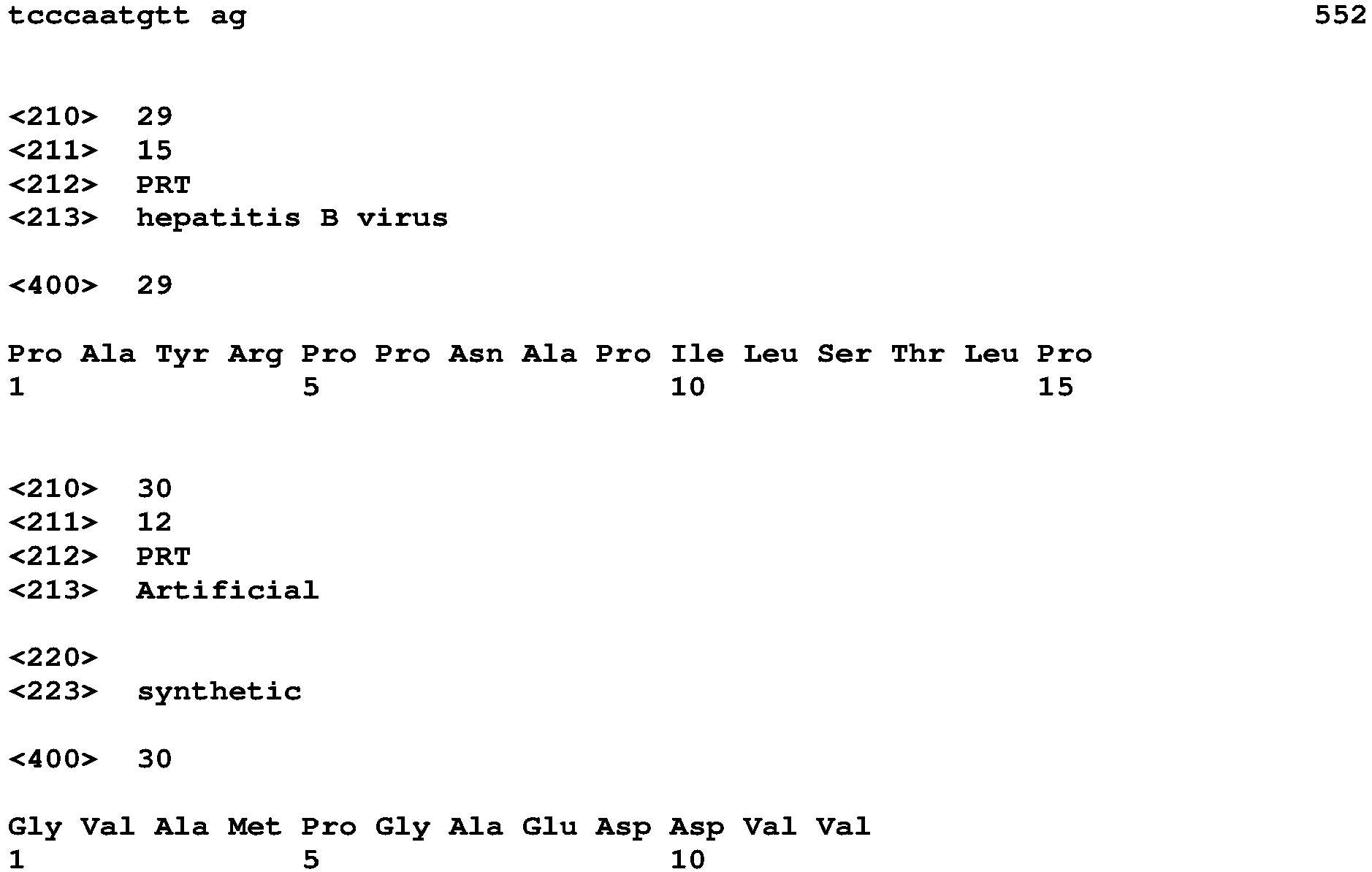
Claims (9)
- An inhibitor of hepatitis B virus replication consisting of any of the following (1) to (3):(1) a peptide fragment constituting a spike region in a core protein of a hepatitis B virus,(2) a peptide fragment in which any amino acid sequence different from said core protein is added to the N-terminus and/or C-terminus of said spike region, and(3) an expression vector comprising a nucleic acid encoding the peptide fragment according to said (1) or (2), and capable of expressing said peptide fragment in a cell.
- The inhibitor of hepatitis B virus replication according to claim 1, wherein said peptide fragment constituting the spike region consists of any of the following amino acid sequences of (a) to (c):(a) the amino acid sequence according to any of SEQ ID NOs: 1 to 7,(b) an amino acid sequence in which one or multiple amino acids are added, deleted, or substituted in the amino acid sequence according to any of SEQ ID NOs: 1 to 7, and(c) an amino acid sequence having an amino acid identity of 82% or higher with the amino acid sequence according to any of SEQ ID NOs: 1 to 7.
- The inhibitor of hepatitis B virus replication according to claim 1, wherein said nucleic acid consists of any of the following base sequences (i) to (iv):(i) the base sequence according to any of SEQ ID NOs: 8 to 14,(ii) a base sequence in which one or multiple bases are added, deleted, or substituted in the base sequence according to any of SEQ ID NOs: 8 to 14,(iii) a base sequence having a base identity of 80% or higher with the base sequence according to any of SEQ ID NOs: 8 to 14, and(iv) a base sequence that hybridizes under a high-stringent condition with a base sequence complementary to the base sequence according to any of SEQ ID NOs: 8 to 14.
- The inhibitor of hepatitis B virus replication according to claim 2, wherein
the phenylalanine (F) residue at position 23 is substituted with an alanine (A) residue and/or the leucine (L) residue at position 42 is substituted with an alanine (A) residue in the amino acid sequence according to any of SEQ ID NOs: 1 to 6, or
the phenylalanine (F) residue at position 35 is substituted with an alanine (A) residue and/or the leucine (L) residue at position 54 is substituted with an alanine (A) residue in the amino acid sequence according to SEQ ID NO: 7. - An inhibitor of nucleocapsid formation of a hepatitis B virus, consisting of any of the following (1) to (3):(1) a peptide fragment constituting a spike region in a core protein of a hepatitis B virus,(2) a peptide fragment in which any amino acid sequence different from said core protein is added to the N-terminus and/or C-terminus of said spike region, and(3) an expression vector comprising a nucleic acid encoding the peptide fragment according to said (1) or (2), and capable of expressing said peptide fragment in a cell.
- A pharmaceutical composition for treating hepatitis B comprising the inhibitor of hepatitis B virus replication according to any one of claims 1 to 4 as an active ingredient, and a carrier and/or a solvent.
- The pharmaceutical composition for treating hepatitis B according to claim 6, further comprising an anti-hepatitis B virus agent.
- The pharmaceutical composition for treating hepatitis B according to claim 7, wherein the anti-hepatitis B virus agent is a nucleic acid analog and/or an HBV-Pol activity inhibitor.
- A method for inhibiting hepatitis B virus replication comprising a step of introducing into a host:(1) a peptide fragment constituting a spike region in a core protein of a hepatitis B virus,(2) a peptide fragment in which any amino acid sequence different from said core protein is added to the N-terminus and/or C-terminus of said spike region, or(3) an expression vector comprising a nucleic acid encoding the peptide fragment according to said (1) or (2), and capable of expressing said peptide fragment in a cell.
Applications Claiming Priority (2)
| Application Number | Priority Date | Filing Date | Title |
|---|---|---|---|
| JP2018193812 | 2018-10-12 | ||
| PCT/JP2019/040154 WO2020075836A1 (en) | 2018-10-12 | 2019-10-11 | Hepatitis b virus replication inhibitor and pharmaceutical composition comprising same for treating hepatitis b |
Publications (2)
| Publication Number | Publication Date |
|---|---|
| EP3865145A1 true EP3865145A1 (en) | 2021-08-18 |
| EP3865145A4 EP3865145A4 (en) | 2022-08-31 |
Family
ID=70164116
Family Applications (1)
| Application Number | Title | Priority Date | Filing Date |
|---|---|---|---|
| EP19870375.3A Pending EP3865145A4 (en) | 2018-10-12 | 2019-10-11 | HEPATITIS B VIRUS REPLICATION INHIBITOR AND PHARMACEUTICAL COMPOSITION COMPRISING IT FOR TREATING HEPATITIS B |
Country Status (6)
| Country | Link |
|---|---|
| US (1) | US12275759B2 (en) |
| EP (1) | EP3865145A4 (en) |
| JP (1) | JP7417274B2 (en) |
| KR (1) | KR20210077711A (en) |
| CN (1) | CN112823019B (en) |
| WO (1) | WO2020075836A1 (en) |
Family Cites Families (7)
| Publication number | Priority date | Publication date | Assignee | Title |
|---|---|---|---|---|
| JPH11508766A (en) * | 1995-06-20 | 1999-08-03 | ザ・ジェネラル・ホスピタル・コーポレイション | Inhibition of hepatitis B replication |
| JPH1171303A (en) * | 1997-08-27 | 1999-03-16 | Rikagaku Kenkyusho | Hepatitis B vaccine |
| KR100949310B1 (en) * | 2007-11-21 | 2010-03-23 | 한국과학기술연구원 | Method for measuring interaction between HV capsid protein and surface protein using cell imaging technique and detection method of H proliferation inhibitor |
| JP2014527072A (en) * | 2011-09-09 | 2014-10-09 | バイオメド リアルティー, エル.ピー. | Methods and compositions for controlling the assembly of viral proteins |
| US9963751B2 (en) * | 2015-11-24 | 2018-05-08 | The Penn State Research Foundation | Compositions and methods for identifying agents to reduce hepatitis B virus covalently closed circular DNA |
| JPWO2018030534A1 (en) | 2016-08-10 | 2019-06-13 | 国立研究開発法人理化学研究所 | Composition for treatment of hepatitis B and method for evaluating replication activity of hepatitis B virus |
| JP6340117B1 (en) | 2017-05-19 | 2018-06-06 | 大成ロテック株式会社 | Road laying |
-
2019
- 2019-10-11 JP JP2020551243A patent/JP7417274B2/en active Active
- 2019-10-11 CN CN201980066430.4A patent/CN112823019B/en active Active
- 2019-10-11 WO PCT/JP2019/040154 patent/WO2020075836A1/en not_active Ceased
- 2019-10-11 US US17/284,142 patent/US12275759B2/en active Active
- 2019-10-11 KR KR1020217014114A patent/KR20210077711A/en not_active Abandoned
- 2019-10-11 EP EP19870375.3A patent/EP3865145A4/en active Pending
Also Published As
| Publication number | Publication date |
|---|---|
| JP7417274B2 (en) | 2024-01-18 |
| KR20210077711A (en) | 2021-06-25 |
| US20210332089A1 (en) | 2021-10-28 |
| EP3865145A4 (en) | 2022-08-31 |
| CN112823019B (en) | 2024-07-30 |
| JPWO2020075836A1 (en) | 2021-09-02 |
| US12275759B2 (en) | 2025-04-15 |
| WO2020075836A1 (en) | 2020-04-16 |
| CN112823019A (en) | 2021-05-18 |
Similar Documents
| Publication | Publication Date | Title |
|---|---|---|
| KR102381682B1 (en) | PAPD5 and PAPD7 inhibitors to treat hepatitis B infection | |
| Döring et al. | R ab33 B and its autophagic A tg5/12/16 L 1 effector assist in hepatitis B virus naked capsid formation and release | |
| AU2016369612A1 (en) | Polynucleotides encoding methylmalonyl-CoA mutase | |
| CN106459993A (en) | Fgfr fusions | |
| CN111671904B (en) | A drug containing the function of inhibiting endonuclease and its anti-tumor application | |
| US20200377599A1 (en) | Compositions and methods for treating cancer | |
| JP7637432B2 (en) | Composition for treating hepatitis B and method for evaluating the replication activity of hepatitis B virus | |
| Dai et al. | AXIN1 boosts antiviral response through IRF3 stabilization and induced phase separation | |
| US12275759B2 (en) | Hepatitis B virus replication inhibitor and pharmaceutical composition for treating hepatitis B comprising the same | |
| EP3944861A1 (en) | Long non-coding rna as therapeutic target in cardiac disorders and cardiac regeneration | |
| EP3395363B1 (en) | Compounds for use in treating hbv-and hcv-related conditions | |
| US20240294587A1 (en) | K-ras inhibitor | |
| JP7109040B2 (en) | fibrosis inhibitor | |
| WO2019245061A1 (en) | Cancer treatment methods based on tp53 mutation status and hypermutation status | |
| US9234018B2 (en) | Compositions and methods for the treatment of VprBP-related cancers | |
| JP4800932B2 (en) | Calcium ion leak inhibitor | |
| WO2001096574A1 (en) | Novel enzyme gene and its expression product | |
| WO2026015522A1 (en) | Therapeutic approaches to target kiaa1549-braf fusion-driven cancers | |
| Jash et al. | Suppression of reactive oxygen species in cells with multiple mitochondrial DNA deletions by exogenous protein-coding RNAs | |
| RU2812046C2 (en) | Method for production of arenavirus, as well as arenavirus mutants with antitumor properties | |
| CN115369163A (en) | Application of RYR2 and down-regulation agent thereof in treating metastatic colorectal cancer | |
| CN121130086A (en) | Application of HS2ST1 inhibitors in the preparation of drugs for treating EGFR-TKI resistant tumors | |
| JP4147058B2 (en) | Diagnosis agent for schizophrenia | |
| KR20130134628A (en) | Composition for prevention and treatment of influenza a viral diseases | |
| HK40090933A (en) | Papd5 and papd7 inhibitors for treating a hepatitis b infection |
Legal Events
| Date | Code | Title | Description |
|---|---|---|---|
| STAA | Information on the status of an ep patent application or granted ep patent |
Free format text: STATUS: THE INTERNATIONAL PUBLICATION HAS BEEN MADE |
|
| PUAI | Public reference made under article 153(3) epc to a published international application that has entered the european phase |
Free format text: ORIGINAL CODE: 0009012 |
|
| STAA | Information on the status of an ep patent application or granted ep patent |
Free format text: STATUS: REQUEST FOR EXAMINATION WAS MADE |
|
| 17P | Request for examination filed |
Effective date: 20210505 |
|
| AK | Designated contracting states |
Kind code of ref document: A1 Designated state(s): AL AT BE BG CH CY CZ DE DK EE ES FI FR GB GR HR HU IE IS IT LI LT LU LV MC MK MT NL NO PL PT RO RS SE SI SK SM TR |
|
| DAV | Request for validation of the european patent (deleted) | ||
| DAX | Request for extension of the european patent (deleted) | ||
| A4 | Supplementary search report drawn up and despatched |
Effective date: 20220729 |
|
| RIC1 | Information provided on ipc code assigned before grant |
Ipc: C07K 14/005 20060101ALI20220725BHEP Ipc: A61P 43/00 20060101ALI20220725BHEP Ipc: A61P 31/20 20060101ALI20220725BHEP Ipc: A61P 1/16 20060101ALI20220725BHEP Ipc: A61K 45/06 20060101ALI20220725BHEP Ipc: A61K 38/16 20060101AFI20220725BHEP |