EP3862914A1 - Video action recognition method, apparatus, and device, and storage medium - Google Patents
Video action recognition method, apparatus, and device, and storage medium Download PDFInfo
- Publication number
- EP3862914A1 EP3862914A1 EP19862600.4A EP19862600A EP3862914A1 EP 3862914 A1 EP3862914 A1 EP 3862914A1 EP 19862600 A EP19862600 A EP 19862600A EP 3862914 A1 EP3862914 A1 EP 3862914A1
- Authority
- EP
- European Patent Office
- Prior art keywords
- action
- video frame
- current video
- positioning information
- category
- Prior art date
- Legal status (The legal status is an assumption and is not a legal conclusion. Google has not performed a legal analysis and makes no representation as to the accuracy of the status listed.)
- Granted
Links
Images




Classifications
-
- G—PHYSICS
- G06—COMPUTING OR CALCULATING; COUNTING
- G06V—IMAGE OR VIDEO RECOGNITION OR UNDERSTANDING
- G06V10/00—Arrangements for image or video recognition or understanding
- G06V10/70—Arrangements for image or video recognition or understanding using pattern recognition or machine learning
- G06V10/82—Arrangements for image or video recognition or understanding using pattern recognition or machine learning using neural networks
-
- G—PHYSICS
- G06—COMPUTING OR CALCULATING; COUNTING
- G06T—IMAGE DATA PROCESSING OR GENERATION, IN GENERAL
- G06T7/00—Image analysis
- G06T7/20—Analysis of motion
-
- G—PHYSICS
- G06—COMPUTING OR CALCULATING; COUNTING
- G06T—IMAGE DATA PROCESSING OR GENERATION, IN GENERAL
- G06T7/00—Image analysis
- G06T7/70—Determining position or orientation of objects or cameras
-
- G—PHYSICS
- G06—COMPUTING OR CALCULATING; COUNTING
- G06V—IMAGE OR VIDEO RECOGNITION OR UNDERSTANDING
- G06V10/00—Arrangements for image or video recognition or understanding
- G06V10/70—Arrangements for image or video recognition or understanding using pattern recognition or machine learning
- G06V10/764—Arrangements for image or video recognition or understanding using pattern recognition or machine learning using classification, e.g. of video objects
-
- G—PHYSICS
- G06—COMPUTING OR CALCULATING; COUNTING
- G06V—IMAGE OR VIDEO RECOGNITION OR UNDERSTANDING
- G06V20/00—Scenes; Scene-specific elements
- G06V20/40—Scenes; Scene-specific elements in video content
- G06V20/41—Higher-level, semantic clustering, classification or understanding of video scenes, e.g. detection, labelling or Markovian modelling of sport events or news items
-
- G—PHYSICS
- G06—COMPUTING OR CALCULATING; COUNTING
- G06V—IMAGE OR VIDEO RECOGNITION OR UNDERSTANDING
- G06V20/00—Scenes; Scene-specific elements
- G06V20/40—Scenes; Scene-specific elements in video content
- G06V20/41—Higher-level, semantic clustering, classification or understanding of video scenes, e.g. detection, labelling or Markovian modelling of sport events or news items
- G06V20/42—Higher-level, semantic clustering, classification or understanding of video scenes, e.g. detection, labelling or Markovian modelling of sport events or news items of sport video content
-
- G—PHYSICS
- G06—COMPUTING OR CALCULATING; COUNTING
- G06V—IMAGE OR VIDEO RECOGNITION OR UNDERSTANDING
- G06V20/00—Scenes; Scene-specific elements
- G06V20/40—Scenes; Scene-specific elements in video content
- G06V20/46—Extracting features or characteristics from the video content, e.g. video fingerprints, representative shots or key frames
-
- G—PHYSICS
- G06—COMPUTING OR CALCULATING; COUNTING
- G06V—IMAGE OR VIDEO RECOGNITION OR UNDERSTANDING
- G06V40/00—Recognition of biometric, human-related or animal-related patterns in image or video data
- G06V40/20—Movements or behaviour, e.g. gesture recognition
-
- G—PHYSICS
- G06—COMPUTING OR CALCULATING; COUNTING
- G06V—IMAGE OR VIDEO RECOGNITION OR UNDERSTANDING
- G06V40/00—Recognition of biometric, human-related or animal-related patterns in image or video data
- G06V40/20—Movements or behaviour, e.g. gesture recognition
- G06V40/28—Recognition of hand or arm movements, e.g. recognition of deaf sign language
-
- G—PHYSICS
- G06—COMPUTING OR CALCULATING; COUNTING
- G06T—IMAGE DATA PROCESSING OR GENERATION, IN GENERAL
- G06T2207/00—Indexing scheme for image analysis or image enhancement
- G06T2207/10—Image acquisition modality
- G06T2207/10016—Video; Image sequence
-
- G—PHYSICS
- G06—COMPUTING OR CALCULATING; COUNTING
- G06T—IMAGE DATA PROCESSING OR GENERATION, IN GENERAL
- G06T2207/00—Indexing scheme for image analysis or image enhancement
- G06T2207/30—Subject of image; Context of image processing
- G06T2207/30241—Trajectory
Definitions
- Embodiments of the present disclosure relate to the technical field of action recognition, for example, to a method and apparatus for recognizing a video action, and a device and storage medium thereof.
- Video gesture recognition is usually applied in application scenarios that require strong interaction.
- the gesture recognition is subject to uncontrollable factors such as complex background, blurred motion, and non-standard actions.
- Gesture recognition processing performed on an image in a video in the related art cannot ensure the stability and smoothness of the gesture recognition result.
- Embodiments of the present disclosure provide a method and apparatus for recognizing a video action, and a device and a storage medium thereof, which can improve the stability and smoothness of the action recognition result.
- the embodiments of the present disclosure provide a method for recognizing a video action.
- the method includes: determining an action category and action positioning information of a current video frame based on the current video frame and at least one forward video frame; and determining action content of a video based on the action category and the action positioning information of the video frame.
- the embodiments of the present disclosure further provide an apparatus for recognizing a video action.
- the apparatus includes: an action category and action positioning information determining module, configured to determine an action category and action positioning information of a current video frame based on the current video frame and at least one forward video frame; and an action content determining module, configured to determine action content of a video based on the action category and the action positioning information of the video frame.
- the embodiments of the present disclosure further provide a computer device.
- the computer device includes a memory, a processor, and a computer program stored on the memory and running on the processor, wherein the processor, when running the computer program, is caused to perform the method for recognizing a video action as described in the embodiments of the present disclosure.
- an embodiment of the present disclosure also provides a computer-readable storage medium storing a computer program therein, wherein the computer program, when run by a processor, causes the processor to perform the method for recognizing a video action as described in the embodiments of the present disclosure.
- FIG. 1 is a flowchart of a method for recognizing a video action according to an embodiment of the present disclosure. This embodiment is applicable to recognizing a user's action in a live video.
- the method may be executed by an apparatus for recognizing a video action, which may be composed of at least one of hardware and software, and may generally be integrated in a device with a video action recognition function.
- the device may be an electronic device such as a server, a mobile terminal, or a server cluster. As shown in FIG. 1 , the method includes 110 to 120.
- an action category and action positioning information of a current video frame are determined based on the current video frame and at least one forward video frame.
- the forward video frame may be a video frame before the corresponding time of the current video frame.
- the video may be a live video or an on-demand video.
- the action may include a user's gesture, body posture, etc., which is a gesture in an embodiment.
- the action category may be an aspect of the gesture
- the action positioning information may be a movement trajectory of the gesture.
- the aspect of the gesture may include: a thumb-up gesture, an "OK" gesture, a gesture of making a heart shape with two hands, a gesture of making a heart shape with one hand, a gesture of making a pistol shape, a "Yeah” gesture, and a hand-holding gesture.
- determining the action category and the action positioning information of the current video frame based on the current video frame and the at least one forward video frame may include: simultaneously inputting the current video frame and the at least one forward video frame into an action recognition model, and acquiring the action category and action positioning information of the current video frame by analyzing the current video frame and at least one forward video frame; or, acquiring the action category and action positioning information corresponding to each video frame by inputting the current video frame and the at least one forward video frame into the action recognition model respectively, and finally acquiring a target action category and target action positioning information of the current video frame by correcting the action category and action positioning information of the current video frame with the action category and action positioning information of the at least one forward video frame.
- an action content of a video is determined based on the action category and action positioning information of the current video frame.
- the action content may be the information to be conveyed by the action.
- the action content may include: thumb-up, "OK,” making a heart shape with two hands, making a heart shape with one hand, making a pistol shape, "Yeah "and hand-holding or the like.
- the action content in the video may be determined.
- predefined special effects may be triggered at an action positioning point in combination with the action category.
- the technical solution according to this embodiment is to determine an action category and action positioning information of a current video frame based on the current video frame and at least one forward video frame, and finally determine action content of a video based on the action category and action positioning information of the current video frame.
- the method for recognizing a video action determines an action category and action positioning information of a current video frame based on the current video frame and at least one forward video frame, which can improve the stability of action category recognition and the smoothness of action positioning information recognition.
- FIG. 2 is a flowchart of a method for recognizing a video action according to an embodiment of the present disclosure.
- determining the action category and the action positioning information of the current video frame based on the current video frame and the at least one forward video frame may be implemented by 210 to 230.
- a current video frame is acquired and an action recognition result of the current video frame is determined.
- the action recognition result includes an action category and action positioning information.
- the action positioning information may be action block positioning information, including a width of an action block, a height of the action block, and center coordinates of the action block.
- the action category and action positioning information of the current video frame may be acquired by inputting the current video frame into an action recognition model.
- determining the action category of the current video frame may include: acquiring a confidence of at least one defined action category by inputting the current video frame into an action recognition model, and selecting a defined action category with a highest confidence as the action category of the current video frame.
- the action recognition model may be trained using a convolutional neural network, and has the function of recognizing action categories and action positioning information in video frames.
- the defined action category may be a category predefined in the system. Assuming that the action is a gesture, the defined action category may include thumb-up, "OK", making a heart shape with two hands, making a heart shape with one hand, making a pistol shape, "Yeah” and hand-holding or the like.
- a confidence of a defined action category corresponding to the current video frame is acquired, and a defined action category with the highest confidence is taken as the action category of the current video frame.
- the action category of the current video frame is "making a pistol shape”.
- determining the action positioning information of the current video frame may include: inputting the current video frame into an action recognition model, and outputting a width of an action block, a height of the action block, and center coordinates of the action block.
- a target action category of the current video frame is acquired by correcting the action category of the current video frame based on an action category of the at least one forward video frame.
- acquiring the target action category of the current video frame by correcting the action category of the current video frame based on the action category of the at least one forward video frame may include: summing the confidences of each of the at least one defined action category in the at least one forward video frame and the current video frame; acquiring a defined action category with a highest sum of the confidences; among the action categories of the at least one forward video frame and the current video frame, if the number of action categories the same as the defined action category with the highest sum of the confidences exceeds a defined number, determining the defined action category with the highest sum of the confidences as the target action category; and among the action categories of the at least one forward video frame and the current video frame, if the number of action categories the same as the defined action category with the highest sum of the confidences does not exceed the defined number, determining the action category of the current video frame as the target action category.
- the defined number may be determined based on the number of forward video frames.
- the defined number may be any value between 50% and 80% of the number of forward video frames.
- target action positioning information of the current video frame is acquired by correcting the action positioning information of the current video frame based on action positioning information of a previous video frame of the current video frame.
- the action positioning information of the current video frame is corrected based on action positioning information of a previous frame of the current video frame.
- the method for recognizing a video action further includes the following processes: determining whether an absolute value of a difference between the positioning information of the target action block and the positioning information of the action block of the previous video frame is less than a predefined threshold; and updating the positioning information of the target action block to the positioning information of the action block of the previous video frame based on a determination result that the absolute value of the difference between the positioning information of the target action block and the positioning information of the action block of the previous video frame is less than the predefined threshold.
- the predefined threshold may be defined to any value between 1 to 10 pixels. In an embodiment, it is defined to 3 or 4 pixels.
- the width of the target action block is updated to the width of the action block of the previous video frame.
- the height of the target action block is updated to the height of the action block of the previous video frame.
- the abscissa of the center coordinates of the target action block is updated to the abscissa of the center coordinates of the action block of the previous video frame.
- the ordinate of the center coordinates of the target action block is updated to the ordinate of the center coordinates of the action block of the previous video frame.
- the action category of the current video frame is corrected based on an action category of the at least one forward video frame
- the action positioning information of the current video frame is corrected based on action positioning information of a previous frame of the current video frame, which can stability and smoothness for video action recognition.
- FIG. 3 is a flowchart of a method for recognizing a video action according to an embodiment of the present disclosure.
- acquiring the current video frame and determining the action recognition result of the current video frame may be implemented by 310 to 330.
- the predefined key frame may be determined as a key frame every defined number of video frames defined according to actual needs, for example, every 10 frames of video frames are determined as a key frame.
- initial action positioning information of the current video frame is acquired by inputting the current video frame into a first action recognition sub-model based on a determination result that the current video frame is a predefined key frame, a first image region to be recognized of the current video frame is determined based on the initial action positioning information, and the action recognition result of the current video frame is acquired by inputting the first image region to be recognized a second action recognition sub-model.
- the first action recognition sub-model and the second action recognition sub-model are trained using different convolutional neural networks.
- the first action recognition sub-model may be acquired using dense convolutional network (DenseNet) or ResNet.
- the second action recognition sub-model may be acquired using MobileNet-v2.
- initial action positioning information is acquired by inputting the current video frame into a first action recognition sub-model based on a determination result that the current video frame is a predefined key frame.
- a first image region to be recognized is acquired in response to expanding a defined region or defined pixel points based on a region encircled by the initial action block, and finally the action recognition result of the current video frame is acquired by inputting the first image region to be recognized into a second action recognition sub-model.
- a second image region to be recognized of the current video frame is determined based on action block positioning information of the previous video frame, and the action recognition result of the current video frame is acquired by inputting the second image region to be recognized into the second action recognition sub-model.
- a second image region to be recognized is acquired by expanding a defined region or defined pixel points based on a region encircled by the action block of the previous video frame, and finally the action recognition result of the current video frame is acquired by inputting the second image region to be recognized into the second action recognition sub-model.
- the action recognition result is acquired by sequentially inputting a predefined key frame into the first action recognition sub-model and the second action recognition sub-model, and the action recognition result is acquired by inputting a non-predefined key frame into the second action recognition sub-model, which can increase the speed of image recognition while ensuring recognition accuracy.
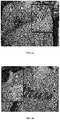
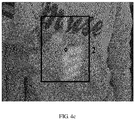
- FIGS. 4a-4d are diagrams of the recognition effect of the "thumb-up" gesture according to an embodiment of the present disclosure.
- "2" indicates that the gesture category of the video frame is "thumb-up.”
- a gesture category of the video frame may be determined as "2," that is, thumb-up, and gesture positioning information, including a width of a gesture frame, a height of the gesture frame, and center coordinates of the gesture frame.
- FIGS. 5a-5c are diagrams of the recognition effect of the "making a heart shape with two hands” gesture according to an embodiment of the present disclosure.
- "5" indicates that the gesture category of the video frame is "making a heart shape with two hands.”
- a gesture category of the video frame may be acquired as "5,” that is, making a heart shape with two hands, and gesture positioning information, including a width of a gesture frame, a height of the gesture frame and center coordinates of the gesture frame .
- FIG. 6 is a schematic structural diagram of an apparatus for recognizing a video action according to an embodiment of the present disclosure. As shown in FIG. 6 , the apparatus includes: an action category and action positioning information determining module 610 and an action content determining module 620.
- the action category and action positioning information determining module 610 is configured to determine an action category and action positioning information of a current video frame based on the current video frame and at least one forward video frame.
- the action content determining module 620 is configured to determine action content of a video based on the action category and the action positioning information of the current video frame.
- the action category and action positioning information determining module 610 is configured to:
- the action category and action positioning information determining module 610 is configured to:
- the action category and action positioning information determining module 610 is configured to:
- the action positioning information includes a width of an action block, a height of the action block, and center coordinates of the action block.
- the action category and action positioning information determining module 610 is configured to:
- the action category and action positioning information determining module 610 is configured to:
- the action category and action positioning information determining module 610 is configured to:
- the action is a user's gesture
- the action category is an aspect of the gesture
- the action positioning information is a movement trajectory of the gesture.
- FIG. 7 is a schematic structural diagram of a computer device according to an embodiment of the present disclosure.
- FIG. 7 shows a block diagram of a computer device 712 applicable to implementing the embodiments of the present disclosure.
- the computer device 712 shown in FIG. 7 is only an example, and should not bring any limitation to the function and scope of use of the embodiments of the present disclosure.
- the device 712 is typically a computing device that is responsible for recognizing video actions.
- the computer device 712 is embodied in the form of a general-purpose computing device.
- Components of the computer device 712 may include, but are not limited to: at least one processor 716, a storage device 728, and a bus 718 connecting different system components (including the storage device 728 and the processor 716).
- the bus 718 represents one or more of several types of bus structures, including a memory bus or a memory controller, a peripheral bus, a graphics acceleration port, a processor, or a local bus using any of the various bus structures.
- these architectures include but are not limited to industry standard architecture (ISA) bus, micro channel architecture (MCA) bus, enhanced ISA bus, Video Electronics Standards Association (VVESA) local bus and peripheral component interconnect (PCI) bus.
- ISA industry standard architecture
- MCA micro channel architecture
- VVESA Video Electronics Standards Association
- PCI peripheral component interconnect
- the computer device 712 typically includes a variety of computer system readable mediums.
- the mediums may be any available mediums that may be accessed by the computer device 712, including volatile and non-volatile mediums, and removable and non-removable mediums.
- the storage device 728 may include a computer system readable medium in the form of a volatile memory, such as at least one of a random-access memory (RAM) 730 and a cache memory 732.
- the computer device 712 may further include other removable/non-removable, volatile/nonvolatile computer system storage medium.
- the storage system 734 may be used to read and write non-removable, non-volatile magnetic medium (not shown in FIG. 7 , and generally referred to as a "hard drive").
- each drive may be connected to the bus 718 via at least one data medium interface.
- the storage device 728 may include at least one program product.
- the program product has a defined of (for example, at least one) program modules that are configured to perform the functions of the embodiments of the present disclosure.
- a program 736 having a defined of (at least one) program module 726 may be stored in, for example, the storage device 728.
- Such program modules 726 include but are not limited to an operating system, at least one application, other program modules, and program data. Each of these examples or some combination may include an implementation of a network environment.
- the program module 726 generally executes the functions and/or methods in the embodiments of the present disclosure.
- the computer device 712 may also communicate with at least one external device 714 (such as a keyboard, a pointing device, a camera, or a display 724), and may also communicate with at least one device that enables a user to interact with the computer device 712, and/or communicate with any device (such as a network card or a modem) that enables the computer device 712 to communicate with at least one other computing device. This communication may be performed via an input/output (I/O) interface 722.
- the computer device 712 may also communicate with at least one network, for example, a local region network (LAN), a wide region network, WAN) and/or a public network, such as the Internet, via a network adapter 720.
- LAN local region network
- WAN wide region network
- public network such as the Internet
- the network adapter 720 communicates with other modules of the computer device 712 via the bus 718. It should be understood that although not shown in the figure, other hardware and/or software modules may be used in conjunction with the computer device 712, including but not limited to: microcode, device drivers, redundant processing units, external disk drive arrays, and redundant arrays of independent disks (RAID) systems, tape drives, and data backup storage systems.
- RAID redundant arrays of independent disks
- the processor 716 executes various functional applications and data processing by running the programs stored in the storage device 728, such as implementing the method for recognizing a video action according to the foregoing embodiments of the present disclosure.
- a sixth embodiment of the present disclosure also provides a computer-readable storage medium having a computer program stored thereon.
- the program when executed by a processor, performs the method for recognizing a video action according to the embodiments of the present disclosure.
- An embodiment of the present disclosure also provides a computer-readable storage medium having a computer program stored therein.
- the computer program is not limited to the method operations described above, and can also perform related operations in the method for recognizing a video action according to any embodiment of the present disclosure.
- the computer storage medium may adopt any combination of at least one computer-readable medium.
- the computer-readable medium may be a computer-readable signal medium or a computer-readable storage medium.
- the computer-readable storage medium may be, for example, but is not limited to, an electrical, magnetic, optical, electromagnetic, infrared, or semiconductor system, apparatus, or device, or any combination thereof. More specific examples (non-exhaustive list) of the computer-readable storage medium include: an electrical connection with at least one wire, a portable computer disk, a hard disk, a RAM, a ROM, an erasable programmable read-only memory (EPROM or flash memory), an optical fiber, a portable CD-ROM, an optical storage device, a magnetic storage device, or any suitable combination thereof.
- the computer-readable storage medium may be any tangible medium that contains or stores a program. The program may be used by or in combination with an instruction execution system, apparatus, or device.
- the computer-readable signal medium may include a data signal propagated in baseband or as a part of a carrier wave, and computer-readable program code is carried therein. This propagated data signal may take many forms, including but not limited to electromagnetic signals, optical signals, or any suitable combination thereof.
- the computer-readable signal medium may also be any computer-readable medium other than the computer-readable storage medium.
- the computer-readable medium may send, propagate, or transmit the program for use by or in combination with the instruction execution system, apparatus, or device.
- the program code contained on the computer-readable medium may be transmitted by any suitable medium, including but not limited to wireless, wire, optical cable, RF, etc., or any suitable combination thereof.
- the computer program code used to perform the operations of the present disclosure may be written in one or more programming languages or a combination thereof.
- the programming languages include object-oriented programming languages such as Java, Smalltalk, C++, and also include conventional procedural programming languages such as "C" language or similar programming languages.
- the program code may be executed entirely on a user's computer, partly on the user's computer, executed as an independent software package, partly on the user's computer and partly executed on a remote computer, or entirely executed on the remote computer or server.
- the remote computer may be connected to the user's computer over any network including a local region network (LAN) or a wide region network (WAN), or may be connected to an external computer (for example, using an Internet service provider to connect over the Internet).
- LAN local region network
- WAN wide region network
- Internet service provider for example, using an Internet service provider to connect over the Internet.
Landscapes
- Engineering & Computer Science (AREA)
- Theoretical Computer Science (AREA)
- Physics & Mathematics (AREA)
- General Physics & Mathematics (AREA)
- Multimedia (AREA)
- Computer Vision & Pattern Recognition (AREA)
- General Health & Medical Sciences (AREA)
- Health & Medical Sciences (AREA)
- Software Systems (AREA)
- Evolutionary Computation (AREA)
- Psychiatry (AREA)
- Human Computer Interaction (AREA)
- Artificial Intelligence (AREA)
- Computing Systems (AREA)
- Databases & Information Systems (AREA)
- Medical Informatics (AREA)
- Social Psychology (AREA)
- Computational Linguistics (AREA)
- Image Analysis (AREA)
Abstract
Description
- This application claims priority to
Chinese Patent Application No. 201811107097.0 - Embodiments of the present disclosure relate to the technical field of action recognition, for example, to a method and apparatus for recognizing a video action, and a device and storage medium thereof.
- With the rapid development of related arts such as computer vision and machine learning, human-computer interaction technology has been receiving more and more attention. In human-computer interaction, it is necessary to recognize a user's body information such as face recognition, gesture recognition, and body posture recognition. The gesture recognition may be used as an intuitive communication method and has important research significance.
- Video gesture recognition is usually applied in application scenarios that require strong interaction. When continuously positioning and recognizing user gestures, the gesture recognition is subject to uncontrollable factors such as complex background, blurred motion, and non-standard actions.
- Gesture recognition processing performed on an image in a video in the related art cannot ensure the stability and smoothness of the gesture recognition result.
- Embodiments of the present disclosure provide a method and apparatus for recognizing a video action, and a device and a storage medium thereof, which can improve the stability and smoothness of the action recognition result.
- In a first aspect, the embodiments of the present disclosure provide a method for recognizing a video action. The method includes: determining an action category and action positioning information of a current video frame based on the current video frame and at least one forward video frame; and determining action content of a video based on the action category and the action positioning information of the video frame.
- In a second aspect, the embodiments of the present disclosure further provide an apparatus for recognizing a video action. The apparatus includes: an action category and action positioning information determining module, configured to determine an action category and action positioning information of a current video frame based on the current video frame and at least one forward video frame; and an action content determining module, configured to determine action content of a video based on the action category and the action positioning information of the video frame.
- In a third aspect, the embodiments of the present disclosure further provide a computer device. The computer device includes a memory, a processor, and a computer program stored on the memory and running on the processor, wherein the processor, when running the computer program, is caused to perform the method for recognizing a video action as described in the embodiments of the present disclosure.
- In a fourth aspect, an embodiment of the present disclosure also provides a computer-readable storage medium storing a computer program therein, wherein the computer program, when run by a processor, causes the processor to perform the method for recognizing a video action as described in the embodiments of the present disclosure.
-
-
FIG. 1 is a flowchart of a method for recognizing a video action according to an embodiment of the present disclosure; -
FIG. 2 is a flowchart of a method for recognizing a video action according to an embodiment of the present disclosure; -
FIG. 3 is a flowchart of a method for recognizing a video action according to an embodiment of the present disclosure; -
FIG. 4a is a diagram of the recognition effect of a "thumb-up" gesture according to an embodiment of the present disclosure; -
FIG. 4b is a diagram of the recognition effect of a "thumb-up " gesture according to an embodiment of the present disclosure; -
FIG. 4c is a diagram of the recognition effect of a "thumb-up " gesture according to an embodiment of the present disclosure; -
FIG. 4d is a diagram of the recognition effect of a "thumb-up " gesture according to an embodiment of the present disclosure; -
FIG. 5a is a diagram of the recognition effect of the gesture of "making a heart shape with two hands" according to an embodiment of the present disclosure; -
FIG. 5b is a diagram of the recognition effect of the gesture of "making a heart shape with two hands" according to an embodiment of the present disclosure; -
FIG. 5c is a diagram of the recognition effect of the gesture of "making a heart shape with two hands" according to an embodiment of the present disclosure; -
FIG. 6 is a schematic structural diagram of an apparatus for recognizing a video action according to an embodiment of the present disclosure; and -
FIG. 7 is a schematic structural diagram of a computer device according to an embodiment of the present disclosure. -
FIG. 1 is a flowchart of a method for recognizing a video action according to an embodiment of the present disclosure. This embodiment is applicable to recognizing a user's action in a live video. The method may be executed by an apparatus for recognizing a video action, which may be composed of at least one of hardware and software, and may generally be integrated in a device with a video action recognition function. The device may be an electronic device such as a server, a mobile terminal, or a server cluster. As shown inFIG. 1 , the method includes 110 to 120. - In 110, an action category and action positioning information of a current video frame are determined based on the current video frame and at least one forward video frame.
- The forward video frame may be a video frame before the corresponding time of the current video frame. The video may be a live video or an on-demand video. The action may include a user's gesture, body posture, etc., which is a gesture in an embodiment. When the action is a gesture, the action category may be an aspect of the gesture, and the action positioning information may be a movement trajectory of the gesture. For example, the aspect of the gesture may include: a thumb-up gesture, an "OK" gesture, a gesture of making a heart shape with two hands, a gesture of making a heart shape with one hand, a gesture of making a pistol shape, a "Yeah" gesture, and a hand-holding gesture.
- In this embodiment, determining the action category and the action positioning information of the current video frame based on the current video frame and the at least one forward video frame may include: simultaneously inputting the current video frame and the at least one forward video frame into an action recognition model, and acquiring the action category and action positioning information of the current video frame by analyzing the current video frame and at least one forward video frame; or, acquiring the action category and action positioning information corresponding to each video frame by inputting the current video frame and the at least one forward video frame into the action recognition model respectively, and finally acquiring a target action category and target action positioning information of the current video frame by correcting the action category and action positioning information of the current video frame with the action category and action positioning information of the at least one forward video frame.
- In 120, an action content of a video is determined based on the action category and action positioning information of the current video frame.
- The action content may be the information to be conveyed by the action. In an exemplary embodiment, taking gestures as an example, the action content may include: thumb-up, "OK," making a heart shape with two hands, making a heart shape with one hand, making a pistol shape, "Yeah "and hand-holding or the like.
- Upon acquisition of the action category and action positioning information of the current video frame in the video, the action content in the video may be determined. In an embodiment, in this application scenario, upon acquisition the action category and action positioning information of the current video frame, predefined special effects may be triggered at an action positioning point in combination with the action category.
- The technical solution according to this embodiment is to determine an action category and action positioning information of a current video frame based on the current video frame and at least one forward video frame, and finally determine action content of a video based on the action category and action positioning information of the current video frame. The method for recognizing a video action according to the embodiment of the present disclosure determines an action category and action positioning information of a current video frame based on the current video frame and at least one forward video frame, which can improve the stability of action category recognition and the smoothness of action positioning information recognition.
-
FIG. 2 is a flowchart of a method for recognizing a video action according to an embodiment of the present disclosure. As an explanation of the foregoing embodiment, as shown inFIG. 2 , determining the action category and the action positioning information of the current video frame based on the current video frame and the at least one forward video frame may be implemented by 210 to 230. - In 210, a current video frame is acquired and an action recognition result of the current video frame is determined.
- The action recognition result includes an action category and action positioning information. The action positioning information may be action block positioning information, including a width of an action block, a height of the action block, and center coordinates of the action block.
- In this embodiment, the action category and action positioning information of the current video frame may be acquired by inputting the current video frame into an action recognition model. In an embodiment, determining the action category of the current video frame may include: acquiring a confidence of at least one defined action category by inputting the current video frame into an action recognition model, and selecting a defined action category with a highest confidence as the action category of the current video frame.
- The action recognition model may be trained using a convolutional neural network, and has the function of recognizing action categories and action positioning information in video frames. The defined action category may be a category predefined in the system. Assuming that the action is a gesture, the defined action category may include thumb-up, "OK", making a heart shape with two hands, making a heart shape with one hand, making a pistol shape, "Yeah" and hand-holding or the like. In response to inputting the current video frame into an action recognition model, a confidence of a defined action category corresponding to the current video frame is acquired, and a defined action category with the highest confidence is taken as the action category of the current video frame. In an exemplary embodiment, assuming that the confidence of the defined action category corresponding to the current video frame is: thumb-up is 0.1, "OK" is 0.25, making a heart shape with two hands is 0.3, making a heart shape with one hand is 0.3, making a pistol shape is 0.8, "Yeah " is 0.4 and hand-holding is 0.2, then the action category of the current video frame is "making a pistol shape".
- In an embodiment, determining the action positioning information of the current video frame may include: inputting the current video frame into an action recognition model, and outputting a width of an action block, a height of the action block, and center coordinates of the action block.
- In 220, a target action category of the current video frame is acquired by correcting the action category of the current video frame based on an action category of the at least one forward video frame.
- In an embodiment, acquiring the target action category of the current video frame by correcting the action category of the current video frame based on the action category of the at least one forward video frame may include: summing the confidences of each of the at least one defined action category in the at least one forward video frame and the current video frame; acquiring a defined action category with a highest sum of the confidences; among the action categories of the at least one forward video frame and the current video frame, if the number of action categories the same as the defined action category with the highest sum of the confidences exceeds a defined number, determining the defined action category with the highest sum of the confidences as the target action category; and among the action categories of the at least one forward video frame and the current video frame, if the number of action categories the same as the defined action category with the highest sum of the confidences does not exceed the defined number, determining the action category of the current video frame as the target action category.
- The defined number may be determined based on the number of forward video frames. For example, the defined number may be any value between 50% and 80% of the number of forward video frames. In an embodiment, a defined action category with the highest sum of the confidences may be calculated according to the following formula

f )=c means that when probf takes c, the value is 1, and when probf takes other values, the value is 0. After the defined action category with the highest sum of the confidences is determined as n, the target action category may be determined according to the following formula:
- In 230, target action positioning information of the current video frame is acquired by correcting the action positioning information of the current video frame based on action positioning information of a previous video frame of the current video frame.
- In this application scenario, the action positioning information of the current video frame is corrected based on action positioning information of a previous frame of the current video frame. In an embodiment, acquiring the target action positioning information of the current video frame by correcting the action positioning information of the current video frame based on the action positioning information of the previous video frame may include: acquiring a gain factor for the width or the height of the action block; and calculating a width or a height of a target action block according to the following formula based on the gain factor: x=x2+k(x1-x2); where x represents the width or the height of the target action block, k represents the gain factor, x1 represents a width or a height of an action block of the current video frame, and x2 represents a width of an action block of the previous video frame or a height of an action block of the forward video frame; and calculating center coordinates of the target action block according to the following formula based on the gain matrix: Y=Y2+K∗(Y1-H∗Y2); where Y represents the center coordinates of the target action block, Y2 represents is center coordinates of the action block of the previous video frame, K represents the gain matrix, H represents a unitary matrix, and Y1 represents the center coordinates of the action block of the current video frame.
- The gain factor may be calculated according to the following formula: k=p_/(p_+r), where p_=p+q, p represents a posterior error, p-represents a prior error, q represents a process deviation, and r represents a measurement deviation. The process deviation and measurement deviation may be acquired upon experimentation, and the posterior error may be acquired iteratively according to the following formula: p=(1-k)∗p_.
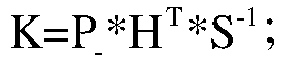
- The gain matrix may be calculated according to the following formula: K=P_∗HT∗S-1, where P=A∗err∗AT+Q, S=H∗P∗HT+R, A represents a motion matrix, Q represents a process variance matrix, R represents a measurement variance matrix, err represents a center point error matrix, and H represents a unitary matrix. The center point error matrix may be acquired iteratively according to the following formula: err=(1-K∗H)∗P.
- In an embodiment, the method for recognizing a video action further includes the following processes: determining whether an absolute value of a difference between the positioning information of the target action block and the positioning information of the action block of the previous video frame is less than a predefined threshold; and updating the positioning information of the target action block to the positioning information of the action block of the previous video frame based on a determination result that the absolute value of the difference between the positioning information of the target action block and the positioning information of the action block of the previous video frame is less than the predefined threshold.
- The predefined threshold may be defined to any value between 1 to 10 pixels. In an embodiment, it is defined to 3 or 4 pixels.
- In this embodiment, when the absolute value of the difference between the width of the target action block and the width of the action block of the previous video frame is less than the predefined threshold, the width of the target action block is updated to the width of the action block of the previous video frame. When the absolute value of the difference between the height of the target action block and the height of the action block of the previous video frame is less than the predefined threshold, the height of the target action block is updated to the height of the action block of the previous video frame. When the absolute value of the difference between the abscissa of the center coordinates of the target action block and the abscissa of the center coordinates of the action block of the previous frame is less than the predefined threshold, the abscissa of the center coordinates of the target action block is updated to the abscissa of the center coordinates of the action block of the previous video frame. When the absolute value of the difference between the ordinate of the center coordinates of the target action block and the ordinate of the center coordinates of the action block of the previous video frame is less than the predefined threshold, the ordinate of the center coordinates of the target action block is updated to the ordinate of the center coordinates of the action block of the previous video frame.
- In the technical solution according to this embodiment, the action category of the current video frame is corrected based on an action category of the at least one forward video frame, and the action positioning information of the current video frame is corrected based on action positioning information of a previous frame of the current video frame, which can stability and smoothness for video action recognition.
-
FIG. 3 is a flowchart of a method for recognizing a video action according to an embodiment of the present disclosure. As an explanation of the foregoing embodiment, as shown inFIG. 3 , acquiring the current video frame and determining the action recognition result of the current video frame may be implemented by 310 to 330. - In 310, whether the current video frame is a predefined key frame is determined.
- The predefined key frame may be determined as a key frame every defined number of video frames defined according to actual needs, for example, every 10 frames of video frames are determined as a key frame.
- In 320, initial action positioning information of the current video frame is acquired by inputting the current video frame into a first action recognition sub-model based on a determination result that the current video frame is a predefined key frame, a first image region to be recognized of the current video frame is determined based on the initial action positioning information, and the action recognition result of the current video frame is acquired by inputting the first image region to be recognized a second action recognition sub-model.
- The first action recognition sub-model and the second action recognition sub-model are trained using different convolutional neural networks. The first action recognition sub-model may be acquired using dense convolutional network (DenseNet) or ResNet. The second action recognition sub-model may be acquired using MobileNet-v2.
- In an embodiment, initial action positioning information is acquired by inputting the current video frame into a first action recognition sub-model based on a determination result that the current video frame is a predefined key frame. Upon acquisition of the initial action positioning information, a first image region to be recognized is acquired in response to expanding a defined region or defined pixel points based on a region encircled by the initial action block, and finally the action recognition result of the current video frame is acquired by inputting the first image region to be recognized into a second action recognition sub-model.
- In 330, based on a determination result that the current video frame is not a predefined key frame, a second image region to be recognized of the current video frame is determined based on action block positioning information of the previous video frame, and the action recognition result of the current video frame is acquired by inputting the second image region to be recognized into the second action recognition sub-model.
- In an embodiment, based on a determination result that the current video frame is not a predefined key frame, a second image region to be recognized is acquired by expanding a defined region or defined pixel points based on a region encircled by the action block of the previous video frame, and finally the action recognition result of the current video frame is acquired by inputting the second image region to be recognized into the second action recognition sub-model.
- In the technical solution according to this embodiment, the action recognition result is acquired by sequentially inputting a predefined key frame into the first action recognition sub-model and the second action recognition sub-model, and the action recognition result is acquired by inputting a non-predefined key frame into the second action recognition sub-model, which can increase the speed of image recognition while ensuring recognition accuracy.
- In an exemplary embodiment,
FIGS. 4a-4d are diagrams of the recognition effect of the "thumb-up" gesture according to an embodiment of the present disclosure. As shown inFIGS. 4a-4d , "2" indicates that the gesture category of the video frame is "thumb-up." After inputting each video frame into the action recognition model, a gesture category of the video frame may be determined as "2," that is, thumb-up, and gesture positioning information, including a width of a gesture frame, a height of the gesture frame, and center coordinates of the gesture frame. -
FIGS. 5a-5c are diagrams of the recognition effect of the "making a heart shape with two hands" gesture according to an embodiment of the present disclosure. As shown inFIGS. 5a-5c , "5" indicates that the gesture category of the video frame is "making a heart shape with two hands." In response to inputting each video frame into the action recognition model, a gesture category of the video frame may be acquired as "5," that is, making a heart shape with two hands, and gesture positioning information, including a width of a gesture frame, a height of the gesture frame and center coordinates of the gesture frame . -
FIG. 6 is a schematic structural diagram of an apparatus for recognizing a video action according to an embodiment of the present disclosure. As shown inFIG. 6 , the apparatus includes: an action category and action positioninginformation determining module 610 and an actioncontent determining module 620. - The action category and action positioning
information determining module 610 is configured to determine an action category and action positioning information of a current video frame based on the current video frame and at least one forward video frame. - The action
content determining module 620 is configured to determine action content of a video based on the action category and the action positioning information of the current video frame. - In an embodiment, the action category and action positioning
information determining module 610 is configured to: - acquire a current video frame and determine an action recognition result of the current video frame, wherein the action recognition result includes an action category and action positioning information;
- acquire a target action category of the current video frame by correcting the action category of the current video frame based on an action category of the at least one forward video frame; and
- acquire target action positioning information of the current video frame by correcting the action positioning information of the current video frame based on action positioning information of a previous video frame of the current video frame.
- In an embodiment, the action category and action positioning
information determining module 610 is configured to: - acquire a confidence of at least one defined action category by inputting the current video frame into an action recognition model; and
- select a defined action category with a highest confidence as the action category of the current video frame.
- In an embodiment, the action category and action positioning
information determining module 610 is configured to: - sum the confidences of each of the at least one defined action category in the at least one forward video frame and the current video frame;
- acquire a defined action category with a highest sum of the confidences;
- among the action categories of the at least one forward video frame and the current video frame, if the number of action categories the same as the defined action category with the highest sum of the confidences exceeds a defined number, determine the defined action category with the highest sum of the confidences as the target action category; and
- among the action categories of the at least one forward video frame and the current video frame, if the number of action categories the same as the defined action category with the highest sum of the confidences does not exceed the defined number, determine the action category of the current video frame as the target action category.
- In an embodiment, the action positioning information includes a width of an action block, a height of the action block, and center coordinates of the action block.
- In an embodiment, the action category and action positioning
information determining module 610 is configured to: - acquire a gain factor for the width or the height of the action block; and
- calculate a width or a height of a target action block according to the following formula based on the gain factor:

- In an embodiment, the action category and action positioning
information determining module 610 is configured to: - determine whether an absolute value of a difference between the positioning information of the target action block and the positioning information of the action block of the previous video frame is less than a predefined threshold; and
- update the positioning information of the target action block to the positioning information of the action block of the previous video frame based on a determination result that the absolute value of the difference between the positioning information of the target action block and the positioning information of the action block of the previous video frame is less than the predefined threshold.
- In an embodiment, the gain factor is calculated according to the following formula:

- The gain matrix is calculated according to the following formula:
- In an embodiment, the action category and action positioning
information determining module 610 is configured to: - determine whether the current video frame is a predefined key frame;
- acquire initial action positioning information of the current video frame by inputting the current video frame into a first action recognition sub-model based on a determination result that the current video frame is a predefined key frame; and determine a first image region to be recognized of the current video frame based on the initial action positioning information, and acquire the action recognition result of the current video frame by inputting the first image region to be recognized into a second action recognition sub-model, wherein the first action recognition sub-model and the second action recognition sub-model are trained using different convolutional neural networks; and
- determine a second image region to be recognized of the current video frame based on action block positioning information of the previous video frame based on a determination result that the current video frame is not a predefined key frame, and acquire the action recognition result of the current video frame by inputting the second image region to be recognized into the second action recognition sub-model.
- In an embodiment, the action is a user's gesture, the action category is an aspect of the gesture, and the action positioning information is a movement trajectory of the gesture.
- The above-mentioned apparatus may carry out the methods according to all the foregoing embodiments of the present disclosure. For technical details not described in detail in this embodiment, reference may be made to the methods according to all the foregoing embodiments of the present disclosure.
-
FIG. 7 is a schematic structural diagram of a computer device according to an embodiment of the present disclosure.FIG. 7 shows a block diagram of acomputer device 712 applicable to implementing the embodiments of the present disclosure. Thecomputer device 712 shown inFIG. 7 is only an example, and should not bring any limitation to the function and scope of use of the embodiments of the present disclosure. Thedevice 712 is typically a computing device that is responsible for recognizing video actions. - As shown in
FIG. 7 , thecomputer device 712 is embodied in the form of a general-purpose computing device. Components of thecomputer device 712 may include, but are not limited to: at least oneprocessor 716, astorage device 728, and abus 718 connecting different system components (including thestorage device 728 and the processor 716). - The
bus 718 represents one or more of several types of bus structures, including a memory bus or a memory controller, a peripheral bus, a graphics acceleration port, a processor, or a local bus using any of the various bus structures. For example, these architectures include but are not limited to industry standard architecture (ISA) bus, micro channel architecture (MCA) bus, enhanced ISA bus, Video Electronics Standards Association (VVESA) local bus and peripheral component interconnect (PCI) bus. - The
computer device 712 typically includes a variety of computer system readable mediums. The mediums may be any available mediums that may be accessed by thecomputer device 712, including volatile and non-volatile mediums, and removable and non-removable mediums. - The
storage device 728 may include a computer system readable medium in the form of a volatile memory, such as at least one of a random-access memory (RAM) 730 and acache memory 732. Thecomputer device 712 may further include other removable/non-removable, volatile/nonvolatile computer system storage medium. Just as an example, thestorage system 734 may be used to read and write non-removable, non-volatile magnetic medium (not shown inFIG. 7 , and generally referred to as a "hard drive"). Although not shown inFIG. 7 , a disk drive for reading and writing a removable non-volatile disk (such as a "floppy disk") and a removable non-volatile optical disk (such as a compact disc read-only memory (CD-ROM), a digital video disc read-only memory (DVD-ROM) or other optical medium. In these cases, each drive may be connected to thebus 718 via at least one data medium interface. Thestorage device 728 may include at least one program product. The program product has a defined of (for example, at least one) program modules that are configured to perform the functions of the embodiments of the present disclosure. - A
program 736 having a defined of (at least one)program module 726 may be stored in, for example, thestorage device 728.Such program modules 726 include but are not limited to an operating system, at least one application, other program modules, and program data. Each of these examples or some combination may include an implementation of a network environment. Theprogram module 726 generally executes the functions and/or methods in the embodiments of the present disclosure. - The
computer device 712 may also communicate with at least one external device 714 (such as a keyboard, a pointing device, a camera, or a display 724), and may also communicate with at least one device that enables a user to interact with thecomputer device 712, and/or communicate with any device (such as a network card or a modem) that enables thecomputer device 712 to communicate with at least one other computing device. This communication may be performed via an input/output (I/O)interface 722. In addition, thecomputer device 712 may also communicate with at least one network, for example, a local region network (LAN), a wide region network, WAN) and/or a public network, such as the Internet, via anetwork adapter 720. As shown in the figure, thenetwork adapter 720 communicates with other modules of thecomputer device 712 via thebus 718. It should be understood that although not shown in the figure, other hardware and/or software modules may be used in conjunction with thecomputer device 712, including but not limited to: microcode, device drivers, redundant processing units, external disk drive arrays, and redundant arrays of independent disks (RAID) systems, tape drives, and data backup storage systems. - The
processor 716 executes various functional applications and data processing by running the programs stored in thestorage device 728, such as implementing the method for recognizing a video action according to the foregoing embodiments of the present disclosure. - A sixth embodiment of the present disclosure also provides a computer-readable storage medium having a computer program stored thereon. The program, when executed by a processor, performs the method for recognizing a video action according to the embodiments of the present disclosure.
- An embodiment of the present disclosure also provides a computer-readable storage medium having a computer program stored therein. The computer program is not limited to the method operations described above, and can also perform related operations in the method for recognizing a video action according to any embodiment of the present disclosure.
- The computer storage medium according to the embodiment of the present disclosure may adopt any combination of at least one computer-readable medium. The computer-readable medium may be a computer-readable signal medium or a computer-readable storage medium. The computer-readable storage medium may be, for example, but is not limited to, an electrical, magnetic, optical, electromagnetic, infrared, or semiconductor system, apparatus, or device, or any combination thereof. More specific examples (non-exhaustive list) of the computer-readable storage medium include: an electrical connection with at least one wire, a portable computer disk, a hard disk, a RAM, a ROM, an erasable programmable read-only memory (EPROM or flash memory), an optical fiber, a portable CD-ROM, an optical storage device, a magnetic storage device, or any suitable combination thereof. In this document, the computer-readable storage medium may be any tangible medium that contains or stores a program. The program may be used by or in combination with an instruction execution system, apparatus, or device.
- The computer-readable signal medium may include a data signal propagated in baseband or as a part of a carrier wave, and computer-readable program code is carried therein. This propagated data signal may take many forms, including but not limited to electromagnetic signals, optical signals, or any suitable combination thereof. The computer-readable signal medium may also be any computer-readable medium other than the computer-readable storage medium. The computer-readable medium may send, propagate, or transmit the program for use by or in combination with the instruction execution system, apparatus, or device.
- The program code contained on the computer-readable medium may be transmitted by any suitable medium, including but not limited to wireless, wire, optical cable, RF, etc., or any suitable combination thereof.
- The computer program code used to perform the operations of the present disclosure may be written in one or more programming languages or a combination thereof. The programming languages include object-oriented programming languages such as Java, Smalltalk, C++, and also include conventional procedural programming languages such as "C" language or similar programming languages. The program code may be executed entirely on a user's computer, partly on the user's computer, executed as an independent software package, partly on the user's computer and partly executed on a remote computer, or entirely executed on the remote computer or server. In the case of a remote computer, the remote computer may be connected to the user's computer over any network including a local region network (LAN) or a wide region network (WAN), or may be connected to an external computer (for example, using an Internet service provider to connect over the Internet).
acquire a gain matrix for the center coordinates of the action block; and
calculate center coordinates of the target action block according to the following formula based on the gain matrix:

Claims (13)
- A method for recognizing a video action, comprising:determining an action category and action positioning information of a current video frame based on the current video frame and at least one forward video frame; anddetermining action content of a video based on the action category and the action positioning information of the video frame.
- The method according to claim 1, wherein determining the action category and the action positioning information of the current video frame based on the current video frame and the at least one forward video frame comprises:acquiring the current video frame and determining an action recognition result of the current video frame, wherein the action recognition result comprises the action category and the action positioning information;acquiring a target action category of the current video frame by correcting the action category of the current video frame based on an action category of the at least one forward video frame; andacquiring target action positioning information of the current video frame by correcting the action positioning information of the current video frame based on action positioning information of a previous video frame of the current video frame.
- The method according to claim 2, wherein acquiring the current video frame and determining the action category of the current video frame comprises:acquiring a confidence of at least one defined action category by inputting the current video frame into an action recognition model; andselecting a defined action category with a highest confidence from the at least one defined action category as the action category of the current video frame.
- The method according to claim 3, wherein acquiring the target action category of the current frame by correcting the action category of the current video frame based on the action category of the at least one forward video frame comprises:summing confidences of each of the at least one defined action category in the at least one forward video frame and the current video frame;acquiring a defined action category with a highest sum of the confidences;among the action categories of the at least one forward video frame and the current video frame, if a number of action categories the same as the defined action category with the highest sum of the confidences exceeds a defined number, determining the defined action category with the highest sum of the confidences as the target action category; andamong the action categories of the at least one forward video frame and the current video frame, if the number of action categories the same as the defined action category with the highest sum of the confidences does not exceed the defined number, determining the action category of the current video frame as the target action category.
- The method according to claim 2, wherein the action positioning information comprises a width of an action block, a height of the action block, and center coordinates of the action block.
- The method according to claim 5, wherein acquiring the target action positioning information of the current video frame by correcting the action positioning information of the current video frame based on the action positioning information of the previous video frame of the current video frame comprises:acquiring a gain factor for the width or the height of the action block; andcalculating a width or a height of a target action block according to the following formula based on the gain factor:where Y represents the center coordinates of the target action block, Y2 represents center coordinates of the action block of the previous video frame, K represents the gain matrix, H represents a unitary matrix, and Y1 represents center coordinates of the action block of the current video frame.

acquiring a gain matrix for the center coordinates of the action block; and
calculating center coordinates of the target action block according to the following formula based on the gain matrix:
- The method according to claim 6, further comprising:determining whether an absolute value of a difference between the positioning information of the target action block and the positioning information of the action block of the previous video frame is less than a predefined threshold; andupdating the positioning information of the target action block to the positioning information of the action block of the previous video frame based on a determination result that the absolute value of the difference between the positioning information of the target action block and the positioning information of the action block of the previous video frame is less than the predefined threshold.
- The method according to claim 6, wherein the gain factor is calculated according to the following formula:

the gain matrix is calculated according to the following formula:
where P-=A∗err∗AT+Q, S=H∗P- ∗HT+R, A represents a motion matrix, Q represents a process variance matrix, R represents a measurement variance matrix, err is a center point error matrix, and H represents a unitary matrix. - The method according to claim 2, wherein acquiring the current video frame and determining the action recognition result of the current video frame comprise:determining whether the current video frame is a predefined key frame;acquiring initial action positioning information of the current video frame by inputting the current video frame into a first action recognition sub-model based on a determination result that the current video frame is a predefined key frame, determining a first image region to be recognized of the current video frame based on the initial action positioning information, and acquiring the action recognition result of the current video frame by inputting the first image region to be recognized into a second action recognition sub-model, wherein the first action recognition sub-model and the second action recognition sub-model are trained using different convolutional neural networks; anddetermining a second image region to be recognized of the current video frame based on action block positioning information of the previous video frame based on a determination result that the current video frame is not a predefined key frame, and acquiring the action recognition result of the current video frame by inputting the second image region to be recognized into the second action recognition sub-model.
- The method according to claim 1, wherein the action is a user's gesture, the action category is an aspect of the gesture, and the action positioning information is a movement trajectory of the gesture.
- An apparatus for recognizing a video action, comprising:an action category and action positioning information determining module, configured to determine an action category and action positioning information of a current video frame based on the current video frame and at least one forward video frame; andan action content determining module, configured to determine action content of the video based on the action category and the action positioning information of the video frame.
- A computer device, comprising a memory, a processor, and a computer program stored on the memory and running on the processor, wherein the processor, when running the program, is caused to perform a method as defined in any one of claims 1 to 10.
- A computer-readable storage medium storing a computer program therein, wherein the computer program, when run by a processor, causes the computer to perform the method as defined in any one of claims 1 to 10.
Applications Claiming Priority (2)
| Application Number | Priority Date | Filing Date | Title |
|---|---|---|---|
| CN201811107097.0A CN109344755B (en) | 2018-09-21 | 2018-09-21 | Video action recognition method, device, equipment and storage medium |
| PCT/CN2019/102717 WO2020057329A1 (en) | 2018-09-21 | 2019-08-27 | Video action recognition method, apparatus, and device, and storage medium |
Publications (3)
| Publication Number | Publication Date |
|---|---|
| EP3862914A1 true EP3862914A1 (en) | 2021-08-11 |
| EP3862914A4 EP3862914A4 (en) | 2022-01-19 |
| EP3862914B1 EP3862914B1 (en) | 2026-03-11 |
Family
ID=65306546
Family Applications (1)
| Application Number | Title | Priority Date | Filing Date |
|---|---|---|---|
| EP19862600.4A Active EP3862914B1 (en) | 2018-09-21 | 2019-08-27 | Video action recognition method, apparatus, and device, and storage medium |
Country Status (4)
| Country | Link |
|---|---|
| US (1) | US12051236B2 (en) |
| EP (1) | EP3862914B1 (en) |
| CN (1) | CN109344755B (en) |
| WO (1) | WO2020057329A1 (en) |
Families Citing this family (19)
| Publication number | Priority date | Publication date | Assignee | Title |
|---|---|---|---|---|
| CN109344755B (en) | 2018-09-21 | 2024-02-13 | 广州市百果园信息技术有限公司 | Video action recognition method, device, equipment and storage medium |
| CN109558832B (en) | 2018-11-27 | 2021-03-26 | 广州市百果园信息技术有限公司 | Human body posture detection method, device, equipment and storage medium |
| CN110163129B (en) * | 2019-05-08 | 2024-02-13 | 腾讯科技(深圳)有限公司 | Video processing methods, devices, electronic equipment and computer-readable storage media |
| CN110543830B (en) * | 2019-08-12 | 2022-05-13 | 珠海格力电器股份有限公司 | Motion detection method, motion detection device, and storage medium |
| EP4038541A4 (en) * | 2019-09-19 | 2023-06-28 | Arctan Analytics Pte. Ltd. | System and method for assessing customer satisfaction from a physical gesture of a customer |
| CN110866478B (en) * | 2019-11-06 | 2022-04-29 | 支付宝(杭州)信息技术有限公司 | Object recognition method, device and device in an image |
| CN113038149A (en) * | 2019-12-09 | 2021-06-25 | 上海幻电信息科技有限公司 | Live video interaction method and device and computer equipment |
| CN111783712B (en) * | 2020-07-09 | 2025-07-25 | 腾讯科技(深圳)有限公司 | Video processing method, device, equipment and medium |
| WO2022085200A1 (en) * | 2020-10-23 | 2022-04-28 | 三菱電機株式会社 | Information presentation system, information presentation method and information presentation program |
| CN112883782B (en) * | 2021-01-12 | 2023-03-24 | 上海肯汀通讯科技有限公司 | Method, device, equipment and storage medium for identifying putting behaviors |
| CN113033458B (en) * | 2021-04-09 | 2023-11-07 | 京东科技控股股份有限公司 | Action recognition method and device |
| CN113111939B (en) * | 2021-04-12 | 2022-09-02 | 中国人民解放军海军航空大学航空作战勤务学院 | Aircraft flight action identification method and device |
| CN113205067B (en) * | 2021-05-26 | 2024-04-09 | 北京京东乾石科技有限公司 | Method and device for monitoring operators, electronic equipment and storage medium |
| CN113486733A (en) * | 2021-06-18 | 2021-10-08 | 青岛海纳云科技控股有限公司 | Lane line type discrimination method based on scene context |
| CN115641526B (en) * | 2021-07-20 | 2025-08-29 | 北京百度网讯科技有限公司 | Sample generation, model training, action recognition method and device |
| CN114842396B (en) * | 2022-05-20 | 2025-02-21 | 京东科技信息技术有限公司 | Video action positioning method and device |
| WO2023249307A1 (en) * | 2022-06-23 | 2023-12-28 | 주식회사 노타 | Device and method for determining image event classification by using neural network model |
| KR102603423B1 (en) * | 2022-06-23 | 2023-11-20 | 주식회사 노타 | Apparatus and method for classifying an event of an image using a neural network model |
| CN117369649B (en) * | 2023-12-05 | 2024-03-26 | 山东大学 | Virtual reality interaction system and method based on proprioception |
Family Cites Families (22)
| Publication number | Priority date | Publication date | Assignee | Title |
|---|---|---|---|---|
| JP3607440B2 (en) * | 1996-12-03 | 2005-01-05 | 日本電気株式会社 | Gesture recognition method |
| US6683968B1 (en) * | 1999-09-16 | 2004-01-27 | Hewlett-Packard Development Company, L.P. | Method for visual tracking using switching linear dynamic system models |
| JP2012068713A (en) * | 2010-09-21 | 2012-04-05 | Sony Corp | Information processing apparatus, and information processing method |
| CN103077532A (en) * | 2012-12-24 | 2013-05-01 | 天津市亚安科技股份有限公司 | Real-time video object quick tracking method |
| CN103020648B (en) | 2013-01-09 | 2016-04-13 | 艾迪普(北京)文化科技股份有限公司 | A kind of type of action recognition methods, program broadcasting method and device |
| RU2013146529A (en) * | 2013-10-17 | 2015-04-27 | ЭлЭсАй Корпорейшн | RECOGNITION OF DYNAMIC HAND GESTURE WITH SELECTIVE INITIATION ON THE BASIS OF DETECTED HAND SPEED |
| CN104049760B (en) * | 2014-06-24 | 2017-08-25 | 深圳先进技术研究院 | The acquisition methods and system of a kind of man-machine interaction order |
| US9600717B1 (en) | 2016-02-25 | 2017-03-21 | Zepp Labs, Inc. | Real-time single-view action recognition based on key pose analysis for sports videos |
| US10115005B2 (en) * | 2016-08-12 | 2018-10-30 | Qualcomm Incorporated | Methods and systems of updating motion models for object trackers in video analytics |
| CN107341436B (en) | 2016-08-19 | 2019-02-22 | 北京市商汤科技开发有限公司 | Gesture detection network training, gesture detection and control method, system and terminal |
| CN106780620B (en) * | 2016-11-28 | 2020-01-24 | 长安大学 | A system and method for identifying, positioning and tracking table tennis motion trajectory |
| CN108229277B (en) * | 2017-03-31 | 2020-05-01 | 北京市商汤科技开发有限公司 | Gesture recognition, gesture control and multi-layer neural network training method, device and electronic equipment |
| US10262226B1 (en) * | 2017-05-16 | 2019-04-16 | State Farm Mutual Automobile Insurance Company | Systems and methods regarding 2D image and 3D image ensemble prediction models |
| CN108241849B (en) * | 2017-08-28 | 2021-09-07 | 北方工业大学 | Video-based human interaction action recognition method |
| CN107786549B (en) | 2017-10-16 | 2019-10-29 | 北京旷视科技有限公司 | Adding method, device, system and the computer-readable medium of audio file |
| CN107786848A (en) * | 2017-10-30 | 2018-03-09 | 周燕红 | The method, apparatus of moving object detection and action recognition, terminal and storage medium |
| CN107766839B (en) * | 2017-11-09 | 2020-01-14 | 清华大学 | Motion recognition method and device based on 3D convolutional neural network |
| CN107808143B (en) | 2017-11-10 | 2021-06-01 | 西安电子科技大学 | Computer Vision-Based Dynamic Gesture Recognition Method |
| SG11201909139TA (en) * | 2017-12-22 | 2019-10-30 | Beijing Sensetime Technology Development Co Ltd | Methods and apparatuses for recognizing dynamic gesture, and control methods and apparatuses using gesture interaction |
| CN108181989B (en) * | 2017-12-29 | 2020-11-20 | 北京奇虎科技有限公司 | Video data-based gesture control method and device, and computing device |
| CN108197596B (en) | 2018-01-24 | 2021-04-06 | 京东方科技集团股份有限公司 | A kind of gesture recognition method and device |
| CN109344755B (en) * | 2018-09-21 | 2024-02-13 | 广州市百果园信息技术有限公司 | Video action recognition method, device, equipment and storage medium |
-
2018
- 2018-09-21 CN CN201811107097.0A patent/CN109344755B/en active Active
-
2019
- 2019-08-27 US US17/278,195 patent/US12051236B2/en active Active
- 2019-08-27 EP EP19862600.4A patent/EP3862914B1/en active Active
- 2019-08-27 WO PCT/CN2019/102717 patent/WO2020057329A1/en not_active Ceased
Also Published As
| Publication number | Publication date |
|---|---|
| EP3862914A4 (en) | 2022-01-19 |
| US20220130146A1 (en) | 2022-04-28 |
| US12051236B2 (en) | 2024-07-30 |
| WO2020057329A1 (en) | 2020-03-26 |
| CN109344755A (en) | 2019-02-15 |
| EP3862914B1 (en) | 2026-03-11 |
| CN109344755B (en) | 2024-02-13 |
Similar Documents
| Publication | Publication Date | Title |
|---|---|---|
| US12051236B2 (en) | Method for recognizing video action, and device and storage medium thereof | |
| CN109584276B (en) | Key point detection method, device, equipment and readable medium | |
| US20210383107A1 (en) | Method, apparatus, device and storage medium for recognizing bill image | |
| CN107293296B (en) | Voice recognition result correction method, device, equipment and storage medium | |
| CN109993150B (en) | Method and device for identifying age | |
| CN112926306B (en) | Text error correction method, device, equipment and storage medium | |
| US20220139061A1 (en) | Model training method and apparatus, keypoint positioning method and apparatus, device and medium | |
| CN113033377B (en) | Character position correction method, device, electronic equipment and storage medium | |
| EP3985610B1 (en) | Audio collection device positioning method and apparatus, and speaker recognition method and system | |
| CN110363748B (en) | Dithering processing method, device, medium and electronic equipment of key points | |
| EP3822858A2 (en) | Method and apparatus for identifying key point locations in an image, and computer readable medium | |
| US20240304179A1 (en) | Efficient adaptation of spoken language understanding based on automatic speech recognition using multi-task learning | |
| CN112286360A (en) | Method and apparatus for operating a mobile device | |
| US20250028958A1 (en) | Data processing | |
| JP2022173183A (en) | AUDIO ENDPOINT DETECTION METHOD, APPARATUS, ELECTRONIC DEVICE, AND STORAGE MEDIUM | |
| CN115359092A (en) | Method and device for training gaze point prediction model and electronic equipment | |
| CN113840177B (en) | Live interaction method and device, storage medium and electronic equipment | |
| US10766143B1 (en) | Voice controlled keyboard typing using computer vision | |
| CN110717467A (en) | Head pose estimation method, device, equipment and storage medium | |
| US20240144007A1 (en) | Methods, apparatuses, device, and medium for contrastive learning | |
| CN114842261A (en) | Image processing method, device, electronic device and storage medium | |
| CN116416159B (en) | Image correction methods and apparatus, electronic devices and media | |
| CN112115740B (en) | Method and apparatus for processing an image | |
| CN116089788B (en) | Online missing data processing method, device, computer equipment and storage medium | |
| CN115830715A (en) | Unmanned vehicle control method, device and equipment based on gesture recognition |
Legal Events
| Date | Code | Title | Description |
|---|---|---|---|
| STAA | Information on the status of an ep patent application or granted ep patent |
Free format text: STATUS: THE INTERNATIONAL PUBLICATION HAS BEEN MADE |
|
| PUAI | Public reference made under article 153(3) epc to a published international application that has entered the european phase |
Free format text: ORIGINAL CODE: 0009012 |
|
| STAA | Information on the status of an ep patent application or granted ep patent |
Free format text: STATUS: REQUEST FOR EXAMINATION WAS MADE |
|
| 17P | Request for examination filed |
Effective date: 20210324 |
|
| AK | Designated contracting states |
Kind code of ref document: A1 Designated state(s): AL AT BE BG CH CY CZ DE DK EE ES FI FR GB GR HR HU IE IS IT LI LT LU LV MC MK MT NL NO PL PT RO RS SE SI SK SM TR |
|
| DAV | Request for validation of the european patent (deleted) | ||
| DAX | Request for extension of the european patent (deleted) | ||
| A4 | Supplementary search report drawn up and despatched |
Effective date: 20211217 |
|
| RIC1 | Information provided on ipc code assigned before grant |
Ipc: G06K 9/62 20060101ALI20211213BHEP Ipc: G06K 9/00 20060101AFI20211213BHEP |
|
| STAA | Information on the status of an ep patent application or granted ep patent |
Free format text: STATUS: EXAMINATION IS IN PROGRESS |
|
| 17Q | First examination report despatched |
Effective date: 20240216 |
|
| REG | Reference to a national code |
Ref country code: DE Ref legal event code: R079 Free format text: PREVIOUS MAIN CLASS: G06K0009000000 Ipc: G06V0010764000 Ref country code: DE Ref legal event code: R079 Ref document number: 602019082434 Country of ref document: DE Free format text: PREVIOUS MAIN CLASS: G06K0009000000 Ipc: G06V0010764000 |
|
| GRAP | Despatch of communication of intention to grant a patent |
Free format text: ORIGINAL CODE: EPIDOSNIGR1 |
|
| STAA | Information on the status of an ep patent application or granted ep patent |
Free format text: STATUS: GRANT OF PATENT IS INTENDED |
|
| RIC1 | Information provided on ipc code assigned before grant |
Ipc: G06V 10/764 20220101AFI20251105BHEP Ipc: G06V 40/20 20220101ALI20251105BHEP Ipc: G06V 10/82 20220101ALI20251105BHEP |
|
| INTG | Intention to grant announced |
Effective date: 20251119 |
|
| GRAS | Grant fee paid |
Free format text: ORIGINAL CODE: EPIDOSNIGR3 |
|
| GRAA | (expected) grant |
Free format text: ORIGINAL CODE: 0009210 |
|
| STAA | Information on the status of an ep patent application or granted ep patent |
Free format text: STATUS: THE PATENT HAS BEEN GRANTED |
|
| AK | Designated contracting states |
Kind code of ref document: B1 Designated state(s): AL AT BE BG CH CY CZ DE DK EE ES FI FR GB GR HR HU IE IS IT LI LT LU LV MC MK MT NL NO PL PT RO RS SE SI SK SM TR |
|
| REG | Reference to a national code |
Ref country code: CH Ref legal event code: F10 Free format text: ST27 STATUS EVENT CODE: U-0-0-F10-F00 (AS PROVIDED BY THE NATIONAL OFFICE) Effective date: 20260311 Ref country code: GB Ref legal event code: FG4D |
|
| REG | Reference to a national code |
Ref country code: DE Ref legal event code: R096 Ref document number: 602019082434 Country of ref document: DE |
|
| REG | Reference to a national code |
Ref country code: IE Ref legal event code: FG4D |