EP3862750B1 - Electrochemical sensor and detection device for body fluid detection - Google Patents
Electrochemical sensor and detection device for body fluid detection Download PDFInfo
- Publication number
- EP3862750B1 EP3862750B1 EP18927226.3A EP18927226A EP3862750B1 EP 3862750 B1 EP3862750 B1 EP 3862750B1 EP 18927226 A EP18927226 A EP 18927226A EP 3862750 B1 EP3862750 B1 EP 3862750B1
- Authority
- EP
- European Patent Office
- Prior art keywords
- detection
- electrochemical sensor
- humoral
- sample
- liquid sample
- Prior art date
- Legal status (The legal status is an assumption and is not a legal conclusion. Google has not performed a legal analysis and makes no representation as to the accuracy of the status listed.)
- Active
Links
Images

Classifications
-
- G—PHYSICS
- G01—MEASURING; TESTING
- G01N—INVESTIGATING OR ANALYSING MATERIALS BY DETERMINING THEIR CHEMICAL OR PHYSICAL PROPERTIES
- G01N27/00—Investigating or analysing materials by the use of electric, electrochemical, or magnetic means
- G01N27/26—Investigating or analysing materials by the use of electric, electrochemical, or magnetic means by investigating electrochemical variables; by using electrolysis or electrophoresis
- G01N27/28—Electrolytic cell components
- G01N27/30—Electrodes, e.g. test electrodes; Half-cells
- G01N27/301—Reference electrodes
-
- A—HUMAN NECESSITIES
- A61—MEDICAL OR VETERINARY SCIENCE; HYGIENE
- A61B—DIAGNOSIS; SURGERY; IDENTIFICATION
- A61B10/00—Instruments for taking body samples for diagnostic purposes; Other methods or instruments for diagnosis, e.g. for vaccination diagnosis, sex determination or ovulation-period determination; Throat striking implements
- A61B10/0045—Devices for taking samples of body liquids
- A61B10/0051—Devices for taking samples of body liquids for taking saliva or sputum samples
-
- A—HUMAN NECESSITIES
- A61—MEDICAL OR VETERINARY SCIENCE; HYGIENE
- A61B—DIAGNOSIS; SURGERY; IDENTIFICATION
- A61B5/00—Measuring for diagnostic purposes; Identification of persons
- A61B5/68—Arrangements of detecting, measuring or recording means, e.g. sensors, in relation to patient
- A61B5/6801—Arrangements of detecting, measuring or recording means, e.g. sensors, in relation to patient specially adapted to be attached to or worn on the body surface
- A61B5/6813—Specially adapted to be attached to a specific body part
- A61B5/6814—Head
- A61B5/682—Mouth, e.g., oral cavity; tongue; Lips; Teeth
-
- G—PHYSICS
- G01—MEASURING; TESTING
- G01N—INVESTIGATING OR ANALYSING MATERIALS BY DETERMINING THEIR CHEMICAL OR PHYSICAL PROPERTIES
- G01N27/00—Investigating or analysing materials by the use of electric, electrochemical, or magnetic means
- G01N27/26—Investigating or analysing materials by the use of electric, electrochemical, or magnetic means by investigating electrochemical variables; by using electrolysis or electrophoresis
- G01N27/28—Electrolytic cell components
- G01N27/30—Electrodes, e.g. test electrodes; Half-cells
- G01N27/327—Biochemical electrodes, e.g. electrical or mechanical details for in vitro measurements
- G01N27/3271—Amperometric enzyme electrodes for analytes in body fluids, e.g. glucose in blood
-
- G—PHYSICS
- G01—MEASURING; TESTING
- G01N—INVESTIGATING OR ANALYSING MATERIALS BY DETERMINING THEIR CHEMICAL OR PHYSICAL PROPERTIES
- G01N27/00—Investigating or analysing materials by the use of electric, electrochemical, or magnetic means
- G01N27/26—Investigating or analysing materials by the use of electric, electrochemical, or magnetic means by investigating electrochemical variables; by using electrolysis or electrophoresis
- G01N27/28—Electrolytic cell components
- G01N27/30—Electrodes, e.g. test electrodes; Half-cells
- G01N27/327—Biochemical electrodes, e.g. electrical or mechanical details for in vitro measurements
- G01N27/3271—Amperometric enzyme electrodes for analytes in body fluids, e.g. glucose in blood
- G01N27/3272—Test elements therefor, i.e. disposable laminated substrates with electrodes, reagent and channels
-
- G—PHYSICS
- G01—MEASURING; TESTING
- G01N—INVESTIGATING OR ANALYSING MATERIALS BY DETERMINING THEIR CHEMICAL OR PHYSICAL PROPERTIES
- G01N27/00—Investigating or analysing materials by the use of electric, electrochemical, or magnetic means
- G01N27/26—Investigating or analysing materials by the use of electric, electrochemical, or magnetic means by investigating electrochemical variables; by using electrolysis or electrophoresis
- G01N27/28—Electrolytic cell components
- G01N27/401—Salt-bridge leaks; Liquid junctions
-
- G—PHYSICS
- G01—MEASURING; TESTING
- G01N—INVESTIGATING OR ANALYSING MATERIALS BY DETERMINING THEIR CHEMICAL OR PHYSICAL PROPERTIES
- G01N33/00—Investigating or analysing materials by specific methods not covered by groups G01N1/00 - G01N31/00
- G01N33/48—Biological material, e.g. blood, urine; Haemocytometers
- G01N33/50—Chemical analysis of biological material, e.g. blood, urine; Testing involving biospecific ligand binding methods; Immunological testing
- G01N33/53—Immunoassay; Biospecific binding assay; Materials therefor
- G01N33/543—Immunoassay; Biospecific binding assay; Materials therefor with an insoluble carrier for immobilising immunochemicals
- G01N33/54366—Apparatus specially adapted for solid-phase testing
- G01N33/54373—Apparatus specially adapted for solid-phase testing involving physiochemical end-point determination, e.g. wave-guides, FETS, gratings
- G01N33/5438—Electrodes
-
- H—ELECTRICITY
- H01—ELECTRIC ELEMENTS
- H01M—PROCESSES OR MEANS, e.g. BATTERIES, FOR THE DIRECT CONVERSION OF CHEMICAL ENERGY INTO ELECTRICAL ENERGY
- H01M8/00—Fuel cells; Manufacture thereof
- H01M8/16—Biochemical fuel cells, i.e. cells in which microorganisms function as catalysts
-
- A—HUMAN NECESSITIES
- A61—MEDICAL OR VETERINARY SCIENCE; HYGIENE
- A61B—DIAGNOSIS; SURGERY; IDENTIFICATION
- A61B2562/00—Details of sensors; Constructional details of sensor housings or probes; Accessories for sensors
- A61B2562/02—Details of sensors specially adapted for in-vivo measurements
-
- A—HUMAN NECESSITIES
- A61—MEDICAL OR VETERINARY SCIENCE; HYGIENE
- A61B—DIAGNOSIS; SURGERY; IDENTIFICATION
- A61B2562/00—Details of sensors; Constructional details of sensor housings or probes; Accessories for sensors
- A61B2562/16—Details of sensor housings or probes; Details of structural supports for sensors
-
- Y—GENERAL TAGGING OF NEW TECHNOLOGICAL DEVELOPMENTS; GENERAL TAGGING OF CROSS-SECTIONAL TECHNOLOGIES SPANNING OVER SEVERAL SECTIONS OF THE IPC; TECHNICAL SUBJECTS COVERED BY FORMER USPC CROSS-REFERENCE ART COLLECTIONS [XRACs] AND DIGESTS
- Y02—TECHNOLOGIES OR APPLICATIONS FOR MITIGATION OR ADAPTATION AGAINST CLIMATE CHANGE
- Y02E—REDUCTION OF GREENHOUSE GAS [GHG] EMISSIONS, RELATED TO ENERGY GENERATION, TRANSMISSION OR DISTRIBUTION
- Y02E60/00—Enabling technologies; Technologies with a potential or indirect contribution to GHG emissions mitigation
- Y02E60/30—Hydrogen technology
- Y02E60/50—Fuel cells
Definitions
- Embodiments of the present invention relate to an electrochemical sensor for humoral detection and a detection device.
- Electrochemical sensor is a kind of sensor which obtains information of an analyte of a sample, such as an ingredient and a concentration of the analyte, by detecting an electrical signal generated from a chemical reaction.
- the electrochemical sensor can include a working electrode and an opposed electrode which are disposed apart from each other for detecting.
- the detection method and detection device for detecting a sample obtained non-intrusively such as tear, sweat and saliva, possess a better application prospect and a wider application range in the market.
- US 2018/104694A1 discloses a sample preparation component integrated with a detection component, the sample preparation component may be a digital micro-fluidics module or a surface acoustic wave module which modules are used for combining a sample droplet with a reagent droplet and for performing additional sample preparation step leading to a droplet that contains beads/particles/labels that indicate presence or absence of an analyte of interest in the sample.
- the beads/particles/labels may be detected by moving the droplet to the detection component of the device, which detection component includes an array of wells.
- EP 3687385 A1 discloses a detector, which includes a porous material that is adhered to a user by an adhesive. The porous material collects sweat (not shown) and laterally displaces the sweat in the area of two sensors, which are adjacent to an insulator and connected to a suitable measuring circuit/device by a wire. The detector is adhered to the skin by an adhesive.
- the detector includes a fluid collection porous material including a sample collection surface and an analyte detection surface.
- the porous material may be flexible to follow the contour of the skin. The fluid collecting porous material contacts, absorbs and moves the sweat.
- a suitable measurement circuit can detect charge transfer, impedance change or other electrically measurable changes known to those skilled in the art that indicate the presence of the analyte.
- US 2017/265789A1 discloses a biosensor, which includes a micro-VF collector, which may have a VF membrane filter, which injects VF into the microfluidic channel.
- the VF membrane filter can filter plasma or a certain cell type or protein. It can also be the purification of a sample combined with some markers that generate too much noise in the biosensor.
- the inlet leads to the micro VF collector, which then leads to the VF collection central base, which collects the filtered/unfiltered fluid and guides it to the central fluid transmission core, to a plurality of receiver elements.
- the central fluid transfer core further leads to a lower fluid transfer VF distributor, which allows VF storage and scheduling to provide continuous fluid flow.
- the micro VF collector part may be formed of any suitable material that will easily transmit VF.
- the present invention is an electrochemical sensor for humoral detection as defined by claim 1.
- the electrochemical sensor for humoral detection includes: a material layer including at least one hydrophilic region; and at least one detection unit located in the hydrophilic region; the hydrophilic region includes a sampling port configured to be in contact with a liquid sample to be detected; the detection unit includes a working electrode and an opposed electrode disposed apart from each other; the working electrode and the opposed electrode are configured to detect an electrical signal generated by the reaction so as to detect the analyte; wherein a planar shape of the hydrophilic region is a water drop shape, and the sampling port is located at a tip portion of the water drop shape, the working electrode comprises a reaction surface, configured to be in contact with the liquid sample, the reaction surface contains a substance configured to have a reaction with an analyte in the liquid sample.
- the at least one hydrophilic region includes a plurality of hydrophilic regions
- the at least one detection unit comprises a plurality of detection units
- the plurality hydrophilic regions and the plurality of detection units are disposed in one-to-one correspondence
- the material layer further includes a lyophobic region disposed among adjacent ones of the plurality of hydrophilic regions to separate different ones of the plurality of hydrophilic regions from each other.
- the electrochemical sensor for humoral detection provided by an embodiment of the present disclosure further includes a lyophobic substrate, and the material layer is on the lyophobic substrate.
- the at least one hydrophilic region includes a plurality of hydrophilic regions, and the plurality of hydrophilic regions are disposed apart from each other on the lyophobic substrate.
- the material layer includes a paper material layer.
- the paper material layer includes filter paper or nano-paper.
- the paper material layer includes a nano-paper; the hydrophilic region includes a nano-cellulose; and the lyophobic region includes a nano-cellulose having a surface adsorbed with a polysaccharide molecule.
- the electrochemical sensor for humoral detection provided by an embodiment of the present disclosure further includes a lyophobic layer located at a side of the material layer away from the detection unit.
- the detection unit is disposed on a corresponding hydrophilic region, and the reaction surface is in contact with the material layer.
- the electrochemical sensor for humoral detection provided by an embodiment of the present disclosure further includes a protection layer located on the sampling port, and the protection layer includes a lyophobic material.
- the liquid sample includes saliva, and the substance includes glucose oxidase.
- the detection unit further includes a reference electrode located between the working electrode and the opposed electrode.
- the electrochemical sensor for humoral detection provided by an embodiment of the present disclosure further includes a driving circuit connected with the working electrode and the opposed electrode respectively and configured to drive the working electrode and the opposed electrode to perform detection.
- the driving circuit includes a signal modulation circuit configured to amplify an electrical signal detected by the working electrode and the opposed electrode.
- At least one embodiment of the present disclosure further provides a detection device, including any of the electrochemical sensors for humoral detection described above.
- the detection device further includes: a sample collecting device configured to acquire the liquid sample; and a biological fuel cell configured to utilize the liquid sample to generate electricity;
- the sample collecting device includes a sample tank, a biological fuel cell tank and a valve connected with the sample tank and the biological fuel cell tank respectively; and the biological fuel cell is disposed in the biological fuel cell tank.
- the sample tank is provided with a detector communicated with the valve; the detector is configured to detect an amount of the liquid sample in the sample tank, and control the valve to cause the liquid sample to flow into the biological fuel cell tank upon the amount of the liquid sample exceeding a predetermined value.
- the detector includes at least one selected from the group consisting of a pressure sensor, a humidity sensor and a liquid level height sensor.
- the biological fuel cell includes an output terminal, and the output terminal is connected with the electrochemical sensor for humoral detection so as to power the electrochemical sensor for humoral detection.
- the sample tank includes a notch, and a size of the notch is greater than a size of the sampling port so that the sampling port is capable of protruding into the notch.
- the sample collecting device includes: an outer sidewall; an inner sidewall; and a bottom connecting the outer sidewall with the inner sidewall to form a tooth socket; depths of two ends of the tooth socket away from the sample tank is smaller than a depth of a portion of the tooth socket close to the sample tank.
- the saliva as a kind of continuously regenerated liquid, provides a huge database of "physiological snapshots". Furthermore, using the saliva as a diagnostic specimens is more practical and less error-prone, so as to avoid any pain, anxiety and risk of infection resulted by conventional collecting methods (e.g., blood sampling or tissue biopsy) of intrusive samples (e.g., blood). Moreover, saliva can be used for detecting items such as individual hormones, stress and metabolic status, and hence is applicable for early diagnosis and treatment of disease, so as to effectively mitigate the severity of illness and play an important role in treating potential complications. On the other hand, the conventional electrochemical sensor for humoral detection is expensive, inconvenient to carry, difficult for reutilization, and cannot enter daily lives of ordinary consumers, which limits application scenarios of the electrochemical sensor for humoral detection.
- an embodiment of the present disclosure provides an electrochemical sensor for humoral detection and a detection device, which can utilize saliva for biochemical detection.
- the electrochemical sensor for humoral detection includes a material layer and at least one detection unit.
- the material layer includes at least one hydrophilic region, and the at least one detection unit is located in the hydrophilic region.
- the hydrophilic region includes a sampling port configured to be in contact with a liquid sample (e.g., saliva) to be detected;
- the detection unit includes a working electrode and an opposed electrode disposed apart from each other;
- the working electrode includes a reaction surface containing a substance configured to have a chemical reaction with an analyte in the liquid sample;
- the working electrode and the opposed electrode are configured to detect an electrical signal generated from the chemical reaction so as to detect the analyte.
- the electrochemical sensor for humoral detection can absorb the liquid sample and convey the liquid sample to a correspondingly disposed detection unit through capillary action by utilizing a hydrophilicity of the hydrophilic region in the material layer, and then the detection unit can achieve detecting the analyte in the liquid sample through the substance on the working electrode having a chemical reaction with the analyte in the liquid sample.
- the electrochemical sensor for humoral detection has a simple structure and can fabricate the material layer by adopting a paper-based material, so as to reduce costs of the electrochemical sensor for humoral detection, and to facilitate portability, thereby facilitating the promotion and application of products in a better way.
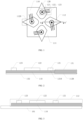
- FIG. 1 is a plan view of an electrochemical sensor for humoral detection provided by an embodiment of the present disclosure.
- the electrochemical sensor for humoral detection includes a material layer 110 and at least one detection unit 120 located on the material layer 110.
- the material layer 110 includes at least one hydrophilic region 112; the at least one hydrophilic region 112 is disposed in one-to-one correspondence with the at least one detection unit 120.
- the detection unit 120 is disposed in the hydrophilic region 112; when the number of the hydrophilic region 112 and the number of the detection unit 120 both are plural, each of the hydrophilic regions 112 is disposed in correspondence with one of the detection units 120.
- the hydrophilic region 112 includes a sampling port 1120 configured to be in contact with a liquid sample (e.g., saliva) to be detected;
- the detection unit 120 includes a working electrode 121 and an opposed electrode 122 disposed apart from each other;
- the working electrode 121 includes a reaction surface containing a substrate which has a chemical reaction with an analyte in the liquid sample;
- the working electrode 121 and the opposed electrode 122 are configured to detect an electrical signal generated from the chemical reaction.
- the above-described substance can be a catalyst or a reactant corresponding to the analyte.
- the hydrophilicity of the hydrophilic region 112 in the material layer 110 allows to absorb the liquid sample and convey the liquid sample to a correspondingly disposed detection unit 120 through capillary action; at this time, the detection unit 120 can have a chemical reaction with the analyte in the liquid sample by utilizing the substance on the reaction surface of the working electrode 121, and then obtain information of the analyte such as the type and the concentration of the analyte by detecting the electrical signal generated from the chemical reaction through the working electrode 121 and the opposed electrode 112, so as to achieve detecting the analyte in the liquid sample.
- the electrochemical sensor for humoral detection has a simple structure and can fabricate the material layer by adopting a paper-based material, so as to reduce costs of the electrochemical sensor for humoral detection, and to facilitate portability, thereby faciliating the promotion and application of products in a better way.
- the above-described liquid sample can include saliva, and the above-described substance includes glucose oxidase. Because the glucose oxidase can catalyze the glucose in the saliva to be oxidized, the electrochemical sensor for humoral detection can be used for detecting the concentration of the glucose in the saliva.
- the reaction surface 1210 can further include a glucose oxidase immobilization material to immobilize the glucose oxidase on the reaction surface.
- the glucose oxidase immobilization material can include ferrocene, glutaraldehyde and bovine serum albumin.
- the embodiment of the present disclosure includes such case but is not limited thereto, and the glucose oxidase immobilization material can also include other substances which can immobilize the glucose oxidase on the reaction surface.
- a method of forming a glucose oxidase immobilization material and a glucose oxidase on the reaction surface can include: firstly, placing a prepared working electrode in a supersonic cleaner for cleaning with deionized water for 5 min, then taking out the working electrode for naturally drying; subsequently, coating 5 ⁇ L ferrocene ethanol solution with a concentration of 0.1 mol/L, by way of dropping, onto a surface of the prepared working electrode, and drying under room temperature for use later; subsequently, coating 1.5 ⁇ L glucose oxidase (GOD) solution with a concentration of 1.5 U/ ⁇ L, by way of dropping, onto the surface of the above-described working electrode having been modified by ferrocene, then adding 1 ⁇ L bovine serum albumin (BSA) with a mass fraction of 1%, and then adding 1.5 ⁇ L glutaraldehyde solution with a mass fraction of 1.5 % for cross-linking fixation of enzyme after drying under temperature; finally, removing free enzyme and monomer which
- the at least one hydrophilic region 112 includes a plurality of hydrophilic regions 112, that is to say, the material layer 110 includes a plurality of hydrophilic regions 112.
- the material layer 110 further includes a lyophobic region 114 disposed among adjacent ones of the plurality of hydrophilic regions 112 to separate different ones of the plurality of hydrophilic regions 112 from each other.
- the liquid sample in this hydrophilic region 112 is isolated by the lyophobic region and cannot flow into other hydrophilic regions 112 so as to avoid mutual interference and contamination between different hydrophilic regions 112.
- the lyophobic region 114 can also prevent the liquid sample from overflowing from the hydrophilic region 112 to result in short circuit. It should be explained that, a particular size of the lyophobic region 114 can be configured according to actual conditions; when the lyophobic region is relatively larger, the lyophobic region provides the adjacent hydrophilic region with stronger isolation effect; and when the lyophobic region is relatively smaller, the lyophobic region can reduce an area of the material layer and save a material of the material layer so as to further facilitate reducing the costs and achieving portability.
- the material layer 110 can be provided with a plurality of hydrophilic regions 112, a plurality of detection units 120 can be provided so as to achieve high integration and further to reduce the costs.
- a planar shape of the hydrophilic region 112 is a water drop shape
- the sampling port 1120 is located at a tip portion of the water drop shape so as to protrude into a tank or a tube for containing the liquid sample. It should be explained that, the above-mentioned tip portion of the water drop shape is a portion corresponding to a rounded portion of the water drop shape.
- the detection unit 120 further includes a reference electrode 123 which is disposed apart from the working electrode 121 and apart from the opposed electrode 122.
- the reference electrode 123 can be configured to monitor an electric potential of the working electrode; in such case, the working electrode 121 and the opposed electrode 122 can form one loop, while the working electrode 121 and the reference electrode 123 can form another loop; the loop formed by the working electrode 121 and the opposed electrode 122 can be configured to measure a current, while the loop formed by the working electrode 121 and the reference electrode 123 can be configured to measure an electric potential at the working electrode.
- the electric potential at the working electrode 121 would be changed; by determining the electric potential at the working electrode 121 through the reference electrode 123, it can improve the detection accuracy.
- a material of the working electrode 121 can include Au, for example, the working electrode can be a lamination of Ni-Cr alloy and Au.
- a thickness of the Ni-Cr alloy layer can be 10 nm, and a thickness of Au layer can be 100 nm.
- the working electrode 121 and the opposed electrode 122 can be fixed on the material layer by a conductive adhesive. In this way, after the usage of the electrochemical sensor for humoral detection, metallic materials such as the working electrode and the opposed electrode can be recycled by removing the material layer.
- the material layer 110 includes a paper material; that is to say, the material layer can be made of a paper material. Because the paper material is relatively cheap and is naturally hydrophilic, it has no need of additional process to form a hydrophilic region, so as to reduce the costs of the electrochemical sensor for humoral detection. Moreover, because the paper material is recyclable and degradable, the electrochemical sensor for humoral detection is also recyclable and degradable; as compared with the conventional material layer made of glass material and plastic material, the electrochemical sensor for humoral detection is more environment-friendly.
- the electrochemical sensor for humoral detection has advantages of portability, low costs, recyclability and the like, and hence is suitable for application in remote areas and diagnosis at medical centers. Additionally, because the paper material is recyclable and degradable, it's environment-friendly without producing any digital waste.
- FIG. 2 is a cross-sectional view of an electrochemical sensor for humoral detection provided by an embodiment of the present disclosure taken along AA' direction in FIG. 1 .
- the sampling port 1120 can be provided with a protection layer 131 to reduce or eliminate an evaporation of the liquid sample.
- the protection layer 131 can include an adhesive tape or a thin film.
- the detection unit 120 is disposed on a corresponding hydrophilic region 112, and a reaction surface 1210 is in contact with the material layer 110. Because the liquid sample is absorbed and conveyed to the correspondingly disposed detection unit 120 through the capillary action of the hydrophilic region 112 in the material layer 110, the arrangement of the reaction surface 1210 being in contact with the material layer 110 allows the substance on the reaction surface 1210 to have a chemical reaction with the analyte in the liquid sample.
- a side of the material layer 110 away from the detection unit 120 is provided with a lyophobic layer 132.
- the lyophobic layer 132 can reduce the usage of the liquid sample; on the other hand, the lyophobic layer 132 can prevent the liquid sample from wetting a bottom of the electrochemical sensor for humoral detection so as for operation and portability of the user.
- the paper material layer can include filter paper or nano-paper.
- the material layer when the material layer includes filter paper, it has no need of forming the hydrophilic region by an additional process but only needs to perform a lyophobic process to an area on the material layer where the lyophobic region is to be formed, so as to form the above-described hydrophilic region and lyophobic region.
- the above-described protection layer and lyophobic layer can also be formed by performing a lyophobic process to a surface of the paper material layer.
- the above-descried lyophobic process can include coating a lyophobic material, and the lyophobic material can include paraffin or the like.
- the nano-paper when the material layer includes nano-paper, the nano-paper includes nano-cellulose and polysaccharide molecule absorbed on a surface of the nano-cellulose.
- the hydrophilic region can be nano-cellulose
- the lyophobic region can be nano-cellulose modified by the polysaccharide molecule, that is, nano-cellulose having a surface adsorbed with polysaccharide molecule.
- the above-mentioned nano-cellulose has a diameter smaller than 100 nm
- the polysaccharide molecule can have an interaction with the nano-cellulose and can be physically absorbed onto the surface of the nano-cellulose so as to reduce the interaction between the nano-cellulose and the polysaccharide molecule, thereby avoiding hygroscopic swelling behavior and resulting in good water resistance.
- humoral fluid e.g., blood, sweat and the like
- humoral fluid further includes many other ingredients, for example, polypeptide, protein, glucose, inorganic salt and the like;
- the nano-paper has more powerful capillary action due to its material property, and allows various ingredients in the humoral fluid sample to be distributed on the nano-paper more uniformly, which facilitates performing the electrochemical detection and achieves improved accuracy. Therefore, using the nano-paper as the material layer also provides better effect of colleting the humoral fluid sample.
- a manufacturing method of the lyophobic region in the above-described nano-paper includes: oxidizing a cellulose, and then performing a homogenization treatment to obtain a nano-cellulose; immersing the nano-cellulose in a solution containing a polysaccharide molecule to obtain a processed nano-cellulose; preparing and forming a lyophobic region of the nano-paper by utilizing the above-mentioned processed nano-cellulose.
- the surface of the nano-cellulose contains a plenty of functional groups such as hydroxyl and carboxyl so as to have an interaction with the polysaccharide molecule, thereby absorbing the polysaccharide molecule.
- the above-mentioned polysaccharide molecule is insoluble in water.
- the above-mentioned polysaccharide molecule can be starch or chitosan.
- a thickness of the nano-paper is in a range of 30 ⁇ m -100 ⁇ m, and a roughness of the nano-paper is smaller than 10 nm.
- FIG. 3 is a cross-sectional view of another electrochemical sensor for humoral detection provided by an embodiment of the present disclosure taken along AA' direction in FIG. 1 .
- the electrochemical sensor for humoral detection further includes a lyophobic substrate 101, and the material layer 110 is disposed on the lyophobic substrate 101.
- the lyophobic substrate 101 can support the material layer 110; on the other aspect, the lyophobic substrate 101 can prevent the liquid sample from wetting a bottom of the electrochemical sensor for humoral detection so as for operation and portability of the user.
- the at least one hydrophilic region 112 includes a plurality of hydrophilic regions 112, and the plurality of hydrophilic regions 112 are disposed apart from each other on the lyophobic substrate 101. In this way, when or after detecting one hydrophilic region 112, the liquid sample in this hydrophilic region 112 is isolated by the lyophobic substrate and cannot flow into other hydrophilic regions 112, so as to avoid mutual interference and contamination between different hydrophilic regions 112.
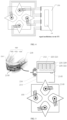
- FIG. 4 is a plan view of another electrochemical sensor for humoral detection provided by an embodiment of the present disclosure.
- the electrochemical sensor for humoral detection can further include a driving circuit 150 which is connected with the working electrode 121 and the opposed electrode 122 respectively and is configured to drive the working electrode 121 and the opposed electrode 122 to perform detection.
- the driving circuit 150 can be disposed on the material layer 110, for example, in the lyophobic region 114 of the material layer 110.
- the embodiment of the present disclosure includes such case but is not limited thereto, and the driving circuit 150 may not be disposed on the material layer 110 but is provided separately. It should be explained that, when the driving circuit 150 is disposed on the material layer 110, the driving circuit 150 can be packaged so as to prevent the liquid sample from corroding the driving circuit.
- the electrochemical sensor for humoral detection includes a plurality of detection units 120
- the plurality of detection units 120 are connected to the driving circuit 150 respectively.
- the driving circuit 150 can include a signal modulation circuit 152 which is configured to amplify an electrical signal detected by the working electrode 121 and the opposed electrode 122.
- FIG. 5 is a schematic view of a detection device provided by an embodiment of the present disclosure.
- the detection device includes an electrochemical sensor 100 for humoral detection, and the electrochemical sensor 100 for humoral detection is the electrochemical sensor for humoral detection provided by any of the examples in the foregoing embodiment.
- the hydrophilicity of the hydrophilic region 112 in the material layer 110 of the electrochemical sensor 100 for humoral detection can absorb and convey the liquid sample to a correspondingly disposed detection unit 120 through capillary action; at this time, the detection unit 120 can have a chemical reaction with the analyte in the liquid sample by the substance on the reaction surface 1210 of the working electrode 121, and then obtain information of the analyte such as the type and the concentration of the analyte by detecting the electrical signal generated from the chemical reaction through the working electrode 121 and the opposed electrode 122, so as to achieve detecting the analyte in the liquid sample.
- the electrochemical sensor for humoral detection has a simple structure and can fabricate the material layer by adopting a paper-based material, so as to reduce costs of the electrochemical sensor for humoral detection, and to facilitate portability, thereby facilitating the promotion and application of products in a better way.
- the detection device further includes: a sample collecting device 210 and a biological fuel cell 220.
- the sample collecting device 210 can collect a liquid sample; the biological fuel cell 220 can utilize the liquid sample to generate electricity; the sample collecting device 210 includes a biological fuel cell tank 212, a sample tank 214 and a valve 216 connected with the sample tank 214 and the biological fuel cell tank 212 respectively, and the biological fuel cell 220 is disposed in the biological fuel cell tank 212.
- the detection device can collect liquid samples through the sample collecting device 210 so that the liquid samples as collected are gathered in the sample tank 214 for detection by the electrochemical sensor 100 for humoral detection.
- the valve 216 is controlled to cause the liquid sample to flow into the biological fuel cell tank 212; then the biological fuel cell 220 disposed in the biological fuel cell tank 212 can utilize the liquid sample to generate electricity so as to provide the above-described electrochemical sensor 100 for humoral detection with electric energy. Therefore, the detection device has no need of additionally providing a power supply, and is readily carried and used. Moreover, the biological fuel cell can provide greater energy density (as compared to photovoltaic cell), longer service life and smaller weight (as compared to battery), and can eliminate a risk of chemical leaching of the battery.
- the valve 216 can include two sub-valves which are connected with the sample tank 214 and the biological fuel cell tank 212 respectively.
- the liquid sample can be controlled to flow into the sample tank 214;
- the sub-valve connected with the sample tank 214 is closed while the sub-valve connected with the biological fuel cell tank 212 is opened, the liquid sample can be controlled to flow into the biological fuel cell tank 212.
- the sample collecting device 210 can be designed in a form of protective tooth socket in order to collect saliva.
- the sample collecting device 210 can be placed into a mouth so as to conveniently collect the saliva.
- the state of the saliva sample would significantly influence the detection result, for example, the amount of saliva as collected is not enough, or the collected saliva contains too many bubbles, or the saliva is contaminated during collection.
- the sample collecting device 210 provided by the embodiment of the present disclosure can overcome the problems above. For instance, in some examples, as illustrated in FIG.
- the sample collecting device 210 when the sample collecting device 210 is designed as a protective tooth socket, can include an outer sidewall 620 and an inner sidewall 630 connected through a bottom 610, and a tooth socket 640 is formed by the outer sidewall 620, the inner sidewall 630 and the bottom 610; depths of two ends of the tooth socket 640 away from the sample tank 214 are smaller than a depth of a portion of the tooth socket 640 close to the sample tank 214, so that the bottom 610 of the tooth socket 640 away from both ends of the sample tank 214 has a greater height, which facilitates the saliva flowing into the sample tank.
- the sample collecting device 210 can further include an electrical stimulation unit 218 to urge salivary glands to salivate, so as to quicken the collection of the liquid sample.
- an electrical stimulation unit 218 to urge salivary glands to salivate, so as to quicken the collection of the liquid sample. It should be explained that, the above-described electrical stimulation unit 218 also can be powered by the above-described biological fuel cell 220 or by using other power supplies.
- the sample tank 214 is provided with a detector 2145 communicated with the valve 216, and the detector 2145 can detect an amount of liquid sample in the sample tank 214 and control the valve 216 to cause the liquid sample to flow into the biological fuel cell tank 212 for electricity generation upon the amount of liquid sample exceeding a predetermined value.
- the amount of sample in the sample tank can be controlled by the detector, so that the amount of humoral liquid absorbed by the electrochemical sensor for humoral detection can be the same every time; on the other aspect, the liquid sample can also flow into the biological fuel cell tank when the amount of liquid sample in the sample tank exceeds the predetermined value.
- the above-mentioned communication includes a wireless manner and a wired manner.
- the wired manner includes a connecting manner by using a wire lead, and the wireless manner includes WiFi, Bluetooth and the like.
- the above-described detector can include at least one selected from the group consisting of a pressure sensor, a humidity sensor and a liquid level height sensor.
- a pressure sensor it can be disposed at a bottom of the sample tank so as to determine an amount of liquid sample in the sample tank by detecting a pressure generated by the liquid sample in the sample tank with respect to the detector;
- the detector when the detector is a humidity sensor, it can be disposed at a top of the sample tank so as to determine the amount of liquid sample in the sample tank by detecting a humidity in the sample tank;
- the detector is a liquid level height sensor, the amount of liquid sample in the sample tank can be determined directly by detecting a height of liquid level of the liquid sample in the sample tank.
- the sample collecting device includes a guide channel (not illustrated) configured to guide the liquid sample as collected into the above-described biological fuel cell tank.
- the particular position and shape of the guide channel can be designed according to actual conditions, and the embodiment of the present disclosure is not limited thereto.
- the biological fuel cell 220 includes an output terminal 228, and the output terminal 228 can be connected with the electrochemical sensor 100 for humoral detection so as to power the electrochemical sensor 100 for humoral detection.
- the sample tank 214 includes a notch 2140, and a size of the notch 2140 is greater than a size of the sampling port 1120 so that the sampling port 1120 is capable of protruding into the notch 2140 to absorb the liquid sample.
- the electrochemical sensor 100 for humoral detection includes a plurality of detection units
- liquid samples collected by a plurality of sample collecting devices can be detected by one and the same electrochemical sensor 100 for humoral detection, so as to considerably improve the efficiency and save the cost.
- the anode 221 when the liquid sample 300 is saliva, the anode 221 includes a catalyst 2210 so as to convert a biological fuel substance in the saliva into an oxidation product during an oxidation process which releases an electron.
- the biological fuel substance During a chemical reduction, at the cathode 222, the biological fuel substance obtains the electron and is reduced, so as to generate current by this process.
- FIG. 7 is a schematic view of another detection device provided by an embodiment of the present disclosure.
- the detection device can further include a wireless transmitter device 500 configured to transmit data detected by the electrochemical sensor 100 for humoral detection, for example, transmitting the data to a processer for processing.
- the detection device can further include a display device 700 and a processer 600; the detection device can process the data detected by the electrochemical sensor 100 for humoral detection through the processer 600, and can display a detection result through the display device 700.
- the display device can be a liquid crystal display device, an organic light-emitting diode display device, an electronic paper display device and the like.
- the display device can be a wearable display device which can be worn on a user, so that the user can perform detection anytime and anywhere and can obtain the detection result through the wearable display device.
Landscapes
- Health & Medical Sciences (AREA)
- Life Sciences & Earth Sciences (AREA)
- Chemical & Material Sciences (AREA)
- Immunology (AREA)
- Molecular Biology (AREA)
- Pathology (AREA)
- General Health & Medical Sciences (AREA)
- Biochemistry (AREA)
- Physics & Mathematics (AREA)
- Engineering & Computer Science (AREA)
- Analytical Chemistry (AREA)
- General Physics & Mathematics (AREA)
- Electrochemistry (AREA)
- Chemical Kinetics & Catalysis (AREA)
- Hematology (AREA)
- Biomedical Technology (AREA)
- Urology & Nephrology (AREA)
- Microbiology (AREA)
- Heart & Thoracic Surgery (AREA)
- Medical Informatics (AREA)
- Surgery (AREA)
- Animal Behavior & Ethology (AREA)
- Public Health (AREA)
- Veterinary Medicine (AREA)
- Biophysics (AREA)
- Medicinal Chemistry (AREA)
- Biotechnology (AREA)
- Cell Biology (AREA)
- Food Science & Technology (AREA)
- Dentistry (AREA)
- Oral & Maxillofacial Surgery (AREA)
- Pulmonology (AREA)
- Manufacturing & Machinery (AREA)
- Sustainable Development (AREA)
- Sustainable Energy (AREA)
- General Chemical & Material Sciences (AREA)
- Investigating Or Analysing Biological Materials (AREA)
- Measurement Of The Respiration, Hearing Ability, Form, And Blood Characteristics Of Living Organisms (AREA)
- Measuring And Recording Apparatus For Diagnosis (AREA)
Description
- Embodiments of the present invention relate to an electrochemical sensor for humoral detection and a detection device.
- With continuous development of science and technology, people have continuously increased requirements on quick and timely biochemical detection, accordingly. Therefore, highly effective and reliable detection methods and devices have gradually become the hotspot of current research and the focus in the market.
- Electrochemical sensor is a kind of sensor which obtains information of an analyte of a sample, such as an ingredient and a concentration of the analyte, by detecting an electrical signal generated from a chemical reaction. Generally, the electrochemical sensor can include a working electrode and an opposed electrode which are disposed apart from each other for detecting.
- On the other hand, as compared to the detection method and detection device for detecting a sample like blood, the detection method and detection device for detecting a sample obtained non-intrusively, such as tear, sweat and saliva, possess a better application prospect and a wider application range in the market.
US 2018/104694A1 discloses a sample preparation component integrated with a detection component, the sample preparation component may be a digital micro-fluidics module or a surface acoustic wave module which modules are used for combining a sample droplet with a reagent droplet and for performing additional sample preparation step leading to a droplet that contains beads/particles/labels that indicate presence or absence of an analyte of interest in the sample. The beads/particles/labels may be detected by moving the droplet to the detection component of the device, which detection component includes an array of wells.EP 3687385 A1 discloses a detector, which includes a porous material that is adhered to a user by an adhesive. The porous material collects sweat (not shown) and laterally displaces the sweat in the area of two sensors, which are adjacent to an insulator and connected to a suitable measuring circuit/device by a wire. The detector is adhered to the skin by an adhesive. The detector includes a fluid collection porous material including a sample collection surface and an analyte detection surface. The porous material may be flexible to follow the contour of the skin. The fluid collecting porous material contacts, absorbs and moves the sweat. When the analyte is laterally displaced within the analyte detection surface in contact with the sensor, a suitable measurement circuit can detect charge transfer, impedance change or other electrically measurable changes known to those skilled in the art that indicate the presence of the analyte.
US 2017/265789A1 discloses a biosensor, which includes a micro-VF collector, which may have a VF membrane filter, which injects VF into the microfluidic channel. The VF membrane filter can filter plasma or a certain cell type or protein. It can also be the purification of a sample combined with some markers that generate too much noise in the biosensor. The inlet leads to the micro VF collector, which then leads to the VF collection central base, which collects the filtered/unfiltered fluid and guides it to the central fluid transmission core, to a plurality of receiver elements. The central fluid transfer core further leads to a lower fluid transfer VF distributor, which allows VF storage and scheduling to provide continuous fluid flow. The micro VF collector part may be formed of any suitable material that will easily transmit VF. - The present invention is an electrochemical sensor for humoral detection as defined by claim 1. The electrochemical sensor for humoral detection includes:
a material layer including at least one hydrophilic region; and at least one detection unit located in the hydrophilic region; the hydrophilic region includes a sampling port configured to be in contact with a liquid sample to be detected; the detection unit includes a working electrode and an opposed electrode disposed apart from each other; the
working electrode and the opposed electrode are configured to detect an electrical signal generated by the reaction so as to detect the analyte; wherein a planar shape of the hydrophilic region is a water drop shape, and the sampling port is located at a tip portion of the water drop shape, the working electrode comprises a reaction surface, configured to be in contact with the liquid sample, the reaction surface contains a substance configured to have a reaction with an analyte in the liquid sample. - For example, in the electrochemical sensor for humoral detection provided by an embodiment of the present disclosure, the at least one hydrophilic region includes a plurality of hydrophilic regions, the at least one detection unit comprises a plurality of detection units, the plurality hydrophilic regions and the plurality of detection units are disposed in one-to-one correspondence, and the material layer further includes a lyophobic region disposed among adjacent ones of the plurality of hydrophilic regions to separate different ones of the plurality of hydrophilic regions from each other.
- For example, the electrochemical sensor for humoral detection provided by an embodiment of the present disclosure further includes a lyophobic substrate, and the material layer is on the lyophobic substrate.
- For example, in the electrochemical sensor for humoral detection provided by an embodiment of the present disclosure, the at least one hydrophilic region includes a plurality of hydrophilic regions, and the plurality of hydrophilic regions are disposed apart from each other on the lyophobic substrate.
- For example, in the electrochemical sensor for humoral detection provided by an embodiment of the present disclosure, the material layer includes a paper material layer.
- For example, in the electrochemical sensor for humoral detection provided by an embodiment of the present disclosure, the paper material layer includes filter paper or nano-paper.
- For example, in the electrochemical sensor for humoral detection provided by an embodiment of the present disclosure, the paper material layer includes a nano-paper; the hydrophilic region includes a nano-cellulose; and the lyophobic region includes a nano-cellulose having a surface adsorbed with a polysaccharide molecule.
- For example, the electrochemical sensor for humoral detection provided by an embodiment of the present disclosure further includes a lyophobic layer located at a side of the material layer away from the detection unit.
- For example, in the electrochemical sensor for humoral detection provided by an embodiment of the present disclosure, the detection unit is disposed on a corresponding hydrophilic region, and the reaction surface is in contact with the material layer.
- For example, the electrochemical sensor for humoral detection provided by an embodiment of the present disclosure further includes a protection layer located on the sampling port, and the protection layer includes a lyophobic material.
- For example, in the electrochemical sensor for humoral detection provided by an embodiment of the present disclosure, the liquid sample includes saliva, and the substance includes glucose oxidase.
- For example, in the electrochemical sensor for humoral detection provided by an embodiment of the present disclosure, the reaction surface further includes a glucose oxidase immobilization material, and the glucose oxidase immobilization material includes ferrocene, glutaraldehyde and bovine serum albumin.
- For example, in the electrochemical sensor for humoral detection provided by an embodiment of the present disclosure, the detection unit further includes a reference electrode located between the working electrode and the opposed electrode.
- For example, the electrochemical sensor for humoral detection provided by an embodiment of the present disclosure further includes a driving circuit connected with the working electrode and the opposed electrode respectively and configured to drive the working electrode and the opposed electrode to perform detection.
- For example, in the electrochemical sensor for humoral detection provided by an embodiment of the present disclosure, the driving circuit includes a signal modulation circuit configured to amplify an electrical signal detected by the working electrode and the opposed electrode.
- At least one embodiment of the present disclosure further provides a detection device, including any of the electrochemical sensors for humoral detection described above.
- For example, the detection device provided by an embodiment of the present disclosure further includes: a sample collecting device configured to acquire the liquid sample; and a biological fuel cell configured to utilize the liquid sample to generate electricity; the sample collecting device includes a sample tank, a biological fuel cell tank and a valve connected with the sample tank and the biological fuel cell tank respectively; and the biological fuel cell is disposed in the biological fuel cell tank.
- For example, in the detection device provided by an embodiment of the present disclosure, the sample tank is provided with a detector communicated with the valve; the detector is configured to detect an amount of the liquid sample in the sample tank, and control the valve to cause the liquid sample to flow into the biological fuel cell tank upon the amount of the liquid sample exceeding a predetermined value.
- For example, in the detection device provided by an embodiment of the present disclosure, the detector includes at least one selected from the group consisting of a pressure sensor, a humidity sensor and a liquid level height sensor.
- For example, in the detection device provided by an embodiment of the present disclosure, the biological fuel cell includes an output terminal, and the output terminal is connected with the electrochemical sensor for humoral detection so as to power the electrochemical sensor for humoral detection.
- For example, in the detection device provided by an embodiment of the present disclosure, the sample tank includes a notch, and a size of the notch is greater than a size of the sampling port so that the sampling port is capable of protruding into the notch.
- For example, in the detection device provided by an embodiment of the present disclosure, the sample collecting device includes: an outer sidewall; an inner sidewall; and a bottom connecting the outer sidewall with the inner sidewall to form a tooth socket; depths of two ends of the tooth socket away from the sample tank is smaller than a depth of a portion of the tooth socket close to the sample tank.
- In order to clearly illustrate the technical solution of embodiments of the present disclosure, the drawings of the embodiments will be briefly described in the following, it is obvious that the drawings in the description are only related to some embodiments of the present disclosure and not limited to the present disclosure.
-
FIG. 1 is a plan view of an electrochemical sensor for humoral detection provided by an embodiment of the present disclosure; -
FIG. 2 is a cross-sectional view of an electrochemical sensor for humoral detection provided by an embodiment of the present disclosure taken along AA' direction inFIG. 1 ; -
FIG. 3 is a cross-sectional view of another electrochemical sensor for humoral detection provided by an embodiment of the present disclosure taken along AA' direction inFIG. 1 ; -
FIG. 4 is a plan view of another electrochemical sensor for humoral detection provided by an embodiment of the present disclosure; -
FIG. 5 is a schematic view of a detection device provided by an embodiment of the present disclosure; -
FIG. 6 is a working diagram of a biological fuel cell provided by an embodiment of the present disclosure; and -
FIG. 7 is a schematic view of another detection device provided by an embodiment of the present disclosure. - In order to make objects, technical details and advantages of the embodiments of the disclosure apparent, the technical solutions of the embodiments will be described in a clearly and fully understandable way in connection with the drawings related to the embodiments of the disclosure. Apparently, the described embodiments are just a part but not all of the embodiments of the disclosure. Based on the described embodiments herein, those skilled in the art can obtain other embodiment(s), without any inventive work, which should be within the scope of the invention as defined by the claims.
- Unless otherwise defined, all the technical and scientific terms used herein have the same meanings as commonly understood by one of ordinary skill in the art to which the present invention belongs. The terms "first," "second," etc., which are used in the description and the claims of the present application for invention, are not intended to indicate any sequence, amount or importance, but distinguish various components. The terms "comprise," "comprising," "include," "including," etc., are intended to specify that the elements or the objects stated before these terms encompass the elements or the objects and equivalents thereof listed after these terms, but do not preclude the other elements or objects. The phrases "connect", "connected", etc., are not intended to define a physical connection or mechanical connection, but may include an electrical connection, directly or indirectly.
- Among the samples obtained in a nonintrusive manner, the saliva, as a kind of continuously regenerated liquid, provides a huge database of "physiological snapshots". Furthermore, using the saliva as a diagnostic specimens is more practical and less error-prone, so as to avoid any pain, anxiety and risk of infection resulted by conventional collecting methods (e.g., blood sampling or tissue biopsy) of intrusive samples (e.g., blood). Moreover, saliva can be used for detecting items such as individual hormones, stress and metabolic status, and hence is applicable for early diagnosis and treatment of disease, so as to effectively mitigate the severity of illness and play an important role in treating potential complications. On the other hand, the conventional electrochemical sensor for humoral detection is expensive, inconvenient to carry, difficult for reutilization, and cannot enter daily lives of ordinary consumers, which limits application scenarios of the electrochemical sensor for humoral detection.
- Therefore, an embodiment of the present disclosure provides an electrochemical sensor for humoral detection and a detection device, which can utilize saliva for biochemical detection. The electrochemical sensor for humoral detection includes a material layer and at least one detection unit. The material layer includes at least one hydrophilic region, and the at least one detection unit is located in the hydrophilic region. The hydrophilic region includes a sampling port configured to be in contact with a liquid sample (e.g., saliva) to be detected; the detection unit includes a working electrode and an opposed electrode disposed apart from each other; the working electrode includes a reaction surface containing a substance configured to have a chemical reaction with an analyte in the liquid sample; the working electrode and the opposed electrode are configured to detect an electrical signal generated from the chemical reaction so as to detect the analyte. The electrochemical sensor for humoral detection can absorb the liquid sample and convey the liquid sample to a correspondingly disposed detection unit through capillary action by utilizing a hydrophilicity of the hydrophilic region in the material layer, and then the detection unit can achieve detecting the analyte in the liquid sample through the substance on the working electrode having a chemical reaction with the analyte in the liquid sample. The electrochemical sensor for humoral detection has a simple structure and can fabricate the material layer by adopting a paper-based material, so as to reduce costs of the electrochemical sensor for humoral detection, and to facilitate portability, thereby facilitating the promotion and application of products in a better way.
- Hereinafter, the electrochemical sensor for humoral detection and the detection device provided by the embodiments of the present disclosure will be described in details with reference to the drawings.
- An embodiment of the present disclosure provides an electrochemical sensor for humoral detection.
FIG. 1 is a plan view of an electrochemical sensor for humoral detection provided by an embodiment of the present disclosure. As illustrated inFIG. 1 , the electrochemical sensor for humoral detection includes amaterial layer 110 and at least onedetection unit 120 located on thematerial layer 110. Thematerial layer 110 includes at least onehydrophilic region 112; the at least onehydrophilic region 112 is disposed in one-to-one correspondence with the at least onedetection unit 120. For example, when the number of thehydrophilic region 112 and the number of thedetection unit 120 both are one, thedetection unit 120 is disposed in thehydrophilic region 112; when the number of thehydrophilic region 112 and the number of thedetection unit 120 both are plural, each of thehydrophilic regions 112 is disposed in correspondence with one of thedetection units 120. Thehydrophilic region 112 includes asampling port 1120 configured to be in contact with a liquid sample (e.g., saliva) to be detected; thedetection unit 120 includes a workingelectrode 121 and anopposed electrode 122 disposed apart from each other; the workingelectrode 121 includes a reaction surface containing a substrate which has a chemical reaction with an analyte in the liquid sample; the workingelectrode 121 and theopposed electrode 122 are configured to detect an electrical signal generated from the chemical reaction. - For example, the above-described substance can be a catalyst or a reactant corresponding to the analyte.
- In the electrochemical sensor for humoral detection provided by the present embodiment, the hydrophilicity of the
hydrophilic region 112 in thematerial layer 110 allows to absorb the liquid sample and convey the liquid sample to a correspondingly disposeddetection unit 120 through capillary action; at this time, thedetection unit 120 can have a chemical reaction with the analyte in the liquid sample by utilizing the substance on the reaction surface of the workingelectrode 121, and then obtain information of the analyte such as the type and the concentration of the analyte by detecting the electrical signal generated from the chemical reaction through the workingelectrode 121 and theopposed electrode 112, so as to achieve detecting the analyte in the liquid sample. The electrochemical sensor for humoral detection has a simple structure and can fabricate the material layer by adopting a paper-based material, so as to reduce costs of the electrochemical sensor for humoral detection, and to facilitate portability, thereby faciliating the promotion and application of products in a better way. - For instance, in some examples, the above-described liquid sample can include saliva, and the above-described substance includes glucose oxidase. Because the glucose oxidase can catalyze the glucose in the saliva to be oxidized, the electrochemical sensor for humoral detection can be used for detecting the concentration of the glucose in the saliva.
- For instance, in some examples, the
reaction surface 1210 can further include a glucose oxidase immobilization material to immobilize the glucose oxidase on the reaction surface. For example, the glucose oxidase immobilization material can include ferrocene, glutaraldehyde and bovine serum albumin. Of course, the embodiment of the present disclosure includes such case but is not limited thereto, and the glucose oxidase immobilization material can also include other substances which can immobilize the glucose oxidase on the reaction surface. - For example, a method of forming a glucose oxidase immobilization material and a glucose oxidase on the reaction surface can include: firstly, placing a prepared working electrode in a supersonic cleaner for cleaning with deionized water for 5 min, then taking out the working electrode for naturally drying; subsequently, coating 5 µL ferrocene ethanol solution with a concentration of 0.1 mol/L, by way of dropping, onto a surface of the prepared working electrode, and drying under room temperature for use later; subsequently, coating 1.5 µL glucose oxidase (GOD) solution with a concentration of 1.5 U/µL, by way of dropping, onto the surface of the above-described working electrode having been modified by ferrocene, then adding 1 µL bovine serum albumin (BSA) with a mass fraction of 1%, and then adding 1.5 µL glutaraldehyde solution with a mass fraction of 1.5 % for cross-linking fixation of enzyme after drying under temperature; finally, removing free enzyme and monomer which are not immobilized by washing using deionized water, then naturally drying under room temperature for film formation, and then storing the film in a refrigerator under a temperature of 4 □ for use later.
- For instance, in some examples, as illustrated in
FIG. 1 , the at least onehydrophilic region 112 includes a plurality ofhydrophilic regions 112, that is to say, thematerial layer 110 includes a plurality ofhydrophilic regions 112. In such case, thematerial layer 110 further includes alyophobic region 114 disposed among adjacent ones of the plurality ofhydrophilic regions 112 to separate different ones of the plurality ofhydrophilic regions 112 from each other. In this way, when or after detecting onehydrophilic region 112, the liquid sample in thishydrophilic region 112 is isolated by the lyophobic region and cannot flow into otherhydrophilic regions 112 so as to avoid mutual interference and contamination between differenthydrophilic regions 112. On the other hand, thelyophobic region 114 can also prevent the liquid sample from overflowing from thehydrophilic region 112 to result in short circuit. It should be explained that, a particular size of thelyophobic region 114 can be configured according to actual conditions; when the lyophobic region is relatively larger, the lyophobic region provides the adjacent hydrophilic region with stronger isolation effect; and when the lyophobic region is relatively smaller, the lyophobic region can reduce an area of the material layer and save a material of the material layer so as to further facilitate reducing the costs and achieving portability. - It should be explained that, because the
material layer 110 can be provided with a plurality ofhydrophilic regions 112, a plurality ofdetection units 120 can be provided so as to achieve high integration and further to reduce the costs. - As illustrated in
FIG. 1 , a planar shape of thehydrophilic region 112 is a water drop shape, and thesampling port 1120 is located at a tip portion of the water drop shape so as to protrude into a tank or a tube for containing the liquid sample. It should be explained that, the above-mentioned tip portion of the water drop shape is a portion corresponding to a rounded portion of the water drop shape. - For instance, in some examples, as illustrated in
FIG. 1 , thedetection unit 120 further includes areference electrode 123 which is disposed apart from the workingelectrode 121 and apart from theopposed electrode 122. For example, thereference electrode 123 can be configured to monitor an electric potential of the working electrode; in such case, the workingelectrode 121 and theopposed electrode 122 can form one loop, while the workingelectrode 121 and thereference electrode 123 can form another loop; the loop formed by the workingelectrode 121 and theopposed electrode 122 can be configured to measure a current, while the loop formed by the workingelectrode 121 and thereference electrode 123 can be configured to measure an electric potential at the working electrode. With the usage of the electrochemical sensor for humoral detection, the electric potential at the workingelectrode 121 would be changed; by determining the electric potential at the workingelectrode 121 through thereference electrode 123, it can improve the detection accuracy. - For instance, in some examples, a material of the working
electrode 121 can include Au, for example, the working electrode can be a lamination of Ni-Cr alloy and Au. A thickness of the Ni-Cr alloy layer can be 10 nm, and a thickness of Au layer can be 100 nm. - For instance, in some examples, the working
electrode 121 and theopposed electrode 122 can be fixed on the material layer by a conductive adhesive. In this way, after the usage of the electrochemical sensor for humoral detection, metallic materials such as the working electrode and the opposed electrode can be recycled by removing the material layer. - For instance, in some examples, the
material layer 110 includes a paper material; that is to say, the material layer can be made of a paper material. Because the paper material is relatively cheap and is naturally hydrophilic, it has no need of additional process to form a hydrophilic region, so as to reduce the costs of the electrochemical sensor for humoral detection. Moreover, because the paper material is recyclable and degradable, the electrochemical sensor for humoral detection is also recyclable and degradable; as compared with the conventional material layer made of glass material and plastic material, the electrochemical sensor for humoral detection is more environment-friendly. As a result, when the material layer is made of a paper material, the electrochemical sensor for humoral detection has advantages of portability, low costs, recyclability and the like, and hence is suitable for application in remote areas and diagnosis at medical centers. Additionally, because the paper material is recyclable and degradable, it's environment-friendly without producing any digital waste. -
FIG. 2 is a cross-sectional view of an electrochemical sensor for humoral detection provided by an embodiment of the present disclosure taken along AA' direction inFIG. 1 . As illustrated inFIG. 2 , thesampling port 1120 can be provided with aprotection layer 131 to reduce or eliminate an evaporation of the liquid sample. For example, theprotection layer 131 can include an adhesive tape or a thin film. - As illustrated in
FIG. 2 , thedetection unit 120 is disposed on a correspondinghydrophilic region 112, and areaction surface 1210 is in contact with thematerial layer 110. Because the liquid sample is absorbed and conveyed to the correspondingly disposeddetection unit 120 through the capillary action of thehydrophilic region 112 in thematerial layer 110, the arrangement of thereaction surface 1210 being in contact with thematerial layer 110 allows the substance on thereaction surface 1210 to have a chemical reaction with the analyte in the liquid sample. - For instance, in some examples, as illustrated in
FIG. 2 , a side of thematerial layer 110 away from thedetection unit 120 is provided with alyophobic layer 132. On one aspect, thelyophobic layer 132 can reduce the usage of the liquid sample; on the other hand, thelyophobic layer 132 can prevent the liquid sample from wetting a bottom of the electrochemical sensor for humoral detection so as for operation and portability of the user. - For instance, in some examples, the paper material layer can include filter paper or nano-paper.
- For example, when the material layer includes filter paper, it has no need of forming the hydrophilic region by an additional process but only needs to perform a lyophobic process to an area on the material layer where the lyophobic region is to be formed, so as to form the above-described hydrophilic region and lyophobic region. Moreover, when the material layer is a filter paper, the above-described protection layer and lyophobic layer can also be formed by performing a lyophobic process to a surface of the paper material layer. For example, the above-descried lyophobic process can include coating a lyophobic material, and the lyophobic material can include paraffin or the like.
- For example, when the material layer includes nano-paper, the nano-paper includes nano-cellulose and polysaccharide molecule absorbed on a surface of the nano-cellulose. In the nano-paper, the hydrophilic region can be nano-cellulose, and the lyophobic region can be nano-cellulose modified by the polysaccharide molecule, that is, nano-cellulose having a surface adsorbed with polysaccharide molecule. It should be explained that, the above-mentioned nano-cellulose has a diameter smaller than 100 nm, and the polysaccharide molecule can have an interaction with the nano-cellulose and can be physically absorbed onto the surface of the nano-cellulose so as to reduce the interaction between the nano-cellulose and the polysaccharide molecule, thereby avoiding hygroscopic swelling behavior and resulting in good water resistance. Moreover, in addition to water, humoral fluid (e.g., blood, sweat and the like) further includes many other ingredients, for example, polypeptide, protein, glucose, inorganic salt and the like; as compared with conventional paper-based materials, the nano-paper has more powerful capillary action due to its material property, and allows various ingredients in the humoral fluid sample to be distributed on the nano-paper more uniformly, which facilitates performing the electrochemical detection and achieves improved accuracy. Therefore, using the nano-paper as the material layer also provides better effect of colleting the humoral fluid sample.
- For example, a manufacturing method of the lyophobic region in the above-described nano-paper includes: oxidizing a cellulose, and then performing a homogenization treatment to obtain a nano-cellulose; immersing the nano-cellulose in a solution containing a polysaccharide molecule to obtain a processed nano-cellulose; preparing and forming a lyophobic region of the nano-paper by utilizing the above-mentioned processed nano-cellulose. It should be explained that, because the nano-cellulose has been subject to oxidization process, the surface of the nano-cellulose contains a plenty of functional groups such as hydroxyl and carboxyl so as to have an interaction with the polysaccharide molecule, thereby absorbing the polysaccharide molecule.
- For example, the above-mentioned polysaccharide molecule is insoluble in water. Considering availability and dispersibility in water, the above-mentioned polysaccharide molecule can be starch or chitosan.
- For example, a thickness of the nano-paper is in a range of 30 µm -100 µm, and a roughness of the nano-paper is smaller than 10 nm.
-
FIG. 3 is a cross-sectional view of another electrochemical sensor for humoral detection provided by an embodiment of the present disclosure taken along AA' direction inFIG. 1 . As illustrated inFIG. 3 , the electrochemical sensor for humoral detection further includes alyophobic substrate 101, and thematerial layer 110 is disposed on thelyophobic substrate 101. On one aspect, thelyophobic substrate 101 can support thematerial layer 110; on the other aspect, thelyophobic substrate 101 can prevent the liquid sample from wetting a bottom of the electrochemical sensor for humoral detection so as for operation and portability of the user. - For instance, in some examples, the at least one
hydrophilic region 112 includes a plurality ofhydrophilic regions 112, and the plurality ofhydrophilic regions 112 are disposed apart from each other on thelyophobic substrate 101. In this way, when or after detecting onehydrophilic region 112, the liquid sample in thishydrophilic region 112 is isolated by the lyophobic substrate and cannot flow into otherhydrophilic regions 112, so as to avoid mutual interference and contamination between differenthydrophilic regions 112. -
FIG. 4 is a plan view of another electrochemical sensor for humoral detection provided by an embodiment of the present disclosure. As illustrated inFIG. 4 , the electrochemical sensor for humoral detection can further include adriving circuit 150 which is connected with the workingelectrode 121 and theopposed electrode 122 respectively and is configured to drive the workingelectrode 121 and theopposed electrode 122 to perform detection. - For example, the driving
circuit 150 can be disposed on thematerial layer 110, for example, in thelyophobic region 114 of thematerial layer 110. Of course, the embodiment of the present disclosure includes such case but is not limited thereto, and the drivingcircuit 150 may not be disposed on thematerial layer 110 but is provided separately. It should be explained that, when the drivingcircuit 150 is disposed on thematerial layer 110, the drivingcircuit 150 can be packaged so as to prevent the liquid sample from corroding the driving circuit. - For instance, in some examples, as illustrated in
FIG. 4 , when the electrochemical sensor for humoral detection includes a plurality ofdetection units 120, the plurality ofdetection units 120 are connected to thedriving circuit 150 respectively. - For instance, in some examples, the driving
circuit 150 can include asignal modulation circuit 152 which is configured to amplify an electrical signal detected by the workingelectrode 121 and theopposed electrode 122. - An embodiment of the present disclosure provides a detection device.
FIG. 5 is a schematic view of a detection device provided by an embodiment of the present disclosure. As illustrated inFIG. 5 , the detection device includes anelectrochemical sensor 100 for humoral detection, and theelectrochemical sensor 100 for humoral detection is the electrochemical sensor for humoral detection provided by any of the examples in the foregoing embodiment. - In the detection device provided by the present embodiment, the hydrophilicity of the
hydrophilic region 112 in thematerial layer 110 of theelectrochemical sensor 100 for humoral detection can absorb and convey the liquid sample to a correspondingly disposeddetection unit 120 through capillary action; at this time, thedetection unit 120 can have a chemical reaction with the analyte in the liquid sample by the substance on thereaction surface 1210 of the workingelectrode 121, and then obtain information of the analyte such as the type and the concentration of the analyte by detecting the electrical signal generated from the chemical reaction through the workingelectrode 121 and theopposed electrode 122, so as to achieve detecting the analyte in the liquid sample. The electrochemical sensor for humoral detection has a simple structure and can fabricate the material layer by adopting a paper-based material, so as to reduce costs of the electrochemical sensor for humoral detection, and to facilitate portability, thereby facilitating the promotion and application of products in a better way. - For instance, in some examples, as illustrated in
FIG. 5 , the detection device further includes: asample collecting device 210 and a biological fuel cell 220. Thesample collecting device 210 can collect a liquid sample; the biological fuel cell 220 can utilize the liquid sample to generate electricity; thesample collecting device 210 includes a biologicalfuel cell tank 212, asample tank 214 and avalve 216 connected with thesample tank 214 and the biologicalfuel cell tank 212 respectively, and the biological fuel cell 220 is disposed in the biologicalfuel cell tank 212. In this way, the detection device can collect liquid samples through thesample collecting device 210 so that the liquid samples as collected are gathered in thesample tank 214 for detection by theelectrochemical sensor 100 for humoral detection. When an amount of the samples in thesample tank 214 reaches a certain value, thevalve 216 is controlled to cause the liquid sample to flow into the biologicalfuel cell tank 212; then the biological fuel cell 220 disposed in the biologicalfuel cell tank 212 can utilize the liquid sample to generate electricity so as to provide the above-describedelectrochemical sensor 100 for humoral detection with electric energy. Therefore, the detection device has no need of additionally providing a power supply, and is readily carried and used. Moreover, the biological fuel cell can provide greater energy density (as compared to photovoltaic cell), longer service life and smaller weight (as compared to battery), and can eliminate a risk of chemical leaching of the battery. - For example, the
valve 216 can include two sub-valves which are connected with thesample tank 214 and the biologicalfuel cell tank 212 respectively. When the sub-valve connected with thesample tank 214 is opened while the sub-valve connected with the biologicalfuel cell tank 212 is closed, the liquid sample can be controlled to flow into thesample tank 214; when the sub-valve connected with thesample tank 214 is closed while the sub-valve connected with the biologicalfuel cell tank 212 is opened, the liquid sample can be controlled to flow into the biologicalfuel cell tank 212. - For instance, in some examples, as illustrated in
FIG. 5 , thesample collecting device 210 can be designed in a form of protective tooth socket in order to collect saliva. For example, thesample collecting device 210 can be placed into a mouth so as to conveniently collect the saliva. The state of the saliva sample would significantly influence the detection result, for example, the amount of saliva as collected is not enough, or the collected saliva contains too many bubbles, or the saliva is contaminated during collection. Thesample collecting device 210 provided by the embodiment of the present disclosure can overcome the problems above. For instance, in some examples, as illustrated inFIG. 5 , when thesample collecting device 210 is designed as a protective tooth socket, thesample collecting device 210 can include anouter sidewall 620 and aninner sidewall 630 connected through a bottom 610, and atooth socket 640 is formed by theouter sidewall 620, theinner sidewall 630 and the bottom 610; depths of two ends of thetooth socket 640 away from thesample tank 214 are smaller than a depth of a portion of thetooth socket 640 close to thesample tank 214, so that thebottom 610 of thetooth socket 640 away from both ends of thesample tank 214 has a greater height, which facilitates the saliva flowing into the sample tank. - For instance, in some examples, the
sample collecting device 210 can further include anelectrical stimulation unit 218 to urge salivary glands to salivate, so as to quicken the collection of the liquid sample. It should be explained that, the above-describedelectrical stimulation unit 218 also can be powered by the above-described biological fuel cell 220 or by using other power supplies. - For instance, in some examples, as illustrated in
FIG. 5 , thesample tank 214 is provided with adetector 2145 communicated with thevalve 216, and thedetector 2145 can detect an amount of liquid sample in thesample tank 214 and control thevalve 216 to cause the liquid sample to flow into the biologicalfuel cell tank 212 for electricity generation upon the amount of liquid sample exceeding a predetermined value. In this way, on one aspect, the amount of sample in the sample tank can be controlled by the detector, so that the amount of humoral liquid absorbed by the electrochemical sensor for humoral detection can be the same every time; on the other aspect, the liquid sample can also flow into the biological fuel cell tank when the amount of liquid sample in the sample tank exceeds the predetermined value. - For example, the above-mentioned communication includes a wireless manner and a wired manner. The wired manner includes a connecting manner by using a wire lead, and the wireless manner includes WiFi, Bluetooth and the like.
- For instance, in some examples, the above-described detector can include at least one selected from the group consisting of a pressure sensor, a humidity sensor and a liquid level height sensor. For example, when the detector is a pressure sensor, it can be disposed at a bottom of the sample tank so as to determine an amount of liquid sample in the sample tank by detecting a pressure generated by the liquid sample in the sample tank with respect to the detector; when the detector is a humidity sensor, it can be disposed at a top of the sample tank so as to determine the amount of liquid sample in the sample tank by detecting a humidity in the sample tank; when the detector is a liquid level height sensor, the amount of liquid sample in the sample tank can be determined directly by detecting a height of liquid level of the liquid sample in the sample tank.
- For instance, in some examples, the sample collecting device includes a guide channel (not illustrated) configured to guide the liquid sample as collected into the above-described biological fuel cell tank. The particular position and shape of the guide channel can be designed according to actual conditions, and the embodiment of the present disclosure is not limited thereto. For instance, in some examples, as illustrated in
FIG. 5 , the biological fuel cell 220 includes an output terminal 228, and the output terminal 228 can be connected with theelectrochemical sensor 100 for humoral detection so as to power theelectrochemical sensor 100 for humoral detection. - For instance, in some examples, as illustrated in
FIG. 5 , thesample tank 214 includes anotch 2140, and a size of thenotch 2140 is greater than a size of thesampling port 1120 so that thesampling port 1120 is capable of protruding into thenotch 2140 to absorb the liquid sample. - It should be explained that, when the
electrochemical sensor 100 for humoral detection includes a plurality of detection units, liquid samples collected by a plurality of sample collecting devices can be detected by one and the sameelectrochemical sensor 100 for humoral detection, so as to considerably improve the efficiency and save the cost. -
FIG. 6 is a cross-sectional view of a biological fuel cell provided by an embodiment of the present disclosure. As illustrated inFIG. 5 andFIG. 6 , the biological fuel cell 220 includes ananode 221 and acathode 222. - For example, when the
liquid sample 300 is saliva, theanode 221 includes acatalyst 2210 so as to convert a biological fuel substance in the saliva into an oxidation product during an oxidation process which releases an electron. During a chemical reduction, at thecathode 222, the biological fuel substance obtains the electron and is reduced, so as to generate current by this process. -
FIG. 7 is a schematic view of another detection device provided by an embodiment of the present disclosure. As illustrated inFIG. 7 , the detection device can further include awireless transmitter device 500 configured to transmit data detected by theelectrochemical sensor 100 for humoral detection, for example, transmitting the data to a processer for processing. - For instance, in some examples, the detection device can further include a
display device 700 and aprocesser 600; the detection device can process the data detected by theelectrochemical sensor 100 for humoral detection through theprocesser 600, and can display a detection result through thedisplay device 700. - For example, the display device can be a liquid crystal display device, an organic light-emitting diode display device, an electronic paper display device and the like.
- For example, the display device can be a wearable display device which can be worn on a user, so that the user can perform detection anytime and anywhere and can obtain the detection result through the wearable display device.
- The following statements should be noted:
- (1) The accompanying drawings involve only the structure(s) in connection with the embodiment(s) of the present disclosure, and other structure(s) can be referred to common design(s).
- (2) In case of no conflict, features in one embodiment or in different embodiments can be combined.
- What have been described above are only specific implementations of the present disclosure, the protection scope of the present disclosure is not limited thereto, the protection scope of the present disclosure should be based on the protection scope of the claims.
Claims (14)
- An electrochemical sensor (100) for humoral detection, comprising:a material layer (110), comprising at least one hydrophilic region (112); andat least one detection unit (120), located in the hydrophilic region (112),wherein the detection unit (120) comprises a working electrode (121) and an opposed electrode (122) disposed apart from each other,wherein the hydrophilic region (112) comprises a sampling port (1120) configured to be in contact with a liquid sample to be detected, and the working electrode (121) and the opposed electrode (122) are configured to detect an electrical signal generated by the reaction so as to detect the analyte,which is characterized in that a planar shape of the hydrophilic region (112) is a water drop shape, and the sampling port (1120) is located at a tip portion of the water drop shape, the working electrode (121) comprises a reaction surface (1210), configured to be in contact with the liquid sample, the reaction surface (1210) contains a substance configured to have a reaction with an analyte in the liquid sample.
- The electrochemical sensor (100) for humoral detection according to claim 1, wherein the at least one hydrophilic region (112) comprises a plurality of hydrophilic regions (112), the at least one detection unit (120) comprises a plurality of detection units (120), the plurality hydrophilic regions (112) and the plurality of detection units (120) are disposed in one-to-one correspondence, and
the material layer (110) further comprises a lyophobic region (114) disposed among adjacent ones of the plurality of hydrophilic regions (112) to separate different ones of the plurality of hydrophilic regions (112) from each other. - The electrochemical sensor (100) for humoral detection according to claim 1, further comprising:a lyophobic substrate (101), wherein the material layer (110) is on the lyophobic substrate (101),optionally, the at least one hydrophilic region (112) comprises a plurality of hydrophilic regions (112), the plurality of hydrophilic regions (112) are disposed apart from each other on the lyophobic substrate (101).
- The electrochemical sensor (100) for humoral detection according to any one of claims 1-3, wherein the material layer (110) comprises a paper material, optionally, the paper material comprises filter paper or nano-paper.
- The electrochemical sensor (100) for humoral detection according to claim 2, wherein the material layer (110) comprises a nano-paper,the hydrophilic region (112) comprises a nano-cellulose, andthe lyophobic region (114) comprises a nano-cellulose having a surface adsorbed with a polysaccharide molecule.
- The electrochemical sensor (100) for humoral detection according to claim 2, further comprising:
a lyophobic layer (132), located at a side of the material layer (110) away from the detection unit (120). - The electrochemical sensor (100) for humoral detection according to any one of claims 1-6, wherein the detection unit (120) is disposed in a corresponding hydrophilic region (112), and
the reaction surface (1210) is in contact with the material layer (110). - The electrochemical sensor (100) for humoral detection according to any one of claims 1-7, further comprising:a protection layer (131) located on the sampling port (1120),wherein the protection layer (131) comprises a lyophobic material.
- The electrochemical sensor (100) for humoral detection according to any one of claims 1-8, wherein the liquid sample comprises saliva, and the substance comprises glucose oxidase,
optionally, the reaction surface further comprises a glucose oxidase immobilization material, and the glucose oxidase immobilization material comprises ferrocene, glutaraldehyde and bovine serum albumin. - The electrochemical sensor (100) for humoral detection according to any one of claims 1-9, further comprising:a driving circuit (150) connected with the working electrode (121) and the opposed electrode (122) respectively and configured to drive the working electrode (121) and the opposed electrode (122) to perform detection,optionally, the driving circuit (150) comprises a signal modulation circuit (152) configured to amplify an electrical signal detected by the working electrode (121) and the opposed electrode (122).
- A detection device, comprising the electrochemical sensor (100) for humoral detection according to any one of claims 1-10.
- The detection device according to claim 11, further comprising:a sample collecting device (210) configured to collect the liquid sample; anda biological fuel cell (220) configured to utilize the liquid sample to generate electricity,wherein the sample collecting device (210) comprises a sample tank (214), a biological fuel cell tank (212) and a valve (216) connected with the sample tank (214) and the biological fuel cell tank (212) respectively, and the biological fuel cell (220) is disposed in the biological fuel cell tank (212),optionally, the biological fuel cell (220) comprises an output terminal (228), the output terminal (228) is connected with the electrochemical sensor (100) for humoral detection so as to power the electrochemical sensor (100) for humoral detection.
- The detection device according to claim 12, wherein the sample tank (214) is provided with a detector (2145) communicated with the valve (216),wherein the detector (2145) is configured to detect an amount of the liquid sample in the sample tank (214), and control the valve (216) to cause the liquid sample to flow into the biological fuel cell tank (212) upon the amount of the liquid sample exceeding a predetermined value,optionally, the detector (2145) comprises at least one selected from the group consisting of a pressure sensor, a humidity sensor and a liquid level height sensor.
- The detection device according to any one of claims 11-13, wherein the sample collecting device (210) comprises:an outer sidewall (620);an inner sidewall (630); anda bottom (610) connecting the outer sidewall (620) with the inner sidewall (630) to form a tooth socket (640),wherein depths of two ends of the tooth socket (640) away from the sample tank (214) is smaller than a depth of a portion of the tooth socket (640) close to the sample tank (214).
Applications Claiming Priority (1)
| Application Number | Priority Date | Filing Date | Title |
|---|---|---|---|
| PCT/CN2018/108648 WO2020062143A1 (en) | 2018-09-29 | 2018-09-29 | Electrochemical sensor and detection device for body fluid detection |
Publications (3)
| Publication Number | Publication Date |
|---|---|
| EP3862750A1 EP3862750A1 (en) | 2021-08-11 |
| EP3862750A4 EP3862750A4 (en) | 2022-07-27 |
| EP3862750B1 true EP3862750B1 (en) | 2025-02-26 |
Family
ID=69949259
Family Applications (1)
| Application Number | Title | Priority Date | Filing Date |
|---|---|---|---|
| EP18927226.3A Active EP3862750B1 (en) | 2018-09-29 | 2018-09-29 | Electrochemical sensor and detection device for body fluid detection |
Country Status (4)
| Country | Link |
|---|---|
| US (1) | US11733195B2 (en) |
| EP (1) | EP3862750B1 (en) |
| CN (1) | CN111417850B (en) |
| WO (1) | WO2020062143A1 (en) |
Families Citing this family (4)
| Publication number | Priority date | Publication date | Assignee | Title |
|---|---|---|---|---|
| CN111879838A (en) * | 2020-08-21 | 2020-11-03 | 电子科技大学 | A flexible paper-based voltage-type humidity sensor and preparation method thereof |
| CN113686941A (en) * | 2021-08-10 | 2021-11-23 | 朱浩奇 | Chemical sensor |
| CN114113266A (en) * | 2021-12-20 | 2022-03-01 | 北京理工大学重庆创新中心 | Sensing device for analyzing sweat marker |
| CN115791926B (en) * | 2022-11-30 | 2025-10-31 | 深圳清华大学研究院 | Body fluid glucose detection test paper and preparation method thereof |
Family Cites Families (25)
| Publication number | Priority date | Publication date | Assignee | Title |
|---|---|---|---|---|
| US6923894B2 (en) * | 1999-11-11 | 2005-08-02 | Apex Biotechnology Corporation | Biosensor with multiple sampling ways |
| JP4183902B2 (en) * | 2000-12-27 | 2008-11-19 | 松下電器産業株式会社 | Biosensor |
| US6793802B2 (en) * | 2001-01-04 | 2004-09-21 | Tyson Bioresearch, Inc. | Biosensors having improved sample application and measuring properties and uses thereof |
| CN1228635C (en) * | 2001-02-20 | 2005-11-23 | 刘忠 | Biosensor and quantified detection method using said biosensor |
| IL145182A (en) * | 2001-08-29 | 2005-11-20 | Yissum Res Dev Co | Self-powered biosensor |
| US7311812B2 (en) * | 2003-05-30 | 2007-12-25 | Abbott Laboratories | Biosensor |
| DE602004028649D1 (en) * | 2003-11-13 | 2010-09-23 | Medtronic Minimed Inc | LONG-TERM ARRANGEMENT ANALYTENSENSOR |
| PT1776464E (en) | 2004-08-13 | 2010-01-06 | Egomedical Technologies Ag | Analyte test system for determining the concentration of an analyte in a physiological or aqueous fluid |
| US8062221B2 (en) * | 2005-09-30 | 2011-11-22 | Nellcor Puritan Bennett Llc | Sensor for tissue gas detection and technique for using the same |
| US20070169533A1 (en) * | 2005-12-30 | 2007-07-26 | Medtronic Minimed, Inc. | Methods and systems for detecting the hydration of sensors |
| US20080177166A1 (en) * | 2007-01-18 | 2008-07-24 | Provex Technologies, Llc | Ultrasensitive amperometric saliva glucose sensor strip |
| US20090242429A1 (en) * | 2008-01-07 | 2009-10-01 | Ravil Sitdikov | Electrochemical Biosensor |
| WO2010027771A1 (en) * | 2008-08-27 | 2010-03-11 | Edwards Lifesciences Corporation | Analyte sensor |
| US20100169035A1 (en) * | 2008-12-29 | 2010-07-01 | Medtronic Minimed, Inc. | Methods and systems for observing sensor parameters |
| US20100213057A1 (en) * | 2009-02-26 | 2010-08-26 | Benjamin Feldman | Self-Powered Analyte Sensor |
| WO2013130145A2 (en) * | 2011-11-30 | 2013-09-06 | The Regents Of The University Of California | Printed biofuel cells |
| WO2014149161A2 (en) * | 2013-03-15 | 2014-09-25 | Georgetown University | Microfluidic systems for electrochemical transdermal glucose sensing using a paper-based or other wicking substrate |
| WO2015112638A1 (en) * | 2014-01-21 | 2015-07-30 | The Regents Of The University Of California | Salivary biosensors and biofuel cells |
| US10993645B2 (en) * | 2014-08-21 | 2021-05-04 | Qurasense Inc. | System and method for non-invasive analysis of bodily fluids |
| WO2016127105A1 (en) * | 2015-02-05 | 2016-08-11 | The Regents Of The University Of California | Multiple-use renewable electrochemical sensors based on direct drawing of enzymatic inks |
| MX2017012742A (en) | 2015-04-03 | 2017-11-15 | Abbott Lab | Devices and methods for sample analysis. |
| CN105606682A (en) | 2016-01-26 | 2016-05-25 | 南通大学 | Method for determining glucose based on paper-based electrochemical device |
| CN107096581B (en) | 2017-06-13 | 2019-07-30 | 中国科学院电子学研究所 | Micro-fluidic paper chip and the detection system for applying it |
| EP3687385A1 (en) | 2017-09-29 | 2020-08-05 | W. L. Gore & Associates, Inc. | Fluid handling detectors |
| CN108548858B (en) * | 2018-06-22 | 2024-11-15 | 桂林中辉科技发展有限公司 | Electrochemical test paper for rapid measurement of amylase and preparation and detection method thereof |
-
2018
- 2018-09-29 US US16/605,021 patent/US11733195B2/en active Active
- 2018-09-29 WO PCT/CN2018/108648 patent/WO2020062143A1/en not_active Ceased
- 2018-09-29 EP EP18927226.3A patent/EP3862750B1/en active Active
- 2018-09-29 CN CN201880001542.7A patent/CN111417850B/en active Active
Also Published As
| Publication number | Publication date |
|---|---|
| CN111417850A (en) | 2020-07-14 |
| US11733195B2 (en) | 2023-08-22 |
| CN111417850B (en) | 2023-09-05 |
| EP3862750A1 (en) | 2021-08-11 |
| EP3862750A4 (en) | 2022-07-27 |
| WO2020062143A1 (en) | 2020-04-02 |
| US20210325332A1 (en) | 2021-10-21 |
Similar Documents
| Publication | Publication Date | Title |
|---|---|---|
| EP3862750B1 (en) | Electrochemical sensor and detection device for body fluid detection | |
| CN113125537B (en) | Wearable sweat monitoring sensor and preparation method thereof | |
| Mohan et al. | Advancements in metal‐organic, enzymatic, and nanocomposite platforms for wireless sensors of the next generation | |
| CN1273831C (en) | Device and method for sampling and measuring body fluid component of organism | |
| TWI413770B (en) | Wireless biomedical monitoring system | |
| US10292586B2 (en) | Non-invasive health indicator monitoring system and using method thereof | |
| US12048421B2 (en) | Saliva detection device, saliva detection system and operation method thereof | |
| EP2121968A1 (en) | Ultrasensitive amperometric saliva glucose sensor strip | |
| CN112494037A (en) | Wearable cloth-based electrochemical sweat sensing device and method | |
| CN208541312U (en) | Non-invasive blood glucose meter based on flexible biosensor | |
| CN115919304B (en) | Patch-type wearable metabolite detection device | |
| CN213482121U (en) | Noninvasive blood glucose sensor based on micro-fluidic chip and wearable equipment | |
| US20200200697A1 (en) | Electrochemical biosensors | |
| CN117844067A (en) | Composite hydrogel, integrated miniature electrochemical sensor, detection method and application | |
| CN201497726U (en) | Biosensor | |
| CN203535003U (en) | Biosensor | |
| Antonova et al. | Wearable noninvasive glucose sensors based on graphene and other carbon materials | |
| Wang et al. | Enzyme‐Based Electrochemical Sensing Systems for On‐Site Detection: Recent Progress and Prospects | |
| CN113598760B (en) | biological monitoring device | |
| CN113155926A (en) | Biological sensing system for detecting uric acid level in saliva and application thereof | |
| CN106198945A (en) | Low-power consumption glucose motion detection device | |
| CN217566069U (en) | Tissue fluid detection device and system | |
| CN116148330B (en) | Wearable flexible electrochemical sensor and method for detecting kaempferol in plants | |
| CN203249891U (en) | Biosensor | |
| CN117617963A (en) | Self-pumping type multifunctional sensing system for sweat detection |
Legal Events
| Date | Code | Title | Description |
|---|---|---|---|
| STAA | Information on the status of an ep patent application or granted ep patent |
Free format text: STATUS: UNKNOWN |
|
| STAA | Information on the status of an ep patent application or granted ep patent |
Free format text: STATUS: THE INTERNATIONAL PUBLICATION HAS BEEN MADE |
|
| PUAI | Public reference made under article 153(3) epc to a published international application that has entered the european phase |
Free format text: ORIGINAL CODE: 0009012 |
|
| STAA | Information on the status of an ep patent application or granted ep patent |
Free format text: STATUS: REQUEST FOR EXAMINATION WAS MADE |
|
| 17P | Request for examination filed |
Effective date: 20200127 |
|
| AK | Designated contracting states |
Kind code of ref document: A1 Designated state(s): AL AT BE BG CH CY CZ DE DK EE ES FI FR GB GR HR HU IE IS IT LI LT LU LV MC MK MT NL NO PL PT RO RS SE SI SK SM TR |
|
| DAV | Request for validation of the european patent (deleted) | ||
| DAX | Request for extension of the european patent (deleted) | ||
| RIC1 | Information provided on ipc code assigned before grant |
Ipc: G01N 27/327 20060101ALI20220319BHEP Ipc: G01N 33/66 20060101ALI20220319BHEP Ipc: G01N 27/26 20060101AFI20220319BHEP |
|
| A4 | Supplementary search report drawn up and despatched |
Effective date: 20220628 |
|
| RIC1 | Information provided on ipc code assigned before grant |
Ipc: G01N 27/327 20060101ALI20220622BHEP Ipc: G01N 33/66 20060101ALI20220622BHEP Ipc: G01N 27/26 20060101AFI20220622BHEP |
|
| STAA | Information on the status of an ep patent application or granted ep patent |
Free format text: STATUS: EXAMINATION IS IN PROGRESS |
|
| 17Q | First examination report despatched |
Effective date: 20230426 |
|
| GRAP | Despatch of communication of intention to grant a patent |
Free format text: ORIGINAL CODE: EPIDOSNIGR1 |
|
| STAA | Information on the status of an ep patent application or granted ep patent |
Free format text: STATUS: GRANT OF PATENT IS INTENDED |
|
| INTG | Intention to grant announced |
Effective date: 20240923 |
|
| GRAS | Grant fee paid |
Free format text: ORIGINAL CODE: EPIDOSNIGR3 |
|
| GRAA | (expected) grant |
Free format text: ORIGINAL CODE: 0009210 |
|
| STAA | Information on the status of an ep patent application or granted ep patent |
Free format text: STATUS: THE PATENT HAS BEEN GRANTED |
|
| AK | Designated contracting states |
Kind code of ref document: B1 Designated state(s): AL AT BE BG CH CY CZ DE DK EE ES FI FR GB GR HR HU IE IS IT LI LT LU LV MC MK MT NL NO PL PT RO RS SE SI SK SM TR |
|
| REG | Reference to a national code |
Ref country code: GB Ref legal event code: FG4D |
|
| REG | Reference to a national code |
Ref country code: CH Ref legal event code: EP |
|
| REG | Reference to a national code |
Ref country code: DE Ref legal event code: R096 Ref document number: 602018079718 Country of ref document: DE |
|
| REG | Reference to a national code |
Ref country code: IE Ref legal event code: FG4D |
|
| REG | Reference to a national code |
Ref country code: NL Ref legal event code: MP Effective date: 20250226 |
|
| PG25 | Lapsed in a contracting state [announced via postgrant information from national office to epo] |
Ref country code: RS Free format text: LAPSE BECAUSE OF FAILURE TO SUBMIT A TRANSLATION OF THE DESCRIPTION OR TO PAY THE FEE WITHIN THE PRESCRIBED TIME-LIMIT Effective date: 20250526 |
|
| PG25 | Lapsed in a contracting state [announced via postgrant information from national office to epo] |
Ref country code: FI Free format text: LAPSE BECAUSE OF FAILURE TO SUBMIT A TRANSLATION OF THE DESCRIPTION OR TO PAY THE FEE WITHIN THE PRESCRIBED TIME-LIMIT Effective date: 20250226 |
|
| PG25 | Lapsed in a contracting state [announced via postgrant information from national office to epo] |
Ref country code: PL Free format text: LAPSE BECAUSE OF FAILURE TO SUBMIT A TRANSLATION OF THE DESCRIPTION OR TO PAY THE FEE WITHIN THE PRESCRIBED TIME-LIMIT Effective date: 20250226 |
|
| PG25 | Lapsed in a contracting state [announced via postgrant information from national office to epo] |
Ref country code: ES Free format text: LAPSE BECAUSE OF FAILURE TO SUBMIT A TRANSLATION OF THE DESCRIPTION OR TO PAY THE FEE WITHIN THE PRESCRIBED TIME-LIMIT Effective date: 20250226 |
|
| REG | Reference to a national code |
Ref country code: LT Ref legal event code: MG9D |
|
| PG25 | Lapsed in a contracting state [announced via postgrant information from national office to epo] |
Ref country code: IS Free format text: LAPSE BECAUSE OF FAILURE TO SUBMIT A TRANSLATION OF THE DESCRIPTION OR TO PAY THE FEE WITHIN THE PRESCRIBED TIME-LIMIT Effective date: 20250626 Ref country code: NO Free format text: LAPSE BECAUSE OF FAILURE TO SUBMIT A TRANSLATION OF THE DESCRIPTION OR TO PAY THE FEE WITHIN THE PRESCRIBED TIME-LIMIT Effective date: 20250526 |
|
| PG25 | Lapsed in a contracting state [announced via postgrant information from national office to epo] |
Ref country code: NL Free format text: LAPSE BECAUSE OF FAILURE TO SUBMIT A TRANSLATION OF THE DESCRIPTION OR TO PAY THE FEE WITHIN THE PRESCRIBED TIME-LIMIT Effective date: 20250226 |
|
| PG25 | Lapsed in a contracting state [announced via postgrant information from national office to epo] |
Ref country code: HR Free format text: LAPSE BECAUSE OF FAILURE TO SUBMIT A TRANSLATION OF THE DESCRIPTION OR TO PAY THE FEE WITHIN THE PRESCRIBED TIME-LIMIT Effective date: 20250226 |
|
| PG25 | Lapsed in a contracting state [announced via postgrant information from national office to epo] |
Ref country code: LV Free format text: LAPSE BECAUSE OF FAILURE TO SUBMIT A TRANSLATION OF THE DESCRIPTION OR TO PAY THE FEE WITHIN THE PRESCRIBED TIME-LIMIT Effective date: 20250226 Ref country code: PT Free format text: LAPSE BECAUSE OF FAILURE TO SUBMIT A TRANSLATION OF THE DESCRIPTION OR TO PAY THE FEE WITHIN THE PRESCRIBED TIME-LIMIT Effective date: 20250626 |
|
| PG25 | Lapsed in a contracting state [announced via postgrant information from national office to epo] |
Ref country code: GR Free format text: LAPSE BECAUSE OF FAILURE TO SUBMIT A TRANSLATION OF THE DESCRIPTION OR TO PAY THE FEE WITHIN THE PRESCRIBED TIME-LIMIT Effective date: 20250527 Ref country code: BG Free format text: LAPSE BECAUSE OF FAILURE TO SUBMIT A TRANSLATION OF THE DESCRIPTION OR TO PAY THE FEE WITHIN THE PRESCRIBED TIME-LIMIT Effective date: 20250226 |
|
| REG | Reference to a national code |
Ref country code: AT Ref legal event code: MK05 Ref document number: 1771086 Country of ref document: AT Kind code of ref document: T Effective date: 20250226 |
|
| PG25 | Lapsed in a contracting state [announced via postgrant information from national office to epo] |
Ref country code: SE Free format text: LAPSE BECAUSE OF FAILURE TO SUBMIT A TRANSLATION OF THE DESCRIPTION OR TO PAY THE FEE WITHIN THE PRESCRIBED TIME-LIMIT Effective date: 20250226 |
|
| PG25 | Lapsed in a contracting state [announced via postgrant information from national office to epo] |
Ref country code: SM Free format text: LAPSE BECAUSE OF FAILURE TO SUBMIT A TRANSLATION OF THE DESCRIPTION OR TO PAY THE FEE WITHIN THE PRESCRIBED TIME-LIMIT Effective date: 20250226 |
|
| PG25 | Lapsed in a contracting state [announced via postgrant information from national office to epo] |
Ref country code: DK Free format text: LAPSE BECAUSE OF FAILURE TO SUBMIT A TRANSLATION OF THE DESCRIPTION OR TO PAY THE FEE WITHIN THE PRESCRIBED TIME-LIMIT Effective date: 20250226 |
|
| PGFP | Annual fee paid to national office [announced via postgrant information from national office to epo] |
Ref country code: DE Payment date: 20250919 Year of fee payment: 8 |
|
| PG25 | Lapsed in a contracting state [announced via postgrant information from national office to epo] |
Ref country code: IT Free format text: LAPSE BECAUSE OF FAILURE TO SUBMIT A TRANSLATION OF THE DESCRIPTION OR TO PAY THE FEE WITHIN THE PRESCRIBED TIME-LIMIT Effective date: 20250226 |
|
| PG25 | Lapsed in a contracting state [announced via postgrant information from national office to epo] |
Ref country code: AT Free format text: LAPSE BECAUSE OF FAILURE TO SUBMIT A TRANSLATION OF THE DESCRIPTION OR TO PAY THE FEE WITHIN THE PRESCRIBED TIME-LIMIT Effective date: 20250226 |
|
| PG25 | Lapsed in a contracting state [announced via postgrant information from national office to epo] |
Ref country code: EE Free format text: LAPSE BECAUSE OF FAILURE TO SUBMIT A TRANSLATION OF THE DESCRIPTION OR TO PAY THE FEE WITHIN THE PRESCRIBED TIME-LIMIT Effective date: 20250226 Ref country code: CZ Free format text: LAPSE BECAUSE OF FAILURE TO SUBMIT A TRANSLATION OF THE DESCRIPTION OR TO PAY THE FEE WITHIN THE PRESCRIBED TIME-LIMIT Effective date: 20250226 |
|
| PG25 | Lapsed in a contracting state [announced via postgrant information from national office to epo] |
Ref country code: RO Free format text: LAPSE BECAUSE OF FAILURE TO SUBMIT A TRANSLATION OF THE DESCRIPTION OR TO PAY THE FEE WITHIN THE PRESCRIBED TIME-LIMIT Effective date: 20250226 |
|
| PG25 | Lapsed in a contracting state [announced via postgrant information from national office to epo] |
Ref country code: SK Free format text: LAPSE BECAUSE OF FAILURE TO SUBMIT A TRANSLATION OF THE DESCRIPTION OR TO PAY THE FEE WITHIN THE PRESCRIBED TIME-LIMIT Effective date: 20250226 |
|
| REG | Reference to a national code |
Ref country code: DE Ref legal event code: R097 Ref document number: 602018079718 Country of ref document: DE |
|
| PLBE | No opposition filed within time limit |
Free format text: ORIGINAL CODE: 0009261 |
|
| STAA | Information on the status of an ep patent application or granted ep patent |
Free format text: STATUS: NO OPPOSITION FILED WITHIN TIME LIMIT |
|
| 26N | No opposition filed |
Effective date: 20251127 |