EP3862027A1 - A portable device and methods for measuring diffusion of fragrances and fragrance raw materials - Google Patents
A portable device and methods for measuring diffusion of fragrances and fragrance raw materials Download PDFInfo
- Publication number
- EP3862027A1 EP3862027A1 EP20305115.6A EP20305115A EP3862027A1 EP 3862027 A1 EP3862027 A1 EP 3862027A1 EP 20305115 A EP20305115 A EP 20305115A EP 3862027 A1 EP3862027 A1 EP 3862027A1
- Authority
- EP
- European Patent Office
- Prior art keywords
- fragrance
- portable device
- diffusion tube
- casing
- diffusion
- Prior art date
- Legal status (The legal status is an assumption and is not a legal conclusion. Google has not performed a legal analysis and makes no representation as to the accuracy of the status listed.)
- Granted
Links
Images




Classifications
-
- G—PHYSICS
- G01—MEASURING; TESTING
- G01N—INVESTIGATING OR ANALYSING MATERIALS BY DETERMINING THEIR CHEMICAL OR PHYSICAL PROPERTIES
- G01N33/00—Investigating or analysing materials by specific methods not covered by groups G01N1/00 - G01N31/00
- G01N33/0001—Investigating or analysing materials by specific methods not covered by groups G01N1/00 - G01N31/00 by organoleptic means
Definitions
- the present disclosure relates to the field of fragrance diffusion and, in particular, to a portable fragrance diffuser useful for measuring diffusion of fragrances or fragrance raw materials in a reproducible and discriminating way, as well as a method of such measurement.
- Fragrance diffusers are devices configured to distribute a fragrance throughout an area, and come in multiple sizes, including compact fragrance diffusers for ease of transport.
- Compact diffusers include thermal vaporizers, which release a predetermined quantity of scent form a liquid reserve by increasing temperature until complete evaporation of the fragrance.
- the thermal vaporizers do produce fragrances in the form of small droplets.
- Others compact diffusers that also include a fragrance reservoir are based on the Venturi effect, which results in fragrance atomization via a nozzle leading to small droplets.
- the fragrant material evaporates in the compact diffuser, the fragrance is distributed around the area of the diffuser.
- evaporation is facilitated by high frequency acoustic vibrations that aims to improve diffusion by decreasing fragrance droplet size.
- the fragrance or fragrance ingredient is incorporated into or onto solid supports, such as glass or polymers. Diffusion is then activated by heating the surface and/or by passing an air flow on or through the surface. The air flow gradually drags fragrance molecules from the solid support and diffuses them into the surrounding air.
- Fragrance diffusion performance is evaluated as an olfactory intensity assessed by a trained sensory panel or as a quantity of molecules measured analytically by, for example, through Tenax ⁇ capture, thermo-desorption, and GC-MS analyses.
- the trail often refers to a personal experience of fine fragrance performance when running into someone in the street.
- the challenge for fragrance industry exists in providing a method and a device that allows fragrance or fragrance raw material trail quantification.
- the present invention is provided to meet the foregoing challenge by providing a portable device, and systems and methods, for measuring fragrance and fragrance raw material trails.
- the present invention provides a portable device for measuring fragrance and fragrance raw material diffusions, the device comprising:
- the present invention provides a system for measuring fragrance and fragrance raw material diffusion, the system comprising:
- the present invention provides a method for assessing a fragrance or fragrance raw material trail using a system according to any embodiment disclosed herein.
- the present invention provides a portable device for measuring fragrance and fragrance raw material diffusions, the device comprising:
- the sample insertion means in the portable device comprises a sample slide and a sample trolley configured to receive the sample slide; wherein the sample slide is optionally made from a material selected from the group consisting of glass, polymer, ceramic, metal, fabric, paper, artificial skin, hair swatch, and combinations thereof.
- the casing of the portable device is made from a material selected from the group consisting of polylactic acid, polyhydroxyalkanoates, bio-sourced polymer, polymer, and combinations thereof; wherein the casing is optionally coated with epoxy resin; and wherein optionally the casing is fully detachable and washable.
- the casing of the portable device is in a parallelepiped form having a width between about 15 cm and about 25 cm, a depth between about 5 cm and about 15 cm, and a height between about 5 cm and about 15 cm.
- the diffusion tube of the portable device is made from a material selected from the group consisting of glass, metal, plastic, polymer, bio-sourced polymer, and combinations thereof, and is optionally coated with epoxy resin.
- the diffusion tube of the portable device is made from aluminum and coated with epoxy resin.
- the diffusion tube of the portable device has a length between about 50 cm and about 150 cm and a section diameter between about 5 cm and about 10 cm.
- the diffusion tube of the portable device is equipped with a sniffing port located in the rear end of the diffusion tube.
- the sniffing port of the portable device comprises a component selected from the group consisting of sensors, screw caps, and fittings configured to adapt one or more analytical instruments.
- the ventilation system of the portable device is configured to generate an air pulse.
- the air pulse lasts between 1 second and 5 seconds; and optionally the air pulse has an air flow speed between about 1 km/h and about 15 km/h.
- the present invention provides a system for measuring fragrance and fragrance raw material diffusion, the system comprising:
- the present invention provides a method for assessing a fragrance or fragrance raw material trail using a system according to any embodiment disclosed herein, the method comprising the following steps:
- about 5 ⁇ L to about 100 ⁇ L of fragrance or fragrance raw material is deposited on the sample slide for assessment.
- the fragrance sample slide can be heated to about 25 °C to about 35 °C before or during olfactory evaluation.
- the term “about” generally includes up to plus or minus 10% of the indicated number. For example, “about 10%” may indicate a range of 9% to 11%, and “about 20” may mean from 18 to 22. Sometimes preferably, the term “about” includes up to plus or minus 5% of the indicated value. As disclosed herein, a number of ranges of numeric values are provided. It is understood that each intervening value, to the tenth of the unit of the lower limit, unless the context clearly dictates otherwise, between the upper and lower limits of that range is also specifically disclosed.
- a “portable fragrance diffuser”, as used herein, refers to a light diffuser of small overall size that can be held in one hand, or an overall system (diffuser, tube(s), support and consumables) that can be transported in a specifically-designed suitcase.
- a portable device 100 for measuring fragrances and fragrance raw materials diffusion is illustratively depicted, in accordance with various embodiments of the present disclosure.
- the portable device 100 is configured to enable the measuring of one or more fragrances of a fragrance raw material trail, and also provides a means for assessing fragrance diffusion using analytical means and/or sensory evaluations by a trained panel.
- the portable device 100 includes a casing 105, including one or more movable components.
- the casing 105 may be produced by 3-dimensional (3D) printing techniques, via molding techniques, and/or via any other suitable form of production.
- the casing 105 includes a bio-sourced polymer and is internally coated with high resistance epoxy resin and, preferably, includes polylactic acid (PLA), polyhydroxy alkanoate (PHA). It is noted, however, that any suitable material may be used for the casing 105. Exemplary polymers, including some bio-sourced polymers, are listed in Table 1. Table 1.
- the casing 105 is in the general form of a parallelepiped of approximately 15 cm to 25 cm wide, approximately 5 cm to 15 cm deep, and approximately 5 cm to 15 cm high. It is noted, however, that other suitable dimensions for the casing 105 may be incorporated. According to various embodiments, the casing 105 including multiple components (as shown in FIG. 2 ), which are configured to be easily and readily disassembled and washed to avoid cross contamination.
- the portable device 100 may include one or more power switches 160 configured to turn one or more electronic components of the portable device 100 on or off.
- the one or more power switches 160 includes a button. It is noted, however, that other suitable forms of power switches 160 may, alternatively or in addition, be incorporated.
- the device 100 is powered by an internal power supply and/or an external power source 165.
- the portable device 100 may include a controllable and stable pulse ventilation system 115.
- the ventilation system 115 includes a fan 145.
- the ventilation system 115 may further include a printed circuit board 150 configured to regulate the speed of the fan 145.
- the air flow speed is stable and is configured to be set to a stable and precise speed between approximately 1 km/h and approximately 15 km/h.
- the ventilation system 115 is pulsed, and its duration is set at a value between approximately 1 second and approximately 5 seconds.
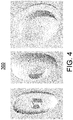
- pulsed air flow is controllable by a user through a High Radio Frequency (HRF) remote controller 300 (as shown in FIGs. 1 and 4 ).
- HRF High Radio Frequency
- continuous airflow of the same speed as the pulse is generated and can be activated to purge the portable device 100 and the diffusion tube 110 through a button 155 on the casing 105.
- HRF High Radio Frequency
- the portable device 100 may include a heated mat 120.
- the heated mat 120 may include, for example, silicone and/or any other suitable materials.
- the temperature of the heated mat 120 may be activated and/or disengaged through a button 140 on the casing 105.
- a heating temperature produced by the heated mat 120 may be approximately 31°C to approximately 33°C. It is noted, however, that other temperatures may be incorporated, while maintaining the spirit of the present disclosure.
- an indicator LED indicates when the set temperature is reached.
- the portable device 100 is configured to receive one or more fragrance samples which may be inserted into the portable device 100 via, for example, a sample insertion trolley 125 and a sample slide 130. It is noted, however, that any suitable form of sample insertion may be incorporated, while maintaining the spirit of the present disclosure.
- the sample slide 130 is inserted into the casing 105 via the sample insertion trolley 125.
- the sample slide 130 is glass. It is noted, however, that any suitable material (for example, glass, polymers, ceramic, metal, fabric, paper, artificial skin, and combinations thereof) for the sample slide 130 may be used, while maintaining the spirit of the present disclosure. Any other material that aims to mimic fragrance diffusion from a fragranced support may be incorporated.
- the sample insertion trolley 125 may be configured to avoid contact between the casing 105 and an upper surface of the sample plate 130 during its insertion.
- the sample insertion trolley 125 may be positioned onto the heated mat 120 whose heating function can be activated or not through a button 140 on the casing 105.
- samples may be introduced without the sample insertion trolley 125 by positioning the sample slide 130 directly into the portable device 100.
- approximately 5 ⁇ L to approximately 100 ⁇ L of fragrance or of fragrance ingredient sample is deposited on a sample slide 130 of approximately 75 x 25 mm. It is noted, however, that other sample slide 130 dimensions may be incorporated, which may be capable of having deposited more or less fragrance. Alternatively, fragranced samples are directly inserted into the portable device, without using the sample slide.
- the portable device 100 may further include a support structure 135 (as shown in FIG. 5 ).
- the support structure 135 may be produced using 3D printing techniques, via molding techniques, and/or via any other suitable form of production.
- the casing 105 is configured to be mounted onto a receiving portion 405 of the support structure.
- the support structure 135 includes one or more legs 410.
- the one or more legs 410 may have a height of approximately 20 cm to approximately 40 cm. It is noted, however, that other heights may alternatively be employed, while maintaining the spirit of the present disclosure.
- the support structure 135 includes an opening 415 configured to store the HRF remote controller 300 (as shown in FIGs. 1 and 4 ).
- the portable device 100 may include one or more diffusion tube 110.
- a diffusion tube 110 is illustratively depicted, in accordance with various embodiments of the present disclosure.
- the diffusion tube 110 may be opened on both ends.
- the diffusion tube 110 may be positioned horizontally in relation to the casing 105.
- the diffusion tube 105 may include a front opening and a rear opening.
- the front opening of the diffusion tube 110 is configured to be plugged into the nozzle of the casing 105.
- the diffusion tube 110 includes one or more sniffing ports.
- the sniffing port may be positioned on a rear section of the diffusion tube 110.
- the fragrance diffusion tube 110 includes an aluminum cylinder internally coated with high resistance epoxy resin. It is noted, however, that other materials such as, for example, glass, plastic, and/or any other materials that may be coated with any resin or polymer that show low interaction with Volatile Organic Compounds (VOCs), may be included in the diffusion tube 110.
- the diffusion tube 110 may be opened on both ends. According to various embodiment, the diffusion tube 110 may be aligned horizontally and displayed on the sniffing port on the rear section of the diffusion tube 110.
- the sniffing port is positioned at a rear section of the diffusion tube 110, in front of the airflow.
- This sniffing port may alternatively be used to adapt analytical instruments (for example, Tenax ⁇ tube and pump or SPME fibers followed by GC-MS analyses, sensors, etc.).
- the front opening of the diffusion tube 110 may be plugged on the casing 105 nozzle that includes the ventilation system 115 that delivers a controlled pulsed air flow into the diffusion tube 110.
- the front of the diffusion tube 110 refers to the part of the diffusion tube 110 starting from the opening plugged on the casing 105 where ventilator and sample are located.
- the rear of the diffusion tube 110 refers to the second opening at the end of the diffusion tube, where sniffing port, sensor or analytical instruments can be adapted.
- the diffusion tube 110 may have a length of approximately 50 cm to approximately 150 cm, and a diameter of approximately 5 cm to approximately 10 cm. It is noted, however, that other suitable lengths may be incorporated, while maintaining the spirit of the present disclosure.
- FIG. 6 a method 500 for assessing fragrance or fragrance raw materials trails is illustratively depicted, in accordance with the present disclosure.
- the diffusion tube is purged.
- the purging lasts approximately 10 seconds to 30 seconds. It is noted, however, that any suitable timeframe for purging may be incorporated.
- the ventilation system is powered and provides a short pulse of air through the diffusion tube.
- one or more olfactory intensity and/or hedonic assessments are performed by a trained sensory panel.
- Screw caps are connected to measure quantities of molecules in the sample analytically and, at 535, measured data is analyzed.
- the device and systems disclosed herein are used to assess fine fragrances that are on the market, which include, but are not limited to, the following fragrances under the trademarks of YSL Paris® by Yves Saint Laurent (YSL), Dior® J'adore, YSL Mon Paris®, Gabrielle Chanel®, La Vie est Belle® by Lanccons, Alien® by Thierry Mugler, Idole® by Lanc agencies, Miss Dior Blooming Bouquet® by Dior, Black Opium® by YSL, Chance by Chanel, Flowerbomb® by Victor & Rolf, Bleu de Chanel®, LaN de L'ans® by YSL, Emblem® by Mont Blanc, Invictus® by Paco Rabanne, One Million by Paco Rabanne, Sauvage® by Dior, Only the Brave® by Diesel, and Wanted® by Azarro, and the like.
- the device and systems are also applicable to assess any fragrance raw materials (either natural or synthetic), preferably diluted in ethanol at a concentration depending on its impact (for example, using 1% w/w as a standard concentration), such as 2,4-dimethyl-3-cyclohexenecarboxaldehyde, 2,6-dimethyloct-7-en-2-ol, (3-oxo-2-pentylcyclopentyl)acetic acid methyl ester, 1-(1,2,3,4,5,6,7,8-octahydro-2,3,8,8,-tetramethyl-2-naphthyl)ethan-1-one, 2-phenylethan-1-ol, 4-hydroxyl-3-methoxybenzaldehyde, 2-methoxy-4-(2-propenyl)-phenol, (3aR,5aS,9aS,9bR)-3a,6,6,9a-tetramethyl-2,4,S,Sa,7,8,9,9b-octahydro-1
- the device and systems are also applicable to assessing any commercial products containing fragrances or fragrance raw materials, such as an Eau de Toilette product, an Eau de perfume, a cologne, a scent booster, an encapsulated fragrance, a fine fragrance, a men's fine fragrance, a women's fine fragrance, a perfume, a solid perfume, a natural spray product, a perfume spray product, a home care product, a reed diffuser, an all-purpose cleaner, a floor cleaner, a toilet cleaner, a toilet rimblock, a bath tissue, liquid air freshener, air freshener spray, a spray dispenser product, an incense stick, a rug deodorizer, a candle, a room deodorizer, a liquid dish detergent, a paste dish detergent, an anti-inflammatory balm, an anti-inflammatory ointment, an anti-inflammatory spray, a disinfectant, a personal care product, a soap, a bar soap, a liquid soap, a bath fragrance, a body wash,
- a portable device of this invention was assembled in the facility operated by Tweener (Wattignies, France).
- fragrance intensity was rated both just after application (time 0) and after 4 hours sitting at 32°C (Time 4 hr). The fragrance intensity was rated at a scale ranging from 0 to 10. A numerical value of 2 indicates that the composition produces a weak intensity. A value of 10 indicates that the composition generates a very strong smell. Evaluation is performed by a trained sensory panel. The sensory results are given in Table 2. The results indicated that the device is efficient in ranking fragrances and differentiating their levels of diffusion.
- fragrances were tested repeatedly. Each fragrance was applied on a glass slide for evaluation. Fragrance diffusion intensity was rated both just after application (Time 0) and after 4hr aging at 32°C (Time 4 hr). The fragrance intensity was rated at a scale ranging from 0 to 10. A numerical value of 2 indicates that the composition produces a weak intensity. A value of 10 indicates that the composition generates a very strong smell. Evaluation is performed by a trained sensory panel in two different sessions. The sensory results are given in Table 3. The analysis indicated that the device gives reliable and reproducible diffusion data.
Landscapes
- Health & Medical Sciences (AREA)
- Life Sciences & Earth Sciences (AREA)
- Chemical & Material Sciences (AREA)
- Engineering & Computer Science (AREA)
- Food Science & Technology (AREA)
- Medicinal Chemistry (AREA)
- Physics & Mathematics (AREA)
- Analytical Chemistry (AREA)
- Biochemistry (AREA)
- General Health & Medical Sciences (AREA)
- General Physics & Mathematics (AREA)
- Immunology (AREA)
- Pathology (AREA)
- Fats And Perfumes (AREA)
- Disinfection, Sterilisation Or Deodorisation Of Air (AREA)
Abstract
Description
- The present disclosure relates to the field of fragrance diffusion and, in particular, to a portable fragrance diffuser useful for measuring diffusion of fragrances or fragrance raw materials in a reproducible and discriminating way, as well as a method of such measurement.
- Fragrance diffusers are devices configured to distribute a fragrance throughout an area, and come in multiple sizes, including compact fragrance diffusers for ease of transport. Compact diffusers include thermal vaporizers, which release a predetermined quantity of scent form a liquid reserve by increasing temperature until complete evaporation of the fragrance. The thermal vaporizers do produce fragrances in the form of small droplets. Others compact diffusers that also include a fragrance reservoir are based on the Venturi effect, which results in fragrance atomization via a nozzle leading to small droplets. As the fragrant material evaporates in the compact diffuser, the fragrance is distributed around the area of the diffuser. Sometimes, evaporation is facilitated by high frequency acoustic vibrations that aims to improve diffusion by decreasing fragrance droplet size.
- In some diffusers, the fragrance or fragrance ingredient is incorporated into or onto solid supports, such as glass or polymers. Diffusion is then activated by heating the surface and/or by passing an air flow on or through the surface. The air flow gradually drags fragrance molecules from the solid support and diffuses them into the surrounding air.
- The existing methods and equipment for the reproduction of a scent are strictly limited in range and quality and do not aim to reproduce consistent fragrance diffusion performance, particularly during movement of a user. See
EP 3 521 823 A1 andWO 2017/167407 A1 . - For at least these reasons, systems and methods are needed which facilitate adequately measure diffusion of a fragrance in the air from a moving wearer. Fragrance diffusion performance is evaluated as an olfactory intensity assessed by a trained sensory panel or as a quantity of molecules measured analytically by, for example, through Tenax© capture, thermo-desorption, and GC-MS analyses.
- At present, the trail often refers to a personal experience of fine fragrance performance when running into someone in the street. However, the challenge for fragrance industry exists in providing a method and a device that allows fragrance or fragrance raw material trail quantification.
- The present invention is provided to meet the foregoing challenge by providing a portable device, and systems and methods, for measuring fragrance and fragrance raw material trails.
- In one aspect, the present invention provides a portable device for measuring fragrance and fragrance raw material diffusions, the device comprising:
- a casing;
- a diffusion tube coupled to the casing, wherein the diffusion tube has a front end and a rear end, having an opening on each of the front end and the rear end;
- a ventilation system housed within the casing;
- a heating mat positioned within the casing;
- a nozzle;
- a sniffing port; and
- a sample insertion means,
- wherein the diffusion tube is aligned horizontally in relation to the casing,
- wherein the opening on the front end of the diffusion tube is plugged into the nozzle, and
- wherein the sniffing port is positioned on the rear end of the diffusion tube.
- In another aspect, the present invention provides a system for measuring fragrance and fragrance raw material diffusion, the system comprising:
- a portable device according to any embodiment disclosed herein;
- a wireless High Radio Frequency (HRF) remote controller configured to control one or more components of the portable device; and
- a support structure configured to house the portable device and the HRF remote controller.
- In another aspect, the present invention provides a method for assessing a fragrance or fragrance raw material trail using a system according to any embodiment disclosed herein.
- Other aspects and advantages of the present invention will be better appreciated in view of the following drawings, detailed description, and claims.
-
-
FIG. 1 illustrates a perspective view of a system to measure fragrances and fragrance raw materials diffusion, in accordance with various embodiments of the present disclosure. -
FIG. 2 illustrates in an exploded view of an example of a device to measure fragrances and fragrance raw materials diffusion, in accordance with various embodiments of the present disclosure. -
FIG. 3 illustrates in a 3-dimensional view an example of a system diffusion device and tube, in accordance with various embodiments of the present disclosure. -
FIG. 4 illustrates an example of a High Radio Frequency (HRF) remote controller in an exploded view, in accordance with various embodiments of the present disclosure. -
FIG. 5 illustrates in a perspective view of an example of a device support, in accordance with various embodiments of the present disclosure. -
FIG. 6 illustrates a flow chart of a method for assessing fragrance or fragrance raw materials trail, according to various embodiments of the present disclosure. - In one aspect, the present invention provides a portable device for measuring fragrance and fragrance raw material diffusions, the device comprising:
- a casing;
- a diffusion tube coupled to the casing, wherein the diffusion tube has a front end and a rear end, having an opening on each of the front end and the rear end;
- a ventilation system housed within the casing;
- a heating mat positioned within the casing;
- a nozzle;
- a sniffing port; and
- a sample insertion means,
- wherein the diffusion tube is aligned horizontally in relation to the casing,
- wherein the opening on the front end of the diffusion tube is plugged into the nozzle, and
- wherein the sniffing port is positioned on the rear end of the diffusion tube.
- In one embodiment, the sample insertion means in the portable device comprises a sample slide and a sample trolley configured to receive the sample slide; wherein the sample slide is optionally made from a material selected from the group consisting of glass, polymer, ceramic, metal, fabric, paper, artificial skin, hair swatch, and combinations thereof.
- In another embodiment, the casing of the portable device is made from a material selected from the group consisting of polylactic acid, polyhydroxyalkanoates, bio-sourced polymer, polymer, and combinations thereof; wherein the casing is optionally coated with epoxy resin; and wherein optionally the casing is fully detachable and washable.
- In another embodiment, the casing of the portable device is in a parallelepiped form having a width between about 15 cm and about 25 cm, a depth between about 5 cm and about 15 cm, and a height between about 5 cm and about 15 cm.
- In another embodiment, the diffusion tube of the portable device is made from a material selected from the group consisting of glass, metal, plastic, polymer, bio-sourced polymer, and combinations thereof, and is optionally coated with epoxy resin.
- In another embodiment, the diffusion tube of the portable device is made from aluminum and coated with epoxy resin.
- In another embodiment, the diffusion tube of the portable device has a length between about 50 cm and about 150 cm and a section diameter between about 5 cm and about 10 cm.
- In another embodiment, the diffusion tube of the portable device is equipped with a sniffing port located in the rear end of the diffusion tube.
- In another embodiment, the sniffing port of the portable device comprises a component selected from the group consisting of sensors, screw caps, and fittings configured to adapt one or more analytical instruments.
- In another embodiment, the ventilation system of the portable device is configured to generate an air pulse.
- In another embodiment, the air pulse lasts between 1 second and 5 seconds; and optionally the air pulse has an air flow speed between about 1 km/h and about 15 km/h.
- In another aspect, the present invention provides a system for measuring fragrance and fragrance raw material diffusion, the system comprising:
- a portable device according to any embodiment disclosed herein;
- a wireless High Radio Frequency (HRF) remote controller configured to control one or more components of the portable device; and
- a support structure configured to house the portable device and the HRF remote controller.
- In another aspect, the present invention provides a method for assessing a fragrance or fragrance raw material trail using a system according to any embodiment disclosed herein, the method comprising the following steps:
- (i) preparing a fragrance sample or fragrance raw material on the sample slide (deposition and ageing);
- (ii) purging the diffusion tube for a period of about 10 to about 30 seconds, optionally using a purge button;
- (iii) introducing the fragrance-containing sample into the system through the sample insertion trolley;
- (iv) starting the ventilation system to provide a short pulse of air through the diffusion tube;
- (v) performing olfactory intensity and/or hedonic assessment by a trained sensory panel;
- (vi) connecting sniffing port screw caps adaptor to an analytical instrument (e.g., Tenax© capture, thermo-desorption, and GC-MS) measure quantity of the fragrance or fragrance raw material molecules; and
- (vii) analyzing data.
- In one embodiment, in the method disclosed herein, about 5 µL to about 100 µL of fragrance or fragrance raw material is deposited on the sample slide for assessment.
- In one embodiment, in the method disclosed herein, the fragrance sample slide can be heated to about 25 °C to about 35 °C before or during olfactory evaluation.
- As used in this document, the singular forms "a," "an," and "the" include plural references unless the context clearly dictates otherwise. Unless defined otherwise, all technical and scientific terms used herein have the same meanings as commonly understood by one of ordinary skill in the art. When used in this document, the term "comprising" (or "comprises") means "including (or includes), but not limited to." When used in this document, the term "exemplary" is intended to mean "by way of example" and is not intended to indicate that a particular exemplary item is preferred or required.
- In this document, when terms such "first" and "second" are used to modify a noun, such use is simply intended to distinguish one item from another, and is not intended to require a sequential order unless specifically stated. The term "approximately," when used in connection with a numeric value, is intended to include values that are close to, but not exactly, the number. For example, in some embodiments, the term "approximately" may include values that are within +/- 10 percent of the value.
- As used herein, the term "about" generally includes up to plus or minus 10% of the indicated number. For example, "about 10%" may indicate a range of 9% to 11%, and "about 20" may mean from 18 to 22. Sometimes preferably, the term "about" includes up to plus or minus 5% of the indicated value. As disclosed herein, a number of ranges of numeric values are provided. It is understood that each intervening value, to the tenth of the unit of the lower limit, unless the context clearly dictates otherwise, between the upper and lower limits of that range is also specifically disclosed.
- A "portable fragrance diffuser", as used herein, refers to a light diffuser of small overall size that can be held in one hand, or an overall system (diffuser, tube(s), support and consumables) that can be transported in a specifically-designed suitcase.
- Other terms that are relevant to this disclosure are defined at the end of this Detailed Description section.
- Referring now to
FIG. 1 , asystem 10 andFIG. 2 , a portable device 100 (also shown inFIG. 1 ) for measuring fragrances and fragrance raw materials diffusion is illustratively depicted, in accordance with various embodiments of the present disclosure. According to various embodiments, theportable device 100 is configured to enable the measuring of one or more fragrances of a fragrance raw material trail, and also provides a means for assessing fragrance diffusion using analytical means and/or sensory evaluations by a trained panel. - According to various embodiments, the
portable device 100 includes acasing 105, including one or more movable components. Thecasing 105 may be produced by 3-dimensional (3D) printing techniques, via molding techniques, and/or via any other suitable form of production. According to various embodiments, thecasing 105 includes a bio-sourced polymer and is internally coated with high resistance epoxy resin and, preferably, includes polylactic acid (PLA), polyhydroxy alkanoate (PHA). It is noted, however, that any suitable material may be used for thecasing 105. Exemplary polymers, including some bio-sourced polymers, are listed in Table 1.Table 1. Examples of suitable polymers Polymer Abbreviation Average Biomass Content of Polymer Cellulose Acetate CA 50% Polyamide PA rising 60% Polybutylene Adipate Terephthalate PBAT rising 50% Polybutylene Succinate PBS rising 80 % Polyethylene PE 100% Polyethylene Terephthalate PET 30% to 35% Polyhydroxy Alkanoate PHAs 100% Polylactic Acid PLA 100 % Polypropylene PP 100% Polyvinyl Chloride PVC 43% Polyurethane PUR 30% Starch Blends 40% - According to various embodiments, the
casing 105 is in the general form of a parallelepiped of approximately 15 cm to 25 cm wide, approximately 5 cm to 15 cm deep, and approximately 5 cm to 15 cm high. It is noted, however, that other suitable dimensions for thecasing 105 may be incorporated. According to various embodiments, thecasing 105 including multiple components (as shown inFIG. 2 ), which are configured to be easily and readily disassembled and washed to avoid cross contamination. - The
portable device 100 may include one ormore power switches 160 configured to turn one or more electronic components of theportable device 100 on or off. According to an embodiment, the one or more power switches 160 includes a button. It is noted, however, that other suitable forms ofpower switches 160 may, alternatively or in addition, be incorporated. According to various embodiments, thedevice 100 is powered by an internal power supply and/or anexternal power source 165. - The
portable device 100 may include a controllable and stablepulse ventilation system 115. According to various embodiments, theventilation system 115 includes afan 145. Theventilation system 115 may further include a printedcircuit board 150 configured to regulate the speed of thefan 145. The air flow speed is stable and is configured to be set to a stable and precise speed between approximately 1 km/h and approximately 15 km/h. According to various embodiments, theventilation system 115 is pulsed, and its duration is set at a value between approximately 1 second and approximately 5 seconds. According to various embodiments, pulsed air flow is controllable by a user through a High Radio Frequency (HRF) remote controller 300 (as shown inFIGs. 1 and4 ). According to various alternative embodiments, continuous airflow of the same speed as the pulse is generated and can be activated to purge theportable device 100 and thediffusion tube 110 through a button 155 on thecasing 105. - The
portable device 100 may include aheated mat 120. Theheated mat 120 may include, for example, silicone and/or any other suitable materials. According to various embodiments, the temperature of theheated mat 120 may be activated and/or disengaged through abutton 140 on thecasing 105. According to various embodiments, a heating temperature produced by theheated mat 120 may be approximately 31°C to approximately 33°C. It is noted, however, that other temperatures may be incorporated, while maintaining the spirit of the present disclosure. According to various embodiments, an indicator LED indicates when the set temperature is reached. - According to various embodiments, the
portable device 100 is configured to receive one or more fragrance samples which may be inserted into theportable device 100 via, for example, asample insertion trolley 125 and asample slide 130. It is noted, however, that any suitable form of sample insertion may be incorporated, while maintaining the spirit of the present disclosure. According to various embodiments, thesample slide 130 is inserted into thecasing 105 via thesample insertion trolley 125. According to various embodiments, thesample slide 130 is glass. It is noted, however, that any suitable material (for example, glass, polymers, ceramic, metal, fabric, paper, artificial skin, and combinations thereof) for thesample slide 130 may be used, while maintaining the spirit of the present disclosure. Any other material that aims to mimic fragrance diffusion from a fragranced support may be incorporated. Thesample insertion trolley 125 may be configured to avoid contact between thecasing 105 and an upper surface of thesample plate 130 during its insertion. Thesample insertion trolley 125 may be positioned onto theheated mat 120 whose heating function can be activated or not through abutton 140 on thecasing 105. According to various embodiments, samples may be introduced without thesample insertion trolley 125 by positioning thesample slide 130 directly into theportable device 100. According to various embodiments, approximately 5 µL to approximately 100 µL of fragrance or of fragrance ingredient sample is deposited on asample slide 130 of approximately 75 x 25 mm. It is noted, however, that other sample slide 130 dimensions may be incorporated, which may be capable of having deposited more or less fragrance. Alternatively, fragranced samples are directly inserted into the portable device, without using the sample slide. - The
portable device 100 may further include a support structure 135 (as shown inFIG. 5 ). Thesupport structure 135 may be produced using 3D printing techniques, via molding techniques, and/or via any other suitable form of production. According to various embodiments, thecasing 105 is configured to be mounted onto a receivingportion 405 of the support structure. According to various embodiments, thesupport structure 135 includes one ormore legs 410. The one ormore legs 410 may have a height of approximately 20 cm to approximately 40 cm. It is noted, however, that other heights may alternatively be employed, while maintaining the spirit of the present disclosure. According to various embodiments, thesupport structure 135 includes anopening 415 configured to store the HRF remote controller 300 (as shown inFIGs. 1 and4 ). - The
portable device 100 may include one ormore diffusion tube 110. Referring now toFIG. 3 , adiffusion tube 110 is illustratively depicted, in accordance with various embodiments of the present disclosure. - The
diffusion tube 110 may be opened on both ends. Thediffusion tube 110 may be positioned horizontally in relation to thecasing 105. Thediffusion tube 105 may include a front opening and a rear opening. According to various embodiments, the front opening of thediffusion tube 110 is configured to be plugged into the nozzle of thecasing 105. According to various embodiments, thediffusion tube 110 includes one or more sniffing ports. The sniffing port may be positioned on a rear section of thediffusion tube 110. - According to various embodiments, the
fragrance diffusion tube 110 includes an aluminum cylinder internally coated with high resistance epoxy resin. It is noted, however, that other materials such as, for example, glass, plastic, and/or any other materials that may be coated with any resin or polymer that show low interaction with Volatile Organic Compounds (VOCs), may be included in thediffusion tube 110. Thediffusion tube 110 may be opened on both ends. According to various embodiment, thediffusion tube 110 may be aligned horizontally and displayed on the sniffing port on the rear section of thediffusion tube 110. - According to an alternative embodiment, the sniffing port is positioned at a rear section of the
diffusion tube 110, in front of the airflow. This sniffing port may alternatively be used to adapt analytical instruments (for example, Tenax© tube and pump or SPME fibers followed by GC-MS analyses, sensors, etc.). The front opening of thediffusion tube 110 may be plugged on thecasing 105 nozzle that includes theventilation system 115 that delivers a controlled pulsed air flow into thediffusion tube 110. - The front of the
diffusion tube 110 refers to the part of thediffusion tube 110 starting from the opening plugged on thecasing 105 where ventilator and sample are located. The rear of thediffusion tube 110 refers to the second opening at the end of the diffusion tube, where sniffing port, sensor or analytical instruments can be adapted. Thediffusion tube 110 may have a length of approximately 50 cm to approximately 150 cm, and a diameter of approximately 5 cm to approximately 10 cm. It is noted, however, that other suitable lengths may be incorporated, while maintaining the spirit of the present disclosure. - Referring now to
FIG. 6 , amethod 500 for assessing fragrance or fragrance raw materials trails is illustratively depicted, in accordance with the present disclosure. - At 505, the diffusion tube is purged. According to various embodiments, the purging lasts approximately 10 seconds to 30 seconds. It is noted, however, that any suitable timeframe for purging may be incorporated. Once purged, at 510, a fragrance sample is prepared on a sample slide and, at 515, the sample positioned on the slide is inserted into the portable device, as described in
FIGs. 1-2 . - Once the sample is inserted into the portable device, the ventilation system, at 520, is powered and provides a short pulse of air through the diffusion tube. Once the air is passed through the diffusion tube, one or more olfactory intensity and/or hedonic assessments, at 525, are performed by a trained sensory panel. Screw caps, at 530, are connected to measure quantities of molecules in the sample analytically and, at 535, measured data is analyzed.
- The features and functions described above, as well as alternatives, may be combined into many other different systems or applications. Various alternatives, modifications, variations or improvements may be made by those skilled in the art, each of which is also intended to be encompassed by the disclosed embodiments.
- The device and systems disclosed herein are used to assess fine fragrances that are on the market, which include, but are not limited to, the following fragrances under the trademarks of YSL Paris® by Yves Saint Laurent (YSL), Dior® J'adore, YSL Mon Paris®, Gabrielle Chanel®, La Vie est Belle® by Lancôme, Alien® by Thierry Mugler, Idole® by Lancôme, Miss Dior Blooming Bouquet® by Dior, Black Opium® by YSL, Chance by Chanel, Flowerbomb® by Victor & Rolf, Bleu de Chanel®, La nuit de L'homme® by YSL, Emblem® by Mont Blanc, Invictus® by Paco Rabanne, One Million by Paco Rabanne, Sauvage® by Dior, Only the Brave® by Diesel, and Wanted® by Azarro, and the like.
- The device and systems are also applicable to assess any fragrance raw materials (either natural or synthetic), preferably diluted in ethanol at a concentration depending on its impact (for example, using 1% w/w as a standard concentration), such as 2,4-dimethyl-3-cyclohexenecarboxaldehyde, 2,6-dimethyloct-7-en-2-ol, (3-oxo-2-pentylcyclopentyl)acetic acid methyl ester, 1-(1,2,3,4,5,6,7,8-octahydro-2,3,8,8,-tetramethyl-2-naphthyl)ethan-1-one, 2-phenylethan-1-ol, 4-hydroxyl-3-methoxybenzaldehyde, 2-methoxy-4-(2-propenyl)-phenol, (3aR,5aS,9aS,9bR)-3a,6,6,9a-tetramethyl-2,4,S,Sa,7,8,9,9b-octahydro-1H-benzo[e][1]benzofuran, 3,7-dimethylocta-1,6-dien-3-ol, methyl 2,4-dihydroxy-3,6-dimethylbenzoate, benzyl acetate, 4-(4-hydroxyphenyl)-butan-2-one, 5-hexyloxolan-2-one, 2-ethyl-3-hydroxy-4-pyranone, 3,7-dimethylocta-1,6-dien-3-yle acetate, 2H-1-benzopyrane-2-one, patchouli oil, bergamot oil, oud oil, cedarwood oil, Jasmin absolute, and the like.
- The device and systems are also applicable to assessing any commercial products containing fragrances or fragrance raw materials, such as an Eau de Toilette product, an Eau de Parfum, a cologne, a scent booster, an encapsulated fragrance, a fine fragrance, a men's fine fragrance, a women's fine fragrance, a perfume, a solid perfume, a natural spray product, a perfume spray product, a home care product, a reed diffuser, an all-purpose cleaner, a floor cleaner, a toilet cleaner, a toilet rimblock, a bath tissue, liquid air freshener, air freshener spray, a spray dispenser product, an incense stick, a rug deodorizer, a candle, a room deodorizer, a liquid dish detergent, a paste dish detergent, an anti-inflammatory balm, an anti-inflammatory ointment, an anti-inflammatory spray, a disinfectant, a personal care product, a soap, a bar soap, a liquid soap, a bath fragrance, a body wash, a non-aerosol body spray, a body milk, a cleanser, a body cream, a hand sanitizer, a hand wash, a functional product base, a sunscreen lotion, a sunscreen spray, a deodorant, an anti-perspirant, an roll-on product, an aerosol product, a natural spray product, a wax-based deodorant, a glycol type deodorant, a soap type deodorant, a facial lotion, a body lotion, a hand lotion, a miscellaneous lotion, a body powder, a shave cream, a shave gel, a shave butter, a bath soak, a shower gel, an exfoliating scrub, a foot cream, a facial tissue, a cleansing wipe, a talc product, a hair care product, a hair care with ammonia, a shampoo, a hair conditioner, a hair rinse, a hair refresher, a hair fixative or styling aid, a hair bleach, a hair dye or colorant, a fabric care product, a fabric softener, a liquid fabric softener, a fabric softener sheet, a drier sheet, a fabric refresher, an ironing water, a detergent, a laundry detergent, a liquid laundry detergent, a powder laundry detergent, a tablet laundry detergent, a laundry detergent bar, a laundry detergent cream, a hand wash laundry detergent, an insect repellent product, a wildlife scent, and the like.
- A portable device of this invention was assembled in the facility operated by Tweener (Wattignies, France).
- Nineteen fragrances were tested including 11 feminine fragrances and 8 masculine fragrances. Each fragrance was applied on a glass slide for evaluation. Fragrance intensity was rated both just after application (time 0) and after 4 hours sitting at 32°C (Time 4 hr). The fragrance intensity was rated at a scale ranging from 0 to 10. A numerical value of 2 indicates that the composition produces a weak intensity. A value of 10 indicates that the composition generates a very strong smell. Evaluation is performed by a trained sensory panel. The sensory results are given in Table 2. The results indicated that the device is efficient in ranking fragrances and differentiating their levels of diffusion.
Table 2: Fragrance intensity Fragrance Intensity Time 0 Intensity Time 4 hr Feminine Fragrance 1 7.2 6 Feminine Fragrance 2 6.8 5.7 Feminine Fragrance 3 6.8 6 Feminine Fragrance 4 6.8 6.1 Feminine Fragrance 5 6.8 6.1 Feminine Fragrance 6 6.7 6.7 Feminine Fragrance 7 6.7 6.1 Feminine Fragrance 8 6.5 6.1 Feminine Fragrance 9 6.4 5.8 Feminine Fragrance 106.4 6.1 Feminine Fragrance 11 5.9 6 Masculine Fragrance 1 6.8 5.9 Masculine Fragrance 2 6.8 6 Masculine Fragrance 3 6.7 6.2 Masculine Fragrance 4 6.6 5.5 Masculine Fragrance 5 6.6 5.9 Masculine Fragrance 6 6.5 5.9 Masculine Fragrance 7 6.5 6.2 Masculine Fragrance 8 6.2 5.7 - To establish the reproducibility of the measurement using the device described in Example 1, four fragrances were tested repeatedly. Each fragrance was applied on a glass slide for evaluation. Fragrance diffusion intensity was rated both just after application (Time 0) and after 4hr aging at 32°C (Time 4 hr). The fragrance intensity was rated at a scale ranging from 0 to 10. A numerical value of 2 indicates that the composition produces a weak intensity. A value of 10 indicates that the composition generates a very strong smell. Evaluation is performed by a trained sensory panel in two different sessions. The sensory results are given in Table 3. The analysis indicated that the device gives reliable and reproducible diffusion data.
Table 3: Diffusion measurements reproducibility Fragrance 1st measurement Time 0 2nd Measurement Time 0 1st measurement Time 4 hr 2nd Measurement Time 4 hr Fragrance 1 7.1 7.2 6 6 Fragrance 2 6.7 6.7 6.6 6.7 Fragrance 3 6.7 6.7 6 6.2 Fragrance 4 6.4 5.9 6 6 - While several embodiments have been described above, it will be understood by those of ordinary skill in the art that various changes in form and details may be made therein without departing from the spirit and scope of the disclosure as defined by the following claims.
Claims (15)
- A portable device for measuring fragrance and fragrance raw material diffusion, comprising:a casing;a diffusion tube coupled to the casing, wherein the diffusion tube has a front end and a rear end, having an opening on each of the front end and the rear end;a ventilation system housed within the casing;a mat positioned within the casing, wherein the mat can be heated;a nozzle;a sniffing port; anda sample insertion means,wherein the diffusion tube is aligned horizontally in relation to the casing,wherein the opening on the front end of the diffusion tube is plugged into the nozzle, andwherein the sniffing port is positioned on the rear end of the diffusion tube.
- The portable device of claim 1, wherein the sample insertion means comprises a sample slide and a sample trolley configured to receive the sample slide; wherein the sample slide is optionally made from a material selected from the group consisting of glass, polymer, ceramic, metal, fabric, paper, artificial skin, hair swatch, and combinations thereof.
- The portable device of claim 1 or 2, wherein the casing is made from a material selected from the group consisting of polylactic acid, polyhydroxyalkanoates, cellulose acetate, polyamides, polybutylene adipate terephthalate, polybutylene succinate, polyethylene, polyethylene terephthalate, polypropylene, polyvinyl chloride, polyurethane, bio-sourced polymers (e.g., starch blends), and combinations thereof; wherein the casing is optionally coated with epoxy resin; and wherein optionally the casing is fully detachable and washable.
- The portable device of any one of claims 1 to 3, wherein the casing is in a parallelepiped form having a width between about 15 cm and about 25 cm, a depth between about 5 cm and about 15 cm, and a height between about 5 cm and about 15 cm.
- The portable device of any one of claims 1 to 4, wherein said diffusion tube is made from a material selected from the group consisting of glass, metal, plastic, hair swatch, and combinations thereof, and is optionally coated with epoxy resin.
- The portable device of any one of claims 1 to 5, wherein said diffusion tube is made from aluminum and coated with epoxy resin.
- The portable device of any one of claims 1 to 6, wherein said diffusion tube has a length between about 50 cm and about 150 cm and a section diameter between about 5 cm and about 10 cm.
- The portable device of any one of claims 1 to 7, wherein the diffusion tube is equipped with a sniffing port located in the rear end of the diffusion tube.
- The portable device of any one of claims 1 to 8, wherein the sniffing port comprises a component selected from the group consisting of sensors, screw caps, and fittings configured to adapt one or more analytic instruments.
- The portable device of claim 9, wherein the ventilation system is configured to generate an air pulse; and optionally wherein the air pulse lasts between 1 second and 5 seconds; and optionally wherein the air pulse has an air flow speed between about 1 km/h and about 15 km/h.
- A system for measuring fragrance and fragrance raw material diffusion, comprising:a portable device of any one of claims 1 to 10;a wireless High Radio Frequency (HRF) remote controller configured to control one or more components of the portable device; anda support structure configured to house the portable device and the HRF remote controller.
- A method for assessing the fragrance or fragrance raw material trail using a portable device of any one of claims 1 to 10 or the system of claim 11.
- The method of claim 12, comprising the following steps:(i) preparing a fragrance or fragrance raw material sample on the sample slide (deposition and ageing);(ii) purging the diffusion tube for a period of about 10 to about 30 seconds, optionally using a purge button;(iii) introducing the fragrance-containing sample slide into the system through the sample insertion trolley;(iv) starting the ventilation system to provide a short pulse of air through the diffusion tube;(v) performing olfactory intensity and/or hedonic assessment by a trained sensory panel;(vi) connecting sniffing port screw caps adaptor to an analytical instrument (e.g., Tenax© capture, thermo-desorption, and GC-MS) measure quantity of the fragrance or fragrance raw material molecules; and(vii) analyzing data.
- The method of Claim 12 or 13, wherein about 5 µL to about 100 µL of fragrance or fragrance raw material is deposited on the sample slide for assessment.
- The method of any of claims 12 to 14, further comprising heating the sample slide to about 25 °C to about 35 °C before or during olfactory evaluation.
Priority Applications (2)
| Application Number | Priority Date | Filing Date | Title |
|---|---|---|---|
| ES20305115T ES3064510T3 (en) | 2020-02-07 | 2020-02-07 | A portable device and methods for measuring diffusion of fragrances and fragrance raw materials |
| EP20305115.6A EP3862027B1 (en) | 2020-02-07 | 2020-02-07 | Portable device and method for measuring the diffusion of fragrances and fragrance raw materials |
Applications Claiming Priority (1)
| Application Number | Priority Date | Filing Date | Title |
|---|---|---|---|
| EP20305115.6A EP3862027B1 (en) | 2020-02-07 | 2020-02-07 | Portable device and method for measuring the diffusion of fragrances and fragrance raw materials |
Publications (3)
| Publication Number | Publication Date |
|---|---|
| EP3862027A1 true EP3862027A1 (en) | 2021-08-11 |
| EP3862027C0 EP3862027C0 (en) | 2025-12-31 |
| EP3862027B1 EP3862027B1 (en) | 2025-12-31 |
Family
ID=69784355
Family Applications (1)
| Application Number | Title | Priority Date | Filing Date |
|---|---|---|---|
| EP20305115.6A Active EP3862027B1 (en) | 2020-02-07 | 2020-02-07 | Portable device and method for measuring the diffusion of fragrances and fragrance raw materials |
Country Status (2)
| Country | Link |
|---|---|
| EP (1) | EP3862027B1 (en) |
| ES (1) | ES3064510T3 (en) |
Citations (5)
| Publication number | Priority date | Publication date | Assignee | Title |
|---|---|---|---|---|
| US20050255008A1 (en) * | 2004-04-20 | 2005-11-17 | Hao-Cheng Lin | Portable fragrance disperser |
| USH2256H1 (en) * | 2006-01-30 | 2011-06-07 | United States Of America As Represented By The Secretary Of The Navy | 3-hydroxy-3-methylhexanoic acid and 3-methyl-2-hexanoic acid detection as identifiers to monitor human presence |
| WO2012093246A1 (en) * | 2011-01-04 | 2012-07-12 | Cambridge Enterprise Limited | Scent dispensing system |
| WO2017167407A1 (en) | 2016-03-31 | 2017-10-05 | Symrise Ag | A device for assessing the sillage of fragrance materials |
| EP3521823A1 (en) | 2014-05-27 | 2019-08-07 | Givaudan SA | Method and device for the characterisation of perfume compositions |
-
2020
- 2020-02-07 ES ES20305115T patent/ES3064510T3/en active Active
- 2020-02-07 EP EP20305115.6A patent/EP3862027B1/en active Active
Patent Citations (5)
| Publication number | Priority date | Publication date | Assignee | Title |
|---|---|---|---|---|
| US20050255008A1 (en) * | 2004-04-20 | 2005-11-17 | Hao-Cheng Lin | Portable fragrance disperser |
| USH2256H1 (en) * | 2006-01-30 | 2011-06-07 | United States Of America As Represented By The Secretary Of The Navy | 3-hydroxy-3-methylhexanoic acid and 3-methyl-2-hexanoic acid detection as identifiers to monitor human presence |
| WO2012093246A1 (en) * | 2011-01-04 | 2012-07-12 | Cambridge Enterprise Limited | Scent dispensing system |
| EP3521823A1 (en) | 2014-05-27 | 2019-08-07 | Givaudan SA | Method and device for the characterisation of perfume compositions |
| WO2017167407A1 (en) | 2016-03-31 | 2017-10-05 | Symrise Ag | A device for assessing the sillage of fragrance materials |
Also Published As
| Publication number | Publication date |
|---|---|
| EP3862027C0 (en) | 2025-12-31 |
| ES3064510T3 (en) | 2026-04-27 |
| EP3862027B1 (en) | 2025-12-31 |
Similar Documents
| Publication | Publication Date | Title |
|---|---|---|
| US20230287297A1 (en) | Perfume Compositions | |
| US10576179B2 (en) | Relating to organic compounds | |
| KR20170129194A (en) | Improved organic compounds | |
| AU2015365323A1 (en) | System and method for releasing flavor | |
| JP2018524037A5 (en) | ||
| JP2010012269A (en) | Piezoelectric atomizer comprising fragrant liquid composition and fragrant method | |
| US11896702B2 (en) | Fragrance-enhancing compositions | |
| JP2012502092A (en) | Divinyl ether derivatives capable of releasing active aldehydes and ketones and methods of use on aromatic surfaces | |
| JP6159966B2 (en) | Aromatic mixture containing cyclopent-2-enyl ethyl acetate | |
| JP2025066124A (en) | Method for evaluating fragrance lingering, agent for imparting fragrance lingering, and method for improving fragrance lingering | |
| CN115697425B (en) | Devices and compositions for improving fragrance delivery | |
| EP3862027B1 (en) | Portable device and method for measuring the diffusion of fragrances and fragrance raw materials | |
| KR101605211B1 (en) | Phenylpropanoid compound | |
| ES2687171T3 (en) | Organoleptic compounds | |
| CN115768493B (en) | Devices and compositions for improving fragrance delivery | |
| JP2004321497A (en) | Self-propelled fragrance disperser | |
| EP1898865B1 (en) | Fragance compositions | |
| JP2024530650A (en) | Fragrances or aroma compositions that are acceptable or preferred by pets | |
| DE602005002100T2 (en) | Detergents and cleaners, as well as room sprays | |
| CA1041018A (en) | 4-cyclohexyl-4-methyl-2-pentanone as deodorants | |
| JP2026000060A (en) | Method for evaluating the persistence of fragrance compounds | |
| Payne et al. | SPME Applications in Consumer | |
| JP2019095454A (en) | Analysis step | |
| CN109485555A (en) | Novel sensory compounds | |
| JP2004305302A (en) | Aroma diffusion type mannequin |
Legal Events
| Date | Code | Title | Description |
|---|---|---|---|
| PUAI | Public reference made under article 153(3) epc to a published international application that has entered the european phase |
Free format text: ORIGINAL CODE: 0009012 |
|
| STAA | Information on the status of an ep patent application or granted ep patent |
Free format text: STATUS: THE APPLICATION HAS BEEN PUBLISHED |
|
| AK | Designated contracting states |
Kind code of ref document: A1 Designated state(s): AL AT BE BG CH CY CZ DE DK EE ES FI FR GB GR HR HU IE IS IT LI LT LU LV MC MK MT NL NO PL PT RO RS SE SI SK SM TR |
|
| STAA | Information on the status of an ep patent application or granted ep patent |
Free format text: STATUS: REQUEST FOR EXAMINATION WAS MADE |
|
| 17P | Request for examination filed |
Effective date: 20220209 |
|
| RBV | Designated contracting states (corrected) |
Designated state(s): AL AT BE BG CH CY CZ DE DK EE ES FI FR GB GR HR HU IE IS IT LI LT LU LV MC MK MT NL NO PL PT RO RS SE SI SK SM TR |
|
| STAA | Information on the status of an ep patent application or granted ep patent |
Free format text: STATUS: EXAMINATION IS IN PROGRESS |
|
| 17Q | First examination report despatched |
Effective date: 20230413 |
|
| GRAP | Despatch of communication of intention to grant a patent |
Free format text: ORIGINAL CODE: EPIDOSNIGR1 |
|
| STAA | Information on the status of an ep patent application or granted ep patent |
Free format text: STATUS: GRANT OF PATENT IS INTENDED |
|
| RIC1 | Information provided on ipc code assigned before grant |
Ipc: A61L 9/03 20060101AFI20250702BHEP Ipc: A61L 9/12 20060101ALI20250702BHEP Ipc: G01N 33/00 20060101ALI20250702BHEP |
|
| INTG | Intention to grant announced |
Effective date: 20250725 |
|
| GRAS | Grant fee paid |
Free format text: ORIGINAL CODE: EPIDOSNIGR3 |
|
| GRAA | (expected) grant |
Free format text: ORIGINAL CODE: 0009210 |
|
| STAA | Information on the status of an ep patent application or granted ep patent |
Free format text: STATUS: THE PATENT HAS BEEN GRANTED |
|
| AK | Designated contracting states |
Kind code of ref document: B1 Designated state(s): AL AT BE BG CH CY CZ DE DK EE ES FI FR GB GR HR HU IE IS IT LI LT LU LV MC MK MT NL NO PL PT RO RS SE SI SK SM TR |
|
| REG | Reference to a national code |
Ref country code: CH Ref legal event code: F10 Free format text: ST27 STATUS EVENT CODE: U-0-0-F10-F00 (AS PROVIDED BY THE NATIONAL OFFICE) Effective date: 20251231 Ref country code: GB Ref legal event code: FG4D |
|
| REG | Reference to a national code |
Ref country code: DE Ref legal event code: R096 Ref document number: 602020064705 Country of ref document: DE |
|
| REG | Reference to a national code |
Ref country code: IE Ref legal event code: FG4D |
|
| REG | Reference to a national code |
Ref country code: CH Ref legal event code: U11 Free format text: ST27 STATUS EVENT CODE: U-0-0-U10-U11 (AS PROVIDED BY THE NATIONAL OFFICE) Effective date: 20260301 |
|
| U01 | Request for unitary effect filed |
Effective date: 20260129 |
|
| U07 | Unitary effect registered |
Designated state(s): AT BE BG DE DK EE FI FR IT LT LU LV MT NL PT RO SE SI Effective date: 20260204 |
|
| U20 | Renewal fee for the european patent with unitary effect paid |
Year of fee payment: 7 Effective date: 20260202 |
|
| PGFP | Annual fee paid to national office [announced via postgrant information from national office to epo] |
Ref country code: ES Payment date: 20260303 Year of fee payment: 7 |
|
| PG25 | Lapsed in a contracting state [announced via postgrant information from national office to epo] |
Ref country code: NO Free format text: LAPSE BECAUSE OF FAILURE TO SUBMIT A TRANSLATION OF THE DESCRIPTION OR TO PAY THE FEE WITHIN THE PRESCRIBED TIME-LIMIT Effective date: 20260331 |
|
| PG25 | Lapsed in a contracting state [announced via postgrant information from national office to epo] |
Ref country code: HR Free format text: LAPSE BECAUSE OF FAILURE TO SUBMIT A TRANSLATION OF THE DESCRIPTION OR TO PAY THE FEE WITHIN THE PRESCRIBED TIME-LIMIT Effective date: 20251231 |
|
| PG25 | Lapsed in a contracting state [announced via postgrant information from national office to epo] |
Ref country code: RS Free format text: LAPSE BECAUSE OF FAILURE TO SUBMIT A TRANSLATION OF THE DESCRIPTION OR TO PAY THE FEE WITHIN THE PRESCRIBED TIME-LIMIT Effective date: 20260331 |
|
| PGFP | Annual fee paid to national office [announced via postgrant information from national office to epo] |
Ref country code: CH Payment date: 20260301 Year of fee payment: 7 |
|
| REG | Reference to a national code |
Ref country code: ES Ref legal event code: FG2A Ref document number: 3064510 Country of ref document: ES Kind code of ref document: T3 Effective date: 20260427 |