EP3860261A1 - Method for determining carrier wave search space, terminal and network device - Google Patents
Method for determining carrier wave search space, terminal and network device Download PDFInfo
- Publication number
- EP3860261A1 EP3860261A1 EP19865539.1A EP19865539A EP3860261A1 EP 3860261 A1 EP3860261 A1 EP 3860261A1 EP 19865539 A EP19865539 A EP 19865539A EP 3860261 A1 EP3860261 A1 EP 3860261A1
- Authority
- EP
- European Patent Office
- Prior art keywords
- carrier
- scheduling
- scheduled
- search space
- determining
- Prior art date
- Legal status (The legal status is an assumption and is not a legal conclusion. Google has not performed a legal analysis and makes no representation as to the accuracy of the status listed.)
- Granted
Links
Images


Classifications
-
- H—ELECTRICITY
- H04—ELECTRIC COMMUNICATION TECHNIQUE
- H04L—TRANSMISSION OF DIGITAL INFORMATION, e.g. TELEGRAPHIC COMMUNICATION
- H04L27/00—Modulated-carrier systems
- H04L27/26—Systems using multi-frequency codes
- H04L27/2601—Multicarrier modulation systems
- H04L27/2602—Signal structure
- H04L27/26025—Numerology, i.e. varying one or more of symbol duration, subcarrier spacing, Fourier transform size, sampling rate or down-clocking
-
- H—ELECTRICITY
- H04—ELECTRIC COMMUNICATION TECHNIQUE
- H04L—TRANSMISSION OF DIGITAL INFORMATION, e.g. TELEGRAPHIC COMMUNICATION
- H04L5/00—Arrangements affording multiple use of the transmission path
- H04L5/0001—Arrangements for dividing the transmission path
- H04L5/0003—Two-dimensional division
- H04L5/0005—Time-frequency
- H04L5/0007—Time-frequency the frequencies being orthogonal, e.g. OFDM(A) or DMT
- H04L5/001—Time-frequency the frequencies being orthogonal, e.g. OFDM(A) or DMT the frequencies being arranged in component carriers
-
- H—ELECTRICITY
- H04—ELECTRIC COMMUNICATION TECHNIQUE
- H04L—TRANSMISSION OF DIGITAL INFORMATION, e.g. TELEGRAPHIC COMMUNICATION
- H04L5/00—Arrangements affording multiple use of the transmission path
- H04L5/003—Arrangements for allocating sub-channels of the transmission path
- H04L5/0053—Allocation of signalling, i.e. of overhead other than pilot signals
-
- H—ELECTRICITY
- H04—ELECTRIC COMMUNICATION TECHNIQUE
- H04L—TRANSMISSION OF DIGITAL INFORMATION, e.g. TELEGRAPHIC COMMUNICATION
- H04L5/00—Arrangements affording multiple use of the transmission path
- H04L5/0091—Signalling for the administration of the divided path, e.g. signalling of configuration information
- H04L5/0094—Indication of how sub-channels of the path are allocated
-
- H—ELECTRICITY
- H04—ELECTRIC COMMUNICATION TECHNIQUE
- H04W—WIRELESS COMMUNICATION NETWORKS
- H04W24/00—Supervisory, monitoring or testing arrangements
- H04W24/08—Testing, supervising or monitoring using real traffic
-
- H—ELECTRICITY
- H04—ELECTRIC COMMUNICATION TECHNIQUE
- H04W—WIRELESS COMMUNICATION NETWORKS
- H04W72/00—Local resource management
- H04W72/04—Wireless resource allocation
- H04W72/044—Wireless resource allocation based on the type of the allocated resource
- H04W72/0453—Resources in frequency domain, e.g. a carrier in FDMA
-
- H—ELECTRICITY
- H04—ELECTRIC COMMUNICATION TECHNIQUE
- H04W—WIRELESS COMMUNICATION NETWORKS
- H04W72/00—Local resource management
- H04W72/50—Allocation or scheduling criteria for wireless resources
- H04W72/51—Allocation or scheduling criteria for wireless resources based on terminal or device properties
-
- H—ELECTRICITY
- H04—ELECTRIC COMMUNICATION TECHNIQUE
- H04W—WIRELESS COMMUNICATION NETWORKS
- H04W8/00—Network data management
- H04W8/22—Processing or transfer of terminal data, e.g. status or physical capabilities
- H04W8/24—Transfer of terminal data
-
- H—ELECTRICITY
- H04—ELECTRIC COMMUNICATION TECHNIQUE
- H04W—WIRELESS COMMUNICATION NETWORKS
- H04W72/00—Local resource management
- H04W72/20—Control channels or signalling for resource management
- H04W72/23—Control channels or signalling for resource management in the downlink direction of a wireless link, i.e. towards a terminal
Definitions
- the present disclosure relates to the field of communications technologies, and in particular to a method of determining a search space of a carrier, a terminal and a network device.
- a terminal determines in which cell monitoring of its Physical Downlink Control Channel (PDCCH) is performed, according to a scheduling cell I configured by higher layer signaling, and determines a resource position of a search space through a Carrier Indicator Field (CIF).
- PDCCH Physical Downlink Control Channel
- CIF Carrier Indicator Field
- a size of a search space of a scheduled carrier needs to be the same as a size of a search space of a scheduling carrier.
- numerologies parameter sets
- configuring the search spaces to have the same size may limit flexibility of network configuration.
- 5G mobile communication systems it is needed to support cross-carrier scheduling with different subcarrier spacings, that is, a scheduling carrier and a scheduled carrier may have different subcarrier spacings.
- subcarrier spacings are different, blind detection capabilities corresponding to the terminal are different.
- a base station needs to configure search spaces having different sizes for different scheduling carriers according to a system scheduling situation and blind detection capabilities of the terminal.
- Embodiments of the present disclosure provide a method of determining a search space of a carrier, a terminal and a network device. Flexible search space configuration is realized without introducing additional signaling overhead.
- a method of determining a search space of a carrier is applied to a terminal and includes: in a case that cross-carrier scheduling is configured, determining, according to a search space of a scheduling carrier configured by a network device and a scaling factor, a search space of a carrier other than the scheduling carrier.
- the scaling factor is determined based on blind detection capabilities of the terminal on different subcarriers, and/or a proportional relationship between subcarrier spacings of the scheduling carrier and a scheduled carrier.
- the scaling factor K is M cap , scheduled M cap , scheduling or ⁇ M cap , scheduled M cap , scheduling ⁇ , or ⁇ M cap , scheduled M cap , scheduling ⁇ .
- M cap scheduled is a blind detection capability of the terminal on the scheduled carrier.
- M cap,scheduling is a blind detection capability of the terminal on the scheduling carrier.
- ⁇ ⁇ refers to rounding up, and ⁇ ⁇ refers to rounding down.
- the scaling factor K is: M cap , scheduled M cap , scheduling ⁇ SCS scheduled SCS scheduling , or ⁇ M cap , scheduled M cap , scheduling ⁇ SCS scheduled SCS scheduling ⁇ , or ⁇ M cap , scheduled M cap , scheduling ⁇ SCS scheduled SCS scheduling ⁇ .
- M cap scheduled is a blind detection capability of the terminal on the scheduled carrier.
- M cap,scheduling is a blind detection capability of the terminal on the scheduling carrier.
- SCS scheduled is the subcarrier spacing of the scheduled carrier
- SCS scheduling is the subcarrier spacing of the scheduling carrier
- ⁇ ⁇ refers to rounding up, and ⁇ ⁇ refers to rounding down.
- Determining, according to the search space configured by the network device for the scheduling carrier and the scaling factor, the search space of the carrier other than the scheduling carrier includes: determining, according to the search space configured by the network device for the scheduling carrier and the scaling factor, a search space of a scheduled carrier.
- the determining, according to the search space configured by the network device for the scheduling carrier and the scaling factor, the search space of the scheduled carrier includes: determining, according to the quantity of candidate physical downlink control channels (PDCCH) included in each aggregation level of the scheduling carrier and the scaling factor, the quantity of candidate PDCCHs included in each aggregation level of the search space of the scheduled carrier; and determining, according to the quantity of candidate PDCCHs included in each aggregation level of the search space of the scheduled carrier, the search space of the scheduled carrier.
- PDCCH physical downlink control channels
- AL Y, scheduled is the quantity of candidate PDCCHs included in each aggregation level of the scheduled carrier.
- K is a scaling factor of the scheduling carrier.
- ⁇ ⁇ refers to rounding up, and ⁇ ⁇ refers to rounding down.
- the search space of the scheduling carrier is larger than a search space of a scheduled carrier.
- a starting position of the search space of the scheduled carrier in the search space of the scheduling carrier is determined according to a value of a carrier indicator field (CIF).
- CIF carrier indicator field
- the method of determining the search space of the carrier further includes: monitoring a PDCCH of a scheduled carrier in a search space of the scheduled carrier.
- Embodiments of the present disclosure further provide a method of determining a search space of a carrier, and the method is applied to a network device and includes: in a case that cross-carrier scheduling is configured for a terminal, determining, according to a search space of a scheduling carrier configured for the terminal and a scaling factor, a search space of a carrier other than the scheduling carrier.
- the scaling factor is determined based on blind detection capabilities of the terminal on different subcarriers, and/or a proportional relationship between subcarrier spacings of the scheduling carrier and a scheduled carrier.
- the scaling factor K is M cap , scheduled M cap , scheduling , ⁇ M cap , scheduled M cap , scheduling ⁇ or ⁇ M cap , scheduled M cap , scheduling ⁇ .
- M cap scheduled is a blind detection capability of the terminal on the scheduled carrier.
- M cap,scheduling is a blind detection capability of the terminal on the scheduling carrier.
- ⁇ ⁇ refers to rounding up, and ⁇ ⁇ refers to rounding down.
- the scaling factor K is: M cap , scheduled M cap , scheduling ⁇ SCS scheduled SCS scheduling , or ⁇ M cap , scheduled M cap , scheduling ⁇ SCS scheduled SCS scheduling ⁇ , or ⁇ M cap , scheduled M cap , scheduling ⁇ SCS scheduled SCS scheduling ⁇ .
- M cap scheduled is a blind detection capability of the terminal on the scheduled carrier.
- M cap,scheduling is a blind detection capability of the terminal on the scheduling carrier.
- SCS scheduled is the subcarrier spacing of the scheduled carrier
- SCS scheduling is the subcarrier spacing of the scheduling carrier
- ⁇ ⁇ refers to rounding up, and ⁇ ⁇ refers to rounding down.
- the determining, according to the search space of the scheduling carrier configured for the terminal and the scaling factor, the search space of the carrier other than the scheduling carrier includes: determining, according to the search space of the scheduling carrier configured for the terminal and the scaling factor, a search space of a scheduled carrier.
- the determining, according to the search space of the scheduling carrier configured for the terminal and the scaling factor, the search space of the scheduled carrier includes: determining, according to the quantity of candidate physical downlink control channels (PDCCH) included in each aggregation level of the scheduling carrier and the scaling factor, the quantity of candidate PDCCHs included in each aggregation level of the search space of the scheduled carrier; and determining, according to the quantity of candidate PDCCHs included in each aggregation level of the search space of the scheduled carrier, the search space of the scheduled carrier.
- PDCCH physical downlink control channels
- AL Y, scheduled is the quantity of candidate PDCCHs included in each aggregation level of the scheduled carrier.
- K is a scaling factor of the scheduling carrier.
- ⁇ ⁇ refers to rounding up, and ⁇ ⁇ refers to rounding down.
- the search space of the scheduling carrier is larger than a search space of a scheduled carrier.
- a starting position of the search space of the scheduled carrier in the search space of the scheduling carrier is determined according to a value of a carrier indicator field (CIF).
- CIF carrier indicator field
- the method of determining the search space of the carrier further includes: sending a PDCCH of a scheduled carrier in a search space of the scheduled carrier.
- Embodiments of the present disclosure further provide a terminal, and the terminal includes: a processor configured to, in a case that cross-carrier scheduling is configured, determine, according to a search space of a scheduling carrier configured by a network device and a scaling factor, a search space of a carrier other than the scheduling carrier.
- Embodiments of the present disclosure further provide an apparatus for determining a search space of a carrier, and the apparatus includes: a processing module configured to, in a case that cross-carrier scheduling is configured, determine, according to a search space of a scheduling carrier configured by a network device and a scaling factor, a search space of a carrier other than the scheduling carrier.
- a processing module configured to, in a case that cross-carrier scheduling is configured, determine, according to a search space of a scheduling carrier configured by a network device and a scaling factor, a search space of a carrier other than the scheduling carrier.
- Embodiments of the present disclosure further provide a terminal, and the terminal includes: a processor configured to perform the following function: in a case that cross-carrier scheduling is configured, determining, according to a search space of a scheduling carrier configured by a network device and a scaling factor, a search space of a carrier other than the scheduling carrier.
- Embodiments of the present disclosure further provide a network device, and the network device includes: a processor configured to, in a case that cross-carrier scheduling is configured for a terminal, determine, according to a search space of a scheduling carrier configured for the terminal and a scaling factor, a search space of a carrier other than the scheduling carrier.
- a processor configured to, in a case that cross-carrier scheduling is configured for a terminal, determine, according to a search space of a scheduling carrier configured for the terminal and a scaling factor, a search space of a carrier other than the scheduling carrier.
- Embodiments of the present disclosure further provide an apparatus for configuring the quantity of beams, and the apparatus includes: a processing module configured to, in a case that cross-carrier scheduling is configured for a terminal, determine, according to a search space of a scheduling carrier configured for the terminal and a scaling factor, a search space of a carrier other than the scheduling carrier.
- a processing module configured to, in a case that cross-carrier scheduling is configured for a terminal, determine, according to a search space of a scheduling carrier configured for the terminal and a scaling factor, a search space of a carrier other than the scheduling carrier.
- Embodiments of the present disclosure further provide a network device, and the network device includes: a processor configured to perform the following function: in a case that cross-carrier scheduling is configured for a terminal, determining, according to a search space of a scheduling carrier configured for the terminal and a scaling factor, a search space of a carrier other than the scheduling carrier.
- Embodiments of the present disclosure further provide a computer storage medium including instructions, where the instructions, when being executed on a processor, configure the processor to implement the methods as described above.
- a size of the search space of the scheduled carrier is determined according to subcarrier spacings of different carriers and blind detection capabilities of the terminal on different carriers, so as to realize flexible search space configuration without introducing additional signaling overhead.
- embodiments of the present disclosure provide a method of determining a search space of a carrier, and the method is applied to a terminal and includes the following step.
- Step 11 in a case that cross-carrier scheduling is configured, determining, according to a search space of a scheduling carrier configured by a network device and a scaling factor, a search space of a carrier other than the scheduling carrier.
- the scaling factor is determined based on blind detection capabilities of the terminal on different subcarriers, and/or a proportional relationship between subcarrier spacings of the scheduling carrier and a scheduled carrier.
- the scaling factor K is M cap , scheduled M cap , scheduling , ⁇ M cap , scheduled M cap , scheduling ⁇ or ⁇ M cap , scheduled M cap , scheduling ⁇ .
- M cap scheduled is a blind detection capability of the terminal on the scheduled carrier.
- M cap,scheduling is a blind detection capability of the terminal on the scheduling carrier.
- ⁇ ⁇ refers to rounding up, and ⁇ ⁇ refers to rounding down.
- the scaling factor K may also be: M cap , scheduled M cap , scheduling ⁇ SCS scheduled SCS scheduling , or ⁇ M cap , scheduled M cap , scheduling ⁇ SCS scheduled SCS scheduling ⁇ , or ⁇ M cap , scheduled M cap , scheduling ⁇ SCS scheduled SCS scheduling ⁇ .
- M cap scheduled is a blind detection capability of the terminal on the scheduled carrier.
- M cap,scheduling is a blind detection capability of the terminal on the scheduling carrier.
- SCS scheduled is the subcarrier spacing of the scheduled carrier
- SCS scheduling is the subcarrier spacing of the scheduling carrier
- ⁇ ⁇ refers to rounding up
- ⁇ ⁇ refers to rounding down.
- step 11 further includes the following step.
- Step 111 determining, according to the search space configured by the network device for the scheduling carrier and the scaling factor, a search space of a scheduled carrier.
- step 111 includes the following steps.
- Step 1111 determining, according to the quantity of candidate Physical Downlink Control Channels (PDCCH) included in each aggregation level of the scheduling carrier and the scaling factor, the quantity of candidate PDCCHs included in each aggregation level of the search space of the scheduled carrier.
- PDCCH Physical Downlink Control Channel
- Step 1112 determining, according to the quantity of candidate PDCCHs included in each aggregation level of the search space of the scheduled carrier, the search space of the scheduled carrier.
- AL Y, scheduled is the quantity of candidate PDCCHs included in each aggregation level of the scheduled carrier; K is a scaling factor of the scheduling carrier; ⁇ ⁇ refers to rounding up, and ⁇ ⁇ refers to rounding down.
- the search space of the scheduling carrier is larger than a search space of a scheduled carrier.
- the subcarrier spacings of the scheduling carrier and the scheduled carrier are not limited, that is, the subcarrier spacing of the scheduling carrier may be larger or smaller than the subcarrier spacing of the scheduled carrier.
- a starting position of the search space of the scheduled carrier in the search space of the scheduling carrier is determined according to a value of a Carrier Indicator Field (CIF).
- a size of the corresponding search space may be determined according to the scaling factor determined by the above method.
- the method of determining the search space of the carrier further includes the following step.
- Step 12 monitoring a PDCCH of a scheduled carrier in a search space of the scheduled carrier.
- Example 1 as shown in FIG. 2 , it is assumed that a base station configures three carriers: CC#1, CC#2, and CC#3, for a terminal, and the base station schedules the CC#2 and the CC#3 on the CC#1. It is assumed that a subcarrier spacing of the CC1# is 15kHz, a subcarrier spacing of the CC#2 is 30kHz, and a subcarrier spacing of the CC#3 is 60kHz.
- a blind detection capability of the terminal on the CC#1 is 44 BDs
- a blind detection capability of the terminal on the CC#2 is 36
- a blind detection capability of the terminal on the CC#3 is 22.
- the base station determines, according to a size of the search space configured for the scheduling carrier CC#1 and a scaling factor K, sizes of the two search spaces, that is, the included aggregation levels and the quantity of PDCCH candidates included in each aggregation level.
- the scaling factor is determined by the following formula.
- Specific resource positions of the CC#2 and the CC#3 may be determined according to carrier indication notified by higher layer signaling.
- the terminal monitors, in the determined search spaces, PDCCHs scheduling different carriers.
- the scaling factor may be acquired by rounding up or rounding down, which is not limited in the embodiments of the present disclosure.
- Example 2 as shown in FIG. 3 , it is assumed that a base station configures three carriers: CC#1, CC#2, and CC#3, for a terminal, and the base station schedules the CC#2 and the CC#3 on the CC#1. It is assumed that a subcarrier spacing of the CC1# is 15kHz, a subcarrier spacing of the CC#2 is 30kHz, and a subcarrier spacing of the CC#3 is 60kHz.
- a blind detection capability of the terminal on the CC#1 is 44 BDs
- a blind detection capability of the terminal on the CC#2 is 36
- a blind detection capability of the terminal on the CC#3 is 22.
- the base station determines, according to a size of the search space configured for the scheduling carrier CC#1 and a scaling factor K, sizes of the two search spaces, that is, the included aggregation levels and the quantity of PDCCH candidates included in each aggregation level.
- the scaling factor is determined by the following formula.
- Specific resource positions of the CC#2 and the CC#3 may be determined according to carrier indication notified by higher layer signaling.
- the terminal monitors, in the determined search spaces, PDCCHs scheduling different carriers.
- the scaling factor may be acquired by rounding up or rounding down, which is not limited in the embodiments of the present disclosure.
- the aggregation level of the search space corresponding to the scheduled carrier includes one PDCCH candidate.
- the subcarrier spacings of the scheduling carrier and the scheduled carrier are not limited, that is, the subcarrier spacing of the scheduling carrier may be larger than the subcarrier spacing of the scheduled carrier.
- the base station configures a relatively large search space for the scheduling carrier of the terminal. Further, the base station and the terminal determine a starting position of the search space of the scheduled carrier in the search space of the scheduling carrier according to a value of a CIF, and determine a size of the corresponding search space according to the scaling factor determined in the above method.
- the base station sends a PDCCH of the scheduled carrier in the corresponding search space, and the terminal monitors the PDCCH of the scheduled carrier in the corresponding search space.
- a size of the search space of the scheduled carrier is determined according to subcarrier spacings of different carriers and blind detection capabilities of the terminal on different carriers, so as to realize flexible search space configuration without introducing additional signaling overhead.
- embodiments of the present disclosure further provide a method of determining a search space of a carrier, and the method is applied to a network device and includes the following step.
- Step 41 in a case that cross-carrier scheduling is configured for a terminal, determining, according to a search space of a scheduling carrier configured for the terminal and a scaling factor, a search space of a carrier other than the scheduling carrier.
- the scaling factor is determined based on blind detection capabilities of the terminal on different subcarriers, and/or a proportional relationship between subcarrier spacings of the scheduling carrier and a scheduled carrier.
- the scaling factor K is M cap , scheduled M cap , scheduling , ⁇ M cap , scheduled M cap , scheduling ⁇ or ⁇ M cap , scheduled M cap , scheduling ⁇ .
- M cap scheduled is a blind detection capability of the terminal on the scheduled carrier.
- M cap,scheduling is a blind detection capability of the terminal on the scheduling carrier.
- ⁇ ⁇ refers to rounding up, and ⁇ ⁇ refers to rounding down.
- the scaling factor K is: M cap , scheduled M cap , scheduling ⁇ SCS scheduled SCS scheduling , or ⁇ M cap , scheduled M cap , scheduling ⁇ SCS scheduled SCS scheduling ⁇ , or ⁇ M cap , scheduled M cap , scheduling ⁇ SCS scheduled SCS scheduling ⁇ .
- M cap scheduled is a blind detection capability of the terminal on the scheduled carrier.
- M cap,scheduling is a blind detection capability of the terminal on the scheduling carrier.
- SCS scheduled is the subcarrier spacing of the scheduled carrier
- SCS scheduling is the subcarrier spacing of the scheduling carrier
- ⁇ ⁇ refers to rounding up
- ⁇ ⁇ refers to rounding down.
- the determining, according to the search space of the scheduling carrier configured for the terminal and the scaling factor, the search space of the carrier other than the scheduling carrier includes: determining, according to the search space of the scheduling carrier configured for the terminal and the scaling factor, a search space of a scheduled carrier.
- the determining, according to the search space of the scheduling carrier configured for the terminal and the scaling factor, the search space of the scheduled carrier includes: determining, according to the quantity of candidate Physical Downlink Control Channels (PDCCH) included in each aggregation level of the scheduling carrier and the scaling factor, the quantity of candidate PDCCHs included in each aggregation level of the search space of the scheduled carrier; and determining, according to the quantity of candidate PDCCHs included in each aggregation level of the search space of the scheduled carrier, the search space of the scheduled carrier.
- PDCCH Physical Downlink Control Channels
- AL Y, scheduled is the quantity of candidate PDCCHs included in each aggregation level of the scheduled carrier; K is a scaling factor of the scheduling carrier; ⁇ ⁇ refers to rounding up, and ⁇ ⁇ refers to rounding down.
- the search space of the scheduling carrier is larger than a search space of a scheduled carrier.
- a starting position of the search space of the scheduled carrier in the search space of the scheduling carrier is determined according to a value of a Carrier Indicator Field (CIF).
- CIF Carrier Indicator Field
- the method of determining the search space of the carrier further includes the following step.
- Step 42 sending a PDCCH of a scheduled carrier in a search space of the scheduled carrier.
- the aggregation level of the search space corresponding to the scheduled carrier includes one PDCCH candidate.
- the subcarrier spacings of the scheduling carrier and the scheduled carrier are not limited, that is, the subcarrier spacing of the scheduling carrier may be larger than the subcarrier spacing of the scheduled carrier.
- the base station configures a relatively large search space for the scheduling carrier of the terminal. Further, the base station and the terminal determine a starting position of the search space of the scheduled carrier in the search space of the scheduling carrier according to a value of a CIF, and determine a size of the corresponding search space according to the scaling factor determined in the above method.
- the base station sends a PDCCH of the scheduled carrier in the corresponding search space, and the terminal monitors the PDCCH of the scheduled carrier in the corresponding search space.
- a size of the search space of the scheduled carrier is determined according to subcarrier spacings of different carriers and blind detection capabilities of the terminal on different carriers, so as to realize flexible search space configuration without introducing additional signaling overhead.
- embodiments of the present disclosure further provide a terminal 50, and the terminal 50 includes: a processor 52 configured to, in a case that cross-carrier scheduling is configured, determine, according to a search space of a scheduling carrier configured by a network device and a scaling factor, a search space of a carrier other than the scheduling carrier.
- a processor 52 configured to, in a case that cross-carrier scheduling is configured, determine, according to a search space of a scheduling carrier configured by a network device and a scaling factor, a search space of a carrier other than the scheduling carrier.
- the scaling factor is determined based on blind detection capabilities of the terminal on different subcarriers, and/or a proportional relationship between subcarrier spacings of the scheduling carrier and a scheduled carrier.
- the scaling factor K is M cap , scheduled M cap , scheduling , ⁇ M cap , scheduled M cap , scheduling ⁇ or ⁇ M cap , scheduled M cap , scheduling ⁇ .
- M cap scheduled is a blind detection capability of the terminal on the scheduled carrier.
- M cap,scheduling is a blind detection capability of the terminal on the scheduling carrier.
- ⁇ ⁇ refers to rounding up, and ⁇ ⁇ refers to rounding down.
- the scaling factor K may also be: M cap , scheduled M cap , scheduling ⁇ SCS scheduled SCS scheduling , or ⁇ M cap , scheduled M cap , scheduling ⁇ SCS scheduled SCS scheduling ⁇ , or ⁇ M cap , scheduled M cap , scheduling ⁇ SCS scheduled SCS scheduling ⁇ .
- M cap scheduled is a blind detection capability of the terminal on the scheduled carrier.
- M cap,scheduling is a blind detection capability of the terminal on the scheduling carrier.
- SCS scheduled is the subcarrier spacing of the scheduled carrier
- SCS scheduling is the subcarrier spacing of the scheduling carrier
- ⁇ ⁇ refers to rounding up
- ⁇ ⁇ refers to rounding down.
- the processor 52 is specifically configured to: determine, according to the search space configured by the network device for the scheduling carrier and the scaling factor, a search space of a scheduled carrier.
- the quantity of candidate PDCCHs included in each aggregation level of the search space of the scheduled carrier is determined according to the quantity of candidate Physical Downlink Control Channels (PDCCH) included in each aggregation level of the scheduling carrier and the scaling factor.
- PDCCH Physical Downlink Control Channels
- the search space of the scheduled carrier is determined according to the quantity of candidate PDCCHs included in each aggregation level of the search space of the scheduled carrier.
- AL Y, scheduled is the quantity of candidate PDCCHs included in each aggregation level of the scheduled carrier; K is a scaling factor of the scheduling carrier; ⁇ ⁇ refers to rounding up, and ⁇ ⁇ refers to rounding down.
- the search space of the scheduling carrier is larger than a search space of a scheduled carrier.
- the subcarrier spacings of the scheduling carrier and the scheduled carrier are not limited, that is, the subcarrier spacing of the scheduling carrier may be larger or smaller than the subcarrier spacing of the scheduled carrier.
- a starting position of the search space of the scheduled carrier in the search space of the scheduling carrier is determined according to a value of a Carrier Indicator Field (CIF).
- a size of the corresponding search space may be determined according to the scaling factor determined by the above method.
- the terminal further includes: a transceiver 51, configured to monitor a PDCCH of a scheduled carrier in a search space of the scheduled carrier.
- the embodiment of the terminal is a terminal corresponding to the method shown in FIG. 1 , all the implementations of the embodiments shown in FIG. 1 to FIG. 3 are applicable to this embodiment, and the same technical effects can be achieved.
- the terminal may further include a memory 53. Both the processor 52 and the memory 53 may communicate with the transceiver 51 through a bus interface. Functions of the processor 52 may be implemented by the transceiver 51, and functions of the transceiver 51 may be implemented by the processor 52.
- Embodiments of the present disclosure further provide an apparatus for determining a search space of a carrier, and the apparatus includes: a processing module configured to, in a case that cross-carrier scheduling is configured, determine, according to a search space of a scheduling carrier configured by a network device and a scaling factor, a search space of a carrier other than the scheduling carrier.
- a processing module configured to, in a case that cross-carrier scheduling is configured, determine, according to a search space of a scheduling carrier configured by a network device and a scaling factor, a search space of a carrier other than the scheduling carrier.
- FIG. 1 to FIG. 3 are all applicable to this embodiment, and the same technical effects can be achieved.
- Embodiments of the present disclosure further provide a terminal, and the terminal includes: a processor configured to perform the following function: in a case that cross-carrier scheduling is configured, determining, according to a search space of a scheduling carrier configured by a network device and a scaling factor, a search space of a carrier other than the scheduling carrier.
- FIG. 1 to FIG. 3 are all applicable to this embodiment, and the same technical effects can be achieved.
- embodiments of the present disclosure further provide a network device 60, and the network device 60 includes: a processor 62 configured to, in a case that cross-carrier scheduling is configured for a terminal, determine, according to a search space of a scheduling carrier configured for the terminal and a scaling factor, a search space of a carrier other than the scheduling carrier.
- a processor 62 configured to, in a case that cross-carrier scheduling is configured for a terminal, determine, according to a search space of a scheduling carrier configured for the terminal and a scaling factor, a search space of a carrier other than the scheduling carrier.
- the scaling factor is determined based on blind detection capabilities of the terminal on different subcarriers, and/or a proportional relationship between subcarrier spacings of the scheduling carrier and a scheduled carrier.
- the scaling factor K is M cap , scheduled M cap , scheduling , ⁇ M cap , scheduled M cap , scheduling ⁇ or ⁇ M cap , scheduled M cap , scheduling ⁇ .
- M cap scheduled is a blind detection capability of the terminal on the scheduled carrier.
- M cap,scheduling is a blind detection capability of the terminal on the scheduling carrier; ⁇ ⁇ refers to rounding up, and ⁇ ⁇ refers to rounding down.
- the scaling factor K is: M cap , scheduled M cap , scheduling ⁇ SCS scheduled SCS scheduling , or ⁇ M cap , scheduled M cap , scheduling ⁇ SCS scheduled SCS scheduling ⁇ , or ⁇ M cap , scheduled M cap , scheduling ⁇ SCS scheduled SCS scheduling ⁇ .
- M cap scheduled is a blind detection capability of the terminal on the scheduled carrier.
- M cap,scheduling is a blind detection capability of the terminal on the scheduling carrier.
- SCS scheduled is the subcarrier spacing of the scheduled carrier
- SCS scheduling is the subcarrier spacing of the scheduling carrier
- ⁇ ⁇ refers to rounding up
- ⁇ ⁇ refers to rounding down.
- the processor 62 is specifically configured to: determine, according to the search space of the scheduling carrier configured for the terminal and the scaling factor, a search space of a scheduled carrier.
- the determining, according to the search space of the scheduling carrier configured for the terminal and the scaling factor, the search space of the scheduled carrier includes: determining, according to the quantity of candidate Physical Downlink Control Channels (PDCCH) included in each aggregation level of the scheduling carrier and the scaling factor, the quantity of candidate PDCCHs included in each aggregation level of the search space of the scheduled carrier; and determining, according to the quantity of candidate PDCCHs included in each aggregation level of the search space of the scheduled carrier, the search space of the scheduled carrier.
- PDCCH Physical Downlink Control Channels
- AL Y, scheduled is the quantity of candidate PDCCHs included in each aggregation level of the scheduled carrier.
- K is a scaling factor of the scheduling carrier.
- ⁇ ⁇ refers to rounding up, and ⁇ ⁇ refers to rounding down.
- the search space of the scheduling carrier is larger than a search space of a scheduled carrier.
- a starting position of the search space of the scheduled carrier in the search space of the scheduling carrier is determined according to a value of a Carrier Indicator Field (CIF).
- CIF Carrier Indicator Field
- the network device may further include: a transceiver 61, configured to send a PDCCH of a scheduled carrier in a search space of the scheduled carrier.
- the network device may further include: a memory 63, etc. Communication connections of the transceiver 61 and the memory 63, and of the transceiver 61 and the processor 62 may be implemented through a bus interface. Functions of the processor 62 may be implemented by the transceiver 61, and functions of the transceiver 61 may be implemented by the processor 62.
- the network device may be a base station, etc. All implementations of the methods shown in FIG. 2 to FIG. 4 are all applicable to this embodiment, and the same technical effects can be achieved.
- Embodiments of the present disclosure further provide an apparatus for configuring the quantity of beams, and the apparatus includes: a processing module configured to, in a case that cross-carrier scheduling is configured for a terminal, determine, according to a search space of a scheduling carrier configured for the terminal and a scaling factor, a search space of a carrier other than the scheduling carrier.
- a processing module configured to, in a case that cross-carrier scheduling is configured for a terminal, determine, according to a search space of a scheduling carrier configured for the terminal and a scaling factor, a search space of a carrier other than the scheduling carrier.
- Embodiments of the present disclosure further provide a network device, and the network device includes: a processor configured to perform the following function: in a case that cross-carrier scheduling is configured for a terminal, determining, according to a search space of a scheduling carrier configured for the terminal and a scaling factor, a search space of a carrier other than the scheduling carrier. It should be noted that, all implementations of the methods shown in FIG. 2 to FIG. 4 are all applicable to this embodiment, and the same technical effects can be achieved.
- Embodiments of the present disclosure further provide a computer storage medium including instructions, where the instruction, when being executed on a computer, configure the computer to implement the method described in FIG. 1 or FIG. 4 .
- a size of the search space of the scheduled carrier is determined according to subcarrier spacings of different carriers and blind detection capabilities of the terminal on different carriers, so as to realize flexible search space configuration without introducing additional signaling overhead.
- the disclosed device and method may be implemented in other ways.
- the described embodiments directed to the device are merely exemplary.
- the units are divided merely in logical function, which may be divided in another way in actual implementation, e.g., multiple units or components may be combined or integrated into another system, or some features may be ignored or not performed.
- the disclosed or discussed mutual coupling or direct coupling or communication connection may be an indirect coupling or communication connection through some interfaces, devices or units, which may be implemented in electronic, mechanical or other forms.
- the units described as separate components may or may not be physically separated, and the components shown as units may or may not be physical units, that is, they may be located in one place or distributed over multiple network units. Some or all of the units may be selected according to practical needs to achieve the object of the technical solutions of the embodiments.
- functional units in various embodiments of the present disclosure may be integrated into one processing unit, or may be physically independent, or two or more units may be integrated into one unit.
- the function is implemented in the form of a software functional unit, and sold or used as a standalone product, it may be stored in a computer readable storage medium.
- the computer software product is stored in a storage medium, and the software product includes a number of instructions to enable a computer device (which may be a personal computer, a server, or a network device, etc.) to perform all or part of the steps of method described in the various embodiments of the present disclosure.
- the storage medium includes a USB flash disk, a mobile hard disk, an ROM, an RAM, a magnetic disk, an optical disk, and other medium which may store program code.
- the objects of the present disclosure may be achieved through running a program or a group of programs on any computing device.
- the computing device may be a well-known common device. Accordingly, the object of the present disclosure may be achieved by merely providing a program product having program codes for implementing the method or device. That is, such a program product is included in the present disclosure, so is a storage medium storing such a program product thereon.
- the storage medium may be any well-known storage medium or any storage medium developed in the future.
- each component or step may be divided or recombined. The dividing and recombining should be regarded as equivalent solutions of the present disclosure.
- the steps in the present disclosure may be performed sequentially according to the described order. It is not required that the steps may only be performed sequentially. Some steps may be performed in parallel or independently.
Landscapes
- Engineering & Computer Science (AREA)
- Signal Processing (AREA)
- Computer Networks & Wireless Communication (AREA)
- Physics & Mathematics (AREA)
- Mathematical Physics (AREA)
- Databases & Information Systems (AREA)
- Mobile Radio Communication Systems (AREA)
Abstract
Description
- This application claims a priority to
Chinese patent application No. 201811146099.0 - The present disclosure relates to the field of communications technologies, and in particular to a method of determining a search space of a carrier, a terminal and a network device.
- In LTE systems, when cross-carrier scheduling is configured, a terminal determines in which cell monitoring of its Physical Downlink Control Channel (PDCCH) is performed, according to a scheduling cell I configured by higher layer signaling, and determines a resource position of a search space through a Carrier Indicator Field (CIF).
- Currently, for a cross-carrier scheduling scenario, a size of a search space of a scheduled carrier needs to be the same as a size of a search space of a scheduling carrier. However, considering that numerologies (parameter sets) of different carriers are different and scheduling requirements on different carriers are different, configuring the search spaces to have the same size may limit flexibility of network configuration.
- In 5th generation (5G) mobile communication systems, it is needed to support cross-carrier scheduling with different subcarrier spacings, that is, a scheduling carrier and a scheduled carrier may have different subcarrier spacings. When subcarrier spacings are different, blind detection capabilities corresponding to the terminal are different. A base station needs to configure search spaces having different sizes for different scheduling carriers according to a system scheduling situation and blind detection capabilities of the terminal. Currently, there is no specific method for how to configure search spaces having different sizes for different scheduling carriers.
- Embodiments of the present disclosure provide a method of determining a search space of a carrier, a terminal and a network device. Flexible search space configuration is realized without introducing additional signaling overhead.
- To solve the above technical problem, the following technical schemes are provided in embodiments of the present disclosure.
- A method of determining a search space of a carrier is applied to a terminal and includes: in a case that cross-carrier scheduling is configured, determining, according to a search space of a scheduling carrier configured by a network device and a scaling factor, a search space of a carrier other than the scheduling carrier.
- The scaling factor is determined based on blind detection capabilities of the terminal on different subcarriers, and/or a proportional relationship between subcarrier spacings of the scheduling carrier and a scheduled carrier.
- The scaling factor K is


- Mcap,scheduled is a blind detection capability of the terminal on the scheduled carrier.
- Mcap,scheduling is a blind detection capability of the terminal on the scheduling carrier.
- ┌ ┐ refers to rounding up, and └ ┘ refers to rounding down.
- The scaling factor K is:



- Mcap,scheduled is a blind detection capability of the terminal on the scheduled carrier.
- Mcap,scheduling is a blind detection capability of the terminal on the scheduling carrier.
- SCSscheduled is the subcarrier spacing of the scheduled carrier, and SCSscheduling is the subcarrier spacing of the scheduling carrier.
- ┌ ┐ refers to rounding up, and └ ┘ refers to rounding down.
- Determining, according to the search space configured by the network device for the scheduling carrier and the scaling factor, the search space of the carrier other than the scheduling carrier includes: determining, according to the search space configured by the network device for the scheduling carrier and the scaling factor, a search space of a scheduled carrier.
- The determining, according to the search space configured by the network device for the scheduling carrier and the scaling factor, the search space of the scheduled carrier includes: determining, according to the quantity of candidate physical downlink control channels (PDCCH) included in each aggregation level of the scheduling carrier and the scaling factor, the quantity of candidate PDCCHs included in each aggregation level of the search space of the scheduled carrier; and determining, according to the quantity of candidate PDCCHs included in each aggregation level of the search space of the scheduled carrier, the search space of the scheduled carrier.
- Determining, according to the quantity of candidate PDCCHs included in each aggregation level of the scheduling carrier and the scaling factor, the quantity of candidate PDCCHs included in each aggregation level of the scheduled carrier includes: determining the quantity of candidate PDCCHs included in each aggregation level of the scheduled carrier through ALY, scheduled = ┌ALY, scheduling × K┐ or ALY, scheduled = └ALY, scheduling × K┘.
- ALY, scheduled is the quantity of candidate PDCCHs included in each aggregation level of the scheduled carrier.
- K is a scaling factor of the scheduling carrier.
- ┌ ┐ refers to rounding up, and └ ┘ refers to rounding down.
- In a case that ALY, scheduling ≠ 0, a minimum value of ALY, scheduled is 1.
- The search space of the scheduling carrier is larger than a search space of a scheduled carrier.
- A starting position of the search space of the scheduled carrier in the search space of the scheduling carrier is determined according to a value of a carrier indicator field (CIF).
- The method of determining the search space of the carrier further includes: monitoring a PDCCH of a scheduled carrier in a search space of the scheduled carrier.
- Embodiments of the present disclosure further provide a method of determining a search space of a carrier, and the method is applied to a network device and includes: in a case that cross-carrier scheduling is configured for a terminal, determining, according to a search space of a scheduling carrier configured for the terminal and a scaling factor, a search space of a carrier other than the scheduling carrier.
- The scaling factor is determined based on blind detection capabilities of the terminal on different subcarriers, and/or a proportional relationship between subcarrier spacings of the scheduling carrier and a scheduled carrier.
- The scaling factor K is


- Mcap,scheduled is a blind detection capability of the terminal on the scheduled carrier.
- Mcap,scheduling is a blind detection capability of the terminal on the scheduling carrier.
- ┌ ┐ refers to rounding up, and └ ┘ refers to rounding down.
- The scaling factor K is:



- Mcap,scheduled is a blind detection capability of the terminal on the scheduled carrier.
- Mcap,scheduling is a blind detection capability of the terminal on the scheduling carrier.
- SCSscheduled is the subcarrier spacing of the scheduled carrier, and SCSscheduling is the subcarrier spacing of the scheduling carrier.
- ┌ ┐ refers to rounding up, and └ ┘ refers to rounding down.
- The determining, according to the search space of the scheduling carrier configured for the terminal and the scaling factor, the search space of the carrier other than the scheduling carrier includes: determining, according to the search space of the scheduling carrier configured for the terminal and the scaling factor, a search space of a scheduled carrier.
- The determining, according to the search space of the scheduling carrier configured for the terminal and the scaling factor, the search space of the scheduled carrier includes: determining, according to the quantity of candidate physical downlink control channels (PDCCH) included in each aggregation level of the scheduling carrier and the scaling factor, the quantity of candidate PDCCHs included in each aggregation level of the search space of the scheduled carrier; and determining, according to the quantity of candidate PDCCHs included in each aggregation level of the search space of the scheduled carrier, the search space of the scheduled carrier.
- The determining, according to the quantity of candidate PDCCHs included in each aggregation level of the scheduling carrier and the scaling factor, the quantity of candidate PDCCHs included in each aggregation level of the scheduled carrier includes: determining the quantity of candidate PDCCHs included in each aggregation level of the scheduled carrier through ALY, scheduled = ┌ALY, scheduling × K┐ or ALY, scheduled = └ALY, scheduling × K┘.
- ALY, scheduled is the quantity of candidate PDCCHs included in each aggregation level of the scheduled carrier.
- K is a scaling factor of the scheduling carrier.
- ┌ ┐ refers to rounding up, and └ ┘ refers to rounding down.
- In a case that ALY, scheduling ≠ 0, a minimum value of ALY, scheduled is 1.
- The search space of the scheduling carrier is larger than a search space of a scheduled carrier.
- A starting position of the search space of the scheduled carrier in the search space of the scheduling carrier is determined according to a value of a carrier indicator field (CIF).
- The method of determining the search space of the carrier further includes: sending a PDCCH of a scheduled carrier in a search space of the scheduled carrier.
- Embodiments of the present disclosure further provide a terminal, and the terminal includes: a processor configured to, in a case that cross-carrier scheduling is configured, determine, according to a search space of a scheduling carrier configured by a network device and a scaling factor, a search space of a carrier other than the scheduling carrier.
- Embodiments of the present disclosure further provide an apparatus for determining a search space of a carrier, and the apparatus includes: a processing module configured to, in a case that cross-carrier scheduling is configured, determine, according to a search space of a scheduling carrier configured by a network device and a scaling factor, a search space of a carrier other than the scheduling carrier.
- Embodiments of the present disclosure further provide a terminal, and the terminal includes: a processor configured to perform the following function: in a case that cross-carrier scheduling is configured, determining, according to a search space of a scheduling carrier configured by a network device and a scaling factor, a search space of a carrier other than the scheduling carrier.
- Embodiments of the present disclosure further provide a network device, and the network device includes: a processor configured to, in a case that cross-carrier scheduling is configured for a terminal, determine, according to a search space of a scheduling carrier configured for the terminal and a scaling factor, a search space of a carrier other than the scheduling carrier.
- Embodiments of the present disclosure further provide an apparatus for configuring the quantity of beams, and the apparatus includes: a processing module configured to, in a case that cross-carrier scheduling is configured for a terminal, determine, according to a search space of a scheduling carrier configured for the terminal and a scaling factor, a search space of a carrier other than the scheduling carrier.
- Embodiments of the present disclosure further provide a network device, and the network device includes: a processor configured to perform the following function: in a case that cross-carrier scheduling is configured for a terminal, determining, according to a search space of a scheduling carrier configured for the terminal and a scaling factor, a search space of a carrier other than the scheduling carrier.
- Embodiments of the present disclosure further provide a computer storage medium including instructions, where the instructions, when being executed on a processor, configure the processor to implement the methods as described above.
- Beneficial effects of embodiments of the present disclosure are as follows.
- In the embodiments of the present disclosure, a size of the search space of the scheduled carrier is determined according to subcarrier spacings of different carriers and blind detection capabilities of the terminal on different carriers, so as to realize flexible search space configuration without introducing additional signaling overhead.
-
-
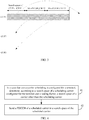
FIG. 1 is a flowchart of a method of determining a search space of a carrier on a terminal side of the present disclosure; -
FIG. 2 is a schematic diagram of an implementation scheme of a method of determining a search space of a carrier of the present disclosure; -
FIG. 3 is a schematic diagram of another implementation scheme of a method of determining a search space of a carrier of the present disclosure; -
FIG. 4 is a flowchart of a method of determining a search space of a carrier on a network device side of the present disclosure; -
FIG. 5 is a schematic architecture diagram of a terminal of the present disclosure; and -
FIG. 6 is a schematic architecture diagram of a network device of the present disclosure. - Exemplary embodiments of the present disclosure are described in more detail with reference to the accompanying drawings hereinafter. Although the drawings show exemplary embodiments of the present disclosure, it should be understood that the present disclosure may be implemented in various forms and should not be limited by the embodiments set forth herein. On the contrary, these embodiments are provided to enable a more thorough understanding of the present disclosure and to fully convey the scope of the present disclosure to those skilled in the art.
- As shown in
FIG. 1 , embodiments of the present disclosure provide a method of determining a search space of a carrier, and the method is applied to a terminal and includes the following step. - Step 11: in a case that cross-carrier scheduling is configured, determining, according to a search space of a scheduling carrier configured by a network device and a scaling factor, a search space of a carrier other than the scheduling carrier.
- The scaling factor is determined based on blind detection capabilities of the terminal on different subcarriers, and/or a proportional relationship between subcarrier spacings of the scheduling carrier and a scheduled carrier.
- The scaling factor K is


- Mcap,scheduled is a blind detection capability of the terminal on the scheduled carrier.
- Mcap,scheduling is a blind detection capability of the terminal on the scheduling carrier.
- ┌ ┐ refers to rounding up, and └ ┘ refers to rounding down.
- The scaling factor K may also be:


- Mcap,scheduled is a blind detection capability of the terminal on the scheduled carrier.
- Mcap,scheduling is a blind detection capability of the terminal on the scheduling carrier.
- SCSscheduled is the subcarrier spacing of the scheduled carrier, and SCSscheduling is the subcarrier spacing of the scheduling carrier; ┌ ┐ refers to rounding up, and └ ┘ refers to rounding down.
- In a specific embodiment of the present disclosure, step 11 further includes the following step.
- Step 111: determining, according to the search space configured by the network device for the scheduling carrier and the scaling factor, a search space of a scheduled carrier.
- Specifically, step 111 includes the following steps.
- Step 1111: determining, according to the quantity of candidate Physical Downlink Control Channels (PDCCH) included in each aggregation level of the scheduling carrier and the scaling factor, the quantity of candidate PDCCHs included in each aggregation level of the search space of the scheduled carrier.
- Step 1112: determining, according to the quantity of candidate PDCCHs included in each aggregation level of the search space of the scheduled carrier, the search space of the scheduled carrier.
- The quantity of candidate PDCCHs included in each aggregation level of the scheduled carrier is determined through ALY, scheduled = ┌ALY, scheduling × K┐ or ALY, scheduled = └ALY, scheduling × K┘.
- ALY, scheduled is the quantity of candidate PDCCHs included in each aggregation level of the scheduled carrier; K is a scaling factor of the scheduling carrier; ┌ ┐ refers to rounding up, and └ ┘ refers to rounding down.
- In a case that ALY, scheduling ≠ 0, a minimum value of ALY, scheduled is 1.
- In a specific embodiment of the present disclosure, the search space of the scheduling carrier is larger than a search space of a scheduled carrier. The subcarrier spacings of the scheduling carrier and the scheduled carrier are not limited, that is, the subcarrier spacing of the scheduling carrier may be larger or smaller than the subcarrier spacing of the scheduled carrier.
- A starting position of the search space of the scheduled carrier in the search space of the scheduling carrier is determined according to a value of a Carrier Indicator Field (CIF). A size of the corresponding search space may be determined according to the scaling factor determined by the above method.
- In a specific embodiment of the present disclosure, the method of determining the search space of the carrier further includes the following step.
- Step 12: monitoring a PDCCH of a scheduled carrier in a search space of the scheduled carrier.
- A specific implementation process of the foregoing embodiments is described below in combination with specific examples.
- Example 1: as shown in
FIG. 2 , it is assumed that a base station configures three carriers:CC# 1,CC# 2, andCC# 3, for a terminal, and the base station schedules theCC# 2 and theCC# 3 on theCC# 1. It is assumed that a subcarrier spacing of the CC1# is 15kHz, a subcarrier spacing of theCC# 2 is 30kHz, and a subcarrier spacing of theCC# 3 is 60kHz. - Correspondingly, a blind detection capability of the terminal on the
CC# 1 is 44 BDs, a blind detection capability of the terminal on theCC# 2 is 36, and a blind detection capability of the terminal on theCC# 3 is 22. - It is assumed that a search space configured by the base station for data transmission on the
CC# 1 includes one PDCCH candidate (candidate PDCCH) with AL=16, two PDCCH candidates with AL=8, four PDCCH candidates with AL=4, four PDCCH candidates with AL=2, six PDCCH candidates with AL=1. That is, SSscheduling = {1 AL16,2AL8,4AL4,4AL2,6AL1}. - When determining search spaces SSscheduled,2 and SSscheduled,3 of the
CC# 2 and theCC# 3, the base station determines, according to a size of the search space configured for the schedulingcarrier CC# 1 and a scaling factor K, sizes of the two search spaces, that is, the included aggregation levels and the quantity of PDCCH candidates included in each aggregation level. - The scaling factor is determined by the following formula.
- For a scaling factor K2 of the
carrier CC# 2,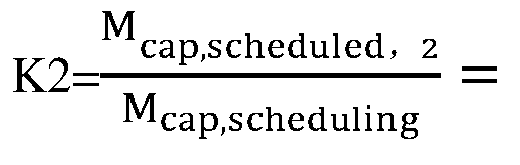

- For a scaling factor K3 of the
carrier CC# 3,

- Correspondingly, a search space SSscheduled,2 corresponding to the
CC# 2 is:

- A search space SSscheduled,3 corresponding to the
CC# 3 is:

- Specific resource positions of the
CC# 2 and theCC# 3 may be determined according to carrier indication notified by higher layer signaling. The terminal monitors, in the determined search spaces, PDCCHs scheduling different carriers. - The scaling factor may be acquired by rounding up or rounding down, which is not limited in the embodiments of the present disclosure.
- Example 2: as shown in
FIG. 3 , it is assumed that a base station configures three carriers:CC# 1,CC# 2, andCC# 3, for a terminal, and the base station schedules theCC# 2 and theCC# 3 on theCC# 1. It is assumed that a subcarrier spacing of the CC1# is 15kHz, a subcarrier spacing of theCC# 2 is 30kHz, and a subcarrier spacing of theCC# 3 is 60kHz. - Correspondingly, a blind detection capability of the terminal on the
CC# 1 is 44 BDs, a blind detection capability of the terminal on theCC# 2 is 36, and a blind detection capability of the terminal on theCC# 3 is 22. - It is assumed that a search space configured by the base station for data transmission on the
CC# 1 includes one PDCCH candidate with AL=16, two PDCCH candidates with AL=8, four PDCCH candidates with AL=4, four PDCCH candidates with AL=2, six PDCCH candidates with AL=1. That is, SSscheduling = {1 AL16, 2AL8, 4AL4, 4AL2, 6AL1}. - When determining search spaces SSscheduled,2 and SSscheduled,3 of the
CC# 2 and theCC# 3 for data scheduling, the base station determines, according to a size of the search space configured for the schedulingcarrier CC# 1 and a scaling factor K, sizes of the two search spaces, that is, the included aggregation levels and the quantity of PDCCH candidates included in each aggregation level. - The scaling factor is determined by the following formula.
- For a scaling factor K2 of the
carrier CC# 2,
- For a scaling factor K3 of the
carrier CC# 3,
- Correspondingly, a search space SSscheduled,2 corresponding to the
CC# 2 is:

- A search space SSscheduled,3 corresponding to the
CC# 3 is:

- Specific resource positions of the
CC# 2 and theCC# 3 may be determined according to carrier indication notified by higher layer signaling. The terminal monitors, in the determined search spaces, PDCCHs scheduling different carriers. - The scaling factor may be acquired by rounding up or rounding down, which is not limited in the embodiments of the present disclosure.
- In the embodiments of the present disclosure, when the quantity of PDCCH candidates included in a certain aggregation level of the search space of the scheduling carrier is not zero and the quantity of PDCCH candidates included in the corresponding aggregation level of a search space corresponding to the scheduled carrier which is calculated based on the scaling factor is zero, in this case, it is considered that the aggregation level of the search space corresponding to the scheduled carrier includes one PDCCH candidate.
- The subcarrier spacings of the scheduling carrier and the scheduled carrier are not limited, that is, the subcarrier spacing of the scheduling carrier may be larger than the subcarrier spacing of the scheduled carrier.
- The base station configures a relatively large search space for the scheduling carrier of the terminal. Further, the base station and the terminal determine a starting position of the search space of the scheduled carrier in the search space of the scheduling carrier according to a value of a CIF, and determine a size of the corresponding search space according to the scaling factor determined in the above method.
- The base station sends a PDCCH of the scheduled carrier in the corresponding search space, and the terminal monitors the PDCCH of the scheduled carrier in the corresponding search space.
- In the embodiments of the present disclosure, a size of the search space of the scheduled carrier is determined according to subcarrier spacings of different carriers and blind detection capabilities of the terminal on different carriers, so as to realize flexible search space configuration without introducing additional signaling overhead.
- As shown in
FIG. 4 , embodiments of the present disclosure further provide a method of determining a search space of a carrier, and the method is applied to a network device and includes the following step. - Step 41: in a case that cross-carrier scheduling is configured for a terminal, determining, according to a search space of a scheduling carrier configured for the terminal and a scaling factor, a search space of a carrier other than the scheduling carrier.
- The scaling factor is determined based on blind detection capabilities of the terminal on different subcarriers, and/or a proportional relationship between subcarrier spacings of the scheduling carrier and a scheduled carrier.
- The scaling factor K is


- Mcap,scheduled is a blind detection capability of the terminal on the scheduled carrier.
- Mcap,scheduling is a blind detection capability of the terminal on the scheduling carrier.
- ┌ ┐ refers to rounding up, and └ ┘ refers to rounding down.
- The scaling factor K is:


- Mcap,scheduled is a blind detection capability of the terminal on the scheduled carrier.
- Mcap,scheduling is a blind detection capability of the terminal on the scheduling carrier.
- SCSscheduled is the subcarrier spacing of the scheduled carrier, and SCSscheduling is the subcarrier spacing of the scheduling carrier; ┌ ┐ refers to rounding up, and └ ┘ refers to rounding down.
- The determining, according to the search space of the scheduling carrier configured for the terminal and the scaling factor, the search space of the carrier other than the scheduling carrier includes: determining, according to the search space of the scheduling carrier configured for the terminal and the scaling factor, a search space of a scheduled carrier.
- The determining, according to the search space of the scheduling carrier configured for the terminal and the scaling factor, the search space of the scheduled carrier includes: determining, according to the quantity of candidate Physical Downlink Control Channels (PDCCH) included in each aggregation level of the scheduling carrier and the scaling factor, the quantity of candidate PDCCHs included in each aggregation level of the search space of the scheduled carrier; and determining, according to the quantity of candidate PDCCHs included in each aggregation level of the search space of the scheduled carrier, the search space of the scheduled carrier.
- The determining, according to the quantity of candidate PDCCHs included in each aggregation level of the scheduling carrier and the scaling factor, the quantity of candidate PDCCHs included in each aggregation level of the scheduled carrier includes: determining the quantity of candidate PDCCHs included in each aggregation level of the scheduled carrier through ALY, scheduled = ┌ALY, scheduling × K┐ or ALY, scheduled = └ALY, scheduling × K┘.
- ALY, scheduled is the quantity of candidate PDCCHs included in each aggregation level of the scheduled carrier; K is a scaling factor of the scheduling carrier; ┌ ┐ refers to rounding up, and └ ┘ refers to rounding down.
- In a case that ALY, scheduling ≠ 0, a minimum value of ALY, scheduled is 1.
- The search space of the scheduling carrier is larger than a search space of a scheduled carrier.
- A starting position of the search space of the scheduled carrier in the search space of the scheduling carrier is determined according to a value of a Carrier Indicator Field (CIF).
- The method of determining the search space of the carrier further includes the following step.
- Step 42: sending a PDCCH of a scheduled carrier in a search space of the scheduled carrier.
- In the embodiments of the present disclosure, when the quantity of PDCCH candidates included in a certain aggregation level of the search space of the scheduling carrier is not zero and the quantity of PDCCH candidates included in the corresponding aggregation level of a search space corresponding to the scheduled carrier which is calculated based on the scaling factor is zero, in this case, it is considered that the aggregation level of the search space corresponding to the scheduled carrier includes one PDCCH candidate.
- The subcarrier spacings of the scheduling carrier and the scheduled carrier are not limited, that is, the subcarrier spacing of the scheduling carrier may be larger than the subcarrier spacing of the scheduled carrier.
- The base station configures a relatively large search space for the scheduling carrier of the terminal. Further, the base station and the terminal determine a starting position of the search space of the scheduled carrier in the search space of the scheduling carrier according to a value of a CIF, and determine a size of the corresponding search space according to the scaling factor determined in the above method.
- The base station sends a PDCCH of the scheduled carrier in the corresponding search space, and the terminal monitors the PDCCH of the scheduled carrier in the corresponding search space.
- It should be noted that, the schemes of the embodiments shown in
FIG. 3 and FIG. 4 are also applicable to this embodiment. In the embodiments of the present disclosure, a size of the search space of the scheduled carrier is determined according to subcarrier spacings of different carriers and blind detection capabilities of the terminal on different carriers, so as to realize flexible search space configuration without introducing additional signaling overhead. - As shown in
FIG. 5 , embodiments of the present disclosure further provide a terminal 50, and the terminal 50 includes: aprocessor 52 configured to, in a case that cross-carrier scheduling is configured, determine, according to a search space of a scheduling carrier configured by a network device and a scaling factor, a search space of a carrier other than the scheduling carrier. - The scaling factor is determined based on blind detection capabilities of the terminal on different subcarriers, and/or a proportional relationship between subcarrier spacings of the scheduling carrier and a scheduled carrier.
- The scaling factor K is


- Mcap,scheduled is a blind detection capability of the terminal on the scheduled carrier.
- Mcap,scheduling is a blind detection capability of the terminal on the scheduling carrier.
- ┌ ┐ refers to rounding up, and └ ┘ refers to rounding down.
- The scaling factor K may also be:


- Mcap,scheduled is a blind detection capability of the terminal on the scheduled carrier.
- Mcap,scheduling is a blind detection capability of the terminal on the scheduling carrier.
- SCSscheduled is the subcarrier spacing of the scheduled carrier, and SCSscheduling is the subcarrier spacing of the scheduling carrier; ┌ ┐ refers to rounding up, and └ ┘ refers to rounding down.
- In a specific embodiment of the present disclosure, the
processor 52 is specifically configured to: determine, according to the search space configured by the network device for the scheduling carrier and the scaling factor, a search space of a scheduled carrier. - Specifically, the quantity of candidate PDCCHs included in each aggregation level of the search space of the scheduled carrier is determined according to the quantity of candidate Physical Downlink Control Channels (PDCCH) included in each aggregation level of the scheduling carrier and the scaling factor.
- The search space of the scheduled carrier is determined according to the quantity of candidate PDCCHs included in each aggregation level of the search space of the scheduled carrier.
- The quantity of candidate PDCCHs included in each aggregation level of the scheduled carrier is determined through ALY, scheduled = ┌ALY, scheduling × K┐ or ALY, scheduled = └ALY, scheduling × K┘.
- ALY, scheduled is the quantity of candidate PDCCHs included in each aggregation level of the scheduled carrier; K is a scaling factor of the scheduling carrier; ┌ ┐ refers to rounding up, and └ ┘ refers to rounding down.
- In a case that ALY, scheduling ≠ 0, a minimum value of ALY, scheduled is 1.
- In a specific embodiment of the present disclosure, the search space of the scheduling carrier is larger than a search space of a scheduled carrier. The subcarrier spacings of the scheduling carrier and the scheduled carrier are not limited, that is, the subcarrier spacing of the scheduling carrier may be larger or smaller than the subcarrier spacing of the scheduled carrier.
- A starting position of the search space of the scheduled carrier in the search space of the scheduling carrier is determined according to a value of a Carrier Indicator Field (CIF). A size of the corresponding search space may be determined according to the scaling factor determined by the above method.
- In a specific embodiment of the present disclosure, the terminal further includes: a
transceiver 51, configured to monitor a PDCCH of a scheduled carrier in a search space of the scheduled carrier. - The embodiment of the terminal is a terminal corresponding to the method shown in
FIG. 1 , all the implementations of the embodiments shown inFIG. 1 to FIG. 3 are applicable to this embodiment, and the same technical effects can be achieved. The terminal may further include amemory 53. Both theprocessor 52 and thememory 53 may communicate with thetransceiver 51 through a bus interface. Functions of theprocessor 52 may be implemented by thetransceiver 51, and functions of thetransceiver 51 may be implemented by theprocessor 52. - Embodiments of the present disclosure further provide an apparatus for determining a search space of a carrier, and the apparatus includes: a processing module configured to, in a case that cross-carrier scheduling is configured, determine, according to a search space of a scheduling carrier configured by a network device and a scaling factor, a search space of a carrier other than the scheduling carrier.
- It should be noted that, the embodiments shown in
FIG. 1 to FIG. 3 are all applicable to this embodiment, and the same technical effects can be achieved. - Embodiments of the present disclosure further provide a terminal, and the terminal includes: a processor configured to perform the following function: in a case that cross-carrier scheduling is configured, determining, according to a search space of a scheduling carrier configured by a network device and a scaling factor, a search space of a carrier other than the scheduling carrier.
- It should be noted that, the embodiments shown in
FIG. 1 to FIG. 3 are all applicable to this embodiment, and the same technical effects can be achieved. - As shown in
FIG. 6 , embodiments of the present disclosure further provide anetwork device 60, and thenetwork device 60 includes: aprocessor 62 configured to, in a case that cross-carrier scheduling is configured for a terminal, determine, according to a search space of a scheduling carrier configured for the terminal and a scaling factor, a search space of a carrier other than the scheduling carrier. - The scaling factor is determined based on blind detection capabilities of the terminal on different subcarriers, and/or a proportional relationship between subcarrier spacings of the scheduling carrier and a scheduled carrier.
- The scaling factor K is


- Mcap,scheduled is a blind detection capability of the terminal on the scheduled carrier.
- Mcap,scheduling is a blind detection capability of the terminal on the scheduling carrier; ┌ ┐ refers to rounding up, and └ ┘ refers to rounding down.
- The scaling factor K is:



- Mcap,scheduled is a blind detection capability of the terminal on the scheduled carrier.
- Mcap,scheduling is a blind detection capability of the terminal on the scheduling carrier.
- SCSscheduled is the subcarrier spacing of the scheduled carrier, and SCSscheduling is the subcarrier spacing of the scheduling carrier; ┌ ┐ refers to rounding up, and └ ┘ refers to rounding down.
- The
processor 62 is specifically configured to: determine, according to the search space of the scheduling carrier configured for the terminal and the scaling factor, a search space of a scheduled carrier. - The determining, according to the search space of the scheduling carrier configured for the terminal and the scaling factor, the search space of the scheduled carrier includes: determining, according to the quantity of candidate Physical Downlink Control Channels (PDCCH) included in each aggregation level of the scheduling carrier and the scaling factor, the quantity of candidate PDCCHs included in each aggregation level of the search space of the scheduled carrier; and determining, according to the quantity of candidate PDCCHs included in each aggregation level of the search space of the scheduled carrier, the search space of the scheduled carrier.
- The determining, according to the quantity of candidate PDCCHs included in each aggregation level of the scheduling carrier and the scaling factor, the quantity of candidate PDCCHs included in each aggregation level of the scheduled carrier includes: determining the quantity of candidate PDCCHs included in each aggregation level of the scheduled carrier through ALY, scheduled = ┌ALY, scheduling × K┐ or ALY, scheduled = ┌ALY, scheduling × K┘.
- ALY, scheduled is the quantity of candidate PDCCHs included in each aggregation level of the scheduled carrier.
- K is a scaling factor of the scheduling carrier.
- ┌ ┐ refers to rounding up, and └ ┘ refers to rounding down.
- When ALY, scheduling ≠ 0, a minimum value of ALY, scheduled is 1.
- The search space of the scheduling carrier is larger than a search space of a scheduled carrier.
- A starting position of the search space of the scheduled carrier in the search space of the scheduling carrier is determined according to a value of a Carrier Indicator Field (CIF).
- The network device may further include: a
transceiver 61, configured to send a PDCCH of a scheduled carrier in a search space of the scheduled carrier. - The network device may further include: a
memory 63, etc. Communication connections of thetransceiver 61 and thememory 63, and of thetransceiver 61 and theprocessor 62 may be implemented through a bus interface. Functions of theprocessor 62 may be implemented by thetransceiver 61, and functions of thetransceiver 61 may be implemented by theprocessor 62. - It should be noted that, the network device may be a base station, etc. All implementations of the methods shown in
FIG. 2 to FIG. 4 are all applicable to this embodiment, and the same technical effects can be achieved. - Embodiments of the present disclosure further provide an apparatus for configuring the quantity of beams, and the apparatus includes: a processing module configured to, in a case that cross-carrier scheduling is configured for a terminal, determine, according to a search space of a scheduling carrier configured for the terminal and a scaling factor, a search space of a carrier other than the scheduling carrier.
- It should be noted that, all implementations of the methods shown in
FIG. 2 to FIG. 4 are all applicable to this embodiment, and the same technical effects can be achieved. - Embodiments of the present disclosure further provide a network device, and the network device includes: a processor configured to perform the following function: in a case that cross-carrier scheduling is configured for a terminal, determining, according to a search space of a scheduling carrier configured for the terminal and a scaling factor, a search space of a carrier other than the scheduling carrier. It should be noted that, all implementations of the methods shown in
FIG. 2 to FIG. 4 are all applicable to this embodiment, and the same technical effects can be achieved. - Embodiments of the present disclosure further provide a computer storage medium including instructions, where the instruction, when being executed on a computer, configure the computer to implement the method described in
FIG. 1 orFIG. 4 . - In the embodiments of the present disclosure, a size of the search space of the scheduled carrier is determined according to subcarrier spacings of different carriers and blind detection capabilities of the terminal on different carriers, so as to realize flexible search space configuration without introducing additional signaling overhead.
- Those skilled in the art will appreciate that the units and the algorithm steps described in conjunction with the embodiments according to the present disclosure may be implemented in the form of electronic hardware or a combination of computer software and electronic hardware. Whether these functions are performed in hardware or in software depends on the specific application and design constraints of the technical solution. Those skilled in the art may use different methods to implement the described functions for each particular application, and such implementations are not to be considered as departing from the scope of the present disclosure.
- Those skilled in the art can clearly understand that, for the sake of easiness and conciseness of description, reference can be made to the corresponding processes in the foregoing method embodiments for specific operating processes of the systems, the devices and the units described above, and a detailed description thereof is not provided herein.
- For the embodiments according to the present disclosure, it should be understood that the disclosed device and method may be implemented in other ways. For example, the described embodiments directed to the device are merely exemplary. For example, the units are divided merely in logical function, which may be divided in another way in actual implementation, e.g., multiple units or components may be combined or integrated into another system, or some features may be ignored or not performed. In addition, the disclosed or discussed mutual coupling or direct coupling or communication connection may be an indirect coupling or communication connection through some interfaces, devices or units, which may be implemented in electronic, mechanical or other forms.
- The units described as separate components may or may not be physically separated, and the components shown as units may or may not be physical units, that is, they may be located in one place or distributed over multiple network units. Some or all of the units may be selected according to practical needs to achieve the object of the technical solutions of the embodiments.
- In addition, functional units in various embodiments of the present disclosure may be integrated into one processing unit, or may be physically independent, or two or more units may be integrated into one unit.
- If the function is implemented in the form of a software functional unit, and sold or used as a standalone product, it may be stored in a computer readable storage medium. Based on this understanding, essence of the technical solution of the present disclosure, or the part contributing to the related technologies, or part of the technical solution, may be embodied in the form of a software product. The computer software product is stored in a storage medium, and the software product includes a number of instructions to enable a computer device (which may be a personal computer, a server, or a network device, etc.) to perform all or part of the steps of method described in the various embodiments of the present disclosure. The storage medium includes a USB flash disk, a mobile hard disk, an ROM, an RAM, a magnetic disk, an optical disk, and other medium which may store program code.
- In addition, it should be noted that in the device and the method of the present disclosure, it is apparent that various components or various steps may be decomposed and/or recombined. The decomposition and/or recombination should be considered as equivalents of the present disclosure. Moreover, the steps of performing the above series of processes may naturally be performed in a chronological order or in an order as illustrated, but not necessarily be required to be performed in a chronological order, and some steps may be performed in parallel or independently of each other. It should be noted that, a person ordinary skilled in the art can understand that all or any steps or components of the method and device in the present disclosure may be implemented with hardware, firmware, software or any combination thereof in any computing device (including a processor and a storage medium and so on) or in a network of computing devices, which can be realized by a person skilled in the art with their basic programming skills on the basis of the present disclosure.
- Therefore, the objects of the present disclosure may be achieved through running a program or a group of programs on any computing device. The computing device may be a well-known common device. Accordingly, the object of the present disclosure may be achieved by merely providing a program product having program codes for implementing the method or device. That is, such a program product is included in the present disclosure, so is a storage medium storing such a program product thereon. Apparently, the storage medium may be any well-known storage medium or any storage medium developed in the future. It should be further pointed out that, in the device and method of the present disclosure, each component or step may be divided or recombined. The dividing and recombining should be regarded as equivalent solutions of the present disclosure. In addition, the steps in the present disclosure may be performed sequentially according to the described order. It is not required that the steps may only be performed sequentially. Some steps may be performed in parallel or independently.
- Optional embodiments of the present disclosure are described in the above. It should be noted that those skilled in the art may make various improvements and modifications without departing from the principles described in the present disclosure, and the various improvements and modifications fall within the protection scope of the present disclosure.
Claims (29)
- A method of determining a search space of a carrier, applied to a terminal, comprising:
in a case that cross-carrier scheduling is configured, determining, according to a search space of a scheduling carrier configured by a network device and a scaling factor, a search space of a carrier other than the scheduling carrier. - The method of determining the search space of the carrier according to claim 1, wherein the scaling factor is determined based on blind detection capabilities of the terminal on different subcarriers, and/or a proportional relationship between subcarrier spacings of the scheduling carrier and a scheduled carrier.
- The method of determining the search space of the carrier according to claim 2, wherein,
the scaling factor K is


Mcap,scheduling is a blind detection capability of the terminal on the scheduling carrier;
┌ ┐ refers to rounding up, and └ ┘ refers to rounding down. - The method of determining the search space of the carrier according to claim 2, wherein,
the scaling factor K is:


Mcap,scheduling is a blind detection capability of the terminal on the scheduling carrier;
SCSscheduled is the subcarrier spacing of the scheduled carrier, and SCSscheduling is the subcarrier spacing of the scheduling carrier;
┌ ┐ refers to rounding up, and └ ┘ refers to rounding down. - The method of determining the search space of the carrier according to claim 1, wherein determining, according to the search space configured by the network device for the scheduling carrier and the scaling factor, the search space of the carrier other than the scheduling carrier comprises:
determining, according to the search space configured by the network device for the scheduling carrier and the scaling factor, a search space of a scheduled carrier. - The method of determining the search space of the carrier according to claim 5, wherein the determining, according to the search space configured by the network device for the scheduling carrier and the scaling factor, the search space of the scheduled carrier comprises:determining, according to the quantity of candidate physical downlink control channels (PDCCH) comprised in each aggregation level of the scheduling carrier and the scaling factor, the quantity of candidate PDCCHs comprised in each aggregation level of the search space of the scheduled carrier; anddetermining, according to the quantity of candidate PDCCHs comprised in each aggregation level of the search space of the scheduled carrier, the search space of the scheduled carrier.
- The method of determining the search space of the carrier according to claim 6, wherein determining, according to the quantity of candidate PDCCHs comprised in each aggregation level of the scheduling carrier and the scaling factor, the quantity of candidate PDCCHs comprised in each aggregation level of the scheduled carrier comprises:determining the quantity of candidate PDCCHs comprised in each aggregation level of the scheduled carrier through ALY, scheduled = ┌ALY, scheduling × K┐ or ALY, scheduled = └ALY, scheduling × K┘;wherein ALY, scheduled is the quantity of candidate PDCCHs comprised in each aggregation level of the scheduled carrier;K is a scaling factor of the scheduling carrier;┌ ┐ refers to rounding up, and └ ┘ refers to rounding down.
- The method of determining the search space of the carrier according to claim 7, wherein,
in a case that ALY, scheduling ≠ 0, a minimum value of ALY, scheduled is 1. - The method of determining the search space of the carrier according to claim 1, wherein the search space of the scheduling carrier is larger than a search space of a scheduled carrier.
- The method of determining the search space of the carrier according to claim 9, wherein a starting position of the search space of the scheduled carrier in the search space of the scheduling carrier is determined according to a value of a carrier indicator field (CIF).
- The method of determining the search space of the carrier according to claim 1, further comprising: monitoring a PDCCH of a scheduled carrier in a search space of the scheduled carrier.
- A method of determining a search space of a carrier, applied to a network device, comprising:
in a case that cross-carrier scheduling is configured for a terminal, determining, according to a search space of a scheduling carrier configured for the terminal and a scaling factor, a search space of a carrier other than the scheduling carrier. - The method of determining the search space of the carrier according to claim 12, wherein the scaling factor is determined based on blind detection capabilities of the terminal on different subcarriers, and/or a proportional relationship between subcarrier spacings of the scheduling carrier and a scheduled carrier.
- The method of determining the search space of the carrier according to claim 13, wherein,
the scaling factor K is


Mcap,scheduling is a blind detection capability of the terminal on the scheduling carrier;
┌ ┐ refers to rounding up, and └ ┘ refers to rounding down. - The method of determining the search space of the carrier according to claim 13, wherein,
the scaling factor K is:


Mcap,scheduling is a blind detection capability of the terminal on the scheduling carrier;
SCSscheduled is the subcarrier spacing of the scheduled carrier, and SCSscheduling is the subcarrier spacing of the scheduling carrier;
┌ ┐ refers to rounding up, and └ ┘ refers to rounding down. - The method of determining the search space of the carrier according to claim 12, wherein the determining, according to the search space of the scheduling carrier configured for the terminal and the scaling factor, the search space of the carrier other than the scheduling carrier comprises:
determining, according to the search space of the scheduling carrier configured for the terminal and the scaling factor, a search space of a scheduled carrier. - The method of determining the search space of the carrier according to claim 16, wherein the determining, according to the search space of the scheduling carrier configured for the terminal and the scaling factor, the search space of the scheduled carrier comprises:determining, according to the quantity of candidate physical downlink control channels (PDCCH) comprised in each aggregation level of the scheduling carrier and the scaling factor, the quantity of candidate PDCCHs comprised in each aggregation level of the search space of the scheduled carrier; anddetermining, according to the quantity of candidate PDCCHs comprised in each aggregation level of the search space of the scheduled carrier, the search space of the scheduled carrier.
- The method of determining the search space of the carrier according to claim 17, wherein the determining, according to the quantity of candidate PDCCHs comprised in each aggregation level of the scheduling carrier and the scaling factor, the quantity of candidate PDCCHs comprised in each aggregation level of the scheduled carrier comprises:determining the quantity of candidate PDCCHs comprised in each aggregation level of the scheduled carrier through ALY, scheduled = ┌ALY, scheduling × K┐ or ALY, scheduled = └ALY, scheduling × K┘;ALY, scheduled is the quantity of candidate PDCCHs comprised in each aggregation level of the scheduled carrier;K is a scaling factor of the scheduling carrier;┌ ┐ refers to rounding up, and └ ┘ refers to rounding down.
- The method of determining the search space of the carrier according to claim 18, wherein,
in a case that ALY, scheduling ≠ 0, a minimum value of ALY, scheduled is 1. - The method of determining the search space of the carrier according to claim 12, wherein the search space of the scheduling carrier is larger than a search space of a scheduled carrier.
- The method of determining the search space of the carrier according to claim 20, wherein a starting position of the search space of the scheduled carrier in the search space of the scheduling carrier is determined according to a value of a carrier indicator field (CIF).
- The method of determining the search space of the carrier according to claim 12, further comprising:
sending a PDCCH of a scheduled carrier in a search space of the scheduled carrier. - A terminal, comprising:
a processor, configured to: in a case that cross-carrier scheduling is configured, determine, according to a search space of a scheduling carrier configured by a network device and a scaling factor, a search space of a carrier other than the scheduling carrier. - An apparatus for determining a search space of a carrier, comprising:
a processing module, configured to: in a case that cross-carrier scheduling is configured, determine, according to a search space of a scheduling carrier configured by a network device and a scaling factor, a search space of a carrier other than the scheduling carrier. - A terminal, comprising a processor configured to perform the following function: in a case that cross-carrier scheduling is configured, determining, according to a search space of a scheduling carrier configured by a network device and a scaling factor, a search space of a carrier other than the scheduling carrier.
- A network device, comprising:
a processor configured to: in a case that cross-carrier scheduling is configured for a terminal, determine, according to a search space of a scheduling carrier configured for the terminal and a scaling factor, a search space of a carrier other than the scheduling carrier. - An apparatus for configuring the quantity of beams, comprising:
a processing module, configured to: in a case that cross-carrier scheduling is configured for a terminal, determine, according to a search space of a scheduling carrier configured for the terminal and a scaling factor, a search space of a carrier other than the scheduling carrier. - A network device, comprising a processor configured to perform the following function: in a case that cross-carrier scheduling is configured for a terminal, determining, according to a search space of a scheduling carrier configured for the terminal and a scaling factor, a search space of a carrier other than the scheduling carrier.
- A computer storage medium, comprising instructions, wherein the instructions, when being executed on a processor, configure the processor to implement the method according to any one of claims 1 to 11 or the method according to any one of claims 12 to 22.
Applications Claiming Priority (2)
| Application Number | Priority Date | Filing Date | Title |
|---|---|---|---|
| CN201811146099.0A CN110972291B (en) | 2018-09-29 | 2018-09-29 | Method for determining search space of carrier, terminal and network equipment |
| PCT/CN2019/106664 WO2020063440A1 (en) | 2018-09-29 | 2019-09-19 | Method for determining carrier wave search space, terminal and network device |
Publications (4)
| Publication Number | Publication Date |
|---|---|
| EP3860261A1 true EP3860261A1 (en) | 2021-08-04 |
| EP3860261A4 EP3860261A4 (en) | 2021-12-08 |
| EP3860261C0 EP3860261C0 (en) | 2025-05-21 |
| EP3860261B1 EP3860261B1 (en) | 2025-05-21 |
Family
ID=69951179
Family Applications (1)
| Application Number | Title | Priority Date | Filing Date |
|---|---|---|---|
| EP19865539.1A Active EP3860261B1 (en) | 2018-09-29 | 2019-09-19 | Method for determining carrier wave search space, terminal and network device |
Country Status (6)
| Country | Link |
|---|---|
| US (1) | US11224066B2 (en) |
| EP (1) | EP3860261B1 (en) |
| JP (1) | JP7232325B2 (en) |
| KR (1) | KR20210063419A (en) |
| CN (1) | CN110972291B (en) |
| WO (1) | WO2020063440A1 (en) |
Families Citing this family (2)
| Publication number | Priority date | Publication date | Assignee | Title |
|---|---|---|---|---|
| CN115189806B (en) * | 2021-04-02 | 2024-08-23 | 大唐移动通信设备有限公司 | Method and related device for detecting physical downlink control channel |
| WO2022217516A1 (en) * | 2021-04-14 | 2022-10-20 | Oppo广东移动通信有限公司 | Method and apparatus for determining detection capability, device, and storage medium |
Family Cites Families (14)
| Publication number | Priority date | Publication date | Assignee | Title |
|---|---|---|---|---|
| CN102056185B (en) * | 2009-10-31 | 2014-12-10 | 华为技术有限公司 | Channel blind detection method, channel assignment method and device |
| JP5499216B2 (en) * | 2010-04-02 | 2014-05-21 | ゼットティーイー コーポレーション | Method and apparatus for detecting downlink control information |
| JP5459096B2 (en) | 2010-06-21 | 2014-04-02 | 富士通株式会社 | Control channel assignment method and base station apparatus for mobile communication system |
| CN102378269B (en) | 2010-08-16 | 2014-07-16 | 电信科学技术研究院 | PDCCH information transmission method and device thereof |
| CN103024919B (en) * | 2012-12-03 | 2016-05-25 | 电信科学技术研究院 | A kind of across carrier dispatching management method and equipment |
| CN103929289B (en) | 2013-01-16 | 2017-04-05 | 上海贝尔股份有限公司 | For determining the method and device of the ECCE search spaces of the EPDCCH of cross-carrier scheduling |
| CN111405665B (en) * | 2013-12-11 | 2023-12-12 | 北京三星通信技术研究有限公司 | Resource allocation method and device for physical downlink control channel |
| EP3128801B1 (en) * | 2015-08-07 | 2019-10-02 | Panasonic Intellectual Property Corporation of America | Self- and cross-carrier scheduling |
| WO2018021370A1 (en) | 2016-07-29 | 2018-02-01 | 株式会社Nttドコモ | User terminal and wireless communication method |
| US20200029307A1 (en) * | 2016-09-21 | 2020-01-23 | Ntt Docomo, Inc. | User terminal and radio communication method |
| JP7248431B2 (en) * | 2016-12-14 | 2023-03-29 | 株式会社Nttドコモ | Terminal, wireless communication method, base station and system |
| EP3637909B1 (en) * | 2017-05-10 | 2022-04-20 | LG Electronics Inc. | Method for transmitting uplink signal in wireless communication system and apparatus therefor |
| CN108377556A (en) | 2018-01-12 | 2018-08-07 | 中国信息通信研究院 | A kind of descending control signaling implementation method based on carrier wave polymerization |
| US11109268B2 (en) * | 2018-02-15 | 2021-08-31 | Qualcomm Incorporated | Size optimized encoding of capability structure for multicarrier systems |
-
2018
- 2018-09-29 CN CN201811146099.0A patent/CN110972291B/en active Active
-
2019
- 2019-09-19 JP JP2021517621A patent/JP7232325B2/en active Active
- 2019-09-19 KR KR1020217012483A patent/KR20210063419A/en not_active Ceased
- 2019-09-19 EP EP19865539.1A patent/EP3860261B1/en active Active
- 2019-09-19 WO PCT/CN2019/106664 patent/WO2020063440A1/en not_active Ceased
- 2019-09-19 US US17/280,867 patent/US11224066B2/en active Active
Also Published As
| Publication number | Publication date |
|---|---|
| US20210314998A1 (en) | 2021-10-07 |
| EP3860261C0 (en) | 2025-05-21 |
| CN110972291B (en) | 2022-07-05 |
| EP3860261A4 (en) | 2021-12-08 |
| WO2020063440A1 (en) | 2020-04-02 |
| CN110972291A (en) | 2020-04-07 |
| JP2022502951A (en) | 2022-01-11 |
| US11224066B2 (en) | 2022-01-11 |
| KR20210063419A (en) | 2021-06-01 |
| EP3860261B1 (en) | 2025-05-21 |
| JP7232325B2 (en) | 2023-03-02 |
Similar Documents
| Publication | Publication Date | Title |
|---|---|---|
| EP2445252A1 (en) | Method and device for mapping control channel | |
| EP3379752A1 (en) | Downlink control information (dci) transmission method and device | |
| US9232506B2 (en) | Communication method and apparatus for carrier aggregation system | |
| JP2022097648A (en) | Methods, terminal devices, and network devices for determining feedback information | |
| US10244513B2 (en) | Method and device for configuring and sending uplink control channel, base station and user equipment | |
| US20180220413A1 (en) | Method and apparatus for sending uplink control information | |
| EP3720031A1 (en) | Data sending method and device, and data receiving method and device | |
| CN110958690B (en) | Method for sending and receiving uplink control information, terminal and network equipment | |
| CN115276918A (en) | Information counting method and device and computer storage medium | |
| CN109921890A (en) | A kind of control channel detection method and user equipment | |
| EP2938145A1 (en) | Method and device for determining epdcch candidate | |
| EP4615090A1 (en) | Communication method and apparatus | |
| US11412536B2 (en) | Method and apparatus of determining downlink control channel resource, user equipment and base station | |
| EP3860261B1 (en) | Method for determining carrier wave search space, terminal and network device | |
| EP3840514A1 (en) | Uci combined transmission method, terminal, and network device | |
| CN116347610A (en) | Control information DCI transmission method and related equipment | |
| CN101938793A (en) | A method and device for PHICH channel allocation | |
| CN107027177A (en) | A kind of transmission of Downlink Control Information, detection method and device | |
| CN101998584A (en) | Control method, device and system of physic downlink control channel | |
| WO2016120726A1 (en) | Method of configuring carrier indication field in downlink control indicator | |
| CN102547996B (en) | Method and device for mapping control channels | |
| EP4432755A1 (en) | Frequency domain resource allocation method and apparatus, and device | |
| CN107707340B (en) | Channel resource determination and resource mapping method and device | |
| US20230421307A1 (en) | Information Feedback Method, Information Sending Method, and Terminal and Network Side Device | |
| US20250293818A1 (en) | Scheduling mechanism for multiple component carriers |
Legal Events
| Date | Code | Title | Description |
|---|---|---|---|
| STAA | Information on the status of an ep patent application or granted ep patent |
Free format text: STATUS: THE INTERNATIONAL PUBLICATION HAS BEEN MADE |
|
| PUAI | Public reference made under article 153(3) epc to a published international application that has entered the european phase |
Free format text: ORIGINAL CODE: 0009012 |
|
| STAA | Information on the status of an ep patent application or granted ep patent |
Free format text: STATUS: REQUEST FOR EXAMINATION WAS MADE |
|
| 17P | Request for examination filed |
Effective date: 20210414 |
|
| AK | Designated contracting states |
Kind code of ref document: A1 Designated state(s): AL AT BE BG CH CY CZ DE DK EE ES FI FR GB GR HR HU IE IS IT LI LT LU LV MC MK MT NL NO PL PT RO RS SE SI SK SM TR |
|
| A4 | Supplementary search report drawn up and despatched |
Effective date: 20211108 |
|
| RIC1 | Information provided on ipc code assigned before grant |
Ipc: H04W 72/04 20090101AFI20211102BHEP |
|
| DAV | Request for validation of the european patent (deleted) | ||
| DAX | Request for extension of the european patent (deleted) | ||
| STAA | Information on the status of an ep patent application or granted ep patent |
Free format text: STATUS: EXAMINATION IS IN PROGRESS |
|
| 17Q | First examination report despatched |
Effective date: 20231113 |
|
| REG | Reference to a national code |
Ref country code: DE Ref legal event code: R079 Free format text: PREVIOUS MAIN CLASS: H04W0072040000 Ipc: H04L0005000000 Ref country code: DE Ref legal event code: R079 Ref document number: 602019070356 Country of ref document: DE Free format text: PREVIOUS MAIN CLASS: H04W0072040000 Ipc: H04L0005000000 |
|
| GRAP | Despatch of communication of intention to grant a patent |
Free format text: ORIGINAL CODE: EPIDOSNIGR1 |
|
| STAA | Information on the status of an ep patent application or granted ep patent |
Free format text: STATUS: GRANT OF PATENT IS INTENDED |
|
| R17C | First examination report despatched (corrected) |
Effective date: 20231113 |
|
| INTG | Intention to grant announced |
Effective date: 20250211 |
|
| RIC1 | Information provided on ipc code assigned before grant |
Ipc: H04L 5/00 20060101AFI20250131BHEP |
|
| GRAS | Grant fee paid |
Free format text: ORIGINAL CODE: EPIDOSNIGR3 |
|
| GRAA | (expected) grant |
Free format text: ORIGINAL CODE: 0009210 |
|
| STAA | Information on the status of an ep patent application or granted ep patent |
Free format text: STATUS: THE PATENT HAS BEEN GRANTED |
|
| AK | Designated contracting states |
Kind code of ref document: B1 Designated state(s): AL AT BE BG CH CY CZ DE DK EE ES FI FR GB GR HR HU IE IS IT LI LT LU LV MC MK MT NL NO PL PT RO RS SE SI SK SM TR |
|
| REG | Reference to a national code |
Ref country code: GB Ref legal event code: FG4D |
|
| REG | Reference to a national code |
Ref country code: CH Ref legal event code: EP |
|
| REG | Reference to a national code |
Ref country code: DE Ref legal event code: R096 Ref document number: 602019070356 Country of ref document: DE |
|
| REG | Reference to a national code |
Ref country code: IE Ref legal event code: FG4D |
|
| U01 | Request for unitary effect filed |
Effective date: 20250616 |
|
| U07 | Unitary effect registered |
Designated state(s): AT BE BG DE DK EE FI FR IT LT LU LV MT NL PT RO SE SI Effective date: 20250626 |
|
| PG25 | Lapsed in a contracting state [announced via postgrant information from national office to epo] |
Ref country code: ES Free format text: LAPSE BECAUSE OF FAILURE TO SUBMIT A TRANSLATION OF THE DESCRIPTION OR TO PAY THE FEE WITHIN THE PRESCRIBED TIME-LIMIT Effective date: 20250521 |
|
| PG25 | Lapsed in a contracting state [announced via postgrant information from national office to epo] |
Ref country code: GR Free format text: LAPSE BECAUSE OF FAILURE TO SUBMIT A TRANSLATION OF THE DESCRIPTION OR TO PAY THE FEE WITHIN THE PRESCRIBED TIME-LIMIT Effective date: 20250822 Ref country code: NO Free format text: LAPSE BECAUSE OF FAILURE TO SUBMIT A TRANSLATION OF THE DESCRIPTION OR TO PAY THE FEE WITHIN THE PRESCRIBED TIME-LIMIT Effective date: 20250821 |
|
| PG25 | Lapsed in a contracting state [announced via postgrant information from national office to epo] |
Ref country code: PL Free format text: LAPSE BECAUSE OF FAILURE TO SUBMIT A TRANSLATION OF THE DESCRIPTION OR TO PAY THE FEE WITHIN THE PRESCRIBED TIME-LIMIT Effective date: 20250521 |
|
| PGFP | Annual fee paid to national office [announced via postgrant information from national office to epo] |
Ref country code: GB Payment date: 20250919 Year of fee payment: 7 |
|
| PG25 | Lapsed in a contracting state [announced via postgrant information from national office to epo] |
Ref country code: HR Free format text: LAPSE BECAUSE OF FAILURE TO SUBMIT A TRANSLATION OF THE DESCRIPTION OR TO PAY THE FEE WITHIN THE PRESCRIBED TIME-LIMIT Effective date: 20250521 |
|
| PG25 | Lapsed in a contracting state [announced via postgrant information from national office to epo] |
Ref country code: RS Free format text: LAPSE BECAUSE OF FAILURE TO SUBMIT A TRANSLATION OF THE DESCRIPTION OR TO PAY THE FEE WITHIN THE PRESCRIBED TIME-LIMIT Effective date: 20250821 |
|
| PG25 | Lapsed in a contracting state [announced via postgrant information from national office to epo] |
Ref country code: IS Free format text: LAPSE BECAUSE OF FAILURE TO SUBMIT A TRANSLATION OF THE DESCRIPTION OR TO PAY THE FEE WITHIN THE PRESCRIBED TIME-LIMIT Effective date: 20250921 |
|
| U20 | Renewal fee for the european patent with unitary effect paid |
Year of fee payment: 7 Effective date: 20250924 |
|
| PG25 | Lapsed in a contracting state [announced via postgrant information from national office to epo] |
Ref country code: SM Free format text: LAPSE BECAUSE OF FAILURE TO SUBMIT A TRANSLATION OF THE DESCRIPTION OR TO PAY THE FEE WITHIN THE PRESCRIBED TIME-LIMIT Effective date: 20250521 |
|
| PG25 | Lapsed in a contracting state [announced via postgrant information from national office to epo] |
Ref country code: CZ Free format text: LAPSE BECAUSE OF FAILURE TO SUBMIT A TRANSLATION OF THE DESCRIPTION OR TO PAY THE FEE WITHIN THE PRESCRIBED TIME-LIMIT Effective date: 20250521 |
|
| PG25 | Lapsed in a contracting state [announced via postgrant information from national office to epo] |
Ref country code: SK Free format text: LAPSE BECAUSE OF FAILURE TO SUBMIT A TRANSLATION OF THE DESCRIPTION OR TO PAY THE FEE WITHIN THE PRESCRIBED TIME-LIMIT Effective date: 20250521 |
|
| PLBE | No opposition filed within time limit |
Free format text: ORIGINAL CODE: 0009261 |
|
| STAA | Information on the status of an ep patent application or granted ep patent |
Free format text: STATUS: NO OPPOSITION FILED WITHIN TIME LIMIT |
|
| REG | Reference to a national code |
Ref country code: CH Ref legal event code: L10 Free format text: ST27 STATUS EVENT CODE: U-0-0-L10-L00 (AS PROVIDED BY THE NATIONAL OFFICE) Effective date: 20260402 |
|
| 26N | No opposition filed |
Effective date: 20260224 |
|
| REG | Reference to a national code |
Ref country code: CH Ref legal event code: H13 Free format text: ST27 STATUS EVENT CODE: U-0-0-H10-H13 (AS PROVIDED BY THE NATIONAL OFFICE) Effective date: 20260504 |