EP3860259A1 - Harq process id determination method and apparatus, terminal, and medium - Google Patents
Harq process id determination method and apparatus, terminal, and medium Download PDFInfo
- Publication number
- EP3860259A1 EP3860259A1 EP19865399.0A EP19865399A EP3860259A1 EP 3860259 A1 EP3860259 A1 EP 3860259A1 EP 19865399 A EP19865399 A EP 19865399A EP 3860259 A1 EP3860259 A1 EP 3860259A1
- Authority
- EP
- European Patent Office
- Prior art keywords
- harq process
- configured grant
- grant configuration
- harq
- determining
- Prior art date
- Legal status (The legal status is an assumption and is not a legal conclusion. Google has not performed a legal analysis and makes no representation as to the accuracy of the status listed.)
- Granted
Links
Images


Classifications
-
- H—ELECTRICITY
- H04—ELECTRIC COMMUNICATION TECHNIQUE
- H04L—TRANSMISSION OF DIGITAL INFORMATION, e.g. TELEGRAPHIC COMMUNICATION
- H04L5/00—Arrangements affording multiple use of the transmission path
- H04L5/003—Arrangements for allocating sub-channels of the transmission path
- H04L5/0053—Allocation of signalling, i.e. of overhead other than pilot signals
- H04L5/0055—Physical resource allocation for ACK/NACK
-
- H—ELECTRICITY
- H04—ELECTRIC COMMUNICATION TECHNIQUE
- H04L—TRANSMISSION OF DIGITAL INFORMATION, e.g. TELEGRAPHIC COMMUNICATION
- H04L1/00—Arrangements for detecting or preventing errors in the information received
- H04L1/12—Arrangements for detecting or preventing errors in the information received by using return channel
- H04L1/16—Arrangements for detecting or preventing errors in the information received by using return channel in which the return channel carries supervisory signals, e.g. repetition request signals
- H04L1/18—Automatic repetition systems, e.g. Van Duuren systems
- H04L1/1812—Hybrid protocols; Hybrid automatic repeat request [HARQ]
- H04L1/1819—Hybrid protocols; Hybrid automatic repeat request [HARQ] with retransmission of additional or different redundancy
-
- H—ELECTRICITY
- H04—ELECTRIC COMMUNICATION TECHNIQUE
- H04L—TRANSMISSION OF DIGITAL INFORMATION, e.g. TELEGRAPHIC COMMUNICATION
- H04L1/00—Arrangements for detecting or preventing errors in the information received
- H04L1/12—Arrangements for detecting or preventing errors in the information received by using return channel
- H04L1/16—Arrangements for detecting or preventing errors in the information received by using return channel in which the return channel carries supervisory signals, e.g. repetition request signals
- H04L1/1607—Details of the supervisory signal
- H04L1/1642—Formats specially adapted for sequence numbers
-
- H—ELECTRICITY
- H04—ELECTRIC COMMUNICATION TECHNIQUE
- H04L—TRANSMISSION OF DIGITAL INFORMATION, e.g. TELEGRAPHIC COMMUNICATION
- H04L1/00—Arrangements for detecting or preventing errors in the information received
- H04L1/12—Arrangements for detecting or preventing errors in the information received by using return channel
- H04L1/16—Arrangements for detecting or preventing errors in the information received by using return channel in which the return channel carries supervisory signals, e.g. repetition request signals
- H04L1/18—Automatic repetition systems, e.g. Van Duuren systems
- H04L1/1812—Hybrid protocols; Hybrid automatic repeat request [HARQ]
-
- H—ELECTRICITY
- H04—ELECTRIC COMMUNICATION TECHNIQUE
- H04L—TRANSMISSION OF DIGITAL INFORMATION, e.g. TELEGRAPHIC COMMUNICATION
- H04L1/00—Arrangements for detecting or preventing errors in the information received
- H04L1/12—Arrangements for detecting or preventing errors in the information received by using return channel
- H04L1/16—Arrangements for detecting or preventing errors in the information received by using return channel in which the return channel carries supervisory signals, e.g. repetition request signals
- H04L1/18—Automatic repetition systems, e.g. Van Duuren systems
- H04L1/1822—Automatic repetition systems, e.g. Van Duuren systems involving configuration of automatic repeat request [ARQ] with parallel processes
-
- H—ELECTRICITY
- H04—ELECTRIC COMMUNICATION TECHNIQUE
- H04L—TRANSMISSION OF DIGITAL INFORMATION, e.g. TELEGRAPHIC COMMUNICATION
- H04L1/00—Arrangements for detecting or preventing errors in the information received
- H04L1/12—Arrangements for detecting or preventing errors in the information received by using return channel
- H04L1/16—Arrangements for detecting or preventing errors in the information received by using return channel in which the return channel carries supervisory signals, e.g. repetition request signals
- H04L1/18—Automatic repetition systems, e.g. Van Duuren systems
- H04L1/1867—Arrangements specially adapted for the transmitter end
- H04L1/1887—Scheduling and prioritising arrangements
-
- H—ELECTRICITY
- H04—ELECTRIC COMMUNICATION TECHNIQUE
- H04W—WIRELESS COMMUNICATION NETWORKS
- H04W72/00—Local resource management
- H04W72/04—Wireless resource allocation
- H04W72/044—Wireless resource allocation based on the type of the allocated resource
- H04W72/0446—Resources in time domain, e.g. slots or frames
-
- H—ELECTRICITY
- H04—ELECTRIC COMMUNICATION TECHNIQUE
- H04L—TRANSMISSION OF DIGITAL INFORMATION, e.g. TELEGRAPHIC COMMUNICATION
- H04L5/00—Arrangements affording multiple use of the transmission path
- H04L5/0001—Arrangements for dividing the transmission path
- H04L5/0003—Two-dimensional division
- H04L5/0005—Time-frequency
- H04L5/0007—Time-frequency the frequencies being orthogonal, e.g. OFDM(A) or DMT
-
- H—ELECTRICITY
- H04—ELECTRIC COMMUNICATION TECHNIQUE
- H04W—WIRELESS COMMUNICATION NETWORKS
- H04W72/00—Local resource management
- H04W72/20—Control channels or signalling for resource management
- H04W72/23—Control channels or signalling for resource management in the downlink direction of a wireless link, i.e. towards a terminal
Definitions
- the present application relates to the field of wireless communication technology, and in particular to a method and apparatus for determining an HARQ process ID, a terminal and a medium.
- the network side can pre-configure some Uplink (UL) resources or Downlink (DL) resources, so that the UE can transmits data in parallel through a plurality of Hybrid Automatic Repeat reQuest (HARQ) processes in accordance with the resource locations configured by the base station, to facilitate some services that require high latency, such as Ultra-Reliable and Low Latency Communications (URLLC) services, or services with relatively regular service formats: such as Voice over Internet Protocol (VoIP) services, etc.
- URLLC Ultra-Reliable and Low Latency Communications
- VoIP Voice over Internet Protocol
- the base station can schedule the UL resources or DL resources by way of configured grant of the resources, where the process of data transmission based on a configured grant configuration is as shown in FIG. 1 , and a schematic diagram of data transmission based on multiple configured grant configurations on the same Band Width Part (BWP) of the same serving cell is as shown in FIG. 2 .
- the current standard proposes the formulas for calculating the HARQ process IDentity (ID) of each HARQ process respectively for DL and UL.
- HARQ process ID floor CURRENT _ slot ⁇ 10 / the number of slots in a ratio frame ⁇ periodicity of configured grant configuration % the number of HARQ processes of configured grant configuration .
- HARQ process ID floor CURRENT _ symbol / periodicity of configured grant configuration % the number of HARQ processes of configured grant configuration .
- a system frame contains 10 slots.
- the number of symbols in a slot represents the number of consecutive symbols in each slot. For example, in a normal cyclic prefix, there are 14 symbols in a slot.
- the slot transmission sequence number in a radio frame represents the sequence number of a radio frame slot in the transmission process, such as the 0 th slot, 1 st slot, etc.
- the symbol sequence number in a slot represents the sequence number of a slot symbol in the transmission process, such as the 0 th symbol, 1 st symbol.
- the SFN represents the System Frame Number (SFN) corresponding to a system frame in the transmission process, and the periodicity of the configured grant configuration is the periodicity in which the configured grant configuration occurs, such as 10 ms, etc.
- the present application provides a method and apparatus for determining an HARQ process ID, a terminal and a medium, so as to solve the problem of collision of HARQ process IDs of HARQ processes corresponding to a plurality of configured grant configurations when performing data transmission based on the plurality of configured grant configurations in the prior art.
- a method for determining an HARQ process ID which includes:
- the HARQ process information configured in the configured grant configuration is HARQ process ID information configured by the configured grant configuration or HARQ process quantity information configured by the configured grant configuration.
- the determining an HARQ process ID of an HARQ process corresponding to the configured grant configuration according to the target parameter includes: when the HARQ process information configured in the configured grant configuration includes one HARQ process ID, determining the HARQ process ID configured by the configured grant configuration as the HARQ process ID of the HARQ process.
- the determining an HARQ process ID of an HARQ process corresponding to the configured grant configuration according to the target parameter further includes: when the HARQ process information configured in the configured grant configuration includes a plurality of HARQ process IDs, determining the HARQ process ID of the HARQ process configuration according to the plurality of HARQ process IDs configured by the configured grant configuration.
- an apparatus for determining an HARQ process ID which includes:
- the HARQ process information configured in the configured grant configuration is HARQ process ID information configured by the configured grant configuration or HARQ process quantity information configured by the configured grant configuration
- the second determining module is specifically configured to: when the HARQ process information configured in the configured grant configuration includes one HARQ process ID, determine the HARQ process ID configured by the configured grant configuration as the HARQ process ID of the HARQ process.
- the second determining module is further specifically configured to: when the HARQ process information configured in the configured grant configuration includes a plurality of HARQ process IDs, determine the HARQ process ID of the HARQ process according to the plurality of HARQ process IDs configured by the configured grant configuration.
- a terminal which includes: a processor and a memory; the processor is configured to read a program in the memory to perform the process of:
- the HARQ process information configured in the configured grant configuration is HARQ process ID information configured by the configured grant configuration or HARQ process quantity information configured by the configured grant configuration
- the processor is specifically configured to: when the HARQ process information configured in the configured grant configuration includes one HARQ process ID, determine the HARQ process ID configured by the configured grant configuration as the HARQ process ID of the HARQ process.
- the processor is further specifically configured to: when the HARQ process information configured in the configured grant configuration includes a plurality of HARQ process IDs, determine the HARQ process ID of each HARQ process from the plurality of HARQ process IDs configured by the configured grant configuration.
- a computer readable storage medium which stores a computer program executable by an electronic device.
- the program runs on the electronic device, the electronic device performs the steps in the above method for determining the HARQ process ID.
- a computer program product When the instructions in the computer program product run on an electronic device, the electronic device can perform the steps in the above method for determining the HARQ process ID.
- the above-mentioned electronic device may be a sending device or a receiving device.
- the present application has the following beneficial effects.
- the present application provides a method and apparatus for determining an HARQ process ID, a terminal and a medium, where the method includes that: a terminal device determines a target parameter, where the target parameter is an index number of a configured grant configuration or a time domain offset from an SFN of 0 configured in a configured grant configuration or HARQ process information configured in a configured grant configuration; and determines an HARQ process ID of each HARQ process corresponding to the configured grant configuration according to the target parameter.
- the HARQ process IDs of HARQ processes corresponding to a plurality of configured grant configurations are different values, thereby solving the problem of collision of HARQ process IDs corresponding to a plurality of configured grant configurations before the HARQ process receives no feedback or the configured grant timer expires.
- the number of slots in a radio frame represents the number of consecutive slots in each system frame, for example, when the subcarrier spacing is 15KHz, a system frame contains 10 slots.
- the number of symbols in a slot represents the number of consecutive symbols in each slot, for example, in a normal cyclic prefix, there are 14 symbols in a slot.
- the slot transmission sequence number in a radio frame represents the sequence number of a radio frame slot in the transmission process, such as the 0 th slot, 1 st slot, etc.
- the symbol sequence number in a slot represents the sequence number of a slot symbol in the transmission process, such as the 0 th symbol, 1 st symbol.
- the SFN represents the system frame number corresponding to a system frame in the transmission process.
- the periodicity of configured grant configuration is the periodicity in which the configured grant configuration occurs, such as 10 ms, etc.
- the current transmission time unit is the first transmission time of the repeated data transmission when the transmission of the current configured grant configuration is repeated transmission, and may be the current slot or current symbol, or may be determined according to the CURRENT_symbol in the formula for determining the HARQ process ID in the prior art.
- the number of HARQ processes of configured grant configuration is the number of HARQ processes reserved in the configured grant configuration, for example, the network side reserves 8 HARQ processes for the configured grant configuration, which can be represented as the number of DL HARQ processes reserved in the configured grant configuration or the number of UL HARQ processes reserved in the configured grant configuration.
- the terminal device includes a device for providing the voice and/or data connectivity to users, for example, may include a handheld device with the wireless connection function, or a processing device connected to a wireless modem.
- the terminal device may communicate with the core network via the Radio Access Network (RAN), and exchange the voice and/or data with the RAN.
- the terminal device may include User Equipment (UE), wireless terminal device, mobile terminal device, subscriber unit, subscriber station, mobile station, mobile, remote station, Access Point (AP), remote terminal, access terminal, user terminal, user agent, or user device, etc.
- UE User Equipment
- AP Access Point
- a mobile phone or called "cellular" phone
- a computer with a mobile terminal device for example, Personal Communication Service (PCS) telephone, cordless telephone, Session Initiation Protocol (SIP) telephone, Wireless Local Loop (WLL) station, Personal Digital Assistant (PDA) and other devices.
- PCS Personal Communication Service
- SIP Session Initiation Protocol
- WLL Wireless Local Loop
- PDA Personal Digital Assistant
- limited devices e.g., device with lower power consumption, device with limited storage capability, or device with limited computing capability or the like, e.g., includes bar code, Radio Frequency Identification (RFID) sensor, Global Positioning System (GPS), laser scanner and other information sensing devices.
- RFID Radio Frequency Identification
- GPS Global Positioning System
- the network device may be a base station, which may be a commonly-used base station, or an evolved Node Base station (eNB), or a network device (for example, next generation node base station (gNB) or Transmission and Reception Point (TRP)) in the 5G system, etc.
- eNB evolved Node Base station
- gNB next generation node base station
- TRP Transmission and Reception Point
- the Media Access Control Packet Data Unit is composed of character strings arranged in bytes.
- the MAC PDU includes the following types of MAC PDUs used for data transmission: MAC PDU in the transparent transmission process, and MAC PDU in the random access response process.
- the MAC PDU used for data transmission is, for example, Downlink Share Channel (DL-SCH) or Uplink Share Channel (UL-SCH).
- DL-SCH Downlink Share Channel
- UL-SCH Uplink Share Channel
- Different types of MAC PDUs have different structures and contain different information.
- the structure of the MAC PDU used for data transmission can include an MAC header, zero or more Media Access Control Service Data Units (MAC SDUs), zero or more Media Access Control Control Units (MAC CEs), and padding information (padding).
- the MAC PDU in the transparent transmission process has no MAC header and only includes the MAC SDU.
- the structure of the MAC PDU in the random access response process may include an MAC header, zero or more MAC SDUs, zero or more Media Access Control Random Access Responses (MAC RARs), and padding.
- Each transport block of the UE can only carry one MAC PDU.
- each terminal device corresponds to one HARQ entity, and one HARQ entity includes a plurality of HARQ processes.
- Each HARQ process corresponds to a unique HARQ process Identification (ID), while each HARQ process saves a New Data Indicator (NDI) that is used to indicate that the scheduled data belongs to new transmission or retransmission.
- ID HARQ process Identification
- NDI New Data Indicator
- configured grant configurations can be divided into Configured Grant Type1 and Configured Grant Type2.
- the Configured Grant Type1 is Radio Resource Control (RRC) configuration resource location, Modulation Coding Scheme (MCS), Resource Block (RB) size, the number of Hybrid Automatic Repeat reQuests (HARQs), periodicity and other content, and takes effect after the RRC configuration without needing the physical layer activation and deactivation processes.
- the Configured Grant Type2 is also the RRC configuration resource location, the number of HARQs and periodicity but does not configure the RB and MCS mode, and requires the physical layer to send the Downlink Control Information (DCI) to activate and deactivate resources.
- DCI Downlink Control Information
- an embodiment of the present application provides a method for determining an HARQ process ID. As shown in FIG. 3 , the method includes the following steps.
- Step S301 determining, by a terminal device, a target parameter.
- the target parameter is an index number of a configured grant configuration or a time domain offset from a system frame number of 0 configured in a configured grant configuration or HARQ process information configured in a configured grant configuration.
- Step S302 determining, by the terminal device, an HARQ process ID of an HARQ process corresponding to the configured grant configuration according to the target parameter.
- the target parameter selected when determining the HARQ process ID is not specifically limited in the embodiments of the present application, that is to say, the target parameter is not merely limited to the three parameters described above, and other parameter related to the configured grant configuration can also be used as the target parameter selected when determining the HARQ process ID.
- the target parameter can be combined with the formula for determining the HARQ process ID in the prior art to jointly determine the HARQ process ID, or the HARQ process ID can be directly determined according to the target parameter.
- the way to determine the HARQ process ID is not specifically limited in the embodiments of the present application.
- the index number of the configured grant configuration, the time domain offset configured in the configured grant configuration or the HARQ process information configured in the configured grant configuration introduced in the process of determining the HARQ process ID of the HARQ process corresponds to a different value, so it can be ensured that the HARQ process IDs of HARQ processes corresponding to a plurality of configured grant configurations are different values regardless of whether the HARQ process ID is determined in combination with the formula for determining the HARQ process ID in the prior art or the HARQ process ID is directly determined according to the target parameter, so as to solve the problem of collision of HARQ process IDs corresponding to a plurality of configured grant configurations before the HARQ process receives no feedback or the configured grant timer expires.
- the index number of configured grant configuration represents the identification number or serial number of the current configured grant configuration.
- the Configured Grant configuration 1 represents the first configured grant configuration
- the Configured Grant configuration 2 represents the second configured grant configuration, and so on.
- the target parameter is the index number of configured grant configuration.
- the index number of configured grant configuration is added in the rounding-down process, and each configured grant configuration has a different index number, so the values obtained by rounding down are also different. Therefore, after the number of HARQ processes of the configured grant configuration is modulo, the obtained HARQ process IDs are also different.
- the squares with different gray levels in the figure represent different resource locations configured. It is assumed that there are 4 configured grant configurations in the UL, which are Configured Grant configuration 0, Configured Grant configuration 1, Configured Grant configuration 2 and Configured Grant configuration 3 respectively; the current transmission time units corresponding to the first HARQ processes in the Configured Grant configuration 0, Configured Grant configuration 1, Configured Grant configuration 2 and Configured Grant configuration 3 are 0, 2, 4 and 6 respectively; and the periodicities of the configured grant configuration are all 20 slots.
- index numbers defined for the Configured Grant configuration 0, Configured Grant configuration 1, Configured Grant configuration 2 and Configured Grant configuration 3 are 0, 1, 2 and 3 respectively, they are substituted into the formula provided in the embodiment of the present application, to calculate the HARQ process IDs corresponding to the Configured Grant configuration 0, Configured Grant configuration 1, Configured Grant configuration 2 and Configured Grant configuration 3 as 0, 1, 2 and 3 respectively.
- the index number defined for each configured grant configuration is not specifically limited.
- HARQ process ID [floor (current transmission time unit/periodicity of configured grant configuration+ index number of configured grant configuration)] % the number of HARQ processes of configured grant configuration, so that the HARQ process IDs of HARQ processes corresponding to a plurality of configured grant configurations are different values, thereby solving the problem of collision of HARQ process IDs corresponding to a plurality of configured grant configurations before the HARQ process receives no feedback or the configured grant timer expires in the prior art.
- the index number of configured grant configuration is also added in the rounding-down process, where each configured grant configuration has a different index number, so the values obtained by rounding down are also different. Therefore, when the number of HARQ processes of the configured grant configuration is modulo, the obtained HARQ process IDs are also different.
- the index numbers defined for the Configured Grant configuration 0, Configured Grant configuration 1, Configured Grant configuration 2 and Configured Grant configuration 3 are 0, 1, 2 and 3 respectively, they are substituted into the formula provided in the embodiment of the present application, to calculate the HARQ process IDs corresponding to the Configured Grant configuration 0, Configured Grant configuration 1, Configured Grant configuration 2 and Configured Grant configuration 3 as 0, 1, 2 and 3 respectively.
- the time domain offset configured in each configured grant configuration is not specifically limited.
- HARQ process ID [floor (current transmission time unit ⁇ 10/ (the number of slots in a radio frame ⁇ periodicity of configured grant configuration) + index number of configured grant configuration)] % the number of HARQ processes of configured grant configuration, so that the HARQ process IDs of HARQ processes corresponding to a plurality of configured grant configurations are different values, thereby solving the problem of collision of HARQ process IDs corresponding to a plurality of configured grant configurations before the HARQ process receives no feedback or the configured grant timer expires in the prior art.
- the current transmission time unit ⁇ 10/ (the number of slots in a radio frame ⁇ periodicity of configured grant configuration) is rounded down, and then added with the index number of configured grant configuration, and then a modulus operation is performed for the number of HARQ processes of configured grant configuration.
- the target parameter is the time domain offset.
- the time domain offset is added in the rounding-down process.
- the time domain offsets configured in configured grant configurations are different, the values obtained by rounding down the current transmission time unit/periodicity of configured grant configuration+ time domain offset are also different. Therefore, when the number of HARQ processes of the configured grant configuration is modulo, the obtained HARQ process IDs are also different.
- the time domain offset of the Configured Grant configuration 0 is 1, the time domain offset of the Configured Grant configuration 1 is 2, the time domain offset of the Configured Grant configuration 2 is 3, and the time domain offset of the Configured Grant configuration 3 is 4, they are substituted into the formula provided in the embodiment of the present application, to calculate the HARQ process IDs corresponding to the Configured Grant configuration 0, Configured Grant configuration 1, Configured Grant configuration 2 and Configured Grant configuration 3 as 0, 1, 2 and 3 respectively.
- the time domain offset configured in each configured grant configuration is not specifically limited.
- HARQ process ID [floor (current transmission time unit/periodicity of configured grant configuration+ time domain offset)] % the number of HARQ processes of configured grant configuration, so that the HARQ process IDs of HARQ processes corresponding to a plurality of configured grant configurations are different values, thereby solving the problem of collision of HARQ process IDs corresponding to a plurality of configured grant configurations before the HARQ process receives no feedback or the configured grant timer expires in the prior art.
- the target parameter is the time domain offset.
- the time domain offset is added in the rounding-down process.
- the values obtained by rounding down the current transmission time unit ⁇ 10/ (the number of slots in a radio frame ⁇ periodicity of configured grant configuration) + time domain offset are also different. Therefore, when the number of HARQ processes of the configured grant configuration is modulo, the obtained HARQ process IDs are also different.
- the time domain offset of the Configured Grant configuration 0 is 1, the time domain offset of the Configured Grant configuration 1 is 2, the time domain offset of the Configured Grant configuration 2 is 3, and the time domain offset of the Configured Grant configuration 3 is 4, they are substituted into the formula provided in the embodiment of the present application, to calculate the HARQ process IDs corresponding to the Configured Grant configuration 0, Configured Grant configuration 1, Configured Grant configuration 2 and Configured Grant configuration 3 as 0, 1, 2 and 3 respectively.
- the time domain offset configured in each configured grant configuration is not specifically limited.
- HARQ process ID [floor (current transmission time unit ⁇ 10/ (the number of slots in a radio frame ⁇ periodicity of configured grant configuration) + time domain offset)] % the number of HARQ processes of configured grant configuration, so that the HARQ process IDs of HARQ processes corresponding to a plurality of configured grant configurations are different values, thereby solving the problem of collision of HARQ process IDs corresponding to a plurality of configured grant configurations before the HARQ process receives no feedback or the configured grant timer expires in the prior art.
- the current transmission time unit ⁇ 10/ (the number of slots in a radio frame ⁇ periodicity of configured grant configuration) is rounded down, and then added with the time domain offset configured in the configured grant configuration, and then a modulus operation is performed for the number of HARQ processes of configured grant configuration.
- the target parameter is the index number of configured grant configuration or the time domain offset
- a formula with the index number of configured grant configuration or the time domain offset as an input parameter as an extension it is also possible to calculate the HARQ process ID based on the above formula or extended formula, which is also within the protection scope of the present application.
- the step of determining the HARQ process ID of the HARQ process corresponding to the configured grant configuration according to the target parameter includes: if the HARQ process information configured in the configured grant configuration includes one HARQ process ID, determining the HARQ process ID configured by the configured grant configuration as the HARQ process ID of each HARQ process.
- the HARQ process ID of the HARQ process is determined according to the plurality of HARQ process IDs configured by the configured grant configuration.
- the UE can arbitrarily select from the plurality of HARQ process IDs. Since each HARQ process ID is a different value, the problem of collision of the HARQ process IDs can also be avoided.
- a different HARQ process ID is configured for each configured grant configuration when performing configured grant configurations at the network side, so that the HARQ process IDs of HARQ processes corresponding to a plurality of configured grant configurations can be different values, thereby solving the problem of collision of HARQ process IDs corresponding to a plurality of configured grant configurations before the HARQ process receives no feedback or the configured grant timer expires in the prior art.
- the HARQ process IDs configured for the Configured Grant configuration 0, Configured Grant configuration 1, Configured Grant configuration 2 and Configured Grant configuration 3 are A, B, C and D respectively, where A, B, C and D respectively represent a set of HARQ process IDs configured for the Configured Grant configuration 0, Configured Grant configuration 1, Configured Grant configuration 2 and Configured Grant configuration 3.
- the HARQ process IDs corresponding to other configured grant configurations can also be calculated.
- the HARQ process ID corresponding to each configured grant configuration can also be calculated according to the number of HARQ processes configured by the network side for each configured grant configuration, and the HARQ process IDs calculated for each configured grant configuration are all different values, so the terminal device can arbitrarily select according to different values obtained by calculation, thereby also solving the problem of collision of HARQ process IDs in the prior art.
- the HARQ process IDs configured for the Configured Grant configuration 0, Configured Grant configuration 1, Configured Grant configuration 2 and Configured Grant configuration 3 are A, B, C and D respectively, where A, B, C and D respectively represent a set of HARQ process IDs configured for the Configured Grant configuration 0, Configured Grant configuration 1, Configured Grant configuration 2 and Configured Grant configuration 3.
- the HARQ process ID corresponding to each configured grant configuration can also be calculated according to the number of HARQ processes configured by the network side for each configured grant configuration, and the HARQ process IDs calculated for each configured grant configuration are all different values, so the terminal device can arbitrarily select according to different values obtained by calculation, thereby also solving the problem of collision of HARQ process IDs in the prior art.
- an apparatus for determining an HARQ process ID is further provided, as shown in FIG. 7 , which includes:
- the HARQ process information configured in the configured grant configuration is HARQ process ID information configured by the configured grant configuration or HARQ process quantity information configured by the configured grant configuration
- the second determining module 702 is specifically configured to: when the HARQ process information configured in the configured grant configuration includes one HARQ process ID, determine the HARQ process ID configured by the configured grant configuration as the HARQ process ID of the HARQ process.
- the second determining module 702 is further specifically configured to: when the HARQ process information configured in the configured grant configuration includes a plurality of HARQ process IDs, determine the HARQ process ID of the HARQ process according to the plurality of HARQ process IDs configured by the configured grant configuration.
- a terminal 800 which includes: a processor 801 and a memory 802.
- the processor 801 is configured to read a program in the memory 802 to perform the process of:
- the HARQ process information configured in the configured grant configuration is HARQ process ID information configured by the configured grant configuration or HARQ process quantity information configured by the configured grant configuration
- the processor 801 is specifically configured to: when the HARQ process information configured in the configured grant configuration includes one HARQ process ID, determine the HARQ process ID configured by the configured grant configuration as the HARQ process ID of the HARQ process.
- the processor 801 is further specifically configured to: when the HARQ process information configured in the configured grant configuration includes a plurality of HARQ process IDs, determine the HARQ process ID of each HARQ process from the plurality of HARQ process IDs configured by the configured grant configuration.
- the bus architecture can include any numbers of interconnected buses and bridges, and specifically link various circuits of one or more processors represented by the processor 801 and the memory represented by the memory 802.
- the bus architecture may further link various other circuits such as peripheral device, voltage regulator and power management circuit, which are all well known in the art and thus will not be further described again herein.
- the processor 801 may be Central Processing Unit (CPU), Application Specific Integrated Circuit (ASIC), Field-Programmable Gate Array (FPGA) or Complex Programmable Logic Device (CPLD).
- CPU Central Processing Unit
- ASIC Application Specific Integrated Circuit
- FPGA Field-Programmable Gate Array
- CPLD Complex Programmable Logic Device
- a computer readable storage medium which stores a computer program executable by an electronic device.
- the program runs on the electronic device, the electronic device performs the steps in the following method:
- the HARQ process information configured in the configured grant configuration is HARQ process ID information configured by the configured grant configuration or HARQ process quantity information configured by the configured grant configuration.
- the determining an HARQ process ID of an HARQ process corresponding to the configured grant configuration according to the target parameter includes: when the HARQ process information configured in the configured grant configuration includes one HARQ process ID, determining the HARQ process ID configured by the configured grant configuration as the HARQ process ID of the HARQ process.
- the determining an HARQ process ID of an HARQ process corresponding to the configured grant configuration according to the target parameter further includes: when the HARQ process information configured in the configured grant configuration includes a plurality of HARQ process IDs, determining the HARQ process ID of the HARQ process according to the plurality of HARQ process IDs configured by the configured grant configuration.
- the above-mentioned computer readable storage medium may be any available media or data storage device accessible to a processor in an electronic device, including but not limited to magnetic memory (e.g., floppy disk, hard disk, magnetic tape, Magnetic Optical disc (MO) or the like), optical memory (e.g., CD, DVD, BD, HVD or the like), semiconductor memory (e.g., ROM, EPROM, EEPROM, nonvolatile memory (NAND FLASH), Solid State Disk (SSD)) or the like.
- magnetic memory e.g., floppy disk, hard disk, magnetic tape, Magnetic Optical disc (MO) or the like
- optical memory e.g., CD, DVD, BD, HVD or the like
- semiconductor memory e.g., ROM, EPROM, EEPROM, nonvolatile memory (NAND FLASH), Solid State Disk (SSD)
- a computer program product When the instructions in the computer program product run on an electronic device, the electronic device can perform the steps in any above method for determining the HARQ process ID.
- the above electronic device may be the terminal 800.
- the embodiments of the present application can provide methods, systems and computer program products.
- the present application can take the form of hardware embodiments alone, software embodiments alone, or embodiments combining the software and hardware aspects.
- the present application can take the form of computer program products implemented on one or more computer usable storage mediums (including but not limited to magnetic disk memories, CD-ROMs, optical memories and the like) containing computer usable program codes therein.
- These computer program instructions can also be stored in a computer readable memory which is capable of guiding the computer or another programmable data processing device to operate in a particular way, so that the instructions stored in the computer readable memory produce a manufacture including the instruction apparatus which implements the functions specified in one or more processes of the flow charts and/or one or more blocks of the block diagrams.
- These computer program instructions can also be loaded onto the computer or another programmable data processing device, so that a series of operation steps are performed on the computer or another programmable device to produce the computer-implemented processing.
- the instructions executed on the computer or another programmable device provide steps for implementing the functions specified in one or more processes of the flow charts and/or one or more blocks of the block diagrams.
Landscapes
- Engineering & Computer Science (AREA)
- Signal Processing (AREA)
- Computer Networks & Wireless Communication (AREA)
- Mobile Radio Communication Systems (AREA)
Abstract
Description
- The present application claims the priority from
Chinese Patent Application No. 201811143471.2, filed on September 28, 2018 - The present application relates to the field of wireless communication technology, and in particular to a method and apparatus for determining an HARQ process ID, a terminal and a medium.
- In the next-generation New Radio (NR) system, the network side can pre-configure some Uplink (UL) resources or Downlink (DL) resources, so that the UE can transmits data in parallel through a plurality of Hybrid Automatic Repeat reQuest (HARQ) processes in accordance with the resource locations configured by the base station, to facilitate some services that require high latency, such as Ultra-Reliable and Low Latency Communications (URLLC) services, or services with relatively regular service formats: such as Voice over Internet Protocol (VoIP) services, etc.
- In the NR system, the base station can schedule the UL resources or DL resources by way of configured grant of the resources, where the process of data transmission based on a configured grant configuration is as shown in
FIG. 1 , and a schematic diagram of data transmission based on multiple configured grant configurations on the same Band Width Part (BWP) of the same serving cell is as shown inFIG. 2 . The current standard proposes the formulas for calculating the HARQ process IDentity (ID) of each HARQ process respectively for DL and UL. - For DL transmission:

- For UL transmission:

- Here, for each HARQ process, the first time to perform data transmission in the current HARQ process of a same group of data packets repeatedly transmitted in the DL is CURRENT_slot = [(SFN × the number of slots in a radio frame) + slot transmission sequence number in a radio frame], and the first time to perform data transmission in the current HARQ process of a same group of data packets repeatedly transmitted in the UL is CURRENT_symbol = (SFN × the number of slots in a radio frame × the number of symbols in a slot + slot transmission sequence number in a radio frame × the number of symbols in a slot + symbol sequence number in a slot), where the number of slots in a radio frame represents the number of consecutive slots in each system frame. For example, when the subcarrier spacing is 15KHz, a system frame contains 10 slots. The number of symbols in a slot represents the number of consecutive symbols in each slot. For example, in a normal cyclic prefix, there are 14 symbols in a slot. The slot transmission sequence number in a radio frame represents the sequence number of a radio frame slot in the transmission process, such as the 0th slot, 1st slot, etc. The symbol sequence number in a slot represents the sequence number of a slot symbol in the transmission process, such as the 0th symbol, 1st symbol. The SFN represents the System Frame Number (SFN) corresponding to a system frame in the transmission process, and the periodicity of the configured grant configuration is the periodicity in which the configured grant configuration occurs, such as 10 ms, etc.
- However, as shown in
FIG. 4 , it is assumed that there are 4 configured grant configurations in the UL, which are ConfiguredGrant configuration 0, ConfiguredGrant configuration 1, ConfiguredGrant configuration 2 and ConfiguredGrant configuration 3 respectively, while the CURRENT_symbols corresponding to the first HARQ processes in the ConfiguredGrant configuration 0, ConfiguredGrant configuration 1, ConfiguredGrant configuration 2 and ConfiguredGrant configuration 3 are 0, 2, 4 and 6 respectively. If the periodicities corresponding to the ConfiguredGrant configuration 0, ConfiguredGrant configuration 1, ConfiguredGrant configuration 2 and ConfiguredGrant configuration 3 are all 20 slots, when the HARQ process ID is calculated by the above formula, there is a need to round down when calculating the floor (CURRENT_symbol/periodicity of configured grant configuration), so the HARQ process IDs of the HARQ processes for the ConfiguredGrant configuration 0, ConfiguredGrant configuration 1, ConfiguredGrant configuration 2 and ConfiguredGrant configuration 3 are 0, 0, 0 and 0 respectively. Therefore, the scenario where the HARQ process IDs of the HARQ processes corresponding to a plurality of configured grant configurations conflict will occur before the HARQ process receives no feedback or the configured grant timer expires. Therefore, how to solve the collision of HARQ process IDs when performing data transmission based on a plurality of configured grant configurations in the prior art is a problem worthy of study. - The present application provides a method and apparatus for determining an HARQ process ID, a terminal and a medium, so as to solve the problem of collision of HARQ process IDs of HARQ processes corresponding to a plurality of configured grant configurations when performing data transmission based on the plurality of configured grant configurations in the prior art.
- In order to overcome the above technical problem, according to one aspect of the present application, a method for determining an HARQ process ID is provided, which includes:
- determining, by a terminal device, a target parameter, where the target parameter is an index number of a configured grant configuration or a time domain offset from an SFN of 0 configured in a configured grant configuration or HARQ process information configured in a configured grant configuration; and
- determining, by the terminal device, an HARQ process ID of an HARQ process corresponding to the configured grant configuration according to the target parameter.
- Optionally, when the HARQ process is UL transmission, the determining an HARQ process ID of an HARQ process corresponding to the configured grant configuration according to the target parameter includes:
calculating and determining the HARQ process ID of the HARQ process according to a formula of:
- Optionally, when the HARQ process is DL transmission, the determining an HARQ process ID of an HARQ process corresponding to the configured grant configuration according to the target parameter includes:
calculating and determining the HARQ process ID of the HARQ process according to a formula of:
- Optionally, when the HARQ process is UL transmission, the determining an HARQ process ID of an HARQ process corresponding to the configured grant configuration according to the target parameter includes:
calculating and determining the HARQ process ID of the HARQ process according to a formula of:
- Optionally, when the HARQ process is DL transmission, the determining an HARQ process ID of an HARQ process corresponding to the configured grant configuration according to the target parameter includes:
calculating and determining the HARQ process ID of the HARQ process according to a formula of:
- Optionally, the HARQ process information configured in the configured grant configuration is HARQ process ID information configured by the configured grant configuration or HARQ process quantity information configured by the configured grant configuration.
- Optionally, the determining an HARQ process ID of an HARQ process corresponding to the configured grant configuration according to the target parameter includes:
when the HARQ process information configured in the configured grant configuration includes one HARQ process ID, determining the HARQ process ID configured by the configured grant configuration as the HARQ process ID of the HARQ process. - Optionally, the determining an HARQ process ID of an HARQ process corresponding to the configured grant configuration according to the target parameter further includes:
when the HARQ process information configured in the configured grant configuration includes a plurality of HARQ process IDs, determining the HARQ process ID of the HARQ process configuration according to the plurality of HARQ process IDs configured by the configured grant configuration. - Optionally, when the HARQ process is UL transmission, the determining an HARQ process ID of an HARQ process corresponding to the configured grant configuration according to the target parameter includes:
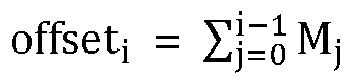
calculating and determining the HARQ process ID of the HARQ process according to a formula of: HARQ process ID = [floor (current transmission time unit/periodicity of configured grant configuration)] % Mi + offset i , where i is an index number of configured grant configuration, Mi is a quantity of HARQ processes configured in an ith configured grant configuration, offset0 = 0 when i = 0,
- Optionally, when the HARQ process is DL transmission, the determining an HARQ process ID of an HARQ process corresponding to the configured grant configuration according to the target parameter includes:
calculating and determining the HARQ process ID of the HARQ process according to a formula of: HARQ process ID = [floor (current transmission time unit × 10/ (a quantity of slots in a radio frame × periodicity of configured grant configuration))] % Mi + offset i , where i is an index number of configured grant configuration, Mi is a quantity of HARQ processes configured in an ith configured grant configuration, offset0 = 0 when i = 0,
- According to another aspect of the embodiments of the present application, an apparatus for determining an HARQ process ID is further provided, which includes:
- a first determining module configured to determine a target parameter, where the target parameter is an index number of a configured grant configuration or a time domain offset from a system frame number of 0 configured in a configured grant configuration or HARQ process information configured in a configured grant configuration; and
- a second determining module configured to determine an HARQ process ID of an HARQ process corresponding to the configured grant configuration according to the target parameter.
- Optionally, the second determining module is specifically configured to: calculate and determine the HARQ process ID of the HARQ process according to a formula of: HARQ process ID = [floor (current transmission time unit/periodicity of configured grant configuration+ index number of configured grant configuration)] % a quantity of HARQ processes of configured grant configuration when the HARQ process is UL transmission.
- Optionally, the second determining module is specifically configured to: calculate and determine the HARQ process ID of the HARQ process according to a formula of: HARQ process ID = [floor (current transmission time unit × 10/ (a quantity of slots in a radio frame × periodicity of configured grant configuration) + index number of configured grant configuration)] % a quantity of HARQ processes of configured grant configuration when the HARQ process is DL transmission.
- Optionally, the second determining module is specifically configured to: calculate and determine the HARQ process ID of the HARQ process according to a formula of: HARQ process ID = [floor (current transmission time unit/periodicity of configured grant configuration+ time domain offset)] % a quantity of HARQ processes of configured grant configuration when the HARQ process is UL transmission.
- Optionally, the second determining module is specifically configured to: calculate and determine the HARQ process ID of the HARQ process according to a formula of: HARQ process ID = [floor (current transmission time unit × 10/ (a quantity of slots in a radio frame × periodicity of configured grant configuration) + time domain offset)] % a quantity of HARQ processes of configured grant configuration when the HARQ process is DL transmission.
- Optionally, the HARQ process information configured in the configured grant configuration is HARQ process ID information configured by the configured grant configuration or HARQ process quantity information configured by the configured grant configuration, and the second determining module is specifically configured to: when the HARQ process information configured in the configured grant configuration includes one HARQ process ID, determine the HARQ process ID configured by the configured grant configuration as the HARQ process ID of the HARQ process.
- Optionally, the second determining module is further specifically configured to: when the HARQ process information configured in the configured grant configuration includes a plurality of HARQ process IDs, determine the HARQ process ID of the HARQ process according to the plurality of HARQ process IDs configured by the configured grant configuration.
- Optionally, the second determining module is specifically configured to: calculate and determine the HARQ process ID of the HARQ process according to a formula of: HARQ process ID = [floor (current transmission time unit/periodicity of configured grant configuration)] % Mi + offset i when the HARQ process is UL transmission, where i is an index number of configured grant configuration, Mi is a quantity of HARQ processes configured in an ith configured grant configuration, offset0 = 0 when i = 0, offset; =

- Optionally, the second determining module is specifically configured to: calculate and determine the HARQ process ID of the HARQ process according to a formula of: HARQ process ID = [floor (current transmission time unit × 10/ (a quantity of slots in a radio frame × periodicity of configured grant configuration))] % Mi + offset i when the HARQ process is DL transmission, where i is an index number of configured grant configuration, Mi is a quantity of HARQ processes configured in an ith configured grant configuration, offset0 = 0 when i = 0,
- According to another aspect of the embodiments of the present application, there is also provided a terminal, which includes: a processor and a memory;
the processor is configured to read a program in the memory to perform the process of: - determining a target parameter, where the target parameter is an index number of a configured grant configuration or a time domain offset from a system frame number of 0 configured in a configured grant configuration or HARQ process information configured in a configured grant configuration; and
- determining an HARQ process ID of an HARQ process corresponding to the configured grant configuration according to the target parameter.
- Optionally, the processor is specifically configured to: calculate and determine the HARQ process ID of the HARQ process according to a formula of: HARQ process ID = [floor (current transmission time unit/periodicity of configured grant configuration+ index number of configured grant configuration)] % a quantity of HARQ processes of configured grant configuration when the HARQ process is UL transmission.
- Optionally, the processor is specifically configured to: calculate and determine the HARQ process ID of the HARQ process according to a formula of: HARQ process ID = [floor (current transmission time unit × 10/ (a quantity of slots in a radio frame × periodicity of configured grant configuration) + index number of configured grant configuration)] % a quantity of HARQ processes of configured grant configuration when the HARQ process is DL transmission.
- Optionally, the processor is specifically configured to: calculate and determine the HARQ process ID of the HARQ process according to a formula of: HARQ process ID = [floor (current transmission time unit × 10/ (a quantity of slots in a radio frame × periodicity of configured grant configuration) + index number of configured grant configuration)] % a quantity of HARQ processes of configured grant configuration when the HARQ process is DL transmission.
- Optionally, the processor is specifically configured to: calculate and determine the HARQ process ID of the HARQ process according to a formula of: HARQ process ID = [floor (current transmission time unit × 10/ (a quantity of slots in a radio frame × periodicity of configured grant configuration) + index number of configured grant configuration)] % a quantity of HARQ processes of configured grant configuration when the HARQ process is DL transmission.
- Optionally, the HARQ process information configured in the configured grant configuration is HARQ process ID information configured by the configured grant configuration or HARQ process quantity information configured by the configured grant configuration, and the processor is specifically configured to: when the HARQ process information configured in the configured grant configuration includes one HARQ process ID, determine the HARQ process ID configured by the configured grant configuration as the HARQ process ID of the HARQ process.
- Optionally, the processor is further specifically configured to: when the HARQ process information configured in the configured grant configuration includes a plurality of HARQ process IDs, determine the HARQ process ID of each HARQ process from the plurality of HARQ process IDs configured by the configured grant configuration.
- Optionally, the processor is specifically configured to: calculate and determine the HARQ process ID of the HARQ process according to a formula of: HARQ process ID = [floor (current transmission time unit/periodicity of configured grant configuration)] % Mi + offset i when the HARQ process is UL transmission, where i is an index number of configured grant configuration, Mi is a quantity of HARQ processes configured in an ith configured grant configuration, offset0 = 0 when i = 0,

- Optionally, the processor is specifically configured to: calculate and determine the HARQ process ID of the HARQ process according to a formula of: HARQ process ID = [floor (current transmission time unit × 10/ (a quantity of slots in a radio frame × periodicity configured grant configuration))] % Mi + offset; when the HARQ process is DL transmission, where i is an index number of configured grant configuration, Mi is a quantity of HARQ processes configured in an ith configured grant configuration, offset0 = 0 when i = 0,

- According to another aspect of the embodiments of the present application, there is also provided a computer readable storage medium, which stores a computer program executable by an electronic device. When the program runs on the electronic device, the electronic device performs the steps in the above method for determining the HARQ process ID.
- According to another aspect of the embodiments of the present application, there is also provided a computer program product. When the instructions in the computer program product run on an electronic device, the electronic device can perform the steps in the above method for determining the HARQ process ID. The above-mentioned electronic device may be a sending device or a receiving device.
- The present application has the following beneficial effects.
- The present application provides a method and apparatus for determining an HARQ process ID, a terminal and a medium, where the method includes that: a terminal device determines a target parameter, where the target parameter is an index number of a configured grant configuration or a time domain offset from an SFN of 0 configured in a configured grant configuration or HARQ process information configured in a configured grant configuration; and determines an HARQ process ID of each HARQ process corresponding to the configured grant configuration according to the target parameter. In the present application, by introducing at least one of the index number of the configured grant configuration, the time domain offset configured in the configured grant configuration and the HARQ process information configured in the configured grant configuration in the process of determining the HARQ process ID of the HARQ process, the HARQ process IDs of HARQ processes corresponding to a plurality of configured grant configurations are different values, thereby solving the problem of collision of HARQ process IDs corresponding to a plurality of configured grant configurations before the HARQ process receives no feedback or the configured grant timer expires.
- In order to illustrate the embodiments of the present application or the technical solutions in the prior art more clearly, the accompanying figures which need to be used in describing the embodiments or the prior art will be introduced below briefly. Obviously the accompanying figures described below are some embodiments of the present application, and other accompanying figures can also be obtained by those ordinary skilled in the art according to these accompanying figures without creative labor.
-
FIG. 1 is a schematic diagram of data transmission based on a configured grant configuration; -
FIG. 2 is a schematic diagram of data transmission based on a plurality of configured grant configurations; -
FIG. 3 is a flowchart of a method for determining an HARQ process ID provided by an embodiment of the present application; -
FIG. 4 is a schematic diagram of determining the HARQ process ID according to the index number of the configured grant configuration provided by an embodiment of the present application; -
FIG. 5 is a schematic diagram of determining the HARQ process ID according to the time domain offset provided by an embodiment of the present application; -
FIG. 6 is a schematic diagram of determining the HARQ process ID according to the configured HARQ process information provided by an embodiment of the present application; -
FIG. 7 is a structural block diagram of an apparatus for determining an HARQ process ID provided by an embodiment of the present application; -
FIG. 8 is a structural block diagram of a terminal provided by an embodiment of the present application. - In order to make the objects, technical solutions and advantages of the present application clearer, the present application will be further illustrated below in details with reference to the accompanying drawings. Obviously, the described embodiments are merely a part of the embodiments of the present application but not all the embodiments. Based upon the embodiments of the present application, all of other embodiments obtained by those ordinary skilled in the art without creative work pertain to the protection scope of the present application.
- The technical solutions in the embodiments of the present application will be described clearly and completely below in combination with the accompanying drawings in the embodiments of the present application. Obviously, the described embodiments are only a part of the embodiments of the present application but not all the embodiments. Based upon the embodiments of the present application, all of other embodiments obtained by those ordinary skilled in the art without creative work pertain to the protection scope of the present application.
- The basic definitions involved in the embodiments of the present application are explained preferentially here, and will not be repeated later. The number of slots in a radio frame represents the number of consecutive slots in each system frame, for example, when the subcarrier spacing is 15KHz, a system frame contains 10 slots. The number of symbols in a slot represents the number of consecutive symbols in each slot, for example, in a normal cyclic prefix, there are 14 symbols in a slot. The slot transmission sequence number in a radio frame represents the sequence number of a radio frame slot in the transmission process, such as the 0th slot, 1st slot, etc. The symbol sequence number in a slot represents the sequence number of a slot symbol in the transmission process, such as the 0th symbol, 1st symbol. The SFN represents the system frame number corresponding to a system frame in the transmission process. The periodicity of configured grant configuration is the periodicity in which the configured grant configuration occurs, such as 10 ms, etc. The current transmission time unit is the first transmission time of the repeated data transmission when the transmission of the current configured grant configuration is repeated transmission, and may be the current slot or current symbol, or may be determined according to the CURRENT_symbol in the formula for determining the HARQ process ID in the prior art. The number of HARQ processes of configured grant configuration is the number of HARQ processes reserved in the configured grant configuration, for example, the
network side reserves 8 HARQ processes for the configured grant configuration, which can be represented as the number of DL HARQ processes reserved in the configured grant configuration or the number of UL HARQ processes reserved in the configured grant configuration. - In the present application, the terminal device includes a device for providing the voice and/or data connectivity to users, for example, may include a handheld device with the wireless connection function, or a processing device connected to a wireless modem. The terminal device may communicate with the core network via the Radio Access Network (RAN), and exchange the voice and/or data with the RAN. The terminal device may include User Equipment (UE), wireless terminal device, mobile terminal device, subscriber unit, subscriber station, mobile station, mobile, remote station, Access Point (AP), remote terminal, access terminal, user terminal, user agent, or user device, etc. For example, it may include a mobile phone (or called "cellular" phone); a computer with a mobile terminal device; a portable, pocket, handheld, computer built-in or vehicle-carried mobile device; a smart wearable device or the like, for example, Personal Communication Service (PCS) telephone, cordless telephone, Session Initiation Protocol (SIP) telephone, Wireless Local Loop (WLL) station, Personal Digital Assistant (PDA) and other devices. It also includes limited devices, e.g., device with lower power consumption, device with limited storage capability, or device with limited computing capability or the like, e.g., includes bar code, Radio Frequency Identification (RFID) sensor, Global Positioning System (GPS), laser scanner and other information sensing devices.
- In the present application, the network device may be a base station, which may be a commonly-used base station, or an evolved Node Base station (eNB), or a network device (for example, next generation node base station (gNB) or Transmission and Reception Point (TRP)) in the 5G system, etc.
- In the present application, the Media Access Control Packet Data Unit (MAC PDU) is composed of character strings arranged in bytes. The MAC PDU includes the following types of MAC PDUs used for data transmission: MAC PDU in the transparent transmission process, and MAC PDU in the random access response process. The MAC PDU used for data transmission is, for example, Downlink Share Channel (DL-SCH) or Uplink Share Channel (UL-SCH). Different types of MAC PDUs have different structures and contain different information. The structure of the MAC PDU used for data transmission can include an MAC header, zero or more Media Access Control Service Data Units (MAC SDUs), zero or more Media Access Control Control Units (MAC CEs), and padding information (padding). The MAC PDU in the transparent transmission process has no MAC header and only includes the MAC SDU. The structure of the MAC PDU in the random access response process may include an MAC header, zero or more MAC SDUs, zero or more Media Access Control Random Access Responses (MAC RARs), and padding. Each transport block of the UE can only carry one MAC PDU.
- In the present application, for the Hybrid Automatic Repeat reQuest (HARQ) entity, each terminal device corresponds to one HARQ entity, and one HARQ entity includes a plurality of HARQ processes. Each HARQ process corresponds to a unique HARQ process Identification (ID), while each HARQ process saves a New Data Indicator (NDI) that is used to indicate that the scheduled data belongs to new transmission or retransmission.
- In the present application, configured grant configurations can be divided into Configured Grant Type1 and Configured Grant Type2. The Configured Grant Type1 is Radio Resource Control (RRC) configuration resource location, Modulation Coding Scheme (MCS), Resource Block (RB) size, the number of Hybrid Automatic Repeat reQuests (HARQs), periodicity and other content, and takes effect after the RRC configuration without needing the physical layer activation and deactivation processes. The Configured Grant Type2 is also the RRC configuration resource location, the number of HARQs and periodicity but does not configure the RB and MCS mode, and requires the physical layer to send the Downlink Control Information (DCI) to activate and deactivate resources.
- When there are a plurality of configured grant configurations and when the HARQ process ID is calculated based on the formula for calculating the HARQ process ID in the prior art, the scenario where the HARQ process IDs of the HARQ processes corresponding to a plurality of configured grant configurations conflict will occur before the HARQ process receives no feedback or the configured grant timer expires. Therefore, in order to overcome this technical problem, an embodiment of the present application provides a method for determining an HARQ process ID. As shown in
FIG. 3 , the method includes the following steps. - Step S301: determining, by a terminal device, a target parameter.
- In the embodiment of the present application, the target parameter is an index number of a configured grant configuration or a time domain offset from a system frame number of 0 configured in a configured grant configuration or HARQ process information configured in a configured grant configuration.
- Step S302: determining, by the terminal device, an HARQ process ID of an HARQ process corresponding to the configured grant configuration according to the target parameter.
- That is to say, in the embodiment of the present application, when determining the HARQ process ID of the HARQ process corresponding to the configured grant configuration, it can be determined according to the index number of the configured grant configuration, or determined according to the time domain offset configured in the configured grant configuration, or determined according to the HARQ process information configured in the configured grant configuration. It should be noted that the target parameter selected when determining the HARQ process ID is not specifically limited in the embodiments of the present application, that is to say, the target parameter is not merely limited to the three parameters described above, and other parameter related to the configured grant configuration can also be used as the target parameter selected when determining the HARQ process ID.
- Here, when the HARQ process ID is determined by the target parameter, the target parameter can be combined with the formula for determining the HARQ process ID in the prior art to jointly determine the HARQ process ID, or the HARQ process ID can be directly determined according to the target parameter. The way to determine the HARQ process ID is not specifically limited in the embodiments of the present application.
- In some embodiments of the present application, the index number of the configured grant configuration, the time domain offset configured in the configured grant configuration or the HARQ process information configured in the configured grant configuration introduced in the process of determining the HARQ process ID of the HARQ process corresponds to a different value, so it can be ensured that the HARQ process IDs of HARQ processes corresponding to a plurality of configured grant configurations are different values regardless of whether the HARQ process ID is determined in combination with the formula for determining the HARQ process ID in the prior art or the HARQ process ID is directly determined according to the target parameter, so as to solve the problem of collision of HARQ process IDs corresponding to a plurality of configured grant configurations before the HARQ process receives no feedback or the configured grant timer expires.
- Optionally, the base station can schedule UL resources or DL resources by way of configured grant of the resources, so in an embodiment of the present application, when the HARQ process is UL transmission, the step of determining the HARQ process ID of the HARQ process corresponding to the configured grant configuration according to the target parameter includes:
calculating the HARQ process ID of the HARQ process according to a formula of: HARQ process ID = [floor (current transmission time unit/periodicity of configured grant configuration+ index number of configured grant configuration)] % the number of HARQ processes of configured grant configuration. - Here, it should be noted that, in the embodiment of the present application, the index number of configured grant configuration represents the identification number or serial number of the current configured grant configuration. For example, the Configured
Grant configuration 1 represents the first configured grant configuration, the ConfiguredGrant configuration 2 represents the second configured grant configuration, and so on. - As can be seen from the above formula, in the embodiment of the present application, the target parameter is the index number of configured grant configuration. Compared with the formula for determining the HARQ process ID in UL transmission in the prior art, the index number of configured grant configuration is added in the rounding-down process, and each configured grant configuration has a different index number, so the values obtained by rounding down are also different. Therefore, after the number of HARQ processes of the configured grant configuration is modulo, the obtained HARQ process IDs are also different.
- Taking four configured grant configurations shown in
FIG. 4 as an example, the squares with different gray levels in the figure represent different resource locations configured. It is assumed that there are 4 configured grant configurations in the UL, which are ConfiguredGrant configuration 0, ConfiguredGrant configuration 1, ConfiguredGrant configuration 2 and ConfiguredGrant configuration 3 respectively; the current transmission time units corresponding to the first HARQ processes in the ConfiguredGrant configuration 0, ConfiguredGrant configuration 1, ConfiguredGrant configuration 2 and ConfiguredGrant configuration 3 are 0, 2, 4 and 6 respectively; and the periodicities of the configured grant configuration are all 20 slots. If the index numbers defined for the ConfiguredGrant configuration 0, ConfiguredGrant configuration 1, ConfiguredGrant configuration 2 and ConfiguredGrant configuration 3 are 0, 1, 2 and 3 respectively, they are substituted into the formula provided in the embodiment of the present application, to calculate the HARQ process IDs corresponding to the ConfiguredGrant configuration 0, ConfiguredGrant configuration 1, ConfiguredGrant configuration 2 and ConfiguredGrant configuration 3 as 0, 1, 2 and 3 respectively. Here, it should be noted that the index number defined for each configured grant configuration is not specifically limited. - Therefore, as can be seen from the above, a different index number is defined for each configured grant configuration when performing configured grant configurations at the network side, and different HARQ process IDs can be calculated and obtained according to the formula of: HARQ process ID = [floor (current transmission time unit/periodicity of configured grant configuration+ index number of configured grant configuration)] % the number of HARQ processes of configured grant configuration, so that the HARQ process IDs of HARQ processes corresponding to a plurality of configured grant configurations are different values, thereby solving the problem of collision of HARQ process IDs corresponding to a plurality of configured grant configurations before the HARQ process receives no feedback or the configured grant timer expires in the prior art.
- Here, it should be noted that, when the target parameter is the index number of configured grant configuration, HARQ process ID = [floor (current transmission time unit/periodicity of configured grant configuration) + index number of configured grant configuration] % the number of HARQ processes of configured grant configuration may be used as the extension of HARQ process ID = [floor (current transmission time unit/periodicity of configured grant configuration+ index number of configured grant configuration)] % the number of HARQ processes of configured grant configuration in UL transmission. That is to say, the current transmission time unit/periodicity of configured grant configuration is rounded down, and then added with the index number of configured grant configuration, and then a modulus operation is performed for the number of HARQ processes of configured grant configuration. In such calculation, the values of the HARQ process IDs obtained by the calculation can also be different. Therefore, the variant formula obtained according to HARQ process ID = [floor (current transmission time unit/periodicity of configured grant configuration+ index number of configured grant configuration)] % the number of HARQ processes of configured grant configuration in the embodiment of the present application is also within the protection scope of the embodiments of the present application.
- On the basis of the foregoing embodiments, in an embodiment of the present application, if the target parameter is an index number of configured grant configuration and the HARQ is DL transmission, the step of determining the HARQ process ID of the HARQ process corresponding to the configured grant configuration according to the target parameter includes:
calculating and determining the HARQ process ID of the HARQ process according to a formula of:
- As can be seen from the above formula, in the embodiment of the present application, compared with the formula for determining the HARQ process ID in DL transmission in the prior art, in the embodiment of the present application, the index number of configured grant configuration is also added in the rounding-down process, where each configured grant configuration has a different index number, so the values obtained by rounding down are also different. Therefore, when the number of HARQ processes of the configured grant configuration is modulo, the obtained HARQ process IDs are also different.
- Still taking 4 configured grant configurations shown in
FIG. 4 as an example, it is assumed that there are 4 configured grant configurations in the DL, which are ConfiguredGrant configuration 0, ConfiguredGrant configuration 1, ConfiguredGrant configuration 2 and ConfiguredGrant configuration 3 respectively, and the current transmission time units corresponding to the first HARQ processes in the ConfiguredGrant configuration 0, ConfiguredGrant configuration 1, ConfiguredGrant configuration 2 and ConfiguredGrant configuration 3 are 0, 2, 4 and 6 respectively. If the index numbers defined for the ConfiguredGrant configuration 0, ConfiguredGrant configuration 1, ConfiguredGrant configuration 2 and ConfiguredGrant configuration 3 are 0, 1, 2 and 3 respectively, they are substituted into the formula provided in the embodiment of the present application, to calculate the HARQ process IDs corresponding to the ConfiguredGrant configuration 0, ConfiguredGrant configuration 1, ConfiguredGrant configuration 2 and ConfiguredGrant configuration 3 as 0, 1, 2 and 3 respectively. Here, it should be noted that the time domain offset configured in each configured grant configuration is not specifically limited. - Therefore, as can be seen from the above, a different index number is defined for each configured grant configuration when performing configured grant configurations at the network side, and different HARQ process IDs can be calculated and obtained according to the formula of: HARQ process ID = [floor (current transmission time unit × 10/ (the number of slots in a radio frame × periodicity of configured grant configuration) + index number of configured grant configuration)] % the number of HARQ processes of configured grant configuration, so that the HARQ process IDs of HARQ processes corresponding to a plurality of configured grant configurations are different values, thereby solving the problem of collision of HARQ process IDs corresponding to a plurality of configured grant configurations before the HARQ process receives no feedback or the configured grant timer expires in the prior art.
- Here, it should be noted that, when the target parameter is the index number of configured grant configuration, HARQ process ID = [floor (current transmission time unit × 10/ (the number of slots in a radio frame × periodicity of configured grant configuration)) + index number of configured grant configuration] % the number of HARQ processes of configured grant configuration may be used as the extension of HARQ process ID = [floor (current transmission time unit × 10/ (the number of slots in a radio frame × periodicity of configured grant configuration) + index number of configured grant configuration)] % the number of HARQ processes of configured grant configuration in DL transmission. That is to say, the current transmission time unit × 10/ (the number of slots in a radio frame × periodicity of configured grant configuration) is rounded down, and then added with the index number of configured grant configuration, and then a modulus operation is performed for the number of HARQ processes of configured grant configuration. In such calculation, the values of the HARQ process IDs obtained by the calculation can also be different. Therefore, the variant formula obtained according to HARQ process ID = [floor (current transmission time unit × 10/ (the number of slots in a radio frame × periodicity of configured grant configuration) + index number of configured grant configuration)] % the number of HARQ processes of configured grant configuration in the embodiment of the present application is also within the protection scope of the embodiments of the present application.
- On the basis of the foregoing embodiments, in an embodiment of the present application, if the HARQ process is UL transmission, the step of determining the HARQ process ID of the HARQ process corresponding to the configured grant configuration according to the target parameter includes:
calculating and determining the HARQ process ID of the HARQ process according to a formula of:
- As can be seen from the above formula, in the embodiment of the present application, the target parameter is the time domain offset. Compared with the formula for determining the HARQ process ID in UL transmission in the prior art, the time domain offset is added in the rounding-down process. When the time domain offsets configured in configured grant configurations are different, the values obtained by rounding down the current transmission time unit/periodicity of configured grant configuration+ time domain offset are also different. Therefore, when the number of HARQ processes of the configured grant configuration is modulo, the obtained HARQ process IDs are also different.
- Taking 4 configured grant configurations shown in
FIG. 5 as an example, it is assumed that there are 4 configured grant configurations in the UL, which are ConfiguredGrant configuration 0, ConfiguredGrant configuration 1, ConfiguredGrant configuration 2 and ConfiguredGrant configuration 3 respectively, and the current transmission time units corresponding to the first HARQ processes in the ConfiguredGrant configuration 0, ConfiguredGrant configuration 1, ConfiguredGrant configuration 2 and ConfiguredGrant configuration 3 are 0, 2, 4 and 6 respectively. If the time domain offset of the ConfiguredGrant configuration 0 is 1, the time domain offset of the ConfiguredGrant configuration 1 is 2, the time domain offset of the ConfiguredGrant configuration 2 is 3, and the time domain offset of the ConfiguredGrant configuration 3 is 4, they are substituted into the formula provided in the embodiment of the present application, to calculate the HARQ process IDs corresponding to the ConfiguredGrant configuration 0, ConfiguredGrant configuration 1, ConfiguredGrant configuration 2 and ConfiguredGrant configuration 3 as 0, 1, 2 and 3 respectively. Here, it should be noted that the time domain offset configured in each configured grant configuration is not specifically limited. - Therefore, as can be seen from the above, if a different time domain offset is configured in each configured grant configuration when performing configured grant configurations at the network side, different HARQ process IDs can be calculated and obtained according to the formula of: HARQ process ID = [floor (current transmission time unit/periodicity of configured grant configuration+ time domain offset)] % the number of HARQ processes of configured grant configuration, so that the HARQ process IDs of HARQ processes corresponding to a plurality of configured grant configurations are different values, thereby solving the problem of collision of HARQ process IDs corresponding to a plurality of configured grant configurations before the HARQ process receives no feedback or the configured grant timer expires in the prior art.
- Here, it should be noted that, when the target parameter is the time domain offset configured in the configured grant configuration, HARQ process ID = [floor (current transmission time unit/periodicity of configured grant configuration) + time domain offset] % the number of HARQ processes of configured grant configuration may be used as the extension of HARQ process ID = [floor (current transmission time unit/periodicity of configured grant configuration+ time domain offset)] % the number of HARQ processes of configured grant configuration in UL transmission. That is to say, the current transmission time unit/periodicity of configured grant configuration is rounded down, and then added with the time domain offset configured in the configured grant configuration, and then a modulus operation is performed for the number of HARQ processes of configured grant configuration. In such calculation, the values of the HARQ process IDs obtained by the calculation can also be different. Therefore, the variant formula obtained according to HARQ process ID = [floor (current transmission time unit/periodicity of configured grant configuration+ time domain offset)] % the number of HARQ processes of configured grant configuration in the embodiment of the present application is also within the protection scope of the embodiments of the present application.
- On the basis of the foregoing embodiments, in an embodiment of the present application, if the HARQ process is DL transmission, the step of determining the HARQ process ID of the HARQ process corresponding to the configured grant configuration according to the target parameter includes:
calculating and determining the HARQ process ID of the HARQ process according to a formula of:
- As can be seen from the above formula, in the embodiment of the present application, the target parameter is the time domain offset. Compared with the formula for determining the HARQ process ID in UL transmission in the prior art, the time domain offset is added in the rounding-down process. When the time domain offsets configured in configured grant configurations are different, the values obtained by rounding down the current transmission time unit × 10/ (the number of slots in a radio frame × periodicity of configured grant configuration) + time domain offset are also different. Therefore, when the number of HARQ processes of the configured grant configuration is modulo, the obtained HARQ process IDs are also different.
- Still taking 4 configured grant configurations shown in
FIG. 5 as an example, it is assumed that there are 4 configured grant configurations in the DL, which are ConfiguredGrant configuration 0, ConfiguredGrant configuration 1, ConfiguredGrant configuration 2 and ConfiguredGrant configuration 3 respectively, and the current transmission time units corresponding to the first HARQ processes in the ConfiguredGrant configuration 0, ConfiguredGrant configuration 1, ConfiguredGrant configuration 2 and ConfiguredGrant configuration 3 are 0, 2, 4 and 6 respectively. If the time domain offset of the ConfiguredGrant configuration 0 is 1, the time domain offset of the ConfiguredGrant configuration 1 is 2, the time domain offset of the ConfiguredGrant configuration 2 is 3, and the time domain offset of the ConfiguredGrant configuration 3 is 4, they are substituted into the formula provided in the embodiment of the present application, to calculate the HARQ process IDs corresponding to the ConfiguredGrant configuration 0, ConfiguredGrant configuration 1, ConfiguredGrant configuration 2 and ConfiguredGrant configuration 3 as 0, 1, 2 and 3 respectively. Here, it should be noted that the time domain offset configured in each configured grant configuration is not specifically limited. - Therefore, as can be seen from the above, if a different time domain offset is configured in each configured grant configuration when performing configured grant configurations at the network side, different HARQ process IDs can be calculated and obtained according to the formula of: HARQ process ID = [floor (current transmission time unit × 10/ (the number of slots in a radio frame × periodicity of configured grant configuration) + time domain offset)] % the number of HARQ processes of configured grant configuration, so that the HARQ process IDs of HARQ processes corresponding to a plurality of configured grant configurations are different values, thereby solving the problem of collision of HARQ process IDs corresponding to a plurality of configured grant configurations before the HARQ process receives no feedback or the configured grant timer expires in the prior art.
- Here, it should be noted that, when the target parameter is the time domain offset configured in the configured grant, HARQ process ID = [floor (current transmission time unit × 10/ (the number of slots in a radio frame × periodicity of configured grant configuration)) + time domain offset] % the number of HARQ processes of configured grant configuration may be used as the extension of HARQ process ID = [floor (current transmission time unit × 10/ (the number of slots in a radio frame × periodicity of configured grant configuration) + time domain offset)] % the number of HARQ processes of configured grant configuration in DL transmission. That is to say, the current transmission time unit × 10/ (the number of slots in a radio frame × periodicity of configured grant configuration) is rounded down, and then added with the time domain offset configured in the configured grant configuration, and then a modulus operation is performed for the number of HARQ processes of configured grant configuration. In such calculation, the values of the HARQ process IDs obtained by the calculation can also be different. Therefore, the variant formula obtained according to HARQ process ID = [floor (current transmission time unit × 10/ (the number of slots in a radio frame × periodicity of configured grant configuration) + time domain offset)] % the number of HARQ processes of configured grant configuration in the embodiment of the present application is also within the protection scope of the embodiments of the present application.
- Here, it should be noted that, when the target parameter is the index number of configured grant configuration or the time domain offset, if a formula with the index number of configured grant configuration or the time domain offset as an input parameter as an extension, it is also possible to calculate the HARQ process ID based on the above formula or extended formula, which is also within the protection scope of the present application.
- Since the HARQ process information configured in the configured grant configuration may be the HARQ process ID information configured by the configured grant configuration, on the basis of the foregoing embodiments, in an embodiment of the present application, the step of determining the HARQ process ID of the HARQ process corresponding to the configured grant configuration according to the target parameter includes:
if the HARQ process information configured in the configured grant configuration includes one HARQ process ID, determining the HARQ process ID configured by the configured grant configuration as the HARQ process ID of each HARQ process. - That is to say, for a certain configured grant configuration, if the HARQ process ID of this configured grant configuration has been configured at the network side and this HARQ process ID is a numerical value, then the HARQ process IDs in this configured grant configuration are all this numerical value.
- Taking 4 configured grant configurations shown in
FIG. 6 as an example, it is assumed that the HARQ process IDs configured for the ConfiguredGrant configuration 0, ConfiguredGrant configuration 1, ConfiguredGrant configuration 2 and ConfiguredGrant configuration 3 are A, B, C and D respectively, then the HARQ process IDs of the HARQ processes in each periodicity of the ConfiguredGrant configuration 0 are all A, the HARQ process IDs of the HARQ processes in each periodicity of the ConfiguredGrant configuration 0 are all B, the HARQ process IDs of the HARQ processes in each periodicity of the ConfiguredGrant configuration 0 are all C, and the HARQ process IDs of the HARQ processes in each periodicity of the ConfiguredGrant configuration 0 are all D. Since A, B, C and D are different values, there will be no case of repeated HARQ process IDs for each periodicity of the configured grant configuration. Thus, the problem of collision of the HARQ process IDs in the prior art can be solved. - Here, if the HARQ process information configured in the configured grant configuration includes a plurality of HARQ process IDs, the HARQ process ID of the HARQ process is determined according to the plurality of HARQ process IDs configured by the configured grant configuration.
- Specifically, when a plurality of HARQ process IDs of the configured grant configuration are configured at the network side, the UE can arbitrarily select from the plurality of HARQ process IDs. Since each HARQ process ID is a different value, the problem of collision of the HARQ process IDs can also be avoided.
- Therefore, as can be seen from the above, a different HARQ process ID is configured for each configured grant configuration when performing configured grant configurations at the network side, so that the HARQ process IDs of HARQ processes corresponding to a plurality of configured grant configurations can be different values, thereby solving the problem of collision of HARQ process IDs corresponding to a plurality of configured grant configurations before the HARQ process receives no feedback or the configured grant timer expires in the prior art.
- Since the HARQ process information configured in the configured grant configuration may also be the HARQ process quantity information configured by the configured grant configuration, on the basis of the foregoing embodiments, in an embodiment of the present application, the step of determining the HARQ process ID of the HARQ process corresponding to the configured grant configuration according to the target parameter includes:
calculating and determining the HARQ process ID of the HARQ process according to a formula of: HARQ process ID = [floor (current transmission time unit/periodicity of configured grant configuration)] % Mi + offset i , where i is the index number of configured grant configuration, Mi is the number of HARQ processes configured in the ith configured grant configuration, offset0 = 0 when i = 0,
- Still taking 4 configured grant configurations shown in
FIG. 6 as an example, it is assumed that the HARQ process IDs configured for the ConfiguredGrant configuration 0, ConfiguredGrant configuration 1, ConfiguredGrant configuration 2 and ConfiguredGrant configuration 3 are A, B, C and D respectively, where A, B, C and D respectively represent a set of HARQ process IDs configured for the ConfiguredGrant configuration 0, ConfiguredGrant configuration 1, ConfiguredGrant configuration 2 and ConfiguredGrant configuration 3. It is assumed that the number of HARQ processes configured on the ConfiguredGrant configuration 0 is 2, i.e., M0 = 2; the number of HARQ process IDs configured on the ConfiguredGrant configuration 1 is 3; the number of HARQ process IDs configured on theconfiguration 2 is 2; and the number of HARQ process IDs configured on the ConfiguredGrant configuration 3 is 2. When selecting from a plurality of HARQ process IDs configured for the ConfiguredGrant configuration 0 through the formula, it is assumed that the index number of the ConfiguredGrant configuration 0 is 0, and the CURRENT_symbol corresponding to the first HARQ process of the ConfiguredGrant configuration 0 is 0, that is, the current transmission time unit is 0, and the periodicity of the configured grant configuration is 20 slots, then offset0 = 0, and the value range of the HARQ process ID of the ConfiguredGrant configuration 0 is 0, 1 according to the formula; for the ConfiguredGrant configuration 1, the configuration index number is 1, offset1 = 2, then the value range of the HARQ process ID is 2, 3, 4; and so on, the value range of the HARQ process ID on the ConfiguredGrant configuration 3 is 5, 6; the value range of the HARQ process ID on the ConfiguredGrant configuration 3 is 7, 8. According to the above formula, the HARQ process IDs corresponding to other configured grant configurations can also be calculated. - As can be seen from the above, the HARQ process ID corresponding to each configured grant configuration can also be calculated according to the number of HARQ processes configured by the network side for each configured grant configuration, and the HARQ process IDs calculated for each configured grant configuration are all different values, so the terminal device can arbitrarily select according to different values obtained by calculation, thereby also solving the problem of collision of HARQ process IDs in the prior art.
- On the basis of the foregoing embodiments, in an embodiment of the present application, if the HARQ process is DL transmission, the step of determining the HARQ process ID of the HARQ process according to the plurality of HARQ process IDs configured by the configured grant configuration includes:
calculating and determining the HARQ process ID of the HARQ process according to a formula of: HARQ process ID = [floor (current transmission time unit × 10/ (the number of slots in a radio frame × periodicity of configured grant configuration))] % Mi + offset i , where i is the index number of configured grant configuration, Mi is the number of HARQ processes configured in the ith configured grant configuration, offset0 = 0 when i = 0,
- Still taking 4 configured grant configurations shown in
FIG. 6 as an example, it is assumed that the HARQ process IDs configured for the ConfiguredGrant configuration 0, ConfiguredGrant configuration 1, ConfiguredGrant configuration 2 and ConfiguredGrant configuration 3 are A, B, C and D respectively, where A, B, C and D respectively represent a set of HARQ process IDs configured for the ConfiguredGrant configuration 0, ConfiguredGrant configuration 1, ConfiguredGrant configuration 2 and ConfiguredGrant configuration 3. It is assumed that the number of HARQ processes configured on the ConfiguredGrant configuration 0 is 2, i.e., M0 = 2; the number of HARQ process IDs configured on the ConfiguredGrant configuration 1 is 3; the number of HARQ process IDs configured on theconfiguration 2 is 2; and the number of HARQ process IDs configured on the ConfiguredGrant configuration 3 is 2. When selecting from a plurality of HARQ process IDs configured for the ConfiguredGrant configuration 0 through the formula, it is assumed that the index number of the ConfiguredGrant configuration 0 is 0, and the CURRENT_symbol corresponding to the first HARQ process of the ConfiguredGrant configuration 0 is 0, that is, the current transmission time unit is 0, and the periodicity of the configured grant configuration is 20 slots, then offset0 = 0, and the value range of the HARQ process ID of the ConfiguredGrant configuration 0 is 0, 1 according to the formula; for the ConfiguredGrant configuration 1, the configuration index number is 1, offset1 = 2, then the value range of the HARQ process ID is 2, 3, 4; and so on, the value range of the HARQ process ID on the ConfiguredGrant configuration 2 is 5, 6; the value range of the HARQ process ID on the ConfiguredGrant configuration 3 is 7, 8. - As can be seen from the above, the HARQ process ID corresponding to each configured grant configuration can also be calculated according to the number of HARQ processes configured by the network side for each configured grant configuration, and the HARQ process IDs calculated for each configured grant configuration are all different values, so the terminal device can arbitrarily select according to different values obtained by calculation, thereby also solving the problem of collision of HARQ process IDs in the prior art.
- According to another aspect of the embodiments of the present application, an apparatus for determining an HARQ process ID is further provided, as shown in
FIG. 7 , which includes: - a first determining
module 701 configured to determine a target parameter, where the target parameter is an index number of a configured grant configuration or a time domain offset from a system frame number of 0 configured in a configured grant configuration or HARQ process information configured in a configured grant configuration; and - a second determining
module 702 configured to determine an HARQ process ID of an HARQ process corresponding to the configured grant configuration according to the target parameter. - Optionally, the second determining
module 702 is specifically configured to: calculate and determine the HARQ process ID of the HARQ process according to a formula of: HARQ process ID = [floor (current transmission time unit/periodicity of configured grant configuration + index number of configured grant configuration)] % the number of HARQ processes of configured grant configuration when the HARQ process is UL transmission. - Optionally, the second determining
module 702 is specifically configured to: calculate and determine the HARQ process ID of the HARQ process according to a formula of: HARQ process ID = [floor (current transmission time unit × 10/ (the number of slots in a radio frame × periodicity of configured grant configuration) + index number of configured grant configuration)] % the number of HARQ processes of configured grant configuration when the HARQ process is DL transmission. - Optionally, the second determining
module 702 is specifically configured to: calculate and determine the HARQ process ID of the HARQ process according to a formula of: HARQ process ID = [floor (current transmission time unit/periodicity of configured grant configuration + time domain offset)] % the number of HARQ processes of configured grant configuration when the HARQ process is UL transmission. - Optionally, the second determining
module 702 is specifically configured to: calculate and determine the HARQ process ID of the HARQ process according to a formula of: HARQ process ID = [floor (current transmission time unit × 10/ (the number of slots in a radio frame × periodicity of configured grant configuration) + time domain offset)] % the number of HARQ processes of configured grant configuration when the HARQ process is DL transmission. - Optionally, the HARQ process information configured in the configured grant configuration is HARQ process ID information configured by the configured grant configuration or HARQ process quantity information configured by the configured grant configuration, and the second determining
module 702 is specifically configured to: when the HARQ process information configured in the configured grant configuration includes one HARQ process ID, determine the HARQ process ID configured by the configured grant configuration as the HARQ process ID of the HARQ process. - Optionally, the second determining
module 702 is further specifically configured to: when the HARQ process information configured in the configured grant configuration includes a plurality of HARQ process IDs, determine the HARQ process ID of the HARQ process according to the plurality of HARQ process IDs configured by the configured grant configuration. - Optionally, the second determining
module 702 is specifically configured to: calculate and determine the HARQ process ID of the HARQ process according to a formula of: HARQ process ID = [floor (current transmission time unit/periodicity of configured grant configuration)] % Mi + offset i when the HARQ process is UL transmission, where i is the index number of configured grant configuration, Mi is the number of HARQ processes configured in the ith configured grant configuration, offset0 = 0 when i = 0,
- Optionally, the second determining
module 702 is specifically configured to: calculate and determine the HARQ process ID of the HARQ process according to a formula of: HARQ process ID = [floor (current transmission time unit × 10/ (the number of slots in a radio frame × periodicity of configured grant configuration))] % Mi + offset i when the HARQ process is DL transmission, where i is the index number of configured grant configuration, Mi is the number of HARQ processes configured in the ith configured grant configuration, offset0 = 0 when i = 0,
- According to another aspect of the embodiments of the present application, there is also provided a terminal 800, as shown in
FIG. 8 , which includes: aprocessor 801 and amemory 802. - The
processor 801 is configured to read a program in thememory 802 to perform the process of: - determining a target parameter, where the target parameter is an index number of a configured grant configuration or a time domain offset from a system frame number of 0 configured in a configured grant configuration or HARQ process information configured in a configured grant configuration; and
- determining an HARQ process ID of each HARQ process corresponding to the configured grant configuration according to the target parameter.
- Optionally, the
processor 801 is specifically configured to: calculate and determine the HARQ process ID of the HARQ process according to a formula of: HARQ process ID = [floor (current transmission time unit/periodicity of configured grant configuration + index number of configured grant configuration)] % the number of HARQ processes of configured grant configuration when the HARQ process is UL transmission. - Optionally, the
processor 801 is specifically configured to: calculate and determine the HARQ process ID of the HARQ process according to a formula of: HARQ process ID = [floor (current transmission time unit × 10/ (the number of slots in a radio frame × periodicity of configured grant configuration) + index number of configured grant configuration)] % the number of HARQ processes of configured grant configuration when the HARQ process is DL transmission. - Optionally, the
processor 801 is specifically configured to: calculate and determine the HARQ process ID of the HARQ process according to a formula of: HARQ process ID = [floor (current transmission time unit/periodicity of configured grant configuration+ time domain offset)] % the number of HARQ processes of configured grant configuration when the HARQ process is UL transmission. - Optionally, the
processor 801 is specifically configured to: calculate and determine the HARQ process ID of the HARQ process according to a formula of: HARQ process ID = [floor (current transmission time unit × 10/ (the number of slots in a radio frame × periodicity of configured grant configuration) + time domain offset)] % the number of HARQ processes of configured grant configuration when the HARQ process is DL transmission. - Optionally, the HARQ process information configured in the configured grant configuration is HARQ process ID information configured by the configured grant configuration or HARQ process quantity information configured by the configured grant configuration, and the
processor 801 is specifically configured to: when the HARQ process information configured in the configured grant configuration includes one HARQ process ID, determine the HARQ process ID configured by the configured grant configuration as the HARQ process ID of the HARQ process. - Optionally, the
processor 801 is further specifically configured to: when the HARQ process information configured in the configured grant configuration includes a plurality of HARQ process IDs, determine the HARQ process ID of each HARQ process from the plurality of HARQ process IDs configured by the configured grant configuration. - Optionally, the
processor 801 is specifically configured to: calculate and determine the HARQ process ID of the HARQ process according to a formula of: HARQ process ID = [floor (current transmission time unit/periodicity of configured grant configuration)] % Mi + offset i when the HARQ process is UL transmission, where i is the index number of configured grant configuration, Mi is the number of HARQ processes configured in the ith configured grant configuration, offset0 = 0 when i = 0,
- Optionally, the
processor 801 is specifically configured to: calculate and determine the HARQ process ID of the HARQ process according to a formula of: HARQ process ID = [floor (current transmission time unit × 10/ (the number of slots in a radio frame × periodicity of configured grant configuration))] % Mi + offset; when the HARQ process is DL transmission, where i is the index number of configured grant configuration, Mi is the number of HARQ processes configured in the ith configured grant configuration, offset0 = 0 when i = 0,
- In
FIG. 8 , the bus architecture can include any numbers of interconnected buses and bridges, and specifically link various circuits of one or more processors represented by theprocessor 801 and the memory represented by thememory 802. The bus architecture may further link various other circuits such as peripheral device, voltage regulator and power management circuit, which are all well known in the art and thus will not be further described again herein. - Optionally, the
processor 801 may be Central Processing Unit (CPU), Application Specific Integrated Circuit (ASIC), Field-Programmable Gate Array (FPGA) or Complex Programmable Logic Device (CPLD). - According to another aspect of the embodiments of the present application, there is also provided a computer readable storage medium, which stores a computer program executable by an electronic device. When the program runs on the electronic device, the electronic device performs the steps in the following method:
- determining a target parameter, where the target parameter is an index number of a configured grant configuration or a time domain offset from a system frame number of 0 configured in a configured grant configuration or HARQ process information configured in a configured grant configuration; and
- determining an HARQ process ID of an HARQ process corresponding to the configured grant configuration according to the target parameter.
- Optionally, when the HARQ process is UL transmission, the determining an HARQ process ID of an HARQ process corresponding to the configured grant configuration according to the target parameter includes:
calculating and determining the HARQ process ID of the HARQ process according to a formula of:
- Optionally, if the HARQ process is DL transmission, the determining an HARQ process ID of an HARQ process corresponding to the configured grant configuration according to the target parameter includes:
calculating and determining the HARQ process ID of the HARQ process according to a formula of:
- Optionally, if the HARQ process is UL transmission, the determining an HARQ process ID of an HARQ process corresponding to the configured grant configuration according to the target parameter includes:
calculating and determining the HARQ process ID of the HARQ process according to a formula of:
- Optionally, if the HARQ process is DL transmission, the determining an HARQ process ID of an HARQ process corresponding to the configured grant configuration according to the target parameter includes:
calculating and determining the HARQ process ID of the HARQ process according to a formula of:
- Optionally, the HARQ process information configured in the configured grant configuration is HARQ process ID information configured by the configured grant configuration or HARQ process quantity information configured by the configured grant configuration.
- Optionally, the determining an HARQ process ID of an HARQ process corresponding to the configured grant configuration according to the target parameter includes:
when the HARQ process information configured in the configured grant configuration includes one HARQ process ID, determining the HARQ process ID configured by the configured grant configuration as the HARQ process ID of the HARQ process. - Optionally, the determining an HARQ process ID of an HARQ process corresponding to the configured grant configuration according to the target parameter further includes:
when the HARQ process information configured in the configured grant configuration includes a plurality of HARQ process IDs, determining the HARQ process ID of the HARQ process according to the plurality of HARQ process IDs configured by the configured grant configuration. - Optionally, when the HARQ process is UL transmission, the determining an HARQ process ID of an HARQ process corresponding to the configured grant configuration according to the target parameter includes:
calculating and determining the HARQ process ID of the HARQ process according to a formula of: HARQ process ID = [floor (current transmission time unit/periodicity of configured grant configuration)] % Mi + offset i , where i is the index number of configured grant configuration, Mi is the number of HARQ processes configured in the ith configured grant configuration, offset0 = 0 when i = 0,
- Optionally, when the HARQ process is DL transmission, the determining an HARQ process ID of an HARQ process corresponding to the configured grant configuration according to the target parameter includes:
calculating and determining the HARQ process ID of the HARQ process according to a formula of: HARQ process ID = [floor (current transmission time unit × 10/ (the number of slots in a radio frame × periodicity of configured grant configuration))] % Mi + offset i , where i is the index number of configured grant configuration, Mi is the number of HARQ processes configured in the ith configured grant configuration, offset0 = 0 when i = 0,
- The above-mentioned computer readable storage medium may be any available media or data storage device accessible to a processor in an electronic device, including but not limited to magnetic memory (e.g., floppy disk, hard disk, magnetic tape, Magnetic Optical disc (MO) or the like), optical memory (e.g., CD, DVD, BD, HVD or the like), semiconductor memory (e.g., ROM, EPROM, EEPROM, nonvolatile memory (NAND FLASH), Solid State Disk (SSD)) or the like.
- According to another aspect of the embodiments of the present application, there is also provided a computer program product. When the instructions in the computer program product run on an electronic device, the electronic device can perform the steps in any above method for determining the HARQ process ID. The above electronic device may be the terminal 800.
- For the system/apparatus embodiments, they are substantially similar to the method embodiments, so the description thereof is relatively simple, and the related parts may refer to the partial illustration of the method embodiments.
- It should be understood by those skilled in the art that the embodiments of the present application can provide methods, systems and computer program products. Thus, the present application can take the form of hardware embodiments alone, software embodiments alone, or embodiments combining the software and hardware aspects. Also, the present application can take the form of computer program products implemented on one or more computer usable storage mediums (including but not limited to magnetic disk memories, CD-ROMs, optical memories and the like) containing computer usable program codes therein.
- The present application is described by reference to the flow charts and/or the block diagrams of the methods, the devices (systems) and the computer program products according to the embodiments of the present application. It should be understood that each process and/or block in the flow charts and/or the block diagrams, and a combination of processes and/or blocks in the flow charts and/or the block diagrams can be implemented by the computer program instructions. These computer program instructions can be provided to a general-purpose computer, a dedicated computer, an embedded processor, or a processor of another programmable data processing device to produce a machine, so that an apparatus for implementing the functions specified in one or more processes of the flow charts and/or one or more blocks of the block diagrams is produced by the instructions executed by the computer or the processor of another programmable data processing device.
- These computer program instructions can also be stored in a computer readable memory which is capable of guiding the computer or another programmable data processing device to operate in a particular way, so that the instructions stored in the computer readable memory produce a manufacture including the instruction apparatus which implements the functions specified in one or more processes of the flow charts and/or one or more blocks of the block diagrams.
- These computer program instructions can also be loaded onto the computer or another programmable data processing device, so that a series of operation steps are performed on the computer or another programmable device to produce the computer-implemented processing. Thus, the instructions executed on the computer or another programmable device provide steps for implementing the functions specified in one or more processes of the flow charts and/or one or more blocks of the block diagrams.
- Although the preferred embodiments of the present application have been described, those skilled in the art can make additional alterations and modifications to these embodiments once they learn about the basic creative concepts. Thus, the attached claims are intended to be interpreted to include the preferred embodiments as well as all the alterations and modifications falling within the scope of the present application.
- Evidently those skilled in the art can make various modifications and variations to the present application without departing from the spirit and scope of the present application. Thus, the present application is also intended to encompass these modifications and variations therein as long as these modifications and variations to the present application come into the scope of the claims of the present application and their equivalents.
Claims (23)
- A method for determining a Hybrid Automatic Repeat request, HARQ, process ID, comprising:determining, by a terminal device, a target parameter,wherein the target parameter is an index number of a configured grant configuration, orwherein the target parameter is a time domain offset from a system frame number of 0 configured in a configured grant configuration, orwherein the target parameter is HARQ process information configured in a configured grant configuration; anddetermining, by the terminal device, an HARQ process ID of an HARQ process corresponding to the configured grant configuration according to the target parameter.
- The method of claim 1, wherein when the HARQ process is UL transmission, the determining an HARQ process ID of an HARQ process corresponding to the configured grant configuration according to the target parameter comprises:
calculating and determining the HARQ process ID of the HARQ process according to a formula of:
- The method of claim 1, wherein when the HARQ process is DL transmission, the determining an HARQ process ID of an HARQ process corresponding to the configured grant configuration according to the target parameter comprises:
calculating and determining the HARQ process ID of the HARQ process according to a formula of:
- The method of claim 1, wherein when the HARQ process is UL transmission, the determining an HARQ process ID of an HARQ process corresponding to the configured grant configuration according to the target parameter comprises:
calculating and determining the HARQ process ID of the HARQ process according to a formula of:
- The method of claim 1, wherein when the HARQ process is DL transmission, the determining an HARQ process ID of an HARQ process corresponding to the configured grant configuration according to the target parameter comprises:
calculating and determining the HARQ process ID of the HARQ process according to a formula of:
- The method of claim 1, wherein the HARQ process information configured in the configured grant configuration is HARQ process ID information configured by the configured grant configuration or HARQ process quantity information configured by the configured grant configuration.
- The method of claim 6, wherein the determining an HARQ process ID of an HARQ process corresponding to the configured grant configuration according to the target parameter comprises:
when the HARQ process information configured in the configured grant configuration comprises one HARQ process ID, determining the HARQ process ID configured by the configured grant configuration as the HARQ process ID of the HARQ process. - The method of claim 6, wherein the determining an HARQ process ID of an HARQ process corresponding to the configured grant configuration according to the target parameter further comprises:
when the HARQ process information configured in the configured grant configuration comprises a plurality of HARQ process IDs, determining the HARQ process ID of the HARQ process configuration according to the plurality of HARQ process IDs configured by the configured grant configuration. - The method of claim 6, wherein when the HARQ process is UL transmission, the determining an HARQ process ID of an HARQ process corresponding to the configured grant configuration according to the target parameter comprises:
calculating and determining the HARQ process ID of the HARQ process according to a formula of: HARQ process ID = [floor (current transmission time unit/periodicity of configured grant configuration)] % Mi + offset i , wherein i is an index number of configured grant configuration, Mi is a quantity of HARQ processes configured in an ith configured grant configuration, offset0 = 0 when i = 0,
- The method of claim 6, wherein when the HARQ process is DL transmission, the determining an HARQ process ID of an HARQ process corresponding to the configured grant configuration according to the target parameter comprises:
calculating and determining the HARQ process ID of the HARQ process according to a formula of: HARQ process ID = [floor (current transmission time unit × 10/ (a quantity of slots in a radio frame × periodicity of configured grant configuration))] % Mi + offset i , wherein i is an index number of configured grant configuration, Mi is a quantity of HARQ processes configured in an ith configured grant configuration, offset0 = 0 when i = 0,
- An apparatus for determining a Hybrid Automatic Repeat reQequest, HARQ, process ID, comprising:a first determining module configured to determine a target parameter,wherein the target parameter is an index number of a configured grant configuration, orwherein the target parameter is a time domain offset from a system frame number of 0 configured in a configured grant configuration, orwherein the target parameter is HARQ process information configured in a configured grant configuration; anda second determining module configured to determine an HARQ process ID of an HARQ process corresponding to the configured grant configuration according to the target parameter.
- A terminal, comprising: a processor and a memory;
the processor is configured to read a program in the memory to perform a process of:determining a target parameter,wherein the target parameter is an index number of a configured grant configuration, orwherein the target parameter is a time domain offset from a system frame number of 0 configured in a configured grant configuration, orwherein the target parameter is Hybrid Automatic Repeat reQequest, HARQ, process information configured in a configured grant configuration; anddetermining an HARQ process ID of an HARQ process corresponding to the configured grant configuration according to the target parameter. - The terminal of claim 12, wherein the processor is specifically configured to: calculate and determine the HARQ process ID of the HARQ process according to a formula of: HARQ process ID = [floor (current transmission time unit/periodicity of configured grant configuration+ index number of configured grant configuration)] % a quantity of HARQ processes of configured grant configuration when the HARQ process is UL transmission.
- The terminal of claim 12, wherein the processor is specifically configured to: calculate and determine the HARQ process ID of the HARQ process according to a formula of: HARQ process ID = [floor (current transmission time unit × 10/ (a quantity of slots in a radio frame × periodicity of configured grant configuration) + index number of configured grant configuration)] % a quantity of HARQ processes of configured grant configuration when the HARQ process is DL transmission.
- The terminal of claim 12, wherein the processor is specifically configured to: calculate and determine the HARQ process ID of the HARQ process according to a formula of: HARQ process ID = [floor (current transmission time unit/periodicity of configured grant configuration+ time domain offset)] % a quantity of HARQ processes of configured grant configuration when the HARQ process is UL transmission.
- The terminal of claim 12, wherein the processor is specifically configured to: calculate and determine the HARQ process ID of the HARQ process according to a formula of: HARQ process ID = [floor (current transmission time unit × 10/ (a quantity of slots in a radio frame × periodicity of configured grant configuration) + time domain offset)] % a quantity of HARQ processes of configured grant configuration when the HARQ process is DL transmission.
- The terminal of claim 12, wherein the HARQ process information configured in the configured grant configuration is HARQ process ID information configured by the configured grant configuration or HARQ process quantity information configured by the configured grant configuration.
- The terminal of claim 17, wherein the processor is specifically configured to: when the HARQ process information configured in the configured grant configuration comprises one HARQ process ID, determine the HARQ process ID configured by the configured grant configuration as the HARQ process ID of the HARQ process.
- The terminal of claim 17, wherein the processor is further specifically configured to: when the HARQ process information configured in the configured grant configuration comprises a plurality of HARQ process IDs, determine the HARQ process ID of each HARQ process from the plurality of HARQ process IDs configured by the configured grant configuration.
- The terminal of claim 17, wherein the processor is specifically configured to: calculate and determine the HARQ process ID of the HARQ process according to a formula of: HARQ process ID = [floor (current transmission time unit/periodicity of configured grant configuration)] % Mi + offset i when the HARQ process is UL transmission, wherein i is an index number of configured grant configuration, Mi is a quantity of HARQ processes configured in an ith configured grant configuration, offset0 = 0 when i = 0,
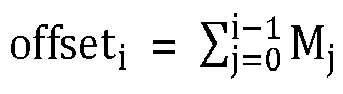
- The terminal of claim 17, wherein the processor is specifically configured to: calculate and determine the HARQ process ID of the HARQ process according to a formula of: HARQ process ID = [floor (current transmission time unit × 10/ (a quantity of slots in a radio frame × periodicity of configured grant configuration))] % Mi + offset i when the HARQ process is DL transmission, wherein i is an index number of configured grant configuration, Mi is a quantity of HARQ processes configured in an ith configured grant configuration, offset0 = 0 when i = 0,

- A computer readable storage medium, wherein the computer readable storage medium stores a computer program executable by an electronic device, and the computer program causes the electronic device to perform steps of the method of any one of claims 1-10 when running on the electronic device.
- A computer program product, wherein when instructions in the computer program product run on an electronic device, the electronic device performs steps of the method of any one of claims 1-10.
Applications Claiming Priority (2)
| Application Number | Priority Date | Filing Date | Title |
|---|---|---|---|
| CN201811143471.2A CN110972287B (en) | 2018-09-28 | 2018-09-28 | Method, device, terminal and medium for determining HARQ process ID |
| PCT/CN2019/104055 WO2020063266A1 (en) | 2018-09-28 | 2019-09-02 | Harq process id determination method and apparatus, terminal, and medium |
Publications (3)
| Publication Number | Publication Date |
|---|---|
| EP3860259A1 true EP3860259A1 (en) | 2021-08-04 |
| EP3860259A4 EP3860259A4 (en) | 2021-11-24 |
| EP3860259B1 EP3860259B1 (en) | 2023-12-06 |
Family
ID=69951021
Family Applications (1)
| Application Number | Title | Priority Date | Filing Date |
|---|---|---|---|
| EP19865399.0A Active EP3860259B1 (en) | 2018-09-28 | 2019-09-02 | Harq process id determination method, apparatus, and medium |
Country Status (4)
| Country | Link |
|---|---|
| US (1) | US12155484B2 (en) |
| EP (1) | EP3860259B1 (en) |
| CN (1) | CN110972287B (en) |
| WO (1) | WO2020063266A1 (en) |
Cited By (1)
| Publication number | Priority date | Publication date | Assignee | Title |
|---|---|---|---|---|
| WO2024145188A1 (en) * | 2022-12-29 | 2024-07-04 | Ofinno, Llc | Hybrid automatic repeat request process for configured grant |
Families Citing this family (12)
| Publication number | Priority date | Publication date | Assignee | Title |
|---|---|---|---|---|
| WO2021013811A1 (en) * | 2019-07-25 | 2021-01-28 | Fraunhofer-Gesellschaft zur Förderung der angewandten Forschung e.V. | Configured grants within a transmitter cot |
| KR20250138281A (en) * | 2020-02-12 | 2025-09-19 | 애플 인크. | Downlink control information (dci) for sidelink grant |
| US12356424B2 (en) * | 2020-02-13 | 2025-07-08 | Panasonic Intellectual Property Corporation Of America | Terminal and communication method |
| US12016027B2 (en) * | 2020-02-25 | 2024-06-18 | Qualcomm Incorporated | Consolidated feedback indication and feedback transmission |
| CN113498043B (en) * | 2020-04-03 | 2024-07-12 | 大唐移动通信设备有限公司 | Method and equipment for determining HARQ (hybrid automatic repeat request) process number |
| US20230114310A1 (en) * | 2020-04-21 | 2023-04-13 | Qualcomm Incorporated | Enhanced cg-ul transmission over pusch |
| CN116528376B (en) | 2020-08-06 | 2025-01-03 | Oppo广东移动通信有限公司 | Wireless communication method, terminal device and network device |
| CN115087119B (en) * | 2021-03-12 | 2024-06-14 | 上海朗帛通信技术有限公司 | A method and device used in a node for wireless communication |
| CN115941126B (en) * | 2021-08-03 | 2025-04-18 | 大唐移动通信设备有限公司 | HARQ process ID determination method, device, equipment and storage medium |
| CN115776363B (en) * | 2021-09-07 | 2024-12-10 | 大唐移动通信设备有限公司 | A time unit determination method, terminal, network device and storage medium |
| US12513682B2 (en) * | 2022-04-29 | 2025-12-30 | Qualcomm Incorporated | Semi-persistent scheduling activation and deactivation |
| CN117792582A (en) * | 2022-09-19 | 2024-03-29 | 荣耀终端有限公司 | Method, device, equipment and storage medium for determining HARQ process identifier |
Family Cites Families (22)
| Publication number | Priority date | Publication date | Assignee | Title |
|---|---|---|---|---|
| EP2587706B1 (en) * | 2007-10-23 | 2018-03-07 | Nokia Technologies Oy | Improved re-transmission capability in semi-persistent transmission |
| JP2016139006A (en) * | 2015-01-27 | 2016-08-04 | 富士フイルム株式会社 | Polarizing plate, front plate of display element, display device, touch panel substrate, resistive touch panel, and capacitive touch panel |
| US10602488B2 (en) * | 2015-10-22 | 2020-03-24 | Qualocmm Incorporated | HARQ and control channel timing for enhanced machine type communications (EMTC) |
| US10542529B2 (en) * | 2016-02-01 | 2020-01-21 | Ofinno, Llc | Power control in a wireless device and wireless network |
| US10511413B2 (en) * | 2016-02-03 | 2019-12-17 | Ofinno, Llc | Hybrid automatic repeat requests in a wireless device and wireless network |
| US10701677B2 (en) * | 2016-05-12 | 2020-06-30 | Samsung Electronics Co., Ltd. | Method and apparatus for uplink resource assignment for cellular network using unlicensed bands |
| EP3482595B1 (en) * | 2016-07-07 | 2021-09-01 | LG Electronics Inc. | Method and user equipment for receiving downlink signal |
| US11284413B2 (en) * | 2016-08-12 | 2022-03-22 | Beijing Xiaomi Mobile Software Co., Ltd. | Traffic type based scheduling in a wireless network and device |
| US10834743B2 (en) | 2016-08-12 | 2020-11-10 | Ofinno, Llc | Semi-persistent scheduling in a wireless device and network |
| US10382170B2 (en) * | 2016-09-25 | 2019-08-13 | Ofinno, Llc | HARQ process in semi-persistent scheduling |
| JP2020036051A (en) * | 2016-12-28 | 2020-03-05 | 株式会社Nttドコモ | User device and data transmission method |
| MX385539B (en) * | 2017-03-16 | 2025-03-18 | Lg Electronics Inc | METHOD OF OPERATION OF TERMINAL AND BASE STATION IN THE WIRELESS COMMUNICATION SYSTEM AND DEVICE THAT SUPPORTS IT. |
| CN108631964B (en) * | 2017-03-24 | 2023-11-21 | 华为技术有限公司 | A data transmission method and related equipment |
| US11483810B2 (en) * | 2017-04-03 | 2022-10-25 | Huawei Technologies Co., Ltd. | Methods and systems for resource configuration of wireless communication systems |
| US10601551B2 (en) * | 2017-05-04 | 2020-03-24 | Sharp Kabushiki Kaisha | Hybrid automatic repeat request for uplink ultra-reliable and low-latency communications |
| US10499386B2 (en) * | 2017-06-15 | 2019-12-03 | Sharp Kabushiki Kaisha | Procedure, base station and user equipment for uplink transmission without grant |
| US10986631B2 (en) * | 2017-06-27 | 2021-04-20 | Apple Inc. | Uplink control information (UCI) transmission and hybrid automatic repeat request (HARQ) process identification for grant-free physical uplink shared channel (PUSCH) |
| JP2019036777A (en) * | 2017-08-10 | 2019-03-07 | シャープ株式会社 | Base station device and terminal device |
| EP3666001B1 (en) * | 2017-08-10 | 2022-10-05 | Sharp Kabushiki Kaisha | Procedures, base stations and user equipments for uplink transmission without grant |
| KR102576714B1 (en) * | 2017-12-04 | 2023-09-11 | 삼성전자주식회사 | Method and apparatus for uplink data transmission in wireless communication system |
| WO2019194619A1 (en) * | 2018-04-05 | 2019-10-10 | Lg Electronics Inc. | Method of transmitting or receiving signal in wireless communication system and apparatus therefor |
| US20200045733A1 (en) * | 2018-08-03 | 2020-02-06 | Nokia Technologies Oy | Uplink Scheduling For NR-U |
-
2018
- 2018-09-28 CN CN201811143471.2A patent/CN110972287B/en active Active
-
2019
- 2019-09-02 US US17/279,598 patent/US12155484B2/en active Active
- 2019-09-02 WO PCT/CN2019/104055 patent/WO2020063266A1/en not_active Ceased
- 2019-09-02 EP EP19865399.0A patent/EP3860259B1/en active Active
Cited By (2)
| Publication number | Priority date | Publication date | Assignee | Title |
|---|---|---|---|---|
| WO2024145188A1 (en) * | 2022-12-29 | 2024-07-04 | Ofinno, Llc | Hybrid automatic repeat request process for configured grant |
| US12245227B2 (en) | 2022-12-29 | 2025-03-04 | Ofinno, Llc | Hybrid automatic repeat request process for configured grant |
Also Published As
| Publication number | Publication date |
|---|---|
| WO2020063266A1 (en) | 2020-04-02 |
| US12155484B2 (en) | 2024-11-26 |
| CN110972287B (en) | 2022-05-17 |
| US20210336727A1 (en) | 2021-10-28 |
| EP3860259A4 (en) | 2021-11-24 |
| EP3860259B1 (en) | 2023-12-06 |
| CN110972287A (en) | 2020-04-07 |
Similar Documents
| Publication | Publication Date | Title |
|---|---|---|
| EP3860259B1 (en) | Harq process id determination method, apparatus, and medium | |
| TWI713402B (en) | Method and device for service transmission | |
| AU2018409011A1 (en) | Sounding reference signal transmission method, terminal device, and network device | |
| US20190349923A1 (en) | Method for sending control information, method for detecting control information, terminal device, and network device | |
| EP3852297A1 (en) | Information sending and receiving methods, device and apparatus | |
| EP4277174A1 (en) | Method and apparatus for determining number of coded modulation symbols, and communication device | |
| WO2019192153A1 (en) | Resource determination method, indication method, and device | |
| US11528714B2 (en) | Data transmission method and apparatus | |
| WO2019029463A1 (en) | Method and device for receiving control information and sending control information | |
| EP3661311A1 (en) | Resource indication method, communication device and network device | |
| WO2018127237A1 (en) | Information transmission method and apparatus | |
| CN109392182A (en) | Method and device for sending and receiving information | |
| WO2021146968A1 (en) | Communication method and device | |
| EP4283904B1 (en) | Uci multiplexing transmission method and apparatus, and storage medium | |
| US12301497B2 (en) | Method and apparatus for uplink data transmission | |
| CN118945677A (en) | Transmission information determination method, configuration information sending method, terminal and device | |
| CN109392137B (en) | Data sending and receiving method and device | |
| WO2021168673A1 (en) | Method, device, and terminal for information transmission, and storage medium | |
| CN109891844B (en) | Communication method and apparatus | |
| US12408150B2 (en) | Method, terminal and readable storage medium for transmitting feedback sequence | |
| US20200374063A1 (en) | Resource allocation method and related device | |
| WO2017059794A1 (en) | Low time delay wireless communication method and apparatus | |
| CN109983824A (en) | Data transmission method, device and storage medium | |
| TWI670948B (en) | Information transmission method and device | |
| CN108604925B (en) | Method and apparatus for transmitting data |
Legal Events
| Date | Code | Title | Description |
|---|---|---|---|
| STAA | Information on the status of an ep patent application or granted ep patent |
Free format text: STATUS: THE INTERNATIONAL PUBLICATION HAS BEEN MADE |
|
| PUAI | Public reference made under article 153(3) epc to a published international application that has entered the european phase |
Free format text: ORIGINAL CODE: 0009012 |
|
| STAA | Information on the status of an ep patent application or granted ep patent |
Free format text: STATUS: REQUEST FOR EXAMINATION WAS MADE |
|
| 17P | Request for examination filed |
Effective date: 20210407 |
|
| AK | Designated contracting states |
Kind code of ref document: A1 Designated state(s): AL AT BE BG CH CY CZ DE DK EE ES FI FR GB GR HR HU IE IS IT LI LT LU LV MC MK MT NL NO PL PT RO RS SE SI SK SM TR |
|
| A4 | Supplementary search report drawn up and despatched |
Effective date: 20211025 |
|
| RIC1 | Information provided on ipc code assigned before grant |
Ipc: H04W 72/14 20090101ALI20211019BHEP Ipc: H04L 1/18 20060101ALI20211019BHEP Ipc: H04L 5/00 20060101ALI20211019BHEP Ipc: H04W 72/04 20090101AFI20211019BHEP |
|
| DAV | Request for validation of the european patent (deleted) | ||
| DAX | Request for extension of the european patent (deleted) | ||
| STAA | Information on the status of an ep patent application or granted ep patent |
Free format text: STATUS: EXAMINATION IS IN PROGRESS |
|
| 17Q | First examination report despatched |
Effective date: 20230214 |
|
| REG | Reference to a national code |
Ref country code: DE Ref legal event code: R079 Free format text: PREVIOUS MAIN CLASS: H04W0072040000 Ipc: H04L0001182200 Ref document number: 602019042983 Country of ref document: DE |
|
| GRAP | Despatch of communication of intention to grant a patent |
Free format text: ORIGINAL CODE: EPIDOSNIGR1 |
|
| STAA | Information on the status of an ep patent application or granted ep patent |
Free format text: STATUS: GRANT OF PATENT IS INTENDED |
|
| RIC1 | Information provided on ipc code assigned before grant |
Ipc: H04L 5/00 20060101ALI20230620BHEP Ipc: H04L 1/1867 20230101ALI20230620BHEP Ipc: H04L 1/1822 20230101AFI20230620BHEP |
|
| INTG | Intention to grant announced |
Effective date: 20230713 |
|
| GRAS | Grant fee paid |
Free format text: ORIGINAL CODE: EPIDOSNIGR3 |
|
| GRAA | (expected) grant |
Free format text: ORIGINAL CODE: 0009210 |
|
| STAA | Information on the status of an ep patent application or granted ep patent |
Free format text: STATUS: THE PATENT HAS BEEN GRANTED |
|
| AK | Designated contracting states |
Kind code of ref document: B1 Designated state(s): AL AT BE BG CH CY CZ DE DK EE ES FI FR GB GR HR HU IE IS IT LI LT LU LV MC MK MT NL NO PL PT RO RS SE SI SK SM TR |
|
| REG | Reference to a national code |
Ref country code: GB Ref legal event code: FG4D |
|
| REG | Reference to a national code |
Ref country code: DE Ref legal event code: R096 Ref document number: 602019042983 Country of ref document: DE |
|
| REG | Reference to a national code |
Ref country code: CH Ref legal event code: EP |
|
| REG | Reference to a national code |
Ref country code: IE Ref legal event code: FG4D |
|
| REG | Reference to a national code |
Ref country code: LT Ref legal event code: MG9D |
|
| PG25 | Lapsed in a contracting state [announced via postgrant information from national office to epo] |
Ref country code: GR Free format text: LAPSE BECAUSE OF FAILURE TO SUBMIT A TRANSLATION OF THE DESCRIPTION OR TO PAY THE FEE WITHIN THE PRESCRIBED TIME-LIMIT Effective date: 20240307 |
|
| REG | Reference to a national code |
Ref country code: NL Ref legal event code: MP Effective date: 20231206 |
|
| PG25 | Lapsed in a contracting state [announced via postgrant information from national office to epo] |
Ref country code: LT Free format text: LAPSE BECAUSE OF FAILURE TO SUBMIT A TRANSLATION OF THE DESCRIPTION OR TO PAY THE FEE WITHIN THE PRESCRIBED TIME-LIMIT Effective date: 20231206 |
|
| PG25 | Lapsed in a contracting state [announced via postgrant information from national office to epo] |
Ref country code: ES Free format text: LAPSE BECAUSE OF FAILURE TO SUBMIT A TRANSLATION OF THE DESCRIPTION OR TO PAY THE FEE WITHIN THE PRESCRIBED TIME-LIMIT Effective date: 20231206 |
|
| PG25 | Lapsed in a contracting state [announced via postgrant information from national office to epo] |
Ref country code: LT Free format text: LAPSE BECAUSE OF FAILURE TO SUBMIT A TRANSLATION OF THE DESCRIPTION OR TO PAY THE FEE WITHIN THE PRESCRIBED TIME-LIMIT Effective date: 20231206 Ref country code: GR Free format text: LAPSE BECAUSE OF FAILURE TO SUBMIT A TRANSLATION OF THE DESCRIPTION OR TO PAY THE FEE WITHIN THE PRESCRIBED TIME-LIMIT Effective date: 20240307 Ref country code: ES Free format text: LAPSE BECAUSE OF FAILURE TO SUBMIT A TRANSLATION OF THE DESCRIPTION OR TO PAY THE FEE WITHIN THE PRESCRIBED TIME-LIMIT Effective date: 20231206 Ref country code: BG Free format text: LAPSE BECAUSE OF FAILURE TO SUBMIT A TRANSLATION OF THE DESCRIPTION OR TO PAY THE FEE WITHIN THE PRESCRIBED TIME-LIMIT Effective date: 20240306 |
|
| REG | Reference to a national code |
Ref country code: AT Ref legal event code: MK05 Ref document number: 1639390 Country of ref document: AT Kind code of ref document: T Effective date: 20231206 |
|
| PG25 | Lapsed in a contracting state [announced via postgrant information from national office to epo] |
Ref country code: NL Free format text: LAPSE BECAUSE OF FAILURE TO SUBMIT A TRANSLATION OF THE DESCRIPTION OR TO PAY THE FEE WITHIN THE PRESCRIBED TIME-LIMIT Effective date: 20231206 |
|
| PG25 | Lapsed in a contracting state [announced via postgrant information from national office to epo] |
Ref country code: SE Free format text: LAPSE BECAUSE OF FAILURE TO SUBMIT A TRANSLATION OF THE DESCRIPTION OR TO PAY THE FEE WITHIN THE PRESCRIBED TIME-LIMIT Effective date: 20231206 Ref country code: RS Free format text: LAPSE BECAUSE OF FAILURE TO SUBMIT A TRANSLATION OF THE DESCRIPTION OR TO PAY THE FEE WITHIN THE PRESCRIBED TIME-LIMIT Effective date: 20231206 Ref country code: NO Free format text: LAPSE BECAUSE OF FAILURE TO SUBMIT A TRANSLATION OF THE DESCRIPTION OR TO PAY THE FEE WITHIN THE PRESCRIBED TIME-LIMIT Effective date: 20240306 Ref country code: NL Free format text: LAPSE BECAUSE OF FAILURE TO SUBMIT A TRANSLATION OF THE DESCRIPTION OR TO PAY THE FEE WITHIN THE PRESCRIBED TIME-LIMIT Effective date: 20231206 Ref country code: LV Free format text: LAPSE BECAUSE OF FAILURE TO SUBMIT A TRANSLATION OF THE DESCRIPTION OR TO PAY THE FEE WITHIN THE PRESCRIBED TIME-LIMIT Effective date: 20231206 Ref country code: HR Free format text: LAPSE BECAUSE OF FAILURE TO SUBMIT A TRANSLATION OF THE DESCRIPTION OR TO PAY THE FEE WITHIN THE PRESCRIBED TIME-LIMIT Effective date: 20231206 |
|
| PG25 | Lapsed in a contracting state [announced via postgrant information from national office to epo] |
Ref country code: IS Free format text: LAPSE BECAUSE OF FAILURE TO SUBMIT A TRANSLATION OF THE DESCRIPTION OR TO PAY THE FEE WITHIN THE PRESCRIBED TIME-LIMIT Effective date: 20240406 |
|
| PG25 | Lapsed in a contracting state [announced via postgrant information from national office to epo] |
Ref country code: CZ Free format text: LAPSE BECAUSE OF FAILURE TO SUBMIT A TRANSLATION OF THE DESCRIPTION OR TO PAY THE FEE WITHIN THE PRESCRIBED TIME-LIMIT Effective date: 20231206 Ref country code: AT Free format text: LAPSE BECAUSE OF FAILURE TO SUBMIT A TRANSLATION OF THE DESCRIPTION OR TO PAY THE FEE WITHIN THE PRESCRIBED TIME-LIMIT Effective date: 20231206 |
|
| PG25 | Lapsed in a contracting state [announced via postgrant information from national office to epo] |
Ref country code: SK Free format text: LAPSE BECAUSE OF FAILURE TO SUBMIT A TRANSLATION OF THE DESCRIPTION OR TO PAY THE FEE WITHIN THE PRESCRIBED TIME-LIMIT Effective date: 20231206 |
|
| PG25 | Lapsed in a contracting state [announced via postgrant information from national office to epo] |
Ref country code: SM Free format text: LAPSE BECAUSE OF FAILURE TO SUBMIT A TRANSLATION OF THE DESCRIPTION OR TO PAY THE FEE WITHIN THE PRESCRIBED TIME-LIMIT Effective date: 20231206 Ref country code: SK Free format text: LAPSE BECAUSE OF FAILURE TO SUBMIT A TRANSLATION OF THE DESCRIPTION OR TO PAY THE FEE WITHIN THE PRESCRIBED TIME-LIMIT Effective date: 20231206 Ref country code: RO Free format text: LAPSE BECAUSE OF FAILURE TO SUBMIT A TRANSLATION OF THE DESCRIPTION OR TO PAY THE FEE WITHIN THE PRESCRIBED TIME-LIMIT Effective date: 20231206 Ref country code: IT Free format text: LAPSE BECAUSE OF FAILURE TO SUBMIT A TRANSLATION OF THE DESCRIPTION OR TO PAY THE FEE WITHIN THE PRESCRIBED TIME-LIMIT Effective date: 20231206 Ref country code: IS Free format text: LAPSE BECAUSE OF FAILURE TO SUBMIT A TRANSLATION OF THE DESCRIPTION OR TO PAY THE FEE WITHIN THE PRESCRIBED TIME-LIMIT Effective date: 20240406 Ref country code: EE Free format text: LAPSE BECAUSE OF FAILURE TO SUBMIT A TRANSLATION OF THE DESCRIPTION OR TO PAY THE FEE WITHIN THE PRESCRIBED TIME-LIMIT Effective date: 20231206 Ref country code: CZ Free format text: LAPSE BECAUSE OF FAILURE TO SUBMIT A TRANSLATION OF THE DESCRIPTION OR TO PAY THE FEE WITHIN THE PRESCRIBED TIME-LIMIT Effective date: 20231206 Ref country code: AT Free format text: LAPSE BECAUSE OF FAILURE TO SUBMIT A TRANSLATION OF THE DESCRIPTION OR TO PAY THE FEE WITHIN THE PRESCRIBED TIME-LIMIT Effective date: 20231206 |
|
| PG25 | Lapsed in a contracting state [announced via postgrant information from national office to epo] |
Ref country code: PL Free format text: LAPSE BECAUSE OF FAILURE TO SUBMIT A TRANSLATION OF THE DESCRIPTION OR TO PAY THE FEE WITHIN THE PRESCRIBED TIME-LIMIT Effective date: 20231206 Ref country code: PT Free format text: LAPSE BECAUSE OF FAILURE TO SUBMIT A TRANSLATION OF THE DESCRIPTION OR TO PAY THE FEE WITHIN THE PRESCRIBED TIME-LIMIT Effective date: 20240408 |
|
| PG25 | Lapsed in a contracting state [announced via postgrant information from national office to epo] |
Ref country code: PT Free format text: LAPSE BECAUSE OF FAILURE TO SUBMIT A TRANSLATION OF THE DESCRIPTION OR TO PAY THE FEE WITHIN THE PRESCRIBED TIME-LIMIT Effective date: 20240408 Ref country code: PL Free format text: LAPSE BECAUSE OF FAILURE TO SUBMIT A TRANSLATION OF THE DESCRIPTION OR TO PAY THE FEE WITHIN THE PRESCRIBED TIME-LIMIT Effective date: 20231206 |
|
| REG | Reference to a national code |
Ref country code: DE Ref legal event code: R097 Ref document number: 602019042983 Country of ref document: DE |
|
| PG25 | Lapsed in a contracting state [announced via postgrant information from national office to epo] |
Ref country code: DK Free format text: LAPSE BECAUSE OF FAILURE TO SUBMIT A TRANSLATION OF THE DESCRIPTION OR TO PAY THE FEE WITHIN THE PRESCRIBED TIME-LIMIT Effective date: 20231206 |
|
| PLBE | No opposition filed within time limit |
Free format text: ORIGINAL CODE: 0009261 |
|
| STAA | Information on the status of an ep patent application or granted ep patent |
Free format text: STATUS: NO OPPOSITION FILED WITHIN TIME LIMIT |
|
| PG25 | Lapsed in a contracting state [announced via postgrant information from national office to epo] |
Ref country code: SI Free format text: LAPSE BECAUSE OF FAILURE TO SUBMIT A TRANSLATION OF THE DESCRIPTION OR TO PAY THE FEE WITHIN THE PRESCRIBED TIME-LIMIT Effective date: 20231206 |
|
| PG25 | Lapsed in a contracting state [announced via postgrant information from national office to epo] |
Ref country code: SI Free format text: LAPSE BECAUSE OF FAILURE TO SUBMIT A TRANSLATION OF THE DESCRIPTION OR TO PAY THE FEE WITHIN THE PRESCRIBED TIME-LIMIT Effective date: 20231206 Ref country code: DK Free format text: LAPSE BECAUSE OF FAILURE TO SUBMIT A TRANSLATION OF THE DESCRIPTION OR TO PAY THE FEE WITHIN THE PRESCRIBED TIME-LIMIT Effective date: 20231206 |
|
| 26N | No opposition filed |
Effective date: 20240909 |
|
| PG25 | Lapsed in a contracting state [announced via postgrant information from national office to epo] |
Ref country code: MC Free format text: LAPSE BECAUSE OF FAILURE TO SUBMIT A TRANSLATION OF THE DESCRIPTION OR TO PAY THE FEE WITHIN THE PRESCRIBED TIME-LIMIT Effective date: 20231206 |
|
| REG | Reference to a national code |
Ref country code: CH Ref legal event code: PL |
|
| PG25 | Lapsed in a contracting state [announced via postgrant information from national office to epo] |
Ref country code: LU Free format text: LAPSE BECAUSE OF NON-PAYMENT OF DUE FEES Effective date: 20240902 |
|
| REG | Reference to a national code |
Ref country code: BE Ref legal event code: MM Effective date: 20240930 |
|
| PG25 | Lapsed in a contracting state [announced via postgrant information from national office to epo] |
Ref country code: BE Free format text: LAPSE BECAUSE OF NON-PAYMENT OF DUE FEES Effective date: 20240930 |
|
| PG25 | Lapsed in a contracting state [announced via postgrant information from national office to epo] |
Ref country code: CH Free format text: LAPSE BECAUSE OF NON-PAYMENT OF DUE FEES Effective date: 20240930 |
|
| PG25 | Lapsed in a contracting state [announced via postgrant information from national office to epo] |
Ref country code: IE Free format text: LAPSE BECAUSE OF NON-PAYMENT OF DUE FEES Effective date: 20240902 |
|
| PG25 | Lapsed in a contracting state [announced via postgrant information from national office to epo] |
Ref country code: FI Free format text: LAPSE BECAUSE OF FAILURE TO SUBMIT A TRANSLATION OF THE DESCRIPTION OR TO PAY THE FEE WITHIN THE PRESCRIBED TIME-LIMIT Effective date: 20231207 |
|
| PGFP | Annual fee paid to national office [announced via postgrant information from national office to epo] |
Ref country code: DE Payment date: 20250919 Year of fee payment: 7 |
|
| PGFP | Annual fee paid to national office [announced via postgrant information from national office to epo] |
Ref country code: GB Payment date: 20250919 Year of fee payment: 7 |
|
| PGFP | Annual fee paid to national office [announced via postgrant information from national office to epo] |
Ref country code: FR Payment date: 20250922 Year of fee payment: 7 |
|
| PG25 | Lapsed in a contracting state [announced via postgrant information from national office to epo] |
Ref country code: CY Free format text: LAPSE BECAUSE OF FAILURE TO SUBMIT A TRANSLATION OF THE DESCRIPTION OR TO PAY THE FEE WITHIN THE PRESCRIBED TIME-LIMIT; INVALID AB INITIO Effective date: 20190902 |
|
| PG25 | Lapsed in a contracting state [announced via postgrant information from national office to epo] |
Ref country code: HU Free format text: LAPSE BECAUSE OF FAILURE TO SUBMIT A TRANSLATION OF THE DESCRIPTION OR TO PAY THE FEE WITHIN THE PRESCRIBED TIME-LIMIT; INVALID AB INITIO Effective date: 20190902 |