EP3860248A1 - Control instruction transmission method, base station, terminal and storage medium - Google Patents
Control instruction transmission method, base station, terminal and storage medium Download PDFInfo
- Publication number
- EP3860248A1 EP3860248A1 EP18935022.6A EP18935022A EP3860248A1 EP 3860248 A1 EP3860248 A1 EP 3860248A1 EP 18935022 A EP18935022 A EP 18935022A EP 3860248 A1 EP3860248 A1 EP 3860248A1
- Authority
- EP
- European Patent Office
- Prior art keywords
- frequency domain
- domain resource
- command data
- terminal
- base station
- Prior art date
- Legal status (The legal status is an assumption and is not a legal conclusion. Google has not performed a legal analysis and makes no representation as to the accuracy of the status listed.)
- Pending
Links
- 238000000034 method Methods 0.000 title claims abstract description 65
- 230000005540 biological transmission Effects 0.000 title abstract description 13
- 238000001514 detection method Methods 0.000 claims abstract description 109
- 230000006854 communication Effects 0.000 abstract description 24
- 238000004891 communication Methods 0.000 abstract description 22
- 238000010586 diagram Methods 0.000 description 20
- 230000011664 signaling Effects 0.000 description 13
- 238000012545 processing Methods 0.000 description 11
- 230000003287 optical effect Effects 0.000 description 5
- 230000003993 interaction Effects 0.000 description 4
- 230000005236 sound signal Effects 0.000 description 4
- 230000008859 change Effects 0.000 description 3
- 230000006870 function Effects 0.000 description 3
- 238000007726 management method Methods 0.000 description 3
- 230000001133 acceleration Effects 0.000 description 2
- 230000009471 action Effects 0.000 description 2
- 238000005516 engineering process Methods 0.000 description 2
- 230000008569 process Effects 0.000 description 2
- 238000003491 array Methods 0.000 description 1
- 239000000969 carrier Substances 0.000 description 1
- 230000000295 complement effect Effects 0.000 description 1
- 238000013500 data storage Methods 0.000 description 1
- 238000011161 development Methods 0.000 description 1
- 238000003384 imaging method Methods 0.000 description 1
- 230000006872 improvement Effects 0.000 description 1
- 239000004973 liquid crystal related substance Substances 0.000 description 1
- 230000007246 mechanism Effects 0.000 description 1
- 230000004048 modification Effects 0.000 description 1
- 238000012986 modification Methods 0.000 description 1
- 230000002093 peripheral effect Effects 0.000 description 1
- 230000001681 protective effect Effects 0.000 description 1
- 239000004065 semiconductor Substances 0.000 description 1
- 230000003068 static effect Effects 0.000 description 1
Images




Classifications
-
- H—ELECTRICITY
- H04—ELECTRIC COMMUNICATION TECHNIQUE
- H04W—WIRELESS COMMUNICATION NETWORKS
- H04W16/00—Network planning, e.g. coverage or traffic planning tools; Network deployment, e.g. resource partitioning or cells structures
- H04W16/14—Spectrum sharing arrangements between different networks
-
- H—ELECTRICITY
- H04—ELECTRIC COMMUNICATION TECHNIQUE
- H04W—WIRELESS COMMUNICATION NETWORKS
- H04W72/00—Local resource management
- H04W72/20—Control channels or signalling for resource management
- H04W72/21—Control channels or signalling for resource management in the uplink direction of a wireless link, i.e. towards the network
-
- H—ELECTRICITY
- H04—ELECTRIC COMMUNICATION TECHNIQUE
- H04L—TRANSMISSION OF DIGITAL INFORMATION, e.g. TELEGRAPHIC COMMUNICATION
- H04L27/00—Modulated-carrier systems
- H04L27/0006—Assessment of spectral gaps suitable for allocating digitally modulated signals, e.g. for carrier allocation in cognitive radio
-
- H—ELECTRICITY
- H04—ELECTRIC COMMUNICATION TECHNIQUE
- H04L—TRANSMISSION OF DIGITAL INFORMATION, e.g. TELEGRAPHIC COMMUNICATION
- H04L5/00—Arrangements affording multiple use of the transmission path
- H04L5/0001—Arrangements for dividing the transmission path
- H04L5/0003—Two-dimensional division
- H04L5/0005—Time-frequency
- H04L5/0007—Time-frequency the frequencies being orthogonal, e.g. OFDM(A) or DMT
- H04L5/001—Time-frequency the frequencies being orthogonal, e.g. OFDM(A) or DMT the frequencies being arranged in component carriers
-
- H—ELECTRICITY
- H04—ELECTRIC COMMUNICATION TECHNIQUE
- H04L—TRANSMISSION OF DIGITAL INFORMATION, e.g. TELEGRAPHIC COMMUNICATION
- H04L5/00—Arrangements affording multiple use of the transmission path
- H04L5/003—Arrangements for allocating sub-channels of the transmission path
- H04L5/0053—Allocation of signalling, i.e. of overhead other than pilot signals
-
- H—ELECTRICITY
- H04—ELECTRIC COMMUNICATION TECHNIQUE
- H04L—TRANSMISSION OF DIGITAL INFORMATION, e.g. TELEGRAPHIC COMMUNICATION
- H04L5/00—Arrangements affording multiple use of the transmission path
- H04L5/0091—Signalling for the administration of the divided path, e.g. signalling of configuration information
- H04L5/0096—Indication of changes in allocation
- H04L5/0098—Signalling of the activation or deactivation of component carriers, subcarriers or frequency bands
-
- H—ELECTRICITY
- H04—ELECTRIC COMMUNICATION TECHNIQUE
- H04W—WIRELESS COMMUNICATION NETWORKS
- H04W72/00—Local resource management
- H04W72/20—Control channels or signalling for resource management
- H04W72/23—Control channels or signalling for resource management in the downlink direction of a wireless link, i.e. towards a terminal
-
- H—ELECTRICITY
- H04—ELECTRIC COMMUNICATION TECHNIQUE
- H04W—WIRELESS COMMUNICATION NETWORKS
- H04W76/00—Connection management
- H04W76/10—Connection setup
- H04W76/19—Connection re-establishment
-
- H—ELECTRICITY
- H04—ELECTRIC COMMUNICATION TECHNIQUE
- H04W—WIRELESS COMMUNICATION NETWORKS
- H04W72/00—Local resource management
- H04W72/04—Wireless resource allocation
- H04W72/044—Wireless resource allocation based on the type of the allocated resource
- H04W72/0453—Resources in frequency domain, e.g. a carrier in FDMA
-
- H—ELECTRICITY
- H04—ELECTRIC COMMUNICATION TECHNIQUE
- H04W—WIRELESS COMMUNICATION NETWORKS
- H04W72/00—Local resource management
- H04W72/50—Allocation or scheduling criteria for wireless resources
- H04W72/51—Allocation or scheduling criteria for wireless resources based on terminal or device properties
-
- H—ELECTRICITY
- H04—ELECTRIC COMMUNICATION TECHNIQUE
- H04W—WIRELESS COMMUNICATION NETWORKS
- H04W74/00—Wireless channel access
- H04W74/08—Non-scheduled access, e.g. ALOHA
- H04W74/0808—Non-scheduled access, e.g. ALOHA using carrier sensing, e.g. carrier sense multiple access [CSMA]
Definitions
- the disclosure relates to the technical field of communications, and in particular, to a method for transmitting a control command, a base station, a terminal and a storage medium.
- the licensed frequency domain resources are generally used for transmission.
- the licensed frequency domain resources cannot fulfill the demands of transmission. Accordingly, a listen before talk mechanism has been proposed to implement the function of using unlicensed frequency domain resources.
- the unlicensed frequency domain resources may be used for transmission between the base station and the terminal, such as transmission of a control command.
- the base station when a control command is to be sent from a base station to a terminal through an unlicensed frequency domain resource, the base station firstly configures the terminal with a preset detection time point for the control command to be transmitted on the unlicensed frequency domain resource. Thereafter, the base station detects the state of the unlicensed frequency domain resource, and the base station is able to successfully occupy the unlicensed frequency domain resource when the unlicensed frequency domain resource is in an idle state. Then the base station sends the control command to the terminal through the unlicensed frequency domain resource at the preset detection time point, and the terminal detects the control command through the unlicensed frequency domain resource at the preset detection time point.
- the disclosure provides a method for transmitting a control command, a base station, a terminal and a storage medium, to solve the problem of the related arts.
- the technical solution is described as follows.
- a method for transmitting a control command, applied to a base station including:
- the method may further include:
- the preset duration is a duration used by the terminal for switching from the first frequency domain resource to the second frequency domain resource.
- a method for transmitting a control command, applied to a base station including:
- the method may further include:
- the preset duration is a duration used by the terminal for switching from the first frequency domain resource to the second frequency domain resource.
- a method for transmitting a control command, applied to a terminal including:
- the terminal responsive to failing to detect, at a preset detection time point, a control command sent by a base station through a first frequency domain resource, the terminal switches from the first frequency domain resource to a second frequency domain resource, herein the first frequency domain resource and the second frequency domain resource are different unlicensed frequency domain resources;
- the method may further include:
- the preset duration is a duration used by the terminal for switching from the first frequency domain resource to the second frequency domain resource.
- a base station includes an occupancy module and a sending module.
- the occupancy module is configured to: after an occupancy of a first frequency domain resource fails, occupy a second frequency domain resource, the first frequency domain resource and the second frequency domain resource are different unlicensed frequency domain resources.
- the sending module is configured to start timing from the preset detection time point, and responsive to that a timing duration for which the timing lasts reaches a preset duration, send the control command through the second frequency domain resource.
- the base station may further include a receiving module and a determination module.
- the receiving module is configured to receive capability of switching between frequency domain resources from a terminal.
- the determination module is configured to determine, according to the capability of switching between the frequency domain resources, a duration used by the terminal for switching between the frequency domain resources as the preset duration.
- the preset duration is a duration used by the terminal for switching from the first frequency domain resource to the second frequency domain resource.
- a base station includes an occupancy module and a sending module.
- the occupancy module is configured to: after an occupancy of a first frequency domain resource fails, occupy a second frequency domain resource, the first frequency domain resource and the second frequency domain resource are different unlicensed frequency domain resources.
- the sending module is configured to send the control command through the second frequency domain resource at a preset detection time point.
- the control command includes first command data and second command data, and the second command data is identical to command data of the first command data that is transmitted within a preset duration starting from the preset detection time point.
- the base station may further include a receiving module and a determination module.
- the receiving module is configured to receive capability of switching between frequency domain resources from a terminal.
- the determination module is configured to determine, according to the capability of switching between the frequency domain resources, a duration used by the terminal for switching between the frequency domain resources as the preset duration.
- the preset duration is a duration used by the terminal for switching from the first frequency domain resource to the second frequency domain resource.
- a terminal includes a switching module, a detection module and an arrangement module.
- the switching module is configured to: responsive to failing to detect, at a preset detection time point, a control command sent by a base station through a first frequency domain resource, switch from the first frequency domain resource to a second frequency domain resource, herein the first frequency domain resource and the second frequency domain resource are different unlicensed frequency domain resources.
- the detection module is configured to detect a control command sent by the base station through the second frequency domain resource to obtain third command data and second command data.
- the arrangement module is configured to acquire first command data by arranging the second command data in front of the third command data.
- the second command data is identical to command data of the first command data that is transmitted within a preset duration starting from the preset detection time point
- the third command data is identical to command data of the first command data that is transmitted after the preset duration starting from the preset detection time point.
- the terminal may further include a determination module and a sending module.
- the determination module is configured to determine capability of switching between frequency domain resources of the terminal.
- the sending module is configured to send the capability of switching between the frequency domain resources to the base station, the capability of switching between the frequency domain resources is used for determining the preset duration.
- the preset duration is a duration used by the terminal for switching from the first frequency domain resource to the second frequency domain resource.
- a base station including:
- a base station including:
- a terminal including
- a computer-readable storage medium having stored thereon at least one instruction stored.
- the at least one instruction is loaded and executed by a processor to implement operations of the method for transmitting a control command according to the first aspect.
- a computer-readable storage medium having at least one instruction stored thereon.
- the at least one instruction is loaded and executed by a processor to implement operations of the method for transmitting a control command according to the second aspect.
- a computer-readable storage medium having at least one instruction stored theroen.
- the at least one instruction is loaded and executed by a processor to implement operations of the method for transmitting a control command according to the third aspect.
- a method for transmitting a control command, a base station, a terminal and a storage medium are provided in embodiments of the disclosure.
- the base station configures different unlicensed frequency domain resources for the terminal, and after an occupancy of a first frequency domain resource fails, the base station occupies a second frequency domain resource and starts timing from a preset detection time point; and responsive to that a timing duration for which the timing lasts reaches a preset duration, the control command is sent through the second frequency domain resource.
- the base station is able to send a control command by occupying another unlicensed frequency domain resource when the occupancy of a certain frequency domain resource fails, and it is possible to avoid the problem that the base station may not able to send a control command due to the failure of occupying an unlicensed frequency domain resource.
- the preset duration required by the terminal to switch between frequency domain resources is considered, and the time point at which the control command is started to be sent is postponed by the preset duration.
- the terminal detects the control command after switching between the frequency domain resources, the time point at which the control command is detected is coincident with the time point at which the base station sends the control command, such that the terminal is able to detect complete command data and a loss of the command data is avoided.
- a method for transmitting a control command, a base station, a terminal and a storage medium are provided in embodiments of the disclosure.
- the base station configures different unlicensed frequency domain resources for the terminal, and after an occupancy of a first frequency domain resource fails, the base station occupies a second frequency domain resource and sends the control command through the second frequency domain resource at a preset detection time point, the control command includes first command data and second command data. Therefore, it is ensured that that the base station is able to send a control command by occupying another unlicensed frequency domain resource when the occupancy of a certain frequency domain resource fails, and it is possible to avoid the problem that the base station may not be able to send a control command due to the failure of occupying an unlicensed frequency domain resource.
- the terminal taking into consideration the fact that the terminal will take the preset duration to switch between frequency domain resources, and the terminal can detect only the third command data in the first command data but cannot detect the second command data transmitted before the third command data, thus the second command data is repeatedly transmitted. In this way, it is ensured that the terminal is able to detect the third command data and the second command data and arrange the second command data in front of the third command data, such that the complete first command data is obtained and a loss of the command data is avoided.
- Embodiments of the disclosure provide a method for transmitting a control command, a base station, a terminal and a storage medium.
- the disclosure will be illustrated in detail in combination with the accompanying drawings hereinafter.
- FIG. 1 is a schematic structural diagram illustrating a communication system according to an exemplary embodiment. As illustrated in FIG. 1 , the communication system includes a base station 101 and a terminal 102, the base station 101 and the terminal 102 are connected through a communication network.
- the base station 101 may send a control command to the terminal, and the control command is detected by the terminal 102, thereby control of the terminal 102 by the base station 101 is realized.
- the base station may send the control command through another unlicensed frequency domain resource, and the terminal 102 switches from the current unlicensed frequency domain resource to another unlicensed frequency domain resource and detects the control command sent by the base station on another unlicensed frequency domain resource.
- FIG. 2 is a flowchart of a method for transmitting a control command according to an exemplary embodiment, applied to a base station. As illustrated in FIG. 2 , the method includes the following operations.
- a second frequency domain resource is occupied, herein the first frequency domain resource and the second frequency domain resource are different unlicensed frequency domain resources.
- timing is started from a preset detection time point, and responsive to that a timing duration for which the timing lasts reaches a preset duration, the control command is sent through the second frequency domain resource.
- the base station and the terminal may negotiate in advance to determine the preset duration.
- the base station may send the preset duration to the terminal through higher layer signaling, MAC CE (Media Access Control Element) signaling, and physical layer signaling or other signaling; or, the preset duration may be preset in a transmission protocol instead of being sent by the base station through signaling.
- MAC CE Media Access Control Control Element
- the base station configures different unlicensed frequency domain resources for the terminal, and after an occupancy of a first frequency domain resource fails, the base station occupies a second frequency domain resource and starts timing from a preset detection time point, and responsive to that a timing duration for which the timing lasts reaches a preset duration, sends a control command through the second frequency domain resource. Therefore, it is ensured that that the base station sends the control command by occupying another unlicensed frequency domain resource when the occupancy of a certain frequency domain resource fails, and it is possible to avoid the problem that the base station cannot send a control command due to the failure of occupying the unlicensed frequency domain resource.
- the preset duration required by the terminal to switch between frequency domain resources is considered, and the time point at which the control command is started to be sent is postponed by the preset duration. Therefore, it is ensured that when the terminal detects the control command after switching between the frequency domain resources, the time point at which the control command is detected is coincident with the time point at which the base station sends the control command, such that the terminal is able to detect complete command data and a loss of the command data is avoided.
- the method further includes that:
- the preset duration is a duration used by the terminal for switching from the first frequency domain resource to the second frequency domain resource.
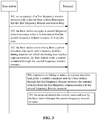
- FIG. 3 is a flowchart of a method for transmitting a control command according to an exemplary embodiment.
- the interaction subjects in the embodiment are the base station and the terminal in the embodiment illustrated in FIG.l.
- the method includes the following operations.
- an occupancy of a first frequency domain resource fails when the base station determines that the first frequency domain resource is busy.
- the base station pre-configures a plurality of different unlicensed frequency domain resources for the terminal.
- the unlicensed frequency domain resource may be a bandwidth part that is one or more consecutive segments of resources in the frequency domain.
- the base station may configure a plurality of carriers for the terminal, and each carrier includes a plurality of bandwidth parts.
- the bandwidth of each bandwidth part may be 10 MHz (megahertz), 20 MHz, etc.
- the bandwidths of different bandwidth parts may be equal or unequal.
- the terminal In a communication process, the terminal firstly operates on a certain frequency domain resource among a plurality of unlicensed frequency domain resources.
- the state of the frequency domain resource may be detected firstly.
- the base station may occupy the frequency domain resource and send the control command through the frequency domain resource.
- the terminal may detect the control command sent by the base station through the frequency domain resource.
- the base station may detect the state of another frequency domain resource so that the control command is sent through said another frequency domain resource.
- the terminal may detect the control command sent by the base station through a frequency domain resource on which the terminal currently operates. If the detection of the control command fails, the terminal may switch to another frequency domain resource and detect the control command sent through another frequency domain resource
- Other systems therein may include other base stations in the communication system where the above base station is located, and may also include other communication systems than the communication system where the base station is located, such as a WiFi (Wireless Fidelity) system and so on.
- WiFi Wireless Fidelity
- the terminal firstly operates at a first frequency domain resource and then switches to a second frequency domain resource, the first frequency domain resource and the second frequency domain resource are different unlicensed frequency domain resources. If the first frequency domain resource is pre-occupied by another system when the control command is to be sent from the base station to the terminal through the first frequency domain resource, the base station may detect that the first frequency domain resource is busy, as a result, the occupancy of the first frequency domain resource by the base station fails. In this case, the base station may detect the state of another unlicensed frequency domain resource to occupy said another unlicensed frequency domain resource.
- the base station occupies a second frequency domain resource when it is determined that the second frequency domain resource is in an idle state.
- the first frequency domain resource and the second frequency domain resource are different unlicensed frequency domain resources.
- the base station may detect the state of the second frequency domain resource, and occupy the second frequency domain resource when it is determined that the second frequency domain resource is in an idle state.
- the base station starts timing from a preset detection time point, and responsive to that a timing duration for which the timing lasts reaches a preset duration, the base station sends a control command through the second frequency domain resource.
- the preset detection time point is a predetermined detection time point configured by the base station and the terminal, and is used for definition of an initial time point at which the terminal detects the control command.
- the base station may send the control command through the frequency domain resource at the preset detection time point, and the terminal may detect, at the preset detection time point, the control command sent by the base station through the frequency domain resource.
- the preset detection time point is determined by the base station and sent to the terminal through higher layer signaling, physical layer signaling or other signaling.
- the base station Since the base station occupies the second frequency domain resource after the occupancy of the first frequency domain resource fails, thus at the preset detection time point, the base station sends the control command through the second frequency domain resource rather than the first frequency domain resource.
- the terminal detects, at the preset detection time point, the control command sent through the first frequency domain resource, the control command sent by the base station cannot be detected by the terminal, and thus the detection fails. Then, the terminal may switch from the first frequency domain resource to the second frequency domain resource.
- a certain duration needs to be taken to perform the switching, in other words, the terminal starts to detect the control command after a certain duration from the preset detection time point, thus the detection is lagged. Therefore, the terminal may not detect complete command data, and a loss of the command data is resulted.
- the base station may send the control command after the terminal finishes the switching between frequency domain resources rather than immediately send the control command at the preset detection time point.
- the base station starts timing at the preset detection time point, meanwhile, the terminal starts to switch from the first frequency domain resource to the second frequency domain resource. With passage of time, a timing duration for which the timing lasts gradually increases until it reaches a preset duration, then the switching from the first frequency domain resource to the second frequency domain resource by the terminal is deemed to be accomplished.
- the base station sends the control command through the second frequency domain resource, and the terminal may detect the control command sent by the base station through the second frequency domain resource to obtain complete command data in the control command.
- the base station It is considered by the base station that the control command is not detected by the terminal at the preset detection time point, and the terminal detects the control command after switching from the first frequency domain resource to the second frequency domain resource.
- the time point at which the control command is sent is correspondingly postponed, so that the time point at which the base station starts to send the control command is coincident with the time point at which the terminal starts to detect the control command. In this way, the terminal is able to obtain complete command data in the control command and a loss of the command data is therefore avoided.
- the preset duration is a predefined time length
- the preset duration may be identical to the duration used by the terminal for switching from the first frequency domain resource to the second frequency domain resource, or may be larger than the duration used by the terminal for switching from the first frequency domain resource to the second frequency domain resource, so as to enable the terminal to perform detection in time after switching between the frequency domain resources, and to obtain the complete command data.
- the preset duration may be one symbol, three symbols or one sub-frame or the like.
- the preset duration may be set according to the duration used by a general terminal for switching between the frequency domain resources.
- capability of switching between frequency domain resources of the terminal is determined by the terminal, and capability of switching between the frequency domain resources is sent to the base station, herein the capability of switching between the frequency domain resources is used for determining the preset duration.
- the base station receives the capability of switching between the frequency domain resources from the terminal, and determines, according to the capability of switching between the frequency domain resources, a duration used by the terminal for switching between the frequency domain resources as the preset duration.
- the terminal switches from the first frequency domain resource to the second frequency domain resource.
- the base station occupies the second frequency domain resource after the occupancy of the first frequency domain resource fails, thus the base station sends the control command through the second frequency domain resource rather than the first frequency domain resource at the preset detection time point.
- the terminal detects, at the preset detection time point, the control command sent through the first frequency domain resource, the control command sent by the base station cannot be detected by the terminal, and thus the detection fails. Then, the terminal may switch from the first frequency domain resource to the second frequency domain resource.
- the terminal detects the control command sent by the base station through the second frequency domain resource.
- the preset duration is required by the terminal for switching from the first frequency domain resource to the second frequency domain resource, in other words, the terminal starts to detect the control command after the preset duration from the preset detection time point. Therefore, the terminal is not able to detect the command data from the base station within the preset duration after the preset detection time point.
- the base station needs to postpone the time point at which the control command is started to be sent by the preset duration. Furthermore, when the terminal detects the control command after switching between frequency domain resources, the time point at which the terminal detects the control command is coincident with the time point at which the base station sends the control command.
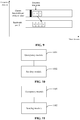
- FIG. 4 is a schematic diagram illustrating a plurality of bandwidth parts according to an exemplary embodiment.
- the base station configures three bandwidth parts for the terminal, and each bandwidth part is configured with a preset detection time point.
- FIG. 5 is a schematic diagram illustrating transmission of command data according to an exemplary embodiment. Referring to FIG. 5 , the base station configures two bandwidth parts for the terminal. It is assumed that the command data included in the control command includes three symbols: command data 1, command data 2 and command data 3, and the preset duration is one symbol. Originally, the base station would occupy the bandwidth 1, and sequentially send the command data 1, command data 2 and command data 3 through the bandwidth 1 at the preset detection time point.
- the base station switches to the bandwidth 2. After one symbol from the preset detection time point, the base station sequentially sends the command data 1, command data 2 and command data 3 through the bandwidth 2. After detection through the first frequency domain resource at the preset detection time point fails, the terminal switches to the second frequency domain resource, and detects the command data 1, command data 2 and command data 3 in the control command.
- the base station configures different unlicensed frequency domain resources for the terminal, and after an occupancy of a first frequency domain resource fails by the base station, the base station occupies a second frequency domain resource and starts timing from a preset detection time point, and responsive to that a timing duration for which the timing lasts reaches a preset duration, the base station sends a control command through the second frequency domain resource. Therefore, it is ensured that that the base station sends a control command by occupying another unlicensed frequency domain resource when the occupancy of a certain frequency domain resource fails, and it is possible to avoid the problem that the base station cannot send a control command due to the failure of occupying an unlicensed frequency domain resource.
- the preset duration required by the terminal to switch between frequency domain resources is considered, the time point at which the control command is started to be sent is postponed by the preset duration. Therefore, it is ensured that when the terminal detects the control command after switching between the frequency domain resources, the time point at which the control command is detected is coincident with the time point at which the base station sends the control command, such that the terminal detects complete command data and a loss of the command data is avoided.
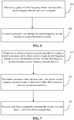
- FIG. 6 is a flowchart of a method for transmitting a control command according to an exemplary embodiment, applied to a base station. As illustrated in FIG. 6 , the method includes the following operations.
- a second frequency domain resource is occupied, herein the first frequency domain resource and the second frequency domain resource are different unlicensed frequency domain resources.
- a control command is sent through the second frequency domain resource at a preset detection time point.
- the control command includes first command data and second command data, and the second command data is identical to command data of the first command data that is transmitted within a preset duration starting from the preset detection time point.
- the base station configures different unlicensed frequency domain resources for the terminal, if an occupancy of a first frequency domain resource fails by the base station, the base station occupies a second frequency domain resource and sends a control command through the second frequency domain resource at a preset detection time point, the control command includes first command data and second command data. Therefore, it is ensured that that the base station sends the control command by occupying another unlicensed frequency domain resource when the occupancy of a certain frequency domain resource fails, and it is possible to avoid the problem that the base station cannot send a control command due to the failure of occupying an unlicensed frequency domain resource.
- the terminal taking into consideration the fact that the terminal will take the preset duration to switch between frequency domain resources, and the terminal can detect only the third command data in the first command data but cannot detect the second command data transmitted before the third command data, thus the second command data is repeatedly transmitted. In this way, it is ensured that the terminal is able to detect the third command data and the second command data and arrange the second command data in front of the third command data, such that the complete first command data is obtained and a loss of the command data is avoided.
- the method further includes the following operations.
- Capability of switching between frequency domain resources is received from a terminal.
- a duration used by the terminal for switching between the frequency domain resources is determined as the preset duration according to the capability of switching between the frequency domain resources.
- the preset duration is a duration used by the terminal for switching from the first frequency domain resource to the second frequency domain resource.
- FIG. 7 is a flowchart of a method for transmitting a control command according to an exemplary embodiment, applied to a terminal. As illustrated in FIG. 7 , the method includes the following operations.
- the terminal switches from the first frequency domain resource to a second frequency domain resource, herein the first frequency domain resource and the second frequency domain resource are different unlicensed frequency domain resources.
- control command sent by the base station through the second frequency domain resource is detected to obtain third command data and second command data.
- the second command data is identical to command data of the first command data that is transmitted within a preset duration starting from the preset detection time point
- the third command data is identical to command data of the first command data that is transmitted after the preset duration starting from the preset detection time point.
- first command data is acquired by arranging the second command data in front of the third command data.
- the terminal responsive to failing to detect, at a preset detection time point, a control command sent by the base station through a first frequency domain resource, switches from the first frequency domain resource to a second frequency domain resource. Furthermore, the terminal detects the control command sent by the base station through the second frequency domain resource to obtain third command data and second command data. Moreover, the base station takes into consideration the fact that the terminal will take the preset duration to switch between frequency domain resources, and the terminal can detect only the third command data in the first command data but cannot detect the second command data transmitted before the third command data, thus the second command data is repeatedly transmitted. Correspondingly, the terminal arranges the second command data repeatedly transmitted by the base station in front of the third command data, such that the complete first command data is obtained and a loss of the command data is avoided.
- the method further includes that: capability of switching between the frequency domain resources of the terminal is determined and sent to the base station, herein the capability of switching between the frequency domain resources is used for determining the preset duration.
- the preset duration is a duration used by the terminal for switching from the first frequency domain resource to the second frequency domain resource.
- FIG. 8 is a flowchart of a method for transmitting a control command according to an exemplary embodiment.
- the interaction subjects are the base station and the terminal in the embodiment illustrated in FIG. 1 .
- the method includes the following operations.
- an occupancy of a first frequency domain resource fails when the base station determines that the first frequency domain resource is busy.
- the base station occupies a second frequency domain resource when it is determined that the second frequency domain resource is in an idle state.
- Operations 801-802 are similar to the operations 301-302 and will not be elaborated herein.
- the base station sends a control command through the second frequency domain resource at a preset detection time point.
- the base station Since the base station occupies the second frequency domain resource after the occupancy of the first frequency domain resource fails, thus the base station sends the control command through the second frequency domain resource rather than the first frequency domain resource.
- the terminal detects, at the preset detection time point, the control command sent through the first frequency domain resource, the control command sent by the base station cannot be detected by the terminal, and thus the detection fails. Then, the terminal may switch from the first frequency domain resource to the second frequency domain resource.
- a certain duration needs to be taken to perform the switching, in other words, the terminal starts to detect the control command after a certain duration from the preset detection time point. Therefore, the terminal may not detect the command data sent by the base station within the preset duration after the preset detection time point.
- the control command sent to the terminal includes not only the first command data, but also the second command data, and the second command data is identical to command data of the first command data that is transmitted within a preset duration starting from the preset detection time point, and the second command data which is not detected during the process of switching between frequency domain resources by the terminal is thus transmitted repeatedly.
- the preset duration is a predefined time length
- the preset duration may be identical to the duration used by the terminal for switching from the first frequency domain resource to the second frequency domain resource, or may be larger than the duration used by the terminal for switching from the first frequency domain resource to the second frequency domain resource, so as to enable the terminal to perform detection in time after switching between the frequency domain resources, and to obtain the complete command data.
- the preset duration may be one symbol, three symbols or one sub-frame or the like.
- the preset duration may be set according to the duration used by a general terminal for switching between the frequency domain resources.
- the base station and the terminal may negotiate in advance to determine the preset duration.
- the base station may send the preset duration to the terminal through higher layer signaling, MAC CE signaling, and physical layer signaling or other signaling; or, the preset duration may be preset in a transmission protocol instead of being sent by the base station through signaling.
- the terminal determines capability of switching between frequency domain resources of the terminal, and sends the capability of switching between the frequency domain resources to the base station.
- the base station receives the capability of switching between the frequency domain resources from the terminal and determines the duration used for switching between the frequency domain resources by the terminal as the preset duration according to the capability of switching between the frequency domain resources.
- the terminal switches from the first frequency domain resource to the second frequency domain resource.
- Operation 804 is similar to the operation 304 and will not be elaborated herein.
- the terminal detects the control command sent by the base station through the second frequency domain resource to obtain third command data and second command data.
- the terminal Since the control command includes first command data and second command data, and the terminal switches from the first frequency domain resource to the second frequency domain resource after the preset detection time point and thus it would take a preset duration. Therefore, when detecting the control command sent by the base station through the second frequency domain resource, the terminal detects the third command data and then the second command data.
- the third command data is identical to command data of the first command data that is transmitted after a preset duration starting from the preset detection time point.
- FIG. 9 is a schematic diagram illustrating transmission of command data according to an exemplary embodiment.
- the base station configures two bandwidth parts for the terminal, it is assumed that the command data included in the control command includes three symbols: command data 1, command data 2 and command data 3, and the preset duration is one symbol.
- the base station would occupy the bandwidth 1, and sequentially send the command data 1, command data 2 and command data 3 through the bandwidth 1 at the preset detection time point.
- the base station switches to the bandwidth 2, then at the preset detection time point, the base station sequentially sends the command data 1, command data 2 and command data 3 through the bandwidth 2, and resents the command data 1 after sending the command data 3.
- the terminal acquires first command data by arranging the second command data in front of the third command data.
- the base station In order to avoid losing the second command data, the base station repeatedly sends the second command data after the first command data.
- the second command data is located before the third command data, the command data therefore needs to be rearranged when the terminal detects the second command data after detecting the third command data.
- the second command data is arranged in front of the third command data, and the arranged command data is complete first command data in the control command.
- the terminal when the terminal detects the control command after switching to the second frequency domain resource, the terminal sequentially detects the command data 2, command data 3 and command data 1, and rearranges the detected command data, that is, arrange the command data 1 in front of the command data 2 and command data 3, to obtain the arranged command data.
- the base station and the terminal may predefine a processing rule which defines that: after switching between the frequency domain resources by the base station, the base station repeatedly sends, after sending the control command, the command data of the control command that is transmitted within the original preset duration; and after switching between the frequency domain resources, the terminal arranges the command data which is sent by the base station later in front of the command data which is sent first, to obtain the arranged command data.
- the base station and the terminal perform transmission and detection of the control command based on the processing rule.
- the base station configures different unlicensed frequency domain resources for the terminal, and after an occupancy of a first frequency domain resource fails, the base station occupies a second frequency domain resource and sends a control command through the second frequency domain resource at a preset detection time point, the control command includes first command data and second command data. Therefore, it is ensured that that the base station sends the control command by occupying another unlicensed frequency domain resource when the occupancy of a certain frequency domain resource fails, and it is possible to avoid the problem that the base station cannot send the control command due to the failure of occupying the unlicensed frequency domain resource is avoided.
- the terminal taking into consideration the fact that the terminal will take the preset duration to switch between frequency domain resources, and the terminal can detect only the third command data in the first command data but cannot detect the second command data transmitted before the third command data, thus the second command data is repeatedly transmitted. In this way, it is ensured that the terminal is able to detect the third command data and the second command data and arrange the second command data in front of the third command data, such that the complete first command data is obtained and a loss of the command data is avoided.
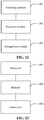
- FIG. 10 is a block diagram illustrating a base station according to an exemplary embodiment.
- the base station includes an obtaining module 1001 and a sending module 1002.
- the occupancy module 1001 is configured to: after an occupancy of a first frequency domain resource fails, occupy a second frequency domain resource, the first frequency domain resource and the second frequency domain resource are different unlicensed frequency domain resources.
- the sending module 1002 is configured to start timing from a preset detection time point, and responsive to that a timing duration for which the timing lasts reaches a preset duration, send the control command through the second frequency domain resource.
- the base station further includes a receiving module and a determination module.
- the receiving module is configured to receive capability of switching between frequency domain resources from a terminal.
- the determination module is configured to determine, according to the capability of switching between the frequency domain resources, a duration used by the terminal for switching between the frequency domain resources as the preset duration.
- the preset duration is a duration used by the terminal for switching from the first frequency domain resource to the second frequency domain resource.
- FIG. 11 is a block diagram illustrating a base station according to an exemplary embodiment.
- the base station includes an obtaining module 1101 and a sending module 1102.
- the occupancy module 1101 is configured to: after an occupancy of a first frequency domain resource fails, occupy a second frequency domain resource, the first frequency domain resource and the second frequency domain resource are different unlicensed frequency domain resources.
- the sending module 1102 is configured to send the control command through the second frequency domain resource at a preset detection time point.
- the control command includes first command data and second command data, and the second command data is identical to command data of the first command data that is transmitted within a preset duration starting from the preset detection time point.
- the base station further includes a receiving module and a determination module.
- the receiving module is configured to receive capability of switching between frequency domain resources from a terminal.
- the determination module is configured to determine, according to the capability of switching between the frequency domain resources, a duration used by the terminal for switching between the frequency domain resources as the preset duration.
- the preset duration is a duration used by the terminal for switching from the first frequency domain resource to the second frequency domain resource.
- FIG. 12 is a block diagram illustrating a terminal according to an exemplary embodiment.
- the terminal includes a switching module 1201, a detection module 1202 and an arrangement module 1203.
- the switching module 1201 is configured to: responsive to failing to detect, at a preset detection time point, a control command sent by a base station through a first frequency domain resource, switch from the first frequency domain resource to a second frequency domain resource, the first frequency domain resource and the second frequency domain resource are different unlicensed frequency domain resources.
- the detection module 1202 is configured to detect a control command sent by the base station through the second frequency domain resource to obtain third command data and second command data.
- the second command data is identical to command data of the first command data that is transmitted within a preset duration starting from the preset detection time point
- the third command data is identical to command data of the first command data that is transmitted after the preset duration starting from the preset detection time point.
- the arrangement module is configured to acquire first command data by arranging the second command data in front of the third command data.
- the terminal further includes a determination module and a sending module.
- the determination module is configured to determine capability of switching between frequency domain resources of the terminal.
- the sending module is configured to send the capability of switching between the frequency domain resources to the base station, the capability of switching between the frequency domain resources is used for determining the preset duration.
- the preset duration is a duration used by the terminal for switching from the first frequency domain resource to the second frequency domain resource.
- the above functional modules are only described for exemplary purposes for the detection of a control command by the base station and the terminal provided in the foregoing embodiments.
- the above functions may be allocated to different functional modules according to needs, which means that the internal structure of the terminal and the base station is divided into different functional modules to complete all or some of the above described functions.
- the embodiments of the base station and the embodiments of the terminal provided by the foregoing embodiments is based on the same concept as the embodiment of the method for detecting the control command. For the specific implementation process, refer to the method embodiments, and the details are not described herein again.
- FIG. 13 is a block diagram illustrating a base station according to an exemplary embodiment.
- the base station includes a processor 1301, a memory 1302 configured to store instructions executable by the processor and a transceiver 1303.
- the processor 1301 is configured to execute the following instructions.
- a second frequency domain resource After an occupancy of a first frequency domain resource fails, a second frequency domain resource is occupied, the first frequency domain resource and the second frequency domain resource are different unlicensed frequency domain resources.
- Timing is started from a preset detection time point, and responsive to that a timing duration for which the timing lasts reaches a preset duration, the control command is sent through the second frequency domain resource.
- a computer-readable storage medium is provided, the instructions in the computer-readable storage medium may cause the base station to perform the operations performed by the base station in the method for detecting a control command in the foregoing embodiments when the instructions are executed by the processor of the base station.
- FIG. 14 is a block diagram illustrating a base station according to an exemplary embodiment.
- the base station includes a processor 1401, a memory 1402 configured to store instructions executable by the processor and a transceiver 1403.
- the processor 1401 is configured to execute the following instructions.
- a second frequency domain resource After an occupancy of a first frequency domain resource fails, a second frequency domain resource is occupied, the first frequency domain resource and the second frequency domain resource are different unlicensed frequency domain resources.
- the control command is sent through the second frequency domain resource at a preset detection time point.
- the control command includes first command data and second command data, and the second command data is identical to command data of the first command data that is transmitted within a preset duration starting from the preset detection time point.
- a computer-readable storage medium is provided, the instructions in the computer-readable storage medium may cause the base station to perform the operations performed by the base station in the method for detecting a control command in the foregoing embodiments when the instructions are executed by the processor of the base station.
- FIG. 15 is a block diagram illustrating a terminal 1500 according to an exemplary embodiment.
- the terminal 1500 may be a mobile telephone, a computer, a digital broadcast device, a messaging device, a gaming console, a tablet, a medical device, exercise equipment, a personal digital assistant, or the like.
- the terminal 1500 may include one or more of a processing component 1502, a memory 1504, a power component 1506, a multimedia component 1508, an audio component 1510, an input/output (I/O) interface 1512, a sensor component 1514, and a communication component 1516.
- a processing component 1502 a memory 1504
- a power component 1506 a multimedia component 1508, an audio component 1510, an input/output (I/O) interface 1512, a sensor component 1514, and a communication component 1516.
- I/O input/output
- the processing component 1502 typically controls overall operations of the terminal 1500, such as the operations associated with display, telephone calls, data communications, camera operations, and recording operations.
- the processing component 1502 may include one or more processors 1520 to execute instructions to implement all or part of the steps in the above described methods.
- the processing component 1502 may include one or more modules which facilitate the interaction between the processing component 1502 and other components.
- the processing component 1502 may include a multimedia module to facilitate the interaction between the multimedia component 1508 and the processing component 1502.
- the memory 1504 is configured to store various types of data to support the operation of the terminal 1500. Examples of such data include instructions for any applications or methods operated on the terminal 1500, contact data, phonebook data, messages, pictures, video, etc.
- the memory 1504 may be implemented using any type of volatile or non-volatile memory devices, or a combination thereof, such as, a Static Random Access Memory (SRAM), an Electrically-Erasable Programmable Read-Only Memory (EEPROM), an Erasable Programmable Read-Only Memory (EPROM), a Programmable Read-Only Memory (PROM), a Read-Only Memory (ROM), a magnetic memory, a flash memory, a magnetic or optical disk
- the power component 1506 provides power to various components of the terminal 1500.
- the power component 1506 may include a power management system, one or more power sources, and any other components associated with the generation, management, and distribution of power in the terminal 1500.
- the multimedia component 1508 includes a screen providing an output interface between the terminal 1500 and the user.
- the screen may include a Liquid Crystal Display (LCD) and a Touch Panel (TP). If the screen includes the TP, the screen may be implemented as a touch screen to receive input signals from the user.
- the TP includes one or more touch sensors to sense touches, swipes, and gestures on the TP.
- the touch sensors may not only sense a boundary of a touch or swipe operation, but also sense a period of time during which the touch or swipe action is performed, and a pressure associated with the touch or swipe action.
- the multimedia component 1508 includes a front camera and/or a rear camera.
- the front camera and/or the rear camera may receive external multimedia data while the terminal 1500 is in an operation mode, such as a photographing mode or a video mode.
- Each of the front camera and the rear camera may be a fixed optical lens system or have focus and optical zoom capability.
- the audio component 1510 is configured to output and/or input audio signals.
- the audio component 1510 includes a microphone (MIC) configured to receive an external audio signal when the terminal 1500 is in an operation mode, such as a call mode, a recording mode, and a voice recognition mode.
- the received audio signal may be further stored in the memory 1504 or transmitted via the communication component 1516.
- the audio component 1510 further includes a speaker to output audio signals.
- the I/O interface 1512 provides an interface between the processing component 1502 and peripheral interface modules, such as a keyboard, a click wheel, buttons, and the like.
- the buttons may include, but are not limited to, a home button, a volume button, a starting button, and a locking button.
- the sensor component 1514 includes one or more sensors to provide assessments on status of various aspects of the terminal 1500. For instance, the sensor component 1514 may detect an on/off state of the terminal 1500, relative positioning of components, such as the display and the keypad, of the terminal 1500. The sensor component 1514 may further detect a change in position of the terminal 1500 or a change in position of a component of the terminal 1500, a presence or absence of user contact with the terminal 1500, an orientation or an acceleration/deceleration of the terminal 1500, and a change in temperature of the terminal 1500.
- the sensor component 1514 may include a proximity sensor configured to detect the presence of nearby objects without any physical contact.
- the sensor component 1514 may also include a light sensor, such as a Complementary Metal-Oxide-Semiconductor (CMOS) or Charge-Coupled Device (CCD) image sensor, for use in imaging applications.
- CMOS Complementary Metal-Oxide-Semiconductor
- CCD Charge-Coupled Device
- the sensor component 1514 may also include an acceleration sensor, a gyroscope sensor, a magnetic sensor, a pressure sensor, or a temperature sensor.
- the communication component 1516 is configured to facilitate wired or wireless communication between the terminal 1500 and other devices.
- the terminal 1500 can access a wireless network based on a communications standard, such as WiFi, 2G, or 3G, or a combination thereof.
- the communication component 1516 receives a broadcast signal or broadcast associated information from an external broadcast management system via a broadcast channel.
- the communication component 1516 further includes a Near Field Communication (NFC) module to facilitate short-range communications.
- NFC Near Field Communication
- the terminal 1500 may be implemented with one or more Application-Specific Integrated Circuits (ASICs), Digital Signal Processors (DSPs), Digital Signal Processing Devices (DSPDs), Programmable Logic Devices (PLDs), Field-Programmable Gate Arrays (FPGAs), controllers, micro-controllers, microprocessors, or other electronic components, for performing the above described methods for detecting a control command.
- ASICs Application-Specific Integrated Circuits
- DSPs Digital Signal Processors
- DSPDs Digital Signal Processing Devices
- PLDs Programmable Logic Devices
- FPGAs Field-Programmable Gate Arrays
- controllers micro-controllers, microprocessors, or other electronic components, for performing the above described methods for detecting a control command.
- non-transitory computer-readable storage medium including instructions, such as included in the memory 1504, executable by a processor 1520 in the terminal 1500, for performing the above-described methods.
- the non-transitory computer-readable storage medium may be a ROM, a Compact Disc Read-Only Memory (CD-ROM), a magnetic tape, a floppy disc, an optical data storage device, or the like.
- the program can be stored in a computer readable storage medium.
- the medium mentioned above may be an ROM, a magnetic or optical disk.
Landscapes
- Engineering & Computer Science (AREA)
- Signal Processing (AREA)
- Computer Networks & Wireless Communication (AREA)
- Physics & Mathematics (AREA)
- Health & Medical Sciences (AREA)
- General Health & Medical Sciences (AREA)
- Spectroscopy & Molecular Physics (AREA)
- Mobile Radio Communication Systems (AREA)
Abstract
Description
- The disclosure relates to the technical field of communications, and in particular, to a method for transmitting a control command, a base station, a terminal and a storage medium.
- In wireless communication systems, licensed frequency domain resources are generally used for transmission. However, with the continuous development of new generation of Internet applications, higher requirements are imposed on the wireless communication technology, which drives the continued evolution of wireless communication technology. The licensed frequency domain resources cannot fulfill the demands of transmission. Accordingly, a listen before talk mechanism has been proposed to implement the function of using unlicensed frequency domain resources. The unlicensed frequency domain resources may be used for transmission between the base station and the terminal, such as transmission of a control command.
- In the related art, when a control command is to be sent from a base station to a terminal through an unlicensed frequency domain resource, the base station firstly configures the terminal with a preset detection time point for the control command to be transmitted on the unlicensed frequency domain resource. Thereafter, the base station detects the state of the unlicensed frequency domain resource, and the base station is able to successfully occupy the unlicensed frequency domain resource when the unlicensed frequency domain resource is in an idle state. Then the base station sends the control command to the terminal through the unlicensed frequency domain resource at the preset detection time point, and the terminal detects the control command through the unlicensed frequency domain resource at the preset detection time point.
- The disclosure provides a method for transmitting a control command, a base station, a terminal and a storage medium, to solve the problem of the related arts. The technical solution is described as follows.
- According to a first aspect of an embodiment of the disclosure, there is provided a method for transmitting a control command, applied to a base station, the method including:
- after an occupancy of a first frequency domain resource fails, a second frequency domain resource is occupied, the first frequency domain resource and the second frequency domain resource are different unlicensed frequency domain resources; and
- timing is started from a preset detection time point, and responsive to that a timing duration for which the timing lasts reaches a preset duration, the control command is sent through the second frequency domain resource.
- In a possible implementation, the method may further include:
- capability of switching between frequency domain resources is received from a terminal; and
- a duration used by the terminal for switching between the frequency domain resources is determined as the preset duration according to the capability of switching between the frequency domain resources.
- In a possible implementation, the preset duration is a duration used by the terminal for switching from the first frequency domain resource to the second frequency domain resource.
- According to a second aspect of an embodiment of the disclosure, there is provided a method for transmitting a control command, applied to a base station, the method including:
- after an occupancy of a first frequency domain resource fails, a second frequency domain resource is occupied, the first frequency domain resource and the second frequency domain resource are different unlicensed frequency domain resources; and
- the control command is sent through the second frequency domain resource at a preset detection time point,
- the control command includes first command data and second command data, and the second command data is identical to command data of the first command data that is transmitted within a preset duration starting from the preset detection time point.
- In a possible implementation, the method may further include:
- capability of switching between frequency domain resources is received from a terminal; and
- a duration used by the terminal for switching between the frequency domain resources is determined as the preset duration according to the capability of switching between the frequency domain resources.
- In a possible implementation, the preset duration is a duration used by the terminal for switching from the first frequency domain resource to the second frequency domain resource.
- According to a third aspect of an embodiment of the disclosure, there is provided a method for transmitting a control command, applied to a terminal, the method including:
- responsive to failing to detect, at a preset detection time point, a control command sent by a base station through a first frequency domain resource, the terminal switches from the first frequency domain resource to a second frequency domain resource, herein the first frequency domain resource and the second frequency domain resource are different unlicensed frequency domain resources;
- a control command sent by the base station through the second frequency domain resource is detected to obtain third command data and second command data; and
- first command data is acquired by arranging the second command data in front of the third command data,
- the second command data is identical to command data of the first command data that is transmitted within a preset duration starting from the preset detection time point, and the third command data is identical to command data of the first command data that is transmitted after the preset duration starting from the preset detection time point.
- In a possible implementation, the method may further include:
- capability of switching between frequency domain resources of the terminal is determined; and
- the capability of switching between the frequency domain resources is sent to the base station, the capability of switching between the frequency domain resources is used for determining the preset duration.
- In a possible implementation, the preset duration is a duration used by the terminal for switching from the first frequency domain resource to the second frequency domain resource.
- According to a fourth aspect of an embodiment of the disclosure, there is provided a base station, and the base station includes an occupancy module and a sending module.
- The occupancy module is configured to: after an occupancy of a first frequency domain resource fails, occupy a second frequency domain resource, the first frequency domain resource and the second frequency domain resource are different unlicensed frequency domain resources.
- The sending module is configured to start timing from the preset detection time point, and responsive to that a timing duration for which the timing lasts reaches a preset duration, send the control command through the second frequency domain resource.
- In a possible implementation, the base station may further include a receiving module and a determination module.
- The receiving module is configured to receive capability of switching between frequency domain resources from a terminal.
- The determination module is configured to determine, according to the capability of switching between the frequency domain resources, a duration used by the terminal for switching between the frequency domain resources as the preset duration.
- In a possible implementation, the preset duration is a duration used by the terminal for switching from the first frequency domain resource to the second frequency domain resource.
- According to a fifth aspect of an embodiment of the disclosure, there is provided a base station, and the base station includes an occupancy module and a sending module.
- The occupancy module is configured to: after an occupancy of a first frequency domain resource fails, occupy a second frequency domain resource, the first frequency domain resource and the second frequency domain resource are different unlicensed frequency domain resources.
- The sending module is configured to send the control command through the second frequency domain resource at a preset detection time point.
- The control command includes first command data and second command data, and the second command data is identical to command data of the first command data that is transmitted within a preset duration starting from the preset detection time point.
- In a possible implementation, the base station may further include a receiving module and a determination module.
- The receiving module is configured to receive capability of switching between frequency domain resources from a terminal.
- The determination module is configured to determine, according to the capability of switching between the frequency domain resources, a duration used by the terminal for switching between the frequency domain resources as the preset duration.
- In a possible implementation, the preset duration is a duration used by the terminal for switching from the first frequency domain resource to the second frequency domain resource.
- According to a sixth aspect of an embodiment of the disclosure, there is provided a terminal, and the terminal includes a switching module, a detection module and an arrangement module.
- The switching module is configured to: responsive to failing to detect, at a preset detection time point, a control command sent by a base station through a first frequency domain resource, switch from the first frequency domain resource to a second frequency domain resource, herein the first frequency domain resource and the second frequency domain resource are different unlicensed frequency domain resources.
- The detection module is configured to detect a control command sent by the base station through the second frequency domain resource to obtain third command data and second command data.
- The arrangement module is configured to acquire first command data by arranging the second command data in front of the third command data.
- The second command data is identical to command data of the first command data that is transmitted within a preset duration starting from the preset detection time point, and the third command data is identical to command data of the first command data that is transmitted after the preset duration starting from the preset detection time point.
- In a possible implementation, the terminal may further include a determination module and a sending module.
- The determination module is configured to determine capability of switching between frequency domain resources of the terminal.
- The sending module is configured to send the capability of switching between the frequency domain resources to the base station, the capability of switching between the frequency domain resources is used for determining the preset duration.
- In a possible implementation, the preset duration is a duration used by the terminal for switching from the first frequency domain resource to the second frequency domain resource.
- According to a seventh aspect of an embodiment of the disclosure, there is provided a base station, including:
- a processor; and
- a memory configured to store instructions executable by the processor,
- herein the processor is configured to:
- after an occupancy of a first frequency domain resource fails, occupy a second frequency domain resource, the first frequency domain resource and the second frequency domain resource are different unlicensed frequency domain resources; and
- start timing from the preset detection time point, and responsive to that a timing duration for which the timing lasts reaches a preset duration, send the control command through the second frequency domain resource.
- According to an eighth aspect of an embodiment of the disclosure, there is provided a base station, including:
- a processor; and
- a memory configured to store instructions executable by the processor,
- herein the processor is configured to:
- after an occupancy of a first frequency domain resource fails, occupy a second frequency domain resource, the first frequency domain resource and the second frequency domain resource are different unlicensed frequency domain resources; and
- send the control command through the second frequency domain resource at a preset detection time point,
- the control command includes first command data and second command data, and the second command data is identical to command data of the first command data that is transmitted within a preset duration starting from the preset detection time point.
- According to a ninth aspect of an embodiment of the disclosure, there is provided a terminal, including
- a processor; and
- a memory configured to store instructions executable by the processor, and
- the processor is configured to:
- a processor; and
- a memory configured to store instructions executable by the processor,
- herein the processor is configured to:
- responsive to failing to detect, at a preset detection time point, a control command sent by a base station through a first frequency domain resource, switch from the first frequency domain resource to a second frequency domain resource, the first frequency domain resource and the second frequency domain resource are different unlicensed frequency domain resources;
- detect a control command sent by the base station through the second frequency domain resource to obtain third command data and second command data; and
- acquire first command data by arranging the second command data in front of the third command data,
- the second command data is identical to command data of the first command data that is transmitted within a preset duration starting from the preset detection time point, and the third command data is identical to command data of the first command data that is transmitted after the preset duration starting from the preset detection time point.
- According to a tenth aspect of an embodiment of the disclosure, there is provided a computer-readable storage medium having stored thereon at least one instruction stored. The at least one instruction is loaded and executed by a processor to implement operations of the method for transmitting a control command according to the first aspect.
- According to an eleventh aspect of an embodiment of the disclosure, a computer-readable storage medium having at least one instruction stored thereon. The at least one instruction is loaded and executed by a processor to implement operations of the method for transmitting a control command according to the second aspect.
- According to a twelfth aspect of an embodiment of the disclosure, a computer-readable storage medium having at least one instruction stored theroen. The at least one instruction is loaded and executed by a processor to implement operations of the method for transmitting a control command according to the third aspect.
- A method for transmitting a control command, a base station, a terminal and a storage medium are provided in embodiments of the disclosure. The base station configures different unlicensed frequency domain resources for the terminal, and after an occupancy of a first frequency domain resource fails, the base station occupies a second frequency domain resource and starts timing from a preset detection time point; and responsive to that a timing duration for which the timing lasts reaches a preset duration, the control command is sent through the second frequency domain resource. Therefore, it is ensured that that the base station is able to send a control command by occupying another unlicensed frequency domain resource when the occupancy of a certain frequency domain resource fails, and it is possible to avoid the problem that the base station may not able to send a control command due to the failure of occupying an unlicensed frequency domain resource. Moreover, the preset duration required by the terminal to switch between frequency domain resources is considered, and the time point at which the control command is started to be sent is postponed by the preset duration. Therefore, it is ensured that when the terminal detects the control command after switching between the frequency domain resources, the time point at which the control command is detected is coincident with the time point at which the base station sends the control command, such that the terminal is able to detect complete command data and a loss of the command data is avoided.
- A method for transmitting a control command, a base station, a terminal and a storage medium are provided in embodiments of the disclosure. The base station configures different unlicensed frequency domain resources for the terminal, and after an occupancy of a first frequency domain resource fails, the base station occupies a second frequency domain resource and sends the control command through the second frequency domain resource at a preset detection time point, the control command includes first command data and second command data. Therefore, it is ensured that that the base station is able to send a control command by occupying another unlicensed frequency domain resource when the occupancy of a certain frequency domain resource fails, and it is possible to avoid the problem that the base station may not be able to send a control command due to the failure of occupying an unlicensed frequency domain resource. Moreover, taking into consideration the fact that the terminal will take the preset duration to switch between frequency domain resources, and the terminal can detect only the third command data in the first command data but cannot detect the second command data transmitted before the third command data, thus the second command data is repeatedly transmitted. In this way, it is ensured that the terminal is able to detect the third command data and the second command data and arrange the second command data in front of the third command data, such that the complete first command data is obtained and a loss of the command data is avoided.
- The accompanying drawings, which are incorporated in and constitute a part of this specification, illustrate embodiments of the disclosure and, together with the description, serve to explain the principles of the disclosure.
-
FIG. 1 is a schematic structural diagram illustrating a communication system according to an exemplary embodiment. -
FIG. 2 is a flowchart of a method for transmitting a control command according to an exemplary embodiment. -
FIG. 3 is a flowchart of a method for transmitting a control command according to an exemplary embodiment. -
FIG. 4 is a schematic diagram illustrating a plurality of bandwidth parts according to an exemplary embodiment. -
FIG. 5 is a schematic diagram illustrating transmission of command data according to an exemplary embodiment. -
FIG. 6 is a flowchart of a method for transmitting a control command according to an exemplary embodiment. -
FIG. 7 is a flowchart of a method for transmitting a control command according to an exemplary embodiment. -
FIG. 8 is a flowchart of a method for transmitting a control command according to an exemplary embodiment. -
FIG. 9 is a schematic diagram illustrating transmission of command data according to an exemplary embodiment. -
FIG. 10 is a block diagram illustrating a base station according to an exemplary embodiment. -
FIG. 11 is a block diagram illustrating a base station according to an exemplary embodiment. -
FIG. 12 is a block diagram illustrating a terminal according to an exemplary embodiment. -
FIG. 13 is a block diagram illustrating a base station according to an exemplary embodiment. -
FIG. 14 is a block diagram illustrating a base station according to an exemplary embodiment. -
FIG. 15 is a block diagram illustrating a terminal according to an exemplary embodiment. - In order to make the purpose, technical solutions and advantages of the disclosure more clear and obvious, the disclosure will be further illustrated in detail in combination with implementations and accompanying drawings hereinafter. The exemplary embodiments of the disclosure herein are used to explain the disclosure but do not limit the disclosure.
- Embodiments of the disclosure provide a method for transmitting a control command, a base station, a terminal and a storage medium. The disclosure will be illustrated in detail in combination with the accompanying drawings hereinafter.
-
FIG. 1 is a schematic structural diagram illustrating a communication system according to an exemplary embodiment. As illustrated inFIG. 1 , the communication system includes abase station 101 and a terminal 102, thebase station 101 and the terminal 102 are connected through a communication network. - During a communication process, the
base station 101 may send a control command to the terminal, and the control command is detected by the terminal 102, thereby control of the terminal 102 by thebase station 101 is realized. - If the current unlicensed frequency domain resource is occupied when a control command is to be sent from the
base station 101 to the terminal 102 through the unlicensed frequency domain resource, the base station may send the control command through another unlicensed frequency domain resource, and the terminal 102 switches from the current unlicensed frequency domain resource to another unlicensed frequency domain resource and detects the control command sent by the base station on another unlicensed frequency domain resource. -
FIG. 2 is a flowchart of a method for transmitting a control command according to an exemplary embodiment, applied to a base station. As illustrated inFIG. 2 , the method includes the following operations. - At
operation 201, after an occupancy of a first frequency domain resource fails, a second frequency domain resource is occupied, herein the first frequency domain resource and the second frequency domain resource are different unlicensed frequency domain resources. - At
operation 202, timing is started from a preset detection time point, and responsive to that a timing duration for which the timing lasts reaches a preset duration, the control command is sent through the second frequency domain resource. - In a possible implementation, the base station and the terminal may negotiate in advance to determine the preset duration. For example, the base station may send the preset duration to the terminal through higher layer signaling, MAC CE (Media Access Control Control Element) signaling, and physical layer signaling or other signaling; or, the preset duration may be preset in a transmission protocol instead of being sent by the base station through signaling.
- According to the method in an embodiment of the disclosure, the base station configures different unlicensed frequency domain resources for the terminal, and after an occupancy of a first frequency domain resource fails, the base station occupies a second frequency domain resource and starts timing from a preset detection time point, and responsive to that a timing duration for which the timing lasts reaches a preset duration, sends a control command through the second frequency domain resource. Therefore, it is ensured that that the base station sends the control command by occupying another unlicensed frequency domain resource when the occupancy of a certain frequency domain resource fails, and it is possible to avoid the problem that the base station cannot send a control command due to the failure of occupying the unlicensed frequency domain resource.
- Moreover, the preset duration required by the terminal to switch between frequency domain resources is considered, and the time point at which the control command is started to be sent is postponed by the preset duration. Therefore, it is ensured that when the terminal detects the control command after switching between the frequency domain resources, the time point at which the control command is detected is coincident with the time point at which the base station sends the control command, such that the terminal is able to detect complete command data and a loss of the command data is avoided.
- In a possible implementation, the method further includes that:
- capability of switching between frequency domain resources is received from a terminal, and
- a duration used by the terminal for switching between the frequency domain resources is determined as the preset duration according to the capability of switching between the frequency domain resources.
- In a possible implementation, the preset duration is a duration used by the terminal for switching from the first frequency domain resource to the second frequency domain resource.
-
FIG. 3 is a flowchart of a method for transmitting a control command according to an exemplary embodiment. The interaction subjects in the embodiment are the base station and the terminal in the embodiment illustrated in FIG.l. As illustrated inFIG. 3 , the method includes the following operations. - At operation 301, an occupancy of a first frequency domain resource fails when the base station determines that the first frequency domain resource is busy.
- The base station pre-configures a plurality of different unlicensed frequency domain resources for the terminal. The unlicensed frequency domain resource may be a bandwidth part that is one or more consecutive segments of resources in the frequency domain. For example, the base station may configure a plurality of carriers for the terminal, and each carrier includes a plurality of bandwidth parts. Moreover, the bandwidth of each bandwidth part may be 10 MHz (megahertz), 20 MHz, etc. The bandwidths of different bandwidth parts may be equal or unequal.
- In a communication process, the terminal firstly operates on a certain frequency domain resource among a plurality of unlicensed frequency domain resources. When a control command is to be sent from the base station to the terminal, the state of the frequency domain resource may be detected firstly.
- If the frequency domain resource is not occupied by any other system yet and is in an idle state currently, the base station may occupy the frequency domain resource and send the control command through the frequency domain resource. Correspondingly, the terminal may detect the control command sent by the base station through the frequency domain resource.
- If the frequency domain resource is occupied by any other system and is busy currently, an occupancy of the frequency domain resource by the base station fails. In this case, the base station may detect the state of another frequency domain resource so that the control command is sent through said another frequency domain resource. Correspondingly, the terminal may detect the control command sent by the base station through a frequency domain resource on which the terminal currently operates. If the detection of the control command fails, the terminal may switch to another frequency domain resource and detect the control command sent through another frequency domain resource
- Other systems therein may include other base stations in the communication system where the above base station is located, and may also include other communication systems than the communication system where the base station is located, such as a WiFi (Wireless Fidelity) system and so on.
- In the embodiments of the disclosure, description is made by taking, as an example, a case where the terminal firstly operates at a first frequency domain resource and then switches to a second frequency domain resource, the first frequency domain resource and the second frequency domain resource are different unlicensed frequency domain resources. If the first frequency domain resource is pre-occupied by another system when the control command is to be sent from the base station to the terminal through the first frequency domain resource, the base station may detect that the first frequency domain resource is busy, as a result, the occupancy of the first frequency domain resource by the base station fails. In this case, the base station may detect the state of another unlicensed frequency domain resource to occupy said another unlicensed frequency domain resource.
- At
operation 302, the base station occupies a second frequency domain resource when it is determined that the second frequency domain resource is in an idle state. - The first frequency domain resource and the second frequency domain resource are different unlicensed frequency domain resources.
- The base station may detect the state of the second frequency domain resource, and occupy the second frequency domain resource when it is determined that the second frequency domain resource is in an idle state.
- At
operation 303, the base station starts timing from a preset detection time point, and responsive to that a timing duration for which the timing lasts reaches a preset duration, the base station sends a control command through the second frequency domain resource. - The preset detection time point is a predetermined detection time point configured by the base station and the terminal, and is used for definition of an initial time point at which the terminal detects the control command. In general, after a certain frequency domain resource is occupied by the base station, the base station may send the control command through the frequency domain resource at the preset detection time point, and the terminal may detect, at the preset detection time point, the control command sent by the base station through the frequency domain resource.
- In a possible implementation, the preset detection time point is determined by the base station and sent to the terminal through higher layer signaling, physical layer signaling or other signaling.
- Since the base station occupies the second frequency domain resource after the occupancy of the first frequency domain resource fails, thus at the preset detection time point, the base station sends the control command through the second frequency domain resource rather than the first frequency domain resource. When the terminal detects, at the preset detection time point, the control command sent through the first frequency domain resource, the control command sent by the base station cannot be detected by the terminal, and thus the detection fails. Then, the terminal may switch from the first frequency domain resource to the second frequency domain resource. However, a certain duration needs to be taken to perform the switching, in other words, the terminal starts to detect the control command after a certain duration from the preset detection time point, thus the detection is lagged. Therefore, the terminal may not detect complete command data, and a loss of the command data is resulted.
- In order to ensure that the terminal is able to detect complete command data in the control command, the base station may send the control command after the terminal finishes the switching between frequency domain resources rather than immediately send the control command at the preset detection time point.
- Therefore, the base station starts timing at the preset detection time point, meanwhile, the terminal starts to switch from the first frequency domain resource to the second frequency domain resource. With passage of time, a timing duration for which the timing lasts gradually increases until it reaches a preset duration, then the switching from the first frequency domain resource to the second frequency domain resource by the terminal is deemed to be accomplished. At this time, the base station sends the control command through the second frequency domain resource, and the terminal may detect the control command sent by the base station through the second frequency domain resource to obtain complete command data in the control command.
- It is considered by the base station that the control command is not detected by the terminal at the preset detection time point, and the terminal detects the control command after switching from the first frequency domain resource to the second frequency domain resource. Thus, the time point at which the control command is sent is correspondingly postponed, so that the time point at which the base station starts to send the control command is coincident with the time point at which the terminal starts to detect the control command. In this way, the terminal is able to obtain complete command data in the control command and a loss of the command data is therefore avoided.
- Herein, the preset duration is a predefined time length, the preset duration may be identical to the duration used by the terminal for switching from the first frequency domain resource to the second frequency domain resource, or may be larger than the duration used by the terminal for switching from the first frequency domain resource to the second frequency domain resource, so as to enable the terminal to perform detection in time after switching between the frequency domain resources, and to obtain the complete command data. The preset duration may be one symbol, three symbols or one sub-frame or the like. The preset duration may be set according to the duration used by a general terminal for switching between the frequency domain resources.
- In a possible implementation, capability of switching between frequency domain resources of the terminal is determined by the terminal, and capability of switching between the frequency domain resources is sent to the base station, herein the capability of switching between the frequency domain resources is used for determining the preset duration. The base station receives the capability of switching between the frequency domain resources from the terminal, and determines, according to the capability of switching between the frequency domain resources, a duration used by the terminal for switching between the frequency domain resources as the preset duration.
- At
operation 304, responsive to failing to detect, at a preset detection time point, a control command sent by a base station through a first frequency domain resource, the terminal switches from the first frequency domain resource to the second frequency domain resource. - Since the base station occupies the second frequency domain resource after the occupancy of the first frequency domain resource fails, thus the base station sends the control command through the second frequency domain resource rather than the first frequency domain resource at the preset detection time point. When the terminal detects, at the preset detection time point, the control command sent through the first frequency domain resource, the control command sent by the base station cannot be detected by the terminal, and thus the detection fails. Then, the terminal may switch from the first frequency domain resource to the second frequency domain resource.
- At
operation 305, the terminal detects the control command sent by the base station through the second frequency domain resource. - The preset duration is required by the terminal for switching from the first frequency domain resource to the second frequency domain resource, in other words, the terminal starts to detect the control command after the preset duration from the preset detection time point. Therefore, the terminal is not able to detect the command data from the base station within the preset duration after the preset detection time point.
- Accordingly, in order to ensure that the terminal detects the complete command data in the control command, the base station needs to postpone the time point at which the control command is started to be sent by the preset duration. Furthermore, when the terminal detects the control command after switching between frequency domain resources, the time point at which the terminal detects the control command is coincident with the time point at which the base station sends the control command.
-
FIG. 4 is a schematic diagram illustrating a plurality of bandwidth parts according to an exemplary embodiment. Referring toFIG. 4 , the base station configures three bandwidth parts for the terminal, and each bandwidth part is configured with a preset detection time point.FIG. 5 is a schematic diagram illustrating transmission of command data according to an exemplary embodiment. Referring toFIG. 5 , the base station configures two bandwidth parts for the terminal. It is assumed that the command data included in the control command includes three symbols:command data 1,command data 2 andcommand data 3, and the preset duration is one symbol. Originally, the base station would occupy thebandwidth 1, and sequentially send thecommand data 1,command data 2 andcommand data 3 through thebandwidth 1 at the preset detection time point. However, when the occupancy of thebandwidth 1 by the base station fails, the base station switches to thebandwidth 2. After one symbol from the preset detection time point, the base station sequentially sends thecommand data 1,command data 2 andcommand data 3 through thebandwidth 2. After detection through the first frequency domain resource at the preset detection time point fails, the terminal switches to the second frequency domain resource, and detects thecommand data 1,command data 2 andcommand data 3 in the control command. - According to the method in an embodiment of the disclosure, the base station configures different unlicensed frequency domain resources for the terminal, and after an occupancy of a first frequency domain resource fails by the base station, the base station occupies a second frequency domain resource and starts timing from a preset detection time point, and responsive to that a timing duration for which the timing lasts reaches a preset duration, the base station sends a control command through the second frequency domain resource. Therefore, it is ensured that that the base station sends a control command by occupying another unlicensed frequency domain resource when the occupancy of a certain frequency domain resource fails, and it is possible to avoid the problem that the base station cannot send a control command due to the failure of occupying an unlicensed frequency domain resource.
- Moreover, the preset duration required by the terminal to switch between frequency domain resources is considered, the time point at which the control command is started to be sent is postponed by the preset duration. Therefore, it is ensured that when the terminal detects the control command after switching between the frequency domain resources, the time point at which the control command is detected is coincident with the time point at which the base station sends the control command, such that the terminal detects complete command data and a loss of the command data is avoided.
-
FIG. 6 is a flowchart of a method for transmitting a control command according to an exemplary embodiment, applied to a base station. As illustrated inFIG. 6 , the method includes the following operations. - At
operation 601, after an occupancy of a first frequency domain resource fails, a second frequency domain resource is occupied, herein the first frequency domain resource and the second frequency domain resource are different unlicensed frequency domain resources. - At
operation 602, a control command is sent through the second frequency domain resource at a preset detection time point. - The control command includes first command data and second command data, and the second command data is identical to command data of the first command data that is transmitted within a preset duration starting from the preset detection time point.
- According to the method in an embodiment of the disclosure, the base station configures different unlicensed frequency domain resources for the terminal, if an occupancy of a first frequency domain resource fails by the base station, the base station occupies a second frequency domain resource and sends a control command through the second frequency domain resource at a preset detection time point, the control command includes first command data and second command data. Therefore, it is ensured that that the base station sends the control command by occupying another unlicensed frequency domain resource when the occupancy of a certain frequency domain resource fails, and it is possible to avoid the problem that the base station cannot send a control command due to the failure of occupying an unlicensed frequency domain resource.
- Moreover, taking into consideration the fact that the terminal will take the preset duration to switch between frequency domain resources, and the terminal can detect only the third command data in the first command data but cannot detect the second command data transmitted before the third command data, thus the second command data is repeatedly transmitted. In this way, it is ensured that the terminal is able to detect the third command data and the second command data and arrange the second command data in front of the third command data, such that the complete first command data is obtained and a loss of the command data is avoided.
- In a possible implementation, the method further includes the following operations.
- Capability of switching between frequency domain resources is received from a terminal.
- A duration used by the terminal for switching between the frequency domain resources is determined as the preset duration according to the capability of switching between the frequency domain resources.
- In a possible implementation, the preset duration is a duration used by the terminal for switching from the first frequency domain resource to the second frequency domain resource.
-
FIG. 7 is a flowchart of a method for transmitting a control command according to an exemplary embodiment, applied to a terminal. As illustrated inFIG. 7 , the method includes the following operations. - At
operation 701, responsive to failing to detect, at a preset detection time point, a control command sent by a base station through a first frequency domain resource, the terminal switches from the first frequency domain resource to a second frequency domain resource, herein the first frequency domain resource and the second frequency domain resource are different unlicensed frequency domain resources. - At
operation 702, the control command sent by the base station through the second frequency domain resource is detected to obtain third command data and second command data. - The second command data is identical to command data of the first command data that is transmitted within a preset duration starting from the preset detection time point, and the third command data is identical to command data of the first command data that is transmitted after the preset duration starting from the preset detection time point.
- At
operation 703, first command data is acquired by arranging the second command data in front of the third command data. - According to the method in an embodiment of the disclosure, responsive to failing to detect, at a preset detection time point, a control command sent by the base station through a first frequency domain resource, the terminal switches from the first frequency domain resource to a second frequency domain resource. Furthermore, the terminal detects the control command sent by the base station through the second frequency domain resource to obtain third command data and second command data. Moreover, the base station takes into consideration the fact that the terminal will take the preset duration to switch between frequency domain resources, and the terminal can detect only the third command data in the first command data but cannot detect the second command data transmitted before the third command data, thus the second command data is repeatedly transmitted. Correspondingly, the terminal arranges the second command data repeatedly transmitted by the base station in front of the third command data, such that the complete first command data is obtained and a loss of the command data is avoided.
- In a possible implementation, the method further includes that:
capability of switching between the frequency domain resources of the terminal is determined and sent to the base station, herein the capability of switching between the frequency domain resources is used for determining the preset duration. - In a possible implementation, the preset duration is a duration used by the terminal for switching from the first frequency domain resource to the second frequency domain resource.
-
FIG. 8 is a flowchart of a method for transmitting a control command according to an exemplary embodiment. The interaction subjects are the base station and the terminal in the embodiment illustrated inFIG. 1 . As illustrated inFIG. 8 , the method includes the following operations. - At operation 801, an occupancy of a first frequency domain resource fails when the base station determines that the first frequency domain resource is busy.
- At
operation 802, the base station occupies a second frequency domain resource when it is determined that the second frequency domain resource is in an idle state. - Operations 801-802 are similar to the operations 301-302 and will not be elaborated herein.
- At
operation 803, the base station sends a control command through the second frequency domain resource at a preset detection time point. - Since the base station occupies the second frequency domain resource after the occupancy of the first frequency domain resource fails, thus the base station sends the control command through the second frequency domain resource rather than the first frequency domain resource. When the terminal detects, at the preset detection time point, the control command sent through the first frequency domain resource, the control command sent by the base station cannot be detected by the terminal, and thus the detection fails. Then, the terminal may switch from the first frequency domain resource to the second frequency domain resource. However, a certain duration needs to be taken to perform the switching, in other words, the terminal starts to detect the control command after a certain duration from the preset detection time point. Therefore, the terminal may not detect the command data sent by the base station within the preset duration after the preset detection time point.
- Accordingly, in order to ensure that the terminal detects complete first command data in the control command, the control command sent to the terminal includes not only the first command data, but also the second command data, and the second command data is identical to command data of the first command data that is transmitted within a preset duration starting from the preset detection time point, and the second command data which is not detected during the process of switching between frequency domain resources by the terminal is thus transmitted repeatedly.
- Herein, the preset duration is a predefined time length, the preset duration may be identical to the duration used by the terminal for switching from the first frequency domain resource to the second frequency domain resource, or may be larger than the duration used by the terminal for switching from the first frequency domain resource to the second frequency domain resource, so as to enable the terminal to perform detection in time after switching between the frequency domain resources, and to obtain the complete command data. The preset duration may be one symbol, three symbols or one sub-frame or the like. The preset duration may be set according to the duration used by a general terminal for switching between the frequency domain resources.
- In a possible implementation, the base station and the terminal may negotiate in advance to determine the preset duration. For example, the base station may send the preset duration to the terminal through higher layer signaling, MAC CE signaling, and physical layer signaling or other signaling; or, the preset duration may be preset in a transmission protocol instead of being sent by the base station through signaling.
- In a possible implementation, the terminal determines capability of switching between frequency domain resources of the terminal, and sends the capability of switching between the frequency domain resources to the base station. The base station receives the capability of switching between the frequency domain resources from the terminal and determines the duration used for switching between the frequency domain resources by the terminal as the preset duration according to the capability of switching between the frequency domain resources.
- At
operation 804, responsive to failing to detect, at the preset detection time point, a control command by the base station through the first frequency domain resource, the terminal switches from the first frequency domain resource to the second frequency domain resource. -
Operation 804 is similar to theoperation 304 and will not be elaborated herein. - At
operation 805, the terminal detects the control command sent by the base station through the second frequency domain resource to obtain third command data and second command data. - Since the control command includes first command data and second command data, and the terminal switches from the first frequency domain resource to the second frequency domain resource after the preset detection time point and thus it would take a preset duration. Therefore, when detecting the control command sent by the base station through the second frequency domain resource, the terminal detects the third command data and then the second command data. The third command data is identical to command data of the first command data that is transmitted after a preset duration starting from the preset detection time point.
-
FIG. 9 is a schematic diagram illustrating transmission of command data according to an exemplary embodiment. Referring toFIG. 9 , the base station configures two bandwidth parts for the terminal, it is assumed that the command data included in the control command includes three symbols:command data 1,command data 2 andcommand data 3, and the preset duration is one symbol. Originally, the base station would occupy thebandwidth 1, and sequentially send thecommand data 1,command data 2 andcommand data 3 through thebandwidth 1 at the preset detection time point. However, when the occupancy of thebandwidth 1 by the base station fails, the base station switches to thebandwidth 2, then at the preset detection time point, the base station sequentially sends thecommand data 1,command data 2 andcommand data 3 through thebandwidth 2, and resents thecommand data 1 after sending thecommand data 3. - At
operation 806, the terminal acquires first command data by arranging the second command data in front of the third command data. - In order to avoid losing the second command data, the base station repeatedly sends the second command data after the first command data. However, in the original control command, the second command data is located before the third command data, the command data therefore needs to be rearranged when the terminal detects the second command data after detecting the third command data. Specifically, the second command data is arranged in front of the third command data, and the arranged command data is complete first command data in the control command.
- On the basis of the above example illustrated in
FIG. 9 , when the terminal detects the control command after switching to the second frequency domain resource, the terminal sequentially detects thecommand data 2,command data 3 andcommand data 1, and rearranges the detected command data, that is, arrange thecommand data 1 in front of thecommand data 2 andcommand data 3, to obtain the arranged command data. - It is to be noted that the base station and the terminal may predefine a processing rule which defines that: after switching between the frequency domain resources by the base station, the base station repeatedly sends, after sending the control command, the command data of the control command that is transmitted within the original preset duration; and after switching between the frequency domain resources, the terminal arranges the command data which is sent by the base station later in front of the command data which is sent first, to obtain the arranged command data. The base station and the terminal perform transmission and detection of the control command based on the processing rule.
- According to the method provided in the embodiment of the disclosure, the base station configures different unlicensed frequency domain resources for the terminal, and after an occupancy of a first frequency domain resource fails, the base station occupies a second frequency domain resource and sends a control command through the second frequency domain resource at a preset detection time point, the control command includes first command data and second command data. Therefore, it is ensured that that the base station sends the control command by occupying another unlicensed frequency domain resource when the occupancy of a certain frequency domain resource fails, and it is possible to avoid the problem that the base station cannot send the control command due to the failure of occupying the unlicensed frequency domain resource is avoided. Moreover, taking into consideration the fact that the terminal will take the preset duration to switch between frequency domain resources, and the terminal can detect only the third command data in the first command data but cannot detect the second command data transmitted before the third command data, thus the second command data is repeatedly transmitted. In this way, it is ensured that the terminal is able to detect the third command data and the second command data and arrange the second command data in front of the third command data, such that the complete first command data is obtained and a loss of the command data is avoided.
-
FIG. 10 is a block diagram illustrating a base station according to an exemplary embodiment. Referring toFIG. 10 , the base station includes an obtainingmodule 1001 and asending module 1002. - The
occupancy module 1001 is configured to: after an occupancy of a first frequency domain resource fails, occupy a second frequency domain resource, the first frequency domain resource and the second frequency domain resource are different unlicensed frequency domain resources. - The sending
module 1002 is configured to start timing from a preset detection time point, and responsive to that a timing duration for which the timing lasts reaches a preset duration, send the control command through the second frequency domain resource. - In a possible implementation, the base station further includes a receiving module and a determination module.
- The receiving module is configured to receive capability of switching between frequency domain resources from a terminal.
- The determination module is configured to determine, according to the capability of switching between the frequency domain resources, a duration used by the terminal for switching between the frequency domain resources as the preset duration.
- In a possible implementation, the preset duration is a duration used by the terminal for switching from the first frequency domain resource to the second frequency domain resource.
-
FIG. 11 is a block diagram illustrating a base station according to an exemplary embodiment. Referring toFIG. 11 , the base station includes an obtainingmodule 1101 and asending module 1102. - The
occupancy module 1101 is configured to: after an occupancy of a first frequency domain resource fails, occupy a second frequency domain resource, the first frequency domain resource and the second frequency domain resource are different unlicensed frequency domain resources. - The sending
module 1102 is configured to send the control command through the second frequency domain resource at a preset detection time point. - The control command includes first command data and second command data, and the second command data is identical to command data of the first command data that is transmitted within a preset duration starting from the preset detection time point.
- In a possible implementation, the base station further includes a receiving module and a determination module.
- The receiving module is configured to receive capability of switching between frequency domain resources from a terminal.
- The determination module is configured to determine, according to the capability of switching between the frequency domain resources, a duration used by the terminal for switching between the frequency domain resources as the preset duration.
- In a possible implementation, the preset duration is a duration used by the terminal for switching from the first frequency domain resource to the second frequency domain resource.
-
FIG. 12 is a block diagram illustrating a terminal according to an exemplary embodiment. Referring toFIG. 12 , the terminal includes aswitching module 1201, adetection module 1202 and anarrangement module 1203. - The
switching module 1201 is configured to: responsive to failing to detect, at a preset detection time point, a control command sent by a base station through a first frequency domain resource, switch from the first frequency domain resource to a second frequency domain resource, the first frequency domain resource and the second frequency domain resource are different unlicensed frequency domain resources. - The
detection module 1202 is configured to detect a control command sent by the base station through the second frequency domain resource to obtain third command data and second command data. - The second command data is identical to command data of the first command data that is transmitted within a preset duration starting from the preset detection time point, and the third command data is identical to command data of the first command data that is transmitted after the preset duration starting from the preset detection time point.
- The arrangement module is configured to acquire first command data by arranging the second command data in front of the third command data.
- In a possible implementation, the terminal further includes a determination module and a sending module.
- The determination module is configured to determine capability of switching between frequency domain resources of the terminal.
- The sending module is configured to send the capability of switching between the frequency domain resources to the base station, the capability of switching between the frequency domain resources is used for determining the preset duration.
- In a possible implementation, the preset duration is a duration used by the terminal for switching from the first frequency domain resource to the second frequency domain resource.
- It is to be noted that the above functional modules are only described for exemplary purposes for the detection of a control command by the base station and the terminal provided in the foregoing embodiments. In actual applications, the above functions may be allocated to different functional modules according to needs, which means that the internal structure of the terminal and the base station is divided into different functional modules to complete all or some of the above described functions. Moreover, the embodiments of the base station and the embodiments of the terminal provided by the foregoing embodiments is based on the same concept as the embodiment of the method for detecting the control command. For the specific implementation process, refer to the method embodiments, and the details are not described herein again.
-
FIG. 13 is a block diagram illustrating a base station according to an exemplary embodiment. Referring toFIG. 13 , the base station includes aprocessor 1301, amemory 1302 configured to store instructions executable by the processor and atransceiver 1303. Theprocessor 1301 is configured to execute the following instructions. - After an occupancy of a first frequency domain resource fails, a second frequency domain resource is occupied, the first frequency domain resource and the second frequency domain resource are different unlicensed frequency domain resources.
- Timing is started from a preset detection time point, and responsive to that a timing duration for which the timing lasts reaches a preset duration, the control command is sent through the second frequency domain resource.
- A computer-readable storage medium is provided, the instructions in the computer-readable storage medium may cause the base station to perform the operations performed by the base station in the method for detecting a control command in the foregoing embodiments when the instructions are executed by the processor of the base station.
-
FIG. 14 is a block diagram illustrating a base station according to an exemplary embodiment. Referring toFIG. 14 , the base station includes aprocessor 1401, amemory 1402 configured to store instructions executable by the processor and atransceiver 1403. Theprocessor 1401 is configured to execute the following instructions. - After an occupancy of a first frequency domain resource fails, a second frequency domain resource is occupied, the first frequency domain resource and the second frequency domain resource are different unlicensed frequency domain resources.
- The control command is sent through the second frequency domain resource at a preset detection time point.
- The control command includes first command data and second command data, and the second command data is identical to command data of the first command data that is transmitted within a preset duration starting from the preset detection time point.
- A computer-readable storage medium is provided, the instructions in the computer-readable storage medium may cause the base station to perform the operations performed by the base station in the method for detecting a control command in the foregoing embodiments when the instructions are executed by the processor of the base station.
-
FIG. 15 is a block diagram illustrating a terminal 1500 according to an exemplary embodiment. Referring toFIG. 15 , the terminal 1500 may be a mobile telephone, a computer, a digital broadcast device, a messaging device, a gaming console, a tablet, a medical device, exercise equipment, a personal digital assistant, or the like. - Referring to
FIG. 15 , the terminal 1500 may include one or more of aprocessing component 1502, amemory 1504, apower component 1506, amultimedia component 1508, anaudio component 1510, an input/output (I/O)interface 1512, asensor component 1514, and acommunication component 1516. - The
processing component 1502 typically controls overall operations of the terminal 1500, such as the operations associated with display, telephone calls, data communications, camera operations, and recording operations. Theprocessing component 1502 may include one ormore processors 1520 to execute instructions to implement all or part of the steps in the above described methods. Moreover, theprocessing component 1502 may include one or more modules which facilitate the interaction between theprocessing component 1502 and other components. For example, theprocessing component 1502 may include a multimedia module to facilitate the interaction between themultimedia component 1508 and theprocessing component 1502. - The
memory 1504 is configured to store various types of data to support the operation of theterminal 1500. Examples of such data include instructions for any applications or methods operated on the terminal 1500, contact data, phonebook data, messages, pictures, video, etc. Thememory 1504 may be implemented using any type of volatile or non-volatile memory devices, or a combination thereof, such as, a Static Random Access Memory (SRAM), an Electrically-Erasable Programmable Read-Only Memory (EEPROM), an Erasable Programmable Read-Only Memory (EPROM), a Programmable Read-Only Memory (PROM), a Read-Only Memory (ROM), a magnetic memory, a flash memory, a magnetic or optical disk - The
power component 1506 provides power to various components of theterminal 1500. Thepower component 1506 may include a power management system, one or more power sources, and any other components associated with the generation, management, and distribution of power in theterminal 1500. - The
multimedia component 1508 includes a screen providing an output interface between the terminal 1500 and the user. In some embodiments, the screen may include a Liquid Crystal Display (LCD) and a Touch Panel (TP). If the screen includes the TP, the screen may be implemented as a touch screen to receive input signals from the user. The TP includes one or more touch sensors to sense touches, swipes, and gestures on the TP. The touch sensors may not only sense a boundary of a touch or swipe operation, but also sense a period of time during which the touch or swipe action is performed, and a pressure associated with the touch or swipe action. In some embodiments, themultimedia component 1508 includes a front camera and/or a rear camera. The front camera and/or the rear camera may receive external multimedia data while the terminal 1500 is in an operation mode, such as a photographing mode or a video mode. Each of the front camera and the rear camera may be a fixed optical lens system or have focus and optical zoom capability. - The
audio component 1510 is configured to output and/or input audio signals. For example, theaudio component 1510 includes a microphone (MIC) configured to receive an external audio signal when the terminal 1500 is in an operation mode, such as a call mode, a recording mode, and a voice recognition mode. The received audio signal may be further stored in thememory 1504 or transmitted via thecommunication component 1516. In some embodiments, theaudio component 1510 further includes a speaker to output audio signals. - The I/
O interface 1512 provides an interface between theprocessing component 1502 and peripheral interface modules, such as a keyboard, a click wheel, buttons, and the like. The buttons may include, but are not limited to, a home button, a volume button, a starting button, and a locking button. - The
sensor component 1514 includes one or more sensors to provide assessments on status of various aspects of theterminal 1500. For instance, thesensor component 1514 may detect an on/off state of the terminal 1500, relative positioning of components, such as the display and the keypad, of theterminal 1500. Thesensor component 1514 may further detect a change in position of the terminal 1500 or a change in position of a component of the terminal 1500, a presence or absence of user contact with the terminal 1500, an orientation or an acceleration/deceleration of the terminal 1500, and a change in temperature of theterminal 1500. Thesensor component 1514 may include a proximity sensor configured to detect the presence of nearby objects without any physical contact. Thesensor component 1514 may also include a light sensor, such as a Complementary Metal-Oxide-Semiconductor (CMOS) or Charge-Coupled Device (CCD) image sensor, for use in imaging applications. In some embodiments, thesensor component 1514 may also include an acceleration sensor, a gyroscope sensor, a magnetic sensor, a pressure sensor, or a temperature sensor. - The
communication component 1516 is configured to facilitate wired or wireless communication between the terminal 1500 and other devices. The terminal 1500 can access a wireless network based on a communications standard, such as WiFi, 2G, or 3G, or a combination thereof. In one exemplary embodiment, thecommunication component 1516 receives a broadcast signal or broadcast associated information from an external broadcast management system via a broadcast channel. In one exemplary embodiment, thecommunication component 1516 further includes a Near Field Communication (NFC) module to facilitate short-range communications. - In exemplary embodiments, the terminal 1500 may be implemented with one or more Application-Specific Integrated Circuits (ASICs), Digital Signal Processors (DSPs), Digital Signal Processing Devices (DSPDs), Programmable Logic Devices (PLDs), Field-Programmable Gate Arrays (FPGAs), controllers, micro-controllers, microprocessors, or other electronic components, for performing the above described methods for detecting a control command.
- In exemplary embodiments, there is also provided a non-transitory computer-readable storage medium including instructions, such as included in the
memory 1504, executable by aprocessor 1520 in the terminal 1500, for performing the above-described methods. For example, the non-transitory computer-readable storage medium may be a ROM, a Compact Disc Read-Only Memory (CD-ROM), a magnetic tape, a floppy disc, an optical data storage device, or the like. - A person skilled in the art can understand that all or part of the steps for carrying out the above embodiments can be completed by a hardware or a program instructing the related hardware. The program can be stored in a computer readable storage medium. The medium mentioned above may be an ROM, a magnetic or optical disk.
- What are described above are merely optional embodiments of the disclosure, and are not to limit the disclosure, and any modification, equivalent and improvement within the spirit and principles in the embodiments of the disclosure shall be covered in the protective scope of the embodiments of the disclosure.
Claims (24)
- A method for transmitting a control command, applied to a base station, comprising:after an occupancy of a first frequency domain resource fails, occupying a second frequency domain resource, wherein the first frequency domain resource and the second frequency domain resource are different unlicensed frequency domain resources; andstarting timing from a preset detection time point, and responsive to that a timing duration for which the timing lasts reaches a preset duration, sending the control command through the second frequency domain resource.
- The method of claim 1, further comprising:receiving capability of switching between frequency domain resources from a terminal; anddetermining, according to the capability of switching between the frequency domain resources, a duration used by the terminal for switching between the frequency domain resources as the preset duration.
- The method of claim 1 or 2, wherein the preset duration is a duration used by the terminal for switching from the first frequency domain resource to the second frequency domain resource.
- A method for transmitting a control command, applied to a base station, comprising:after an occupancy of a first frequency domain resource fails, occupying a second frequency domain resource, wherein the first frequency domain resource and the second frequency domain resource are different unlicensed frequency domain resources; andsending the control command through the second frequency domain resource at a preset detection time point,wherein the control command comprises first command data and second command data, and the second command data is identical to command data of the first command data that is transmitted within a preset duration starting from the preset detection time point.
- The method of claim 4, further comprising:receiving capability of switching between frequency domain resources from a terminal; anddetermining, according to the capability of switching between the frequency domain resources, a duration used by the terminal for switching between the frequency domain resources as the preset duration.
- The method of claim 4 or 5, wherein the preset duration is a duration used by the terminal for switching from the first frequency domain resource to the second frequency domain resource.
- A method for transmitting a control command, applied to a terminal, comprising:responsive to failing to detect, at a preset detection time point, a control command sent by a base station through a first frequency domain resource, switching from the first frequency domain resource to a second frequency domain resource, wherein the first frequency domain resource and the second frequency domain resource are different unlicensed frequency domain resources;detecting a control command sent by the base station through the second frequency domain resource to obtain third command data and second command data; andacquiring first command data by arranging the second command data in front of the third command data,wherein the second command data is identical to command data of the first command data that is transmitted within a preset duration starting from the preset detection time point, and the third command data is identical to command data of the first command data that is transmitted after the preset duration starting from the preset detection time point.
- The method of claim 7, further comprising:determining capability of switching between frequency domain resources of the terminal; andsending the capability of switching between the frequency domain resources to the base station, wherein the capability of switching between the frequency domain resources is used for determining the preset duration.
- The method of claim 7 or 8, wherein the preset duration is a duration used by the terminal for switching from the first frequency domain resource to the second frequency domain resource.
- Abase station, comprisingan occupancy module, configured to: after an occupancy of a first frequency domain resource fails, occupy a second frequency domain resource, wherein the first frequency domain resource and the second frequency domain resource are different unlicensed frequency domain resources; anda sending module, configured to start timing from a preset detection time point, and responsive to that a timing duration for which the timing lasts reaches a preset duration, send the control command through the second frequency domain resource.
- The base station of claim 10, further comprising:a receiving module, configured to receive capability of switching between frequency domain resources from a terminal; anda determination module, configured to determine, according to the capability of switching between the frequency domain resources, a duration used by the terminal for switching between the frequency domain resources as the preset duration.
- The base station of claim 10 or 11, wherein the preset duration is a duration used by the terminal for switching from the first frequency domain resource to the second frequency domain resource.
- Abase station, comprising:an occupancy module, configured to: after an occupancy of a first frequency domain resource fails, occupy a second frequency domain resource, wherein the first frequency domain resource and the second frequency domain resource are different unlicensed frequency domain resources; anda sending module, configured to send the control command through the second frequency domain resource at a preset detection time point,wherein the control command comprises first command data and second command data, and the second command data is identical to command data of the first command data that is transmitted within a preset duration starting from the preset detection time point.
- The base station of claim 13, further comprising:a receiving module, configured to receive capability of switching between frequency domain resources from a terminal; anda determination module, configured to determine, according to the capability of switching between the frequency domain resources, a duration used by the terminal for switching between the frequency domain resources as the preset duration.
- The base station of claim 13 or 14, wherein the preset duration is a duration used by the terminal for switching from the first frequency domain resource to the second frequency domain resource.
- A terminal, comprising:a switching module, configured to: responsive to failing to detect, at a preset detection time point, a control command sent by a base station through a first frequency domain resource, switch from the first frequency domain resource to a second frequency domain resource, wherein the first frequency domain resource and the second frequency domain resource are different unlicensed frequency domain resources;a detection module, configured to detect a control command sent by the base station through the second frequency domain resource to obtain third command data and second command data; andan arrangement module, configured to acquire first command data by arranging the second command data in front of the third command data,wherein the second command data is identical to command data of the first command data that is transmitted within a preset duration starting from the preset detection time point, and the third command data is identical to command data of the first command data that is transmitted after the preset duration starting from the preset detection time point.
- The terminal of claim 16, further comprising:a determination module, configured to determine capability of switching between frequency domain resources of the terminal; anda sending module, configured to send the capability of switching between the frequency domain resources to the base station, wherein the capability of switching between the frequency domain resources is used for determining the preset duration.
- The terminal of claim 16 or 17, wherein the preset duration is a duration used by the terminal for switching from the first frequency domain resource to the second frequency domain resource.
- Abase station, comprising:a processor; anda memory, configured to store instructions executable by the processor,wherein the processor is configured to:after an occupancy of a first frequency domain resource fails, occupy a second frequency domain resource, wherein the first frequency domain resource and the second frequency domain resource are different unlicensed frequency domain resources; andstart timing from a preset detection time point, and responsive to that a timing duration for which the timing lasts reaches a preset duration, send the control command through the second frequency domain resource.
- Abase station, comprising:a processor; anda memory, configured to store instructions executable by the processor,wherein the processor is configured to:after an occupancy of a first frequency domain resource fails, occupy a second frequency domain resource, wherein the first frequency domain resource and the second frequency domain resource are different unlicensed frequency domain resources; andsend the control command through the second frequency domain resource at a preset detection time point,wherein the control command comprises first command data and second command data, and the second command data is identical to command data of the first command data that is transmitted within a preset duration starting from the preset detection time point.
- A terminal, comprising:a processor; anda memory, configured to store instructions executable by the processor, whereinthe processor is configured to:responsive to failing to detect, at a preset detection time point, a control command sent by a base station through a first frequency domain resource, switch from the first frequency domain resource to a second frequency domain resource, wherein the first frequency domain resource and the second frequency domain resource are different unlicensed frequency domain resources;detect a control command sent by the base station through the second frequency domain resource to obtain third command data and second command data; andacquire first command data by arranging the second command data in front of the third command data,wherein the second command data is identical to command data of the first command data that is transmitted within a preset duration starting from the preset detection time point, and the third command data is identical to command data of the first command data that is transmitted after the preset duration starting from the preset detection time point.
- A computer-readable storage medium having stored thereon at least one instruction that is loaded and executed by a processor to implement operations of the method for transmitting a control command of any one of claims 1 to 3.
- A computer-readable storage medium having stored thereon at least one instruction that is loaded and executed by a processor to implement operations of the method for transmitting a control command of any one of claims 4 to 6.
- A computer-readable storage medium having stored thereon at least one instruction that is loaded and executed by a processor to implement operations of the method for transmitting a control command of any one of claims 7 to 9.
Applications Claiming Priority (1)
| Application Number | Priority Date | Filing Date | Title |
|---|---|---|---|
| PCT/CN2018/108455 WO2020062083A1 (en) | 2018-09-28 | 2018-09-28 | Control instruction transmission method, base station, terminal and storage medium |
Publications (2)
| Publication Number | Publication Date |
|---|---|
| EP3860248A1 true EP3860248A1 (en) | 2021-08-04 |
| EP3860248A4 EP3860248A4 (en) | 2022-05-18 |
Family
ID=65462477
Family Applications (1)
| Application Number | Title | Priority Date | Filing Date |
|---|---|---|---|
| EP18935022.6A Pending EP3860248A4 (en) | 2018-09-28 | 2018-09-28 | Control instruction transmission method, base station, terminal and storage medium |
Country Status (4)
| Country | Link |
|---|---|
| US (1) | US11895659B2 (en) |
| EP (1) | EP3860248A4 (en) |
| CN (1) | CN109417799B (en) |
| WO (1) | WO2020062083A1 (en) |
Families Citing this family (2)
| Publication number | Priority date | Publication date | Assignee | Title |
|---|---|---|---|---|
| WO2022032089A1 (en) * | 2020-08-07 | 2022-02-10 | Arris Enterprises Llc | Seamlessly switching wireless frequency of a connected network device using a mobile application |
| CN120456165A (en) * | 2024-02-08 | 2025-08-08 | 华为技术有限公司 | Communication method and device |
Family Cites Families (27)
| Publication number | Priority date | Publication date | Assignee | Title |
|---|---|---|---|---|
| KR20110090521A (en) * | 2010-02-04 | 2011-08-10 | 주식회사 팬택 | Method for transmitting data and control information in a wireless communication system, apparatus for transmitting the same, apparatus for receiving the same |
| CN105103637B (en) * | 2014-01-26 | 2019-07-23 | 华为技术有限公司 | Device communication method and device |
| CN111800873B (en) * | 2014-05-08 | 2023-06-06 | 华为技术有限公司 | Resource scheduling method, device and system |
| CN105282855B (en) * | 2014-07-03 | 2020-03-10 | 中兴通讯股份有限公司 | Resource preemption method and site |
| CN105356967B (en) * | 2014-08-22 | 2020-08-11 | 中兴通讯股份有限公司 | A method, base station and terminal for realizing data processing |
| KR102349611B1 (en) * | 2014-10-10 | 2022-01-11 | 삼성전자 주식회사 | Method and apparatus for cell configuration in wireless communication system |
| CN107148789B (en) | 2014-11-06 | 2023-04-25 | 夏普株式会社 | Terminal device, base station device and method |
| CN105634699B (en) * | 2014-11-07 | 2020-08-11 | 中兴通讯股份有限公司 | Carrier selection method and device and access point |
| CN105592478A (en) | 2014-11-07 | 2016-05-18 | 中兴通讯股份有限公司 | Signal detection processing method and apparatus |
| US10028279B2 (en) * | 2014-12-19 | 2018-07-17 | Futurewei Technologies, Inc. | Communications in a wireless network for carrier selection and switching |
| CN106063347B (en) * | 2014-12-27 | 2019-11-29 | 华为技术有限公司 | Use the method and apparatus of unlicensed spectrum |
| CN105991246B (en) | 2015-02-10 | 2019-04-02 | 中国移动通信集团公司 | A kind of data repeating method and device |
| KR102658360B1 (en) * | 2015-04-09 | 2024-04-17 | 삼성전자주식회사 | Method and apparatus for resource assignment for cellular network using unlicensed band |
| JP2018152624A (en) | 2015-08-05 | 2018-09-27 | シャープ株式会社 | Terminal apparatus, base station apparatus, and communication method |
| CN106535333B (en) | 2015-09-11 | 2019-12-13 | 电信科学技术研究院 | A kind of physical downlink control channel transmission method and device |
| CN107026723B (en) * | 2016-02-02 | 2020-10-09 | 电信科学技术研究院 | Method and equipment for transmitting uplink control information |
| CN114221747B (en) | 2016-02-05 | 2024-08-13 | 三星电子株式会社 | Communication method and device in mobile communication system |
| WO2018027997A1 (en) * | 2016-08-12 | 2018-02-15 | 华为技术有限公司 | Uplink signal transmission method, terminal device, and network device |
| CN107241288B (en) | 2017-06-19 | 2020-10-16 | 宇龙计算机通信科技(深圳)有限公司 | Method and device for indicating occupied resources in service multiplexing scene |
| CN107948988B (en) * | 2017-11-16 | 2021-02-23 | 宇龙计算机通信科技(深圳)有限公司 | A resource control method and related equipment |
| EP3777439A1 (en) * | 2018-04-03 | 2021-02-17 | IDAC Holdings, Inc. | Methods for channel access management |
| JP2021520737A (en) * | 2018-04-06 | 2021-08-19 | ノキア テクノロジーズ オサケユイチア | Uplink bandwidth partial switching on unlicensed new radio |
| US11516832B2 (en) | 2018-04-11 | 2022-11-29 | Beijing Xiaomi Mobile Software Co., Ltd. | Method and device for transmitting data in unlicensed cell, base station and user equipment |
| WO2019219155A1 (en) * | 2018-05-14 | 2019-11-21 | Nokia Technologies Oy | Method, system and apparatus for new radio bandwidth part operations |
| US11284477B2 (en) * | 2018-07-24 | 2022-03-22 | Apple Inc. | Downlink control channel signaling for improving UE power consumption |
| US11310723B2 (en) * | 2018-09-26 | 2022-04-19 | Ofinno, Llc | Bandwidth part and uplink carrier switching |
| CN113038634B (en) * | 2019-12-24 | 2023-02-21 | 维沃移动通信有限公司 | Wake-up signal configuration method, wake-up signal processing method and related equipment |
-
2018
- 2018-09-28 EP EP18935022.6A patent/EP3860248A4/en active Pending
- 2018-09-28 US US17/280,139 patent/US11895659B2/en active Active
- 2018-09-28 WO PCT/CN2018/108455 patent/WO2020062083A1/en not_active Ceased
- 2018-09-28 CN CN201880001532.3A patent/CN109417799B/en active Active
Also Published As
| Publication number | Publication date |
|---|---|
| EP3860248A4 (en) | 2022-05-18 |
| CN109417799A (en) | 2019-03-01 |
| CN109417799B (en) | 2023-10-31 |
| WO2020062083A1 (en) | 2020-04-02 |
| US11895659B2 (en) | 2024-02-06 |
| US20220007355A1 (en) | 2022-01-06 |
Similar Documents
| Publication | Publication Date | Title |
|---|---|---|
| CN109314972B (en) | Method and device for triggering switching of bandwidth part and method and device for configuring information | |
| US11895630B2 (en) | Method and device for identifying downlink transmissions | |
| US11399314B2 (en) | Method, apparatus and system for acquiring control information | |
| US12328706B2 (en) | Methods and apparatuses for receiving paging signaling, and methods and apparatuses for transmitting paging signaling | |
| CN108496390B (en) | Data transmission method and device in unlicensed cell, base station and user equipment | |
| CN108886789B (en) | Method and device for determining uplink and downlink switching points | |
| EP3840496A1 (en) | Bandwidth part adjustment method and bandwidth part adjustment apparatus | |
| US11943069B2 (en) | Data transmission method and device, base station, terminal and storage medium | |
| EP3668171A1 (en) | Data transmission method, device and computer readable storage medium | |
| US11895659B2 (en) | Control instruction transmission method, base station, terminal and storage medium | |
| US11799705B2 (en) | Message transmission method and device | |
| EP4149182A1 (en) | Method and apparatus for receiving and sending system information, user equipment and base station | |
| US12349124B2 (en) | Data scheduling method and apparatus, and data transmission method and apparatus | |
| US12028724B2 (en) | Method and device for configuring network parameter and computer-readable storage medium | |
| EP4344164B1 (en) | Call processing method, storage medium, and electronic device | |
| US11963229B2 (en) | Competitive random access method and device | |
| CN111432502B (en) | Random access method, base station and terminal equipment | |
| US11997542B2 (en) | Method and device for message transmission | |
| US20250168838A1 (en) | Bandwidth part configuration method and apparatus, device, and storage medium | |
| US12207355B2 (en) | Random access method and apparatus, and computer readable storage medium | |
| CN116097747B (en) | Capability indication, determination method and device, communication device and storage medium | |
| CN118354435A (en) | Resource occupation indication method and device and resource occupation determination method and device | |
| US10194021B2 (en) | Method, medium for obtaining call records of mobile terminal, and mobile terminal | |
| WO2024011528A1 (en) | Port switching method and apparatus, and port switching indication method and apparatus | |
| WO2018132968A1 (en) | Method and device for acquiring minimum si |
Legal Events
| Date | Code | Title | Description |
|---|---|---|---|
| STAA | Information on the status of an ep patent application or granted ep patent |
Free format text: STATUS: THE INTERNATIONAL PUBLICATION HAS BEEN MADE |
|
| PUAI | Public reference made under article 153(3) epc to a published international application that has entered the european phase |
Free format text: ORIGINAL CODE: 0009012 |
|
| STAA | Information on the status of an ep patent application or granted ep patent |
Free format text: STATUS: REQUEST FOR EXAMINATION WAS MADE |
|
| 17P | Request for examination filed |
Effective date: 20210428 |
|
| AK | Designated contracting states |
Kind code of ref document: A1 Designated state(s): AL AT BE BG CH CY CZ DE DK EE ES FI FR GB GR HR HU IE IS IT LI LT LU LV MC MK MT NL NO PL PT RO RS SE SI SK SM TR |
|
| DAV | Request for validation of the european patent (deleted) | ||
| DAX | Request for extension of the european patent (deleted) | ||
| A4 | Supplementary search report drawn up and despatched |
Effective date: 20220420 |
|
| RIC1 | Information provided on ipc code assigned before grant |
Ipc: H04W 74/08 20090101ALN20220412BHEP Ipc: H04L 5/00 20060101ALI20220412BHEP Ipc: H04W 72/04 20090101AFI20220412BHEP |
|
| STAA | Information on the status of an ep patent application or granted ep patent |
Free format text: STATUS: EXAMINATION IS IN PROGRESS |
|
| 17Q | First examination report despatched |
Effective date: 20240826 |