EP3860224A1 - Network access method and apparatus, and storage medium - Google Patents
Network access method and apparatus, and storage medium Download PDFInfo
- Publication number
- EP3860224A1 EP3860224A1 EP18935962.3A EP18935962A EP3860224A1 EP 3860224 A1 EP3860224 A1 EP 3860224A1 EP 18935962 A EP18935962 A EP 18935962A EP 3860224 A1 EP3860224 A1 EP 3860224A1
- Authority
- EP
- European Patent Office
- Prior art keywords
- smart home
- home device
- base station
- access
- information
- Prior art date
- Legal status (The legal status is an assumption and is not a legal conclusion. Google has not performed a legal analysis and makes no representation as to the accuracy of the status listed.)
- Granted
Links
Images





Classifications
-
- H—ELECTRICITY
- H04—ELECTRIC COMMUNICATION TECHNIQUE
- H04L—TRANSMISSION OF DIGITAL INFORMATION, e.g. TELEGRAPHIC COMMUNICATION
- H04L12/00—Data switching networks
- H04L12/28—Data switching networks characterised by path configuration, e.g. LAN [Local Area Networks] or WAN [Wide Area Networks]
- H04L12/2803—Home automation networks
- H04L12/2807—Exchanging configuration information on appliance services in a home automation network
-
- H—ELECTRICITY
- H04—ELECTRIC COMMUNICATION TECHNIQUE
- H04L—TRANSMISSION OF DIGITAL INFORMATION, e.g. TELEGRAPHIC COMMUNICATION
- H04L12/00—Data switching networks
- H04L12/28—Data switching networks characterised by path configuration, e.g. LAN [Local Area Networks] or WAN [Wide Area Networks]
- H04L12/2854—Wide area networks, e.g. public data networks
- H04L12/2856—Access arrangements, e.g. Internet access
-
- H—ELECTRICITY
- H04—ELECTRIC COMMUNICATION TECHNIQUE
- H04W—WIRELESS COMMUNICATION NETWORKS
- H04W4/00—Services specially adapted for wireless communication networks; Facilities therefor
- H04W4/80—Services using short range communication, e.g. near-field communication [NFC], radio-frequency identification [RFID] or low energy communication
-
- H—ELECTRICITY
- H04—ELECTRIC COMMUNICATION TECHNIQUE
- H04W—WIRELESS COMMUNICATION NETWORKS
- H04W40/00—Communication routing or communication path finding
- H04W40/24—Connectivity information management, e.g. connectivity discovery or connectivity update
-
- H—ELECTRICITY
- H04—ELECTRIC COMMUNICATION TECHNIQUE
- H04W—WIRELESS COMMUNICATION NETWORKS
- H04W48/00—Access restriction; Network selection; Access point selection
- H04W48/16—Discovering, processing access restriction or access information
-
- H—ELECTRICITY
- H04—ELECTRIC COMMUNICATION TECHNIQUE
- H04W—WIRELESS COMMUNICATION NETWORKS
- H04W76/00—Connection management
- H04W76/10—Connection setup
- H04W76/14—Direct-mode setup
Definitions
- the present disclosure relates to a field of smart home technology, and more particularly to a method for accessing a network, an apparatus for accessing a network, and storage medium.
- the smart home device usually accesses the Internet via a wireless local area network (WLAN).
- WLAN wireless local area network
- the smart home device searches for a wireless access point (such as a router or a terminal having a wireless hotspot function enabled) in a nearby area, and sends a connection request to the wireless access point to establish a wireless-fidelity (Wi-Fi) connection with the wireless access point.
- Wi-Fi wireless-fidelity
- the smart home device may perform information interaction with devices at the Internet via the wireless access point.
- Embodiments of the present disclosure provide a method for accessing a network, an apparatus for accessing a network and storage medium.
- the technical solution can be described as follows.
- a method for accessing a network includes establishing a short-distance wireless communication connection between a smart home device and a terminal, sending by the smart home device access requirement information to the terminal via the short-distance wireless communication connection, wherein the access requirement information indicates a condition met by a base station to be accessed by the smart home device, determining by the terminal a target base station based on the access requirement information, acquiring by the terminal access information for accessing the target base station, sending by the terminal the access information to the smart home device and initiating by the smart home device a random access to the target base station based on the access information.
- a method for accessing a network is provided.
- the method is executed by a smart home device.
- the method includes establishing a short-distance wireless communication connection with a terminal, sending access requirement information to the terminal via the short-distance wireless communication connection, wherein the access requirement information indicates a condition met by a base station to be accessed by the smart home device, receiving access information for accessing a target base station sent by the terminal, wherein the target base station is a base station determined by the terminal based on the access requirement information, and initiating a random access to the target base station based on the access information.
- establishing the short-distance wireless communication connection with the terminal includes providing an identification of the smart home device and connection verification information to the terminal in an out-of-band communication mode, wherein the out-of-band communication mode includes any communication mode other than a cellular mobile communication mode, and establishing the short-distance wireless communication connection with the terminal when receiving a connection request containing the connection verification information sent by the terminal.
- providing the identification of the smart home device and the connection verification information to the terminal in the out-of-band communication mode includes sending the identification of the smart home device and the connection verification information to the terminal via a near field communication (NFC) or Bluetooth (BT), or displaying an encoded image containing the connection verification information so that the terminal recognizes the encoded image to acquire the identification of the smart home device and the connection verification information.
- NFC near field communication
- BT Bluetooth
- sending the access requirement information to the terminal via the short-distance wireless communication connection includes sending an access information acquiring request to the terminal when detecting that the short-distance wireless communication connection is established, wherein the access information acquiring request contains the access requirement information.
- the access requirement information includes at least one of a business type of the smart home device, a quality of service (QoS) requirement of the smart home device and a type of a network accessible by the smart home device.
- QoS quality of service
- the access information contains a preamble code of the random access and a safety secret key for establishing a connection channel with a core network, or the access information contains a preamble code of the random access.
- a method for accessing a network is provided.
- the method is executed by a terminal.
- the method includes establishing a short-distance wireless communication connection with a smart home device, receiving access requirement information sent by the smart home device via the short-distance wireless communication connection, wherein the access requirement information indicates a condition met by a base station to be accessed by the smart home device, determining a target base station based on the access requirement information, acquiring access information for accessing the target base station, and sending the access information to the smart home device so that the smart home device initiates a random access to the target base station based on the access information.
- acquiring the identification of the smart home device and the connection verification information provided by the smart home device in the out-of-band communication mode includes acquiring the identification of the smart home device and the connection verification information provided by the smart home device via a near field communication (NFC) or Bluetooth (BT), or acquiring the identification of the smart home device and the connection verification information provided by the smart home device in the out-of-band communication mode includes scanning and recognizing an encoded image displayed on the smart home device to acquire the identification of the smart home device and the connection verification information.
- NFC near field communication
- BT Bluetooth
- determining the target base station based on the access requirement information includes acquiring base station information of each base station within a cellular mobile communication range, selecting base stations having the base station information matching the access requirement information from the base stations within the cellular mobile communication range as candidate base stations and determining the target base station from the candidate base stations.
- determining the target base station from the candidate base stations includes determining the base station having an optimum signal quality from the at least two base stations as the target base station, or determining the target base station from the candidate base stations includes sequencing the at least two base stations based on a signal quality in an order from highest to lowest to obtain a queue of base stations and determining each of first N base stations in the queue of base stations as the target base station, where N is an integer greater than or equal to 2.
- an apparatus for accessing a network is provided.
- the apparatus is applicable to a smart home device and includes an establishing module, an access requirement information sending module, an access information receiving module and a random access initiating module.
- the establishing module is configured to establish a short-distance wireless communication connection with a terminal.
- the access requirement information sending module is configured to send access requirement information to the terminal via the short-distance wireless communication connection, wherein the access requirement information indicates a condition met by a base station to be accessed by the smart home device.
- the access information receiving module is configured to receive access information for accessing a target base station sent by the terminal, wherein the target base station is a base station determined by the terminal based on the access requirement information.
- the random access initiating module is configured to initiate a random access to the target base station based on the access information.
- the establishing module is configured to provide an identification of the smart home device and connection verification information to the terminal in an out-of-band communication mode, wherein the out-of-band communication mode includes any communication mode other than a cellular mobile communication mode.
- the establishing module is configured to establish the short-distance wireless communication connection with the terminal when receiving a connection request containing the connection verification information sent by the terminal.
- the establishing module is configured to send the identification of the smart home device and the connection verification information to the terminal via a near field communication (NFC) or Bluetooth (BT), or display an encoded image containing the connection verification information so that the terminal recognizes the encoded image to acquire the identification of the smart home device and the connection verification information.
- NFC near field communication
- BT Bluetooth
- the access requirement information sending module is configured to send an access information acquiring request to the terminal when detecting that the short-distance wireless communication connection is established, wherein the access information acquiring request contains the access requirement information.
- the access requirement information includes at least one of a business type of the smart home device, a quality of service (QoS) requirement of the smart home device and a type of a network accessible by the smart home device.
- QoS quality of service
- the access information contains a preamble code of the random access and a safety secret key for establishing a connection channel with a core network, or the access information contains a preamble code of the random access.
- an apparatus for accessing a network is provided.
- the apparatus is applicable to a terminal and includes an establishing module, an access requirement information receiving module, a target base station determining module, an access information acquiring module and an access information sending module.
- the establishing module is configured to establish a short-distance wireless communication connection with a smart home device.
- the access requirement information receiving module is configured to receive access requirement information sent by the smart home device via the short-distance wireless communication connection, wherein the access requirement information indicates a condition met by a base station to be accessed by the smart home device.
- the target base station determining module is configured to determine a target base station based on the access requirement information.
- the access information acquiring module is configured to acquire access information for accessing the target base station.
- the access information sending module is configured to send the access information to the smart home device so that the smart home device initiates a random access to the target base station based on the access information.
- the establishing module is configured to acquire an identification of the smart home device and connection verification information provided by the smart home device in an out-of-band communication mode, wherein the out-of-band communication mode includes any communication mode other than a cellular mobile communication mode. And the establishing module is configured to send a connection request containing the connection verification information to the smart home device based on the identification of the smart home device, so as to establish the short-distance wireless communication connection with the smart home device.
- the establishing module when acquiring the identification of the smart home device and the connection verification information provided by the smart home device in the out-of-band communication mode, is configured to acquire the identification of the smart home device and the connection verification information provided by the smart home device via a near field communication (NFC) or Bluetooth (BT), or the establishing module is configured to scan and recognize an encoded image displayed on the smart home device to acquire the identification of the smart home device and the connection verification information.
- NFC near field communication
- BT Bluetooth
- the target base station determining module is configured to acquire base station information of each base station within a cellular mobile communication range, select base stations having the base station information matching the access requirement information from the base stations within the cellular mobile communication range as candidate base stations and determine the target base station from the candidate base stations.
- the target base station determining module is configured to determine the base station having an optimum signal quality from the at least two base stations as the target base station, or the target base station determining module is configured to sequence the at least two base stations based on a signal quality in an order from highest to lowest to obtain a queue of base stations and determine each of first N base stations in the queue of base stations as the target base station, where N is an integer greater than or equal to 2.
- an apparatus for accessing a network is provided.
- the apparatus is applicable to a smart home device and includes a processor and memory configured to store instructions executable by the processor.
- the processor is configured to establish a short-distance wireless communication connection with a terminal, send access requirement information to the terminal via the short-distance wireless communication connection, wherein the access requirement information indicates a condition met by a base station to be accessed by the smart home device, receive access information for accessing a target base station sent by the terminal, wherein the target base station is a base station determined by the terminal based on the access requirement information, and initiate a random access to the target base station based on the access information.
- an apparatus for accessing a network is provided.
- the apparatus is applicable to a terminal and includes a processor and memory configured to store instructions executable by the processor.
- the processor is configured to establish a short-distance wireless communication connection with a smart home device, receive access requirement information sent by the smart home device via the short-distance wireless communication connection, wherein the access requirement information indicates a condition met by a base station to be accessed by the smart home device, determine a target base station based on the access requirement information, acquire access information for accessing the target base station, and send the access information to the smart home device so that the smart home device initiates a random access to the target base station based on the access information.
- a network access system includes a smart home device and a terminal.
- the smart home device includes the apparatus for accessing a network according to the fourth aspect or any alternative implementation of the fourth aspect.
- the terminal includes the apparatus for accessing a network according to the fifth aspect or any alternative implementation of the fifth aspect.
- a computer-readable storage medium has executable instructions stored therein.
- a processor in a terminal invokes the executable instructions to implement the method for accessing a network according to the second aspect or any alternative implementation of the second aspect.
- a computer-readable storage medium has executable instructions stored therein.
- a processor in a terminal invokes the executable instructions to implement the method for accessing a network according to the third aspect or any alternative implementation of the third aspect.
- the technical solution according to embodiments of the present disclosure may include the following beneficial effects.
- the terminal After the short-distance wireless communication is established between the smart home device and the terminal, the terminal receives the access requirement information sent by the smart home device, determines the target base station based on the access requirement information and sends the access information for accessing the target base station to the smart home device, the smart home device initiates the random access to the target base station based on the access information such that the smart home device may access the cellular mobile network.
- the terminal provides the access information for accessing the base station to the smart home device, so that the smart home device may initiate the random access to the base station, and information interaction may be realized between the smart home device and the base station via the cellular mobile communication mode, thus meeting a communication requirement of the smart home device.
- the technical solution of the present disclosure may be applied in a scene of establishing a wireless connection between a smart home device and a network in daily life.
- some terms involved in the embodiments of the present disclosure will be described in brief as follows.
- Out-of-band communication generally, data transmitted in an out-of-band communication mode may be referred as out of band (OOB).
- OOB transport layer protocol uses the out of band to send some particular data. For example, when a first communication user has important data to be transmitted to a second user, the protocol may send the data to the opposite party quickly. In order to effectively and safely send the data, the protocol typically uses different channel from general data, i.e., using additional communication channel. It can be easily seen that, in this way, the data is not easily to be blocked, such that the data can be transmitted quickly and conveniently.
- the out-of-band communication mode refers to any communication mode other than the cellular mobile communication mode, includes but is not limited to near field communication (NFC), Bluetooth, encoded image recognition and so on.
- NFC near field communication
- Bluetooth Bluetooth
- Random access in the related art, the random access refers to a procedure starting from sending a preamble code of the random access by a terminal to try to connect with a base station to establishing a signaling connection with the base station after the terminal and the base station/cell realize synchronization in the cellular mobile communication.
- the base station Before the random access procedure begins, the base station sends configuration information of the random access procedure to the terminal, and the terminal performs the random access procedure based on the received configuration information.
- the random access procedure typically includes a competition-based random access procedure and a non-competition-based random access procedure. Taking the competition-based random access procedure as an example, with reference to FIG. 1, FIG. 1 illustrates a flowchart illustrating a random access procedure involved in an example embodiment.
- the terminal selects a preamble sequence (also called as preamble code) from a preamble sequence resource pool and sends the preamble sequence to the base station.
- a preamble sequence also called as preamble code
- a message containing the preamble code can also be called a message 1 (Msg1).
- the base station may perform correlation detection on a received signal to recognize the preamble sequence sent from the user.
- the base station sends a random access response (RAR) to the terminal.
- RAR may also be called as message 2 (Msg2).
- the RAR contains an identification of the preamble sequence of random access, a timing advance command determined based on a time delay estimation between the base station and the terminal, a temporary cell-radio network temporary identifier (TC-RNTI), time-frequency resource allocated for a next uplink transmission of the terminal, and other information.
- TC-RNTI temporary cell-radio network temporary identifier
- the terminal sends a message 3 (Msg3) to the base station based on information in the RAR.
- the Msg3 contains a terminal identifier, a radio resource control (RRC) linkage request, and other information.
- the terminal identifier may be a unique identifier corresponding to the terminal.
- the base station sends a conflict resolution identifier (also called as Msg4) containing the terminal identifier of the terminal outplaying others in the conflict resolution to the terminal. If the terminal detects the identifier of itself, the terminal upgrades the TC-RNTI to a cell-radio network temporary identifier (C-RNTI), sends an acknowledgement (ACK) signal to the base station to complete the random access procedure, and waits to be scheduled by the base station.
- C-RNTI cell-radio network temporary identifier
- the random access response is sent in a physical downlink shared channel between the terminal and the base station.
- the base station uses a random access-radio network temporary identifier (RA-RNTI) to scramble a physical downlink control channel corresponding to the physical downlink shared channel.
- RA-RNTI random access-radio network temporary identifier
- the RA-RNTI has a one-to-one correspondence with the time-frequency resource occupied by transmission of the preamble sequence and detected by the base station.
- the terminal may calculate the corresponding RA-RNTI and uses the RA-RNTI to descramble the physical downlink control channel to further detect the random access response.
- the base station may allocate the preamble sequence for the terminal.
- the terminal needs not to randomly select the sequence, but uses the preamble sequence allocated by the base station.
- the base station may send a corresponding random access response, containing timing advance information, uplink resource allocation information and other information.
- the terminal determines that the access is completed after receiving the random access response, and waits to be scheduled by the base station. Therefore, the non-competition-based random access procedure includes merely two steps: step in step 110 in which the preamble sequence is sent, and step in step 120 in which the random access response is sent.
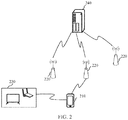
- FIG. 2 illustrates a schematic diagram illustrating a network connection of a smart home device involved in an example embodiment. As illustrated in FIG. 2 , there are a terminal 210, several base stations 220 and several smart home devices 230.
- the terminal 210 is a terminal having a cellular mobile communication capacity.
- the terminal 210 may communicate with one or more core networks via a radio access network (RAN).
- RAN radio access network
- the terminal 210 may be a mobile terminal, such as a mobile phone (or referred as "cellular" phone), and a computer having the mobile terminal, for example, a portable, pocket, handheld, computer built-in or vehicle-mounted mobile device, such as station (STA), mobile, remote station, access point, remote terminal, access terminal, user terminal, user agent, user device, or user equipment.
- the terminal 210 may also be a device of an unmanned aerial vehicle.
- the base station 220 may a network device in a wireless communication system.
- the wireless communication system may be the 4 th generation mobile communication (4G) system (also called as long term evolution system), or the 5G system (also called as new radio system). Or the wireless communication system may a next generation system of the 5G system.
- 4G 4 th generation mobile communication
- 5G also called as new radio system.
- the wireless communication system may a next generation system of the 5G system.
- the base station 220 may be an evolved node base station (eNB) adopted in the 4G system, or a next generation node base station (gNB) which adopts a centralized-distributed architecture in the 5G system.
- the base station 220 typically includes a central unit (CU) and at least two distributed units (DUs).
- the central unit is provided with a protocol stack including a packet data convergence protocol (PDCD) layer, a radio link control (RLC) layer, a media access control (MAC) layer.
- the distributed unit is provided with a protocol stack including a physical (PHY) layer.
- a detailed implementation of the base station 220 is not limited in the embodiments of the present disclosure.
- a wireless connection can be established between the base station 220 and the terminal 210 via the wireless radio.
- the wireless radio is a wireless radio based on a 4G standard.
- the wireless radio is a wireless radio based on a 5G standard, for example, the wireless radio is the new radio.
- the wireless radio may also be a wireless radio based on a next generation mobile communication network technology standard of the 5G.
- the above wireless communication system may further include a network management device 240.
- the network management device 240 may be a core network device in the wireless communication system.
- the network management device 240 may be a mobility management entity (MME) in an evolved packet core (EPC) network.
- MME mobility management entity
- EPC evolved packet core
- the network management device may also be another core network device, such as a serving gateway (SGW), a public data network gateway (PGW), a policy and charging rules function (PCRF) unit, or a home subscriber server (HSS), etc.
- SGW serving gateway
- PGW public data network gateway
- PCRF policy and charging rules function
- HSS home subscriber server
- An implementation of the network management device 240 is not limited in the embodiments of the present disclosure.
- the smart home device 230 may include, but be not limited to, a fixedly installed device or a small scope movable device, such as a camera, a sensor (such as an infrared sensor, a light sensor, a vibration sensor, a sound sensor and so on), a smart TV, a smart robot, a smart loudspeaker box, a smart refrigerator, a smart air conditioner, a smart rice cooker, a water purifier and so on.
- the smart home device 230 may also be a mobile device, such as a moving picture experts group audio layer III (MP3), an MP4, a smart Bluetooth earphone.
- MP3 moving picture experts group audio layer III
- MP4 MP4
- an information interaction between the smart home device 230 and a network may be realized by establishing a Wi-Fi connection between the smart home device 230 and a WLAN access point (such as a router, or a terminal 210 having a wireless hotpot function enabled). Since the Wi-Fi connection has a poor stability, data transmission between the smart home device 230 and the network may be affected, such that a communication requirement of the smart home device which has high requirements on time delay and reliability cannot be met.
- the present disclosure provides a method for accessing a network, which may allow the smart home device to access the cellular mobile network.
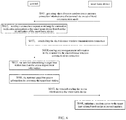
- FIG. 3 is a flowchart illustrating a method for accessing a network according to an example embodiment. As illustrated in FIG. 3 , the method for accessing a network may be applied in the system structure shown in FIG. 2 . The method may include the followings.
- step 301 a short-distance wireless communication connection is established between a smart home device and a terminal.
- step 302 the smart home device sends access requirement information to the terminal via the short-distance wireless communication connection.
- the access requirement information is configured to indicate a condition met by a base station to be accessed by the smart home device.
- step 303 the terminal determines a target base station based on the access requirement information.
- step 304 the terminal acquires access information for accessing the target base station.
- step 305 the terminal sends the access information to the smart home device.
- step 306 the smart home device initiates a random access to the target base station based on the access information.
- the terminal receives the access requirement information sent by the smart home device, determines the target base station based on the access requirement information and sends the access information for accessing the target base station to the smart home device, the smart home device initiates the random access to the target base station based on the access information such that the smart home device may access the cellular mobile network.
- the terminal provides the access information for accessing the base station to the smart home device, so that the smart home device may initiate the random access to the base station, and information interaction may be realized between the smart home device and the base station via the cellular mobile communication mode, thus meeting a communication requirement of the smart home device.
- FIG. 4 is a flowchart illustrating a method for accessing a network according to an example embodiment. As illustrated in FIG. 4 , the method for accessing a network may be applied in the system shown in FIG. 2 and executed by the smart home device 230 in FIG. 2 . The method may include the followings.
- step 401 a short-distance wireless communication connection is established with a terminal.
- step 402 access requirement information is sent to the terminal via the short-distance wireless communication connection.
- the access requirement information is configured to indicate a condition met by a base station to be accessed by the smart home device.
- step 403 access information sent by the terminal is received.
- the access information is used to access a target base station.
- the target base station is a base station determined by the terminal based on the access requirement information.
- step 404 a random access is initiated toward the target base station based on the access information.
- the smart home device may establish the short-distance wireless communication connection with the terminal as follows.
- An identification of the smart home device and connection verification information are provided to the terminal via an out-of-band communication mode.
- the out-of-band communication mode includes any communication mode other than the cellular mobile communication mode.
- the identification of the smart home device and the connection verification information can be provided to the terminal via the out-of-band communication mode as follows.
- the smart home device sends the identification of the smart home device and the connection verification information to the terminal via a near field communication (NFC) or Bluetooth (BT).
- NFC near field communication
- BT Bluetooth
- the smart home device displays an encoded image containing the connection verification information so that the terminal may recognize the encoded image to obtain the identification of the smart home device and the connection verification information.
- the access requirement information can be sent to the terminal via the short-distance wireless communication connection as follows.
- an access information acquiring request is sent to the terminal.
- the access information acquiring request contains the access requirement information.
- the access requirement information includes at least one of a business type of the smart home device, a quality of service (QoS) requirement of the smart home device and a type of a network accessible by the smart home device.
- QoS quality of service
- the access information contains a preamble code of the random access and a safety secret key for establishing a connection channel with a core network.
- the access information contains a preamble code of the random access.
- the smart home device sends the access requirement information to the terminal, and initiates the random access to the target base station based on the access information after receiving the access information fed back by the terminal in response to the access requirement information, such that the smart home device may access the cellular mobile network.
- the terminal provides the access information for accessing the base station to the smart home device, so that the smart home device may initiate the random access to the base station, and information interaction may be realized between the smart home device and the base station via the cellular mobile communication mode, thus meeting a communication requirement of the smart home device.
- FIG. 5 is a flowchart illustrating a method for accessing a network according to an example embodiment. As illustrated in FIG. 5 , the method for accessing a network may be applied in the system shown in FIG. 2 and executed by the terminal 210 in FIG. 2 . The method may include the followings.
- step 501 a short-distance wireless communication connection is established with a smart home device.
- step 502 access requirement information sent by the smart home device is received via the short-distance wireless communication connection.
- the access requirement information is configured to indicate a condition met by a base station to be accessed by the smart home device.
- a target base station is determined based on the access requirement information.
- step 504 access information for accessing the target base station is acquired.
- step 505 the access information is sent to the smart home device.
- the terminal sends the access information to the smart home device so that the smart home device may initiate a random access to the target base station based on the access information.
- the terminal may establish the short-distance wireless communication connection with the smart home device as follows.
- An identification of the smart home device and connection verification information provided by the smart home device are acquired via an out-of-band communication mode.
- the out-of-band communication mode includes any communication mode other than the cellular mobile communication mode.
- a connection request containing the connection verification information is sent to the smart home device based on the identification of the smart home device, so as to establish the short-distance wireless communication connection with the smart home device.
- the identification of the smart home device and the connection verification information provided by the smart home device can be acquired via the out-of-band communication mode as follows.
- the identification of the smart home device and the connection verification information provided by the smart home device are acquired via a near field communication (NFC) or Bluetooth (BT).
- NFC near field communication
- BT Bluetooth
- an encoded image displayed on the smart home device is scanned and recognized to obtain the identification of the smart home device and the connection verification information.
- the target base station can be determined based on the access requirement information as follows.
- Base station information of each base station within a cellular mobile communication range is acquired.
- Base stations having the base station information matching the access requirement information are selected from the base stations within the cellular mobile communication range as candidate base stations.
- the target base station is determined from the candidate base stations.
- the terminal may determine the target base station from the candidate base stations as follows.
- the base station having an optimum signal quality in the at least two base stations is determined as the target base station.
- the at least two base stations are sequenced based on a signal quality in an order from highest to lowest to obtain a queue of base stations and each of first N base stations in the queue of base stations is determined as the target base station.
- N is an integer greater than or equal to 2.
- the terminal receives the access requirement information sent by the smart home device via the short-distance wireless communication, determines the target base station based on the access requirement information, acquires the access information for accessing the target base station and sends the access information to the smart home device, so that the smart home device initiates the random access to the target base station based on the access information and the smart home device may access the cellular mobile network.
- the terminal provides the access information for accessing the base station to the smart home device, so that the smart home device may initiate the random access to the base station, and information interaction may be realized between the smart home device and the base station via the cellular mobile communication mode, thus meeting a communication requirement of the smart home device.
- a smart home device accesses to the cellular mobile network via communication between the smart home device and a terminal.
- Technical solutions shown in FIG. 3 , FIG. 4 and FIG. 5 will be described herein in detail.
- FIG. 6 is a flowchart illustrating a method for accessing a network according to an example embodiment. As illustrated in FIG. 6 , the method for accessing a network may be applied in the system shown in FIG. 2 . The method may include the followings.
- the smart home device provides short-distance wireless communication connection information to the terminal via an out-of-band communication mode.
- the short-distance wireless communication connection information contains an identification of the smart home device and connection verification information.
- the out-of-band communication mode includes any communication mode other than the cellular mobile communication mode.
- the out-of-band communication mode may be a near field communication (NFC) or Bluetooth (BT) mode.
- NFC near field communication
- BT Bluetooth
- the smart home device sends the short-distance wireless communication connection information containing the identification of the smart home device and the connection verification information to the terminal via the NFC or BT.
- the NFC is taken as the out-of-band communication mode, in a passive mode, after the terminal (also called as initiating device) enables the NFC function, a radio-frequency field is provided during the whole communication.
- the radio-frequency field may adopt a transmission rate from 106 kbps, 212 kbps, and 424 kbps.
- the smart home device also called as target device
- the terminal and the smart home device may generate their respective radio-frequency fields which may be used for communication between the terminal and the smart home device, such that the terminal may acquire the short-distance wireless communication connection information. Since the active mode has the same effect as the passive mode, its principle is not described herein.
- the smart home device may display an encoded image containing the connection verification information, so that the terminal may recognize the encoded image to obtain the identification of the smart home device and the connection verification information.
- the above encoded image may be an image which may carry information, such as a two-dimensional code image or a barcode image.
- the smart home device displays a two-dimensional code containing the connection verification information
- a user may recognize the two-dimensional code displayed on the smart home device through an application of scanning a two-dimensional code that is installed on the terminal, such that the terminal may obtain the short-distance wireless communication connection information containing the identification of the smart home device and the connection verification information.
- the smart home device includes a display screen.
- the smart home device may display the two-dimensional code containing the short-distance wireless communication connection information on the display screen.
- the user opens the application of scanning a two-dimensional code in the terminal, scans the two-dimensional code displayed on the display screen through an image acquisition component (such as a camera) in the terminal, so as to recognize the short-distance wireless communication connection information contained in the two-dimensional code.
- an image acquisition component such as a camera
- the above encoded image may be displayed by means of an entity.
- the encoded image may be a tag attached to a shell, a package, a specification or a warranty card of the smart home device.
- the user opens the application of scanning a two-dimensional code in the terminal, scans the two-dimensional code in the tag through an image acquisition component (such as a camera) in the terminal, so as to recognize the short-distance wireless communication connection information contained in the two-dimensional code.
- the short-distance wireless communication connection information may further contain a type of the smart home device, a communication capacity of the smart home device and other information.
- step 602 the terminal sends a connection request containing the connection verification information to the smart home device based on the identification of the smart home device.
- the smart home device receives the connection request sent by the terminal.
- the short-distance wireless communication connection may include a Wi-Fi connection, a ZigBee connection, an NFC connection, an ultra-wideband (UWB) connection and so on.
- the terminal may determine a type of the short-distance wireless communication connection to be established with the smart home device based on a short-distance wireless communication after acquiring the short-distance wireless communication connection information. For example, the terminal may determine the type of the short-distance wireless communication connection corresponding to the identification of the smart home device and the connection verification information based on information such as the type of the smart home device and/or the communication capability of the smart home device contained in the short-distance wireless communication connection information.
- the terminal may determine that the Wi-Fi connection may be established with the smart home device.
- the terminal may determine that the type of the short-distance wireless communication connection to be established with the smart home device is a default type. For example, by default, the Wi-Fi connection may be established with the smart home device based on the identification of the smart home device and the connection verification information.
- the terminal may send the connection request to the smart home device based on the identification of the smart home device after determining the type of the short-distance wireless communication connection to be established with the smart home device.
- the short-distance wireless communication connection is the Wi-Fi connection
- the terminal may search for a broadcast signal of a surrounding WLAN access point after acquiring the identification of the smart home device and the connection verification information, compares a service set identifier (SSID) carried in the broadcast signal with the identification of the smart home device, determines that the WLAN access point is the smart home device if the SSID and the identification are consistent with each other, and sends the connection request to the smart home device.
- SSID service set identifier
- step 603 the smart home device establishes the short-distance wireless communication connection with the terminal when receiving the connection request containing the connection verification information sent by the terminal.
- the smart home device After receiving the connection request sent by the terminal, the smart home device detects whether the connection request contains the correct connection verification information, and establishes the short-distance wireless communication connection with the terminal when detecting that the connection request contains the correct connection verification information.
- step 604 the smart home device sends access requirement information to the terminal via the short-distance wireless communication connection.
- the terminal receives the access requirement information via the short-distance wireless communication connection.
- the access requirement information is configured to indicate a condition met by a base station to be accessed by the smart home device.
- the smart home device sends an access information acquiring request to the terminal when detecting that the short-distance wireless communication connection is established.
- the access information acquiring request contains the access requirement information.
- the smart home device when the smart home device detects that the short-distance wireless communication is completed between itself and the terminal, the smart home device may actively sends the access requirement information to the connected terminal via the connection.
- the access requirement information includes at least one of a business type of the smart home device, a quality of service (QoS) requirement of the smart home device and a type of a network accessible by the smart home device.
- QoS quality of service
- the business types may be classified based on a type of data transmitted between the smart home device and the network.
- the business types may include a video monitoring business, a speech transmitting business, a smart scene controlling business or the like.
- the business types may be classified based on an interaction requirement of information interaction between the smart home device and the network.
- the business types may include a first business requiring high speed transmission, a second business requiring high reliable transmission, a third business requiring low latency transmission and so on.
- the type of the network accessible by the smart home device can be categorized based on the application scene.
- the type of the network accessible by the smart home device can be categorized as a first type network applicable to an enhance mobile broadband (eMBB) scene, a second type network applicable to a massive machine type of communication (mMTC) scene, a third type network applicable to an ultra-reliable && low latency communication scene or the like.
- eMBB enhance mobile broadband
- mMTC massive machine type of communication
- a program instruction that may send the access requirement information of the smart home device are preconfigured, with an establishment of the short-distance wireless communication connection as a condition.
- the smart home device detects that the short-distance wireless communication connection is established, the smart home device is triggered to execute the program instruction, so as to send the access requirement information of the smart home device to the connected terminal via the short-distance wireless communication connection.
- the preconfigured program instruction may be set by a developer or an operator in advance.
- step 605 the terminal determines a target base station based on the access requirement information.
- the terminal acquires base station information of each base station within the cellular mobile communication range, selects base stations having the base station information matching the access requirement information from the base stations within a cellular mobile communication range as candidate base stations, and determines the target base station from the candidate base stations.
- the terminal may perform cell synchronization with each surrounding base station, acquires information carried in a mater information block (MIB) and/or at least one system information block (SIB) in a signal sent by each surrounding base station, and acquires the base station information based on the acquired information.
- the base station information may include, but be not limited to, a cell identification of the base station, a type of a business provided by the base station, a QoS requirement met by the base station, a type of a network to which the base station belongs, and so on.
- the access requirement information sent by the smart home device is the QoS requirement of the smart home device
- the terminal receives the QoS requirement sent by the smart home device, acquires the base station information of each base station within the cellular mobile communication range of itself, screens the base stations based on the base station information to acquire base stations meeting the QoS requirement of the smart home device as candidate base stations, and determines the target base station from the candidate base stations.
- the target base station is determined from the candidate base stations as follows.
- the base station having an optimum signal quality in the at least two base stations is determined as the target base station.
- the at least two base stations are sequenced based on a signal quality in an order from highest to lowest to obtain a queue of base stations and each of first N base stations in the queue of base stations is determined as the target base station, where N is an integer greater than or equal to 2.
- the target base station is selected based on the signal quality of the base station, when the candidate base stations include at least two base stations, the terminal screens out the base station having the optimum signal quality based on the signal quality of the base station contained in the detected base station information, and determines the base station having the optimum signal quality as the target base station.
- the terminal screens out N target base stations, where N is an integer greater than or equal to 2. The terminal sequences the candidate base stations based on a signal quality in an order from highest to lowest to obtain a queue of base stations and determines each of first N base stations in the queue of base stations as the target base station. N can be set by the developer or an operator in advance.
- step 606 the terminal acquires access information for accessing the target base station.
- the access information contains a preamble code of the random access.
- the access information contains a preamble code of the random access and a safety secret key for establishing a connection channel with a core network.
- step 607 the terminal sends the access information to the smart home device via the short-distance wireless communication connection.
- step 608 the smart home device initiates a random access to the target base station based on the access information.
- the terminal may acquire the access information for accessing the target base station.
- the access information is a preamble code of the random access
- the preamble code of the random access is allocated by the target base station.
- the terminal may acquire the preamble code allocated by the base station and send the preamble code to the smart home device via the short-distance wireless communication connection.
- the smart home device may initiate the random access to the base station automatically after receiving the preamble code.
- the procedure of the base station making consequent response and completing the random access is similar to the non-competition-based random access procedure shown in FIG. 1 , which is not described here.
- the terminal may acquire the preamble codes randomly allocated by a plurality of base stations, and sends these preamble codes to the smart home device.
- the smart home device receives multiple preamble codes, the smart home device selects the preamble code allocated by one target base station and initiates the random access to the target base station.
- Other preamble codes may be stored in the smart home device for consequent use in situations that the access is failed or the access is required.
- the preamble code of the random access is a preamble code randomly selected by the terminal from a preamble code resource pool.
- the terminal sends the acquired preamble code to the smart home device.
- the smart home device initiates the random access to the target base station in the competition-based random access mode after acquiring the preamble code and the safety secret key carried in the access information.
- the procedure of the base station making consequent response and completing the random access is similar to the competition-based random access procedure shown in FIG. 1 , which is not described here.
- the smart home device may further establish the connection channel with the core network based on the safety secret key.
- the terminal receives the access requirement information sent by the smart home device, determines the target base station based on the access requirement information and sends the access information for accessing the target base station to the smart home device, the smart home device initiates the random access to the target base station based on the access information such that the smart home device may access the cellular mobile network.
- the terminal provides the access information for accessing the base station to the smart home device, so that the smart home device may initiate the random access to the base station, and information interaction may be realized between the smart home device and the base station via the cellular mobile communication mode, thus meeting a communication requirement of the smart home device.
- FIG. 7 is a block diagram illustrating an apparatus for accessing a cellular mobile network according to an example embodiment.
- the apparatus may be implemented as a part or all of a smart home device in an implementation environment shown in FIG. 2 through software, hardware or a combination thereof, to execute the steps executed by the smart home device described in any embodiment shown in FIG. 4 or FIG. 6 .
- the apparatus may include an establishing module 710, an access requirement information sending module 720, an access information receiving module 730 and a random access initiating module 740.
- the establishing module 710 is configured to establish a short-distance wireless communication connection with a terminal.
- the access requirement information sending module 720 is configured to send access requirement information to the terminal via the short-distance wireless communication connection.
- the access requirement information indicates a condition met by a base station to be accessed by the smart home device.
- the access information receiving module 730 is configured to receive access information for accessing a target base station sent by the terminal, in which the target base station is a base station determined by the terminal based on the access requirement information.
- the random access initiating module 740 is configured to initiate a random access to the target base station based on the access information.
- the establishing module 710 is configured to provide an identification of the smart home device and connection verification information to the terminal in an out-of-band communication mode, in which the out-of-band communication mode includes any communication mode other than a cellular mobile communication mode. And the establishing module 710 is configured to establish the short-distance wireless communication connection with the terminal when receiving a connection request containing the connection verification information sent by the terminal.
- the establishing module 710 is configured to send the identification of the smart home device and the connection verification information to the terminal via a near field communication (NFC) or Bluetooth (BT), or display an encoded image containing the connection verification information so that the terminal recognizes the encoded image to acquire the identification of the smart home device and the connection verification information.
- NFC near field communication
- BT Bluetooth
- the access requirement information sending module 720 is configured to send an access information acquiring request to the terminal when detecting that the short-distance wireless communication connection is established, in which the access information acquiring request contains the access requirement information.
- the access requirement information includes at least one of a business type of the smart home device, a quality of service (QoS) requirement of the smart home device and a type of a network accessible by the smart home device.
- QoS quality of service
- the access information contains a preamble code of the random access and a safety secret key for establishing a connection channel with a core network, or the access information contains a preamble code of the random access.
- FIG. 8 is a block diagram illustrating an apparatus for accessing a cellular mobile network according to an example embodiment.
- the apparatus may be implemented as a part or all of a terminal in an implementation environment shown in FIG. 2 through software, hardware or a combination thereof, to execute the steps executed by the terminal described in any embodiment shown in FIG. 5 or FIG. 6 .
- the apparatus may include an establishing module 810, an access requirement information receiving module 820, a target base station determining module 830, an access information acquiring module 840 and an access information sending module 850.
- the establishing module 810 is configured to establish a short-distance wireless communication connection with a smart home device.
- the access requirement information receiving module 820 is configured to receive access requirement information sent by the smart home device via the short-distance wireless communication connection, in which the access requirement information indicates a condition met by a base station to be accessed by the smart home device.
- the target base station determining module 830 is configured to determine a target base station based on the access requirement information.
- the access information acquiring module 840 is configured to acquire access information for accessing the target base station.
- the access information sending module 850 is configured to send the access information to the smart home device so that the smart home device initiates a random access to the target base station based on the access information.
- the establishing module 810 is configured to acquire an identification of the smart home device and connection verification information provided by the smart home device in an out-of-band communication mode, in which the out-of-band communication mode includes any communication mode other than a cellular mobile communication mode. And the establishing module 810 is configured to send a connection request containing the connection verification information to the smart home device based on the identification of the smart home device, so as to establish the short-distance wireless communication connection with the smart home device.
- the establishing module 810 when acquiring the identification of the smart home device and the connection verification information provided by the smart home device in the out-of-band communication mode, is configured to acquire the identification of the smart home device and the connection verification information provided by the smart home device via a near field communication (NFC) or Bluetooth (BT), or the establishing module 810 is configured to scan and recognize an encoded image displayed on the smart home device to acquire the identification of the smart home device and the connection verification information.
- NFC near field communication
- BT Bluetooth
- the target base station determining module 830 is configured to acquire base station information of each base station within a cellular mobile communication range, select base stations having the base station information matching the access requirement information from the base stations within the cellular mobile communication range as candidate base stations and determine the target base station from the candidate base stations.
- the target base station determining module 830 is configured to determine the base station having an optimum signal quality from the at least two base stations as the target base station, or the target base station determining module 830 is configured to sequence the at least two base stations based on a signal quality in an order from highest to lowest to obtain a queue of base stations and determine each of first N base stations in the queue of base stations as the target base station, where N is an integer greater than or equal to 2.
- the apparatus provided by the embodiments of the present disclosure are described based on the above division of functional modules when the apparatus implements its functionalities.
- the above functionalities may be allocated to different functional modules according to requirements, i.e., the apparatus can be divided into different functional modules, so as to complete all or part of functionalities described above.
- the embodiments of the present disclosure further provide a network access system, including a smart home device and a terminal.
- the smart home device includes the apparatus for accessing a network shown in FIG. 7 .
- the terminal includes the apparatus for accessing a network shown in FIG. 8 .
- the embodiments of the present disclosure further provide an apparatus for accessing a cellular mobile network which may execute all or part of the steps executed by the smart home device described in any embodiment shown in FIG. 3 , FIG. 4 or FIG. 6 of the present disclosure.
- the apparatus may include a processor and memory configured to store instructions executable by the processor.
- the processor is configured to establish a short-distance wireless communication connection with a smart home device, receive access requirement information sent by the smart home device via the short-distance wireless communication connection, in which the access requirement information indicates a condition met by a base station to be accessed by the smart home device, determine a target base station based on the access requirement information, acquire access information for accessing the target base station, and send the access information to the smart home device so that the smart home device initiates a random access to the target base station based on the access information.
- establishing the short-distance wireless communication connection with the terminal includes providing an identification of the smart home device and connection verification information to the terminal in an out-of-band communication mode, in which the out-of-band communication mode includes any communication mode other than a cellular mobile communication mode, and establishing the short-distance wireless communication connection with the terminal when receiving a connection request containing the connection verification information sent by the terminal.
- providing the identification of the smart home device and the connection verification information to the terminal in the out-of-band communication mode includes sending the identification of the smart home device and the connection verification information to the terminal via a near field communication (NFC) or Bluetooth (BT), or displaying an encoded image containing the connection verification information so that the terminal recognizes the encoded image to acquire the identification of the smart home device and the connection verification information.
- NFC near field communication
- BT Bluetooth
- sending the access requirement information to the terminal via the short-distance wireless communication connection includes sending an access information acquiring request to the terminal when detecting that the short-distance wireless communication connection is established, in which the access information acquiring request contains the access requirement information.
- the access requirement information includes at least one of a business type of the smart home device, a quality of service (QoS) requirement of the smart home device and a type of a network accessible by the smart home device.
- QoS quality of service
- the access information contains a preamble code of the random access and a safety secret key for establishing a connection channel with a core network, or the access information contains a preamble code of the random access.
- the embodiments of the present disclosure further provide an apparatus for accessing a cellular mobile network which may execute all or part of the steps executed by the terminal described in any embodiment shown in FIG. 3 , FIG. 5 or FIG. 6 of the present disclosure.
- the apparatus may include a processor and memory configured to store instructions executable by the processor.
- the processor is configured to perform operations of: establishing a short-distance wireless communication connection with a smart home device, receiving access requirement information sent by the smart home device via the short-distance wireless communication connection, in which the access requirement information indicates a condition met by a base station to be accessed by the smart home device, determining a target base station based on the access requirement information, acquiring access information for accessing the target base station, and sending the access information to the smart home device so that the smart home device initiates a random access to the target base station based on the access information.
- acquiring the identification of the smart home device and the connection verification information provided by the smart home device in the out-of-band communication mode includes acquiring the identification of the smart home device and the connection verification information provided by the smart home device via a near field communication (NFC) or Bluetooth (BT), or acquiring the identification of the smart home device and the connection verification information provided by the smart home device in the out-of-band communication mode includes scanning and recognizing an encoded image displayed on the smart home device to acquire the identification of the smart home device and the connection verification information.
- NFC near field communication
- BT Bluetooth
- determining the target base station based on the access requirement information includes acquiring base station information of each base station within a cellular mobile communication range, selecting base stations having the base station information matching the access requirement information from the base stations within the cellular mobile communication range as candidate base stations and determining the target base station from the candidate base stations.
- determining the target base station from the candidate base stations includes determining the base station having an optimum signal quality from the at least two base stations as the target base station, or determining the target base station from the candidate base stations includes sequencing the at least two base stations based on a signal quality in an order from highest to lowest to obtain a queue of base stations and determining each of first N base stations in the queue of base stations as the target base station, where N is an integer greater than or equal to 2.
- the technical solution of the present disclosure is described by mainly taking a terminal and a server as an example.
- the terminal and the server include corresponding hardware structures and/or software modules for performing the functionalities.
- units and algorithm steps may be implemented by electronic hardware, computer software, or a combination thereof.
- the foregoing has generally described compositions and steps of each example according to functions. Whether the functions are performed by hardware or software depends on particular applications and design constraint conditions of the technical solutions. A person skilled in the art may use different methods to implement the described functions for each particular application, but it should not be considered that the implementation goes beyond the scope of the present invention.
- FIG. 9 is a block diagram illustrating an apparatus 900 for accessing a cellular mobile network according to an example embodiment.
- the apparatus 900 may be provided as a terminal or a smart home device.
- the apparatus 900 may include a processing component 922, which further includes one or more processors, and a memory resource represented by memory 932 for storing instructions executable by the processing component 922, such as application programs.
- the application program stored in the memory 932 may include one or more modules each corresponding to a set of instructions.
- the processing component 922 is configured to execute instructions to perform the above method for accessing a network, or all or part of the steps executed by the terminal or the smart home device.
- the apparatus 900 may further include a power supply component 926 configured to perform power management of the apparatus 900, a wired or wireless network interface 950 configured to connect the apparatus 900 to the network, and an input and output (I/O) interface 938.
- the apparatus 900 could operate based on an operating system stored in the memory 932, such as Windows ServerTM, Mac OS XTM, UnixTM, LinuxTM, FreeBSDTM or the like.
- the functionalities described in the embodiments of the present disclosure may be realized by hardware, software, firmware or combinations thereof. If the functionalities are achieved by software, these functionalities may be stored in a computer readable medium or used as one or more instructions or codes in the computer readable medium for transmission.
- the computer readable medium may include a computer storage medium and a computer communication medium.
- the communication medium includes any medium for transmitting computer programs from one place to another place.
- the storage medium may be any available medium accessible by a general or dedicated computer.
- the embodiments of the present disclosure further provide a computer storage medium for storing computer software instructions used by the terminal or the smart home device described above, which includes programs designed for executing the above method for accessing a network.
Landscapes
- Engineering & Computer Science (AREA)
- Computer Networks & Wireless Communication (AREA)
- Signal Processing (AREA)
- Automation & Control Theory (AREA)
- Computer Security & Cryptography (AREA)
- Mobile Radio Communication Systems (AREA)
Abstract
Description
- The present disclosure relates to a field of smart home technology, and more particularly to a method for accessing a network, an apparatus for accessing a network, and storage medium.
- With development of network technologies, more and more smart home devices have functionalities of accessing the Internet, so as to perform information interaction with other devices or servers via the Internet.
- In the related art, the smart home device usually accesses the Internet via a wireless local area network (WLAN). For example, the smart home device searches for a wireless access point (such as a router or a terminal having a wireless hotspot function enabled) in a nearby area, and sends a connection request to the wireless access point to establish a wireless-fidelity (Wi-Fi) connection with the wireless access point. When the connection is established successfully and the wireless local area network of the wireless access point accesses to the Internet, the smart home device may perform information interaction with devices at the Internet via the wireless access point.
- Embodiments of the present disclosure provide a method for accessing a network, an apparatus for accessing a network and storage medium. The technical solution can be described as follows.
- According to a first aspect of the present disclosure, a method for accessing a network is provided. The method includes establishing a short-distance wireless communication connection between a smart home device and a terminal, sending by the smart home device access requirement information to the terminal via the short-distance wireless communication connection, wherein the access requirement information indicates a condition met by a base station to be accessed by the smart home device, determining by the terminal a target base station based on the access requirement information, acquiring by the terminal access information for accessing the target base station, sending by the terminal the access information to the smart home device and initiating by the smart home device a random access to the target base station based on the access information.
- According to a second aspect of the present disclosure, a method for accessing a network is provided. The method is executed by a smart home device. The method includes establishing a short-distance wireless communication connection with a terminal, sending access requirement information to the terminal via the short-distance wireless communication connection, wherein the access requirement information indicates a condition met by a base station to be accessed by the smart home device, receiving access information for accessing a target base station sent by the terminal, wherein the target base station is a base station determined by the terminal based on the access requirement information, and initiating a random access to the target base station based on the access information.
- Optionally, establishing the short-distance wireless communication connection with the terminal includes providing an identification of the smart home device and connection verification information to the terminal in an out-of-band communication mode, wherein the out-of-band communication mode includes any communication mode other than a cellular mobile communication mode, and establishing the short-distance wireless communication connection with the terminal when receiving a connection request containing the connection verification information sent by the terminal.
- Optionally, providing the identification of the smart home device and the connection verification information to the terminal in the out-of-band communication mode includes sending the identification of the smart home device and the connection verification information to the terminal via a near field communication (NFC) or Bluetooth (BT), or displaying an encoded image containing the connection verification information so that the terminal recognizes the encoded image to acquire the identification of the smart home device and the connection verification information.
- Optionally, sending the access requirement information to the terminal via the short-distance wireless communication connection includes sending an access information acquiring request to the terminal when detecting that the short-distance wireless communication connection is established, wherein the access information acquiring request contains the access requirement information.
- Optionally, the access requirement information includes at least one of a business type of the smart home device, a quality of service (QoS) requirement of the smart home device and a type of a network accessible by the smart home device.
- Optionally, the access information contains a preamble code of the random access and a safety secret key for establishing a connection channel with a core network, or the access information contains a preamble code of the random access.
- According to a third aspect of the present disclosure, a method for accessing a network is provided. The method is executed by a terminal. The method includes establishing a short-distance wireless communication connection with a smart home device, receiving access requirement information sent by the smart home device via the short-distance wireless communication connection, wherein the access requirement information indicates a condition met by a base station to be accessed by the smart home device, determining a target base station based on the access requirement information, acquiring access information for accessing the target base station, and sending the access information to the smart home device so that the smart home device initiates a random access to the target base station based on the access information.
- Optionally, acquiring the identification of the smart home device and the connection verification information provided by the smart home device in the out-of-band communication mode includes acquiring the identification of the smart home device and the connection verification information provided by the smart home device via a near field communication (NFC) or Bluetooth (BT), or acquiring the identification of the smart home device and the connection verification information provided by the smart home device in the out-of-band communication mode includes scanning and recognizing an encoded image displayed on the smart home device to acquire the identification of the smart home device and the connection verification information.
- Optionally, determining the target base station based on the access requirement information includes acquiring base station information of each base station within a cellular mobile communication range, selecting base stations having the base station information matching the access requirement information from the base stations within the cellular mobile communication range as candidate base stations and determining the target base station from the candidate base stations.
- Optionally, when the candidate base stations include at least two base stations, determining the target base station from the candidate base stations includes determining the base station having an optimum signal quality from the at least two base stations as the target base station, or determining the target base station from the candidate base stations includes sequencing the at least two base stations based on a signal quality in an order from highest to lowest to obtain a queue of base stations and determining each of first N base stations in the queue of base stations as the target base station, where N is an integer greater than or equal to 2.
- According to a fourth aspect of the present disclosure, an apparatus for accessing a network is provided. The apparatus is applicable to a smart home device and includes an establishing module, an access requirement information sending module, an access information receiving module and a random access initiating module. The establishing module is configured to establish a short-distance wireless communication connection with a terminal. The access requirement information sending module is configured to send access requirement information to the terminal via the short-distance wireless communication connection, wherein the access requirement information indicates a condition met by a base station to be accessed by the smart home device. The access information receiving module is configured to receive access information for accessing a target base station sent by the terminal, wherein the target base station is a base station determined by the terminal based on the access requirement information. The random access initiating module is configured to initiate a random access to the target base station based on the access information.
- Optionally, the establishing module is configured to provide an identification of the smart home device and connection verification information to the terminal in an out-of-band communication mode, wherein the out-of-band communication mode includes any communication mode other than a cellular mobile communication mode. And the establishing module is configured to establish the short-distance wireless communication connection with the terminal when receiving a connection request containing the connection verification information sent by the terminal.
- Optionally, when providing the identification of the smart home device and the connection verification information to the terminal in the out-of-band communication mode, the establishing module is configured to send the identification of the smart home device and the connection verification information to the terminal via a near field communication (NFC) or Bluetooth (BT), or display an encoded image containing the connection verification information so that the terminal recognizes the encoded image to acquire the identification of the smart home device and the connection verification information.
- Optionally, the access requirement information sending module is configured to send an access information acquiring request to the terminal when detecting that the short-distance wireless communication connection is established, wherein the access information acquiring request contains the access requirement information.
- Optionally, the access requirement information includes at least one of a business type of the smart home device, a quality of service (QoS) requirement of the smart home device and a type of a network accessible by the smart home device.
- Optionally, the access information contains a preamble code of the random access and a safety secret key for establishing a connection channel with a core network, or the access information contains a preamble code of the random access.
- According to a fifth aspect of the present disclosure, an apparatus for accessing a network is provided. The apparatus is applicable to a terminal and includes an establishing module, an access requirement information receiving module, a target base station determining module, an access information acquiring module and an access information sending module. The establishing module is configured to establish a short-distance wireless communication connection with a smart home device. The access requirement information receiving module is configured to receive access requirement information sent by the smart home device via the short-distance wireless communication connection, wherein the access requirement information indicates a condition met by a base station to be accessed by the smart home device. The target base station determining module is configured to determine a target base station based on the access requirement information. The access information acquiring module is configured to acquire access information for accessing the target base station. The access information sending module is configured to send the access information to the smart home device so that the smart home device initiates a random access to the target base station based on the access information.
- Optionally, the establishing module is configured to acquire an identification of the smart home device and connection verification information provided by the smart home device in an out-of-band communication mode, wherein the out-of-band communication mode includes any communication mode other than a cellular mobile communication mode. And the establishing module is configured to send a connection request containing the connection verification information to the smart home device based on the identification of the smart home device, so as to establish the short-distance wireless communication connection with the smart home device.
- Optionally, when acquiring the identification of the smart home device and the connection verification information provided by the smart home device in the out-of-band communication mode, the establishing module is configured to acquire the identification of the smart home device and the connection verification information provided by the smart home device via a near field communication (NFC) or Bluetooth (BT), or the establishing module is configured to scan and recognize an encoded image displayed on the smart home device to acquire the identification of the smart home device and the connection verification information.
- Optionally, the target base station determining module is configured to acquire base station information of each base station within a cellular mobile communication range, select base stations having the base station information matching the access requirement information from the base stations within the cellular mobile communication range as candidate base stations and determine the target base station from the candidate base stations.
- Optionally, when the candidate base stations comprise at least two base stations, the target base station determining module is configured to determine the base station having an optimum signal quality from the at least two base stations as the target base station, or the target base station determining module is configured to sequence the at least two base stations based on a signal quality in an order from highest to lowest to obtain a queue of base stations and determine each of first N base stations in the queue of base stations as the target base station, where N is an integer greater than or equal to 2.
- According to a sixth aspect of the present disclosure, an apparatus for accessing a network is provided. The apparatus is applicable to a smart home device and includes a processor and memory configured to store instructions executable by the processor. The processor is configured to establish a short-distance wireless communication connection with a terminal, send access requirement information to the terminal via the short-distance wireless communication connection, wherein the access requirement information indicates a condition met by a base station to be accessed by the smart home device, receive access information for accessing a target base station sent by the terminal, wherein the target base station is a base station determined by the terminal based on the access requirement information, and initiate a random access to the target base station based on the access information.
- According to a seventh aspect of the present disclosure, an apparatus for accessing a network is provided. The apparatus is applicable to a terminal and includes a processor and memory configured to store instructions executable by the processor. The processor is configured to establish a short-distance wireless communication connection with a smart home device, receive access requirement information sent by the smart home device via the short-distance wireless communication connection, wherein the access requirement information indicates a condition met by a base station to be accessed by the smart home device, determine a target base station based on the access requirement information, acquire access information for accessing the target base station, and send the access information to the smart home device so that the smart home device initiates a random access to the target base station based on the access information.
- According to an eighth aspect of embodiments of the present disclosure, a network access system is provided. The system includes a smart home device and a terminal. The smart home device includes the apparatus for accessing a network according to the fourth aspect or any alternative implementation of the fourth aspect. The terminal includes the apparatus for accessing a network according to the fifth aspect or any alternative implementation of the fifth aspect.
- According to a ninth aspect of embodiments of the present disclosure, a computer-readable storage medium is provided. The computer-readable storage medium has executable instructions stored therein. A processor in a terminal invokes the executable instructions to implement the method for accessing a network according to the second aspect or any alternative implementation of the second aspect.
- According to a tenth aspect of embodiments of the present disclosure, a computer-readable storage medium is provided. The computer-readable storage medium has executable instructions stored therein. A processor in a terminal invokes the executable instructions to implement the method for accessing a network according to the third aspect or any alternative implementation of the third aspect.
- The technical solution according to embodiments of the present disclosure may include the following beneficial effects.
- After the short-distance wireless communication is established between the smart home device and the terminal, the terminal receives the access requirement information sent by the smart home device, determines the target base station based on the access requirement information and sends the access information for accessing the target base station to the smart home device, the smart home device initiates the random access to the target base station based on the access information such that the smart home device may access the cellular mobile network. In the present disclosure, the terminal provides the access information for accessing the base station to the smart home device, so that the smart home device may initiate the random access to the base station, and information interaction may be realized between the smart home device and the base station via the cellular mobile communication mode, thus meeting a communication requirement of the smart home device.
- It should be understood that the above general description and the following details are explanatory and illustrative, and shall not be construed to limit the present disclosure.
- The accompanying drawings are incorporated into the disclosure as one part therein to illustrate embodiments of the present disclosure. The accompanying drawings together with the specification explain the principle of the present disclosure.
-
FIG. 1 is a flowchart illustrating a random access procedure involved in an example embodiment. -
FIG. 2 is a schematic diagram illustrating a network connection of a smart home device involved in an example embodiment. -
FIG. 3 is a flowchart illustrating a method for accessing a network according to an example embodiment. -
FIG. 4 is a flowchart illustrating a method for accessing a network according to an example embodiment. -
FIG. 5 is a flowchart illustrating a method for accessing a network according to an example embodiment. -
FIG. 6 is a flowchart illustrating a method for accessing a network according to an example embodiment. -
FIG. 7 is a block diagram illustrating an apparatus for accessing a network according to an example embodiment. -
FIG. 8 is a block diagram illustrating an apparatus for accessing a network according to an example embodiment. -
FIG. 9 is a block diagram illustrating an apparatus for accessing a network according to an example embodiment. - Reference will be made in detail to embodiments of the present disclosure. Throughout the descriptions with reference to the accompanying drawings, unless specified or limited otherwise, the same or similar elements and the elements are denoted by the same reference numeral in different drawings. The implementations described in the following embodiments shall not be construed to represent all implementations of the present disclosure. Rather, they are merely some examples of the apparatus and method according to some aspects of the present disclosure, as described in the claims.
- The technical solution of the present disclosure may be applied in a scene of establishing a wireless connection between a smart home device and a network in daily life. For ease of understand, some terms involved in the embodiments of the present disclosure will be described in brief as follows.
- Out-of-band communication, generally, data transmitted in an out-of-band communication mode may be referred as out of band (OOB). OOB transport layer protocol uses the out of band to send some particular data. For example, when a first communication user has important data to be transmitted to a second user, the protocol may send the data to the opposite party quickly. In order to effectively and safely send the data, the protocol typically uses different channel from general data, i.e., using additional communication channel. It can be easily seen that, in this way, the data is not easily to be blocked, such that the data can be transmitted quickly and conveniently. In the embodiments of the present disclosure, the out-of-band communication mode refers to any communication mode other than the cellular mobile communication mode, includes but is not limited to near field communication (NFC), Bluetooth, encoded image recognition and so on.
- Random access, in the related art, the random access refers to a procedure starting from sending a preamble code of the random access by a terminal to try to connect with a base station to establishing a signaling connection with the base station after the terminal and the base station/cell realize synchronization in the cellular mobile communication.
- Before the random access procedure begins, the base station sends configuration information of the random access procedure to the terminal, and the terminal performs the random access procedure based on the received configuration information. In detail, the random access procedure typically includes a competition-based random access procedure and a non-competition-based random access procedure. Taking the competition-based random access procedure as an example, with reference to
FIG. 1, FIG. 1 illustrates a flowchart illustrating a random access procedure involved in an example embodiment. - As illustrated in
FIG. 1 , instep 110, the terminal selects a preamble sequence (also called as preamble code) from a preamble sequence resource pool and sends the preamble sequence to the base station. A message containing the preamble code can also be called a message 1 (Msg1). The base station may perform correlation detection on a received signal to recognize the preamble sequence sent from the user. - In
step 120, the base station sends a random access response (RAR) to the terminal. The RAR may also be called as message 2 (Msg2). The RAR contains an identification of the preamble sequence of random access, a timing advance command determined based on a time delay estimation between the base station and the terminal, a temporary cell-radio network temporary identifier (TC-RNTI), time-frequency resource allocated for a next uplink transmission of the terminal, and other information. - In
step 130, the terminal sends a message 3 (Msg3) to the base station based on information in the RAR. The Msg3 contains a terminal identifier, a radio resource control (RRC) linkage request, and other information. The terminal identifier may be a unique identifier corresponding to the terminal. - In
step 140, the base station sends a conflict resolution identifier (also called as Msg4) containing the terminal identifier of the terminal outplaying others in the conflict resolution to the terminal. If the terminal detects the identifier of itself, the terminal upgrades the TC-RNTI to a cell-radio network temporary identifier (C-RNTI), sends an acknowledgement (ACK) signal to the base station to complete the random access procedure, and waits to be scheduled by the base station. - It should be noted that, in the
above block 120, the random access response is sent in a physical downlink shared channel between the terminal and the base station. During transmission of the random access response, the base station uses a random access-radio network temporary identifier (RA-RNTI) to scramble a physical downlink control channel corresponding to the physical downlink shared channel. The RA-RNTI has a one-to-one correspondence with the time-frequency resource occupied by transmission of the preamble sequence and detected by the base station. In this case, the terminal may calculate the corresponding RA-RNTI and uses the RA-RNTI to descramble the physical downlink control channel to further detect the random access response. - For the non-competition-based random access procedure, since the base station knows the terminal identifier, the base station may allocate the preamble sequence for the terminal. Thus, when the terminal sends the preamble sequence, the terminal needs not to randomly select the sequence, but uses the preamble sequence allocated by the base station. After the base station detects that the preamble sequence is allocated, the base station may send a corresponding random access response, containing timing advance information, uplink resource allocation information and other information. The terminal determines that the access is completed after receiving the random access response, and waits to be scheduled by the base station. Therefore, the non-competition-based random access procedure includes merely two steps: step in
step 110 in which the preamble sequence is sent, and step instep 120 in which the random access response is sent. - With reference to
FIG. 2, FIG. 2 illustrates a schematic diagram illustrating a network connection of a smart home device involved in an example embodiment. As illustrated inFIG. 2 , there are a terminal 210,several base stations 220 and severalsmart home devices 230. - The terminal 210 is a terminal having a cellular mobile communication capacity. The terminal 210 may communicate with one or more core networks via a radio access network (RAN). The terminal 210 may be a mobile terminal, such as a mobile phone (or referred as "cellular" phone), and a computer having the mobile terminal, for example, a portable, pocket, handheld, computer built-in or vehicle-mounted mobile device, such as station (STA), mobile, remote station, access point, remote terminal, access terminal, user terminal, user agent, user device, or user equipment. Or, the terminal 210 may also be a device of an unmanned aerial vehicle.
- The
base station 220 may a network device in a wireless communication system. The wireless communication system may be the 4th generation mobile communication (4G) system (also called as long term evolution system), or the 5G system (also called as new radio system). Or the wireless communication system may a next generation system of the 5G system. - The
base station 220 may be an evolved node base station (eNB) adopted in the 4G system, or a next generation node base station (gNB) which adopts a centralized-distributed architecture in the 5G system. When thebase station 220 adopts the centralized-distributed architecture, thebase station 220 typically includes a central unit (CU) and at least two distributed units (DUs). The central unit is provided with a protocol stack including a packet data convergence protocol (PDCD) layer, a radio link control (RLC) layer, a media access control (MAC) layer. The distributed unit is provided with a protocol stack including a physical (PHY) layer. A detailed implementation of thebase station 220 is not limited in the embodiments of the present disclosure. - A wireless connection can be established between the
base station 220 and the terminal 210 via the wireless radio. In different implementations, the wireless radio is a wireless radio based on a 4G standard. Or the wireless radio is a wireless radio based on a 5G standard, for example, the wireless radio is the new radio. Or the wireless radio may also be a wireless radio based on a next generation mobile communication network technology standard of the 5G. - Optionally, the above wireless communication system may further include a
network management device 240. - The
several base stations 220 are coupled to thenetwork management device 240, respectively. Thenetwork management device 240 may be a core network device in the wireless communication system. For example, thenetwork management device 240 may be a mobility management entity (MME) in an evolved packet core (EPC) network. Or the network management device may also be another core network device, such as a serving gateway (SGW), a public data network gateway (PGW), a policy and charging rules function (PCRF) unit, or a home subscriber server (HSS), etc. An implementation of thenetwork management device 240 is not limited in the embodiments of the present disclosure. - The
smart home device 230 may include, but be not limited to, a fixedly installed device or a small scope movable device, such as a camera, a sensor (such as an infrared sensor, a light sensor, a vibration sensor, a sound sensor and so on), a smart TV, a smart robot, a smart loudspeaker box, a smart refrigerator, a smart air conditioner, a smart rice cooker, a water purifier and so on. Or thesmart home device 230 may also be a mobile device, such as a moving picture experts group audio layer III (MP3), an MP4, a smart Bluetooth earphone. - In the related art, an information interaction between the
smart home device 230 and a network may be realized by establishing a Wi-Fi connection between thesmart home device 230 and a WLAN access point (such as a router, or a terminal 210 having a wireless hotpot function enabled). Since the Wi-Fi connection has a poor stability, data transmission between thesmart home device 230 and the network may be affected, such that a communication requirement of the smart home device which has high requirements on time delay and reliability cannot be met. In order to solve the problem existing in the related art, the present disclosure provides a method for accessing a network, which may allow the smart home device to access the cellular mobile network. - With reference to
FIG. 3, FIG. 3 is a flowchart illustrating a method for accessing a network according to an example embodiment. As illustrated inFIG. 3 , the method for accessing a network may be applied in the system structure shown inFIG. 2 . The method may include the followings. - In
step 301, a short-distance wireless communication connection is established between a smart home device and a terminal. - In
step 302, the smart home device sends access requirement information to the terminal via the short-distance wireless communication connection. - The access requirement information is configured to indicate a condition met by a base station to be accessed by the smart home device.
- In
step 303, the terminal determines a target base station based on the access requirement information. - In
step 304, the terminal acquires access information for accessing the target base station. - In
step 305, the terminal sends the access information to the smart home device. - In
step 306, the smart home device initiates a random access to the target base station based on the access information. - In conclusion, after the short-distance wireless communication is established between the smart home device and the terminal, the terminal receives the access requirement information sent by the smart home device, determines the target base station based on the access requirement information and sends the access information for accessing the target base station to the smart home device, the smart home device initiates the random access to the target base station based on the access information such that the smart home device may access the cellular mobile network. In the present disclosure, the terminal provides the access information for accessing the base station to the smart home device, so that the smart home device may initiate the random access to the base station, and information interaction may be realized between the smart home device and the base station via the cellular mobile communication mode, thus meeting a communication requirement of the smart home device.
- With reference to
FIG. 4, FIG. 4 is a flowchart illustrating a method for accessing a network according to an example embodiment. As illustrated inFIG. 4 , the method for accessing a network may be applied in the system shown inFIG. 2 and executed by thesmart home device 230 inFIG. 2 . The method may include the followings. - In
step 401, a short-distance wireless communication connection is established with a terminal. - In
step 402, access requirement information is sent to the terminal via the short-distance wireless communication connection. - The access requirement information is configured to indicate a condition met by a base station to be accessed by the smart home device.
- In
step 403, access information sent by the terminal is received. - The access information is used to access a target base station. The target base station is a base station determined by the terminal based on the access requirement information.
- In
step 404, a random access is initiated toward the target base station based on the access information. - Optionally, the smart home device may establish the short-distance wireless communication connection with the terminal as follows. An identification of the smart home device and connection verification information are provided to the terminal via an out-of-band communication mode. The out-of-band communication mode includes any communication mode other than the cellular mobile communication mode. When a connection request containing the connection verification information sent by the terminal is received, the short-distance wireless communication connection is established with the terminal.
- Optionally, the identification of the smart home device and the connection verification information can be provided to the terminal via the out-of-band communication mode as follows. The smart home device sends the identification of the smart home device and the connection verification information to the terminal via a near field communication (NFC) or Bluetooth (BT). Or the smart home device displays an encoded image containing the connection verification information so that the terminal may recognize the encoded image to obtain the identification of the smart home device and the connection verification information.
- Optionally, the access requirement information can be sent to the terminal via the short-distance wireless communication connection as follows. When detecting that the short-distance wireless communication connection is established, an access information acquiring request is sent to the terminal. The access information acquiring request contains the access requirement information.
- Optionally, the access requirement information includes at least one of a business type of the smart home device, a quality of service (QoS) requirement of the smart home device and a type of a network accessible by the smart home device.
- Optionally, the access information contains a preamble code of the random access and a safety secret key for establishing a connection channel with a core network. Or the access information contains a preamble code of the random access.
- In conclusion, after the short-distance wireless communication is established between the smart home device and the terminal, the smart home device sends the access requirement information to the terminal, and initiates the random access to the target base station based on the access information after receiving the access information fed back by the terminal in response to the access requirement information, such that the smart home device may access the cellular mobile network. In the present disclosure, the terminal provides the access information for accessing the base station to the smart home device, so that the smart home device may initiate the random access to the base station, and information interaction may be realized between the smart home device and the base station via the cellular mobile communication mode, thus meeting a communication requirement of the smart home device.
- With reference to
FIG. 5, FIG. 5 is a flowchart illustrating a method for accessing a network according to an example embodiment. As illustrated inFIG. 5 , the method for accessing a network may be applied in the system shown inFIG. 2 and executed by the terminal 210 inFIG. 2 . The method may include the followings. - In
step 501, a short-distance wireless communication connection is established with a smart home device. - In
step 502, access requirement information sent by the smart home device is received via the short-distance wireless communication connection. - The access requirement information is configured to indicate a condition met by a base station to be accessed by the smart home device.
- In
step 503, a target base station is determined based on the access requirement information. - In
step 504, access information for accessing the target base station is acquired. - In
step 505, the access information is sent to the smart home device. - The terminal sends the access information to the smart home device so that the smart home device may initiate a random access to the target base station based on the access information.
- Optionally, the terminal may establish the short-distance wireless communication connection with the smart home device as follows. An identification of the smart home device and connection verification information provided by the smart home device are acquired via an out-of-band communication mode. The out-of-band communication mode includes any communication mode other than the cellular mobile communication mode. A connection request containing the connection verification information is sent to the smart home device based on the identification of the smart home device, so as to establish the short-distance wireless communication connection with the smart home device.
- Optionally, the identification of the smart home device and the connection verification information provided by the smart home device can be acquired via the out-of-band communication mode as follows. The identification of the smart home device and the connection verification information provided by the smart home device are acquired via a near field communication (NFC) or Bluetooth (BT). Or an encoded image displayed on the smart home device is scanned and recognized to obtain the identification of the smart home device and the connection verification information.
- Optionally, the target base station can be determined based on the access requirement information as follows. Base station information of each base station within a cellular mobile communication range is acquired. Base stations having the base station information matching the access requirement information are selected from the base stations within the cellular mobile communication range as candidate base stations. The target base station is determined from the candidate base stations.
- Optionally, when the candidate base stations include at least two base stations, the terminal may determine the target base station from the candidate base stations as follows. The base station having an optimum signal quality in the at least two base stations is determined as the target base station. Or, the at least two base stations are sequenced based on a signal quality in an order from highest to lowest to obtain a queue of base stations and each of first N base stations in the queue of base stations is determined as the target base station. N is an integer greater than or equal to 2.
- In conclusion, after the short-distance wireless communication is established between the smart home device and the terminal, the terminal receives the access requirement information sent by the smart home device via the short-distance wireless communication, determines the target base station based on the access requirement information, acquires the access information for accessing the target base station and sends the access information to the smart home device, so that the smart home device initiates the random access to the target base station based on the access information and the smart home device may access the cellular mobile network. In the present disclosure, the terminal provides the access information for accessing the base station to the smart home device, so that the smart home device may initiate the random access to the base station, and information interaction may be realized between the smart home device and the base station via the cellular mobile communication mode, thus meeting a communication requirement of the smart home device.
- In a possible implementation, a smart home device accesses to the cellular mobile network via communication between the smart home device and a terminal. Technical solutions shown in
FIG. 3 ,FIG. 4 and FIG. 5 will be described herein in detail. - With reference to
FIG. 6, FIG. 6 is a flowchart illustrating a method for accessing a network according to an example embodiment. As illustrated inFIG. 6 , the method for accessing a network may be applied in the system shown inFIG. 2 . The method may include the followings. - In
step 601, the smart home device provides short-distance wireless communication connection information to the terminal via an out-of-band communication mode. The short-distance wireless communication connection information contains an identification of the smart home device and connection verification information. - The out-of-band communication mode includes any communication mode other than the cellular mobile communication mode.
- Optionally, the out-of-band communication mode may be a near field communication (NFC) or Bluetooth (BT) mode. The smart home device sends the short-distance wireless communication connection information containing the identification of the smart home device and the connection verification information to the terminal via the NFC or BT.
- In detail, in a possible implementation, for example, the NFC is taken as the out-of-band communication mode, in a passive mode, after the terminal (also called as initiating device) enables the NFC function, a radio-frequency field is provided during the whole communication. The radio-frequency field may adopt a transmission rate from 106 kbps, 212 kbps, and 424 kbps. Correspondingly, the smart home device (also called as target device) needs not to generate a radio-frequency field, but can use a load modulation technology to send the short-distance wireless communication connection information to the initiating device at the same transmission rate. In an active mode, the terminal and the smart home device may generate their respective radio-frequency fields which may be used for communication between the terminal and the smart home device, such that the terminal may acquire the short-distance wireless communication connection information. Since the active mode has the same effect as the passive mode, its principle is not described herein.
- Or the smart home device may display an encoded image containing the connection verification information, so that the terminal may recognize the encoded image to obtain the identification of the smart home device and the connection verification information.
- The above encoded image may be an image which may carry information, such as a two-dimensional code image or a barcode image. In a possible implementation, for example, the smart home device displays a two-dimensional code containing the connection verification information, a user may recognize the two-dimensional code displayed on the smart home device through an application of scanning a two-dimensional code that is installed on the terminal, such that the terminal may obtain the short-distance wireless communication connection information containing the identification of the smart home device and the connection verification information.
- For example, the smart home device includes a display screen. In this step, the smart home device may display the two-dimensional code containing the short-distance wireless communication connection information on the display screen. The user opens the application of scanning a two-dimensional code in the terminal, scans the two-dimensional code displayed on the display screen through an image acquisition component (such as a camera) in the terminal, so as to recognize the short-distance wireless communication connection information contained in the two-dimensional code.
- Or, the above encoded image may be displayed by means of an entity. For example, the encoded image may be a tag attached to a shell, a package, a specification or a warranty card of the smart home device. The user opens the application of scanning a two-dimensional code in the terminal, scans the two-dimensional code in the tag through an image acquisition component (such as a camera) in the terminal, so as to recognize the short-distance wireless communication connection information contained in the two-dimensional code.
- Optionally, in addition to the identification of the smart home device and the connection verification information, the short-distance wireless communication connection information may further contain a type of the smart home device, a communication capacity of the smart home device and other information.
- In
step 602, the terminal sends a connection request containing the connection verification information to the smart home device based on the identification of the smart home device. - Correspondingly, the smart home device receives the connection request sent by the terminal.
- The short-distance wireless communication connection may include a Wi-Fi connection, a ZigBee connection, an NFC connection, an ultra-wideband (UWB) connection and so on.
- Optionally, the terminal may determine a type of the short-distance wireless communication connection to be established with the smart home device based on a short-distance wireless communication after acquiring the short-distance wireless communication connection information. For example, the terminal may determine the type of the short-distance wireless communication connection corresponding to the identification of the smart home device and the connection verification information based on information such as the type of the smart home device and/or the communication capability of the smart home device contained in the short-distance wireless communication connection information. For example, when the type of the smart home device indicates that the smart home device is a device supporting a WLAN connection, or the communication capability of the smart home device indicates that the smart home device has a WLAN access capability, the terminal may determine that the Wi-Fi connection may be established with the smart home device.
- Or, in another implementation, when the short-distance wireless communication connection information does not contain information such as the type of the smart home device and/or the communication capability of the smart home device, the terminal may determine that the type of the short-distance wireless communication connection to be established with the smart home device is a default type. For example, by default, the Wi-Fi connection may be established with the smart home device based on the identification of the smart home device and the connection verification information.
- The terminal may send the connection request to the smart home device based on the identification of the smart home device after determining the type of the short-distance wireless communication connection to be established with the smart home device.
- For example, the short-distance wireless communication connection is the Wi-Fi connection, the terminal may search for a broadcast signal of a surrounding WLAN access point after acquiring the identification of the smart home device and the connection verification information, compares a service set identifier (SSID) carried in the broadcast signal with the identification of the smart home device, determines that the WLAN access point is the smart home device if the SSID and the identification are consistent with each other, and sends the connection request to the smart home device.
- In
step 603, the smart home device establishes the short-distance wireless communication connection with the terminal when receiving the connection request containing the connection verification information sent by the terminal. - After receiving the connection request sent by the terminal, the smart home device detects whether the connection request contains the correct connection verification information, and establishes the short-distance wireless communication connection with the terminal when detecting that the connection request contains the correct connection verification information.
- In
step 604, the smart home device sends access requirement information to the terminal via the short-distance wireless communication connection. The terminal receives the access requirement information via the short-distance wireless communication connection. - The access requirement information is configured to indicate a condition met by a base station to be accessed by the smart home device.
- Optionally, the smart home device sends an access information acquiring request to the terminal when detecting that the short-distance wireless communication connection is established.
- The access information acquiring request contains the access requirement information.
- In detail, in a possible implementation, when the smart home device detects that the short-distance wireless communication is completed between itself and the terminal, the smart home device may actively sends the access requirement information to the connected terminal via the connection. The access requirement information includes at least one of a business type of the smart home device, a quality of service (QoS) requirement of the smart home device and a type of a network accessible by the smart home device.
- Optionally, the business types may be classified based on a type of data transmitted between the smart home device and the network. For example, the business types may include a video monitoring business, a speech transmitting business, a smart scene controlling business or the like. Or, the business types may be classified based on an interaction requirement of information interaction between the smart home device and the network. For example, the business types may include a first business requiring high speed transmission, a second business requiring high reliable transmission, a third business requiring low latency transmission and so on.
- Optionally, the type of the network accessible by the smart home device can be categorized based on the application scene. For example, the type of the network accessible by the smart home device can be categorized as a first type network applicable to an enhance mobile broadband (eMBB) scene, a second type network applicable to a massive machine type of communication (mMTC) scene, a third type network applicable to an ultra-reliable && low latency communication scene or the like.
- For example, in the internal of the smart home device, a program instruction that may send the access requirement information of the smart home device are preconfigured, with an establishment of the short-distance wireless communication connection as a condition. When the smart home device detects that the short-distance wireless communication connection is established, the smart home device is triggered to execute the program instruction, so as to send the access requirement information of the smart home device to the connected terminal via the short-distance wireless communication connection. The preconfigured program instruction may be set by a developer or an operator in advance.
- In
step 605, the terminal determines a target base station based on the access requirement information. - Optionally, the terminal acquires base station information of each base station within the cellular mobile communication range, selects base stations having the base station information matching the access requirement information from the base stations within a cellular mobile communication range as candidate base stations, and determines the target base station from the candidate base stations.
- The terminal may perform cell synchronization with each surrounding base station, acquires information carried in a mater information block (MIB) and/or at least one system information block (SIB) in a signal sent by each surrounding base station, and acquires the base station information based on the acquired information. Optionally, the base station information may include, but be not limited to, a cell identification of the base station, a type of a business provided by the base station, a QoS requirement met by the base station, a type of a network to which the base station belongs, and so on.
- In a possible implementation, for example, the access requirement information sent by the smart home device is the QoS requirement of the smart home device, the terminal receives the QoS requirement sent by the smart home device, acquires the base station information of each base station within the cellular mobile communication range of itself, screens the base stations based on the base station information to acquire base stations meeting the QoS requirement of the smart home device as candidate base stations, and determines the target base station from the candidate base stations.
- Optionally, when the candidate base stations include at least two base stations, the target base station is determined from the candidate base stations as follows. The base station having an optimum signal quality in the at least two base stations is determined as the target base station. Or, the at least two base stations are sequenced based on a signal quality in an order from highest to lowest to obtain a queue of base stations and each of first N base stations in the queue of base stations is determined as the target base station, where N is an integer greater than or equal to 2.
- In detail, for example, the target base station is selected based on the signal quality of the base station, when the candidate base stations include at least two base stations, the terminal screens out the base station having the optimum signal quality based on the signal quality of the base station contained in the detected base station information, and determines the base station having the optimum signal quality as the target base station. In another possible implementation, the terminal screens out N target base stations, where N is an integer greater than or equal to 2. The terminal sequences the candidate base stations based on a signal quality in an order from highest to lowest to obtain a queue of base stations and determines each of first N base stations in the queue of base stations as the target base station. N can be set by the developer or an operator in advance.
- In
step 606, the terminal acquires access information for accessing the target base station. - Optionally, the access information contains a preamble code of the random access. Or, the access information contains a preamble code of the random access and a safety secret key for establishing a connection channel with a core network.
- In
step 607, the terminal sends the access information to the smart home device via the short-distance wireless communication connection. - In
step 608, the smart home device initiates a random access to the target base station based on the access information. - In detail, after determining the target base station, the terminal may acquire the access information for accessing the target base station. In a possible implementation, for example, the access information is a preamble code of the random access, when the random access adopts a non-competition-based random access mode, the preamble code of the random access is allocated by the target base station. The terminal may acquire the preamble code allocated by the base station and send the preamble code to the smart home device via the short-distance wireless communication connection. The smart home device may initiate the random access to the base station automatically after receiving the preamble code. The procedure of the base station making consequent response and completing the random access is similar to the non-competition-based random access procedure shown in
FIG. 1 , which is not described here. Of course, when there are N target base stations, the terminal may acquire the preamble codes randomly allocated by a plurality of base stations, and sends these preamble codes to the smart home device. When the smart home device receives multiple preamble codes, the smart home device selects the preamble code allocated by one target base station and initiates the random access to the target base station. Other preamble codes may be stored in the smart home device for consequent use in situations that the access is failed or the access is required. - When the random access adopts a competition-based random access mode, the preamble code of the random access is a preamble code randomly selected by the terminal from a preamble code resource pool. In this case, the terminal sends the acquired preamble code to the smart home device. The smart home device initiates the random access to the target base station in the competition-based random access mode after acquiring the preamble code and the safety secret key carried in the access information. Likely, the procedure of the base station making consequent response and completing the random access is similar to the competition-based random access procedure shown in
FIG. 1 , which is not described here. - When the access information further includes the safety secret key for establishing a connection channel with a core network, the smart home device may further establish the connection channel with the core network based on the safety secret key.
- In conclusion, after the short-distance wireless communication is established between the smart home device and the terminal, the terminal receives the access requirement information sent by the smart home device, determines the target base station based on the access requirement information and sends the access information for accessing the target base station to the smart home device, the smart home device initiates the random access to the target base station based on the access information such that the smart home device may access the cellular mobile network. In the present disclosure, the terminal provides the access information for accessing the base station to the smart home device, so that the smart home device may initiate the random access to the base station, and information interaction may be realized between the smart home device and the base station via the cellular mobile communication mode, thus meeting a communication requirement of the smart home device.
- With reference to
FIG. 7, FIG. 7 is a block diagram illustrating an apparatus for accessing a cellular mobile network according to an example embodiment. As illustrated inFIG. 7 , the apparatus may be implemented as a part or all of a smart home device in an implementation environment shown inFIG. 2 through software, hardware or a combination thereof, to execute the steps executed by the smart home device described in any embodiment shown inFIG. 4 orFIG. 6 . The apparatus may include an establishingmodule 710, an access requirementinformation sending module 720, an accessinformation receiving module 730 and a randomaccess initiating module 740. - The establishing
module 710 is configured to establish a short-distance wireless communication connection with a terminal. - The access requirement
information sending module 720 is configured to send access requirement information to the terminal via the short-distance wireless communication connection. - The access requirement information indicates a condition met by a base station to be accessed by the smart home device.
- The access
information receiving module 730 is configured to receive access information for accessing a target base station sent by the terminal, in which the target base station is a base station determined by the terminal based on the access requirement information. - The random
access initiating module 740 is configured to initiate a random access to the target base station based on the access information. - Optionally, the establishing
module 710 is configured to provide an identification of the smart home device and connection verification information to the terminal in an out-of-band communication mode, in which the out-of-band communication mode includes any communication mode other than a cellular mobile communication mode. And the establishingmodule 710 is configured to establish the short-distance wireless communication connection with the terminal when receiving a connection request containing the connection verification information sent by the terminal. - Optionally, when providing the identification of the smart home device and the connection verification information to the terminal in the out-of-band communication mode, the establishing
module 710 is configured to send the identification of the smart home device and the connection verification information to the terminal via a near field communication (NFC) or Bluetooth (BT), or display an encoded image containing the connection verification information so that the terminal recognizes the encoded image to acquire the identification of the smart home device and the connection verification information. - Optionally, the access requirement
information sending module 720 is configured to send an access information acquiring request to the terminal when detecting that the short-distance wireless communication connection is established, in which the access information acquiring request contains the access requirement information. - Optionally, the access requirement information includes at least one of a business type of the smart home device, a quality of service (QoS) requirement of the smart home device and a type of a network accessible by the smart home device.
- Optionally, the access information contains a preamble code of the random access and a safety secret key for establishing a connection channel with a core network, or the access information contains a preamble code of the random access.
- With reference to
FIG. 8, FIG. 8 is a block diagram illustrating an apparatus for accessing a cellular mobile network according to an example embodiment. As illustrated inFIG. 8 , the apparatus may be implemented as a part or all of a terminal in an implementation environment shown inFIG. 2 through software, hardware or a combination thereof, to execute the steps executed by the terminal described in any embodiment shown inFIG. 5 orFIG. 6 . The apparatus may include an establishingmodule 810, an access requirementinformation receiving module 820, a target basestation determining module 830, an accessinformation acquiring module 840 and an accessinformation sending module 850. - The establishing
module 810 is configured to establish a short-distance wireless communication connection with a smart home device. - The access requirement
information receiving module 820 is configured to receive access requirement information sent by the smart home device via the short-distance wireless communication connection, in which the access requirement information indicates a condition met by a base station to be accessed by the smart home device. - The target base
station determining module 830 is configured to determine a target base station based on the access requirement information. - The access
information acquiring module 840 is configured to acquire access information for accessing the target base station. - The access
information sending module 850 is configured to send the access information to the smart home device so that the smart home device initiates a random access to the target base station based on the access information. - Optionally, the establishing
module 810 is configured to acquire an identification of the smart home device and connection verification information provided by the smart home device in an out-of-band communication mode, in which the out-of-band communication mode includes any communication mode other than a cellular mobile communication mode. And the establishingmodule 810 is configured to send a connection request containing the connection verification information to the smart home device based on the identification of the smart home device, so as to establish the short-distance wireless communication connection with the smart home device. - Optionally, when acquiring the identification of the smart home device and the connection verification information provided by the smart home device in the out-of-band communication mode, the establishing
module 810 is configured to acquire the identification of the smart home device and the connection verification information provided by the smart home device via a near field communication (NFC) or Bluetooth (BT), or the establishingmodule 810 is configured to scan and recognize an encoded image displayed on the smart home device to acquire the identification of the smart home device and the connection verification information. - Optionally, the target base
station determining module 830 is configured to acquire base station information of each base station within a cellular mobile communication range, select base stations having the base station information matching the access requirement information from the base stations within the cellular mobile communication range as candidate base stations and determine the target base station from the candidate base stations. - Optionally, when the candidate base stations comprise at least two base stations, the target base
station determining module 830 is configured to determine the base station having an optimum signal quality from the at least two base stations as the target base station, or the target basestation determining module 830 is configured to sequence the at least two base stations based on a signal quality in an order from highest to lowest to obtain a queue of base stations and determine each of first N base stations in the queue of base stations as the target base station, where N is an integer greater than or equal to 2. - It should be noted that, the apparatus provided by the embodiments of the present disclosure are described based on the above division of functional modules when the apparatus implements its functionalities. In practical application, the above functionalities may be allocated to different functional modules according to requirements, i.e., the apparatus can be divided into different functional modules, so as to complete all or part of functionalities described above.
- With regard to the above described apparatus embodiments, the specific details that the modules perform the operations have been descried in the method embodiments, which are not described in detail here.
- The embodiments of the present disclosure further provide a network access system, including a smart home device and a terminal. The smart home device includes the apparatus for accessing a network shown in
FIG. 7 . The terminal includes the apparatus for accessing a network shown inFIG. 8 . - The embodiments of the present disclosure further provide an apparatus for accessing a cellular mobile network which may execute all or part of the steps executed by the smart home device described in any embodiment shown in
FIG. 3 ,FIG. 4 orFIG. 6 of the present disclosure. The apparatus may include a processor and memory configured to store instructions executable by the processor. - The processor is configured to establish a short-distance wireless communication connection with a smart home device, receive access requirement information sent by the smart home device via the short-distance wireless communication connection, in which the access requirement information indicates a condition met by a base station to be accessed by the smart home device, determine a target base station based on the access requirement information, acquire access information for accessing the target base station, and send the access information to the smart home device so that the smart home device initiates a random access to the target base station based on the access information.
- Optionally, establishing the short-distance wireless communication connection with the terminal includes providing an identification of the smart home device and connection verification information to the terminal in an out-of-band communication mode, in which the out-of-band communication mode includes any communication mode other than a cellular mobile communication mode, and establishing the short-distance wireless communication connection with the terminal when receiving a connection request containing the connection verification information sent by the terminal.
- Optionally, providing the identification of the smart home device and the connection verification information to the terminal in the out-of-band communication mode includes sending the identification of the smart home device and the connection verification information to the terminal via a near field communication (NFC) or Bluetooth (BT), or displaying an encoded image containing the connection verification information so that the terminal recognizes the encoded image to acquire the identification of the smart home device and the connection verification information.
- Optionally, sending the access requirement information to the terminal via the short-distance wireless communication connection includes sending an access information acquiring request to the terminal when detecting that the short-distance wireless communication connection is established, in which the access information acquiring request contains the access requirement information.
- Optionally, the access requirement information includes at least one of a business type of the smart home device, a quality of service (QoS) requirement of the smart home device and a type of a network accessible by the smart home device.
- Optionally, the access information contains a preamble code of the random access and a safety secret key for establishing a connection channel with a core network, or the access information contains a preamble code of the random access.
- The embodiments of the present disclosure further provide an apparatus for accessing a cellular mobile network which may execute all or part of the steps executed by the terminal described in any embodiment shown in
FIG. 3 ,FIG. 5 orFIG. 6 of the present disclosure. The apparatus may include a processor and memory configured to store instructions executable by the processor. - The processor is configured to perform operations of: establishing a short-distance wireless communication connection with a smart home device, receiving access requirement information sent by the smart home device via the short-distance wireless communication connection, in which the access requirement information indicates a condition met by a base station to be accessed by the smart home device, determining a target base station based on the access requirement information, acquiring access information for accessing the target base station, and sending the access information to the smart home device so that the smart home device initiates a random access to the target base station based on the access information.
- Optionally, acquiring the identification of the smart home device and the connection verification information provided by the smart home device in the out-of-band communication mode includes acquiring the identification of the smart home device and the connection verification information provided by the smart home device via a near field communication (NFC) or Bluetooth (BT), or acquiring the identification of the smart home device and the connection verification information provided by the smart home device in the out-of-band communication mode includes scanning and recognizing an encoded image displayed on the smart home device to acquire the identification of the smart home device and the connection verification information.
- Optionally, determining the target base station based on the access requirement information includes acquiring base station information of each base station within a cellular mobile communication range, selecting base stations having the base station information matching the access requirement information from the base stations within the cellular mobile communication range as candidate base stations and determining the target base station from the candidate base stations.
- Optionally, when the candidate base stations include at least two base stations, determining the target base station from the candidate base stations includes determining the base station having an optimum signal quality from the at least two base stations as the target base station, or determining the target base station from the candidate base stations includes sequencing the at least two base stations based on a signal quality in an order from highest to lowest to obtain a queue of base stations and determining each of first N base stations in the queue of base stations as the target base station, where N is an integer greater than or equal to 2.
- The technical solution of the present disclosure is described by mainly taking a terminal and a server as an example. It should be noted that, in order to implement the above described functionalities, the terminal and the server include corresponding hardware structures and/or software modules for performing the functionalities. In combination with the examples described in the embodiments disclosed in this specification, units and algorithm steps may be implemented by electronic hardware, computer software, or a combination thereof. To clearly describe the interchangeability between the hardware and the software, the foregoing has generally described compositions and steps of each example according to functions. Whether the functions are performed by hardware or software depends on particular applications and design constraint conditions of the technical solutions. A person skilled in the art may use different methods to implement the described functions for each particular application, but it should not be considered that the implementation goes beyond the scope of the present invention.
-
FIG. 9 is a block diagram illustrating anapparatus 900 for accessing a cellular mobile network according to an example embodiment. For example, theapparatus 900 may be provided as a terminal or a smart home device. Referring toFIG. 9 , theapparatus 900 may include aprocessing component 922, which further includes one or more processors, and a memory resource represented bymemory 932 for storing instructions executable by theprocessing component 922, such as application programs. The application program stored in thememory 932 may include one or more modules each corresponding to a set of instructions. In addition, theprocessing component 922 is configured to execute instructions to perform the above method for accessing a network, or all or part of the steps executed by the terminal or the smart home device. - The
apparatus 900 may further include apower supply component 926 configured to perform power management of theapparatus 900, a wired orwireless network interface 950 configured to connect theapparatus 900 to the network, and an input and output (I/O)interface 938. Theapparatus 900 could operate based on an operating system stored in thememory 932, such as Windows ServerTM, Mac OS XTM, UnixTM, LinuxTM, FreeBSDTM or the like. - It would be understood by those skilled in the art that, in the above one or more examples, the functionalities described in the embodiments of the present disclosure may be realized by hardware, software, firmware or combinations thereof. If the functionalities are achieved by software, these functionalities may be stored in a computer readable medium or used as one or more instructions or codes in the computer readable medium for transmission. The computer readable medium may include a computer storage medium and a computer communication medium. The communication medium includes any medium for transmitting computer programs from one place to another place. The storage medium may be any available medium accessible by a general or dedicated computer.
- The embodiments of the present disclosure further provide a computer storage medium for storing computer software instructions used by the terminal or the smart home device described above, which includes programs designed for executing the above method for accessing a network.
- Those skilled in the art will easily think of other embodiments of the present disclosure after considering the specification and practicing the present disclosure. This application is intended to cover any variations, uses, or adaptive changes of the present disclosure. These variations, uses, or adaptive changes follow the general principles of the present disclosure and include common knowledge or conventional technical means in the technical field not disclosed in the present disclosure. The description and the embodiments are only regarded as exemplary, and the true scope and spirit of the present disclosure are pointed out by the appended claims.
- It should be understood that the present disclosure is not limited to the precise structure that has been described above and shown in the drawings, and various modifications and changes may be made without departing from its scope. The scope of the present disclosure is only limited by the appended claims.
Claims (28)
- A method for accessing a network, comprising:establishing a short-distance wireless communication connection between a smart home device and a terminal;sending, by the smart home device, access requirement information to the terminal via the short-distance wireless communication connection, wherein the access requirement information indicates a condition met by a base station to be accessed by the smart home device;determining, by the terminal, a target base station based on the access requirement information;acquiring, by the terminal, access information for accessing the target base station;sending, by the terminal, the access information to the smart home device; andinitiating, by the smart home device, a random access to the target base station based on the access information.
- A method for accessing a network, executed by a smart home device, comprising:establishing a short-distance wireless communication connection with a terminal;sending access requirement information to the terminal via the short-distance wireless communication connection, wherein the access requirement information indicates a condition met by a base station to be accessed by the smart home device;receiving access information for accessing a target base station sent by the terminal, wherein the target base station is a base station determined by the terminal based on the access requirement information; andinitiating a random access to the target base station based on the access information.
- The method of claim 2, wherein establishing the short-distance wireless communication connection with the terminal comprises:providing an identification of the smart home device and connection verification information to the terminal in an out-of-band communication mode, wherein the out-of-band communication mode includes any communication mode other than a cellular mobile communication mode; andestablishing the short-distance wireless communication connection with the terminal when receiving a connection request containing the connection verification information sent by the terminal.
- The method of claim 3, wherein providing the identification of the smart home device and the connection verification information to the terminal in the out-of-band communication mode comprises:sending the identification of the smart home device and the connection verification information to the terminal via a near field communication (NFC) or Bluetooth (BT); ordisplaying an encoded image containing the connection verification information so that the terminal recognizes the encoded image to acquire the identification of the smart home device and the connection verification information.
- The method of claim 2, wherein sending the access requirement information to the terminal via the short-distance wireless communication connection comprises:
sending an access information acquiring request to the terminal when detecting that the short-distance wireless communication connection is established, wherein the access information acquiring request contains the access requirement information. - The method of claim 2, wherein the access requirement information comprises at least one of a business type of the smart home device, a quality of service (QoS) requirement of the smart home device and a type of a network accessible by the smart home device.
- The method of claim 2, wherein the access information contains a preamble code of the random access and a safety secret key for establishing a connection channel with a core network, or the access information contains a preamble code of the random access.
- A method for accessing a network, executed by a terminal, the method comprising:establishing a short-distance wireless communication connection with a smart home device;receiving access requirement information sent by the smart home device via the short-distance wireless communication connection, wherein the access requirement information indicates a condition met by a base station to be accessed by the smart home device;determining a target base station based on the access requirement information;acquiring access information for accessing the target base station; andsending the access information to the smart home device so that the smart home device initiates a random access to the target base station based on the access information.
- The method of claim 8, wherein establishing the short-distance wireless communication connection with the smart home device comprises:acquiring an identification of the smart home device and connection verification information provided by the smart home device in an out-of-band communication mode, wherein the out-of-band communication mode includes any communication mode other than a cellular mobile communication mode; andsending a connection request containing the connection verification information to the smart home device based on the identification of the smart home device, to establish the short-distance wireless communication connection with the smart home device.
- The method of claim 9, wherein acquiring the identification of the smart home device and the connection verification information provided by the smart home device in the out-of-band communication mode comprises:acquiring the identification of the smart home device and the connection verification information provided by the smart home device via a near field communication (NFC) or Bluetooth (BT);orscanning and recognizing an encoded image displayed on the smart home device to acquire the identification of the smart home device and the connection verification information.
- The method of claim 8, wherein determining the target base station based on the access requirement information comprises:acquiring base station information of each base station within a cellular mobile communication range;selecting base stations having the base station information matching the access requirement information from the base stations within the cellular mobile communication range as candidate base stations; anddetermining the target base station from the candidate base stations.
- The method of claim 11, wherein when the candidate base stations include at least two base stations, determining the target base station from the candidate base stations comprises:determining the base station having an optimum signal quality from the at least two base stations as the target base station;ordetermining the target base station from the candidate base stations includes sequencing the at least two base stations based on a signal quality in an order from highest to lowest to obtain a queue of base stations and determining each of first N base stations in the queue of base stations as the target base station, where N is an integer greater than or equal to 2.
- An apparatus for accessing a network, applicable to a smart home device, the apparatus comprising:an establishing module, configured to establish a short-distance wireless communication connection with a terminal;an access requirement information sending module, configured to send access requirement information to the terminal via the short-distance wireless communication connection, wherein the access requirement information indicates a condition met by a base station to be accessed by the smart home device;an access information receiving module, configured to receive access information for accessing a target base station sent by the terminal, wherein the target base station is a base station determined by the terminal based on the access requirement information; anda random access initiating module, configured to initiate a random access to the target base station based on the access information.
- The apparatus of claim 13, wherein the establishing module is configured to:provide an identification of the smart home device and connection verification information to the terminal in an out-of-band communication mode, wherein the out-of-band communication mode includes any communication mode other than a cellular mobile communication mode; andestablish the short-distance wireless communication connection with the terminal when receiving a connection request containing the connection verification information sent by the terminal.
- The apparatus of claim 14, wherein when providing the identification of the smart home device and the connection verification information to the terminal in the out-of-band communication mode, the establishing module is configured to:send the identification of the smart home device and the connection verification information to the terminal via a near field communication (NFC) or Bluetooth (BT); ordisplay an encoded image containing the connection verification information so that the terminal recognizes the encoded image to acquire the identification of the smart home device and the connection verification information.
- The apparatus of claim 13, wherein the access requirement information sending module is configured to send an access information acquiring request to the terminal when detecting that the short-distance wireless communication connection is established, wherein the access information acquiring request contains the access requirement information.
- The apparatus of claim 13, wherein the access requirement information includes at least one of a business type of the smart home device, a quality of service (QoS) requirement of the smart home device and a type of a network accessible by the smart home device.
- The apparatus of claim 13, wherein the access information contains a preamble code of the random access and a safety secret key for establishing a connection channel with a core network, or the access information contains a preamble code of the random access.
- An apparatus for accessing a network, applicable to a terminal, the apparatus comprising:an establishing module, configured to establish a short-distance wireless communication connection with a smart home device;an access requirement information receiving module, configured to receive access requirement information sent by the smart home device via the short-distance wireless communication connection, wherein the access requirement information indicates a condition met by a base station to be accessed by the smart home device;a target base station determining module, configured to determine a target base station based on the access requirement information;an access information acquiring module, configured to acquire access information for accessing the target base station; andan access information sending module, configured to send the access information to the smart home device so that the smart home device initiates a random access to the target base station based on the access information.
- The apparatus of claim 19, wherein, the establishing module is configured to:acquire an identification of the smart home device and connection verification information provided by the smart home device in an out-of-band communication mode, wherein the out-of-band communication mode includes any communication mode other than a cellular mobile communication mode; andsend a connection request containing the connection verification information to the smart home device based on the identification of the smart home device, so as to establish the short-distance wireless communication connection with the smart home device.
- The apparatus of claim 20, when acquiring the identification of the smart home device and the connection verification information provided by the smart home device in the out-of-band communication mode, the establishing module is configured to:acquire the identification of the smart home device and the connection verification information provided by the smart home device via a near field communication (NFC) or Bluetooth (BT);orscan and recognize an encoded image displayed on the smart home device to acquire the identification of the smart home device and the connection verification information.
- The apparatus of claim 19, wherein the target base station determining module is configured to:acquire base station information of each base station within a cellular mobile communication range;select base stations having the base station information matching the access requirement information from the base stations within the cellular mobile communication range as candidate base stations; anddetermine the target base station from the candidate base stations.
- The apparatus of claim 22, wherein when the candidate base stations comprise at least two base stations, the target base station determining module is configured to:determine the base station having an optimum signal quality from the at least two base stations as the target base station;orsequence the at least two base stations based on a signal quality in an order from highest to lowest to obtain a queue of base stations and determine each of first N base stations in the queue of base stations as the target base station, where N is an integer greater than or equal to 2.
- A network access system comprising a smart home device and a terminal,
wherein the smart home device comprises the apparatus for accessing a network according to any of claims 13-18; and
the terminal comprises the apparatus for accessing a network according to any of claims 19-23. - An apparatus for accessing a network, applicable to a smart home device, comprising:a processor; anda memory configured to store instructions executable by the processor;wherein the processor is configured to:establish a short-distance wireless communication connection with a terminal;send access requirement information to the terminal via the short-distance wireless communication connection, wherein the access requirement information indicates a condition met by a base station to be accessed by the smart home device;receive access information for accessing a target base station sent by the terminal, wherein the target base station is a base station determined by the terminal based on the access requirement information; andinitiate a random access to the target base station based on the access information.
- An apparatus for accessing a network, applicable to a terminal, comprising:a processor; anda memory configured to store instructions executable by the processor;wherein the processor is configured to:establish a short-distance wireless communication connection with a smart home device;receive access requirement information sent by the smart home device via the short-distance wireless communication connection, wherein the access requirement information indicates a condition met by a base station to be accessed by the smart home device;determine a target base station based on the access requirement information, acquire access information for accessing the target base station; andsend the access information to the smart home device so that the smart home device initiates a random access to the target base station based on the access information.
- A computer-readable storage medium having executable instructions stored therein, wherein a processor in a terminal invokes the executable instructions to implement a method for accessing a network according to any of claims 2-7.
- A computer-readable storage medium having executable instructions stored therein, wherein a processor in a terminal invokes the executable instructions to implement a method for accessing a network according to any of claims 8-12 is implemented.
Applications Claiming Priority (1)
| Application Number | Priority Date | Filing Date | Title |
|---|---|---|---|
| PCT/CN2018/108761 WO2020062164A1 (en) | 2018-09-29 | 2018-09-29 | Network access method and apparatus, and storage medium |
Publications (3)
| Publication Number | Publication Date |
|---|---|
| EP3860224A1 true EP3860224A1 (en) | 2021-08-04 |
| EP3860224A4 EP3860224A4 (en) | 2022-05-25 |
| EP3860224B1 EP3860224B1 (en) | 2026-03-18 |
Family
ID=65221700
Family Applications (1)
| Application Number | Title | Priority Date | Filing Date |
|---|---|---|---|
| EP18935962.3A Active EP3860224B1 (en) | 2018-09-29 | 2018-09-29 | Network access method and apparatus, and storage medium |
Country Status (4)
| Country | Link |
|---|---|
| US (1) | US11817967B2 (en) |
| EP (1) | EP3860224B1 (en) |
| CN (1) | CN109314654B (en) |
| WO (1) | WO2020062164A1 (en) |
Cited By (1)
| Publication number | Priority date | Publication date | Assignee | Title |
|---|---|---|---|---|
| US20210377067A1 (en) * | 2018-09-29 | 2021-12-02 | Beijing Xiaomi Mobile Software Co., Ltd. | Network access method and apparatus, and storage medium |
Families Citing this family (17)
| Publication number | Priority date | Publication date | Assignee | Title |
|---|---|---|---|---|
| CN109996260B (en) * | 2018-01-02 | 2021-01-15 | 中国移动通信有限公司研究院 | Configuration system, client device, embedded device configuration method and storage medium |
| WO2020062167A1 (en) * | 2018-09-29 | 2020-04-02 | 北京小米移动软件有限公司 | Network access method and device, and storage medium |
| CN110945920A (en) * | 2019-10-21 | 2020-03-31 | 北京小米移动软件有限公司 | Network access method, device, communication equipment and storage medium |
| CN110868748A (en) * | 2019-11-06 | 2020-03-06 | 北京小米移动软件有限公司 | Smart device network access, network access method, device, equipment, system and medium |
| WO2021223160A1 (en) | 2020-05-07 | 2021-11-11 | Oppo广东移动通信有限公司 | Initial access method, controlled device and controlling device |
| CN117979256A (en) * | 2020-07-03 | 2024-05-03 | 中信科智联科技有限公司 | Access method, device, terminal node and management node |
| WO2022021016A1 (en) * | 2020-07-27 | 2022-02-03 | 北京小米移动软件有限公司 | Wireless communication method and apparatus, and storage medium |
| CN111935688A (en) * | 2020-07-28 | 2020-11-13 | 三亚学院 | Electronic equipment in near field communication network and communication method thereof |
| CN112004217B (en) * | 2020-08-06 | 2023-02-28 | Oppo(重庆)智能科技有限公司 | Network access method, terminal and storage medium |
| CN113163461A (en) * | 2021-05-21 | 2021-07-23 | 北京贝耀信科技有限公司 | Big data pushing method and system based on Internet of things |
| CN113595740B (en) * | 2021-07-30 | 2024-12-20 | 北京小米移动软件有限公司 | Data transmission method and device, electronic device and storage medium |
| CN113692066A (en) * | 2021-09-17 | 2021-11-23 | 中国联合网络通信集团有限公司 | Short-distance communication equipment connection method and device and terminal |
| CN114158017B (en) * | 2021-10-29 | 2026-04-21 | 云鲸智能(深圳)有限公司 | Pairing connection methods, robots, and computer storage media |
| CN116095645A (en) * | 2021-11-05 | 2023-05-09 | 华为技术有限公司 | A communication method and device |
| CN114296361A (en) * | 2021-12-28 | 2022-04-08 | 广州河东科技有限公司 | Intelligent household equipment configuration method and device, electronic equipment and storage medium |
| CN117354955A (en) * | 2022-06-27 | 2024-01-05 | 华为技术有限公司 | Network connection methods, electronic devices and storage media |
| CN117676569A (en) * | 2022-08-25 | 2024-03-08 | 无锡小天鹅电器有限公司 | Distribution methods and distribution devices of electrical equipment, storage media and home appliances |
Family Cites Families (23)
| Publication number | Priority date | Publication date | Assignee | Title |
|---|---|---|---|---|
| US8964634B2 (en) * | 2009-02-06 | 2015-02-24 | Sony Corporation | Wireless home mesh network bridging adaptor |
| US8631471B2 (en) * | 2011-06-13 | 2014-01-14 | Cisco Technology, Inc. | Automated seamless reconnection of client devices to a wireless network |
| US8898750B2 (en) * | 2011-08-23 | 2014-11-25 | Cisco Technology, Inc. | Connecting remote and local networks using an identification device associated with the remote network |
| US8917651B2 (en) * | 2011-10-05 | 2014-12-23 | Cisco Technology, Inc. | Associating wi-fi stations with an access point in a multi-access point infrastructure network |
| CN103379656B (en) * | 2012-04-13 | 2017-03-22 | 普天信息技术研究院有限公司 | Random access method and related device |
| CN103716789A (en) * | 2012-10-08 | 2014-04-09 | 中兴通讯股份有限公司 | Information verification method and apparatus |
| CN104735606B (en) * | 2015-02-10 | 2019-03-05 | 惠州Tcl移动通信有限公司 | Communication means and system based on wearable device |
| CN104768201B (en) * | 2015-03-13 | 2018-07-27 | 深圳酷派技术有限公司 | Data transmission method, system in Internet of Things, internet of things equipment, terminal |
| US9749289B2 (en) * | 2015-07-06 | 2017-08-29 | Aruba Networks, Inc. | Infrastructure coordinated media access control address assignment |
| CN106341794B (en) * | 2015-07-07 | 2019-08-30 | 电信科学技术研究院 | A kind of method for sending information and device |
| CN106454690B (en) * | 2015-08-11 | 2019-11-08 | 中国移动通信集团公司 | Method and device for switching data when switching terminals |
| CN106604356B (en) * | 2015-10-15 | 2020-02-14 | 华为终端有限公司 | Wireless communication access method, device, processor and wireless terminal |
| CN105792208A (en) * | 2016-02-29 | 2016-07-20 | 华为技术有限公司 | Method for controlling device access, related device and system |
| US10257078B2 (en) * | 2016-04-01 | 2019-04-09 | Qualcomm Incorporated | Interworking with legacy radio access technologies for connectivity to next generation core network |
| CN106341860B (en) * | 2016-08-26 | 2020-01-21 | 宇龙计算机通信科技(深圳)有限公司 | Relay network connection method and related equipment |
| CN106993278A (en) * | 2017-04-07 | 2017-07-28 | 青檬微智科技(深圳)有限公司 | A kind of method, relevant device and system for automatically controlling smart machine access |
| US11460839B2 (en) * | 2017-08-10 | 2022-10-04 | Beijing Xiaomi Mobile Software Co., Ltd. | Unmanned aerial vehicle access method and device |
| CN107634886A (en) * | 2017-09-20 | 2018-01-26 | 美的智慧家居科技有限公司 | Control method, control terminal and readable storage medium of smart home equipment |
| US10587329B2 (en) * | 2017-09-22 | 2020-03-10 | Qualcomm Incorporated | Transmit antenna diversity in radio front end architectures |
| US10742998B2 (en) * | 2018-02-20 | 2020-08-11 | Netgear, Inc. | Transmission rate control of data communications in a wireless camera system |
| US11716558B2 (en) * | 2018-04-16 | 2023-08-01 | Charter Communications Operating, Llc | Apparatus and methods for integrated high-capacity data and wireless network services |
| CN108601061A (en) * | 2018-07-02 | 2018-09-28 | 珠海格力电器股份有限公司 | Network access method, home equipment control method, device, system, terminal and medium |
| WO2020062164A1 (en) * | 2018-09-29 | 2020-04-02 | 北京小米移动软件有限公司 | Network access method and apparatus, and storage medium |
-
2018
- 2018-09-29 WO PCT/CN2018/108761 patent/WO2020062164A1/en not_active Ceased
- 2018-09-29 EP EP18935962.3A patent/EP3860224B1/en active Active
- 2018-09-29 CN CN201880001543.1A patent/CN109314654B/en active Active
- 2018-09-29 US US17/279,910 patent/US11817967B2/en active Active
Cited By (2)
| Publication number | Priority date | Publication date | Assignee | Title |
|---|---|---|---|---|
| US20210377067A1 (en) * | 2018-09-29 | 2021-12-02 | Beijing Xiaomi Mobile Software Co., Ltd. | Network access method and apparatus, and storage medium |
| US11817967B2 (en) * | 2018-09-29 | 2023-11-14 | Beijing Xiaomi Mobile Software Co., Ltd. | Network access method and apparatus, and storage medium |
Also Published As
| Publication number | Publication date |
|---|---|
| WO2020062164A1 (en) | 2020-04-02 |
| CN109314654A (en) | 2019-02-05 |
| US20210377067A1 (en) | 2021-12-02 |
| CN109314654B (en) | 2021-06-08 |
| US11817967B2 (en) | 2023-11-14 |
| EP3860224B1 (en) | 2026-03-18 |
| EP3860224A4 (en) | 2022-05-25 |
Similar Documents
| Publication | Publication Date | Title |
|---|---|---|
| US11817967B2 (en) | Network access method and apparatus, and storage medium | |
| US11963233B2 (en) | Method and device for transmitting a random access message, and a storage medium | |
| CN111492716B (en) | Communication method, device and computer-readable storage medium for random access | |
| JP5883146B2 (en) | Method of issuing content and user equipment | |
| US11812478B2 (en) | Network access method and apparatus | |
| WO2020198912A1 (en) | Random access method and device, and computer readable storage medium | |
| CN109863816A (en) | Random access method, device and storage medium | |
| EP3666030B1 (en) | Method for random access based on mobility and apparatus thereof | |
| EP4117375B1 (en) | Wireless network access method and apparatus, communication device, and storage medium | |
| WO2021092734A1 (en) | Random access method and device, terminal, and storage medium | |
| US12309848B2 (en) | Random access method and apparatus | |
| CN109803437B (en) | A random access method, terminal and network device | |
| US12267865B2 (en) | Dynamic random access occasion configuration after a contention | |
| CN107734632B (en) | A kind of method of random access, network side equipment and terminal | |
| CN110506433A (en) | Channel detection method, device and the storage medium of unauthorized channel | |
| US10397969B2 (en) | Method and device for establishing backhaul link | |
| US12089138B2 (en) | Access control method and apparatus, and readable storage medium | |
| US20260032507A1 (en) | Communication apparatus and communication method | |
| US20230224973A1 (en) | Method and apparatus for sending data, and user equipment and storage medium | |
| CN119544168A (en) | Signal for activator-label post-transmission orthogonalization |
Legal Events
| Date | Code | Title | Description |
|---|---|---|---|
| STAA | Information on the status of an ep patent application or granted ep patent |
Free format text: STATUS: THE INTERNATIONAL PUBLICATION HAS BEEN MADE |
|
| PUAI | Public reference made under article 153(3) epc to a published international application that has entered the european phase |
Free format text: ORIGINAL CODE: 0009012 |
|
| STAA | Information on the status of an ep patent application or granted ep patent |
Free format text: STATUS: REQUEST FOR EXAMINATION WAS MADE |
|
| 17P | Request for examination filed |
Effective date: 20210428 |
|
| AK | Designated contracting states |
Kind code of ref document: A1 Designated state(s): AL AT BE BG CH CY CZ DE DK EE ES FI FR GB GR HR HU IE IS IT LI LT LU LV MC MK MT NL NO PL PT RO RS SE SI SK SM TR |
|
| DAV | Request for validation of the european patent (deleted) | ||
| DAX | Request for extension of the european patent (deleted) | ||
| A4 | Supplementary search report drawn up and despatched |
Effective date: 20220425 |
|
| RIC1 | Information provided on ipc code assigned before grant |
Ipc: H04W 74/08 20090101ALI20220419BHEP Ipc: H04L 12/28 20060101ALI20220419BHEP Ipc: H04W 40/22 20090101AFI20220419BHEP |
|
| STAA | Information on the status of an ep patent application or granted ep patent |
Free format text: STATUS: EXAMINATION IS IN PROGRESS |
|
| 17Q | First examination report despatched |
Effective date: 20240206 |
|
| REG | Reference to a national code |
Ref country code: DE Ref legal event code: R079 Free format text: PREVIOUS MAIN CLASS: H04W0040220000 Ipc: H04L0012280000 Ref document number: 602018089964 Country of ref document: DE |
|
| GRAP | Despatch of communication of intention to grant a patent |
Free format text: ORIGINAL CODE: EPIDOSNIGR1 |
|
| STAA | Information on the status of an ep patent application or granted ep patent |
Free format text: STATUS: GRANT OF PATENT IS INTENDED |
|
| RIC1 | Information provided on ipc code assigned before grant |
Ipc: H04L 12/28 20060101AFI20251126BHEP Ipc: H04W 4/80 20180101ALI20251126BHEP Ipc: H04W 48/16 20090101ALN20251126BHEP |
|
| RIC1 | Information provided on ipc code assigned before grant |
Ipc: H04L 12/28 20060101AFI20251201BHEP Ipc: H04W 4/80 20180101ALI20251201BHEP Ipc: H04W 48/16 20090101ALN20251201BHEP |
|
| INTG | Intention to grant announced |
Effective date: 20251210 |
|
| GRAS | Grant fee paid |
Free format text: ORIGINAL CODE: EPIDOSNIGR3 |
|
| GRAA | (expected) grant |
Free format text: ORIGINAL CODE: 0009210 |
|
| STAA | Information on the status of an ep patent application or granted ep patent |
Free format text: STATUS: THE PATENT HAS BEEN GRANTED |
|
| P01 | Opt-out of the competence of the unified patent court (upc) registered |
Free format text: CASE NUMBER: UPC_APP_0000581_3860224/2026 Effective date: 20260108 |
|
| AK | Designated contracting states |
Kind code of ref document: B1 Designated state(s): AL AT BE BG CH CY CZ DE DK EE ES FI FR GB GR HR HU IE IS IT LI LT LU LV MC MK MT NL NO PL PT RO RS SE SI SK SM TR |
|
| REG | Reference to a national code |
Ref country code: CH Ref legal event code: F10 Free format text: ST27 STATUS EVENT CODE: U-0-0-F10-F00 (AS PROVIDED BY THE NATIONAL OFFICE) Effective date: 20260318 Ref country code: GB Ref legal event code: FG4D |
|
| REG | Reference to a national code |
Ref country code: IE Ref legal event code: FG4D |
|
| REG | Reference to a national code |
Ref country code: DE Ref legal event code: R096 Ref document number: 602018089964 Country of ref document: DE |