EP3860133A1 - Audio and video quality enhancement method and system employing scene recognition, and display device - Google Patents
Audio and video quality enhancement method and system employing scene recognition, and display device Download PDFInfo
- Publication number
- EP3860133A1 EP3860133A1 EP20861983.3A EP20861983A EP3860133A1 EP 3860133 A1 EP3860133 A1 EP 3860133A1 EP 20861983 A EP20861983 A EP 20861983A EP 3860133 A1 EP3860133 A1 EP 3860133A1
- Authority
- EP
- European Patent Office
- Prior art keywords
- sound
- picture quality
- scene
- real scene
- display
- Prior art date
- Legal status (The legal status is an assumption and is not a legal conclusion. Google has not performed a legal analysis and makes no representation as to the accuracy of the status listed.)
- Pending
Links
Images




Classifications
-
- G—PHYSICS
- G06—COMPUTING OR CALCULATING; COUNTING
- G06V—IMAGE OR VIDEO RECOGNITION OR UNDERSTANDING
- G06V10/00—Arrangements for image or video recognition or understanding
- G06V10/20—Image preprocessing
- G06V10/22—Image preprocessing by selection of a specific region containing or referencing a pattern; Locating or processing of specific regions to guide the detection or recognition
-
- H—ELECTRICITY
- H04—ELECTRIC COMMUNICATION TECHNIQUE
- H04N—PICTORIAL COMMUNICATION, e.g. TELEVISION
- H04N21/00—Selective content distribution, e.g. interactive television or video on demand [VOD]
- H04N21/40—Client devices specifically adapted for the reception of or interaction with content, e.g. set-top-box [STB]; Operations thereof
- H04N21/43—Processing of content or additional data, e.g. demultiplexing additional data from a digital video stream; Elementary client operations, e.g. monitoring of home network or synchronising decoder's clock; Client middleware
- H04N21/431—Generation of visual interfaces for content selection or interaction; Content or additional data rendering
-
- G—PHYSICS
- G06—COMPUTING OR CALCULATING; COUNTING
- G06V—IMAGE OR VIDEO RECOGNITION OR UNDERSTANDING
- G06V10/00—Arrangements for image or video recognition or understanding
- G06V10/70—Arrangements for image or video recognition or understanding using pattern recognition or machine learning
- G06V10/74—Image or video pattern matching; Proximity measures in feature spaces
- G06V10/75—Organisation of the matching processes, e.g. simultaneous or sequential comparisons of image or video features; Coarse-fine approaches, e.g. multi-scale approaches; using context analysis; Selection of dictionaries
-
- G—PHYSICS
- G06—COMPUTING OR CALCULATING; COUNTING
- G06V—IMAGE OR VIDEO RECOGNITION OR UNDERSTANDING
- G06V10/00—Arrangements for image or video recognition or understanding
- G06V10/70—Arrangements for image or video recognition or understanding using pattern recognition or machine learning
- G06V10/74—Image or video pattern matching; Proximity measures in feature spaces
- G06V10/75—Organisation of the matching processes, e.g. simultaneous or sequential comparisons of image or video features; Coarse-fine approaches, e.g. multi-scale approaches; using context analysis; Selection of dictionaries
- G06V10/759—Region-based matching
-
- G—PHYSICS
- G06—COMPUTING OR CALCULATING; COUNTING
- G06V—IMAGE OR VIDEO RECOGNITION OR UNDERSTANDING
- G06V10/00—Arrangements for image or video recognition or understanding
- G06V10/70—Arrangements for image or video recognition or understanding using pattern recognition or machine learning
- G06V10/74—Image or video pattern matching; Proximity measures in feature spaces
- G06V10/761—Proximity, similarity or dissimilarity measures
-
- G—PHYSICS
- G06—COMPUTING OR CALCULATING; COUNTING
- G06V—IMAGE OR VIDEO RECOGNITION OR UNDERSTANDING
- G06V10/00—Arrangements for image or video recognition or understanding
- G06V10/70—Arrangements for image or video recognition or understanding using pattern recognition or machine learning
- G06V10/82—Arrangements for image or video recognition or understanding using pattern recognition or machine learning using neural networks
-
- G—PHYSICS
- G06—COMPUTING OR CALCULATING; COUNTING
- G06V—IMAGE OR VIDEO RECOGNITION OR UNDERSTANDING
- G06V20/00—Scenes; Scene-specific elements
- G06V20/40—Scenes; Scene-specific elements in video content
- G06V20/41—Higher-level, semantic clustering, classification or understanding of video scenes, e.g. detection, labelling or Markovian modelling of sport events or news items
-
- G—PHYSICS
- G06—COMPUTING OR CALCULATING; COUNTING
- G06V—IMAGE OR VIDEO RECOGNITION OR UNDERSTANDING
- G06V20/00—Scenes; Scene-specific elements
- G06V20/40—Scenes; Scene-specific elements in video content
- G06V20/46—Extracting features or characteristics from the video content, e.g. video fingerprints, representative shots or key frames
-
- G—PHYSICS
- G10—MUSICAL INSTRUMENTS; ACOUSTICS
- G10L—SPEECH ANALYSIS TECHNIQUES OR SPEECH SYNTHESIS; SPEECH RECOGNITION; SPEECH OR VOICE PROCESSING TECHNIQUES; SPEECH OR AUDIO CODING OR DECODING
- G10L21/00—Speech or voice signal processing techniques to produce another audible or non-audible signal, e.g. visual or tactile, in order to modify its quality or its intelligibility
- G10L21/02—Speech enhancement, e.g. noise reduction or echo cancellation
-
- G—PHYSICS
- G10—MUSICAL INSTRUMENTS; ACOUSTICS
- G10L—SPEECH ANALYSIS TECHNIQUES OR SPEECH SYNTHESIS; SPEECH RECOGNITION; SPEECH OR VOICE PROCESSING TECHNIQUES; SPEECH OR AUDIO CODING OR DECODING
- G10L25/00—Speech or voice analysis techniques not restricted to a single one of groups G10L15/00 - G10L21/00
- G10L25/48—Speech or voice analysis techniques not restricted to a single one of groups G10L15/00 - G10L21/00 specially adapted for particular use
- G10L25/51—Speech or voice analysis techniques not restricted to a single one of groups G10L15/00 - G10L21/00 specially adapted for particular use for comparison or discrimination
- G10L25/57—Speech or voice analysis techniques not restricted to a single one of groups G10L15/00 - G10L21/00 specially adapted for particular use for comparison or discrimination for processing of video signals
-
- H—ELECTRICITY
- H04—ELECTRIC COMMUNICATION TECHNIQUE
- H04N—PICTORIAL COMMUNICATION, e.g. TELEVISION
- H04N21/00—Selective content distribution, e.g. interactive television or video on demand [VOD]
- H04N21/40—Client devices specifically adapted for the reception of or interaction with content, e.g. set-top-box [STB]; Operations thereof
- H04N21/43—Processing of content or additional data, e.g. demultiplexing additional data from a digital video stream; Elementary client operations, e.g. monitoring of home network or synchronising decoder's clock; Client middleware
- H04N21/431—Generation of visual interfaces for content selection or interaction; Content or additional data rendering
- H04N21/4318—Generation of visual interfaces for content selection or interaction; Content or additional data rendering by altering the content in the rendering process, e.g. blanking, blurring or masking an image region
-
- H—ELECTRICITY
- H04—ELECTRIC COMMUNICATION TECHNIQUE
- H04N—PICTORIAL COMMUNICATION, e.g. TELEVISION
- H04N21/00—Selective content distribution, e.g. interactive television or video on demand [VOD]
- H04N21/40—Client devices specifically adapted for the reception of or interaction with content, e.g. set-top-box [STB]; Operations thereof
- H04N21/43—Processing of content or additional data, e.g. demultiplexing additional data from a digital video stream; Elementary client operations, e.g. monitoring of home network or synchronising decoder's clock; Client middleware
- H04N21/439—Processing of audio elementary streams
-
- H—ELECTRICITY
- H04—ELECTRIC COMMUNICATION TECHNIQUE
- H04N—PICTORIAL COMMUNICATION, e.g. TELEVISION
- H04N21/00—Selective content distribution, e.g. interactive television or video on demand [VOD]
- H04N21/40—Client devices specifically adapted for the reception of or interaction with content, e.g. set-top-box [STB]; Operations thereof
- H04N21/43—Processing of content or additional data, e.g. demultiplexing additional data from a digital video stream; Elementary client operations, e.g. monitoring of home network or synchronising decoder's clock; Client middleware
- H04N21/44—Processing of video elementary streams, e.g. splicing a video clip retrieved from local storage with an incoming video stream or rendering scenes according to encoded video stream scene graphs
- H04N21/44008—Processing of video elementary streams, e.g. splicing a video clip retrieved from local storage with an incoming video stream or rendering scenes according to encoded video stream scene graphs involving operations for analysing video streams, e.g. detecting features or characteristics in the video stream
-
- H—ELECTRICITY
- H04—ELECTRIC COMMUNICATION TECHNIQUE
- H04N—PICTORIAL COMMUNICATION, e.g. TELEVISION
- H04N21/00—Selective content distribution, e.g. interactive television or video on demand [VOD]
- H04N21/40—Client devices specifically adapted for the reception of or interaction with content, e.g. set-top-box [STB]; Operations thereof
- H04N21/43—Processing of content or additional data, e.g. demultiplexing additional data from a digital video stream; Elementary client operations, e.g. monitoring of home network or synchronising decoder's clock; Client middleware
- H04N21/44—Processing of video elementary streams, e.g. splicing a video clip retrieved from local storage with an incoming video stream or rendering scenes according to encoded video stream scene graphs
- H04N21/44012—Processing of video elementary streams, e.g. splicing a video clip retrieved from local storage with an incoming video stream or rendering scenes according to encoded video stream scene graphs involving rendering scenes according to scene graphs, e.g. MPEG-4 scene graphs
-
- H—ELECTRICITY
- H04—ELECTRIC COMMUNICATION TECHNIQUE
- H04N—PICTORIAL COMMUNICATION, e.g. TELEVISION
- H04N21/00—Selective content distribution, e.g. interactive television or video on demand [VOD]
- H04N21/40—Client devices specifically adapted for the reception of or interaction with content, e.g. set-top-box [STB]; Operations thereof
- H04N21/45—Management operations performed by the client for facilitating the reception of or the interaction with the content or administrating data related to the end-user or to the client device itself, e.g. learning user preferences for recommending movies, resolving scheduling conflicts
- H04N21/466—Learning process for intelligent management, e.g. learning user preferences for recommending movies
- H04N21/4662—Learning process for intelligent management, e.g. learning user preferences for recommending movies characterized by learning algorithms
- H04N21/4666—Learning process for intelligent management, e.g. learning user preferences for recommending movies characterized by learning algorithms using neural networks, e.g. processing the feedback provided by the user
-
- H—ELECTRICITY
- H04—ELECTRIC COMMUNICATION TECHNIQUE
- H04N—PICTORIAL COMMUNICATION, e.g. TELEVISION
- H04N21/00—Selective content distribution, e.g. interactive television or video on demand [VOD]
- H04N21/40—Client devices specifically adapted for the reception of or interaction with content, e.g. set-top-box [STB]; Operations thereof
- H04N21/47—End-user applications
- H04N21/485—End-user interface for client configuration
- H04N21/4852—End-user interface for client configuration for modifying audio parameters, e.g. switching between mono and stereo
-
- H—ELECTRICITY
- H04—ELECTRIC COMMUNICATION TECHNIQUE
- H04N—PICTORIAL COMMUNICATION, e.g. TELEVISION
- H04N21/00—Selective content distribution, e.g. interactive television or video on demand [VOD]
- H04N21/40—Client devices specifically adapted for the reception of or interaction with content, e.g. set-top-box [STB]; Operations thereof
- H04N21/47—End-user applications
- H04N21/485—End-user interface for client configuration
- H04N21/4854—End-user interface for client configuration for modifying image parameters, e.g. image brightness, contrast
-
- H—ELECTRICITY
- H04—ELECTRIC COMMUNICATION TECHNIQUE
- H04N—PICTORIAL COMMUNICATION, e.g. TELEVISION
- H04N5/00—Details of television systems
- H04N5/44—Receiver circuitry for the reception of television signals according to analogue transmission standards
- H04N5/60—Receiver circuitry for the reception of television signals according to analogue transmission standards for the sound signals
- H04N5/602—Receiver circuitry for the reception of television signals according to analogue transmission standards for the sound signals for digital sound signals
-
- H—ELECTRICITY
- H04—ELECTRIC COMMUNICATION TECHNIQUE
- H04N—PICTORIAL COMMUNICATION, e.g. TELEVISION
- H04N5/00—Details of television systems
- H04N5/44—Receiver circuitry for the reception of television signals according to analogue transmission standards
Definitions
- the present disclosure relates to the technical field of displays, in particular to a method and a system for enhancing sound and picture quality based on scene recognition, and a display.
- Smart TV is a new TV product with a fully open platform and an operating system.
- artificial intelligence technology smart TVs have become more and more powerful, bringing users a richer personalized audio-visual experience.
- Smart TVs can usually provide high-definition picture display and natural sound effects.
- the sound and picture quality of programs played by smart TVs often does not meet the highest sound and picture quality requirements that smart TVs can achieve.
- the resolution of a 4k TV is 3840*2160
- the pixels of the screen of the program played by the TV are 1920*1080.
- the related art uses sound and picture enhancement technologies to repair the picture and sound to improve the picture and sound quality of the TV, making the picture content have more layers and the sound effect more in line with people's expectations. For example, small apertures, low scene contrast, overexposure, etc. can all be solved by the picture enhancement technology to significantly improve picture quality.
- the existing picture and sound enhancement technologies are often not smart enough, and the picture and sound enhancement technologies they provide are often too single for different scenarios.
- the picture quality and sound quality of various scenes in the TV are too single and the degree of distinction is not high. Users of long-term viewing is likely to cause aesthetic fatigue.
- the user needs to manually change the picture quality and sound effects of the current playing scene, which leads to poor user experience.
- the present disclosure provides a method and a system for enhancing sound and picture quality based on scene recognition, and a display, which aims to solve the problem that the user needs to manually adjust the sound quality and picture quality of the current scene, resulting in poor user experience in the prior art.
- the present disclosure provides a method for enhancing sound and picture quality based on scene recognition, applied to a display, including:
- recognizing a real scene reflected in a current screen of the display includes:
- recognizing a real scene reflected in a current screen of the display includes:
- the method for enhancing sound and picture quality further includes:
- calculating sound and picture quality enhancement parameters matching the real scene includes:
- controlling the display to play sound and picture corresponding to the real scene according to best sound and picture quality corresponding to the sound and picture quality enhancement parameters includes:
- determining the real scene reflected in the current screen according to the confidence level of the real scene recognized each time includes:
- the real scene is an actual scene played on the current screen of the display, and the actual scene includes a movie scene, a news scene, a sports scene and/or a concert scene.
- detecting a scene feature in the region image through a neural network and recognizing the real scene reflected in the current screen according to the detected scene feature includes:
- the present disclosure further provides a system for enhancing sound and picture quality based on scene recognition, applied to a display, including:
- the scene recognition module includes:
- the scene recognition module is further for recognizing the real scene reflected in the current screen of the display multiple times within a first predetermined time to obtain a confidence level of the real scene recognized each time; and the system further includes: a scene determination module for determining the real scene reflected in the current screen according to the confidence level of the real scene recognized each time.
- system for enhancing sound and picture quality further includes:
- the present disclosure further provides a display, including the system for enhancing sound and picture quality as described above.
- the method includes automatically recognizing a real scene reflected in a current screen of the display, calculating sound and picture quality enhancement parameters corresponding to the real scene; and controlling the display to automatically play sound and picture corresponding to the real scene according to best sound and picture quality corresponding to the sound and picture quality enhancement parameters, which brings users a high level of audio-visual enjoyment, and eliminates the need for manual adjustment by the user and improves the user experience.
- This solution solves the problem that the user needs to manually adjust the sound quality and picture quality of the current scene, resulting in poor user experience in the prior art.
- the traditional display usually needs to manually adjust the sound quality and picture quality corresponding to the current scene, which easily leads to poor user experience.
- FIG. 1 is a schematic flow diagram of a method for enhancing sound and picture quality based on scene recognition according to a first embodiment of the present disclosure.
- the method for enhancing sound and picture quality is applied to a display, including the following operations: S110: recognizing a real scene reflected in a current screen of the display.
- the real scene is the actual scene played on the current screen of the display (such as a smart TV), such as a movie scene, a news scene, a sports scene, or a concert scene.
- the sound quality and picture quality that should be used in the real scene can be determined by obtaining the real scene.
- the method for recognizing the real scene can be recognized by artificial intelligence, and the current screen can be accurately determined by a neural network that has been trained in advance.
- recognizing a real scene reflected in a current screen of the display includes: S111: extracting a region image in the current screen.
- the neural network will perform machine learning on the current screen of the display, and extract the region image of a specific area in the current screen. For example, in a movie screen, a lower part of the current screen is often a black frame. In sports programs, there are often score signs in an upper right corner of the screen.
- the neural network will focus on a specific area of the current screen, so as to extract the region image in the current screen.
- S112 detecting a scene feature in the region image through a neural network.
- the neural network will extract the scene feature in the region image, and match the scene feature with a scene feature of the real scene stored in the database, and calculate the confidence level of the real scene based on the similarity of the scene feature.
- the scene feature in the region image is matched with scene features of the real scenes stored in the database, and a matching degree of a real scene is calculated through a matching similarity.
- the confidence level of the real scene is greater than a predetermined value
- the real scene reflected in the current screen can be determined. For example, a confidence level of a news scene is 0.8, and a confidence level of the sports scene is 0.2, through matching the scene feature of the current screen. At this time, it can be determined that the real scene reflected in the current screen of the display is a news scene.
- the method shown in FIG. 1 further includes the following operations: S120: calculating sound and picture quality enhancement parameters matching the real scene.
- the sound and picture quality enhancement parameters respectively include a sound quality enhancement parameter and a picture quality enhancement parameter.
- the sound and picture quality enhancement parameters are calculated based on the best sound quality and best picture quality corresponding to the real scene, and the sound quality and picture quality corresponding to the current screen of the display.
- the sound quality and picture quality corresponding to the real scene can be adjusted to the best through calculating the sound and picture quality enhancement parameters that match the real scene.
- the operation S120 of calculating sound and picture quality enhancement parameters matching the real scene includes:S121: extracting sound and picture quality parameters of the current screen of the display.
- the current sound quality parameter and picture quality parameter of the display are usually inconsistent with the best sound quality parameter and the best picture quality parameter corresponding to the real scene.
- S122 calculating the sound and picture quality enhancement parameters matching the real scene according to preset sound and picture quality parameters corresponding to the best sound and picture quality and the sound and picture quality parameters of the current screen of the display.
- the difference between the sound and picture quality parameters of the current screen of the above-mentioned display and the preset sound and picture quality parameters is calculated as a parameter value of the sound and picture quality enhancement that matches the real scene, so that the sound quality and picture quality of the current screen of the display reach the best sound quality and the best picture quality.
- the method shown in FIG. 1 further includes: S130: controlling the display to play sound and picture corresponding to the real scene according to best sound and picture quality corresponding to the sound and picture quality enhancement parameters.
- the best sound and picture quality can be preset by the system, such as extracting each user's sound and picture quality evaluation for a specific scene through big data, combining the display and sound effect requirements of each real scene, and formulating curve fitting, or can be determined according to the sound and picture quality usually set by a specific user.
- the display is controlled to play the sound and picture corresponding to the real scene, which can bring users extremely high audio-visual enjoyment and improve user experience.
- the operation S130 of controlling the display to play sound and picture corresponding to the real scene according to best sound and picture quality corresponding to the sound and picture quality enhancement parameters includes:
- the method includes automatically recognizing a real scene reflected in a current screen of the display, calculating sound and picture quality enhancement parameters corresponding to the real scene; and controlling the display to automatically play sound and picture corresponding to the real scene according to best sound and picture quality corresponding to the sound and picture quality enhancement parameters, which brings users a high level of audio-visual enjoyment, and eliminates the need for manual adjustment by the user and improves the user experience.
- This solution solves the problem that the user needs to manually adjust the sound quality and picture quality of the current scene, resulting in poor user experience in the prior art.
- the neural network may have misjudgments in the judgment of the real scene. This may not only fail to match the best sound and picture quality corresponding to the real scene, but also affect the user's audiovisual effect due to the matching error.
- FIG. 5 is a schematic flow diagram of the method for enhancing sound and picture quality based on scene recognition according to a second embodiment of the present disclosure.
- recognizing a real scene reflected in a current screen of the display includes: S114: recognizing the real scene reflected in the current screen of the display multiple times within a first predetermined time to obtain a confidence level of the real scene recognized each time.
- misjudgment of the real scene can be reduced. For specific situations, for example, the user switches the display screen multiple times in a short time, and through multiple identifications, the current screen the user is finally positioned can be accurately determined.
- the confidence level reflects the credibility of the neural network to recognize the real scene.
- the operation of recognizing the real scene reflected in the current screen multiple times includes two ways of simultaneously recognizing multiple times and sequentially recognizing multiple times.
- the method for enhancing sound and picture quality shown in FIG. 5 further includes: Operation S210: determining the real scene reflected in the current screen according to the confidence level of the real scene recognized each time.
- the weight value can be set for the confidence level of each recognition. For example, in the case of sequentially recognizing real scenes in chronological order, you can set the weight value of the real scene recognized a predetermined number of times later to be higher, and the weight value of the real scene recognized before to be lower. A new confidence level is obtained by multiplying the confidence level and the weight value, so as to determine whether the current screen reflects a real scene through the new confidence level. The above method can effectively reduce the situation of real scene recognition errors caused by the user frequently switching the display screen.
- the confidence level of each recognition is obtained by recognizing the real scene reflected in the current screen of the display several times.
- the real scene reflected in the current screen is determined by recognizing the confidence level of the real scene each time, thereby reducing the misjudgment of the real scene in the above operations.
- the method for enhancing sound and picture quality provided in this embodiment further includes the following operations: S310: capturing multiple current screens of the display at a predetermined frequency within a second predetermined time.
- the screen is taken at a frequency of 300ms/time within 2s to capture a large number of screens, and then the neural network performs feature analysis on the captured screens.
- the screenshot operation a large number of screens can be obtained, thereby improving the accuracy of real scene recognition.
- the operation S110 of recognizing a real scene reflected in a current screen of the display includes:
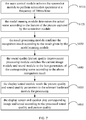
- FIG. 7 is a schematic flow diagram of the method for enhancing sound and picture quality based on scene recognition according to a fourth embodiment of the present disclosure.
- the hardware system that the method for enhancing sound and picture quality relies on includes: a main control module, a screenshot module, a model running module, a result processing module, a sound/picture quality improvement processing module, a display/sound module, a display and a speaker.
- the method for enhancing sound and picture quality includes the following operations:
- the screenshots are provided to the model running module in the form of data stream.
- the model run by this module needs a lot of training before being imported into the system, and can make accurate judgments of the actual scene based on the picture.
- the model running module will receive a screenshot of the news scene and give the recognition result based on the typical feature of the picture.
- the typical feature of the picture is that the bottom of the picture has a blue stripe and white text, and the model gives the recognition result based on the feature.
- the result processing module confirms the recognition result according to the result given by the model running module. For example: when the model running module judges that the real scenes corresponding to the current screen are news (0.8) and sports (0.2) (the above number is the confidence level, that is, the confidence probability), and further provides accurate results. It should be noted that the above model is not a result, but a comprehensive result with weights, which is also the basis for the existence of the module. Further, the result processing module will also determine whether there is a misjudgment. For example, if the results are the same three times in a row, it can be considered that the scene played by the display is actually switched, which can effectively prevent misjudgment of jitter recognition.
- S440 the sound quality/picture quality improvement processing module switches the current image module and sound module to the best parameters of the corresponding scene (such as news) according to the above recognition result.
- the sound quality/picture quality improvement processing module will switch the current image mode and sound mode to the best parameters of the news mode.
- the display/sound module sends the picture quality and sound quality parameters to the relevant hardware module for processing.
- the picture quality and sound quality parameters of the above news mode will be sent to the relevant hardware module for processing in the display/sound module.
- S460 the display screen and speaker play corresponding image and sound according to the processed sound quality and picture quality.
- the processed picture quality and sound quality parameters are restored in the form of electrical signals on the display screen and speakers, so that users do not need to switch manually when watching news programs, and the system automatically switches the picture and sound to the most suitable mode for the scene.
- the above process will automatically switch the related picture and sound mode to the movie mode.
- the foregoing embodiments of the present disclosure can be developed and implemented based on the android nn interface.
- the android operating system After the release of the android 8.0 version, the android operating system provides a set of android nn interfaces, such that the developers develop convolution algorithms based on the android nn interface, which can train related models in advance.
- the training principle of the model is as follows: a large amount of materials are provided to the model, and after the model recognizes the above materials, it performs manual correction. Through continuous training, the accuracy of the model's recognition of materials can be improved.
- the recognition process can run on a separate hardware ip unit, and does not occupy the central processing unit (CPU), graphics processing unit (GPU), and network processing unit (NPU) resources of the main chip SOC, so that artificial intelligence recognition can be performed without responding to the normal use of the TV.
- CPU central processing unit
- GPU graphics processing unit
- NPU network processing unit
- an embodiment of the present disclosure also provides a system for enhancing sound and picture quality based on scene recognition, configured for implementing the foregoing method of the present disclosure. Since the principle and method of solving the problem in this system embodiment are similar, it has at least all the beneficial effects brought about by the technical solution of the above-mentioned embodiments, which will not be repeated here.
- FIG. 8 is a schematic structural diagram of a system for enhancing sound and picture quality based on scene recognition according to a first embodiment of the present disclosure.
- the system for enhancing sound and picture quality includes: a scene recognition module 101 for recognizing a real scene reflected in a current screen of the display.
- the structure of the scene recognition module 101 refers to FIG. 9 .
- the scene recognition module 101 includes:
- the system for enhancing sound and picture quality shown in FIG. 8 further includes:
- the scene recognition module 101 is further for recognizing the real scene reflected in the current screen of the display multiple times within a first predetermined time to obtain a confidence level of the real scene recognized each time.
- the system for enhancing sound and picture quality shown in FIG. 10 also includes a scene determination module 104 for determining the real scene reflected in the current screen according to the confidence level of the real scene recognized each time.
- the system for enhancing sound and picture quality shown provided by this embodiment also includes:
- FIG. 12 is a schematic structural diagram of the system for enhancing sound and picture quality based on scene recognition according to a fourth embodiment of the present disclosure.
- the system for enhancing sound and picture quality includes: a main control module 201, a screenshot module 202, a model running module 203, a result processing module 204, a sound/picture quality improvement processing module 205, a display/sound module 206, a 4k display and a speaker 207.
- the main control module 201 is configured to coordinate the operation of the screenshot module 202, the model running module 2030, the recognition result processing module 204, and the sound/picture quality improvement processing module 205.
- the workflow of the system for enhancing sound and picture quality is as follows: When the user is watching a TV program, such as when the set-top box is turned on, the main control module 201 notifies the screenshot module 202 to perform a screenshot operation at a frequency of 300 ms/time.
- the model running module 203 determines the real scene according to the feature of the picture captured by the screenshot module.
- the screenshots are provided to the model running module 203 in the form of a data stream.
- the model (tflite) run by the module needs to undergo a lot of training before being imported into the system, and can make accurate judgments of real scenes based on pictures.
- the recognition result processing module 204 confirms the recognition result according to the result given by the model running module 203.
- the sound/picture quality improvement processing module 205 switches the current picture module and sound module to the best parameters of the corresponding scene.
- the display/sound module 206 transmits the picture quality and sound quality parameters to the relevant hardware module for processing.
- the 4K display and the speaker 207 play corresponding picture and sound according to the processed sound quality and picture quality.
- the embodiments of the present disclosure further provides a display, including the system for enhancing sound and picture quality of any embodiment described above.
- the embodiments of the present disclosure can be provided as methods, systems, or computer program products. Therefore, the present disclosure may adopt the form of a complete hardware embodiment, a complete software embodiment, or an embodiment combining software and hardware. Moreover, the present disclosure may adopt the form of a computer program product implemented on one or more computer-usable storage media (including but not limited to disk storage, CD-ROM, optical storage, etc.) containing computer-usable program codes.
- a computer-usable storage media including but not limited to disk storage, CD-ROM, optical storage, etc.
- These computer program instructions can also be stored in a computer-readable memory that can guide a computer or other programmable data processing equipment to work in a specific manner, such that the instructions stored in the computer-readable memory produce an article of manufacture including an instruction device that implements the functions specified in one or more processes in the flowchart and/or one block or more in the block diagram.
- These computer program instructions can also be loaded on a computer or other programmable data processing equipment, so that a series of operation steps are executed on the computer or other programmable equipment to produce computer-implemented processing, such that the instructions executed on the computer or other programmable devices provide steps for implementing the functions specified in one or more processes in the flowchart and/or one block or more in the block diagram.
- any reference signs located between parentheses should not be constructed as limitations on the claims.
- the word “comprising” does not exclude the presence of components or operations not listed in the claims.
- the word “a” or “an” preceding a component does not exclude the presence of multiple such components.
- the present disclosure can be realized by means of hardware including several different components and by means of a suitably programmed computer. In the unit claims enumerating several devices, several of these devices may be embodied in the same hardware item. The use of the words first, second, and third does not indicate any order. These words can be interpreted as names.
Landscapes
- Engineering & Computer Science (AREA)
- Multimedia (AREA)
- Theoretical Computer Science (AREA)
- Signal Processing (AREA)
- Physics & Mathematics (AREA)
- Computer Vision & Pattern Recognition (AREA)
- General Physics & Mathematics (AREA)
- Evolutionary Computation (AREA)
- Databases & Information Systems (AREA)
- Software Systems (AREA)
- Health & Medical Sciences (AREA)
- Artificial Intelligence (AREA)
- Computing Systems (AREA)
- General Health & Medical Sciences (AREA)
- Medical Informatics (AREA)
- Human Computer Interaction (AREA)
- Computational Linguistics (AREA)
- Audiology, Speech & Language Pathology (AREA)
- Acoustics & Sound (AREA)
- Quality & Reliability (AREA)
- Two-Way Televisions, Distribution Of Moving Picture Or The Like (AREA)
Abstract
Description
- This application claims priority to Chinese Application No.
201911242161.0, filed on December 6, 2019 - The present disclosure relates to the technical field of displays, in particular to a method and a system for enhancing sound and picture quality based on scene recognition, and a display.
- With the development of display technology, a large number of increasingly intelligent display devices, such as smart TVs, appear on the market. Smart TV is a new TV product with a fully open platform and an operating system. In recent years, with the development of artificial intelligence technology, smart TVs have become more and more powerful, bringing users a richer personalized audio-visual experience.
- Smart TVs can usually provide high-definition picture display and natural sound effects. However, due to the limitations of actual playback conditions, the sound and picture quality of programs played by smart TVs often does not meet the highest sound and picture quality requirements that smart TVs can achieve. For example: the resolution of a 4k TV is 3840*2160, and the pixels of the screen of the program played by the TV are 1920*1080. Even if the resolution provided by the TV itself is relatively high, it is difficult to play high-definition pictures. In order to solve such problems, the related art uses sound and picture enhancement technologies to repair the picture and sound to improve the picture and sound quality of the TV, making the picture content have more layers and the sound effect more in line with people's expectations. For example, small apertures, low scene contrast, overexposure, etc. can all be solved by the picture enhancement technology to significantly improve picture quality.
- However, the existing picture and sound enhancement technologies are often not smart enough, and the picture and sound enhancement technologies they provide are often too single for different scenarios. As a result, the picture quality and sound quality of various scenes in the TV are too single and the degree of distinction is not high. Users of long-term viewing is likely to cause aesthetic fatigue. To solve this problem, the user needs to manually change the picture quality and sound effects of the current playing scene, which leads to poor user experience.
- The present disclosure provides a method and a system for enhancing sound and picture quality based on scene recognition, and a display, which aims to solve the problem that the user needs to manually adjust the sound quality and picture quality of the current scene, resulting in poor user experience in the prior art.
- In order to achieve the above objective, according to a first aspect of the present disclosure, the present disclosure provides a method for enhancing sound and picture quality based on scene recognition, applied to a display, including:
- recognizing a real scene reflected in a current screen of the display;
- calculating sound and picture quality enhancement parameters matching the real scene; and
- controlling the display to play sound and picture corresponding to the real scene according to best sound and picture quality corresponding to the sound and picture quality enhancement parameters.
- In an embodiment, recognizing a real scene reflected in a current screen of the display includes:
- extracting a region image in the current screen;
- detecting a scene feature in the region image through a neural network; and
- recognizing the real scene reflected in the current screen according to the detected scene feature.
- In an embodiment, recognizing a real scene reflected in a current screen of the display includes:
- recognizing the real scene reflected in the current screen of the display multiple times within a first predetermined time to obtain a confidence level of the real scene recognized each time; and
- the method further includes:
determining the real scene reflected in the current screen according to the confidence level of the real scene recognized each time. - In an embodiment, the method for enhancing sound and picture quality further includes:
- capturing multiple current screens of the display at a predetermined frequency within a second predetermined time;
- recognizing a real scene reflected in a current screen of the display includes:
- detecting each of the captured current screens to obtain the real scene corresponding to each current screen; and
- recognizing the real scene reflected in the current screen of the display according to the real scene corresponding to each current screen.
- In an embodiment, calculating sound and picture quality enhancement parameters matching the real scene includes:
- extracting sound and picture quality parameters of the current screen of the display; and
- calculating the sound and picture quality enhancement parameters matching the real scene according to preset sound and picture quality parameters corresponding to the best sound and picture quality and the sound and picture quality parameters of the current screen of the display.
- In an embodiment, controlling the display to play sound and picture corresponding to the real scene according to best sound and picture quality corresponding to the sound and picture quality enhancement parameters includes:
- presetting the best sound and picture quality corresponding to each real scene, or extracting user's commonly-used sound and picture quality of the real scene as the best sound and picture quality corresponding to the real scene; and
- controlling the display to play the sound and picture corresponding to the best sound and picture quality.
- In an embodiment, determining the real scene reflected in the current screen according to the confidence level of the real scene recognized each time includes:
- setting a weight value for the confidence level of each recognized real scene;
- determining a new confidence level by multiplying each confidence level and the weight value; and
- determining the real scene reflected in the current screen according to the new confidence level.
- In an embodiment, the real scene is an actual scene played on the current screen of the display, and the actual scene includes a movie scene, a news scene, a sports scene and/or a concert scene.
- In an embodiment, detecting a scene feature in the region image through a neural network and recognizing the real scene reflected in the current screen according to the detected scene feature includes:
- matching an extracted scene feature in the region image with a stored scene feature of the real scene to determine a matching similarity;
- calculating the confidence level of the real scene according to the matching similarity; and
- recognizing the real scene reflected in the current screen according to the confidence level of the real scene.
- According to a second aspect of the present disclosure, the present disclosure further provides a system for enhancing sound and picture quality based on scene recognition, applied to a display, including:
- a scene recognition module for recognizing a real scene reflected in a current screen of the display;
- a quality calculation module for calculating sound and picture quality enhancement parameters matching the real scene; and
- a play control module for controlling the display to play sound and picture corresponding to the real scene according to best sound and picture quality corresponding to the sound and picture quality enhancement parameters.
- In an embodiment, the scene recognition module includes:
- an image extraction sub-module for extracting a region image in the current screen;
- a feature detection sub-module for detecting a scene feature in the region image through a neural network; and
- a first scene recognition sub-module for recognizing the real scene reflected in the current screen according to the detected scene feature.
- In an embodiment, the scene recognition module is further for recognizing the real scene reflected in the current screen of the display multiple times within a first predetermined time to obtain a confidence level of the real scene recognized each time; and
the system further includes:
a scene determination module for determining the real scene reflected in the current screen according to the confidence level of the real scene recognized each time. - In an embodiment, the system for enhancing sound and picture quality further includes:
- a screenshot module for capturing multiple current screens of the display at a predetermined frequency within a second predetermined time; and
- the scene recognition module includes:
- a screen detection sub-module for detecting each of the captured current screens to obtain the real scene corresponding to each current screen; and
- a second scene recognition sub-module for recognizing the real scene reflected in the current screen of the display according to the real scene corresponding to each current screen.
- According to a third aspect of the present disclosure, the present disclosure further provides a display, including the system for enhancing sound and picture quality as described above.
- In technical solutions of the present disclosure, the method includes automatically recognizing a real scene reflected in a current screen of the display, calculating sound and picture quality enhancement parameters corresponding to the real scene; and controlling the display to automatically play sound and picture corresponding to the real scene according to best sound and picture quality corresponding to the sound and picture quality enhancement parameters, which brings users a high level of audio-visual enjoyment, and eliminates the need for manual adjustment by the user and improves the user experience. This solution solves the problem that the user needs to manually adjust the sound quality and picture quality of the current scene, resulting in poor user experience in the prior art.
- In order to more clearly illustrate the embodiments of the present disclosure, drawings used in the embodiments will be briefly described below. Obviously, the drawings in the following description are only some embodiments of the present disclosure. It will be apparent to those skilled in the art that other figures can be obtained according to the structures shown in the drawings without creative work.
-
FIG. 1 is a schematic flow diagram of a method for enhancing sound and picture quality based on scene recognition according to a first embodiment of the present disclosure. -
FIG. 2 is a schematic flow diagram of a method for recognizing a real scene shown inFIG. 1 . -
FIG. 3 is a schematic flow diagram of a method for calculating sound and picture quality enhancement parameters shown inFIG. 1 . -
FIG. 4 is a schematic flow diagram of a method for controlling the display to play shown inFIG. 1 . -
FIG. 5 is a schematic flow diagram of the method for enhancing sound and picture quality based on scene recognition according to a second embodiment of the present disclosure. -
FIG. 6 is a schematic flow diagram of the method for enhancing sound and picture quality based on scene recognition according to a third embodiment of the present disclosure. -
FIG. 7 is a schematic flow diagram of the method for enhancing sound and picture quality based on scene recognition according to a fourth embodiment of the present disclosure. -
FIG. 8 is a schematic structural diagram of a system for enhancing sound and picture quality based on scene recognition according to a first embodiment of the present disclosure. -
FIG. 9 is a schematic structural diagram of a scene recognition module shown inFIG. 8 . -
FIG. 10 is a schematic structural diagram of the system for enhancing sound and picture quality based on scene recognition according to a second embodiment of the present disclosure. -
FIG. 11 is a schematic structural diagram of the system for enhancing sound and picture quality based on scene recognition according to a third embodiment of the present disclosure. -
FIG. 12 is a schematic structural diagram of the system for enhancing sound and picture quality based on scene recognition according to a fourth embodiment of the present disclosure. - The realization of the objective, functional characteristics, and advantages of the present disclosure are further described with reference to the accompanying drawings.
- It should be understood that the specific embodiments described herein are only used to explain the present disclosure, but not to limit the present disclosure.
- In the related art, the traditional display usually needs to manually adjust the sound quality and picture quality corresponding to the current scene, which easily leads to poor user experience.
- As shown in
FIG. 1 , in order to solve the above problem,FIG. 1 is a schematic flow diagram of a method for enhancing sound and picture quality based on scene recognition according to a first embodiment of the present disclosure. As shown inFIG. 1 , the method for enhancing sound and picture quality is applied to a display, including the following operations:
S110: recognizing a real scene reflected in a current screen of the display. - The real scene is the actual scene played on the current screen of the display (such as a smart TV), such as a movie scene, a news scene, a sports scene, or a concert scene. The sound quality and picture quality that should be used in the real scene can be determined by obtaining the real scene.
- The method for recognizing the real scene can be recognized by artificial intelligence, and the current screen can be accurately determined by a neural network that has been trained in advance. As shown in
FIG. 2 , recognizing a real scene reflected in a current screen of the display includes:
S111: extracting a region image in the current screen. The neural network will perform machine learning on the current screen of the display, and extract the region image of a specific area in the current screen. For example, in a movie screen, a lower part of the current screen is often a black frame. In sports programs, there are often score signs in an upper right corner of the screen. - According to the method learned by the machine, the neural network will focus on a specific area of the current screen, so as to extract the region image in the current screen.
- S112: detecting a scene feature in the region image through a neural network.
- In an embodiment, the neural network will extract the scene feature in the region image, and match the scene feature with a scene feature of the real scene stored in the database, and calculate the confidence level of the real scene based on the similarity of the scene feature.
- S113: recognizing the real scene reflected in the current screen according to the detected scene feature.
- In an embodiment, the scene feature in the region image is matched with scene features of the real scenes stored in the database, and a matching degree of a real scene is calculated through a matching similarity. When the confidence level of the real scene is greater than a predetermined value, the real scene reflected in the current screen can be determined. For example, a confidence level of a news scene is 0.8, and a confidence level of the sports scene is 0.2, through matching the scene feature of the current screen. At this time, it can be determined that the real scene reflected in the current screen of the display is a news scene.
- After recognizing the real scene reflected in the current screen of the display, the method shown in
FIG. 1 further includes the following operations:
S120: calculating sound and picture quality enhancement parameters matching the real scene. The sound and picture quality enhancement parameters respectively include a sound quality enhancement parameter and a picture quality enhancement parameter. The sound and picture quality enhancement parameters are calculated based on the best sound quality and best picture quality corresponding to the real scene, and the sound quality and picture quality corresponding to the current screen of the display. The sound quality and picture quality corresponding to the real scene can be adjusted to the best through calculating the sound and picture quality enhancement parameters that match the real scene. - As shown in
FIG. 3 , the operation S120 of calculating sound and picture quality enhancement parameters matching the real scene includes:S121: extracting sound and picture quality parameters of the current screen of the display. The current sound quality parameter and picture quality parameter of the display are usually inconsistent with the best sound quality parameter and the best picture quality parameter corresponding to the real scene. In order to adjust the picture and sound quality of the current screen of the display to the best picture and sound quality corresponding to the real scene, it is first necessary to extract the sound and picture quality parameters of the current screen of the display. Therefore, the picture quality and sound effect of the real scene are enhanced according to the comparison between the sound and picture quality parameters and the best sound and picture quality parameters. - S122: calculating the sound and picture quality enhancement parameters matching the real scene according to preset sound and picture quality parameters corresponding to the best sound and picture quality and the sound and picture quality parameters of the current screen of the display.
- Since the sound and picture quality parameters of the current screen of the display are often different from the preset sound and picture quality parameters corresponding to the best sound and picture quality, it is necessary to make specific modifications to specific parameters, such as contrast, hue, brightness and resolution. The difference between the sound and picture quality parameters of the current screen of the above-mentioned display and the preset sound and picture quality parameters is calculated as a parameter value of the sound and picture quality enhancement that matches the real scene, so that the sound quality and picture quality of the current screen of the display reach the best sound quality and the best picture quality.
- After calculating the sound and picture quality enhancement parameters matching the real scene, the method shown in
FIG. 1 further includes:
S130: controlling the display to play sound and picture corresponding to the real scene according to best sound and picture quality corresponding to the sound and picture quality enhancement parameters. The best sound and picture quality can be preset by the system, such as extracting each user's sound and picture quality evaluation for a specific scene through big data, combining the display and sound effect requirements of each real scene, and formulating curve fitting, or can be determined according to the sound and picture quality usually set by a specific user. Through the sound and picture quality enhancement parameters corresponding to the best sound and picture quality, the display is controlled to play the sound and picture corresponding to the real scene, which can bring users extremely high audio-visual enjoyment and improve user experience. - As shown in
FIG. 4 , the operation S130 of controlling the display to play sound and picture corresponding to the real scene according to best sound and picture quality corresponding to the sound and picture quality enhancement parameters includes: - S131: presetting the best sound and picture quality corresponding to each real scene, or extracting user's commonly-used sound and picture quality of the real scene as the best sound and picture quality corresponding to the real scene.
- S132: controlling the display to play the sound and picture corresponding to the best sound and picture quality.
- The best sound and picture quality can be preset according to big data extraction, or the sound and picture quality set by the user each time watching the same scene are extracted on the spot, and then be processed to obtain the best sound and picture quality suitable for the user. Then, the display is controlled to play the sound and picture corresponding to the best sound and picture quality, so that the user does not need to manually adjust the sound and picture quality, and the user experience is improved.In summary, in technical solutions of the present disclosure, the method includes automatically recognizing a real scene reflected in a current screen of the display, calculating sound and picture quality enhancement parameters corresponding to the real scene; and controlling the display to automatically play sound and picture corresponding to the real scene according to best sound and picture quality corresponding to the sound and picture quality enhancement parameters, which brings users a high level of audio-visual enjoyment, and eliminates the need for manual adjustment by the user and improves the user experience. This solution solves the problem that the user needs to manually adjust the sound quality and picture quality of the current scene, resulting in poor user experience in the prior art.
- Besides, the neural network may have misjudgments in the judgment of the real scene. This may not only fail to match the best sound and picture quality corresponding to the real scene, but also affect the user's audiovisual effect due to the matching error.
- In order to solve the above problem, as shown in
FIG. 5, FIG. 5 is a schematic flow diagram of the method for enhancing sound and picture quality based on scene recognition according to a second embodiment of the present disclosure. In this embodiment, recognizing a real scene reflected in a current screen of the display includes:
S114: recognizing the real scene reflected in the current screen of the display multiple times within a first predetermined time to obtain a confidence level of the real scene recognized each time. - By recognizing the real scene reflected in the current screen multiple times, misjudgment of the real scene can be reduced. For specific situations, for example, the user switches the display screen multiple times in a short time, and through multiple identifications, the current screen the user is finally positioned can be accurately determined. The confidence level reflects the credibility of the neural network to recognize the real scene. The operation of recognizing the real scene reflected in the current screen multiple times includes two ways of simultaneously recognizing multiple times and sequentially recognizing multiple times.
- The method for enhancing sound and picture quality shown in
FIG. 5 further includes:
Operation S210: determining the real scene reflected in the current screen according to the confidence level of the real scene recognized each time. - In an embodiment, the weight value can be set for the confidence level of each recognition. For example, in the case of sequentially recognizing real scenes in chronological order, you can set the weight value of the real scene recognized a predetermined number of times later to be higher, and the weight value of the real scene recognized before to be lower. A new confidence level is obtained by multiplying the confidence level and the weight value, so as to determine whether the current screen reflects a real scene through the new confidence level. The above method can effectively reduce the situation of real scene recognition errors caused by the user frequently switching the display screen.
- In technical solutions of the embodiments of the present disclosure, the confidence level of each recognition is obtained by recognizing the real scene reflected in the current screen of the display several times. The real scene reflected in the current screen is determined by recognizing the confidence level of the real scene each time, thereby reducing the misjudgment of the real scene in the above operations.
- The current screen of the display may switch frequently, which may cause inaccurate recognition of the real scene. In order to solve the problem, as shown in
FIG. 6 , in addition to the operations shown inFIG. 1 , the method for enhancing sound and picture quality provided in this embodiment further includes the following operations:
S310: capturing multiple current screens of the display at a predetermined frequency within a second predetermined time. - For example, after the display enters a specific screen for 2s, the screen is taken at a frequency of 300ms/time within 2s to capture a large number of screens, and then the neural network performs feature analysis on the captured screens. Through the screenshot operation, a large number of screens can be obtained, thereby improving the accuracy of real scene recognition.
- In an embodiment shown in
FIG. 6 , the operation S110 of recognizing a real scene reflected in a current screen of the display includes: - S115, detecting each of the captured current screens to obtain the real scene corresponding to each current screen.
- S116, recognizing the real scene reflected in the current screen of the display according to the real scene corresponding to each current screen.
- In technical solutions of the present disclosure, a large number of current screens are captured, and then each current screen is detected separately to obtain the real scene corresponding to each current screen, so that the real scene reflected by the current screen of the display can be recognized, and the accuracy of recognizing the real scene can be improved.
- Besides, as shown in
FIG. 7, FIG. 7 is a schematic flow diagram of the method for enhancing sound and picture quality based on scene recognition according to a fourth embodiment of the present disclosure. The hardware system that the method for enhancing sound and picture quality relies on includes: a main control module, a screenshot module, a model running module, a result processing module, a sound/picture quality improvement processing module, a display/sound module, a display and a speaker. As shown inFIG. 7 , the method for enhancing sound and picture quality includes the following operations: - S410: when the user is watching a TV program, if the set-top box is turned on, the main control module informs the screenshot module to perform screenshot operations at a frequency of 300ms/time.
- S420: the model running module determines the actual scene according to the feature of the picture captured by the screenshot module.
- The screenshots are provided to the model running module in the form of data stream. The model run by this module needs a lot of training before being imported into the system, and can make accurate judgments of the actual scene based on the picture.
- Based on the above two points, for example, when a user is watching news, the model running module will receive a screenshot of the news scene and give the recognition result based on the typical feature of the picture. The typical feature of the picture is that the bottom of the picture has a blue stripe and white text, and the model gives the recognition result based on the feature.
- S430: the result processing module confirms the recognition result according to the result given by the model running module. For example: when the model running module judges that the real scenes corresponding to the current screen are news (0.8) and sports (0.2) (the above number is the confidence level, that is, the confidence probability), and further provides accurate results. It should be noted that the above model is not a result, but a comprehensive result with weights, which is also the basis for the existence of the module. Further, the result processing module will also determine whether there is a misjudgment. For example, if the results are the same three times in a row, it can be considered that the scene played by the display is actually switched, which can effectively prevent misjudgment of jitter recognition.
- S440: the sound quality/picture quality improvement processing module switches the current image module and sound module to the best parameters of the corresponding scene (such as news) according to the above recognition result. The sound quality/picture quality improvement processing module will switch the current image mode and sound mode to the best parameters of the news mode.
- S450: the display/sound module sends the picture quality and sound quality parameters to the relevant hardware module for processing. In an embodiment, the picture quality and sound quality parameters of the above news mode will be sent to the relevant hardware module for processing in the display/sound module.
- S460: the display screen and speaker play corresponding image and sound according to the processed sound quality and picture quality.
- In an embodiment, the processed picture quality and sound quality parameters are restored in the form of electrical signals on the display screen and speakers, so that users do not need to switch manually when watching news programs, and the system automatically switches the picture and sound to the most suitable mode for the scene.
- Further, when the user is watching pictures of other scenes, for example, when the user is watching a movie, the above process will automatically switch the related picture and sound mode to the movie mode.
- In addition, the foregoing embodiments of the present disclosure can be developed and implemented based on the android nn interface. With the iteration of the android operating system, after the release of the android 8.0 version, the android operating system provides a set of android nn interfaces, such that the developers develop convolution algorithms based on the android nn interface, which can train related models in advance. The training principle of the model is as follows: a large amount of materials are provided to the model, and after the model recognizes the above materials, it performs manual correction. Through continuous training, the accuracy of the model's recognition of materials can be improved. The recognition process can run on a separate hardware ip unit, and does not occupy the central processing unit (CPU), graphics processing unit (GPU), and network processing unit (NPU) resources of the main chip SOC, so that artificial intelligence recognition can be performed without responding to the normal use of the TV.
- Based on the same concept of the foregoing method embodiment, an embodiment of the present disclosure also provides a system for enhancing sound and picture quality based on scene recognition, configured for implementing the foregoing method of the present disclosure. Since the principle and method of solving the problem in this system embodiment are similar, it has at least all the beneficial effects brought about by the technical solution of the above-mentioned embodiments, which will not be repeated here.
- As shown in
FIG. 8, FIG. 8 is a schematic structural diagram of a system for enhancing sound and picture quality based on scene recognition according to a first embodiment of the present disclosure. The system for enhancing sound and picture quality includes:
ascene recognition module 101 for recognizing a real scene reflected in a current screen of the display. - The structure of the
scene recognition module 101 refers toFIG. 9 . As shown inFIG. 9 , thescene recognition module 101 includes: - an
image extraction sub-module 1011 for extracting a region image in the current screen; - a
feature detection sub-module 1012 for detecting a scene feature in the region image through a neural network; and - a first scene recognition sub-module 1013 for recognizing the real scene reflected in the current screen according to the detected scene feature.
- The system for enhancing sound and picture quality shown in
FIG. 8 further includes: - a
quality calculation module 102 for calculating sound and picture quality enhancement parameters matching the real scene; and - a
play control module 103 for controlling the display to play sound and picture corresponding to the real scene according to best sound and picture quality corresponding to the sound and picture quality enhancement parameters. - In technical solutions of the present disclosure, automatically recognizing a real scene reflected in a current screen of the display, calculating sound and picture quality enhancement parameters corresponding to the real scene; and controlling the display to automatically play sound and picture corresponding to the real scene according to best sound and picture quality corresponding to the sound and picture quality enhancement parameters, brings users a high level of audio-visual enjoyment, and eliminates the need for manual adjustment by the user and improves the user experience. This solution solves the problem that the user needs to manually adjust the sound quality and picture quality of the current scene, resulting in poor user experience in the prior art.
- Besides, as shown in
FIG. 10 , thescene recognition module 101 is further for recognizing the real scene reflected in the current screen of the display multiple times within a first predetermined time to obtain a confidence level of the real scene recognized each time. In addition to the modules shown inFIG. 9 , the system for enhancing sound and picture quality shown inFIG. 10 also includes ascene determination module 104 for determining the real scene reflected in the current screen according to the confidence level of the real scene recognized each time. - Besides, as shown in
FIG. 11 , in addition to the modules shown inFIG. 9 , the system for enhancing sound and picture quality shown provided by this embodiment also includes: - a
screenshot module 105 for capturing multiple current screens of the display at a predetermined frequency within a second predetermined time; and - the
scene recognition module 101 includes:- a
screen detection sub-module 1014 for detecting each of the captured current screens to obtain the real scene corresponding to each current screen; and - a second scene recognition sub-module 1015 for recognizing the real scene reflected in the current screen of the display according to the real scene corresponding to each current screen.
- a
- As shown in
FIG. 12, FIG. 12 is a schematic structural diagram of the system for enhancing sound and picture quality based on scene recognition according to a fourth embodiment of the present disclosure. The system for enhancing sound and picture quality includes:
amain control module 201, ascreenshot module 202, amodel running module 203, aresult processing module 204, a sound/picture qualityimprovement processing module 205, a display/sound module 206, a 4k display and aspeaker 207. Themain control module 201 is configured to coordinate the operation of thescreenshot module 202, the model running module 2030, the recognitionresult processing module 204, and the sound/picture qualityimprovement processing module 205. - The workflow of the system for enhancing sound and picture quality is as follows:
When the user is watching a TV program, such as when the set-top box is turned on, themain control module 201 notifies thescreenshot module 202 to perform a screenshot operation at a frequency of 300 ms/time. - The
model running module 203 determines the real scene according to the feature of the picture captured by the screenshot module. The screenshots are provided to themodel running module 203 in the form of a data stream. The model (tflite) run by the module needs to undergo a lot of training before being imported into the system, and can make accurate judgments of real scenes based on pictures. - The recognition
result processing module 204 confirms the recognition result according to the result given by themodel running module 203. - According to the above recognition result, the sound/picture quality
improvement processing module 205 switches the current picture module and sound module to the best parameters of the corresponding scene. - The display/
sound module 206 transmits the picture quality and sound quality parameters to the relevant hardware module for processing. - The 4K display and the
speaker 207 play corresponding picture and sound according to the processed sound quality and picture quality. - Besides, the embodiments of the present disclosure further provides a display, including the system for enhancing sound and picture quality of any embodiment described above.
- Those skilled in the art should understand that the embodiments of the present disclosure can be provided as methods, systems, or computer program products. Therefore, the present disclosure may adopt the form of a complete hardware embodiment, a complete software embodiment, or an embodiment combining software and hardware. Moreover, the present disclosure may adopt the form of a computer program product implemented on one or more computer-usable storage media (including but not limited to disk storage, CD-ROM, optical storage, etc.) containing computer-usable program codes.
- The present disclosure is described with reference to flowcharts and/or block diagrams of methods, devices (systems), and computer program products according to embodiments of the present disclosure. It should be understood that each process and/or block in the flowchart and/or block diagram, and the combination of processes and/or blocks in the flowchart and/or block diagram can be realized by computer program instructions. These computer program instructions can be provided to the processors of general-purpose computers, special-purpose computers, embedded processors, or other programmable data processing equipment to produce a machine, such that the instructions executed by the processor of a computer or other programmable data processing equipment generate a device for realizing the functions specified in one or more processes in the flowchart and/or one block or more in the block diagram.
- These computer program instructions can also be stored in a computer-readable memory that can guide a computer or other programmable data processing equipment to work in a specific manner, such that the instructions stored in the computer-readable memory produce an article of manufacture including an instruction device that implements the functions specified in one or more processes in the flowchart and/or one block or more in the block diagram.
- These computer program instructions can also be loaded on a computer or other programmable data processing equipment, so that a series of operation steps are executed on the computer or other programmable equipment to produce computer-implemented processing, such that the instructions executed on the computer or other programmable devices provide steps for implementing the functions specified in one or more processes in the flowchart and/or one block or more in the block diagram.
- It should be noted that in the claims, any reference signs located between parentheses should not be constructed as limitations on the claims. The word "comprising" does not exclude the presence of components or operations not listed in the claims. The word "a" or "an" preceding a component does not exclude the presence of multiple such components. The present disclosure can be realized by means of hardware including several different components and by means of a suitably programmed computer. In the unit claims enumerating several devices, several of these devices may be embodied in the same hardware item. The use of the words first, second, and third does not indicate any order. These words can be interpreted as names.
- Although the preferred embodiments of the present disclosure have been described, those skilled in the art can make additional changes and modifications to these embodiments once they learn the basic creative concept. Therefore, the appended claims are intended to be interpreted as including the preferred embodiments and all changes and modifications falling within the scope of the present disclosure.
- Obviously, those skilled in the art can make various changes and modifications to the present disclosure without departing from the spirit and scope of the present disclosure. If these modifications and variations of the present disclosure fall within the scope of the claims of the present disclosure and their equivalent technologies, the present disclosure also intends to include these modifications and variations.
Claims (18)
- A method for enhancing sound and picture quality based on scene recognition, applied to a display, comprising:recognizing a real scene reflected in a current screen of the display;calculating sound and picture quality enhancement parameters matching the real scene; andcontrolling the display to play sound and picture corresponding to the real scene according to best sound and picture quality corresponding to the sound and picture quality enhancement parameters.
- The method for enhancing sound and picture quality of claim 1, wherein recognizing a real scene reflected in a current screen of the display comprises:extracting a region image in the current screen;detecting a scene feature in the region image through a neural network; andrecognizing the real scene reflected in the current screen according to the detected scene feature.
- The method for enhancing sound and picture quality of claim 1 or claim 2, wherein recognizing a real scene reflected in a current screen of the display comprises:recognizing the real scene reflected in the current screen of the display multiple times within a first predetermined time to obtain a confidence level of the real scene recognized each time; andthe method further comprises:
determining the real scene reflected in the current screen according to the confidence level of the real scene recognized each time. - The method for enhancing sound and picture quality of claim 1, further comprising:capturing multiple current screens of the display at a predetermined frequency within a second predetermined time;recognizing a real scene reflected in a current screen of the display comprises:detecting each of the captured current screens to obtain the real scene corresponding to each current screen; andrecognizing the real scene reflected in the current screen of the display according to the real scene corresponding to each current screen.
- The method for enhancing sound and picture quality of claim 1, wherein calculating sound and picture quality enhancement parameters matching the real scene comprises:extracting sound and picture quality parameters of the current screen of the display; andcalculating the sound and picture quality enhancement parameters matching the real scene according to preset sound and picture quality parameters corresponding to the best sound and picture quality and the sound and picture quality parameters of the current screen of the display.
- The method for enhancing sound and picture quality of claim 1, wherein controlling the display to play sound and picture corresponding to the real scene according to best sound and picture quality corresponding to the sound and picture quality enhancement parameters comprises:presetting the best sound and picture quality corresponding to each real scene, or extracting user's commonly-used sound and picture quality of the real scene as the best sound and picture quality corresponding to the real scene; andcontrolling the display to play the sound and picture corresponding to the best sound and picture quality.
- The method for enhancing sound and picture quality of claim 3, wherein determining the real scene reflected in the current screen according to the confidence level of the real scene recognized each time comprises:setting a weight value for the confidence level of each recognized real scene;determining a new confidence level by multiplying each confidence level and the weight value; anddetermining the real scene reflected in the current screen according to the new confidence level.
- The method for enhancing sound and picture quality of claim 1, wherein the real scene is an actual scene played on the current screen of the display, and the actual scene includes a movie scene, a news scene, a sports scene and/or a concert scene.
- The method for enhancing sound and picture quality of claim 2, wherein detecting a scene feature in the region image through a neural network and recognizing the real scene reflected in the current screen according to the detected scene feature comprises:matching an extracted scene feature in the region image with a stored scene feature of the real scene to determine a matching similarity;calculating the confidence level of the real scene according to the matching similarity; andrecognizing the real scene reflected in the current screen according to the confidence level of the real scene.
- A system for enhancing sound and picture quality based on scene recognition, applied to a display, comprising:a scene recognition module for recognizing a real scene reflected in a current screen of the display;a quality calculation module for calculating sound and picture quality enhancement parameters matching the real scene; anda play control module for controlling the display to play sound and picture corresponding to the real scene according to best sound and picture quality corresponding to the sound and picture quality enhancement parameters.
- The system for enhancing sound and picture quality of claim 10, wherein the scene recognition module comprises:an image extraction sub-module for extracting a region image in the current screen;a feature detection sub-module for detecting a scene feature in the region image through a neural network; anda first scene recognition sub-module for recognizing the real scene reflected in the current screen according to the detected scene feature.
- The system for enhancing sound and picture quality of claim 10 or 11, wherein the scene recognition module is further for recognizing the real scene reflected in the current screen of the display multiple times within a first predetermined time to obtain a confidence level of the real scene recognized each time; and
the system further comprises:
a scene determination module for determining the real scene reflected in the current screen according to the confidence level of the real scene recognized each time. - The system for enhancing sound and picture quality of claim 10, further comprising:a screenshot module for capturing multiple current screens of the display at a predetermined frequency within a second predetermined time; andthe scene recognition module comprises:a screen detection sub-module for detecting each of the captured current screens to obtain the real scene corresponding to each current screen; anda second scene recognition sub-module for recognizing the real scene reflected in the current screen of the display according to the real scene corresponding to each current screen.
- The system for enhancing sound and picture quality of claim 10, wherein the quality calculation module is for extracting sound and picture quality parameters of the current screen of the display, and for calculating the sound and picture quality enhancement parameters matching the real scene according to preset sound and picture quality parameters corresponding to the best sound and picture quality and the sound and picture quality parameters of the current screen of the display.
- The system for enhancing sound and picture quality of claim 10, wherein the play control module is for presetting the best sound and picture quality corresponding to each real scene, or for extracting user's commonly-used sound and picture quality of the real scene as the best sound and picture quality corresponding to the real scene, and for controlling the display to play the sound and picture corresponding to the best sound and picture quality.
- The system for enhancing sound and picture quality of claim 10, wherein the real scene is an actual scene played on the current screen of the display, and the actual scene includes a movie scene, a news scene, a sports scene and/or a concert scene
- The system for enhancing sound and picture quality of claim 12, wherein the scene recognition module is for setting a weight value for the confidence level of each recognized real scene, determining a new confidence level by multiplying each confidence level and the weight value, and for determining the real scene reflected in the current screen according to the new confidence level.
- A display, comprising the system for enhancing sound and picture quality of any one of claims 10 to 17.
Applications Claiming Priority (2)
| Application Number | Priority Date | Filing Date | Title |
|---|---|---|---|
| CN201911242161.0A CN110996153B (en) | 2019-12-06 | 2019-12-06 | Audio and video quality enhancement method, system and display based on scene recognition |
| PCT/CN2020/115376 WO2021109673A1 (en) | 2019-12-06 | 2020-09-15 | Audio and video quality enhancement method and system employing scene recognition, and display device |
Publications (2)
| Publication Number | Publication Date |
|---|---|
| EP3860133A1 true EP3860133A1 (en) | 2021-08-04 |
| EP3860133A4 EP3860133A4 (en) | 2022-08-03 |
Family
ID=70090836
Family Applications (1)
| Application Number | Title | Priority Date | Filing Date |
|---|---|---|---|
| EP20861983.3A Pending EP3860133A4 (en) | 2019-12-06 | 2020-09-15 | METHOD AND SYSTEM FOR ENHANCING AUDIO AND VIDEO QUALITY USING SCENE RECOGNITION, AND DISPLAY DEVICE |
Country Status (4)
| Country | Link |
|---|---|
| US (1) | US11516554B2 (en) |
| EP (1) | EP3860133A4 (en) |
| CN (1) | CN110996153B (en) |
| WO (1) | WO2021109673A1 (en) |
Families Citing this family (12)
| Publication number | Priority date | Publication date | Assignee | Title |
|---|---|---|---|---|
| CN110996153B (en) | 2019-12-06 | 2021-09-24 | 深圳创维-Rgb电子有限公司 | Audio and video quality enhancement method, system and display based on scene recognition |
| CN113556604B (en) * | 2020-04-24 | 2023-07-18 | 深圳市万普拉斯科技有限公司 | Sound effect adjustment method, device, computer equipment and storage medium |
| CN113766341A (en) * | 2020-06-04 | 2021-12-07 | 深圳市万普拉斯科技有限公司 | Television picture quality adjustment method, device and system, and television equipment |
| WO2022152320A1 (en) | 2021-01-14 | 2022-07-21 | 海信视像科技股份有限公司 | Display device and sound and picture parameter adjusting method |
| JP7488002B2 (en) * | 2021-01-20 | 2024-05-21 | Tvs Regza株式会社 | Image processing device, operation method of image processing device, and image processing program |
| CN114822570B (en) * | 2021-01-22 | 2023-02-14 | 腾讯科技(深圳)有限公司 | Audio data processing method, device and equipment and readable storage medium |
| WO2022182356A1 (en) * | 2021-02-26 | 2022-09-01 | Hewlett-Packard Development Company, L.P. | Noise suppression controls |
| CN113297937B (en) * | 2021-05-17 | 2023-12-15 | 杭州网易智企科技有限公司 | Image processing method, device, equipment and medium |
| CN113965700A (en) * | 2021-11-26 | 2022-01-21 | 四川长虹电器股份有限公司 | Automatic adjusting method and system for intelligent television scene |
| CN115174973B (en) * | 2022-06-28 | 2024-05-28 | 海信视像科技股份有限公司 | Display device and display device control method |
| CN115439897A (en) * | 2022-07-19 | 2022-12-06 | 珠海全志科技股份有限公司 | Intelligent adjusting method and device for image quality parameters |
| CN115334351B (en) * | 2022-08-02 | 2023-10-31 | Vidaa国际控股(荷兰)公司 | Display equipment and self-adaptive image quality adjusting method |
Family Cites Families (11)
| Publication number | Priority date | Publication date | Assignee | Title |
|---|---|---|---|---|
| AU2011265429B2 (en) * | 2011-12-21 | 2015-08-13 | Canon Kabushiki Kaisha | Method and system for robust scene modelling in an image sequence |
| US20150058877A1 (en) | 2013-08-21 | 2015-02-26 | Harman International Industries, Incorporated | Content-based audio/video adjustment |
| CN107230187B (en) * | 2016-03-25 | 2022-05-24 | 北京三星通信技术研究有限公司 | Method and device for processing multimedia information |
| CN105898364A (en) * | 2016-05-26 | 2016-08-24 | 北京小米移动软件有限公司 | Video playing processing method, device, terminal and system |
| CN106534942A (en) * | 2016-11-04 | 2017-03-22 | 微鲸科技有限公司 | Video image quality adjusting method and apparatus |
| US10721527B2 (en) | 2018-04-23 | 2020-07-21 | Free Stream Media Corporation | Device setting adjustment based on content recognition |
| CN108710847B (en) * | 2018-05-15 | 2020-11-27 | 北京旷视科技有限公司 | Scene recognition method, device and electronic device |
| CN108712674A (en) * | 2018-05-17 | 2018-10-26 | 深圳创维-Rgb电子有限公司 | Video playing control method, playback equipment and storage medium |
| CN108846351A (en) * | 2018-06-08 | 2018-11-20 | Oppo广东移动通信有限公司 | Image processing method, image processing device, electronic equipment and computer readable storage medium |
| CN108921040A (en) * | 2018-06-08 | 2018-11-30 | Oppo广东移动通信有限公司 | Image processing method and device, storage medium and electronic equipment |
| CN110996153B (en) | 2019-12-06 | 2021-09-24 | 深圳创维-Rgb电子有限公司 | Audio and video quality enhancement method, system and display based on scene recognition |
-
2019
- 2019-12-06 CN CN201911242161.0A patent/CN110996153B/en active Active
-
2020
- 2020-09-15 US US17/272,095 patent/US11516554B2/en active Active
- 2020-09-15 EP EP20861983.3A patent/EP3860133A4/en active Pending
- 2020-09-15 WO PCT/CN2020/115376 patent/WO2021109673A1/en not_active Ceased
Also Published As
| Publication number | Publication date |
|---|---|
| US20220124417A1 (en) | 2022-04-21 |
| EP3860133A4 (en) | 2022-08-03 |
| WO2021109673A1 (en) | 2021-06-10 |
| US11516554B2 (en) | 2022-11-29 |
| CN110996153A (en) | 2020-04-10 |
| CN110996153B (en) | 2021-09-24 |
Similar Documents
| Publication | Publication Date | Title |
|---|---|---|
| US11516554B2 (en) | Method and system for enhancing sound and picture quality based on scene recognition, and display | |
| US11722727B2 (en) | Special effect processing method and apparatus for live broadcasting, and server | |
| CN111131889B (en) | Method and system for adaptively adjusting images and sounds in scene and readable storage medium | |
| TWI638278B (en) | An online verification method and system for real-time gesture detection | |
| CN110933490A (en) | A kind of automatic adjustment method of picture quality and sound quality, smart TV and storage medium | |
| US12361704B2 (en) | Image detection method and apparatus, computer device, and computer-readable storage medium | |
| CN101394479B (en) | Teacher's motion tracking method based on motion detection combined with multi-channel fusion | |
| US20120013604A1 (en) | Display apparatus and method for setting sense of depth thereof | |
| CN110472099B (en) | Interactive video generation method and device, storage medium | |
| KR20170009037A (en) | Method for providingimage contents and image contents providing apparatus | |
| CN106020448A (en) | An intelligent terminal-based man-machine interaction method and system | |
| CN104041063B (en) | Method, platform and system for making video related information base and playing video | |
| CN107205172A (en) | A kind of method and device that search is initiated based on video content | |
| CN114979791A (en) | Display device and smart scene image quality parameter adjustment method | |
| CN111182280A (en) | Projection method, projection device, sound box equipment and storage medium | |
| CN113743237A (en) | Follow-up action accuracy determination method and device, electronic device and storage medium | |
| CN117939091A (en) | Projection image processing method and device, electronic equipment and storage medium | |
| KR20110114384A (en) | Automatic objectization method in video and object service authoring device | |
| US20250173942A1 (en) | Touch animation display method and apparatus, device, and medium | |
| CN111265851B (en) | Data processing method, device, electronic equipment and storage medium | |
| US20140310587A1 (en) | Apparatus and method for processing additional media information | |
| CN118968567A (en) | A virtual training method and system of Ba Duan Jin based on 8K set-top box | |
| US11405675B1 (en) | Infrared remote control audiovisual device and playback method thereof | |
| CN115937962A (en) | Action recognition method and device | |
| CN115439897A (en) | Intelligent adjusting method and device for image quality parameters |
Legal Events
| Date | Code | Title | Description |
|---|---|---|---|
| STAA | Information on the status of an ep patent application or granted ep patent |
Free format text: STATUS: UNKNOWN |
|
| STAA | Information on the status of an ep patent application or granted ep patent |
Free format text: STATUS: THE INTERNATIONAL PUBLICATION HAS BEEN MADE |
|
| PUAI | Public reference made under article 153(3) epc to a published international application that has entered the european phase |
Free format text: ORIGINAL CODE: 0009012 |
|
| STAA | Information on the status of an ep patent application or granted ep patent |
Free format text: STATUS: REQUEST FOR EXAMINATION WAS MADE |
|
| 17P | Request for examination filed |
Effective date: 20210317 |
|
| AK | Designated contracting states |
Kind code of ref document: A1 Designated state(s): AL AT BE BG CH CY CZ DE DK EE ES FI FR GB GR HR HU IE IS IT LI LT LU LV MC MK MT NL NO PL PT RO RS SE SI SK SM TR |
|
| A4 | Supplementary search report drawn up and despatched |
Effective date: 20220706 |
|
| RIC1 | Information provided on ipc code assigned before grant |
Ipc: H04N 21/466 20110101ALI20220630BHEP Ipc: H04N 21/485 20110101ALI20220630BHEP Ipc: H04N 21/44 20110101ALI20220630BHEP Ipc: H04N 5/44 20110101ALI20220630BHEP Ipc: G10L 25/30 20130101ALI20220630BHEP Ipc: G06V 20/40 20220101ALI20220630BHEP Ipc: G06V 10/82 20220101ALI20220630BHEP Ipc: G06V 10/74 20220101ALI20220630BHEP Ipc: G06V 10/75 20220101ALI20220630BHEP Ipc: G06V 10/22 20220101ALI20220630BHEP Ipc: H04N 21/439 20110101ALI20220630BHEP Ipc: H04N 21/431 20110101AFI20220630BHEP |
|
| DAV | Request for validation of the european patent (deleted) | ||
| DAX | Request for extension of the european patent (deleted) | ||
| STAA | Information on the status of an ep patent application or granted ep patent |
Free format text: STATUS: EXAMINATION IS IN PROGRESS |
|
| 17Q | First examination report despatched |
Effective date: 20240611 |
|
| GRAP | Despatch of communication of intention to grant a patent |
Free format text: ORIGINAL CODE: EPIDOSNIGR1 |
|
| STAA | Information on the status of an ep patent application or granted ep patent |
Free format text: STATUS: GRANT OF PATENT IS INTENDED |