EP3859868B1 - Battery pack and control method thereof - Google Patents
Battery pack and control method thereof Download PDFInfo
- Publication number
- EP3859868B1 EP3859868B1 EP21151497.1A EP21151497A EP3859868B1 EP 3859868 B1 EP3859868 B1 EP 3859868B1 EP 21151497 A EP21151497 A EP 21151497A EP 3859868 B1 EP3859868 B1 EP 3859868B1
- Authority
- EP
- European Patent Office
- Prior art keywords
- electronic device
- battery pack
- current value
- control unit
- terminals
- Prior art date
- Legal status (The legal status is an assumption and is not a legal conclusion. Google has not performed a legal analysis and makes no representation as to the accuracy of the status listed.)
- Active
Links
Images



Classifications
-
- H—ELECTRICITY
- H02—GENERATION; CONVERSION OR DISTRIBUTION OF ELECTRIC POWER
- H02J—ELECTRIC POWER NETWORKS; CIRCUIT ARRANGEMENTS OR SYSTEMS FOR SUPPLYING OR DISTRIBUTING ELECTRIC POWER; SYSTEMS FOR STORING ELECTRIC ENERGY
- H02J7/00—Circuit arrangements for charging or discharging batteries or for supplying loads from batteries
- H02J7/60—Circuit arrangements for charging or discharging batteries or for supplying loads from batteries including safety or protection arrangements
- H02J7/62—Circuit arrangements for charging or discharging batteries or for supplying loads from batteries including safety or protection arrangements against overcurrent
-
- H—ELECTRICITY
- H02—GENERATION; CONVERSION OR DISTRIBUTION OF ELECTRIC POWER
- H02J—ELECTRIC POWER NETWORKS; CIRCUIT ARRANGEMENTS OR SYSTEMS FOR SUPPLYING OR DISTRIBUTING ELECTRIC POWER; SYSTEMS FOR STORING ELECTRIC ENERGY
- H02J7/00—Circuit arrangements for charging or discharging batteries or for supplying loads from batteries
- H02J7/90—Regulation of charging or discharging current or voltage
- H02J7/94—Regulation of charging or discharging current or voltage in response to battery current
-
- H—ELECTRICITY
- H02—GENERATION; CONVERSION OR DISTRIBUTION OF ELECTRIC POWER
- H02J—ELECTRIC POWER NETWORKS; CIRCUIT ARRANGEMENTS OR SYSTEMS FOR SUPPLYING OR DISTRIBUTING ELECTRIC POWER; SYSTEMS FOR STORING ELECTRIC ENERGY
- H02J7/00—Circuit arrangements for charging or discharging batteries or for supplying loads from batteries
- H02J7/60—Circuit arrangements for charging or discharging batteries or for supplying loads from batteries including safety or protection arrangements
- H02J7/663—Circuit arrangements for charging or discharging batteries or for supplying loads from batteries including safety or protection arrangements using battery or load disconnect circuits
-
- G—PHYSICS
- G01—MEASURING; TESTING
- G01R—MEASURING ELECTRIC VARIABLES; MEASURING MAGNETIC VARIABLES
- G01R19/00—Arrangements for measuring currents or voltages or for indicating presence or sign thereof
- G01R19/165—Indicating that current or voltage is either above or below a predetermined value or within or outside a predetermined range of values
- G01R19/16533—Indicating that current or voltage is either above or below a predetermined value or within or outside a predetermined range of values characterised by the application
- G01R19/16538—Indicating that current or voltage is either above or below a predetermined value or within or outside a predetermined range of values characterised by the application in AC or DC supplies
- G01R19/16542—Indicating that current or voltage is either above or below a predetermined value or within or outside a predetermined range of values characterised by the application in AC or DC supplies for batteries
-
- H—ELECTRICITY
- H01—ELECTRIC ELEMENTS
- H01M—PROCESSES OR MEANS, e.g. BATTERIES, FOR THE DIRECT CONVERSION OF CHEMICAL ENERGY INTO ELECTRICAL ENERGY
- H01M10/00—Secondary cells; Manufacture thereof
- H01M10/42—Methods or arrangements for servicing or maintenance of secondary cells or secondary half-cells
- H01M10/425—Structural combination with electronic components, e.g. electronic circuits integrated to the outside of the casing
-
- H—ELECTRICITY
- H01—ELECTRIC ELEMENTS
- H01M—PROCESSES OR MEANS, e.g. BATTERIES, FOR THE DIRECT CONVERSION OF CHEMICAL ENERGY INTO ELECTRICAL ENERGY
- H01M10/00—Secondary cells; Manufacture thereof
- H01M10/42—Methods or arrangements for servicing or maintenance of secondary cells or secondary half-cells
- H01M10/425—Structural combination with electronic components, e.g. electronic circuits integrated to the outside of the casing
- H01M10/4257—Smart batteries, e.g. electronic circuits inside the housing of the cells or batteries
-
- H—ELECTRICITY
- H01—ELECTRIC ELEMENTS
- H01M—PROCESSES OR MEANS, e.g. BATTERIES, FOR THE DIRECT CONVERSION OF CHEMICAL ENERGY INTO ELECTRICAL ENERGY
- H01M10/00—Secondary cells; Manufacture thereof
- H01M10/42—Methods or arrangements for servicing or maintenance of secondary cells or secondary half-cells
- H01M10/44—Methods for charging or discharging
-
- H—ELECTRICITY
- H01—ELECTRIC ELEMENTS
- H01M—PROCESSES OR MEANS, e.g. BATTERIES, FOR THE DIRECT CONVERSION OF CHEMICAL ENERGY INTO ELECTRICAL ENERGY
- H01M10/00—Secondary cells; Manufacture thereof
- H01M10/42—Methods or arrangements for servicing or maintenance of secondary cells or secondary half-cells
- H01M10/48—Accumulators combined with arrangements for measuring, testing or indicating the condition of cells, e.g. the level or density of the electrolyte
-
- H—ELECTRICITY
- H01—ELECTRIC ELEMENTS
- H01M—PROCESSES OR MEANS, e.g. BATTERIES, FOR THE DIRECT CONVERSION OF CHEMICAL ENERGY INTO ELECTRICAL ENERGY
- H01M50/00—Constructional details or processes of manufacture of the non-active parts of electrochemical cells other than fuel cells, e.g. hybrid cells
- H01M50/50—Current conducting connections for cells or batteries
- H01M50/543—Terminals
-
- H—ELECTRICITY
- H01—ELECTRIC ELEMENTS
- H01M—PROCESSES OR MEANS, e.g. BATTERIES, FOR THE DIRECT CONVERSION OF CHEMICAL ENERGY INTO ELECTRICAL ENERGY
- H01M50/00—Constructional details or processes of manufacture of the non-active parts of electrochemical cells other than fuel cells, e.g. hybrid cells
- H01M50/50—Current conducting connections for cells or batteries
- H01M50/572—Means for preventing undesired use or discharge
- H01M50/574—Devices or arrangements for the interruption of current
- H01M50/583—Devices or arrangements for the interruption of current in response to current, e.g. fuses
-
- H—ELECTRICITY
- H02—GENERATION; CONVERSION OR DISTRIBUTION OF ELECTRIC POWER
- H02J—ELECTRIC POWER NETWORKS; CIRCUIT ARRANGEMENTS OR SYSTEMS FOR SUPPLYING OR DISTRIBUTING ELECTRIC POWER; SYSTEMS FOR STORING ELECTRIC ENERGY
- H02J7/00—Circuit arrangements for charging or discharging batteries or for supplying loads from batteries
- H02J7/80—Circuit arrangements for charging or discharging batteries or for supplying loads from batteries including monitoring or indicating arrangements
-
- H—ELECTRICITY
- H02—GENERATION; CONVERSION OR DISTRIBUTION OF ELECTRIC POWER
- H02J—ELECTRIC POWER NETWORKS; CIRCUIT ARRANGEMENTS OR SYSTEMS FOR SUPPLYING OR DISTRIBUTING ELECTRIC POWER; SYSTEMS FOR STORING ELECTRIC ENERGY
- H02J7/00—Circuit arrangements for charging or discharging batteries or for supplying loads from batteries
- H02J7/855—Circuit arrangements for charging or discharging batteries or for supplying loads from batteries with circuits adapted for supplying loads from the battery
-
- H—ELECTRICITY
- H01—ELECTRIC ELEMENTS
- H01M—PROCESSES OR MEANS, e.g. BATTERIES, FOR THE DIRECT CONVERSION OF CHEMICAL ENERGY INTO ELECTRICAL ENERGY
- H01M10/00—Secondary cells; Manufacture thereof
- H01M10/42—Methods or arrangements for servicing or maintenance of secondary cells or secondary half-cells
- H01M10/425—Structural combination with electronic components, e.g. electronic circuits integrated to the outside of the casing
- H01M2010/4271—Battery management systems including electronic circuits, e.g. control of current or voltage to keep battery in healthy state, cell balancing
-
- H—ELECTRICITY
- H01—ELECTRIC ELEMENTS
- H01M—PROCESSES OR MEANS, e.g. BATTERIES, FOR THE DIRECT CONVERSION OF CHEMICAL ENERGY INTO ELECTRICAL ENERGY
- H01M10/00—Secondary cells; Manufacture thereof
- H01M10/42—Methods or arrangements for servicing or maintenance of secondary cells or secondary half-cells
- H01M10/425—Structural combination with electronic components, e.g. electronic circuits integrated to the outside of the casing
- H01M2010/4278—Systems for data transfer from batteries, e.g. transfer of battery parameters to a controller, data transferred between battery controller and main controller
-
- H—ELECTRICITY
- H01—ELECTRIC ELEMENTS
- H01M—PROCESSES OR MEANS, e.g. BATTERIES, FOR THE DIRECT CONVERSION OF CHEMICAL ENERGY INTO ELECTRICAL ENERGY
- H01M2200/00—Safety devices for primary or secondary batteries
-
- H—ELECTRICITY
- H01—ELECTRIC ELEMENTS
- H01M—PROCESSES OR MEANS, e.g. BATTERIES, FOR THE DIRECT CONVERSION OF CHEMICAL ENERGY INTO ELECTRICAL ENERGY
- H01M2220/00—Batteries for particular applications
- H01M2220/30—Batteries in portable systems, e.g. mobile phone, laptop
-
- H—ELECTRICITY
- H02—GENERATION; CONVERSION OR DISTRIBUTION OF ELECTRIC POWER
- H02J—ELECTRIC POWER NETWORKS; CIRCUIT ARRANGEMENTS OR SYSTEMS FOR SUPPLYING OR DISTRIBUTING ELECTRIC POWER; SYSTEMS FOR STORING ELECTRIC ENERGY
- H02J7/00—Circuit arrangements for charging or discharging batteries or for supplying loads from batteries
- H02J7/40—Circuit arrangements for charging or discharging batteries or for supplying loads from batteries characterised by the exchange of charge or discharge related data
-
- Y—GENERAL TAGGING OF NEW TECHNOLOGICAL DEVELOPMENTS; GENERAL TAGGING OF CROSS-SECTIONAL TECHNOLOGIES SPANNING OVER SEVERAL SECTIONS OF THE IPC; TECHNICAL SUBJECTS COVERED BY FORMER USPC CROSS-REFERENCE ART COLLECTIONS [XRACs] AND DIGESTS
- Y02—TECHNOLOGIES OR APPLICATIONS FOR MITIGATION OR ADAPTATION AGAINST CLIMATE CHANGE
- Y02E—REDUCTION OF GREENHOUSE GAS [GHG] EMISSIONS, RELATED TO ENERGY GENERATION, TRANSMISSION OR DISTRIBUTION
- Y02E60/00—Enabling technologies; Technologies with a potential or indirect contribution to GHG emissions mitigation
- Y02E60/10—Energy storage using batteries
Definitions
- the present disclosure relates to a battery pack, a method for controlling the battery pack, and a program relating to a battery pack and a method for controlling the battery pack.
- a battery pack that supplies power to an electronic device includes a protection circuit for protecting a battery cell of the battery pack from overcurrent. If an electric current flowing to the battery cell exceeds the maximum value, the protection circuit can cut the electric current flowing to the battery cell by turning a switching element OFF.
- Japanese Patent Laid-Open No. 2001-286068 describes changing a current value for determining whether or not to cut an electric current flowing from a positive terminal to a battery cell according to the temperature, voltage, or remaining capacity of the battery pack.
- JP 2019 004631 A discloses a battery pack having two cell units each providing independently two positive and negative electrode terminals and a microcomputer, which adapts the current limit value in accordance with a type of a connected device.
- US 2009/071675 A1 discloses a battery device having a switching element for interrupting the current flowing through a cell group, in case the current would exceed a predetermined threshold.
- a device, a method, or a program that is capable of changing a current value for determining whether or not to cut a current flowing from a battery cell to an electronic device based on the number of positive terminals and negative terminals that are connected to the electronic device, is provided.
- the present invention provides a battery pack, a method, and a program as specified in the appended claims.
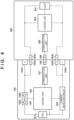
- FIGS. 1 and 6 are block diagrams showing components of a battery pack 100 and components of an electronic device 200 that is connectable to the battery pack 100.
- the battery pack 100 is a battery pack that is connectable to the electronic device 200.
- the battery pack 100 is connected to the electronic device 200 as a result of being housed in a battery pack housing portion of the electronic device 200.
- the battery pack 100 includes a battery cell 101, a first positive terminal 102a, a first negative terminal 102b, a second positive terminal 103a, a second negative terminal 103b, a current detection circuit 104, a control unit 105, an FET unit 106, a communication unit 107, and a communication terminal 108.
- the battery cell 101 is a rechargeable battery cell such as a lithium ion battery cell.
- the battery cell 101 includes one or more battery cells.
- the first positive terminal 102a and the first negative terminal 102b are terminals that can sufficiently withstand an electric current of 5 A, for example.
- the second positive terminal 103a and the second negative terminal 103b are also terminals that can sufficiently withstand an electric current of 5 A, for example.
- the battery cell 101 can supply an electric current of up to 5 A, for example, to the electronic device 200.
- the battery cell 101 can supply an electric current of up to 5 A, for example, to the electronic device 200.
- the battery cell 101 can supply an electric current of up to 10 A, for example, to the electronic device 200.
- terminals via which the battery pack 100 is connected to the electronic device 200 change according to the type of the electronic device 200.
- the current detection circuit 104 is provided between the battery cell 101 and each of the first negative terminal 102b and the second negative terminal 103b, and detects an electric current that flows from the battery cell 101 to the electronic device 200 or an electric current that flows from the electronic device 200 to the battery cell 101.
- the current detection circuit 104 detects the electric current flowing from the battery cell 101 to the electronic device 200 or the electric current flowing from the electronic device 200 to the battery cell 101 based on the magnitude of a voltage drop, for example.
- the control unit 105 is informed of the electric current detected by the current detection circuit 104.
- the control unit 105 can be aware of the electric current flowing from the battery cell 101 to the electronic device 200 or the electric current flowing from the electronic device 200 to the battery cell 101.
- the FET unit 106 includes a charge FET 106a and a discharge FET 106b.
- the charge FET 106a is a switch that is controlled by the control unit 105 to be turned ON or OFF.
- the discharge FET 106b is also a switch that is controlled by the control unit 105 to be turned ON or OFF. If the charge FET 106a is turned OFF and the discharge FET 106b is turned ON, an electric current flows from the battery cell 101 to the electronic device 200. In this case, the electric current flowing from the battery cell 101 to the electronic device 200 is cut as a result of the control unit 105 turning the discharge FET 106b OFF.
- the communication unit 107 communicates with a communication unit 205 of the electronic device 200 via communication terminals 108 and 206.
- the communication unit 107 is electrically connected to the communication unit 205 via the communication terminals 108 and 206.
- the control unit 105 controls discharging and charging of the battery cell 101 and detects information regarding the battery cell 101 (the remaining charge, degradation state, temperature, etc., of the battery cell 101).
- the control unit 105 includes a memory and a processor, for example.
- the components of the battery pack 100 are controlled as a result of the processor of the control unit 105 executing a program that is stored in the memory of the control unit 105.
- the control unit 105 can be constituted by an integrated circuit such as an ASIC (Application Specific Integrated Circuit), for example.
- Information regarding the battery cell 101 is detected by the processor of the control unit 105 and is stored in the memory of the control unit 105, for example.
- the control unit 105 can control operations of the communication unit 107.
- the control unit 105 can communicate with a control unit 204 of the electronic device 200 by controlling operations of the communication unit 107.
- the control unit 105 can detect the number of positive terminals and negative terminals that are connected to the electronic device 200 based on information that is received from the control unit 204 via the communication terminal 108 and the communication unit 107.
- the control unit 105 can control operations of the charge FET 106a and the discharge FET 106b.
- the control unit 105 can operate as a protection circuit that cuts an electric current flowing from the battery cell 101 to the electronic device 200 or an electric current flowing from the electronic device 200 to the battery cell 101 by controlling operations of the charge FET 106a and the discharge FET 106b.
- the control unit 105 cuts an electric current flowing from the battery cell 101 to the electronic device 200 by turning the discharge FET 106b OFF upon determining that the electric current flowing from the battery cell 101 to the electronic device 200 has exceeded the maximum current value (a predetermined current value) of the battery pack 100.
- the control unit 105 can monitor the voltage of the communication terminal 108. The control unit 105 determines whether or not a period during which the voltage of the communication terminal 108 does not exceed a first voltage value has exceeded a first predetermined period. Upon determining that the period during which the voltage of the communication terminal 108 does not exceed the first voltage value has exceeded the first predetermined period, the control unit 105 determines that the battery pack 100 has been detached from the electronic device 200. The control unit 105 determines whether or not a period during which the voltage of the communication terminal 108 is larger than a second voltage value has exceeded a second predetermined period.
- the control unit 105 determines that the battery pack 100 has been connected to the electronic device 200.
- the second voltage value is larger than or equal to the first voltage value.
- the second predetermined period is the same as or is different from the first predetermined period.
- the first voltage value, the second voltage value, the first predetermined period, and the second predetermined period are stored in the memory of the control unit 105.
- the electronic device 200 is an electronic device that is connectable to the battery pack 100.
- the electronic device 200 includes a load circuit 201, at least one of a first positive terminal 202a and a second positive terminal 203a, at least one of a first negative terminal 202b and a second negative terminal 203b, the control unit 204, the communication unit 205, and the communication terminal 206.
- Which terminals of the first positive terminal 202a, the first negative terminal 202b, the second positive terminal 203a, and the second negative terminal 203b are included in the electronic device 200 changes according to the type of the electronic device 200. For example, the electronic device 200 shown in FIG.
- the electronic device 200 shown in FIG. 1 includes the first positive terminal 202a, the first negative terminal 202b, the second positive terminal 203a, and the second negative terminal 203b.
- the electronic device 200 shown in FIG. 1 can receive an electric current of up to a first current value (e.g., 10 A) from the battery pack 100 via the first positive terminal 202a, the first negative terminal 202b, the second positive terminal 203a, and the second negative terminal 203b.
- a first current value e.g. 10 A
- the electronic device 200 shown in FIG. 6 does not include the first positive terminal 202a and the first negative terminal 202b but includes the second positive terminal 203a and the second negative terminal 203b.
- the electronic device 200 shown in FIG. 6 can receive an electric current of up to a second current value (e.g., 3 A) from the battery pack 100 via the second positive terminal 203a and the second negative terminal 203b.
- the configuration of the load circuit 201 changes according to the type of the electronic device 200. If the electronic device 200 is an electronic device that operates as a digital camera, for example, the load circuit 201 includes components (including an image capturing unit, an image processing unit, a recording unit, a reproduction unit, a display unit, etc.) that are necessary for the electronic device 200 to operate as the digital camera. If the electronic device 200 is an electronic device that operates as a charger, for example, the load circuit 201 includes components (including a voltage conversion unit, a charging unit, etc.) that are necessary for the electronic device 200 to operate as the charger.
- the first positive terminal 202a is a terminal that is connected to the first positive terminal 102a of the battery pack 100
- the first negative terminal 202b is a terminal that is connected to the first negative terminal 102b of the battery pack 100.
- the second positive terminal 203a is a terminal that is connected to the second positive terminal 103a of the battery pack 100
- the second negative terminal 203b is a terminal that is connected to the second negative terminal 103b of the battery pack 100.
- the first positive terminal 202a and the first negative terminal 202b are terminals that can sufficiently withstand an electric current of 5 A, for example.
- the second positive terminal 203a and the second negative terminal 203b are also terminals that can sufficiently withstand an electric current of 5 A, for example.
- the communication terminal 206 is a terminal that is connected to the communication terminal 108 of the battery pack 100.
- the communication unit 205 communicates with the communication unit 107 of the battery pack 100 via the communication terminals 108 and 206.
- the communication unit 205 is electrically connected to the communication unit 107 via the communication terminals 108 and 206.
- the control unit 204 controls the load circuit 201 and detects information regarding the load circuit 201.
- the control unit 204 includes a memory and a processor, for example.
- the components of the electronic device 200 are controlled as a result of the processor of the control unit 204 executing a program that is stored in the memory of the control unit 204.
- the control unit 204 can be constituted by an integrated circuit such as an ASIC (Application Specific Integrated Circuit), for example.
- Information e.g., ID information of the electronic device 200
- Information that indicates the type of the electronic device 200 is stored in the memory of the control unit 204.
- the control unit 204 can control operations of the communication unit 205.
- the control unit 204 can communicate with the control unit 105 of the battery pack 100 by controlling operations of the communication unit 205.
- the control unit 204 transmits the information indicating the type of the electronic device 200 via the communication unit 205 and the communication terminal 206 to the control unit 105.
- the control unit 204 can monitor the voltage of the first positive terminal 202a and the voltage of the second positive terminal 203a.
- the control unit 204 can detect the number of positive terminals and negative terminals that are connected to the battery pack 100 based on the voltage of the first positive terminal 202a and the voltage of the second positive terminal 203a.
- the control unit 204 transmits information indicating the number of positive terminals and negative terminals connected to the battery pack 100, to the control unit 105 via the communication unit 205 and the communication terminal 206.
- the electronic device 200 further includes a battery pack housing portion for housing the battery pack 100, a lid that is provided in the vicinity of an opening portion of the battery pack housing portion, and a lock mechanism that maintains connection between the battery pack 100 and the electronic device 200 even when the lid is open.
- the control unit 204 is configured to detect whether the lid of the battery pack housing portion is open or closed. Upon detecting that the lid of the battery pack housing portion is open, the control unit 204 transmits information indicating that the lid of the battery pack housing portion is open, to the control unit 105 via the communication unit 205 and the communication terminal 206.
- first change processing for changing the maximum current value of the battery pack 100 will be described with reference to the flowchart shown in FIG. 2 .
- the first change processing is started in a case where the control unit 105 has detected that the battery pack 100 is connected to the electronic device 200.
- the control unit 105 changes the maximum current value of the battery pack 100 to an initial value.
- the initial value is a current value that is the safest, and is the same as the second current value (e.g., 3 A) or is smaller than the second current value. Accordingly, upon determining that an electric current flowing from the battery cell 101 to the electronic device 200 has exceeded the initial value, the control unit 105 can cut the electric current flowing from the battery cell 101 to the electronic device 200 by turning the discharge FET 106b OFF. As described above, the maximum current value of the battery pack 100 is changed to the initial value to prevent an electric current flowing from the battery cell 101 to the electronic device 200 from exceeding the initial value. As a result, the control unit 105 can protect the battery cell 101, the first positive terminal 102a, the first negative terminal 102b, the second positive terminal 103a, and the second negative terminal 103b from overcurrent.
- the control unit 105 receives information for detecting the number of positive terminals and negative terminals that are connected to the electronic device 200 from the control unit 204 via the communication terminal 108 and the communication unit 107.
- the information for detecting the number of positive terminals and negative terminals connected to the electronic device 200 may be information indicating the type of the electronic device 200 or information indicating the number of positive terminals and negative terminals that are connected to the battery pack 100. A case will be described as an example in which the information for detecting the number of positive terminals and negative terminals connected to the electronic device 200 is information indicating the type of the electronic device 200.
- the control unit 204 transmits the information indicating the type of the electronic device 200, which is stored in the memory of the control unit 204, to the control unit 105.
- the information for detecting the number of positive terminals and negative terminals connected to the electronic device 200 is information indicating the number of positive terminals and negative terminals that are connected to the battery pack 100.
- the control unit 204 detects the number of positive terminals and negative terminals connected to the battery pack 100 based on a predetermined method, and transmits information indicating the detected number to the control unit 105.
- step S203 the control unit 105 detects the number of positive terminals and negative terminals that are connected to the electronic device 200 based on the information received in step S202.
- the information received in step S202 is the information indicating the type of the electronic device 200.
- the control unit 105 detects the number of terminals that corresponds to the type of the electronic device 200 as the number of positive terminals and negative terminals connected to the electronic device 200, based on a correspondence between the type of the electronic device 200 and the number of terminals. Note that the correspondence between the type of the electronic device 200 and the number of terminals is stored in the memory of the control unit 105 in advance.
- step S202 the information received in step S202 is the information indicating the number of positive terminals and negative terminals connected to the battery pack 100.
- the control unit 105 detects the number of positive terminals and negative terminals connected to the battery pack 100 as the number of positive terminals and negative terminals connected to the electronic device 200.
- FIG. 5A shows an example of the correspondence between the type of the electronic device 200 and the number of terminals. If the control unit 105 has determined that the type of the electronic device 200 is a camera A or a charger, for example, the control unit 105 detects 2 as the number of positive terminals and negative terminals connected to the electronic device 200. If the control unit 105 has determined that the type of the electronic device 200 is a camera B or a stroboscope device, for example, the control unit 105 detects 4 as the number of positive terminals and negative terminals connected to the electronic device 200.
- step S204 the control unit 105 determines whether or not the number detected in step S203 is correct. If the number detected in step S203 matches either a first number (e.g., 4) or a second number (e.g., 2), the control unit 105 determines that the number detected in step S203 is correct.
- the first number and the second number are stored in the memory of the control unit 105 in advance. If the number detected in step S203 does not match the first number (e.g., 4) and the second number (e.g., 2), the control unit 105 determines that the number detected in step S203 is not correct.
- control unit 105 determines that the number detected in step S203 is not correct. If the control unit 105 has determined that the number detected in step S203 is correct, the control unit 105 proceeds to step S205. If the control unit 105 has determined that the number detected in step S203 is not correct, the flowchart shown in FIG. 2 ends in the state where the maximum current value of the battery pack 100 is the initial value.
- control unit 105 may also transmit error information indicating that the number of positive terminals and negative terminals connected to the electronic device 200 could not be correctly detected, to the control unit 204.
- step S205 the control unit 105 changes the maximum current value of the battery pack 100 to a current value (a first current value or a second current value) that corresponds to the number detected in step S203, based on a correspondence between the number detected in step S203 and the maximum current value.
- a current value a first current value or a second current value
- the correspondence between the number detected in step S203 and the maximum current value is stored in the memory of the control unit 105 in advance.
- FIG. 5B shows an example of the correspondence between the number (detected number) detected in step S203 and the maximum current value. As shown in FIG. 5B , the maximum current value becomes larger as the number (detected number) detected in step S203 becomes larger.
- step S203 If the number detected in step S203 is the second number (e.g., 2), for example, the control unit 105 changes the maximum current value of the battery pack 100 to the second current value (e.g., 3 A). If the number detected in step S203 is the first number (e.g., 4), for example, the control unit 105 changes the maximum current value of the battery pack 100 to the first current value (e.g., 10 A).
- the second number e.g., 2
- the control unit 105 changes the maximum current value of the battery pack 100 to the second current value (e.g., 3 A).
- the control unit 105 changes the maximum current value of the battery pack 100 to the first current value (e.g., 10 A).
- control unit 105 can change the maximum current value of the battery pack 100 to the current value (the first current value or the second current value) corresponding to the number of positive terminals and negative terminals connected to the electronic device 200.
- the battery pack 100 can protect the battery cell 101, the first positive terminal 102a, the first negative terminal 102b, the second positive terminal 103a, and the second negative terminal 103b from overcurrent.
- step S206 the control unit 105 transmits information indicating the number detected in step S203 (which is equivalent to the number of positive terminals and negative terminals connected to the electronic device 200) to the control unit 204 via the communication unit 107 and the communication terminal 108.
- the control unit 105 further transmits information indicating the maximum current value changed in step S205 (which is equivalent to the current value corresponding to the number detected in step S203) to the control unit 204 via the communication unit 107 and the communication terminal 108.
- the control unit 204 can be aware of the number of positive terminals and negative terminals connected to the electronic device 200 and the maximum current value of the battery pack 100.
- second change processing for changing the maximum current value of the battery pack 100 will be described with reference to the flowchart shown in FIG. 3 . Note that the second change processing is started in a case where the battery pack 100 is connected to the electronic device 200.
- step S301 the control unit 105 determines whether or not the voltage of the communication terminal 108 exceeds the first voltage value. If the control unit 105 has determined that the voltage of the communication terminal 108 does not exceed the first voltage value, the control unit 105 proceeds to step S302. If the control unit 105 has determined that the voltage of the communication terminal 108 exceeds the first voltage value, the control unit 105 repeats step S301.
- step S302 the control unit 105 determines whether or not a period during which the voltage of the communication terminal 108 does not exceed the first voltage value has reached the first predetermined period. If the control unit 105 has determined that the period during which the voltage of the communication terminal 108 does not exceed the first voltage value has reached the first predetermined period, the control unit 105 proceeds to step S303. If the control unit 105 has determined that the period during which the voltage of the communication terminal 108 does not exceed the first voltage value has not reached the first predetermined period, the control unit 105 returns to step S301.
- step S303 the control unit 105 determines that the battery pack 100 has been detached from the electronic device 200.
- step S304 the control unit 105 changes the maximum current value of the battery pack 100 to the initial value described above. Accordingly, upon determining that an electric current flowing from the battery cell 101 to the electronic device 200 has exceeded the initial value, the control unit 105 can cut the electric current flowing from the battery cell 101 to the electronic device 200 by turning the discharge FET 106b OFF. As described above, the maximum current value of the battery pack 100 is changed to the initial value to prevent an electric current flowing from the battery cell 101 to the electronic device 200 from exceeding the initial value. As a result, the control unit 105 can protect the battery cell 101, the first positive terminal 102a, the first negative terminal 102b, the second positive terminal 103a, and the second negative terminal 103b from overcurrent.
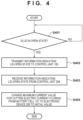
- third change processing for changing the maximum current value of the battery pack 100 will be described with reference to the flowchart shown in FIG. 4 . Note that the third change processing is started in a case where the battery pack 100 is connected to the electronic device 200.
- step S401 the control unit 204 detects whether the lid of the battery pack housing portion is open or closed. If the control unit 204 has detected that the lid of the battery pack housing portion is open, the control unit 204 determines that it is highly likely that the battery pack 100 will be detached from the electronic device 200, and proceeds to step S402. If the control unit 204 has detected that the lid of the battery pack housing portion is closed, the control unit 204 determines that it is not highly likely that the battery pack 100 will be detached from the electronic device 200, and repeats step S401. As described above, the control unit 204 determines whether or not it is highly likely that the battery pack 100 will be detached from the electronic device 200, by detecting whether the lid of the battery pack housing portion is open or closed.
- control unit 204 may also detect whether or not a predetermined operation that is performed before the battery pack 100 is detached has been performed, to determine whether or not it is highly likely that the battery pack 100 will be detached from the electronic device 200.
- control unit 204 is configured to detect whether or not the predetermined operation that is performed before the battery pack 100 is detached has been performed.
- step S402 the control unit 204 transmits information indicating that the lid of the battery pack housing portion is open, to the control unit 105 via the communication unit 205 and the communication terminal 206. Furthermore, the control unit 204 may also suspend or end a portion of processing that is performed by the load circuit 201. For example, the control unit 204 may also suspend or end processing that consumes a large amount of power. For example, the control unit 204 may also end processing (processing for storing image data, settings of the electronic device 200, etc.) that is to be ended before the battery pack 100 is detached from the electronic device 200.
- step S403 the control unit 105 receives the information indicating that the lid of the battery pack housing portion is open, from the control unit 204 via the communication terminal 108 and the communication unit 107.
- step S404 the control unit 105 changes the maximum current value of the battery pack 100 to the initial value described above. Accordingly, upon determining that an electric current flowing from the battery cell 101 to the electronic device 200 has exceeded the initial value, the control unit 105 can cut the electric current flowing from the battery cell 101 to the electronic device 200 by turning the discharge FET 106b OFF. As described above, the maximum current value of the battery pack 100 is changed to the initial value to prevent an electric current flowing from the battery cell 101 to the electronic device 200 from exceeding the initial value. As a result, the control unit 105 can protect the battery cell 101, the first positive terminal 102a, the first negative terminal 102b, the second positive terminal 103a, and the second negative terminal 103b from overcurrent.
- the control unit 204 may also transmit information indicating that the lid of the battery pack housing portion is closed, to the control unit 105 via the communication unit 205 and the communication terminal 206.
- the control unit 105 performs the processing in step S202 and the following steps shown in FIG. 2 after receiving the information indicating that the lid of the battery pack housing portion is closed, from the control unit 204.
- the maximum current value of the battery pack 100 can be changed to a current value that corresponds to the number of positive terminals and negative terminals connected to the electronic device 200.
- the battery pack 100 can change the maximum current value of the battery pack 100 to the current value (the first current value or the second current value) corresponding to the number of positive terminals and negative terminals connected to the electronic device 200. As a result, the battery pack 100 can protect the battery cell 101, the first positive terminal 102a, the first negative terminal 102b, the second positive terminal 103a, and the second negative terminal 103b from overcurrent.
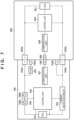
- FIG. 7 is a block diagram showing another example of components of the battery pack 100 and components of the electronic device 200. Note that among the components shown in FIG. 7 , components that are similar to those shown in FIG. 1 are denoted with the same reference signs as those used in FIG. 1 , and detailed descriptions of which are omitted. However, unlike the first positive terminal 102a and the first negative terminal 102b shown in FIG. 1 , the first positive terminal 102a and the first negative terminal 102b shown in FIG. 7 are terminals that can sufficiently withstand an electric current of 10 A, for example. Unlike the control unit 105 shown in FIG. 1 , the control unit 105 shown in FIG.
- the control unit 105 can detect the type of positive terminals and negative terminals connected to the electronic device 200 based on information for detecting the type of positive terminals and negative terminals connected to the electronic device 200, for example.
- the information for detecting the type of positive terminals and negative terminals connected to the electronic device 200 is information that is transmitted from the control unit 204 to the control unit 105, for example.
- the information for detecting the type of positive terminals and negative terminals connected to the electronic device 200 may be information indicating the type of the electronic device 200 or information indicating the type of positive terminals and negative terminals that are connected to the battery pack 100.
- the control unit 204 detects, as the type of positive terminals and negative terminals connected to the electronic device 200, a type of positive terminals and negative terminals that corresponds to the type of the electronic device 200 based on a correspondence between the type of the electronic device 200 and the type of positive terminals and negative terminals. Note that the correspondence between the type of the electronic device 200 and the type of positive terminals and negative terminals is stored in the memory of the control unit 105 in advance.
- the information for detecting the type of positive terminals and negative terminals connected to the electronic device 200 is information indicating the type of positive terminals and negative terminals that are connected to the battery pack 100.
- the control unit 204 detects the type of positive terminals and negative terminals connected to the battery pack 100 based on a predetermined method, and transmits information indicating the detected type to the control unit 105 together with information indicating the number of positive terminals and negative terminals connected to the battery pack 100.
- the control unit 105 detects the type of positive terminals and negative terminals connected to the battery pack 100 as the type of positive terminals and negative terminals connected to the electronic device 200.
- the battery pack 100 shown in FIG. 7 includes a fuse 109.
- the fuse 109 is provided between the second positive terminal 103a and the FET unit 106.
- the fuse 109 is configured to melt if an electric current that flows from the battery cell 101 to the second positive terminal 103a exceeds a current value (e.g., 6 A). Note that the current value at which the fuse 109 melts is set according to the performance of the second positive terminal 103a and the second negative terminal 103b.
- the fuse 109 being provided between the second positive terminal 103a and the FET unit 106, the second positive terminal 103a, the second negative terminal 103b, the battery pack 100, and the electronic device 200 can be protected even if an electric current of 10 A flows to the second positive terminal 103a and the second negative terminal 103b for some reason.
- the control unit 105 After detecting that the number of positive terminals and negative terminals connected to the electronic device 200 is the second number (e.g., 2), the control unit 105 detects the type of positive terminals and negative terminals connected to the electronic device 200 based on the information received from the control unit 204. Then, the control unit 105 changes the maximum current value of the battery pack 100 to the first current value or the second current value based on a correspondence between the type of positive terminals and negative terminals connected to the electronic device 200 and the maximum current value. Note that the correspondence between the type of positive terminals and negative terminals connected to the electronic device 200 and the maximum current value is stored in the memory of the control unit 105 in advance.
- the control unit 105 changes the maximum current value of the battery pack 100 to the first current value (e.g., 10 A). If the second positive terminal 103a and the second negative terminal 103b are connected to the electronic device 200, for example, the control unit 105 changes the maximum current value of the battery pack 100 to the second current value (e.g., 3 A). Accordingly, if the first positive terminal 102a and the first negative terminal 102b are connected to the electronic device 200, the battery cell 101 can supply an electric current of up to the first current value (e.g., 10 A) to the electronic device 200.
- the first current value e.g. 10 A
- the battery cell 101 can supply an electric current of up to the second current value (e.g., 3 A) to the electronic device 200.
- the battery cell 101 can supply an electric current of up to the first current value (e.g., 10 A) to the electronic device 200.
- the electronic device 200 shown in FIG. 7 does not include the second positive terminal 203a and the second negative terminal 203b, but includes the first positive terminal 202a and the first negative terminal 202b.
- the control unit 105 changes the maximum current value of the battery pack 100 to the first current value (e.g., 10 A).
- the battery cell 101 can supply an electric current of up to the first current value (e.g., 10 A) to the electronic device 200.
- the electronic device 200 shown in FIG. 7 can receive an electric current of up to the first current value (e.g., 10 A) from the battery pack 100 via the first positive terminal 202a and the first negative terminal 202b.
- Embodiment 1 can also be implemented as a result of a personal computer, a microcomputer, a CPU (Central Processing Unit), or a processor executing a program.
- the personal computer, the microcomputer, the CPU, or the processor will be referred to as a "computer X”.
- the program for controlling the computer X and implementing the various functions, processes, or methods described in Embodiment 1 will be referred to as a "program Y".
- Embodiment 1 The various functions, processes, or methods described in Embodiment 1 are implemented as a result of the computer X executing the program Y.
- the program Y is supplied to the computer X via a computer-readable storage medium.
- the computer-readable storage medium in Embodiment 2 includes at least one of a hard disk device, a magnetic storage device, an optical storage device, a magneto-optical storage device, a memory card, a volatile memory, a non-volatile memory, or the like.
- the computer-readable storage medium in Embodiment 2 is a non-transitory storage medium.
- a battery pack (100) that is connectable to an electronic device (200) is disclosed.
- the battery pack (100) includes positive terminals (102a, 103a), negative terminals (102b, 103b), and a cutting means (106b).
- the cutting means (106b) cuts a current that flows from a battery cell (101) to the electronic device (200) in a case where the current flowing from the battery cell (101) to the electronic device (200) exceeds a maximum current value.
- the battery pack (100) further includes a control means (105) for changing the maximum current value based on the number of positive terminals and negative terminals that are connected to the electronic device (200).
Landscapes
- Engineering & Computer Science (AREA)
- Power Engineering (AREA)
- General Chemical & Material Sciences (AREA)
- Chemical & Material Sciences (AREA)
- Chemical Kinetics & Catalysis (AREA)
- Electrochemistry (AREA)
- Manufacturing & Machinery (AREA)
- Microelectronics & Electronic Packaging (AREA)
- Physics & Mathematics (AREA)
- General Physics & Mathematics (AREA)
- Secondary Cells (AREA)
- Charge And Discharge Circuits For Batteries Or The Like (AREA)
- Battery Mounting, Suspending (AREA)
- Protection Of Static Devices (AREA)
Description
- The present disclosure relates to a battery pack, a method for controlling the battery pack, and a program relating to a battery pack and a method for controlling the battery pack.
- A battery pack that supplies power to an electronic device includes a protection circuit for protecting a battery cell of the battery pack from overcurrent. If an electric current flowing to the battery cell exceeds the maximum value, the protection circuit can cut the electric current flowing to the battery cell by turning a switching element OFF.
-
Japanese Patent Laid-Open No. 2001-286068 - However, the battery pack described in
Japanese Patent Laid-Open No. 2001-286068 Japanese Patent Laid-Open No. 2001-286068
JP 2019 004631 A
US 2009/071675 A1 discloses a battery device having a switching element for interrupting the current flowing through a cell group, in case the current would exceed a predetermined threshold. - According to an aspect of the embodiments, a device, a method, or a program that is capable of changing a current value for determining whether or not to cut a current flowing from a battery cell to an electronic device based on the number of positive terminals and negative terminals that are connected to the electronic device, is provided.
- The present invention provides a battery pack, a method, and a program as specified in the appended claims.
- Further aspects of the embodiments will become apparent from the following embodiments.
-
-
FIG 1 is a block diagram showing components of abattery pack 100 and components of anelectronic device 200 that is connectable to thebattery pack 100. -
FIG 2 is a flowchart relating to first change processing for changing the maximum current value of thebattery pack 100. -
FIG 3 is a flowchart relating to second change processing for changing the maximum current value of thebattery pack 100. -
FIG 4 is a flowchart relating to third change processing for changing the maximum current value of thebattery pack 100. -
FIG 5A is a diagram showing an example of a correspondence between the type of theelectronic device 200 and the number of terminals. -
FIG. 5B is a diagram showing a correspondence between the number of terminals and the maximum current value. -
FIG. 6 is a block diagram showing components of thebattery pack 100 and components of theelectronic device 200 that is connectable to thebattery pack 100. -
FIG. 7 is a block diagram showing another example of components of thebattery pack 100 and components of theelectronic device 200. - Exemplary embodiments, features, and aspects of the disclosure will be described below with reference to the drawings. However, aspects of the disclosure are not limited to the following embodiments.
-
FIGS. 1 and6 are block diagrams showing components of abattery pack 100 and components of anelectronic device 200 that is connectable to thebattery pack 100. - The
battery pack 100 is a battery pack that is connectable to theelectronic device 200. Thebattery pack 100 is connected to theelectronic device 200 as a result of being housed in a battery pack housing portion of theelectronic device 200. Thebattery pack 100 includes abattery cell 101, a firstpositive terminal 102a, a firstnegative terminal 102b, a secondpositive terminal 103a, a secondnegative terminal 103b, acurrent detection circuit 104, acontrol unit 105, anFET unit 106, acommunication unit 107, and acommunication terminal 108. - The
battery cell 101 is a rechargeable battery cell such as a lithium ion battery cell. Thebattery cell 101 includes one or more battery cells. - The first
positive terminal 102a and the firstnegative terminal 102b are terminals that can sufficiently withstand an electric current of 5 A, for example. The secondpositive terminal 103a and the secondnegative terminal 103b are also terminals that can sufficiently withstand an electric current of 5 A, for example. In a case where the firstpositive terminal 102a and the firstnegative terminal 102b are connected to theelectronic device 200, thebattery cell 101 can supply an electric current of up to 5 A, for example, to theelectronic device 200. In a case where the secondpositive terminal 103a and the secondnegative terminal 103b are connected to theelectronic device 200 as well, thebattery cell 101 can supply an electric current of up to 5 A, for example, to theelectronic device 200. In a case where positive terminals and negative terminals that are connected to theelectronic device 200 are theterminals battery cell 101 can supply an electric current of up to 10 A, for example, to theelectronic device 200. Note that out of the firstpositive terminal 102a, the firstnegative terminal 102b, the secondpositive terminal 103a, and the secondnegative terminal 103b, terminals via which thebattery pack 100 is connected to theelectronic device 200 change according to the type of theelectronic device 200. - The
current detection circuit 104 is provided between thebattery cell 101 and each of the firstnegative terminal 102b and the secondnegative terminal 103b, and detects an electric current that flows from thebattery cell 101 to theelectronic device 200 or an electric current that flows from theelectronic device 200 to thebattery cell 101. Thecurrent detection circuit 104 detects the electric current flowing from thebattery cell 101 to theelectronic device 200 or the electric current flowing from theelectronic device 200 to thebattery cell 101 based on the magnitude of a voltage drop, for example. Thecontrol unit 105 is informed of the electric current detected by thecurrent detection circuit 104. Thus, thecontrol unit 105 can be aware of the electric current flowing from thebattery cell 101 to theelectronic device 200 or the electric current flowing from theelectronic device 200 to thebattery cell 101. - The FET
unit 106 includes a charge FET 106a and adischarge FET 106b. The charge FET 106a is a switch that is controlled by thecontrol unit 105 to be turned ON or OFF. Thedischarge FET 106b is also a switch that is controlled by thecontrol unit 105 to be turned ON or OFF. If the charge FET 106a is turned OFF and thedischarge FET 106b is turned ON, an electric current flows from thebattery cell 101 to theelectronic device 200. In this case, the electric current flowing from thebattery cell 101 to theelectronic device 200 is cut as a result of thecontrol unit 105 turning thedischarge FET 106b OFF. If the charge FET 106a is turned ON and thedischarge FET 106b is turned OFF, an electric current flows from theelectronic device 200 to thebattery cell 101. In this case, the electric current flowing from theelectronic device 200 to thebattery cell 101 is cut as a result of thecontrol unit 105 turning the charge FET 106a OFF. - The
communication unit 107 communicates with acommunication unit 205 of theelectronic device 200 viacommunication terminals battery pack 100 is connected to theelectronic device 200, thecommunication unit 107 is electrically connected to thecommunication unit 205 via thecommunication terminals - The
control unit 105 controls discharging and charging of thebattery cell 101 and detects information regarding the battery cell 101 (the remaining charge, degradation state, temperature, etc., of the battery cell 101). Thecontrol unit 105 includes a memory and a processor, for example. The components of thebattery pack 100 are controlled as a result of the processor of thecontrol unit 105 executing a program that is stored in the memory of thecontrol unit 105. Thecontrol unit 105 can be constituted by an integrated circuit such as an ASIC (Application Specific Integrated Circuit), for example. Information regarding the battery cell 101 (the remaining charge, degradation state, temperature, etc., of the battery cell 101) is detected by the processor of thecontrol unit 105 and is stored in the memory of thecontrol unit 105, for example. - The
control unit 105 can control operations of thecommunication unit 107. Thecontrol unit 105 can communicate with acontrol unit 204 of theelectronic device 200 by controlling operations of thecommunication unit 107. Thecontrol unit 105 can detect the number of positive terminals and negative terminals that are connected to theelectronic device 200 based on information that is received from thecontrol unit 204 via thecommunication terminal 108 and thecommunication unit 107. - The
control unit 105 can control operations of the charge FET 106a and thedischarge FET 106b. Thecontrol unit 105 can operate as a protection circuit that cuts an electric current flowing from thebattery cell 101 to theelectronic device 200 or an electric current flowing from theelectronic device 200 to thebattery cell 101 by controlling operations of thecharge FET 106a and thedischarge FET 106b. For example, thecontrol unit 105 cuts an electric current flowing from thebattery cell 101 to theelectronic device 200 by turning thedischarge FET 106b OFF upon determining that the electric current flowing from thebattery cell 101 to theelectronic device 200 has exceeded the maximum current value (a predetermined current value) of thebattery pack 100. - The
control unit 105 can monitor the voltage of thecommunication terminal 108. Thecontrol unit 105 determines whether or not a period during which the voltage of thecommunication terminal 108 does not exceed a first voltage value has exceeded a first predetermined period. Upon determining that the period during which the voltage of thecommunication terminal 108 does not exceed the first voltage value has exceeded the first predetermined period, thecontrol unit 105 determines that thebattery pack 100 has been detached from theelectronic device 200. Thecontrol unit 105 determines whether or not a period during which the voltage of thecommunication terminal 108 is larger than a second voltage value has exceeded a second predetermined period. Upon determining that the period during which the voltage of thecommunication terminal 108 is larger than the second voltage value has exceeded the second predetermined period, thecontrol unit 105 determines that thebattery pack 100 has been connected to theelectronic device 200. Here, the second voltage value is larger than or equal to the first voltage value. The second predetermined period is the same as or is different from the first predetermined period. The first voltage value, the second voltage value, the first predetermined period, and the second predetermined period are stored in the memory of thecontrol unit 105. - The
electronic device 200 is an electronic device that is connectable to thebattery pack 100. Theelectronic device 200 includes aload circuit 201, at least one of a firstpositive terminal 202a and a secondpositive terminal 203a, at least one of a firstnegative terminal 202b and a secondnegative terminal 203b, thecontrol unit 204, thecommunication unit 205, and thecommunication terminal 206. Which terminals of the firstpositive terminal 202a, the firstnegative terminal 202b, the secondpositive terminal 203a, and the secondnegative terminal 203b are included in theelectronic device 200 changes according to the type of theelectronic device 200. For example, theelectronic device 200 shown inFIG. 1 includes the firstpositive terminal 202a, the firstnegative terminal 202b, the secondpositive terminal 203a, and the secondnegative terminal 203b. Theelectronic device 200 shown inFIG. 1 can receive an electric current of up to a first current value (e.g., 10 A) from thebattery pack 100 via the firstpositive terminal 202a, the firstnegative terminal 202b, the secondpositive terminal 203a, and the secondnegative terminal 203b. For example, theelectronic device 200 shown inFIG. 6 does not include the firstpositive terminal 202a and the firstnegative terminal 202b but includes the secondpositive terminal 203a and the secondnegative terminal 203b. Theelectronic device 200 shown inFIG. 6 can receive an electric current of up to a second current value (e.g., 3 A) from thebattery pack 100 via the secondpositive terminal 203a and the secondnegative terminal 203b. - The configuration of the
load circuit 201 changes according to the type of theelectronic device 200. If theelectronic device 200 is an electronic device that operates as a digital camera, for example, theload circuit 201 includes components (including an image capturing unit, an image processing unit, a recording unit, a reproduction unit, a display unit, etc.) that are necessary for theelectronic device 200 to operate as the digital camera. If theelectronic device 200 is an electronic device that operates as a charger, for example, theload circuit 201 includes components (including a voltage conversion unit, a charging unit, etc.) that are necessary for theelectronic device 200 to operate as the charger. - The first
positive terminal 202a is a terminal that is connected to the first positive terminal 102a of thebattery pack 100, and the firstnegative terminal 202b is a terminal that is connected to the firstnegative terminal 102b of thebattery pack 100. The secondpositive terminal 203a is a terminal that is connected to the second positive terminal 103a of thebattery pack 100, and the secondnegative terminal 203b is a terminal that is connected to the secondnegative terminal 103b of thebattery pack 100. The firstpositive terminal 202a and the firstnegative terminal 202b are terminals that can sufficiently withstand an electric current of 5 A, for example. The secondpositive terminal 203a and the secondnegative terminal 203b are also terminals that can sufficiently withstand an electric current of 5 A, for example. Thecommunication terminal 206 is a terminal that is connected to thecommunication terminal 108 of thebattery pack 100. - The
communication unit 205 communicates with thecommunication unit 107 of thebattery pack 100 via thecommunication terminals battery pack 100 is connected to theelectronic device 200, thecommunication unit 205 is electrically connected to thecommunication unit 107 via thecommunication terminals - The
control unit 204 controls theload circuit 201 and detects information regarding theload circuit 201. Thecontrol unit 204 includes a memory and a processor, for example. The components of theelectronic device 200 are controlled as a result of the processor of thecontrol unit 204 executing a program that is stored in the memory of thecontrol unit 204. Thecontrol unit 204 can be constituted by an integrated circuit such as an ASIC (Application Specific Integrated Circuit), for example. Information (e.g., ID information of the electronic device 200) that indicates the type of theelectronic device 200 is stored in the memory of thecontrol unit 204. - The
control unit 204 can control operations of thecommunication unit 205. Thecontrol unit 204 can communicate with thecontrol unit 105 of thebattery pack 100 by controlling operations of thecommunication unit 205. Thecontrol unit 204 transmits the information indicating the type of theelectronic device 200 via thecommunication unit 205 and thecommunication terminal 206 to thecontrol unit 105. - The
control unit 204 can monitor the voltage of the firstpositive terminal 202a and the voltage of the secondpositive terminal 203a. Thecontrol unit 204 can detect the number of positive terminals and negative terminals that are connected to thebattery pack 100 based on the voltage of the firstpositive terminal 202a and the voltage of the secondpositive terminal 203a. Upon detecting the number of positive terminals and negative terminals connected to thebattery pack 100, thecontrol unit 204 transmits information indicating the number of positive terminals and negative terminals connected to thebattery pack 100, to thecontrol unit 105 via thecommunication unit 205 and thecommunication terminal 206. - The
electronic device 200 further includes a battery pack housing portion for housing thebattery pack 100, a lid that is provided in the vicinity of an opening portion of the battery pack housing portion, and a lock mechanism that maintains connection between thebattery pack 100 and theelectronic device 200 even when the lid is open. Thecontrol unit 204 is configured to detect whether the lid of the battery pack housing portion is open or closed. Upon detecting that the lid of the battery pack housing portion is open, thecontrol unit 204 transmits information indicating that the lid of the battery pack housing portion is open, to thecontrol unit 105 via thecommunication unit 205 and thecommunication terminal 206. - Next, first change processing for changing the maximum current value of the
battery pack 100 will be described with reference to the flowchart shown inFIG. 2 . Note that the first change processing is started in a case where thecontrol unit 105 has detected that thebattery pack 100 is connected to theelectronic device 200. - In step S201, the
control unit 105 changes the maximum current value of thebattery pack 100 to an initial value. The initial value is a current value that is the safest, and is the same as the second current value (e.g., 3 A) or is smaller than the second current value. Accordingly, upon determining that an electric current flowing from thebattery cell 101 to theelectronic device 200 has exceeded the initial value, thecontrol unit 105 can cut the electric current flowing from thebattery cell 101 to theelectronic device 200 by turning thedischarge FET 106b OFF. As described above, the maximum current value of thebattery pack 100 is changed to the initial value to prevent an electric current flowing from thebattery cell 101 to theelectronic device 200 from exceeding the initial value. As a result, thecontrol unit 105 can protect thebattery cell 101, the firstpositive terminal 102a, the firstnegative terminal 102b, the secondpositive terminal 103a, and the secondnegative terminal 103b from overcurrent. - In step S202, the
control unit 105 receives information for detecting the number of positive terminals and negative terminals that are connected to theelectronic device 200 from thecontrol unit 204 via thecommunication terminal 108 and thecommunication unit 107. The information for detecting the number of positive terminals and negative terminals connected to theelectronic device 200 may be information indicating the type of theelectronic device 200 or information indicating the number of positive terminals and negative terminals that are connected to thebattery pack 100. A case will be described as an example in which the information for detecting the number of positive terminals and negative terminals connected to theelectronic device 200 is information indicating the type of theelectronic device 200. In this case, thecontrol unit 204 transmits the information indicating the type of theelectronic device 200, which is stored in the memory of thecontrol unit 204, to thecontrol unit 105. A case will be described as an example in which the information for detecting the number of positive terminals and negative terminals connected to theelectronic device 200 is information indicating the number of positive terminals and negative terminals that are connected to thebattery pack 100. In this case, thecontrol unit 204 detects the number of positive terminals and negative terminals connected to thebattery pack 100 based on a predetermined method, and transmits information indicating the detected number to thecontrol unit 105. - In step S203, the
control unit 105 detects the number of positive terminals and negative terminals that are connected to theelectronic device 200 based on the information received in step S202. A case will be described as an example in which the information received in step S202 is the information indicating the type of theelectronic device 200. In this case, thecontrol unit 105 detects the number of terminals that corresponds to the type of theelectronic device 200 as the number of positive terminals and negative terminals connected to theelectronic device 200, based on a correspondence between the type of theelectronic device 200 and the number of terminals. Note that the correspondence between the type of theelectronic device 200 and the number of terminals is stored in the memory of thecontrol unit 105 in advance. A case will be described as an example in which the information received in step S202 is the information indicating the number of positive terminals and negative terminals connected to thebattery pack 100. In this case, thecontrol unit 105 detects the number of positive terminals and negative terminals connected to thebattery pack 100 as the number of positive terminals and negative terminals connected to theelectronic device 200. -
FIG. 5A shows an example of the correspondence between the type of theelectronic device 200 and the number of terminals. If thecontrol unit 105 has determined that the type of theelectronic device 200 is a camera A or a charger, for example, thecontrol unit 105 detects 2 as the number of positive terminals and negative terminals connected to theelectronic device 200. If thecontrol unit 105 has determined that the type of theelectronic device 200 is a camera B or a stroboscope device, for example, thecontrol unit 105 detects 4 as the number of positive terminals and negative terminals connected to theelectronic device 200. - In step S204, the
control unit 105 determines whether or not the number detected in step S203 is correct. If the number detected in step S203 matches either a first number (e.g., 4) or a second number (e.g., 2), thecontrol unit 105 determines that the number detected in step S203 is correct. Here, the first number and the second number are stored in the memory of thecontrol unit 105 in advance. If the number detected in step S203 does not match the first number (e.g., 4) and the second number (e.g., 2), thecontrol unit 105 determines that the number detected in step S203 is not correct. In a case where the number of positive terminals and negative terminals connected to theelectronic device 200 could not be detected in step S203 as well, thecontrol unit 105 determines that the number detected in step S203 is not correct. If thecontrol unit 105 has determined that the number detected in step S203 is correct, thecontrol unit 105 proceeds to step S205. If thecontrol unit 105 has determined that the number detected in step S203 is not correct, the flowchart shown inFIG. 2 ends in the state where the maximum current value of thebattery pack 100 is the initial value. Note that, if thecontrol unit 105 has determined that the number detected in step S203 is not correct, thecontrol unit 105 may also transmit error information indicating that the number of positive terminals and negative terminals connected to theelectronic device 200 could not be correctly detected, to thecontrol unit 204. - In step S205, the
control unit 105 changes the maximum current value of thebattery pack 100 to a current value (a first current value or a second current value) that corresponds to the number detected in step S203, based on a correspondence between the number detected in step S203 and the maximum current value. Note that the correspondence between the number detected in step S203 and the maximum current value is stored in the memory of thecontrol unit 105 in advance.FIG. 5B shows an example of the correspondence between the number (detected number) detected in step S203 and the maximum current value. As shown inFIG. 5B , the maximum current value becomes larger as the number (detected number) detected in step S203 becomes larger. If the number detected in step S203 is the second number (e.g., 2), for example, thecontrol unit 105 changes the maximum current value of thebattery pack 100 to the second current value (e.g., 3 A). If the number detected in step S203 is the first number (e.g., 4), for example, thecontrol unit 105 changes the maximum current value of thebattery pack 100 to the first current value (e.g., 10 A). - Thus, the
control unit 105 can change the maximum current value of thebattery pack 100 to the current value (the first current value or the second current value) corresponding to the number of positive terminals and negative terminals connected to theelectronic device 200. As a result, thebattery pack 100 can protect thebattery cell 101, the firstpositive terminal 102a, the firstnegative terminal 102b, the secondpositive terminal 103a, and the secondnegative terminal 103b from overcurrent. - In step S206, the
control unit 105 transmits information indicating the number detected in step S203 (which is equivalent to the number of positive terminals and negative terminals connected to the electronic device 200) to thecontrol unit 204 via thecommunication unit 107 and thecommunication terminal 108. Thecontrol unit 105 further transmits information indicating the maximum current value changed in step S205 (which is equivalent to the current value corresponding to the number detected in step S203) to thecontrol unit 204 via thecommunication unit 107 and thecommunication terminal 108. Thus, thecontrol unit 204 can be aware of the number of positive terminals and negative terminals connected to theelectronic device 200 and the maximum current value of thebattery pack 100. - Next, second change processing for changing the maximum current value of the
battery pack 100 will be described with reference to the flowchart shown inFIG. 3 . Note that the second change processing is started in a case where thebattery pack 100 is connected to theelectronic device 200. - In step S301, the
control unit 105 determines whether or not the voltage of thecommunication terminal 108 exceeds the first voltage value. If thecontrol unit 105 has determined that the voltage of thecommunication terminal 108 does not exceed the first voltage value, thecontrol unit 105 proceeds to step S302. If thecontrol unit 105 has determined that the voltage of thecommunication terminal 108 exceeds the first voltage value, thecontrol unit 105 repeats step S301. - In step S302, the
control unit 105 determines whether or not a period during which the voltage of thecommunication terminal 108 does not exceed the first voltage value has reached the first predetermined period. If thecontrol unit 105 has determined that the period during which the voltage of thecommunication terminal 108 does not exceed the first voltage value has reached the first predetermined period, thecontrol unit 105 proceeds to step S303. If thecontrol unit 105 has determined that the period during which the voltage of thecommunication terminal 108 does not exceed the first voltage value has not reached the first predetermined period, thecontrol unit 105 returns to step S301. - In step S303, the
control unit 105 determines that thebattery pack 100 has been detached from theelectronic device 200. - In step S304, the
control unit 105 changes the maximum current value of thebattery pack 100 to the initial value described above. Accordingly, upon determining that an electric current flowing from thebattery cell 101 to theelectronic device 200 has exceeded the initial value, thecontrol unit 105 can cut the electric current flowing from thebattery cell 101 to theelectronic device 200 by turning thedischarge FET 106b OFF. As described above, the maximum current value of thebattery pack 100 is changed to the initial value to prevent an electric current flowing from thebattery cell 101 to theelectronic device 200 from exceeding the initial value. As a result, thecontrol unit 105 can protect thebattery cell 101, the firstpositive terminal 102a, the firstnegative terminal 102b, the secondpositive terminal 103a, and the secondnegative terminal 103b from overcurrent. - Next, third change processing for changing the maximum current value of the
battery pack 100 will be described with reference to the flowchart shown inFIG. 4 . Note that the third change processing is started in a case where thebattery pack 100 is connected to theelectronic device 200. - In step S401, the
control unit 204 detects whether the lid of the battery pack housing portion is open or closed. If thecontrol unit 204 has detected that the lid of the battery pack housing portion is open, thecontrol unit 204 determines that it is highly likely that thebattery pack 100 will be detached from theelectronic device 200, and proceeds to step S402. If thecontrol unit 204 has detected that the lid of the battery pack housing portion is closed, thecontrol unit 204 determines that it is not highly likely that thebattery pack 100 will be detached from theelectronic device 200, and repeats step S401. As described above, thecontrol unit 204 determines whether or not it is highly likely that thebattery pack 100 will be detached from theelectronic device 200, by detecting whether the lid of the battery pack housing portion is open or closed. Note that another method may also be used to determine whether or not it is highly likely that thebattery pack 100 will be detached from theelectronic device 200. For example, thecontrol unit 204 may also detect whether or not a predetermined operation that is performed before thebattery pack 100 is detached has been performed, to determine whether or not it is highly likely that thebattery pack 100 will be detached from theelectronic device 200. In this case, thecontrol unit 204 is configured to detect whether or not the predetermined operation that is performed before thebattery pack 100 is detached has been performed. - In step S402, the
control unit 204 transmits information indicating that the lid of the battery pack housing portion is open, to thecontrol unit 105 via thecommunication unit 205 and thecommunication terminal 206. Furthermore, thecontrol unit 204 may also suspend or end a portion of processing that is performed by theload circuit 201. For example, thecontrol unit 204 may also suspend or end processing that consumes a large amount of power. For example, thecontrol unit 204 may also end processing (processing for storing image data, settings of theelectronic device 200, etc.) that is to be ended before thebattery pack 100 is detached from theelectronic device 200. - In step S403, the
control unit 105 receives the information indicating that the lid of the battery pack housing portion is open, from thecontrol unit 204 via thecommunication terminal 108 and thecommunication unit 107. - In step S404, the
control unit 105 changes the maximum current value of thebattery pack 100 to the initial value described above. Accordingly, upon determining that an electric current flowing from thebattery cell 101 to theelectronic device 200 has exceeded the initial value, thecontrol unit 105 can cut the electric current flowing from thebattery cell 101 to theelectronic device 200 by turning thedischarge FET 106b OFF. As described above, the maximum current value of thebattery pack 100 is changed to the initial value to prevent an electric current flowing from thebattery cell 101 to theelectronic device 200 from exceeding the initial value. As a result, thecontrol unit 105 can protect thebattery cell 101, the firstpositive terminal 102a, the firstnegative terminal 102b, the secondpositive terminal 103a, and the secondnegative terminal 103b from overcurrent. - Note that, if the lid of the battery pack housing portion has been opened but is closed without the
battery pack 100 being detached from theelectronic device 200, thecontrol unit 204 may also transmit information indicating that the lid of the battery pack housing portion is closed, to thecontrol unit 105 via thecommunication unit 205 and thecommunication terminal 206. In this case, thecontrol unit 105 performs the processing in step S202 and the following steps shown inFIG. 2 after receiving the information indicating that the lid of the battery pack housing portion is closed, from thecontrol unit 204. As a result of the processing in step S202 and the following steps shown inFIG. 2 being performed, the maximum current value of thebattery pack 100 can be changed to a current value that corresponds to the number of positive terminals and negative terminals connected to theelectronic device 200. - As described above, according to Embodiment 1, the
battery pack 100 can change the maximum current value of thebattery pack 100 to the current value (the first current value or the second current value) corresponding to the number of positive terminals and negative terminals connected to theelectronic device 200. As a result, thebattery pack 100 can protect thebattery cell 101, the firstpositive terminal 102a, the firstnegative terminal 102b, the secondpositive terminal 103a, and the secondnegative terminal 103b from overcurrent. - Next, a variation of Embodiment 1 will be described.
FIG. 7 is a block diagram showing another example of components of thebattery pack 100 and components of theelectronic device 200. Note that among the components shown inFIG. 7 , components that are similar to those shown inFIG. 1 are denoted with the same reference signs as those used inFIG. 1 , and detailed descriptions of which are omitted. However, unlike the firstpositive terminal 102a and the firstnegative terminal 102b shown inFIG. 1 , the firstpositive terminal 102a and the firstnegative terminal 102b shown inFIG. 7 are terminals that can sufficiently withstand an electric current of 10 A, for example. Unlike thecontrol unit 105 shown inFIG. 1 , thecontrol unit 105 shown inFIG. 7 can also detect the type of positive terminals and negative terminals that are connected to theelectronic device 200. Thecontrol unit 105 can detect the type of positive terminals and negative terminals connected to theelectronic device 200 based on information for detecting the type of positive terminals and negative terminals connected to theelectronic device 200, for example. The information for detecting the type of positive terminals and negative terminals connected to theelectronic device 200 is information that is transmitted from thecontrol unit 204 to thecontrol unit 105, for example. The information for detecting the type of positive terminals and negative terminals connected to theelectronic device 200 may be information indicating the type of theelectronic device 200 or information indicating the type of positive terminals and negative terminals that are connected to thebattery pack 100. A case will be described as an example in which the information for detecting the type of positive terminals and negative terminals connected to theelectronic device 200 is information indicating the type of theelectronic device 200. In this case, thecontrol unit 204 detects, as the type of positive terminals and negative terminals connected to theelectronic device 200, a type of positive terminals and negative terminals that corresponds to the type of theelectronic device 200 based on a correspondence between the type of theelectronic device 200 and the type of positive terminals and negative terminals. Note that the correspondence between the type of theelectronic device 200 and the type of positive terminals and negative terminals is stored in the memory of thecontrol unit 105 in advance. A case will be described as an example in which the information for detecting the type of positive terminals and negative terminals connected to theelectronic device 200 is information indicating the type of positive terminals and negative terminals that are connected to thebattery pack 100. In this case, thecontrol unit 204 detects the type of positive terminals and negative terminals connected to thebattery pack 100 based on a predetermined method, and transmits information indicating the detected type to thecontrol unit 105 together with information indicating the number of positive terminals and negative terminals connected to thebattery pack 100. Thecontrol unit 105 detects the type of positive terminals and negative terminals connected to thebattery pack 100 as the type of positive terminals and negative terminals connected to theelectronic device 200. - Unlike the
battery pack 100 shown inFIG. 1 , thebattery pack 100 shown inFIG. 7 includes afuse 109. Thefuse 109 is provided between the secondpositive terminal 103a and theFET unit 106. Thefuse 109 is configured to melt if an electric current that flows from thebattery cell 101 to the secondpositive terminal 103a exceeds a current value (e.g., 6 A). Note that the current value at which thefuse 109 melts is set according to the performance of the secondpositive terminal 103a and the secondnegative terminal 103b. As a result of thefuse 109 being provided between the secondpositive terminal 103a and theFET unit 106, the secondpositive terminal 103a, the secondnegative terminal 103b, thebattery pack 100, and theelectronic device 200 can be protected even if an electric current of 10 A flows to the secondpositive terminal 103a and the secondnegative terminal 103b for some reason. - After detecting that the number of positive terminals and negative terminals connected to the
electronic device 200 is the second number (e.g., 2), thecontrol unit 105 detects the type of positive terminals and negative terminals connected to theelectronic device 200 based on the information received from thecontrol unit 204. Then, thecontrol unit 105 changes the maximum current value of thebattery pack 100 to the first current value or the second current value based on a correspondence between the type of positive terminals and negative terminals connected to theelectronic device 200 and the maximum current value. Note that the correspondence between the type of positive terminals and negative terminals connected to theelectronic device 200 and the maximum current value is stored in the memory of thecontrol unit 105 in advance. If the firstpositive terminal 102a and the firstnegative terminal 102b are connected to theelectronic device 200, for example, thecontrol unit 105 changes the maximum current value of thebattery pack 100 to the first current value (e.g., 10 A). If the secondpositive terminal 103a and the secondnegative terminal 103b are connected to theelectronic device 200, for example, thecontrol unit 105 changes the maximum current value of thebattery pack 100 to the second current value (e.g., 3 A). Accordingly, if the firstpositive terminal 102a and the firstnegative terminal 102b are connected to theelectronic device 200, thebattery cell 101 can supply an electric current of up to the first current value (e.g., 10 A) to theelectronic device 200. On the other hand, if the secondpositive terminal 103a and the secondnegative terminal 103b are connected to theelectronic device 200, thebattery cell 101 can supply an electric current of up to the second current value (e.g., 3 A) to theelectronic device 200. Note that if positive terminals and negative terminals that are connected to theelectronic device 200 are theterminals battery cell 101 can supply an electric current of up to the first current value (e.g., 10 A) to theelectronic device 200. - Unlike the
electronic device 200 shown inFIG. 1 , theelectronic device 200 shown inFIG. 7 does not include the secondpositive terminal 203a and the secondnegative terminal 203b, but includes the firstpositive terminal 202a and the firstnegative terminal 202b. As described above, if the firstpositive terminal 102a and the firstnegative terminal 102b are connected to theelectronic device 200, thecontrol unit 105 changes the maximum current value of thebattery pack 100 to the first current value (e.g., 10 A). Accordingly, thebattery cell 101 can supply an electric current of up to the first current value (e.g., 10 A) to theelectronic device 200. Theelectronic device 200 shown inFIG. 7 can receive an electric current of up to the first current value (e.g., 10 A) from thebattery pack 100 via the firstpositive terminal 202a and the firstnegative terminal 202b. - The various functions, processes, or methods described in Embodiment 1 can also be implemented as a result of a personal computer, a microcomputer, a CPU (Central Processing Unit), or a processor executing a program. In
Embodiment 2, the personal computer, the microcomputer, the CPU, or the processor will be referred to as a "computer X". Also, inEmbodiment 2, the program for controlling the computer X and implementing the various functions, processes, or methods described in Embodiment 1 will be referred to as a "program Y". - The various functions, processes, or methods described in Embodiment 1 are implemented as a result of the computer X executing the program Y. In this case, the program Y is supplied to the computer X via a computer-readable storage medium. The computer-readable storage medium in
Embodiment 2 includes at least one of a hard disk device, a magnetic storage device, an optical storage device, a magneto-optical storage device, a memory card, a volatile memory, a non-volatile memory, or the like. The computer-readable storage medium inEmbodiment 2 is a non-transitory storage medium. - While aspects of the disclosure are described with reference to exemplary embodiments, it is to be understood that the aspects of the disclosure are not limited to the exemplary embodiments. A battery pack (100) that is connectable to an electronic device (200) is disclosed. The battery pack (100) includes positive terminals (102a, 103a), negative terminals (102b, 103b), and a cutting means (106b). The cutting means (106b) cuts a current that flows from a battery cell (101) to the electronic device (200) in a case where the current flowing from the battery cell (101) to the electronic device (200) exceeds a maximum current value. The battery pack (100) further includes a control means (105) for changing the maximum current value based on the number of positive terminals and negative terminals that are connected to the electronic device (200).
Claims (7)
- A battery pack (100) that is connectable to an electronic device (200), comprising:positive terminals (102a, 103a);negative terminals (102b, 103b);a cutting means (106b) for cutting a current that flows from a battery cell (101) to the electronic device (200) in a case where the current flowing from the battery cell (101) to the electronic device (200) exceeds a maximum current value; anda control means (105) for changing the maximum current value to an initial value upon detecting that the battery pack (100) is connected to the electronic device (200),wherein the initial value is equal to or smaller than a current value in a case in which one positive terminal (102a, 103a) and one negative terminal (102b, 103b) is connected to the electronic device (200),wherein the control means (105) further changes the maximum current value, after changing the maximum current value to the initial value, based on the number of positive terminals and negative terminals that are connected to the electronic device (200).
- The battery pack (100) according to claim 1, wherein the control means (105) changes the maximum current value to a first current value in a case where the number of positive terminals and negative terminals connected to the electronic device (200) is a first number, and
wherein the control means (105) changes the maximum current value to a second current value that is smaller than the first current value in a case where the number of positive terminals and negative terminals connected to the electronic device (200) is a second number that is smaller than the first number. - The battery pack (100) according to claim 2, wherein the control means (105) changes the maximum current value to a value that is no greater than the first current value, in a state where the battery pack (100) is connected to the electronic device (200).
- The battery pack (100) according to claim 2 or 3, wherein the control means (105) changes the maximum current value to a current value that is the same as the second current value or is smaller than the second current value, in a state where the battery pack (100) is detached from the electronic device (200).
- The battery pack (100) according to any one of claims 2 to 4, wherein the control means (105) changes the maximum current value to a current value that is the same as the second current value or is smaller than the second current value in a case where a lid of a battery pack housing is open, and
wherein the battery pack housing is included in the electronic device (200). - A method comprising:controlling a cutting unit (106b) of the battery pack (100) to cut a current that flows from a battery cell (101) to an electronic device (200) in a case where the current flowing from the battery cell (101) to the electronic device (200) exceeds a maximum current value, wherein the battery pack (100) includes positive terminals (102a, 103a) and negative terminals (102b, 103b);changing the maximum current value to an initial value upon detecting that the battery pack (100) is connected to the electronic device (200),wherein the initial value is equal to or smaller than a current value in a case in which one positive terminal (102a, 103a) and one negative terminal (102b, 103b) is connected to the electronic device (200); andfurther changing the maximum current value, after changing the maximum current value to the initial value, based on the number of positive terminals and negative terminals that are connected to the electronic device (200).
- A program that causes a computer to execute the method according to claim 6.
Applications Claiming Priority (1)
| Application Number | Priority Date | Filing Date | Title |
|---|---|---|---|
| JP2020012883A JP7441059B2 (en) | 2020-01-29 | 2020-01-29 | Battery pack, control method and program |
Publications (2)
| Publication Number | Publication Date |
|---|---|
| EP3859868A1 EP3859868A1 (en) | 2021-08-04 |
| EP3859868B1 true EP3859868B1 (en) | 2025-06-25 |
Family
ID=74183083
Family Applications (1)
| Application Number | Title | Priority Date | Filing Date |
|---|---|---|---|
| EP21151497.1A Active EP3859868B1 (en) | 2020-01-29 | 2021-01-14 | Battery pack and control method thereof |
Country Status (5)
| Country | Link |
|---|---|
| US (1) | US11646595B2 (en) |
| EP (1) | EP3859868B1 (en) |
| JP (1) | JP7441059B2 (en) |
| KR (1) | KR102841358B1 (en) |
| CN (1) | CN113270908B (en) |
Family Cites Families (11)
| Publication number | Priority date | Publication date | Assignee | Title |
|---|---|---|---|---|
| JP3939072B2 (en) | 2000-03-30 | 2007-06-27 | 三洋電機株式会社 | Battery pack |
| JP4289803B2 (en) * | 2001-04-12 | 2009-07-01 | 株式会社リコー | Detachable battery unit and electronic device using the same |
| JP5316831B2 (en) * | 2006-02-28 | 2013-10-16 | 日立工機株式会社 | Cordless power tool or charger |
| CN102939682A (en) * | 2009-11-06 | 2013-02-20 | 松下电器产业株式会社 | Battery power supply device and battery power supply system |
| JP5747491B2 (en) * | 2010-12-08 | 2015-07-15 | ソニー株式会社 | Electric storage system, electric vehicle and electric power system |
| US10658852B2 (en) * | 2017-01-05 | 2020-05-19 | Samsung Sdi Co., Ltd. | Battery pack and protection method of the battery pack |
| KR102320109B1 (en) * | 2017-01-24 | 2021-11-01 | 주식회사 엘지화학 | Battery module and method for manufacturing the same |
| JP6977324B2 (en) * | 2017-06-16 | 2021-12-08 | 工機ホールディングス株式会社 | Battery packs and electrical equipment using battery packs |
| KR102194844B1 (en) * | 2017-11-02 | 2020-12-23 | 주식회사 엘지화학 | Method, apparatus and recording medium for estimating parameters of battery equivalent circuit model |
| JP7443037B2 (en) * | 2019-12-03 | 2024-03-05 | キヤノン株式会社 | Battery pack and terminal status detection method |
| JP2022047802A (en) * | 2020-09-14 | 2022-03-25 | キヤノン株式会社 | Electronic apparatus, battery pack, control method and program |
-
2020
- 2020-01-29 JP JP2020012883A patent/JP7441059B2/en active Active
-
2021
- 2021-01-14 EP EP21151497.1A patent/EP3859868B1/en active Active
- 2021-01-15 KR KR1020210005690A patent/KR102841358B1/en active Active
- 2021-01-27 US US17/160,076 patent/US11646595B2/en active Active
- 2021-01-28 CN CN202110118019.6A patent/CN113270908B/en active Active
Also Published As
| Publication number | Publication date |
|---|---|
| US20210234392A1 (en) | 2021-07-29 |
| JP7441059B2 (en) | 2024-02-29 |
| KR20210097023A (en) | 2021-08-06 |
| JP2021118667A (en) | 2021-08-10 |
| EP3859868A1 (en) | 2021-08-04 |
| CN113270908B (en) | 2024-10-25 |
| KR102841358B1 (en) | 2025-08-01 |
| US11646595B2 (en) | 2023-05-09 |
| CN113270908A (en) | 2021-08-17 |
Similar Documents
| Publication | Publication Date | Title |
|---|---|---|
| CN102035054B (en) | Battery pack | |
| US7696720B2 (en) | Battery pack and electronic device | |
| EP1868274A1 (en) | Battery pack, and battery protecting method | |
| US8355231B2 (en) | Apparatus and method for protecting battery pack by detecting destruction of sense resistor in battery pack | |
| US7898216B2 (en) | Rechargeable battery device having a protection circuit for protecting from overcharge and overdischarge | |
| KR101093982B1 (en) | Battery pack and its driving method | |
| JPH10136581A (en) | Battery protection device | |
| KR101264740B1 (en) | Battery protection circuit and controlling method thereof | |
| KR20130049460A (en) | Battery pack, battery protection circuit, and battery system | |
| JP3382002B2 (en) | Battery pack and equipment using battery pack for operation | |
| KR20150107032A (en) | Battery pack | |
| KR102222119B1 (en) | battery pack | |
| JP5092321B2 (en) | Battery pack and detection method | |
| EP3859868B1 (en) | Battery pack and control method thereof | |
| KR100591431B1 (en) | Battery pack | |
| JP2000295777A (en) | Battery equipment | |
| JP5448244B2 (en) | Battery pack | |
| KR100719676B1 (en) | Power unit | |
| JP2007014091A (en) | Secondary battery charge control circuit and battery pack | |
| JP2011211867A (en) | Battery pack | |
| HK1123400A (en) | Battery pack and battery protection method |
Legal Events
| Date | Code | Title | Description |
|---|---|---|---|
| PUAI | Public reference made under article 153(3) epc to a published international application that has entered the european phase |
Free format text: ORIGINAL CODE: 0009012 |
|
| STAA | Information on the status of an ep patent application or granted ep patent |
Free format text: STATUS: THE APPLICATION HAS BEEN PUBLISHED |
|
| AK | Designated contracting states |
Kind code of ref document: A1 Designated state(s): AL AT BE BG CH CY CZ DE DK EE ES FI FR GB GR HR HU IE IS IT LI LT LU LV MC MK MT NL NO PL PT RO RS SE SI SK SM TR |
|
| STAA | Information on the status of an ep patent application or granted ep patent |
Free format text: STATUS: REQUEST FOR EXAMINATION WAS MADE |
|
| 17P | Request for examination filed |
Effective date: 20220204 |
|
| RBV | Designated contracting states (corrected) |
Designated state(s): AL AT BE BG CH CY CZ DE DK EE ES FI FR GB GR HR HU IE IS IT LI LT LU LV MC MK MT NL NO PL PT RO RS SE SI SK SM TR |
|
| GRAP | Despatch of communication of intention to grant a patent |
Free format text: ORIGINAL CODE: EPIDOSNIGR1 |
|
| STAA | Information on the status of an ep patent application or granted ep patent |
Free format text: STATUS: GRANT OF PATENT IS INTENDED |
|
| INTG | Intention to grant announced |
Effective date: 20250122 |
|
| GRAS | Grant fee paid |
Free format text: ORIGINAL CODE: EPIDOSNIGR3 |
|
| GRAA | (expected) grant |
Free format text: ORIGINAL CODE: 0009210 |
|
| STAA | Information on the status of an ep patent application or granted ep patent |
Free format text: STATUS: THE PATENT HAS BEEN GRANTED |
|
| AK | Designated contracting states |
Kind code of ref document: B1 Designated state(s): AL AT BE BG CH CY CZ DE DK EE ES FI FR GB GR HR HU IE IS IT LI LT LU LV MC MK MT NL NO PL PT RO RS SE SI SK SM TR |
|
| REG | Reference to a national code |
Ref country code: GB Ref legal event code: FG4D |
|
| REG | Reference to a national code |
Ref country code: CH Ref legal event code: EP |
|
| REG | Reference to a national code |
Ref country code: CH Ref legal event code: EP |
|
| REG | Reference to a national code |
Ref country code: IE Ref legal event code: FG4D |
|
| REG | Reference to a national code |
Ref country code: DE Ref legal event code: R096 Ref document number: 602021032660 Country of ref document: DE |
|
| PG25 | Lapsed in a contracting state [announced via postgrant information from national office to epo] |
Ref country code: FI Free format text: LAPSE BECAUSE OF FAILURE TO SUBMIT A TRANSLATION OF THE DESCRIPTION OR TO PAY THE FEE WITHIN THE PRESCRIBED TIME-LIMIT Effective date: 20250625 |
|
| REG | Reference to a national code |
Ref country code: LT Ref legal event code: MG9D |
|
| PG25 | Lapsed in a contracting state [announced via postgrant information from national office to epo] |
Ref country code: NO Free format text: LAPSE BECAUSE OF FAILURE TO SUBMIT A TRANSLATION OF THE DESCRIPTION OR TO PAY THE FEE WITHIN THE PRESCRIBED TIME-LIMIT Effective date: 20250925 Ref country code: GR Free format text: LAPSE BECAUSE OF FAILURE TO SUBMIT A TRANSLATION OF THE DESCRIPTION OR TO PAY THE FEE WITHIN THE PRESCRIBED TIME-LIMIT Effective date: 20250926 |
|
| PG25 | Lapsed in a contracting state [announced via postgrant information from national office to epo] |
Ref country code: BG Free format text: LAPSE BECAUSE OF FAILURE TO SUBMIT A TRANSLATION OF THE DESCRIPTION OR TO PAY THE FEE WITHIN THE PRESCRIBED TIME-LIMIT Effective date: 20250625 |
|
| PG25 | Lapsed in a contracting state [announced via postgrant information from national office to epo] |
Ref country code: HR Free format text: LAPSE BECAUSE OF FAILURE TO SUBMIT A TRANSLATION OF THE DESCRIPTION OR TO PAY THE FEE WITHIN THE PRESCRIBED TIME-LIMIT Effective date: 20250625 |
|
| PG25 | Lapsed in a contracting state [announced via postgrant information from national office to epo] |
Ref country code: RS Free format text: LAPSE BECAUSE OF FAILURE TO SUBMIT A TRANSLATION OF THE DESCRIPTION OR TO PAY THE FEE WITHIN THE PRESCRIBED TIME-LIMIT Effective date: 20250925 |
|
| PG25 | Lapsed in a contracting state [announced via postgrant information from national office to epo] |
Ref country code: LV Free format text: LAPSE BECAUSE OF FAILURE TO SUBMIT A TRANSLATION OF THE DESCRIPTION OR TO PAY THE FEE WITHIN THE PRESCRIBED TIME-LIMIT Effective date: 20250625 |
|
| REG | Reference to a national code |
Ref country code: NL Ref legal event code: MP Effective date: 20250625 |
|
| PG25 | Lapsed in a contracting state [announced via postgrant information from national office to epo] |
Ref country code: NL Free format text: LAPSE BECAUSE OF FAILURE TO SUBMIT A TRANSLATION OF THE DESCRIPTION OR TO PAY THE FEE WITHIN THE PRESCRIBED TIME-LIMIT Effective date: 20250625 |
|
| PG25 | Lapsed in a contracting state [announced via postgrant information from national office to epo] |
Ref country code: PT Free format text: LAPSE BECAUSE OF FAILURE TO SUBMIT A TRANSLATION OF THE DESCRIPTION OR TO PAY THE FEE WITHIN THE PRESCRIBED TIME-LIMIT Effective date: 20251027 |
|
| REG | Reference to a national code |
Ref country code: AT Ref legal event code: MK05 Ref document number: 1807535 Country of ref document: AT Kind code of ref document: T Effective date: 20250625 |
|
| PG25 | Lapsed in a contracting state [announced via postgrant information from national office to epo] |
Ref country code: IS Free format text: LAPSE BECAUSE OF FAILURE TO SUBMIT A TRANSLATION OF THE DESCRIPTION OR TO PAY THE FEE WITHIN THE PRESCRIBED TIME-LIMIT Effective date: 20251025 |
|
| PG25 | Lapsed in a contracting state [announced via postgrant information from national office to epo] |
Ref country code: AT Free format text: LAPSE BECAUSE OF FAILURE TO SUBMIT A TRANSLATION OF THE DESCRIPTION OR TO PAY THE FEE WITHIN THE PRESCRIBED TIME-LIMIT Effective date: 20250625 Ref country code: SM Free format text: LAPSE BECAUSE OF FAILURE TO SUBMIT A TRANSLATION OF THE DESCRIPTION OR TO PAY THE FEE WITHIN THE PRESCRIBED TIME-LIMIT Effective date: 20250625 |
|
| PG25 | Lapsed in a contracting state [announced via postgrant information from national office to epo] |
Ref country code: CZ Free format text: LAPSE BECAUSE OF FAILURE TO SUBMIT A TRANSLATION OF THE DESCRIPTION OR TO PAY THE FEE WITHIN THE PRESCRIBED TIME-LIMIT Effective date: 20250625 |
|
| PG25 | Lapsed in a contracting state [announced via postgrant information from national office to epo] |
Ref country code: PL Free format text: LAPSE BECAUSE OF FAILURE TO SUBMIT A TRANSLATION OF THE DESCRIPTION OR TO PAY THE FEE WITHIN THE PRESCRIBED TIME-LIMIT Effective date: 20250625 |
|
| PG25 | Lapsed in a contracting state [announced via postgrant information from national office to epo] |
Ref country code: EE Free format text: LAPSE BECAUSE OF FAILURE TO SUBMIT A TRANSLATION OF THE DESCRIPTION OR TO PAY THE FEE WITHIN THE PRESCRIBED TIME-LIMIT Effective date: 20250625 |
|
| PG25 | Lapsed in a contracting state [announced via postgrant information from national office to epo] |
Ref country code: SK Free format text: LAPSE BECAUSE OF FAILURE TO SUBMIT A TRANSLATION OF THE DESCRIPTION OR TO PAY THE FEE WITHIN THE PRESCRIBED TIME-LIMIT Effective date: 20250625 |
|
| PG25 | Lapsed in a contracting state [announced via postgrant information from national office to epo] |
Ref country code: ES Free format text: LAPSE BECAUSE OF FAILURE TO SUBMIT A TRANSLATION OF THE DESCRIPTION OR TO PAY THE FEE WITHIN THE PRESCRIBED TIME-LIMIT Effective date: 20250625 |
|
| PG25 | Lapsed in a contracting state [announced via postgrant information from national office to epo] |
Ref country code: DK Free format text: LAPSE BECAUSE OF FAILURE TO SUBMIT A TRANSLATION OF THE DESCRIPTION OR TO PAY THE FEE WITHIN THE PRESCRIBED TIME-LIMIT Effective date: 20250625 |
|
| PGFP | Annual fee paid to national office [announced via postgrant information from national office to epo] |
Ref country code: DE Payment date: 20251217 Year of fee payment: 6 |
|
| PG25 | Lapsed in a contracting state [announced via postgrant information from national office to epo] |
Ref country code: IT Free format text: LAPSE BECAUSE OF FAILURE TO SUBMIT A TRANSLATION OF THE DESCRIPTION OR TO PAY THE FEE WITHIN THE PRESCRIBED TIME-LIMIT Effective date: 20250625 |
|
| PLBE | No opposition filed within time limit |
Free format text: ORIGINAL CODE: 0009261 |
|
| STAA | Information on the status of an ep patent application or granted ep patent |
Free format text: STATUS: NO OPPOSITION FILED WITHIN TIME LIMIT |