EP3858840A1 - Indole macrocyclic derivative, preparation method therefor and application thereof in medicine - Google Patents
Indole macrocyclic derivative, preparation method therefor and application thereof in medicine Download PDFInfo
- Publication number
- EP3858840A1 EP3858840A1 EP19864112.8A EP19864112A EP3858840A1 EP 3858840 A1 EP3858840 A1 EP 3858840A1 EP 19864112 A EP19864112 A EP 19864112A EP 3858840 A1 EP3858840 A1 EP 3858840A1
- Authority
- EP
- European Patent Office
- Prior art keywords
- formula
- compound
- alkyl
- mesomer
- racemate
- Prior art date
- Legal status (The legal status is an assumption and is not a legal conclusion. Google has not performed a legal analysis and makes no representation as to the accuracy of the status listed.)
- Withdrawn
Links
- 238000002360 preparation method Methods 0.000 title claims abstract description 20
- 239000003814 drug Substances 0.000 title claims abstract description 19
- SIKJAQJRHWYJAI-UHFFFAOYSA-N Indole Chemical compound C1=CC=C2NC=CC2=C1 SIKJAQJRHWYJAI-UHFFFAOYSA-N 0.000 title abstract description 8
- PZOUSPYUWWUPPK-UHFFFAOYSA-N indole Natural products CC1=CC=CC2=C1C=CN2 PZOUSPYUWWUPPK-UHFFFAOYSA-N 0.000 title abstract description 4
- RKJUIXBNRJVNHR-UHFFFAOYSA-N indolenine Natural products C1=CC=C2CC=NC2=C1 RKJUIXBNRJVNHR-UHFFFAOYSA-N 0.000 title abstract description 4
- 101001056180 Homo sapiens Induced myeloid leukemia cell differentiation protein Mcl-1 Proteins 0.000 claims abstract description 32
- 102100026539 Induced myeloid leukemia cell differentiation protein Mcl-1 Human genes 0.000 claims abstract description 32
- 239000008194 pharmaceutical composition Substances 0.000 claims abstract description 27
- 150000001875 compounds Chemical class 0.000 claims description 387
- 125000000217 alkyl group Chemical group 0.000 claims description 201
- 239000000203 mixture Substances 0.000 claims description 168
- 150000003839 salts Chemical class 0.000 claims description 157
- -1 cyano, amino Chemical group 0.000 claims description 103
- 125000000753 cycloalkyl group Chemical group 0.000 claims description 98
- 125000004435 hydrogen atom Chemical group [H]* 0.000 claims description 87
- 125000000623 heterocyclic group Chemical group 0.000 claims description 79
- 238000000034 method Methods 0.000 claims description 73
- 229910052736 halogen Inorganic materials 0.000 claims description 61
- 150000002367 halogens Chemical class 0.000 claims description 61
- 125000006239 protecting group Chemical group 0.000 claims description 53
- 125000002887 hydroxy group Chemical group [H]O* 0.000 claims description 42
- 125000003545 alkoxy group Chemical group 0.000 claims description 41
- 125000000449 nitro group Chemical group [O-][N+](*)=O 0.000 claims description 40
- 125000004432 carbon atom Chemical group C* 0.000 claims description 39
- 125000001188 haloalkyl group Chemical group 0.000 claims description 39
- 125000002768 hydroxyalkyl group Chemical group 0.000 claims description 39
- 125000001072 heteroaryl group Chemical group 0.000 claims description 25
- 125000003118 aryl group Chemical group 0.000 claims description 24
- 125000000000 cycloalkoxy group Chemical group 0.000 claims description 21
- 125000004434 sulfur atom Chemical group 0.000 claims description 14
- 206010028980 Neoplasm Diseases 0.000 claims description 12
- 229910052799 carbon Inorganic materials 0.000 claims description 11
- 206010035226 Plasma cell myeloma Diseases 0.000 claims description 9
- 206010009944 Colon cancer Diseases 0.000 claims description 8
- 239000000546 pharmaceutical excipient Substances 0.000 claims description 8
- 238000011282 treatment Methods 0.000 claims description 7
- 206010006187 Breast cancer Diseases 0.000 claims description 6
- 208000026310 Breast neoplasm Diseases 0.000 claims description 6
- 125000004433 nitrogen atom Chemical group N* 0.000 claims description 6
- 125000004430 oxygen atom Chemical group O* 0.000 claims description 6
- 125000001997 phenyl group Chemical group [H]C1=C([H])C([H])=C(*)C([H])=C1[H] 0.000 claims description 6
- 206010058467 Lung neoplasm malignant Diseases 0.000 claims description 5
- 201000010099 disease Diseases 0.000 claims description 5
- 208000037265 diseases, disorders, signs and symptoms Diseases 0.000 claims description 5
- 201000005202 lung cancer Diseases 0.000 claims description 5
- 208000020816 lung neoplasm Diseases 0.000 claims description 5
- 208000023275 Autoimmune disease Diseases 0.000 claims description 4
- 206010005003 Bladder cancer Diseases 0.000 claims description 4
- 206010005949 Bone cancer Diseases 0.000 claims description 4
- 208000018084 Bone neoplasm Diseases 0.000 claims description 4
- 208000003174 Brain Neoplasms Diseases 0.000 claims description 4
- 206010008342 Cervix carcinoma Diseases 0.000 claims description 4
- 208000001333 Colorectal Neoplasms Diseases 0.000 claims description 4
- 206010014733 Endometrial cancer Diseases 0.000 claims description 4
- 206010014759 Endometrial neoplasm Diseases 0.000 claims description 4
- 208000000461 Esophageal Neoplasms Diseases 0.000 claims description 4
- 208000032612 Glial tumor Diseases 0.000 claims description 4
- 206010018338 Glioma Diseases 0.000 claims description 4
- 208000008839 Kidney Neoplasms Diseases 0.000 claims description 4
- 206010025323 Lymphomas Diseases 0.000 claims description 4
- 206010029260 Neuroblastoma Diseases 0.000 claims description 4
- 206010030155 Oesophageal carcinoma Diseases 0.000 claims description 4
- 206010033128 Ovarian cancer Diseases 0.000 claims description 4
- 206010061535 Ovarian neoplasm Diseases 0.000 claims description 4
- 206010061902 Pancreatic neoplasm Diseases 0.000 claims description 4
- 206010060862 Prostate cancer Diseases 0.000 claims description 4
- 208000000236 Prostatic Neoplasms Diseases 0.000 claims description 4
- 208000015634 Rectal Neoplasms Diseases 0.000 claims description 4
- 206010038389 Renal cancer Diseases 0.000 claims description 4
- 206010039491 Sarcoma Diseases 0.000 claims description 4
- 208000000453 Skin Neoplasms Diseases 0.000 claims description 4
- 208000005718 Stomach Neoplasms Diseases 0.000 claims description 4
- 208000024770 Thyroid neoplasm Diseases 0.000 claims description 4
- 208000007097 Urinary Bladder Neoplasms Diseases 0.000 claims description 4
- 208000006105 Uterine Cervical Neoplasms Diseases 0.000 claims description 4
- 208000002495 Uterine Neoplasms Diseases 0.000 claims description 4
- 201000010881 cervical cancer Diseases 0.000 claims description 4
- 208000029742 colonic neoplasm Diseases 0.000 claims description 4
- 239000003085 diluting agent Substances 0.000 claims description 4
- 201000004101 esophageal cancer Diseases 0.000 claims description 4
- 206010017758 gastric cancer Diseases 0.000 claims description 4
- 201000010536 head and neck cancer Diseases 0.000 claims description 4
- 208000014829 head and neck neoplasm Diseases 0.000 claims description 4
- 208000026278 immune system disease Diseases 0.000 claims description 4
- 230000002401 inhibitory effect Effects 0.000 claims description 4
- 201000010982 kidney cancer Diseases 0.000 claims description 4
- 208000032839 leukemia Diseases 0.000 claims description 4
- 201000007270 liver cancer Diseases 0.000 claims description 4
- 208000014018 liver neoplasm Diseases 0.000 claims description 4
- 208000015486 malignant pancreatic neoplasm Diseases 0.000 claims description 4
- 230000001404 mediated effect Effects 0.000 claims description 4
- 201000001441 melanoma Diseases 0.000 claims description 4
- 201000000050 myeloid neoplasm Diseases 0.000 claims description 4
- 201000002528 pancreatic cancer Diseases 0.000 claims description 4
- 208000008443 pancreatic carcinoma Diseases 0.000 claims description 4
- 206010038038 rectal cancer Diseases 0.000 claims description 4
- 201000001275 rectum cancer Diseases 0.000 claims description 4
- 201000000849 skin cancer Diseases 0.000 claims description 4
- 201000011549 stomach cancer Diseases 0.000 claims description 4
- 201000002510 thyroid cancer Diseases 0.000 claims description 4
- 201000005112 urinary bladder cancer Diseases 0.000 claims description 4
- 206010046766 uterine cancer Diseases 0.000 claims description 4
- 239000003937 drug carrier Substances 0.000 claims description 3
- 230000002265 prevention Effects 0.000 claims description 2
- 101100233050 Caenorhabditis elegans ima-1 gene Proteins 0.000 claims 2
- 108010002352 Interleukin-1 Proteins 0.000 claims 1
- 108010002350 Interleukin-2 Proteins 0.000 claims 1
- 239000003112 inhibitor Substances 0.000 abstract description 9
- 229940124597 therapeutic agent Drugs 0.000 abstract description 2
- 239000000243 solution Substances 0.000 description 576
- OKKJLVBELUTLKV-UHFFFAOYSA-N Methanol Chemical compound OC OKKJLVBELUTLKV-UHFFFAOYSA-N 0.000 description 315
- 238000006243 chemical reaction Methods 0.000 description 308
- XLYOFNOQVPJJNP-UHFFFAOYSA-N water Substances O XLYOFNOQVPJJNP-UHFFFAOYSA-N 0.000 description 270
- YMWUJEATGCHHMB-UHFFFAOYSA-N Dichloromethane Chemical compound ClCCl YMWUJEATGCHHMB-UHFFFAOYSA-N 0.000 description 240
- WYURNTSHIVDZCO-UHFFFAOYSA-N Tetrahydrofuran Chemical compound C1CCOC1 WYURNTSHIVDZCO-UHFFFAOYSA-N 0.000 description 208
- 230000002829 reductive effect Effects 0.000 description 188
- XEKOWRVHYACXOJ-UHFFFAOYSA-N Ethyl acetate Chemical compound CCOC(C)=O XEKOWRVHYACXOJ-UHFFFAOYSA-N 0.000 description 159
- 238000004949 mass spectrometry Methods 0.000 description 152
- 239000000047 product Substances 0.000 description 149
- LFQSCWFLJHTTHZ-UHFFFAOYSA-N Ethanol Chemical compound CCO LFQSCWFLJHTTHZ-UHFFFAOYSA-N 0.000 description 121
- 239000000706 filtrate Substances 0.000 description 116
- VLKZOEOYAKHREP-UHFFFAOYSA-N n-Hexane Chemical compound CCCCCC VLKZOEOYAKHREP-UHFFFAOYSA-N 0.000 description 110
- 125000002496 methyl group Chemical group [H]C([H])([H])* 0.000 description 107
- 239000012074 organic phase Substances 0.000 description 106
- 239000003480 eluent Substances 0.000 description 105
- PMZURENOXWZQFD-UHFFFAOYSA-L Sodium Sulfate Chemical compound [Na+].[Na+].[O-]S([O-])(=O)=O PMZURENOXWZQFD-UHFFFAOYSA-L 0.000 description 104
- YLQBMQCUIZJEEH-UHFFFAOYSA-N tetrahydrofuran Natural products C=1C=COC=1 YLQBMQCUIZJEEH-UHFFFAOYSA-N 0.000 description 104
- FAPWRFPIFSIZLT-UHFFFAOYSA-M Sodium chloride Chemical compound [Na+].[Cl-] FAPWRFPIFSIZLT-UHFFFAOYSA-M 0.000 description 103
- 238000010898 silica gel chromatography Methods 0.000 description 90
- XKRFYHLGVUSROY-UHFFFAOYSA-N Argon Chemical compound [Ar] XKRFYHLGVUSROY-UHFFFAOYSA-N 0.000 description 84
- YXFVVABEGXRONW-UHFFFAOYSA-N Toluene Chemical compound CC1=CC=CC=C1 YXFVVABEGXRONW-UHFFFAOYSA-N 0.000 description 81
- 230000014759 maintenance of location Effects 0.000 description 80
- VEXZGXHMUGYJMC-UHFFFAOYSA-N Hydrochloric acid Chemical compound Cl VEXZGXHMUGYJMC-UHFFFAOYSA-N 0.000 description 68
- HEDRZPFGACZZDS-MICDWDOJSA-N Trichloro(2H)methane Chemical compound [2H]C(Cl)(Cl)Cl HEDRZPFGACZZDS-MICDWDOJSA-N 0.000 description 53
- 239000002274 desiccant Substances 0.000 description 45
- 229910052786 argon Inorganic materials 0.000 description 42
- 239000012071 phase Substances 0.000 description 42
- 239000002904 solvent Substances 0.000 description 42
- WEVYAHXRMPXWCK-UHFFFAOYSA-N Acetonitrile Chemical compound CC#N WEVYAHXRMPXWCK-UHFFFAOYSA-N 0.000 description 39
- 239000012046 mixed solvent Substances 0.000 description 38
- BWHMMNNQKKPAPP-UHFFFAOYSA-L potassium carbonate Chemical compound [K+].[K+].[O-]C([O-])=O BWHMMNNQKKPAPP-UHFFFAOYSA-L 0.000 description 38
- 238000004458 analytical method Methods 0.000 description 35
- DTQVDTLACAAQTR-UHFFFAOYSA-N Trifluoroacetic acid Chemical compound OC(=O)C(F)(F)F DTQVDTLACAAQTR-UHFFFAOYSA-N 0.000 description 34
- 238000004296 chiral HPLC Methods 0.000 description 33
- 238000005160 1H NMR spectroscopy Methods 0.000 description 32
- UORVGPXVDQYIDP-UHFFFAOYSA-N borane Chemical compound B UORVGPXVDQYIDP-UHFFFAOYSA-N 0.000 description 31
- HPNMFZURTQLUMO-UHFFFAOYSA-N diethylamine Chemical compound CCNCC HPNMFZURTQLUMO-UHFFFAOYSA-N 0.000 description 25
- PQVSTLUFSYVLTO-UHFFFAOYSA-N ethyl n-ethoxycarbonylcarbamate Chemical compound CCOC(=O)NC(=O)OCC PQVSTLUFSYVLTO-UHFFFAOYSA-N 0.000 description 24
- 229940040692 lithium hydroxide monohydrate Drugs 0.000 description 24
- GLXDVVHUTZTUQK-UHFFFAOYSA-M lithium hydroxide monohydrate Substances [Li+].O.[OH-] GLXDVVHUTZTUQK-UHFFFAOYSA-M 0.000 description 24
- 0 C*(C)*(C=Cc1c2c(*)c(C(O)=O)[n]1CCCOc1c(cccc3)c3cc(SC3)c1)C=C2c1c(*)[n](*)nc1CNCc1n[n](*)c3c1 Chemical compound C*(C)*(C=Cc1c2c(*)c(C(O)=O)[n]1CCCOc1c(cccc3)c3cc(SC3)c1)C=C2c1c(*)[n](*)nc1CNCc1n[n](*)c3c1 0.000 description 23
- 239000012043 crude product Substances 0.000 description 22
- FYSNRJHAOHDILO-UHFFFAOYSA-N thionyl chloride Chemical compound ClS(Cl)=O FYSNRJHAOHDILO-UHFFFAOYSA-N 0.000 description 22
- 239000011259 mixed solution Substances 0.000 description 21
- 238000000746 purification Methods 0.000 description 20
- 229910000027 potassium carbonate Inorganic materials 0.000 description 19
- 235000011181 potassium carbonates Nutrition 0.000 description 19
- 238000004128 high performance liquid chromatography Methods 0.000 description 18
- UIIMBOGNXHQVGW-UHFFFAOYSA-M Sodium bicarbonate Chemical compound [Na+].OC([O-])=O UIIMBOGNXHQVGW-UHFFFAOYSA-M 0.000 description 16
- 229910000085 borane Inorganic materials 0.000 description 16
- 238000000926 separation method Methods 0.000 description 16
- 210000004027 cell Anatomy 0.000 description 15
- USFZMSVCRYTOJT-UHFFFAOYSA-N Ammonium acetate Chemical compound N.CC(O)=O USFZMSVCRYTOJT-UHFFFAOYSA-N 0.000 description 14
- 239000003960 organic solvent Substances 0.000 description 13
- 125000001424 substituent group Chemical group 0.000 description 13
- ZMXDDKWLCZADIW-UHFFFAOYSA-N N,N-Dimethylformamide Chemical compound CN(C)C=O ZMXDDKWLCZADIW-UHFFFAOYSA-N 0.000 description 12
- 125000002619 bicyclic group Chemical group 0.000 description 12
- 125000006413 ring segment Chemical group 0.000 description 12
- FVAUCKIRQBBSSJ-UHFFFAOYSA-M sodium iodide Chemical compound [Na+].[I-] FVAUCKIRQBBSSJ-UHFFFAOYSA-M 0.000 description 12
- FPGGTKZVZWFYPV-UHFFFAOYSA-M tetrabutylammonium fluoride Chemical compound [F-].CCCC[N+](CCCC)(CCCC)CCCC FPGGTKZVZWFYPV-UHFFFAOYSA-M 0.000 description 12
- 230000000875 corresponding effect Effects 0.000 description 11
- 125000003367 polycyclic group Chemical group 0.000 description 11
- QTBSBXVTEAMEQO-UHFFFAOYSA-N Acetic acid Chemical compound CC(O)=O QTBSBXVTEAMEQO-UHFFFAOYSA-N 0.000 description 10
- OKKJLVBELUTLKV-MZCSYVLQSA-N Deuterated methanol Chemical compound [2H]OC([2H])([2H])[2H] OKKJLVBELUTLKV-MZCSYVLQSA-N 0.000 description 10
- 238000002474 experimental method Methods 0.000 description 10
- OQJBFFCUFALWQL-UHFFFAOYSA-N n-(piperidine-1-carbonylimino)piperidine-1-carboxamide Chemical compound C1CCCCN1C(=O)N=NC(=O)N1CCCCC1 OQJBFFCUFALWQL-UHFFFAOYSA-N 0.000 description 10
- RIOQSEWOXXDEQQ-UHFFFAOYSA-N triphenylphosphine Chemical compound C1=CC=CC=C1P(C=1C=CC=CC=1)C1=CC=CC=C1 RIOQSEWOXXDEQQ-UHFFFAOYSA-N 0.000 description 10
- 125000004429 atom Chemical group 0.000 description 9
- 230000000694 effects Effects 0.000 description 9
- 125000005842 heteroatom Chemical group 0.000 description 9
- 229910052739 hydrogen Inorganic materials 0.000 description 9
- 239000001257 hydrogen Substances 0.000 description 9
- 230000005764 inhibitory process Effects 0.000 description 9
- 230000002503 metabolic effect Effects 0.000 description 9
- TUQOTMZNTHZOKS-UHFFFAOYSA-N tributylphosphine Chemical compound CCCCP(CCCC)CCCC TUQOTMZNTHZOKS-UHFFFAOYSA-N 0.000 description 9
- RYHBNJHYFVUHQT-UHFFFAOYSA-N 1,4-Dioxane Chemical compound C1COCCO1 RYHBNJHYFVUHQT-UHFFFAOYSA-N 0.000 description 8
- IAZDPXIOMUYVGZ-UHFFFAOYSA-N Dimethylsulphoxide Chemical compound CS(C)=O IAZDPXIOMUYVGZ-UHFFFAOYSA-N 0.000 description 8
- BAPJBEWLBFYGME-UHFFFAOYSA-N Methyl acrylate Chemical compound COC(=O)C=C BAPJBEWLBFYGME-UHFFFAOYSA-N 0.000 description 8
- JGFZNNIVVJXRND-UHFFFAOYSA-N N,N-Diisopropylethylamine (DIPEA) Chemical compound CCN(C(C)C)C(C)C JGFZNNIVVJXRND-UHFFFAOYSA-N 0.000 description 8
- 239000004480 active ingredient Substances 0.000 description 8
- 239000012300 argon atmosphere Substances 0.000 description 8
- 239000005457 ice water Substances 0.000 description 8
- 238000012360 testing method Methods 0.000 description 8
- 239000003643 water by type Substances 0.000 description 8
- IAZDPXIOMUYVGZ-WFGJKAKNSA-N Dimethyl sulfoxide Chemical compound [2H]C([2H])([2H])S(=O)C([2H])([2H])[2H] IAZDPXIOMUYVGZ-WFGJKAKNSA-N 0.000 description 7
- VYPSYNLAJGMNEJ-UHFFFAOYSA-N Silicium dioxide Chemical compound O=[Si]=O VYPSYNLAJGMNEJ-UHFFFAOYSA-N 0.000 description 7
- IZGXAWPNPDVOFB-UHFFFAOYSA-N (3-bromo-4-chlorophenyl)hydrazine Chemical compound NNC1=CC=C(Cl)C(Br)=C1 IZGXAWPNPDVOFB-UHFFFAOYSA-N 0.000 description 6
- GMHKMTDVRCWUDX-LBPRGKRZSA-N (S)-Mephenytoin Chemical compound C=1C=CC=CC=1[C@]1(CC)NC(=O)N(C)C1=O GMHKMTDVRCWUDX-LBPRGKRZSA-N 0.000 description 6
- JQFCDIOJZCROSP-UHFFFAOYSA-N ClC=1C(=C2C(=C(N(C2=CC=1)CCC(=O)OC)C(=O)OC)C)C=1C(=NN(C=1C)C)CN(C)CC1=NN(C(=C1)CCl)C Chemical compound ClC=1C(=C2C(=C(N(C2=CC=1)CCC(=O)OC)C(=O)OC)C)C=1C(=NN(C=1C)C)CN(C)CC1=NN(C(=C1)CCl)C JQFCDIOJZCROSP-UHFFFAOYSA-N 0.000 description 6
- FRGAOOFCEQMACZ-UHFFFAOYSA-N ClC=1C(=C2C=C(N(C2=CC=1)CCC(=O)OC)C(=O)OC)C=1C(=NN2C=1CCCC2)CN(C)CC1=NN(C(=C1)CO)C Chemical compound ClC=1C(=C2C=C(N(C2=CC=1)CCC(=O)OC)C(=O)OC)C=1C(=NN2C=1CCCC2)CN(C)CC1=NN(C(=C1)CO)C FRGAOOFCEQMACZ-UHFFFAOYSA-N 0.000 description 6
- 102000002269 Cytochrome P-450 CYP2C9 Human genes 0.000 description 6
- 108010000543 Cytochrome P-450 CYP2C9 Proteins 0.000 description 6
- UFHFLCQGNIYNRP-UHFFFAOYSA-N Hydrogen Chemical compound [H][H] UFHFLCQGNIYNRP-UHFFFAOYSA-N 0.000 description 6
- 208000031422 Lymphocytic Chronic B-Cell Leukemia Diseases 0.000 description 6
- HEMHJVSKTPXQMS-UHFFFAOYSA-M Sodium hydroxide Chemical compound [OH-].[Na+] HEMHJVSKTPXQMS-UHFFFAOYSA-M 0.000 description 6
- ZMANZCXQSJIPKH-UHFFFAOYSA-N Triethylamine Chemical compound CCN(CC)CC ZMANZCXQSJIPKH-UHFFFAOYSA-N 0.000 description 6
- ILAHWRKJUDSMFH-UHFFFAOYSA-N boron tribromide Chemical compound BrB(Br)Br ILAHWRKJUDSMFH-UHFFFAOYSA-N 0.000 description 6
- DCOPUUMXTXDBNB-UHFFFAOYSA-N diclofenac Chemical compound OC(=O)CC1=CC=CC=C1NC1=C(Cl)C=CC=C1Cl DCOPUUMXTXDBNB-UHFFFAOYSA-N 0.000 description 6
- 229960001259 diclofenac Drugs 0.000 description 6
- 229910052757 nitrogen Inorganic materials 0.000 description 6
- SCVFZCLFOSHCOH-UHFFFAOYSA-M potassium acetate Chemical compound [K+].CC([O-])=O SCVFZCLFOSHCOH-UHFFFAOYSA-M 0.000 description 6
- 229910000030 sodium bicarbonate Inorganic materials 0.000 description 6
- 235000017557 sodium bicarbonate Nutrition 0.000 description 6
- AGUSPXRQBHSWHU-UHFFFAOYSA-N 1-[5-[[tert-butyl(diphenyl)silyl]oxymethyl]-1-methylpyrazol-3-yl]-N-methylmethanamine Chemical compound C(C)(C)(C)[Si](OCC1=CC(=NN1C)CNC)(C1=CC=CC=C1)C1=CC=CC=C1 AGUSPXRQBHSWHU-UHFFFAOYSA-N 0.000 description 5
- XAMFYXYFFJLDNN-UHFFFAOYSA-N 3-sulfanyl-5,6,7,8-tetrahydronaphthalen-1-ol Chemical compound SC=1C=C(C=2CCCCC=2C=1)O XAMFYXYFFJLDNN-UHFFFAOYSA-N 0.000 description 5
- JRLTTZUODKEYDH-UHFFFAOYSA-N 8-methylquinoline Chemical group C1=CN=C2C(C)=CC=CC2=C1 JRLTTZUODKEYDH-UHFFFAOYSA-N 0.000 description 5
- 108010063104 Apoptosis Regulatory Proteins Proteins 0.000 description 5
- 102000010565 Apoptosis Regulatory Proteins Human genes 0.000 description 5
- VWFZQTJCDNJHBO-UHFFFAOYSA-N C(C)(SCC1=NN(C(=C1)CO[Si](C1=CC=CC=C1)(C1=CC=CC=C1)C(C)(C)C)C)=O Chemical compound C(C)(SCC1=NN(C(=C1)CO[Si](C1=CC=CC=C1)(C1=CC=CC=C1)C(C)(C)C)C)=O VWFZQTJCDNJHBO-UHFFFAOYSA-N 0.000 description 5
- AFADUEFWPIFVSE-UHFFFAOYSA-N ClC=1C(=C2C(=C(N(C2=CC=1)CCC(=O)OC)C(=O)OC)C)C=1C(=NN2C=1CCCC2)CI Chemical compound ClC=1C(=C2C(=C(N(C2=CC=1)CCC(=O)OC)C(=O)OC)C)C=1C(=NN2C=1CCCC2)CI AFADUEFWPIFVSE-UHFFFAOYSA-N 0.000 description 5
- 208000034578 Multiple myelomas Diseases 0.000 description 5
- 230000006907 apoptotic process Effects 0.000 description 5
- FJDQFPXHSGXQBY-UHFFFAOYSA-L caesium carbonate Chemical compound [Cs+].[Cs+].[O-]C([O-])=O FJDQFPXHSGXQBY-UHFFFAOYSA-L 0.000 description 5
- 229910000024 caesium carbonate Inorganic materials 0.000 description 5
- 150000001721 carbon Chemical group 0.000 description 5
- 229940079593 drug Drugs 0.000 description 5
- YKFKRHUXCGWCAG-UHFFFAOYSA-N methyl 4-bromo-5-chloro-1-(3-methoxy-3-oxopropyl)-3-methylindole-2-carboxylate Chemical compound BrC1=C2C(=C(N(C2=CC=C1Cl)CCC(=O)OC)C(=O)OC)C YKFKRHUXCGWCAG-UHFFFAOYSA-N 0.000 description 5
- 229910052760 oxygen Inorganic materials 0.000 description 5
- 239000008055 phosphate buffer solution Substances 0.000 description 5
- 229920006395 saturated elastomer Polymers 0.000 description 5
- 239000007787 solid Substances 0.000 description 5
- 229910052717 sulfur Inorganic materials 0.000 description 5
- 238000004809 thin layer chromatography Methods 0.000 description 5
- YBJHBAHKTGYVGT-ZKWXMUAHSA-N (+)-Biotin Chemical compound N1C(=O)N[C@@H]2[C@H](CCCCC(=O)O)SC[C@@H]21 YBJHBAHKTGYVGT-ZKWXMUAHSA-N 0.000 description 4
- PTNYQTXJXKURTB-UHFFFAOYSA-N (4-phenylmethoxy-5,6,7,8-tetrahydronaphthalen-2-yl)methanol Chemical compound C(C1=CC=CC=C1)OC1=CC(=CC=2CCCCC1=2)CO PTNYQTXJXKURTB-UHFFFAOYSA-N 0.000 description 4
- GQHTUMJGOHRCHB-UHFFFAOYSA-N 2,3,4,6,7,8,9,10-octahydropyrimido[1,2-a]azepine Chemical compound C1CCCCN2CCCN=C21 GQHTUMJGOHRCHB-UHFFFAOYSA-N 0.000 description 4
- HDYDBMKEKURUHO-UHFFFAOYSA-N 2-(4-bromo-2-methoxyphenyl)acetaldehyde Chemical compound COC1=CC(Br)=CC=C1CC=O HDYDBMKEKURUHO-UHFFFAOYSA-N 0.000 description 4
- MGVQTXCVWWQCRT-UHFFFAOYSA-N 2-(4-bromo-2-methoxyphenyl)ethanol Chemical compound COC1=CC(Br)=CC=C1CCO MGVQTXCVWWQCRT-UHFFFAOYSA-N 0.000 description 4
- RSXGLEDSUKMASK-UHFFFAOYSA-N 3-(3-bromo-5-methoxyphenyl)propanoic acid Chemical compound COC1=CC(Br)=CC(CCC(O)=O)=C1 RSXGLEDSUKMASK-UHFFFAOYSA-N 0.000 description 4
- AGUFPXGVFUAAJF-UHFFFAOYSA-N 4-(4-bromo-2-methoxyphenyl)butanoic acid Chemical compound COC1=CC(Br)=CC=C1CCCC(O)=O AGUFPXGVFUAAJF-UHFFFAOYSA-N 0.000 description 4
- AOIVRBFAHSDTNI-UHFFFAOYSA-N 4-bromo-6-methoxy-2,3-dihydro-1H-indene Chemical compound BrC1=CC(OC)=CC2=C1CCC2 AOIVRBFAHSDTNI-UHFFFAOYSA-N 0.000 description 4
- UBQLRNGDBLMEKU-UHFFFAOYSA-N 4-phenylmethoxy-5,6,7,8-tetrahydronaphthalene-2-carbaldehyde Chemical compound C(C1=CC=CC=C1)OC1=CC(=CC=2CCCCC1=2)C=O UBQLRNGDBLMEKU-UHFFFAOYSA-N 0.000 description 4
- LWUXXRGOGYBNHJ-UHFFFAOYSA-N 5-bromo-7-methoxy-2,3-dihydroinden-1-one Chemical compound COC1=CC(Br)=CC2=C1C(=O)CC2 LWUXXRGOGYBNHJ-UHFFFAOYSA-N 0.000 description 4
- GJAUMXIWAWFVRZ-UHFFFAOYSA-N 6-bromo-2,3-dihydro-1h-inden-4-ol Chemical compound OC1=CC(Br)=CC2=C1CCC2 GJAUMXIWAWFVRZ-UHFFFAOYSA-N 0.000 description 4
- ARBSVTQKFCKNRA-UHFFFAOYSA-N 6-bromo-4-methoxy-2,3-dihydro-1H-indene Chemical compound COC1=CC(Br)=CC2=C1CCC2 ARBSVTQKFCKNRA-UHFFFAOYSA-N 0.000 description 4
- HSCOQHOODVVPDS-UHFFFAOYSA-N 6-sulfanyl-2,3-dihydro-1H-inden-4-ol Chemical compound SC=1C=C(C=2CCCC=2C=1)O HSCOQHOODVVPDS-UHFFFAOYSA-N 0.000 description 4
- JEIWWIUZCYASDH-UHFFFAOYSA-N 7-bromo-5-methoxy-1,2,3,4-tetrahydronaphthalene Chemical compound C1CCCC2=C1C=C(Br)C=C2OC JEIWWIUZCYASDH-UHFFFAOYSA-N 0.000 description 4
- OZDYYVZUHUNFCS-UHFFFAOYSA-N 7-bromo-5-methoxy-2,3-dihydroinden-1-one Chemical compound BrC1=CC(OC)=CC2=C1C(=O)CC2 OZDYYVZUHUNFCS-UHFFFAOYSA-N 0.000 description 4
- 108091003079 Bovine Serum Albumin Proteins 0.000 description 4
- CJAQQQVZOKRLQM-GDNBJRDFSA-N BrC=1C=C(C=CC=1Cl)N\N=C(/C(=O)OC)\CC Chemical compound BrC=1C=C(C=CC=1Cl)N\N=C(/C(=O)OC)\CC CJAQQQVZOKRLQM-GDNBJRDFSA-N 0.000 description 4
- PLXRQZJCZNFVQL-WJDWOHSUSA-N BrC=1C=C(C=CC=1Cl)N\N=C(/C(=O)OC)\CCC Chemical compound BrC=1C=C(C=CC=1Cl)N\N=C(/C(=O)OC)\CCC PLXRQZJCZNFVQL-WJDWOHSUSA-N 0.000 description 4
- MJGATEYMVXRPDC-UHFFFAOYSA-N COC(=O)CCc1cc(Br)cc(OC)c1 Chemical compound COC(=O)CCc1cc(Br)cc(OC)c1 MJGATEYMVXRPDC-UHFFFAOYSA-N 0.000 description 4
- GQPRSGBUUOCFEK-ONEGZZNKSA-N COC(=O)\C=C\c1cc(Br)cc(OC)c1 Chemical compound COC(=O)\C=C\c1cc(Br)cc(OC)c1 GQPRSGBUUOCFEK-ONEGZZNKSA-N 0.000 description 4
- MOKZLNVPSPAZJM-UHFFFAOYSA-N COC1=CC=C(COCC2=NN(C(=C2B2OC(C(O2)(C)C)(C)C)C)C)C=C1 Chemical compound COC1=CC=C(COCC2=NN(C(=C2B2OC(C(O2)(C)C)(C)C)C)C)C=C1 MOKZLNVPSPAZJM-UHFFFAOYSA-N 0.000 description 4
- QIWJVJFLFDPOHB-UHFFFAOYSA-N ClC=1C(=C2C(=C(N(C2=CC=1)CCC(=O)OC)C(=O)OC)C)C=1C(=NN(C=1C)C)CSCC1=NN(C(=C1)CCC1=CC2=CC=CC=C2C(=C1)O)C Chemical compound ClC=1C(=C2C(=C(N(C2=CC=1)CCC(=O)OC)C(=O)OC)C)C=1C(=NN(C=1C)C)CSCC1=NN(C(=C1)CCC1=CC2=CC=CC=C2C(=C1)O)C QIWJVJFLFDPOHB-UHFFFAOYSA-N 0.000 description 4
- KTPCYBRPQDVJGC-UHFFFAOYSA-N ClC=1C(=C2C(=C(N(C2=CC=1)CCCO)C(=O)OC)C)C=1C(=NN(C=1C)C)CSCC1=NN(C(=C1)CCl)C Chemical compound ClC=1C(=C2C(=C(N(C2=CC=1)CCCO)C(=O)OC)C)C=1C(=NN(C=1C)C)CSCC1=NN(C(=C1)CCl)C KTPCYBRPQDVJGC-UHFFFAOYSA-N 0.000 description 4
- DDOOFSTZJCCBMC-UHFFFAOYSA-N ClC=1C(=C2C(=C(N(C2=CC=1)CCCO)C(=O)OC)C)C=1C(=NN(C=1C)C)CSCC1=NN(C(=C1)CSC1=CC(=CC(=C1)C)O)C Chemical compound ClC=1C(=C2C(=C(N(C2=CC=1)CCCO)C(=O)OC)C)C=1C(=NN(C=1C)C)CSCC1=NN(C(=C1)CSC1=CC(=CC(=C1)C)O)C DDOOFSTZJCCBMC-UHFFFAOYSA-N 0.000 description 4
- BWVQOPNBWSLRQL-UHFFFAOYSA-N ClC=1C(=C2C=C(N(C2=CC=1)CCC(=O)OC)C(=O)OC)C=1C(=NN2C=1CCCC2)CN(C)CC1=NN(C(=C1)CCl)C Chemical compound ClC=1C(=C2C=C(N(C2=CC=1)CCC(=O)OC)C(=O)OC)C=1C(=NN2C=1CCCC2)CN(C)CC1=NN(C(=C1)CCl)C BWVQOPNBWSLRQL-UHFFFAOYSA-N 0.000 description 4
- LGKYHLIVJZBOGZ-UHFFFAOYSA-N ClC=1C(=C2C=C(N(C2=CC=1)CCCO)C(=O)OC)C=1C(=NN(C=1C)C)CSCC1=NN(C(=C1)CSC1=CC2=CC=CC=C2C(=C1)O)C Chemical compound ClC=1C(=C2C=C(N(C2=CC=1)CCCO)C(=O)OC)C=1C(=NN(C=1C)C)CSCC1=NN(C(=C1)CSC1=CC2=CC=CC=C2C(=C1)O)C LGKYHLIVJZBOGZ-UHFFFAOYSA-N 0.000 description 4
- BYZMMXQZCHUOFF-UHFFFAOYSA-N ClCC1=NN(C(=C1)CCC=1C=C(C=2CCCCC=2C=1)O)C Chemical compound ClCC1=NN(C(=C1)CCC=1C=C(C=2CCCCC=2C=1)O)C BYZMMXQZCHUOFF-UHFFFAOYSA-N 0.000 description 4
- PEDCQBHIVMGVHV-UHFFFAOYSA-N Glycerine Chemical compound OCC(O)CO PEDCQBHIVMGVHV-UHFFFAOYSA-N 0.000 description 4
- TWRXJAOTZQYOKJ-UHFFFAOYSA-L Magnesium chloride Chemical compound [Mg+2].[Cl-].[Cl-] TWRXJAOTZQYOKJ-UHFFFAOYSA-L 0.000 description 4
- 238000005481 NMR spectroscopy Methods 0.000 description 4
- WQFOOFRQIBZSNP-UHFFFAOYSA-N OC1=CC(=C2CCCC2=C1)SCCC(=O)OCC(CCCC)CC Chemical compound OC1=CC(=C2CCCC2=C1)SCCC(=O)OCC(CCCC)CC WQFOOFRQIBZSNP-UHFFFAOYSA-N 0.000 description 4
- OOJARXDRLMVYJM-UHFFFAOYSA-N OC1=CC(=CC=2CCCCC1=2)SCCC(=O)OCC(CCCC)CC Chemical compound OC1=CC(=CC=2CCCCC1=2)SCCC(=O)OCC(CCCC)CC OOJARXDRLMVYJM-UHFFFAOYSA-N 0.000 description 4
- PNOWZOBVHJGHII-UHFFFAOYSA-N OC=1C=C(C=C2CCCC=12)SCCC(=O)OCC(CCCC)CC Chemical compound OC=1C=C(C=C2CCCC=12)SCCC(=O)OCC(CCCC)CC PNOWZOBVHJGHII-UHFFFAOYSA-N 0.000 description 4
- 102100035548 Protein Bop Human genes 0.000 description 4
- 108050008794 Protein Bop Proteins 0.000 description 4
- AGHCMBDWCNADOR-UHFFFAOYSA-N [1-methyl-5-[2-(4-phenylmethoxy-5,6,7,8-tetrahydronaphthalen-2-yl)ethenyl]pyrazol-3-yl]methanol Chemical compound C(C1=CC=CC=C1)OC1=CC(=CC=2CCCCC1=2)C=CC1=CC(=NN1C)CO AGHCMBDWCNADOR-UHFFFAOYSA-N 0.000 description 4
- XJLXINKUBYWONI-DQQFMEOOSA-N [[(2r,3r,4r,5r)-5-(6-aminopurin-9-yl)-3-hydroxy-4-phosphonooxyoxolan-2-yl]methoxy-hydroxyphosphoryl] [(2s,3r,4s,5s)-5-(3-carbamoylpyridin-1-ium-1-yl)-3,4-dihydroxyoxolan-2-yl]methyl phosphate Chemical compound NC(=O)C1=CC=C[N+]([C@@H]2[C@H]([C@@H](O)[C@H](COP([O-])(=O)OP(O)(=O)OC[C@@H]3[C@H]([C@@H](OP(O)(O)=O)[C@@H](O3)N3C4=NC=NC(N)=C4N=C3)O)O2)O)=C1 XJLXINKUBYWONI-DQQFMEOOSA-N 0.000 description 4
- 229960000583 acetic acid Drugs 0.000 description 4
- 239000007900 aqueous suspension Substances 0.000 description 4
- IRJKSAIGIYODAN-ISLYRVAYSA-N benzyl (ne)-n-phenylmethoxycarbonyliminocarbamate Chemical compound C=1C=CC=CC=1COC(=O)/N=N/C(=O)OCC1=CC=CC=C1 IRJKSAIGIYODAN-ISLYRVAYSA-N 0.000 description 4
- 239000003153 chemical reaction reagent Substances 0.000 description 4
- 229910052805 deuterium Inorganic materials 0.000 description 4
- CRHWEIDCXNDTMO-UHFFFAOYSA-N ditert-butylphosphane Chemical compound CC(C)(C)PC(C)(C)C CRHWEIDCXNDTMO-UHFFFAOYSA-N 0.000 description 4
- 239000012091 fetal bovine serum Substances 0.000 description 4
- 239000000796 flavoring agent Substances 0.000 description 4
- 235000013355 food flavoring agent Nutrition 0.000 description 4
- 235000003599 food sweetener Nutrition 0.000 description 4
- 230000014509 gene expression Effects 0.000 description 4
- 238000005984 hydrogenation reaction Methods 0.000 description 4
- 239000007788 liquid Substances 0.000 description 4
- 239000000463 material Substances 0.000 description 4
- 239000002609 medium Substances 0.000 description 4
- VUZBZSALKUQCHO-HWKANZROSA-N methyl (E)-4-(4-bromo-2-methoxyphenyl)but-2-enoate Chemical compound BrC1=CC(=C(C=C1)C/C=C/C(=O)OC)OC VUZBZSALKUQCHO-HWKANZROSA-N 0.000 description 4
- OXOKLYPPZNYFBN-UHFFFAOYSA-N methyl 4-(4-bromo-2-methoxyphenyl)butanoate Chemical compound BrC1=CC(=C(C=C1)CCCC(=O)OC)OC OXOKLYPPZNYFBN-UHFFFAOYSA-N 0.000 description 4
- PXUNNWAPWHAECC-UHFFFAOYSA-N methyl 4-bromo-5-chloro-1-(3-methoxy-3-oxopropyl)indole-2-carboxylate Chemical compound BrC1=C2C=C(N(C2=CC=C1Cl)CCC(=O)OC)C(=O)OC PXUNNWAPWHAECC-UHFFFAOYSA-N 0.000 description 4
- QBVXILAUENTNSB-UHFFFAOYSA-N methyl 4-bromo-5-chloro-3-ethyl-1-(3-methoxy-3-oxopropyl)indole-2-carboxylate Chemical compound BrC1=C2C(=C(N(C2=CC=C1Cl)CCC(=O)OC)C(=O)OC)CC QBVXILAUENTNSB-UHFFFAOYSA-N 0.000 description 4
- XAINZGNJMZZXKT-UHFFFAOYSA-N methyl 4-hydroxy-5,6,7,8-tetrahydronaphthalene-2-carboxylate Chemical compound C1CCCC2=CC(C(=O)OC)=CC(O)=C21 XAINZGNJMZZXKT-UHFFFAOYSA-N 0.000 description 4
- RGVFHYRURMBGOC-UHFFFAOYSA-N methyl 4-phenylmethoxy-5,6,7,8-tetrahydronaphthalene-2-carboxylate Chemical compound C(C1=CC=CC=C1)OC1=CC(=CC=2CCCCC1=2)C(=O)OC RGVFHYRURMBGOC-UHFFFAOYSA-N 0.000 description 4
- ITSQXJIEFUWLBP-UHFFFAOYSA-N methyl 5-chloro-4-[2-(chloromethyl)-4,5,6,7-tetrahydropyrazolo[1,5-a]pyridin-3-yl]-1-(3-methoxy-3-oxopropyl)-3-methylindole-2-carboxylate Chemical compound ClC=1C(=C2C(=C(N(C2=CC=1)CCC(=O)OC)C(=O)OC)C)C=1C(=NN2C=1CCCC2)CCl ITSQXJIEFUWLBP-UHFFFAOYSA-N 0.000 description 4
- OBYXXUUYTTYFGS-UHFFFAOYSA-N methyl 5-chloro-4-[3-(chloromethyl)-1,5-dimethylpyrazol-4-yl]-3-ethyl-1-(3-methoxy-3-oxopropyl)indole-2-carboxylate Chemical compound ClCC=1C(C2=C(Cl)C=CC=3N(C(=C(C2=3)CC)C(=O)OC)CCC(=O)OC)=C(C)N(N=1)C OBYXXUUYTTYFGS-UHFFFAOYSA-N 0.000 description 4
- 239000004530 micro-emulsion Substances 0.000 description 4
- 229930027945 nicotinamide-adenine dinucleotide Natural products 0.000 description 4
- PIBWKRNGBLPSSY-UHFFFAOYSA-L palladium(II) chloride Chemical compound Cl[Pd]Cl PIBWKRNGBLPSSY-UHFFFAOYSA-L 0.000 description 4
- LPNYRYFBWFDTMA-UHFFFAOYSA-N potassium tert-butoxide Chemical compound [K+].CC(C)(C)[O-] LPNYRYFBWFDTMA-UHFFFAOYSA-N 0.000 description 4
- 239000000843 powder Substances 0.000 description 4
- 125000002924 primary amino group Chemical group [H]N([H])* 0.000 description 4
- 230000035755 proliferation Effects 0.000 description 4
- 238000010992 reflux Methods 0.000 description 4
- 239000000741 silica gel Substances 0.000 description 4
- 229910002027 silica gel Inorganic materials 0.000 description 4
- 229910000104 sodium hydride Inorganic materials 0.000 description 4
- 235000009518 sodium iodide Nutrition 0.000 description 4
- 239000000725 suspension Substances 0.000 description 4
- 239000003765 sweetening agent Substances 0.000 description 4
- 239000003826 tablet Substances 0.000 description 4
- 239000000080 wetting agent Substances 0.000 description 4
- JIAARYAFYJHUJI-UHFFFAOYSA-L zinc dichloride Chemical compound [Cl-].[Cl-].[Zn+2] JIAARYAFYJHUJI-UHFFFAOYSA-L 0.000 description 4
- CYPYTURSJDMMMP-WVCUSYJESA-N (1e,4e)-1,5-diphenylpenta-1,4-dien-3-one;palladium Chemical compound [Pd].[Pd].C=1C=CC=CC=1\C=C\C(=O)\C=C\C1=CC=CC=C1.C=1C=CC=CC=1\C=C\C(=O)\C=C\C1=CC=CC=C1.C=1C=CC=CC=1\C=C\C(=O)\C=C\C1=CC=CC=C1 CYPYTURSJDMMMP-WVCUSYJESA-N 0.000 description 3
- SUODCTNNAKSRHB-UHFFFAOYSA-N 2-ethylhexyl 3-sulfanylpropanoate Chemical compound CCCCC(CC)COC(=O)CCS SUODCTNNAKSRHB-UHFFFAOYSA-N 0.000 description 3
- 208000031261 Acute myeloid leukaemia Diseases 0.000 description 3
- 208000010839 B-cell chronic lymphocytic leukemia Diseases 0.000 description 3
- 208000032791 BCR-ABL1 positive chronic myelogenous leukemia Diseases 0.000 description 3
- 208000010833 Chronic myeloid leukaemia Diseases 0.000 description 3
- WMFOQBRAJBCJND-UHFFFAOYSA-M Lithium hydroxide Chemical compound [Li+].[OH-] WMFOQBRAJBCJND-UHFFFAOYSA-M 0.000 description 3
- 208000033761 Myelogenous Chronic BCR-ABL Positive Leukemia Diseases 0.000 description 3
- 208000033776 Myeloid Acute Leukemia Diseases 0.000 description 3
- BLRPTPMANUNPDV-UHFFFAOYSA-N Silane Chemical compound [SiH4] BLRPTPMANUNPDV-UHFFFAOYSA-N 0.000 description 3
- 206010041067 Small cell lung cancer Diseases 0.000 description 3
- 239000008346 aqueous phase Substances 0.000 description 3
- 239000007864 aqueous solution Substances 0.000 description 3
- 238000004113 cell culture Methods 0.000 description 3
- 208000032852 chronic lymphocytic leukemia Diseases 0.000 description 3
- 239000003086 colorant Substances 0.000 description 3
- 238000001514 detection method Methods 0.000 description 3
- 239000002270 dispersing agent Substances 0.000 description 3
- 230000009462 endogenous apoptosis Effects 0.000 description 3
- 239000008187 granular material Substances 0.000 description 3
- IORUGVNGEXDVCV-UHFFFAOYSA-N methyl 4-bromo-5-chloro-3-ethyl-1H-indole-2-carboxylate Chemical compound BrC1=C2C(=C(NC2=CC=C1Cl)C(=O)OC)CC IORUGVNGEXDVCV-UHFFFAOYSA-N 0.000 description 3
- 208000002154 non-small cell lung carcinoma Diseases 0.000 description 3
- 239000013641 positive control Substances 0.000 description 3
- 235000011056 potassium acetate Nutrition 0.000 description 3
- NLKNQRATVPKPDG-UHFFFAOYSA-M potassium iodide Chemical compound [K+].[I-] NLKNQRATVPKPDG-UHFFFAOYSA-M 0.000 description 3
- 239000003755 preservative agent Substances 0.000 description 3
- 238000010791 quenching Methods 0.000 description 3
- 239000000523 sample Substances 0.000 description 3
- 208000000587 small cell lung carcinoma Diseases 0.000 description 3
- 239000000126 substance Substances 0.000 description 3
- 125000000446 sulfanediyl group Chemical group *S* 0.000 description 3
- QAOWNCQODCNURD-UHFFFAOYSA-N sulfuric acid Substances OS(O)(=O)=O QAOWNCQODCNURD-UHFFFAOYSA-N 0.000 description 3
- 230000004083 survival effect Effects 0.000 description 3
- 239000000375 suspending agent Substances 0.000 description 3
- 208000029729 tumor suppressor gene on chromosome 11 Diseases 0.000 description 3
- 239000012224 working solution Substances 0.000 description 3
- DGVVWUTYPXICAM-UHFFFAOYSA-N β‐Mercaptoethanol Chemical compound OCCS DGVVWUTYPXICAM-UHFFFAOYSA-N 0.000 description 3
- 125000004169 (C1-C6) alkyl group Chemical group 0.000 description 2
- 125000005918 1,2-dimethylbutyl group Chemical group 0.000 description 2
- RNRCAQYXOAHKGD-UHFFFAOYSA-N 2-(4-bromo-2-methoxyphenyl)acetic acid Chemical compound COC1=CC(Br)=CC=C1CC(O)=O RNRCAQYXOAHKGD-UHFFFAOYSA-N 0.000 description 2
- WFRDFQIDWOXWSA-UHFFFAOYSA-N 2-[(4-methoxyphenyl)methoxymethyl]-3-(4,4,5,5-tetramethyl-1,3,2-dioxaborolan-2-yl)-4,5,6,7-tetrahydropyrazolo[1,5-a]pyridine Chemical compound COC1=CC=C(COCC2=NN3C(CCCC3)=C2B2OC(C(O2)(C)C)(C)C)C=C1 WFRDFQIDWOXWSA-UHFFFAOYSA-N 0.000 description 2
- 125000006176 2-ethylbutyl group Chemical group [H]C([H])([H])C([H])([H])C([H])(C([H])([H])*)C([H])([H])C([H])([H])[H] 0.000 description 2
- 125000004493 2-methylbut-1-yl group Chemical group CC(C*)CC 0.000 description 2
- 125000005916 2-methylpentyl group Chemical group 0.000 description 2
- FVZODFVCIDBDGS-UHFFFAOYSA-N 3-bromo-4-chloroaniline Chemical compound NC1=CC=C(Cl)C(Br)=C1 FVZODFVCIDBDGS-UHFFFAOYSA-N 0.000 description 2
- 125000003542 3-methylbutan-2-yl group Chemical group [H]C([H])([H])C([H])(*)C([H])(C([H])([H])[H])C([H])([H])[H] 0.000 description 2
- 125000005917 3-methylpentyl group Chemical group 0.000 description 2
- UZOVYGYOLBIAJR-UHFFFAOYSA-N 4-isocyanato-4'-methyldiphenylmethane Chemical compound C1=CC(C)=CC=C1CC1=CC=C(N=C=O)C=C1 UZOVYGYOLBIAJR-UHFFFAOYSA-N 0.000 description 2
- NLXLAEXVIDQMFP-UHFFFAOYSA-N Ammonia chloride Chemical compound [NH4+].[Cl-] NLXLAEXVIDQMFP-UHFFFAOYSA-N 0.000 description 2
- 239000005695 Ammonium acetate Substances 0.000 description 2
- 102100027308 Apoptosis regulator BAX Human genes 0.000 description 2
- 102100021569 Apoptosis regulator Bcl-2 Human genes 0.000 description 2
- CIWBSHSKHKDKBQ-JLAZNSOCSA-N Ascorbic acid Chemical compound OC[C@H](O)[C@H]1OC(=O)C(O)=C1O CIWBSHSKHKDKBQ-JLAZNSOCSA-N 0.000 description 2
- IJGRMHOSHXDMSA-UHFFFAOYSA-N Atomic nitrogen Chemical compound N#N IJGRMHOSHXDMSA-UHFFFAOYSA-N 0.000 description 2
- 239000005528 B01AC05 - Ticlopidine Substances 0.000 description 2
- QANTXKULOJGVRW-UHFFFAOYSA-N Cc([n](C)nc1CSCc2n[n](C)c(CSc3cc(OCCC[n]4c(C(OCC5)=O)c5c5c4cc4)c(cccc6)c6c3)c2)c1-c5c4Cl Chemical compound Cc([n](C)nc1CSCc2n[n](C)c(CSc3cc(OCCC[n]4c(C(OCC5)=O)c5c5c4cc4)c(cccc6)c6c3)c2)c1-c5c4Cl QANTXKULOJGVRW-UHFFFAOYSA-N 0.000 description 2
- CMYNVLPHUUEESY-UHFFFAOYSA-N Cc1c(C(O)=O)[n](CCCOc2c(cccc3)c3cc(SCc3cc(CSCc4n[n](C)c(C)c4-4)n[n]3C)c2)c(cc2)c1c-4c2Cl Chemical compound Cc1c(C(O)=O)[n](CCCOc2c(cccc3)c3cc(SCc3cc(CSCc4n[n](C)c(C)c4-4)n[n]3C)c2)c(cc2)c1c-4c2Cl CMYNVLPHUUEESY-UHFFFAOYSA-N 0.000 description 2
- VEWQJFUOFSHWOM-UHFFFAOYSA-N Cc1c(C(OC)=O)[n](CCCOc2c(cccc3)c3cc(SCc3cc(CN(C)Cc4n[n](C)c(C)c4-4)n[n]3C)c2)c(cc2)c1c-4c2Cl Chemical compound Cc1c(C(OC)=O)[n](CCCOc2c(cccc3)c3cc(SCc3cc(CN(C)Cc4n[n](C)c(C)c4-4)n[n]3C)c2)c(cc2)c1c-4c2Cl VEWQJFUOFSHWOM-UHFFFAOYSA-N 0.000 description 2
- ZAMOUSCENKQFHK-UHFFFAOYSA-N Chlorine atom Chemical compound [Cl] ZAMOUSCENKQFHK-UHFFFAOYSA-N 0.000 description 2
- 102000018832 Cytochromes Human genes 0.000 description 2
- 108010052832 Cytochromes Proteins 0.000 description 2
- RTZKZFJDLAIYFH-UHFFFAOYSA-N Diethyl ether Chemical compound CCOCC RTZKZFJDLAIYFH-UHFFFAOYSA-N 0.000 description 2
- XTHFKEDIFFGKHM-UHFFFAOYSA-N Dimethoxyethane Chemical compound COCCOC XTHFKEDIFFGKHM-UHFFFAOYSA-N 0.000 description 2
- 206010013710 Drug interaction Diseases 0.000 description 2
- 101000971171 Homo sapiens Apoptosis regulator Bcl-2 Proteins 0.000 description 2
- 208000025205 Mantle-Cell Lymphoma Diseases 0.000 description 2
- BAVYZALUXZFZLV-UHFFFAOYSA-N Methylamine Chemical compound NC BAVYZALUXZFZLV-UHFFFAOYSA-N 0.000 description 2
- LRHPLDYGYMQRHN-UHFFFAOYSA-N N-Butanol Chemical compound CCCCO LRHPLDYGYMQRHN-UHFFFAOYSA-N 0.000 description 2
- MZRVEZGGRBJDDB-UHFFFAOYSA-N N-Butyllithium Chemical compound [Li]CCCC MZRVEZGGRBJDDB-UHFFFAOYSA-N 0.000 description 2
- KDLHZDBZIXYQEI-UHFFFAOYSA-N Palladium Chemical compound [Pd] KDLHZDBZIXYQEI-UHFFFAOYSA-N 0.000 description 2
- 108010090931 Proto-Oncogene Proteins c-bcl-2 Proteins 0.000 description 2
- 102000013535 Proto-Oncogene Proteins c-bcl-2 Human genes 0.000 description 2
- 239000012980 RPMI-1640 medium Substances 0.000 description 2
- KEAYESYHFKHZAL-UHFFFAOYSA-N Sodium Chemical compound [Na] KEAYESYHFKHZAL-UHFFFAOYSA-N 0.000 description 2
- CDBYLPFSWZWCQE-UHFFFAOYSA-L Sodium Carbonate Chemical compound [Na+].[Na+].[O-]C([O-])=O CDBYLPFSWZWCQE-UHFFFAOYSA-L 0.000 description 2
- 108010090804 Streptavidin Proteins 0.000 description 2
- DKGAVHZHDRPRBM-UHFFFAOYSA-N Tert-Butanol Chemical compound CC(C)(C)O DKGAVHZHDRPRBM-UHFFFAOYSA-N 0.000 description 2
- RJJLIHFAIVELJV-UHFFFAOYSA-N [3-[2-[5-(acetylsulfanylmethyl)-2-methylpyrazol-3-yl]ethyl]naphthalen-1-yl] acetate Chemical compound C(C)(=O)OC1=CC(=CC2=CC=CC=C12)CCC1=CC(=NN1C)CSC(C)=O RJJLIHFAIVELJV-UHFFFAOYSA-N 0.000 description 2
- 235000019257 ammonium acetate Nutrition 0.000 description 2
- 229940043376 ammonium acetate Drugs 0.000 description 2
- 108700039689 bcl-2 Homologous Antagonist-Killer Proteins 0.000 description 2
- 102000055574 bcl-2 Homologous Antagonist-Killer Human genes 0.000 description 2
- 108700000707 bcl-2-Associated X Proteins 0.000 description 2
- 102000055102 bcl-2-Associated X Human genes 0.000 description 2
- 230000008901 benefit Effects 0.000 description 2
- 239000012148 binding buffer Substances 0.000 description 2
- 230000004071 biological effect Effects 0.000 description 2
- 229960002685 biotin Drugs 0.000 description 2
- 235000020958 biotin Nutrition 0.000 description 2
- 239000011616 biotin Substances 0.000 description 2
- UORVGPXVDQYIDP-BJUDXGSMSA-N borane Chemical class [10BH3] UORVGPXVDQYIDP-BJUDXGSMSA-N 0.000 description 2
- 239000000872 buffer Substances 0.000 description 2
- 239000007853 buffer solution Substances 0.000 description 2
- 201000011510 cancer Diseases 0.000 description 2
- PBAYDYUZOSNJGU-UHFFFAOYSA-N chelidonic acid Natural products OC(=O)C1=CC(=O)C=C(C(O)=O)O1 PBAYDYUZOSNJGU-UHFFFAOYSA-N 0.000 description 2
- 229910052801 chlorine Inorganic materials 0.000 description 2
- 239000000460 chlorine Substances 0.000 description 2
- 125000004093 cyano group Chemical group *C#N 0.000 description 2
- 210000000805 cytoplasm Anatomy 0.000 description 2
- 150000001975 deuterium Chemical group 0.000 description 2
- 238000011161 development Methods 0.000 description 2
- 238000007865 diluting Methods 0.000 description 2
- 230000002255 enzymatic effect Effects 0.000 description 2
- 125000001495 ethyl group Chemical group [H]C([H])([H])C([H])([H])* 0.000 description 2
- GWQVMPWSEVRGPY-UHFFFAOYSA-N europium cryptate Chemical compound [Eu+3].N=1C2=CC=CC=1CN(CC=1N=C(C=CC=1)C=1N=C(C3)C=CC=1)CC(N=1)=CC(C(=O)NCCN)=CC=1C(N=1)=CC(C(=O)NCCN)=CC=1CN3CC1=CC=CC2=N1 GWQVMPWSEVRGPY-UHFFFAOYSA-N 0.000 description 2
- 239000012065 filter cake Substances 0.000 description 2
- 239000012737 fresh medium Substances 0.000 description 2
- 239000012362 glacial acetic acid Substances 0.000 description 2
- 235000011187 glycerol Nutrition 0.000 description 2
- 150000002430 hydrocarbons Chemical group 0.000 description 2
- 238000011534 incubation Methods 0.000 description 2
- 239000007972 injectable composition Substances 0.000 description 2
- 229940102223 injectable solution Drugs 0.000 description 2
- 150000007529 inorganic bases Chemical class 0.000 description 2
- 125000000959 isobutyl group Chemical group [H]C([H])([H])C([H])(C([H])([H])[H])C([H])([H])* 0.000 description 2
- 125000004491 isohexyl group Chemical group C(CCC(C)C)* 0.000 description 2
- 125000001972 isopentyl group Chemical group [H]C([H])([H])C([H])(C([H])([H])[H])C([H])([H])C([H])([H])* 0.000 description 2
- 125000001449 isopropyl group Chemical group [H]C([H])([H])C([H])(*)C([H])([H])[H] 0.000 description 2
- 230000000670 limiting effect Effects 0.000 description 2
- 239000012280 lithium aluminium hydride Substances 0.000 description 2
- ZCSHNCUQKCANBX-UHFFFAOYSA-N lithium diisopropylamide Chemical compound [Li+].CC(C)[N-]C(C)C ZCSHNCUQKCANBX-UHFFFAOYSA-N 0.000 description 2
- 210000004185 liver Anatomy 0.000 description 2
- 210000001853 liver microsome Anatomy 0.000 description 2
- 239000007937 lozenge Substances 0.000 description 2
- 229910001629 magnesium chloride Inorganic materials 0.000 description 2
- NUJOXMJBOLGQSY-UHFFFAOYSA-N manganese dioxide Chemical compound O=[Mn]=O NUJOXMJBOLGQSY-UHFFFAOYSA-N 0.000 description 2
- 238000004519 manufacturing process Methods 0.000 description 2
- RPNNPZHFJPXFQS-UHFFFAOYSA-N methane;rhodium Chemical compound C.[Rh] RPNNPZHFJPXFQS-UHFFFAOYSA-N 0.000 description 2
- SIGOIUCRXKUEIG-UHFFFAOYSA-N methyl 2-dimethoxyphosphorylacetate Chemical compound COC(=O)CP(=O)(OC)OC SIGOIUCRXKUEIG-UHFFFAOYSA-N 0.000 description 2
- UYQXNLPBXRWPOM-UHFFFAOYSA-N methyl 4-bromo-5-chloro-1H-indole-2-carboxylate Chemical compound BrC1=C2C=C(NC2=CC=C1Cl)C(=O)OC UYQXNLPBXRWPOM-UHFFFAOYSA-N 0.000 description 2
- 230000003228 microsomal effect Effects 0.000 description 2
- 210000001589 microsome Anatomy 0.000 description 2
- 210000001700 mitochondrial membrane Anatomy 0.000 description 2
- 125000002950 monocyclic group Chemical group 0.000 description 2
- 125000004108 n-butyl group Chemical group [H]C([H])([H])C([H])([H])C([H])([H])C([H])([H])* 0.000 description 2
- 125000001280 n-hexyl group Chemical group C(CCCCC)* 0.000 description 2
- 125000000740 n-pentyl group Chemical group [H]C([H])([H])C([H])([H])C([H])([H])C([H])([H])C([H])([H])* 0.000 description 2
- 125000004123 n-propyl group Chemical group [H]C([H])([H])C([H])([H])C([H])([H])* 0.000 description 2
- 125000001971 neopentyl group Chemical group [H]C([*])([H])C(C([H])([H])[H])(C([H])([H])[H])C([H])([H])[H] 0.000 description 2
- 230000007935 neutral effect Effects 0.000 description 2
- 239000012299 nitrogen atmosphere Substances 0.000 description 2
- 231100000252 nontoxic Toxicity 0.000 description 2
- 230000003000 nontoxic effect Effects 0.000 description 2
- 239000003921 oil Substances 0.000 description 2
- 239000012053 oil suspension Substances 0.000 description 2
- 235000019198 oils Nutrition 0.000 description 2
- 150000007530 organic bases Chemical class 0.000 description 2
- 125000003538 pentan-3-yl group Chemical group [H]C([H])([H])C([H])([H])C([H])(*)C([H])([H])C([H])([H])[H] 0.000 description 2
- 229920000137 polyphosphoric acid Polymers 0.000 description 2
- 238000004262 preparative liquid chromatography Methods 0.000 description 2
- 210000000664 rectum Anatomy 0.000 description 2
- 125000002914 sec-butyl group Chemical group [H]C([H])([H])C([H])([H])C([H])(*)C([H])([H])[H] 0.000 description 2
- 239000012312 sodium hydride Substances 0.000 description 2
- LPXPTNMVRIOKMN-UHFFFAOYSA-M sodium nitrite Chemical compound [Na+].[O-]N=O LPXPTNMVRIOKMN-UHFFFAOYSA-M 0.000 description 2
- RSIJVJUOQBWMIM-UHFFFAOYSA-L sodium sulfate decahydrate Chemical compound O.O.O.O.O.O.O.O.O.O.[Na+].[Na+].[O-]S([O-])(=O)=O RSIJVJUOQBWMIM-UHFFFAOYSA-L 0.000 description 2
- MFRIHAYPQRLWNB-UHFFFAOYSA-N sodium tert-butoxide Chemical compound [Na+].CC(C)(C)[O-] MFRIHAYPQRLWNB-UHFFFAOYSA-N 0.000 description 2
- 125000003003 spiro group Chemical group 0.000 description 2
- 239000000758 substrate Substances 0.000 description 2
- QWCJHSGMANYXCW-UHFFFAOYSA-N sulfaphenazole Chemical compound C1=CC(N)=CC=C1S(=O)(=O)NC1=CC=NN1C1=CC=CC=C1 QWCJHSGMANYXCW-UHFFFAOYSA-N 0.000 description 2
- 239000006228 supernatant Substances 0.000 description 2
- 239000000829 suppository Substances 0.000 description 2
- 125000000999 tert-butyl group Chemical group [H]C([H])([H])C(*)(C([H])([H])[H])C([H])([H])[H] 0.000 description 2
- ONNKCGISVHAQGL-UHFFFAOYSA-N tert-butyl-[5-(chloromethyl)-2-methylpyrazol-3-yl]oxy-diphenylsilane Chemical compound C(C)(C)(C)[Si](OC1=CC(=NN1C)CCl)(C1=CC=CC=C1)C1=CC=CC=C1 ONNKCGISVHAQGL-UHFFFAOYSA-N 0.000 description 2
- 125000001973 tert-pentyl group Chemical group [H]C([H])([H])C([H])([H])C(*)(C([H])([H])[H])C([H])([H])[H] 0.000 description 2
- 125000001712 tetrahydronaphthyl group Chemical group C1(CCCC2=CC=CC=C12)* 0.000 description 2
- PHWBOXQYWZNQIN-UHFFFAOYSA-N ticlopidine Chemical compound ClC1=CC=CC=C1CN1CC(C=CS2)=C2CC1 PHWBOXQYWZNQIN-UHFFFAOYSA-N 0.000 description 2
- 229960005001 ticlopidine Drugs 0.000 description 2
- FWPIDFUJEMBDLS-UHFFFAOYSA-L tin(II) chloride dihydrate Chemical compound O.O.Cl[Sn]Cl FWPIDFUJEMBDLS-UHFFFAOYSA-L 0.000 description 2
- FIQMHBFVRAXMOP-UHFFFAOYSA-N triphenylphosphane oxide Chemical compound C=1C=CC=CC=1P(C=1C=CC=CC=1)(=O)C1=CC=CC=C1 FIQMHBFVRAXMOP-UHFFFAOYSA-N 0.000 description 2
- LWIHDJKSTIGBAC-UHFFFAOYSA-K tripotassium phosphate Chemical compound [K+].[K+].[K+].[O-]P([O-])([O-])=O LWIHDJKSTIGBAC-UHFFFAOYSA-K 0.000 description 2
- 210000004881 tumor cell Anatomy 0.000 description 2
- 239000011592 zinc chloride Substances 0.000 description 2
- 235000005074 zinc chloride Nutrition 0.000 description 2
- SJKMBYJMUXVKHO-UHFFFAOYSA-N (3-acetylsulfanylnaphthalen-1-yl) acetate Chemical compound C(C)(=O)OC1=CC(=CC2=CC=CC=C12)SC(C)=O SJKMBYJMUXVKHO-UHFFFAOYSA-N 0.000 description 1
- PNHBRYIAJCYNDA-VQCQRNETSA-N (4r)-6-[2-[2-ethyl-4-(4-fluorophenyl)-6-phenylpyridin-3-yl]ethyl]-4-hydroxyoxan-2-one Chemical compound C([C@H](O)C1)C(=O)OC1CCC=1C(CC)=NC(C=2C=CC=CC=2)=CC=1C1=CC=C(F)C=C1 PNHBRYIAJCYNDA-VQCQRNETSA-N 0.000 description 1
- 125000006570 (C5-C6) heteroaryl group Chemical group 0.000 description 1
- 125000005943 1,2,3,6-tetrahydropyridyl group Chemical group 0.000 description 1
- YFVKHKCZBSGZPE-UHFFFAOYSA-N 1-(1,3-benzodioxol-5-yl)-2-(propylamino)propan-1-one Chemical compound CCCNC(C)C(=O)C1=CC=C2OCOC2=C1 YFVKHKCZBSGZPE-UHFFFAOYSA-N 0.000 description 1
- IIZPXYDJLKNOIY-JXPKJXOSSA-N 1-palmitoyl-2-arachidonoyl-sn-glycero-3-phosphocholine Chemical compound CCCCCCCCCCCCCCCC(=O)OC[C@H](COP([O-])(=O)OCC[N+](C)(C)C)OC(=O)CCC\C=C/C\C=C/C\C=C/C\C=C/CCCCC IIZPXYDJLKNOIY-JXPKJXOSSA-N 0.000 description 1
- 125000003562 2,2-dimethylpentyl group Chemical group [H]C([H])([H])C([H])([H])C([H])([H])C(C([H])([H])[H])(C([H])([H])[H])C([H])([H])* 0.000 description 1
- 125000003660 2,3-dimethylpentyl group Chemical group [H]C([H])([H])C([H])([H])C([H])(C([H])([H])[H])C([H])(C([H])([H])[H])C([H])([H])* 0.000 description 1
- 125000003764 2,4-dimethylpentyl group Chemical group [H]C([H])([H])C([H])(C([H])([H])[H])C([H])([H])C([H])(C([H])([H])[H])C([H])([H])* 0.000 description 1
- JYWKEVKEKOTYEX-UHFFFAOYSA-N 2,6-dibromo-4-chloroiminocyclohexa-2,5-dien-1-one Chemical compound ClN=C1C=C(Br)C(=O)C(Br)=C1 JYWKEVKEKOTYEX-UHFFFAOYSA-N 0.000 description 1
- 125000003229 2-methylhexyl group Chemical group [H]C([H])([H])C([H])([H])C([H])([H])C([H])([H])C([H])(C([H])([H])[H])C([H])([H])* 0.000 description 1
- 125000004336 3,3-dimethylpentyl group Chemical group [H]C([H])([H])C([H])([H])C(C([H])([H])[H])(C([H])([H])[H])C([H])([H])C([H])([H])* 0.000 description 1
- VVAMFHUYZPAJIT-UHFFFAOYSA-N 3-bromo-5,6,7,8-tetrahydronaphthalen-1-ol Chemical compound Oc1cc(Br)cc2CCCCc12 VVAMFHUYZPAJIT-UHFFFAOYSA-N 0.000 description 1
- GCXBEEKTPWZHJN-UHFFFAOYSA-N 3-bromo-5-methoxybenzaldehyde Chemical compound COC1=CC(Br)=CC(C=O)=C1 GCXBEEKTPWZHJN-UHFFFAOYSA-N 0.000 description 1
- 125000004337 3-ethylpentyl group Chemical group [H]C([H])([H])C([H])([H])C([H])(C([H])([H])C([H])([H])[H])C([H])([H])C([H])([H])* 0.000 description 1
- 125000003469 3-methylhexyl group Chemical group [H]C([H])([H])C([H])([H])C([H])([H])C([H])(C([H])([H])[H])C([H])([H])C([H])([H])* 0.000 description 1
- MTERSQYMYBGZTP-UHFFFAOYSA-N 4-amino-n-(5-methyl-2-phenylpyrazol-3-yl)benzenesulfonamide Chemical compound C=1C=CC=CC=1N1N=C(C)C=C1NS(=O)(=O)C1=CC=C(N)C=C1 MTERSQYMYBGZTP-UHFFFAOYSA-N 0.000 description 1
- MWVKLRSIDOXBSE-UHFFFAOYSA-N 5-(1-piperidin-4-ylpyrazol-4-yl)-3-(6-pyrrolidin-1-yl-1,3-benzoxazol-2-yl)pyridin-2-amine Chemical compound NC1=NC=C(C2=CN(N=C2)C2CCNCC2)C=C1C(OC1=C2)=NC1=CC=C2N1CCCC1 MWVKLRSIDOXBSE-UHFFFAOYSA-N 0.000 description 1
- SUOZSECMQPXJSX-UHFFFAOYSA-N 7-bromo-2,3-dihydro-1H-inden-5-ol Chemical compound BrC1=CC(O)=CC2=C1CCC2 SUOZSECMQPXJSX-UHFFFAOYSA-N 0.000 description 1
- MVAWJSZLKXGWKX-UHFFFAOYSA-N 7-bromo-5-methoxy-3,4-dihydro-2H-naphthalen-1-one Chemical compound COc1cc(Br)cc2C(=O)CCCc12 MVAWJSZLKXGWKX-UHFFFAOYSA-N 0.000 description 1
- ZCYVEMRRCGMTRW-UHFFFAOYSA-N 7553-56-2 Chemical compound [I] ZCYVEMRRCGMTRW-UHFFFAOYSA-N 0.000 description 1
- 206010000871 Acute monocytic leukaemia Diseases 0.000 description 1
- WKBOTKDWSSQWDR-UHFFFAOYSA-N Bromine atom Chemical compound [Br] WKBOTKDWSSQWDR-UHFFFAOYSA-N 0.000 description 1
- 125000001313 C5-C10 heteroaryl group Chemical group 0.000 description 1
- VWKWJCYODTYDLZ-UHFFFAOYSA-N CC=1N(C2=CC=C(C(=C2C=1)C=1C(=NN(C=1C)C)CSCC1=NN(C(=C1)CO[Si](C1=CC=CC=C1)(C1=CC=CC=C1)C(C)(C)C)C)Cl)CCC(=O)OC Chemical compound CC=1N(C2=CC=C(C(=C2C=1)C=1C(=NN(C=1C)C)CSCC1=NN(C(=C1)CO[Si](C1=CC=CC=C1)(C1=CC=CC=C1)C(C)(C)C)C)Cl)CCC(=O)OC VWKWJCYODTYDLZ-UHFFFAOYSA-N 0.000 description 1
- IKVHRDQREHQSPB-UHFFFAOYSA-N CC=1N(C2=CC=C(C(=C2C=1C)C=1C(=NN(C=1C)C)CN(C)CC1=NN(C(=C1)CO)C)Cl)CCC(=O)OC Chemical compound CC=1N(C2=CC=C(C(=C2C=1C)C=1C(=NN(C=1C)C)CN(C)CC1=NN(C(=C1)CO)C)Cl)CCC(=O)OC IKVHRDQREHQSPB-UHFFFAOYSA-N 0.000 description 1
- FNBVHCNIVAMCCV-UHFFFAOYSA-N COC(=O)c1[nH]c2ccc(Cl)c(Br)c2c1C Chemical compound COC(=O)c1[nH]c2ccc(Cl)c(Br)c2c1C FNBVHCNIVAMCCV-UHFFFAOYSA-N 0.000 description 1
- ILZCTZMKSMZGMR-UHFFFAOYSA-N Cc([n](C)nc1CSCc2n[n](C)c(CSc3cc(OCCC[n]4c(cc5)c6cc4C(O)=O)c(cccc4)c4c3)c2)c1-c6c5Cl Chemical compound Cc([n](C)nc1CSCc2n[n](C)c(CSc3cc(OCCC[n]4c(cc5)c6cc4C(O)=O)c(cccc4)c4c3)c2)c1-c6c5Cl ILZCTZMKSMZGMR-UHFFFAOYSA-N 0.000 description 1
- XGHGAZLKQOWEGO-UHFFFAOYSA-N Cc([n](C)nc1CSCc2n[n](C)c(CSc3cc(OCCC[n]4c(cc5)c6cc4C(OC)=O)c(cccc4)c4c3)c2)c1-c6c5Cl Chemical compound Cc([n](C)nc1CSCc2n[n](C)c(CSc3cc(OCCC[n]4c(cc5)c6cc4C(OC)=O)c(cccc4)c4c3)c2)c1-c6c5Cl XGHGAZLKQOWEGO-UHFFFAOYSA-N 0.000 description 1
- MTZNGOGNPQCIDK-UHFFFAOYSA-N Cc(c1c2-c3c(C)[n](C)nc3CN(C)Cc3n[n](C)c(CSc4cc(C)cc(OCCC5)c4)c3)c(C(O)=O)[n]5c1ccc2Cl Chemical compound Cc(c1c2-c3c(C)[n](C)nc3CN(C)Cc3n[n](C)c(CSc4cc(C)cc(OCCC5)c4)c3)c(C(O)=O)[n]5c1ccc2Cl MTZNGOGNPQCIDK-UHFFFAOYSA-N 0.000 description 1
- UYYPYXAHXKMXPL-UHFFFAOYSA-N Cc1c(C(O)=O)[n](CCCOc2cc(C)cc(SCc3cc(CSCc4n[n](C)c(C)c4-4)n[n]3C)c2)c(cc2)c1c-4c2Cl Chemical compound Cc1c(C(O)=O)[n](CCCOc2cc(C)cc(SCc3cc(CSCc4n[n](C)c(C)c4-4)n[n]3C)c2)c(cc2)c1c-4c2Cl UYYPYXAHXKMXPL-UHFFFAOYSA-N 0.000 description 1
- VIFBUZJOYUOTLM-NSZVLOCJSA-N Cc1c(C(O)=O)[n](CCCOc2cc(CCC3)c3c(SC/C(/NC)=C/C(CSCc3n[n](C)c(C)c3-3)=N)c2)c(cc2)c1c-3c2Cl Chemical compound Cc1c(C(O)=O)[n](CCCOc2cc(CCC3)c3c(SC/C(/NC)=C/C(CSCc3n[n](C)c(C)c3-3)=N)c2)c(cc2)c1c-3c2Cl VIFBUZJOYUOTLM-NSZVLOCJSA-N 0.000 description 1
- CTIKTOFTQHMJRD-UHFFFAOYSA-N Cc1c(C(OC)=O)[n](CCCOc2c(CCC3)c3cc(SCc3cc(CSCc4n[n](C)c(C)c4-4)n[n]3C)c2)c(cc2)c1c-4c2Cl Chemical compound Cc1c(C(OC)=O)[n](CCCOc2c(CCC3)c3cc(SCc3cc(CSCc4n[n](C)c(C)c4-4)n[n]3C)c2)c(cc2)c1c-4c2Cl CTIKTOFTQHMJRD-UHFFFAOYSA-N 0.000 description 1
- WUEBVEVATBSLMQ-UHFFFAOYSA-N Cc1c(C(OC)=O)[n](CCCOc2c(CCCC3)c3cc(SCc3cc(CSCc4n[n](C)c(C)c4-4)n[n]3C)c2)c(cc2)c1c-4c2Cl Chemical compound Cc1c(C(OC)=O)[n](CCCOc2c(CCCC3)c3cc(SCc3cc(CSCc4n[n](C)c(C)c4-4)n[n]3C)c2)c(cc2)c1c-4c2Cl WUEBVEVATBSLMQ-UHFFFAOYSA-N 0.000 description 1
- ODTHDJKUBYNESZ-UHFFFAOYSA-N Cc1c(C(OC)=O)[n](CCCOc2c(cccc3)c3cc(SCc3cc(CSCc4n[n](C)c(C)c4-4)n[n]3C)c2)c(cc2)c1c-4c2Cl Chemical compound Cc1c(C(OC)=O)[n](CCCOc2c(cccc3)c3cc(SCc3cc(CSCc4n[n](C)c(C)c4-4)n[n]3C)c2)c(cc2)c1c-4c2Cl ODTHDJKUBYNESZ-UHFFFAOYSA-N 0.000 description 1
- NJNNBBHIUUCVPO-UHFFFAOYSA-N ClC=1C(=C2C(=C(N(C2=CC=1)CCC(=O)OC)C(=O)OC)CC)C=1C(=NN(C=1C)C)CSCC1=NN(C(=C1)CCl)C Chemical compound ClC=1C(=C2C(=C(N(C2=CC=1)CCC(=O)OC)C(=O)OC)CC)C=1C(=NN(C=1C)C)CSCC1=NN(C(=C1)CCl)C NJNNBBHIUUCVPO-UHFFFAOYSA-N 0.000 description 1
- 101150082208 DIABLO gene Proteins 0.000 description 1
- 238000006646 Dess-Martin oxidation reaction Methods 0.000 description 1
- 102100033189 Diablo IAP-binding mitochondrial protein Human genes 0.000 description 1
- 238000002965 ELISA Methods 0.000 description 1
- PXGOKWXKJXAPGV-UHFFFAOYSA-N Fluorine Chemical compound FF PXGOKWXKJXAPGV-UHFFFAOYSA-N 0.000 description 1
- 108010010803 Gelatin Proteins 0.000 description 1
- 101000801643 Homo sapiens Retinal-specific phospholipid-transporting ATPase ABCA4 Proteins 0.000 description 1
- 241000124008 Mammalia Species 0.000 description 1
- 208000035489 Monocytic Acute Leukemia Diseases 0.000 description 1
- 101100325747 Mus musculus Bak1 gene Proteins 0.000 description 1
- MIWSTQYBCFTQCH-UHFFFAOYSA-N OCC1=NN(C(=C1)CCC=1C=C(C=2CCCCC=2C=1)O)C Chemical compound OCC1=NN(C(=C1)CCC=1C=C(C=2CCCCC=2C=1)O)C MIWSTQYBCFTQCH-UHFFFAOYSA-N 0.000 description 1
- 108091000080 Phosphotransferase Proteins 0.000 description 1
- 208000007452 Plasmacytoma Diseases 0.000 description 1
- 102000007056 Recombinant Fusion Proteins Human genes 0.000 description 1
- 108010008281 Recombinant Fusion Proteins Proteins 0.000 description 1
- 102100033617 Retinal-specific phospholipid-transporting ATPase ABCA4 Human genes 0.000 description 1
- XTOGFWQNIHKLRG-UHFFFAOYSA-N SC=1C=C(C=C2CCCC=12)O Chemical compound SC=1C=C(C=C2CCCC=12)O XTOGFWQNIHKLRG-UHFFFAOYSA-N 0.000 description 1
- UIIMBOGNXHQVGW-DEQYMQKBSA-M Sodium bicarbonate-14C Chemical compound [Na+].O[14C]([O-])=O UIIMBOGNXHQVGW-DEQYMQKBSA-M 0.000 description 1
- GLNADSQYFUSGOU-GPTZEZBUSA-J Trypan blue Chemical compound [Na+].[Na+].[Na+].[Na+].C1=C(S([O-])(=O)=O)C=C2C=C(S([O-])(=O)=O)C(/N=N/C3=CC=C(C=C3C)C=3C=C(C(=CC=3)\N=N\C=3C(=CC4=CC(=CC(N)=C4C=3O)S([O-])(=O)=O)S([O-])(=O)=O)C)=C(O)C2=C1N GLNADSQYFUSGOU-GPTZEZBUSA-J 0.000 description 1
- ZEEBGORNQSEQBE-UHFFFAOYSA-N [2-(3-phenylphenoxy)-6-(trifluoromethyl)pyridin-4-yl]methanamine Chemical compound C1(=CC(=CC=C1)OC1=NC(=CC(=C1)CN)C(F)(F)F)C1=CC=CC=C1 ZEEBGORNQSEQBE-UHFFFAOYSA-N 0.000 description 1
- ABRVLXLNVJHDRQ-UHFFFAOYSA-N [2-pyridin-3-yl-6-(trifluoromethyl)pyridin-4-yl]methanamine Chemical compound FC(C1=CC(=CC(=N1)C=1C=NC=CC=1)CN)(F)F ABRVLXLNVJHDRQ-UHFFFAOYSA-N 0.000 description 1
- 238000010521 absorption reaction Methods 0.000 description 1
- 239000012445 acidic reagent Substances 0.000 description 1
- 230000003213 activating effect Effects 0.000 description 1
- 125000001931 aliphatic group Chemical group 0.000 description 1
- 125000004453 alkoxycarbonyl group Chemical group 0.000 description 1
- 235000019270 ammonium chloride Nutrition 0.000 description 1
- 239000003963 antioxidant agent Substances 0.000 description 1
- 230000003078 antioxidant effect Effects 0.000 description 1
- 235000006708 antioxidants Nutrition 0.000 description 1
- 235000010323 ascorbic acid Nutrition 0.000 description 1
- 229960005070 ascorbic acid Drugs 0.000 description 1
- 239000011668 ascorbic acid Substances 0.000 description 1
- 239000012298 atmosphere Substances 0.000 description 1
- AGEZXYOZHKGVCM-UHFFFAOYSA-N benzyl bromide Chemical compound BrCC1=CC=CC=C1 AGEZXYOZHKGVCM-UHFFFAOYSA-N 0.000 description 1
- 239000011230 binding agent Substances 0.000 description 1
- 238000004166 bioassay Methods 0.000 description 1
- 210000001185 bone marrow Anatomy 0.000 description 1
- GDTBXPJZTBHREO-UHFFFAOYSA-N bromine Substances BrBr GDTBXPJZTBHREO-UHFFFAOYSA-N 0.000 description 1
- 229910052794 bromium Inorganic materials 0.000 description 1
- 239000002775 capsule Substances 0.000 description 1
- 125000002915 carbonyl group Chemical group [*:2]C([*:1])=O 0.000 description 1
- 125000003178 carboxy group Chemical group [H]OC(*)=O 0.000 description 1
- 230000004663 cell proliferation Effects 0.000 description 1
- 239000006285 cell suspension Substances 0.000 description 1
- 238000012054 celltiter-glo Methods 0.000 description 1
- 230000008859 change Effects 0.000 description 1
- 235000019868 cocoa butter Nutrition 0.000 description 1
- 229940110456 cocoa butter Drugs 0.000 description 1
- 238000004440 column chromatography Methods 0.000 description 1
- 229940125904 compound 1 Drugs 0.000 description 1
- 229940125872 compound 4d Drugs 0.000 description 1
- 238000007796 conventional method Methods 0.000 description 1
- 230000002596 correlated effect Effects 0.000 description 1
- 125000001995 cyclobutyl group Chemical group [H]C1([H])C([H])([H])C([H])(*)C1([H])[H] 0.000 description 1
- 125000002188 cycloheptatrienyl group Chemical group C1(=CC=CC=CC1)* 0.000 description 1
- 125000000582 cycloheptyl group Chemical group [H]C1([H])C([H])([H])C([H])([H])C([H])([H])C([H])(*)C([H])([H])C1([H])[H] 0.000 description 1
- 125000003678 cyclohexadienyl group Chemical group C1(=CC=CCC1)* 0.000 description 1
- 125000000596 cyclohexenyl group Chemical group C1(=CCCCC1)* 0.000 description 1
- 125000000113 cyclohexyl group Chemical group [H]C1([H])C([H])([H])C([H])([H])C([H])(*)C([H])([H])C1([H])[H] 0.000 description 1
- 125000000640 cyclooctyl group Chemical group [H]C1([H])C([H])([H])C([H])([H])C([H])([H])C([H])(*)C([H])([H])C([H])([H])C1([H])[H] 0.000 description 1
- 125000002433 cyclopentenyl group Chemical group C1(=CCCC1)* 0.000 description 1
- 125000001511 cyclopentyl group Chemical group [H]C1([H])C([H])([H])C([H])([H])C([H])(*)C1([H])[H] 0.000 description 1
- 125000001559 cyclopropyl group Chemical group [H]C1([H])C([H])([H])C1([H])* 0.000 description 1
- 230000034994 death Effects 0.000 description 1
- NKLCNNUWBJBICK-UHFFFAOYSA-N dess–martin periodinane Chemical compound C1=CC=C2I(OC(=O)C)(OC(C)=O)(OC(C)=O)OC(=O)C2=C1 NKLCNNUWBJBICK-UHFFFAOYSA-N 0.000 description 1
- 235000005911 diet Nutrition 0.000 description 1
- 230000037213 diet Effects 0.000 description 1
- 235000014113 dietary fatty acids Nutrition 0.000 description 1
- 239000007884 disintegrant Substances 0.000 description 1
- 239000000890 drug combination Substances 0.000 description 1
- 239000000839 emulsion Substances 0.000 description 1
- 238000005516 engineering process Methods 0.000 description 1
- NZBVWUSRGFEOGQ-UHFFFAOYSA-N ethyl 1-methyl-5-[2-(4-phenylmethoxy-5,6,7,8-tetrahydronaphthalen-2-yl)ethenyl]pyrazole-3-carboxylate Chemical compound C(C1=CC=CC=C1)OC1=CC(=CC=2CCCCC1=2)C=CC1=CC(=NN1C)C(=O)OCC NZBVWUSRGFEOGQ-UHFFFAOYSA-N 0.000 description 1
- 229960001617 ethyl hydroxybenzoate Drugs 0.000 description 1
- 235000010228 ethyl p-hydroxybenzoate Nutrition 0.000 description 1
- 239000004403 ethyl p-hydroxybenzoate Substances 0.000 description 1
- NUVBSKCKDOMJSU-UHFFFAOYSA-N ethylparaben Chemical compound CCOC(=O)C1=CC=C(O)C=C1 NUVBSKCKDOMJSU-UHFFFAOYSA-N 0.000 description 1
- 230000029142 excretion Effects 0.000 description 1
- 239000000194 fatty acid Substances 0.000 description 1
- 229930195729 fatty acid Natural products 0.000 description 1
- 239000000945 filler Substances 0.000 description 1
- 229910052731 fluorine Inorganic materials 0.000 description 1
- 239000011737 fluorine Substances 0.000 description 1
- 238000009472 formulation Methods 0.000 description 1
- 125000002541 furyl group Chemical group 0.000 description 1
- 239000008273 gelatin Substances 0.000 description 1
- 229920000159 gelatin Polymers 0.000 description 1
- 235000019322 gelatine Nutrition 0.000 description 1
- 235000011852 gelatine desserts Nutrition 0.000 description 1
- 239000007902 hard capsule Substances 0.000 description 1
- 230000036541 health Effects 0.000 description 1
- 238000002868 homogeneous time resolved fluorescence Methods 0.000 description 1
- 150000004677 hydrates Chemical class 0.000 description 1
- 239000008172 hydrogenated vegetable oil Substances 0.000 description 1
- 125000002883 imidazolyl group Chemical group 0.000 description 1
- 125000003392 indanyl group Chemical group C1(CCC2=CC=CC=C12)* 0.000 description 1
- 229940102213 injectable suspension Drugs 0.000 description 1
- 238000002347 injection Methods 0.000 description 1
- 239000007924 injection Substances 0.000 description 1
- 230000003834 intracellular effect Effects 0.000 description 1
- 238000007918 intramuscular administration Methods 0.000 description 1
- 238000001990 intravenous administration Methods 0.000 description 1
- 238000010253 intravenous injection Methods 0.000 description 1
- 239000011630 iodine Substances 0.000 description 1
- 229910052740 iodine Inorganic materials 0.000 description 1
- HVTICUPFWKNHNG-BJUDXGSMSA-N iodoethane Chemical class [11CH3]CI HVTICUPFWKNHNG-BJUDXGSMSA-N 0.000 description 1
- INQOMBQAUSQDDS-BJUDXGSMSA-N iodomethane Chemical class I[11CH3] INQOMBQAUSQDDS-BJUDXGSMSA-N 0.000 description 1
- 239000000787 lecithin Substances 0.000 description 1
- 235000010445 lecithin Nutrition 0.000 description 1
- 229940067606 lecithin Drugs 0.000 description 1
- 238000004895 liquid chromatography mass spectrometry Methods 0.000 description 1
- 238000001294 liquid chromatography-tandem mass spectrometry Methods 0.000 description 1
- YNESATAKKCNGOF-UHFFFAOYSA-N lithium bis(trimethylsilyl)amide Chemical compound [Li+].C[Si](C)(C)[N-][Si](C)(C)C YNESATAKKCNGOF-UHFFFAOYSA-N 0.000 description 1
- 238000002844 melting Methods 0.000 description 1
- 230000008018 melting Effects 0.000 description 1
- XPIWVCAMONZQCP-UHFFFAOYSA-N methyl 2-oxobutanoate Chemical compound CCC(=O)C(=O)OC XPIWVCAMONZQCP-UHFFFAOYSA-N 0.000 description 1
- MBNLVYPIKSWXCT-UHFFFAOYSA-N methyl 2-oxopentanoate Chemical compound CCCC(=O)C(=O)OC MBNLVYPIKSWXCT-UHFFFAOYSA-N 0.000 description 1
- JQRUEZJTADOKJL-UHFFFAOYSA-N methyl 5-chloro-3-ethyl-4-[3-(iodomethyl)-1,5-dimethylpyrazol-4-yl]-1-(3-methoxy-3-oxopropyl)indole-2-carboxylate Chemical compound ClC=1C(=C2C(=C(N(C2=CC=1)CCC(=O)OC)C(=O)OC)CC)C=1C(=NN(C=1C)C)CI JQRUEZJTADOKJL-UHFFFAOYSA-N 0.000 description 1
- 210000003470 mitochondria Anatomy 0.000 description 1
- 238000002156 mixing Methods 0.000 description 1
- 125000002757 morpholinyl group Chemical group 0.000 description 1
- WHQSYGRFZMUQGQ-UHFFFAOYSA-N n,n-dimethylformamide;hydrate Chemical compound O.CN(C)C=O WHQSYGRFZMUQGQ-UHFFFAOYSA-N 0.000 description 1
- 125000003136 n-heptyl group Chemical group [H]C([H])([H])C([H])([H])C([H])([H])C([H])([H])C([H])([H])C([H])([H])C([H])([H])* 0.000 description 1
- 125000001624 naphthyl group Chemical group 0.000 description 1
- 231100000344 non-irritating Toxicity 0.000 description 1
- 239000000346 nonvolatile oil Substances 0.000 description 1
- 239000007764 o/w emulsion Substances 0.000 description 1
- 230000003287 optical effect Effects 0.000 description 1
- 238000011369 optimal treatment Methods 0.000 description 1
- 230000002018 overexpression Effects 0.000 description 1
- 239000007800 oxidant agent Substances 0.000 description 1
- 230000001590 oxidative effect Effects 0.000 description 1
- NXJCBFBQEVOTOW-UHFFFAOYSA-L palladium(2+);dihydroxide Chemical compound O[Pd]O NXJCBFBQEVOTOW-UHFFFAOYSA-L 0.000 description 1
- 230000035699 permeability Effects 0.000 description 1
- 239000003208 petroleum Substances 0.000 description 1
- 102000020233 phosphotransferase Human genes 0.000 description 1
- 125000004193 piperazinyl group Chemical group 0.000 description 1
- 125000003386 piperidinyl group Chemical group 0.000 description 1
- 229920001223 polyethylene glycol Polymers 0.000 description 1
- 239000011736 potassium bicarbonate Substances 0.000 description 1
- 235000015497 potassium bicarbonate Nutrition 0.000 description 1
- 229910000028 potassium bicarbonate Inorganic materials 0.000 description 1
- TYJJADVDDVDEDZ-UHFFFAOYSA-M potassium hydrogencarbonate Chemical compound [K+].OC([O-])=O TYJJADVDDVDEDZ-UHFFFAOYSA-M 0.000 description 1
- 229910000160 potassium phosphate Inorganic materials 0.000 description 1
- 235000011009 potassium phosphates Nutrition 0.000 description 1
- 238000002953 preparative HPLC Methods 0.000 description 1
- 230000002335 preservative effect Effects 0.000 description 1
- 102000004196 processed proteins & peptides Human genes 0.000 description 1
- 108090000765 processed proteins & peptides Proteins 0.000 description 1
- 239000000651 prodrug Substances 0.000 description 1
- 229940002612 prodrug Drugs 0.000 description 1
- QELSKZZBTMNZEB-UHFFFAOYSA-N propylparaben Chemical compound CCCOC(=O)C1=CC=C(O)C=C1 QELSKZZBTMNZEB-UHFFFAOYSA-N 0.000 description 1
- 102000004169 proteins and genes Human genes 0.000 description 1
- 108090000623 proteins and genes Proteins 0.000 description 1
- 125000003373 pyrazinyl group Chemical group 0.000 description 1
- 125000003226 pyrazolyl group Chemical group 0.000 description 1
- 125000002098 pyridazinyl group Chemical group 0.000 description 1
- 125000004076 pyridyl group Chemical group 0.000 description 1
- 125000000714 pyrimidinyl group Chemical group 0.000 description 1
- 125000000719 pyrrolidinyl group Chemical group 0.000 description 1
- 125000000168 pyrrolyl group Chemical group 0.000 description 1
- 239000002994 raw material Substances 0.000 description 1
- 230000001172 regenerating effect Effects 0.000 description 1
- 150000003384 small molecules Chemical class 0.000 description 1
- 229910000029 sodium carbonate Inorganic materials 0.000 description 1
- 235000017550 sodium carbonate Nutrition 0.000 description 1
- 235000010288 sodium nitrite Nutrition 0.000 description 1
- AKHNMLFCWUSKQB-UHFFFAOYSA-L sodium thiosulfate Chemical class [Na+].[Na+].[O-]S([O-])(=O)=S AKHNMLFCWUSKQB-UHFFFAOYSA-L 0.000 description 1
- SYXYWTXQFUUWLP-UHFFFAOYSA-N sodium;butan-1-olate Chemical compound [Na+].CCCC[O-] SYXYWTXQFUUWLP-UHFFFAOYSA-N 0.000 description 1
- 239000007901 soft capsule Substances 0.000 description 1
- 235000012424 soybean oil Nutrition 0.000 description 1
- 239000003549 soybean oil Substances 0.000 description 1
- 239000007858 starting material Substances 0.000 description 1
- 239000011550 stock solution Substances 0.000 description 1
- 238000007920 subcutaneous administration Methods 0.000 description 1
- 238000006467 substitution reaction Methods 0.000 description 1
- 229960004818 sulfaphenazole Drugs 0.000 description 1
- 229950003013 sulfapyrazole Drugs 0.000 description 1
- 238000001308 synthesis method Methods 0.000 description 1
- 239000006188 syrup Substances 0.000 description 1
- 235000020357 syrup Nutrition 0.000 description 1
- 239000012085 test solution Substances 0.000 description 1
- 125000001412 tetrahydropyranyl group Chemical group 0.000 description 1
- CZDYPVPMEAXLPK-UHFFFAOYSA-N tetramethylsilane Chemical group C[Si](C)(C)C CZDYPVPMEAXLPK-UHFFFAOYSA-N 0.000 description 1
- 125000003831 tetrazolyl group Chemical group 0.000 description 1
- 238000011285 therapeutic regimen Methods 0.000 description 1
- 239000002562 thickening agent Substances 0.000 description 1
- 125000001544 thienyl group Chemical group 0.000 description 1
- 125000004568 thiomorpholinyl group Chemical group 0.000 description 1
- 125000001425 triazolyl group Chemical group 0.000 description 1
- AVCVDUDESCZFHJ-UHFFFAOYSA-N triphenylphosphane;hydrochloride Chemical compound [Cl-].C1=CC=CC=C1[PH+](C=1C=CC=CC=1)C1=CC=CC=C1 AVCVDUDESCZFHJ-UHFFFAOYSA-N 0.000 description 1
- 235000015112 vegetable and seed oil Nutrition 0.000 description 1
- 239000008158 vegetable oil Substances 0.000 description 1
- 239000003981 vehicle Substances 0.000 description 1
Classifications
-
- C—CHEMISTRY; METALLURGY
- C07—ORGANIC CHEMISTRY
- C07D—HETEROCYCLIC COMPOUNDS
- C07D515/00—Heterocyclic compounds containing in the condensed system at least one hetero ring having nitrogen, oxygen, and sulfur atoms as the only ring hetero atoms, not provided for in groups C07D463/00, C07D477/00 or C07D499/00 - C07D507/00
- C07D515/22—Heterocyclic compounds containing in the condensed system at least one hetero ring having nitrogen, oxygen, and sulfur atoms as the only ring hetero atoms, not provided for in groups C07D463/00, C07D477/00 or C07D499/00 - C07D507/00 in which the condensed system contains four or more hetero rings
-
- A—HUMAN NECESSITIES
- A61—MEDICAL OR VETERINARY SCIENCE; HYGIENE
- A61K—PREPARATIONS FOR MEDICAL, DENTAL OR TOILETRY PURPOSES
- A61K31/00—Medicinal preparations containing organic active ingredients
- A61K31/33—Heterocyclic compounds
- A61K31/395—Heterocyclic compounds having nitrogen as a ring hetero atom, e.g. guanethidine or rifamycins
- A61K31/41—Heterocyclic compounds having nitrogen as a ring hetero atom, e.g. guanethidine or rifamycins having five-membered rings with two or more ring hetero atoms, at least one of which being nitrogen, e.g. tetrazole
- A61K31/415—1,2-Diazoles
- A61K31/4162—1,2-Diazoles condensed with heterocyclic ring systems
-
- A—HUMAN NECESSITIES
- A61—MEDICAL OR VETERINARY SCIENCE; HYGIENE
- A61P—SPECIFIC THERAPEUTIC ACTIVITY OF CHEMICAL COMPOUNDS OR MEDICINAL PREPARATIONS
- A61P35/00—Antineoplastic agents
-
- A—HUMAN NECESSITIES
- A61—MEDICAL OR VETERINARY SCIENCE; HYGIENE
- A61P—SPECIFIC THERAPEUTIC ACTIVITY OF CHEMICAL COMPOUNDS OR MEDICINAL PREPARATIONS
- A61P35/00—Antineoplastic agents
- A61P35/02—Antineoplastic agents specific for leukemia
-
- A—HUMAN NECESSITIES
- A61—MEDICAL OR VETERINARY SCIENCE; HYGIENE
- A61P—SPECIFIC THERAPEUTIC ACTIVITY OF CHEMICAL COMPOUNDS OR MEDICINAL PREPARATIONS
- A61P37/00—Drugs for immunological or allergic disorders
Definitions
- the compound of formula (IM) or the tautomer, mesomer, racemate, enantiomer, diastereomer thereof, or mixture thereof, or the pharmaceutically acceptable salt thereof according to the present invention is a compound of formula (IIM-1) or (IIM-2) or a tautomer, mesomer, racemate, enantiomer, diastereomer thereof, or mixture thereof, or a pharmaceutically acceptable salt thereof: wherein: R m , R n , R w , Z, M and R 1 ⁇ R 5 are as defined in formula (IM).
- the compound of formula (IM) or the tautomer, mesomer, racemate, enantiomer, diastereomer thereof, or mixture thereof, or the pharmaceutically acceptable salt thereof according to the present invention is a compound of formula (IK) or (IL) or a tautomer, mesomer, racemate, enantiomer, diastereomer thereof, or mixture thereof, or a pharmaceutically acceptable salt thereof: wherein:
- the compound of formula (IM) or the tautomer, mesomer, racemate, enantiomer, diastereomer thereof, or mixture thereof, or the pharmaceutically acceptable salt thereof according to the present invention is a compound of formula (IK-1), (IK-2), (IL-1) or (IL-2) or a tautomer, mesomer, racemate, enantiomer, diastereomer thereof, or mixture thereof, or a pharmaceutically acceptable salt thereof: wherein:
- the compound of formula (IM) or the tautomer, mesomer, racemate, enantiomer, diastereomer thereof, or mixture thereof, or the pharmaceutically acceptable salt thereof according to the present invention is a compound of formula (IIK) or (IIL) or a tautomer, mesomer, racemate, enantiomer, diastereomer thereof, or mixture thereof, or a pharmaceutically acceptable salt thereof: wherein:
- the compound of formula (IM) according to the present invention is a compound of formula (I) or a tautomer, mesomer, racemate, enantiomer, diastereomer thereof, or mixture thereof, or a pharmaceutically acceptable salt thereof: wherein:
- R 3 is an alkyl, preferably C 1-6 alkyl, and more preferably methyl.
- R 4 or R 5 is an alkyl, preferably C 1-6 alkyl, and more preferably methyl.
- the compound of formula (IM) or the tautomer, mesomer, racemate, enantiomer, diastereomer thereof, or mixture thereof, or the pharmaceutically acceptable salt thereof according to the present invention is a compound of formula (III-1) or (III-2) or a tautomer, mesomer, racemate, enantiomer, diastereomer thereof, or mixture thereof, or a pharmaceutically acceptable salt thereof: wherein R 1 and R 2 are as defined in formula (I).
- R 1 is a hydrogen atom or alkyl, preferably alkyl, and more preferably methyl.
- the present invention relates to a compound of formula (IMA) or a tautomer, mesomer, racemate, enantiomer, diastereomer thereof, or mixture thereof, or a pharmaceutically acceptable salt thereof: wherein:
- the compound of formula (IMA) or the tautomer, mesomer, racemate, enantiomer, diastereomer thereof, or mixture thereof, or the pharmaceutically acceptable salt thereof according to the present invention is a compound of formula (IKA) or (ILA) or a tautomer, mesomer, racemate, enantiomer, diastereomer thereof, or mixture thereof, or a pharmaceutically acceptable salt thereof: wherein:
- the compound of formula (IMA) or the tautomer, mesomer, racemate, enantiomer, diastereomer thereof, or mixture thereof, or the pharmaceutically acceptable salt thereof according to the present invention is a compound of formula (IKA-1), (IKA-2), (ILA-1) or (ILA-2) or a tautomer, mesomer, racemate, enantiomer, diastereomer thereof, or mixture thereof, or a pharmaceutically acceptable salt thereof: wherein:
- the compound of formula (IMA) or the tautomer, mesomer, racemate, enantiomer, diastereomer thereof, or mixture thereof, or the pharmaceutically acceptable salt thereof according to the present invention is a compound of formula (IIKA) or (IILA) or a tautomer, mesomer, racemate, enantiomer, diastereomer thereof, or mixture thereof, or a pharmaceutically acceptable salt thereof: wherein:
- the compound of formula (IMA) or the tautomer, mesomer, racemate, enantiomer, diastereomer thereof, or mixture thereof, or the pharmaceutically acceptable salt thereof according to the present invention is a compound of formula (IIKA-1), (IIKA-2), (IILA-1) or (IILA-2) or a tautomer, mesomer, racemate, enantiomer, diastereomer thereof, or mixture thereof, or a pharmaceutically acceptable salt thereof: wherein:
- the compound of formula (IMA) or the tautomer, mesomer, racemate, enantiomer, diastereomer thereof, or mixture thereof, or the pharmaceutically acceptable salt thereof according to the present invention is a compound of formula (IA-1) or (IA-2) or a tautomer, mesomer, racemate, enantiomer, diastereomer thereof, or mixture thereof, or a pharmaceutically acceptable salt thereof: wherein: R a , M, R 1 ⁇ R 5 and n are as defined in formula (IA).
- the present invention relates to a method for preparing the compounds of formula (IMA-1) and formula (IMA-2) or the tautomer, mesomer, racemate, enantiomer, diastereomer thereof, or mixture thereof, or the pharmaceutically acceptable salt thereof according to the present invention, comprising the following step: the compound of formula (IMA) is subjected to chiral separation to obtain the compounds of formula (IMA-1) and formula (IMA-2), wherein: R a , R m , R n , R w , Z, M, R 1 ⁇ R 5 and n are as defined in formula (IMA).
- the present invention relates to a method for preparing the compound of formula (IM-1) or the tautomer, mesomer, racemate, enantiomer, diastereomer thereof, or mixture thereof, or the pharmaceutically acceptable salt thereof according to the present invention, comprising the following step of: removing the protecting group R a from the compound of formula (IMA-1) to obtain the compound of formula (IM-1), wherein:
- the present invention relates to a method for preparing the compound of formula (IM-2) or the tautomer, mesomer, racemate, enantiomer, diastereomer thereof, or mixture thereof, or the pharmaceutically acceptable salt thereof according to the present invention comprising the following step of: removing the protecting group R a from the compound of formula (IMA-2) to obtain the compound of formula (IM-2), wherein:
- the present invention relates to a method for preparing the compound of formula (IIM) or the tautomer, mesomer, racemate, enantiomer, diastereomer thereof, or mixture thereof, or the pharmaceutically acceptable salt thereof according to the present invention, comprising the following step of: removing the protecting group R a from the compound of formula (IIMA) to obtain the compound of formula (IIM), wherein:
- the present invention relates to a method for preparing the compounds of formula (IIMA-1) and formula (IIMA-2) or the tautomer, mesomer, racemate, enantiomer, diastereomer thereof, or mixture thereof, or the pharmaceutically acceptable salt thereof according to the present invention, comprising the following step : the compound of formula (IIMA) is subjected to a chiral separation to obtain the compounds of formula (IIMA-1) and formula (IIMA-2), wherein: R a , R m , R n , R w , Z, M and R 1 ⁇ R 5 are as defined in formula (IIMA).
- the present invention relates to a method for preparing the compound of formula (IIM-1) or the tautomer, mesomer, racemate, enantiomer, diastereomer thereof, or mixture thereof, or the pharmaceutically acceptable salt thereof according to the present invention, comprising the following step of: removing the protecting group R a from the compound of formula (IIMA-1) to obtain the compound of formula (IIM-1), wherein:
- the present invention relates to a method for preparing the compound of formula (IK) or the tautomer, mesomer, racemate, enantiomer, diastereomer thereof, or mixture thereof, or the pharmaceutically acceptable salt thereof according to the present invention, comprising the following step of: removing the protecting group R a from the compound of formula (IKA) to obtain the compound of formula (IK), wherein:
- the present invention relates to a method for preparing the compounds of formula (IKA-1) and formula (IKA-2) or the tautomer, mesomer, racemate, enantiomer, diastereomer thereof, or mixture thereof, or the pharmaceutically acceptable salt thereof according to the present invention, comprising the following step : the compound of formula (IKA) is subjected to a chiral separation to obtain the compounds of formula (IKA-1) and formula (IKA-2), wherein: R a , p, R w , Z, M, R 1 ⁇ R 5 and n are as defined in formula (IKA).
- the present invention relates to a method for preparing the compound of formula (IK-1) or the tautomer, mesomer, racemate, enantiomer, diastereomer thereof, or mixture thereof, or the pharmaceutically acceptable salt thereof according to the present invention, comprising the following step of: removing the protecting group R a from the compound of formula (IKA-1) to obtain the compound of formula (IK-1), wherein:
- the present invention relates to a method for preparing the compound of formula (IK-2) or the tautomer, mesomer, racemate, enantiomer, diastereomer thereof, or mixture thereof, or the pharmaceutically acceptable salt thereof according to the present invention, comprising the following step of: removing the protecting group R a from the compound of formula (IKA-2) to obtain the compound of formula (IK-2), wherein:
- the present invention relates to a method for preparing the compounds of formula (ILA-1) and formula (ILA-2) or the tautomer, mesomer, racemate, enantiomer, diastereomer thereof, or mixture thereof, or the pharmaceutically acceptable salt thereof according to the present invention, comprising the following step : the compound of formula (ILA) is subjected to a chiral separation to obtain the compounds of formula (ILA-1) and formula (ILA-2), wherein: R a , q, R m , Z, M, R 1 ⁇ R 5 and n are as defined in formula (ILA).
- the present invention relates to a method for preparing the compound of formula (IL-2) or the tautomer, mesomer, racemate, enantiomer, diastereomer thereof, or mixture thereof, or the pharmaceutically acceptable salt thereof according to the present invention, comprising the following step of: removing the protecting group R a from the compound of formula (ILA-2) to obtain the compound of formula (IL-2), wherein:
- the present invention relates to a method for preparing the compound of formula (IIK) or the tautomer, mesomer, racemate, enantiomer, diastereomer thereof, or mixture thereof, or the pharmaceutically acceptable salt thereof according to the present invention, comprising the following step of: removing the protecting group R a from the compound of formula (IIKA) to obtain the compound of formula (IIK), wherein:
- the present invention relates to a method for preparing the compounds of formula (IIKA-1) and formula (IIKA-2) or the tautomer, mesomer, racemate, enantiomer, diastereomer thereof, or mixture thereof, or the pharmaceutically acceptable salt thereof according to the present invention, comprising the following step : the compound of formula (IIKA) is subjected to a chiral separation to obtain the compounds of formula (IIKA-1) and formula (IIKA-2), wherein: R a , p, Z, M and R 1 ⁇ R 5 are as defined in formula (IIKA).
- the present invention relates to a method for preparing the compound of formula (IIL) or the tautomer, mesomer, racemate, enantiomer, diastereomer thereof, or mixture thereof, or the pharmaceutically acceptable salt thereof according to the present invention, comprising the following step of: removing the protecting group R a from the compound of formula (IILA) to obtain the compound of formula (IIL), wherein:
- the present invention relates to a method for preparing the compound of formula (I) or the tautomer, mesomer, racemate, enantiomer, diastereomer thereof, or mixture thereof, or the pharmaceutically acceptable salt thereof according to the present invention, comprising the following step of: removing the protecting group R a from the compound of formula (IA) to obtain the compound of formula (I), wherein:
- the present invention relates to a method for preparing the compound of formula (I-1) or the tautomer, mesomer, racemate, enantiomer, diastereomer thereof, or mixture thereof, or the pharmaceutically acceptable salt thereof according to the present invention, comprising the following step of: removing the protecting group R a from the compound of formula (IA-1) to obtain the compound of formula (I-1), wherein:
- the present invention relates to a method for preparing the compound of formula (1-2) or the tautomer, mesomer, racemate, enantiomer, diastereomer thereof, or mixture thereof, or the pharmaceutically acceptable salt thereof according to the present invention, comprising the following step of: removing the protecting group R a from the compound of formula (IA-2) to obtain the compound of formula (1-2), wherein:
- the present invention further relates to a use of the compound of formula (IM), or the tautomer, mesomer, racemate, enantiomer, diastereomer thereof, or mixture thereof, or the pharmaceutically acceptable salt thereof, or the pharmaceutical composition comprising the same according to the present invention in the preparation of a medicament for inhibiting MCL-1.
- the present invention further relates to a use of the compound of formula (IM), or the tautomer, mesomer, racemate, enantiomer, diastereomer thereof, or mixture thereof, or the pharmaceutically acceptable salt thereof, or the pharmaceutical composition comprising the same according to the present invention in the preparation of a medicament for the prevention or treatment of MCL-1 mediated diseases.
- the present invention further relates to a use of the compound of formula (IM), or the tautomer, mesomer, racemate, enantiomer, diastereomer thereof, or mixture thereof, or the pharmaceutically acceptable salt thereof, or the pharmaceutical composition comprising the same according to the present invention in the preparation of a medicament for the treatment of tumors, autoimmune diseases or immune system diseases, wherein the tumor is preferably selected from the group consisting of bladder cancer, brain tumor, breast cancer, uterine cancer, cervical cancer, endometrial cancer, ovarian cancer, leukemia (such as chronic myelogenous leukemia, chronic lymphocytic leukemia, lymphoblastic leukemia or acute myeloid leukemia), kidney cancer, colon cancer, rectal cancer, colorectal cancer, esophageal cancer, liver cancer, stomach cancer, head and neck cancer, skin cancer, lymphoma, pancreatic cancer, melanoma, myeloma (such as multiple myeloma), bone cancer, neuroblastom
- the present invention also relates to a method for inhibiting MCL-1, comprising a step of administrating to a patient in need thereof a therapeutically effective dose of the compound of formula (IM), or the tautomer, mesomer, racemate, enantiomer, diastereomer thereof, or mixture thereof, or the pharmaceutically acceptable salt thereof, or the pharmaceutical composition comprising the same according to the present invention.
- IM compound of formula
- the present invention also relates to a method for preventing or treating MCL-1 mediated diseases, comprising a step of administrating to a patient in need thereof a preventively or therapeutically effective dose of the compound of formula (IM), or the tautomer, mesomer, racemate, enantiomer, diastereomer thereof, or mixture thereof, or the pharmaceutically acceptable salt thereof, or the pharmaceutical composition comprising the same according to the present invention.
- IM compound of formula
- the present invention also relates to a method for treating tumors, autoimmune diseases or immune system diseases, comprising a step of administrating to a patient in need thereof a therapeutically effective dose of the compound of formula (IM), or the tautomer, mesomer, racemate, enantiomer, diastereomer thereof, or mixture thereof, or the pharmaceutically acceptable salt thereof, or the pharmaceutical composition comprising the same according to the present invention, wherein the tumor is preferably selected from the group consisting of bladder cancer, brain tumor, breast cancer, uterine cancer, cervical cancer, endometrial cancer, ovarian cancer, leukemia (such as chronic myelogenous leukemia, chronic lymphocytic leukemia, lymphoblastic leukemia or acute myeloid leukemia), kidney cancer, colon cancer, rectal cancer, colorectal cancer, esophageal cancer, liver cancer, stomach cancer, head and neck cancer, skin cancer, lymphoma, pancreatic cancer, melanoma, myeloma (such as multiple my
- the present invention further relates to the compound of formula (IM), or the tautomer, mesomer, racemate, enantiomer, diastereomer thereof, or mixture thereof, or the pharmaceutically acceptable salt thereof, or the pharmaceutical composition comprising the same according to the present invention, for use as a medicament.
- the present invention also relates to the compound of formula (IM), or the tautomer, mesomer, racemate, enantiomer, diastereomer thereof, or mixture thereof, or the pharmaceutically acceptable salt thereof, or the pharmaceutical composition comprising the same according to the present invention, for use as a MCL-1 inhibitor.
- the present invention also relates to the compound of formula (IM), or the tautomer, mesomer, racemate, enantiomer, diastereomer thereof, or mixture thereof, or the pharmaceutically acceptable salt thereof, or the pharmaceutical composition comprising the same according to the present invention, for use as a medicament for treating or preventing MCL-1 mediated diseases.
- the active compound can be formulated into a form suitable for administration by any appropriate route, and the active compound is preferably in the form of a unit dose, or in a form in which the patient can self-administer in a single dose.
- the form of the unit dose of the compound or composition of the present invention can be tablet, capsule, cachet, bottled potion, powder, granule, lozenge, suppository, regenerating powder or liquid preparation.
- the dosage of the compound or composition used in the treatment method of the present invention will generally vary according to the severity of the disease, the weight of the patient, and the relative efficacy of the compound.
- a suitable unit dose can be 0.1 to 1000 mg.
- the pharmaceutical composition containing the active ingredient can be in a form suitable for oral administration, for example, a tablet, troche, lozenge, aqueous or oily suspension, dispersible powder or granule, emulsion, hard or soft capsule, syrup or elixir.
- An oral composition can be prepared according to any known method in the art for the preparation of pharmaceutical composition. Such composition can also comprise one or more components selected from the group consisting of sweeteners, flavoring agents, colorants and preservatives, in order to provide a pleasing and palatable pharmaceutical formulation.
- the tablet contains the active ingredient in admixture with nontoxic, pharmaceutically acceptable excipients suitable for the manufacture of tablets.
- An aqueous suspension comprises an active ingredient in admixture with excipients suitable for the manufacture of an aqueous suspension.
- the aqueous suspension can also comprise one or more preservative(s) such as ethyl paraben or n-propyl paraben, one or more colorant(s), one or more flavoring agent(s), and one or more sweetener(s).
- the dispersible powders or granules suitable for the preparation of an aqueous suspension can provide the active ingredient in admixture with the dispersants or wetting agents, suspending agent or one or more preservatives by adding water.
- Suitable dispersants or wetting agents and suspending agents are exemplified by those already mentioned above. Additional excipients, such as sweeteners, flavoring agents and colorants, can also be added.
- These compositions can be preserved by adding an antioxidant, such as ascorbic acid.
- the pharmaceutical composition of the present invention can also be in the form of an oil-in-water emulsion.
- the solution and micro-emulsion are preferably administrated in a manner that maintains a constant circulating concentration of the compound of the present invention.
- a continuous intravenous delivery device can be used.
- An example of such a device is Deltec CADD-PLUS. TM. 5400 intravenous injection pump.
- the pharmaceutical composition can be in the form of a sterile injectable aqueous or oily suspension for intramuscular and subcutaneous administration.
- a suspension can be formulated with suitable dispersants or wetting agents and suspending agents as described above according to known techniques.
- the sterile injectable formulation can also be a sterile injectable solution or suspension prepared in a nontoxic parenterally acceptable diluent or solvent.
- sterile fixed oils can easily be used as a solvent or suspending medium.
- the compound of the present invention can be administrated in the form of a suppository for rectal administration.
- These pharmaceutical compositions can be prepared by mixing the drug with a suitable non-irritating excipient that is solid at ordinary temperatures, but liquid in the rectum, thereby melting in the rectum to release the drug.
- a suitable non-irritating excipient that is solid at ordinary temperatures, but liquid in the rectum, thereby melting in the rectum to release the drug.
- suitable non-irritating excipient that is solid at ordinary temperatures, but liquid in the rectum, thereby melting in the rectum to release the drug.
- Such materials include cocoa butter, glycerin gelatin, hydrogenated vegetable oil, a mixture of polyethylene glycols of various molecular weights and fatty acid esters thereof.
- the dosage of a drug depends on a variety of factors including, but not limited to the following factors: activity of a specific compound, age of the patient, weight of the patient, general health of the patient, behavior of the patient, diet of the patient, administration time, administration route, excretion rate, drug combination and the like.
- the optimal treatment such as treatment mode, daily dose of the compound of formula (IM) or the type of pharmaceutically acceptable salt thereof can be verified according to traditional therapeutic regimens.
- alkyl refers to a saturated aliphatic hydrocarbon group, which is a straight or branched chain group comprising 1 to 20 carbon atoms, preferably an alkyl having 1 to 12 carbon atoms, and more preferably an alkyl having 1 to 6 carbon atoms.
- Non-limiting examples include methyl, ethyl, n -propyl, isopropyl, n -butyl, isobutyl, tert -butyl, sec -butyl, n -pentyl, 1,1-dimethylpropyl, 1,2-dimethylpropyl, 2,2-dimethylpropyl, 1-ethylpropyl, 2-methylbutyl, 3-methylbutyl, n -hexyl, 1-ethyl-2-methylpropyl, 1,1,2-trimethylpropyl, 1,1-dimethylbutyl, 1,2-dimethylbutyl, 2,2-dimethylbutyl, 1,3-dimethylbutyl, 2-ethylbutyl, 2-methylpentyl, 3-methylpentyl, 4-methylpentyl, 2,3-dimethylbutyl, n -heptyl, 2-methylhexyl, 3-methylhexyl, 4-methylhexyl,
- alkoxy refers to an -O-(alkyl) or an -O-(unsubstituted cycloalkyl) group, wherein the alkyl is as defined above.
- alkoxy include methoxy, ethoxy, propoxy, butoxy, cyclopropyloxy, cyclobutyloxy, cyclopentyloxy, cyclohexyloxy.
- the alkoxy can be optionally substituted or unsubstituted.
- the substituent group(s) is preferably one or more groups independently selected from the group consisting of H atom, D atom, halogen, alkyl, alkoxy, haloalkyl, hydroxy, hydroxyalkyl, cyano, amino, nitro, cycloalkyl, heterocyclyl, aryl and heteroaryl.
- cycloalkyl refers to a saturated or partially unsaturated monocyclic or polycyclic hydrocarbon substituent group having 3 to 20 carbon atoms, preferably 3 to 12 carbon atoms, preferably 3 to 8 carbon atoms, and more preferably 4 to 6 carbon atoms.
- monocyclic cycloalkyl include cyclopropyl, cyclobutyl, cyclopentyl, cyclopentenyl, cyclohexyl, cyclohexenyl, cyclohexadienyl, cycloheptyl, cycloheptatrienyl, cyclooctyl and the like.
- Polycyclic cycloalkyl includes a cycloalkyl having a spiro ring, fused ring or bridged ring.
- fused cycloalkyl refers to a 5 to 20 membered all-carbon polycyclic group, wherein each ring in the system shares an adjacent pair of carbon atoms with another ring, one or more rings can contain one or more double bonds, but none of the rings has a completely conjugated ⁇ -electron system.
- the fused cycloalkyl is preferably a 6 to 14 membered fused cycloalkyl, and more preferably a 7 to 10 membered fused cycloalkyl.
- the bridged cycloalkyl can be divided into a bicyclic, tricyclic, tetracyclic or polycyclic bridged cycloalkyl, and the bridged cycloalkyl is preferably a bicyclic, tricyclic or tetracyclic bridged cycloalkyl, and more preferably a bicyclic or tricyclic bridged cycloalkyl.
- bridged cycloalkyl include:
- the cycloalkyl (including monocycloalkyl, spiro cycloalkyl, fused cycloalkyl and bridged cycloalkyl) ring can be fused to the ring of aryl, heteroaryl or heterocyclyl, wherein the ring bound to the parent structure is cycloalkyl.
- Non-limiting examples include indanyl, tetrahydronaphthyl, benzocycloheptyl and the like, and preferably benzocyclopentyl, tetrahydronaphthyl.
- heterocyclyl refers to a 3 to 20 membered saturated or partially unsaturated monocyclic or polycyclic hydrocarbon group, wherein one or more ring atoms are heteroatoms selected from the group consisting of N, O and S(O) m (wherein m is an integer of 0 to 2), but excluding -O-O-, -O-S- or -S-S- in the ring, with the remaining ring atoms being carbon atoms.
- the heterocyclyl has 3 to 12 ring atoms wherein 1 to 4 atoms are heteroatoms; more preferably 3 to 8 ring atoms wherein 1 to 3 atoms are heteroatoms; more preferably 3 to 6 ring atoms wherein 1 to 3 atoms are heteroatoms; and most preferably 5 or 6 ring atoms wherein 1 to 3 atoms are heteroatoms.
- monocyclic heterocyclyl include pyrrolidinyl, tetrahydropyranyl, 1,2,3,6-tetrahydropyridyl, piperidinyl, piperazinyl, morpholinyl, thiomorpholinyl, homopiperazinyl and the like.
- Polycyclic heterocyclyl includes a heterocyclyl having a spiro ring, fused ring or bridged ring.
- the spiro heterocyclyl can be divided into a mono-spiro heterocyclyl, di-spiro heterocyclyl, or poly-spiro heterocyclyl, and the spiro heterocyclyl is preferably a mono-spiro heterocyclyl or di-spiro heterocyclyl, and more preferably a 4-membered/4-membered, 4-membered/5 -membered, 4-membered/6-membered, 5-membered/5-membered, or 5-membered/6-membered mono-spiro heterocyclyl.
- spiro heterocyclyl include:
- fused heterocyclyl refers to a 5 to 20 membered polycyclic heterocyclyl group, wherein each ring in the system shares an adjacent pair of atoms with another ring, wherein one or more rings can contain one or more double bonds, but none of the rings has a completely conjugated ⁇ -electron system, and wherein one or more ring atoms are heteroatoms selected from the group consisting of N, O and S(O) m (wherein m is an integer of 0 to 2), with the remaining ring atoms being carbon atoms.
- the fused heterocyclyl is preferably a 6 to 14 membered fused heterocyclyl, and more preferably a 7 to 10 membered fused heterocyclyl.
- bridged heterocyclyl refers to a 5 to 14 membered polycyclic heterocyclyl group, wherein every two rings in the system share two disconnected atoms, wherein the rings can have one or more double bonds, but none of the rings has a completely conjugated ⁇ -electron system, and wherein one or more ring atoms are heteroatoms selected from the group consisting of N, O and S(O) m (wherein m is an integer of 0 to 2), with the remaining ring atoms being carbon atoms.
- the bridged heterocyclyl is preferably a 6 to 14 membered bridged heterocyclyl, and more preferably a 7 to 10 membered bridged heterocyclyl.
- heterocyclyl including monocyclic heterocyclyl, spiro heterocyclyl, fused heterocyclyl and bridged heterocyclyl
- ring can be fused to the ring of aryl, heteroaryl or cycloalkyl, wherein the ring bound to the parent structure is heterocyclyl.
- Non-limiting examples thereof include: and the like.
- the heterocyclyl can be substituted or unsubstituted.
- the substituent group(s) can be substituted at any available connection point.
- the substituent group(s) is preferably one or more groups independently optionally selected from the group consisting of hydrogen atom, halogen, alkyl, alkoxy, haloalkyl, hydroxy, hydroxyalkyl, cyano, amino, nitro, cycloalkyl, heterocyclyl, aryl and heteroaryl.
- the aryl can be substituted or unsubstituted. When substituted, the substituent group(s) can be substituted at any available connection point.
- the substituent group(s) is preferably one or more groups independently optionally selected from the group consisting of hydrogen atom, halogen, alkyl, alkoxy, haloalkyl, hydroxy, hydroxyalkyl, cyano, amino, nitro, cycloalkyl, heterocyclyl, aryl and heteroaryl.
- heteroaryl refers to a 5 to 14 membered heteroaromatic system having 1 to 4 heteroatoms selected from the group consisting of O, S and N.
- the heteroaryl is preferably a 5 to 10 membered heteroaryl, more preferably a 5 or 6 membered heteroaryl, for example furyl, thienyl, pyridyl, pyrrolyl, N-alkylpyrrolyl, pyrimidinyl, pyrazinyl, pyridazinyl, imidazolyl, pyrazolyl, triazolyl, tetrazolyl and the like.
- the heteroaryl ring can be fused to the ring of aryl, heterocyclyl or cycloalkyl, wherein the ring bound to the parent structure is heteroaryl ring. Non-limiting examples thereof include:
- the heteroaryl can be substituted or unsubstituted.
- the substituent group(s) can be substituted at any available connection point.
- the substituent group(s) is preferably one or more groups independently optionally selected from the group consisting of hydrogen atom, halogen, alkyl, alkoxy, haloalkyl, hydroxy, hydroxyalkyl, cyano, amino, nitro, cycloalkyl, heterocyclyl, aryl and heteroaryl.
- cycloalkyloxy refers to a cycloalkyl-O- group, wherein the cycloalkyl is as defined above.
- haloalkyl refers to an alkyl group substituted by one or more halogen(s), wherein the alkyl is as defined above.
- deuterated alkyl refers to an alkyl group substituted by one or more deuterium atom(s), wherein the alkyl is as defined above.
- hydroxy refers to an -OH group.
- hydroxyalkyl refers to an alkyl group substituted by hydroxy(s), wherein the alkyl is as defined above.
- halogen refers to fluorine, chlorine, bromine or iodine.
- hydroxy refers to an -OH group.
- amino refers to a -NH 2 group.
- cyano refers to a -CN group.
- nitro refers to a -NO 2 group.
- alkoxycarbonyl refers to a -C(O)O(alkyl) or -C(O)O(cycloalkyl) group, wherein the alkyl and cycloalkyl are as defined above.
- the present invention also comprises the compounds of formula (IM) in various deuterated forms.
- Each of the available hydrogen atoms attached to the carbon atom can be independently replaced by a deuterium atom.
- Those skilled in the art can synthesize a compound of formula (IM) in a deuterated form with reference to the relevant literatures.
- the compound of formula (IM) in deuterated form can be prepared by employing commercially available deuterated raw materials, or they can be synthesized by conventional techniques with deuterated reagents including, but not limited to, deuterated borane, trideuterated borane in tetrahydrofuran, deuterated lithium aluminum hydride, deuterated iodoethane, deuterated iodomethane and the like.
- a method for preparing the compound of formula (IM-1) or (IM-2) according to the present invention comprises the following steps: the compound of formula (IMA) is subjected to a chiral preparation to obtain the compounds of formula (IMA-1) and formula (IMA-2), the protecting group R a is removed from the compound of formula (IMA-1) under an alkaline condition to obtain the compound of formula (IM-1); and the protecting group R a is removed from the compound of formula (IMA-2) under an alkaline condition to obtain the compound of formula (IM-2); wherein:
- a method for preparing the compound of formula (IK-1) or (IK-2) according to the present invention comprises the following steps: the compound of formula (IKA) is subjected to a chiral preparation to obtain the compounds of formula (IKA-1) and formula (IKA-2); the protecting group R a is removed from the compound of formula (IKA-1) under an alkaline condition to obtain the compound of formula (IK-1); and the protecting group R a is removed from the compound of formula (IKA-2) under an alkaline condition to obtain the compound of formula (IK-2); wherein:
- a method for preparing the compound of formula (IIK) or a tautomer, mesomer, racemate, enantiomer, diastereomer thereof, or mixture thereof, or a pharmaceutically acceptable salt thereof according to the present invention comprises the following step of: removing the protecting group R a from the compound of formula (IIKA) under an alkaline condition to obtain the compound of formula (IIK), wherein:
- a method for preparing the compound of formula (IIK-1) or (IIK-2) according to the present invention comprises the following steps: the compound of formula (IIKA) is subjected to a chiral preparationg to obtain the compounds of formula (IIKA-1) and formula (IIKA-2); the protecting group R a is removed from the compound of formula (IIKA-1) under an alkaline condition to obtain the compound of formula (IIK-1); and the protecting group R a is removed from the compound of formula (IIKA-2) under an alkaline condition to obtain the compound of formula (IIK-2); wherein:
- a method for preparing the compound of formula (III) or a tautomer, mesomer, racemate, enantiomer, diastereomer thereof, or mixture thereof, or a pharmaceutically acceptable salt thereof according to the present invention comprises the following step of: removing the protecting group R a from the compound of formula (IIIA) under an alkaline condition to obtain the compound of formula (III), wherein:
- a method for preparing the compound of formula (III-1) or a tautomer, mesomer, racemate, enantiomer, diastereomer thereof, or mixture thereof, or a pharmaceutically acceptable salt thereof according to the present invention comprises the following step of: removing the protecting group R a from the compound of formula (IIIA-1) under an alkaline condition to obtain the compound of formula (III-1), wherein:
- the inorganic bases include, but are not limited to, sodium bicarbonate, potassium bicarbonate, sodium hydride, potassium phosphate, sodium carbonate, potassium carbonate, potassium acetate, cesium carbonate, sodium hydroxide, lithium hydroxide and hydrates thereof, and preferably lithium hydroxide monohydrate.
- the reactions in the above Scheme I to Scheme XVII are preferably carried out in a solvent.
- the solvents used include, but are not limited to, acetic acid, methanol, ethanol, n -butanol, tert -butanol, toluene, tetrahydrofuran, dichloromethane, petroleum ether, ethyl acetate, n -hexane, dimethyl sulfoxide, 1,4-dioxane, ethylene glycol dimethyl ether, water or N , N -dimethylformamide and mixtures thereof.
- NMR nuclear magnetic resonance
- MS mass spectrometry
- MS is determined by a FINNIGAN LCQAd (ESI) mass spectrometer (manufacturer: Thermo, type: Finnigan LCQ advantage MAX).
- HPLC High performance liquid chromatography
- Chiral HPLC analysis is determined on an Agilent 1260 DAD high performance liquid chromatograph.
- Yantai Huanghai 200 to 300 mesh silica gel is generally used as a carrier for silica gel column chromatography.
- the average kinase inhibition rates and IC 50 values are determined by a NovoStar ELISA (BMG Co., Germany).
- the reactions are carried out under argon atmosphere or nitrogen atmosphere.
- Pressurized hydrogenation reaction is performed on a Parr 3916EKX hydrogenation instrument and a Qinglan QL-500 hydrogen generator or HC2-SS hydrogenation instrument.
- reaction system In hydrogenation reactions, the reaction system is generally vacuumed and filled with hydrogen, which is repeated three times.
- the solution refers to an aqueous solution.
- reaction temperature is room temperature from 20°C to 30°C.
- the reaction process in the examples is monitored by thin layer chromatography (TLC).
- TLC thin layer chromatography
- the developing solvent used in the reactions, the eluent system in column chromatography and the developing solvent system in thin layer chromatography for purification of the compounds include: A: n-hexane/ethyl acetate system, and B: dichloromethane/methanol system.
- the ratio of the volume of the solvent is adjusted according to the polarity of the compounds, and a small quantity of alkaline reagent such as triethylamine or acidic reagent such as acetic acid could also be added for adjustment.
- the crude product 1d (2.20 g, 4.30 mmol) was dissolved in 30 mL of methanol. Concentrated sulfuric acid (2.00 g, 20.39 mmol) was added dropwise under an ice bath, and the reaction solution was heated to reflux and stirred for 16 hours. The reaction solution was cooled under an ice bath, and added dropwise with saturated aqueous sodium bicarbonate solution under an ice bath to adjust pH to 7-8. The solution was extracted with dichloromethane (30 mL ⁇ 3). The organic phases were combined, washed with water (20 mL) and saturated sodium chloride solution (20 mL) successively, dried over anhydrous sodium sulfate, and filtered to remove the desiccant.
- the reaction solution was reacted at room temperature for 2 hours.
- the reaction solution was concentrated under reduced pressure to remove most of the solvent, and then added with 50 mL of water.
- the solution was stirred for 30 minutes, and extracted with ethyl acetate (50 mL ⁇ 2).
- the organic phases were combined, washed with water (30 mL) and saturated sodium chloride solution (30 mL), dried over anhydrous sodium sulfate, and filtered to remove the desiccant.
- the filtrate was concentrated under reduced pressure, and the resulting residues were purified by silica gel column chromatography with eluent system B to obtain the title product 1i (1.30 g, yield: 86.25%).
- the organic phases were combined, washed with 30 mL of saturated sodium chloride solution, dried over anhydrous sodium sulfate, and filtered to remove the desiccant.
- the filtrate was concentrated under reduced pressure, and the resulting residues were purified by silica gel column chromatography with eluent system B to obtain the title product 4c (850 mg, yield: 88.5%).
- a solution of lithium hydroxide monohydrate (42 mg, 1 mmol) in water (1 mL) was added, and the reaction solution was heated to 50°C and stirred for 1 hour.
- the reaction solution was cooled to room temperature, diluted with water (5 mL), and concentrated under reduced pressure to remove most of the organic solvent.
- the crude product 3e (150 mg, 0.25 mmol) was dissolved in methanol (10 mL) at room temperature.
- 5a 60 mg, 427.95 ⁇ mol, prepared according to the method disclosed in Journal of Organic Chemistry, 2003, vol. 68, # 23, p. 9116 - 9118 ) and potassium carbonate (106 mg, 0.77 mmol) were added successively, and the reaction solution was stirred at room temperature for 2 hours.
- the reaction solution was diluted with ethyl acetate (50 mL), and washed with water (30 ml ⁇ 3) and saturated sodium chloride solution (30 ml ⁇ 2) successively.
- the organic phase was dried over anhydrous sodium sulfate and filtered.
- Triphenylphosphine 38 mg, 0.15 mmol
- azodicarbonyl dipiperidine 31 mg, 0.15 mmol
- 6b 20 mg, 0.03 mmol
- 10 mL of diluted hydrochloric acid (2M) was added, and the reaction solution was stirred for 10 minutes.
- 50 mL of water was added to the reaction solution, and extracted with ethyl acetate (50 mL ⁇ 2).
- the crude product 7b (3.70 g, 16.01 mmol) was dissolved in dichloromethane (50 mL). Dess-Martin oxidant (10.19 g, 24.03 mmol) was added in batches under an ice bath, and the reaction solution was warmed to room temperature and stirred for 1 hour. 50 mL of water, 50 mL of dichloromethane, saturated sodium thiosulfate solution and saturated sodium bicarbonate solution were added under an ice bath, and the resulting solution was partitioned. The organic phase was washed with saturated sodium chloride solution three times, dried over anhydrous sodium sulfate and filtered. The filtrate was concentrated under reduced pressure, and the resulting residues were purified by silica gel column chromatography with eluent system B to obtain the title product 7c (3.00 g, yield: 81.8%).
- the solution was purged with argon three times, and added with 1,1'-bis(di- tert -butylphosphine)ferrocaene dichloropalladium (74 mg, 0.1 mmol) and cesium carbonate (1.36 g, 4.17 mmol).
- the reaction solution was purged with argon three times, heated to 95°C under an argon atmosphere, and stirred for 16 hours.
- the reaction solution was cooled to room temperature, and concentrated under reduced pressure to remove most of the solvent. 40 mL of water was added to the reaction solution, and extracted with ethyl acetate (20 mL ⁇ 3).
- the organic phase was washed with water (30 mL) and saturated sodium chloride solution (30 mL) successively, dried over anhydrous sodium sulfate, and filtered to remove the desiccant.
- the filtrate was concentrated under reduced pressure to obtain the title product 10b (1.0 g, yield: 83.3%).
- the crude product 10b (1.0 g, 1.72 mmol) was dissolved in 30 mL of methanol. Concentrated sulfuric acid (2.00 g, 20.39 mmol) was added dropwise under an ice bath, and the reaction solution was heated to reflux and stirred for 16 hours. The reaction solution was cooled under an ice bath, and added dropwise with saturated aqueous sodium bicarbonate solution under an ice bath to adjust pH to 7-8. The solution was extracted with dichloromethane (30 mL ⁇ 3). The organic phases were combined, washed with water (20 mL) and saturated sodium chloride solution (20 mL) successively, dried over anhydrous sodium sulfate and filtered.
- the crude product 10d (500 mg, 1.04 mmol) was dissolved in 10 mL of acetonitrile, followed by the addition of sodium iodide (313 mg, 2.08 mmol). The reaction solution was heated to 80°C and stirred for 2 hours. The reaction solution was cooled to room temperature, and added with 50 mL of water. The solution was stirred for 30 minutes, and extracted with ethyl acetate (50 mL ⁇ 2). The organic phases were combined, washed with water (30 mL) and saturated sodium chloride solution (30 mL), dried over anhydrous sodium sulfate and filtered. The filtrate was concentrated under reduced pressure to obtain the title product 10e (520 mg, yield: 87.34%), which was used directly in the next step without purification. MS m/z (ESI): 570.0 [M+1].
- the crude product 10e (500 mg, 0.91 mmol) was dissolved in 10 mL of methanol and 5 mL of tetrahydrofuran, followed by the addition of potassium carbonate (313 mg, 2.27 mmol). The solution was purged with argon three times, and added dropwise with a solution of 1h (466 mg, 1.10 mmol) in methanol (5 mL) at room temperature. The reaction solution was reacted at room temperature for 2 hours. The reaction solution was concentrated under reduced pressure to remove most of the solvent, and added with 50 mL of water. The solution was stirred for 30 minutes, and extracted with ethyl acetate (50 mL ⁇ 2).
- the crude product 10i (190 mg, 0.31 mmol) and 1l (97 mg, 0.37 mmol) were dissolved in 10 mL of methanol. Potassium carbonate (128 mg, 0.93 mmol) was added at room temperature, and the reaction solution was reacted at room temperature for 2 hours. The reaction solution was concentrated under reduced pressure to remove most of the solvent, and then added with 50 mL of water and extracted with ethyl acetate (50 mL ⁇ 2). The organic phases were combined, washed with water (30 mL) and saturated sodium chloride solution (30 mL), dried over anhydrous sodium sulfate and filtered.
- the crude product 10e (1.0 g, 1.75 mmol) was dissolved in 10 mL of N , N -dimethylformamide, followed by the addition of potassium carbonate (313 mg, 2.27 mmol). The solution was purged with argon three times, and added dropwise with a solution of 3b (828 mg, 2.10 mmol) in methanol (5 mL) at room temperature. The reaction solution was reacted at 50°C for 2 hours. The reaction solution was concentrated under reduced pressure to remove most of the solvent, and added with 50 mL of water. The solution was stirred for 30 minutes, and extracted with ethyl acetate (50 mL ⁇ 2).
- the crude product 11c (206 mg, 0.33 mmol) and 1l (104 mg, 0.40 mmol) were dissolved in 10 mL of methanol. Potassium carbonate (139 mg, 1.00 mmol) was added at room temperature, and the reaction solution was reacted at room temperature for 2 hours. The reaction solution was concentrated under reduced pressure to remove most of the solvent, and then added with 50 mL of water and extracted with ethyl acetate (50 mL ⁇ 2). The organic phases were combined, washed with water (30 mL) and saturated sodium chloride solution (30 mL), dried over anhydrous sodium sulfate and filtered.
- Step 9 -17-Chloro-5,13,14,22-tetramethyl-28-oxa-2,9-dithia-5,6,12,13,24-pentaazaheptacy clo[27.6.1.1 4,7 .0 11,15 .0 16,21 .0 20,24 .0 30,34 ]heptatriaconta-1(36),4(37),6,11,14,16,18,20,22,29, 34-undecaene-23-carboxylic acid 13-1
- the crude product 14b (41.00 g, 129.51 mmol) and potassium carbonate (35.80 g, 259.03 mmol) were dissolved in 400 mL of N , N -dimethylformamide. Methyl acrylate (33.44 g, 388.44 mmol) was added at room temperature, and the reaction solution was reacted at room temperature for 16 hours. After completion of the reaction, 200 mL of water and 600 mL of ethyl acetate were added, and the resulting solution was partitioned. The organic phase was washed with saturated sodium chloride solution (100 mL ⁇ 2), dried over anhydrous sodium sulfate and filtered.
- reaction solution was concentrated under reduced pressure to remove most of the solvent, and then added with 50 mL of water and extracted with ethyl acetate (150 mL ⁇ 3).
- the organic phase was washed with water (50 mL) and saturated sodium chloride solution (50 mL) successively, dried over anhydrous sodium sulfate and filtered.
- the filtrate was concentrated under reduced pressure, and the resulting residues were purified by silica gel column chromatography with eluent system A to obtain the title product 14d (6.75 g, yield: 95.69%).
- the crude product 14f (283 mg, 0.61 mmol) was dissolved in 5 mL of acetonitrile, followed by the addition of sodium iodide (182 mg, 1.21 mmol). The reaction solution was heated to 80°C and stirred for 2 hours. The reaction solution was cooled to room temperature, and added with 50 mL of water. The solution was stirred for 30 minutes, and extracted with ethyl acetate (50 mL ⁇ 2). The organic phases were combined, washed with water (30 mL) and saturated sodium chloride solution (30 mL), dried over anhydrous sodium sulfate and filtered. The filtrate was concentrated under reduced pressure to obtain the title product 14g (338 mg, yield: 99.85%). MS m/z (ESI): 558.0 [M+1].
- the crude product 14j (121 mg, 0.20 mmol) and 1l (63 mg, 0.24 mmol) were dissolved in 5 mL of methanol. Potassium carbonate (78 mg, 0.57 mmol) was added at room temperature, and the reaction solution was reacted at room temperature for 1 hour. The reaction solution was concentrated under reduced pressure to remove most of the solvent, and then added with 50 mL of water and extracted with ethyl acetate (50 mL ⁇ 2). The organic phases were combined, washed with water (30 mL) and saturated sodium chloride solution (30 mL), dried over anhydrous sodium sulfate, and filtered to remove the desiccant.
- Test Example 1 MCL-1 protein binding experiment of the compound of the present invention.
- the following method was used to determine the binding ability of the compound of the present invention to MCL-1 protein.
- the experimental method is briefly described as follows.
- MCL-1 inhibitors can bind to MCL-1 protein to prevent the binding of MCL-1 to Bim protein.
- the experiment evaluates the binding ability of MCL-1 inhibitor to MCL-1 protein by detecting the binding of MCL-1 to Bim protein through HTRF method, and the activity of the compound was evaluated according to the Ki value.
- the human recombinant protein MCL-1 (sequence 171-327; NCBI ACCESSION: AAF64255) and Bim (sequence 51-76; NCBI ACCESSION: 043521) peptides were labeled with His and biotin, respectively.
- 0.1 nM His-MCL-1, 2.5 nM bio-Bim and different concentrations of small molecule compounds were mixed and incubated at room temperature for 2 hours, followed by the addition of 0.5 nM Labeled europium cryptate anti-6His antibody and 1.25 nM XL665-labeled streptavidin (diluted in the detection buffer). The mixture was incubated at room temperature for 2 hours, followed by the detection of fluorescence signals at 620 nm and 665 nm by PHERAstar. The data was processed by GraphPad software.
- the binding ability of the compound of the present invention to MCL-1 protein can be determined by the above test, and the measured Ki values are shown in Table 1.
- Example No. Ki/nM Maximum inhibition rate (%) 1 2.39 100 1-1 0.36 100 1-2 56 100 2 0.18 99 2-1 0.11 100 2-2 65 95 3 0.6 100 3-1 0.18 100 3-2 14 99 4 1.35 99 4-1 0.15 100 5 4.8 99 6 1.9 98 7 0.71 99 7-1 0.74 99 7-2 15 100 8 0.55 100 8-1 0.46 100 8-2 57 98 9 1.5 100 10 7.9 101 11 3 100 12 0.22 100 12-1 0.24 100 12-2 5.7 100 13-1 0.16 100 13-2 4.4 99 14-1 0.32 100
- the compound of the present invention has a strong binding ability to MCL-1 protein, and can well inhibit the binding of MCL-1 to Bim protein.
- the optical activity has a certain influence on the activity of the compound.
- the following method evaluates the inhibition effect of the compound of the present invention on the proliferation of AMO-1 and MV-4-11 cells according to IC 50 value by detecting intracellular ATP content.
- the experimental method is briefly described as follows.
- AMO-1 cells were cultured in RPMI1640 medium (containing 20% FBS), and MV-4-11 cells were cultured in IMDM medium (containing 10% FBS). The cells were passaged for 2 to 3 times a week, with a passage ratio of 1:4 or 1:6. During the passage, the cells were transferred to a centrifuge tube and centrifuged at 1200 rpm for 3 minutes. The supernatant was discarded, and fresh medium was added to resuspend the cells. 90 ⁇ L of cell suspension was added to a 96-well cell culture plate with a density of 1.33 ⁇ 10 5 cells/mL. 100 ⁇ L of complete medium was added to the periphery of the 96-well plate. The plate was incubated in an incubator for 24 hours (37°C, 5% CO 2 ).
- test sample was diluted to 20 mM with DMSO, and then diluted to 9 concentrations by diluting in 4-fold gradient. Blank and control wells were set. 5 ⁇ L of the test compound solution formulated as gradient concentration was added to 95 ⁇ L of fresh medium. 10 ⁇ L of the above drug-containing medium solution was added to the plate. The plate was incubated in an incubator for 3 days (37°C, 5% CO 2 ). In the 96-well cell culture plate, 50 ⁇ L of CellTiter-Glo reagent was added to each well, and the plate was left to stand in the dark at room temperature for 5 to 10 minutes. The chemiluminescence signal value was read in PHERAstar, and the data was processed by GraphPad software.
- the inhibition effect of the compound of the present invention on the proliferation of AMO-1 and MV-4-11 cells can be determined by the above test, and the measured IC 50 values are shown in Table 2.
- Table 2 IC 50 values of the compound of the present invention for inhibiting the proliferation of AMO-1 and MV-4-11 cells.
- the compound of the present invention has a good inhibition effect on the proliferation of AMO-1 and MV-4-11 cells.
- the inhibition effect of the compound of the present invention on the enzymatic activity of human liver microsomal P450 subenzymes CYP2C9 and 2C19 was determined by the following experimental method.
- 100 mM PBS buffer solution was formulated. 2.5 mg/mL microsome solution, 15 mM MgCl 2 solution and 5 mM NADPH solution were formulated with the buffer solution.
- 30 mM stock solution was diluted with DMSO into a serial solution I with concentrations of 10 mM, 3 mM, 1 mM, 0.3 mM, 0.1 mM, 0.03 mM, 0.003 mM and 0 mM.
- the above serial solution I was diluted for 200 times with the phosphate buffer solution (PBS) to obtain a serial test solution II (150, 50, 15, 5, 1.5, 0.15, 0.015, 0 ⁇ M).
- the compound of the present invention has no inhibition effect on the Diclofenac metabolic site of human liver microsome CYP2C9 and (S)-Mephenytoin metabolic site of 2C19.
- the compound of the present invention shows better safety in drug interaction, suggesting that metabolic drug interaction caused by the inhibition of the Diclofenac metabolic site of CYP2C9 and (S)-Mephenytoin metabolic site of 2C19 by the compound will not occur.
Landscapes
- Health & Medical Sciences (AREA)
- Chemical & Material Sciences (AREA)
- Organic Chemistry (AREA)
- Life Sciences & Earth Sciences (AREA)
- Veterinary Medicine (AREA)
- Public Health (AREA)
- General Health & Medical Sciences (AREA)
- Medicinal Chemistry (AREA)
- Animal Behavior & Ethology (AREA)
- Pharmacology & Pharmacy (AREA)
- Chemical Kinetics & Catalysis (AREA)
- Nuclear Medicine, Radiotherapy & Molecular Imaging (AREA)
- General Chemical & Material Sciences (AREA)
- Oncology (AREA)
- Hematology (AREA)
- Engineering & Computer Science (AREA)
- Bioinformatics & Cheminformatics (AREA)
- Immunology (AREA)
- Epidemiology (AREA)
- Pharmaceuticals Containing Other Organic And Inorganic Compounds (AREA)
Abstract
Description
- The present invention belongs to the field of medicine, and relates to an indole macrocyclic derivative of formula (IM), a method for preparing the same, a pharmaceutical composition comprising the same, and a use thereof as a therapeutic agent, particularly as an MCL-1 inhibitor.
- An important feature that distinguishes tumor cells from normal cells is that the apoptosis of tumor cells is inhibited, which gives them a greater survival advantage. Apoptosis is also known as programmed death, which can be divided into exogenous apoptosis and endogenous apoptosis. Endogenous apoptosis is an important obstacle to the development of cancer. BCL-2 family proteins are important regulators of endogenous apoptosis.
- BCL-2 family proteins mainly exist on the mitochondrial membrane, and can be divided into two categories according to their functions: anti-apoptotic proteins and pro-apoptotic proteins. Anti-apoptotic proteins include BCL-2, BCL-XL, BCL-w and MCL-1. Pro-apoptotic proteins include Bax, Bak and BH3-only protein. When Bax and Bak are activated, multimer cavities will form, which increases the permeability of cell mitochondrial membrane and promotes the release of cytochrome C into the cytoplasm, thereby leading to apoptosis. The BH3-only protein contains only a BH3 domain. When the cell is alive, the BH3-only protein (such as Bim) binds to anti-apoptotic protein. When the cell is under external pressure, the balance of binding is broken, the BH3-only protein is released and binds to BAX on mitochondria, which promotes BAX/BAK to form multimers and the release of cytochrome C and SMAC into the cytoplasm, thereby activating downstream apoptosis path.
- Existing clinical data indicate that MCL-1 is overexpressed in a variety of tumors. For example, overexpression of MCL-1 has been found in 55% of breast cancer samples and 84% of lung cancer samples. In multiple myeloma samples, as the degree of cancer progression raises, the expression of MCL-1 increases significantly, while the expression of BCL-2 does not change. In addition, the expression of MCL-1 is negatively correlated with the survival rate of patient. High expression of MCL-1 with lower survival rates has been observed in both breast cancer patients and multiple myeloma patients. It can be seen that MCL-1 is an important target for tumor treatment.
- Novartis, Amgen and AstraZeneca have all developed small molecule inhibitors against MCL-1, but they are still in the clinical stage. Therefore, further development of MCL-1 inhibitor drugs is needed.
- The object of the present invention is to provide a compound of formula (IM) or a tautomer, mesomer, racemate, enantiomer, diastereomer thereof, or mixture thereof, or a pharmaceutically acceptable salt thereof,

- Rm, Rn and Rw are identical or different and are each independently selected from the group consisting of hydrogen atom, halogen, alkyl, deuterated alkyl, alkoxy, haloalkyl, hydroxy, hydroxyalkyl, cyano, amino, nitro, cycloalkyl, cycloalkyloxy and heterocyclyl;
- or Rm and Rn together with adjacent carbon atoms form an aryl, heteroaryl, cycloalkyl or heterocyclyl; and Rw is selected from the group consisting of hydrogen atom, halogen, alkyl, deuterated alkyl, alkoxy, haloalkyl, hydroxy, hydroxyalkyl, cyano, amino, nitro, cycloalkyl, cycloalkyloxy and heterocyclyl;
- or Rn and Rw together with adjacent carbon atoms form an aryl, heteroaryl, cycloalkyl or heterocyclyl; and Rm is selected from the group consisting of hydrogen atom, halogen, alkyl, deuterated alkyl, alkoxy, haloalkyl, hydroxy, hydroxyalkyl, cyano, amino, nitro, cycloalkyl, cycloalkyloxy and heterocyclyl;
- Z is a S atom or -CH2-;
- M is a S atom, O atom or -NR6-;
- R1 is selected from the group consisting of hydrogen atom, halogen, alkyl, deuterated alkyl, alkoxy, haloalkyl, hydroxy, hydroxyalkyl, cyano, amino, nitro, cycloalkyl, cycloalkyloxy and heterocyclyl;
- R2 is selected from the group consisting of hydrogen atom, halogen, alkyl, deuterated alkyl, alkoxy, haloalkyl, hydroxy, hydroxyalkyl, cyano, amino and nitro;
- R3 is selected from the group consisting of hydrogen atom, halogen, alkyl, deuterated alkyl, alkoxy, haloalkyl, hydroxy, hydroxyalkyl, cyano, amino and nitro;
- R4 is selected from the group consisting of hydrogen atom, alkyl, deuterated alkyl and cycloalkyl;
- or R3 and R4 together with the adjacent carbon atom and N atom form a heterocyclyl;
- R5 is selected from the group consisting of hydrogen atom, alkyl, deuterated alkyl and cycloalkyl;
- R6 is selected from the group consisting of hydrogen atom, alkyl and cycloalkyl;
- n is 0, 1, 2 or 3.
- In a preferred embodiment of the present invention, the compound of formula (IM) or the tautomer, mesomer, racemate, enantiomer, diastereomer thereof, or mixture thereof, or the pharmaceutically acceptable salt thereof according to the present invention is a compound of formula (IM-1) or (IM-2) or a tautomer, mesomer, racemate, enantiomer, diastereomer thereof, or mixture thereof, or a pharmaceutically acceptable salt thereof:

Rm, Rn, Rw, Z, M, R1∼R5 and n are as defined in formula (IM). - In another preferred embodiment of the present invention, in the compound of formula (IM) or the tautomer, mesomer, racemate, enantiomer, diastereomer thereof, or mixture thereof, or the pharmaceutically acceptable salt thereof according to the present invention, wherein Rm and Rn together with adjacent carbon atoms form an aryl, heteroaryl, cycloalkyl or heterocyclyl; Rw is selected from the group consisting of hydrogen atom, halogen, deuterated alkyl, alkoxy, haloalkyl, hydroxy, hydroxyalkyl, cyano, amino, nitro, cycloalkyl, cycloalkyloxy and heterocyclyl; or Rn and Rw together with adjacent carbon atoms form an aryl, heteroaryl, cycloalkyl or heterocyclyl; and Rm is selected from the group consisting of hydrogen atom, halogen, deuterated alkyl, alkoxy, haloalkyl, hydroxy, hydroxyalkyl, cyano, amino, nitro, cycloalkyl, cycloalkyloxy and heterocyclyl.
- In another preferred embodiment of the present invention, the compound of formula (IM) or the tautomer, mesomer, racemate, enantiomer, diastereomer thereof, or mixture thereof, or the pharmaceutically acceptable salt thereof according to the present invention is a compound of formula (IIM) or a tautomer, mesomer, racemate, enantiomer, diastereomer thereof, or mixture thereof, or a pharmaceutically acceptable salt thereof:

Rm, Rn, Rw, Z, M and R1∼R5 are as defined in formula (IM). - In another preferred embodiment of the present invention, the compound of formula (IM) or the tautomer, mesomer, racemate, enantiomer, diastereomer thereof, or mixture thereof, or the pharmaceutically acceptable salt thereof according to the present invention is a compound of formula (IIM-1) or (IIM-2) or a tautomer, mesomer, racemate, enantiomer, diastereomer thereof, or mixture thereof, or a pharmaceutically acceptable salt thereof:

Rm, Rn, Rw, Z, M and R1∼R5 are as defined in formula (IM). - In another preferred embodiment of the present invention, in the compound of formula (IM) or the tautomer, mesomer, racemate, enantiomer, diastereomer thereof, or mixture thereof, or the pharmaceutically acceptable salt thereof according to the present invention, wherein Rm and Rn together with adjacent carbon atoms form a phenyl or cycloalkyl; Rw is selected from the group consisting of hydrogen atom, halogen and alkyl; or Rn and Rw together with adjacent carbon atoms form a cycloalkyl; and Rm is selected from the group consisting of hydrogen atom, halogen and alkyl.
- In another preferred embodiment of the present invention, in the compound of formula (IM) or the tautomer, mesomer, racemate, enantiomer, diastereomer thereof, or mixture thereof, or the pharmaceutically acceptable salt thereof according to the present invention, wherein Rm and Rn together with adjacent carbon atoms form a phenyl or C4∼6 cycloalkyl; Rw is a hydrogen atom; or Rn and Rw together with adjacent carbon atoms form a C4∼6 cycloalkyl; and Rm is a hydrogen atom.
- In another preferred embodiment of the present invention, in the compound of formula (IM) or the tautomer, mesomer, racemate, enantiomer, diastereomer thereof, or mixture thereof, or the pharmaceutically acceptable salt thereof according to the present invention, wherein
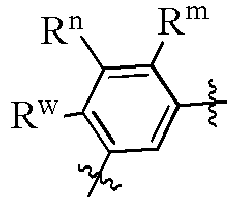

- In another preferred embodiment of the present invention, in the compound of formula (IM) or the tautomer, mesomer, racemate, enantiomer, diastereomer thereof, or mixture thereof, or the pharmaceutically acceptable salt thereof according to the present invention, wherein


- In another preferred embodiment of the present invention, the compound of formula (IM) or the tautomer, mesomer, racemate, enantiomer, diastereomer thereof, or mixture thereof, or the pharmaceutically acceptable salt thereof according to the present invention is a compound of formula (IK) or (IL) or a tautomer, mesomer, racemate, enantiomer, diastereomer thereof, or mixture thereof, or a pharmaceutically acceptable salt thereof:

- p is 0, 1 or 2;
- q is 0, 1 or 2;
- Rm and Rw are identical or different and are each independently selected from the group consisting of hydrogen atom, halogen and alkyl;
- Z, M, R1∼R5 and n are as defined in formula (IM).
- In another preferred embodiment of the present invention, the compound of formula (IM) or the tautomer, mesomer, racemate, enantiomer, diastereomer thereof, or mixture thereof, or the pharmaceutically acceptable salt thereof according to the present invention is a compound of formula (IK-1), (IK-2), (IL-1) or (IL-2) or a tautomer, mesomer, racemate, enantiomer, diastereomer thereof, or mixture thereof, or a pharmaceutically acceptable salt thereof:
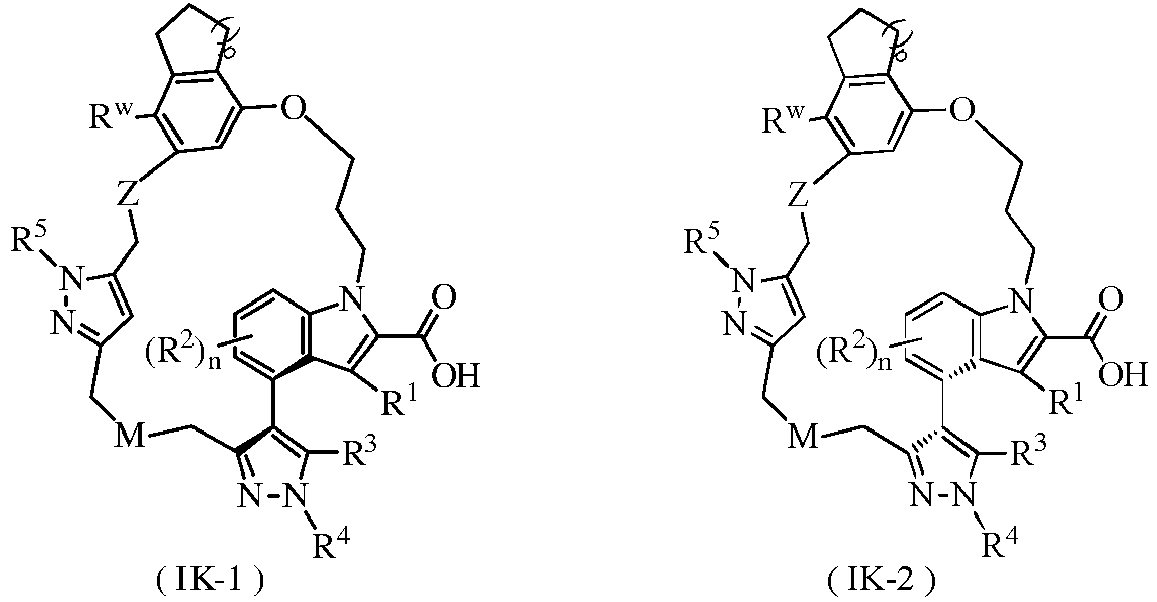

- p is 0, 1 or 2;
- q is 0, 1 or 2;
- Rm and Rw are identical or different and are each independently selected from the group consisting of hydrogen atom, halogen and alkyl;
- Z, M, R1∼R5 and n are as defined in formula (IM).
- In another preferred embodiment of the present invention, the compound of formula (IM) or the tautomer, mesomer, racemate, enantiomer, diastereomer thereof, or mixture thereof, or the pharmaceutically acceptable salt thereof according to the present invention is a compound of formula (IIK) or (IIL) or a tautomer, mesomer, racemate, enantiomer, diastereomer thereof, or mixture thereof, or a pharmaceutically acceptable salt thereof:

- p is 1 or 2;
- q is 1 or 2;
- Z, M and R1∼R5 are as defined in formula (IM).
- In another preferred embodiment of the present invention, the compound of formula (IM) or the tautomer, mesomer, racemate, enantiomer, diastereomer thereof, or mixture thereof, or the pharmaceutically acceptable salt thereof according to the present invention is a compound of formula (IIK-1), (IIK-2), (IIL-1) or (IIL-2) or a tautomer, mesomer, racemate, enantiomer, diastereomer thereof, or mixture thereof, or a pharmaceutically acceptable salt thereof:


- p is 1 or 2;
- q is 1 or 2;
- Z, M and R1∼R5 are as defined in formula (IM).
- In another preferred embodiment of the present invention, the compound of formula (IM) according to the present invention is a compound of formula (I) or a tautomer, mesomer, racemate, enantiomer, diastereomer thereof, or mixture thereof, or a pharmaceutically acceptable salt thereof:

- M is a S atom, O atom or -NR6-;
- R1 is selected from the group consisting of hydrogen atom, halogen, alkyl, deuterated alkyl, alkoxy, haloalkyl, hydroxy, hydroxyalkyl, cyano, amino, nitro, cycloalkyl, cycloalkyloxy and heterocyclyl;
- R2 is selected from the group consisting of hydrogen atom, halogen, alkyl, deuterated alkyl, alkoxy, haloalkyl, hydroxy, hydroxyalkyl, cyano, amino and nitro;
- R3 is selected from the group consisting of hydrogen atom, halogen, alkyl, deuterated alkyl, alkoxy, haloalkyl, hydroxy, hydroxyalkyl, cyano, amino and nitro;
- R4 is selected from the group consisting of hydrogen atom, alkyl, deuterated alkyl and cycloalkyl;
- or R3 and R4 together with the adjacent carbon atom and N atom form a heterocyclyl;
- R5 is selected from the group consisting of hydrogen atom, alkyl, deuterated alkyl and cycloalkyl;
- R6 is selected from the group consisting of hydrogen atom, alkyl and cycloalkyl;
- n is 0, 1, 2 or 3.
- In another preferred embodiment of the present invention, the compound of formula (I) or the tautomer, mesomer, racemate, enantiomer, diastereomer thereof, or mixture thereof, or the pharmaceutically acceptable salt thereof according to the present invention is a compound of formula (I-1) or (1-2) or a tautomer, mesomer, racemate, enantiomer, diastereomer thereof, or mixture thereof, or a pharmaceutically acceptable salt thereof:

M, R1∼R5 and n are as defined in formula (I). - In another preferred embodiment of the present invention, in the compound of formula (IM) or the tautomer, mesomer, racemate, enantiomer, diastereomer thereof, or mixture thereof, or the pharmaceutically acceptable salt thereof according to the present invention, wherein R3 is an alkyl, preferably C1-6 alkyl, and more preferably methyl.
- In another preferred embodiment of the present invention, in the compound of formula (IM) or the tautomer, mesomer, racemate, enantiomer, diastereomer thereof, or mixture thereof, or the pharmaceutically acceptable salt thereof according to the present invention, wherein R4 or R5 is an alkyl, preferably C1-6 alkyl, and more preferably methyl.
- In another preferred embodiment of the present invention, the compound of formula (IM) or the tautomer, mesomer, racemate, enantiomer, diastereomer thereof, or mixture thereof, or the pharmaceutically acceptable salt thereof according to the present invention is a compound of formula (II) or a tautomer, mesomer, racemate, enantiomer, diastereomer thereof, or mixture thereof, or a pharmaceutically acceptable salt thereof:

M, R1, R2 and n are as defined in formula (I). - In another preferred embodiment of the present invention, in the compound of formula (IM) or the tautomer, mesomer, racemate, enantiomer, diastereomer thereof, or mixture thereof, or the pharmaceutically acceptable salt thereof according to the present invention, wherein M is an S atom or -N(CH3)-, and preferably S atom.
- In another preferred embodiment of the present invention, the compound of formula (IM) or the tautomer, mesomer, racemate, enantiomer, diastereomer thereof, or mixture thereof, or the pharmaceutically acceptable salt thereof according to the present invention is a compound of formula (III) or a tautomer, mesomer, racemate, enantiomer, diastereomer thereof, or mixture thereof, or a pharmaceutically acceptable salt thereof:

R1 and R2 are as defined in formula (I). - In another preferred embodiment of the present invention, the compound of formula (IM) or the tautomer, mesomer, racemate, enantiomer, diastereomer thereof, or mixture thereof, or the pharmaceutically acceptable salt thereof according to the present invention is a compound of formula (III-1) or (III-2) or a tautomer, mesomer, racemate, enantiomer, diastereomer thereof, or mixture thereof, or a pharmaceutically acceptable salt thereof:

R1 and R2 are as defined in formula (I). - In another preferred embodiment of the present invention, in the compound of formula (IM) or the tautomer, mesomer, racemate, enantiomer, diastereomer thereof, or mixture thereof, or the pharmaceutically acceptable salt thereof according to the present invention, wherein R1 is a hydrogen atom or alkyl, preferably alkyl, and more preferably methyl.
- In another preferred embodiment of the present invention, in the compound of formula (IM) or the tautomer, mesomer, racemate, enantiomer, diastereomer thereof, or mixture thereof, or the pharmaceutically acceptable salt thereof according to the present invention, wherein R2 is a halogen, and preferably chlorine.
- Typical compounds of the present invention include, but are not limited to:
Example No. Structure and name of the compound 1 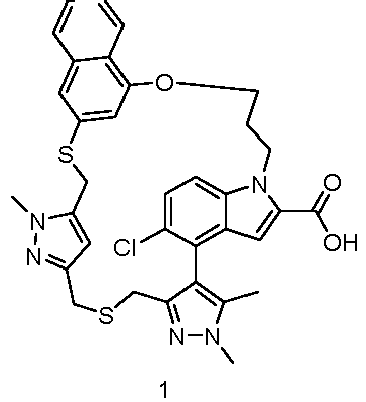
17-Chloro-5,13-14-trimethyl-28-oxa-2,9-dithia-5,6,12,13,24-pentaazaheptacyclo[27 .7.1.14,7.011,15.016,21.020,24.030,35]octatriaconta-1(37),4(38),6,11,14,16,18,20,22,29,31,33 ,35-tridecaene-23-carboxylic acid 1-1 
(Ra)-17-Chloro-5,13-14-trimethyl-28-oxa-2,9-dithia-5,6,12,13,24-pentaazaheptacyc lo[27.7.1.14,7.011,15.016,21.020,24.030,35]loctatriaconta-1(37),4(38),6,11,14,16,18,20,22,29, 31,33,35-tridecaene-23-carboxylic acid 1-2 
(Sa)-17-Chloro-5,13-14-trimethyl-28-oxa-2,9-dithia-5,6,12,13,24-pentaazaheptacyc lo[27.7.1.14,7.011,15.016,21.020,24.030,35]octatriaconta-1(37),4(38),6,11,14,16,18,20,22,29, 31,33,35-tridecaene-23-carboxylic acid 2 
17-Chloro-5,13,14,22-tetramethyl-28-oxa-2,9-dithia-5,6,12,13,24-pentaazaheptacyc lo[27.7.1.14,7.011,15.016,21.020,24.030,35]octatriaconta-1(37),4(38),6,11,14,16,18,20,22,29, 31,33,35-tridecaene-23-carboxylic acid 2-1 
(Ra)-17-Chloro-5,13,14,22-tetramethyl-28-oxa-2,9-dithia-5,6,12,13,24-pentaazahep tacyclo[27.7.1.14,7.011,15.016,21.020,24.010,15]octatriaconta-1(37),4(38),6,11,14,16,18,20,2 2,29,31,33,35-tridecaene-23-carboxylic acid 2-2 
(Sa)-17-Chloro-5,13,14,22-tetramethyl-28-oxa-2,9-dithia-5,6,12,13,24-pentaazahep tacyclo[27.7.1.14,7.011,15.016,21.020,24.030,35]octatriaconta-1(37),4(38),6,11,14,16,18,20,2 2,29,31,33,35-tridecaene-23-carboxylic acid 3 
17-Chloro-5,9,13,14,22-pentamethyl-28-oxa-2-thia-5,6,9,12,13,24-hexaazaheptacyc lo[27.7.1.14,7.011,15.016,21.020,24.030,35]octatriaconta-1(37),4(38),6,11,14,16,18,20,22,29, 31,33,35-tridecaene-23-carboxylic acid 3-1 
(Ra)-17-Chloro-5,9,13,14,22-pentamethyl-28-oxa-2-thia-5,6,9,12,13,24-hexaazahep tacyclo[27.7.1.14,7.011,15.016,21.020,24.030,35]octatriaconta-1(37),4(38),6,11,14,16,18,20,2 2,29,31,33,35-tridecaene-23-carboxylic acid 3-2 
(Sa)-17-Chloro-5,9,13,14,22-pentamethyl-28-oxa-2-thia-5,6,9,12,13,24-hexaazahep tacyclo[27.7.1.14,7.011,15.016,21.020,24.030,35]octatriaconta-1(37),4(38),6,11,14,16,18,20,2 2,29,31,33,35-tridecaene-23-carboxylic acid 4 
17-Chloro-5,13,14,22-tetramethyl-28-oxa-9-thia-5,6,12,13,24-pentaazaheptacyclo[2 7.7.1.14,7.011,15.016,21.020,24.030,35]octatriaconta-1(37),4(38),6,11,14,16,18,20,22,29,31,3 3,35-tridecaene-23-carboxylic acid 4-1 
(Ra)-17-Chloro-5,13,14,22-tetramethyl-28-oxa-9-thia-5,6,12,13,24-pentaazaheptac yclo[27.7.1.14,7.011,15.016,21.020,24.030,35]octatriaconta-1(37),4(38),6,11,14,16,18,20,22,2 9,31,33,35-tridecaene-23-carboxylic acid 4-2 
(Sa)-17-Chloro-5,13,14,22-tetramethyl-28-oxa-9-thia-5,6,12,13,24-pentaazaheptacy clo[27.7.1.11,7.011,15.016,21.020,24.030,35]octatriaconta-1(37),4(38),6,11,14,16,18,20,22,29 ,31,33,35-tridecaene-23-carboxylic acid 5 
17-Chloro-5,9,13,14,22,31-hexamethyl-28-oxa-2-thia-5,6,9,12,13,24-hexaazahexac yclo[27.3.1.14,7.011,15.016,21.020,24]tetratriaconta-1(33),4(34),6,11,14,16,18,20,22,29,31-undecaene-23-carboxylic acid 6 
17-Chloro-5,13,14,22,31-pentamethyl-28-oxa-2,9-dithia-5,6,12,13,24-pentaazahexa cyclo[27.3.1.14,7.011,15.016,21.020,24]tetratriaconta-1(33),4(34),6,11,14,16,18,20,22,29,3 1-undecaene-23-carboxylic acid 7 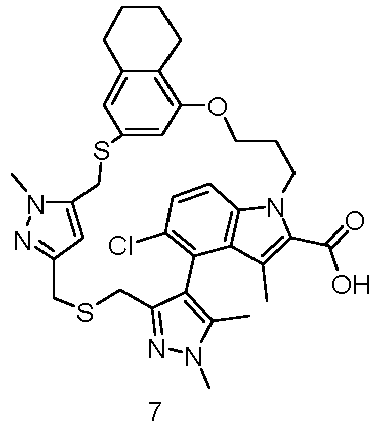
17-Chloro-5,13,14,22-tetramethyl-28-oxa-2,9-dithia-5,6,12,13,24-pentaazaheptacyc lo[27.7.1.14,7.011,15.016,21.020,24.030,35]octatriaconta-1(37),4(38),6,11,14,16,18,20,22,29, 35-undecaene-23-carboxylic acid 7-1 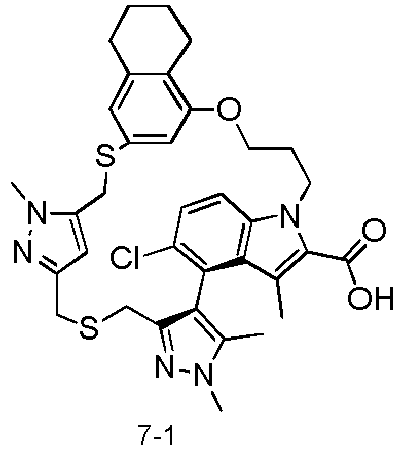
(Ra)-17-Chloro-5,13,14,22-tetramethyl-28-oxa-2,9-dithia-5,6,12,13,24-pentaazahep tacyclo[27.7.1.14,7.011,15.016,21.020,24.030,15]octatriaconta-1(37),4(38),6,11,14,16,18,20,2 2,29,35-undecaene-23-carboxylic acid 7-2 
(Sa)-17-Chloro-5,13,14,22-tetramethyl-28-oxa-2,9-dithia-5,6,12,13,24-pentaazahep tacyclo[27.7.1.14,7.011,15.016,21.020,24.030,35]octatriaconta-1(37),4(38),6,11,14,16,18,20,2 2,29,35-undecaene-23-carboxylic acid 8 
17-Chloro-5,13,14,22-tetramethyl-28-oxa-9-thia-5,6,12,13,24-pentaazaheptacyclo[27 .7.1.14,7.011,15.016,21.020,24.030,35]octatriaconta-1(37),4(38),6,11,14,16,18,20,22,29,35-un decaene-23-carboxylic acid 8-1 
(Ra)-17-Chloro-5,13,14,22-tetramethyl-28-oxa-9-thia-5,6,12,13,24-pentaazaheptac yclo[27.7.1.14,7.011,15.016,21.020,24.030,35]octatriaconta-1(37),4(38),6,11,14,16,18,20,22,2 9,35-undecaene-23-carboxylic acid 8-2 
(Sa)-17-Chloro-5,13,14,22-tetramethyl-28-oxa-9-thia-5,6,12,13,24-pentaazaheptacy clo[27.7.1.14,7.011,15.016,21.020,24.030,35]octatriaconta-1(37),4(38),6,11,14,16,18,20,22,29 ,35-undecaene-23-carboxylic acid 9 
17-Chloro-5,9,13,14,22-pentamethyl-28-oxa-2-thia-5,6,9,12,13,24-hexaazaheptacyc lo[27.7.1.14,7.011,15.016,21.020,24.030,35]octatriaconta-1(37),4(38),6,11,14,16,18,20,22,29, 35-undecaene-23-carboxylic acid 10 
21-Chloro-5,26-dimethyl-32-oxa-2,9-dithia-5,6,12,13,28-pentaazaoctacyclo[3 1.7 .1.14,7.011,19.013,18.020,25.024,28.034,39]dotetraconta-1(41),4(42),6,11,18,20,22,24,26,33,35 ,37,39-tridecaene-27-carboxylic acid 11 
21-Chloro-5,9,26-trimethyl-32-oxa-2-thia-5,6,9,12,13,28-hexaazaoctacyclo[31.7. 1.14,7.011,19.013,18.020,25.024,28.034,39]dotetraconta-1(41),4(42),6,11,18,20,22,24,26,33,35, 37,39-tridecaene-27-carboxylic acid 12 
17-Chloro-5,13,14,22-tetramethyl-28-oxa-2,9-dithia-5,6,12,13,24-pentaazaheptacyc lo[27.6.1.14,7.011,15.016,21.020,24.030,35]heptatriaconta-1(36),4(37),6,11,14,16,18,20,22,2 9,31(35)-undecaene-23-carboxylic acid 12-1 
(Ra)-17-Chloro-5,13,14,22-tetramethyl-28-oxa-2,9-dithia-5,6,12,13,24-pentaazahep tacyclo[27.6.1.14,7.011,15.016,21.020,24.030,15]heptatriaconta-1(36),4(37),6,11,14,16,18,20, 22,29,31(35)-undecaene-23-carboxylic acid 12-2 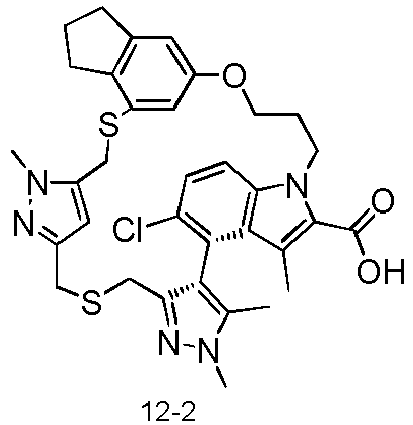
(Sa)-17-Chloro-5,13,14,22-tetramethyl-28-oxa-2,9-dithia-5,6,12,13,24-pentaazahep tacyclo[27.6.1.14,7.011,15.016,21.020,24.030,35]heptatriaconta-1(36),4(37),6,11,14,16,18,20, 22,29,31(35)-undecaene-23-carboxylic acid 13 
17-Chloro-5,13,14,22-tetramethyl-28-oxa-2,9-dithia-5,6,12,13,24-pentaazaheptacyc lo[27.6.1.14,7.011,15.016,21.020,24.030,34]heptatriaconta-1(36),4(37),6,11,14,16,18,20,22,2 9,34-undecaene-23-carboxylic acid 13-1 
(Ra)-17-Chloro-5,13,14,22-tetramethyl-28-oxa-2,9-dithia-5,6,12,13,24-pentaazahep tacyclo[27.6.1.14,7.011,15.016,21.020,24.030,34]heptatriaconta-1(36),4(37),6,11,14,16,18,20, 22,29,34-undecaene-23-carboxylic acid 13-2 
(Sa)-17-Chloro-5,13,14,22-tetramethyl-28-oxa-2,9-dithia-5,6,12,13,24-pentaazahep tacyclo[27.6.1.14,7.011,15.016,21.020,24.030,34]heptatriaconta-1(36),4(37),6,11,14,16,18,20, 22,29,34-undecaene-23-carboxylic acid 14 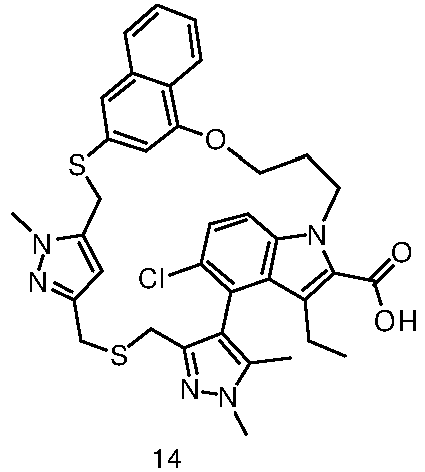
17-Chloro-22-ethyl-5,13-14-trimethyl-28-oxa-2,9-dithia-5,6,12,13,24-pentaazahept acyclo[27.7.1.14,7.011,15.016,21.020,24.030,15]octatriaconta-1(37),4(38),6,11,14,16,18,20,2 2,29,31,33,35-tridecaene-23-carboxylic acid 14-1 
(Ra)-17-Chloro-22-ethyl-5,13-14-trimethyl-28-oxa-2,9-dithia-5,6,12,13,24-pentaaz aheptacyclo[27.7.1.14,7.011,15.016,21.020,24.030,35]octatriaconta-1(37),4(38),6,11,14,16,18 ,20,22,29,31,33,35-tridecaene-23-carboxylic acid 14-2 
(Sa)-17-Chloro-22-ethyl-5,13-14-trimethyl-28-oxa-2,9-dithia-5,6,12,13,24-pentaaza heptacyclo[27.7.1.14,7.011,15.016,21.020,24.030,35]octatriaconta-1(37),4(38),6,11,14,16,18,20,22,29,31,33,35-tridecaene-23-carboxylic acid
or a pharmaceutically acceptable salt thereof. - In another aspect, the present invention relates to a compound of formula (IMA) or a tautomer, mesomer, racemate, enantiomer, diastereomer thereof, or mixture thereof, or a pharmaceutically acceptable salt thereof:

- Rm, Rn and Rw are identical or different and are each independently selected from the group consisting of hydrogen atom, halogen, alkyl, deuterated alkyl, alkoxy, haloalkyl, hydroxy, hydroxyalkyl, cyano, amino, nitro, cycloalkyl, cycloalkyloxy and heterocyclyl;
- or Rm and Rn together with adjacent carbon atoms form an aryl, heteroaryl, cycloalkyl or heterocyclyl; and Rw is selected from the group consisting of hydrogen atom, halogen, alkyl, deuterated alkyl, alkoxy, haloalkyl, hydroxy, hydroxyalkyl, cyano, amino, nitro, cycloalkyl, cycloalkyloxy and heterocyclyl;
- or Rn and Rw together with adjacent carbon atoms form an aryl, heteroaryl, cycloalkyl or heterocyclyl; and Rm is selected from the group consisting of hydrogen atom, halogen, alkyl, deuterated alkyl, alkoxy, haloalkyl, hydroxy, hydroxyalkyl, cyano, amino, nitro, cycloalkyl, cycloalkyloxy and heterocyclyl;
- Z is a S atom or -CH2-;
- M is a S atom, O atom or -NR6-;
- R1 is selected from the group consisting of hydrogen atom, halogen, alkyl, deuterated alkyl, alkoxy, haloalkyl, hydroxy, hydroxyalkyl, cyano, amino, nitro, cycloalkyl, cycloalkyloxy and heterocyclyl;
- R2 is selected from the group consisting of hydrogen atom, halogen, alkyl, deuterated alkyl, alkoxy, haloalkyl, hydroxy, hydroxyalkyl, cyano, amino and nitro;
- R3 is selected from the group consisting of hydrogen atom, halogen, alkyl, deuterated alkyl, alkoxy, haloalkyl, hydroxy, hydroxyalkyl, cyano, amino and nitro;
- R4 is selected from the group consisting of hydrogen atom, alkyl, deuterated alkyl and cycloalkyl;
- or R3 and R4 together with the adjacent carbon atom and N atom form a heterocyclyl;
- R5 is selected from the group consisting of hydrogen atom, alkyl, deuterated alkyl and cycloalkyl;
- R6 is selected from the group consisting of hydrogen atom, alkyl and cycloalkyl;
- Ra is an alkyl;
- n is 0, 1, 2 or 3.
- In a preferred embodiment, the compound of formula (IMA) or the tautomer, mesomer, racemate, enantiomer, diastereomer thereof, or mixture thereof, or the pharmaceutically acceptable salt thereof according to the present invention is a compound of formula (IMA-1) or (IMA-2) or a tautomer, mesomer, racemate, enantiomer, diastereomer thereof, or mixture thereof, or a pharmaceutically acceptable salt thereof:

Ra, Rm, Rn, Rw, Z, M, R1∼R5 and n are as defined in formula (IMA). - In another preferred embodiment of the present invention, the compound of formula (IMA) or the tautomer, mesomer, racemate, enantiomer, diastereomer thereof, or mixture thereof, or the pharmaceutically acceptable salt thereof according to the present invention is a compound of formula (IIMA):

Ra, Rm, Rn, Rw, Z, M and R1∼R5 are as defined in formula (IMA). - In another preferred embodiment of the present invention, the compound of formula (IMA) or the tautomer, mesomer, racemate, enantiomer, diastereomer thereof, or mixture thereof, or the pharmaceutically acceptable salt thereof according to the present invention is a compound of formula (IIMA-1) or (IIMA-2):

Ra, Rm, Rn, Rw, Z, M and R1∼R5 are as defined in formula (IMA). - In another preferred embodiment of the present invention, in the compound of formula (IMA) or the tautomer, mesomer, racemate, enantiomer, diastereomer thereof, or mixture thereof, or the pharmaceutically acceptable salt thereof according to the present invention, wherein Rm and Rn together with adjacent carbon atoms form a phenyl or cycloalkyl; Rw is selected from the group consisting of hydrogen atom, halogen and alkyl; or Rn and Rw together with adjacent carbon atoms form a cycloalkyl; and Rm is selected from the group consisting of hydrogen atom, halogen and alkyl.
- In another preferred embodiment of the present invention, in the compound of formula (IMA) or the tautomer, mesomer, racemate, enantiomer, diastereomer thereof, or mixture thereof, or the pharmaceutically acceptable salt thereof according to the present invention, wherein Rm and Rn together with adjacent carbon atoms form a phenyl or C4∼6 cycloalkyl; Rw is a hydrogen atom; or Rn and Rw together with adjacent carbon atoms form a C4∼6 cycloalkyl; and Rm is a hydrogen atom.
- In another preferred embodiment of the present invention, in the compound of formula (IMA) or the tautomer, mesomer, racemate, enantiomer, diastereomer thereof, or mixture thereof, or the pharmaceutically acceptable salt thereof according to the present invention, wherein


- In another preferred embodiment of the present invention, in the compound of formula (IMA) or the tautomer, mesomer, racemate, enantiomer, diastereomer thereof, or mixture thereof, or the pharmaceutically acceptable salt thereof according to the present invention, wherein


- In another preferred embodiment of the present invention, the compound of formula (IMA) or the tautomer, mesomer, racemate, enantiomer, diastereomer thereof, or mixture thereof, or the pharmaceutically acceptable salt thereof according to the present invention is a compound of formula (IKA) or (ILA) or a tautomer, mesomer, racemate, enantiomer, diastereomer thereof, or mixture thereof, or a pharmaceutically acceptable salt thereof:

- Ra is an alkyl;
- p is 0, 1 or 2;
- q is 0, 1 or 2;
- Rm and Rw are identical or different and are each independently selected from the group consisting of hydrogen atom, halogen and alkyl;
- Z, M, R1∼R5 and n are as defined in formula (IMA).
- In another preferred embodiment of the present invention, the compound of formula (IMA) or the tautomer, mesomer, racemate, enantiomer, diastereomer thereof, or mixture thereof, or the pharmaceutically acceptable salt thereof according to the present invention is a compound of formula (IKA-1), (IKA-2), (ILA-1) or (ILA-2) or a tautomer, mesomer, racemate, enantiomer, diastereomer thereof, or mixture thereof, or a pharmaceutically acceptable salt thereof:


- Ra is an alkyl;
- p is 0, 1 or 2;
- q is 0, 1 or 2;
- Rm and Rw are identical or different and are each independently selected from the group consisting of hydrogen atom, halogen and alkyl;
- Z, M, R1∼R5 and n are as defined in formula (IMA).
- In another preferred embodiment of the present invention, the compound of formula (IMA) or the tautomer, mesomer, racemate, enantiomer, diastereomer thereof, or mixture thereof, or the pharmaceutically acceptable salt thereof according to the present invention is a compound of formula (IIKA) or (IILA) or a tautomer, mesomer, racemate, enantiomer, diastereomer thereof, or mixture thereof, or a pharmaceutically acceptable salt thereof:

- Ra is an alkyl;
- p is 1 or 2;
- q is 1 or 2;
- Z, M and R1∼R5 are as defined in formula (IMA).
- In another preferred embodiment of the present invention, the compound of formula (IMA) or the tautomer, mesomer, racemate, enantiomer, diastereomer thereof, or mixture thereof, or the pharmaceutically acceptable salt thereof according to the present invention is a compound of formula (IIKA-1), (IIKA-2), (IILA-1) or (IILA-2) or a tautomer, mesomer, racemate, enantiomer, diastereomer thereof, or mixture thereof, or a pharmaceutically acceptable salt thereof:


- Ra is an alkyl;
- p is 1 or 2;
- q is 1 or 2;
- Z, M and R1∼R5 are as defined in formula (IMA).
- In another preferred embodiment of the present invention, the compound of formula (IMA) or the tautomer, mesomer, racemate, enantiomer, diastereomer thereof, or mixture thereof, or the pharmaceutically acceptable salt thereof according to the present invention is a compound of formula (IA) or a tautomer, mesomer, racemate, enantiomer, diastereomer thereof, or mixture thereof, or a pharmaceutically acceptable salt thereof:

- Ra is an alkyl;
- M, R1∼R5 and n are as defined in formula (IMA).
- In another preferred embodiment of the present invention, the compound of formula (IMA) or the tautomer, mesomer, racemate, enantiomer, diastereomer thereof, or mixture thereof, or the pharmaceutically acceptable salt thereof according to the present invention is a compound of formula (IA-1) or (IA-2) or a tautomer, mesomer, racemate, enantiomer, diastereomer thereof, or mixture thereof, or a pharmaceutically acceptable salt thereof:

Ra, M, R1∼R5 and n are as defined in formula (IA). - Typical compounds of formula (IA) of the present invention include, but are not limited to:
Example No. Structure and name of the compound 1o 
Methyl 17-chloro-5,13-14-trimethyl-28-oxa-2,9-dithia-5,6,12,13,24-pentaazaheptacyclo[27.7. 1.14,7.011,15.016,21.020,24.030,35]octatriaconta-1(37),4(38),6,11,14,16,18,20,22,29,31,33,3 5-tridecaene-23-carboxylate 2o 
Methyl 17-chloro-5,13-14,22-tetramethyl-28-oxa-2,9-dithia-5,6,12,13,24-pentaazaheptacyclo [27.7.1.14,7.011,15.016,21.020,24.030,35]octatriaconta-1(37),4(38),6,11,14,16,18,20,22,29,31 ,33,35-tridecaene-23-carboxylate 3h 
Methyl 17-chloro-5,9,13,14,22-pentamethyl-28-oxa-2-thia-5,6,9,12,13,24-hexaazaheptacyclo [27.7.1.14,7.011,15.016,21.020,24.030,35]octatriaconta-1(37),4(38),6,11,14,16,18,20,22,29,31 ,33,35-tridecaene-23-carboxylate 3h-1 
Methyl (Ra)-17-chloro-5,9,13,14,22-pentamethyl-28-oxa-2-thia-5,6,9,12,13,24-hexaazahepta cyclo[27.7.1.14,7.011,15.016,21.020,24.030,35]octatriaconta-1(37),4(38),6,11,14,16,18,20,22, 29,31,33,35-tridecaene-23-carboxylate 3h-2 
Methyl (Sa)-17-chloro-5,9,13,14,22-pentamethyl-28-oxa-2-thia-5,6,9,12,13,24-hexaazaheptac yclo[27.7.1.14,7.011,15.016,21.020,24.030,35]octatriaconta-1(37),4(38),6,11,14,16,18,20,22,2 9,31,33,35-tridecaene-23-carboxylate 4d 
Methyl 17-chloro-5,13,14,22-tetramethyl-28-oxa-9-thia-5,6,12,13,24-pentaazaheptacyclo[27. 7.1.14,7.011,15.016,21.020,24.030,35]octatriaconta-1(37),4(38),6,11,14,16,18,20,22,29,31,33, 35-tridecaene-23-carboxylate 4d-1 
Methyl (Ra)-17-chloro-5,13,14,22-tetramethyl-28-oxa-9-thia-5,6,12,13,24-pentaazaheptacycl o[27.7.1.14,7.011,15.016,21.020,24.030,35 ]octatriaconta-1(37),4(3 8),6,11,14,16,18,20,22,29,3 1,33,35-tridecaene-23-carboxylate 4d-2 
Methyl (Sa)-17-chloro-5,13,14,22-tetramethyl-28-oxa-9-thia-5,6,12,13,24-pentaazaheptacycl o[27.7.1.14,7.011,15.016,21.020,24.030,35]octatriaconta-1(37),4(3 8),6,11,14,16,18,20,22,29,3 1,33,35-tridecaene-23-carboxylate 5d 
Methyl 17-chloro-5,9,13,14,22,31-hexamethyl-28-oxa-2-thia-5,6,9,12,13,24-hexaazahexacycl o[27.3.1.14,7.011,15.016,21.020,24]tetratriaconta-1(33),4(34),6,11,14,16,18,20,22,29,31-un decaene-23-carboxylate 6c 
Methyl 17-chloro-5,13,14,22,31-pentamethyl-28-oxa-2,9-dithia-5,6,12,13,24-pentaazahexacy clo[27.3.1.14,7.011,15.016,21.020,24]tetratriaconta-1(33),4(34),6,11,14,16,18,20,22,29,31-u ndecaene-23-carboxylate 7n 
Methyl 17-chloro-5,13,14,22-tetramethyl-28-oxa-2,9-dithia-5,6,12,13,24-pentaazaheptacyclo[ 27.7.1.14,7.011,15.016,21.020,24.030,35]octatriaconta-1(37),4(38),6,11,14,16,18,20,22,29,35-undecaene-23-carboxylate 7n-1 
Methyl (Ra)-17-chloro-5,13,14,22-tetramethyl-28-oxa-2,9-dithia-5,6,12,13,24-pentaazahepta cyclo[27.7.1.14,7.011,15.016,21.020,24.010,15]octatriaconta-1(37),4(38),6,11,14,16,18,20,22, 29,35-undecaene-23-carboxylate 7n-2 
Methyl (Sa)-17-chloro-5,13,14,22-tetramethyl-28-oxa-2,9-dithia-5,6,12,13,24-pentaazaheptac yclo[27.7.1.14,7.011,15.016,21.020,24.030,35]octatriaconta-1(37),4(38),6,11,14,16,18,20,22,2 9,35-undecaene-23-carboxylate 8n 
Methyl 17-chloro-5,13,14,22-tetramethyl-28-oxa-9-thia-5,6,12,13,24-pentaazaheptacyclo[27. 7.1.14,7.011,15.016,21.020,24.030,35]octatriaconta-1(37),4(38),6,11,14,16,18,20,22,29,35-un decaene-23-carboxylate 8n-1 
Methyl (Ra)-17-chloro-5,13,14,22-tetramethyl-28-oxa-9-thia-5,6,12,13,24-pentaazaheptacycl o[27.7.1.14,7.011,15.016,21.020,24.030,35]octatriaconta-1(37),4(3 8),6,11,14,16,18,20,22,29,3 5-undecaene-23-carboxylate 8n-2 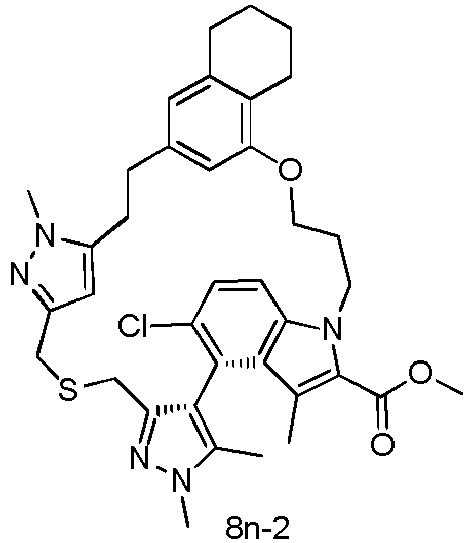
Methyl (Sa)-17-chloro-5,13,14,22-tetramethyl-28-oxa-9-thia-5,6,12,13,24-pentaazaheptacycl o[27.7.1.14,7.011,15.016,21.020,24.030,35]octatriaconta-1(37),4(38),6,11,14,16,18,20,22,29,3 5-undecaene-23-carboxylate 9c 
Methyl 17-chloro-5,9,13,14,22-pentamethyl-28-oxa-2-thia-5,6,9,12,13,24-hexaazaheptacyclo [27.7.1.14,7.011,15.016,21.020,24.030,35]octatriaconta-1(37),4(38),6,11,14,16,18,20,22,29,35 -undecaene-23-carboxylate 101 
Methyl 21-chloro-5,26-dimethyl-32-oxa-2,9-dithia-5,6,12,13,28-pentaazaoctacyclo[31.7.1.14, 7.011,19.013,18.020,25.024,28.034,39]dotetraconta-1(41),4(42),6,11,18,20,22,24,26,33,35,37,3 9-tridecaene-27-carboxylate 11f 
Methyl 21-chloro-5,9,26-trimethyl-32-oxa-2-thia-5,6,9,12,13,28-hexaazaoctacyclo[31.7. 1.14,7.011,19.013,18.020,25.024,28.034,39]dotetraconta-1(41),4(42),6,11,18,20,22,24,26,33,35, 37,39-tridecaene-27-carboxylate 121 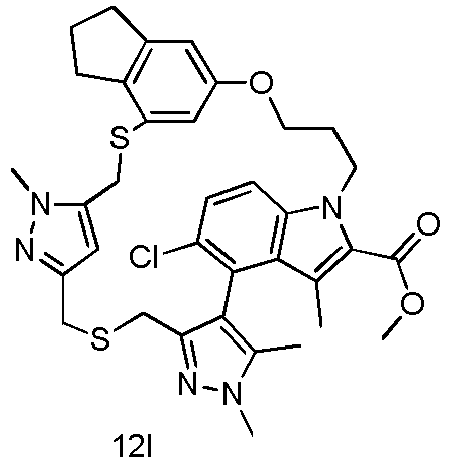
Methyl 17-chloro-5,13,14,22-tetramethyl-28-oxa-2,9-dithia-5,6,12,13,24-pentaazaheptacyclo[ 27.6.1.11,7.011,15.016,21.020,24.031,35]heptatriaconta-1(36),4(37),6,11,14,16,18,20,22,29,3 1(35)-undecaene-23-carboxylate 121-1 
Methyl (Ra)-17-chloro-5,13,14,22-tetramethyl-28-oxa-2,9-dithia-5,6,12,13,24-pentaazahepta cyclo[27.6.1.14,7.011,15.016,21.020,24.031,35]heptatriaconta-1(36),4(37),6,11,14,16,18,20,2 2,29,31(35)-undecaene-23-carboxylate 121-2 
Methyl (Sa)-17-chloro-5,13,14,22-tetramethyl-28-oxa-2,9-dithia-5,6,12,13,24-pentaazaheptac yclo[27.6.1.14,7.011,15.016,21.020,24.031,35]heptatriaconta-l(36),4(37),6,11,14,16,18,20,22, 29,31(35)-undecaene-23-carboxylate 13g 
Methyl 17-chloro-5,13,14,22-tetramethyl-28-oxa-2,9-dithia-5,6,12,13,24-pentaazaheptacyclo[ 27.6.1.11,7.011,15.016,21.020,24.030,34]heptatriaconta-1(36),4(37),6,11,14,16,18,20,22,29,3 4-undecaene-23-carboxylate 13g-1 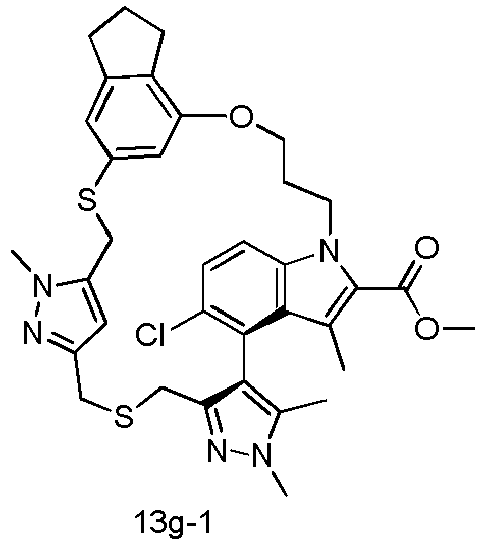
Methyl (Ra)-17-chloro-5,13,14,22-tetramethyl-28-oxa-2,9-dithia-5,6,12,13,24-pentaazahepta cyclo[27.6.1.14,7.011,15.016,21.020,24.030,34]heptatriaconta-1(36),4(37),6,11,14,16,18,20,2 2,29,34-undecaene-23-carboxylate 13g-2 
Methyl (Sa)-17-chloro-5,13,14,22-tetramethyl-28-oxa-2,9-dithia-5,6,12,13,24-pentaazaheptac yclo[27.6.1.14,7.011,15.016,21.020,24.030,34]heptatriaconta-1(36),4(37),6,11,14,16,18,20,22, 29,34-undecaene-23-carboxylate 14m 
Methyl 17-chloro-22-ethyl-5,13-14-trimethyl-28-oxa-2,9-dithia-5,6,12,13,24-pentaazaheptac yclo[27.7.1.14,7.011,15.016,21.020,24.030,35]octatriaconta-1(37),4(38),6,11,14,16,18,20,22,2 9,31,33,35-tridecaene-23-carboxylate 14m-1 
Methyl (Ra)-17-chloro-22-ethyl-5,13-14-trimethyl-28-oxa-2,9-dithia-5,6,12,13,24-pentaazahe ptacyclo[27.7.1.14,7.011,15.016,21.020,24.010,15]octatriaconta-1(37),4(38),6,11,14,16,18,20, 22,29,31,33,35-tridecaene-23-carboxylate 14m-2 
Methyl (Sa)-17-chloro-22-ethyl-5,13-14-trimethyl-28-oxa-2,9-dithia-5,6,12,13,24-pentaazahe ptacyclo[27.7.1.14,7.011,15.016,21.020,24.030,35]octatriaconta-1(37),4(38),6,11,14,16,18,20, 22,29,31,33,35-tridecaene-23-carboxylate
or a pharmaceutically acceptable salt thereof. - In another aspect, the present invention relates to a method for preparing the compound of formula (IM) or the tautomer, mesomer, racemate, enantiomer, diastereomer thereof, or mixture thereof, or the pharmaceutically acceptable salt thereof according to the present invention, comprising the following step of:

wherein: - Ra is an alkyl;
- Rm, Rn, Rw, Z, M, R1∼R5 and n are as defined in formula (IM).
- In another aspect, the present invention relates to a method for preparing the compounds of formula (IMA-1) and formula (IMA-2) or the tautomer, mesomer, racemate, enantiomer, diastereomer thereof, or mixture thereof, or the pharmaceutically acceptable salt thereof according to the present invention, comprising the following step:

wherein:
Ra, Rm, Rn, Rw, Z, M, R1∼R5 and n are as defined in formula (IMA). - In another aspect, the present invention relates to a method for preparing the compound of formula (IM-1) or the tautomer, mesomer, racemate, enantiomer, diastereomer thereof, or mixture thereof, or the pharmaceutically acceptable salt thereof according to the present invention, comprising the following step of:

- Ra is an alkyl;
- Rm, Rn, Rw, Z, M, R1∼R5 and n are as defined in formula (IM).
- In another aspect, the present invention relates to a method for preparing the compound of formula (IM-2) or the tautomer, mesomer, racemate, enantiomer, diastereomer thereof, or mixture thereof, or the pharmaceutically acceptable salt thereof according to the present invention comprising the following step of:

wherein: - Ra is an alkyl;
- Rm, Rn, Rw, Z, M, R1∼R5 and n are as defined in formula (IM).
- In another aspect, the present invention relates to a method for preparing the compound of formula (IIM) or the tautomer, mesomer, racemate, enantiomer, diastereomer thereof, or mixture thereof, or the pharmaceutically acceptable salt thereof according to the present invention, comprising the following step of:

wherein: - Ra is an alkyl;
- Rm, Rn, Rw, Z, M and R1∼R5 are as defined in formula (IIM).
- In another aspect, the present invention relates to a method for preparing the compounds of formula (IIMA-1) and formula (IIMA-2) or the tautomer, mesomer, racemate, enantiomer, diastereomer thereof, or mixture thereof, or the pharmaceutically acceptable salt thereof according to the present invention, comprising the following step :

wherein:
Ra, Rm, Rn, Rw, Z, M and R1∼R5 are as defined in formula (IIMA). - In another aspect, the present invention relates to a method for preparing the compound of formula (IIM-1) or the tautomer, mesomer, racemate, enantiomer, diastereomer thereof, or mixture thereof, or the pharmaceutically acceptable salt thereof according to the present invention, comprising the following step of:
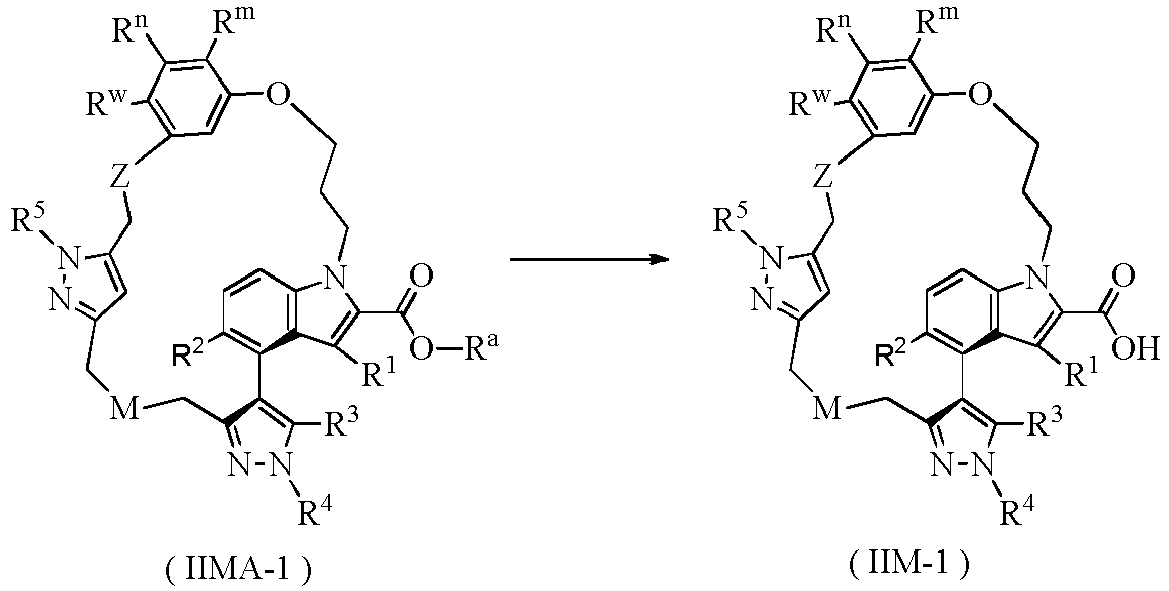
wherein: - Ra is an alkyl;
- Rm, Rn, Rw, Z, M and R1∼R5 are as defined in formula (IIM).
- In another aspect, the present invention relates to a method for preparing the compound of formula (IIM-2) or the tautomer, mesomer, racemate, enantiomer, diastereomer thereof, or mixture thereof, or the pharmaceutically acceptable salt thereof according to the present invention, comprising the following step of:

wherein: - Ra is an alkyl;
- Rm, Rn, Rw, Z, M and R1∼R5 are as defined in formula (IIM).
- In another aspect, the present invention relates to a method for preparing the compound of formula (IK) or the tautomer, mesomer, racemate, enantiomer, diastereomer thereof, or mixture thereof, or the pharmaceutically acceptable salt thereof according to the present invention, comprising the following step of:

wherein: - Ra is an alkyl;
- p, Rw, Z, M, R1∼R5 and n are as defined in formula (IK).
- In another aspect, the present invention relates to a method for preparing the compounds of formula (IKA-1) and formula (IKA-2) or the tautomer, mesomer, racemate, enantiomer, diastereomer thereof, or mixture thereof, or the pharmaceutically acceptable salt thereof according to the present invention, comprising the following step :
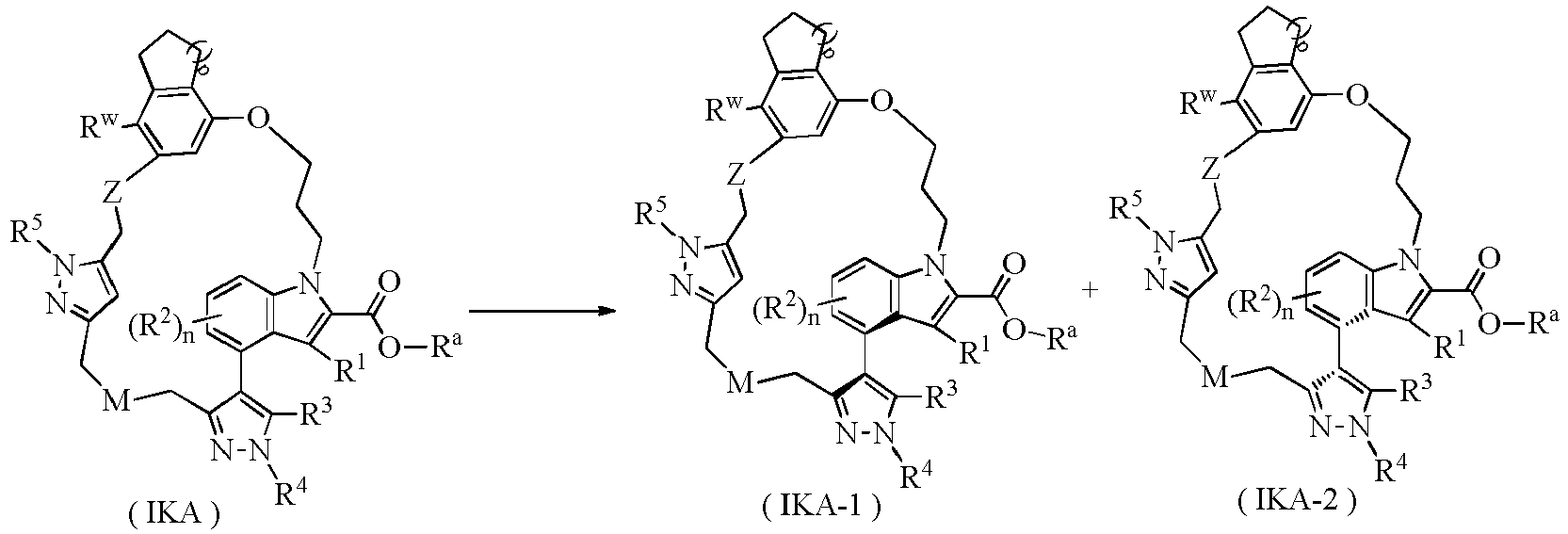
wherein:
Ra , p, Rw, Z, M, R1∼R5 and n are as defined in formula (IKA). - In another aspect, the present invention relates to a method for preparing the compound of formula (IK-1) or the tautomer, mesomer, racemate, enantiomer, diastereomer thereof, or mixture thereof, or the pharmaceutically acceptable salt thereof according to the present invention, comprising the following step of:

wherein: - Ra is an alkyl;
- p, Rw, Z, M, R1∼R5 and n are as defined in formula (IK).
- In another aspect, the present invention relates to a method for preparing the compound of formula (IK-2) or the tautomer, mesomer, racemate, enantiomer, diastereomer thereof, or mixture thereof, or the pharmaceutically acceptable salt thereof according to the present invention, comprising the following step of:

wherein: - Ra is an alkyl;
- p, Rw, Z, M, R1∼R5 and n are as defined in formula (IK).
- In another aspect, the present invention relates to a method for preparing the compound of formula (IL) or the tautomer, mesomer, racemate, enantiomer, diastereomer thereof, or mixture thereof, or the pharmaceutically acceptable salt thereof according to the present invention, comprising the following step of:

wherein: - Ra is an alkyl;
- q, Rm, Z, M, R1∼R5 and n are as defined in formula (IL).
- In another aspect, the present invention relates to a method for preparing the compounds of formula (ILA-1) and formula (ILA-2) or the tautomer, mesomer, racemate, enantiomer, diastereomer thereof, or mixture thereof, or the pharmaceutically acceptable salt thereof according to the present invention, comprising the following step :

wherein:
Ra, q, Rm, Z, M, R1∼R5 and n are as defined in formula (ILA). - In another aspect, the present invention relates to a method for preparing the compound of formula (IL-1) or the tautomer, mesomer, racemate, enantiomer, diastereomer thereof, or mixture thereof, or the pharmaceutically acceptable salt thereof according to the present invention, comprising the following step of:

wherein: - Ra is an alkyl;
- q, Rm, Z, M, R1∼R5 and n are as defined in formula (IL).
- In another aspect, the present invention relates to a method for preparing the compound of formula (IL-2) or the tautomer, mesomer, racemate, enantiomer, diastereomer thereof, or mixture thereof, or the pharmaceutically acceptable salt thereof according to the present invention, comprising the following step of:

wherein: - Ra is an alkyl;
- q, Rm, Z, M, R1∼R5 and n are as defined in formula (IL).
- In another aspect, the present invention relates to a method for preparing the compound of formula (IIK) or the tautomer, mesomer, racemate, enantiomer, diastereomer thereof, or mixture thereof, or the pharmaceutically acceptable salt thereof according to the present invention, comprising the following step of:

wherein: - Ra is an alkyl;
- p, Z, M and R1∼R5 are as defined in formula (IIK).
- In another aspect, the present invention relates to a method for preparing the compounds of formula (IIKA-1) and formula (IIKA-2) or the tautomer, mesomer, racemate, enantiomer, diastereomer thereof, or mixture thereof, or the pharmaceutically acceptable salt thereof according to the present invention, comprising the following step :

wherein:
Ra, p, Z, M and R1∼R5 are as defined in formula (IIKA). - In another aspect, the present invention relates to a method for preparing the compound of formula (IIK-1) or the tautomer, mesomer, racemate, enantiomer, diastereomer thereof, or mixture thereof, or the pharmaceutically acceptable salt thereof according to the present invention, comprising the following step of:

wherein: - Ra is an alkyl;
- p, Z, M and R1∼R5 are as defined in formula (IIK).
- In another aspect, the present invention relates to a method for preparing the compound of formula (IIK-2) or the tautomer, mesomer, racemate, enantiomer, diastereomer thereof, or mixture thereof, or the pharmaceutically acceptable salt thereof according to the present invention, comprising the following step of:

wherein: - Ra is an alkyl;
- p, Z, M and R1∼R5 are as defined in formula (IIK).
- In another aspect, the present invention relates to a method for preparing the compound of formula (IIL) or the tautomer, mesomer, racemate, enantiomer, diastereomer thereof, or mixture thereof, or the pharmaceutically acceptable salt thereof according to the present invention, comprising the following step of:

wherein: - Ra is an alkyl;
- q, Z, M and R1∼R5 are as defined in formula (IIL).
- In another aspect, the present invention relates to a method for preparing the compounds of formula (IILA-1) and formula (IILA-2) or the tautomer, mesomer, racemate, enantiomer, diastereomer thereof, or mixture thereof, or the pharmaceutically acceptable salt thereof according to the present invention, comprising the following step :

wherein:
Ra, q, Z, M and R1∼R5 are as defined in formula (IILA). - In another aspect, the present invention relates to a method for preparing the compound of formula (IIL-1) or the tautomer, mesomer, racemate, enantiomer, diastereomer thereof, or mixture thereof, or the pharmaceutically acceptable salt thereof according to the present invention, comprising the following step of:

wherein: - Ra is an alkyl;
- q, Z, M and R1∼R5 are as defined in formula (IIL).
- In another aspect, the present invention relates to a method for preparing the compound of formula (IIL-2) or the tautomer, mesomer, racemate, enantiomer, diastereomer thereof, or mixture thereof, or the pharmaceutically acceptable salt thereof according to the present invention, comprising the following step of:

wherein: - Ra is an alkyl;
- q, Z, M and R1∼R5 are as defined in formula (IIL).
- In another aspect, the present invention relates to a method for preparing the compound of formula (I) or the tautomer, mesomer, racemate, enantiomer, diastereomer thereof, or mixture thereof, or the pharmaceutically acceptable salt thereof according to the present invention, comprising the following step of:

wherein: - Ra is an alkyl;
- M, R1∼R5 and n are as defined in formula (I).
- In another aspect, the present invention relates to a method for preparing the compounds of formula (IA-1) and formula (IA-2) or the tautomer, mesomer, racemate, enantiomer, diastereomer thereof, or mixture thereof, or the pharmaceutically acceptable salt thereof according to the present invention, comprising the following step:

wherein:
Ra, M, R1∼R5 and n are as defined in formula (IA). - In another aspect, the present invention relates to a method for preparing the compound of formula (I-1) or the tautomer, mesomer, racemate, enantiomer, diastereomer thereof, or mixture thereof, or the pharmaceutically acceptable salt thereof according to the present invention, comprising the following step of:

wherein: - Ra is an alkyl;
- M, R1∼R5 and n are as defined in formula (I).
- In another aspect, the present invention relates to a method for preparing the compound of formula (1-2) or the tautomer, mesomer, racemate, enantiomer, diastereomer thereof, or mixture thereof, or the pharmaceutically acceptable salt thereof according to the present invention, comprising the following step of:
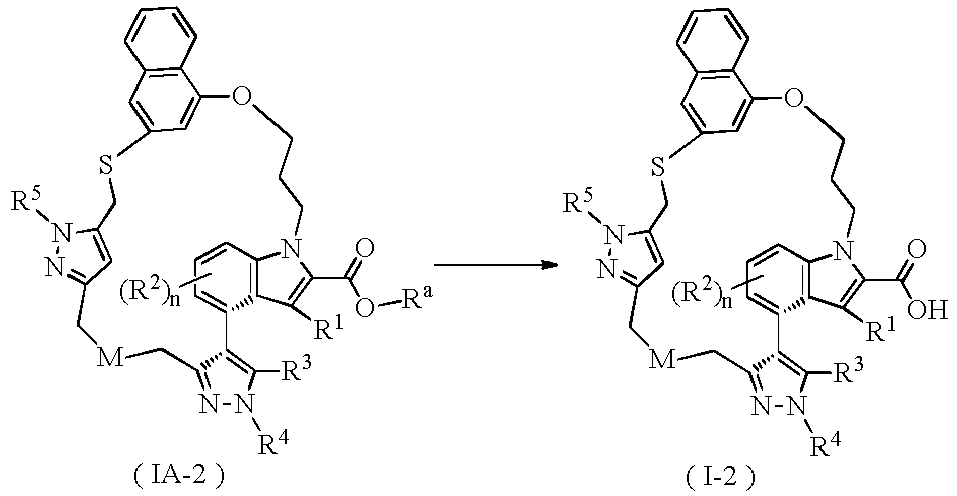
wherein: - Ra is an alkyl;
- M, R1∼R5 and n are as defined in formula (I).
- In another aspect, the present invention relates to a method for preparing the compound of formula (II) or the tautomer, mesomer, racemate, enantiomer, diastereomer thereof, or mixture thereof, or the pharmaceutically acceptable salt thereof according to the present invention, comprising the following step of:

wherein: - Ra is an alkyl;
- M, R1, R2 and n are as defined in formula (II).
- In another aspect, the present invention relates to a method for preparing the compound of formula (III) or the tautomer, mesomer, racemate, enantiomer, diastereomer thereof, or mixture thereof, or the pharmaceutically acceptable salt thereof according to the present invention, comprising the following step of:

wherein: - Ra is an alkyl;
- R1 and R2 are as defined in formula (III).
- In another aspect, the present invention relates to a pharmaceutical composition comprising the compound of formula (IM), or the tautomer, mesomer, racemate, enantiomer, diastereomer thereof, or mixture thereof, or the pharmaceutically acceptable salt thereof according to the present invention, and one or more pharmaceutically acceptable carrier(s), diluent(s) or excipient(s).
- The present invention further relates to a use of the compound of formula (IM), or the tautomer, mesomer, racemate, enantiomer, diastereomer thereof, or mixture thereof, or the pharmaceutically acceptable salt thereof, or the pharmaceutical composition comprising the same according to the present invention in the preparation of a medicament for inhibiting MCL-1.
- The present invention further relates to a use of the compound of formula (IM), or the tautomer, mesomer, racemate, enantiomer, diastereomer thereof, or mixture thereof, or the pharmaceutically acceptable salt thereof, or the pharmaceutical composition comprising the same according to the present invention in the preparation of a medicament for the prevention or treatment of MCL-1 mediated diseases.
- The present invention further relates to a use of the compound of formula (IM), or the tautomer, mesomer, racemate, enantiomer, diastereomer thereof, or mixture thereof, or the pharmaceutically acceptable salt thereof, or the pharmaceutical composition comprising the same according to the present invention in the preparation of a medicament for the treatment of tumors, autoimmune diseases or immune system diseases, wherein the tumor is preferably selected from the group consisting of bladder cancer, brain tumor, breast cancer, uterine cancer, cervical cancer, endometrial cancer, ovarian cancer, leukemia (such as chronic myelogenous leukemia, chronic lymphocytic leukemia, lymphoblastic leukemia or acute myeloid leukemia), kidney cancer, colon cancer, rectal cancer, colorectal cancer, esophageal cancer, liver cancer, stomach cancer, head and neck cancer, skin cancer, lymphoma, pancreatic cancer, melanoma, myeloma (such as multiple myeloma), bone cancer, neuroblastoma, glioma, sarcoma, lung cancer (such as non-small cell lung cancer or small cell lung cancer), thyroid cancer and prostate cancer.
- The present invention also relates to a method for inhibiting MCL-1, comprising a step of administrating to a patient in need thereof a therapeutically effective dose of the compound of formula (IM), or the tautomer, mesomer, racemate, enantiomer, diastereomer thereof, or mixture thereof, or the pharmaceutically acceptable salt thereof, or the pharmaceutical composition comprising the same according to the present invention.
- The present invention also relates to a method for preventing or treating MCL-1 mediated diseases, comprising a step of administrating to a patient in need thereof a preventively or therapeutically effective dose of the compound of formula (IM), or the tautomer, mesomer, racemate, enantiomer, diastereomer thereof, or mixture thereof, or the pharmaceutically acceptable salt thereof, or the pharmaceutical composition comprising the same according to the present invention.
- The present invention also relates to a method for treating tumors, autoimmune diseases or immune system diseases, comprising a step of administrating to a patient in need thereof a therapeutically effective dose of the compound of formula (IM), or the tautomer, mesomer, racemate, enantiomer, diastereomer thereof, or mixture thereof, or the pharmaceutically acceptable salt thereof, or the pharmaceutical composition comprising the same according to the present invention, wherein the tumor is preferably selected from the group consisting of bladder cancer, brain tumor, breast cancer, uterine cancer, cervical cancer, endometrial cancer, ovarian cancer, leukemia (such as chronic myelogenous leukemia, chronic lymphocytic leukemia, lymphoblastic leukemia or acute myeloid leukemia), kidney cancer, colon cancer, rectal cancer, colorectal cancer, esophageal cancer, liver cancer, stomach cancer, head and neck cancer, skin cancer, lymphoma, pancreatic cancer, melanoma, myeloma (such as multiple myeloma), bone cancer, neuroblastoma, glioma, sarcoma, lung cancer (such as non-small cell lung cancer or small cell lung cancer), thyroid cancer and prostate cancer.
- The present invention further relates to the compound of formula (IM), or the tautomer, mesomer, racemate, enantiomer, diastereomer thereof, or mixture thereof, or the pharmaceutically acceptable salt thereof, or the pharmaceutical composition comprising the same according to the present invention, for use as a medicament.
- The present invention also relates to the compound of formula (IM), or the tautomer, mesomer, racemate, enantiomer, diastereomer thereof, or mixture thereof, or the pharmaceutically acceptable salt thereof, or the pharmaceutical composition comprising the same according to the present invention, for use as a MCL-1 inhibitor.
- The present invention also relates to the compound of formula (IM), or the tautomer, mesomer, racemate, enantiomer, diastereomer thereof, or mixture thereof, or the pharmaceutically acceptable salt thereof, or the pharmaceutical composition comprising the same according to the present invention, for use as a medicament for treating or preventing MCL-1 mediated diseases.
- The present invention also relates to the compound of formula (IM), or the tautomer, mesomer, racemate, enantiomer, diastereomer thereof, or mixture thereof, or the pharmaceutically acceptable salt thereof, or the pharmaceutical composition comprising the same according to the present invention, for use as a medicament for treating tumors, autoimmune diseases or immune system diseases, wherein the tumor is preferably selected from the group consisting of bladder cancer, brain tumor, breast cancer, uterine cancer, cervical cancer, endometrial cancer, ovarian cancer, leukemia (such as chronic myelogenous leukemia, chronic lymphocytic leukemia, lymphoblastic leukemia or acute myeloid leukemia), kidney cancer, colon cancer, rectal cancer, colorectal cancer, esophageal cancer, liver cancer, stomach cancer, head and neck cancer, skin cancer, lymphoma, pancreatic cancer, melanoma, myeloma (such as multiple myeloma), bone cancer, neuroblastoma, glioma, sarcoma, lung cancer (such as non-small cell lung cancer or small cell lung cancer), thyroid cancer and prostate cancer.
- The active compound can be formulated into a form suitable for administration by any appropriate route, and the active compound is preferably in the form of a unit dose, or in a form in which the patient can self-administer in a single dose. The form of the unit dose of the compound or composition of the present invention can be tablet, capsule, cachet, bottled potion, powder, granule, lozenge, suppository, regenerating powder or liquid preparation.
- The dosage of the compound or composition used in the treatment method of the present invention will generally vary according to the severity of the disease, the weight of the patient, and the relative efficacy of the compound. However, as a general guide, a suitable unit dose can be 0.1 to 1000 mg.
- In addition to the active compound, the pharmaceutical composition of the present invention can also comprise one or more auxiliaries including filler (diluent), binder, wetting agent, disintegrant, excipient and the like. Depending on the administration mode, the composition can comprise 0.1 to 99% by weight of the active compound.
- The pharmaceutical composition containing the active ingredient can be in a form suitable for oral administration, for example, a tablet, troche, lozenge, aqueous or oily suspension, dispersible powder or granule, emulsion, hard or soft capsule, syrup or elixir. An oral composition can be prepared according to any known method in the art for the preparation of pharmaceutical composition. Such composition can also comprise one or more components selected from the group consisting of sweeteners, flavoring agents, colorants and preservatives, in order to provide a pleasing and palatable pharmaceutical formulation. The tablet contains the active ingredient in admixture with nontoxic, pharmaceutically acceptable excipients suitable for the manufacture of tablets.
- An aqueous suspension comprises an active ingredient in admixture with excipients suitable for the manufacture of an aqueous suspension. The aqueous suspension can also comprise one or more preservative(s) such as ethyl paraben or n-propyl paraben, one or more colorant(s), one or more flavoring agent(s), and one or more sweetener(s).
- An oil suspension can be formulated by suspending the active ingredient in a vegetable oil. The oil suspension can comprise a thickener. The aforementioned sweeteners and flavoring agents can be added to provide a palatable formulation.
- The dispersible powders or granules suitable for the preparation of an aqueous suspension can provide the active ingredient in admixture with the dispersants or wetting agents, suspending agent or one or more preservatives by adding water. Suitable dispersants or wetting agents and suspending agents are exemplified by those already mentioned above. Additional excipients, such as sweeteners, flavoring agents and colorants, can also be added. These compositions can be preserved by adding an antioxidant, such as ascorbic acid.
- The pharmaceutical composition of the present invention can also be in the form of an oil-in-water emulsion.
- The pharmaceutical composition can be in the form of a sterile injectable aqueous solution. Acceptable vehicles or solvents that can be used are water, Ringer's solution or isotonic sodium chloride solution. The sterile injectable formulation can be a sterile injectable oil-in-water micro-emulsion in which the active ingredient is dissolved in an oil phase. For example, the active ingredient is dissolved in a mixture of soybean oil and lecithin. The oil solution is then added to a mixture of water and glycerin, and processed to form a micro-emulsion. The injectable solution or micro-emulsion can be introduced into a patient's bloodstream by local bolus injection. Alternatively, the solution and micro-emulsion are preferably administrated in a manner that maintains a constant circulating concentration of the compound of the present invention. In order to maintain this constant concentration, a continuous intravenous delivery device can be used. An example of such a device is Deltec CADD-PLUS. TM. 5400 intravenous injection pump.
- The pharmaceutical composition can be in the form of a sterile injectable aqueous or oily suspension for intramuscular and subcutaneous administration. Such a suspension can be formulated with suitable dispersants or wetting agents and suspending agents as described above according to known techniques. The sterile injectable formulation can also be a sterile injectable solution or suspension prepared in a nontoxic parenterally acceptable diluent or solvent. Moreover, sterile fixed oils can easily be used as a solvent or suspending medium.
- The compound of the present invention can be administrated in the form of a suppository for rectal administration. These pharmaceutical compositions can be prepared by mixing the drug with a suitable non-irritating excipient that is solid at ordinary temperatures, but liquid in the rectum, thereby melting in the rectum to release the drug. Such materials include cocoa butter, glycerin gelatin, hydrogenated vegetable oil, a mixture of polyethylene glycols of various molecular weights and fatty acid esters thereof.
- It is well known to those skilled in the art that the dosage of a drug depends on a variety of factors including, but not limited to the following factors: activity of a specific compound, age of the patient, weight of the patient, general health of the patient, behavior of the patient, diet of the patient, administration time, administration route, excretion rate, drug combination and the like. In addition, the optimal treatment, such as treatment mode, daily dose of the compound of formula (IM) or the type of pharmaceutically acceptable salt thereof can be verified according to traditional therapeutic regimens.
- Unless otherwise stated, the terms used in the specification and claims have the meanings described below.
- The term "alkyl" refers to a saturated aliphatic hydrocarbon group, which is a straight or branched chain group comprising 1 to 20 carbon atoms, preferably an alkyl having 1 to 12 carbon atoms, and more preferably an alkyl having 1 to 6 carbon atoms. Non-limiting examples include methyl, ethyl, n-propyl, isopropyl, n-butyl, isobutyl, tert-butyl, sec-butyl, n-pentyl, 1,1-dimethylpropyl, 1,2-dimethylpropyl, 2,2-dimethylpropyl, 1-ethylpropyl, 2-methylbutyl, 3-methylbutyl, n-hexyl, 1-ethyl-2-methylpropyl, 1,1,2-trimethylpropyl, 1,1-dimethylbutyl, 1,2-dimethylbutyl, 2,2-dimethylbutyl, 1,3-dimethylbutyl, 2-ethylbutyl, 2-methylpentyl, 3-methylpentyl, 4-methylpentyl, 2,3-dimethylbutyl, n-heptyl, 2-methylhexyl, 3-methylhexyl, 4-methylhexyl, 5-methylhexyl, 2,3-dimethylpentyl, 2,4-dimethylpentyl, 2,2-dimethylpentyl, 3,3-dimethylpentyl, 2-ethylpentyl, 3-ethylpentyl, n-octyl, 2,3-dimethylhexyl, 2,4-dimethylhexyl, 2,5-dimethylhexyl, 2,2-dimethylhexyl, 3,3-dimethylhexyl, 4,4-dimethylhexyl, 2-ethylhexyl, 3-ethylhexyl, 4-ethylhexyl, 2-methyl-2-ethylpentyl, 2-methyl-3-ethylpentyl, n-nonyl, 2-methyl-2-ethylhexyl, 2-methyl-3-ethylhexyl, 2,2-diethylpentyl, n-decyl, 3,3-diethylhexyl, 2,2-diethylhexyl, and various branched isomers thereof. More preferably, the alkyl group is a lower alkyl having 1 to 6 carbon atoms, and non-limiting examples include methyl, ethyl, n-propyl, isopropyl, n-butyl, isobutyl, tert-butyl, sec-butyl, n-pentyl, 1,1-dimethylpropyl, 1,2-dimethylpropyl, 2,2-dimethylpropyl, 1-ethylpropyl, 2-methylbutyl, 3-methylbutyl, n-hexyl, 1-ethyl-2-methylpropyl, 1,1,2-trimethylpropyl, 1,1-dimethylbutyl, 1,2-dimethylbutyl, 2,2-dimethylbutyl, 1,3-dimethylbutyl, 2-ethylbutyl, 2-methylpentyl, 3-methylpentyl, 4-methylpentyl, 2,3-dimethylbutyl and the like. The alkyl can be substituted or unsubstituted. When substituted, the substituent group(s) can be substituted at any available connection point. The substituent group(s) is preferably one or more groups independently optionally selected from the group consisting of H atom, D atom, halogen, alkyl, alkoxy, haloalkyl, hydroxy, hydroxyalkyl, cyano, amino, nitro, cycloalkyl, heterocyclyl, aryl and heteroaryl.
- The term "alkoxy" refers to an -O-(alkyl) or an -O-(unsubstituted cycloalkyl) group, wherein the alkyl is as defined above. Non-limiting examples of alkoxy include methoxy, ethoxy, propoxy, butoxy, cyclopropyloxy, cyclobutyloxy, cyclopentyloxy, cyclohexyloxy. The alkoxy can be optionally substituted or unsubstituted. When substituted, the substituent group(s) is preferably one or more groups independently selected from the group consisting of H atom, D atom, halogen, alkyl, alkoxy, haloalkyl, hydroxy, hydroxyalkyl, cyano, amino, nitro, cycloalkyl, heterocyclyl, aryl and heteroaryl.
- The term "cycloalkyl" refers to a saturated or partially unsaturated monocyclic or polycyclic hydrocarbon substituent group having 3 to 20 carbon atoms, preferably 3 to 12 carbon atoms, preferably 3 to 8 carbon atoms, and more preferably 4 to 6 carbon atoms. Non-limiting examples of monocyclic cycloalkyl include cyclopropyl, cyclobutyl, cyclopentyl, cyclopentenyl, cyclohexyl, cyclohexenyl, cyclohexadienyl, cycloheptyl, cycloheptatrienyl, cyclooctyl and the like. Polycyclic cycloalkyl includes a cycloalkyl having a spiro ring, fused ring or bridged ring.
- The term "spiro cycloalkyl" refers to a 5 to 20 membered polycyclic group with individual rings connected through one shared carbon atom (called a spiro atom), wherein the rings can contain one or more double bonds, but none of the rings has a completely conjugated π-electron system. The spiro cycloalkyl is preferably a 6 to 14 membered spiro cycloalkyl, and more preferably a 7 to 10 membered spiro cycloalkyl (such as 7, 8, 9 or 10 membered spiro cycloalkyl). According to the number of the spiro atoms shared between the rings, the spiro cycloalkyl can be divided into a mono-spiro cycloalkyl, a di-spiro cycloalkyl, or a poly-spiro cycloalkyl, and the spiro cycloalkyl is preferably a mono-spiro cycloalkyl or di-spiro cycloalkyl, and more preferably a 4-membered/4-membered, 4-membered/5 -membered, 4-membered/6-membered, 5-membered/5-membered, or 5-membered/6-membered mono-spiro cycloalkyl. Non-limiting examples of spiro cycloalkyl include:

- The term "fused cycloalkyl" refers to a 5 to 20 membered all-carbon polycyclic group, wherein each ring in the system shares an adjacent pair of carbon atoms with another ring, one or more rings can contain one or more double bonds, but none of the rings has a completely conjugated π-electron system. The fused cycloalkyl is preferably a 6 to 14 membered fused cycloalkyl, and more preferably a 7 to 10 membered fused cycloalkyl. According to the number of membered rings, the fused cycloalkyl can be divided into a bicyclic, tricyclic, tetracyclic or polycyclic fused cycloalkyl, and the fused cycloalkyl is preferably a bicyclic or tricyclic fused cycloalkyl, and more preferably a 5-membered/5-membered, or 5-membered/6-membered bicyclic fused cycloalkyl. Non-limiting examples of fused cycloalkyl include:

- The term "bridged cycloalkyl" refers to a 5 to 20 membered all-carbon polycyclic group, wherein every two rings in the system share two disconnected carbon atoms, the rings can have one or more double bonds, but none of the rings has a completely conjugated π-electron system. The bridged cycloalkyl is preferably a 6 to 14 membered bridged cycloalkyl, and more preferably a 7 to 10 membered bridged cycloalkyl. According to the number of membered rings, the bridged cycloalkyl can be divided into a bicyclic, tricyclic, tetracyclic or polycyclic bridged cycloalkyl, and the bridged cycloalkyl is preferably a bicyclic, tricyclic or tetracyclic bridged cycloalkyl, and more preferably a bicyclic or tricyclic bridged cycloalkyl. Non-limiting examples of bridged cycloalkyl include:


- The cycloalkyl (including monocycloalkyl, spiro cycloalkyl, fused cycloalkyl and bridged cycloalkyl) ring can be fused to the ring of aryl, heteroaryl or heterocyclyl, wherein the ring bound to the parent structure is cycloalkyl. Non-limiting examples include indanyl, tetrahydronaphthyl, benzocycloheptyl and the like, and preferably benzocyclopentyl, tetrahydronaphthyl.
- The cycloalkyl can be substituted or unsubstituted. When substituted, the substituent group(s) can be substituted at any available connection point. The substituent group(s) is preferably one or more groups independently optionally selected from the group consisting of hydrogen atom, halogen, alkyl, alkoxy, haloalkyl, hydroxy, hydroxyalkyl, cyano, amino, nitro, cycloalkyl, heterocyclyl, aryl and heteroaryl.
- The term "heterocyclyl" refers to a 3 to 20 membered saturated or partially unsaturated monocyclic or polycyclic hydrocarbon group, wherein one or more ring atoms are heteroatoms selected from the group consisting of N, O and S(O)m (wherein m is an integer of 0 to 2), but excluding -O-O-, -O-S- or -S-S- in the ring, with the remaining ring atoms being carbon atoms. Preferably, the heterocyclyl has 3 to 12 ring atoms wherein 1 to 4 atoms are heteroatoms; more preferably 3 to 8 ring atoms wherein 1 to 3 atoms are heteroatoms; more preferably 3 to 6 ring atoms wherein 1 to 3 atoms are heteroatoms; and most preferably 5 or 6 ring atoms wherein 1 to 3 atoms are heteroatoms. Non-limiting examples of monocyclic heterocyclyl include pyrrolidinyl, tetrahydropyranyl, 1,2,3,6-tetrahydropyridyl, piperidinyl, piperazinyl, morpholinyl, thiomorpholinyl, homopiperazinyl and the like. Polycyclic heterocyclyl includes a heterocyclyl having a spiro ring, fused ring or bridged ring.
- The term "spiro heterocyclyl" refers to a 5 to 20 membered polycyclic heterocyclyl group with individual rings connected through one shared atom (called a spiro atom), wherein one or more ring atoms are heteroatoms selected from the group consisting of N, O and S(O)m (wherein m is an integer of 0 to 2), with the remaining ring atoms being carbon atoms, where the rings can contain one or more double bonds, but none of the rings has a completely conjugated π-electron system. The spiro heterocyclyl is preferably a 6 to 14 membered spiro heterocyclyl, and more preferably a 7 to 10 membered spiro heterocyclyl. According to the number of the spiro atoms shared between the rings, the spiro heterocyclyl can be divided into a mono-spiro heterocyclyl, di-spiro heterocyclyl, or poly-spiro heterocyclyl, and the spiro heterocyclyl is preferably a mono-spiro heterocyclyl or di-spiro heterocyclyl, and more preferably a 4-membered/4-membered, 4-membered/5 -membered, 4-membered/6-membered, 5-membered/5-membered, or 5-membered/6-membered mono-spiro heterocyclyl. Non-limiting examples of spiro heterocyclyl include:

- The term "fused heterocyclyl" refers to a 5 to 20 membered polycyclic heterocyclyl group, wherein each ring in the system shares an adjacent pair of atoms with another ring, wherein one or more rings can contain one or more double bonds, but none of the rings has a completely conjugated π-electron system, and wherein one or more ring atoms are heteroatoms selected from the group consisting of N, O and S(O)m (wherein m is an integer of 0 to 2), with the remaining ring atoms being carbon atoms. The fused heterocyclyl is preferably a 6 to 14 membered fused heterocyclyl, and more preferably a 7 to 10 membered fused heterocyclyl. According to the number of membered rings, the fused heterocyclyl can be divided into a bicyclic, tricyclic, tetracyclic or polycyclic fused heterocyclyl, and the fused heterocyclyl is preferably a bicyclic or tricyclic fused heterocyclyl, and more preferably a 5-membered/5-membered or 5-membered/6-membered bicyclic fused heterocyclyl. Non-limiting examples of fused heterocyclyl include:


- The term "bridged heterocyclyl" refers to a 5 to 14 membered polycyclic heterocyclyl group, wherein every two rings in the system share two disconnected atoms, wherein the rings can have one or more double bonds, but none of the rings has a completely conjugated π-electron system, and wherein one or more ring atoms are heteroatoms selected from the group consisting of N, O and S(O)m (wherein m is an integer of 0 to 2), with the remaining ring atoms being carbon atoms. The bridged heterocyclyl is preferably a 6 to 14 membered bridged heterocyclyl, and more preferably a 7 to 10 membered bridged heterocyclyl. According to the number of membered rings, the bridged heterocyclyl can be divided into a bicyclic, tricyclic, tetracyclic or polycyclic bridged heterocyclyl, and the bridged heterocyclyl is preferably a bicyclic, tricyclic or tetracyclic bridged heterocyclyl, and more preferably a bicyclic or tricyclic bridged heterocyclyl. Non-limiting examples of bridged heterocyclyl include:
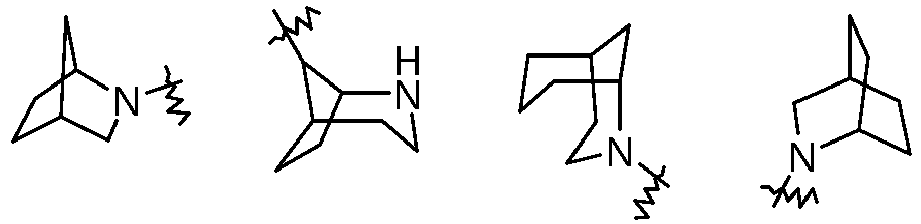

- The heterocyclyl (including monocyclic heterocyclyl, spiro heterocyclyl, fused heterocyclyl and bridged heterocyclyl) ring can be fused to the ring of aryl, heteroaryl or cycloalkyl, wherein the ring bound to the parent structure is heterocyclyl. Non-limiting examples thereof include:

- The heterocyclyl can be substituted or unsubstituted. When substituted, the substituent group(s) can be substituted at any available connection point. The substituent group(s) is preferably one or more groups independently optionally selected from the group consisting of hydrogen atom, halogen, alkyl, alkoxy, haloalkyl, hydroxy, hydroxyalkyl, cyano, amino, nitro, cycloalkyl, heterocyclyl, aryl and heteroaryl.
- The term "aryl" refers to a 6 to 14 membered all-carbon monocyclic ring or polycyclic fused ring (i.e. each ring in the system shares an adjacent pair of carbon atoms with another ring in the system) having a conjugated π-electron system, preferably a 6 to 10 membered aryl, for example, phenyl and naphthyl. The aryl ring can be fused to the ring of heteroaryl, heterocyclyl or cycloalkyl, wherein the ring bound to the parent structure is aryl ring. Non-limiting examples thereof include:


- The aryl can be substituted or unsubstituted. When substituted, the substituent group(s) can be substituted at any available connection point. The substituent group(s) is preferably one or more groups independently optionally selected from the group consisting of hydrogen atom, halogen, alkyl, alkoxy, haloalkyl, hydroxy, hydroxyalkyl, cyano, amino, nitro, cycloalkyl, heterocyclyl, aryl and heteroaryl.
- The term "heteroaryl" refers to a 5 to 14 membered heteroaromatic system having 1 to 4 heteroatoms selected from the group consisting of O, S and N. The heteroaryl is preferably a 5 to 10 membered heteroaryl, more preferably a 5 or 6 membered heteroaryl, for example furyl, thienyl, pyridyl, pyrrolyl, N-alkylpyrrolyl, pyrimidinyl, pyrazinyl, pyridazinyl, imidazolyl, pyrazolyl, triazolyl, tetrazolyl and the like. The heteroaryl ring can be fused to the ring of aryl, heterocyclyl or cycloalkyl, wherein the ring bound to the parent structure is heteroaryl ring. Non-limiting examples thereof include:





- The heteroaryl can be substituted or unsubstituted. When substituted, the substituent group(s) can be substituted at any available connection point. The substituent group(s) is preferably one or more groups independently optionally selected from the group consisting of hydrogen atom, halogen, alkyl, alkoxy, haloalkyl, hydroxy, hydroxyalkyl, cyano, amino, nitro, cycloalkyl, heterocyclyl, aryl and heteroaryl.
- The term "cycloalkyloxy" refers to a cycloalkyl-O- group, wherein the cycloalkyl is as defined above.
- The term "haloalkyl" refers to an alkyl group substituted by one or more halogen(s), wherein the alkyl is as defined above.
- The term "deuterated alkyl" refers to an alkyl group substituted by one or more deuterium atom(s), wherein the alkyl is as defined above.
- The term "hydroxy" refers to an -OH group.
- The term "hydroxyalkyl" refers to an alkyl group substituted by hydroxy(s), wherein the alkyl is as defined above.
- The term "halogen" refers to fluorine, chlorine, bromine or iodine.
- The term "hydroxy" refers to an -OH group.
- The term "amino" refers to a -NH2 group.
- The term "cyano" refers to a -CN group.
- The term "nitro" refers to a -NO2 group.
- The term "carbonyl" refers to a C=O group.
- The term "carboxy" refers to a -C(O)OH group.
- The term "alkoxycarbonyl" refers to a -C(O)O(alkyl) or -C(O)O(cycloalkyl) group, wherein the alkyl and cycloalkyl are as defined above.
- The present invention also comprises the compounds of formula (IM) in various deuterated forms. Each of the available hydrogen atoms attached to the carbon atom can be independently replaced by a deuterium atom. Those skilled in the art can synthesize a compound of formula (IM) in a deuterated form with reference to the relevant literatures. The compound of formula (IM) in deuterated form can be prepared by employing commercially available deuterated raw materials, or they can be synthesized by conventional techniques with deuterated reagents including, but not limited to, deuterated borane, trideuterated borane in tetrahydrofuran, deuterated lithium aluminum hydride, deuterated iodoethane, deuterated iodomethane and the like.
- "Optional" or "optionally" means that the event or circumstance described subsequently can, but need not, occur, and such a description includes the situation in which the event or circumstance does or does not occur. For example, "the heterocyclyl optionally substituted by an alkyl" means that an alkyl group can be, but need not be, present, and such a description includes the situation of the heterocyclyl being substituted by an alkyl and the heterocyclyl being not substituted by an alkyl.
- "Substituted" refers to one or more hydrogen atoms in a group, preferably up to 5, and more preferably 1 to 3 hydrogen atoms, independently substituted by a corresponding number of substituents. It goes without saying that the substituents only exist in their possible chemical position. The person skilled in the art is able to determine whether the substitution is possible or impossible by experiments or theory without excessive effort. For example, the combination of amino or hydroxy having free hydrogen and carbon atoms having unsaturated bonds (such as olefinic) may be unstable.
- The term "pharmaceutical composition" refers to a mixture of one or more of the compounds described herein or physiologically/pharmaceutically acceptable salts or prodrugs thereof with other chemical components, and other components such as physiologically/pharmaceutically acceptable carriers and excipients. The purpose of the pharmaceutical composition is to facilitate administration of a compound to an organism, which is conducive to the absorption of the active ingredient so as to show biological activity.
- A "pharmaceutically acceptable salt" refers to a salt of the compound of the present invention, which is safe and effective in mammals and has the desired biological activity.
- In order to achieve the object of the present invention, the present invention applies the following schemes:
- A method for preparing the compound of formula (IM) or a tautomer, mesomer, racemate, enantiomer, diastereomer thereof, or mixture thereof, or a pharmaceutically acceptable salt thereof according to the present invention, comprises the following step of:

wherein: - Ra is an alkyl;
- Rm, Rn, Rw, Z, M, R1∼R5 and n are as defined in formula (IM).
- A method for preparing the compound of formula (IM-1) or (IM-2) according to the present invention, comprises the following steps:

the protecting group Ra is removed from the compound of formula (IMA-1) under an alkaline condition to obtain the compound of formula (IM-1); and the protecting group Ra is removed from the compound of formula (IMA-2) under an alkaline condition to obtain the compound of formula (IM-2);
wherein: - Ra is an alkyl;
- Rm, Rn, Rw, Z, M, R1∼R5 and n are as defined in formula (IM).
- A method for preparing the compound of formula (IIM) or a tautomer, mesomer, racemate, enantiomer, diastereomer thereof, or mixture thereof, or a pharmaceutically acceptable salt thereof according to the present invention, comprises the following step of:

wherein: - Ra is an alkyl;
- Rm, Rn, Rw, Z, M and R1∼R5 are as defined in formula (IIM).
- A method for preparing the compound of formula (IIM-1) or (IIM-2) according to the present invention, comprises the following steps:

the protecting group Ra is removed from the compound of formula (IIMA-1) under an alkaline condition to obtain the compound of formula (IIM-1); and the protecting group Ra is removed from the compound of formula (IIMA-2) under an alkaline condition to obtain the compound of formula (IIM-2);
wherein: - Ra is an alkyl;
- Rm, Rn, Rw, Z, M and R1∼R5 are as defined in formula (IIM).
- A method for preparing the compound of formula (IK) or a tautomer, mesomer, racemate, enantiomer, diastereomer thereof, or mixture thereof, or a pharmaceutically acceptable salt thereof according to the present invention, comprises the following step of:

wherein: - Ra is an alkyl;
- p, Rw, Z, M, R1∼R5 and n are as defined in formula (IK).
- A method for preparing the compound of formula (IK-1) or (IK-2) according to the present invention, comprises the following steps:

the protecting group Ra is removed from the compound of formula (IKA-1) under an alkaline condition to obtain the compound of formula (IK-1); and the protecting group Ra is removed from the compound of formula (IKA-2) under an alkaline condition to obtain the compound of formula (IK-2);
wherein: - Ra is an alkyl;
- p, Rw, Z, M, R1∼R5 and n are as defined in formula (IK).
- A method for preparing the compound of formula (IL) or a tautomer, mesomer, racemate, enantiomer, diastereomer thereof, or mixture thereof, or a pharmaceutically acceptable salt thereof according to the present invention, comprises the following step of:

wherein: - Ra is an alkyl;
- q, Rm, Z, M, R1∼R5 and n are as defined in formula (IL).
- A method for preparing the compound of formula (IL-1) or (IL-2) according to the present invention, comprises the following steps:

the protecting group Ra is removed from the compound of formula (ILA-1) under an alkaline condition to obtain the compound of formula (IL-1); and the protecting group Ra is removed from the compound of formula (ILA-2) under an alkaline condition to obtain the compound of formula (IL-2);
wherein: - Ra is an alkyl;
- q, Rm, Z, M, R1∼R5 and n are as defined in formula (IL).
- A method for preparing the compound of formula (IIK) or a tautomer, mesomer, racemate, enantiomer, diastereomer thereof, or mixture thereof, or a pharmaceutically acceptable salt thereof according to the present invention, comprises the following step of:

wherein: - Ra is an alkyl;
- p, Z, M and R1∼R5 are as defined in formula (IIK).
- A method for preparing the compound of formula (IIK-1) or (IIK-2) according to the present invention, comprises the following steps:

the protecting group Ra is removed from the compound of formula (IIKA-1) under an alkaline condition to obtain the compound of formula (IIK-1); and the protecting group Ra is removed from the compound of formula (IIKA-2) under an alkaline condition to obtain the compound of formula (IIK-2);
wherein: - Ra is an alkyl;
- p, Z, M and R1∼R5 are as defined in formula (IIK).
- A method for preparing the compound of formula (IIL) or a tautomer, mesomer, racemate, enantiomer, diastereomer thereof, or mixture thereof, or a pharmaceutically acceptable salt thereof according to the present invention, comprises the following step of:

wherein: - Ra is an alkyl;
- q, Z, M and R1∼R5 are as defined in formula (IIL).
- A method for preparing the compound of formula (IIL-1) or (IIL-2) according to the present invention, comprises the following steps:

the protecting group Ra is removed from the compound of formula (IILA-1) under an alkaline condition to obtain the compound of formula (IIL-1); and the protecting group Ra is removed from the compound of formula (IILA-2) under an alkaline condition to obtain the compound of formula (IIL-2);
wherein: - Ra is an alkyl;
- q, Z, M and R1∼R5 are as defined in formula (IIL).
- A method for preparing the compound of formula (I) or a tautomer, mesomer, racemate, enantiomer, diastereomer thereof, or mixture thereof, or a pharmaceutically acceptable salt thereof according to the present invention, comprises the following step of:

wherein: - Ra is an alkyl;
- M, R1∼R5 and n are as defined in formula (I).
- A method for preparing the compound of formula (I-1) or (1-2) according to the present invention, comprises the following steps:

the protecting group Ra is removed from the compound of formula (IA-1) under an alkaline condition to obtain the compound of formula (I-1); and the protecting group Ra is removed from the compound of formula (IA-2) under an alkaline condition to obtain the compound of formula (1-2);
wherein: - Ra is an alkyl;
- M, R1∼R5 and n are as defined in formula (I).
- A method for preparing the compound of formula (II) or a tautomer, mesomer, racemate, enantiomer, diastereomer thereof, or mixture thereof, or a pharmaceutically acceptable salt thereof according to the present invention, comprises the following step of:

wherein: - Ra is an alkyl;
- M, R1, R2 and n are as defined in formula (II).
- A method for preparing the compound of formula (III) or a tautomer, mesomer, racemate, enantiomer, diastereomer thereof, or mixture thereof, or a pharmaceutically acceptable salt thereof according to the present invention, comprises the following step of:

wherein: - Ra is an alkyl;
- R1 and R2 are as defined in formula (III).
- A method for preparing the compound of formula (III-1) or a tautomer, mesomer, racemate, enantiomer, diastereomer thereof, or mixture thereof, or a pharmaceutically acceptable salt thereof according to the present invention, comprises the following step of:

wherein: - Ra is an alkyl;
- R1 and R2 are as defined in formula (III).
- In the above Scheme I to Scheme XVII, the reagent that provides an alkaline condition includes organic bases and inorganic bases. The organic bases include, but are not limited to, triethylamine, N,N-diisopropylethylamine, n-butyllithium, lithium diisopropylamide, lithium bistrimethylsilylamide, potassium acetate, potassium acetate, sodium tert-butoxide, potassium tert-butoxide and sodium n-butoxide. The inorganic bases include, but are not limited to, sodium bicarbonate, potassium bicarbonate, sodium hydride, potassium phosphate, sodium carbonate, potassium carbonate, potassium acetate, cesium carbonate, sodium hydroxide, lithium hydroxide and hydrates thereof, and preferably lithium hydroxide monohydrate.
- The reactions in the above Scheme I to Scheme XVII are preferably carried out in a solvent. The solvents used include, but are not limited to, acetic acid, methanol, ethanol, n-butanol, tert-butanol, toluene, tetrahydrofuran, dichloromethane, petroleum ether, ethyl acetate, n-hexane, dimethyl sulfoxide, 1,4-dioxane, ethylene glycol dimethyl ether, water or N,N-dimethylformamide and mixtures thereof.
- The present invention will be further described with reference to the following examples, but the examples should not be considered as limiting the scope of the present invention.
- The structures of the compounds were identified by nuclear magnetic resonance (NMR) and/or mass spectrometry (MS). NMR shifts (δ) are given in 10-6 (ppm). NMR is determined by a Bruker AVANCE-400 machine. The solvents for determination are deuterated-dimethyl sulfoxide (DMSO-d6 ), deuterated-chloroform (CDCl3) and deuterated-methanol (CD3OD), and the internal standard is tetramethylsilane (TMS).
- MS is determined by a FINNIGAN LCQAd (ESI) mass spectrometer (manufacturer: Thermo, type: Finnigan LCQ advantage MAX).
- High performance liquid chromatography (HPLC) analysis is determined on an Agilent HPLC 1200DAD, Agilent HPLC 1200VWD and Waters HPLC e2695-2489 high pressure liquid chromatograph.
- Chiral HPLC analysis is determined on an Agilent 1260 DAD high performance liquid chromatograph.
- Preparative high performance liquid chromatography is carried out on Waters 2767, Waters 2767-SQ Detecor2, Shimadzu LC-20AP and Gilson-281 preparative chromatographs.
- Chiral preparation is carried out on a Shimadzu LC-20AP preparative chromatograph.
- CombiFlash rapid preparation instrument used is Combiflash Rf200 (TELEDYNE ISCO).
- Yantai Huanghai HSGF254 or Qingdao GF254 silica gel plate is used as the thin-layer silica gel chromatography (TLC) plate. The dimension of the silica gel plate used in TLC is 0.15 mm to 0.2 mm, and the dimension of the silica gel plate used in product purification is 0.4 mm to 0.5 mm.
- Yantai Huanghai 200 to 300 mesh silica gel is generally used as a carrier for silica gel column chromatography.
- The average kinase inhibition rates and IC50 values are determined by a NovoStar ELISA (BMG Co., Germany).
- The known starting materials of the present disclosure can be prepared by the known methods in the art, or can be purchased from ABCR GmbH & Co. KG, Acros Organnics, Aldrich Chemical Company, Accela ChemBio Inc., Chembee Company etc.
- Unless otherwise stated, the reactions are carried out under argon atmosphere or nitrogen atmosphere.
- "Argon atmosphere" or "nitrogen atmosphere" means that a reaction flask is equipped with an argon or nitrogen balloon (about1 L).
- "Hydrogen atmosphere" means that a reaction flask is equipped with a hydrogen balloon (about1 L).
- Pressurized hydrogenation reaction is performed on a Parr 3916EKX hydrogenation instrument and a Qinglan QL-500 hydrogen generator or HC2-SS hydrogenation instrument.
- In hydrogenation reactions, the reaction system is generally vacuumed and filled with hydrogen, which is repeated three times.
- CEM Discover-S 908860 type microwave reactor is used in microwave reactions.
- Unless otherwise stated, the solution refers to an aqueous solution.
- Unless otherwise stated, the reaction temperature is room temperature from 20°C to 30°C.
- The reaction process in the examples is monitored by thin layer chromatography (TLC). The developing solvent used in the reactions, the eluent system in column chromatography and the developing solvent system in thin layer chromatography for purification of the compounds include: A: n-hexane/ethyl acetate system, and B: dichloromethane/methanol system. The ratio of the volume of the solvent is adjusted according to the polarity of the compounds, and a small quantity of alkaline reagent such as triethylamine or acidic reagent such as acetic acid could also be added for adjustment.
-

- Methyl 4-bromo-5-chloro-1H-indole-2-carboxylate 1a (3.50 g, 12.13 mmol, prepared according to the method disclosed in the patent application "
WO2017156181A1 ") was added to 40 mL of acetonitrile, followed by the addition of 1,8-diazabicyclo[5.4.0]undec-7-ene (1.53 g, 6.07 mmol) under an ice bath. Methyl acrylate (1.56 g, 18.12 mmol) was added dropwise, and the reaction solution was heated to reflux and stirred for 16 hours. The reaction solution was cooled to room temperature, to which 30 mL of water and 30 mL of ethyl acetate were added, and the resulting solution was partitioned. The organic phase was washed with 1N hydrochloric acid (20 ml×2), water (20 ml×2) and saturated sodium chloride solution (20 ml×2) successively, dried over anhydrous sodium sulfate and filtered. The filtrate was concentrated under reduced pressure, and the resulting residues were purified by silica gel column chromatography with eluent system A to obtain the title product 1b (4.00 g, yield: 88.1%).
MS m/z (ESI): 373.9 375.9 [M+1]. - 1b (2.60 g, 6.94 mmol) and 3-(((4-methoxybenzyl)oxy)methyl)-1,5-dimethyl-4-(4,4,5,5-tetramethyl-1,3,2-dioxabor olan-2-yl)-1H-pyrazole 1c (2.58 g, 6.93 mmol, prepared according to the method disclosed in the patent application "
WO2017182625A1 ") were dissolved in 24 mL of 1,4-dioxane and 6 mL of water. The solution was purged with argon three times, and added with 1,1'-bis(di-tert-butylphosphine)ferrocaene dichloropalladium (229 mg, 0.35 mmol) and cesium carbonate (4.52 g, 13.87 mmol). The reaction solution was purged with argon three times, heated to 95°C under an argon atmosphere, and stirred for 16 hours. The reaction solution was cooled to room temperature, and concentrated under reduced pressure to remove most of the solvent. 40 mL of water was added to the reaction solution, and extracted with ethyl acetate (20 mL×3). The aqueous phase was adjusted to pH=1-2 with 1N HCl, and extracted with dichloromethane (containing a small amount of methanol, 20 mL×3). The organic phase was washed with water (30 mL) and saturated sodium chloride solution (30 mL) successively, dried over anhydrous sodium sulfate, and filtered to remove the desiccant. The filtrate was concentrated under reduced pressure to obtain the title product 1d (2.20 g, yield: 61.9%). The product was used directly in the next step without purification.
MS m/z (ESI):512.2 [M+1]. - The crude product 1d (2.20 g, 4.30 mmol) was dissolved in 30 mL of methanol. Concentrated sulfuric acid (2.00 g, 20.39 mmol) was added dropwise under an ice bath, and the reaction solution was heated to reflux and stirred for 16 hours. The reaction solution was cooled under an ice bath, and added dropwise with saturated aqueous sodium bicarbonate solution under an ice bath to adjust pH to 7-8. The solution was extracted with dichloromethane (30 mL×3). The organic phases were combined, washed with water (20 mL) and saturated sodium chloride solution (20 mL) successively, dried over anhydrous sodium sulfate, and filtered to remove the desiccant. The filtrate was concentrated under reduced pressure, and the resulting residues were purified by silica gel column chromatography with eluent system B to obtain the title product 1e (850 mg, yield: 47.11%).
MS m/z (ESI): 420.2 [M+1]. - 1e (850 mg, 2.02 mmol) was dissolved in 15 mL of dichloromethane, and the solution was purged with argon three times. Thionyl chloride (361 mg, 3.03 mmol) was added dropwise under an ice bath, and the reaction solution was reacted at room temperature for 2 hours. 50 mL of water was added to the reaction solution, stirred for 10 minutes, and extracted with dichloromethane (30 mL×2). The organic phases were combined, washed with water (30 mL) and saturated sodium chloride solution (30 mL), dried over anhydrous sodium sulfate, and filtered to remove the desiccant. The filtrate was concentrated under reduced pressure to obtain the title product 1f (850 mg, yield: 95.79%), which was used directly in the next step without purification.
MS m/z (ESI): 438.1 [M+1]. - The crude product 1f (850 mg, 1.94 mmol) was dissolved in 10 mL of acetonitrile, followed by the addition of sodium iodide (581mg, 3.88 mmol). The reaction solution was heated to 80°C and stirred for 2 hours. The reaction solution was cooled to room temperature, and added with 50 mL of water. The solution was stirred for 30 minutes, and extracted with ethyl acetate (50 mL×2). The organic phases were combined, washed with water (30 mL) and saturated sodium chloride solution (30 mL), dried over anhydrous sodium sulfate, and filtered to remove the desiccant. The filtrate was concentrated under reduced pressure to obtain the title product 1g (1.00 g, yield: 97.34%), which was used directly in the next step without purification.
MS m/z (ESI): 530.0 [M+1]. - The crude product 1g (850 mg, 1.94 mmol) was dissolved in 10 mL of methanol and 5 mL of tetrahydrofuran, followed by the addition of potassium carbonate (313 mg, 2.27 mmol). The solution was purged with argon three times, and added dropwise with a solution of S-((5-(((tert-butyldiphenylsilyl)oxy)methyl)-1-methyl-1H-pyrazol-3-yl)methyl) ethanethioate 1h (994 mg, 2.27 mmol, prepared according to the method disclosed in the patent application "
WO2017182625A1 ") in methanol (5 mL) at room temperature. The reaction solution was reacted at room temperature for 2 hours. The reaction solution was concentrated under reduced pressure to remove most of the solvent, and then added with 50 mL of water. The solution was stirred for 30 minutes, and extracted with ethyl acetate (50 mL×2). The organic phases were combined, washed with water (30 mL) and saturated sodium chloride solution (30 mL), dried over anhydrous sodium sulfate, and filtered to remove the desiccant. The filtrate was concentrated under reduced pressure, and the resulting residues were purified by silica gel column chromatography with eluent system B to obtain the title product 1i (1.30 g, yield: 86.25%).
MS m/z (ESI): 798.2 [M+1]. - 1i (1.30 g, 1.63 mmol) was dissolved in 10 mL of tetrahydrofuran. 1.0M tetrabutylammonium fluoride (1.95 mL, 1.95 mmol) was added dropwise, and the reaction solution was reacted at room temperature for 1 hour. The reaction solution was concentrated under reduced pressure to remove most of the solvent, and then added with 50 mL of water and extracted with ethyl acetate (50 mL×2). The organic phases were combined, washed with water (30 mL) and saturated sodium chloride solution (30 mL), dried over anhydrous sodium sulfate, and filtered to remove the desiccant. The filtrate was concentrated under reduced pressure, and the resulting residues were purified by silica gel column chromatography with eluent system B to obtain the title product 1j (560 mg, yield: 61.41%).
MS m/z (ESI): 560.2 [M+1]. - 1j (560 mg, 1.00 mmol) was dissolved in 10 mL of dichloromethane, and the solution was purged with argon three times. Thionyl chloride (143 mg, 1.20 mmol) was added dropwise under an ice bath, and the reaction solution was reacted at room temperature for 2 hours. 50 mL of water was added to the reaction solution, stirred for 10 minutes, and extracted with dichloromethane (30 mL×2). The organic phases were combined, washed with water (30 mL) and saturated sodium chloride solution (30 mL), dried over anhydrous sodium sulfate, and filtered to remove the desiccant. The filtrate was concentrated under reduced pressure to obtain the title product 1k (600 mg, yield: 103.73%), which was used directly in the next step without purification.
MS m/z (ESI): 578.1 [M+1]. - The crude product 1k (600 mg, 1.04 mmol) and 3-(acetylthio)naphthalen-1-yl acetate 1l (324 mg, 1.47 mmol, prepared according to the method disclosed in the patent application "
WO2017182625A1 ") were dissolved in 10 mL of methanol. Potassium carbonate (401 mg, 2.91 mmol) was added at room temperature, and the reaction solution was reacted at room temperature for 2 hours. The reaction solution was concentrated under reduced pressure to remove most of the solvent, and then added with 50 mL of water and extracted with ethyl acetate (50 mL×2). The organic phases were combined, washed with water (30 mL) and saturated sodium chloride solution (30 mL), dried over anhydrous sodium sulfate, and filtered to remove the desiccant. The filtrate was concentrated under reduced pressure, and the resulting residues were purified by silica gel column chromatography with eluent system B to obtain the title product 1m (700 mg, yield: 93.96%).
MS m/z (ESI): 718.1 [M+1]. - 1m (700 mg, 0.97 mmol) was dissolved in 10 mL of tetrahydrofuran. 1.0 M solution of borane in tetrahydrofuran (9.7 mL, 9.70 mmol) was added dropwise under an ice bath, and the reaction solution was reacted at room temperature for 5 hours. 4.25 mL of methanol and 8.5 mL of hydrochloric acid (6M) were added dropwise under an ice bath, and the reaction solution was stirred for 1 hour. 50 mL of water was added to the reaction solution, which was extracted with a mixed solution of dichloromethane and methanol (V:V=10:1) (50 mL×2). The organic phases were combined, washed with water (30 mL) and saturated sodium chloride solution (30 mL) successively, dried over anhydrous sodium sulfate, and filtered to remove the desiccant. The filtrate was concentrated under reduced pressure, and the resulting residues were purified by silica gel column chromatography with eluent system B to obtain the title product 1n (550 mg, yield: 81.76%).
MS m/z (ESI): 690.2 [M+1]. - Triphenylphosphine (228 mg, 0.87 mmol) and dibenzyl azodicarboxylate (200 mg, 0.87 mmol) were dissolved in 10 mL of toluene, and the solution was purged with argon three times. 6 mL of solution of 1n (300 mg, 0.43 mmol) in toluene and tetrahydrofuran (V:V=5:1) was added dropwise, and the reaction solution was reacted at room temperature for 16 hours. 10 mL of hydrochloric acid (2M) was added, and the reaction solution was stirred for 10 minutes. 50 mL of water was added to the reaction solution, and extracted with ethyl acetate (50 mL×2). The organic phases were combined, washed with water (30 mL) and saturated sodium chloride solution (30 mL) successively, dried over anhydrous sodium sulfate, and filtered to remove the desiccant. The filtrate was concentrated under reduced pressure, and the resulting residues were purified by silica gel column chromatography with eluent system B to obtain the title product 1o (230 mg, yield: 78.72%).
MS m/z (ESI): 672.2 [M+1]. - 1l (300 mg, 0.45 mmol) was dissolved in 15 mL of a mixed solvent of methanol, tetrahydrofuran and water (V:V:V=1:1:1). Lithium hydroxide monohydrate (225 mg, 5.36 mmol) was added, and the reaction solution was heated to 50°C and reacted for 0.5 hour. The reaction solution was cooled to room temperature, and concentrated under reduced pressure to remove most of the solvent. 2M hydrochloric acid was added to adjust pH to 1-2, and the solution was extracted with a mixed solvent (50 mL×2) of dichloromethane and methanol (V:V=10:1). The organic phases were combined, washed with water (30 mL) and saturated sodium chloride solution (30 mL) successively, dried over anhydrous sodium sulfate, and filtered to remove the desiccant. The filtrate was concentrated under reduced pressure, and the resulting residues were purified by silica gel column chromatography with eluent system B to obtain the title product 1 (15 mg, yield: 5.11%).
MS m/z (ESI): 658.1 [M+1].
1H NMR (400 MHz, CDCl3) δ 8.37-8.39 (m, 1H), 7.78-7.79 (m, 1H), 7.66 (s, 1H), 7.54-7.60 (m, 2H), 7.27-7.29 (m, 1H), 7.12 (s, 1H), 7.01-7.03 (m, 1H), 6.11 (s, 1H), 5.23-5.26 (m, 1H), 5.10 (s, 1H), 4.62-4.67 (m, 1H), 3.77-3.88 (m, 6H), 3.50-3.63 (m, 5H), 3.30-3.40 (m, 1H), 3.11-3.15 (m, 1H), 2.62-2.65(m, 1H), 2.34-2.45 (m, 2H), 2.06 (s,3H). -

- 1 (60 mg, 0.48 mmol) was separated chirally (separation conditions: CHIRALPAK IE chiral preparative column, 5.0 cm I.D. × 25 cm L; mobile phase: Hexane/EtOH/HAc=70/30/0.1(V/V/V); flow rate: 60 mL/min). The corresponding fractions were collected and concentrated under reduced pressure to obtain the title products (22 mg, 28 mg).
- Compound 1-1 with single configuration (having shorter retention time):
MS m/z (ESI):658.2 [M+1]. - Chiral HPLC analysis: retention time 6.892 minutes, chiral purity: 100% (chromatographic column: CHIRALPAK IE 150∗4.6 mm, 5 µm; mobile phase: n-hexane/ethanol/diethylamine= 70/30/0.1 (v/v/v)).
1H NMR (400 MHz, CDCl3) 1H NMR (400 MHz, CDCl3) δ 8.37-8.39 (m, 1H), 7.78-7.79 (m, 1H), 7.66 (s, 1H), 7.54-7.60 (m, 2H), 7.27-7.29 (m, 1H), 7.12 (s, 1H), 7.01-7.03 (m, 1H), 6.11 (s, 1H), 5.23-5.26 (m, 1H), 5.10 (s, 1H), 4.62-4.67 (m, 1H), 3.77-3.88 (m, 6H), 3.50-3.63 (m, 5H), 3.30-3.40 (m, 1H), 3.11-3.15 (m, 1H), 2.62-2.65(m, 1H), 2.34-2.45 (m, 2H), 2.06 (s,3H). - Compound 1-2 with single configuration (having longer retention time):
MS m/z (ESI):658.2 [M+1]. - Chiral HPLC analysis: retention time 8.887 minutes, chiral purity: 100% (chromatographic column: CHIRALPAK IE 150∗4.6 mm, 5 µm; mobile phase: n-hexane/ethanol/diethylamine= 70/30/0.1(v/v/v)).
1H NMR (400 MHz, CDCl3) 1H NMR (400 MHz, CDCl3) δ 8.37-8.39 (m, 1H), 7.78-7.79 (m, 1H), 7.66 (s, 1H), 7.54-7.60 (m, 2H), 7.27-7.29 (m, 1H), 7.12 (s, 1H), 7.01-7.03 (m, 1H), 6.11 (s, 1H), 5.23-5.26 (m, 1H), 5.10 (s, 1H), 4.62-4.67 (m, 1H), 3.77-3.88 (m, 6H), 3.50-3.63 (m, 5H), 3.30-3.40 (m, 1H), 3.11-3.15 (m, 1H), 2.62-2.65(m, 1H), 2.34-2.45 (m, 2H), 2.06 (s,3H). -

- 3-Bromo-4-chloroaniline 2a (20 g, 62.58 mmol, purchased from Shanghai Bide Pharmatech Ltd.) was dissolved in 96 mL of 25% hydrochloric acid. 60 mL of aqueous solution of sodium nitrite (7.69 g, 111.46 mmol) was added dropwise under an ice bath, and the temperature was maintained below 10°C. The reaction solution was reacted at 0°C for 1 hour. The above solution was added dropwise to 144 mL of solution of stannous chloride dihydrate (98.00 g, 434.30 mmol) in 25% hydrochloric acid, and the temperature was maintained below 10°C. The reaction solution was reacted at 0°C for 1 hour. After completion of the reaction, 420 mL of 32% sodium hydroxide solution was added dropwise under an ice bath to alkalize the reaction solution, and 960 mL of water was added. The solution was extracted with dichloromethane (800 mL×3) and partitioned. The organic phase was washed with water (200 mL×2) and saturated sodium chloride solution (200 mL×2) successively, dried over anhydrous sodium sulfate and filtered. The filtrate was concentrated under reduced pressure to obtain the title product 2b (19.40 g, yield: 90.42%).
MS m/z (ESI): 220.7 223.0 [M+1]. - 2b (19.40 g, 87.59 mmol) was dissolved in 60 mL of ethanol. 20 mL of a solution of methyl 2-oxobutyrate (10.58 g, 91.12 mmol) in ethanol was added dropwise under an ice bath, and the reaction solution was reacted at room temperature for 1 hour. The reaction solution was concentrated under reduced pressure, and then added with 50 mL of n-hexane to pulp. The mixture was filtered, and the filter cake was collected and dried under vacuum to obtain the title product 2c (20.00 g, yield: 71.45%).
MS m/z (ESI): 318.7 320.9 [M+1]. - 2c (20.00 g, 62.58 mmol) was dissolved in 200 mL of glacial acetic acid. Zinc chloride (47.00 g, 344.84 mmol) was added, and the reaction solution was heated to 120°C and reacted for 1 hour. The reaction solution was poured into 500 mL of ice water, and a white solid was precipitated. The solid was filtered, and dried under vacuum to obtain the crude title product 2d (18.50 g, yield: 97.70%), which was used directly in the next step without purification.
MS m/z (ESI): 299.9 301.9 [M-1]. - The crude product 2d (5.00 g, 16.53 mmol) was added to 40 mL of acetonitrile, followed by the addition of 1,8-diazabicyclo[5.4.0]undec-7-ene (20.81 g, 82.62 mmol, purchased from Accela ChemBio Co., Ltd.) under an ice bath. Methyl acrylate (2.13 g, 24.74 mmol) was added dropwise, and the reaction solution was heated to reflux and stirred for 30 minutes. Additional methyl acrylate (2.13 g, 24.74 mol) was added four times. After completion of the reaction, 100 mL of water and 100 mL of ethyl acetate were added, and the resulting solution was partitioned. The organic phase was washed with 1N HCl (30 ml×2), water (30 ml×2) and saturated sodium chloride solution (30 ml×2) successively, dried over anhydrous sodium sulfate and filtered. The filtrate was concentrated under reduced pressure, and the resulting residues were purified by silica gel column chromatography with eluent system A to obtain the title product 2e (900 mg, yield: 14.01%).
MS m/z (ESI): 388.0 390.0 [M+1]. - 2e (780 mg, 2.01 mmol) and 1c (747 mg, 2.01 mmol) were dissolved in 20 mL of a mixed solution of 1,4-dioxane and water (V:V=4:1). The solution was purged with argon three times, and added with 1,1'-bis(di-tert-butylphosphine)ferrocaene dichloropalladium (71 mg, 0.10 mmol) and cesium carbonate (1.31 g, 4.02 mmol). The reaction solution was heated to 95°C and stirred for 16 hours. The reaction solution was concentrated under reduced pressure to remove most of the solvent, and added with 40 mL of water and extracted with ethyl acetate (20 mL×3). The organic phase was washed with water (30 mL) and saturated sodium chloride solution (30 mL) successively, dried over anhydrous sodium sulfate, and filtered to remove the desiccant. The filtrate was concentrated under reduced pressure, and the resulting residues were purified by silica gel column chromatography with eluent system B to obtain the title product 2f (720 mg, yield: 64.75%).
MS m/z (ESI):554.2 [M+1]. - 2f (720 mg, 1.30 mmol) was dissolved in 4 mL of dichloromethane. Trifluoroacetic acid (1.48 g, 12.98 mmol) was added dropwise, and the reaction solution was reacted at room temperature for 30 minutes. Saturated aqueous sodium bicarbonate solution was added dropwise to the reaction solution under an ice bath to adjust pH to 7-8. The solution was extracted with dichloromethane (30 mL×3). The organic phases were combined, washed with water (20 mL) and saturated sodium chloride solution (20 mL) successively, dried over anhydrous sodium sulfate, and filtered to remove the desiccant. The filtrate was concentrated under reduced pressure, and the resulting residues were purified by silica gel column chromatography with eluent system B to obtain the title product 2g (320 mg, yield: 56.75%).
MS m/z (ESI): 434.1 [M+1]. - 2g (320 mg, 0.74 mmol) was dissolved in 10 mL of dichloromethane, and the solution was purged with argon three times. Thionyl chloride (132 mg, 1.11 mmol) was added dropwise under an ice bath, and the reaction solution was reacted at room temperature for 30 minutes. 50 mL of water was added to the reaction solution, stirred for 10 minutes, and extracted with dichloromethane (30 mL×2). The organic phases were combined, washed with water (30 mL) and saturated sodium chloride solution (30 mL), dried over anhydrous sodium sulfate, and filtered to remove the desiccant. The filtrate was concentrated under reduced pressure to obtain the crude title product 2h (350 mg), which was used directly in the next step without purification.
MS m/z (ESI): 452.1 [M+1]. - The crude product 2h (350 mg, 0.77 mmol) was dissolved in 10 mL of acetonitrile, followed by the addition of sodium iodide (232 mg, 1.55 mmol). The reaction solution was heated to 80°C and stirred for 2 hours. The reaction solution was cooled to room temperature, and added with 50 mL of water was added. The solution was stirred for 30 minutes, and extracted with ethyl acetate (50 mL×2). The organic phases were combined, washed with water (30 mL) and saturated sodium chloride solution (30 mL), dried over anhydrous sodium sulfate, and filtered to remove the desiccant. The filtrate was concentrated under reduced pressure to obtain the title product 2i (370 mg, yield: 87.94%).
MS m/z (ESI): 544.1 [M+1]. - 2i (370 mg, 0.68 mmol) was dissolved in 10 mL of methanol and 2 mL of tetrahydrofuran, followed by the addition of potassium carbonate (113 mg, 0.82 mmol). The solution was purged with argon three times, and added dropwise with a solution of 1h (358 mg, 0.82 mmol) in methanol (5 mL) at room temperature. The reaction solution was reacted at room temperature for 2 hours. The reaction solution was concentrated under reduced pressure to remove most of the solvent, and added with 50 mL of water. The solution was stirred for 30 minutes, and extracted with ethyl acetate (50 mL×2). The organic phases were combined, washed with water (30 mL) and saturated sodium chloride solution (30 mL), dried over anhydrous sodium sulfate, and filtered to remove the desiccant. The filtrate was concentrated under reduced pressure, and the resulting residues were purified by silica gel column chromatography with eluent system B to obtain the title product 2j (640 mg, yield: 115.77%).
MS m/z (ESI): 812.3 [M+1]. - 2j (640 mg, 0.79 mmol) was dissolved in 10 mL of tetrahydrofuran. 1.0M tetrabutylammonium fluoride (0.95 mL, 0.95 mmol) was added dropwise, and the reaction solution was stirred at room temperature for 1 hour. The reaction solution was concentrated under reduced pressure to remove most of the solvent, and then added with 50 mL of water and extracted with ethyl acetate (50 mL×2). The organic phases were combined, washed with water (30 mL) and saturated sodium chloride solution (30 mL), dried over anhydrous sodium sulfate, and filtered to remove the desiccant. The filtrate was concentrated under reduced pressure, and the resulting residues were purified by silica gel column chromatography with eluent system B to obtain the title product 2k (240 mg, yield: 53.07%).
MS m/z (ESI): 574.2 [M+1]. - 2k (240 mg, 0.42 mmol) was dissolved in 5 mL of dichloromethane, and the solution was purged with argon three times. Thionyl chloride (60 mg, 0.50 mmol) was added dropwise under an ice bath, and the reaction solution was reacted at room temperature for 30 minutes. 50 mL of water was added to the reaction solution, stirred for 10 minutes, and extracted with dichloromethane (30 mL×2). The organic phases were combined, washed with water (30 mL) and saturated sodium chloride solution (30 mL), dried over anhydrous sodium sulfate, and filtered to remove the desiccant. The filtrate was concentrated under reduced pressure to obtain the title product 2l (270 mg), which was used directly in the next step without purification.
MS m/z (ESI): 592.2 [M+1]. - The crude product 2l (270 mg, 0.46 mmol) and 1l (142 mg, 0.55 mmol) were dissolved in 10 mL of methanol. Potassium carbonate (176 mg, 1.28 mmol) was added at room temperature, and the reaction solution was reacted at room temperature for 1 hour. The reaction solution was concentrated under reduced pressure to remove most of the solvent, and then added with 50 mL of water and extracted with ethyl acetate (50 mL×2). The organic phases were combined, washed with water (30 mL) and saturated sodium chloride solution (30 mL), dried over anhydrous sodium sulfate, and filtered to remove the desiccant. The filtrate was concentrated under reduced pressure, and the resulting residues were purified by silica gel column chromatography with eluent system B to obtain the title product 2m (300 mg, yield: 89.90%).
MS m/z (ESI): 732.2 [M+1]. - 2m (300 mg, 0.41 mmol) was dissolved in 5 mL of tetrahydrofuran. 1.0 M solution of borane in tetrahydrofuran (4.10 mL, 4.10 mmol) was added dropwise under an ice bath, and the reaction solution was stirred at room temperature for 6 hours. 2.7 mL of methanol and 5.3 mL of diluted hydrochloric acid (6M) were added dropwise under an ice bath, and the reaction solution was stirred for 1 hour. 50 mL of water was added to the reaction solution, which was extracted with a mixed solution of dichloromethane and methanol (V:V=10:1) (50 mL×2). The organic phases were combined, washed with water (30 mL) and saturated sodium chloride solution (30 mL) successively, dried over anhydrous sodium sulfate, and filtered to remove the desiccant. The filtrate was concentrated under reduced pressure, and the resulting residues were purified by silica gel column chromatography with eluent system B to obtain the title product 2n (150 mg, yield: 51.99%).
MS m/z (ESI):704.2 [M+1]. - Triphenylphosphine (112 mg, 0.43 mmol) and dibenzyl azodicarboxylate (98 mg, 0.43 mmol) were dissolved in 5 mL of toluene, and the solution was purged with argon three times. 6 mL of a solution of 2n (150 mg, 0.21 mmol) in toluene and tetrahydrofuran (V:V=5:1) was added dropwise, and the reaction solution was stirred at room temperature for 16 hours. 10 mL of diluted hydrochloric acid (2M) was added, and the reaction solution was stirred for 10 minutes. 50 mL of water was added to the reaction solution, and extracted with ethyl acetate (50 mL×2). The organic phases were combined, washed with water (30 mL) and saturated sodium chloride solution (30 mL) successively, dried over anhydrous sodium sulfate, and filtered to remove the desiccant. The filtrate was concentrated under reduced pressure, and the resulting residues were purified by silica gel column chromatography with eluent system B to obtain the title product 2o (300 mg), which contained triphenylphosphine oxide and was used directly in the next step.
MS m/z (ESI): 686.2 [M+1]. - 2o (300 mg, 0.44 mmol) was dissolved in 6 mL of a mixed solvent of methanol, tetrahydrofuran and water (V:V:V=1:1:1). Lithium hydroxide monohydrate (183 mg, 4.36 mmol) was added, and the reaction solution was heated to 50°C and stirred for 0.5 hour. The reaction solution was concentrated under reduced pressure to remove most of the solvent. 2M hydrochloric acid was added to adjust pH to 1-2, and the solution was extracted with a mixed solvent (50 mL×2) of dichloromethane and methanol (V:V=10:1). The organic phases were combined, washed with water (30 mL) and saturated sodium chloride solution (30 mL), dried over anhydrous sodium sulfate, and filtered to remove the desiccant. The filtrate was concentrated under reduced pressure, and the resulting residues were purified by silica gel column chromatography with eluent system B to obtain the title product 2 (10 mg, yield: 3.40%).
MS m/z (ESI): 672.2 [M+1].
1H NMR (400 MHz, CDCl3) δ 8.34-8.36 (m, 1H), 7.75-7.77 (m, 1H), 7.62 (s, 1H), 7.51-7.59 (m, 2H), 7.30-7.33 (m, 1H), 7.02-7.04 (m, 1H), 6.11 (s, 1H), 5.17-5.20 (m, 1H), 5.09 (s, 1H), 4.58-4.62 (m, 1H), 3.81-3.95 (m, 5H), 3.71-3.74 (m, 1H), 3.64 (s, 3H), 3.45-3.49 (m, 2H), 3.24-3.28 (m, 1H), 3.12-3.16 (m, 1H), 2.75-2.78 (m, 1H), 2.34-2.41 (m, 2H), 2.22 (s, 3H), 2.01 (s, 3H). -
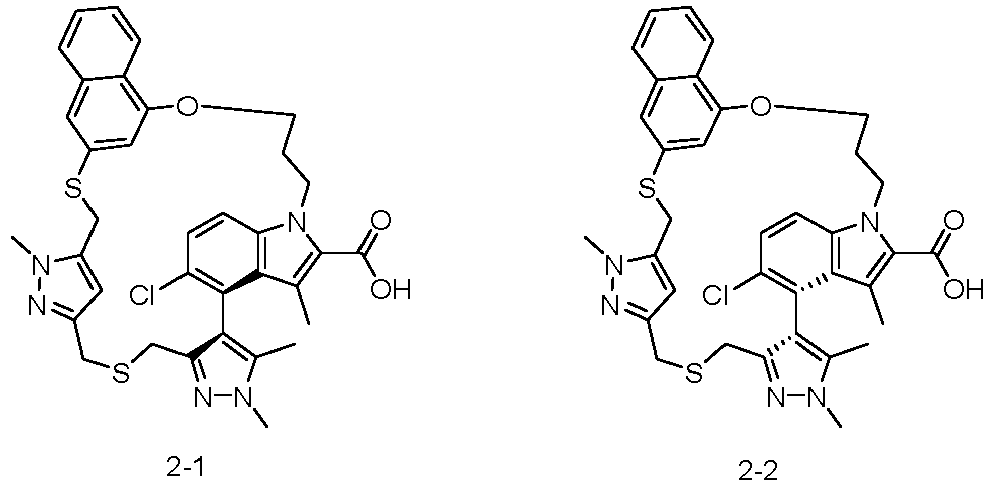
- 2 (20 mg, 0.48 mmol) was separated chirally (separation conditions: CHIRALPAK IG chiral preparative column, 5.0 cm I.D. × 25 cm L; mobile phase: Hexane/EtOH/HAc=60/40/0.1(V/V/V); flow rate: 60 mL/min). The corresponding fractions were collected and concentrated under reduced pressure to obtain the title products (5 mg, 5 mg).
- Compound 2-1 with single configuration (having shorter retention time):
MS m/z (ESI): 672.2 [M+1]. - Chiral HPLC analysis: retention time 7.978 minutes, chiral purity: 100% (chromatographic column: CHIRALPAK IG 150∗4.6 mm, 5 µm, equipped with a guard column; mobile phase: n-hexane/ethanol/trifluoroacetic acid =75/25/0.1(v/v/v)).
1H NMR (400 MHz, CDCl3) δ8.34-8.36 (m, 1H ), 7.75-7.77 (m, 1H), 7.62 (s, 1H), 7.51-7.59 (m, 2H), 7.30-7.33 (m, 1H), 7.02-7.04 (m, 1H), 6.11 (s, 1H), 5.17-5.20 (m, 1H), 5.09 (s, 1H), 4.58-4.62 (m, 1H), 3.81-3.95 (m, 5H), 3.71-3.74 (m, 1H), 3.64 (s, 3H), 3.45-3.49 (m, 2H), 3.24-3.28 (m, 1H), 3.12-3.16 (m, 1H), 2.75-2.78 (m, 1H), 2.34-2.41 (m, 2H), 2.22 (s, 3H), 2.01 (s, 3H). - Compound 2-2 with single configuration (having longer retention time):
MS m/z (ESI):672.2 [M+1]. - Chiral HPLC analysis: retention time 11.297 minutes, chiral purity: 100% (chromatographic column: CHIRALPAK IG 150∗4.6 mm, 5 µm, equipped with a guard column; mobile phase: n-hexane/ethanol/trifluoroacetic acid =75/25/0.1(v/v/v)).
1H NMR (400 MHz, CDCl3) δ 8.34-8.36 (m, 1H), 7.75-7.77 (m, 1H), 7.62 (s, 1H), 7.51-7.59 (m, 2H), 7.30-7.33 (m, 1H), 7.02-7.04 (m, 1H), 6.11 (s, 1H), 5.17-5.20 (m, 1H), 5.09 (s, 1H), 4.58-4.62 (m, 1H), 3.81-3.95 (m, 5H), 3.71-3.74 (m, 1H), 3.64 (s, 3H), 3.45-3.49 (m, 2H), 3.24-3.28 (m, 1H), 3.12-3.16 (m, 1H), 2.75-2.78(m, 1H), 2.34-2.41 (m, 2H), 2.22 (s, 3H), 2.01 (s, 3H). -

- 5-((Tert-butyldiphenylsilyl)oxy)-3-(chloromethyl)-1-methyl-1H-pyrazole 3a (7 g, 17.54 mmol, prepared according to the method disclosed in the patent application "
WO2017182625A1 ") was dissolved in a solution of methylamine in ethanol (∼30wt%, 80 mL). The reaction solution was warmed up to 50°C, and stirred for 1 hour. The reaction solution was cooled to room temperature, and concentrated under reduced pressure. The resulting residues were purified by silica gel column chromatography with eluent system A to obtain the title product 3b (5.0 g, yield: 72.41%). - 2i (1.0 g, 1.84 mmol) was dissolved in N,N-dimethylformamide (10 mL), and then added with potassium carbonate (634 mg, 4.59 mmol) and 3b (869 mg, 2.21 mmol) successively. The reaction solution was warmed up to 60°C, and stirred for 1 hour. The reaction solution was cooled to room temperature, diluted with ethyl acetate (300 mL), and washed with water (100 ml×2) and saturated sodium chloride solution (100 ml×2) successively. The organic phase was dried over anhydrous sodium sulfate and filtered. The filtrate was concentrated under reduced pressure, and the resulting residues were purified by silica gel column chromatography with eluent system A to obtain the title product 3c (1.10 g, yield: 73.9%).
MS m/z (ESI): 809.2 [M+1]. - 3c (1.10 g, 1.36 mmol) was dissolved in tetrahydrofuran (10 mL) at room temperature. Tetrabutylammonium fluoride (1.63 mL, 1.63 mmol, 1 M solution in tetrahydrofuran) was added dropwise, and the reaction solution was stirred at room temperature for 1 hour. The reaction solution was concentrated under reduced pressure. The resulting residues were dissolved in ethyl acetate (50 mL), and washed with water (30 ml×3) and saturated sodium chloride solution (30 ml×2) successively. The organic phase was dried over anhydrous sodium sulfate and filtered. The filtrate was concentrated under reduced pressure, and the resulting residues were purified by silica gel column chromatography with eluent system A to obtain the title product 3d (470 mg, yield: 60.6%).
MS m/z (ESI): 571.2 [M+1]. - 3d (470 mg, 0.82 mmol) was dissolved in dichloromethane (10 mL) at room temperature, and the solution was cooled to 0-5°C. Thionyl chloride (117 mg, 0.98 mmol) was slowly added dropwise, and the reaction solution was stirred at room temperature for 30 minutes. The reaction solution was concentrated under reduced pressure to obtain the title product 3e (400 mg, yield: 82.4%), which was used directly in the next step without purification.
MS m/z (ESI): 589.1[M+1]. - The crude product 3e (525 mg, 0.89 mmol) was dissolved in methanol (20 mL) at room temperature. 1l (278 mg, 1.07 mmol) and potassium carbonate (344 mg, 2.49 mmol) were added successively, and the reaction solution was stirred at room temperature for 2 hours. The reaction solution was diluted with ethyl acetate (50 mL), and washed with water (30 ml×3) and saturated sodium chloride solution (30 ml×2) successively. The organic phase was dried over anhydrous sodium sulfate and filtered. The filtrate was concentrated under reduced pressure, and the resulting residues were purified by silica gel column chromatography with eluent system A to obtain the title product 3f (580 mg, yield: 90%).
MS m/z (ESI): 729.3[M+1]. - 3f (580 mg, 1.23 mmol) was dissolved in tetrahydrofuran (8 mL) at room temperature, and cooled to 0-5°C. 1.0 M solution of borane in tetrahydrofuran (8 mL) was slowly added dropwise, and the reaction solution was warmed up to room temperature and stirred for 16 hours. The reaction solution was cooled to 0-5°C and quenched by methanol. The solution was warmed up to room temperature and stirred for 30 minutes. Hydrochloric acid (10.6 mL, 6.0 N) was added and stirred for 30 minutes. Saturated sodium bicarbonate solution was added to adjust pH to 7, and the solution was extracted with a mixed solvent (30 mL×3) of dichloromethane and methanol (V:V=10:1). The organic phases were combined, washed with saturated sodium chloride solution (30 mL), dried over anhydrous sodium sulfate and filtered. The filtrate was concentrated under reduced pressure, and the resulting residues were purified by silica gel column chromatography with eluent system A to obtain the title product 3g (400 mg, yield: 71.7%).
MS m/z (ESI): 701.1 [M+1]. - 3g (400 mg, 570 µmol) was dissolved in toluene (10 mL) and tetrahydrofuran (5 ml) at room temperature, followed by the addition of tri-n-butylphosphine (576 mg, 2.85 mmol). The solution was purged with argon three times, and added dropwise with a solution (3 mL) of azodicarbonyl dipiperidine (720 mg, 2.85 mmol) in toluene. The reaction solution was heated to 60°C and stirred for 2 hours. The reaction solution was concentrated under reduced pressure, and the resulting residues were purified by silica gel column chromatography with eluent system A to obtain the title product 3h (360 mg, yield: 92.4%).
MS m/z (ESI): 683.1 [M+1]. - 3h (30 mg, 43.9 µmol) was dissolved in 10 mL of a mixed solution of tetrahydrofuran and methanol (V:V = 1:1) at room temperature. A solution of lithium hydroxide monohydrate (18 mg, 0.43 mmol) in water (2 mL) was added, and the reaction solution was heated to 50°C and stirred for 1 hour. The reaction solution was cooled to room temperature, diluted with water (15 mL), and concentrated under reduced pressure to remove most of the organic solvent. Diluted hydrochloric acid (1.0 N) was added dropwise until pH = 6-7, and the solution was extracted with a mixed solvent (50 mL×2) of dichloromethane and methanol (V:V=10:1). The organic phases were combined, washed with water (30 mL) and saturated sodium chloride solution (30 mL), dried over anhydrous sodium sulfate, and filtered to remove the desiccant. The filtrate was concentrated under reduced pressure, and the resulting residues were purified by high performance liquid chromatography (Gilson GX-281, eluent system: H2O (10 mmol NH4OAc), ACN) to obtain the title product 3 (25 mg, yield: 85.1%).
MS m/z (ESI): 669.0 [M+1].
1H NMR (400 MHz, CDCl3) δ 8.31-8.34 (m, 1H), 7.70-7.72 (m, 1H), 7.55 (s, 1H), 7.50-7.53 (m, 2H), 7.25-7.27 (m, 1H), 6.91-6.93 (m, 1H), 6.23 (s, 1H), 5.44 (s, 1H), 5.10-5.13 (m, 1H), 4.44-4.50 (m, 1H), 3.91-3.97 (m, 2H), 3.74-3.89 (m, 5H), 3.68-3.71 (m, 1H), 3.62 (s, 3H), 3.47-3.49 (m, 1H), 3.20-3.24 (m, 1H), 3.09-3.12 (m, 1H), 3.28-3.57 (m, 5H), 2.02-2.06 (m, 6H). -

- 3h (330 mg, 0.48 mmol) was separated chirally (separation conditions: AY Phenomenex Lux Amylose-2 250∗21.2mm, 5 µm; mobile phase: Hexane/EtOH/DEA=85/15/0.1(V/V/V); flow rate: 20 mL/min). The corresponding fractions were collected and concentrated under reduced pressure to obtain the title products (120 mg, 130 mg).
- Compound 3h-1 with single configuration (having shorter retention time):
MS m/z (ESI): 683.1 [M+1]. - Chiral HPLC analysis: retention time 8.551 minutes, chiral purity: 100% (chromatographic column: AY Phenomenex Lux Amylose-2 150∗4.6mm, 5 µm, equipped with a guard column; mobile phase: n-hexane/ethanol/diethylamine=85/15/0.1 (v/v/v)).
- Compound 3h-2 with single configuration (having longer retention time):
MS m/z (ESI):683.1 [M+1]. - Chiral HPLC analysis: retention time 11.798 minutes, chiral purity: 100% (chromatographic column: AY Phenomenex Lux Amylose-2 150∗4.6mm, 5 µm, equipped with a guard column; mobile phase: n-hexane/ethanol/diethylamine=85/15/0.1 (v/v/v)).
- Compound 3h-1 (having shorter retention time)/compound 3h-2 (having longer retention time) (120 mg/120 mg, 176 µmol/176 µmol) was dissolved in 10 mL of a mixed solution of tetrahydrofuran and methanol (V:V = 1:1) at room temperature, respectively. A solution of lithium hydroxide monohydrate (74 mg/74 mg, 1.76 mmol/1.76 mmol) in water (2 mL) was added, and the reaction solution was heated to 50°C and stirred for 1 hour. The reaction solution was cooled to room temperature, diluted with water (15 mL), and concentrated under reduced pressure to remove most of the organic solvent. Diluted hydrochloric acid (1.0 N) was added dropwise until pH = 6-7, and the solution was extracted with a mixed solvent (50 mL×2) of dichloromethane and methanol (V:V=10:1). The organic phases were combined, washed with water (30 mL) and saturated sodium chloride solution (30 mL), dried over anhydrous sodium sulfate, and filtered to remove the desiccant. The filtrate was concentrated under reduced pressure, and the resulting residues were purified by high performance liquid chromatography (Gilson GX-281, eluent system: H2O (10 mmol NH4OAc), ACN) to obtain the title products 3-1 and 3-2 (80 mg, 80 mg), respectively.
- Compound 3-1 with single configuration (having shorter retention time):
MS m/z (ESI): 669.0 [M+1]. - Chiral HPLC analysis: retention time 10.354 minutes, chiral purity: 100% (chromatographic column: CHIRALPAK ID 250∗4.6mm, 5 µm, equipped with a guard column; mobile phase: Hexane/IPA/EtOH/HAC/DEA=70/15/15/0.1/0.1(V/V/V/V/V)).
1H NMR (400 MHz, CDCl3) δ 8.31-8.34 (m, 1H), 7.70-7.72 (m, 1H), 7.55 (s, 1H), 7.50-7.53 (m, 2H), 7.25-7.27 (m, 1H), 6.91-6.93 (m, 1H), 6.23 (s, 1H), 5.44 (s, 1H), 5.10-5.13 (m, 1H), 4.44-4.50 (m, 1H), 3.91-3.97 (m, 2H), 3.74-3.89 (m, 5H), 3.68-3.71 (m, 1H), 3.62 (s, 3H), 3.47-3.49 (m, 1H), 3.20-3.24 (m, 1H), 3.09-3.12 (m, 1H), 3.28-3.57 (m, 5H), 2.02-2.06 (m, 6H). - Compound 3-2 with single configuration (having longer retention time):
MS m/z (ESI): 669.0 [M+1]. - Chiral HPLC analysis: retention time 11.662 minutes, chiral purity: 98.3% (chromatographic column: CHIRALPAK ID 250∗4.6mm, 5 µm, equipped with a guard column; mobile phase: Hexane/IPA/EtOH/HAC/DEA=70/15/15/0.1/0.1(V/V/V/V/V)).
1H NMR (400 MHz, CDCl3) δ 8.31-8.34 (m, 1H), 7.70-7.72 (m, 1H), 7.55 (s, 1H), 7.50-7.53 (m, 2H), 7.25-7.27 (m, 1H), 6.91-6.93 (m, 1H), 6.23 (s, 1H), 5.44 (s, 1H), 5.10-5.13 (m, 1H), 4.44-4.50 (m, 1H), 3.91-3.97 (m, 2H), 3.74-3.89 (m, 5H), 3.68-3.71 (m, 1H), 3.62 (s, 3H), 3.47-3.49 (m, 1H), 3.20-3.24 (m, 1H), 3.09-3.12 (m, 1H), 3.28-3.57 (m, 5H), 2.02-2.06 (m, 6H). -

- 3-(2-(3-((Acetylthio)methyl)-1-methyl-1H-pyrazol-5-yl)ethyl)naphthalen-1-yl acetate 4a (1.1 g, 2.88 mmol, prepared according to the method disclosed in the intermediate 46 on page 76 of the description of the patent application "
WO2018178226A1 ") was dissolved in 20 mL of methanol. Potassium carbonate (660 mg, 4.78 mmol) and 2i (1.3 g, 2.39 mmol) were added, and the reaction solution was reacted under an argon atmosphere at room temperature for 4 hours. The reaction solution was concentrated under reduced pressure to remove most of the solvent, and then added with 50 mL of water and extracted with ethyl acetate (50 mL×2). The organic phases were combined, washed with 30 mL of saturated sodium chloride solution, dried over anhydrous sodium sulfate and filtered. The filtrate was concentrated under reduced pressure, and the resulting residues were purified by silica gel column chromatography with eluent system B to obtain the title product 4b (1.0 g, yield: 58.6%).
MS m/z (ESI): 714.2 [M+1]. - 4b (1 g, 1.4 mmol) was dissolved in 10 mL of tetrahydrofuran. 1.0 M solution of borane in tetrahydrofuran (14 mL, 14 mmol) was added dropwise under an ice bath, and the reaction solution was stirred at room temperature for 16 hours. 10 mL of methanol and 10 mL of 6 N hydrochloric acid were added dropwise under an ice bath, and the reaction solution was stirred in the ice bath for 5 minutes. The reaction solution was warmed up to 50°C, stirred for 30 minutes, and cooled to room temperature. The reaction solution was neutralized to neutral with sodium bicarbonate solution, and the organic phase was separated. The aqueous phase was extracted with 50 mL of a mixed solvent of dichloromethane and methanol (V:V=10:1) twice. The organic phases were combined, washed with 30 mL of saturated sodium chloride solution, dried over anhydrous sodium sulfate, and filtered to remove the desiccant. The filtrate was concentrated under reduced pressure, and the resulting residues were purified by silica gel column chromatography with eluent system B to obtain the title product 4c (850 mg, yield: 88.5%).
MS m/z (ESI):686.3 [M+1]. - 4c (500.0 mg, 0.73 mmol) was dissolved in 6 mL of anhydrous tetrahydrofuran and 30 mL of anhydrous toluene. Tri-n-butylphosphine (974.0 mg, 4.8 mmol) and azodicarbonyl dipiperidine (1.2 g, 4.8 mmol) were added at room temperature, and the reaction solution was reacted at 60°C under an argon atmosphere for 3 hours. The reaction solution was concentrated under reduced pressure to remove the solvent, and the resulting residues were purified by silica gel column chromatography with eluent system B to obtain the title product 4d (105 mg, yield: 21.6%).
MS m/z (ESI): 668.3 [M+1]. - 4d (40 mg, 0.06 mmol) was dissolved in a mixed solvent of 1 mL of methanol, 0.5 mL of tetrahydrofuran and 0.5 mL of water. Lithium hydroxide monohydrate (42 mg, 1 mmol) was added, and the reaction solution was stirred at 50°C for 1 hour. The reaction solution was neutralized to neutral with 2N hydrochloric acid, and concentrated under reduced pressure to remove most of the solvent. The resulting residues were purified by high performance liquid chromatography (Sharpsil-T C18 Column 21.2∗150mm 5 µm; eluent system: 10 mmoL/L ammonium acetate, water, acetonitrile) to obtain the title product 4 (7.8 mg, yield: 19.9%).
MS m/z (ESI): 654.2 [M+1].
1H NMR (400 MHz, DMSO-d6 ) δ 8.17-8.15 (m, 1H), 7.72-7.70 (m, 1H), 7.52-7.49 (m, 1H), 7.45-7.43 (m, 2H), 7.19 (s, 1H), 7.02-7.00 (m, 1H), 6.09 (s, 1H), 4.99-4.95 (m, 1H), 4.90(s, 1H), 4.59-4.58 (m, 1H), 3.72-3.68 (m, 4H), 3.53-3.50 (m, 1H), 3.36 (s, 3H), 3.26 (s, 2H), 3.00-2.96 (m, 3H), 2.80-2.72 (m, 3H), 2.29-2.20 (m, 2H), 2.01 (s, 3H), 1.88 (s, 3H). -

- Compound 4d (90 mg, 0.13 mmol) was separated chirally (separation conditions: AD Phenomenex Lux Amylose-1 chiral preparative column, 30 mm I.D.nex Lux Amyl; mobile phase: Hexane/EtOH(0.1%DEA)=70/30(V/V); flow rate: 60 mL/min). The corresponding fractions were collected and concentrated under reduced pressure to obtain the title products (40 mg, 40 mg).
- Compound 4d-1 with single configuration (having shorter retention time):
MS m/z (ESI):668.3 [M+1]. - Chiral HPLC analysis: retention time 4.397 minutes, chiral purity: 100% (chromatographic column: AD Phenomenex Lux Amylose-1 150∗4.6mm, 5 µm, equipped with a guard column; mobile phase: Hexane /EtOH(0.1%DEA)=70/30(V/V)).
- Compound 4d-2 with single configuration (having longer retention time):
MS m/z (ESI):668.3 [M+1]. - Chiral HPLC analysis: retention time 8.515 minutes, chiral purity: 100% (chromatographic column: AD Phenomenex Lux Amylose-1 150∗4.6mm, 5 µm, equipped with a guard column; mobile phase: Hexane /EtOH(0.1%DEA)=70/30(V/V)).
- Compound 4d-1 (having shorter retention time)/compound 4d-2 (having longer retention time) (40 mg/40 mg, 0.06 mmol/0.06 mmol) was dissolved in 2 mL of a mixed solution of tetrahydrofuran and methanol (V:V = 1:1) at room temperature, respectively. A solution of lithium hydroxide monohydrate (42 mg, 1 mmol) in water (1 mL) was added, and the reaction solution was heated to 50°C and stirred for 1 hour. The reaction solution was cooled to room temperature, diluted with water (5 mL), and concentrated under reduced pressure to remove most of the organic solvent. Diluted hydrochloric acid (2.0 N) was added dropwise until pH = 6-7, and the solution was extracted with a mixed solvent (20 mL×2) of dichloromethane and methanol (V:V=10:1). The organic phases were combined, washed with water (10 mL) and saturated sodium chloride solution (10 mL), dried over anhydrous sodium sulfate, and filtered to remove the desiccant. The filtrate was concentrated under reduced pressure, and the resulting residues were purified by high performance liquid chromatography (Sharpsil-T C18 Column 21.2∗150mm 5 µm, eluent system: water (10 mmol ammonium acetate), acetonitrile) to obtain the title products 4-1/4-2(18 mg, 18 mg), respectively.
- Compound 4-1 with single configuration (having shorter retention time):
MS m/z (ESI): 654.2 [M+1]. - Chiral HPLC analysis: retention time 8.224 minutes, chiral purity: 100% (chromatographic column: CHIRALPAK IF 150∗4.6 mm, 5 µm; mobile phase: n-hexane/ethanol (containing 0.1% trifluoroacetic acid) =80:20(v/v)).
1H NMR (400 MHz, CD3OD) δ 8.30-8.28 (m, 1H), 7.75-7.73 (m, 1H), 7.48-7.45 (m, 2H), 7.36-7.34 (d, 1H), 7.15 (s, 1H), 6.80-6.77 (d, 1H), 5.98 (s, 1H), 5.14-5.10 (m, 1H), 4.83(s, 1H), 4.69-4.63 (m, 1H), 3.87-3.81 (m, 4H), 3.53 (s, 3H), 3.42-3.28 (m, 1H), 3.19-3.17 (m, 2H), 3.07-3.02 (m, 3H) , 2.77-2.72 (m, 3H), 2.37-2.36 (m, 2H), 1.99 (s, 3H), 1.97 (s, 3H). - Compound 4-2 with single configuration (having longer retention time):
MS m/z (ESI): 654.2 [M+1]. - Chiral HPLC analysis: retention time 10.998 minutes, chiral purity: 100% (chromatographic column: CHIRALPAK IF 150∗4.6 mm, 5 µm; mobile phase: n-hexane/ethanol (containing 0.1% trifluoroacetic acid) =80:20(v/v)).
1H NMR (400 MHz, CD3OD) δ 8.30-8.27 (m, 1H), 7.75-7.73 (m, 1H), 7.48-7.45 (m, 2H), 7.36-7.34 (d, 1H), 7.15 (s, 1H), 6.80-6.77 (d, 1H), 5.98 (s, 1H), 5.14-5.10 (m, 1H), 4.83(s, 1H), 4.69-4.63 (m, 1H), 3.87-3.81 (m, 4H), 3.53 (s, 3H), 3.44-3.28 (m, 1H), 3.19-3.17 (m, 2H), 3.07-3.02 (m, 3H), 2.77-2.72 (m, 3H), 2.11 (m, 2H), 1.99 (s, 3H), 1.94 (s, 3H). -

- The crude product 3e (150 mg, 0.25 mmol) was dissolved in methanol (10 mL) at room temperature. 5a (60 mg, 427.95 µmol, prepared according to the method disclosed in Journal of Organic Chemistry, 2003, vol. 68, # 23, p. 9116 - 9118) and potassium carbonate (106 mg, 0.77 mmol) were added successively, and the reaction solution was stirred at room temperature for 2 hours. The reaction solution was diluted with ethyl acetate (50 mL), and washed with water (30 ml×3) and saturated sodium chloride solution (30 ml×2) successively. The organic phase was dried over anhydrous sodium sulfate and filtered. The filtrate was concentrated under reduced pressure, and the resulting residues were purified by silica gel column chromatography with eluent system A to obtain the title product 5b (80 mg, yield: 45.35%).
MS m/z (ESI): 693.0 [M+1]. - 5b (80 mg, 0.12 mmol) was dissolved in tetrahydrofuran (2 mL) at room temperature, and cooled to 0-5°C. 1 M solution of borane in tetrahydrofuran (1.16 mL) was slowly added dropwise, and the reaction solution was warmed up to room temperature and stirred for 16 hours. The reaction solution was cooled to 0-5°C and quenched by methanol. The solution was warmed up to room temperature and stirred for 30 minutes. Hydrochloric acid (2 mL, 6.0 N) was added and stirred for 30 minutes. Saturated sodium bicarbonate solution was added to adjust pH to 7, and the solution was extracted with a mixed solvent (30 mL×3) of dichloromethane and methanol (V:V=10:1). The organic phases were combined, washed with saturated sodium chloride solution (30 mL), dried over anhydrous sodium sulfate and filtered. The filtrate was concentrated under reduced pressure, and the resulting residues were purified by silica gel column chromatography with eluent system A to obtain the title product 5c (50 mg, yield: 65.1%).
MS m/z(ESI): 665.1 [M+1]. - 5c (20 mg, 30 µmol) was dissolved in toluene (4 mL) and tetrahydrofuran (2 mL) at room temperature, followed by the addition of tri-n-butylphosphine (40 mg, 0.15 mmol). The solution was purged with argon three times, and added dropwise with a solution (3 mL) of azodicarbonyl dipiperidine (31 mg, 0.15 mmol) in toluene. The reaction solution was heated to 60°C and stirred for 2 hours. The reaction solution was concentrated under reduced pressure, and the resulting residues were purified by silica gel column chromatography with eluent system A to obtain the title product 5d (10 mg, yield: 51.4%).
MS m/z (ESI): 647.1 [M+1]. - 5d (10 mg, 15 µmol) was dissolved in 6 mL of a mixed solution of tetrahydrofuran and methanol (V:V = 1:1) at room temperature. A solution of lithium hydroxide monohydrate (20 mg, 0.48 mmol) in water (2 mL) was added, and the reaction solution was heated to 50°C and stirred for 1 hour. The reaction solution was cooled to room temperature, diluted with water (15 mL), and concentrated under reduced pressure to remove most of the organic solvent. Diluted hydrochloric acid (1.0 N) was added dropwise until pH = 6-7, and the solution was extracted with a mixed solvent (50 mL×2) of dichloromethane and methanol (V:V=10:1). The organic phases were combined, washed with water (30 mL) and saturated sodium chloride solution (30 mL), dried over anhydrous sodium sulfate, and filtered to remove the desiccant. The filtrate was concentrated under reduced pressure, and the resulting residues were purified by high performance liquid chromatography (Gilson GX-281, eluent system: H2O (10 mmol NH4OAc), ACN) to obtain the title product 5 (8 mg, yield: 85.1%).
MS m/z (ESI): 633.0 [M+1].
1H NMR (400 MHz, DMSO-d 6) δ 7.66-7.69 (m, 1H), 7.30-7.32 (m, 1H), 6.64 (s, 1H), 6.47 (s, 1H), 6.40 (s, 1H), 4.85-4.90 (m, 2H), 4.69 (s, 1H), 4.30-4.34 (m, 2H), 3.92-3.94 (m, 1H), 3.70 (s, 3H), 3.67 (s, 3H), 3.54-3.57 (m, 1H), 3.33 (brs, 1H), 3.07-3.13 (m, 2H), 2.72-2.80 (m, 2H), 2.19-2.22 (m, 2H), 2.06 (s, 3H), 1.93 (s, 3H), 1.85 (s, 3H), 1.78(s, 3H). -
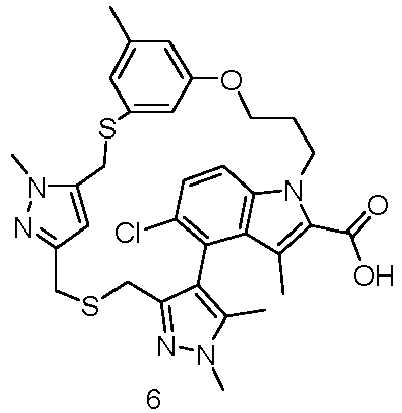

- 2l (580 mg, 0.98 mmol) was dissolved in 2 mL of tetrahydrofuran. 1.0 M solution of borane in tetrahydrofuran (9.80 mL, 9.80 mmol) was added dropwise under an ice bath, and the reaction solution was stirred at room temperature for 16 hours. 5 mL of methanol and 10 mL of diluted hydrochloric acid (6M) were added dropwise under an ice bath, and the reaction solution was stirred for 1 hour. 50 mL of water was added to the reaction solution, which was extracted with dichloromethane (50 mL×2). The organic phases were combined, washed with water (30 mL) and saturated sodium chloride solution (30 mL) successively, dried over anhydrous sodium sulfate, and filtered to remove the desiccant. The filtrate was concentrated under reduced pressure, and the resulting residues were purified by silica gel column chromatography with eluent system A to obtain the title product 6a (390 mg, yield: 70.57%).
MS m/z (ESI): 564.1 [M+1]. - 6a (100 mg, 0.18 mmol) and 5a (30 mg, 0.55 mmol) were dissolved in 10 mL of methanol. Potassium carbonate (176 mg, 1.28 mmol) was added at room temperature, and the reaction solution was reacted at room temperature for 1 hour. The reaction solution was concentrated under reduced pressure to remove most of the solvent, and then added with 50 mL of water and extracted with ethyl acetate (50 mL×2). The organic phases were combined, washed with water (30 mL) and saturated sodium chloride solution (30 mL), dried over anhydrous sodium sulfate, and filtered to remove the desiccant. The filtrate was concentrated under reduced pressure, and the resulting residues were purified by silica gel column chromatography with eluent system A to obtain the title product 6b (40 mg, yield: 33.80%).
MS m/z (ESI):668.0 [M+1]. - Triphenylphosphine (38 mg, 0.15 mmol) and azodicarbonyl dipiperidine (31 mg, 0.15 mmol) were dissolved in 2 mL of toluene, and the solution was purged with argon three times. 6 mL of a solution of 6b (20 mg, 0.03 mmol) in toluene and tetrahydrofuran (V:V=5:1) was added dropwise, and the reaction solution was stirred at room temperature for 16 hours. 10 mL of diluted hydrochloric acid (2M) was added, and the reaction solution was stirred for 10 minutes. 50 mL of water was added to the reaction solution, and extracted with ethyl acetate (50 mL×2). The organic phases were combined, washed with water (30 mL) and saturated sodium chloride solution (30 mL) successively, dried over anhydrous sodium sulfate, and filtered to remove the desiccant. The filtrate was concentrated under reduced pressure, and the resulting residues were purified by silica gel column chromatography with eluent system A to obtain the title product 6c (10 mg, yield: 51.38%), which contained triphenylphosphine oxide and was used directly in the next step.
MS m/z (ESI): 650.0 [M+1]. - 6c (10 mg, 0.015 mmol) was dissolved in 6 mL of a mixed solvent of methanol, tetrahydrofuran and water (V:V:V=1:1:1). Lithium hydroxide monohydrate (7 mg, 0.15 mmol) was added, and the reaction solution was heated to 50°C and stirred for 0.5 hour. The reaction solution was concentrated under reduced pressure to remove most of the solvent. 2M hydrochloric acid was added to adjust pH to 1-2, and the solution was extracted with a mixed solvent (50 mL×2) of dichloromethane and methanol (V:V=10:1). The organic phases were combined, washed with water (30 mL) and saturated sodium chloride solution (30 mL), dried over anhydrous sodium sulfate, and filtered to remove the desiccant. The filtrate was concentrated under reduced pressure, and the resulting residues were purified by silica gel column chromatography with eluent system A to obtain the title product 6 (4 mg, yield: 40.88%).
MS m/z (ESI): 636.2 [M+1].
1H NMR (400 MHz, DMSO-d6)δ 8.34-8.36 (m, 1H), 7.75-7.77 (m, 1H), 7.62 (s, 1H), 7.30-7.33 (m, 1H), 7.02-7.04 (m, 1H), 6.11 (s, 1H), 5.17-5.20 (m, 1H), 5.09 (s, 1H), 4.58-4.62 (m, 1H), 3.81-3.95 (m, 5H), 3.71-3.74 (m, 1H), 3.64 (s, 3H), 3.45-3.49 (m, 2H), 3.24-3.28 (m, 1H), 3.12-3.16 (m, 1H), 2.75-2.78 (m, 1H), 2.34-2.41 (m, 2H), 2.22 (s, 3H), 2.01 (s, 3H) 1.34 (s, 3H). -

- 4-Bromo-2-methoxyphenylacetic acid 7a (5.00 g, 20.40 mmol) was dissolved in tetrahydrofuran (50 mL), and cooled to 0-5°C. 1 M solution of borane in tetrahydrofuran (27 mL) was slowly added dropwise, and the reaction solution was warmed up to room temperature and stirred for 16 hours. The reaction solution was cooled to 0-5°C and quenched by methanol (6 mL), followed by the addition of water (12 mL). The solution was stirred for 30 minutes, and extracted with ethyl acetate (50 mL×3). The organic phases were combined, washed with saturated sodium chloride solution (30 mL), dried over anhydrous sodium sulfate and filtered. The filtrate was concentrated under reduced pressure to obtain the title product 7b (4.71 g, yield: 100%), which was used directly in the next step without purification.
- The crude product 7b (3.70 g, 16.01 mmol) was dissolved in dichloromethane (50 mL). Dess-Martin oxidant (10.19 g, 24.03 mmol) was added in batches under an ice bath, and the reaction solution was warmed to room temperature and stirred for 1 hour. 50 mL of water, 50 mL of dichloromethane, saturated sodium thiosulfate solution and saturated sodium bicarbonate solution were added under an ice bath, and the resulting solution was partitioned. The organic phase was washed with saturated sodium chloride solution three times, dried over anhydrous sodium sulfate and filtered. The filtrate was concentrated under reduced pressure, and the resulting residues were purified by silica gel column chromatography with eluent system B to obtain the title product 7c (3.00 g, yield: 81.8%).
- NaH (753 mg, 19.65 mmol, purity: 60%) was dissolved in tetrahydrofuran (30 mL), and the solution was purged with argon three times. Trimethylphosphonoacetate (3.58 g, 19.66 mmol) was added dropwise under an ice bath, and the reaction solution was stirred in the ice bath for 30 minutes. A solution of 7c in tetrahydrofuran (10 mL) was added dropwise, and the reaction solution was stirred at room temperature for 1 hour. Ethyl acetate (100 mL) and water (100 mL) were added under an ice bath, and the resulting solution was partitioned. The organic phase was washed with saturated sodium chloride solution (30 ml×2), dried over anhydrous sodium sulfate and filtered. The filtrate was concentrated under reduced pressure, and the resulting residues were purified by silica gel column chromatography with eluent system B to obtain the title product 7d (2.37 g, yield: 63.5%).
MS m/z (ESI): 285.0 287.0 [M+1]. - 7d (2.80 g, 9.82 mmol) was dissolved in methanol (50 mL) at room temperature, followed by the addition of 5% dry rhodium carbon (280 mg). The reaction solution was purged with hydrogen three times, and stirred at room temperature for 60 minutes. The reaction solution was filtered, and the filtrate was concentrated under reduced pressure to obtain the title product 7e (2.50 g, yield: 88.7%).
MS m/z(ESI): 287.1 289.1[M+1]. - The crude product 7e (3.60 g, 12.54 mmol) was dissolved in methanol (30 mL), tetrahydrofuran (30 mL) and water (30 mL) at room temperature. Lithium hydroxide monohydrate (2.63 g, 62.67 mmol) was added, and the reaction solution was heated to 50°C and stirred for 1 hour. The reaction solution was concentrated under reduced pressure, followed by the addition of water (100 mL) and dichloromethane (100 mL). The solution was adjusted to pH=2∼3 with 1M HCl, extracted with a mixed solvent (50 mL) of dichloromethane and methanol (V:V=10:1) and partitioned. The organic phase was washed with water (30 mL×3) and saturated sodium chloride solution (30 mL×2) successively, dried over anhydrous sodium sulfate and filtered. The filtrate was concentrated under reduced pressure to obtain the title product 7f (3.40 g, yield: 99.3%).
MS m/z (ESI): 271.1 273.1[M-1]. - 7f (3.40 g, 12.45 mmol) was weighed into a 100 mL reaction flask at room temperature, followed by the addition of polyphosphoric acid (60 g, 17.75 mmol). The reaction solution was heated to 95°C and stirred for 1.5 hours. The reaction solution was poured into ice water, and added with dichloromethane (100 mL) and partitioned. The organic phase was washed with sodium bicarbonate solution, water and saturated sodium chloride solution (30mL×3) successively, dried over anhydrous sodium sulfate and filtered. The filtrate was concentrated under reduced pressure, and the resulting residues were purified by silica gel column chromatography with eluent system B to obtain the title product 7g (1.76 g, yield: 55.4%).
MS m/z(ESI): 255.1 257.1 [M+1]. - 7g (1.76 g, 6.90 mmol) was dissolved in trifluoroacetic acid (20 ml) at room temperature, followed by the addition of triethyl silicane (1.60 g, 13.76 mmol). The reaction solution was heated to 80°C and stirred for 1.5 hours. The reaction solution was concentrated under reduced pressure, and added with ethyl acetate (50 mL) and water (50 mL) and then partitioned. The organic phase was washed with water and saturated sodium chloride solution (30 ml×3) successively, dried over anhydrous sodium sulfate and filtered. The filtrate was concentrated under reduced pressure, and the resulting residues were purified by silica gel column chromatography with eluent system B to obtain the title product 7h (1.60 g, yield: 96.2%).
- 7h (1.55 g, 6.43 mmol) was dissolved in 20 mL of dichloromethane at room temperature. 1 M solution of boron tribromide (22.5 mL, 22.5 mmol) in dichloromethane was added dropwise under an ice bath, and the reaction solution was stirred at room temperature for 2 hours. The reaction solution was poured into ice water, and extracted with dichloromethane (50 mL×2). The organic phases were combined, washed with water (30 mL) and saturated sodium chloride solution (30 mL), dried over anhydrous sodium sulfate, and filtered to remove the desiccant. The filtrate was concentrated under reduced pressure, and the resulting residues were purified by silica gel column chromatography with eluent system B to obtain the title product 7i (1.40 g, yield: 95.9%).
MS m/z (ESI): 225.0 227.0 [M-1]. - 7i (500 mg, 2.20 mmol), 2-ethylhexyl 3-mercaptopropionate (577 mg, 2.64 mmol), N,N-diisopropylethylamine (569 mg, 4.40 mmol), tris(dibenzylideneacetone)dipalladium (101 mg, 0.11 mmol) and 4,5-bis(diphenylphosphine)-9,9-dimethylxanthene (127 mg, 0.22 mmol) were dissolved in 20 mL of dioxane at room temperature. The reaction solution was purged with argon three times, heated to 95°C and stirred for 16 hours. The reaction solution was filtered through celite, and the filtrate was concentrated under reduced pressure. The resulting residues were purified by silica gel column chromatography with eluent system B to obtain the title product 7j (800 mg, yield: 99.7%).
MS m/z (ESI): 365.3 [M+1]. - 7j (650 mg, 1.78 mmol) was dissolved in 20 mL of tetrahydrofuran under an ice bath, and the solution was purged with argon three times. 1M solution of potassium tert-butoxide (5.7 mL, 5.70 mmol) in tetrahydrofuran was added dropwise, and the reaction solution was stirred at room temperature for 2 hours. The title product 7k was obtained, which was used directly in the next step.
- 2l (150 mg, 0.25 mmol) was dissolved in methanol (10 mL) and tetrahydrofuran (3 mL) at room temperature. 0.07 M solution of the above reaction solution 7k (5.8 mL, 0.40 mmol) in tetrahydrofuran was added dropwise under an ice bath, and the reaction solution was stirred at room temperature for 1 hour. The reaction solution was diluted with ethyl acetate (50 mL), and washed with water (30 ml×3) and saturated sodium chloride solution (30 ml×2) successively. The organic phase was dried over anhydrous sodium sulfate and filtered. The filtrate was concentrated under reduced pressure, and the resulting residues were purified by silica gel column chromatography with eluent system A to obtain the title product 7l (60 mg, yield: 32.2%).
MS m/z(ESI): 736.0[M+1]. - 7l (60 mg, 81 µmol) was dissolved in tetrahydrofuran (4 mL) at room temperature, and cooled to 0-5 °C. 1.0 M solution of borane in tetrahydrofuran (0.8 mL) was slowly added dropwise, and the reaction solution was warmed up to room temperature and stirred for 16 hours. The reaction solution was cooled to 0-5°C and quenched by methanol. The solution was warmed up to room temperature and stirred for 30 minutes. Hydrochloric acid (2 mL, 6.0 N) was added and stirred for 30 minutes. The solution was extracted with a mixed solvent (30 mL×3) of dichloromethane and methanol (V:V=10:1). The organic phases were combined, washed with saturated sodium chloride solution (30 mL), dried over anhydrous sodium sulfate and filtered. The filtrate was concentrated under reduced pressure, and the resulting residues were purified by silica gel column chromatography with eluent system A to obtain the title product 7m (60 mg, yield: 100%).
MS m/z (ESI): 708.0 [M+1]. - 7m (60 mg, 84 µmol) was dissolved in toluene (10 mL) and tetrahydrofuran (5 ml) at room temperature, followed by the addition of tri-n-butylphosphine (86 mg, 0.42 mmol). The solution was purged with argon three times, and added dropwise with a solution (3 mL) of azodicarbonyl dipiperidine (107 mg, 0.42 mmol) in toluene . The reaction solution was heated to 60°C and stirred for 2 hours. The reaction solution was concentrated under reduced pressure, and the resulting residues were purified by silica gel column chromatography with eluent system A to obtain the title product 7n (30 mg, yield: 51.3%).
MS m/z (ESI): 690.2 [M+1]. - 7n (30 mg, 43 µmol) was dissolved in 10 mL of a mixed solution of tetrahydrofuran and methanol (V:V = 1:1) at room temperature. A solution of lithium hydroxide monohydrate (18 mg, 0.43 mmol) in water (2 mL) was added, and the reaction solution was heated to 50°C and stirred for 1 hour. The reaction solution was cooled to room temperature, diluted with water (15 mL), and concentrated under reduced pressure to remove most of the organic solvent. Diluted hydrochloric acid (1.0 N) was added dropwise until pH = 2-3, and the solution was extracted with a mixed solvent (50 mL×2) of dichloromethane and methanol (V:V=10:1). The organic phases were combined, washed with water (30 mL) and saturated sodium chloride solution (30 mL), dried over anhydrous sodium sulfate, and filtered to remove the desiccant. The filtrate was concentrated under reduced pressure, and the resulting residues were purified by high performance liquid chromatography (Waters 2767-SQ Detecor2, eluent system: H2O (10 mmol NH4OAc), ACN) to obtain the title product 7 (15 mg, yield: 51.0%).
MS m/z (ESI): 676.0 [M+1].
1H NMR (400 MHz, CDCl3) δ 7.27-7.30 (m, 1H), 7.22-7.24 (m, 1H), 6.92 (s, 1H), 5.89 (s, 1H), 5.19 (s, 1H), 5.04-5.08 (m, 1H), 4.45-4.49 (m, 1H), 3.88 (s, 3H), 3.78-3.81 (m, 1H), 3.63-3.72 (m, 2H), 3.53 (s, 3H), 3.37-3.42 (m, 1H), 3.32-3.36 (m, 1H), 3.22-3.33 (m, 1H), 3.11-3.15 (m, 1H), 2.70-2.85 (m, 5H), 2.19-2.32 (m, 5H), 2.04 (s, 3H), 1.78-1.86 (m, 4H). -


- 7n (260 mg, 0.38 mmol) was separated chirally (separation conditions: CHIRALPAK ID 250∗20mm, 5 µm; mobile phase: Hexane/EtOH/DEA=85/15/0.1(V/V/V); flow rate: 20 mL/min). The corresponding fractions were collected and concentrated under reduced pressure to obtain the title products (130 mg, 130 mg).
- Compound 7n-2 with single configuration (having shorter retention time):
MS m/z (ESI):690.2 [M+1]. - Chiral HPLC analysis: retention time 15.351 minutes, chiral purity: 100% (chromatographic column: OD Phenomenex Lux Cellulose-1 150∗4.6mm, 5 µm, equipped with a guard column; mobile phase: n-hexane/ethanol/diethylamine=95/5/0.1 (v/v/v)).
- Compound 7n-1 with single configuration (having longer retention time):
MS m/z (ESI): 690.2 [M+1]. - Chiral HPLC analysis: retention time 18.771 minutes, chiral purity: 100% (chromatographic column: OD Phenomenex Lux Cellulose-1 150∗4.6mm, 5 µm, equipped with a guard column; mobile phase: n-hexane/ethanol/diethylamine=95/5/0.1(v/v/v)).
- Compound 7n-1 having longer retention time (130 mg, 190 µmol) was dissolved in 20 mL of a mixed solution of tetrahydrofuran and methanol (V:V = 1:1) at room temperature. A solution of lithium hydroxide monohydrate (152 mg, 3.62 mmol) in water (5 mL) was added, and the reaction solution was heated to 50°C and stirred for 1 hour. The reaction solution was cooled to room temperature, diluted with water (15 mL), and concentrated under reduced pressure to remove most of the organic solvent. Diluted hydrochloric acid (1.0 N) was added dropwise until pH = 2-3, and the solution was extracted with a mixed solvent (50 mL×2) of dichloromethane and methanol (V:V=10:1). The organic phases were combined, washed with water (30 mL) and saturated sodium chloride solution (30 mL), dried over anhydrous sodium sulfate, and filtered to remove the desiccant. The filtrate was concentrated under reduced pressure, and the resulting residues were purified by high performance liquid chromatography (Gilson GX-281, eluent system: H2O (10 mmol NH4OAc), ACN) to obtain the title product 7-1 (60 mg, yield: 46.8%).
- Compound 7-1 with single configuration (having shorter retention time):
MS m/z (ESI): 676.0 [M+1]. - Chiral HPLC analysis: retention time 6.133 minutes, chiral purity: 100% (chromatographic column: CHIRALPAK IG 150∗4.6mm, 5 µm, equipped with a guard column; mobile phase: Hexane/EtOH/TFA=75/25/0.1(V/V/V)).
1H NMR (400 MHz, CDCl3) δ 7.27-7.30 (m, 1H), 7.22-7.24 (m, 1H), 6.92 (s, 1H), 5.89 (s, 1H), 5.19 (s, 1H), 5.04-5.08 (m, 1H), 4.45-4.49 (m, 1H), 3.88 (s, 3H), 3.78-3.81 (m, 1H), 3.63-3.72 (m, 2H), 3.53 (s, 3H), 3.37-3.42 (m, 1H), 3.32-3.36 (m, 1H), 3.22-3.33 (m, 1H), 3.11-3.15 (m, 1H), 2.70-2.85 (m, 5H), 2.19-2.32 (m, 5H), 2.04 (s, 3H), 1.78-1.86 (m, 4H). - Compound 7n-2 having shorter retention time (130 mg, 190 µmol) was dissolved in 20 mL of a mixed solution of tetrahydrofuran and methanol (V:V = 1:1) at room temperature. A solution of lithium hydroxide monohydrate (152 mg, 3.62 mmol) in water (5 mL) was added, and the reaction solution was heated to 50°C and stirred for 1 hour. The reaction solution was cooled to room temperature, diluted with water (15 mL), and concentrated under reduced pressure to remove most of the organic solvent. Diluted hydrochloric acid (1.0 N) was added dropwise until pH = 2-3, and the solution was extracted with a mixed solvent (50 mL×2) of dichloromethane and methanol (V:V=10:1). The organic phases were combined, washed with water (30 mL) and saturated sodium chloride solution (30 mL), dried over anhydrous sodium sulfate, and filtered to remove the desiccant. The filtrate was concentrated under reduced pressure, and the resulting residues were purified by high performance liquid chromatography (Gilson GX-281, eluent system: H2O (10 mmol NH4OAc), ACN) to obtain the title product 7-2 (55 mg, yield: 42.6%).
- Compound 7-2 with single configuration (having longer retention time):
MS m/z (ESI): 676.0 [M+1]. - Chiral HPLC analysis: retention time 8.418 minutes, chiral purity: 96.9% (chromatographic column: CHIRALPAK IG 150∗4.6mm, 5 µm, equipped with a guard column; mobile phase: Hexane/EtOH/TFA=75/25/0.1(V/V/V)).
1H NMR (400 MHz, CDCl3) δ 7.27-7.30 (m, 1H), 7.22-7.24 (m, 1H), 6.92 (s, 1H), 5.89 (s, 1H), 5.19 (s, 1H), 5.04-5.08 (m, 1H), 4.45-4.49 (m, 1H), 3.88 (s, 3H), 3.78-3.81 (m, 1H), 3.63-3.72 (m, 2H), 3.53 (s, 3H), 3.37-3.42 (m, 1H), 3.32-3.36 (m, 1H), 3.22-3.33 (m, 1H), 3.11-3.15 (m, 1H), 2.70-2.85 (m, 5H), 2.19-2.32 (m, 5H), 2.04 (s, 3H), 1.78-1.86 (m, 4H). -


- 8a (3.5 g, 17.3 mmol) was dissolved in 50 mL of methanol, followed by the addition of palladium hydroxide (1.23 g, 8.7585 mmol). The reaction solution was purged with hydrogen, pressurized to 25 atmospheres, and stirred at room temperature for 16 hours. The reaction solution was filtered, and the filtrate was concentrated under reduced pressure to obtain the title product 8b (3.2 g, yield: 89.2%).
MS m/z (ESI): 207.1 [M+1]. - 8b (3.2 g, 15.5 mmol) and benzyl bromide (3.2 g, 18.7 mmol) were dissolved in 30 mL of acetonitrile. Potassium carbonate (3.3 g, 23.9 mmol) was added, and the reaction solution was stirred at room temperature for 16 hours. 20 mL of water was added, and the solution was extracted with 20 mL of ethyl acetate twice. The organic phase was dried over anhydrous sodium sulfate and filtered. The filtrate was concentrated under reduced pressure to obtain the title product 8c (4.2 g, yield: 91.3%).
MS m/z (ESI): 297.1 [M+1]. - 8c (3.2 g, 10.8 mmol) was dissolved in 30 mL of tetrahydrofuran. Lithium aluminum hydride (550 mg, 16.2 mmol) was added at 0°C, and the reaction solution was stirred at room temperature for 1 hour. 20 g of sodium sulfate decahydrate was added to quench the reaction, and the solution was stirred for 10 minutes. The reaction solution was filtered, and the filtrate was concentrated under reduced pressure to obtain the title product 8d (2.8 g, yield: 96.6%).
MS m/z (ESI): 269.2 [M+1]. - 8d (2.8 g, 10.4 mmol) was dissolved in 50 mL of dichloromethane. Manganese dioxide (9 g, 103.5 mmol) was added, and the reaction solution was reacted at room temperature for 16 hours. The reaction solution was filtered, and the filtrate was concentrated under reduced pressure. The resulting residues were purified by silica gel column chromatography with eluent system A to obtain the title product 8e (2.2 g, yield: 78.4%).
MS m/z (ESI): 267.2 [M+1]. - 8e (2.2 g, 8.1 mmol) was dissolved in 100 mL of tetrahydrofuran. Sodium hydride (356 mg, 8.9 mmol) was added at 0°C, and the reaction solution was stirred at 0°C for 40 minutes. The reaction solution was maintained at -30°C to -20°C, and added with ((3-(ethoxycarbonyl)-1-methyl-1H-pyrazol-5-yl)methyl)triphenylphosphonium chloride 8f (2.2 g, 8.1 mmol, prepared according to the method disclosed in the intermediate 34 on page 68 of the description of the patent application "
WO2018178226 "). The reaction solution was stirred at -10°C for 2 hours. Ammonium chloride solution was added to quench the reaction, and the solution was extracted with 20 mL of ethyl acetate twice. The filtrate was concentrated under reduced pressure, and the resulting residues were purified by silica gel column chromatography with eluent system A to obtain the title product 8g (3.2 g, yield: 93.4%).
MS m/z (ESI): 417.2 [M+1]. - 8g (3.2 g, 7.7 mmol) was dissolved in 60 mL of tetrahydrofuran. Lithium aluminum hydride (261 mg, 7.7 mmol) was added at 0°C, and the reaction solution was stirred at 0°C for 3 minutes and at room temperature for 30 minutes. 20 g of sodium sulfate decahydrate was added to quench the reaction, and the solution was stirred for 10 minutes. The reaction solution was filtered, and the filtrate was concentrated under reduced pressure. The resulting residues were purified by silica gel column chromatography with eluent system A to obtain the title product 8h (2.7 g, yield: 93.8%).
- 8h (2.7 g, 7.2 mmol) was dissolved in 20 mL of a mixed solvent of methanol and tetrahydrofuran (V:V=1:1), followed by the addition of palladium on carbon (767 mg, 0.72 mmol, purity: 10%). The reaction solution was purged with hydrogen, pressurized to 3 atmospheres, and stirred at room temperature for 16 hours. The reaction solution was filtered, and the filtrate was concentrated under reduced pressure to obtain the title product 8i (2.0 g, yield: 96.9%).
MS m/z (ESI): 287.2 [M+1]. - 8i (300 mg, 1.05 mmol) was dissolved in 20 mL of tetrahydrofuran, and the solution was purged with argon three times. Thionyl chloride (374 mg, 3.14mmol) was added dropwise at 0°C, and the reaction solution was stirred at room temperature for 2 hours. 50 mL of water was added to the reaction solution, stirred for 10 minutes, and extracted with dichloromethane (30 mL×2). The organic phases were combined, washed with water (30 mL) and saturated sodium chloride solution (30 mL), dried over anhydrous sodium sulfate and filtered. The filtrate was concentrated under reduced pressure to obtain the title product 8j (319 mg, yield: 99.9%), which was used directly in the next step without purification.
MS m/z (ESI): 305.2 [M+1]. - 8j (319 mg, 1.05 mmol) and potassium thioacetate (718 mg, 6.29 mmol) were dissolved in 20 mL of acetonitrile. Potassium iodide (18 mg, 0.108 mmol) was added, and the reaction solution was stirred at 40°C for 16 hours. 40 mL of water was added, and the reaction solution was stirred for 10 minutes. The solution was extracted with dichloromethane (30 mL×2), and the organic phases were combined. The filtrate was concentrated under reduced pressure, and the resulting residues were purified by silica gel column chromatography with eluent system B to obtain the title product 8k (400 mg, yield: 98.9%).
MS m/z (ESI): 387.2 [M+1]. - 8k (150 mg, 0.39 mmol) was dissolved in 10 mL of methanol. Potassium carbonate (108 mg, 0.78 mmol) and 2i (233 mg, 0.43 mmol) were added, and the reaction solution was reacted under an argon atmosphere at room temperature for 4 hours. The reaction solution was concentrated under reduced pressure to remove the solvent, and the resulting residues were purified by silica gel column chromatography with eluent system B to obtain the title product 8l (200 mg, yield: 71.7%).
MS m/z (ESI): 718.1 [M+1]. - 8l (200 mg, 0.28 mmol) was dissolved in 5 mL of tetrahydrofuran. 1.0 M solution of borane in tetrahydrofuran (2 mL, 2 mmol) was added dropwise under an ice bath, and the reaction solution was stirred at room temperature overnight. 1.6 mL of methanol and 3.2 mL of diluted hydrochloric acid (6M) were added dropwise under an ice bath, and the reaction solution was stirred for 1 hour. 50 mL of water was added to the reaction solution, which was extracted with a mixed solution of dichloromethane and methanol (V:V=10:1) (50 mL×2). The organic phases were combined, washed with water (30 mL) and saturated sodium chloride solution (30 mL) successively, dried over anhydrous sodium sulfate and filtered. The filtrate was concentrated under reduced pressure, and the resulting residues were purified by silica gel column chromatography with eluent system B to obtain the title product 8m (20 mg, yield: 10.4%).
MS m/z (ESI):690.2 [M+1]. - The crude product 8m (50 mg, 0.072 mmol) was dissolved in 7.5 mL of a mixed solvent of tetrahydrofuran and toluene (V:V=1:2). Tri-n-butylphosphine (90 mg, 0.36 mmol) and azodicarbonyl dipiperidine (90 mg, 0.36 mmol) were added, and the reaction solution was reacted at 60°C under an argon atmosphere for 2 hours. The reaction solution was concentrated under reduced pressure to remove the solvent, and the resulting residues were purified by silica gel column chromatography with eluent system B to obtain the title product 8n (30 mg, yield: 61.6%).
MS m/z (ESI): 672.3 [M+1]. - 8n (40 mg, 0.059 mmol) was dissolved in 9 mL of a mixed solvent of methanol, tetrahydrofuran and water (V:V:V=1:1:1). Lithium hydroxide monohydrate (25 mg, 0.60 mmol) was added, and the reaction solution was heated to 50°C and stirred for 1 hour. The reaction solution was concentrated under reduced pressure to remove most of the solvent. The resulting residues were purified by preparative liquid chromatography (Waters 2767-SQ Detecor2; eluent system: 0.1% trifluoroacetic acid, water, acetonitrile) to obtain the title product 8 (6 mg, yield: 15.3%).
MS m/z (ESI): 658.3 [M+1].
1H NMR (400 MHz, CD3OD) δ 7.44-7.42 (m, 1H), 7.18-7.16 (m, 1H), 6.51 (s, 1H), 5.79 (s, 1H), 5.34 (s, 1H), 4.53-4.51 (m, 2H), 3.87 (s, 3H), 3.52-3.50 (m, 5H), 3.47-3.45(m, 2H), 2.84-2.80 (m, 2H), 2.68-2.62 (m, 4H), 2.21-2.17 (m, 5H), 2.04-2.06 (m, 5H), 1.82-1.78 (m, 4H), 1.53-1.51 (m, 2H). -

- 8n (400 mg, 0.13 mmol) was separated chirally (separation conditions: AD Phenomenex Lux Amylose-1 chiral preparative column, 30 mm I.D.nex Lux Amyl; mobile phase: Hexane/EtOH(0.1%DEA)=70/30(V/V); flow rate: 60 mL/min). The corresponding fractions were collected and concentrated under reduced pressure to obtain the title products (115 mg, 110 mg).
- Compound 8n-1 with single configuration (having shorter retention time):
MS m/z (ESI): 672.3 [M+1]. - Chiral HPLC analysis: retention time 4.064 minutes, chiral purity: 100% (chromatographic column: AD Phenomenex Lux Amylose-1 150∗4.6mm, 5 µm; mobile phase: Hexane /EtOH(0.1%DEA)=70/30(V/V); flow rate: 1.0 mL/min).
- Compound 8n-2 with single configuration (having longer retention time):
MS m/z (ESI): 672.3 [M+1]. - Chiral HPLC analysis: retention time 6.525 minutes, chiral purity: 100% (chromatographic column: AD Phenomenex Lux Amylose-1 150∗4.6mm, 5 µm; mobile phase: Hexane /EtOH(0.1%DEA)=70/30(V/V); flow rate: 1.0 mL/min).
- Compound 8n-1 (having shorter retention time)/compound 8n-2 (having longer retention time) (40 mg/110 mg, 0.059 mmol/0.163 mmol) was dissolved in 9 mL/3 mL of a mixed solvent of methanol, tetrahydrofuran and water (V:V:V=1:1:1), respectively. Lithium hydroxide monohydrate (25 mg/ 50 mg, 0.60 mmol/1.19 mmol) was added, and the reaction solution was heated to 50°C and stirred for 1 hour. With regard to the compound having shorter retention time, the reaction solution was concentrated under reduced pressure to remove most of the solvent, and the resulting residues were purified by preparative liquid chromatography (Waters 2767-SQ Detecor2; eluent system: 0.1% trifluoroacetic acid, water, acetonitrile). With regard to the compound having longer retention time, the reaction solution was diluted with water (10 mL) and extracted with ethyl acetate (10 mL×4), the organic phase was dried over anhydrous sodium sulfate and filtered, the filtrate was concentrated under reduced pressure, and the resulting residues were purified by silica gel column chromatography with eluent system B. The title products 8-1/8-2 (10 mg, 50 mg) were obtained respectively.
- Compound 8-1 with single configuration (having shorter retention time):
MS m/z (ESI): 658.3 [M+1]. - Chiral HPLC analysis: retention time 7.011 minutes, chiral purity: 100% (chromatographic column: CHIRALPAK IF 150∗4.6 mm, 5 µm; mobile phase: n-hexane/ethanol (containing 0.1% trifluoroacetic acid) =80:20(v/v)).
1H NMR (400 MHz, CDCl3) δ 7.31-7.22 (m, 2H), 6.54 (s, 1H), 5.38 (m, 2H), 5.05 (m, 1H), 4.46 (m, 1H), 3.92 (s, 3H), 3.74-.367(m, 1H), 3.41-3.37 (m, 1H), 3.27-3.17 (m, 6H), 2.87-2.68 (m, 9H), 2.22-2.15(m, 5H), 2.06 (s, 3H), 1.83-1.79 (m, 4H). - Compound 8-2 with single configuration (having longer retention time):
MS m/z (ESI): 658.3 [M+1]. - Chiral HPLC analysis: retention time 8.189 minutes, chiral purity: 100% (chromatographic column: CHIRALPAK IF 150∗4.6 mm, 5 µm; mobile phase: n-hexane/ethanol (containing 0.1% trifluoroacetic acid) =80:20(v/v)).
1H NMR (400 MHz, CDCl3) δ 7.31-7.22 (m, 2H), 6.56 (s, 1H), 5.40 (s, 1H), 5.35 (s, 1H), 5.07 (m, 1H), 4.46 (m, 1H), 3.90 (s, 3H), 3.72 (d, 1H), 3.40 (d, 1H), 3.26-3.16 (m, 6H), 2.85-2.69 (m, 9H), 2.25-2.13 (m, 5H), 2.06 (s, 3H), 1.85-1.80 (m, 4H). -

- 3e (150 mg, 0.25 mmol) was dissolved in methanol (10 mL) and tetrahydrofuran (3 mL) at room temperature. A solution of 7k (5.8 mL, 0.40 mmol) in tetrahydrofuran was added dropwise under an ice bath, and the reaction solution was stirred at room temperature for 1 hour. The reaction solution was diluted with ethyl acetate (50 mL), and washed with water (30 mL×3) and saturated sodium chloride solution (30 ml×2) successively. The organic phase was dried over anhydrous sodium sulfate and filtered. The filtrate was concentrated under reduced pressure, and the resulting residues were purified by silica gel column chromatography with eluent system A to obtain the title product 9a (100 mg, yield: 53.6%).
MS m/z(ESI): 733.1 [M+1]. - 9a (100 mg, 0.14 mmol) was dissolved in tetrahydrofuran (8 mL) at room temperature, and cooled to 0-5°C. 1 M solution of borane in tetrahydrofuran (1.4 mL) was slowly added dropwise, and the reaction solution was warmed up to room temperature and stirred for 16 hours. The reaction solution was cooled to 0-5°C and quenched by methanol. The solution was warmed up to room temperature and stirred for 30 minutes. Hydrochloric acid (2.8 mL, 6.0 N) was added and stirred for 30 minutes. Saturated sodium bicarbonate solution was added to adjust pH to 7, and the solution was extracted with a mixed solvent (30 mL×3) of dichloromethane and methanol (V:V=10:1). The organic phases were combined, washed with saturated sodium chloride solution (30 mL), dried over anhydrous sodium sulfate and filtered. The filtrate was concentrated under reduced pressure, and the resulting residues were purified by silica gel column chromatography with eluent system A to obtain the title product 9b (60 mg, yield: 62.4%).
MS m/z(ESI): 705.1 [M+1]. - 9b (60 mg, 85 µmol) was dissolved in toluene (10 mL) and tetrahydrofuran (5 mL) at room temperature, followed by the addition of tri-n-butylphosphine (86 mg, 0.43 mmol). The solution was purged with argon three times, and added with a solution (3 mL) of azodicarbonyl dipiperidine (107 mg, 0.42 mmol) in toluene was added dropwise. The reaction solution was heated to 60°C and stirred for 2 hours. The reaction solution was concentrated under reduced pressure, and the resulting residues were purified by silica gel column chromatography with eluent system A to obtain the title product 9c (60 mg, yield: 100%).
MS m/z(ESI): 687.1 [M+1]. - 9c (60 mg, 87.3 µmol) was dissolved in 10 mL of a mixed solution of tetrahydrofuran and methanol (V:V = 1:1) at room temperature. A solution of lithium hydroxide monohydrate (18 mg, 0.43 mmol) in water (2 mL) was added, and the reaction solution was heated to 50°C and stirred for 1 hour. The reaction solution was cooled to room temperature, diluted with water (15 mL), and concentrated under reduced pressure to remove most of the organic solvent. Diluted hydrochloric acid (1.0 N) was added dropwise until pH = 6-7, and the solution was extracted with a mixed solvent (50 mL×2) of dichloromethane and methanol (V:V=10:1). The organic phases were combined, washed with water (30 mL) and saturated sodium chloride solution (30 mL), dried over anhydrous sodium sulfate, and filtered to remove the desiccant. The filtrate was concentrated under reduced pressure, and the resulting residues were purified by high performance liquid chromatography (Waters 2767-SQ Detecor2, eluent system: H2O (10 mmol NH4OAc), ACN) to obtain the title product 9 (10 mg, yield: 17.0%).
MS m/z (ESI): 673.0 [M+1].
1H NMR (400 MHz, CDCl3) δ 7.21-7.24 (m, 1H), 7.01-7.03 (m, 1H), 6.83 (s, 1H), 6.14 (s, 1H), 5.52 (s, 1H), 4.92-4.95 (m, 1H), 4.35-4.41 (m, 1H), 4.02-4.05 (m, 1H), 3.87-3.96 (m, 4H), 3.71-3.80 (m, 2H), 3.63 (s, 3H), 3.31-3.47 (m, 3H), 3.15 (s, 2H), 2.74-2.79 (m, 4H), 2.53 (s, 3H), 2.19-2.30 (m, 1H), 2.11 (s, 3H), 2.02 (s, 3H), 1.76-1.93 (m, 4H). -


- 2e (0.83 g, 2.09 mmol) and 2-(((4-methoxybenzyl)oxy)methyl)-3-(4,4,5,5-tetramethyl-1,3,2-dioxaborolan-2-yl)-4,5, 6,7-tetrahydropyrazolo[1,5-a]pyridine 10a (1.0 g, 2.5 mmol, prepared according to the method disclosed in "Bioorganic and Medicinal Chemistry Letters, 2013, vol. 23, # 16, p. 4523 - 4527") were dissolved in 24 mL of 1,4-dioxane and 6 mL of water. The solution was purged with argon three times, and added with 1,1'-bis(di-tert-butylphosphine)ferrocaene dichloropalladium (74 mg, 0.1 mmol) and cesium carbonate (1.36 g, 4.17 mmol). The reaction solution was purged with argon three times, heated to 95°C under an argon atmosphere, and stirred for 16 hours. The reaction solution was cooled to room temperature, and concentrated under reduced pressure to remove most of the solvent. 40 mL of water was added to the reaction solution, and extracted with ethyl acetate (20 mL×3). The aqueous phase was adjusted to pH=1-2 with 1N HCl, and extracted with dichloromethane (containing a small amount of methanol, 20 mL×3). The organic phase was washed with water (30 mL) and saturated sodium chloride solution (30 mL) successively, dried over anhydrous sodium sulfate, and filtered to remove the desiccant. The filtrate was concentrated under reduced pressure to obtain the title product 10b (1.0 g, yield: 83.3%). The product was used directly in the next step without purification.
MS m/z (ESI): 580.1 [M+1]. - The crude product 10b (1.0 g, 1.72 mmol) was dissolved in 30 mL of methanol. Concentrated sulfuric acid (2.00 g, 20.39 mmol) was added dropwise under an ice bath, and the reaction solution was heated to reflux and stirred for 16 hours. The reaction solution was cooled under an ice bath, and added dropwise with saturated aqueous sodium bicarbonate solution under an ice bath to adjust pH to 7-8. The solution was extracted with dichloromethane (30 mL×3). The organic phases were combined, washed with water (20 mL) and saturated sodium chloride solution (20 mL) successively, dried over anhydrous sodium sulfate and filtered. The filtrate was concentrated under reduced pressure, and the resulting residues were purified by silica gel column chromatography with eluent system A to obtain the title product 10c (520 mg, yield: 65.58%).
MS m/z (ESI): 459.8 [M+1]. - 10c (520 mg, 1.13 mmol) was dissolved in 15 mL of dichloromethane, and the solution was purged with argon three times. Thionyl chloride (361 mg, 3.03 mmol) was added dropwise under an ice bath, and the reaction solution was reacted at room temperature for 2 hours. 50 mL of water was added to the reaction solution, stirred for 10 minutes, and extracted with dichloromethane (30 mL×2). The organic phases were combined, washed with water (30 mL) and saturated sodium chloride solution (30 mL), dried over anhydrous sodium sulfate and filtered. The filtrate was concentrated under reduced pressure to obtain the title product 10d (500 mg, yield: 92.44%), which was used directly in the next step without purification.
MS m/z (ESI): 478.0 [M+1]. - The crude product 10d (500 mg, 1.04 mmol) was dissolved in 10 mL of acetonitrile, followed by the addition of sodium iodide (313 mg, 2.08 mmol). The reaction solution was heated to 80°C and stirred for 2 hours. The reaction solution was cooled to room temperature, and added with 50 mL of water. The solution was stirred for 30 minutes, and extracted with ethyl acetate (50 mL×2). The organic phases were combined, washed with water (30 mL) and saturated sodium chloride solution (30 mL), dried over anhydrous sodium sulfate and filtered. The filtrate was concentrated under reduced pressure to obtain the title product 10e (520 mg, yield: 87.34%), which was used directly in the next step without purification.
MS m/z (ESI): 570.0 [M+1]. - The crude product 10e (500 mg, 0.91 mmol) was dissolved in 10 mL of methanol and 5 mL of tetrahydrofuran, followed by the addition of potassium carbonate (313 mg, 2.27 mmol). The solution was purged with argon three times, and added dropwise with a solution of 1h (466 mg, 1.10 mmol) in methanol (5 mL) at room temperature. The reaction solution was reacted at room temperature for 2 hours. The reaction solution was concentrated under reduced pressure to remove most of the solvent, and added with 50 mL of water. The solution was stirred for 30 minutes, and extracted with ethyl acetate (50 mL×2). The organic phases were combined, washed with water (30 mL) and saturated sodium chloride solution (30 mL), dried over anhydrous sodium sulfate and filtered. The filtrate was concentrated under reduced pressure, and the resulting residues were purified by silica gel column chromatography with eluent system A to obtain the title product 10g (468 mg, yield: 61.16%).
MS m/z (ESI): 838.0 [M+1]. - 10g (468 mg, 0.56 mmol) was dissolved in 10 mL of tetrahydrofuran. 1.0M tetrabutylammonium fluoride (0.673 mL, 0.673 mmol) was added dropwise, and the reaction solution was reacted at room temperature for 1 hour. The reaction solution was concentrated under reduced pressure to remove most of the solvent, and then added with 50 mL of water and extracted with ethyl acetate (50 mL×2). The organic phases were combined, washed with water (30 mL) and saturated sodium chloride solution (30 mL), dried over anhydrous sodium sulfate and filtered. The filtrate was concentrated under reduced pressure, and the resulting residues were purified by silica gel column chromatography with eluent system A to obtain the title product 10h (195 mg, yield: 58.21%).
MS m/z (ESI): 600.1 [M+1]. - 10h (195 mg, 0.32 mmol) was dissolved in 10 mL of dichloromethane, and the solution was purged with argon three times. Thionyl chloride (58 mg, 0.49 mmol) was added dropwise under an ice bath, and the reaction solution was reacted at room temperature for 2 hours. 50 mL of water was added to the reaction solution, stirred for 10 minutes, and extracted with dichloromethane (30 mL×2). The organic phases were combined, washed with water (30 mL) and saturated sodium chloride solution (30 mL), dried over anhydrous sodium sulfate and filtered. The filtrate was concentrated under reduced pressure to obtain the title product 10i (190 mg, crude product), which was used directly in the next step without purification.
MS m/z (ESI): 618.2 [M+1]. - The crude product 10i (190 mg, 0.31 mmol) and 1l (97 mg, 0.37 mmol) were dissolved in 10 mL of methanol. Potassium carbonate (128 mg, 0.93 mmol) was added at room temperature, and the reaction solution was reacted at room temperature for 2 hours. The reaction solution was concentrated under reduced pressure to remove most of the solvent, and then added with 50 mL of water and extracted with ethyl acetate (50 mL×2). The organic phases were combined, washed with water (30 mL) and saturated sodium chloride solution (30 mL), dried over anhydrous sodium sulfate and filtered. The filtrate was concentrated under reduced pressure, and the resulting residues were purified by silica gel column chromatography with eluent system A to obtain the title product 10j (120 mg, yield: 51.7%).
MS m/z (ESI): 758.1 [M+1]. - 10j (120 mg, 0.16 mmol) was dissolved in 2 mL of tetrahydrofuran. 1.0 M solution of borane in tetrahydrofuran (1.58 mL, 1.58 mmol) was added dropwise under an ice bath, and the reaction solution was reacted at room temperature for 16 hours. 2 mL of methanol and 4 mL of hydrochloric acid (6M) were added dropwise under an ice bath, and the reaction solution was stirred for 1 hour. 50 mL of water was added to the reaction solution, which was extracted with a mixed solution of dichloromethane and methanol (V:V=10:1) (50 mL×2). The organic phases were combined, washed with water (30 mL) and saturated sodium chloride solution (30 mL) successively, dried over anhydrous sodium sulfate and filtered. The filtrate was concentrated under reduced pressure, and the resulting residues were purified by silica gel column chromatography with eluent system A to obtain the title product 10k (57 mg, yield: 49.3%).
MS m/z (ESI): 730.0 [M+1]. - Triphenylphosphine (87 mg, 0.34 mmol) and dibenzyl azodicarboxylate (70 mg, 0.34 mmol) were dissolved in 5 mL of toluene, and the solution was purged with argon three times. 6 mL of solution of 10k (50 mg, 0.068 mmol) in toluene and tetrahydrofuran (V:V=5:1) was added dropwise, and the reaction solution was reacted at room temperature for 16 hours. 10 mL of hydrochloric acid (2M) was added, and the reaction solution was stirred for 10 minutes. 50 mL of water was added to the reaction solution, and extracted with ethyl acetate (50 mL×2). The organic phases were combined, washed with water (30 mL) and saturated sodium chloride solution (30 mL) successively, dried over anhydrous sodium sulfate and filtered. The filtrate was concentrated under reduced pressure, and the resulting residues were purified by silica gel column chromatography with eluent system A to obtain the title product 10l (40 mg, yield: 83.33%).
MS m/z (ESI): 712.0 [M+1]. - 10l (30 mg, 0.043 mmol) was dissolved in 5 mL of a mixed solvent of methanol, tetrahydrofuran and water (V:V:V=1:1:1). Lithium hydroxide monohydrate (18 mg, 0.42 mmol) was added, and the reaction solution was heated to 50°C and reacted for 0.5 hour. The reaction solution was cooled to room temperature, and concentrated under reduced pressure to remove most of the solvent. 2M hydrochloric acid was added to adjust pH to 1-2, and the solution was extracted with a mixed solvent (50 mL×2) of dichloromethane and methanol (V:V=10:1). The organic phases were combined, washed with water (30 mL) and saturated sodium chloride solution (30 mL) successively, dried over anhydrous sodium sulfate and filtered. The filtrate was concentrated under reduced pressure, and the resulting residues were purified by silica gel column chromatography with eluent system A to obtain the title product 10 (12 mg, yield: 40.80%).
MS m/z (ESI): 698.0 [M+1].
1H NMR (400 MHz, DMSO-d 6) δ 8.37-8.39 (m, 1H), 7.78-7.79 (m, 1H), 7.66 (s, 1H), 7.54-7.60 (m, 2H), 7.27-7.29 (m, 1H), 7.12 (s, 1H), 7.01-7.03 (m, 1H), 6.11 (s, 1H), 5.23-5.26 (m, 1H), 5.10 (s, 1H), 4.62-4.67 (m, 1H), 3.77-3.88 (m, 4H), 3.50-3.63 (m, 5H), 3.30 (s, 1H), 3.21 (s,3H), 3.11-3.15 (m, 1H), 2.62-2.65(m, 1H), 2.34-2.45 (m, 2H), 1.95-1.97 (m, 4H), 1.30 (s, 3H). -

- The crude product 10e (1.0 g, 1.75 mmol) was dissolved in 10 mL of N,N-dimethylformamide, followed by the addition of potassium carbonate (313 mg, 2.27 mmol). The solution was purged with argon three times, and added dropwise with a solution of 3b (828 mg, 2.10 mmol) in methanol (5 mL) at room temperature. The reaction solution was reacted at 50°C for 2 hours. The reaction solution was concentrated under reduced pressure to remove most of the solvent, and added with 50 mL of water. The solution was stirred for 30 minutes, and extracted with ethyl acetate (50 mL×2). The organic phases were combined, washed with water (30 mL) and saturated sodium chloride solution (30 mL), dried over anhydrous sodium sulfate and filtered. The filtrate was concentrated under reduced pressure, and the resulting residues were purified by silica gel column chromatography with eluent system A to obtain the title product 11a (1.0 g, yield: 68.20%).
MS m/z (ESI): 835.2 [M+1]. - 11a (1.0 g, 1.20 mmol) was dissolved in 10 mL of tetrahydrofuran. 1.0M tetrabutylammonium fluoride (1.04 mL, 1.04 mmol) was added dropwise, and the reaction solution was reacted at room temperature for 1 hour. The reaction solution was concentrated under reduced pressure to remove most of the solvent, and then added with 50 mL of water and extracted with ethyl acetate (50 mL×2). The organic phases were combined, washed with water (30 mL) and saturated sodium chloride solution (30 mL), dried over anhydrous sodium sulfate and filtered. The filtrate was concentrated under reduced pressure, and the resulting residues were purified by silica gel column chromatography with eluent system A to obtain the title product 10b (520 mg, yield: 72.76%).
MS m/z (ESI): 597.1 [M+1]. - 11b (200 mg, 0.33 mmol) was dissolved in 10 mL of dichloromethane, and the solution was purged with argon three times. Thionyl chloride (60 mg, 0.49 mmol) was added dropwise under an ice bath, and the reaction solution was reacted at room temperature for 2 hours. 50 mL of water was added to the reaction solution, stirred for 10 minutes, and extracted with dichloromethane (30 mL×2). The organic phases were combined, washed with water (30 mL) and saturated sodium chloride solution (30 mL), dried over anhydrous sodium sulfate and filtered. The filtrate was concentrated under reduced pressure to obtain the title product 11c (206 mg, yield: 99.90%), which was used directly in the next step without purification.
MS m/z (ESI): 615.1 [M+1]. - The crude product 11c (206 mg, 0.33 mmol) and 1l (104 mg, 0.40 mmol) were dissolved in 10 mL of methanol. Potassium carbonate (139 mg, 1.00 mmol) was added at room temperature, and the reaction solution was reacted at room temperature for 2 hours. The reaction solution was concentrated under reduced pressure to remove most of the solvent, and then added with 50 mL of water and extracted with ethyl acetate (50 mL×2). The organic phases were combined, washed with water (30 mL) and saturated sodium chloride solution (30 mL), dried over anhydrous sodium sulfate and filtered. The filtrate was concentrated under reduced pressure, and the resulting residues were purified by silica gel column chromatography with eluent system A to obtain the title product 11d (160 mg, yield: 63.29%).
MS m/z (ESI): 755.0 [M+1]. - 11d (160 mg, 0.211 mmol) was dissolved in 2 mL of tetrahydrofuran. 1.0 M solution of borane in tetrahydrofuran (2.12 mL, 2.12 mmol) was added dropwise under an ice bath, and the reaction solution was reacted at room temperature for 16 hours. 2 mL of methanol and 4 mL of hydrochloric acid (6M) were added dropwise under an ice bath, and the reaction solution was stirred for 1 hour. 50 mL of water was added to the reaction solution, which was extracted with a mixed solution of dichloromethane and methanol (V:V=10:1) (50 mL×2). The organic phases were combined, washed with water (30 mL) and saturated sodium chloride solution (30 mL) successively, dried over anhydrous sodium sulfate and filtered. The filtrate was concentrated under reduced pressure, and the resulting residues were purified by silica gel column chromatography with eluent system A to obtain the title product 11e (120 mg, yield: 77.89%).
MS m/z (ESI): 727.0 [M+1] - Triphenylphosphine (260 mg, 1.03 mmol) and dibenzyl azodicarboxylate (208 mg, 1.03 mmol) were dissolved in 5 mL of toluene, and the solution was purged with argon three times. 6 mL of solution of 11e (150 mg, 0.206 mmol) in toluene and tetrahydrofuran (V:V=5:1) was added dropwise, and the reaction solution was reacted at room temperature for 16 hours. 10 mL of hydrochloric acid (2M) was added, and the reaction solution was stirred for 10 minutes. 50 mL of water was added to the reaction solution, and extracted with ethyl acetate (50 mL×2). The organic phases were combined, washed with water (30 mL) and saturated sodium chloride solution (30 mL) successively, dried over anhydrous sodium sulfate and filtered. The filtrate was concentrated under reduced pressure, and the resulting residues were purified by silica gel column chromatography with eluent system A to obtain the title product 11f (86 mg, yield: 58.79%).
MS m/z (ESI): 709.0 [M+1]. - 11f (30 mg, 0.043 mmol) was dissolved in 5 mL of a mixed solvent of methanol, tetrahydrofuran and water (V:V:V=1:1:1). Lithium hydroxide monohydrate (18 mg, 0.42 mmol) was added, and the reaction solution was heated to 50°C and reacted for 0.5 hour. The reaction solution was cooled to room temperature, and concentrated under reduced pressure to remove most of the solvent. 2M hydrochloric acid was added to adjust pH to 1-2, and the solution was extracted with a mixed solvent (50 mL×2) of dichloromethane and methanol (V:V=10:1). The organic phases were combined, washed with water (30 mL) and saturated sodium chloride solution (30 mL) successively, dried over anhydrous sodium sulfate, and filtered to remove the desiccant. The filtrate was concentrated under reduced pressure, and the resulting residues were purified by silica gel column chromatography with eluent system A to obtain the title product 11 (12 mg, yield: 40.80%).
MS m/z (ESI): 695.1 [M+1].
1H NMR (400 MHz, CDCl3) δ 8.37-8.39 (m, 1H), 7.78-7.79 (m, 1H), 7.66 (s, 1H), 7.54-7.60 (m, 2H), 7.27-7.29 (m, 1H), 7.12 (s, 1H), 7.01-7.03 (m, 1H), 6.11 (s, 1H), 5.23-5.26 (m, 1H), 5.10 (s, 1H), 4.62-4.67 (m, 1H), 3.77-3.88 (m, 4H), 3.50-3.63 (m, 5H), 3.21 (s, 3H), 3.11-3.15 (m, 1H), 3.92 (s, 3H), 2.62-2.65(m, 1H), 2.34-2.45 (m, 2H), 1.95-1.97 (m, 4H), 1.30 (s, 3H). -
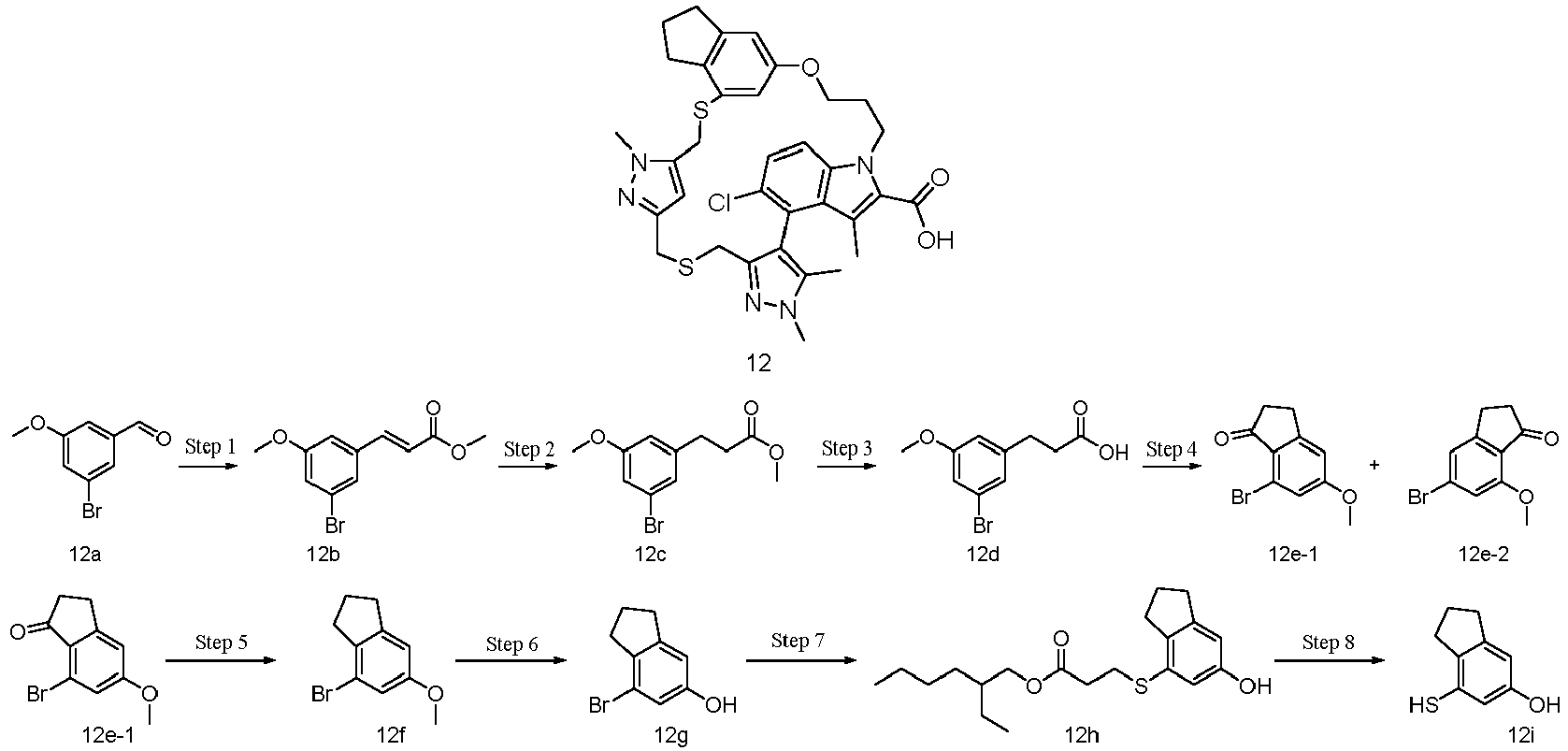

- NaH (1.34 g, 34.97 mmol, purity: 60%) was dissolved in tetrahydrofuran (100 mL), and the solution was purged with argon three times. Methyl 2-(dimethoxyphosphoryl)acetate (6.35 g, 34.87 mmol) was added dropwise under an ice bath, and the reaction solution was stirred in the ice bath for 30 minutes. A solution of 3-bromo-5-methoxybenzaldehyde (5.00 g, 23.25 mmol) in tetrahydrofuran (30 mL) was added dropwise, and the reaction solution was stirred at room temperature for 1 hour. Ethyl acetate (100 mL) and water (100 mL) were added under an ice bath, and the resulting solution was partitioned. The organic phase was washed with saturated sodium chloride solution (30 mL×2), dried over anhydrous sodium sulfate and filtered. The filtrate was concentrated under reduced pressure, and the resulting residues were purified by silica gel column chromatography with eluent system B to obtain the title product 12b (6.20 g, yield: 98.4%).
MS m/z (ESI): 271.1 273.1 [M+1]. - 12b (6.00 g, 22.1 mmol) was dissolved in methanol (75 mL) and tetrahydrofuran (75 mL) at room temperature, followed by the addition of 5% dry rhodium carbon (600 mg). The reaction solution was purged with hydrogen three times, and stirred at room temperature for 90 minutes. The reaction solution was filtered, and the filtrate was concentrated under reduced pressure to obtain the title product 12c (6.04 g, yield: 99.3%).
MS m/z (ESI): 273.0 275.0[M+1]. - 12c (6.20 g, 22.7 mmol) was dissolved in methanol (30 mL), tetrahydrofuran (30 mL) and water (30 mL) at room temperature. Lithium hydroxide monohydrate (2.86 g, 68.2 mmol) was added, and the reaction solution was heated to 50°C and stirred for 1 hour. The reaction solution was concentrated under reduced pressure, followed by the addition of water (100 mL) and dichloromethane (100 mL). The solution was adjusted to pH=2-3 with 1M HCl, extracted with a mixed solvent (50 mL) of dichloromethane and methanol (V:V=10:1) and partitioned. The organic phase was washed with water (30 mL×3) and saturated sodium chloride solution (30 mL×2) successively, dried over anhydrous sodium sulfate and filtered. The filtrate was concentrated under reduced pressure to obtain the title product 12d (5.80 g, yield: 98.6%).
MS m/z(ESI): 257.2 259.2[M-1]. - 12d (5.50 g, 21.2 mmol) was weighed into a 100 mL reaction flask at room temperature, followed by the addition of polyphosphoric acid (120 g, 35.5 mmol). The reaction solution was heated to 95°C and stirred for 1.5 hours. The reaction solution was poured into ice water, and then added with dichloromethane (200 mL) and partitioned. The organic phase was washed with sodium bicarbonate solution, water and saturated sodium chloride solution (30mL×3) successively, dried over anhydrous sodium sulfate and filtered. The filtrate was concentrated under reduced pressure, and the resulting residues were purified by silica gel column chromatography with eluent system B to obtain the title products 12e-1 (3.50 g, yield: 68.4%) and 12e-2 (1.00 g, yield: 19.5%).
MS m/z(ESI): 241.1 243.1 [M+1]. - 12e-1 (3.50 g, 14.5 mmol) was dissolved in trifluoroacetic acid (30 mL) at room temperature, followed by the addition of triethyl silicane (3.37 g, 29.0 mmol). The reaction solution was heated to 80°C and stirred for 1.5 hours. The reaction solution was concentrated under reduced pressure, and then added with ethyl acetate (50 mL) and water (50 mL) and partitioned. The organic phase was washed with water and saturated sodium chloride solution (30 mL×3) successively, dried over anhydrous sodium sulfate and filtered. The filtrate was concentrated under reduced pressure, and the resulting residues were purified by silica gel column chromatography with eluent system B to obtain the title product 12f (2.70 g, yield: 81.9%).
- 12f (2.70 g, 11.9 mmol) was dissolved in 30 mL of dichloromethane at room temperature. 1M solution of boron tribromide (40 mL, 40.0 mmol) in dichloromethane was added dropwise under an ice bath, and the reaction solution was stirred at room temperature for 2 hours. The reaction solution was poured into ice water, and extracted with dichloromethane (50 mL×2). The organic phases were combined, washed with water (30 mL) and saturated sodium chloride solution (30 mL), dried over anhydrous sodium sulfate, and filtered to remove the desiccant. The filtrate was concentrated under reduced pressure, and the resulting residues were purified by silica gel column chromatography with eluent system B to obtain the title product 12g (2.20 g, yield: 86.8%).
MS m/z (ESI): 211.0 213.0 [M-1]. - 12g (800 mg, 3.75 mmol), 2-ethylhexyl 3-mercaptopropionate (984 mg, 4.51 mmol), N,N-diisopropylethylamine (971 mg, 7.51 mmol), tris(dibenzylideneacetone)dipalladium (172 mg, 0.19 mmol) and 4,5-bis(diphenylphosphine)-9,9-dimethylxanthene (217 mg, 0.38 mmol) were dissolved in 20 mL of dioxane at room temperature. The reaction solution was purged with argon three times, heated to 95 °C and stirred for 16 hours. The reaction solution was cooled to room temperature and filtered through celite. The filtrate was concentrated under reduced pressure, and the resulting residues were purified by silica gel column chromatography with eluent system B to obtain the title product 12h (450 mg, yield: 34.2%).
MS m/z (ESI): 351.1 [M+1]. - 12h (450 mg, 1.28 mmol) was dissolved in 4 mL of tetrahydrofuran under an ice bath, and the solution was purged with argon three times. 1M solution of potassium tert-butoxide (4.1 mL, 4.10 mmol) in tetrahydrofuran was added dropwise, and the reaction solution was stirred at room temperature for 2 hours. The title product 12i was obtained, which was used directly in the next step.
- 2l (150 mg, 0.25 mmol) was dissolved in methanol (10 mL) and tetrahydrofuran (3 mL) at room temperature. 0.16M solution of the above reaction solution 12i (2.7 mL, 0.43 mmol) in tetrahydrofuran was added dropwise under an ice bath, and the reaction solution was stirred at room temperature for 1 hour. The reaction solution was diluted with ethyl acetate (50 mL), and washed with water (30 mL×3) and saturated sodium chloride solution (30 mL×2) successively. The organic phase was dried over anhydrous sodium sulfate and filtered. The filtrate was concentrated under reduced pressure, and the resulting residues were purified by silica gel column chromatography with eluent system A to obtain the title product 12j (200 mg, yield: 100%).
MS m/z (ESI): 722.0 [M+1]. - 12j (200 mg, 277 µmol) was dissolved in tetrahydrofuran (3 mL) at room temperature, and cooled to 0-5 °C. 1.0M solution of borane in tetrahydrofuran (2.8 mL) was slowly added dropwise, and the reaction solution was warmed up to room temperature and stirred for 16 hours. The reaction solution was cooled to 0-5°C and quenched by methanol. The solution was warmed up to room temperature and stirred for 30 minutes. Hydrochloric acid (3.2 mL, 6.0 N) was added and stirred for 30 minutes. The solution was extracted with a mixed solvent (30 mL×3) of dichloromethane and methanol (V:V=10:1). The organic phases were combined, washed with saturated sodium chloride solution (30 mL), dried over anhydrous sodium sulfate and filtered. The filtrate was concentrated under reduced pressure, and the resulting residues were purified by silica gel column chromatography with eluent system A to obtain the title product 12k (50 mg, yield: 26.0%).
MS m/z(ESI): 694.0 [M+1]. - 12k (50 mg, 72 µmol) was dissolved in toluene (10 mL) and tetrahydrofuran (5 mL) at room temperature, followed by the addition of tri-n-butylphosphine (73 mg, 0.36 mmol). The solution was purged with argon three times, and added dropwise with a solution (3 mL) of azodicarbonyl dipiperidine (91 mg, 0.36 mmol) in toluene . The reaction solution was heated to 60°C and stirred for 2 hours. The reaction solution was concentrated under reduced pressure, and the resulting residues were purified by silica gel column chromatography with eluent system A to obtain the title product 12l (30 mg, yield: 61.6%).
MS m/z(ESI): 675.9 [M+1]. - 12l (30 mg, 44 µmol) was dissolved in 10 mL of a mixed solution of tetrahydrofuran and methanol (V:V = 1:1) at room temperature. A solution of lithium hydroxide monohydrate (19 mg, 0.45 mmol) in water (2 mL) was added, and the reaction solution was heated to 50°C and stirred for 1 hour. The reaction solution was cooled to room temperature, diluted with water (15 mL), and concentrated under reduced pressure to remove most of the organic solvent. Diluted hydrochloric acid (1.0 N) was added dropwise until pH = 2-3, and the solution was extracted with a mixed solvent (50 mL×2) of dichloromethane and methanol (V:V=10:1). The organic phases were combined, washed with water (30 mL) and saturated sodium chloride solution (30 mL), dried over anhydrous sodium sulfate and filtered. The filtrate was concentrated under reduced pressure, and the resulting residues were purified by high performance liquid chromatography (Gilson GX-281, eluent system: H2O (10 mmol NH4OAc), ACN) to obtain the title product 7 (15 mg, yield: 51.1%).
MS m/z (ESI): 661.9 [M+1].
1H NMR (400 MHz, CDCl3) δ 7.38-7.41 (m, 1H), 7.23-7.25 (m, 1H), 6.82 (s, 1H), 6.09 (s, 1H), 5.00-5.12 (m, 2H), 4.47-4.51 (m, 1H), 3.88 (s, 3H), 3.72-3.84 (m, 2H), 3.68 (s, 3H), 3.51-3.65 (m, 2H), 3.38-3.41 (m, 1H), 3.22-3.31 (m, 1H), 3.17-3.20 (m, 1H), 2.75-3.01 (m, 5H), 2.17-2.36 (m, 5H), 1.96-2.15 (m, 5H). -

- 121 (570 mg, 0.84 mmol) was separated chirally (separation conditions: AY Phenomenex Lux Amylose-2 250∗21.2mm, 5 µm; mobile phase: Hexane/EtOH/DEA=80/20/0.1(V/V/V); flow rate: 30 mL/min). The corresponding fractions were collected and concentrated under reduced pressure to obtain the title products (200 mg, 200 mg).
- Compound 121-2 with single configuration (having shorter retention time):
MS m/z (ESI):676.3 [M+1]. - Chiral HPLC analysis: retention time 10.787 minutes, chiral purity: 98% (chromatographic column: OZ Phenomenex Lux Cellulose-2 150∗4.6mm, 5 µm (equipped with a guard column); mobile phase: n-hexane/ethanol/diethylamine= 70/30/0.1 (v/v/v)).
- Compound 121-1 with single configuration (having longer retention time):
MS m/z (ESI): 676.3 [M+1]. - Chiral HPLC analysis: retention time 14.598 minutes, chiral purity: 100% (chromatographic column: OZ Phenomenex Lux Cellulose-2 150∗4.6mm, 5 µm (equipped with a guard column); mobile phase: n-hexane/ethanol/diethylamine= 70/30/0.1 (v/v/v)).
- Compound 121-1 having longer retention time (200 mg, 296 µmol) was dissolved in 20 mL of a mixed solution of tetrahydrofuran and methanol (V:V = 1:1) at room temperature. A solution of lithium hydroxide monohydrate (124 mg, 2.96 mmol) in water (5 mL) was added, and the reaction solution was heated to 50°C and stirred for 1 hour. The reaction solution was cooled to room temperature, diluted with water (15 mL), and concentrated under reduced pressure to remove most of the organic solvent. Diluted hydrochloric acid (1.0 N) was added dropwise until pH = 2-3, and the solution was extracted with a mixed solvent (50 mL×2) of dichloromethane and methanol (V:V=10:1). The organic phases were combined, washed with water (30 mL) and saturated sodium chloride solution (30 mL), dried over anhydrous sodium sulfate, and filtered to remove the desiccant. The filtrate was concentrated under reduced pressure, and the resulting residues were purified by high performance liquid chromatography (Gilson GX-281, eluent system: H2O (10 mmol NH4OAc), ACN) to obtain the title product 12-1 (20 mg).
- Compound 12-1 with single configuration (having shorter retention time):
MS m/z (ESI): 661.9 [M+1]. - Chiral HPLC analysis: retention time 8.371 minutes, chiral purity: 100% (chromatographic column: CHIRALPAK IF 150∗4.6mm, 5 µm, equipped with a guard column; mobile phase: Hexane/EtOH/TFA=80/20/0.1(V/V/V)).
1H NMR (400 MHz, CDCl3) δ 7.38-7.41 (m, 1H), 7.23-7.25 (m, 1H), 6.82 (s, 1H), 6.09 (s, 1H), 5.00-5.12 (m, 2H), 4.47-4.51 (m, 1H), 3.88 (s, 3H), 3.72-3.84 (m, 2H), 3.68 (s, 3H), 3.51-3.65 (m, 2H), 3.38-3.41 (m, 1H), 3.22-3.31 (m, 1H), 3.17-3.20 (m, 1H), 2.75-3.01 (m, 5H), 2.17-2.36 (m, 5H), 1.96-2.15 (m, 5H). - Compound 121-2 having shorter retention time (200 mg, 296 µmol) was dissolved in 20 mL of a mixed solution of tetrahydrofuran and methanol (V:V = 1:1) at room temperature. A solution of lithium hydroxide monohydrate (124 mg, 2.96 mmol) in water (5 mL) was added, and the reaction solution was heated to 50°C and stirred for 1 hour. The reaction solution was cooled to room temperature, diluted with water (15 mL), and concentrated under reduced pressure to remove most of the organic solvent. Diluted hydrochloric acid (1.0 N) was added dropwise until pH = 2-3, and the solution was extracted with a mixed solvent (50 mL×2) of dichloromethane and methanol (V:V=10:1). The organic phases were combined, washed with water (30 mL) and saturated sodium chloride solution (30 mL), dried over anhydrous sodium sulfate, and filtered to remove the desiccant. The filtrate was concentrated under reduced pressure, and the resulting residues were purified by high performance liquid chromatography (Gilson GX-281, eluent system: H2O (10 mmol NH4OAc), ACN) to obtain the title product 12-2 (20 mg).
- Compound 12-2 with single configuration (having longer retention time):
MS m/z (ESI): 661.9 [M+1]. - Chiral HPLC analysis: retention time 9.861 minutes, chiral purity: 95.9% (chromatographic column: CHIRALPAK IF 150∗4.6mm, 5 µm, equipped with a guard column; mobile phase: Hexane/EtOH/TFA=80/20/0.1(V/V/V)).
1H NMR (400 MHz, CDCl3) δ 7.38-7.41 (m, 1H), 7.23-7.25 (m, 1H), 6.82 (s, 1H), 6.09 (s, 1H), 5.00-5.12 (m, 2H), 4.47-4.51 (m, 1H), 3.88 (s, 3H), 3.72-3.84 (m, 2H), 3.68 (s, 3H), 3.51-3.65 (m, 2H), 3.38-3.41 (m, 1H), 3.22-3.31 (m, 1H), 3.17-3.20 (m, 1H), 2.75-3.01 (m, 5H), 2.17-2.36 (m, 5H), 1.96-2.15 (m, 5H). -
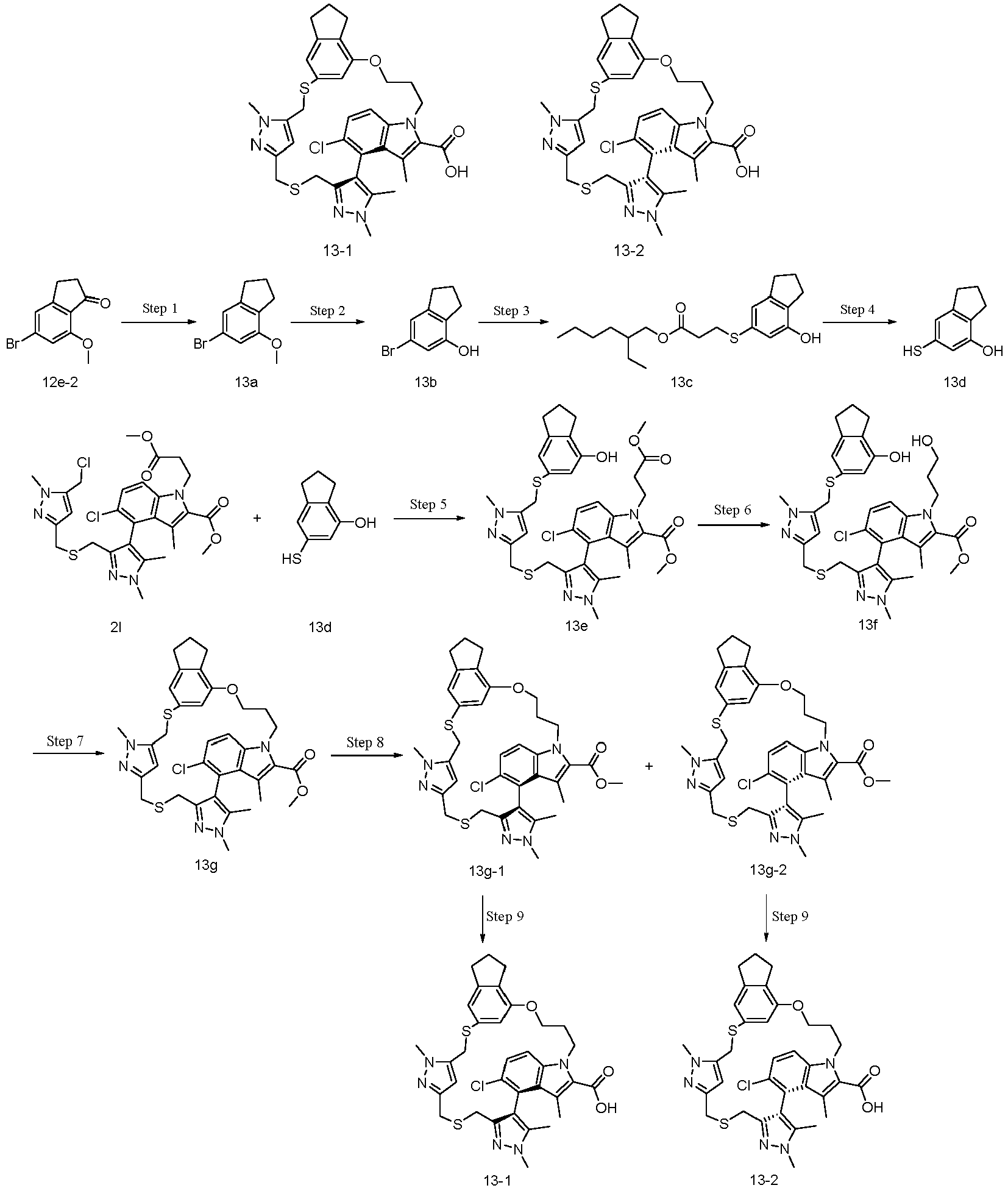
- 12e-2 (1.00 g, 4.15 mmol) was dissolved in trifluoroacetic acid (10 mL) at room temperature, followed by the addition of triethyl silicane (965 mg, 8.30 mmol). The reaction solution was heated to 80°C and stirred for 1.5 hours. The reaction solution was concentrated under reduced pressure, and then added with ethyl acetate (50 mL) and water (50 mL) and partitioned. The organic phase was washed with water and saturated sodium chloride solution (30 mL×3) successively, dried over anhydrous sodium sulfate and filtered. The filtrate was concentrated under reduced pressure, and the resulting residues were purified by silica gel column chromatography with eluent system B to obtain the title product 13a (880 mg, yield: 93.4%).
- 13a (900 mg, 3.96 mmol) was dissolved in 10 mL of dichloromethane at room temperature. 1M solution of boron tribromide (13.9 mL, 13.9 mmol) in dichloromethane was added dropwise under an ice bath, and the reaction solution was stirred at room temperature for 2 hours. The reaction solution was poured into ice water, and extracted with dichloromethane (50 mL×2). The organic phases were combined, washed with water (30 mL) and saturated sodium chloride solution (30 mL), dried over anhydrous sodium sulfate, and filtered to remove the desiccant. The filtrate was concentrated under reduced pressure, and the resulting residues were purified by silica gel column chromatography with eluent system B to obtain the title product 13b (620 mg, yield: 73.4%).
MS m/z (ESI): 211.0 213.0 [M-1]. - 13b (620 mg, 2.91 mmol), 2-ethylhexyl 3-mercaptopropionate (762 mg, 3.49 mmol), N,N-diisopropylethylamine (752 mg, 5.82 mmol), tris(dibenzylideneacetone)dipalladium (133 mg, 0.15 mmol) and 4,5-bis(diphenylphosphine)-9,9-dimethylxanthene (168 mg, 0.29 mmol) were dissolved in 20 mL of dioxane at room temperature. The reaction solution was purged with argon three times, heated to 95°C and stirred for 16 hours. The reaction solution was filtered through celite, and the filtrate was concentrated under reduced pressure. The resulting residues were purified by silica gel column chromatography with eluent system B to obtain the title product 13c (550 mg, yield: 53.9%).
MS m/z (ESI): 351.3 [M+1]. - 13c (550 mg, 1.57 mmol) was dissolved in 10 mL of tetrahydrofuran under an ice bath, and the solution was purged with argon three times. 1M solution of potassium tert-butoxide (5.0 mL, 5.0 mmol) in tetrahydrofuran was added dropwise, and the reaction solution was stirred at room temperature for 2 hours. The title product 13d was obtained, which was used directly in the next step.
- 2l (250 mg, 0.42 mmol) was dissolved in methanol (10 mL) and tetrahydrofuran (3 mL) at room temperature. 0.1M solution of the above reaction solution 13d (6.3 mL, 0.63 mmol) in tetrahydrofuran was added dropwise under an ice bath, and the reaction solution was stirred at room temperature for 1 hour. The reaction solution was diluted with ethyl acetate (50 mL), and washed with water (30 mL×3) and saturated sodium chloride solution (30 mL×2) successively. The organic phase was dried over anhydrous sodium sulfate and filtered. The filtrate was concentrated under reduced pressure, and the resulting residues were purified by silica gel column chromatography with eluent system A to obtain the title product 13e (280 mg, yield: 91.9%).
MS m/z(ESI): 722.0[M+1]. - 13e (280 mg, 388 µmol) was dissolved in tetrahydrofuran (5 mL) at room temperature, and cooled to 0-5°C. 1.0M solution of borane in tetrahydrofuran (3.9 mL) was slowly added dropwise, and the reaction solution was warmed up to room temperature and stirred for 16 hours. The reaction solution was cooled to 0-5°C and quenched by methanol. The solution was warmed up to room temperature and stirred for 30 minutes. Hydrochloric acid (6.0 mL, 6.0 N) was added and stirred for 30 minutes. The solution was extracted with a mixed solvent (30 mL×3) of dichloromethane and methanol (V:V=10:1). The organic phases were combined, washed with saturated sodium chloride solution (30 mL), dried over anhydrous sodium sulfate and filtered. The filtrate was concentrated under reduced pressure, and the resulting residues were purified by silica gel column chromatography with eluent system A to obtain the title product 13f (130 mg, yield: 48.3%).
MS m/z(ESI): 693.9 [M+1]. - 13f (130 mg 187 µmol) was dissolved in toluene (10 mL) and tetrahydrofuran (5 mL) at room temperature, followed by the addition of tri-n-butylphosphine (189 mg, 0.94 mmol). The solution was purged with argon three times, and added dropwise with a solution (5 mL) of azodicarbonyl dipiperidine (236 mg, 0.94 mmol) in toluene. The reaction solution was heated to 60°C and stirred for 2 hours. The reaction solution was concentrated under reduced pressure, and the resulting residues were purified by silica gel column chromatography with eluent system A to obtain the title product 13g (100 mg, yield: 79.0%).
MS m/z (ESI): 676.0 [M+1]. - 13g (100 mg, 0.84 mmol) was separated chirally (separation conditions: CHIRALPAK ID 250∗20mm, 5 µm; mobile phase: Hexane/EtOH/DEA=80/20/0.1(V/V/V); flow rate: 20 mL/min). The corresponding fractions were collected and concentrated under reduced pressure to obtain the title products (40 mg, 40 mg).
- Compound 13g-1 with single configuration (having shorter retention time):
MS m/z (ESI): 676.0 [M+1]. - Chiral HPLC analysis: retention time 7.448 minutes, chiral purity: 100% (chromatographic column: CHIRALPAK ID 150∗4.6mm, 5 µm (equipped with a guard column); mobile phase: n-hexane/ethanol/diethylamine=70/30/0.1(v/v/v)).
- Compound 13g-2 with single configuration (having longer retention time):
MS m/z (ESI):676.0 [M+1]. - Chiral HPLC analysis: retention time 8.611 minutes, chiral purity: 100% (chromatographic column: CHIRALPAK ID 150∗4.6mm, 5 µm (equipped with a guard column); mobile phase: n-hexane/ethanol/diethylamine=70/30/0.1(v/v/v)).
- Compound 13g-1 (having shorter retention time)/compound 13g-2 (having longer retention time) (40 mg/40 mg, 59 µmol/59 µmol) was dissolved in 20 mL of a mixed solution of tetrahydrofuran and methanol (V:V = 1:1) at room temperature, respectively. A solution of lithium hydroxide monohydrate (25 mg, 0.60 mmol) in water (5 mL) was added, and the reaction solution was heated to 50°C and stirred for 1 hour. The reaction solution was cooled to room temperature, diluted with water (15 mL), and concentrated under reduced pressure to remove most of the organic solvent. Diluted hydrochloric acid (1.0 N) was added dropwise until pH = 2-3, and the solution was extracted with a mixed solvent (50 mL×2) of dichloromethane and methanol (V:V=10:1). The organic phases were combined, washed with water (30 mL) and saturated sodium chloride solution (30 mL), dried over anhydrous sodium sulfate, and filtered to remove the desiccant. The filtrate was concentrated under reduced pressure, and the resulting residues were purified by high performance liquid chromatography (Gilson GX-281, eluent system: H2O (10 mmol NH4OAc), ACN) to obtain the title products 13-1/13-2 (10 mg/10 mg), respectively.
- Compound 13-1 with single configuration (having shorter retention time):
MS m/z (ESI): 662.0 [M+1]. - Chiral HPLC analysis: retention time 5.609 minutes, chiral purity: 100% (chromatographic column: CHIRALPAK IF 150∗4.6mm, 5 µm, equipped with a guard column; mobile phase: Hexane/EtOH/TFA=70/30/0.1(V/V/V)).
1H NMR (400 MHz, CDCl3) δ 7.31-7.34 (m, 1H), 7.20-7.22 (m, 1H), 7.06 (s, 1H), 5.90 (s, 1H), 5.17 (s, 1H), 5.04-5.08 (m, 1H), 4.46-4.51 (m, 1H), 3.88 (s, 3H), 3.77-3.81 (m, 1H), 3.62-3.72 (m, 2H), 3.53 (s, 3H), 3.46-3.48 (m, 1H), 3.32-3.36 (m, 1H), 3.20-3.26 (m, 1H), 3.09-3.13 (m, 1H), 2.86-3.05 (m, 4H), 2.69-2.72 (m, 1H), 2.09-2.30 (m, 7H), 2.04 (s, 3H). - Compound 13-2 with single configuration (having longer retention time):
MS m/z (ESI): 662.0 [M+1]. - Chiral HPLC analysis: retention time 6.807 minutes, chiral purity: 98.8% (chromatographic column: CHIRALPAK IF 150∗4.6mm, 5 µm, equipped with a guard column; mobile phase: Hexane/EtOH/TFA=70/30/0.1(V/V/V)).
1H NMR (400 MHz, CDCl3) δ 7.31-7.34 (m, 1H), 7.20-7.22 (m, 1H), 7.06 (s, 1H), 5.90 (s, 1H), 5.17 (s, 1H), 5.04-5.08 (m, 1H), 4.46-4.51 (m, 1H), 3.88 (s, 3H), 3.77-3.81 (m, 1H), 3.62-3.72 (m, 2H), 3.53 (s, 3H), 3.46-3.48 (m, 1H), 3.32-3.36 (m, 1H), 3.20-3.26 (m, 1H), 3.09-3.13 (m, 1H), 2.86-3.05 (m, 4H), 2.69-2.72 (m, 1H), 2.09-2.30 (m, 7H), 2.04 (s, 3H). -

- Methyl (Z)-2-(2-(3-bromo-4-chlorophenyl)hydrazono)pentanoate 14a (3-Bromo-4-chlorophenyl)hydrazine 2b (41.80 g, 188.73 mmol) was dissolved in 150 mL of ethanol. A solution of methyl 2-oxopentanoate (25.30 g, 194.40 mmol) in ethanol (20 mL) was added dropwise under an ice bath, and the reaction solution was reacted at room temperature for 1 hour. The reaction solution was concentrated under reduced pressure, and added with 80 mL of n-hexane to pulp. The mixture was filtered, and the filter cake was collected and dried under vacuum to obtain the title product 14a (48.30 g, yield: 76.71%).
MS m/z (ESI): 333.0 335.0 [M+1]. - 14a (48.30 g, 144.78 mmol) was dissolved in 400 mL of glacial acetic acid. Zinc chloride (114.00 g, 836.41 mmol) was added, and the reaction solution was heated to 120°C and reacted for 1 hour. The reaction solution was poured into 800 mL of ice water, and a white solid was precipitated. The solid was filtered, and dried under vacuum to obtain the crude title product 2d (42.00 g, yield: 91.63%), which was used directly in the next step without purification.
MS m/z (ESI): 314.0 316.0 [M-1]. - The crude product 14b (41.00 g, 129.51 mmol) and potassium carbonate (35.80 g, 259.03 mmol) were dissolved in 400 mL of N,N-dimethylformamide. Methyl acrylate (33.44 g, 388.44 mmol) was added at room temperature, and the reaction solution was reacted at room temperature for 16 hours. After completion of the reaction, 200 mL of water and 600 mL of ethyl acetate were added, and the resulting solution was partitioned. The organic phase was washed with saturated sodium chloride solution (100 mL×2), dried over anhydrous sodium sulfate and filtered. The filtrate was concentrated under reduced pressure, and the resulting residues were purified by silica gel column chromatography with eluent system B to obtain the title product 14c (11.70 g, yield: 22.44%).
MS m/z (ESI): 402.0 404.0 [M+1]. - 14c (5.0 g, 12.42 mmol) and 1c (5.55 mg, 14.91 mmol) were dissolved in 100 mL of a mixed solution of 1,4-dioxane and water (V:V=4:1). The solution was purged with argon three times, and added with 1,1'-bis(di-tert-butylphosphine)ferrocaene dichloropalladium (440 mg, 621.41 mmol) and cesium carbonate (8.10 g, 24.86 mmol). The reaction solution was heated to 95 °C and stirred for 16 hours. The reaction solution was concentrated under reduced pressure to remove most of the solvent, and then added with 50 mL of water and extracted with ethyl acetate (150 mL×3). The organic phase was washed with water (50 mL) and saturated sodium chloride solution (50 mL) successively, dried over anhydrous sodium sulfate and filtered. The filtrate was concentrated under reduced pressure, and the resulting residues were purified by silica gel column chromatography with eluent system A to obtain the title product 14d (6.75 g, yield: 95.69%).
MS m/z (ESI):568.2 [M+1]. - 14d (6.75 g, 11.88 mmol) was dissolved in 50 mL of methanol. 7 mL of concentrated sulfuric acid was added, and the reaction solution was heated to 80°C and reacted for 16 hours. The reaction solution was concentrated under reduced pressure to remove most of the solvent, and the resulting residues were poured into 100 mL of ice water. The solution was extracted with ethyl acetate (50 mL×3). The organic phase was washed with water (20 mL) and saturated sodium chloride solution (20 mL) successively, dried over anhydrous sodium sulfate and filtered. The filtrate was concentrated under reduced pressure, and the resulting residues were purified by silica gel column chromatography with eluent system A to obtain the title product 14e (3.50 g, yield: 65.76%).
MS m/z (ESI): 448.2 [M+1]. - 14e (260 mg, 0.58 mmol) was dissolved in 5 mL of dichloromethane, and the solution was purged with argon three times. Thionyl chloride (104 mg, 0.87 mmol) was added dropwise under an ice bath, and the reaction solution was reacted at room temperature for 30 minutes. 20 mL of water was added to the reaction solution, stirred for 10 minutes, and extracted with dichloromethane (30 mL×2). The organic phases were combined, washed with water (30 mL) and saturated sodium chloride solution (30 mL), dried over anhydrous sodium sulfate and filtered. The filtrate was concentrated under reduced pressure to obtain the crude title product 14f (283 mg), which was used directly in the next step without purification.
- The crude product 14f (283 mg, 0.61 mmol) was dissolved in 5 mL of acetonitrile, followed by the addition of sodium iodide (182 mg, 1.21 mmol). The reaction solution was heated to 80°C and stirred for 2 hours. The reaction solution was cooled to room temperature, and added with 50 mL of water. The solution was stirred for 30 minutes, and extracted with ethyl acetate (50 mL×2). The organic phases were combined, washed with water (30 mL) and saturated sodium chloride solution (30 mL), dried over anhydrous sodium sulfate and filtered. The filtrate was concentrated under reduced pressure to obtain the title product 14g (338 mg, yield: 99.85%).
MS m/z (ESI): 558.0 [M+1]. - 14g (338 mg, 0.61 mmol) was dissolved in 6 mL of methanol and 2 mL of tetrahydrofuran, followed by the addition of potassium carbonate (101 mg, 0.73 mmol). The solution was purged with argon three times, and added dropwise with a solution of 1h (334 mg, 0.77 mmol) in methanol (5 mL) at room temperature. The reaction solution was reacted at room temperature for 2 hours. The reaction solution was concentrated under reduced pressure to remove most of the solvent, and added with 50 mL of water. The solution was stirred for 30 minutes, and extracted with ethyl acetate (50 mL×2). The organic phases were combined, washed with water (30 mL) and saturated sodium chloride solution (30 mL), dried over anhydrous sodium sulfate, and filtered to remove the desiccant. The filtrate was concentrated under reduced pressure, and the resulting residues were purified by silica gel column chromatography with eluent system A to obtain the title product 14h (225 mg, yield: 44.92%).
MS m/z (ESI): 826.2 [M+1]. - 14h (225 mg, 0.27 mmol) was dissolved in 10 mL of tetrahydrofuran. 1.0 M tetrabutylammonium fluoride (0.33 mL, 0.33 mmol) was added dropwise, and the reaction solution was stirred at room temperature for 1 hour. The reaction solution was concentrated under reduced pressure to remove most of the solvent, and added with 50 mL of water was added and extracted with ethyl acetate (50 mL×2). The organic phases were combined, washed with water (30 mL) and saturated sodium chloride solution (30 mL), dried over anhydrous sodium sulfate and filtered. The filtrate was concentrated under reduced pressure, and the resulting residues were purified by silica gel column chromatography with eluent system A to obtain the title product 14i (118 mg, yield: 73.70%).
MS m/z (ESI): 588.2 [M+1]. - 14i (118 mg, 0.20 mmol) was dissolved in 5 mL of dichloromethane, and the solution was purged with argon three times. Thionyl chloride (29 mg, 0.24 mmol) was added dropwise under an ice bath, and the reaction solution was reacted at room temperature for 30 minutes. 50 mL of water was added to the reaction solution, stirred for 10 minutes, and extracted with dichloromethane (30 mL×2). The organic phases were combined, washed with water (30 mL) and saturated sodium chloride solution (30 mL), dried over anhydrous sodium sulfate and filtered. The filtrate was concentrated under reduced pressure to obtain the title product 14j (121 mg), which was used directly in the next step without purification.
MS m/z (ESI): 606.2 [M+1]. - The crude product 14j (121 mg, 0.20 mmol) and 1l (63 mg, 0.24 mmol) were dissolved in 5 mL of methanol. Potassium carbonate (78 mg, 0.57 mmol) was added at room temperature, and the reaction solution was reacted at room temperature for 1 hour. The reaction solution was concentrated under reduced pressure to remove most of the solvent, and then added with 50 mL of water and extracted with ethyl acetate (50 mL×2). The organic phases were combined, washed with water (30 mL) and saturated sodium chloride solution (30 mL), dried over anhydrous sodium sulfate, and filtered to remove the desiccant. The filtrate was concentrated under reduced pressure, and the resulting residues were purified by silica gel column chromatography with eluent system A to obtain the title product 14k (115 mg, yield: 77.24%).
MS m/z (ESI): 746.2 [M+1]. - 14k (105 mg, 0.14 mmol) was dissolved in 5 mL of tetrahydrofuran. 1.0M solution of borane in tetrahydrofuran (1.4 mL, 1.41 mmol) was added dropwise under an ice bath, and the reaction solution was stirred at room temperature for 12 hours. 1 mL of methanol and 2 mL of diluted hydrochloric acid (6M) were added dropwise under an ice bath, and the reaction solution was stirred for 1 hour. 50 mL of water was added to the reaction solution, which was extracted with a mixed solution of dichloromethane and methanol (V:V=10:1) (50 mL×2). The organic phases were combined, washed with water (30 mL) and saturated sodium chloride solution (30 mL) successively, dried over anhydrous sodium sulfate and filtered. The filtrate was concentrated under reduced pressure, and the resulting residues were purified by silica gel column chromatography with eluent system A to obtain the title product 14l (100 mg, yield: 98.95%).
MS m/z (ESI):718.2 [M+1]. - 14l (100 mg, 0.14 mmol) was dissolved in 10 mL of a mixed solution of toluene and tetrahydrofuran (V:V=5:1), followed by the addition of tributylphosphine (141 mg, 0.70 mmol). The solution was purged with argon three times, and added dropwise with a solution (3 mL) of azodicarbonyl dipiperidine (176 mg, 0.70 mmol) in toluene. The reaction solution was heated to 60°C and stirred for 2 hours. The reaction solution was concentrated under reduced pressure, and the resulting residues were purified by silica gel column chromatography with eluent system A to obtain the title product 14m (40 mg, yield: 41.03%).
MS m/z (ESI): 700.1 [M+1]. - 14m (40 mg, 0.057 mmol) was separated chirally (separation conditions: CHIRALPAK IE 250∗20mm, 5 µm; mobile phase: n-hexane/ethanol/diethylamine=60/40/0.1(V/V/V); flow rate: 15 mL/min). The corresponding fractions were collected and concentrated under reduced pressure to obtain the title products (15 mg, 10 mg).
- Compound 14m-1 with single configuration (having shorter retention time):
MS m/z (ESI): 700.2 [M+1]. - Chiral HPLC analysis: retention time 7.268 minutes, chiral purity: 100% (chromatographic column: CHIRALPAK IE 150∗4.6mm, 5 µm, equipped with a guard column; mobile phase: n-hexane/ethanol/diethylamine=60/40/0.1(v/v/v)).
- Compound 14m-2 with single configuration (having longer retention time):
MS m/z (ESI):700.2 [M+1]. - Chiral HPLC analysis: retention time 9.573 minutes, chiral purity: 100% (chromatographic column: CHIRALPAK IE 150∗4.6mm, 5 µm, equipped with a guard column; mobile phase: n-hexane/ethanol/diethylamine=60/40/0.1(v/v/v)).
- Compound 14m-1 (having shorter retention time)/compound 14m-2 (having longer retention time) (15 mg/10 mg, 21.4 µmol/14 µmol) was dissolved in 6 mL/6 mL of a mixed solvent of methanol, tetrahydrofuran and water (V:V:V=1:1:1) at room temperature, respectively. Lithium hydroxide monohydrate (9 mg/ 6 mg, 0.21 mmol/0.14 mmol) was added, and the reaction solution was heated to 50°C and stirred for 8 hours. The reaction solution was cooled to room temperature, diluted with water (15 mL/15 mL), and concentrated under reduced pressure to remove most of the organic solvent. Diluted hydrochloric acid (1.0 N) was added dropwise until pH=1∼2, and the solution was extracted with a mixed solvent (50 mL×2) of dichloromethane and methanol (V:V=10:1). The organic phases were combined, washed with water (30 mL) and saturated sodium chloride solution (30 mL), dried over anhydrous sodium sulfate and filtered. The filtrate was concentrated under reduced pressure, and the resulting residues were purified by high performance liquid chromatography (Waters 2767/MS, eluent system: H2O (10 mmol NH4OAc), ACN) to obtain the title products 14-1/14-2 (2.57 mg, 6.55 mg), respectively.
- Compound 14-1 with single configuration (having shorter retention time):
MS m/z (ESI): 686.2 [M+1]. - Chiral HPLC analysis: retention time 6.687 minutes, chiral purity: 100% (chromatographic column: CHIRALPAK IE 150∗4.6 mm, 5 µm, equipped with a guard column; mobile phase: n-hexane/ethanol/trifluoroacetic acid =70/30/0.1(V/V/V)).
1H NMR (400 MHz, CDCl3) δ8.33 (d, 1H), 7.76 (d, 1H), 7.65-7.51 (m, 3H), 7.36 (d, 1H), 7.08 (d, 1H), 6.06 (s, 1H), 5.25-5.12 (m, 2H), 4.69-4.55 (m, 1H), 3.88 (s, 3H), 3.87-3.79 (m, 2H), 3.78-3.69 (m, 1H), 3.60 (s, 3H), 3.56-3.47 (m, 1H), 3.43-3.37 (m, 1H), 3.25-3.17 (m, 1H), 3.12-3.05 (m, 1H), 3.03-2.92 (m, 1H), 2.81-2.72 (m, 1H), 2.55-2.36 (m, 3H), 2.08 (s, 3H), 0.90 (t, 3H). - Compound 14-2 with single configuration (having longer retention time):
MS m/z (ESI): 686.2 [M+1]. - Chiral HPLC analysis: retention time 9.460 minutes, chiral purity: 98.5% (chromatographic column: CHIRALPAK IE 150∗4.6 mm, 5 µm, equipped with a guard column; mobile phase: n-hexane/ethanol/trifluoroacetic acid =70/30/0.1(V/V/V)).
1H NMR (400 MHz, CDCl3) δ 8.33 (d, 1H), 7.76 (d, 1H), 7.64-7.51 (m, 3H), 7.36 (d, 1H), 7.09 (d, 1H), 6.04 (s, 1H), 5.25-5.13 (m, 2H), 4.67-4.55 (m, 1H), 3.89 (s, 3H), 3.87-3.79 (m, 2H), 3.77-3.67 (m, 1H), 3.58 (s, 3H), 3.54-3.47 (m, 1H), 3.45-3.37 (m, 1H), 3.25-3.17 (m, 1H), 3.12-3.05 (m, 1H), 3.04-2.93 (m, 1H), 2.79-2.72 (m, 1H), 2.56-2.36 (m, 3H), 2.09 (s, 3H), 0.90 (t, 3H). - Test Example 1. MCL-1 protein binding experiment of the compound of the present invention.
- The following method was used to determine the binding ability of the compound of the present invention to MCL-1 protein. The experimental method is briefly described as follows.
-
- 1. His-MCL-1 protein (Shanghai Hengrui Pharmaceutical Co., Ltd., NA)
- 2. Biotin-labeled Bim protein (R&D, 3526/1)
- 3. Labeled europium cryptate anti-6His antibody (cisbio, 61HI2KLA)
- 4. XL665-labeled streptavidin (cisbio, 611SAXLA)
- 5. Binding buffer (cisbio, 62DLBDDF)
- 6. Detection buffer (cisbio, 62DB1FDG)
- 7. Microplate reader (BMG, PHERAsta)
- MCL-1 inhibitors can bind to MCL-1 protein to prevent the binding of MCL-1 to Bim protein. The experiment evaluates the binding ability of MCL-1 inhibitor to MCL-1 protein by detecting the binding of MCL-1 to Bim protein through HTRF method, and the activity of the compound was evaluated according to the Ki value.
- The human recombinant protein MCL-1 (sequence 171-327; NCBI ACCESSION: AAF64255) and Bim (sequence 51-76; NCBI ACCESSION: 043521) peptides were labeled with His and biotin, respectively. 0.1 nM His-MCL-1, 2.5 nM bio-Bim and different concentrations of small molecule compounds (initial concentration: 10 µM, 11 concentrations by diluting in 3-fold gradient, diluted in the binding buffer) were mixed and incubated at room temperature for 2 hours, followed by the addition of 0.5 nM Labeled europium cryptate anti-6His antibody and 1.25 nM XL665-labeled streptavidin (diluted in the detection buffer). The mixture was incubated at room temperature for 2 hours, followed by the detection of fluorescence signals at 620 nm and 665 nm by PHERAstar. The data was processed by GraphPad software.
- The binding ability of the compound of the present invention to MCL-1 protein can be determined by the above test, and the measured Ki values are shown in Table 1.
Table 1 Ki of the binding of the compound of the present invention to MCL-1 protein. Example No. Ki/nM Maximum inhibition rate (%) 1 2.39 100 1-1 0.36 100 1-2 56 100 2 0.18 99 2-1 0.11 100 2-2 65 95 3 0.6 100 3-1 0.18 100 3-2 14 99 4 1.35 99 4-1 0.15 100 5 4.8 99 6 1.9 98 7 0.71 99 7-1 0.74 99 7-2 15 100 8 0.55 100 8-1 0.46 100 8-2 57 98 9 1.5 100 10 7.9 101 11 3 100 12 0.22 100 12-1 0.24 100 12-2 5.7 100 13-1 0.16 100 13-2 4.4 99 14-1 0.32 100 - Conclusion: The compound of the present invention has a strong binding ability to MCL-1 protein, and can well inhibit the binding of MCL-1 to Bim protein. The optical activity has a certain influence on the activity of the compound.
- The following method evaluates the inhibition effect of the compound of the present invention on the proliferation of AMO-1 and MV-4-11 cells according to IC50 value by detecting intracellular ATP content. The experimental method is briefly described as follows.
-
- 1. AMO-1, human bone marrow plasmacytoma (Nanjing Cobioer Biosciences Co.,Ltd., CBP60242)
- 2. MV-4-11, human acute monocytic leukemia cells (ATCC, CRL-9591)
- 3. Fetal bovine serum (FBS) (GIBCO, 10099)
- 4. RPMI1640 (GE, SH30809.01)
- 5. IMDM (Gibco, 12440053)
- 6. 2-Mercaptoethanol (sigma, 60-24-2)
- 7. CellTite (Promega, G7573)
- 8. 96-well cell culture plate (corning, 3903)
- 9. Trypan blue solution (Sigma, T8154-100ML)
- 10. Microplate reader (BMG, PHERAsta)
- 11. Cell counter (Shanghai Ruiyu Biotech Co.,Ltd., IC1000)
- AMO-1 cells were cultured in RPMI1640 medium (containing 20% FBS), and MV-4-11 cells were cultured in IMDM medium (containing 10% FBS). The cells were passaged for 2 to 3 times a week, with a passage ratio of 1:4 or 1:6. During the passage, the cells were transferred to a centrifuge tube and centrifuged at 1200 rpm for 3 minutes. The supernatant was discarded, and fresh medium was added to resuspend the cells. 90 µL of cell suspension was added to a 96-well cell culture plate with a density of 1.33×10⁵ cells/mL. 100 µL of complete medium was added to the periphery of the 96-well plate. The plate was incubated in an incubator for 24 hours (37°C, 5% CO2).
- The test sample was diluted to 20 mM with DMSO, and then diluted to 9 concentrations by diluting in 4-fold gradient. Blank and control wells were set. 5 µL of the test compound solution formulated as gradient concentration was added to 95 µL of fresh medium. 10 µL of the above drug-containing medium solution was added to the plate. The plate was incubated in an incubator for 3 days (37°C, 5% CO2). In the 96-well cell culture plate, 50 µL of CellTiter-Glo reagent was added to each well, and the plate was left to stand in the dark at room temperature for 5 to 10 minutes. The chemiluminescence signal value was read in PHERAstar, and the data was processed by GraphPad software.
- The inhibition effect of the compound of the present invention on the proliferation of AMO-1 and MV-4-11 cells can be determined by the above test, and the measured IC50 values are shown in Table 2.
Table 2 IC50 values of the compound of the present invention for inhibiting the proliferation of AMO-1 and MV-4-11 cells. Example No. AMO-1 MV-4-11 IC50/nM IC50/nM 2-1 76 42 4-1 37 39 7-1 70 71 8-1 100 136 12 63 63 12-1 34 36 13-1 26 26 - Conclusion: The compound of the present invention has a good inhibition effect on the proliferation of AMO-1 and MV-4-11 cells.
- The inhibition effect of the compound of the present invention on the enzymatic activity of human liver microsomal P450 subenzymes CYP2C9 and 2C19 was determined by the following experimental method.
-
- 1. Phosphate buffer solution (20×PBS, Sangon Biotech (Shanghai) Co., Ltd.)
- 2. NADPH (ACROS, A0354537)
- 3. Human liver microsomes (Corning Gentest, Cat No.452161, Lot No.6123001, 33 Donors)
- 4. ABI QTrap 4000 liquid chromatography-mass spectrometry (AB Sciex)
- 5. Inertsil C8-3 column, 4.6×50mm, 5 µm (Dikma Technologies Inc., USA)
- 6. CYP probe substrate for 2C9 (Diclofenac/4 µM, SIGMA, Cat No.D6899-10G) and CYP probe substrate for 2C19 ((S)-Mephenytoin/20 µM, J&K Scientific Ltd., Cat No.303768); positive control inhibitor for 2C9 (Sulfapyrazole, SIGMA, Cat No.526-08-9) and positive control inhibitor for 2C19 (Ticlopidine, SIGMA, Cat No. T6654-1G).
- 100 mM PBS buffer solution was formulated. 2.5 mg/mL microsome solution, 15 mM MgCl2 solution and 5 mM NADPH solution were formulated with the buffer solution. 30 mM stock solution was diluted with DMSO into a serial solution I with concentrations of 10 mM, 3 mM, 1 mM, 0.3 mM, 0.1 mM, 0.03 mM, 0.003 mM and 0 mM. The above serial solution I was diluted for 200 times with the phosphate buffer solution (PBS) to obtain a serial test solution II (150, 50, 15, 5, 1.5, 0.15, 0.015, 0 µM).
- 20 µL of 2.5 mg/mL microsome solution, 20 µL of 20 µM diclofenac (2C9) working solution or 100 µM (S)-mephenytoin (2C19) working solution, 20 µL of MgCl2 solution and 20 µL of compound working solution (150, 50, 15, 5, 1.5, 0.15, 0.015, 0 µM, corresponding reaction system for each concentration) were mixed well. In the positive control group, the compound was replaced with the same concentration of Sulfaphenazole (2C9) or Ticlopidine (2C19). The 5 mM NADPH solution was pre-incubated at 37°C for 5 minutes. After 5 minutes, 20 µL of NADPH was added to each well to start the reaction, followed by incubation for 30 minutes. All incubation samples had duplicate samples. After 30 minutes, 250 µL of acetonitrile (containing internal standard) was added to all samples, mixed well, shaked at 800 rpm for 10 minutes, and centrifuged at 3700 rpm for 10 minutes. 165 µL of supernatant was taken out for LC-MS/MS analysis.
- The data were calculated by Graphpad Prism to obtain the IC50 values of the compound for the diclofenac metabolic site of CYP2C9 and (S)-mephenytoin metabolic site of 2C19, which are shown in Table 3.
Table 3 IC50 values of the compound of the present invention for the diclofenac metabolic site of CYP2C9 and (S)-Mephenytoin metabolic site of 2C19 Example No. 2C9 IC50(µM) 2C19 IC50(µM) 12-1 >30 >30 13-1 16.6 >30 - Conclusion: The compound of the present invention has no inhibition effect on the Diclofenac metabolic site of human liver microsome CYP2C9 and (S)-Mephenytoin metabolic site of 2C19. The compound of the present invention shows better safety in drug interaction, suggesting that metabolic drug interaction caused by the inhibition of the Diclofenac metabolic site of CYP2C9 and (S)-Mephenytoin metabolic site of 2C19 by the compound will not occur.
Claims (34)
- A compound of formula (IM) or a tautomer, mesomer, racemate, enantiomer, diastereomer thereof, or mixture thereof, or a pharmaceutically acceptable salt thereof,
 Rm, Rn and Rw are identical or different and are each independently selected from the group consisting of hydrogen atom, halogen, alkyl, deuterated alkyl, alkoxy, haloalkyl, hydroxy, hydroxyalkyl, cyano, amino, nitro, cycloalkyl, cycloalkyloxy and heterocyclyl;or Rm and Rn together with adjacent carbon atoms form an aryl, heteroaryl, cycloalkyl or heterocyclyl; and Rw is selected from the group consisting of hydrogen atom, halogen, alkyl, deuterated alkyl, alkoxy, haloalkyl, hydroxy, hydroxyalkyl, cyano, amino, nitro, cycloalkyl, cycloalkyloxy and heterocyclyl;or Rn and Rw together with adjacent carbon atoms form an aryl, heteroaryl, cycloalkyl or heterocyclyl; and Rm is selected from the group consisting of hydrogen atom, halogen, alkyl, deuterated alkyl, alkoxy, haloalkyl, hydroxy, hydroxyalkyl, cyano, amino, nitro, cycloalkyl, cycloalkyloxy and heterocyclyl;Z is a S atom or -CH2-;M is a S atom, O atom or -NR6-;R1 is selected from the group consisting of hydrogen atom, halogen, alkyl, deuterated alkyl, alkoxy, haloalkyl, hydroxy, hydroxyalkyl, cyano, amino, nitro, cycloalkyl, cycloalkyloxy and heterocyclyl;R2 is selected from the group consisting of hydrogen atom, halogen, alkyl, deuterated alkyl, alkoxy, haloalkyl, hydroxy, hydroxyalkyl, cyano, amino and nitro;R3 is selected from the group consisting of hydrogen atom, halogen, alkyl, deuterated alkyl, alkoxy, haloalkyl, hydroxy, hydroxyalkyl, cyano, amino and nitro;R4 is selected from the group consisting of hydrogen atom, alkyl, deuterated alkyl and cycloalkyl;or R3 and R4 together with the adjacent carbon atom and N atom form a heterocyclyl;R5 is selected from the group consisting of hydrogen atom, alkyl, deuterated alkyl and cycloalkyl;R6 is selected from the group consisting of hydrogen atom, alkyl and cycloalkyl;n is 0, 1, 2 or 3.
 - The compound of formula (IM) or the tautomer, mesomer, racemate, enantiomer, diastereomer thereof, or mixture thereof, or the pharmaceutically acceptable salt thereof according to claim 1, being a compound of formula (IM-1) or (IM-2) or a tautomer, mesomer, racemate, enantiomer, diastereomer thereof, or mixture thereof, or a pharmaceutically acceptable salt thereof:

- The compound of formula (IM) or the tautomer, mesomer, racemate, enantiomer, diastereomer thereof, or mixture thereof, or the pharmaceutically acceptable salt thereof according to claim 1 or 2, wherein Rm and Rn together with adjacent carbon atoms form a phenyl or cycloalkyl; Rw is selected from the group consisting of hydrogen atom, halogen and alkyl; or Rn and Rw together with adjacent carbon atoms form a cycloalkyl; and Rm is selected from the group consisting of hydrogen atom, halogen and alkyl.
- The compound of formula (IM) or the tautomer, mesomer, racemate, enantiomer, diastereomer thereof, or mixture thereof, or the pharmaceutically acceptable salt thereof according to any one of claims 1 to 3, wherein


- The compound of formula (IM) or the tautomer, mesomer, racemate, enantiomer, diastereomer thereof, or mixture thereof, or the pharmaceutically acceptable salt thereof according to any one of claims 1 to 4, being a compound of formula (IK) or (IL) or a tautomer, mesomer, racemate, enantiomer, diastereomer thereof, or mixture thereof, or a pharmaceutically acceptable salt thereof:
 p is 0, 1 or 2;q is 0, 1 or 2;Rm and Rw are identical or different and are each independently selected from the group consisting of hydrogen atom, halogen and alkyl;Z, M, R1∼R5 and n are as defined in claim 1.
 - The compound of formula (IM) or the tautomer, mesomer, racemate, enantiomer, diastereomer thereof, or mixture thereof, or the pharmaceutically acceptable salt thereof according to any one of claims 1 to 5, being a compound of formula (IK-1), (IK-2), (IL-1) or (IL-2) or a tautomer, mesomer, racemate, enantiomer, diastereomer thereof, or mixture thereof, or a pharmaceutically acceptable salt thereof:

 p is 0, 1 or 2;q is 0, 1 or 2;Rm and Rw are identical or different and are each independently selected from the group consisting of hydrogen atom, halogen and alkyl;Z, M, R1∼R5 and n are as defined in claim 1.
 - The compound of formula (IM) or the tautomer, mesomer, racemate, enantiomer, diastereomer thereof, or mixture thereof, or the pharmaceutically acceptable salt thereof according to any one of claims 1 to 6, being a compound of formula (IIK) or (IIL) or a tautomer, mesomer, racemate, enantiomer, diastereomer thereof, or mixture thereof, or a pharmaceutically acceptable salt thereof:
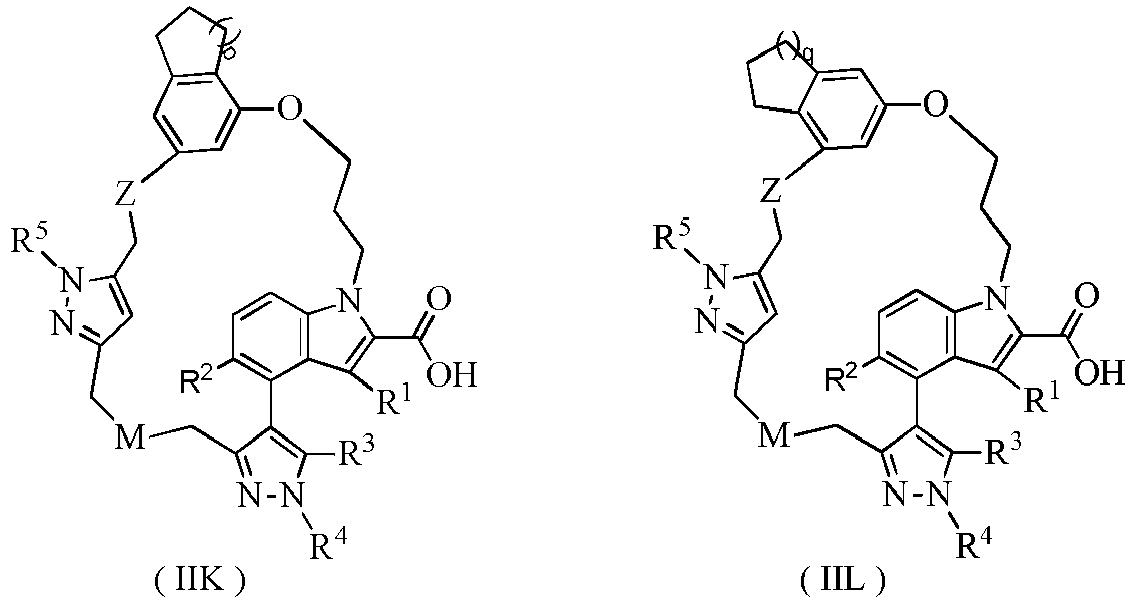 p is 1 or 2;q is 1 or 2;Z, M and R1∼R5 are as defined in claim 1.
 - The compound of formula (IM) or the tautomer, mesomer, racemate, enantiomer, diastereomer thereof, or mixture thereof, or the pharmaceutically acceptable salt thereof according to any one of claims 1 to 7, being a compound of formula (IIK-1), (IIK-2), (IIL-1) or (IIL-2) or a tautomer, mesomer, racemate, enantiomer, diastereomer thereof, or mixture thereof, or a pharmaceutically acceptable salt thereof:

 p is 1 or 2;q is 1 or 2;Z, M and R1∼R5 are as defined in claim 1.
 - The compound of formula (IM) or the tautomer, mesomer, racemate, enantiomer, diastereomer thereof, or mixture thereof, or the pharmaceutically acceptable salt thereof according to any one of claims 1 to 4, being a compound of formula (I) or a tautomer, mesomer, racemate, enantiomer, diastereomer thereof, or mixture thereof, or a pharmaceutically acceptable salt thereof:
 M is a S atom, O atom or -NR6-;R1 is selected from the group consisting of hydrogen atom, halogen, alkyl, deuterated alkyl, alkoxy, haloalkyl, hydroxy, hydroxyalkyl, cyano, amino, nitro, cycloalkyl, cycloalkyloxy and heterocyclyl;R2 is selected from the group consisting of hydrogen atom, halogen, alkyl, deuterated alkyl, alkoxy, haloalkyl, hydroxy, hydroxyalkyl, cyano, amino and nitro;R3 is selected from the group consisting of hydrogen atom, halogen, alkyl, deuterated alkyl, alkoxy, haloalkyl, hydroxy, hydroxyalkyl, cyano, amino and nitro;R4 is selected from the group consisting of hydrogen atom, alkyl, deuterated alkyl and cycloalkyl;or R3 and R4 together with the adjacent carbon atom and N atom form a heterocyclyl;R5 is selected from the group consisting of hydrogen atom, alkyl, deuterated alkyl and cycloalkyl;R6 is selected from the group consisting of hydrogen atom, alkyl and cycloalkyl;n is 0, 1, 2 or 3.
 - The compound of formula (IM) or the tautomer, mesomer, racemate, enantiomer, diastereomer thereof, or mixture thereof, or the pharmaceutically acceptable salt thereof according to any one of claims 1 to 9, wherein R3 is an alkyl.
- The compound of formula (IM) or the tautomer, mesomer, racemate, enantiomer, diastereomer thereof, or mixture thereof, or the pharmaceutically acceptable salt thereof according to any one of claims 1 to 10, wherein R4 or R5 is an alkyl.
- The compound of formula (IM) or the tautomer, mesomer, racemate, enantiomer, diastereomer thereof, or mixture thereof, or the pharmaceutically acceptable salt thereof according to any one of claims 1 to 4 and 9 to 11, being a compound of formula (II) or a tautomer, mesomer, racemate, enantiomer, diastereomer thereof, or mixture thereof, or a pharmaceutically acceptable salt thereof,

M, R1, R2 and n are as defined in claim 1. - The compound of formula (IM) or the tautomer, mesomer, racemate, enantiomer, diastereomer thereof, or mixture thereof, or the pharmaceutically acceptable salt thereof according to any one of claims 1 to 12, wherein M is an S atom or -N(CH3)-, and preferably S atom.
- The compound of formula (IM) or the tautomer, mesomer, racemate, enantiomer, diastereomer thereof, or mixture thereof, or the pharmaceutically acceptable salt thereof according to any one of claims 9 to 13, being a compound of formula (III) or a tautomer, mesomer, racemate, enantiomer, diastereomer thereof, or mixture thereof, or a pharmaceutically acceptable salt thereof,

R1 and R2 are as defined in claim 1. - The compound of formula (IM) or the tautomer, mesomer, racemate, enantiomer, diastereomer thereof, or mixture thereof, or the pharmaceutically acceptable salt thereof according to any one of claims 1 to 14, wherein R1 is a hydrogen atom or alkyl, and preferably alkyl.
- The compound of formula (IM) or the tautomer, mesomer, racemate, enantiomer, diastereomer thereof, or mixture thereof, or the pharmaceutically acceptable salt thereof according to any one of claims 1 to 15, wherein R2 is a halogen.
- The compound of formula (IM) or the tautomer, mesomer, racemate, enantiomer, diastereomer thereof, or mixture thereof, or the pharmaceutically acceptable salt thereof according to any one of claims 1 to 16, wherein the compound is selected from the group consisting of:


- A compound of formula (IMA) or a tautomer, mesomer, racemate, enantiomer, diastereomer thereof, or mixture thereof, or a pharmaceutically acceptable salt thereof,
 Rm, Rn and Rw are identical or different and are each independently selected from the group consisting of hydrogen atom, halogen, alkyl, deuterated alkyl, alkoxy, haloalkyl, hydroxy, hydroxyalkyl, cyano, amino, nitro, cycloalkyl, cycloalkyloxy and heterocyclyl;or Rm and Rn together with adjacent carbon atoms form an aryl, heteroaryl, cycloalkyl or heterocyclyl; and Rw is selected from the group consisting of hydrogen atom, halogen, alkyl, deuterated alkyl, alkoxy, haloalkyl, hydroxy, hydroxyalkyl, cyano, amino, nitro, cycloalkyl, cycloalkyloxy and heterocyclyl;or Rn and Rw together with adjacent carbon atoms form an aryl, heteroaryl, cycloalkyl or heterocyclyl; and Rm is selected from the group consisting of hydrogen atom, halogen, alkyl, deuterated alkyl, alkoxy, haloalkyl, hydroxy, hydroxyalkyl, cyano, amino, nitro, cycloalkyl, cycloalkyloxy and heterocyclyl;Z is a S atom or -CH2-;M is a S atom, O atom or -NR6-;R1 is selected from the group consisting of hydrogen atom, halogen, alkyl, deuterated alkyl, alkoxy, haloalkyl, hydroxy, hydroxyalkyl, cyano, amino, nitro, cycloalkyl, cycloalkyloxy and heterocyclyl;R2 is selected from the group consisting of hydrogen atom, halogen, alkyl, deuterated alkyl, alkoxy, haloalkyl, hydroxy, hydroxyalkyl, cyano, amino and nitro;R3 is selected from the group consisting of hydrogen atom, halogen, alkyl, deuterated alkyl, alkoxy, haloalkyl, hydroxy, hydroxyalkyl, cyano, amino and nitro;R4 is selected from the group consisting of hydrogen atom, alkyl, deuterated alkyl and cycloalkyl;or R3 and R4 together with the adjacent carbon atom and N atom form a heterocyclyl;R5 is selected from the group consisting of hydrogen atom, alkyl, deuterated alkyl and cycloalkyl;R6 is selected from the group consisting of hydrogen atom, alkyl and cycloalkyl;Ra is an alkyl;n is 0, 1, 2 or 3.
 - The compound of formula (IMA) or the tautomer, mesomer, racemate, enantiomer, diastereomer thereof, or mixture thereof, or the pharmaceutically acceptable salt thereof according to claim 18, being a compound of formula (IMA-1) or a tautomer, mesomer, racemate, enantiomer, diastereomer thereof, or mixture thereof, or a pharmaceutically acceptable salt thereof:

Ra, Rm, Rn, Rw, Z, M, R1∼R5 and n are as defined in claim 18. - The compound of formula (IMA) or the tautomer, mesomer, racemate, enantiomer, diastereomer thereof, or mixture thereof, or the pharmaceutically acceptable salt thereof according to claim 18, being a compound of formula (IKA) or (ILA) or a tautomer, mesomer, racemate, enantiomer, diastereomer thereof, or mixture thereof, or a pharmaceutically acceptable salt thereof:
 Ra is an alkyl;p is 0, 1 or 2;q is 0, 1 or 2;Rm and Rw are identical or different and are each independently selected from the group consisting of hydrogen atom, halogen and alkyl;Z, M, R1∼R5 and n are as defined in claim 18.
 - The compound of formula (IMA) or the tautomer, mesomer, racemate, enantiomer, diastereomer thereof, or mixture thereof, or the pharmaceutically acceptable salt thereof according to any one of claims 18 to 20, being a compound of formula (IKA-1) or a tautomer, mesomer, racemate, enantiomer, diastereomer thereof, or mixture thereof, or a pharmaceutically acceptable salt thereof:
 Ra is an alkyl;p is 0, 1 or 2;Rw is selected from the group consisting of hydrogen atom, halogen and alkyl;Z, M, R1∼R5 and n are as defined in claim 18.
 - The compound of formula (IMA) or the tautomer, mesomer, racemate, enantiomer, diastereomer thereof, or mixture thereof, or the pharmaceutically acceptable salt thereof according to claim 18, being a compound of formula (IA) or a tautomer, mesomer, racemate, enantiomer, diastereomer thereof, or mixture thereof, or a pharmaceutically acceptable salt thereof:
 Ra is an alkyl;M, R1∼R5 and n are as defined in claim 18.
 - The compound of formula (IMA) or the tautomer, mesomer, racemate, enantiomer, diastereomer thereof, or mixture thereof, or the pharmaceutically acceptable salt thereof according to any one of claims 18 to 22, wherein the compound is selected from the group consisting of:
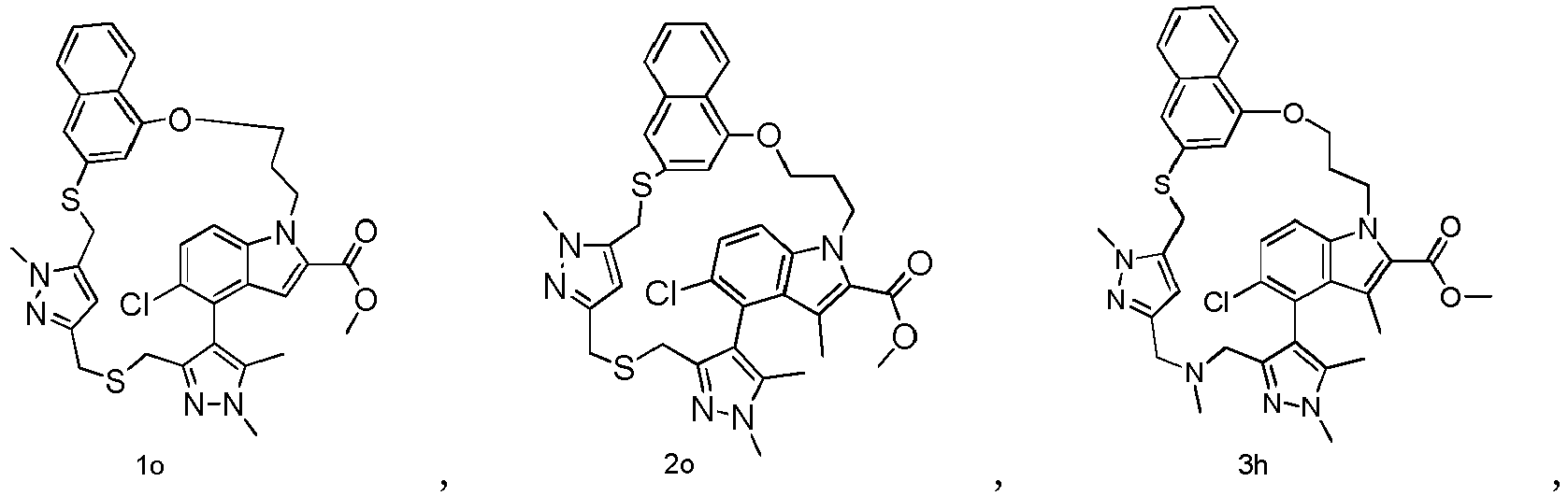
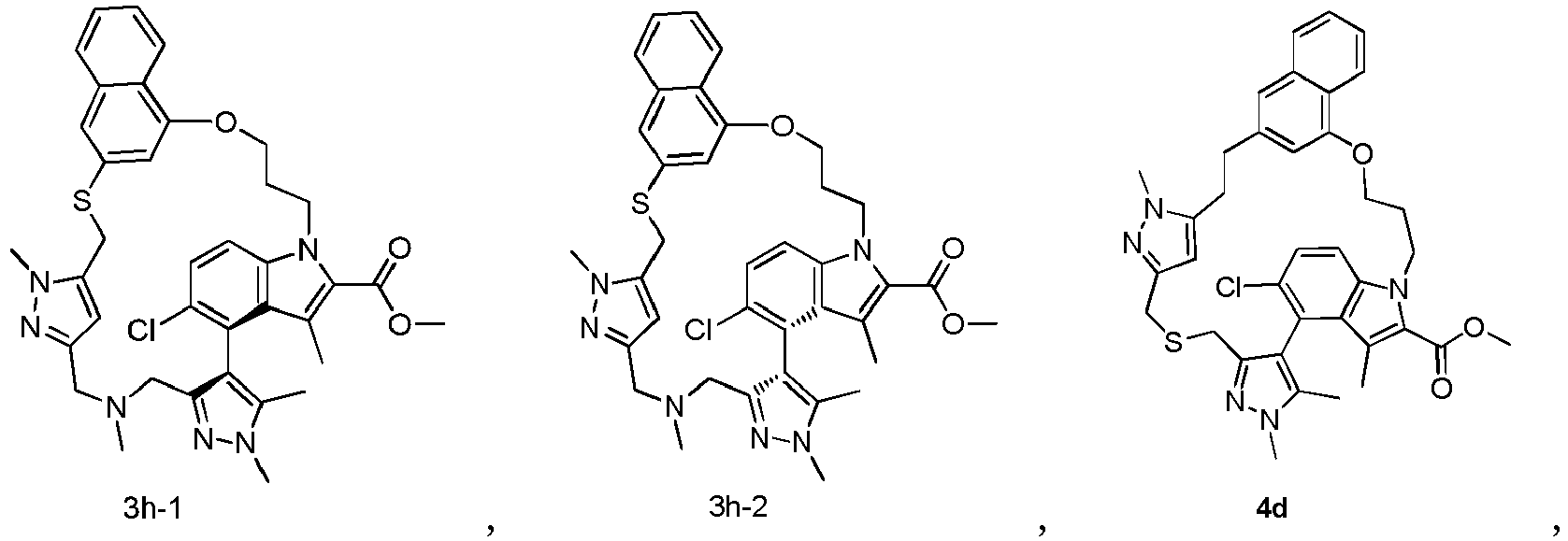


- A method for preparing the compound of formula (IM) or the tautomer, mesomer, racemate, enantiomer, diastereomer thereof, or mixture thereof, or the pharmaceutically acceptable salt thereof according to claim 1, comprising the following step of:

wherein:Ra is an alkyl;Rm, Rn, Rw, Z, M, R1∼R5 and n are as defined in claim 1. - A method for preparing the compound of formula (IM) or the tautomer, mesomer, racemate, enantiomer, diastereomer thereof, or mixture thereof, or the pharmaceutically acceptable salt thereof according to claim 2, comprising the following step of:

wherein:Ra is an alkyl;Rm, Rn, Rw, Z, M, R1∼R5 and n are as defined in claim 2. - A method for preparing the compound of formula (IM) or the tautomer, mesomer, racemate, enantiomer, diastereomer thereof, or mixture thereof, or the pharmaceutically acceptable salt thereof according to claim 5, comprising the following step of:

wherein:Ra is an alkyl;p, Rw, Z, M, R1∼R5 and n are as defined in claim 5. - A method for preparing the compound of formula (IM) or the tautomer, mesomer, racemate, enantiomer, diastereomer thereof, or mixture thereof, or the pharmaceutically acceptable salt thereof according to claim 5, comprising the following step of:

wherein:Ra is an alkyl;q, Rm, Z, M, R1∼R5 and n are as defined in claim 5. - A method for preparing the compound of formula (IM) or the tautomer, mesomer, racemate, enantiomer, diastereomer thereof, or mixture thereof, or the pharmaceutically acceptable salt thereof according to claim 6, comprising the following step of:

wherein:Ra is an alkyl;p, Rw, Z, M, R1∼R5 and n are as defined in claim 6. - A method for preparing the compound of formula (IM) or the tautomer, mesomer, racemate, enantiomer, diastereomer thereof, or mixture thereof, or the pharmaceutically acceptable salt thereof according to claim 9, comprising the following step of:

wherein:Ra is an alkyl;M, R1∼R5 and n are as defined in claim 9. - A pharmaceutical composition comprising the compound of formula (IM) or the tautomer, mesomer, racemate, enantiomer, diastereomer thereof, or mixture thereof, or the pharmaceutically acceptable salt thereof according to any one of claims 1 to 17, and one or more pharmaceutically acceptable carrier(s), diluent(s) or excipient(s).
- Use of the compound of formula (IM) or the tautomer, mesomer, racemate, enantiomer, diastereomer thereof, or mixture thereof, or the pharmaceutically acceptable salt thereof according to any one of claims 1 to 17, or the pharmaceutical composition according to claim 30 in the preparation of a medicament for inhibiting MCL-1.
- Use of the compound of formula (IM) or the tautomer, mesomer, racemate, enantiomer, diastereomer thereof, or mixture thereof, or the pharmaceutically acceptable salt thereof according to any one of claims 1 to 17, or the pharmaceutical composition according to claim 30 in the preparation of medicaments for the prevention or treatment of MCL-1 mediated diseases.
- Use of the compound of formula (IM) or the tautomer, mesomer, racemate, enantiomer, diastereomer thereof, or mixture thereof, or the pharmaceutically acceptable salt thereof according to any one of claims 1 to 17, or the pharmaceutical composition according to claim 30 in the preparation of medicaments for the treatment of tumors, autoimmune diseases or immune system diseases.
- The use according to claim 33, wherein the tumor is selected from the group consisting of bladder cancer, brain tumor, breast cancer, uterine cancer, cervical cancer, endometrial cancer, ovarian cancer, leukemia, kidney cancer, colon cancer, rectal cancer, colorectal cancer, esophageal cancer, liver cancer, stomach cancer, head and neck cancer, skin cancer, lymphoma, pancreatic cancer, melanoma, myeloma, bone cancer, neuroblastoma, glioma, sarcoma, lung cancer, thyroid cancer and prostate cancer.
Applications Claiming Priority (3)
| Application Number | Priority Date | Filing Date | Title |
|---|---|---|---|
| CN201811156217 | 2018-09-30 | ||
| CN201910227359 | 2019-03-25 | ||
| PCT/CN2019/108322 WO2020063792A1 (en) | 2018-09-30 | 2019-09-27 | Indole macrocyclic derivative, preparation method therefor and application thereof in medicine |
Publications (2)
| Publication Number | Publication Date |
|---|---|
| EP3858840A1 true EP3858840A1 (en) | 2021-08-04 |
| EP3858840A4 EP3858840A4 (en) | 2022-05-04 |
Family
ID=69953395
Family Applications (1)
| Application Number | Title | Priority Date | Filing Date |
|---|---|---|---|
| EP19864112.8A Withdrawn EP3858840A4 (en) | 2018-09-30 | 2019-09-27 | Indole macrocyclic derivative, preparation method therefor and application thereof in medicine |
Country Status (11)
| Country | Link |
|---|---|
| US (1) | US20220041623A1 (en) |
| EP (1) | EP3858840A4 (en) |
| JP (1) | JP2022503896A (en) |
| KR (1) | KR20210070312A (en) |
| CN (1) | CN112533929B (en) |
| AU (1) | AU2019347963A1 (en) |
| BR (1) | BR112021004805A2 (en) |
| CA (1) | CA3113917A1 (en) |
| MX (1) | MX2021003655A (en) |
| TW (1) | TW202014423A (en) |
| WO (1) | WO2020063792A1 (en) |
Families Citing this family (13)
| Publication number | Priority date | Publication date | Assignee | Title |
|---|---|---|---|---|
| TWI749404B (en) * | 2018-11-22 | 2021-12-11 | 大陸商蘇州亞盛藥業有限公司 | Macrocyclic indole as MCL-1 inhibitor |
| MA56505A (en) | 2019-06-21 | 2022-04-27 | Janssen Pharmaceutica Nv | MACROCYCLIC MCL-1 INHIBITORS |
| US20230021562A1 (en) | 2019-11-21 | 2023-01-26 | Janssen Pharmaceutica Nv | Macrocylic indole derivatives mcl-1 inhibitors |
| CA3157590A1 (en) | 2019-11-21 | 2021-05-27 | Janssen Pharmaceutica Nv | Macrocyclic sulfonyl derivatives as mcl-1 inhibitors |
| AU2020409006A1 (en) * | 2019-12-18 | 2022-06-30 | Zeno Management, Inc. | Macrocyclic compounds |
| CN115151551B (en) * | 2020-02-21 | 2024-10-25 | 詹森药业有限公司 | Macrocyclic indole derivatives as MCL-1 inhibitors |
| CN115335384B (en) * | 2020-03-30 | 2024-10-22 | 江苏恒瑞医药股份有限公司 | Crystal form of indole macrocyclic derivative and preparation method thereof |
| EP4157852A1 (en) | 2020-05-29 | 2023-04-05 | JANSSEN Pharmaceutica NV | Macrocyclic 7-pyrazol-5-yl-indole derivatives as inhibitors of mcl-1 |
| CN115943147A (en) | 2020-06-19 | 2023-04-07 | 詹森药业有限公司 | N-linked macrocyclic 7-(pyrazol-5-yl)-indole derivatives as MCL-1 inhibitors |
| CA3181816A1 (en) | 2020-06-19 | 2021-12-23 | Aldo Peschiulli | N-linked macrocyclic 4-(pyrazol-5-yl)-indole derivatives as inhibitors of mcl-1 |
| CA3184877A1 (en) | 2020-07-08 | 2022-01-13 | Benoit Christian Albert Ghislain De Boeck | Macrocyclic ether containing indole derivatives as inhibitors of mcl-1 |
| WO2022129333A1 (en) | 2020-12-17 | 2022-06-23 | Janssen Pharmaceutica Nv | Branched macrocyclic 4-(pyrazol-5-yl)-indole derivatives as inhibitors of mcl-1 |
| CN116848126A (en) | 2021-02-12 | 2023-10-03 | 詹森药业有限公司 | Macrocyclic 1,3-bridged 6-chloro-7-pyrazol-4-yl-1H-indole-2-carboxylate and 6-chloro-7-pyrimidin-5-yl-1H-indole- 2-carboxylate derivatives as MCL-1 inhibitors for cancer treatment |
Family Cites Families (7)
| Publication number | Priority date | Publication date | Assignee | Title |
|---|---|---|---|---|
| KR101511074B1 (en) * | 2007-04-16 | 2015-04-13 | 애브비 인코포레이티드 | 7-substituted indole Mcl-1 inhibitor |
| MX2009011210A (en) * | 2007-04-16 | 2009-10-30 | Abbott Lab | 7-nonsubstituted indole mcl-1 inhibitors. |
| WO2017156181A1 (en) | 2016-03-09 | 2017-09-14 | Raze Therapeutics, Inc. | 3-phosphoglycerate dehydrogenase inhibitors and uses thereof |
| CR20180499A (en) * | 2016-04-22 | 2019-01-25 | Astrazeneca Ab | MCL1 MACROCICLYCLES INHIBITORS TO TREAT CANCER |
| TW201904976A (en) | 2017-03-31 | 2019-02-01 | 瑞典商阿斯特捷利康公司 | Mcl-1 inhibitors and methods of use thereof |
| TWI749404B (en) * | 2018-11-22 | 2021-12-11 | 大陸商蘇州亞盛藥業有限公司 | Macrocyclic indole as MCL-1 inhibitor |
| MA56505A (en) * | 2019-06-21 | 2022-04-27 | Janssen Pharmaceutica Nv | MACROCYCLIC MCL-1 INHIBITORS |
-
2019
- 2019-09-27 WO PCT/CN2019/108322 patent/WO2020063792A1/en not_active Ceased
- 2019-09-27 CN CN201980049788.6A patent/CN112533929B/en active Active
- 2019-09-27 JP JP2021517593A patent/JP2022503896A/en active Pending
- 2019-09-27 CA CA3113917A patent/CA3113917A1/en not_active Abandoned
- 2019-09-27 US US17/281,525 patent/US20220041623A1/en not_active Abandoned
- 2019-09-27 AU AU2019347963A patent/AU2019347963A1/en not_active Abandoned
- 2019-09-27 KR KR1020217011755A patent/KR20210070312A/en not_active Withdrawn
- 2019-09-27 MX MX2021003655A patent/MX2021003655A/en unknown
- 2019-09-27 EP EP19864112.8A patent/EP3858840A4/en not_active Withdrawn
- 2019-09-27 BR BR112021004805-7A patent/BR112021004805A2/en not_active Application Discontinuation
- 2019-09-27 TW TW108135199A patent/TW202014423A/en unknown
Also Published As
| Publication number | Publication date |
|---|---|
| CA3113917A1 (en) | 2020-04-02 |
| AU2019347963A1 (en) | 2021-05-27 |
| EP3858840A4 (en) | 2022-05-04 |
| CN112533929B (en) | 2022-09-16 |
| TW202014423A (en) | 2020-04-16 |
| JP2022503896A (en) | 2022-01-12 |
| CN112533929A (en) | 2021-03-19 |
| US20220041623A1 (en) | 2022-02-10 |
| KR20210070312A (en) | 2021-06-14 |
| BR112021004805A2 (en) | 2021-06-01 |
| MX2021003655A (en) | 2021-06-23 |
| WO2020063792A1 (en) | 2020-04-02 |
Similar Documents
| Publication | Publication Date | Title |
|---|---|---|
| CN112533929B (en) | Indole macrocyclic derivatives, preparation method and medical application thereof | |
| EP4389738A1 (en) | Sos1 inhibitor and use thereof | |
| ES2902198T3 (en) | 1,4-Dissubstituted Pyridazine Analogs and Methods for Treating Conditions Related to SMN Deficiency | |
| EP3061747B1 (en) | Pyridic ketone derivatives, method of preparing same, and pharmaceutical application thereof | |
| WO2022017339A1 (en) | Fused pyridazine derivative, preparation method therefor and pharmaceutical use thereof | |
| EP3287461B1 (en) | Imidazo isoindole derivative, preparation method therefor and medical use thereof | |
| EP4442680A1 (en) | Pyrazole derivative, and preparation method therefor and use thereof in medicine | |
| EP3786157B1 (en) | Phenyl triazole mll1-wdr5 protein-protein interaction inhibitor | |
| BR112015016911B1 (en) | Thiadiazole, its analogues, its uses, and pharmaceutical composition | |
| EA027563B1 (en) | Anticancer pyridopyrazines via the inhibition of fgfr kinases | |
| EP3710456B1 (en) | Macrocyclic indole derivatives | |
| EP3710449B1 (en) | Macrocyclic fluorine substituted indole derivatives as mcl-1 inhibitors, for use in the treatment of cancer | |
| CA3159376A1 (en) | Pyrazolo-heteroaryl derivative, preparation method therefor, and medical use thereof | |
| WO2022017494A1 (en) | Crystal form of pyridazine derivative free base, and preparation method therefor and use thereof | |
| WO2023069884A1 (en) | Kdm1a inhibitors for the treatment of disease | |
| CN113574058A (en) | Indole macrocyclic derivatives, preparation method and medical application thereof | |
| CN114423759B (en) | Condensed heteroaryl derivatives, their preparation methods and their applications in medicine | |
| EP3539957A1 (en) | 3,4-bipyridyl pyrazole derivative, and preparation method therefor and medical application thereof | |
| WO2025011574A1 (en) | Prmt5 inhibitor, preparation method therefor and use thereof | |
| HK40045551A (en) | Indole macrocyclic derivative, preparation method therefor and application thereof in medicine | |
| CN110964034B (en) | Pyrimidothiophene derivative, preparation method and medical application thereof | |
| CN111187277B (en) | Thienopyrimidine derivative, preparation method and medical application thereof | |
| CN115335384B (en) | Crystal form of indole macrocyclic derivative and preparation method thereof | |
| EP4739659A1 (en) | Compounds containing a dialkylaryl moiety and their use | |
| KR20250121036A (en) | Naphthamide compounds, their preparation methods and applications |
Legal Events
| Date | Code | Title | Description |
|---|---|---|---|
| STAA | Information on the status of an ep patent application or granted ep patent |
Free format text: STATUS: THE INTERNATIONAL PUBLICATION HAS BEEN MADE |
|
| PUAI | Public reference made under article 153(3) epc to a published international application that has entered the european phase |
Free format text: ORIGINAL CODE: 0009012 |
|
| STAA | Information on the status of an ep patent application or granted ep patent |
Free format text: STATUS: REQUEST FOR EXAMINATION WAS MADE |
|
| 17P | Request for examination filed |
Effective date: 20210319 |
|
| AK | Designated contracting states |
Kind code of ref document: A1 Designated state(s): AL AT BE BG CH CY CZ DE DK EE ES FI FR GB GR HR HU IE IS IT LI LT LU LV MC MK MT NL NO PL PT RO RS SE SI SK SM TR |
|
| DAV | Request for validation of the european patent (deleted) | ||
| DAX | Request for extension of the european patent (deleted) | ||
| A4 | Supplementary search report drawn up and despatched |
Effective date: 20220407 |
|
| RIC1 | Information provided on ipc code assigned before grant |
Ipc: A61P 35/00 20060101ALI20220401BHEP Ipc: A61K 31/395 20060101ALI20220401BHEP Ipc: C07D 515/22 20060101AFI20220401BHEP |
|
| RAP3 | Party data changed (applicant data changed or rights of an application transferred) |
Owner name: SHANGHAI HENGRUI PHARMACEUTICAL CO., LTD. Owner name: JIANGSU HENGRUI PHARMACEUTICALS CO., LTD. |
|
| STAA | Information on the status of an ep patent application or granted ep patent |
Free format text: STATUS: THE APPLICATION IS DEEMED TO BE WITHDRAWN |
|
| 18D | Application deemed to be withdrawn |
Effective date: 20221108 |