EP3858700B1 - Vehicle - Google Patents
Vehicle Download PDFInfo
- Publication number
- EP3858700B1 EP3858700B1 EP21154204.8A EP21154204A EP3858700B1 EP 3858700 B1 EP3858700 B1 EP 3858700B1 EP 21154204 A EP21154204 A EP 21154204A EP 3858700 B1 EP3858700 B1 EP 3858700B1
- Authority
- EP
- European Patent Office
- Prior art keywords
- vehicle
- command
- mode
- remarks
- status
- Prior art date
- Legal status (The legal status is an assumption and is not a legal conclusion. Google has not performed a legal analysis and makes no representation as to the accuracy of the status listed.)
- Active
Links
Images








Classifications
-
- G—PHYSICS
- G05—CONTROLLING; REGULATING
- G05D—SYSTEMS FOR CONTROLLING OR REGULATING NON-ELECTRIC VARIABLES
- G05D1/00—Control of position, course, altitude or attitude of land, water, air or space vehicles, e.g. using automatic pilots
- G05D1/02—Control of position or course in two dimensions
- G05D1/021—Control of position or course in two dimensions specially adapted to land vehicles
- G05D1/0212—Control of position or course in two dimensions specially adapted to land vehicles with means for defining a desired trajectory
-
- B—PERFORMING OPERATIONS; TRANSPORTING
- B60—VEHICLES IN GENERAL
- B60W—CONJOINT CONTROL OF VEHICLE SUB-UNITS OF DIFFERENT TYPE OR DIFFERENT FUNCTION; CONTROL SYSTEMS SPECIALLY ADAPTED FOR HYBRID VEHICLES; ROAD VEHICLE DRIVE CONTROL SYSTEMS FOR PURPOSES NOT RELATED TO THE CONTROL OF A PARTICULAR SUB-UNIT
- B60W10/00—Conjoint control of vehicle sub-units of different type or different function
- B60W10/04—Conjoint control of vehicle sub-units of different type or different function including control of propulsion units
- B60W10/06—Conjoint control of vehicle sub-units of different type or different function including control of propulsion units including control of combustion engines
-
- B—PERFORMING OPERATIONS; TRANSPORTING
- B60—VEHICLES IN GENERAL
- B60W—CONJOINT CONTROL OF VEHICLE SUB-UNITS OF DIFFERENT TYPE OR DIFFERENT FUNCTION; CONTROL SYSTEMS SPECIALLY ADAPTED FOR HYBRID VEHICLES; ROAD VEHICLE DRIVE CONTROL SYSTEMS FOR PURPOSES NOT RELATED TO THE CONTROL OF A PARTICULAR SUB-UNIT
- B60W60/00—Drive control systems specially adapted for autonomous road vehicles
-
- B—PERFORMING OPERATIONS; TRANSPORTING
- B60—VEHICLES IN GENERAL
- B60W—CONJOINT CONTROL OF VEHICLE SUB-UNITS OF DIFFERENT TYPE OR DIFFERENT FUNCTION; CONTROL SYSTEMS SPECIALLY ADAPTED FOR HYBRID VEHICLES; ROAD VEHICLE DRIVE CONTROL SYSTEMS FOR PURPOSES NOT RELATED TO THE CONTROL OF A PARTICULAR SUB-UNIT
- B60W30/00—Purposes of road vehicle drive control systems not related to the control of a particular sub-unit, e.g. of systems using conjoint control of vehicle sub-units
- B60W30/10—Path keeping
-
- B—PERFORMING OPERATIONS; TRANSPORTING
- B60—VEHICLES IN GENERAL
- B60R—VEHICLES, VEHICLE FITTINGS, OR VEHICLE PARTS, NOT OTHERWISE PROVIDED FOR
- B60R16/00—Electric or fluid circuits specially adapted for vehicles and not otherwise provided for; Arrangement of elements of electric or fluid circuits specially adapted for vehicles and not otherwise provided for
- B60R16/02—Electric or fluid circuits specially adapted for vehicles and not otherwise provided for; Arrangement of elements of electric or fluid circuits specially adapted for vehicles and not otherwise provided for electric constitutive elements
-
- B—PERFORMING OPERATIONS; TRANSPORTING
- B60—VEHICLES IN GENERAL
- B60W—CONJOINT CONTROL OF VEHICLE SUB-UNITS OF DIFFERENT TYPE OR DIFFERENT FUNCTION; CONTROL SYSTEMS SPECIALLY ADAPTED FOR HYBRID VEHICLES; ROAD VEHICLE DRIVE CONTROL SYSTEMS FOR PURPOSES NOT RELATED TO THE CONTROL OF A PARTICULAR SUB-UNIT
- B60W10/00—Conjoint control of vehicle sub-units of different type or different function
- B60W10/18—Conjoint control of vehicle sub-units of different type or different function including control of braking systems
- B60W10/184—Conjoint control of vehicle sub-units of different type or different function including control of braking systems with wheel brakes
-
- B—PERFORMING OPERATIONS; TRANSPORTING
- B60—VEHICLES IN GENERAL
- B60W—CONJOINT CONTROL OF VEHICLE SUB-UNITS OF DIFFERENT TYPE OR DIFFERENT FUNCTION; CONTROL SYSTEMS SPECIALLY ADAPTED FOR HYBRID VEHICLES; ROAD VEHICLE DRIVE CONTROL SYSTEMS FOR PURPOSES NOT RELATED TO THE CONTROL OF A PARTICULAR SUB-UNIT
- B60W30/00—Purposes of road vehicle drive control systems not related to the control of a particular sub-unit, e.g. of systems using conjoint control of vehicle sub-units
- B60W30/14—Adaptive cruise control
- B60W30/16—Control of distance between vehicles, e.g. keeping a distance to preceding vehicle
-
- B—PERFORMING OPERATIONS; TRANSPORTING
- B60—VEHICLES IN GENERAL
- B60W—CONJOINT CONTROL OF VEHICLE SUB-UNITS OF DIFFERENT TYPE OR DIFFERENT FUNCTION; CONTROL SYSTEMS SPECIALLY ADAPTED FOR HYBRID VEHICLES; ROAD VEHICLE DRIVE CONTROL SYSTEMS FOR PURPOSES NOT RELATED TO THE CONTROL OF A PARTICULAR SUB-UNIT
- B60W30/00—Purposes of road vehicle drive control systems not related to the control of a particular sub-unit, e.g. of systems using conjoint control of vehicle sub-units
- B60W30/18—Propelling the vehicle
- B60W30/18009—Propelling the vehicle related to particular drive situations
- B60W30/18054—Propelling the vehicle related to particular drive situations at stand still, e.g. engine in idling state
-
- B—PERFORMING OPERATIONS; TRANSPORTING
- B60—VEHICLES IN GENERAL
- B60W—CONJOINT CONTROL OF VEHICLE SUB-UNITS OF DIFFERENT TYPE OR DIFFERENT FUNCTION; CONTROL SYSTEMS SPECIALLY ADAPTED FOR HYBRID VEHICLES; ROAD VEHICLE DRIVE CONTROL SYSTEMS FOR PURPOSES NOT RELATED TO THE CONTROL OF A PARTICULAR SUB-UNIT
- B60W40/00—Estimation or calculation of non-directly measurable driving parameters for road vehicle drive control systems not related to the control of a particular sub unit, e.g. by using mathematical models
-
- B—PERFORMING OPERATIONS; TRANSPORTING
- B60—VEHICLES IN GENERAL
- B60W—CONJOINT CONTROL OF VEHICLE SUB-UNITS OF DIFFERENT TYPE OR DIFFERENT FUNCTION; CONTROL SYSTEMS SPECIALLY ADAPTED FOR HYBRID VEHICLES; ROAD VEHICLE DRIVE CONTROL SYSTEMS FOR PURPOSES NOT RELATED TO THE CONTROL OF A PARTICULAR SUB-UNIT
- B60W40/00—Estimation or calculation of non-directly measurable driving parameters for road vehicle drive control systems not related to the control of a particular sub unit, e.g. by using mathematical models
- B60W40/08—Estimation or calculation of non-directly measurable driving parameters for road vehicle drive control systems not related to the control of a particular sub unit, e.g. by using mathematical models related to drivers or passengers
-
- B—PERFORMING OPERATIONS; TRANSPORTING
- B60—VEHICLES IN GENERAL
- B60W—CONJOINT CONTROL OF VEHICLE SUB-UNITS OF DIFFERENT TYPE OR DIFFERENT FUNCTION; CONTROL SYSTEMS SPECIALLY ADAPTED FOR HYBRID VEHICLES; ROAD VEHICLE DRIVE CONTROL SYSTEMS FOR PURPOSES NOT RELATED TO THE CONTROL OF A PARTICULAR SUB-UNIT
- B60W40/00—Estimation or calculation of non-directly measurable driving parameters for road vehicle drive control systems not related to the control of a particular sub unit, e.g. by using mathematical models
- B60W40/10—Estimation or calculation of non-directly measurable driving parameters for road vehicle drive control systems not related to the control of a particular sub unit, e.g. by using mathematical models related to vehicle motion
-
- B—PERFORMING OPERATIONS; TRANSPORTING
- B60—VEHICLES IN GENERAL
- B60W—CONJOINT CONTROL OF VEHICLE SUB-UNITS OF DIFFERENT TYPE OR DIFFERENT FUNCTION; CONTROL SYSTEMS SPECIALLY ADAPTED FOR HYBRID VEHICLES; ROAD VEHICLE DRIVE CONTROL SYSTEMS FOR PURPOSES NOT RELATED TO THE CONTROL OF A PARTICULAR SUB-UNIT
- B60W40/00—Estimation or calculation of non-directly measurable driving parameters for road vehicle drive control systems not related to the control of a particular sub unit, e.g. by using mathematical models
- B60W40/10—Estimation or calculation of non-directly measurable driving parameters for road vehicle drive control systems not related to the control of a particular sub unit, e.g. by using mathematical models related to vehicle motion
- B60W40/105—Speed
-
- B—PERFORMING OPERATIONS; TRANSPORTING
- B60—VEHICLES IN GENERAL
- B60W—CONJOINT CONTROL OF VEHICLE SUB-UNITS OF DIFFERENT TYPE OR DIFFERENT FUNCTION; CONTROL SYSTEMS SPECIALLY ADAPTED FOR HYBRID VEHICLES; ROAD VEHICLE DRIVE CONTROL SYSTEMS FOR PURPOSES NOT RELATED TO THE CONTROL OF A PARTICULAR SUB-UNIT
- B60W60/00—Drive control systems specially adapted for autonomous road vehicles
- B60W60/001—Planning or execution of driving tasks
-
- G—PHYSICS
- G01—MEASURING; TESTING
- G01P—MEASURING LINEAR OR ANGULAR SPEED, ACCELERATION, DECELERATION, OR SHOCK; INDICATING PRESENCE, ABSENCE, OR DIRECTION, OF MOVEMENT
- G01P13/00—Indicating or recording presence, absence, or direction, of movement
- G01P13/02—Indicating direction only, e.g. by weather vane
- G01P13/04—Indicating positive or negative direction of a linear movement or clockwise or anti-clockwise direction of a rotational movement
-
- G—PHYSICS
- G05—CONTROLLING; REGULATING
- G05D—SYSTEMS FOR CONTROLLING OR REGULATING NON-ELECTRIC VARIABLES
- G05D1/00—Control of position, course, altitude or attitude of land, water, air or space vehicles, e.g. using automatic pilots
- G05D1/02—Control of position or course in two dimensions
- G05D1/021—Control of position or course in two dimensions specially adapted to land vehicles
- G05D1/0276—Control of position or course in two dimensions specially adapted to land vehicles using signals provided by a source external to the vehicle
- G05D1/028—Control of position or course in two dimensions specially adapted to land vehicles using signals provided by a source external to the vehicle using a RF signal
- G05D1/0282—Control of position or course in two dimensions specially adapted to land vehicles using signals provided by a source external to the vehicle using a RF signal generated in a local control room
-
- G—PHYSICS
- G08—SIGNALLING
- G08G—TRAFFIC CONTROL SYSTEMS
- G08G1/00—Traffic control systems for road vehicles
-
- B—PERFORMING OPERATIONS; TRANSPORTING
- B60—VEHICLES IN GENERAL
- B60Q—ARRANGEMENT OF SIGNALLING OR LIGHTING DEVICES, THE MOUNTING OR SUPPORTING THEREOF OR CIRCUITS THEREFOR, FOR VEHICLES IN GENERAL
- B60Q1/00—Arrangement of optical signalling or lighting devices, the mounting or supporting thereof or circuits therefor
- B60Q1/26—Arrangement of optical signalling or lighting devices, the mounting or supporting thereof or circuits therefor the devices being primarily intended to indicate the vehicle, or parts thereof, or to give signals, to other traffic
- B60Q1/34—Arrangement of optical signalling or lighting devices, the mounting or supporting thereof or circuits therefor the devices being primarily intended to indicate the vehicle, or parts thereof, or to give signals, to other traffic for indicating change of drive direction
-
- B—PERFORMING OPERATIONS; TRANSPORTING
- B60—VEHICLES IN GENERAL
- B60W—CONJOINT CONTROL OF VEHICLE SUB-UNITS OF DIFFERENT TYPE OR DIFFERENT FUNCTION; CONTROL SYSTEMS SPECIALLY ADAPTED FOR HYBRID VEHICLES; ROAD VEHICLE DRIVE CONTROL SYSTEMS FOR PURPOSES NOT RELATED TO THE CONTROL OF A PARTICULAR SUB-UNIT
- B60W50/00—Details of control systems for road vehicle drive control not related to the control of a particular sub-unit, e.g. process diagnostic or vehicle driver interfaces
- B60W2050/0001—Details of the control system
- B60W2050/0002—Automatic control, details of type of controller or control system architecture
-
- B—PERFORMING OPERATIONS; TRANSPORTING
- B60—VEHICLES IN GENERAL
- B60W—CONJOINT CONTROL OF VEHICLE SUB-UNITS OF DIFFERENT TYPE OR DIFFERENT FUNCTION; CONTROL SYSTEMS SPECIALLY ADAPTED FOR HYBRID VEHICLES; ROAD VEHICLE DRIVE CONTROL SYSTEMS FOR PURPOSES NOT RELATED TO THE CONTROL OF A PARTICULAR SUB-UNIT
- B60W2520/00—Input parameters relating to overall vehicle dynamics
- B60W2520/04—Vehicle stop
-
- B—PERFORMING OPERATIONS; TRANSPORTING
- B60—VEHICLES IN GENERAL
- B60W—CONJOINT CONTROL OF VEHICLE SUB-UNITS OF DIFFERENT TYPE OR DIFFERENT FUNCTION; CONTROL SYSTEMS SPECIALLY ADAPTED FOR HYBRID VEHICLES; ROAD VEHICLE DRIVE CONTROL SYSTEMS FOR PURPOSES NOT RELATED TO THE CONTROL OF A PARTICULAR SUB-UNIT
- B60W2520/00—Input parameters relating to overall vehicle dynamics
- B60W2520/06—Direction of travel
-
- B—PERFORMING OPERATIONS; TRANSPORTING
- B60—VEHICLES IN GENERAL
- B60W—CONJOINT CONTROL OF VEHICLE SUB-UNITS OF DIFFERENT TYPE OR DIFFERENT FUNCTION; CONTROL SYSTEMS SPECIALLY ADAPTED FOR HYBRID VEHICLES; ROAD VEHICLE DRIVE CONTROL SYSTEMS FOR PURPOSES NOT RELATED TO THE CONTROL OF A PARTICULAR SUB-UNIT
- B60W2520/00—Input parameters relating to overall vehicle dynamics
- B60W2520/10—Longitudinal speed
-
- B—PERFORMING OPERATIONS; TRANSPORTING
- B60—VEHICLES IN GENERAL
- B60W—CONJOINT CONTROL OF VEHICLE SUB-UNITS OF DIFFERENT TYPE OR DIFFERENT FUNCTION; CONTROL SYSTEMS SPECIALLY ADAPTED FOR HYBRID VEHICLES; ROAD VEHICLE DRIVE CONTROL SYSTEMS FOR PURPOSES NOT RELATED TO THE CONTROL OF A PARTICULAR SUB-UNIT
- B60W2520/00—Input parameters relating to overall vehicle dynamics
- B60W2520/28—Wheel speed
-
- B—PERFORMING OPERATIONS; TRANSPORTING
- B60—VEHICLES IN GENERAL
- B60W—CONJOINT CONTROL OF VEHICLE SUB-UNITS OF DIFFERENT TYPE OR DIFFERENT FUNCTION; CONTROL SYSTEMS SPECIALLY ADAPTED FOR HYBRID VEHICLES; ROAD VEHICLE DRIVE CONTROL SYSTEMS FOR PURPOSES NOT RELATED TO THE CONTROL OF A PARTICULAR SUB-UNIT
- B60W30/00—Purposes of road vehicle drive control systems not related to the control of a particular sub-unit, e.g. of systems using conjoint control of vehicle sub-units
- B60W30/10—Path keeping
- B60W30/12—Lane keeping
-
- B—PERFORMING OPERATIONS; TRANSPORTING
- B60—VEHICLES IN GENERAL
- B60W—CONJOINT CONTROL OF VEHICLE SUB-UNITS OF DIFFERENT TYPE OR DIFFERENT FUNCTION; CONTROL SYSTEMS SPECIALLY ADAPTED FOR HYBRID VEHICLES; ROAD VEHICLE DRIVE CONTROL SYSTEMS FOR PURPOSES NOT RELATED TO THE CONTROL OF A PARTICULAR SUB-UNIT
- B60W40/00—Estimation or calculation of non-directly measurable driving parameters for road vehicle drive control systems not related to the control of a particular sub unit, e.g. by using mathematical models
- B60W40/10—Estimation or calculation of non-directly measurable driving parameters for road vehicle drive control systems not related to the control of a particular sub unit, e.g. by using mathematical models related to vehicle motion
- B60W40/101—Side slip angle of tyre
-
- B—PERFORMING OPERATIONS; TRANSPORTING
- B60—VEHICLES IN GENERAL
- B60Y—INDEXING SCHEME RELATING TO ASPECTS CROSS-CUTTING VEHICLE TECHNOLOGY
- B60Y2300/00—Purposes or special features of road vehicle drive control systems
- B60Y2300/18—Propelling the vehicle
- B60Y2300/18008—Propelling the vehicle related to particular drive situations
- B60Y2300/1805—Propelling the vehicle related to particular drive situations at stand still, e.g. engine in idling state
Definitions
- the present disclosure relates to a vehicle capable of autonomous driving.
- the autonomous driving system may externally be attached to a vehicle main body.
- autonomous driving is carried out as the vehicle is controlled in accordance with an instruction from the autonomous driving system.
- a state of the vehicle is desirably appropriately provided (conveyed) to the autonomous driving system.
- a moving direction of the vehicle represents one of states of the vehicle.
- an appropriate signal indicating stop (the signal indicating "Standstill”) can be provided to the autonomous driving system.
- Vehicle 10 includes a vehicle main body 100 and an autonomous driving kit (which is also referred to as "ADK” below) 200.
- Vehicle main body 100 includes a vehicle control interface 110, a vehicle platform (which is also referred to as “VP” below) 120, and a data communication module (DCM) 190.
- ADK autonomous driving kit
- VP vehicle platform
- DCM data communication module
- Vehicle control interface 110 can communicate with ADK 200 over a controller area network (CAN) or Ethernet ® .
- Vehicle control interface 110 receives various commands from ADK 200 by executing a prescribed application program interface (API) defined for each communicated signal.
- Vehicle control interface 110 provides a state of vehicle main body 100 to ADK 200 by executing a prescribed API defined for each communicated signal.
- API application program interface
- vehicle control interface 110 When vehicle control interface 110 receives a command from ADK 200, it outputs a control command corresponding to the command to VP 120. Vehicle control interface 110 obtains various types of information on vehicle main body 100 from VP 120 and outputs the state of vehicle main body 100 to ADK 200. A configuration of vehicle control interface 110 will be described in detail later.
- VP 120 includes various systems and various sensors for controlling vehicle main body 100. VP 120 carries out various types of vehicle control in accordance with a command given from ADK 200 through vehicle control interface 110. Namely, as VP 120 carries out various types of vehicle control in accordance with a command from ADK 200, autonomous driving of vehicle 10 is carried out. A configuration of VP 120 will also be described in detail later.
- ADK 200 includes an autonomous driving system (which is also referred to as "ADS" below) for autonomous driving of vehicle 10.
- ADS autonomous driving system
- ADK 200 creates, for example, a driving plan of vehicle 10 and outputs various commands for traveling vehicle 10 in accordance with the created driving plan to vehicle control interface 110 in accordance with the API defined for each command.
- ADK 200 receives various signals indicating states of vehicle main body 100 from vehicle control interface 110 in accordance with the API defined for each signal and has the received vehicle state reflected on creation of the driving plan.
- a configuration of ADK 200 (ADS) will also be described later.
- DCM 190 includes a communication interface for vehicle main body 100 to wirelessly communicate with data server 500.
- DCM 190 outputs various types of vehicle information such as a speed, a position, or an autonomous driving state to data server 500.
- DCM 190 receives from autonomous driving related mobility services 700 through MSPF 600 and data server 500, for example, various types of data for management of travel of an autonomous driving vehicle including vehicle 10 by mobility services 700.
- MSPF 600 is an integrated platform to which various mobility services are connected.
- various mobility services for example, various mobility services provided by a ride-share company, a car-sharing company, an insurance company, a rent-a-car company, and a taxi company
- Various mobility services including mobility services 700 can use various functions provided by MSPF 600 by using APIs published on MSPF 600, depending on service contents.
- Autonomous driving related mobility services 700 provide mobility services using an autonomous driving vehicle including vehicle 10.
- Mobility services 700 can obtain, for example, operation control data of vehicle 10 that communicates with data server 500 and/or information stored in data server 500 from MSPF 600, by using the APIs published on MSPF 600.
- Mobility services 700 transmit, for example, data for managing an autonomous driving vehicle including vehicle 10 to MSPF 600, by using the API.
- compute assembly 210 obtains information on an environment around the vehicle and a pose, a behavior, and a position of vehicle 10 with various sensors which will be described later.
- Compute assembly 210 obtains a state of vehicle 10 from VP 120 through vehicle control interface 110 and sets a next operation (acceleration, deceleration, or turning) of vehicle 10.
- Compute assembly 210 outputs various instructions for realizing a set next operation of vehicle 10 to vehicle control interface 110.
- HMI 230 accepts an input operation from a user for vehicle 10.
- HMI 230 can accept, for example, an input by a touch operation onto a display screen and/or an audio input.
- HMI 230 presents information to a user of vehicle 10 by showing information on the display screen.
- HMI 230 may present information to the user of vehicle 10 by voice and sound in addition to or instead of representation of information on the display screen.
- HMI 230 provides information to the user and accepts an input operation, for example, during autonomous driving, during manual driving by a user, or at the time of transition between autonomous driving and manual driving.
- Sensors for perception 260 include sensors that perceive an environment around the vehicle, and are implemented, for example, by at least any of laser imaging detection and ranging (LIDAR), a millimeter-wave radar, and a camera.
- LIDAR laser imaging detection and ranging
- millimeter-wave radar a millimeter-wave radar
- the LIDAR measures a distance based on a time period from emission of pulsed laser beams (infrared rays) until return of the emitted beams reflected by an object.
- the millimeter-wave radar measures a distance and/or a direction to an object by emitting radio waves short in wavelength to the object and detecting radio waves that are reflected and return from the object.
- the camera is arranged, for example, on a rear side of a room mirror in a compartment and shoots the front of vehicle 10. As a result of image processing onto images shot by the camera, another vehicle, an obstacle, or a human in front of vehicle 10 can be recognized. Information obtained by sensors for perception 260 is output to compute assembly 210.
- Sensors for pose 270 detect a pose, a behavior, or a position of vehicle 10.
- Sensors for pose 270 include, for example, an inertial measurement unit (IMU) and a global positioning system (GPS).
- IMU inertial measurement unit
- GPS global positioning system
- the IMU detects, for example, an acceleration in a front-rear direction, a lateral direction, and a vertical direction of vehicle 10 and an angular velocity in a roll direction, a pitch direction, and a yaw direction of vehicle 10.
- the GPS detects a position of vehicle 10 based on information received from a plurality of GPS satellites that orbit the Earth. Information obtained by sensors for pose 270 is output to compute assembly 210.
- Sensor cleaning 290 can remove soiling attached to various sensors. Sensor cleaning 290 removes soiling on a lens of the camera or a portion from which laser beams and/or radio waves are emitted, for example, with a cleaning solution and/or a wiper.
- Vehicle control interface 110 includes a vehicle control interface box (VCIB) 111A and a VCIB 111B.
- VCIBs 111A and 111B includes an electronic control unit (ECU), and specifically contains a central processing unit (CPU) and a memory (a read only memory (ROM) and a random access memory (RAM)) (neither of which is shown).
- ECU electronice control unit
- CPU central processing unit
- ROM read only memory
- RAM random access memory
- VCIB 111A and VCIB 111B are basically equivalent in function to each other.
- VCIB 111A and VCIB 111B are partially different from each other in a plurality of systems connected thereto that make up VP 120.
- VCIBs 111A and 111B are communicatively connected to compute assembly 210 of ADK 200 over the CAN or the like.
- VCIB 111A and VCIB 111B are communicatively connected to each other.
- Each of VCIBs 111A and 111B relays various instructions from ADK 200 and provides them as control commands to VP 120. More specifically, each of VCIBs 111A and 111B executes a program stored in a memory, converts various instructions provided from ADK 200 into control commands to be used for control of each system of VP 120, and provides the converted control commands to a destination system. Each of VCIBs 111A and 111B processes or relays various types of vehicle information output from VP 120 and provides the vehicle information as a vehicle state to ADK 200.
- VCIBs 111A and 111B are configured to be equivalent in function to each other so that control systems between ADK 200 and VP 120 are redundant. Therefore, when some kind of failure occurs in a part of the system, the function (turning or stopping) of VP 120 can be maintained by switching between the control systems as appropriate or disconnecting a control system where failure has occurred.
- VP 120 includes brake systems 121A and 121B, steering systems 122A and 122B, an electric parking brake (EPB) system 123A, a P-Lock system 123B, a propulsion system 124, a pre-crash safety (PCS) system 125, and a body system 126.
- EPB electric parking brake
- PCS pre-crash safety
- Brake system 121B, steering system 122A, EPB system 123A, P-Lock system 123B, propulsion system 124, and body system 126 of the plurality of systems of VP 120 are communicatively connected to VCIB 111A through a communication bus.
- Brake system 121A, steering system 122B, and P-Lock system 123B of the plurality of systems of VP 120 are communicatively connected to VCIB 111B through a communication bus.
- Brake systems 121A and 121B can control a plurality of braking apparatuses (not shown) provided in wheels of vehicle 10.
- the braking apparatus includes, for example, a disc brake system that is operated with a hydraulic pressure regulated by an actuator.
- Brake system 121A and brake system 121B may be equivalent in function to each other.
- any one of brake systems 121A and 121B may be able to independently control braking force of each wheel and the other thereof may be able to control braking force such that equal braking force is generated in the wheels.
- a wheel speed sensor 127 is connected to brake system 121B.
- Wheel speed sensor 127 is provided in each wheel of vehicle 10. Wheel speed sensor 127 detects a rotation speed and a rotation direction of a wheel. Wheel speed sensor 127 outputs the detected rotation speed and rotation direction of the wheel to brake system 121B.
- wheel speed sensor 127 provides pulses different between during rotation in a direction of forward travel of vehicle 10 and during rotation in a direction of reverse travel of vehicle 10.
- Brake system 121B fixes or confirms the rotation direction of each wheel based on the pulses from wheel speed sensor 127. Then, brake system 121B provides information indicating the fixed rotation direction of each wheel to VCIB 111A.
- Brake system 121B determines whether or not vehicle 10 has come to a standstill based on the fixed rotation direction of each wheel. Specifically, when the speed of all wheels is set to zero and when all (for example, four) wheel speed values are zero during a certain time period since the speed of all wheels was set to zero, brake system 121B determines that vehicle 10 has come to a standstill. When brake system 121B determines that vehicle 10 has come to a standstill, the brake system provides information indicating "Standstill" to VCIB 111A.
- Each of brake systems 121A and 121B receives a command from ADK 200 as a control command through vehicle control interface 110 and generates a braking instruction to the braking apparatus in accordance with the control command.
- brake systems 121A and 121B control the braking apparatus based on a braking instruction generated in one of brake systems 121A and 121B, and when a failure occurs in one of the brake systems, the braking apparatus is controlled based on a braking instruction generated in the other brake system.
- Steering systems 122A and 122B can control a steering angle of a steering wheel of vehicle 10 with a steering apparatus (not shown).
- the steering apparatus includes, for example, rack-and-pinion electric power steering (EPS) that allows adjustment of a steering angle by an actuator.
- EPS rack-and-pinion electric power steering
- Steering systems 122A and 122B are equivalent in function to each other.
- Each of steering systems 122A and 122B receives a command from ADK 200 as a control command through vehicle control interface 110 and generates a steering instruction to the steering apparatus in accordance with the control command.
- steering systems 122A and 122B control the steering apparatus based on the steering instruction generated in one of steering systems 122A and 122B, and when a failure occurs in one of the steering systems, the steering apparatus is controlled based on a steering instruction generated in the other steering system.
- a pinion angle sensor 128A is connected to steering system 122A.
- a pinion angle sensor 128B is connected to steering system 122B.
- Each of pinion angle sensors 128A and 128B detects an angle of rotation (a pinion angle) of a pinion gear coupled to a rotation shaft of the actuator.
- Pinion angle sensors 128A and 128B output detected pinion angles to steering systems 122A and 122B, respectively.
- EPB system 123A can control an EPB (not shown) provided in at least any of wheels.
- the EPB is provided separately from the braking apparatus, and fixes a wheel by an operation of an actuator.
- the EPB for example, activates a drum brake for a parking brake provided in at least one of wheels of vehicle 10 to fix the wheel.
- the EPB activates a braking apparatus to fix a wheel, for example, with an actuator capable of regulating a hydraulic pressure to be supplied to the braking apparatus separately from brake systems 121A and 121B.
- EPB system 123A receives a command from ADK 200 as a control command through vehicle control interface 110 and controls the EPB in accordance with the control command.
- P-Lock system 123B can control a P-Lock apparatus (not shown) provided in a transmission of vehicle 10.
- the P-Lock apparatus fixes rotation of an output shaft of the transmission by fitting a protrusion provided at a tip end of a parking lock pawl into a tooth of a gear (locking gear) provided as being coupled to a rotational element in the transmission.
- a position of the parking lock pawl is adjusted by an actuator.
- P-Lock system 123B receives a command from ADK 200 as a control command through vehicle control interface 110 and controls the P-Lock apparatus in accordance with the control command.
- Propulsion system 124 can switch a shift range with the use of a shift apparatus (not shown) and can control driving force of vehicle 10 in a direction of travel that is generated from a drive source (not shown).
- the shift apparatus can select any of a plurality of shift ranges.
- the drive source includes, for example, a motor generator and/or an engine.
- Propulsion system 124 receives a command from ADK 200 as a control command through vehicle control interface 110 and controls the shift apparatus and the drive source in accordance with the control command.
- Body system 126 controls, for example, various devices in accordance with a state or an environment of travel of vehicle 10.
- the various devices include, for example, a direction indicator, a headlight, a hazard light, a horn, a front wiper, and a rear wiper.
- Body system 126 receives a command from ADK 200 as a control command through vehicle control interface 110 and controls the various devices in accordance with the control command.
- An operation apparatus that can manually be operated by a user for the braking apparatus, the steering apparatus, the EPB, P-Lock, the shift apparatus, various devices, and the drive source described above may separately be provided.
- a state of vehicle main body 100 is desirably appropriately obtained.
- the moving direction of vehicle 10 represents one of important parameters that indicate a state of vehicle main body 100.
- ADK 200 can recognize, for example, a traveling state of vehicle 10.
- vehicle control interface 110 determines the moving direction of vehicle 10 based on various types of information from VP 120. Then, vehicle control interface 110 provides a signal indicating the moving direction of vehicle 10 (a signal indicating an actual moving direction (Actual_Moving_Direction)) to ADK 200.
- the moving direction of vehicle 10 can thus appropriately be conveyed to ADK 200.
- An approach to determination of the moving direction of vehicle 10 will specifically be described below. Though an example in which vehicle 10 includes four wheels is described below, the present disclosure can be applied similarly also to a vehicle including at most three wheels or a vehicle including at least five wheels.
- vehicle control interface 110 determines the moving direction of vehicle 10 based on majority rule based on information indicating the rotation direction of the wheel. Specifically, when the number of wheels rotating in the forward rotation direction is larger than the number of wheels rotating in the reverse rotation direction, vehicle control interface 110 determines the moving direction of vehicle 10 as "Forward". When the number of wheels rotating in the reverse rotation direction is larger than the number of wheels rotating in the forward rotation direction, vehicle control interface 110 determines the moving direction of vehicle 10 as "Reverse”. When the number of wheels rotating in the forward rotation direction is equal to the number of wheels rotating in the reverse rotation direction, vehicle control interface 110 determines the moving direction of vehicle 10 as "Undefined”.
- vehicle control interface 110 determines the moving direction of vehicle 10 as "Forward”.
- vehicle control interface 110 determines the moving direction of vehicle 10 as "Reverse”.
- vehicle control interface 110 determines the moving direction of vehicle 10 as "Undefined”. For example, a case that driving wheels slip when the vehicle slips down on a slope or a snow-covered road is assumed as the example where the number of wheels rotating in the forward rotation direction is equal to the number of wheels rotating in the reverse rotation direction.
- Fig. 3 is a diagram for illustrating setting of a signal indicating an actual moving direction.
- Fig. 3 shows relation between an actual moving direction (the moving direction of vehicle 10) and a value. Specifically, a value is shown in a field "value” and a rotation direction of a wheel is shown in a field “Description”. A field “remarks” is used when there are remarks.
- a value 0 represents forward travel (Forward).
- a value 1 represents a reverse travel (Reverse).
- a value 2 represents stop (Standstill).
- a value 3 represents undefined (Undefined).
- vehicle control interface 110 determines the moving direction of vehicle 10 as "Forward”, it sets the value 0 in the signal indicating the actual moving direction.
- vehicle control interface 110 determines the moving direction of vehicle 10 as "Reverse”, it sets the value 1 in the signal indicating the actual moving direction.
- vehicle control interface 110 determines the moving direction of vehicle 10 as "Standstill”, it sets the value 2 in the signal indicating the actual moving direction.
- vehicle control interface 110 determines the moving direction of vehicle 10 as "Undefined”, it sets the value 3 in the signal indicating the actual moving direction.
- vehicle control interface 110 When vehicle control interface 110 sets the signal indicating the actual moving direction, it provides the set signal indicating the actual moving direction to ADK 200.
- ADK 200 that has received the signal indicating the actual moving direction set as above can recognize the moving direction of vehicle 10 based on the value indicated in the signal.
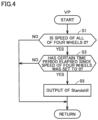
- Fig. 4 is a flowchart showing a procedure of processing performed in VP 120. Processing in the flowchart in Fig. 4 is repeatedly performed every prescribed control cycle in VP 120. Though an example in which processing in the flowchart in Fig. 4 is performed by software processing by VP 120 is described, a part or the entirety thereof may be implemented by hardware (electric circuitry) made in VP 120.
- VP 120 determines whether or not the speed of all wheels, that is, four wheels, included in vehicle 10 is 0 (a step 1, the step being abbreviated as "S" below). When the speed of all of the four wheels is not zero (NO in S1), VP 120 skips processing thereafter and the process returns.
- VP 120 determines whether or not a certain time period has elapsed since the speed of all of the four wheels was set to zero (S3). When the certain time period has not elapsed (NO in S3), the process returns.
- VP 120 When the certain time period has elapsed, that is, when four wheel speed values are zero during the certain time period (YES in S3), VP 120 provides information indicating "Standstill" to vehicle control interface 110 (S5).
- Fig. 5 is a flowchart showing a procedure of processing for determining a moving direction of the vehicle. Processing in the flowchart in Fig. 5 is repeatedly performed every prescribed control cycle in vehicle control interface 110. Though an example in which processing in the flowchart in Fig. 5 is performed by software processing by vehicle control interface 110 is described, a part or the entirety thereof may be implemented by hardware (electric circuitry) made in vehicle control interface 110.
- Vehicle control interface 110 determines whether or not it has received information indicating "Standstill” from VP 120 (S11). When vehicle control interface 110 has received information indicating "Standstill” from VP 120 (YES in S11), it determines the moving direction of vehicle 10 as “Standstill” and sets the value 2 in the signal indicating the actual moving direction (S12).
- vehicle control interface 110 When vehicle control interface 110 has not received information indicating "Standstill” from VP 120 (NO in S11), it determines whether or not the number of wheels rotating in the forward rotation direction is larger than two (S13). When the number of wheels rotating in the forward rotation direction is larger than two (YES in S13), vehicle control interface 110 determines the moving direction of vehicle 10 as "Forward” and sets the value 0 in the signal indicating the actual moving direction (S14).
- vehicle control interface 110 determines whether or not the number of wheels rotating in the reverse rotation direction is larger than two (S15). When the number of wheels rotating in the reverse rotation direction is larger than two (YES in S15), vehicle control interface 110 determines the moving direction of vehicle 10 as "Reverse” and sets the value 1 in the signal indicating the actual moving direction (S16).
- vehicle control interface 110 determines the moving direction of vehicle 10 as "Undefined” and sets the value 3 in the signal indicating the actual moving direction (S17).
- vehicle control interface 110 When vehicle control interface 110 sets a value in the signal indicating the actual moving direction, it provides the signal indicating the actual moving direction to ADK 200 (S18). ADK 200 can thus recognize the moving direction of vehicle 10.
- vehicle control interface 110 that interfaces between VP 120 and ADK 200 is provided.
- Vehicle control interface 110 determines the moving direction of vehicle 10 based on various types of information from VP 120. Then, vehicle control interface 110 provides the signal indicating the moving direction (the signal indicating the actual moving direction) of vehicle 10 to ADK 200.
- the moving direction of vehicle 10 can thus appropriately be conveyed to ADK 200.
- ADK 200 can create a more proper driving plan and hence accuracy in autonomous driving can be enhanced.
- a developer of vehicle main body 100 is different from a developer of ADK 200, they can be in coordination with each other owing to development of vehicle main body 100 and ADK 200 in accordance with a procedure and a data format (API) determined for vehicle control interface 110.
- API data format
- VP 120 may determine the moving direction of vehicle 10.
- vehicle control interface 110 relays the signal indicating the moving direction of vehicle 10 provided from VP 120 and provides the signal to ADK 200.
- This document is an API specification of Toyota Vehicle Platform and contains the outline, the usage and the caveats of the application interface.
- Vehicle control technology is being used as an interface for technology providers.
- the system architecture as a premise is shown ( Fig. 7 ).
- the target vehicle will adopt the physical architecture of using CAN for the bus between ADS and VCIB.
- the CAN frames and the bit assignments are shown in the form of "bit assignment table" as a separate document.
- the ADS should create the driving plan, and should indicate vehicle control values to the VP.
- the Toyota VP should control each system of the VP based on indications from an ADS.
- a typical workflow of ADS of when executing APIs is as follows ( Fig. 8 ).
- the below diagram shows an example.
- Acceleration Command requests deceleration and makes the vehicle stop. After Actual_Moving_Direction is set to "standstill", any shift position can be requested by Propulsion Direction Command. (In the example below, "D” ⁇ "R”).
- Acceleration Command has to request deceleration.
- acceleration/deceleration is controlled based on Acceleration Command value ( Fig. 10 ).
- Immobilization Command "Release” is requested when the vehicle is stationary. Acceleration Command is set to Deceleration at that time.
- the vehicle is accelerated/decelerated based on Acceleration Command value ( Fig. 11 ).
- Tire Turning Angle Command is the relative value from Estimated_Road_Wheel_Angle_Actual.
- target vehicle deceleration is the sum of 1) estimated deceleration from the brake pedal stroke and 2) deceleration request from AD system.
- ADS confirms Propulsion Direction by Driver and changes shift position by using Propulsion Direction Command.
- Table 55 Signal Name Description Redundancy Turnsignallight_Mode_Status Status of the current turnsignallight mode of the vehicle platform N/A Headlight_Mode_Status Status of the current headlight mode of the vehicle platform N/A Hazardlight_Mode_Status Status of the current hazardlight mode of the vehicle platform N/A Horn_Status Status of the current horn of the vehicle platform N/A Windshieldwiper_Mode_Front_Status Status of the current front windshield wiper mode of the vehicle platform N/A Windshieldwiper_Mode_Rear_Status Status of the current rear windshield wiper mode of the vehicle platform N/A Hvac_1 st _Status Status of activation of the 1 st row HVAC N/A Hvac_2 nd _Status Status of activation of the 2 nd row HVAC N/A Hvac_Temperature_1 st _Left_Status Status of set temperature of 1
- VCIB is awake by the low voltage battery. In this mode, ECUs other than VCIB are not awake except for some of the body electrical ECUs.
- Table 93 Signal Name Description Redundancy 1st_Left_Door_Lock_Command Command to control each door lock of the vehicle platform Lock command supports only ALL Door Lock. N/A 1st_Right_Door_Lock_Command N/A Unlock command supports 1 st-left Door unlock only, and ALL Door unlock. 2nd_Left_Door_Lock_Command N/A Trunk Door Lock/unlock command include in ALL Door lock/unlock 2nd_Right_Door_Lock_Command N/A Central_Vehicle_Lock_Exterior_ Command Command to control the all door lock of the vehicle platform N/A
- This document is an architecture specification of Toyota's MaaS Vehicle Platform and contains the outline of system in vehicle level.
- the representative vehicle with 19ePF is shown as follows.
- the target vehicle of this document will adopt the physical architecture of using CAN for the bus between ADS and VCIB.
- the CAN frames and the bit assignments are shown in the form of "bit assignment chart" as a separate document.
- the power supply architecture as a premise is shown as follows ( Fig. 17 ).
- the blue colored parts are provided from an ADS provider. And the orange colored parts are provided from the VP.
- the basic safety concept is shown as follows.
- the Braking System is designed to prevent the capability from becoming 0.3 G or less.
- Toyota's MaaS vehicle adopts the security document issued by Toyota as an upper document.
- the entire risk includes not only the risks assumed on the base e-PF but also the risks assumed for the Autono-MaaS vehicle.
Landscapes
- Engineering & Computer Science (AREA)
- Mechanical Engineering (AREA)
- Automation & Control Theory (AREA)
- Transportation (AREA)
- Physics & Mathematics (AREA)
- General Physics & Mathematics (AREA)
- Mathematical Physics (AREA)
- Combustion & Propulsion (AREA)
- Chemical & Material Sciences (AREA)
- Human Computer Interaction (AREA)
- Radar, Positioning & Navigation (AREA)
- Aviation & Aerospace Engineering (AREA)
- Remote Sensing (AREA)
- Traffic Control Systems (AREA)
- Control Of Position, Course, Altitude, Or Attitude Of Moving Bodies (AREA)
- Evolutionary Computation (AREA)
- Game Theory and Decision Science (AREA)
- Medical Informatics (AREA)
- Artificial Intelligence (AREA)
- Health & Medical Sciences (AREA)
- Business, Economics & Management (AREA)
- Control Of Driving Devices And Active Controlling Of Vehicle (AREA)
- Steering Control In Accordance With Driving Conditions (AREA)
Description
- The present disclosure relates to a vehicle capable of autonomous driving.
- A technique relating to autonomous driving of a vehicle has recently been developed. For example,
Japanese Patent Laying-Open No. 2018-132015 US Patent 8,965,691 B1 , which shows the features of the preamble ofclaim 1, discloses a system for an autonomous vehicle that combines information from single-channel encoders serving as wheel speed sensors on multiple wheels of the vehicle. - The autonomous driving system may externally be attached to a vehicle main body. In this case, autonomous driving is carried out as the vehicle is controlled in accordance with an instruction from the autonomous driving system. In order to enhance accuracy in autonomous driving, a state of the vehicle is desirably appropriately provided (conveyed) to the autonomous driving system. A moving direction of the vehicle represents one of states of the vehicle.
- The present invention was made to achieve the object above, and an object of the present disclosure is to appropriately provide, in a vehicle capable of autonomous driving, a signal indicating a moving direction of the vehicle from a vehicle main body to an autonomous driving system. For this, a vehicle according to the present invention incorporates the features of
claim 1. - According to the configuration, the vehicle is provided with the vehicle control interface that interfaces between the vehicle platform and the autonomous driving system. A signal indicating the determined moving direction of the vehicle can thus appropriately be provided to the autonomous driving system through the vehicle control interface. The moving direction of the vehicle is determined based on majority rule based on the rotation direction of the wheels.
- According to the configuration, when the number of wheels rotating in the forward rotation direction is larger than the number of wheels rotating in the reverse rotation direction, an appropriate signal indicating forward travel (the signal indicating "Forward") is provided to the autonomous driving system. When the number of wheels rotating in the reverse rotation direction is larger than the number of wheels rotating in the forward rotation direction, an appropriate signal indicating reverse travel (the signal indicating "Reverse") can be provided to the autonomous driving system.
- According to the configuration, when the moving direction of the vehicle cannot be determined based on majority rule based on the rotation directions of the wheels, a signal to that effect (the signal indicating "Undefined") can be provided to the autonomous driving system.
- In one embodiment, when a certain time period has elapsed with a speed of all wheels being zero, the vehicle control interface provides to the autonomous driving system, a signal indicating "Standstill" as the signal indicating the moving direction of the vehicle.
- According to this embodiment, when a certain time period has elapsed with the speed of all wheels being zero, an appropriate signal indicating stop (the signal indicating "Standstill") can be provided to the autonomous driving system.
The foregoing and other objects, features, aspects and advantages of the present disclosure will become more apparent from the following detailed description of the present disclosure when taken in conjunction with the accompanying drawings. -
-
Fig. 1 is a diagram showing overview of a MaaS system in which a vehicle according to an embodiment of the present disclosure is used. -
Fig. 2 is a diagram showing a detailed configuration of a vehicle control interface, a VP, and an ADK. -
Fig. 3 is a diagram for illustrating setting of a signal indicating an actual moving direction. -
Fig. 4 is a flowchart showing a procedure of processing performed in the VP. -
Fig. 5 is a flowchart showing a procedure of processing for determining a moving direction of the vehicle. -
Fig. 6 is a diagram of an overall configuration of MaaS. -
Fig. 7 is a diagram of a system configuration of a MaaS vehicle. -
Fig. 8 is a diagram showing a typical flow in an autonomous driving system. -
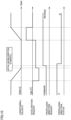
Fig. 9 is a diagram showing an exemplary timing chart of an API relating to stop and start of the MaaS vehicle. -
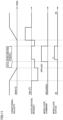
Fig. 10 is a diagram showing an exemplary timing chart of the API relating to shift change of the MaaS vehicle. -
Fig. 11 is a diagram showing an exemplary timing chart of the API relating to wheel lock of the MaaS vehicle. -
Fig. 12 is a diagram showing a limit value of variation in tire turning angle. -
Fig. 13 is a diagram illustrating intervention by an accelerator pedal. -
Fig. 14 is a diagram illustrating intervention by a brake pedal. -
Fig. 15 is a diagram of an overall configuration of MaaS. -
Fig. 16 is a diagram of a system configuration of a vehicle. -
Fig. 17 is a diagram showing a configuration of supply of power of the vehicle. -
Fig. 18 is a diagram illustrating strategies until the vehicle is safely brought to a standstill at the time of occurrence of a failure. -
Fig. 19 is a diagram showing arrangement of representative functions of the vehicle. - An embodiment of the present disclosure will be described below in detail with reference to the drawings. The same or corresponding elements in the drawings have the same reference characters allotted and description thereof will not be repeated.
-
Fig. 1 is a diagram showing overview of a mobility as a service (MaaS) system in which a vehicle according to an embodiment of the present disclosure is used. - Referring to
Fig. 1 , this MaaS system includes avehicle 10, adata server 500, a mobility service platform (which is also referred to as "MSPF" below) 600, and autonomous drivingrelated mobility services 700. -
Vehicle 10 includes a vehiclemain body 100 and an autonomous driving kit (which is also referred to as "ADK" below) 200. Vehiclemain body 100 includes avehicle control interface 110, a vehicle platform (which is also referred to as "VP" below) 120, and a data communication module (DCM) 190. -
Vehicle 10 can carry out autonomous driving in accordance with commands from ADK 200 attached to vehiclemain body 100. ThoughFig. 1 shows vehiclemain body 100 and ADK 200 at positions distant from each other, ADK 200 is actually attached to a rooftop or the like of vehiclemain body 100. ADK 200 can also be removed from vehiclemain body 100. While ADK 200 is not attached, vehiclemain body 100 can travel by manual driving by a user. In this case, VP 120 carries out travel control (travel control in accordance with an operation by a user) in a manual mode. -
Vehicle control interface 110 can communicate with ADK 200 over a controller area network (CAN) or Ethernet®.Vehicle control interface 110 receives various commands from ADK 200 by executing a prescribed application program interface (API) defined for each communicated signal.Vehicle control interface 110 provides a state of vehiclemain body 100 to ADK 200 by executing a prescribed API defined for each communicated signal. - When
vehicle control interface 110 receives a command from ADK 200, it outputs a control command corresponding to the command toVP 120.Vehicle control interface 110 obtains various types of information on vehiclemain body 100 fromVP 120 and outputs the state of vehiclemain body 100 to ADK 200. A configuration ofvehicle control interface 110 will be described in detail later. -
VP 120 includes various systems and various sensors for controlling vehiclemain body 100. VP 120 carries out various types of vehicle control in accordance with a command given from ADK 200 throughvehicle control interface 110. Namely, as VP 120 carries out various types of vehicle control in accordance with a command from ADK 200, autonomous driving ofvehicle 10 is carried out. A configuration ofVP 120 will also be described in detail later. -
ADK 200 includes an autonomous driving system (which is also referred to as "ADS" below) for autonomous driving ofvehicle 10.ADK 200 creates, for example, a driving plan ofvehicle 10 and outputs various commands for travelingvehicle 10 in accordance with the created driving plan tovehicle control interface 110 in accordance with the API defined for each command.ADK 200 receives various signals indicating states of vehiclemain body 100 fromvehicle control interface 110 in accordance with the API defined for each signal and has the received vehicle state reflected on creation of the driving plan. A configuration of ADK 200 (ADS) will also be described later. -
DCM 190 includes a communication interface for vehiclemain body 100 to wirelessly communicate withdata server 500.DCM 190 outputs various types of vehicle information such as a speed, a position, or an autonomous driving state todata server 500.DCM 190 receives from autonomous driving relatedmobility services 700 throughMSPF 600 anddata server 500, for example, various types of data for management of travel of an autonomous drivingvehicle including vehicle 10 bymobility services 700. -
MSPF 600 is an integrated platform to which various mobility services are connected. In addition to autonomous driving relatedmobility services 700, not-shown various mobility services (for example, various mobility services provided by a ride-share company, a car-sharing company, an insurance company, a rent-a-car company, and a taxi company) are connected toMSPF 600. Various mobility services includingmobility services 700 can use various functions provided byMSPF 600 by using APIs published onMSPF 600, depending on service contents. - Autonomous driving related
mobility services 700 provide mobility services using an autonomous drivingvehicle including vehicle 10.Mobility services 700 can obtain, for example, operation control data ofvehicle 10 that communicates withdata server 500 and/or information stored indata server 500 fromMSPF 600, by using the APIs published onMSPF 600.Mobility services 700 transmit, for example, data for managing an autonomous drivingvehicle including vehicle 10 to MSPF 600, by using the API. -
MSPF 600 publishes APIs for using various types of data on vehicle states and vehicle control necessary for development of the ADS. An ADS provider can use as the APIs, the data on the vehicle states and vehicle control necessary for development of the ADS stored indata server 500. -
Fig. 2 is a diagram showing a detailed configuration ofvehicle control interface 110,VP 120, andADK 200. Referring toFig. 2 ,ADK 200 includes acompute assembly 210, a human machine interface (HMI) 230, sensors forperception 260, sensors forpose 270, and asensor cleaning 290. - During autonomous driving of
vehicle 10,compute assembly 210 obtains information on an environment around the vehicle and a pose, a behavior, and a position ofvehicle 10 with various sensors which will be described later.Compute assembly 210 obtains a state ofvehicle 10 fromVP 120 throughvehicle control interface 110 and sets a next operation (acceleration, deceleration, or turning) ofvehicle 10.Compute assembly 210 outputs various instructions for realizing a set next operation ofvehicle 10 tovehicle control interface 110. -
HMI 230 accepts an input operation from a user forvehicle 10.HMI 230 can accept, for example, an input by a touch operation onto a display screen and/or an audio input.HMI 230 presents information to a user ofvehicle 10 by showing information on the display screen.HMI 230 may present information to the user ofvehicle 10 by voice and sound in addition to or instead of representation of information on the display screen.HMI 230 provides information to the user and accepts an input operation, for example, during autonomous driving, during manual driving by a user, or at the time of transition between autonomous driving and manual driving. - Sensors for
perception 260 include sensors that perceive an environment around the vehicle, and are implemented, for example, by at least any of laser imaging detection and ranging (LIDAR), a millimeter-wave radar, and a camera. - The LIDAR measures a distance based on a time period from emission of pulsed laser beams (infrared rays) until return of the emitted beams reflected by an object. The millimeter-wave radar measures a distance and/or a direction to an object by emitting radio waves short in wavelength to the object and detecting radio waves that are reflected and return from the object. The camera is arranged, for example, on a rear side of a room mirror in a compartment and shoots the front of
vehicle 10. As a result of image processing onto images shot by the camera, another vehicle, an obstacle, or a human in front ofvehicle 10 can be recognized. Information obtained by sensors forperception 260 is output to computeassembly 210. - Sensors for
pose 270 detect a pose, a behavior, or a position ofvehicle 10. Sensors forpose 270 include, for example, an inertial measurement unit (IMU) and a global positioning system (GPS). - The IMU detects, for example, an acceleration in a front-rear direction, a lateral direction, and a vertical direction of
vehicle 10 and an angular velocity in a roll direction, a pitch direction, and a yaw direction ofvehicle 10. The GPS detects a position ofvehicle 10 based on information received from a plurality of GPS satellites that orbit the Earth. Information obtained by sensors forpose 270 is output to computeassembly 210. - Sensor cleaning 290 can remove soiling attached to various sensors. Sensor cleaning 290 removes soiling on a lens of the camera or a portion from which laser beams and/or radio waves are emitted, for example, with a cleaning solution and/or a wiper.
-
Vehicle control interface 110 includes a vehicle control interface box (VCIB) 111A and aVCIB 111B. Each ofVCIBs VCIB 111A andVCIB 111B are basically equivalent in function to each other.VCIB 111A andVCIB 111B are partially different from each other in a plurality of systems connected thereto that make upVP 120. - Each of
VCIBs assembly 210 ofADK 200 over the CAN or the like.VCIB 111A andVCIB 111B are communicatively connected to each other. - Each of
VCIBs ADK 200 and provides them as control commands toVP 120. More specifically, each ofVCIBs ADK 200 into control commands to be used for control of each system ofVP 120, and provides the converted control commands to a destination system. Each ofVCIBs VP 120 and provides the vehicle information as a vehicle state toADK 200. - For at least one of systems of
VP 120 such as a brake system and a steering system,VCIBs ADK 200 andVP 120 are redundant. Therefore, when some kind of failure occurs in a part of the system, the function (turning or stopping) ofVP 120 can be maintained by switching between the control systems as appropriate or disconnecting a control system where failure has occurred. -
VP 120 includesbrake systems steering systems system 123A, a P-Lock system 123B, apropulsion system 124, a pre-crash safety (PCS)system 125, and abody system 126. -
Brake system 121B,steering system 122A,EPB system 123A, P-Lock system 123B,propulsion system 124, andbody system 126 of the plurality of systems ofVP 120 are communicatively connected toVCIB 111A through a communication bus. -
Brake system 121A,steering system 122B, and P-Lock system 123B of the plurality of systems ofVP 120 are communicatively connected toVCIB 111B through a communication bus. -
Brake systems vehicle 10. The braking apparatus includes, for example, a disc brake system that is operated with a hydraulic pressure regulated by an actuator.Brake system 121A andbrake system 121B may be equivalent in function to each other. Alternatively, any one ofbrake systems - A
wheel speed sensor 127 is connected tobrake system 121B.Wheel speed sensor 127 is provided in each wheel ofvehicle 10.Wheel speed sensor 127 detects a rotation speed and a rotation direction of a wheel.Wheel speed sensor 127 outputs the detected rotation speed and rotation direction of the wheel to brakesystem 121B. For example,wheel speed sensor 127 provides pulses different between during rotation in a direction of forward travel ofvehicle 10 and during rotation in a direction of reverse travel ofvehicle 10.Brake system 121B fixes or confirms the rotation direction of each wheel based on the pulses fromwheel speed sensor 127. Then,brake system 121B provides information indicating the fixed rotation direction of each wheel toVCIB 111A. -
Brake system 121B determines whether or notvehicle 10 has come to a standstill based on the fixed rotation direction of each wheel. Specifically, when the speed of all wheels is set to zero and when all (for example, four) wheel speed values are zero during a certain time period since the speed of all wheels was set to zero,brake system 121B determines thatvehicle 10 has come to a standstill. Whenbrake system 121B determines thatvehicle 10 has come to a standstill, the brake system provides information indicating "Standstill" toVCIB 111A. - Each of
brake systems ADK 200 as a control command throughvehicle control interface 110 and generates a braking instruction to the braking apparatus in accordance with the control command. For example,brake systems brake systems -
Steering systems vehicle 10 with a steering apparatus (not shown). The steering apparatus includes, for example, rack-and-pinion electric power steering (EPS) that allows adjustment of a steering angle by an actuator. -
Steering systems steering systems ADK 200 as a control command throughvehicle control interface 110 and generates a steering instruction to the steering apparatus in accordance with the control command. For example,steering systems steering systems - A pinion angle sensor 128A is connected to steering
system 122A. Apinion angle sensor 128B is connected to steeringsystem 122B. Each ofpinion angle sensors 128A and 128B detects an angle of rotation (a pinion angle) of a pinion gear coupled to a rotation shaft of the actuator.Pinion angle sensors 128A and 128B output detected pinion angles to steeringsystems -
EPB system 123A can control an EPB (not shown) provided in at least any of wheels. The EPB is provided separately from the braking apparatus, and fixes a wheel by an operation of an actuator. The EPB, for example, activates a drum brake for a parking brake provided in at least one of wheels ofvehicle 10 to fix the wheel. The EPB activates a braking apparatus to fix a wheel, for example, with an actuator capable of regulating a hydraulic pressure to be supplied to the braking apparatus separately frombrake systems EPB system 123A receives a command fromADK 200 as a control command throughvehicle control interface 110 and controls the EPB in accordance with the control command. - P-
Lock system 123B can control a P-Lock apparatus (not shown) provided in a transmission ofvehicle 10. The P-Lock apparatus fixes rotation of an output shaft of the transmission by fitting a protrusion provided at a tip end of a parking lock pawl into a tooth of a gear (locking gear) provided as being coupled to a rotational element in the transmission. A position of the parking lock pawl is adjusted by an actuator. P-Lock system 123B receives a command fromADK 200 as a control command throughvehicle control interface 110 and controls the P-Lock apparatus in accordance with the control command. -
Propulsion system 124 can switch a shift range with the use of a shift apparatus (not shown) and can control driving force ofvehicle 10 in a direction of travel that is generated from a drive source (not shown). The shift apparatus can select any of a plurality of shift ranges. The drive source includes, for example, a motor generator and/or an engine.Propulsion system 124 receives a command fromADK 200 as a control command throughvehicle control interface 110 and controls the shift apparatus and the drive source in accordance with the control command. -
PCS system 125 is communicatively connected tobrake system 121B.PCS system 125 carries out control to avoid collision ofvehicle 10 or to mitigate damage by using a result of detection by a camera/radar 129. For example,PCS system 125 detects an object in front and determines whether or notvehicle 10 may collide with the object based on a distance to the object. WhenPCS system 125 determines that there is possibility of collision with the object, it outputs a braking instruction to brakesystem 121B so as to increase braking force. -
Body system 126 controls, for example, various devices in accordance with a state or an environment of travel ofvehicle 10. The various devices include, for example, a direction indicator, a headlight, a hazard light, a horn, a front wiper, and a rear wiper.Body system 126 receives a command fromADK 200 as a control command throughvehicle control interface 110 and controls the various devices in accordance with the control command. - An operation apparatus that can manually be operated by a user for the braking apparatus, the steering apparatus, the EPB, P-Lock, the shift apparatus, various devices, and the drive source described above may separately be provided.
- In order for
ADK 200 to create an appropriate driving plan in autonomous driving, a state of vehiclemain body 100 is desirably appropriately obtained. The moving direction ofvehicle 10 represents one of important parameters that indicate a state of vehiclemain body 100. By obtaining the moving direction ofvehicle 10,ADK 200 can recognize, for example, a traveling state ofvehicle 10. In the present embodiment,vehicle control interface 110 determines the moving direction ofvehicle 10 based on various types of information fromVP 120. Then,vehicle control interface 110 provides a signal indicating the moving direction of vehicle 10 (a signal indicating an actual moving direction (Actual_Moving_Direction)) toADK 200. The moving direction ofvehicle 10 can thus appropriately be conveyed toADK 200. An approach to determination of the moving direction ofvehicle 10 will specifically be described below. Though an example in whichvehicle 10 includes four wheels is described below, the present disclosure can be applied similarly also to a vehicle including at most three wheels or a vehicle including at least five wheels. - VP 120 (
brake system 121B in the present embodiment) fixes the rotation direction of each wheel (a front left wheel, a front right wheel, a rear left wheel, and a rear right wheel) based on an output fromwheel speed sensor 127. Then,VP 120 provides information (WheelSpeed_Rotation) indicating the fixed rotation direction of each wheel tovehicle control interface 110. The information indicating the rotation direction of the wheel provided fromVP 120 tovehicle control interface 110 includes information indicating the rotation direction (forward rotation) in whichvehicle 10 travels forward or the rotation direction (reverse rotation) in whichvehicle 10 travels rearward. - As described above,
VP 120 determines whether or notvehicle 10 has come to a standstill based on the output fromwheel speed sensor 127. Specifically, when the speed of all of four wheels has been set to zero and when all (for example, four) wheel speed values are zero during a certain time period since the speed of all of the four wheels was set to zero,VP 120 determines thatvehicle 10 has come to a standstill. WhenVP 120 determines thatvehicle 10 has come to a standstill,VP 120 provides information indicating "Standstill" that indicates stop ofvehicle 10 tovehicle control interface 110. The certain time period may be set, for example, to 500 ms. The certain time period is not limited to the above and can be set as appropriate depending on specifications ofvehicle 10. -
Vehicle control interface 110 determines the moving direction ofvehicle 10 based on various types of information received fromVP 120. Then,vehicle control interface 110 provides a signal indicating the determined moving direction (the signal indicating the actual moving direction) ofvehicle 10 toADK 200. - When
vehicle control interface 110 obtains information indicating "Standstill" fromVP 120, it determines the moving direction ofvehicle 10 as "Standstill". - When
vehicle control interface 110 has not obtained information indicating "Standstill" fromVP 120, it determines the moving direction ofvehicle 10 based on majority rule based on information indicating the rotation direction of the wheel. Specifically, when the number of wheels rotating in the forward rotation direction is larger than the number of wheels rotating in the reverse rotation direction,vehicle control interface 110 determines the moving direction ofvehicle 10 as "Forward". When the number of wheels rotating in the reverse rotation direction is larger than the number of wheels rotating in the forward rotation direction,vehicle control interface 110 determines the moving direction ofvehicle 10 as "Reverse". When the number of wheels rotating in the forward rotation direction is equal to the number of wheels rotating in the reverse rotation direction,vehicle control interface 110 determines the moving direction ofvehicle 10 as "Undefined". In the present embodiment, when the number of wheels rotating in the forward rotation direction is larger than two,vehicle control interface 110 determines the moving direction ofvehicle 10 as "Forward". When the number of wheels rotating in the reverse rotation direction is larger than two,vehicle control interface 110 determines the moving direction ofvehicle 10 as "Reverse". When the number of wheels rotating in the forward rotation direction is two and the number of wheels rotating in the reverse rotation direction is two,vehicle control interface 110 determines the moving direction ofvehicle 10 as "Undefined". For example, a case that driving wheels slip when the vehicle slips down on a slope or a snow-covered road is assumed as the example where the number of wheels rotating in the forward rotation direction is equal to the number of wheels rotating in the reverse rotation direction. -
Fig. 3 is a diagram for illustrating setting of a signal indicating an actual moving direction.Fig. 3 shows relation between an actual moving direction (the moving direction of vehicle 10) and a value. Specifically, a value is shown in a field "value" and a rotation direction of a wheel is shown in a field "Description". A field "remarks" is used when there are remarks. - Referring to
Fig. 3 , avalue 0 represents forward travel (Forward). Avalue 1 represents a reverse travel (Reverse). Avalue 2 represents stop (Standstill). Avalue 3 represents undefined (Undefined). - When
vehicle control interface 110 determines the moving direction ofvehicle 10 as "Forward", it sets thevalue 0 in the signal indicating the actual moving direction. Whenvehicle control interface 110 determines the moving direction ofvehicle 10 as "Reverse", it sets thevalue 1 in the signal indicating the actual moving direction. Whenvehicle control interface 110 determines the moving direction ofvehicle 10 as "Standstill", it sets thevalue 2 in the signal indicating the actual moving direction. Whenvehicle control interface 110 determines the moving direction ofvehicle 10 as "Undefined", it sets thevalue 3 in the signal indicating the actual moving direction. - When
vehicle control interface 110 sets the signal indicating the actual moving direction, it provides the set signal indicating the actual moving direction toADK 200.ADK 200 that has received the signal indicating the actual moving direction set as above can recognize the moving direction ofvehicle 10 based on the value indicated in the signal. -
Fig. 4 is a flowchart showing a procedure of processing performed inVP 120. Processing in the flowchart inFig. 4 is repeatedly performed every prescribed control cycle inVP 120. Though an example in which processing in the flowchart inFig. 4 is performed by software processing byVP 120 is described, a part or the entirety thereof may be implemented by hardware (electric circuitry) made inVP 120. -
VP 120 determines whether or not the speed of all wheels, that is, four wheels, included invehicle 10 is 0 (astep 1, the step being abbreviated as "S" below). When the speed of all of the four wheels is not zero (NO in S1),VP 120 skips processing thereafter and the process returns. - When the speed of all of the four wheels is zero (YES in S1),
VP 120 determines whether or not a certain time period has elapsed since the speed of all of the four wheels was set to zero (S3). When the certain time period has not elapsed (NO in S3), the process returns. - When the certain time period has elapsed, that is, when four wheel speed values are zero during the certain time period (YES in S3),
VP 120 provides information indicating "Standstill" to vehicle control interface 110 (S5). -
Fig. 5 is a flowchart showing a procedure of processing for determining a moving direction of the vehicle. Processing in the flowchart inFig. 5 is repeatedly performed every prescribed control cycle invehicle control interface 110. Though an example in which processing in the flowchart inFig. 5 is performed by software processing byvehicle control interface 110 is described, a part or the entirety thereof may be implemented by hardware (electric circuitry) made invehicle control interface 110. -
Vehicle control interface 110 determines whether or not it has received information indicating "Standstill" from VP 120 (S11). Whenvehicle control interface 110 has received information indicating "Standstill" from VP 120 (YES in S11), it determines the moving direction ofvehicle 10 as "Standstill" and sets thevalue 2 in the signal indicating the actual moving direction (S12). - When
vehicle control interface 110 has not received information indicating "Standstill" from VP 120 (NO in S11), it determines whether or not the number of wheels rotating in the forward rotation direction is larger than two (S13). When the number of wheels rotating in the forward rotation direction is larger than two (YES in S13),vehicle control interface 110 determines the moving direction ofvehicle 10 as "Forward" and sets thevalue 0 in the signal indicating the actual moving direction (S14). - When the number of wheels rotating in the forward rotation direction is not larger than two (NO in S13), that is, when the number of wheels rotating in the forward rotation direction is equal to or smaller than two,
vehicle control interface 110 determines whether or not the number of wheels rotating in the reverse rotation direction is larger than two (S15). When the number of wheels rotating in the reverse rotation direction is larger than two (YES in S15),vehicle control interface 110 determines the moving direction ofvehicle 10 as "Reverse" and sets thevalue 1 in the signal indicating the actual moving direction (S16). - When the number of wheels rotating in the reverse rotation direction is not larger than two (NO in S15), that is, when the number of wheels (two) rotating in the forward rotation direction is equal to the number of wheels (two) rotating in the reverse rotation direction,
vehicle control interface 110 determines the moving direction ofvehicle 10 as "Undefined" and sets thevalue 3 in the signal indicating the actual moving direction (S17). - When
vehicle control interface 110 sets a value in the signal indicating the actual moving direction, it provides the signal indicating the actual moving direction to ADK 200 (S18).ADK 200 can thus recognize the moving direction ofvehicle 10. - As set forth above, in the MaaS system according to the present embodiment,
vehicle control interface 110 that interfaces betweenVP 120 andADK 200 is provided.Vehicle control interface 110 determines the moving direction ofvehicle 10 based on various types of information fromVP 120. Then,vehicle control interface 110 provides the signal indicating the moving direction (the signal indicating the actual moving direction) ofvehicle 10 toADK 200. The moving direction ofvehicle 10 can thus appropriately be conveyed toADK 200. By appropriately conveying the moving direction ofvehicle 10,ADK 200 can create a more proper driving plan and hence accuracy in autonomous driving can be enhanced. - Even though a developer of vehicle
main body 100 is different from a developer ofADK 200, they can be in coordination with each other owing to development of vehiclemain body 100 andADK 200 in accordance with a procedure and a data format (API) determined forvehicle control interface 110. - Though an example in which
vehicle control interface 110 determines the moving direction ofvehicle 10 is described in the present embodiment,VP 120 may determine the moving direction ofvehicle 10. In this case,vehicle control interface 110 relays the signal indicating the moving direction ofvehicle 10 provided fromVP 120 and provides the signal toADK 200. - Examples are given below. Although the examples mention Toyota, they can be transposed to other companies, e.g. other vehicle manufacturers.
-
- Toyota's MaaS Vehicle Platform
- API Specification
- for ADS Developers
- [Standard Edition #0.1]
- History of Revision
-
- 1.
Outline 4- 1.1. Purpose of this
Specification 4 - 1.2.
Target Vehicle 4 - 1.3. Definition of
Term 4 - 1.4. Precaution for
Handling 4
- 1.1. Purpose of this
- 2.
Structure 5- 2.1. Overall Structure of
MaaS 5 - 2.2. System structure of
MaaS vehicle 6
- 2.1. Overall Structure of
- 3. Application Interfaces 7
- 3.1. Responsibility sharing of when using
APIs 7 - 3.2. Typical usage of
APIs 7 - 3.3. APIs for
vehicle motion control 9- 3.3.1.
Functions 9 - 3.3.2.
Inputs 16 - 3.3.3. Outputs 23
- 3.3.1.
- 3.4. APIs for BODY control 45
- 3.4.1. Functions 45
- 3.4.2. Inputs 45
- 3.4.3. Outputs 56
- 3.5. APIs for Power control 68
- 3.5.1. Functions 68
- 3.5.2. Inputs 68
- 3.5.3. Outputs 69
- 3.6. APIs for Safety 70
- 3.6.1. Functions 70
- 3.6.2. Inputs 70
- 3.6.3. Outputs 70
- 3.7. APIs for Security 74
- 3.7.1. Functions 74
- 3.7.2. Inputs 74
- 3.7.3. Outputs 76
- 3.8. APIs for
MaaS Service 80- 3.8.1.
Functions 80 - 3.8.2.
Inputs 80 - 3.8.3.
Outputs 80
- 3.8.1.
- 3.1. Responsibility sharing of when using
- This document is an API specification of Toyota Vehicle Platform and contains the outline, the usage and the caveats of the application interface.
- e-Palette, MaaS vehicle based on the POV (Privately Owned Vehicle) manufactured by Toyota
-
Table 2 Term Definition ADS Autonomous Driving System. ADK Autonomous Driving Kit VP Vehicle Platform. VCIB Vehicle Control Interface Box. This is an ECU for the interface and the signal converter between ADS and Toyota VP's sub systems. - This is an early draft of the document.
- All the contents are subject to change. Such changes are notified to the users. Please note that some parts are still T.B.D. will be updated in the future.
- The overall structure of MaaS with the target vehicle is shown (
Fig. 6 ). - Vehicle control technology is being used as an interface for technology providers.
- Technology providers can receive open API such as vehicle state and vehicle control, necessary for development of automated driving systems.
- The system architecture as a premise is shown (
Fig. 7 ). - The target vehicle will adopt the physical architecture of using CAN for the bus between ADS and VCIB. In order to realize each API in this document, the CAN frames and the bit assignments are shown in the form of "bit assignment table" as a separate document.
- Basic responsibility sharing between ADS and vehicle VP is as follows when using APIs. [ADS]
- The ADS should create the driving plan, and should indicate vehicle control values to the VP.
- The Toyota VP should control each system of the VP based on indications from an ADS.
- In this section, typical usage of APIs is described.
- CAN will be adopted as a communication line between ADS and VP. Therefore, basically, APIs should be executed every defined cycle time of each API by ADS.
- A typical workflow of ADS of when executing APIs is as follows (
Fig. 8 ). - In this section, the APIs for vehicle motion control which is controllable in the MaaS vehicle is described.
- The transition to the standstill (immobility) mode and the vehicle start sequence are described. This function presupposes the vehicle is in Autonomy_State = Autonomous Mode. The request is rejected in other modes.
- The below diagram shows an example.
- Acceleration Command requests deceleration and stops the vehicle. Then, when Longitudinal_Velocity is confirmed as 0 [km/h], Standstill Command = "Applied" is sent. After the brake hold control is finished, Standstill Status becomes "Applied". Until then, Acceleration Command has to continue deceleration request. Either Standstill Command = "Applied" or Acceleration Command's deceleration request were canceled, the transition to the brake hold control will not happen. After that, the vehicle continues to be standstill as far as Standstill Command = "Applied" is being sent. Acceleration Command can be set to 0 (zero) during this period.
- If the vehicle needs to start, the brake hold control is cancelled by setting Standstill Command to "Released". At the same time, acceleration/deceleration is controlled based on Acceleration Command (
Fig. 9 ). - EPB is engaged when Standstill Status = "Applied" continues for 3 minutes.
- The shift change sequence is described. This function presupposes that Autonomy_State = Autonomous Mode. Otherwise, the request is rejected.
- Shift change happens only during Actual_Moving_Direction = "standstill"). Otherwise, the request is rejected.
- In the following diagram shows an example. Acceleration Command requests deceleration and makes the vehicle stop. After Actual_Moving_Direction is set to "standstill", any shift position can be requested by Propulsion Direction Command. (In the example below, "D" → "R").
- During shift change, Acceleration Command has to request deceleration.
- After the shift change, acceleration/deceleration is controlled based on Acceleration Command value (
Fig. 10 ). - The engagement and release of wheel lock is described. This function presupposes Autonomy_State = Autonomous Mode, otherwise the request is rejected.
- This function is conductible only during vehicle is stopped. Acceleration Command requests deceleration and makes the vehicle stop. After Actual_Moving_Direction is set to "standstill", WheelLock is engaged by Immobilization Command = "Applied". Acceleration Command is set to Deceleration until Immobilization Status is set to "Applied".
- If release is desired, Immobilization Command = "Release" is requested when the vehicle is stationary. Acceleration Command is set to Deceleration at that time.
- After this, the vehicle is accelerated/decelerated based on Acceleration Command value (
Fig. 11 ). - This function presupposes Autonomy_State = "Autonomous Mode", and the request is rejected otherwise.
- Tire Turning Angle Command is the relative value from
Estimated_Road_Wheel_Angle_Actual. - For example, in case that Estimated_Road_Wheel_Angle_Actual = 0.1 [rad] while the vehicle is going straight;
- If ADS requests to go straight ahead, Tire Turning Angle Command should be set to 0+0.1 = 0.1 [rad].
- If ADS requests to steer by -0.3 [rad], Tire Turning Angle Command should be set to -0.3+0.1 = -0.2 [rad].
- While in Autonomous driving mode, accelerator pedal stroke is eliminated from the vehicle acceleration demand selection.
- The action when the brake pedal is operated. In the autonomy mode, target vehicle deceleration is the sum of 1) estimated deceleration from the brake pedal stroke and 2) deceleration request from AD system.
- In Autonomous driving mode, driver operation of the shift lever is not reflected in Propulsion Direction Status.
- If necessary, ADS confirms Propulsion Direction by Driver and changes shift position by using Propulsion Direction Command.
- When the driver (rider) operates the steering, the maximum is selected from
- 1) the torque value estimated from driver operation angle, and
- 2) the torque value calculated from requested wheel angle.
- Note that Tire Turning Angle Command is not accepted if the driver strongly turns the steering wheel. The above-mentioned is determined by Steering_Wheel_Intervention flag.
-
Table 3 Signal Name Description Redundancy Propulsion Direction Command Request to switch between forward (D range) and back (R range) N/A Immobilization Command Request to engage/release WheelLock Applied Standstill Command Request to maintain stationary Applied Acceleration Command Request to accelerate/decelerate Applied Tire Turning Angle Command Request front wheel angle Applied Autonomization Command Request to transition between manual mode and autonomy mode Applied -
Table 4 value Description Remarks 0 No Request 2 R Shift to R range 4 D Shift to D range other Reserved -
- · Only available when Autonomy_State = "Autonomous Mode"
- · D/R is changeable only the vehicle is stationary (Actual_Moving_Direction = "standstill").
- · The request while driving (moving) is rejected.
- · When system requests D/R shifting, Acceleration Command is sent deceleration (-0.4 m/s2) simultaneously. (Only while brake is applied.)
- · The request may not be accepted in following cases.
- · Direction_Control_Degradation_Modes = "Failure detected"
-
Table 5 value Description Remarks 0 No Request 1 Applied EPB is turned on and TM shifts to P range 2 Released EPB is turned off and TM shifts to the value of Propulsion Direction Command -
- · Available only when Autonomy_State = "Autonomous Mode"
- · Changeable only when the vehicle is stationary (Actual_Moving_Direction = "standstill")
- · The request is rejected when vehicle is running.
- · When Apply/Release mode change is requested, Acceleration Command is set to deceleration (-0.4 m/s2). (Only while brake is applied.)
-
Table 6 value Description Remarks 0 No Request 1 Applied Standstill is requested 2 Released -
- · Only available when Autonomy_State = "Autonomous Mode"
- · Confirmed by Standstill Status = "Applied"
- · When the vehicle is stationary (Actual_Moving_Direction = "standstill"), transition to Stand Still is enabled.
- · Acceleration Command has to be continued until Standstill Status becomes "Applied" and Acceleration Command's deceleration request (-0.4 m/s2) should be continued.
- · There are more cases where the request is not accepted. Details are T.B.D.
- Estimated_Max_Decel_Capability to Estimated_Max_Accel_Capability [m/s2]
-
- · Only available when Autonomy_State = "Autonomous Mode"
- · Acceleration (+) and deceleration (-) request based on Propulsion Direction Status direction
- · The upper/lower limit will vary based on Estimated_Max_Decel_Capability and Estimated_Max_Accel_Capability.
- · When acceleration more than Estimated_Max_Accel_Capability is requested, the request is set to Estimated_Max_Accel_Capability.
- · When deceleration more than Estimated_Max_Decel_Capability is requested, the request is set to Estimated_Max_Decel_Capability.
- · Depending on the accel/brake pedal stroke, the requested acceleration may not be met. See 3.4.1.4 for more detail.
- · When Pre □Collision system is activated simultaneously, minimum acceleration (maximum deceleration) is selected.
-
Table 7 value Description Remarks - [unit: rad] -
- · Left is positive value (+). Right is negative value (-).
- · Available only when Autonomy_State = "Autonomous Mode"
- · The output of Estimated_Road_Wheel_Angle_Actual when the vehicle is going straight, is set to the reference value (0).
- · This requests relative value of Estimated_Road_Wheel_Angle_Actual. (See 3.4.1.1 for details)
- · The requested value is within Current_Road_Wheel_Angle_Rate_Limit.
- · The requested value may not be fulfilled depending on the steer angle by the driver.
-
Table 8 value Description Remarks 00b No Request For Autonomy 01b Request For Autonomy 10b Deactivation Request means transition request to manual mode - · The mode may be able not to be transitioned to Autonomy mode. (e.g. In case that a failure occurs in the vehicle platform.)
-
Table 9 Signal Name Description Redundancy Propulsion Direction Status Current shift range N/A Propulsion Direction by Driver Shift lever position by driver N/A Immobilization Status Output of EPB and Shift P Applied Immobilization Request by Driver EPB switch status by driver N/A Standstill Status Stand still status N/A Estimated_Coasting_Rate Estimated vehicle deceleration when throttle is closed N/A Estimated_Max_Accel_Capability Estimated maximum acceleration Applied Estimated_Max_Decel_Capability Estimated maximum deceleration Applied Estimated_Road_Wheel_Angle_ Actual Front wheel steer angle Applied Estimated_Road_Wheel_Angle_ Rate_Actual Front wheel steer angle rate Applied Steering_Wheel_Angle_Actual Steering wheel angle N/A Steering_Wheel_Angle_Rate_ Actual Steering wheel angle rate N/A Current_Road_Wheel_Angle_ Rate_Limit Road wheel angle rate limit Applied Estimated_Max_Lateral_ Acceleration_Capability Estimated max lateral acceleration Applied Estimated_Max_Lateral_ Acceleration_Rate_Capability Estimated max lateral acceleration rate Applied Accelerator_Pedal_Position Position of the accelerator pedal (How much is the pedal depressed?) N/A Accelerator_Pedal_Intervention This signal shows whether the accelerator pedal is depressed by a driver (intervention) N/A Brake_Pedal_Position Position of the brake pedal (How much is the pedal depressed?) T.B.D. Brake_Pedal_Intervention This signal shows whether the brake pedal is depressed by a driver (intervention) T.B.D. Steering_Wheel_Intervention This signal shows whether the steering wheel is turned by a driver (intervention) T.B.D. Shift_Lever_Intervention This signal shows whether the shift lever is controlled by a driver (intervention) T.B.D. WheelSpeed_FL wheel speed value (Front Left Wheel) N/A WheelSpeed_FL_Rotation Rotation direction of wheel (Front Left) N/A WheelSpeed_FR wheel speed value (Front Right Wheel) N/A WheelSpeed_FR_Rotation Rotation direction of wheel (Front Right) N/A WheelSpeed_RL wheel speed value (Rear Left Wheel) Applied WheelSpeed_RL_Rotation Rotation direction of wheel (Rear Left) Applied WheelSpeed_RR wheel speed value (Rear Right Wheel) Applied WheelSpeed_RR_Rotation Rotation direction of wheel (Rear Right) Applied Actual_Moving_Direction Moving direction of vehicle Applied Longitudinal_Velocity Estimated longitudinal velocity of vehicle Applied Longitudinal_Acceleration Estimated longitudinal acceleration of vehicle Applied Lateral_Acceleration Sensor value of lateral acceleration of vehicle Applied Yawrate Sensor value of Yaw rate Applied Autonomy_State State of whether autonomy mode or manual mode Applied Autonomy_Ready Situation of whether the vehicle can transition to autonomy mode or not Applied Autonomy_Fault Status of whether the fault regarding a functionality in autonomy mode occurs or not Applied -
Table 10 value Description remarks 0 Reserved 1 P 2 R 3 N 4 D 5 B 6 Reserved 7 Invalid value -
- · When the shift range is indeterminate, this output is set to "Invalid Value".
- · When the vehicle becomes the following status during VO mode, [Propulsion Direction Status] will turn to "P".
- [Longitudinal_Velocity] = 0 [km/h]
- [Brake_Pedal_Position] < Threshold value (T.B.D.) (in case of being determined that the pedal isn't depressed)
- [1st_Left_Seat_Belt_Status] = Unbuckled
- [1st_Left_Door_Open_Status] = Opened
-
Table 11 value Description remarks 0 No Request 1 P 2 R 3 N 4 D 5 B 6 Reserved 7 Invalid value -
- · Output based on the lever position operated by driver
- · If the driver releases his hand of the shift lever, the lever returns to the central position and the output is set as "No Request".
- · When the vehicle becomes the following status during NVO mode, [Propulsion Direction by Driver] will turn to "1(P)".
- [Longitudinal_Velocity] = 0 [km/h]
- [Brake_Pedal_Position] < Threshold value (T.B.D.) (in case of being determined that the pedal isn't depressed)
- [1st_Left_Seat_Belt_Status] = Unbuckled
- [1st_Left_Door_Open_Status] = Opened
-
Table 12 Value Description Remarks Shift EPB 0 0 Shift set to other than P, and EPB Released 1 0 Shift set to P and EPB Released 0 1 Shift set to other than P, and EPB applied 1 1 Shift set to P and EPB Applied -
Table 13 Value Description Remarks Shift 0 0 Other than Shift P 1 0 Shift P 0 1 Reserved 1 1 Reserved -
- · Secondary signal does not include EPB lock status.
-
Table 14 value Description remarks 0 No Request 1 Engaged 2 Released 3 Invalid value -
- · "Engaged" is outputted while the EPB switch is being pressed.
- · "Released" is outputted while the EPB switch is being pulled.
-
Table 15 Value Description remarks 0 Released 1 Applied 2 Reserved 3 Invalid value -
- · When Standstill Status = Applied continues for 3 minutes, EPB is activated.
- · If the vehicle is desired to start, ADS requests Standstill Command = "Released".
- [unit: m/s2]
-
- · Estimated acceleration at WOT is calculated.
- · Slope and road load etc. are taken into estimation.
- · When the Propulsion Direction Status is "D", the acceleration to the forward direction shows a positive value.
- · When the Propulsion Direction Status is "R", the acceleration to the reverse direction shows a positive value.
- [unit: m/s2]
-
- · The acceleration at WOT is calculated.
- · Slope and road load etc. are taken into estimation.
- · The direction decided by the shift position is considered to be plus.
- -9.8 to 0 [unit: m/s2]
-
- · Affected by Brake_System_Degradation_Modes. Details are T.B.D.
- · Based on vehicle state or road condition, cannot output in some cases
-
Table 16 value Description Remarks others [unit: rad] Minimum Value Invalid value The sensor is invalid. -
- · Left is positive value (+). Right is negative value (-).
- · Before "the wheel angle when the vehicle is going straight" becomes available, this signal is Invalid value.
-
Table 17 value Description Remarks others [unit: rad/s] Minimum Value Invalid value -
- · Left is positive value (+). Right is negative value (-).
-
Table 18 Value Description Remarks others [unit: rad] Minimum Value Invalid value -
- · Left is positive value (+). Right is negative value (-).
- · The steering angle converted from the steering assist motor angle
- · Before "the wheel angle when the vehicle is going straight" becomes available, this signal is Invalid value.
-
Table 19 Value Description Remarks others [unit: rad/s] Minimum Value Invalid value -
- · Left is positive value (+). Right is negative value (-).
- · The steering angle rate converted from the steering assist motor angle rate
- 3.3.3.13. Current_Road_Wheel_Angle_Rate_Limit
- Road wheel angle rate limit
-
- · When stopped: 0.4 [rad/s]
- · While running: Show "Remarks"
- Calculated from the "vehicle speed - steering angle rate" chart like below
- A) At a very low speed or stopped situation, use fixed value of 0.4 [rad/s]
- B) At a higher speed, the steering angle rate is calculated from the vehicle speed using 2.94 m/s3
- The threshold speed between A and B is 10 [km/h] (
Fig. 12 ). - 2.94 [unit: m/s2] fixed value
-
- · Wheel Angle controller is designed within the acceleration range up to 2.94 m/s2.
- 2.94 [unit: m/s3] fixed value
-
- · Wheel Angle controller is designed within the acceleration range up to 2.94 m/s3.
- 0 to 100 [unit: %]
-
- · In order not to change the acceleration openness suddenly, this signal is filtered by smoothing process.
- · In normal condition
The accelerator position signal after zero point calibration is transmitted. - · In failure condition
- Transmitted failsafe value (0×FF)
- This signal shows whether the accelerator pedal is depressed by a driver (intervention).
-
Table 20 Value Description Remarks 0 Not depressed 1 depressed 2 Beyond autonomy acceleration -
- · When Accelerator_Pedal_Position is higher than the defined threshold value (ACCL_INTV), this signal [Accelerator_Pedal_Intervention] will turn to "depressed".
When the requested acceleration from depressed acceleration pedal is higher than the requested acceleration from system (ADS, PCS etc.), this signal will turn to "Beyond autonomy acceleration". - · During NVO mode, accelerator request will be rejected. Therefore, this signal will not turn to "2".
- Position of the brake pedal (How much is the pedal depressed?)
- 0 to 100 [unit: %]
-
- · In the brake pedal position sensor failure:
Transmitted failsafe value (0×FF) - · Due to assembling error, this value might be beyond 100%.
- This signal shows whether the brake pedal is depressed by a driver (intervention).
-
Table 21 Value Description Remarks 0 Not depressed 1 depressed 2 Beyond autonomy deceleration -
- · When Brake_Pedal_Position is higher than the defined threshold value (BRK_INTV), this signal [Brake_Pedal_Intervention] will turn to "depressed".
- · When the requested deceleration from depressed brake pedal is higher than the requested deceleration from system (ADS, PCS etc.), this signal will turn to "Beyond autonomy deceleration".
- Detail design (
Fig. 14 ) - This signal shows whether the steering wheel is turned by a driver (intervention).
-
Table 22 Value Description Remarks 0 Not turned 1 Turned collaboratively Driver steering torque + steering motor torque 2 Turned by human driver -
- · In "Steering Wheel Intervention = 1", considering the human driver's intent, EPS system will drive the steering with the Human driver collaboratively.
- · In "Steering Wheel Intervention = 2", considering the human driver's intent, EPS system will reject the steering requirement from autonomous driving kit. (The steering will be driven the human driver.)
- This signal shows whether the shift lever is controlled by a driver (intervention).
-
Table 23 Value Description Remarks 0 OFF 1 ON Controlled (moved to any shift position) -
- · N/A
-
Table 24 Value Description Remarks others Velocity [unit: m/s] Maximum Value Invalid value The sensor is invalid. -
- · T.B.D.
-
Table 25 value Description remarks 0 Forward 1 Reverse 2 Reserved 3 Invalid value The sensor is invalid. -
- · After activation of ECU, until the rotation direction is fixed, "Forward" is set to this signal.
- · When detected continuously 2 (two) pulses with the same direction, the rotation direction will be fixed.
-
Table 26 value Description remarks 0 Forward 1 Reverse 2 Standstill 3 Undefined -
- · This signal shows "Standstill" when four wheel speed values are "0" during a constant time.
- · When other than above, this signal will be determined by the majority rule of four WheelSpeed_Rotations.
- · When more than two WheelSpeed_Rotations are "Reverse", this signal shows "Reverse".
- · When more than two WheelSpeed_Rotations are "Forward", this signal shows "Forward".
- · When "Forward" and "Reverse" are the same counts, this signal shows "Undefined".
-
Table 27 Value Description Remarks others Velocity [unit: m/s] Maximum Value Invalid value The sensor is invalid. -
- · This signal is output as the absolute value.
-
Table 28 value Description Remarks others Acceleration [unit: m/s2] Minimum Value Invalid value The sensor is invalid. -
- · This signal will be calculated with wheel speed sensor and acceleration sensor.
- · When the vehicle is driven at a constant velocity on the flat road, this signal shows "0".
-
Table 29 Value Description Remarks others Acceleration [unit: m/s2] Minimum Value Invalid value The sensor is invalid. -
- · The positive value means counterclockwise. The negative value means clockwise.
-
Table 30 Value Description Remarks others Yaw rate [unit: deg/s] Minimum Value Invalid value The sensor is invalid. -
- · The positive value means counterclockwise. The negative value means clockwise.
-
Table 31 value Description Remarks 00 Manual Mode The mode starts from Manual mode. 01 Autonomous Mode -
- · The initial state is the Manual mode. (When Ready ON, the vehicle will start from the Manual mode.)
-
Table 32 value Description Remarks 00b Not Ready For Autonomy 01b Ready For Autonomy 11b Invalid means the status is not determined. -
- · This signal is a part of transition conditions toward the Autonomy mode.
-
Table 33 value Description Remarks 00b No fault 01b Fault 11b Invalid means the status is not determined. -
- · [T.B.D.] Please see the other material regarding the fault codes of a functionality in autonomy mode.
- · [T.B.D.] Need to consider the condition to release the status of "fault".
-
Table 34 Signal Name Description Redundancy Turnsignallight_Mode_Command Command to control the turnsignallight mode of the vehicle platform N/A Headlight_Mode_Command Command to control the headlight mode of the vehicle platform N/A Hazardlight_Mode_Command Command to control the hazardlight mode of the vehicle platform N/A Horn_Pattern_Command Command to control the pattern of horn ON-time and OFF-time per cycle of the vehicle platform N/A Horn_Number_of_Cycle_Command Command to control the Number of horn ON/OFF cycle of the vehicle platform N/A Horn_Continuous_Command Command to control of horn ON of the vehicle platform N/A Windshieldwiper_Mode_Front_ Command Command to control the front windshield wiper of the vehicle platform N/A Windshieldwiper_Intermittent_ Wiping_Speed_Command Command to control the Windshield wiper actuation interval at the Intermittent mode N/A Windshieldwiper_Mode_Rear_ Command Command to control the rear windshield wiper mode of the vehicle platform N/A Hvac_1st_Command Command to start/stop 1st row air conditioning control N/A Hvac_2nd_Command Command to start/stop 2nd row air conditioning control N/A Hvac_TargetTemperature_ 1st_Left_Command Command to set the target temperature around front left area N/A Hvac_TargetTemperature_ 1st_Right_Command Command to set the target temperature around front right area N/A Hvac_TargetTemperature_ 2nd_Left_Command Command to set the target temperature around rear left area N/A Hvac_TargetTemperature_ 2nd_Right_Command Command to set the target temperature around rear right area N/A Hvac_Fan_Level_1st_Row_ Command Command to set the fan level on the front AC N/A Hvac_Fan_Level_2nd_Row_ Command Command to set the fan level on the rear AC N/A Hvac_1st_Row_AirOutlet_Mode_ Command Command to set the mode of 1st row air outlet N/A Hvac_2nd_Row_AirOutlet_Mode_ Command Command to set the mode of 2nd row air outlet N/A Hvac_Recirculate_Command Command to set the air recirculation mode N/A Hvac_AC_Command Command to set the AC mode N/A -
Table 35 value Description remarks 0 OFF Blinker OFF 1 Right Right blinker ON 2 Left Left blinker ON 3 reserved - When Turnsignallight_Mode_Command = 1, vehicle platform sends left blinker on request.
- When Turnsignallight_Mode_Command = 2, vehicle platform sends right blinker on request.
-
Table 36 Value Description remarks 0 No Request Keep current mode 1 TAIL mode request side lamp mode 2 HEAD mode request Lo mode 3 AUTO mode request 4 HI mode request 5 OFF Mode Request 6-7 reserved -
- · This command is valid when Headlight_Driver_Input = OFF or Auto mode ON.
- · Driver input overrides this command.
- · Headlight mode changes when Vehicle platform receives once this command.
-
Table 37 value Description remarks 0 OFF command for hazardlight OFF 1 ON command for hazardlight ON -
- · Driver input overrides this command.
- · Hazardlight is active during Vehicle Platform receives ON command.
-
Table 38 value Description remarks 0 No request 1 Pattern 1ON-time: 250ms OFF-time: 750ms 2 Pattern 2ON-time: 500ms OFF-time: 500ms 3 Pattern 3reserved 4 Pattern 4reserved 5 Pattern 5reserved 6 Pattern 6reserved 7 Pattern 7Reserved -
- ·
Pattern 1 is assumed to use single short ON,Pattern 2 is assumed to use ON-OFF repeating. - · Detail is under internal discussion.
-
- · Detail is under internal discussion.
-
Table 39 value Description remarks 0 No request 1 ON request -
- · This command overrides Horn_Pattern_Command, Horn_Number_of_Cycle_Command.
- · Horn is active during Vehicle Platform receives ON command.
- · Detail is under internal discussion.
-
Table 40 value Description remarks 0 OFF mode request 1 Lo mode request 2 Hi mode request 3 Intermittent mode request 4 Auto mode request 5 Mist mode request One- Time Wiping 6, 7 Reserved -
- · This command is under internal discussion the timing of valid.
- · This command is valid when Windshieldwiper_Front_Driver_Input = OFF or Auto mode ON.
- · Driver input overrides this command.
- · Windshieldwiper mode is kept during Vehicle platform is receiving the command.
-
Table 41 value Description remarks 0 FAST 1 SECOND FAST 2 THIRD FAST 3 SLOW -
- · This command is valid when Windshieldwiper_Mode_Front_Status = INT.
- · Driver input overrides this command.
- · Windshieldwiper intermittent mode changes when Vehicle platform receives once this command.
-
Table 42 value Description Remarks 0 OFF mode request 1 Lo mode request 2 reserved 3 Intermittent mode request 4-7 reserved -
- · Driver input overrides this command.
- · Windshieldwiper mode is kept during Vehicle platform is receiving the command.
- · Wiping speed of intermittent mode is not variable.
-
Table 43 value Description Remarks 00 No request 01 ON means turning the 1st air conditioning control to ON 02 OFF means turning the 1st air conditioning control to OFF -
- · The hvac of S-AM has a synchronization functionality.
- Therefore, in order to control 4 (four) hvacs (1st_left/right, 2nd_left/right) individually, VCIB achieves the following procedure after Ready-ON. (This functionality will be implemented from the CV.)
- #1: Hvac_1st_Command = ON
- #2: Hvac_2nd_Command = ON
- #3: Hvac_TargetTemperature_2nd_Left_Command
- #4: Hvac_TargetTemperature_2nd_Right_Command
- #5: Hvac_Fan_Level_2nd_Row_Command
- #6: Hvac_2nd_Row_AirOutlet_Mode_Command
- #7: Hvac_TargetTemperature_1st_Left_Command
- #8: Hvac_TargetTemperature_1st_Right_Command
- #9: Hvac_Fan_Level_1_sCRow_Command
- #10: Hvac_1st_Row_AirOutlet_Mode_Command
- * The interval between each command needs 200ms or more.
- * Other commands are able to be executed after #1.
-
Table 44 value Description Remarks 00 No request 01 ON means turning the 2nd air conditioning control to ON 02 OFF means turning the 2nd air conditioning control to OFF -
- · N/A
-
Table 45 value Description Remarks 0 No request 60 to 85 [unit: °F] (by 1.0°F) Temperature direction -
- · N/A
-
Table 46 value Description Remarks 0 No request 60 to 85 [unit: °F] (by 1.0°F) Temperature direction -
- · N/A
-
Table 47 value Description Remarks 0 No request 60 to 85 [unit: °F] (by 1.0°F) Temperature direction -
- · N/A
-
Table 48 value Description Remarks 0 No request 60 to 85 [unit: °F] (by 1.0°F) Temperature direction -
- · N/A
-
Table 49 value Description Remarks 0 No request 1 to 7 (Maximum) Fan level direction -
- · If you would like to turn the fan level to 0 (OFF), you should transmit "Hvac_1st_Command = OFF".
- · If you would like to turn the fan level to AUTO, you should transmit "Hvac_1st_Command = ON".
-
Table 50 value Description Remarks 0 No request 1 to 7 (Maximum) Fan level direction -
- · If you would like to turn the fan level to 0 (OFF), you should transmit "Hvac_2nd_Command = OFF".
- · If you would like to turn the fan level to AUTO, you should transmit "Hvac_2nd_Command = ON".
-
Table 51 value Description Remarks 000b No Operation 001b UPPER Air flows to the upper body 010b U/F Air flows to the upper body and feet 011b FEET Air flows to the feet. 100b F/D Air flows to the feet and the windshield defogger operates -
- · N/A
-
Table 52 value Description Remarks 000b No Operation 001b UPPER Air flows to the upper body 010b U/F Air flows to the upper body and feet 011b FEET Air flows to the feet. -
- · N/A
-
Table 53 value Description Remarks 00 No request 01 ON means turning the air recirculation mode ON 02 OFF means turning the air recirculation mode OFF -
- · N/A
-
Table 54 value Description remarks 00 No request 01 ON means turning the AC mode ON 02 OFF means turning the AC mode OFF -
- · N/A
-
Table 55 Signal Name Description Redundancy Turnsignallight_Mode_Status Status of the current turnsignallight mode of the vehicle platform N/A Headlight_Mode_Status Status of the current headlight mode of the vehicle platform N/A Hazardlight_Mode_Status Status of the current hazardlight mode of the vehicle platform N/A Horn_Status Status of the current horn of the vehicle platform N/A Windshieldwiper_Mode_Front_Status Status of the current front windshield wiper mode of the vehicle platform N/A Windshieldwiper_Mode_Rear_Status Status of the current rear windshield wiper mode of the vehicle platform N/A Hvac_1st_Status Status of activation of the 1st row HVAC N/A Hvac_2nd_Status Status of activation of the 2nd row HVAC N/A Hvac_Temperature_1st_Left_Status Status of set temperature of 1st row left N/A Hvac_Temperature_1st_Right_Status Status of set temperature of 1st row right N/A Hvac_Temperature_2nd_Left_Status Status of set temperature of 2nd row left N/A Hvac_Temperature_2nd_Right_Status Status of set temperature of 2nd row right N/A Hvac_Fan_Level_1st_Row_Status Status of set fan level of 1st row N/A Hvac_Fan_Level_2nd_Row_Status Status of set fan level of 2nd row N/A Hvac_1st_Row_AirOutlet_Mode_Status Status of mode of 1st row air outlet N/A Hvac_2nd_Row_AirOutlet_Mode_Status Status of mode of 2nd row air outlet N/A Hvac_Recirculate_Status Status of set air recirculation mode N/A Hvac_AC_Status Status of set AC mode N/A 1st_Right_Seat_Occupancy_Status Seat occupancy status in 1st left seat - 1st_Left_Seat_Belt_Status Status of driver's seat belt buckle switch - 1st_Right_Seat_Belt_Status Status of passenger's seat belt buckle switch - 2nd_Left_Seat_Belt_Status Seat belt buckle switch status in 2nd left seat - 2nd_Right_Seat_Belt_Status Seat belt buckle switch status in 2nd right seat - -
Table 56 Table 56 value Description Remarks 0 OFF Turn lamp = OFF 1 Left Turn lamp L = ON (flashing) 2 Right Turn lamp R = ON (flashing) 3 invalid -
- · At the time of the disconnection detection of the turn lamp, state is ON.
- · At the time of the short detection of the turn lamp, State is OFF.
-
Table 57 Value Description Remarks 0 OFF 1 TAIL 2 Lo 3 reserved 4 Hi 5-6 reserved 7 invalid -
- · At the time of tail signal ON, Vehicle Platform sends 1.
- · At the time of Lo signal ON, Vehicle Platform sends 2.
- · At the time of Hi signal ON, Vehicle Platform sends 4.
- · At the time of any signal above OFF, Vehicle Platform sends 0.
-
Table 58 Value Description Remarks 0 OFF Hazard lamp = OFF 1 Hazard Hazard lamp = ON (flashing) 2 reserved 3 invalid -
Table 59 Value Description Remarks 0 OFF 1 ON 2 reserved (unsupport) 3 invalid (unsupport) -
- · cannot detect any failure.
- · Vehicle platform sends "1" during Horn Pattern Command is active, if the horn is OFF.
-
Table 60 Value Description Remarks 0 OFF Front wiper stopped 1 Lo Front wiper being active in LO mode (also including being active in MIST, being active in coordination with washer, and being wiping at speed other than HI) 2 Hi Front wiper being active in HI mode 3 INT Front wiper being active in INT mode (also including motor stop while being active in INT mode and being active in INT mode owing to vehicle speed change function) 4-5 reserved 6 fail Front wiper failed 7 invalid Table 61 Value Description Remarks 0 OFF Front wiper is stopped. 1 Lo Front wiper is in LO mode (include in MIST mode, operation with washer, Medium speed). 2 Hi Front wiper is in HI mode. 3 INT Front wiper is in INT mode (include motor stopped between INT mode, INT operation of vehicle speed change function). 4-5 reserved 6 fail Front wiper is fail. 7 invalid -
- · detect signal discontinuity
- · cannot detect except the above failure.
-
Table 62 Value Description Remarks 0 OFF Rear wiper stopped 1 Lo Rear wiper being in LO mode 2 reserved 3 INT Rear wiper being in INT mode 4-5 reserved 6 fail Rear wiper failed 7 invalid -
- · cannot detect any failure.
-
Table 63 value Description remarks 0b OFF 1b ON -
- · N/A
-
Table 64 value Description remarks 0b OFF 1b ON -
- · N/A
-
Table 65 value Description remarks 0 Lo Max cold 60 to 85 [unit: °F] Target temperature 100 Hi Max hot FFh Unknown -
- · N/A
-
Table 66 value Description remarks 0 Lo Max cold 60 to 85 [unit: °F] Target temperature 100 Hi Max hot FFh Unknown -
- · N/A
-
Table 67 value Description remarks 0 Lo Max cold 60 to 85 [unit: °F] Target temperature 100 Hi Max hot FFh Unknown -
- · N/A
-
Table 68 value Description remarks 0 Lo Max cold 60 to 85 [unit: °F] Target temperature 100 Hi Max hot FFh Unknown -
- · N/A
-
Table 69 value Description remarks 0 OFF 1-7 Fan Level 8 Undefined -
- · N/A
-
Table 70 value Description remarks 0 OFF 1-7 Fan Level 8 Undefined -
- · N/A
-
Table 71 value Description remarks 000b ALL OFF when Auto mode is set 001b UPPER Air flows to the upper body 010b U/F Air flows to the upper body and feet 011b FEET Air flows to the feet. 100b F/D Air flows to the feet and the windshield defogger operates 101b DEF The windshield defogger operates 111b Undefined -
- · N/A
-
Table 72 value Description remarks 000b ALL OFF when Auto mode is set 001b UPPER Air flows to the upper body 010b U/F Air flows to the upper body and feet 011b FEET Air flows to the feet. 111b Undefined -
- · N/A
-
Table 73 value Description remarks 00 OFF means that the air recirculation mode is OFF 01 ON means that the air recirculation mode is ON -
- · N/A
-
Table 74 value Description remarks 00 OFF means that the AC mode is OFF 01 ON means that the AC mode is ON -
- · N/A
-
Table 75 value Description remarks 0 Not occupied 1 Occupied 2 Undecided IG OFF or signal from sensor being lost 3 Failed - When there is luggage on the seat, this signal may be set to "Occupied".
-
Table 76 value Description remarks 0 Buckled 1 Unbuckled 2 Undetermined 3 Fault of a switch -
- · When Driver's seat belt buckle switch status signal is not set, [undetermined] is transmitted.
It is checking to a person in charge, when using it. (Outputs "undetermined = 10" as an initial value.) - · The judgement result of buckling/unbuckling shall be transferred to CAN transmission buffer within 1.3s after IG_ON or before allowing firing, whichever is earlier.
-
Table 77 value Description remarks 0 Buckled 1 Unbuckled 2 Undetermined 3 Fault of a switch -
- · When Passenger's seat belt buckle switch status signal is not set, [undetermined] is transmitted.
It is checking to a person in charge, when using it. (Outputs "undetermined = 10" as an initial value.) - · The judgement result of buckling/unbuckling shall be transferred to CAN transmission buffer within 1.3s after IG_ON or before allowing firing, whichever is earlier.
-
Table 78 value Description remarks 0 Buckled 1 Unbuckled 2 Undetermined 3 Reserved -
- · cannot detect sensor failure.
-
Table 79 value Description remarks 0 Buckled 1 Unbuckled 2 Undetermined 3 Reserved -
- · cannot detect any failure.
-
Table 80 Signal Name Description Redundancy Power_Mode_Request Command to control the power mode of the vehicle platform N/A -
Table 81 Value Description Remarks 00 No request 01 Sleep means "Ready OFF" 02 Wake means that VCIB turns ON 03 Resd Reserved for data expansion 04 Resd Reserved for data expansion 05 Resd Reserved for data expansion 06 Driving Mode means "Ready ON" -
- · Regarding "wake", let us share how to achieve this signal on the CAN. (See the other material) Basically, it is based on "ISO11989-2:2016". Also, this signal should not be a simple value. Anyway, please see the other material.
- · This API will reject the next request for a certain time [4000 ms] after receiving a request.
- The followings are the explanation of the three power modes, i.e. [Sleep][Wake][Driving Mode], which are controllable via API.
- Vehicle power off condition. In this mode, the high voltage battery does not supply power, and neither VCIB nor other VP ECUs are activated.
- VCIB is awake by the low voltage battery. In this mode, ECUs other than VCIB are not awake except for some of the body electrical ECUs.
- Ready ON mode. In this mode, the high voltage battery supplies power to the whole VP and all the VP ECUs including VCIB are awake.
-
Table 82 Signal Name Description Redundancy Power_Mode_Status Status of the current power mode of the vehicle platform N/A -
Table 83 Value Description Remarks 00 Resd Reserved for same data align as mode request 01 Sleep means "Ready OFF" 02 Wake means that the only VCIB turns ON 03 Resd Reserved for data expansion 04 Resd Reserved for data expansion 05 Resd Reserved for data expansion 06 Driving Mode means "Ready ON" 07 unknown means unhealthy situation would occur -
- · VCIB will transmit [Sleep] as Power_Mode_Status continuously for 3000 [ms] after executing the sleep sequence. And then, VCIB will be shutdown.
-
Table 84 Signal Name Description Redundancy T.B.D. -
Table 85 Signal Name Description Redundancy Request for Operation Request for operation according to status of vehicle platform toward ADS Passive_Safety_Functions_ Triggered Collision detection signal - Brake_System_Degradation_ Modes Indicates Brake_System_Degradation_Modes Applied Propulsive_System_Degradation_ Modes Indicates Propulsive_System_Degradation_Modes N/A Direction_Control_Degradation_ Modes Indicates Direction_Control_Degradation_Modes N/A WheelLock_Control_Degradation_ Modes Indicates WheelLock_Control_Degradation_Modes Applied Steering_System_Degradation_ Modes Indicates Steering_System_Degradation_Modes Applied Power_System_Degradation_ Modes Indicates Power_System_Degradation_Modes Applied Communication_Degradation_ Modes -
Table 86 value Description remarks 0 No request 1 Need maintenance 2 Need back to garage 3 Need stopping safely immediately Others Reserved -
- · T.B.D.
-
Table 87 value Description remarks 0 Normal 5 Crash Detection (airbag) 6 Crash Detection (high voltage circuit is shut off) 7 Invalid Value Others Reserved -
- · When the event of crash detection is generated, the signal is transmitted 50 consecutive times every 100 [ms]. If the crash detection state changes before the signal transmission is completed, the high signal of priority is transmitted.
Priority: crash detection > normal - · Transmits for 5s regardless of ordinary response at crash, because the vehicle breakdown judgment system shall send a voltage OFF request for 5 s or less after crash in HV vehicle.
- Transmission interval is 100 ms within fuel cutoff motion delay allowance time (1 s) so that data can be transmitted more than 5 times. In this case, an instantaneous power interruption is taken into account.
-
Table 88 value Description remarks 0 Normal - 1 Failure detected - -
- · When the Failure is detected, Safe stop is moved.
-
Table 89 value Description remarks 0 Normal - 1 Failure detected - -
- · When the Failure is detected, Safe stop is moved.
-
Table 90 value Description remarks 0 Normal - 1 Failure detected - -
- · When the Failure is detected, Safe stop is moved.
- · When the Failure is detected, Propulsion Direction Command is refused.
-
Table 91 value Description remarks 0 Normal - 1 Failure detected - -
- · Primary indicates EPB status, and Secondary indicates SBW indicates.
- · When the Failure is detected, Safe stop is moved.
-
Table 92 value Description remarks 0 Normal - 1 Failure detected - 2 Stationary steering not possible Temporary lowering in performance due to high temperature or the like -
- · When the Failure are detected, Safe stop is moved.
-
Table 93 Signal Name Description Redundancy 1st_Left_Door_Lock_Command Command to control each door lock of the vehicle platform Lock command supports only ALL Door Lock. N/A 1st_Right_Door_Lock_Command N/A Unlock command supports 1 st-left Door unlock only, and ALL Door unlock. 2nd_Left_Door_Lock_Command N/A Trunk Door Lock/unlock command include in ALL Door lock/unlock 2nd_Right_Door_Lock_Command N/A Central_Vehicle_Lock_Exterior_ Command Command to control the all door lock of the vehicle platform N/A -
Table 94 Value Description Remarks 0 No Request 1 Lock (unsupported) 2 Unlock 3 reserved -
- · Lock command supports only ALL Door Lock.
- · Unlock command supports 1st-left Door unlock only, and ALL Door unlock.
-
Table 95 Value Description Remarks 0 No Request 1 Lock (all) include trunk lock 2 Unlock (all) include trunk unlock 3 reserved -
- · Lock command supports only ALL Door Lock.
- · Unlock command supports 1st-left Door unlock only, and ALL Door unlock.
-
Table 96 Signal Name Description Redundancy 1 st_Left_Door_Lock_Status Status of the current 1 st-left door lock mode of the vehicle platform N/A 1st_Right_Door_Lock_Status Status of the current 1st-right door lock mode of the vehicle platform N/A 2nd_Left_Door_Lock_Status Status of the current 2nd-left door lock mode of the vehicle platform N/A 2nd_Right_Door_Lock_Status Status of the current 2nd-right door lock mode of the vehicle platform N/A Central_Vehicle_Exterior_ Locked_Status Status of the current all door lock mode of the vehicle platform N/A Vehicle_Alarm_Status Status of the current vehicle alarm of the vehicle platform N/A -
Table 97 value Description Remarks 0 reserved 1 Locked D seat locked 2 Unlocked D seat unlocked 3 invalid -
- · cannot detect any failure.
-
Table 98 value Description remarks 0 reserved 1 Locked P seat locked 2 Unlocked P seat unlocked 3 invalid -
- · cannot detect any failure.
-
Table 99 Value Description remarks 0 Reserved 1 Locked RL seat locked 2 Unlocked RL seat unlocked 3 invalid -
Table 100 value Description remarks 0 reserved 1 Locked RR seat locked 2 Unlocked RR seat unlocked 3 invalid -
- · cannot detect any failure.
-
Table 101 value Description remarks 0 Reserved (unsupport) 1 All Locked (unsupport) 2 Anything Unlocked (unsupport) 3 invalid (unsupport) -
- · Vehicle platform refers to each door lock status,
- in case any door unlocked, sends 0.
- in case all door locked, sends 1.
-
Table 102 Value Description remarks 0 Disarmed Auto alarm system not active 1 Armed Auto alarm system active · not on alert 2 Active Auto alarm system active · on alert 3 invalid -
Table 103 Signal Name Description Redundancy T.B.D. -
Table 104 Signal Name Description Redundancy T.B.D. -
Table 105 Date of Revision ver. Summary of Revision Reviser 2019/11/04 0.1 Creating a new material MaaS Business Div. -
- 1.
General Concept 4- 1.1. Purpose of this
Specification 4 - 1.2.
Target Vehicle Type 4 - 1.3.
Target Electronic Platform 4 - 1.4. Definition of
Term 4 - 1.5. Precaution for
Handling 4 - 1.6. Overall Structure of
MaaS 4 - 1.7. Adopted
Development Process 6 - 1.8. ODD (Operational Design Domain) 6
- 1.1. Purpose of this
- 2.
Safety Concept 7- 2.1.
Outline 7 - 2.2. Hazard analysis and
risk assessment 7 - 2.3. Allocation of
safety requirements 8 - 2.4.
Redundancy 8
- 2.1.
- 3.
Security Concept 10- 3.1.
Outline 10 - 3.2.
Assumed Risks 10 - 3.3. Countermeasure for the
risks 10- 3.3.1. The countermeasure for a
remote attack 11 - 3.3.2. The countermeasure for a
modification 11
- 3.3.1. The countermeasure for a
- 3.4. Addressing
Held Data Information 11 - 3.5. Addressing
Vulnerability 11 - 3.6. Contract with
Operation Entity 11
- 3.1.
- 4.
System Architecture 12- 4.1.
Outline 12 - 4.2. Physical LAN architecture (in-Vehicle) 12
- 4.3.
Power Supply Structure 14
- 4.1.
- 5.
Function Allocation 15- 5.1. in a
healthy situation 15 - 5.2. in a
single failure 16
- 5.1. in a
- 6.
Data Collection 18- 6.1. At
event 18 - 6.2. Constantly 18
- 6.1. At
- This document is an architecture specification of Toyota's MaaS Vehicle Platform and contains the outline of system in vehicle level.
- This specification is applied to the Toyota vehicles with the electronic platform called 19ePF [ver.1 and ver.2].
- The representative vehicle with 19ePF is shown as follows.
- e-Palette, Sienna, RAV4, and so on.
-
Table 106 Term Definition ADS Autonomous Driving System. ADK Autonomous Driving Kit VP Vehicle Platform. VCIB Vehicle Control Interface Box. This is an ECU for the interface and the signal converter between ADS and Toyota VP's sub systems. - This is an early draft of the document.
- All the contents are subject to change. Such changes are notified to the users. Please note that some parts are still T.B.D. will be updated in the future.
- The overall structure of MaaS with the target vehicle is shown (
Fig. 15 ). - Vehicle control technology is being used as an interface for technology providers.
- Technology providers can receive open API such as vehicle state and vehicle control, necessary for development of automated driving systems.
- The system architecture on the vehicle as a premise is shown (
Fig. 16 ). - The target vehicle of this document will adopt the physical architecture of using CAN for the bus between ADS and VCIB. In order to realize each API in this document, the CAN frames and the bit assignments are shown in the form of "bit assignment chart" as a separate document.
- The power supply architecture as a premise is shown as follows (
Fig. 17 ). - The blue colored parts are provided from an ADS provider. And the orange colored parts are provided from the VP.
- The power structure for ADS is isolate from the power structure for VP. Also, the ADS provider should install a redundant power structure isolated from the VP.
- The basic safety concept is shown as follows.
- The strategy of bringing the vehicle to a safe stop when a failure occurs is shown as follows (
Fig. 18 ). - 1. After occurrence of a failure, the entire vehicle executes "detecting a failure" and "correcting an impact of failure" and then achieves the
safety state 1. - 2. Obeying the instructions from the ADS, the entire vehicle stops in a safe space at a safe speed (assumed less than 0.2G).
However, depending on a situation, the entire vehicle should happen a deceleration more than the above deceleration if needed. - 3. After stopping, in order to prevent slipping down, the entire vehicle achieves the
safety state 2 by activating the immobilization system. - See the separated document called "Fault Management" regarding notifiable single failure and expected behavior for the ADS.
- The redundant functionalities with Toyota's MaaS vehicle are shown.
- Toyota's Vehicle Platform has the following redundant functionalities to meet the safety goals led from the functional safety analysis.
- Any single failure on the Braking System doesn't cause loss of braking functionality. However, depending on where the failure occurred, the capability left might not be equivalent to the primary system's capability. In this case, the braking system is designed to prevent the capability from becoming 0.3 G or less.
- Any single failure on the Steering System doesn't cause loss of steering functionality. However, depending on where the failure occurred, the capability left might not be equivalent to the primary system's capability. In this case, the steering system is designed to prevent the capability from becoming 0.3 G or less.
- Toyota's MaaS vehicle has 2 immobilization systems, i.e. P lock and EPB. Therefore, any single failure of immobilization system doesn't cause loss of the immobilization capability. However, in the case of failure, maximum stationary slope angle is less steep than when the systems are healthy.
- Any single failure on the Power Supply System doesn't cause loss of power supply functionality. However, in case of the primary power failure, the secondary power supply system keeps supplying power to the limited systems for a certain time.
- Any single failure on the Communication System doesn't cause loss of all the communication functionality. System which needs redundancy has physical redundant communication lines. For more detail information, see the chapter "Physical LAN architecture (in-Vehicle)".
- Regarding security, Toyota's MaaS vehicle adopts the security document issued by Toyota as an upper document.
- The entire risk includes not only the risks assumed on the base e-PF but also the risks assumed for the Autono-MaaS vehicle.
- The entire risk is shown as follows.
-
- To vehicle
- · Spoofing the center
- · ECU Software Alternation
- · DoS Attack
- · Sniffering
- From vehicle
- · Spoofing the other vehicle
- · Software Alternation for a center or an ECU on the other vehicle
- · DoS Attack to a center or other vehicle
- · Uploading illegal data
-
- · Illegal Reprogramming
- · Setting up an illegal ADK
- · Installation of an unauthenticated product by a customer
- The countermeasure of the above assumed risks is shown as follows.
- The countermeasure for a remote attack is shown as follows.
- Since the autonomous driving kit communicates with the center of the operation entity, end-to-end security should be ensured. Since a function to provide a travel control instruction is performed, multi-layered protection in the autonomous driving kit is required. Use a secure microcomputer or a security chip in the autonomous driving kit and provide sufficient security measures as the first layer against access from the outside. Use another secure microcomputer and another security chip to provide security as the second layer. (Multi-layered protection in the autonomous driving kit including protection as the first layer to prevent direct entry from the outside and protection as the second layer as the layer below the former)
- The countermeasure for a modification is shown as follows.
- For measures against a counterfeit autonomous driving kit, device authentication and message authentication are carried out. In storing a key, measures against tampering should be provided and a key set is changed for each pair of a vehicle and an autonomous driving kit. Alternatively, the contract should stipulate that the operation entity exercise sufficient management so as not to allow attachment of an unauthorized kit. For measures against attachment of an unauthorized product by an Autono-MaaS vehicle user, the contract should stipulate that the operation entity exercise management not to allow attachment of an unauthorized kit.
- In application to actual vehicles, conduct credible threat analysis together, and measures for addressing most recent vulnerability of the autonomous driving kit at the time of LO should be completed.
- The allocation of representative functionalities is shown as below (
Fig. 19 ). -
Table 108 Function category Function name Related to # remarks Planning Plan for driving path 0 Calculating control indications 0 e.g. longitudinal G Overall API Pub/ Sub 1 One system with redundancy Security Autonomy Driving Kit Authentication 1 One system with redundancy Message Authentication 1 One system with redundancy Door locking control 8 Longitudinal/Lateral Motion control 2 (Primary), 3 (Secondary) Propulsion control 4 Braking control 2, 3 Two units controlled according to deceleration requirement Steering control 5 One system with redundancy Immobilization control 2 (EPB), 6 (P Lock) Shift control 6 Power supply Secondary battery control 7 Vehicle power control 10 For more information, see the API specification. Access/ Comfort Body control 8 Turn signal, Headlight, Window, etc. HVAC control 9 Data Data logging (at event) 1 Data logging (constantly) 1 - See the separated document called "Fault Management" regarding notifiable single failure and expected behavior for the ADS.
- Though embodiments of the present disclosure have been described above, it should be understood that the embodiments disclosed herein are illustrative and non-restrictive in every respect. The scope of the present invention is defined by the terms of the claims and is intended to include any modifications within the scope and meaning equivalent to the terms of the claims.
| Date of Revision | ver. | Summary of Revision | Reviser |
| 2019/05/04 | 0.1 | Creating a new material | MaaS Business Div. |
| category | content |
| ▪Precondition | - Only one single failure at a time across the entire integrated vehicle. (Multiple failures are not covered) |
| - After the initial single failure, no other failure is anticipated in the duration in which the functionality is maintained. | |
| ▪Responsibility for the vehicle platform until safety state 2 | - In case of a single failure, the integrated vehicle should maintain the necessary functionality for safety stop. |
| - The functionality should be maintained for 15 (fifteen) seconds. | |
| ▪Basic Responsibility Sharing | [For ADS] |
| The ADS should create the driving plan, and should indicate vehicle control values to the VP. | |
| [For Toyota vehicle platform] | |
| The Toyota VP should control each system of the VP based on indications from the ADS. |
Claims (2)
- A vehicle (10) on which an autonomous driving system (200) is mountable, the vehicle comprising:a vehicle platform (120) configured to control the vehicle in accordance with an instruction from the autonomous driving system and comprising a wheel speed sensor (127) provided in each wheel of the vehicle (10); anda vehicle control interface (110) configured to interface between the vehicle platform and the autonomous driving system, characterized in thateach wheel speed sensor (127) is configured to detect a rotation speed and a rotation direction of a wheel; andthe vehicle control interface is configured to provide, to the autonomous driving system, a signal indicating a moving direction of the vehicle that is determined based on a majority rule in connection with rotation directions of wheels, so as to provide, to the autonomous driving system, a signal indicating "Forward" when the number of wheels rotating in a forward rotation direction is larger than the number of wheels rotating in a reverse rotation direction, a signal indicating "Reverse" when the number of wheels rotating in the reverse rotation direction is larger than the number of wheels rotating in the forward rotation direction, and information indicating "Undefined" when the number of wheels rotating in a forward rotation direction is equal to the number of wheels rotating in a reverse rotation direction.
- The vehicle according to claim 1, wherein
the vehicle control interface is configured to provide, to the autonomous driving system, a signal indicating "Standstill" as the signal indicating the moving direction of the vehicle, when all wheel speed values are zero during a certain time period.
Applications Claiming Priority (1)
| Application Number | Priority Date | Filing Date | Title |
|---|---|---|---|
| JP2020015721A JP7354861B2 (en) | 2020-01-31 | 2020-01-31 | vehicle |
Publications (2)
| Publication Number | Publication Date |
|---|---|
| EP3858700A1 EP3858700A1 (en) | 2021-08-04 |
| EP3858700B1 true EP3858700B1 (en) | 2025-07-02 |
Family
ID=74418204
Family Applications (1)
| Application Number | Title | Priority Date | Filing Date |
|---|---|---|---|
| EP21154204.8A Active EP3858700B1 (en) | 2020-01-31 | 2021-01-29 | Vehicle |
Country Status (7)
| Country | Link |
|---|---|
| US (2) | US11747812B2 (en) |
| EP (1) | EP3858700B1 (en) |
| JP (1) | JP7354861B2 (en) |
| KR (1) | KR102594559B1 (en) |
| CN (1) | CN113276871B (en) |
| MY (1) | MY203430A (en) |
| RU (1) | RU2755428C1 (en) |
Families Citing this family (6)
| Publication number | Priority date | Publication date | Assignee | Title |
|---|---|---|---|---|
| JP7306283B2 (en) | 2020-01-31 | 2023-07-11 | トヨタ自動車株式会社 | vehicle |
| JP7567734B2 (en) | 2021-09-28 | 2024-10-16 | トヨタ自動車株式会社 | Vehicle, vehicle control method, and vehicle control interface box |
| CN114895646B (en) * | 2022-04-12 | 2025-11-21 | 国家能源集团陕西神延煤炭有限责任公司 | Method, device and system for determining working state of vehicle actuator |
| JP7786424B2 (en) * | 2023-04-24 | 2025-12-16 | トヨタ自動車株式会社 | vehicle |
| DE102023114049B4 (en) | 2023-05-30 | 2025-02-06 | Daimler Truck AG | Reducing the risk of an icy hole forming under the tires of a vehicle |
| CN119116825B (en) * | 2024-08-05 | 2026-03-17 | 广州汽车集团股份有限公司 | Turn signal control methods, devices, vehicles and storage media |
Citations (2)
| Publication number | Priority date | Publication date | Assignee | Title |
|---|---|---|---|---|
| US20090295376A1 (en) * | 2008-05-27 | 2009-12-03 | Honeywell International Inc. | Magnetic odometer with direction indicator systems and methods |
| US20140156157A1 (en) * | 2012-11-19 | 2014-06-05 | Magna Electronics Inc. | Braking control system for vehicle |
Family Cites Families (24)
| Publication number | Priority date | Publication date | Assignee | Title |
|---|---|---|---|---|
| JP2003089350A (en) * | 2001-09-18 | 2003-03-25 | Toyota Motor Corp | Abnormality determination device for vehicle wheel rotation sensor |
| JP3956693B2 (en) | 2001-12-27 | 2007-08-08 | トヨタ自動車株式会社 | Integrated vehicle motion controller |
| JP3687639B2 (en) * | 2002-09-03 | 2005-08-24 | 日産自動車株式会社 | Rotation direction discrimination device for electric motor drive wheel |
| DE102007030431A1 (en) | 2007-06-29 | 2009-01-02 | Continental Teves Ag & Co. Ohg | Method for detecting the direction of travel of a motor vehicle |
| DE102008002699A1 (en) * | 2008-06-27 | 2009-12-31 | Robert Bosch Gmbh | An apparatus and method for controlling automatic steering of a vehicle, and apparatus and method for checking a feasibility of a predetermined target heading for a vehicle |
| JP5158207B2 (en) | 2009-05-27 | 2013-03-06 | トヨタ自動車株式会社 | vehicle |
| JP5168416B2 (en) | 2011-02-18 | 2013-03-21 | トヨタ自動車株式会社 | Vehicle control system |
| US8965691B1 (en) | 2012-10-05 | 2015-02-24 | Google Inc. | Position and direction determination using multiple single-channel encoders |
| CA2818409A1 (en) * | 2013-06-07 | 2014-12-07 | 101070291 Saskatchewan Ltd. | Modular electric vehicle system |
| BR112016021015B1 (en) * | 2014-03-12 | 2022-04-26 | Nissan Motor Co. Ltd | Vehicle operating device used in an autonomously controlled autonomous vehicle to drive along a specified driving route and vehicle operation method for an autonomously controlled autonomous vehicle to drive along a specified driving route |
| US10160436B2 (en) | 2014-12-15 | 2018-12-25 | Polaris Industries Inc. | Autonomous ready vehicle |
| JP6176263B2 (en) * | 2015-01-19 | 2017-08-09 | トヨタ自動車株式会社 | Automatic driving device |
| US10379007B2 (en) | 2015-06-24 | 2019-08-13 | Perrone Robotics, Inc. | Automated robotic test system for automated driving systems |
| JP6964271B2 (en) * | 2016-03-31 | 2021-11-10 | パナソニックIpマネジメント株式会社 | Driving support method and driving support device, automatic driving control device, vehicle, program using it |
| JP2018016300A (en) * | 2016-07-13 | 2018-02-01 | 株式会社デンソー | Wheel position detection device |
| JP7001349B2 (en) * | 2017-02-16 | 2022-01-19 | 株式会社デンソー | Automatic operation control device |
| US11971714B2 (en) * | 2018-02-19 | 2024-04-30 | Martin Tremblay | Systems and methods for autonomous vehicles |
| WO2019187750A1 (en) * | 2018-03-28 | 2019-10-03 | 日立オートモティブシステムズ株式会社 | Vehicle control device |
| JP2019209909A (en) * | 2018-06-07 | 2019-12-12 | 本田技研工業株式会社 | Vehicle control system |
| CN110654457A (en) * | 2018-06-29 | 2020-01-07 | 比亚迪股份有限公司 | Vehicle and steering control system, method and device for vehicle |
| CA3049521C (en) | 2018-07-25 | 2025-05-27 | Evonik Oxeno Gmbh & Co. Kg | Process for oligomerization of butene with determination of the proportion of acidic catalysis |
| US11157006B2 (en) | 2019-01-10 | 2021-10-26 | International Business Machines Corporation | Training and testing automated driving models |
| DE102019202464A1 (en) * | 2019-02-22 | 2020-08-27 | Audi Ag | Method and control device for determining at least one characteristic value of a drive train, which is located in the installed state in an electrically drivable motor vehicle, and motor vehicle |
| DE112020000257T5 (en) * | 2019-02-22 | 2021-09-09 | Hitachi Astemo, Ltd. | Vehicle control device |
-
2020
- 2020-01-31 JP JP2020015721A patent/JP7354861B2/en active Active
-
2021
- 2021-01-19 RU RU2021100971A patent/RU2755428C1/en active
- 2021-01-21 US US17/154,106 patent/US11747812B2/en active Active
- 2021-01-21 MY MYPI2021000330A patent/MY203430A/en unknown
- 2021-01-26 KR KR1020210011069A patent/KR102594559B1/en active Active
- 2021-01-27 CN CN202110109276.3A patent/CN113276871B/en active Active
- 2021-01-29 EP EP21154204.8A patent/EP3858700B1/en active Active
-
2022
- 2022-04-18 US US17/722,673 patent/US11733701B2/en active Active
Patent Citations (2)
| Publication number | Priority date | Publication date | Assignee | Title |
|---|---|---|---|---|
| US20090295376A1 (en) * | 2008-05-27 | 2009-12-03 | Honeywell International Inc. | Magnetic odometer with direction indicator systems and methods |
| US20140156157A1 (en) * | 2012-11-19 | 2014-06-05 | Magna Electronics Inc. | Braking control system for vehicle |
Also Published As
| Publication number | Publication date |
|---|---|
| RU2755428C1 (en) | 2021-09-15 |
| EP3858700A1 (en) | 2021-08-04 |
| US11747812B2 (en) | 2023-09-05 |
| MY203430A (en) | 2024-06-27 |
| CN113276871A (en) | 2021-08-20 |
| JP2021123141A (en) | 2021-08-30 |
| BR102021001673A2 (en) | 2021-08-10 |
| KR20210098856A (en) | 2021-08-11 |
| US11733701B2 (en) | 2023-08-22 |
| JP7354861B2 (en) | 2023-10-03 |
| KR102594559B1 (en) | 2023-10-27 |
| US20210247769A1 (en) | 2021-08-12 |
| CN113276871B (en) | 2024-08-27 |
| US20220244733A1 (en) | 2022-08-04 |
Similar Documents
| Publication | Publication Date | Title |
|---|---|---|
| EP3858701B1 (en) | Vehicle | |
| EP3858712A1 (en) | Vehicle | |
| EP3871939B1 (en) | Vehicle | |
| EP3875329A1 (en) | Vehicle and vehicle control interface | |
| EP3871937B1 (en) | Vehicle | |
| EP3858657A1 (en) | Power supply control for vehicule capable of autonoumous driving | |
| EP3858700B1 (en) | Vehicle | |
| EP3858654B1 (en) | Vehicle | |
| EP4403433B1 (en) | Vehicle and vehicle control interface | |
| EP3858682B1 (en) | Autonomous driving vehicle | |
| EP3858711A1 (en) | Vehicle | |
| EP3858558A1 (en) | Vehicle | |
| EP3858699A1 (en) | Vehicle | |
| EP4212401A1 (en) | Vehicle platform, autonomous driving system, and vehicle control interface box |
Legal Events
| Date | Code | Title | Description |
|---|---|---|---|
| PUAI | Public reference made under article 153(3) epc to a published international application that has entered the european phase |
Free format text: ORIGINAL CODE: 0009012 |
|
| STAA | Information on the status of an ep patent application or granted ep patent |
Free format text: STATUS: REQUEST FOR EXAMINATION WAS MADE |
|
| 17P | Request for examination filed |
Effective date: 20210129 |
|
| AK | Designated contracting states |
Kind code of ref document: A1 Designated state(s): AL AT BE BG CH CY CZ DE DK EE ES FI FR GB GR HR HU IE IS IT LI LT LU LV MC MK MT NL NO PL PT RO RS SE SI SK SM TR |
|
| STAA | Information on the status of an ep patent application or granted ep patent |
Free format text: STATUS: EXAMINATION IS IN PROGRESS |
|
| 17Q | First examination report despatched |
Effective date: 20220519 |
|
| GRAP | Despatch of communication of intention to grant a patent |
Free format text: ORIGINAL CODE: EPIDOSNIGR1 |
|
| STAA | Information on the status of an ep patent application or granted ep patent |
Free format text: STATUS: GRANT OF PATENT IS INTENDED |
|
| RIC1 | Information provided on ipc code assigned before grant |
Ipc: G05D 1/00 20060101ALI20250120BHEP Ipc: F02D 41/26 20060101ALI20250120BHEP Ipc: G01D 5/245 20060101ALI20250120BHEP Ipc: G01M 17/007 20060101ALI20250120BHEP Ipc: G01P 13/04 20060101ALI20250120BHEP Ipc: B60W 40/10 20120101AFI20250120BHEP |
|
| INTG | Intention to grant announced |
Effective date: 20250213 |
|
| GRAS | Grant fee paid |
Free format text: ORIGINAL CODE: EPIDOSNIGR3 |
|
| GRAA | (expected) grant |
Free format text: ORIGINAL CODE: 0009210 |
|
| STAA | Information on the status of an ep patent application or granted ep patent |
Free format text: STATUS: THE PATENT HAS BEEN GRANTED |
|
| AK | Designated contracting states |
Kind code of ref document: B1 Designated state(s): AL AT BE BG CH CY CZ DE DK EE ES FI FR GB GR HR HU IE IS IT LI LT LU LV MC MK MT NL NO PL PT RO RS SE SI SK SM TR |
|
| REG | Reference to a national code |
Ref country code: GB Ref legal event code: FG4D |
|
| REG | Reference to a national code |
Ref country code: CH Ref legal event code: EP |
|
| REG | Reference to a national code |
Ref country code: IE Ref legal event code: FG4D |
|
| REG | Reference to a national code |
Ref country code: DE Ref legal event code: R096 Ref document number: 602021033151 Country of ref document: DE |
|
| REG | Reference to a national code |
Ref country code: NL Ref legal event code: MP Effective date: 20250702 |
|
| PG25 | Lapsed in a contracting state [announced via postgrant information from national office to epo] |
Ref country code: PT Free format text: LAPSE BECAUSE OF FAILURE TO SUBMIT A TRANSLATION OF THE DESCRIPTION OR TO PAY THE FEE WITHIN THE PRESCRIBED TIME-LIMIT Effective date: 20251103 |
|
| PG25 | Lapsed in a contracting state [announced via postgrant information from national office to epo] |
Ref country code: NL Free format text: LAPSE BECAUSE OF FAILURE TO SUBMIT A TRANSLATION OF THE DESCRIPTION OR TO PAY THE FEE WITHIN THE PRESCRIBED TIME-LIMIT Effective date: 20250702 |
|
| REG | Reference to a national code |
Ref country code: AT Ref legal event code: MK05 Ref document number: 1808928 Country of ref document: AT Kind code of ref document: T Effective date: 20250702 |
|
| PG25 | Lapsed in a contracting state [announced via postgrant information from national office to epo] |
Ref country code: IS Free format text: LAPSE BECAUSE OF FAILURE TO SUBMIT A TRANSLATION OF THE DESCRIPTION OR TO PAY THE FEE WITHIN THE PRESCRIBED TIME-LIMIT Effective date: 20251102 |
|
| PGFP | Annual fee paid to national office [announced via postgrant information from national office to epo] |
Ref country code: GB Payment date: 20251211 Year of fee payment: 6 |
|
| PG25 | Lapsed in a contracting state [announced via postgrant information from national office to epo] |
Ref country code: NO Free format text: LAPSE BECAUSE OF FAILURE TO SUBMIT A TRANSLATION OF THE DESCRIPTION OR TO PAY THE FEE WITHIN THE PRESCRIBED TIME-LIMIT Effective date: 20251002 |
|
| REG | Reference to a national code |
Ref country code: LT Ref legal event code: MG9D |
|
| PG25 | Lapsed in a contracting state [announced via postgrant information from national office to epo] |
Ref country code: AT Free format text: LAPSE BECAUSE OF FAILURE TO SUBMIT A TRANSLATION OF THE DESCRIPTION OR TO PAY THE FEE WITHIN THE PRESCRIBED TIME-LIMIT Effective date: 20250702 |
|
| PG25 | Lapsed in a contracting state [announced via postgrant information from national office to epo] |
Ref country code: FI Free format text: LAPSE BECAUSE OF FAILURE TO SUBMIT A TRANSLATION OF THE DESCRIPTION OR TO PAY THE FEE WITHIN THE PRESCRIBED TIME-LIMIT Effective date: 20250702 |
|
| PG25 | Lapsed in a contracting state [announced via postgrant information from national office to epo] |
Ref country code: HR Free format text: LAPSE BECAUSE OF FAILURE TO SUBMIT A TRANSLATION OF THE DESCRIPTION OR TO PAY THE FEE WITHIN THE PRESCRIBED TIME-LIMIT Effective date: 20250702 |
|
| PGFP | Annual fee paid to national office [announced via postgrant information from national office to epo] |
Ref country code: FR Payment date: 20251128 Year of fee payment: 6 |
|
| PG25 | Lapsed in a contracting state [announced via postgrant information from national office to epo] |
Ref country code: GR Free format text: LAPSE BECAUSE OF FAILURE TO SUBMIT A TRANSLATION OF THE DESCRIPTION OR TO PAY THE FEE WITHIN THE PRESCRIBED TIME-LIMIT Effective date: 20251003 |
|
| PG25 | Lapsed in a contracting state [announced via postgrant information from national office to epo] |
Ref country code: SE Free format text: LAPSE BECAUSE OF FAILURE TO SUBMIT A TRANSLATION OF THE DESCRIPTION OR TO PAY THE FEE WITHIN THE PRESCRIBED TIME-LIMIT Effective date: 20250702 Ref country code: CZ Free format text: LAPSE BECAUSE OF FAILURE TO SUBMIT A TRANSLATION OF THE DESCRIPTION OR TO PAY THE FEE WITHIN THE PRESCRIBED TIME-LIMIT Effective date: 20250702 |
|
| PG25 | Lapsed in a contracting state [announced via postgrant information from national office to epo] |
Ref country code: LV Free format text: LAPSE BECAUSE OF FAILURE TO SUBMIT A TRANSLATION OF THE DESCRIPTION OR TO PAY THE FEE WITHIN THE PRESCRIBED TIME-LIMIT Effective date: 20250702 |
|
| PG25 | Lapsed in a contracting state [announced via postgrant information from national office to epo] |
Ref country code: BG Free format text: LAPSE BECAUSE OF FAILURE TO SUBMIT A TRANSLATION OF THE DESCRIPTION OR TO PAY THE FEE WITHIN THE PRESCRIBED TIME-LIMIT Effective date: 20250702 Ref country code: PL Free format text: LAPSE BECAUSE OF FAILURE TO SUBMIT A TRANSLATION OF THE DESCRIPTION OR TO PAY THE FEE WITHIN THE PRESCRIBED TIME-LIMIT Effective date: 20250702 |
|
| PG25 | Lapsed in a contracting state [announced via postgrant information from national office to epo] |
Ref country code: RS Free format text: LAPSE BECAUSE OF FAILURE TO SUBMIT A TRANSLATION OF THE DESCRIPTION OR TO PAY THE FEE WITHIN THE PRESCRIBED TIME-LIMIT Effective date: 20251002 |
|
| PG25 | Lapsed in a contracting state [announced via postgrant information from national office to epo] |
Ref country code: ES Free format text: LAPSE BECAUSE OF FAILURE TO SUBMIT A TRANSLATION OF THE DESCRIPTION OR TO PAY THE FEE WITHIN THE PRESCRIBED TIME-LIMIT Effective date: 20250702 |
|
| PG25 | Lapsed in a contracting state [announced via postgrant information from national office to epo] |
Ref country code: SM Free format text: LAPSE BECAUSE OF FAILURE TO SUBMIT A TRANSLATION OF THE DESCRIPTION OR TO PAY THE FEE WITHIN THE PRESCRIBED TIME-LIMIT Effective date: 20250702 |
|
| PG25 | Lapsed in a contracting state [announced via postgrant information from national office to epo] |
Ref country code: DK Free format text: LAPSE BECAUSE OF FAILURE TO SUBMIT A TRANSLATION OF THE DESCRIPTION OR TO PAY THE FEE WITHIN THE PRESCRIBED TIME-LIMIT Effective date: 20250702 |
|
| PGFP | Annual fee paid to national office [announced via postgrant information from national office to epo] |
Ref country code: DE Payment date: 20251203 Year of fee payment: 6 |
|
| PG25 | Lapsed in a contracting state [announced via postgrant information from national office to epo] |
Ref country code: IT Free format text: LAPSE BECAUSE OF FAILURE TO SUBMIT A TRANSLATION OF THE DESCRIPTION OR TO PAY THE FEE WITHIN THE PRESCRIBED TIME-LIMIT Effective date: 20250702 |
|
| PG25 | Lapsed in a contracting state [announced via postgrant information from national office to epo] |
Ref country code: EE Free format text: LAPSE BECAUSE OF FAILURE TO SUBMIT A TRANSLATION OF THE DESCRIPTION OR TO PAY THE FEE WITHIN THE PRESCRIBED TIME-LIMIT Effective date: 20250702 Ref country code: SK Free format text: LAPSE BECAUSE OF FAILURE TO SUBMIT A TRANSLATION OF THE DESCRIPTION OR TO PAY THE FEE WITHIN THE PRESCRIBED TIME-LIMIT Effective date: 20250702 |