EP3858475A1 - Reactor for obtaining efficient fuels - Google Patents
Reactor for obtaining efficient fuels Download PDFInfo
- Publication number
- EP3858475A1 EP3858475A1 EP20464001.5A EP20464001A EP3858475A1 EP 3858475 A1 EP3858475 A1 EP 3858475A1 EP 20464001 A EP20464001 A EP 20464001A EP 3858475 A1 EP3858475 A1 EP 3858475A1
- Authority
- EP
- European Patent Office
- Prior art keywords
- micrometric
- spheres
- surfactant
- reactor
- sphere
- Prior art date
- Legal status (The legal status is an assumption and is not a legal conclusion. Google has not performed a legal analysis and makes no representation as to the accuracy of the status listed.)
- Withdrawn
Links
Images


Classifications
-
- B—PERFORMING OPERATIONS; TRANSPORTING
- B01—PHYSICAL OR CHEMICAL PROCESSES OR APPARATUS IN GENERAL
- B01J—CHEMICAL OR PHYSICAL PROCESSES, e.g. CATALYSIS OR COLLOID CHEMISTRY; THEIR RELEVANT APPARATUS
- B01J19/00—Chemical, physical or physico-chemical processes in general; Their relevant apparatus
- B01J19/18—Stationary reactors having moving elements inside
-
- B—PERFORMING OPERATIONS; TRANSPORTING
- B01—PHYSICAL OR CHEMICAL PROCESSES OR APPARATUS IN GENERAL
- B01J—CHEMICAL OR PHYSICAL PROCESSES, e.g. CATALYSIS OR COLLOID CHEMISTRY; THEIR RELEVANT APPARATUS
- B01J19/00—Chemical, physical or physico-chemical processes in general; Their relevant apparatus
- B01J19/24—Stationary reactors without moving elements inside
- B01J19/2415—Tubular reactors
-
- B—PERFORMING OPERATIONS; TRANSPORTING
- B01—PHYSICAL OR CHEMICAL PROCESSES OR APPARATUS IN GENERAL
- B01J—CHEMICAL OR PHYSICAL PROCESSES, e.g. CATALYSIS OR COLLOID CHEMISTRY; THEIR RELEVANT APPARATUS
- B01J19/00—Chemical, physical or physico-chemical processes in general; Their relevant apparatus
- B01J19/26—Nozzle-type reactors, i.e. the distribution of the initial reactants within the reactor is effected by their introduction or injection through nozzles
-
- C—CHEMISTRY; METALLURGY
- C10—PETROLEUM, GAS OR COKE INDUSTRIES; TECHNICAL GASES CONTAINING CARBON MONOXIDE; FUELS; LUBRICANTS; PEAT
- C10L—FUELS NOT OTHERWISE PROVIDED FOR; NATURAL GAS; SYNTHETIC NATURAL GAS OBTAINED BY PROCESSES NOT COVERED BY SUBCLASSES C10G OR C10K; LIQUIFIED PETROLEUM GAS; USE OF ADDITIVES TO FUELS OR FIRES; FIRE-LIGHTERS
- C10L2250/00—Structural features of fuel components or fuel compositions, either in solid, liquid or gaseous state
- C10L2250/06—Particle, bubble or droplet size
Definitions
- Our invention refers to a device, i.e. a reactor for obtaining an efficient fuel for the processing of micrometric spheres that contain argon encapsulated in a film made of liquid hydrocarbons + surfactant.
- the raw material the spheres are processed from contains the entire range of hydrocarbons, fossils, biofuels or e-fuels. That is why, an apparently simple method makes the transition from fuels to the class of efficient fuels with hydrocarbon fractions.
- the second pillar represents the fundamental phase. It was then that the technological leap aiming excellence was discovered. Its essence is that it imitates the complex functioning of human organisms. In this respect we invoke the "energetic carrier" role that red blood cells and micrometrical spheres play.
- the argon encapsulated in demineralised water spheres is transported into the internal combustion engine room. In this place, combustion processes are exponentially intensified and therefore mobility is achieved. Consequently, the transition of the public transport sector to efficient fuels creates the premises for an abrupt reduction of specific consumption and the implementation of an environmentally friendly product.
- the technical problem our invention solves consists of processing micrometric spheres that emanate thermal peaks of thousands of degrees and implicitly high pressure and transition to efficient fuels with hydrocarbon fractions, fossils, biofuels or synthetic fuels.
- the aim of our reactor is to obtain an efficient fuel and it is made up of a micrometric sphere processing cell, connected by means of a tube with helical grooves to a sputtering injector of hydrocarbon + surfactant deposited in a buffer tank and to an impulse generator, an argon/compressed air admission valve is connected to a micrometric sphere evacuation tube, where the injection system is operated by an electric engine, an injection pump and an electric panel, while the common ramp contains five processing modules.
- the reactor contains a micrometric sphere processing cell, an injector 2 with electromagnet for spraying hydrocarbons + surfactant, an impulse generator 3, an argon/compressed air admission valve 4, an electric engine 5 for operating the injection system with common ramp and related operations, an injection pump 6.
- the device contains an injector with 4 holes for conical sputtering and an empty cylindrical ceramic filter with micrometric porosity.
- each pulsation of the injector processes several micrometric spheres.
- the "cascade effect" is achieved through rhythmical pulsations of the injector by means of hydraulic shocks that push the demineralised water spheres. This is how a sample of randomised fuel with fractions (percentages) of micrometric spheres, also called ivo spheres, is obtained.
- the third pillar The operating principle of the device is simple if we refer to the formation of soap bubbles.
- the injector sputters o dose of hydrocarbon + surfactant to the interior wall of the ceramic filter. Consequently, the centrifugal force will form a thin liquid film on the entire surface of the interior diameter. Then, an argon puff is sprayed from the exterior diameter to the interior diameter.
- the argon/thin liquid film interface is an ad litteram application of the 3 rd principle of mechanics (Newton's 3 rd law). In this case, the pressure of argon acts on the thin hydrocarbon + surfactant film from one side, while the thin liquid film reacts with a reaction force of the same intensity, but from the opposite side.
- a superficial tension is generated by the force of attraction between molecules, which shapes the thin film into an almost spherical form given that the general characteristic of liquids is that they take up a minimum geometrical form due to cohesion between the molecules.
- spheres have the smallest surface area/volume ratio.
- a dose + a puff micrometric spheres (ivo spheres).
- the surfactant has a stabilising effect on the spheres according to the Marangoni effect.
- the fourth pillar But micrometric spheres have one more specific strength: their interior pressure is colossal, of approximately 39 900 atmospheres, which is familiar to specialists in metallurgy. The aspect has its utility if we take into consideration that the new fuel shall have endurance to several transfers.
Landscapes
- Chemical & Material Sciences (AREA)
- Organic Chemistry (AREA)
- Chemical Kinetics & Catalysis (AREA)
- Catalysts (AREA)
Abstract
Reactor aimed at obtaining an efficient fuel through processing micrometric spheres (ivo spheres) that contain argon encapsulated in a film made of liquid hydrocarbons + surfactant. The raw material the spheres are processed from contains the entire range of hydrocarbons, fossils, biofuels or e-fuels.
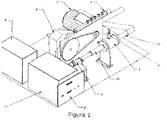
According to the patent, the reactor contains a micrometric sphere processing cell, an injector (2) with electromagnet for spraying hydrocarbons + surfactant, an impulse generator (3), an argon/compressed air admission valve (4), an electric engine (5) for operating the injection system with common ramp and related operations, an injection pump (6), an electric panel for process administration (7), a buffer tank for the hydrocarbon + surfactant mix (8), a common ramp for 5 processing modules (9), a tube with helical grooves (10), as well as a micrometric sphere evacuation tube (11).
Description
- Our invention refers to a device, i.e. a reactor for obtaining an efficient fuel for the processing of micrometric spheres that contain argon encapsulated in a film made of liquid hydrocarbons + surfactant. The raw material the spheres are processed from contains the entire range of hydrocarbons, fossils, biofuels or e-fuels. That is why, an apparently simple method makes the transition from fuels to the class of efficient fuels with hydrocarbon fractions.
- We would like to emphasise that current fuel structure optimisation is based on 4 pillars.
- The first pillar. Since patent application no.
2011 01380 - The second pillar represents the fundamental phase. It was then that the technological leap aiming excellence was discovered. Its essence is that it imitates the complex functioning of human organisms. In this respect we invoke the "energetic carrier" role that red blood cells and micrometrical spheres play.
- Specifically, the argon encapsulated in demineralised water spheres is transported into the internal combustion engine room. In this place, combustion processes are exponentially intensified and therefore mobility is achieved. Consequently, the transition of the public transport sector to efficient fuels creates the premises for an abrupt reduction of specific consumption and the implementation of an environmentally friendly product.
- The technical problem our invention solves consists of processing micrometric spheres that emanate thermal peaks of thousands of degrees and implicitly high pressure and transition to efficient fuels with hydrocarbon fractions, fossils, biofuels or synthetic fuels.
- The aim of our reactor is to obtain an efficient fuel and it is made up of a micrometric sphere processing cell, connected by means of a tube with helical grooves to a sputtering injector of hydrocarbon + surfactant deposited in a buffer tank and to an impulse generator, an argon/compressed air admission valve is connected to a micrometric sphere evacuation tube, where the injection system is operated by an electric engine, an injection pump and an electric panel, while the common ramp contains five processing modules.
- The advantages this invention brings are the following:
- obtaining efficient fuels that contain fractions of fossil fuels, biofuels, synthetic fuels and added surfactant.
- it emanates thermal peaks of thousands of Celsius degrees, cumulated with high pressure.
- it reduces CO2 and NOx emissions into the atmosphere.
- In the following, we present an example of accomplishing our invention, also in connection with
figures 1-5 which represent: -
Figure 1 : The building scheme of the reactor -
Figure 2 : The building scheme of a Standard module for sphere processing -
Figure 3 : Details of the two elements that initiate the formation of the thin hydrocarbon + surfactant film, on the interior interface of the empty cylindrical ceramic filter with micrometric porosity. -
Figure 4 : Schematic representation of the cell where micrometric spheres are rhythmically formed. - According to the patent, the reactor contains a micrometric sphere processing cell, an
injector 2 with electromagnet for spraying hydrocarbons + surfactant, an impulse generator 3, an argon/compressed air admission valve 4, anelectric engine 5 for operating the injection system with common ramp and related operations, an injection pump 6. - The process is administered from an electric panel 7. A buffer tank 8 for the hydrocarbon + surfactant mix, a common ramp 9 for 5 processing modules, a tube with helical grooves 10, as well as a micrometric sphere evacuation tube 11 on the interior interface of the empty cylindrical ceramic filter with micrometric porosity.
- The device contains an injector with 4 holes for conical sputtering and an empty cylindrical ceramic filter with micrometric porosity.
- Each pulsation of the injector processes several micrometric spheres. The "cascade effect" is achieved through rhythmical pulsations of the injector by means of hydraulic shocks that push the demineralised water spheres. This is how a sample of randomised fuel with fractions (percentages) of micrometric spheres, also called ivo spheres, is obtained.
- The third pillar. The operating principle of the device is simple if we refer to the formation of soap bubbles. Thus, at a certain moment, the injector sputters o dose of hydrocarbon + surfactant to the interior wall of the ceramic filter. Consequently, the centrifugal force will form a thin liquid film on the entire surface of the interior diameter. Then, an argon puff is sprayed from the exterior diameter to the interior diameter. We would like to emphasise that the argon/thin liquid film interface is an ad litteram application of the 3rd principle of mechanics (Newton's 3rd law). In this case, the pressure of argon acts on the thin hydrocarbon + surfactant film from one side, while the thin liquid film reacts with a reaction force of the same intensity, but from the opposite side.
- Thus, a superficial tension is generated by the force of attraction between molecules, which shapes the thin film into an almost spherical form given that the general characteristic of liquids is that they take up a minimum geometrical form due to cohesion between the molecules. And, as already known, spheres have the smallest surface area/volume ratio. In short, a dose + a puff = micrometric spheres (ivo spheres).
- We would like to mention that the surfactant has a stabilising effect on the spheres according to the Marangoni effect. In the same vein, we would like to indicate some other characteristics of the surfactant. For example, it makes two spheres reject each other. This explains why the spheres are intact when they get into the water matrix as a result of numerous water hammer pulses generated by the injector. This is how the neutral buoyancy of the spheres in the demineralised water matrix is explained. The fourth pillar. But micrometric spheres have one more specific strength: their interior pressure is colossal, of approximately 39 900 atmospheres, which is familiar to specialists in metallurgy. The aspect has its utility if we take into consideration that the new fuel shall have endurance to several transfers.
Claims (1)
- Reactor aimed at obtaining an efficient fuel characterised by consisting of a micrometric sphere processing cell (1), connected by means of a tube (10) with helical grooves to a sputtering injector (2) of hydrocarbon + surfactant deposited in a buffer tank (8) and to an impulse generator (3), an argon/compressed air admission valve (4) is connected to a micrometric sphere evacuation tube (11), where the injection system is operated by an electric engine (5), an injection pump (6) and an electric panel (7), while the common ramp contains five processing modules (9).
Priority Applications (1)
| Application Number | Priority Date | Filing Date | Title |
|---|---|---|---|
| EP20464001.5A EP3858475A1 (en) | 2020-01-30 | 2020-01-30 | Reactor for obtaining efficient fuels |
Applications Claiming Priority (1)
| Application Number | Priority Date | Filing Date | Title |
|---|---|---|---|
| EP20464001.5A EP3858475A1 (en) | 2020-01-30 | 2020-01-30 | Reactor for obtaining efficient fuels |
Publications (1)
| Publication Number | Publication Date |
|---|---|
| EP3858475A1 true EP3858475A1 (en) | 2021-08-04 |
Family
ID=70165962
Family Applications (1)
| Application Number | Title | Priority Date | Filing Date |
|---|---|---|---|
| EP20464001.5A Withdrawn EP3858475A1 (en) | 2020-01-30 | 2020-01-30 | Reactor for obtaining efficient fuels |
Country Status (1)
| Country | Link |
|---|---|
| EP (1) | EP3858475A1 (en) |
Citations (6)
| Publication number | Priority date | Publication date | Assignee | Title |
|---|---|---|---|---|
| EP0399041A1 (en) * | 1988-04-25 | 1990-11-28 | Inzhenerny Tsentr "Transzvuk" | Method and device for preparation of emulsions |
| EP0477846A1 (en) * | 1990-09-25 | 1992-04-01 | Praxair Technology, Inc. | Improved in-line gas/liquid dispersion |
| EP2016996A1 (en) * | 2006-02-22 | 2009-01-21 | Universidad de Sevilla | High-performance method and device for generating drops and bubbles |
| EP2116589A1 (en) * | 2006-12-11 | 2009-11-11 | Opt Creation, Inc. | Apparatus and process for production of nanobubble liquid |
| KR101455115B1 (en) * | 2013-04-26 | 2014-10-28 | 중앙대학교 산학협력단 | High-efficiency hybrid fuel using fine-bubbles and manufacturing apparatus thereof |
| KR20180007711A (en) * | 2016-07-13 | 2018-01-24 | 중앙대학교 산학협력단 | Manufacturing apparatus for high-efficiency hybrid fuel with nano gas bubble and manufacturing method using thereof |
-
2020
- 2020-01-30 EP EP20464001.5A patent/EP3858475A1/en not_active Withdrawn
Patent Citations (6)
| Publication number | Priority date | Publication date | Assignee | Title |
|---|---|---|---|---|
| EP0399041A1 (en) * | 1988-04-25 | 1990-11-28 | Inzhenerny Tsentr "Transzvuk" | Method and device for preparation of emulsions |
| EP0477846A1 (en) * | 1990-09-25 | 1992-04-01 | Praxair Technology, Inc. | Improved in-line gas/liquid dispersion |
| EP2016996A1 (en) * | 2006-02-22 | 2009-01-21 | Universidad de Sevilla | High-performance method and device for generating drops and bubbles |
| EP2116589A1 (en) * | 2006-12-11 | 2009-11-11 | Opt Creation, Inc. | Apparatus and process for production of nanobubble liquid |
| KR101455115B1 (en) * | 2013-04-26 | 2014-10-28 | 중앙대학교 산학협력단 | High-efficiency hybrid fuel using fine-bubbles and manufacturing apparatus thereof |
| KR20180007711A (en) * | 2016-07-13 | 2018-01-24 | 중앙대학교 산학협력단 | Manufacturing apparatus for high-efficiency hybrid fuel with nano gas bubble and manufacturing method using thereof |
Similar Documents
| Publication | Publication Date | Title |
|---|---|---|
| Zainuddin et al. | Current pretreatment/cell disruption and extraction methods used to improve intracellular lipid recovery from oleaginous yeasts | |
| Jaronski | Mass production of entomopathogenic fungi—state of the art | |
| Qiu et al. | Process intensification technologies in continuous biodiesel production | |
| RU2011125788A (en) | WATER CLUSTERS, PRODUCTS WITH WATER CLUSTERS AND PRODUCTION METHODS | |
| Stancik et al. | Structure and dynamics of particle monolayers at a liquid− liquid interface subjected to extensional flow | |
| JP2012510892A5 (en) | ||
| Zhang et al. | Reactive inkjet printing of functional silk stirrers for enhanced mixing and sensing | |
| Bachchhav et al. | Process-intensified extraction of phycocyanin followed by β-carotene from Spirulina platensis using ultrasound-assisted extraction | |
| EP3858475A1 (en) | Reactor for obtaining efficient fuels | |
| Johnson et al. | Surface coagulation in sea water | |
| CN109440125A (en) | A kind of stainless base steel electrolysis water catalysis electrode and preparation method thereof | |
| Uvarov et al. | Exploding microbubbles driving a simple electrochemical micropump | |
| Wu et al. | Experimental investigation on the plasma morphology of ablative pulsed plasma thruster with tongue-shaped and flared electrodes | |
| Ho et al. | Cross-flow membrane emulsification technique for fabrication of drug-loaded particles | |
| CN104232051A (en) | Application of rhamnolipid biosurfactant to tertiary oil recovery | |
| Zu et al. | Biosorption effects of copper ions on Candida utilis under negative pressure cavitation | |
| Czerlinski et al. | Domains of water molecules provide mechanisms of potentization in homeopathy | |
| Pan et al. | Development of a novel valve-based piezoelectric ultrasonic pump using a Langevin vibrator | |
| KR20140101532A (en) | Method of manufacturing a reforming fuel by adding water to a fuel oil and the manufacturing apparatus thereof | |
| US20110255645A1 (en) | Method for Producing Heavy Electrons | |
| Ghoshal et al. | Underwater oblique shock wave reflection | |
| CN1188209C (en) | Low energy-consumption continuous-preparing method of micro emulsion | |
| CN109650483A (en) | Bubble drive-in microdrive and preparation method thereof with micrometer/nanometer stagewise porous structure | |
| Chinwanitcharoen et al. | Batch ethanolysis reaction of palm olein assisted by ultrasonication | |
| CN1319654C (en) | Ultrasonic treatment device |
Legal Events
| Date | Code | Title | Description |
|---|---|---|---|
| PUAI | Public reference made under article 153(3) epc to a published international application that has entered the european phase |
Free format text: ORIGINAL CODE: 0009012 |
|
| STAA | Information on the status of an ep patent application or granted ep patent |
Free format text: STATUS: REQUEST FOR EXAMINATION WAS MADE |
|
| 17P | Request for examination filed |
Effective date: 20200217 |
|
| AK | Designated contracting states |
Kind code of ref document: A1 Designated state(s): AL AT BE BG CH CY CZ DE DK EE ES FI FR GB GR HR HU IE IS IT LI LT LU LV MC MK MT NL NO PL PT RO RS SE SI SK SM TR |
|
| STAA | Information on the status of an ep patent application or granted ep patent |
Free format text: STATUS: THE APPLICATION IS DEEMED TO BE WITHDRAWN |
|
| 18D | Application deemed to be withdrawn |
Effective date: 20220802 |