EP3855784A1 - Communication device, control device, communication method, and communication program - Google Patents
Communication device, control device, communication method, and communication program Download PDFInfo
- Publication number
- EP3855784A1 EP3855784A1 EP19863424.8A EP19863424A EP3855784A1 EP 3855784 A1 EP3855784 A1 EP 3855784A1 EP 19863424 A EP19863424 A EP 19863424A EP 3855784 A1 EP3855784 A1 EP 3855784A1
- Authority
- EP
- European Patent Office
- Prior art keywords
- communication
- unit
- time period
- volume
- time
- Prior art date
- Legal status (The legal status is an assumption and is not a legal conclusion. Google has not performed a legal analysis and makes no representation as to the accuracy of the status listed.)
- Ceased
Links
Images



Classifications
-
- H—ELECTRICITY
- H04—ELECTRIC COMMUNICATION TECHNIQUE
- H04W—WIRELESS COMMUNICATION NETWORKS
- H04W28/00—Network traffic management; Network resource management
- H04W28/02—Traffic management, e.g. flow control or congestion control
- H04W28/0231—Traffic management, e.g. flow control or congestion control based on communication conditions
-
- H—ELECTRICITY
- H04—ELECTRIC COMMUNICATION TECHNIQUE
- H04B—TRANSMISSION
- H04B7/00—Radio transmission systems, i.e. using radiation field
- H04B7/14—Relay systems
- H04B7/15—Active relay systems
- H04B7/185—Space-based or airborne stations; Stations for satellite systems
- H04B7/18502—Airborne stations
- H04B7/18504—Aircraft used as relay or high altitude atmospheric platform
-
- H—ELECTRICITY
- H04—ELECTRIC COMMUNICATION TECHNIQUE
- H04W—WIRELESS COMMUNICATION NETWORKS
- H04W16/00—Network planning, e.g. coverage or traffic planning tools; Network deployment, e.g. resource partitioning or cells structures
- H04W16/24—Cell structures
- H04W16/28—Cell structures using beam steering
-
- H—ELECTRICITY
- H04—ELECTRIC COMMUNICATION TECHNIQUE
- H04W—WIRELESS COMMUNICATION NETWORKS
- H04W84/00—Network topologies
-
- H—ELECTRICITY
- H04—ELECTRIC COMMUNICATION TECHNIQUE
- H04W—WIRELESS COMMUNICATION NETWORKS
- H04W84/00—Network topologies
- H04W84/02—Hierarchically pre-organised networks, e.g. paging networks, cellular networks, WLAN [Wireless Local Area Network] or WLL [Wireless Local Loop]
- H04W84/04—Large scale networks; Deep hierarchical networks
- H04W84/06—Airborne or Satellite Networks
Definitions
- the present invention relates to a communication device, a control device, a communication method, and a communication program.
- a solution has been considered to deal with the case where a large number of terminals are present in the communication area of a base station conventionally.
- the technology described in patent document 1 when the communication area of the base station includes a large number of terminals, controls the load on the base station by changing the tilt angle of the antenna of the base station to reduce the communication area, and also changing the tilt angle of the antenna of the adjacent base station to expand the communication area.
- Patent Document 1 Japanese Laid-Open Patent Publication No. 2012-54736
- a system in which a radio station is mounted on an aircraft that stays in the air at high altitudes i.e., high altitude platform system HAPS
- HAPS high altitude platform system
- Distributing the radio stations at high altitudes allows the communication area of the radio stations to be wider.
- the radio stations distributed at high altitudes have a relative limit to the volume of traffic they can handle in terms of power consumption and guaranteed communication speed, for example.
- a communication device includes: a clock unit that clocks a time; a communication unit that communicates with a plurality of wireless terminals in a predetermined communication area; a power monitor that monitors power consumption of the communication unit; a communication speed monitor that monitors communication speed of the communication performed by the communication unit; a communication volume monitor that monitors a communication volume of the communication performed by the communication unit; a time period identification unit that identifies a time period in which the power consumption of the communication unit exceeds a predetermined power on the basis of the power consumption monitored by the power monitor and the time clocked by the clock unit, and a time period in which the communication speed of the communication unit falls below a predetermined communication speed on the basis of the communication speed monitored by the communication speed monitor and the time clocked by the clock unit; and a controller that narrows the communication area of the communication unit so that the communication volume monitored by the communication volume monitor is less than or equal to a predetermined communication volume allowed by the communication unit when a current time clocked by the clock unit is in the time period identified by
- the time period identification unit may further identify a time period in which the communication volume of the communication unit exceeds the predetermined communication volume on the basis of the communication volume monitored by the communication volume monitor and the time clocked by the clock unit.
- the controller may narrow the communication area of the communication unit so that the communication volume monitored by the communication volume monitor is less than or equal to the predetermined communication volume when the current time clocked by the clock unit is in the time period identified by the time period identification unit in which the communication volume exceeds the predetermined communication volume.
- the controller may identify in advance areas where a large number of wireless terminals are present, set in advance a communication area other than the identified areas, and narrow the communication area of the communication unit on the basis of the setting.
- the communication area other than the identified areas, which is set by the controller may include a plurality of communication areas, and the controller may narrow the communication area of the communication unit by applying one of a plurality of settings according to the current time clocked by the clock unit.
- the communication unit may be located on an aircraft that flies over a predetermined area.
- a control device includes: a clock unit that clocks a time; a power monitor that monitors a power consumption when communication is performed; a communication speed monitor that monitors a communication speed when communication is performed; a communication volume monitor that monitors a communication volume when communication is performed; a time period identification unit that identifies a time period in which the power consumption when the communication is performed exceeds a predetermined power on the basis of the power consumption monitored by the power monitor and the time clocked by the clock unit, and a time period in which the communication speed when the communication is performed falls below a predetermined communication speed on the basis of the communication speed monitored by the communication speed monitor and the time clocked by the clock unit; and a controller that narrows the communication area when the communication is performed so that the communication volume monitored by the communication volume monitor is less than or equal to a predetermined communication volume allowed when the communication is performed, in a case where a current time clocked by the clock unit is in the time period identified by the time period identification unit.
- a communication method causing a computer including a communication unit that communicates with a plurality of wireless terminals in a predetermined communication area to perform the steps of: clocking a time; monitoring power consumption of the communication unit; monitoring communication speed of the communication unit; monitoring a communication volume of the communication performed by the communication unit; identifying a time period in which the power consumption of the communication unit exceeds a predetermined power on the basis of the power consumption monitored in the power monitoring step and the time clocked in the time clocking step, and a time period in which the communication speed of the communication unit falls below a predetermined communication speed on the basis of the communication speed monitored in the communication speed monitoring step and the time clocked in the time clocking step; and narrowing the communication area of the communication unit so that the communication volume monitored in the communication volume monitoring step is less than or equal to a predetermined communication volume allowed by the communication unit when a current time clocked in the time clocking step is in the time period identified in the time period identifying step.
- a communication program causing a computer to perform the functions of: clocking a time; communicating with a plurality of wireless terminals in a predetermined communication area; monitoring power consumption of the communicating function; monitoring communication speed of the communicating function; monitoring a communication volume of the communication performed by the communicating function; identifying a time period in which the power consumption of the communicating function exceeds a predetermined power on the basis of the power consumption monitored by the power monitoring function and the time clocked by the time clocking function, and a time period in which the communication speed of the communicating function falls below a predetermined communication speed on the basis of the communication speed monitored by the communication speed monitoring function and the time clocked by the time clocking function; and narrowing the communication area of the communicating function so that the communication volume monitored by the communication volume monitoring function is less than or equal to a predetermined communication volume allowed by the communicating function when a current time clocked by the time clocking function is in the time period identified by the time period identifying function.
- the present invention provides a communication device, a control device, a communication method, and a communication program that are capable of flexibly operating a communication unit even if the communication unit is mounted on an aircraft.
- FIG. 1 is a diagram illustrating a communication device according to an embodiment.
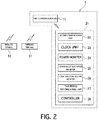
- FIG. 2 is a block diagram illustrating a communication device according to an embodiment.
- the communication device 1 shown in FIG. 2 includes a first communication unit 11 and a control device 21.
- the first communication unit 11 corresponds to a "communication unit" according to an embodiment of the present invention.
- the first communication unit 11 is distributed in an aircraft 100 (refer to FIG. 1 ) that stays in the air over a predetermined area.
- the aircraft 100 stays at an altitude of about 20 km and configures a high altitude platform system (HAPS) on which at least the first communication unit 11 is mounted.
- HAPS high altitude platform system
- the aircraft 100 may include, for example, airplanes, airships, balloons, and drones.
- the first communication unit 11 communicates with wireless terminals 51 using mobile communication technology.
- the wireless terminals 51 may include, for example, cell phones, smartphones, and tablet terminals.
- the first communication unit 11 communicates with a plurality of wireless terminals 51 on the ground within a predetermined communication area.
- the first communication unit 11 may be configured with some or all of the functions of the base station distributed on the ground.
- the communication area of the first communication unit 11 is configured by a plurality of cells, for example.
- the first communication unit 11 changes the size of the communication area (footprint) by performing beam-forming based on the adjustment of the antennas corresponding to the cells, for example. This allows the first communication unit 11 to reduce the communication area.
- the first communication unit 11 communicates wirelessly with the second communication unit 22 of the control device 21 described below.
- the control device 21 includes the second communication unit 22, a clock unit 23, a power monitor 24, a communication speed monitor 25, a communication volume monitor 26, a time period identification unit 27, and a controller 28.
- the control device 21 may be directed to a server or computer, for example.
- the control device 21 may be distributed on the ground, for example.
- a description will be given with a configuration in which the control device 21 is distributed on the ground.
- various configurations may be employed such as a configuration in which the clock unit 23, second communication unit 22, time period identification unit 27, and controller 28 may be distributed on the ground, and the power monitor 24, communication speed monitor 25, and communication volume monitor 26 are distributed on the aircraft, for example. It is preferable that the second communication unit 22 and the controller 28 be distributed on the ground.
- the second communication unit 22 communicates wirelessly with the first communication unit 11.
- the clock unit 23 includes a clock function to clock the time.
- the power monitor 24 monitors the power consumption of the first communication unit 11.
- the power monitor 24 monitors the power consumption of the first communication unit 11 in real time or at predetermined time intervals, for example. For example, if the volume of the communication between the first communication unit 11 and the wireless terminals 51 increases, the power consumption of the first communication unit 11 increases as well.
- the power monitor 24 monitors the power consumption of the first communication unit 11 as described above. If some of the components of the control device 21 are mounted on the aircraft 100, the power monitor 24 may monitor the power consumption of the components mounted on the aircraft 100 as a whole.
- the communication speed monitor 25 monitors the communication speed of the communication performed by the first communication unit 11.
- the communication speed monitor 25 monitors the communication speed of the communication with the plurality of wireless terminals 51, for example, performed by the first communication unit 11 in real time or at predetermined times. For example, if the communication performed between the first communication unit 11 and the wireless terminal 51 increases, the communication speed of the communication performed by the first communication unit 11 decreases.
- the communication speed monitor 25 monitors the communication speed of the communication by the first communication unit 11 as described above.
- the communication volume monitor 26 monitors the communication volume of the communication performed by the first communication unit 11. That is, the communication volume monitor 26 monitors the volume of traffic when the first communication unit 11 and the wireless terminals 51 communicate with each other.
- the time period identification unit 27 identifies the time period in which the power consumption of the first communication unit 11 exceeds the predetermined power on the basis of the power consumption monitored by the power monitor 24 and the time clocked by the clock unit 23.
- the time period identification unit 27 identifies the time period in which the communication speed of the first communication unit 11 falls below a predetermined communication speed on the basis of the communication speed monitored by the communication speed monitor 25 and the time clocked by the clock unit 23.
- the predetermined power is predetermined to be a numerical value that is less than the power generated in the aircraft 100.
- the predetermined communication speed for example, a numerical value that does not cause congestion in the communication by the first communication unit 11 and/or a numerical value that does not cause the user of the wireless terminal 51 to feel discomfort with respect to the communication speed is predetermined.
- the time period identification unit 27 identifies the time around 12:00 and 21:00 as the time periods in which the power consumed by the first communication unit 11 exceeds the predetermined power. In the same manner, if the power consumed by the first communication unit 11 exceeds the predetermined power in the time periods of 12:00-13:00 and 20:00-23:00, as an example, the time period of 12:00-13:00 and the time period of 20:00-23:00 are identified as the time periods in which the power consumed by the first communication unit 11 exceeds the predetermined power.
- the time period identification unit 27 identifies the time periods in the same manner as in the case of the power consumption monitored by the power monitor 24 above.
- the time period identification unit 27 further identifies the time period in which the communication volume of the first communication unit 11 exceeds the predetermined communication volume on the basis of the communication volume monitored by the communication volume monitor 26 and the time clocked by the clock unit 23.
- the time period identification unit 27 identifies the time period in which the traffic volume of the first communication unit 11 increases.
- a numerical value in which the communication volume of the first communication unit 11 is less than the limit (capacity limit) of the allowable communication volume is predetermined.
- the time period identification unit 27 identifies the time periods in which the communication volume of the first communication unit 11 exceeds the predetermined communication volume, for example, a time period in which the communication volume exceeds the predetermined communication volume at around 12:00 and 21:00, or a time period in which the communication volume exceeds the predetermined communication volume at around 12:00-13:00 and 20:00-23:00.
- the communication speed monitoring by the communication speed monitor 25, or the communication volume monitoring by the communication volume monitor 26 data is acquired on the basis of monitoring the power, communication speed, or communication volume for a predetermined period of time in advance.
- the time period identification unit 27 identifies in advance the time period in which the power or communication volume exceeds the reference value and the time period in which the communication speed falls below the reference value.
- the controller 28 narrows the communication area of the first communication unit 11 so that the communication volume monitored by the communication volume monitor 26 is less than or equal to the predetermined communication volume allowed by the communication unit 11 when the current time clocked by the clock unit 23 is in the time period identified by the time period identification unit 27.
- the controller 28 identifies in advance areas where the number of wireless terminals is large, sets in advance a communication area other than the identified areas, and narrows the communication area of the first communication unit 11 on the basis of the setting.
- the areas where the number of the wireless terminals is large are identified in advance on the basis of, for example, the population distribution per square kilometer that has been surveyed in advance and the electric field strength of the base stations distributed on the ground at a time when they communicate with the wireless terminals 51.
- the controller 28 sets in advance communication areas excluding areas with the large number of wireless terminals 51 identified in advance. When narrowing the communication area of the first communication unit 11, the controller 28 narrows the communication area (footprint) of the first communication unit 11 on the basis of the setting.
- the controller 28 controls the first communication unit 11 to be a preset communication area so that the communication volume of the first communication unit 11 is less than or equal to a predetermined communication volume, assuming that when the current time clocked by the clock unit 23 is in the time period identified by the time period identification unit 27, the communication of the first communication unit 11 may become congested due to increased communication to the first communication unit 11 and the power consumption of the first communication unit 11 may exceed the predetermined power.
- the predetermined communication volume allowed by the first communication unit 11 may be directed to, for example, a predetermined value less than the capacity limit of the communication volume of the first communication unit 11.
- the controller 28 is capable of narrowing the communication area of the first communication unit 11 in accordance with the time period. That is, the controller 28 sets in advance communication areas excluding areas with the large number of wireless terminals 51 identified in advance in accordance with the time period. The controller 28 then may narrow the communication area of the first communication unit 11 by applying a setting according to the current time clocked by the clock unit 23.
- the controller 28 narrows the communication area of the first communication unit 11 so that the communication volume monitored by the communication volume monitor 26 is less than or equal to the predetermined communication volume when the current time clocked by the clock unit 23 is in the time period identified by the time period identification unit 27 in which the communication volume exceeds the predetermined communication volume.
- the controller 28 sets in advance communication areas excluding areas with the large number of wireless terminals 51 that have been identified in advance in the same way as described above.
- the controller 28 narrows the communication area (footprint) of the first communication unit 11 on the basis of the setting.
- the controller 28 controls the first communication unit 11 to be a preset communication area so that the communication volume of the first communication unit 11 is less than or equal to a predetermined communication volume, assuming that when the current time clocked by the clock unit 23 is in the time period identified by the time period identification unit 27, the communication volume of the first communication unit 11 may exceed the predetermined communication volume.
- FIGS. 3A and 3B are flowcharts illustrating an example of identifying a time period.
- FIG. 3A is a flowchart illustrating an example of identifying a time period in which the power consumption of the first communication unit exceeds a predetermined amount of electricity.
- FIG. 3B is a flowchart illustrating an example of identifying a time period in which the communication volume of the first communication unit exceeds a predetermined communication volume.
- step S11 the power monitor 24 monitors the power consumption of the first communication unit 11.
- the power monitor 24 monitors the power consumption of the first communication unit 11, for example, on the basis of information on the power consumption transmitted from the first communication unit 11 at predetermined time intervals or in real time.
- the process in step S11 is performed for a predetermined period of time, for example.
- step S12 the communication speed monitor 25 monitors the communication speed of the communication performed by the first communication unit 11.
- the communication speed monitor 25 monitors the communication speed of the communication between the first communication unit 11 and the plurality of wireless terminals 51, for example, on the basis of information on the communication speed transmitted from the first communication unit 11 at predetermined time intervals or in real time, for example.
- the process in step S12 is performed for a predetermined period of time, for example.
- the process in step S11 and the process in step S12 may be performed in the reverse order.
- the time period identification unit 27 identifies the time period in which the power consumption of the first communication unit 11 exceeds the predetermined power on the basis of the power consumption monitored in step S11 and the time clocked by the clock unit 23. In addition, the time period identification unit 27 identifies the time period in which the communication speed of the first communication unit 11 falls below a predetermined communication speed on the basis of the communication speed monitored in step S12 and the time clocked by the clock unit 23.
- the time period identification unit 27 stores the information on the identified time period in a storage (not shown). For example, since the process in step S11 and the process in step S12 are performed for a predetermined period of time, the time period identification unit 27 is allowed to identify the time period on the basis of the data for the predetermined period of time.
- step S13 the process is completed.
- step S21 the communication volume monitor 26 monitors the communication volume of the communication performed by the first communication unit 11.
- the communication volume monitor 26 monitors the communication volume of the first communication unit 11 on the basis of the information on the communication volume transmitted from the first communication unit 11 at predetermined time intervals or in real time, for example.
- the process in step S21 is performed for a predetermined period of time, for example.
- step S22 the time period identification unit 27 identifies the time period in which the communication volume of the first communication unit 11 exceeds the predetermined communication volume on the basis of the communication volume monitored in step S21 and the time clocked by the clock unit 23.
- the time period identification unit 27 stores the information on the identified time period in a storage (not shown). For example, since the process in step S21 is performed for a predetermined period of time, the time period identification unit 27 is allowed to identify the time period on the basis of the data for the predetermined period of time.
- step S22 the process is completed.
- FIG. 4 is a flowchart illustrating an example of narrowing the communication area of the first communication unit.
- FIGS. 5A and 5B are diagrams illustrating an example of narrowing the communication area of the first communication unit.
- FIG. 5A is a diagram illustrating a relationship between the communication volume of the first communication unit and a time.
- FIG. 5B is a diagram illustrating an example of narrowing the communication area of the first communication unit.
- step S31 the controller 28 determines whether the current time clocked by the clock unit 23 is in the predetermined time period identified in step S13 and step S22.
- the time periods in which the communication volume exceeds the predetermined communication volume are directed to time periods T1 and T2, in the case of the example shown in FIG. 5A .
- the time period T1 is roughly 12:00-13:00.
- the time period T2 is roughly 20:00-23:00. Accordingly, for example, the time periods identified in step S13 and step S22 are directed to the time period T1 and time period T2.
- the controller 28 determines that the current time is in the identified time period. In this case, the process proceeds to step S32. In contrast, if the controller 28 determines that the current time is not in the predetermined time period, the controller 28 makes the determination in step S31 again.
- step S32 the controller 28 controls the first communication unit 11 to narrow the communication area (footprint) of the first communication unit 11.
- the communication area of the first communication unit 11 mounted on the aircraft 100 includes the urban area UR and the surrounding areas of the urban area. Since it has been identified in advance that the large number of wireless terminals 51 are present in the urban area UR, excluding the urban area UR from the communication area A1 of the first communication unit 11 allows the first communication unit 11 to continue communication with the wireless terminals 51 in the surrounding areas. In the case illustrated in FIG. 5B as an example, only the footprint of cell C1 is narrowed to be cell C2 since only the cell C1 as some of the multiple cells C that configure the communication area A1 contains the urban area UR.
- wireless terminals 51 present in the urban area UR are capable of continuing to communicate with the base stations on the ground.
- the controller 28 possesses information on the narrow communication area in advance, when the urban area is excluded from the communication area of the first communication unit 11. Accordingly, the controller 28 transmits the information on the narrow communication area to the first communication unit 11 via the second communication unit 22, narrowing the communication area of the first communication unit 11.
- the first communication unit 11 is capable of possessing in advance the information on the narrow communication area described above.
- the first communication unit 11 is capable of narrowing the communication area on the basis of the control signal transmitted from the control device 21 based on the control of the controller 28.
- a communication device 1 includes: a power monitor 24 that monitors power consumption of a first communication unit 11; a communication speed monitor 25 that monitors communication speed of the communication performed by the first communication unit 11; a communication volume monitor 26 that monitors a communication volume of the communication performed by the first communication unit 11; a time period identification unit 27 that identifies a time period in which the power consumption of the first communication unit 11 exceeds a predetermined power on the basis of the power consumption monitored by the power monitor 24 and the time clocked by the clock unit 23, and a time period in which the communication speed of the first communication unit 11 falls below a predetermined communication speed on the basis of the communication speed monitored by the communication speed monitor 25 and the time clocked by the clock unit 23; and a controller 28 that narrows the communication area of the first communication unit 11 so that the communication volume monitored by the communication volume monitor 26 is less than or equal to a predetermined communication volume allowed by the first communication unit 11 when a current time clocked by the clock unit 23 is in the time period identified by the time period identification unit 27.
- the communication area of the first communication unit 11 may be narrowed down. This allows the communication device 1 to flexibly operate the first communication unit 11 since the power consumption of the first communication unit 11 does not exceed the allowable power and the communication speed of the communication performed by the first communication unit 11 does not decrease.
- the time period identification unit 27 of the communication device 1 further identifies the time period in which the communication volume of the first communication unit 11 exceeds the predetermined communication volume on the basis of the communication volume monitored by the communication volume monitor 26 and the time clocked by the clock unit 23.
- the controller 28 narrows the communication area of the first communication unit 11 so that the communication volume monitored by the communication volume monitor 26 is less than or equal to the predetermined communication volume when the current time clocked by the clock unit 23 is in the time period identified by the time period identification unit 27 in which the communication volume exceeds the predetermined communication volume.
- the communication device 1 Since the time period in which the communication volume of the first communication unit 11 increases is identified in advance, the communication device 1 is capable of narrowing the communication area of the first communication unit 11 so that the communication volume of the first communication unit 11 is less than or equal to the allowed communication volume when the current time reaches the identified time period. This allows the communication device 1 to flexibly operate the first communication unit 11 since the power consumption of the first communication unit 11 does not exceed the allowable power due to an increase in the communication volume of the first communication unit 11, and the communication speed of the communication performed by the first communication unit 11 does not fall below the allowable communication speed.
- the controller 28 of the communication device 1 identifies in advance areas where the number of wireless terminals is large, sets in advance a communication area other than the identified areas, and narrows the communication area of the first communication unit 11 on the basis of the setting.
- the communication device 1 excludes areas with a large number of wireless terminals 51, such as urban areas, from the communication area, preventing the power consumption of the first communication unit 11 from exceeding the allowable power, and preventing the communication speed of the communication performed by the first communication unit 11 from falling below the allowable communication speed. Accordingly, the communication device 1 is capable of flexibly operating the first communication unit 11 even if the communication area of the first communication unit 11 includes the urban area.
- the controller 28 of the communication device 1 sets a plurality of communication areas excluding the area identified as having a large number of wireless terminals 51, and narrows the communication area of the first communication unit 11 by applying one of the plurality of settings according to the current time clocked by the clock unit 23.
- the communication device 1 is capable of excluding areas with a large number of wireless terminals 51 from the communication area even if the areas with a large number of wireless terminals 51 change according to the time period. This flexibly operates the first communication unit 11.
- the first communication unit 11 of the communication device 1 is distributed in the aircraft 100 that stays in the air over a predetermined area.
- the communication device 1 uses HAPS technology with the first communication unit 11 mounted on the aircraft 100. This allows the communication device 1 to have a wider communication area compared to the base stations distributed on the ground. Even if the communication device 1 includes the urban area and the surrounding area of the urban area in its communication area, the communication device 1 is capable of continuing to operate the first communication unit 11 since the urban area is excluded from the communication area during the time period in which the power consumption of the first communication unit 11 may increase.
- the communication device 1 is capable of including the urban area in its communication area, even a wireless terminal 51 in an environment where it is difficult to communicate with a base station on the ground such as an alley in the urban area is allowed to communicate with the first communication unit 11.
- the volume of traffic that may be processed by the first communication unit 11 per unit area of the communication area is relatively small since the first communication unit 11 is provided as an overhead station. Accordingly, since the communication device 1 identifies the time period in which congestion may occur due to excessive traffic concentration in the first communication unit 11, the communication area of the first communication unit 11 may be narrowed when the current time falls within the identified time period. This allows the communication device 1 to avoid an extreme decrease in the communication speed of the first communication unit 11, and also avoid consuming more power than expected even when an excessive concentration of traffic occurs in the first communication unit 11 at night in which it cannot receive external power supply such as solar power.
- a control device 21 includes: a power monitor 24 that monitors a power consumption when communication is performed; a communication speed monitor 25 that monitors a communication speed when communication is performed; a communication volume monitor 26 that monitors a communication volume when communication is performed; a time period identification unit 27 that identifies a time period in which the power consumption when the communication is performed exceeds a predetermined power on the basis of the power consumption monitored by the power monitor 24 and the time clocked by the clock unit 23, and a time period in which the communication speed when the communication is performed falls below a predetermined communication speed on the basis of the communication speed monitored by the communication speed monitor 25 and the time clocked by the clock unit 23; and a controller 28 that narrows the communication area when the communication is performed so that the communication volume monitored by the communication volume monitor 26 is less than or equal to a predetermined communication volume allowed when the communication is performed, in a case where a current time clocked by the clock unit 23 is in the time period identified by the time period identification unit 27.
- the control device 21 When the current time reaches the identified time period, the control device 21 is capable of narrowing the communication area of the first communication unit 11 so that the communication volume when the communication is performed is less than or equal to the allowed communication volume. This allows the control device 21 to control the first communication unit 11 mounted on the aircraft 100 in a way that allows for flexible operation of the first communication unit 11 since the power consumption of the first communication unit 11 does not exceed the allowable power, and traffic concentration does not occur in the first communication unit 11.
- a communication method causing a computer including a first communication unit 11 that communicates with a plurality of wireless terminals 51 in a predetermined communication area to perform the steps of: clocking a time; monitoring power consumption of the first communication unit 11; monitoring communication speed of the first communication unit 11; monitoring a communication volume of the communication performed by the first communication unit 11; identifying a time period in which the power consumption of the first communication unit 11 exceeds a predetermined power on the basis of the power consumption monitored in the power monitoring step and the time clocked in the time clocking step, and a time period in which the communication speed of the first communication unit 11 falls below a predetermined communication speed on the basis of the communication speed monitored in the communication speed monitoring step and the time clocked in the time clocking step; and narrowing the communication area of the first communication unit 11 so that the communication volume monitored in the communication volume monitoring step is less than or equal to a predetermined communication volume allowed by the first communication unit 11 when a current time clocked in the time clocking step is in the time period identified in the time period identifying step
- the communication method is capable of narrowing the communication area of the first communication unit 11 when the current time reaches the identified time period. This allows the communication method to flexibly operate the first communication unit 11 since the power consumption of the first communication unit 11 does not exceed the allowable power, and the communication speed of the communication performed by the first communication unit 11 does not fall below the allowable communication speed.
- a communication program causing a computer to perform the functions of: clocking a time; communicating with a plurality of wireless terminals 51 in a predetermined communication area; monitoring power consumption of the communicating function; monitoring communication speed of the communicating function; monitoring a communication volume of the communication performed by the communicating function; identifying a time period in which the power consumption of the communicating function exceeds a predetermined power on the basis of the power consumption monitored by the power monitoring function and the time clocked by the time clocking function, and a time period in which the communication speed of the communicating function falls below a predetermined communication speed on the basis of the communication speed monitored by the communication speed monitoring function and the time clocked by the time clocking function; and narrowing the communication area of the communicating function so that the communication volume monitored by the communication volume monitoring function is less than or equal to a predetermined communication volume allowed by the communicating function when a current time clocked by the time clocking function is in the time period identified by the time period identifying function.
- the communication program Since the time period in which the power consumption of the communicating function increases is identified in advance, the communication program is capable of narrowing the communication area so that the communication volume of the communicating function is less than or equal to the allowable communication volume when the current time reaches the identified time period. This allows the communication program to flexibly operate the communicating function since the power consumption of the communicating function does not exceed the allowable power, and the communication speed of the communication performed by the communicating function does not fall below the allowable communication speed.
Landscapes
- Engineering & Computer Science (AREA)
- Computer Networks & Wireless Communication (AREA)
- Signal Processing (AREA)
- Physics & Mathematics (AREA)
- Astronomy & Astrophysics (AREA)
- General Physics & Mathematics (AREA)
- Aviation & Aerospace Engineering (AREA)
- Mobile Radio Communication Systems (AREA)
Abstract
Description
- The present invention relates to a communication device, a control device, a communication method, and a communication program.
- A solution has been considered to deal with the case where a large number of terminals are present in the communication area of a base station conventionally. The technology described in
patent document 1, when the communication area of the base station includes a large number of terminals, controls the load on the base station by changing the tilt angle of the antenna of the base station to reduce the communication area, and also changing the tilt angle of the antenna of the adjacent base station to expand the communication area. - [Patent Document 1]
Japanese Laid-Open Patent Publication No. 2012-54736 - A system in which a radio station is mounted on an aircraft that stays in the air at high altitudes (i.e., high altitude platform system HAPS) has been considered recently. Distributing the radio stations at high altitudes allows the communication area of the radio stations to be wider. However, the radio stations distributed at high altitudes have a relative limit to the volume of traffic they can handle in terms of power consumption and guaranteed communication speed, for example.
- It is an object of the present invention to provide a communication device, a control device, a communication method and a communication program that are capable of flexibly operating a radio station even if the radio station is mounted on an aircraft.
- A communication device includes: a clock unit that clocks a time; a communication unit that communicates with a plurality of wireless terminals in a predetermined communication area; a power monitor that monitors power consumption of the communication unit; a communication speed monitor that monitors communication speed of the communication performed by the communication unit; a communication volume monitor that monitors a communication volume of the communication performed by the communication unit; a time period identification unit that identifies a time period in which the power consumption of the communication unit exceeds a predetermined power on the basis of the power consumption monitored by the power monitor and the time clocked by the clock unit, and a time period in which the communication speed of the communication unit falls below a predetermined communication speed on the basis of the communication speed monitored by the communication speed monitor and the time clocked by the clock unit; and a controller that narrows the communication area of the communication unit so that the communication volume monitored by the communication volume monitor is less than or equal to a predetermined communication volume allowed by the communication unit when a current time clocked by the clock unit is in the time period identified by the time period identification unit.
- In the communication device, the time period identification unit may further identify a time period in which the communication volume of the communication unit exceeds the predetermined communication volume on the basis of the communication volume monitored by the communication volume monitor and the time clocked by the clock unit. The controller may narrow the communication area of the communication unit so that the communication volume monitored by the communication volume monitor is less than or equal to the predetermined communication volume when the current time clocked by the clock unit is in the time period identified by the time period identification unit in which the communication volume exceeds the predetermined communication volume.
- In the communication device, the controller may identify in advance areas where a large number of wireless terminals are present, set in advance a communication area other than the identified areas, and narrow the communication area of the communication unit on the basis of the setting.
- In the communication device, the communication area other than the identified areas, which is set by the controller, may include a plurality of communication areas, and the controller may narrow the communication area of the communication unit by applying one of a plurality of settings according to the current time clocked by the clock unit.
- In the communication device, the communication unit may be located on an aircraft that flies over a predetermined area.
- A control device includes: a clock unit that clocks a time; a power monitor that monitors a power consumption when communication is performed; a communication speed monitor that monitors a communication speed when communication is performed; a communication volume monitor that monitors a communication volume when communication is performed; a time period identification unit that identifies a time period in which the power consumption when the communication is performed exceeds a predetermined power on the basis of the power consumption monitored by the power monitor and the time clocked by the clock unit, and a time period in which the communication speed when the communication is performed falls below a predetermined communication speed on the basis of the communication speed monitored by the communication speed monitor and the time clocked by the clock unit; and a controller that narrows the communication area when the communication is performed so that the communication volume monitored by the communication volume monitor is less than or equal to a predetermined communication volume allowed when the communication is performed, in a case where a current time clocked by the clock unit is in the time period identified by the time period identification unit.
- A communication method causing a computer including a communication unit that communicates with a plurality of wireless terminals in a predetermined communication area to perform the steps of: clocking a time; monitoring power consumption of the communication unit; monitoring communication speed of the communication unit; monitoring a communication volume of the communication performed by the communication unit; identifying a time period in which the power consumption of the communication unit exceeds a predetermined power on the basis of the power consumption monitored in the power monitoring step and the time clocked in the time clocking step, and a time period in which the communication speed of the communication unit falls below a predetermined communication speed on the basis of the communication speed monitored in the communication speed monitoring step and the time clocked in the time clocking step; and narrowing the communication area of the communication unit so that the communication volume monitored in the communication volume monitoring step is less than or equal to a predetermined communication volume allowed by the communication unit when a current time clocked in the time clocking step is in the time period identified in the time period identifying step.
- A communication program causing a computer to perform the functions of: clocking a time; communicating with a plurality of wireless terminals in a predetermined communication area; monitoring power consumption of the communicating function; monitoring communication speed of the communicating function; monitoring a communication volume of the communication performed by the communicating function; identifying a time period in which the power consumption of the communicating function exceeds a predetermined power on the basis of the power consumption monitored by the power monitoring function and the time clocked by the time clocking function, and a time period in which the communication speed of the communicating function falls below a predetermined communication speed on the basis of the communication speed monitored by the communication speed monitoring function and the time clocked by the time clocking function; and narrowing the communication area of the communicating function so that the communication volume monitored by the communication volume monitoring function is less than or equal to a predetermined communication volume allowed by the communicating function when a current time clocked by the time clocking function is in the time period identified by the time period identifying function.
- The present invention provides a communication device, a control device, a communication method, and a communication program that are capable of flexibly operating a communication unit even if the communication unit is mounted on an aircraft.
-
-
FIG. 1 is a diagram illustrating a communication device according to an embodiment, -
FIG. 2 is a block diagram illustrating a communication device according to an embodiment, -
FIG. 3A is a flowchart illustrating an example of identifying a time period in which the power consumption of the first communication unit exceeds a predetermined amount of electricity, -
FIG. 3B is a flowchart illustrating an example of identifying a time period in which the communication volume of the first communication unit exceeds a predetermined communication volume, -
FIG. 4 is a flowchart illustrating an example of narrowing a communication area of the first communication unit, -
FIG. 5A is a diagram illustrating a relationship between the communication volume of the first communication unit and a time, and -
FIG. 5B is a diagram illustrating an example of narrowing a communication area of the first communication unit. - An embodiment of the invention will be described below.
-
FIG. 1 is a diagram illustrating a communication device according to an embodiment.FIG. 2 is a block diagram illustrating a communication device according to an embodiment. - The
communication device 1 shown inFIG. 2 includes afirst communication unit 11 and acontrol device 21. Thefirst communication unit 11 corresponds to a "communication unit" according to an embodiment of the present invention. Thefirst communication unit 11 is distributed in an aircraft 100 (refer toFIG. 1 ) that stays in the air over a predetermined area. Theaircraft 100, as an example, stays at an altitude of about 20 km and configures a high altitude platform system (HAPS) on which at least thefirst communication unit 11 is mounted. Theaircraft 100 may include, for example, airplanes, airships, balloons, and drones. - The
first communication unit 11 communicates withwireless terminals 51 using mobile communication technology. Thewireless terminals 51 may include, for example, cell phones, smartphones, and tablet terminals. - The
first communication unit 11 communicates with a plurality ofwireless terminals 51 on the ground within a predetermined communication area. For example, thefirst communication unit 11 may be configured with some or all of the functions of the base station distributed on the ground. The communication area of thefirst communication unit 11 is configured by a plurality of cells, for example. Thefirst communication unit 11 changes the size of the communication area (footprint) by performing beam-forming based on the adjustment of the antennas corresponding to the cells, for example. This allows thefirst communication unit 11 to reduce the communication area. - In addition, the
first communication unit 11 communicates wirelessly with thesecond communication unit 22 of thecontrol device 21 described below. - The
control device 21 includes thesecond communication unit 22, aclock unit 23, apower monitor 24, acommunication speed monitor 25, acommunication volume monitor 26, a timeperiod identification unit 27, and acontroller 28. - The
control device 21 may be directed to a server or computer, for example. Thecontrol device 21 may be distributed on the ground, for example. In the present embodiment, a description will be given with a configuration in which thecontrol device 21 is distributed on the ground. In a variation, various configurations may be employed such as a configuration in which theclock unit 23,second communication unit 22, timeperiod identification unit 27, andcontroller 28 may be distributed on the ground, and thepower monitor 24,communication speed monitor 25, andcommunication volume monitor 26 are distributed on the aircraft, for example. It is preferable that thesecond communication unit 22 and thecontroller 28 be distributed on the ground. - The
second communication unit 22 communicates wirelessly with thefirst communication unit 11.
Theclock unit 23 includes a clock function to clock the time. - The
power monitor 24 monitors the power consumption of thefirst communication unit 11. Thepower monitor 24 monitors the power consumption of thefirst communication unit 11 in real time or at predetermined time intervals, for example. For example, if the volume of the communication between thefirst communication unit 11 and thewireless terminals 51 increases, the power consumption of thefirst communication unit 11 increases as well. Thepower monitor 24 monitors the power consumption of thefirst communication unit 11 as described above. If some of the components of thecontrol device 21 are mounted on theaircraft 100, thepower monitor 24 may monitor the power consumption of the components mounted on theaircraft 100 as a whole. - The communication speed monitor 25 monitors the communication speed of the communication performed by the
first communication unit 11. The communication speed monitor 25 monitors the communication speed of the communication with the plurality ofwireless terminals 51, for example, performed by thefirst communication unit 11 in real time or at predetermined times. For example, if the communication performed between thefirst communication unit 11 and thewireless terminal 51 increases, the communication speed of the communication performed by thefirst communication unit 11 decreases. The communication speed monitor 25 monitors the communication speed of the communication by thefirst communication unit 11 as described above. - The communication volume monitor 26 monitors the communication volume of the communication performed by the
first communication unit 11. That is, the communication volume monitor 26 monitors the volume of traffic when thefirst communication unit 11 and thewireless terminals 51 communicate with each other. - The time
period identification unit 27 identifies the time period in which the power consumption of thefirst communication unit 11 exceeds the predetermined power on the basis of the power consumption monitored by thepower monitor 24 and the time clocked by theclock unit 23. The timeperiod identification unit 27 identifies the time period in which the communication speed of thefirst communication unit 11 falls below a predetermined communication speed on the basis of the communication speed monitored by thecommunication speed monitor 25 and the time clocked by theclock unit 23. - The predetermined power is predetermined to be a numerical value that is less than the power generated in the
aircraft 100. Regarding the predetermined communication speed, for example, a numerical value that does not cause congestion in the communication by thefirst communication unit 11 and/or a numerical value that does not cause the user of thewireless terminal 51 to feel discomfort with respect to the communication speed is predetermined. - If the power consumed by the
first communication unit 11 exceeds the predetermined power at around 12:00 and 21:00, as an example, the timeperiod identification unit 27 identifies the time around 12:00 and 21:00 as the time periods in which the power consumed by thefirst communication unit 11 exceeds the predetermined power. In the same manner, if the power consumed by thefirst communication unit 11 exceeds the predetermined power in the time periods of 12:00-13:00 and 20:00-23:00, as an example, the time period of 12:00-13:00 and the time period of 20:00-23:00 are identified as the time periods in which the power consumed by thefirst communication unit 11 exceeds the predetermined power. - Even if the communication speed monitor 25 monitors the communication speed of the communication performed by the
first communication unit 11, the timeperiod identification unit 27 identifies the time periods in the same manner as in the case of the power consumption monitored by thepower monitor 24 above. - The time
period identification unit 27 further identifies the time period in which the communication volume of thefirst communication unit 11 exceeds the predetermined communication volume on the basis of the communication volume monitored by the communication volume monitor 26 and the time clocked by theclock unit 23. The timeperiod identification unit 27 identifies the time period in which the traffic volume of thefirst communication unit 11 increases. As the predetermined communication volume, a numerical value in which the communication volume of thefirst communication unit 11 is less than the limit (capacity limit) of the allowable communication volume is predetermined. As in the case of power monitoring, the timeperiod identification unit 27 identifies the time periods in which the communication volume of thefirst communication unit 11 exceeds the predetermined communication volume, for example, a time period in which the communication volume exceeds the predetermined communication volume at around 12:00 and 21:00, or a time period in which the communication volume exceeds the predetermined communication volume at around 12:00-13:00 and 20:00-23:00. - As for the power monitoring by the
power monitor 24, the communication speed monitoring by thecommunication speed monitor 25, or the communication volume monitoring by thecommunication volume monitor 26, data is acquired on the basis of monitoring the power, communication speed, or communication volume for a predetermined period of time in advance. The timeperiod identification unit 27 identifies in advance the time period in which the power or communication volume exceeds the reference value and the time period in which the communication speed falls below the reference value. - The
controller 28 narrows the communication area of thefirst communication unit 11 so that the communication volume monitored by the communication volume monitor 26 is less than or equal to the predetermined communication volume allowed by thecommunication unit 11 when the current time clocked by theclock unit 23 is in the time period identified by the timeperiod identification unit 27. Thecontroller 28 identifies in advance areas where the number of wireless terminals is large, sets in advance a communication area other than the identified areas, and narrows the communication area of thefirst communication unit 11 on the basis of the setting. - The areas where the number of the wireless terminals is large are identified in advance on the basis of, for example, the population distribution per square kilometer that has been surveyed in advance and the electric field strength of the base stations distributed on the ground at a time when they communicate with the
wireless terminals 51. Thecontroller 28 sets in advance communication areas excluding areas with the large number ofwireless terminals 51 identified in advance. When narrowing the communication area of thefirst communication unit 11, thecontroller 28 narrows the communication area (footprint) of thefirst communication unit 11 on the basis of the setting. - That is, the
controller 28 controls thefirst communication unit 11 to be a preset communication area so that the communication volume of thefirst communication unit 11 is less than or equal to a predetermined communication volume, assuming that when the current time clocked by theclock unit 23 is in the time period identified by the timeperiod identification unit 27, the communication of thefirst communication unit 11 may become congested due to increased communication to thefirst communication unit 11 and the power consumption of thefirst communication unit 11 may exceed the predetermined power. Here, the predetermined communication volume allowed by thefirst communication unit 11 may be directed to, for example, a predetermined value less than the capacity limit of the communication volume of thefirst communication unit 11. - If the area with the large number of
wireless terminals 51 differs depending on the time period, for example, thecontroller 28 is capable of narrowing the communication area of thefirst communication unit 11 in accordance with the time period. That is, thecontroller 28 sets in advance communication areas excluding areas with the large number ofwireless terminals 51 identified in advance in accordance with the time period. Thecontroller 28 then may narrow the communication area of thefirst communication unit 11 by applying a setting according to the current time clocked by theclock unit 23. - In addition, the
controller 28 narrows the communication area of thefirst communication unit 11 so that the communication volume monitored by the communication volume monitor 26 is less than or equal to the predetermined communication volume when the current time clocked by theclock unit 23 is in the time period identified by the timeperiod identification unit 27 in which the communication volume exceeds the predetermined communication volume. Thecontroller 28 sets in advance communication areas excluding areas with the large number ofwireless terminals 51 that have been identified in advance in the same way as described above. When narrowing the communication area of thefirst communication unit 11, thecontroller 28 narrows the communication area (footprint) of thefirst communication unit 11 on the basis of the setting. That is, thecontroller 28 controls thefirst communication unit 11 to be a preset communication area so that the communication volume of thefirst communication unit 11 is less than or equal to a predetermined communication volume, assuming that when the current time clocked by theclock unit 23 is in the time period identified by the timeperiod identification unit 27, the communication volume of thefirst communication unit 11 may exceed the predetermined communication volume. - Next, a communication control method will be described.
- First, the way of identifying the time period by the time
period identification unit 27 will be described. -
FIGS. 3A and3B are flowcharts illustrating an example of identifying a time period.FIG. 3A is a flowchart illustrating an example of identifying a time period in which the power consumption of the first communication unit exceeds a predetermined amount of electricity.FIG. 3B is a flowchart illustrating an example of identifying a time period in which the communication volume of the first communication unit exceeds a predetermined communication volume. - As shown in
FIG. 3A , in step S11, thepower monitor 24 monitors the power consumption of thefirst communication unit 11. The power monitor 24 monitors the power consumption of thefirst communication unit 11, for example, on the basis of information on the power consumption transmitted from thefirst communication unit 11 at predetermined time intervals or in real time. The process in step S11 is performed for a predetermined period of time, for example. - In step S12, the communication speed monitor 25 monitors the communication speed of the communication performed by the
first communication unit 11. The communication speed monitor 25 monitors the communication speed of the communication between thefirst communication unit 11 and the plurality ofwireless terminals 51, for example, on the basis of information on the communication speed transmitted from thefirst communication unit 11 at predetermined time intervals or in real time, for example. The process in step S12 is performed for a predetermined period of time, for example. The process in step S11 and the process in step S12 may be performed in the reverse order. - In step S13, the time
period identification unit 27 identifies the time period in which the power consumption of thefirst communication unit 11 exceeds the predetermined power on the basis of the power consumption monitored in step S11 and the time clocked by theclock unit 23. In addition, the timeperiod identification unit 27 identifies the time period in which the communication speed of thefirst communication unit 11 falls below a predetermined communication speed on the basis of the communication speed monitored in step S12 and the time clocked by theclock unit 23. When the timeperiod identification unit 27 identifies the time period, the time period identification unit stores the information on the identified time period in a storage (not shown). For example, since the process in step S11 and the process in step S12 are performed for a predetermined period of time, the timeperiod identification unit 27 is allowed to identify the time period on the basis of the data for the predetermined period of time. - After step S13, the process is completed.
- As shown in
FIG. 3B , in step S21, the communication volume monitor 26 monitors the communication volume of the communication performed by thefirst communication unit 11. For example, the communication volume monitor 26 monitors the communication volume of thefirst communication unit 11 on the basis of the information on the communication volume transmitted from thefirst communication unit 11 at predetermined time intervals or in real time, for example. The process in step S21 is performed for a predetermined period of time, for example. - In step S22, the time
period identification unit 27 identifies the time period in which the communication volume of thefirst communication unit 11 exceeds the predetermined communication volume on the basis of the communication volume monitored in step S21 and the time clocked by theclock unit 23. When the timeperiod identification unit 27 identifies the time period, the timeperiod identification unit 27 stores the information on the identified time period in a storage (not shown). For example, since the process in step S21 is performed for a predetermined period of time, the timeperiod identification unit 27 is allowed to identify the time period on the basis of the data for the predetermined period of time. - After step S22, the process is completed.
- Next, an example of narrowing the communication area of the
first communication unit 11 will be described. -
FIG. 4 is a flowchart illustrating an example of narrowing the communication area of the first communication unit.FIGS. 5A and5B are diagrams illustrating an example of narrowing the communication area of the first communication unit.FIG. 5A is a diagram illustrating a relationship between the communication volume of the first communication unit and a time.FIG. 5B is a diagram illustrating an example of narrowing the communication area of the first communication unit. - As shown in
FIG. 4 , in step S31, thecontroller 28 determines whether the current time clocked by theclock unit 23 is in the predetermined time period identified in step S13 and step S22. - The time periods in which the communication volume exceeds the predetermined communication volume (power consumption exceeds the predetermined power) are directed to time periods T1 and T2, in the case of the example shown in
FIG. 5A . The time period T1 is roughly 12:00-13:00. The time period T2 is roughly 20:00-23:00. Accordingly, for example, the time periods identified in step S13 and step S22 are directed to the time period T1 and time period T2. When the current time is in the identified time period, or when the current time approaches the identified time period, thecontroller 28 determines that the current time is in the identified time period. In this case, the process proceeds to step S32. In contrast, if thecontroller 28 determines that the current time is not in the predetermined time period, thecontroller 28 makes the determination in step S31 again. - In step S32, the
controller 28 controls thefirst communication unit 11 to narrow the communication area (footprint) of thefirst communication unit 11. - As shown in
FIG. 5B as an example, the communication area of thefirst communication unit 11 mounted on theaircraft 100 includes the urban area UR and the surrounding areas of the urban area. Since it has been identified in advance that the large number ofwireless terminals 51 are present in the urban area UR, excluding the urban area UR from the communication area A1 of thefirst communication unit 11 allows thefirst communication unit 11 to continue communication with thewireless terminals 51 in the surrounding areas. In the case illustrated inFIG. 5B as an example, only the footprint of cell C1 is narrowed to be cell C2 since only the cell C1 as some of the multiple cells C that configure the communication area A1 contains the urban area UR. Since it is considered that the base stations on the ground have already been installed in the area with the large number of wireless terminals 51 (urban area UR), even if the urban area UR is excluded from the communication area of thefirst communication unit 11,wireless terminals 51 present in the urban area UR are capable of continuing to communicate with the base stations on the ground. - The
controller 28 possesses information on the narrow communication area in advance, when the urban area is excluded from the communication area of thefirst communication unit 11. Accordingly, thecontroller 28 transmits the information on the narrow communication area to thefirst communication unit 11 via thesecond communication unit 22, narrowing the communication area of thefirst communication unit 11. - Alternatively, the
first communication unit 11 is capable of possessing in advance the information on the narrow communication area described above. In this case, thefirst communication unit 11 is capable of narrowing the communication area on the basis of the control signal transmitted from thecontrol device 21 based on the control of thecontroller 28. - Next, advantageous effects achieved by the present embodiment will be described.
- A
communication device 1 includes: apower monitor 24 that monitors power consumption of afirst communication unit 11; a communication speed monitor 25 that monitors communication speed of the communication performed by thefirst communication unit 11; a communication volume monitor 26 that monitors a communication volume of the communication performed by thefirst communication unit 11; a timeperiod identification unit 27 that identifies a time period in which the power consumption of thefirst communication unit 11 exceeds a predetermined power on the basis of the power consumption monitored by thepower monitor 24 and the time clocked by theclock unit 23, and a time period in which the communication speed of thefirst communication unit 11 falls below a predetermined communication speed on the basis of the communication speed monitored by thecommunication speed monitor 25 and the time clocked by theclock unit 23; and acontroller 28 that narrows the communication area of thefirst communication unit 11 so that the communication volume monitored by the communication volume monitor 26 is less than or equal to a predetermined communication volume allowed by thefirst communication unit 11 when a current time clocked by theclock unit 23 is in the time period identified by the timeperiod identification unit 27. - Since the time period in which the power consumption of the
first communication unit 11 increases and the time period in which the communication speed of the communication performed by the first communication unit decreases are identified in advance, when the current time reaches the identified time period, the communication area of thefirst communication unit 11 may be narrowed down. This allows thecommunication device 1 to flexibly operate thefirst communication unit 11 since the power consumption of thefirst communication unit 11 does not exceed the allowable power and the communication speed of the communication performed by thefirst communication unit 11 does not decrease. - The time
period identification unit 27 of thecommunication device 1 further identifies the time period in which the communication volume of thefirst communication unit 11 exceeds the predetermined communication volume on the basis of the communication volume monitored by the communication volume monitor 26 and the time clocked by theclock unit 23. In this case, thecontroller 28 narrows the communication area of thefirst communication unit 11 so that the communication volume monitored by the communication volume monitor 26 is less than or equal to the predetermined communication volume when the current time clocked by theclock unit 23 is in the time period identified by the timeperiod identification unit 27 in which the communication volume exceeds the predetermined communication volume. - Since the time period in which the communication volume of the
first communication unit 11 increases is identified in advance, thecommunication device 1 is capable of narrowing the communication area of thefirst communication unit 11 so that the communication volume of thefirst communication unit 11 is less than or equal to the allowed communication volume when the current time reaches the identified time period. This allows thecommunication device 1 to flexibly operate thefirst communication unit 11 since the power consumption of thefirst communication unit 11 does not exceed the allowable power due to an increase in the communication volume of thefirst communication unit 11, and the communication speed of the communication performed by thefirst communication unit 11 does not fall below the allowable communication speed. - The
controller 28 of thecommunication device 1 identifies in advance areas where the number of wireless terminals is large, sets in advance a communication area other than the identified areas, and narrows the communication area of thefirst communication unit 11 on the basis of the setting. - The
communication device 1 excludes areas with a large number ofwireless terminals 51, such as urban areas, from the communication area, preventing the power consumption of thefirst communication unit 11 from exceeding the allowable power, and preventing the communication speed of the communication performed by thefirst communication unit 11 from falling below the allowable communication speed. Accordingly, thecommunication device 1 is capable of flexibly operating thefirst communication unit 11 even if the communication area of thefirst communication unit 11 includes the urban area. - The
controller 28 of thecommunication device 1 sets a plurality of communication areas excluding the area identified as having a large number ofwireless terminals 51, and narrows the communication area of thefirst communication unit 11 by applying one of the plurality of settings according to the current time clocked by theclock unit 23. - The
communication device 1 is capable of excluding areas with a large number ofwireless terminals 51 from the communication area even if the areas with a large number ofwireless terminals 51 change according to the time period. This flexibly operates thefirst communication unit 11. - The
first communication unit 11 of thecommunication device 1 is distributed in theaircraft 100 that stays in the air over a predetermined area. - That is, the
communication device 1 uses HAPS technology with thefirst communication unit 11 mounted on theaircraft 100. This allows thecommunication device 1 to have a wider communication area compared to the base stations distributed on the ground. Even if thecommunication device 1 includes the urban area and the surrounding area of the urban area in its communication area, thecommunication device 1 is capable of continuing to operate thefirst communication unit 11 since the urban area is excluded from the communication area during the time period in which the power consumption of thefirst communication unit 11 may increase. - In addition, since the
communication device 1 is capable of including the urban area in its communication area, even awireless terminal 51 in an environment where it is difficult to communicate with a base station on the ground such as an alley in the urban area is allowed to communicate with thefirst communication unit 11. - In the
communication device 1, the volume of traffic that may be processed by thefirst communication unit 11 per unit area of the communication area is relatively small since thefirst communication unit 11 is provided as an overhead station. Accordingly, since thecommunication device 1 identifies the time period in which congestion may occur due to excessive traffic concentration in thefirst communication unit 11, the communication area of thefirst communication unit 11 may be narrowed when the current time falls within the identified time period. This allows thecommunication device 1 to avoid an extreme decrease in the communication speed of thefirst communication unit 11, and also avoid consuming more power than expected even when an excessive concentration of traffic occurs in thefirst communication unit 11 at night in which it cannot receive external power supply such as solar power. - A
control device 21 includes: apower monitor 24 that monitors a power consumption when communication is performed; a communication speed monitor 25 that monitors a communication speed when communication is performed; a communication volume monitor 26 that monitors a communication volume when communication is performed; a timeperiod identification unit 27 that identifies a time period in which the power consumption when the communication is performed exceeds a predetermined power on the basis of the power consumption monitored by thepower monitor 24 and the time clocked by theclock unit 23, and a time period in which the communication speed when the communication is performed falls below a predetermined communication speed on the basis of the communication speed monitored by thecommunication speed monitor 25 and the time clocked by theclock unit 23; and acontroller 28 that narrows the communication area when the communication is performed so that the communication volume monitored by the communication volume monitor 26 is less than or equal to a predetermined communication volume allowed when the communication is performed, in a case where a current time clocked by theclock unit 23 is in the time period identified by the timeperiod identification unit 27. - When the current time reaches the identified time period, the
control device 21 is capable of narrowing the communication area of thefirst communication unit 11 so that the communication volume when the communication is performed is less than or equal to the allowed communication volume. This allows thecontrol device 21 to control thefirst communication unit 11 mounted on theaircraft 100 in a way that allows for flexible operation of thefirst communication unit 11 since the power consumption of thefirst communication unit 11 does not exceed the allowable power, and traffic concentration does not occur in thefirst communication unit 11. - A communication method causing a computer including a
first communication unit 11 that communicates with a plurality ofwireless terminals 51 in a predetermined communication area to perform the steps of: clocking a time; monitoring power consumption of thefirst communication unit 11; monitoring communication speed of thefirst communication unit 11; monitoring a communication volume of the communication performed by thefirst communication unit 11; identifying a time period in which the power consumption of thefirst communication unit 11 exceeds a predetermined power on the basis of the power consumption monitored in the power monitoring step and the time clocked in the time clocking step, and a time period in which the communication speed of thefirst communication unit 11 falls below a predetermined communication speed on the basis of the communication speed monitored in the communication speed monitoring step and the time clocked in the time clocking step; and narrowing the communication area of thefirst communication unit 11 so that the communication volume monitored in the communication volume monitoring step is less than or equal to a predetermined communication volume allowed by thefirst communication unit 11 when a current time clocked in the time clocking step is in the time period identified in the time period identifying step. - Since the time period in which the power consumption of the
first communication unit 11 increases and the time period in which the communication speed of the communication performed by thefirst communication unit 11 decreases are identified in advance, the communication method is capable of narrowing the communication area of thefirst communication unit 11 when the current time reaches the identified time period. This allows the communication method to flexibly operate thefirst communication unit 11 since the power consumption of thefirst communication unit 11 does not exceed the allowable power, and the communication speed of the communication performed by thefirst communication unit 11 does not fall below the allowable communication speed. - A communication program causing a computer to perform the functions of: clocking a time; communicating with a plurality of
wireless terminals 51 in a predetermined communication area; monitoring power consumption of the communicating function; monitoring communication speed of the communicating function; monitoring a communication volume of the communication performed by the communicating function; identifying a time period in which the power consumption of the communicating function exceeds a predetermined power on the basis of the power consumption monitored by the power monitoring function and the time clocked by the time clocking function, and a time period in which the communication speed of the communicating function falls below a predetermined communication speed on the basis of the communication speed monitored by the communication speed monitoring function and the time clocked by the time clocking function; and narrowing the communication area of the communicating function so that the communication volume monitored by the communication volume monitoring function is less than or equal to a predetermined communication volume allowed by the communicating function when a current time clocked by the time clocking function is in the time period identified by the time period identifying function. - Since the time period in which the power consumption of the communicating function increases is identified in advance, the communication program is capable of narrowing the communication area so that the communication volume of the communicating function is less than or equal to the allowable communication volume when the current time reaches the identified time period. This allows the communication program to flexibly operate the communicating function since the power consumption of the communicating function does not exceed the allowable power, and the communication speed of the communication performed by the communicating function does not fall below the allowable communication speed.
-
- 1:
- communication device
- 11:
- first communication unit
- 21:
- control device
- 22:
- second communication unit
- 23:
- clock unit
- 24:
- power monitor
- 25:
- communication speed monitor
- 26:
- communication volume monitor
- 27:
- time period identification unit
- 28:
- controller
- 51:
- wireless terminal
- 100:
- aircraft
Claims (8)
- A communication device comprising:a clock unit that clocks a time;a communication unit that communicates with a plurality of wireless terminals in a predetermined communication area;a power monitor that monitors power consumption of the communication unit;a communication speed monitor that monitors communication speed of the communication performed by the communication unit;a communication volume monitor that monitors a communication volume of the communication performed by the communication unit;a time period identification unit that identifies a time period in which the power consumption of the communication unit exceeds a predetermined power on the basis of the power consumption monitored by the power monitor and the time clocked by the clock unit, and a time period in which the communication speed of the communication unit falls below a predetermined communication speed on the basis of the communication speed monitored by the communication speed monitor and the time clocked by the clock unit; anda controller that narrows the communication area of the communication unit so that the communication volume monitored by the communication volume monitor is less than or equal to a predetermined communication volume allowed by the communication unit when a current time clocked by the clock unit is in the time period identified by the time period identification unit.
- The communication device according to claim 1, wherein
the time period identification unit further identifies a time period in which the communication volume of the communication unit exceeds the predetermined communication volume on the basis of the communication volume monitored by the communication volume monitor and the time clocked by the clock unit, and
the controller narrows the communication area of the communication unit so that the communication volume monitored by the communication volume monitor is less than or equal to the predetermined communication volume when the current time clocked by the clock unit is in the time period identified by the time period identification unit in which the communication volume exceeds the predetermined communication volume. - The communication device according to claim 1 or 2, wherein the controller identifies in advance areas where a number of wireless terminals is large, sets in advance a communication area other than the identified areas, and narrows the communication area of the communication unit on the basis of the setting.
- The communication device according to claim 3, wherein the communication area other than the identified areas, which is set by the controller, includes a plurality of communication areas, and the controller narrows the communication area of the communication unit by applying one of a plurality of settings according to the current time clocked by the clock unit.
- The communication device according to any one of claims 1 to 4, wherein the communication unit is distributed on an aircraft that flies over a predetermined area.
- A control device comprising:a clock unit that clocks a time;a power monitor that monitors a power consumption when communication is performed;a communication speed monitor that monitors a communication speed when communication is performed;a communication volume monitor that monitors a communication volume when communication is performed;a time period identification unit that identifies a time period in which the power consumption when the communication is performed exceeds a predetermined power on the basis of the power consumption monitored by the power monitor and the time clocked by the clock unit, and a time period in which the communication speed when the communication is performed falls below a predetermined communication speed on the basis of the communication speed monitored by the communication speed monitor and the time clocked by the clock unit; anda controller that narrows the communication area when the communication is performed so that the communication volume monitored by the communication volume monitor is less than or equal to a predetermined communication volume allowed when the communication is performed, in a case where a current time clocked by the clock unit is in the time period identified by the time period identification unit.
- A communication method causing a computer including a communication unit that communicates with a plurality of wireless terminals in a predetermined communication area to perform the steps of:
clocking a time;monitoring power consumption of the communication unit;monitoring communication speed of the communication unit; monitoring a communication volume of the communication performed by the communication unit;identifying a time period in which the power consumption of the communication unit exceeds a predetermined power on the basis of the power consumption monitored in the power monitoring step and the time clocked in the time clocking step, and a time period in which the communication speed of the communication unit falls below a predetermined communication speed on the basis of the communication speed monitored in the communication speed monitoring step and the time clocked in the time clocking step; andnarrowing the communication area of the communication unit so that the communication volume monitored in the communication volume monitoring step is less than or equal to a predetermined communication volume allowed by the communication unit when a current time clocked in the time clocking step is in the time period identified in the time period identifying step. - A communication program causing a computer to perform the functions of:clocking a time;communicating with a plurality of wireless terminals in a predetermined communication area;monitoring power consumption of the communicating function;monitoring communication speed of the communicating function; monitoring a communication volume of the communication performed by the communicating function;identifying a time period in which the power consumption of the communicating function exceeds a predetermined power on the basis of the power consumption monitored by the power monitoring function and the time clocked by the time clocking function, and a time period in which the communication speed of the communicating function falls below a predetermined communication speed on the basis of the communication speed monitored by the communication speed monitoring function and the time clocked by the time clocking function; andnarrowing the communication area of the communicating function so that the communication volume monitored by the communication volume monitoring function is less than or equal to a predetermined communication volume allowed by the communicating function when a current time clocked by the time clocking function is in the time period identified by the time period identifying function.
Applications Claiming Priority (2)
| Application Number | Priority Date | Filing Date | Title |
|---|---|---|---|
| JP2018178138A JP6735322B2 (en) | 2018-09-21 | 2018-09-21 | Communication device, control device, communication method, and communication program |
| PCT/JP2019/034862 WO2020059505A1 (en) | 2018-09-21 | 2019-09-04 | Communication device, control device, communication method, and communication program |
Publications (2)
| Publication Number | Publication Date |
|---|---|
| EP3855784A1 true EP3855784A1 (en) | 2021-07-28 |
| EP3855784A4 EP3855784A4 (en) | 2022-08-10 |
Family
ID=69887369
Family Applications (1)
| Application Number | Title | Priority Date | Filing Date |
|---|---|---|---|
| EP19863424.8A Ceased EP3855784A4 (en) | 2018-09-21 | 2019-09-04 | COMMUNICATION DEVICE, CONTROL DEVICE, COMMUNICATION METHOD, AND COMMUNICATION PROGRAM |
Country Status (4)
| Country | Link |
|---|---|
| US (1) | US11212694B2 (en) |
| EP (1) | EP3855784A4 (en) |
| JP (1) | JP6735322B2 (en) |
| WO (1) | WO2020059505A1 (en) |
Families Citing this family (1)
| Publication number | Priority date | Publication date | Assignee | Title |
|---|---|---|---|---|
| WO2021193610A1 (en) | 2020-03-25 | 2021-09-30 | 三菱パワー株式会社 | Turbine blade |
Family Cites Families (13)
| Publication number | Priority date | Publication date | Assignee | Title |
|---|---|---|---|---|
| JP2005217548A (en) * | 2004-01-27 | 2005-08-11 | Nec Corp | Method and system for radio communication and radio terminal |
| EP2133811A4 (en) | 2007-03-30 | 2014-10-22 | Nec Corp | USER AUTHENTICATION CONTROL DEVICE, USER AUTHENTICATION DEVICE, DATA PROCESSING DEVICE AND USER AUTHENTICATION CONTROL METHOD AND OTHERS |
| JP5145852B2 (en) * | 2007-10-15 | 2013-02-20 | 日本電気株式会社 | Coefficient determination device, radio communication system, coefficient determination method, and coefficient determination program |
| JP2009290683A (en) * | 2008-05-30 | 2009-12-10 | Toyota Infotechnology Center Co Ltd | Wireless transmission apparatus and control method for wireless communication area |
| US20110248846A1 (en) * | 2010-04-13 | 2011-10-13 | Green SHM Systems, Inc, Incorporated | Wireless Sensing Module and Method of Operation |
| JP2012054736A (en) | 2010-09-01 | 2012-03-15 | Hitachi Ltd | Mobile communication system and load distribution method for the same |
| US8655553B2 (en) * | 2011-11-09 | 2014-02-18 | Eaton Corporation | Monitoring system and method for electric vehicle and electric vehicle supply equipment |
| US20160103162A1 (en) * | 2014-10-14 | 2016-04-14 | The Boeing Company | Vehicle power flow monitoring |
| GB2536018A (en) | 2015-03-03 | 2016-09-07 | Stratospheric Platforms Ltd | Increasing data transfer rates |
| US9913278B2 (en) * | 2016-06-06 | 2018-03-06 | Google Llc | Systems and methods for dynamically allocating wireless service resources consonant with service demand density |
| CN114466327B (en) * | 2016-09-30 | 2025-08-19 | Kddi株式会社 | Communication terminal, communication method, communication program, communication system, management device, management method, and communication control method |
| US10805827B2 (en) * | 2016-12-02 | 2020-10-13 | Sharp Kabushiki Kaisha | Base station device, communication system, and beam control method and program |
| US10932167B2 (en) * | 2018-06-28 | 2021-02-23 | The Boeing Company | Multi-GBPS wireless data communication system for vehicular systems |
-
2018
- 2018-09-21 JP JP2018178138A patent/JP6735322B2/en active Active
-
2019
- 2019-09-04 WO PCT/JP2019/034862 patent/WO2020059505A1/en not_active Ceased
- 2019-09-04 EP EP19863424.8A patent/EP3855784A4/en not_active Ceased
-
2021
- 2021-02-25 US US17/184,719 patent/US11212694B2/en active Active
Also Published As
| Publication number | Publication date |
|---|---|
| JP6735322B2 (en) | 2020-08-05 |
| WO2020059505A1 (en) | 2020-03-26 |
| JP2020053727A (en) | 2020-04-02 |
| US11212694B2 (en) | 2021-12-28 |
| EP3855784A4 (en) | 2022-08-10 |
| US20210185555A1 (en) | 2021-06-17 |
Similar Documents
| Publication | Publication Date | Title |
|---|---|---|
| US11169546B2 (en) | Control device, program, and control method | |
| EP3507999B1 (en) | Uav for cellular communication | |
| US9913278B2 (en) | Systems and methods for dynamically allocating wireless service resources consonant with service demand density | |
| US10020872B2 (en) | UAV for cellular communication | |
| CA3060191C (en) | Uav modular redundant communications | |
| US9866313B1 (en) | UAV cellular communication service delivery | |
| EP3812267A1 (en) | Control of formation flying and communication area, for example, of aircraft providing radio communication service | |
| US11091056B2 (en) | Control device, program and control method | |
| US10057914B2 (en) | Bluetooth device and data scheduler | |
| US9743287B2 (en) | Methods and apparatus for determining and planning wireless network deployment sufficiency when utilizing vehicle-based relay nodes | |
| US20190082442A1 (en) | Base Station Clustering Method, Base Station Control Method, and Apparatus | |
| US11212694B2 (en) | Communication device, control device, communication method, and communication program | |
| US12149958B2 (en) | Control apparatus, computer readable storage medium, control method, and flying object | |
| JP2021153321A (en) | Flying body management device and flying body management method | |
| WO2021240980A1 (en) | Control device, system, program, and control method | |
| US10321394B2 (en) | Information processing apparatus, information processing method, and control program for adjusting a switching interval that changes the activation state of base band units | |
| WO2021084854A1 (en) | Base station device, system, program, flying object, method, management device, and management method |
Legal Events
| Date | Code | Title | Description |
|---|---|---|---|
| STAA | Information on the status of an ep patent application or granted ep patent |
Free format text: STATUS: THE INTERNATIONAL PUBLICATION HAS BEEN MADE |
|
| PUAI | Public reference made under article 153(3) epc to a published international application that has entered the european phase |
Free format text: ORIGINAL CODE: 0009012 |
|
| STAA | Information on the status of an ep patent application or granted ep patent |
Free format text: STATUS: REQUEST FOR EXAMINATION WAS MADE |
|
| 17P | Request for examination filed |
Effective date: 20210421 |
|
| AK | Designated contracting states |
Kind code of ref document: A1 Designated state(s): AL AT BE BG CH CY CZ DE DK EE ES FI FR GB GR HR HU IE IS IT LI LT LU LV MC MK MT NL NO PL PT RO RS SE SI SK SM TR |
|
| DAV | Request for validation of the european patent (deleted) | ||
| DAX | Request for extension of the european patent (deleted) | ||
| A4 | Supplementary search report drawn up and despatched |
Effective date: 20220713 |
|
| RIC1 | Information provided on ipc code assigned before grant |
Ipc: H04W 84/00 20090101ALI20220707BHEP Ipc: H04W 28/10 20090101ALI20220707BHEP Ipc: H04W 16/28 20090101AFI20220707BHEP |
|
| RAP1 | Party data changed (applicant data changed or rights of an application transferred) |
Owner name: SOFTBANK CORP. |
|
| STAA | Information on the status of an ep patent application or granted ep patent |
Free format text: STATUS: EXAMINATION IS IN PROGRESS |
|
| 17Q | First examination report despatched |
Effective date: 20240117 |
|
| REG | Reference to a national code |
Ref country code: DE Ref legal event code: R003 |
|
| STAA | Information on the status of an ep patent application or granted ep patent |
Free format text: STATUS: THE APPLICATION HAS BEEN REFUSED |
|
| 18R | Application refused |
Effective date: 20251118 |