EP3855656A1 - Data transmission method, terminal and network device - Google Patents
Data transmission method, terminal and network device Download PDFInfo
- Publication number
- EP3855656A1 EP3855656A1 EP19863595.5A EP19863595A EP3855656A1 EP 3855656 A1 EP3855656 A1 EP 3855656A1 EP 19863595 A EP19863595 A EP 19863595A EP 3855656 A1 EP3855656 A1 EP 3855656A1
- Authority
- EP
- European Patent Office
- Prior art keywords
- transmission
- harq
- transmission carrier
- information
- carrier
- Prior art date
- Legal status (The legal status is an assumption and is not a legal conclusion. Google has not performed a legal analysis and makes no representation as to the accuracy of the status listed.)
- Granted
Links
Images




Classifications
-
- H—ELECTRICITY
- H04—ELECTRIC COMMUNICATION TECHNIQUE
- H04W—WIRELESS COMMUNICATION NETWORKS
- H04W72/00—Local resource management
- H04W72/04—Wireless resource allocation
- H04W72/044—Wireless resource allocation based on the type of the allocated resource
- H04W72/046—Wireless resource allocation based on the type of the allocated resource the resource being in the space domain, e.g. beams
-
- H—ELECTRICITY
- H04—ELECTRIC COMMUNICATION TECHNIQUE
- H04L—TRANSMISSION OF DIGITAL INFORMATION, e.g. TELEGRAPHIC COMMUNICATION
- H04L1/00—Arrangements for detecting or preventing errors in the information received
- H04L1/12—Arrangements for detecting or preventing errors in the information received by using return channel
- H04L1/16—Arrangements for detecting or preventing errors in the information received by using return channel in which the return channel carries supervisory signals, e.g. repetition request signals
- H04L1/18—Automatic repetition systems, e.g. Van Duuren systems
- H04L1/1822—Automatic repetition systems, e.g. Van Duuren systems involving configuration of automatic repeat request [ARQ] with parallel processes
-
- H—ELECTRICITY
- H04—ELECTRIC COMMUNICATION TECHNIQUE
- H04L—TRANSMISSION OF DIGITAL INFORMATION, e.g. TELEGRAPHIC COMMUNICATION
- H04L1/00—Arrangements for detecting or preventing errors in the information received
- H04L1/12—Arrangements for detecting or preventing errors in the information received by using return channel
- H04L1/16—Arrangements for detecting or preventing errors in the information received by using return channel in which the return channel carries supervisory signals, e.g. repetition request signals
- H04L1/18—Automatic repetition systems, e.g. Van Duuren systems
- H04L1/1812—Hybrid protocols; Hybrid automatic repeat request [HARQ]
-
- H—ELECTRICITY
- H04—ELECTRIC COMMUNICATION TECHNIQUE
- H04L—TRANSMISSION OF DIGITAL INFORMATION, e.g. TELEGRAPHIC COMMUNICATION
- H04L1/00—Arrangements for detecting or preventing errors in the information received
- H04L1/12—Arrangements for detecting or preventing errors in the information received by using return channel
- H04L1/16—Arrangements for detecting or preventing errors in the information received by using return channel in which the return channel carries supervisory signals, e.g. repetition request signals
- H04L1/18—Automatic repetition systems, e.g. Van Duuren systems
- H04L1/1867—Arrangements specially adapted for the transmitter end
- H04L1/1893—Physical mapping arrangements
-
- H—ELECTRICITY
- H04—ELECTRIC COMMUNICATION TECHNIQUE
- H04L—TRANSMISSION OF DIGITAL INFORMATION, e.g. TELEGRAPHIC COMMUNICATION
- H04L5/00—Arrangements affording multiple use of the transmission path
- H04L5/0001—Arrangements for dividing the transmission path
- H04L5/0003—Two-dimensional division
- H04L5/0005—Time-frequency
- H04L5/0007—Time-frequency the frequencies being orthogonal, e.g. OFDM(A) or DMT
- H04L5/001—Time-frequency the frequencies being orthogonal, e.g. OFDM(A) or DMT the frequencies being arranged in component carriers
-
- H—ELECTRICITY
- H04—ELECTRIC COMMUNICATION TECHNIQUE
- H04L—TRANSMISSION OF DIGITAL INFORMATION, e.g. TELEGRAPHIC COMMUNICATION
- H04L5/00—Arrangements affording multiple use of the transmission path
- H04L5/003—Arrangements for allocating sub-channels of the transmission path
- H04L5/0053—Allocation of signalling, i.e. of overhead other than pilot signals
-
- H—ELECTRICITY
- H04—ELECTRIC COMMUNICATION TECHNIQUE
- H04L—TRANSMISSION OF DIGITAL INFORMATION, e.g. TELEGRAPHIC COMMUNICATION
- H04L5/00—Arrangements affording multiple use of the transmission path
- H04L5/003—Arrangements for allocating sub-channels of the transmission path
- H04L5/0053—Allocation of signalling, i.e. of overhead other than pilot signals
- H04L5/0055—Physical resource allocation for ACK/NACK
-
- H—ELECTRICITY
- H04—ELECTRIC COMMUNICATION TECHNIQUE
- H04W—WIRELESS COMMUNICATION NETWORKS
- H04W72/00—Local resource management
- H04W72/04—Wireless resource allocation
- H04W72/044—Wireless resource allocation based on the type of the allocated resource
- H04W72/0453—Resources in frequency domain, e.g. a carrier in FDMA
-
- H—ELECTRICITY
- H04—ELECTRIC COMMUNICATION TECHNIQUE
- H04W—WIRELESS COMMUNICATION NETWORKS
- H04W72/00—Local resource management
- H04W72/20—Control channels or signalling for resource management
- H04W72/21—Control channels or signalling for resource management in the uplink direction of a wireless link, i.e. towards the network
-
- H—ELECTRICITY
- H04—ELECTRIC COMMUNICATION TECHNIQUE
- H04W—WIRELESS COMMUNICATION NETWORKS
- H04W72/00—Local resource management
- H04W72/20—Control channels or signalling for resource management
- H04W72/23—Control channels or signalling for resource management in the downlink direction of a wireless link, i.e. towards a terminal
Definitions
- This disclosure relates to the technical field of communication applications, and in particular, to a data transmission method, a terminal, and a network device.
- a terminal or user equipment may have a plurality of medium access control (Medium Access Control, MAC) entities (for example, master cell group (Master Cell Group, MCG) MAC and secondary cell group (Secondary Cell Group, SCG) MAC), where each MAC entity has its separate HARQ entity (Entity).
- Medium Access Control Medium Access Control
- MCG Master Cell Group
- SCG Secondary Cell Group
- Entity HARQ entity
- Each HARQ entity is configured to control data transmission and reception of one cell or frequency channel (for example, a component carrier CC 1 in FIG.
- Each HARQ entity has a plurality of HARQ processes (process), and different data is transmitted or received by using different HARQ processes.
- a quantity of HARQ processes on each CC is determined by a HARQ round trip time (Round Trip Time, RTT) (which is a time from transmission of data to reception of feedback about the data; if the round trip time is 8 milliseconds, and transmission of each piece of data takes 1 millisecond, a quantity of HARQ processes is 8 in order that data can be transmitted at each time point).
- RTT HARQ round trip time
- a data interface between a MAC entity and an upper-layer entity is a logical channel (Logical Channel, LCH), for example, an LCH 1 in FIG. 1 .
- LCH Logical Channel
- Data on a plurality of logical channels may be transmitted as one MAC protocol data unit (Protocol Data Unit, PDU) in a HARQ process by using a multiplexing (multiplexing) function.
- PDU Protocol Data Unit
- Multi-beam (multi-beam) or multi-TRP transmission point (multiple transmission and reception points) data transmission and reception are applied on a base station side, and multi-beam or multi-TRP transmission point transmission and reception will be extensively applied on a UE side.
- An objective of this disclosure is to provide a data transmission method, a terminal, and a network device, to resolve a problem that no method is yet available for determining what HARQ transmission mode is to be used when different beams or transmission points are used for data transmission and reception for UE.
- an embodiment of this disclosure provides a data transmission method, applied to a terminal and including:
- an embodiment of this disclosure further provides a data transmission method, applied to a network device and including:
- an embodiment of this disclosure further provides a terminal, including:
- an embodiment of this disclosure further provides a terminal, including a memory, a processor, and a computer program stored in the memory and capable of running on the processor, where when the computer program is executed by the processor, the steps of the foregoing data transmission method are implemented.
- an embodiment of this disclosure further provides a network device, including:
- an embodiment of this disclosure further provides a network device, including a memory, a processor, and a computer program stored in the memory and capable of running on the processor, where when the computer program is executed by the processor, the steps of the foregoing data transmission method are implemented.
- an embodiment of this disclosure further provides a computer-readable storage medium, where the computer-readable storage medium stores a computer program, and when the computer program is executed by a processor, the steps of the foregoing data transmission method are implemented.
- the hybrid automatic repeat request HARQ entities and medium access control MAC entities corresponding to the plurality of transmission carriers are obtained, where the transmission carriers include beams or transmission points; and data transmission is performed between the transmission carriers and the HARQ entities and MAC entities corresponding to the transmission carriers.
- the terminal implements data transmission and reception by using a plurality of different transmission carriers and using different HARQ processes, a scheduling delay caused by insufficiency of HARQ processes is avoided, and reliability of data transmission is improved by supporting HARQ transmission of different transmission carriers.
- FIG. 2 is a structural diagram of a network system to which an embodiment of this disclosure may be applied.
- the network system includes a user terminal 11 and a base station 12.
- the user terminal 11 may be user equipment (User Equipment, UE), for example, may be a terminal device such as a mobile phone, a tablet computer (Tablet Personal Computer), a laptop computer (Laptop Computer), a personal digital assistant (personal digital assistant, PDA for short), a mobile Internet device (Mobile Internet Device, MID), or a wearable device (Wearable Device).
- UE User Equipment
- UE User Equipment
- UE user equipment
- PDA personal digital assistant
- a mobile Internet device Mobile Internet Device
- MID mobile Internet Device
- Wearable Device wearable Device
- the base station 12 may be a base station (for example, a gNB or a 5G NR NB) in 5G or a later release, or a base station in another communications system, or is referred to as a NodeB, an evolved NodeB, a transmission and reception point (transmitting receiving point, TRP), or another term in the field.
- a base station for example, a gNB or a 5G NR NB
- a base station in 5G or a later release or a base station in another communications system
- a NodeB an evolved NodeB
- TRP transmission and reception point
- the base station is not limited to a specific technical term.
- a 5G base station is used as an example in the embodiments of this disclosure, but a specific type of the base station 12 is not limited.
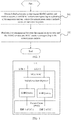
- FIG. 3 is a schematic flowchart of a data transmission method according to an embodiment of this disclosure. As shown in FIG. 3 , an embodiment of this disclosure provides a data transmission method, applied to a terminal and including the following steps.
- Step 301 Obtain hybrid automatic repeat request HARQ entities and medium access control MAC entities corresponding to a plurality of transmission carriers, where the transmission carriers include beams or transmission points.
- different transmission carriers may correspond to a same MAC entity and correspond to different HARQ entities.
- the HARQ entities may be used to distinguish between different transmission carriers.
- different transmission carriers may correspond to a same MAC entity and correspond to a same HARQ entity.
- HARQ process IDs may be used to distinguish between data of different transmission carriers.
- different transmission carriers may correspond to different MAC entities and different HARQ entities.
- identifier information of the MAC entities may be used to distinguish between data of different transmission carriers.
- the hybrid automatic repeat request HARQ entities and medium access control MAC entities corresponding to the plurality of transmission carriers are obtained by the terminal or a network device based on mapping relationship information between hybrid automatic repeat request HARQ and transmission carriers.
- the mapping relationship information between hybrid automatic repeat request HARQ and transmission carriers includes: information about a transmission carrier; and HARQ configuration information corresponding to the information about the transmission carrier.
- the information about the transmission carrier includes at least one of a transmission carrier identifier, a cell identifier corresponding to the transmission carrier, a frequency identifier corresponding to the transmission carrier, a bandwidth part (Bandwidth Part, BWP) identifier corresponding to the transmission carrier, a control channel information identifier corresponding to the transmission carrier, and a MAC entity identifier corresponding to the transmission carrier.
- Step 302 Perform data transmission between the transmission carriers and the HARQ entities and MAC entities corresponding to the transmission carriers.
- step 302 includes: in a case of downlink data reception, transmitting data received by each transmission carrier to a MAC entity and a HARQ entity corresponding to the transmission carrier, for processing; and/or in a case of uplink data transmission, transmitting data to be transmitted to each transmission carrier, to a MAC entity and a HARQ entity corresponding to the transmission carrier, for processing.
- the transmitting data received by each transmission carrier to a MAC entity and a HARQ entity corresponding to the transmission carrier, for processing in a case of downlink data reception includes: in the case of downlink data reception, obtaining information about a first target transmission carrier; and determining the first target transmission carrier based on the information about the first target transmission carrier, and transmitting data received by the first target transmission carrier to a MAC entity and a HARQ entity corresponding to the first target transmission carrier, for processing.
- the first target transmission carrier is any transmission carrier that performs downlink data reception, in the plurality of transmission carriers.
- the data received by the first target transmission carrier is identified by using the information about the first target transmission carrier. Further, the first target transmission carrier is identified based on the information about the first target transmission carrier, and the data is transmitted based on the foregoing mapping relationship information to the corresponding MAC entity and HARQ entity for processing.
- UE obtains information about a first target transmission carrier based on downlink data in downlink resource allocation information of downlink control information (Downlink Control Information, DCI) on a physical downlink control channel (Physical Downlink Control Channel, PDCCH), and transmits data to a MAC entity and a HARQ entity corresponding to the first target transmission carrier, for processing; or UE obtains information about a first target transmission carrier based on downlink data in a reference signal (for example, a synchronization signal block (Synchronization Signal Block, SSB) and/or channel state information reference signal (Channel State Information Reference Signal, CSI-RS)) information on a physical downlink shared channel (Physical Downlink Shared Channel, PDSCH), and transmits data to a MAC entity and a HARQ entity corresponding to the first target transmission carrier, for processing.
- DCI Downlink Control Information
- PDCCH Physical Downlink Control Channel
- CSI-RS channel state information reference signal
- the transmitting data to be transmitted to each transmission carrier, to a MAC entity and a HARQ entity corresponding to the transmission carrier, for processing in a case of uplink data transmission includes: in the case of uplink data transmission, obtaining information about a second target transmission carrier; and determining the second target transmission carrier based on the information about the second target transmission carrier, and transmitting data to be transmitted to the second target transmission carrier, to a MAC entity and a HARQ entity corresponding to the second target transmission carrier, for processing.
- the information about the transmission carrier may be carried, so that the network device identifies the corresponding transmission carrier based on the information about the transmission carrier.
- the second target transmission carrier is any transmission carrier that performs uplink data transmission, in the plurality of transmission carriers.
- the data to be transmitted by the second target transmission carrier is identified by using the information about the second target transmission carrier.
- the UE obtains information about a second target transmission carrier based on uplink data in uplink resource allocation information of the downlink control information DCI on the physical downlink control channel PDCCH, and transmits data to a MAC entity and a HARQ entity corresponding to the second target transmission carrier, for processing; or the UE obtains information about a second target transmission carrier based on uplink data in reference signal information on the physical downlink shared channel PDSCH, and transmits data to a MAC entity and a HARQ entity corresponding to the second target transmission carrier, for processing.
- the hybrid automatic repeat request HARQ entities and medium access control MAC entities corresponding to the plurality of transmission carriers are obtained, where the transmission carriers include beams or transmission points; in the case of downlink data reception, the data received by each transmission carrier is transmitted to the MAC entity and HARQ entity corresponding to the transmission carrier, for processing; and in the case of uplink data transmission, the data to be transmitted to each transmission carrier is transmitted to the MAC entity and HARQ entity corresponding to the transmission carrier, for processing.
- the terminal implements data transmission and reception by using a plurality of different transmission carriers and using different HARQ processes, a scheduling delay caused by insufficiency of HARQ processes is avoided, and reliability of data transmission is improved by supporting HARQ transmission of different transmission carriers.
- the obtaining hybrid automatic repeat request HARQ entities and medium access control MAC entities corresponding to a plurality of transmission carriers in step 301 includes:
- the network device configures the HARQ entities and MAC entities for the plurality of transmission carriers based on the mapping relationship information between hybrid automatic repeat request HARQ and transmission carriers.
- the mapping relationship information between HARQ and transmission carriers includes:
- the cell identifier corresponding to the transmission carrier may be specifically a cell 1
- the frequency identifier corresponding to the transmission carrier may be specifically a frequency 1
- the bandwidth part BWP identifier corresponding to the transmission carrier may be specifically a BWP_1
- the MAC entity identifier corresponding to the transmission carrier may be specifically MAC_1.
- the transmission carrier identifier includes at least one of a synchronization signal block SSB identifier, a channel state information reference signal CSI-RS identifier, and a port number identifier corresponding to a reference signal, and the reference signal includes an SSB and/or a CSI-RS.
- the transmission carrier identifier may also be another signal identifier, in addition to the SSB identifier and/or the CSI-RS identifier. This is not specifically limited herein.
- the port number identifier corresponding to the reference signal may be specifically a port_1, and the reference signal may also be another reference signal, in addition to the SSB and the CSI-RS. This is not specifically limited herein.
- the control channel identifier corresponding to the transmission carrier includes at least one of a control channel type identifier, a resource position identifier of a control channel, a reference signal identifier of a control channel, and a port number identifier corresponding to a reference signal of a control channel.
- the control channel type identifier may be specifically a PDCCH_1 of a primary cell PCell; the resource position identifier of the control channel may be a control resource set (CORESET) and/or a search space (search space) identifier; and the reference signal identifier of the control channel may be an SSB identifier and/or a CSI-RS identifier.
- CORESET control resource set
- search space search space
- the configuring the corresponding HARQ entities and MAC entities for the plurality of transmission carriers includes: configuring different HARQ entities for different transmission carriers.
- the different HARQ entities configured above belong to a same MAC entity.
- the HARQ configuration information corresponding to the information about the transmission carrier includes a quantity of HARQ processes, for example, a quantity of HARQ processes corresponding to uplink data transmission and/or downlink data reception.
- a transmission carrier 1 of a component carrier 1 (TRP 1 of CC 1) and a transmission carrier 2 of the component carrier 1 (TRP 2 of CC 1) correspond to a same MAC entity (MCG MAC) and correspond to different HARQ entities.
- MCG MAC MAC entity
- the configuring the corresponding HARQ entities and MAC entities for the plurality of transmission carriers includes: configuring a same HARQ entity for the plurality of transmission carriers, and configuring different HARQ process IDs for different transmission carriers.
- the HARQ configuration information corresponding to the information about the transmission carrier includes at least one of an identifier of a HARQ entity corresponding to the transmission carrier, a HARQ process ID available to the transmission carrier, a total quantity of available HARQ processes of a HARQ entity corresponding to the transmission carrier, and a quantity of HARQ processes available to the transmission carrier.
- the HARQ configuration information corresponding to the information about the transmission carrier includes at least one of first information and second information, where the first information includes the HARQ process ID available to the transmission carrier; and the second information includes the total quantity of available HARQ processes of the HARQ entity corresponding to the transmission carrier and the quantity of HARQ processes available to the transmission carrier.
- HARQ process IDs available to the transmission carriers are: HARQ process IDs [0, 3] available to a beam 1; and HARQ process IDs [1, 7] available to a beam 2.
- a bitmap is used to identify process IDs available to the beam or the transmission point; and the quantity of HARQ processes available to the transmission carrier is a quantity of HARQ processes corresponding to uplink data transmission and/or downlink data reception.
- a transmission carrier 1 and a transmission carrier 2 of a component carrier 1 correspond to a same MAC entity (MCG MAC) and correspond to a same HARQ entity
- a transmission carrier 3 and a transmission carrier 4 of a component carrier 2 correspond to a same MAC entity (MCG MAC) and correspond to a same HARQ entity.
- the configuring the corresponding HARQ entities and MAC entities for the plurality of transmission carriers includes: configuring different HARQ entities for different transmission carriers, and configuring different MAC entities for different transmission carriers.
- the mapping relationship information between hybrid automatic repeat request HARQ and transmission carriers further includes MAC configuration information corresponding to the transmission carrier, and the HARQ configuration information corresponding to the information about the transmission carrier includes a quantity of HARQ processes.
- a transmission carrier 1 of a component carrier 1 corresponds to one MAC entity; and a transmission carrier 2 of the component carrier 1 (TRP 2 of CC 1) corresponds to another MAC entity, and the transmission carrier 1 and transmission carrier 2 of the component carrier 1 correspond to different HARQ entities.
- the MAC configuration information corresponding to the transmission carrier includes at least one of:
- the MAC configuration information corresponding to the transmission carrier includes identifier information of a MAC entity.
- the UE can implement data transmission and reception by using a plurality of different transmission carriers and using different HARQ processes, a scheduling delay caused by insufficiency of HARQ processes is avoided, and reliability of data transmission is improved by supporting HARQ transmission of different transmission carriers.
- an embodiment of this disclosure further provides a data transmission method, applied to a network device and including the following steps.
- Step 301 Obtain hybrid automatic repeat request HARQ entities and medium access control MAC entities corresponding to a plurality of transmission carriers, where the transmission carriers include beams or transmission points.
- different transmission carriers may correspond to a same MAC entity and correspond to different HARQ entities.
- the HARQ entities may be used to distinguish between different transmission carriers.
- different transmission carriers may correspond to a same MAC entity and correspond to a same HARQ entity.
- HARQ process IDs may be used to distinguish between data of different transmission carriers.
- different transmission carriers may correspond to different MAC entities and different HARQ entities.
- identifier information of the MAC entities may be used to distinguish between data of different transmission carriers.
- the hybrid automatic repeat request HARQ entities and medium access control MAC entities corresponding to the plurality of transmission carriers are obtained by a terminal or the network device based on mapping relationship information between hybrid automatic repeat request HARQ and transmission carriers.
- the mapping relationship information between hybrid automatic repeat request HARQ and transmission carriers includes: information about a transmission carrier; and HARQ configuration information corresponding to the information about the transmission carrier.
- the information about the transmission carrier includes at least one of a transmission carrier identifier, a cell identifier corresponding to the transmission carrier, a frequency identifier corresponding to the transmission carrier, a bandwidth part BWP identifier corresponding to the transmission carrier, a control channel information identifier corresponding to the transmission carrier, and a MAC entity identifier corresponding to the transmission carrier.
- Step 302 Perform data transmission between the transmission carriers and the HARQ entities and MAC entities corresponding to the transmission carriers.
- Step 302 specifically includes: in a case of downlink data transmission, transmitting data to be transmitted to each transmission carrier, to a MAC entity and a HARQ entity corresponding to the transmission carrier, for processing; and/or in a case of uplink data reception, transmitting data received by each transmission carrier to a MAC entity and a HARQ entity corresponding to the transmission carrier, for processing.
- the transmitting data to be transmitted to each transmission carrier, to a MAC entity and a HARQ entity corresponding to the transmission carrier, for processing in a case of downlink data transmission includes: specifically, in the case of downlink data transmission, obtaining information about a third target transmission carrier; and determining the third target transmission carrier based on the information about the third target transmission carrier, and transmitting data to be transmitted to the third target transmission carrier, to a MAC entity and a HARQ entity corresponding to the third target transmission carrier, for processing.
- the third target transmission carrier is any transmission carrier that performs downlink data transmission, in the plurality of transmission carriers.
- the data to be transmitted by the third target transmission carrier is identified by using the information about the third target transmission carrier.
- the information about the transmission carrier may be carried, so that the terminal identifies the corresponding transmission carrier based on the information about the transmission carrier.
- the transmitting data received by each transmission carrier to a MAC entity and a HARQ entity corresponding to the transmission carrier, for processing in a case of uplink data reception includes: in the case of uplink data reception, obtaining information about a fourth target transmission carrier; and determining the fourth target transmission carrier based on the information about the fourth target transmission carrier, and transmitting data received by the fourth target transmission carrier to a MAC entity and a HARQ entity corresponding to the fourth target transmission carrier, for processing.
- the fourth target transmission carrier is any transmission carrier that performs uplink data reception, in the plurality of transmission carriers.
- the data received by the fourth target transmission carrier is identified by using the information about the fourth target transmission carrier. Further, the fourth target transmission carrier is identified based on the information about the fourth target transmission carrier, and the data is transmitted based on the foregoing mapping relationship information to the corresponding MAC entity and HARQ entity for processing.
- the hybrid automatic repeat request HARQ entities and medium access control MAC entities corresponding to the plurality of transmission carriers are obtained, where the transmission carriers include beams or transmission points; in the case of downlink data transmission, the data to be transmitted to each transmission carrier is transmitted to the MAC entity and HARQ entity corresponding to the transmission carrier, for processing; and in the case of uplink data reception, the data received by each transmission carrier is transmitted to the MAC entity and HARQ entity corresponding to the transmission carrier, for processing.
- the obtaining hybrid automatic repeat request HARQ entities and medium access control MAC entities corresponding to a plurality of transmission carriers in step 301 includes:
- the terminal configures the HARQ entities and MAC entities for the plurality of transmission carriers based on the mapping relationship information between hybrid automatic repeat request HARQ and transmission carriers.
- the mapping relationship information between HARQ and transmission carriers includes:
- the cell identifier corresponding to the transmission carrier may be specifically a cell 1
- the frequency identifier corresponding to the transmission carrier may be specifically a frequency 1
- the bandwidth part BWP identifier corresponding to the transmission carrier may be specifically a BWP_1
- the MAC entity identifier corresponding to the transmission carrier may be specifically MAC_1.
- the transmission carrier identifier includes at least one of a synchronization signal block SSB identifier, a channel state information reference signal CSI-RS identifier, and a port number identifier corresponding to a reference signal, and the reference signal includes an SSB and/or a CSI-RS.
- the transmission carrier identifier may also be another signal identifier, in addition to the SSB identifier and/or the CSI-RS identifier. This is not specifically limited herein.
- the port number identifier corresponding to the reference signal may be specifically a port_1, and the reference signal may also be another reference signal, in addition to the SSB and the CSI-RS. This is not specifically limited herein.
- the control channel identifier corresponding to the transmission carrier includes at least one of a control channel type identifier, a resource position identifier of a control channel, a reference signal identifier of a control channel, and a port number identifier corresponding to a reference signal of a control channel.
- the control channel type identifier may be specifically a PDCCH_1 of a primary cell PCell; the resource position identifier of the control channel may be a control resource set (CORESET) and/or a search space (search space) identifier; and the reference signal identifier of the control channel may be an SSB identifier and/or a CSI-RS identifier.
- CORESET control resource set
- search space search space
- the configuring the corresponding HARQ entities and MAC entities for the plurality of transmission carriers includes: configuring different HARQ entities for different transmission carriers.
- the different HARQ entities configured above belong to a same MAC entity.
- the HARQ configuration information corresponding to the information about the transmission carrier includes a quantity of HARQ processes, for example, a quantity of HARQ processes corresponding to uplink data transmission and/or downlink data reception.
- the configuring the corresponding HARQ entities and MAC entities for the plurality of transmission carriers includes: configuring a same HARQ entity for the plurality of transmission carriers, and configuring different HARQ process IDs for different transmission carriers.
- the HARQ configuration information corresponding to the information about the transmission carrier includes at least one of an identifier of a HARQ entity corresponding to the transmission carrier, a HARQ process ID available to the transmission carrier, a total quantity of available HARQ processes of a HARQ entity corresponding to the transmission carrier, and a quantity of HARQ processes available to the transmission carrier.
- the HARQ configuration information corresponding to the information about the transmission carrier includes at least one of first information and second information, where the first information includes the HARQ process ID available to the transmission carrier; and the second information includes the total quantity of available HARQ processes of the HARQ entity corresponding to the transmission carrier and the quantity of HARQ processes available to the transmission carrier.
- HARQ process IDs available to the transmission carriers are: HARQ process IDs [0, 3] available to a beam 1; and HARQ process IDs [1, 7] available to a beam 2.
- a bitmap is used to identify process IDs available to the beam or the transmission point; and the quantity of HARQ processes available to the transmission carrier is a quantity of HARQ processes corresponding to uplink data transmission and/or downlink data reception.
- the configuring the corresponding HARQ entities and MAC entities for the plurality of transmission carriers includes: configuring different HARQ entities for different transmission carriers, and configuring different MAC entities for different transmission carriers.
- the mapping relationship information between hybrid automatic repeat request HARQ and transmission carriers further includes MAC configuration information corresponding to the transmission carrier, and the HARQ configuration information corresponding to the information about the transmission carrier includes a quantity of HARQ processes.
- the MAC configuration information corresponding to the transmission carrier includes at least one of:
- the MAC configuration information corresponding to the transmission carrier includes identifier information of a MAC entity.
- UE can implement data transmission and reception by using a plurality of different transmission carriers and using different HARQ processes, a scheduling delay caused by insufficiency of HARQ processes is avoided, and reliability of data transmission is improved by supporting HARQ transmission of different transmission carriers.
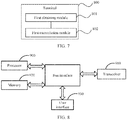
- FIG. 7 is a schematic modular diagram of a terminal according to an embodiment of this disclosure. As shown in FIG. 7 , an embodiment of this disclosure further provides a terminal 800, including:
- the first transmission module is configured to: in a case of downlink data reception, transmit data received by each transmission carrier to a MAC entity and a HARQ entity corresponding to the transmission carrier, for processing; and/or in a case of uplink data transmission, transmit data to be transmitted to each transmission carrier, to a MAC entity and a HARQ entity corresponding to the transmission carrier, for processing.
- the first obtaining module is configured to: configure the corresponding HARQ entities and MAC entities for the plurality of transmission carriers based on mapping relationship information between hybrid automatic repeat request HARQ and transmission carriers, where the mapping relationship information is configured by a network device or prescribed by a protocol; or obtain HARQ entities and MAC entities configured by a network device for the plurality of transmission carriers.
- the mapping relationship information between hybrid automatic repeat request HARQ and transmission carriers includes:
- the first obtaining module is configured to configure different HARQ entities for different transmission carriers.
- the HARQ configuration information corresponding to the information about the transmission carrier includes a quantity of HARQ processes.
- the first obtaining module is configured to configure a same HARQ entity for the plurality of transmission carriers, and configure different HARQ process IDs for different transmission carriers.
- the HARQ configuration information corresponding to the information about the transmission carrier includes at least one of an identifier of a HARQ entity corresponding to the transmission carrier, a HARQ process ID available to the transmission carrier, a total quantity of available HARQ processes of a HARQ entity corresponding to the transmission carrier, and a quantity of HARQ processes available to the transmission carrier.
- the first obtaining module is configured to configure different HARQ entities for different transmission carriers, and configure different MAC entities for different transmission carriers.
- the mapping relationship information between hybrid automatic repeat request HARQ and transmission carriers further includes MAC configuration information corresponding to the transmission carrier, and the HARQ configuration information corresponding to the information about the transmission carrier includes a quantity of HARQ processes.
- the MAC configuration information corresponding to the transmission carrier includes at least one of:
- the transmission carrier identifier includes at least one of a synchronization signal block SSB identifier, a channel state information reference signal CSI-RS identifier, and a port number identifier corresponding to a reference signal
- the reference signal includes an SSB and/or a CSI-RS.
- the control channel identifier corresponding to the transmission carrier includes at least one of a control channel type identifier, a resource position identifier of a control channel, a reference signal identifier of a control channel, and a port number identifier corresponding to a reference signal of a control channel.
- the first transmission module is configured to: in the case of downlink data reception, obtain information about a first target transmission carrier; and determine the first target transmission carrier based on the information about the first target transmission carrier, and transmit data received by the first target transmission carrier to a MAC entity and a HARQ entity corresponding to the first target transmission carrier, for processing; and/or in the case of uplink data transmission, obtain information about a second target transmission carrier; and determine the second target transmission carrier based on the information about the second target transmission carrier, and transmit data to be transmitted to the second target transmission carrier, to a MAC entity and a HARQ entity corresponding to the second target transmission carrier, for processing.
- An embodiment of this disclosure further provides a terminal, including a memory, a processor, and a computer program stored in the memory and capable of running on the processor.
- a terminal including a memory, a processor, and a computer program stored in the memory and capable of running on the processor.
- the computer program is executed by the processor, each process of the foregoing data transmission method embodiment applied to the terminal is implemented, with the same technical effect achieved. To avoid repetition, details are not described again herein.
- An embodiment of this disclosure further provides a computer-readable storage medium, where the computer-readable storage medium stores a computer program.
- the computer program is executed by a processor, each process of the foregoing data transmission method embodiment applied to the terminal is implemented, with the same technical effect achieved. To avoid repetition, details are not described again herein.
- the computer-readable storage medium is, for example, a read-only memory (Read-Only Memory, ROM for short), a random access memory (Random Access Memory, RAM for short), a magnetic disk, or an optical disc.
- an embodiment of this disclosure further provides a terminal, including a memory 920, a processor 900, a transceiver 910, a user interface 930, a bus interface, and a computer program stored in the memory 920 and capable of running on the processor 900, where the processor 900 is configured to read the program in the memory 920 to perform the following process:
- a bus architecture may include any quantity of interconnect buses and bridges, specifically for interconnecting various circuits of one or more processors represented by the processor 900 and a memory represented by the memory 920.
- the bus architecture may further interconnect various other circuits such as a peripheral device, a voltage regulator, and a power management circuit. These are all well known in the art, and therefore are not further described in this specification.
- the bus interface provides an interface.
- the transceiver 910 may be a plurality of components, that is, the transceiver 910 includes a transmitter and a receiver, and provides a unit for communicating with various other apparatuses on a transmission medium.
- the user interface 930 may also be an interface for externally or internally connecting a required device, and the connected device includes but is not limited to a mini keyboard, a display, a speaker, a microphone, a joystick, or the like.
- the processor 900 is responsible for bus architecture management and general processing.
- the memory 920 may store data used when the processor 900 performs an operation.
- the processor 900 is further configured to perform the following:
- mapping relationship information between hybrid automatic repeat request HARQ and transmission carriers includes:
- the processor 900 is further configured to perform the following: configuring different HARQ entities for different transmission carriers.
- the HARQ configuration information corresponding to the information about the transmission carrier includes a quantity of HARQ processes.
- the processor 900 is further configured to perform the following: configuring a same HARQ entity for the plurality of transmission carriers, and configuring different HARQ process IDs for different transmission carriers.
- the HARQ configuration information corresponding to the information about the transmission carrier includes at least one of an identifier of a HARQ entity corresponding to the transmission carrier, a HARQ process ID available to the transmission carrier, a total quantity of available HARQ processes of a HARQ entity corresponding to the transmission carrier, and a quantity of HARQ processes available to the transmission carrier.
- the processor 900 is further configured to perform the following: configuring different HARQ entities for different transmission carriers, and configuring different MAC entities for different transmission carriers.
- mapping relationship information between hybrid automatic repeat request HARQ and transmission carriers further includes MAC configuration information corresponding to the transmission carrier, and the HARQ configuration information corresponding to the information about the transmission carrier includes a quantity of HARQ processes.
- the MAC configuration information corresponding to the transmission carrier includes at least one of:
- the transmission carrier identifier includes at least one of a synchronization signal block SSB identifier, a channel state information reference signal CSI-RS identifier, and a port number identifier corresponding to a reference signal
- the reference signal includes an SSB and/or a CSI-RS.
- control channel identifier corresponding to the transmission carrier includes at least one of a control channel type identifier, a resource position identifier of a control channel, a reference signal identifier of a control channel, and a port number identifier corresponding to a reference signal of a control channel.
- the processor 900 is further configured to perform the following:
- the processor 900 is further configured to perform the following:
- the processor 900 is further configured to perform the following:
- FIG. 9 is a schematic diagram of a hardware structure of a terminal for implementing each embodiment of this disclosure.
- the terminal 1000 includes but is not limited to components such as a radio frequency unit 1001, a network module 1002, an audio output unit 1003, an input unit 1004, a sensor 1005, a display unit 1006, a user input unit 1007, an interface unit 1008, a memory 1009, a processor 1010, and a power supply 1011.
- a radio frequency unit 1001 such as a radio frequency unit 1001, a network module 1002, an audio output unit 1003, an input unit 1004, a sensor 1005, a display unit 1006, a user input unit 1007, an interface unit 1008, a memory 1009, a processor 1010, and a power supply 1011.
- a person skilled in the art may understand that the structure of the terminal shown in FIG. 9 does not constitute a limitation on the terminal.
- a quantity of components included in the terminal may be greater or less than that shown in the figure, or some components are combined, or component arrangements are different.
- the terminal
- the processor 1010 is configured to: obtain hybrid automatic repeat request HARQ entities and medium access control MAC entities corresponding to a plurality of transmission carriers, where the transmission carriers include beams or transmission points; and perform data transmission between the transmission carriers and the HARQ entities and MAC entities corresponding to the transmission carriers.
- the hybrid automatic repeat request HARQ entities and medium access control MAC entities corresponding to the plurality of transmission carriers are obtained, where the transmission carriers include beams or transmission points; in the case of downlink data reception, the data received by each transmission carrier is transmitted to the MAC entity and HARQ entity corresponding to the transmission carrier, for processing; and in the case of uplink data transmission, the data to be transmitted to each transmission carrier is transmitted to the MAC entity and HARQ entity corresponding to the transmission carrier, for processing.
- the terminal implements data transmission and reception by using a plurality of different transmission carriers and using different HARQ processes, a scheduling delay caused by insufficiency of HARQ processes is avoided, and reliability of data transmission is improved by supporting HARQ transmission of different transmission carriers.
- the radio frequency unit 1001 may be configured to receive and send signals in an information reception or transmission or call process. Specifically, after receiving downlink data from a network device, the radio frequency unit 1001 sends the downlink data to the processor 1010 for processing, and in addition, sends uplink data to the network device.
- the radio frequency unit 1001 includes but is not limited to an antenna, at least one amplifier, a transceiver, a coupler, a low noise amplifier, a duplexer, and the like.
- the radio frequency unit 1001 may further communicate with a network and another device through a wireless communications system.
- the terminal provides wireless broadband Internet access for a user by using the network module 1002, for example, helps the user send and receive e-mails, browse web pages, and access streaming media.
- the audio output unit 1003 may convert audio data received by the radio frequency unit 1001 or the network module 1002 or stored in the memory 1009 into an audio signal, and output the audio signal as a sound.
- the audio output unit 1003 may further provide an audio output (for example, a call signal reception sound or a message reception sound) related to a specific function performed by the terminal 1000.
- the audio output unit 1003 includes a speaker, a buzzer, a telephone receiver, and the like.
- the input unit 1004 is configured to receive an audio or video signal.
- the input unit 1004 may include a graphics processing unit (Graphics Processing Unit, GPU) 10041 and a microphone 10042.
- the graphics processing unit 10041 processes image data of a still picture or a video obtained by an image capture apparatus (for example, a camera) in an image capture mode or a video capture mode.
- a processed image frame may be displayed on the display unit 1006.
- An image frame processed by the graphics processing unit 10041 may be stored in the memory 1009 (or another storage medium) or sent by the radio frequency unit 1001 or the network module 1002.
- the microphone 10042 can receive a sound and can process the sound into audio data.
- the processed audio data may be converted in a telephone call mode into a format that can be sent to a mobile communications network device through the radio frequency unit 1001, for outputting.
- the terminal 1000 further includes at least one sensor 1005, for example, an optical sensor, a motion sensor, and another sensor.
- the optical sensor includes an ambient light sensor and a proximity sensor.
- the ambient light sensor may adjust luminance of a display panel 10061 based on brightness of ambient light.
- the proximity sensor may turn off the display panel 10061 and/or backlight when the terminal 1000 moves to an ear.
- an accelerometer sensor can detect magnitudes of acceleration in all directions (usually three axes), can detect a magnitude and a direction of gravity when the terminal is in a stationary state, and can be applied to terminal posture recognition (such as screen switching between portrait and landscape, related games, and magnetometer posture calibration), functions related to vibration recognition (such as pedometer and tapping), and the like.
- the sensor 1005 may further include a fingerprint sensor, a pressure sensor, an iris sensor, a molecular sensor, a gyroscope, a barometer, a hygrometer, a thermometer, an infrared sensor, and the like. Details are not described herein.
- the display unit 1006 is configured to display information input by the user or information provided for the user.
- the display unit 1006 may include the display panel 10061.
- the display panel 10061 may be configured in a form of a liquid crystal display (Liquid Crystal Display, LCD), an organic light-emitting diode (Organic Light-Emitting Diode, OLED), or the like.
- the user input unit 1007 may be configured to receive input digit or character information, and generate a key signal input related to a user setting and function control of the terminal.
- the user input unit 1007 includes a touch panel 10071 and other input devices 10072.
- the touch panel 10071 also referred to as a touchscreen, may capture a touch operation performed by the user on or near the touch panel (for example, an operation performed by the user on the touch panel 10071 or near the touch panel 10071 by using any appropriate object or accessory such as a finger or a stylus).
- the touch panel 10071 may include two parts: a touch detection apparatus and a touch controller.
- the touch detection apparatus detects a touch direction of the user, detects a signal carried by a touch operation, and transmits the signal to the touch controller.
- the touch controller receives touch information from the touch detection apparatus, converts the touch information into point coordinates, sends the point coordinates to the processor 1010, and receives and executes a command sent by the processor 1010.
- the touch panel 10071 may be implemented in a plurality of forms, for example, a resistive, capacitive, infrared, or surface acoustic wave touch panel.
- the user input unit 1007 may further include the other input devices 10072 in addition to the touch panel 10071.
- the other input devices 10072 may include but are not limited to a physical keyboard, a function key (such as a volume control key or a power on/off key), a trackball, a mouse, a joystick, and the like. Details are not described herein.
- the touch panel 10071 may cover the display panel 10061. After the touch panel 10071 detects a touch operation on or near the touch panel, the touch panel 10071 transmits the touch operation to the processor 1010 to determine a type of a touch event. Then the processor 1010 provides a corresponding visual output on the display panel 10061 based on the type of the touch event.
- the touch panel 10071 and the display panel 10061 are used as two independent components to implement input and output functions of the terminal in FIG. 9 , the touch panel 10071 and the display panel 10061 may be integrated to implement the input and output functions of the terminal in some embodiments. This is not specifically limited herein.
- the interface unit 1008 is an interface for connecting an external apparatus to the terminal 1000.
- the external apparatus may include a wired or wireless headphone port, an external power (or battery charger) port, a wired or wireless data port, a memory card port, a port for connecting an apparatus having an identification module, an audio input/output (Input/Output, I/O) port, a video I/O port, an earphone port, and the like.
- the interface unit 1008 may be configured to receive an input (for example, data information or power) from an external apparatus, and transmit the received input to one or more components in the terminal 1000, or may be configured to transmit data between the terminal 1000 and an external apparatus.
- the memory 1009 may be configured to store software programs and various data.
- the memory 1009 may primarily include a program storage area and a data storage area.
- the program storage area may store an operating system, an application program required for at least one function (such as a sound play function and an image play function), and the like.
- the data storage area may store data created based on use of the mobile phone (such as audio data and a phone book), and the like.
- the memory 1009 may include a high-speed random access memory, or may further include a non-volatile memory, for example, at least one magnetic disk storage device, a flash memory, or another volatile solid-state storage device.
- the processor 1010 is a control center of the terminal.
- the processor 1010 uses various interfaces and lines to connect all parts of the entire terminal, and performs various functions and data processing of the terminal by running or executing the software program and/or module stored in the memory 1009 and invoking data stored in the memory 1009, thereby performing overall monitoring on the terminal.
- the processor 1010 may include one or more processing units.
- the processor 1010 may integrate an application processor and a modem processor.
- the application processor mainly processes the operating system, a user interface, an application program, and the like.
- the modem processor mainly processes wireless communication. It may be understood that the modem processor may alternatively not be integrated into the processor 1010.
- the terminal 1000 may further include the power supply 1011 (for example, a battery) supplying power to all components.
- the power supply 1011 may be logically connected to the processor 1010 through a power management system. In this way, functions such as charge management, discharge management, and power consumption management are implemented by using the power management system.
- the terminal 1000 includes some functional modules that are not illustrated. Details are not described herein.
- an embodiment of this disclosure further provides a network device 1100, including:
- the second obtaining module is configured to: configure the corresponding HARQ entities and MAC entities for the plurality of transmission carriers based on mapping relationship information between hybrid automatic repeat request HARQ and transmission carriers; or obtain HARQ entities and MAC entities configured by a terminal for the plurality of transmission carriers.
- mapping relationship information between hybrid automatic repeat request HARQ and transmission carriers includes:
- the second obtaining module is configured to configure different HARQ entities for different transmission carriers.
- the HARQ configuration information corresponding to the information about the transmission carrier includes a quantity of HARQ processes.
- the second obtaining module is configured to configure a same HARQ entity for the plurality of transmission carriers, and configure different HARQ process IDs for different transmission carriers.
- the HARQ configuration information corresponding to the information about the transmission carrier includes at least one of an identifier of a HARQ entity corresponding to the transmission carrier, a HARQ process ID available to the transmission carrier, a total quantity of available HARQ processes of a HARQ entity corresponding to the transmission carrier, and a quantity of HARQ processes available to the transmission carrier.
- the second obtaining module is configured to configure different HARQ entities for different transmission carriers, and configure different MAC entities for different transmission carriers.
- the mapping relationship information between hybrid automatic repeat request HARQ and transmission carriers further includes MAC configuration information corresponding to the transmission carrier, and the HARQ configuration information corresponding to the information about the transmission carrier includes a quantity of HARQ processes.
- the MAC configuration information corresponding to the transmission carrier includes at least one of:
- the transmission carrier identifier includes at least one of a synchronization signal block SSB identifier, a channel state information reference signal CSI-RS identifier, and a port number identifier corresponding to a reference signal
- the reference signal includes an SSB and/or a CSI-RS.
- the control channel identifier corresponding to the transmission carrier includes at least one of a control channel type identifier, a resource position identifier of a control channel, a reference signal identifier of a control channel, and a port number identifier corresponding to a reference signal of a control channel.
- the second transmission module is configured to: in a case of downlink data transmission, transmit data to be transmitted to each transmission carrier, to a MAC entity and a HARQ entity corresponding to the transmission carrier, for processing; and/or in a case of uplink data reception, transmit data received by each transmission carrier to a MAC entity and a HARQ entity corresponding to the transmission carrier, for processing.
- the second transmission module is configured to: in the case of downlink data transmission, obtain information about a third target transmission carrier; and determine the third target transmission carrier based on the information about the third target transmission carrier, and transmit data to be transmitted to the third target transmission carrier, to a MAC entity and a HARQ entity corresponding to the third target transmission carrier, for processing; and/or in the case of uplink data reception, obtain information about a fourth target transmission carrier; and determine the fourth target transmission carrier based on the information about the fourth target transmission carrier, and transmit data received by the fourth target transmission carrier to a MAC entity and a HARQ entity corresponding to the fourth target transmission carrier, for processing.
- An embodiment of this disclosure further provides a network device, including a memory, a processor, and a computer program stored in the memory and capable of running on the processor.
- a network device including a memory, a processor, and a computer program stored in the memory and capable of running on the processor.
- An embodiment of this disclosure further provides a computer-readable storage medium, where the computer-readable storage medium stores a computer program.
- the computer program is executed by a processor, each process of the foregoing data transmission method embodiment applied to the network device is implemented, with the same technical effect achieved. To avoid repetition, details are not described again herein.
- the computer-readable storage medium is, for example, a ROM, a RAM, a magnetic disk, or an optical disc.
- an embodiment of this disclosure further provides a network device 1200, including a processor 1201, a transceiver 1202, a memory 1203, and a bus interface, where the processor 1201 is configured to read a program in the memory 1203 to perform the following process:
- a bus architecture may include any quantity of interconnect buses and bridges, specifically for interconnecting various circuits of one or more processors represented by the processor 1201 and a memory represented by the memory 1203.
- the bus architecture may further interconnect various other circuits such as a peripheral device, a voltage regulator, and a power management circuit. These are all well known in the art, and therefore are not further described in this specification.
- the bus interface provides an interface.
- the transceiver 1202 may be a plurality of components, that is, the transceiver 1202 includes a transmitter and a receiver, and provides a unit for communicating with various other apparatuses on a transmission medium.
- the processor 1201 is responsible for bus architecture management and general processing.
- the memory 1203 may store data used when the processor 1201 performs an operation.
- the processor 1201 is further configured to perform the following:
- mapping relationship information between hybrid automatic repeat request HARQ and transmission carriers includes:
- the configuring the corresponding HARQ entities and MAC entities for the plurality of transmission carriers includes: configuring different HARQ entities for different transmission carriers.
- the HARQ configuration information corresponding to the information about the transmission carrier includes a quantity of HARQ processes.
- the processor 1201 is further configured to perform the following: configuring a same HARQ entity for the plurality of transmission carriers, and configuring different HARQ process IDs for different transmission carriers.
- the HARQ configuration information corresponding to the information about the transmission carrier includes at least one of an identifier of a HARQ entity corresponding to the transmission carrier, a HARQ process ID available to the transmission carrier, a total quantity of available HARQ processes of a HARQ entity corresponding to the transmission carrier, and a quantity of HARQ processes available to the transmission carrier.
- the processor 1201 is further configured to perform the following: configuring different HARQ entities for different transmission carriers, and configuring different MAC entities for different transmission carriers.
- mapping relationship information between hybrid automatic repeat request HARQ and transmission carriers further includes MAC configuration information corresponding to the transmission carrier, and the HARQ configuration information corresponding to the information about the transmission carrier includes a quantity of HARQ processes.
- the MAC configuration information corresponding to the transmission carrier includes at least one of:
- the transmission carrier identifier includes at least one of a synchronization signal block SSB identifier, a channel state information reference signal CSI-RS identifier, and a port number identifier corresponding to a reference signal
- the reference signal includes an SSB and/or a CSI-RS.
- control channel identifier corresponding to the transmission carrier includes at least one of a control channel type identifier, a resource position identifier of a control channel, a reference signal identifier of a control channel, and a port number identifier corresponding to a reference signal of a control channel.
- the processor 1201 is further configured to perform the following:
- the processor 1201 is further configured to perform the following:
- the method in the foregoing embodiments may be implemented by software in addition to a necessary universal hardware platform or by hardware only. In most cases, the former is a preferred implementation.
- the technical solutions of this disclosure essentially, or the part contributing to the related art may be implemented in a form of a software product.
- the computer software product is stored in a storage medium (for example, a ROM/RAM, a magnetic disk, or an optical disc), and includes several instructions for instructing a terminal (which may be a mobile phone, a computer, a server, an air conditioner, a network device, or the like) to perform the method described in the embodiments of this disclosure.
- the disclosed apparatus and method may be implemented in other manners.
- the described apparatus embodiment is merely an example.
- the unit division is merely logical function division and may be other division in actual implementation.
- a plurality of units or components may be combined or integrated into another system, or some features may be ignored or may not be performed.
- the displayed or discussed mutual couplings or direct couplings or communication connections may be implemented by using some interfaces.
- the indirect couplings or communication connections between the apparatuses or units may be implemented in electrical, mechanical, or other forms.
- the units described as separate parts may or may not be physically separate, and parts displayed as units may or may not be physical units, may be located in one position, or may be distributed on a plurality of network elements. Some or all of the units may be selected based on actual requirements to achieve the objectives of the solutions of the embodiments.
- the functions When the functions are implemented in a form of a software functional unit and sold or used as an independent product, the functions may be stored in a computer-readable storage medium.
- the software product is stored in a storage medium, and includes several instructions for instructing a computer device (which may be a personal computer, a server, a network device, or the like) to perform all or some of the steps of the method described in the embodiments of this disclosure.
- the foregoing storage medium includes: any medium that can store program code, such as a USB flash drive, a removable hard disk, a ROM, a RAM, a magnetic disk, or an optical disc.
- the embodiments described in the embodiments of this disclosure may be implemented by hardware, software, firmware, middleware, microcode, or a combination thereof.
- the processing unit may be implemented in one or more application specific integrated circuits (Application Specific Integrated Circuit, ASIC), digital signal processors (Digital Signal Processing, DSP), digital signal processing devices (DSP Device, DSPD), programmable logic devices (Programmable Logic Device, PLD), field-programmable gate arrays (Field-Programmable Gate Array, FPGA), general purpose processors, controllers, microcontrollers, microprocessors, and other electronic units for performing the functions described in this disclosure, or a combination thereof.
- ASIC Application Specific Integrated Circuit
- DSP Digital Signal Processing
- DSP Device digital signal processing devices
- PLD programmable logic devices
- FPGA field-programmable gate array
- general purpose processors controllers, microcontrollers, microprocessors, and other electronic units for performing the functions described in this disclosure, or a combination thereof.
- the technologies described in the embodiments of this disclosure may be implemented by modules (for example, processes or functions) that perform the functions described in the embodiments of this disclosure.
- Software code may be stored in the memory and executed by the processor.
- the memory may be implemented in or outside the processor.
- the program may be stored in a computer-readable storage medium. When the program runs, the processes of the methods in the embodiments are performed.
- the storage medium may be a magnetic disk, an optical disc, a ROM, a RAM, or the like.
Landscapes
- Engineering & Computer Science (AREA)
- Signal Processing (AREA)
- Computer Networks & Wireless Communication (AREA)
- Mobile Radio Communication Systems (AREA)
- Detection And Prevention Of Errors In Transmission (AREA)
- Communication Control (AREA)
Abstract
Description
- This application claims priority to
Chinese Patent Application No. 201811110032.1 - This disclosure relates to the technical field of communication applications, and in particular, to a data transmission method, a terminal, and a network device.
- In a long term evolution (Long Term Evolution, LTE) or 5G new radio (New RAT, NR) system, uplink/downlink data transmission is implemented by using the hybrid automatic repeat request (Hybrid Automatic Repeat Request, HARQ). As shown in
FIG. 1 , a terminal or user equipment (User Equipment, UE) may have a plurality of medium access control (Medium Access Control, MAC) entities (for example, master cell group (Master Cell Group, MCG) MAC and secondary cell group (Secondary Cell Group, SCG) MAC), where each MAC entity has its separate HARQ entity (Entity). Each HARQ entity is configured to control data transmission and reception of one cell or frequency channel (for example, acomponent carrier CC 1 inFIG. 1 ), that is, data transmission and retransmission of one CC are implemented by using a same HARQ entity. Each HARQ entity has a plurality of HARQ processes (process), and different data is transmitted or received by using different HARQ processes. A quantity of HARQ processes on each CC is determined by a HARQ round trip time (Round Trip Time, RTT) (which is a time from transmission of data to reception of feedback about the data; if the round trip time is 8 milliseconds, and transmission of each piece of data takes 1 millisecond, a quantity of HARQ processes is 8 in order that data can be transmitted at each time point). A data interface between a MAC entity and an upper-layer entity is a logical channel (Logical Channel, LCH), for example, anLCH 1 inFIG. 1 . Data on a plurality of logical channels may be transmitted as one MAC protocol data unit (Protocol Data Unit, PDU) in a HARQ process by using a multiplexing (multiplexing) function. - In a 5G (5 Generation, 5th Generation) mobile communications system, to achieve a 20 Gbps downlink transmission rate and a 10 Gbps uplink transmission rate, high-frequency communications and massive antenna technologies are introduced. In high-frequency communication, a wider system bandwidth can be provided and an antenna size can be smaller, to facilitate deployment of massive antennas in base stations and UEs. Multi-beam (multi-beam) or multi-TRP transmission point (multiple transmission and reception points) data transmission and reception are applied on a base station side, and multi-beam or multi-TRP transmission point transmission and reception will be extensively applied on a UE side.
- However, when different beams or transmission points are used for data transmission and reception for the UE, no method is yet available for determining what HARQ transmission mode is to be used.
- An objective of this disclosure is to provide a data transmission method, a terminal, and a network device, to resolve a problem that no method is yet available for determining what HARQ transmission mode is to be used when different beams or transmission points are used for data transmission and reception for UE.
- According to a first aspect, an embodiment of this disclosure provides a data transmission method, applied to a terminal and including:
- obtaining hybrid automatic repeat request HARQ entities and medium access control MAC entities corresponding to a plurality of transmission carriers, where the transmission carriers include beams or transmission points; and
- performing data transmission between the transmission carriers and the HARQ entities and MAC entities corresponding to the transmission carriers.
- According to a second aspect, an embodiment of this disclosure further provides a data transmission method, applied to a network device and including:
- obtaining hybrid automatic repeat request HARQ entities and medium access control MAC entities corresponding to a plurality of transmission carriers, where the transmission carriers include beams or transmission points; and
- performing data transmission between the transmission carriers and the HARQ entities and MAC entities corresponding to the transmission carriers.
- According to a third aspect, an embodiment of this disclosure further provides a terminal, including:
- a first obtaining module, configured to obtain hybrid automatic repeat request HARQ entities and medium access control MAC entities corresponding to a plurality of transmission carriers, where the transmission carriers include beams or transmission points; and
- a first transmission module, configured to perform data transmission between the transmission carriers and the HARQ entities and MAC entities corresponding to the transmission carriers.
- According to a fourth aspect, an embodiment of this disclosure further provides a terminal, including a memory, a processor, and a computer program stored in the memory and capable of running on the processor, where when the computer program is executed by the processor, the steps of the foregoing data transmission method are implemented.
- According to a fifth aspect, an embodiment of this disclosure further provides a network device, including:
- a second obtaining module, configured to obtain hybrid automatic repeat request HARQ entities and medium access control MAC entities corresponding to a plurality of transmission carriers, where the transmission carriers include beams or transmission points; and
- a second transmission module, configured to perform data transmission between the transmission carriers and the HARQ entities and MAC entities corresponding to the transmission carriers.
- According to a sixth aspect, an embodiment of this disclosure further provides a network device, including a memory, a processor, and a computer program stored in the memory and capable of running on the processor, where when the computer program is executed by the processor, the steps of the foregoing data transmission method are implemented.
- According to a seventh aspect, an embodiment of this disclosure further provides a computer-readable storage medium, where the computer-readable storage medium stores a computer program, and when the computer program is executed by a processor, the steps of the foregoing data transmission method are implemented.
- The embodiments of this disclosure have the following beneficial effects:
- In the foregoing technical solutions in the embodiments of this disclosure, the hybrid automatic repeat request HARQ entities and medium access control MAC entities corresponding to the plurality of transmission carriers are obtained, where the transmission carriers include beams or transmission points; and data transmission is performed between the transmission carriers and the HARQ entities and MAC entities corresponding to the transmission carriers. In this way, the terminal implements data transmission and reception by using a plurality of different transmission carriers and using different HARQ processes, a scheduling delay caused by insufficiency of HARQ processes is avoided, and reliability of data transmission is improved by supporting HARQ transmission of different transmission carriers.
- To describe the technical solutions in the embodiments of this disclosure more clearly, the following briefly describes the accompanying drawings required for describing the embodiments of this disclosure. Apparently, the accompanying drawings in the following description show merely some embodiments of this disclosure, and a person of ordinary skill in the art may still derive other drawings from these accompanying drawings without creative efforts.
-
FIG. 1 is a structural block diagram of a MAC entity and a HARQ entity; -
FIG. 2 is a structural diagram of a network system to which an embodiment of this disclosure may be applied; -
FIG. 3 is a schematic flowchart of a data transmission method according to an embodiment of this disclosure; -
FIG. 4 is a first schematic diagram of a transmission carrier and a corresponding MAC entity and HARQ entity according to an embodiment of this disclosure; -
FIG. 5 is a second schematic diagram of a transmission carrier and a corresponding MAC entity and HARQ entity according to an embodiment of this disclosure; -
FIG. 6 is a third schematic diagram of a transmission carrier and a corresponding MAC entity and HARQ entity according to an embodiment of this disclosure; -
FIG. 7 is a schematic modular diagram of a terminal according to an embodiment of this disclosure; -
FIG. 8 is a first structural block diagram of a terminal according to an embodiment of this disclosure; -
FIG. 9 is a second structural block diagram of a terminal according to an embodiment of this disclosure; -
FIG. 10 is a schematic modular diagram of a network device according to an embodiment of this disclosure; and -
FIG. 11 is a structural block diagram of a network device according to an embodiment of this disclosure. - The following describes exemplary embodiments of this disclosure in more detail with reference to the accompanying drawings. Although the exemplary embodiments of this disclosure are shown in the accompanying drawings, it should be understood that this disclosure may be implemented in various forms and should not be limited by the embodiments set forth herein. On the contrary, the embodiments are provided to enable a more thorough understanding of this disclosure and completely convey the scope of this disclosure to a person skilled in the art.
- The terms "first", "second", and the like in this specification and claims of this application are used to distinguish between similar objects instead of describing a specific order or sequence. It should be understood that the numbers used in this way are interchangeable in appropriate circumstances so that the embodiments of this application described herein can be implemented in other orders than the order illustrated or described herein. In addition, the terms "include", "have", and any other variant thereof are intended to cover a non-exclusive inclusion. For example, a process, method, system, product, or device that includes a list of steps or units is not necessarily limited to those steps or units that are expressly listed, but may include other steps or units that are not expressly listed or are inherent to the process, method, system, product, or device. The term "and/or" in this specification and claims indicates at least one of connected objects.
- Examples provided in the following description are not intended to limit the scope, applicability, or configuration described in the claims. Functions and arrangements of discussed elements may be changed without departing from the spirit and scope of this disclosure. Various procedures or components may be properly omitted, replaced, or added in various examples. For example, the described method may be performed in an order different from the described order, and steps may be added, omitted, or combined. In addition, features described with reference to some examples may be combined in other examples.
-
FIG. 2 is a structural diagram of a network system to which an embodiment of this disclosure may be applied. As shown inFIG. 2 , the network system includes auser terminal 11 and abase station 12. Theuser terminal 11 may be user equipment (User Equipment, UE), for example, may be a terminal device such as a mobile phone, a tablet computer (Tablet Personal Computer), a laptop computer (Laptop Computer), a personal digital assistant (personal digital assistant, PDA for short), a mobile Internet device (Mobile Internet Device, MID), or a wearable device (Wearable Device). It should be noted that a specific type of theuser terminal 11 is not limited in the embodiments of this disclosure. Thebase station 12 may be a base station (for example, a gNB or a 5G NR NB) in 5G or a later release, or a base station in another communications system, or is referred to as a NodeB, an evolved NodeB, a transmission and reception point (transmitting receiving point, TRP), or another term in the field. As long as a same technical effect is achieved, the base station is not limited to a specific technical term. It should be noted that only a 5G base station is used as an example in the embodiments of this disclosure, but a specific type of thebase station 12 is not limited. -
FIG. 3 is a schematic flowchart of a data transmission method according to an embodiment of this disclosure. As shown inFIG. 3 , an embodiment of this disclosure provides a data transmission method, applied to a terminal and including the following steps. - Step 301: Obtain hybrid automatic repeat request HARQ entities and medium access control MAC entities corresponding to a plurality of transmission carriers, where the transmission carriers include beams or transmission points.
- In this embodiment of this disclosure, different transmission carriers may correspond to a same MAC entity and correspond to different HARQ entities. In this case, the HARQ entities may be used to distinguish between different transmission carriers. Alternatively, different transmission carriers may correspond to a same MAC entity and correspond to a same HARQ entity. In this case, HARQ process IDs may be used to distinguish between data of different transmission carriers. Further, different transmission carriers may correspond to different MAC entities and different HARQ entities. In this case, identifier information of the MAC entities may be used to distinguish between data of different transmission carriers.
- In addition, in this embodiment of this disclosure, the hybrid automatic repeat request HARQ entities and medium access control MAC entities corresponding to the plurality of transmission carriers are obtained by the terminal or a network device based on mapping relationship information between hybrid automatic repeat request HARQ and transmission carriers.
- The mapping relationship information between hybrid automatic repeat request HARQ and transmission carriers includes: information about a transmission carrier; and HARQ configuration information corresponding to the information about the transmission carrier.
- The information about the transmission carrier includes at least one of a transmission carrier identifier, a cell identifier corresponding to the transmission carrier, a frequency identifier corresponding to the transmission carrier, a bandwidth part (Bandwidth Part, BWP) identifier corresponding to the transmission carrier, a control channel information identifier corresponding to the transmission carrier, and a MAC entity identifier corresponding to the transmission carrier.
- Step 302: Perform data transmission between the transmission carriers and the HARQ entities and MAC entities corresponding to the transmission carriers.
- Specifically,
step 302 includes: in a case of downlink data reception, transmitting data received by each transmission carrier to a MAC entity and a HARQ entity corresponding to the transmission carrier, for processing; and/or
in a case of uplink data transmission, transmitting data to be transmitted to each transmission carrier, to a MAC entity and a HARQ entity corresponding to the transmission carrier, for processing. - The transmitting data received by each transmission carrier to a MAC entity and a HARQ entity corresponding to the transmission carrier, for processing in a case of downlink data reception includes:
in the case of downlink data reception, obtaining information about a first target transmission carrier; and determining the first target transmission carrier based on the information about the first target transmission carrier, and transmitting data received by the first target transmission carrier to a MAC entity and a HARQ entity corresponding to the first target transmission carrier, for processing. - Herein, the first target transmission carrier is any transmission carrier that performs downlink data reception, in the plurality of transmission carriers. The data received by the first target transmission carrier is identified by using the information about the first target transmission carrier. Further, the first target transmission carrier is identified based on the information about the first target transmission carrier, and the data is transmitted based on the foregoing mapping relationship information to the corresponding MAC entity and HARQ entity for processing.
- For example, UE obtains information about a first target transmission carrier based on downlink data in downlink resource allocation information of downlink control information (Downlink Control Information, DCI) on a physical downlink control channel (Physical Downlink Control Channel, PDCCH), and transmits data to a MAC entity and a HARQ entity corresponding to the first target transmission carrier, for processing; or UE obtains information about a first target transmission carrier based on downlink data in a reference signal (for example, a synchronization signal block (Synchronization Signal Block, SSB) and/or channel state information reference signal (Channel State Information Reference Signal, CSI-RS)) information on a physical downlink shared channel (Physical Downlink Shared Channel, PDSCH), and transmits data to a MAC entity and a HARQ entity corresponding to the first target transmission carrier, for processing.
- The transmitting data to be transmitted to each transmission carrier, to a MAC entity and a HARQ entity corresponding to the transmission carrier, for processing in a case of uplink data transmission includes:
in the case of uplink data transmission, obtaining information about a second target transmission carrier; and determining the second target transmission carrier based on the information about the second target transmission carrier, and transmitting data to be transmitted to the second target transmission carrier, to a MAC entity and a HARQ entity corresponding to the second target transmission carrier, for processing. - When the terminal performs uplink data transmission, the information about the transmission carrier may be carried, so that the network device identifies the corresponding transmission carrier based on the information about the transmission carrier.
- Herein, the second target transmission carrier is any transmission carrier that performs uplink data transmission, in the plurality of transmission carriers. The data to be transmitted by the second target transmission carrier is identified by using the information about the second target transmission carrier.
- For example, the UE obtains information about a second target transmission carrier based on uplink data in uplink resource allocation information of the downlink control information DCI on the physical downlink control channel PDCCH, and transmits data to a MAC entity and a HARQ entity corresponding to the second target transmission carrier, for processing; or the UE obtains information about a second target transmission carrier based on uplink data in reference signal information on the physical downlink shared channel PDSCH, and transmits data to a MAC entity and a HARQ entity corresponding to the second target transmission carrier, for processing.
- In the data transmission method in this embodiment of this disclosure, the hybrid automatic repeat request HARQ entities and medium access control MAC entities corresponding to the plurality of transmission carriers are obtained, where the transmission carriers include beams or transmission points; in the case of downlink data reception, the data received by each transmission carrier is transmitted to the MAC entity and HARQ entity corresponding to the transmission carrier, for processing; and in the case of uplink data transmission, the data to be transmitted to each transmission carrier is transmitted to the MAC entity and HARQ entity corresponding to the transmission carrier, for processing. In this way, the terminal implements data transmission and reception by using a plurality of different transmission carriers and using different HARQ processes, a scheduling delay caused by insufficiency of HARQ processes is avoided, and reliability of data transmission is improved by supporting HARQ transmission of different transmission carriers.
- Further, the obtaining hybrid automatic repeat request HARQ entities and medium access control MAC entities corresponding to a plurality of transmission carriers in
step 301 includes: - configuring the corresponding HARQ entities and MAC entities for the plurality of transmission carriers based on mapping relationship information between hybrid automatic repeat request HARQ and transmission carriers, where the mapping relationship information is configured by the network device or prescribed by a protocol; or
- obtaining HARQ entities and MAC entities configured by the network device for the plurality of transmission carriers.
- Specifically, the network device configures the HARQ entities and MAC entities for the plurality of transmission carriers based on the mapping relationship information between hybrid automatic repeat request HARQ and transmission carriers.
- The mapping relationship information between HARQ and transmission carriers includes:
- information about a transmission carrier; and
- HARQ configuration information corresponding to the information about the transmission carrier, where
- the information about the transmission carrier includes at least one of a transmission carrier identifier, a cell identifier corresponding to the transmission carrier, a frequency identifier corresponding to the transmission carrier, a bandwidth part BWP identifier corresponding to the transmission carrier, a control channel information identifier corresponding to the transmission carrier, and a MAC entity identifier corresponding to the transmission carrier.
- For example, the cell identifier corresponding to the transmission carrier may be specifically a
cell 1, the frequency identifier corresponding to the transmission carrier may be specifically afrequency 1, the bandwidth part BWP identifier corresponding to the transmission carrier may be specifically a BWP_1, and the MAC entity identifier corresponding to the transmission carrier may be specifically MAC_1. - The transmission carrier identifier includes at least one of a synchronization signal block SSB identifier, a channel state information reference signal CSI-RS identifier, and a port number identifier corresponding to a reference signal, and the reference signal includes an SSB and/or a CSI-RS.
- The transmission carrier identifier may also be another signal identifier, in addition to the SSB identifier and/or the CSI-RS identifier. This is not specifically limited herein.
- The port number identifier corresponding to the reference signal may be specifically a port_1, and the reference signal may also be another reference signal, in addition to the SSB and the CSI-RS. This is not specifically limited herein.
- The control channel identifier corresponding to the transmission carrier includes at least one of a control channel type identifier, a resource position identifier of a control channel, a reference signal identifier of a control channel, and a port number identifier corresponding to a reference signal of a control channel.
- The control channel type identifier may be specifically a PDCCH_1 of a primary cell PCell; the resource position identifier of the control channel may be a control resource set (CORESET) and/or a search space (search space) identifier; and the reference signal identifier of the control channel may be an SSB identifier and/or a CSI-RS identifier.
- In a first optional implementation, the configuring the corresponding HARQ entities and MAC entities for the plurality of transmission carriers includes:
configuring different HARQ entities for different transmission carriers. - Optionally, the different HARQ entities configured above belong to a same MAC entity.
- In this implementation, the HARQ configuration information corresponding to the information about the transmission carrier includes a quantity of HARQ processes, for example, a quantity of HARQ processes corresponding to uplink data transmission and/or downlink data reception.
- As shown in
FIG. 4 , atransmission carrier 1 of a component carrier 1 (TRP 1 of CC 1) and atransmission carrier 2 of the component carrier 1 (TRP 2 of CC 1) correspond to a same MAC entity (MCG MAC) and correspond to different HARQ entities. - In a second optional implementation,
the configuring the corresponding HARQ entities and MAC entities for the plurality of transmission carriers includes:
configuring a same HARQ entity for the plurality of transmission carriers, and configuring different HARQ process IDs for different transmission carriers. - In this implementation, the HARQ configuration information corresponding to the information about the transmission carrier includes at least one of an identifier of a HARQ entity corresponding to the transmission carrier, a HARQ process ID available to the transmission carrier, a total quantity of available HARQ processes of a HARQ entity corresponding to the transmission carrier, and a quantity of HARQ processes available to the transmission carrier.
- Optionally, the HARQ configuration information corresponding to the information about the transmission carrier includes at least one of first information and second information, where the first information includes the HARQ process ID available to the transmission carrier; and the second information includes the total quantity of available HARQ processes of the HARQ entity corresponding to the transmission carrier and the quantity of HARQ processes available to the transmission carrier.
- For example, HARQ process IDs available to the transmission carriers are: HARQ process IDs [0, 3] available to a
beam 1; and HARQ process IDs [1, 7] available to abeam 2. Alternatively, a bitmap is used to identify process IDs available to the beam or the transmission point; and the quantity of HARQ processes available to the transmission carrier is a quantity of HARQ processes corresponding to uplink data transmission and/or downlink data reception. - As shown in
FIG. 5 , atransmission carrier 1 and atransmission carrier 2 of a component carrier 1 (TRP 1 +TRP 2 of CC 1) correspond to a same MAC entity (MCG MAC) and correspond to a same HARQ entity; and atransmission carrier 3 and atransmission carrier 4 of a component carrier 2 (TRP 3 +TRP 4 of CC 2) correspond to a same MAC entity (MCG MAC) and correspond to a same HARQ entity. - In a third optional implementation,
the configuring the corresponding HARQ entities and MAC entities for the plurality of transmission carriers includes:
configuring different HARQ entities for different transmission carriers, and configuring different MAC entities for different transmission carriers. - In this implementation, the mapping relationship information between hybrid automatic repeat request HARQ and transmission carriers further includes MAC configuration information corresponding to the transmission carrier, and the HARQ configuration information corresponding to the information about the transmission carrier includes a quantity of HARQ processes.
- As shown in
FIG. 6 , atransmission carrier 1 of a component carrier 1 (TRP 1 of CC 1) corresponds to one MAC entity; and atransmission carrier 2 of the component carrier 1 (TRP 2 of CC 1) corresponds to another MAC entity, and thetransmission carrier 1 andtransmission carrier 2 of thecomponent carrier 1 correspond to different HARQ entities. - The MAC configuration information corresponding to the transmission carrier includes at least one of:
- identifier information of a MAC entity;
- one or more logical channel identifiers (for example, an LCH_1) corresponding to the MAC entity;
- one or more data radio bearer (Data Radio Bearer, DRB) identifiers (for example, a DRB_1) corresponding to identifier information of a MAC entity;
- one or more data flow identifiers corresponding to identifier information of the MAC entity; and
- one or more session identifiers (for example, a Session_1) corresponding to identifier information of the MAC entity.
- Optionally, the MAC configuration information corresponding to the transmission carrier includes identifier information of a MAC entity.
- In the data transmission method in this embodiment of this disclosure, the UE can implement data transmission and reception by using a plurality of different transmission carriers and using different HARQ processes, a scheduling delay caused by insufficiency of HARQ processes is avoided, and reliability of data transmission is improved by supporting HARQ transmission of different transmission carriers.
- As shown in
FIG. 3 , an embodiment of this disclosure further provides a data transmission method, applied to a network device and including the following steps. - Step 301: Obtain hybrid automatic repeat request HARQ entities and medium access control MAC entities corresponding to a plurality of transmission carriers, where the transmission carriers include beams or transmission points.
- In this embodiment of this disclosure, different transmission carriers may correspond to a same MAC entity and correspond to different HARQ entities. In this case, the HARQ entities may be used to distinguish between different transmission carriers. Alternatively, different transmission carriers may correspond to a same MAC entity and correspond to a same HARQ entity. In this case, HARQ process IDs may be used to distinguish between data of different transmission carriers. Further, different transmission carriers may correspond to different MAC entities and different HARQ entities. In this case, identifier information of the MAC entities may be used to distinguish between data of different transmission carriers.
- In addition, in this embodiment of this disclosure, the hybrid automatic repeat request HARQ entities and medium access control MAC entities corresponding to the plurality of transmission carriers are obtained by a terminal or the network device based on mapping relationship information between hybrid automatic repeat request HARQ and transmission carriers.
- The mapping relationship information between hybrid automatic repeat request HARQ and transmission carriers includes: information about a transmission carrier; and HARQ configuration information corresponding to the information about the transmission carrier.
- The information about the transmission carrier includes at least one of a transmission carrier identifier, a cell identifier corresponding to the transmission carrier, a frequency identifier corresponding to the transmission carrier, a bandwidth part BWP identifier corresponding to the transmission carrier, a control channel information identifier corresponding to the transmission carrier, and a MAC entity identifier corresponding to the transmission carrier.
- Step 302: Perform data transmission between the transmission carriers and the HARQ entities and MAC entities corresponding to the transmission carriers.
- Step 302 specifically includes: in a case of downlink data transmission, transmitting data to be transmitted to each transmission carrier, to a MAC entity and a HARQ entity corresponding to the transmission carrier, for processing; and/or
in a case of uplink data reception, transmitting data received by each transmission carrier to a MAC entity and a HARQ entity corresponding to the transmission carrier, for processing. - The transmitting data to be transmitted to each transmission carrier, to a MAC entity and a HARQ entity corresponding to the transmission carrier, for processing in a case of downlink data transmission includes:
specifically, in the case of downlink data transmission, obtaining information about a third target transmission carrier; and determining the third target transmission carrier based on the information about the third target transmission carrier, and transmitting data to be transmitted to the third target transmission carrier, to a MAC entity and a HARQ entity corresponding to the third target transmission carrier, for processing. - Herein, the third target transmission carrier is any transmission carrier that performs downlink data transmission, in the plurality of transmission carriers. The data to be transmitted by the third target transmission carrier is identified by using the information about the third target transmission carrier.
- When the network device performs downlink data transmission, the information about the transmission carrier may be carried, so that the terminal identifies the corresponding transmission carrier based on the information about the transmission carrier.
- The transmitting data received by each transmission carrier to a MAC entity and a HARQ entity corresponding to the transmission carrier, for processing in a case of uplink data reception includes:
in the case of uplink data reception, obtaining information about a fourth target transmission carrier; and determining the fourth target transmission carrier based on the information about the fourth target transmission carrier, and transmitting data received by the fourth target transmission carrier to a MAC entity and a HARQ entity corresponding to the fourth target transmission carrier, for processing. - Herein, the fourth target transmission carrier is any transmission carrier that performs uplink data reception, in the plurality of transmission carriers. The data received by the fourth target transmission carrier is identified by using the information about the fourth target transmission carrier. Further, the fourth target transmission carrier is identified based on the information about the fourth target transmission carrier, and the data is transmitted based on the foregoing mapping relationship information to the corresponding MAC entity and HARQ entity for processing.
- In the data transmission method in this embodiment of this disclosure, the hybrid automatic repeat request HARQ entities and medium access control MAC entities corresponding to the plurality of transmission carriers are obtained, where the transmission carriers include beams or transmission points; in the case of downlink data transmission, the data to be transmitted to each transmission carrier is transmitted to the MAC entity and HARQ entity corresponding to the transmission carrier, for processing; and in the case of uplink data reception, the data received by each transmission carrier is transmitted to the MAC entity and HARQ entity corresponding to the transmission carrier, for processing. In this way, data transmission and reception are implemented by using a plurality of different transmission carriers and using different HARQ processes, a scheduling delay caused by insufficiency of HARQ processes is avoided, and reliability of data transmission is improved by supporting HARQ transmission of different transmission carriers.
- Further, the obtaining hybrid automatic repeat request HARQ entities and medium access control MAC entities corresponding to a plurality of transmission carriers in
step 301 includes: - configuring the corresponding HARQ entities and MAC entities for the plurality of transmission carriers based on mapping relationship information between hybrid automatic repeat request HARQ and transmission carriers, where the mapping relationship information is configured by the network device or prescribed by a protocol; or
- obtaining HARQ entities and MAC entities configured by the terminal for the plurality of transmission carriers.
- Specifically, the terminal configures the HARQ entities and MAC entities for the plurality of transmission carriers based on the mapping relationship information between hybrid automatic repeat request HARQ and transmission carriers.
- The mapping relationship information between HARQ and transmission carriers includes:
- information about a transmission carrier; and
- HARQ configuration information corresponding to the information about the transmission carrier, where
- the information about the transmission carrier includes at least one of a transmission carrier identifier, a cell identifier corresponding to the transmission carrier, a frequency identifier corresponding to the transmission carrier, a bandwidth part BWP identifier corresponding to the transmission carrier, a control channel information identifier corresponding to the transmission carrier, and a MAC entity identifier corresponding to the transmission carrier.
- For example, the cell identifier corresponding to the transmission carrier may be specifically a
cell 1, the frequency identifier corresponding to the transmission carrier may be specifically afrequency 1, the bandwidth part BWP identifier corresponding to the transmission carrier may be specifically a BWP_1, and the MAC entity identifier corresponding to the transmission carrier may be specifically MAC_1. - The transmission carrier identifier includes at least one of a synchronization signal block SSB identifier, a channel state information reference signal CSI-RS identifier, and a port number identifier corresponding to a reference signal, and the reference signal includes an SSB and/or a CSI-RS.
- The transmission carrier identifier may also be another signal identifier, in addition to the SSB identifier and/or the CSI-RS identifier. This is not specifically limited herein.
- The port number identifier corresponding to the reference signal may be specifically a port_1, and the reference signal may also be another reference signal, in addition to the SSB and the CSI-RS. This is not specifically limited herein.
- The control channel identifier corresponding to the transmission carrier includes at least one of a control channel type identifier, a resource position identifier of a control channel, a reference signal identifier of a control channel, and a port number identifier corresponding to a reference signal of a control channel.
- The control channel type identifier may be specifically a PDCCH_1 of a primary cell PCell; the resource position identifier of the control channel may be a control resource set (CORESET) and/or a search space (search space) identifier; and the reference signal identifier of the control channel may be an SSB identifier and/or a CSI-RS identifier.
- In a first optional implementation, the configuring the corresponding HARQ entities and MAC entities for the plurality of transmission carriers includes:
configuring different HARQ entities for different transmission carriers. - Optionally, the different HARQ entities configured above belong to a same MAC entity.
- In this implementation, the HARQ configuration information corresponding to the information about the transmission carrier includes a quantity of HARQ processes, for example, a quantity of HARQ processes corresponding to uplink data transmission and/or downlink data reception.
- In a second optional implementation,
the configuring the corresponding HARQ entities and MAC entities for the plurality of transmission carriers includes:
configuring a same HARQ entity for the plurality of transmission carriers, and configuring different HARQ process IDs for different transmission carriers. - In this implementation, the HARQ configuration information corresponding to the information about the transmission carrier includes at least one of an identifier of a HARQ entity corresponding to the transmission carrier, a HARQ process ID available to the transmission carrier, a total quantity of available HARQ processes of a HARQ entity corresponding to the transmission carrier, and a quantity of HARQ processes available to the transmission carrier.
- Optionally, the HARQ configuration information corresponding to the information about the transmission carrier includes at least one of first information and second information, where the first information includes the HARQ process ID available to the transmission carrier; and the second information includes the total quantity of available HARQ processes of the HARQ entity corresponding to the transmission carrier and the quantity of HARQ processes available to the transmission carrier.
- For example, HARQ process IDs available to the transmission carriers are: HARQ process IDs [0, 3] available to a
beam 1; and HARQ process IDs [1, 7] available to abeam 2. Alternatively, a bitmap is used to identify process IDs available to the beam or the transmission point; and the quantity of HARQ processes available to the transmission carrier is a quantity of HARQ processes corresponding to uplink data transmission and/or downlink data reception. - In a third optional implementation, the configuring the corresponding HARQ entities and MAC entities for the plurality of transmission carriers includes:
configuring different HARQ entities for different transmission carriers, and configuring different MAC entities for different transmission carriers. - In this implementation, the mapping relationship information between hybrid automatic repeat request HARQ and transmission carriers further includes MAC configuration information corresponding to the transmission carrier, and the HARQ configuration information corresponding to the information about the transmission carrier includes a quantity of HARQ processes.
- The MAC configuration information corresponding to the transmission carrier includes at least one of:
- identifier information of a MAC entity;
- one or more logical channel identifiers (for example, an LCH_1) corresponding to the MAC entity;
- one or more DRB identifiers (for example, a DRB_1) corresponding to identifier information of a MAC entity;
- one or more data flow identifiers corresponding to identifier information of the MAC entity; and
- one or more session identifiers (for example, a Session_1) corresponding to identifier information of the MAC entity.
- Optionally, the MAC configuration information corresponding to the transmission carrier includes identifier information of a MAC entity.
- In the data transmission method in this embodiment of this disclosure, UE can implement data transmission and reception by using a plurality of different transmission carriers and using different HARQ processes, a scheduling delay caused by insufficiency of HARQ processes is avoided, and reliability of data transmission is improved by supporting HARQ transmission of different transmission carriers.
-
FIG. 7 is a schematic modular diagram of a terminal according to an embodiment of this disclosure. As shown inFIG. 7 , an embodiment of this disclosure further provides a terminal 800, including: - a first obtaining
module 801, configured to obtain hybrid automatic repeat request HARQ entities and medium access control MAC entities corresponding to a plurality of transmission carriers, where the transmission carriers include beams or transmission points; and - a
first transmission module 802, configured to perform data transmission between the transmission carriers and the HARQ entities and MAC entities corresponding to the transmission carriers. - In the terminal in this embodiment of this disclosure, the first transmission module is configured to: in a case of downlink data reception, transmit data received by each transmission carrier to a MAC entity and a HARQ entity corresponding to the transmission carrier, for processing; and/or
in a case of uplink data transmission, transmit data to be transmitted to each transmission carrier, to a MAC entity and a HARQ entity corresponding to the transmission carrier, for processing. - In the terminal in this embodiment of this disclosure, the first obtaining module is configured to: configure the corresponding HARQ entities and MAC entities for the plurality of transmission carriers based on mapping relationship information between hybrid automatic repeat request HARQ and transmission carriers, where the mapping relationship information is configured by a network device or prescribed by a protocol; or
obtain HARQ entities and MAC entities configured by a network device for the plurality of transmission carriers. - In the terminal in this embodiment of this disclosure, the mapping relationship information between hybrid automatic repeat request HARQ and transmission carriers includes:
- information about a transmission carrier; and
- HARQ configuration information corresponding to the information about the transmission carrier, where
- the information about the transmission carrier includes at least one of a transmission carrier identifier, a cell identifier corresponding to the transmission carrier, a frequency identifier corresponding to the transmission carrier, a bandwidth part BWP identifier corresponding to the transmission carrier, a control channel information identifier corresponding to the transmission carrier, and a MAC entity identifier corresponding to the transmission carrier.
- In the terminal in this embodiment of this disclosure,
the first obtaining module is configured to configure different HARQ entities for different transmission carriers. - In the terminal in this embodiment of this disclosure, the HARQ configuration information corresponding to the information about the transmission carrier includes a quantity of HARQ processes.
- In the terminal in this embodiment of this disclosure, the first obtaining module is configured to configure a same HARQ entity for the plurality of transmission carriers, and configure different HARQ process IDs for different transmission carriers.
- In the terminal in this embodiment of this disclosure, the HARQ configuration information corresponding to the information about the transmission carrier includes at least one of an identifier of a HARQ entity corresponding to the transmission carrier, a HARQ process ID available to the transmission carrier, a total quantity of available HARQ processes of a HARQ entity corresponding to the transmission carrier, and a quantity of HARQ processes available to the transmission carrier.
- In the terminal in this embodiment of this disclosure,
the first obtaining module is configured to configure different HARQ entities for different transmission carriers, and configure different MAC entities for different transmission carriers. - In the terminal in this embodiment of this disclosure, the mapping relationship information between hybrid automatic repeat request HARQ and transmission carriers further includes MAC configuration information corresponding to the transmission carrier, and the HARQ configuration information corresponding to the information about the transmission carrier includes a quantity of HARQ processes.
- In the terminal in this embodiment of this disclosure, the MAC configuration information corresponding to the transmission carrier includes at least one of:
- identifier information of a MAC entity;
- one or more logical channel identifiers corresponding to identifier information of a MAC entity;
- one or more DRB identifiers corresponding to identifier information of a MAC entity;
- one or more data flow identifiers corresponding to identifier information of a MAC entity; and
- one or more session identifiers corresponding to identifier information of a MAC entity.
- In the terminal in this embodiment of this disclosure, the transmission carrier identifier includes at least one of a synchronization signal block SSB identifier, a channel state information reference signal CSI-RS identifier, and a port number identifier corresponding to a reference signal, and the reference signal includes an SSB and/or a CSI-RS.
- In the terminal in this embodiment of this disclosure, the control channel identifier corresponding to the transmission carrier includes at least one of a control channel type identifier, a resource position identifier of a control channel, a reference signal identifier of a control channel, and a port number identifier corresponding to a reference signal of a control channel.
- In the terminal in this embodiment of this disclosure, the first transmission module is configured to: in the case of downlink data reception, obtain information about a first target transmission carrier; and determine the first target transmission carrier based on the information about the first target transmission carrier, and transmit data received by the first target transmission carrier to a MAC entity and a HARQ entity corresponding to the first target transmission carrier, for processing; and/or
in the case of uplink data transmission, obtain information about a second target transmission carrier; and determine the second target transmission carrier based on the information about the second target transmission carrier, and transmit data to be transmitted to the second target transmission carrier, to a MAC entity and a HARQ entity corresponding to the second target transmission carrier, for processing. - An embodiment of this disclosure further provides a terminal, including a memory, a processor, and a computer program stored in the memory and capable of running on the processor. When the computer program is executed by the processor, each process of the foregoing data transmission method embodiment applied to the terminal is implemented, with the same technical effect achieved. To avoid repetition, details are not described again herein.
- An embodiment of this disclosure further provides a computer-readable storage medium, where the computer-readable storage medium stores a computer program. When the computer program is executed by a processor, each process of the foregoing data transmission method embodiment applied to the terminal is implemented, with the same technical effect achieved. To avoid repetition, details are not described again herein. The computer-readable storage medium is, for example, a read-only memory (Read-Only Memory, ROM for short), a random access memory (Random Access Memory, RAM for short), a magnetic disk, or an optical disc.
- To better achieve the foregoing objective, as shown in
FIG. 8 , an embodiment of this disclosure further provides a terminal, including a memory 920, a processor 900, atransceiver 910, a user interface 930, a bus interface, and a computer program stored in the memory 920 and capable of running on the processor 900, where the processor 900 is configured to read the program in the memory 920 to perform the following process: - obtaining hybrid automatic repeat request HARQ entities and medium access control MAC entities corresponding to a plurality of transmission carriers, where the transmission carriers include beams or transmission points; and
- performing data transmission between the transmission carriers and the HARQ entities and MAC entities corresponding to the transmission carriers.
- In
FIG. 8 , a bus architecture may include any quantity of interconnect buses and bridges, specifically for interconnecting various circuits of one or more processors represented by the processor 900 and a memory represented by the memory 920. The bus architecture may further interconnect various other circuits such as a peripheral device, a voltage regulator, and a power management circuit. These are all well known in the art, and therefore are not further described in this specification. The bus interface provides an interface. Thetransceiver 910 may be a plurality of components, that is, thetransceiver 910 includes a transmitter and a receiver, and provides a unit for communicating with various other apparatuses on a transmission medium. For different user equipment, the user interface 930 may also be an interface for externally or internally connecting a required device, and the connected device includes but is not limited to a mini keyboard, a display, a speaker, a microphone, a joystick, or the like. - The processor 900 is responsible for bus architecture management and general processing. The memory 920 may store data used when the processor 900 performs an operation.
- Optionally, by reading the program in the memory 920, the processor 900 is further configured to perform the following:
- configuring the corresponding HARQ entities and MAC entities for the plurality of transmission carriers based on mapping relationship information between hybrid automatic repeat request HARQ and transmission carriers; or
- obtaining HARQ entities and MAC entities configured by a network device for the plurality of transmission carriers.
- Optionally, the mapping relationship information between hybrid automatic repeat request HARQ and transmission carriers includes:
- information about a transmission carrier; and
- HARQ configuration information corresponding to the information about the transmission carrier, where
- the information about the transmission carrier includes at least one of a transmission carrier identifier, a cell identifier corresponding to the transmission carrier, a frequency identifier corresponding to the transmission carrier, a bandwidth part BWP identifier corresponding to the transmission carrier, a control channel information identifier corresponding to the transmission carrier, and a MAC entity identifier corresponding to the transmission carrier.
- Optionally, by reading the program in the memory 920, the processor 900 is further configured to perform the following:
configuring different HARQ entities for different transmission carriers. - Optionally, the HARQ configuration information corresponding to the information about the transmission carrier includes a quantity of HARQ processes.
- Optionally, by reading the program in the memory 920, the processor 900 is further configured to perform the following:
configuring a same HARQ entity for the plurality of transmission carriers, and configuring different HARQ process IDs for different transmission carriers. - Optionally, the HARQ configuration information corresponding to the information about the transmission carrier includes at least one of an identifier of a HARQ entity corresponding to the transmission carrier, a HARQ process ID available to the transmission carrier, a total quantity of available HARQ processes of a HARQ entity corresponding to the transmission carrier, and a quantity of HARQ processes available to the transmission carrier.
- Optionally, by reading the program in the memory 920, the processor 900 is further configured to perform the following:
configuring different HARQ entities for different transmission carriers, and configuring different MAC entities for different transmission carriers. - Optionally, the mapping relationship information between hybrid automatic repeat request HARQ and transmission carriers further includes MAC configuration information corresponding to the transmission carrier, and the HARQ configuration information corresponding to the information about the transmission carrier includes a quantity of HARQ processes.
- Optionally, the MAC configuration information corresponding to the transmission carrier includes at least one of:
- identifier information of a MAC entity;
- one or more logical channel identifiers corresponding to identifier information of a MAC entity;
- one or more DRB identifiers corresponding to identifier information of a MAC entity;
- one or more data flow identifiers corresponding to identifier information of a MAC entity; and
- one or more session identifiers corresponding to identifier information of a MAC entity.
- Optionally, the transmission carrier identifier includes at least one of a synchronization signal block SSB identifier, a channel state information reference signal CSI-RS identifier, and a port number identifier corresponding to a reference signal, and the reference signal includes an SSB and/or a CSI-RS.
- Optionally, the control channel identifier corresponding to the transmission carrier includes at least one of a control channel type identifier, a resource position identifier of a control channel, a reference signal identifier of a control channel, and a port number identifier corresponding to a reference signal of a control channel.
- Optionally, by reading the program in the memory 920, the processor 900 is further configured to perform the following:
- in a case of downlink data reception, transmitting data received by each transmission carrier to a MAC entity and a HARQ entity corresponding to the transmission carrier, for processing; and/or
- in a case of uplink data transmission, transmitting data to be transmitted to each transmission carrier, to a MAC entity and a HARQ entity corresponding to the transmission carrier, for processing.
- Optionally, by reading the program in the memory 920, the processor 900 is further configured to perform the following:
- in the case of downlink data reception, obtaining information about a first target transmission carrier; and
- determining the first target transmission carrier based on the information about the first target transmission carrier, and transmitting data received by the first target transmission carrier to a MAC entity and a HARQ entity corresponding to the first target transmission carrier, for processing; and
- Optionally, by reading the program in the memory 920, the processor 900 is further configured to perform the following:
- in the case of uplink data transmission, obtaining information about a second target transmission carrier; and
- determining the second target transmission carrier based on the information about the second target transmission carrier, and transmitting data to be transmitted to the second target transmission carrier, to a MAC entity and a HARQ entity corresponding to the second target transmission carrier, for processing.
-
FIG. 9 is a schematic diagram of a hardware structure of a terminal for implementing each embodiment of this disclosure. The terminal 1000 includes but is not limited to components such as aradio frequency unit 1001, anetwork module 1002, anaudio output unit 1003, aninput unit 1004, asensor 1005, adisplay unit 1006, auser input unit 1007, aninterface unit 1008, amemory 1009, aprocessor 1010, and apower supply 1011. A person skilled in the art may understand that the structure of the terminal shown inFIG. 9 does not constitute a limitation on the terminal. A quantity of components included in the terminal may be greater or less than that shown in the figure, or some components are combined, or component arrangements are different. In this embodiment of this disclosure, the terminal includes but is not limited to a mobile phone, a tablet computer, a notebook computer, a palmtop computer, an in-vehicle terminal, a wearable device, a pedometer, or the like. - The
processor 1010 is configured to: obtain hybrid automatic repeat request HARQ entities and medium access control MAC entities corresponding to a plurality of transmission carriers, where the transmission carriers include beams or transmission points; and
perform data transmission between the transmission carriers and the HARQ entities and MAC entities corresponding to the transmission carriers. - In the foregoing technical solution in this embodiment of this disclosure, the hybrid automatic repeat request HARQ entities and medium access control MAC entities corresponding to the plurality of transmission carriers are obtained, where the transmission carriers include beams or transmission points; in the case of downlink data reception, the data received by each transmission carrier is transmitted to the MAC entity and HARQ entity corresponding to the transmission carrier, for processing; and in the case of uplink data transmission, the data to be transmitted to each transmission carrier is transmitted to the MAC entity and HARQ entity corresponding to the transmission carrier, for processing. In this way, the terminal implements data transmission and reception by using a plurality of different transmission carriers and using different HARQ processes, a scheduling delay caused by insufficiency of HARQ processes is avoided, and reliability of data transmission is improved by supporting HARQ transmission of different transmission carriers.
- It should be understood that in this embodiment of this disclosure, the
radio frequency unit 1001 may be configured to receive and send signals in an information reception or transmission or call process. Specifically, after receiving downlink data from a network device, theradio frequency unit 1001 sends the downlink data to theprocessor 1010 for processing, and in addition, sends uplink data to the network device. Generally, theradio frequency unit 1001 includes but is not limited to an antenna, at least one amplifier, a transceiver, a coupler, a low noise amplifier, a duplexer, and the like. In addition, theradio frequency unit 1001 may further communicate with a network and another device through a wireless communications system. - The terminal provides wireless broadband Internet access for a user by using the
network module 1002, for example, helps the user send and receive e-mails, browse web pages, and access streaming media. - The
audio output unit 1003 may convert audio data received by theradio frequency unit 1001 or thenetwork module 1002 or stored in thememory 1009 into an audio signal, and output the audio signal as a sound. In addition, theaudio output unit 1003 may further provide an audio output (for example, a call signal reception sound or a message reception sound) related to a specific function performed by the terminal 1000. Theaudio output unit 1003 includes a speaker, a buzzer, a telephone receiver, and the like. - The
input unit 1004 is configured to receive an audio or video signal. Theinput unit 1004 may include a graphics processing unit (Graphics Processing Unit, GPU) 10041 and amicrophone 10042. Thegraphics processing unit 10041 processes image data of a still picture or a video obtained by an image capture apparatus (for example, a camera) in an image capture mode or a video capture mode. A processed image frame may be displayed on thedisplay unit 1006. An image frame processed by thegraphics processing unit 10041 may be stored in the memory 1009 (or another storage medium) or sent by theradio frequency unit 1001 or thenetwork module 1002. Themicrophone 10042 can receive a sound and can process the sound into audio data. The processed audio data may be converted in a telephone call mode into a format that can be sent to a mobile communications network device through theradio frequency unit 1001, for outputting. - The terminal 1000 further includes at least one
sensor 1005, for example, an optical sensor, a motion sensor, and another sensor. Specifically, the optical sensor includes an ambient light sensor and a proximity sensor. The ambient light sensor may adjust luminance of adisplay panel 10061 based on brightness of ambient light. The proximity sensor may turn off thedisplay panel 10061 and/or backlight when the terminal 1000 moves to an ear. As a type of motion sensor, an accelerometer sensor can detect magnitudes of acceleration in all directions (usually three axes), can detect a magnitude and a direction of gravity when the terminal is in a stationary state, and can be applied to terminal posture recognition (such as screen switching between portrait and landscape, related games, and magnetometer posture calibration), functions related to vibration recognition (such as pedometer and tapping), and the like. Thesensor 1005 may further include a fingerprint sensor, a pressure sensor, an iris sensor, a molecular sensor, a gyroscope, a barometer, a hygrometer, a thermometer, an infrared sensor, and the like. Details are not described herein. - The
display unit 1006 is configured to display information input by the user or information provided for the user. Thedisplay unit 1006 may include thedisplay panel 10061. Thedisplay panel 10061 may be configured in a form of a liquid crystal display (Liquid Crystal Display, LCD), an organic light-emitting diode (Organic Light-Emitting Diode, OLED), or the like. - The
user input unit 1007 may be configured to receive input digit or character information, and generate a key signal input related to a user setting and function control of the terminal. Specifically, theuser input unit 1007 includes atouch panel 10071 andother input devices 10072. Thetouch panel 10071, also referred to as a touchscreen, may capture a touch operation performed by the user on or near the touch panel (for example, an operation performed by the user on thetouch panel 10071 or near thetouch panel 10071 by using any appropriate object or accessory such as a finger or a stylus). Thetouch panel 10071 may include two parts: a touch detection apparatus and a touch controller. The touch detection apparatus detects a touch direction of the user, detects a signal carried by a touch operation, and transmits the signal to the touch controller. The touch controller receives touch information from the touch detection apparatus, converts the touch information into point coordinates, sends the point coordinates to theprocessor 1010, and receives and executes a command sent by theprocessor 1010. In addition, thetouch panel 10071 may be implemented in a plurality of forms, for example, a resistive, capacitive, infrared, or surface acoustic wave touch panel. Theuser input unit 1007 may further include theother input devices 10072 in addition to thetouch panel 10071. Specifically, theother input devices 10072 may include but are not limited to a physical keyboard, a function key (such as a volume control key or a power on/off key), a trackball, a mouse, a joystick, and the like. Details are not described herein. - Further, the
touch panel 10071 may cover thedisplay panel 10061. After thetouch panel 10071 detects a touch operation on or near the touch panel, thetouch panel 10071 transmits the touch operation to theprocessor 1010 to determine a type of a touch event. Then theprocessor 1010 provides a corresponding visual output on thedisplay panel 10061 based on the type of the touch event. Although thetouch panel 10071 and thedisplay panel 10061 are used as two independent components to implement input and output functions of the terminal inFIG. 9 , thetouch panel 10071 and thedisplay panel 10061 may be integrated to implement the input and output functions of the terminal in some embodiments. This is not specifically limited herein. - The
interface unit 1008 is an interface for connecting an external apparatus to the terminal 1000. For example, the external apparatus may include a wired or wireless headphone port, an external power (or battery charger) port, a wired or wireless data port, a memory card port, a port for connecting an apparatus having an identification module, an audio input/output (Input/Output, I/O) port, a video I/O port, an earphone port, and the like. Theinterface unit 1008 may be configured to receive an input (for example, data information or power) from an external apparatus, and transmit the received input to one or more components in the terminal 1000, or may be configured to transmit data between the terminal 1000 and an external apparatus. - The
memory 1009 may be configured to store software programs and various data. Thememory 1009 may primarily include a program storage area and a data storage area. The program storage area may store an operating system, an application program required for at least one function (such as a sound play function and an image play function), and the like. The data storage area may store data created based on use of the mobile phone (such as audio data and a phone book), and the like. In addition, thememory 1009 may include a high-speed random access memory, or may further include a non-volatile memory, for example, at least one magnetic disk storage device, a flash memory, or another volatile solid-state storage device. - The
processor 1010 is a control center of the terminal. Theprocessor 1010 uses various interfaces and lines to connect all parts of the entire terminal, and performs various functions and data processing of the terminal by running or executing the software program and/or module stored in thememory 1009 and invoking data stored in thememory 1009, thereby performing overall monitoring on the terminal. Theprocessor 1010 may include one or more processing units. Optionally, theprocessor 1010 may integrate an application processor and a modem processor. The application processor mainly processes the operating system, a user interface, an application program, and the like. The modem processor mainly processes wireless communication. It may be understood that the modem processor may alternatively not be integrated into theprocessor 1010. - The terminal 1000 may further include the power supply 1011 (for example, a battery) supplying power to all components. Optionally, the
power supply 1011 may be logically connected to theprocessor 1010 through a power management system. In this way, functions such as charge management, discharge management, and power consumption management are implemented by using the power management system. - In addition, the terminal 1000 includes some functional modules that are not illustrated. Details are not described herein.
- As shown in
FIG. 10 , an embodiment of this disclosure further provides anetwork device 1100, including: - a second obtaining
module 1101, configured to obtain hybrid automatic repeat request HARQ entities and medium access control MAC entities corresponding to a plurality of transmission carriers, where the transmission carriers include beams or transmission points; and - a
second transmission module 1102, configured to perform data transmission between the transmission carriers and the HARQ entities and MAC entities corresponding to the transmission carriers. - In the network device in this embodiment of this disclosure, the second obtaining module is configured to: configure the corresponding HARQ entities and MAC entities for the plurality of transmission carriers based on mapping relationship information between hybrid automatic repeat request HARQ and transmission carriers; or
obtain HARQ entities and MAC entities configured by a terminal for the plurality of transmission carriers. - In the network device in this embodiment of this disclosure, the mapping relationship information between hybrid automatic repeat request HARQ and transmission carriers includes:
- information about a transmission carrier; and
- HARQ configuration information corresponding to the information about the transmission carrier, where
- the information about the transmission carrier includes at least one of a transmission carrier identifier, a cell identifier corresponding to the transmission carrier, a frequency identifier corresponding to the transmission carrier, a bandwidth part BWP identifier corresponding to the transmission carrier, a control channel information identifier corresponding to the transmission carrier, and a MAC entity identifier corresponding to the transmission carrier.
- In the network device in this embodiment of this disclosure, the second obtaining module is configured to configure different HARQ entities for different transmission carriers.
- In the network device in this embodiment of this disclosure, the HARQ configuration information corresponding to the information about the transmission carrier includes a quantity of HARQ processes.
- In the network device in this embodiment of this disclosure, the second obtaining module is configured to configure a same HARQ entity for the plurality of transmission carriers, and configure different HARQ process IDs for different transmission carriers.
- In the network device in this embodiment of this disclosure, the HARQ configuration information corresponding to the information about the transmission carrier includes at least one of an identifier of a HARQ entity corresponding to the transmission carrier, a HARQ process ID available to the transmission carrier, a total quantity of available HARQ processes of a HARQ entity corresponding to the transmission carrier, and a quantity of HARQ processes available to the transmission carrier.
- In the network device in this embodiment of this disclosure, the second obtaining module is configured to configure different HARQ entities for different transmission carriers, and configure different MAC entities for different transmission carriers.
- The mapping relationship information between hybrid automatic repeat request HARQ and transmission carriers further includes MAC configuration information corresponding to the transmission carrier, and the HARQ configuration information corresponding to the information about the transmission carrier includes a quantity of HARQ processes.
- In the network device in this embodiment of this disclosure, the MAC configuration information corresponding to the transmission carrier includes at least one of:
- identifier information of a MAC entity;
- one or more logical channel identifiers corresponding to identifier information of a MAC entity;
- one or more DRB identifiers corresponding to identifier information of a MAC entity;
- one or more data flow identifiers corresponding to identifier information of a MAC entity; and
- one or more session identifiers corresponding to identifier information of a MAC entity.
- In the network device in this embodiment of this disclosure, the transmission carrier identifier includes at least one of a synchronization signal block SSB identifier, a channel state information reference signal CSI-RS identifier, and a port number identifier corresponding to a reference signal, and the reference signal includes an SSB and/or a CSI-RS.
- In the network device in this embodiment of this disclosure, the control channel identifier corresponding to the transmission carrier includes at least one of a control channel type identifier, a resource position identifier of a control channel, a reference signal identifier of a control channel, and a port number identifier corresponding to a reference signal of a control channel.
- In the network device in this embodiment of this disclosure, the second transmission module is configured to: in a case of downlink data transmission, transmit data to be transmitted to each transmission carrier, to a MAC entity and a HARQ entity corresponding to the transmission carrier, for processing; and/or
in a case of uplink data reception, transmit data received by each transmission carrier to a MAC entity and a HARQ entity corresponding to the transmission carrier, for processing. - In the network device in this embodiment of this disclosure, the second transmission module is configured to: in the case of downlink data transmission, obtain information about a third target transmission carrier; and determine the third target transmission carrier based on the information about the third target transmission carrier, and transmit data to be transmitted to the third target transmission carrier, to a MAC entity and a HARQ entity corresponding to the third target transmission carrier, for processing; and/or
in the case of uplink data reception, obtain information about a fourth target transmission carrier; and determine the fourth target transmission carrier based on the information about the fourth target transmission carrier, and transmit data received by the fourth target transmission carrier to a MAC entity and a HARQ entity corresponding to the fourth target transmission carrier, for processing. - An embodiment of this disclosure further provides a network device, including a memory, a processor, and a computer program stored in the memory and capable of running on the processor. When the computer program is executed by the processor, each process of the foregoing data transmission method embodiment applied to the network device is implemented, with the same technical effect achieved. To avoid repetition, details are not described again herein.
- An embodiment of this disclosure further provides a computer-readable storage medium, where the computer-readable storage medium stores a computer program. When the computer program is executed by a processor, each process of the foregoing data transmission method embodiment applied to the network device is implemented, with the same technical effect achieved. To avoid repetition, details are not described again herein. The computer-readable storage medium is, for example, a ROM, a RAM, a magnetic disk, or an optical disc.
- As shown in
FIG. 11 , an embodiment of this disclosure further provides anetwork device 1200, including aprocessor 1201, atransceiver 1202, amemory 1203, and a bus interface, where
theprocessor 1201 is configured to read a program in thememory 1203 to perform the following process: - obtaining hybrid automatic repeat request HARQ entities and medium access control MAC entities corresponding to a plurality of transmission carriers, where the transmission carriers include beams or transmission points; and
- performing data transmission between the transmission carriers and the HARQ entities and MAC entities corresponding to the transmission carriers.
- In
FIG. 11 , a bus architecture may include any quantity of interconnect buses and bridges, specifically for interconnecting various circuits of one or more processors represented by theprocessor 1201 and a memory represented by thememory 1203. The bus architecture may further interconnect various other circuits such as a peripheral device, a voltage regulator, and a power management circuit. These are all well known in the art, and therefore are not further described in this specification. The bus interface provides an interface. Thetransceiver 1202 may be a plurality of components, that is, thetransceiver 1202 includes a transmitter and a receiver, and provides a unit for communicating with various other apparatuses on a transmission medium. - The
processor 1201 is responsible for bus architecture management and general processing. Thememory 1203 may store data used when theprocessor 1201 performs an operation. - Optionally, by reading the program in the
memory 1203, theprocessor 1201 is further configured to perform the following: - configuring the corresponding HARQ entities and MAC entities for the plurality of transmission carriers based on mapping relationship information between hybrid automatic repeat request HARQ and transmission carriers, where the mapping relationship information is configured by the network device or prescribed by a protocol; or
- obtaining HARQ entities and MAC entities configured by a terminal for the plurality of transmission carriers.
- Optionally, the mapping relationship information between hybrid automatic repeat request HARQ and transmission carriers includes:
- information about a transmission carrier; and
- HARQ configuration information corresponding to the information about the transmission carrier, where
- the information about the transmission carrier includes at least one of a transmission carrier identifier, a cell identifier corresponding to the transmission carrier, a frequency identifier corresponding to the transmission carrier, a bandwidth part BWP identifier corresponding to the transmission carrier, a control channel information identifier corresponding to the transmission carrier, and a MAC entity identifier corresponding to the transmission carrier.
- Optionally, the configuring the corresponding HARQ entities and MAC entities for the plurality of transmission carriers includes:
configuring different HARQ entities for different transmission carriers. - Optionally, the HARQ configuration information corresponding to the information about the transmission carrier includes a quantity of HARQ processes.
- Optionally, by reading the program in the
memory 1203, theprocessor 1201 is further configured to perform the following:
configuring a same HARQ entity for the plurality of transmission carriers, and configuring different HARQ process IDs for different transmission carriers. - The HARQ configuration information corresponding to the information about the transmission carrier includes at least one of an identifier of a HARQ entity corresponding to the transmission carrier, a HARQ process ID available to the transmission carrier, a total quantity of available HARQ processes of a HARQ entity corresponding to the transmission carrier, and a quantity of HARQ processes available to the transmission carrier.
- Optionally, by reading the program in the
memory 1203, theprocessor 1201 is further configured to perform the following:
configuring different HARQ entities for different transmission carriers, and configuring different MAC entities for different transmission carriers. - Optionally, the mapping relationship information between hybrid automatic repeat request HARQ and transmission carriers further includes MAC configuration information corresponding to the transmission carrier, and the HARQ configuration information corresponding to the information about the transmission carrier includes a quantity of HARQ processes.
- Optionally, the MAC configuration information corresponding to the transmission carrier includes at least one of:
- identifier information of a MAC entity;
- one or more logical channel identifiers corresponding to identifier information of a MAC entity;
- one or more DRB identifiers corresponding to identifier information of a MAC entity;
- one or more data flow identifiers corresponding to identifier information of a MAC entity; and
- one or more session identifiers corresponding to identifier information of a MAC entity.
- Optionally, the transmission carrier identifier includes at least one of a synchronization signal block SSB identifier, a channel state information reference signal CSI-RS identifier, and a port number identifier corresponding to a reference signal, and the reference signal includes an SSB and/or a CSI-RS.
- Optionally, the control channel identifier corresponding to the transmission carrier includes at least one of a control channel type identifier, a resource position identifier of a control channel, a reference signal identifier of a control channel, and a port number identifier corresponding to a reference signal of a control channel.
- Optionally, by reading the program in the
memory 1203, theprocessor 1201 is further configured to perform the following: - in a case of downlink data transmission, transmitting data to be transmitted to each transmission carrier, to a MAC entity and a HARQ entity corresponding to the transmission carrier, for processing; and/or
- in a case of uplink data reception, transmitting data received by each transmission carrier to a MAC entity and a HARQ entity corresponding to the transmission carrier, for processing.
- Optionally, by reading the program in the
memory 1203, theprocessor 1201 is further configured to perform the following: - in the case of downlink data transmission, obtaining information about a third target transmission carrier; and determining the third target transmission carrier based on the information about the third target transmission carrier, and transmitting data to be transmitted to the third target transmission carrier, to a MAC entity and a HARQ entity corresponding to the third target transmission carrier, for processing; and
- in the case of uplink data reception, obtaining information about a fourth target transmission carrier; and determining the fourth target transmission carrier based on the information about the fourth target transmission carrier, and transmitting data received by the fourth target transmission carrier to a MAC entity and a HARQ entity corresponding to the fourth target transmission carrier, for processing.
- It should be noted that the terms "comprise", "include", or any of their variants in this specification are intended to cover a non-exclusive inclusion, so that a process, a method, an article, or an apparatus that includes a list of elements not only includes those elements but also includes other elements that are not expressly listed, or further includes elements inherent to such process, method, article, or apparatus. In absence of more constraints, an element preceded by "includes a..." does not preclude existence of other identical elements in the process, method, article, or apparatus that includes the element.
- According to the description of the foregoing implementations, a person skilled in the art can clearly understand that the method in the foregoing embodiments may be implemented by software in addition to a necessary universal hardware platform or by hardware only. In most cases, the former is a preferred implementation. Based on such an understanding, the technical solutions of this disclosure essentially, or the part contributing to the related art may be implemented in a form of a software product. The computer software product is stored in a storage medium (for example, a ROM/RAM, a magnetic disk, or an optical disc), and includes several instructions for instructing a terminal (which may be a mobile phone, a computer, a server, an air conditioner, a network device, or the like) to perform the method described in the embodiments of this disclosure.
- A person of ordinary skill in the art may be aware that the units and algorithm steps in the examples described with reference to the embodiments disclosed in this specification can be implemented by electronic hardware or a combination of computer software and electronic hardware. Whether the functions are performed by hardware or software depends on particular applications and design constraints of the technical solutions. A person skilled in the art may use different methods to implement the described functions for each particular application, but it should not be considered that the implementation goes beyond the scope of this disclosure.
- It may be clearly understood by a person skilled in the art that, for the purpose of convenient and brief description, for a detailed working process of the foregoing system, apparatus, and unit, reference may be made to a corresponding process in the foregoing method embodiments, and details are not described again herein.
- In the embodiments provided in this disclosure, it should be understood that the disclosed apparatus and method may be implemented in other manners. For example, the described apparatus embodiment is merely an example. For example, the unit division is merely logical function division and may be other division in actual implementation. For example, a plurality of units or components may be combined or integrated into another system, or some features may be ignored or may not be performed. In addition, the displayed or discussed mutual couplings or direct couplings or communication connections may be implemented by using some interfaces. The indirect couplings or communication connections between the apparatuses or units may be implemented in electrical, mechanical, or other forms.
- The units described as separate parts may or may not be physically separate, and parts displayed as units may or may not be physical units, may be located in one position, or may be distributed on a plurality of network elements. Some or all of the units may be selected based on actual requirements to achieve the objectives of the solutions of the embodiments.
- In addition, functional units in the embodiments of this disclosure may be integrated into one processing unit, or each of the units may exist alone physically, or two or more units are integrated into one unit.
- When the functions are implemented in a form of a software functional unit and sold or used as an independent product, the functions may be stored in a computer-readable storage medium. Based on such an understanding, the technical solutions of this disclosure essentially, or the part contributing to the prior art, or some of the technical solutions may be implemented in a form of a software product. The software product is stored in a storage medium, and includes several instructions for instructing a computer device (which may be a personal computer, a server, a network device, or the like) to perform all or some of the steps of the method described in the embodiments of this disclosure. The foregoing storage medium includes: any medium that can store program code, such as a USB flash drive, a removable hard disk, a ROM, a RAM, a magnetic disk, or an optical disc.
- It may be understood that the embodiments described in the embodiments of this disclosure may be implemented by hardware, software, firmware, middleware, microcode, or a combination thereof. For hardware implementation, the processing unit may be implemented in one or more application specific integrated circuits (Application Specific Integrated Circuit, ASIC), digital signal processors (Digital Signal Processing, DSP), digital signal processing devices (DSP Device, DSPD), programmable logic devices (Programmable Logic Device, PLD), field-programmable gate arrays (Field-Programmable Gate Array, FPGA), general purpose processors, controllers, microcontrollers, microprocessors, and other electronic units for performing the functions described in this disclosure, or a combination thereof.
- For software implementation, the technologies described in the embodiments of this disclosure may be implemented by modules (for example, processes or functions) that perform the functions described in the embodiments of this disclosure. Software code may be stored in the memory and executed by the processor. The memory may be implemented in or outside the processor.
- A person of ordinary skill in the art may understand that all or some of the processes of the methods in the embodiments may be implemented by a computer program controlling relevant hardware. The program may be stored in a computer-readable storage medium. When the program runs, the processes of the methods in the embodiments are performed. The storage medium may be a magnetic disk, an optical disc, a ROM, a RAM, or the like.
- The embodiments of this disclosure are described above with reference to the accompanying drawings, but this disclosure is not limited to the embodiments. The embodiments are only illustrative rather than restrictive. Inspired by this disclosure, a person of ordinary skill in the art can still derive a plurality of variations without departing from the essence of this disclosure and the protection scope of the claims. All these variations shall fall within the protection of this disclosure.
Claims (50)
- A data transmission method, applied to a terminal and comprising:obtaining hybrid automatic repeat request HARQ entities and medium access control MAC entities corresponding to a plurality of transmission carriers, wherein the transmission carriers comprise beams or transmission points; andperforming data transmission between the transmission carriers and the HARQ entities and MAC entities corresponding to the transmission carriers.
- The data transmission method according to claim 1, wherein the obtaining HARQ entities and MAC entities corresponding to a plurality of transmission carriers comprises:configuring the corresponding HARQ entities and MAC entities for the plurality of transmission carriers based on mapping relationship information between HARQ and transmission carriers; orobtaining HARQ entities and MAC entities configured by a network device for the plurality of transmission carriers.
- The data transmission method according to claim 2, wherein the mapping relationship information between HARQ and transmission carriers comprises:information about a transmission carrier; andHARQ configuration information corresponding to the information about the transmission carrier, whereinthe information about the transmission carrier comprises at least one of a transmission carrier identifier, a cell identifier corresponding to the transmission carrier, a frequency identifier corresponding to the transmission carrier, a bandwidth part BWP identifier corresponding to the transmission carrier, a control channel information identifier corresponding to the transmission carrier, and a MAC entity identifier corresponding to the transmission carrier.
- The data transmission method according to claim 3, wherein the configuring the corresponding HARQ entities and MAC entities for the plurality of transmission carriers comprises:
configuring different HARQ entities for different transmission carriers. - The data transmission method according to claim 4, wherein the HARQ configuration information corresponding to the information about the transmission carrier comprises a quantity of HARQ processes.
- The data transmission method according to claim 3, wherein the configuring the corresponding HARQ entities and MAC entities for the plurality of transmission carriers comprises:
configuring a same HARQ entity for the plurality of transmission carriers, and configuring different HARQ process IDs for different transmission carriers. - The data transmission method according to claim 6, wherein the HARQ configuration information corresponding to the information about the transmission carrier comprises at least one of an identifier of a HARQ entity corresponding to the transmission carrier, a HARQ process ID available to the transmission carrier, a total quantity of available HARQ processes of a HARQ entity corresponding to the transmission carrier, and a quantity of HARQ processes available to the transmission carrier.
- The data transmission method according to claim 3, wherein the configuring the corresponding HARQ entities and MAC entities for the plurality of transmission carriers comprises:
configuring different HARQ entities for different transmission carriers, and configuring different MAC entities for different transmission carriers. - The data transmission method according to claim 8, wherein the mapping relationship information between HARQ and transmission carriers further comprises MAC configuration information corresponding to the transmission carrier, and the HARQ configuration information corresponding to the information about the transmission carrier comprises a quantity of HARQ processes.
- The data transmission method according to claim 9, wherein the MAC configuration information corresponding to the transmission carrier comprises at least one of:identifier information of a MAC entity;one or more logical channel identifiers corresponding to identifier information of a MAC entity;one or more data radio bearer DRB identifiers corresponding to identifier information of a MAC entity;one or more data flow identifiers corresponding to identifier information of a MAC entity; andone or more session identifiers corresponding to identifier information of a MAC entity.
- The data transmission method according to claim 3, wherein the transmission carrier identifier comprises at least one of a synchronization signal block SSB identifier, a channel state information reference signal CSI-RS identifier, and a port number identifier corresponding to a reference signal, and the reference signal comprises an SSB and/or a CSI-RS.
- The data transmission method according to claim 3, wherein the control channel identifier corresponding to the transmission carrier comprises at least one of a control channel type identifier, a resource position identifier of a control channel, a reference signal identifier of a control channel, and a port number identifier corresponding to a reference signal of a control channel.
- The data transmission method according to claim 3, wherein the performing data transmission between the transmission carriers and the HARQ entities and MAC entities corresponding to the transmission carriers comprises:in a case of downlink data reception, transmitting data received by each transmission carrier to a MAC entity and a HARQ entity corresponding to the transmission carrier, for processing; and/orin a case of uplink data transmission, transmitting data to be transmitted to each transmission carrier, to a MAC entity and a HARQ entity corresponding to the transmission carrier, for processing.
- The data transmission method according to claim 13, wherein the transmitting data received by each transmission carrier to a MAC entity and a HARQ entity corresponding to the transmission carrier, for processing in a case of downlink data reception comprises:in the case of downlink data reception, obtaining information about a first target transmission carrier; anddetermining the first target transmission carrier based on the information about the first target transmission carrier, and transmitting data received by the first target transmission carrier to a MAC entity and a HARQ entity corresponding to the first target transmission carrier, for processing; andthe transmitting data to be transmitted to each transmission carrier, to a MAC entity and a HARQ entity corresponding to the transmission carrier, for processing in a case of uplink data transmission comprises:in the case of uplink data transmission, obtaining information about a second target transmission carrier; anddetermining the second target transmission carrier based on the information about the second target transmission carrier, and transmitting data to be transmitted to the second target transmission carrier, to a MAC entity and a HARQ entity corresponding to the second target transmission carrier, for processing.
- A data transmission method, applied to a network device and comprising:obtaining hybrid automatic repeat request HARQ entities and medium access control MAC entities corresponding to a plurality of transmission carriers, wherein the transmission carriers comprise beams or transmission points; andperforming data transmission between the transmission carriers and the HARQ entities and MAC entities corresponding to the transmission carriers.
- The data transmission method according to claim 15, wherein the obtaining HARQ entities and MAC entities corresponding to a plurality of transmission carriers comprises:configuring the corresponding HARQ entities and MAC entities for the plurality of transmission carriers based on mapping relationship information between HARQ and transmission carriers; orobtaining HARQ entities and MAC entities configured by a terminal for the plurality of transmission carriers.
- The data transmission method according to claim 16, wherein the mapping relationship information between HARQ and transmission carriers comprises:information about a transmission carrier; andHARQ configuration information corresponding to the information about the transmission carrier, whereinthe information about the transmission carrier comprises at least one of a transmission carrier identifier, a cell identifier corresponding to the transmission carrier, a frequency identifier corresponding to the transmission carrier, a bandwidth part BWP identifier corresponding to the transmission carrier, a control channel information identifier corresponding to the transmission carrier, and a MAC entity identifier corresponding to the transmission carrier.
- The data transmission method according to claim 17, wherein the configuring the corresponding HARQ entities and MAC entities for the plurality of transmission carriers comprises:
configuring different HARQ entities for different transmission carriers. - The data transmission method according to claim 18, wherein the HARQ configuration information corresponding to the information about the transmission carrier comprises a quantity of HARQ processes.
- The data transmission method according to claim 17, wherein
the configuring the corresponding HARQ entities and MAC entities for the plurality of transmission carriers comprises:
configuring a same HARQ entity for the plurality of transmission carriers, and configuring different HARQ process IDs for different transmission carriers. - The data transmission method according to claim 20, wherein the HARQ configuration information corresponding to the information about the transmission carrier comprises at least one of an identifier of a HARQ entity corresponding to the transmission carrier, a HARQ process ID available to the transmission carrier, a total quantity of available HARQ processes of a HARQ entity corresponding to the transmission carrier, and a quantity of HARQ processes available to the transmission carrier.
- The data transmission method according to claim 17, wherein
the configuring the corresponding HARQ entities and MAC entities for the plurality of transmission carriers comprises:
configuring different HARQ entities for different transmission carriers, and configuring different MAC entities for different transmission carriers. - The data transmission method according to claim 22, wherein the mapping relationship information between HARQ and transmission carriers further comprises MAC configuration information corresponding to the transmission carrier, and the HARQ configuration information corresponding to the information about the transmission carrier comprises a quantity of HARQ processes.
- The data transmission method according to claim 23, wherein the MAC configuration information corresponding to the transmission carrier comprises at least one of:identifier information of a MAC entity;one or more logical channel identifiers corresponding to identifier information of a MAC entity;one or more data radio bearer DRB identifiers corresponding to identifier information of a MAC entity;one or more data flow identifiers corresponding to identifier information of a MAC entity; andone or more session identifiers corresponding to identifier information of a MAC entity.
- The data transmission method according to claim 17, wherein the transmission carrier identifier comprises at least one of a synchronization signal block SSB identifier, a channel state information reference signal CSI-RS identifier, and a port number identifier corresponding to a reference signal, and the reference signal comprises an SSB and/or a CSI-RS.
- The data transmission method according to claim 17, wherein the control channel identifier corresponding to the transmission carrier comprises at least one of a control channel type identifier, a resource position identifier of a control channel, a reference signal identifier of a control channel, and a port number identifier corresponding to a reference signal of a control channel.
- The data transmission method according to claim 17, wherein the performing data transmission between the transmission carriers and the HARQ entities and MAC entities corresponding to the transmission carriers comprises:in a case of downlink data transmission, transmitting data to be transmitted to each transmission carrier, to a MAC entity and a HARQ entity corresponding to the transmission carrier, for processing; and/orin a case of uplink data reception, transmitting data received by each transmission carrier to a MAC entity and a HARQ entity corresponding to the transmission carrier, for processing.
- The data transmission method according to claim 27, wherein the transmitting data received by each transmission carrier to a MAC entity and a HARQ entity corresponding to the transmission carrier, for processing in a case of downlink data reception comprises:
the transmitting data to be transmitted to each transmission carrier, to a MAC entity and a HARQ entity corresponding to the transmission carrier, for processing in a case of downlink data transmission comprises:in the case of downlink data transmission, obtaining information about a third target transmission carrier; anddetermining the third target transmission carrier based on the information about the third target transmission carrier, and transmitting data to be transmitted to the third target transmission carrier, to a MAC entity and a HARQ entity corresponding to the third target transmission carrier, for processing; andthe transmitting data received by each transmission carrier to a MAC entity and a HARQ entity corresponding to the transmission carrier, for processing in a case of uplink data reception comprises:in the case of uplink data reception, obtaining information about a fourth target transmission carrier; anddetermining the fourth target transmission carrier based on the information about the fourth target transmission carrier, and transmitting data received by the fourth target transmission carrier to a MAC entity and a HARQ entity corresponding to the fourth target transmission carrier, for processing. - A terminal, comprising:a first obtaining module, configured to obtain hybrid automatic repeat request HARQ entities and medium access control MAC entities corresponding to a plurality of transmission carriers, wherein the transmission carriers comprise beams or transmission points; anda first transmission module, configured to perform data transmission between the transmission carriers and the HARQ entities and MAC entities corresponding to the transmission carriers.
- The terminal according to claim 29, wherein the first obtaining module is configured to: configure the corresponding HARQ entities and MAC entities for the plurality of transmission carriers based on mapping relationship information between HARQ and transmission carriers; or
obtain HARQ entities and MAC entities configured by a network device for the plurality of transmission carriers. - The terminal according to claim 30, wherein the mapping relationship information between HARQ and transmission carriers comprises:information about a transmission carrier; andHARQ configuration information corresponding to the information about the transmission carrier, whereinthe information about the transmission carrier comprises at least one of a transmission carrier identifier, a cell identifier corresponding to the transmission carrier, a frequency identifier corresponding to the transmission carrier, a bandwidth part BWP identifier corresponding to the transmission carrier, a control channel information identifier corresponding to the transmission carrier, and a MAC entity identifier corresponding to the transmission carrier.
- The terminal according to claim 31, wherein the first obtaining module is configured to configure different HARQ entities for different transmission carriers based on the mapping relationship information between HARQ and transmission carriers.
- The terminal according to claim 31, wherein
the first obtaining module is configured to: based on the mapping relationship information between HARQ and transmission carriers, configure a same HARQ entity for the plurality of transmission carriers, and configure different HARQ process IDs for different transmission carriers. - The terminal according to claim 31, wherein the first obtaining module is configured to: based on the mapping relationship information between HARQ and transmission carriers, configure different HARQ entities for different transmission carriers, and configure different MAC entities for different transmission carriers.
- The terminal according to claim 34, wherein the mapping relationship information between HARQ and transmission carriers further comprises MAC configuration information corresponding to the transmission carrier, and the HARQ configuration information corresponding to the information about the transmission carrier comprises a quantity of HARQ processes.
- The terminal according to claim 31, wherein the first transmission module is configured to: in a case of downlink data reception, transmit data received by each transmission carrier to a MAC entity and a HARQ entity corresponding to the transmission carrier, for processing; and/or
in a case of uplink data transmission, transmit data to be transmitted to each transmission carrier, to a MAC entity and a HARQ entity corresponding to the transmission carrier, for processing. - The terminal according to claim 36, wherein the first transmission module is configured to: in the case of downlink data reception, obtain information about a first target transmission carrier; and determine the first target transmission carrier based on the information about the first target transmission carrier, and transmit data received by the first target transmission carrier to a MAC entity and a HARQ entity corresponding to the first target transmission carrier, for processing; and/or
in the case of uplink data transmission, obtain information about a second target transmission carrier; and determine the second target transmission carrier based on the information about the second target transmission carrier, and transmit data to be transmitted to the second target transmission carrier, to a MAC entity and a HARQ entity corresponding to the second target transmission carrier, for processing. - A terminal, comprising a memory, a processor, and a computer program stored in the memory and capable of running on the processor, wherein when the computer program is executed by the processor, the steps of the data transmission method according to any one of claims 1 to 14 are implemented.
- A network device, comprising:a second obtaining module, configured to obtain hybrid automatic repeat request HARQ entities and medium access control MAC entities corresponding to a plurality of transmission carriers, wherein the transmission carriers comprise beams or transmission points; anda second transmission module, configured to perform data transmission between the transmission carriers and the HARQ entities and MAC entities corresponding to the transmission carriers.
- The network device according to claim 39, wherein the second obtaining module is configured to: configure the corresponding HARQ entities and MAC entities for the plurality of transmission carriers based on mapping relationship information between HARQ and transmission carriers, wherein the mapping relationship information is configured by the network device or prescribed by a protocol; or
obtain HARQ entities and MAC entities configured by a terminal for the plurality of transmission carriers. - The network device according to claim 40, wherein the mapping relationship information between HARQ and transmission carriers comprises:information about a transmission carrier; andHARQ configuration information corresponding to the information about the transmission carrier, whereinthe information about the transmission carrier comprises at least one of a transmission carrier identifier, a cell identifier corresponding to the transmission carrier, a frequency identifier corresponding to the transmission carrier, a bandwidth part BWP identifier corresponding to the transmission carrier, a control channel information identifier corresponding to the transmission carrier, and a MAC entity identifier corresponding to the transmission carrier.
- The network device according to claim 41, wherein the second obtaining module is configured to configure different HARQ entities for different transmission carriers based on the mapping relationship information between HARQ and transmission carriers.
- The network device according to claim 42, wherein the HARQ configuration information corresponding to the information about the transmission carrier comprises a quantity of HARQ processes.
- The network device according to claim 41, wherein the second obtaining module is configured to: based on the mapping relationship information between HARQ and transmission carriers, configure a same HARQ entity for the plurality of transmission carriers, and configure different HARQ process IDs for different transmission carriers.
- The network device according to claim 41, wherein the second obtaining module is configured to: based on the mapping relationship information between HARQ and transmission carriers, configure different HARQ entities for different transmission carriers, and configure different MAC entities for different transmission carriers.
- The network device according to claim 45, wherein the mapping relationship information between HARQ and transmission carriers further comprises MAC configuration information corresponding to the transmission carrier, and the HARQ configuration information corresponding to the information about the transmission carrier comprises a quantity of HARQ processes.
- The network device according to claim 41, wherein the second transmission module is configured to: in a case of downlink data transmission, transmit data to be transmitted to each transmission carrier, to a MAC entity and a HARQ entity corresponding to the transmission carrier, for processing; and/or
in a case of uplink data reception, transmit data received by each transmission carrier to a MAC entity and a HARQ entity corresponding to the transmission carrier, for processing. - The network device according to claim 47, wherein the second transmission module is configured to: in the case of downlink data transmission, obtain information about a third target transmission carrier; and determine the third target transmission carrier based on the information about the third target transmission carrier, and transmit data to be transmitted to the third target transmission carrier, to a MAC entity and a HARQ entity corresponding to the third target transmission carrier, for processing; and/or
in the case of uplink data reception, obtain information about a fourth target transmission carrier; and determine the fourth target transmission carrier based on the information about the fourth target transmission carrier, and transmit data received by the fourth target transmission carrier to a MAC entity and a HARQ entity corresponding to the fourth target transmission carrier, for processing. - A network device, comprising a memory, a processor, and a computer program stored in the memory and capable of running on the processor, wherein when the computer program is executed by the processor, the steps of the data transmission method according to any one of claims 15 to 28 are implemented.
- A computer-readable storage medium, wherein the computer-readable storage medium stores a computer program, and when the computer program is executed by a processor, the steps of the data transmission method according to any one of claims 1 to 14 or any one of claims 15 to 28 are implemented.
Applications Claiming Priority (2)
| Application Number | Priority Date | Filing Date | Title |
|---|---|---|---|
| CN201811110032.1A CN110943807B (en) | 2018-09-21 | 2018-09-21 | Data transmission method, terminal and network equipment |
| PCT/CN2019/105603 WO2020057431A1 (en) | 2018-09-21 | 2019-09-12 | Data transmission method, terminal and network device |
Publications (3)
| Publication Number | Publication Date |
|---|---|
| EP3855656A1 true EP3855656A1 (en) | 2021-07-28 |
| EP3855656A4 EP3855656A4 (en) | 2021-10-27 |
| EP3855656B1 EP3855656B1 (en) | 2025-08-27 |
Family
ID=69888324
Family Applications (1)
| Application Number | Title | Priority Date | Filing Date |
|---|---|---|---|
| EP19863595.5A Active EP3855656B1 (en) | 2018-09-21 | 2019-09-12 | Data transmission method, terminal and network device |
Country Status (7)
| Country | Link |
|---|---|
| US (1) | US12119936B2 (en) |
| EP (1) | EP3855656B1 (en) |
| JP (2) | JP7307155B2 (en) |
| KR (1) | KR102646769B1 (en) |
| CN (1) | CN110943807B (en) |
| ES (1) | ES3042217T3 (en) |
| WO (1) | WO2020057431A1 (en) |
Families Citing this family (2)
| Publication number | Priority date | Publication date | Assignee | Title |
|---|---|---|---|---|
| CN115776362B (en) * | 2021-09-07 | 2026-02-13 | 维沃移动通信有限公司 | Methods, apparatus and terminal equipment for repeated transmission of media access control layer |
| US20250267559A1 (en) * | 2024-02-16 | 2025-08-21 | Qualcomm Incorporated | Ssb transmission for transition period for scell operation |
Family Cites Families (24)
| Publication number | Priority date | Publication date | Assignee | Title |
|---|---|---|---|---|
| KR101669966B1 (en) * | 2009-05-11 | 2016-10-27 | 엘지전자 주식회사 | Method for transmitting and receiving duplicated data in a multi-carrier supported wireless communication system and appratus for the same |
| JP5643434B2 (en) * | 2010-10-01 | 2014-12-17 | インターデイジタル パテント ホールディングス インコーポレイテッド | MAC and RLC architecture and procedures that allow reception from multiple transmission points |
| EP2814196B1 (en) * | 2012-02-09 | 2018-07-11 | LG Electronics Inc. | Method for transreceiving signal and apparatus for same |
| KR102124889B1 (en) | 2014-03-07 | 2020-06-19 | 후아웨이 테크놀러지 컴퍼니 리미티드 | Method and apparatus for transmitting media access control information in wireless communication system supporting device to device communication |
| CN105338518B (en) * | 2014-07-31 | 2020-03-31 | 索尼公司 | Apparatus and method in a wireless communication system |
| EP3771125A1 (en) * | 2015-02-17 | 2021-01-27 | Huawei Technologies Co., Ltd. | Data processing method and apparatus |
| WO2016145655A1 (en) * | 2015-03-19 | 2016-09-22 | 华为技术有限公司 | Method, device and system for hybrid automatic repeat request management |
| WO2017099831A1 (en) * | 2015-12-08 | 2017-06-15 | Intel IP Corporation | Control signaling in multiple beam operation |
| WO2018061293A1 (en) * | 2016-09-29 | 2018-04-05 | 日本電気株式会社 | User equipment, base station, and method therefor |
| CN107896121A (en) * | 2016-09-29 | 2018-04-10 | 华为技术有限公司 | A kind of information transferring method, apparatus and system |
| JP2018082436A (en) * | 2016-11-08 | 2018-05-24 | 華碩電腦股▲ふん▼有限公司 | Method and apparatus for triggering power headroom report for beam operation in radio communication system |
| CN108270527A (en) | 2017-01-04 | 2018-07-10 | 电信科学技术研究院 | A kind of hybrid automatic repeat-request HARQ transmission method and relevant device |
| CN111917528B (en) * | 2017-01-22 | 2022-04-29 | 华为技术有限公司 | Method, device and communication system for transmitting data |
| US10448423B2 (en) * | 2017-03-22 | 2019-10-15 | Ofinno, Llc | Data multiplexing in a wireless device and wireless network |
| US10716094B2 (en) * | 2017-03-23 | 2020-07-14 | Ofinno, Llc | Packet duplication in a wireless device and wireless network |
| WO2018231425A1 (en) * | 2017-06-15 | 2018-12-20 | Babaei Alireza | Packet duplication control |
| CN111418175B (en) * | 2017-10-02 | 2023-04-28 | 瑞典爱立信有限公司 | PUCCH resource indication for CSI and HARQ feedback |
| US10887903B2 (en) * | 2017-10-26 | 2021-01-05 | Ofinno, Llc | Wireless device processes with bandwidth part switching |
| EP3484057B1 (en) * | 2017-11-09 | 2021-01-06 | Comcast Cable Communications, LLC | Csi transmission with multiple bandwidth parts |
| US10666480B2 (en) * | 2017-11-16 | 2020-05-26 | Ofinno, Llc | Bandwidth part slot format indication |
| KR102629511B1 (en) * | 2018-06-28 | 2024-01-25 | 가부시키가이샤 엔티티 도코모 | User terminal |
| US10952215B2 (en) * | 2018-07-10 | 2021-03-16 | Huawei Technologies Co., Ltd. | Method and system for transmission over multiple carriers |
| WO2020022523A1 (en) * | 2018-07-26 | 2020-01-30 | Sharp Kabushiki Kaisha | Base stations and methods |
| US11849479B2 (en) * | 2018-07-26 | 2023-12-19 | Sharp Kabushiki Kaisha | Base stations and methods |
-
2018
- 2018-09-21 CN CN201811110032.1A patent/CN110943807B/en active Active
-
2019
- 2019-09-12 EP EP19863595.5A patent/EP3855656B1/en active Active
- 2019-09-12 WO PCT/CN2019/105603 patent/WO2020057431A1/en not_active Ceased
- 2019-09-12 KR KR1020217010464A patent/KR102646769B1/en active Active
- 2019-09-12 JP JP2021515631A patent/JP7307155B2/en active Active
- 2019-09-12 ES ES19863595T patent/ES3042217T3/en active Active
-
2021
- 2021-03-09 US US17/196,452 patent/US12119936B2/en active Active
-
2023
- 2023-06-29 JP JP2023106982A patent/JP7545533B2/en active Active
Also Published As
| Publication number | Publication date |
|---|---|
| KR102646769B1 (en) | 2024-03-13 |
| ES3042217T3 (en) | 2025-11-19 |
| WO2020057431A1 (en) | 2020-03-26 |
| KR20210044301A (en) | 2021-04-22 |
| JP7545533B2 (en) | 2024-09-04 |
| JP7307155B2 (en) | 2023-07-11 |
| US20210218505A1 (en) | 2021-07-15 |
| EP3855656A4 (en) | 2021-10-27 |
| JP2023115303A (en) | 2023-08-18 |
| US12119936B2 (en) | 2024-10-15 |
| JP2022500948A (en) | 2022-01-04 |
| CN110943807A (en) | 2020-03-31 |
| EP3855656B1 (en) | 2025-08-27 |
| CN110943807B (en) | 2022-09-23 |
Similar Documents
| Publication | Publication Date | Title |
|---|---|---|
| US12389385B2 (en) | Method for transmitting indication information and communications device | |
| US11979893B2 (en) | Resource configuration method, terminal, and network device | |
| CN110460352B (en) | Communication control method and related equipment | |
| US11910235B2 (en) | Data processing method, information configuration method, terminal, and network device | |
| EP3940983B1 (en) | Transmission method, network device, and terminal | |
| US12177702B2 (en) | Measurement gap processing method, terminal, and network node | |
| US12213160B2 (en) | Resource allocation method, terminal device, and network-side device | |
| US20210127279A1 (en) | Method of controlling radio resource management measurement of neighboring cell, mobile communication terminal, and network side device | |
| JP7545533B2 (en) | Data transmission method, terminal, network device, and computer-readable storage medium | |
| US20210219325A1 (en) | Information indicating method, indication receiving method, terminal, and network-side device | |
| US12177877B2 (en) | Sending method, interference handling method, terminal, and network-side device | |
| US12156219B2 (en) | Uplink transmission processing method, information configuration method, and related device | |
| CN110621022A (en) | Resource indication method, device and system | |
| CN111182622B (en) | Power allocation method, terminal and network equipment | |
| EP3952523A1 (en) | Uplink grant modification method, information sending method, and communication apparatus | |
| HK40064729B (en) | Transmission method, interference processing method, terminal, and network-side device | |
| HK40064729A (en) | Transmission method, interference processing method, terminal, and network-side device | |
| HK40061139B (en) | Method for transmitting indication information and communications device | |
| HK40060673B (en) | Transmission method, network device, and terminal |
Legal Events
| Date | Code | Title | Description |
|---|---|---|---|
| STAA | Information on the status of an ep patent application or granted ep patent |
Free format text: STATUS: THE INTERNATIONAL PUBLICATION HAS BEEN MADE |
|
| PUAI | Public reference made under article 153(3) epc to a published international application that has entered the european phase |
Free format text: ORIGINAL CODE: 0009012 |
|
| STAA | Information on the status of an ep patent application or granted ep patent |
Free format text: STATUS: REQUEST FOR EXAMINATION WAS MADE |
|
| 17P | Request for examination filed |
Effective date: 20210318 |
|
| AK | Designated contracting states |
Kind code of ref document: A1 Designated state(s): AL AT BE BG CH CY CZ DE DK EE ES FI FR GB GR HR HU IE IS IT LI LT LU LV MC MK MT NL NO PL PT RO RS SE SI SK SM TR |
|
| A4 | Supplementary search report drawn up and despatched |
Effective date: 20210927 |
|
| RIC1 | Information provided on ipc code assigned before grant |
Ipc: H04W 72/04 20090101ALI20210921BHEP Ipc: H04L 5/00 20060101ALI20210921BHEP Ipc: H04L 1/18 20060101AFI20210921BHEP |
|
| DAV | Request for validation of the european patent (deleted) | ||
| DAX | Request for extension of the european patent (deleted) | ||
| STAA | Information on the status of an ep patent application or granted ep patent |
Free format text: STATUS: EXAMINATION IS IN PROGRESS |
|
| 17Q | First examination report despatched |
Effective date: 20230405 |
|
| REG | Reference to a national code |
Ref country code: DE Ref legal event code: R079 Free format text: PREVIOUS MAIN CLASS: H04L0001180000 Ipc: H04L0001182200 Ref country code: DE Ref legal event code: R079 Ref document number: 602019074917 Country of ref document: DE Free format text: PREVIOUS MAIN CLASS: H04L0001180000 Ipc: H04L0001182200 |
|
| GRAP | Despatch of communication of intention to grant a patent |
Free format text: ORIGINAL CODE: EPIDOSNIGR1 |
|
| STAA | Information on the status of an ep patent application or granted ep patent |
Free format text: STATUS: GRANT OF PATENT IS INTENDED |
|
| RIC1 | Information provided on ipc code assigned before grant |
Ipc: H04L 1/1867 20230101ALI20250325BHEP Ipc: H04W 72/044 20230101ALI20250325BHEP Ipc: H04L 5/00 20060101ALI20250325BHEP Ipc: H04L 1/1822 20230101AFI20250325BHEP |
|
| INTG | Intention to grant announced |
Effective date: 20250410 |
|
| GRAS | Grant fee paid |
Free format text: ORIGINAL CODE: EPIDOSNIGR3 |
|
| GRAA | (expected) grant |
Free format text: ORIGINAL CODE: 0009210 |
|
| STAA | Information on the status of an ep patent application or granted ep patent |
Free format text: STATUS: THE PATENT HAS BEEN GRANTED |
|
| AK | Designated contracting states |
Kind code of ref document: B1 Designated state(s): AL AT BE BG CH CY CZ DE DK EE ES FI FR GB GR HR HU IE IS IT LI LT LU LV MC MK MT NL NO PL PT RO RS SE SI SK SM TR |
|
| REG | Reference to a national code |
Ref country code: GB Ref legal event code: FG4D |
|
| REG | Reference to a national code |
Ref country code: CH Ref legal event code: EP |
|
| REG | Reference to a national code |
Ref country code: DE Ref legal event code: R096 Ref document number: 602019074917 Country of ref document: DE |
|
| REG | Reference to a national code |
Ref country code: IE Ref legal event code: FG4D |
|
| PGFP | Annual fee paid to national office [announced via postgrant information from national office to epo] |
Ref country code: DE Payment date: 20250819 Year of fee payment: 7 |
|
| PGFP | Annual fee paid to national office [announced via postgrant information from national office to epo] |
Ref country code: NL Payment date: 20250903 Year of fee payment: 7 Ref country code: IT Payment date: 20250925 Year of fee payment: 7 |
|
| PGFP | Annual fee paid to national office [announced via postgrant information from national office to epo] |
Ref country code: GB Payment date: 20250923 Year of fee payment: 7 |
|
| PGFP | Annual fee paid to national office [announced via postgrant information from national office to epo] |
Ref country code: FR Payment date: 20250821 Year of fee payment: 7 |
|
| REG | Reference to a national code |
Ref country code: NL Ref legal event code: FP |
|
| REG | Reference to a national code |
Ref country code: ES Ref legal event code: FG2A Ref document number: 3042217 Country of ref document: ES Kind code of ref document: T3 Effective date: 20251119 |
|
| PG25 | Lapsed in a contracting state [announced via postgrant information from national office to epo] |
Ref country code: IS Free format text: LAPSE BECAUSE OF FAILURE TO SUBMIT A TRANSLATION OF THE DESCRIPTION OR TO PAY THE FEE WITHIN THE PRESCRIBED TIME-LIMIT Effective date: 20251227 |
|
| PG25 | Lapsed in a contracting state [announced via postgrant information from national office to epo] |
Ref country code: NO Free format text: LAPSE BECAUSE OF FAILURE TO SUBMIT A TRANSLATION OF THE DESCRIPTION OR TO PAY THE FEE WITHIN THE PRESCRIBED TIME-LIMIT Effective date: 20251127 |
|
| REG | Reference to a national code |
Ref country code: LT Ref legal event code: MG9D |
|
| PG25 | Lapsed in a contracting state [announced via postgrant information from national office to epo] |
Ref country code: PT Free format text: LAPSE BECAUSE OF FAILURE TO SUBMIT A TRANSLATION OF THE DESCRIPTION OR TO PAY THE FEE WITHIN THE PRESCRIBED TIME-LIMIT Effective date: 20251229 |
|
| PG25 | Lapsed in a contracting state [announced via postgrant information from national office to epo] |
Ref country code: FI Free format text: LAPSE BECAUSE OF FAILURE TO SUBMIT A TRANSLATION OF THE DESCRIPTION OR TO PAY THE FEE WITHIN THE PRESCRIBED TIME-LIMIT Effective date: 20250827 |
|
| PG25 | Lapsed in a contracting state [announced via postgrant information from national office to epo] |
Ref country code: HR Free format text: LAPSE BECAUSE OF FAILURE TO SUBMIT A TRANSLATION OF THE DESCRIPTION OR TO PAY THE FEE WITHIN THE PRESCRIBED TIME-LIMIT Effective date: 20250827 |
|
| PG25 | Lapsed in a contracting state [announced via postgrant information from national office to epo] |
Ref country code: GR Free format text: LAPSE BECAUSE OF FAILURE TO SUBMIT A TRANSLATION OF THE DESCRIPTION OR TO PAY THE FEE WITHIN THE PRESCRIBED TIME-LIMIT Effective date: 20251128 |
|
| PG25 | Lapsed in a contracting state [announced via postgrant information from national office to epo] |
Ref country code: SE Free format text: LAPSE BECAUSE OF FAILURE TO SUBMIT A TRANSLATION OF THE DESCRIPTION OR TO PAY THE FEE WITHIN THE PRESCRIBED TIME-LIMIT Effective date: 20250827 |
|
| PG25 | Lapsed in a contracting state [announced via postgrant information from national office to epo] |
Ref country code: LV Free format text: LAPSE BECAUSE OF FAILURE TO SUBMIT A TRANSLATION OF THE DESCRIPTION OR TO PAY THE FEE WITHIN THE PRESCRIBED TIME-LIMIT Effective date: 20250827 |
|
| PG25 | Lapsed in a contracting state [announced via postgrant information from national office to epo] |
Ref country code: BG Free format text: LAPSE BECAUSE OF FAILURE TO SUBMIT A TRANSLATION OF THE DESCRIPTION OR TO PAY THE FEE WITHIN THE PRESCRIBED TIME-LIMIT Effective date: 20250827 Ref country code: PL Free format text: LAPSE BECAUSE OF FAILURE TO SUBMIT A TRANSLATION OF THE DESCRIPTION OR TO PAY THE FEE WITHIN THE PRESCRIBED TIME-LIMIT Effective date: 20250827 |
|
| PG25 | Lapsed in a contracting state [announced via postgrant information from national office to epo] |
Ref country code: RS Free format text: LAPSE BECAUSE OF FAILURE TO SUBMIT A TRANSLATION OF THE DESCRIPTION OR TO PAY THE FEE WITHIN THE PRESCRIBED TIME-LIMIT Effective date: 20251127 |
|
| PGFP | Annual fee paid to national office [announced via postgrant information from national office to epo] |
Ref country code: ES Payment date: 20251014 Year of fee payment: 7 |
|
| REG | Reference to a national code |
Ref country code: AT Ref legal event code: MK05 Ref document number: 1831322 Country of ref document: AT Kind code of ref document: T Effective date: 20250827 |
|
| PG25 | Lapsed in a contracting state [announced via postgrant information from national office to epo] |
Ref country code: RO Free format text: LAPSE BECAUSE OF FAILURE TO SUBMIT A TRANSLATION OF THE DESCRIPTION OR TO PAY THE FEE WITHIN THE PRESCRIBED TIME-LIMIT Effective date: 20250827 |
|
| PG25 | Lapsed in a contracting state [announced via postgrant information from national office to epo] |
Ref country code: SM Free format text: LAPSE BECAUSE OF FAILURE TO SUBMIT A TRANSLATION OF THE DESCRIPTION OR TO PAY THE FEE WITHIN THE PRESCRIBED TIME-LIMIT Effective date: 20250827 |
|
| PG25 | Lapsed in a contracting state [announced via postgrant information from national office to epo] |
Ref country code: DK Free format text: LAPSE BECAUSE OF FAILURE TO SUBMIT A TRANSLATION OF THE DESCRIPTION OR TO PAY THE FEE WITHIN THE PRESCRIBED TIME-LIMIT Effective date: 20250827 |
|
| PG25 | Lapsed in a contracting state [announced via postgrant information from national office to epo] |
Ref country code: AT Free format text: LAPSE BECAUSE OF FAILURE TO SUBMIT A TRANSLATION OF THE DESCRIPTION OR TO PAY THE FEE WITHIN THE PRESCRIBED TIME-LIMIT Effective date: 20250827 |
|
| PG25 | Lapsed in a contracting state [announced via postgrant information from national office to epo] |
Ref country code: CZ Free format text: LAPSE BECAUSE OF FAILURE TO SUBMIT A TRANSLATION OF THE DESCRIPTION OR TO PAY THE FEE WITHIN THE PRESCRIBED TIME-LIMIT Effective date: 20250827 |
|
| PG25 | Lapsed in a contracting state [announced via postgrant information from national office to epo] |
Ref country code: EE Free format text: LAPSE BECAUSE OF FAILURE TO SUBMIT A TRANSLATION OF THE DESCRIPTION OR TO PAY THE FEE WITHIN THE PRESCRIBED TIME-LIMIT Effective date: 20250827 Ref country code: SK Free format text: LAPSE BECAUSE OF FAILURE TO SUBMIT A TRANSLATION OF THE DESCRIPTION OR TO PAY THE FEE WITHIN THE PRESCRIBED TIME-LIMIT Effective date: 20250827 |
|
| REG | Reference to a national code |
Ref country code: CH Ref legal event code: H13 Free format text: ST27 STATUS EVENT CODE: U-0-0-H10-H13 (AS PROVIDED BY THE NATIONAL OFFICE) Effective date: 20260504 |