EP3855201A1 - Method and system for improving incoherent undersampling in mri - Google Patents
Method and system for improving incoherent undersampling in mri Download PDFInfo
- Publication number
- EP3855201A1 EP3855201A1 EP20153458.3A EP20153458A EP3855201A1 EP 3855201 A1 EP3855201 A1 EP 3855201A1 EP 20153458 A EP20153458 A EP 20153458A EP 3855201 A1 EP3855201 A1 EP 3855201A1
- Authority
- EP
- European Patent Office
- Prior art keywords
- mri data
- mri
- space
- sampling
- trajectory
- Prior art date
- Legal status (The legal status is an assumption and is not a legal conclusion. Google has not performed a legal analysis and makes no representation as to the accuracy of the status listed.)
- Withdrawn
Links
- 238000000034 method Methods 0.000 title claims abstract description 35
- 238000005070 sampling Methods 0.000 claims abstract description 40
- 238000003384 imaging method Methods 0.000 claims abstract description 21
- 230000003247 decreasing effect Effects 0.000 claims abstract description 11
- 238000009826 distribution Methods 0.000 claims description 6
- 239000011159 matrix material Substances 0.000 claims description 5
- 230000006870 function Effects 0.000 claims description 4
- PCHJSUWPFVWCPO-UHFFFAOYSA-N gold Chemical compound [Au] PCHJSUWPFVWCPO-UHFFFAOYSA-N 0.000 claims description 4
- 239000010931 gold Substances 0.000 claims description 4
- 229910052737 gold Inorganic materials 0.000 claims description 4
- 230000001174 ascending effect Effects 0.000 claims description 2
- 230000001737 promoting effect Effects 0.000 claims description 2
- 238000002595 magnetic resonance imaging Methods 0.000 description 39
- 239000000523 sample Substances 0.000 description 4
- 230000001133 acceleration Effects 0.000 description 3
- 238000002591 computed tomography Methods 0.000 description 2
- 230000007423 decrease Effects 0.000 description 2
- 238000002059 diagnostic imaging Methods 0.000 description 2
- 230000000694 effects Effects 0.000 description 2
- 208000002193 Pain Diseases 0.000 description 1
- 208000005298 acute pain Diseases 0.000 description 1
- 230000015556 catabolic process Effects 0.000 description 1
- 230000001427 coherent effect Effects 0.000 description 1
- 238000010276 construction Methods 0.000 description 1
- 230000007812 deficiency Effects 0.000 description 1
- 238000006731 degradation reaction Methods 0.000 description 1
- 230000001419 dependent effect Effects 0.000 description 1
- 210000004884 grey matter Anatomy 0.000 description 1
- 230000007246 mechanism Effects 0.000 description 1
- 230000000116 mitigating effect Effects 0.000 description 1
- 230000007383 nerve stimulation Effects 0.000 description 1
- 238000005457 optimization Methods 0.000 description 1
- 210000000056 organ Anatomy 0.000 description 1
- 238000005192 partition Methods 0.000 description 1
- 230000007170 pathology Effects 0.000 description 1
- 230000008569 process Effects 0.000 description 1
- 230000009467 reduction Effects 0.000 description 1
- 238000009827 uniform distribution Methods 0.000 description 1
- 210000004885 white matter Anatomy 0.000 description 1
Images


Classifications
-
- G—PHYSICS
- G01—MEASURING; TESTING
- G01R—MEASURING ELECTRIC VARIABLES; MEASURING MAGNETIC VARIABLES
- G01R33/00—Arrangements or instruments for measuring magnetic variables
- G01R33/20—Arrangements or instruments for measuring magnetic variables involving magnetic resonance
- G01R33/44—Arrangements or instruments for measuring magnetic variables involving magnetic resonance using nuclear magnetic resonance [NMR]
- G01R33/48—NMR imaging systems
- G01R33/54—Signal processing systems, e.g. using pulse sequences ; Generation or control of pulse sequences; Operator console
- G01R33/56—Image enhancement or correction, e.g. subtraction or averaging techniques, e.g. improvement of signal-to-noise ratio and resolution
- G01R33/561—Image enhancement or correction, e.g. subtraction or averaging techniques, e.g. improvement of signal-to-noise ratio and resolution by reduction of the scanning time, i.e. fast acquiring systems, e.g. using echo-planar pulse sequences
-
- G—PHYSICS
- G01—MEASURING; TESTING
- G01R—MEASURING ELECTRIC VARIABLES; MEASURING MAGNETIC VARIABLES
- G01R33/00—Arrangements or instruments for measuring magnetic variables
- G01R33/20—Arrangements or instruments for measuring magnetic variables involving magnetic resonance
- G01R33/44—Arrangements or instruments for measuring magnetic variables involving magnetic resonance using nuclear magnetic resonance [NMR]
- G01R33/48—NMR imaging systems
- G01R33/4818—MR characterised by data acquisition along a specific k-space trajectory or by the temporal order of k-space coverage, e.g. centric or segmented coverage of k-space
- G01R33/482—MR characterised by data acquisition along a specific k-space trajectory or by the temporal order of k-space coverage, e.g. centric or segmented coverage of k-space using a Cartesian trajectory
-
- G—PHYSICS
- G01—MEASURING; TESTING
- G01R—MEASURING ELECTRIC VARIABLES; MEASURING MAGNETIC VARIABLES
- G01R33/00—Arrangements or instruments for measuring magnetic variables
- G01R33/20—Arrangements or instruments for measuring magnetic variables involving magnetic resonance
- G01R33/44—Arrangements or instruments for measuring magnetic variables involving magnetic resonance using nuclear magnetic resonance [NMR]
- G01R33/48—NMR imaging systems
- G01R33/4818—MR characterised by data acquisition along a specific k-space trajectory or by the temporal order of k-space coverage, e.g. centric or segmented coverage of k-space
- G01R33/4824—MR characterised by data acquisition along a specific k-space trajectory or by the temporal order of k-space coverage, e.g. centric or segmented coverage of k-space using a non-Cartesian trajectory
-
- G—PHYSICS
- G01—MEASURING; TESTING
- G01R—MEASURING ELECTRIC VARIABLES; MEASURING MAGNETIC VARIABLES
- G01R33/00—Arrangements or instruments for measuring magnetic variables
- G01R33/20—Arrangements or instruments for measuring magnetic variables involving magnetic resonance
- G01R33/44—Arrangements or instruments for measuring magnetic variables involving magnetic resonance using nuclear magnetic resonance [NMR]
- G01R33/48—NMR imaging systems
- G01R33/54—Signal processing systems, e.g. using pulse sequences ; Generation or control of pulse sequences; Operator console
- G01R33/56—Image enhancement or correction, e.g. subtraction or averaging techniques, e.g. improvement of signal-to-noise ratio and resolution
- G01R33/561—Image enhancement or correction, e.g. subtraction or averaging techniques, e.g. improvement of signal-to-noise ratio and resolution by reduction of the scanning time, i.e. fast acquiring systems, e.g. using echo-planar pulse sequences
- G01R33/5613—Generating steady state signals, e.g. low flip angle sequences [FLASH]
- G01R33/5614—Generating steady state signals, e.g. low flip angle sequences [FLASH] using a fully balanced steady-state free precession [bSSFP] pulse sequence, e.g. trueFISP
Definitions
- the present disclosure is directed, in general, to imaging techniques for imaging biological objects, like tissues, using Magnetic Resonance Imaging (MRI) techniques. More specifically, the present invention is directed to methods and systems for decreasing acquisition times in MRI.
- MRI Magnetic Resonance Imaging
- CS Compressed Sensing
- an incoherent undersampling pattern is required. Furthermore, the design of the undersampling pattern must be computed in such a way that a sensible trajectory through k-space can be drawn, i.e. one that yields the desired contrast. Also, other considerations must be taken into account, as there are physiological considerations and physical constraints to respect. Strong gradients are required if the difference between two consecutive samples in k-space is too large, which might cause eddy currents or nerve stimulation.
- sampling patterns in real time, in order to flexibly adapt to user-defined parameters (depending on e.g. the organ imaged, the field of view, the patient cooperativity, the pathology).
- the present invention proposes a method for decreasing MRI data acquisition time when imaging an object, the method comprising;
- the incoherent undersampling is realized by using said jittered Cartesian k-space sampling trajectory, preferentially based on a phyllotaxis pattern.
- the phyllotaxis pattern enables a k-space sampling with variable density, i.e. higher density in the k-space center.
- the pattern itself and the corresponding trajectories can be flexibly and rapidly computed as the phyllotaxis pattern is based on the Fibonacci series and therefore does not require any optimization step.
- the present invention provides better results (images): for instance, contrary to complete random undersampling patterns, the presently claimed undersampling pattern uses a k-space sampling designed with a variable density distribution which enables to take into account the fact that in k-space most of the energy is located in its center, i.e. low frequencies, while such a variable density distribution is not possible with complete random undersampling patterns. It also provides better results compared to the Poisson disc sampling pattern, because the point-spread function of Poisson-disc is not as incoherent as the undersampling pattern according to the present invention.
- the present invention concerns also a system, e.g. an MRI apparatus, configured for imaging an object by carrying out the steps of the previously described method.
- Said system comprises for instance:
- the present invention enables to decrease the acquisition time of MRI data while maintaining the quality of the obtained images for the object.
- the imaging system of an MRI apparatus acquires MRI data.
- a Cartesian sampling sequence such as GRE, bSSFP, MPRAGE, MP2RAGE, or SE, is used by the system according to the invention for MRI data acquisition.
- a jittered Cartesian spiral phyllotaxis k-space sampling pattern and an automatically calculated trajectory is used for the incoherent undersampling of the MRI data.
- the created sampling pattern has variable density comprising in particular more samples in the centre than in the periphery of k-space.
- the density factor d further enables a user to tweak the balance between numbers of samples in the centre/periphery of k-space. The higher the value of the density factor d is, the more samples will be acquired in the centre of k-space and the less samples will be acquired at the border of k-space.
- the sampling density allows to find a good balance between low and high frequencies sampling.
- the density factor d ranges between 0.2 and 0.8.
- a sampling pattern generated with the above-mentioned typical parameters is shown in Figure 3 , wherein grey spots represent acquired samples.
- the different subfigures show phyllotaxis patterns using various jitters, including
- the acquisition of the entire k-space data is then separated in several read-out blocks, i.e. the acquisition of a subset of k-space samples.
- N Blocks number of blocks performed during the acquisition.
- the generation of the trajectory is in particular realized as follows: First, all sampled points are stored by the system according to the invention in a table t with their corresponding Cartesian k-space coordinates k y and k z .
- an algorithm for calculating the k-space trajectory by sorting the sampled points so that a prescribed sequence timing with NBlocks read-out blocks that consists of N samplesPerBlock k-space sampling points is achieved.
- said sorting is realized according to the following: where:
- the resulting trajectory traverses k-space in an arc-wise fashion using coordinates from the jittered phyllotaxis pattern as illustrated in Figure 3c , notably sampling the k-space centre always in the middle (also time-wise) of the trajectory.
- This enables to choose the number of k-space points sampled in one read-out block completely independently from the number of first or second phase encoding points given by the user-defined matrix size.
- a protocol configured for limiting the step size between successive k-space sampled points is used in order to avoid increased eddy current effects (due to larger phase gradient amplitudes), which in turn implies a minimum number of samples (i.e. sampled points) per block.
- the method comprises increasing the number of samples per block beyond the matrix size dimension. This results in a further reduction of the total scan time - of course being limited on this end by unwanted contrast mechanisms (e.g. increased T 1 blurring), reduced tissue contrast and the length of the read-out blocks.
- the system processes the acquired MRI data in order to create an image of said object.
- standard image reconstruction techniques e.g. CS reconstruction
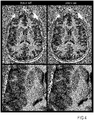
- Figure 4 shows for instance the effect of jitter on images undersampled with phyllotaxis pattern and reconstructed with CS.
- the jitter is uniformly distributed with a mean of 0 and a variance of 1.2 voxels.
- the artifacts which are removed using the jitter are visible on the non-jittered images as an increase of noise in the grey nuclei region and at the white matter / grey matter boundaries.
- the system creates the image of the object based on the processed data, and optionally displays the created image, as shown in Fig. 4 .
- FIG. 2 schematically illustrates an embodiment of a system 200 according to the invention.
- Said system 200 is notably configured for decreasing MRI data acquisition time when imaging an object.
- the system 200 comprises:
- the present invention proposes to use jittering on a coherent undersampling pattern, like the phyllotaxis pattern. This leads to a good trade-off between incoherence, sampling distribution and computational time, wherein the jitter enables to improve the image reconstruction.
Landscapes
- Physics & Mathematics (AREA)
- Health & Medical Sciences (AREA)
- General Health & Medical Sciences (AREA)
- Nuclear Medicine, Radiotherapy & Molecular Imaging (AREA)
- Radiology & Medical Imaging (AREA)
- Engineering & Computer Science (AREA)
- Signal Processing (AREA)
- High Energy & Nuclear Physics (AREA)
- Condensed Matter Physics & Semiconductors (AREA)
- General Physics & Mathematics (AREA)
- Magnetic Resonance Imaging Apparatus (AREA)
Abstract
The present invention concerns a system and a method for decreasing MRI data acquisition time when imaging an object, the method comprising:- acquiring (101) MRI data for the object to be imaged;- processing (102) the acquired MRI data in order to create an image of said object;- creating said image of the object based on the processed data;the method according to the invention being characterized in that it comprises generating an incoherent sampling pattern comprising a jittered k-space sampling trajectory for acquiring said MRI data.
Description
- The present disclosure is directed, in general, to imaging techniques for imaging biological objects, like tissues, using Magnetic Resonance Imaging (MRI) techniques. More specifically, the present invention is directed to methods and systems for decreasing acquisition times in MRI.
- While MRI became a major tool for medical imaging, it still suffers from some disadvantages compared to other existing imaging techniques, one of said disadvantages being notably the relatively long time required for image acquisition.
- Indeed, due to both physical and physiological constraints, acquisition times in MRI are long compared to some other medical imaging techniques like computed tomography (CT). This impedes patient comfort and renders MRI susceptible to motion artifacts. In particular, lengthy acquisition times in MRI might become problematic in case of uncooperative patients, patients in acute pain, or in paediatrics. Furthermore, patient throughput is very low which makes the MRI together with its expensive hardware a cost-inefficient modality.
- One solution for decreasing acquisition times is to accelerate acquisition sequences by acquiring fewer samples. Indeed, since the acquisition time usually scales linear to the number of samples, decreasing the number of samples also decreases the acquisition time. Within this field, a method of interest is Compressed Sensing (CS), which is an acceleration technique that became popular in MRI. CS follows a mathematical concept originating from information and approximation theory [1], previously developed in the field of signal processing [2]. It implies to reconstruct signals from incoherently undersampled data exploiting the prior knowledge that the signal is compressible. The latter requires the signal to be sparse in a transform domain (e.g. Wavelet domain); the image signal is then approximated by encoding only the most important coefficients [3]. The application of CS to MRI was proposed by Lustig et al. [4] with the following conditions that need to be fulfilled:
- i) transform sparsity,
- ii) incoherent sampling to produce noise-like artifacts, and
- iii) nonlinear reconstruction enforcing sparsity in the transform domain and consistency of the reconstruction with the acquired data.
- In order to answer the second condition for using CS in practice, an incoherent undersampling pattern is required. Furthermore, the design of the undersampling pattern must be computed in such a way that a sensible trajectory through k-space can be drawn, i.e. one that yields the desired contrast. Also, other considerations must be taken into account, as there are physiological considerations and physical constraints to respect. Strong gradients are required if the difference between two consecutive samples in k-space is too large, which might cause eddy currents or nerve stimulation.
- For a practical application, it is also important to be able to generate sampling patterns in real time, in order to flexibly adapt to user-defined parameters (depending on e.g. the organ imaged, the field of view, the patient cooperativity, the pathology).
- Up to now, different incoherent undersampling patterns were generated. For example:
- Complete random undersampling pattern, e.g. using uniformly distributed random numbers: this pattern is incoherent by nature; however, it produces clusters and relatively large empty spaces between samples. This is not due to the deficiency of a particular random number generator: uniform random samples provide uniform sample placement probability, but not a uniform coverage of the sampling domain. Furthermore, random sampling is very sensitive to system imperfections and is usually impractical. Another reason for which a random pattern would not give as good results as expected is that in k-space most of the energy is in its center, i.e. low frequencies. Therefore, a higher sampling density in the k-space center (thus non-uniform) may result in better images.
- Poisson disc sampling pattern: Poisson-disc [5] is a partly incoherent sampling pattern where samples are chosen from a complete random pattern but set no closer to each other than a defined radius. Simple algorithms draw independent samples from a uniform distribution and each sample is either added or rejected using a distance rejection criterion. However, the problem with Poisson disc pattern is that its generation is long and computationally expensive.
- It is therefore desirable to find a method and a system for decreasing the time required for collecting MRI data that overcome the previously mentioned problems, and which is free of any significant degradation of the MRI image quality, providing notably a good mitigation of undersampling artifacts, and fast to not disrupt clinical routine.
- Said objective is achieved according to the present invention by a method and a system for decreasing MRI data acquisition time according to the object of the independent claims. Dependent claims present further advantages of the invention.
- The present invention proposes a method for decreasing MRI data acquisition time when imaging an object, the method comprising;
- acquiring MRI data for the object to be imaged;
- processing the acquired MRI data in order to create an image of said object;
- creating said image of the object based on the processed data;
- generating an incoherent sampling pattern comprising a jittered k-space sampling trajectory, e.g. a jittered Cartesian spiral phyllotaxis k-space sampling trajectory, for acquiring said MRI data.
- According to the present invention, the incoherent undersampling is realized by using said jittered Cartesian k-space sampling trajectory, preferentially based on a phyllotaxis pattern. Advantageously, the phyllotaxis pattern enables a k-space sampling with variable density, i.e. higher density in the k-space center. The pattern itself and the corresponding trajectories can be flexibly and rapidly computed as the phyllotaxis pattern is based on the Fibonacci series and therefore does not require any optimization step.
- Compared to existing techniques, the present invention provides better results (images): for instance, contrary to complete random undersampling patterns, the presently claimed undersampling pattern uses a k-space sampling designed with a variable density distribution which enables to take into account the fact that in k-space most of the energy is located in its center, i.e. low frequencies, while such a variable density distribution is not possible with complete random undersampling patterns. It also provides better results compared to the Poisson disc sampling pattern, because the point-spread function of Poisson-disc is not as incoherent as the undersampling pattern according to the present invention.
- The present invention concerns also a system, e.g. an MRI apparatus, configured for imaging an object by carrying out the steps of the previously described method. Said system comprises for instance:
- an imaging system, like the imaging system of an MRI apparatus, configured for acquiring MRI data for the object;
- a memory for storing each of the acquired data;
- a control unit comprising a processor, the control unit being configured for processing the acquired data in order to generate an MRI image of said object;
- optionally a display for displaying said image of the object;
- The foregoing has broadly outlined the features and technical advantages of the present disclosure so that those skilled in the art may better understand the detailed description that follows. In particular, the present invention enables to decrease the acquisition time of MRI data while maintaining the quality of the obtained images for the object.
- Additional features and advantages of the disclosure will be described hereinafter that form the object of the claims. Those skilled in the art will appreciate that they may readily use the concept and the specific embodiment disclosed as a basis for modifying or designing other structures for carrying out the same purposes of the present disclosure. Those skilled in the art will also realize that such equivalent constructions do not depart from the spirit and scope of the disclosure in its broadest form.
- For a more complete understanding of the present disclosure, and the advantages thereof, reference is now made to the following descriptions taken in conjunction with the accompanying drawings, wherein like numbers designate like objects, and in which:
-
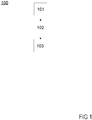
Figure 1 illustrates a flowchart of a method for decreasing the acquisition time of MRI data according to the invention; -
Figure 2 illustrates a system for implementing the claimed method; -
Figure 3 illustrates an example of undersampling patterns with various jitter radii; -
Figure 4 shows images reconstructed from regular phyllotaxis pattern in comparison to a jittered phyllotaxis pattern. -
Figures 1 to 4 , discussed below, and the various embodiments used to describe the principles of the present disclosure in this patent document are by way of illustration only and should not be construed in any way to limit the scope of the disclosure. Those skilled in the art will understand that the principles of the present disclosure may be implemented in any suitably arranged device. The numerous innovative teachings of the present application will be described with reference to exemplary non-limiting embodiments. - We will now describe in more details the method according to the invention through
Figure 1 which describes the different steps of themethod 100 carried out by the system according to the invention. - At
step 101, the imaging system of an MRI apparatus acquires MRI data. Preferentially, a Cartesian sampling sequence, such as GRE, bSSFP, MPRAGE, MP2RAGE, or SE, is used by the system according to the invention for MRI data acquisition. According to the present invention and contrary to existing techniques, a jittered Cartesian spiral phyllotaxis k-space sampling pattern and an automatically calculated trajectory is used for the incoherent undersampling of the MRI data. Preferentially, the k-space coordinates (yn and zn ) of sampled points on a Cartesian grid are calculated as follows:

Figure 3 , wherein grey spots represent acquired samples. The different subfigures show phyllotaxis patterns using various jitters, including - no jitter in subfigure 3(a): this is the original Cartesian phyllotaxis spiral used for the computation of the undersampling pattern;
- 0.5 jitter in
Fig. 3(b) : the added jitter equals 0.5 voxels and three example trajectories through k-space are shown (one colour per read-out block); - 1.2 jitter in
Fig. 3(c) : the added jitter equals 1.2 voxels and three example trajectories through k-space are shown (one colour per read-out block); - 2.4 jitter in
Fig. 3(d) : the added jitter equals 2.4 voxels and three example trajectories through k-space are shown (one colour per read-out block). - The acquisition of the entire k-space data is then separated in several read-out blocks, i.e. the acquisition of a subset of k-space samples. Based on the obtained jittered pattern, k-space trajectories are subsequently derived for each readout block considering user-defined parameters NsamplesPerBlock (= number of acquired phase-encoding steps per read-out block), Nkz (= number of second phase encoding direction(kz) in the MRI acquisition matrix) and NBlocks (= number of blocks performed during the acquisition). The generation of the trajectory is in particular realized as follows:
First, all sampled points are stored by the system according to the invention in a table t with their corresponding Cartesian k-space coordinates ky and kz. - Then, an algorithm is configured for calculating the k-space trajectory by sorting the sampled points so that a prescribed sequence timing with NBlocks read-out blocks that consists of NsamplesPerBlock k-space sampling points is achieved. For instance, said sorting is realized according to the following:where:

- xs and xi are variables of the algorithm;
- SORT(v, criterion) is a function which orders the rows of a sampling table v according to a criterion. The criterion could be, for example, sorting a table of sampling points ascending by ky positions;
- v(RANGE(a, b)) returns the rows of a sampling table v in the interval [a, b].
- The resulting trajectory traverses k-space in an arc-wise fashion using coordinates from the jittered phyllotaxis pattern as illustrated in
Figure 3c , notably sampling the k-space centre always in the middle (also time-wise) of the trajectory. This enables to choose the number of k-space points sampled in one read-out block completely independently from the number of first or second phase encoding points given by the user-defined matrix size. Preferentially, a protocol configured for limiting the step size between successive k-space sampled points is used in order to avoid increased eddy current effects (due to larger phase gradient amplitudes), which in turn implies a minimum number of samples (i.e. sampled points) per block. Having the said flexibility of the sequence user to select the samples per read-out block (i.e. the present invention enables a user to select a preferred length of the read-out block through the parameter NsamplesPerBlock), preferentially, the method comprises increasing the number of samples per block beyond the matrix size dimension. This results in a further reduction of the total scan time - of course being limited on this end by unwanted contrast mechanisms (e.g. increased T1 blurring), reduced tissue contrast and the length of the read-out blocks. - At
step 102, the system according to the invention processes the acquired MRI data in order to create an image of said object. For this purpose, standard image reconstruction techniques (e.g. CS reconstruction) based on the sampled dataset might be used.Figure 4 shows for instance the effect of jitter on images undersampled with phyllotaxis pattern and reconstructed with CS. The top row shows a transversal slice from volumes acquired with an acceleration factor R=4 (the acceleration factor R is defined as the ratio of the amount of k-space data required for a fully sampled image (according to the Nyquist-Shannon theorem) to the amount collected in an accelerated acquisition like the present one), while the bottom row zooms into the top images. Left-hand side images were acquired using a regular undersampling pattern without any jitter and the right-hand side images were acquired using an undersampling pattern with a jitter value of 1.2 voxels. According to the present invention, the jitter is uniformly distributed with a mean of 0 and a variance of 1.2 voxels. The artifacts which are removed using the jitter are visible on the non-jittered images as an increase of noise in the grey nuclei region and at the white matter / grey matter boundaries. - At
step 103, the system creates the image of the object based on the processed data, and optionally displays the created image, as shown inFig. 4 . - Finally,
Figure 2 schematically illustrates an embodiment of asystem 200 according to the invention. Saidsystem 200 is notably configured for decreasing MRI data acquisition time when imaging an object. Thesystem 200 comprises: - an
MRI imaging system 201, configured for acquiring MRI data for voxels of the biological object; - a
memory 202, connected to theMRI imaging system 201, for storing each acquired MRI data; - a
control unit 203 connected to thememory 202 and to theMRI imaging system 201. Thecontrol unit 203 comprises notably a processor configured for processing the acquired MRI data in order to generate an image of said object; - optionally, a
display 204 for displaying the generated image; - To summarize, the present invention proposes to use jittering on a coherent undersampling pattern, like the phyllotaxis pattern. This leads to a good trade-off between incoherence, sampling distribution and computational time, wherein the jitter enables to improve the image reconstruction.
-
- [1] D. L. Donoho, "Compressed sensing," IEEE Trans. Inf. Theory, vol. 52, no. 4, pp. 1289-1306, 2006.
- [2] E. J. Candes and M. B. Wakin, "An Introduction To Compressive Sampling," IEEE Signal Process. Mag., vol. 25, no. 2, pp. 21-30, 2008
- [3] G. Puy, P. Vandergheynst, R. Gribonval, and Y. Wiaux, "Universal and efficient compressed sensing by spread spectrum and application to realistic Fourier imaging techniques," EURASIP J. Adv. Signal Process., vol. 2012, no. 1, p. 6, 2012.
- [4] M. Lustig, D. Donoho, and J. M. Pauly, "Sparse MRI: The application of compressed sensing for rapid MR imaging," Magn. Reson. Med., vol. 58, no. 6, pp. 1182-1195, 2007.
- [5] T. R. Jones, "Efficient Generation of Poisson-Disk Sampling Patterns," J. Graph. Tools, 2011.
- [6] C. Forman, D. Piccini, R. Grimm, J. Hutter, J. Hornegger, and M. O. Zenge, "High-resolution 3D whole-heart coronary MRA: a study on the combination of data acquisition in multiple breath-holds and 1D residual respiratory motion compensation," MAGMA, vol. 27, no. 5, pp. 435-443, 2014.
- [7] F. A. Breuer et al., "Controlled aliasing in volumetric parallel imaging (2D CAIPIRINHA)," Magn. Reson. Med., vol. 55, no. 3, pp. 549-556, 2006
Claims (9)
- A method (100) for decreasing MRI data acquisition time when imaging an object, the method comprising:- acquiring (101) MRI data for the object to be imaged;- processing (102) the acquired MRI data in order to create an image of said object;- creating said image of the object based on the processed data;the method according to the invention being characterized in that it comprises generating an incoherent sampling pattern comprising a jittered k-space sampling trajectory for acquiring said MRI data.
- The method of claim 1, wherein the jittered k-space sampling trajectory is a jittered Cartesian spiral phyllotaxis k-space sampling trajectory.
- The method of claim 1 or 2, wherein processing the acquired MRI data comprises using Compressed Sensing reconstruction techniques.
- The method according to one of the claims 1 to 3, wherein at least one of the following Cartesian sampling sequences is used for acquiring (101) the MRI data:- GRE;- bSSFP;- MPRAGE;- MP2RAGE;- SE.
- The method according to one of the claims 2 to 4, wherein the k-space coordinates (yn and zn ) of trajectory sampled points on a Cartesian grid are calculated as follows:


- The method according to claim 5, wherein d ranges between 0.2 and 0.8, with preferentially d = 0.5, and the random jitter is preferentially characterized by a distribution of values with a mean = 0 and optionally a variance = 1.2.
- The method according to one of the claims 1 to 6, wherein an algorithm is used for calculating the k-space sampling trajectory by sorting the sampled points so that a prescribed sequence timing in blocks of NsamplesPerBlock is achieved.
- The method according to claim 7, wherein the sorting is realized according to the following:where:
 xs and xi are variables of the algorithm;SORT(v, criterion) is a function which orders the rows of a sampling table v according to a criterion. The criterion could be, for example, sorting a table of sampling points ascending by ky positions;v(RANGE(a, b)) returns the rows of a sampling table v in the interval [a, b].
 - System (200) for decreasing MRI data acquisition time when imaging an object, the system comprising:- an MRI imaging system (201), configured for acquiring MRI data for voxels of the biological object;- a memory (202), connected to the MRI imaging system (201), for storing each acquired MRI data;- a control unit (203) connected to the memory (202) and to the MRI imaging system (201);the system (200) being characterized in that it is configured for controlling and performing an incoherent k-space undersampling MRI data acquisition by means of the imaging system, wherein a jittered Cartesian k-space sampling trajectory is used for said acquisition of MRI data.
Priority Applications (1)
| Application Number | Priority Date | Filing Date | Title |
|---|---|---|---|
| EP20153458.3A EP3855201A1 (en) | 2020-01-23 | 2020-01-23 | Method and system for improving incoherent undersampling in mri |
Applications Claiming Priority (1)
| Application Number | Priority Date | Filing Date | Title |
|---|---|---|---|
| EP20153458.3A EP3855201A1 (en) | 2020-01-23 | 2020-01-23 | Method and system for improving incoherent undersampling in mri |
Publications (1)
| Publication Number | Publication Date |
|---|---|
| EP3855201A1 true EP3855201A1 (en) | 2021-07-28 |
Family
ID=69190729
Family Applications (1)
| Application Number | Title | Priority Date | Filing Date |
|---|---|---|---|
| EP20153458.3A Withdrawn EP3855201A1 (en) | 2020-01-23 | 2020-01-23 | Method and system for improving incoherent undersampling in mri |
Country Status (1)
| Country | Link |
|---|---|
| EP (1) | EP3855201A1 (en) |
-
2020
- 2020-01-23 EP EP20153458.3A patent/EP3855201A1/en not_active Withdrawn
Non-Patent Citations (10)
| Title |
|---|
| C. FORMAND. PICCINIR. GRIMMJ. HUTTERJ. HORNEGGERM. 0. ZENGE: "High-resolution 3D whole-heart coronary MRA: a study on the combination of data acquisition in multiple breath-holds and 1D residual respiratory motion compensation", MAGMA, vol. 27, no. 5, 2014, pages 435 - 443, XP035397692, DOI: 10.1007/s10334-013-0428-x |
| D. L. DONOHO: "Compressed sensing", IEEE TRANS. INF. THEORY, vol. 52, no. 4, 2006, pages 1289 - 1306, XP055278657, DOI: 10.1109/TIT.2006.871582 |
| E. J. CANDESM. B. WAKIN: "An Introduction To Compressive Sampling", IEEE SIGNAL PROCESS. MAG., vol. 25, no. 2, 2008, pages 21 - 30 |
| EMILIE MUSSARD ET AL: "Accelerated MP2RAGE imaging using Cartesian phyllotaxis readout and compressed sensing reconstruction", MAGNETIC RESONANCE IN MEDICINE, 16 March 2020 (2020-03-16), pages 1881 - 1894, XP055713755, Retrieved from the Internet <URL:https://onlinelibrary.wiley.com/doi/full-xml/10.1002/mrm.28244> [retrieved on 20200710], DOI: 10.1002/mrm.28244 * |
| F. A. BREUER ET AL.: "Controlled aliasing in volumetric parallel imaging (2D CAIPIRINHA", MAGN. RESON. MED., vol. 55, no. 3, 2006, pages 549 - 556, XP055133400, DOI: 10.1002/mrm.20787 |
| FORMAN CHRISTOPH ET AL: "High-resolution 3D whole-heart coronary MRA: a study on the combination of data acquisition in multiple breath-holds and 1D residual respiratory motion compensation", MAGNETIC RESONANCE MATERIALS IN PHYSICS, BIOLOGY AND MEDICINE, SPRINGER, DE, GB, vol. 27, no. 5, 9 January 2014 (2014-01-09), pages 435 - 443, XP035397692, ISSN: 0968-5243, [retrieved on 20140109], DOI: 10.1007/S10334-013-0428-X * |
| G. PUYP. VANDERGHEYNSTR. GRIBONVALY. WIAUX: "Universal and efficient compressed sensing by spread spectrum and application to realistic Fourier imaging techniques", EURASIP J. ADV. SIGNAL PROCESS, vol. 2012, no. 1, 2012, pages 6 |
| M. LUSTIGD. DONOHOJ. M. PAULY: "Sparse MRI: The application of compressed sensing for rapid MR imaging", MAGN. RESON. MED., vol. 58, no. 6, 2007, pages 1182 - 1195, XP007907974, DOI: 10.1002/mrm.21391 |
| MUSSARD E.P.C. ET AL.: "High-resolution 3D T2 mapping of the Brain Using T2-prepared Cartesian Spiral Phyllotaxis FLASH and Compressed Sensing", PROCEEDINGS OF THE INTERNATIONAL SOCIETY FOR MAGNETIC RESONANCE IN MEDICINE, 25TH ANNUAL MEETING & EXHIBITION, no. 3725, 7 April 2017 (2017-04-07), Honolulu, HI, USA, XP040691293 * |
| T. R. JONES: "Efficient Generation of Poisson-Disk Sampling Patterns", J. GRAPH. TOOLS, 2011 |
Similar Documents
| Publication | Publication Date | Title |
|---|---|---|
| JP6513398B2 (en) | MR image reconstruction using prior information constrained regularization | |
| EP1444530B1 (en) | Three-dimensional phase contrast magnetic resonance imaging using interleaved projection-reconstruction data | |
| EP0082684B1 (en) | Blood vessel projection imaging system using nuclear magnetic resonance | |
| JP6636461B2 (en) | MR imaging using multi-echo k-space acquisition | |
| JP5123192B2 (en) | Image acquisition and reconstruction methods for functional magnetic resonance imaging | |
| DE102018113437A1 (en) | MR TOMOGRAPHY USING A STACK-OF-STARS DETECTION WITH VARIABLE CONTRAST | |
| DE112011102112T5 (en) | A method of reconstructing a magnetic resonance image of an object taking into account higher order dynamic fields | |
| Gholipour et al. | Super‐resolution reconstruction in frequency, image, and wavelet domains to reduce through‐plane partial voluming in MRI | |
| Jhamb et al. | A review on image reconstruction through MRI k-space data | |
| JP2016512780A (en) | MR image reconstruction using compressed sensing | |
| DE112014000556T5 (en) | Metal-insensitive MR imaging | |
| US11125847B2 (en) | System and method for out-of-view artifact suppression for magnetic resonance fingerprinting | |
| WO2014195454A1 (en) | Mr imaging with enhanced susceptibility contrast | |
| JP2022535548A (en) | Spiral MR imaging with off-resonance artifact correction | |
| Speidel et al. | Quasi-random single-point imaging using low-discrepancy $ k $-space sampling | |
| EP3640662A1 (en) | Magnetic resonance imaging using motion-compensated image reconstruction | |
| Feng et al. | Single-shot MR imaging using trapezoidal-gradient-based Lissajous trajectories | |
| Kaldate et al. | MR image reconstruction based on compressed sensing using Poisson sampling pattern | |
| Segers et al. | Discrete tomography in MRI: a simulation study | |
| WO2017167937A1 (en) | Dynamic mr imaging with increased temporal and spatial resolution | |
| US12498438B2 (en) | MR mammography | |
| US20250093449A1 (en) | Method for generating a series of magnetic resonance images with cross-frame iterative reconstruction | |
| CN113544526B (en) | Parallel MR imaging using wave encoding | |
| Fernandes | Multichannel Denoising Strategies for Ultrafast Magnetic Resonance Imaging | |
| García Suárez et al. | Compressed Sensing Techniques Applied to Medical Images Obtained with Magnetic Resonance |
Legal Events
| Date | Code | Title | Description |
|---|---|---|---|
| PUAI | Public reference made under article 153(3) epc to a published international application that has entered the european phase |
Free format text: ORIGINAL CODE: 0009012 |
|
| STAA | Information on the status of an ep patent application or granted ep patent |
Free format text: STATUS: THE APPLICATION HAS BEEN PUBLISHED |
|
| AK | Designated contracting states |
Kind code of ref document: A1 Designated state(s): AL AT BE BG CH CY CZ DE DK EE ES FI FR GB GR HR HU IE IS IT LI LT LU LV MC MK MT NL NO PL PT RO RS SE SI SK SM TR |
|
| STAA | Information on the status of an ep patent application or granted ep patent |
Free format text: STATUS: THE APPLICATION IS DEEMED TO BE WITHDRAWN |
|
| 18D | Application deemed to be withdrawn |
Effective date: 20220129 |