EP3855196B1 - Method and device for determining temperature estimation model, and battery management system to which temperature estimation model is applied - Google Patents
Method and device for determining temperature estimation model, and battery management system to which temperature estimation model is applied Download PDFInfo
- Publication number
- EP3855196B1 EP3855196B1 EP20858342.7A EP20858342A EP3855196B1 EP 3855196 B1 EP3855196 B1 EP 3855196B1 EP 20858342 A EP20858342 A EP 20858342A EP 3855196 B1 EP3855196 B1 EP 3855196B1
- Authority
- EP
- European Patent Office
- Prior art keywords
- temperatures
- temperature
- parameter set
- error
- profile
- Prior art date
- Legal status (The legal status is an assumption and is not a legal conclusion. Google has not performed a legal analysis and makes no representation as to the accuracy of the status listed.)
- Active
Links
Images


Classifications
-
- G—PHYSICS
- G01—MEASURING; TESTING
- G01R—MEASURING ELECTRIC VARIABLES; MEASURING MAGNETIC VARIABLES
- G01R31/00—Arrangements for testing electric properties; Arrangements for locating electric faults; Arrangements for electrical testing characterised by what is being tested not provided for elsewhere
- G01R31/36—Arrangements for testing, measuring or monitoring the electrical condition of accumulators or electric batteries, e.g. capacity or state of charge [SoC]
- G01R31/396—Acquisition or processing of data for testing or for monitoring individual cells or groups of cells within a battery
-
- G—PHYSICS
- G01—MEASURING; TESTING
- G01K—MEASURING TEMPERATURE; MEASURING QUANTITY OF HEAT; THERMALLY-SENSITIVE ELEMENTS NOT OTHERWISE PROVIDED FOR
- G01K7/00—Measuring temperature based on the use of electric or magnetic elements directly sensitive to heat ; Power supply therefor, e.g. using thermoelectric elements
- G01K7/16—Measuring temperature based on the use of electric or magnetic elements directly sensitive to heat ; Power supply therefor, e.g. using thermoelectric elements using resistive elements
- G01K7/22—Measuring temperature based on the use of electric or magnetic elements directly sensitive to heat ; Power supply therefor, e.g. using thermoelectric elements using resistive elements the element being a non-linear resistance, e.g. thermistor
-
- G—PHYSICS
- G01—MEASURING; TESTING
- G01K—MEASURING TEMPERATURE; MEASURING QUANTITY OF HEAT; THERMALLY-SENSITIVE ELEMENTS NOT OTHERWISE PROVIDED FOR
- G01K7/00—Measuring temperature based on the use of electric or magnetic elements directly sensitive to heat ; Power supply therefor, e.g. using thermoelectric elements
- G01K7/42—Circuits effecting compensation of thermal inertia; Circuits for predicting the stationary value of a temperature
-
- G—PHYSICS
- G01—MEASURING; TESTING
- G01K—MEASURING TEMPERATURE; MEASURING QUANTITY OF HEAT; THERMALLY-SENSITIVE ELEMENTS NOT OTHERWISE PROVIDED FOR
- G01K7/00—Measuring temperature based on the use of electric or magnetic elements directly sensitive to heat ; Power supply therefor, e.g. using thermoelectric elements
- G01K7/42—Circuits effecting compensation of thermal inertia; Circuits for predicting the stationary value of a temperature
- G01K7/427—Temperature calculation based on spatial modeling, e.g. spatial inter- or extrapolation
-
- G—PHYSICS
- G01—MEASURING; TESTING
- G01R—MEASURING ELECTRIC VARIABLES; MEASURING MAGNETIC VARIABLES
- G01R31/00—Arrangements for testing electric properties; Arrangements for locating electric faults; Arrangements for electrical testing characterised by what is being tested not provided for elsewhere
- G01R31/36—Arrangements for testing, measuring or monitoring the electrical condition of accumulators or electric batteries, e.g. capacity or state of charge [SoC]
- G01R31/3644—Constructional arrangements
- G01R31/3648—Constructional arrangements comprising digital calculation means, e.g. for performing an algorithm
-
- G—PHYSICS
- G01—MEASURING; TESTING
- G01R—MEASURING ELECTRIC VARIABLES; MEASURING MAGNETIC VARIABLES
- G01R31/00—Arrangements for testing electric properties; Arrangements for locating electric faults; Arrangements for electrical testing characterised by what is being tested not provided for elsewhere
- G01R31/36—Arrangements for testing, measuring or monitoring the electrical condition of accumulators or electric batteries, e.g. capacity or state of charge [SoC]
- G01R31/367—Software therefor, e.g. for battery testing using modelling or look-up tables
-
- G—PHYSICS
- G01—MEASURING; TESTING
- G01R—MEASURING ELECTRIC VARIABLES; MEASURING MAGNETIC VARIABLES
- G01R31/00—Arrangements for testing electric properties; Arrangements for locating electric faults; Arrangements for electrical testing characterised by what is being tested not provided for elsewhere
- G01R31/36—Arrangements for testing, measuring or monitoring the electrical condition of accumulators or electric batteries, e.g. capacity or state of charge [SoC]
- G01R31/382—Arrangements for monitoring battery or accumulator variables, e.g. SoC
-
- G—PHYSICS
- G01—MEASURING; TESTING
- G01R—MEASURING ELECTRIC VARIABLES; MEASURING MAGNETIC VARIABLES
- G01R31/00—Arrangements for testing electric properties; Arrangements for locating electric faults; Arrangements for electrical testing characterised by what is being tested not provided for elsewhere
- G01R31/36—Arrangements for testing, measuring or monitoring the electrical condition of accumulators or electric batteries, e.g. capacity or state of charge [SoC]
- G01R31/385—Arrangements for measuring battery or accumulator variables
-
- H—ELECTRICITY
- H01—ELECTRIC ELEMENTS
- H01M—PROCESSES OR MEANS, e.g. BATTERIES, FOR THE DIRECT CONVERSION OF CHEMICAL ENERGY INTO ELECTRICAL ENERGY
- H01M10/00—Secondary cells; Manufacture thereof
- H01M10/42—Methods or arrangements for servicing or maintenance of secondary cells or secondary half-cells
- H01M10/425—Structural combination with electronic components, e.g. electronic circuits integrated to the outside of the casing
-
- H—ELECTRICITY
- H01—ELECTRIC ELEMENTS
- H01M—PROCESSES OR MEANS, e.g. BATTERIES, FOR THE DIRECT CONVERSION OF CHEMICAL ENERGY INTO ELECTRICAL ENERGY
- H01M10/00—Secondary cells; Manufacture thereof
- H01M10/42—Methods or arrangements for servicing or maintenance of secondary cells or secondary half-cells
- H01M10/48—Accumulators combined with arrangements for measuring, testing or indicating the condition of cells, e.g. the level or density of the electrolyte
- H01M10/486—Accumulators combined with arrangements for measuring, testing or indicating the condition of cells, e.g. the level or density of the electrolyte for measuring temperature
-
- H—ELECTRICITY
- H01—ELECTRIC ELEMENTS
- H01M—PROCESSES OR MEANS, e.g. BATTERIES, FOR THE DIRECT CONVERSION OF CHEMICAL ENERGY INTO ELECTRICAL ENERGY
- H01M10/00—Secondary cells; Manufacture thereof
- H01M10/42—Methods or arrangements for servicing or maintenance of secondary cells or secondary half-cells
- H01M10/425—Structural combination with electronic components, e.g. electronic circuits integrated to the outside of the casing
- H01M2010/4271—Battery management systems including electronic circuits, e.g. control of current or voltage to keep battery in healthy state, cell balancing
-
- Y—GENERAL TAGGING OF NEW TECHNOLOGICAL DEVELOPMENTS; GENERAL TAGGING OF CROSS-SECTIONAL TECHNOLOGIES SPANNING OVER SEVERAL SECTIONS OF THE IPC; TECHNICAL SUBJECTS COVERED BY FORMER USPC CROSS-REFERENCE ART COLLECTIONS [XRACs] AND DIGESTS
- Y02—TECHNOLOGIES OR APPLICATIONS FOR MITIGATION OR ADAPTATION AGAINST CLIMATE CHANGE
- Y02E—REDUCTION OF GREENHOUSE GAS [GHG] EMISSIONS, RELATED TO ENERGY GENERATION, TRANSMISSION OR DISTRIBUTION
- Y02E60/00—Enabling technologies; Technologies with a potential or indirect contribution to GHG emissions mitigation
- Y02E60/10—Energy storage using batteries
Definitions
- the present disclosure relates to a method and device for determining a temperature estimating model, and a battery management system to which a temperature estimating model determined by the method for determining a temperature estimating model is applied.
- a battery management system To reduce a time for charging a battery module, a battery management system must sense a temperature deviation among a plurality of battery cells configuring the battery module, and must perform charging control on the battery module based on the sensed temperature deviation.
- SHADMAN RAD M ET AL "Adaptive thermal modeling of Li-ion batteries", ELECTROCHIMICA ACTA, ELSEVIER, AMSTERDAM, NL, vol. 102, 8 April 2013, pages 183-195 relates to an accurate thermal model to predict the heat generation in rechargeable batteries. This is an essential tool for advanced thermal management in high power applications, such as electric vehicles.
- the parameters of the battery's heat balance equation are determined by minimizing the absolute squared average error between measured and estimated temperatures for ten charge/discharge cycles under various operating conditions.
- US 6 076 964 A relates to prediction of internal temperature of a battery using a non-linear dynamic model.
- US 9 069 725 B2 relates to a dynamic outlier bias reduction system and method.
- the present invention has been made in an effort to provide a method and device for determining a temperature estimating model for estimating designation of a highest temperature and a lowest temperature of a battery, and a battery management system to which a temperature estimating model is applied.
- An embodiment of the present invention provides a method for determining a temperature estimating model for estimating a temperature in a battery module, including: calculating all parameter sets based on n-numbered parameters according to a model type selected for estimating a temperature and a number of sections of the respective n-numbered parameters; estimating temperatures by substituting input data of a preliminary verification profile with models based on all the respective parameter sets; calculating a first error caused by a difference between measured temperatures of the preliminary verification profile and the estimated temperatures for all the respective parameter sets; comparing whether respective first errors for all the respective parameter sets are less than a first threshold value; extracting a parameter set corresponding to the first error that is less than the first threshold value from among the first errors according to the comparison result as a first parameter set; calculating a maximum error that is the biggest error from among the errors between the temperatures estimated according to the input data changeable in a time-series way of the preliminary verification profile and measured temperatures of the preliminary verification profile by using a model based on the first parameter set; comparing whether the maximum error is
- the preliminary verification profile and the reverification profile may include a temperature value of a temperature sensor, a current of a battery, a temperature value of cooling water, and an air temperature value changeable in at least a time-series way as input data.
- the estimated temperatures may include estimated highest temperatures or lowest temperatures of the battery module, and the measured temperatures may include measured highest temperatures or lowest temperatures of the battery module.
- At least one of the first error and the second error may be a root mean square error (RMSE).
- RMSE root mean square error
- the method may further include changing a reference profile when the first errors are equal to or greater than the first threshold value, wherein the reference profile may be an initial value for building up the temperature estimating model, and may include factors for estimating temperatures and measured temperatures.
- the method may further include changing the reference profile when the maximum error of all the first parameter sets is equal to or greater than the second threshold value.
- the method may further include changing the reference profile when the second error of all the second parameter sets is equal to or greater than the third threshold value.
- the extracting of a first parameter set may include extracting a parameter set corresponding to first errors belonging to a top i-number in ascending order from among the first errors as the first parameter set.
- the extracting of a second parameter set may include extracting a parameter set corresponding to the added result belonging to a top j-number in ascending order as the second parameter set.
- Another embodiment of the present invention provides a battery management system including a temperature estimating model determined by the method for determining a temperature estimating model.
- Another embodiment of the present invention provides a device for determining a temperature estimating model for estimating a temperature in a battery module, including: a parameter set producer for calculating all parameter sets based on n-numbered parameters according to a model type selected for estimating a temperature and a number of sections of the respective n-numbered parameters; a modeling unit for estimating temperatures by substituting input data of a preliminary verification profile with models based on all the respective parameter sets; and an error calculator for calculating a first error caused by a difference between measured temperatures of the preliminary verification profile and the estimated temperatures for all the respective parameter sets.
- the modeling unit may compare whether respective first errors for all the respective parameter sets are less than a first threshold value, and may extract a parameter set corresponding to a first error that is less than the first threshold value from among the first errors as a first parameter set according to the comparison result.
- the device for determining a temperature estimating model may further include: a maximum error calculator for calculating a maximum error that is the biggest error from among the errors from among the temperatures estimated according to input data changing in a time-series way of the preliminary verification profile by using a model based on the first parameter set and the measured temperatures of the preliminary verification profile, comparing whether the maximum error is less than a second threshold value, and extracting a second parameter set based on a result of adding a product of the maximum error that is less than the second threshold value according to the comparison result and a corresponding weight value and a product of a first error corresponding to the first parameter set from among the first errors and a corresponding weight value; and a final model determining unit for estimating temperatures according to input data of a reverification profile to the second parameter set, calculating a second error according to a difference between measured temperatures of the reverification profile and the estimated temperatures, and when the second error is less than a third threshold value, determining a model based on the second parameter set to be a temperature
- the preliminary verification profile and the reverification profile may include a temperature value of a temperature sensor, a current of a battery, a temperature value of cooling water, and a temperature value of air changeable in at least a time-series way as input data.
- the estimated temperatures may include estimated highest temperatures or lowest temperatures of the battery module, and the measured temperatures may include measured highest temperatures or lowest temperatures of the battery module.
- At least one of the first error and the second error may be a root mean square error (RMSE).
- RMSE root mean square error
- the method and device for determining a temperature estimating model for estimating designation of a highest temperature and a lowest temperature of a battery, and the battery management system to which a temperature estimating model is applied are provided.
- An example of the present disclosure may deduce a logic for estimating a highest temperature and a lowest temperature in a battery module by using a measured thermistor value, a current flowing to a battery module, a cooling water temperature value, and a temperature value of external air based on a system identification method, and may finally improve a limit of the thermistor.
- the battery management system may control the charging in a more precise way by estimating the highest temperature and the lowest temperature in the battery module.
- a method for determining a temperature estimating model for estimating a correlation between the maximum and lowest temperatures in the battery module based on a temperature value of the thermistor, a current of the battery, a temperature value of the cooling water, and a temperature value of external air, and a device for realizing the method, are provided.
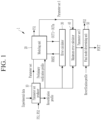
- FIG. 1 shows a device for determining a temperature estimating model according to an embodiment.
- the device 1 for determining a temperature estimating model includes a parameter set producer 10, a modeling unit 20, an error calculator 30, a maximum error calculator 40, and a final model determining unit 50.
- Respective constituent elements described with reference to FIG. 1 represent an example for describing a configuration of a device for determining a highest temperature and lowest temperature estimating model, and in this instance, at least two constituent elements may be combined, one constituent element may be divided into at least two constituent elements, or an additional constituent element may be supplied, and other modifications are allowable, and the example described with reference to FIG. 1 does not limit the present disclosure.
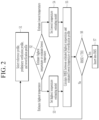
- FIG. 2 shows a flowchart of a method for determining a temperature estimating model according to an embodiment.
- FIG. 3 shows a flowchart of a method for determining a highest temperature estimating model according to an embodiment.
- FIG. 4 shows a flowchart of a method for determining a lowest temperature estimating model according to an embodiment.
- a device and method for determining a temperature estimating model according to an embodiment will now be described with reference to FIG. 1 to FIG. 4 .
- the parameter set producer 10 receives experimental data, and selects a reference profile, a preliminary verification profile, and a reverification profile (S1).
- the reference profile represents an initial value for building up a temperature estimating model, and it may include input data including factors for estimating temperatures and output data including measured temperatures.
- the preliminary verification profile provides data for determining a parameter set that is appropriate for a temperature estimating model from among all the parameter sets determined according to a number of parameters for estimating the temperature and a range of parameters.
- the reverification profile provides data for finally verifying a temperature estimating model.
- the reference profile, the preliminary verification profile, and the reverification profile may include data including at least a temperature value of the thermistor, a current of the battery, a temperature value of the cooling water of the battery module, a temperature value of external air of the battery module, and highest and lowest temperatures in the battery module distinguished and arranged in a time-series way.
- the temperature value of the thermistor, the current of the battery, the temperature value of the cooling water of the battery module, and the temperature value of external air of the battery module may be input data of the temperature estimating model, and the highest and lowest temperatures in the battery module may be output data of the temperature estimating model.
- the device 1 for determining a temperature estimating model selects whether to estimate the highest temperature or estimate the lowest temperature (S2), sets a highest temperature estimating model in the case of estimating the highest temperature (S3), and sets a lowest temperature estimating model in the case of estimating the lowest temperature (S4).
- the settings of the highest temperature estimating model and the lowest temperature estimating model are performed in a same method, so respective steps described with reference to FIG. 3 and FIG. 4 will be described altogether.
- the parameter set producer 10 selects a type of the model for estimating the highest temperature or the lowest temperature, and calculates all n-numbered parameter sets that are products of a number of parameters following the selected model type and a number of sections of the range of the respective parameters (S301 and S401).
- the types of the model for estimating the temperature include an Auto Regressive external (ARX) model and a transfer function model.
- ARX Auto Regressive external
- All the parameter sets calculated by the parameter set producer 10 are transmitted to the modeling unit 20 together with the preliminary verification profile, and the modeling unit 20 substitutes the input data of the preliminary verification profile with the models that are based on all the respective parameter sets to estimate the highest temperatures or the lowest temperatures (S302 and S402).
- the error calculator 30 calculates a root mean square error (RMSE) between the highest temperatures or the lowest temperatures that are output data of the preliminary verification profile and the estimated highest temperatures or the lowest temperatures that are outputs (OUT1 to OUTn) of the modeling unit 20 (S303 and S403).
- RMSE root mean square error
- the outputs (OUT1 to OUTn) respectively include estimated highest temperatures or lowest temperatures when the temperature value of the thermistor, the current of the battery, the temperature value of the cooling water of the battery module, and the temperature value of external air of the battery module that are included in the preliminary verification profile and distinguished and arranged in a time-series way are input to the model defined by one parameter set, and the error calculator 30 may calculate the root mean square error (RMSE) by applying a square root to the result of mean square of differences between the output data corresponding to the input data in the preliminary verification profile and the estimated highest temperatures or lowest temperatures.
- the RMSE is an example for calculating an error between the estimated result and the actually measured result, but the present disclosure is not limited thereto.
- the modeling unit 20 receives the RMSE from the error calculator 30, and compares whether the RMSE is less than a threshold value TH2 of the highest temperature or the lowest temperature (S304 and S404).
- the modeling unit 20 stores the parameter set in which the RMSE is less than the threshold value TH2 and the RMSE (S305 and S405), finishes S304 or S404 for all the parameter sets, and extracts i-numbered first parameter sets corresponding to the i-numbered top ones in ascending order from among the stored RMSE (S307 and S407).
- the i represents the maximum number, and when the number of parameter sets in which the RMSE is less than the threshold value TH2 is equal to or less than i in S304 or S404, the corresponding parameter sets are extracted as the first parameter sets.
- the modeling unit 20 transmits a failure signal FS1 to the parameter set producer 10 to notify of this, and the parameter set producer 10 changes the reference profile according to S1.
- the reference profile changes, at least one of the preliminary verification profile and the reverification profile may be changed together.
- the first parameter set is transmitted to the maximum error calculator 40 together with the preliminary verification profile.
- the maximum error calculator 40 uses the models that are based on the respective i-numbered first parameter sets, and calculates the maximum error between the estimated highest temperature or the estimated lowest temperature that changes in a time-series way and the measured highest temperature or the lowest temperature of the output data in the preliminary verification profile (S308 and S408).
- the preliminary verification profile includes input data and output data that are distinguished and arranged in a time-series way
- the maximum error signifies the biggest error from among the errors between the highest temperatures or the lowest temperatures estimated according to the input data changeable in a time-series way and the output data corresponding to the input data, that is, the measured highest temperatures or the lowest temperatures.
- the maximum error calculator 40 compares whether the maximum errors of the respective first parameter sets are less than a threshold value TH3 (S309 and S409).
- the maximum error calculator 40 for a parameter set whose maximum errors are less than the threshold TH3, adds a product of multiplying the RMSE calculated by the error calculator 30 in S303 or S403 and a corresponding weight value with a product of multiplying a maximum error and a corresponding weight value to calculate a weighted error, and stores the weighted error (S310 and S410).
- the maximum error calculator 40 transmits a failure signal FS2 to the parameter set producer 10 to notify of this, and the parameter set producer 10 changes the reference profile according to S1.
- the reference profile changes, at least one of the preliminary verification profile and the reverification profile may be changed together.
- the maximum error calculator 40 extracts the second parameter sets corresponding to j-numbered ones in ascending order from among the stored weighted errors in S310 or S410 (S312 and S412).
- the j represents the maximum number, and when the number of the parameter sets in which the maximum error is less than the threshold value TH3 is equal to or less than j in S309 or S409, the corresponding parameter sets are extracted as a second parameter set.
- the second parameter set is transmitted to the final model determining unit 50 together with the reverification profile.
- the final model determining unit 50 estimates the highest temperature or the lowest temperature according to the input data of the reverification profile, and calculates the RMSE between the measured highest temperatures or lowest temperatures that are output data of the reverification profile and the estimated highest temperatures or estimated lowest temperatures (S5).
- the final model determining unit 50 compares whether the RMSE is less than the threshold value TH1 (S6).
- the final model determining unit 50 may determine the model based on the corresponding parameter set to be a final model (FOUT).
- the RMSE of at least two second parameter sets from among the j-numbered second parameter sets is less than the threshold value TH1, the second parameter set corresponding to the least RMSE may be selected.
- the final model (FOUT) is divided into a highest temperature estimating model for the highest temperature and a lowest temperature estimating model for the lowest temperature, and it may be inserted into the battery management system (S7).
- FIG. 5 shows a battery system including a battery management system to which a temperature estimating model is applied according to an embodiment.
- the battery system 2 includes a battery management system (BMS) 100, a battery module 200, at least two temperature sensors 300 and 500, a current sensor 400, and a cooling unit 600.
- BMS battery management system
- the BMS 100 includes a temperature estimating model 100 determined by an embodiment described with reference to FIG. 1 to FIG. 4 .
- the temperature estimating model 100 may estimate at least one of the highest temperature and the lowest temperature of the battery module 200.
- the battery module 200 includes a plurality of battery cells connected in series/in parallel with each other, so it may supply a needed power voltage.
- FIG. 5 illustrates that the battery module 200 includes a plurality of battery cells (C1 to Cn) connected in series with each other, and is connected between two output ends (+ and -) of the battery system 2, but the constituent elements and the relationship among them described with reference to FIG. 5 are an example, and the present disclosure is not limited thereto.
- the temperature sensor 300 measures the temperature of the battery module 200, and transmits information for indicating the measured temperature to the BMS 100.
- the temperature sensor 300 may be realized with a thermistor, and the value measured by the thermistor may be information for indicating the measured temperature.
- FIG. 5 illustrates one temperature sensor 300 attached to the battery module 200, but the present disclosure is not limited thereto, and two or more temperature sensors may be attached to the battery module 200.
- the current sensor 400 is connected in series between a positive electrode of the battery module 200 and the output end (+), measures the current flowing to the battery module 200, and transmits information for indicating the measured current to the BMS 100.
- the temperature sensor 500 measures a temperature of external air, and transmits information on the measured temperature of external air to the BMS 100.
- the cooling unit 600 may be positioned to contact at least one side of the battery module 200, and may reduce the temperature of the battery module 200.
- the cooling water is supplied into the cooling unit 600, and the cooling unit 600 measures the temperature of the cooling water and transmits information for indicating the measured temperature of the cooling water to the BMS 100.
- the measurement value of the thermistor, the current flowing to the battery, the temperature value of external air, and the temperature value of the cooling water transmitted to the BMS 100 are input to the temperature estimating model 110, and the temperature estimating model 110 may estimate at least one of the highest temperature and the lowest temperature of the battery module 200.
- the highest temperature and the lowest temperature in the battery module may be accurately estimated, thereby solving the problem of conventional art for measuring the temperature of the battery module depending on the measurement value of the thermistor.
- the highest temperature and the lowest temperature in the battery module may be accurately estimated, so the battery management system for more precisely controlling the output of the battery module may be provided.
Landscapes
- Physics & Mathematics (AREA)
- General Physics & Mathematics (AREA)
- Engineering & Computer Science (AREA)
- Manufacturing & Machinery (AREA)
- Chemical & Material Sciences (AREA)
- Chemical Kinetics & Catalysis (AREA)
- Electrochemistry (AREA)
- General Chemical & Material Sciences (AREA)
- Nonlinear Science (AREA)
- Microelectronics & Electronic Packaging (AREA)
- Secondary Cells (AREA)
- Charge And Discharge Circuits For Batteries Or The Like (AREA)
Description
- This application claims priority to and the benefit of
Korean Patent Application No. 10-2019-0106742 filed in the Korean Intellectual Property Office on August 29, 2019 - The present disclosure relates to a method and device for determining a temperature estimating model, and a battery management system to which a temperature estimating model determined by the method for determining a temperature estimating model is applied.
- To reduce a time for charging a battery module, a battery management system must sense a temperature deviation among a plurality of battery cells configuring the battery module, and must perform charging control on the battery module based on the sensed temperature deviation.
- However, because of a limit of a battery manufacturing process and a cost, only one or two temperature sensors may be installed in the battery module, and points of the highest temperature and the lowest temperature may not be accurately detected in the battery module.
- SHADMAN RAD M ET AL, "Adaptive thermal modeling of Li-ion batteries", ELECTROCHIMICA ACTA, ELSEVIER, AMSTERDAM, NL, vol. 102, 8 April 2013, pages 183-195 relates to an accurate thermal model to predict the heat generation in rechargeable batteries. This is an essential tool for advanced thermal management in high power applications, such as electric vehicles.
- In Shadman Pad et al, the parameters of the battery's heat balance equation are determined by minimizing the absolute squared average error between measured and estimated temperatures for ten charge/discharge cycles under various operating conditions.
-
US 6 076 964 A relates to prediction of internal temperature of a battery using a non-linear dynamic model. -
US 9 069 725 B2 - The present invention has been made in an effort to provide a method and device for determining a temperature estimating model for estimating designation of a highest temperature and a lowest temperature of a battery, and a battery management system to which a temperature estimating model is applied.
- An embodiment of the present invention provides a method for determining a temperature estimating model for estimating a temperature in a battery module, including: calculating all parameter sets based on n-numbered parameters according to a model type selected for estimating a temperature and a number of sections of the respective n-numbered parameters; estimating temperatures by substituting input data of a preliminary verification profile with models based on all the respective parameter sets; calculating a first error caused by a difference between measured temperatures of the preliminary verification profile and the estimated temperatures for all the respective parameter sets; comparing whether respective first errors for all the respective parameter sets are less than a first threshold value; extracting a parameter set corresponding to the first error that is less than the first threshold value from among the first errors according to the comparison result as a first parameter set; calculating a maximum error that is the biggest error from among the errors between the temperatures estimated according to the input data changeable in a time-series way of the preliminary verification profile and measured temperatures of the preliminary verification profile by using a model based on the first parameter set; comparing whether the maximum error is less than a second threshold value; extracting a second parameter set based on a result of adding a product of the maximum error that is less than the second threshold value according to the comparison result and a corresponding weight value and a product of a first error corresponding to the first parameter set from among the first errors and a corresponding weight value; estimating temperatures according to input data of a reverification profile to the second parameter set; calculating a second error according to a difference between measured temperatures of the reverification profile and the estimated temperatures; and determining the model based on the second parameter set to be a temperature estimating model when the second error is less than a third threshold value.
- The preliminary verification profile and the reverification profile may include a temperature value of a temperature sensor, a current of a battery, a temperature value of cooling water, and an air temperature value changeable in at least a time-series way as input data.
- The estimated temperatures may include estimated highest temperatures or lowest temperatures of the battery module, and the measured temperatures may include measured highest temperatures or lowest temperatures of the battery module.
- At least one of the first error and the second error may be a root mean square error (RMSE).
- The method may further include changing a reference profile when the first errors are equal to or greater than the first threshold value, wherein the reference profile may be an initial value for building up the temperature estimating model, and may include factors for estimating temperatures and measured temperatures.
- The method may further include changing the reference profile when the maximum error of all the first parameter sets is equal to or greater than the second threshold value.
- The method may further include changing the reference profile when the second error of all the second parameter sets is equal to or greater than the third threshold value.
- The extracting of a first parameter set may include extracting a parameter set corresponding to first errors belonging to a top i-number in ascending order from among the first errors as the first parameter set.
- The extracting of a second parameter set may include extracting a parameter set corresponding to the added result belonging to a top j-number in ascending order as the second parameter set.
- Another embodiment of the present invention provides a battery management system including a temperature estimating model determined by the method for determining a temperature estimating model.
- Another embodiment of the present invention provides a device for determining a temperature estimating model for estimating a temperature in a battery module, including: a parameter set producer for calculating all parameter sets based on n-numbered parameters according to a model type selected for estimating a temperature and a number of sections of the respective n-numbered parameters; a modeling unit for estimating temperatures by substituting input data of a preliminary verification profile with models based on all the respective parameter sets; and an error calculator for calculating a first error caused by a difference between measured temperatures of the preliminary verification profile and the estimated temperatures for all the respective parameter sets.
- The modeling unit may compare whether respective first errors for all the respective parameter sets are less than a first threshold value, and may extract a parameter set corresponding to a first error that is less than the first threshold value from among the first errors as a first parameter set according to the comparison result.
- The device for determining a temperature estimating model may further include: a maximum error calculator for calculating a maximum error that is the biggest error from among the errors from among the temperatures estimated according to input data changing in a time-series way of the preliminary verification profile by using a model based on the first parameter set and the measured temperatures of the preliminary verification profile, comparing whether the maximum error is less than a second threshold value, and extracting a second parameter set based on a result of adding a product of the maximum error that is less than the second threshold value according to the comparison result and a corresponding weight value and a product of a first error corresponding to the first parameter set from among the first errors and a corresponding weight value; and a final model determining unit for estimating temperatures according to input data of a reverification profile to the second parameter set, calculating a second error according to a difference between measured temperatures of the reverification profile and the estimated temperatures, and when the second error is less than a third threshold value, determining a model based on the second parameter set to be a temperature estimating model.
- The preliminary verification profile and the reverification profile may include a temperature value of a temperature sensor, a current of a battery, a temperature value of cooling water, and a temperature value of air changeable in at least a time-series way as input data.
- The estimated temperatures may include estimated highest temperatures or lowest temperatures of the battery module, and the measured temperatures may include measured highest temperatures or lowest temperatures of the battery module.
- At least one of the first error and the second error may be a root mean square error (RMSE).
- According to the embodiments of present disclosure, the method and device for determining a temperature estimating model for estimating designation of a highest temperature and a lowest temperature of a battery, and the battery management system to which a temperature estimating model is applied, are provided.
-
-
FIG. 1 shows a device for determining a temperature estimating model according to an embodiment. -
FIG. 2 shows a flowchart of a method for determining a temperature estimating model according to an embodiment. -
FIG. 3 shows a flowchart of a method for determining a highest temperature estimating model according to an embodiment. -
FIG. 4 shows a flowchart of a method for determining a lowest temperature estimating model according to an embodiment. -
FIG. 5 shows a battery system including a battery management system to which a temperature estimating model is applied according to an embodiment. - An example of the present disclosure may deduce a logic for estimating a highest temperature and a lowest temperature in a battery module by using a measured thermistor value, a current flowing to a battery module, a cooling water temperature value, and a temperature value of external air based on a system identification method, and may finally improve a limit of the thermistor. The battery management system may control the charging in a more precise way by estimating the highest temperature and the lowest temperature in the battery module.
- A method for determining a temperature estimating model for estimating a correlation between the maximum and lowest temperatures in the battery module based on a temperature value of the thermistor, a current of the battery, a temperature value of the cooling water, and a temperature value of external air, and a device for realizing the method, are provided.
- Hereinafter, embodiments disclosed in the present specification will be described in detail with reference to the accompanying drawings. In the present specification, the same or similar components will be denoted by the same or similar reference numerals, and an overlapped description thereof will be omitted. The terms "module" and "unit" for components used in the following description are used only in order to make the specification easier. Therefore, these terms do not have meanings or roles that distinguish them from each other by themselves. In describing embodiments of the present specification, when it is determined that a detailed description of the well-known art associated with the present invention may obscure the gist of the present invention, it will be omitted. The accompanying drawings are provided only in order to allow embodiments disclosed in the present specification to be easily understood and are not to be interpreted as limiting the spirit disclosed in the present specification.
- Terms including ordinal numbers such as first, second, and the like, will be used only to describe various components, and are not to be interpreted as limiting these components. The terms are only used to differentiate one component from other components.
- It is to be understood that when one component is referred to as being "connected" or "coupled" to another component, it may be connected or coupled directly to another component or be connected or coupled to the other component with another component intervening therebetween. On the other hand, it is to be understood that when one component is referred to as being "connected or coupled directly" to another component, it may be connected to or coupled to the other component without another component intervening therebetween.
- It will be further understood that terms "comprises" or "have" used in the present specification specifies the presence of stated features, numerals, steps, operations, components, parts, or a combination thereof, but does not preclude the presence or addition of one or more other features, numerals, steps, operations, components, parts, or combinations thereof.
-
FIG. 1 shows a device for determining a temperature estimating model according to an embodiment. - As shown in
FIG. 1 , thedevice 1 for determining a temperature estimating model includes a parameter setproducer 10, amodeling unit 20, anerror calculator 30, amaximum error calculator 40, and a finalmodel determining unit 50. - Respective constituent elements described with reference to
FIG. 1 represent an example for describing a configuration of a device for determining a highest temperature and lowest temperature estimating model, and in this instance, at least two constituent elements may be combined, one constituent element may be divided into at least two constituent elements, or an additional constituent element may be supplied, and other modifications are allowable, and the example described with reference toFIG. 1 does not limit the present disclosure. -
FIG. 2 shows a flowchart of a method for determining a temperature estimating model according to an embodiment. -
FIG. 3 shows a flowchart of a method for determining a highest temperature estimating model according to an embodiment. -
FIG. 4 shows a flowchart of a method for determining a lowest temperature estimating model according to an embodiment. - A device and method for determining a temperature estimating model according to an embodiment will now be described with reference to
FIG. 1 to FIG. 4 . - The parameter set
producer 10 receives experimental data, and selects a reference profile, a preliminary verification profile, and a reverification profile (S1). The reference profile represents an initial value for building up a temperature estimating model, and it may include input data including factors for estimating temperatures and output data including measured temperatures. The preliminary verification profile provides data for determining a parameter set that is appropriate for a temperature estimating model from among all the parameter sets determined according to a number of parameters for estimating the temperature and a range of parameters. The reverification profile provides data for finally verifying a temperature estimating model. - The reference profile, the preliminary verification profile, and the reverification profile may include data including at least a temperature value of the thermistor, a current of the battery, a temperature value of the cooling water of the battery module, a temperature value of external air of the battery module, and highest and lowest temperatures in the battery module distinguished and arranged in a time-series way. In this instance, the temperature value of the thermistor, the current of the battery, the temperature value of the cooling water of the battery module, and the temperature value of external air of the battery module may be input data of the temperature estimating model, and the highest and lowest temperatures in the battery module may be output data of the temperature estimating model.
- The
device 1 for determining a temperature estimating model selects whether to estimate the highest temperature or estimate the lowest temperature (S2), sets a highest temperature estimating model in the case of estimating the highest temperature (S3), and sets a lowest temperature estimating model in the case of estimating the lowest temperature (S4). The settings of the highest temperature estimating model and the lowest temperature estimating model are performed in a same method, so respective steps described with reference toFIG. 3 andFIG. 4 will be described altogether. - The parameter set
producer 10 selects a type of the model for estimating the highest temperature or the lowest temperature, and calculates all n-numbered parameter sets that are products of a number of parameters following the selected model type and a number of sections of the range of the respective parameters (S301 and S401). The types of the model for estimating the temperature include an Auto Regressive external (ARX) model and a transfer function model. - All the parameter sets calculated by the parameter set
producer 10 are transmitted to themodeling unit 20 together with the preliminary verification profile, and themodeling unit 20 substitutes the input data of the preliminary verification profile with the models that are based on all the respective parameter sets to estimate the highest temperatures or the lowest temperatures (S302 and S402). - The
error calculator 30 calculates a root mean square error (RMSE) between the highest temperatures or the lowest temperatures that are output data of the preliminary verification profile and the estimated highest temperatures or the lowest temperatures that are outputs (OUT1 to OUTn) of the modeling unit 20 (S303 and S403). The outputs (OUT1 to OUTn) respectively include estimated highest temperatures or lowest temperatures when the temperature value of the thermistor, the current of the battery, the temperature value of the cooling water of the battery module, and the temperature value of external air of the battery module that are included in the preliminary verification profile and distinguished and arranged in a time-series way are input to the model defined by one parameter set, and theerror calculator 30 may calculate the root mean square error (RMSE) by applying a square root to the result of mean square of differences between the output data corresponding to the input data in the preliminary verification profile and the estimated highest temperatures or lowest temperatures. The RMSE is an example for calculating an error between the estimated result and the actually measured result, but the present disclosure is not limited thereto. - The
modeling unit 20 receives the RMSE from theerror calculator 30, and compares whether the RMSE is less than a threshold value TH2 of the highest temperature or the lowest temperature (S304 and S404). - The
modeling unit 20 stores the parameter set in which the RMSE is less than the threshold value TH2 and the RMSE (S305 and S405), finishes S304 or S404 for all the parameter sets, and extracts i-numbered first parameter sets corresponding to the i-numbered top ones in ascending order from among the stored RMSE (S307 and S407). The i represents the maximum number, and when the number of parameter sets in which the RMSE is less than the threshold value TH2 is equal to or less than i in S304 or S404, the corresponding parameter sets are extracted as the first parameter sets. - When determining that there are no parameter sets that satisfy S304 and S404 (S306 and S406), the
modeling unit 20 transmits a failure signal FS1 to the parameter setproducer 10 to notify of this, and the parameter setproducer 10 changes the reference profile according to S1. In this instance, as the reference profile changes, at least one of the preliminary verification profile and the reverification profile may be changed together. The first parameter set is transmitted to themaximum error calculator 40 together with the preliminary verification profile. - The
maximum error calculator 40 uses the models that are based on the respective i-numbered first parameter sets, and calculates the maximum error between the estimated highest temperature or the estimated lowest temperature that changes in a time-series way and the measured highest temperature or the lowest temperature of the output data in the preliminary verification profile (S308 and S408). As described above, the preliminary verification profile includes input data and output data that are distinguished and arranged in a time-series way, and the maximum error signifies the biggest error from among the errors between the highest temperatures or the lowest temperatures estimated according to the input data changeable in a time-series way and the output data corresponding to the input data, that is, the measured highest temperatures or the lowest temperatures. - The
maximum error calculator 40 compares whether the maximum errors of the respective first parameter sets are less than a threshold value TH3 (S309 and S409). - The
maximum error calculator 40, for a parameter set whose maximum errors are less than the threshold TH3, adds a product of multiplying the RMSE calculated by theerror calculator 30 in S303 or S403 and a corresponding weight value with a product of multiplying a maximum error and a corresponding weight value to calculate a weighted error, and stores the weighted error (S310 and S410). - When determining as that there is no parameter sets that satisfy S309 and S408 (S311 and S411), the
maximum error calculator 40 transmits a failure signal FS2 to the parameter setproducer 10 to notify of this, and the parameter setproducer 10 changes the reference profile according to S1. In this instance, as the reference profile changes, at least one of the preliminary verification profile and the reverification profile may be changed together. - The
maximum error calculator 40 extracts the second parameter sets corresponding to j-numbered ones in ascending order from among the stored weighted errors in S310 or S410 (S312 and S412). The j represents the maximum number, and when the number of the parameter sets in which the maximum error is less than the threshold value TH3 is equal to or less than j in S309 or S409, the corresponding parameter sets are extracted as a second parameter set. The second parameter set is transmitted to the finalmodel determining unit 50 together with the reverification profile. - The final
model determining unit 50 estimates the highest temperature or the lowest temperature according to the input data of the reverification profile, and calculates the RMSE between the measured highest temperatures or lowest temperatures that are output data of the reverification profile and the estimated highest temperatures or estimated lowest temperatures (S5). - The final
model determining unit 50 compares whether the RMSE is less than the threshold value TH1 (S6). - When the RMSE is less than the threshold value TH1 according to a comparison result in S6, the final
model determining unit 50 may determine the model based on the corresponding parameter set to be a final model (FOUT). When the RMSE of at least two second parameter sets from among the j-numbered second parameter sets is less than the threshold value TH1, the second parameter set corresponding to the least RMSE may be selected. - The final model (FOUT) is divided into a highest temperature estimating model for the highest temperature and a lowest temperature estimating model for the lowest temperature, and it may be inserted into the battery management system (S7).
-
FIG. 5 shows a battery system including a battery management system to which a temperature estimating model is applied according to an embodiment. - As shown in
FIG. 5 , thebattery system 2 includes a battery management system (BMS) 100, abattery module 200, at least twotemperature sensors current sensor 400, and acooling unit 600. - The
BMS 100 includes atemperature estimating model 100 determined by an embodiment described with reference toFIG. 1 to FIG. 4 . Thetemperature estimating model 100 may estimate at least one of the highest temperature and the lowest temperature of thebattery module 200. - The
battery module 200 includes a plurality of battery cells connected in series/in parallel with each other, so it may supply a needed power voltage.FIG. 5 illustrates that thebattery module 200 includes a plurality of battery cells (C1 to Cn) connected in series with each other, and is connected between two output ends (+ and -) of thebattery system 2, but the constituent elements and the relationship among them described with reference toFIG. 5 are an example, and the present disclosure is not limited thereto. - The
temperature sensor 300 measures the temperature of thebattery module 200, and transmits information for indicating the measured temperature to theBMS 100. Thetemperature sensor 300 may be realized with a thermistor, and the value measured by the thermistor may be information for indicating the measured temperature.FIG. 5 illustrates onetemperature sensor 300 attached to thebattery module 200, but the present disclosure is not limited thereto, and two or more temperature sensors may be attached to thebattery module 200. - The
current sensor 400 is connected in series between a positive electrode of thebattery module 200 and the output end (+), measures the current flowing to thebattery module 200, and transmits information for indicating the measured current to theBMS 100. - The
temperature sensor 500 measures a temperature of external air, and transmits information on the measured temperature of external air to theBMS 100. - The
cooling unit 600 may be positioned to contact at least one side of thebattery module 200, and may reduce the temperature of thebattery module 200. The cooling water is supplied into thecooling unit 600, and thecooling unit 600 measures the temperature of the cooling water and transmits information for indicating the measured temperature of the cooling water to theBMS 100. - The measurement value of the thermistor, the current flowing to the battery, the temperature value of external air, and the temperature value of the cooling water transmitted to the
BMS 100 are input to thetemperature estimating model 110, and thetemperature estimating model 110 may estimate at least one of the highest temperature and the lowest temperature of thebattery module 200. - According to the above-described example, the highest temperature and the lowest temperature in the battery module may be accurately estimated, thereby solving the problem of conventional art for measuring the temperature of the battery module depending on the measurement value of the thermistor.
- Further, the highest temperature and the lowest temperature in the battery module may be accurately estimated, so the battery management system for more precisely controlling the output of the battery module may be provided.
Claims (13)
- A method for determining a temperature estimating model for estimating a temperature in a battery module comprising:calculating a plurality of parameter sets based on a number of parameters for estimating a temperature according to a model type selected for estimating a temperature and ranges of the respective parameters;providing a preliminary verification profile that provides data for determining a parameter set that is appropriate for a temperature estimating model, wherein the preliminary verification profile includes input data changeable in a time-series way and output data including measured temperatures in a battery module,for each calculated parameter set, estimating temperatures by inputting the input data of the preliminary verification profile to a model defined by the respective parameter set;calculating a first error caused by a difference between the measured temperatures of the preliminary verification profile and the estimated temperatures for all the respective parameter sets;comparing whether respective first errors for all the respective parameter sets are less than a first threshold value (TH2);extracting parameter sets corresponding to the first errors that are less than the first threshold value from among the first errors according to the comparison result as first parameter sets;for each respective first parameter set, calculating a maximum error that is the biggest error from among the errors between the temperatures estimated according to the input data changeable in a time-series way of the preliminary verification profile and measured temperatures of the preliminary verification profile by using the models defined by the first parameter sets;comparing whether the maximum error of each respective first parameter set is less than a second threshold value (TH3);extracting a second parameter set based on a weighted addition for each first parameter set whose the maximum error is less than the second threshold value, wherein the weighted addition is the result of adding a product of the maximum error and a first corresponding weight value and a product of the first error and a second corresponding weight value for the respective first parameter set;estimating temperatures by inputting input data of a reverification profile to a model defined by the second parameter set,wherein the reverification profile includes input data and output data that include measured temperatures in a battery module;calculating a second error according to a difference between measured temperatures of the reverification profile and the estimated temperatures; anddetermining the model based on the second parameter set to be a temperature estimating model when the second error is less than a third threshold value (TH1).
- The method of claim 1, whereinthe preliminary verification profile and the reverification profile includea temperature value of a temperature sensor, a current of a battery, a temperature value of cooling water, and an air temperature value changeable in at least a time-series way as input data.
- The method of claim 1, whereinthe estimated temperatures include estimated highest temperatures or lowest temperatures of the battery module, andthe measured temperatures include measured highest temperatures or lowest temperatures of the battery module.
- The method of claim 1, wherein
at least one of the first error and the second error is a root mean square error (RMSE). - The method of claim 1, further comprisingchanging a reference profile when the first errors are equal to or greater than the first threshold value,wherein the reference profile is an initial value for building up the temperature estimating model, and includes factors for estimating temperatures and measured temperatures.
- The method of claim 5, further comprising
changing the reference profile when the maximum error of all the first parameter sets is equal to or greater than the second threshold value. - The method of claim 6, further comprising
changing the reference profile when the second error of all the second parameter sets is equal to or greater than the third threshold value. - The method of claim 1, whereinthe extracting of a first parameter set includesextracting a parameter set corresponding to first errors belonging to a top i-number in ascending order from among the first errors as the first parameter set, wherein, i is a natural number.
- The method of claim 1, whereinthe extracting of a second parameter set includesextracting a parameter set corresponding to the added result belonging to a top j-number in ascending order as the second parameter set, wherein, j is a natural number.
- A device for determining a temperature estimating model for estimating a temperature in a battery module, comprising:a parameter set producer for calculating a plurality of parameter sets based on a number of parameters for estimating a temperature according to a model type selected for estimating a temperature and ranges of the respective parameters;a modeling unit for estimating, for each calculated parameter set, temperatures by inputting input data of a preliminary verification profile to a model defined by the respective parameter set, wherein the preliminary verification profile provides data for determining a parameter set that is appropriate for a temperature estimating model, wherein the preliminary verification profile includes input data changeable in a time-series way and output data including measured temperatures in a battery module ; andan error calculator for calculating a first error caused by a difference between measured temperatures of the preliminary verification profile and the estimated temperatures for all the respective parameter sets,wherein the modeling unit compares whether respective first errors for all the respective parameter sets are less than a first threshold value (TH2), and extracts parameter sets corresponding to first errors that are less than the first threshold value from among the first errors as first parameter sets according to the comparison result, andthe device for determining a temperature estimating model further includes:a maximum error calculator for calculating, for each respective first parameter set, a maximum error that is the biggest error from among the errors from among the temperatures estimated according to input data changing in a time-series way of the preliminary verification profile by using the models defined by the first parameter sets and the measured temperatures of the preliminary verification profile, comparing whether the maximum error is less than a second threshold value (TH3), and extracting a second parameter set based on weighted addition for each first parameter set whose the maximum error is less than the second threshold value, wherein the weighted addition is the result of adding a product of the maximum error and a first corresponding weight value and a product of a first error and a second corresponding weight value for the respective first parameter set; anda final model determining unit for estimating temperatures by inputting input data of a reverification profile to a model defined by the second parameter set, wherein the reverification profile includes input data and output data that include measured temperatures in a battery module, calculating a second error according to a difference between measured temperatures of the reverification profile and the estimated temperatures, and when the second error is less than a third threshold value (TH1), determining a model based on the second parameter set to be a temperature estimating model.
- The device of claim 10, wherein
the preliminary verification profile and the reverification profile include a temperature value of a temperature sensor, a current of a battery, a temperature value of cooling water, and a temperature value of air changeable in at least a time-series way as input data. - The device of claim 10, whereinthe estimated temperatures include estimated highest temperatures or lowest temperatures of the battery module, andthe measured temperatures include measured highest temperatures or lowest temperatures of the battery module.
- The device of claim 10, wherein
at least one of the first error and the second error is a root mean square error RMSE.
Applications Claiming Priority (2)
| Application Number | Priority Date | Filing Date | Title |
|---|---|---|---|
| KR1020190106742A KR102634916B1 (en) | 2019-08-29 | 2019-08-29 | Determining method and device of temperature estimation model, and battery management system which the temperature estimation model is applied to |
| PCT/KR2020/011375 WO2021040396A1 (en) | 2019-08-29 | 2020-08-26 | Method and device for determining temperature estimation model, and battery management system to which temperature estimation model is applied |
Publications (3)
| Publication Number | Publication Date |
|---|---|
| EP3855196A1 EP3855196A1 (en) | 2021-07-28 |
| EP3855196A4 EP3855196A4 (en) | 2022-02-23 |
| EP3855196B1 true EP3855196B1 (en) | 2024-07-24 |
Family
ID=74685595
Family Applications (1)
| Application Number | Title | Priority Date | Filing Date |
|---|---|---|---|
| EP20858342.7A Active EP3855196B1 (en) | 2019-08-29 | 2020-08-26 | Method and device for determining temperature estimation model, and battery management system to which temperature estimation model is applied |
Country Status (9)
| Country | Link |
|---|---|
| US (1) | US11754630B2 (en) |
| EP (1) | EP3855196B1 (en) |
| JP (1) | JP7167415B2 (en) |
| KR (1) | KR102634916B1 (en) |
| CN (1) | CN113631937B (en) |
| ES (1) | ES2987761T3 (en) |
| HU (1) | HUE067761T2 (en) |
| PL (1) | PL3855196T3 (en) |
| WO (1) | WO2021040396A1 (en) |
Families Citing this family (9)
| Publication number | Priority date | Publication date | Assignee | Title |
|---|---|---|---|---|
| WO2023051927A1 (en) * | 2021-09-30 | 2023-04-06 | Advantest Corporation | Control devices for controlling an automated test equipment (ate), ate, methods for controlling an ate, methods for operating an ate and computer programs for performing such methods, comprising a temperature estimation or determination |
| CN113899527B (en) * | 2021-12-06 | 2022-03-01 | 中国空气动力研究与发展中心低速空气动力研究所 | Method for correcting surface temperature of test model |
| CN116429292B (en) * | 2022-01-04 | 2025-08-19 | 株洲中车时代电气股份有限公司 | Temperature sensor fault diagnosis method, storage medium and traction system |
| CN114417673A (en) * | 2022-01-25 | 2022-04-29 | 江苏经纬轨道交通设备有限公司 | Motor temperature rise calculation method, device, terminal equipment and storage medium |
| CN115901001A (en) * | 2022-12-05 | 2023-04-04 | 国网江苏省电力有限公司常州供电分公司 | Transmission line temperature compensation method and device |
| KR20240101170A (en) * | 2022-12-23 | 2024-07-02 | 주식회사 엘지에너지솔루션 | Method for predicting output power of battery and battery system providing the same |
| KR20240116302A (en) * | 2023-01-20 | 2024-07-29 | 주식회사 엘지에너지솔루션 | Apparatus for diagnosing fault of battery and operating method thereof |
| KR102914416B1 (en) * | 2023-03-14 | 2026-01-20 | 한국전력공사 | Apparatus and method for evaluating damage of heat exchanger steam tube |
| KR20250114770A (en) * | 2024-01-22 | 2025-07-29 | 주식회사 배러머신 | Method and apparatus for generating safe deep neural network model for safely predicting battery status |
Family Cites Families (26)
| Publication number | Priority date | Publication date | Assignee | Title |
|---|---|---|---|---|
| US6076964A (en) * | 1998-11-11 | 2000-06-20 | Chrysler Corporation | Prediction of internal temperature of a battery using a non-linear dynamic model |
| JP3815218B2 (en) | 2000-12-20 | 2006-08-30 | 株式会社日立製作所 | Data analysis method and apparatus |
| JP4664581B2 (en) | 2003-08-27 | 2011-04-06 | 三菱重工業株式会社 | Fuel cell system |
| EP2211335A1 (en) | 2009-01-21 | 2010-07-28 | Fraunhofer-Gesellschaft zur Förderung der angewandten Forschung e.V. | Apparatus, method and computer program for obtaining a parameter describing a variation of a signal characteristic of a signal |
| US8404572B2 (en) | 2009-02-13 | 2013-03-26 | Taiwan Semiconductor Manufacturing Co., Ltd | Multi-zone temperature control for semiconductor wafer |
| KR100934410B1 (en) | 2009-04-29 | 2009-12-29 | 강원대학교산학협력단 | Grain Seed Weight Measurement Using Near Infrared Spectroscopy |
| JP5395780B2 (en) * | 2010-11-15 | 2014-01-22 | 本田技研工業株式会社 | Battery temperature detection device and battery temperature detection method |
| JP2013012617A (en) | 2011-06-30 | 2013-01-17 | Sharp Corp | Vapor deposition apparatus, temperature control method of vapor deposition apparatus and temperature control program |
| US10557840B2 (en) | 2011-08-19 | 2020-02-11 | Hartford Steam Boiler Inspection And Insurance Company | System and method for performing industrial processes across facilities |
| US9111212B2 (en) | 2011-08-19 | 2015-08-18 | Hartford Steam Boiler Inspection And Insurance Company | Dynamic outlier bias reduction system and method |
| US9069725B2 (en) | 2011-08-19 | 2015-06-30 | Hartford Steam Boiler Inspection & Insurance Company | Dynamic outlier bias reduction system and method |
| CN102494778B (en) | 2011-11-14 | 2013-04-24 | 北京理工大学 | Artificial neural network-based highest surface temperature prediction method of secondary battery |
| KR101850048B1 (en) * | 2012-02-22 | 2018-05-30 | 아셀산 엘렉트로닉 사나이 베 티카렛 아노님 시르케티 | System and method for optimizing tracker system |
| KR101977729B1 (en) | 2012-11-26 | 2019-05-14 | 한국전자통신연구원 | Method of optimizing battery management system algorithm and apparatus for the same |
| US10366346B2 (en) | 2014-05-23 | 2019-07-30 | DataRobot, Inc. | Systems and techniques for determining the predictive value of a feature |
| US10558924B2 (en) | 2014-05-23 | 2020-02-11 | DataRobot, Inc. | Systems for second-order predictive data analytics, and related methods and apparatus |
| US10496927B2 (en) | 2014-05-23 | 2019-12-03 | DataRobot, Inc. | Systems for time-series predictive data analytics, and related methods and apparatus |
| JP6444494B2 (en) | 2014-05-23 | 2018-12-26 | データロボット, インコーポレイテッド | Systems and techniques for predictive data analysis |
| JP6162884B2 (en) | 2014-09-08 | 2017-07-12 | 株式会社東芝 | Battery pack, control circuit, and control method |
| KR101827108B1 (en) | 2016-05-04 | 2018-02-07 | 두산중공업 주식회사 | Plant fault detection learning method and system |
| US10879708B2 (en) * | 2016-07-22 | 2020-12-29 | Eos Energy Storage, Llc | Battery management system |
| WO2018075995A1 (en) | 2016-10-21 | 2018-04-26 | DataRobot, Inc. | Systems for predictive data analytics, and related methods and apparatus |
| JP7506967B2 (en) | 2018-03-06 | 2024-06-27 | ナブテスコ株式会社 | Gear Unit |
| WO2019181727A1 (en) | 2018-03-20 | 2019-09-26 | 株式会社Gsユアサ | Abnormal factor determination device, deterioration determination device, computer program, deterioration determination method and abnormal factor determination method |
| CN108535661B (en) * | 2018-05-18 | 2020-03-31 | 东北大学 | Power battery health state online estimation method based on model error spectrum |
| CN109987000B (en) | 2019-02-19 | 2021-07-13 | 中国第一汽车股份有限公司 | Power battery temperature prediction system and method |
-
2019
- 2019-08-29 KR KR1020190106742A patent/KR102634916B1/en active Active
-
2020
- 2020-08-26 WO PCT/KR2020/011375 patent/WO2021040396A1/en not_active Ceased
- 2020-08-26 JP JP2021520343A patent/JP7167415B2/en active Active
- 2020-08-26 PL PL20858342.7T patent/PL3855196T3/en unknown
- 2020-08-26 HU HUE20858342A patent/HUE067761T2/en unknown
- 2020-08-26 US US17/414,004 patent/US11754630B2/en active Active
- 2020-08-26 CN CN202080005753.5A patent/CN113631937B/en active Active
- 2020-08-26 EP EP20858342.7A patent/EP3855196B1/en active Active
- 2020-08-26 ES ES20858342T patent/ES2987761T3/en active Active
Also Published As
| Publication number | Publication date |
|---|---|
| WO2021040396A1 (en) | 2021-03-04 |
| ES2987761T3 (en) | 2024-11-18 |
| KR20210026238A (en) | 2021-03-10 |
| PL3855196T3 (en) | 2024-10-28 |
| JP7167415B2 (en) | 2022-11-09 |
| EP3855196A4 (en) | 2022-02-23 |
| EP3855196A1 (en) | 2021-07-28 |
| JP2022504862A (en) | 2022-01-13 |
| US11754630B2 (en) | 2023-09-12 |
| CN113631937A (en) | 2021-11-09 |
| KR102634916B1 (en) | 2024-02-06 |
| US20220043065A1 (en) | 2022-02-10 |
| CN113631937B (en) | 2023-07-18 |
| HUE067761T2 (en) | 2024-11-28 |
Similar Documents
| Publication | Publication Date | Title |
|---|---|---|
| EP3855196B1 (en) | Method and device for determining temperature estimation model, and battery management system to which temperature estimation model is applied | |
| CN106154171B (en) | A Method of Establishing the DC Internal Resistance Function of a Battery | |
| EP1873542B1 (en) | Apparatus and method for estimating charge of a battery | |
| US12057557B2 (en) | Battery model and control application calibration systems and methods | |
| US10191117B2 (en) | Battery remaining power predicting device and battery pack | |
| JP6509725B2 (en) | Estimating the state of charge of the battery | |
| KR101912615B1 (en) | System for monitoring and protecting batteries | |
| Muhammad et al. | A robust algorithm for state-of-charge estimation with gain optimization | |
| CN103503224A (en) | Method and device for determining the internal temperature of energy store | |
| GB2478557A (en) | Calculating battery state of charge using two or more different methods | |
| CN109061497A (en) | A kind of battery dump energy metering system and method | |
| Alsabari et al. | Modeling and validation of lithium-ion battery with initial state of charge estimation | |
| JP2024008300A (en) | Economical efficiency estimation device and economical efficiency estimation method using storage battery charge/discharge curves | |
| CN108983109B (en) | Current estimation chip for battery, estimation method and residual electric quantity metering system | |
| KR20210007247A (en) | Apparatus and method for diagnosing cooling requirement for battery module | |
| JP7135532B2 (en) | Battery state estimation device, manufacturing method of battery state estimation device, battery state estimation method, and assembled battery system | |
| Pirooz et al. | 3D thermal and 1D electro-thermal model coupling framework for lithium-ion battery cells in automotive industry platforms | |
| CN118191611A (en) | A method for estimating state of charge of lithium-ion batteries based on field-circuit coupling simulation | |
| Liu et al. | State-of-charge estimation of li-ion battery packs based on optic fibre sensor measurements | |
| Park et al. | SOC inconsistency estimation using sensor fusion method based on the dual extended Kalman filter neglecting the cell-to-cell's aging condition | |
| Ceraolo et al. | Modelling lithium battery packs from single cell electro-thermal equivalent circuit model | |
| CN121741513A (en) | Battery non-uniform thermal field real-time monitoring method based on regional heat generation distribution and convection coefficient estimation | |
| WO2025173451A1 (en) | Estimation method, estimation apparatus, and computer program | |
| Brehler et al. | Comprehensive modeling of lithium-ion batteries at the system level to minimize experimental lifetime testing effort | |
| Anthony | Strain Sensing and Intelligent Load Management to Enhance Battery Lifespan and Safety in Electric Vehicle Applications |
Legal Events
| Date | Code | Title | Description |
|---|---|---|---|
| STAA | Information on the status of an ep patent application or granted ep patent |
Free format text: STATUS: THE INTERNATIONAL PUBLICATION HAS BEEN MADE |
|
| PUAI | Public reference made under article 153(3) epc to a published international application that has entered the european phase |
Free format text: ORIGINAL CODE: 0009012 |
|
| STAA | Information on the status of an ep patent application or granted ep patent |
Free format text: STATUS: REQUEST FOR EXAMINATION WAS MADE |
|
| 17P | Request for examination filed |
Effective date: 20210420 |
|
| AK | Designated contracting states |
Kind code of ref document: A1 Designated state(s): AL AT BE BG CH CY CZ DE DK EE ES FI FR GB GR HR HU IE IS IT LI LT LU LV MC MK MT NL NO PL PT RO RS SE SI SK SM TR |
|
| A4 | Supplementary search report drawn up and despatched |
Effective date: 20220120 |
|
| RIC1 | Information provided on ipc code assigned before grant |
Ipc: G01K 7/42 20060101ALI20220114BHEP Ipc: H01M 10/48 20060101ALI20220114BHEP Ipc: H01M 10/42 20060101ALI20220114BHEP Ipc: G01R 31/36 20200101ALI20220114BHEP Ipc: G01R 31/367 20190101AFI20220114BHEP |
|
| RAP3 | Party data changed (applicant data changed or rights of an application transferred) |
Owner name: LG ENERGY SOLUTION, LTD. |
|
| DAV | Request for validation of the european patent (deleted) | ||
| DAX | Request for extension of the european patent (deleted) | ||
| GRAP | Despatch of communication of intention to grant a patent |
Free format text: ORIGINAL CODE: EPIDOSNIGR1 |
|
| STAA | Information on the status of an ep patent application or granted ep patent |
Free format text: STATUS: GRANT OF PATENT IS INTENDED |
|
| INTG | Intention to grant announced |
Effective date: 20240306 |
|
| GRAS | Grant fee paid |
Free format text: ORIGINAL CODE: EPIDOSNIGR3 |
|
| GRAA | (expected) grant |
Free format text: ORIGINAL CODE: 0009210 |
|
| STAA | Information on the status of an ep patent application or granted ep patent |
Free format text: STATUS: THE PATENT HAS BEEN GRANTED |
|
| AK | Designated contracting states |
Kind code of ref document: B1 Designated state(s): AL AT BE BG CH CY CZ DE DK EE ES FI FR GB GR HR HU IE IS IT LI LT LU LV MC MK MT NL NO PL PT RO RS SE SI SK SM TR |
|
| REG | Reference to a national code |
Ref country code: GB Ref legal event code: FG4D |
|
| P01 | Opt-out of the competence of the unified patent court (upc) registered |
Free format text: CASE NUMBER: APP_38095/2024 Effective date: 20240626 |
|
| REG | Reference to a national code |
Ref country code: CH Ref legal event code: EP |
|
| REG | Reference to a national code |
Ref country code: IE Ref legal event code: FG4D Ref country code: DE Ref legal event code: R096 Ref document number: 602020034633 Country of ref document: DE |
|
| REG | Reference to a national code |
Ref country code: NL Ref legal event code: FP |
|
| REG | Reference to a national code |
Ref country code: SE Ref legal event code: TRGR |
|
| REG | Reference to a national code |
Ref country code: LT Ref legal event code: MG9D |
|
| REG | Reference to a national code |
Ref country code: ES Ref legal event code: FG2A Ref document number: 2987761 Country of ref document: ES Kind code of ref document: T3 Effective date: 20241118 |
|
| REG | Reference to a national code |
Ref country code: HU Ref legal event code: AG4A Ref document number: E067761 Country of ref document: HU |
|
| PG25 | Lapsed in a contracting state [announced via postgrant information from national office to epo] |
Ref country code: PT Free format text: LAPSE BECAUSE OF FAILURE TO SUBMIT A TRANSLATION OF THE DESCRIPTION OR TO PAY THE FEE WITHIN THE PRESCRIBED TIME-LIMIT Effective date: 20241125 |
|
| REG | Reference to a national code |
Ref country code: AT Ref legal event code: MK05 Ref document number: 1706784 Country of ref document: AT Kind code of ref document: T Effective date: 20240724 |
|
| PG25 | Lapsed in a contracting state [announced via postgrant information from national office to epo] |
Ref country code: PT Free format text: LAPSE BECAUSE OF FAILURE TO SUBMIT A TRANSLATION OF THE DESCRIPTION OR TO PAY THE FEE WITHIN THE PRESCRIBED TIME-LIMIT Effective date: 20241125 |
|
| PG25 | Lapsed in a contracting state [announced via postgrant information from national office to epo] |
Ref country code: NO Free format text: LAPSE BECAUSE OF FAILURE TO SUBMIT A TRANSLATION OF THE DESCRIPTION OR TO PAY THE FEE WITHIN THE PRESCRIBED TIME-LIMIT Effective date: 20241024 |
|
| PG25 | Lapsed in a contracting state [announced via postgrant information from national office to epo] |
Ref country code: FI Free format text: LAPSE BECAUSE OF FAILURE TO SUBMIT A TRANSLATION OF THE DESCRIPTION OR TO PAY THE FEE WITHIN THE PRESCRIBED TIME-LIMIT Effective date: 20240724 Ref country code: GR Free format text: LAPSE BECAUSE OF FAILURE TO SUBMIT A TRANSLATION OF THE DESCRIPTION OR TO PAY THE FEE WITHIN THE PRESCRIBED TIME-LIMIT Effective date: 20241025 |
|
| PG25 | Lapsed in a contracting state [announced via postgrant information from national office to epo] |
Ref country code: BG Free format text: LAPSE BECAUSE OF FAILURE TO SUBMIT A TRANSLATION OF THE DESCRIPTION OR TO PAY THE FEE WITHIN THE PRESCRIBED TIME-LIMIT Effective date: 20240724 |
|
| PG25 | Lapsed in a contracting state [announced via postgrant information from national office to epo] |
Ref country code: LV Free format text: LAPSE BECAUSE OF FAILURE TO SUBMIT A TRANSLATION OF THE DESCRIPTION OR TO PAY THE FEE WITHIN THE PRESCRIBED TIME-LIMIT Effective date: 20240724 |
|
| PG25 | Lapsed in a contracting state [announced via postgrant information from national office to epo] |
Ref country code: IS Free format text: LAPSE BECAUSE OF FAILURE TO SUBMIT A TRANSLATION OF THE DESCRIPTION OR TO PAY THE FEE WITHIN THE PRESCRIBED TIME-LIMIT Effective date: 20241124 Ref country code: AT Free format text: LAPSE BECAUSE OF FAILURE TO SUBMIT A TRANSLATION OF THE DESCRIPTION OR TO PAY THE FEE WITHIN THE PRESCRIBED TIME-LIMIT Effective date: 20240724 |
|
| PG25 | Lapsed in a contracting state [announced via postgrant information from national office to epo] |
Ref country code: HR Free format text: LAPSE BECAUSE OF FAILURE TO SUBMIT A TRANSLATION OF THE DESCRIPTION OR TO PAY THE FEE WITHIN THE PRESCRIBED TIME-LIMIT Effective date: 20240724 |
|
| PG25 | Lapsed in a contracting state [announced via postgrant information from national office to epo] |
Ref country code: RS Free format text: LAPSE BECAUSE OF FAILURE TO SUBMIT A TRANSLATION OF THE DESCRIPTION OR TO PAY THE FEE WITHIN THE PRESCRIBED TIME-LIMIT Effective date: 20241024 |
|
| PG25 | Lapsed in a contracting state [announced via postgrant information from national office to epo] |
Ref country code: RS Free format text: LAPSE BECAUSE OF FAILURE TO SUBMIT A TRANSLATION OF THE DESCRIPTION OR TO PAY THE FEE WITHIN THE PRESCRIBED TIME-LIMIT Effective date: 20241024 Ref country code: NO Free format text: LAPSE BECAUSE OF FAILURE TO SUBMIT A TRANSLATION OF THE DESCRIPTION OR TO PAY THE FEE WITHIN THE PRESCRIBED TIME-LIMIT Effective date: 20241024 Ref country code: LV Free format text: LAPSE BECAUSE OF FAILURE TO SUBMIT A TRANSLATION OF THE DESCRIPTION OR TO PAY THE FEE WITHIN THE PRESCRIBED TIME-LIMIT Effective date: 20240724 Ref country code: IS Free format text: LAPSE BECAUSE OF FAILURE TO SUBMIT A TRANSLATION OF THE DESCRIPTION OR TO PAY THE FEE WITHIN THE PRESCRIBED TIME-LIMIT Effective date: 20241124 Ref country code: HR Free format text: LAPSE BECAUSE OF FAILURE TO SUBMIT A TRANSLATION OF THE DESCRIPTION OR TO PAY THE FEE WITHIN THE PRESCRIBED TIME-LIMIT Effective date: 20240724 Ref country code: GR Free format text: LAPSE BECAUSE OF FAILURE TO SUBMIT A TRANSLATION OF THE DESCRIPTION OR TO PAY THE FEE WITHIN THE PRESCRIBED TIME-LIMIT Effective date: 20241025 Ref country code: FI Free format text: LAPSE BECAUSE OF FAILURE TO SUBMIT A TRANSLATION OF THE DESCRIPTION OR TO PAY THE FEE WITHIN THE PRESCRIBED TIME-LIMIT Effective date: 20240724 Ref country code: BG Free format text: LAPSE BECAUSE OF FAILURE TO SUBMIT A TRANSLATION OF THE DESCRIPTION OR TO PAY THE FEE WITHIN THE PRESCRIBED TIME-LIMIT Effective date: 20240724 Ref country code: AT Free format text: LAPSE BECAUSE OF FAILURE TO SUBMIT A TRANSLATION OF THE DESCRIPTION OR TO PAY THE FEE WITHIN THE PRESCRIBED TIME-LIMIT Effective date: 20240724 |
|
| REG | Reference to a national code |
Ref country code: CH Ref legal event code: PL |
|
| PG25 | Lapsed in a contracting state [announced via postgrant information from national office to epo] |
Ref country code: DK Free format text: LAPSE BECAUSE OF FAILURE TO SUBMIT A TRANSLATION OF THE DESCRIPTION OR TO PAY THE FEE WITHIN THE PRESCRIBED TIME-LIMIT Effective date: 20240724 Ref country code: SM Free format text: LAPSE BECAUSE OF FAILURE TO SUBMIT A TRANSLATION OF THE DESCRIPTION OR TO PAY THE FEE WITHIN THE PRESCRIBED TIME-LIMIT Effective date: 20240724 Ref country code: RO Free format text: LAPSE BECAUSE OF FAILURE TO SUBMIT A TRANSLATION OF THE DESCRIPTION OR TO PAY THE FEE WITHIN THE PRESCRIBED TIME-LIMIT Effective date: 20240724 |
|
| PG25 | Lapsed in a contracting state [announced via postgrant information from national office to epo] |
Ref country code: LU Free format text: LAPSE BECAUSE OF NON-PAYMENT OF DUE FEES Effective date: 20240826 |
|
| PG25 | Lapsed in a contracting state [announced via postgrant information from national office to epo] |
Ref country code: MC Free format text: LAPSE BECAUSE OF FAILURE TO SUBMIT A TRANSLATION OF THE DESCRIPTION OR TO PAY THE FEE WITHIN THE PRESCRIBED TIME-LIMIT Effective date: 20240724 Ref country code: EE Free format text: LAPSE BECAUSE OF FAILURE TO SUBMIT A TRANSLATION OF THE DESCRIPTION OR TO PAY THE FEE WITHIN THE PRESCRIBED TIME-LIMIT Effective date: 20240724 Ref country code: CH Free format text: LAPSE BECAUSE OF NON-PAYMENT OF DUE FEES Effective date: 20240831 |
|
| PG25 | Lapsed in a contracting state [announced via postgrant information from national office to epo] |
Ref country code: CZ Free format text: LAPSE BECAUSE OF FAILURE TO SUBMIT A TRANSLATION OF THE DESCRIPTION OR TO PAY THE FEE WITHIN THE PRESCRIBED TIME-LIMIT Effective date: 20240724 |
|
| REG | Reference to a national code |
Ref country code: DE Ref legal event code: R097 Ref document number: 602020034633 Country of ref document: DE |
|
| PG25 | Lapsed in a contracting state [announced via postgrant information from national office to epo] |
Ref country code: SK Free format text: LAPSE BECAUSE OF FAILURE TO SUBMIT A TRANSLATION OF THE DESCRIPTION OR TO PAY THE FEE WITHIN THE PRESCRIBED TIME-LIMIT Effective date: 20240724 |
|
| PLBE | No opposition filed within time limit |
Free format text: ORIGINAL CODE: 0009261 |
|
| STAA | Information on the status of an ep patent application or granted ep patent |
Free format text: STATUS: NO OPPOSITION FILED WITHIN TIME LIMIT |
|
| REG | Reference to a national code |
Ref country code: BE Ref legal event code: MM Effective date: 20240831 |
|
| 26N | No opposition filed |
Effective date: 20250425 |
|
| PG25 | Lapsed in a contracting state [announced via postgrant information from national office to epo] |
Ref country code: BE Free format text: LAPSE BECAUSE OF NON-PAYMENT OF DUE FEES Effective date: 20240831 Ref country code: IT Free format text: LAPSE BECAUSE OF NON-PAYMENT OF DUE FEES Effective date: 20240826 |
|
| PG25 | Lapsed in a contracting state [announced via postgrant information from national office to epo] |
Ref country code: IE Free format text: LAPSE BECAUSE OF NON-PAYMENT OF DUE FEES Effective date: 20240826 |
|
| PGFP | Annual fee paid to national office [announced via postgrant information from national office to epo] |
Ref country code: NL Payment date: 20250722 Year of fee payment: 6 |
|
| PGFP | Annual fee paid to national office [announced via postgrant information from national office to epo] |
Ref country code: HU Payment date: 20250827 Year of fee payment: 6 |
|
| PGFP | Annual fee paid to national office [announced via postgrant information from national office to epo] |
Ref country code: ES Payment date: 20250911 Year of fee payment: 6 |
|
| PGFP | Annual fee paid to national office [announced via postgrant information from national office to epo] |
Ref country code: DE Payment date: 20250721 Year of fee payment: 6 |
|
| PGFP | Annual fee paid to national office [announced via postgrant information from national office to epo] |
Ref country code: TR Payment date: 20250723 Year of fee payment: 6 Ref country code: PL Payment date: 20250725 Year of fee payment: 6 |
|
| PGFP | Annual fee paid to national office [announced via postgrant information from national office to epo] |
Ref country code: GB Payment date: 20250722 Year of fee payment: 6 |
|
| PGFP | Annual fee paid to national office [announced via postgrant information from national office to epo] |
Ref country code: FR Payment date: 20250725 Year of fee payment: 6 |
|
| PGFP | Annual fee paid to national office [announced via postgrant information from national office to epo] |
Ref country code: SE Payment date: 20250722 Year of fee payment: 6 |
|
| PG25 | Lapsed in a contracting state [announced via postgrant information from national office to epo] |
Ref country code: CY Free format text: LAPSE BECAUSE OF FAILURE TO SUBMIT A TRANSLATION OF THE DESCRIPTION OR TO PAY THE FEE WITHIN THE PRESCRIBED TIME-LIMIT; INVALID AB INITIO Effective date: 20200826 |