EP3854687A1 - Audio system for a passenger cabin of an aircraft - Google Patents
Audio system for a passenger cabin of an aircraft Download PDFInfo
- Publication number
- EP3854687A1 EP3854687A1 EP20153858.4A EP20153858A EP3854687A1 EP 3854687 A1 EP3854687 A1 EP 3854687A1 EP 20153858 A EP20153858 A EP 20153858A EP 3854687 A1 EP3854687 A1 EP 3854687A1
- Authority
- EP
- European Patent Office
- Prior art keywords
- passenger
- cabin
- crew
- speaker
- audio
- Prior art date
- Legal status (The legal status is an assumption and is not a legal conclusion. Google has not performed a legal analysis and makes no representation as to the accuracy of the status listed.)
- Granted
Links
Images
Classifications
-
- B—PERFORMING OPERATIONS; TRANSPORTING
- B64—AIRCRAFT; AVIATION; COSMONAUTICS
- B64D—EQUIPMENT FOR FITTING IN OR TO AIRCRAFT; FLIGHT SUITS; PARACHUTES; ARRANGEMENT OR MOUNTING OF POWER PLANTS OR PROPULSION TRANSMISSIONS IN AIRCRAFT
- B64D11/00—Passenger or crew accommodation; Flight-deck installations not otherwise provided for
- B64D11/0015—Arrangements for entertainment or communications, e.g. radio, television
Definitions
- the present invention pertains to an audio system for a passenger cabin of an aircraft and an aircraft having a passenger cabin equipped with such an audio system.
- Typical passenger address (PA) systems supply various audio messages to a passenger cabin and a flight compartment of passenger aircraft. These audio messages comprise amongst others flight crew announcements, pre-recorded/stored announcements and/or messages, boarding music, chimes and so on. Most of the audio signals are usually pre-recorded and stored in an in-flight entertainment (IFE) system connected to or integrated in a cabin management system (CMS) of the respective aircraft.
- IFE in-flight entertainment
- CMS cabin management system
- the CMS usually provides the control of the flight and cabin crew messages and chimes.
- the crew may preselect several types of audio content, which will then be played to the overall cabin or to designated cabin zones, the latter defining specific areas where the audio is played. Should the cabin communicate with the passengers in several languages, the crew and the pre-recorded audio files usually have to be repeated in these languages.
- a personalized PA system where the audio content and volume for each passenger can be personalized such that the individualized audio messages for each passenger do not interfere with the audio content for the other passengers.
- an audio system for a passenger cabin of an aircraft comprises a cabin speaker configured to transmit general audio information across a passenger zone, the passenger zone having a plurality of passenger seats arranged therein; a directional speaker configured to emanate a sound beam onto a recipient seat of the plurality of passenger seats such that the recipient seat is exposed to individualized audio information carried by the sound beam; and a control device communicatively coupled with the cabin speaker and the directional speaker and configured to provide the general audio in-formation to the cabin speaker and the individualized audio information to the directional speaker.
- an aircraft which has a passenger cabin equipped with an audio system according to invention.
- one idea of the present invention is to build a personalized audio system being equipped with a combination of directional and standard speakers.
- the directionality can be used to offer a fully personalized passenger audio system aboard a cabin, which is able to provide individual audio content to each passenger.
- the system supports a quiet cabin by avoiding unnecessary sound generation and propagation within the cabin because the individualized audio information is only distributed to those passengers for whom it is actually intended. Audio information relevant for all passengers can still be transmitted via the cabin speaker(s) as it is done in common systems.
- These cabin speakers can also provide a redundancy channel in case that should be required or helpful.
- the system may generally comprise one or several such cabin speakers as well as one or several such directional speakers.
- the system can particularly be used to address each passenger individually with personalized content.
- audio announcements and/or in-flight entertainment data can be provided to each passenger in the respective native language.
- the directional speaker could be used to play IFE audio content (i.e. music and films).
- other audio information, data and/or signals may be transmitted via such a speaker, e.g. welcome/farewell signals, warning signals, emergency and/or evacuation signals and so on.
- individualized guiding signals may be distributed to the passengers in case of an emergency depending on their particular cabin zone or even their particular seating position within the zone. Hence, for example, a passenger sitting next to an emergency exit may receive dedicated audio information.
- the sound beam can be emanated such that only the passenger sitting on the recipient seat will be able to hear the audio transmission.
- the system may adapt and/or allow adaptation of a sound volume of the directional speaker to meet each passenger's needs and wishes with regard to convenience and functionality.
- a sound volume of the directional speaker could be controllable by the passenger in a certain range, e.g. by respective controls in the PSU or in the seat.
- the directional speaker may be configured as a parametric speaker to emanate modulated ultrasound signals, which get demodulated to form the sound beam.
- Such parametric speakers may comprise a matrix of ultrasound speakers that jointly form a high directional ultrasound beam transporting two ultrasound signals having different waveforms and/or frequencies. Mixture of these ultrasound signals then may demodulate the beam into an audible signal at a receiver's side.
- Ultrasound is particularly useful for the present invention, as it is beyond human hearing and extremely directional due to lower diffraction compared to audible frequency waves.
- Modern parametric systems are capable of producing high volume and high quality sound in a well-defined sound corridor. The higher the ultrasonic frequencies used, the narrower the beam. Whereas a typical loudspeaker pushes air, parametric speakers generate an audible signal by modulating the air outside of the speaker, which confines itself to the narrow geography of the ultrasonic beam.
- one of the frequencies of the two ultrasound signals may be fixed and the other modulated by an audio signal.
- the phase of the second channel may be modulated.
- a single channel of pulse width modulation in the ultrasonic range can generate audible sound.
- a dual sideband method can fulfill this task by modulating a carrier and then removing the carrier.
- the directional speaker may be configured to emanate the sound beam selectively on one of several recipient seats of the passenger seats.
- a directional speaker with beam forming and redirecting capabilities can be used, for example, to reach each passenger in a seat row by emanating a corresponding beam into the respective direction of each seat. This can be done simultaneously for several seats.
- the control device may indicate to the directional speaker which passenger (i.e. which passenger seat) should be addressed and the speaker can steer the beam accordingly.
- the directional speaker may be configured to emanate the sound beam on one predetermined recipient seat of the passenger seats.
- one directional speaker can be used for each passenger seat.
- the directionality hereby prevents that the respective passenger perceives the audio information of other passengers.
- the audio system may further comprise a crew communication device communicatively coupled to the control device.
- the crew communication device may be configured to select and/or create the individualized audio information to be transmitted over the directional speaker. It is to be understood that several such crew communication devices may be provided.
- the crew communication device may be connected to the control device and/or the direction speaker, e.g. via a communication network like a wireless network or similar.
- the crew communication device may be, for example, a portable computer like a tablet, a smart phone, a smart watch, smart glasses and so on.
- a crew member may (pre-) select certain audio data for transmission to individual passengers.
- pre-recorded audio messages in several languages may be stored in an audio database connected to the control device and may be selected by the crew members depending on available passenger information for each passenger seat.
- the control device may be integrated into a cabin management system (CMS) and may be connected to the speakers via a power and data backbone or power and data bus or the like.
- CMS may further provide a wireless communication network adapted to connect crew devices and passenger devices, in particular the network may connect the crew communication device with the directional speaker.
- the crew communication device may be configured to receive crew voice signals from a crew member and to transmit the crew voice signals as individualized audio information via the directional speaker.
- the audio system may be connected with crew devices so that the crew members can communicate individually with the passengers without being face-to-face and without disturbing the other passengers.
- the crew communication device may be a mobile device like a tablet or the like, which may be used by a crew member at any position within the passenger cabin to communicate with individual passengers seated somewhere else within the cabin.
- the audio system may further comprise a passenger microphone.
- the passenger microphone may be communicatively coupled with the crew communication device.
- the passenger microphone may further be configured to receive passenger voice signals from a passenger on the recipient seat and to transmit the received passenger voice signals to the crew communication device.
- the passenger microphone may, for example, be integrated into a passenger seat, in particular the recipient seat or the seat in front of the recipient seat.
- the microphone may be mounted above the passenger seat within a passenger service unit and/or on an overhead bin/hatrack or the like.
- the passenger microphone may also be connected to the control device via a data line and/or a wireless communication network.
- the crew communication device and the passenger microphone may provide a two-way communication channel between crew and individual passengers.
- the directional speaker, the microphone and/or the passenger service unit may all receive their electric power and data from a respective backbone line of the cabin management system.
- the audio system may further comprise a real-time voice translator.
- the real-time voice translator may be configured to transform the crew voice signals and/or the passenger voice signals from a source language into a target language before transmission.
- the real-time voice translator may be provided as hardware and/or software.
- the voice translator may be integrated into the control device and/or a cabin management system.
- the voice translator may however also be a software routine running on the crew communication device and/or respective passenger devices, e.g. a passenger service unit.
- the audio system may comprise a plurality of directional speakers to provide each of the passenger seats within the passenger zone with individualized audio information separately from the other passenger seats.
- the crew communication device may be configured to select the recipient seat among the plurality of passenger seats for transmission of the individualized audio information.
- the crew may thus select via the crew communication device, e.g. a mobile computer or the like, which passenger should be reached and the corresponding speaker/beam will be activated.
- the crew may also communicated directly to the respective passenger without disturbing the passenger seated in adjacent seats.
- An automatic language translation can be done by the cabin management system or an application running on the crew device and/or the passenger service unit to translate in real time the crew-passenger communication.
- pre-recorded audio announcements, safety videos and so on can be played in the language selected by the passenger without interfering with the other passengers in the cabin.
- the directional speaker and/or the passenger microphone may be mounted to an overhead bin, a passenger service unit, a sidewall lining, a cabin ceiling, a cabin floor and/or a passenger seat within the passenger cabin.
- Further installation positions comprise a cabin monument, e.g. a galley, a lavatory and so on.
- the present system 1 relies on directional speakers 3 to provide individualized and/or personalized audio information to each passenger P individually (right side in Fig. 1 ).
- the directional speakers 3 are configured as parametric speakers having an ultrasound matrix emanating modulated ultrasound signals, which get demodulated into a narrow audible sound beam 6.
- the audible sound beam 6 can then be directed onto a recipient seat of the passenger seats 5.
- the sound reproduced by the directional speaker 3 is localized within the beam 6 and is not heard elsewhere, so that the recipient seat 5, and thus the passenger P sitting thereon, can be exposed to individualized audio information carried by the sound beam without other passengers P being disturbed by or even able to listen to the audio information intended for the passenger P on the recipient seat 5.
- Parametric speakers can be configured such that only one of two people sitting only a few feet apart from each other is able to hear the directional audio waves emanating from the speaker.
- the cabin speakers 2 may be mounted, for example, in a passenger service unit (PSU), an overhead bin, a ceiling, a side wall of the cabin or any other elevated position, from which the sound waves can reach as many seats as possible without obstructions.
- PSU passenger service unit
- one cabin speaker 2 may be installed in a ceiling of the passenger cabin 101.
- the passenger cabin 101 in this case comprises a passenger zone with two exemplary seat rows, each having three passenger seats 5.
- the system 1 of Fig. 2 comprises several directional speakers 3.
- each passenger seat 5 has a corresponding directional speaker 3 mounted on or at an overhead bin 10 of the seat row.
- Each of these directional speakers 3 is configured to emanate the sound beam 6 on one predetermined recipient seat of the passenger seats 5.
- the directional speaker 3 on the outer left in Fig. 2 is configured to emanate a sound beam 6 on the outer most passenger seat 5.
- this directional speaker 3 is configured to emanate a sound beam 6 selectively on one recipient seat of the passenger seats 5 of the right seat row.
- the directional speaker 3 may be adapted to emanate separate sound beams 6 on each of the passenger seats 5 of the right row at the same time in order to provide each of the passengers P on these seats with individualized audio information.
- the individualized audio information may contain various kinds of audio information and/or data.
- personalized announcements may be communicated to each of the passengers P, which may take certain preferences of the passengers into account.
- each passenger may receive pre-recorded/stored announcements in a preferred language.
- general announcements do not have to be repeated to the whole passenger cabin 101 in different languages but only need to be broadcasted once (personalized for each passenger).
- Such general announcements may comprise, for example, welcome and farewell messages/chimes, information about the flight and/or the destination and so on.
- music, films and other in-flight entertainment audio information may be transmitted via the directional speakers 3.
- each passenger P may listen to individual entertainment audio without having to use headphones. Nonetheless, the individualized audio stream does not interfere with that of the other passengers P, as modern parametric speakers allow a sound beam to be projected over a long distance to be heard only in a small well-defined area such that the sound pressure decreases substantially for a listener outside the designated beam range. This effect cannot be achieved with conventional loudspeakers, because sound at audible frequencies cannot be focused into such a narrow beam.
- he direction speakers 3 can be mounted overhead, e.g. at or near the overhead bins 10, the PSUs and/or the ceiling. Another suitable installation position could be the passenger seat 5 and/or a wall in the front of the recipient seat.
- audio information, data and/or signals may be transmitted via such directional speakers 3, e.g. warning signals, emergency and/or evacuation signals and so on.
- individualized guiding signals may be distributed to the passengers P in case of an emergency depending on a particular cabin zone or a particular seating position within the zone. For example, passengers P sitting next to an emergency exit may receive dedicated audio information.
- the CMS comprises a control device 4 that is coupled to the cabin speaker 2 and the directional speakers 3 via a power/data backbone 12, which may be, for example, a bus or the like.
- the control device 4 is configured to provide the general audio information to the cabin speaker 2 and the individualized audio information to the directional speaker 3.
- the control device 4 may comprise and/or be connected to an audio database 11, which amongst others may store pre-recorded audio messages in several languages.
- the CMS may provide a wireless network able to connect the passengers with the CMS and/or with the crew, e.g. via respective passenger control devices (e.g. the PSU) and crew devices (e.g. a tablet or other portable computer).
- passenger control devices e.g. the PSU
- crew devices e.g. a tablet or other portable computer
- the control device 4, and thus the CMS, is able to distribute individual audio sources to each of the directional speakers 3, wherein the directionality of the speakers 3 prevents that passengers P can listen to the audio of other passengers P.
- the transmission and attribution of personalized audio information may be steered by the crew of the aircraft 100, e.g. via a crew communication device 7 being connected to the control device 4.
- the crew communication device 7 may be particularly configured to select the recipient seat among the plurality of passenger seats 5 for transmission of the individualized audio information.
- the crew communication device 7 may for example be a portable device, e.g. a portable computer like a tablet, smart phone or the like, which can be carried by the crew members C (cf. Fig. 2 ). In that case, the crew communication device 7 may be connected to a wireless network provided by the CMS, over which it may access the control device 4 and/or the speakers 2, 3. However, alternatively or additionally, the crew communication device 7 may also be an operating terminal that is installed within or outside of the passenger cabin 101, e.g. in a galley etc.
- the crew communication device 7 may further be configured to create individualized audio information.
- the crew communication device 7 may be configured to receive crew voice signals from a crew member C and to transmit the crew voice signals as individualized audio information via the directional speaker 3.
- the crew communication device 7 may be provided with and/or connected with a crew microphone 13, over which the crew members C can address a passenger P sitting on a recipient seat of one of the directional speakers 3.
- a real-time voice translator 9 may be provided on the crew communication device 7, the CMS (e.g. the control device 4) and/or the directional speaker 3 for transforming the crew voice signals from spoken language of the crew member C into a preferred language of the respective passenger P.
- the CMS e.g. the control device 4
- the directional speaker 3 for transforming the crew voice signals from spoken language of the crew member C into a preferred language of the respective passenger P.
- pre-recorded audio announcements and safety videos can be played via the directional speaker 3 in the language selected by the passenger P without interfering with the other passengers P in the passenger cabin 101.
- the system 1 may further comprise passenger microphones 8, 8' communicatively coupled with the crew communication device 7 and configured to receive passenger voice signals from a passenger P on the recipient seat and to transmit the received passenger voice signals to the crew communication device 7.
- each seat row comprises a passenger microphone 8 installed in the overhead bin 10.
- the exemplary embodiment of Fig. 2 provides passenger microphones 8' in each passenger seat 5. In combination with the crew microphone 13, these devices allow direct communication of the crew with a selected passenger and vice versa.
- the crew member C can select via the crew communication device 7 which passenger P should be reached, and the corresponding directional speaker 3 or beam 6 will be activated. Automatic translation of this interaction can be done in real time by the real-time voice translator 9, e.g. a software application within the CMS or a third-party application installed on the crew communication device 7.
- the passenger P may be able to control volume and other aspects of the audio connection via a corresponding passenger control device (not shown in Fig. 2 ) installed in and/or close to the seat 5, e.g. in the overhead bin 10 or a PSU.
- the audio system 1 supports wide personalization of the audio content provided to the passengers P.
- control of the audio signal characteristics (as e.g. volume, location) can be highly customized for the overall cabin without interfering between passengers.
Landscapes
- Engineering & Computer Science (AREA)
- Aviation & Aerospace Engineering (AREA)
- Circuit For Audible Band Transducer (AREA)
Abstract
Description
- The present invention pertains to an audio system for a passenger cabin of an aircraft and an aircraft having a passenger cabin equipped with such an audio system.
- Typical passenger address (PA) systems supply various audio messages to a passenger cabin and a flight compartment of passenger aircraft. These audio messages comprise amongst others flight crew announcements, pre-recorded/stored announcements and/or messages, boarding music, chimes and so on. Most of the audio signals are usually pre-recorded and stored in an in-flight entertainment (IFE) system connected to or integrated in a cabin management system (CMS) of the respective aircraft. The CMS usually provides the control of the flight and cabin crew messages and chimes.
- Current available solutions normally include the installation of standard speakers in passenger service units (PSU) in the overhead panel above the passenger seats in each row. Additional speakers may be installed in the lavatory and other cabin parts. Certain cabin areas or zones may be defined to limit the coverage of the audio in the cabin. However, common PA systems usually do not support wider personalization of the audio content provided to the passengers. In addition, control of the audio signal characteristics (e.g. volume, location etc.) can often only be customized to a limited extend across the cabin.
- For example, the crew may preselect several types of audio content, which will then be played to the overall cabin or to designated cabin zones, the latter defining specific areas where the audio is played. Should the cabin communicate with the passengers in several languages, the crew and the pre-recorded audio files usually have to be repeated in these languages. Hence, there is generally a need for a personalized PA system where the audio content and volume for each passenger can be personalized such that the individualized audio messages for each passenger do not interfere with the audio content for the other passengers.
- Against this background, it is an object of the present invention to find solutions for personalizing an aircraft cabin audio system.
- This object is achieved by an audio system having the features of
claim 1 and an aircraft having the features ofclaim 11. - According to an aspect of the invention, an audio system for a passenger cabin of an aircraft is provided. The audio system comprises a cabin speaker configured to transmit general audio information across a passenger zone, the passenger zone having a plurality of passenger seats arranged therein; a directional speaker configured to emanate a sound beam onto a recipient seat of the plurality of passenger seats such that the recipient seat is exposed to individualized audio information carried by the sound beam; and a control device communicatively coupled with the cabin speaker and the directional speaker and configured to provide the general audio in-formation to the cabin speaker and the individualized audio information to the directional speaker.
- According to another aspect of the invention, an aircraft is provided, which has a passenger cabin equipped with an audio system according to invention.
- Thus, one idea of the present invention is to build a personalized audio system being equipped with a combination of directional and standard speakers. The directionality can be used to offer a fully personalized passenger audio system aboard a cabin, which is able to provide individual audio content to each passenger. At the same time the system supports a quiet cabin by avoiding unnecessary sound generation and propagation within the cabin because the individualized audio information is only distributed to those passengers for whom it is actually intended. Audio information relevant for all passengers can still be transmitted via the cabin speaker(s) as it is done in common systems. These cabin speakers can also provide a redundancy channel in case that should be required or helpful. It is to be understood here that the system may generally comprise one or several such cabin speakers as well as one or several such directional speakers.
- The system can particularly be used to address each passenger individually with personalized content. For example, audio announcements and/or in-flight entertainment data can be provided to each passenger in the respective native language. For example, the directional speaker could be used to play IFE audio content (i.e. music and films). In addition, other audio information, data and/or signals may be transmitted via such a speaker, e.g. welcome/farewell signals, warning signals, emergency and/or evacuation signals and so on. In one particular example, individualized guiding signals may be distributed to the passengers in case of an emergency depending on their particular cabin zone or even their particular seating position within the zone. Hence, for example, a passenger sitting next to an emergency exit may receive dedicated audio information.
- Depending on the technology and configuration of the directional speaker, the sound beam can be emanated such that only the passenger sitting on the recipient seat will be able to hear the audio transmission. Moreover, the system may adapt and/or allow adaptation of a sound volume of the directional speaker to meet each passenger's needs and wishes with regard to convenience and functionality. A sound volume of the directional speaker could be controllable by the passenger in a certain range, e.g. by respective controls in the PSU or in the seat.
- Advantageous embodiments and improvements of the present invention are found in the subordinate claims.
- According to an embodiment of the invention, the directional speaker may be configured as a parametric speaker to emanate modulated ultrasound signals, which get demodulated to form the sound beam.
- Such parametric speakers may comprise a matrix of ultrasound speakers that jointly form a high directional ultrasound beam transporting two ultrasound signals having different waveforms and/or frequencies. Mixture of these ultrasound signals then may demodulate the beam into an audible signal at a receiver's side. Ultrasound is particularly useful for the present invention, as it is beyond human hearing and extremely directional due to lower diffraction compared to audible frequency waves. Modern parametric systems are capable of producing high volume and high quality sound in a well-defined sound corridor. The higher the ultrasonic frequencies used, the narrower the beam. Whereas a typical loudspeaker pushes air, parametric speakers generate an audible signal by modulating the air outside of the speaker, which confines itself to the narrow geography of the ultrasonic beam.
- For example, one of the frequencies of the two ultrasound signals may be fixed and the other modulated by an audio signal. In another approach, the phase of the second channel may be modulated. In addition, a single channel of pulse width modulation in the ultrasonic range can generate audible sound. Moreover, a dual sideband method can fulfill this task by modulating a carrier and then removing the carrier.
- According to an embodiment of the invention, the directional speaker may be configured to emanate the sound beam selectively on one of several recipient seats of the passenger seats.
- In this embodiment, a directional speaker with beam forming and redirecting capabilities can be used, for example, to reach each passenger in a seat row by emanating a corresponding beam into the respective direction of each seat. This can be done simultaneously for several seats. The control device may indicate to the directional speaker which passenger (i.e. which passenger seat) should be addressed and the speaker can steer the beam accordingly.
- According to an embodiment of the invention, the directional speaker may be configured to emanate the sound beam on one predetermined recipient seat of the passenger seats.
- In this alternative embodiment, one directional speaker can be used for each passenger seat. The directionality hereby prevents that the respective passenger perceives the audio information of other passengers.
- According to an embodiment of the invention, the audio system may further comprise a crew communication device communicatively coupled to the control device. The crew communication device may be configured to select and/or create the individualized audio information to be transmitted over the directional speaker. It is to be understood that several such crew communication devices may be provided. To this end, the crew communication device may be connected to the control device and/or the direction speaker, e.g. via a communication network like a wireless network or similar. The crew communication device may be, for example, a portable computer like a tablet, a smart phone, a smart watch, smart glasses and so on.
- In this embodiment, a crew member may (pre-) select certain audio data for transmission to individual passengers. For example, pre-recorded audio messages in several languages may be stored in an audio database connected to the control device and may be selected by the crew members depending on available passenger information for each passenger seat. To this end, the control device may be integrated into a cabin management system (CMS) and may be connected to the speakers via a power and data backbone or power and data bus or the like. The CMS may further provide a wireless communication network adapted to connect crew devices and passenger devices, in particular the network may connect the crew communication device with the directional speaker.
- According to an embodiment of the invention, the crew communication device may be configured to receive crew voice signals from a crew member and to transmit the crew voice signals as individualized audio information via the directional speaker.
- Thus, the audio system may be connected with crew devices so that the crew members can communicate individually with the passengers without being face-to-face and without disturbing the other passengers. For example, the crew communication device may be a mobile device like a tablet or the like, which may be used by a crew member at any position within the passenger cabin to communicate with individual passengers seated somewhere else within the cabin. According to an embodiment of the invention, the audio system may further comprise a passenger microphone. The passenger microphone may be communicatively coupled with the crew communication device. The passenger microphone may further be configured to receive passenger voice signals from a passenger on the recipient seat and to transmit the received passenger voice signals to the crew communication device.
- The passenger microphone may, for example, be integrated into a passenger seat, in particular the recipient seat or the seat in front of the recipient seat. In other embodiments, the microphone may be mounted above the passenger seat within a passenger service unit and/or on an overhead bin/hatrack or the like.
- In a similar vein as the crew communication device, the passenger microphone may also be connected to the control device via a data line and/or a wireless communication network. The crew communication device and the passenger microphone may provide a two-way communication channel between crew and individual passengers. The directional speaker, the microphone and/or the passenger service unit may all receive their electric power and data from a respective backbone line of the cabin management system.
- According to an embodiment of the invention, the audio system may further comprise a real-time voice translator. The real-time voice translator may be configured to transform the crew voice signals and/or the passenger voice signals from a source language into a target language before transmission.
- The real-time voice translator may be provided as hardware and/or software. For example, the voice translator may be integrated into the control device and/or a cabin management system. The voice translator may however also be a software routine running on the crew communication device and/or respective passenger devices, e.g. a passenger service unit.
- According to an embodiment of the invention, the audio system may comprise a plurality of directional speakers to provide each of the passenger seats within the passenger zone with individualized audio information separately from the other passenger seats.
- The system can thus be used to offer a fully personalized passenger audio system aboard a cabin being able to provide individual audio content to each passenger and at the same time improve the quietness of the cabin. The cabin management system may be able to distribute individual audio data/signals to each of the speakers. The crew members may steer the distribution via respective crew communication devices or the like.
- According to an embodiment of the invention, the crew communication device may be configured to select the recipient seat among the plurality of passenger seats for transmission of the individualized audio information.
- The crew may thus select via the crew communication device, e.g. a mobile computer or the like, which passenger should be reached and the corresponding speaker/beam will be activated. The crew may also communicated directly to the respective passenger without disturbing the passenger seated in adjacent seats. An automatic language translation can be done by the cabin management system or an application running on the crew device and/or the passenger service unit to translate in real time the crew-passenger communication. In a similar vein, pre-recorded audio announcements, safety videos and so on can be played in the language selected by the passenger without interfering with the other passengers in the cabin.
- According to an embodiment of the invention, the directional speaker and/or the passenger microphone may be mounted to an overhead bin, a passenger service unit, a sidewall lining, a cabin ceiling, a cabin floor and/or a passenger seat within the passenger cabin. Further installation positions comprise a cabin monument, e.g. a galley, a lavatory and so on.
- However, the person of skill will readily conceive a suitable position for the directional and cabin speaker(s) depending on the use case at hand. Similarly, the person of skill will readily conceive a suitable positon for the passenger microphone(s).
- The invention will be explained in greater detail with reference to exemplary embodiments depicted in the drawings as appended.
- The accompanying drawings are included to provide a further understanding of the present invention and are incorporated in and constitute a part of this specification. The drawings illustrate the embodiments of the present invention and together with the description serve to explain the principles of the invention. Other embodiments of the present invention and many of the intended advantages of the present invention will be readily appreciated as they become better understood by reference to the following detailed description. The elements of the drawings are not necessarily to scale relative to each other. In the figures, like reference numerals denote like or functionally like components, unless indicated otherwise.
-
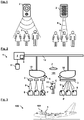
Fig. 1 schematically depicts a cabin speaker and a directional speaker according to an embodiment of the invention. -
Fig. 2 schematically depicts an audio system for a passenger cabin of an aircraft with the speakers ofFig. 1 . -
Fig. 3 schematically depicts an aircraft having a passenger cabin equipped with the audio system ofFig. 2 . - Although specific embodiments are illustrated and described herein, it will be appreciated by those of ordinary skill in the art that a variety of alternate and/or equivalent implementations may be substituted for the specific embodiments shown and described without departing from the scope of the present invention. Generally, this application is intended to cover any adaptations or variations of the specific embodiments discussed herein.
-
Figure 1 schematically depicts acabin speaker 2 and adirectional speaker 3 as they are employed in anaudio system 1 for apassenger cabin 101 according to an embodiment of the invention. Therespective audio system 1 is depicted inFig. 2 , whileFig. 3 shows aschematic aircraft 101 with apassenger cabin 101 being equipped with theaudio system 1 ofFig. 2 . - The
audio system 1 makes use of two basic types of audio speakers. On the one hand, thepresent system 1 employs one orseveral cabin speakers 2, which are regular audio loudspeakers as they are commonly utilized in passenger cabins for announcements, music, chimes, IFE transmissions and so on (left side inFig. 1 ). Thesecabin speakers 2 are used to transmit general audio information across a passenger zone, e.g. a seat row or cabin area, in which a plurality ofpassenger seats 5 are arranged. Thecabin speakers 2 thus fulfill the same purpose as the regular speakers used conventionally in passenger cabins. The common audio information can thus be perceived by all passengers P in the respective passenger zone or cabin section. - On the other hand, the
present system 1 relies ondirectional speakers 3 to provide individualized and/or personalized audio information to each passenger P individually (right side inFig. 1 ). To this end, thedirectional speakers 3 are configured as parametric speakers having an ultrasound matrix emanating modulated ultrasound signals, which get demodulated into a narrowaudible sound beam 6. Theaudible sound beam 6 can then be directed onto a recipient seat of the passenger seats 5. The sound reproduced by thedirectional speaker 3 is localized within thebeam 6 and is not heard elsewhere, so that therecipient seat 5, and thus the passenger P sitting thereon, can be exposed to individualized audio information carried by the sound beam without other passengers P being disturbed by or even able to listen to the audio information intended for the passenger P on therecipient seat 5. Parametric speakers can be configured such that only one of two people sitting only a few feet apart from each other is able to hear the directional audio waves emanating from the speaker. - The
cabin speakers 2 may be mounted, for example, in a passenger service unit (PSU), an overhead bin, a ceiling, a side wall of the cabin or any other elevated position, from which the sound waves can reach as many seats as possible without obstructions. In the particular example ofFig. 2 , onecabin speaker 2 may be installed in a ceiling of thepassenger cabin 101. Thepassenger cabin 101 in this case comprises a passenger zone with two exemplary seat rows, each having threepassenger seats 5. - Moreover, the
system 1 ofFig. 2 comprises severaldirectional speakers 3. In the left seat row, eachpassenger seat 5 has a correspondingdirectional speaker 3 mounted on or at anoverhead bin 10 of the seat row. Each of thesedirectional speakers 3 is configured to emanate thesound beam 6 on one predetermined recipient seat of the passenger seats 5. For example, thedirectional speaker 3 on the outer left inFig. 2 is configured to emanate asound beam 6 on the outermost passenger seat 5. - In the right row, only one
directional speaker 3 is provided. However, contrary to the left seat row, thisdirectional speaker 3 is configured to emanate asound beam 6 selectively on one recipient seat of thepassenger seats 5 of the right seat row. Thedirectional speaker 3 may be adapted to emanateseparate sound beams 6 on each of thepassenger seats 5 of the right row at the same time in order to provide each of the passengers P on these seats with individualized audio information. - The individualized audio information may contain various kinds of audio information and/or data. For example, personalized announcements may be communicated to each of the passengers P, which may take certain preferences of the passengers into account. In one particular example, each passenger may receive pre-recorded/stored announcements in a preferred language. Thus, general announcements do not have to be repeated to the
whole passenger cabin 101 in different languages but only need to be broadcasted once (personalized for each passenger). Such general announcements may comprise, for example, welcome and farewell messages/chimes, information about the flight and/or the destination and so on. - In another example, music, films and other in-flight entertainment audio information may be transmitted via the
directional speakers 3. In that case, each passenger P may listen to individual entertainment audio without having to use headphones. Nonetheless, the individualized audio stream does not interfere with that of the other passengers P, as modern parametric speakers allow a sound beam to be projected over a long distance to be heard only in a small well-defined area such that the sound pressure decreases substantially for a listener outside the designated beam range. This effect cannot be achieved with conventional loudspeakers, because sound at audible frequencies cannot be focused into such a narrow beam. In order to prevent any interruption of thesound beam 6 propagation, hedirection speakers 3 can be mounted overhead, e.g. at or near theoverhead bins 10, the PSUs and/or the ceiling. Another suitable installation position could be thepassenger seat 5 and/or a wall in the front of the recipient seat. - Moreover, other audio information, data and/or signals may be transmitted via such
directional speakers 3, e.g. warning signals, emergency and/or evacuation signals and so on. In one particular example, individualized guiding signals may be distributed to the passengers P in case of an emergency depending on a particular cabin zone or a particular seating position within the zone. For example, passengers P sitting next to an emergency exit may receive dedicated audio information. - In order to supply the
speakers Fig. 2 , the CMS comprises acontrol device 4 that is coupled to thecabin speaker 2 and thedirectional speakers 3 via a power/data backbone 12, which may be, for example, a bus or the like. Thecontrol device 4 is configured to provide the general audio information to thecabin speaker 2 and the individualized audio information to thedirectional speaker 3. To this end, thecontrol device 4 may comprise and/or be connected to anaudio database 11, which amongst others may store pre-recorded audio messages in several languages. It is to be understood however, that the power and/or audio/data connection between these devices may be accomplished via a contactless and/or wireless transmission technology. For example, the CMS may provide a wireless network able to connect the passengers with the CMS and/or with the crew, e.g. via respective passenger control devices (e.g. the PSU) and crew devices (e.g. a tablet or other portable computer). - The
control device 4, and thus the CMS, is able to distribute individual audio sources to each of thedirectional speakers 3, wherein the directionality of thespeakers 3 prevents that passengers P can listen to the audio of other passengers P. The transmission and attribution of personalized audio information may be steered by the crew of theaircraft 100, e.g. via acrew communication device 7 being connected to thecontrol device 4. Thecrew communication device 7 may be particularly configured to select the recipient seat among the plurality ofpassenger seats 5 for transmission of the individualized audio information. - The
crew communication device 7 may for example be a portable device, e.g. a portable computer like a tablet, smart phone or the like, which can be carried by the crew members C (cf.Fig. 2 ). In that case, thecrew communication device 7 may be connected to a wireless network provided by the CMS, over which it may access thecontrol device 4 and/or thespeakers crew communication device 7 may also be an operating terminal that is installed within or outside of thepassenger cabin 101, e.g. in a galley etc. - In addition to being able to select the individualized audio information to be transmitted over the
directional speaker 3, thecrew communication device 7 may further be configured to create individualized audio information. For example, thecrew communication device 7 may be configured to receive crew voice signals from a crew member C and to transmit the crew voice signals as individualized audio information via thedirectional speaker 3. To this end, thecrew communication device 7 may be provided with and/or connected with acrew microphone 13, over which the crew members C can address a passenger P sitting on a recipient seat of one of thedirectional speakers 3. - A real-
time voice translator 9 may be provided on thecrew communication device 7, the CMS (e.g. the control device 4) and/or thedirectional speaker 3 for transforming the crew voice signals from spoken language of the crew member C into a preferred language of the respective passenger P. Using such a real-time voice translator 9, also pre-recorded audio announcements and safety videos can be played via thedirectional speaker 3 in the language selected by the passenger P without interfering with the other passengers P in thepassenger cabin 101. - In order to facilitate two-sided communication between the passengers P and the crew members C, the
system 1 may further comprisepassenger microphones 8, 8' communicatively coupled with thecrew communication device 7 and configured to receive passenger voice signals from a passenger P on the recipient seat and to transmit the received passenger voice signals to thecrew communication device 7. In the example ofFig. 2 , each seat row comprises apassenger microphone 8 installed in theoverhead bin 10. In addition, the exemplary embodiment ofFig. 2 provides passenger microphones 8' in eachpassenger seat 5. In combination with thecrew microphone 13, these devices allow direct communication of the crew with a selected passenger and vice versa. - The crew member C can select via the
crew communication device 7 which passenger P should be reached, and the correspondingdirectional speaker 3 orbeam 6 will be activated. Automatic translation of this interaction can be done in real time by the real-time voice translator 9, e.g. a software application within the CMS or a third-party application installed on thecrew communication device 7. The passenger P may be able to control volume and other aspects of the audio connection via a corresponding passenger control device (not shown inFig. 2 ) installed in and/or close to theseat 5, e.g. in theoverhead bin 10 or a PSU. - In summary, the
present system 1 offers a personalized audio solution featuring a combination of parametric (or directional)speakers 3 and standard speakers as well asmicrophones system 1 may be integrated in acabin management system 1 or connected to such a system and may be steered bycrew communication devices 7 in order to offer individualized and/or personalized audio content to selected passengers P. As only the passenger P below the or pointed by therespective speaker 3 will hear the audio, noise disturbance within thecabin 101 can be kept low despite the fact that all of the audio is transferred through the space of the cabin. - The
audio system 1 supports wide personalization of the audio content provided to the passengers P. In addition, the control of the audio signal characteristics (as e.g. volume, location) can be highly customized for the overall cabin without interfering between passengers. - In principle, the
audio system 1 is not restricted to a communication between passengers P and crew members C. In addition, thesystem 1 may be used for face-to-face communication from passenger P to passenger P and/or from crew member C to crew member C. For example, a direct communication channel may be provided between two passengers P via theirrespective passenger microphones 8, 8' anddirectional speakers 3. In a similar vein,directional speakers 3 may be installed at other places within thecabin 101, e.g. in a galley, lavatory, crew seats and so on, so that also the crew members C may be able to communicate with each other viadirectional speakers 3 andcorresponding crew microphones 13. For example, a crew member C in the front of the aircraft may communicated with another crew member C at the back of the aircraft. - In the foregoing detailed description, various features are grouped together in one or more examples or examples with the purpose of streamlining the disclosure. It is to be understood that the above description is intended to be illustrative, and not restrictive. It is intended to cover all alternatives, modifications and equivalents. Many other examples will be apparent to one skilled in the art upon reviewing the above specification. The embodiments were chosen and described in order to best explain the principles of the invention and its practical applications, to thereby enable others skilled in the art to best utilize the invention and various embodiments with various modifications as are suited to the particular use contemplated.
-
- 1
- audio system
- 2
- cabin speaker
- 3
- directional speaker
- 4
- control device
- 5
- passenger seat
- 6
- sound beam
- 7
- crew communication device
- 8, 8'
- passenger microphone
- 9
- real-time voice translator
- 10
- overhead bin
- 11
- audio database
- 12
- power and data backbone
- 13
- crew microphone
- P
- passenger
- C
- crew member
- 100
- aircraft
- 101
- passenger cabin
Claims (12)
- Audio system (1) for a passenger cabin (101) of an aircraft (100), comprising:a cabin speaker (2) configured to transmit general audio information across a passenger zone, the passenger zone having a plurality of passenger seats (5) arranged therein;a directional speaker (3) configured to emanate a sound beam (6) onto a recipient seat of the plurality of passenger seats (5) such that the recipient seat is exposed to individualized audio information carried by the sound beam (6); anda control device (4) communicatively coupled with the cabin speaker (2) and the directional speaker (3) and configured to provide the general audio information to the cabin speaker (2) and the individualized audio information to the directional speaker (3).
- Audio system (1) according to claim 1, wherein the directional speaker (3) is configured as a parametric speaker to emanate modulated ultrasound signals, which get demodulated to form the sound beam (6).
- Audio system (1) according to claim 1 or 2, wherein the directional speaker (3) is configured to emanate the sound beam (6) selectively on one of several recipient seats of the passenger seats (5).
- Audio system (1) according to claim 1 or 2, wherein the directional speaker (3) is configured to emanate the sound beam (6) on one predetermined recipient seat of the passenger seats (5).
- Audio system (1) according to one of the claims 1 to 4, further comprising: a crew communication device (7) communicatively coupled to the control device (4) and configured to at least one of select and create the individualized audio information to be transmitted over the directional speaker (3).
- Audio system (1) according to claim 5, wherein the crew communication device (7) is configured to receive crew voice signals from a crew member (C) and to transmit the crew voice signals as individualized audio information via the directional speaker (3).
- Audio system (1) according to claim 5 or 6, further comprising:
a passenger microphone (8, 8') communicatively coupled with the crew communication device (7) and configured to receive passenger voice signals from a passenger (P) on the recipient seat and to transmit the received passenger voice signals to the crew communication device (7). - Audio system (1) according to claim 6 or 7, further comprising:
a real-time voice translator (9) configured to transform at least one of the crew voice signals and the passenger voice signals from a source language into a target language before transmission. - Audio system (1) according to one of the claims 1 to 8, wherein the audio system (1) comprises a plurality of directional speakers (3) to provide each of the passenger seats (5) within the passenger zone with individualized audio information separately from the other passenger seats (5).
- Audio system (1) according to claim 9, wherein the crew communication device (7) is configured to select the recipient seat among the plurality of passenger seats (5) for transmission of the individualized audio information.
- Aircraft (100) having a passenger cabin (101) equipped with an audio system (1) according to one of the claims 1 to 10.
- Aircraft (100) according to claim 11, wherein at least one of the directional speaker (3) and the passenger microphone (8, 8') is mounted to at least one of an overhead bin (10), a passenger service unit, a sidewall lining, a cabin ceiling, a cabin floor or a passenger seat within the passenger cabin.
Priority Applications (1)
| Application Number | Priority Date | Filing Date | Title |
|---|---|---|---|
| EP20153858.4A EP3854687B1 (en) | 2020-01-27 | 2020-01-27 | Audio system for a passenger cabin of an aircraft |
Applications Claiming Priority (1)
| Application Number | Priority Date | Filing Date | Title |
|---|---|---|---|
| EP20153858.4A EP3854687B1 (en) | 2020-01-27 | 2020-01-27 | Audio system for a passenger cabin of an aircraft |
Publications (2)
| Publication Number | Publication Date |
|---|---|
| EP3854687A1 true EP3854687A1 (en) | 2021-07-28 |
| EP3854687B1 EP3854687B1 (en) | 2022-12-07 |
Family
ID=69326413
Family Applications (1)
| Application Number | Title | Priority Date | Filing Date |
|---|---|---|---|
| EP20153858.4A Active EP3854687B1 (en) | 2020-01-27 | 2020-01-27 | Audio system for a passenger cabin of an aircraft |
Country Status (1)
| Country | Link |
|---|---|
| EP (1) | EP3854687B1 (en) |
Citations (6)
| Publication number | Priority date | Publication date | Assignee | Title |
|---|---|---|---|---|
| US4774514A (en) * | 1984-07-20 | 1988-09-27 | Messerschmitt-Boelkow Blohm Gesellschaft Mit Beschraenkter Haftung | Method and apparatus for carrying out passenger-related and flight attendant-related functions in an airplane |
| US20060262935A1 (en) * | 2005-05-17 | 2006-11-23 | Stuart Goose | System and method for creating personalized sound zones |
| US20140064524A1 (en) * | 2012-09-06 | 2014-03-06 | Brett Bleacher | Directional Sound Systems and Related Methods |
| US20160286316A1 (en) * | 2015-03-27 | 2016-09-29 | Thales Avionics, Inc. | Spatial Systems Including Eye Tracking Capabilities and Related Methods |
| US10106080B1 (en) * | 2017-10-31 | 2018-10-23 | Ford Global Technologies, Llc | Systems and methods for delivering discrete autonomous in-vehicle notifications |
| US20190141447A1 (en) * | 2014-09-29 | 2019-05-09 | B/E Aerospace, Inc. | Smart Passenger Service Unit |
-
2020
- 2020-01-27 EP EP20153858.4A patent/EP3854687B1/en active Active
Patent Citations (6)
| Publication number | Priority date | Publication date | Assignee | Title |
|---|---|---|---|---|
| US4774514A (en) * | 1984-07-20 | 1988-09-27 | Messerschmitt-Boelkow Blohm Gesellschaft Mit Beschraenkter Haftung | Method and apparatus for carrying out passenger-related and flight attendant-related functions in an airplane |
| US20060262935A1 (en) * | 2005-05-17 | 2006-11-23 | Stuart Goose | System and method for creating personalized sound zones |
| US20140064524A1 (en) * | 2012-09-06 | 2014-03-06 | Brett Bleacher | Directional Sound Systems and Related Methods |
| US20190141447A1 (en) * | 2014-09-29 | 2019-05-09 | B/E Aerospace, Inc. | Smart Passenger Service Unit |
| US20160286316A1 (en) * | 2015-03-27 | 2016-09-29 | Thales Avionics, Inc. | Spatial Systems Including Eye Tracking Capabilities and Related Methods |
| US10106080B1 (en) * | 2017-10-31 | 2018-10-23 | Ford Global Technologies, Llc | Systems and methods for delivering discrete autonomous in-vehicle notifications |
Also Published As
| Publication number | Publication date |
|---|---|
| EP3854687B1 (en) | 2022-12-07 |
Similar Documents
| Publication | Publication Date | Title |
|---|---|---|
| KR102077486B1 (en) | Loud-speaker system | |
| US10479504B2 (en) | Loudspeaker system | |
| JP4334478B2 (en) | Broadband wireless distribution system for the inside of transportation | |
| US11070911B2 (en) | Personal sound zone system | |
| US8340314B2 (en) | Audio system for a passenger aircraft and method for controlling same | |
| US7415116B1 (en) | Method and system for improving communication in a vehicle | |
| US8199940B2 (en) | Audio reproduction system and speaker apparatus | |
| US11503401B2 (en) | Dual-zone automotive multimedia system | |
| US20140013364A1 (en) | Wireless Audio Transmission Of Information Between Seats In A Mobile Platform Using Magnetic Resonance Energy | |
| CN113658588A (en) | Multi-sound-zone voice recognition method, device and storage medium | |
| WO2012068262A1 (en) | Directional control of sound in a vehicle | |
| US9611040B2 (en) | Seat device comprising improved audio device for use in an aircraft or spacecraft | |
| US11520996B2 (en) | Directed sound transmission systems and methods | |
| EP4247003A1 (en) | Multi-channel in-vehicle sound system | |
| KR20210110601A (en) | Hybrid in-vehicle speaker and headphone-based acoustic augmented reality system | |
| WO2021010397A1 (en) | Voice control device and voice control system | |
| EP3854687B1 (en) | Audio system for a passenger cabin of an aircraft | |
| US9487295B2 (en) | Vehicle media distribution system using optical transmitters | |
| US20210377637A1 (en) | Near to the ear subwoofer | |
| US9525953B2 (en) | Method and apparatus for transit system annunciators | |
| JP2006246297A (en) | Information communication system and communication method using the same | |
| JP2005318049A (en) | Communication apparatus and communication system | |
| JP2009177265A (en) | Voice guidance service system | |
| RU61069U1 (en) | WIRELESS RADIO TRANSMISSION SYSTEM FOR VEHICLES | |
| JP2004222103A (en) | Broadcasting device |
Legal Events
| Date | Code | Title | Description |
|---|---|---|---|
| PUAI | Public reference made under article 153(3) epc to a published international application that has entered the european phase |
Free format text: ORIGINAL CODE: 0009012 |
|
| STAA | Information on the status of an ep patent application or granted ep patent |
Free format text: STATUS: THE APPLICATION HAS BEEN PUBLISHED |
|
| AK | Designated contracting states |
Kind code of ref document: A1 Designated state(s): AL AT BE BG CH CY CZ DE DK EE ES FI FR GB GR HR HU IE IS IT LI LT LU LV MC MK MT NL NO PL PT RO RS SE SI SK SM TR |
|
| STAA | Information on the status of an ep patent application or granted ep patent |
Free format text: STATUS: REQUEST FOR EXAMINATION WAS MADE |
|
| 17P | Request for examination filed |
Effective date: 20211126 |
|
| RBV | Designated contracting states (corrected) |
Designated state(s): AL AT BE BG CH CY CZ DE DK EE ES FI FR GB GR HR HU IE IS IT LI LT LU LV MC MK MT NL NO PL PT RO RS SE SI SK SM TR |
|
| GRAP | Despatch of communication of intention to grant a patent |
Free format text: ORIGINAL CODE: EPIDOSNIGR1 |
|
| STAA | Information on the status of an ep patent application or granted ep patent |
Free format text: STATUS: GRANT OF PATENT IS INTENDED |
|
| INTG | Intention to grant announced |
Effective date: 20220920 |
|
| GRAS | Grant fee paid |
Free format text: ORIGINAL CODE: EPIDOSNIGR3 |
|
| GRAA | (expected) grant |
Free format text: ORIGINAL CODE: 0009210 |
|
| STAA | Information on the status of an ep patent application or granted ep patent |
Free format text: STATUS: THE PATENT HAS BEEN GRANTED |
|
| AK | Designated contracting states |
Kind code of ref document: B1 Designated state(s): AL AT BE BG CH CY CZ DE DK EE ES FI FR GB GR HR HU IE IS IT LI LT LU LV MC MK MT NL NO PL PT RO RS SE SI SK SM TR |
|
| REG | Reference to a national code |
Ref country code: GB Ref legal event code: FG4D |
|
| REG | Reference to a national code |
Ref country code: CH Ref legal event code: EP Ref country code: AT Ref legal event code: REF Ref document number: 1536171 Country of ref document: AT Kind code of ref document: T Effective date: 20221215 |
|
| REG | Reference to a national code |
Ref country code: DE Ref legal event code: R096 Ref document number: 602020006693 Country of ref document: DE |
|
| REG | Reference to a national code |
Ref country code: IE Ref legal event code: FG4D |
|
| REG | Reference to a national code |
Ref country code: LT Ref legal event code: MG9D |
|
| REG | Reference to a national code |
Ref country code: NL Ref legal event code: MP Effective date: 20221207 |
|
| PG25 | Lapsed in a contracting state [announced via postgrant information from national office to epo] |
Ref country code: SE Free format text: LAPSE BECAUSE OF FAILURE TO SUBMIT A TRANSLATION OF THE DESCRIPTION OR TO PAY THE FEE WITHIN THE PRESCRIBED TIME-LIMIT Effective date: 20221207 Ref country code: NO Free format text: LAPSE BECAUSE OF FAILURE TO SUBMIT A TRANSLATION OF THE DESCRIPTION OR TO PAY THE FEE WITHIN THE PRESCRIBED TIME-LIMIT Effective date: 20230307 Ref country code: LT Free format text: LAPSE BECAUSE OF FAILURE TO SUBMIT A TRANSLATION OF THE DESCRIPTION OR TO PAY THE FEE WITHIN THE PRESCRIBED TIME-LIMIT Effective date: 20221207 Ref country code: FI Free format text: LAPSE BECAUSE OF FAILURE TO SUBMIT A TRANSLATION OF THE DESCRIPTION OR TO PAY THE FEE WITHIN THE PRESCRIBED TIME-LIMIT Effective date: 20221207 Ref country code: ES Free format text: LAPSE BECAUSE OF FAILURE TO SUBMIT A TRANSLATION OF THE DESCRIPTION OR TO PAY THE FEE WITHIN THE PRESCRIBED TIME-LIMIT Effective date: 20221207 |
|
| REG | Reference to a national code |
Ref country code: AT Ref legal event code: MK05 Ref document number: 1536171 Country of ref document: AT Kind code of ref document: T Effective date: 20221207 |
|
| PG25 | Lapsed in a contracting state [announced via postgrant information from national office to epo] |
Ref country code: RS Free format text: LAPSE BECAUSE OF FAILURE TO SUBMIT A TRANSLATION OF THE DESCRIPTION OR TO PAY THE FEE WITHIN THE PRESCRIBED TIME-LIMIT Effective date: 20221207 Ref country code: PL Free format text: LAPSE BECAUSE OF FAILURE TO SUBMIT A TRANSLATION OF THE DESCRIPTION OR TO PAY THE FEE WITHIN THE PRESCRIBED TIME-LIMIT Effective date: 20221207 Ref country code: LV Free format text: LAPSE BECAUSE OF FAILURE TO SUBMIT A TRANSLATION OF THE DESCRIPTION OR TO PAY THE FEE WITHIN THE PRESCRIBED TIME-LIMIT Effective date: 20221207 Ref country code: HR Free format text: LAPSE BECAUSE OF FAILURE TO SUBMIT A TRANSLATION OF THE DESCRIPTION OR TO PAY THE FEE WITHIN THE PRESCRIBED TIME-LIMIT Effective date: 20221207 Ref country code: GR Free format text: LAPSE BECAUSE OF FAILURE TO SUBMIT A TRANSLATION OF THE DESCRIPTION OR TO PAY THE FEE WITHIN THE PRESCRIBED TIME-LIMIT Effective date: 20230308 |
|
| PG25 | Lapsed in a contracting state [announced via postgrant information from national office to epo] |
Ref country code: NL Free format text: LAPSE BECAUSE OF FAILURE TO SUBMIT A TRANSLATION OF THE DESCRIPTION OR TO PAY THE FEE WITHIN THE PRESCRIBED TIME-LIMIT Effective date: 20221207 |
|
| PG25 | Lapsed in a contracting state [announced via postgrant information from national office to epo] |
Ref country code: SM Free format text: LAPSE BECAUSE OF FAILURE TO SUBMIT A TRANSLATION OF THE DESCRIPTION OR TO PAY THE FEE WITHIN THE PRESCRIBED TIME-LIMIT Effective date: 20221207 Ref country code: RO Free format text: LAPSE BECAUSE OF FAILURE TO SUBMIT A TRANSLATION OF THE DESCRIPTION OR TO PAY THE FEE WITHIN THE PRESCRIBED TIME-LIMIT Effective date: 20221207 Ref country code: PT Free format text: LAPSE BECAUSE OF FAILURE TO SUBMIT A TRANSLATION OF THE DESCRIPTION OR TO PAY THE FEE WITHIN THE PRESCRIBED TIME-LIMIT Effective date: 20230410 Ref country code: EE Free format text: LAPSE BECAUSE OF FAILURE TO SUBMIT A TRANSLATION OF THE DESCRIPTION OR TO PAY THE FEE WITHIN THE PRESCRIBED TIME-LIMIT Effective date: 20221207 Ref country code: CZ Free format text: LAPSE BECAUSE OF FAILURE TO SUBMIT A TRANSLATION OF THE DESCRIPTION OR TO PAY THE FEE WITHIN THE PRESCRIBED TIME-LIMIT Effective date: 20221207 Ref country code: AT Free format text: LAPSE BECAUSE OF FAILURE TO SUBMIT A TRANSLATION OF THE DESCRIPTION OR TO PAY THE FEE WITHIN THE PRESCRIBED TIME-LIMIT Effective date: 20221207 |
|
| PG25 | Lapsed in a contracting state [announced via postgrant information from national office to epo] |
Ref country code: SK Free format text: LAPSE BECAUSE OF FAILURE TO SUBMIT A TRANSLATION OF THE DESCRIPTION OR TO PAY THE FEE WITHIN THE PRESCRIBED TIME-LIMIT Effective date: 20221207 Ref country code: IS Free format text: LAPSE BECAUSE OF FAILURE TO SUBMIT A TRANSLATION OF THE DESCRIPTION OR TO PAY THE FEE WITHIN THE PRESCRIBED TIME-LIMIT Effective date: 20230407 Ref country code: AL Free format text: LAPSE BECAUSE OF FAILURE TO SUBMIT A TRANSLATION OF THE DESCRIPTION OR TO PAY THE FEE WITHIN THE PRESCRIBED TIME-LIMIT Effective date: 20221207 |
|
| REG | Reference to a national code |
Ref country code: CH Ref legal event code: PL |
|
| REG | Reference to a national code |
Ref country code: DE Ref legal event code: R097 Ref document number: 602020006693 Country of ref document: DE |
|
| PG25 | Lapsed in a contracting state [announced via postgrant information from national office to epo] |
Ref country code: MC Free format text: LAPSE BECAUSE OF FAILURE TO SUBMIT A TRANSLATION OF THE DESCRIPTION OR TO PAY THE FEE WITHIN THE PRESCRIBED TIME-LIMIT Effective date: 20221207 Ref country code: LU Free format text: LAPSE BECAUSE OF NON-PAYMENT OF DUE FEES Effective date: 20230127 |
|
| REG | Reference to a national code |
Ref country code: BE Ref legal event code: MM Effective date: 20230131 |
|
| PLBE | No opposition filed within time limit |
Free format text: ORIGINAL CODE: 0009261 |
|
| STAA | Information on the status of an ep patent application or granted ep patent |
Free format text: STATUS: NO OPPOSITION FILED WITHIN TIME LIMIT |
|
| PG25 | Lapsed in a contracting state [announced via postgrant information from national office to epo] |
Ref country code: LI Free format text: LAPSE BECAUSE OF NON-PAYMENT OF DUE FEES Effective date: 20230131 Ref country code: DK Free format text: LAPSE BECAUSE OF FAILURE TO SUBMIT A TRANSLATION OF THE DESCRIPTION OR TO PAY THE FEE WITHIN THE PRESCRIBED TIME-LIMIT Effective date: 20221207 Ref country code: CH Free format text: LAPSE BECAUSE OF NON-PAYMENT OF DUE FEES Effective date: 20230131 |
|
| 26N | No opposition filed |
Effective date: 20230908 |
|
| PG25 | Lapsed in a contracting state [announced via postgrant information from national office to epo] |
Ref country code: SI Free format text: LAPSE BECAUSE OF FAILURE TO SUBMIT A TRANSLATION OF THE DESCRIPTION OR TO PAY THE FEE WITHIN THE PRESCRIBED TIME-LIMIT Effective date: 20221207 Ref country code: BE Free format text: LAPSE BECAUSE OF NON-PAYMENT OF DUE FEES Effective date: 20230131 |
|
| PG25 | Lapsed in a contracting state [announced via postgrant information from national office to epo] |
Ref country code: IE Free format text: LAPSE BECAUSE OF NON-PAYMENT OF DUE FEES Effective date: 20230127 |
|
| PG25 | Lapsed in a contracting state [announced via postgrant information from national office to epo] |
Ref country code: IT Free format text: LAPSE BECAUSE OF FAILURE TO SUBMIT A TRANSLATION OF THE DESCRIPTION OR TO PAY THE FEE WITHIN THE PRESCRIBED TIME-LIMIT Effective date: 20221207 |
|
| GBPC | Gb: european patent ceased through non-payment of renewal fee |
Effective date: 20240127 |
|
| PG25 | Lapsed in a contracting state [announced via postgrant information from national office to epo] |
Ref country code: GB Free format text: LAPSE BECAUSE OF NON-PAYMENT OF DUE FEES Effective date: 20240127 |
|
| PG25 | Lapsed in a contracting state [announced via postgrant information from national office to epo] |
Ref country code: GB Free format text: LAPSE BECAUSE OF NON-PAYMENT OF DUE FEES Effective date: 20240127 |
|
| PG25 | Lapsed in a contracting state [announced via postgrant information from national office to epo] |
Ref country code: BG Free format text: LAPSE BECAUSE OF FAILURE TO SUBMIT A TRANSLATION OF THE DESCRIPTION OR TO PAY THE FEE WITHIN THE PRESCRIBED TIME-LIMIT Effective date: 20221207 |
|
| PG25 | Lapsed in a contracting state [announced via postgrant information from national office to epo] |
Ref country code: BG Free format text: LAPSE BECAUSE OF FAILURE TO SUBMIT A TRANSLATION OF THE DESCRIPTION OR TO PAY THE FEE WITHIN THE PRESCRIBED TIME-LIMIT Effective date: 20221207 |
|
| PG25 | Lapsed in a contracting state [announced via postgrant information from national office to epo] |
Ref country code: CY Free format text: LAPSE BECAUSE OF FAILURE TO SUBMIT A TRANSLATION OF THE DESCRIPTION OR TO PAY THE FEE WITHIN THE PRESCRIBED TIME-LIMIT; INVALID AB INITIO Effective date: 20200127 |
|
| PG25 | Lapsed in a contracting state [announced via postgrant information from national office to epo] |
Ref country code: HU Free format text: LAPSE BECAUSE OF FAILURE TO SUBMIT A TRANSLATION OF THE DESCRIPTION OR TO PAY THE FEE WITHIN THE PRESCRIBED TIME-LIMIT; INVALID AB INITIO Effective date: 20200127 |
|
| PG25 | Lapsed in a contracting state [announced via postgrant information from national office to epo] |
Ref country code: TR Free format text: LAPSE BECAUSE OF FAILURE TO SUBMIT A TRANSLATION OF THE DESCRIPTION OR TO PAY THE FEE WITHIN THE PRESCRIBED TIME-LIMIT Effective date: 20221207 |
|
| PGFP | Annual fee paid to national office [announced via postgrant information from national office to epo] |
Ref country code: DE Payment date: 20260121 Year of fee payment: 7 |
|
| PGFP | Annual fee paid to national office [announced via postgrant information from national office to epo] |
Ref country code: FR Payment date: 20260123 Year of fee payment: 7 |