EP3854422A1 - Biomaterial - Google Patents
Biomaterial Download PDFInfo
- Publication number
- EP3854422A1 EP3854422A1 EP19862426.4A EP19862426A EP3854422A1 EP 3854422 A1 EP3854422 A1 EP 3854422A1 EP 19862426 A EP19862426 A EP 19862426A EP 3854422 A1 EP3854422 A1 EP 3854422A1
- Authority
- EP
- European Patent Office
- Prior art keywords
- neutral
- lipid
- mass
- acyl
- biomaterial
- Prior art date
- Legal status (The legal status is an assumption and is not a legal conclusion. Google has not performed a legal analysis and makes no representation as to the accuracy of the status listed.)
- Granted
Links
Images

Classifications
-
- A—HUMAN NECESSITIES
- A61—MEDICAL OR VETERINARY SCIENCE; HYGIENE
- A61L—METHODS OR APPARATUS FOR STERILISING MATERIALS OR OBJECTS IN GENERAL; DISINFECTION, STERILISATION OR DEODORISATION OF AIR; CHEMICAL ASPECTS OF BANDAGES, DRESSINGS, ABSORBENT PADS OR SURGICAL ARTICLES; MATERIALS FOR BANDAGES, DRESSINGS, ABSORBENT PADS OR SURGICAL ARTICLES
- A61L26/00—Chemical aspects of, or use of materials for, wound dressings or bandages in liquid, gel or powder form
- A61L26/0009—Chemical aspects of, or use of materials for, wound dressings or bandages in liquid, gel or powder form containing macromolecular materials
- A61L26/0019—Chemical aspects of, or use of materials for, wound dressings or bandages in liquid, gel or powder form containing macromolecular materials obtained otherwise than by reactions only involving carbon-to-carbon unsaturated bonds
-
- A—HUMAN NECESSITIES
- A61—MEDICAL OR VETERINARY SCIENCE; HYGIENE
- A61K—PREPARATIONS FOR MEDICAL, DENTAL OR TOILETRY PURPOSES
- A61K47/00—Medicinal preparations characterised by the non-active ingredients used, e.g. carriers or inert additives; Targeting or modifying agents chemically bound to the active ingredient
- A61K47/06—Organic compounds, e.g. natural or synthetic hydrocarbons, polyolefins, mineral oil, petrolatum or ozokerite
- A61K47/08—Organic compounds, e.g. natural or synthetic hydrocarbons, polyolefins, mineral oil, petrolatum or ozokerite containing oxygen, e.g. ethers, acetals, ketones, quinones, aldehydes, peroxides
- A61K47/10—Alcohols; Phenols; Salts thereof, e.g. glycerol; Polyethylene glycols [PEG]; Poloxamers; PEG/POE alkyl ethers
-
- A—HUMAN NECESSITIES
- A61—MEDICAL OR VETERINARY SCIENCE; HYGIENE
- A61K—PREPARATIONS FOR MEDICAL, DENTAL OR TOILETRY PURPOSES
- A61K47/00—Medicinal preparations characterised by the non-active ingredients used, e.g. carriers or inert additives; Targeting or modifying agents chemically bound to the active ingredient
- A61K47/06—Organic compounds, e.g. natural or synthetic hydrocarbons, polyolefins, mineral oil, petrolatum or ozokerite
- A61K47/08—Organic compounds, e.g. natural or synthetic hydrocarbons, polyolefins, mineral oil, petrolatum or ozokerite containing oxygen, e.g. ethers, acetals, ketones, quinones, aldehydes, peroxides
- A61K47/14—Esters of carboxylic acids, e.g. fatty acid monoglycerides, medium-chain triglycerides, parabens or PEG fatty acid esters
-
- A—HUMAN NECESSITIES
- A61—MEDICAL OR VETERINARY SCIENCE; HYGIENE
- A61K—PREPARATIONS FOR MEDICAL, DENTAL OR TOILETRY PURPOSES
- A61K47/00—Medicinal preparations characterised by the non-active ingredients used, e.g. carriers or inert additives; Targeting or modifying agents chemically bound to the active ingredient
- A61K47/06—Organic compounds, e.g. natural or synthetic hydrocarbons, polyolefins, mineral oil, petrolatum or ozokerite
- A61K47/16—Organic compounds, e.g. natural or synthetic hydrocarbons, polyolefins, mineral oil, petrolatum or ozokerite containing nitrogen, e.g. nitro-, nitroso-, azo-compounds, nitriles, cyanates
- A61K47/18—Amines; Amides; Ureas; Quaternary ammonium compounds; Amino acids; Oligopeptides having up to five amino acids
- A61K47/186—Quaternary ammonium compounds, e.g. benzalkonium chloride or cetrimide
-
- A—HUMAN NECESSITIES
- A61—MEDICAL OR VETERINARY SCIENCE; HYGIENE
- A61K—PREPARATIONS FOR MEDICAL, DENTAL OR TOILETRY PURPOSES
- A61K47/00—Medicinal preparations characterised by the non-active ingredients used, e.g. carriers or inert additives; Targeting or modifying agents chemically bound to the active ingredient
- A61K47/06—Organic compounds, e.g. natural or synthetic hydrocarbons, polyolefins, mineral oil, petrolatum or ozokerite
- A61K47/24—Organic compounds, e.g. natural or synthetic hydrocarbons, polyolefins, mineral oil, petrolatum or ozokerite containing atoms other than carbon, hydrogen, oxygen, halogen, nitrogen or sulfur, e.g. cyclomethicone or phospholipids
-
- A—HUMAN NECESSITIES
- A61—MEDICAL OR VETERINARY SCIENCE; HYGIENE
- A61K—PREPARATIONS FOR MEDICAL, DENTAL OR TOILETRY PURPOSES
- A61K47/00—Medicinal preparations characterised by the non-active ingredients used, e.g. carriers or inert additives; Targeting or modifying agents chemically bound to the active ingredient
- A61K47/30—Macromolecular organic or inorganic compounds, e.g. inorganic polyphosphates
- A61K47/32—Macromolecular compounds obtained by reactions only involving carbon-to-carbon unsaturated bonds, e.g. carbomers, poly(meth)acrylates, or polyvinyl pyrrolidone
-
- A—HUMAN NECESSITIES
- A61—MEDICAL OR VETERINARY SCIENCE; HYGIENE
- A61K—PREPARATIONS FOR MEDICAL, DENTAL OR TOILETRY PURPOSES
- A61K9/00—Medicinal preparations characterised by special physical form
- A61K9/0012—Galenical forms characterised by the site of application
- A61K9/0053—Mouth and digestive tract, i.e. intraoral and peroral administration
- A61K9/006—Oral mucosa, e.g. mucoadhesive forms, sublingual droplets; Buccal patches or films; Buccal sprays
-
- A—HUMAN NECESSITIES
- A61—MEDICAL OR VETERINARY SCIENCE; HYGIENE
- A61K—PREPARATIONS FOR MEDICAL, DENTAL OR TOILETRY PURPOSES
- A61K9/00—Medicinal preparations characterised by special physical form
- A61K9/70—Web, sheet or filament bases ; Films; Fibres of the matrix type containing drug
- A61K9/7007—Drug-containing films, membranes or sheets
-
- A—HUMAN NECESSITIES
- A61—MEDICAL OR VETERINARY SCIENCE; HYGIENE
- A61L—METHODS OR APPARATUS FOR STERILISING MATERIALS OR OBJECTS IN GENERAL; DISINFECTION, STERILISATION OR DEODORISATION OF AIR; CHEMICAL ASPECTS OF BANDAGES, DRESSINGS, ABSORBENT PADS OR SURGICAL ARTICLES; MATERIALS FOR BANDAGES, DRESSINGS, ABSORBENT PADS OR SURGICAL ARTICLES
- A61L26/00—Chemical aspects of, or use of materials for, wound dressings or bandages in liquid, gel or powder form
- A61L26/0009—Chemical aspects of, or use of materials for, wound dressings or bandages in liquid, gel or powder form containing macromolecular materials
- A61L26/0014—Chemical aspects of, or use of materials for, wound dressings or bandages in liquid, gel or powder form containing macromolecular materials obtained by reactions only involving carbon-to-carbon unsaturated bonds
-
- A—HUMAN NECESSITIES
- A61—MEDICAL OR VETERINARY SCIENCE; HYGIENE
- A61L—METHODS OR APPARATUS FOR STERILISING MATERIALS OR OBJECTS IN GENERAL; DISINFECTION, STERILISATION OR DEODORISATION OF AIR; CHEMICAL ASPECTS OF BANDAGES, DRESSINGS, ABSORBENT PADS OR SURGICAL ARTICLES; MATERIALS FOR BANDAGES, DRESSINGS, ABSORBENT PADS OR SURGICAL ARTICLES
- A61L26/00—Chemical aspects of, or use of materials for, wound dressings or bandages in liquid, gel or powder form
- A61L26/0061—Use of materials characterised by their function or physical properties
- A61L26/0066—Medicaments; Biocides
-
- A—HUMAN NECESSITIES
- A61—MEDICAL OR VETERINARY SCIENCE; HYGIENE
- A61P—SPECIFIC THERAPEUTIC ACTIVITY OF CHEMICAL COMPOUNDS OR MEDICINAL PREPARATIONS
- A61P25/00—Drugs for disorders of the nervous system
- A61P25/04—Centrally acting analgesics, e.g. opioids
-
- A—HUMAN NECESSITIES
- A61—MEDICAL OR VETERINARY SCIENCE; HYGIENE
- A61L—METHODS OR APPARATUS FOR STERILISING MATERIALS OR OBJECTS IN GENERAL; DISINFECTION, STERILISATION OR DEODORISATION OF AIR; CHEMICAL ASPECTS OF BANDAGES, DRESSINGS, ABSORBENT PADS OR SURGICAL ARTICLES; MATERIALS FOR BANDAGES, DRESSINGS, ABSORBENT PADS OR SURGICAL ARTICLES
- A61L2300/00—Biologically active materials used in bandages, wound dressings, absorbent pads or medical devices
- A61L2300/20—Biologically active materials used in bandages, wound dressings, absorbent pads or medical devices containing or releasing organic materials
- A61L2300/204—Biologically active materials used in bandages, wound dressings, absorbent pads or medical devices containing or releasing organic materials with nitrogen-containing functional groups, e.g. aminoxides, nitriles, guanidines
- A61L2300/208—Quaternary ammonium compounds
-
- A—HUMAN NECESSITIES
- A61—MEDICAL OR VETERINARY SCIENCE; HYGIENE
- A61L—METHODS OR APPARATUS FOR STERILISING MATERIALS OR OBJECTS IN GENERAL; DISINFECTION, STERILISATION OR DEODORISATION OF AIR; CHEMICAL ASPECTS OF BANDAGES, DRESSINGS, ABSORBENT PADS OR SURGICAL ARTICLES; MATERIALS FOR BANDAGES, DRESSINGS, ABSORBENT PADS OR SURGICAL ARTICLES
- A61L2300/00—Biologically active materials used in bandages, wound dressings, absorbent pads or medical devices
- A61L2300/20—Biologically active materials used in bandages, wound dressings, absorbent pads or medical devices containing or releasing organic materials
- A61L2300/22—Lipids, fatty acids, e.g. prostaglandins, oils, fats, waxes
Definitions
- the present invention relates to a biomaterial.
- cancer treatment affects the mucous membrane of the mouth and, stomatitis occurs easily.
- anti-cancer drug treatment in radiation therapy for head and neck cancer (cancer in the range from the head to the neck) in a case where a drug that easily causes stomatitis is administered, when radiation is directly applied to the mucous membrane of the mouth, stomatitis is inevitable.
- the pain of stomatitis is so strong that it is difficult to eat a meal by mouth.
- a patch for example, Aphthaseal (R) 25 ⁇ g, manufactured by Taisho Pharmaceutical Co., Ltd., active ingredient: triamcinolone acetonide
- an ointment for example, Dexaltin oral ointment for oral cavity, manufactured by Nippon Kayaku Co., Ltd., active ingredient: dexamethasone
- a spray agent for example, Salcoat (R) capsule for oral spray 50 ⁇ g, TEIJIN PHARMA LIMITED, active ingredient: beclomethasone propionate ester
- the patch attached to the affected part may be peeled off, or the ointment or the spray agent applied to the affected part may be lost, and thus the pain of stomatitis cannot be suppressed.
- JP2008-169219A discloses a cosmetological composition for use for the aged and/or stressed skin, and in such a cosmetological composition in which water and at least one substance forming a lamellar structure together with the water are present in the above composition, the followings are further contained;
- JP2008-509120A discloses a composition containing
- An object of the present invention is to provide a biomaterial that is excellent in scratch resistance and retention in a case of being brought into contact with water.
- the present invention is the following [1] to [16].
- the range indicated by using “to” means a range including both ends before and after “to”.
- a range indicated by “A to B” includes A and B.
- the solid content is intended to be a component contained in the composition excluding the dispersion medium component, and a component is calculated as a solid content even in a case where the property thereof is liquid.
- a biomaterial according to the embodiment of the present invention includes a neutral acyl lipid, at least one selected from the group consisting of a phospholipid and a quaternary ammonium salt, and a carboxyvinyl polymer.
- the neutral acyl lipid means an electrically neutral acyl lipid. That is, the neutral acyl lipid does not include a cation moiety and an anion moiety.
- An acyl lipid means a lipid containing an acyl group.
- Examples of the neutral acyl lipid include a neutral monoacyl lipid, a neutral diacyl lipid, and a neutral triacyl lipid.
- the neutral acyl lipid contains at least one selected from the group consisting of a neutral monoacyl lipid and a neutral diacyl lipid, and a content of the at least one selected from the group consisting of a neutral monoacyl lipid and a neutral diacyl lipid is 80% by mass to 100% by mass, preferably 90% by mass to 100% by mass, and more preferably 100% by mass, with respect to the total mass of the neutral acyl lipid.
- the neutral acyl lipid preferably includes both a neutral monoacyl lipid and a neutral diacyl lipid.
- a content of the neutral monoacyl lipid is not particularly limited; however, it is preferably 0% by mass to 100% by mass, more preferably 30% by mass to 70% by mass, with respect to the total mass of the neutral acyl lipid.
- a content of the neutral diacyl lipid is not particularly limited; however, it is preferably 0% by mass to 100% by mass, more preferably 30% by mass to 70% by mass, with respect to the total mass of the neutral acyl lipid.
- a content of the neutral triacyl lipid is not particularly limited; however it is preferably 0% by mass to 20% by mass with respect to the total mass of the neutral acyl lipid, and it is more preferable that the neutral triacyl lipid is not contained (0% by mass).
- a content of the neutral monoacyl lipid is 30% by mass to 70% by mass
- a content of the neutral diacyl lipid is 30% by mass to 70% by mass, with respect to the total mass of the neutral acyl lipid, and the neutral triacyl lipid is not contained.
- the number of carbon atoms of the acyl group of the neutral acyl lipid is not particularly limited; however, the acyl group preferably has 6 to 32 carbon atoms and more preferably 16 to 22 carbon atoms.
- the hydrocarbon group as the acyl group is preferably a saturated or unsaturated chain-type hydrocarbon group having 5 to 31 carbon atoms, and more preferably a saturated or unsaturated chain-type hydrocarbon group having 15 to 21 carbon atoms.
- acyl groups may be the same or different from each other.
- neutral acyl lipid examples include glycerol, diglycerol, sugar (for example, inositol), and a lipid obtained by forming an ester bond between a polyol such as succinic acid and a fatty acid.
- a polyol such as succinic acid and a fatty acid.
- an acyl glycerol is preferable and a glyceryl oleate is more preferable.
- acyl glycerol examples include monoacyl glycerol, diacyl glycerol, and triacyl glycerol.
- examples of the glyceryl oleate include glyceryl monooleate, glyceryl dioleate, and glyceryl trioleate.
- the monoacyl glycerol and the glyceryl monooleate correspond to one aspect of the neutral monoacyl lipid described above
- the diacyl glycerol and the glyceryl dioleate correspond to one aspect of the neutral diacyl lipid described above
- the triacyl glycerol and the glyceryl trioleate correspond to one aspect of the neutral triacyl lipid.
- the content proportions of the neutral monoacyl lipid, the neutral diacyl lipid, and the neutral triacyl lipid in the neutral acyl lipid are obtained from measurement with a high performance liquid chromatography (HPLC) method.
- a content of the neutral acyl lipid in the biomaterial according to the embodiment of the present invention is not particularly limited; however, it is preferably 35% by mass to 85% by mass, more preferably 35% by mass to 75% by mass, and still more preferably 55% by mass to 75% by mass, with respect to the total mass of the solid content of the biomaterial according to the embodiment of the present invention.
- the phospholipid is not particularly limited as long as it has a phosphate ester structure in the molecular structure thereof; however, a glycerophospholipid having glycerin as a skeleton and a sphingophospholipid having sphingosine as a skeleton are typical.
- an acyl group derived from a fatty acid is contained in the molecule.
- the number of carbon atoms of the acyl group of the phospholipid is not particularly limited; however, the acyl group preferably has 12 to 22 carbon atoms and more preferably 16 to 18 carbon atoms.
- the hydrocarbon group as the acyl group is preferably a saturated or unsaturated chain-type hydrocarbon group having 11 to 21 carbon atoms, and more preferably a saturated or unsaturated chain-type hydrocarbon group having 15 to 17 carbon atoms.
- acyl groups may be the same or different from each other.
- the phospholipid include phosphatidylcholine.
- the phosphatidylcholine examples include a PO phosphatidylcholine (a phosphatidylcholine having palmitic acid at the first position ( ⁇ position), oleic acid at the second position ( ⁇ position), and choline at the third position ( ⁇ position)), a DL phosphatidylcholine (a phosphatidylcholine having linoleic acid at the first position (a-position), linoleic acid at the second position ( ⁇ -position), and choline at the third position ( ⁇ -position)), and a dipalmitoylphosphatidylcholine.
- a PO phosphatidylcholine a phosphatidylcholine having palmitic acid at the first position ( ⁇ position), oleic acid at the second position ( ⁇ position), and choline at the third position ( ⁇ position)
- a DL phosphatidylcholine a phosphatidylcholine having linoleic acid at the first position
- a content of the phospholipid in the biomaterial according to the embodiment of the present invention is not particularly limited; however, the content thereof in total together with a quaternary ammonium salt described later is preferably 15% by mass to 65% by mass, more preferably 20% by mass to 60% by mass, and still more preferably 25% by mass to 45% by mass, with respect to the total mass of the solid content of the biomaterial according to the embodiment of the present invention.
- the quaternary ammonium salt is an ionic compound consisting of a quaternary ammonium cation and an anion.
- the quaternary ammonium cation is preferably a polyatomic ion having a positive charge represented by the molecular formula NR 4 + .
- R's each independently represent an alkyl group or an aryl group, which may have a substituent, and a plurality of R's may be the same or different from each other.
- the quaternary ammonium cation of the quaternary ammonium salt is preferably a quaternary ammonium cation represented by the following formula.
- R 1 , R 2 , R 3 , and R 4 are each independently an alkyl group having 1 to 22 carbon atoms, and a hydrogen atom of the alkyl group may be substituted with an alkoxy group, an acyl group, or an acyloxy group.
- the number of carbon atoms of the alkoxy group, the acyl group, or the acyloxy group, with which the hydrogen atom of the alkyl group is substituted is not particularly limited; however, it is preferably 16 to 18.
- Examples of the quaternary ammonium salt include dioleoyloxytrimethylammonium propane chloride (DOTAP, N-[1-(2,3-dioreoiloxy)propyl]-N,N,N-trimethylammonium chloride), dioctadecenyltrimethylammonium propane chloride (DOTMA, N-[1-(2,3-dioreyloxy)propyl)]-N,N,N-trimethylammonium chloride), didecyldimethylammonium chloride, didecyldimethylammonium bromide, dilauryldimethylammonium chloride, disetyldimethylammonium chloride, disetyldimethylammonium bromide, distearyldimethylammonium chloride, distearyldimethylammonium bromide, dioleyldimethylammonium chloride, dibehenyldimethylammonium chloride, dibe
- a content of the quaternary ammonium salt in the biomaterial according to the embodiment of the present invention is not particularly limited; however, the content thereof in total togther with the phospholipid described above is preferably 15% by mass to 65% by mass, more preferably 20% by mass to 60% by mass, and still more preferably 25% by mass to 45% by mass, with respect to the total mass of the solid content of the biomaterial according to the embodiment of the present invention.
- a liquid crystal phase is formed by water, a neutral acyl lipid, a phospholipid, and/or a quaternary ammonium salt.
- the carboxyvinyl polymer swells when coming into contact with water, and a network of liquid crystal micelles and a network of carboxyvinyl polymers are superpositioned. In this manner, the existence of two networks of the network of liquid crystal micelles and the network of carboxyvinyl polymers can improve scratch resistance and retention in a case where the biomaterial according to the embodiment of the present invention is brought into contact with water.
- the carboxyvinyl polymer is a water-soluble vinyl polymer having a carboxy group and specifically, is a polymer having a repeating unit derived from acrylic acid and/or methacrylic acid as the main chain and having a crosslinked structure of allyl sucrose or pentaerythritol (a crosslinked structure derived from the allyl sucrose or the pentaerythritol) formed by allyl ether or the like.
- this carboxyvinyl polymer may be a carboxyvinyl polymer salt.
- carboxyvinyl polymer examples include "CARBOPOL 941”, “CARBOPOL 971”, “CARBOPOL 974", “CARBOPOL 980”, and “CARBOPOL 981”, which are manufactured by Lubrizol Advanced Materials Inc.; “HIVISWAKO 103”, “HIVISWAKO 104”, and “HIVISWAKO 105”, which are manufactured by FUJIFILM Wako Pure Chemical Corporation; “Junron PW-120”, “Junron PW-121”, and “Junron PW-312S”, which are manufactured by TOAGOSEI CO., LTD.; “AQUAPEC HV-501E” and “AQUAPEC HV-505E”, which are manufactured by SUMITOMO SEIKA CHEMICALS CO., LTD.; and “Synthalen K” and “Synthalen L” manufactured by 3V Sigma S.p.A.
- one kind of the carboxyvinyl polymer may be used alone, or two or more kinds thereof may be used in combination.
- a content of the carboxyvinyl polymer in the biomaterial according to the embodiment of the present invention is not particularly limited; however, it is preferably 0.1% by mass to 10.0% by mass, more preferably 1.0% by mass to 5.0% by mass, and still more preferably 1.0% by mass to 3.5% by mass, with respect to the total mass of the solid content of the biomaterial according to the embodiment of the present invention.
- the biomaterial according to the embodiment of the present invention can further contain a non-aqueous dispersion medium.
- the non-aqueous dispersion medium is not particularly limited as long as it is a non-aqueous medium capable of dispersing the at least one selected from the group consisting of a neutral acyl lipid, a phospholipid, and a quaternary ammonium salt, described above, and dispersing a carboxyvinyl polymer.
- the non-aqueous dispersion medium is preferably an alcohol having 7 or more carbon atoms and more preferably an alcohol having 7 to 18 carbon atoms.
- Examples of the alcohol having 7 or more carbon atoms include heptyl alcohol (7 carbon atoms), capryl alcohol (8 carbon atoms), pelargonic alcohol (9 carbon atoms), capric alcohol (10 carbon atoms), lauryl alcohol (12 carbon atoms), myristyl alcohol (14 carbon atoms), oleyl alcohol (18 carbon atoms), and stearyl alcohol (18 carbon atoms).
- the solid content in the biomaterial according to the embodiment of the present invention is not particularly limited; however, it is preferably 80% by mass or more and preferably 90% by mass or more.
- the upper limit is, for example, less than 100% by mass.
- the biomaterial according to the embodiment of the present invention may include other components as long as the effects of the present invention are not impaired, in addition to the at least one selected from the group consisting of a neutral acyl lipid, a phospholipid, and a quaternary ammonium salt, the carboxyvinyl polymer, and the non-aqueous dispersion medium, which are described above.
- Examples of other components described above include sugar and sugar alcohol.
- the sugar is not particularly limited; however, examples thereof include a monosaccharide and a disaccharide. Specific examples the sugar include glucose, galactose, sucrose, trehalose, and lactose.
- the sugar alcohol is an organic compound having a structure in which the carbonyl group of aldose or ketose is reduced. Specific examples thereof include erythritol, xylitol, mannitol, and sorbitol, but the examples are not particularly limited.
- the biomaterial according to the embodiment of the present invention forms a liquid crystal phase when being brought into contact with water.
- the water is not limited to pure water, and it may be water (aqueous moisture) contained in an aqueous fluid other than water.
- aqueous fluid other than water examples include saliva, tissue fluid, blood, and lymph, but the examples are not limited thereto.
- the amount of water which is brought into contact with the biomaterial according to the embodiment of the present invention is not particularly limited; however, it is preferably 20% by mass to 1,000% by mass and more preferably 30% by mass to 500% by mass, with respect to the total mass of the biomaterial according to the embodiment of the present invention.
- the liquid crystal phase is not particularly limited; however, it is usually any one phase selected from the group consisting of a lamellar (La) phase, a sponge (V2) phase, a hexagonal columnar (H2) phase, a bicontinuous cubic (L3) phase, or a cubic (Q) phase, and a mixed state of two or more thereof.
- the liquid crystal phase is preferably a lamellar phase, a hexagonal columnar phase, or a cubic phase.
- the temperature at which the biomaterial according to the embodiment of the present invention is brought into contact with water is not particularly limited; however, it is preferably 20°C to 40°C and more preferably 35°C to 40°C.
- the biomaterial according to the embodiment of the present invention can be manufactured by mixing a neutral acyl lipid in which contents of a neutral monoacyl lipid and a neutral diacyl lipid are within a specific range; at least one selected from the group consisting of a phospholipid and a quaternary ammonium salt; a carboxyvinyl polymer; and, as desired, a non-aqueous dispersion medium.
- the mixing method is not particularly limited, and a conventionally known mixing method can be used.
- the biomaterial according to the embodiment of the present invention means a material that is used in a living body, and examples thereof include a material that is used in a living body, for example, for assisting or repairing a living body an original function of which has been lost or a living body a function of which has been deteriorated due to injury or disease.
- the biomaterial according to the embodiment of the present invention can be used for mucous membrane protection, particularly preferably for oral cavity mucous membrane protection.
- the biomaterial according to the embodiment of the present invention when used for a mucous membrane, when the biomaterial according to the embodiment of the present invention is placed on the mucous membrane and as necessary, water or a solution containing water is added thereon, the biomaterial according to the embodiment of the present invention absorbs water to form a liquid crystal phase, thereby strongly being attached to the mucous membrane.
- the liquid crystal phase is formed by the aqueous moisture in saliva, and thus is handling is easy.
- water or artificial saliva may be sprayed to supply aqueous moisture after the biomaterial according to the embodiment of the present invention is attached to the oral cavity mucous membrane.
- the biomaterial according to the embodiment of the present invention can be preferably used for the sustained release of a drug.
- a pharmaceutical pre-preparation is prepared by adding a drug to the biomaterial, and the pharmaceutical pre-preparation is brought into contact with water to form a liquid crystal phase, whereby the biomaterial can be used as a drug sustainedly-releasing base material.
- carboxyvinyl polymer (Carbopol 941, manufactured by Lubrizol Advanced Materials Inc.; 10 mg)
- carboxyvinyl polymer was dispersed in a non-aqueous dispersion medium (oleyl alcohol, manufactured by Tokyo Chemical Industry Co., Ltd.; 100 mg)
- the required amount of the solid content A (890 mg) was added thereto, and then the resultant mixture was stirred at room temperature for 10 minutes to prepare a biomaterial.
- each component shown in Table 1 was mixed according to the blending amount shown in Table 1 to prepare biomaterials of Examples 2 to 14 and Comparative Examples 1 to 8.
- the prepared biomaterial (20 ⁇ L) was placed on a slide glass, water (about 200 ⁇ L) was sprayed thereon from above, excess water was removed therefrom, covered with a cover glass, and then an initial observation was performed using a polarizing microscope (Nikon ECLIPSE E600 POL).
- the biomaterial was heated together with the slide glass on a hot stage (INSTEC STC200) heated in advance to 40°C, and the change in the liquid crystal phase was checked to identify the phase.
- INSTEC STC200 hot stage
- Tetradodecyl ammonium bromide (TDAB, manufactured by FUJIFILM Wako Pure Chemical Corporation; 50 mg), polyvinyl chloride (manufactured by FUJIFILM Wako Pure Chemical Corporation; 800 mg), and di-n-octylphosphonate (DOPP, manufactured by FUJIFILM Wako Pure Chemical Corporation; 0.6 mL) were dissolved in tetrahydrofuran (THF, FUJIFILM Wako Pure Chemical Corporation; 10 mL) and dried at room temperature with a petri dish to obtain a lipid membrane (about 200 ⁇ m thickness).
- THF tetrahydrofuran
- the prepared lipid membrane was attached to a hydrogel consisting of agar (Karikorikan (registered trade mark), manufactured by Ina Food Industry Co., Ltd.; 0.5 g), gellan gum (Kelcogel (registered trade mark), manufactured by CP Kelco; 0.1 g), and distilled water (49.4 g).
- lipid membrane was coated with a 2-methacryloyloxyethyl phosphorylcholine (MPC) polymer (LIPIDURE (registered trade mark) - CM5206, manufactured by NOF CORPORATION) to obtain a pseudo biological membrane.
- MPC 2-methacryloyloxyethyl phosphorylcholine
- the prepared biomaterial was applied onto the prepared pseudo biological membrane (1 cmcp, 500 ⁇ m thickness), artificial saliva (Saliveht (registered trade mark), manufactured by TEIJIN PHARMA LIMITED) was sprayed thereon, and the biomaterial was allowed to stand for 1 minute such that water was absorbed, thereby preparing a sample for evaluation.
- the prepared sample for evaluation was placed in a petri dish and filled with artificial saliva (Saliveht) until the sample for evaluation was immersed.
- the petri dish was placed in a constant temperature shaker (37°C) and shaken such that the sample for evaluation was repeatedly hit to the wall of the petri dish.
- the time required for the biomaterial, which absorbed water from the pseudo biological membrane, to disappear by being peeled or dissolved from the pseudo biological membrane was measured, and the retention was evaluated according to the following criteria.
- the prepared biomaterial was applied onto the prepared pseudo biological membrane (1 cm ⁇ , 500 ⁇ m thickness), artificial saliva (Saliveht (registered trade mark), manufactured by TEIJIN PHARMA LIMITED) was sprayed thereon, and the biomaterial was allowed to stand for 1 minute such that water was absorbed, thereby preparing a sample for evaluation.
- artificial saliva Saliveht (registered trade mark), manufactured by TEIJIN PHARMA LIMITED
- the prepared sample for evaluation was repeatedly worn with a wear testing machine (surface property measuring machine TRIBOGEAR TYPE: 14FW, manufactured by Shinto Scientific Co., Ltd.), and the times of the reciprocation until the sample was peeled or dissolved from the pseudo biological membrane was measured, and scratch resistance was evaluated according to the following criteria.
- a triangular eraser core (Ain CLIC, manufactured by Pentel Co, Ltd,) was set on the head of the wear testing machine, and the test was performed under the conditions of a load of 30 g, an amplitude of 30 mm, and a speed of 6,000 mm/min.
- each component is as follows.
- the biomaterials of Examples 1 to 14 were good in retention and scratch resistance. Among them, from the comparison of Examples 1 to 7, it has been confirmed that the case where the neutral acyl lipid contains both of the neutral monoacyl lipid and the neutral diacyl lipid exhibits more excellent effects. In addition, from the comparison of Examples 9 to 12, it has been confirmed that the case where the total content of the phospholipid and the quaternary ammonium salt is 20% by mass to 60% by mass with respect to the total mass of the solid content of the biomaterial exhibits more excellent effects. Further, from the comparison of Examples 7, 13, and 14, it has been confirmed that the case where a content of the carboxyvinyl polymer is 1.0% by mass to 3.5% by mass exhibits more excellent effects.
- Comparative Examples 1 to 8 had insufficient scratch resistance and could not exhibit retention and scratch resistance at the same time.
- Comparative Examples 2, 3, and 7 were insufficient in both the retention and the scratch resistance.
- Comparative Example 7 relates to the invention disclosed in JP2008-169219A
- Comparative Example 8 relates to the invention disclosed in JP2008-509120A .
Landscapes
- Health & Medical Sciences (AREA)
- Chemical & Material Sciences (AREA)
- Life Sciences & Earth Sciences (AREA)
- Public Health (AREA)
- Animal Behavior & Ethology (AREA)
- General Health & Medical Sciences (AREA)
- Veterinary Medicine (AREA)
- Epidemiology (AREA)
- Engineering & Computer Science (AREA)
- Pharmacology & Pharmacy (AREA)
- Medicinal Chemistry (AREA)
- Chemical Kinetics & Catalysis (AREA)
- General Chemical & Material Sciences (AREA)
- Oil, Petroleum & Natural Gas (AREA)
- Bioinformatics & Cheminformatics (AREA)
- Materials Engineering (AREA)
- Inorganic Chemistry (AREA)
- Proteomics, Peptides & Aminoacids (AREA)
- Molecular Biology (AREA)
- Biophysics (AREA)
- Pain & Pain Management (AREA)
- Physiology (AREA)
- Nutrition Science (AREA)
- Biomedical Technology (AREA)
- Neurology (AREA)
- Neurosurgery (AREA)
- Nuclear Medicine, Radiotherapy & Molecular Imaging (AREA)
- Organic Chemistry (AREA)
- Medicinal Preparation (AREA)
- Cosmetics (AREA)
- Materials For Medical Uses (AREA)
- Pharmaceuticals Containing Other Organic And Inorganic Compounds (AREA)
Abstract
Description
- The present invention relates to a biomaterial.
- In cancer patients, cancer treatment affects the mucous membrane of the mouth and, stomatitis occurs easily. For example, in anti-cancer drug treatment, in radiation therapy for head and neck cancer (cancer in the range from the head to the neck) in a case where a drug that easily causes stomatitis is administered, when radiation is directly applied to the mucous membrane of the mouth, stomatitis is inevitable. The pain of stomatitis is so strong that it is difficult to eat a meal by mouth.
- As a symptomatic treatment for stomatitis, a patch (for example, Aphthaseal(R) 25 µg, manufactured by Taisho Pharmaceutical Co., Ltd., active ingredient: triamcinolone acetonide) that is directly attached to the affected part, an ointment (for example, Dexaltin oral ointment for oral cavity, manufactured by Nippon Kayaku Co., Ltd., active ingredient: dexamethasone) that is applied to the affected part, and a spray agent (for example, Salcoat(R) capsule for oral spray 50µg, TEIJIN PHARMA LIMITED, active ingredient: beclomethasone propionate ester) that is sprayed on the affected part are mentioned.
- When eating a meal by mouth, the patch attached to the affected part may be peeled off, or the ointment or the spray agent applied to the affected part may be lost, and thus the pain of stomatitis cannot be suppressed.
- Accordingly, a biomaterial capable of suppressing such pain of stomatitis has been desired.
- Particularly, for example,
JP2008-169219A - a) at least one compound having at least one functional group represented by General Formula I, and/or
-CH2-N+-(CH3)3 (Formula I)
- b) at least one metabolite of this compound, and/or
- c) S-adenosyl methionine.
- Further,
JP2008-509120A - a) at least one monoacyl lipid,
- b) at least one diacyl glycerol, at least one tocopherol, or a mixture thereof,
- c) at least one fractionalization agent, and
- However, in the cosmetological composition disclosed in
JP2008-169219A JP2008-509120A - An object of the present invention is to provide a biomaterial that is excellent in scratch resistance and retention in a case of being brought into contact with water.
- As a result of diligent studies to solve the above problems, the inventors of the present invention have found that the above problems can be solved by using a biomaterial including predetermined components and have completed the present invention.
- That is, the present invention is the following [1] to [16].
- [1] A biomaterial comprising a neutral acyl lipid, at least one selected from the group consisting of a phospholipid and a quaternary ammonium salt, and a carboxyvinyl polymer,
in which the neutral acyl lipid includes at least one selected from the group consisting of a neutral monoacyl lipid and a neutral diacyl lipid, and
a content of the at least one selected from the group consisting of the neutral monoacyl lipid and the neutral diacyl lipid is 80% by mass to 100% by mass with respect to a total mass of the neutral acyl lipid. - [2] The biomaterial according to [1], in which the neutral acyl lipid includes 0% by mass to 100% by mass of a neutral monoacyl lipid, 0% by mass to 100% by mass of a neutral diacyl lipid, and 0% by mass to 20% by mass of a neutral triacyl lipid, with respect to the total mass of the neutral acyl lipid.
- [3] The biomaterial according to [1] or [2], in which an acyl group of the neutral acyl lipid has 6 to 32 carbon atoms.
- [4] The biomaterial according to [3], in which the acyl group has 16 to 22 carbon atoms.
- [5] The biomaterial according to any one of [1] to [4], in which the neutral acyl lipid is an acyl glycerol.
- [6] The biomaterial according to [5], in which the acyl glycerol is a glyceryl oleate.
- [7] The biomaterial according to any one of [1] to [6], in which an acyl group of the phospholipid has 12 to 22 carbon atoms.
- [8] The biomaterial according to [7], in which the acyl group has 16 to 18 carbon atoms.
- [9] The biomaterial according to any one of [1] to [8], in which a quaternary ammonium cation of the quaternary ammonium salt is a compound represented by the following formula,

- [10] The biomaterial according to [9], in which the alkoxy group, the acyl group, or the acyloxy group, with which the hydrogen atom of the alkyl group is substituted, has 16 to 18 carbon atoms.
- [11] The biomaterial according to any one of [1] to [10], in which the biomaterial forms a liquid crystal phase when being brought into contact with water.
- [12] The biomaterial according to any one of [1] to [11], further comprising a non-aqueous dispersion medium.
- [13] The biomaterial according to [12], in which the non-aqueous solvent is an alcohol having 7 or more carbon atoms.
- [14] The biomaterial according to any one of [1] to [13], in which the biomaterial is used for mucous membrane protection.
- [15] The biomaterial according to [14], in which the biomaterial is used for oral cavity mucous membrane protection.
- [16] The biomaterial according to any one of [1] to [15], in which the biomaterial is used for a sustained release of a drug.
- According to the present invention, it is possible to provide a biomaterial that is excellent in scratch resistance and retention in a case of being brought into contact with water.
-
-
Fig. 1 is a drawing substitute photo showing a liquid crystal phase (a hexagonal columnar phase) formed of a biomaterial of Example 7 (observation magnification: 50 times). -
Fig. 2 is a drawing substitute photo showing a liquid crystal phase (a lamellar phase) formed of a biomaterial of Example 1 (observation magnification: 50 times). -
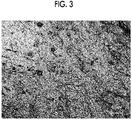
Fig. 3 is a drawing substitute photo showing a liquid crystal phase (a cubic phase) formed of a biomaterial of Example 5 (observation magnification: 20 times, transmitted light). - In the present specification, the range indicated by using "to" means a range including both ends before and after "to". For example, a range indicated by "A to B" includes A and B.
- In addition, in the present specification, the solid content is intended to be a component contained in the composition excluding the dispersion medium component, and a component is calculated as a solid content even in a case where the property thereof is liquid.
- A biomaterial according to the embodiment of the present invention includes a neutral acyl lipid, at least one selected from the group consisting of a phospholipid and a quaternary ammonium salt, and a carboxyvinyl polymer.
- Hereinafter, each component of the biomaterial according to the embodiment of the present invention will be described.
- The neutral acyl lipid means an electrically neutral acyl lipid. That is, the neutral acyl lipid does not include a cation moiety and an anion moiety. An acyl lipid means a lipid containing an acyl group.
- Examples of the neutral acyl lipid include a neutral monoacyl lipid, a neutral diacyl lipid, and a neutral triacyl lipid.
- In the biomaterial according to the embodiment of the present invention, the neutral acyl lipid contains at least one selected from the group consisting of a neutral monoacyl lipid and a neutral diacyl lipid, and a content of the at least one selected from the group consisting of a neutral monoacyl lipid and a neutral diacyl lipid is 80% by mass to 100% by mass, preferably 90% by mass to 100% by mass, and more preferably 100% by mass, with respect to the total mass of the neutral acyl lipid.
- Among them, the neutral acyl lipid preferably includes both a neutral monoacyl lipid and a neutral diacyl lipid.
- A content of the neutral monoacyl lipid is not particularly limited; however, it is preferably 0% by mass to 100% by mass, more preferably 30% by mass to 70% by mass, with respect to the total mass of the neutral acyl lipid.
- A content of the neutral diacyl lipid is not particularly limited; however, it is preferably 0% by mass to 100% by mass, more preferably 30% by mass to 70% by mass, with respect to the total mass of the neutral acyl lipid.
- A content of the neutral triacyl lipid is not particularly limited; however it is preferably 0% by mass to 20% by mass with respect to the total mass of the neutral acyl lipid, and it is more preferable that the neutral triacyl lipid is not contained (0% by mass).
- Among them, it is more preferable that a content of the neutral monoacyl lipid is 30% by mass to 70% by mass, a content of the neutral diacyl lipid is 30% by mass to 70% by mass, with respect to the total mass of the neutral acyl lipid, and the neutral triacyl lipid is not contained.
- The number of carbon atoms of the acyl group of the neutral acyl lipid is not particularly limited; however, the acyl group preferably has 6 to 32 carbon atoms and more preferably 16 to 22 carbon atoms.
- The hydrocarbon group as the acyl group, excluding a carbonyl group, is preferably a saturated or unsaturated chain-type hydrocarbon group having 5 to 31 carbon atoms, and more preferably a saturated or unsaturated chain-type hydrocarbon group having 15 to 21 carbon atoms. Specific examples thereof include CH3(CH2)14-, CH3(CH2)7CH=CH(CH2)7-, and CH3(CH2)4(CH=CHCH2)2(CH2)6-; however, the examples are not limited thereto.
- In a case where a neutral acyl lipid has two or more acyl groups in one molecule, the types of acyl groups may be the same or different from each other.
- Examples of the neutral acyl lipid include glycerol, diglycerol, sugar (for example, inositol), and a lipid obtained by forming an ester bond between a polyol such as succinic acid and a fatty acid. Among them, an acyl glycerol is preferable and a glyceryl oleate is more preferable.
- Examples of the acyl glycerol include monoacyl glycerol, diacyl glycerol, and triacyl glycerol.
- In addition, examples of the glyceryl oleate include glyceryl monooleate, glyceryl dioleate, and glyceryl trioleate.
- Here, the monoacyl glycerol and the glyceryl monooleate correspond to one aspect of the neutral monoacyl lipid described above, and the diacyl glycerol and the glyceryl dioleate correspond to one aspect of the neutral diacyl lipid described above, and the triacyl glycerol and the glyceryl trioleate correspond to one aspect of the neutral triacyl lipid.
- In the present specification, the content proportions of the neutral monoacyl lipid, the neutral diacyl lipid, and the neutral triacyl lipid in the neutral acyl lipid are obtained from measurement with a high performance liquid chromatography (HPLC) method.
-
- Column: Cadenza CD-C18 (4.6 mm x 300 mm) (manufactured by Imtakt Corporation)
- Eluent: water/tetrahydrofuran
- Flow rate: 1.0 mL/min
- Detection: Corona Charged Aerosol Detector (Corona CAD)
- Column temperature: 50°C
- A content of the neutral acyl lipid in the biomaterial according to the embodiment of the present invention is not particularly limited; however, it is preferably 35% by mass to 85% by mass, more preferably 35% by mass to 75% by mass, and still more preferably 55% by mass to 75% by mass, with respect to the total mass of the solid content of the biomaterial according to the embodiment of the present invention.
- The phospholipid is not particularly limited as long as it has a phosphate ester structure in the molecular structure thereof; however, a glycerophospholipid having glycerin as a skeleton and a sphingophospholipid having sphingosine as a skeleton are typical.
- In both a case of the phospholipid being a glycerophosphoric acid and a case of the phospholipid being a sphingophospholipid, an acyl group derived from a fatty acid is contained in the molecule.
- The number of carbon atoms of the acyl group of the phospholipid is not particularly limited; however, the acyl group preferably has 12 to 22 carbon atoms and more preferably 16 to 18 carbon atoms.
- The hydrocarbon group as the acyl group, excluding a carbonyl group, is preferably a saturated or unsaturated chain-type hydrocarbon group having 11 to 21 carbon atoms, and more preferably a saturated or unsaturated chain-type hydrocarbon group having 15 to 17 carbon atoms. Specific examples of the hydrocarbon group include CH3(CH2)14-, CH3(CH2)7CH=CH(CH2)7-, and CH3(CH2)4(CH=CHCH2)2(CH2)6-; however, the examples are not limited thereto.
- In a case where a phospholipid has two or more acyl groups in one molecule, the types of acyl groups may be the same or different from each other.
- Specific examples of the phospholipid include phosphatidylcholine. The acyl group of the phosphatidylcholine is preferably an acyl group derived from palmitic acid (CH3(CH2)14COOH), oleic acid (CH3(CH2)7CH=CH(CH2)7COOH), or linoleic acid (CH3(CH2)4(CH=CHCH2)2(CH2)6COOH). Specific examples of the phosphatidylcholine include a PO phosphatidylcholine (a phosphatidylcholine having palmitic acid at the first position (α position), oleic acid at the second position (β position), and choline at the third position (γ position)), a DL phosphatidylcholine (a phosphatidylcholine having linoleic acid at the first position (a-position), linoleic acid at the second position (β-position), and choline at the third position (γ-position)), and a dipalmitoylphosphatidylcholine.
- A content of the phospholipid in the biomaterial according to the embodiment of the present invention is not particularly limited; however, the content thereof in total together with a quaternary ammonium salt described later is preferably 15% by mass to 65% by mass, more preferably 20% by mass to 60% by mass, and still more preferably 25% by mass to 45% by mass, with respect to the total mass of the solid content of the biomaterial according to the embodiment of the present invention.
- The quaternary ammonium salt is an ionic compound consisting of a quaternary ammonium cation and an anion.
- The quaternary ammonium cation is preferably a polyatomic ion having a positive charge represented by the molecular formula NR4 +. Here, R's each independently represent an alkyl group or an aryl group, which may have a substituent, and a plurality of R's may be the same or different from each other.
- Among them, the quaternary ammonium cation of the quaternary ammonium salt is preferably a quaternary ammonium cation represented by the following formula.

- In the formula, R1, R2, R3, and R4 are each independently an alkyl group having 1 to 22 carbon atoms, and a hydrogen atom of the alkyl group may be substituted with an alkoxy group, an acyl group, or an acyloxy group.
- The number of carbon atoms of the alkoxy group, the acyl group, or the acyloxy group, with which the hydrogen atom of the alkyl group is substituted, is not particularly limited; however, it is preferably 16 to 18.
- Examples of the quaternary ammonium salt include dioleoyloxytrimethylammonium propane chloride (DOTAP, N-[1-(2,3-dioreoiloxy)propyl]-N,N,N-trimethylammonium chloride), dioctadecenyltrimethylammonium propane chloride (DOTMA, N-[1-(2,3-dioreyloxy)propyl)]-N,N,N-trimethylammonium chloride), didecyldimethylammonium chloride, didecyldimethylammonium bromide, dilauryldimethylammonium chloride, disetyldimethylammonium chloride, disetyldimethylammonium bromide, distearyldimethylammonium chloride, distearyldimethylammonium bromide, dioleyldimethylammonium chloride, dibehenyldimethylammonium chloride, dibehenyldimethylammonium bromide, dipalmitoylethyl hydroxyethylmonium metosulfate, and distearoylethyl hydroxyethylmonium metosulfate. In addition, these quaternary ammonium salts can be used as a mixture of two or more kinds thereof.
- A content of the quaternary ammonium salt in the biomaterial according to the embodiment of the present invention is not particularly limited; however, the content thereof in total togther with the phospholipid described above is preferably 15% by mass to 65% by mass, more preferably 20% by mass to 60% by mass, and still more preferably 25% by mass to 45% by mass, with respect to the total mass of the solid content of the biomaterial according to the embodiment of the present invention.
- In a case of being brought into contact with water, in the biomaterial according to the embodiment of the present invention, a liquid crystal phase is formed by water, a neutral acyl lipid, a phospholipid, and/or a quaternary ammonium salt.
- The carboxyvinyl polymer swells when coming into contact with water, and a network of liquid crystal micelles and a network of carboxyvinyl polymers are superpositioned. In this manner, the existence of two networks of the network of liquid crystal micelles and the network of carboxyvinyl polymers can improve scratch resistance and retention in a case where the biomaterial according to the embodiment of the present invention is brought into contact with water.
- The carboxyvinyl polymer is a water-soluble vinyl polymer having a carboxy group and specifically, is a polymer having a repeating unit derived from acrylic acid and/or methacrylic acid as the main chain and having a crosslinked structure of allyl sucrose or pentaerythritol (a crosslinked structure derived from the allyl sucrose or the pentaerythritol) formed by allyl ether or the like. In addition, this carboxyvinyl polymer may be a carboxyvinyl polymer salt.
- Specific examples of the commercially available carboxyvinyl polymer include "CARBOPOL 941", "CARBOPOL 971", "CARBOPOL 974", "CARBOPOL 980", and "CARBOPOL 981", which are manufactured by Lubrizol Advanced Materials Inc.; "HIVISWAKO 103", "HIVISWAKO 104", and "HIVISWAKO 105", which are manufactured by FUJIFILM Wako Pure Chemical Corporation; "Junron PW-120", "Junron PW-121", and "Junron PW-312S", which are manufactured by TOAGOSEI CO., LTD.; "AQUAPEC HV-501E" and "AQUAPEC HV-505E", which are manufactured by SUMITOMO SEIKA CHEMICALS CO., LTD.; and "Synthalen K" and "Synthalen L" manufactured by 3V Sigma S.p.A.
- In the biomaterial according to the embodiment of the present invention, one kind of the carboxyvinyl polymer may be used alone, or two or more kinds thereof may be used in combination.
- A content of the carboxyvinyl polymer in the biomaterial according to the embodiment of the present invention is not particularly limited; however, it is preferably 0.1% by mass to 10.0% by mass, more preferably 1.0% by mass to 5.0% by mass, and still more preferably 1.0% by mass to 3.5% by mass, with respect to the total mass of the solid content of the biomaterial according to the embodiment of the present invention.
- The biomaterial according to the embodiment of the present invention can further contain a non-aqueous dispersion medium.
- The non-aqueous dispersion medium is not particularly limited as long as it is a non-aqueous medium capable of dispersing the at least one selected from the group consisting of a neutral acyl lipid, a phospholipid, and a quaternary ammonium salt, described above, and dispersing a carboxyvinyl polymer. The non-aqueous dispersion medium is preferably an alcohol having 7 or more carbon atoms and more preferably an alcohol having 7 to 18 carbon atoms.
- Examples of the alcohol having 7 or more carbon atoms include heptyl alcohol (7 carbon atoms), capryl alcohol (8 carbon atoms), pelargonic alcohol (9 carbon atoms), capric alcohol (10 carbon atoms), lauryl alcohol (12 carbon atoms), myristyl alcohol (14 carbon atoms), oleyl alcohol (18 carbon atoms), and stearyl alcohol (18 carbon atoms).
- In a case where the biomaterial according to the embodiment of the present invention includes the non-aqueous dispersion medium, the solid content in the biomaterial according to the embodiment of the present invention is not particularly limited; however, it is preferably 80% by mass or more and preferably 90% by mass or more. The upper limit is, for example, less than 100% by mass.
- The biomaterial according to the embodiment of the present invention may include other components as long as the effects of the present invention are not impaired, in addition to the at least one selected from the group consisting of a neutral acyl lipid, a phospholipid, and a quaternary ammonium salt, the carboxyvinyl polymer, and the non-aqueous dispersion medium, which are described above.
- The sugar is not particularly limited; however, examples thereof include a monosaccharide and a disaccharide. Specific examples the sugar include glucose, galactose, sucrose, trehalose, and lactose.
- The sugar alcohol is an organic compound having a structure in which the carbonyl group of aldose or ketose is reduced. Specific examples thereof include erythritol, xylitol, mannitol, and sorbitol, but the examples are not particularly limited.
- The biomaterial according to the embodiment of the present invention forms a liquid crystal phase when being brought into contact with water. The water is not limited to pure water, and it may be water (aqueous moisture) contained in an aqueous fluid other than water. Examples of the aqueous fluid other than water include saliva, tissue fluid, blood, and lymph, but the examples are not limited thereto.
- The amount of water which is brought into contact with the biomaterial according to the embodiment of the present invention is not particularly limited; however, it is preferably 20% by mass to 1,000% by mass and more preferably 30% by mass to 500% by mass, with respect to the total mass of the biomaterial according to the embodiment of the present invention.
- Here, the liquid crystal phase is not particularly limited; however, it is usually any one phase selected from the group consisting of a lamellar (La) phase, a sponge (V2) phase, a hexagonal columnar (H2) phase, a bicontinuous cubic (L3) phase, or a cubic (Q) phase, and a mixed state of two or more thereof. The liquid crystal phase is preferably a lamellar phase, a hexagonal columnar phase, or a cubic phase. The temperature at which the biomaterial according to the embodiment of the present invention is brought into contact with water is not particularly limited; however, it is preferably 20°C to 40°C and more preferably 35°C to 40°C.
- The biomaterial according to the embodiment of the present invention can be manufactured by mixing a neutral acyl lipid in which contents of a neutral monoacyl lipid and a neutral diacyl lipid are within a specific range; at least one selected from the group consisting of a phospholipid and a quaternary ammonium salt; a carboxyvinyl polymer; and, as desired, a non-aqueous dispersion medium.
- The mixing method is not particularly limited, and a conventionally known mixing method can be used.
- The biomaterial according to the embodiment of the present invention means a material that is used in a living body, and examples thereof include a material that is used in a living body, for example, for assisting or repairing a living body an original function of which has been lost or a living body a function of which has been deteriorated due to injury or disease.
- The biomaterial according to the embodiment of the present invention can be used for mucous membrane protection, particularly preferably for oral cavity mucous membrane protection.
- In a case where the biomaterial according to the embodiment of the present invention is used for a mucous membrane, when the biomaterial according to the embodiment of the present invention is placed on the mucous membrane and as necessary, water or a solution containing water is added thereon, the biomaterial according to the embodiment of the present invention absorbs water to form a liquid crystal phase, thereby strongly being attached to the mucous membrane.
- In particular, in a case where the biomaterial according to the embodiment of the present invention is applied to the oral cavity mucous membrane, when the biomaterial according to the embodiment of the present invention is attached to the oral cavity mucous membrane, the liquid crystal phase is formed by the aqueous moisture in saliva, and thus is handling is easy. In addition, in a case where the amount of saliva is small, water or artificial saliva may be sprayed to supply aqueous moisture after the biomaterial according to the embodiment of the present invention is attached to the oral cavity mucous membrane.
- In addition, the biomaterial according to the embodiment of the present invention can be preferably used for the sustained release of a drug. For example, a pharmaceutical pre-preparation is prepared by adding a drug to the biomaterial, and the pharmaceutical pre-preparation is brought into contact with water to form a liquid crystal phase, whereby the biomaterial can be used as a drug sustainedly-releasing base material.
- Hereinafter, the present invention will be more specifically described according to Examples, but the present invention is not limited to Examples below.
- A neutral acyl lipid (1-oleoyl-rac-glycerin (> 99%), manufactured by Sigma-Aldrich Co. LLC; 5.5 g) was mixed with a phospholipid (phosphatidylcholine (Lipoid S100, manufactured by Lipoid GmbH; 3.0 g), and the mixture was heated and stirred at 60°C for 2 hours until the mixture became a yellow transparent oily liquid (hereinafter, may be referred to as a "solid content A"). After weighing a carboxyvinyl polymer (Carbopol 941, manufactured by Lubrizol Advanced Materials Inc.; 10 mg), the carboxyvinyl polymer was dispersed in a non-aqueous dispersion medium (oleyl alcohol, manufactured by Tokyo Chemical Industry Co., Ltd.; 100 mg), the required amount of the solid content A (890 mg) was added thereto, and then the resultant mixture was stirred at room temperature for 10 minutes to prepare a biomaterial.
- Using the same preparation method, each component shown in Table 1 was mixed according to the blending amount shown in Table 1 to prepare biomaterials of Examples 2 to 14 and Comparative Examples 1 to 8.
- The prepared biomaterial (20 µL) was placed on a slide glass, water (about 200 µL) was sprayed thereon from above, excess water was removed therefrom, covered with a cover glass, and then an initial observation was performed using a polarizing microscope (Nikon ECLIPSE E600 POL).
- Thereafter, the biomaterial was heated together with the slide glass on a hot stage (INSTEC STC200) heated in advance to 40°C, and the change in the liquid crystal phase was checked to identify the phase.
- Tetradodecyl ammonium bromide (TDAB, manufactured by FUJIFILM Wako Pure Chemical Corporation; 50 mg), polyvinyl chloride (manufactured by FUJIFILM Wako Pure Chemical Corporation; 800 mg), and di-n-octylphosphonate (DOPP, manufactured by FUJIFILM Wako Pure Chemical Corporation; 0.6 mL) were dissolved in tetrahydrofuran (THF, FUJIFILM Wako Pure Chemical Corporation; 10 mL) and dried at room temperature with a petri dish to obtain a lipid membrane (about 200 µm thickness).
- Next, the prepared lipid membrane was attached to a hydrogel consisting of agar (Karikorikan (registered trade mark), manufactured by Ina Food Industry Co., Ltd.; 0.5 g), gellan gum (Kelcogel (registered trade mark), manufactured by CP Kelco; 0.1 g), and distilled water (49.4 g).
- Subsequently, the surface of the lipid membrane was coated with a 2-methacryloyloxyethyl phosphorylcholine (MPC) polymer (LIPIDURE (registered trade mark) - CM5206, manufactured by NOF CORPORATION) to obtain a pseudo biological membrane.
- The prepared biomaterial was applied onto the prepared pseudo biological membrane (1 cmcp, 500 µm thickness), artificial saliva (Saliveht (registered trade mark), manufactured by TEIJIN PHARMA LIMITED) was sprayed thereon, and the biomaterial was allowed to stand for 1 minute such that water was absorbed, thereby preparing a sample for evaluation.
- The prepared sample for evaluation was placed in a petri dish and filled with artificial saliva (Saliveht) until the sample for evaluation was immersed. The petri dish was placed in a constant temperature shaker (37°C) and shaken such that the sample for evaluation was repeatedly hit to the wall of the petri dish. In this test, the time required for the biomaterial, which absorbed water from the pseudo biological membrane, to disappear by being peeled or dissolved from the pseudo biological membrane was measured, and the retention was evaluated according to the following criteria.
-
- Retained for 4 hours or more ··· A
- Disappeared in 1 hour or more and less than 4 hours ··· B
- Disappeared in less than 1 hour ··· C
- The evaluation results are shown in the "Evaluation" column of Table 1.
- The prepared biomaterial was applied onto the prepared pseudo biological membrane (1 cmϕ, 500 µm thickness), artificial saliva (Saliveht (registered trade mark), manufactured by TEIJIN PHARMA LIMITED) was sprayed thereon, and the biomaterial was allowed to stand for 1 minute such that water was absorbed, thereby preparing a sample for evaluation.
- The prepared sample for evaluation was repeatedly worn with a wear testing machine (surface property measuring machine TRIBOGEAR TYPE: 14FW, manufactured by Shinto Scientific Co., Ltd.), and the times of the reciprocation until the sample was peeled or dissolved from the pseudo biological membrane was measured, and scratch resistance was evaluated according to the following criteria. A triangular eraser core (Ain CLIC, manufactured by Pentel Co, Ltd,) was set on the head of the wear testing machine, and the test was performed under the conditions of a load of 30 g, an amplitude of 30 mm, and a speed of 6,000 mm/min.
-
- Endured 500 times or more ··· A
- Peeled after 100 times or more and less than 500 times ··· B
- Peeled after less than 100 times ··· C
- The evaluation results are shown in the "Evaluation" column of Table 1.
[Table 1-1] Mono/di/tri [% by mass] Mono + di [% by mass] Example 1 2 3 4 5 6 7 Neutral acyl lipid (1) 100/0/0 100 58 Neutral acyl lipid (2) 70/30/0 100 58 Neutral acyl lipid (3) 50/50/0 100 58 Neutral acyl lipid (4) 30/70/0 100 58 Neutral acyl lipid (5) 0/100/0 100 58 Neutral acyl lipid (6) 54/46/0 100 58 Neutral acyl lipid (7) 49/42/9 91 58 Neutral acyl lipid (8) 42/36/22 78 Neutral acyl lipid (9) 35/30/35 65 Neutral acyl lipid (10) 27/23/50 50 Neutral acyl lipid (11) 0/0/100 0 Biomaterial Diglyceryl monoleate Olive oil Phospholipid (1) 31 31 31 31 31 31 31 quaternary ammonium salt (1) Hydrogenated lecithin Carboxyvinyl polymer (1) 1 1 1 1 1 1 1 Carboxyvinyl polymer (2) Oleyl alcohol 10 10 10 10 10 10 10 Pentylene glycol Glycerin Water Total 100 100 100 100 100 100 100 Result Types of liquid crystal phase (40°C) La H2 H2 Q Q H2 H2 Evaluation Retention B A A A A A A Scratch resistance A A A A B A A A content of each component of a biomaterial is indicated in terms of "parts by mass". [Table 1-2] Mono/di/tri [% by mass] Mono + di [% by mass] Example 8 9 10 11 12 13 14 Neutral acyl lipid (1) 100/0/0 100 Neutral acyl lipid (2) 70/30/0 100 Neutral acyl lipid (3) 50/50/0 100 Neutral acyl lipid (4) 30/70/0 100 Neutral acyl lipid (5) 0/100/0 100 Neutral acyl lipid (6) 54/46/0 100 Neutral acyl lipid (7) 49/42/9 91 58 18 40 67 85 57 55 Neutral acyl lipid (8) 42/36/22 78 Neutral acyl lipid (9) 35/30/35 65 Biomaterial Neutral acyl lipid (10) 27/23/50 50 Neutral acyl lipid (11) 0/0/100 0 Diglyceryl monoleate Olive oil Phospholipid (1) 71 49 22 4 31 30 quaternary ammonium salt (1) 31 Hydrogenated lecithin Carboxyvinyl polymer (1) 1 1 1 1 1 2 5 Carboxyvinyl polymer (2) Oleyl alcohol 10 10 10 10 10 10 10 Pentylene glycol Glycerin Water Total 100 100 100 100 100 100 100 Result Types of liquid crystal phase (40°C) H2 La La H2 Q H2 H2 Evaluation Retention A B A A B A A Scratch resistance A B A A B A B A content of each component of a biomaterial is indicated in terms of "parts by mass". [Table 1-3] Mono/di/tri [% by mass] Mono + di [% by mass] Comparative Example 1 2 3 4 5 6 7 8 Neutral acyl lipid (1) 100/0/0 100 Neutral acyl lipid (2) 70/30/0 100 58 Neutral acyl lipid (3) 50/50/0 100 58 Neutral acyl lipid (4) 30/70/0 100 58 Neutral acyl lipid (5) 0/100/0 100 70 Neutral acyl lipid (6) 54/46/0 100 Neutral acyl lipid (7) 49/42/9 91 Neutral acyl lipid (8) 42/36/22 78 58 Neutral acyl lipid (9) 35/30/35 65 58 Biomaterial Neutral acyl lipid (10) 27/23/50 50 58 Neutral acyl lipid (11) 0/0/100 0 8 Diglyceryl monoleate 30 Olive oil 19 Phospholipid (1) 31 31 31 31 31 31 quaternary ammonium salt (1) Hydrogenated lecithin 2 Carboxyvinyl polymer (1) 1 1 1 Carboxyvinyl polymer (2) 0.2 Oleyl alcohol 10 10 10 10 10 10 Pentylene glycol 5 Glycerin 6 Water 60 Total 100 100 100 100 100 100 100.2 100 Result Types of liquid crystal phase (40°C) H2 H2 H2 Q La Q Retention B C C A A B C A Evaluation Scratch resistance C C C C C C C C A content of each component of a biomaterial is indicated in terms of "parts by mass". - In Table 1, "Mono/di/tri" indicates the content ratio (in terms of % by mass) between the neutral monoacyl lipid, the neutral diacyl lipid, and the neutral triacyl lipid in the neutral acyl lipid.
- In Table 1, "Mono + di" indicates the total content (in terms of % by mass) of the neutral monoacyl lipid and the neutral diacyl lipid in the neutral acyl lipid.
- In Table 1, each component is as follows.
- · Neutral acyl lipid (1): 1-oleoyl-rac-glycerin (> 99%, manufactured by Sigma-Aldrich Co. LLC)
- · Neutral acyl lipid (5): Diolein (> 99%, manufactured by NU-CHECK-PREP, Inc.)
- · Neutral acyl lipid (2): The neutral acyl lipid (1) (7.0 g) was mixed with the neutral acyl lipid (5) (3.0 g) at 40°C for 30 minutes until a homogeneous solution was obtained, thereby preparing a neutral acyl lipid (2).
- · Neutral acyl lipids (3), (4), and (6): The neutral acyl lipid (1) was mixed with the neutral acyl lipid (5) according to the mass ratio shown in Table 1 in the same preparation method as that for the neutral acyl lipid (2), thereby preparing neutral acyl lipids (3), (4), and (6).
- · Neutral acyl lipid (7): Monoolein (manufactured by Tokyo Chemical Industry Co., Ltd.)
- · Neutral acyl lipid (11): Glyceryl trioleate (> 99%, manufactured by Sigma-Aldrich Co. LLC)
- · Neutral acyl lipids (8) to (10): The neutral acyl lipid (1) and the neutral acyl lipid (5) were mixed with the neutral acyl lipid (11) according to the mass ratio shown in Table 1 in the same preparation method as that for the neutral acyl lipid (2), thereby preparing neutral acyl lipids (8) to (10).
- · Diglyceryl monooleate (manufactured by RIKEN VITAMIN CO., LTD.)
- · Olive oil (manufactured by FUJIFILM Wako Pure Chemical Corporation)
- · Phospholipid (1): Phosphatidylcholine (Lipoid S100, manufactured by Lipoid GmbH)
- · Quaternary ammonium salt (1): DOTAP [N-[1-(2,3-dioreoiloxy)propyl]-N,N,N-trimethylammonium chloride] (Lipoid DOTAP-Cl, manufactured by Lipoid GmbH)
- · Hydrogenated lecithin: COATSOME NC-21E (manufactured by NOF CORPORATION)
- · Carboxyvinyl polymer (1): Carbopol 941 (manufactured by Lubrizol Advanced Materials Inc.)
- · Carboxyvinyl polymer (2): AQUPEC N40R (manufactured by SUMITOMO SEIKA CHEMICALS CO., LTD.)
- · Oleyl alcohol (manufactured by Tokyo Chemical Industry Co., Ltd.)
- · Pentylene glycol
- · Glycerin (manufactured by FUJIFILM Wako Pure Chemical Corporation)
- In Table 1, the types of the liquid crystal phase are represented by the following abbreviations.
- La
- lamellar phase
- V2
- sponge phase
- H2
- hexagonal columnar phase
- L3
- bicontinuous cubic phase
- Q
- cubic phase
- The biomaterials of Examples 1 to 14 were good in retention and scratch resistance. Among them, from the comparison of Examples 1 to 7, it has been confirmed that the case where the neutral acyl lipid contains both of the neutral monoacyl lipid and the neutral diacyl lipid exhibits more excellent effects. In addition, from the comparison of Examples 9 to 12, it has been confirmed that the case where the total content of the phospholipid and the quaternary ammonium salt is 20% by mass to 60% by mass with respect to the total mass of the solid content of the biomaterial exhibits more excellent effects. Further, from the comparison of Examples 7, 13, and 14, it has been confirmed that the case where a content of the carboxyvinyl polymer is 1.0% by mass to 3.5% by mass exhibits more excellent effects.
- On the other hand, the biomaterials of Comparative Examples 1 to 8 had insufficient scratch resistance and could not exhibit retention and scratch resistance at the same time. Among them, Comparative Examples 2, 3, and 7 were insufficient in both the retention and the scratch resistance.
- It is noted that Comparative Example 7 relates to the invention disclosed in
JP2008-169219A JP2008-509120A
where the composition can self-disperse and produce colloidal non-layered particles when coming into contact with an aqueous fluid.
Claims (16)
- A biomaterial comprising:a neutral acyl lipid;at least one selected from the group consisting of a phospholipid and a quaternary ammonium salt; anda carboxyvinyl polymer,wherein the neutral acyl lipid includes at least one selected from the group consisting of a neutral monoacyl lipid and a neutral diacyl lipid, anda content of the at least one selected from the group consisting of the neutral monoacyl lipid and the neutral diacyl lipid is 80% by mass to 100% by mass with respect to a total mass of the neutral acyl lipid.
- The biomaterial according to claim 1, wherein the neutral acyl lipid includes 0% by mass to 100% by mass of a neutral monoacyl lipid, 0% by mass to 100% by mass of a neutral diacyl lipid, and 0% by mass to 20% by mass of a neutral triacyl lipid, with respect to the total mass of the neutral acyl lipid.
- The biomaterial according to claim 1 or 2, wherein an acyl group of the neutral acyl lipid has 6 to 32 carbon atoms.
- The biomaterial according to claim 3, wherein the acyl group has 16 to 22 carbon atoms.
- The biomaterial according to any one of claims 1 to 4, wherein the neutral acyl lipid is an acyl glycerol.
- The biomaterial according to claim 5, wherein the acyl glycerol is a glyceryl oleate.
- The biomaterial according to any one of claims 1 to 6, wherein an acyl group of the phospholipid has 12 to 22 carbon atoms.
- The biomaterial according to claim 7, wherein the acyl group has 16 to 18 carbon atoms.
- The biomaterial according to any one of claims 1 to 8, wherein a quaternary ammonium cation of the quaternary ammonium salt is represented by the following formula,

- The biomaterial according to claim 9, wherein the alkoxy group, the acyl group, or the acyloxy group, with which the hydrogen atom of the alkyl group is substituted, has 16 to 18 carbon atoms.
- The biomaterial according to any one of claims 1 to 10, wherein the biomaterial forms a liquid crystal phase when being brought into contact with water.
- The biomaterial according to any one of claims 1 to 11, further comprising:
a non-aqueous dispersion medium. - The biomaterial according to claim 12, wherein the non-aqueous dispersion medium is an alcohol having 7 or more carbon atoms.
- The biomaterial according to any one of claims 1 to 13, wherein the biomaterial is used for mucous membrane protection.
- The biomaterial according to claim 14, wherein the biomaterial is used for oral cavity mucous membrane protection.
- The biomaterial according to any one of claims 1 to 15, wherein the biomaterial is used for a sustained release of a drug.
Applications Claiming Priority (2)
| Application Number | Priority Date | Filing Date | Title |
|---|---|---|---|
| JP2018176358 | 2018-09-20 | ||
| PCT/JP2019/035212 WO2020059543A1 (en) | 2018-09-20 | 2019-09-06 | Biomaterial |
Publications (3)
| Publication Number | Publication Date |
|---|---|
| EP3854422A1 true EP3854422A1 (en) | 2021-07-28 |
| EP3854422A4 EP3854422A4 (en) | 2021-11-10 |
| EP3854422B1 EP3854422B1 (en) | 2025-01-22 |
Family
ID=69887340
Family Applications (1)
| Application Number | Title | Priority Date | Filing Date |
|---|---|---|---|
| EP19862426.4A Active EP3854422B1 (en) | 2018-09-20 | 2019-09-06 | Biomaterial |
Country Status (4)
| Country | Link |
|---|---|
| US (1) | US20210196826A1 (en) |
| EP (1) | EP3854422B1 (en) |
| JP (1) | JP7064612B2 (en) |
| WO (1) | WO2020059543A1 (en) |
Families Citing this family (6)
| Publication number | Priority date | Publication date | Assignee | Title |
|---|---|---|---|---|
| EP4091813A4 (en) * | 2020-01-16 | 2023-03-29 | FUJIFILM Corporation | Organism mucous membrane model, and method for evaluating retention properties of mucous-membrane-protective agent |
| JP7395153B2 (en) * | 2020-04-01 | 2023-12-11 | 富士フイルム株式会社 | antithrombotic material |
| WO2022172453A1 (en) * | 2021-02-15 | 2022-08-18 | 株式会社資生堂 | Dispersion, method for producing aqueous composition, and aqueous composition |
| WO2023189270A1 (en) * | 2022-03-28 | 2023-10-05 | 富士フイルム株式会社 | Biomaterial composition |
| JPWO2023189273A1 (en) * | 2022-03-28 | 2023-10-05 | ||
| JPWO2024219344A1 (en) * | 2023-04-21 | 2024-10-24 |
Family Cites Families (8)
| Publication number | Priority date | Publication date | Assignee | Title |
|---|---|---|---|---|
| JP2758014B2 (en) * | 1989-03-10 | 1998-05-25 | 積水化学工業株式会社 | Oral bandage |
| ATE180971T1 (en) * | 1994-03-30 | 1999-06-15 | Gs Dev Ab | USE OF FATTY ACID ESTERS AS BIO ADHESIVES |
| SE518578C2 (en) * | 1994-06-15 | 2002-10-29 | Gs Dev Ab | Lipid-based composition |
| DE50115490D1 (en) * | 2000-02-25 | 2010-07-08 | Kuhs Gmbh | COSMETIC COMPOSITION FOR THE TREATMENT OF AGING AND / OR STRESSED SKIN |
| US20040009212A1 (en) * | 2002-01-30 | 2004-01-15 | Pharma Power Biotec Co. Ltd. | Mucoadhesive thermoresponsive medicament-carrier composition |
| PL1778187T3 (en) | 2004-08-04 | 2012-09-28 | Camurus Ab | Compositions forming non-lamellar dispersions |
| US9649382B2 (en) * | 2005-01-14 | 2017-05-16 | Camurus Ab | Topical bioadhesive formulations |
| DE102012000369A1 (en) * | 2012-01-11 | 2013-07-11 | Alfred E. Tiefenbacher (Gmbh & Co. Kg) | Transdermal therapeutic system with cholinesterase inhibitor |
-
2019
- 2019-09-06 WO PCT/JP2019/035212 patent/WO2020059543A1/en not_active Ceased
- 2019-09-06 JP JP2020548334A patent/JP7064612B2/en active Active
- 2019-09-06 EP EP19862426.4A patent/EP3854422B1/en active Active
-
2021
- 2021-03-11 US US17/198,417 patent/US20210196826A1/en active Pending
Also Published As
| Publication number | Publication date |
|---|---|
| WO2020059543A1 (en) | 2020-03-26 |
| EP3854422B1 (en) | 2025-01-22 |
| US20210196826A1 (en) | 2021-07-01 |
| JP7064612B2 (en) | 2022-05-10 |
| JPWO2020059543A1 (en) | 2021-09-24 |
| EP3854422A4 (en) | 2021-11-10 |
Similar Documents
| Publication | Publication Date | Title |
|---|---|---|
| EP3854422B1 (en) | Biomaterial | |
| EP3950056B1 (en) | Biological material | |
| KR102164218B1 (en) | Multilayer cationic liposome for enhancing the skin penetration and preparation method thereof | |
| KR101286807B1 (en) | Ophthalmic emulsions containing prostaglandins | |
| CA2231273A1 (en) | A pharmaceutical composition for administration of an active substance to or through a skin or mucosal surface | |
| CN110545796A (en) | Local delivery system for active compounds | |
| JPH10194994A (en) | Absorption acceleration composition | |
| KR20150114505A (en) | Pharmaceutical formulation comprising an insoluble corticosteroid and a soluble corticosteroid | |
| US20190105268A1 (en) | Viscoelastic Gel of Liraglutide Adapted for Once-Weekly or Once Bi-Weekly Administration | |
| US20140073615A1 (en) | Treatment of Psoriasis | |
| KR101588558B1 (en) | Stable fat emulsion containing prostaglandin E1 | |
| US20240423943A1 (en) | Composition for living body | |
| JP6751829B2 (en) | Liquid external preparation | |
| US20240415799A1 (en) | Composition for living body | |
| Sejwani et al. | Development of novel formulations from natural and synthetic origin drugs for effective management of inflammation | |
| CN101601653B (en) | prednicarbate lipidosome cream | |
| US20200297591A1 (en) | Topical Phospholipid Formulations and Methods for Preparing the Same | |
| US20260041650A1 (en) | Composition for living body | |
| US20250319045A1 (en) | Transethosome-encapsulated agents and methods of use thereof | |
| JP6843917B2 (en) | Multivalent alcohol composition and viscous composition | |
| KR20060126247A (en) | Microemulsion containing ursolic acid as active ingredient, external preparation for skin and preparation method of microemulsion containing same | |
| CN101601651A (en) | Methylprednisolone aceponate lipidosome cream |
Legal Events
| Date | Code | Title | Description |
|---|---|---|---|
| STAA | Information on the status of an ep patent application or granted ep patent |
Free format text: STATUS: THE INTERNATIONAL PUBLICATION HAS BEEN MADE |
|
| PUAI | Public reference made under article 153(3) epc to a published international application that has entered the european phase |
Free format text: ORIGINAL CODE: 0009012 |
|
| STAA | Information on the status of an ep patent application or granted ep patent |
Free format text: STATUS: REQUEST FOR EXAMINATION WAS MADE |
|
| 17P | Request for examination filed |
Effective date: 20210309 |
|
| AK | Designated contracting states |
Kind code of ref document: A1 Designated state(s): AL AT BE BG CH CY CZ DE DK EE ES FI FR GB GR HR HU IE IS IT LI LT LU LV MC MK MT NL NO PL PT RO RS SE SI SK SM TR |
|
| A4 | Supplementary search report drawn up and despatched |
Effective date: 20211012 |
|
| RIC1 | Information provided on ipc code assigned before grant |
Ipc: A61L 26/00 20060101ALI20211006BHEP Ipc: A61K 9/00 20060101ALI20211006BHEP Ipc: A61P 25/04 20060101ALI20211006BHEP Ipc: A61L 15/44 20060101ALI20211006BHEP Ipc: A61L 15/42 20060101ALI20211006BHEP Ipc: A61L 15/34 20060101ALI20211006BHEP Ipc: A61L 15/24 20060101ALI20211006BHEP Ipc: A61K 47/44 20170101ALI20211006BHEP Ipc: A61K 47/32 20060101ALI20211006BHEP Ipc: A61K 47/18 20170101ALI20211006BHEP Ipc: A61K 9/70 20060101ALI20211006BHEP Ipc: A61L 15/20 20060101AFI20211006BHEP |
|
| STAA | Information on the status of an ep patent application or granted ep patent |
Free format text: STATUS: EXAMINATION IS IN PROGRESS |
|
| DAV | Request for validation of the european patent (deleted) | ||
| DAX | Request for extension of the european patent (deleted) | ||
| 17Q | First examination report despatched |
Effective date: 20211210 |
|
| GRAP | Despatch of communication of intention to grant a patent |
Free format text: ORIGINAL CODE: EPIDOSNIGR1 |
|
| STAA | Information on the status of an ep patent application or granted ep patent |
Free format text: STATUS: GRANT OF PATENT IS INTENDED |
|
| INTG | Intention to grant announced |
Effective date: 20240814 |
|
| GRAS | Grant fee paid |
Free format text: ORIGINAL CODE: EPIDOSNIGR3 |
|
| GRAA | (expected) grant |
Free format text: ORIGINAL CODE: 0009210 |
|
| STAA | Information on the status of an ep patent application or granted ep patent |
Free format text: STATUS: THE PATENT HAS BEEN GRANTED |
|
| AK | Designated contracting states |
Kind code of ref document: B1 Designated state(s): AL AT BE BG CH CY CZ DE DK EE ES FI FR GB GR HR HU IE IS IT LI LT LU LV MC MK MT NL NO PL PT RO RS SE SI SK SM TR |
|
| REG | Reference to a national code |
Ref country code: GB Ref legal event code: FG4D |
|
| REG | Reference to a national code |
Ref country code: CH Ref legal event code: EP |
|
| REG | Reference to a national code |
Ref country code: IE Ref legal event code: FG4D |
|
| REG | Reference to a national code |
Ref country code: DE Ref legal event code: R096 Ref document number: 602019065218 Country of ref document: DE |
|
| REG | Reference to a national code |
Ref country code: NL Ref legal event code: MP Effective date: 20250122 |
|
| PG25 | Lapsed in a contracting state [announced via postgrant information from national office to epo] |
Ref country code: NL Free format text: LAPSE BECAUSE OF FAILURE TO SUBMIT A TRANSLATION OF THE DESCRIPTION OR TO PAY THE FEE WITHIN THE PRESCRIBED TIME-LIMIT Effective date: 20250122 |
|
| PG25 | Lapsed in a contracting state [announced via postgrant information from national office to epo] |
Ref country code: RS Free format text: LAPSE BECAUSE OF FAILURE TO SUBMIT A TRANSLATION OF THE DESCRIPTION OR TO PAY THE FEE WITHIN THE PRESCRIBED TIME-LIMIT Effective date: 20250422 |
|
| PG25 | Lapsed in a contracting state [announced via postgrant information from national office to epo] |
Ref country code: FI Free format text: LAPSE BECAUSE OF FAILURE TO SUBMIT A TRANSLATION OF THE DESCRIPTION OR TO PAY THE FEE WITHIN THE PRESCRIBED TIME-LIMIT Effective date: 20250122 |
|
| PG25 | Lapsed in a contracting state [announced via postgrant information from national office to epo] |
Ref country code: PL Free format text: LAPSE BECAUSE OF FAILURE TO SUBMIT A TRANSLATION OF THE DESCRIPTION OR TO PAY THE FEE WITHIN THE PRESCRIBED TIME-LIMIT Effective date: 20250122 |
|
| PG25 | Lapsed in a contracting state [announced via postgrant information from national office to epo] |
Ref country code: ES Free format text: LAPSE BECAUSE OF FAILURE TO SUBMIT A TRANSLATION OF THE DESCRIPTION OR TO PAY THE FEE WITHIN THE PRESCRIBED TIME-LIMIT Effective date: 20250122 |
|
| REG | Reference to a national code |
Ref country code: LT Ref legal event code: MG9D |
|
| PG25 | Lapsed in a contracting state [announced via postgrant information from national office to epo] |
Ref country code: IS Free format text: LAPSE BECAUSE OF FAILURE TO SUBMIT A TRANSLATION OF THE DESCRIPTION OR TO PAY THE FEE WITHIN THE PRESCRIBED TIME-LIMIT Effective date: 20250522 Ref country code: NO Free format text: LAPSE BECAUSE OF FAILURE TO SUBMIT A TRANSLATION OF THE DESCRIPTION OR TO PAY THE FEE WITHIN THE PRESCRIBED TIME-LIMIT Effective date: 20250422 |
|
| REG | Reference to a national code |
Ref country code: AT Ref legal event code: MK05 Ref document number: 1760998 Country of ref document: AT Kind code of ref document: T Effective date: 20250122 |
|
| PG25 | Lapsed in a contracting state [announced via postgrant information from national office to epo] |
Ref country code: HR Free format text: LAPSE BECAUSE OF FAILURE TO SUBMIT A TRANSLATION OF THE DESCRIPTION OR TO PAY THE FEE WITHIN THE PRESCRIBED TIME-LIMIT Effective date: 20250122 |
|
| PG25 | Lapsed in a contracting state [announced via postgrant information from national office to epo] |
Ref country code: LV Free format text: LAPSE BECAUSE OF FAILURE TO SUBMIT A TRANSLATION OF THE DESCRIPTION OR TO PAY THE FEE WITHIN THE PRESCRIBED TIME-LIMIT Effective date: 20250122 Ref country code: PT Free format text: LAPSE BECAUSE OF FAILURE TO SUBMIT A TRANSLATION OF THE DESCRIPTION OR TO PAY THE FEE WITHIN THE PRESCRIBED TIME-LIMIT Effective date: 20250522 |
|
| PG25 | Lapsed in a contracting state [announced via postgrant information from national office to epo] |
Ref country code: BG Free format text: LAPSE BECAUSE OF FAILURE TO SUBMIT A TRANSLATION OF THE DESCRIPTION OR TO PAY THE FEE WITHIN THE PRESCRIBED TIME-LIMIT Effective date: 20250122 Ref country code: GR Free format text: LAPSE BECAUSE OF FAILURE TO SUBMIT A TRANSLATION OF THE DESCRIPTION OR TO PAY THE FEE WITHIN THE PRESCRIBED TIME-LIMIT Effective date: 20250423 |
|
| PG25 | Lapsed in a contracting state [announced via postgrant information from national office to epo] |
Ref country code: AT Free format text: LAPSE BECAUSE OF FAILURE TO SUBMIT A TRANSLATION OF THE DESCRIPTION OR TO PAY THE FEE WITHIN THE PRESCRIBED TIME-LIMIT Effective date: 20250122 |
|
| PG25 | Lapsed in a contracting state [announced via postgrant information from national office to epo] |
Ref country code: SE Free format text: LAPSE BECAUSE OF FAILURE TO SUBMIT A TRANSLATION OF THE DESCRIPTION OR TO PAY THE FEE WITHIN THE PRESCRIBED TIME-LIMIT Effective date: 20250122 |
|
| PG25 | Lapsed in a contracting state [announced via postgrant information from national office to epo] |
Ref country code: SM Free format text: LAPSE BECAUSE OF FAILURE TO SUBMIT A TRANSLATION OF THE DESCRIPTION OR TO PAY THE FEE WITHIN THE PRESCRIBED TIME-LIMIT Effective date: 20250122 |
|
| PG25 | Lapsed in a contracting state [announced via postgrant information from national office to epo] |
Ref country code: DK Free format text: LAPSE BECAUSE OF FAILURE TO SUBMIT A TRANSLATION OF THE DESCRIPTION OR TO PAY THE FEE WITHIN THE PRESCRIBED TIME-LIMIT Effective date: 20250122 |
|
| PGFP | Annual fee paid to national office [announced via postgrant information from national office to epo] |
Ref country code: DE Payment date: 20250730 Year of fee payment: 7 |
|
| PG25 | Lapsed in a contracting state [announced via postgrant information from national office to epo] |
Ref country code: IT Free format text: LAPSE BECAUSE OF FAILURE TO SUBMIT A TRANSLATION OF THE DESCRIPTION OR TO PAY THE FEE WITHIN THE PRESCRIBED TIME-LIMIT Effective date: 20250122 |
|
| PG25 | Lapsed in a contracting state [announced via postgrant information from national office to epo] |
Ref country code: EE Free format text: LAPSE BECAUSE OF FAILURE TO SUBMIT A TRANSLATION OF THE DESCRIPTION OR TO PAY THE FEE WITHIN THE PRESCRIBED TIME-LIMIT Effective date: 20250122 Ref country code: CZ Free format text: LAPSE BECAUSE OF FAILURE TO SUBMIT A TRANSLATION OF THE DESCRIPTION OR TO PAY THE FEE WITHIN THE PRESCRIBED TIME-LIMIT Effective date: 20250122 |
|
| REG | Reference to a national code |
Ref country code: DE Ref legal event code: R097 Ref document number: 602019065218 Country of ref document: DE |
|
| PG25 | Lapsed in a contracting state [announced via postgrant information from national office to epo] |
Ref country code: RO Free format text: LAPSE BECAUSE OF FAILURE TO SUBMIT A TRANSLATION OF THE DESCRIPTION OR TO PAY THE FEE WITHIN THE PRESCRIBED TIME-LIMIT Effective date: 20250122 |
|
| PG25 | Lapsed in a contracting state [announced via postgrant information from national office to epo] |
Ref country code: SK Free format text: LAPSE BECAUSE OF FAILURE TO SUBMIT A TRANSLATION OF THE DESCRIPTION OR TO PAY THE FEE WITHIN THE PRESCRIBED TIME-LIMIT Effective date: 20250122 |
|
| PLBE | No opposition filed within time limit |
Free format text: ORIGINAL CODE: 0009261 |
|
| STAA | Information on the status of an ep patent application or granted ep patent |
Free format text: STATUS: NO OPPOSITION FILED WITHIN TIME LIMIT |
|
| 26N | No opposition filed |
Effective date: 20251023 |