EP3854403B1 - Use of substituted aminopropionate compounds in treatment of sars-cov-2 infection - Google Patents
Use of substituted aminopropionate compounds in treatment of sars-cov-2 infection Download PDFInfo
- Publication number
- EP3854403B1 EP3854403B1 EP20202229.9A EP20202229A EP3854403B1 EP 3854403 B1 EP3854403 B1 EP 3854403B1 EP 20202229 A EP20202229 A EP 20202229A EP 3854403 B1 EP3854403 B1 EP 3854403B1
- Authority
- EP
- European Patent Office
- Prior art keywords
- infection
- cov
- sars
- pharmaceutical composition
- pharmaceutically acceptable
- Prior art date
- Legal status (The legal status is an assumption and is not a legal conclusion. Google has not performed a legal analysis and makes no representation as to the accuracy of the status listed.)
- Active
Links
Images
Classifications
-
- A—HUMAN NECESSITIES
- A61—MEDICAL OR VETERINARY SCIENCE; HYGIENE
- A61K—PREPARATIONS FOR MEDICAL, DENTAL OR TOILETRY PURPOSES
- A61K31/00—Medicinal preparations containing organic active ingredients
- A61K31/66—Phosphorus compounds
- A61K31/675—Phosphorus compounds having nitrogen as a ring hetero atom, e.g. pyridoxal phosphate
-
- A—HUMAN NECESSITIES
- A61—MEDICAL OR VETERINARY SCIENCE; HYGIENE
- A61K—PREPARATIONS FOR MEDICAL, DENTAL OR TOILETRY PURPOSES
- A61K31/00—Medicinal preparations containing organic active ingredients
- A61K31/66—Phosphorus compounds
- A61K31/683—Diesters of a phosphorus acid with two hydroxy compounds, e.g. phosphatidylinositols
- A61K31/685—Diesters of a phosphorus acid with two hydroxy compounds, e.g. phosphatidylinositols one of the hydroxy compounds having nitrogen atoms, e.g. phosphatidylserine, lecithin
-
- A—HUMAN NECESSITIES
- A61—MEDICAL OR VETERINARY SCIENCE; HYGIENE
- A61P—SPECIFIC THERAPEUTIC ACTIVITY OF CHEMICAL COMPOUNDS OR MEDICINAL PREPARATIONS
- A61P11/00—Drugs for disorders of the respiratory system
-
- A—HUMAN NECESSITIES
- A61—MEDICAL OR VETERINARY SCIENCE; HYGIENE
- A61P—SPECIFIC THERAPEUTIC ACTIVITY OF CHEMICAL COMPOUNDS OR MEDICINAL PREPARATIONS
- A61P31/00—Antiinfectives, i.e. antibiotics, antiseptics, chemotherapeutics
- A61P31/12—Antivirals
- A61P31/14—Antivirals for RNA viruses
-
- C—CHEMISTRY; METALLURGY
- C07—ORGANIC CHEMISTRY
- C07F—ACYCLIC, CARBOCYCLIC OR HETEROCYCLIC COMPOUNDS CONTAINING ELEMENTS OTHER THAN CARBON, HYDROGEN, HALOGEN, OXYGEN, NITROGEN, SULFUR, SELENIUM OR TELLURIUM
- C07F9/00—Compounds containing elements of Groups 5 or 15 of the Periodic Table
- C07F9/02—Phosphorus compounds
- C07F9/547—Heterocyclic compounds, e.g. containing phosphorus as a ring hetero atom
- C07F9/6561—Heterocyclic compounds, e.g. containing phosphorus as a ring hetero atom containing systems of two or more relevant hetero rings condensed among themselves or condensed with a common carbocyclic ring or ring system, with or without other non-condensed hetero rings
Definitions
- the present application relates to use of a substituted aminopropionate compound represented by the following Formula I, a geometric isomer, a pharmaceutically acceptable salt, a solvate and/or a hydrate thereof, and a pharmaceutical composition comprising the above compound for use in treating a SARS-CoV-2 infection.
- the substituted aminopropionate compound (Compound represented by Formula I), with chemical name of 2-ethylbutyl (2S)-2-[[[(2R,3S,4R,5R)-5-(4-aminopyrrolo[2,1-f][1,2,4]triazin-7-yl)-5-cyano-3,4-dihydroxyoxolan-2-yl]methoxy-phenoxyphosphoryl]amino]propanoate, also known as Remdesivir (GS-5734), is a viral RNA polymerase inhibitor, and its active form in vivo is a nucleoside triphosphate (NTP) of the parent drug.
- NTP nucleoside triphosphate
- Remdesivir has shown antiviral activity against various variants of EBOV and other filoviruses in cell-based assays.
- the intravenous administration of 10 mg/kg of GS-5734 per day for consecutive 12 days could significantly inhibit the replication of EBOV, protect 100% EBOV-infected animals from death, and improve clinical signs and pathophysiological markers.
- GS-5734 also has a broad-spectrum antiviral activity to viruses such as Nipah virus, Middle East Respiratory Syndrome Coronavirus (MERS-CoV), Marburg virus, etc.
- 2019 novel Coronavirus 2019-nCoV
- ICTV International Committee on Taxonomy Viruses
- SARS-CoV-2 severe acute respiratory syndrome coronavirus 2
- WHO World Health Organization
- Patients with simple infection may have non-specific symptoms, such as fever, cough, sore throat, nasal congestion, fatigue, headache, muscle pain or discomfort, and the elderly people and immunosuppressed people may have atypical symptoms.
- Patients with mild pneumonia mainly have cough, dyspnea and polypnea. Severe pneumonia can be seen in adolescents, adults or children, and the main symptoms of which include increased breathing frequency, severe respiratory failure or dyspnea, central cyanosis, drowsiness, unconsciousness or convulsion, gasp, etc.
- the lung images of acute respiratory distress syndrome are bilateral ground glass shadows, which cannot be completely explained by effusion, lobar exudation or atelectasis or lung mass shadows, and the main symptom of which is pulmonary edema. Patients with sepsis often have fatal organ dysfunction, and the most critical patients are those with septic shock, and they may have a high probability of death.
- Agostini ML et al, MBIO, 2018, 9(2), 1-15 relates to coronavirus susceptibility to remdesivir being mediated by the viral polymerase and the proofreading exoribonuclease.
- Totura AL et al., Expert Opinion on Drug Discovery, 2019, 14(4), 397-412 relates to the discovery of broad-spectrum coronavirus antiviral drugs.
- the SARS-CoV-2 virus infection is mainly treated with supportive therapy in clinic, and no antiviral drug is available.
- the purpose of the present application is to find a drug with antiviral activity against SARS-CoV-2, which can be used for the treatment of a related disease caused by the infection thereof.
- the compound represented by Formula I has the function of inhibiting the replication of SARS-CoV-2 and has a good potential therapeutic effect in the treatment of a disease caused by SARS-CoV-2.
- the present application relates to the compound represented by Formula I, a geometric isomer, a pharmaceutically acceptable salt and/or a solvate or a hydrate thereof, for use in treating a disease or an infection caused by a SARS-CoV-2.
- the pharmaceutically acceptable salts of the compound represented by Formula I described herein include inorganic or organic acid salts and inorganic or organic base salts thereof.
- the present application relates to all forms of the above salts, including but not limited to: sodium salt, potassium salt, calcium salt, lithium salt, meglumine salt, hydrochloride salt, hydrobromide salt, hydroiodide salt, nitrate salt, sulfate, hydrogen sulfate, phosphate, hydrogen phosphate, acetate, propionate, butyrate, oxalate, pivalate, adipate, alginate, lactate, citrate, tartrate, succinate, maleate, fumarate, picrate, aspartate, gluconate, benzoate, methanesulfonate, ethanesulfonate, benzenesulfonate, p-toluenesulfonate and embonate and so on.
- the compound represented by Formula I can inhibit SARS-CoV-2 virus replication in cells and reduce the nucleic acid load of SARS-CoV-2 virus in cell culture.
- the inventors of the present application have discovered new features of the compound represented by Formula I in cells: the compound represented by Formula I can reduce the viral nucleic acid load in cells infected by SARS-CoV-2 at micromolar concentration level.
- the present application thus relates to the compound represented by Formula I, a geometric isomer, a pharmaceutically acceptable salt, a solvate and/or a hydrate thereof for use for treating a disease or an infection (e.g., a respiratory disease (e.g., a simple infection (such as fever, cough and sore throat), pneumonia, acute respiratory infection, severe acute respiratory infection (SARI), hypoxic respiratory failure and acute respiratory distress syndrome, sepsis and septic shock, etc.)) caused by a SARS-CoV-2,
- a respiratory disease e.g., a simple infection (such as fever, cough and sore throat), pneumonia, acute respiratory infection, severe acute respiratory infection (SARI), hypoxic respiratory failure and acute respiratory distress syndrome, sepsis and septic shock, etc.
- the present application also relates to a pharmaceutical composition, which comprises the compound represented by Formula I, a geometric isomer, a pharmaceutically acceptable salt, a solvate and/or a hydrate thereof for use in treating a disease or an infection caused by a SARS-CoV-2.
- the pharmaceutical composition further comprises a pharmaceutically acceptable carrier or excipient.
- the pharmaceutical composition is a solid preparation, an injection, an external preparation, a spray, a liquid preparation, or a compound preparation.
- the pharmaceutical composition comprises an effective amount of the compound represented by formula I, a geometric isomer, a pharmaceutically acceptable salt, a solvate and/or a hydrate thereof.
- the present application thus relates to the pharmaceutical composition
- the pharmaceutical composition comprising the compound represented by Formula I, a geometric isomer, a pharmaceutically acceptable salt, a solvate and/or a hydrate thereof for use for treating a disease or an infection caused by a SARS-CoV-2 (e.g., a respiratory disease (e.g., a simple infection (such as fever, cough and sore throat), pneumonia, acute respiratory infection, severe acute respiratory infection (SARI), hypoxic respiratory failure and acute respiratory distress syndrome, sepsis and septic shock, etc.)).
- a respiratory disease e.g., a simple infection (such as fever, cough and sore throat), pneumonia, acute respiratory infection, severe acute respiratory infection (SARI), hypoxic respiratory failure and acute respiratory distress syndrome, sepsis and septic shock, etc.
- the present application also relates to a pharmaceutical composition
- a pharmaceutical composition comprising the compound of Formula I, a geometric isomer, a pharmaceutically acceptable salt, a solvate and/or a hydrate thereof, or a compound represented by Formula I, a geometric isomer, a pharmaceutically acceptable salt, a solvate and/or a hydrate thereof for use in a method for treating and/or preventing a disease in a mammal in need, comprising administering to the mammal in need a therapeutically and/or prophylactically effective amount of the pharmaceutical composition comprising the compound of Formula I, a geometric isomer, a pharmaceutically acceptable salt, a solvate and/or a hydrate thereof or a compound of Formula I, a geometric isomer, a pharmaceutically acceptable salt, a solvate and/or a hydrate thereof, wherein the disease includes a disease caused by a SARS-CoV-2, such as a viral infectious disease caused by a SARS-CoV-2 (e.g.
- the present application accordingly relates to the compound represented by Formula I, a geometric isomer, a pharmaceutically acceptable salt, a solvate and/or a hydrate thereof, for use in treating a disease or an infection (e.g., a respiratory disease (e.g., a simple infection such as fever, cough and sore throat), pneumonia, acute respiratory infection, severe acute respiratory infection (SARI), hypoxic respiratory failure and acute respiratory distress syndrome, sepsis and septic shock, etc.) caused by a SARS-CoV-2.
- a respiratory disease e.g., a simple infection such as fever, cough and sore throat
- SARI severe acute respiratory infection
- hypoxic respiratory failure and acute respiratory distress syndrome Sepsis and septic shock, etc.
- the present application accordingly relates to the pharmaceutical composition
- the pharmaceutical composition comprising the compound represented by Formula I, a geometric isomer, a pharmaceutically acceptable salt, a solvate and/or a hydrate thereof, for use in treating a disease or an infection (e.g., a respiratory disease (e.g., a simple infection (such as fever, cough and sore throat), pneumonia, acute respiratory infection, severe acute respiratory infection (SARI), hypoxic respiratory failure and acute respiratory distress syndrome, sepsis and septic shock, etc.)) caused by a SARS-CoV-2.
- a respiratory disease e.g., a simple infection (such as fever, cough and sore throat), pneumonia, acute respiratory infection, severe acute respiratory infection (SARI), hypoxic respiratory failure and acute respiratory distress syndrome, sepsis and septic shock, etc.
- SARS-CoV-2 e.g., a respiratory disease (e.g., a simple infection (such as fever, cough and sore throat), pneumonia, acute respiratory infection, severe acute
- the disease caused by SARS-CoV-2 described in the present application includes but is not limited to respiratory disease, such as simple infection (such as fever, cough and sore throat), pneumonia, acute respiratory infection, severe acute respiratory infection (SARI), hypoxic respiratory failure and acute respiratory distress syndrome, sepsis and septic shock.
- respiratory disease such as simple infection (such as fever, cough and sore throat), pneumonia, acute respiratory infection, severe acute respiratory infection (SARI), hypoxic respiratory failure and acute respiratory distress syndrome, sepsis and septic shock.
- the disease caused by SARS-CoV-2 described herein is COVID-19.
- 2019 novel Coronavirus 2019-nCoV
- SARS-CoV-2 severe acute respiratory syndrome coronavirus 2
- the pharmaceutical composition described in the present application can be prepared into various forms according to different administration routes.
- the pharmaceutical composition can be administered in any one of the following routes: oral administration, spray inhalation, rectal administration, nasal administration, buccal administration, vaginal administration, topical administration, parenteral administration such as subcutaneous, intravenous, intramuscular, intraperitoneal, intrathecal, intraventricular, intrasternal and intracranial injection or infusion, or administration with the help of an explant reservoir, wherein the preferred administration route is oral, intraperitoneal or intravenous.
- the compound represented by Formula I, a geometric isomer, a pharmaceutically acceptable salt, a solvate and/or a hydrate thereof can be prepared into any form of orally acceptable preparation, including but not limited to a tablet, a capsule, an aqueous solution or an aqueous suspension.
- the carrier for use in a tablet generally includes lactose and corn starch, and a lubricant such as magnesium stearate can also be added.
- the diluent for use in a capsule generally includes lactose and dry corn starch.
- the aqueous suspension is usually used by mixing an active ingredient with a suitable emulsifier and a suitable suspending agent. If necessary, a sweetener, a flavoring agent or a coloring agent can also be added to the above-mentioned forms of oral preparation.
- the compound represented by Formula I, a geometric isomer, a pharmaceutically acceptable salt, a solvate, and/or a hydrate thereof can generally be prepared in a form of suppository, which is prepared by mixing the drug with a suitable non-irritating excipient.
- the excipient is present in solid state at room temperature, but melts at the rectal temperature to release the drug.
- excipient includes cocoa butter, beeswax and polyethylene glycol.
- the compound represented by Formula I, a geometric isomer, a pharmaceutically acceptable salt, a solvate and/or a hydrate thereof can be prepared in various forms of topical preparations according to different affected-surfaces or organs, the specific instructions are as follows:
- the compound represented by Formula I, a geometric isomer, a pharmaceutically acceptable salt, a solvate and/or a hydrate thereof can be formulated into a preparation form such as micronized suspension or solution, the carrier used is isotonic sterile saline with a certain pH, and a preservative such as benzyl chloride alkoxide may or may not be added.
- the compound can also be prepared in a form of ointment such as vaseline ointment.
- the compound represented by Formula I, a geometric isomer, a pharmaceutically acceptable salts, a solvate and/or a hydrate thereof can be prepared into a suitable form such as an ointment, a lotion or a cream, in which the active ingredient is suspended or dissolved in one or more carriers.
- the carrier for use in an ointment includes, but is not limited to: mineral oil, liquid petrolatum, white petrolatum, propylene glycol, polyethylene oxide, polypropylene oxide, emulsifying wax, and water.
- the carrier for use in a lotion or a cream includes, but is not limited to: mineral oil, sorbitan monostearate, Tween-60, cetyl ester wax, hexadecenyl aryl alcohol, 2-octyldodecanol, benzyl alcohol and water.
- the compound represented by Formula I When topically administered to lower intestinal tract, the compound represented by Formula I, a geometric isomer, a pharmaceutically acceptable salt, a solvate and/or a hydrate thereof can be prepared into a form such as rectal suppository as described above or a suitable enema preparation form, in addition, a topical transdermal patch can also be used.
- the compound represented by Formula I, a geometric isomer, a pharmaceutically acceptable salt, a solvate and/or a hydrate thereof can also be administered in a preparation form of sterile injection, including sterile injectable aqueous solution or oil suspension, or sterile injectable solutions, wherein the usable carrier and solvent includes water, Ringer's solution and isotonic sodium chloride solution.
- a sterilized non-volatile oil such as monoglyceride or diglyceride can also be used as solvent or suspension media.
- the drugs of the above various preparation forms can be prepared according to conventional methods in the pharmaceutical field.
- the term "therapeutically effective amount” or “prophylactically effective amount” refers to an amount that is sufficient to treat or prevent a patient's disease but is sufficiently low to avoid serious side effects (at a reasonable benefit/risk ratio) within a reasonable medical judgment.
- the therapeutically effective amount of the compound will change according to the factors such as the selected specific compound (e.g., considering the efficacy, effectiveness, and half-life of compound), the selected administration route, the treated disease, the severity of the treated disease, the patient's age, size, weight and physical disease, medical history, duration of treatment, nature of concurrent therapy, desired therapeutic effect, etc., but can still be routinely determined by those skilled in the art.
- the specific dosage and method of using the compound represented by Formula I, a geometric isomer, a pharmaceutically acceptable salt, a solvate and/or a hydrate thereof for different patients depends on many factors, including the patient's age, weight, gender, natural health status, nutritional status, active strength of drug, administration time, metabolic rate, severity of disease, and subjective judgment of physician.
- a dosage between 0.001-1000 mg/kg body weight/day.
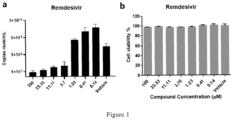
- Figure 1 shows that Remdesivir can effectively reduce the viral nucleic acid load in Vero E6 cells infected by SARS-CoV-2 virus.
- Figure 1 shows that Remdesivir can reduce the viral RNA load in the cells 48 hours after the cells were infected by SARS-CoV-2 virus, and the drug concentration of 33 ⁇ M can reduce the viral nucleic acid load by an order of magnitude.
- the ordinate is the copy number of viral RNA in the sample, and the abscissa is the drug concentration;
- (b) shows that the test cells were treated by Remdesivir at the test concentration for 48 hours, and no cytotoxicity was observed.
- the ordinate is the percentage of cell viability relative to the vehicle control group (only cells, no drug added), and the abscissa is the drug concentration.
- Example 1 Experiment of Remdesivir in reduction of viral nucleic acid load of cells infected by SARS-CoV-2 virus
- Vero E6 cells purchased from ATCC, Catalog No. 1586 were placed into a 24-well plate and incubated for 24 hours, then virus infection was carried out, specifically, SARS-CoV-2 (2019-nCoV) virus (nCoV-2019BetaCoV/Wuhan/WIV04/2019 strain, provided by Wuhan Institute of Virology, Chinese Academy of Sciences) was diluted with 2% cell maintenance solution (formulation: FBS (purchased from Gibco, Catalog No.: 16000044) was added to MEM (purchased from Gibco, Article No: 10370021) by a volume ratio of 2%, thereby obtaining the 2% cell maintenance solution) to corresponding concentration, and then added to the 24-well plate so that each well contained a viral load of 100TCID 50 .
- SARS-CoV-2 2019-nCoV virus
- MEM purchasedd from Gibco, Article No: 10370021
- the Remdesivir purchased from MedChemExpress, Catalog No.: HY-104077
- the Remdesivir was diluted with 2% cell maintenance solution to the corresponding concentrations and added to corresponding wells, so that the final drug concentrations were 100 ⁇ M, 33 ⁇ M, 11 ⁇ M, 3.7 ⁇ M, 1.23 ⁇ M, 0.41 ⁇ M, 0.14 ⁇ M, respectively, then the plate was put in 37°C, 5% CO 2 incubator and continuously cultured for 48h; and the vehicle control group was added with only 2% cell maintenance solution without any test drug.
- RNA extraction kit was purchased from Qiagen, Catalog No.: 74106.
- the consumptive materials spin column, RNase-free 2ml collection tube, etc.
- reagents RLT, RW1, RPE, RNase-free water, etc.
- the reverse transcription kit (PrimeScript TM RT reagent Kit with gDNA Eraser, Catalog No. RR047Q) produced by TaKaRa Company was used for RNA reverse transcription. The steps were as follows.
- Fluorescence quantitative PCR was used to detect the copy number per ml of the original virus solution.
- the reaction system was mixed using TB Green Premix (Takara, Cat#RR820A), and the amplification reaction and reading were carried out with StepOne Plus Real-time PCR instrument (brand: ABI). The copy number contained in per ml of the original virus solution was calculated. The steps were as follows:
- test compound at concentrations of 100 ⁇ M, 33 ⁇ M, 11.1 ⁇ M and 3.7 ⁇ M could effectively inhibit the replication of the SARS-CoV-2 virus genome in the infected supernatant (Table 1 and Figure 1 ) Table 1.
- Remdesivir Concentration ( ⁇ M) 100 33.33 11.11 3.70 1.23 0.41 0.14 Vehicle Virus genome copy number 9010444.
Landscapes
- Health & Medical Sciences (AREA)
- Life Sciences & Earth Sciences (AREA)
- Chemical & Material Sciences (AREA)
- General Health & Medical Sciences (AREA)
- Public Health (AREA)
- Veterinary Medicine (AREA)
- Animal Behavior & Ethology (AREA)
- Medicinal Chemistry (AREA)
- Pharmacology & Pharmacy (AREA)
- Virology (AREA)
- Organic Chemistry (AREA)
- Nuclear Medicine, Radiotherapy & Molecular Imaging (AREA)
- General Chemical & Material Sciences (AREA)
- Chemical Kinetics & Catalysis (AREA)
- Molecular Biology (AREA)
- Oncology (AREA)
- Communicable Diseases (AREA)
- Epidemiology (AREA)
- Bioinformatics & Cheminformatics (AREA)
- Engineering & Computer Science (AREA)
- Pulmonology (AREA)
- Biochemistry (AREA)
- Pharmaceuticals Containing Other Organic And Inorganic Compounds (AREA)
- Acyclic And Carbocyclic Compounds In Medicinal Compositions (AREA)
- Medicinal Preparation (AREA)
- Organic Low-Molecular-Weight Compounds And Preparation Thereof (AREA)
- Peptides Or Proteins (AREA)
- Agricultural Chemicals And Associated Chemicals (AREA)
Description
- The present application is based on and claims the benefit of priority from
Chinese application No. 202010071087.7, filed on January 21, 2020 - The present application relates to use of a substituted aminopropionate compound represented by the following Formula I, a geometric isomer, a pharmaceutically acceptable salt, a solvate and/or a hydrate thereof, and a pharmaceutical composition comprising the above compound for use in treating a SARS-CoV-2 infection.

- The substituted aminopropionate compound (Compound represented by Formula I), with chemical name of 2-ethylbutyl (2S)-2-[[[(2R,3S,4R,5R)-5-(4-aminopyrrolo[2,1-f][1,2,4]triazin-7-yl)-5-cyano-3,4-dihydroxyoxolan-2-yl]methoxy-phenoxyphosphoryl]amino]propanoate, also known as Remdesivir (GS-5734), is a viral RNA polymerase inhibitor, and its active form in vivo is a nucleoside triphosphate (NTP) of the parent drug. The phase III clinical trial of the drug compound for clinical treatment of Ebola virus infection has been now completed, and has shown good therapeutic effect on Ebola virus infection.
- Remdesivir has shown antiviral activity against various variants of EBOV and other filoviruses in cell-based assays. In the Ebola virus-infected rhesus monkey model, even if the treatment started three days after virus exposure (systemic viral RNA was detected in two of the six treated animals), the intravenous administration of 10 mg/kg of GS-5734 per day for consecutive 12 days could significantly inhibit the replication of EBOV, protect 100% EBOV-infected animals from death, and improve clinical signs and pathophysiological markers. In addition to Ebola virus, GS-5734 also has a broad-spectrum antiviral activity to viruses such as Nipah virus, Middle East Respiratory Syndrome Coronavirus (MERS-CoV), Marburg virus, etc.
- The 2019 novel Coronavirus (2019-nCoV) is a new coronavirus strain that has never been found in humans before. On February 11, 2020, the International Committee on Taxonomy Viruses (ICTV) announced that the official name of 2019 novel Coronavirus (2019-nCoV) is severe acute respiratory syndrome coronavirus 2 (SARS-CoV-2). On the same day, the World Health Organization (WHO) announced that the official name of the disease caused by this virus is COVID-19. The symptoms of SARS-CoV-2 virus infection are mainly pneumonia, and can be divided into simple infection, mild pneumonia, severe pneumonia, acute respiratory distress syndrome, sepsis, septic shock and so on according to the severity of disease. Patients with simple infection may have non-specific symptoms, such as fever, cough, sore throat, nasal congestion, fatigue, headache, muscle pain or discomfort, and the elderly people and immunosuppressed people may have atypical symptoms. Patients with mild pneumonia mainly have cough, dyspnea and polypnea. Severe pneumonia can be seen in adolescents, adults or children, and the main symptoms of which include increased breathing frequency, severe respiratory failure or dyspnea, central cyanosis, drowsiness, unconsciousness or convulsion, gasp, etc. The lung images of acute respiratory distress syndrome are bilateral ground glass shadows, which cannot be completely explained by effusion, lobar exudation or atelectasis or lung mass shadows, and the main symptom of which is pulmonary edema. Patients with sepsis often have fatal organ dysfunction, and the most critical patients are those with septic shock, and they may have a high probability of death.
- Anonymous: Gillings research on broad-spectrum antiviral could aid public health response to coronavirus outbreaks - UNC Gillings School of Global Public Health, 10 January 2020, discloses that remdesivir is effective against coronaviruses like SARS-CoV. Nature Portfolio Microbiology Community, "Preparing for future pandemics, today with broad-spectrum antivirals, Nature Portfolio Microbiology Community, 10 January 2020, discloses that remdesivir may be effective against the coronavirus. Sheahan T. et al, Science Translational Medicine, 2017, 9(396), eaal3653, relates to broad-spectrum antiviral GS-5734 inhibiting both epidemic and zoonontic coronaviruses. Agostini ML et al, MBIO, 2018, 9(2), 1-15 relates to coronavirus susceptibility to remdesivir being mediated by the viral polymerase and the proofreading exoribonuclease. Totura AL et al., Expert Opinion on Drug Discovery, 2019, 14(4), 397-412 relates to the discovery of broad-spectrum coronavirus antiviral drugs.
- At present, the SARS-CoV-2 virus infection is mainly treated with supportive therapy in clinic, and no antiviral drug is available.
- The purpose of the present application is to find a drug with antiviral activity against SARS-CoV-2, which can be used for the treatment of a related disease caused by the infection thereof. Through creative research, it is found in the present application that the compound represented by Formula I has the function of inhibiting the replication of SARS-CoV-2 and has a good potential therapeutic effect in the treatment of a disease caused by SARS-CoV-2.
- The present application relates to the compound represented by Formula I, a geometric isomer, a pharmaceutically acceptable salt and/or a solvate or a hydrate thereof,

- In some embodiments, the pharmaceutically acceptable salts of the compound represented by Formula I described herein include inorganic or organic acid salts and inorganic or organic base salts thereof. The present application relates to all forms of the above salts, including but not limited to: sodium salt, potassium salt, calcium salt, lithium salt, meglumine salt, hydrochloride salt, hydrobromide salt, hydroiodide salt, nitrate salt, sulfate, hydrogen sulfate, phosphate, hydrogen phosphate, acetate, propionate, butyrate, oxalate, pivalate, adipate, alginate, lactate, citrate, tartrate, succinate, maleate, fumarate, picrate, aspartate, gluconate, benzoate, methanesulfonate, ethanesulfonate, benzenesulfonate, p-toluenesulfonate and embonate and so on.
- The compound represented by Formula I can inhibit SARS-CoV-2 virus replication in cells and reduce the nucleic acid load of SARS-CoV-2 virus in cell culture.
- After creative invention research, the inventors of the present application have discovered new features of the compound represented by Formula I in cells: the compound represented by Formula I can reduce the viral nucleic acid load in cells infected by SARS-CoV-2 at micromolar concentration level.
- The present application thus relates to the compound represented by Formula I, a geometric isomer, a pharmaceutically acceptable salt, a solvate and/or a hydrate thereof for use for treating a disease or an infection (e.g., a respiratory disease (e.g., a simple infection (such as fever, cough and sore throat), pneumonia, acute respiratory infection, severe acute respiratory infection (SARI), hypoxic respiratory failure and acute respiratory distress syndrome, sepsis and septic shock, etc.)) caused by a SARS-CoV-2,

- The present application also relates to a pharmaceutical composition, which comprises the compound represented by Formula I, a geometric isomer, a pharmaceutically acceptable salt, a solvate and/or a hydrate thereof for use in treating a disease or an infection caused by a SARS-CoV-2.
- Preferably, the pharmaceutical composition further comprises a pharmaceutically acceptable carrier or excipient. Specifically, the pharmaceutical composition is a solid preparation, an injection, an external preparation, a spray, a liquid preparation, or a compound preparation.
- In some embodiments, the pharmaceutical composition comprises an effective amount of the compound represented by formula I, a geometric isomer, a pharmaceutically acceptable salt, a solvate and/or a hydrate thereof.
- The present application thus relates to the pharmaceutical composition comprising the compound represented by Formula I, a geometric isomer, a pharmaceutically acceptable salt, a solvate and/or a hydrate thereof for use for treating a disease or an infection caused by a SARS-CoV-2 (e.g., a respiratory disease (e.g., a simple infection (such as fever, cough and sore throat), pneumonia, acute respiratory infection, severe acute respiratory infection (SARI), hypoxic respiratory failure and acute respiratory distress syndrome, sepsis and septic shock, etc.)).
- The present application also relates to a pharmaceutical composition comprising the compound of Formula I, a geometric isomer, a pharmaceutically acceptable salt, a solvate and/or a hydrate thereof, or a compound represented by Formula I, a geometric isomer, a pharmaceutically acceptable salt, a solvate and/or a hydrate thereof for use in a method for treating and/or preventing a disease in a mammal in need, comprising administering to the mammal in need a therapeutically and/or prophylactically effective amount of the pharmaceutical composition comprising the compound of Formula I, a geometric isomer, a pharmaceutically acceptable salt, a solvate and/or a hydrate thereof or a compound of Formula I, a geometric isomer, a pharmaceutically acceptable salt, a solvate and/or a hydrate thereof, wherein the disease includes a disease caused by a SARS-CoV-2, such as a viral infectious disease caused by a SARS-CoV-2 (e.g., respiratory disease, including simple infection (such as fever, cough and sore throat, etc.), pneumonia, acute respiratory infection, severe acute respiratory infection (SARI), hypoxic respiratory failure and acute respiratory distress syndrome, sepsis and septic shock, etc.).
- The present application accordingly relates to the compound represented by Formula I, a geometric isomer, a pharmaceutically acceptable salt, a solvate and/or a hydrate thereof, for use in treating a disease or an infection (e.g., a respiratory disease (e.g., a simple infection such as fever, cough and sore throat), pneumonia, acute respiratory infection, severe acute respiratory infection (SARI), hypoxic respiratory failure and acute respiratory distress syndrome, sepsis and septic shock, etc.) caused by a SARS-CoV-2.
- The present application accordingly relates to the pharmaceutical composition comprising the compound represented by Formula I, a geometric isomer, a pharmaceutically acceptable salt, a solvate and/or a hydrate thereof, for use in treating a disease or an infection (e.g., a respiratory disease (e.g., a simple infection (such as fever, cough and sore throat), pneumonia, acute respiratory infection, severe acute respiratory infection (SARI), hypoxic respiratory failure and acute respiratory distress syndrome, sepsis and septic shock, etc.)) caused by a SARS-CoV-2.
- In some embodiments, the disease caused by SARS-CoV-2 described in the present application includes but is not limited to respiratory disease, such as simple infection (such as fever, cough and sore throat), pneumonia, acute respiratory infection, severe acute respiratory infection (SARI), hypoxic respiratory failure and acute respiratory distress syndrome, sepsis and septic shock.
- In some embodiments, the disease caused by SARS-CoV-2 described herein is COVID-19.
- In the present application, the official name of the term "2019 novel Coronavirus (2019-nCoV)" is severe acute respiratory syndrome coronavirus 2 (SARS-CoV-2).
- In the present application, the official name of the term "disease caused by 2019 novel Coronavirus (2019-nCoV)" is COVID-19.
- The pharmaceutical composition described in the present application can be prepared into various forms according to different administration routes.
- According to the present application, the pharmaceutical composition can be administered in any one of the following routes: oral administration, spray inhalation, rectal administration, nasal administration, buccal administration, vaginal administration, topical administration, parenteral administration such as subcutaneous, intravenous, intramuscular, intraperitoneal, intrathecal, intraventricular, intrasternal and intracranial injection or infusion, or administration with the help of an explant reservoir, wherein the preferred administration route is oral, intraperitoneal or intravenous.
- When orally administered, the compound represented by Formula I, a geometric isomer, a pharmaceutically acceptable salt, a solvate and/or a hydrate thereof can be prepared into any form of orally acceptable preparation, including but not limited to a tablet, a capsule, an aqueous solution or an aqueous suspension. The carrier for use in a tablet generally includes lactose and corn starch, and a lubricant such as magnesium stearate can also be added. The diluent for use in a capsule generally includes lactose and dry corn starch. The aqueous suspension is usually used by mixing an active ingredient with a suitable emulsifier and a suitable suspending agent. If necessary, a sweetener, a flavoring agent or a coloring agent can also be added to the above-mentioned forms of oral preparation.
- When rectally administered, the compound represented by Formula I, a geometric isomer, a pharmaceutically acceptable salt, a solvate, and/or a hydrate thereof can generally be prepared in a form of suppository, which is prepared by mixing the drug with a suitable non-irritating excipient. The excipient is present in solid state at room temperature, but melts at the rectal temperature to release the drug. Such excipient includes cocoa butter, beeswax and polyethylene glycol.
- When topically administered, especially for treatment of easily accessible affected-surface or organ, such as eye, skin, or lower intestinal neurological disease by topical application, the compound represented by Formula I, a geometric isomer, a pharmaceutically acceptable salt, a solvate and/or a hydrate thereof can be prepared in various forms of topical preparations according to different affected-surfaces or organs, the specific instructions are as follows:
When topically administered to eye, the compound represented by Formula I, a geometric isomer, a pharmaceutically acceptable salt, a solvate and/or a hydrate thereof can be formulated into a preparation form such as micronized suspension or solution, the carrier used is isotonic sterile saline with a certain pH, and a preservative such as benzyl chloride alkoxide may or may not be added. In addition, for administration to eye, the compound can also be prepared in a form of ointment such as vaseline ointment. - When topically administered to skin, the compound represented by Formula I, a geometric isomer, a pharmaceutically acceptable salts, a solvate and/or a hydrate thereof can be prepared into a suitable form such as an ointment, a lotion or a cream, in which the active ingredient is suspended or dissolved in one or more carriers. The carrier for use in an ointment includes, but is not limited to: mineral oil, liquid petrolatum, white petrolatum, propylene glycol, polyethylene oxide, polypropylene oxide, emulsifying wax, and water. The carrier for use in a lotion or a cream includes, but is not limited to: mineral oil, sorbitan monostearate, Tween-60, cetyl ester wax, hexadecenyl aryl alcohol, 2-octyldodecanol, benzyl alcohol and water.
- When topically administered to lower intestinal tract, the compound represented by Formula I, a geometric isomer, a pharmaceutically acceptable salt, a solvate and/or a hydrate thereof can be prepared into a form such as rectal suppository as described above or a suitable enema preparation form, in addition, a topical transdermal patch can also be used.
- The compound represented by Formula I, a geometric isomer, a pharmaceutically acceptable salt, a solvate and/or a hydrate thereof can also be administered in a preparation form of sterile injection, including sterile injectable aqueous solution or oil suspension, or sterile injectable solutions, wherein the usable carrier and solvent includes water, Ringer's solution and isotonic sodium chloride solution. In addition, a sterilized non-volatile oil such as monoglyceride or diglyceride can also be used as solvent or suspension media.
- The drugs of the above various preparation forms can be prepared according to conventional methods in the pharmaceutical field.
- In the present application, the term "therapeutically effective amount" or "prophylactically effective amount" refers to an amount that is sufficient to treat or prevent a patient's disease but is sufficiently low to avoid serious side effects (at a reasonable benefit/risk ratio) within a reasonable medical judgment. The therapeutically effective amount of the compound will change according to the factors such as the selected specific compound (e.g., considering the efficacy, effectiveness, and half-life of compound), the selected administration route, the treated disease, the severity of the treated disease, the patient's age, size, weight and physical disease, medical history, duration of treatment, nature of concurrent therapy, desired therapeutic effect, etc., but can still be routinely determined by those skilled in the art.
- In addition, it should be noted that the specific dosage and method of using the compound represented by Formula I, a geometric isomer, a pharmaceutically acceptable salt, a solvate and/or a hydrate thereof for different patients depends on many factors, including the patient's age, weight, gender, natural health status, nutritional status, active strength of drug, administration time, metabolic rate, severity of disease, and subjective judgment of physician. Herein it is preferred to use a dosage between 0.001-1000 mg/kg body weight/day.
-
Figure 1 shows that Remdesivir can effectively reduce the viral nucleic acid load in Vero E6 cells infected by SARS-CoV-2 virus. InFigure 1, (a) shows that Remdesivir can reduce the viral RNA load in the cells 48 hours after the cells were infected by SARS-CoV-2 virus, and the drug concentration of 33 µM can reduce the viral nucleic acid load by an order of magnitude. The ordinate is the copy number of viral RNA in the sample, and the abscissa is the drug concentration; (b) shows that the test cells were treated by Remdesivir at the test concentration for 48 hours, and no cytotoxicity was observed. The ordinate is the percentage of cell viability relative to the vehicle control group (only cells, no drug added), and the abscissa is the drug concentration. - The following examples are illustrative preferred embodiments of the present application.
- Vero E6 cells (purchased from ATCC, Catalog No. 1586) were placed into a 24-well plate and incubated for 24 hours, then virus infection was carried out, specifically, SARS-CoV-2 (2019-nCoV) virus (nCoV-2019BetaCoV/Wuhan/WIV04/2019 strain, provided by Wuhan Institute of Virology, Chinese Academy of Sciences) was diluted with 2% cell maintenance solution (formulation: FBS (purchased from Gibco, Catalog No.: 16000044) was added to MEM (purchased from Gibco, Article No: 10370021) by a volume ratio of 2%, thereby obtaining the 2% cell maintenance solution) to corresponding concentration, and then added to the 24-well plate so that each well contained a viral load of 100TCID50. Next, the Remdesivir (purchased from MedChemExpress, Catalog No.: HY-104077) was diluted with 2% cell maintenance solution to the corresponding concentrations and added to corresponding wells, so that the final drug concentrations were 100 µM, 33 µM, 11 µM, 3.7 µM, 1.23µM, 0.41µM, 0.14µM, respectively, then the plate was put in 37°C, 5% CO2 incubator and continuously cultured for 48h; and the vehicle control group was added with only 2% cell maintenance solution without any test drug.
- The RNA extraction kit was purchased from Qiagen, Catalog No.: 74106. The consumptive materials (spin column, RNase-free 2ml collection tube, etc.) and reagents (RLT, RW1, RPE, RNase-free water, etc.) involved in the following RNA extraction steps were all parts of the kit. The following extraction steps were all recommended by the kit instructions.
- 1) 100 µL of the supernatant was taken from the test plate, added to a nuclease-free EP tube, then added with 350 µL of Buffer RLT, mixed with a transfer liquid gun to make it fully lysed, and centrifuged to take the supernatant;
- 2) the supernatant obtained in step 1) was added with an equal volume of 70% ethanol and mixed well;
- 3) the mixed solution obtained in step 2) above was transferred to a RNase-free spin column, centrifuged at 12000 rpm for 15s, and the waste liquid was discarded;
- 4) 700µL of Buffer RW1 was added to the spin column, then centrifugation was carried out at 12000 rpm for 15s to clean the spin column, and the waste liquid was discarded;
- 5) 500µL of Buffer RPE was added to the spin column, then centrifugation was carried out at 12000 rpm for 15s to clean the spin column, and the waste liquid was discarded;
- 6) 500µL of Buffer RPE was added to the spin column, then centrifugation was carried out at 12000 rpm for 2min to clean the spin column, and the waste liquid was discarded;
- 7) the spin column was placed in a new RNase-free 2 ml collection tube, and centrifugation was carried out at 12000 rpm for 1 min to dry the spin column, and then the entire spin column was transferred to the 1.5 ml collection tube of step 8);
- 8) the spin column dried in step 7) was placed in a new 1.5ml collection tube, added with 30µl of RNase-free water, and centrifuged at 12000 rpm for 2min, the obtained eluent contained the corresponding RNA, was added with RNase inhibitor (purchased from NEB, Catalog No.: M0314L), and detected with Nano Drop (purchased from Thermo scientific, Nano Drop One) to determine each RNA concentration.
- In the experiment, the reverse transcription kit (PrimeScript™ RT reagent Kit with gDNA Eraser, Catalog No. RR047Q) produced by TaKaRa Company was used for RNA reverse transcription. The steps were as follows.
- ① gDNA removal: RNA samples from each experimental group were collected, and 1 µg thereof was taken and subjected to reverse transcription. First, 2 µl of 5× gDNA Eraser Buffer was added to the RNA sample of each experimental group, the reaction system was supplemented with RNase Free water to 10 µl, mixed well, and subjected to 42 °C water bath for 2 min to remove the gDNA that might exist in the sample;
- ② Reverse transcription: the sample obtained in ① was added with appropriate amounts of enzyme, primer Mix and reaction buffer, supplemented with RNase Free water to a volume of 20 µl, reacted under 37°C water bath for 15 min, then put in 85°C water bath for 5 sec, thereby obtaining cDNA via transcription.
- Fluorescence quantitative PCR was used to detect the copy number per ml of the original virus solution.
- The reaction system was mixed using TB Green Premix (Takara, Cat#RR820A), and the amplification reaction and reading were carried out with StepOne Plus Real-time PCR instrument (brand: ABI). The copy number contained in per ml of the original virus solution was calculated. The steps were as follows:
- ① Establishment of standard product: the plasmid pMT-RBD (the plasmid was provided by Wuhan Institute of Virology, Chinese Academy of Sciences) was diluted to 5×10⁸ copies/µL, 5×10⁷ copies/µL, 5×10⁶ copies/µL, 5×10⁵ copies/µL, 5×10⁴ copies/µL, 5×10³ copies/µL, 5×10² copies/µL. 2 µL standard or cDNA template was taken for qPCR reaction.
- ② The sequences of primers used in the experiment were as follows (all indicated in 5'-3' direction):
- RBD-qF: CAATGGTTTAACAGGCACAGG
- RBD-qR: CTCAAGTGTCTGTGGATCACG
- ③ The reaction procedure was as follows:
- Pre-denaturation: 95 °C for 5 minutes;
- Cycle parameters: 95 °C for 15 seconds, 54 °C for 15 seconds, 72 °C for 30 seconds, for a total of 40 cycles.
- (5) Cytotoxicity test of drug
The detection of the drug cytotoxicity was performed using CCK-8 kit (Beoytime). Specific steps were as follows:- ① 1×10⁴ Vero E6 (ATCC) cells were placed in a 96-well plate and incubated at 37°C for 8 hours.
- ② The drug was diluted with DMSO to an appropriate concentration of mother liquor, and then diluted with MEM medium (purchased from Gibco, Catalog No. 10370021) containing 2% FBS (purchased from Gibco, Catalog No. 16000044) to the same concentration as that for the drug treatment. The original medium in the 96-well plate was discarded, 100 µL of drug-containing MEM medium was added to the cells, and three replicate wells were prepared for each concentration. Vehicle control (DMSO and medium were added to the cell wells, without adding drug) and blank control (DMSO and medium were added to the wells, without cells) were set up. After the drug was added, the cells were cultured at 37°C for 48 hours.
- ③ 20 µL of CCK-8 solution (Beoytime) was added to the well to be tested, mixed gently, without generating bubbles, and continuously incubated at 37 °C for 2 hours. OD450 was read on a microplate reader (purchased from Molecular Devices, Model: SpectraMax M5), and cell viability was calculated:

- (6) Experimental results
- The results of the virus proliferation inhibition experiment showed that the test compound at concentrations of 100 µM, 33 µM, 11.1 µM and 3.7 µM could effectively inhibit the replication of the SARS-CoV-2 virus genome in the infected supernatant (Table 1 and
Figure 1 )Table 1. In vitro antiviral test of the test compound (Remdesivir) Concentration (µM) 100 33.33 11.11 3.70 1.23 0.41 0.14 Vehicle Virus genome copy number 9010444. 5±22822 39.02 1242973 2±18125 81.22 1630851 6.5±1475 181.58 2028751 2.5±1308 4251.56 8792736 50.5±189 609425.3 2 1751863 138.5±11 1506981 2.46 6120820 311.5±28 8672855 1.13 5108150 26±1805 18414.22 - The cytotoxicity test results showed that the treatment of the test compound (Remdesivir) did not change the cell viability at all test concentrations, that was, the test compound had no toxic effect on the cells at all concentrations (Table 2 and
Figure 1 ).Table 2. Cytotoxicity test results of the test compound (Remdesivir) Concentration (µM) 100 33.33 11.11 3.70 1.23 0.41 0.14 Vehicle Cell viability (% of vehicle control) 97.70± 0.76 99.06± 0.41 97.05± 1.12 97.40± 0.41 97.88± 1.12 100.76± 1.17 100.97± 2.61 100.19± 2.62
Claims (11)
- A compound represented by Formula I, a geometric isomer, a pharmaceutically acceptable salt, a solvate and/or a hydrate thereof,

- The compound represented by Formula I, a geometric isomer, a pharmaceutically acceptable salt, a solvate and/or a hydrate thereof for use according to claim 1, wherein the disease caused by a SARS-CoV-2 is a respiratory disease.
- The compound represented by Formula I, a geometric isomer, a pharmaceutically acceptable salt, a solvate and/or a hydrate thereof for use according to claim 1, wherein the disease caused by a SARS-CoV-2 is simple infection, pneumonia, acute respiratory tract infection, severe acute respiratory infection (SARI), hypoxic respiratory failure, acute respiratory distress syndrome, sepsis or septic shock.
- The compound represented by Formula I, a geometric isomer, a pharmaceutically acceptable salt, a solvate and/or a hydrate thereof for use according to claim 3, wherein the simple infection is fever, cough and/or sore throat.
- The compound, a geometric isomer, a pharmaceutically acceptable salt, a solvate and/or a hydrate thereof for use according to claim 1, wherein the disease caused by a SARS-CoV-2 is COVID-19.
- A pharmaceutical composition for use in treating a disease or an infection caused by a SARS-CoV-2, wherein the pharmaceutical composition comprises a compound represented by Formula I, a geometric isomer, a pharmaceutically acceptable salt, a solvate and/or a hydrate thereof,

- The pharmaceutical composition for use according to claim 6, wherein the disease caused by a SARS-CoV-2 is a respiratory disease.
- The pharmaceutical composition for use according to claim 6, wherein the disease caused by a SARS-CoV-2 is simple infection, pneumonia, acute respiratory tract infection, severe acute respiratory infection (SARI), hypoxic respiratory failure, acute respiratory distress syndrome, sepsis or septic shock.
- The pharmaceutical composition for use according to claim 8, wherein the simple infection is fever, cough and/or sore throat.
- The pharmaceutical composition for use according to any one of claims 6-9, wherein the pharmaceutical composition further comprises a pharmaceutically acceptable carrier or excipient,
preferably, wherein the pharmaceutical composition is a solid preparation, an injection, an external preparation, a spray, a liquid preparation, or a compound preparation. - The pharmaceutical composition for use according to claim 6, wherein the disease caused by a SARS-CoV-2 is COVID-19.
Applications Claiming Priority (1)
| Application Number | Priority Date | Filing Date | Title |
|---|---|---|---|
| CN202010071087.7A CN111265532A (en) | 2020-01-21 | 2020-01-21 | Application of substituted aminopropionate compounds in the treatment of 2019-nCoV infection |
Publications (3)
| Publication Number | Publication Date |
|---|---|
| EP3854403A1 EP3854403A1 (en) | 2021-07-28 |
| EP3854403C0 EP3854403C0 (en) | 2025-06-18 |
| EP3854403B1 true EP3854403B1 (en) | 2025-06-18 |
Family
ID=70992321
Family Applications (1)
| Application Number | Title | Priority Date | Filing Date |
|---|---|---|---|
| EP20202229.9A Active EP3854403B1 (en) | 2020-01-21 | 2020-10-16 | Use of substituted aminopropionate compounds in treatment of sars-cov-2 infection |
Country Status (9)
| Country | Link |
|---|---|
| US (2) | US20210220377A1 (en) |
| EP (1) | EP3854403B1 (en) |
| JP (2) | JP7847940B2 (en) |
| CN (2) | CN111265532A (en) |
| EA (1) | EA202092169A1 (en) |
| ES (1) | ES3035833T3 (en) |
| TW (1) | TWI805952B (en) |
| UY (1) | UY39029A (en) |
| WO (1) | WO2021147236A1 (en) |
Families Citing this family (18)
| Publication number | Priority date | Publication date | Assignee | Title |
|---|---|---|---|---|
| ES2524356T3 (en) | 2010-07-22 | 2014-12-05 | Gilead Sciences, Inc. | Methods and compounds to treat infections caused by Paramyxoviridae virus |
| TWI740546B (en) | 2014-10-29 | 2021-09-21 | 美商基利科學股份有限公司 | Methods for the preparation of ribosides |
| HRP20220355T1 (en) | 2015-09-16 | 2022-05-13 | Gilead Sciences, Inc. | Methods for treating coronaviridae infections |
| CN116036112A (en) | 2017-03-14 | 2023-05-02 | 吉利德科学公司 | Methods of Treating Feline Coronavirus Infection |
| WO2018204198A1 (en) | 2017-05-01 | 2018-11-08 | Gilead Sciences, Inc. | Crystalline forms of (s) 2 ethylbutyl 2 (((s) (((2r,3s,4r,5r) 5 (4 aminopyrrolo[2,1-f] [1,2,4]triazin-7-yl)-5-cyano-3,4-dihydroxytetrahydrofuran-2 yl)methoxy)(phenoxy) phosphoryl)amino)propanoate |
| EP4512475A3 (en) | 2017-07-11 | 2025-05-14 | Gilead Sciences, Inc. | Compositions comprising an rna polymerase inhibitor and cyclodextrin for treating viral infections |
| CN111265532A (en) * | 2020-01-21 | 2020-06-12 | 中国人民解放军军事科学院军事医学研究院 | Application of substituted aminopropionate compounds in the treatment of 2019-nCoV infection |
| CN111265528A (en) | 2020-01-21 | 2020-06-12 | 中国人民解放军军事科学院军事医学研究院 | Application of Favipiravir in treatment of coronavirus infection |
| AU2021214911A1 (en) * | 2020-01-27 | 2022-07-21 | Gilead Sciences, Inc. | Methods for treating SARS CoV-2 infections |
| CN118994170A (en) | 2020-03-12 | 2024-11-22 | 吉利德科学公司 | Process for preparing 1' -cyanonucleosides |
| EP4132651B1 (en) | 2020-04-06 | 2026-03-18 | Gilead Sciences, Inc. | Inhalation formulations of 1'-cyano substituted carbanucleoside analogs |
| ES3041698T3 (en) | 2020-05-29 | 2025-11-13 | Gilead Sciences Inc | Remdesivir for the treatment of viral infections |
| CA3187821A1 (en) * | 2020-06-24 | 2021-12-30 | Gilead Sciences, Inc. | 1'-cyano nucleoside analogs and uses thereof |
| WO2022047065A2 (en) | 2020-08-27 | 2022-03-03 | Gilead Sciences, Inc. | Compounds and methods for treatment of viral infections |
| CN112142810A (en) * | 2020-09-29 | 2020-12-29 | 佛山科学技术学院 | Nucleotide double-phosphoramidate compound, pharmaceutical composition thereof, preparation method and application thereof |
| CN112300236A (en) * | 2020-10-21 | 2021-02-02 | 佛山科学技术学院 | Nucleotide mixed phosphoramidate compound, its pharmaceutical composition and its application |
| TW202525810A (en) | 2022-03-02 | 2025-07-01 | 美商基利科學股份有限公司 | Compounds and methods for treatment of viral infections |
| US12357577B1 (en) | 2024-02-02 | 2025-07-15 | Gilead Sciences, Inc. | Pharmaceutical formulations and uses thereof |
Family Cites Families (3)
| Publication number | Priority date | Publication date | Assignee | Title |
|---|---|---|---|---|
| HRP20220355T1 (en) * | 2015-09-16 | 2022-05-13 | Gilead Sciences, Inc. | Methods for treating coronaviridae infections |
| WO2018204198A1 (en) * | 2017-05-01 | 2018-11-08 | Gilead Sciences, Inc. | Crystalline forms of (s) 2 ethylbutyl 2 (((s) (((2r,3s,4r,5r) 5 (4 aminopyrrolo[2,1-f] [1,2,4]triazin-7-yl)-5-cyano-3,4-dihydroxytetrahydrofuran-2 yl)methoxy)(phenoxy) phosphoryl)amino)propanoate |
| CN111265532A (en) * | 2020-01-21 | 2020-06-12 | 中国人民解放军军事科学院军事医学研究院 | Application of substituted aminopropionate compounds in the treatment of 2019-nCoV infection |
-
2020
- 2020-01-21 CN CN202010071087.7A patent/CN111265532A/en active Pending
- 2020-06-22 CN CN202010573430.8A patent/CN111494396B/en active Active
- 2020-06-22 WO PCT/CN2020/097421 patent/WO2021147236A1/en not_active Ceased
- 2020-10-13 EA EA202092169A patent/EA202092169A1/en unknown
- 2020-10-13 TW TW109135327A patent/TWI805952B/en active
- 2020-10-14 US US17/070,271 patent/US20210220377A1/en not_active Abandoned
- 2020-10-14 JP JP2020172950A patent/JP7847940B2/en active Active
- 2020-10-16 ES ES20202229T patent/ES3035833T3/en active Active
- 2020-10-16 EP EP20202229.9A patent/EP3854403B1/en active Active
-
2021
- 2021-01-21 UY UY0001039029A patent/UY39029A/en unknown
- 2021-07-16 US US17/378,415 patent/US20210346411A1/en active Pending
-
2023
- 2023-11-01 JP JP2023187635A patent/JP2024020274A/en not_active Withdrawn
Also Published As
| Publication number | Publication date |
|---|---|
| EP3854403C0 (en) | 2025-06-18 |
| WO2021147236A9 (en) | 2021-09-16 |
| CN111494396B (en) | 2021-06-15 |
| US20210346411A1 (en) | 2021-11-11 |
| EP3854403A1 (en) | 2021-07-28 |
| JP2021116295A (en) | 2021-08-10 |
| ES3035833T3 (en) | 2025-09-10 |
| WO2021147236A1 (en) | 2021-07-29 |
| TW202128186A (en) | 2021-08-01 |
| US20210220377A1 (en) | 2021-07-22 |
| UY39029A (en) | 2021-03-26 |
| TWI805952B (en) | 2023-06-21 |
| EA202092169A1 (en) | 2021-07-30 |
| CN111494396A (en) | 2020-08-07 |
| JP7847940B2 (en) | 2026-04-20 |
| CN111265532A (en) | 2020-06-12 |
| JP2024020274A (en) | 2024-02-14 |
Similar Documents
| Publication | Publication Date | Title |
|---|---|---|
| EP3854403A1 (en) | Use of substituted aminopropionate compounds in treatment of sars-cov-2 infection | |
| EP3854398B1 (en) | Favipiravir for use in the treatment of coronavirus infection | |
| EP4186496B1 (en) | Application of cannabidiol in treatment of coronavirus infections | |
| EP4101449A1 (en) | Application of nitazoxanide and active form thereof, tizoxanide, in treatment of sars-cov-2 infection | |
| EP4094758A1 (en) | Use of benzoate compound in treatment of sars-cov-2 infections | |
| EP4205739A1 (en) | Application of artemisinin compound in treatment of coronavirus infection | |
| EP4101452A1 (en) | Use of 4-aminoquinoline compound in treatment of coronavirus infection | |
| EP4101450A1 (en) | Application of ritonavir in treating sars-cov-2 infection | |
| EA046990B1 (en) | USE OF SUBSTITUTED AMINOPROPIONATE COMPOUNDS IN THE TREATMENT OF SARS-COV-2 INFECTION | |
| HK40031254A (en) | Use of substituted aminopropionate compounds in manufacture of a medicament for the treatment of sars-cov-2 infection | |
| HK40031254B (en) | Use of substituted aminopropionate compounds in manufacture of a medicament for the treatment of sars-cov-2 infection | |
| HK40085142B (en) | Application of cannabidiol in treatment of coronavirus infections | |
| HK40085142A (en) | Application of cannabidiol in treatment of coronavirus infections | |
| EA047956B1 (en) | USE OF FAVIPIRAVIR IN THE TREATMENT OF CORONAVIRUS INFECTION | |
| RU2763024C1 (en) | Mefloquine and combinations thereof for treating and preventing a coronavirus infection |
Legal Events
| Date | Code | Title | Description |
|---|---|---|---|
| PUAI | Public reference made under article 153(3) epc to a published international application that has entered the european phase |
Free format text: ORIGINAL CODE: 0009012 |
|
| STAA | Information on the status of an ep patent application or granted ep patent |
Free format text: STATUS: THE APPLICATION HAS BEEN PUBLISHED |
|
| AK | Designated contracting states |
Kind code of ref document: A1 Designated state(s): AL AT BE BG CH CY CZ DE DK EE ES FI FR GB GR HR HU IE IS IT LI LT LU LV MC MK MT NL NO PL PT RO RS SE SI SK SM TR |
|
| STAA | Information on the status of an ep patent application or granted ep patent |
Free format text: STATUS: REQUEST FOR EXAMINATION WAS MADE |
|
| 17P | Request for examination filed |
Effective date: 20220127 |
|
| RBV | Designated contracting states (corrected) |
Designated state(s): AL AT BE BG CH CY CZ DE DK EE ES FI FR GB GR HR HU IE IS IT LI LT LU LV MC MK MT NL NO PL PT RO RS SE SI SK SM TR |
|
| STAA | Information on the status of an ep patent application or granted ep patent |
Free format text: STATUS: EXAMINATION IS IN PROGRESS |
|
| 17Q | First examination report despatched |
Effective date: 20230731 |
|
| GRAP | Despatch of communication of intention to grant a patent |
Free format text: ORIGINAL CODE: EPIDOSNIGR1 |
|
| STAA | Information on the status of an ep patent application or granted ep patent |
Free format text: STATUS: GRANT OF PATENT IS INTENDED |
|
| INTG | Intention to grant announced |
Effective date: 20250325 |
|
| GRAS | Grant fee paid |
Free format text: ORIGINAL CODE: EPIDOSNIGR3 |
|
| GRAA | (expected) grant |
Free format text: ORIGINAL CODE: 0009210 |
|
| STAA | Information on the status of an ep patent application or granted ep patent |
Free format text: STATUS: THE PATENT HAS BEEN GRANTED |
|
| AK | Designated contracting states |
Kind code of ref document: B1 Designated state(s): AL AT BE BG CH CY CZ DE DK EE ES FI FR GB GR HR HU IE IS IT LI LT LU LV MC MK MT NL NO PL PT RO RS SE SI SK SM TR |
|
| REG | Reference to a national code |
Ref country code: DE Ref legal event code: R026 Ref document number: 602020052850 Country of ref document: DE Ref country code: GB Ref legal event code: FG4D |
|
| PLBI | Opposition filed |
Free format text: ORIGINAL CODE: 0009260 |
|
| REG | Reference to a national code |
Ref country code: CH Ref legal event code: EP |
|
| REG | Reference to a national code |
Ref country code: DE Ref legal event code: R096 Ref document number: 602020052850 Country of ref document: DE |
|
| REG | Reference to a national code |
Ref country code: CH Ref legal event code: EP |
|
| REG | Reference to a national code |
Ref country code: IE Ref legal event code: FG4D |
|
| 26 | Opposition filed |
Opponent name: GILEAD SCIENCES, INC. Effective date: 20250618 |
|
| U01 | Request for unitary effect filed |
Effective date: 20250717 |
|
| U07 | Unitary effect registered |
Designated state(s): AT BE BG DE DK EE FI FR IT LT LU LV MT NL PT RO SE SI Effective date: 20250723 |
|
| REG | Reference to a national code |
Ref country code: ES Ref legal event code: FG2A Ref document number: 3035833 Country of ref document: ES Kind code of ref document: T3 Effective date: 20250910 |
|
| PG25 | Lapsed in a contracting state [announced via postgrant information from national office to epo] |
Ref country code: NO Free format text: LAPSE BECAUSE OF FAILURE TO SUBMIT A TRANSLATION OF THE DESCRIPTION OR TO PAY THE FEE WITHIN THE PRESCRIBED TIME-LIMIT Effective date: 20250918 Ref country code: GR Free format text: LAPSE BECAUSE OF FAILURE TO SUBMIT A TRANSLATION OF THE DESCRIPTION OR TO PAY THE FEE WITHIN THE PRESCRIBED TIME-LIMIT Effective date: 20250919 |
|
| U30 | Action lodged before the upc [information provided by the upc] |
Free format text: ACTION-TYPE: REVOCATION ACTION; CASE-NUMBER: ACT_29152/2025 Effective date: 20250618 |
|
| PGFP | Annual fee paid to national office [announced via postgrant information from national office to epo] |
Ref country code: GB Payment date: 20250925 Year of fee payment: 6 |
|
| PG25 | Lapsed in a contracting state [announced via postgrant information from national office to epo] |
Ref country code: HR Free format text: LAPSE BECAUSE OF FAILURE TO SUBMIT A TRANSLATION OF THE DESCRIPTION OR TO PAY THE FEE WITHIN THE PRESCRIBED TIME-LIMIT Effective date: 20250618 |
|
| PG25 | Lapsed in a contracting state [announced via postgrant information from national office to epo] |
Ref country code: RS Free format text: LAPSE BECAUSE OF FAILURE TO SUBMIT A TRANSLATION OF THE DESCRIPTION OR TO PAY THE FEE WITHIN THE PRESCRIBED TIME-LIMIT Effective date: 20250918 |
|
| PGFP | Annual fee paid to national office [announced via postgrant information from national office to epo] |
Ref country code: IE Payment date: 20250923 Year of fee payment: 6 |
|
| REG | Reference to a national code |
Ref country code: CH Ref legal event code: U11 Free format text: ST27 STATUS EVENT CODE: U-0-0-U10-U11 (AS PROVIDED BY THE NATIONAL OFFICE) Effective date: 20251101 |
|
| U20 | Renewal fee for the european patent with unitary effect paid |
Year of fee payment: 6 Effective date: 20251008 |
|
| PG25 | Lapsed in a contracting state [announced via postgrant information from national office to epo] |
Ref country code: IS Free format text: LAPSE BECAUSE OF FAILURE TO SUBMIT A TRANSLATION OF THE DESCRIPTION OR TO PAY THE FEE WITHIN THE PRESCRIBED TIME-LIMIT Effective date: 20251018 |
|
| PG25 | Lapsed in a contracting state [announced via postgrant information from national office to epo] |
Ref country code: SM Free format text: LAPSE BECAUSE OF FAILURE TO SUBMIT A TRANSLATION OF THE DESCRIPTION OR TO PAY THE FEE WITHIN THE PRESCRIBED TIME-LIMIT Effective date: 20250618 |
|
| PGFP | Annual fee paid to national office [announced via postgrant information from national office to epo] |
Ref country code: TR Payment date: 20251008 Year of fee payment: 6 |
|
| PGFP | Annual fee paid to national office [announced via postgrant information from national office to epo] |
Ref country code: CH Payment date: 20251101 Year of fee payment: 6 |
|
| PG25 | Lapsed in a contracting state [announced via postgrant information from national office to epo] |
Ref country code: CZ Free format text: LAPSE BECAUSE OF FAILURE TO SUBMIT A TRANSLATION OF THE DESCRIPTION OR TO PAY THE FEE WITHIN THE PRESCRIBED TIME-LIMIT Effective date: 20250618 |
|
| PG25 | Lapsed in a contracting state [announced via postgrant information from national office to epo] |
Ref country code: PL Free format text: LAPSE BECAUSE OF FAILURE TO SUBMIT A TRANSLATION OF THE DESCRIPTION OR TO PAY THE FEE WITHIN THE PRESCRIBED TIME-LIMIT Effective date: 20250618 |
|
| PG25 | Lapsed in a contracting state [announced via postgrant information from national office to epo] |
Ref country code: SK Free format text: LAPSE BECAUSE OF FAILURE TO SUBMIT A TRANSLATION OF THE DESCRIPTION OR TO PAY THE FEE WITHIN THE PRESCRIBED TIME-LIMIT Effective date: 20250618 |
|
| PGFP | Annual fee paid to national office [announced via postgrant information from national office to epo] |
Ref country code: ES Payment date: 20251105 Year of fee payment: 6 |
|
| PLAB | Opposition data, opponent's data or that of the opponent's representative modified |
Free format text: ORIGINAL CODE: 0009299OPPO |
|
| REG | Reference to a national code |
Ref country code: CH Ref legal event code: L10 Free format text: ST27 STATUS EVENT CODE: U-0-0-L10-L00 (AS PROVIDED BY THE NATIONAL OFFICE) Effective date: 20260325 |
|
| PLAX | Notice of opposition and request to file observation + time limit sent |
Free format text: ORIGINAL CODE: EPIDOSNOBS2 |
|
| R26 | Opposition filed (corrected) |
Opponent name: GILEAD SCIENCES, INC. Effective date: 20250618 |