EP3852423A1 - Beam failure recovery method and apparatus and terminal - Google Patents
Beam failure recovery method and apparatus and terminal Download PDFInfo
- Publication number
- EP3852423A1 EP3852423A1 EP19885501.7A EP19885501A EP3852423A1 EP 3852423 A1 EP3852423 A1 EP 3852423A1 EP 19885501 A EP19885501 A EP 19885501A EP 3852423 A1 EP3852423 A1 EP 3852423A1
- Authority
- EP
- European Patent Office
- Prior art keywords
- time point
- terminal device
- bfr procedure
- target duration
- beam failure
- Prior art date
- Legal status (The legal status is an assumption and is not a legal conclusion. Google has not performed a legal analysis and makes no representation as to the accuracy of the status listed.)
- Granted
Links
Images
Classifications
-
- H—ELECTRICITY
- H04—ELECTRIC COMMUNICATION TECHNIQUE
- H04W—WIRELESS COMMUNICATION NETWORKS
- H04W24/00—Supervisory, monitoring or testing arrangements
- H04W24/04—Arrangements for maintaining operational condition
-
- H—ELECTRICITY
- H04—ELECTRIC COMMUNICATION TECHNIQUE
- H04B—TRANSMISSION
- H04B7/00—Radio transmission systems, i.e. using radiation field
- H04B7/02—Diversity systems; Multi-antenna system, i.e. transmission or reception using multiple antennas
- H04B7/04—Diversity systems; Multi-antenna system, i.e. transmission or reception using multiple antennas using two or more spaced independent antennas
- H04B7/06—Diversity systems; Multi-antenna system, i.e. transmission or reception using multiple antennas using two or more spaced independent antennas at the transmitting station
- H04B7/0686—Hybrid systems, i.e. switching and simultaneous transmission
- H04B7/0695—Hybrid systems, i.e. switching and simultaneous transmission using beam selection
- H04B7/06952—Selecting one or more beams from a plurality of beams, e.g. beam training, management or sweeping
- H04B7/06964—Re-selection of one or more beams after beam failure
-
- H—ELECTRICITY
- H04—ELECTRIC COMMUNICATION TECHNIQUE
- H04B—TRANSMISSION
- H04B7/00—Radio transmission systems, i.e. using radiation field
- H04B7/02—Diversity systems; Multi-antenna system, i.e. transmission or reception using multiple antennas
- H04B7/04—Diversity systems; Multi-antenna system, i.e. transmission or reception using multiple antennas using two or more spaced independent antennas
- H04B7/08—Diversity systems; Multi-antenna system, i.e. transmission or reception using multiple antennas using two or more spaced independent antennas at the receiving station
- H04B7/0882—Diversity systems; Multi-antenna system, i.e. transmission or reception using multiple antennas using two or more spaced independent antennas at the receiving station using post-detection diversity
- H04B7/0888—Diversity systems; Multi-antenna system, i.e. transmission or reception using multiple antennas using two or more spaced independent antennas at the receiving station using post-detection diversity with selection
-
- H—ELECTRICITY
- H04—ELECTRIC COMMUNICATION TECHNIQUE
- H04W—WIRELESS COMMUNICATION NETWORKS
- H04W56/00—Synchronisation arrangements
- H04W56/004—Synchronisation arrangements compensating for timing error of reception due to propagation delay
- H04W56/0045—Synchronisation arrangements compensating for timing error of reception due to propagation delay compensating for timing error by altering transmission time
-
- H—ELECTRICITY
- H04—ELECTRIC COMMUNICATION TECHNIQUE
- H04W—WIRELESS COMMUNICATION NETWORKS
- H04W76/00—Connection management
- H04W76/10—Connection setup
- H04W76/19—Connection re-establishment
-
- H—ELECTRICITY
- H04—ELECTRIC COMMUNICATION TECHNIQUE
- H04W—WIRELESS COMMUNICATION NETWORKS
- H04W76/00—Connection management
- H04W76/20—Manipulation of established connections
- H04W76/28—Discontinuous transmission [DTX]; Discontinuous reception [DRX]
-
- H—ELECTRICITY
- H04—ELECTRIC COMMUNICATION TECHNIQUE
- H04W—WIRELESS COMMUNICATION NETWORKS
- H04W16/00—Network planning, e.g. coverage or traffic planning tools; Network deployment, e.g. resource partitioning or cells structures
- H04W16/24—Cell structures
- H04W16/28—Cell structures using beam steering
-
- H—ELECTRICITY
- H04—ELECTRIC COMMUNICATION TECHNIQUE
- H04W—WIRELESS COMMUNICATION NETWORKS
- H04W74/00—Wireless channel access
- H04W74/08—Non-scheduled access, e.g. ALOHA
- H04W74/0833—Random access procedures, e.g. with 4-step access
-
- H—ELECTRICITY
- H04—ELECTRIC COMMUNICATION TECHNIQUE
- H04W—WIRELESS COMMUNICATION NETWORKS
- H04W74/00—Wireless channel access
- H04W74/08—Non-scheduled access, e.g. ALOHA
- H04W74/0833—Random access procedures, e.g. with 4-step access
- H04W74/0838—Random access procedures, e.g. with 4-step access using contention-free random access [CFRA]
-
- H—ELECTRICITY
- H04—ELECTRIC COMMUNICATION TECHNIQUE
- H04W—WIRELESS COMMUNICATION NETWORKS
- H04W92/00—Interfaces specially adapted for wireless communication networks
- H04W92/16—Interfaces between hierarchically similar devices
- H04W92/18—Interfaces between hierarchically similar devices between terminal devices
Definitions
- the present disclosure relates to the field of communication technology, in particular to a beam failure recovery method, a beam failure recovery device, and a terminal device.
- DRX Discontinuous Reception
- LTE Long Term Evolution
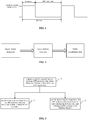
- FIG. 1 shows a basic principle of the DRX, where On duration represents a time period within which the control channel is monitored by the terminal device. Within the On duration, a radio frequency channel is opened, and the control channel is monitored continuously. Within a time period other than the On duration, the terminal device is in a sleep state, and a radio frequency link is closed, i.e., the control channel is not monitored any more, so as to reduce the power consumption.
- the On duration occurs periodically (in cycles), and a specific cycle is configured by a base station.
- the terminal device When any of an On duration timer, an uplink (UL)/Downlink (DL) drx-retransmission timer and a drx-inactivity timer is running, the terminal device will monitor the control channel.
- a time at which the control channel is monitored by the terminal device is also called as DRX active time.
- a time at which the DRX has been configured but the control channel is not monitored by the terminal device is called as a DRX inactive time.
- Beam management has been introduced in 5 th -Generation (5G) New Radio (NR), and Beam Failure Recovery (BFR) is an important part of the beam management.
- the BFR is a rapid beam recovery technology introduced specially for a high-frequency multi-beam scenario.
- BFD Beam Failure Detection
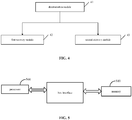
- the BFR may be triggered, and after the completion of this procedure, beam reconfiguration may be performed, as shown in FIG. 2 .
- An object of the BFD is a current serving beam of the terminal device
- a to-be-measured content is a Synchronization Signal Block (SSB) or Channel State Information-Reference Signal (CSI-RS) of a corresponding serving beam
- RSRP Reference Signal Receiving Power
- RSRP Reference Signal Receiving Power
- one beam failure instance indication may be triggered and reported by a physical layer to a Media Access Control (MAC) layer.
- the MAC layer takes charge of counting the quantity of beam failure indications, and when the quantity of the beam failure indications reaches a maximum value, trigger a beam failure recovery procedure.
- RLM Radio Link Monitoring
- a random access procedure for the BFR may be non-contention-based random access or contention-based random access.
- a DRX mechanism has been introduced into a wireless communication system.
- the transmission at the physical layer is performed on the basis of beams for a 5G NR interface.
- the terminal device may perform the BFR procedure.
- the terminal device is currently in the DRX inactive state and the BFR has been triggered, a terminal device's behavior is uncertain.
- An object of the present disclosure is to provide a beam failure recovery method, so as to solve the problem in the related art where the terminal device's behavior is uncertain in the case that the beam failure occurs for the terminal device in the DRX inactive state.
- the present disclosure provides in some embodiments a beam failure recovery method for a terminal device, including: judging whether it is necessary to delay initiating a BFR procedure when a beam failure occurs for the terminal device in a DRX inactive state; directly initiating, by the terminal device, the BFR procedure when it is unnecessary to delay initiating the BFR procedure; and determining an initiation time point for the BFR procedure when it is necessary to delay initiating the BFR procedure, and initiating the BFR procedure at the initiation time point.
- the judging whether it is necessary to delay initiating the BFR procedure when the beam failure occurs for the terminal device in the DRX inactive state includes: determining that it is unnecessary to delay initiating the BFR procedure when the beam failure occurs for the terminal device in the DRX inactive state; or determining that it is necessary to delay initiating the BFR procedure when the beam failure occurs for the terminal device in the DRX inactive state; or judging whether it is necessary to delay initiating the BFR procedure in accordance with a Quality of Service (QoS) parameter carried by a current Uu interface and/or a current direct communication interface of the terminal device when the beam failure occurs for the terminal device in the DRX inactive state.
- QoS Quality of Service
- the determining the initiation time point for the BFR procedure includes: determining a first time point at which the terminal device is to be in a DRX active state next time as well as a target duration; when a time point acquired through subtracting the target duration from the first time point is earlier than or equal to a current time point, determining the current time point as the initiation time point for the BFR procedure; and when the time point acquired through subtracting the target duration from the first time point is later than the current time point, determining the time point acquired through subtracting the target duration from the first time point as the initiation time point for the BFR procedure.
- the determining the initiation time point for the BFR procedure includes: determining a first time point at which the terminal device is to be in a DRX active state next time, a timeout time point of a Timing Advance Timer (TAT), and a target duration; in the case that the timeout time point of the TAT is earlier than or equal to the first time point, when a time point acquired through subtracting the target duration from the timeout time point of the TAT is earlier than or equal to a current time point, determining the current time point as the initiation time point for the BFR procedure, and when the time point acquired through subtracting the target duration from the timeout time point of the TAT is later than the current time point, determining the time point acquired through subtracting the target duration from the timeout time point of the TAT as the initiation time point for the BFR procedure; and in the case that the timeout time point of the TAT is later than the first time point, when a time point acquired through subtracting the target duration from the first time point is
- the determining the target duration includes: determining a sum of a length of a random access response window and a length of a contention resolution timer as the target duration; or determining the target duration in accordance with a QoS parameter carried by a current Uu interface or a current direct communication interface of the terminal device; or determining the target duration as 0.
- the present disclosure provides in some embodiments a beam failure recovery device for a terminal device, including: a judgment module configured to judge whether it is necessary to delay initiating a BFR procedure when a beam failure occurs for the terminal device in a DRX inactive state; a first recovery module configured to directly initiate the BFR procedure when it is unnecessary to delay initiating the BFR procedure; and a second recovery module configured to determine an initiation time point for the BFR procedure when it is necessary to delay initiating the BFR procedure, and initiate the BFR procedure at the initiation time point.
- the judgment module includes a judgment sub-module configured to: determine that it is unnecessary to delay initiating the BFR procedure when the beam failure occurs for the terminal device in the DRX inactive state; or determine that it is necessary to delay initiating the BFR procedure when the beam failure occurs for the terminal device in the DRX inactive state; or judge whether it is necessary to delay initiating the BFR procedure in accordance with a QoS parameter carried by a current Uu interface and/or a current direct communication interface of the terminal device when the beam failure occurs for the terminal device in the DRX inactive state.
- the beam failure recovery device further includes: a first determination module configured to determine a first time point at which the terminal device is to be in a DRX active state next time as well as a target duration; a second determination module configured to, when a time point acquired through subtracting the target duration from the first time point is earlier than or equal to a current time point, determine the current time point as the initiation time point for the BFR procedure; and a third determination module configured to, when the time point acquired through subtracting the target duration from the first time point is later than the current time point, determine the time point acquired through subtracting the target duration from the first time point as the initiation time point for the BFR procedure.
- the beam failure recovery device further includes: a fourth determination module configured to determine a first time point at which the terminal device is to be in a DRX active state next time, a timeout time point of a TAT, and a target duration; a fifth determination module configured to, in the case that the timeout time point of the TAT is earlier than or equal to the first time point, when a time point acquired through subtracting the target duration from the timeout time point of the TAT is earlier than or equal to a current time point, determine the current time point as the initiation time point for the BFR procedure, and when the time point acquired through subtracting the target duration from the timeout time point of the TAT is later than the current time point, determine the time point acquired through subtracting the target duration from the timeout time point of the TAT as the initiation time point for the BFR procedure; and a sixth determination module configured to, in the case that the timeout time point of the TAT is later than the first time point, when a time point acquired through subtracting the target
- the beam failure recovery device further includes a determination sub-module configured to: determine a sum of a length of a random access response window and a length of a contention resolution timer as the target duration; or determine the target duration in accordance with a QoS parameter carried by a current Uu interface or a current direct communication interface of the terminal device; or determine the target duration as 0.
- the present disclosure provides in some embodiments a terminal device, including a memory, a processor, and a program stored in the memory and executed by the processor.
- the processor is configured to execute the program so as to: judge whether it is necessary to delay initiating a BFR procedure when a beam failure occurs for the terminal device in a DRX inactive state; directly initiate the BFR procedure when it is unnecessary to delay initiating the BFR procedure; and determine an initiation time point for the BFR procedure when it is necessary to delay initiating the BFR procedure, and initiate the BFR procedure at the initiation time point.
- the processor is further configured to: determine that it is unnecessary to delay initiating the BFR procedure when the beam failure occurs for the terminal device in the DRX inactive state; or determine that it is necessary to delay initiating the BFR procedure when the beam failure occurs for the terminal device in the DRX inactive state; or judge whether it is necessary to delay initiating the BFR procedure in accordance with a QoS parameter carried by a current Uu interface and/or a current direct communication interface of the terminal device when the beam failure occurs for the terminal device in the DRX inactive state.
- the processor is further configured to: determine a first time point at which the terminal device is to be in a DRX active state next time as well as a target duration; when a time point acquired through subtracting the target duration from the first time point is earlier than or equal to a current time point, determine the current time point as the initiation time point for the BFR procedure; and when the time point acquired through subtracting the target duration from the first time point is later than the current time point, determine the time point acquired through subtracting the target duration from the first time point as the initiation time point for the BFR procedure.
- the processor is further configured to: determine a first time point at which the terminal device is to be in a DRX active state next time, a timeout time point of a TAT, and a target duration; in the case that the timeout time point of the TAT is earlier than or equal to the first time point, when a time point acquired through subtracting the target duration from the timeout time point of the TAT is earlier than or equal to a current time point, determine the current time point as the initiation time point for the BFR procedure, and when the time point acquired through subtracting the target duration from the timeout time point of the TAT is later than the current time point, determine the time point acquired through subtracting the target duration from the timeout time point of the TAT as the initiation time point for the BFR procedure; and in the case that the timeout time point of the TAT is later than the first time point, when a time point acquired through subtracting the target duration from the first time point is earlier than or equal to the current time point, determine the current time point as the
- the processor is further configured to: determine a sum of a length of a random access response window and a length of a contention resolution timer as the target duration; or determine the target duration in accordance with a QoS parameter carried by a current Uu interface or a current direct communication interface of the terminal device; or determine the target duration as 0.
- the present disclosure provides in some embodiments a computer-readable storage medium storing therein a computer program.
- the computer program is executed by a processor so as to implement the steps of the above-mentioned beam failure recovery method.
- the present disclosure at least has the following beneficial effect.
- the beam failure recovery device and the terminal device in the embodiments of the present disclosure in the case that the beam failure occurs for the terminal device in the DRX inactive state, the terminal device may judge whether it is necessary to delay initiating the BFR procedure, and then initiate the BFR procedure in accordance with a judgment result. As a result, it is able to make a specific behavior of the terminal device clear in the case that the beam failure occurs for the terminal device in the DRX inactive state, thereby to ensure the integrity and reliability of a protocol.
- BFR refers to a procedure where a beam whose channel quality meets the requirement is found by a terminal device, specifically a procedure where a new available SSB or CSI-RS is selected by the terminal device.
- Different SSBs or CSI-RSs correspond to different beams.
- the selection of beam is equivalent or similar to the selection of SSB or CSI-RS.
- Non-contention-based random access for the BFR will be described as follows.
- a candidate beam set is configured by a network side for the terminal device, and non-contention-based access resources (a Physical Radon Access Channel (PRACH) resource and/or a preamble code) are assigned on a plurality of beams in the candidate beam set.
- PRACH Physical Radon Access Channel
- the terminal device may initiate a non-contention-based random access procedure.
- a base station may configured independent random access parameters, which include ra-Response Window-BFR, preamble Initial Received Target Power-BFR, power Ramping Step-BFR, Preamble TransMax-BFR, etc.
- the present disclosure provides in some embodiments a beam failure recovery method for a terminal device, which includes: Step 31 of judging whether it is necessary to delay initiating a BFR procedure when a beam failure occurs for the terminal device in a DRX inactive state; Step 32 of directly initiating, by the terminal device, the BFR procedure when it is unnecessary to delay initiating the BFR procedure; and Step 33 of determining an initiation time point for the BFR procedure when it is necessary to delay initiating the BFR procedure, and initiating the BFR procedure at the initiation time point.
- the terminal device may perform beam failure judgment in accordance with a beam failure judgment procedure in the related art, and when the beam failure has been judged and the terminal device is in the DRX inactive state, it may be determined that the beam failure occurs for the terminal device in the DRX inactive state.
- a time at which the DRX has been configured but a control channel is not monitored by the terminal device may be called as a DRX inactive time.
- a terminal device within the DRX inactive time may be called as a terminal device in the DRX inactive state.
- the terminal device may judge whether it is necessary to delay initiating the BFR procedure. When it is necessary to delay initiating the BFR procedure, the terminal device may determine the initiation time point for the BFR procedure, and initiate the BFR procedure at the initiation time point. When it is unnecessary to delay initiating the BFR procedure, the terminal device may initiate the BFR procedure immediately.
- Step 31 may include: determining that it is unnecessary to delay initiating the BFR procedure, i.e., determining that the initiation of the BFR procedure is not delayed all the time, when the beam failure occurs for the terminal device in the DRX inactive state; or determining that it is necessary to delay initiating the BFR procedure, i.e., determining that the initiation of the BFR procedure is delayed all the time, when the beam failure occurs for the terminal device in the DRX inactive state; or judging whether it is necessary to delay initiating the BFR procedure in accordance with a QoS parameter carried by a current Uu interface and/or a current direct communication interface of the terminal device when the beam failure occurs for the terminal device in the DRX inactive state.
- the Uu interface may refer to a communication interface between a terminal device and a base station
- the direct communication interface may refer to a communication interface between terminal devices.
- the QoS parameter may include a service delay.
- the terminal device may determine that it is necessary to delay initiating the BFR procedure.
- the terminal device may determine that it is unnecessary to delay initiating the BFR procedure.
- the determining the initiation time point for the BFR procedure may include: determining a first time point at which the terminal device is to be in a DRX active state next time as well as a target duration; when a time point acquired through subtracting the target duration from the first time point is earlier than or equal to a current time point, determining the current time point as the initiation time point for the BFR procedure; and when the time point acquired through subtracting the target duration from the first time point is later than the current time point, determining the time point acquired through subtracting the target duration from the first time point as the initiation time point for the BFR procedure.
- the first time point may be a time point at which the terminal device is to be in On duration next time.
- the first time point may be set as M, and the target duration may be set as T.
- the BFR procedure may be initiated immediately.
- the terminal device may initiate the BFR procedure at the time point M-T.
- the determining the initiation time point for the BFR procedure may include: determining a first time point at which the terminal device is to be in a DRX active state next time, a timeout time point of a TAT, and a target duration; in the case that the timeout time point of the TAT is earlier than or equal to the first time point, when a time point acquired through subtracting the target duration from the timeout time point of the TAT is earlier than or equal to a current time point, determining the current time point as the initiation time point for the BFR procedure, and when the time point acquired through subtracting the target duration from the timeout time point of the TAT is later than the current time point, determining the time point acquired through subtracting the target duration from the timeout time point of the TAT as the initiation time point for the BFR procedure; and in the case that the timeout time point of the TAT is later than the first time point, when a time point acquired through subtracting the target duration from the first time point is earlier than or equal to the
- the first time point may be a time point at which the terminal device is to be in On duration next time.
- the first time point may be set as M
- the timeout time point of the TAT may be set as N
- the target duration may be set as T.
- N is earlier than or equal to M
- the terminal device may initiate the BFR procedure immediately
- N-T is later than the current time point
- the terminal device may initiate the BFR procedure at the time point N-T.
- N is later than M
- the terminal device may initiate the BFR procedure immediately
- M-T is later than the current time point
- the terminal device may initiate the BFR procedure at the time point M-T.
- the determining the target duration may at least include: determining a sum of a length of a random access response window and a length of a contention resolution timer as the target duration, i.e., determining the target duration as a constant value; or determining the target duration in accordance with a QoS parameter carried by a current Uu interface or a current direct communication interface of the terminal device, i.e., determining the target duration as a variable value (e.g., a value of the target duration may be determined in accordance with a time delay requirement of a service which is most sensitive to the service delay requirement for the current Uu interface or the current direct communication interface); or determining the target duration as 0, i.e., determining the target duration as a constant value.
- Step 1 the terminal device may perform beam failure judgment.
- the terminal device may perform the beam failure judgment in accordance with a beam failure judgment procedure in the related art. For example, two configuration parameters (i.e., beamFailureInstanceMaxCount and beamFailureDetectionTimer) and one variable (i.e., BFI COUNTER).
- beamFailureDetectionTimer when a value of the BFICOUNTER reaches beamFailureInstanceMaxCount, the beam failure may be judged.
- Step 2 the terminal device may determine whether it is necessary to delay initiating the BFR procedure.
- the terminal device may determine whether it is necessary to delay initiating the BFR procedure on the basis of any of the following principles.
- the initiation of the BFR procedure may not be delayed all the time, and the BFR procedure may be initiated immediately when the beam failure occurs.
- the initiation of the BFR procedure may be delayed all the time.
- whether it is necessary to delay initiating the BFR procedure may be determined in accordance with a QoS parameter carried by a current Uu interface and/or a current direct communication interface of the terminal device.
- the terminal device may initiate the BFR procedure immediately.
- the terminal device may determine the initiation time point for the BFR procedure as follows.
- the terminal device may determine a time point M at which the terminal device is to be in On duration next time, and determine a time period T.
- M-T is earlier than or equal to the current time point
- the terminal device may initiate the BFR procedure immediately.
- M-T is later than the current time point
- the terminal device may initiate the BFR procedure at M-T.
- the time period T may be determined as follows.
- the time period T may have a constant value, e.g., a sum of a length of an RAR window corresponding to the BFR procedure and a length of a contention resolution timer, or zero.
- the time period T may have a variable value determined in accordance with a QoS parameter of a service for the terminal device at the current Uu interface.
- a value of T may be determined in accordance with a time delay requirement of a service which is most sensitive to the service delay requirement for the current Uu interface or the current direct communication interface.
- Step 3 the terminal device may initiate the BFR procedure.
- the terminal device may initiate the BFR procedure at the determined initiation time point for the BFR procedure.
- Step 4 the terminal device may perform beam failure judgment.
- the terminal device may perform the beam failure judgment in accordance with a beam failure judgment procedure in the related art. For example, two configuration parameters (i.e., beamFailureInstanceMaxCount and beamFailureDetectionTimer) and one variable (i.e., BFI_COUNTER).
- beamFailureInstanceMaxCount two configuration parameters
- beamFailureDetectionTimer one variable
- BFI_COUNTER one variable
- the beamFailureDetectionTimer when a value of the BFICOUNTER reaches beamFailureInstanceMaxCount, the beam failure may be judged.
- Step 5 the terminal device may determine whether it is necessary to delay initiating the BFR procedure.
- the terminal device may determine whether it is necessary to delay initiating the BFR procedure on the basis of any of the following principles.
- the initiation of the BFR procedure may not be delayed all the time, and the BFR procedure may be initiated immediately when the beam failure occurs.
- the initiation of the BFR procedure may be delayed all the time.
- whether it is necessary to delay initiating the BFR procedure may be determined in accordance with a QoS parameter carried by a current Uu interface and/or a current direct communication interface of the terminal device.
- the terminal device may initiate the BFR procedure immediately.
- the terminal device may determine the initiation time point for the BFR procedure as follows.
- the terminal device may determine a time point M at which the terminal device is to be in On duration next time, and determine whether the TAT is to be timed out before M in accordance with a current operating condition of the TAT.
- the terminal device may determine the timeout time point of the TAT as N and determine a time period T.
- N-T is earlier than or equal to the current time point
- the terminal device may initiate the BFR procedure immediately
- N-T is later than the current time point
- the terminal device may initiate the BFR procedure at N-T.
- the terminal device may determine a time point M at which the terminal device is to be in On duration next time, and determine the time period T.
- M-T is earlier than or equal to the current time point
- the terminal device may initiate the BFR procedure immediately
- M-T is later than the current time point
- the terminal device may initiate the BFR procedure at M-T.
- the time period T may be determined as follows.
- the time period T may have a constant value, e.g., a sum of a length of an RAR window corresponding to the BFR procedure and a length of a contention resolution timer, or zero.
- the time period T may have a variable value determined in accordance with a QoS parameter of a service for the terminal device at the current Uu interface.
- a value of T may be determined in accordance with a time delay requirement of a service which is most sensitive to the service delay requirement for the current Uu interface or the current direct communication interface.
- Step 6 the terminal device may initiate the BFR procedure.
- the terminal device may initiate the BFR procedure at the determined initiation time point for the BFR procedure.
- the terminal device may judge whether it is necessary to delay initiating the BFR procedure, and then initiate the BFR procedure in accordance with a judgment result. As a result, it is able to make a specific behavior of the terminal device clear in the case that the beam failure occurs for the terminal device in the DRX inactive state, thereby to ensure the integrity and reliability of a protocol.
- the present disclosure further provides in some embodiments a beam failure recovery device for a terminal device, which includes: a judgment module 41 configured to judge whether it is necessary to delay initiating a BFR procedure when a beam failure occurs for the terminal device in a DRX inactive state; a first recovery module 42 configured to directly initiate the BFR procedure when it is unnecessary to delay initiating the BFR procedure; and a second recovery module 43 configured to determine an initiation time point for the BFR procedure when it is necessary to delay initiating the BFR procedure, and initiate the BFR procedure at the initiation time point.
- a judgment module 41 configured to judge whether it is necessary to delay initiating a BFR procedure when a beam failure occurs for the terminal device in a DRX inactive state
- a first recovery module 42 configured to directly initiate the BFR procedure when it is unnecessary to delay initiating the BFR procedure
- a second recovery module 43 configured to determine an initiation time point for the BFR procedure when it is necessary to delay initiating the BFR procedure, and initiate the BFR procedure at the initiation time point
- the judgment module may include a judgment sub-module configured to: determine that it is unnecessary to delay initiating the BFR procedure when the beam failure occurs for the terminal device in the DRX inactive state; or determine that it is necessary to delay initiating the BFR procedure when the beam failure occurs for the terminal device in the DRX inactive state; or judge whether it is necessary to delay initiating the BFR procedure in accordance with a QoS parameter carried by a current Uu interface and/or a current direct communication interface of the terminal device when the beam failure occurs for the terminal device in the DRX inactive state.
- the beam failure recovery device may further include: a first determination module configured to determine a first time point at which the terminal device is to be in a DRX active state next time as well as a target duration; a second determination module configured to, when a time point acquired through subtracting the target duration from the first time point is earlier than or equal to a current time point, determine the current time point as the initiation time point for the BFR procedure; and a third determination module configured to, when the time point acquired through subtracting the target duration from the first time point is later than the current time point, determine the time point acquired through subtracting the target duration from the first time point as the initiation time point for the BFR procedure.
- a first determination module configured to determine a first time point at which the terminal device is to be in a DRX active state next time as well as a target duration
- a second determination module configured to, when a time point acquired through subtracting the target duration from the first time point is earlier than or equal to a current time point, determine the current time point as the initiation time point for
- the beam failure recovery device may further include: a fourth determination module configured to determine a first time point at which the terminal device is to be in a DRX active state next time, a timeout time point of a TAT, and a target duration; a fifth determination module configured to, in the case that the timeout time point of the TAT is earlier than or equal to the first time point, when a time point acquired through subtracting the target duration from the timeout time point of the TAT is earlier than or equal to a current time point, determine the current time point as the initiation time point for the BFR procedure, and when the time point acquired through subtracting the target duration from the timeout time point of the TAT is later than the current time point, determine the time point acquired through subtracting the target duration from the timeout time point of the TAT as the initiation time point for the BFR procedure; and a sixth determination module configured to, in the case that the timeout time point of the TAT is later than the first time point, when a time point acquired through subtracting the
- the beam failure recovery device may further include a determination sub-module configured to: determine a sum of a length of a random access response window and a length of a contention resolution timer as the target duration; or determine the target duration in accordance with a QoS parameter carried by a current Uu interface or a current direct communication interface of the terminal device; or determine the target duration as 0.
- a determination sub-module configured to: determine a sum of a length of a random access response window and a length of a contention resolution timer as the target duration; or determine the target duration in accordance with a QoS parameter carried by a current Uu interface or a current direct communication interface of the terminal device; or determine the target duration as 0.
- the terminal device may judge whether it is necessary to delay initiating the BFR procedure, and then initiate the BFR procedure in accordance with a judgment result. As a result, it is able to make a specific behavior of the terminal device clear in the case that the beam failure occurs for the terminal device in the DRX inactive state, thereby to ensure the integrity and reliability of a protocol.
- the beam failure recovery device in the embodiments of the present disclosure is capable of implementing the beam failure recovery method, so all the embodiments about the beam failure recovery method may be applied to the beam failure recovery device with a same or similar beneficial effect.
- the present disclosure further provides in some embodiments a terminal device, which includes a memory 510, a processor 500, and a program stored in the memory 510 and executed by the processor 500.
- the processor 500 is configured to execute the program, so as to: judge whether it is necessary to delay initiating a BFR procedure when a beam failure occurs for the terminal device in a DRX inactive state; directly initiate the BFR procedure when it is unnecessary to delay initiating the BFR procedure; and determine an initiation time point for the BFR procedure when it is necessary to delay initiating the BFR procedure, and initiate the BFR procedure at the initiation time point.
- the processor 500 is further configured to: determine that it is unnecessary to delay initiating the BFR procedure when the beam failure occurs for the terminal device in the DRX inactive state; or determine that it is necessary to delay initiating the BFR procedure when the beam failure occurs for the terminal device in the DRX inactive state; or judge whether it is necessary to delay initiating the BFR procedure in accordance with a QoS parameter carried by a current Uu interface and/or a current direct communication interface of the terminal device when the beam failure occurs for the terminal device in the DRX inactive state.
- the processor 500 is further configured to: determine a first time point at which the terminal device is to be in a DRX active state next time as well as a target duration; when a time point acquired through subtracting the target duration from the first time point is earlier than or equal to a current time point, determine the current time point as the initiation time point for the BFR procedure; and when the time point acquired through subtracting the target duration from the first time point is later than the current time point, determine the time point acquired through subtracting the target duration from the first time point as the initiation time point for the BFR procedure.
- the processor 500 is further configured to: determine a first time point at which the terminal device is to be in a DRX active state next time, a timeout time point of a TAT, and a target duration; in the case that the timeout time point of the TAT is earlier than or equal to the first time point, when a time point acquired through subtracting the target duration from the timeout time point of the TAT is earlier than or equal to a current time point, determine the current time point as the initiation time point for the BFR procedure, and when the time point acquired through subtracting the target duration from the timeout time point of the TAT is later than the current time point, determine the time point acquired through subtracting the target duration from the timeout time point of the TAT as the initiation time point for the BFR procedure; and in the case that the timeout time point of the TAT is later than the first time point, when a time point acquired through subtracting the target duration from the first time point is earlier than or equal to the current time point, determine the current time point as
- the processor 500 is further configured to: determine a sum of a length of a random access response window and a length of a contention resolution timer as the target duration; or determine the target duration in accordance with a QoS parameter carried by a current Uu interface or a current direct communication interface of the terminal device; or determine the target duration as 0.
- the beam failure recovery device and the terminal device in the embodiments of the present disclosure in the case that the beam failure occurs for the terminal device in the DRX inactive state, the terminal device may judge whether it is necessary to delay initiating the BFR procedure, and then initiate the BFR procedure in accordance with a judgment result. As a result, it is able to make a specific behavior of the terminal device clear in the case that the beam failure occurs for the terminal device in the DRX inactive state, thereby to ensure the integrity and reliability of a protocol.
- the terminal device in the embodiments of the present disclosure is capable of implementing the above-mentioned beam failure recovery method, so all the embodiments about the beam failure recovery method may be applied to the terminal device with a same or similar beneficial effect.
- the present disclosure further provides in some embodiments a computer-readable storage medium storing therein a computer program.
- the computer program is executed by a processor so as to implement the above-mentioned beam failure recovery method with a same technical effect, which will not be particularly defined herein.
- the computer-readable storage medium may be Read Only Memory (ROM), Random Access Memory (RAM), magnetic disk or optical disk.
- the present disclosure may be implemented by software as well as a necessary common hardware platform, or by hardware, and the former may be better in most cases.
- the technical solutions of the present disclosure partial or full, or parts of the technical solutions of the present disclosure contributing to the related art, may appear in the form of software products, which may be stored in a storage medium (e.g., ROM/RAM, magnetic disk or optical disk) and include several instructions so as to enable a terminal device (mobile phone, computer, server, air conditioner or network device) to execute the method in the embodiments of the present disclosure.
- a storage medium e.g., ROM/RAM, magnetic disk or optical disk
Landscapes
- Engineering & Computer Science (AREA)
- Computer Networks & Wireless Communication (AREA)
- Signal Processing (AREA)
- Mobile Radio Communication Systems (AREA)
Abstract
Description
- The present application claims a priority of the
Chinese patent application No. 201811365238.9 filed on November 16th, 2018 - The present disclosure relates to the field of communication technology, in particular to a beam failure recovery method, a beam failure recovery device, and a terminal device.
- In order to reduce the power consumption, a Discontinuous Reception (DRX) operation mode has been adopted by a Long Term Evolution (LTE) system. In this operation mode, a control channel is periodically monitored by a terminal device, so as to reduce the power consumption.
-
FIG. 1 shows a basic principle of the DRX, where On duration represents a time period within which the control channel is monitored by the terminal device. Within the On duration, a radio frequency channel is opened, and the control channel is monitored continuously. Within a time period other than the On duration, the terminal device is in a sleep state, and a radio frequency link is closed, i.e., the control channel is not monitored any more, so as to reduce the power consumption. The On duration occurs periodically (in cycles), and a specific cycle is configured by a base station. - When any of an On duration timer, an uplink (UL)/Downlink (DL) drx-retransmission timer and a drx-inactivity timer is running, the terminal device will monitor the control channel. A time at which the control channel is monitored by the terminal device is also called as DRX active time. A time at which the DRX has been configured but the control channel is not monitored by the terminal device is called as a DRX inactive time.
- Beam management has been introduced in 5th-Generation (5G) New Radio (NR), and Beam Failure Recovery (BFR) is an important part of the beam management. The BFR is a rapid beam recovery technology introduced specially for a high-frequency multi-beam scenario. When a beam failure occurs through Beam Failure Detection (BFD), the BFR may be triggered, and after the completion of this procedure, beam reconfiguration may be performed, as shown in
FIG. 2 . - An object of the BFD is a current serving beam of the terminal device, a to-be-measured content is a Synchronization Signal Block (SSB) or Channel State Information-Reference Signal (CSI-RS) of a corresponding serving beam, and the detection is performed on the basis of comparison between a measurement result and a configured Reference Signal Receiving Power (RSRP) threshold. When measurement results of all the serving beams are lower than the RSRP threshold, one beam failure instance indication may be triggered and reported by a physical layer to a Media Access Control (MAC) layer. The MAC layer takes charge of counting the quantity of beam failure indications, and when the quantity of the beam failure indications reaches a maximum value, trigger a beam failure recovery procedure. Different from a Radio Link Monitoring (RLM) procedure, in the BFD, the physical layer merely transmits the beam failure indications, rather than a beam recovery indication, to the MAC layer.
- When channel quality of a current beam measured by the terminal device is poor, the terminal device needs to initiate a BFR procedure. This procedure is implemented through random access. To be specific, the terminal device selects a specific beam to initiate the random access, and after the random access is performed successfully, it is considered that the BFR has been completed on the selected beam. A random access procedure for the BFR may be non-contention-based random access or contention-based random access.
- In a word, in order to reduce the power consumption of the terminal device, a DRX mechanism has been introduced into a wireless communication system. In addition, the transmission at the physical layer is performed on the basis of beams for a 5G NR interface. When a beam failure occurs, the terminal device may perform the BFR procedure. However, when the terminal device is currently in the DRX inactive state and the BFR has been triggered, a terminal device's behavior is uncertain.
- An object of the present disclosure is to provide a beam failure recovery method, so as to solve the problem in the related art where the terminal device's behavior is uncertain in the case that the beam failure occurs for the terminal device in the DRX inactive state.
- In one aspect, the present disclosure provides in some embodiments a beam failure recovery method for a terminal device, including: judging whether it is necessary to delay initiating a BFR procedure when a beam failure occurs for the terminal device in a DRX inactive state; directly initiating, by the terminal device, the BFR procedure when it is unnecessary to delay initiating the BFR procedure; and determining an initiation time point for the BFR procedure when it is necessary to delay initiating the BFR procedure, and initiating the BFR procedure at the initiation time point.
- In some possible embodiments of the present disclosure, the judging whether it is necessary to delay initiating the BFR procedure when the beam failure occurs for the terminal device in the DRX inactive state includes: determining that it is unnecessary to delay initiating the BFR procedure when the beam failure occurs for the terminal device in the DRX inactive state; or determining that it is necessary to delay initiating the BFR procedure when the beam failure occurs for the terminal device in the DRX inactive state; or judging whether it is necessary to delay initiating the BFR procedure in accordance with a Quality of Service (QoS) parameter carried by a current Uu interface and/or a current direct communication interface of the terminal device when the beam failure occurs for the terminal device in the DRX inactive state.
- In some possible embodiments of the present disclosure, the determining the initiation time point for the BFR procedure includes: determining a first time point at which the terminal device is to be in a DRX active state next time as well as a target duration; when a time point acquired through subtracting the target duration from the first time point is earlier than or equal to a current time point, determining the current time point as the initiation time point for the BFR procedure; and when the time point acquired through subtracting the target duration from the first time point is later than the current time point, determining the time point acquired through subtracting the target duration from the first time point as the initiation time point for the BFR procedure.
- In some possible embodiments of the present disclosure, the determining the initiation time point for the BFR procedure includes: determining a first time point at which the terminal device is to be in a DRX active state next time, a timeout time point of a Timing Advance Timer (TAT), and a target duration; in the case that the timeout time point of the TAT is earlier than or equal to the first time point, when a time point acquired through subtracting the target duration from the timeout time point of the TAT is earlier than or equal to a current time point, determining the current time point as the initiation time point for the BFR procedure, and when the time point acquired through subtracting the target duration from the timeout time point of the TAT is later than the current time point, determining the time point acquired through subtracting the target duration from the timeout time point of the TAT as the initiation time point for the BFR procedure; and in the case that the timeout time point of the TAT is later than the first time point, when a time point acquired through subtracting the target duration from the first time point is earlier than or equal to the current time point, determining the current time point as the initiation time point for the BFR procedure, and when the time point acquired through subtracting the target duration from the first time point is later than the current time point, determining the time point acquired through subtracting the target duration from the first time point as the initiation time point for the BFR.
- In some possible embodiments of the present disclosure, the determining the target duration includes: determining a sum of a length of a random access response window and a length of a contention resolution timer as the target duration; or determining the target duration in accordance with a QoS parameter carried by a current Uu interface or a current direct communication interface of the terminal device; or determining the target duration as 0.
- In another aspect, the present disclosure provides in some embodiments a beam failure recovery device for a terminal device, including: a judgment module configured to judge whether it is necessary to delay initiating a BFR procedure when a beam failure occurs for the terminal device in a DRX inactive state; a first recovery module configured to directly initiate the BFR procedure when it is unnecessary to delay initiating the BFR procedure; and a second recovery module configured to determine an initiation time point for the BFR procedure when it is necessary to delay initiating the BFR procedure, and initiate the BFR procedure at the initiation time point.
- In some possible embodiments of the present disclosure, the judgment module includes a judgment sub-module configured to: determine that it is unnecessary to delay initiating the BFR procedure when the beam failure occurs for the terminal device in the DRX inactive state; or determine that it is necessary to delay initiating the BFR procedure when the beam failure occurs for the terminal device in the DRX inactive state; or judge whether it is necessary to delay initiating the BFR procedure in accordance with a QoS parameter carried by a current Uu interface and/or a current direct communication interface of the terminal device when the beam failure occurs for the terminal device in the DRX inactive state.
- In some possible embodiments of the present disclosure, the beam failure recovery device further includes: a first determination module configured to determine a first time point at which the terminal device is to be in a DRX active state next time as well as a target duration; a second determination module configured to, when a time point acquired through subtracting the target duration from the first time point is earlier than or equal to a current time point, determine the current time point as the initiation time point for the BFR procedure; and a third determination module configured to, when the time point acquired through subtracting the target duration from the first time point is later than the current time point, determine the time point acquired through subtracting the target duration from the first time point as the initiation time point for the BFR procedure.
- In some possible embodiments of the present disclosure, the beam failure recovery device further includes: a fourth determination module configured to determine a first time point at which the terminal device is to be in a DRX active state next time, a timeout time point of a TAT, and a target duration; a fifth determination module configured to, in the case that the timeout time point of the TAT is earlier than or equal to the first time point, when a time point acquired through subtracting the target duration from the timeout time point of the TAT is earlier than or equal to a current time point, determine the current time point as the initiation time point for the BFR procedure, and when the time point acquired through subtracting the target duration from the timeout time point of the TAT is later than the current time point, determine the time point acquired through subtracting the target duration from the timeout time point of the TAT as the initiation time point for the BFR procedure; and a sixth determination module configured to, in the case that the timeout time point of the TAT is later than the first time point, when a time point acquired through subtracting the target duration from the first time point is earlier than or equal to the current time point, determine the current time point as the initiation time point for the BFR procedure, and when the time point acquired through subtracting the target duration from the first time point is later than the current time point, determine the time point acquired through subtracting the target duration from the first time point as the initiation time point for the BFR.
- In some possible embodiments of the present disclosure, the beam failure recovery device further includes a determination sub-module configured to: determine a sum of a length of a random access response window and a length of a contention resolution timer as the target duration; or determine the target duration in accordance with a QoS parameter carried by a current Uu interface or a current direct communication interface of the terminal device; or determine the target duration as 0.
- In yet another aspect, the present disclosure provides in some embodiments a terminal device, including a memory, a processor, and a program stored in the memory and executed by the processor. The processor is configured to execute the program so as to: judge whether it is necessary to delay initiating a BFR procedure when a beam failure occurs for the terminal device in a DRX inactive state; directly initiate the BFR procedure when it is unnecessary to delay initiating the BFR procedure; and determine an initiation time point for the BFR procedure when it is necessary to delay initiating the BFR procedure, and initiate the BFR procedure at the initiation time point.
- In some possible embodiments of the present disclosure, the processor is further configured to: determine that it is unnecessary to delay initiating the BFR procedure when the beam failure occurs for the terminal device in the DRX inactive state; or determine that it is necessary to delay initiating the BFR procedure when the beam failure occurs for the terminal device in the DRX inactive state; or judge whether it is necessary to delay initiating the BFR procedure in accordance with a QoS parameter carried by a current Uu interface and/or a current direct communication interface of the terminal device when the beam failure occurs for the terminal device in the DRX inactive state.
- In some possible embodiments of the present disclosure, the processor is further configured to: determine a first time point at which the terminal device is to be in a DRX active state next time as well as a target duration; when a time point acquired through subtracting the target duration from the first time point is earlier than or equal to a current time point, determine the current time point as the initiation time point for the BFR procedure; and when the time point acquired through subtracting the target duration from the first time point is later than the current time point, determine the time point acquired through subtracting the target duration from the first time point as the initiation time point for the BFR procedure.
- In some possible embodiments of the present disclosure, the processor is further configured to: determine a first time point at which the terminal device is to be in a DRX active state next time, a timeout time point of a TAT, and a target duration; in the case that the timeout time point of the TAT is earlier than or equal to the first time point, when a time point acquired through subtracting the target duration from the timeout time point of the TAT is earlier than or equal to a current time point, determine the current time point as the initiation time point for the BFR procedure, and when the time point acquired through subtracting the target duration from the timeout time point of the TAT is later than the current time point, determine the time point acquired through subtracting the target duration from the timeout time point of the TAT as the initiation time point for the BFR procedure; and in the case that the timeout time point of the TAT is later than the first time point, when a time point acquired through subtracting the target duration from the first time point is earlier than or equal to the current time point, determine the current time point as the initiation time point for the BFR procedure, and when the time point acquired through subtracting the target duration from the first time point is later than the current time point, determine the time point acquired through subtracting the target duration from the first time point as the initiation time point for the BFR.
- In some possible embodiments of the present disclosure, the processor is further configured to: determine a sum of a length of a random access response window and a length of a contention resolution timer as the target duration; or determine the target duration in accordance with a QoS parameter carried by a current Uu interface or a current direct communication interface of the terminal device; or determine the target duration as 0.
- In still yet another aspect, the present disclosure provides in some embodiments a computer-readable storage medium storing therein a computer program. The computer program is executed by a processor so as to implement the steps of the above-mentioned beam failure recovery method.
- The present disclosure at least has the following beneficial effect.
- According to the beam failure recovery method, the beam failure recovery device and the terminal device in the embodiments of the present disclosure, in the case that the beam failure occurs for the terminal device in the DRX inactive state, the terminal device may judge whether it is necessary to delay initiating the BFR procedure, and then initiate the BFR procedure in accordance with a judgment result. As a result, it is able to make a specific behavior of the terminal device clear in the case that the beam failure occurs for the terminal device in the DRX inactive state, thereby to ensure the integrity and reliability of a protocol.
-
-
FIG. 1 is a schematic view showing a basic principle of DRX in the related art; -
FIG. 2 is a schematic view showing a beam management procedure in the related art; -
FIG. 3 is a flow chart of a beam failure recovery method according to one embodiment of the present disclosure; -
FIG. 4 is a schematic view showing a beam failure recovery device according to one embodiment of the present disclosure; and -
FIG. 5 is a schematic view showing a terminal device according to one embodiment of the present disclosure. - BFR refers to a procedure where a beam whose channel quality meets the requirement is found by a terminal device, specifically a procedure where a new available SSB or CSI-RS is selected by the terminal device. Different SSBs or CSI-RSs correspond to different beams. In the following description, the selection of beam is equivalent or similar to the selection of SSB or CSI-RS.
- Non-contention-based random access for the BFR will be described as follows. A candidate beam set is configured by a network side for the terminal device, and non-contention-based access resources (a Physical Radon Access Channel (PRACH) resource and/or a preamble code) are assigned on a plurality of beams in the candidate beam set. When there is a non-contention-based random access resource available on a selected beam, the terminal device may initiate a non-contention-based random access procedure. After the transmission of Msg1, when a Physical Downlink Control Channel (PDCCH) command scrambled with a Cell-Radio Network Temporary Identifier (C-RNTI) of the terminal device has been received within a configured time period in a CORESET (control resource set) configured to receive the PDCCH command, it may be deemed that the non-contention-based random access procedure has been performed successfully. With respect to the non-contention-based random access for the BFR, a base station may configured independent random access parameters, which include ra-Response Window-BFR, preamble Initial Received Target Power-BFR, power Ramping Step-BFR, Preamble TransMax-BFR, etc.
- In order to make the objects, the technical solutions and the advantages of the present disclosure more apparent, the present disclosure will be described hereinafter in a clear and complete manner in conjunction with the drawings and embodiments.
- As shown in
FIG. 3 , the present disclosure provides in some embodiments a beam failure recovery method for a terminal device, which includes: Step 31 of judging whether it is necessary to delay initiating a BFR procedure when a beam failure occurs for the terminal device in a DRX inactive state; Step 32 of directly initiating, by the terminal device, the BFR procedure when it is unnecessary to delay initiating the BFR procedure; andStep 33 of determining an initiation time point for the BFR procedure when it is necessary to delay initiating the BFR procedure, and initiating the BFR procedure at the initiation time point. - In the embodiments of the present disclosure, the terminal device may perform beam failure judgment in accordance with a beam failure judgment procedure in the related art, and when the beam failure has been judged and the terminal device is in the DRX inactive state, it may be determined that the beam failure occurs for the terminal device in the DRX inactive state.
- It should be appreciated that, a time at which the DRX has been configured but a control channel is not monitored by the terminal device may be called as a DRX inactive time. A terminal device within the DRX inactive time may be called as a terminal device in the DRX inactive state.
- When the beam failure occurs for the terminal device in the DRX inactive state, the terminal device may judge whether it is necessary to delay initiating the BFR procedure. When it is necessary to delay initiating the BFR procedure, the terminal device may determine the initiation time point for the BFR procedure, and initiate the BFR procedure at the initiation time point. When it is unnecessary to delay initiating the BFR procedure, the terminal device may initiate the BFR procedure immediately.
- To be specific, in the embodiments of the present disclosure,
Step 31 may include: determining that it is unnecessary to delay initiating the BFR procedure, i.e., determining that the initiation of the BFR procedure is not delayed all the time, when the beam failure occurs for the terminal device in the DRX inactive state; or determining that it is necessary to delay initiating the BFR procedure, i.e., determining that the initiation of the BFR procedure is delayed all the time, when the beam failure occurs for the terminal device in the DRX inactive state; or judging whether it is necessary to delay initiating the BFR procedure in accordance with a QoS parameter carried by a current Uu interface and/or a current direct communication interface of the terminal device when the beam failure occurs for the terminal device in the DRX inactive state. - The Uu interface may refer to a communication interface between a terminal device and a base station, and the direct communication interface may refer to a communication interface between terminal devices.
- For example, the QoS parameter may include a service delay. When a low service delay for a service carried by the Uu interface and/or the direct communication interface is demanded, the terminal device may determine that it is necessary to delay initiating the BFR procedure. When a high service delay for the service carried by the Uu interface and/or the direct communication interface is demanded, the terminal device may determine that it is unnecessary to delay initiating the BFR procedure.
- It should be appreciated that, at least two methods for determining the initiation time point for the BFR procedure will be provided in the embodiments of the present disclosure.
- In a possible embodiment of the present disclosure, the determining the initiation time point for the BFR procedure may include: determining a first time point at which the terminal device is to be in a DRX active state next time as well as a target duration; when a time point acquired through subtracting the target duration from the first time point is earlier than or equal to a current time point, determining the current time point as the initiation time point for the BFR procedure; and when the time point acquired through subtracting the target duration from the first time point is later than the current time point, determining the time point acquired through subtracting the target duration from the first time point as the initiation time point for the BFR procedure.
- To be specific, the first time point may be a time point at which the terminal device is to be in On duration next time.
- The first time point may be set as M, and the target duration may be set as T. When a time point M-T is earlier than or equal to the current time point, the BFR procedure may be initiated immediately. When the time point M-T is later than the current time point, the terminal device may initiate the BFR procedure at the time point M-T.
- In another possible embodiment of the present disclosure, the determining the initiation time point for the BFR procedure may include: determining a first time point at which the terminal device is to be in a DRX active state next time, a timeout time point of a TAT, and a target duration; in the case that the timeout time point of the TAT is earlier than or equal to the first time point, when a time point acquired through subtracting the target duration from the timeout time point of the TAT is earlier than or equal to a current time point, determining the current time point as the initiation time point for the BFR procedure, and when the time point acquired through subtracting the target duration from the timeout time point of the TAT is later than the current time point, determining the time point acquired through subtracting the target duration from the timeout time point of the TAT as the initiation time point for the BFR procedure; and in the case that the timeout time point of the TAT is later than the first time point, when a time point acquired through subtracting the target duration from the first time point is earlier than or equal to the current time point, determining the current time point as the initiation time point for the BFR procedure, and when the time point acquired through subtracting the target duration from the first time point is later than the current time point, determining the time point acquired through subtracting the target duration from the first time point as the initiation time point for the BFR.
- To be specific, the first time point may be a time point at which the terminal device is to be in On duration next time.
- The first time point may be set as M, the timeout time point of the TAT may be set as N, and the target duration may be set as T. In the case that N is earlier than or equal to M, when N-T is earlier than or equal to the current time point, the terminal device may initiate the BFR procedure immediately, and when N-T is later than the current time point, the terminal device may initiate the BFR procedure at the time point N-T. In the case that N is later than M, when M-T is earlier than or equal to the current time point, the terminal device may initiate the BFR procedure immediately, and when M-T is later than the current time point, the terminal device may initiate the BFR procedure at the time point M-T.
- It should be appreciated that, the determining the target duration may at least include: determining a sum of a length of a random access response window and a length of a contention resolution timer as the target duration, i.e., determining the target duration as a constant value; or determining the target duration in accordance with a QoS parameter carried by a current Uu interface or a current direct communication interface of the terminal device, i.e., determining the target duration as a variable value (e.g., a value of the target duration may be determined in accordance with a time delay requirement of a service which is most sensitive to the service delay requirement for the current Uu interface or the current direct communication interface); or determining the target duration as 0, i.e., determining the target duration as a constant value.
- In order to describe the beam failure recovery method in a clearer manner, the beam failure recovery method will be described hereinafter in conjunction with two embodiments.
- Step 1: the terminal device may perform beam failure judgment.
- The terminal device may perform the beam failure judgment in accordance with a beam failure judgment procedure in the related art. For example, two configuration parameters (i.e., beamFailureInstanceMaxCount and beamFailureDetectionTimer) and one variable (i.e., BFI COUNTER). During the operation of the beamFailureDetectionTimer, when a value of the BFICOUNTER reaches beamFailureInstanceMaxCount, the beam failure may be judged.
- Step 2: the terminal device may determine whether it is necessary to delay initiating the BFR procedure. To be specific, the terminal device may determine whether it is necessary to delay initiating the BFR procedure on the basis of any of the following principles. In a first method, the initiation of the BFR procedure may not be delayed all the time, and the BFR procedure may be initiated immediately when the beam failure occurs. In a second method, the initiation of the BFR procedure may be delayed all the time. In a third method, whether it is necessary to delay initiating the BFR procedure may be determined in accordance with a QoS parameter carried by a current Uu interface and/or a current direct communication interface of the terminal device.
- When the terminal device determines that it is unnecessary to delay initiating the BFR procedure, the terminal device may initiate the BFR procedure immediately.
- When the terminal device determines that it is necessary to delay initiating the BFR procedure, the terminal device may determine the initiation time point for the BFR procedure as follows. The terminal device may determine a time point M at which the terminal device is to be in On duration next time, and determine a time period T. When M-T is earlier than or equal to the current time point, the terminal device may initiate the BFR procedure immediately. When M-T is later than the current time point, the terminal device may initiate the BFR procedure at M-T.
- In the above procedure, the time period T may be determined as follows. The time period T may have a constant value, e.g., a sum of a length of an RAR window corresponding to the BFR procedure and a length of a contention resolution timer, or zero. In addition, the time period T may have a variable value determined in accordance with a QoS parameter of a service for the terminal device at the current Uu interface. For example, a value of T may be determined in accordance with a time delay requirement of a service which is most sensitive to the service delay requirement for the current Uu interface or the current direct communication interface.
- Step 3: the terminal device may initiate the BFR procedure.
- The terminal device may initiate the BFR procedure at the determined initiation time point for the BFR procedure.
- Step 4: the terminal device may perform beam failure judgment.
- The terminal device may perform the beam failure judgment in accordance with a beam failure judgment procedure in the related art. For example, two configuration parameters (i.e., beamFailureInstanceMaxCount and beamFailureDetectionTimer) and one variable (i.e., BFI_COUNTER). During the operation of the beamFailureDetectionTimer, when a value of the BFICOUNTER reaches beamFailureInstanceMaxCount, the beam failure may be judged.
- Step 5: the terminal device may determine whether it is necessary to delay initiating the BFR procedure. To be specific, the terminal device may determine whether it is necessary to delay initiating the BFR procedure on the basis of any of the following principles. In a first method, the initiation of the BFR procedure may not be delayed all the time, and the BFR procedure may be initiated immediately when the beam failure occurs. In a second method, the initiation of the BFR procedure may be delayed all the time. In a third method, whether it is necessary to delay initiating the BFR procedure may be determined in accordance with a QoS parameter carried by a current Uu interface and/or a current direct communication interface of the terminal device.
- When the terminal device determines that it is unnecessary to delay initiating the BFR procedure, the terminal device may initiate the BFR procedure immediately.
- When the terminal device determines that it is necessary to delay initiating the BFR procedure, the terminal device may determine the initiation time point for the BFR procedure as follows. The terminal device may determine a time point M at which the terminal device is to be in On duration next time, and determine whether the TAT is to be timed out before M in accordance with a current operating condition of the TAT.
- When the TAT is to be timed out, the terminal device may determine the timeout time point of the TAT as N and determine a time period T. When N-T is earlier than or equal to the current time point, the terminal device may initiate the BFR procedure immediately, and when N-T is later than the current time point, the terminal device may initiate the BFR procedure at N-T.
- When the TAT is not to be timed out, the terminal device may determine a time point M at which the terminal device is to be in On duration next time, and determine the time period T. When M-T is earlier than or equal to the current time point, the terminal device may initiate the BFR procedure immediately, and when M-T is later than the current time point, the terminal device may initiate the BFR procedure at M-T.
- In the above procedure, the time period T may be determined as follows. The time period T may have a constant value, e.g., a sum of a length of an RAR window corresponding to the BFR procedure and a length of a contention resolution timer, or zero. In addition, the time period T may have a variable value determined in accordance with a QoS parameter of a service for the terminal device at the current Uu interface. For example, a value of T may be determined in accordance with a time delay requirement of a service which is most sensitive to the service delay requirement for the current Uu interface or the current direct communication interface.
- Step 6: the terminal device may initiate the BFR procedure.
- The terminal device may initiate the BFR procedure at the determined initiation time point for the BFR procedure.
- In a word, according to the embodiments of the present disclosure, in the case that the beam failure occurs for the terminal device in the DRX inactive state, the terminal device may judge whether it is necessary to delay initiating the BFR procedure, and then initiate the BFR procedure in accordance with a judgment result. As a result, it is able to make a specific behavior of the terminal device clear in the case that the beam failure occurs for the terminal device in the DRX inactive state, thereby to ensure the integrity and reliability of a protocol.
- As shown in
FIG. 4 , the present disclosure further provides in some embodiments a beam failure recovery device for a terminal device, which includes: ajudgment module 41 configured to judge whether it is necessary to delay initiating a BFR procedure when a beam failure occurs for the terminal device in a DRX inactive state; afirst recovery module 42 configured to directly initiate the BFR procedure when it is unnecessary to delay initiating the BFR procedure; and asecond recovery module 43 configured to determine an initiation time point for the BFR procedure when it is necessary to delay initiating the BFR procedure, and initiate the BFR procedure at the initiation time point. - In some possible embodiments of the present disclosure, the judgment module may include a judgment sub-module configured to: determine that it is unnecessary to delay initiating the BFR procedure when the beam failure occurs for the terminal device in the DRX inactive state; or determine that it is necessary to delay initiating the BFR procedure when the beam failure occurs for the terminal device in the DRX inactive state; or judge whether it is necessary to delay initiating the BFR procedure in accordance with a QoS parameter carried by a current Uu interface and/or a current direct communication interface of the terminal device when the beam failure occurs for the terminal device in the DRX inactive state.
- In some possible embodiments of the present disclosure, the beam failure recovery device may further include: a first determination module configured to determine a first time point at which the terminal device is to be in a DRX active state next time as well as a target duration; a second determination module configured to, when a time point acquired through subtracting the target duration from the first time point is earlier than or equal to a current time point, determine the current time point as the initiation time point for the BFR procedure; and a third determination module configured to, when the time point acquired through subtracting the target duration from the first time point is later than the current time point, determine the time point acquired through subtracting the target duration from the first time point as the initiation time point for the BFR procedure.
- In some possible embodiments of the present disclosure, the beam failure recovery device may further include: a fourth determination module configured to determine a first time point at which the terminal device is to be in a DRX active state next time, a timeout time point of a TAT, and a target duration; a fifth determination module configured to, in the case that the timeout time point of the TAT is earlier than or equal to the first time point, when a time point acquired through subtracting the target duration from the timeout time point of the TAT is earlier than or equal to a current time point, determine the current time point as the initiation time point for the BFR procedure, and when the time point acquired through subtracting the target duration from the timeout time point of the TAT is later than the current time point, determine the time point acquired through subtracting the target duration from the timeout time point of the TAT as the initiation time point for the BFR procedure; and a sixth determination module configured to, in the case that the timeout time point of the TAT is later than the first time point, when a time point acquired through subtracting the target duration from the first time point is earlier than or equal to the current time point, determine the current time point as the initiation time point for the BFR procedure, and when the time point acquired through subtracting the target duration from the first time point is later than the current time point, determine the time point acquired through subtracting the target duration from the first time point as the initiation time point for the BFR.
- In some possible embodiments of the present disclosure, the beam failure recovery device may further include a determination sub-module configured to: determine a sum of a length of a random access response window and a length of a contention resolution timer as the target duration; or determine the target duration in accordance with a QoS parameter carried by a current Uu interface or a current direct communication interface of the terminal device; or determine the target duration as 0.
- In a word, according to the embodiments of the present disclosure, in the case that the beam failure occurs for the terminal device in the DRX inactive state, the terminal device may judge whether it is necessary to delay initiating the BFR procedure, and then initiate the BFR procedure in accordance with a judgment result. As a result, it is able to make a specific behavior of the terminal device clear in the case that the beam failure occurs for the terminal device in the DRX inactive state, thereby to ensure the integrity and reliability of a protocol.
- It should be appreciated that, the beam failure recovery device in the embodiments of the present disclosure is capable of implementing the beam failure recovery method, so all the embodiments about the beam failure recovery method may be applied to the beam failure recovery device with a same or similar beneficial effect.
- As shown in
FIG. 5 , the present disclosure further provides in some embodiments a terminal device, which includes amemory 510, aprocessor 500, and a program stored in thememory 510 and executed by theprocessor 500. Theprocessor 500 is configured to execute the program, so as to: judge whether it is necessary to delay initiating a BFR procedure when a beam failure occurs for the terminal device in a DRX inactive state; directly initiate the BFR procedure when it is unnecessary to delay initiating the BFR procedure; and determine an initiation time point for the BFR procedure when it is necessary to delay initiating the BFR procedure, and initiate the BFR procedure at the initiation time point. - In some possible embodiments of the present disclosure, the
processor 500 is further configured to: determine that it is unnecessary to delay initiating the BFR procedure when the beam failure occurs for the terminal device in the DRX inactive state; or determine that it is necessary to delay initiating the BFR procedure when the beam failure occurs for the terminal device in the DRX inactive state; or judge whether it is necessary to delay initiating the BFR procedure in accordance with a QoS parameter carried by a current Uu interface and/or a current direct communication interface of the terminal device when the beam failure occurs for the terminal device in the DRX inactive state. - In some possible embodiments of the present disclosure, the
processor 500 is further configured to: determine a first time point at which the terminal device is to be in a DRX active state next time as well as a target duration; when a time point acquired through subtracting the target duration from the first time point is earlier than or equal to a current time point, determine the current time point as the initiation time point for the BFR procedure; and when the time point acquired through subtracting the target duration from the first time point is later than the current time point, determine the time point acquired through subtracting the target duration from the first time point as the initiation time point for the BFR procedure. - In some possible embodiments of the present disclosure, the processor 500 is further configured to: determine a first time point at which the terminal device is to be in a DRX active state next time, a timeout time point of a TAT, and a target duration; in the case that the timeout time point of the TAT is earlier than or equal to the first time point, when a time point acquired through subtracting the target duration from the timeout time point of the TAT is earlier than or equal to a current time point, determine the current time point as the initiation time point for the BFR procedure, and when the time point acquired through subtracting the target duration from the timeout time point of the TAT is later than the current time point, determine the time point acquired through subtracting the target duration from the timeout time point of the TAT as the initiation time point for the BFR procedure; and in the case that the timeout time point of the TAT is later than the first time point, when a time point acquired through subtracting the target duration from the first time point is earlier than or equal to the current time point, determine the current time point as the initiation time point for the BFR procedure, and when the time point acquired through subtracting the target duration from the first time point is later than the current time point, determine the time point acquired through subtracting the target duration from the first time point as the initiation time point for the BFR.
- In some possible embodiments of the present disclosure, the
processor 500 is further configured to: determine a sum of a length of a random access response window and a length of a contention resolution timer as the target duration; or determine the target duration in accordance with a QoS parameter carried by a current Uu interface or a current direct communication interface of the terminal device; or determine the target duration as 0. - In a word, according to the embodiments of the present disclosure, the beam failure recovery device and the terminal device in the embodiments of the present disclosure, in the case that the beam failure occurs for the terminal device in the DRX inactive state, the terminal device may judge whether it is necessary to delay initiating the BFR procedure, and then initiate the BFR procedure in accordance with a judgment result. As a result, it is able to make a specific behavior of the terminal device clear in the case that the beam failure occurs for the terminal device in the DRX inactive state, thereby to ensure the integrity and reliability of a protocol.
- It should be appreciated that, the terminal device in the embodiments of the present disclosure is capable of implementing the above-mentioned beam failure recovery method, so all the embodiments about the beam failure recovery method may be applied to the terminal device with a same or similar beneficial effect.
- The present disclosure further provides in some embodiments a computer-readable storage medium storing therein a computer program. The computer program is executed by a processor so as to implement the above-mentioned beam failure recovery method with a same technical effect, which will not be particularly defined herein. The computer-readable storage medium may be Read Only Memory (ROM), Random Access Memory (RAM), magnetic disk or optical disk.
- It should be appreciated that, such words as "include" or "including" or any other variations involved in the present disclosure intend to provide non-exclusive coverage, so that a procedure, method, article or device including a series of elements may also include any other elements not listed herein, or may include any inherent elements of the procedure, method, article or device. If without any further limitations, for the elements defined by such sentence as "including one ...", it is not excluded that the procedure, method, article or device including the elements may also include any other identical elements.
- Through the above-mentioned description, it may be apparent for a person skilled in the art that the present disclosure may be implemented by software as well as a necessary common hardware platform, or by hardware, and the former may be better in most cases. Based on this, the technical solutions of the present disclosure, partial or full, or parts of the technical solutions of the present disclosure contributing to the related art, may appear in the form of software products, which may be stored in a storage medium (e.g., ROM/RAM, magnetic disk or optical disk) and include several instructions so as to enable a terminal device (mobile phone, computer, server, air conditioner or network device) to execute the method in the embodiments of the present disclosure.
- The present disclosure has been described hereinabove in conjunction with the drawings and embodiments. The embodiments are for illustrative purposes only, but shall not be used to limit the scope of the present disclosure. In light of the present disclosure, a person skilled in the art may make various modifications and alterations without departing from the spirit of the present disclosure and the scope defined by the appended claims, and these modifications and alterations shall fall within the scope of the present disclosure.
- The above embodiments are for illustrative purposes only, but the present disclosure is not limited thereto. Obviously, a person skilled in the art may make further modifications and improvements without departing from the spirit of the present disclosure, and these modifications and improvements shall also fall within the scope of the present disclosure.
Claims (16)
- A beam failure recovery method for a terminal device, comprising:judging, by the terminal device, whether it is necessary to delay initiating a Beam Failure Recovery (BFR) procedure when a beam failure occurs for the terminal device in a Discontinuous Reception (DRX) inactive state;directly initiating, by the terminal device, the BFR procedure when it is unnecessary to delay initiating the BFR procedure; anddetermining an initiation time point for the BFR procedure when it is necessary to delay initiating the BFR procedure, and initiating the BFR procedure at the initiation time point.
- The beam failure recovery method according to claim 1, wherein the judging whether it is necessary to delay initiating the BFR procedure when the beam failure occurs for the terminal device in the DRX inactive state comprises:determining that it is unnecessary to delay initiating the BFR procedure when the beam failure occurs for the terminal device in the DRX inactive state; ordetermining that it is necessary to delay initiating the BFR procedure when the beam failure occurs for the terminal device in the DRX inactive state; orjudging whether it is necessary to delay initiating the BFR procedure in accordance with a Quality of Service (QoS) parameter carried by a current Uu interface and/or a current direct communication interface of the terminal device when the beam failure occurs for the terminal device in the DRX inactive state.
- The beam failure recovery method according to claim 1, wherein the determining the initiation time point for the BFR procedure comprises:determining a first time point at which the terminal device is to be in a DRX active state next time as well as a target duration;when a time point acquired through subtracting the target duration from the first time point is earlier than or equal to a current time point, determining the current time point as the initiation time point for the BFR procedure; andwhen the time point acquired through subtracting the target duration from the first time point is later than the current time point, determining the time point acquired through subtracting the target duration from the first time point as the initiation time point for the BFR procedure.
- The beam failure recovery method according to claim 1, wherein the determining the initiation time point for the BFR procedure comprises:determining a first time point at which the terminal device is to be in a DRX active state next time, a timeout time point of a Timing Advance Timer (TAT), and a target duration;in the case that the timeout time point of the TAT is earlier than or equal to the first time point, when a time point acquired through subtracting the target duration from the timeout time point of the TAT is earlier than or equal to a current time point, determining the current time point as the initiation time point for the BFR procedure, and when the time point acquired through subtracting the target duration from the timeout time point of the TAT is later than the current time point, determining the time point acquired through subtracting the target duration from the timeout time point of the TAT as the initiation time point for the BFR procedure; andin the case that the timeout time point of the TAT is later than the first time point, when a time point acquired through subtracting the target duration from the first time point is earlier than or equal to the current time point, determining the current time point as the initiation time point for the BFR procedure, and when the time point acquired through subtracting the target duration from the first time point is later than the current time point, determining the time point acquired through subtracting the target duration from the first time point as the initiation time point for the BFR.
- The beam failure recovery method according to claim 3 or 4, wherein the determining the target duration comprises:determining a sum of a length of a random access response window and a length of a contention resolution timer as the target duration; ordetermining the target duration in accordance with a QoS parameter carried by a current Uu interface or a current direct communication interface of the terminal device; ordetermining the target duration as 0.
- A beam failure recovery device for a terminal device, comprising:a judgment module configured to judge whether it is necessary to delay initiating a Beam Failure Recovery (BFR) procedure when a beam failure occurs for the terminal device in a Discontinuous Reception (DRX) inactive state;a first recovery module configured to directly initiate the BFR procedure when it is unnecessary to delay initiating the BFR procedure; anda second recovery module configured to determine an initiation time point for the BFR procedure when it is necessary to delay initiating the BFR procedure, and initiate the BFR procedure at the initiation time point.
- The beam failure recovery device according to claim 6, wherein the judgment module comprises a judgment sub-module configured to:determine that it is unnecessary to delay initiating the BFR procedure when the beam failure occurs for the terminal device in the DRX inactive state; ordetermine that it is necessary to delay initiating the BFR procedure when the beam failure occurs for the terminal device in the DRX inactive state; orjudge whether it is necessary to delay initiating the BFR procedure in accordance with a Quality of Service (QoS) parameter carried by a current Uu interface and/or a current direct communication interface of the terminal device when the beam failure occurs for the terminal device in the DRX inactive state.
- The beam failure recovery device according to claim 6, further comprising:a first determination module configured to determine a first time point at which the terminal device is to be in a DRX active state next time as well as a target duration;a second determination module configured to, when a time point acquired through subtracting the target duration from the first time point is earlier than or equal to a current time point, determine the current time point as the initiation time point for the BFR procedure; anda third determination module configured to, when the time point acquired through subtracting the target duration from the first time point is later than the current time point, determine the time point acquired through subtracting the target duration from the first time point as the initiation time point for the BFR procedure.
- The beam failure recovery device according to claim 6, further comprising:a fourth determination module configured to determine a first time point at which the terminal device is to be in a DRX active state next time, a timeout time point of a Timing Advance Timer (TAT), and a target duration;a fifth determination module configured to, in the case that the timeout time point of the TAT is earlier than or equal to the first time point, when a time point acquired through subtracting the target duration from the timeout time point of the TAT is earlier than or equal to a current time point, determine the current time point as the initiation time point for the BFR procedure, and when the time point acquired through subtracting the target duration from the timeout time point of the TAT is later than the current time point, determine the time point acquired through subtracting the target duration from the timeout time point of the TAT as the initiation time point for the BFR procedure; anda sixth determination module configured to, in the case that the timeout time point of the TAT is later than the first time point, when a time point acquired through subtracting the target duration from the first time point is earlier than or equal to the current time point, determine the current time point as the initiation time point for the BFR procedure, and when the time point acquired through subtracting the target duration from the first time point is later than the current time point, determine the time point acquired through subtracting the target duration from the first time point as the initiation time point for the BFR.
- The beam failure recovery device according to claim 8 or 9, further comprising a determination sub-module configured to:determine a sum of a length of a random access response window and a length of a contention resolution timer as the target duration; ordetermine the target duration in accordance with a QoS parameter carried by a current Uu interface or a current direct communication interface of the terminal device; ordetermine the target duration as 0.
- A terminal device, comprising a memory, a processor, and a program stored in the memory and executed by the processor, wherein the processor is configured to execute the program so as to:judge whether it is necessary to delay initiating a Beam Failure Recovery (BFR) procedure when a beam failure occurs for the terminal device in a Discontinuous Reception (DRX) inactive state; directly initiate the BFR procedure when it is unnecessary to delay initiating the BFR procedure; anddetermine an initiation time point for the BFR procedure when it is necessary to delay initiating the BFR procedure, and initiate the BFR procedure at the initiation time point.
- The terminal device according to claim 11, wherein the processor is further configured to:determine that it is unnecessary to delay initiating the BFR procedure when the beam failure occurs for the terminal device in the DRX inactive state; ordetermine that it is necessary to delay initiating the BFR procedure when the beam failure occurs for the terminal device in the DRX inactive state; orjudge whether it is necessary to delay initiating the BFR procedure in accordance with a Quality of Service (QoS) parameter carried by a current Uu interface and/or a current direct communication interface of the terminal device when the beam failure occurs for the terminal device in the DRX inactive state.
- The terminal device according to claim 11, wherein the processor is further configured to:determine a first time point at which the terminal device is to be in a DRX active state next time as well as a target duration;when a time point acquired through subtracting the target duration from the first time point is earlier than or equal to a current time point, determine the current time point as the initiation time point for the BFR procedure; andwhen the time point acquired through subtracting the target duration from the first time point is later than the current time point, determine the time point acquired through subtracting the target duration from the first time point as the initiation time point for the BFR procedure.
- The terminal device according to claim 11, wherein the processor is further configured to:determine a first time point at which the terminal device is to be in a DRX active state next time, a timeout time point of a Timing Advance Timer (TAT), and a target duration;in the case that the timeout time point of the TAT is earlier than or equal to the first time point, when a time point acquired through subtracting the target duration from the timeout time point of the TAT is earlier than or equal to a current time point, determine the current time point as the initiation time point for the BFR procedure, and when the time point acquired through subtracting the target duration from the timeout time point of the TAT is later than the current time point, determine the time point acquired through subtracting the target duration from the timeout time point of the TAT as the initiation time point for the BFR procedure; andin the case that the timeout time point of the TAT is later than the first time point, when a time point acquired through subtracting the target duration from the first time point is earlier than or equal to the current time point, determine the current time point as the initiation time point for the BFR procedure, and when the time point acquired through subtracting the target duration from the first time point is later than the current time point, determine the time point acquired through subtracting the target duration from the first time point as the initiation time point for the BFR.
- The terminal device according to claim 13 or 14, wherein the processor is further configured to: determine a sum of a length of a random access response window and a length of a contention resolution timer as the target duration; or determine the target duration in accordance with a QoS parameter carried by a current Uu interface or a current direct communication interface of the terminal device; or determine the target duration as 0.
- A computer-readable storage medium storing therein a computer program, wherein the computer program is executed by a processor so as to implement the steps of the beam failure recovery method according to any one of claims 1 to 5.
Applications Claiming Priority (2)
| Application Number | Priority Date | Filing Date | Title |
|---|---|---|---|
| CN201811365238.9A CN111200832B (en) | 2018-11-16 | 2018-11-16 | Beam failure recovery method, device and terminal |
| PCT/CN2019/117055 WO2020098591A1 (en) | 2018-11-16 | 2019-11-11 | Beam failure recovery method and apparatus and terminal |
Publications (4)
| Publication Number | Publication Date |
|---|---|
| EP3852423A1 true EP3852423A1 (en) | 2021-07-21 |
| EP3852423A4 EP3852423A4 (en) | 2021-12-22 |
| EP3852423B1 EP3852423B1 (en) | 2025-10-29 |
| EP3852423C0 EP3852423C0 (en) | 2025-10-29 |
Family
ID=70731947
Family Applications (1)
| Application Number | Title | Priority Date | Filing Date |
|---|---|---|---|
| EP19885501.7A Active EP3852423B1 (en) | 2018-11-16 | 2019-11-11 | Beam failure recovery method, terminal and computer-readable storage medium |
Country Status (4)
| Country | Link |
|---|---|
| US (1) | US11824618B2 (en) |
| EP (1) | EP3852423B1 (en) |
| CN (1) | CN111200832B (en) |
| WO (1) | WO2020098591A1 (en) |
Families Citing this family (2)
| Publication number | Priority date | Publication date | Assignee | Title |
|---|---|---|---|---|
| US11706081B2 (en) * | 2018-10-29 | 2023-07-18 | Beijing Xiaomi Mobile Software Co., Ltd. | Method for controlling beam failure recovery procedure, electronic device and storage medium |
| US11758606B2 (en) * | 2020-03-05 | 2023-09-12 | Qualcomm Incorporated | Suspension of beam or link recovery for a failure event |
Family Cites Families (9)
| Publication number | Priority date | Publication date | Assignee | Title |
|---|---|---|---|---|
| US10728950B2 (en) * | 2016-08-26 | 2020-07-28 | Qualcomm Incorporated | Beam training for discontinuous reception (DRX) mode operation |
| EP3606257B1 (en) | 2017-03-22 | 2021-10-06 | LG Electronics Inc. | Method and user equipment for executing beam recovery |
| US10454755B2 (en) * | 2017-03-22 | 2019-10-22 | Qualcomm Incorporated | Beam failure identification and recovery techniques |
| CN108810940B (en) * | 2017-04-28 | 2020-06-02 | 维沃移动通信有限公司 | Beam recovery processing method and terminal |
| CN110062398B (en) | 2017-05-05 | 2020-07-24 | 华为技术有限公司 | Beam recovery method and device |
| US11277302B2 (en) * | 2018-06-21 | 2022-03-15 | Ofinno, Llc | PUCCH based beam failure recovery procedure |
| US11706081B2 (en) * | 2018-10-29 | 2023-07-18 | Beijing Xiaomi Mobile Software Co., Ltd. | Method for controlling beam failure recovery procedure, electronic device and storage medium |
| WO2020111764A1 (en) * | 2018-11-27 | 2020-06-04 | Samsung Electronics Co., Ltd. | System and method of system information request in a cell supporting multiple uplink carriers |
| KR102881443B1 (en) * | 2020-04-01 | 2025-11-06 | 삼성전자 주식회사 | Method and device for idle mode operation in a wireless communication system |
-
2018
- 2018-11-16 CN CN201811365238.9A patent/CN111200832B/en active Active
-
2019
- 2019-11-11 US US17/285,823 patent/US11824618B2/en active Active
- 2019-11-11 EP EP19885501.7A patent/EP3852423B1/en active Active
- 2019-11-11 WO PCT/CN2019/117055 patent/WO2020098591A1/en not_active Ceased
Also Published As
| Publication number | Publication date |
|---|---|
| CN111200832B (en) | 2021-09-10 |
| WO2020098591A1 (en) | 2020-05-22 |
| EP3852423B1 (en) | 2025-10-29 |
| CN111200832A (en) | 2020-05-26 |
| US20210384960A1 (en) | 2021-12-09 |
| EP3852423A4 (en) | 2021-12-22 |
| US11824618B2 (en) | 2023-11-21 |
| EP3852423C0 (en) | 2025-10-29 |
Similar Documents
| Publication | Publication Date | Title |
|---|---|---|
| US11490303B2 (en) | Cell handover method and apparatus, RRC reestablishment method and apparatus, storage medium and user equipment | |
| US12615531B2 (en) | Measurement reporting for network maintenance methods and systems | |
| CN110913428B (en) | Information reporting method, information acquisition method, terminal and network equipment | |
| CN108282899B (en) | Two-step competition random access method and device | |
| US11470670B2 (en) | Beam failure recovery method and user equipment | |
| US11412543B2 (en) | Method for data transmission, method for parameter optimization, apparatus, and device | |
| EP3817443A1 (en) | Method executed by user equipment, and user equipment | |
| US9647914B2 (en) | Method and apparatus for logging | |
| CN116506925B (en) | Configuration determination method, device, terminal and network-side equipment | |
| US11596002B2 (en) | Method, device, apparatus for selecting a random access resource, and storage medium | |
| CN112788712B (en) | Detection method of random access response RAR, terminal equipment and network equipment | |
| US12513757B2 (en) | Connection establishment method, apparatus, device, and storage medium | |
| US20220174743A1 (en) | Random access procedure in unlicensed bandwidth part | |
| US11824618B2 (en) | Beam failure recovery method and device, and terminal device | |
| WO2020087505A1 (en) | Data transmission method and apparatus | |
| CN103369701B (en) | A kind of method and device of Stochastic accessing | |
| CN107295693B (en) | A random access method, base station and terminal | |
| CN114679749B (en) | Neighboring area measurement method and device, and computer-readable storage medium | |
| CN107734533B (en) | Method for detecting terminal access and related product | |
| CN120379032A (en) | Beam failure recovery method, device and equipment | |
| CN117939619A (en) | Uplink synchronization method, system, device, terminal equipment and storage medium | |
| CN121284750A (en) | Random access reporting method and user equipment |
Legal Events
| Date | Code | Title | Description |
|---|---|---|---|
| STAA | Information on the status of an ep patent application or granted ep patent |
Free format text: STATUS: THE INTERNATIONAL PUBLICATION HAS BEEN MADE |
|
| PUAI | Public reference made under article 153(3) epc to a published international application that has entered the european phase |
Free format text: ORIGINAL CODE: 0009012 |
|
| STAA | Information on the status of an ep patent application or granted ep patent |
Free format text: STATUS: REQUEST FOR EXAMINATION WAS MADE |
|
| 17P | Request for examination filed |
Effective date: 20210416 |
|
| AK | Designated contracting states |
Kind code of ref document: A1 Designated state(s): AL AT BE BG CH CY CZ DE DK EE ES FI FR GB GR HR HU IE IS IT LI LT LU LV MC MK MT NL NO PL PT RO RS SE SI SK SM TR |
|
| A4 | Supplementary search report drawn up and despatched |
Effective date: 20211124 |
|
| RIC1 | Information provided on ipc code assigned before grant |
Ipc: H04W 74/08 20090101ALN20211118BHEP Ipc: H04W 16/28 20090101ALN20211118BHEP Ipc: H04W 76/28 20180101ALN20211118BHEP Ipc: H04B 7/06 20060101ALI20211118BHEP Ipc: H04W 76/19 20180101ALI20211118BHEP Ipc: H04W 24/04 20090101AFI20211118BHEP |
|
| DAV | Request for validation of the european patent (deleted) | ||
| DAX | Request for extension of the european patent (deleted) | ||
| STAA | Information on the status of an ep patent application or granted ep patent |
Free format text: STATUS: EXAMINATION IS IN PROGRESS |
|
| 17Q | First examination report despatched |
Effective date: 20230607 |
|
| REG | Reference to a national code |
Ref country code: DE Free format text: PREVIOUS MAIN CLASS: H04W0024040000 Ref legal event code: R079 Ref document number: 602019077550 Country of ref document: DE Ipc: H04W0076190000 |
|
| RIC1 | Information provided on ipc code assigned before grant |
Ipc: H04W 24/04 20090101AFI20250702BHEP Ipc: H04W 76/19 20180101ALI20250702BHEP Ipc: H04B 7/06 20060101ALI20250702BHEP Ipc: H04W 76/28 20180101ALN20250702BHEP Ipc: H04W 16/28 20090101ALN20250702BHEP Ipc: H04W 74/08 20090101ALN20250702BHEP Ipc: H04W 74/0833 20240101ALN20250702BHEP |
|
| GRAP | Despatch of communication of intention to grant a patent |
Free format text: ORIGINAL CODE: EPIDOSNIGR1 |
|
| STAA | Information on the status of an ep patent application or granted ep patent |
Free format text: STATUS: GRANT OF PATENT IS INTENDED |
|
| RIC1 | Information provided on ipc code assigned before grant |
Ipc: H04W 76/19 20180101AFI20250709BHEP Ipc: H04B 7/06 20060101ALI20250709BHEP Ipc: H04W 76/28 20180101ALN20250709BHEP Ipc: H04W 16/28 20090101ALN20250709BHEP Ipc: H04W 74/08 20090101ALN20250709BHEP Ipc: H04W 74/0833 20240101ALN20250709BHEP |
|
| INTG | Intention to grant announced |
Effective date: 20250813 |
|
| GRAS | Grant fee paid |
Free format text: ORIGINAL CODE: EPIDOSNIGR3 |
|
| GRAA | (expected) grant |
Free format text: ORIGINAL CODE: 0009210 |
|
| STAA | Information on the status of an ep patent application or granted ep patent |
Free format text: STATUS: THE PATENT HAS BEEN GRANTED |
|
| AK | Designated contracting states |
Kind code of ref document: B1 Designated state(s): AL AT BE BG CH CY CZ DE DK EE ES FI FR GB GR HR HU IE IS IT LI LT LU LV MC MK MT NL NO PL PT RO RS SE SI SK SM TR |
|
| REG | Reference to a national code |
Ref country code: CH Ref legal event code: F10 Free format text: ST27 STATUS EVENT CODE: U-0-0-F10-F00 (AS PROVIDED BY THE NATIONAL OFFICE) Effective date: 20251029 Ref country code: GB Ref legal event code: FG4D |
|
| REG | Reference to a national code |
Ref country code: DE Ref legal event code: R096 Ref document number: 602019077550 Country of ref document: DE |
|
| REG | Reference to a national code |
Ref country code: IE Ref legal event code: FG4D |
|
| U01 | Request for unitary effect filed |
Effective date: 20251128 |
|
| U07 | Unitary effect registered |
Designated state(s): AT BE BG DE DK EE FI FR IT LT LU LV MT NL PT RO SE SI Effective date: 20251203 |
|
| PGFP | Annual fee paid to national office [announced via postgrant information from national office to epo] |
Ref country code: GB Payment date: 20251121 Year of fee payment: 7 |
|
| U20 | Renewal fee for the european patent with unitary effect paid |
Year of fee payment: 7 Effective date: 20251230 |
|
| PG25 | Lapsed in a contracting state [announced via postgrant information from national office to epo] |
Ref country code: ES Free format text: LAPSE BECAUSE OF FAILURE TO SUBMIT A TRANSLATION OF THE DESCRIPTION OR TO PAY THE FEE WITHIN THE PRESCRIBED TIME-LIMIT Effective date: 20251029 |
|
| PG25 | Lapsed in a contracting state [announced via postgrant information from national office to epo] |
Ref country code: NO Free format text: LAPSE BECAUSE OF FAILURE TO SUBMIT A TRANSLATION OF THE DESCRIPTION OR TO PAY THE FEE WITHIN THE PRESCRIBED TIME-LIMIT Effective date: 20260129 |
|
| PG25 | Lapsed in a contracting state [announced via postgrant information from national office to epo] |
Ref country code: HR Free format text: LAPSE BECAUSE OF FAILURE TO SUBMIT A TRANSLATION OF THE DESCRIPTION OR TO PAY THE FEE WITHIN THE PRESCRIBED TIME-LIMIT Effective date: 20251029 |
|
| PG25 | Lapsed in a contracting state [announced via postgrant information from national office to epo] |
Ref country code: RS Free format text: LAPSE BECAUSE OF FAILURE TO SUBMIT A TRANSLATION OF THE DESCRIPTION OR TO PAY THE FEE WITHIN THE PRESCRIBED TIME-LIMIT Effective date: 20260129 |
|
| PG25 | Lapsed in a contracting state [announced via postgrant information from national office to epo] |
Ref country code: IS Free format text: LAPSE BECAUSE OF FAILURE TO SUBMIT A TRANSLATION OF THE DESCRIPTION OR TO PAY THE FEE WITHIN THE PRESCRIBED TIME-LIMIT Effective date: 20260228 |
|
| PG25 | Lapsed in a contracting state [announced via postgrant information from national office to epo] |
Ref country code: PL Free format text: LAPSE BECAUSE OF FAILURE TO SUBMIT A TRANSLATION OF THE DESCRIPTION OR TO PAY THE FEE WITHIN THE PRESCRIBED TIME-LIMIT Effective date: 20251029 |