EP3852310B1 - Method and device for estimating a number of distinct subscribers of a telecommunication network impacted by network issues - Google Patents
Method and device for estimating a number of distinct subscribers of a telecommunication network impacted by network issues Download PDFInfo
- Publication number
- EP3852310B1 EP3852310B1 EP21152237.0A EP21152237A EP3852310B1 EP 3852310 B1 EP3852310 B1 EP 3852310B1 EP 21152237 A EP21152237 A EP 21152237A EP 3852310 B1 EP3852310 B1 EP 3852310B1
- Authority
- EP
- European Patent Office
- Prior art keywords
- level
- counter structure
- counter
- probabilistic
- network
- Prior art date
- Legal status (The legal status is an assumption and is not a legal conclusion. Google has not performed a legal analysis and makes no representation as to the accuracy of the status listed.)
- Active
Links
Images



Classifications
-
- G—PHYSICS
- G06—COMPUTING OR CALCULATING; COUNTING
- G06F—ELECTRIC DIGITAL DATA PROCESSING
- G06F17/00—Digital computing or data processing equipment or methods, specially adapted for specific functions
- G06F17/10—Complex mathematical operations
- G06F17/18—Complex mathematical operations for evaluating statistical data, e.g. average values, frequency distributions, probability functions, regression analysis
-
- H—ELECTRICITY
- H04—ELECTRIC COMMUNICATION TECHNIQUE
- H04L—TRANSMISSION OF DIGITAL INFORMATION, e.g. TELEGRAPHIC COMMUNICATION
- H04L41/00—Arrangements for maintenance, administration or management of data switching networks, e.g. of packet switching networks
- H04L41/06—Management of faults, events, alarms or notifications
- H04L41/0631—Management of faults, events, alarms or notifications using root cause analysis; using analysis of correlation between notifications, alarms or events based on decision criteria, e.g. hierarchy, tree or time analysis
-
- H—ELECTRICITY
- H04—ELECTRIC COMMUNICATION TECHNIQUE
- H04L—TRANSMISSION OF DIGITAL INFORMATION, e.g. TELEGRAPHIC COMMUNICATION
- H04L41/00—Arrangements for maintenance, administration or management of data switching networks, e.g. of packet switching networks
- H04L41/14—Network analysis or design
- H04L41/142—Network analysis or design using statistical or mathematical methods
-
- H—ELECTRICITY
- H04—ELECTRIC COMMUNICATION TECHNIQUE
- H04W—WIRELESS COMMUNICATION NETWORKS
- H04W24/00—Supervisory, monitoring or testing arrangements
- H04W24/10—Scheduling measurement reports ; Arrangements for measurement reports
-
- H—ELECTRICITY
- H04—ELECTRIC COMMUNICATION TECHNIQUE
- H04L—TRANSMISSION OF DIGITAL INFORMATION, e.g. TELEGRAPHIC COMMUNICATION
- H04L41/00—Arrangements for maintenance, administration or management of data switching networks, e.g. of packet switching networks
- H04L41/06—Management of faults, events, alarms or notifications
- H04L41/0681—Configuration of triggering conditions
-
- H—ELECTRICITY
- H04—ELECTRIC COMMUNICATION TECHNIQUE
- H04L—TRANSMISSION OF DIGITAL INFORMATION, e.g. TELEGRAPHIC COMMUNICATION
- H04L41/00—Arrangements for maintenance, administration or management of data switching networks, e.g. of packet switching networks
- H04L41/06—Management of faults, events, alarms or notifications
- H04L41/0686—Additional information in the notification, e.g. enhancement of specific meta-data
-
- H—ELECTRICITY
- H04—ELECTRIC COMMUNICATION TECHNIQUE
- H04L—TRANSMISSION OF DIGITAL INFORMATION, e.g. TELEGRAPHIC COMMUNICATION
- H04L41/00—Arrangements for maintenance, administration or management of data switching networks, e.g. of packet switching networks
- H04L41/50—Network service management, e.g. ensuring proper service fulfilment according to agreements
- H04L41/5061—Network service management, e.g. ensuring proper service fulfilment according to agreements characterised by the interaction between service providers and their network customers, e.g. customer relationship management
- H04L41/507—Filtering out customers affected by service problems
-
- H—ELECTRICITY
- H04—ELECTRIC COMMUNICATION TECHNIQUE
- H04L—TRANSMISSION OF DIGITAL INFORMATION, e.g. TELEGRAPHIC COMMUNICATION
- H04L43/00—Arrangements for monitoring or testing data switching networks
- H04L43/04—Processing captured monitoring data, e.g. for logfile generation
-
- H—ELECTRICITY
- H04—ELECTRIC COMMUNICATION TECHNIQUE
- H04L—TRANSMISSION OF DIGITAL INFORMATION, e.g. TELEGRAPHIC COMMUNICATION
- H04L43/00—Arrangements for monitoring or testing data switching networks
- H04L43/08—Monitoring or testing based on specific metrics, e.g. QoS, energy consumption or environmental parameters
- H04L43/0823—Errors, e.g. transmission errors
- H04L43/0847—Transmission error
-
- H—ELECTRICITY
- H04—ELECTRIC COMMUNICATION TECHNIQUE
- H04W—WIRELESS COMMUNICATION NETWORKS
- H04W24/00—Supervisory, monitoring or testing arrangements
- H04W24/08—Testing, supervising or monitoring using real traffic
Definitions
- the present invention concerns a method for estimating a number of distinct subscribers of a telecommunication network impacted by network issues, and an associated device.
- the invention belongs to the field of monitoring the efficiency of telecommunication networks and measuring the impact on customers resulting from issues occurring in the telecommunication networks.
- One important challenge of telecommunication network monitoring is counting, in real-time, the number of subscribers who have experienced at least one network issue or service failure during a given period of time. Indeed, given that the number of subscribers may reach several millions, and up to tens of millions for mobile telecommunications network, real-time counting of the actual number of subscribers impacted by network issues would require too many processing resources, in terms of processing power and of memory storage.
- Patent application US2017/0295078 A1 describes a system used for identifying issues within a telecom network, wherein data is obtained from sources including probes and network elements and key performance indicators (KPIs) are identified for real-time streaming aggregation.
- KPIs key performance indicators
- the system proposed in this patent application uses an approximation, within a tolerance, of count-distinct subscribers aggregating by each KPI, using statistical tools such as HyperLogLog probabilistic algorithm, over a given time span.
- the method proposed only allows the estimation of the number of distinct subscribers that had at least one occurrence of a service failure over a given period of time.
- Patent application US2016/0360433 A1 describes a technique for counting objects in a telecommunications network.
- the method for estimating a number of distinct subscribers of a telecommunications network impacted by network issues comprises one or more of the features recited in claims 2 to 7.
- the invention concerns a device for estimating a number of distinct subscribers of a telecommunications network impacted by network issues according to claim 8.
- the invention concerns a computer program product comprising software instructions which, when implemented by a programmable device, implement a method for estimating a number of distinct subscribers of a telecommunications network impacted by network issues as briefly described above.
- Figure 1 illustrates schematically a telecommunications network 2 to which the method of the invention can be applied to estimate the number of subscribers impacted by network issues.
- the architecture of the telecommunications network 2 is not detailed here, since the method of the invention applies to any type of network architecture.
- the telecommunications network 2 is based on System Architecture Evolution (SAE), and implements the Long-Term Evolution (LTE) wireless communication standard.
- SAE System Architecture Evolution
- LTE Long-Term Evolution
- a user can connect to the telecommunications network 2 via a user equipment 4, which is recognized in the network as a subscriber which has an associated unique identifier in the network, i.e. the phone number of the subscriber in a telecommunications network.
- the telecommunication network 2 comprises equipment or probes which generate Call Detail Records (CDR) 6 which are data records, that document the various attributes of voice call or other telecommunications transactions (e.g. text message or the like).
- CDRs contain various attributes of a call, such as time, duration, completion status, source number, destination number.
- CDRs are used for various purposes such as billing, logging or law enforcement.
- a voice over LTE service may involve the use of 4 domains, 50 procedures, 15 interfaces and associated equipment with between 20 and 50 CDRs generated.
- Each CDR provides information about the status of the monitored equipment and interface, and identifies the subscribers whose session the CDR relates to.
- the CDRs are provided to a device 10 for estimating a number of distinct subscribers of a telecommunications network impacted by network issues.
- the device 10 is for example a computing device or a general-purpose computer system, comprising one or more processors 12 coupled to an electronic memory 14 via a communication bus 15.
- the processor 12 is configured to implement a module 20 for determining, for each counting period, an estimate of a number of different subscribers impacted by at least one network issue by implementing a probabilistic counter structure, and storing at least one elementary counter 24 in association to said counting period.
- Each elementary counter 24 is stored in the electronic memory 14 of the computing device 10.
- Module 20 implements a first step of a method for estimating a number of distinct subscribers of a telecommunications network impacted by network issues.
- the processor 12 is further configured to implement a module 22 for aggregating the elementary counters in a multi-level final counter structure 26, wherein each level of the final counter structure has an associated probabilistic counter structure.
- the multi-level final counter 26 is stored in the electronic memory 14 of the computing device 10.
- Module 22 implements a second step of a method for estimating a number of distinct subscribers of a telecommunications network impacted by network issues.
- the modules 20 and 22 are implemented as software, and stored in the electronic memory 14 of the computing device 10.
- the modules 20, 22 are stored on a non-volatile information recording medium (i.e. non-transitory computer-readable medium), such as an optical disk, a magneto-optical disk, any type of non-volatile memory (e.g. EPROM, EEPROM, FLASH, NVRAM), a magnetic card or and optical card.
- a non-volatile information recording medium i.e. non-transitory computer-readable medium
- a non-volatile information recording medium such as an optical disk, a magneto-optical disk, any type of non-volatile memory (e.g. EPROM, EEPROM, FLASH, NVRAM), a magnetic card or and optical card.
- each of the modules 20, 22 is implemented by a FPGA (Field Programmable Gate Array), or a dedicated integrated circuit such as an ASIC (Applications Specific Integrated Circuit).
- FPGA Field Programmable Gate Array
- ASIC Applications Specific Integrated Circuit
- the module 22 for aggregating the elementary counters computes a multi-level final counter structure 26 which provides an estimate of the number of distinct subscribers impacted by network issues over M counting periods out of the N counting periods.
- a method for estimating a number of distinct subscribers of a telecommunications network impacted by network issues comprising, for a plurality of N successive counting periods preceding a current time comprises a first step 40 and a second step 50.
- the first step 40 comprises, for each counting period P K of N successive periods, receiving 42 CDR reports, computing 44 an elementary counter, which is a probabilistic counter structure by processing data from the CDR report and storing 46 the elementary counters.
- FIG. 3 illustrates schematically a timeline comprising a number of successive counting periods preceding a current time instant Tc.
- Each counting period has a duration D, preferably comprised between 30s to 15minutes, for example equal to 1 minute.
- the estimation of the number of distinct subscribers impacted by network issues is applied for a sliding window of N counting periods preceding the current time instant Tc.
- Each counting period P K has an associated elementary counter 24 K which is probabilistic counter structure, storing probabilistic data for estimating the number of distinct subscribers affected by at least one network issue during the counting period P K .
- each probabilistic counter structure is function of one or several reports of network issues (e.g. various service failures) during the corresponding counting period, obtained from CDRs 6A to 6G.
- each probabilistic counter structure is carried out using a known probabilistic cardinality estimation algorithm, for example based on K-minimum values Sketch.
- a known probabilistic cardinality estimation algorithm for example based on K-minimum values Sketch.
- the Apache Theta Sketch ® software is used.
- the identifiers of subscribers impacted by network issues are extracted from the received CDRs and are processed, according to their statistical distribution.
- the values of the identifiers are hashed, so that the data stored in the probabilistic counter structure is compressed.
- the second step 50 computes the aggregation of the elementary counters in a multi-level final counter structure, for estimating the number of distinct subscribers which experiment network issues in at least M distinct counting periods over the N counting periods preceding a given time instant Tc or preceding a given time period.
- the number M is a chosen integer, which is smaller than or equal to N.
- M is comprised between 2 and 4.
- each level of the multi-level final counter comprises an empty probabilistic counter structure.
- the method comprises a step 52 of obtaining from the memorized elementary counters a current elementary counter of index j, noted Counter[j], corresponding to a counting period P j , to be processed.
- the computed intersection comprises a probabilistic list of identifiers of distinct subscribers which belong both to the probabilistic counter structure of the current elementary counter Counter[j] and to the probabilistic counter structure of level ⁇ of the final counter structure.
- step 60 the computed intersection Intersect( ⁇ ,j) is added (step 60) to the probabilistic counter structure associated to level ⁇ +1 of the multi-level final counter structure if ⁇ +1 is smaller than or equal to M, or to level M is ⁇ +1 is bigger than M.
- the mathematical formula corresponding to step 60 can be written as: Final _ counter min ⁇ + 1 , M ⁇ Final _ counter min ⁇ + 1 , M ⁇ Intersect ⁇ j
- Steps 60 and 62 are only carried out if ⁇ is strictly smaller than M.
- intersection Intersect( ⁇ ,j) is also subtracted at subtracting step 64 from the current elementary counter Counter[j]: Counter j ⁇ Counter j ⁇ Intersect ⁇ j
- Steps 60, 62, 64 may be carried out simultaneously, or successively in any chosen order.
- the counting index ⁇ is then increased (step 66) and steps 56 to 66 are repeated until the counting index ⁇ reaches the value M.
- a following current elementary counter associated with a following counting period, is computed (step 70), and steps 52 to 68 are repeated until a number N of elementary counters corresponding to N successive counting periods has been processed.
- counter j varies from k to k-N+1, for N counting periods in total.
- Figure 4 illustrates schematically a plurality of elementary counters 24 Q to 24 N+Q and a multi-level final counter structure 26, containing M levels of probabilistic counter structures.
- the multi-level final counter structure 26 comprises the following:
- the method as described above can be carried out for different equipment or interfaces of the network, and the network issues affecting a number of subscribers over M distinct periods of time can be diagnosed, and troubleshooting can then be applied.
- the method described above is implemented in real-time, over a sliding window comprising N counting periods.
- the number of subscribers affected by repeated network issues or service failures is computed.
- the invention provides a more accurate identification of subscribers affected by problems because only subscribers affected several times in the time periods are counted.
- This approach provides improved granularity relative to the prior art. Specifically, dividing the timeline into successive time periods and using the probabilistic counter structure allows the present approach to more accurately estimate the number of issues.
- the conventional approach applies a probabilistic sampling over an entire timeline whereas the invention provides the probabilistic sampling over smaller time periods with more granularity. This approach provides significantly better results in terms of estimating subscribers impacted by problems.
- improvements in impacted subscribers allows telecommunication network operators to remediate and solve problems in a more efficient manner, e.g. by addressing problems in some order based on subscriber impact.
- the method as explained above with reference to figure 2 may be applied by associating a probabilistic counter structure to each CDR within a given counting period. Then, at the expense of a higher computational cost, it is possible to compute the number of subscribers impacted by at least M network issues over one or several periods of the last N counting periods. Indeed, in this variant, a loop through all levels of counter[j] is implemented and the result is merged with all levels of final_counter, therefore more computations are needed.
Landscapes
- Engineering & Computer Science (AREA)
- Physics & Mathematics (AREA)
- General Physics & Mathematics (AREA)
- Data Mining & Analysis (AREA)
- Mathematical Physics (AREA)
- Mathematical Analysis (AREA)
- Mathematical Optimization (AREA)
- Pure & Applied Mathematics (AREA)
- Signal Processing (AREA)
- Computer Networks & Wireless Communication (AREA)
- Theoretical Computer Science (AREA)
- Computational Mathematics (AREA)
- Probability & Statistics with Applications (AREA)
- Algebra (AREA)
- Bioinformatics & Computational Biology (AREA)
- Operations Research (AREA)
- Evolutionary Biology (AREA)
- Bioinformatics & Cheminformatics (AREA)
- Databases & Information Systems (AREA)
- Software Systems (AREA)
- General Engineering & Computer Science (AREA)
- Life Sciences & Earth Sciences (AREA)
- Data Exchanges In Wide-Area Networks (AREA)
- Monitoring And Testing Of Exchanges (AREA)
Description
- The present invention concerns a method for estimating a number of distinct subscribers of a telecommunication network impacted by network issues, and an associated device.
- The invention belongs to the field of monitoring the efficiency of telecommunication networks and measuring the impact on customers resulting from issues occurring in the telecommunication networks.
- Monitoring the efficiency of telecommunication networks, in particular for mobile telecommunication, is a constant concern of telecommunication network operators. In particular, various tools for detecting network issues, such as failed communication sessions or data bearer drops, have been developed.
- One important challenge of telecommunication network monitoring is counting, in real-time, the number of subscribers who have experienced at least one network issue or service failure during a given period of time. Indeed, given that the number of subscribers may reach several millions, and up to tens of millions for mobile telecommunications network, real-time counting of the actual number of subscribers impacted by network issues would require too many processing resources, in terms of processing power and of memory storage.
- Patent application
US2017/0295078 A1 describes a system used for identifying issues within a telecom network, wherein data is obtained from sources including probes and network elements and key performance indicators (KPIs) are identified for real-time streaming aggregation. The system proposed in this patent application uses an approximation, within a tolerance, of count-distinct subscribers aggregating by each KPI, using statistical tools such as HyperLogLog probabilistic algorithm, over a given time span. However, the method proposed only allows the estimation of the number of distinct subscribers that had at least one occurrence of a service failure over a given period of time. - Patent application
US2016/0360433 A1 describes a technique for counting objects in a telecommunications network. - There is a need to identify more precisely the number of subscribers experiencing service failures over time, in order to better assess the impact of these failures. Indeed, if one or several network issues occur regularly over successive periods of time and affect the same subscribers, these subscribers are likely to be highly inconvenienced. For a telecommunication network operator, it may be useful to estimate the number of distinct subscribers affected by one or several network issues in M different periods of time over a number of N successive periods of time.
- This and other objects are achieved by a method for estimating a number of distinct subscribers of a telecommunications network impacted by network issues implemented by a processor of a computing device according to
claim 1. - In embodiments of the invention, the method for estimating a number of distinct subscribers of a telecommunications network impacted by network issues comprises one or more of the features recited in
claims 2 to 7. - According to another aspect, the invention concerns a device for estimating a number of distinct subscribers of a telecommunications network impacted by network issues according to claim 8.
- According to another aspect, the invention concerns a computer program product comprising software instructions which, when implemented by a programmable device, implement a method for estimating a number of distinct subscribers of a telecommunications network impacted by network issues as briefly described above.
- Further characteristics and advantages of the present invention will become apparent from the following description, provided merely by way of non-limiting example, with reference to the enclosed drawings, in which:
-
Figure 1 illustrates schematically a telecommunication network system and a device for estimating a number of distinct subscribers of the telecommunications network impacted by network issues; -
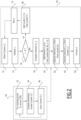
Figure 2 is a flowchart for a method of estimating a number of distinct subscribers of a telecommunications network impacted by network issues in accordance to an embodiment of the invention; -
Figure 3 illustrates schematically a series of successive counting periods and associated elementary counters; -
Figure 4 illustrates schematically a multi-level final counter structure and related elementary counters. -
Figure 1 illustrates schematically atelecommunications network 2 to which the method of the invention can be applied to estimate the number of subscribers impacted by network issues. - The architecture of the
telecommunications network 2 is not detailed here, since the method of the invention applies to any type of network architecture. - For example, the
telecommunications network 2 is based on System Architecture Evolution (SAE), and implements the Long-Term Evolution (LTE) wireless communication standard. - A user can connect to the
telecommunications network 2 via auser equipment 4, which is recognized in the network as a subscriber which has an associated unique identifier in the network, i.e. the phone number of the subscriber in a telecommunications network. - In a known manner, the
telecommunication network 2 comprises equipment or probes which generate Call Detail Records (CDR) 6 which are data records, that document the various attributes of voice call or other telecommunications transactions (e.g. text message or the like). The CDRs contain various attributes of a call, such as time, duration, completion status, source number, destination number. CDRs are used for various purposes such as billing, logging or law enforcement. - Calls conducted over multiple network equipment and interfaces lead to the generation of multiple CDRs. For example, a voice over LTE service may involve the use of 4 domains, 50 procedures, 15 interfaces and associated equipment with between 20 and 50 CDRs generated. Each CDR provides information about the status of the monitored equipment and interface, and identifies the subscribers whose session the CDR relates to.
- According to embodiments, the CDRs are provided to a
device 10 for estimating a number of distinct subscribers of a telecommunications network impacted by network issues. - The
device 10 is for example a computing device or a general-purpose computer system, comprising one ormore processors 12 coupled to anelectronic memory 14 via acommunication bus 15. Thedevice 10 further comprises anetwork interface 16, configured to receive data from thetelecommunication network 2, in particular to receiveCDRs 6 over a number N of successive time periods, called counting periods in the following. For example, each counting period has a duration of one minute, and N=10 successive counting periods are considered. More generally, the number N is a chosen integer value, for example N is comprised between 5 and 60. - The
processor 12 is configured to implement amodule 20 for determining, for each counting period, an estimate of a number of different subscribers impacted by at least one network issue by implementing a probabilistic counter structure, and storing at least oneelementary counter 24 in association to said counting period. Eachelementary counter 24 is stored in theelectronic memory 14 of thecomputing device 10.Module 20 implements a first step of a method for estimating a number of distinct subscribers of a telecommunications network impacted by network issues. - The
processor 12 is further configured to implement amodule 22 for aggregating the elementary counters in a multi-levelfinal counter structure 26, wherein each level of the final counter structure has an associated probabilistic counter structure. The multi-levelfinal counter 26 is stored in theelectronic memory 14 of thecomputing device 10.Module 22 implements a second step of a method for estimating a number of distinct subscribers of a telecommunications network impacted by network issues. - According to an embodiment, the
modules electronic memory 14 of thecomputing device 10. Alternatively, themodules - In an alternative embodiment, each of the
modules - Advantageously, the
module 22 for aggregating the elementary counters computes a multi-levelfinal counter structure 26 which provides an estimate of the number of distinct subscribers impacted by network issues over M counting periods out of the N counting periods. - Embodiments of
modules - According to an embodiment, illustrated by the flowchart of
figure 2 , a method for estimating a number of distinct subscribers of a telecommunications network impacted by network issues, implemented by a processor of a computing device, comprising, for a plurality of N successive counting periods preceding a current time comprises afirst step 40 and asecond step 50. - The
first step 40 comprises, for each counting period PK of N successive periods, receiving 42 CDR reports, computing 44 an elementary counter, which is a probabilistic counter structure by processing data from the CDR report and storing 46 the elementary counters. -
Figure 3 illustrates schematically a timeline comprising a number of successive counting periods preceding a current time instant Tc. Each counting period has a duration D, preferably comprised between 30s to 15minutes, for example equal to 1 minute. - Preferably, the estimation of the number of distinct subscribers impacted by network issues is applied for a sliding window of N counting periods preceding the current time instant Tc.
- Each counting period PK has an associated
elementary counter 24K which is probabilistic counter structure, storing probabilistic data for estimating the number of distinct subscribers affected by at least one network issue during the counting period PK. - The computation of each probabilistic counter structure is function of one or several reports of network issues (e.g. various service failures) during the corresponding counting period, obtained from
CDRs 6A to 6G. - For each counting period, one or several CDRs containing reports of network issues are processed.
- For example, at
computation step 44, the computation of each probabilistic counter structure is carried out using a known probabilistic cardinality estimation algorithm, for example based on K-minimum values Sketch. In an embodiment, the Apache Theta Sketch® software is used. - It is further to be noticed that any other probabilistic cardinality estimation algorithm which supports intersection and subtraction operations may be used.
- The identifiers of subscribers impacted by network issues are extracted from the received CDRs and are processed, according to their statistical distribution. Advantageously, the values of the identifiers are hashed, so that the data stored in the probabilistic counter structure is compressed.
- The
second step 50, according to the embodiment offigure 2 , computes the aggregation of the elementary counters in a multi-level final counter structure, for estimating the number of distinct subscribers which experiment network issues in at least M distinct counting periods over the N counting periods preceding a given time instant Tc or preceding a given time period. The number M is a chosen integer, which is smaller than or equal to N. - For example, M is comprised between 2 and 4.
- At initialization, each level of the multi-level final counter comprises an empty probabilistic counter structure.
- The method comprises a
step 52 of obtaining from the memorized elementary counters a current elementary counter of index j, noted Counter[j], corresponding to a counting period Pj, to be processed. - Next, a counting index α is initialized to 1 (step 54), and while α is smaller than M (test 56), an intersection between the current elementary counter Counter[j] and the probabilistic counter structure associated to level α of the multi-level final counter structure Final_counter[α] is computed at computing intersection step 58:

- The computed intersection comprises a probabilistic list of identifiers of distinct subscribers which belong both to the probabilistic counter structure of the current elementary counter Counter[j] and to the probabilistic counter structure of level α of the final counter structure.
- Next, the computed intersection Intersect(α,j) is added (step 60) to the probabilistic counter structure associated to level α+1 of the multi-level final counter structure if α+1 is smaller than or equal to M, or to level M is α+1 is bigger than M. The mathematical formula corresponding to step 60 can be written as:

- The computed intersection Intersect(α,j) is also subtracted (step 62) from the probabilistic counter structure of level α of the final counter structure :

-
Steps - Furthermore, the intersection Intersect(α,j) is also subtracted at subtracting
step 64 from the current elementary counter Counter[j]:
-
Steps - The counting index α is then increased (step 66) and steps 56 to 66 are repeated until the counting index α reaches the value M.
- For a given current elementary counter Counter[j], when the counting index a reaches the value M, the remaining of the elementary counter Counter[j] is added (step 68) to the probabilistic counter structure associated to
level 1 of the multi-level final counter structure.
- Next, a following current elementary counter, associated with a following counting period, is computed (step 70), and steps 52 to 68 are repeated until a number N of elementary counters corresponding to N successive counting periods has been processed. In an embodiment, counter j varies from k to k-N+1, for N counting periods in total.
-
Figure 4 illustrates schematically a plurality ofelementary counters 24Q to 24N+Q and a multi-levelfinal counter structure 26, containing M levels of probabilistic counter structures. - At the end of the processing carried out during the
second step 50 of the method for estimating a number of distinct subscribers of a telecommunications network impacted by network issues, the multi-levelfinal counter structure 26 comprises the following: - the probabilistic counter structure of
level 1 of the multi-levelfinal counter structure 26 comprises an estimation of the number of distinct subscribers which experiment at least one network issue over a single counting period during the N successive counting periods, - the probabilistic counter structure of
level 2 of the multi-levelfinal counter structure 26 comprises an estimation of the number of distinct subscribers which experiment at least one network issue over two distinct counting periods during the N successive counting periods, - the probabilistic counter structure of level α of the multi-level
final counter structure 26 comprises an estimation of the number of distinct subscribers which experiment at least one network issue over α distinct periods during the N successive counting periods, and - the probabilistic counter structure of level M of the multi-level
final counter structure 26 comprises an estimation of the number of distinct subscribers which experiment at least one network issue over at least M distinct periods during the N successive counting periods. - The method as described above can be carried out for different equipment or interfaces of the network, and the network issues affecting a number of subscribers over M distinct periods of time can be diagnosed, and troubleshooting can then be applied.
- Advantageously, the method described above is implemented in real-time, over a sliding window comprising N counting periods.
- Advantageously, the number of subscribers affected by repeated network issues or service failures is computed.
- As noted herein, the invention provides a more accurate identification of subscribers affected by problems because only subscribers affected several times in the time periods are counted. This approach provides improved granularity relative to the prior art. Specifically, dividing the timeline into successive time periods and using the probabilistic counter structure allows the present approach to more accurately estimate the number of issues. The conventional approach applies a probabilistic sampling over an entire timeline whereas the invention provides the probabilistic sampling over smaller time periods with more granularity. This approach provides significantly better results in terms of estimating subscribers impacted by problems.
- Advantageously, improvements in impacted subscribers allows telecommunication network operators to remediate and solve problems in a more efficient manner, e.g. by addressing problems in some order based on subscriber impact.
- According to a variant, the method as explained above with reference to
figure 2 may be applied by associating a probabilistic counter structure to each CDR within a given counting period. Then, at the expense of a higher computational cost, it is possible to compute the number of subscribers impacted by at least M network issues over one or several periods of the last N counting periods. Indeed, in this variant, a loop through all levels of counter[j] is implemented and the result is merged with all levels of final_counter, therefore more computations are needed.
Claims (9)
- Method for estimating a number of distinct subscribers of a telecommunication network impacted by network issues, implemented by a processor of a computing device, the method being characterized in that it comprises, for a plurality of N successive counting periods preceding a current time :- determining (40), for each counting period in at least M distinct counting periods over the N successive counting periods, an estimate of a number of different subscribers impacted by at least one network issue by implementing a probabilistic counter structure, and storing at least one elementary counter (24Q,..., 24N+Q) in association to said counting period,- aggregating (50) the elementary counters in a multi-level final counter structure (26) comprising M distinct levels, wherein each level of the final counter structure (26) has an associated probabilistic counter structure, the aggregation comprising:wherein at the end of the aggregating (50), the probabilistic counter structure of level α of the multi-level final counter structure (26) comprises an estimation of the number of distinct subscribers which experiment at least one network issue over α distinct periods during the N successive counting periods.- for each elementary counter and for each level α of the multi-level final counter structure, computing (58), an intersection between said elementary counter and the probabilistic counter structure associated to level α of the multi-level final counter structure, and updating (60-64) the multi-level final counter structure based on the intersection computed,
- A method according to claim 1, wherein the updating of the multi-level final counter structure comprises adding (60) the intersection computed for a given level of the multi-level final counter structure to the probabilistic counter structure of a next level of the multi-level final counter structure.
- A method according to claim 2, wherein the updating of the multi-level final counter structure further comprises subtracting (62) the intersection computed from the probabilistic counter structure of the given level of the multi-level final counter structure.
- A method according to any of claims 1 to 3, further comprising updating the elementary counter by subtracting (64) the intersection computed from the probabilistic counter structure of said elementary counter.
- A method according to any of claims 1 to 4, further comprising, after carrying out the computing of an intersection and the updating for each level of the multi-level final counter structure, adding (68) the probabilistic counter structure of said elementary counter to the first level of the multi-level final counter structure.
- A method according to any of claims 1 to 5 wherein the updating comprises adding the intersection computed for a given level α to the following level α+1 of the multi-level final counter structure if α+1 is smaller than M, or to level M of the multi-level final counter structure if α+1 is bigger than M.
- A method according to any of claims 1 to 6, wherein the determining, for each counting period, of an estimate of a number of different subscribers impacted by at least one network issue comprises :receiving (42) a data record comprising identifiers of subscribers impacted by network issues andprocessing (44) said identifiers by a probabilistic cardinality estimation algorithm to obtain a probabilistic counter structure.
- Device for estimating a number of distinct subscribers of a telecommunications network impacted by network issues, characterized in that it comprises at least one processor configured to implement, for a plurality of N successive counting periods preceding a current time :- determining, for each counting period in at least M distinct counting periods over the N successive counting periods, an estimate of a number of different subscribers impacted by at least one network issue by implementing a probabilistic counter structure, and storing at least one elementary counter in association to said counting period,- aggregating the elementary counters in a multi-level final counter structure (26) comprising M distinct levels, wherein each level of the final counter structure has an associated probabilistic counter structure, the aggregation comprising:- for each elementary counter and for each level α of the multi-level final counter structure:computing an intersection between said elementary counter and the probabilistic counter structure associated to said level of the multi-level final counter structure, andupdating the multi-level final counter structure based on the intersection computed,wherein at the end of the aggregating (50), the probabilistic counter structure of level α of the multi-level final counter structure (26) comprises an estimation of the number of distinct subscribers which experiment at least one network issue over α distinct periods during the N successive counting periods.
- A computer program product comprising software instructions which, when executed by a programmable device, implement a method for estimating a number of distinct subscribers of a telecommunications network impacted by network issues according to any one of claims 1 to 7.
Applications Claiming Priority (2)
| Application Number | Priority Date | Filing Date | Title |
|---|---|---|---|
| US202062963324P | 2020-01-20 | 2020-01-20 | |
| US202062975414P | 2020-02-12 | 2020-02-12 |
Publications (2)
| Publication Number | Publication Date |
|---|---|
| EP3852310A1 EP3852310A1 (en) | 2021-07-21 |
| EP3852310B1 true EP3852310B1 (en) | 2023-07-26 |
Family
ID=74194514
Family Applications (1)
| Application Number | Title | Priority Date | Filing Date |
|---|---|---|---|
| EP21152237.0A Active EP3852310B1 (en) | 2020-01-20 | 2021-01-19 | Method and device for estimating a number of distinct subscribers of a telecommunication network impacted by network issues |
Country Status (3)
| Country | Link |
|---|---|
| US (1) | US11416582B2 (en) |
| EP (1) | EP3852310B1 (en) |
| ZA (1) | ZA202100191B (en) |
Families Citing this family (1)
| Publication number | Priority date | Publication date | Assignee | Title |
|---|---|---|---|---|
| US11711275B2 (en) * | 2020-08-28 | 2023-07-25 | Mastercard International Incorporated | Impact predictions based on incident-related data |
Family Cites Families (13)
| Publication number | Priority date | Publication date | Assignee | Title |
|---|---|---|---|---|
| WO2013016246A1 (en) | 2011-07-22 | 2013-01-31 | Mark Figura | Systems and methods for network monitoring and testing using a generic data mediation platform |
| US9130825B2 (en) | 2011-12-27 | 2015-09-08 | Tektronix, Inc. | Confidence intervals for key performance indicators in communication networks |
| US9507756B2 (en) | 2012-01-18 | 2016-11-29 | Marvell Israel (M.I.S.L) Ltd. | Space efficient counters in network devices |
| US9026851B2 (en) | 2012-09-05 | 2015-05-05 | Wipro Limited | System and method for intelligent troubleshooting of in-service customer experience issues in communication networks |
| US20150149609A1 (en) | 2013-11-22 | 2015-05-28 | Microsoft Corporation | Performance monitoring to provide real or near real time remediation feedback |
| WO2015086070A1 (en) | 2013-12-12 | 2015-06-18 | Telefonaktiebolaget L M Ericsson (Publ) | Technique for counting objects in a telecommunications network |
| US20150248680A1 (en) | 2014-02-28 | 2015-09-03 | Alcatel-Lucent Usa Inc. | Multilayer dynamic model of customer experience |
| US10120905B2 (en) | 2014-12-22 | 2018-11-06 | Amazon Technologies, Inc. | Efficient determination of join paths via cardinality estimation |
| US10003515B1 (en) | 2015-12-29 | 2018-06-19 | Amazon Technologies, Inc. | Network visibility monitoring |
| US10306490B2 (en) * | 2016-01-20 | 2019-05-28 | Netscout Systems Texas, Llc | Multi KPI correlation in wireless protocols |
| JP6690011B2 (en) | 2016-03-29 | 2020-04-28 | アンリツ カンパニー | System and method for measuring effective customer impact of network problems in real time using streaming analysis |
| US10769159B2 (en) | 2016-12-22 | 2020-09-08 | Aon Global Operations Plc, Singapore Branch | Systems and methods for data mining of historic electronic communication exchanges to identify relationships, patterns, and correlations to deal outcomes |
| US10581664B1 (en) * | 2018-09-20 | 2020-03-03 | Spirent Communications, Inc. | Predicting subscriber experience based on QoE |
-
2021
- 2021-01-12 ZA ZA2021/00191A patent/ZA202100191B/en unknown
- 2021-01-13 US US17/147,696 patent/US11416582B2/en active Active
- 2021-01-19 EP EP21152237.0A patent/EP3852310B1/en active Active
Also Published As
| Publication number | Publication date |
|---|---|
| ZA202100191B (en) | 2023-12-20 |
| EP3852310A1 (en) | 2021-07-21 |
| US11416582B2 (en) | 2022-08-16 |
| US20210224353A1 (en) | 2021-07-22 |
Similar Documents
| Publication | Publication Date | Title |
|---|---|---|
| EP3866395B1 (en) | Method and system for determining root-cause diagnosis of events occurring during the operation of a communication network | |
| Jin et al. | Nevermind, the problem is already fixed: proactively detecting and troubleshooting customer dsl problems | |
| US9853867B2 (en) | Method and apparatus to determine network quality | |
| JP2019511787A (en) | System and method for measuring the effective customer impact of network problems in real time using streaming analysis | |
| US20140089040A1 (en) | System and Method for Customer Experience Measurement & Management | |
| CN116974805A (en) | Root cause determination methods, equipment and storage media | |
| US11416582B2 (en) | Method and device for estimating a number of distinct subscribers of a telecommunication network impacted by network issues | |
| KR102724600B1 (en) | Method for monitoring wireless network quality and apparatus therefor | |
| Ibrahim et al. | On verifying and assuring the cloud SLA by evaluating the performance of SaaS web services across multi-cloud providers | |
| CN115834342A (en) | CDR and DPI data association-based user perception fault positioning method | |
| CN117320054A (en) | Network service quality evaluation method, device, equipment and medium | |
| CN113923164B (en) | Link congestion detection method and related equipment | |
| US11716258B2 (en) | Early warning system of handset-caused mobile network performance degredation | |
| KR100440087B1 (en) | System for estimating traffic demand in wireless communication systems of open queueing network type and method thereof | |
| RU2439705C1 (en) | Method to assess information capacity and priority of computer network technical condition parameters | |
| CN119300115A (en) | Data transmission method and related equipment based on Wifi-Direct network | |
| CN116017529B (en) | A method and apparatus for root cause analysis of poor business quality | |
| DE102006041035A1 (en) | Methods and systems for optimization analysis in networks | |
| KR20050054665A (en) | Apparatus and method for measuring service quality by requirement of customer | |
| CN117202236A (en) | Base station health determination method, device, electronic equipment and storage medium | |
| US12368656B2 (en) | Adaptive event processing for cost-efficient CEM | |
| US20170013552A1 (en) | Method and apparatus for network energy assessment | |
| Sinovčić et al. | How to improve software development process using mathematical models for quality prediction and elements of six sigma methodology | |
| US20260017517A1 (en) | Automated feature selection for split neural networks | |
| CN119854758B (en) | Telecommunications service information processing method and system |
Legal Events
| Date | Code | Title | Description |
|---|---|---|---|
| PUAI | Public reference made under article 153(3) epc to a published international application that has entered the european phase |
Free format text: ORIGINAL CODE: 0009012 |
|
| STAA | Information on the status of an ep patent application or granted ep patent |
Free format text: STATUS: THE APPLICATION HAS BEEN PUBLISHED |
|
| AK | Designated contracting states |
Kind code of ref document: A1 Designated state(s): AL AT BE BG CH CY CZ DE DK EE ES FI FR GB GR HR HU IE IS IT LI LT LU LV MC MK MT NL NO PL PT RO RS SE SI SK SM TR |
|
| STAA | Information on the status of an ep patent application or granted ep patent |
Free format text: STATUS: REQUEST FOR EXAMINATION WAS MADE |
|
| 17P | Request for examination filed |
Effective date: 20210907 |
|
| RBV | Designated contracting states (corrected) |
Designated state(s): AL AT BE BG CH CY CZ DE DK EE ES FI FR GB GR HR HU IE IS IT LI LT LU LV MC MK MT NL NO PL PT RO RS SE SI SK SM TR |
|
| REG | Reference to a national code |
Ipc: H04L0041063100 Ref country code: DE Ref legal event code: R079 Ref document number: 602021003652 Country of ref document: DE Free format text: PREVIOUS MAIN CLASS: H04L0012240000 Ipc: H04L0041063100 |
|
| GRAP | Despatch of communication of intention to grant a patent |
Free format text: ORIGINAL CODE: EPIDOSNIGR1 |
|
| STAA | Information on the status of an ep patent application or granted ep patent |
Free format text: STATUS: GRANT OF PATENT IS INTENDED |
|
| RIC1 | Information provided on ipc code assigned before grant |
Ipc: H04W 24/08 20090101ALN20230202BHEP Ipc: H04L 43/0823 20220101ALN20230202BHEP Ipc: H04L 43/04 20220101ALN20230202BHEP Ipc: H04L 41/0686 20220101ALN20230202BHEP Ipc: H04L 41/0681 20220101ALN20230202BHEP Ipc: H04L 41/142 20220101ALI20230202BHEP Ipc: H04L 41/0631 20220101AFI20230202BHEP |
|
| INTG | Intention to grant announced |
Effective date: 20230303 |
|
| RIC1 | Information provided on ipc code assigned before grant |
Ipc: H04L 41/507 20220101ALN20230217BHEP Ipc: H04W 24/08 20090101ALN20230217BHEP Ipc: H04L 43/0823 20220101ALN20230217BHEP Ipc: H04L 43/04 20220101ALN20230217BHEP Ipc: H04L 41/0686 20220101ALN20230217BHEP Ipc: H04L 41/0681 20220101ALN20230217BHEP Ipc: H04L 41/142 20220101ALI20230217BHEP Ipc: H04L 41/0631 20220101AFI20230217BHEP |
|
| GRAS | Grant fee paid |
Free format text: ORIGINAL CODE: EPIDOSNIGR3 |
|
| P01 | Opt-out of the competence of the unified patent court (upc) registered |
Effective date: 20230512 |
|
| GRAA | (expected) grant |
Free format text: ORIGINAL CODE: 0009210 |
|
| STAA | Information on the status of an ep patent application or granted ep patent |
Free format text: STATUS: THE PATENT HAS BEEN GRANTED |
|
| AK | Designated contracting states |
Kind code of ref document: B1 Designated state(s): AL AT BE BG CH CY CZ DE DK EE ES FI FR GB GR HR HU IE IS IT LI LT LU LV MC MK MT NL NO PL PT RO RS SE SI SK SM TR |
|
| REG | Reference to a national code |
Ref country code: CH Ref legal event code: EP |
|
| REG | Reference to a national code |
Ref country code: DE Ref legal event code: R096 Ref document number: 602021003652 Country of ref document: DE |
|
| REG | Reference to a national code |
Ref country code: IE Ref legal event code: FG4D |
|
| REG | Reference to a national code |
Ref country code: LT Ref legal event code: MG9D |
|
| REG | Reference to a national code |
Ref country code: NL Ref legal event code: MP Effective date: 20230726 |
|
| REG | Reference to a national code |
Ref country code: AT Ref legal event code: MK05 Ref document number: 1593260 Country of ref document: AT Kind code of ref document: T Effective date: 20230726 |
|
| PG25 | Lapsed in a contracting state [announced via postgrant information from national office to epo] |
Ref country code: NL Free format text: LAPSE BECAUSE OF FAILURE TO SUBMIT A TRANSLATION OF THE DESCRIPTION OR TO PAY THE FEE WITHIN THE PRESCRIBED TIME-LIMIT Effective date: 20230726 |
|
| PG25 | Lapsed in a contracting state [announced via postgrant information from national office to epo] |
Ref country code: GR Free format text: LAPSE BECAUSE OF FAILURE TO SUBMIT A TRANSLATION OF THE DESCRIPTION OR TO PAY THE FEE WITHIN THE PRESCRIBED TIME-LIMIT Effective date: 20231027 |
|
| PG25 | Lapsed in a contracting state [announced via postgrant information from national office to epo] |
Ref country code: IS Free format text: LAPSE BECAUSE OF FAILURE TO SUBMIT A TRANSLATION OF THE DESCRIPTION OR TO PAY THE FEE WITHIN THE PRESCRIBED TIME-LIMIT Effective date: 20231126 |
|
| PG25 | Lapsed in a contracting state [announced via postgrant information from national office to epo] |
Ref country code: SE Free format text: LAPSE BECAUSE OF FAILURE TO SUBMIT A TRANSLATION OF THE DESCRIPTION OR TO PAY THE FEE WITHIN THE PRESCRIBED TIME-LIMIT Effective date: 20230726 Ref country code: RS Free format text: LAPSE BECAUSE OF FAILURE TO SUBMIT A TRANSLATION OF THE DESCRIPTION OR TO PAY THE FEE WITHIN THE PRESCRIBED TIME-LIMIT Effective date: 20230726 Ref country code: PT Free format text: LAPSE BECAUSE OF FAILURE TO SUBMIT A TRANSLATION OF THE DESCRIPTION OR TO PAY THE FEE WITHIN THE PRESCRIBED TIME-LIMIT Effective date: 20231127 Ref country code: NO Free format text: LAPSE BECAUSE OF FAILURE TO SUBMIT A TRANSLATION OF THE DESCRIPTION OR TO PAY THE FEE WITHIN THE PRESCRIBED TIME-LIMIT Effective date: 20231026 Ref country code: LV Free format text: LAPSE BECAUSE OF FAILURE TO SUBMIT A TRANSLATION OF THE DESCRIPTION OR TO PAY THE FEE WITHIN THE PRESCRIBED TIME-LIMIT Effective date: 20230726 Ref country code: LT Free format text: LAPSE BECAUSE OF FAILURE TO SUBMIT A TRANSLATION OF THE DESCRIPTION OR TO PAY THE FEE WITHIN THE PRESCRIBED TIME-LIMIT Effective date: 20230726 Ref country code: IS Free format text: LAPSE BECAUSE OF FAILURE TO SUBMIT A TRANSLATION OF THE DESCRIPTION OR TO PAY THE FEE WITHIN THE PRESCRIBED TIME-LIMIT Effective date: 20231126 Ref country code: HR Free format text: LAPSE BECAUSE OF FAILURE TO SUBMIT A TRANSLATION OF THE DESCRIPTION OR TO PAY THE FEE WITHIN THE PRESCRIBED TIME-LIMIT Effective date: 20230726 Ref country code: GR Free format text: LAPSE BECAUSE OF FAILURE TO SUBMIT A TRANSLATION OF THE DESCRIPTION OR TO PAY THE FEE WITHIN THE PRESCRIBED TIME-LIMIT Effective date: 20231027 Ref country code: FI Free format text: LAPSE BECAUSE OF FAILURE TO SUBMIT A TRANSLATION OF THE DESCRIPTION OR TO PAY THE FEE WITHIN THE PRESCRIBED TIME-LIMIT Effective date: 20230726 Ref country code: AT Free format text: LAPSE BECAUSE OF FAILURE TO SUBMIT A TRANSLATION OF THE DESCRIPTION OR TO PAY THE FEE WITHIN THE PRESCRIBED TIME-LIMIT Effective date: 20230726 |
|
| REG | Reference to a national code |
Ref country code: DE Ref legal event code: R081 Ref document number: 602021003652 Country of ref document: DE Owner name: EXFO SOLUTIONS SAS, FR Free format text: FORMER OWNER: EXFO SOLUTIONS SAS, SAINT-JACQUES-DE-LA-LANDE, FR Ref country code: DE Ref legal event code: R081 Ref document number: 602021003652 Country of ref document: DE Owner name: EXFO INC., CA Free format text: FORMER OWNER: EXFO SOLUTIONS SAS, SAINT-JACQUES-DE-LA-LANDE, FR |
|
| REG | Reference to a national code |
Ref country code: GB Ref legal event code: 732E Free format text: REGISTERED BETWEEN 20240201 AND 20240207 |
|
| PG25 | Lapsed in a contracting state [announced via postgrant information from national office to epo] |
Ref country code: PL Free format text: LAPSE BECAUSE OF FAILURE TO SUBMIT A TRANSLATION OF THE DESCRIPTION OR TO PAY THE FEE WITHIN THE PRESCRIBED TIME-LIMIT Effective date: 20230726 |
|
| PG25 | Lapsed in a contracting state [announced via postgrant information from national office to epo] |
Ref country code: ES Free format text: LAPSE BECAUSE OF FAILURE TO SUBMIT A TRANSLATION OF THE DESCRIPTION OR TO PAY THE FEE WITHIN THE PRESCRIBED TIME-LIMIT Effective date: 20230726 |
|
| REG | Reference to a national code |
Ref country code: DE Ref legal event code: R097 Ref document number: 602021003652 Country of ref document: DE |
|
| PG25 | Lapsed in a contracting state [announced via postgrant information from national office to epo] |
Ref country code: SM Free format text: LAPSE BECAUSE OF FAILURE TO SUBMIT A TRANSLATION OF THE DESCRIPTION OR TO PAY THE FEE WITHIN THE PRESCRIBED TIME-LIMIT Effective date: 20230726 Ref country code: RO Free format text: LAPSE BECAUSE OF FAILURE TO SUBMIT A TRANSLATION OF THE DESCRIPTION OR TO PAY THE FEE WITHIN THE PRESCRIBED TIME-LIMIT Effective date: 20230726 Ref country code: ES Free format text: LAPSE BECAUSE OF FAILURE TO SUBMIT A TRANSLATION OF THE DESCRIPTION OR TO PAY THE FEE WITHIN THE PRESCRIBED TIME-LIMIT Effective date: 20230726 Ref country code: EE Free format text: LAPSE BECAUSE OF FAILURE TO SUBMIT A TRANSLATION OF THE DESCRIPTION OR TO PAY THE FEE WITHIN THE PRESCRIBED TIME-LIMIT Effective date: 20230726 Ref country code: DK Free format text: LAPSE BECAUSE OF FAILURE TO SUBMIT A TRANSLATION OF THE DESCRIPTION OR TO PAY THE FEE WITHIN THE PRESCRIBED TIME-LIMIT Effective date: 20230726 Ref country code: CZ Free format text: LAPSE BECAUSE OF FAILURE TO SUBMIT A TRANSLATION OF THE DESCRIPTION OR TO PAY THE FEE WITHIN THE PRESCRIBED TIME-LIMIT Effective date: 20230726 Ref country code: SK Free format text: LAPSE BECAUSE OF FAILURE TO SUBMIT A TRANSLATION OF THE DESCRIPTION OR TO PAY THE FEE WITHIN THE PRESCRIBED TIME-LIMIT Effective date: 20230726 |
|
| PG25 | Lapsed in a contracting state [announced via postgrant information from national office to epo] |
Ref country code: IT Free format text: LAPSE BECAUSE OF FAILURE TO SUBMIT A TRANSLATION OF THE DESCRIPTION OR TO PAY THE FEE WITHIN THE PRESCRIBED TIME-LIMIT Effective date: 20230726 |
|
| PLBE | No opposition filed within time limit |
Free format text: ORIGINAL CODE: 0009261 |
|
| STAA | Information on the status of an ep patent application or granted ep patent |
Free format text: STATUS: NO OPPOSITION FILED WITHIN TIME LIMIT |
|
| 26N | No opposition filed |
Effective date: 20240429 |
|
| PG25 | Lapsed in a contracting state [announced via postgrant information from national office to epo] |
Ref country code: SI Free format text: LAPSE BECAUSE OF FAILURE TO SUBMIT A TRANSLATION OF THE DESCRIPTION OR TO PAY THE FEE WITHIN THE PRESCRIBED TIME-LIMIT Effective date: 20230726 |
|
| PG25 | Lapsed in a contracting state [announced via postgrant information from national office to epo] |
Ref country code: MC Free format text: LAPSE BECAUSE OF FAILURE TO SUBMIT A TRANSLATION OF THE DESCRIPTION OR TO PAY THE FEE WITHIN THE PRESCRIBED TIME-LIMIT Effective date: 20230726 |
|
| PG25 | Lapsed in a contracting state [announced via postgrant information from national office to epo] |
Ref country code: MC Free format text: LAPSE BECAUSE OF FAILURE TO SUBMIT A TRANSLATION OF THE DESCRIPTION OR TO PAY THE FEE WITHIN THE PRESCRIBED TIME-LIMIT Effective date: 20230726 |
|
| REG | Reference to a national code |
Ref country code: CH Ref legal event code: PL |
|
| PG25 | Lapsed in a contracting state [announced via postgrant information from national office to epo] |
Ref country code: LU Free format text: LAPSE BECAUSE OF NON-PAYMENT OF DUE FEES Effective date: 20240119 |
|
| PG25 | Lapsed in a contracting state [announced via postgrant information from national office to epo] |
Ref country code: LU Free format text: LAPSE BECAUSE OF NON-PAYMENT OF DUE FEES Effective date: 20240119 |
|
| PG25 | Lapsed in a contracting state [announced via postgrant information from national office to epo] |
Ref country code: BE Free format text: LAPSE BECAUSE OF NON-PAYMENT OF DUE FEES Effective date: 20240131 |
|
| PG25 | Lapsed in a contracting state [announced via postgrant information from national office to epo] |
Ref country code: CH Free format text: LAPSE BECAUSE OF NON-PAYMENT OF DUE FEES Effective date: 20240131 |
|
| PG25 | Lapsed in a contracting state [announced via postgrant information from national office to epo] |
Ref country code: CH Free format text: LAPSE BECAUSE OF NON-PAYMENT OF DUE FEES Effective date: 20240131 Ref country code: BE Free format text: LAPSE BECAUSE OF NON-PAYMENT OF DUE FEES Effective date: 20240131 |
|
| REG | Reference to a national code |
Ref country code: BE Ref legal event code: MM Effective date: 20240131 |
|
| PG25 | Lapsed in a contracting state [announced via postgrant information from national office to epo] |
Ref country code: BG Free format text: LAPSE BECAUSE OF FAILURE TO SUBMIT A TRANSLATION OF THE DESCRIPTION OR TO PAY THE FEE WITHIN THE PRESCRIBED TIME-LIMIT Effective date: 20230726 |
|
| PG25 | Lapsed in a contracting state [announced via postgrant information from national office to epo] |
Ref country code: BG Free format text: LAPSE BECAUSE OF FAILURE TO SUBMIT A TRANSLATION OF THE DESCRIPTION OR TO PAY THE FEE WITHIN THE PRESCRIBED TIME-LIMIT Effective date: 20230726 |
|
| PG25 | Lapsed in a contracting state [announced via postgrant information from national office to epo] |
Ref country code: IE Free format text: LAPSE BECAUSE OF NON-PAYMENT OF DUE FEES Effective date: 20240119 |
|
| PG25 | Lapsed in a contracting state [announced via postgrant information from national office to epo] |
Ref country code: IE Free format text: LAPSE BECAUSE OF NON-PAYMENT OF DUE FEES Effective date: 20240119 |
|
| REG | Reference to a national code |
Ref country code: DE Ref legal event code: R081 Ref document number: 602021003652 Country of ref document: DE Owner name: EXFO SOLUTIONS SAS, FR Free format text: FORMER OWNER: EXFO INC., QUEBEC, CA |
|
| REG | Reference to a national code |
Ref country code: GB Ref legal event code: 732E Free format text: REGISTERED BETWEEN 20250213 AND 20250219 |
|
| PG25 | Lapsed in a contracting state [announced via postgrant information from national office to epo] |
Ref country code: CY Free format text: LAPSE BECAUSE OF FAILURE TO SUBMIT A TRANSLATION OF THE DESCRIPTION OR TO PAY THE FEE WITHIN THE PRESCRIBED TIME-LIMIT; INVALID AB INITIO Effective date: 20210119 |
|
| PG25 | Lapsed in a contracting state [announced via postgrant information from national office to epo] |
Ref country code: HU Free format text: LAPSE BECAUSE OF FAILURE TO SUBMIT A TRANSLATION OF THE DESCRIPTION OR TO PAY THE FEE WITHIN THE PRESCRIBED TIME-LIMIT; INVALID AB INITIO Effective date: 20210119 |
|
| PG25 | Lapsed in a contracting state [announced via postgrant information from national office to epo] |
Ref country code: TR Free format text: LAPSE BECAUSE OF FAILURE TO SUBMIT A TRANSLATION OF THE DESCRIPTION OR TO PAY THE FEE WITHIN THE PRESCRIBED TIME-LIMIT Effective date: 20230726 |
|
| PGFP | Annual fee paid to national office [announced via postgrant information from national office to epo] |
Ref country code: GB Payment date: 20251211 Year of fee payment: 6 |
|
| PGFP | Annual fee paid to national office [announced via postgrant information from national office to epo] |
Ref country code: FR Payment date: 20251216 Year of fee payment: 6 |
|
| PGFP | Annual fee paid to national office [announced via postgrant information from national office to epo] |
Ref country code: DE Payment date: 20251222 Year of fee payment: 6 |