EP3849567B1 - Estrogen receptor targeting antagonists - Google Patents
Estrogen receptor targeting antagonists Download PDFInfo
- Publication number
- EP3849567B1 EP3849567B1 EP19860532.1A EP19860532A EP3849567B1 EP 3849567 B1 EP3849567 B1 EP 3849567B1 EP 19860532 A EP19860532 A EP 19860532A EP 3849567 B1 EP3849567 B1 EP 3849567B1
- Authority
- EP
- European Patent Office
- Prior art keywords
- compound
- treatment
- compounds
- reduced
- formula
- Prior art date
- Legal status (The legal status is an assumption and is not a legal conclusion. Google has not performed a legal analysis and makes no representation as to the accuracy of the status listed.)
- Active
Links
Images






Classifications
-
- C—CHEMISTRY; METALLURGY
- C07—ORGANIC CHEMISTRY
- C07F—ACYCLIC, CARBOCYCLIC OR HETEROCYCLIC COMPOUNDS CONTAINING ELEMENTS OTHER THAN CARBON, HYDROGEN, HALOGEN, OXYGEN, NITROGEN, SULFUR, SELENIUM OR TELLURIUM
- C07F5/00—Compounds containing elements of Groups 3 or 13 of the Periodic Table
- C07F5/02—Boron compounds
- C07F5/04—Esters of boric acids
-
- A—HUMAN NECESSITIES
- A61—MEDICAL OR VETERINARY SCIENCE; HYGIENE
- A61K—PREPARATIONS FOR MEDICAL, DENTAL OR TOILETRY PURPOSES
- A61K9/00—Medicinal preparations characterised by special physical form
- A61K9/0012—Galenical forms characterised by the site of application
- A61K9/0053—Mouth and digestive tract, i.e. intraoral and peroral administration
-
- A—HUMAN NECESSITIES
- A61—MEDICAL OR VETERINARY SCIENCE; HYGIENE
- A61P—SPECIFIC THERAPEUTIC ACTIVITY OF CHEMICAL COMPOUNDS OR MEDICINAL PREPARATIONS
- A61P35/00—Antineoplastic agents
-
- C—CHEMISTRY; METALLURGY
- C07—ORGANIC CHEMISTRY
- C07F—ACYCLIC, CARBOCYCLIC OR HETEROCYCLIC COMPOUNDS CONTAINING ELEMENTS OTHER THAN CARBON, HYDROGEN, HALOGEN, OXYGEN, NITROGEN, SULFUR, SELENIUM OR TELLURIUM
- C07F5/00—Compounds containing elements of Groups 3 or 13 of the Periodic Table
- C07F5/02—Boron compounds
- C07F5/025—Boronic and borinic acid compounds
Definitions
- the present disclosure relates to compounds that bind competitively to the estrogen receptor and antagonize, down regulate, or covalently bind to the receptor, or act through a combination of these mechanisms of action, thereby blocking the estrogen signaling pathways and inhibit the growth of ER dependent breast cancer cells.
- the disclosure also relates to pharmaceutical compositions comprising these ER targeting compounds, and such compounds or compositions for use in the treatment of estrogen receptor mediated pathological developments, including cancers.
- references to methods of treatment in this description are to be interpreted as references to the compounds, pharmaceutical compositions and medicaments of the present invention for use in a method for treatment of the human body by therapy,
- the present disclosure relates to compounds having activities as selective estrogen receptor modulators (SERMs), as selective estrogen receptor down-regulators (SERDs), and as selective estrogen receptor covalent antagonists, and methods for making the same.
- SERMs selective estrogen receptor modulators
- SESDs selective estrogen receptor down-regulators
- the disclosure also relates to pharmaceutical compositions comprising these ER-targeting compounds, and methods for using the same for treatment of estrogen receptor mediated pathological developments, including cancers.
- the compounds described here can provide effective endocrine therapy for breast cancers, especially those that express estrogen receptor (estrogen receptor positive or "ER+” breast cancers), as the first line adjuvant treatment regimen, or in the second-line setting as treatment for patients with disease progression after prior endocrine therapy such as selective estrogen receptor modulators (SERMs), aromatase inhibitors (Als), SERDs, or combinations of such endocrine therapies with other anticancer agents.
- SERMs selective estrogen receptor modulators
- Als aromatase inhibitors
- SERDs or combinations of such endocrine therapies with other anticancer agents.
- Tamoxifen is a first-line agent for pre-menopausal patients and for women requiring secondary chemoprevention after a DCIS diagnosis.
- Als are generally preferred to tamoxifen because of more favorable time to progression and less severe side effects [4, 5].
- most patients with advanced metastatic breast cancer eventually develop resistance to tamoxifen or AI treatment while retaining the expression of ER ⁇ in the recurrent and/or progressive disease.
- This clinical information provides a viable therapeutic rationale for using effective ER-targeting antagonists that are not cross-resistant to previous endocrine agents.
- WO 2013/134230 discloses boron based 4-hydroxytamoxifen and endoxifen derivatives and their use in treating breast cancer.
- Kushner P "Substituted triphenyl butenes, and their preparation and use for the treatment of breast cancer"
- Database accession no. 2011:1497183 discloses use of a substituted triphenyl butene or prodrug thereof for the treatment of breast cancer in mono-therapy or in combination therapy, or for a reduction in the recurrence rate of previously-treated breast cancer.
- WO 2016/196342 discloses tetrasubstituted alkene compounds and their use in breast cancer treatment.
- the present disclosure relates generally to novel compounds and compositions useful for the inhibition of estrogen receptor-mediated proliferation (i.e., having activities as selective estrogen receptor modulators (SERMs), as selective estrogen receptor down-regulators (SERDs), and as selective estrogen receptor covalent antagonists); compounds, intermediates, and methods of making such compounds and compositions; methods of using such compounds and compositions; pharmaceutical compositions comprising such compounds and compositions; and methods of using such pharmaceutical compositions, among other things.
- SERMs selective estrogen receptor modulators
- SETDs selective estrogen receptor down-regulators
- selective estrogen receptor covalent antagonists compounds, intermediates, and methods of making such compounds and compositions; methods of using such compounds and compositions; pharmaceutical compositions comprising such compounds and compositions; and methods of using such pharmaceutical compositions, among other things.
- the disclosure provides for a pharmaceutical composition
- a pharmaceutical composition comprising a compound of Formula (I) as claimed or at least one compound of one of Formulas (I) and (II)-(VI) or a pharmaceutically acceptable salt or solvate thereof.
- the pharmaceutical compound is for use in treatment of a proliferative disease, such as a cancer, for example, a breast cancer.
- a further embodiment may provide a method of treating breast cancer comprising administering to a subject a compound according to any one of the preceding paragraphs.
- the breast cancer may be an ER-positive breast cancer.
- the subject may express a mutant ER- ⁇ protein.
- An embodiment may provide use of a compound as in the paragraphs above for treating breast cancer.
- the breast cancer is an ER-positive breast cancer.
- said subject expresses a mutant ER- ⁇ protein.
- a compound as presented above is used in the preparation of a medicament for treatment of breast cancer.
- compositions of the present disclosure can be in any form known to those of skill in the art.
- the pharmaceutical compositions are in a form of a product for oral delivery, said product form being selected from a group consisting of a concentrate, dried powder, liquid, capsule, pellet, and pill.
- the pharmaceutical compositions of the disclosure are in the form of a product for parenteral administration including intravenous, intradermal, intramuscular, and subcutaneous administration.
- the pharmaceutical compositions disclosed herein may also further comprise carriers, binders, diluents, and excipients.
- the present disclosure relates to new ER-targeting composition
- said compound has a purity of ⁇ 75%, ⁇ 80%, ⁇ 85%, ⁇ 90%, ⁇ 95%, ⁇ 96%, ⁇ 97%, or ⁇ 98%, and ⁇ 99%.
- a pharmaceutical composition comprising the new ER-targeting composition, either alone or in combination with at least one additional therapeutic agent, with a pharmaceutically acceptable carrier; and uses of the new ER-targeting compositions, either alone or in combination with at least one additional therapeutic agent, in the treatment of proliferative diseases including breast cancer at any stage of the disease diagnosis.
- the combination with an additional therapeutic agent may take the form of combining the new ER-targeting compounds with any known therapeutic agent.
- the methods for treating a clinical indication by the ER-targeting compounds disclosed herein may be effectuated by administering a therapeutically effective amount of the ER-targeting compounds to a patient in need thereof, this therapeutically effective amount may comprise administration of the prodrug to the patient at 1 mg/kg/day, 2 mg/kg/day, 3 mg/kg/day, 4 mg/kg/day, 5 mg/kg/day, 10 mg/kg/day and 20 mg/kg/day.
- amounts ranging from about 0.001 mg/kg/day to about 0.01 mg/kg/day, or about 0.01 mg/kg/day to about 0.1 mg/kg/day, or about 0.1 mg/kg/day to about 1 mg/kg/day, or about 1 mg/kg/day to 10 mg/kg/day, or about 10 mg/kg/day to about 100 mg/kg/day are also contemplated.
- a further object of the disclosure is a kit, comprising a composition containing at least one ER-targeting for treatment and prevention of cancer and cancer related morbidities.
- the composition of the kit may comprise at least one carrier, at least one binder, at least one diluent, at least one excipient, at least one other therapeutic agent, or mixtures thereof.
- One aspect of the present disclosure is the compounds disclosed herein as well as the intermediates as used for their synthesis.
- minimize or “reduce”, or derivatives thereof, include a complete or partial inhibition of a specified biological effect (which is apparent from the context in which the terms “minimize” or “reduce” are used).
- the compounds according to the disclosure are isolated and purified in a manner known per se, e.g. by distilling off the solvent in vacuo and recrystallizing the residue obtained from a suitable solvent or subjecting it to one of the customary purification methods, such as chromatography on a suitable support material.
- reverse phase preparative HPLC of compounds of the present disclosure which possess a sufficiently basic or acidic functionality may result in the formation of a salt, such as, in the case of a compound of the present disclosure which is sufficiently basic, a trifluoroacetate or formate salt for example, or, in the case of a compound of the present disclosure which is sufficiently acidic, an ammonium salt for example.
- Salts of this type can either be transformed into its free base or free acid form, respectively, by various methods known to the person skilled in the art, or be used as salts in subsequent biological assays. Additionally, the drying process during the isolation of compounds of the present disclosure may not fully remove traces of cosolvents, especially such as formic acid or trifluoroacetic acid, to give solvates or inclusion complexes. The person skilled in the art will recognize which solvates or inclusion complexes are acceptable to be used in subsequent biological assays.
- salts of the compounds according to the disclosure including all inorganic and organic salts, especially all pharmaceutically acceptable inorganic and organic salts, particularly all pharmaceutically acceptable inorganic and organic salts customarily used in pharmacy.
- salts include, but are not limited to, lithium, sodium, potassium, calcium, aluminum, magnesium, titanium, meglumine, ammonium, salts optionally derived from NH 3 or organic amines having from 1 to 16 C-atoms such as, e.g. , ethylamine, diethylamine, triethylamine, ethyldiisopropylamine, monoethanolamine, diethanolamine, triethanolamine, dicyclohexylamine, dimethylaminoethanol, procaine, dibenzylamine, N-methylmorpholine, arginine, lysine, ethylendiamine, N-methylpiperindine and guanidinium salts.
- the salts include water-insoluble and, particularly, water-soluble salts.
- pharmaceutically acceptable salts refer to derivatives of the compounds disclosed herein wherein the parent compound is modified by making acid or base salts thereof.
- pharmaceutically acceptable salts include, but are not limited to, mineral or organic acid salts of basic residues such as amines, alkali or organic salts of acidic residues such as carboxylic acids, and the like.
- the pharmaceutically acceptable salts include the conventional non-toxic salts or the quaternary ammonium salts of the parent compound formed, for example, from non-toxic inorganic or organic acids.
- such conventional non-toxic salts include, but are not limited to, those derived from inorganic and organic acids selected from 2-acetoxybenzoic, 2-hydroxyethane sulfonic, acetic, ascorbic, benzene sulfonic, benzoic, bicarbonic, carbonic, citric, edetic, ethane disulfonic, 1,2-ethane sulfonic, fumaric, glucoheptonic, gluconic, glutamic, glycolic, glycollyarsanilic, hexylresorcinic, hydrabamic, hydrobromic, hydrochloric, hydroiodic, hydroxymaleic, hydroxynaphthoic, isethionic, lactic, lactobionic, lauryl sulfonic, maleic, malic, mandelic, methane sulfonic, napsylic, nitric, oxalic, pamoic, pantothenic, phenylacetic, phosphoric,
- salts include hexanoic acid, cyclopentane propionic acid, pyruvic acid, malonic acid, 3-(4-hydroxybenzoyl)benzoic acid, cinnamic acid, 4-chlorobenzenesulfonic acid, 2-naphthalenesulfonic acid, 4-toluenesulfonic acid, camphorsulfonic acid, 4-methylbicyclo-[2.2.2]-oct-2-ene-1-carboxylic acid, 3-phenylpropionic acid, trimethylacetic acid, tertiary butylacetic acid, muconic acid, and the like.
- the present disclosure also encompasses salts formed when an acidic proton present in the parent compound either is replaced by a metal ion, e.g., an alkali metal ion, an alkaline earth ion, or an aluminum ion; or coordinates with an organic base such as ethanolamine, diethanolamine, triethanolamine, tromethamine, N-methylglucamine, and the like.
- a metal ion e.g., an alkali metal ion, an alkaline earth ion, or an aluminum ion
- an organic base such as ethanolamine, diethanolamine, triethanolamine, tromethamine, N-methylglucamine, and the like.
- the ratio of the compound to the cation or anion of the salt may be 1:1, or any ratio other than 1:1, e.g., 3:1, 2:1, 1:2, or 1:3.
- Salts of the compounds of formulas (I) as claimed and (II) through (VI) according to the disclosure can be obtained by dissolving the free compound in a suitable solvent (for example a ketone such as acetone, methylethylketone or methylisobutylketone, an ether such as diethyl ether, tetrahydrofuran or dioxane, a chlorinated hydrocarbon such as methylene chloride or chloroform, or a low molecular weight aliphatic alcohol such as methanol, ethanol or isopropanol) which contains the desired acid or base, or to which the desired acid or base is then added.
- a suitable solvent for example a ketone such as acetone, methylethylketone or methylisobutylketone, an ether such as diethyl ether, tetrahydrofuran or dioxane, a chlorinated hydrocarbon such as methylene chloride or chloroform, or
- the acid or base can be employed in salt preparation, depending on whether a mono- or polybasic acid or base is concerned and depending on which salt is desired, in an equimolar quantitative ratio or one differing therefrom.
- the salts are obtained by filtering, reprecipitating, precipitating with a non-solvent for the salt or by evaporating the solvent. Salts obtained can be converted into the free compounds which, in turn, can be converted into salts. In this manner, pharmaceutically unacceptable salts, which can be obtained, for example, as process products in the manufacturing on an industrial scale, can be converted into pharmaceutically acceptable salts by processes known to the person skilled in the art.
- the compounds of formulas (I) as claimed and (II) through (VI) according to this disclosure as well as their salts may contain, e.g ., when isolated in crystalline form, varying amounts of solvents. Included within the scope of the disclosure are therefore all solvates and in particular all hydrates of the compounds of formulas (I) as claimed and (II) through (VI) according to this disclosure as well as all solvates and in particular all hydrates of the salts of the compounds of formulas (I) as claimed and (II) through (VI) according to this disclosure.
- Solvate means solvent addition forms that contain either stoichiometric or non stoichiometric amounts of solvent. Some compounds have a tendency to trap a fixed molar ratio of solvent molecules in the crystalline solid state, thus forming a solvate. If the solvent is water the solvate formed is a hydrate; and if the solvent is alcohol, the solvate formed is an alcoholate. Hydrates are formed by the combination of one or more molecules of water with one molecule of the substance in which the water retains its molecular state as H 2 O.
- the compounds according to the disclosure and their salts can exist in the form of tautomers which are included in the embodiments of the disclosure.
- Tautomer is one of two or more structural isomers that exist in equilibrium and is readily converted from one isomeric form to another. This conversion results in the formal migration of a hydrogen atom accompanied by a switch of adjacent conjugated double bonds. Tautomers exist as a mixture of a tautomeric set in solution. In solutions where tautomerization is possible, a chemical equilibrium of the tautomers will be reached. The exact ratio of the tautomers depends on several factors, including temperature, solvent and pH. The concept of tautomers that are interconvertible by tautomerizations is called tautomerism.
- keto-enol tautomerism a simultaneous shift of electrons and a hydrogen atom occurs.
- Ring-chain tautomerism arises as a result of the aldehyde group (-CHO) in a sugar chain molecule reacting with one of the hydroxy groups (-OH) in the same molecule to give it a cyclic (ring-shaped) form as exhibited by glucose.
- tautomeric pairs are: ketone-enol, amide-nitrile, lactam-lactim, amide-imidic acid tautomerism in heterocyclic rings (e.g., in nucleobases such as guanine, thymine and cytosine), imine-enamine and enamine-enamine.
- the compounds of the disclosure may, depending on their structure, exist in different stereoisomeric forms. These forms include configurational isomers or optically conformational isomers (enantiomers and/or diastereoisomers including those of atropisomers).
- the present disclosure therefore includes enantiomers, diastereoisomers as well as mixtures thereof. From those mixtures of enantiomers and/or disastereoisomers pure stereoisomeric forms can be isolated with methods known in the art, preferably methods of chromatography, especially high performance liquid chromatography (HPLC) using achiral or chiral phase.
- HPLC high performance liquid chromatography
- the disclosure further includes all mixtures of the stereoisomers mentioned above independent of the ratio, including the racemates.
- the compounds of the disclosure may, depending on their structure, exist in various stable isotopic forms. These forms include those in which one or more hydrogen atoms have been replaced with deuterium atoms, those in which one or more nitrogen atoms have been replaced with 15 N atoms, or those in which one or more atoms of carbon, fluorine, chlorine, bromine, sulfur, or oxygen have been replaced by the stable isotope of the respective, original atoms.
- Another object of the disclosure is to provide a composition, for example a pharmaceutical composition, comprising at least one ER-targeting compound in an amount effective for use in the treatment of proliferative diseases such as cancer, including but not limited to endocrine related cancer.
- the cancer is an ER-positive tumor, such as a tumor of the breast, endometrium, uterus, or ovary.
- the tumor is an ER-positive tumor of the breast.
- the breast tumor is determined to be ER-positive by an immunohistochemical method described by Hammond et al. [6].
- the object of such treatment is to inhibit estrogen-induced proliferation of a cell.
- said object is to inhibit estrogen-induced proliferation of a cell by a mechanism selected from SERM, SERD, and SERCA.
- treating or 'treatment' means us of a pharmaceutical composition to ameliorate, reduce or lessen the symptoms of a disease.
- “treating” or “treat” describes the management and care of a subject for the purpose of combating a disease, condition, or disorder and includes the use of a compound disclosed herein, or a pharmaceutically acceptable salt, polymorph or solvate thereof, to alleviate the symptoms or complications of a disease, condition or disorder, or to eliminate the disease, condition or disorder.
- the term “treat” may also include treatment of a cell in vitro or an animal model.
- subject or “subjects” refers to any animal, such as mammals including rodents (e.g., mice or rats), dogs, primates, lemurs or humans.
- Treating cancer may result in a reduction in size of a tumor.
- a reduction in size of a tumor may also be referred to as "tumor regression."
- tumor size is reduced by 5% or greater relative to its size prior to treatment; more preferably, tumor size is reduced by 10% or greater; more preferably, reduced by 20% or greater; more preferably, reduced by 30% or greater; more preferably, reduced by 40% or greater; even more preferably, reduced by 50% or greater; and most preferably, reduced by greater than 75% or greater.
- Size of a tumor may be measured by any reproducible means of measurement. The size of a tumor may be measured as a diameter of the tumor.
- Treating cancer may result in a reduction in tumor volume.
- tumor volume is reduced by 5% or greater relative to its size prior to treatment; more preferably, tumor volume is reduced by 10% or greater; more preferably, reduced by 20% or greater; more preferably, reduced by 30% or greater; more preferably, reduced by 40% or greater; even more preferably, reduced by 50% or greater; and most preferably, reduced by greater than 75% or greater.
- Tumor volume may be measured by any reproducible means of measurement.
- Treating cancer may result in a decrease in number of tumors.
- tumor number is reduced by 5% or greater relative to number prior to treatment; more preferably, tumor number is reduced by 10% or greater; more preferably, reduced by 20% or greater; more preferably, reduced by 30% or greater; more preferably, reduced by 40% or greater; even more preferably, reduced by 50% or greater; and most preferably, reduced by greater than 75%.
- Number of tumors may be measured by any reproducible means of measurement.
- the number of tumors may be measured by counting tumors visible to the naked eye or at a specified magnification.
- the specified magnification is 2 ⁇ , 3 ⁇ , 4 ⁇ , 5 ⁇ , 10 ⁇ , or 50 ⁇ .
- Treating cancer may result in a decrease in number of metastatic lesions in other tissues or organs distant from the primary tumor site.
- the number of metastatic lesions is reduced by 5% or greater relative to number prior to treatment; more preferably, the number of metastatic lesions is reduced by 10% or greater; more preferably, reduced by 20% or greater; more preferably, reduced by 30% or greater; more preferably, reduced by 40% or greater; even more preferably, reduced by 50% or greater; and most preferably, reduced by greater than 75%.
- the number of metastatic lesions may be measured by any reproducible means of measurement.
- the number of metastatic lesions may be measured by counting metastatic lesions visible to the naked eye or at a specified magnification.
- the specified magnification is 2 ⁇ , 3 ⁇ , 4 ⁇ , 5 ⁇ , 10 ⁇ , or 50 ⁇ .
- Treating cancer may result in an increase in average survival time of a population of treated subjects in comparison to a population receiving carrier alone.
- the average survival time is increased by more than 30 days; more preferably, by more than 60 days; more preferably, by more than 90 days; and most preferably, by more than 120 days.
- An increase in average survival time of a population may be measured by any reproducible means.
- An increase in average survival time of a population may be measured, for example, by calculating for a population the average length of survival following initiation of treatment with an active compound.
- An increase in average survival time of a population may also be measured, for example, by calculating for a population the average length of survival following completion of a first round of treatment with an active compound.
- Treating cancer may result in an increase in average survival time of a population of treated subjects in comparison to a population of untreated subjects.
- the average survival time is increased by more than 30 days; more preferably, by more than 60 days; more preferably, by more than 90 days; and most preferably, by more than 120 days.
- An increase in average survival time of a population may be measured by any reproducible means.
- An increase in average survival time of a population may be measured, for example, by calculating for a population the average length of survival following initiation of treatment with an active compound.
- An increase in average survival time of a population may also be measured, for example, by calculating for a population the average length of survival following completion of a first round of treatment with an active compound.
- Treating cancer may result in increase in average survival time of a population of treated subjects in comparison to a population receiving monotherapy with a drug that is not a compound disclosed herein, or a pharmaceutically acceptable salt thereof.
- the average survival time is increased by more than 30 days; more preferably, by more than 60 days; more preferably, by more than 90 days; and most preferably, by more than 120 days.
- An increase in average survival time of a population may be measured by any reproducible means.
- An increase in average survival time of a population may be measured, for example, by calculating for a population the average length of survival following initiation of treatment with an active compound.
- An increase in average survival time of a population may also be measured, for example, by calculating for a population the average length of survival following completion of a first round of treatment with an active compound.
- Treating cancer may result in a decrease in the mortality rate of a population of treated subjects in comparison to a population receiving carrier alone. Treating cancer may result in a decrease in the mortality rate of a population of treated subjects in comparison to an untreated population. Treating cancer may result in a decrease in the mortality rate of a population of treated subjects in comparison to a population receiving monotherapy with a drug that is not a compound disclosed herein, or a pharmaceutically acceptable salt, prodrug, metabolite, analog or derivative thereof.
- the mortality rate is decreased by more than 2%; more preferably, by more than 5%; more preferably, by more than 10%; and most preferably, by more than 25%.
- a decrease in the mortality rate of a population of treated subjects may be measured by any reproducible means.
- a decrease in the mortality rate of a population may be measured, for example, by calculating for a population the average number of disease-related deaths per unit time following initiation of treatment with an active compound.
- a decrease in the mortality rate of a population may also be measured, for example, by calculating for a population the average number of disease-related deaths per unit time following completion of a first round of treatment with an active compound.
- Treating cancer may result in a decrease in tumor growth rate.
- tumor growth rate is reduced by at least 5% relative to number prior to treatment; more preferably, tumor growth rate is reduced by at least 10%; more preferably, reduced by at least 20%; more preferably, reduced by at least 30%; more preferably, reduced by at least 40%; more preferably, reduced by at least 50%; even more preferably, reduced by at least 50%; and most preferably, reduced by at least 75%.
- Tumor growth rate may be measured by any reproducible means of measurement. Tumor growth rate may be measured according to a change in tumor diameter per unit time.
- Treating cancer may result in a decrease in tumor regrowth, for example, following attempts to remove it surgically.
- tumor regrowth is less than 5%; more preferably, tumor regrowth is less than 10%; more preferably, less than 20%; more preferably, less than 30%; more preferably, less than 40%; more preferably, less than 50%; even more preferably, less than 50%; and most preferably, less than 75%.
- Tumor regrowth may be measured by any reproducible means of measurement. Tumor regrowth is measured, for example, by measuring an increase in the diameter of a tumor after a prior tumor shrinkage that followed treatment. A decrease in tumor regrowth is indicated by failure of tumors to reoccur after treatment has stopped.
- Treating or preventing a cell proliferative disorder may result in a reduction in the rate of cellular proliferation.
- the rate of cellular proliferation is reduced by at least 5%; more preferably, by at least 10%; more preferably, by at least 20%; more preferably, by at least 30%; more preferably, by at least 40%; more preferably, by at least 50%; even more preferably, by at least 50%; and most preferably, by at least 75%.
- the rate of cellular proliferation may be measured by any reproducible means of measurement.
- the rate of cellular proliferation is measured, for example, by measuring the number of dividing cells in a tissue sample per unit time.
- Treating or preventing a cell proliferative disorder may result in a reduction in the proportion of proliferating cells.
- the proportion of proliferating cells is reduced by at least 5%; more preferably, by at least 10%; more preferably, by at least 20%; more preferably, by at least 30%; more preferably, by at least 40%; more preferably, by at least 50%; even more preferably, by at least 50%; and most preferably, by at least 75%.
- the proportion of proliferating cells may be measured by any reproducible means of measurement.
- the proportion of proliferating cells is measured, for example, by quantifying the number of dividing cells relative to the number of nondividing cells in a tissue sample.
- the proportion of proliferating cells may be equivalent to the mitotic index.
- Treating or preventing a cell proliferative disorder may result in a decrease in size of an area or zone of cellular proliferation.
- size of an area or zone of cellular proliferation is reduced by at least 5% relative to its size prior to treatment; more preferably, reduced by at least 10%; more preferably, reduced by at least 20%; more preferably, reduced by at least 30%; more preferably, reduced by at least 40%; more preferably, reduced by at least 50%; even more preferably, reduced by at least 50%; and most preferably, reduced by at least 75%.
- Size of an area or zone of cellular proliferation may be measured by any reproducible means of measurement.
- the size of an area or zone of cellular proliferation may be measured as a diameter or width of an area or zone of cellular proliferation.
- Treating or preventing a cell proliferative disorder may result in a decrease in the number or proportion of cells having an abnormal appearance or morphology.
- the number of cells having an abnormal morphology is reduced by at least 5% relative to its size prior to treatment; more preferably, reduced by at least 10%; more preferably, reduced by at least 20%; more preferably, reduced by at least 30%; more preferably, reduced by at least 40%; more preferably, reduced by at least 50%; even more preferably, reduced by at least 50%; and most preferably, reduced by at least 75%.
- An abnormal cellular appearance or morphology may be measured by any reproducible means of measurement.
- An abnormal cellular morphology may be measured by microscopy, e.g., using an inverted tissue culture microscope.
- An abnormal cellular morphology may take the form of nuclear pleiomorphism.
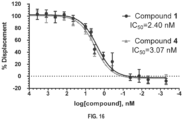
- FIG. 16 shows the competitive binding curves of compound 1 (an example of formula I) and compound 4 (an example of formula III) with IC50 values measured at 2.40 nM and 3.07 nM, respectively.
- Compound 1 inhibits proliferation of breast cancer cells
- MCF-7, MCF-7/TamR ( tamoxifen resistant ), and MCF-7(Y537S) ( expressing mutant ER ) were treated with compound 1 and 4-hydroxytamoxifen (4OHT) to determine the antiproliferative activity of an irreversible and reversible SERM. As shown in FIG. 18 .
- Compound 1 inhibits xenograft breast tumor growth in mice
- mice bearing MCF-7 derived xenograft breast tumors were treated with compound 1. At 1 and 5 mg/kg daily oral doses, the MCF-7 tumor growth was nearly completely blocked during the three weeks of treatment time ( FIG. 19 , panel A). In comparison, treatment of the reversible SERM tamoxifen resulted in an inhibition of tumor growth that was significantly less efficacious than the compound 1 treatment groups, indicating that the targeted covalent bonding formation between compound 1 and C530 within the ER LBD confers enhanced anti-tumor efficacy over a conventional antiestrogen.
- Compound 1 but not compound 4 , shows agonist activity in mouse uterus
Landscapes
- Health & Medical Sciences (AREA)
- Chemical & Material Sciences (AREA)
- Organic Chemistry (AREA)
- Veterinary Medicine (AREA)
- General Health & Medical Sciences (AREA)
- Medicinal Chemistry (AREA)
- Pharmacology & Pharmacy (AREA)
- Public Health (AREA)
- Life Sciences & Earth Sciences (AREA)
- Animal Behavior & Ethology (AREA)
- Chemical Kinetics & Catalysis (AREA)
- General Chemical & Material Sciences (AREA)
- Nuclear Medicine, Radiotherapy & Molecular Imaging (AREA)
- Epidemiology (AREA)
- Nutrition Science (AREA)
- Physiology (AREA)
- Pharmaceuticals Containing Other Organic And Inorganic Compounds (AREA)
Description
- The present disclosure relates to compounds that bind competitively to the estrogen receptor and antagonize, down regulate, or covalently bind to the receptor, or act through a combination of these mechanisms of action, thereby blocking the estrogen signaling pathways and inhibit the growth of ER dependent breast cancer cells. The disclosure also relates to pharmaceutical compositions comprising these ER targeting compounds, and such compounds or compositions for use in the treatment of estrogen receptor mediated pathological developments, including cancers.
- The references to methods of treatment in this description are to be interpreted as references to the compounds, pharmaceutical compositions and medicaments of the present invention for use in a method for treatment of the human body by therapy,
- The present disclosure relates to compounds having activities as selective estrogen receptor modulators (SERMs), as selective estrogen receptor down-regulators (SERDs), and as selective estrogen receptor covalent antagonists, and methods for making the same. The disclosure also relates to pharmaceutical compositions comprising these ER-targeting compounds, and methods for using the same for treatment of estrogen receptor mediated pathological developments, including cancers.
- The compounds described here can provide effective endocrine therapy for breast cancers, especially those that express estrogen receptor (estrogen receptor positive or "ER+" breast cancers), as the first line adjuvant treatment regimen, or in the second-line setting as treatment for patients with disease progression after prior endocrine therapy such as selective estrogen receptor modulators (SERMs), aromatase inhibitors (Als), SERDs, or combinations of such endocrine therapies with other anticancer agents.
- Breast cancer remains the most common cancer in women worldwide, with over 1.7 million new cases diagnosed in 2012 (second most common cancer overall). This represents about 12% of all new cancer cases and 25% of all cancers in women. Nearly 80% of breast cancer cases are estrogen receptor positive (ER+) [1, 2] and for most of these patients, endocrine therapy is an appropriate option in both the adjuvant and advanced setting. Current endocrine therapy for ER+ breast cancer comprises three regimen options that can be used in varied sequences for optimal outcome: SERM (e.g., tamoxifen, raloxifene, toremifene), aromatase inhibitors (Als, including anastrozole, exemestane, letrozole), and SERD (fulvestrant) [3]. Tamoxifen is a first-line agent for pre-menopausal patients and for women requiring secondary chemoprevention after a DCIS diagnosis. In postmenopausal women Als are generally preferred to tamoxifen because of more favorable time to progression and less severe side effects [4, 5]. However, most patients with advanced metastatic breast cancer eventually develop resistance to tamoxifen or AI treatment while retaining the expression of ERα in the recurrent and/or progressive disease. This clinical information provides a viable therapeutic rationale for using effective ER-targeting antagonists that are not cross-resistant to previous endocrine agents.
WO 2013/134230 discloses boron based 4-hydroxytamoxifen and endoxifen derivatives and their use in treating breast cancer. Kushner P, "Substituted triphenyl butenes, and their preparation and use for the treatment of breast cancer", CAPLUS, STN, (20110101), Database accession no. 2011:1497183 discloses use of a substituted triphenyl butene or prodrug thereof for the treatment of breast cancer in mono-therapy or in combination therapy, or for a reduction in the recurrence rate of previously-treated breast cancer.WO 2016/196342 discloses tetrasubstituted alkene compounds and their use in breast cancer treatment. - The present disclosure relates generally to novel compounds and compositions useful for the inhibition of estrogen receptor-mediated proliferation (i.e., having activities as selective estrogen receptor modulators (SERMs), as selective estrogen receptor down-regulators (SERDs), and as selective estrogen receptor covalent antagonists); compounds, intermediates, and methods of making such compounds and compositions; methods of using such compounds and compositions; pharmaceutical compositions comprising such compounds and compositions; and methods of using such pharmaceutical compositions, among other things.
- It will be appreciated that the scope is in accordance with the claims. Accordingly, there is provided, as defined in
claim 1, a compound of the formula (I):
- R1=

- R2=


- n = 1-3
- wherein the R1 substituent point of attachment is on the substituent boron atom of R1, or a salt thereof, a solvate thereof, or a solvate of a salt thereof. An example of a compound of Formula (I) is
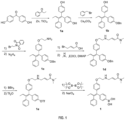
Compound 1, and an exemplary scheme for synthesizingCompound 1 of Formula (I) is shown inFIG. 1 . Further features are provided in accordance with the dependent claims, The specification may include description of embodiments outside the scope of the claims provided as background and to assist in the understanding the invention. - In another embodiment, a compound of the formula (II) is disclosed:

- Where R1 and R3 are para- or meta- substitutions :
- R1=

- R2=


- R3= H, OH, OCH3, F, or R1
- R1=
- wherein the R1 substituent point of attachment is on the substituent boron atom of R1. An example of a compound of Formula (II) is
Compound 2, and an exemplary scheme for synthesizingCompound 2 of Formula (II) is shown inFIG. 2 . - In another embodiment disclosed but not part of the invention, a compound of formula (III) is disclosed:

- R1=OH,

- R2=




- R3=Cl, F, OH, OCH3, or R1
- X = O, C=O, NH, CH2, or absent
- In another embodiment disclosed but not part of the invention, a compound of formula (IV) is disclosed:

- R1=OH,

- R2=



- R3=Cl, F, OH, OCH3, or R1
- In another embodiment disclosed but not part of the invention, a compound of formula (V) is disclosed:

- R1=OH,

- R2=


- R3=OH, OCH3, F, Cl, or R1
- In another embodiment disclosed but not part of the invention, a compound of formula (VI) is disclosed:

- R1=OH,

- R2=


- R3=OH, OCH3, or R1
- In an embodiment, the disclosure provides for a pharmaceutical composition comprising a compound of Formula (I) as claimed or at least one compound of one of Formulas (I) and (II)-(VI) or a pharmaceutically acceptable salt or solvate thereof. In an embodiment, the pharmaceutical compound is for use in treatment of a proliferative disease, such as a cancer, for example, a breast cancer. A further embodiment may provide a method of treating breast cancer comprising administering to a subject a compound according to any one of the preceding paragraphs. The breast cancer may be an ER-positive breast cancer. The subject may express a mutant ER-α protein. An embodiment may provide use of a compound as in the paragraphs above for treating breast cancer. In some embodiments the breast cancer is an ER-positive breast cancer. In some embodiments said subject expresses a mutant ER-α protein. In some embodiments a compound as presented above is used in the preparation of a medicament for treatment of breast cancer.
- The pharmaceutical compositions of the present disclosure can be in any form known to those of skill in the art. For instance, in some embodiments the pharmaceutical compositions are in a form of a product for oral delivery, said product form being selected from a group consisting of a concentrate, dried powder, liquid, capsule, pellet, and pill. In other embodiments, the pharmaceutical compositions of the disclosure are in the form of a product for parenteral administration including intravenous, intradermal, intramuscular, and subcutaneous administration. The pharmaceutical compositions disclosed herein may also further comprise carriers, binders, diluents, and excipients.
- Also, in other aspects, the present disclosure relates to new ER-targeting composition comprising a compound of Formula (I) as claimed or one or more compounds selected from the group consisting of a compound of Formula (I) and one of Formula (II) through (VI), and a compound of one of
Compound 1 as claimed throughCompound 16, and pharmaceutically acceptable salts and solvates thereof. In an embodiment, said compound has a purity of ≥ 75%, ≥ 80%, ≥ 85%, ≥ 90%, ≥ 95%, ≥ 96%, ≥ 97%, or ≥ 98%, and ≥ 99%. In an embodiment, a pharmaceutical composition is provided comprising the new ER-targeting composition, either alone or in combination with at least one additional therapeutic agent, with a pharmaceutically acceptable carrier; and uses of the new ER-targeting compositions, either alone or in combination with at least one additional therapeutic agent, in the treatment of proliferative diseases including breast cancer at any stage of the disease diagnosis. The combination with an additional therapeutic agent may take the form of combining the new ER-targeting compounds with any known therapeutic agent. - The methods for treating a clinical indication by the ER-targeting compounds disclosed herein, may be effectuated by administering a therapeutically effective amount of the ER-targeting compounds to a patient in need thereof, this therapeutically effective amount may comprise administration of the prodrug to the patient at 1 mg/kg/day, 2 mg/kg/day, 3 mg/kg/day, 4 mg/kg/day, 5 mg/kg/day, 10 mg/kg/day and 20 mg/kg/day. Alternatively, amounts ranging from about 0.001 mg/kg/day to about 0.01 mg/kg/day, or about 0.01 mg/kg/day to about 0.1 mg/kg/day, or about 0.1 mg/kg/day to about 1 mg/kg/day, or about 1 mg/kg/day to 10 mg/kg/day, or about 10 mg/kg/day to about 100 mg/kg/day are also contemplated.
- A further object of the disclosure is a kit, comprising a composition containing at least one ER-targeting for treatment and prevention of cancer and cancer related morbidities. The composition of the kit may comprise at least one carrier, at least one binder, at least one diluent, at least one excipient, at least one other therapeutic agent, or mixtures thereof.
- One aspect of the present disclosure is the compounds disclosed herein as well as the intermediates as used for their synthesis.
- These and other features, aspects, and advantages of embodiments of the present disclosure will become better understood with regard to the following descriptions, claims, and accompanying drawings explained below.
- For a further understanding of the nature, objects, and advantages of the present disclosure, reference should be had to the following detailed description, read in conjunction with the following drawings, wherein like reference numerals denote like elements.
-
FIG. 1 shows an exemplary scheme for preparation ofCompound 1. -
FIG. 2 shows an exemplary scheme for preparation ofCompound 2. -
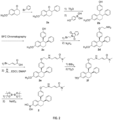
FIG. 3 shows an exemplary scheme for preparation ofCompound 3. -
FIG. 4 shows an exemplary scheme for preparation ofCompound 4. -
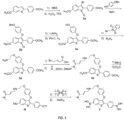
FIG. 5 shows an exemplary scheme for preparation ofCompound 5. -
FIG. 6 shows an exemplary scheme for preparation ofCompound 6. -
FIG. 7 shows an exemplary scheme for preparation ofCompound 7. -
FIG. 8 shows an exemplary scheme for preparation ofCompound 8. -
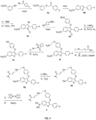
FIG. 9 shows an exemplary scheme for preparation of Compound 9. -
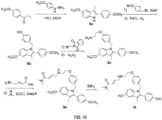
FIG. 10 shows an exemplary scheme for preparation ofCompound 10. -
FIG. 11 shows an exemplary scheme for preparation ofCompound 11. -
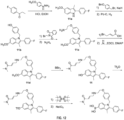
FIG. 12 shows an exemplary scheme for preparation ofCompound 12. -
FIG. 13 shows an exemplary scheme for preparation ofCompound 13. -
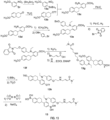
FIG. 14 shows an exemplary scheme for preparation ofCompound 14. -
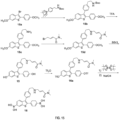
FIG.15 shows an exemplary scheme for preparation ofCompounds -
FIG. 16 shows competitive binding curves ofcompound 1 andcompound 4 to the estrogen receptor. -
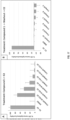
FIG. 17 shows (A) dose-dependent inhibition of E2 stimulated transcriptional activity byCompound 1; and (B) that pretreatment withCompound 1 allows irreversible binding to ER, and subsequent addition of E2 does not restore ER transcription activity. -
FIG. 18 shows dose dependent antiproliferative effect ofcompound 1 on MCF-7, MCF-7/TamR, and MCF-7/Y537S breast cancer cells. -
FIG. 19 shows thatcompound 1 is effective in inhibiting (A) MCF-7 xenograft tumor growth and (B) growth of ST941/HI PDX breast tumor harboring ESR1 mutant (Y537S). -
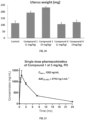
FIG. 20 shows the uterotrophic effect ofcompound 1 andcompound 4 in mice. -
FIG. 21 shows the plasma concentration ofcompound 1 over time after a single oral dose of 5 mg/kg in Sprague Dawley rats. - Before the subject disclosure is further described, it is to be understood that the disclosure is not limited to the particular embodiments of the disclosure described below, as variations of the particular embodiments may be made and still fall within the scope of the appended claims. It is also to be understood that the terminology employed is for the purpose of describing particular embodiments, and is not intended to be limiting. Instead, the scope of the present disclosure will be established by the appended claims.
- In this specification and the appended claims, the singular forms "a," "an," and "the" include plural reference unless the context clearly dictates otherwise. Unless defined otherwise, all technical and scientific terms used herein have the same meaning as commonly understood to one of ordinary skill in the art to which this disclosure belongs.
- As used herein, the term "minimize" or "reduce", or derivatives thereof, include a complete or partial inhibition of a specified biological effect (which is apparent from the context in which the terms "minimize" or "reduce" are used).
- The compounds according to the disclosure are isolated and purified in a manner known per se, e.g. by distilling off the solvent in vacuo and recrystallizing the residue obtained from a suitable solvent or subjecting it to one of the customary purification methods, such as chromatography on a suitable support material. Furthermore, reverse phase preparative HPLC of compounds of the present disclosure which possess a sufficiently basic or acidic functionality, may result in the formation of a salt, such as, in the case of a compound of the present disclosure which is sufficiently basic, a trifluoroacetate or formate salt for example, or, in the case of a compound of the present disclosure which is sufficiently acidic, an ammonium salt for example. Salts of this type can either be transformed into its free base or free acid form, respectively, by various methods known to the person skilled in the art, or be used as salts in subsequent biological assays. Additionally, the drying process during the isolation of compounds of the present disclosure may not fully remove traces of cosolvents, especially such as formic acid or trifluoroacetic acid, to give solvates or inclusion complexes. The person skilled in the art will recognize which solvates or inclusion complexes are acceptable to be used in subsequent biological assays. It is to be understood that the specific form (e.g., salt, free base, solvate, inclusion complex) of a compound of the present disclosure as isolated as described herein is not necessarily the only form in which said compound can be applied to a biological assay in order to quantify the specific biological activity.
- One aspect of the disclosure is salts of the compounds according to the disclosure including all inorganic and organic salts, especially all pharmaceutically acceptable inorganic and organic salts, particularly all pharmaceutically acceptable inorganic and organic salts customarily used in pharmacy.
- Examples of salts include, but are not limited to, lithium, sodium, potassium, calcium, aluminum, magnesium, titanium, meglumine, ammonium, salts optionally derived from NH3 or organic amines having from 1 to 16 C-atoms such as, e.g., ethylamine, diethylamine, triethylamine, ethyldiisopropylamine, monoethanolamine, diethanolamine, triethanolamine, dicyclohexylamine, dimethylaminoethanol, procaine, dibenzylamine, N-methylmorpholine, arginine, lysine, ethylendiamine, N-methylpiperindine and guanidinium salts.
- The salts include water-insoluble and, particularly, water-soluble salts.
- As used herein, "pharmaceutically acceptable salts" refer to derivatives of the compounds disclosed herein wherein the parent compound is modified by making acid or base salts thereof. Examples of pharmaceutically acceptable salts include, but are not limited to, mineral or organic acid salts of basic residues such as amines, alkali or organic salts of acidic residues such as carboxylic acids, and the like. The pharmaceutically acceptable salts include the conventional non-toxic salts or the quaternary ammonium salts of the parent compound formed, for example, from non-toxic inorganic or organic acids. For example, such conventional non-toxic salts include, but are not limited to, those derived from inorganic and organic acids selected from 2-acetoxybenzoic, 2-hydroxyethane sulfonic, acetic, ascorbic, benzene sulfonic, benzoic, bicarbonic, carbonic, citric, edetic, ethane disulfonic, 1,2-ethane sulfonic, fumaric, glucoheptonic, gluconic, glutamic, glycolic, glycollyarsanilic, hexylresorcinic, hydrabamic, hydrobromic, hydrochloric, hydroiodic, hydroxymaleic, hydroxynaphthoic, isethionic, lactic, lactobionic, lauryl sulfonic, maleic, malic, mandelic, methane sulfonic, napsylic, nitric, oxalic, pamoic, pantothenic, phenylacetic, phosphoric, polygalacturonic, propionic, salicyclic, stearic, subacetic, succinic, sulfamic, sulfanilic, sulfuric, tannic, tartaric, toluene sulfonic, and the commonly occurring amine acids, e.g., glycine, alanine, phenylalanine, arginine, etc.
- Other examples of pharmaceutically acceptable salts include hexanoic acid, cyclopentane propionic acid, pyruvic acid, malonic acid, 3-(4-hydroxybenzoyl)benzoic acid, cinnamic acid, 4-chlorobenzenesulfonic acid, 2-naphthalenesulfonic acid, 4-toluenesulfonic acid, camphorsulfonic acid, 4-methylbicyclo-[2.2.2]-oct-2-ene-1-carboxylic acid, 3-phenylpropionic acid, trimethylacetic acid, tertiary butylacetic acid, muconic acid, and the like. The present disclosure also encompasses salts formed when an acidic proton present in the parent compound either is replaced by a metal ion, e.g., an alkali metal ion, an alkaline earth ion, or an aluminum ion; or coordinates with an organic base such as ethanolamine, diethanolamine, triethanolamine, tromethamine, N-methylglucamine, and the like. In the salt form, it is understood that the ratio of the compound to the cation or anion of the salt may be 1:1, or any ratio other than 1:1, e.g., 3:1, 2:1, 1:2, or 1:3.
- It should be understood that all references to pharmaceutically acceptable salts include solvent addition forms (solvates) or crystal forms (polymorphs) as defined herein, of the same salt.
- Salts of the compounds of formulas (I) as claimed and (II) through (VI) according to the disclosure can be obtained by dissolving the free compound in a suitable solvent (for example a ketone such as acetone, methylethylketone or methylisobutylketone, an ether such as diethyl ether, tetrahydrofuran or dioxane, a chlorinated hydrocarbon such as methylene chloride or chloroform, or a low molecular weight aliphatic alcohol such as methanol, ethanol or isopropanol) which contains the desired acid or base, or to which the desired acid or base is then added. The acid or base can be employed in salt preparation, depending on whether a mono- or polybasic acid or base is concerned and depending on which salt is desired, in an equimolar quantitative ratio or one differing therefrom. The salts are obtained by filtering, reprecipitating, precipitating with a non-solvent for the salt or by evaporating the solvent. Salts obtained can be converted into the free compounds which, in turn, can be converted into salts. In this manner, pharmaceutically unacceptable salts, which can be obtained, for example, as process products in the manufacturing on an industrial scale, can be converted into pharmaceutically acceptable salts by processes known to the person skilled in the art.
- According to the person skilled in the art the compounds of formulas (I) as claimed and (II) through (VI) according to this disclosure as well as their salts may contain, e.g., when isolated in crystalline form, varying amounts of solvents. Included within the scope of the disclosure are therefore all solvates and in particular all hydrates of the compounds of formulas (I) as claimed and (II) through (VI) according to this disclosure as well as all solvates and in particular all hydrates of the salts of the compounds of formulas (I) as claimed and (II) through (VI) according to this disclosure.
- "Solvate" means solvent addition forms that contain either stoichiometric or non stoichiometric amounts of solvent. Some compounds have a tendency to trap a fixed molar ratio of solvent molecules in the crystalline solid state, thus forming a solvate. If the solvent is water the solvate formed is a hydrate; and if the solvent is alcohol, the solvate formed is an alcoholate. Hydrates are formed by the combination of one or more molecules of water with one molecule of the substance in which the water retains its molecular state as H2O.
- The compounds according to the disclosure and their salts can exist in the form of tautomers which are included in the embodiments of the disclosure.
- "Tautomer" is one of two or more structural isomers that exist in equilibrium and is readily converted from one isomeric form to another. This conversion results in the formal migration of a hydrogen atom accompanied by a switch of adjacent conjugated double bonds. Tautomers exist as a mixture of a tautomeric set in solution. In solutions where tautomerization is possible, a chemical equilibrium of the tautomers will be reached. The exact ratio of the tautomers depends on several factors, including temperature, solvent and pH. The concept of tautomers that are interconvertible by tautomerizations is called tautomerism.
- Where the present specification depicts a compound prone to tautomerization, but only depicts one of the tautomers, it is understood that all tautomers are included as part of the meaning of the chemical depicted. It is to be understood that the compounds disclosed herein may be depicted as different tautomers. It should also be understood that when compounds have tautomeric forms, all tautomeric forms are intended to be included, and the naming of the compounds does not exclude any tautomer form.
- Of the various types of tautomerism that are possible, two are commonly observed. In keto-enol tautomerism a simultaneous shift of electrons and a hydrogen atom occurs. Ring-chain tautomerism arises as a result of the aldehyde group (-CHO) in a sugar chain molecule reacting with one of the hydroxy groups (-OH) in the same molecule to give it a cyclic (ring-shaped) form as exhibited by glucose.
- Common tautomeric pairs are: ketone-enol, amide-nitrile, lactam-lactim, amide-imidic acid tautomerism in heterocyclic rings (e.g., in nucleobases such as guanine, thymine and cytosine), imine-enamine and enamine-enamine.
- The compounds of the disclosure may, depending on their structure, exist in different stereoisomeric forms. These forms include configurational isomers or optically conformational isomers (enantiomers and/or diastereoisomers including those of atropisomers). The present disclosure therefore includes enantiomers, diastereoisomers as well as mixtures thereof. From those mixtures of enantiomers and/or disastereoisomers pure stereoisomeric forms can be isolated with methods known in the art, preferably methods of chromatography, especially high performance liquid chromatography (HPLC) using achiral or chiral phase. The disclosure further includes all mixtures of the stereoisomers mentioned above independent of the ratio, including the racemates.
- The compounds of the disclosure may, depending on their structure, exist in various stable isotopic forms. These forms include those in which one or more hydrogen atoms have been replaced with deuterium atoms, those in which one or more nitrogen atoms have been replaced with 15N atoms, or those in which one or more atoms of carbon, fluorine, chlorine, bromine, sulfur, or oxygen have been replaced by the stable isotope of the respective, original atoms.
- Some of the compounds and salts according to the disclosure may exist in different crystalline forms (polymorphs) which are within the scope of the disclosure.
- It is a further object of the disclosure to provide ER-targeting compounds, methods of synthesizing the ER-targeting compounds, methods of manufacturing the ER-targeting compounds, and methods of using the ER-targeting compounds.
- Another object of the disclosure is to provide a composition, for example a pharmaceutical composition, comprising at least one ER-targeting compound in an amount effective for use in the treatment of proliferative diseases such as cancer, including but not limited to endocrine related cancer. In an embodiment, the cancer is an ER-positive tumor, such as a tumor of the breast, endometrium, uterus, or ovary. In an embodiment, the tumor is an ER-positive tumor of the breast. In an embodiment, the breast tumor is determined to be ER-positive by an immunohistochemical method described by Hammond et al. [6].
- In an embodiment, the object of such treatment is to inhibit estrogen-induced proliferation of a cell. In a further embodiment, said object is to inhibit estrogen-induced proliferation of a cell by a mechanism selected from SERM, SERD, and SERCA.
- As used herein, use in "treating" or 'treatment' means us of a pharmaceutical composition to ameliorate, reduce or lessen the symptoms of a disease. As used herein, "treating" or "treat" describes the management and care of a subject for the purpose of combating a disease, condition, or disorder and includes the use of a compound disclosed herein, or a pharmaceutically acceptable salt, polymorph or solvate thereof, to alleviate the symptoms or complications of a disease, condition or disorder, or to eliminate the disease, condition or disorder. The term "treat" may also include treatment of a cell in vitro or an animal model. As used herein, "subject" or "subjects" refers to any animal, such as mammals including rodents (e.g., mice or rats), dogs, primates, lemurs or humans.
- Treating cancer may result in a reduction in size of a tumor. A reduction in size of a tumor may also be referred to as "tumor regression." Preferably, after treatment, tumor size is reduced by 5% or greater relative to its size prior to treatment; more preferably, tumor size is reduced by 10% or greater; more preferably, reduced by 20% or greater; more preferably, reduced by 30% or greater; more preferably, reduced by 40% or greater; even more preferably, reduced by 50% or greater; and most preferably, reduced by greater than 75% or greater. Size of a tumor may be measured by any reproducible means of measurement. The size of a tumor may be measured as a diameter of the tumor.
- Treating cancer may result in a reduction in tumor volume. Preferably, after treatment, tumor volume is reduced by 5% or greater relative to its size prior to treatment; more preferably, tumor volume is reduced by 10% or greater; more preferably, reduced by 20% or greater; more preferably, reduced by 30% or greater; more preferably, reduced by 40% or greater; even more preferably, reduced by 50% or greater; and most preferably, reduced by greater than 75% or greater. Tumor volume may be measured by any reproducible means of measurement.
- Treating cancer may result in a decrease in number of tumors. Preferably, after treatment, tumor number is reduced by 5% or greater relative to number prior to treatment; more preferably, tumor number is reduced by 10% or greater; more preferably, reduced by 20% or greater; more preferably, reduced by 30% or greater; more preferably, reduced by 40% or greater; even more preferably, reduced by 50% or greater; and most preferably, reduced by greater than 75%. Number of tumors may be measured by any reproducible means of measurement. The number of tumors may be measured by counting tumors visible to the naked eye or at a specified magnification. Preferably, the specified magnification is 2×, 3×, 4×, 5×, 10×, or 50×.
- Treating cancer may result in a decrease in number of metastatic lesions in other tissues or organs distant from the primary tumor site. Preferably, after treatment, the number of metastatic lesions is reduced by 5% or greater relative to number prior to treatment; more preferably, the number of metastatic lesions is reduced by 10% or greater; more preferably, reduced by 20% or greater; more preferably, reduced by 30% or greater; more preferably, reduced by 40% or greater; even more preferably, reduced by 50% or greater; and most preferably, reduced by greater than 75%. The number of metastatic lesions may be measured by any reproducible means of measurement. The number of metastatic lesions may be measured by counting metastatic lesions visible to the naked eye or at a specified magnification. Preferably, the specified magnification is 2×, 3×, 4×, 5×, 10×, or 50×.
- Treating cancer may result in an increase in average survival time of a population of treated subjects in comparison to a population receiving carrier alone. Preferably, the average survival time is increased by more than 30 days; more preferably, by more than 60 days; more preferably, by more than 90 days; and most preferably, by more than 120 days. An increase in average survival time of a population may be measured by any reproducible means. An increase in average survival time of a population may be measured, for example, by calculating for a population the average length of survival following initiation of treatment with an active compound. An increase in average survival time of a population may also be measured, for example, by calculating for a population the average length of survival following completion of a first round of treatment with an active compound.
- Treating cancer may result in an increase in average survival time of a population of treated subjects in comparison to a population of untreated subjects. Preferably, the average survival time is increased by more than 30 days; more preferably, by more than 60 days; more preferably, by more than 90 days; and most preferably, by more than 120 days. An increase in average survival time of a population may be measured by any reproducible means. An increase in average survival time of a population may be measured, for example, by calculating for a population the average length of survival following initiation of treatment with an active compound. An increase in average survival time of a population may also be measured, for example, by calculating for a population the average length of survival following completion of a first round of treatment with an active compound.
- Treating cancer may result in increase in average survival time of a population of treated subjects in comparison to a population receiving monotherapy with a drug that is not a compound disclosed herein, or a pharmaceutically acceptable salt thereof. Preferably, the average survival time is increased by more than 30 days; more preferably, by more than 60 days; more preferably, by more than 90 days; and most preferably, by more than 120 days. An increase in average survival time of a population may be measured by any reproducible means. An increase in average survival time of a population may be measured, for example, by calculating for a population the average length of survival following initiation of treatment with an active compound. An increase in average survival time of a population may also be measured, for example, by calculating for a population the average length of survival following completion of a first round of treatment with an active compound.
- Treating cancer may result in a decrease in the mortality rate of a population of treated subjects in comparison to a population receiving carrier alone. Treating cancer may result in a decrease in the mortality rate of a population of treated subjects in comparison to an untreated population. Treating cancer may result in a decrease in the mortality rate of a population of treated subjects in comparison to a population receiving monotherapy with a drug that is not a compound disclosed herein, or a pharmaceutically acceptable salt, prodrug, metabolite, analog or derivative thereof. Preferably, the mortality rate is decreased by more than 2%; more preferably, by more than 5%; more preferably, by more than 10%; and most preferably, by more than 25%. A decrease in the mortality rate of a population of treated subjects may be measured by any reproducible means. A decrease in the mortality rate of a population may be measured, for example, by calculating for a population the average number of disease-related deaths per unit time following initiation of treatment with an active compound. A decrease in the mortality rate of a population may also be measured, for example, by calculating for a population the average number of disease-related deaths per unit time following completion of a first round of treatment with an active compound.
- Treating cancer may result in a decrease in tumor growth rate. Preferably, after treatment, tumor growth rate is reduced by at least 5% relative to number prior to treatment; more preferably, tumor growth rate is reduced by at least 10%; more preferably, reduced by at least 20%; more preferably, reduced by at least 30%; more preferably, reduced by at least 40%; more preferably, reduced by at least 50%; even more preferably, reduced by at least 50%; and most preferably, reduced by at least 75%. Tumor growth rate may be measured by any reproducible means of measurement. Tumor growth rate may be measured according to a change in tumor diameter per unit time.
- Treating cancer may result in a decrease in tumor regrowth, for example, following attempts to remove it surgically. Preferably, after treatment, tumor regrowth is less than 5%; more preferably, tumor regrowth is less than 10%; more preferably, less than 20%; more preferably, less than 30%; more preferably, less than 40%; more preferably, less than 50%; even more preferably, less than 50%; and most preferably, less than 75%. Tumor regrowth may be measured by any reproducible means of measurement. Tumor regrowth is measured, for example, by measuring an increase in the diameter of a tumor after a prior tumor shrinkage that followed treatment. A decrease in tumor regrowth is indicated by failure of tumors to reoccur after treatment has stopped.
- Treating or preventing a cell proliferative disorder may result in a reduction in the rate of cellular proliferation. Preferably, after treatment, the rate of cellular proliferation is reduced by at least 5%; more preferably, by at least 10%; more preferably, by at least 20%; more preferably, by at least 30%; more preferably, by at least 40%; more preferably, by at least 50%; even more preferably, by at least 50%; and most preferably, by at least 75%. The rate of cellular proliferation may be measured by any reproducible means of measurement. The rate of cellular proliferation is measured, for example, by measuring the number of dividing cells in a tissue sample per unit time.
- Treating or preventing a cell proliferative disorder may result in a reduction in the proportion of proliferating cells. Preferably, after treatment, the proportion of proliferating cells is reduced by at least 5%; more preferably, by at least 10%; more preferably, by at least 20%; more preferably, by at least 30%; more preferably, by at least 40%; more preferably, by at least 50%; even more preferably, by at least 50%; and most preferably, by at least 75%. The proportion of proliferating cells may be measured by any reproducible means of measurement. Preferably, the proportion of proliferating cells is measured, for example, by quantifying the number of dividing cells relative to the number of nondividing cells in a tissue sample. The proportion of proliferating cells may be equivalent to the mitotic index.
- Treating or preventing a cell proliferative disorder may result in a decrease in size of an area or zone of cellular proliferation. Preferably, after treatment, size of an area or zone of cellular proliferation is reduced by at least 5% relative to its size prior to treatment; more preferably, reduced by at least 10%; more preferably, reduced by at least 20%; more preferably, reduced by at least 30%; more preferably, reduced by at least 40%; more preferably, reduced by at least 50%; even more preferably, reduced by at least 50%; and most preferably, reduced by at least 75%. Size of an area or zone of cellular proliferation may be measured by any reproducible means of measurement. The size of an area or zone of cellular proliferation may be measured as a diameter or width of an area or zone of cellular proliferation.
- Treating or preventing a cell proliferative disorder may result in a decrease in the number or proportion of cells having an abnormal appearance or morphology. Preferably, after treatment, the number of cells having an abnormal morphology is reduced by at least 5% relative to its size prior to treatment; more preferably, reduced by at least 10%; more preferably, reduced by at least 20%; more preferably, reduced by at least 30%; more preferably, reduced by at least 40%; more preferably, reduced by at least 50%; even more preferably, reduced by at least 50%; and most preferably, reduced by at least 75%. An abnormal cellular appearance or morphology may be measured by any reproducible means of measurement. An abnormal cellular morphology may be measured by microscopy, e.g., using an inverted tissue culture microscope. An abnormal cellular morphology may take the form of nuclear pleiomorphism.
- Hereby are provided non-limiting examples of embodiments of compounds disclosed herein.
- As an illustrative example of a compound of formula (I), the following compound, denoted
Compound 1, was synthesized:
- The synthesis scheme used for making
Compound 1 is illustrated inFIG. 1 . - As an illustrative example of a compound of formula (II), the following compound, denoted
Compound 2, was synthesized:
- The synthesis scheme used for making
Compound 2 is illustrated inFIG. 2 . - As an illustrative example of a compound of formula (III), the following compound, denoted
Compound 3, was synthesized:
- The synthesis scheme used for making
Compound 3 is illustrated inFIG. 3 . - As another illustrative example of a compound of formula (III), the following compound, denoted
Compound 4, was synthesized:
- The synthesis scheme used for making
Compound 4 is illustrated inFIG. 4 . - As another illustrative example of a compound of formula (III), the following compound, denoted
Compound 5, was synthesized:
- As another illustrative example of a compound of formula (III), the following compound, denoted
Compound 6, was synthesized: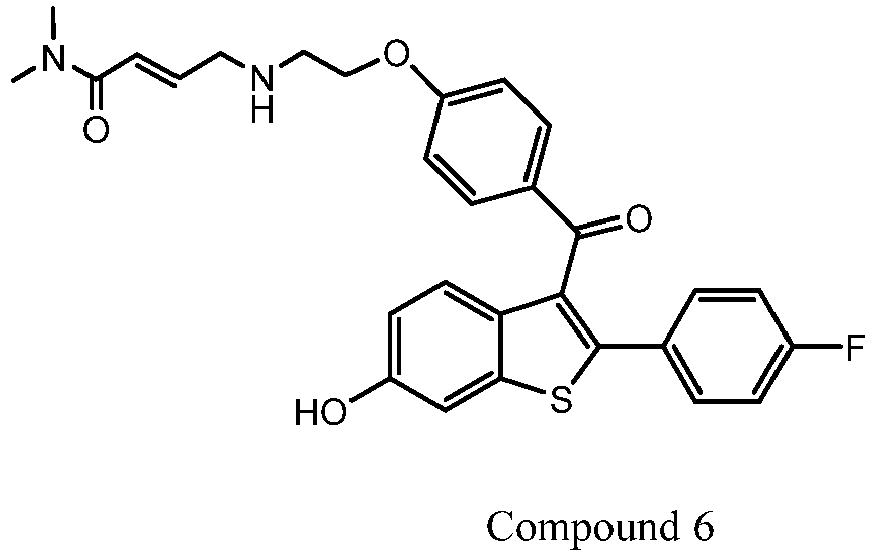
- As another illustrative example of a compound of formula (III), the following compound, denoted
Compound 7, was synthesized:
- As another illustrative example of a compound of formula (III), the following compound, denoted
Compound 8, was synthesized:
- The synthesis scheme used for making
Compound 8 is illustrated inFIG. 8 . - As an illustrative example of a compound of formula (IV), the following compound, denoted Compound 9, was synthesized:

- The synthesis scheme used for making Compound 9 is illustrated in
FIG. 9 . - As another illustrative example of a compound of formula (IV), the following compound, denoted
Compound 10, was synthesized:
- The synthesis scheme used for making
Compound 10 is illustrated inFIG. 10 . - As another illustrative example of a compound of formula (IV), the following compound, denoted
Compound 11, was synthesized:
- The synthesis scheme used for making
Compound 11 is illustrated inFIG. 11 . - As another illustrative example of a compound of formula (IV), the following compound, denoted
Compound 12, was synthesized:
- The synthesis scheme used for making
Compound 12 is illustrated inFIG. 12 . - As an illustrative example of a compound of formula (V), the following compound, denoted
Compound 13, was synthesized:
- The synthesis scheme used for making
Compound 13 is illustrated inFIG. 13 . - As an illustrative example of a compound of formula (VI), the following compound, denoted
Compound 14, was synthesized:
- The synthesis scheme used for making
Compound 14 is illustrated inFIG. 14 . - As a further illustrative example of compounds of formula (III), the following compounds, denoted
Compound 15 andCompound 16, were synthesized:
- The synthesis scheme used for making
Compound 15 andCompound 16 are illustrated inFIG. 15 . - To evaluate the binding affinity of the disclosed ER targeting antagonists to the estrogen receptor, the LanthaScreen TR-FRET assay (Life Technologies) was used in which the test compounds compete with a fluomone ligand and the percent displacement was quantitatively correlated to the fluorescence intensity from the displaced tracer.
FIG. 16 shows the competitive binding curves of compound 1 (an example of formula I) and compound 4 (an example of formula III) with IC50 values measured at 2.40 nM and 3.07 nM, respectively. - The ER antagonism of
compound 1 is irreversible - To confirm the irreversible nature of compound antagonism in ER+ breast cancer, we designed a washout experiment in which the ER mediated transcriptional activities were measured by the T47D-kb-Luc stably transfected human breast cancer cell reporter gene assay [7] treated with
compound 1 either simultaneously with E2 or with E2 after a washout period. Whencompound 1 of varying doses and E2 (0.1 nM) were added to T47D-ERE-Luc cells at the same time, inhibition of ERE luciferase signal showed a dose-dependent manner as expected (FIG. 17 , panel A). However, when cells were first treated withcompound 1 for 1 hour, followed by a washout period of 3 hours in which cells were washed with fresh media every 30 min, and then treated with 0.1 nM E2, cells remained inhibited with minimal stimulation effect by E2 (FIG. 17 , panel B). In other words, pre-treatment ofcompound 1 allowed ER to be irreversibly occupied and subsequent rescue by E2 is no longer possible. These data clearly show thatcompound 1 activity as an antagonist is irreversible as the molecule is permanently bound to ER. - To assess the effect of
compound 1 on breast cancer cell proliferation, MCF-7, MCF-7/TamR (tamoxifen resistant), and MCF-7(Y537S) (expressing mutant ER) were treated withcompound 1 and 4-hydroxytamoxifen (4OHT) to determine the antiproliferative activity of an irreversible and reversible SERM. As shown inFIG. 18 . - To determine the in vivo efficacy of
compound 1 in inhibiting tumor growth, we treated mice bearing MCF-7 derived xenograft breast tumors withcompound 1. At 1 and 5 mg/kg daily oral doses, the MCF-7 tumor growth was nearly completely blocked during the three weeks of treatment time (FIG. 19 , panel A). In comparison, treatment of the reversible SERM tamoxifen resulted in an inhibition of tumor growth that was significantly less efficacious than thecompound 1 treatment groups, indicating that the targeted covalent bonding formation betweencompound 1 and C530 within the ER LBD confers enhanced anti-tumor efficacy over a conventional antiestrogen. In a patient derived xenograft metastasis tumor model (ST941/HI, ESR1Y537S), treatment withcompound 1 at 1 mg/kg and 5 mg/kg doses resulted in significant growth inhibition (FIG. 19 , panel B), demonstrating the therapeutic efficacy of the irreversible ER inhibitor in metastasized breast tumor resistant to endocrine treatment. - To assess the uterotrophic effect of the synthesized irreversible inhibitors,
compound 1 andcompound 4, we treated 5-6 week old female NU/NU mice with 1 or 4 for 5 days and measured the uterine weights post treatment. It was found, as shown inFIG. 20 , thatcompound 1 significantly increased uterine wet weight whilecompound 4 did not. This differing antagonist/agonist selectivity of 1 and 4 based on two different ER binding core structural motif demonstrates that it is possible to achieve the desired selectivity profile in irreversible inhibitors. - To test the oral bioavailability and metabolic stability of
compound 1, a single oral dose of 5 mg/kg was administered to Sprague Dawley rats and plasma samples were collected at various time intervals to measurecompound 1 concentrations. The PK profile ofcompound 1 is plotted inFIG. 5 . Peak concentration exceeded 1200 ng/mL with AUC value approaching 10,000 ng.h.mL-1, indicating excellent drug exposure profile. The strong showing of ZB499 oral bioavailability is attributable to the boronic acid moiety that has the dual capability of minimizing first-past metabolism and enhanced absorption. - We tested the antagonistic activities of
compound 1 andcompound 4 in an estrogen receptor positive (ER+) breast cancer cell line, MCF7 that is sensitive to antiestrogen treatment and its derivative cell lines that have become resistant to antiestrogen treatment. The cells were treated with a known SERM, 4-hydroxytamoxifen, a SERD, fulvestrant,compound 1, andcompound 4, respectively at various doses to obtain the IC50 values of each treatment, defined as the concentration of the compound required to inhibit cell proliferation by 50%. Results are shown in Table 1.Table 1. Antiproliferative efficacy of example compounds in various breast cancer cell lines MCF7 MCF7-TamR MCF7-OHT MCF7-F MCF7-Y537S IC50 (nM) 4-Hydroxytamoxifen 4.32 1090 3166 2572 1726 Fulvestrant 0.91 9.84 2.36 533 17.09 Compound 13.03 11.76 1.97 29.88 8.31 Compound 41.78 6.53 3.17 10.91 5.25 -
- 1. Jasani B, Douglas-Jones A, Rhodes A, Wozniak S, Barrett-Lee PJ, Gee J, Nicholson R. Measurement of estrogen receptor status by immunocytochemistry in paraffin wax sections. Methods Mol Med. 2006;120:127-46.
- 2. Setiawan VW, Monroe KR, Wilkens LR, Kolonel LN, Pike MC, Henderson BE. Breast cancer risk factors defined by estrogen and progesterone receptor status: the multiethnic cohort study. Am J Epidemiol. 2009 May 15;169(10):1251-9.
- 3. Barrios C, Forbes JF, Jonat W, Conte P, Gradishar W, Buzdar A, Gelmon K, Gnant M, Bonneterre J, Toi M, Hudis C, Robertson JF. The sequential use of endocrine treatment for advanced breast cancer: where are we? Ann Oncol. 2012, 23(6):1378-86.
- 4. Nabholtz JM, Buzdar A, Pollak M et al. Anastrozole is superior to tamoxifen as first-line therapy for advanced breast cancer in postmenopausal women: results of a North American multicenter randomized trial. Arimidex Study Group. .
- 5. Nabholtz JM, Bonneterre J, Buzdar A et al. Anastrozole (Arimidex) versus tamoxifen as first-line therapy for advanced breast cancer in postmenopausal women: survival analysis and updated safety results. Eur J Cancer 2003; 39: 1684-1689.
- 6. Hammond et al., Immunohistochemical Testing of Estrogen and Progesterone Receptors in Breast Cancer, Journal of Clinical Oncology, ).
- 7. Wilson VS, Bobseine K, Gray LE Jr. Development and characterization of a cell line that stably expresses an estrogen-responsive luciferase reporter for the detection of estrogen receptor agonist and antagonists. Toxicol Sci. 2004, Sep; 81(1):69-77.
Claims (9)
- A compound of Formula (I):
 R1 =
R1 =
 R2 =
R2 =


 n = 1-3wherein the R1 substituent point of attachment is on the substituent boron atom of R1, or a salt thereof, a solvate thereof, or a solvate of a salt thereof.
 - A pharmaceutical composition comprising a compound, pharmaceutically acceptable salt, solvate, or composition of claim 1 and a pharmaceutically acceptable carrier.
- The pharmaceutical composition of claim 2, suitable for enteral administration, preferably oral administration.
- The pharmaceutical composition of claim 2, suitable for parenteral administration.
- A compound, pharmaceutically acceptable salt, solvate, or composition of claim 1 or a pharmaceutical composition of any of claims 2 to 4 for use in the treatment of a proliferative disease in a subject.
- The compound for use according to claim 5 wherein the proliferative disease is cancer.
- The compound for use according to claim 6 wherein the cancer is breast cancer.
- The compound for use according to claim 7, wherein said breast cancer is an ER-positive breast cancer.
- The compound for use according to claim 8, where said subject expresses a mutant ER-α protein.
Applications Claiming Priority (2)
| Application Number | Priority Date | Filing Date | Title |
|---|---|---|---|
| US201862730464P | 2018-09-12 | 2018-09-12 | |
| PCT/US2019/050573 WO2020055973A1 (en) | 2018-09-12 | 2019-09-11 | Estrogen receptor targeting antagonists |
Publications (3)
| Publication Number | Publication Date |
|---|---|
| EP3849567A1 EP3849567A1 (en) | 2021-07-21 |
| EP3849567A4 EP3849567A4 (en) | 2022-09-28 |
| EP3849567B1 true EP3849567B1 (en) | 2024-10-30 |
Family
ID=69778122
Family Applications (1)
| Application Number | Title | Priority Date | Filing Date |
|---|---|---|---|
| EP19860532.1A Active EP3849567B1 (en) | 2018-09-12 | 2019-09-11 | Estrogen receptor targeting antagonists |
Country Status (5)
| Country | Link |
|---|---|
| US (1) | US20220041629A1 (en) |
| EP (1) | EP3849567B1 (en) |
| JP (1) | JP2021535923A (en) |
| CN (2) | CN116969983A (en) |
| WO (1) | WO2020055973A1 (en) |
Families Citing this family (1)
| Publication number | Priority date | Publication date | Assignee | Title |
|---|---|---|---|---|
| CN117229156B (en) * | 2023-09-15 | 2025-10-17 | 四川伊诺达博医药科技有限公司 | In the ilast group Process for the preparation of intermediates |
Family Cites Families (13)
| Publication number | Priority date | Publication date | Assignee | Title |
|---|---|---|---|---|
| US4894386A (en) * | 1987-04-15 | 1990-01-16 | Ici Americas Inc. | Aliphatic carboxamides |
| US5395842A (en) * | 1988-10-31 | 1995-03-07 | Endorecherche Inc. | Anti-estrogenic compounds and compositions |
| ATE130293T1 (en) * | 1990-10-01 | 1995-12-15 | Univ Texas | HIGH AFFINITY TAMOXIFENDER DERIVATIVES AND USE THEREOF. |
| US5426123A (en) * | 1994-05-11 | 1995-06-20 | Eli Lilly And Company | Method for lowering serum cholesterol with 1,1,2-triphenylbut-1-ene derivatives |
| US5510357A (en) * | 1995-02-28 | 1996-04-23 | Eli Lilly And Company | Benzothiophene compounds as anti-estrogenic agents |
| GB9824207D0 (en) * | 1998-11-04 | 1998-12-30 | Zeneca Ltd | Neurological disorders |
| US8063249B1 (en) * | 2008-04-25 | 2011-11-22 | Olema Pharmaceuticals, Inc. | Substituted triphenyl butenes |
| US20110124617A1 (en) * | 2008-05-09 | 2011-05-26 | Lyttle C Richard | Combination Therapy for BreastCancer Comprising an Antiestrogenic Agent |
| WO2010107474A1 (en) * | 2009-03-16 | 2010-09-23 | The Research Foundation Of State University Of New York | Antiestrogens for breast cancer therapy |
| WO2013134230A1 (en) | 2012-03-05 | 2013-09-12 | Xavier University | Boron-based 4-hydroxytamoxifen and endoxifen prodrugs as treatment for breast cancer |
| WO2016004166A1 (en) * | 2014-07-02 | 2016-01-07 | Xavier University Of Louisiana | Boron-based prodrug strategy for increased bioavailability and lower-dosage requirements for drug molecules containing at least one phenol (or aromatic hydroxyl) group |
| WO2016097071A1 (en) * | 2014-12-18 | 2016-06-23 | F. Hoffmann-La Roche Ag | Estrogen receptor modulators and uses thereof |
| WO2016196342A1 (en) | 2015-05-29 | 2016-12-08 | Eisai R&D Management Co., Ltd. | Tetrasubstituted alkene compounds and their use |
-
2019
- 2019-09-11 CN CN202310943907.0A patent/CN116969983A/en active Pending
- 2019-09-11 CN CN201980074227.1A patent/CN113365641A/en active Pending
- 2019-09-11 EP EP19860532.1A patent/EP3849567B1/en active Active
- 2019-09-11 US US17/275,860 patent/US20220041629A1/en active Pending
- 2019-09-11 WO PCT/US2019/050573 patent/WO2020055973A1/en not_active Ceased
- 2019-09-11 JP JP2021514339A patent/JP2021535923A/en active Pending
Also Published As
| Publication number | Publication date |
|---|---|
| JP2021535923A (en) | 2021-12-23 |
| EP3849567A1 (en) | 2021-07-21 |
| EP3849567A4 (en) | 2022-09-28 |
| CN113365641A (en) | 2021-09-07 |
| CN116969983A (en) | 2023-10-31 |
| WO2020055973A1 (en) | 2020-03-19 |
| US20220041629A1 (en) | 2022-02-10 |
Similar Documents
| Publication | Publication Date | Title |
|---|---|---|
| CA3160899C (en) | Spiro compound serving as erk inhibitor, and application thereof | |
| EP3802501B1 (en) | Compounds as nuclear transport modulators and uses thereof | |
| EP3983384B1 (en) | N-(phenyl)-indole-3-sulfonamide derivatives and related compounds as gpr17 modulators for treating cns disorders such as multiple sclerosis | |
| JP6964450B2 (en) | Compositions, methods and systems for the synthesis and use of contrast media | |
| EP2836216B1 (en) | Combination therapy for treating cancer | |
| EP4368620A1 (en) | Compound serving as kat6 inhibitor | |
| BR112021005606A2 (en) | process of producing a compound to inhibit the activity of shp2 | |
| JP2019196378A (en) | β-SUBSTITUTED β-AMINO ACID AND ANALOGUES AS CHEMOTHERAPEUTIC AGENT AND USE THEREOF | |
| JPH05501540A (en) | PCP receptor ligand and its uses | |
| AU2014240003B2 (en) | Coumarin derivatives and methods of use in treating hyperproliferative diseases | |
| CN108699046A (en) | With the method for EZH2 inhibitor for treating medulloblastomas | |
| WO2022217010A1 (en) | Compounds and methods for the targeted degradation of estrogen receptors | |
| WO2021127539A1 (en) | Crystalline hydrobromide salt of a ezh2 inhibitor, its preparation and pharmaceutical composition useful for the treatment of cancer | |
| CN115894379A (en) | Hydantoin-like compounds and their medicinal uses | |
| TW202304468A (en) | Heteroaryl compounds as inhibitors of tyk2, composition and application thereof | |
| EP3296294B1 (en) | Compound for treating or preventing breast cancer | |
| WO2013138600A1 (en) | Radioprotector compounds | |
| US20220041629A1 (en) | Estrogen receptor targeting antagonists | |
| BR112021013099A2 (en) | SUBSTITUTED BENZOTHIOPHENE COMPOUND CONTAINING FLUORIDE, AND PHARMACEUTICAL COMPOSITION AND APPLICATION THEREOF | |
| EP4243807A1 (en) | Combinations of metap2 inhibitors and cdk4/6 inhibitors for the treatment of cancer | |
| JP2024547027A (en) | Epoxy Steroids | |
| US20230406804A1 (en) | Protein kinase inhibitors | |
| TW202430505A (en) | Naphthamide compound, preparation method and application thereof | |
| EP4604961A1 (en) | Compounds for the treatment of cancer | |
| CN116887836A (en) | Combination of METAP2 inhibitors and CDK4/6 inhibitors for the treatment of cancer |
Legal Events
| Date | Code | Title | Description |
|---|---|---|---|
| STAA | Information on the status of an ep patent application or granted ep patent |
Free format text: STATUS: THE INTERNATIONAL PUBLICATION HAS BEEN MADE |
|
| PUAI | Public reference made under article 153(3) epc to a published international application that has entered the european phase |
Free format text: ORIGINAL CODE: 0009012 |
|
| STAA | Information on the status of an ep patent application or granted ep patent |
Free format text: STATUS: REQUEST FOR EXAMINATION WAS MADE |
|
| 17P | Request for examination filed |
Effective date: 20210407 |
|
| AK | Designated contracting states |
Kind code of ref document: A1 Designated state(s): AL AT BE BG CH CY CZ DE DK EE ES FI FR GB GR HR HU IE IS IT LI LT LU LV MC MK MT NL NO PL PT RO RS SE SI SK SM TR |
|
| DAV | Request for validation of the european patent (deleted) | ||
| DAX | Request for extension of the european patent (deleted) | ||
| RIC1 | Information provided on ipc code assigned before grant |
Ipc: A61P 35/00 20060101ALI20220520BHEP Ipc: A61K 33/22 20060101ALI20220520BHEP Ipc: C07F 5/02 20060101AFI20220520BHEP |
|
| REG | Reference to a national code |
Ref country code: DE Ref legal event code: R079 Free format text: PREVIOUS MAIN CLASS: A61K0033220000 Ipc: C07F0005020000 Ref country code: DE Ref legal event code: R079 Ref document number: 602019061274 Country of ref document: DE Free format text: PREVIOUS MAIN CLASS: A61K0033220000 Ipc: C07F0005020000 |
|
| A4 | Supplementary search report drawn up and despatched |
Effective date: 20220831 |
|
| RIC1 | Information provided on ipc code assigned before grant |
Ipc: A61P 35/00 20060101ALI20220825BHEP Ipc: A61K 33/22 20060101ALI20220825BHEP Ipc: C07F 5/02 20060101AFI20220825BHEP |
|
| STAA | Information on the status of an ep patent application or granted ep patent |
Free format text: STATUS: EXAMINATION IS IN PROGRESS |
|
| 17Q | First examination report despatched |
Effective date: 20230424 |
|
| GRAP | Despatch of communication of intention to grant a patent |
Free format text: ORIGINAL CODE: EPIDOSNIGR1 |
|
| STAA | Information on the status of an ep patent application or granted ep patent |
Free format text: STATUS: GRANT OF PATENT IS INTENDED |
|
| INTG | Intention to grant announced |
Effective date: 20240605 |
|
| RAP3 | Party data changed (applicant data changed or rights of an application transferred) |
Owner name: XAVIER UNIVERSITY OF LOUISIANA |
|
| GRAS | Grant fee paid |
Free format text: ORIGINAL CODE: EPIDOSNIGR3 |
|
| GRAA | (expected) grant |
Free format text: ORIGINAL CODE: 0009210 |
|
| STAA | Information on the status of an ep patent application or granted ep patent |
Free format text: STATUS: THE PATENT HAS BEEN GRANTED |
|
| AK | Designated contracting states |
Kind code of ref document: B1 Designated state(s): AL AT BE BG CH CY CZ DE DK EE ES FI FR GB GR HR HU IE IS IT LI LT LU LV MC MK MT NL NO PL PT RO RS SE SI SK SM TR |
|
| REG | Reference to a national code |
Ref country code: GB Ref legal event code: FG4D |
|
| REG | Reference to a national code |
Ref country code: CH Ref legal event code: EP |
|
| REG | Reference to a national code |
Ref country code: IE Ref legal event code: FG4D |
|
| REG | Reference to a national code |
Ref country code: DE Ref legal event code: R096 Ref document number: 602019061274 Country of ref document: DE |
|
| REG | Reference to a national code |
Ref country code: LT Ref legal event code: MG9D |
|
| REG | Reference to a national code |
Ref country code: NL Ref legal event code: MP Effective date: 20241030 |
|
| PG25 | Lapsed in a contracting state [announced via postgrant information from national office to epo] |
Ref country code: PT Free format text: LAPSE BECAUSE OF FAILURE TO SUBMIT A TRANSLATION OF THE DESCRIPTION OR TO PAY THE FEE WITHIN THE PRESCRIBED TIME-LIMIT Effective date: 20250228 Ref country code: HR Free format text: LAPSE BECAUSE OF FAILURE TO SUBMIT A TRANSLATION OF THE DESCRIPTION OR TO PAY THE FEE WITHIN THE PRESCRIBED TIME-LIMIT Effective date: 20241030 Ref country code: IS Free format text: LAPSE BECAUSE OF FAILURE TO SUBMIT A TRANSLATION OF THE DESCRIPTION OR TO PAY THE FEE WITHIN THE PRESCRIBED TIME-LIMIT Effective date: 20250228 |
|
| PG25 | Lapsed in a contracting state [announced via postgrant information from national office to epo] |
Ref country code: FI Free format text: LAPSE BECAUSE OF FAILURE TO SUBMIT A TRANSLATION OF THE DESCRIPTION OR TO PAY THE FEE WITHIN THE PRESCRIBED TIME-LIMIT Effective date: 20241030 Ref country code: NL Free format text: LAPSE BECAUSE OF FAILURE TO SUBMIT A TRANSLATION OF THE DESCRIPTION OR TO PAY THE FEE WITHIN THE PRESCRIBED TIME-LIMIT Effective date: 20241030 |
|
| REG | Reference to a national code |
Ref country code: AT Ref legal event code: MK05 Ref document number: 1736792 Country of ref document: AT Kind code of ref document: T Effective date: 20241030 |
|
| PG25 | Lapsed in a contracting state [announced via postgrant information from national office to epo] |
Ref country code: BG Free format text: LAPSE BECAUSE OF FAILURE TO SUBMIT A TRANSLATION OF THE DESCRIPTION OR TO PAY THE FEE WITHIN THE PRESCRIBED TIME-LIMIT Effective date: 20241030 |
|
| PG25 | Lapsed in a contracting state [announced via postgrant information from national office to epo] |
Ref country code: ES Free format text: LAPSE BECAUSE OF FAILURE TO SUBMIT A TRANSLATION OF THE DESCRIPTION OR TO PAY THE FEE WITHIN THE PRESCRIBED TIME-LIMIT Effective date: 20241030 |
|
| PG25 | Lapsed in a contracting state [announced via postgrant information from national office to epo] |
Ref country code: NO Free format text: LAPSE BECAUSE OF FAILURE TO SUBMIT A TRANSLATION OF THE DESCRIPTION OR TO PAY THE FEE WITHIN THE PRESCRIBED TIME-LIMIT Effective date: 20250130 |
|
| PG25 | Lapsed in a contracting state [announced via postgrant information from national office to epo] |
Ref country code: LV Free format text: LAPSE BECAUSE OF FAILURE TO SUBMIT A TRANSLATION OF THE DESCRIPTION OR TO PAY THE FEE WITHIN THE PRESCRIBED TIME-LIMIT Effective date: 20241030 Ref country code: GR Free format text: LAPSE BECAUSE OF FAILURE TO SUBMIT A TRANSLATION OF THE DESCRIPTION OR TO PAY THE FEE WITHIN THE PRESCRIBED TIME-LIMIT Effective date: 20250131 Ref country code: AT Free format text: LAPSE BECAUSE OF FAILURE TO SUBMIT A TRANSLATION OF THE DESCRIPTION OR TO PAY THE FEE WITHIN THE PRESCRIBED TIME-LIMIT Effective date: 20241030 |
|
| PG25 | Lapsed in a contracting state [announced via postgrant information from national office to epo] |
Ref country code: PL Free format text: LAPSE BECAUSE OF FAILURE TO SUBMIT A TRANSLATION OF THE DESCRIPTION OR TO PAY THE FEE WITHIN THE PRESCRIBED TIME-LIMIT Effective date: 20241030 |
|
| PG25 | Lapsed in a contracting state [announced via postgrant information from national office to epo] |
Ref country code: RS Free format text: LAPSE BECAUSE OF FAILURE TO SUBMIT A TRANSLATION OF THE DESCRIPTION OR TO PAY THE FEE WITHIN THE PRESCRIBED TIME-LIMIT Effective date: 20250130 |
|
| PG25 | Lapsed in a contracting state [announced via postgrant information from national office to epo] |
Ref country code: SM Free format text: LAPSE BECAUSE OF FAILURE TO SUBMIT A TRANSLATION OF THE DESCRIPTION OR TO PAY THE FEE WITHIN THE PRESCRIBED TIME-LIMIT Effective date: 20241030 |
|
| PG25 | Lapsed in a contracting state [announced via postgrant information from national office to epo] |
Ref country code: DK Free format text: LAPSE BECAUSE OF FAILURE TO SUBMIT A TRANSLATION OF THE DESCRIPTION OR TO PAY THE FEE WITHIN THE PRESCRIBED TIME-LIMIT Effective date: 20241030 |
|
| PG25 | Lapsed in a contracting state [announced via postgrant information from national office to epo] |
Ref country code: EE Free format text: LAPSE BECAUSE OF FAILURE TO SUBMIT A TRANSLATION OF THE DESCRIPTION OR TO PAY THE FEE WITHIN THE PRESCRIBED TIME-LIMIT Effective date: 20241030 |
|
| PG25 | Lapsed in a contracting state [announced via postgrant information from national office to epo] |
Ref country code: RO Free format text: LAPSE BECAUSE OF FAILURE TO SUBMIT A TRANSLATION OF THE DESCRIPTION OR TO PAY THE FEE WITHIN THE PRESCRIBED TIME-LIMIT Effective date: 20241030 |
|
| PG25 | Lapsed in a contracting state [announced via postgrant information from national office to epo] |
Ref country code: SK Free format text: LAPSE BECAUSE OF FAILURE TO SUBMIT A TRANSLATION OF THE DESCRIPTION OR TO PAY THE FEE WITHIN THE PRESCRIBED TIME-LIMIT Effective date: 20241030 |
|
| PG25 | Lapsed in a contracting state [announced via postgrant information from national office to epo] |
Ref country code: CZ Free format text: LAPSE BECAUSE OF FAILURE TO SUBMIT A TRANSLATION OF THE DESCRIPTION OR TO PAY THE FEE WITHIN THE PRESCRIBED TIME-LIMIT Effective date: 20241030 |
|
| PG25 | Lapsed in a contracting state [announced via postgrant information from national office to epo] |
Ref country code: IT Free format text: LAPSE BECAUSE OF FAILURE TO SUBMIT A TRANSLATION OF THE DESCRIPTION OR TO PAY THE FEE WITHIN THE PRESCRIBED TIME-LIMIT Effective date: 20241030 |
|
| REG | Reference to a national code |
Ref country code: DE Ref legal event code: R097 Ref document number: 602019061274 Country of ref document: DE |
|
| PLBE | No opposition filed within time limit |
Free format text: ORIGINAL CODE: 0009261 |
|
| STAA | Information on the status of an ep patent application or granted ep patent |
Free format text: STATUS: NO OPPOSITION FILED WITHIN TIME LIMIT |
|
| PG25 | Lapsed in a contracting state [announced via postgrant information from national office to epo] |
Ref country code: SE Free format text: LAPSE BECAUSE OF FAILURE TO SUBMIT A TRANSLATION OF THE DESCRIPTION OR TO PAY THE FEE WITHIN THE PRESCRIBED TIME-LIMIT Effective date: 20241030 |
|
| 26N | No opposition filed |
Effective date: 20250731 |
|
| PGFP | Annual fee paid to national office [announced via postgrant information from national office to epo] |
Ref country code: DE Payment date: 20250820 Year of fee payment: 7 |
|
| PGFP | Annual fee paid to national office [announced via postgrant information from national office to epo] |
Ref country code: GB Payment date: 20250820 Year of fee payment: 7 |
|
| REG | Reference to a national code |
Ref country code: CH Ref legal event code: H13 Free format text: ST27 STATUS EVENT CODE: U-0-0-H10-H13 (AS PROVIDED BY THE NATIONAL OFFICE) Effective date: 20260504 |
|
| PG25 | Lapsed in a contracting state [announced via postgrant information from national office to epo] |
Ref country code: LU Free format text: LAPSE BECAUSE OF NON-PAYMENT OF DUE FEES Effective date: 20250911 |
|
| REG | Reference to a national code |
Ref country code: BE Ref legal event code: MM Effective date: 20250930 |
|
| PG25 | Lapsed in a contracting state [announced via postgrant information from national office to epo] |
Ref country code: LT Free format text: LAPSE BECAUSE OF FAILURE TO SUBMIT A TRANSLATION OF THE DESCRIPTION OR TO PAY THE FEE WITHIN THE PRESCRIBED TIME-LIMIT Effective date: 20241030 |
|
| PG25 | Lapsed in a contracting state [announced via postgrant information from national office to epo] |
Ref country code: MC Free format text: LAPSE BECAUSE OF FAILURE TO SUBMIT A TRANSLATION OF THE DESCRIPTION OR TO PAY THE FEE WITHIN THE PRESCRIBED TIME-LIMIT Effective date: 20241030 |
|
| PG25 | Lapsed in a contracting state [announced via postgrant information from national office to epo] |
Ref country code: IE Free format text: LAPSE BECAUSE OF NON-PAYMENT OF DUE FEES Effective date: 20250911 Ref country code: CH Free format text: LAPSE BECAUSE OF NON-PAYMENT OF DUE FEES Effective date: 20250930 Ref country code: BE Free format text: LAPSE BECAUSE OF NON-PAYMENT OF DUE FEES Effective date: 20250930 |
|
| PG25 | Lapsed in a contracting state [announced via postgrant information from national office to epo] |
Ref country code: FR Free format text: LAPSE BECAUSE OF NON-PAYMENT OF DUE FEES Effective date: 20250930 |