EP3849328B1 - Microemulsions carrying antioxidants - Google Patents
Microemulsions carrying antioxidants Download PDFInfo
- Publication number
- EP3849328B1 EP3849328B1 EP19860900.0A EP19860900A EP3849328B1 EP 3849328 B1 EP3849328 B1 EP 3849328B1 EP 19860900 A EP19860900 A EP 19860900A EP 3849328 B1 EP3849328 B1 EP 3849328B1
- Authority
- EP
- European Patent Office
- Prior art keywords
- microemulsion
- food
- antioxidant
- oil
- combinations
- Prior art date
- Legal status (The legal status is an assumption and is not a legal conclusion. Google has not performed a legal analysis and makes no representation as to the accuracy of the status listed.)
- Active
Links
Images






Classifications
-
- A—HUMAN NECESSITIES
- A23—FOODS OR FOODSTUFFS; TREATMENT THEREOF, NOT COVERED BY OTHER CLASSES
- A23B—PRESERVATION OF FOODS, FOODSTUFFS OR NON-ALCOHOLIC BEVERAGES; CHEMICAL RIPENING OF FRUIT OR VEGETABLES
- A23B2/00—Preservation of foods or foodstuffs, in general
- A23B2/70—Preservation of foods or foodstuffs, in general by treatment with chemicals
- A23B2/725—Preservation of foods or foodstuffs, in general by treatment with chemicals in the form of liquids or solids
- A23B2/729—Organic compounds; Microorganisms; Enzymes
-
- A—HUMAN NECESSITIES
- A23—FOODS OR FOODSTUFFS; TREATMENT THEREOF, NOT COVERED BY OTHER CLASSES
- A23B—PRESERVATION OF FOODS, FOODSTUFFS OR NON-ALCOHOLIC BEVERAGES; CHEMICAL RIPENING OF FRUIT OR VEGETABLES
- A23B2/00—Preservation of foods or foodstuffs, in general
- A23B2/70—Preservation of foods or foodstuffs, in general by treatment with chemicals
- A23B2/725—Preservation of foods or foodstuffs, in general by treatment with chemicals in the form of liquids or solids
- A23B2/729—Organic compounds; Microorganisms; Enzymes
- A23B2/733—Compounds of undetermined constitution obtained from animals or plants
-
- A—HUMAN NECESSITIES
- A23—FOODS OR FOODSTUFFS; TREATMENT THEREOF, NOT COVERED BY OTHER CLASSES
- A23B—PRESERVATION OF FOODS, FOODSTUFFS OR NON-ALCOHOLIC BEVERAGES; CHEMICAL RIPENING OF FRUIT OR VEGETABLES
- A23B70/00—Preservation of non-alcoholic beverages
- A23B70/10—Preservation of non-alcoholic beverages by addition of preservatives
-
- A—HUMAN NECESSITIES
- A23—FOODS OR FOODSTUFFS; TREATMENT THEREOF, NOT COVERED BY OTHER CLASSES
- A23D—EDIBLE OILS OR FATS, e.g. MARGARINES, SHORTENINGS OR COOKING OILS
- A23D7/00—Edible oil or fat compositions containing an aqueous phase, e.g. margarines
- A23D7/005—Edible oil or fat compositions containing an aqueous phase, e.g. margarines characterised by ingredients other than fatty acid triglycerides
- A23D7/0053—Compositions other than spreads
-
- A—HUMAN NECESSITIES
- A23—FOODS OR FOODSTUFFS; TREATMENT THEREOF, NOT COVERED BY OTHER CLASSES
- A23D—EDIBLE OILS OR FATS, e.g. MARGARINES, SHORTENINGS OR COOKING OILS
- A23D7/00—Edible oil or fat compositions containing an aqueous phase, e.g. margarines
- A23D7/01—Other fatty acid esters, e.g. phosphatides
- A23D7/011—Compositions other than spreads
-
- A—HUMAN NECESSITIES
- A23—FOODS OR FOODSTUFFS; TREATMENT THEREOF, NOT COVERED BY OTHER CLASSES
- A23D—EDIBLE OILS OR FATS, e.g. MARGARINES, SHORTENINGS OR COOKING OILS
- A23D9/00—Other edible oils or fats, e.g. shortenings or cooking oils
- A23D9/007—Other edible oils or fats, e.g. shortenings or cooking oils characterised by ingredients other than fatty acid triglycerides
-
- A—HUMAN NECESSITIES
- A23—FOODS OR FOODSTUFFS; TREATMENT THEREOF, NOT COVERED BY OTHER CLASSES
- A23D—EDIBLE OILS OR FATS, e.g. MARGARINES, SHORTENINGS OR COOKING OILS
- A23D9/00—Other edible oils or fats, e.g. shortenings or cooking oils
- A23D9/007—Other edible oils or fats, e.g. shortenings or cooking oils characterised by ingredients other than fatty acid triglycerides
- A23D9/013—Other fatty acid esters, e.g. phosphatides
-
- A—HUMAN NECESSITIES
- A23—FOODS OR FOODSTUFFS; TREATMENT THEREOF, NOT COVERED BY OTHER CLASSES
- A23K—FODDER
- A23K10/00—Animal feeding-stuffs
- A23K10/30—Animal feeding-stuffs from material of plant origin, e.g. roots, seeds or hay; from material of fungal origin, e.g. mushrooms
-
- A—HUMAN NECESSITIES
- A23—FOODS OR FOODSTUFFS; TREATMENT THEREOF, NOT COVERED BY OTHER CLASSES
- A23K—FODDER
- A23K20/00—Accessory food factors for animal feeding-stuffs
- A23K20/10—Organic substances
-
- A—HUMAN NECESSITIES
- A23—FOODS OR FOODSTUFFS; TREATMENT THEREOF, NOT COVERED BY OTHER CLASSES
- A23K—FODDER
- A23K20/00—Accessory food factors for animal feeding-stuffs
- A23K20/10—Organic substances
- A23K20/158—Fatty acids; Fats; Products containing oils or fats
-
- A—HUMAN NECESSITIES
- A23—FOODS OR FOODSTUFFS; TREATMENT THEREOF, NOT COVERED BY OTHER CLASSES
- A23L—FOODS, FOODSTUFFS OR NON-ALCOHOLIC BEVERAGES, NOT OTHERWISE PROVIDED FOR; PREPARATION OR TREATMENT THEREOF
- A23L29/00—Foods or foodstuffs containing additives; Preparation or treatment thereof
- A23L29/03—Organic compounds
- A23L29/035—Organic compounds containing oxygen as heteroatom
- A23L29/04—Fatty acids or derivatives
-
- A—HUMAN NECESSITIES
- A23—FOODS OR FOODSTUFFS; TREATMENT THEREOF, NOT COVERED BY OTHER CLASSES
- A23L—FOODS, FOODSTUFFS OR NON-ALCOHOLIC BEVERAGES, NOT OTHERWISE PROVIDED FOR; PREPARATION OR TREATMENT THEREOF
- A23L29/00—Foods or foodstuffs containing additives; Preparation or treatment thereof
- A23L29/10—Foods or foodstuffs containing additives; Preparation or treatment thereof containing emulsifiers
-
- A—HUMAN NECESSITIES
- A23—FOODS OR FOODSTUFFS; TREATMENT THEREOF, NOT COVERED BY OTHER CLASSES
- A23L—FOODS, FOODSTUFFS OR NON-ALCOHOLIC BEVERAGES, NOT OTHERWISE PROVIDED FOR; PREPARATION OR TREATMENT THEREOF
- A23L29/00—Foods or foodstuffs containing additives; Preparation or treatment thereof
- A23L29/20—Foods or foodstuffs containing additives; Preparation or treatment thereof containing gelling or thickening agents
- A23L29/206—Foods or foodstuffs containing additives; Preparation or treatment thereof containing gelling or thickening agents of vegetable origin
-
- A—HUMAN NECESSITIES
- A23—FOODS OR FOODSTUFFS; TREATMENT THEREOF, NOT COVERED BY OTHER CLASSES
- A23L—FOODS, FOODSTUFFS OR NON-ALCOHOLIC BEVERAGES, NOT OTHERWISE PROVIDED FOR; PREPARATION OR TREATMENT THEREOF
- A23L33/00—Modifying nutritive qualities of foods; Dietetic products; Preparation or treatment thereof
- A23L33/10—Modifying nutritive qualities of foods; Dietetic products; Preparation or treatment thereof using additives
- A23L33/115—Fatty acids or derivatives thereof; Fats or oils
-
- C—CHEMISTRY; METALLURGY
- C11—ANIMAL OR VEGETABLE OILS, FATS, FATTY SUBSTANCES OR WAXES; FATTY ACIDS THEREFROM; DETERGENTS; CANDLES
- C11B—PRODUCING, e.g. BY PRESSING RAW MATERIALS OR BY EXTRACTION FROM WASTE MATERIALS, REFINING OR PRESERVING FATS, FATTY SUBSTANCES, e.g. LANOLIN, FATTY OILS OR WAXES; ESSENTIAL OILS; PERFUMES
- C11B5/00—Preserving by using additives, e.g. anti-oxidants
- C11B5/0007—Organic substances
-
- C—CHEMISTRY; METALLURGY
- C11—ANIMAL OR VEGETABLE OILS, FATS, FATTY SUBSTANCES OR WAXES; FATTY ACIDS THEREFROM; DETERGENTS; CANDLES
- C11B—PRODUCING, e.g. BY PRESSING RAW MATERIALS OR BY EXTRACTION FROM WASTE MATERIALS, REFINING OR PRESERVING FATS, FATTY SUBSTANCES, e.g. LANOLIN, FATTY OILS OR WAXES; ESSENTIAL OILS; PERFUMES
- C11B5/00—Preserving by using additives, e.g. anti-oxidants
- C11B5/0085—Substances of natural origin of unknown constitution, f.i. plant extracts
-
- C—CHEMISTRY; METALLURGY
- C11—ANIMAL OR VEGETABLE OILS, FATS, FATTY SUBSTANCES OR WAXES; FATTY ACIDS THEREFROM; DETERGENTS; CANDLES
- C11B—PRODUCING, e.g. BY PRESSING RAW MATERIALS OR BY EXTRACTION FROM WASTE MATERIALS, REFINING OR PRESERVING FATS, FATTY SUBSTANCES, e.g. LANOLIN, FATTY OILS OR WAXES; ESSENTIAL OILS; PERFUMES
- C11B5/00—Preserving by using additives, e.g. anti-oxidants
- C11B5/0092—Mixtures
-
- A—HUMAN NECESSITIES
- A23—FOODS OR FOODSTUFFS; TREATMENT THEREOF, NOT COVERED BY OTHER CLASSES
- A23F—COFFEE; TEA; THEIR SUBSTITUTES; MANUFACTURE, PREPARATION, OR INFUSION THEREOF
- A23F3/00—Tea; Tea substitutes; Preparations thereof
- A23F3/16—Tea extraction; Tea extracts; Treating tea extract; Making instant tea
-
- A—HUMAN NECESSITIES
- A23—FOODS OR FOODSTUFFS; TREATMENT THEREOF, NOT COVERED BY OTHER CLASSES
- A23V—INDEXING SCHEME RELATING TO FOODS, FOODSTUFFS OR NON-ALCOHOLIC BEVERAGES AND LACTIC OR PROPIONIC ACID BACTERIA USED IN FOODSTUFFS OR FOOD PREPARATION
- A23V2002/00—Food compositions, function of food ingredients or processes for food or foodstuffs
-
- A—HUMAN NECESSITIES
- A23—FOODS OR FOODSTUFFS; TREATMENT THEREOF, NOT COVERED BY OTHER CLASSES
- A23V—INDEXING SCHEME RELATING TO FOODS, FOODSTUFFS OR NON-ALCOHOLIC BEVERAGES AND LACTIC OR PROPIONIC ACID BACTERIA USED IN FOODSTUFFS OR FOOD PREPARATION
- A23V2200/00—Function of food ingredients
- A23V2200/02—Antioxidant
-
- A—HUMAN NECESSITIES
- A23—FOODS OR FOODSTUFFS; TREATMENT THEREOF, NOT COVERED BY OTHER CLASSES
- A23V—INDEXING SCHEME RELATING TO FOODS, FOODSTUFFS OR NON-ALCOHOLIC BEVERAGES AND LACTIC OR PROPIONIC ACID BACTERIA USED IN FOODSTUFFS OR FOOD PREPARATION
- A23V2200/00—Function of food ingredients
- A23V2200/20—Ingredients acting on or related to the structure
- A23V2200/214—Chelating agent
-
- A—HUMAN NECESSITIES
- A23—FOODS OR FOODSTUFFS; TREATMENT THEREOF, NOT COVERED BY OTHER CLASSES
- A23V—INDEXING SCHEME RELATING TO FOODS, FOODSTUFFS OR NON-ALCOHOLIC BEVERAGES AND LACTIC OR PROPIONIC ACID BACTERIA USED IN FOODSTUFFS OR FOOD PREPARATION
- A23V2250/00—Food ingredients
- A23V2250/02—Acid
-
- A—HUMAN NECESSITIES
- A23—FOODS OR FOODSTUFFS; TREATMENT THEREOF, NOT COVERED BY OTHER CLASSES
- A23V—INDEXING SCHEME RELATING TO FOODS, FOODSTUFFS OR NON-ALCOHOLIC BEVERAGES AND LACTIC OR PROPIONIC ACID BACTERIA USED IN FOODSTUFFS OR FOOD PREPARATION
- A23V2250/00—Food ingredients
- A23V2250/02—Acid
- A23V2250/032—Citric acid
-
- A—HUMAN NECESSITIES
- A23—FOODS OR FOODSTUFFS; TREATMENT THEREOF, NOT COVERED BY OTHER CLASSES
- A23V—INDEXING SCHEME RELATING TO FOODS, FOODSTUFFS OR NON-ALCOHOLIC BEVERAGES AND LACTIC OR PROPIONIC ACID BACTERIA USED IN FOODSTUFFS OR FOOD PREPARATION
- A23V2250/00—Food ingredients
- A23V2250/02—Acid
- A23V2250/042—Lactic acid
-
- A—HUMAN NECESSITIES
- A23—FOODS OR FOODSTUFFS; TREATMENT THEREOF, NOT COVERED BY OTHER CLASSES
- A23V—INDEXING SCHEME RELATING TO FOODS, FOODSTUFFS OR NON-ALCOHOLIC BEVERAGES AND LACTIC OR PROPIONIC ACID BACTERIA USED IN FOODSTUFFS OR FOOD PREPARATION
- A23V2250/00—Food ingredients
- A23V2250/18—Lipids
-
- A—HUMAN NECESSITIES
- A23—FOODS OR FOODSTUFFS; TREATMENT THEREOF, NOT COVERED BY OTHER CLASSES
- A23V—INDEXING SCHEME RELATING TO FOODS, FOODSTUFFS OR NON-ALCOHOLIC BEVERAGES AND LACTIC OR PROPIONIC ACID BACTERIA USED IN FOODSTUFFS OR FOOD PREPARATION
- A23V2250/00—Food ingredients
- A23V2250/18—Lipids
- A23V2250/182—Diglycerides
-
- A—HUMAN NECESSITIES
- A23—FOODS OR FOODSTUFFS; TREATMENT THEREOF, NOT COVERED BY OTHER CLASSES
- A23V—INDEXING SCHEME RELATING TO FOODS, FOODSTUFFS OR NON-ALCOHOLIC BEVERAGES AND LACTIC OR PROPIONIC ACID BACTERIA USED IN FOODSTUFFS OR FOOD PREPARATION
- A23V2250/00—Food ingredients
- A23V2250/18—Lipids
- A23V2250/184—Emulsifier
- A23V2250/1842—Lecithin
-
- A—HUMAN NECESSITIES
- A23—FOODS OR FOODSTUFFS; TREATMENT THEREOF, NOT COVERED BY OTHER CLASSES
- A23V—INDEXING SCHEME RELATING TO FOODS, FOODSTUFFS OR NON-ALCOHOLIC BEVERAGES AND LACTIC OR PROPIONIC ACID BACTERIA USED IN FOODSTUFFS OR FOOD PREPARATION
- A23V2250/00—Food ingredients
- A23V2250/18—Lipids
- A23V2250/192—Monoglycerides
-
- A—HUMAN NECESSITIES
- A23—FOODS OR FOODSTUFFS; TREATMENT THEREOF, NOT COVERED BY OTHER CLASSES
- A23V—INDEXING SCHEME RELATING TO FOODS, FOODSTUFFS OR NON-ALCOHOLIC BEVERAGES AND LACTIC OR PROPIONIC ACID BACTERIA USED IN FOODSTUFFS OR FOOD PREPARATION
- A23V2250/00—Food ingredients
- A23V2250/18—Lipids
- A23V2250/194—Triglycerides
-
- A—HUMAN NECESSITIES
- A23—FOODS OR FOODSTUFFS; TREATMENT THEREOF, NOT COVERED BY OTHER CLASSES
- A23V—INDEXING SCHEME RELATING TO FOODS, FOODSTUFFS OR NON-ALCOHOLIC BEVERAGES AND LACTIC OR PROPIONIC ACID BACTERIA USED IN FOODSTUFFS OR FOOD PREPARATION
- A23V2250/00—Food ingredients
- A23V2250/20—Natural extracts
- A23V2250/21—Plant extracts
Definitions
- Lipid oxidation is a process that occurs in food systems from the free radical chain reaction of unsaturated fatty acids.
- the presence of the unsaturation in the fatty acid makes the fatty acid vulnerable to oxidation via such free radical reactions.
- Such reactions are a chain reaction including the steps of initiation, propagation, and termination.
- the presence of the oxidation in foods has a major impact on the shelf life of the food and can cause several off notes and even the presence of toxic products.
- antioxidants can be effective in controlling lipid oxidation and/or slowing the rate of oxidation. Factors including temperature, pH, the presence of metals, the level of unsaturation, and/or others can lead to an increased oxidation rate. Thus, avoiding such factors can help control oxidation, but controlling such factors can be problematic. Thus, the use of antioxidants is another solution to control the oxidation.
- Chelators function as preventive antioxidants by limiting the activity of catalytic metals present in the system, thus eliminating the initial oxidation step. Iron, copper and zinc are most commonly encountered in many foods and always a cause of concern in catalyzing oxidation.
- Ethylene diamine tetra acetic acid (EDTA) in its sodium salt form is the most commonly used chelator to protect foods from autoxidation. Although this chelator is allowed by the US and WHO (World Health Organization), it cannot be used in the European Union(EU) Based on the mineral absorption in food, there is a concern on the use of EDTA although many of the emulsion type systems are still using about 75-100 ppm EDTA. It has found to be relatively more effective than any radical quenching antioxidant such as tocopherol.
- STPP Sodium tripolyphosphate
- FDA Food and Drug Administration
- GRAS Generally recognized as safe
- Citric acid is most commonly used in foods as an acidulant in its salt form and acts as a potent metal chelator. Citric acid and its salts are widely accepted as food additive by the EU, US and WHO, and are also considered as GRAS by FDA.
- Ascorbic acid is a strong oxygen scavenger. Transition metals have also been suggested to increase the ability of AA to decrease dissolved oxygen. This suggests a rapid creation of anaerobic environment within the food system. Thus, it is important to determine the effect of metals on both AA degradation and depletion of dissolved oxygen. It is always a challenge to keep the functionality of the AA as a free radical scavenger without causing it to be a prooxidant from AA degradation.
- the other non-traditional metal chelators that have effect on lipid oxidation are phytic acid, phospholipids and flavonoids.
- US 2017/ 325481 A1 discloses a method of forming an encapsulated composition with enhanced solubility and stability whereby a bicontinuous or Winsor Type III microemulsion is formed using an emulsifier, a solvent and a co-emulsifier and an active composition is added to the microemulsion resulting in a micellar network of the active composition within the microemulsion.
- US 2007/ 085059 A1 discloses a bioactive complex composition having enhanced oxidative stability, emulsion stability, and mineral rich transparent beverages.
- EP 0 884 952 B1 discloses a process in which fat-based aqueous emulsion products having a fat content of 10-95 % by weight comprising oxidation-sensitive fats/ -oils and conventional additions, including optionally conventional antioxidants and emulsifiers, are admixed with a combination of citrate and lecithin.
- US 2008/ 085357 A1 discloses microemulsions from a polar antioxidant-rich fraction in edible oils for incorporation into different foods or pharmaceutical products.
- CN 101 878 941 A discloses a micro-emulsion edible antioxidant product in the field of food ingredient production.
- the present invention fulfills this need and discloses microemulsions that include plant-based extracts that are water or oil soluble.
- a microemulsion comprising a plant-based antioxidant, an organic acid, water, at least one surfactant, mixed tocopherols and a non-polar solvent is disclosed.
- the microemulsion of the invention is as defined in the appended claims.
- the invention further com prises a method of preventing or slowing oxidation in a food/feed product or food/feed ingredient includes incorporating the microemulsion of the invention with the food/feed product or food/feed ingredient.
- the invention is also directed towards a process of loading a microemulsion with an antioxidant and includes mixing an antioxidant with an organic acid and water, thus producing an aqueous phase, mixing a non-polar solvent with at least one surfactant, thus producing a non-polar phase, and mixing the aqueous phase with the non-polar phase, thus producing the microemulsion.
- said process is as defined in the appended claims.
- the invention is also directed towards the use of the claimed microemulsions in preventing or slowing oxidation in a food/ feed product or a food/ feed ingredient.
- the present invention discloses a microemulsion comprising a plant-based antioxidant, an organic acid, water, at least one surfactant, mixed tocopherols and a non-polar solvent.
- the plant-based antioxidant may be water soluble or oil soluble.
- the plant-based antioxidant is selected from green tea extract, mint extract, rosemary, apple, acerola, olive, curcumin, limonene, phenolic acids, phenolic diterpenes, flavonoids, volatile oils, and combinations of any thereof.
- the at least one surfactant includes lecithin and may include co-surfactant selected from polysorbates, sorbitan esters, polyglyceril esters, sucrose esters, alkyl polyglucosides, alkyl polyglycosides, polaxmers, pluronics, ethoxylated fatty acids, ethoxylated monoglycerides, propylene glycol, polyethylene glycol esters, sodium dodecyl sulfate (SDS), sodium lauryl sulfate (SLS), quillaja, rhamnolipids, sophorolipids, sucrose esters, polyglycerol esters, saponins, derivatives of any thereof, and combinations of any thereof.
- the microemulsion of the invention comprises mono/ diglycerides from medium chain triglycerides.
- the organic acid may be ascorbic acid, citric acid, lactic acid, and combinations of any thereof.
- the claimed microemulsion comprises ascorbic acid.
- the non-polar solvent may be vegetable oil, medium chain triglycerides, and combinations thereof.
- the microemulsion may also include a chelator.
- Suitable chelators may be ethylene diamine tetra acetic acid, citric acid, ascorbic acid, phytic acid, phospholipids, flavonoids, and combinations of any thereof.
- a method of preventing or slowing oxidation in a food/feed product or food/feed ingredient includes incorporating the antioxidant containing microemulsion of the present invention with the food/feed product or the food/feed ingredient.
- the food/feed product or the food/feed ingredient may be an oil or a fat.
- the antioxidant may be present in the food/feed product or the food/feed ingredient at a concentration of between about 500 ppm and 4000 ppm or between about 100 ppm and 4000 ppm.
- a chelator may be mixed with the food/feed product, the food/feed ingredient, the microemulsion, or combinations of any thereof.
- antioxidant microemulsion of the present invention in preventing or slowing oxidation in a food/feed product or a food/feed ingredient is also disclosed.
- a process of loading a microemulsion with an antioxidant includes mixing an antioxidant with an organic acid and water, thus producing an aqueous phase, mixing a non-polar solvent with at least one surfactant, thus producing a non-polar phase, and mixing the aqueous phase with the non-polar phase, thus producing the microemulsion.
- the antioxidant is selected from green tea extract, mint extract, rosemary, apple, acerola, olive, curcumin, limonene, phenolic acids, phenolic diterpenes, flavonoids, volatile oils, and combinations of any thereof.
- the antioxidant may be a water soluble, plant-based antioxidant or an oil soluble, plant-based antioxidant.
- the organic acid may be ascorbic acid, citric acid, lactic acid, and combinations of any thereof.
- the claimed microemulsion com prises ascorbic acid.
- the at least one surfactant includes lecithin.
- the microemulsion of the invention further comprises mono/ diglycerides from medium chain triglycerides and also comprises mixed tocopherols.
- the non-polar solvent may be a vegetable oil, medium chain triglycerides, and combinations thereof.
- an antioxidant comes from the manner in which the antioxidant is delivered in the oil. At similar concentrations of antioxidant, an emulsifier blended antioxidant behaves differently than a nanodispersion containing the antioxidant. The differences can come from the significant change in particle size and surface area.
- Water soluble plant-based antioxidants such as carnosic acid, carnasol, green tea extracts, hydroxyl tyrosol, and others can lose their efficacy over time in the presence of moisture, air, and temperature, which can have a huge effect on product shelf life.
- microemulsions of the present invention that include plant-based extracts add significant value to not only production functionality, but also towards extending the shelf life of products that such microemulsions are incorporated.
- microemulsions including the plant-based extracts provide a good advantage in products where the active ingredient (i.e., antioxidants, vitamins, minerals, probiotics, colors, flavors and other functional nutraceuticals) is encapsulated.
- the claimed microemulsion comprises a plant-based antioxidant selected from the group consisting of green tea extract, mint extract, rosemary, apple, acerola, olive, curcumin, limonene, phenolic acids (i.e., gallic, protocatechuic, caffeic, rosamarinic), phenolic diterpenes (i.e., carnosol, carnosic acid, rosamanol, rosmadial), flavonoids (i.e., quercetin, catechin, naringenin, kaepferol), volatile oils (i.e., eugenol, carvacrol, thymol, menthol), and combinations of any thereof.
- phenolic acids i.e., gallic, protocatechuic, caffeic, rosamarinic
- phenolic diterpenes i.e., carnosol, carnosic acid, rosamanol, rosmadial
- flavonoids i.
- a microemulsion is a system of water, oil, and a surfactant that spontaneously forms, and is an optically isotropic and thermodynamically stable low viscosity solution.
- the microemulsion may form a water-in-oil or an oil-in-water bicontinuous system.
- the surfactant may also include a co-surfactant such as a small chain alcohol or ester.
- Such self-emulsifying antioxidant containing microemulsions may also be used to carry bioactives in food applications.
- the plant-based antioxidant containing microemulsions that are water soluble may also be formulated to be soluble in oil and protect the oil from lipid oxidation.
- the plant-based antioxidant containing microemulsions of the invention include mono/diglycerides from medium chain triglycerides, lecithin, ascorbic acid, green tea extract, and mixed tocopherols. Such formulation when encapsulated is very shelf stable over a year, with no change in efficacy of the antioxidant.
- the plant-based extract microemulsions were evaluated with and without lecithin, and the functionality of the plant-based extract microemulsion was significantly higher with the lecithin.
- the green tea extract may be supplemented or replaced with other water-soluble extracts such as an active polyphenol including, but not limited to, rosemary or mint extract.
- Such plant-based extract microemulsions are infinitely soluble in medium chain triglycerides which enables the concentration of the active ingredients to be altered to a low dosage.
- the plant-based antioxidant containing microemulsion allows at least one water soluble ingredient to easily be solubilized in a core of water in a reverse microemulsion. More than water soluble ingredient may be incorporated into the plant-based antioxidant containing microemulsions. Very high loading of the water-soluble ingredients may be achieved with minimal water in the plant-based antioxidant containing microemulsions. Such plant-based antioxidant containing microemulsions also enable the incorporation of actives that have an extreme pH and/or salt condition.
- the plant-based antioxidant containing microemulsions may also act as a universal solvent that may have dual solubility in water and oil systems, which helps limit the number of formulations required in different applications.
- the plant-based antioxidant containing microemulsions may also hold water soluble and water insoluble ingredients at the same time such as, for example, a water-soluble antioxidant and a water insoluble antimicrobial component.
- a plant-based antioxidant containing microemulsion including sodium lactate can provide an antimicrobial effect as well as helping with lowering the darkening of meat products caused by oxidation.
- the plant-based antioxidant containing microemulsions may also be free of ethanol, propylene glycol, and/or polysorbates.
- any numerical range recited herein is intended to include all sub-ranges subsumed therein.
- a range of “1 to 10" is intended to include all sub-ranges between (and including) the recited minimum value of 1 and the recited maximum value of 10, that is, having a minimum value equal to or greater than 1 and a maximum value of equal to or less than 10.
- the terms "one,” “a,” or “an” as used herein are intended to include “at least one” or “one or more,” unless otherwise indicated.
- Vitamins can also be included in the food product such as, but not limited to, niacin, iron, zinc, thiamine mononitrate (vitamin B1), riboflavin (vitamin B2), folic acid, tocopherol(s) (vitamin E), vitamin C, vitamin B6, vitamin B12, vitamin A, vitamin D, pantothenic acid and copper.
- Green tea extract (available from Archer-Daniels-Midland Company, Decatur, IL) is a free-flowing powder, standardized to 90% polyphenols and 50% EGCG (Epigallocatechin Gallate). The product is very water soluble. 20-30% of the GTE along with 2-10% ascorbic acid or citric acid was dissolved in water, producing the water phase of the microemulsion. An oil-emulsifier phase was prepared with 30-70% CAPMUL 471 available from Abitec Corp., a C8/C10 coconut mono/diglyceride.
- the oil phase can include mixed tocopherols (DECANOX MTS 90, available from Archer-Daniels-Midland Company, Decatur, IL) and Soy lecithin (BEAKIN LV1, available from Archer-Daniels-Midland Company, Decatur, IL).
- Mixed tocopherols DECANOX MTS 90, available from Archer-Daniels-Midland Company, Decatur, IL
- Soy lecithin (BEAKIN LV1, available from Archer-Daniels-Midland Company, Decatur, IL).
- Different formulations (A-F) are shown in Table. 1. Table 1.
- the Oxidative Stability Index was determined. For Samples B and E, the OSI at 110°C was 30.2 and these 2 samples had 5-15% less GTE as compared to Sample A, suggesting that the effectiveness of the OSI comes from the stability of the formulation.
- Samples G-K were formulated with higher ascorbic acid concentrations to improve the efficacy of the GTE and enhance oxidative stability.
- Table 2. Microemulsion Formulation (%) Sampl e GT E Ascorbic Acid Water Monos Soy Lecithin MTS 90 G 14.2 2.3 7.0 63.7 10.2 2.6 H* 16.1 2.3 8.0 73.6 0.0 0.0 I* 16.1 4.6 10.3 69.0 0.0 0.0 J 16.1 4.6 10.3 56.8 10.2 2.6 K 16.1 4.6 10.3 56.8 6.4 6.4 * not in accordance with the invention as claimed
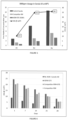
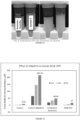
- antioxidant formulations were compared for functionality at 3000 ppm dosage in canola oil by OSI time. The results are shown in Figure 1 .
- EPR measurements were carried out using a Bruker Bio-Spin Corp. (available from Billerica, MA, USA) bench top Micro-ESR spectrometer. The analysis was done in 2 stages. As a first step, a calibration curve was done with TEMPO (2, 2, 6, 6-tetramethyl piperidine-1-oxyl) a stable free radical. TEMPO was dissolved in canola oil by stirring at room temperature and was used as an external standard. TEMPO concentrations ranging from 2.5-20 ⁇ M in oil were prepared from a stock solution of TEMPO solution. These solutions were placed in the ESR tubes and the intensity was measured. The EPR intensity and the corresponding TEMPO concentrations were used to obtain a calibration curve. Knowing the intensity of the oil radical +PBN adduct, the free radical concentration was derived using the ELBA Software from Bruker's MicroESR.
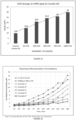
- Figure 3 shows the effect of the synergy of ingredients from the EPR study that measured the free radical concentration of the canola oil at 80°C.
- Sample I In the absence of lecithin and mixed tocopherols (Sample I), a small increase in the ascorbic acid vs Sample H did help reduce the free radical concentrations in the oil.
- both the EPR and the OSI study do show a synergy obtained with lecithin, tocopherols, green tea, and ascorbic acid.
- the antioxidant containing microemulsion disclosed herein was compared to commercially available antioxidants to assess the oxidative stability of soybean oil, canola oil, and NuSun oil.
- the oil storage evaluations were conducted in an oven according to the Schaal Oven test.
- the oils were stored in halfway closed, amber Qorpak glass jars at 565°C in an air forced oven.
- the fixed intervals, oil samples were withdrawn from the glass jars and a peroxide value (PV) was determined according to the AOCS official method Cd 8-53. After being withdrawn, the samples were nitrogen blanketed and frozen until ready for analysis.
- the peroxide value, fatty acid, para anisidine value, and OSI were analyzed.
- the OSI values obtained with canola oil are shown in Figure 6 .
- the peroxide values of canola oil are shown in Figure 7 .
- the free fatty acid values are shown in Figure 8 .
- Green tea extracts exhibit strong red color in oils depending on the concentration.
- a higher loading capacity of the antioxidant containing microemulsions allows for very small sample inclusions in the oil to protect the oil. This enables a good protection of the oils from a low dosage, yet without having any added color to the oils. Data regarding such color is shown in Figure 9 .
- the OSI values obtained with soybean, canola, and Nusun oil are shown in Figure 10 .
- the peroxide values from the Schaal oven study of soybean, canola, and Nusun oils are shown in Figure 11 .
- the para-anisidine values form the Schaal oven evaluation of soybean, canola, and Nusun oils are shown in Figure 12 .
- the green tea containing microemulsions described herein performed equal to or better, although the green tea containing microemulsions were based on a water-soluble green tea extract.
- the green tea containing microemulsions performed significantly better than the commercially available products.
- the palm oil OSI was 63.8.
- the palm/soybean oil blend OSI was 39.
- Example A of Example 1 The green tea containing microemulsion (Sample A of Example 1) was blended with rosemary in a carrier oil as shown in Figure 15.
- Figure 15 shows that incorporating small amounts of rosemary in the green tea containing microemulsion does not show a synergistic result, but the overall increase in the OSI shows they the blends work well.
- the effective concentrations of the green tea containing microemulsions was as high as 10-40%. Solubilizing such high concentrations of water-soluble ingredients in a formulation can be challenging, especially if the formulation is required to remain soluble in oil.
- the ascorbic acid, lecithin, and mixed tocopherols were included in the stock solutions as shown in Table 4. Table 4.
- Such highly concentrated microemulsoins offer an advantage of lower the doseage level of a functional antioxidant in oil. Not only can the active ingredient (e.g., the antioxidant) be minimized, but the functionally inactive ingredients in the oil such as the emulsifiers can also be minimized.
- the active ingredient e.g., the antioxidant
- the functionally inactive ingredients in the oil such as the emulsifiers can also be minimized.
- the OSI data in canola oil for the sample with a GTE concentration of 25% was 37 hours at 110°C.
- the effective concentration of the GTE in a 2000 ppm dosage of the microemulsion is equivalent to approximately 500 ppm of effective GTE.
- the OSI was 27 hours at 2000 ppm dosage in canola oil.
- a 10 hour increase with higher loading allows a lower dosage level of antioxidant in the oil.
- Rosemary in oil was used to make microemulsions.
- Table 5 shows the rosemary containing microemulsions.
- Table 5. Sample No. Amount of Rosemary in Oil Ascorbic Acid Monoglyceride Lecithin MTS 90 Water 1* 40 0 35 20 0 5 2* 40 2.5 35 20 0 2.5 3 40 2.5 35 16 4 2.5 4* 40 4 32 15 0 4 5* 45.5 4.5 34 11.5 0 4.5 * not in accordance with the invention as claimed
- microemulsions of Table 5 were placed in canola oil and free radical concentrations were measured at various time intervals. The results are show in Figure 16 .
- Rosemary in oil was used to make microemulsions of Table 6.
- Table 6 Sample No. Amount of Rosemary in Oil Ascorbic Acid Monoglyceride Canola Oil Lecithin Water 7* 42 4.2 33.7 0 15.8 4.2 8* 42 4.2 34 12.4 3.2 4.2 9* 70 4.2 17.6 0 4 4.2 * not in accordance with the invention as claimed
- Example 8 The microemulsions of Table 6 were placed in canola oil and free radical concentrations in relation to the OSI at 110C was determined as shown Figure 17 .
- Example 8 The microemulsions of Table 6 were placed in canola oil and free radical concentrations in relation to the OSI at 110C was determined as shown Figure 17 .
- Example 8 The microemulsions of Table 6 were placed in canola oil and free radical concentrations in relation to the OSI at 110C was determined as shown Figure 17 .
- Example 8 Example 8
- Microemulsions including rosemary in oil and mint extract were prepared having the formulations as shown in Table 7.
- Table 7. Sample No. Rosemary in oil Canola lecithin Monoglyceride Ascorbic acid (50%) solution
- Mint extract 6 42.1 15.8 33.7 8.4 0 7 36.8 15.8 33.7 8.4 5.3 8 31.6 15.8 33.7 8.4 10.5
- Free radical concentration at various times intervals at 80°C was determined and is shown in Figure 20 .
- Antioxidant formulations are usually designed for both water soluble and oil soluble systems. In order to accomplish this, multiple formulations are developed and delivered to the market based on specific applications. However, ideally a universal formulation that will work for both water and oil-based system can offer wide benefits not just based on the multiple inventories that is typically required, but also on understanding the robustness of the antioxidant functionality.
- the water-based application systems have multiple components such as change in pH, ionic strength, and additives that can impact the oxidative stability of the lipid component, proteins etc.
- Antioxidant formulations designed for water soluble systems usually contain a carrier system for antioxidant active component like propylene glycol, medium chain triglycerides, vegetable oils etc.
- a carrier system for antioxidant active component like propylene glycol, medium chain triglycerides, vegetable oils etc.
- One of the most common issues encountered with such systems is the stability in the dispersion.
- oil-based surfactant systems are dispersed in extreme pH and high salt (brine) conditions, the dispersion can easily phase separate and lead to poor protection of the lipids.
- Microemulsions provide such formulation stability in the presence of electrolytes that vary the surface characteristics of the emulsifier and provide good stability in water-based systems.
- the figure below shows the comparison of microemulsion vs neat emulsifier system with rosemary.
- a rosemary containing microemulsion having 20-40% of the rosemary in oil was mixed with 70% of an emulsifier base having the following formulation: 20-70% of YELKIN SS brand lecithin (available from Archer-Daniels-Midland Company, Decatur, IL); 5-30% of polysorbate 80; 2-10% ascorbic acid; and 10-30% sodium lactate.
- an antioxidant containing microemulsion such as the antioxidant containing microemulsion of the present invention
- AOX Blend 1 emulsifier blend
- OSI methods were used in canola oil dosed with 6 ppm iron to the oil.
- the antioxidants were chosen to have the same amount of actives as shown in Table 8. No additional chelators were present.
- glycerol was the polar solvent in order to limit the effect of additional moisture. Table 8. Samples Carnosol Carnosic Acid AOX Blend 1 (emulsifier blend) 0.21% 1.89% AOX Blend 2 (microemulsion) 0.25% 1.84%
- Figures 25 and 26 show the comparison of antioxidant blend 1 (AOX 1) and antioxidant blend 2 (AOX 2) in the presence and absence of iron and the effects on free radical concentration at 175 minutes (T175 FR) and OSI at 110°C.
- the results of the in the Figures show that the microemulsion was effective in providing the chelating effect of iron and protecting the oil from oxidation.
Landscapes
- Chemical & Material Sciences (AREA)
- Life Sciences & Earth Sciences (AREA)
- Engineering & Computer Science (AREA)
- Polymers & Plastics (AREA)
- Food Science & Technology (AREA)
- Oil, Petroleum & Natural Gas (AREA)
- Wood Science & Technology (AREA)
- Zoology (AREA)
- Health & Medical Sciences (AREA)
- Nutrition Science (AREA)
- Organic Chemistry (AREA)
- Chemical Kinetics & Catalysis (AREA)
- Animal Husbandry (AREA)
- Botany (AREA)
- Mycology (AREA)
- Dispersion Chemistry (AREA)
- Physiology (AREA)
- Molecular Biology (AREA)
- Biotechnology (AREA)
- Food Preservation Except Freezing, Refrigeration, And Drying (AREA)
- Anti-Oxidant Or Stabilizer Compositions (AREA)
- Cosmetics (AREA)
- Microbiology (AREA)
- Fodder In General (AREA)
- Edible Oils And Fats (AREA)
- General Preparation And Processing Of Foods (AREA)
- Colloid Chemistry (AREA)
Description
- Lipid oxidation is a process that occurs in food systems from the free radical chain reaction of unsaturated fatty acids. The presence of the unsaturation in the fatty acid makes the fatty acid vulnerable to oxidation via such free radical reactions. Such reactions are a chain reaction including the steps of initiation, propagation, and termination. The presence of the oxidation in foods has a major impact on the shelf life of the food and can cause several off notes and even the presence of toxic products.
- The effects of oxidation have been well studied. It been found that antioxidants can be effective in controlling lipid oxidation and/or slowing the rate of oxidation. Factors including temperature, pH, the presence of metals, the level of unsaturation, and/or others can lead to an increased oxidation rate. Thus, avoiding such factors can help control oxidation, but controlling such factors can be problematic. Thus, the use of antioxidants is another solution to control the oxidation.
- Trace metals are good initiators of oxidation in food systems. Chelators function as preventive antioxidants by limiting the activity of catalytic metals present in the system, thus eliminating the initial oxidation step. Iron, copper and zinc are most commonly encountered in many foods and always a cause of concern in catalyzing oxidation.
- Ethylene diamine tetra acetic acid (EDTA) in its sodium salt form is the most commonly used chelator to protect foods from autoxidation. Although this chelator is allowed by the US and WHO (World Health Organization), it cannot be used in the European Union(EU) Based on the mineral absorption in food, there is a concern on the use of EDTA although many of the emulsion type systems are still using about 75-100 ppm EDTA. It has found to be relatively more effective than any radical quenching antioxidant such as tocopherol.
- Sodium tripolyphosphate (STPP) is a phosphate polymer allowed as food additive by Food and Drug Administration (FDA) as Generally recognized as safe (GRAS). STPP is commonly found in meat products and in addition to preventing the lipid oxidation, it is a potent water binder in emulsified systems.
- Citric acid is most commonly used in foods as an acidulant in its salt form and acts as a potent metal chelator. Citric acid and its salts are widely accepted as food additive by the EU, US and WHO, and are also considered as GRAS by FDA.
- Ascorbic acid (AA) is a strong oxygen scavenger. Transition metals have also been suggested to increase the ability of AA to decrease dissolved oxygen. This suggests a rapid creation of anaerobic environment within the food system. Thus, it is important to determine the effect of metals on both AA degradation and depletion of dissolved oxygen. It is always a challenge to keep the functionality of the AA as a free radical scavenger without causing it to be a prooxidant from AA degradation.
- The other non-traditional metal chelators that have effect on lipid oxidation are phytic acid, phospholipids and flavonoids.
-
US 2017/ 325481 A1 discloses a method of forming an encapsulated composition with enhanced solubility and stability whereby a bicontinuous or Winsor Type III microemulsion is formed using an emulsifier, a solvent and a co-emulsifier and an active composition is added to the microemulsion resulting in a micellar network of the active composition within the microemulsion. -
US 2007/ 085059 A1 discloses a bioactive complex composition having enhanced oxidative stability, emulsion stability, and mineral rich transparent beverages. -
EP 0 884 952 B1 -
US 2008/ 085357 A1 discloses microemulsions from a polar antioxidant-rich fraction in edible oils for incorporation into different foods or pharmaceutical products. -
CN 101 878 941 A discloses a micro-emulsion edible antioxidant product in the field of food ingredient production. - Although many synthetic and metal antioxidants exist, there is a desire to replace such synthetic and metal antioxidants with natural antioxidants that have a "clean label." With the exception of the tocopherols, the natural antioxidants are mostly water soluble, plant-based extracts. Such water soluble, plant-based extracts may be made oil soluble by adding emulsifiers. However, such compositions are often limited by the amount of water soluble, plant-based extracts that can be solubilized.
- What is desired is system that has a high load of water soluble, plant-based extract, that is good efficacy, and yet is still able to interface in an oil system.
- In each of its various embodiments, the present invention fulfills this need and discloses microemulsions that include plant-based extracts that are water or oil soluble.
- A microemulsion comprising a plant-based antioxidant, an organic acid, water, at least one surfactant, mixed tocopherols and a non-polar solvent is disclosed. Specifically, the microemulsion of the invention is as defined in the appended claims. The invention further com prises a method of preventing or slowing oxidation in a food/feed product or food/feed ingredient includes incorporating the microemulsion of the invention with the food/feed product or food/feed ingredient.
- The invention is also directed towards a process of loading a microemulsion with an antioxidant and includes mixing an antioxidant with an organic acid and water, thus producing an aqueous phase, mixing a non-polar solvent with at least one surfactant, thus producing a non-polar phase, and mixing the aqueous phase with the non-polar phase, thus producing the microemulsion. Specifically, said process is as defined in the appended claims.
- The invention is also directed towards the use of the claimed microemulsions in preventing or slowing oxidation in a food/ feed product or a food/ feed ingredient.
-
-
Figure 1 shows the oxidative stability index of oil containing an antioxidant containing microemulsion and other compositions. -
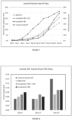
Figure 2 shows the free radical concentration of oil containing an antioxidant containing microemulsion and other compositions over time. -
Figure 3 shows the free radical concentration of oil containing an antioxidant containing microemulsion and other compositions. -
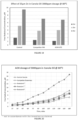
Figure 4 shows the free radical concentration of oil containing an antioxidant containing microemulsion and other compositions over time. -
Figure 5 shows the free radical concentration of oil containing an antioxidant containing microemulsion and other compositions over time. -
Figure 6 shows the oxidative stability index of oil containing an antioxidant containing microemulsion and other compositions over time. -
Figure 7 shows the peroxide value of oil containing an antioxidant containing microemulsion and other compositions over time. -
Figure 8 shows the free fatty acid content of oil containing an antioxidant containing microemulsion and other compositions over time. -
Figure 9 shows the color of oil containing an antioxidant containing microemulsion and other compositions over time. -
Figure 10 shows the oxidative stability index of oil containing an antioxidant containing microemulsion and other compositions over time. -
Figure 11 shows the peroxide value of oil containing an antioxidant containing microemulsion and other compositions over time. -
Figure 12 shows the para-anisidine values of oil containing an antioxidant containing microemulsion and other compositions over time. -
Figure 13 shows the oxidative stability index of oil containing an antioxidant containing microemulsion and other compositions over time. -
Figure 14 shows the oxidative stability index of oil containing an antioxidant containing microemulsion and other compositions over time. -
Figure 15 shows the oxidative stability index of oil containing an antioxidant containing microemulsion and other compositions over time. -
Figure 16 shows the free radical concentration of oil containing an antioxidant containing microemulsion and other compositions over time. -
Figure 17 shows the free radical concentration of oil containing an antioxidant containing microemulsion and other compositions over time. -
Figure 18 shows the free radical concentration of Fe in oil containing an antioxidant containing microemulsion and other compositions. -
Figure 19 shows the free radical concentration of Zn in oil containing an antioxidant containing microemulsion and other compositions over time. -
Figure 20 shows the free radical concentration of oil containing an antioxidant containing microemulsion and other compositions over time. -
Figure 21 shows the ability of the rosemary containing microemulsion of this Example to disperse in a brine solution as compared to a commercially available rosemary/emulsifier blend. -
Figure 22 shows the free radical concentration of oil having a metal and containing an antioxidant containing microemulsion and other compositions over time. -
Figure 23 shows the free radical concentration of oil having a metal and containing an antioxidant containing microemulsion and other compositions over time. -
Figure 24 shows the free radical concentration of oil having a metal and containing an antioxidant containing microemulsion and other compositions over time. -
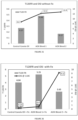
Figure 25 shows the oxidative stability index of oil and containing an antioxidant containing microemulsion and other compositions over time. -
Figure 26 shows the oxidative stability index of oil and containing an antioxidant containing microemulsion and other compositions over time. - The present invention discloses a microemulsion comprising a plant-based antioxidant, an organic acid, water, at least one surfactant, mixed tocopherols and a non-polar solvent. The plant-based antioxidant may be water soluble or oil soluble. The plant-based antioxidant is selected from green tea extract, mint extract, rosemary, apple, acerola, olive, curcumin, limonene, phenolic acids, phenolic diterpenes, flavonoids, volatile oils, and combinations of any thereof.
- The at least one surfactant includes lecithin and may include co-surfactant selected from polysorbates, sorbitan esters, polyglyceril esters, sucrose esters, alkyl polyglucosides, alkyl polyglycosides, polaxmers, pluronics, ethoxylated fatty acids, ethoxylated monoglycerides, propylene glycol, polyethylene glycol esters, sodium dodecyl sulfate (SDS), sodium lauryl sulfate (SLS), quillaja, rhamnolipids, sophorolipids, sucrose esters, polyglycerol esters, saponins, derivatives of any thereof, and combinations of any thereof. The microemulsion of the invention comprises mono/ diglycerides from medium chain triglycerides.
- In the present technology, the organic acid may be ascorbic acid, citric acid, lactic acid, and combinations of any thereof. The claimed microemulsion comprises ascorbic acid.
- The non-polar solvent may be vegetable oil, medium chain triglycerides, and combinations thereof.
- The microemulsion may also include a chelator. Suitable chelators may be ethylene diamine tetra acetic acid, citric acid, ascorbic acid, phytic acid, phospholipids, flavonoids, and combinations of any thereof.
- A method of preventing or slowing oxidation in a food/feed product or food/feed ingredient includes incorporating the antioxidant containing microemulsion of the present invention with the food/feed product or the food/feed ingredient.
- The food/feed product or the food/feed ingredient may be an oil or a fat. The antioxidant may be present in the food/feed product or the food/feed ingredient at a concentration of between about 500 ppm and 4000 ppm or between about 100 ppm and 4000 ppm.
- A chelator may be mixed with the food/feed product, the food/feed ingredient, the microemulsion, or combinations of any thereof.
- Use of the antioxidant microemulsion of the present invention in preventing or slowing oxidation in a food/feed product or a food/feed ingredient is also disclosed.
- A process of loading a microemulsion with an antioxidant includes mixing an antioxidant with an organic acid and water, thus producing an aqueous phase, mixing a non-polar solvent with at least one surfactant, thus producing a non-polar phase, and mixing the aqueous phase with the non-polar phase, thus producing the microemulsion.
- The antioxidant is selected from green tea extract, mint extract, rosemary, apple, acerola, olive, curcumin, limonene, phenolic acids, phenolic diterpenes, flavonoids, volatile oils, and combinations of any thereof.
- The antioxidant may be a water soluble, plant-based antioxidant or an oil soluble, plant-based antioxidant.
- Generally, the organic acid may be ascorbic acid, citric acid, lactic acid, and combinations of any thereof. The claimed microemulsion com prises ascorbic acid.
- The at least one surfactant includes lecithin. The microemulsion of the invention further comprises mono/ diglycerides from medium chain triglycerides and also comprises mixed tocopherols.
- The non-polar solvent may be a vegetable oil, medium chain triglycerides, and combinations thereof.
- The efficacy of an antioxidant comes from the manner in which the antioxidant is delivered in the oil. At similar concentrations of antioxidant, an emulsifier blended antioxidant behaves differently than a nanodispersion containing the antioxidant. The differences can come from the significant change in particle size and surface area.
- The presence of water in the formulation also has an effect on the stability and functionality of the antioxidant. Water soluble plant-based antioxidants such as carnosic acid, carnasol, green tea extracts, hydroxyl tyrosol, and others can lose their efficacy over time in the presence of moisture, air, and temperature, which can have a huge effect on product shelf life.
- The microemulsions of the present invention that include plant-based extracts add significant value to not only production functionality, but also towards extending the shelf life of products that such microemulsions are incorporated. Thus, microemulsions including the plant-based extracts provide a good advantage in products where the active ingredient (i.e., antioxidants, vitamins, minerals, probiotics, colors, flavors and other functional nutraceuticals) is encapsulated.
- The claimed microemulsion comprises a plant-based antioxidant selected from the group consisting of green tea extract, mint extract, rosemary, apple, acerola, olive, curcumin, limonene, phenolic acids (i.e., gallic, protocatechuic, caffeic, rosamarinic), phenolic diterpenes (i.e., carnosol, carnosic acid, rosamanol, rosmadial), flavonoids (i.e., quercetin, catechin, naringenin, kaepferol), volatile oils (i.e., eugenol, carvacrol, thymol, menthol), and combinations of any thereof.
- A microemulsion is a system of water, oil, and a surfactant that spontaneously forms, and is an optically isotropic and thermodynamically stable low viscosity solution. Depending on the makeup of the microemulsion, the microemulsion may form a water-in-oil or an oil-in-water bicontinuous system. The surfactant may also include a co-surfactant such as a small chain alcohol or ester. Such self-emulsifying antioxidant containing microemulsions may also be used to carry bioactives in food applications.
- The plant-based antioxidant containing microemulsions that are water soluble may also be formulated to be soluble in oil and protect the oil from lipid oxidation.
- The plant-based antioxidant containing microemulsions of the invention include mono/diglycerides from medium chain triglycerides, lecithin, ascorbic acid, green tea extract, and mixed tocopherols. Such formulation when encapsulated is very shelf stable over a year, with no change in efficacy of the antioxidant. The plant-based extract microemulsions were evaluated with and without lecithin, and the functionality of the plant-based extract microemulsion was significantly higher with the lecithin. The green tea extract may be supplemented or replaced with other water-soluble extracts such as an active polyphenol including, but not limited to, rosemary or mint extract. Such plant-based extract microemulsions are infinitely soluble in medium chain triglycerides which enables the concentration of the active ingredients to be altered to a low dosage.
- The plant-based antioxidant containing microemulsion allows at least one water soluble ingredient to easily be solubilized in a core of water in a reverse microemulsion. More than water soluble ingredient may be incorporated into the plant-based antioxidant containing microemulsions. Very high loading of the water-soluble ingredients may be achieved with minimal water in the plant-based antioxidant containing microemulsions. Such plant-based antioxidant containing microemulsions also enable the incorporation of actives that have an extreme pH and/or salt condition.
- The plant-based antioxidant containing microemulsions may also act as a universal solvent that may have dual solubility in water and oil systems, which helps limit the number of formulations required in different applications. The plant-based antioxidant containing microemulsions may also hold water soluble and water insoluble ingredients at the same time such as, for example, a water-soluble antioxidant and a water insoluble antimicrobial component.
- A plant-based antioxidant containing microemulsion including sodium lactate can provide an antimicrobial effect as well as helping with lowering the darkening of meat products caused by oxidation.
- The plant-based antioxidant containing microemulsions may also be free of ethanol, propylene glycol, and/or polysorbates.
- It should be understood that this invention is not limited to the embodiments disclosed in this summary, or the description that follows, but is as defined by the claims.
- Other than in the examples described herein, or unless otherwise expressly specified, all of the numerical ranges, amounts, values and percentages, such as those for amounts of materials, elemental contents, times and temperatures of reaction, ratios of amounts, and others, in the following portion of the specification and attached claims may be read as if prefaced by the word "about" even though the term "about" may not expressly appear with the value, amount, or range. Accordingly, unless indicated to the contrary, the numerical parameters set forth in the following specification and claims are approximations that may vary depending upon the desired properties sought to be obtained by the present invention. At the very least, and not as an attempt to limit the application of the doctrine of equivalents to the scope of the claims, each numerical parameter should at least be construed in light of the number of reported significant digits and by applying ordinary rounding techniques.
- Notwithstanding that the numerical ranges and parameters setting forth the broad scope of the invention are approximations, the numerical values set forth in the specific examples are reported as precisely as possible. Any numerical value, however, inherently contains error necessarily resulting from the standard deviation found in its underlying respective testing measurements. Furthermore, when numerical ranges are set forth herein, these ranges are inclusive of the recited range end points (i.e., end points may be used). When percentages by weight are used herein, the numerical values reported are relative to the total weight.
- Also, it should be understood that any numerical range recited herein is intended to include all sub-ranges subsumed therein. For example, a range of "1 to 10" is intended to include all sub-ranges between (and including) the recited minimum value of 1 and the recited maximum value of 10, that is, having a minimum value equal to or greater than 1 and a maximum value of equal to or less than 10. The terms "one," "a," or "an" as used herein are intended to include "at least one" or "one or more," unless otherwise indicated.
- Any patent, publication, or other disclosure material, in whole or in part, that is said to be incorporated by reference herein in its entirety is incorporated herein only to the extent that the incorporated material does not conflict with existing definitions, statements, or other disclosure material set forth in this disclosure. As such, and to the extent necessary, the disclosure as explicitly set forth herein supersedes any conflicting material said to be incorporated herein by reference. Any material, or portion thereof, that is said to be incorporated by reference herein, but which conflicts with existing definitions, statements, or other disclosure material set forth herein will only be incorporated to the extent that no conflict arises between that incorporated material and the existing disclosure material.
- Vitamins can also be included in the food product such as, but not limited to, niacin, iron, zinc, thiamine mononitrate (vitamin B1), riboflavin (vitamin B2), folic acid, tocopherol(s) (vitamin E), vitamin C, vitamin B6, vitamin B12, vitamin A, vitamin D, pantothenic acid and copper.
- The present invention may be further understood by reference to the following examples. The following examples are merely illustrative of the invention and are not intended to be limiting. Unless otherwise indicated, all parts are by weight.
- A green tea extract microemulsion was produced. Green tea extract (available from Archer-Daniels-Midland Company, Decatur, IL) is a free-flowing powder, standardized to 90% polyphenols and 50% EGCG (Epigallocatechin Gallate). The product is very water soluble. 20-30% of the GTE along with 2-10% ascorbic acid or citric acid was dissolved in water, producing the water phase of the microemulsion. An oil-emulsifier phase was prepared with 30-70% CAPMUL 471 available from Abitec Corp., a C8/C10 coconut mono/diglyceride. The oil phase can include mixed tocopherols (
DECANOX MTS 90, available from Archer-Daniels-Midland Company, Decatur, IL) and Soy lecithin (BEAKIN LV1, available from Archer-Daniels-Midland Company, Decatur, IL). Different formulations (A-F) are shown in Table. 1.Table 1. Sample Microemulsion Formulation (%) GTE Ascorbic Acid Water Monoglyceride Soy Lecithin/ MTS 90MCT GTE @2000ppm dosage A 14.2 2.3 7.0 63.7 12.8 0.0 284 B 13.5 2.1 6.7 60.5 12.1 5.0 270 C 12.8 2.1 6.3 57.4 11.5 10.0 256 D 12.1 2.0 6.0 54.2 10.8 15.0 242 E 11.4 1.8 5.6 51.0 10.2 20.0 228 F 10.7 1.7 5.3 47.8 9.6 25.0 214 - The Oxidative Stability Index (OSI) was determined. For Samples B and E, the OSI at 110°C was 30.2 and these 2 samples had 5-15% less GTE as compared to Sample A, suggesting that the effectiveness of the OSI comes from the stability of the formulation.
- Samples G-K were formulated with higher ascorbic acid concentrations to improve the efficacy of the GTE and enhance oxidative stability.
Table 2. Microemulsion Formulation (%) Sampl e GT E Ascorbic Acid Water Monos Soy Lecithin MTS 90 G 14.2 2.3 7.0 63.7 10.2 2.6 H* 16.1 2.3 8.0 73.6 0.0 0.0 I* 16.1 4.6 10.3 69.0 0.0 0.0 J 16.1 4.6 10.3 56.8 10.2 2.6 K 16.1 4.6 10.3 56.8 6.4 6.4 * not in accordance with the invention as claimed - The antioxidant formulations were compared for functionality at 3000 ppm dosage in canola oil by OSI time. The results are shown in
Figure 1 . - EPR measurements were done for the GTE microemulsions to evaluate the oxidative stability of canola oil at 80C for 3 hours. The results are shown in
Figure 2 . - EPR measurements were carried out using a Bruker Bio-Spin Corp. (available from Billerica, MA, USA) bench top Micro-ESR spectrometer. The analysis was done in 2 stages. As a first step, a calibration curve was done with TEMPO (2, 2, 6, 6-tetramethyl piperidine-1-oxyl) a stable free radical. TEMPO was dissolved in canola oil by stirring at room temperature and was used as an external standard. TEMPO concentrations ranging from 2.5-20 µM in oil were prepared from a stock solution of TEMPO solution. These solutions were placed in the ESR tubes and the intensity was measured. The EPR intensity and the corresponding TEMPO concentrations were used to obtain a calibration curve. Knowing the intensity of the oil radical +PBN adduct, the free radical concentration was derived using the ELBA Software from Bruker's MicroESR.
- To evaluate the effect of different antioxidants in canola oil, the following EPR method was followed with the use of a spin trap. Canola oil sample was dosed with four different antioxidants at 3000 ppm. 40 µL of a spin trap agent PBN (N-t-Butyl-α-phenylnitrone) was added to 1 ml of the canola oils dosed with antioxidants, including a control sample with no antioxidant added. Each of the lipid samples were filled in ESR tubes and placed in heating block at 80°
C. Every 15 minutes, each of the ESR tubes were placed in the MicroESR spectrometer and the intensity was measured. The analysis was continued for a period of 3 hours and EPR intensity/Free radical concentration (µM) vs time was plotted to obtain the lag time of the canola oil both with and without the antioxidants. The comparison of the amount of free radical concentration at T 175 (175 minutes) provides the efficacy of the antioxidant in the study. -
Figure 3 shows the effect of the synergy of ingredients from the EPR study that measured the free radical concentration of the canola oil at 80°C. In the absence of lecithin and mixed tocopherols (Sample I), a small increase in the ascorbic acid vs Sample H did help reduce the free radical concentrations in the oil. However, both the EPR and the OSI study do show a synergy obtained with lecithin, tocopherols, green tea, and ascorbic acid. - Two of the commercial leading industry standards of antioxidants were compared to the antioxidant containing microemulsions disclosed herein. The industry standards that were evaluated were rosemary and the rosemary/green tea extract antioxidant.
Figures 4 and5 show the comparison of the EPR and OSI data showing the functionality of the industry standard antioxidants compared to the antioxidant containing microemulsion disclosed herein. - In this Example, the antioxidant containing microemulsion disclosed herein was compared to commercially available antioxidants to assess the oxidative stability of soybean oil, canola oil, and NuSun oil. The oil storage evaluations were conducted in an oven according to the Schaal Oven test. The oils were stored in halfway closed, amber Qorpak glass jars at 565°C in an air forced oven. The fixed intervals, oil samples were withdrawn from the glass jars and a peroxide value (PV) was determined according to the AOCS official method Cd 8-53. After being withdrawn, the samples were nitrogen blanketed and frozen until ready for analysis. The peroxide value, fatty acid, para anisidine value, and OSI were analyzed.
- The OSI values obtained with canola oil are shown in
Figure 6 . The peroxide values of canola oil are shown inFigure 7 . The free fatty acid values are shown inFigure 8 . - Green tea extracts exhibit strong red color in oils depending on the concentration. A higher loading capacity of the antioxidant containing microemulsions allows for very small sample inclusions in the oil to protect the oil. This enables a good protection of the oils from a low dosage, yet without having any added color to the oils. Data regarding such color is shown in
Figure 9 . - The OSI values obtained with soybean, canola, and Nusun oil are shown in
Figure 10 . The peroxide values from the Schaal oven study of soybean, canola, and Nusun oils are shown inFigure 11 . The para-anisidine values form the Schaal oven evaluation of soybean, canola, and Nusun oils are shown inFigure 12 . - Overall, good stability was obtained for the antioxidant containing microemulsions with the three oils evaluated. As compared to the commercially available antioxidants, the green tea containing microemulsions described herein performed equal to or better, although the green tea containing microemulsions were based on a water-soluble green tea extract.
- The ability of the antioxidant containing microemulsions described herein was also evaluated in comparison to commercially available rosemary products and rosemary/lipid soluble green tea blend in palm and coconut oil.
Figure 13 shows the oxidative stability in coconut oil andFigure 14 shows the oxidative stability in palm oil and a palm/soy blend. - In the palm oil, the green tea containing microemulsions performed significantly better than the commercially available products. In the presence of TBHQ (a synthetic antioxidant) at 190 ppm, the palm oil OSI was 63.8. In the presence of TBHQ at 180 ppm, the palm/soybean oil blend OSI was 39. These results of the green tea containing microemulsions of
Figure 14 are very similar to the synthetic TBHQ. - The green tea containing microemulsion (Sample A of Example 1) was blended with rosemary in a carrier oil as shown in
Figure 15. Figure 15 shows that incorporating small amounts of rosemary in the green tea containing microemulsion does not show a synergistic result, but the overall increase in the OSI shows they the blends work well. - Clear solutions of green tea containing microemulsions were prepared with minimal heating in the formulations of Table 3. These solutions were used as stock solutions to prepare the antioxidant formulations including ascorbic acid, lecithin, and mixed tocopherols.
Table 3. GTE stock solution No. GTE, g Water, g Monos,g Total, g % GTE Sample A 7 3 2 12 58.33 Sample B 7 3 1 11 63.64 Sample C 8 2 2 12 66.67 - The effective concentrations of the green tea containing microemulsions was as high as 10-40%. Solubilizing such high concentrations of water-soluble ingredients in a formulation can be challenging, especially if the formulation is required to remain soluble in oil. The ascorbic acid, lecithin, and mixed tocopherols were included in the stock solutions as shown in Table 4.
Table 4. % GTE Stock GTE Solution Ascorbic Acid Monos Lecithin MTS 90 % GTE 2000ppm 1000ppm 58.33 39.0 2.4 48.8 4.9 4.9 22.8 455 228 63.64 39.0 2.4 48.8 4.9 4.9 24.8 497 248 66.67 39.0 2.4 48.8 4.9 4.9 26.0 520 260 58.33 58.5 2.4 29.3 4.9 4.9 34.1 683 341 63.64 58.5 2.4 29.3 4.9 4.9 37.3 745 373 66.67 58.5 2.4 29.3 4.9 4.9 39.0 781 390 - Such highly concentrated microemulsoins offer an advantage of lower the doseage level of a functional antioxidant in oil. Not only can the active ingredient (e.g., the antioxidant) be minimized, but the functionally inactive ingredients in the oil such as the emulsifiers can also be minimized.
- The OSI data in canola oil for the sample with a GTE concentration of 25% was 37 hours at 110°C. The effective concentration of the GTE in a 2000 ppm dosage of the microemulsion is equivalent to approximately 500 ppm of effective GTE. Under similar formulation conditions and concentrations of other ingredients as compared to sample A corresponding to a 284 ppm GTE concentration, the OSI was 27 hours at 2000 ppm dosage in canola oil. A 10 hour increase with higher loading allows a lower dosage level of antioxidant in the oil. This provides couple of benefits on not just the economics of producing the formulations since plant-based extracts can be very expensive. A further benefit is a lower color contribution based on the nature of adding color to oil with the water-soluble green tea. Example 7.
- Rosemary in oil was used to make microemulsions. Table 5 shows the rosemary containing microemulsions.
Table 5. Sample No. Amount of Rosemary in Oil Ascorbic Acid Monoglyceride Lecithin MTS 90 Water 1* 40 0 35 20 0 5 2* 40 2.5 35 20 0 2.5 3 40 2.5 35 16 4 2.5 4* 40 4 32 15 0 4 5* 45.5 4.5 34 11.5 0 4.5 * not in accordance with the invention as claimed - The microemulsions of Table 5 were placed in canola oil and free radical concentrations were measured at various time intervals. The results are show in
Figure 16 . - Rosemary in oil was used to make microemulsions of Table 6.
Table 6. Sample No. Amount of Rosemary in Oil Ascorbic Acid Monoglyceride Canola Oil Lecithin Water 7* 42 4.2 33.7 0 15.8 4.2 8* 42 4.2 34 12.4 3.2 4.2 9* 70 4.2 17.6 0 4 4.2 * not in accordance with the invention as claimed - The microemulsions of Table 6 were placed in canola oil and free radical concentrations in relation to the OSI at 110C was determined as shown
Figure 17 . Example 8. - Minerals are very good prooxidants and can act as catalyst in the oxidation process. Typically, metal chelating organic acids such as ascorbic and citric acid are used in combination with other antioxidants in order to mitigate the negative effect. An evaluation on the EPR was done with canola oil dosed with 25 µm iron and zinc chloride prepared as a micellar solution. Antioxidants were dosed at 3000 ppm in canola oil with Fe or Zn, and PBN was used as spin trap. Free radical concentration was measured as a function of time at 80°C for a period of 3 hours to accelerate the oxidation process.
Figures 18 and19 show the effect of the antioxidants including the green tea containing microemulsion described herein. The green tea containing microemulsion is effective in controlling the effects of Fe and Zn to a greater extent than a commercially available rosemary product. - Microemulsions including rosemary in oil and mint extract were prepared having the formulations as shown in Table 7.
Table 7. Sample No. Rosemary in oil Canola lecithin Monoglyceride Ascorbic acid (50%) solution Mint extract 6 42.1 15.8 33.7 8.4 0 7 36.8 15.8 33.7 8.4 5.3 8 31.6 15.8 33.7 8.4 10.5 - Free radical concentration at various times intervals at 80°C was determined and is shown in
Figure 20 . - Antioxidant formulations are usually designed for both water soluble and oil soluble systems. In order to accomplish this, multiple formulations are developed and delivered to the market based on specific applications. However, ideally a universal formulation that will work for both water and oil-based system can offer wide benefits not just based on the multiple inventories that is typically required, but also on understanding the robustness of the antioxidant functionality.
- The water-based application systems have multiple components such as change in pH, ionic strength, and additives that can impact the oxidative stability of the lipid component, proteins etc. Antioxidant formulations designed for water soluble systems usually contain a carrier system for antioxidant active component like propylene glycol, medium chain triglycerides, vegetable oils etc. One of the most common issues encountered with such systems is the stability in the dispersion. When oil-based surfactant systems are dispersed in extreme pH and high salt (brine) conditions, the dispersion can easily phase separate and lead to poor protection of the lipids. Also, based on the HLB of food emulsifiers, there is a limited number of emulsifiers that can fit the food and feed category. In order to improve the formulation stability, nanoemulsified systems are needed that can tolerate high salt and extreme pH conditions, yet still form stable dispersions. Microemulsions provide such formulation stability in the presence of electrolytes that vary the surface characteristics of the emulsifier and provide good stability in water-based systems. The figure below shows the comparison of microemulsion vs neat emulsifier system with rosemary.
- A rosemary containing microemulsion having 20-40% of the rosemary in oil was mixed with 70% of an emulsifier base having the following formulation: 20-70% of YELKIN SS brand lecithin (available from Archer-Daniels-Midland Company, Decatur, IL); 5-30% of polysorbate 80; 2-10% ascorbic acid; and 10-30% sodium lactate.
- The oxidative stability of the rosemary containing microemulsion of this Example at 3000 ppm at 110°C in canola oil was 19.8 hours as compared to a commercially available rosemary/emulsifier blend which was 15.6 hours. The sodium lactate improves the antimicrobial function and improves the effect of darkening on a meat product.
Figure 21 shows the ability of the rosemary containing microemulsion of this Example (labeled Example 9) to disperse in a brine solution as compared to a commercially available rosemary/emulsifier blend. - To demonstrate the effect of different antioxidants including ascorbic acid, EPR studies were carried out in presence of the trace metals iron and zinc. Canola oil was dosed with 100 µm Fe and 100 µm Zn for the EPR study. The oil samples were dosed with 40 µL PBN and samples were run to measure the intensity/free radical concentration at 70°C.
Figures 22 and23 show the effect of iron and zinc in canola oil. The Green tea extract containing microemulsion of the present invention was more effective for iron and zinc as compared to the commercially available rosemary blend. - In order to demonstrate the partitioning of metals in an antioxidant system, an antioxidant containing microemulsion (AOX Blend 2), such as the antioxidant containing microemulsion of the present invention, was prepared and compared to a traditional emulsifier blend (AOX Blend 1). EPR and OSI methods were used in canola oil dosed with 6 ppm iron to the oil. The antioxidants were chosen to have the same amount of actives as shown in Table 8. No additional chelators were present. In the microemulsion composition, glycerol was the polar solvent in order to limit the effect of additional moisture.
Table 8. Samples Carnosol Carnosic Acid AOX Blend 1 (emulsifier blend) 0.21% 1.89% AOX Blend 2 (microemulsion) 0.25% 1.84% - The free radical concentrations were measured as a function of time for canola oil at 2000 ppm antioxidant dosage with and without additional iron. The results are shown in
Figure 24 . -
Figures 25 and 26 show the comparison of antioxidant blend 1 (AOX 1) and antioxidant blend 2 (AOX 2) in the presence and absence of iron and the effects on free radical concentration at 175 minutes (T175 FR) and OSI at 110°C. The results of the in the Figures show that the microemulsion was effective in providing the chelating effect of iron and protecting the oil from oxidation.
Claims (12)
- A microemulsion comprising:(i) a plant-based antioxidant, wherein the plant-based antioxidant is selected from the group consisting of green tea extract, mint extract, rosemary, apple, acerola, olive, curcumin, phenolic acids, phenolic diterpenes, flavonoids, volatile oils, limonene, and combinations of any thereof;(ii) water;(iii) at least one surfactant, wherein said at least one surfactant includes lecithin;(iv) mono/diglycerides from medium chain triglycerides;(v) ascorbic acid;(vi) mixed tocopherols; and(vii) a non-polar solvent.
- The microemulsion of claim 1, wherein the at least one surfactant is lecithin.
- The microemulsion of any one of claims 1 or 2, further comprising a co-surfactant selected from the group consisting of polysorbates, sorbitan esters, polyglyceril esters, sucrose esters, alkyl polyglucosides, alkyl polyglycosides, polaxmers, pluronics, ethoxylated fatty acids, ethoxylated monoglycerides, propylene glycol, polyethylene glycol esters, sodium dodecyl sulfate (SDS), sodium lauryl sulfate (SLS), quillaja, rhamnolipids, sophorolipids, sucrose esters, polyglycerol esters, saponins, derivatives of any thereof, and combinations of any thereof.
- The microemulsion of any one of claims 1-3, further comprising an organic acid selected from the group consisting of citric acid, lactic acid, and combinations of any thereof.
- The microemulsion of any one of claims 1-4, wherein the non-polar solvent is selected from the group consisting of a vegetable oil, medium chain triglycerides, and combinations thereof.
- The microemulsion of any one of claims 1-5, further comprising a chelator selected from the group consisting of ethylene diamine tetra acetic acid, citric acid, phytic acid, phospholipids, flavonoids, and combinations of any thereof.
- A method of preventing or slowing oxidation in a food/feed product or food/feed ingredient, the method comprising incorporating the microemulsion of any one of claims 1-6 with the food/feed product or the food/feed ingredient, preferably wherein the food/feed product or the food/feed ingredient comprises an oil or a fat.
- The method of claim 7, wherein the antioxidant is present in the food/feed product or the food/feed ingredient at a concentration of between about 100 ppm and 4000 ppm.
- The method of any one of claims 7-8, further comprising mixing a chelator with the food/feed product, the food/feed ingredient, the microemulsion, or combinations of any thereof.
- Use of the microemulsion of any one of claims 1-6 in preventing or slowing oxidation in a food/feed product or a food/feed ingredient.
- A process of loading a microemulsion with an antioxidant, the process comprising:mixing an antioxidant with an organic acid and water, thus producing an aqueous phase, wherein said organic acid is ascorbic acid;mixing a non-polar solvent with at least one surfactant, thus producing a non-polar phase; andmixing the aqueous phase with the non-polar phase, thus producing the microemulsion;whereinthe antioxidant is selected from the group consisting of green tea extract, mint extract, rosemary, apple, acerola, olive, curcumin, limonene, phenolic acids, phenolic diterpenes, flavonoids, volatile oils, and combinations of any thereof,said at least one surfactant includes lecithin and mono/diglycerides from medium chain triglycerides, andthe microemulsion further comprises mixed tocopherols.
- The method according to claim 11, wherein the non-polar solvent is selected from the group consisting of a vegetable oil, medium chain triglycerides, and combinations thereof.
Applications Claiming Priority (2)
| Application Number | Priority Date | Filing Date | Title |
|---|---|---|---|
| US201862731375P | 2018-09-14 | 2018-09-14 | |
| PCT/US2019/051059 WO2020056293A1 (en) | 2018-09-14 | 2019-09-13 | Microemulsions carrying antioxidants |
Publications (4)
| Publication Number | Publication Date |
|---|---|
| EP3849328A1 EP3849328A1 (en) | 2021-07-21 |
| EP3849328A4 EP3849328A4 (en) | 2021-11-10 |
| EP3849328C0 EP3849328C0 (en) | 2024-09-11 |
| EP3849328B1 true EP3849328B1 (en) | 2024-09-11 |
Family
ID=69778524
Family Applications (1)
| Application Number | Title | Priority Date | Filing Date |
|---|---|---|---|
| EP19860900.0A Active EP3849328B1 (en) | 2018-09-14 | 2019-09-13 | Microemulsions carrying antioxidants |
Country Status (11)
| Country | Link |
|---|---|
| US (2) | US12256752B2 (en) |
| EP (1) | EP3849328B1 (en) |
| JP (1) | JP7573518B2 (en) |
| KR (1) | KR102946756B1 (en) |
| CN (1) | CN113015435A (en) |
| AU (1) | AU2019339493B2 (en) |
| CA (1) | CA3112922A1 (en) |
| ES (1) | ES2990231T3 (en) |
| MX (1) | MX2021003159A (en) |
| WO (1) | WO2020056293A1 (en) |
| ZA (1) | ZA202101759B (en) |
Families Citing this family (5)
| Publication number | Priority date | Publication date | Assignee | Title |
|---|---|---|---|---|
| WO2020056293A1 (en) | 2018-09-14 | 2020-03-19 | Archer Daniels Midland Company | Microemulsions carrying antioxidants |
| JP7407643B2 (en) * | 2020-04-02 | 2024-01-04 | サントリーホールディングス株式会社 | Heat-sterilized packaged beverage containing medium-chain fatty acid triglyceride and ascorbic acid |
| CN111670947B (en) * | 2020-06-15 | 2022-08-05 | 浙江大学 | Edible preservative for picked honey peach fruits and application thereof |
| CN116083186B (en) * | 2023-02-02 | 2024-04-12 | 浙江大学 | A kind of xanthohumol microemulsion and its preparation method and application |
| CN117883294A (en) * | 2024-01-18 | 2024-04-16 | 广州市小谭科技有限公司 | A nano-microemulsion composition with antibacterial and antioxidant effects and its application |
Citations (2)
| Publication number | Priority date | Publication date | Assignee | Title |
|---|---|---|---|---|
| US20170325481A1 (en) | 2011-06-28 | 2017-11-16 | Kemin Industries, Inc. | Method of forming encapsulated compositions with enhanced solubility and stability |
| WO2020056293A1 (en) | 2018-09-14 | 2020-03-19 | Archer Daniels Midland Company | Microemulsions carrying antioxidants |
Family Cites Families (11)
| Publication number | Priority date | Publication date | Assignee | Title |
|---|---|---|---|---|
| US2442534A (en) * | 1945-11-06 | 1948-06-01 | Procter & Gamble | Mono-and/or diglyceride preparation |
| BR9707955A (en) * | 1996-03-06 | 1999-07-27 | Md Foods Amba | Process for the protection of products in aqueous fat-based emulsion against oxidation catalyzed by metals and product thus protected |
| CA2478916C (en) * | 2002-03-22 | 2010-10-19 | Oil Process Systems, Inc. | Cooking oil antioxidant composition, method of preparation and use |
| US7780873B2 (en) | 2004-02-23 | 2010-08-24 | Texas A&M University System | Bioactive complexes compositions and methods of use thereof |
| ES2255864B1 (en) * | 2004-12-23 | 2007-08-01 | Natraceutical, S.A. | MICROEMULSION PROCESS OF POLAR ANTIOXIDANTS IN EDIBLE OILS. |
| US7867538B2 (en) * | 2005-12-20 | 2011-01-11 | Archer Daniels Midland Company | Processes of improving the quality of oil and products produced therefrom |
| CN101878941A (en) | 2010-03-12 | 2010-11-10 | 江南大学 | Microemulsion edible antioxidant product and preparation method |
| DK2654463T3 (en) * | 2010-12-21 | 2018-09-03 | Omegatri As | ANTIOXIDANTS IN FISH OIL POWDER AND TABLETS |
| US20130004619A1 (en) | 2011-06-28 | 2013-01-03 | Kemin Industries, Inc. | Method of Forming Encapsulated Compositions with Enhanced Solubility and Stability |
| JP6027749B2 (en) * | 2012-02-07 | 2016-11-16 | 小川香料株式会社 | Oil-soluble antioxidant and method for producing the same |
| CN104012959B (en) * | 2014-05-22 | 2015-11-18 | 杭州远圣茶能科技有限公司 | A kind of micro emulsion containing tea extract and its preparation method and application |
-
2019
- 2019-09-13 WO PCT/US2019/051059 patent/WO2020056293A1/en not_active Ceased
- 2019-09-13 CA CA3112922A patent/CA3112922A1/en active Pending
- 2019-09-13 JP JP2021514385A patent/JP7573518B2/en active Active
- 2019-09-13 EP EP19860900.0A patent/EP3849328B1/en active Active
- 2019-09-13 MX MX2021003159A patent/MX2021003159A/en unknown
- 2019-09-13 ES ES19860900T patent/ES2990231T3/en active Active
- 2019-09-13 AU AU2019339493A patent/AU2019339493B2/en active Active
- 2019-09-13 US US17/276,110 patent/US12256752B2/en active Active
- 2019-09-13 CN CN201980074702.5A patent/CN113015435A/en active Pending
- 2019-09-13 KR KR1020217010910A patent/KR102946756B1/en active Active
-
2021
- 2021-03-16 ZA ZA2021/01759A patent/ZA202101759B/en unknown
-
2024
- 2024-11-26 US US18/960,661 patent/US20250081979A1/en active Pending
Patent Citations (2)
| Publication number | Priority date | Publication date | Assignee | Title |
|---|---|---|---|---|
| US20170325481A1 (en) | 2011-06-28 | 2017-11-16 | Kemin Industries, Inc. | Method of forming encapsulated compositions with enhanced solubility and stability |
| WO2020056293A1 (en) | 2018-09-14 | 2020-03-19 | Archer Daniels Midland Company | Microemulsions carrying antioxidants |
Non-Patent Citations (5)
| Title |
|---|
| ANONYMOUS: "Edible Oils = Cleaner Labels", PREPARED FOODS, 7 July 2011 (2011-07-07), pages 1 - 2, XP093252357, Retrieved from the Internet <URL:https://www.preparedfoods.com/articles/109980-edible-oils-cleaner-labels> |
| ANONYMOUS: "NATURAL SOLUTIONS ANTIOXIDANTS", NATURAL SOLUTIONS ANTIOXIDANTS, KALSEC, 1 June 2018 (2018-06-01), pages 1 - 15, XP093252355, Retrieved from the Internet <URL:https://expo.thefoodtech.com/wp-content/themes/summit-expo/directorio/assets/fichas/50dcc18d-2f3c-419a-b7e3-75608d29a404.pdf> |
| ANONYMOUS: "NuSun", SUNFLOWER OIL » NUSUN, NATIONAL SUNFLOWER ASSOCIATION, 14 January 2024 (2024-01-14), pages 1 - 1, XP093252359, Retrieved from the Internet <URL:https://web.archive.org/web/20240114202421/https://www.sunflowernsa.com/oil/nusun/> |
| PHAM-MONDALA A, BOYLE R, BOND L, VANEK A, KALSEC P JOSEPH: "Meat and Muscle Biology™ Utilization of Rosemary and Green Tea Extracts As Clean Label Antioxidant Solutions in Bacon Formulations", MEAT AND MUSCLE BIOLOGY, AMERICAN MEAT SCIENCE ASSOCIATION, US, vol. 2, no. 2, 25 April 2019 (2019-04-25), US, pages 178 - 178, XP093252349, ISSN: 2575-985X, DOI: 10.221751/rmc2018.156 |
| XIA QIUYU; WANG BO; AKANBI TAIWO O.; LI RUI; YANG WENRONG; ADHIKARI BENU; BARROW COLIN J.: "Microencapsulation of lipase produced omega-3 concentrates resulted in complex coacervates with unexpectedly high oxidative stability", JOURNAL OF FUNCTIONAL FOODS, ELSEVIER BV, NL, vol. 35, 15 June 2017 (2017-06-15), NL , pages 499 - 506, XP085116443, ISSN: 1756-4646, DOI: 10.1016/j.jff.2017.06.017 |
Also Published As
| Publication number | Publication date |
|---|---|
| US20250081979A1 (en) | 2025-03-13 |
| EP3849328C0 (en) | 2024-09-11 |
| JP7573518B2 (en) | 2024-10-25 |
| ZA202101759B (en) | 2022-07-27 |
| EP3849328A4 (en) | 2021-11-10 |
| MX2021003159A (en) | 2021-07-21 |
| JP2021535755A (en) | 2021-12-23 |
| US12256752B2 (en) | 2025-03-25 |
| BR112021004849A2 (en) | 2021-06-08 |
| EP3849328A1 (en) | 2021-07-21 |
| AU2019339493B2 (en) | 2025-06-05 |
| US20220039418A1 (en) | 2022-02-10 |
| KR102946756B1 (en) | 2026-04-03 |
| KR20210057797A (en) | 2021-05-21 |
| ES2990231T3 (en) | 2024-11-29 |
| CN113015435A (en) | 2021-06-22 |
| CA3112922A1 (en) | 2020-03-19 |
| AU2019339493A1 (en) | 2021-05-13 |
| WO2020056293A1 (en) | 2020-03-19 |
Similar Documents
| Publication | Publication Date | Title |
|---|---|---|
| US20250081979A1 (en) | Microemulsions carrying antioxidants | |
| US20070231438A1 (en) | Antioxidant and Its Use | |
| US9725675B2 (en) | Lipid-soluble formulations containing mixtures of antioxidants | |
| CA2848038C (en) | Antioxidant formulations | |
| US20140248361A1 (en) | Herbal extract composition and a process thereof | |
| KR102379302B1 (en) | Oil and fat composition for deep frying and method for manufacturing the same | |
| EP2155001B1 (en) | Palm phenolics and flavonoids as potent biological and chemical antioxidants for applications in foods and edible oils. | |
| JP6788365B2 (en) | Emulsified composition for food and drink containing fruit juice polyphenol | |
| WO2007003565A1 (en) | Emulsifier system, emulsion and the use thereof | |
| JPS6115732A (en) | Emulsified composition | |
| KR20170004712A (en) | Preparation method of rosemary extract by enzyme treatment, and water-soluble antioxidant composition comprising the same | |
| BR112021004849B1 (en) | Microemulsion, method of preventing or reducing oxidation in a food product or food ingredient, use of microemulsion, and process of loading a microemulsion with an antioxidant. | |
| EP4166636A1 (en) | Unsaturated fatty acid-containing water-in-oil type composition and method for producing same | |
| KR101540854B1 (en) | An oil for a seasoned laver which comtaining perilla oil and a seasoned laver comprising thereof | |
| JP6440356B2 (en) | Dye fading inhibitor | |
| JP7737124B2 (en) | Preparations containing poorly water-soluble substances | |
| EP4265127A1 (en) | Water-soluble emulsion composition containing natural polyphenol compound | |
| Karka et al. | Antioxidants as Food Additives | |
| JP6461471B2 (en) | Dairy products with reduced oxidative degradation | |
| DE102004051245A1 (en) | Vitamin C solubilisate | |
| KR20220107465A (en) | Water-soluble emulsion composition comprising natural polyphenolic compound | |
| Donskoi et al. | Micellar Tocopherol-Ascorbic Acid Antioxidants for Mayonnaise | |
| US20160338373A1 (en) | Palm phenolics and flavonoids as potent biological and chemical antioxidants for applications in foods and edible oils | |
| TH73867A (en) | Surfactants in food | |
| NZ720227B2 (en) | Antioxidant formulations |
Legal Events
| Date | Code | Title | Description |
|---|---|---|---|
| STAA | Information on the status of an ep patent application or granted ep patent |
Free format text: STATUS: THE INTERNATIONAL PUBLICATION HAS BEEN MADE |
|
| PUAI | Public reference made under article 153(3) epc to a published international application that has entered the european phase |
Free format text: ORIGINAL CODE: 0009012 |
|
| STAA | Information on the status of an ep patent application or granted ep patent |
Free format text: STATUS: REQUEST FOR EXAMINATION WAS MADE |
|
| 17P | Request for examination filed |
Effective date: 20210409 |
|
| AK | Designated contracting states |
Kind code of ref document: A1 Designated state(s): AL AT BE BG CH CY CZ DE DK EE ES FI FR GB GR HR HU IE IS IT LI LT LU LV MC MK MT NL NO PL PT RO RS SE SI SK SM TR |
|
| REG | Reference to a national code |
Ref country code: DE Ref legal event code: R079 Free format text: PREVIOUS MAIN CLASS: A23D0007000000 Ipc: A23D0007005000 Ref document number: 602019058867 Country of ref document: DE |
|
| A4 | Supplementary search report drawn up and despatched |
Effective date: 20211008 |
|
| RIC1 | Information provided on ipc code assigned before grant |
Ipc: A23F 3/16 20060101ALI20211004BHEP Ipc: C11B 5/00 20060101ALI20211004BHEP Ipc: C09K 15/34 20060101ALI20211004BHEP Ipc: C09K 15/00 20060101ALI20211004BHEP Ipc: A61K 8/55 20060101ALI20211004BHEP Ipc: A23L 35/00 20160101ALI20211004BHEP Ipc: A23L 29/10 20160101ALI20211004BHEP Ipc: A23L 27/12 20160101ALI20211004BHEP Ipc: A23D 9/06 20060101ALI20211004BHEP Ipc: A23D 7/005 20060101AFI20211004BHEP |
|
| DAV | Request for validation of the european patent (deleted) | ||
| DAX | Request for extension of the european patent (deleted) | ||
| STAA | Information on the status of an ep patent application or granted ep patent |
Free format text: STATUS: EXAMINATION IS IN PROGRESS |
|
| 17Q | First examination report despatched |
Effective date: 20230922 |
|
| GRAP | Despatch of communication of intention to grant a patent |
Free format text: ORIGINAL CODE: EPIDOSNIGR1 |
|
| STAA | Information on the status of an ep patent application or granted ep patent |
Free format text: STATUS: GRANT OF PATENT IS INTENDED |
|
| RIC1 | Information provided on ipc code assigned before grant |
Ipc: A23L 3/3472 20060101ALI20240307BHEP Ipc: A23L 2/44 20060101ALI20240307BHEP Ipc: A23D 7/01 20060101ALI20240307BHEP Ipc: A23F 3/16 20060101ALI20240307BHEP Ipc: C11B 5/00 20060101ALI20240307BHEP Ipc: C09K 15/34 20060101ALI20240307BHEP Ipc: C09K 15/00 20060101ALI20240307BHEP Ipc: A61K 8/55 20060101ALI20240307BHEP Ipc: A23L 35/00 20160101ALI20240307BHEP Ipc: A23L 29/10 20160101ALI20240307BHEP Ipc: A23L 27/12 20160101ALI20240307BHEP Ipc: A23D 9/06 20060101ALI20240307BHEP Ipc: A23D 7/005 20060101AFI20240307BHEP |
|
| INTG | Intention to grant announced |
Effective date: 20240410 |
|
| GRAS | Grant fee paid |
Free format text: ORIGINAL CODE: EPIDOSNIGR3 |
|
| GRAA | (expected) grant |
Free format text: ORIGINAL CODE: 0009210 |
|
| STAA | Information on the status of an ep patent application or granted ep patent |
Free format text: STATUS: THE PATENT HAS BEEN GRANTED |
|
| AK | Designated contracting states |
Kind code of ref document: B1 Designated state(s): AL AT BE BG CH CY CZ DE DK EE ES FI FR GB GR HR HU IE IS IT LI LT LU LV MC MK MT NL NO PL PT RO RS SE SI SK SM TR |
|
| REG | Reference to a national code |
Ref country code: GB Ref legal event code: FG4D |
|
| REG | Reference to a national code |
Ref country code: CH Ref legal event code: EP |
|
| REG | Reference to a national code |
Ref country code: DE Ref legal event code: R096 Ref document number: 602019058867 Country of ref document: DE |
|
| REG | Reference to a national code |
Ref country code: IE Ref legal event code: FG4D |
|
| U01 | Request for unitary effect filed |
Effective date: 20240916 |
|
| U07 | Unitary effect registered |
Designated state(s): AT BE BG DE DK EE FI FR IT LT LU LV MT NL PT RO SE SI Effective date: 20241008 |
|
| REG | Reference to a national code |
Ref country code: ES Ref legal event code: FG2A Ref document number: 2990231 Country of ref document: ES Kind code of ref document: T3 Effective date: 20241129 |
|
| REG | Reference to a national code |
Ref country code: DE Ref legal event code: R026 Ref document number: 602019058867 Country of ref document: DE |
|
| PLBI | Opposition filed |
Free format text: ORIGINAL CODE: 0009260 |
|
| PG25 | Lapsed in a contracting state [announced via postgrant information from national office to epo] |
Ref country code: NO Free format text: LAPSE BECAUSE OF FAILURE TO SUBMIT A TRANSLATION OF THE DESCRIPTION OR TO PAY THE FEE WITHIN THE PRESCRIBED TIME-LIMIT Effective date: 20241211 |
|
| PG25 | Lapsed in a contracting state [announced via postgrant information from national office to epo] |
Ref country code: GR Free format text: LAPSE BECAUSE OF FAILURE TO SUBMIT A TRANSLATION OF THE DESCRIPTION OR TO PAY THE FEE WITHIN THE PRESCRIBED TIME-LIMIT Effective date: 20241212 |
|
| PG25 | Lapsed in a contracting state [announced via postgrant information from national office to epo] |
Ref country code: HR Free format text: LAPSE BECAUSE OF FAILURE TO SUBMIT A TRANSLATION OF THE DESCRIPTION OR TO PAY THE FEE WITHIN THE PRESCRIBED TIME-LIMIT Effective date: 20240911 |
|
| PG25 | Lapsed in a contracting state [announced via postgrant information from national office to epo] |
Ref country code: RS Free format text: LAPSE BECAUSE OF FAILURE TO SUBMIT A TRANSLATION OF THE DESCRIPTION OR TO PAY THE FEE WITHIN THE PRESCRIBED TIME-LIMIT Effective date: 20241211 |
|
| 26 | Opposition filed |
Opponent name: OTERRA A/S Effective date: 20241219 |
|
| PG25 | Lapsed in a contracting state [announced via postgrant information from national office to epo] |
Ref country code: RS Free format text: LAPSE BECAUSE OF FAILURE TO SUBMIT A TRANSLATION OF THE DESCRIPTION OR TO PAY THE FEE WITHIN THE PRESCRIBED TIME-LIMIT Effective date: 20241211 Ref country code: NO Free format text: LAPSE BECAUSE OF FAILURE TO SUBMIT A TRANSLATION OF THE DESCRIPTION OR TO PAY THE FEE WITHIN THE PRESCRIBED TIME-LIMIT Effective date: 20241211 Ref country code: HR Free format text: LAPSE BECAUSE OF FAILURE TO SUBMIT A TRANSLATION OF THE DESCRIPTION OR TO PAY THE FEE WITHIN THE PRESCRIBED TIME-LIMIT Effective date: 20240911 Ref country code: GR Free format text: LAPSE BECAUSE OF FAILURE TO SUBMIT A TRANSLATION OF THE DESCRIPTION OR TO PAY THE FEE WITHIN THE PRESCRIBED TIME-LIMIT Effective date: 20241212 |
|
| U20 | Renewal fee for the european patent with unitary effect paid |
Year of fee payment: 6 Effective date: 20241230 |
|
| PG25 | Lapsed in a contracting state [announced via postgrant information from national office to epo] |
Ref country code: IS Free format text: LAPSE BECAUSE OF FAILURE TO SUBMIT A TRANSLATION OF THE DESCRIPTION OR TO PAY THE FEE WITHIN THE PRESCRIBED TIME-LIMIT Effective date: 20250111 |
|
| PG25 | Lapsed in a contracting state [announced via postgrant information from national office to epo] |
Ref country code: SM Free format text: LAPSE BECAUSE OF FAILURE TO SUBMIT A TRANSLATION OF THE DESCRIPTION OR TO PAY THE FEE WITHIN THE PRESCRIBED TIME-LIMIT Effective date: 20240911 |
|
| PG25 | Lapsed in a contracting state [announced via postgrant information from national office to epo] |
Ref country code: PL Free format text: LAPSE BECAUSE OF FAILURE TO SUBMIT A TRANSLATION OF THE DESCRIPTION OR TO PAY THE FEE WITHIN THE PRESCRIBED TIME-LIMIT Effective date: 20240911 Ref country code: CZ Free format text: LAPSE BECAUSE OF FAILURE TO SUBMIT A TRANSLATION OF THE DESCRIPTION OR TO PAY THE FEE WITHIN THE PRESCRIBED TIME-LIMIT Effective date: 20240911 |
|
| PG25 | Lapsed in a contracting state [announced via postgrant information from national office to epo] |
Ref country code: SK Free format text: LAPSE BECAUSE OF FAILURE TO SUBMIT A TRANSLATION OF THE DESCRIPTION OR TO PAY THE FEE WITHIN THE PRESCRIBED TIME-LIMIT Effective date: 20240911 |
|
| PLAX | Notice of opposition and request to file observation + time limit sent |
Free format text: ORIGINAL CODE: EPIDOSNOBS2 |
|
| PG25 | Lapsed in a contracting state [announced via postgrant information from national office to epo] |
Ref country code: MC Free format text: LAPSE BECAUSE OF FAILURE TO SUBMIT A TRANSLATION OF THE DESCRIPTION OR TO PAY THE FEE WITHIN THE PRESCRIBED TIME-LIMIT Effective date: 20240911 |
|
| PG25 | Lapsed in a contracting state [announced via postgrant information from national office to epo] |
Ref country code: IE Free format text: LAPSE BECAUSE OF NON-PAYMENT OF DUE FEES Effective date: 20240913 |
|
| U20 | Renewal fee for the european patent with unitary effect paid |
Year of fee payment: 7 Effective date: 20250820 |
|
| REG | Reference to a national code |
Ref country code: CH Ref legal event code: U11 Free format text: ST27 STATUS EVENT CODE: U-0-0-U10-U11 (AS PROVIDED BY THE NATIONAL OFFICE) Effective date: 20251001 |
|
| PGFP | Annual fee paid to national office [announced via postgrant information from national office to epo] |
Ref country code: GB Payment date: 20250822 Year of fee payment: 7 |
|
| PLBB | Reply of patent proprietor to notice(s) of opposition received |
Free format text: ORIGINAL CODE: EPIDOSNOBS3 |
|
| REG | Reference to a national code |
Ref country code: CH Ref legal event code: R17 Free format text: ST27 STATUS EVENT CODE: U-0-0-R10-R17 (AS PROVIDED BY THE NATIONAL OFFICE) Effective date: 20251212 |
|
| PGFP | Annual fee paid to national office [announced via postgrant information from national office to epo] |
Ref country code: CH Payment date: 20251001 Year of fee payment: 7 |
|
| PG25 | Lapsed in a contracting state [announced via postgrant information from national office to epo] |
Ref country code: CY Free format text: LAPSE BECAUSE OF FAILURE TO SUBMIT A TRANSLATION OF THE DESCRIPTION OR TO PAY THE FEE WITHIN THE PRESCRIBED TIME-LIMIT; INVALID AB INITIO Effective date: 20190913 |
|
| PGFP | Annual fee paid to national office [announced via postgrant information from national office to epo] |
Ref country code: ES Payment date: 20251001 Year of fee payment: 7 |
|
| PG25 | Lapsed in a contracting state [announced via postgrant information from national office to epo] |
Ref country code: HU Free format text: LAPSE BECAUSE OF FAILURE TO SUBMIT A TRANSLATION OF THE DESCRIPTION OR TO PAY THE FEE WITHIN THE PRESCRIBED TIME-LIMIT; INVALID AB INITIO Effective date: 20190913 |