EP3848356A1 - Aryl-n-aryl derivatives for treating a rna virus infection - Google Patents
Aryl-n-aryl derivatives for treating a rna virus infection Download PDFInfo
- Publication number
- EP3848356A1 EP3848356A1 EP20305004.2A EP20305004A EP3848356A1 EP 3848356 A1 EP3848356 A1 EP 3848356A1 EP 20305004 A EP20305004 A EP 20305004A EP 3848356 A1 EP3848356 A1 EP 3848356A1
- Authority
- EP
- European Patent Office
- Prior art keywords
- group
- formula
- compound
- ring
- pharmaceutically acceptable
- Prior art date
- Legal status (The legal status is an assumption and is not a legal conclusion. Google has not performed a legal analysis and makes no representation as to the accuracy of the status listed.)
- Ceased
Links
- DPAMLADQPZFXMD-UHFFFAOYSA-N OC(c(cc1)ccc1Nc1ccccc1)=O Chemical compound OC(c(cc1)ccc1Nc1ccccc1)=O DPAMLADQPZFXMD-UHFFFAOYSA-N 0.000 description 2
- 0 C*(*)C(*)*(*)CC=N Chemical compound C*(*)C(*)*(*)CC=N 0.000 description 1
- ICNISQXCNIEBBC-UHFFFAOYSA-N CC(C)NC(c1cccc(Nc(c(C2CC2)c2)ncc2C(N=C2NCCN2)=O)c1)=O Chemical compound CC(C)NC(c1cccc(Nc(c(C2CC2)c2)ncc2C(N=C2NCCN2)=O)c1)=O ICNISQXCNIEBBC-UHFFFAOYSA-N 0.000 description 1
- ZYFZPISVXVKNAM-UHFFFAOYSA-N CC1(CC1)NC(c1cccc(Nc(c(C2CC2)cc(C(N=C2NCCN2)=O)c2)c2F)c1)=O Chemical compound CC1(CC1)NC(c1cccc(Nc(c(C2CC2)cc(C(N=C2NCCN2)=O)c2)c2F)c1)=O ZYFZPISVXVKNAM-UHFFFAOYSA-N 0.000 description 1
- ICVSVSYCUVXDTB-UHFFFAOYSA-N CC1(CC1)NC(c1cccc(Nc(c(C2CC2)cc(C(N=C2NCCN2)=O)c2)c2F)c1Cl)=O Chemical compound CC1(CC1)NC(c1cccc(Nc(c(C2CC2)cc(C(N=C2NCCN2)=O)c2)c2F)c1Cl)=O ICVSVSYCUVXDTB-UHFFFAOYSA-N 0.000 description 1
- ZEYHEAKUIGZSGI-UHFFFAOYSA-N COc(cc1)ccc1C(O)=O Chemical compound COc(cc1)ccc1C(O)=O ZEYHEAKUIGZSGI-UHFFFAOYSA-N 0.000 description 1
- RHBKQPGKUILLSD-UHFFFAOYSA-N N#CC1(CC1)NC(c(ccnc1Nc(c(C2CC2)cc(C(N=C2NCCN2)=O)c2)c2F)c1F)=O Chemical compound N#CC1(CC1)NC(c(ccnc1Nc(c(C2CC2)cc(C(N=C2NCCN2)=O)c2)c2F)c1F)=O RHBKQPGKUILLSD-UHFFFAOYSA-N 0.000 description 1
- WAOZCBORGFSVFV-UHFFFAOYSA-N O=C(C(CC1)CCS1(=O)=O)Nc1cc(Nc(c(C2CC2)c2)ccc2C(N=C2NCCN2)=O)ccc1 Chemical compound O=C(C(CC1)CCS1(=O)=O)Nc1cc(Nc(c(C2CC2)c2)ccc2C(N=C2NCCN2)=O)ccc1 WAOZCBORGFSVFV-UHFFFAOYSA-N 0.000 description 1
- XLDJXYOCJMSMJE-UHFFFAOYSA-N O=C(c(cccc1Nc(c(C2CC2)c2)ccc2C(N=C2NCCN2)=O)c1Cl)NC1(CC1)C(F)(F)F Chemical compound O=C(c(cccc1Nc(c(C2CC2)c2)ccc2C(N=C2NCCN2)=O)c1Cl)NC1(CC1)C(F)(F)F XLDJXYOCJMSMJE-UHFFFAOYSA-N 0.000 description 1
- WNVGGYJUNRGGRT-UHFFFAOYSA-N O=C(c1cccc(Nc(c(C2CC2)c2)ccc2C(N=C2NCCN2)=O)c1C(F)(F)F)N1CCOCC1 Chemical compound O=C(c1cccc(Nc(c(C2CC2)c2)ccc2C(N=C2NCCN2)=O)c1C(F)(F)F)N1CCOCC1 WNVGGYJUNRGGRT-UHFFFAOYSA-N 0.000 description 1
- ZEZLTYKSAMHPKT-UHFFFAOYSA-N O=C(c1cccc(Nc(c(C2CC2)cc(C(N=C2NCCN2)=O)c2)c2F)c1)N1CC(C(F)(F)F)OCC1 Chemical compound O=C(c1cccc(Nc(c(C2CC2)cc(C(N=C2NCCN2)=O)c2)c2F)c1)N1CC(C(F)(F)F)OCC1 ZEZLTYKSAMHPKT-UHFFFAOYSA-N 0.000 description 1
- REAWNTIOLFYKPF-UHFFFAOYSA-N O=C(c1cccc(Nc(c(C2COCC2)cc(C(N=C2NCCN2)=O)c2)c2F)c1Cl)N1CCOCC1 Chemical compound O=C(c1cccc(Nc(c(C2COCC2)cc(C(N=C2NCCN2)=O)c2)c2F)c1Cl)N1CCOCC1 REAWNTIOLFYKPF-UHFFFAOYSA-N 0.000 description 1
- HKDRGECVQHJNTK-UHFFFAOYSA-N O=C(c1cccc(Nc(c(F)c2)c(C3OCCC3)cc2C(N=C2NCCN2)=O)c1)N1CCOCC1 Chemical compound O=C(c1cccc(Nc(c(F)c2)c(C3OCCC3)cc2C(N=C2NCCN2)=O)c1)N1CCOCC1 HKDRGECVQHJNTK-UHFFFAOYSA-N 0.000 description 1
- AYDLAKWLMOSCMQ-GJZGRUSLSA-N O=C(c1ccnc(Nc(c(C2CC2)cc(C(N=C2NCCN2)=O)c2)c2F)c1Cl)N1[C@@H](C2)CO[C@@H]2C1 Chemical compound O=C(c1ccnc(Nc(c(C2CC2)cc(C(N=C2NCCN2)=O)c2)c2F)c1Cl)N1[C@@H](C2)CO[C@@H]2C1 AYDLAKWLMOSCMQ-GJZGRUSLSA-N 0.000 description 1
- FOHPTALKDBKVOT-UHFFFAOYSA-N O=C(c1ccnc(Nc(c(C2CC2)cc(C(N=C2NCCN2)=O)c2)c2F)c1F)N1CCOCC1 Chemical compound O=C(c1ccnc(Nc(c(C2CC2)cc(C(N=C2NCCN2)=O)c2)c2F)c1F)N1CCOCC1 FOHPTALKDBKVOT-UHFFFAOYSA-N 0.000 description 1
- RYAQFHLUEMJOMF-UHFFFAOYSA-N OC(c(cc1)ccc1Oc1ccccc1)=O Chemical compound OC(c(cc1)ccc1Oc1ccccc1)=O RYAQFHLUEMJOMF-UHFFFAOYSA-N 0.000 description 1
Classifications
-
- C—CHEMISTRY; METALLURGY
- C07—ORGANIC CHEMISTRY
- C07D—HETEROCYCLIC COMPOUNDS
- C07D233/00—Heterocyclic compounds containing 1,3-diazole or hydrogenated 1,3-diazole rings, not condensed with other rings
- C07D233/04—Heterocyclic compounds containing 1,3-diazole or hydrogenated 1,3-diazole rings, not condensed with other rings having one double bond between ring members or between a ring member and a non-ring member
- C07D233/20—Heterocyclic compounds containing 1,3-diazole or hydrogenated 1,3-diazole rings, not condensed with other rings having one double bond between ring members or between a ring member and a non-ring member with substituted hydrocarbon radicals, directly attached to ring carbon atoms
- C07D233/24—Radicals substituted by nitrogen atoms not forming part of a nitro radical
-
- A—HUMAN NECESSITIES
- A61—MEDICAL OR VETERINARY SCIENCE; HYGIENE
- A61K—PREPARATIONS FOR MEDICAL, DENTAL OR TOILETRY PURPOSES
- A61K31/00—Medicinal preparations containing organic active ingredients
- A61K31/33—Heterocyclic compounds
- A61K31/395—Heterocyclic compounds having nitrogen as a ring hetero atom, e.g. guanethidine or rifamycins
- A61K31/41—Heterocyclic compounds having nitrogen as a ring hetero atom, e.g. guanethidine or rifamycins having five-membered rings with two or more ring hetero atoms, at least one of which being nitrogen, e.g. tetrazole
- A61K31/4164—1,3-Diazoles
- A61K31/4168—1,3-Diazoles having a nitrogen attached in position 2, e.g. clonidine
-
- A—HUMAN NECESSITIES
- A61—MEDICAL OR VETERINARY SCIENCE; HYGIENE
- A61K—PREPARATIONS FOR MEDICAL, DENTAL OR TOILETRY PURPOSES
- A61K31/00—Medicinal preparations containing organic active ingredients
- A61K31/33—Heterocyclic compounds
- A61K31/395—Heterocyclic compounds having nitrogen as a ring hetero atom, e.g. guanethidine or rifamycins
- A61K31/41—Heterocyclic compounds having nitrogen as a ring hetero atom, e.g. guanethidine or rifamycins having five-membered rings with two or more ring hetero atoms, at least one of which being nitrogen, e.g. tetrazole
- A61K31/4164—1,3-Diazoles
- A61K31/4178—1,3-Diazoles not condensed 1,3-diazoles and containing further heterocyclic rings, e.g. pilocarpine, nitrofurantoin
-
- A—HUMAN NECESSITIES
- A61—MEDICAL OR VETERINARY SCIENCE; HYGIENE
- A61K—PREPARATIONS FOR MEDICAL, DENTAL OR TOILETRY PURPOSES
- A61K31/00—Medicinal preparations containing organic active ingredients
- A61K31/33—Heterocyclic compounds
- A61K31/395—Heterocyclic compounds having nitrogen as a ring hetero atom, e.g. guanethidine or rifamycins
- A61K31/435—Heterocyclic compounds having nitrogen as a ring hetero atom, e.g. guanethidine or rifamycins having six-membered rings with one nitrogen as the only ring hetero atom
- A61K31/44—Non condensed pyridines; Hydrogenated derivatives thereof
- A61K31/4427—Non condensed pyridines; Hydrogenated derivatives thereof containing further heterocyclic ring systems
- A61K31/4439—Non condensed pyridines; Hydrogenated derivatives thereof containing further heterocyclic ring systems containing a five-membered ring with nitrogen as a ring hetero atom, e.g. omeprazole
-
- A—HUMAN NECESSITIES
- A61—MEDICAL OR VETERINARY SCIENCE; HYGIENE
- A61K—PREPARATIONS FOR MEDICAL, DENTAL OR TOILETRY PURPOSES
- A61K31/00—Medicinal preparations containing organic active ingredients
- A61K31/33—Heterocyclic compounds
- A61K31/395—Heterocyclic compounds having nitrogen as a ring hetero atom, e.g. guanethidine or rifamycins
- A61K31/535—Heterocyclic compounds having nitrogen as a ring hetero atom, e.g. guanethidine or rifamycins having six-membered rings with at least one nitrogen and one oxygen as the ring hetero atoms, e.g. 1,2-oxazines
- A61K31/5375—1,4-Oxazines, e.g. morpholine
- A61K31/5377—1,4-Oxazines, e.g. morpholine not condensed and containing further heterocyclic rings, e.g. timolol
-
- A—HUMAN NECESSITIES
- A61—MEDICAL OR VETERINARY SCIENCE; HYGIENE
- A61K—PREPARATIONS FOR MEDICAL, DENTAL OR TOILETRY PURPOSES
- A61K31/00—Medicinal preparations containing organic active ingredients
- A61K31/33—Heterocyclic compounds
- A61K31/395—Heterocyclic compounds having nitrogen as a ring hetero atom, e.g. guanethidine or rifamycins
- A61K31/535—Heterocyclic compounds having nitrogen as a ring hetero atom, e.g. guanethidine or rifamycins having six-membered rings with at least one nitrogen and one oxygen as the ring hetero atoms, e.g. 1,2-oxazines
- A61K31/5375—1,4-Oxazines, e.g. morpholine
- A61K31/5386—1,4-Oxazines, e.g. morpholine spiro-condensed or forming part of bridged ring systems
-
- A—HUMAN NECESSITIES
- A61—MEDICAL OR VETERINARY SCIENCE; HYGIENE
- A61P—SPECIFIC THERAPEUTIC ACTIVITY OF CHEMICAL COMPOUNDS OR MEDICINAL PREPARATIONS
- A61P31/00—Antiinfectives, i.e. antibiotics, antiseptics, chemotherapeutics
- A61P31/12—Antivirals
- A61P31/14—Antivirals for RNA viruses
-
- C—CHEMISTRY; METALLURGY
- C07—ORGANIC CHEMISTRY
- C07D—HETEROCYCLIC COMPOUNDS
- C07D401/00—Heterocyclic compounds containing two or more hetero rings, having nitrogen atoms as the only ring hetero atoms, at least one ring being a six-membered ring with only one nitrogen atom
- C07D401/02—Heterocyclic compounds containing two or more hetero rings, having nitrogen atoms as the only ring hetero atoms, at least one ring being a six-membered ring with only one nitrogen atom containing two hetero rings
- C07D401/12—Heterocyclic compounds containing two or more hetero rings, having nitrogen atoms as the only ring hetero atoms, at least one ring being a six-membered ring with only one nitrogen atom containing two hetero rings linked by a chain containing hetero atoms as chain links
Definitions
- the present invention relates to new compounds useful for preventing and/or treating a RNA virus infection, and most preferably a RNA virus infection caused by RNA viruses belonging to group V of the Baltimore classification, more particularly Respiratory Syncytial virus (RSV) infection.
- a RNA virus infection caused by RNA viruses belonging to group V of the Baltimore classification, more particularly Respiratory Syncytial virus (RSV) infection.
- RSV Respiratory Syncytial virus
- the present invention further relates to the use of said compounds, in particular useful for preventing and/or treating a RNA virus infection, and most preferably a RNA virus infection caused by a RNA virus belonging to group V of the Baltimore classification, more particularly Respiratory Syncytial virus (RSV) infection.
- a RNA virus infection caused by a RNA virus belonging to group V of the Baltimore classification, more particularly Respiratory Syncytial virus (RSV) infection.
- RSV Respiratory Syncytial virus
- Viruses are one of the major causes of diseases around the world. Viruses are generally defined as small, non-living, infectious agents that replicate only within living cells, as they do not possess a completely autonomous replication mechanism. Although diverse in shape and size, they typically consist of a virus particle (known as a "virion"), made from a protein coat which comprises at least one nucleic acid molecule and optionally, depending on the type of virus, one or more proteins or nucleoproteins.
- a virus particle known as a "virion”
- protein coat which comprises at least one nucleic acid molecule and optionally, depending on the type of virus, one or more proteins or nucleoproteins.
- viruses do not possess a completely autonomous replication mechanism, they must necessarily rely on the machinery and metabolism of the infected cell or host, in order to replicate and produce multiple copies of themselves.
- therapeutic molecules have been designed which may interfere with one or more of those mechanisms.
- the replication step involves not only the multiplication of the viral genome, but also the synthesis of viral messenger RNA, of viral protein, and the modulation of the transcription or translation machinery of the host.
- the type of genome single-stranded, double-stranded, RNA, DNA
- most DNA viruses assemble in the nucleus while most RNA viruses develop solely in the cytoplasm.
- single-stranded RNA viruses such as Influenza use the host RNA splicing and maturation machinery.
- the Baltimore classification of viruses was developed. This classification clusters viruses into families (or "groups ”) depending on their type of genome.
- the present virus classification, as in 2018, comprises seven different groups:
- viruses belonging to the Group VI are not, stricto sensu, RNA viruses.
- viruses belonging to the Group VII are not, stricto sensu, DNA viruses.
- retroviridae retrovirus
- retrovirus retrovirus
- Hepadnaviridae which includes the Hepatitis B virus (HBV).
- viruses pertaining to group V may cite the Filoviridae virus family encompassing the Ebola virus, the Paramyxoviridae family encompassing the Respiratory Syncytial virus (RSV), the Rhabdoviridae family, the Orthomyxoviridae family encompassing the Influenzavirus A, Influenzavirus B and Influenzavirus C.
- RSV Respiratory Syncytial virus
- Orthomyxoviridae family encompassing the Influenzavirus A, Influenzavirus B and Influenzavirus C.
- Groups within the virus families particularly focused in the framework of the present invention are the ones encompassing RNA viruses, especially single-stranded RNA viruses, and more specifically RNA viruses belonging to group V of the Baltimore classification.
- RNA virus infections in particular single-stranded RNA viruses
- RNA virus infections from viruses belonging to V of the Baltimore classification.
- Treatment is focused on relieving the symptoms. Therefore, there is still a need to identify new antiviral drugs to treat RNA virus infections, such as RNA virus infection from group V, more particularly Respiratory Syncytial virus (RSV) infection, in particular small chemical molecules.
- RSV Respiratory Syncytial virus
- the term "patient” refers to either an animal, such as a valuable animal for breeding, company or preservation purposes, or preferably a human or a human child, which is afflicted with, or has the potential to be afflicted with, one or more diseases and conditions described herein.
- the term "patient” refers to a mammal such as a rodent, cat, dog, primate or human, preferably said subject is a human and also extends to birds.
- treating means reversing, alleviating, inhibiting the progress of, or preventing the disease resulting from RNA virus infection, and more particularly RNA virus infection from group V, or one or more symptoms of such disease.
- an "effective amount” refers to an amount of a compound of the present invention which is effective in preventing, reducing, eliminating, treating or controlling the symptoms of the herein-described diseases and conditions, i.e. RNA virus infection, and more particularly RNA virus infection from group V.
- controlling is intended to refer to all processes wherein there may be a slowing, interrupting, arresting, or stopping of the progression of the diseases and conditions described herein, but does not necessarily indicate a total elimination of all disease and condition symptoms, and is intended to include prophylactic treatment.
- preventing means reducing the risk of onset or slowing the occurrence of a given phenomenon, namely in the present invention, a disease resulting from a RNA virus infection, and more particularly a RNA virus infection from group V, and even more particularly Respiratory Syncytial virus (RSV) infection.
- RSV Respiratory Syncytial virus
- « preventing » also encompasses « reducing the likelihood of occurrence » or « reducing the likelihood of reoccurrence»
- prophylaxis-effective amount refers to a concentration of compound of this invention that is effective in inhibiting, preventing, decreasing the likelihood of the disease by RNA viruses, and more particularly by a RNA virus from group V of the Baltimore classification, and even more particularly by Respiratory Syncytial virus (RSV) or preventing the RNA virus infection and in particular a RNA virus infection from group V or preventing the delayed onset of the disease by the RNA virus, and more particularly by a RNA virus from group V, and even more particularly by Respiratory Syncytial virus (RSV), when administered before infection, i.e. before, during and/or slightly after the exposure period to the RNA virus, and in particular to the RNA virus from group V, and even more particularly to Respiratory Syncytial virus (RSV).
- RSV Respiratory Syncytial virus
- treatment-effective amount refers to a concentration of compound that is effective in treating the RNA virus infection, e.g. leads to a reduction in RNA viral infection, following examination when administered after infection has occurred.
- the term "pharmaceutically acceptable” refers to those compounds, materials, excipients, compositions or dosage forms which are, within the scope of sound medical judgment, suitable for contact with the tissues of human beings and animals without excessive toxicity, irritation, allergic response or other problem complications commensurate with a reasonable benefit/risk ratio.
- a "viral infection or related condition” refers to an infection of condition related to a virus, more particularly said virus having a RNA genome, and especially a RNA virus belonging to group V according to the Baltimore classification. Viruses may be further classified in distinct families, orders and genus.
- Viruses of the Mononegavirales order are also particularly considered by the invention.
- the order Mononegavirales includes viruses belonging to Group V of the Baltimore classification. As of 2018, this order includes mainly the following virus families: Bornaviridae, Mymonaviridae, Filoviridae, Nyamiviridae, Paramyxoviridae, Pneumoviridae, Rhabdoviridae, and Sunviridae.
- HRSV Human respiratory syncytial virus
- HRSV virus may in particular be considered by the invention and pertain to the Group V of RNA viruses. More particularly, RSV virus is a (-)ssRNA virus belonging to group V of the Baltimore classification. It is a pneumovirus which is part of the Paramyxoviridae family, which belongs to the Mononegavirales order.
- viruses of the Mononegavirales order include: measles virus, mumps virus, Nipah virus, rabies virus, and human parainfluenza virus (which includes HPIV-1, HPIV-2, HPIV-3 and HPIV-4).
- measles virus mumps virus
- Nipah virus rabies virus
- human parainfluenza virus which includes HPIV-1, HPIV-2, HPIV-3 and HPIV-4.
- the Paramyxovirinae subfamily was conventionally merged into the Paramyxoviridae family, by reference to the taxonomy of the Mononegavirales order updated in 2016.
- the virus genus which are particularly considered within the Paramyxoviridae family include: Aquaparamyxovirus, Avulavirus, Ferlavirus, Henipavirus, Morbillivirus, Respirovirus and Rubulavirus genus.
- Viruses of the Orthomyxoviridae family are also particularly considered by the invention.
- the Orthomyxoviridae family belongs to an "Unassigned" order according to the 2017 Virus Taxonomy.
- the virus genus which are particularly considered within the Orthomyxoviridae family include: Alphainfluenzavirus, Betainfluenzavirus, Deltainfluenzavirus, Gammainfluenzavirus, Isavirus, Quaranjavirus, and Thogotovirus.
- Influenzavirus A, Influenzavirus B, Influenzavirus C may in particular be considered by the invention and pertain to the Group V RNA viruses and the Orthomyxoviridae family, which can be defined as a negative-sense single-stranded RNA or (-)ss RNA viruses. Isavirus and Thogotovirus also belong to the Orthomyxoviridae order.
- aryl-N-aryl compounds are endowed with a broad-spectrum activity against RNA viruses, and more particularly single-stranded RNA viruses belonging to Group V of the Baltimore classification.
- Groups V include respectively (+)ssRNA viruses and (-)ssRNA viruses; which also refer to positive-sense single-stranded RNA viruses and negative-sense single-stranded RNA viruses.
- the present invention relates to a compound of formula (I) wherein: ring and ring independently mean a phenylene or a pyridylene group,
- the present invention relates to a compound of formula (I) as defined above or any of its pharmaceutically acceptable salts, and any of compounds (1) to (56) as defined herein after or any of its pharmaceutically acceptable salts, for use as a medicament.
- the present invention relates to compounds of formula (I) as defined above or any of its pharmaceutically acceptable salts, and any of compounds (1) to (56) as defined herein after or any of its pharmaceutically acceptable salts for use in the treatment and/or prevention of a RNA virus infection caused by a RNA virus belonging to group V of the Baltimore classification, and in particular a RSV viral infection or a virus-related condition.
- the above-mentioned compounds (I) are particularly suitable for treating or preventing a virus infection or related condition, in particular a RNA virus infection caused by a RNA virus belonging to group V of the Baltimore classification or related condition, and most preferably a RSV viral infection or a virus-related condition.
- the present invention relates to a compound of formula (I) as defined above, wherein ring and ring both represent a phenylene group or ring represents a pyridylene group and ring represents a phenylene group, or any of its pharmaceutically acceptable salt.
- the present invention relates to a compound of formula (I) as defined above, wherein Q is a NH group or any of its pharmaceutically acceptable salt.
- the present invention relates to a compound of formula (I) as defined above, wherein R g and R h represent a hydrogen atom or any of its pharmaceutically acceptable salt.
- the present invention relates to a compound of formula (I) as defined above, wherein X 2 represents
- the present invention relates to a compound of formula (I) as defined above, wherein Y 2 represents
- the polycyclic (bicyclic) alkyl group may be chosen in the group consisting in spiro[2.2]pentyl, spiro[5.5]undecanyl, spiro[3.4]octanyl, spiro[4.5]decanyl, bicyclo[1.1.0]butyl, bicyclo[2.1.1]hexyl, bicyclo[3.2.0]heptyl, bicyclo[3.3.0]octyl, bicyclo[4.3.0]nonyl, bicyclo[2.2.1]heptyl, bicyclo[2.2.2]octyl, bicyclo[3.2.1]octyl, bicyclo[1.1.1]pentyl, oxabicyclo[1.1.1]pentyl, oxabicyclo[2.1.1]hexyl, oxabicyclo[2.2.1]heptyl, oxabicyclo[4.1.0]heptyl, ox
- the present invention relates to a compound of formula (I) as defined above, wherein R and R' independently represent
- the compound of formula (I) is chosen from:
- the present invention therefore extends to compounds (1) to (56) and their pharmaceutically acceptable salts, such as hydrobromide, tartrate, citrate, trifluoroacetate, ascorbate, hydrochloride, tosylate, triflate, maleate, mesylate, formate, acetate and fumarate.
- pharmaceutically acceptable salts such as hydrobromide, tartrate, citrate, trifluoroacetate, ascorbate, hydrochloride, tosylate, triflate, maleate, mesylate, formate, acetate and fumarate.
- a subject-matter of the present invention relates to compounds (1) to (56) or any of its pharmaceutically acceptable salts, for use as a medicament.
- a subject-matter of the present invention relates to a compound of formula (I) as defined above or any of its pharmaceutically acceptable salts, and any of compounds (1) to (56) or any of its pharmaceutically acceptable salts, for use as an agent for preventing, inhibiting or treating a RNA virus infection caused by a RNA virus belonging to group V of the Baltimore classification, and in particular a RSV viral infection or a virus-related condition.
- the compounds of the invention may exist in the form of free bases or of addition salts with pharmaceutically acceptable acids.
- Pharmaceutically acceptable salt thereof » refers to salts which are formed from acid addition salts formed with inorganic acids (e.g. hydrochloric acid, hydrobromic acid, sulfuric acid, phosphoric acid, nitric acid, and the like), as well as salts formed with organic acids such as acetic acid, oxalic acid, tartaric acid, succinic acid, malic acid, fumaric acid, maleic acid, ascorbic acid, benzoic acid, tannic acid, palmoic acid, alginic acid, polyglutamic acid, naphthalene sulfonic acid, naphthalene disulfonic acid, and polygalacturonic acid.
- inorganic acids e.g. hydrochloric acid, hydrobromic acid, sulfuric acid, phosphoric acid, nitric acid, and the like
- organic acids such as acetic acid, oxalic acid, tartaric acid, succinic acid, malic acid, fumaric acid, maleic acid, as
- Suitable physiologically acceptable acid addition salts of compounds of formula (I) include hydrobromide, tartrate, citrate, trifluoroacetate, ascorbate, hydrochloride, tosylate, triflate, maleate, mesylate, formate, acetate and fumarate.
- the compounds of formula (I) and any of compounds (1) to (56) or any of their pharmaceutically acceptable salts may form solvates or hydrates and the invention includes all such solvates and hydrates.
- the compounds of formula (I) may be present as well under tautomer forms and are part of the invention.
- the terms “hydrates” and “solvates” simply mean that the compounds (I) according to the invention can be in the form of a hydrate or solvate, i.e. combined or associated with one or more water or solvent molecules. This is only a chemical characteristic of such compounds, which can be applied for all organic compounds of this type.
- the compounds of formula (I) can comprise one or more asymmetric carbon atoms. They can thus exist in the form of enantiomers or of diastereoisomers. These enantiomers, diastereoisomers and their mixtures, including the racemic mixtures, are encompassed within the scope of the present invention.
- the compounds of the present invention can be prepared by conventional methods of organic synthesis practiced by those skilled in the art.
- the general reaction sequences outlined below represent a general method useful for preparing the compounds of the present invention and are not meant to be limiting in scope or utility.
- the synthesis is based on a coupling reaction of a halogeno aromatic compound of formula (III) with an aniline derivative (II), wherein R, R', R c , R g , R h , m, m', ring, ring, X 2 , n, Y 2 are as defined above and X is a chlorine atom, an iodine atom or a bromine atom, following procedure (A1) or (A2), followed by at least a further step reacting the carboxylic acid derivative of the compound obtained after said coupling step with a compound of formula wherein Z", R g and R h are as defined above.
- procedure (A1) may advantageously be used when the group is in meta or para position on the ring, with respect to the -NH- group.
- the compound of formula (III) may be placed in a protic solvent such as tert-butanol.
- the compound of formula (II) may then be added, for example in a molar ratio ranging from 1 to 1.5 with respect to the compound of formula (III) in presence of an inorganic base, such as Cs 2 CO 3 or K 2 CO 3 , for example in a molar ratio ranging from 1 to 5 still with respect to the compound of formula (III), in the presence of a diphosphine, such as Xantphos (4,5-Bis(diphenylphosphino)-9,9-dimethylxanthene) or X-Phos (2-Dicyclohexylphosphino-2',4',6'-triisopropylbiphenyl) or rac-BINAP in particular in an amount ranging from 2 mol% to 15 mol% relative to the total amount of compound of formula (III), and in the presence of an organometallic catalyst,
- the reaction mixture can then be heated at a temperature ranging from 80 to 130°C, for example at 90°C, and stirred for a time ranging from 15 to 25 hours, for example during 20 hours, under inert gas and for example argon.
- the reaction mixture can be concentrated under reduced pressure and the residue can be diluted with an organic solvent such as ethyl acetate.
- the organic phase can be washed with water, decanted, dried over magnesium sulphate, filtered and then concentrated under reduced pressure to give a compound of formula (IV).
- procedure (A2) may advantageously be used when the group is in ortho position on the ring, with respect to the -NH- group.
- the compound of formula (II) may be placed in a polar aprotic solvent such as dimethylsulfoxide.
- the compound of formula (III) may then be added, for example in a molar ratio ranging from 1 to 1.5 with respect to the compound of formula (II) in presence of an inorganic base, such as Cs 2 CO 3 or K 2 CO 3 , for example in a molar ratio ranging from 1 to 5 still with respect to the compound of formula (II), in the presence of a ligand, such as L-proline in particular in an amount ranging from 2 mol% to 25 mol% relative to the total amount of compound of formula (II), and in the presence of an organometallic catalyst, such as CuI, in an amount ranging from 2 mol% to 25 mol% relative to the total amount of compound of formula (II).
- the reaction mixture can then be heated at a temperature ranging from 80 to 130°C, for example at 90°C, and stirred for a time ranging from 15 to 25 hours, for example during 20 hours, under inert gas and for example argon.
- the reaction mixture can be diluted with an organic solvent such as ethyl acetate.
- the organic phase can be washed with water, decanted, dried over magnesium sulphate, filtered and then concentrated under reduced pressure to give a compound of formula (IV).
- the present invention further relates to the synthesis process for manufacturing new compounds of formula (I) as defined above, when Q is NH, comprising at least
- the synthesis is based on a coupling reaction starting from a halogeno aromatic compound of formula (III) with a phenol derivative of formula (II'), wherein R, R', R c , R g , R h , Z", m, m', ring, ring, X 2 , n, Y 2 are as defined above and X is a fluorine atom.
- the fluoroaryl derivative (III) may be placed in a polar solvent such as N,N -dimethylformamide.
- Phenol derivative (II') may then be added in a molar ratio ranging from 1 to 2 with respect to the fluoroaryl derivative (III) in presence of an inorganic base, such as Cs 2 CO 3 or K 2 CO 3 , in particular in a molar ratio ranging from 1 to 5.
- the reaction mixture can then be heated at a temperature ranging from 50 to 150°C, for example at 70°C and stirred for a time ranging from 5 to 90 hours, for example during 16 hours, under inert gas and for example argon.
- the reaction mixture can be concentrated under reduced pressure and the residue can be partitioned between an organic solvent, such as dichloromethane, and water.
- the organic phase can be washed with water, decanted, dried over magnesium sulphate, filtered, concentrated under reduced pressure and purified to give a compound of formula (IV').
- the present invention further relates to the synthesis process for manufacturing new compounds of formula (I) as defined above, wherein Q is O, comprising
- the compound of formula (VI) and an organometallic catalyst such as Pd(dppf)Cl 2 .CH 2 Cl 2 or Pd(OAc) 2 in an amount ranging from 2 mol% to 20 mol% relative to the amount of the compound of formula (VI) may be placed in a solvent such as 1,4-dioxane or a solvent mixture such as toluene and water.
- a boronic acid R 1' -B(OH) 2 or an organotrifluoroborate derivative R 1' -BF 3 K may then be added in a molar ratio ranging from 1 to 5 with respect to the compound of formula (VI), in presence of an inorganic base, such as K 2 CO 3 or K 3 PO 4 , in particular in a molar ratio ranging from 2 to 5, and in presence of a ligand, such as RuPhos, in particular in a molar ratio ranging from 2 to 5.
- the reaction mixture can then be heated at a temperature ranging from 50 to 150°C, for example at 110°C, and stirred for a time ranging from 2 to 70 hours, for example during 3 hours, under inert gas and for example argon.
- the reaction mixture can be concentrated under reduced pressure and purified to give a compound of formula (II).
- compounds of formula (II') when used to prepare compounds of formula (I), can be prepared with a procedure similar to procedure (E) described above.
- Example 1 compound (12) in Table I
- 2,3-dichloropyridine-4-carboxylic acid (288 mg, 1.5 mmole, 1 eq.) and 1-methylcyclopropan-1-amine hydrochloride (178 mg, 1.58 mmole, 1.05 eq.) were placed in anhydrous N,N -dimethylformamide (4 mL).
- HATU 570 mg, 1.5 mmole, 1.0 eq.
- DIPEA 523 ⁇ L, 3.75 mmoles, 2.5 eq.
- the reaction mixture was heated at 110°C and stirred for 2h30 under inert atmosphere. Upon cooling down to room temperature, it was filtered over a pad of celite and the pad was washed with EtOAc. A saturated aqueous solution of brine was then added to the filtrate and the mixture was extracted with EtOAc. The combined organic layers were dried over MgSO 4 , filtered and concentrated under reduced pressure. The resulting residue was purified by column chromatography on silica gel to give methyl 4-amino-3-cyclopropyl-5-fluorobenzoate (847 mg, 100%).
- route (A1) a reaction mixture of 2,3-dichloro-N-(1-methylcyclopropyl)pyridine-4-carboxamide (100 mg, 0.408 mmole, 1.0 eq.), methyl 4-amino-3-cyclopropyl-5-fluorobenzoate (85 mg, 0.408 mmole, 1.0 eq.), BrettPhos Pd G3 (39.0 mg, 40.8 ⁇ moles, 10 mol%) and Cs 2 CO 3 (199 mg, 0.612 mmole, 1.5 eq.) in anhydrous DMF (2 mL) was degassed with N2 and heated at 80°C for 75 minutes under inert atmosphere.
- 3-methyloxetane-3-carboxylic acid (1 g, 8.61 mmoles, 1 eq.) was placed in anhydrous dichloromethane (34.5 mL). PyBOP (6.7 g, 12.92 mmoles, 1.5 eq.), DIPEA (5.7 mL, 34.45 mmoles, 4 eq.) and 3-bromoaniline (940 ⁇ L, 8.61 mmoles, 1 eq.) were added and the resulting reaction mixture was stirred at room temperature for 16 hours. The reaction mixture was then concentrated under reduced pressure and the resulting residue was diluted with ethyl acetate.
- 2,3-dichloropyridine-4-carboxylic acid (730 mg, 3.80 mmoles, 1 eq.) was placed in anhydrous dichloromethane (15.5 mL). PyBOP (3.0 g, 5.70 mmoles, 1.5 eq.), DIPEA (2.5 mL, 15.20 mmoles, 4 eq.) and bicyclo[1.1.1]pentan-1-amine hydrochloride (500 mg, 4.18 mmoles, 1.1 eq.) were added and the resulting reaction mixture was stirred at room temperature for 16 hours. The reaction mixture was then concentrated under reduced pressure and the resulting residue was diluted with ethyl acetate.
- the compounds of the invention have been the subject of pharmacological tests which have demonstrated their relevance as active substances in therapy and in particular for preventing, inhibiting or treating RSV virus infection.
- HEp-2 cells were maintained in Eagle's minimum essential medium (EMEM) with Earle's BSS adjusted to contain 2mM L-glutamine, 10% fetal bovine serum, 100 U/ml penicillin and 100 ⁇ g/ml streptomycin. For the purposes of the screening assay they were grown to 90% confluency, trypsinized and recovered. The trypsin was neutralised with cell culture media and cells were centrifuged at 150 x g for 5 minutes before discarding the supernatant and resuspending cell pellet in assay media (EMEM with Earle's BSS adjusted to contain 2mM L-glutamine, 2% fetal bovine serum and 100 U/ml penicillin and 100 ⁇ g/ml streptomycin).
- EMEM Eagle's minimum essential medium
- the cells were seeded into white clear-bottomed cell culture plates at a density of 1.5x10 4 cells/well in 50 ⁇ l and 4x10 3 cells/well in 25 ⁇ l for 96 well plates and 384 well plates respectively.
- Cell plates were placed in a humid chamber and incubated overnight at 37°C/5% CO 2 . After overnight incubation cells were checked for confluency and healthy appearance.
- Test articles were made up at 10x test concentration in a maximum DMSO concentration of 10% (final assay concentration maximal 1% DMSO) and added to the cell plates in volumes of 10 ⁇ l for 96 well plates and 5 ⁇ l for 384 well plates. For cell control and virus control wells the test article solvent only was added. Virus or assay media for cytotoxicity test wells and media/cell control wells was added immediately after test articles at an MOI of 0.5, 40 or 20 ⁇ l for 96 and 384 well plates respectively. Virus suspension was prepared by thawing RSV A2 frozen stocks and diluting to the required concentration of plaque forming units in assay media on ice.
- RSV inhibition was calculated as percentage of cytopathic effect inhibition relative to the virus control and cytotoxicity as percentage of cell survival relative to cell control wells. This allowed EC 50 values to be calculated for each test article where a virus inhibition or cytotoxic dose response was identified. EC 50 values ranging between 0.001 ⁇ M and 2.5 ⁇ M were found, and more particularly for compounds 1, 2, 3, 4, 5, 6, 7, 8, 9, 10, 11, 12, 14, 16, 17, 18, 19, 20, 21, 23, 24, 25, 26, 27, 28, 29, 30, 31, 32, 33, 34, 35, 36, 37, 38, 39, 41, 42, 43, 44, 45, 46, 47, 48, 49, 50, 52, 53 and 56.
- the compounds of formula (I) are suitable chemical compounds for treating and/or preventing RNA virus infections caused by RNA viruses of group V, more particularly, pneumovirus infections, and most particularly RSV virus infections.
- the present invention further relates to a pharmaceutical composition
- a pharmaceutical composition comprising at least one new compound as defined above or any of its pharmaceutically acceptable salts, or at least any of compounds (1) to (56) as defined above or any of its pharmaceutically acceptable salts and also at least one pharmaceutically acceptable excipient.
- compositions of the invention can contain one or more compound(s) of the invention in any form described herein.
- Still a further object of the present invention consists of the use of at least one compound of formula (I), as defined above, and compounds (1) to (56) as defined above, or one of their pharmaceutically acceptable salts according to the present invention for preparing a drug to prevent or treat, in a subject, a RNA virus infection caused by a RNA virus from group V according to the Baltimore classification, and for example a RSV infection.
- the present invention relates to one compound of formula (I), as defined above, and compounds (1) to (56) or one of their acceptable salts as an agent for inhibiting, preventing or treating a RNA virus infection, and most preferably a RNA virus infection from group V, and for example a RSV infection.
- the treatment is continuous or noncontinuous.
- a “continuous treatment” means a long-term treatment which can be implemented with various administration frequencies, such as once every day, every three days, once a week, or once every two weeks or once every month.
- the compound of formula (I), or anyone of its pharmaceutically acceptable salts is administered at a dose varying from 0.1 to 1000 mg, in particular varying from 0.1 to 10 mg, or for example varying from 10 to 200 mg, or for example varying from 200 to 1000 mg.
- Another object of the invention relates to a therapeutic method for treating and/or preventing a subject from a RNA virus infection, and most preferably a RNA virus infection caused by a virus belonging to group V of the Baltimore classification comprising the administration of a therapeutically effective quantity of a compound of formula (I), compounds (1) to (56), as defined above, or one of their acceptable salts.
- the invention provides a use of a compound of formula (I) according to the invention or a pharmaceutically acceptable salt thereof or a pharmaceutically active derivative thereof or a method according to the invention wherein the compound of formula (I) is to be administered in combination with a co-agent useful in the treatment of said RNA virus infection, and most preferably said RNA virus infection from group V, and for example RSV infection.
- the compounds can be administered through any mode of administration such as, for example, intramuscular, intravenous, intranasal or oral route, etc.
- prodrugs such as esters
- Prodrug means a compound which is convertible in vivo by metabolic means (e.g. by hydrolysis, reduction or oxidation) to a compound of the present invention.
- an ester prodrug of a compound of the present invention may be convertible by hydrolysis in vivo to the parent molecule.
- esters of compounds of the present invention are for example acetates, citrates, lactates, tartrates, malonates, oxalates, salicylates, propionates, succinates, fumarates, maleates, methylene-bis- ⁇ -hydroxynaphthoates, gentisates, isethionates, di-p-toluoyltartrates, methanesulphonates, ethanesulphonates, benzenesulphonates, p-toluenesulphonates, cyclohexylsulfamates and quinates.
- ester prodrugs are those described by F. J. Leinweber, Drug Metab. Res., 1987, 18, 379 .
- references to the compounds of the present invention are meant to also include any prodrug or metabolite forms.
- the inventive composition can further include one or more additives such as diluents, excipients, stabilizers and preservatives.
- additives are well known to those skilled in the art and are described notably in “ Ullmann's Encyclopedia of Industrial Chemistry, 6th Ed.” (various editors, 1989-1998, Marcel Dekker ) and in “ Pharmaceutical Dosage Forms and Drug Delivery Systems” (ANSEL et al., 1994, WILLIAMS & WILKINS ).
- excipients are selected according to the dosage form and the desired mode of administration.
- compositions of this invention can be administered to humans and other animals orally, rectally, parenterally, intracisternally, intravaginally, intraperitoneally, topically (as by powders, ointments, or drops), bucally, as an oral or nasal spray, or the like, depending on the severity of the infection being treated.
- compositions of the present invention may be administered orally, parenterally, by inhalation spray, topically, rectally, nasally, buccally, vaginally or via an implanted reservoir.
- parenteral as used herein includes subcutaneous, intravenous, intramuscular, intra-articular, intra-synovial, intrasternal, intrathecal, intrahepatic, intralesional and intracranial injection or infusion techniques.
- the compositions are administered orally, intraperitoneally or intravenously.
- Sterile injectable forms of the compositions of this invention may be aqueous or oleaginous suspension. These suspensions may be formulated according to techniques known in the art using suitable dispersing or wetting agents and suspending agents.
- the sterile injectable preparation may also be a sterile injectable solution or suspension in a non-toxic parenterally acceptable diluent or solvent, for example as a solution in 1,3-butanediol.
- a non-toxic parenterally acceptable diluent or solvent for example as a solution in 1,3-butanediol.
- acceptable vehicles and solvents that may be employed are water, Ringer's solution and isotonic sodium chloride solution.
- sterile, fixed oils are conventionally employed as a solvent or suspending medium.
- compositions of this invention may be administered in any manner, including, but not limited to, orally, parenterally, sublingually, transdermally, vaginally, rectally, transmucosally, topically, intranasally via inhalation, via buccal or intranasal administration, or combinations thereof.
- Parenteral administration includes, but is not limited to, intravenous, intra-arterial, intra-peritoneal, subcutaneous, intramuscular, intra-thecal, and intra-articular.
- the compositions of this invention may also be administered in the form of an implant, which allows slow release of the compositions as well as a slow controlled i.v. infusion.
- a compound of formula (I) can be present in any pharmaceutical form which is suitable for enteral or parenteral administration, in association with appropriate excipients, for example in the form of plain or coated tablets, hard gelatine, soft shell capsules and other capsules, suppositories, or drinkable, such as suspensions, syrups, or injectable solutions or suspensions, in doses which enable the daily administration of from 0.1 to 1000 mg of active substance.
- a compound of formula (I) according to the invention is administered orally.
- Oral route of administration is in particular preferred in the prophylaxis or treatment aspect of the invention.
Landscapes
- Health & Medical Sciences (AREA)
- Chemical & Material Sciences (AREA)
- Life Sciences & Earth Sciences (AREA)
- Organic Chemistry (AREA)
- Medicinal Chemistry (AREA)
- Pharmacology & Pharmacy (AREA)
- Animal Behavior & Ethology (AREA)
- General Health & Medical Sciences (AREA)
- Public Health (AREA)
- Veterinary Medicine (AREA)
- Epidemiology (AREA)
- Virology (AREA)
- Communicable Diseases (AREA)
- Oncology (AREA)
- Chemical Kinetics & Catalysis (AREA)
- General Chemical & Material Sciences (AREA)
- Nuclear Medicine, Radiotherapy & Molecular Imaging (AREA)
- Molecular Biology (AREA)
- Pharmaceuticals Containing Other Organic And Inorganic Compounds (AREA)
Abstract
The present invention relates to a compound of formula (I):wherein:X<sup>2</sup> represents a -CO-NR<sub>k</sub>- group, a -NR'<sub>k</sub>-CO- group, a -O- group, a -CO- group, a -SO<sub>2</sub>-group, a -CS-NH- group, a -CH<sub>2</sub>-NH-, agroup, or a heterocyclyl, wherein the heterocyclyl is a 5- or 6-membered ring comprising 1, 2, 3 or 4 heteroatoms selected from O, S and/or N; Y<sup>2</sup> represents a hydrogen atom, a halogen atom, a hydroxyl group, a morpholinyl group, optionally substituted by a (C<sub>1</sub>-C<sub>4</sub>)alkyl group or a trifluoromethyl group, a bridged morpholinyl group, a bridged bicycloalkyl group, a piperidinyl group, a (C<sub>1</sub>-C<sub>4</sub>)alkenyl group, a -PO(OR<sub>a</sub>)(OR<sub>b</sub>) group, or a -CR<sup>1</sup>R<sup>2</sup>R<sup>3</sup> group, or any of its pharmaceutically acceptable salt.The present invention further relates to new compounds, to pharmaceutical compositions containing them and to synthesis process for manufacturing them.
Description
- The present invention relates to new compounds useful for preventing and/or treating a RNA virus infection, and most preferably a RNA virus infection caused by RNA viruses belonging to group V of the Baltimore classification, more particularly Respiratory Syncytial virus (RSV) infection.
- The present invention further relates to the use of said compounds, in particular useful for preventing and/or treating a RNA virus infection, and most preferably a RNA virus infection caused by a RNA virus belonging to group V of the Baltimore classification, more particularly Respiratory Syncytial virus (RSV) infection.
- It further relates to the pharmaceutical compositions containing said new compounds and to the chemical synthesis processes for obtaining them.
- Viruses are one of the major causes of diseases around the world. Viruses are generally defined as small, non-living, infectious agents that replicate only within living cells, as they do not possess a completely autonomous replication mechanism. Although diverse in shape and size, they typically consist of a virus particle (known as a "virion"), made from a protein coat which comprises at least one nucleic acid molecule and optionally, depending on the type of virus, one or more proteins or nucleoproteins.
- Because viruses do not possess a completely autonomous replication mechanism, they must necessarily rely on the machinery and metabolism of the infected cell or host, in order to replicate and produce multiple copies of themselves.
- Even though their replication cycle varies greatly between species, it is generally recognized that the life cycle of viruses includes six basic steps: attachment, penetration, uncoating, replication, assembly and release.
- Depending on the nature of the targeted virus, therapeutic molecules have been designed which may interfere with one or more of those mechanisms.
- Among those, the replication step involves not only the multiplication of the viral genome, but also the synthesis of viral messenger RNA, of viral protein, and the modulation of the transcription or translation machinery of the host. However, it is also clear that the type of genome (single-stranded, double-stranded, RNA, DNA...) characterizes dramatically this replication step. For instance, most DNA viruses assemble in the nucleus while most RNA viruses develop solely in the cytoplasm. Also, there is increasing evidence that single-stranded RNA viruses such as Influenza use the host RNA splicing and maturation machinery.
- Accordingly, and considering the implications of a given type of genome in the replication step, the Baltimore classification of viruses was developed. This classification clusters viruses into families (or "groups") depending on their type of genome. The present virus classification, as in 2018, comprises seven different groups:
- Group I: double-stranded DNA viruses (dsDNA);
- Group II: single-stranded DNA viruses (ssDNA);
- Group III: double-stranded RNA viruses (dsRNA);
- Group IV: (+)strand or sense RNA viruses ((+)ssRNA);
- Group V: (-)strand or antisense RNA viruses ((-)ssRNA);
- Group VI: single-stranded RNA viruses having DNA intermediates (ssRNA-RT);
- Group VII: double-stranded DNA viruses having RNA intermediates (dsDNA-RT).
- According to that classification, viruses belonging to the Group VI are not, stricto sensu, RNA viruses. For the same reasons, viruses belonging to the Group VII are not, stricto sensu, DNA viruses. One well-studied example of a virus family belonging to the Group VI is the family Retroviridae (retrovirus) which includes HIV. One well-studied example of a virus family belonging to the Group VII is the family Hepadnaviridae which includes the Hepatitis B virus (HBV).
- As a representative of viruses pertaining to group V one may cite the Filoviridae virus family encompassing the Ebola virus, the Paramyxoviridae family encompassing the Respiratory Syncytial virus (RSV), the Rhabdoviridae family, the Orthomyxoviridae family encompassing the Influenzavirus A, Influenzavirus B and Influenzavirus C.
- Groups within the virus families particularly focused in the framework of the present invention are the ones encompassing RNA viruses, especially single-stranded RNA viruses, and more specifically RNA viruses belonging to group V of the Baltimore classification.
- There are few cures for diseases caused by RNA virus infections, in particular single-stranded RNA viruses, and more specifically RNA virus infections from viruses belonging to V of the Baltimore classification. Treatment is focused on relieving the symptoms. Therefore, there is still a need to identify new antiviral drugs to treat RNA virus infections, such as RNA virus infection from group V, more particularly Respiratory Syncytial virus (RSV) infection, in particular small chemical molecules.
- As used herein, the term "patient" refers to either an animal, such as a valuable animal for breeding, company or preservation purposes, or preferably a human or a human child, which is afflicted with, or has the potential to be afflicted with, one or more diseases and conditions described herein.
- In particular, as used in the present application, the term "patient" refers to a mammal such as a rodent, cat, dog, primate or human, preferably said subject is a human and also extends to birds.
- The identification of those patients who are in need of treatment of herein-described diseases and conditions is well within the ability and knowledge of one skilled in the art. A veterinarian or a physician skilled in the art can readily identify, by the use of clinical tests, physical examination, medical/family history or biological and diagnostic tests, those patients who are in need of such treatment.
- In the context of the invention, the term "treating" or "treatment", as used herein, means reversing, alleviating, inhibiting the progress of, or preventing the disease resulting from RNA virus infection, and more particularly RNA virus infection from group V, or one or more symptoms of such disease.
- As used herein, an "effective amount" refers to an amount of a compound of the present invention which is effective in preventing, reducing, eliminating, treating or controlling the symptoms of the herein-described diseases and conditions, i.e. RNA virus infection, and more particularly RNA virus infection from group V. The term "controlling" is intended to refer to all processes wherein there may be a slowing, interrupting, arresting, or stopping of the progression of the diseases and conditions described herein, but does not necessarily indicate a total elimination of all disease and condition symptoms, and is intended to include prophylactic treatment.
- The term "effective amount" includes "prophylaxis-effective amount" as well as "treatment-effective amount".
- The term "preventing", as used herein, means reducing the risk of onset or slowing the occurrence of a given phenomenon, namely in the present invention, a disease resulting from a RNA virus infection, and more particularly a RNA virus infection from group V, and even more particularly Respiratory Syncytial virus (RSV) infection.
- As used herein, « preventing » also encompasses « reducing the likelihood of occurrence » or « reducing the likelihood of reoccurrence ».
- The term "prophylaxis-effective amount" refers to a concentration of compound of this invention that is effective in inhibiting, preventing, decreasing the likelihood of the disease by RNA viruses, and more particularly by a RNA virus from group V of the Baltimore classification, and even more particularly by Respiratory Syncytial virus (RSV) or preventing the RNA virus infection and in particular a RNA virus infection from group V or preventing the delayed onset of the disease by the RNA virus, and more particularly by a RNA virus from group V, and even more particularly by Respiratory Syncytial virus (RSV), when administered before infection, i.e. before, during and/or slightly after the exposure period to the RNA virus, and in particular to the RNA virus from group V, and even more particularly to Respiratory Syncytial virus (RSV).
- Likewise, the term "treatment-effective amount" refers to a concentration of compound that is effective in treating the RNA virus infection, e.g. leads to a reduction in RNA viral infection, following examination when administered after infection has occurred.
- As used herein, the term "pharmaceutically acceptable" refers to those compounds, materials, excipients, compositions or dosage forms which are, within the scope of sound medical judgment, suitable for contact with the tissues of human beings and animals without excessive toxicity, irritation, allergic response or other problem complications commensurate with a reasonable benefit/risk ratio.
- As used herein, a "viral infection or related condition" refers to an infection of condition related to a virus, more particularly said virus having a RNA genome, and especially a RNA virus belonging to group V according to the Baltimore classification. Viruses may be further classified in distinct families, orders and genus.
- For reference, the content of the "Baltimore classification" which is reported herein further references to the virus taxonomy as set forth in the database of the 2017 International Committee of Taxonomy of Viruses (ICTV) as released online on March 12, 2018 at http://ictvonline.org/virusTaxonomy.asp. This taxonomy is incorporated herein in its entirety.
- Viruses of the Mononegavirales order are also particularly considered by the invention. The order Mononegavirales includes viruses belonging to Group V of the Baltimore classification. As of 2018, this order includes mainly the following virus families: Bornaviridae, Mymonaviridae, Filoviridae, Nyamiviridae, Paramyxoviridae, Pneumoviridae, Rhabdoviridae, and Sunviridae.
- Human respiratory syncytial virus (HRSV) is a syncytial virus that causes respiratory tract infections. It is a major cause of lower respiratory tract infections and hospital visits during infancy and childhood. HRSV virus may in particular be considered by the invention and pertain to the Group V of RNA viruses. More particularly, RSV virus is a (-)ssRNA virus belonging to group V of the Baltimore classification. It is a pneumovirus which is part of the Paramyxoviridae family, which belongs to the Mononegavirales order. Among other viruses of the Mononegavirales order, those which are particularly considered by the invention include: measles virus, mumps virus, Nipah virus, rabies virus, and human parainfluenza virus (which includes HPIV-1, HPIV-2, HPIV-3 and HPIV-4). Of note, the Paramyxovirinae subfamily was conventionally merged into the Paramyxoviridae family, by reference to the taxonomy of the Mononegavirales order updated in 2016.
- The virus genus which are particularly considered within the Paramyxoviridae family include: Aquaparamyxovirus, Avulavirus, Ferlavirus, Henipavirus, Morbillivirus, Respirovirus and Rubulavirus genus.
- Viruses of the Orthomyxoviridae family are also particularly considered by the invention. The Orthomyxoviridae family belongs to an "Unassigned" order according to the 2017 Virus Taxonomy. The virus genus which are particularly considered within the Orthomyxoviridae family include: Alphainfluenzavirus, Betainfluenzavirus, Deltainfluenzavirus, Gammainfluenzavirus, Isavirus, Quaranjavirus, and Thogotovirus.
- Influenzavirus A, Influenzavirus B, Influenzavirus C may in particular be considered by the invention and pertain to the Group V RNA viruses and the Orthomyxoviridae family, which can be defined as a negative-sense single-stranded RNA or (-)ss RNA viruses. Isavirus and Thogotovirus also belong to the Orthomyxoviridae order.
- The inventors have surprisingly found that aryl-N-aryl compounds are endowed with a broad-spectrum activity against RNA viruses, and more particularly single-stranded RNA viruses belonging to Group V of the Baltimore classification. Groups V include respectively (+)ssRNA viruses and (-)ssRNA viruses; which also refer to positive-sense single-stranded RNA viruses and negative-sense single-stranded RNA viruses.
- For reference, the content of the « Baltimore classification » is considered in light of the Classification and Nomenclature of viruses as set forth in the 10th report on Virus Taxonomy dated 2017.
- According to a first aspect, the present invention relates to a compound of formula (I)


- Z" represents a -CH2- group or a -CO- group,
- Rg and Rh independently represent a hydrogen atom, a (C1-C4)alkyl group, a (C3-C6)cycloalkyl group, a -CH2CHF2 group, or a -COCH3 group,
- Q is NH or O,
- X2 represents
- a -CO-NRk- group, wherein Rk represents a hydrogen atom or a methyl group,
- a -NR'k-CO- group, wherein R'k represents a hydrogen atom or a methyl group,
- a -O- group,
- a -CO- group,
- a -SO2-group,
- a -CS-NH- group,
- a -CH2-NH-,
- a
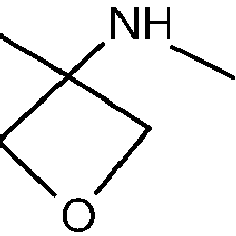
or - a heterocyclyl, wherein the heterocyclyl is a 5- or 6-membered ring comprising 1, 2, 3 or 4 heteroatoms selected from O, S and/or N, such as a triazole, a pyrazoline, an oxazole, an oxazoline, an oxazolidine, an imidazole, a pyrazole, an imidazoline, a tetrazole or an oxadiazole, said ring being optionally substituted by a (C1-C4)alkyl group, a halogen atom, or =O,
- n is 0, 1, 2 or 3,
- m and m' are independently 0, 1 or 2,
- Y2 represents
- a hydrogen atom,
- a halogen atom,
- a hydroxyl group,
- a morpholinyl group, optionally substituted by a (C1-C4)alkyl group or a trifluoromethyl group,
- a bridged morpholinyl group, optionally substituted by a halogen atom,
- a (C5-C11)bicycloalkyl group,
- a piperidinyl group, optionally interrupted by a SO2 group,
- a (C1-C4)alkenyl group,
- a -PO(ORa)(ORb) group,
or - a -CR1R2R3 group, wherein R1, R2 and R3 independently represent a hydrogen atom, a fluorine atom or a (C1-C4)alkyl group, being understood that no more than one of R1, R2 and R3 is a hydrogen atom, or R1 and R2 form together with the carbon atom bearing them a (C3-C8)cycloalkyl group, said (C3-C8)cycloalkyl group being optionally substituted by one or two (C1-C4)alkyl group, itself optionally substituted by a hydroxy group, halogen atom, trifluoromethyl group, cyano group, phosphonate group or (C1-C4)alkoxy group and said (C3-C8)cycloalkyl group being optionally interrupted on said R1 and/or R2 by one or two oxygen atom(s) or by a -SO2- group,
- R and R' independently represent
- a (C1-C4)alkyl group, optionally substituted by a hydroxyl group, and optionally interrupted by a -SO2- group or a -SO- group,
- a (C1-C4)alkenyl group,
- a (C3-C6)cycloalkyl group,
- a tetrahydrofuranyl group,
- a tetrahydropyranyl group,
- a trifluoromethyl group,
- a furanyl group,
- a halogen atom,
- a cyano group,
or - a (C1-C5)alkoxy group,
- Ra and Rb independently represent a hydrogen atom or a (C1-C4)alkyl group,
- In other words,


- According to a second aspect, the present invention relates to a compound of formula (I) as defined above or any of its pharmaceutically acceptable salts, and any of compounds (1) to (56) as defined herein after or any of its pharmaceutically acceptable salts, for use as a medicament.
- According to a third aspect, the present invention relates to compounds of formula (I) as defined above or any of its pharmaceutically acceptable salts, and any of compounds (1) to (56) as defined herein after or any of its pharmaceutically acceptable salts for use in the treatment and/or prevention of a RNA virus infection caused by a RNA virus belonging to group V of the Baltimore classification, and in particular a RSV viral infection or a virus-related condition.
- The above-mentioned compounds (I) are particularly suitable for treating or preventing a virus infection or related condition, in particular a RNA virus infection caused by a RNA virus belonging to group V of the Baltimore classification or related condition, and most preferably a RSV viral infection or a virus-related condition.
- According to a particular embodiment, the present invention relates to a compound of formula (I) as defined above, wherein


or any of its pharmaceutically acceptable salt. - In another embodiment, the present invention relates to a compound of formula (I) as defined above, wherein Q is a NH group or any of its pharmaceutically acceptable salt.
- In another embodiment, the present invention relates to a compound of formula (I) as defined above, wherein Rg and Rh represent a hydrogen atom or any of its pharmaceutically acceptable salt.
- In another embodiment, the present invention relates to a compound of formula (I) as defined above, wherein X2 represents
- a -CO-NH- group,
- a -NH-CO- group,
- a -O- group,
- a -CO- group,
or - a heterocyclyl, wherein the heterocyclyl is a 5- or 6-membered ring comprising 1, 2, 3 or 4 heteroatoms selected from O, S and/or N, such as a triazole, an imidazole, an imidazoline, an oxazoline, an oxazolidine, or a tetrazole, said ring being optionally substituted by a (C1-C4)alkyl group, a halogen atom or =O,
- In another embodiment, the present invention relates to a compound of formula (I) as defined above, wherein Y2 represents
- a hydrogen atom,
- a halogen atom,
- a morpholinyl group, optionally substituted by a (C1-C4)alkyl group or a trifluoromethyl group,
- a bridged morpholinyl group, optionally substituted by a halogen atom,
- a (C5-C11)bicycloalkyl group,
- a (C1-C4)alkenyl group,
- a -PO(ORa)(ORb) group,
or - a -CR1R2R3 group, wherein R1, R2 and R3 independently represent a hydrogen atom, a fluorine atom or a (C1-C4)alkyl group, being understood that no more than one of R1, R2 and R3 is a hydrogen atom, or R1 and R2 form together with the carbon atom bearing them a (C3-C8)cycloalkyl group, said (C3-C8)cycloalkyl group being optionally substituted by one or two (C1-C4)alkyl group, itself optionally substituted by a hydroxy group, halogen atom, trifluoromethyl group or cyano group, phosphonate group and said (C3-C8)cycloalkyl group being optionally interrupted on said R1 and/or R2 by one or two oxygen atom(s) or by a -SO2- group,
- with Ra and Rb being as defined above,
- In a more particular embodiment, the polycyclic (bicyclic) alkyl group may be chosen in the group consisting in spiro[2.2]pentyl, spiro[5.5]undecanyl, spiro[3.4]octanyl, spiro[4.5]decanyl, bicyclo[1.1.0]butyl, bicyclo[2.1.1]hexyl, bicyclo[3.2.0]heptyl, bicyclo[3.3.0]octyl, bicyclo[4.3.0]nonyl, bicyclo[2.2.1]heptyl, bicyclo[2.2.2]octyl, bicyclo[3.2.1]octyl, bicyclo[1.1.1]pentyl, oxabicyclo[1.1.1]pentyl, oxabicyclo[2.1.1]hexyl, oxabicyclo[2.2.1]heptyl, oxabicyclo[4.1.0]heptyl, oxabicyclo[3.2.1]octyl and cubyl, and more particularly consisting in bicyclo[1.1.1]pentyl, oxabicyclo[1.1.1]pentyl, bicyclo[2.1.1]hexyl, oxabicyclo[2.1.1]hexyl, and even more particularly is bicyclo[1.1.1]pentyl.
- In another embodiment, the present invention relates to a compound of formula (I) as defined above, wherein R and R' independently represent
- a (C1-C4)alkyl group, optionally substituted by a hydroxyl group, and optionally interrupted by a -SO2- group or a -SO- group,
- a (C3-C6)cycloalkyl group,
- a tetrahydrofuranyl group,
- a tetrahydropyranyl group,
- a trifluoromethyl group,
- a furanyl group,
- a chlorine or fluorine atom,
- a cyano group,
or - a (C1-C5)alkoxy group,
- Any combination of the above-defined embodiments for R, R', Z", Rg, Rh, Q, m, m',


- According to a preferred embodiment of the present invention, the compound of formula (I) is chosen from:
- (1) 4-({3-cyano-5-[(propan-2-yl)carbamoyl]phenyl}amino)-3-cyclopropyl-N-[imidazolidin-2-ylidene]benzamide,
- (2) 3-cyclopropyl-N-[1-(2,2-difluoroethyl)imidazolidin-2-ylidene]-4-{[3-(2-methylpropanamido)phenyl]amino}benzamide,
- (3) 4-[(2-chloro-3-{ [1-(trifluoromethyl)cyclopropyl]carbamoyl}phenyl)amino]-3-cyclopropyl-N-[imidazolidin-2-ylidene]benzamide,
- (4) 3-cyclopropyl-N-[imidazolidin-2-ylidene]-4-{[3-(morpholine-4-carbonyl)-2-(trifluoromethyl)phenyl]amino}benzamide,
- (5) 3-cyclopropyl-4-{[3-(cyclopropylcarbamoyl)-2-(trifluoromethyl)phenyl]amino}-N-[imidazolidin-2-ylidene]benzamide,
- (6) 3-cyclopropyl-5-fluoro-N-[imidazolidin-2-ylidene]-4-({3-[(1-methylcyclopropyl)carbamoyl]phenyl}amino)benzamide,
- (7) 4-{[2-chloro-5-fluoro-3-(morpholine-4-carbonyl)phenyl]amino}-3-cyclopropyl-N-[imidazolidin-2-ylidene]benzamide,
- (8) 3-cyclopropyl-5-fluoro-N-[imidazolidin-2-ylidene]-4-{[3-(morpholine-4-carbonyl)phenyl]amino}benzamide,
- (9) 4-({2-chloro-3-[(1S,4S)-2-oxa-5-azabicyclo[2.2.1]heptane-5-carbonyl]phenyl}amino)-3-cyclopropyl-N-[imidazolidin-2-ylidene]benzamide,
- (10) 4-({2-chloro-3-[2-(trifluoromethyl)morpholine-4-carbonyl]phenyl}amino)-3-cyclopropyl-N-[imidazolidin-2-ylidene]benzamide,
- (11) 4-({2-chloro-3-[3-(trifluoromethyl)morpholine-4-carbonyl]phenyl}amino)-3-cyclopropyl-N-[imidazolidin-2-ylidene]benzamide,
- (12) 3-chloro-2-[(2-cyclopropyl-4-{[imidazolidin-2-ylidene]carbamoyl}phenyl)amino]-N-(1-methylcyclopropyl)pyridine-4-carboxamide,
- (13) N-{3-[(2-cyclopropyl-4-{[imidazolidin-2-ylidene]carbamoyl}phenyl)amino]phenyl}-1,1-dioxo-1λ6-thiane-4-carboxamide,
- (14) 3-fluoro-N-[imidazolidin-2-ylidene]-4-({3-[(1-methylcyclopropyl)carbamoyl]phenyl}amino)-5-(oxolan-2-yl)benzamide,
- (15) 4-{[2-chloro-3-(morpholine-4-sulfonyl)phenyl]amino}-3-cyclopropyl-N-[imidazolidin-2-ylidene]benzamide,
- (16) 4-({3-[(1-cyanocyclopropyl)carbamoyl]phenyl}amino)-3-cyclopropyl-5-fluoro-N-[imidazolidin-2-ylidene]benzamide,
- (17) 3-cyclopropyl-5-fluoro-4-({3-fluoro-5-[(propan-2-yl)carbamoyl]phenyl}amino)-N-[imidazolidin-2-ylidene]benzamide,
- (18) 4-({2-chloro-3-[(1-methylcyclopropyl)carbamoyl]phenyl}amino)-3-cyclopropyl-5-fluoro-N-[imidazolidin-2-ylidene]benzamide,
- (19) 3-cyclopropyl-5-fluoro-4-({2-fluoro-3-[(propan-2-yl)carbamoyl}phenyl}amino)-N-[imidazolidin-2-ylidene]benzamide,
- (20) 5-cyclopropyl-2-fluoro-N-[imidazolidin-2-ylidene]-4-({3-[(propan-2-yl)carbamoyl]phenyl}amino)benzamide,
- (21) 3-tert-butyl-4-({2-chloro-3-[(1-methylcyclopropyl)carbamoyl]phenyl}amino)-N-[imidazolidin-2-ylidene]benzamide,
- (22) 5-cyclopropyl-N-[imidazolidin-2-ylidene]-6-({3-[(propan-2-yl)carbamoyl]phenyl}amino)pyridine-3-carboxamide,
- (23) 4-{[2-chloro-3-(morpholine-4-carbonyl)phenyl]amino}-3-fluoro-N-[imidazolidin-2-ylidene]-5-(oxolan-3-yl)benzamide,
- (24) 4-({2-chloro-3-[(1-methylcyclopropyl)carbamoyl]phenyl}amino)-3-fluoro-N-[imidazolidin-2-ylidene]-5-(oxolan-2-yl)benzamide,
- (25) 3-chloro-2-[(2-cyclopropyl-6-fluoro-4-{[imidazolidin-2-ylidene]carbamoyl}phenyl)amino]-N-(1-methylcyclopropyl)pyridine-4-carboxamide,
- (26) 4-({2-chloro-3-[(1-methylcyclopropyl)carbamoyl]phenyl}amino)-N-[imidazolidin-2-ylidene]-3-(oxolan-2-yl)benzamide,
- (27) 3-[(2-cyclopropyl-4-{[imidazolidin-2-ylidene]carbamoyl}phenyl)amino]-2,5-difluoro-N-(propan-2-yl)benzamide,
- (28) 3-[(2-cyclopropyl-4-{[imidazolidin-2-ylidene]carbamoyl}phenyl)amino]-2,5-difluoro-N-(1-methylcyclopropyl)benzamide,
- (29) N-[imidazolidin-2-ylidene]-4-({3-[(1-methylcyclopropyl)carbamoyl]phenyl}amino)-3-(oxolan-2-yl)benzamide,
- (30) 4-{[3-(1-cyanocyclopropaneamido)phenyl]amino}-3-cyclopropyl-N-[imidazolidin-2-ylidene]benzamide,
- (31) 3-cyclopropyl-5-fluoro-N-[imidazolidin-2-ylidene]-4-({3-[3-(trifluoromethyl)morpholine-4-carbonyl]phenyl}amino)benzamide,
- (32) 3-cyclopropyl-5-fluoro-4-({2-fluoro-3-[(1-methylcyclopropyl)carbamoyl]phenyl}amino)-N-[imidazolidin-2-ylidene]benzamide,
- (33) 3-cyclopropyl-5-fluoro-N-[imidazolidin-2-ylidene]-4-({3-[2-(trifluoromethyl)morpholine-4-carbonyl]phenyl}amino)benzamide,
- (34) 3-fluoro-N-[imidazolidin-2-ylidene]-4-{[3-(morpholine-4-carbonyl)phenyl]amino}-5-(oxolan-2-yl)benzamide,
- (35) 6-({2-chloro-3-[(1-methylcyclopropyl)carbamoyl]phenyl}amino)-5-cyclopropyl-N-[imidazolidin-2-ylidene]pyridine-3-carboxamide,
- (36) 2-[(2-cyclopropyl-6-fluoro-4-{[imidazolidin-2-ylidene]carbamoyl}phenyl)amino]-3-fluoro-N-(1-methylcyclopropyl)pyridine-4-carboxamide,
- (37) 2-cyclopropyl-3-[(2-cyclopropyl-4-{[imidazolidin-2-ylidene]carbamoyl}phenyl)amino]-5-fluoro-N-(propan-2-yl)benzamide,
- (38) 3-cyano-5-cyclopropyl-N-[imidazolidin-2-ylidene]-4-({3-[(1-methylcyclopropyl)carbamoyl]phenyl}amino)benzamide,
- (39) 3-chloro-4-[(2-cyclopropyl-4-{[imidazolidin-2-ylidene]carbamoyl}phenyl)amino]-N-(1-methylcyclopropyl)pyridine-2-carboxamide,
- (40) 4-chloro-5-[(2-cyclopropyl-4-{[imidazolidin-2-ylidene]carbamoyl}phenyl)amino]-N-(1-methylcyclopropyl)pyridine-3-carboxamide
- (41) N-(1-cyanocyclopropyl)-2-[(2-cyclopropyl-6-fluoro-4-{[imidazolidin-2-ylidene]carbamoyl}phenyl)amino]-3-fluoropyridine-4-carboxamide,
- (42) 4-{[3-chloro-4-(morpholine-4-carbonyl)pyridin-2-yl]amino}-3-cyclopropyl-5-fluoro-N-[imidazolidin-2-ylidene]benzamide,
- (43) 4-({3-chloro-4-[(1R,4R)-2-oxa-5-azabicyclo[2.2.1]heptane-5-carbonyl]pyridin-2-yl}amino)-3-cyclopropyl-5-fluoro-N-[imidazolidin-2-ylidene]benzamide,
- (44) 4-({3-chloro-4-[(1S,4S)-2-oxa-5-azabicyclo[2.2.1]heptane-5-carbonyl]pyridin-2-yl}amino)-3-cyclopropyl-5-fluoro-N-[imidazolidin-2-ylidene]benzamide,
- (45) 3-cyclopropyl-5-fluoro-4-{ [3-fluoro-4-(morpholine-4-carbonyl)pyridin-2-yl]amino}-N-[imidazolidin-2-ylidene]benzamide,
- (46) 3-chloro-4-[(2-cyclopropyl-6-fluoro-4-{[imidazolidin-2-ylidene]carbamoyl}phenyl)amino]-N-(1-methylcyclopropyl)pyridine-2-carboxamide,
- (47) 3-cyclopropyl-5-fluoro-4-{[2-fluoro-3-(morpholine-4-carbonyl)phenyl]amino}-N-[imidazolidin-2-ylidene]benzamide,
- (48) 3-cyclopropyl-5-fluoro-4-({3-fluoro-4-[(1S,4S)-2-oxa-5-azabicyclo[2.2.1]heptane-5-carbonyl]pyridin-2-yl}amino)-N-[imidazolidin-2-ylidene]benzamide,
- (49) 3-cyclopropyl-4-({3-[2-(3-methylbut-2-en-1-yl)-2H-1,2,3,4-tetrazol-5-yl]phenyl}amino)-N-[1-methylimidazolidin-2-ylidene]benzamide,
- (50) N-{3-[(2-cyclopropyl-4-{[imidazolidin-2-ylidene]carbamoyl}phenyl)amino]phenyl}-3-methyloxetane-3-carboxamide,
- (51) 3-cyclopropyl-4-[(3-{[1-(hydroxymethyl)cyclopropyl]carbamoyl}phenyl)amino]-N-[imidazolidin-2-ylidene]benzamide,
- (52) N-{3-[(2-cyclopropyl-6-fluoro-4-{[imidazolidin-2-ylidene]carbamoyl}phenyl)amino]phenyl}-3-methyloxetane-3-carboxamide,
- (53) N-{bicyclo[1.1.1]pentan-2-yl}-3-chloro-2-[(2-cyclopropyl-6-fluoro-4-{[imidazolidin-2-ylidene]carbamoyl}phenyl)amino]pyridine-4-carboxamide,
- (54) 3-cyclopropyl-4-{[3-(4,5-dihydro-1,3-oxazol-2-yl)phenyl]amino}-5-fluoro-N-[imidazolidin-2-ylidene]benzamide,
- (55) 3-chloro-2-[(2-cyclopropyl-6-fluoro-4-{[(2Z)-imidazolidin-2-ylidene]carbamoyl}phenyl)amino]-N-{3-fluorobicyclo[1.1.1]pentan-1-yl}pyridine-4-carboxamide,
- (56) 4-({2-chloro-3-[(1-methylcyclopropyl)carbamoyl]phenyl}amino)-3-cyclopropyl-N-[imidazolidin-2-ylidene]benzamide,
- The present invention therefore extends to compounds (1) to (56) and their pharmaceutically acceptable salts, such as hydrobromide, tartrate, citrate, trifluoroacetate, ascorbate, hydrochloride, tosylate, triflate, maleate, mesylate, formate, acetate and fumarate.
- According to another aspect, a subject-matter of the present invention relates to compounds (1) to (56) or any of its pharmaceutically acceptable salts, for use as a medicament.
- According to another aspect, a subject-matter of the present invention relates to a compound of formula (I) as defined above or any of its pharmaceutically acceptable salts, and any of compounds (1) to (56) or any of its pharmaceutically acceptable salts, for use as an agent for preventing, inhibiting or treating a RNA virus infection caused by a RNA virus belonging to group V of the Baltimore classification, and in particular a RSV viral infection or a virus-related condition.
- The compounds of the invention may exist in the form of free bases or of addition salts with pharmaceutically acceptable acids.
- « Pharmaceutically acceptable salt thereof » refers to salts which are formed from acid addition salts formed with inorganic acids (e.g. hydrochloric acid, hydrobromic acid, sulfuric acid, phosphoric acid, nitric acid, and the like), as well as salts formed with organic acids such as acetic acid, oxalic acid, tartaric acid, succinic acid, malic acid, fumaric acid, maleic acid, ascorbic acid, benzoic acid, tannic acid, palmoic acid, alginic acid, polyglutamic acid, naphthalene sulfonic acid, naphthalene disulfonic acid, and polygalacturonic acid.
- Suitable physiologically acceptable acid addition salts of compounds of formula (I) include hydrobromide, tartrate, citrate, trifluoroacetate, ascorbate, hydrochloride, tosylate, triflate, maleate, mesylate, formate, acetate and fumarate.
- The compounds of formula (I) and any of compounds (1) to (56) or any of their pharmaceutically acceptable salts may form solvates or hydrates and the invention includes all such solvates and hydrates.
- The compounds of formula (I) may be present as well under tautomer forms and are part of the invention.The terms "hydrates" and "solvates" simply mean that the compounds (I) according to the invention can be in the form of a hydrate or solvate, i.e. combined or associated with one or more water or solvent molecules. This is only a chemical characteristic of such compounds, which can be applied for all organic compounds of this type.
- In the context of the present invention, the term:
- "halogen" is understood to mean chlorine, fluorine, bromine, or iodine, and in particular denotes chlorine, fluorine or bromine,
- "(C1-Cx)alkyl", as used herein, respectively refers to a C1-Cx normal, secondary or tertiary saturated hydrocarbon, for example (C1-C6)alkyl. Examples are, but are not limited to, methyl, ethyl, 1-propyl, 2-propyl, butyl, pentyl,
- an "alkenylene" means a divalent (C1-Cx)alkyl group comprising a double bond, and more particularly a ethenylene group, also known as vinylene or 1,2-ethenediyl,
- "(C3-C6)cycloalkyl", as used herein, refers to a cyclic saturated hydrocarbon. Examples are, but are not limited to, cyclopropyl, cyclobutyl, cyclopentyl, cyclohexyl,
- "(C1-Cx)alkoxy", as used herein, refers to a O-(C1-Cx)alkyl moiety, wherein alkyl is as defined above, for example (C1-C6)alkoxy. Examples are, but are not limited to, methoxy, ethoxy, 1-propoxy, 2-propoxy, butoxy, pentoxy,
- a "5- or 6-membered heterocyclic ring comprising 1, 2, 3 or 4 heteroatoms" as used herein, means an aromatic or non aromatic ring comprising 5 or 6 bonds and 1, 2, 3 or 4 heteroatoms selected from oxygen, sulfur and nitrogen atoms. In one particular embodiment, it is a "5-membered heterocyclic ring comprising 1, 2, 3 or 4 heteroatoms". In one embodiment, it comprises at least 1 heteroatom, and preferably at least one nitrogen atom. In another embodiment, it comprises at least 2 heteroatoms, with for example at least one nitrogen atom. According to a further embodiment, it comprises 2, 3 or 4 nitrogen atoms. According to an even further embodiment, it comprises one nitrogen atom and one oxygen atom or two nitrogen atoms and one oxygen atom. Examples are, but not limited to, tetrazoles, triazoles, such as 1,2,3- or 1,2,4- triazoles, and diazoles, such as imidazole, pyrazole, 2- or 3-pyrazoline, or imidazoline, oxadiazoles, such as 1,2,4- oxadiazole or 1,2,3-oxadiazoles, oxazoles, oxazolines, oxazolidines, oxazolidinones. According to a preferred embodiment, such 5-membered heterocyclic ring comprising 2, 3 or 4 heteroatoms is a triazole, a tetrazole, an imidazoline or an oxazoline,
- a "bicyclic alkyl" or "(C5-C11)bicyclic alkyl" compound means a bicyclic saturated hydrocarbon monovalent group that may be chosen among spirocyclic alkyl, fused bicyclic alkyl and bridged bicyclic alkyl. Such bicyclic alkyl generally comprises 5 to 11 carbon atoms. Examples are, but are not limited to, spiro[2.2]pentyl, spiro[5.5]undecanyl, spiro[3.4]octanyl, spiro[4.5]decanyl, bicyclo[1.1.0]butyl, bicyclo[2.1.1]hexyl, bicyclo[3.2.0]heptyl, bicyclo[3.3.0]octyl, bicyclo[4.3.0]nonyl, bicyclo[2.2.1]heptyl, bicyclo[2.2.2]octyl, bicyclo[3.2.1]octyl, bicyclo[1.1.1]pentyl, oxabicyclo[1.1.1]pentyl, oxabicyclo[2.1.1]hexyl, oxabicyclo[2.2.1]heptyl, oxabicyclo[4.1.0]heptyl, oxabicyclo[3.2.1]octyl and cubyl, and
- a "bridged morpholinyl group" means a bicyclic compound where one of the cycles is a morpholinyl group, the two rings share three or more atoms and the bridge contains at least one atom, for example 1, 2 or three atoms. Examples are, but are not limited to, as depicted herein after:

- The compounds of formula (I) can comprise one or more asymmetric carbon atoms. They can thus exist in the form of enantiomers or of diastereoisomers. These enantiomers, diastereoisomers and their mixtures, including the racemic mixtures, are encompassed within the scope of the present invention.
- The compounds of the present invention can be prepared by conventional methods of organic synthesis practiced by those skilled in the art. The general reaction sequences outlined below represent a general method useful for preparing the compounds of the present invention and are not meant to be limiting in scope or utility.
- The compounds of general formula (I) when Q is NH can be prepared according to scheme 1 below.

- The synthesis is based on a coupling reaction of a halogeno aromatic compound of formula (III) with an aniline derivative (II), wherein R, R', Rc, Rg, Rh, m, m',


- In the case where Rg = Rh = H and Z" is -CO-, the procedure may consist firstly in reacting compound (V) with guanidine and secondly in a cyclisation step to afford final cyclised derivative (I) where Rg = Rh = H and Z" is -CO-.
- According to one embodiment, procedure (A1) may advantageously be used when the group


- According to procedure (A1), the compound of formula (III) may be placed in a protic solvent such as tert-butanol. The compound of formula (II) may then be added, for example in a molar ratio ranging from 1 to 1.5 with respect to the compound of formula (III) in presence of an inorganic base, such as Cs2CO3 or K2CO3, for example in a molar ratio ranging from 1 to 5 still with respect to the compound of formula (III), in the presence of a diphosphine, such as Xantphos (4,5-Bis(diphenylphosphino)-9,9-dimethylxanthene) or X-Phos (2-Dicyclohexylphosphino-2',4',6'-triisopropylbiphenyl) or rac-BINAP in particular in an amount ranging from 2 mol% to 15 mol% relative to the total amount of compound of formula (III), and in the presence of an organometallic catalyst, such as Pd(OAc)2 or Pd2dba3, or BrettPhos Pd G3 in an amount ranging from 2 mol% to 25 mol% relative to the total amount of compound of formula (III). The reaction mixture can then be heated at a temperature ranging from 80 to 130°C, for example at 90°C, and stirred for a time ranging from 15 to 25 hours, for example during 20 hours, under inert gas and for example argon. The reaction mixture can be concentrated under reduced pressure and the residue can be diluted with an organic solvent such as ethyl acetate. The organic phase can be washed with water, decanted, dried over magnesium sulphate, filtered and then concentrated under reduced pressure to give a compound of formula (IV).
- According to one embodiment, procedure (A2) may advantageously be used when the group

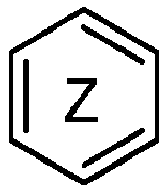
- According to procedure (A2), the compound of formula (II) may be placed in a polar aprotic solvent such as dimethylsulfoxide. The compound of formula (III) may then be added, for example in a molar ratio ranging from 1 to 1.5 with respect to the compound of formula (II) in presence of an inorganic base, such as Cs2CO3 or K2CO3, for example in a molar ratio ranging from 1 to 5 still with respect to the compound of formula (II), in the presence of a ligand, such as L-proline in particular in an amount ranging from 2 mol% to 25 mol% relative to the total amount of compound of formula (II), and in the presence of an organometallic catalyst, such as CuI, in an amount ranging from 2 mol% to 25 mol% relative to the total amount of compound of formula (II). The reaction mixture can then be heated at a temperature ranging from 80 to 130°C, for example at 90°C, and stirred for a time ranging from 15 to 25 hours, for example during 20 hours, under inert gas and for example argon. The reaction mixture can be diluted with an organic solvent such as ethyl acetate. The organic phase can be washed with water, decanted, dried over magnesium sulphate, filtered and then concentrated under reduced pressure to give a compound of formula (IV).
- The starting compounds of formula (II), (III) are available or can be prepared according to methods known to the person skilled in the art.
- Accordingly, the present invention further relates to the synthesis process for manufacturing new compounds of formula (I) as defined above, when Q is NH, comprising at least
- (i) a step of coupling a compound of formula (II)


- (ii) a step of reacting a compound of formula (V) with a compound of formula

- The compounds of general formula (I) when Q is O can be prepared according to scheme 1' below.
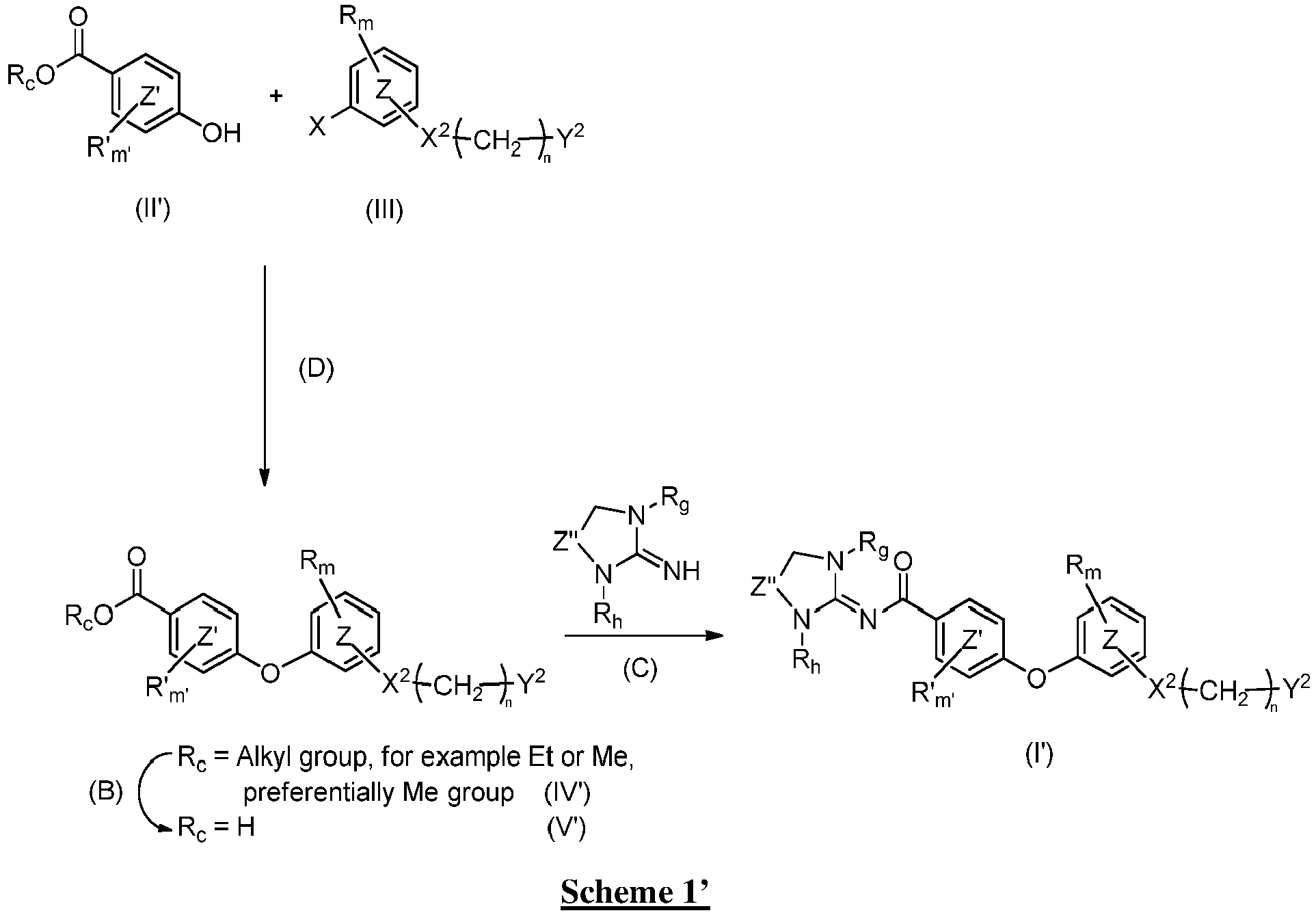
- The synthesis is based on a coupling reaction starting from a halogeno aromatic compound of formula (III) with a phenol derivative of formula (II'), wherein R, R', Rc, Rg, Rh, Z", m, m',


- According to procedure (D), the fluoroaryl derivative (III) may be placed in a polar solvent such as N,N-dimethylformamide. Phenol derivative (II') may then be added in a molar ratio ranging from 1 to 2 with respect to the fluoroaryl derivative (III) in presence of an inorganic base, such as Cs2CO3 or K2CO3, in particular in a molar ratio ranging from 1 to 5. The reaction mixture can then be heated at a temperature ranging from 50 to 150°C, for example at 70°C and stirred for a time ranging from 5 to 90 hours, for example during 16 hours, under inert gas and for example argon. The reaction mixture can be concentrated under reduced pressure and the residue can be partitioned between an organic solvent, such as dichloromethane, and water. The organic phase can be washed with water, decanted, dried over magnesium sulphate, filtered, concentrated under reduced pressure and purified to give a compound of formula (IV').
- Accordingly, the present invention further relates to the synthesis process for manufacturing new compounds of formula (I) as defined above, wherein Q is O, comprising
- (i) at least a step of coupling a compound of formula (II')


- (ii) a step of reacting a compound of formula (V') with a compound or formula

- The starting compounds of formula (II), (II'), (III) are available or can be prepared according to methods known to the person skilled in the art.
- More particularly, compounds of formula (II), when used to prepare compounds of formula (I), can be prepared according to scheme 2 below.
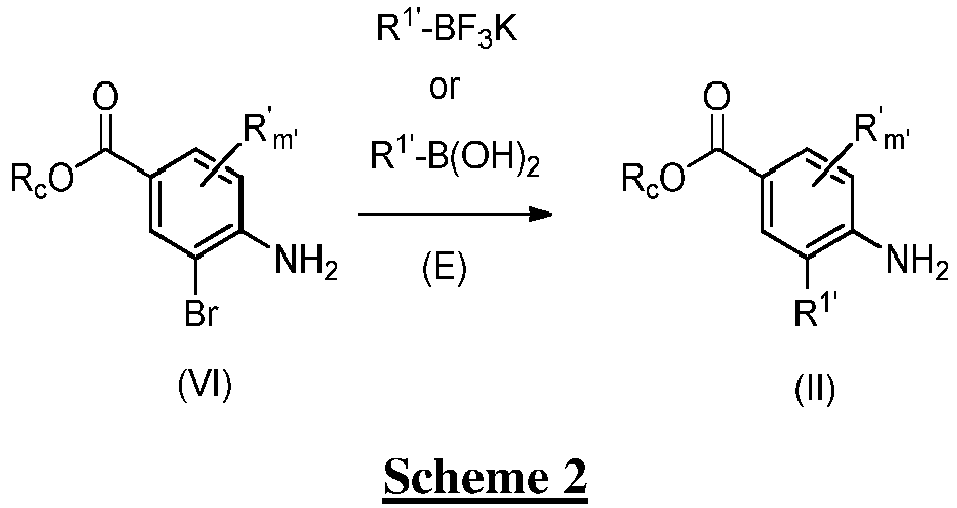
- According to procedure (E), the compound of formula (VI) and an organometallic catalyst such as Pd(dppf)Cl2.CH2Cl2 or Pd(OAc)2 in an amount ranging from 2 mol% to 20 mol% relative to the amount of the compound of formula (VI) may be placed in a solvent such as 1,4-dioxane or a solvent mixture such as toluene and water. A boronic acid R1'-B(OH)2 or an organotrifluoroborate derivative R1'-BF3K may then be added in a molar ratio ranging from 1 to 5 with respect to the compound of formula (VI), in presence of an inorganic base, such as K2CO3 or K3PO4, in particular in a molar ratio ranging from 2 to 5, and in presence of a ligand, such as RuPhos, in particular in a molar ratio ranging from 2 to 5. The reaction mixture can then be heated at a temperature ranging from 50 to 150°C, for example at 110°C, and stirred for a time ranging from 2 to 70 hours, for example during 3 hours, under inert gas and for example argon. The reaction mixture can be concentrated under reduced pressure and purified to give a compound of formula (II).
- More particularly, compounds of formula (II'), when used to prepare compounds of formula (I), can be prepared with a procedure similar to procedure (E) described above.
- The chemical structures and spectroscopic data of some compounds of formula (I) of the invention are illustrated respectively in the following Table I and Table II.
Table I 
No Structure 1 
2 
3 
4 
5 
6 
7 
8 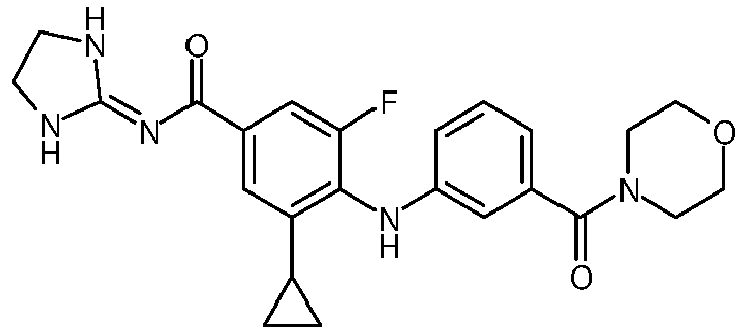
9 
10 
11 
12 
13 
14 
15 
16 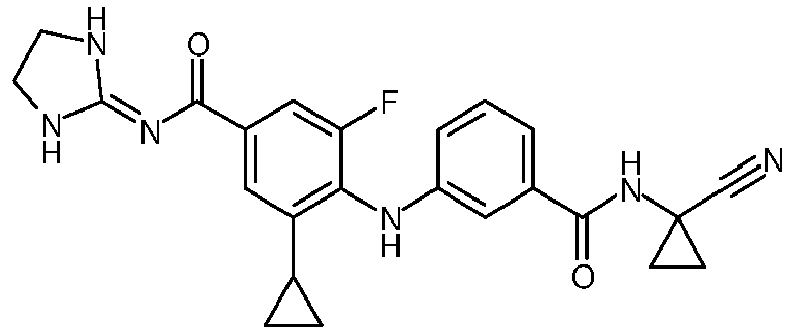
17 
18 
19 
20 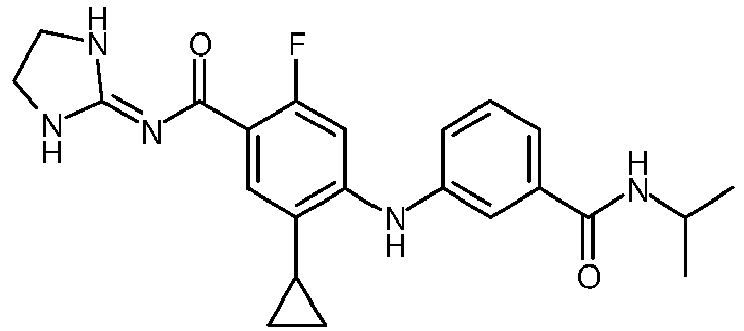
21 
22 
23 
24 
25 
26 
27 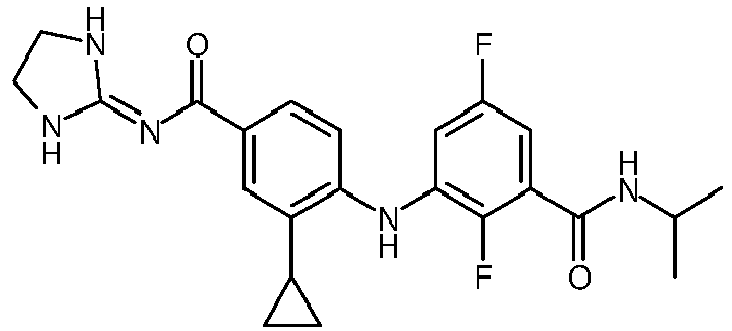
28 
29 
30 
31 
32 
33 
34 
35 
36 
37 
38 
39 
40 
41 
42 
43 
44 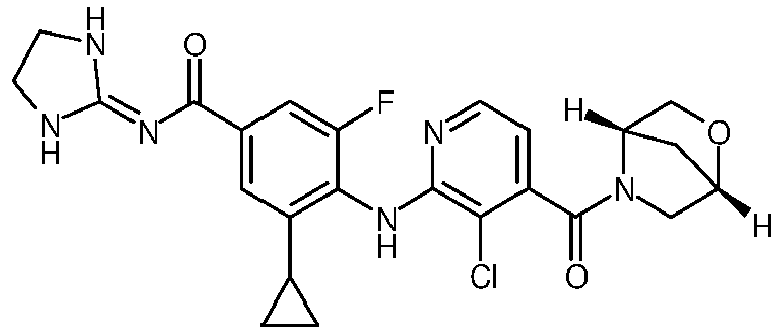
45 
46 
47 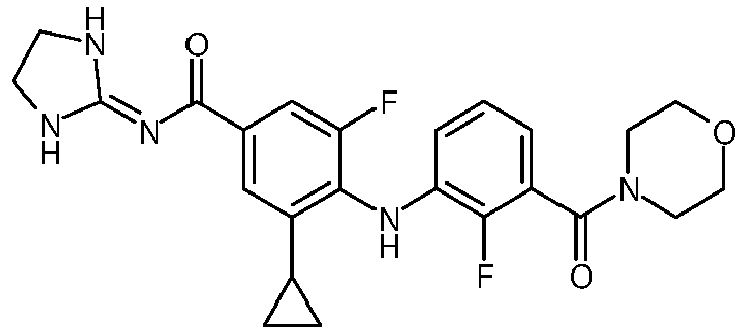
48 
49 
50 
51 
52 
53 
54 
55 
56 
Table II Ex Characterizations 1 1H NMR (400 MHz, d6 -DMSO) δ 8.31 (d, J = 11.5 Hz, 2H), 8.11 (s, 2H), 7.85 (dd, J = 8.3, 2.0 Hz, 1H), 7.73 - 7.69 (m, 2H), 7.64 (t, J = 1.4 Hz, 1H), 7.33 (dd, J = 2.4, 1.4 Hz, 1H), 7.19 (d, J = 8.3 Hz, 1H), 4.06 (dq, J = 13.5, 6.8 Hz, 1H), 3.52 (s, 4H), 1.97 - 1.86 (m, 1H), 1.15 (d, J = 6.6 Hz, 6H), 0.97 - 0.87 (m, 2H), 0.64 - 0.54 (m, 2H). [M+H]+ = 431.2 2 1H NMR (400 MHz, d6 -DMSO) δ 9.69 (s, 1H), 8.79 (s, 1H), 7.86 (dd,J= 8.4, 1.9 Hz, 1H), 7.73 (d,J= 1.9 Hz, 1H), 7.65 (s, 1H), 7.46 (s, 1H), 7.19 - 7.08 (m, 3H), 6.77 (dt,J= 7.5, 1.8 Hz, 1H), 6.28 (s, 1H), 3.86 (td,J= 15.9, 3.7 Hz, 2H), 3.66 - 3.49 (m,J= 5.1 Hz, 4H), 2.57 (p,J= 6.8 Hz, 1H), 2.02 - 1.91 (m, 1H), 1.08 (d,J= 6.8 Hz, 6H), 1.00 - 0.90 (m, 2H), 0.62 - 0.53 (m, 2H). [M+H]+ = 470.3 3 1H NMR (400 MHz, d6 -DMSO) δ 9.19 (s, 1H), 8.10 (s, 2H), 7.84 (dd, J = 8.4, 1.9 Hz, 1H), 7.78 (d, J = 1.9 Hz, 1H), 7.36 (s, 1H), 7.24 (t, J = 7.8 Hz, 1H), 7.08 (dd, J = 8.2, 1.5 Hz, 1H), 7.04 (d, J = 8.3 Hz, 1H), 6.88 (dd, J = 7.4, 1.5 Hz, 1H), 3.51 (s, 4H), 1.91 - 1.81 (m, 1H), 1.35 - 1.28 (m, 2H), 1.14 (s, 2H), 0.97 - 0.88 (m, 2H), 0.64 - 0.54 (m, 2H). [M+H]+ = 506.2 4 1H NMR (400 MHz, d6 -DMSO) δ 8.12 (s, 2H), 7.89 - 7.79 (m, 2H), 7.55 (t,J= 7.9 Hz, 1H), 7.25 (s, 1H), 7.18 (d,J= 8.3 Hz, 1H), 7.01 (d,J= 8.3 Hz, 1H), 6.93 (d,J= 7.4 Hz, 1H), 3.73 - 3.45 (m, 10H), 3.21 (ddd,J= 13.1, 6.1, 3.2 Hz, 1H), 3.11 (ddd,J= 13.3, 6.5, 3.3 Hz, 1H), 1.84 (ddd,J= 13.7, 8.3, 5.4 Hz, 1H), 0.95 - 0.87 (m, 2H), 0.61 - 0.52 (m, 2H). [M+H]+ = 502.4 5 1H NMR (400 MHz, d6 -DMSO) δ 8.49 (d,J= 4.1 Hz, 1H), 8.13 (s, 2H), 7.81 (s, 2H), 7.52 (t,J= 7.9 Hz, 1H), 7.21 (d,J= 8.0 Hz, 2H), 6.94 (t,J= 6.8 Hz, 2H), 3.53 (s, 4H), 2.76 (tq,J= 7.5, 3.8 Hz, 1H), 1.83 (ddd,J= 13.6, 8.5, 5.5 Hz, 1H), 0.97 - 0.87 (m, 2H), 0.68 (td,J= 7.0, 4.8 Hz, 2H), 0.59 - 0.53 (m, 2H), 0.49 (dd,J= 3.9, 2.3 Hz, 2H). [M+H]+ = 472.4 6 1H NMR (400 MHz, d6 -DMSO) δ 8.47 (s, 1H), 8.15 (s, 2H), 7.86 (s, 1H), 7.62 (dd, J = 11.3, 1.8 Hz, 1H), 7.49 (d, J = 1.7 Hz, 1H), 7.20 - 7.08 (m, 3H), 6.73 (d, J = 7.7 Hz, 1H), 3.54 (s, 4H), 2.04 - 1.90 (m, 1H), 1.33 (s, 3H), 0.96 - 0.86 (m, 2H), 0.73 - 0.66 (m, 2H), 0.66 - 0.53 (m, 4H). [M+H]+ = 436.2 7 1H NMR (400 MHz, d6 -DMSO) δ 8.13 (s, 2H), 7.88 (dd, J = 8.3, 2.0 Hz, 1H), 7.76 (d, J = 1.9 Hz, 1H), 7.69 (s, 1H), 7.16 (d, J = 8.3 Hz, 1H), 6.72 (dd, J = 7.9, 2.9 Hz, 1H), 6.57 (dd, J = 11.0, 2.9 Hz, 1H), 3.73 - 3.47 (m, 10H), 3.24 - 3.17 (m, 2H), 1.94 - 1.82 (m, 1H), 0.98 - 0.86 (m, 2H), 0.65 - 0.54 (m, 2H). [M+H]+ = 486.2 8 1H NMR (400 MHz, d6 -DMSO) δ 8.15 (s, 2 H), 7.94 (s, 1 H), 7.62 (dd, J=11.4, 1.5 Hz, 1 H), 7.47 (s, 1 H), 7.20 (t, J=7.9 Hz, 1 H), 6.82 - 6.65 (m, 2 H), 6.59 (s, 1 H), 3.80 - 3.34 (m, 12H), 2.05 - 1.92 (m, 1H), 0.98 - 0.89 (m, 2H), 0.65 - 0.57 (m, 2H). [M+H]+ = 452.2 9 1H NMR (400 MHz, d6 -DMSO) δ 8.11 (s, 2H), 7.85 (dt, J = 8.3, 1.8 Hz, 1H), 7.79 (d, J = 1.9 Hz, 1H), 7.40 (d, J = 4.4 Hz, 1H), 7.34 - 7.25 (m, 1H), 7.15 - 7.07 (m, 1H), 7.03 (dd, J = 13.0, 8.3 Hz, 1H), 6.98 - 6.86 (m, 1H), 4.96 - 3.99 (m, 2H), 3.88 - 3.58 (m, 2H), 3.56 - 3.33 (m, 5H), 3.19 - 2.99 (m, 1H), 1.95 - 1.73 (m, 3H), 0.99 - 0.89 (m, 2H), 0.64 - 0.55 (m, 2H). [M+H]+ = 480.2 10 1H NMR (400 MHz, d6 -DMSO) δ 8.15 (s, 2H), 7.84 (d, J = 8.2 Hz, 1H), 7.78 (s, 1H), 7.45 (s, 1H), 7.31 (s, 1H), 7.11 (s, 1H), 7.04 (d, J = 7.3 Hz, 1H), 6.92 (d, J = 30.9 Hz, 1H), 4.54 - 4.18 (m, 2H), 4.11 - 3.88 (m, 1H), 3.66 (dd, J = 36.7, 10.9 Hz, 1H), 3.54 (s, 4H), 3.29 (s, 2H), 3.19 - 3.02 (m, 1H), 1.88 (d, J = 7.7 Hz, 1H), 0.94 (d, J = 8.6 Hz, 2H), 0.60 (s, 2H). [M+H]+ = 536.0 11 1H NMR (400 MHz, d6 -DMSO) δ 8.20 (s, 2H), 7.82 (d, J = 8.4 Hz, 1H), 7.76 (s, 1H), 7.56 (s, 1H), 7.36 (s, 1H), 7.17 (s, 1H), 7.02 (s, 2H), 5.20 (s, 1H), 4.20 (dd, J = 13.2, 7.5 Hz, 1H), 4.09 - 3.86 (m, 1H), 3.81 - 3.45 (m, 7H), 3.26 - 3.14 (m, 1H), 1.89 (s, 1H), 0.96 (d, J = 8.1 Hz, 2H), 0.62 (s, 2H). [M+H]+ = 536.0 12 1H NMR (400 MHz, d6 -DMSO) δ 8.79 (s, 1H), 8.30 (s, 1H), 8.15 (dd, J = 9.0, 4.2 Hz, 4H), 7.92 (dd, J = 8.4, 1.9 Hz, 1H), 7.90 - 7.87 (m, 1H), 6.80 (d, J = 4.9 Hz, 1H), 3.53 (s, 4H), 1.91 (ddd, J = 13.6, 8.4, 5.4 Hz, 1H), 1.40 (s, 3H), 1.05 - 1.00 (m, 2H), 0.77 - 0.73 (m, 2H), 0.64 - 0.59 (m, 4H). [M+H]+ = 453.2 13 1H NMR (400 MHz, d6 -DMSO) δ 9.91 (s, 1H), 8.08 (s, 2H), 7.79 (dd, J = 8.4, 1.9 Hz, 1H), 7.71 (d, J = 1.8 Hz, 1H), 7.64 (s, 1H), 7.42 (s, 1H), 7.18 - 7.11 (m, 2H), 7.08 (d, J = 8.5 Hz, 1H), 6.76 (d, J = 8.2 Hz, 1H), 3.51 (s, 4H), 3.17 (d, J = 13.7 Hz, 4H), 2.70 - 2.61 (m, 1H), 2.22 - 2.02 (m, 4H), 1.99 - 1.89 (m, 1H), 0.97 - 0.90 (m, 2H), 0.61 - 0.52 (m, 2H). [M+H]+ = 496.1 14 1H NMR (400 MHz, d6 -DMSO) δ 8.49 (s, 1H), 8.20 (s, 2H), 8.05 (s, 1H), 7.71 (dd,J= 11.6, 1.7 Hz, 1H), 7.63 (s, 1H), 7.21 - 7.10 (m, 2H), 7.08 (s, 1H), 6.68 (d,J= 6.6 Hz, 1H), 4.99 (t,J= 7.3 Hz, 1H), 4.01 (q,J= 6.7 Hz, 1H), 3.77 (q,J= 7.2 Hz, 1H), 3.55 (s, 4H), 2.24 (dq,J= 13.0, 6.7 Hz, 1H), 1.87 (p,J= 6.9 Hz, 2H), 1.45 (dq,J= 12.2, 8.2 Hz, 1H), 1.33 (s, 3H), 0.70 (s, 2H), 0.61 - 0.53 (m, 2H). [M+H]+ = 466.1 15 1H NMR (400 MHz, d6-DMSO) δ 8.13 (s, 2H), 7.87 (dd, J = 8.3, 1.9 Hz, 1H), 7.79 (d, J = 1.8 Hz, 1H), 7.65 (s, 1H), 7.46 (dd, J = 7.8, 1.5 Hz, 1H), 7.39 (t, J = 8.0 Hz, 1H), 7.20 (dd, J = 8.2, 1.5 Hz, 1H), 7.08 (d, J = 8.3 Hz, 1H), 3.68 - 3.58 (m, 4H), 3.53 (s, 4H), 3.25 - 3.15 (m, 4H), 1.87 (t, J = 5.3 Hz, 1H), 0.95 - 0.86 (m, 2H), 0.64 - 0.55 (m, 2H). [M+H]+ = 504.1 16 1H NMR (400 MHz, d6 -DMSO) δ 9.17 (s, 1H), 8.15 (s, 2H), 7.95 (s, 1H), 7.63 (dd, J = 11.3, 1.8 Hz, 1H), 7.52 - 7.45 (m, 1H), 7.22 (t, J = 7.9 Hz, 1H), 7.18 - 7.12 (m, 2H), 6.80 (d, J = 8.0 Hz, 1H), 3.54 (s, 4H), 2.03 - 1.91 (m, 1H), 1.56 - 1.48 (m, 2H), 1.28 - 1.20 (m, 2H), 0.96 - 0.86 (m, 2H), 0.66 - 0.57 (m, 2H). [M+H]+ = 447.3 17 1H NMR (400 MHz, d6 -DMSO) δ 8.21 - 8.10 (m, 4H), 7.64 (dd, J = 11.2, 1.8 Hz, 1H), 7.49 (d, J = 1.7 Hz, 1H), 7.03 - 6.98 (m, 1H), 6.98 - 6.92 (m, 1H), 6.42 (d, J = 11.1 Hz, 1H), 4.10 - 3.98 (m, 1H), 3.54 (s, 4H), 2.03 - 1.91 (m, 1H), 1.13 (d, J = 6.6 Hz, 6H), 0.98 - 0.89 (m, 2H), 0.67 - 0.58 (m, 2H). [M+H]+ = 442.2 18 1H NMR (400 MHz, d6 -DMSO) δ 8.57 (s, 1H), 8.17 (s, 2H), 7.65 (dd, J = 10.8, 1.8 Hz, 1H), 7.52 (d, J = 1.8 Hz, 1H), 7.27 (s, 1H), 7.07 (t, J = 7.8 Hz, 1H), 6.66 (dd, J = 7.4, 1.5 Hz, 1H), 6.31 (dt, J = 8.1, 1.7 Hz, 1H), 3.55 (s, 4H), 1.99 (ddd, J = 13.7, 8.5, 5.2 Hz, 1H), 1.40 (s, 3H), 0.97 - 0.88 (m, 2H), 0.79 - 0.70 (m, 2H), 0.67 - 0.54 (m, 4H). [M+H]+ = 470.2 19 1H NMR (400 MHz, d6 -DMSO) δ 8.16 (d, J = 6.5 Hz, 3H), 7.63 (dd, J = 11.2, 1.7 Hz, 1H), 7.57 (d, J = 1.8 Hz, 1H), 7.50 (t, J = 1.2 Hz, 1H), 6.94 (t, J = 7.8 Hz, 1H), 6.84 - 6.75 (m, 1H), 6.49 - 6.41 (m, 1H), 4.11 - 4.00 (m, 1H), 3.54 (s, 4H), 2.09 - 1.97 (m, 1H), 1.15 (d, J = 6.5 Hz, 6H), 0.95 - 0.87 (m, 2H), 0.65 - 0.57 (m, 2H). [M+H]+ = 442.2 20 1H NMR (400 MHz, d6 -DMSO) δ 8.17 (d, J = 7.8 Hz, 1H), 8.07 (s, 2H), 7.88 (s, 1H), 7.62 (d, J = 2.1 Hz, 1H), 7.57 (d, J = 8.6 Hz, 1H), 7.46 - 7.40 (m, 1H), 7.36 (t, J = 7.7 Hz, 1H), 7.31 - 7.25 (m, 1H), 6.69 (d, J = 13.4 Hz, 1H), 4.15 - 4.02 (m, 1H), 3.50 (s, 4H), 1.87 (ddd, J = 13.6, 8.4, 5.3 Hz, 1H), 1.15 (d, J = 6.6 Hz, 6H), 0.97 - 0.89 (m, 2H), 0.57 - 0.49 (m, 2H). [M+H]+ = 424.3 21 1H NMR (400 MHz, d6 -DMSO) δ 8.57 (s, 1H), 8.23 (d, J = 2.0 Hz, 1H), 8.13 (s, 2H), 7.92 (dd, J = 8.2, 1.9 Hz, 1H), 7.13 - 7.04 (m, 2H), 6.81 (s, 1H), 6.67 (dd, J = 7.5, 1.5 Hz, 1H), 6.56 (dd, J = 8.2, 1.5 Hz, 1H), 3.53 (s, 4H), 1.38 (d, J = 5.6 Hz, 12H), 0.76 - 0.70 (m, 2H), 0.61 - 0.55 (m, 2H). [M+H]+ = 468.3 22 1H NMR (400 MHz, d6 -DMSO) δ 8.65 (d, J = 2.1 Hz, 1H), 8.39 (s, 1H), 8.13 (d, J = 7.8 Hz, 1H), 8.10 - 8.05 (m, 3H), 8.01 - 7.96 (m, 1H), 7.87 (dd, J = 2.1, 0.8 Hz, 1H), 7.45 - 7.40 (m, 1H), 7.35 (t, J = 7.8 Hz, 1H), 4.10 (dq, J = 13.5, 6.6 Hz, 1H), 3.51 (s, 4H), 1.99 (td, J = 8.4, 4.3 Hz, 1H), 1.17 (d, J = 6.6 Hz, 6H), 1.08 - 0.99 (m, 2H), 0.63 - 0.55 (m, 2H). [M+H]+ = 407.3 23 1H NMR (400 MHz, d6 -DMSO) δ 8.22 (s, 2H), 7.96 (s, 1H), 7.72 (dd, J = 10.9, 1.7 Hz, 1H), 7.44 (s, 1H), 7.12 (t, J = 7.8 Hz, 1H), 6.71 - 6.63 (m, 1H), 6.26 (d, J = 8.3 Hz, 1H), 3.92 (dd, J = 12.4, 7.3 Hz, 2H), 3.77 - 3.68 (m, 2H), 3.67 (s, 4H), 3.63 - 3.57 (m, 3H), 3.56 (s, 4H), 3.19 (t, J = 4.7 Hz, 2H), 2.23 (dd, J = 8.5, 3.7 Hz, 1H), 1.93 - 1.79 (m, 1H). [M+H]+ = 516.0 24 1H NMR (400 MHz, d6 -DMSO) δ 8.59 (s, 1H), 8.20 (s, 2H), 8.02 (s, 1H), 7.76 (dd,J= 11.4, 1.7 Hz, 1H), 7.42 (s, 1H), 7.09 (t,J= 7.8 Hz, 1H), 6.69 (dd,J= 7.4, 1.4 Hz, 1H), 6.36 (dd,J= 8.2, 2.2 Hz, 1H), 4.94 (t,J= 7.5 Hz, 1H), 4.04 (q,J= 7.5 Hz, 1H), 3.78 (q,J= 7.6 Hz, 1H), 3.55 (s, 4H), 2.19 (td,J= 12.3, 7.3 Hz, 1H), 1.97 - 1.83 (m, 2H), 1.55 (dq,J= 12.2, 8.2 Hz, 1H), 1.40 (s, 3H), 0.74 (d,J= 11.2 Hz, 2H), 0.63 - 0.55 (m, 2H). [M+H]+ = 500.0 25 1H NMR (400 MHz, d6 -DMSO) δ 8.76 (s, 1H), 8.26 (s, 1H), 8.17 (s, 2H), 7.89 (d, J= 4.9 Hz, 1H), 7.59 (dd, J= 10.6, 1.7 Hz, 1H), 7.49 (d, J= 1.2 Hz, 1H), 6.62 (d, J= 4.9 Hz, 1H), 3.54 (s, 4H), 2.00 (ddd, J= 13.8, 8.4, 5.3 Hz, 1H), 1.40 (s, 3H), 0.94 - 0.84 (m, 2H), 0.78 - 0.70 (m, 2H), 0.64 - 0.54 (m, 4H). 13C NMR (151 MHz, d6 -DMSO) δ 174.1, 166.1, 159.3, 157.7, 153.6, 146.3, 145.4, 143.2, 138.2, 129.6 (d, J = 13.2 Hz), 120.6, 113.0, 112.8, 111.2, 41.8, 29.2, 22.8, 14.0, 11.7, 8.9 [M+H]+ = 471.1 26 1H NMR (400 MHz, d6 -DMSO) δ 8.59 (s, 1H), 8.13 (s, 2H), 8.06 (d,J= 1.9 Hz, 1H), 7.95 (dd,J= 8.4, 1.9 Hz, 1H), 7.87 (s, 1H), 7.26 - 7.15 (m, 3H), 6.82 (dd,J= 6.0, 2.9 Hz, 1H), 4.86 (dd,J= 8.9, 6.5 Hz, 1H), 4.14 - 4.04 (m, 1H), 3.87 - 3.77 (m, 1H), 3.53 (s, 4H), 2.23 (td,J= 11.7, 7.2 Hz, 1H), 1.97 (dt,J= 14.8, 7.4 Hz, 2H), 1.85 - 1.71 (m, 1H), 1.40 (s, 3H), 0.78 - 0.70 (m, 2H), 0.63 - 0.55 (m, 2H). [M+H]+ = 482.2 27 1H NMR (400 MHz, d6 -DMSO) δ 8.26 (d, J = 7.8 Hz, 1H), 8.11 (s, 2H), 7.84 (dd, J = 8.3, 1.9 Hz, 1H), 7.80 (s, 1H), 7.72 (d, J = 1.9 Hz, 1H), 7.04 (d, J = 8.3 Hz, 1H), 6.76 - 6.64 (m, 2H), 4.10 - 3.97 (m, 1H), 3.52 (s, 4H), 1.98 - 1.87 (m, 1H), 1.15 (d, J = 6.6 Hz, 6H), 0.97 - 0.88 (m, 2H), 0.64 - 0.55 (m, 2H). [M+H]+ = 442.3 28 1H NMR (400 MHz, d6 -DMSO) δ 8.59 (s, 1H), 8.11 (s, 2H), 7.84 (dd, J = 8.3, 2.0 Hz, 1H), 7.78 (s, 1H), 7.71 (d, J = 1.9 Hz, 1H), 7.02 (d, J = 8.3 Hz, 1H), 6.74 - 6.64 (m, 2H), 3.52 (s, 4H), 1.97 - 1.85 (m, 1H), 1.37 (s, 3H), 0.97 - 0.88 (m, 2H), 0.76 - 0.68 (m, 2H), 0.63 - 0.54 (m, 4H). [M+H]+ = 454.3 29 1H NMR (400 MHz, d6 -DMSO) δ 8.53 (s, 1H), 8.13 (d,J= 2.5 Hz, 3H), 7.87 (dd,J= 8.4, 2.0 Hz, 1H), 7.60 (s, 1H), 7.44 (s, 1H), 7.26 (d,J= 5.0 Hz, 2H), 7.18 - 7.07 (m, 2H), 5.01 (t,J= 7.3 Hz, 1H), 4.10 - 4.00 (m, 1H), 3.81 (q,J= 7.2 Hz, 1H), 3.52 (s, 4H), 2.34 (dq,J= 12.8, 6.5 Hz, 1H), 1.94 (p,J= 6.9 Hz, 2H), 1.60 (dq,J= 12.1, 8.2 Hz, 1H), 1.35 (s, 3H), 0.71 (d,J= 11.1 Hz, 2H), 0.62 - 0.55 (m, 2H). [M+H]+ = 448.3 30 1H NMR (400 MHz, d6 -DMSO) δ 9.89 (s, 1H), 8.08 (s, 2H), 7.79 (d, J = 8.4 Hz, 1H), 7.72 (s, 1H), 7.66 (s, 1H), 7.38 (s, 1H), 7.18 (t, J = 8.0 Hz, 1H), 7.13 (d, J = 8.4 Hz, 1H), 7.09 (d, J = 7.6 Hz, 1H), 6.82 (d, J = 7.3 Hz, 1H), 3.51 (s, 4H), 1.95 (s, 1H), 1.64 (s, 4H), 0.97 - 0.92 (m, 2H), 0.56 (d, J = 3.8 Hz, 2H). [M+H]+ = 429.1 31 1H NMR (400 MHz, d6 -DMSO) δ 8.15 (s, 2H), 8.01 (s, 1H), 7.63 (d, J = 11.3 Hz, 1H), 7.48 (s, 1H), 7.24 (t, J = 7.9 Hz, 1H), 6.83 - 6.59 (m, 3H), 5.17 (s, 1H), 4.13 (s, 1H), 3.81 (s, 1H), 3.74 (s, 1H), 3.54 (s, 4H), 3.53 - 3.38 (m, 3H), 1.99 (s, 1H), 0.94 (d, J = 8.8 Hz, 2H), 0.63 (s, 2H). [M+H]+ = 520.1 32 1H NMR (400 MHz, d6 -DMSO) δ 8.50 (s, 1H), 8.16 (s, 2H), 7.66 - 7.60 (m, 1H), 7.56 (s, 1H), 7.50 (s, 1H), 6.93 (t, J = 7.8 Hz, 1H), 6.78 (t, J = 6.0 Hz, 1H), 6.45 (t, J = 8.3 Hz, 1H), 3.54 (s, 4H), 2.03 (s, 1H), 1.38 (s, 3H), 0.91 (dd, J = 8.4, 2.1 Hz, 2H), 0.76 - 0.70 (m, 2H), 0.65 - 0.56 (m, 4H). [M+H]+ = 454.1 33 1H NMR (400 MHz, d6 -DMSO) δ 8.15 (s, 2H), 7.96 (s, 1H), 7.63 (dd, J = 11.4, 1.6 Hz, 1H), 7.49 (s, 1H), 7.23 (t, J = 7.8 Hz, 1H), 6.77 (dd, J = 15.0, 7.8 Hz, 2H), 6.63 (s, 1H), 4.67 - 3.56 (m, 5H), 3.54 (s, 4H), 3.20 (s, 2H), 2.07 - 1.93 (m, 1H), 0.96 - 0.90 (m, 2H), 0.65 - 0.58 (m, 2H). [M+H]+ = 520.0 34 1H NMR (400 MHz, d6 -DMSO) δ 8.19 (s, 2H), 8.05 (d,J= 1.6 Hz, 1H), 7.72 (d,J= 12.7 Hz, 2H), 7.21 (t,J= 7.8 Hz, 1H), 6.71 (t,J= 7.9 Hz, 2H), 6.54 (s, 1H), 4.99 (t,J= 7.4 Hz, 1H), 4.07 - 3.97 (m, 1H), 3.77 (q,J= 7.1 Hz, 1H), 3.55 (s, 12H), 2.25 (dq,J= 13.4, 6.7 Hz, 1H), 1.88 (p,J= 6.8 Hz, 2H), 1.46 (dq,J= 12.4, 8.1 Hz, 1H). [M+H]+ = 482.3 35 1H NMR (400 MHz, d6 -DMSO) δ 8.71 (d, J = 2.1 Hz, 1H), 8.62 (s, 1H), 8.57 (dd, J = 8.3, 1.6 Hz, 1H), 8.13 (d, J = 14.3 Hz, 3H), 8.02 (dd, J = 2.2, 1.0 Hz, 1H), 7.39 - 7.31 (m, 1H), 6.99 (dd, J = 7.5, 1.6 Hz, 1H), 3.52 (s, 4H), 1.96 - 1.85 (m, 1H), 1.45 (s, 3H), 1.14 - 1.04 (m, 2H), 0.74 (q, J = 4.6 Hz, 2H), 0.65 (td, J = 5.8, 4.0 Hz, 2H), 0.62 - 0.56 (m, 2H). [M+H]+ = 453.3 36 1H NMR (400 MHz, d6 -DMSO) δ 8.78 (s, 1H), 8.55 (s, 1H), 8.17 (s, 2H), 7.76 (d,J= 5.0 Hz, 1H), 7.59 (dd,J= 10.7, 1.5 Hz, 1H), 7.48 (s, 1H), 6.67 (t,J= 4.6 Hz, 1H), 3.54 (s, 4H), 2.04 (td,J= 8.4, 4.3 Hz, 1H), 1.38 (s, 3H), 0.94 - 0.84 (m, 2H), 0.74 (d,J= 11.1 Hz, 2H), 0.64 - 0.60 (m, 2H), 0.60 - 0.54 (m, 2H). [M+H]+ = 455.3 37 1H NMR (400 MHz, d6 -DMSO) δ 8.19 - 8.05 (m, 3H), 7.88 (dd, J = 8.3, 1.9 Hz, 1H), 7.83 (d, J = 1.9 Hz, 1H), 7.35 (s, 1H), 7.16 (d, J = 8.4 Hz, 1H), 6.81 (dd, J = 11.2, 2.7 Hz, 1H), 6.54 (dd, J = 8.6, 2.7 Hz, 1H), 4.05 (dq, J = 13.6, 6.6 Hz, 1H), 3.52 (s, 4H), 1.99 - 1.85 (m, 1H), 1.84 - 1.71 (m, 1H), 1.16 (d, J = 6.6 Hz, 6H), 1.02 - 0.95 (m, 2H), 0.95 - 0.89 (m, 2H), 0.69 - 0.58 (m, 2H), 0.52 - 0.37 (m, 2H). [M+H]+ = 464.3 38 1H NMR (400 MHz, d6 -DMSO) δ 8.53 (s, 1H), 8.38 (s, 1H), 8.18 (s, 2H), 8.16 (d, J = 1.9 Hz, 1H), 7.89 (d, J = 1.8 Hz, 1H), 7.23 (d, J = 7.4 Hz, 3H), 6.83 (dd, J = 7.2, 2.3 Hz, 1H), 3.55 (s, 4H), 1.90 (ddd, J = 13.2, 8.3, 5.2 Hz, 1H), 1.34 (s, 3H), 0.93 - 0.86 (m, 2H), 0.74 - 0.68 (m, 2H), 0.64 - 0.60 (m, 2H), 0.60 - 0.55 (m, 2H). [M+H]+ = 443.2 39 1H NMR (400 MHz, d6 -DMSO) δ 8.64 (s, 1H), 8.27 (s, 1H), 8.16 (s, 2H), 7.99 (d, J = 5.6 Hz, 1H), 7.92 (dd, J = 8.2, 1.9 Hz, 1H), 7.75 (d, J = 1.8 Hz, 1H), 7.21 (d, J = 8.2 Hz, 1H), 6.44 (d, J = 5.6 Hz, 1H), 3.54 (s, 4H), 1.91 - 1.79 (m, 1H), 1.39 (s, 3H), 0.89 (dd, J = 8.4, 1.9 Hz, 2H), 0.78 - 0.70 (m, 2H), 0.65 - 0.56 (m, 4H). [M+H]+ = 453.2 40 1H NMR (400 MHz, d6 -DMSO) δ 9.23 (s, 1H), 8.89 (s, 1H), 8.51 (d,J= 3.3 Hz, 2H), 8.11 (s, 2H), 7.78 (d,J= 8.1 Hz, 2H), 6.66 (d,J= 8.1 Hz, 1H), 3.52 (s, 4H), 1.91 (s, 1H), 1.23 (s, 3H), 0.97 (d,J= 8.3 Hz, 2H), 0.65 - 0.55 (m, 4H), 0.55 - 0.48 (m, 2H). [M+H]+ = 453.1 41 1H NMR (400 MHz, d6 -DMSO) δ 9.53 (s, 1H), 8.68 (s, 1H), 8.17 (s, 2H), 7.82 (d,J= 5.1 Hz, 1H), 7.60 (dd,J= 10.7, 1.6 Hz, 1H), 7.49 (s, 1H), 6.80 - 6.72 (m, 1H), 3.54 (s, 4H), 2.10 - 1.99 (m, 1H), 1.64 - 1.56 (m, 2H), 1.33 - 1.26 (m, 2H), 0.94 - 0.84 (m, 2H), 0.63 - 0.54 (m, 2H). [M+H]+ = 466.4 42 1H NMR (400 MHz, d6 -DMSO) δ 8.35 (s, 1H), 8.18 (s, 2H), 7.96 (d, J = 4.9 Hz, 1H), 7.61 (dd, J = 10.7, 1.6 Hz, 1H), 7.49 (s, 1H), 6.69 (d, J = 4.9 Hz, 1H), 3.71 - 3.63 (m, 4H), 3.61 - 3.57 (m, 2H), 3.55 (s, 4H), 3.24 - 3.18 (m, 2H), 2.02 (ddd, J = 13.9, 8.5, 5.4 Hz, 1H), 0.89 (dd, J = 8.4, 2.0 Hz, 2H), 0.63 - 0.52 (m, 2H). 13C NMR (151 MHz, d6 -DMSO) δ 174.1, 165.8, 164.8, 158.5 (d, J = 244.9 Hz), 153.7, 146.9, 144.0, 143.3, 138.4 (d, J = 7.1 Hz), 129.4 (d, J = 13.4 Hz), 120.6, 113.0, 112.8, 112.1, 110.6, 66.6, 66.4, 47.0, 41.9, 41.8, 11.7 (d, J = 2.8 Hz), 9.0, 8.9 [M+H]+ = 487.1 43 1H NMR (400 MHz, d6 -DMSO) δ 8.36 (s, 1H), 8.18 (s, 2H), 7.97 (d, J = 4.9 Hz, 1H), 7.61 (d, J = 10.7 Hz, 1H), 7.49 (s, 1H), 6.76 (d, J = 4.9 Hz, 1H), 4.71 (s, 1H), 4.07 (s, 1H), 3.82 - 3.76 (m, 1H), 3.66 (d, J = 6.7 Hz, 1H), 3.55 (s, 4H), 3.50 (d, J = 11.5 Hz, 1H), 3.36 (d, J = 12.0 Hz, 1H), 2.09 - 1.95 (m, 1H), 1.89 (s, 1H), 1.82 (d, J = 9.4 Hz, 1H), 0.89 (ddt, J = 8.0, 5.1, 3.1 Hz, 2H), 0.61 - 0.55 (m, 2H). [M+H]+ = 499.2 44 1H NMR (400 MHz, d6 -DMSO) δ 8.35 (s, 1H), 8.18 (s, 2H), 7.95 (d, J = 4.9 Hz, 1H), 7.61 (d, J = 10.7 Hz, 1H), 7.49 (s, 1H), 6.68 (d, J = 4.9 Hz, 1H), 4.92 (s, 1H), 4.62 (s, 1H), 3.84 (d, J = 7.4 Hz, 1H), 3.81 - 3.76 (m, 1H), 3.55 (s, 3.20 (dd, J = 9.8, 1.2 Hz, 1H), 3.06 (d, J = 9.8 Hz, 1H), 2.07 - 1.97 (m, 1H), 1.92 (s, 1H), 1.89 (s, 1H), 0.89 (ddt, J = 8.1, 5.1, 3.1 Hz, 2H), 0.61 - 0.55 (m, 2H). [M+H]+ = 499.2 45 1H NMR (400 MHz, d6 -DMSO) δ 8.64 (s, 1H), 8.17 (s, 2H), 7.82 (d,J= 5.0 Hz, 1H), 7.60 (dd,J= 10.8, 1.7 Hz, 1H), 7.48 (d,J= 1.3 Hz, 1H), 6.67 (dd,J= 4.9, 4.1 Hz, 1H), 3.67 (s, 4H), 3.59 (q,J= 5.3 Hz, 2H), 3.54 (s, 4H), 3.30 (s, 2H), 2.07 (ddd,J= 13.7, 8.5, 5.3 Hz, 1H), 0.93 - 0.87 (m, 2H), 0.63 - 0.54 (m, 2H). [M+H]+ = 471.4 46 1H NMR (400 MHz, d6 -DMSO) δ 8.66 (s, 1H), 8.27 (s, 1H), 8.19 (s, 2H), 7.97 (d, J = 5.6 Hz, 1H), 7.70 - 7.65 (m, 1H), 7.53 (s, 1H), 6.18 (dd, J = 5.6, 1.6 Hz, 1H), 3.55 (s, 4H), 1.95 (s, 1H), 1.39 (s, 3H), 0.96 - 0.90 (m, 2H), 0.76 - 0.71 (m, 2H), 0.64 (d, J = 5.1 Hz, 2H), 0.62 - 0.58 (m, 2H). [M+H]+ = 471.0 47 1H NMR (400 MHz, d6 -DMSO) δ 8.16 (s, 2H), 7.68 (s, 1H), 7.62 (dd, J = 11.4, 1.6 Hz, 1H), 7.50 (s, 1H), 7.01 (t, J = 7.9 Hz, 1H), 6.69 (t, J = 5.9 Hz, 1H), 6.54 (t, J = 8.2 Hz, 1H), 3.66 (s, 4H), 3.56 (s, 2H), 3.54 (s, 4H), 3.29 (s, 2H), 2.04 (d, J = 5.3 Hz, 1H), 0.97 - 0.87 (m, 2H), 0.61 (q, J = 5.2, 4.6 Hz, 2H). [M+H]+ = 470.1 48 1H NMR (400 MHz, d6 -DMSO) δ 8.64 (d, J = 16.5 Hz, 1H), 8.17 (s, 2H), 7.83 (dd, J = 8.3, 4.9 Hz, 1H), 7.62 - 7.57 (m, 1H), 7.48 (s, 1H), 6.70 (dt, J = 17.6, 4.2 Hz, 1H), 4.92 (s, 2H), 3.83 - 3.68 (m, 2H), 3.54 (s, 4H), 3.44 (dd, J = 58.9, 12.3 Hz, 2H), 2.07 (d, J = 8.5 Hz, 1H), 1.95 - 1.80 (m, 2H), 0.89 (dt, J = 6.0, 3.0 Hz, 2H), 0.59 (d, J = 3.7 Hz, 2H). [M+H]+ = 483.1 49 1H NMR (300 MHz, CDCl3) δ 8.75 (s, 1H), 8.09 (d, J = 8.5 Hz, 1H), 8.06 (s, 1H), 7.92 (s, 1H), 7.77 (d, J = 7.6 Hz, 1H), 7.42 (t, J = 7.8 Hz, 1H), 7.33 (br s, 1H), 7.30 (d, J = 8.4 Hz, 1H), 6.47 (s, 1H), 5.55 (t, J = 7.2 Hz, 1H), 5.23 (d, J = 7.2 Hz, 2H), 3.68 (t, J = 8.6 Hz, 2H), 3.48 (t, J = 8.5 Hz, 2H), 3.07 (s, 1.86 (s, 3H), 1.81 (s, 3H), 1.78 - 1.74 (m, 1H), 0.99 (q, J = 5.6 Hz, 2H), 0.75 (q, J = 5.6 Hz, 2H). [M+H]+ = 471.3 50 1H NMR (300 MHz, CDCl3) δ 7.32 - 7.20 (m, 3H), 7.54 (s, 1H), 7.32 - 7.20 (m, 4H), 6.95 (d, J = 7.7 Hz, 1H), 6.50 (s, 1H), 4.98 (d, J = 6.1 Hz, 2H), 4.56 (d, J = 6.1 Hz, 2H), 3.75 (s, 4H), 1.76-1.72 (m, 1H), 1.68 (s, 3H), 0.99 (q, J = 5.4 Hz, 2H), 0.75 (q, J = 5.4 Hz, 2H). [M+H]+ = 434.4 51 1H NMR (300 MHz, d6 -DMSO) δ 8.56 (s, 1H), 8.10 (br s, 2H), 7.79 (d, J = 8.5 Hz, 1H), 7.75 (d, J = 12.3 Hz, 1H), 7.55 (s, 1H), 7.34 (d, J = 7.7 Hz, 1H), 7.29 (t, J = 7.6 Hz, 1H), 7.19 (d, J = 7.5 Hz, 1H), 7.11 (d, J = 8.5 Hz, 1H), 4.73 (t, J = 5.8 Hz, 1H), 3.52 (br s, 6H), 1.97 - 1.90 (m, 1H), 0.95 (q, J = 5.5 Hz, 2H), 0.78 (d, J = 8.0 Hz, 2H), 0.67 (d, J = 8.0 Hz, 2H), 0.58 (q, J = 5.5 Hz, 2H). [M+H]+ = 434.4 52 1H NMR (300 MHz, CDCl3) δ 7.75 (d, J = 11.3 Hz, 1H), 7.63 (s, 1H), 7.49 (s, 1H), 7.18 (t, J = 8.0 Hz, 1H), 7.06 (d, J = 7.7 Hz, 2H), 6.57 (d, J = 7.4 Hz, 1H), 5.83 (s, 1H), 4.94 (d, J = 6.0 Hz, 2H), 4.53 (d, J = 6.0 Hz, 2H), 3.72 (s, 4H), 1.91 - 1.78 (m, 1H), 1.65 (s, 3H), 0.91 (q, J = 5.3 Hz, 2H), 0.75 (q, J = 5.3 Hz, 2H). 13C NMR (75 MHz, CDCl3) δ 176.1, 172.7, 165.6, 157.5, 154.2, 145.2, 138.6, 133.9, 133.8, 131.9, 131.7, 129.6, 122.5, 114.5, 114.2, 112.4, 111.9, 107.6, 80.1, 46.4, 41.9, 22.0, 12.0, 7.9 [M+H]+ = 452.5 53 1H NMR (300 MHz, CDCl3) δ 8.03 (d, J = 4.9 Hz, 1H), 7.89 (bs, 1H), 7.73 (dd, J = 10.6, 1.4 Hz, 1H), 7.62 (s, 1H), 6.80 (d, J = 5.0 Hz, 1H), 6.78 (s, 1H), 6.38 (s, 1H), 3.64 (s, 4H), 2.53 (s, 1H), 2.21 (s, 6H), 1.92 - 1.83 (m, 1H), 0.91 (q, J = 5.3 Hz, 2H), 0.76 (q, J = 5.3 Hz, 2H). 13C NMR (75 MHz, CDCl3) δ 176.3, 166.0, 165.3, 158.9, 155.6, 152.5, 146.6, 143.3, 140.7, 136.8, 136.7, 129.1, 128.9, 122.2, 114.3, 114.0, 113.8, 112.2, 53.1, 48.8, 41.9, 25.1, 12.1, 7.7 [M+H]+ = 483.4 54 1H NMR (300 MHz, CDCl3) δ 7.77 (d, J = 11.3 Hz, 1H), 7.65 (s, 1H), 7.47 (d, J = 7.7 Hz, 1H), 7.40 (s, 1H), 7.38 - 7.30 (m, 1H), 6.89 (d, J = 7.7 Hz, 1H), 5.88 (s, 1H), 4.40 (t, J = 9.5 Hz, 2H), 4.03 (t, J = 9.5 Hz, 2H), 3.72 (s, 4H), 1.89 - 1.76 (m, 1H), 0.90 (q, J = 5.4 Hz, 2H), 0.77 (q, J = 5.4 Hz, 2H). [M+H]+ = 408.3 55 1H NMR (300 MHz, CDCl3) δ 8.08 (d, J = 4.9 Hz, 1H), 7.79 (d, J = 10.6 Hz, 1H), 7.68 (s, 1H), 6.82 (d, J = 4.9 Hz, 1H), 6.79 (s, 1H), 6.32 (s, 1H), 3.72 (s, 4H), 2.55 (s, 6H), 1.92 - 1.83 (m, 1H), 0.98 - 0.86 (m, 2H), 0.82 - 0.73 (m, 2H). [M+H]+ = 501.3 56 1H NMR (400 MHz, d6 -DMSO) δ 8.58 (s, 1H), 8.11 (s, 2H), 7.85 (dd, J = 8.3, 1.9 Hz, 1H), 7.80 (s, 1H), 7.31 (s, 1H), 7.22 (t, J = 7.8 Hz, 1H), 7.09 (dd, J = 8.2, 1.4 Hz, 1H), 7.04 (d, J = 8.3 Hz, 1H), 6.85 (dd, J = 7.4, 1.4 Hz, 1H), 3.52 (s, 4H), 1.87 (s, 1H), 1.40 (s, 3H), 0.99 - 0.90 (m, 2H), 0.77 - 0.71 (m, 2H), 0.63 - 0.54 (m, 4H). 13C NMR (151 MHz, d6 -DMSO) δ 175.5, 167.5, 165.8, 144.0, 140.9, 139.2, 132.9, 132.5, 128.0, 127.9, 127.8, 120.2, 119.5, 118.7, 118.0, 41.7, 29.2, 22.9, 14.1, 11.7, 7.2 [M+H]+ = 452.1 - The following examples are provided as illustrations and in no way limit the scope of this invention.
- The following examples illustrate in detail the preparation of some compounds according to the invention. The structures of the products obtained have been confirmed by NMR spectra.
- 2,3-dichloropyridine-4-carboxylic acid (288 mg, 1.5 mmole, 1 eq.) and 1-methylcyclopropan-1-amine hydrochloride (178 mg, 1.58 mmole, 1.05 eq.) were placed in anhydrous N,N-dimethylformamide (4 mL). HATU (570 mg, 1.5 mmole, 1.0 eq.) and DIPEA (523 µL, 3.75 mmoles, 2.5 eq.) were added and the resulting reaction mixture was stirred at room temperature for 16 hours. The reaction was quenched with 1M aqueous hydrochloric acid and extracted with ethyl acetate. The combined organic phases were dried over magnesium sulphate, filtered and concentrated under reduced pressure. The resulting residue was purified by column chromatography on silica gel to give 2,3-dichloro-N-(1-methylcyclopropyl)pyridine-4-carboxamide (213 mg, 58%).
1H NMR (400 MHz, d6 -DMSO) δ 8.88 (s, 1H), 8.43 (d, J = 4.8 Hz, 1H), 7.46 (d, J = 4.8 Hz, 1H), 1.39 (s, 3H), 0.77 - 0.72 (m, 2H), 0.65 - 0.60 (m, 2H). - According to route (A1), a reaction mixture of 2,3-dichloro-N-(1-methylcyclopropyl)pyridine-4-carboxamide (100 mg, 0.408 mmole, 1.0 eq.), methyl 4-amino-3-cyclopropyl-benzoate (78 mg, 0.408 mmole, 1.0 eq.), BrettPhos Pd G3 (18.5 mg, 20.4 µmoles, 5 mol%) and Cs2CO3 (199 mg, 0.612 mmole, 1.5 eq.) in anhydrous DMF (2 mL) was degassed with N2 and heated at 80°C for 75 minutes under inert atmosphere. The reaction mixture was cooled down to room temperature, filtered over a pad of celite and the pad was washed with EtOAc. A saturated aqueous solution of brine was then added to the filtrate and the mixture was extracted with EtOAc. The combined organic phases were dried over MgSO4, filtered and concentrated under reduced pressure. The resulting residue was purified by column chromatography on silica gel to give methyl 4-({3-chloro-4-[(1-methylcyclopropyl)carbamoyl]pyridin-2-yl}amino)-3-cyclopropylbenzoate (56 mg, 34%).
- According to procedure (B), methyl 4-({3-chloro-4-[(1-methylcyclopropyl)carbamoyl]pyridin-2-yl}amino)-3-cyclopropylbenzoate (56 mg, 0.140 mmole, 1 eq.) was placed in methanol (2 mL) and an aqueous solution of 1M NaOH (0.700 mL, 0.700 mmole, 5 eq.) was added. The reaction mixture was heated at 80°C and stirred for 3 hours. It was then concentrated under reduced pressure and, after addition of an aqueous solution of 1M HCl (5 eq.), extracted with dichloromethane. The combined organic phases were dried over magnesium sulphate, filtered and concentrated under reduced pressure to give 4-({3-chloro-4-[(1-methylcyclopropyl)carbamoyl]pyridin-2-yl}amino)-3-cyclopropylbenzoic acid (51 mg, 94%).
- According to procedure (C), a reaction mixture of 4-({3-chloro-4-[(1-methylcyclopropyl)carbamoyl]pyridin-2-yl}amino)-3-cyclopropylbenzoic acid (51 mg, 132 µmoles, 1.0 eq.) and CDI (32.1 mg, 198 µmoles, 1.5 eq.) in anhydrous DMF (1.0 mL) was stirred at room temperature for 1 hour. The mixture was then added to a solution of imidazolidin-2-imine hydrobromide (46.2 mg, 264 µmoles, 2.0 eq.) and DIPEA (69.3 µL, 397 µmoles, 3 eq.) in anhydrous DMF (1.0 mL) and the resulting mixture was heated at 75°C and stirred for 16 hours. The reaction mixture was then cooled down to room temperature, quenched with a saturated aqueous solution of sodium bicarbonate and extracted with EtOAc. The combined organic layers were then washed with a saturated aqueous solution of brine, dried over MgSO4, filtered and concentrated under reduced pressure. The resulting residue was purified by preparative HPLC to give 3-chloro-2-[(2-cyclopropyl-4-{[imidazolidin-2-ylidene]carbamoyl}phenyl)amino]-N-(1-methylcyclopropyl)pyridine-4-carboxamide (12) (9.0 mg, 14%).
1H NMR (400 MHz, d6 -DMSO) δ 8.79 (s, 1H), 8.30 (s, 1H), 8.15 (dd, J = 9.0, 4.2 Hz, 4H), 7.92 (dd, J = 8.4, 1.9 Hz, 1H), 7.90 - 7.87 (m, 1H), 6.80 (d, J = 4.9 Hz, 1H), 3.53 (s, 4H), 1.91 (ddd, J = 13.6, 8.4, 5.4 Hz, 1H), 1.40 (s, 3H), 1.05 - 1.00 (m, 2H), 0.77 - 0.73 (m, 2H), 0.64 - 0.59 (m, 4H).
[M+H]+ = 453.2 - According to procedure (E), a solution of methyl 4-amino-3-bromo-5-fluorobenzoate (1.00 g, 4.03 mmoles, 1 eq) and potassium cyclopropyltrifluoroborate (895 mg, 6.04 mmoles, 1.5 eq.) in toluene (16 mL) and water (4 mL) was degassed with argon during 5 minutes then tripotassium phosphate (2.17 g, 10.1 mmoles, 2.5 eq.), RuPhos (75.2 mg, 161 µmoles, 0.04 eq.) and palladium(II) acetate (18.3 mg, 80.6 µmoles, 0.02 eq.) were added. The reaction mixture was heated at 110°C and stirred for 2h30 under inert atmosphere. Upon cooling down to room temperature, it was filtered over a pad of celite and the pad was washed with EtOAc. A saturated aqueous solution of brine was then added to the filtrate and the mixture was extracted with EtOAc. The combined organic layers were dried over MgSO4, filtered and concentrated under reduced pressure. The resulting residue was purified by column chromatography on silica gel to give methyl 4-amino-3-cyclopropyl-5-fluorobenzoate (847 mg, 100%).
1H NMR (400 MHz, d6 -DMSO) δ 7.39 (dd, J= 11.8, 1.9 Hz, 1H), 7.28 (d, J= 1.7 Hz, 1H), 5.91 (s, 2H), 3.75 (s, 3H), 1.77 (tt, J= 8.3, 5.4 Hz, 1H), 1.00 - 0.90 (m, 2H), 0.59 - 0.45 (m, 2H). - According to route (A1), a reaction mixture of 2,3-dichloro-N-(1-methylcyclopropyl)pyridine-4-carboxamide (100 mg, 0.408 mmole, 1.0 eq.), methyl 4-amino-3-cyclopropyl-5-fluorobenzoate (85 mg, 0.408 mmole, 1.0 eq.), BrettPhos Pd G3 (39.0 mg, 40.8 µmoles, 10 mol%) and Cs2CO3 (199 mg, 0.612 mmole, 1.5 eq.) in anhydrous DMF (2 mL) was degassed with N2 and heated at 80°C for 75 minutes under inert atmosphere. The reaction mixture was cooled down to room temperature, filtered over a pad of celite and the pad was washed with EtOAc. A saturated aqueous solution of brine was then added to the filtrate and the mixture was extracted with EtOAc. The combined organic phases were dried over MgSO4, filtered and concentrated under reduced pressure. The resulting residue was purified by column chromatography on silica gel to give methyl 4-({3-chloro-4-[(1-methylcyclopropyl)carbamoyl]pyridin-2-yl}amino)-3-cyclopropyl-5-fluorobenzoate (40 mg, 24%).
1H NMR (400 MHz, d6 -DMSO) δ 8.78 (s, 1H), 8.42 (s, 1H), 7.91 (d, J = 4.9 Hz, 1H), 7.55 (dd, J = 9.9, 1.8 Hz, 1H), 7.33 (s, 1H), 6.67 (d, J = 4.9 Hz, 1H), 3.86 (s, 3H), 2.08 - 2.00 (m, 1H), 1.40 (s, 3H), 0.95 - 0.88 (m, 2H), 0.77 - 0.72 (m, 2H), 0.65 (q, J = 5.1, 4.5 Hz, 2H), 0.63 - 0.59 (m, 2H). - According to procedure (B), methyl 4-({3-chloro-4-[(1-methylcyclopropyl)carbamoyl]pyridin-2-yl}amino)-3-cyclopropyl-5-fluorobenzoate (40 mg, 0.096 mmole, 1 eq.) was placed in methanol (2 mL) and an aqueous solution of 1M NaOH (0.479 mL, 0.479 mmole, 5 eq.) was added. The reaction mixture was heated at 80°C and stirred for 3 hours. It was then concentrated under reduced pressure and, after addition of an aqueous solution of 1M HCl (5 eq.), extracted with dichloromethane. The combined organic phases were dried over magnesium sulphate, filtered and concentrated under reduced pressure to give 4-({3-chloro-4-[(1-methylcyclopropyl)carbamoyl]pyridin-2-yl}amino)-3-cyclopropyl-5-fluorobenzoic acid (38.6 mg, 100%).
- According to procedure (C), a reaction mixture of 4-({3-chloro-4-[(1-methylcyclopropyl)carbamoyl]pyridin-2-yl}amino)-3-cyclopropyl-5-fluorobenzoic acid (38.6 mg, 96 µmoles, 1.0 eq.) and CDI (23.3 mg, 144 µmoles, 1.5 eq.) in anhydrous DMF (1.0 mL) was stirred at room temperature for 1 hour. The mixture was then added to a solution of imidazolidin-2-imine hydrobromide (33.4 mg, 191 µmoles, 2.0 eq.) and DIPEA (50.1 µL, 287 µmoles, 3 eq.) in anhydrous DMF (1.0 mL) and the resulting mixture was heated at 75°C and stirred for 16 hours. The reaction mixture was then cooled down to room temperature, quenched with a saturated aqueous solution of sodium bicarbonate and extracted with EtOAc. The combined organic layers were then washed with a saturated aqueous solution of brine, dried over MgSO4, filtered and concentrated under reduced pressure. The resulting residue was purified by preparative HPLC to give 3-chloro-2-[(2-cyclopropyl-6-fluoro-4-{[imidazolidin-2-ylidene]carbamoyl}phenyl)amino]-N-(1-methylcyclopropyl)pyridine-4-carboxamide (25) (14.1 mg, 30%).
1H NMR (400 MHz, d6 -DMSO) δ 8.76 (s, 1H), 8.26 (s, 1H), 8.17 (s, 2H), 7.89 (d, J= 4.9 Hz, 1H), 7.59 (dd, J= 10.6, 1.7 Hz, 1H), 7.49 (d, J= 1.2 Hz, 1H), 6.62 (d, J= 4.9 Hz, 1H), 3.54 (s, 4H), 2.00 (ddd, J= 13.8, 8.4, 5.3 Hz, 1H), 1.40 (s, 3H), 0.94 - 0.84 (m, 2H), 0.78 - 0.70 (m, 2H), 0.64 - 0.54 (m, 4H).
13C NMR (151 MHz, d6 -DMSO) δ 174.1, 166.1, 159.3, 157.7, 153.6, 146.3, 145.4, 143.2, 138.2, 129.6 (d, J = 13.2 Hz), 120.6, 113.0, 112.8, 111.2, 41.8, 29.2, 22.8, 14.0, 11.7, 8.9 [M+H]+ = 471.1 - To a solution of 2,3-dichloropyridine-4-carboxylic acid (288 mg, 1.5 mmole, 1 eq.) and anhydrous DMF (2 drops) in anhydrous DCM (10 mL) was added oxalyl dichloride (193 µL, 2.25 mmoles, 1.5 eq.) dropwise. The resulting reaction mixture was stirred at room temperature for 1 hour and concentrated under reduced pressure. The resulting residue was taken up in anhydrous DCM (8 mL). To the resulting solution was added a solution of morpholine (182 µL, 1.50 mmol, 1 eq) and triethylamine (523 µL, 3.75 mmoles, 2.5 eq) in anhydrous DCM (2 mL) dropwise. The resulting reaction mixture was stirred at room temperature for 2h30. The reaction was quenched with water and extracted with dichloromethane. The combined organic phases were dried over magnesium sulphate, filtered and concentrated under reduced pressure. The resulting residue was purified by column chromatography on silica gel to give 4-(2,3-dichloropyridine-4-carbonyl)morpholine (364 mg, 93%).
1H NMR (400 MHz, d6 -DMSO) δ 8.48 (d, J = 4.8 Hz, 1H), 7.54 (d, J = 4.8 Hz, 1H), 3.74 - 3.67 (m, 2H), 3.67 - 3.58 (m, 2H), 3.53 (ddd, J = 16.4, 10.5, 4.8 Hz, 2H), 3.18 (t, J = 4.9 Hz, 2H). - According to route (A1), a reaction mixture of 4-(2,3-dichloropyridine-4-carbonyl)morpholine (75 mg, 0.287 mmole, 1.0 eq.), methyl 4-amino-3-cyclopropyl-5-fluorobenzoate (60 mg, 0.287 mmole, 1.0 eq.), Pd(OAc)2 (7.8 mg, 34.5 µmoles, 12 mol%), rac-BINAP (14.3 mg, 23 µmoles, 8 mol%) and Cs2CO3 (187 mg, 575 µmoles, 2 eq.) in anhydrous toluene (2 mL) was degassed with N2 and heated at 110°C for 75 minutes under inert atmosphere. The reaction mixture was cooled down to room temperature, filtered over a pad of celite and the pad was washed with EtOAc. A saturated aqueous solution of brine was then added to the filtrate and the mixture was extracted with EtOAc. The combined organic phases were dried over MgSO4, filtered and concentrated under reduced pressure. The resulting residue was purified by column chromatography on silica gel to give methyl 4-{[3-chloro-4-(morpholine-4-carbonyl)pyridin-2-yl]amino}-3-cyclopropyl-5-fluorobenzoate (64.0 mg, 51%).
1H NMR (400 MHz, d6 -DMSO) δ 8.51 (s, 1H), 7.98 (d, J = 4.9 Hz, 1H), 7.56 (dd, J = 10.0, 1.8 Hz, 1H), 7.33 (s, 1H), 6.74 (d, J = 4.9 Hz, 1H), 3.87 (s, 3H), 3.72 - 3.62 (m, 4H), 3.62 - 3.54 (m, 2H), 3.25 - 3.18 (m, 2H), 2.06 (ddd, J = 13.7, 8.4, 5.2 Hz, 1H), 0.92 (dd, J = 8.4, 2.0 Hz, 2H), 0.65 (td, J = 5.1, 2.4 Hz, 2H). - According to procedure (B), methyl 4-{[3-chloro-4-(morpholine-4-carbonyl)pyridin-2-yl]amino}-3-cyclopropyl-5-fluorobenzoate (64.0 mg, 0.148 mmole, 1 eq.) was placed in methanol (2 mL) and an aqueous solution of 1M NaOH (0.738 mL, 0.738 mmole, 5 eq.) was added. The reaction mixture was heated at 80°C and stirred for 3 hours. It was then concentrated under reduced pressure and, after addition of an aqueous solution of 1M HCl (5 eq.), extracted with dichloromethane. The combined organic phases were dried over magnesium sulphate, filtered and concentrated under reduced pressure to give 4-{[3-chloro-4-(morpholine-4-carbonyl)pyridin-2-yl]amino}-3-cyclopropyl-5-fluorobenzoic acid (62.0 mg, 100%).
- According to procedure (C), a reaction mixture of 4-{[3-chloro-4-(morpholine-4-carbonyl)pyridin-2-yl]amino}-3-cyclopropyl-5-fluorobenzoic acid (62.0 mg, 148 µmoles, 1.0 eq.) and CDI (35.9 mg, 222 µmoles, 1.5 eq.) in anhydrous DMF (1.0 mL) was stirred at room temperature for 1 hour. The mixture was then added to a solution of imidazolidin-2-imine hydrobromide (51.6 mg, 295 µmoles, 2.0 eq.) and DIPEA (77.4 µL, 443 µmoles, 3 eq.) in anhydrous DMF (1.0 mL) and the resulting mixture was heated at 75°C and stirred for 16 hours. The reaction mixture was then cooled down to room temperature, quenched with a saturated aqueous solution of sodium bicarbonate and extracted with EtOAc. The combined organic layers were then washed with a saturated aqueous solution of brine, dried over MgSO4, filtered and concentrated under reduced pressure. The resulting residue was purified by preparative HPLC to give 4-{[3-chloro-4-(morpholine-4-carbonyl)pyridin-2-yl]amino}-3-cyclopropyl-5-fluoro-N-[imidazolidin-2-ylidene]benzamide (42) (36.6 mg, 48%).
1H NMR (400 MHz, d6 -DMSO) δ 8.35 (s, 1H), 8.18 (s, 2H), 7.96 (d, J = 4.9 Hz, 1H), 7.61 (dd, J = 10.7, 1.6 Hz, 1H), 7.49 (s, 1H), 6.69 (d, J = 4.9 Hz, 1H), 3.71 - 3.63 (m, 4H), 3.61 - 3.57 (m, 2H), 3.55 (s, 4H), 3.24 - 3.18 (m, 2H), 2.02 (ddd, J = 13.9, 8.5, 5.4 Hz, 1H), 0.89 (dd, J = 8.4, 2.0 Hz, 2H), 0.63 - 0.52 (m, 2H).
13C NMR (151 MHz, d6 -DMSO) δ 174.1, 165.8, 164.8, 158.5 (d, J = 244.9 Hz), 153.7, 146.9, 144.0, 143.3, 138.4 (d, J = 7.1 Hz), 129.4 (d, J = 13.4 Hz), 120.6, 113.0, 112.8, 112.1, 110.6, 66.6, 66.4, 47.0, 41.9, 41.8, 11.7 (d, J = 2.8 Hz), 9.0, 8.9
[M+H]+ = 487.1 - According to procedure (E), methyl 4-amino-3-bromo-5-fluorobenzoate (4.0 g, 16.13 mmoles, 1 eq) was placed in anhydrous 1,4-dioxane (60 mL) with Pd(dppf)Cl2.CH2Cl2 (1.3 g, 1.61 mmole, 0.1 eq.). Upon addition of K3PO4 (12.0 g, 56.44 mmoles, 3.5 eq.) and cyclopropylboronic acid (1.8 g, 20.96 mmoles, 1.3 eq.), the reaction mixture was heated at 100°C and stirred for 3 hours under an inert atmosphere of argon. Upon filtration over a pad of celite, the reaction mixture was then concentrated under reduced pressure and the resulting residue was purified by column chromatography on silica gel to afford methyl 4-amino-3-cyclopropyl-5-fluorobenzoate (2.8 g, 83%).
1H NMR (300 MHz, CDCl3) δ 7.57 - 7.54 (m, J = 4.8 Hz, 2H), 4.40 (br s, 2H), 3.85 (s, 3H), 1.76 - 1.60 (m, 1H), 1.03 - 0.88 (m, 2H), 0.69 - 0.60 (m, 2H). - 3-methyloxetane-3-carboxylic acid (1 g, 8.61 mmoles, 1 eq.) was placed in anhydrous dichloromethane (34.5 mL). PyBOP (6.7 g, 12.92 mmoles, 1.5 eq.), DIPEA (5.7 mL, 34.45 mmoles, 4 eq.) and 3-bromoaniline (940 µL, 8.61 mmoles, 1 eq.) were added and the resulting reaction mixture was stirred at room temperature for 16 hours. The reaction mixture was then concentrated under reduced pressure and the resulting residue was diluted with ethyl acetate. The organic phase was washed with a saturated aqueous solution of brine, dried over MgSO4, filtered and concentrated under reduced pressure. The resulting residue was purified by column chromatography on silica gel to afford N-(3-bromophenyl)-3-methyloxetane-3-carboxamide (1.3 g, 56 %).
1H NMR (300 MHz, CDCl3) δ 7.83 (t, J = 1.9 Hz, 1H), 7.71 (br s, 1H), 7.50 - 7.44 (m, 1H), 7.30 - 7.17 (m, 3H), 4.92 (d, J = 6.2 Hz, 1H), 4.58 (d, J = 6.3 Hz, 2H), 1.65 (s, 3H). - According to route (A1), a reaction mixture of methyl 4-amino-3-cyclopropyl-5-fluorobenzoate (542 mg, 2.59 mmoles, 1 eq.), N-(3-bromophenyl)-3-methyloxetane-3-carboxamide (700 mg, 2.59 mmoles, 1 eq.), Pd2(dba)3 (237 mg, 0.26 mmoles, 0.1 eq.), XPhos (247 mg, 0.52 mmoles, 0.2 eq.) and K2CO3 (1.4 g, 10.37 mmoles, 4 eq.) in t-BuOH (10.5 mL) was heated at 90°C and stirred for 16 hours under an inert atmosphere of argon. The reaction mixture was then concentrated under reduced pressure and the resulting residue was diluted with dichloromethane. The organic phase was washed with a saturated aqueous solution of brine, dried over MgSO4, filtered and concentrated under reduced pressure. The resulting residue was purified by column chromatography on silica gel to afford methyl 3-cyclopropyl-5-fluoro-4-{[3-(3-methyloxetane-3-amido)phenyl]amino}benzoate (694 mg, 67 %).
1H NMR (300 MHz, CDCl3) δ 7.63 (dd, J = 11.1, 1.8 Hz, 1H), 7.52 (s, 2H), 7.19 (t, J = 8.0 Hz, 1H), 6.99 (d, J = 7.9 Hz, 1H), 6.59 (d, J = 8.0 Hz, 1H), 5.94 (s, 1H), 4.93 (d, J = 6.0 Hz, 2H), 4.56 (d, J = 6.1 Hz, 2H), 3.90 (s, 3H), 1.88 - 1.79 (m, 1H), 1.65 (s, 3H), 0.96 (q, J = 6.0 Hz, 2H), 0.72 (q, J = 6.0 Hz, 2H). - According to procedure (B), methyl 3-cyclopropyl-5-fluoro-4-{[3-(3-methyloxetane-3-amido)phenyl]amino}benzoate (694 mg, 1.74 mmole, 1 eq.) was placed in a mixture of THF (10 mL), methanol (1.9 mL) and water (1.9 mL), and LiOH.H2O (365 mg, 8.71 mmoles, 5 eq.) was added. The reaction mixture was stirred for 16 hours at room temperature. It was then concentrated under reduced pressure and, after addition of an aqueous solution of 6M HCl (5 eq.), the aqueous phase was extracted with dichloromethane. The combined organic phases were washed with a saturated aqueous solution of brine, dried over magnesium sulphate, filtered and concentrated under reduced pressure to give 3-cyclopropyl-5-fluoro-4-{[3-(3-methyloxetane-3-amido)phenyl]amino}benzoic acid (537 mg, 80%).
1H NMR (300 MHz, CDCl3) δ 7.71 (s, 1H), 7.67 (dd, J = 11.0, 1.7 Hz, 1H), 7.60 (br s, 1H), 7.31 (br s, 1H), 7.21 (t, J = 8.1 Hz, 1H), 7.04 (d, J = 7.9 Hz, 1H), 6.63 (d, J = 8.2 Hz, 1H), 6.05 (s, 1H), 4.97 (d, J = 6.1 Hz, 2H), 4.57 (d, J = 6.1 Hz, 2H), 1.88 - 1.78 (m, 1H), 1.66 (s, 3H), 0.96 (q, J = 5.4 Hz, 2H).), 0.73 (q, J = 5.4 Hz, 2H). - According to procedure (C), a reaction mixture of 3-cyclopropyl-5-fluoro-4-{ [3-(3-methyloxetane-3-amido)phenyl]amino}benzoic acid (200 mg, 520 µmoles, 1.0 eq.) and CDI (101 mg, 620 µmoles, 1.2 eq.) in anhydrous DMF (2.6 mL) was stirred at room temperature for 3 hours. The mixture was then added to a solution of 4,5-dihydro-1H-imidazol-2-amine (66.5 mg, 780 µmoles, 1.5 eq.) and DIPEA (430 µL, 2.60 mmoles, 5 eq.) in anhydrous DMF (2.7 mL) and the resulting mixture was heated at 60°C and stirred for 16 hours. The reaction mixture was then cooled down to room temperature and concentrated under reduced pressure. The resulting residue was taken up in EtOAc and this organic phase was then washed with a saturated aqueous solution of NH4Cl, dried over MgSO4, filtered and concentrated under reduced pressure. The resulting residue was purified by column chromatography on silica gel to give a fraction which, after trituration in diethyl ether, afforded N-{3-[(2-cyclopropyl-6-fluoro-4-{[imidazolidin-2-ylidene]carbamoyl}phenyl)amino]phenyl}-3-methyloxetane-3-carboxamide (52) (109 mg, 46 %).
1H NMR (300 MHz, CDCl3) δ 7.75 (d, J = 11.3 Hz, 1H), 7.63 (s, 1H), 7.49 (s, 1H), 7.18 (t, J = 8.0 Hz, 1H), 7.06 (d, J = 7.7 Hz, 2H), 6.57 (d, J = 7.4 Hz, 1H), 5.83 (s, 1H), 4.94 (d, J = 6.0 Hz, 2H), 4.53 (d, J = 6.0 Hz, 2H), 3.72 (s, 4H), 1.91 - 1.78 (m, 1H), 1.65 (s, 3H), 0.91 (q, J = 5.3 Hz, 2H), 0.75 (q, J = 5.3 Hz, 2H).
13C NMR (75 MHz, CDCl3) δ 176.1, 172.7, 165.6, 157.5, 154.2, 145.2, 138.6, 133.9, 133.8, 131.9, 131.7, 129.6, 122.5, 114.5, 114.2, 112.4, 111.9, 107.6, 80.1, 46.4, 41.9, 22.0, 12.0, 7.9
[M+H]+ = 452.5 - According to procedure (E), methyl 4-amino-3-bromo-5-fluorobenzoate (4.0 g, 16.13 mmoles, 1 eq) was placed in anhydrous 1,4-dioxane (60 mL) with Pd(dppf)Cl2.CH2Cl2 (1.3 g, 1.61 mmole, 0.1 eq.). Upon addition of K3PO4 (12.0 g, 56.44 mmoles, 3.5 eq.) and cyclopropylboronic acid (1.8 g, 20.96 mmoles, 1.3 eq.), the reaction mixture was heated at 100°C and stirred for 3 hours under an inert atmosphere of argon. Upon filtration over a pad of celite, the reaction mixture was then concentrated under reduced pressure and the resulting residue was purified by column chromatography on silica gel to afford methyl 4-amino-3-cyclopropyl-5-fluorobenzoate (2.8 g, 83%).
1H NMR (300 MHz, CDCl3) δ 7.57 - 7.54 (m, J = 4.8 Hz, 2H), 4.40 (br s, 2H), 3.85 (s, 3H), 1.76 - 1.60 (m, 1H), 1.03 - 0.88 (m, 2H), 0.69 - 0.60 (m, 2H). - 2,3-dichloropyridine-4-carboxylic acid (730 mg, 3.80 mmoles, 1 eq.) was placed in anhydrous dichloromethane (15.5 mL). PyBOP (3.0 g, 5.70 mmoles, 1.5 eq.), DIPEA (2.5 mL, 15.20 mmoles, 4 eq.) and bicyclo[1.1.1]pentan-1-amine hydrochloride (500 mg, 4.18 mmoles, 1.1 eq.) were added and the resulting reaction mixture was stirred at room temperature for 16 hours. The reaction mixture was then concentrated under reduced pressure and the resulting residue was diluted with ethyl acetate. The organic phase was washed with a saturated aqueous solution of brine, dried over MgSO4, filtered and concentrated under reduced pressure. The resulting residue was purified by column chromatography on silica gel to afford N-{bicyclo[1.1.1]pentan-1-yl}-2,3-dichloropyridine-4-carboxamide (728 mg, 74 %).
1H NMR (300 MHz, CDCl3) δ 8.34 (d, J = 4.8 Hz, 1H), 7.40 (d, J = 4.8 Hz, 1H), 7.26 (s, 1H), 6.42 (s, 1H), 2.55 (s, 1H), 2.21 (s, 6H). - According to route (A1), a reaction mixture of N-{bicyclo[1.1.1]pentan-1-yl}-2,3-dichloropyridine-4-carboxamide (386 mg, 1.5 mmole, 1.0 eq.), methyl 4-amino-3-cyclopropyl-5-fluorobenzoate (314 mg, 1.5 mmole, 1.0 eq.), Pd(OAc)2 (41 mg, 180 µmoles, 12 mol%), rac-BINAP (75 mg, 120 µmoles, 8 mol%) and Cs2CO3 (977 mg, 3.0 mmoles, 2 eq.) in anhydrous toluene (9.5 mL) was degassed with argon and heated at 110°C for 16 hours under inert atmosphere. The reaction mixture was cooled down to room temperature and concentrated under reduced pressure. The resulting residue was taken up in dichloromethane and this organic phase was then washed with a saturated aqueous solution of brine, dried over MgSO4, filtered and concentrated under reduced pressure. The resulting residue was purified by column chromatography on silica gel to give methyl 4-{[4-({bicyclo[1.1.1]pentan-1-yl}carbamoyl)-3-chloropyridin-2-yl]amino}-3-cyclopropyl-5-fluorobenzoate (220 mg, 34 %).
1H NMR (300 MHz, CDCl3) δ 8.07 (d, J = 5.0 Hz, 1H), 7.65 (dd, J = 10.2, 1.7 Hz, 1H), 7.55 (s, 1H), 6.86 (d, J = 5.0 Hz, 1H), 6.83 (s, 1H), 6.29 (s, 1H), 3.91 (s, 3H), 2.54 (s, 1H), 2.22 (s, 6H), 1.93 - 1.84 (m, 1H), 0.96 (q, J = 5.3 Hz, 2H), 0.74 (q, J = 5.3 Hz, 2H). - According to procedure (B), methyl 4-{[4-({bicyclo[1.1.1]pentan-1-yl}carbamoyl)-3-chloropyridin-2-yl]amino}-3-cyclopropyl-5-fluorobenzoate (220 mg, 0.51 mmole, 1 eq.) was placed in a mixture of THF (3 mL), methanol (560 µL) and water (560 µL), and LiOH.H2O (107 mg, 2.56 mmoles, 5 eq.) was added. The reaction mixture was stirred for 16 hours at room temperature. It was then concentrated under reduced pressure and, after addition of an aqueous solution of 6M HCl (5 eq.), the aqueous phase was extracted with dichloromethane. The combined organic phases were washed with a saturated aqueous solution of brine, dried over magnesium sulphate, filtered and concentrated under reduced pressure to give 4-{[4-({bicyclo[1.1.1]pentan-1-yl}carbamoyl)-3-chloropyridin-2-yl]amino}-3-cyclopropyl-5-fluorobenzoic acid (130 mg, 61%).
1H NMR (300 MHz, d6 -DMSO) δ 9.12 (s, 1H), 8.44 (s, 1H), 7.92 (d, J = 4.9 Hz, 1H), 7.51 (dd, J = 10.0, 1.6 Hz, 1H), 7.32 (s, 1H), 6.69 (d, J = 4.9 Hz, 1H), 2.47 (s, 1H), 2.08 (s, 6H), 2.06 - 1.99 (m, 1H), 0.91 (q, J = 5.3 Hz, 2H), 0.64 (q, J = 5.3 Hz, 2H). - According to procedure (C), a reaction mixture of 4-{[4-({bicyclo[1.1.1]pentan-1-yl}carbamoyl)-3-chloropyridin-2-yl]amino}-3-cyclopropyl-5-fluorobenzoic acid (130 mg, 310 µmoles, 1.0 eq.) and CDI (61 mg, 370 µmoles, 1.2 eq.) in anhydrous DMF (1.6 mL) was stirred at room temperature for 3 hours. The mixture was then added to a solution of 4,5-dihydro-1H-imidazol-2-amine (40 mg, 470 µmoles, 1.5 eq.) and DIPEA (260 µL, 1.56 mmole, 5 eq.) in anhydrous DMF (1.6 mL) and the resulting mixture was heated at 60°C and stirred for 16 hours. The reaction mixture was then cooled down to room temperature and concentrated under reduced pressure. The resulting residue was taken up in EtOAc and this organic phase was then washed with a saturated aqueous solution of NH4Cl, dried over MgSO4, filtered and concentrated under reduced pressure. The resulting residue was purified by column chromatography on silica gel to give N-{bicyclo[1.1.1]pentan-2-yl}-3-chloro-2-[(2-cyclopropyl-6-fluoro-4-{[imidazolidin-2-ylidene]carbamoyl}phenyl)amino]pyridine-4-carboxamide (53) (66 mg, 44%).
1H NMR (300 MHz, CDCl3) δ 8.03 (d, J = 4.9 Hz, 1H), 7.89 (br s, 1H), 7.73 (dd, J = 10.6, 1.4 Hz, 1H), 7.62 (s, 1H), 6.80 (d, J = 5.0 Hz, 1H), 6.78 (s, 1H), 6.38 (s, 1H), 3.64 (s, 4H), 2.53 (s, 1H), 2.21 (s, 6H), 1.92 - 1.83 (m, 1H), 0.91 (q, J = 5.3 Hz, 2H), 0.76 (q, J = 5.3 Hz, 2H).
13C NMR (75 MHz, CDCl3) δ 176.3, 166.0, 165.3, 158.9, 155.6, 152.5, 146.6, 143.3, 140.7, 136.8, 136.7, 129.1, 128.9, 122.2, 114.3, 114.0, 113.8, 112.2, 53.1, 48.8, 41.9, 25.1, 12.1, 7.7
[M+H]+ = 483.4 - 3-bromo-2-chlorobenzoic acid (500 mg, 2.1 mmoles, 1 eq.) and 1-methylcyclopropan-1-amine hydrochloride (247 mg, 2.2 mmoles, 1.05 eq.) were placed in anhydrous N,N-dimethylformamide (5 mL). HATU (907 mg, 2.3 mmoles, 1.1 eq.) and DIPEA (544 µL, 3.1 mmoles, 1.5 eq.) were added and the resulting reaction mixture was stirred at room temperature for 16 hours. The reaction was quenched with 1M aqueous hydrochloric acid and extracted with ethyl acetate. The combined organic phases were dried over magnesium sulphate, filtered and concentrated under reduced pressure. The resulting residue was purified by column chromatography on silica gel to give 3-bromo-2-chloro-N-(1-methylcyclopropyl)benzamide (370 mg, 62%).
1H NMR (400 MHz, d6 -DMSO) δ 8.67 (s, 1H), 7.80 (dd, J = 7.8, 1.7 Hz, 1H), 7.35 (dd, J = 7.5, 1.7 Hz, 1H), 7.30 (t, J = 7.7 Hz, 1H), 1.39 (s, 3H), 0.76 - 0.68 (m, 2H), 0.64 - 0.56 (m, 2H). - According to route (A1), a reaction mixture of 3-bromo-2-chloro-N-(1-methylcyclopropyl)benzamide (226 mg, 0.784 mmole, 1.0 eq.), methyl 4-amino-3-cyclopropyl-benzoate (150 mg, 0.784 mmole, 1.0 eq.), BrettPhos Pd G3 (35.6 mg, 39.2 µmoles, 5 mol%) and Cs2CO3 (383 mg, 1.18 mmole, 1.5 eq.) in anhydrous DMF (4 mL) was degassed with N2 and heated at 80°C for 75 minutes under inert atmosphere. The reaction mixture was cooled down to room temperature, filtered over a pad of celite and the pad was washed with EtOAc. A saturated aqueous solution of brine was then added to the filtrate and the mixture was extracted with EtOAc. The combined organic phases were dried over MgSO4, filtered and concentrated under reduced pressure. The resulting residue was purified by column chromatography on silica gel to give methyl 4-({2-chloro-3-[(1-methylcyclopropyl)carbamoyl]phenyl}amino)-3-cyclopropylbenzoate (77 mg, 25%).
1H NMR (400 MHz, d6 -DMSO) δ 8.61 (s, 1H), 7.70 (dd, J = 8.5, 2.1 Hz, 1H), 7.63 - 7.59 (m, 2H), 7.35 - 7.29 (m, 2H), 7.04 (dd, J = 6.3, 2.7 Hz, 1H), 6.90 (d, J = 8.5 Hz, 1H), 3.80 (s, 3H), 1.89 (ddd, J = 13.5, 8.3, 5.4 Hz, 1H), 1.40 (s, 3H), 1.02 - 0.95 (m, 2H), 0.78 - 0.70 (m, 2H), 0.67 - 0.62 (m, 2H), 0.62 - 0.57 (m, 2H). - According to procedure (B), methyl 4-({2-chloro-3-[(1-methylcyclopropyl)carbamoyl]phenyl}amino)-3-cyclopropylbenzoate (77 mg, 0.193 mmole, 1 eq.) was placed in methanol (3 mL) and an aqueous solution of 1M NaOH (0.965 mL, 0.965 mmole, 5 eq.) was added. The reaction mixture was heated at 80°C and stirred for 3 hours. It was then concentrated under reduced pressure and, after addition of an aqueous solution of 1M HCl (5 eq.), extracted with dichloromethane. The combined organic phases were dried over magnesium sulphate, filtered and concentrated under reduced pressure to give 4-({2-chloro-3-[(1-methylcyclopropyl)carbamoyl]phenyl}amino)-3-cyclopropylbenzoic acid (71 mg, 96%).
1H NMR (400 MHz, d6 -DMSO) δ 12.47 (s, 1H), 8.61 (s, 1H), 7.69 (dd, J = 8.4, 2.0 Hz, 1H), 7.60 (d, J = 1.9 Hz, 1H), 7.52 (s, 1H), 7.35 - 7.22 (m, 2H), 6.99 (dd, J = 7.2, 1.8 Hz, 1H), 6.93 (d, J = 8.4 Hz, 1H), 1.88 (s, 1H), 1.40 (s, 3H), 1.03 - 0.93 (m, 2H), 0.78 - 0.70 (m, 2H), 0.66 - 0.62 (m, 2H), 0.61 - 0.58 (m, 2H). - According to procedure (C), a reaction mixture of 4-({2-chloro-3-[(1-methylcyclopropyl)carbamoyl]phenyl}amino)-3-cyclopropylbenzoic acid (35 mg, 91 µmoles, 1.0 eq.) and CDI (22.1 mg, 136 µmoles, 1.5 eq.) in anhydrous DMF (1.0 mL) was stirred at room temperature for 1 hour. The mixture was then added to a solution of imidazolidin-2-imine hydrobromide (31.8 mg, 182 µmoles, 2 eq.) and DIPEA (47.6 µL, 273 µmoles, 3 eq.) in anhydrous DMF (1.0 mL) and the resulting mixture was heated at 75°C and stirred for 16 hours. The reaction mixture was then cooled down to room temperature, quenched with a saturated aqueous solution of sodium bicarbonate and extracted with EtOAc. The combined organic layers were then washed with a saturated aqueous solution of brine, dried over MgSO4, filtered and concentrated under reduced pressure. The resulting residue was purified by column chromatography on silica gel to give 4-({2-chloro-3-[(1-methylcyclopropyl)carbamoyl]phenyl}amino)-3-cyclopropyl-N-[imidazolidin-2-ylidene]benzamide (56) (7.7 mg, 18%).
1H NMR (400 MHz, d6 -DMSO) δ 8.58 (s, 1H), 8.11 (s, 2H), 7.85 (dd, J = 8.3, 1.9 Hz, 1H), 7.80 (s, 1H), 7.31 (s, 1H), 7.22 (t, J = 7.8 Hz, 1H), 7.09 (dd, J = 8.2, 1.4 Hz, 1H), 7.04 (d, J = 8.3 Hz, 1H), 6.85 (dd, J = 7.4, 1.4 Hz, 1H), 3.52 (s, 4H), 1.87 (s, 1H), 1.40 (s, 3H), 0.99 - 0.90 (m, 2H), 0.77 - 0.71 (m, 2H), 0.63 - 0.54 (m, 4H).
13C NMR (151 MHz, d6 -DMSO) δ 175.5, 167.5, 165.8, 144.0, 140.9, 139.2, 132.9, 132.5, 128.0, 127.9, 127.8, 120.2, 119.5, 118.7, 118.0, 41.7, 29.2, 22.9, 14.1, 11.7, 7.2
[M+H]+ = 452.1 - The compounds of the invention have been the subject of pharmacological tests which have demonstrated their relevance as active substances in therapy and in particular for preventing, inhibiting or treating RSV virus infection.
- HEp-2 cells were maintained in Eagle's minimum essential medium (EMEM) with Earle's BSS adjusted to contain 2mM L-glutamine, 10% fetal bovine serum, 100 U/ml penicillin and 100µg/ml streptomycin. For the purposes of the screening assay they were grown to 90% confluency, trypsinized and recovered. The trypsin was neutralised with cell culture media and cells were centrifuged at 150 x g for 5 minutes before discarding the supernatant and resuspending cell pellet in assay media (EMEM with Earle's BSS adjusted to contain 2mM L-glutamine, 2% fetal bovine serum and 100 U/ml penicillin and 100µg/ml streptomycin). The cells were seeded into white clear-bottomed cell culture plates at a density of 1.5x10⁴ cells/well in 50µl and 4x10³ cells/well in 25µl for 96 well plates and 384 well plates respectively. For the media/background control column assay media only was added. Cell plates were placed in a humid chamber and incubated overnight at 37°C/5% CO2. After overnight incubation cells were checked for confluency and healthy appearance.
- Test articles were made up at 10x test concentration in a maximum DMSO concentration of 10% (final assay concentration maximal 1% DMSO) and added to the cell plates in volumes of 10µl for 96 well plates and 5µl for 384 well plates. For cell control and virus control wells the test article solvent only was added. Virus or assay media for cytotoxicity test wells and media/cell control wells was added immediately after test articles at an MOI of 0.5, 40 or 20µl for 96 and 384 well plates respectively. Virus suspension was prepared by thawing RSV A2 frozen stocks and diluting to the required concentration of plaque forming units in assay media on ice.
- Cell plates were further incubated inside a humid chamber for 72h p.i at 37°C/5%CO2. After the incubation period cells were observed under the microscope to check for characteristic cytopathic effect in virus control wells and healthy cells in the cell control wells. After plates were adjusted to room temperature 20/40µl Viral ToxGlo (Promega) was added to each well of the 384/96 well cell plates. Plates were incubated at room temperature, protected from light on a plate rocker for 20 minutes before measuring the luminescence on a spectrophotometer (Biotek Synergy HTX).
- RSV inhibition was calculated as percentage of cytopathic effect inhibition relative to the virus control and cytotoxicity as percentage of cell survival relative to cell control wells. This allowed EC50 values to be calculated for each test article where a virus inhibition or cytotoxic dose response was identified. EC50 values ranging between 0.001 µM and 2.5 µM were found, and more particularly for compounds 1, 2, 3, 4, 5, 6, 7, 8, 9, 10, 11, 12, 14, 16, 17, 18, 19, 20, 21, 23, 24, 25, 26, 27, 28, 29, 30, 31, 32, 33, 34, 35, 36, 37, 38, 39, 41, 42, 43, 44, 45, 46, 47, 48, 49, 50, 52, 53 and 56.
Table III Ex EC50 (nM) 1 709.7 2 59.9 3 32.6 4 29.6 5 130.6 6 5.6 7 27.0 8 108.3 9 19.5 10 5.1 11 7.8 12 83.0 14 19.1 16 100.8 17 13.2 18 4.3 19 7.3 20 77.9 21 23.6 23 39.2 24 28.7 25 32.0 26 204.5 27 233.2 28 151.9 29 227.1 30 150.5 31 41.4 32 59.7 33 48.1 34 474.6 35 252.7 36 99.4 37 346.7 38 45.8 39 262.6 41 1136.6 42 31.6 43 69.8 44 51.8 45 40.7 46 26.6 47 6.8 48 225.2 49 544.7 50 690.2 52 35.0 53 3.8 56 17.8 - Based on the previous results, it can be concluded that the compounds of formula (I) are suitable chemical compounds for treating and/or preventing RNA virus infections caused by RNA viruses of group V, more particularly, pneumovirus infections, and most particularly RSV virus infections.
- The present invention further relates to a pharmaceutical composition comprising at least one new compound as defined above or any of its pharmaceutically acceptable salts, or at least any of compounds (1) to (56) as defined above or any of its pharmaceutically acceptable salts and also at least one pharmaceutically acceptable excipient.
- Pharmaceutical compositions of the invention can contain one or more compound(s) of the invention in any form described herein.
- Still a further object of the present invention consists of the use of at least one compound of formula (I), as defined above, and compounds (1) to (56) as defined above, or one of their pharmaceutically acceptable salts according to the present invention for preparing a drug to prevent or treat, in a subject, a RNA virus infection caused by a RNA virus from group V according to the Baltimore classification, and for example a RSV infection.
- Therefore, the present invention relates to one compound of formula (I), as defined above, and compounds (1) to (56) or one of their acceptable salts as an agent for inhibiting, preventing or treating a RNA virus infection, and most preferably a RNA virus infection from group V, and for example a RSV infection.
- According to a particular embodiment, the treatment is continuous or noncontinuous.
- A "continuous treatment" means a long-term treatment which can be implemented with various administration frequencies, such as once every day, every three days, once a week, or once every two weeks or once every month.
- According to one embodiment, the compound of formula (I), or anyone of its pharmaceutically acceptable salts, is administered at a dose varying from 0.1 to 1000 mg, in particular varying from 0.1 to 10 mg, or for example varying from 10 to 200 mg, or for example varying from 200 to 1000 mg.
- Another object of the invention relates to a therapeutic method for treating and/or preventing a subject from a RNA virus infection, and most preferably a RNA virus infection caused by a virus belonging to group V of the Baltimore classification comprising the administration of a therapeutically effective quantity of a compound of formula (I), compounds (1) to (56), as defined above, or one of their acceptable salts.
- In a specific embodiment, the invention provides a use of a compound of formula (I) according to the invention or a pharmaceutically acceptable salt thereof or a pharmaceutically active derivative thereof or a method according to the invention wherein the compound of formula (I) is to be administered in combination with a co-agent useful in the treatment of said RNA virus infection, and most preferably said RNA virus infection from group V, and for example RSV infection.
- The compounds can be administered through any mode of administration such as, for example, intramuscular, intravenous, intranasal or oral route, etc.
- Compounds of the present invention may, in appropriate cases, be administered as prodrugs, such as esters, of compounds with which the invention is concerned. "Prodrug" means a compound which is convertible in vivo by metabolic means (e.g. by hydrolysis, reduction or oxidation) to a compound of the present invention. For example, an ester prodrug of a compound of the present invention may be convertible by hydrolysis in vivo to the parent molecule. Suitable esters of compounds of the present invention are for example acetates, citrates, lactates, tartrates, malonates, oxalates, salicylates, propionates, succinates, fumarates, maleates, methylene-bis-β-hydroxynaphthoates, gentisates, isethionates, di-p-toluoyltartrates, methanesulphonates, ethanesulphonates, benzenesulphonates, p-toluenesulphonates, cyclohexylsulfamates and quinates. Examples of ester prodrugs are those described by F. J. Leinweber, Drug Metab. Res., 1987, 18, 379. As used herein, references to the compounds of the present invention are meant to also include any prodrug or metabolite forms.
- The inventive composition can further include one or more additives such as diluents, excipients, stabilizers and preservatives. Such additives are well known to those skilled in the art and are described notably in " Ullmann's Encyclopedia of Industrial Chemistry, 6th Ed." (various editors, 1989-1998, Marcel Dekker) and in " Pharmaceutical Dosage Forms and Drug Delivery Systems" (ANSEL et al., 1994, WILLIAMS & WILKINS).
- The aforementioned excipients are selected according to the dosage form and the desired mode of administration.
- According to another embodiment, pharmaceutically acceptable compositions of this invention can be administered to humans and other animals orally, rectally, parenterally, intracisternally, intravaginally, intraperitoneally, topically (as by powders, ointments, or drops), bucally, as an oral or nasal spray, or the like, depending on the severity of the infection being treated.
- Compositions of the present invention may be administered orally, parenterally, by inhalation spray, topically, rectally, nasally, buccally, vaginally or via an implanted reservoir. The term "parenteral" as used herein includes subcutaneous, intravenous, intramuscular, intra-articular, intra-synovial, intrasternal, intrathecal, intrahepatic, intralesional and intracranial injection or infusion techniques. Preferably, the compositions are administered orally, intraperitoneally or intravenously. Sterile injectable forms of the compositions of this invention may be aqueous or oleaginous suspension. These suspensions may be formulated according to techniques known in the art using suitable dispersing or wetting agents and suspending agents. The sterile injectable preparation may also be a sterile injectable solution or suspension in a non-toxic parenterally acceptable diluent or solvent, for example as a solution in 1,3-butanediol. Among the acceptable vehicles and solvents that may be employed are water, Ringer's solution and isotonic sodium chloride solution. In addition, sterile, fixed oils are conventionally employed as a solvent or suspending medium.
- Compositions of this invention may be administered in any manner, including, but not limited to, orally, parenterally, sublingually, transdermally, vaginally, rectally, transmucosally, topically, intranasally via inhalation, via buccal or intranasal administration, or combinations thereof. Parenteral administration includes, but is not limited to, intravenous, intra-arterial, intra-peritoneal, subcutaneous, intramuscular, intra-thecal, and intra-articular. The compositions of this invention may also be administered in the form of an implant, which allows slow release of the compositions as well as a slow controlled i.v. infusion.
- For example, a compound of formula (I) can be present in any pharmaceutical form which is suitable for enteral or parenteral administration, in association with appropriate excipients, for example in the form of plain or coated tablets, hard gelatine, soft shell capsules and other capsules, suppositories, or drinkable, such as suspensions, syrups, or injectable solutions or suspensions, in doses which enable the daily administration of from 0.1 to 1000 mg of active substance.
- In a particular embodiment, a compound of formula (I) according to the invention is administered orally.
- Oral route of administration is in particular preferred in the prophylaxis or treatment aspect of the invention.
Claims (13)
- A compound of formula (I):

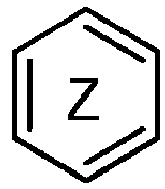
 Z" represents a -CH2- group or a -CO- group,Rg and Rh independently represent a hydrogen atom, a (C1-C4)alkyl group, a (C3-C6)cycloalkyl group, a -CH2CHF2 group, or a -COCH3 group,Q is NH or O,X2 representsa -CO-NRk- group, wherein Rk represents a hydrogen atom or a methyl group,a -NR'k-CO- group, wherein R'k represents a hydrogen atom or a methyl group,a -O- group,a -CO- group,a -SO2-group,a -CS-NH- group,a -CH2-NH-,a
ora heterocyclyl, wherein the heterocyclyl is a 5- or 6-membered ring comprising 1, 2, 3 or 4 heteroatoms selected from O, S and/or N, such as a triazole, a pyrazoline, an oxazole, an oxazoline, an oxazolidine, an imidazole, a pyrazole, an imidazoline, a tetrazole or an oxadiazole, said ring being optionally substituted by a (C1-C4)alkyl group, a halogen atom, or =O,n is 0, 1, 2 or 3,m and m' are independently 0, 1 or 2,Y2 representsa hydrogen atom,a halogen atom,a hydroxyl group,a morpholinyl group, optionally substituted by a (C1-C4)alkyl group or a trifluoromethyl group,a bridged morpholinyl group, optionally substituted by a halogen atom,a (C5-C11)bicycloalkyl group,a piperidinyl group, optionally interrupted by a SO2 group,a (C1-C4)alkenyl group,a -PO(ORa)(ORb) group,
ora -CR1R2R3 group, wherein R1, R2 and R3 independently represent a hydrogen atom, a fluorine atom or a (C1-C4)alkyl group, being understood that no more than one of R1, R2 and R3 is a hydrogen atom, or R1 and R2 form together with the carbon atom bearing them a (C3-C8)cycloalkyl group, said (C3-C8)cycloalkyl group being optionally substituted by one or two (C1-C4)alkyl group, itself optionally substituted by a hydroxy group, halogen atom, trifluoromethyl group, cyano group, phosphonate group or (C1-C4)alkoxy group and said (C3-C8)cycloalkyl group being optionally interrupted on said R1 and/or R2 by one or two oxygen atom(s) or by a -SO2- group,R and R' independently representa (C1-C4)alkyl group, optionally substituted by a hydroxyl group, and optionally interrupted by a -SO2- group or a -SO- group,a (C1-C4)alkenyl group,a (C3-C6)cycloalkyl group,a tetrahydrofuranyl group,a tetrahydropyranyl group,a trifluoromethyl group,a furanyl group,a halogen atom,a cyano group, ora (C1-C5)alkoxy group,Ra and Rb independently represent a hydrogen atom or a (C1-C4)alkyl group,or any of its pharmaceutically acceptable salt. - A compound of formula (I) according to claim 1, wherein


or any of its pharmaceutically acceptable salt. - A compound of formula (I) according to claim 1 or 2, wherein Q is a NH group or any of its pharmaceutically acceptable salt.
- A compound of formula (I) according to anyone of claims 1 to 3, wherein Rg and Rh represent a hydrogen atom or any of its pharmaceutically acceptable salt.
- A compound of formula (I) according to anyone of claims 1 to 4, wherein X2 representsa -CO-NH- group,a -NH-CO- group,a -O- group,a -CO- group,
ora heterocyclyl, wherein the heterocyclyl is a 5- or 6-membered ring comprising 1, 2, 3 or 4 heteroatoms selected from O, S and/or N, such as a triazole, an imidazole, an imidazoline, an oxazoline, an oxazolidine, or a tetrazole, said ring being optionally substituted by a (C1-C4)alkyl group, a halogen atom or =O,or any of its pharmaceutically acceptable salt. - A compound of formula (I) according to anyone of claims 1 to 5, wherein
Y2 representsa hydrogen atom,a halogen atom,a morpholinyl group, optionally substituted by a (C1-C4)alkyl group or a trifluoromethyl group,a bridged morpholinyl group, optionally substituted by a halogen atom,a (C5-C11)bicycloalkyl group,a (C1-C4)alkenyl group,a -PO(ORa)(ORb) group,
ora -CR1R2R3 group, wherein R1, R2 and R3 independently represent a hydrogen atom, a fluorine atom or a (C1-C4)alkyl group, being understood that no more than one of R1, R2 and R3 is a hydrogen atom, or R1 and R2 form together with the carbon atom bearing them a (C3-C8)cycloalkyl group, said (C3-C8)cycloalkyl group being optionally substituted by one or two (C1-C4)alkyl group, itself optionally substituted by a hydroxy group, halogen atom, trifluoromethyl group or cyano group, phosphonate group and said (C3-C8)cycloalkyl group being optionally interrupted on said R1 and/or R2 by one or two oxygen atom(s) or by a -SO2- group,with Ra and Rb being as defined in claim 1,or any of its pharmaceutically acceptable salt. - A compound of formula (I) according to anyone of claims 1 to 6, wherein
R and R' independently representa (C1-C4)alkyl group, optionally substituted by a hydroxyl group, and optionally interrupted by a -SO2- group or a -SO- group,a (C3-C6)cycloalkyl group,a tetrahydrofuranyl group,a tetrahydropyranyl group,a trifluoromethyl group,a furanyl group,a chlorine or fluorine atom,a cyano group,
ora (C1-C5)alkoxy group,or any of its pharmaceutically acceptable salt. - A compound of formula (I) according to claim 1 selected from
No Structure 1 
2 
3 
4 
5 
6 
7 
8 
9 
10 
11 
12 
13 
14 
15 
16 
17 
18 
19 
20 
21 
22 
23 
24 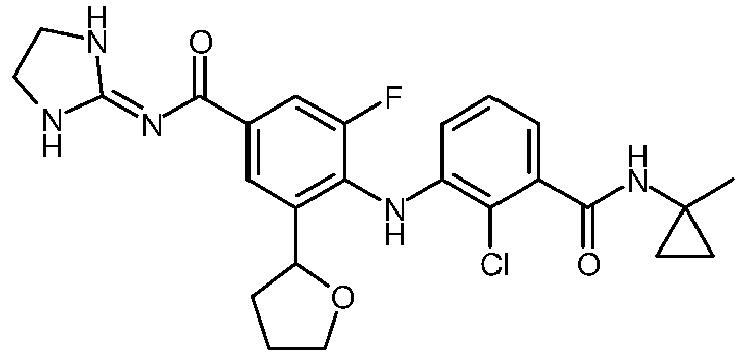
25 
26 
27 
28 
29 
30 
31 
32 
33 
34 
35 
36 
37 
38 
39 
40 
41 
42 
43 
44 
45 
46 
47 
48 
49 
50 
51 
52 
53 
54 
55 
56 
- A compound of formula (I) as defined in anyone of claims 1 to 7 or any of its pharmaceutically acceptable salts, and any of compounds (1) to (56) as defined in claim 8 or any of its pharmaceutically acceptable salts, for use as a medicament.
- A compound of formula (I) as defined in anyone of claims 1 to 7 or any of its pharmaceutically acceptable salts, and any of compounds (1) to (56) as defined in claim 8 or any of its pharmaceutically acceptable salts for use in the treatment and/or prevention of a RNA virus infection caused by a RNA virus belonging to group V of the Baltimore classification, and in particular a RSV viral infection or a virus-related condition.
- A pharmaceutical composition comprising at least one of formula (I) as defined in anyone of claims 1 to 7 or any of its pharmaceutically acceptable salts, and any of compounds (1) to (56) as defined in claim 8 or any of its pharmaceutically acceptable salts and also at least one pharmaceutically acceptable excipient.
- Synthesis process for manufacturing new compounds of formula (I) as defined in anyone of claims 1 to 7, wherein Q is NH, comprising at least a step of coupling a compound of formula (II)(i) a step of coupling a compound of formula (II)


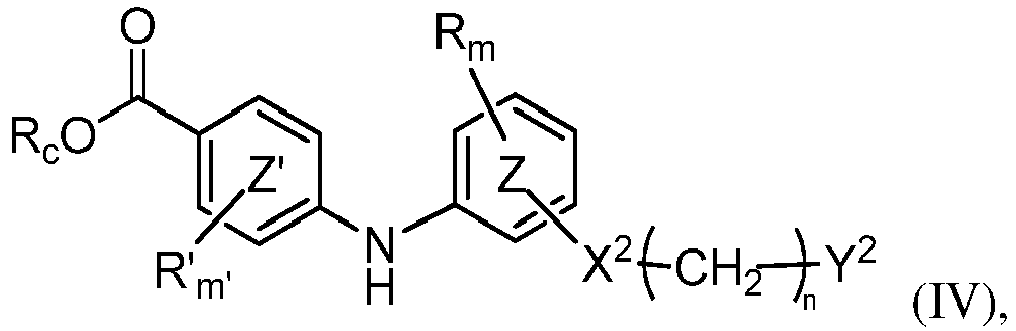


 (ii) a step of reacting a compound of formula (V) with a compound or formula
- Synthesis process for manufacturing new compounds of formula (I) as defined in anyone of claims 1 to 7, wherein Q is O, comprising at least a step of coupling a compound of formula (II')


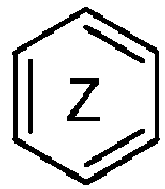

Priority Applications (25)
| Application Number | Priority Date | Filing Date | Title |
|---|---|---|---|
| EP20305004.2A EP3848356A1 (en) | 2020-01-07 | 2020-01-07 | Aryl-n-aryl derivatives for treating a rna virus infection |
| US17/628,402 US12617756B2 (en) | 2019-07-19 | 2020-07-17 | Substituted imidazolidines for treating a RNA virus infection |
| JP2022503404A JP7616609B2 (en) | 2019-07-19 | 2020-07-17 | Aryl-N-aryl derivatives for treating RNA virus infections - Patents.com |
| BR112022000653A BR112022000653A2 (en) | 2019-07-19 | 2020-07-17 | Compound of formula (i), pharmaceutical composition and synthesis process for the manufacture of new compounds of formula (i) |
| AU2020318598A AU2020318598B2 (en) | 2019-07-19 | 2020-07-17 | Aryl-N-aryl derivatives for treating a RNA virus infection |
| CN202080064572.XA CN114423741B (en) | 2019-07-19 | 2020-07-17 | aryl-N-aryl derivatives for the treatment of RNA viral infections |
| IL289738A IL289738B2 (en) | 2019-07-19 | 2020-07-17 | Aryl-n-aryl derivatives for treating a rna virus infection |
| HRP20240279TT HRP20240279T1 (en) | 2019-07-19 | 2020-07-17 | Aryl-n-aryl derivatives for treating a rna virus infection |
| CA3145776A CA3145776A1 (en) | 2019-07-19 | 2020-07-17 | Aryl-n-aryl derivatives for treating an rna virus infection |
| PT207406265T PT3999493T (en) | 2020-01-07 | 2020-07-17 | Aryl-n-aryl derivatives for treating a rna virus infection |
| SI202030372T SI3999493T1 (en) | 2019-07-19 | 2020-07-17 | Aryl-n-aryl derivatives for treating a rna virus infection |
| DK20740626.5T DK3999493T3 (en) | 2019-07-19 | 2020-07-17 | ARYL-N-ARYL DERIVATIVES FOR THE TREATMENT OF AN RNA VIRUS INFECTION |
| CU2022000002A CU24708B1 (en) | 2019-07-19 | 2020-07-17 | ARYL-N-ARYL DERIVATIVES TO TREAT RIBONUCLEIC ACID (RNA) VIRUS INFECTION |
| ES20740626T ES2974561T3 (en) | 2019-07-19 | 2020-07-17 | Aryl-N-aryl derivatives to treat RNA virus infection |
| FIEP20740626.5T FI3999493T3 (en) | 2019-07-19 | 2020-07-17 | Aryl-n-aryl derivatives for treating a rna virus infection |
| HUE20740626A HUE066072T2 (en) | 2019-07-19 | 2020-07-17 | Aryl-N-aryl derivatives for the treatment of RNA virus infection |
| LTEPPCT/EP2020/070294T LT3999493T (en) | 2019-07-19 | 2020-07-17 | ARYL-N-ARYL DERIVATIVES FOR THE TREATMENT OF RNA VIRUS INFECTIONS |
| EP20740626.5A EP3999493B1 (en) | 2019-07-19 | 2020-07-17 | Aryl-n-aryl derivatives for treating a rna virus infection |
| PCT/EP2020/070294 WO2021013733A1 (en) | 2019-07-19 | 2020-07-17 | Aryl-n-aryl derivatives for treating a rna virus infection |
| MX2022000278A MX2022000278A (en) | 2019-07-19 | 2020-07-17 | ARYL-N-ARYL DERIVATIVES TO TREAT A RIBONUCLEIC ACID (RNA) VIRUS INFECTION. |
| KR1020227002226A KR102873079B1 (en) | 2019-07-19 | 2020-07-17 | Aryl-N-aryl derivatives for the treatment of RNA virus infections |
| RS20240280A RS65338B1 (en) | 2019-07-19 | 2020-07-17 | Aryl-n-aryl derivatives for treating a rna virus infection |
| PL20740626.5T PL3999493T3 (en) | 2019-07-19 | 2020-07-17 | Aryl-N-aryl derivatives for the treatment of RNA virus infection |
| ZA2022/00541A ZA202200541B (en) | 2019-07-19 | 2022-01-11 | Aryl-n-aryl derivatives for treating a rna virus infection |
| CY20241100166T CY1126676T1 (en) | 2020-01-07 | 2024-03-04 | ARYLO-N-ARYL DERIVATIVES FOR THE TREATMENT OF RNA VIRUS INFECTION |
Applications Claiming Priority (1)
| Application Number | Priority Date | Filing Date | Title |
|---|---|---|---|
| EP20305004.2A EP3848356A1 (en) | 2020-01-07 | 2020-01-07 | Aryl-n-aryl derivatives for treating a rna virus infection |
Publications (1)
| Publication Number | Publication Date |
|---|---|
| EP3848356A1 true EP3848356A1 (en) | 2021-07-14 |
Family
ID=69423244
Family Applications (1)
| Application Number | Title | Priority Date | Filing Date |
|---|---|---|---|
| EP20305004.2A Ceased EP3848356A1 (en) | 2019-07-19 | 2020-01-07 | Aryl-n-aryl derivatives for treating a rna virus infection |
Country Status (3)
| Country | Link |
|---|---|
| EP (1) | EP3848356A1 (en) |
| CY (1) | CY1126676T1 (en) |
| PT (1) | PT3999493T (en) |
Citations (3)
| Publication number | Priority date | Publication date | Assignee | Title |
|---|---|---|---|---|
| WO2009087238A2 (en) * | 2008-01-10 | 2009-07-16 | Centre National De La Recherche Scientifique (Cnrs) | Chemical molecules that inhibit the slicing mechanism for treating diseases resulting from splicing anomalies |
| WO2012131656A2 (en) * | 2011-04-01 | 2012-10-04 | Société Splicos | Compounds for use as therapeutic agents affecting p53 expression and/or activity |
| WO2015001518A1 (en) * | 2013-07-05 | 2015-01-08 | Splicos | Bicyclic compounds useful for treating diseases caused by retroviruses |
-
2020
- 2020-01-07 EP EP20305004.2A patent/EP3848356A1/en not_active Ceased
- 2020-07-17 PT PT207406265T patent/PT3999493T/en unknown
-
2024
- 2024-03-04 CY CY20241100166T patent/CY1126676T1/en unknown
Patent Citations (3)
| Publication number | Priority date | Publication date | Assignee | Title |
|---|---|---|---|---|
| WO2009087238A2 (en) * | 2008-01-10 | 2009-07-16 | Centre National De La Recherche Scientifique (Cnrs) | Chemical molecules that inhibit the slicing mechanism for treating diseases resulting from splicing anomalies |
| WO2012131656A2 (en) * | 2011-04-01 | 2012-10-04 | Société Splicos | Compounds for use as therapeutic agents affecting p53 expression and/or activity |
| WO2015001518A1 (en) * | 2013-07-05 | 2015-01-08 | Splicos | Bicyclic compounds useful for treating diseases caused by retroviruses |
Non-Patent Citations (3)
| Title |
|---|
| "Ullmann's Encyclopedia of Industrial Chemistry", 1989, MARCEL DEKKER |
| ANSEL ET AL.: "Pharmaceutical Dosage Forms and Drug Delivery Systems", 1994, WILLIAMS & WILKINS |
| F. J. LEINWEBER, DRUG METAB. RES., vol. 18, 1987, pages 379 |
Also Published As
| Publication number | Publication date |
|---|---|
| PT3999493T (en) | 2024-03-07 |
| CY1126676T1 (en) | 2026-02-25 |
Similar Documents
| Publication | Publication Date | Title |
|---|---|---|
| EP3820849B1 (en) | Phenyl/pyridyl-nh-phenyl/pyridyl derivatives for treating rna virus infection | |
| AU2013226013B2 (en) | Inhibitors of Hepatitis B Virus Covalently Closed Circular DNA Formation and Their Method of Use | |
| RU2496778C2 (en) | Piperazine compound inhibiting prostaglandin-d-synthase | |
| US20180215743A1 (en) | 1,3,4-oxadiazole amide derivative compound as histone deacetylase 6 inhibitor, and pharmaceutical composition containing same | |
| EP3999493B1 (en) | Aryl-n-aryl derivatives for treating a rna virus infection | |
| RU2821414C2 (en) | Aryl-n-aryl derivatives for treating rna viral infection | |
| EP3766543A1 (en) | N-aryl derivatives for treating a rna virus infection | |
| RU2803216C2 (en) | Phenyl/pyridyl-n-phenyl/pyridyl derivatives for the treatment of rna virus infection | |
| HK40063832A (en) | Aryl-n-aryl derivatives for treating a rna virus infection | |
| HK40063832B (en) | Aryl-n-aryl derivatives for treating a rna virus infection | |
| HK40040882A (en) | Phenyl/pyridyl-n-phenyl/pyridyl derivatives for treating a rna virus infection | |
| HK40039623A (en) | Phenyl/pyridyl-n-phenyl/pyridyl derivatives for treating rna virus infection | |
| HK1216253A1 (en) | Novel compound, pharmaceutically acceptable salt or optical isomer thereof, method for preparing same, and pharmaceutical composition for prevention or treatment of viral diseases containing same as active ingredient |
Legal Events
| Date | Code | Title | Description |
|---|---|---|---|
| PUAI | Public reference made under article 153(3) epc to a published international application that has entered the european phase |
Free format text: ORIGINAL CODE: 0009012 |
|
| STAA | Information on the status of an ep patent application or granted ep patent |
Free format text: STATUS: THE APPLICATION HAS BEEN PUBLISHED |
|
| AK | Designated contracting states |
Kind code of ref document: A1 Designated state(s): AL AT BE BG CH CY CZ DE DK EE ES FI FR GB GR HR HU IE IS IT LI LT LU LV MC MK MT NL NO PL PT RO RS SE SI SK SM TR |
|
| STAA | Information on the status of an ep patent application or granted ep patent |
Free format text: STATUS: THE APPLICATION HAS BEEN REFUSED |
|
| 18R | Application refused |
Effective date: 20210808 |