EP3846557A1 - Ro indication and determination method and device, storage medium, base station and terminal - Google Patents
Ro indication and determination method and device, storage medium, base station and terminal Download PDFInfo
- Publication number
- EP3846557A1 EP3846557A1 EP19854037.9A EP19854037A EP3846557A1 EP 3846557 A1 EP3846557 A1 EP 3846557A1 EP 19854037 A EP19854037 A EP 19854037A EP 3846557 A1 EP3846557 A1 EP 3846557A1
- Authority
- EP
- European Patent Office
- Prior art keywords
- ros
- configuration information
- association relation
- preamble
- random access
- Prior art date
- Legal status (The legal status is an assumption and is not a legal conclusion. Google has not performed a legal analysis and makes no representation as to the accuracy of the status listed.)
- Pending
Links
Images

Classifications
-
- H—ELECTRICITY
- H04—ELECTRIC COMMUNICATION TECHNIQUE
- H04W—WIRELESS COMMUNICATION NETWORKS
- H04W74/00—Wireless channel access
- H04W74/08—Non-scheduled access, e.g. ALOHA
- H04W74/0833—Random access procedures, e.g. with 4-step access
- H04W74/0841—Random access procedures, e.g. with 4-step access with collision treatment
-
- H—ELECTRICITY
- H04—ELECTRIC COMMUNICATION TECHNIQUE
- H04W—WIRELESS COMMUNICATION NETWORKS
- H04W74/00—Wireless channel access
- H04W74/002—Transmission of channel access control information
-
- H—ELECTRICITY
- H04—ELECTRIC COMMUNICATION TECHNIQUE
- H04W—WIRELESS COMMUNICATION NETWORKS
- H04W56/00—Synchronisation arrangements
- H04W56/0055—Synchronisation arrangements determining timing error of reception due to propagation delay
- H04W56/0065—Synchronisation arrangements determining timing error of reception due to propagation delay using measurement of signal travel time
- H04W56/009—Closed loop measurements
-
- H—ELECTRICITY
- H04—ELECTRIC COMMUNICATION TECHNIQUE
- H04W—WIRELESS COMMUNICATION NETWORKS
- H04W74/00—Wireless channel access
- H04W74/002—Transmission of channel access control information
- H04W74/006—Transmission of channel access control information in the downlink, i.e. towards the terminal
-
- H—ELECTRICITY
- H04—ELECTRIC COMMUNICATION TECHNIQUE
- H04W—WIRELESS COMMUNICATION NETWORKS
- H04W74/00—Wireless channel access
- H04W74/08—Non-scheduled access, e.g. ALOHA
- H04W74/0833—Random access procedures, e.g. with 4-step access
-
- H—ELECTRICITY
- H04—ELECTRIC COMMUNICATION TECHNIQUE
- H04W—WIRELESS COMMUNICATION NETWORKS
- H04W74/00—Wireless channel access
- H04W74/08—Non-scheduled access, e.g. ALOHA
- H04W74/0866—Non-scheduled access, e.g. ALOHA using a dedicated channel for access
-
- H—ELECTRICITY
- H04—ELECTRIC COMMUNICATION TECHNIQUE
- H04W—WIRELESS COMMUNICATION NETWORKS
- H04W84/00—Network topologies
- H04W84/02—Hierarchically pre-organised networks, e.g. paging networks, cellular networks, WLAN [Wireless Local Area Network] or WLL [Wireless Local Loop]
- H04W84/04—Large scale networks; Deep hierarchical networks
- H04W84/06—Airborne or Satellite Networks
Definitions
- the present disclosure generally relates to radio communication technology field, and more particularly, to a Random access Occasion (RO) indication method and apparatus, an RO determination method and apparatus, a storage medium, a base station and a terminal.
- RO Random access Occasion
- NTN Non Terrestrial Network
- 5G Fifth-Generation mobile communications
- NR New Radio
- a research scope of 5G NTN mainly includes Spaceborne vehicles, such as Geostationary Earth Orbit Satellites (GEO), Medium Earth Orbit Satellites (MEO) and Low Earth Orbit Satellites (LEO), and airborne vehicle High Altitude Platforms (HAPS).
- GEO Geostationary Earth Orbit Satellites
- MEO Medium Earth Orbit Satellites
- LEO Low Earth Orbit Satellites
- HAPS Airborne vehicle High Altitude Platforms
- RTT Round Trip Time
- An RTT is twice the one-way delay.
- Table 1 also lists relevant parameters of terrestrial network cellular communication with a radius of 10 kilometers (km for short).
- ROs in existing techniques are designed for a terrestrial network with a relatively short RTT. If in NTN communication a User Equipment (UE) directly initiates a random access request based on an existing RO, in some cases, a base station on a network side cannot identify different ROs due to an RTT duration of the NTN communication, and hardly calculates Timing Advance (TA) and Random Access-Radio Network Temporary Identifier (RA-RNTI).
- TA Timing Advance
- RA-RNTI Random Access-Radio Network Temporary Identifier
- Embodiments of the present disclosure provide solutions for identifying different ROs, so that a network does not need to consider influence caused by a maximum difference time of RTT, and an average waiting time for the UE to transmit a preamble may be avoided.
- an RO indication method including: determining RO configuration information which includes at least one of followings: an association relation between ROs and corresponding frequency resources where the ROs are located respectively, and an association relation between ROs and corresponding available preambles; and transmitting the RO configuration information to a UE.
- the RO configuration information includes the association relation between ROs and corresponding frequency resources where the ROs are located respectively, and after transmitting the RO configuration information to the UE, the method further includes: receiving a preamble from the UE on a random access window and a frequency resource in which the preamble is expected to be received; determining the frequency resource used by the preamble; and determining an RO used by the UE during random access based on the association relation between ROs and corresponding frequency resources where the ROs are located respectively and the frequency resource used by the preamble.
- the RO configuration information includes the association relation between ROs and corresponding available preambles
- the method further includes: receiving a preamble from the UE; and determining an RO used by the UE during random access based on the association relation between ROs and corresponding available preambles.
- the RO configuration information includes the association relation between ROs and corresponding frequency resources where the ROs are located respectively, and the association relation between ROs and corresponding available preambles
- the method further includes: receiving a preamble from the UE on a random access window and a frequency resource in which the preamble is expected to be received; determining the frequency resource used by the preamble; and determining an RO used by the UE during random access based on the association relation between ROs and corresponding frequency resources where the ROs are located respectively and the association relation between ROs and corresponding available preambles.
- transmitting the RO configuration information to the UE includes: transmitting the RO configuration information to the UE through a system information block.
- the target time interval is a maximum difference time of a round trip time between each UE in a cell and a satellite.
- an RO determination method including: receiving RO configuration information from a network, wherein the RO configuration information includes at least one of followings: an association relation between ROs and corresponding frequency resources where the ROs are located respectively, and an association relation between ROs and corresponding available preambles; and determining an RO used during random access based on the RO configuration information.
- the RO configuration information includes the association relation between ROs and corresponding frequency resources where the ROs are located respectively, and determining an RO used during random access based on the RO configuration information includes: determining a preamble and a frequency resource for the random access; and determining the RO based on the determined frequency resource and the association relation between ROs and corresponding frequency resources where the ROs are located respectively.
- the method further includes transmitting the preamble based on the RO on the determined frequency resource.
- the RO configuration information includes the association relation between ROs and corresponding available preambles, and determining an RO used during random access based on the RO configuration information includes: determining a preamble for the random access; and determining the RO based on the determined preamble and the association relation between ROs and corresponding available preambles.
- the method further includes transmitting the preamble based on the RO.
- the RO configuration information includes the association relation between ROs and corresponding frequency resources where the ROs are located respectively, and the association relation between ROs and corresponding available preambles, and determining an RO used during random access based on the RO configuration information includes: determining a preamble and a frequency resource for the random access; and determining the RO based on the determined preamble and frequency resource, the association relation between ROs and corresponding available preambles, and the association relation between ROs and corresponding frequency resources where the ROs are located respectively.
- the method further includes transmitting the preamble based on the RO on the determined frequency resource.
- receiving RO configuration information from a network includes: receiving the RO configuration information from the network through the system information block.
- the target time interval is a maximum difference time of a round trip time between each UE in a cell and a satellite.
- an RO indication apparatus including: a determining circuitry configured to determine RO configuration information which includes at least one of followings: an association relation between ROs and corresponding frequency resources where the ROs are located respectively, and an association relation between ROs and corresponding available preambles; and a transmitting circuitry configured to transmit the RO configuration information to a UE.
- an RO determination apparatus including: a receiving circuitry configured to receive RO configuration information from a network, wherein the RO configuration information includes at least one of followings: an association relation between ROs and corresponding frequency resources where the ROs are located respectively, and an association relation between ROs and corresponding available preambles; and a determining circuitry configured to determine an RO used during random access based on the RO configuration information.
- a storage medium having computer instructions stored therein wherein when the computer instructions are executed, the above RO indication method or the above RO determination method is performed.
- a base station including a memory and a processor
- the memory has computer instructions stored therein, and when the processor executes the computer instructions, the above RO indication method is performed.
- a terminal including a memory and a processor
- the memory has computer instructions stored therein, and when the processor executes the computer instructions, the above RO determination method is performed.
- Embodiments of the present disclosure may provide following advantages.
- an RO indication method including: determining RO configuration information which includes at least one of followings: an association relation between ROs and corresponding frequency resources where the ROs are located respectively, and an association relation between ROs and corresponding available preambles; and transmitting the RO configuration information to a UE.
- the network may still determine each RO. Further, the UE may perform random access at the configured RO without increasing an average waiting time for the UE to transmit the preamble.
- the method further includes: receiving a preamble from the UE on a random access window and a frequency resource in which the preamble is expected to be received; determining the frequency resource used by the preamble; and determining an RO used by the UE during random access based on the association relation between ROs and corresponding frequency resources where the ROs are located respectively and the frequency resource used by the preamble.
- the network may determine the RO based on the frequency resource used by the preamble and the association relation, and further calculate TA and RA-RNTI.
- a network cannot calculate TA and RA-RNTI as being incapable of identifying different ROs. If a time interval between two consecutive ROs is increased, an average waiting time for the UE to perform random access may increase although different ROs can be identified.
- a base station for example, gNodeB, gNB for short
- a preamble detection reception time window with a size which rounds up a maximum RTT difference of a cell edge and a cell center.
- the preamble detection reception time window is 1 to 2 RO durations which greatly exceed the time interval between adjacent ROs. Therefore, the preamble detection reception time windows on the base station side do not overlap with each other.
- An RO of the UE transmitting the preamble can be uniquely determined based on the preamble detection reception time window, so that RA-RNTI corresponding to the UE is acquired and TA is calculated.
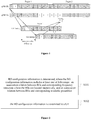
- an RTT duration difference of a cell edge and a cell center in the NTN communication is relatively large. If configuration of terrestrial networks is adopted, preamble detection reception time windows at a base station side corresponding to two adjacent ROs may overlap with each other. When receiving one preamble, the base station cannot uniquely determine the RO transmitting the preamble by the UE, and thus cannot acquire RA-RNTI corresponding to the UE, and cannot calculate TA.
- gNB when a maximum difference of RTT in gNB is greater than or equal to 5ms, for each Physical Random Access Channel (PRACH) slot, gNB requires a preamble reception window of at least 6ms. For an RO located in time slot 1 of frame 1, the corresponding preamble reception window of the gNB is from time slot 7 of frame 1 to time slot 2 of frame 2, a total of six time slots in length.
- PRACH Physical Random Access Channel
- the network may configure the time interval of two consecutive ROs for the UE to be 5 ms or less.
- the time interval between two consecutive ROs is 5 ms.
- the corresponding preamble reception window of the gNB is from time slot 2 of frame 2 to time slot 7 of frame 2, a total of six time slots in length. Therefore, when receiving the preamble in time slot 2 of frame 2, the gNB cannot determine whether the preamble is transmitted by the UE in the RO in time slot 1 of frame 1 or in the RO in time slot 6 of frame 1, and therefore cannot calculate RA-RNTI and TA.
- an RO indication method including: determining RO configuration information which includes at least one of followings: an association relation between ROs and corresponding frequency resources where the ROs are located respectively, and an association relation between ROs and corresponding available preambles; and transmitting the RO configuration information to a UE.
- the UE may perform random access at the configured RO without increasing an average waiting time for the UE to transmit the preamble.
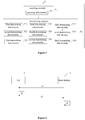
- FIG. 2 is a flow chart of an RO indication method according to an embodiment.
- the RO indication method may be applied to a network side, for example, performed by a base station on the network side, and may include S101 and S102.
- RO configuration information is determined, where the RO configuration information includes at least one of followings: an association relation between ROs and corresponding frequency resources where the ROs are located respectively, and an association relation between ROs and corresponding available preambles.
- the RO configuration information is transmitted to a UE.
- the base station (for example, gNB) on the network side determines a maximum difference time of RTT between each UE in a cell and a satellite. If the maximum difference time is determined as a target time interval, the base station may configure multiple ROs for the target time interval.
- the base station may configure RO configuration information for the UE so as to identify multiple ROs within the target time interval.
- the RO configuration information includes at least one of followings: an association relation between ROs and corresponding frequency resources where the ROs are located respectively, and an association relation between ROs and corresponding available preambles.
- the association relation between ROs and corresponding frequency resources where the ROs are located respectively may include an association relation between a single RO and a frequency resource where the RO is located, or an association relation between a single RO and multiple frequency resources where the RO is located. If the RO and its frequency resource have a one-to-one association relation, the UE may transmit a preamble at the RO and its frequency resource. If the RO and its frequency resources have a one-to-multi association relation, the UE may randomly select a frequency resource from the multiple frequency resources, and transmit a preamble at the RO and the selected frequency resource.
- the multiple frequency resources may be determined as a frequency resource set (i.e., the frequency resource set includes the multiple frequency resources), and accordingly the association relation between the single RO and the multiple frequency resources may be equivalent to an association relation between the single RO and the frequency resource set.
- the UE may select a frequency resource from the frequency resource set to transmit the preamble.
- the association relation between ROs and corresponding available preambles includes an association relation between a single RO and one available preamble, or an association relation between a single RO and multiple available preambles.
- the multiple preambles may be determined as a preamble set (i.e., the preamble set includes the multiple preambles), and accordingly the association relation between the single RO and the multiple available preambles may be equivalent to an association relation between the single RO and the preamble set.
- the base station may transmit the RO configuration information to the UE, so that the UE can determine an RO based on the RO configuration information.
- the base station may transmit the RO configuration information to the UE through a System Information Block (SIB).
- SIB System Information Block
- the UE may acquire the association relation between the ROs and the frequency resources, or the association relation between the ROs and the preambles, or both the association relation between the ROs and the frequency resources and the association relation between the ROs and the preambles.
- the UE may determine the RO used for random access based on the RO configuration information.
- the UE may first determine the preamble for performing random access and the frequency resource used by the preamble, and then determine the RO based on the used frequency resource and the association relation between the RO and the frequency resource. Afterward, when a time slot corresponding to the RO arrives, the UE may transmit the preamble for performing random access on the frequency resource used by the preamble.
- the base station may receive a preamble from the UE on a random access window and a frequency resource in which the preamble is expected to be received, determine the frequency resource used by the preamble, and determine an RO used by the UE during random access based on the association relation between ROs and corresponding frequency resources where the ROs are located respectively and the frequency resource used by the preamble.
- the UE may select a frequency resource from the frequency resource set as the frequency resource used by the preamble, and then determine the RO based on the used frequency resource and the association relation between the RO and the frequency resource set where the used frequency resource is located. Afterward, when a time slot corresponding to the RO arrives, the UE may transmit the preamble for performing random access on the frequency resource used by the preamble.
- the base station may determine the frequency resource used by the preamble, and determine the RO used when the UE performs random access based on the association relation between the ROs and the frequency resource set where the used frequency resource is located and the frequency resource used by the preamble.
- the base station may determine a PRACH time slot for the UE to transmit the preamble (that is, the time slot corresponding to the RO) based on a frequency resource used by the preamble.
- the UE may determine a preamble for performing random access, and determine the RO based on the determined preamble and the association relation between the ROs and corresponding available preambles. Afterward, when a time slot corresponding to the RO arrives, the UE may transmit the preamble for performing random access in the determined RO.
- the base station may receive the preamble from the UE; and determine the RO when the UE performs random access based on the association relation between the ROs and corresponding available preambles.
- the UE may first randomly select an available preamble from the preamble set, and determine the selected preamble as the preamble for random access. Afterward, the RO is determined based on the determined preamble and the association relation between the ROs and corresponding available preambles. When a time slot corresponding to the RO arrives, the UE may transmit the preamble for performing random access in the determined RO.
- the base station may receive the preamble from the UE, and determine the RO used by the UE during random access based on the association relation between the RO and the preamble set where the preamble is located.
- the base station when receiving a preamble in slot 22, determines an RPACH for the UE to transmit the preamble (that is, a time slot corresponding to RO) based on the association relation between the preamble or the preamble set where the preamble is located and the RO.
- the UE may first determine a preamble for performing random access and a frequency resource for transmitting the preamble, and then determine an RO based on the determined preamble and frequency resource, the association relation between the ROs and the corresponding available preambles, and the association relation between the ROs and corresponding frequency resources where the ROs are located respectively.
- the UE may transmit the preamble for performing random access based on the RO on the determined frequency resource.
- the base station may receive a preamble from the UE on a random access window and a frequency resource in which the preamble is expected to be received, determine the frequency resource used by the preamble, and determine an RO used by the UE during random access based on the association relation between ROs and corresponding frequency resources where the ROs are located respectively and the association relation between ROs and corresponding available preambles.
- the UE may first determine the preamble and frequency resource for performing random access, and then determine the RO based on the determined preamble and frequency resource, the association relation between the RO and the preamble, and the association relation between the RO and the frequency resource.
- the base station receives the preamble from the UE, determines the frequency resource used by the preamble, and determines the RO used when the UE performs random access based on the association relation between the RO and the frequency resource set where the used frequency resource is located and the association relation between the RO and the preamble set where the preamble is located.
- FIG 3 is a flow chart of an RO determination method according to an embodiment.
- the RO determination method may be applied to a UE side, for example, performed by a 5G UE, and may include S201 and S202.
- RO configuration information is received from a network, where the RO configuration information includes at least one of followings: an association relation between ROs and corresponding frequency resources where the ROs are located respectively, and an association relation between ROs and corresponding available preambles.
- an RO used during random access is determined based on the RO configuration information.
- the UE may receive RO configuration information from a network, where the RO configuration information includes at least one of followings: an association relation between ROs and corresponding frequency resources where the ROs are located respectively, and an association relation between ROs and corresponding available preambles.
- the frequency resource refers to a frequency resource that can be used by the UE to transmit a preamble when performing random access.
- Each RO has a one-to-one correspondence with the frequency resource where the RO is located, or each RO may have a one-to-multi correspondence with multiple frequency resources.
- the UE may receive the RO configuration information by receiving SIB from the network.
- the UE may determine a preamble and a frequency resource for the random access, determine the RO based on the determined frequency resource and the association relation between ROs and corresponding frequency resources where the ROs are located respectively, and transmit the preamble based on the RO on the determined frequency resource.
- the network determines the RO used by the UE to perform random access based on the preamble, the frequency resource used by the preamble, and the association relation between ROs and frequency resources.
- the UE may determine a preamble for the random access, determine the RO based on the determined preamble and the association relation between ROs and corresponding available preambles, and transmit the preamble based on the RO.
- the network determines the RO used by the UE to perform random access based on the preamble, and the association relation between ROs and preambles.
- the UE may determine a preamble and a frequency resource for the random access, determine the RO based on the determined preamble and frequency resource, the association relation between ROs and corresponding available preambles, and the association relation between ROs and corresponding frequency resources where the ROs are located respectively, and transmit the preamble based on the RO on the determined frequency resource.
- the network receives the preamble from the UE, determines the frequency resource used by the preamble, and determines the RO used by the UE to perform random access based on the association relation between ROs and frequency resources and the association relation between ROs and preambles.
- the target time interval is a maximum difference time of a round trip time between each UE in a cell and a satellite.
- S201 to S202 can be regarded as steps corresponding to S101 to S102 in the embodiment as shown in Figure 2 , and the two are complementary to each other in terms of specific implementation principles and logic. Therefore, the RO determination method on the UE side and terminologies may be referred to related descriptions of the embodiment as shown in Figure 2 , and are not described in detail here.
- RO configuration in a time domain is not limited to the maximum RTT difference time, and the UE does not need to increase a waiting time for transmitting a preamble.
- FIG 4 is a structural diagram of an RO indication apparatus according to an embodiment.
- the RO indication apparatus 4 may be applied to a network side, for example, at a base station, and may be used to implement technical solutions of the RO indication method as shown in Figure 2 .
- the RO indication apparatus 4 may include a determining circuitry 401 and a transmitting circuitry 402.
- the determining circuitry 401 is configured to determine RO configuration information which includes at least one of followings: an association relation between ROs and corresponding frequency resources where the ROs are located respectively, and an association relation between ROs and corresponding available preambles, and the transmitting circuitry 402 is configured to transmit the RO configuration information to a UE.
- the RO configuration information includes the association relation between ROs and corresponding frequency resources where the ROs are located respectively, and the RO indication apparatus 4 may further include a first receiving circuitry 403, a first frequency band determining circuity 404 and a first RO determining circuitry 405.
- the first receiving circuitry 403 is configured to: after the RO configuration information is transmitted to the UE, receive a preamble from the UE on a random access window and a frequency resource in which the preamble is expected to be received, the first frequency band determining circuity 404 is configured to determine the frequency resource used by the preamble, and the first RO determining circuitry 405 is configured to determine an RO used by the UE during random access based on the association relation between ROs and corresponding frequency resources where the ROs are located respectively and the frequency resource used by the preamble.
- the RO configuration information includes the association relation between ROs and corresponding available preambles
- the RO indication apparatus 4 may further include a second receiving circuitry 406 and a second RO determining circuitry 407.
- the second receiving circuitry 406 is configured to: after the RO configuration information is transmitted to the UE, receive a preamble from the UE, and the second RO determining circuitry 407 is configured to determine an RO used by the UE during random access based on the association relation between ROs and corresponding available preambles.
- the RO configuration information includes the association relation between ROs and corresponding frequency resources where the ROs are located respectively, and the association relation between ROs and corresponding available preambles
- the RO indication apparatus 4 may further include a third receiving circuitry 408, a second frequency band determining circuity 409 and a third RO determining circuitry 4010.
- the third receiving circuitry 408 is configured to: after the RO configuration information is transmitted to the UE, receive a preamble from the UE on a random access window and a frequency resource in which the preamble is expected to be received, the second frequency band determining circuity 409 is configured to determine the frequency resource used by the preamble, and the third RO determining circuitry 4010 is configured to determine an RO used by the UE during random access based on the association relation between ROs and corresponding frequency resources where the ROs are located respectively and the association relation between ROs and corresponding available preambles.
- the transmitting circuitry 402 includes a transmitting sub-circuitry 4021 configured to transmit the RO configuration information to the UE through a system information block.
- the target time interval is a maximum difference time of a round trip time between each UE in a cell and a satellite.
- FIG 5 is a structural diagram of an RO determination apparatus according to an embodiment.
- the RO determination apparatus 5 may be applied to a UE side, and may be used to implement technical solutions of the RO determination method as shown in Figure 3 .
- the RO determination apparatus 5 may include a receiving circuitry 51 and a determining circuitry 52.
- the receiving circuitry 51 is configured to receive RO configuration information from a network, wherein the RO configuration information includes at least one of followings: an association relation between ROs and corresponding frequency resources where the ROs are located respectively, and an association relation between ROs and corresponding available preambles, and the determining circuitry 52 is configured to determine an RO used during random access based on the RO configuration information.
- the RO configuration information includes the association relation between ROs and corresponding frequency resources where the ROs are located respectively
- the determining circuitry 52 includes: a first determining sub-circuitry 521 configured to determine a preamble and a frequency resource for the random access; and a second determining sub-circuitry 522 configured to determine the RO based on the determined frequency resource and the association relation between ROs and corresponding frequency resources where the ROs are located respectively.
- the determining circuitry 52 further includes a first transmitting sub-circuitry 523 configured to transmit the preamble based on the RO on the determined frequency resource.
- the RO configuration information includes the association relation between ROs and corresponding available preambles
- the determining circuitry 52 includes: a third determining sub-circuitry 524 configured to determine a preamble for the random access; and a fourth determining sub-circuitry 525 configured to determine the RO based on the determined preamble and the association relation between ROs and corresponding available preambles.
- the determining circuitry 52 further includes a second transmitting sub-circuitry 526 configured to transmit the preamble based on the RO on the determined frequency resource.
- the RO configuration information includes the association relation between ROs and corresponding frequency resources where the ROs are located respectively, and the association relation between ROs and corresponding available preambles
- the determining circuitry 52 includes: a fifth determining sub-circuitry 527 configured to determine a preamble and a frequency resource for the random access; and a sixth determining sub-circuitry 528 configured to determine the RO based on the determined preamble and frequency resource, the association relation between ROs and corresponding available preambles, and the association relation between ROs and corresponding frequency resources where the ROs are located respectively.
- the determining circuitry 52 further includes a third transmitting sub-circuitry 529 configured to transmit the preamble based on the RO on the determined frequency resource.
- the receiving circuitry 51 may include a receiving sub-circuitry 511 configured to receive the RO configuration information from the network through the system information block.
- the target time interval is a maximum difference time of a round trip time between each UE in a cell and a satellite.
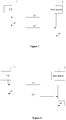
- the base station 2 may first perform s1, that is, transmitting RO configuration information to the UE 1 through a system information block, where the RO configuration information may include at least one of followings: an association relation between ROs and corresponding frequency resources where the ROs are located respectively, and an association relation between ROs and corresponding available preambles.
- the UE 1 may perform s2, that is, when the RO configuration information includes the association relation between ROs and corresponding frequency resources where the ROs are located respectively, determining a preamble and a frequency resource for performing random access, and determining an RO based on the determined frequency resource and the association relation between ROs and corresponding frequency resources where the ROs are located respectively.
- the UE 1 may perform s3, that is, transmitting the preamble based on the RO on the determined frequency resource.
- the base station 2 may perform s4, that is, determining the RO used by the UE 1 during random access based on the received preamble and the association relation between ROs and corresponding frequency resources where the ROs are located respectively.
- base station 2 may first perform s1', that is, transmitting RO configuration information to the UE 1 through a system information block, where the RO configuration information may include at least one of followings: an association relation between ROs and corresponding frequency resources where the ROs are located respectively, and an association relation between ROs and corresponding available preambles.
- the UE 1 may perform s2', that is, when the RO configuration information includes the association relation between ROs and corresponding available preambles, determining a preamble for performing random access, and determining an RO based on the determined preamble and the association relation between ROs and corresponding available preambles.
- the UE 1 may perform s3', that is, transmitting the preamble based on the determined RO.
- the base station 2 may perform s4', that is, determining the RO used by the UE 1 during random access based on the received preamble and the association relation between ROs and corresponding available preambles.
- the base station 2 may first perform operation s1", that is, transmitting RO configuration information to the UE 1 through a system information block, where the RO configuration information may include at least one of followings: an association relation between ROs and corresponding frequency resources where the ROs are located respectively, and an association relation between ROs and corresponding available preambles.
- the UE 1 may perform s2", that is, when the RO configuration information includes the association relation between ROs and corresponding frequency resources where the ROs are located respectively, and the association relation between ROs and corresponding available preambles, determining a preamble and a frequency resource for performing random access, and determining an RO based on the determined preamble and frequency resource, the association relation between ROs and corresponding frequency resources where the ROs are located respectively, and the association relation between ROs and corresponding available preambles.
- the UE 1 may perform s3", that is, transmitting the preamble based on the RO on the determined frequency resource.
- the base station 2 may perform s4", that is, the network determines the RO used by the UE 1 during random access based on the received preamble, the association relation between ROs and corresponding frequency resources where the ROs are located respectively, and the association relation between ROs and corresponding available preambles.
- a storage medium having computer instructions stored therein is provided, wherein when the computer instructions are executed, the above RO indication method as shown in Figure 2 and the above RO determination method as shown in Figure 3 are performed.
- the storage medium may include a computer readable storage medium, such as a non-valatile memory or a non-transitory memory.
- the computer readable storage medium may include a Read Only Memory (ROM), a Random Access Memory (RAM), a magnetic disk or an optical disk.
- a base station including a memory and a processor
- the memory has computer instructions stored therein, and when the processor executes the computer instructions, the above RO indication method as shown in Figure 2 is performed.
- the base station may be an NR base station (such as gNB).
- a terminal including a memory and a processor
- the memory has computer instructions stored therein, and when the processor executes the computer instructions, the above RO determination method as shown in Figure 3 is performed.
- the terminal may be a UE, such as an NR UE.
Landscapes
- Engineering & Computer Science (AREA)
- Computer Networks & Wireless Communication (AREA)
- Signal Processing (AREA)
- Mobile Radio Communication Systems (AREA)
Abstract
Description
- This application claims the benefit of priority to
Chinese Patent Application No. 201811011433.1, filed on August 31, 2018 - The present disclosure generally relates to radio communication technology field, and more particularly, to a Random access Occasion (RO) indication method and apparatus, an RO determination method and apparatus, a storage medium, a base station and a terminal.
- The 3rd Generation Partnership Project (3GPP) is studying Non Terrestrial Network (NTN) in the Fifth-Generation mobile communications (5G) New Radio (NR). A research scope of 5G NTN mainly includes Spaceborne vehicles, such as Geostationary Earth Orbit Satellites (GEO), Medium Earth Orbit Satellites (MEO) and Low Earth Orbit Satellites (LEO), and airborne vehicle High Altitude Platforms (HAPS). A main feature of NTN lies in that its Round Trip Time (RTT) is relatively long, generally ranging from a few milliseconds (ms for short) to hundreds of milliseconds. One-way delays of different NTN deployment scenarios are shown in Table 1. An RTT is twice the one-way delay. Further, Table 1 also lists relevant parameters of terrestrial network cellular communication with a radius of 10 kilometers (km for short).
Table 1 deployment -D1 deployment -D2 deployment -D3 deployment -D4 deployment -D5 cellular (radius of 10 km) platform track altitude GEO located at 35786 km GEO located at 35786 km Non GEO located below 600 km Non GEO located below 600 km airborne vehicle located above 20 km frequency band Ka frequency band S frequency band S frequency band Ka frequency band S frequency band (lower than 6 GHz) S frequency band maximum one-way delay (ms) bent-pipe: 272.37 spaceborne gNB: 135.28 272.37 14.204 14.204 1.526 0.03333 maximum delay difference (ms) 16 (satellite covers from edge to center point) 16 (satellite covers from edge to center point) 4.44 (satellite covers from edge to center point) 4.44 (satellite covers from edge to center point) 0.697 (satellite covers from edge to center point) 0.00333 (cell center to edge) equals to the maximum delay - Currently, ROs in existing techniques are designed for a terrestrial network with a relatively short RTT. If in NTN communication a User Equipment (UE) directly initiates a random access request based on an existing RO, in some cases, a base station on a network side cannot identify different ROs due to an RTT duration of the NTN communication, and hardly calculates Timing Advance (TA) and Random Access-Radio Network Temporary Identifier (RA-RNTI).
- Therefore, the RO in the NTN communication needs further study.
- Embodiments of the present disclosure provide solutions for identifying different ROs, so that a network does not need to consider influence caused by a maximum difference time of RTT, and an average waiting time for the UE to transmit a preamble may be avoided.
- In an embodiment of the present disclosure, an RO indication method is provided, including: determining RO configuration information which includes at least one of followings: an association relation between ROs and corresponding frequency resources where the ROs are located respectively, and an association relation between ROs and corresponding available preambles; and transmitting the RO configuration information to a UE.
- Optionally, the RO configuration information includes the association relation between ROs and corresponding frequency resources where the ROs are located respectively, and after transmitting the RO configuration information to the UE, the method further includes: receiving a preamble from the UE on a random access window and a frequency resource in which the preamble is expected to be received; determining the frequency resource used by the preamble; and determining an RO used by the UE during random access based on the association relation between ROs and corresponding frequency resources where the ROs are located respectively and the frequency resource used by the preamble.
- Optionally, the RO configuration information includes the association relation between ROs and corresponding available preambles, and after transmitting the RO configuration information to the UE, the method further includes: receiving a preamble from the UE; and determining an RO used by the UE during random access based on the association relation between ROs and corresponding available preambles.
- Optionally, the RO configuration information includes the association relation between ROs and corresponding frequency resources where the ROs are located respectively, and the association relation between ROs and corresponding available preambles, and after transmitting the RO configuration information to the UE, the method further includes: receiving a preamble from the UE on a random access window and a frequency resource in which the preamble is expected to be received; determining the frequency resource used by the preamble; and determining an RO used by the UE during random access based on the association relation between ROs and corresponding frequency resources where the ROs are located respectively and the association relation between ROs and corresponding available preambles.
- Optionally, transmitting the RO configuration information to the UE includes: transmitting the RO configuration information to the UE through a system information block.
- Optionally, there are a plurality of ROs in a target time interval, and the target time interval is a maximum difference time of a round trip time between each UE in a cell and a satellite.
- In an embodiment of the present disclosure, an RO determination method is provided, including: receiving RO configuration information from a network, wherein the RO configuration information includes at least one of followings: an association relation between ROs and corresponding frequency resources where the ROs are located respectively, and an association relation between ROs and corresponding available preambles; and determining an RO used during random access based on the RO configuration information.
- Optionally, the RO configuration information includes the association relation between ROs and corresponding frequency resources where the ROs are located respectively, and determining an RO used during random access based on the RO configuration information includes: determining a preamble and a frequency resource for the random access; and determining the RO based on the determined frequency resource and the association relation between ROs and corresponding frequency resources where the ROs are located respectively.
- Optionally, the method further includes transmitting the preamble based on the RO on the determined frequency resource.
- Optionally, the RO configuration information includes the association relation between ROs and corresponding available preambles, and determining an RO used during random access based on the RO configuration information includes: determining a preamble for the random access; and determining the RO based on the determined preamble and the association relation between ROs and corresponding available preambles.
- Optionally, the method further includes transmitting the preamble based on the RO.
- Optionally, the RO configuration information includes the association relation between ROs and corresponding frequency resources where the ROs are located respectively, and the association relation between ROs and corresponding available preambles, and determining an RO used during random access based on the RO configuration information includes: determining a preamble and a frequency resource for the random access; and determining the RO based on the determined preamble and frequency resource, the association relation between ROs and corresponding available preambles, and the association relation between ROs and corresponding frequency resources where the ROs are located respectively.
- Optionally, the method further includes transmitting the preamble based on the RO on the determined frequency resource.
- Optionally, receiving RO configuration information from a network includes: receiving the RO configuration information from the network through the system information block.
- Optionally, there are a plurality of ROs in a target time interval, and the target time interval is a maximum difference time of a round trip time between each UE in a cell and a satellite.
- In an embodiment of the present disclosure, an RO indication apparatus is provided, including: a determining circuitry configured to determine RO configuration information which includes at least one of followings: an association relation between ROs and corresponding frequency resources where the ROs are located respectively, and an association relation between ROs and corresponding available preambles; and a transmitting circuitry configured to transmit the RO configuration information to a UE.
- In an embodiment of the present disclosure, an RO determination apparatus is provided, including: a receiving circuitry configured to receive RO configuration information from a network, wherein the RO configuration information includes at least one of followings: an association relation between ROs and corresponding frequency resources where the ROs are located respectively, and an association relation between ROs and corresponding available preambles; and a determining circuitry configured to determine an RO used during random access based on the RO configuration information.
- In an embodiment of the present disclosure, a storage medium having computer instructions stored therein is provided, wherein when the computer instructions are executed, the above RO indication method or the above RO determination method is performed.
- In an embodiment of the present disclosure, a base station including a memory and a processor is provided, wherein the memory has computer instructions stored therein, and when the processor executes the computer instructions, the above RO indication method is performed.
- In an embodiment of the present disclosure, a terminal including a memory and a processor is provided, wherein the memory has computer instructions stored therein, and when the processor executes the computer instructions, the above RO determination method is performed.
- Embodiments of the present disclosure may provide following advantages.
- In an embodiment of the present disclosure, an RO indication method is provided, including: determining RO configuration information which includes at least one of followings: an association relation between ROs and corresponding frequency resources where the ROs are located respectively, and an association relation between ROs and corresponding available preambles; and transmitting the RO configuration information to a UE. By the embodiment of the present disclosure, even if a time interval between two consecutive ROs configured by the network for the UE in a time domain is less than the maximum difference time of RTT, the network may still determine each RO. Further, the UE may perform random access at the configured RO without increasing an average waiting time for the UE to transmit the preamble.
- Further, if the RO configuration information includes the association relation between ROs and corresponding frequency resources where the ROs are located respectively, after transmitting the RO configuration information to the UE, the method further includes: receiving a preamble from the UE on a random access window and a frequency resource in which the preamble is expected to be received; determining the frequency resource used by the preamble; and determining an RO used by the UE during random access based on the association relation between ROs and corresponding frequency resources where the ROs are located respectively and the frequency resource used by the preamble. By the embodiment of the present disclosure, after receiving the preamble from the UE, the network may determine the RO based on the frequency resource used by the preamble and the association relation, and further calculate TA and RA-RNTI.
-
-
Figure 1 is a diagram of a random access procedure performed when an interval between two consecutive ROs is less than a maximum difference time of RTT in existing techniques; -
Figure 2 is a flow chart of an RO indication method according to an embodiment; -
Figure 3 is a flow chart of an RO determination method according to an embodiment; -
Figure 4 is a structural diagram of an RO indication apparatus according to an embodiment; -
Figure 5 is a structural diagram of an RO determination apparatus according to an embodiment; -
Figure 6 is a signaling interaction diagram of a typical application scenario; -
Figure 7 is a signaling interaction diagram of a typical application scenario; and -
Figure 8 is a signaling interaction diagram of a typical application scenario. - As described in the background, if a UE in NTN communication directly initiates a random access request based on an existing RO, a network cannot calculate TA and RA-RNTI as being incapable of identifying different ROs. If a time interval between two consecutive ROs is increased, an average waiting time for the UE to perform random access may increase although different ROs can be identified.
- Specifically, for each RO, a base station (for example, gNodeB, gNB for short) on a base station side needs a preamble detection reception time window with a size which rounds up a maximum RTT difference of a cell edge and a cell center. In terrestrial networks where an RTT duration difference is relatively short, the preamble detection reception time window is 1 to 2 RO durations which greatly exceed the time interval between adjacent ROs. Therefore, the preamble detection reception time windows on the base station side do not overlap with each other. An RO of the UE transmitting the preamble can be uniquely determined based on the preamble detection reception time window, so that RA-RNTI corresponding to the UE is acquired and TA is calculated.
- For NTN communication, an RTT duration difference of a cell edge and a cell center in the NTN communication is relatively large. If configuration of terrestrial networks is adopted, preamble detection reception time windows at a base station side corresponding to two adjacent ROs may overlap with each other. When receiving one preamble, the base station cannot uniquely determine the RO transmitting the preamble by the UE, and thus cannot acquire RA-RNTI corresponding to the UE, and cannot calculate TA.
- Take subcarrier spacing of 15kHz as an example. As shown in
Figure 1 , when a maximum difference of RTT in gNB is greater than or equal to 5ms, for each Physical Random Access Channel (PRACH) slot, gNB requires a preamble reception window of at least 6ms. For an RO located intime slot 1 offrame 1, the corresponding preamble reception window of the gNB is fromtime slot 7 offrame 1 totime slot 2 offrame 2, a total of six time slots in length. - In existing techniques, the network may configure the time interval of two consecutive ROs for the UE to be 5 ms or less. The time interval between two consecutive ROs is 5 ms. For the RO located in time slot 6 of
frame 1, the corresponding preamble reception window of the gNB is fromtime slot 2 offrame 2 totime slot 7 offrame 2, a total of six time slots in length. Therefore, when receiving the preamble intime slot 2 offrame 2, the gNB cannot determine whether the preamble is transmitted by the UE in the RO intime slot 1 offrame 1 or in the RO in time slot 6 offrame 1, and therefore cannot calculate RA-RNTI and TA. - Those skilled in the art could understand that for other subcarrier spacing, if the network cannot accurately determine the RO, there is still a problem that the RA-RNTI and TA cannot be calculated.
- In view of the problem that the large RTT difference in NTN communication makes it difficult to identify ROs, a simple solution is to increase the time interval between adjacent ROs. However, this method increases a waiting time for the UE to transmit the preamble.
- In an embodiment of the present disclosure, an RO indication method is provided, including: determining RO configuration information which includes at least one of followings: an association relation between ROs and corresponding frequency resources where the ROs are located respectively, and an association relation between ROs and corresponding available preambles; and transmitting the RO configuration information to a UE. By the embodiment of the present disclosure, even if a time interval between two consecutive ROs configured by the network for the UE in a time domain is less than the maximum difference time of RTT, the network may still determine each RO.
- Further, the UE may perform random access at the configured RO without increasing an average waiting time for the UE to transmit the preamble.
- In order to clarify the objects, characteristics and advantages of the disclosure, embodiments of present disclosure will be described in detail in conjunction with accompanying drawings.
-
Figure 2 is a flow chart of an RO indication method according to an embodiment. Specifically, the RO indication method may be applied to a network side, for example, performed by a base station on the network side, and may include S101 and S102. - In S101, RO configuration information is determined, where the RO configuration information includes at least one of followings: an association relation between ROs and corresponding frequency resources where the ROs are located respectively, and an association relation between ROs and corresponding available preambles.
- In S102, the RO configuration information is transmitted to a UE.
- In some embodiments, the base station (for example, gNB) on the network side determines a maximum difference time of RTT between each UE in a cell and a satellite. If the maximum difference time is determined as a target time interval, the base station may configure multiple ROs for the target time interval.
- Further, when the target time interval is configured with multiple ROs, the base station may configure RO configuration information for the UE so as to identify multiple ROs within the target time interval.
- In some embodiments, the RO configuration information includes at least one of followings: an association relation between ROs and corresponding frequency resources where the ROs are located respectively, and an association relation between ROs and corresponding available preambles.
- In some embodiments, the association relation between ROs and corresponding frequency resources where the ROs are located respectively may include an association relation between a single RO and a frequency resource where the RO is located, or an association relation between a single RO and multiple frequency resources where the RO is located. If the RO and its frequency resource have a one-to-one association relation, the UE may transmit a preamble at the RO and its frequency resource. If the RO and its frequency resources have a one-to-multi association relation, the UE may randomly select a frequency resource from the multiple frequency resources, and transmit a preamble at the RO and the selected frequency resource.
- In some embodiments, if a single RO has an association relation with multiple frequency resources, the multiple frequency resources may be determined as a frequency resource set (i.e., the frequency resource set includes the multiple frequency resources), and accordingly the association relation between the single RO and the multiple frequency resources may be equivalent to an association relation between the single RO and the frequency resource set. When a preamble needs to be transmitted, the UE may select a frequency resource from the frequency resource set to transmit the preamble.
- Alternatively, the association relation between ROs and corresponding available preambles includes an association relation between a single RO and one available preamble, or an association relation between a single RO and multiple available preambles.
- In some embodiments, if a single RO has an association relation with multiple preambles, the multiple preambles may be determined as a preamble set (i.e., the preamble set includes the multiple preambles), and accordingly the association relation between the single RO and the multiple available preambles may be equivalent to an association relation between the single RO and the preamble set.
- In S102, the base station may transmit the RO configuration information to the UE, so that the UE can determine an RO based on the RO configuration information. In some embodiments, the base station may transmit the RO configuration information to the UE through a System Information Block (SIB).
- Further, after receiving the RO configuration information, the UE may acquire the association relation between the ROs and the frequency resources, or the association relation between the ROs and the preambles, or both the association relation between the ROs and the frequency resources and the association relation between the ROs and the preambles.
- Further, when performing random access, the UE may determine the RO used for random access based on the RO configuration information.
- In some embodiments, when the RO configuration information includes the association relation between ROs and corresponding frequency resources where the ROs are located respectively, the UE may first determine the preamble for performing random access and the frequency resource used by the preamble, and then determine the RO based on the used frequency resource and the association relation between the RO and the frequency resource. Afterward, when a time slot corresponding to the RO arrives, the UE may transmit the preamble for performing random access on the frequency resource used by the preamble.
- Further, the base station may receive a preamble from the UE on a random access window and a frequency resource in which the preamble is expected to be received, determine the frequency resource used by the preamble, and determine an RO used by the UE during random access based on the association relation between ROs and corresponding frequency resources where the ROs are located respectively and the frequency resource used by the preamble.
- In some embodiments, if the RO has an association relation with multiple frequency resources (for example, the RO has an association relation with a frequency resource set), the UE may select a frequency resource from the frequency resource set as the frequency resource used by the preamble, and then determine the RO based on the used frequency resource and the association relation between the RO and the frequency resource set where the used frequency resource is located. Afterward, when a time slot corresponding to the RO arrives, the UE may transmit the preamble for performing random access on the frequency resource used by the preamble.
- Further, when receiving the preamble, the base station may determine the frequency resource used by the preamble, and determine the RO used when the UE performs random access based on the association relation between the ROs and the frequency resource set where the used frequency resource is located and the frequency resource used by the preamble.
- As a specific embodiment, still taking
Figure 1 as an example, when receiving a preamble in slot 22, the base station may determine a PRACH time slot for the UE to transmit the preamble (that is, the time slot corresponding to the RO) based on a frequency resource used by the preamble. - Alternatively, when the RO configuration information includes the association relation between ROs and corresponding available preambles, the UE may determine a preamble for performing random access, and determine the RO based on the determined preamble and the association relation between the ROs and corresponding available preambles. Afterward, when a time slot corresponding to the RO arrives, the UE may transmit the preamble for performing random access in the determined RO.
- Further, the base station may receive the preamble from the UE; and determine the RO when the UE performs random access based on the association relation between the ROs and corresponding available preambles.
- In some embodiments, if the RO has an association relation with multiple preambles (i.e., the RO has an association relation with a preamble set), the UE may first randomly select an available preamble from the preamble set, and determine the selected preamble as the preamble for random access. Afterward, the RO is determined based on the determined preamble and the association relation between the ROs and corresponding available preambles. When a time slot corresponding to the RO arrives, the UE may transmit the preamble for performing random access in the determined RO.
- Further, the base station may receive the preamble from the UE, and determine the RO used by the UE during random access based on the association relation between the RO and the preamble set where the preamble is located.
- In some embodiments, still taking
Figure 1 as an example, when receiving a preamble in slot 22, the base station determines an RPACH for the UE to transmit the preamble (that is, a time slot corresponding to RO) based on the association relation between the preamble or the preamble set where the preamble is located and the RO. - Alternatively, when the RO configuration information includes the association relation between ROs and corresponding frequency resources where the ROs are located respectively and the association relation between the ROs and the corresponding available preambles, the UE may first determine a preamble for performing random access and a frequency resource for transmitting the preamble, and then determine an RO based on the determined preamble and frequency resource, the association relation between the ROs and the corresponding available preambles, and the association relation between the ROs and corresponding frequency resources where the ROs are located respectively. When a time slot corresponding to the RO arrives, the UE may transmit the preamble for performing random access based on the RO on the determined frequency resource.
- Further, the base station may receive a preamble from the UE on a random access window and a frequency resource in which the preamble is expected to be received, determine the frequency resource used by the preamble, and determine an RO used by the UE during random access based on the association relation between ROs and corresponding frequency resources where the ROs are located respectively and the association relation between ROs and corresponding available preambles.
- In some embodiments, if RO has an association relation with multiple preambles (i.e., the RO has an association relation with a preamble set), and the RO has an association relation with multiple frequency resources (i.e., the RO has an association relation with a frequency resource set), the UE may first determine the preamble and frequency resource for performing random access, and then determine the RO based on the determined preamble and frequency resource, the association relation between the RO and the preamble, and the association relation between the RO and the frequency resource.
- Further, the base station receives the preamble from the UE, determines the frequency resource used by the preamble, and determines the RO used when the UE performs random access based on the association relation between the RO and the frequency resource set where the used frequency resource is located and the association relation between the RO and the preamble set where the preamble is located.
-
Figure 3 is a flow chart of an RO determination method according to an embodiment. Specifically, the RO determination method may be applied to a UE side, for example, performed by a 5G UE, and may include S201 and S202. - In S201, RO configuration information is received from a network, where the RO configuration information includes at least one of followings: an association relation between ROs and corresponding frequency resources where the ROs are located respectively, and an association relation between ROs and corresponding available preambles.
- In S202, an RO used during random access is determined based on the RO configuration information.
- In some embodiments, in S201, the UE may receive RO configuration information from a network, where the RO configuration information includes at least one of followings: an association relation between ROs and corresponding frequency resources where the ROs are located respectively, and an association relation between ROs and corresponding available preambles. The frequency resource refers to a frequency resource that can be used by the UE to transmit a preamble when performing random access. Each RO has a one-to-one correspondence with the frequency resource where the RO is located, or each RO may have a one-to-multi correspondence with multiple frequency resources. In some embodiments, the UE may receive the RO configuration information by receiving SIB from the network.
- In S202, when the RO configuration information includes the association relation between ROs and corresponding frequency resources where the ROs are located respectively, the UE may determine a preamble and a frequency resource for the random access, determine the RO based on the determined frequency resource and the association relation between ROs and corresponding frequency resources where the ROs are located respectively, and transmit the preamble based on the RO on the determined frequency resource. The network determines the RO used by the UE to perform random access based on the preamble, the frequency resource used by the preamble, and the association relation between ROs and frequency resources.
- Alternatively, when the RO configuration information includes the association relation between ROs and corresponding available preambles, the UE may determine a preamble for the random access, determine the RO based on the determined preamble and the association relation between ROs and corresponding available preambles, and transmit the preamble based on the RO. The network determines the RO used by the UE to perform random access based on the preamble, and the association relation between ROs and preambles.
- Alternatively, when the RO configuration information includes the association relation between ROs and corresponding frequency resources where the ROs are located respectively, and the association relation between ROs and corresponding available preambles, the UE may determine a preamble and a frequency resource for the random access, determine the RO based on the determined preamble and frequency resource, the association relation between ROs and corresponding available preambles, and the association relation between ROs and corresponding frequency resources where the ROs are located respectively, and transmit the preamble based on the RO on the determined frequency resource. The network receives the preamble from the UE, determines the frequency resource used by the preamble, and determines the RO used by the UE to perform random access based on the association relation between ROs and frequency resources and the association relation between ROs and preambles.
- In some embodiments, there are a plurality of ROs in a target time interval, and the target time interval is a maximum difference time of a round trip time between each UE in a cell and a satellite.
- Those skilled in the art could understand that S201 to S202 can be regarded as steps corresponding to S101 to S102 in the embodiment as shown in
Figure 2 , and the two are complementary to each other in terms of specific implementation principles and logic. Therefore, the RO determination method on the UE side and terminologies may be referred to related descriptions of the embodiment as shown inFigure 2 , and are not described in detail here. - From above, with the technical solutions provided by the embodiments of the present disclosure, even if a RTT difference time between each UE and a satellite in NTN communication is relatively large, the network may still be capable of determining each RO. Therefore, RO configuration in a time domain is not limited to the maximum RTT difference time, and the UE does not need to increase a waiting time for transmitting a preamble.
-
Figure 4 is a structural diagram of an RO indication apparatus according to an embodiment. TheRO indication apparatus 4 may be applied to a network side, for example, at a base station, and may be used to implement technical solutions of the RO indication method as shown inFigure 2 . - Specifically, the
RO indication apparatus 4 may include a determiningcircuitry 401 and a transmittingcircuitry 402. - In some embodiments, the determining
circuitry 401 is configured to determine RO configuration information which includes at least one of followings: an association relation between ROs and corresponding frequency resources where the ROs are located respectively, and an association relation between ROs and corresponding available preambles, and the transmittingcircuitry 402 is configured to transmit the RO configuration information to a UE. - In some embodiments, the RO configuration information includes the association relation between ROs and corresponding frequency resources where the ROs are located respectively, and the
RO indication apparatus 4 may further include afirst receiving circuitry 403, a first frequencyband determining circuity 404 and a firstRO determining circuitry 405. - In some embodiments, the
first receiving circuitry 403 is configured to: after the RO configuration information is transmitted to the UE, receive a preamble from the UE on a random access window and a frequency resource in which the preamble is expected to be received, the first frequencyband determining circuity 404 is configured to determine the frequency resource used by the preamble, and the firstRO determining circuitry 405 is configured to determine an RO used by the UE during random access based on the association relation between ROs and corresponding frequency resources where the ROs are located respectively and the frequency resource used by the preamble. - Alternatively, the RO configuration information includes the association relation between ROs and corresponding available preambles, and the
RO indication apparatus 4 may further include asecond receiving circuitry 406 and a secondRO determining circuitry 407. - In some embodiments, the
second receiving circuitry 406 is configured to: after the RO configuration information is transmitted to the UE, receive a preamble from the UE, and the secondRO determining circuitry 407 is configured to determine an RO used by the UE during random access based on the association relation between ROs and corresponding available preambles. - Alternatively, the RO configuration information includes the association relation between ROs and corresponding frequency resources where the ROs are located respectively, and the association relation between ROs and corresponding available preambles, and the
RO indication apparatus 4 may further include athird receiving circuitry 408, a second frequencyband determining circuity 409 and a thirdRO determining circuitry 4010. - In some embodiments, the
third receiving circuitry 408 is configured to: after the RO configuration information is transmitted to the UE, receive a preamble from the UE on a random access window and a frequency resource in which the preamble is expected to be received, the second frequencyband determining circuity 409 is configured to determine the frequency resource used by the preamble, and the thirdRO determining circuitry 4010 is configured to determine an RO used by the UE during random access based on the association relation between ROs and corresponding frequency resources where the ROs are located respectively and the association relation between ROs and corresponding available preambles. - In some embodiments, the transmitting
circuitry 402 includes a transmitting sub-circuitry 4021 configured to transmit the RO configuration information to the UE through a system information block. - In some embodiments, there are a plurality of ROs in a target time interval, and the target time interval is a maximum difference time of a round trip time between each UE in a cell and a satellite.
- More details of working principles and working modes of the
RO indication apparatus 4 can be found in the above descriptions ofFigure 2 , and are not described here. -
Figure 5 is a structural diagram of an RO determination apparatus according to an embodiment. The RO determination apparatus 5 may be applied to a UE side, and may be used to implement technical solutions of the RO determination method as shown inFigure 3 . - Specifically, the RO determination apparatus 5 may include a receiving
circuitry 51 and a determiningcircuitry 52. - The receiving
circuitry 51 is configured to receive RO configuration information from a network, wherein the RO configuration information includes at least one of followings: an association relation between ROs and corresponding frequency resources where the ROs are located respectively, and an association relation between ROs and corresponding available preambles, and the determiningcircuitry 52 is configured to determine an RO used during random access based on the RO configuration information. - In some embodiments, the RO configuration information includes the association relation between ROs and corresponding frequency resources where the ROs are located respectively, and the determining
circuitry 52 includes: a first determiningsub-circuitry 521 configured to determine a preamble and a frequency resource for the random access; and a second determining sub-circuitry 522 configured to determine the RO based on the determined frequency resource and the association relation between ROs and corresponding frequency resources where the ROs are located respectively. - In some embodiments, the determining
circuitry 52 further includes a first transmittingsub-circuitry 523 configured to transmit the preamble based on the RO on the determined frequency resource. - Alternatively, the RO configuration information includes the association relation between ROs and corresponding available preambles, and the determining
circuitry 52 includes: a third determining sub-circuitry 524 configured to determine a preamble for the random access; and a fourth determining sub-circuitry 525 configured to determine the RO based on the determined preamble and the association relation between ROs and corresponding available preambles. - In some embodiments, the determining
circuitry 52 further includes a second transmitting sub-circuitry 526 configured to transmit the preamble based on the RO on the determined frequency resource. - Alternatively, the RO configuration information includes the association relation between ROs and corresponding frequency resources where the ROs are located respectively, and the association relation between ROs and corresponding available preambles, and the determining
circuitry 52 includes: a fifth determining sub-circuitry 527 configured to determine a preamble and a frequency resource for the random access; and a sixth determining sub-circuitry 528 configured to determine the RO based on the determined preamble and frequency resource, the association relation between ROs and corresponding available preambles, and the association relation between ROs and corresponding frequency resources where the ROs are located respectively. - In some embodiments, the determining
circuitry 52 further includes a third transmitting sub-circuitry 529 configured to transmit the preamble based on the RO on the determined frequency resource. - In some embodiments, the receiving
circuitry 51 may include a receiving sub-circuitry 511 configured to receive the RO configuration information from the network through the system information block. - In some embodiments, there are a plurality of ROs in a target time interval, and the target time interval is a maximum difference time of a round trip time between each UE in a cell and a satellite.
- More details of working principles and working modes of the RO determination apparatus 5 can be found in the above descriptions of
Figure 3 , and are not described here. - Signaling interaction between a UE and a network (for example, an NR base station) adopting the embodiments of the present disclosure is further described below in conjunction with typical application scenarios.
- In a typical application scenario, referring to
Figure 6 , after aUE 1 resides in abase station 2 in the network, thebase station 2 may first perform s1, that is, transmitting RO configuration information to theUE 1 through a system information block, where the RO configuration information may include at least one of followings: an association relation between ROs and corresponding frequency resources where the ROs are located respectively, and an association relation between ROs and corresponding available preambles. - Afterward, the
UE 1 may perform s2, that is, when the RO configuration information includes the association relation between ROs and corresponding frequency resources where the ROs are located respectively, determining a preamble and a frequency resource for performing random access, and determining an RO based on the determined frequency resource and the association relation between ROs and corresponding frequency resources where the ROs are located respectively. - Afterward, the
UE 1 may perform s3, that is, transmitting the preamble based on the RO on the determined frequency resource. - Afterward, the
base station 2 may perform s4, that is, determining the RO used by theUE 1 during random access based on the received preamble and the association relation between ROs and corresponding frequency resources where the ROs are located respectively. - In another typical application scenario, referring to
Figure 7 , after aUE 1 resides in abase station 2 in the network,base station 2 may first perform s1', that is, transmitting RO configuration information to theUE 1 through a system information block, where the RO configuration information may include at least one of followings: an association relation between ROs and corresponding frequency resources where the ROs are located respectively, and an association relation between ROs and corresponding available preambles. - Afterward, the
UE 1 may perform s2', that is, when the RO configuration information includes the association relation between ROs and corresponding available preambles, determining a preamble for performing random access, and determining an RO based on the determined preamble and the association relation between ROs and corresponding available preambles. - Afterward, the
UE 1 may perform s3', that is, transmitting the preamble based on the determined RO. - Afterward, the
base station 2 may perform s4', that is, determining the RO used by theUE 1 during random access based on the received preamble and the association relation between ROs and corresponding available preambles. - In another typical application scenario, referring to
Figure 8 , after aUE 1 resides in abase station 2 in the network, thebase station 2 may first perform operation s1", that is, transmitting RO configuration information to theUE 1 through a system information block, where the RO configuration information may include at least one of followings: an association relation between ROs and corresponding frequency resources where the ROs are located respectively, and an association relation between ROs and corresponding available preambles. - Afterward, the
UE 1 may perform s2", that is, when the RO configuration information includes the association relation between ROs and corresponding frequency resources where the ROs are located respectively, and the association relation between ROs and corresponding available preambles, determining a preamble and a frequency resource for performing random access, and determining an RO based on the determined preamble and frequency resource, the association relation between ROs and corresponding frequency resources where the ROs are located respectively, and the association relation between ROs and corresponding available preambles. - Afterward, the
UE 1 may perform s3", that is, transmitting the preamble based on the RO on the determined frequency resource. - Afterward, the
base station 2 may perform s4", that is, the network determines the RO used by theUE 1 during random access based on the received preamble, the association relation between ROs and corresponding frequency resources where the ROs are located respectively, and the association relation between ROs and corresponding available preambles. - More details of working principles and working modes of the
UE 1 and thebase station 2 in the application scenarios as shown inFigures 6 ,7 and 8 can be found in the above descriptions ofFigures 2 and3 , and are not described here.. - In an embodiment of the present disclosure, a storage medium having computer instructions stored therein is provided, wherein when the computer instructions are executed, the above RO indication method as shown in
Figure 2 and the above RO determination method as shown inFigure 3 are performed. In some embodiments, the storage medium may include a computer readable storage medium, such as a non-valatile memory or a non-transitory memory. The computer readable storage medium may include a Read Only Memory (ROM), a Random Access Memory (RAM), a magnetic disk or an optical disk. - In an embodiment of the present disclosure, a base station including a memory and a processor is provided, wherein the memory has computer instructions stored therein, and when the processor executes the computer instructions, the above RO indication method as shown in
Figure 2 is performed. In some embodiments, the base station may be an NR base station (such as gNB). - In an embodiment of the present disclosure, a terminal including a memory and a processor is provided, wherein the memory has computer instructions stored therein, and when the processor executes the computer instructions, the above RO determination method as shown in
Figure 3 is performed. In some embodiments, the terminal may be a UE, such as an NR UE. - Although the present disclosure has been disclosed above with reference to preferred embodiments thereof, it should be understood that the disclosure is presented by way of example only, and not limitation. Those skilled in the art can modify and vary the embodiments without departing from the spirit and scope of the present disclosure.
Claims (20)
- A Random access Occasion (RO) indication method, comprising:determining RO configuration information which comprises at least one of followings: an association relation between ROs and corresponding frequency resources where the ROs are located respectively, and an association relation between ROs and corresponding available preambles; andtransmitting the RO configuration information to a User Equipment (UE).
- The method according to claim 1, wherein the RO configuration information comprises the association relation between ROs and corresponding frequency resources where the ROs are located respectively, and after transmitting the RO configuration information to the UE, the method further comprises:receiving a preamble from the UE on a random access window and a frequency resource in which the preamble is expected to be received;determining the frequency resource used by the preamble; anddetermining an RO used by the UE during random access based on the association relation between ROs and corresponding frequency resources where the ROs are located respectively and the frequency resource used by the preamble.
- The method according to claim 1, wherein the RO configuration information comprises the association relation between ROs and corresponding available preambles, and after transmitting the RO configuration information to the UE, the method further comprises:receiving a preamble from the UE; anddetermining an RO used by the UE during random access based on the association relation between ROs and corresponding available preambles.
- The method according to claim 1, wherein the RO configuration information comprises the association relation between ROs and corresponding frequency resources where the ROs are located respectively, and the association relation between ROs and corresponding available preambles, and after transmitting the RO configuration information to the UE, the method further comprises:receiving a preamble from the UE on a random access window and a frequency resource in which the preamble is expected to be received;determining the frequency resource used by the preamble; anddetermining an RO used by the UE during random access based on the association relation between ROs and corresponding frequency resources where the ROs are located respectively and the association relation between ROs and corresponding available preambles.
- The method according to any one of claims 1 to 4, wherein transmitting the RO configuration information to the UE comprises:
transmitting the RO configuration information to the UE through a system information block. - The method according to any one of claims 1 to 4, wherein there are a plurality of ROs in a target time interval, and the target time interval is a maximum difference time of a round trip time between each UE in a cell and a satellite.
- A Random access Occasion (RO) determination method, comprising:receiving RO configuration information from a network, wherein the RO configuration information comprises at least one of followings: an association relation between ROs and corresponding frequency resources where the ROs are located respectively, and an association relation between ROs and corresponding available preambles; anddetermining an RO used during random access based on the RO configuration information.
- The method according to claim 7, wherein the RO configuration information comprises the association relation between ROs and corresponding frequency resources where the ROs are located respectively, and determining an RO used during random access based on the RO configuration information comprises:determining a preamble and a frequency resource for the random access; anddetermining the RO based on the determined frequency resource and the association relation between ROs and corresponding frequency resources where the ROs are located respectively.
- The method according to claim 8, further comprising:transmitting the preamble based on the RO on the determined frequency resource.
- The method according to claim 7, wherein the RO configuration information comprises the association relation between ROs and corresponding available preambles, and determining an RO used during random access based on the RO configuration information comprises:determining a preamble for the random access; anddetermining the RO based on the determined preamble and the association relation between ROs and corresponding available preambles.
- The method according to claim 10, further comprising:
transmitting the preamble based on the RO. - The method according to claim 7, wherein the RO configuration information comprises the association relation between ROs and corresponding frequency resources where the ROs are located respectively, and the association relation between ROs and corresponding available preambles, and determining an RO used during random access based on the RO configuration information comprises:determining a preamble and a frequency resource for the random access; anddetermining the RO based on the determined preamble and frequency resource, the association relation between ROs and corresponding available preambles, and the association relation between ROs and corresponding frequency resources where the ROs are located respectively.
- The method according to claim 12, further comprising:
transmitting the preamble based on the RO on the determined frequency resource. - The method according to any one of claims 7 to 13, wherein receiving RO configuration information from a network comprises:
receiving the RO configuration information from the network through the system information block. - The method according to any one of claims 7 to 13, wherein there are a plurality of ROs in a target time interval, and the target time interval is a maximum difference time of a round trip time between each UE in a cell and a satellite.
- A Random access Occasion (RO) indication apparatus, comprising:a determining circuitry configured to determine RO configuration information which comprises at least one of followings: an association relation between ROs and corresponding frequency resources where the ROs are located respectively, and an association relation between ROs and corresponding available preambles; anda transmitting circuitry configured to transmit the RO configuration information to a User Equipment (UE).
- A Random access Occasion (RO) determination apparatus, comprising:a receiving circuitry configured to receive RO configuration information from a network, wherein the RO configuration information comprises at least one of followings: an association relation between ROs and corresponding frequency resources where the ROs are located respectively, and an association relation between ROs and corresponding available preambles; anda determining circuitry configured to determine an RO used during random access based on the RO configuration information.
- A storage medium having computer instructions stored therein, wherein when the computer instructions are executed, the Random access Occasion (RO) indication method of any one of claims 1 to 6 or the RO determination method of any one of claims 7 to 15 is performed.
- A base station comprising a memory and a processor, wherein the memory has computer instructions stored therein, and when the processor executes the computer instructions, the Random access Occasion (RO) indication method of any one of claims 1 to 6 is performed.
- A terminal comprising a memory and a processor, wherein the memory has computer instructions stored therein, and when the processor executes the computer instructions, the Random access Occasion (RO) determination method of any one of claims 7 to 15 is performed.
Applications Claiming Priority (2)
| Application Number | Priority Date | Filing Date | Title |
|---|---|---|---|
| CN201811011433.1A CN110876205B (en) | 2018-08-31 | 2018-08-31 | RO indication, determination method and device, storage medium, base station, terminal |
| PCT/CN2019/096464 WO2020042809A1 (en) | 2018-08-31 | 2019-07-18 | Ro indication and determination method and device, storage medium, base station and terminal |
Publications (2)
| Publication Number | Publication Date |
|---|---|
| EP3846557A1 true EP3846557A1 (en) | 2021-07-07 |
| EP3846557A4 EP3846557A4 (en) | 2022-05-25 |
Family
ID=69644719
Family Applications (1)
| Application Number | Title | Priority Date | Filing Date |
|---|---|---|---|
| EP19854037.9A Pending EP3846557A4 (en) | 2018-08-31 | 2019-07-18 | RO DETERMINATION AND INDICATION DEVICE AND METHOD, MEMORY MEDIA, BASE STATION AND TERMINAL |
Country Status (4)
| Country | Link |
|---|---|
| US (1) | US11570823B2 (en) |
| EP (1) | EP3846557A4 (en) |
| CN (1) | CN110876205B (en) |
| WO (1) | WO2020042809A1 (en) |
Families Citing this family (12)
| Publication number | Priority date | Publication date | Assignee | Title |
|---|---|---|---|---|
| EP4091395A1 (en) * | 2020-01-17 | 2022-11-23 | Telefonaktiebolaget LM Ericsson (publ.) | Method and apparatus for random access |
| WO2021227074A1 (en) * | 2020-05-15 | 2021-11-18 | Qualcomm Incorporated | Random access radio network temporary identifier (ra-rnti) with physical random access channel (prach) repetition |
| EP4178303A4 (en) * | 2020-07-06 | 2024-02-28 | Beijing Xiaomi Mobile Software Co., Ltd. | Random access resource configuration method and apparatus, and storage medium |
| WO2022006772A1 (en) * | 2020-07-08 | 2022-01-13 | Lenovo (Beijing) Limited | Method and apparatus for random access resource configuration |
| WO2022027319A1 (en) * | 2020-08-05 | 2022-02-10 | Apple Inc. | Random access preamble transmission using a timing-based partition of preamble space |
| US12317326B2 (en) | 2020-08-05 | 2025-05-27 | Apple Inc. | Resolution of mismatch in calculation of random access radio network temporary identifier |
| WO2022027409A1 (en) * | 2020-08-06 | 2022-02-10 | Zte Corporation | Systems and methods for random access channel resource determination |
| WO2022141249A1 (en) * | 2020-12-30 | 2022-07-07 | 华为技术有限公司 | Random access method, apparatus and system |
| CN115052348B (en) * | 2021-03-09 | 2025-11-25 | 维沃移动通信有限公司 | Random access methods, devices, terminals and storage media |
| CN115119327B (en) * | 2021-03-19 | 2025-04-04 | 大唐移动通信设备有限公司 | Information transmission method, device and storage medium |
| US20250119953A1 (en) | 2022-04-06 | 2025-04-10 | Qualcomm Incorporated | Resource mapping for random access repetitions using a same spatial filter |
| WO2025211864A1 (en) * | 2024-04-04 | 2025-10-09 | 엘지전자 주식회사 | Method and apparatus for determining validity of random access opportunity in wireless communication system |
Family Cites Families (20)
| Publication number | Priority date | Publication date | Assignee | Title |
|---|---|---|---|---|
| KR101424258B1 (en) * | 2006-08-23 | 2014-08-13 | 엘지전자 주식회사 | Method for performing a random access procedure in a wireless communication system |
| CN102917468A (en) * | 2011-08-01 | 2013-02-06 | 中兴通讯股份有限公司 | Method and system for non-contention random access, network side network element and user equipment |
| WO2014205723A1 (en) * | 2013-06-27 | 2014-12-31 | Telefonaktiebolaget L M Ericsson (Publ) | Method and apparatus for preamble determination |
| US10080253B2 (en) * | 2014-07-09 | 2018-09-18 | Telefonaktiebolaget Lm Ericsson (Publ) | Methods and apparatus for keep-alive signaling |
| CN106341899A (en) * | 2015-07-14 | 2017-01-18 | 中兴通讯股份有限公司 | Method and device for performing random access based on unauthorized carrier |
| CN106686691B (en) * | 2015-11-06 | 2019-11-08 | 电信科学技术研究院 | A kind of random access response RAR transmission method and relevant device |
| WO2017095095A1 (en) | 2015-11-30 | 2017-06-08 | 엘지전자 주식회사 | Method and apparatus for transmitting and receiving signal related to qcl of device-to-device communication terminal in wireless communication system |
| WO2017131430A1 (en) * | 2016-01-26 | 2017-08-03 | Lg Electronics Inc. | Method for performing a random access procedure in wireless communication system and a device therefor |
| KR20190139848A (en) * | 2017-03-22 | 2019-12-18 | 아이디에이씨 홀딩스, 인크. | Delayed Handover Execution in Wireless Networks Based on Trigger Conditions |
| KR102603689B1 (en) * | 2017-04-01 | 2023-11-17 | 삼성전자 주식회사 | Random access method, network nodes and user devices |
| WO2018182385A1 (en) * | 2017-04-01 | 2018-10-04 | Samsung Electronics Co., Ltd. | Random access method, network node and user equipment |
| CN108809602B (en) * | 2017-05-05 | 2022-06-03 | 北京三星通信技术研究有限公司 | Base station, terminal and random access preamble detection and random access channel configuration method |
| CN114900890B (en) * | 2017-05-05 | 2025-03-21 | 北京三星通信技术研究有限公司 | Base station, terminal and random access preamble detection and random access channel configuration method |
| US11317402B2 (en) * | 2017-06-26 | 2022-04-26 | Samsung Electronics Co., Ltd. | Method for generating preamble, method for configuring preamble and equipment thereof, random access method, device, user equipment and base station |
| CN110493870B (en) * | 2017-09-27 | 2020-08-21 | 华为技术有限公司 | Communication method, device and computer readable storage medium |
| EP3701762A1 (en) * | 2017-10-27 | 2020-09-02 | Telefonaktiebolaget LM Ericsson (publ) | Contention-free random access with multiple ssb |
| KR102868497B1 (en) * | 2018-02-14 | 2025-10-02 | 인터디지탈 패튼 홀딩스, 인크 | Random access in non-terrestrial networks |
| US11057938B2 (en) * | 2018-05-23 | 2021-07-06 | Qualcomm Incorporated | Wireless communication including random access |
| US11012137B2 (en) * | 2018-08-09 | 2021-05-18 | Comcast Cable Communications, Llc | Resource management for beam failure recovery procedures |
| US11083010B2 (en) * | 2018-08-17 | 2021-08-03 | Idac Holdings, Inc. | Integrated access and backhaul associated with NR |
-
2018
- 2018-08-31 CN CN201811011433.1A patent/CN110876205B/en active Active
-
2019
- 2019-07-18 EP EP19854037.9A patent/EP3846557A4/en active Pending
- 2019-07-18 WO PCT/CN2019/096464 patent/WO2020042809A1/en not_active Ceased
- 2019-07-18 US US17/271,240 patent/US11570823B2/en active Active
Also Published As
| Publication number | Publication date |
|---|---|
| EP3846557A4 (en) | 2022-05-25 |
| CN110876205A (en) | 2020-03-10 |
| CN110876205B (en) | 2022-02-11 |
| WO2020042809A1 (en) | 2020-03-05 |
| US20210329711A1 (en) | 2021-10-21 |
| US11570823B2 (en) | 2023-01-31 |
Similar Documents
| Publication | Publication Date | Title |
|---|---|---|
| US11570823B2 (en) | Random access occasion indication method and apparatus, random access occasion determination method and apparatus, storage medium, base station and terminal | |
| KR102484964B1 (en) | User equipment parameter determination method and apparatus, and storage medium and base station | |
| US12309840B2 (en) | Method for random access resource configuration and resource selection and performing random access channel | |
| US12048018B2 (en) | Control mechanism for random access procedure | |
| US12439458B2 (en) | Method for 2-step random access message a resource configuration and terminal device | |
| US12356458B2 (en) | RACH procedures for non-terrestrial networks for user equipment | |
| US12309844B2 (en) | Random access method and apparatus | |
| EP4207873A1 (en) | Network slicing information processing method, terminal device, and network device | |
| EP3993518A1 (en) | Random access method and device | |
| US20250351142A1 (en) | Rach procedures for non-terrestrial networks for base station | |
| CN114375607B (en) | Random access method, resource allocation method, network equipment and user equipment | |
| US12408195B2 (en) | Method and apparatus for random access type selection | |
| EP3454611A1 (en) | Ta acquisition method and device | |
| US20240155692A1 (en) | Communication method, terminal device and network device | |
| US20250063385A1 (en) | Method and apparatus for reporting information, device, and storage medium | |
| US12382436B2 (en) | Communication method and apparatus, and device | |
| US12471046B2 (en) | Method and apparatus for random access resource configuration | |
| CN115997450B (en) | Wireless communication method and device | |
| US20260107274A1 (en) | Coverage enhancement of physical uplink control channel (pucch) transmissions | |
| CN117882460A (en) | Information reporting method, device, equipment, storage medium and program product | |
| CN119584319A (en) | Random access method and communication device |
Legal Events
| Date | Code | Title | Description |
|---|---|---|---|
| STAA | Information on the status of an ep patent application or granted ep patent |
Free format text: STATUS: THE INTERNATIONAL PUBLICATION HAS BEEN MADE |
|
| STAA | Information on the status of an ep patent application or granted ep patent |
Free format text: STATUS: REQUEST FOR EXAMINATION WAS MADE |
|
| PUAI | Public reference made under article 153(3) epc to a published international application that has entered the european phase |
Free format text: ORIGINAL CODE: 0009012 |
|
| 17P | Request for examination filed |
Effective date: 20210226 |
|
| AK | Designated contracting states |
Kind code of ref document: A1 Designated state(s): AL AT BE BG CH CY CZ DE DK EE ES FI FR GB GR HR HU IE IS IT LI LT LU LV MC MK MT NL NO PL PT RO RS SE SI SK SM TR |
|
| DAV | Request for validation of the european patent (deleted) | ||
| DAX | Request for extension of the european patent (deleted) | ||
| REG | Reference to a national code |
Ref country code: DE Ref legal event code: R079 Free format text: PREVIOUS MAIN CLASS: H04W0068020000 Ipc: H04W0074000000 |
|
| A4 | Supplementary search report drawn up and despatched |
Effective date: 20220426 |
|
| RIC1 | Information provided on ipc code assigned before grant |
Ipc: H04W 74/08 20090101ALI20220420BHEP Ipc: H04W 74/00 20090101AFI20220420BHEP |
|
| STAA | Information on the status of an ep patent application or granted ep patent |
Free format text: STATUS: EXAMINATION IS IN PROGRESS |
|
| 17Q | First examination report despatched |
Effective date: 20241029 |
|
| STAA | Information on the status of an ep patent application or granted ep patent |
Free format text: STATUS: THE APPLICATION IS DEEMED TO BE WITHDRAWN |