EP3846552A1 - User equipment parameter determination method and apparatus, and storage medium and base station - Google Patents
User equipment parameter determination method and apparatus, and storage medium and base station Download PDFInfo
- Publication number
- EP3846552A1 EP3846552A1 EP19854728.3A EP19854728A EP3846552A1 EP 3846552 A1 EP3846552 A1 EP 3846552A1 EP 19854728 A EP19854728 A EP 19854728A EP 3846552 A1 EP3846552 A1 EP 3846552A1
- Authority
- EP
- European Patent Office
- Prior art keywords
- network
- radio frame
- round trip
- trip time
- minimum round
- Prior art date
- Legal status (The legal status is an assumption and is not a legal conclusion. Google has not performed a legal analysis and makes no representation as to the accuracy of the status listed.)
- Pending
Links
Images

Classifications
-
- H—ELECTRICITY
- H04—ELECTRIC COMMUNICATION TECHNIQUE
- H04W—WIRELESS COMMUNICATION NETWORKS
- H04W56/00—Synchronisation arrangements
- H04W56/004—Synchronisation arrangements compensating for timing error of reception due to propagation delay
- H04W56/0045—Synchronisation arrangements compensating for timing error of reception due to propagation delay compensating for timing error by altering transmission time
-
- H—ELECTRICITY
- H04—ELECTRIC COMMUNICATION TECHNIQUE
- H04B—TRANSMISSION
- H04B7/00—Radio transmission systems, i.e. using radiation field
- H04B7/14—Relay systems
- H04B7/15—Active relay systems
- H04B7/185—Space-based or airborne stations; Stations for satellite systems
- H04B7/1851—Systems using a satellite or space-based relay
- H04B7/18519—Operations control, administration or maintenance
-
- H—ELECTRICITY
- H04—ELECTRIC COMMUNICATION TECHNIQUE
- H04B—TRANSMISSION
- H04B7/00—Radio transmission systems, i.e. using radiation field
- H04B7/14—Relay systems
- H04B7/15—Active relay systems
- H04B7/185—Space-based or airborne stations; Stations for satellite systems
- H04B7/19—Earth-synchronous stations
-
- H—ELECTRICITY
- H04—ELECTRIC COMMUNICATION TECHNIQUE
- H04W—WIRELESS COMMUNICATION NETWORKS
- H04W56/00—Synchronisation arrangements
- H04W56/0005—Synchronisation arrangements synchronizing of arrival of multiple uplinks
-
- H—ELECTRICITY
- H04—ELECTRIC COMMUNICATION TECHNIQUE
- H04W—WIRELESS COMMUNICATION NETWORKS
- H04W56/00—Synchronisation arrangements
- H04W56/004—Synchronisation arrangements compensating for timing error of reception due to propagation delay
- H04W56/005—Synchronisation arrangements compensating for timing error of reception due to propagation delay compensating for timing error by adjustment in the receiver
-
- H—ELECTRICITY
- H04—ELECTRIC COMMUNICATION TECHNIQUE
- H04W—WIRELESS COMMUNICATION NETWORKS
- H04W56/00—Synchronisation arrangements
- H04W56/0055—Synchronisation arrangements determining timing error of reception due to propagation delay
- H04W56/006—Synchronisation arrangements determining timing error of reception due to propagation delay using known positions of transmitter and receiver
-
- H—ELECTRICITY
- H04—ELECTRIC COMMUNICATION TECHNIQUE
- H04W—WIRELESS COMMUNICATION NETWORKS
- H04W56/00—Synchronisation arrangements
- H04W56/0055—Synchronisation arrangements determining timing error of reception due to propagation delay
- H04W56/0065—Synchronisation arrangements determining timing error of reception due to propagation delay using measurement of signal travel time
-
- H—ELECTRICITY
- H04—ELECTRIC COMMUNICATION TECHNIQUE
- H04W—WIRELESS COMMUNICATION NETWORKS
- H04W56/00—Synchronisation arrangements
- H04W56/0055—Synchronisation arrangements determining timing error of reception due to propagation delay
- H04W56/0065—Synchronisation arrangements determining timing error of reception due to propagation delay using measurement of signal travel time
- H04W56/009—Closed loop measurements
-
- H—ELECTRICITY
- H04—ELECTRIC COMMUNICATION TECHNIQUE
- H04W—WIRELESS COMMUNICATION NETWORKS
- H04W72/00—Local resource management
- H04W72/04—Wireless resource allocation
- H04W72/044—Wireless resource allocation based on the type of the allocated resource
- H04W72/0446—Resources in time domain, e.g. slots or frames
-
- H—ELECTRICITY
- H04—ELECTRIC COMMUNICATION TECHNIQUE
- H04W—WIRELESS COMMUNICATION NETWORKS
- H04W84/00—Network topologies
- H04W84/02—Hierarchically pre-organised networks, e.g. paging networks, cellular networks, WLAN [Wireless Local Area Network] or WLL [Wireless Local Loop]
- H04W84/04—Large scale networks; Deep hierarchical networks
- H04W84/06—Airborne or Satellite Networks
Definitions
- the present disclosure generally relates to radio communication technology field, and more particularly, to a User Equipment (UE) parameter determination method and apparatus, a storage medium and a base station.
- UE User Equipment
- NTN Non Terrestrial Network
- 5G Fifth-Generation mobile communications
- NR New Radio
- a research scope of 5G NTN mainly includes Spaceborne vehicles, such as Geostationary Earth Orbit Satellites (GEO), Medium Earth Orbit Satellites (MEO) and Low Earth Orbit Satellites (LEO), and airborne vehicle High Altitude Platforms (HAPS).
- GEO Geostationary Earth Orbit Satellites
- MEO Medium Earth Orbit Satellites
- LEO Low Earth Orbit Satellites
- HAPS Airborne vehicle High Altitude Platforms
- RTT Round Trip Time
- An RTT is twice the one-way delay.
- Table 1 also lists relevant parameters of terrestrial network cellular communication with a radius of 10 kilometers (km for short).
- Timing Advance into a specific TA part for each User Equipment (UE) and a fixed TA part applicable to all UEs.
- the fixed TA part applicable to all UEs can be transmitted to the UE through system information.
- a similar solution may also be adopted for a time (abbreviated as K2) from a slot where an uplink resource carrying Uplink (UL) grant indication information is located to a slot where a resource of a UL grant is located.
- K2 time
- communication protocols need to be modified to add the fixed parts of TA and K2.
- Embodiments of the present disclosure provide solutions for determining UE parameters such as TA and/or K2 to minimize modification to protocols and maintenance cost of software and hardware.
- a UE parameter determination method including: determining a minimum round trip time between each UE in a cell and a satellite; determining frame information of a network-side uplink radio frame based on the minimum round trip time and frame information of a network-side downlink radio frame, where the minimum round trip time is a timing difference by which the network-side uplink radio frame lags behind the network-side downlink radio frame; and determining a UE parameter of each UE based on the network-side uplink radio frame and the network-side downlink radio frame, where the UE parameter includes at least one of TA or K2.
- determining the minimum round trip time between each UE in the cell and the satellite includes: determining the minimum round trip time between each UE in the cell and the satellite based on an altitude of the satellite.
- the minimum round trip time is counted by time slot, and is obtained by rounding down over time slot; or, the minimum round trip time is counted by subframe, and is obtained by rounding down over subframe.
- the minimum round trip time is transparent to each UE.
- the UE parameter is TA
- determining the UE parameter of each UE based on the network-side uplink radio frame and the network-side downlink radio frame includes: receiving an uplink signal from each UE; and calculating the TA of each UE based on the uplink signal, the network-side downlink radio frame and the network-side uplink radio frame.
- the UE parameter is K2
- determining the UE parameter of each UE based on the network-side uplink radio frame and the network-side downlink radio frame includes: when performing uplink scheduling for each UE, calculating the K2 of each UE based on the network-side uplink radio frame and the network-side downlink radio frame.
- a UE parameter determination apparatus including: a first determining circuitry configured to determine a minimum round trip time between each UE in a cell and a satellite; a second determining circuitry configured to determine frame information of a network-side uplink radio frame based on the minimum round trip time and frame information of a network-side downlink radio frame, where the minimum round trip time is a timing difference by which the network-side uplink radio frame lags behind the network-side downlink radio frame; and a third determining circuitry configured to determine a UE parameter of each UE based on the network-side uplink radio frame and the network-side downlink radio frame, where the UE parameter includes at least one of TA or K2.
- the first determining circuitry includes: a determining sub-circuitry configured to determine the minimum round trip time between each UE in the cell and the satellite based on an altitude of the satellite.
- the minimum round trip time is counted by time slot, and is obtained by rounding down over time slot; or, the minimum round trip time is counted by subframe, and is obtained by rounding down over subframe.
- the minimum round trip time is transparent to each UE.
- the UE parameter is TA
- the third determining circuitry includes: a receiving sub-circuitry configured to receive an uplink signal from each UE; and a first calculating sub-circuitry configured to calculate the TA of each UE based on the uplink signal, the network-side downlink radio frame and the network-side uplink radio frame.
- the UE parameter is K2
- the third determining circuitry includes: a second calculating sub-circuitry configured to: when uplink scheduling is performed for each UE, calculate the K2 of each UE based on the network-side uplink radio frame and the network-side downlink radio frame.
- a storage medium having computer instructions stored therein wherein when the computer instructions are executed, the above UE parameter determination method is performed.
- a base station including a memory and a processor
- the memory has computer instructions stored therein, and when the processor executes the computer instructions, the above UE parameter determination method is performed.
- Embodiments of the present disclosure may provide following advantages.
- a UE parameter determination method including: determining a minimum round trip time between each UE in a cell and a satellite; determining frame information of a network-side uplink radio frame based on the minimum round trip time and frame information of a network-side downlink radio frame, where the minimum round trip time is a timing difference by which the network-side uplink radio frame lags behind the network-side downlink radio frame; and determining a UE parameter of each UE based on the network-side uplink radio frame and the network-side downlink radio frame, where the UE parameter includes at least one of TA or K2.
- the minimum round trip time may be taken as the timing difference by which the network-side uplink radio frame lags behind the network-side downlink radio frame, so as to obtain the network-side uplink radio frame, and determine the value of TA and/or K2 based on the network-side uplink radio frame.
- the UE may transmit and receive data based on the network-side uplink radio frame and the network-side downlink radio frame.
- An ultra-long round trip time in NTN is adjusted through a network to minimize modification of software and hardware of a terrestrial network UE, which may effectively avoid extra maintenance cost of software and hardware of the UE, i.e., NTN communication is supported.
- the minimum round trip time is transparent to each UE.
- the UE does not need to know the minimum round trip time, and the TA and K2 of the NTN UE may become relatively small by introducing the timing difference between the network-side uplink radio frame and the network-side downlink radio frame, which may minimize modification to related protocols and reduce maintenance cost of UE.
- TA is divided into a specific TA part for each UE and a fixed TA part applicable to all UEs, and the fixed TA part is transmitted through system information.
- a similar solution may also be adopted for a time (abbreviated as K2) from a slot where an uplink resource of UL grant indication is located to a slot when a UL grant is received.
- K2 a time
- existing TA and K2 determination methods may cause the value of TA and K2 to greatly exceed a range of TA and K2 currently defined in the terrestrial network.
- a one-way transmission delay from a slot 0 of a frame of a network base station (for example, gNodeB (gNB)) to a time when a UE receives the frame is more than 5ms, and an RTT between the gNB and the UE is more than 11ms.
- gNodeB gNodeB
- the gNB configures TA for the UE, so that the UE can complete uplink transmission in a desired time slot.
- the UE performs uplink data transmission more than 11ms in advance (that is, TA compensates about 11ms), so that an uplink signal of the UE can be aligned with an uplink frame of the network base station side when the uplink signal of the UE reaches the network base station.
- a UL grant received by the UE in time slot 0 of frame 1 indicates that the UE can transmit data in time slot 4 of frame 2, and a value of K2 should be 14 time slots.
- a minimum RTT between the gNB and the UE may be used as the fixed TA part and broadcast through system information, and the specific TA part may be notified to each UE by the gNB through a Timing Advance Command.
- K2 a Timing Advance Command
- an interval of other subcarriers can be deduced by analogy and is not repeated here.
- the existing technical solutions require modification to protocols.
- the UE in order to support NTN communication, it is further required to implement relevant software and hardware updates and maintain relevant variables, which increases maintenance cost of software and hardware.
- a UE parameter determination method including: determining a minimum round trip time between each UE in a cell and a satellite; determining frame information of a network-side uplink radio frame based on the minimum round trip time and frame information of a network-side downlink radio frame, where the minimum round trip time is a timing difference by which the network-side uplink radio frame lags behind the network-side downlink radio frame; and determining a UE parameter of each UE based on the network-side uplink radio frame and the network-side downlink radio frame, where the UE parameter includes at least one of TA or K2.
- the minimum round trip time may be taken as the timing difference by which the network-side uplink radio frame lags behind the network-side downlink radio frame, so as to obtain the network-side uplink radio frame, and determine the value of TA and/or K2 based on the network-side uplink radio frame.
- the UE may transmit and receive data based on the network-side uplink radio frame and the network-side downlink radio frame.
- An ultra-long round trip time in NTN is adjusted through a network to minimize modification of software and hardware of a terrestrial network UE, which may effectively avoid extra maintenance cost of software and hardware of the UE, i.e., NTN communication is supported.
- Figure 2 is a flow chart of a UE parameter determination method according to an embodiment.
- the network may balance different transmission delays by adjusting uplink timing of each UE, so that uplink signals of each UE can reach the base station synchronously. For example, compared to UEs that are closer to the base station, UEs that are farther from the base station have a longer transmission time, thus, the UEs that are farther from the base station need to transmit uplink data in advance.
- a timing for transmitting in advance is calculated by the base station and notified to the UE.
- the base station may configure TA for each UE and transmit it to the UE, and the UE adjusts an uplink data transmission timing based on the TA, thereby realizing timing synchronization on the base station side.
- a value range of TA and/or K2 greatly exceeds the currently defined value range.
- an embodiment of the present disclosure provides a UE parameter determination method including S101, S102 and S103.
- a minimum round trip time between each UE in a cell and a satellite is determined.
- frame information of a network-side uplink radio frame is determined based on the minimum round trip time and frame information of a network-side downlink radio frame, where the minimum round trip time is a timing difference by which the network-side uplink radio frame lags behind the network-side downlink radio frame.
- a UE parameter of each UE is determined based on the network-side uplink radio frame and the network-side downlink radio frame, where the UE parameter includes at least one of TA or K2. Specifically, the UE parameter of each UE may be determined based on timing of the network-side uplink radio frame and timing of the network-side downlink radio frame.
- an NTN base station may determine a round trip time between each UE in the cell and the satellite, so as to obtain a minimum round trip time between the base station and the UE.
- the NTN base station may determine the minimum round trip time between each UE in the cell and the satellite based on an altitude of the satellite. For example, compare a round trip time between each UE and the satellite to obtain the minimum round trip time.
- the NTN base station may assume that a particular UE is located at a terrestrial plane position closest to the satellite, and determine the round trip time between the particular UE and the satellite as the minimum round trip time.
- the NTN base station may determine the frame information of the network-side uplink radio frame based on the minimum round trip time and the frame information of the network-side downlink radio frame.
- the network does not distinguish network-side downlink radio frames and network-side uplink radio frames, and merely uses network-side radio frames as a reference for data transmission and reception.
- the base station may determine the network-side downlink radio frame and the network-side uplink radio frame for the network side.
- the frame information of the network-side downlink radio frame and the network-side uplink radio frame may be different.
- the network-side uplink radio frame lags behind the network-side downlink radio frame.
- uplink and downlink timings of the NTN base station are different, and the frame information of the network-side uplink radio frame may be determined based on the minimum round trip time and the frame information of the network-side downlink radio frame.
- the frame information may include one or more items of information such as frame number, time slot number, index information of subframe number, and the number of time slots included in the radio frame.
- the timing difference by which the network-side uplink radio frame lags behind the network-side downlink radio frame may be the minimum round trip time. After the frame information of the network-side downlink radio frame is determined, the minimum round trip time may be delayed to obtain the frame information of the network-side uplink radio frame.
- the network-side uplink and downlink radio frames have different timings. For a particular moment, taking a time slot in the radio frame as an example, a frame number of the network-side downlink radio frame may be different from a frame number of the network-side uplink radio frame at that moment, and a time slot number in the network-side downlink radio frame may be also different from a time slot number in the network-side uplink radio frame.
- the frame numbers and time slot numbers of the network-side uplink radio frame and the network-side downlink radio frame may be different. As shown in Figure 3 , taking 15kHz as an example, each frame includes 10 time slots, from time slot 0 to time slot 9. gNB transmits a UL grant in time slot 0 of frame 1 to instruct a UE to perform uplink transmission in time slot 3 of frame 1, where K2 is 3 time slots, and is determined based on the network-side downlink radio frame and the network-side uplink radio frame.
- a network-side uplink radio frame timing lags behind a network-side downlink radio frame timing, where a lag time may be the minimum round trip time, or may be a result of rounding down over time slot.
- frame numbers of the network-side uplink radio frame and the network-side downlink radio frame at that moment may be different, and subframe numbers in the network-side downlink radio frame and in the network-side uplink radio frame may be also different.
- the minimum RTT may be counted in time slot. Generally, a duration of each time slot is 1 ms. Those skilled in the art could understand that the minimum RTT is obtained by rounding down over time slot to determine the network-side uplink radio frame. Alternatively, the minimum RTT may be counted in subframe. Those skilled in the art could understand that the minimum RTT is obtained by rounding down over subframe to determine the network-side uplink radio frame.
- the NTN base station may determine a TA value with a smaller time slot or subframe based on an existing calculation method and notify the TA value to the UE. For simplicity, a specific calculation process is not described here.
- an uplink and downlink timing difference of the NTN base station is transparent to the NTN UE. That is, the UE does not need to know that a difference exists between the uplink and downlink timing of the NTN base station.
- the NTN base station may use an uplink signal transmitted by the UE, the network-side uplink radio frame and the network-side downlink radio frame to calculate the TA.
- the NTN base station may determine the value of TA by measuring a received random access preamble when the UE performs random access.
- the NTN base station calculates it based on the network-side uplink radio frame, that is, when the NTN base station calculates the TA, the minimum round trip time (i.e., the timing difference by which the network-side uplink radio frame lags behind the network-side downlink radio frame) is deducted.
- the NTN base station may calculate the TA based on the measured random access preamble. In this way, the calculated TA value is relatively small, thereby minimizing the modification of existing protocols.
- a step for determining K2 is similar to the step of determining TA.
- the NTN base station may deduct the minimum round trip time. Specifically, the NTN base station may calculate the value of K2 after deducting the timing difference by which the network-side uplink radio frame lags behind the network-side downlink radio frame, and a specific calculation process is not described here.
- the NTN base station may transmit the calculation result (i.e., the determined TA) to the UE through a Timing Advance Command.
- the NTN base station may transmit the calculation result to the UE through a timing advance command field of a random access response.
- the UE parameters TA and/or K2 in the NTN network may be determined for the UE without modifying UE-side protocols Further, it is possible to minimize the modification of UE-side relevant protocols, which reduces maintenance cost of UE.
- Figure 4 is a structural diagram of a UE parameter determination apparatus according to an embodiment.
- the UE parameter determination apparatus 4 may be used to implement the technical solutions of the UE parameter determination method as shown in Figures 2 and 3 , and be applied to the network side, for example, at an NTN base station (for example, 5G gNB).
- NTN base station for example, 5G gNB
- the UE parameter determination apparatus 4 may include a first determining circuitry 41, a second determining circuitry 42 and a third determining circuitry 43.
- the first determining circuitry 41 is configured to determine a minimum round trip time between each UE in a cell and a satellite; the second determining circuitry 42 is configured to determine frame information of a network-side uplink radio frame based on the minimum round trip time and frame information of a network-side downlink radio frame, where the minimum round trip time is a timing difference by which the network-side uplink radio frame lags behind the network-side downlink radio frame; and the third determining circuitry 43 is configured to determine a UE parameter of each UE based on the network-side uplink radio frame and the network-side downlink radio frame, where the UE parameter includes at least one of TA or K2.
- the first determining circuitry 41 includes a determining sub-circuitry 411.
- the determining sub-circuitry 411 is configured to determine the minimum round trip time between each UE in the cell and the satellite based on an altitude of the satellite.
- the minimum round trip time is counted by time slot, and is obtained by rounding down over time slot; or, the minimum round trip time is counted by subframe, and is obtained by rounding down over subframe.
- the minimum round trip time is transparent to each UE.
- the UE parameter is TA
- the third determining circuitry 43 includes a receiving sub-circuitry 431 and a first calculating sub-circuitry 432.
- the receiving sub-circuitry 431 is configured to receive an uplink signal from each UE; and the first calculating sub-circuitry 432 is configured to calculate the TA of each UE based on the uplink signal, the network-side downlink radio frame and the network-side uplink radio frame.
- the UE parameter is K2
- the third determining circuitry 43 includes a second calculating sub-circuitry 433.
- the second calculating sub-circuitry 433 is configured to: when uplink scheduling is performed for each UE, calculate the K2 of each UE based on the network-side uplink radio frame and the network-side downlink radio frame.
- a storage medium having computer instructions stored therein is provided, wherein when the computer instructions are executed, the above UE parameter determination method as shown in Figures 2 and 3 is performed.
- the storage medium may include a computer readable storage medium, such as a non-valatile memory or a non-transitory memory.
- the computer readable storage medium may include a Read Only Memory (ROM), a Random Access Memory (RAM), a magnetic disk or an optical disk.
- a base station including a memory and a processor
- the memory has computer instructions stored therein, and when the processor executes the computer instructions, the above UE parameter determination method as shown in Figures 2 and 3 is performed.
- the base station may be a satellite base station.
- TA is divided into a specific TA part for each UE and a fixed TA part applicable to all UEs, and the fixed TA part is transmitted through system information.
- a similar solution may also be adopted for a time (abbreviated as K2) from a slot where an uplink resource of UL grant indication is located to a slot when a UL grant is received.
- K2 a time
- existing TA and K2 determination methods may cause the value of TA and K2 to greatly exceed a range of TA and K2 currently defined in the terrestrial network.
- a one-way transmission delay from a slot 0 of a frame of a network base station (for example, gNodeB (gNB)) to a time when a UE receives the frame is more than 5ms, and an RTT between the gNB and the UE is more than 11ms.
- gNodeB gNodeB
- the gNB configures TA for the UE, so that the UE can complete uplink transmission in a desired time slot.
- the UE performs uplink data transmission more than 11ms in advance (that is, TA compensates about 11ms), so that an uplink signal of the UE can be aligned with an uplink frame of the network base station side when the uplink signal of the UE reaches the network base station.
- a UL grant received by the UE in time slot 0 of frame 1 indicates that the UE can transmit data in time slot 4 of frame 2, and a value of K2 should be 14 time slots.
- a minimum RTT between the gNB and the UE may be used as the fixed TA part and broadcast through system information, and the specific TA part may be notified to each UE by the gNB through a Timing Advance Command.
- K2 a Timing Advance Command
- an interval of other subcarriers can be deduced by analogy and is not repeated here.
- the existing technical solutions require modification to protocols.
- the UE in order to support NTN communication, it is further required to implement relevant software and hardware updates and maintain relevant variables, which increases maintenance cost of software and hardware.
- a UE parameter determination method including: determining a minimum round trip time between each UE in a cell and a satellite; determining frame information of a network-side uplink radio frame based on the minimum round trip time and frame information of a network-side downlink radio frame, where the minimum round trip time is a timing difference by which the network-side uplink radio frame lags behind the network-side downlink radio frame; and determining a UE parameter of each UE based on the network-side uplink radio frame and the network-side downlink radio frame, where the UE parameter includes at least one of TA or K2.
- the minimum round trip time may be taken as the timing difference by which the network-side uplink radio frame lags behind the network-side downlink radio frame, so as to obtain the network-side uplink radio frame, and determine the value of TA and/or K2 based on the network-side uplink radio frame.
- the UE may transmit and receive data based on the network-side uplink radio frame and the network-side downlink radio frame.
- An ultra-long round trip time in NTN is adjusted through a network to minimize modification of software and hardware of a terrestrial network UE, which may effectively avoid extra maintenance cost of software and hardware of the UE, i.e., NTN communication is supported.
- Figure 2 is a flow chart of a UE parameter determination method according to an embodiment.
- the network may balance different transmission delays by adjusting uplink timing of each UE, so that uplink signals of each UE can reach the base station synchronously. For example, compared to UEs that are closer to the base station, UEs that are farther from the base station have a longer transmission time, thus, the UEs that are farther from the base station need to transmit uplink data in advance.
- a timing for transmitting in advance is calculated by the base station and notified to the UE.
- the base station may configure TA for each UE and transmit it to the UE, and the UE adjusts an uplink data transmission timing based on the TA, thereby realizing timing synchronization on the base station side.
- a value range of TA and/or K2 greatly exceeds the currently defined value range.
- an embodiment of the present disclosure provides a UE parameter determination method including S101, S102 and S103.
- a minimum round trip time between each UE in a cell and a satellite is determined.
- frame information of a network-side uplink radio frame is determined based on the minimum round trip time and frame information of a network-side downlink radio frame, where the minimum round trip time is a timing difference by which the network-side uplink radio frame lags behind the network-side downlink radio frame.
- a UE parameter of each UE is determined based on the network-side uplink radio frame and the network-side downlink radio frame, where the UE parameter includes at least one of TA or K2. Specifically, the UE parameter of each UE may be determined based on timing of the network-side uplink radio frame and timing of the network-side downlink radio frame.
- an NTN base station may determine a round trip time between each UE in the cell and the satellite, so as to obtain a minimum round trip time between the base station and the UE.
- the NTN base station may determine the minimum round trip time between each UE in the cell and the satellite based on an altitude of the satellite. For example, compare a round trip time between each UE and the satellite to obtain the minimum round trip time.
- the NTN base station may assume that a particular UE is located at a terrestrial plane position closest to the satellite, and determine the round trip time between the particular UE and the satellite as the minimum round trip time.
- the NTN base station may determine the frame information of the network-side uplink radio frame based on the minimum round trip time and the frame information of the network-side downlink radio frame.
- the network does not distinguish network-side downlink radio frames and network-side uplink radio frames, and merely uses network-side radio frames as a reference for data transmission and reception.
- the base station may determine the network-side downlink radio frame and the network-side uplink radio frame for the network side.
- the frame information of the network-side downlink radio frame and the network-side uplink radio frame may be different.
- the network-side uplink radio frame lags behind the network-side downlink radio frame.
- uplink and downlink timings of the NTN base station are different, and the frame information of the network-side uplink radio frame may be determined based on the minimum round trip time and the frame information of the network-side downlink radio frame.
- the frame information may include one or more items of information such as frame number, time slot number, index information of subframe number, and the number of time slots included in the radio frame.
- the timing difference by which the network-side uplink radio frame lags behind the network-side downlink radio frame may be the minimum round trip time. After the frame information of the network-side downlink radio frame is determined, the minimum round trip time may be delayed to obtain the frame information of the network-side uplink radio frame.
- the network-side uplink and downlink radio frames have different timings. For a particular moment, taking a time slot in the radio frame as an example, a frame number of the network-side downlink radio frame may be different from a frame number of the network-side uplink radio frame at that moment, and a time slot number in the network-side downlink radio frame may be also different from a time slot number in the network-side uplink radio frame.
- the frame numbers and time slot numbers of the network-side uplink radio frame and the network-side downlink radio frame may be different. As shown in Figure 3 , taking 15kHz as an example, each frame includes 10 time slots, from time slot 0 to time slot 9. gNB transmits a UL grant in time slot 0 of frame 1 to instruct a UE to perform uplink transmission in time slot 3 of frame 1, where K2 is 3 time slots, and is determined based on the network-side downlink radio frame and the network-side uplink radio frame.
- a network-side uplink radio frame timing lags behind a network-side downlink radio frame timing, where a lag time may be the minimum round trip time, or may be a result of rounding down over time slot.
- frame numbers of the network-side uplink radio frame and the network-side downlink radio frame at that moment may be different, and subframe numbers in the network-side downlink radio frame and in the network-side uplink radio frame may be also different.
- the minimum RTT may be counted in time slot. Generally, a duration of each time slot is 1 ms. Those skilled in the art could understand that the minimum RTT is obtained by rounding down over time slot to determine the network-side uplink radio frame. Alternatively, the minimum RTT may be counted in subframe. Those skilled in the art could understand that the minimum RTT is obtained by rounding down over subframe to determine the network-side uplink radio frame.
- the NTN base station may determine a TA value with a smaller time slot or subframe based on an existing calculation method and notify the TA value to the UE. For simplicity, a specific calculation process is not described here.
- an uplink and downlink timing difference of the NTN base station is transparent to the NTN UE. That is, the UE does not need to know that a difference exists between the uplink and downlink timing of the NTN base station.
- the NTN base station may use an uplink signal transmitted by the UE, the network-side uplink radio frame and the network-side downlink radio frame to calculate the TA.
- the NTN base station may determine the value of TA by measuring a received random access preamble when the UE performs random access.
- the NTN base station calculates it based on the network-side uplink radio frame, that is, when the NTN base station calculates the TA, the minimum round trip time (i.e., the timing difference by which the network-side uplink radio frame lags behind the network-side downlink radio frame) is deducted.
- the NTN base station may calculate the TA based on the measured random access preamble. In this way, the calculated TA value is relatively small, thereby minimizing the modification of existing protocols.
- a step for determining K2 is similar to the step of determining TA.
- the NTN base station may deduct the minimum round trip time. Specifically, the NTN base station may calculate the value of K2 after deducting the timing difference by which the network-side uplink radio frame lags behind the network-side downlink radio frame, and a specific calculation process is not described here.
- the NTN base station may transmit the calculation result (i.e., the determined TA) to the UE through a Timing Advance Command.
- the NTN base station may transmit the calculation result to the UE through a timing advance command field of a random access response.
- the UE parameters TA and/or K2 in the NTN network may be determined for the UE without modifying UE-side protocols Further, it is possible to minimize the modification of UE-side relevant protocols, which reduces maintenance cost of UE.
- Figure 4 is a structural diagram of a UE parameter determination apparatus according to an embodiment.
- the UE parameter determination apparatus 4 may be used to implement the technical solutions of the UE parameter determination method as shown in Figures 2 and 3 , and be applied to the network side, for example, at an NTN base station (for example, 5G gNB).
- NTN base station for example, 5G gNB
- the UE parameter determination apparatus 4 may include a first determining circuitry 41, a second determining circuitry 42 and a third determining circuitry 43.
- the first determining circuitry 41 is configured to determine a minimum round trip time between each UE in a cell and a satellite; the second determining circuitry 42 is configured to determine frame information of a network-side uplink radio frame based on the minimum round trip time and frame information of a network-side downlink radio frame, where the minimum round trip time is a timing difference by which the network-side uplink radio frame lags behind the network-side downlink radio frame; and the third determining circuitry 43 is configured to determine a UE parameter of each UE based on the network-side uplink radio frame and the network-side downlink radio frame, where the UE parameter includes at least one of TA or K2.
- the first determining circuitry 41 includes a determining sub-circuitry 411.
- the determining sub-circuitry 411 is configured to determine the minimum round trip time between each UE in the cell and the satellite based on an altitude of the satellite.
- the minimum round trip time is counted by time slot, and is obtained by rounding down over time slot; or, the minimum round trip time is counted by subframe, and is obtained by rounding down over subframe.
- the minimum round trip time is transparent to each UE.
- the UE parameter is TA
- the third determining circuitry 43 includes a receiving sub-circuitry 431 and a first calculating sub-circuitry 432.
- the receiving sub-circuitry 431 is configured to receive an uplink signal from each UE; and the first calculating sub-circuitry 432 is configured to calculate the TA of each UE based on the uplink signal, the network-side downlink radio frame and the network-side uplink radio frame.
- the UE parameter is K2
- the third determining circuitry 43 includes a second calculating sub-circuitry 433.
- the second calculating sub-circuitry 433 is configured to: when uplink scheduling is performed for each UE, calculate the K2 of each UE based on the network-side uplink radio frame and the network-side downlink radio frame.
- a storage medium having computer instructions stored therein is provided, wherein when the computer instructions are executed, the above UE parameter determination method as shown in Figures 2 and 3 is performed.
- the storage medium may include a computer readable storage medium, such as a non-valatile memory or a non-transitory memory.
- the computer readable storage medium may include a Read Only Memory (ROM), a Random Access Memory (RAM), a magnetic disk or an optical disk.
- a base station including a memory and a processor
- the memory has computer instructions stored therein, and when the processor executes the computer instructions, the above UE parameter determination method as shown in Figures 2 and 3 is performed.
- the base station may be a satellite base station.
Landscapes
- Engineering & Computer Science (AREA)
- Computer Networks & Wireless Communication (AREA)
- Signal Processing (AREA)
- Physics & Mathematics (AREA)
- Astronomy & Astrophysics (AREA)
- Aviation & Aerospace Engineering (AREA)
- General Physics & Mathematics (AREA)
- Mobile Radio Communication Systems (AREA)
Abstract
Description
- This application claims the benefit of priority to
Chinese Patent Application No. 201811012648.5, filed on August 31, 2018 - The present disclosure generally relates to radio communication technology field, and more particularly, to a User Equipment (UE) parameter determination method and apparatus, a storage medium and a base station.
- The 3rd Generation Partnership Project (3GPP) is studying Non Terrestrial Network (NTN) in the Fifth-Generation mobile communications (5G) New Radio (NR). A research scope of 5G NTN mainly includes Spaceborne vehicles, such as Geostationary Earth Orbit Satellites (GEO), Medium Earth Orbit Satellites (MEO) and Low Earth Orbit Satellites (LEO), and airborne vehicle High Altitude Platforms (HAPS). A main feature of NTN lies in that its Round Trip Time (RTT) is relatively long, generally ranging from a few milliseconds to hundreds of milliseconds. One-way delays of different NTN deployment scenarios are shown in Table 1. An RTT is twice the one-way delay. Further, Table 1 also lists relevant parameters of terrestrial network cellular communication with a radius of 10 kilometers (km for short).
Table 1 deployment-D1 deployment -D2 deployment -D3 deployment -D4 deployment -D5 cellular (radius of 10 km) platform track altitude GEO located at 35786 km GEO located at 35786 km Non GEO located below 600 km Non GEO located below 600 km airborne vehicle located above 20 km frequency band Ka frequency band S frequency band S frequency band Ka frequency band S frequency band (lower than 6 GHz) S frequency band maximum one-way delay (ms) bent-pipe: 272.37 spaceborne gNB: 135.28 272.37 14.204 14.204 1.526 0.03333 maximum delay difference (ms) 16 (satellite covers from edge to center point) 16 (satelli te covers from edge to center point) 4.44 (satelli te covers from edge to center point) 4.44 (satelli te covers from edge to center point) 0.697 (satelli te covers from edge to center point) 0.00333 (cell center to edge) equals to the maximum delay - Currently, it has been proposed to divide Timing Advance (TA) into a specific TA part for each User Equipment (UE) and a fixed TA part applicable to all UEs. The fixed TA part applicable to all UEs can be transmitted to the UE through system information. A similar solution may also be adopted for a time (abbreviated as K2) from a slot where an uplink resource carrying Uplink (UL) grant indication information is located to a slot where a resource of a UL grant is located. However, a disadvantage lies in that communication protocols need to be modified to add the fixed parts of TA and K2. For terrestrial network UEs, in order to support NTN communication, it is further required to implement relevant software and hardware updates (for example, increase variables and applications, check whether a value range of relevant variables will overflow, etc.), which may require additional maintenance of relevant software and hardware management branches and accordingly increase maintenance cost of the software and hardware.
- Therefore, to realize NTN communication, how to determine UE parameters (for example, TA and/or K2) still needs further study.
- Embodiments of the present disclosure provide solutions for determining UE parameters such as TA and/or K2 to minimize modification to protocols and maintenance cost of software and hardware.
- In an embodiment of the present disclosure, a UE parameter determination method is provided, including: determining a minimum round trip time between each UE in a cell and a satellite; determining frame information of a network-side uplink radio frame based on the minimum round trip time and frame information of a network-side downlink radio frame, where the minimum round trip time is a timing difference by which the network-side uplink radio frame lags behind the network-side downlink radio frame; and determining a UE parameter of each UE based on the network-side uplink radio frame and the network-side downlink radio frame, where the UE parameter includes at least one of TA or K2.
- Optionally, determining the minimum round trip time between each UE in the cell and the satellite includes: determining the minimum round trip time between each UE in the cell and the satellite based on an altitude of the satellite.
- Optionally, the minimum round trip time is counted by time slot, and is obtained by rounding down over time slot; or, the minimum round trip time is counted by subframe, and is obtained by rounding down over subframe.
- Optionally, the minimum round trip time is transparent to each UE.
- Optionally, the UE parameter is TA, and determining the UE parameter of each UE based on the network-side uplink radio frame and the network-side downlink radio frame includes: receiving an uplink signal from each UE; and calculating the TA of each UE based on the uplink signal, the network-side downlink radio frame and the network-side uplink radio frame.
- Optionally, the UE parameter is K2, and determining the UE parameter of each UE based on the network-side uplink radio frame and the network-side downlink radio frame includes: when performing uplink scheduling for each UE, calculating the K2 of each UE based on the network-side uplink radio frame and the network-side downlink radio frame.
- In an embodiment of the present disclosure, a UE parameter determination apparatus is provided, including: a first determining circuitry configured to determine a minimum round trip time between each UE in a cell and a satellite; a second determining circuitry configured to determine frame information of a network-side uplink radio frame based on the minimum round trip time and frame information of a network-side downlink radio frame, where the minimum round trip time is a timing difference by which the network-side uplink radio frame lags behind the network-side downlink radio frame; and a third determining circuitry configured to determine a UE parameter of each UE based on the network-side uplink radio frame and the network-side downlink radio frame, where the UE parameter includes at least one of TA or K2.
- Optionally, the first determining circuitry includes: a determining sub-circuitry configured to determine the minimum round trip time between each UE in the cell and the satellite based on an altitude of the satellite.
- Optionally, the minimum round trip time is counted by time slot, and is obtained by rounding down over time slot; or, the minimum round trip time is counted by subframe, and is obtained by rounding down over subframe.
- Optionally, the minimum round trip time is transparent to each UE.
- Optionally, the UE parameter is TA, and the third determining circuitry includes: a receiving sub-circuitry configured to receive an uplink signal from each UE; and a first calculating sub-circuitry configured to calculate the TA of each UE based on the uplink signal, the network-side downlink radio frame and the network-side uplink radio frame.
- Optionally, the UE parameter is K2, and the third determining circuitry includes: a second calculating sub-circuitry configured to: when uplink scheduling is performed for each UE, calculate the K2 of each UE based on the network-side uplink radio frame and the network-side downlink radio frame.
- In an embodiment of the present disclosure, a storage medium having computer instructions stored therein is provided, wherein when the computer instructions are executed, the above UE parameter determination method is performed.
- In an embodiment of the present disclosure, a base station including a memory and a processor is provided, wherein the memory has computer instructions stored therein, and when the processor executes the computer instructions, the above UE parameter determination method is performed.
- Embodiments of the present disclosure may provide following advantages.
- In an embodiment of the present disclosure, a UE parameter determination method is provided, including: determining a minimum round trip time between each UE in a cell and a satellite; determining frame information of a network-side uplink radio frame based on the minimum round trip time and frame information of a network-side downlink radio frame, where the minimum round trip time is a timing difference by which the network-side uplink radio frame lags behind the network-side downlink radio frame; and determining a UE parameter of each UE based on the network-side uplink radio frame and the network-side downlink radio frame, where the UE parameter includes at least one of TA or K2. By the embodiment of the present disclosure, the minimum round trip time may be taken as the timing difference by which the network-side uplink radio frame lags behind the network-side downlink radio frame, so as to obtain the network-side uplink radio frame, and determine the value of TA and/or K2 based on the network-side uplink radio frame. Further, the UE may transmit and receive data based on the network-side uplink radio frame and the network-side downlink radio frame. An ultra-long round trip time in NTN is adjusted through a network to minimize modification of software and hardware of a terrestrial network UE, which may effectively avoid extra maintenance cost of software and hardware of the UE, i.e., NTN communication is supported.
- Further, the minimum round trip time is transparent to each UE. By the embodiment of the present disclosure, the UE does not need to know the minimum round trip time, and the TA and K2 of the NTN UE may become relatively small by introducing the timing difference between the network-side uplink radio frame and the network-side downlink radio frame, which may minimize modification to related protocols and reduce maintenance cost of UE.
-
-
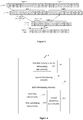
Figure 1 is a scenario diagram of a UE parameter determination method in existing techniques; -
Figure 2 is a flow chart of a UE parameter determination method according to an embodiment; -
Figure 3 is a scenario diagram of a UE parameter determination method according to an embodiment; and -
Figure 4 is a structural diagram of a UE parameter determination apparatus according to an embodiment. - As described in the background, in the existing techniques, TA is divided into a specific TA part for each UE and a fixed TA part applicable to all UEs, and the fixed TA part is transmitted through system information. Similarly, a similar solution may also be adopted for a time (abbreviated as K2) from a slot where an uplink resource of UL grant indication is located to a slot when a UL grant is received. However, existing TA and K2 determination methods may cause the value of TA and K2 to greatly exceed a range of TA and K2 currently defined in the terrestrial network.
- Taking a subcarrier interval of 15kHz as an example, as shown in
Figure 1 , a one-way transmission delay from aslot 0 of a frame of a network base station (for example, gNodeB (gNB)) to a time when a UE receives the frame is more than 5ms, and an RTT between the gNB and the UE is more than 11ms. - To achieve uplink timing synchronization, the gNB configures TA for the UE, so that the UE can complete uplink transmission in a desired time slot. Taking into account the RTT, the UE performs uplink data transmission more than 11ms in advance (that is, TA compensates about 11ms), so that an uplink signal of the UE can be aligned with an uplink frame of the network base station side when the uplink signal of the UE reaches the network base station. Further, a UL grant received by the UE in
time slot 0 offrame 1 indicates that the UE can transmit data intime slot 4 offrame 2, and a value of K2 should be 14 time slots. - With the existing technical solutions, a minimum RTT between the gNB and the UE may be used as the fixed TA part and broadcast through system information, and the specific TA part may be notified to each UE by the gNB through a Timing Advance Command. The same processing applies to K2. Similarly, an interval of other subcarriers can be deduced by analogy and is not repeated here. It can be seen that the existing technical solutions require modification to protocols. Moreover, for the UE, in order to support NTN communication, it is further required to implement relevant software and hardware updates and maintain relevant variables, which increases maintenance cost of software and hardware.
- In an embodiment of the present disclosure, a UE parameter determination method is provided, including: determining a minimum round trip time between each UE in a cell and a satellite; determining frame information of a network-side uplink radio frame based on the minimum round trip time and frame information of a network-side downlink radio frame, where the minimum round trip time is a timing difference by which the network-side uplink radio frame lags behind the network-side downlink radio frame; and determining a UE parameter of each UE based on the network-side uplink radio frame and the network-side downlink radio frame, where the UE parameter includes at least one of TA or K2.
- By the embodiment of the present disclosure, the minimum round trip time may be taken as the timing difference by which the network-side uplink radio frame lags behind the network-side downlink radio frame, so as to obtain the network-side uplink radio frame, and determine the value of TA and/or K2 based on the network-side uplink radio frame. Further, the UE may transmit and receive data based on the network-side uplink radio frame and the network-side downlink radio frame. An ultra-long round trip time in NTN is adjusted through a network to minimize modification of software and hardware of a terrestrial network UE, which may effectively avoid extra maintenance cost of software and hardware of the UE, i.e., NTN communication is supported.
- In order to clarify the objects, characteristics and advantages of the disclosure, embodiments of present disclosure will be described in detail in conjunction with accompanying drawings.
-
Figure 2 is a flow chart of a UE parameter determination method according to an embodiment. - To ensure timing synchronization of a base station on a network side, the network may balance different transmission delays by adjusting uplink timing of each UE, so that uplink signals of each UE can reach the base station synchronously. For example, compared to UEs that are closer to the base station, UEs that are farther from the base station have a longer transmission time, thus, the UEs that are farther from the base station need to transmit uplink data in advance. A timing for transmitting in advance is calculated by the base station and notified to the UE. Specifically, the base station may configure TA for each UE and transmit it to the UE, and the UE adjusts an uplink data transmission timing based on the TA, thereby realizing timing synchronization on the base station side. In NTN communication, as an RTT between the base station and the UE is much larger than an RTT between a base station and a UE in terrestrial network communication, a value range of TA and/or K2 greatly exceeds the currently defined value range.
- Therefore, an embodiment of the present disclosure provides a UE parameter determination method including S101, S102 and S103.
- In S101, a minimum round trip time between each UE in a cell and a satellite is determined.
- In S102, frame information of a network-side uplink radio frame is determined based on the minimum round trip time and frame information of a network-side downlink radio frame, where the minimum round trip time is a timing difference by which the network-side uplink radio frame lags behind the network-side downlink radio frame.
- In S103, a UE parameter of each UE is determined based on the network-side uplink radio frame and the network-side downlink radio frame, where the UE parameter includes at least one of TA or K2. Specifically, the UE parameter of each UE may be determined based on timing of the network-side uplink radio frame and timing of the network-side downlink radio frame.
- In some embodiments, in S101, an NTN base station may determine a round trip time between each UE in the cell and the satellite, so as to obtain a minimum round trip time between the base station and the UE.
- In some embodiments, the NTN base station may determine the minimum round trip time between each UE in the cell and the satellite based on an altitude of the satellite. For example, compare a round trip time between each UE and the satellite to obtain the minimum round trip time. Preferably, the NTN base station may assume that a particular UE is located at a terrestrial plane position closest to the satellite, and determine the round trip time between the particular UE and the satellite as the minimum round trip time.
- In S102, the NTN base station may determine the frame information of the network-side uplink radio frame based on the minimum round trip time and the frame information of the network-side downlink radio frame. Those skilled in the art could understand that for terrestrial networks, the network does not distinguish network-side downlink radio frames and network-side uplink radio frames, and merely uses network-side radio frames as a reference for data transmission and reception.
- In NTN communication, the base station may determine the network-side downlink radio frame and the network-side uplink radio frame for the network side. The frame information of the network-side downlink radio frame and the network-side uplink radio frame may be different. The network-side uplink radio frame lags behind the network-side downlink radio frame.
- Specifically, uplink and downlink timings of the NTN base station are different, and the frame information of the network-side uplink radio frame may be determined based on the minimum round trip time and the frame information of the network-side downlink radio frame. The frame information may include one or more items of information such as frame number, time slot number, index information of subframe number, and the number of time slots included in the radio frame. Those skilled in the art understand that in actual applications, in the NTN base station, the frame information of the network-side uplink radio frame may be changed according to changes in specific applications, which is not described in detail here.
- In some embodiments, the timing difference by which the network-side uplink radio frame lags behind the network-side downlink radio frame may be the minimum round trip time. After the frame information of the network-side downlink radio frame is determined, the minimum round trip time may be delayed to obtain the frame information of the network-side uplink radio frame.
- In some embodiments, for the network side, the network-side uplink and downlink radio frames have different timings. For a particular moment, taking a time slot in the radio frame as an example, a frame number of the network-side downlink radio frame may be different from a frame number of the network-side uplink radio frame at that moment, and a time slot number in the network-side downlink radio frame may be also different from a time slot number in the network-side uplink radio frame.
- The frame numbers and time slot numbers of the network-side uplink radio frame and the network-side downlink radio frame may be different. As shown in
Figure 3 , taking 15kHz as an example, each frame includes 10 time slots, fromtime slot 0 to time slot 9. gNB transmits a UL grant intime slot 0 offrame 1 to instruct a UE to perform uplink transmission intime slot 3 offrame 1, where K2 is 3 time slots, and is determined based on the network-side downlink radio frame and the network-side uplink radio frame. A network-side uplink radio frame timing lags behind a network-side downlink radio frame timing, where a lag time may be the minimum round trip time, or may be a result of rounding down over time slot. - Alternatively, for a particular moment, taking subframes in radio frames as an example, frame numbers of the network-side uplink radio frame and the network-side downlink radio frame at that moment may be different, and subframe numbers in the network-side downlink radio frame and in the network-side uplink radio frame may be also different.
- Further, the minimum RTT may be counted in time slot. Generally, a duration of each time slot is 1 ms. Those skilled in the art could understand that the minimum RTT is obtained by rounding down over time slot to determine the network-side uplink radio frame. Alternatively, the minimum RTT may be counted in subframe. Those skilled in the art could understand that the minimum RTT is obtained by rounding down over subframe to determine the network-side uplink radio frame.
- Further, the NTN base station may determine a TA value with a smaller time slot or subframe based on an existing calculation method and notify the TA value to the UE. For simplicity, a specific calculation process is not described here.
- Further, in S103, an uplink and downlink timing difference of the NTN base station is transparent to the NTN UE. That is, the UE does not need to know that a difference exists between the uplink and downlink timing of the NTN base station.
- Specifically, the NTN base station may use an uplink signal transmitted by the UE, the network-side uplink radio frame and the network-side downlink radio frame to calculate the TA. In some embodiments, the NTN base station may determine the value of TA by measuring a received random access preamble when the UE performs random access. When determining the TA of the UE, the NTN base station calculates it based on the network-side uplink radio frame, that is, when the NTN base station calculates the TA, the minimum round trip time (i.e., the timing difference by which the network-side uplink radio frame lags behind the network-side downlink radio frame) is deducted. Generally, after deducting the timing difference, the NTN base station may calculate the TA based on the measured random access preamble. In this way, the calculated TA value is relatively small, thereby minimizing the modification of existing protocols.
- Those skilled in the art could understand that, for the NTN network, a step for determining K2 is similar to the step of determining TA. When performing UL scheduling on the UE, the NTN base station may deduct the minimum round trip time. Specifically, the NTN base station may calculate the value of K2 after deducting the timing difference by which the network-side uplink radio frame lags behind the network-side downlink radio frame, and a specific calculation process is not described here.
- Afterward, the NTN base station may transmit the calculation result (i.e., the determined TA) to the UE through a Timing Advance Command. Generally, the NTN base station may transmit the calculation result to the UE through a timing advance command field of a random access response.
- From above, with the technical solutions provided by the embodiments of the present disclosure, the UE parameters TA and/or K2 in the NTN network may be determined for the UE without modifying UE-side protocols Further, it is possible to minimize the modification of UE-side relevant protocols, which reduces maintenance cost of UE.
-
Figure 4 is a structural diagram of a UE parameter determination apparatus according to an embodiment. The UEparameter determination apparatus 4 may be used to implement the technical solutions of the UE parameter determination method as shown inFigures 2 and3 , and be applied to the network side, for example, at an NTN base station (for example, 5G gNB). - Specifically, the UE
parameter determination apparatus 4 may include a first determiningcircuitry 41, a second determiningcircuitry 42 and a third determiningcircuitry 43. - The first determining
circuitry 41 is configured to determine a minimum round trip time between each UE in a cell and a satellite; the second determiningcircuitry 42 is configured to determine frame information of a network-side uplink radio frame based on the minimum round trip time and frame information of a network-side downlink radio frame, where the minimum round trip time is a timing difference by which the network-side uplink radio frame lags behind the network-side downlink radio frame; and the third determiningcircuitry 43 is configured to determine a UE parameter of each UE based on the network-side uplink radio frame and the network-side downlink radio frame, where the UE parameter includes at least one of TA or K2. - In some embodiments, the first determining
circuitry 41 includes a determiningsub-circuitry 411. - The determining
sub-circuitry 411 is configured to determine the minimum round trip time between each UE in the cell and the satellite based on an altitude of the satellite. - In some embodiments, the minimum round trip time is counted by time slot, and is obtained by rounding down over time slot; or, the minimum round trip time is counted by subframe, and is obtained by rounding down over subframe.
- In some embodiments, the minimum round trip time is transparent to each UE.
- In some embodiments, the UE parameter is TA, and the third determining
circuitry 43 includes a receivingsub-circuitry 431 and a first calculatingsub-circuitry 432. - The receiving
sub-circuitry 431 is configured to receive an uplink signal from each UE; and the first calculatingsub-circuitry 432 is configured to calculate the TA of each UE based on the uplink signal, the network-side downlink radio frame and the network-side uplink radio frame. - Alternatively, the UE parameter is K2, and the third determining
circuitry 43 includes a second calculatingsub-circuitry 433. The second calculatingsub-circuitry 433 is configured to: when uplink scheduling is performed for each UE, calculate the K2 of each UE based on the network-side uplink radio frame and the network-side downlink radio frame. - More details of working principles and working modes of the UE
parameter determination apparatus 4 can be found in the above descriptions ofFigures 2 and3 , and are not described here. - In an embodiment of the present disclosure, a storage medium having computer instructions stored therein is provided, wherein when the computer instructions are executed, the above UE parameter determination method as shown in
Figures 2 and3 is performed. In some embodiments, the storage medium may include a computer readable storage medium, such as a non-valatile memory or a non-transitory memory. The computer readable storage medium may include a Read Only Memory (ROM), a Random Access Memory (RAM), a magnetic disk or an optical disk. - In an embodiment of the present disclosure, a base station including a memory and a processor is provided, wherein the memory has computer instructions stored therein, and when the processor executes the computer instructions, the above UE parameter determination method as shown in
Figures 2 and3 is performed. In some embodiments, the base station may be a satellite base station. - Although the present disclosure has been disclosed above with reference to preferred embodiments thereof, it should be understood that the disclosure is presented by way of example only, and not limitation. Those skilled in the art can modify and vary the embodiments without departing from the spirit and scope of the present disclosure.
- As described in the background, in the existing techniques, TA is divided into a specific TA part for each UE and a fixed TA part applicable to all UEs, and the fixed TA part is transmitted through system information. Similarly, a similar solution may also be adopted for a time (abbreviated as K2) from a slot where an uplink resource of UL grant indication is located to a slot when a UL grant is received. However, existing TA and K2 determination methods may cause the value of TA and K2 to greatly exceed a range of TA and K2 currently defined in the terrestrial network.
- Taking a subcarrier interval of 15kHz as an example, as shown in
Figure 1 , a one-way transmission delay from aslot 0 of a frame of a network base station (for example, gNodeB (gNB)) to a time when a UE receives the frame is more than 5ms, and an RTT between the gNB and the UE is more than 11ms. - To achieve uplink timing synchronization, the gNB configures TA for the UE, so that the UE can complete uplink transmission in a desired time slot. Taking into account the RTT, the UE performs uplink data transmission more than 11ms in advance (that is, TA compensates about 11ms), so that an uplink signal of the UE can be aligned with an uplink frame of the network base station side when the uplink signal of the UE reaches the network base station. Further, a UL grant received by the UE in
time slot 0 offrame 1 indicates that the UE can transmit data intime slot 4 offrame 2, and a value of K2 should be 14 time slots. - With the existing technical solutions, a minimum RTT between the gNB and the UE may be used as the fixed TA part and broadcast through system information, and the specific TA part may be notified to each UE by the gNB through a Timing Advance Command. The same processing applies to K2. Similarly, an interval of other subcarriers can be deduced by analogy and is not repeated here. It can be seen that the existing technical solutions require modification to protocols. Moreover, for the UE, in order to support NTN communication, it is further required to implement relevant software and hardware updates and maintain relevant variables, which increases maintenance cost of software and hardware.
- In an embodiment of the present disclosure, a UE parameter determination method is provided, including: determining a minimum round trip time between each UE in a cell and a satellite; determining frame information of a network-side uplink radio frame based on the minimum round trip time and frame information of a network-side downlink radio frame, where the minimum round trip time is a timing difference by which the network-side uplink radio frame lags behind the network-side downlink radio frame; and determining a UE parameter of each UE based on the network-side uplink radio frame and the network-side downlink radio frame, where the UE parameter includes at least one of TA or K2.
- By the embodiment of the present disclosure, the minimum round trip time may be taken as the timing difference by which the network-side uplink radio frame lags behind the network-side downlink radio frame, so as to obtain the network-side uplink radio frame, and determine the value of TA and/or K2 based on the network-side uplink radio frame. Further, the UE may transmit and receive data based on the network-side uplink radio frame and the network-side downlink radio frame. An ultra-long round trip time in NTN is adjusted through a network to minimize modification of software and hardware of a terrestrial network UE, which may effectively avoid extra maintenance cost of software and hardware of the UE, i.e., NTN communication is supported.
- In order to clarify the objects, characteristics and advantages of the disclosure, embodiments of present disclosure will be described in detail in conjunction with accompanying drawings.
-
Figure 2 is a flow chart of a UE parameter determination method according to an embodiment. - To ensure timing synchronization of a base station on a network side, the network may balance different transmission delays by adjusting uplink timing of each UE, so that uplink signals of each UE can reach the base station synchronously. For example, compared to UEs that are closer to the base station, UEs that are farther from the base station have a longer transmission time, thus, the UEs that are farther from the base station need to transmit uplink data in advance. A timing for transmitting in advance is calculated by the base station and notified to the UE. Specifically, the base station may configure TA for each UE and transmit it to the UE, and the UE adjusts an uplink data transmission timing based on the TA, thereby realizing timing synchronization on the base station side. In NTN communication, as an RTT between the base station and the UE is much larger than an RTT between a base station and a UE in terrestrial network communication, a value range of TA and/or K2 greatly exceeds the currently defined value range.
- Therefore, an embodiment of the present disclosure provides a UE parameter determination method including S101, S102 and S103.
- In S101, a minimum round trip time between each UE in a cell and a satellite is determined.
- In S102, frame information of a network-side uplink radio frame is determined based on the minimum round trip time and frame information of a network-side downlink radio frame, where the minimum round trip time is a timing difference by which the network-side uplink radio frame lags behind the network-side downlink radio frame.
- In S103, a UE parameter of each UE is determined based on the network-side uplink radio frame and the network-side downlink radio frame, where the UE parameter includes at least one of TA or K2. Specifically, the UE parameter of each UE may be determined based on timing of the network-side uplink radio frame and timing of the network-side downlink radio frame.
- In some embodiments, in S101, an NTN base station may determine a round trip time between each UE in the cell and the satellite, so as to obtain a minimum round trip time between the base station and the UE.
- In some embodiments, the NTN base station may determine the minimum round trip time between each UE in the cell and the satellite based on an altitude of the satellite. For example, compare a round trip time between each UE and the satellite to obtain the minimum round trip time. Preferably, the NTN base station may assume that a particular UE is located at a terrestrial plane position closest to the satellite, and determine the round trip time between the particular UE and the satellite as the minimum round trip time.
- In S102, the NTN base station may determine the frame information of the network-side uplink radio frame based on the minimum round trip time and the frame information of the network-side downlink radio frame. Those skilled in the art could understand that for terrestrial networks, the network does not distinguish network-side downlink radio frames and network-side uplink radio frames, and merely uses network-side radio frames as a reference for data transmission and reception.
- In NTN communication, the base station may determine the network-side downlink radio frame and the network-side uplink radio frame for the network side. The frame information of the network-side downlink radio frame and the network-side uplink radio frame may be different. The network-side uplink radio frame lags behind the network-side downlink radio frame.
- Specifically, uplink and downlink timings of the NTN base station are different, and the frame information of the network-side uplink radio frame may be determined based on the minimum round trip time and the frame information of the network-side downlink radio frame. The frame information may include one or more items of information such as frame number, time slot number, index information of subframe number, and the number of time slots included in the radio frame. Those skilled in the art understand that in actual applications, in the NTN base station, the frame information of the network-side uplink radio frame may be changed according to changes in specific applications, which is not described in detail here.
- In some embodiments, the timing difference by which the network-side uplink radio frame lags behind the network-side downlink radio frame may be the minimum round trip time. After the frame information of the network-side downlink radio frame is determined, the minimum round trip time may be delayed to obtain the frame information of the network-side uplink radio frame.
- In some embodiments, for the network side, the network-side uplink and downlink radio frames have different timings. For a particular moment, taking a time slot in the radio frame as an example, a frame number of the network-side downlink radio frame may be different from a frame number of the network-side uplink radio frame at that moment, and a time slot number in the network-side downlink radio frame may be also different from a time slot number in the network-side uplink radio frame.
- The frame numbers and time slot numbers of the network-side uplink radio frame and the network-side downlink radio frame may be different. As shown in
Figure 3 , taking 15kHz as an example, each frame includes 10 time slots, fromtime slot 0 to time slot 9. gNB transmits a UL grant intime slot 0 offrame 1 to instruct a UE to perform uplink transmission intime slot 3 offrame 1, where K2 is 3 time slots, and is determined based on the network-side downlink radio frame and the network-side uplink radio frame. A network-side uplink radio frame timing lags behind a network-side downlink radio frame timing, where a lag time may be the minimum round trip time, or may be a result of rounding down over time slot. - Alternatively, for a particular moment, taking subframes in radio frames as an example, frame numbers of the network-side uplink radio frame and the network-side downlink radio frame at that moment may be different, and subframe numbers in the network-side downlink radio frame and in the network-side uplink radio frame may be also different.
- Further, the minimum RTT may be counted in time slot. Generally, a duration of each time slot is 1 ms. Those skilled in the art could understand that the minimum RTT is obtained by rounding down over time slot to determine the network-side uplink radio frame. Alternatively, the minimum RTT may be counted in subframe. Those skilled in the art could understand that the minimum RTT is obtained by rounding down over subframe to determine the network-side uplink radio frame.
- Further, the NTN base station may determine a TA value with a smaller time slot or subframe based on an existing calculation method and notify the TA value to the UE. For simplicity, a specific calculation process is not described here.
- Further, in S103, an uplink and downlink timing difference of the NTN base station is transparent to the NTN UE. That is, the UE does not need to know that a difference exists between the uplink and downlink timing of the NTN base station.
- Specifically, the NTN base station may use an uplink signal transmitted by the UE, the network-side uplink radio frame and the network-side downlink radio frame to calculate the TA. In some embodiments, the NTN base station may determine the value of TA by measuring a received random access preamble when the UE performs random access. When determining the TA of the UE, the NTN base station calculates it based on the network-side uplink radio frame, that is, when the NTN base station calculates the TA, the minimum round trip time (i.e., the timing difference by which the network-side uplink radio frame lags behind the network-side downlink radio frame) is deducted. Generally, after deducting the timing difference, the NTN base station may calculate the TA based on the measured random access preamble. In this way, the calculated TA value is relatively small, thereby minimizing the modification of existing protocols.
- Those skilled in the art could understand that, for the NTN network, a step for determining K2 is similar to the step of determining TA. When performing UL scheduling on the UE, the NTN base station may deduct the minimum round trip time. Specifically, the NTN base station may calculate the value of K2 after deducting the timing difference by which the network-side uplink radio frame lags behind the network-side downlink radio frame, and a specific calculation process is not described here.
- Afterward, the NTN base station may transmit the calculation result (i.e., the determined TA) to the UE through a Timing Advance Command. Generally, the NTN base station may transmit the calculation result to the UE through a timing advance command field of a random access response.
- From above, with the technical solutions provided by the embodiments of the present disclosure, the UE parameters TA and/or K2 in the NTN network may be determined for the UE without modifying UE-side protocols Further, it is possible to minimize the modification of UE-side relevant protocols, which reduces maintenance cost of UE.
-
Figure 4 is a structural diagram of a UE parameter determination apparatus according to an embodiment. The UEparameter determination apparatus 4 may be used to implement the technical solutions of the UE parameter determination method as shown inFigures 2 and3 , and be applied to the network side, for example, at an NTN base station (for example, 5G gNB). - Specifically, the UE
parameter determination apparatus 4 may include a first determiningcircuitry 41, a second determiningcircuitry 42 and a third determiningcircuitry 43. - The first determining
circuitry 41 is configured to determine a minimum round trip time between each UE in a cell and a satellite; the second determiningcircuitry 42 is configured to determine frame information of a network-side uplink radio frame based on the minimum round trip time and frame information of a network-side downlink radio frame, where the minimum round trip time is a timing difference by which the network-side uplink radio frame lags behind the network-side downlink radio frame; and the third determiningcircuitry 43 is configured to determine a UE parameter of each UE based on the network-side uplink radio frame and the network-side downlink radio frame, where the UE parameter includes at least one of TA or K2. - In some embodiments, the first determining
circuitry 41 includes a determiningsub-circuitry 411. - The determining
sub-circuitry 411 is configured to determine the minimum round trip time between each UE in the cell and the satellite based on an altitude of the satellite. - In some embodiments, the minimum round trip time is counted by time slot, and is obtained by rounding down over time slot; or, the minimum round trip time is counted by subframe, and is obtained by rounding down over subframe.
- In some embodiments, the minimum round trip time is transparent to each UE.
- In some embodiments, the UE parameter is TA, and the third determining
circuitry 43 includes a receivingsub-circuitry 431 and a first calculatingsub-circuitry 432. - The receiving
sub-circuitry 431 is configured to receive an uplink signal from each UE; and the first calculatingsub-circuitry 432 is configured to calculate the TA of each UE based on the uplink signal, the network-side downlink radio frame and the network-side uplink radio frame. - Alternatively, the UE parameter is K2, and the third determining
circuitry 43 includes a second calculatingsub-circuitry 433. The second calculatingsub-circuitry 433 is configured to: when uplink scheduling is performed for each UE, calculate the K2 of each UE based on the network-side uplink radio frame and the network-side downlink radio frame. - More details of working principles and working modes of the UE
parameter determination apparatus 4 can be found in the above descriptions ofFigures 2 and3 , and are not described here. - In an embodiment of the present disclosure, a storage medium having computer instructions stored therein is provided, wherein when the computer instructions are executed, the above UE parameter determination method as shown in
Figures 2 and3 is performed. In some embodiments, the storage medium may include a computer readable storage medium, such as a non-valatile memory or a non-transitory memory. The computer readable storage medium may include a Read Only Memory (ROM), a Random Access Memory (RAM), a magnetic disk or an optical disk. - In an embodiment of the present disclosure, a base station including a memory and a processor is provided, wherein the memory has computer instructions stored therein, and when the processor executes the computer instructions, the above UE parameter determination method as shown in
Figures 2 and3 is performed. In some embodiments, the base station may be a satellite base station. - Although the present disclosure has been disclosed above with reference to preferred embodiments thereof, it should be understood that the disclosure is presented by way of example only, and not limitation. Those skilled in the art can modify and vary the embodiments without departing from the spirit and scope of the present disclosure.
Claims (14)
- A User Equipment (UE) parameter determination method, comprising:determining a minimum round trip time between each UE in a cell and a satellite;determining frame information of a network-side uplink radio frame based on the minimum round trip time and frame information of a network-side downlink radio frame, where the minimum round trip time is a timing difference by which the network-side uplink radio frame lags behind the network-side downlink radio frame; anddetermining a UE parameter of each UE based on the network-side uplink radio frame and the network-side downlink radio frame, where the UE parameter comprises at least one of Timing Advance (TA) or K2.
- The UE parameter determination method according to claim 1, wherein determining the minimum round trip time between each UE in the cell and the satellite comprises:
determining the minimum round trip time between each UE in the cell and the satellite based on an altitude of the satellite. - The UE parameter determination method according to claim 1 or 2, wherein the minimum round trip time is counted by time slot, and is obtained by rounding down over time slot; or, the minimum round trip time is counted by subframe, and is obtained by rounding down over subframe.
- The UE parameter determination method according to claim 1 or 2, wherein the minimum round trip time is transparent to each UE.
- The UE parameter determination method according to claim 1, wherein the UE parameter is TA, and determining the UE parameter of each UE based on the network-side uplink radio frame and the network-side downlink radio frame comprises:receiving an uplink signal from each UE; andcalculating the TA of each UE based on the uplink signal, the network-side downlink radio frame and the network-side uplink radio frame.
- The UE parameter determination method according to claim 1, wherein the UE parameter is K2, and determining the UE parameter of each UE based on the network-side uplink radio frame and the network-side downlink radio frame comprises:
when performing uplink scheduling for each UE, calculating the K2 of each UE based on the network-side uplink radio frame and the network-side downlink radio frame. - A User Equipment (UE) parameter determination apparatus, comprising:a first determining circuitry configured to determine a minimum round trip time between each UE in a cell and a satellite;a second determining circuitry configured to determine frame information of a network-side uplink radio frame based on the minimum round trip time and frame information of a network-side downlink radio frame, where the minimum round trip time is a timing difference by which the network-side uplink radio frame lags behind the network-side downlink radio frame; anda third determining circuitry configured to determine a UE parameter of each UE based on the network-side uplink radio frame and the network-side downlink radio frame, where the UE parameter comprises at least one of Timing Advance (TA) or K2.
- The UE parameter determination apparatus according to claim 7, wherein the first determining circuitry comprises:
a determining sub-circuitry configured to determine the minimum round trip time between each UE in the cell and the satellite based on an altitude of the satellite. - The UE parameter determination apparatus according to claim 7 or 8, wherein the minimum round trip time is counted by time slot, and is obtained by rounding down over time slot; or, the minimum round trip time is counted by subframe, and is obtained by rounding down over subframe.
- The UE parameter determination apparatus according to claim 7 or 8, wherein the minimum round trip time is transparent to each UE.
- The UE parameter determination apparatus according to claim 7, wherein the UE parameter is TA, and the third determining circuitry comprises:a receiving sub-circuitry configured to receive an uplink signal from each UE; anda first calculating sub-circuitry configured to calculate the TA of each UE based on the uplink signal, the network-side downlink radio frame and the network-side uplink radio frame.
- The UE parameter determination apparatus according to claim 7, wherein the UE parameter is K2, and the third determining circuitry comprises:
a second calculating sub-circuitry configured to: when uplink scheduling is performed for each UE, calculate the K2 of each UE based on the network-side uplink radio frame and the network-side downlink radio frame. - A storage medium having computer instructions stored therein, wherein when the computer instructions are executed, the User Equipment (UE) parameter determination method of any one of claims 1 to 6 is performed.
- A base station comprising a memory and a processor, wherein the memory has computer instructions stored therein, and when the processor executes the computer instructions, the User Equipment (UE) parameter determination method of any one of claims 1 to 6 is performed.
Applications Claiming Priority (2)
| Application Number | Priority Date | Filing Date | Title |
|---|---|---|---|
| CN201811012648.5A CN110876188B (en) | 2018-08-31 | 2018-08-31 | Method and device for determining user equipment parameters, storage medium, and base station |
| PCT/CN2019/096463 WO2020042808A1 (en) | 2018-08-31 | 2019-07-18 | User equipment parameter determination method and apparatus, and storage medium and base station |
Publications (2)
| Publication Number | Publication Date |
|---|---|
| EP3846552A1 true EP3846552A1 (en) | 2021-07-07 |
| EP3846552A4 EP3846552A4 (en) | 2022-05-18 |
Family
ID=69644690
Family Applications (1)
| Application Number | Title | Priority Date | Filing Date |
|---|---|---|---|
| EP19854728.3A Pending EP3846552A4 (en) | 2018-08-31 | 2019-07-18 | METHOD AND APPARATUS FOR DETERMINING USER EQUIPMENT PARAMETERS, AS WELL AS STORAGE HOLDER AND BASE STATION |
Country Status (6)
| Country | Link |
|---|---|
| US (1) | US11909505B2 (en) |
| EP (1) | EP3846552A4 (en) |
| JP (1) | JP7410133B2 (en) |
| KR (1) | KR102484964B1 (en) |
| CN (1) | CN110876188B (en) |
| WO (1) | WO2020042808A1 (en) |
Cited By (1)
| Publication number | Priority date | Publication date | Assignee | Title |
|---|---|---|---|---|
| EP4564059A4 (en) * | 2022-08-09 | 2025-10-15 | Huawei Tech Co Ltd | POSITIONING METHOD AND APPARATUS |
Families Citing this family (23)
| Publication number | Priority date | Publication date | Assignee | Title |
|---|---|---|---|---|
| EP4068858B1 (en) | 2019-06-14 | 2023-12-13 | Ofinno, LLC | Non-access stratum connection handling in ntn |
| CN112566193B (en) * | 2019-09-26 | 2022-06-14 | 华为技术有限公司 | Cell switching method and device |
| CN111064539B (en) * | 2019-12-23 | 2021-10-26 | 展讯半导体(南京)有限公司 | Uplink synchronization method, communication device and storage medium |
| CN115486147A (en) * | 2020-06-19 | 2022-12-16 | Oppo广东移动通信有限公司 | Wireless communication method, terminal device and network device |
| CN114270727B (en) * | 2020-07-16 | 2024-02-09 | 北京小米移动软件有限公司 | Timing advance indication and uplink signal sending method and device |
| WO2022027319A1 (en) | 2020-08-05 | 2022-02-10 | Apple Inc. | Random access preamble transmission using a timing-based partition of preamble space |
| US12317326B2 (en) * | 2020-08-05 | 2025-05-27 | Apple Inc. | Resolution of mismatch in calculation of random access radio network temporary identifier |
| WO2022027409A1 (en) | 2020-08-06 | 2022-02-10 | Zte Corporation | Systems and methods for random access channel resource determination |
| WO2022027654A1 (en) * | 2020-08-07 | 2022-02-10 | Apple Inc. | Applying time gap offsets for non-terrestrial networks |
| US11825436B2 (en) | 2020-08-07 | 2023-11-21 | Apple Inc. | Extending a time gap range for non-terrestrial networks |
| MX2023002127A (en) * | 2020-08-21 | 2023-03-15 | Lenovo Beijing Ltd | Method and apparatus for delay indication. |
| WO2022061739A1 (en) * | 2020-09-25 | 2022-03-31 | 北京小米移动软件有限公司 | Transmission delay compensation method and apparatus, communication device and storage medium |
| JP2023182860A (en) * | 2020-10-26 | 2023-12-27 | 株式会社Nttドコモ | Terminal, base station and communication method |
| CN113079559B (en) * | 2021-03-31 | 2022-02-18 | 中国科学院上海微系统与信息技术研究所 | Inter-satellite link power distribution method for medium and low orbit satellite combined networking |
| ES3034299T3 (en) * | 2021-04-01 | 2025-08-14 | Fraunhofer Ges Forschung | Signaling of feeder link and common delay in ntn |
| WO2022226803A1 (en) * | 2021-04-27 | 2022-11-03 | 北京小米移动软件有限公司 | Method and device for adjusting uplink timing, and storage medium |
| CN115811800A (en) * | 2021-09-15 | 2023-03-17 | 中国移动通信有限公司研究院 | Information transmission method and device and computer readable storage medium |
| DE102022210364A1 (en) | 2022-09-29 | 2024-04-04 | Continental Automotive Technologies GmbH | Method and wireless communication system for improving energy efficient coverage |
| WO2024168622A1 (en) * | 2023-02-15 | 2024-08-22 | 北京小米移动软件有限公司 | Information transmission method and apparatus, communication device, and storage medium |
| GB2627491A (en) * | 2023-02-24 | 2024-08-28 | Airspan Ip Holdco Llc | Timing advance calculation |
| EP4694415A4 (en) * | 2023-03-31 | 2026-04-22 | Beijing Xiaomi Mobile Software Co Ltd | INFORMATION PROCESSING METHODS AND DEVICES, COMMUNICATION DEVICE AND STORAGE MEDIUM |
| CN118054895B (en) * | 2024-04-16 | 2024-08-09 | 广东世炬网络科技股份有限公司 | Method, device, equipment and medium for constructing satellite NTN (network time division duplex) radio frame of time division duplex |
| CN118540781A (en) * | 2024-06-12 | 2024-08-23 | 北京佰才邦技术股份有限公司 | Uplink and downlink frame timing method, electronic device and storage medium of non-terrestrial network |
Family Cites Families (40)
| Publication number | Priority date | Publication date | Assignee | Title |
|---|---|---|---|---|
| GB2347828B (en) | 1999-03-05 | 2004-05-19 | Internat Mobile Satellite Orga | Communication methods and apparatus |
| JP2000269786A (en) * | 1999-03-16 | 2000-09-29 | Sony Corp | Broadcast receiver |
| EP1261227A1 (en) | 2001-05-21 | 2002-11-27 | Motorola, Inc. | Method and apparatus for increased information transfer in a communication system |
| US7574224B2 (en) | 2005-06-13 | 2009-08-11 | Qualcomm Incorporated | Methods and apparatus for performing timing synchronization with base stations |
| CN102217352B (en) | 2008-11-18 | 2016-04-20 | 诺基亚技术有限公司 | Carry out relaying in a communications system |
| US8717972B2 (en) * | 2009-10-29 | 2014-05-06 | Alcatel Lucent | Method for range extension in wireless communication systems |
| US9276722B2 (en) | 2010-05-05 | 2016-03-01 | Qualcomm Incorporated | Expanded search space for R-PDCCH in LTE-A |
| CN102088763B (en) * | 2010-08-11 | 2014-04-02 | 电信科学技术研究院 | Relay timing adjusting method, system and device |
| US9602990B2 (en) * | 2011-04-11 | 2017-03-21 | Qualcomm Incorporated | Method for providing network-based measurements for user equipment-based positioning |
| PL3442154T3 (en) * | 2011-05-02 | 2020-10-19 | Telefonaktiebolaget Lm Ericsson (Publ) | Method and apparatus for prohibiting sounding reference signal transmission on newly activated secondary cells in a wireless communication system |
| CN103313380A (en) | 2012-03-16 | 2013-09-18 | 北京三星通信技术研究有限公司 | Uplink scheduling method and equipment |
| CN103379435B (en) * | 2012-04-28 | 2017-02-08 | 电信科学技术研究院 | Broadcast message transmission method and device based on satellite mobile communication system |
| CN103702408B (en) | 2012-09-27 | 2017-03-15 | 上海贝尔股份有限公司 | The method and apparatus of uplink synchronous |
| CN103346829B (en) * | 2013-07-01 | 2016-04-20 | 北京大学 | Measurement method for satellite communication compatible with LTE mode initial random access two step time-delay measuring method |
| US9479298B2 (en) * | 2013-07-08 | 2016-10-25 | Intel IP Corporation | Demodulation reference signals (DMRS)for side information for interference cancellation |
| US20160028533A1 (en) * | 2014-02-03 | 2016-01-28 | Telefonaktiebolaget L M Ericsson (Publ) | Adaptive uplink-downlink switching time for half duplex operation |
| US9332466B2 (en) | 2014-03-20 | 2016-05-03 | Qualcomm Incorporated | Uplink timing advance adjustment |
| US20160094315A1 (en) * | 2014-09-29 | 2016-03-31 | Electronics And Telecommunications Research Institute | Method and apparatus for transmitting and receiving physical channel and signal |
| US9900856B2 (en) | 2015-03-20 | 2018-02-20 | Qualcomm Incorporated | Method and apparatus for time or frequency synchronization in non-geosynchronous satellite communication systems |
| WO2017072745A1 (en) | 2015-10-30 | 2017-05-04 | Paris Michaels | Mobile satellite communication system |
| JP6753205B2 (en) | 2016-08-10 | 2020-09-09 | ソニー株式会社 | Communication device, communication method and recording medium |
| US10405332B2 (en) * | 2016-09-06 | 2019-09-03 | Samsung Electronics Co., Ltd. | Coexistence of different radio access technologies or services on a same carrier |
| KR102567727B1 (en) * | 2016-10-19 | 2023-08-18 | 아이피엘에이 홀딩스 인크. | Device |
| US10299266B2 (en) * | 2017-03-20 | 2019-05-21 | Honeywell International Inc. | Delay calculation in wireless systems |
| CN107197517B (en) * | 2017-08-02 | 2020-11-06 | 电子科技大学 | LTE satellite uplink synchronization method based on TA grouping |
| US10375669B2 (en) * | 2017-08-04 | 2019-08-06 | Qualcomm Incorporated | Methods and systems for locating a mobile device using an asynchronous wireless network |
| JP6938809B2 (en) * | 2017-08-11 | 2021-09-22 | 5ジー アイピー ホールディングス エルエルシー | Devices and methods for intermittent reception operation in the new radio |
| US10863547B2 (en) * | 2017-11-09 | 2020-12-08 | Qualcomm Incorporated | Adapting timing advance for multiple RACH transmission in backhaul networks |
| US11832205B2 (en) * | 2017-11-21 | 2023-11-28 | Qualcomm Incorporated | Open loop uplink timing advance |
| US11019583B2 (en) * | 2018-05-04 | 2021-05-25 | Nokia Technologies Oy | Method for network-assisted uplink time advance for extreme range support |
| WO2020031155A1 (en) | 2018-08-10 | 2020-02-13 | Telefonaktiebolaget Lm Ericsson (Publ) | Systems and methods for uplink transmission timing |
| US11277854B2 (en) * | 2019-01-22 | 2022-03-15 | T-Mobile Usa, Inc. | Systems and methods to enhance spectrum efficiency and to reduce latency by using dynamic guard time selection in wireless systems |
| US12010659B2 (en) * | 2019-08-30 | 2024-06-11 | Qualcomm Incorporated | Techniques for a radio access network entity to adjust timing in wireless networks |
| US11950212B2 (en) * | 2019-12-12 | 2024-04-02 | Qualcomm Incorporated | Timing advance signaling for multi-transmit receive point operation |
| US11671932B2 (en) * | 2020-01-20 | 2023-06-06 | Qualcomm Incorporated | Timing adjust for a non-terrestrial network |
| US11690054B2 (en) * | 2020-01-22 | 2023-06-27 | Qualcomm Incorporated | Gap enhancements in wireless networks |
| US11937193B2 (en) * | 2020-04-01 | 2024-03-19 | Qualcomm Incorporated | Timing improvements for wireless communications systems |
| US12335892B2 (en) * | 2020-04-01 | 2025-06-17 | Qualcomm Incorporated | Data channel timelines in wireless communications systems |
| US20230292371A1 (en) * | 2020-08-06 | 2023-09-14 | Telefonaktiebolaget Lm Ericsson (Publ) | Rar window definition in ntn |
| US12167356B2 (en) * | 2021-01-15 | 2024-12-10 | Sharp Kabushiki Kaisha | Method of channel scheduling for narrowband internet of things in non-terrestrial network and user equipment using the same |
-
2018
- 2018-08-31 CN CN201811012648.5A patent/CN110876188B/en active Active
-
2019
- 2019-07-18 US US17/271,867 patent/US11909505B2/en active Active
- 2019-07-18 EP EP19854728.3A patent/EP3846552A4/en active Pending
- 2019-07-18 WO PCT/CN2019/096463 patent/WO2020042808A1/en not_active Ceased
- 2019-07-18 KR KR1020217008415A patent/KR102484964B1/en active Active
- 2019-07-18 JP JP2021510777A patent/JP7410133B2/en active Active
Cited By (1)
| Publication number | Priority date | Publication date | Assignee | Title |
|---|---|---|---|---|
| EP4564059A4 (en) * | 2022-08-09 | 2025-10-15 | Huawei Tech Co Ltd | POSITIONING METHOD AND APPARATUS |
Also Published As
| Publication number | Publication date |
|---|---|
| KR20210047906A (en) | 2021-04-30 |
| US20210194572A1 (en) | 2021-06-24 |
| JP2021536691A (en) | 2021-12-27 |
| US11909505B2 (en) | 2024-02-20 |
| KR102484964B1 (en) | 2023-01-04 |
| CN110876188B (en) | 2020-09-01 |
| JP7410133B2 (en) | 2024-01-09 |
| CN110876188A (en) | 2020-03-10 |
| WO2020042808A1 (en) | 2020-03-05 |
| EP3846552A4 (en) | 2022-05-18 |
Similar Documents
| Publication | Publication Date | Title |
|---|---|---|
| US11909505B2 (en) | User equipment parameter determination method and apparatus, and storage medium and base station | |
| US12557052B2 (en) | Timing and frequency adjustments in non-terrestrial networks | |
| US12439356B2 (en) | User equipment and method for timing alignment | |
| US11316586B2 (en) | Frequency adjustment for high speed LTE deployments | |
| EP2343935B1 (en) | Method of uplink synchronization and related communication device | |
| US12477493B2 (en) | Transmission method, terminal, and network device | |
| EP3846557A1 (en) | Ro indication and determination method and device, storage medium, base station and terminal | |
| KR102600900B1 (en) | Method and apparatus for a ue ta reporting in a wireless communication system | |
| US12425999B2 (en) | Method and apparatus for timing synchronization in communication system | |
| US20240031964A1 (en) | Adjustment method and determination method for transmission timing, and terminal device | |
| US20240292468A1 (en) | Method and apparatus for timing advance compensation | |
| CN116235567A (en) | Method and device for delay indication | |
| EP4496417A1 (en) | Method and apparatus for performing uplink transmission and reception in wireless communication system | |
| EP4104548A1 (en) | Systems and methods for supporting coherent transmissions in a non-terrestrial network | |
| EP4258794A1 (en) | Random access method, electronic device and storage medium | |
| US20230262632A1 (en) | Method and apparatus for determining timing advance value | |
| EP3002978B1 (en) | Method for remote coverage and base station | |
| EP4280790A1 (en) | Method and device for performing random access procedure in wireless communication system | |
| EP4161123A1 (en) | Wireless communication method, terminal, base station, system, electronic device and medium | |
| EP4518459A1 (en) | Method and device for uplink transmission and reception in wireless communication system | |
| US12634857B2 (en) | Systems and methods for supporting coherent transmissions in a non-terrestrial network | |
| CN121604094A (en) | Timing adjustment, communication method, terminal and network side equipment | |
| WO2022213368A1 (en) | Method and apparatus for determining timing advance value | |
| KR20260049095A (en) | Method and apparatus for adjusting uplink timing advance in non-terrestrial network |
Legal Events
| Date | Code | Title | Description |
|---|---|---|---|
| STAA | Information on the status of an ep patent application or granted ep patent |
Free format text: STATUS: THE INTERNATIONAL PUBLICATION HAS BEEN MADE |
|
| STAA | Information on the status of an ep patent application or granted ep patent |
Free format text: STATUS: REQUEST FOR EXAMINATION WAS MADE |
|
| PUAI | Public reference made under article 153(3) epc to a published international application that has entered the european phase |
Free format text: ORIGINAL CODE: 0009012 |
|
| 17P | Request for examination filed |
Effective date: 20210209 |
|
| AK | Designated contracting states |
Kind code of ref document: A1 Designated state(s): AL AT BE BG CH CY CZ DE DK EE ES FI FR GB GR HR HU IE IS IT LI LT LU LV MC MK MT NL NO PL PT RO RS SE SI SK SM TR |
|
| DAV | Request for validation of the european patent (deleted) | ||
| DAX | Request for extension of the european patent (deleted) | ||
| A4 | Supplementary search report drawn up and despatched |
Effective date: 20220420 |
|
| RIC1 | Information provided on ipc code assigned before grant |
Ipc: H04W 84/06 20090101ALN20220412BHEP Ipc: H04B 7/185 20060101ALI20220412BHEP Ipc: H04W 56/00 20090101AFI20220412BHEP |
|
| STAA | Information on the status of an ep patent application or granted ep patent |
Free format text: STATUS: EXAMINATION IS IN PROGRESS |
|
| 17Q | First examination report despatched |
Effective date: 20250226 |