EP3846536A1 - Method performed by user equipment, user equipment and handover command generation method - Google Patents
Method performed by user equipment, user equipment and handover command generation method Download PDFInfo
- Publication number
- EP3846536A1 EP3846536A1 EP19855127.7A EP19855127A EP3846536A1 EP 3846536 A1 EP3846536 A1 EP 3846536A1 EP 19855127 A EP19855127 A EP 19855127A EP 3846536 A1 EP3846536 A1 EP 3846536A1
- Authority
- EP
- European Patent Office
- Prior art keywords
- handover
- configuration
- condition
- base station
- command
- Prior art date
- Legal status (The legal status is an assumption and is not a legal conclusion. Google has not performed a legal analysis and makes no representation as to the accuracy of the status listed.)
- Granted
Links
Images


Classifications
-
- H—ELECTRICITY
- H04—ELECTRIC COMMUNICATION TECHNIQUE
- H04W—WIRELESS COMMUNICATION NETWORKS
- H04W76/00—Connection management
- H04W76/10—Connection setup
- H04W76/19—Connection re-establishment
-
- H—ELECTRICITY
- H04—ELECTRIC COMMUNICATION TECHNIQUE
- H04W—WIRELESS COMMUNICATION NETWORKS
- H04W36/00—Hand-off or reselection arrangements
- H04W36/0005—Control or signalling for completing the hand-off
- H04W36/0011—Control or signalling for completing the hand-off for data sessions of end-to-end connection
- H04W36/0033—Control or signalling for completing the hand-off for data sessions of end-to-end connection with transfer of context information
- H04W36/0038—Control or signalling for completing the hand-off for data sessions of end-to-end connection with transfer of context information of security context information
-
- H—ELECTRICITY
- H04—ELECTRIC COMMUNICATION TECHNIQUE
- H04W—WIRELESS COMMUNICATION NETWORKS
- H04W36/00—Hand-off or reselection arrangements
- H04W36/0005—Control or signalling for completing the hand-off
- H04W36/0055—Transmission or use of information for re-establishing the radio link
- H04W36/0058—Transmission of hand-off measurement information, e.g. measurement reports
-
- H—ELECTRICITY
- H04—ELECTRIC COMMUNICATION TECHNIQUE
- H04W—WIRELESS COMMUNICATION NETWORKS
- H04W36/00—Hand-off or reselection arrangements
- H04W36/0005—Control or signalling for completing the hand-off
- H04W36/0055—Transmission or use of information for re-establishing the radio link
- H04W36/0079—Transmission or use of information for re-establishing the radio link in case of hand-off failure or rejection
-
- H—ELECTRICITY
- H04—ELECTRIC COMMUNICATION TECHNIQUE
- H04W—WIRELESS COMMUNICATION NETWORKS
- H04W36/00—Hand-off or reselection arrangements
- H04W36/34—Reselection control
- H04W36/36—Reselection control by user or terminal equipment
- H04W36/362—Conditional handover
-
- H—ELECTRICITY
- H04—ELECTRIC COMMUNICATION TECHNIQUE
- H04W—WIRELESS COMMUNICATION NETWORKS
- H04W76/00—Connection management
- H04W76/20—Manipulation of established connections
- H04W76/27—Transitions between radio resource control [RRC] states
-
- H—ELECTRICITY
- H04—ELECTRIC COMMUNICATION TECHNIQUE
- H04W—WIRELESS COMMUNICATION NETWORKS
- H04W36/00—Hand-off or reselection arrangements
- H04W36/0005—Control or signalling for completing the hand-off
- H04W36/0083—Determination of parameters used for hand-off, e.g. generation or modification of neighbour cell lists
- H04W36/00838—Resource reservation for handover
Definitions
- the present disclosure relates to the technical field of wireless communications. More specifically, the present disclosure relates to a method performed by user equipment, user equipment, and a handover command generation method.
- a new research project on 5G technical standards was approved in the 3rd Generation Partnership Project (3GPP) RAN#80 plenary session held in June 2018.
- 3GPP 3rd Generation Partnership Project
- One of the research objectives of this project is to meet one of the mobility requirements in NR seamless handover, namely, to achieve a handover interruption time period of 0 millisecond in a cell handover procedure.
- a solution is referred to as a conditional handover (CHO).
- a base station delivers in advance a handover command to UE, and the UE is configured to perform a handover according to the previously received handover command when a certain condition is met, so that by delivering the handover command in advance, the success rate of receiving a handover command can be increased, thereby avoiding a service interruption delay caused by a handover failure resulting from a failure in receiving a handover command.
- the present disclosure provides solutions to some problems encountered in implementation of the CHO in an NR system.
- the present disclosure provides a method performed by user equipment, user equipment, and a handover command generation handover method, and can solve the problem encountered in implementation of the CHO technology in an NR system. More specifically, the present disclosure provides solutions to problems regarding how UE manages a received CHO command in an NR system and how to determine the validity of the CHO command stored by the UE.
- a method performed by user equipment comprising: receiving a handover command comprising a handover condition, and storing a handover configuration in the handover command, wherein when the handover condition is met, the user equipment performs the handover configuration corresponding to the handover condition; and if a master cell group (MCG) failure is detected or if it is detected that a security update needs to be performed, performing at least an operation related to the stored handover configuration.
- MCG master cell group
- RRC radio resource control
- a handover is performed on the basis of the stored handover configuration, and a target cell is accessed.
- the stored handover configuration is discarded.
- a method performed by user equipment comprising: receiving a first handover command comprising a first handover condition, storing a first handover configuration in the first handover command, and starting a first handover configuration validity timer corresponding to the first handover configuration, wherein when the first handover condition is met, the user equipment performs the first handover configuration corresponding to the first handover condition, and the first handover configuration validity timer is used to specify a validity period of the first handover configuration; and if indication information is received from a network side, stopping or re-starting the first handover configuration validity timer according to the indication information.
- the first handover configuration validity timer is re-started; otherwise, the first handover configuration validity timer is stopped.
- RRC radio resource control
- a handover command not comprising a handover condition is received as the indication information, or if the first handover condition is met, then a handover is performed, and the first handover configuration validity timer is stopped.
- a handover command generation method for generating a handover command used to perform a handover from a source base station to a target base station and comprising a handover condition, wherein when the handover condition is met, user equipment performs the handover corresponding to the handover condition
- the handover command generation method comprising: transmitting, from the source base station to the target base station, a handover preparation information radio resource control (RRC) message comprising the handover condition; upon receiving the handover preparation information RRC message and deciding to accept the current handover, adding, by the target base station, the handover condition to a handover command RRC message, and transmitting the handover command RRC message to the source base station; and transmitting, by the source base station, the received handover command comprising the handover condition to the user equipment.
- RRC radio resource control
- user equipment comprising: a processor; and a memory, stored with instructions, wherein when executed by the processor, the instructions execute any aforementioned method performed by user equipment.
- a solution to the problem of generating and managing a handover command in a system supporting a conditional handover is provided, so that UE can determine the validity of the handover command, thereby avoiding a service interruption caused by a connection failure resulting from a handover performed by the UE on the basis of an invalid handover command.
- LTE Long Term Evolution
- NR New Radio
- a source cell can also be referred to as a source base station, or can be a source beam or a source transmission point (TRP), and a target cell can also be referred to as a target base station, or can be a target beam or a target transmission point.
- the source cell refers to a base station serving UE before a handover procedure is executed, or a cell serving the UE or on which the UE camps before a cell reselection occurs.
- the target cell refers to a base station serving the UE after the handover procedure is executed, or in other words, a cell indicated in a handover command; or a cell serving the UE or on which the UE camps after the cell reselection occurs.
- the UE after receiving a radio resource control (RRC) message including a handover command, the UE maintains communication, including data transmission, with the source base station before performing a handover, so as to further reduce data transmission interruption time.
- RRC radio resource control
- FIG. 1 a general handover procedure in an LTE/NR system is briefly described.
- the mobility of a user in a connected state is implemented mainly by means of a handover procedure.
- the procedure is shown in FIG. 1 , and is briefly described below:
- the handover procedure in the LTE system may incur data transmission interruption.
- optimizations for the handover procedure such as random access-free handover, all aim to shorten a handover delay and reduce handover overheads.
- the 5G NR technology requires a shortest data interruption delay possible of 0 ms in a mobility handover process, so as to meet the mobility requirement for seamless handover in the NR.
- a handover command receiving failure caused when the handover command is not delivered in a timely manner.
- a feasible method to address this problem is a conditional handover (CHO).
- CHO conditional handover
- a relatively conservative measurement report threshold is set, such that the base station acquires a measurement result in advance, and executes a handover preparation procedure with a selected target base station according to the measurement result.
- the base station can deliver the handover command to the UE before an actual handover condition is met, where the handover command carries a handover execution condition.
- the present solution allows the UE not to perform a handover immediately after receiving a handover command. Instead, the UE performs detection according to a handover condition carried in the handover command message, and only when detecting that the configured handover condition is met, starts to execute the handover command and access a target cell.
- the above handover command is used to trigger the UE to perform network side-controlled mobility, namely a handover, and is usually referred to as an RRC reconfiguration message including an information element of synchronized reconfiguration (Reconfigurationwithsync) or an information element of mobility control information (MobilityControlInformation).
- RRC reconfiguration message including an information element of synchronized reconfiguration (Reconfigurationwithsync) or an information element of mobility control information (MobilityControlInformation).
- the information element of synchronized reconfiguration or the information element of mobility control information includes configuration information of the target base station, is used to configure mobility information, such as the configuration information of the target base station, to the UE during the network side-controlled mobility, and is usually included in a master cell configuration (an information element of masterCellGroupConfig or an information element of cellgroupconfig for a master cell group) or a secondary cell configuration (an information element of secondaryCellGroupConfig or an information element of cellgroupconfig for a secondary cell group).
- the handover generally refers to a handover controlled by a network side or the UE, a cell change, a serving cell change, a master cell change, a master/secondary cell change, an intra-cell handover used for a security update, synchronized reconfiguration, and the like, performed in an RRC connected state.
- a handover command, a handover configuration in the handover command, and a handover configuration validity timer corresponding to the handover configuration can be effectively managed, so that UE can further determine the validity of the handover command, thereby avoiding a service interruption caused by a connection failure resulting from a handover performed by the UE on the basis of an invalid handover command.
- FIG. 2 is a flowchart of a method performed by user equipment according to the present disclosure. As shown in FIG. 2 , the method includes step S201 and step S203.
- step S201 a handover command including a handover condition is received, and a handover configuration in the handover command is stored, wherein when the handover condition is met, user equipment performs the handover configuration corresponding to the handover condition.
- step S203 if an MCG failure is detected or if it is detected that a security update needs to be performed, at least an operation related to the stored handover configuration is performed.
- a solution for managing a handover configuration in a handover command including a handover condition is provided. If an MCG failure is detected or if it is detected that a security update needs to be performed, then at least an operation related to the stored handover configuration is performed. For example, if an MCG failure is detected, then an RRC connection reestablishment procedure is performed, and the stored handover configuration is discarded; or, a handover is performed on the basis of the stored handover configuration, and a target cell is accessed. Therefore, a handover configuration in a handover command including a handover condition can be effectively managed.
- FIG. 3 is a flowchart of another method performed by user equipment according to the present disclosure. As shown in FIG. 3 , the method includes step S301 and step S303.
- step S301 a first handover command including a first handover condition is received, a first handover configuration in the first handover command is stored, and a corresponding first handover configuration validity timer is started, wherein when the first handover condition is met, user equipment performs the corresponding first handover configuration, and the first handover configuration validity timer is used to specify a validity period of the first handover configuration.
- step S303 if indication information is received from a network side, the first handover configuration validity timer is stopped or re-started according to the indication information.
- a solution for managing a handover configuration validity timer corresponding to a handover configuration in a handover command including a handover condition is provided.
- the handover configuration validity timer is used to specify a validity period of the handover configuration, and for example, the validity period of the handover configuration is configured to be an operating period of the timer. If indication information is received from a network side, then the handover configuration validity timer is stopped or re-started according to the indication information. For example, if an RRC message including a stopping condition is received as the indication information, and if the stopping condition is met, then the handover configuration validity timer is stopped.
- a handover configuration validity timer corresponding to a handover configuration in a handover command including a handover condition can be effectively managed, and user equipment can determine the validity of the handover command, thereby avoiding a service interruption caused by a connection failure resulting from a handover performed on the basis of an invalid handover command.
- FIG. 4 is a flowchart of a handover command generation method according to the present disclosure. As shown in FIG. 4 , the method includes step S401, step S403, and step S405.
- a source base station transmits to a target base station a handover preparation information RRC message including a handover condition.
- step S403 upon receiving the handover preparation information RRC message and deciding to accept the current handover, the target base station adds the handover condition to a handover command RRC message and transmits the handover command RRC message to the source base station.
- step S405 the source base station transmits to user equipment the received handover command including the handover condition.
- a management solution for generating a handover command including a handover condition is provided.
- a target base station adds, to the handover command, a handover condition received from a source base station in advance, so as to generate a conditional handover command, so that a required handover command including a handover condition can be flexibly generated. Therefore, generation of a handover command including a handover condition can be effectively managed.
- This embodiment provides a method for managing a handover configuration when a master cell group (MCG) failure occurs.
- the method is performed on UE, and includes:
- the RRC connection reestablishment procedure is used to reestablish an RRC connection if an MCG failure occurs.
- the occurrence of an MCG failure may refer to the following: a radio link failure of an MCG is detected, equivalent to poor link quality; synchronized reconfiguration of an MCG fails; an integrity verification failure indication related to a signaling radio bearer (SRB) or a data radio bearer (DRB) is received from a lower layer; RRC connection reconfiguration fails; an NR/LTE mobility failure occurs (equivalent to a mobility failure between systems of different radio access technologies when a source base station belongs to an NR/LTE system); and the like.
- the method further includes: the UE receives a handover command transmitted from a base station and including a first condition and stores a handover configuration in the handover command.
- the handover configuration refers to an RRC configuration generated by the UE according to the configuration in the handover command.
- the handover configuration refers to an RRC configuration generated by the UE according to the configuration in the handover command and a current RRC configuration of the UE.
- the first condition refers to a handover condition. That is, only when the first condition is met would the UE perform a handover and apply the handover configuration generated on the basis of the handover command.
- the first condition may be a measurement event.
- the first condition may be that signal quality in a neighboring cell is superior to that in a serving cell by a value exceeding a threshold for a period of time.
- the neighboring cell corresponds to the target cell for handover.
- the discarding/removal of the stored handover configuration can also be described as considering the stored handover configuration to be invalid.
- the MCG refers to a serving cell group corresponding to a master base station and including a master cell and zero or one or more secondary cells.
- the MCG refers to all serving cells, including a master cell, of the UE.
- step 2 further includes stopping a corresponding handover configuration validity timer.
- a UE side manages a received and stored handover configuration.
- the UE considers a received or stored handover configuration to be valid; when the timer does not run, for example, when the timer times out or is stopped, the UE considers the received or stored handover configuration to be invalid, or the UE removes/clears/discards the received or stored handover configuration information.
- the handover configuration validity timer is configured by the base station using an RRC message, such as a first RRC message including a handover command.
- the configuration of the validity timer includes a value of the timer.
- the validity timer can be configured by a source cell or by a target cell.
- the validity timer and/or a configuration thereof can distinguish each handover command or distinguish each target cell, or the validity timer is configured to distinguish a handover command or a target cell, and a value thereof is a common value shared among all handover commands or target cells.
- This embodiment provides a method for managing a handover configuration when an MCG failure occurs.
- the method is performed on UE, and includes:
- the RRC connection reestablishment procedure is used to reestablish an RRC connection if an MCG failure occurs.
- the occurrence of an MCG failure may refer to the following: a radio link failure of an MCG is detected, equivalent to poor link quality; synchronized reconfiguration of an MCG fails; an integrity verification failure indication related to an SRB or a DRB is received from a lower layer; RRC connection reconfiguration fails; an NR/LTE mobility failure occurs (equivalent to a mobility failure between systems of different radio access technologies when a source base station belongs to an NR/LTE system); and the like.
- the method further includes: the UE receives a handover command transmitted from the base station and including a first condition and stores a handover configuration in the handover command.
- the handover configuration refers to an RRC configuration generated by the UE according to the configuration in the handover command.
- the handover configuration refers to an RRC configuration generated by the UE according to the configuration in the handover command and a current RRC configuration of the UE.
- the first condition refers to a handover condition. That is, only when the first condition is met would the UE perform a handover and apply the handover configuration generated on the basis of the handover command.
- the first condition may be a measurement event.
- the first condition may be that signal quality in a neighboring cell is superior to that in a serving cell by a value exceeding a threshold for a period of time.
- the neighboring cell corresponds to the target cell for handover.
- the discarding/removal of the stored handover configuration can also be described as considering the stored handover configuration to be invalid.
- step 3 further includes stopping a corresponding handover configuration validity timer.
- a UE side manages a received and stored handover configuration.
- the UE considers a received or stored handover configuration to be valid; when the timer does not run, for example, when the timer times out or is stopped, the UE considers the received or stored handover configuration to be invalid, or the UE removes/clears/discards the received or stored handover configuration information.
- the handover configuration validity timer is configured by the base station using an RRC message, such as a first RRC message including a handover command.
- the configuration of the validity timer includes a value of the timer.
- the validity timer can be configured by a source cell or by a target cell.
- the validity timer and/or a configuration thereof can distinguish each handover command or distinguish each target cell, or the validity timer is configured to distinguish a handover command or a target cell, and a value thereof is a common value shared among all handover commands or target cells.
- This embodiment provides another method for managing a handover configuration when an MCG failure occurs.
- the method is performed on UE, and includes:
- the detection of an MCG failure may refer to the following: a radio link failure of an MCG is detected, equivalent to poor link quality; synchronized reconfiguration of an MCG fails; an integrity verification failure indication related to an SRB or a DRB is received from a lower layer; RRC connection reconfiguration fails; an NR/LTE mobility failure occurs (equivalent to a mobility failure between systems of different radio access technologies when a source base station belongs to an NR/LTE system); and the like.
- the method further includes: the UE receives a handover command transmitted from a base station and including a first condition and stores a handover configuration in the handover command.
- the handover configuration refers to an RRC configuration generated by the UE according to the configuration in the handover command.
- the handover configuration refers to an RRC configuration generated by the UE according to the configuration in the handover command and a current RRC configuration of the UE.
- the first condition refers to a handover condition. That is, only when the first condition is met would the UE perform a handover and apply the handover configuration generated on the basis of the handover command.
- the first condition may be a measurement event.
- the first condition may be that signal quality in a neighboring cell is superior to that in a serving cell by a value exceeding a threshold for a period of time.
- the neighboring cell corresponds to the target cell for handover.
- the UE of this embodiment uses the stored handover configuration thereon to access the target base station, so that the UE can more quickly resume a connection to a network side, thereby reducing a service interruption delay.
- this embodiment is also applicable to a scenario in which UE stores a plurality of handover configurations with respect to a plurality of handover target cells.
- the UE determines one target cell and then performs a handover. For example, the UE may select, based on downlink quality of target cells, a target cell having the highest link quality, and then perform a handover.
- This embodiment provides another method for managing a handover configuration when an MCG failure occurs.
- the method is performed on UE, and includes:
- the MCG failure information procedure is initiated when the UE detects an MCG failure and is used to report to a base station that an MCG failure occurs.
- the UE initiates an MCG failure information procedure, and reports the MCG failure information, such as the cause of the MCG failure, to the base station.
- the detection of an MCG failure may refer to the following: a radio link failure of an MCG is detected, equivalent to poor link quality; synchronized reconfiguration of an MCG fails; an integrity verification failure indication related to an SRB or a DRB is received from a lower layer; RRC connection reconfiguration fails; an NR/LTE mobility failure occurs (equivalent to a mobility failure between systems of different radio access technologies when a source base station belongs to an NR/LTE system); and the like.
- the method further includes: the UE receives a handover command transmitted from a base station and including a first condition and stores a handover configuration in the handover command.
- the handover configuration refers to an RRC configuration generated by the UE according to the configuration in the handover command.
- the handover configuration refers to an RRC configuration generated by the UE according to the configuration in the handover command and a current RRC configuration of the UE.
- the first condition refers to a handover condition. That is, only when the first condition is met would the UE perform a handover and apply the handover configuration generated on the basis of the handover command.
- the first condition may be a measurement event.
- the first condition may be that signal quality in a neighboring cell is superior to that in a serving cell by a value exceeding a threshold for a period of time.
- the neighboring cell corresponds to the target cell for handover.
- the discarding/removal of the stored handover configuration can also be described as considering the stored handover configuration to be invalid.
- step 2 further includes stopping a corresponding handover configuration validity timer.
- a UE side manages a received and stored handover configuration.
- the UE considers a received or stored handover configuration to be valid; when the timer does not run, for example, when the timer times out or is stopped, the UE considers the received or stored handover configuration to be invalid, or the UE removes/clears/discards the received or stored handover configuration information.
- the handover configuration validity timer is configured by the base station using an RRC message, such as a first RRC message including a handover command.
- the configuration of the validity timer includes a value of the timer.
- the validity timer can be configured by a source cell or by a target cell.
- the validity timer and/or a configuration thereof can distinguish each handover command or distinguish each target cell, or the validity timer is configured to distinguish a handover command or a target cell, and a value thereof is a common value shared among all handover commands or target cells.
- This embodiment provides a method for managing a handover configuration during a security update.
- the method is performed on UE, and includes:
- the security update procedure is used to update security context, such as a security algorithm and a security key, on the UE, and may also be referred to as a security key update procedure.
- the security update indication is a key update (keyrefresh) information element included in a radio bearer configuration information element in an RRC message.
- the method further includes: the UE receives a handover command transmitted from the base station and including a first condition and stores a handover configuration in the handover command.
- the handover configuration refers to an RRC configuration generated by the UE according to the configuration in the handover command.
- the handover configuration refers to an RRC configuration generated by the UE according to the configuration in the handover command and a current RRC configuration of the UE.
- the first condition refers to a handover condition. That is, only when the first condition is met would the UE perform a handover and apply the handover configuration generated on the basis of the handover command.
- the first condition may be a measurement event.
- the first condition may be that signal quality in a neighboring cell is superior to that in a serving cell by a value exceeding a threshold for a period of time.
- the neighboring cell corresponds to the target cell for handover.
- step 2 further includes stopping a corresponding handover configuration validity timer.
- a UE side manages a received and stored handover configuration.
- the UE considers a received or stored handover configuration to be valid; when the timer does not run, for example, when the timer times out or is stopped, the UE considers the received or stored handover configuration to be invalid, or the UE removes/clears/discards the received or stored handover configuration information.
- the handover configuration validity timer is configured by the base station using an RRC message, such as a first RRC message including a handover command.
- the configuration of the validity timer includes a value of the timer.
- the validity timer can be configured by a source cell or by a target cell.
- the validity timer and/or a configuration thereof can distinguish each handover command or distinguish each target cell, or the validity timer is configured to distinguish a handover command or a target cell, and a value thereof is a common value shared among all handover commands or target cells.
- This embodiment provides a method for managing a handover configuration validity timer.
- the method is performed on UE, and includes:
- Step 1 further includes: the UE receives a handover command transmitted from the base station and including the first condition, stores a handover configuration in the handover command, and starts a corresponding handover configuration validity timer.
- the handover configuration refers to an RRC configuration generated by the UE according to the configuration in the handover command.
- the handover configuration refers to an RRC configuration generated by the UE according to the configuration in the handover command and a current RRC configuration of the UE.
- the first condition refers to a handover condition. That is, only when the first condition is met would the UE perform a handover and apply the handover configuration generated on the basis of the handover command.
- the first condition may be a measurement event.
- the first condition may be that signal quality in a neighboring cell is superior to that in a serving cell by a value exceeding a threshold for a period of time.
- the neighboring cell corresponds to the target cell for handover.
- the first condition in step 1 may be the same as or different from the first condition in step 2.
- a UE side manages a received and stored handover configuration.
- the UE considers a received or stored handover configuration to be valid; when the timer does not run, for example, when the timer times out or is stopped, the UE considers the received or stored handover configuration to be invalid, or the UE removes/clears/discards the received or stored handover configuration information.
- the handover configuration validity timer is configured by the base station using an RRC message, such as a first RRC message including a handover command.
- the configuration of the validity timer includes a value of the timer.
- the validity timer can be configured by a source cell or by a target cell.
- the validity timer and/or a configuration thereof can distinguish each handover command or distinguish each target cell, or the validity timer is configured to distinguish a handover command or a target cell, and a value thereof is a common value shared among all handover commands or target cells.
- step 3 is described as: re-starting a handover configuration validity timer with respect to the first target cell.
- This embodiment provides a method for managing a conditional handover configuration validity timer.
- the method is performed on UE, and includes:
- the second condition is configured by the base station using the RRC message.
- the RRC message may be a system message or a dedicated RRC message, such as RRC connection reconfiguration, and may further be a handover command RRC message including a first condition.
- the second condition can be configured by a target cell or by a source cell.
- the second condition can be any combination of one or more of the following events, but is not limited to the following events:
- the neighboring cell in the above event refers to the corresponding target cell in the handover command.
- the serving cell and the target cell in the above event can be of different Radio Access Technologies (RATs).
- the configuration of the second condition or event can be a configuration based on a measurement event in LTE. For example, when the second condition is the event 3, the threshold in the event is set to "th,” and a Time To Trigger (TTT) value is set to duration, the UE detects signal quality in the source cell and the target cell. When a difference between a measurement value of signal quality in the source cell and that in the neighboring cell is greater than or equal to "th,” and this situation lasts for the duration, the UE considers that the second condition is met.
- TTTT Time To Trigger
- a UE side manages a received and stored handover configuration.
- the UE considers a received or stored handover configuration to be valid; when the timer does not run, for example, when the timer times out or is stopped, the UE considers the received or stored handover configuration to be invalid, or the UE removes/clears/discards the received or stored handover configuration information.
- the handover configuration validity timer is configured by the base station using an RRC message, such as a first RRC message including a handover command.
- the configuration of the validity timer includes a value of the timer.
- the validity timer can be configured by a source cell or by a target cell.
- the validity timer and/or a configuration thereof can distinguish each handover command or distinguish each target cell, or the validity timer is configured to distinguish a handover command or a target cell, and a value thereof is a common value shared among all handover commands or target cells.
- the method further includes: the UE receives a handover command transmitted from the base station and including the first condition, stores a handover configuration in the handover command, and starts a corresponding handover configuration validity timer.
- the handover configuration refers to an RRC configuration generated by the UE according to the configuration in the handover command.
- the handover configuration refers to an RRC configuration generated by the UE according to the configuration in the handover command and a current RRC configuration of the UE.
- the first condition refers to a handover condition. That is, only when the first condition is met would the UE perform a handover and apply the handover configuration generated on the basis of the handover command.
- the first condition may be a measurement event.
- the first condition may be that signal quality in a neighboring cell is superior to that in a serving cell by a value exceeding a threshold for a period of time.
- the neighboring cell corresponds to the target cell for handover.
- This embodiment is also applicable to a scenario in which a plurality of handover commands or a plurality of handover target cells are supported.
- the foregoing operations in this embodiment are performed individually for a handover command or a handover target cell.
- the configuration of the second condition can be configured by each handover target cell or can be shared by all handover target cells.
- the UE operation of this embodiment when the second condition corresponding to a handover target cell is met, the UE performs the corresponding operation of step 2 on only a handover configuration corresponding to a corresponding handover target cell.
- This embodiment provides a method for managing a handover configuration validity timer.
- the method is performed on UE, and includes:
- the UE performing a handover in step 1 can be the UE performing a conditional handover on the basis of a stored handover configuration, and can also be performing a conventional handover, equivalent to the UE immediately performing a handover upon receiving a handover command not including the first condition. If the UE performs a conditional handover in step 1, then, prior to step 1, the method further includes: the UE receives a handover command transmitted from the base station and including the first condition, stores a handover configuration in the handover command, and starts a corresponding handover configuration validity timer.
- the handover configuration refers to an RRC configuration generated by the UE according to the configuration in the handover command.
- the handover configuration refers to an RRC configuration generated by the UE according to the configuration in the handover command and a current RRC configuration of the UE.
- the first condition refers to a handover condition. That is, only when the first condition is met would the UE perform a handover and apply the handover configuration generated on the basis of the handover command.
- the first condition may be a measurement event.
- the first condition may be that signal quality in a neighboring cell is superior to that in a serving cell by a value exceeding a threshold for a period of time.
- the neighboring cell corresponds to the target cell for handover.
- a UE side manages a received and stored handover configuration.
- the UE considers a received or stored handover configuration to be valid; when the timer does not run, for example, when the timer times out or is stopped, the UE considers the received or stored handover configuration to be invalid, or the UE removes/clears/discards the received or stored handover configuration information.
- the handover configuration validity timer is configured by the base station using an RRC message, such as a first RRC message including a handover command.
- the configuration of the validity timer includes a value of the timer.
- the validity timer can be configured by a source cell or by a target cell.
- the validity timer and/or a configuration thereof can distinguish each handover command or distinguish each target cell, or the validity timer is configured to distinguish a handover command or a target cell, and a value thereof is a common value shared among all handover commands or target cells.
- the handover configuration validity timer in step 2 refers to a handover configuration validity timer other than a handover configuration validity timer corresponding to a target cell to which the UE currently performs a handover.
- the handover configuration validity timer in step 2 can be a handover configuration validity timer corresponding to target cells in all handover configurations stored by the UE.
- the performing a handover in step 1 can also be described as applying an RRC configuration including the handover command.
- a handover command delivered to UE is generated by a target base station and is delivered to the UE by a source base station.
- the source base station does not modify the handover command. It is considered that a handover decision is made by the source base station.
- the first condition used for a conditional handover should be preferably configured by the source base station.
- how to add the first condition configured by the source base station to a handover command that cannot be modified by the source base station becomes a problem.
- the following embodiments provide methods for addressing the problem.
- This embodiment provides a method for generating a conditional handover command, and the method is performed on a source base station and a target base station of a handover.
- Step 1 the source base station initiates a handover preparation procedure and transmits to the target base station a handover preparation information (HandoverPreparationInformation) RRC message including a first condition.
- the first condition can indicate to the target base station that the current handover is a conditional handover.
- the first condition refers to a handover condition. That is, only when the first condition is met would the UE perform a handover and apply the handover configuration generated on the basis of the handover command.
- the first condition may be a measurement event.
- the first condition may be that signal quality in a neighboring cell is superior to that in a serving cell by a value exceeding a threshold for a period of time.
- the neighboring cell corresponds to the target cell for handover.
- Step 2 after the target base station receives the handover preparation information RRC message transmitted from the source base station and including the first condition, if the target base station decides to accept the current handover of the UE, then the target base station transmits to the source base station a handover command RRC message including the first condition. That is, the target base station adds the first condition received in step 1 to the handover command RRC message generated thereby and transmits the handover command RRC message to the source base station.
- Step 3 the source base station delivers to the UE the received handover command including the first condition.
- the handover preparation information RRC message including the first condition in step 1 is included in an XnAP handover request message, and the handover command RRC message including the first condition in step 2 is included in an XnAP handover response message.
- Xn is an interface between the source base station and the target base station in an NR system, and corresponds to an X2 interface in an LTE system.
- This embodiment provides a method for generating a conditional handover command, and corresponding to embodiment 9, the method is performed on a source base station of a handover.
- Step 1 the source base station initiates a handover preparation procedure and transmits to the target base station a handover preparation information (HandoverPreparationInformation) RRC message including a first condition.
- the first condition can indicate to the target base station that the current handover is a conditional handover.
- the first condition refers to a handover condition. That is, only when the first condition is met would the UE perform a handover and apply the handover configuration generated on the basis of the handover command.
- the first condition may be a measurement event.
- the first condition may be that signal quality in a neighboring cell is superior to that in a serving cell by a value exceeding a threshold for a period of time.
- the neighboring cell corresponds to the target cell for handover.
- Step 2 an X2AP or XnAP message transmitted from the target base station and including a handover command RRC message is received, the handover command RRC message including the first condition used for the conditional handover.
- Step 3 the handover command RRC message including the first condition is delivered to the UE.
- the handover preparation information RRC message including the first condition in step 1 is included in an XnAP handover request message, and the handover command RRC message including the first condition in step 2 is included in an XnAP handover response message.
- Xn is an interface between the source base station and the target base station in an NR system, and corresponds to an X2 interface in an LTE system.
- This embodiment provides a method for generating a conditional handover command, and corresponding to embodiment 9, the method is performed on a target base station of a handover.
- Step 1 a handover preparation information (HandoverPreparationInformation) RRC message transmitted from a source base station and including a first condition is received.
- the first condition can indicate to the target base station that the current handover is a conditional handover.
- the first condition refers to a handover condition. That is, only when the first condition is met would the UE perform a handover and apply the handover configuration generated on the basis of the handover command.
- the first condition may be a measurement event.
- the first condition may be that signal quality in a neighboring cell is superior to that in a serving cell by a value exceeding a threshold for a period of time.
- the neighboring cell corresponds to the target cell for handover.
- Step 2 after the handover preparation information RRC message transmitted from the source base station and including the first condition, if the target base station decides to accept the current handover of the UE, then a handover command RRC message including the first condition is transmitted to the source base station. That is, the target base station adds the first condition received in step 1 to the handover command RRC message generated thereby and transmits the handover command RRC message to the source base station.
- the handover preparation information RRC message including the first condition in step 1 is included in an XnAP handover request message, and the handover command RRC message including the first condition in step 2 is included in an XnAP handover response message.
- Xn is an interface between the source base station and the target base station in an NR system, and corresponds to an X2 interface in an LTE system.
- the term “base station” refers to a mobile communication data and control switching center with a larger transmit power and a wider coverage area, and has functions of resource distribution scheduling, data receiving and transmitting, and the like.
- the term “user equipment” refers to a user mobile terminal, for example, a terminal device capable of performing wireless communication with a base station or a micro base station, including a mobile phone, a notebook computer and the like.
- the methods and related devices according to the present disclosure have been described above in conjunction with preferred embodiments. It should be understood by those skilled in the art that the methods shown above are only exemplary. The method according to the present disclosure is not limited to steps or sequences shown above.
- the base station and user equipment shown above may include more modules.
- the base station and user equipment may further include modules that may be developed or will be developed in the future to be applied to a base station, an MME, or UE.
- Various identifiers shown above are only exemplary, not for limitation, and the present disclosure is not limited to specific information elements serving as examples of these identifiers. Those skilled in the art can make various alterations and modifications according to the teachings of the illustrated embodiments.
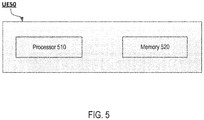
- FIG. 5 shows a block diagram of user equipment (UE) 50 according to an embodiment of the present disclosure.
- the UE 50 includes a processor 510 and a memory 520.
- the processor 510 may include, for example, a microprocessor, a microcontroller, an embedded processor, and so on.
- the memory 520 may include, for example, a volatile memory (for example, a random access memory (RAM)), a hard disk drive (HDD), a non-volatile memory (for example, a flash memory), or other memories.
- Program instructions are stored on the memory 520. When executed by the processor 510, the instructions can execute the aforementioned method in the user equipment as described in detail in the present disclosure.
- the program running on the device may be a program that enables a computer to implement the functions of the embodiments of the present disclosure by controlling a central processing unit (CPU).
- the program or information processed by the program can be stored temporarily in a volatile memory (e.g., Random Access Memory (RAM)), a Hard Disk Drive (HDD), a non-volatile memory (e.g., flash memory), or other memory systems.
- RAM Random Access Memory
- HDD Hard Disk Drive
- non-volatile memory e.g., flash memory
- the program for implementing the functions of the embodiments of the present disclosure may be recorded on a computer-readable recording medium.
- the corresponding functions can be achieved by reading programs recorded on the recording medium and executing these programs by the computer system.
- the so-called "computer system” may be a computer system embedded in the device, which may include operating systems or hardware (e.g., peripherals).
- the "computer-readable recording medium” may be a semiconductor recording medium, an optical recording medium, a magnetic recording medium, a short-time dynamic memory program, or any other recording medium readable by a computer.
- circuits e.g., monolithic or multi-chip integrated circuits.
- Circuits designed to execute the functions described in this description may include general-purpose processors, Digital Signal Processors (DSPs), Application Specific Integrated Circuits (ASICs), Field Programmable Gate Arrays (FPGAs) or other programmable logic devices, discrete gates or transistor logic, or discrete hardware components, or any combination of the above.
- the general-purpose processor may be a microprocessor, or may be any existing processor, a controller, a microcontroller, or a state machine.
- the circuit may be a digital circuit or an analog circuit.
- the present disclosure is not limited to the embodiments described above. Although various examples of the described embodiments have been described, the present disclosure is not limited thereto. Fixed or non-mobile electronic devices mounted indoors or outdoors, such as AV equipment, kitchen equipment, cleaning equipment, air conditioner, office equipment, vending machines, and other household appliances, may be used as terminal devices or communications devices.
Landscapes
- Engineering & Computer Science (AREA)
- Computer Networks & Wireless Communication (AREA)
- Signal Processing (AREA)
- Computer Security & Cryptography (AREA)
- Mobile Radio Communication Systems (AREA)
Abstract
Description
- The present disclosure relates to the technical field of wireless communications. More specifically, the present disclosure relates to a method performed by user equipment, user equipment, and a handover command generation method.
- A new research project on 5G technical standards (see non-patent literature: RP-181433: New WID on NR (New Radio) mobility enhancements) was approved in the 3rd Generation Partnership Project (3GPP) RAN#80 plenary session held in June 2018. One of the research objectives of this project is to meet one of the mobility requirements in NR seamless handover, namely, to achieve a handover interruption time period of 0 millisecond in a cell handover procedure. Among currently studied solutions for reducing a handover interruption time, a solution is referred to as a conditional handover (CHO). In the CHO mechanism, a base station delivers in advance a handover command to UE, and the UE is configured to perform a handover according to the previously received handover command when a certain condition is met, so that by delivering the handover command in advance, the success rate of receiving a handover command can be increased, thereby avoiding a service interruption delay caused by a handover failure resulting from a failure in receiving a handover command.
- The present disclosure provides solutions to some problems encountered in implementation of the CHO in an NR system.
- In order to solve at least part of the aforementioned problems, the present disclosure provides a method performed by user equipment, user equipment, and a handover command generation handover method, and can solve the problem encountered in implementation of the CHO technology in an NR system. More specifically, the present disclosure provides solutions to problems regarding how UE manages a received CHO command in an NR system and how to determine the validity of the CHO command stored by the UE.
- According to a first aspect of the present disclosure, a method performed by user equipment (UE) is provided, comprising: receiving a handover command comprising a handover condition, and storing a handover configuration in the handover command, wherein when the handover condition is met, the user equipment performs the handover configuration corresponding to the handover condition; and if a master cell group (MCG) failure is detected or if it is detected that a security update needs to be performed, performing at least an operation related to the stored handover configuration.
- In the aforementioned method, optionally, if an MCG failure is detected, then a radio resource control (RRC) connection reestablishment procedure is initiated, and the stored handover configuration is discarded.
- In the aforementioned method, optionally, if an MCG failure is detected, then a handover is performed on the basis of the stored handover configuration, and a target cell is accessed.
- In the aforementioned method, optionally, if it is detected that a security update needs to be performed, then the stored handover configuration is discarded.
- According to a second aspect of the present disclosure, a method performed by user equipment is provided, comprising: receiving a first handover command comprising a first handover condition, storing a first handover configuration in the first handover command, and starting a first handover configuration validity timer corresponding to the first handover configuration, wherein when the first handover condition is met, the user equipment performs the first handover configuration corresponding to the first handover condition, and the first handover configuration validity timer is used to specify a validity period of the first handover configuration; and if indication information is received from a network side, stopping or re-starting the first handover configuration validity timer according to the indication information.
- In the aforementioned method, optionally, if a second handover command comprising the first handover condition is received as the indication information, and if the second handover command and the first handover command correspond to the same target cell and are associated with the same handover configuration validity timer, then the first handover configuration validity timer is re-started; otherwise, the first handover configuration validity timer is stopped.
- In the aforementioned method, optionally, if a radio resource control (RRC) message comprising a stopping condition is received as the indication information, and if the stopping condition is met, then the first handover configuration validity timer is stopped.
- In the aforementioned method, optionally, if a handover command not comprising a handover condition is received as the indication information, or if the first handover condition is met, then a handover is performed, and the first handover configuration validity timer is stopped.
- According to a third aspect of the present disclosure, provided is a handover command generation method for generating a handover command used to perform a handover from a source base station to a target base station and comprising a handover condition, wherein when the handover condition is met, user equipment performs the handover corresponding to the handover condition, the handover command generation method comprising: transmitting, from the source base station to the target base station, a handover preparation information radio resource control (RRC) message comprising the handover condition; upon receiving the handover preparation information RRC message and deciding to accept the current handover, adding, by the target base station, the handover condition to a handover command RRC message, and transmitting the handover command RRC message to the source base station; and transmitting, by the source base station, the received handover command comprising the handover condition to the user equipment.
- According to a fourth aspect of the present disclosure, user equipment is provided, comprising: a processor; and a memory, stored with instructions, wherein when executed by the processor, the instructions execute any aforementioned method performed by user equipment.
- According to the method performed by user equipment, the user equipment, and the handover command generation handover method in the present disclosure, a solution to the problem of generating and managing a handover command in a system supporting a conditional handover is provided, so that UE can determine the validity of the handover command, thereby avoiding a service interruption caused by a connection failure resulting from a handover performed by the UE on the basis of an invalid handover command.
- The above and other features of the present disclosure will become more apparent with the following detailed description in conjunction with the accompanying drawings.
-
FIG. 1 is a schematic sequence diagram of a general handover procedure in an LTE/NR system; -
FIG. 2 is a flowchart of a method performed by user equipment according to the present disclosure; -
FIG. 3 is a flowchart of another method performed by user equipment according to the present disclosure; -
FIG. 4 is a flowchart of a handover command generation method according to the present disclosure; and -
FIG. 5 is a block diagram of the user equipment involved in the present disclosure. - The present disclosure is described in detail below with reference to the accompanying drawings and specific embodiments.
- In the present disclosure, the terms "include" and "comprise" and derivatives thereof mean inclusion without limitation; the term "or" may have an inclusive meaning and means "and/or."
- In the present specification, the following various embodiments for describing the principles of the present disclosure are merely illustrative and should not be interpreted in any way as limiting the scope of the disclosure. The following description with reference to the accompanying drawings is used to facilitate full understanding of the exemplary embodiments of the present disclosure defined by the claims and equivalents thereof. The following description includes a variety of specific details to facilitate understanding, but these details should be considered merely exemplary. Therefore, those of ordinary skill in the art should recognize that various changes and modifications may be made to the embodiments described herein without departing from the scope and spirit of the present disclosure. In addition, the description of the known function and structure is omitted for clarity and simplicity. In addition, the same reference numerals are used for similar functions and operations throughout the accompanying drawings.
- A plurality of embodiments according to the present disclosure are specifically described below by using a Long Term Evolution (LTE)/NR mobile communication system and subsequent evolved versions thereof as an exemplary application environment. However, it is to be noted that the present disclosure is not limited to the following embodiments but may be applied to other wireless communications systems. In the present disclosure, unless otherwise specified, the concept of a cell and the concept of a base station are interchangeable. An LTE system may also refer to a 5G LTE system and a post-5G LTE system (such as an LTE system referred to as an eLTE system or an LTE system that can be connected to a 5G core network). In addition, the LTE can be replaced with an evolved universal terrestrial radio access network (E-UTRAN) or an evolved universal terrestrial radio access (E-UTRA). In the present disclosure, a source cell can also be referred to as a source base station, or can be a source beam or a source transmission point (TRP), and a target cell can also be referred to as a target base station, or can be a target beam or a target transmission point. The source cell refers to a base station serving UE before a handover procedure is executed, or a cell serving the UE or on which the UE camps before a cell reselection occurs. The target cell refers to a base station serving the UE after the handover procedure is executed, or in other words, a cell indicated in a handover command; or a cell serving the UE or on which the UE camps after the cell reselection occurs.
- In the present application, after receiving a radio resource control (RRC) message including a handover command, the UE maintains communication, including data transmission, with the source base station before performing a handover, so as to further reduce data transmission interruption time.
- Firstly, a general handover procedure in an LTE/NR system is briefly described. The mobility of a user in a connected state is implemented mainly by means of a handover procedure. The procedure is shown in
FIG. 1 , and is briefly described below: - Phase 1: A base station delivers a measurement configuration to user equipment (UE); the UE performs, on the basis of the measurement configuration, measurement on a radio link corresponding to a serving cell; and when a configured reporting condition is met, the UE transmits a measurement report to the base station. The base station determines, according to the received measurement report and other factors such as the payload of the base station, whether to hand over the UE.
- Phase 2: If a handover is determined, then a source base station initiates a handover preparation procedure and sends a handover request message to a target base station; the target base station determines, according to context of the UE in the handover request message, available resources of the target base station, and other factors, whether to admit the UE. If so, then the target base station feeds back a handover acknowledgment message to the source base station, where the handover acknowledgment message includes a handover command.
- Phase 3: The source base station delivers the handover command to the UE, and starts to forward data to the target base station. Upon receiving the handover command, the UE immediately executes the handover command and accesses the target base station; for example, the UE accesses the target base station via a random access procedure.
- Phase 4: After confirming the successful access by the UE, the target base station sends a handover completion message to the source base station.
- It can be seen from the above that, the handover procedure in the LTE system may incur data transmission interruption. In an LTE system of a subsequent version, optimizations for the handover procedure, such as random access-free handover, all aim to shorten a handover delay and reduce handover overheads.
- Then, a conditional handover is described below. The 5G NR technology requires a shortest data interruption delay possible of 0 ms in a mobility handover process, so as to meet the mobility requirement for seamless handover in the NR. In the existing handover procedure, one reason for a handover failure and therefore a long data transmission interruption is a handover command receiving failure caused when the handover command is not delivered in a timely manner. A feasible method to address this problem is a conditional handover (CHO). In the conditional handover, a relatively conservative measurement report threshold is set, such that the base station acquires a measurement result in advance, and executes a handover preparation procedure with a selected target base station according to the measurement result. As such, the base station can deliver the handover command to the UE before an actual handover condition is met, where the handover command carries a handover execution condition. Unlike the existing handover mechanism in LTE, the present solution allows the UE not to perform a handover immediately after receiving a handover command. Instead, the UE performs detection according to a handover condition carried in the handover command message, and only when detecting that the configured handover condition is met, starts to execute the handover command and access a target cell. The above handover command is used to trigger the UE to perform network side-controlled mobility, namely a handover, and is usually referred to as an RRC reconfiguration message including an information element of synchronized reconfiguration (Reconfigurationwithsync) or an information element of mobility control information (MobilityControlInformation). The information element of synchronized reconfiguration or the information element of mobility control information includes configuration information of the target base station, is used to configure mobility information, such as the configuration information of the target base station, to the UE during the network side-controlled mobility, and is usually included in a master cell configuration (an information element of masterCellGroupConfig or an information element of cellgroupconfig for a master cell group) or a secondary cell configuration (an information element of secondaryCellGroupConfig or an information element of cellgroupconfig for a secondary cell group). In the present disclosure, the handover generally refers to a handover controlled by a network side or the UE, a cell change, a serving cell change, a master cell change, a master/secondary cell change, an intra-cell handover used for a security update, synchronized reconfiguration, and the like, performed in an RRC connected state.
- Regarding the problem of generating and managing a handover command in a system supporting a conditional handover, the present disclosure provides the following implementation method. According to the implementation method, a handover command, a handover configuration in the handover command, and a handover configuration validity timer corresponding to the handover configuration can be effectively managed, so that UE can further determine the validity of the handover command, thereby avoiding a service interruption caused by a connection failure resulting from a handover performed by the UE on the basis of an invalid handover command.
-
FIG. 2 is a flowchart of a method performed by user equipment according to the present disclosure. As shown inFIG. 2 , the method includes step S201 and step S203. - In step S201, a handover command including a handover condition is received, and a handover configuration in the handover command is stored, wherein when the handover condition is met, user equipment performs the handover configuration corresponding to the handover condition.
- In step S203, if an MCG failure is detected or if it is detected that a security update needs to be performed, at least an operation related to the stored handover configuration is performed.
- According to the above method, a solution for managing a handover configuration in a handover command including a handover condition is provided. If an MCG failure is detected or if it is detected that a security update needs to be performed, then at least an operation related to the stored handover configuration is performed. For example, if an MCG failure is detected, then an RRC connection reestablishment procedure is performed, and the stored handover configuration is discarded; or, a handover is performed on the basis of the stored handover configuration, and a target cell is accessed. Therefore, a handover configuration in a handover command including a handover condition can be effectively managed.
-
FIG. 3 is a flowchart of another method performed by user equipment according to the present disclosure. As shown inFIG. 3 , the method includes step S301 and step S303. - In step S301, a first handover command including a first handover condition is received, a first handover configuration in the first handover command is stored, and a corresponding first handover configuration validity timer is started, wherein when the first handover condition is met, user equipment performs the corresponding first handover configuration, and the first handover configuration validity timer is used to specify a validity period of the first handover configuration.
- In step S303, if indication information is received from a network side, the first handover configuration validity timer is stopped or re-started according to the indication information.
- According to the above method, a solution for managing a handover configuration validity timer corresponding to a handover configuration in a handover command including a handover condition is provided. The handover configuration validity timer is used to specify a validity period of the handover configuration, and for example, the validity period of the handover configuration is configured to be an operating period of the timer. If indication information is received from a network side, then the handover configuration validity timer is stopped or re-started according to the indication information. For example, if an RRC message including a stopping condition is received as the indication information, and if the stopping condition is met, then the handover configuration validity timer is stopped. Therefore, a handover configuration validity timer corresponding to a handover configuration in a handover command including a handover condition can be effectively managed, and user equipment can determine the validity of the handover command, thereby avoiding a service interruption caused by a connection failure resulting from a handover performed on the basis of an invalid handover command.
-
FIG. 4 is a flowchart of a handover command generation method according to the present disclosure. As shown inFIG. 4 , the method includes step S401, step S403, and step S405. - In step S401, a source base station transmits to a target base station a handover preparation information RRC message including a handover condition.
- In step S403, upon receiving the handover preparation information RRC message and deciding to accept the current handover, the target base station adds the handover condition to a handover command RRC message and transmits the handover command RRC message to the source base station.
- In step S405, the source base station transmits to user equipment the received handover command including the handover condition.
- According to the above method, a management solution for generating a handover command including a handover condition is provided. When generating a handover command, a target base station adds, to the handover command, a handover condition received from a source base station in advance, so as to generate a conditional handover command, so that a required handover command including a handover condition can be flexibly generated. Therefore, generation of a handover command including a handover condition can be effectively managed.
- Several embodiments of the present disclosure are described in detail below.
- This embodiment provides a method for managing a handover configuration when a master cell group (MCG) failure occurs. The method is performed on UE, and includes:
- Step 1: the UE initiates an RRC connection reestablishment procedure; and
- Step 2: if a handover configuration is stored on the UE, the stored handover configuration is discarded/removed.
- The RRC connection reestablishment procedure is used to reestablish an RRC connection if an MCG failure occurs. The occurrence of an MCG failure may refer to the following: a radio link failure of an MCG is detected, equivalent to poor link quality; synchronized reconfiguration of an MCG fails; an integrity verification failure indication related to a signaling radio bearer (SRB) or a data radio bearer (DRB) is received from a lower layer; RRC connection reconfiguration fails; an NR/LTE mobility failure occurs (equivalent to a mobility failure between systems of different radio access technologies when a source base station belongs to an NR/LTE system); and the like.
- Prior to step 1, the method further includes: the UE receives a handover command transmitted from a base station and including a first condition and stores a handover configuration in the handover command. The handover configuration refers to an RRC configuration generated by the UE according to the configuration in the handover command. Optionally, the handover configuration refers to an RRC configuration generated by the UE according to the configuration in the handover command and a current RRC configuration of the UE. The first condition refers to a handover condition. That is, only when the first condition is met would the UE perform a handover and apply the handover configuration generated on the basis of the handover command. For example, the first condition may be a measurement event. For example, the first condition may be that signal quality in a neighboring cell is superior to that in a serving cell by a value exceeding a threshold for a period of time. The neighboring cell corresponds to the target cell for handover.
- The discarding/removal of the stored handover configuration can also be described as considering the stored handover configuration to be invalid.
- When in a dual connectivity configuration, the MCG refers to a serving cell group corresponding to a master base station and including a master cell and zero or one or more secondary cells. When not in a dual connectivity configuration, the MCG refers to all serving cells, including a master cell, of the UE.
- Optionally, step 2 further includes stopping a corresponding handover configuration validity timer. On the basis of the handover configuration validity timer, a UE side manages a received and stored handover configuration. In other words, when the timer runs, the UE considers a received or stored handover configuration to be valid; when the timer does not run, for example, when the timer times out or is stopped, the UE considers the received or stored handover configuration to be invalid, or the UE removes/clears/discards the received or stored handover configuration information. The handover configuration validity timer is configured by the base station using an RRC message, such as a first RRC message including a handover command. The configuration of the validity timer includes a value of the timer. Optionally, the validity timer can be configured by a source cell or by a target cell. Optionally, in a scenario in which a plurality of handover commands or a plurality of handover target cells are supported, the validity timer and/or a configuration thereof can distinguish each handover command or distinguish each target cell, or the validity timer is configured to distinguish a handover command or a target cell, and a value thereof is a common value shared among all handover commands or target cells.
- This embodiment provides a method for managing a handover configuration when an MCG failure occurs. The method is performed on UE, and includes:
- Step 1: the UE initiates an RRC connection reestablishment procedure, and transmits an RRC reestablishment request message to a base station;
- Step 2: the UE receives a response message, such as an RRC reestablishment message, used for responding to the RRC reestablishment request message; and
- Step 3: if a handover configuration is stored on the UE, the stored handover configuration is discarded/removed.
- The RRC connection reestablishment procedure is used to reestablish an RRC connection if an MCG failure occurs. The occurrence of an MCG failure may refer to the following: a radio link failure of an MCG is detected, equivalent to poor link quality; synchronized reconfiguration of an MCG fails; an integrity verification failure indication related to an SRB or a DRB is received from a lower layer; RRC connection reconfiguration fails; an NR/LTE mobility failure occurs (equivalent to a mobility failure between systems of different radio access technologies when a source base station belongs to an NR/LTE system); and the like.
- Prior to step 1, the method further includes: the UE receives a handover command transmitted from the base station and including a first condition and stores a handover configuration in the handover command. The handover configuration refers to an RRC configuration generated by the UE according to the configuration in the handover command. Optionally, the handover configuration refers to an RRC configuration generated by the UE according to the configuration in the handover command and a current RRC configuration of the UE. The first condition refers to a handover condition. That is, only when the first condition is met would the UE perform a handover and apply the handover configuration generated on the basis of the handover command. For example, the first condition may be a measurement event. For example, the first condition may be that signal quality in a neighboring cell is superior to that in a serving cell by a value exceeding a threshold for a period of time. The neighboring cell corresponds to the target cell for handover.
- The discarding/removal of the stored handover configuration can also be described as considering the stored handover configuration to be invalid.
- Optionally, step 3 further includes stopping a corresponding handover configuration validity timer. On the basis of the handover configuration validity timer, a UE side manages a received and stored handover configuration. In other words, when the timer runs, the UE considers a received or stored handover configuration to be valid; when the timer does not run, for example, when the timer times out or is stopped, the UE considers the received or stored handover configuration to be invalid, or the UE removes/clears/discards the received or stored handover configuration information. The handover configuration validity timer is configured by the base station using an RRC message, such as a first RRC message including a handover command. The configuration of the validity timer includes a value of the timer. Optionally, the validity timer can be configured by a source cell or by a target cell. Optionally, in a scenario in which a plurality of handover commands or a plurality of handover target cells are supported, the validity timer and/or a configuration thereof can distinguish each handover command or distinguish each target cell, or the validity timer is configured to distinguish a handover command or a target cell, and a value thereof is a common value shared among all handover commands or target cells.
- This embodiment provides another method for managing a handover configuration when an MCG failure occurs. The method is performed on UE, and includes:
- Step 1: UE detects an MCG failure; and
- Step 2: if a handover configuration is stored on the UE, the UE performs a handover on the basis of the stored handover configuration and accesses a target cell.
- The detection of an MCG failure may refer to the following: a radio link failure of an MCG is detected, equivalent to poor link quality; synchronized reconfiguration of an MCG fails; an integrity verification failure indication related to an SRB or a DRB is received from a lower layer; RRC connection reconfiguration fails; an NR/LTE mobility failure occurs (equivalent to a mobility failure between systems of different radio access technologies when a source base station belongs to an NR/LTE system); and the like.
- Prior to step 1, the method further includes: the UE receives a handover command transmitted from a base station and including a first condition and stores a handover configuration in the handover command. The handover configuration refers to an RRC configuration generated by the UE according to the configuration in the handover command. Optionally, the handover configuration refers to an RRC configuration generated by the UE according to the configuration in the handover command and a current RRC configuration of the UE. The first condition refers to a handover condition. That is, only when the first condition is met would the UE perform a handover and apply the handover configuration generated on the basis of the handover command. For example, the first condition may be a measurement event. For example, the first condition may be that signal quality in a neighboring cell is superior to that in a serving cell by a value exceeding a threshold for a period of time. The neighboring cell corresponds to the target cell for handover.
- Unlike a conventional system in which UE initiates an RRC connection reestablishment procedure to reestablish an RRC connection when an MCG failure occurs, the UE of this embodiment uses the stored handover configuration thereon to access the target base station, so that the UE can more quickly resume a connection to a network side, thereby reducing a service interruption delay. Optionally, this embodiment is also applicable to a scenario in which UE stores a plurality of handover configurations with respect to a plurality of handover target cells. In this scenario, the UE determines one target cell and then performs a handover. For example, the UE may select, based on downlink quality of target cells, a target cell having the highest link quality, and then perform a handover.
- This embodiment provides another method for managing a handover configuration when an MCG failure occurs. The method is performed on UE, and includes:
- Step 1: the UE initiates an MCG failure information procedure; and
- Step 2: if a handover configuration is stored on the UE, the stored handover configuration is discarded/removed.
- The MCG failure information procedure is initiated when the UE detects an MCG failure and is used to report to a base station that an MCG failure occurs. Optionally, if an MCG failure is detected and MCG transmission is not suspended, then the UE initiates an MCG failure information procedure, and reports the MCG failure information, such as the cause of the MCG failure, to the base station. The detection of an MCG failure may refer to the following: a radio link failure of an MCG is detected, equivalent to poor link quality; synchronized reconfiguration of an MCG fails; an integrity verification failure indication related to an SRB or a DRB is received from a lower layer; RRC connection reconfiguration fails; an NR/LTE mobility failure occurs (equivalent to a mobility failure between systems of different radio access technologies when a source base station belongs to an NR/LTE system); and the like.
- Prior to step 1, the method further includes: the UE receives a handover command transmitted from a base station and including a first condition and stores a handover configuration in the handover command. The handover configuration refers to an RRC configuration generated by the UE according to the configuration in the handover command. Optionally, the handover configuration refers to an RRC configuration generated by the UE according to the configuration in the handover command and a current RRC configuration of the UE. The first condition refers to a handover condition. That is, only when the first condition is met would the UE perform a handover and apply the handover configuration generated on the basis of the handover command. For example, the first condition may be a measurement event. For example, the first condition may be that signal quality in a neighboring cell is superior to that in a serving cell by a value exceeding a threshold for a period of time. The neighboring cell corresponds to the target cell for handover.
- The discarding/removal of the stored handover configuration can also be described as considering the stored handover configuration to be invalid.
- Optionally, step 2 further includes stopping a corresponding handover configuration validity timer. On the basis of the handover configuration validity timer, a UE side manages a received and stored handover configuration. In other words, when the timer runs, the UE considers a received or stored handover configuration to be valid; when the timer does not run, for example, when the timer times out or is stopped, the UE considers the received or stored handover configuration to be invalid, or the UE removes/clears/discards the received or stored handover configuration information. The handover configuration validity timer is configured by the base station using an RRC message, such as a first RRC message including a handover command. The configuration of the validity timer includes a value of the timer. Optionally, the validity timer can be configured by a source cell or by a target cell. Optionally, in a scenario in which a plurality of handover commands or a plurality of handover target cells are supported, the validity timer and/or a configuration thereof can distinguish each handover command or distinguish each target cell, or the validity timer is configured to distinguish a handover command or a target cell, and a value thereof is a common value shared among all handover commands or target cells.
- This embodiment provides a method for managing a handover configuration during a security update. The method is performed on UE, and includes:
- Step 1: the UE initiates a security update procedure, or the UE receives an RRC message transmitted from a base station and including a security update indication; and
- Step 2: if a handover configuration is stored on the UE, the stored handover configuration is discarded/removed.
- The security update procedure is used to update security context, such as a security algorithm and a security key, on the UE, and may also be referred to as a security key update procedure. Optionally, the security update indication is a key update (keyrefresh) information element included in a radio bearer configuration information element in an RRC message.
- Prior to step 1, the method further includes: the UE receives a handover command transmitted from the base station and including a first condition and stores a handover configuration in the handover command. The handover configuration refers to an RRC configuration generated by the UE according to the configuration in the handover command. Optionally, the handover configuration refers to an RRC configuration generated by the UE according to the configuration in the handover command and a current RRC configuration of the UE. The first condition refers to a handover condition. That is, only when the first condition is met would the UE perform a handover and apply the handover configuration generated on the basis of the handover command. For example, the first condition may be a measurement event. For example, the first condition may be that signal quality in a neighboring cell is superior to that in a serving cell by a value exceeding a threshold for a period of time. The neighboring cell corresponds to the target cell for handover.
- Optionally, step 2 further includes stopping a corresponding handover configuration validity timer. On the basis of the handover configuration validity timer, a UE side manages a received and stored handover configuration. In other words, when the timer runs, the UE considers a received or stored handover configuration to be valid; when the timer does not run, for example, when the timer times out or is stopped, the UE considers the received or stored handover configuration to be invalid, or the UE removes/clears/discards the received or stored handover configuration information. The handover configuration validity timer is configured by the base station using an RRC message, such as a first RRC message including a handover command. The configuration of the validity timer includes a value of the timer. Optionally, the validity timer can be configured by a source cell or by a target cell. Optionally, in a scenario in which a plurality of handover commands or a plurality of handover target cells are supported, the validity timer and/or a configuration thereof can distinguish each handover command or distinguish each target cell, or the validity timer is configured to distinguish a handover command or a target cell, and a value thereof is a common value shared among all handover commands or target cells.
- This embodiment provides a method for managing a handover configuration validity timer. The method is performed on UE, and includes:
- Step 1: the UE receives a first handover command transmitted from a base station and including a first condition, the first handover command being a handover command with respect to a first target cell.
- Step 2: the UE receives a second handover command transmitted from the base station and including the first condition, the second handover command being a handover command with respect to the first target cell.
- Step 3: the UE stops a handover configuration validity timer with respect to the first target cell. The timer is a timer associated with the first handover command.
- Step 1 further includes: the UE receives a handover command transmitted from the base station and including the first condition, stores a handover configuration in the handover command, and starts a corresponding handover configuration validity timer. The handover configuration refers to an RRC configuration generated by the UE according to the configuration in the handover command. Optionally, the handover configuration refers to an RRC configuration generated by the UE according to the configuration in the handover command and a current RRC configuration of the UE. The first condition refers to a handover condition. That is, only when the first condition is met would the UE perform a handover and apply the handover configuration generated on the basis of the handover command. For example, the first condition may be a measurement event. For example, the first condition may be that signal quality in a neighboring cell is superior to that in a serving cell by a value exceeding a threshold for a period of time. The neighboring cell corresponds to the target cell for handover. In this embodiment, the first condition in step 1 may be the same as or different from the first condition in step 2.
- On the basis of the handover configuration validity timer, a UE side manages a received and stored handover configuration. In other words, when the timer runs, the UE considers a received or stored handover configuration to be valid; when the timer does not run, for example, when the timer times out or is stopped, the UE considers the received or stored handover configuration to be invalid, or the UE removes/clears/discards the received or stored handover configuration information. The handover configuration validity timer is configured by the base station using an RRC message, such as a first RRC message including a handover command. The configuration of the validity timer includes a value of the timer. Optionally, the validity timer can be configured by a source cell or by a target cell. Optionally, in a scenario in which a plurality of handover commands or a plurality of handover target cells are supported, the validity timer and/or a configuration thereof can distinguish each handover command or distinguish each target cell, or the validity timer is configured to distinguish a handover command or a target cell, and a value thereof is a common value shared among all handover commands or target cells.
- Optionally, if a single handover configuration validity timer is maintained for different conditional handover commands (such as the first handover command and the second handover command in step 1 and step 2) or handover configurations for the same target cell, step 3 is described as: re-starting a handover configuration validity timer with respect to the first target cell.
- This embodiment provides a method for managing a conditional handover configuration validity timer. The method is performed on UE, and includes:
- Step 1: an RRC message transmitted from a base station and including a second condition is received.
- Step 2: when the second condition is met, the UE or UE RRC stops a handover configuration validity timer.
- The second condition is configured by the base station using the RRC message. The RRC message may be a system message or a dedicated RRC message, such as RRC connection reconfiguration, and may further be a handover command RRC message including a first condition. Optionally, the second condition can be configured by a target cell or by a source cell.
- Based on the measurement events defined in LTE, the second condition can be any combination of one or more of the following events, but is not limited to the following events:
- event 1: a signal quality measurement value of a serving cell is greater than a threshold;
- event 2: a signal quality measurement value of a neighboring cell is less than a threshold;
- event 3: a signal quality measurement value of a serving cell is higher than a signal quality measurement value of a neighboring cell by a threshold; and
- event 4: a signal quality measurement value of a serving cell is greater than one threshold, and a signal quality measurement value of a neighboring cell is less than another threshold.
- The neighboring cell in the above event refers to the corresponding target cell in the handover command. Optionally, the serving cell and the target cell in the above event can be of different Radio Access Technologies (RATs). Optionally, the configuration of the second condition or event can be a configuration based on a measurement event in LTE. For example, when the second condition is the event 3, the threshold in the event is set to "th," and a Time To Trigger (TTT) value is set to duration, the UE detects signal quality in the source cell and the target cell. When a difference between a measurement value of signal quality in the source cell and that in the neighboring cell is greater than or equal to "th," and this situation lasts for the duration, the UE considers that the second condition is met.
- On the basis of the handover configuration validity timer, a UE side manages a received and stored handover configuration. In other words, when the timer runs, the UE considers a received or stored handover configuration to be valid; when the timer does not run, for example, when the timer times out or is stopped, the UE considers the received or stored handover configuration to be invalid, or the UE removes/clears/discards the received or stored handover configuration information. The handover configuration validity timer is configured by the base station using an RRC message, such as a first RRC message including a handover command. The configuration of the validity timer includes a value of the timer. Optionally, the validity timer can be configured by a source cell or by a target cell. Optionally, in a scenario in which a plurality of handover commands or a plurality of handover target cells are supported, the validity timer and/or a configuration thereof can distinguish each handover command or distinguish each target cell, or the validity timer is configured to distinguish a handover command or a target cell, and a value thereof is a common value shared among all handover commands or target cells.
- Prior to step 1, the method further includes: the UE receives a handover command transmitted from the base station and including the first condition, stores a handover configuration in the handover command, and starts a corresponding handover configuration validity timer. The handover configuration refers to an RRC configuration generated by the UE according to the configuration in the handover command. Optionally, the handover configuration refers to an RRC configuration generated by the UE according to the configuration in the handover command and a current RRC configuration of the UE. The first condition refers to a handover condition. That is, only when the first condition is met would the UE perform a handover and apply the handover configuration generated on the basis of the handover command. For example, the first condition may be a measurement event. For example, the first condition may be that signal quality in a neighboring cell is superior to that in a serving cell by a value exceeding a threshold for a period of time. The neighboring cell corresponds to the target cell for handover.
- This embodiment is also applicable to a scenario in which a plurality of handover commands or a plurality of handover target cells are supported. In this scenario, the foregoing operations in this embodiment are performed individually for a handover command or a handover target cell. Specifically, the configuration of the second condition can be configured by each handover target cell or can be shared by all handover target cells. In the above-mentioned UE operation of this embodiment, when the second condition corresponding to a handover target cell is met, the UE performs the corresponding operation of step 2 on only a handover configuration corresponding to a corresponding handover target cell.
- This embodiment provides a method for managing a handover configuration validity timer. The method is performed on UE, and includes:
- Step 1: the UE performs a handover.
- Step 2: the UE stops a handover configuration validity timer.
- The UE performing a handover in step 1 can be the UE performing a conditional handover on the basis of a stored handover configuration, and can also be performing a conventional handover, equivalent to the UE immediately performing a handover upon receiving a handover command not including the first condition. If the UE performs a conditional handover in step 1, then, prior to step 1, the method further includes: the UE receives a handover command transmitted from the base station and including the first condition, stores a handover configuration in the handover command, and starts a corresponding handover configuration validity timer. The handover configuration refers to an RRC configuration generated by the UE according to the configuration in the handover command. Optionally, the handover configuration refers to an RRC configuration generated by the UE according to the configuration in the handover command and a current RRC configuration of the UE. The first condition refers to a handover condition. That is, only when the first condition is met would the UE perform a handover and apply the handover configuration generated on the basis of the handover command. For example, the first condition may be a measurement event. For example, the first condition may be that signal quality in a neighboring cell is superior to that in a serving cell by a value exceeding a threshold for a period of time. The neighboring cell corresponds to the target cell for handover.
- On the basis of the handover configuration validity timer, a UE side manages a received and stored handover configuration. In other words, when the timer runs, the UE considers a received or stored handover configuration to be valid; when the timer does not run, for example, when the timer times out or is stopped, the UE considers the received or stored handover configuration to be invalid, or the UE removes/clears/discards the received or stored handover configuration information. The handover configuration validity timer is configured by the base station using an RRC message, such as a first RRC message including a handover command. The configuration of the validity timer includes a value of the timer. Optionally, the validity timer can be configured by a source cell or by a target cell. Optionally, in a scenario in which a plurality of handover commands or a plurality of handover target cells are supported, the validity timer and/or a configuration thereof can distinguish each handover command or distinguish each target cell, or the validity timer is configured to distinguish a handover command or a target cell, and a value thereof is a common value shared among all handover commands or target cells.
- Preferably, the handover configuration validity timer in step 2 refers to a handover configuration validity timer other than a handover configuration validity timer corresponding to a target cell to which the UE currently performs a handover. Alternatively, the handover configuration validity timer in step 2 can be a handover configuration validity timer corresponding to target cells in all handover configurations stored by the UE.
- The performing a handover in step 1 can also be described as applying an RRC configuration including the handover command.
- In the prior art, a handover command delivered to UE is generated by a target base station and is delivered to the UE by a source base station. During this procedure, the source base station does not modify the handover command. It is considered that a handover decision is made by the source base station. Thus, during a conditional handover, the first condition used for a conditional handover should be preferably configured by the source base station. However, how to add the first condition configured by the source base station to a handover command that cannot be modified by the source base station becomes a problem. The following embodiments provide methods for addressing the problem.
- This embodiment provides a method for generating a conditional handover command, and the method is performed on a source base station and a target base station of a handover.
- Step 1: the source base station initiates a handover preparation procedure and transmits to the target base station a handover preparation information (HandoverPreparationInformation) RRC message including a first condition. The first condition can indicate to the target base station that the current handover is a conditional handover. The first condition refers to a handover condition. That is, only when the first condition is met would the UE perform a handover and apply the handover configuration generated on the basis of the handover command. For example, the first condition may be a measurement event. For example, the first condition may be that signal quality in a neighboring cell is superior to that in a serving cell by a value exceeding a threshold for a period of time. The neighboring cell corresponds to the target cell for handover.
- Step 2: after the target base station receives the handover preparation information RRC message transmitted from the source base station and including the first condition, if the target base station decides to accept the current handover of the UE, then the target base station transmits to the source base station a handover command RRC message including the first condition. That is, the target base station adds the first condition received in step 1 to the handover command RRC message generated thereby and transmits the handover command RRC message to the source base station.
- Step 3: the source base station delivers to the UE the received handover command including the first condition.
- The handover preparation information RRC message including the first condition in step 1 is included in an XnAP handover request message, and the handover command RRC message including the first condition in step 2 is included in an XnAP handover response message. Xn is an interface between the source base station and the target base station in an NR system, and corresponds to an X2 interface in an LTE system.
- This embodiment provides a method for generating a conditional handover command, and corresponding to embodiment 9, the method is performed on a source base station of a handover.
- Step 1: the source base station initiates a handover preparation procedure and transmits to the target base station a handover preparation information (HandoverPreparationInformation) RRC message including a first condition. The first condition can indicate to the target base station that the current handover is a conditional handover. The first condition refers to a handover condition. That is, only when the first condition is met would the UE perform a handover and apply the handover configuration generated on the basis of the handover command. For example, the first condition may be a measurement event. For example, the first condition may be that signal quality in a neighboring cell is superior to that in a serving cell by a value exceeding a threshold for a period of time. The neighboring cell corresponds to the target cell for handover.
- Step 2: an X2AP or XnAP message transmitted from the target base station and including a handover command RRC message is received, the handover command RRC message including the first condition used for the conditional handover.
- Step 3: the handover command RRC message including the first condition is delivered to the UE.
- The handover preparation information RRC message including the first condition in step 1 is included in an XnAP handover request message, and the handover command RRC message including the first condition in step 2 is included in an XnAP handover response message. Xn is an interface between the source base station and the target base station in an NR system, and corresponds to an X2 interface in an LTE system.
- This embodiment provides a method for generating a conditional handover command, and corresponding to embodiment 9, the method is performed on a target base station of a handover.
- Step 1: a handover preparation information (HandoverPreparationInformation) RRC message transmitted from a source base station and including a first condition is received. The first condition can indicate to the target base station that the current handover is a conditional handover. The first condition refers to a handover condition. That is, only when the first condition is met would the UE perform a handover and apply the handover configuration generated on the basis of the handover command. For example, the first condition may be a measurement event. For example, the first condition may be that signal quality in a neighboring cell is superior to that in a serving cell by a value exceeding a threshold for a period of time. The neighboring cell corresponds to the target cell for handover.
- Step 2: after the handover preparation information RRC message transmitted from the source base station and including the first condition, if the target base station decides to accept the current handover of the UE, then a handover command RRC message including the first condition is transmitted to the source base station. That is, the target base station adds the first condition received in step 1 to the handover command RRC message generated thereby and transmits the handover command RRC message to the source base station.
- The handover preparation information RRC message including the first condition in step 1 is included in an XnAP handover request message, and the handover command RRC message including the first condition in step 2 is included in an XnAP handover response message. Xn is an interface between the source base station and the target base station in an NR system, and corresponds to an X2 interface in an LTE system.
- In the present disclosure, the term "base station" refers to a mobile communication data and control switching center with a larger transmit power and a wider coverage area, and has functions of resource distribution scheduling, data receiving and transmitting, and the like. The term "user equipment" refers to a user mobile terminal, for example, a terminal device capable of performing wireless communication with a base station or a micro base station, including a mobile phone, a notebook computer and the like.
- The methods and related devices according to the present disclosure have been described above in conjunction with preferred embodiments. It should be understood by those skilled in the art that the methods shown above are only exemplary. The method according to the present disclosure is not limited to steps or sequences shown above. The base station and user equipment shown above may include more modules. For example, the base station and user equipment may further include modules that may be developed or will be developed in the future to be applied to a base station, an MME, or UE. Various identifiers shown above are only exemplary, not for limitation, and the present disclosure is not limited to specific information elements serving as examples of these identifiers. Those skilled in the art can make various alterations and modifications according to the teachings of the illustrated embodiments.
-
FIG. 5 shows a block diagram of user equipment (UE) 50 according to an embodiment of the present disclosure. As shown inFIG. 5 , the UE 50 includes aprocessor 510 and amemory 520. Theprocessor 510 may include, for example, a microprocessor, a microcontroller, an embedded processor, and so on. Thememory 520 may include, for example, a volatile memory (for example, a random access memory (RAM)), a hard disk drive (HDD), a non-volatile memory (for example, a flash memory), or other memories. Program instructions are stored on thememory 520. When executed by theprocessor 510, the instructions can execute the aforementioned method in the user equipment as described in detail in the present disclosure. - The program running on the device according to the present disclosure may be a program that enables a computer to implement the functions of the embodiments of the present disclosure by controlling a central processing unit (CPU). The program or information processed by the program can be stored temporarily in a volatile memory (e.g., Random Access Memory (RAM)), a Hard Disk Drive (HDD), a non-volatile memory (e.g., flash memory), or other memory systems.
- The program for implementing the functions of the embodiments of the present disclosure may be recorded on a computer-readable recording medium. The corresponding functions can be achieved by reading programs recorded on the recording medium and executing these programs by the computer system. The so-called "computer system" may be a computer system embedded in the device, which may include operating systems or hardware (e.g., peripherals). The "computer-readable recording medium" may be a semiconductor recording medium, an optical recording medium, a magnetic recording medium, a short-time dynamic memory program, or any other recording medium readable by a computer.
- Various features or functional modules of the device used in the foregoing embodiments may be implemented or executed by circuits (e.g., monolithic or multi-chip integrated circuits). Circuits designed to execute the functions described in this description may include general-purpose processors, Digital Signal Processors (DSPs), Application Specific Integrated Circuits (ASICs), Field Programmable Gate Arrays (FPGAs) or other programmable logic devices, discrete gates or transistor logic, or discrete hardware components, or any combination of the above. The general-purpose processor may be a microprocessor, or may be any existing processor, a controller, a microcontroller, or a state machine. The circuit may be a digital circuit or an analog circuit. When new integrated circuit technologies that replace existing integrated circuits emerge because of the advances in semiconductor technology, one or a plurality of embodiments of the present disclosure may also be implemented using these new integrated circuit technologies.
- Furthermore, the present disclosure is not limited to the embodiments described above. Although various examples of the described embodiments have been described, the present disclosure is not limited thereto. Fixed or non-mobile electronic devices mounted indoors or outdoors, such as AV equipment, kitchen equipment, cleaning equipment, air conditioner, office equipment, vending machines, and other household appliances, may be used as terminal devices or communications devices.
- The embodiments of the present disclosure have been described in detail above with reference to the accompanying drawings. However, the specific structures are not limited to the above embodiments. The present disclosure also includes any design modifications that do not depart from the substance of the present disclosure. In addition, various modifications may be made to the present disclosure within the scope of the claims. Embodiments resulted from the appropriate combinations of the technical means disclosed in different embodiments are also included within the technical scope of the present disclosure. In addition, components with the same effect described in the above embodiments may be replaced with one another.
Claims (10)
- A method performed by user equipment, comprising:receiving a handover command comprising a handover condition, and storing a handover configuration in the handover command, wherein when the handover condition is met, the user equipment performs the handover configuration corresponding to the handover condition; andif a master cell group (MCG) failure is detected or if it is detected that a security update needs to be performed, performing at least an operation related to the stored handover configuration.
- The method according to claim 1, wherein
if an MCG failure is detected, then a radio resource control (RRC) connection reestablishment procedure is initiated, and the stored handover configuration is discarded. - The method according to claim 1, wherein
if an MCG failure is detected, then a handover is performed on the basis of the stored handover configuration, and a target cell is accessed. - The method according to claim 1, wherein
if it is detected that a security update needs to be performed, then the stored handover configuration is discarded. - A method performed by user equipment, comprising:receiving a first handover command comprising a first handover condition, storing a first handover configuration in the first handover command, and starting a first handover configuration validity timer corresponding to the first handover configuration, wherein when the first handover condition is met, the user equipment performs the first handover configuration corresponding to the first handover condition, and the first handover configuration validity timer is used to specify a validity period of the first handover configuration; andif indication information is received from a network side, stopping or re-starting the first handover configuration validity timer according to the indication information.
- The method according to claim 5, wherein
if a second handover command comprising the first handover condition is received as the indication information, and if the second handover command and the first handover command correspond to the same target cell and are associated with the same handover configuration validity timer, then the first handover configuration validity timer is re-started; otherwise, the first handover configuration validity timer is stopped. - The method according to claim 5, wherein
if a radio resource control (RRC) message comprising a stopping condition is received as the indication information, and if the stopping condition is met, then the first handover configuration validity timer is stopped. - The method according to claim 5, wherein
if a handover command not comprising a handover condition is received as the indication information, or if the first handover condition is met, then a handover is performed, and the first handover configuration validity timer is stopped. - A handover command generation method for generating a handover command used to perform a handover from a source base station to a target base station and comprising a handover condition, wherein when the handover condition is met, user equipment performs the handover corresponding to the handover condition,
the handover command generation method comprising:transmitting, from the source base station to the target base station, a handover preparation information radio resource control (RRC) message comprising the handover condition;upon receiving the handover preparation information RRC message and deciding to accept the current handover, adding, by the target base station, the handover condition to a handover command RRC message, and transmitting the handover command RRC message to the source base station; andtransmitting, by the source base station, the received handover command comprising the handover condition to the user equipment. - User equipment, comprising:a processor; anda memory, stored with instructions,wherein when executed by the processor, the instructions execute the method according to any one of claims 1 to 8.
Applications Claiming Priority (2)
| Application Number | Priority Date | Filing Date | Title |
|---|---|---|---|
| CN201810984346.8A CN110868739B (en) | 2018-08-27 | 2018-08-27 | Method executed by user equipment, user equipment, and handover command generation method |
| PCT/CN2019/098851 WO2020042863A1 (en) | 2018-08-27 | 2019-08-01 | Method performed by user equipment, user equipment and handover command generation method |
Publications (3)
| Publication Number | Publication Date |
|---|---|
| EP3846536A1 true EP3846536A1 (en) | 2021-07-07 |
| EP3846536A4 EP3846536A4 (en) | 2022-01-26 |
| EP3846536B1 EP3846536B1 (en) | 2025-10-01 |
Family
ID=69643176
Family Applications (1)
| Application Number | Title | Priority Date | Filing Date |
|---|---|---|---|
| EP19855127.7A Active EP3846536B1 (en) | 2018-08-27 | 2019-08-01 | Method performed by user equipment, user equipment and handover command generation method |
Country Status (5)
| Country | Link |
|---|---|
| US (1) | US11678238B2 (en) |
| EP (1) | EP3846536B1 (en) |
| CN (1) | CN110868739B (en) |
| AU (1) | AU2019333410B2 (en) |
| WO (1) | WO2020042863A1 (en) |
Cited By (1)
| Publication number | Priority date | Publication date | Assignee | Title |
|---|---|---|---|---|
| WO2022212450A1 (en) * | 2021-03-30 | 2022-10-06 | Idac Holdings, Inc. | Method and apparatus for efficient handling of the updates of serving/neighbor cell information |
Families Citing this family (12)
| Publication number | Priority date | Publication date | Assignee | Title |
|---|---|---|---|---|
| CN115996486B (en) | 2018-10-04 | 2026-03-17 | 谷歌有限责任公司 | Methods for handling radio resource control cell group configuration |
| WO2020090440A1 (en) * | 2018-10-30 | 2020-05-07 | 京セラ株式会社 | Handover control method and user equipment |
| WO2020124386A1 (en) * | 2018-12-18 | 2020-06-25 | Lenovo (Beijing) Limited | User equipment, base station and method for communication in non-terrestrial network |
| US12069521B2 (en) * | 2019-01-11 | 2024-08-20 | Nec Corporation | Radio access network node, radio terminal, and method therefor |
| KR102362837B1 (en) * | 2019-01-11 | 2022-02-14 | 엘지전자 주식회사 | Method and apparatus for performing mobility in a wireless communication system |
| JP7192095B2 (en) * | 2019-03-25 | 2022-12-19 | 京セラ株式会社 | Handover control method |
| WO2021158577A1 (en) * | 2020-02-03 | 2021-08-12 | Google Llc | Conditional configuration in a distributed base station |
| WO2021205407A1 (en) * | 2020-04-09 | 2021-10-14 | Telefonaktiebolaget Lm Ericsson (Publ) | Handling of conditional reconfiguration delay |
| WO2021203387A1 (en) * | 2020-04-09 | 2021-10-14 | Oppo广东移动通信有限公司 | Method and device for determining configuration information, and terminal device |
| CN115399048B (en) * | 2020-04-17 | 2025-01-10 | 联想(北京)有限公司 | Method and apparatus for fast MCG link recovery considering CHO and LBT |
| JP2023102794A (en) * | 2020-06-08 | 2023-07-26 | シャープ株式会社 | TERMINAL DEVICE, METHOD AND INTEGRATED CIRCUIT |
| CN114268977A (en) * | 2020-09-16 | 2022-04-01 | 夏普株式会社 | Radio link failure reporting method and user equipment |
Family Cites Families (20)
| Publication number | Priority date | Publication date | Assignee | Title |
|---|---|---|---|---|
| US9591545B2 (en) * | 2011-08-12 | 2017-03-07 | Panasonic Intellectual Property Corporation Of America | Handover control method, wireless communication terminal, and wireless communication device |
| EP2833669B1 (en) * | 2013-07-31 | 2022-06-22 | Panasonic Intellectual Property Corporation of America | Handoff procedure in a mobile communication system |
| EP3139662A4 (en) * | 2014-05-30 | 2017-05-31 | Huawei Technologies Co. Ltd. | Handover method, bearer setup method, base station, and terminal |
| US9497684B2 (en) * | 2014-11-20 | 2016-11-15 | Qualcomm Incorporated | Radio access technology handover optimization in a push-to-talk session |
| US10820363B2 (en) * | 2016-07-28 | 2020-10-27 | Lg Electronics Inc. | Method for performing RRC connection re-establishment procedure and device supporting the same |
| US10299083B2 (en) * | 2016-07-31 | 2019-05-21 | Lg Electronics Inc. | Method for providing continuity of MBMS service and device supporting the same |
| CN108243468B (en) | 2016-12-23 | 2021-09-21 | 夏普株式会社 | User mobility method and device |
| CN108243469B (en) | 2016-12-23 | 2021-07-16 | 夏普株式会社 | User mobility method and device |
| ES2861397T3 (en) * | 2017-01-16 | 2021-10-06 | Ericsson Telefon Ab L M | Link switch in a wireless communication system |
| EP3586542A1 (en) * | 2017-02-27 | 2020-01-01 | Intel IP Corporation | Exit conditions for conditional handovers and beam based mobility state estimation |
| CN110463261A (en) * | 2017-03-23 | 2019-11-15 | 英特尔Ip公司 | Enhanced conditional switching |
| ES2925895T3 (en) * | 2017-04-14 | 2022-10-20 | Beijing Xiaomi Mobile Software Co Ltd | Method and device for switching cells and user equipment |
| WO2018230997A1 (en) * | 2017-06-15 | 2018-12-20 | Lg Electronics Inc. | Method for performing a handover procedure in a wireless communication system and a device therefor |
| CN109600800B (en) * | 2017-09-30 | 2021-10-19 | 华为技术有限公司 | Communication method and device |
| EP3544218B1 (en) * | 2018-03-22 | 2020-10-21 | ASUSTek Computer Inc. | Method and apparatus for pdcch monitoring in a wireless communication system |
| CN118200998A (en) * | 2018-04-03 | 2024-06-14 | 交互数字专利控股公司 | Method for enhanced mobility in wireless systems |
| EP3820055B1 (en) * | 2018-07-04 | 2025-10-22 | NTT DoCoMo, Inc. | User terminal |
| CA3051139A1 (en) * | 2018-08-03 | 2020-02-03 | Comcast Cable Communications, Llc | Uplink and downlink synchronization procedures |
| CN112087785B (en) * | 2019-06-13 | 2023-12-12 | 夏普株式会社 | Wireless link failure recovery method and user equipment |
| CN112291819B (en) * | 2019-07-23 | 2023-12-08 | 夏普株式会社 | Wireless link failure recovery method and user equipment |
-
2018
- 2018-08-27 CN CN201810984346.8A patent/CN110868739B/en active Active
-
2019
- 2019-08-01 AU AU2019333410A patent/AU2019333410B2/en active Active
- 2019-08-01 US US17/270,608 patent/US11678238B2/en active Active
- 2019-08-01 EP EP19855127.7A patent/EP3846536B1/en active Active
- 2019-08-01 WO PCT/CN2019/098851 patent/WO2020042863A1/en not_active Ceased
Cited By (1)
| Publication number | Priority date | Publication date | Assignee | Title |
|---|---|---|---|---|
| WO2022212450A1 (en) * | 2021-03-30 | 2022-10-06 | Idac Holdings, Inc. | Method and apparatus for efficient handling of the updates of serving/neighbor cell information |
Also Published As
| Publication number | Publication date |
|---|---|
| US11678238B2 (en) | 2023-06-13 |
| US20210337443A1 (en) | 2021-10-28 |
| WO2020042863A1 (en) | 2020-03-05 |
| EP3846536B1 (en) | 2025-10-01 |
| AU2019333410B2 (en) | 2024-08-15 |
| AU2019333410A1 (en) | 2021-03-18 |
| EP3846536A4 (en) | 2022-01-26 |
| CN110868739A (en) | 2020-03-06 |
| CN110868739B (en) | 2023-12-15 |
Similar Documents
| Publication | Publication Date | Title |
|---|---|---|
| EP3846536B1 (en) | Method performed by user equipment, user equipment and handover command generation method | |
| US12022343B2 (en) | Method for radio link failure recovery and user equipment | |
| US12143876B2 (en) | Method for radio link failure recovery and user equipment | |
| US12273948B2 (en) | Method for radio link failure recovery and user equipment | |
| US12402199B2 (en) | Method and device for conditional handover | |
| US12401561B2 (en) | Radio link failure reporting method and user equipment | |
| US20230345312A1 (en) | User mobility method and device | |
| EP3833100A1 (en) | Control method for user equipment, and user equipment | |
| US12526715B2 (en) | Radio link failure reporting method and user equipment | |
| EP4152886B1 (en) | Radio link failure recovery method and corresponding user equipment | |
| US12526714B2 (en) | Method performed by user equipment, and user equipment | |
| WO2022127731A1 (en) | Cell changing method and user equipment | |
| CN112584551B (en) | Radio link failure recovery method and user equipment | |
| EP4354962A1 (en) | Handover information reporting method, user equipment and communication system | |
| RU2786085C2 (en) | Method implemented by user equipment, user equipment, and method for generation of command for service transmission | |
| CN119697709A (en) | Cell change information reporting method and user equipment |
Legal Events
| Date | Code | Title | Description |
|---|---|---|---|
| STAA | Information on the status of an ep patent application or granted ep patent |
Free format text: STATUS: THE INTERNATIONAL PUBLICATION HAS BEEN MADE |
|
| STAA | Information on the status of an ep patent application or granted ep patent |
Free format text: STATUS: REQUEST FOR EXAMINATION WAS MADE |
|
| PUAI | Public reference made under article 153(3) epc to a published international application that has entered the european phase |
Free format text: ORIGINAL CODE: 0009012 |
|
| 17P | Request for examination filed |
Effective date: 20210311 |
|
| AK | Designated contracting states |
Kind code of ref document: A1 Designated state(s): AL AT BE BG CH CY CZ DE DK EE ES FI FR GB GR HR HU IE IS IT LI LT LU LV MC MK MT NL NO PL PT RO RS SE SI SK SM TR |
|
| DAV | Request for validation of the european patent (deleted) | ||
| DAX | Request for extension of the european patent (deleted) | ||
| RAP1 | Party data changed (applicant data changed or rights of an application transferred) |
Owner name: FG INNOVATION COMPANY LIMITED Owner name: SHARP KABUSHIKI KAISHA |
|
| A4 | Supplementary search report drawn up and despatched |
Effective date: 20220104 |
|
| RIC1 | Information provided on ipc code assigned before grant |
Ipc: H04W 76/19 20180101ALI20211221BHEP Ipc: H04W 36/36 20090101ALI20211221BHEP Ipc: H04W 36/00 20090101AFI20211221BHEP |
|
| STAA | Information on the status of an ep patent application or granted ep patent |
Free format text: STATUS: EXAMINATION IS IN PROGRESS |
|
| 17Q | First examination report despatched |
Effective date: 20230510 |
|
| GRAP | Despatch of communication of intention to grant a patent |
Free format text: ORIGINAL CODE: EPIDOSNIGR1 |
|
| STAA | Information on the status of an ep patent application or granted ep patent |
Free format text: STATUS: GRANT OF PATENT IS INTENDED |
|
| INTG | Intention to grant announced |
Effective date: 20250324 |
|
| RAP1 | Party data changed (applicant data changed or rights of an application transferred) |
Owner name: SHARP KABUSHIKI KAISHA |
|
| GRAS | Grant fee paid |
Free format text: ORIGINAL CODE: EPIDOSNIGR3 |
|
| GRAA | (expected) grant |
Free format text: ORIGINAL CODE: 0009210 |
|
| STAA | Information on the status of an ep patent application or granted ep patent |
Free format text: STATUS: THE PATENT HAS BEEN GRANTED |
|
| AK | Designated contracting states |
Kind code of ref document: B1 Designated state(s): AL AT BE BG CH CY CZ DE DK EE ES FI FR GB GR HR HU IE IS IT LI LT LU LV MC MK MT NL NO PL PT RO RS SE SI SK SM TR |
|
| REG | Reference to a national code |
Ref country code: GB Ref legal event code: FG4D Ref country code: CH Ref legal event code: F10 Free format text: ST27 STATUS EVENT CODE: U-0-0-F10-F00 (AS PROVIDED BY THE NATIONAL OFFICE) Effective date: 20251001 |
|
| REG | Reference to a national code |
Ref country code: IE Ref legal event code: FG4D |
|
| REG | Reference to a national code |
Ref country code: DE Ref legal event code: R096 Ref document number: 602019076467 Country of ref document: DE |
|
| REG | Reference to a national code |
Ref country code: NL Ref legal event code: MP Effective date: 20251001 |
|
| REG | Reference to a national code |
Ref country code: AT Ref legal event code: MK05 Ref document number: 1843895 Country of ref document: AT Kind code of ref document: T Effective date: 20251001 |
|
| PG25 | Lapsed in a contracting state [announced via postgrant information from national office to epo] |
Ref country code: NL Free format text: LAPSE BECAUSE OF FAILURE TO SUBMIT A TRANSLATION OF THE DESCRIPTION OR TO PAY THE FEE WITHIN THE PRESCRIBED TIME-LIMIT Effective date: 20251001 |
|
| PG25 | Lapsed in a contracting state [announced via postgrant information from national office to epo] |
Ref country code: ES Free format text: LAPSE BECAUSE OF FAILURE TO SUBMIT A TRANSLATION OF THE DESCRIPTION OR TO PAY THE FEE WITHIN THE PRESCRIBED TIME-LIMIT Effective date: 20251001 |
|
| REG | Reference to a national code |
Ref country code: LT Ref legal event code: MG9D |
|
| PG25 | Lapsed in a contracting state [announced via postgrant information from national office to epo] |
Ref country code: NO Free format text: LAPSE BECAUSE OF FAILURE TO SUBMIT A TRANSLATION OF THE DESCRIPTION OR TO PAY THE FEE WITHIN THE PRESCRIBED TIME-LIMIT Effective date: 20260101 |
|
| PG25 | Lapsed in a contracting state [announced via postgrant information from national office to epo] |
Ref country code: AT Free format text: LAPSE BECAUSE OF FAILURE TO SUBMIT A TRANSLATION OF THE DESCRIPTION OR TO PAY THE FEE WITHIN THE PRESCRIBED TIME-LIMIT Effective date: 20251001 Ref country code: FI Free format text: LAPSE BECAUSE OF FAILURE TO SUBMIT A TRANSLATION OF THE DESCRIPTION OR TO PAY THE FEE WITHIN THE PRESCRIBED TIME-LIMIT Effective date: 20251001 Ref country code: HR Free format text: LAPSE BECAUSE OF FAILURE TO SUBMIT A TRANSLATION OF THE DESCRIPTION OR TO PAY THE FEE WITHIN THE PRESCRIBED TIME-LIMIT Effective date: 20251001 |
|
| PG25 | Lapsed in a contracting state [announced via postgrant information from national office to epo] |
Ref country code: RS Free format text: LAPSE BECAUSE OF FAILURE TO SUBMIT A TRANSLATION OF THE DESCRIPTION OR TO PAY THE FEE WITHIN THE PRESCRIBED TIME-LIMIT Effective date: 20260101 |
|
| PG25 | Lapsed in a contracting state [announced via postgrant information from national office to epo] |
Ref country code: IS Free format text: LAPSE BECAUSE OF FAILURE TO SUBMIT A TRANSLATION OF THE DESCRIPTION OR TO PAY THE FEE WITHIN THE PRESCRIBED TIME-LIMIT Effective date: 20260201 |
|
| PG25 | Lapsed in a contracting state [announced via postgrant information from national office to epo] |
Ref country code: PT Free format text: LAPSE BECAUSE OF FAILURE TO SUBMIT A TRANSLATION OF THE DESCRIPTION OR TO PAY THE FEE WITHIN THE PRESCRIBED TIME-LIMIT Effective date: 20260202 Ref country code: CZ Free format text: LAPSE BECAUSE OF FAILURE TO SUBMIT A TRANSLATION OF THE DESCRIPTION OR TO PAY THE FEE WITHIN THE PRESCRIBED TIME-LIMIT Effective date: 20251001 |
|
| PG25 | Lapsed in a contracting state [announced via postgrant information from national office to epo] |
Ref country code: PL Free format text: LAPSE BECAUSE OF FAILURE TO SUBMIT A TRANSLATION OF THE DESCRIPTION OR TO PAY THE FEE WITHIN THE PRESCRIBED TIME-LIMIT Effective date: 20251001 |
|
| PG25 | Lapsed in a contracting state [announced via postgrant information from national office to epo] |
Ref country code: LV Free format text: LAPSE BECAUSE OF FAILURE TO SUBMIT A TRANSLATION OF THE DESCRIPTION OR TO PAY THE FEE WITHIN THE PRESCRIBED TIME-LIMIT Effective date: 20251001 |
|
| PG25 | Lapsed in a contracting state [announced via postgrant information from national office to epo] |
Ref country code: BG Free format text: LAPSE BECAUSE OF FAILURE TO SUBMIT A TRANSLATION OF THE DESCRIPTION OR TO PAY THE FEE WITHIN THE PRESCRIBED TIME-LIMIT Effective date: 20251001 |