EP3845886A1 - Terahertz wave security inspection system and method - Google Patents
Terahertz wave security inspection system and method Download PDFInfo
- Publication number
- EP3845886A1 EP3845886A1 EP20216032.1A EP20216032A EP3845886A1 EP 3845886 A1 EP3845886 A1 EP 3845886A1 EP 20216032 A EP20216032 A EP 20216032A EP 3845886 A1 EP3845886 A1 EP 3845886A1
- Authority
- EP
- European Patent Office
- Prior art keywords
- terahertz wave
- visible light
- item
- image
- area
- Prior art date
- Legal status (The legal status is an assumption and is not a legal conclusion. Google has not performed a legal analysis and makes no representation as to the accuracy of the status listed.)
- Granted
Links
Images

Classifications
-
- G—PHYSICS
- G01—MEASURING; TESTING
- G01N—INVESTIGATING OR ANALYSING MATERIALS BY DETERMINING THEIR CHEMICAL OR PHYSICAL PROPERTIES
- G01N21/00—Investigating or analysing materials by the use of optical means, i.e. using sub-millimetre waves, infrared, visible or ultraviolet light
- G01N21/17—Systems in which incident light is modified in accordance with the properties of the material investigated
- G01N21/25—Colour; Spectral properties, i.e. comparison of effect of material on the light at two or more different wavelengths or wavelength bands
- G01N21/31—Investigating relative effect of material at wavelengths characteristic of specific elements or molecules, e.g. atomic absorption spectrometry
- G01N21/35—Investigating relative effect of material at wavelengths characteristic of specific elements or molecules, e.g. atomic absorption spectrometry using infrared light
- G01N21/3581—Investigating relative effect of material at wavelengths characteristic of specific elements or molecules, e.g. atomic absorption spectrometry using infrared light using far infrared light; using Terahertz radiation
-
- G—PHYSICS
- G01—MEASURING; TESTING
- G01V—GEOPHYSICS; GRAVITATIONAL MEASUREMENTS; DETECTING MASSES OR OBJECTS; TAGS
- G01V8/00—Prospecting or detecting by optical means
- G01V8/10—Detecting, e.g. by using light barriers
-
- G—PHYSICS
- G01—MEASURING; TESTING
- G01V—GEOPHYSICS; GRAVITATIONAL MEASUREMENTS; DETECTING MASSES OR OBJECTS; TAGS
- G01V11/00—Prospecting or detecting by methods combining techniques covered by two or more of main groups G01V1/00 - G01V9/00
-
- G—PHYSICS
- G01—MEASURING; TESTING
- G01V—GEOPHYSICS; GRAVITATIONAL MEASUREMENTS; DETECTING MASSES OR OBJECTS; TAGS
- G01V8/00—Prospecting or detecting by optical means
-
- G—PHYSICS
- G01—MEASURING; TESTING
- G01N—INVESTIGATING OR ANALYSING MATERIALS BY DETERMINING THEIR CHEMICAL OR PHYSICAL PROPERTIES
- G01N21/00—Investigating or analysing materials by the use of optical means, i.e. using sub-millimetre waves, infrared, visible or ultraviolet light
- G01N21/17—Systems in which incident light is modified in accordance with the properties of the material investigated
- G01N21/25—Colour; Spectral properties, i.e. comparison of effect of material on the light at two or more different wavelengths or wavelength bands
- G01N21/31—Investigating relative effect of material at wavelengths characteristic of specific elements or molecules, e.g. atomic absorption spectrometry
- G01N21/314—Investigating relative effect of material at wavelengths characteristic of specific elements or molecules, e.g. atomic absorption spectrometry with comparison of measurements at specific and non-specific wavelengths
- G01N2021/3155—Measuring in two spectral ranges, e.g. UV and visible
Definitions
- the present disclosure relates to a field of security inspection technology, and in particular to a terahertz wave security inspection system and a terahertz wave security inspection method.
- a terahertz wave security inspection system performs scanning and imaging by receiving a terahertz wave signal emitted by an object to be detected (such as a human body). After the terahertz wave emitted by the object to be detected is reflected by a speculum, the terahertz wave is focused by a lens on a detector array at a focal position, and the detector array converts the terahertz wave signal into an electrical signal to generate a terahertz wave image.
- the terahertz wave image generated by current passive terahertz wave security inspection system is prone to background interference, false alarms, etc., resulting in low security inspection efficiency and low inspection accuracy.
- a terahertz wave security inspection system comprising: an information acquisition device comprising a terahertz wave imaging mechanism configured to generate a terahertz wave image of an object to be detected and a visible light imaging mechanism configured to generate a visible light image of the object to be detected; and a data processing device in data communication with the information acquisition device and configured to: acquire the terahertz wave image of the object to be detected provided by the terahertz wave imaging mechanism and the visible light image of the object to be detected provided by the visible light imaging mechanism, determine whether a suspected item exists in the object to be detected or not based on the terahertz wave image and the visible light image, and if it is determined that a suspected item exists in the object to be detected, determine whether the suspected item is a prohibited item or not based on the visible light image and the terahertz wave image.
- the visible light image generated by the visible light imaging mechanism matches the terahertz wave image generated by the terahertz wave imaging mechanism within a range of depth of field of the terahertz wave imaging mechanism.
- the visible light image generated by the visible light imaging mechanism matching the terahertz wave image generated by the terahertz wave imaging mechanism within a range of depth of field of the terahertz wave imaging mechanism comprises: the visible light image generated by the visible light imaging mechanism, after being cropped, matches the terahertz wave image generated by the terahertz wave imaging mechanism within the range of depth of field of the terahertz wave imaging mechanism.
- the visible light imaging mechanism is located at an inner side of a virtual cone with a center of rotation of a speculum of the terahertz wave imaging mechanism as a vertex, a normal direction of field of view as a centerline, and a vertex angle of view of ⁇ /3, wherein ⁇ is a field of view of the terahertz wave imaging mechanism.
- the terahertz wave security inspection system comprises a housing in which the terahertz wave imaging mechanism is located, and the housing is provided with a window, a terahertz wave emitted by the object to be detected is transmitted through the window and received by the terahertz wave imaging mechanism to generate the terahertz wave image, and the visible light imaging mechanism is located on the window.
- an extension line of an optical axis of the visible light imaging mechanism passes through the center of rotation of the speculum of the terahertz wave imaging mechanism.
- the data processing device is further configured to that: when it is determined that a suspected item exists in the object to be detected based on the terahertz wave image, marking one or more areas of the terahertz wave image as a suspected area in which the suspected item is located, identifying an area in which the object to be detected is located based on the visible light image, and if the suspected area corresponds to an area of the visible light image outside the area in which the object to be detected is located, removing the suspected area.
- the data processing device is further configured to that: if the suspected area corresponds to an area of the visible light image within the area in which the object to be detected is located, identifying whether an item in the area of the visible light image corresponding to the suspected area is a non-hidden item or not, if the item is a non-hidden item, determining that the suspected area does not contain a prohibited item, and if the item is not a non-hidden item, determining that the suspected area contains a prohibited item.
- the terahertz wave security inspection system further comprises an image display device in data communication with the data processing device and configured to display the terahertz wave image and/or the visible light image generated by the information acquisition device.
- the terahertz wave imaging mechanism is a terahertz wave human body security instrument
- the visible light imaging mechanism is an optical camera
- the optical camera is a pinhole camera or an infrared camera.
- a terahertz wave security inspection method implemented by the terahertz wave security inspection system described above, comprising: an information acquisition step of generating a terahertz wave image of an object to be detected by using a terahertz wave imaging mechanism and generating a visible light image of the object to be detected by using a visible light imaging mechanism; a prohibited item initial-determination step of processing the terahertz wave image and determining whether a suspected item exists in the object to be detected or not by using a data processing device; and if the data processing device determines that a suspected item exists in the object to be detected, performing a prohibited item secondary-determination step of determining whether the suspected item is a prohibited item or not based on the visible light image and the terahertz wave image by using the data processing device.
- the data processing device in the prohibited item initial-determination step, further marks one or more areas of the terahertz wave image as a suspected area in which the suspected item is located.
- the data processing device identifies an area in which the object to be detected is located based on the visible light image, and if the suspected area corresponds to an area of the visible light image outside the area in which the object to be detected is located, the data processing device removes the suspected area.
- identifying an area in which the object to be detected is located based on the visible light image comprises: framing the area of the visible light image in which the object to be detected is located by using a specific color; or performing a pixel-level segmentation on the object to be detected in the visible light image, and obtaining the area in which the object to be detected is located by using a pixel-level segmentation result.
- a pixel value of an area outside the area of the terahertz wave image corresponding to the area in which the object to be detected is located in the visible light image is set to zero to remove background interference.
- the prohibited item secondary-determination step comprises: if the suspected area corresponds to an area of the visible light image within the area in which the object to be detected is located, identifying whether an item in the area of the visible light image corresponding to the suspected area is a non-hidden item or not, if the item is a non-hidden item, determining that the suspected area does not contain a prohibited item, and if the item is not a non-hidden item, determining that the suspected area contains a prohibited item.
- the method further comprises: a displaying step of displaying the terahertz wave image and/or the visible light image by an image display device.
- the displaying step further includes: displaying a terahertz wave dynamic video and a visible light dynamic video simultaneously through the image display device, and displaying the suspected area determined to contain a prohibited item, in a form of an alarm frame, simultaneously in the terahertz wave image and the visible light image.
- the displaying step further comprises: replacing the suspected area determined to contain a prohibited item in the visible light image with a corresponding terahertz wave image.
- the displaying step further comprises: displaying a visible light dynamic video through the image display device, and displaying the suspected area determined to contain a prohibited item in the visible light image in a form of an alarm frame.
- the displaying step further comprises: replacing the suspected area determined to contain a prohibited item in the visible light image with a corresponding terahertz wave image.
- a terahertz wave security inspection system including: an information acquisition device including a terahertz wave imaging mechanism configured to generate a terahertz wave image of an object to be detected and a visible light imaging mechanism configured to generate a visible light image of the object to be detected, where the visible light image generated by the visible light imaging mechanism matches the terahertz wave image generated by the terahertz wave imaging mechanism within a range of depth of field of the terahertz wave imaging mechanism; and a data processing device in data communication with the information acquisition device and configured to: acquire the terahertz wave image of the object to be detected provided by the terahertz wave imaging mechanism and the visible light image of the object to be detected provided by the visible light imaging mechanism, determine whether a suspected item exists in the object to be detected or not based on the terahertz wave image and the visible light image, and if it is determined that a suspected item exists in the object to be detected, determine whether the suspected item is
- a terahertz wave security inspection method using the terahertz wave security inspection system described above including: an information acquisition step of generating a terahertz wave image of an object to be detected by using a terahertz wave imaging mechanism and generating a visible light image of the object to be detected by using a visible light imaging mechanism; a prohibited item initial-determination step of processing the terahertz wave image by using a data processing device and determining whether a suspected item exists in the object to be detected or not; and if the data processing device determines that a suspected item exists in the object to be detected , performing a prohibited item secondary-determination step of determining whether the suspected item is a prohibited item or not based on the visible light image and the terahertz wave image by using the data processing device.
- FIG. 1 shows a schematic structural diagram of a terahertz wave security inspection system according to an exemplary embodiment of the present disclosure.
- FIG. 2 shows a schematic structural diagram of a terahertz wave security inspection system according to another exemplary embodiment of the present disclosure.
- a terahertz wave security inspection system 100 includes: an information acquisition device including a terahertz wave imaging mechanism 10 configured to generate a terahertz wave image of an object to be detected and a visible light imaging mechanism 20 configured to generate a visible light image of the object to be detected, where the visible light image generated by the visible light imaging mechanism 20 matches the terahertz wave image generated by the terahertz wave imaging mechanism 10 within a range of depth of field of the terahertz wave imaging mechanism 10.
- the visible light image generated by the visible light imaging mechanism 20 matching the terahertz wave image generated by the terahertz wave imaging mechanism 10 within a range of depth of field of the terahertz wave imaging mechanism 10 refers to that within the range of depth of field (for example, 0.5 m-5 m) of the terahertz wave imaging mechanism 10, the visible light image generated by the visible light imaging mechanism 20 substantially corresponds to the terahertz wave image generated by the terahertz wave imaging mechanism 10 in spatial position, that is, a position and a size of the object to be detected in the visible light image substantially correspond to a position and a size of the object to be detected in the terahertz wave image.
- a field of view ⁇ of the visible light imaging mechanism 20 is generally greater than a field of view ⁇ of the terahertz wave imaging mechanism 10.
- the visible light image generated by the visible light imaging mechanism 20 matching the terahertz wave image generated by the terahertz wave imaging mechanism 10 within the range of depth of field of the terahertz wave imaging mechanism 10 includes: the visible light image generated by the visible light imaging mechanism 20, after being cropped, matches the terahertz wave image generated by the terahertz wave imaging mechanism 10 within the range of depth of field of the terahertz wave imaging mechanism 10.
- the terahertz wave imaging mechanism 10 includes a detector array 11, a focusing lens 12 and a speculum 13.
- the terahertz wave emitted by a human body is reflected by the speculum 13 to the focusing lens 12 for focusing.
- the focused terahertz wave is received by the detector array 11 at the focal position, and the detector array 11 converts a terahertz wave signal into an electrical signal.
- the speculum 13 reciprocates around a center of rotation, thereby realizing terahertz imaging within the field of view.
- the visible light imaging mechanism 20 may be, for example, a pinhole camera, so as to avoid affecting the imaging of the object to be detected by the terahertz wave imaging mechanism 10.
- the visible light imaging mechanism 20 may also be an infrared camera or other depth cameras with depth detection capabilities.
- the visible light imaging mechanism 20 in order to ensure that the visible light image generated by the visible light imaging mechanism 20 matches the terahertz wave image generated by the terahertz wave imaging mechanism 10 within the range of depth of field of the terahertz wave imaging mechanism 10, the visible light imaging mechanism 20 is positioned so that an extension line of an optical axis of the visible light imaging mechanism 20 passes through the center of rotation of the speculum 13 of the terahertz wave imaging mechanism 10.
- the visible light imaging mechanism 20 may also be located at an inner side of a virtual cone with the center of rotation of the speculum 13 of the terahertz wave imaging mechanism 10 as a vertex, a normal direction of field of view as a centerline, and a vertex angle of view of ⁇ /3, where ⁇ is the field of view of the terahertz wave imaging mechanism 10.
- the visible light imaging mechanism 20 may also match the terahertz wave image generated by the terahertz wave imaging mechanism 10 within the range of depth of field of the terahertz wave imaging mechanism 10.
- the terahertz wave security inspection system 100 includes a housing 14, the terahertz wave imaging mechanism 10 is located inside the housing 14.
- the housing 14 is provided with a window which may be formed of, for example, materials such as polytetrafluoroethylene, polyethylene, etc.
- the terahertz wave emitted by the object to be detected may be transmitted through the window and received by the terahertz wave imaging mechanism 10 to generate the terahertz wave image.
- the visible light imaging mechanism 20 is located on the window and faces an area used to wait for detecting, so as to take an optical image of the object to be detected.
- the speculum 13 of the terahertz wave imaging mechanism 10 is a flat speculum and reciprocates around the center of rotation of the speculum 13.
- the speculum 13 of the terahertz wave imaging mechanism 10 may also be other forms of speculums, such as a curved speculum.
- a scanning mode of the terahertz wave imaging mechanism 10 may also be a two-dimensional scanning mode.
- the speculum 13 of the terahertz wave imaging mechanism 10 may also be replaced by a polyhedron speculum (as shown in FIG. 2 ).
- the polyhedron speculum rotates around the center of rotation of the speculum 13, and the extension line of the optical axis of the visible light imaging mechanism 20 passes through an axis of rotation of the polyhedron speculum and is perpendicular to the axis of rotation of the polyhedron speculum.
- the terahertz wave imaging mechanism 10 may be, for example, a terahertz wave human body security instrument.
- the terahertz wave imaging mechanism 10 may also take other forms.
- the data processing device 30 is in data communication with the information acquisition device, in a wired or wireless manner. Specifically, the data processing device 30 may obtain the terahertz wave image and visible light image described above. The data processing device 30 may also transmit instructions or other information to the information acquisition device, for example, to instruct the information acquisition device to start collecting the terahertz wave image and/or the visible light image.
- the data processing device 30 may determine, based on the terahertz wave image and the visible light image, whether a prohibited item exists in the object to be detected or not. Specifically, the data processing device 30 may determine whether a suspected item exist in the object to be detected or not based on the terahertz wave image. If the data processing device 30 determines that the suspected item exists, then further determining whether the suspected item is a prohibited item or not based on the visible light image and the terahertz wave image.
- the data processing device 30 may be configured such that: when the data processing device 30 determines whether a suspected item exists in the object to be detected or not based on the terahertz wave image, the data processing device 30 marks one or more areas of the terahertz wave image as suspected areas in which the suspected items are located by using a deep learning algorithm. Further, the data processing device 30 may be configured such that: when the data processing device 30 determines whether a prohibited item exists in the suspected area or not based on the visible light image and the terahertz wave image, first identifying an area in which the object to be detected is located based on the visible light image by using the deep learning algorithm. If the above-mentioned suspected area corresponds to an area of the visible light image outside the area in which the object to be detected is located, removing the suspected area.
- the data processing device 30 is further configured such that: if the suspected area corresponds to an area of the visible light image within the area in which the object to be detected is located, identifying whether an item in the area of the visible light image corresponding to the suspected area is a non-hidden item or not by using, for example, the deep learning algorithm, and if so, determining that no prohibited items exist in the suspected area; or determining that a prohibited item exists in the suspected area.
- terahertz wave image outer packaging materials such as plastic, paper, textiles, and leather may be transmitted by terahertz waves. Therefore, when a human body carries an item that may not be penetrated by a terahertz wave, the terahertz wave is reflected by the item, and thus an outline of the item appears in the terahertz wave image. Although the outline of the item is displayed, whether the item is a prohibited item or not may not be accurately determined from the terahertz wave image, and it may only be determined that the item is a suspected item.
- the visible light imaging mechanism 20 is also provided to capture the visible light image of the object to be detected, and the visible light image generated by the visible light imaging mechanism 20 matches the terahertz wave image generated by the terahertz wave imaging mechanism 10 within the range of depth of field of the terahertz wave imaging mechanism 10, so as to determine whether the suspected item in the terahertz wave image is a prohibited item or not more easily and accurately.
- the terahertz wave security inspection system 100 further includes an image display device in data communication with the data processing device 30.
- the image display device may display the terahertz wave image and/or the visible light image generated by the information acquisition device.
- the image display device may also display a terahertz wave dynamic video and a visible light dynamic video.
- the suspected area determined to contain the prohibited item is displayed in both the terahertz wave image and the visible light image in a form of an alarm frame.
- the image display device may also replace the suspected area determined to contain the prohibited item in the visible light image with a corresponding terahertz wave image.
- the image display device only displays the visible light dynamic video and does not display the terahertz wave image, and the suspected area determined to contain the prohibited item is displayed in the visible light image in a form of an alarm frame.
- the image display device may also replace the suspected area determined to contain the prohibited item in the visible light image with a corresponding terahertz wave image.
- the data processing device 30 may be configured to frame a suspected area in which a suspected item and/or a prohibited item is located in the terahertz wave image and/or the visible light image by using a specific color.
- the image display device may display the visible light image and the terahertz wave image of the suspected area in which the suspected item and/or the prohibited item is located has been framed, so that the inspector may make a comparison.
- the terahertz wave security inspection system 100 further includes a voice prompt device that may prompt whether the object to be detected carries a prohibited item or not according to an identification result.
- the voice prompt device is advantageous. For example, when items such as backpacks, handbags, etc., are needed to be removed from the object to be detected, the voice prompt device may prompt the object to be detected to remove the items himself/herself, thereby improving operation efficiency.
- the voice prompt device may also prompt the object to be detected the inspection is over, and thus the object to be detected is allowed to leave.
- the image display device and/or the voice prompt device may be configured to prompt whether the object to be detected is allowed to pass or not.
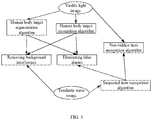
- FIG. 3 shows a schematic diagram of a terahertz wave security inspection method according to an exemplary embodiment of the present disclosure.
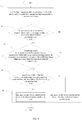
- FIG. 4 shows a flowchart of a terahertz wave security inspection method according to an exemplary embodiment of the present disclosure.
- a human body target segmentation algorithm and a human body target recognition algorithm are used to identify an area in which the human body is located in the visible light image
- a suspected item recognition algorithm is used to identify a suspected area in which the suspected item is located in the terahertz wave image. It is determined whether the suspected area in which the suspected item is located in the terahertz wave image corresponds to an area of the visible light image within the area in which the human body is located or not. If so, a pixel value of an area outside the area of the terahertz wave image corresponding to the area in which the object to be detected is located in the visible light image is set to zero, so as to remove background interference.
- a non-hidden item recognition algorithm is used to identify whether the suspected item in the area in which the human body is located is a non-hidden item or not. This security inspection method may effectively eliminate false alarms.
- a terahertz wave security inspection method that performs security inspection by using the terahertz wave security inspection system 100 described above.
- the terahertz wave security inspection method includes: an information acquisition step of generating a terahertz wave image of an object to be detected by using a terahertz wave imaging mechanism 10 and generating a visible light image of the object to be detected by using a visible light imaging mechanism 20; a prohibited item initial-determination step of processing the terahertz wave image by using the data processing device 30 and determining whether a suspected item exists in the object to be detected or not; and if the data processing device 30 determines that the object to be detected has a suspected item, performing a prohibited item secondary-determination step of determining whether the suspected item is a prohibited item or not based on the visible light image and the terahertz wave image by using the data processing device 30.
- the terahertz security inspection method includes: in the prohibited item initial-determination step, the data processing device 30 marks one or more areas in the terahertz wave image as suspected areas in which the suspected items may be located; and in the prohibited item secondary-determination step, the data processing device 30 identifies an area in which the object to be detected is located based on the visible light image, and if a suspected area corresponds to an area of the visible light image outside the area in which the object to be detected is located, removes the suspected area.
- identifying an area in which the object to be detected is located based on the visible light image includes: framing an area in which the object to be detected is located in the visible light image by using a specific color.
- the identifying an area in which the object to be detected is located based on the visible light image may include: performing a pixel-level segmentation on the object to be detected in the visible light image, and obtaining an area in which the object to be detected is located by using a pixel-level segmentation result, so as to determine the area in which the object to be detected is located more accurately.
- the method further includes: identifying whether an item in an area of the visible light image corresponding to the suspected area is a non-hidden item or not, and if it is identified that the item is a non-hidden item, determining that no prohibited items exist in the suspected area; or if it is identified that the item is not a non-hidden item, determining that a prohibited item exists in the suspected area.
- a pixel value of an area outside the area of the terahertz wave image corresponding to the area in which the object to be detected is located in the visible light image is set to zero, so as to remove background interference.
- the method further includes: a displaying step of displaying the terahertz wave image and/or visible light image described above by using the image display device. It should be noted that in some other embodiments of the present disclosure, the displaying step may also be performed when it is determined in the prohibited item secondary-determination step that the object to be detected does not have a prohibited item.
- the displaying step further includes: displaying a terahertz wave dynamic video and a visible light dynamic video simultaneously on the image display device, and displaying the suspected area determined to contain the prohibited item simultaneously in the terahertz wave image and the visible light image in a form of an alarm frame.
- the displaying step further includes: replacing the suspected area determined to contain the prohibited item in the visible light image with a corresponding terahertz wave image.
- the displaying step further includes: displaying the visible light dynamic video through the image display device and not displaying the terahertz wave dynamic video, and displaying the suspected area determined to contain the prohibited item in the visible light image in a form of an alarm frame. In an exemplary embodiment, the displaying step further includes: replacing the suspected area determined to contain the prohibited item in the visible light image with a corresponding terahertz wave image.
- the present disclosure aims at a problem that the suspected area of the terahertz wave image may not be accurately determined in a security inspection, and proposes a security inspection system and method combining the terahertz wave imaging and the visible light imaging, so as to improve an inspection accuracy of prohibited items, reduce false alarms, and improve security inspection efficiency.
Landscapes
- Physics & Mathematics (AREA)
- Life Sciences & Earth Sciences (AREA)
- General Physics & Mathematics (AREA)
- General Life Sciences & Earth Sciences (AREA)
- Geophysics (AREA)
- Spectroscopy & Molecular Physics (AREA)
- Health & Medical Sciences (AREA)
- Chemical & Material Sciences (AREA)
- Toxicology (AREA)
- Analytical Chemistry (AREA)
- Biochemistry (AREA)
- General Health & Medical Sciences (AREA)
- Immunology (AREA)
- Pathology (AREA)
- Investigating Or Analysing Materials By Optical Means (AREA)
- Investigating Materials By The Use Of Optical Means Adapted For Particular Applications (AREA)
Abstract
Description
- The present disclosure relates to a field of security inspection technology, and in particular to a terahertz wave security inspection system and a terahertz wave security inspection method.
- A terahertz wave security inspection system performs scanning and imaging by receiving a terahertz wave signal emitted by an object to be detected (such as a human body). After the terahertz wave emitted by the object to be detected is reflected by a speculum, the terahertz wave is focused by a lens on a detector array at a focal position, and the detector array converts the terahertz wave signal into an electrical signal to generate a terahertz wave image. However, the terahertz wave image generated by current passive terahertz wave security inspection system is prone to background interference, false alarms, etc., resulting in low security inspection efficiency and low inspection accuracy.
- According to an embodiment of an aspect of the present disclosure, there is provided a terahertz wave security inspection system, comprising: an information acquisition device comprising a terahertz wave imaging mechanism configured to generate a terahertz wave image of an object to be detected and a visible light imaging mechanism configured to generate a visible light image of the object to be detected; and a data processing device in data communication with the information acquisition device and configured to: acquire the terahertz wave image of the object to be detected provided by the terahertz wave imaging mechanism and the visible light image of the object to be detected provided by the visible light imaging mechanism, determine whether a suspected item exists in the object to be detected or not based on the terahertz wave image and the visible light image, and if it is determined that a suspected item exists in the object to be detected, determine whether the suspected item is a prohibited item or not based on the visible light image and the terahertz wave image.
- In some embodiments, the visible light image generated by the visible light imaging mechanism matches the terahertz wave image generated by the terahertz wave imaging mechanism within a range of depth of field of the terahertz wave imaging mechanism.
- In some embodiments, the visible light image generated by the visible light imaging mechanism matching the terahertz wave image generated by the terahertz wave imaging mechanism within a range of depth of field of the terahertz wave imaging mechanism comprises: the visible light image generated by the visible light imaging mechanism, after being cropped, matches the terahertz wave image generated by the terahertz wave imaging mechanism within the range of depth of field of the terahertz wave imaging mechanism.
- In some embodiments, the visible light imaging mechanism is located at an inner side of a virtual cone with a center of rotation of a speculum of the terahertz wave imaging mechanism as a vertex, a normal direction of field of view as a centerline, and a vertex angle of view of α/3, wherein α is a field of view of the terahertz wave imaging mechanism.
- In some embodiments, the terahertz wave security inspection system comprises a housing in which the terahertz wave imaging mechanism is located, and the housing is provided with a window, a terahertz wave emitted by the object to be detected is transmitted through the window and received by the terahertz wave imaging mechanism to generate the terahertz wave image, and the visible light imaging mechanism is located on the window.
- In some embodiments, an extension line of an optical axis of the visible light imaging mechanism passes through the center of rotation of the speculum of the terahertz wave imaging mechanism.
- In some embodiments, the data processing device is further configured to that: when it is determined that a suspected item exists in the object to be detected based on the terahertz wave image, marking one or more areas of the terahertz wave image as a suspected area in which the suspected item is located, identifying an area in which the object to be detected is located based on the visible light image, and if the suspected area corresponds to an area of the visible light image outside the area in which the object to be detected is located, removing the suspected area.
- In some embodiments, the data processing device is further configured to that: if the suspected area corresponds to an area of the visible light image within the area in which the object to be detected is located, identifying whether an item in the area of the visible light image corresponding to the suspected area is a non-hidden item or not, if the item is a non-hidden item, determining that the suspected area does not contain a prohibited item, and if the item is not a non-hidden item, determining that the suspected area contains a prohibited item.
- In some embodiments, the terahertz wave security inspection system further comprises an image display device in data communication with the data processing device and configured to display the terahertz wave image and/or the visible light image generated by the information acquisition device.
- In some embodiments, the terahertz wave imaging mechanism is a terahertz wave human body security instrument, and the visible light imaging mechanism is an optical camera.
- In some embodiments, the optical camera is a pinhole camera or an infrared camera.
- According to an embodiment of another aspect of the present disclosure, there is further provided a terahertz wave security inspection method implemented by the terahertz wave security inspection system described above, comprising: an information acquisition step of generating a terahertz wave image of an object to be detected by using a terahertz wave imaging mechanism and generating a visible light image of the object to be detected by using a visible light imaging mechanism; a prohibited item initial-determination step of processing the terahertz wave image and determining whether a suspected item exists in the object to be detected or not by using a data processing device; and if the data processing device determines that a suspected item exists in the object to be detected, performing a prohibited item secondary-determination step of determining whether the suspected item is a prohibited item or not based on the visible light image and the terahertz wave image by using the data processing device.
- In some embodiments, in the prohibited item initial-determination step, the data processing device further marks one or more areas of the terahertz wave image as a suspected area in which the suspected item is located.
- In some embodiments, in the prohibited item secondary-determination step, the data processing device identifies an area in which the object to be detected is located based on the visible light image, and if the suspected area corresponds to an area of the visible light image outside the area in which the object to be detected is located, the data processing device removes the suspected area.
- In some embodiments, identifying an area in which the object to be detected is located based on the visible light image comprises: framing the area of the visible light image in which the object to be detected is located by using a specific color; or performing a pixel-level segmentation on the object to be detected in the visible light image, and obtaining the area in which the object to be detected is located by using a pixel-level segmentation result.
- In some embodiments, subsequent to the identifying an area in which the object to be detected is located based on the visible light image, a pixel value of an area outside the area of the terahertz wave image corresponding to the area in which the object to be detected is located in the visible light image is set to zero to remove background interference.
- In some embodiments, the prohibited item secondary-determination step comprises: if the suspected area corresponds to an area of the visible light image within the area in which the object to be detected is located, identifying whether an item in the area of the visible light image corresponding to the suspected area is a non-hidden item or not, if the item is a non-hidden item, determining that the suspected area does not contain a prohibited item, and if the item is not a non-hidden item, determining that the suspected area contains a prohibited item.
- In some embodiments, if it is determined in the prohibited item secondary-determination step that the suspected area contains a prohibited item, the method further comprises: a displaying step of displaying the terahertz wave image and/or the visible light image by an image display device.
- In some embodiments, the displaying step further includes: displaying a terahertz wave dynamic video and a visible light dynamic video simultaneously through the image display device, and displaying the suspected area determined to contain a prohibited item, in a form of an alarm frame, simultaneously in the terahertz wave image and the visible light image.
- In some embodiments, the displaying step further comprises: replacing the suspected area determined to contain a prohibited item in the visible light image with a corresponding terahertz wave image.
- In some embodiments, the displaying step further comprises: displaying a visible light dynamic video through the image display device, and displaying the suspected area determined to contain a prohibited item in the visible light image in a form of an alarm frame.
- In some embodiments, the displaying step further comprises: replacing the suspected area determined to contain a prohibited item in the visible light image with a corresponding terahertz wave image.
-
-
FIG. 1 shows a schematic structural diagram of a terahertz wave security inspection system according to an exemplary embodiment of the present disclosure; -
FIG. 2 shows a schematic structural diagram of a terahertz wave security inspection system according to another exemplary embodiment of the present disclosure; -
FIG. 3 shows a schematic diagram of a terahertz wave security inspection method according to an exemplary embodiment of the present disclosure; and -
FIG. 4 shows a flowchart of a terahertz wave security inspection method according to an exemplary embodiment of the present disclosure. - Although the present disclosure will be fully described with reference to the drawings containing the preferred embodiments of the present disclosure, it should be understood that those skilled in the art may modify the content described herein while obtaining the technical effects of the present disclosure. Therefore, it should be understood that the above description is a broad disclosure for those ordinary skilled in the art, and its content is not intended to limit the exemplary embodiments described in the present disclosure.
- In the following detailed description, for ease of interpretation, many specific details are set forth to provide a comprehensive understanding of the embodiments of the present disclosure. Obviously, however, one or more embodiments may also be implemented without these specific details. In other cases, well-known structures and devices are shown in diagrammatic form to simplify the drawings.
- According to a general inventive concept of the present disclosure, there is provided a terahertz wave security inspection system, including: an information acquisition device including a terahertz wave imaging mechanism configured to generate a terahertz wave image of an object to be detected and a visible light imaging mechanism configured to generate a visible light image of the object to be detected, where the visible light image generated by the visible light imaging mechanism matches the terahertz wave image generated by the terahertz wave imaging mechanism within a range of depth of field of the terahertz wave imaging mechanism; and a data processing device in data communication with the information acquisition device and configured to: acquire the terahertz wave image of the object to be detected provided by the terahertz wave imaging mechanism and the visible light image of the object to be detected provided by the visible light imaging mechanism, determine whether a suspected item exists in the object to be detected or not based on the terahertz wave image and the visible light image, and if it is determined that a suspected item exists in the object to be detected, determine whether the suspected item is a prohibited item or not based on the visible light image and the terahertz wave image.
- According to another general inventive concept of the present disclosure, there is provided a terahertz wave security inspection method using the terahertz wave security inspection system described above, including: an information acquisition step of generating a terahertz wave image of an object to be detected by using a terahertz wave imaging mechanism and generating a visible light image of the object to be detected by using a visible light imaging mechanism; a prohibited item initial-determination step of processing the terahertz wave image by using a data processing device and determining whether a suspected item exists in the object to be detected or not; and if the data processing device determines that a suspected item exists in the object to be detected , performing a prohibited item secondary-determination step of determining whether the suspected item is a prohibited item or not based on the visible light image and the terahertz wave image by using the data processing device.
-
FIG. 1 shows a schematic structural diagram of a terahertz wave security inspection system according to an exemplary embodiment of the present disclosure.FIG. 2 shows a schematic structural diagram of a terahertz wave security inspection system according to another exemplary embodiment of the present disclosure. - As shown in
FIG. 1 , a terahertz wavesecurity inspection system 100 according to the present disclosure includes: an information acquisition device including a terahertzwave imaging mechanism 10 configured to generate a terahertz wave image of an object to be detected and a visiblelight imaging mechanism 20 configured to generate a visible light image of the object to be detected, where the visible light image generated by the visiblelight imaging mechanism 20 matches the terahertz wave image generated by the terahertzwave imaging mechanism 10 within a range of depth of field of the terahertzwave imaging mechanism 10. Here, the visible light image generated by the visiblelight imaging mechanism 20 matching the terahertz wave image generated by the terahertzwave imaging mechanism 10 within a range of depth of field of the terahertzwave imaging mechanism 10 refers to that within the range of depth of field (for example, 0.5 m-5 m) of the terahertzwave imaging mechanism 10, the visible light image generated by the visiblelight imaging mechanism 20 substantially corresponds to the terahertz wave image generated by the terahertzwave imaging mechanism 10 in spatial position, that is, a position and a size of the object to be detected in the visible light image substantially correspond to a position and a size of the object to be detected in the terahertz wave image. - In an exemplary embodiment, as shown in
FIG. 1 , a field of view β of the visiblelight imaging mechanism 20 is generally greater than a field of view α of the terahertzwave imaging mechanism 10. In this case, the visible light image generated by the visiblelight imaging mechanism 20 matching the terahertz wave image generated by the terahertzwave imaging mechanism 10 within the range of depth of field of the terahertzwave imaging mechanism 10 includes: the visible light image generated by the visiblelight imaging mechanism 20, after being cropped, matches the terahertz wave image generated by the terahertzwave imaging mechanism 10 within the range of depth of field of the terahertzwave imaging mechanism 10. - In an exemplary embodiment, as shown in
FIG. 1 , the terahertzwave imaging mechanism 10 includes adetector array 11, a focusinglens 12 and aspeculum 13. The terahertz wave emitted by a human body is reflected by thespeculum 13 to the focusinglens 12 for focusing. The focused terahertz wave is received by thedetector array 11 at the focal position, and thedetector array 11 converts a terahertz wave signal into an electrical signal. Thespeculum 13 reciprocates around a center of rotation, thereby realizing terahertz imaging within the field of view. - In an exemplary embodiment, as shown in
FIG. 1 , the visiblelight imaging mechanism 20 may be, for example, a pinhole camera, so as to avoid affecting the imaging of the object to be detected by the terahertzwave imaging mechanism 10. Of course, those skilled in the art should understand that in some other embodiments of the present disclosure, the visiblelight imaging mechanism 20 may also be an infrared camera or other depth cameras with depth detection capabilities. - In an exemplary embodiment, as shown in
FIG. 1 , in order to ensure that the visible light image generated by the visiblelight imaging mechanism 20 matches the terahertz wave image generated by the terahertzwave imaging mechanism 10 within the range of depth of field of the terahertzwave imaging mechanism 10, the visiblelight imaging mechanism 20 is positioned so that an extension line of an optical axis of the visiblelight imaging mechanism 20 passes through the center of rotation of thespeculum 13 of the terahertzwave imaging mechanism 10. - However, those skilled in the art should understand that, in some other embodiments of the present disclosure, the visible
light imaging mechanism 20 may also be located at an inner side of a virtual cone with the center of rotation of thespeculum 13 of the terahertzwave imaging mechanism 10 as a vertex, a normal direction of field of view as a centerline, and a vertex angle of view of α/3, where α is the field of view of the terahertzwave imaging mechanism 10. By arranging the visiblelight imaging mechanism 20 inside the virtual cone described above, the visible light image generated by the visiblelight imaging mechanism 20 may also match the terahertz wave image generated by the terahertzwave imaging mechanism 10 within the range of depth of field of the terahertzwave imaging mechanism 10. - In an exemplary embodiment, as shown in
FIG. 1 , the terahertz wavesecurity inspection system 100 includes ahousing 14, the terahertzwave imaging mechanism 10 is located inside thehousing 14. Thehousing 14 is provided with a window which may be formed of, for example, materials such as polytetrafluoroethylene, polyethylene, etc. The terahertz wave emitted by the object to be detected may be transmitted through the window and received by the terahertzwave imaging mechanism 10 to generate the terahertz wave image. The visiblelight imaging mechanism 20 is located on the window and faces an area used to wait for detecting, so as to take an optical image of the object to be detected. - In an exemplary embodiment, as shown in
FIG. 1 , thespeculum 13 of the terahertzwave imaging mechanism 10 is a flat speculum and reciprocates around the center of rotation of thespeculum 13. However, those skilled in the art should understand that in some other embodiments of the present disclosure, thespeculum 13 of the terahertzwave imaging mechanism 10 may also be other forms of speculums, such as a curved speculum. A scanning mode of the terahertzwave imaging mechanism 10 may also be a two-dimensional scanning mode. In addition, thespeculum 13 of the terahertzwave imaging mechanism 10 may also be replaced by a polyhedron speculum (as shown inFIG. 2 ). In this case, the polyhedron speculum rotates around the center of rotation of thespeculum 13, and the extension line of the optical axis of the visiblelight imaging mechanism 20 passes through an axis of rotation of the polyhedron speculum and is perpendicular to the axis of rotation of the polyhedron speculum. - According to an embodiment of the present disclosure, the terahertz
wave imaging mechanism 10 may be, for example, a terahertz wave human body security instrument. Of course, those skilled in the art should understand that, in some other embodiments of the present disclosure, the terahertzwave imaging mechanism 10 may also take other forms. - In an exemplary embodiment, as shown in
FIG. 1 , thedata processing device 30 is in data communication with the information acquisition device, in a wired or wireless manner. Specifically, thedata processing device 30 may obtain the terahertz wave image and visible light image described above. Thedata processing device 30 may also transmit instructions or other information to the information acquisition device, for example, to instruct the information acquisition device to start collecting the terahertz wave image and/or the visible light image. - In an exemplary embodiment, as shown in
FIG. 1 , thedata processing device 30 may determine, based on the terahertz wave image and the visible light image, whether a prohibited item exists in the object to be detected or not. Specifically, thedata processing device 30 may determine whether a suspected item exist in the object to be detected or not based on the terahertz wave image. If thedata processing device 30 determines that the suspected item exists, then further determining whether the suspected item is a prohibited item or not based on the visible light image and the terahertz wave image. - In an exemplary embodiment, as shown in
FIG. 1 , thedata processing device 30 may be configured such that: when thedata processing device 30 determines whether a suspected item exists in the object to be detected or not based on the terahertz wave image, thedata processing device 30 marks one or more areas of the terahertz wave image as suspected areas in which the suspected items are located by using a deep learning algorithm. Further, thedata processing device 30 may be configured such that: when thedata processing device 30 determines whether a prohibited item exists in the suspected area or not based on the visible light image and the terahertz wave image, first identifying an area in which the object to be detected is located based on the visible light image by using the deep learning algorithm. If the above-mentioned suspected area corresponds to an area of the visible light image outside the area in which the object to be detected is located, removing the suspected area. - In an exemplary embodiment, as shown in
FIG. 1 , thedata processing device 30 is further configured such that: if the suspected area corresponds to an area of the visible light image within the area in which the object to be detected is located, identifying whether an item in the area of the visible light image corresponding to the suspected area is a non-hidden item or not by using, for example, the deep learning algorithm, and if so, determining that no prohibited items exist in the suspected area; or determining that a prohibited item exists in the suspected area. - In the terahertz wave image, outer packaging materials such as plastic, paper, textiles, and leather may be transmitted by terahertz waves. Therefore, when a human body carries an item that may not be penetrated by a terahertz wave, the terahertz wave is reflected by the item, and thus an outline of the item appears in the terahertz wave image. Although the outline of the item is displayed, whether the item is a prohibited item or not may not be accurately determined from the terahertz wave image, and it may only be determined that the item is a suspected item. In this embodiment, the visible
light imaging mechanism 20 is also provided to capture the visible light image of the object to be detected, and the visible light image generated by the visiblelight imaging mechanism 20 matches the terahertz wave image generated by the terahertzwave imaging mechanism 10 within the range of depth of field of the terahertzwave imaging mechanism 10, so as to determine whether the suspected item in the terahertz wave image is a prohibited item or not more easily and accurately. - In an exemplary embodiment, the terahertz wave
security inspection system 100 further includes an image display device in data communication with thedata processing device 30. The image display device may display the terahertz wave image and/or the visible light image generated by the information acquisition device. In an exemplary embodiment, the image display device may also display a terahertz wave dynamic video and a visible light dynamic video. The suspected area determined to contain the prohibited item is displayed in both the terahertz wave image and the visible light image in a form of an alarm frame. In an exemplary embodiment, the image display device may also replace the suspected area determined to contain the prohibited item in the visible light image with a corresponding terahertz wave image. - In an exemplary embodiment, the image display device only displays the visible light dynamic video and does not display the terahertz wave image, and the suspected area determined to contain the prohibited item is displayed in the visible light image in a form of an alarm frame. In an exemplary embodiment, the image display device may also replace the suspected area determined to contain the prohibited item in the visible light image with a corresponding terahertz wave image.
- In an exemplary embodiment, the
data processing device 30 may be configured to frame a suspected area in which a suspected item and/or a prohibited item is located in the terahertz wave image and/or the visible light image by using a specific color. The image display device may display the visible light image and the terahertz wave image of the suspected area in which the suspected item and/or the prohibited item is located has been framed, so that the inspector may make a comparison. - In an exemplary embodiment, the terahertz wave
security inspection system 100 further includes a voice prompt device that may prompt whether the object to be detected carries a prohibited item or not according to an identification result. The voice prompt device is advantageous. For example, when items such as backpacks, handbags, etc., are needed to be removed from the object to be detected, the voice prompt device may prompt the object to be detected to remove the items himself/herself, thereby improving operation efficiency. The voice prompt device may also prompt the object to be detected the inspection is over, and thus the object to be detected is allowed to leave. The image display device and/or the voice prompt device may be configured to prompt whether the object to be detected is allowed to pass or not. -
FIG. 3 shows a schematic diagram of a terahertz wave security inspection method according to an exemplary embodiment of the present disclosure.FIG. 4 shows a flowchart of a terahertz wave security inspection method according to an exemplary embodiment of the present disclosure. - As shown in
FIG. 3 , a human body target segmentation algorithm and a human body target recognition algorithm are used to identify an area in which the human body is located in the visible light image, and a suspected item recognition algorithm is used to identify a suspected area in which the suspected item is located in the terahertz wave image. It is determined whether the suspected area in which the suspected item is located in the terahertz wave image corresponds to an area of the visible light image within the area in which the human body is located or not. If so, a pixel value of an area outside the area of the terahertz wave image corresponding to the area in which the object to be detected is located in the visible light image is set to zero, so as to remove background interference. A non-hidden item recognition algorithm is used to identify whether the suspected item in the area in which the human body is located is a non-hidden item or not. This security inspection method may effectively eliminate false alarms. - According to another aspect of the present disclosure, there is further provided a terahertz wave security inspection method that performs security inspection by using the terahertz wave
security inspection system 100 described above. - The terahertz wave security inspection method according to an embodiment of the present disclosure includes: an information acquisition step of generating a terahertz wave image of an object to be detected by using a terahertz
wave imaging mechanism 10 and generating a visible light image of the object to be detected by using a visiblelight imaging mechanism 20; a prohibited item initial-determination step of processing the terahertz wave image by using thedata processing device 30 and determining whether a suspected item exists in the object to be detected or not; and if thedata processing device 30 determines that the object to be detected has a suspected item, performing a prohibited item secondary-determination step of determining whether the suspected item is a prohibited item or not based on the visible light image and the terahertz wave image by using thedata processing device 30. - In an exemplary embodiment, the terahertz security inspection method includes: in the prohibited item initial-determination step, the
data processing device 30 marks one or more areas in the terahertz wave image as suspected areas in which the suspected items may be located; and in the prohibited item secondary-determination step, thedata processing device 30 identifies an area in which the object to be detected is located based on the visible light image, and if a suspected area corresponds to an area of the visible light image outside the area in which the object to be detected is located, removes the suspected area. - In an exemplary embodiment, identifying an area in which the object to be detected is located based on the visible light image includes: framing an area in which the object to be detected is located in the visible light image by using a specific color. In some other embodiments of the present disclosure, the identifying an area in which the object to be detected is located based on the visible light image may include: performing a pixel-level segmentation on the object to be detected in the visible light image, and obtaining an area in which the object to be detected is located by using a pixel-level segmentation result, so as to determine the area in which the object to be detected is located more accurately.
- In an exemplary embodiment, if the suspected area corresponds to an area of the visible light image within the area in which the object to be detected is located, the method further includes: identifying whether an item in an area of the visible light image corresponding to the suspected area is a non-hidden item or not, and if it is identified that the item is a non-hidden item, determining that no prohibited items exist in the suspected area; or if it is identified that the item is not a non-hidden item, determining that a prohibited item exists in the suspected area.
- In an exemplary embodiment, subsequent to the identifying an area in which the object to be detected is located based on the visible light image, a pixel value of an area outside the area of the terahertz wave image corresponding to the area in which the object to be detected is located in the visible light image is set to zero, so as to remove background interference.
- In an exemplary embodiment, if it is determined in the prohibited item secondary-determination step that a prohibited item exists in the object to be detected, the method further includes: a displaying step of displaying the terahertz wave image and/or visible light image described above by using the image display device. It should be noted that in some other embodiments of the present disclosure, the displaying step may also be performed when it is determined in the prohibited item secondary-determination step that the object to be detected does not have a prohibited item.
- In an exemplary embodiment, the displaying step further includes: displaying a terahertz wave dynamic video and a visible light dynamic video simultaneously on the image display device, and displaying the suspected area determined to contain the prohibited item simultaneously in the terahertz wave image and the visible light image in a form of an alarm frame. In an exemplary embodiment, the displaying step further includes: replacing the suspected area determined to contain the prohibited item in the visible light image with a corresponding terahertz wave image.
- In an exemplary embodiment, the displaying step further includes: displaying the visible light dynamic video through the image display device and not displaying the terahertz wave dynamic video, and displaying the suspected area determined to contain the prohibited item in the visible light image in a form of an alarm frame. In an exemplary embodiment, the displaying step further includes: replacing the suspected area determined to contain the prohibited item in the visible light image with a corresponding terahertz wave image.
- In order to enable the present disclosure to be more fully understood, the present disclosure is described below through a specific security inspection process shown in
FIG. 4 . - S1: The visible
light imaging mechanism 20 captures a visible light image of a human body and transmits the visible light image to thedata processing device 30, while the terahertzwave imaging mechanism 10 collects a terahertz wave image of the human body and transmits the terahertz wave image to thedata processing device 30. - S2: The
data processing device 30 processes the terahertz wave image to determine whether an object to be detected carries a suspected item or not. 1) If it is determined based on the terahertz wave image that the object to be detected carries a suspected item, proceed to S3; 2) if it is determined based on the terahertz wave image that the object to be detected does not carry the suspected item, transmitting an inspection result to the image display device, and prompting the object to be detected to pass, for example, through the voice prompt device. - S3: The
data processing device 30 processes the visible light image of the human body, identifies an area in which the human body is located, and determines whether a suspected area in which a suspected item is located in the terahertz wave image corresponds to an area of the visible light image within the area in which the human body is located or not. 1) If it is determined that the suspected area in which the suspected item is located in the terahertz wave image corresponds to an area of the visible light image within the area in which the human body is located, proceed to S4; 2) if it is determined that the suspected area in which the suspected item is located in the terahertz wave image corresponds to an area of the visible light image outside the area in which the human body is located, removing the suspected area, transmitting an inspection result to the image display device, and prompting the object to be detected to pass, for example, through the voice prompt device. - S4: A deep learning algorithm is used to identify an item in an area of the visible light image corresponding to the suspected area, and determine whether the item is a non-hidden item or not. 1) If the item is a non-hidden item, transmitting an inspection result to the image display device, and prompting the object to be detected to pass, for example, through the voice prompt device; 2) if the item is not a non-hidden item, transmitting an inspection result to the image display device, and then proceed to step S5.
- S5: A location of the prohibited item is framed with a specific color on the terahertz wave image and visible light image of the object to be detected, and a result is transmitted to the image display device. The image display device displays an inspection result, and the voice prompt device, for example, prompts that the object to be detected carries a prohibited item and gives an alarm.
- The present disclosure aims at a problem that the suspected area of the terahertz wave image may not be accurately determined in a security inspection, and proposes a security inspection system and method combining the terahertz wave imaging and the visible light imaging, so as to improve an inspection accuracy of prohibited items, reduce false alarms, and improve security inspection efficiency.
- Those skilled in the art may understand that the embodiments described above are exemplary, and those skilled in the art may make improvements. The structures described in the various embodiments may be combined freely without conflicts in structure or principle.
- Although the present disclosure is described with reference to the drawings, the embodiments disclosed in the drawings are for illustrative purposes only and are not to be construed as limiting the present disclosure.
- Although some embodiments of the general concept of the present disclosure have been illustrated and described, it should be understood by those ordinary skilled in the art that these embodiments may be changed without departing from the principle and spirit of the general concept of the present disclosure. The scope of the present disclosure is defined by the claims and their equivalents.
- It should be noted that the word "comprising" or "including" does not exclude other elements or steps, and the word "a", "an" or "one" does not exclude a plurality. In addition, any reference signs in the claims should not be construed as limiting the scope of the present disclosure.
Claims (15)
- A terahertz wave security inspection system (100), comprising:an information acquisition device comprising a terahertz wave imaging mechanism (10) configured to generate a terahertz wave image of an object to be detected and a visible light imaging mechanism (20) configured to generate a visible light image of the object to be detected; anda data processing device (30) in data communication with the information acquisition device and configured to: acquire the terahertz wave image of the object to be detected provided by the terahertz wave imaging mechanism (10) and the visible light image of the object to be detected provided by the visible light imaging mechanism (20), determine whether a suspected item exists in the object to be detected or not based on the terahertz wave image and the visible light image, and if it is determined that a suspected item exists in the object to be detected, determine whether the suspected item is a prohibited item or not based on the visible light image and the terahertz wave image.
- The terahertz wave security inspection system (100) according to claim 1, wherein the visible light image generated by the visible light imaging mechanism (20) matches the terahertz wave image generated by the terahertz wave imaging mechanism (10) within a range of depth of field of the terahertz wave imaging mechanism (10).
- The terahertz wave security inspection system (100) according to claim 2, wherein the visible light image generated by the visible light imaging mechanism (20) matching the terahertz wave image generated by the terahertz wave imaging mechanism (10) within a range of depth of field of the terahertz wave imaging mechanism (10) comprises: the visible light image generated by the visible light imaging mechanism (20), after being cropped, matches the terahertz wave image generated by the terahertz wave imaging mechanism (10) within the range of depth of field of the terahertz wave imaging mechanism (10).
- The terahertz wave security inspection system (100) according to any one of claims 1 to 3, wherein the visible light imaging mechanism (20) is located at an inner side of a virtual cone with a center of rotation of a speculum (13) of the terahertz wave imaging mechanism (10) as a vertex, a normal direction of field of view as a centerline, and a vertex angle of view of α/3, wherein α is a field of view of the terahertz wave imaging mechanism (10).
- The terahertz wave security inspection system (100) according to any one of claims 1 to 4,
wherein the terahertz wave security inspection system (100) comprises a housing (14) in which the terahertz wave imaging mechanism (10) is located, and the housing (14) is provided with a window, a terahertz wave emitted by the object to be detected is transmitted through the window and received by the terahertz wave imaging mechanism (10) to generate the terahertz wave image, and the visible light imaging mechanism (20) is located on the window. - The terahertz wave security inspection system (100) according to claim 4, wherein an extension line of an optical axis of the visible light imaging mechanism (20) passes through the center of rotation of the speculum (13) of the terahertz wave imaging mechanism (10).
- The terahertz wave security inspection system (100) according to any one of claims 1 to 6,wherein the data processing device (30) is further configured to that: when it is determined that a suspected item exists in the object to be detected based on the terahertz wave image, marking one or more areas of the terahertz wave image as a suspected area in which the suspected item is located, identifying an area in which the object to be detected is located based on the visible light image, and if the suspected area corresponds to an area of the visible light image outside the area in which the object to be detected is located, removing the suspected area; andwherein the data processing device (30) is further configured to that: if the suspected area corresponds to an area of the visible light image within the area in which the object to be detected is located, identifying whether an item in the area of the visible light image corresponding to the suspected area is a non-hidden item or not, if the item is a non-hidden item, determining that the suspected area does not contain a prohibited item, and if the item is not a non-hidden item, determining that the suspected area contains a prohibited item.
- The terahertz wave security inspection system (100) according to any one of claims 1 to 7, wherein the terahertz wave security inspection system (100) further comprises an image display device in data communication with the data processing device (30) and configured to display the terahertz wave image and/or the visible light image generated by the information acquisition device.
- The terahertz wave security inspection system (100) according to any one of claims 1 to 8,wherein the terahertz wave imaging mechanism (10) is a terahertz wave human body security instrument, and the visible light imaging mechanism (20) is an optical camera; andwherein the optical camera is a pinhole camera or an infrared camera.
- A terahertz wave security inspection method implemented by the terahertz wave security inspection system (100) according to any one of claims 1 to 9, comprising:an information acquisition step of generating a terahertz wave image of an object to be detected by using a terahertz wave imaging mechanism (10) and generating a visible light image of the object to be detected by using a visible light imaging mechanism (20);a prohibited item initial-determination step of processing the terahertz wave image and determining whether a suspected item exists in the object to be detected or not by using a data processing device (30); andif the data processing device (30) determines that a suspected item exists in the object to be detected, performing a prohibited item secondary-determination step of determining whether the suspected item is a prohibited item or not based on the visible light image and the terahertz wave image by using the data processing device (30).
- The terahertz wave security inspection method according to claim 10,wherein in the prohibited item initial-determination step, the data processing device (30) further marks one or more areas of the terahertz wave image as a suspected area in which the suspected item is located; andin the prohibited item secondary-determination step, the data processing device (30) identifies an area in which the object to be detected is located based on the visible light image, and if the suspected area corresponds to an area of the visible light image outside the area in which the object to be detected is located, the data processing device (30) removes the suspected area; andwherein identifying an area in which the object to be detected is located based on the visible light image comprises:framing the area of the visible light image in which the object to be detected is located by using a specific color; orperforming a pixel-level segmentation on the object to be detected in the visible light image, and obtaining the area in which the object to be detected is located by using a pixel-level segmentation result; andwherein subsequent to the identifying an area in which the object to be detected is located based on the visible light image, a pixel value of an area outside the area of the terahertz wave image corresponding to the area in which the object to be detected is located in the visible light image is set to zero to remove background interference.
- The terahertz wave security inspection method according to claim 11, wherein the prohibited item secondary-determination step comprises: if the suspected area corresponds to an area of the visible light image within the area in which the object to be detected is located, identifying whether an item in the area of the visible light image corresponding to the suspected area is a non-hidden item or not, if the item is a non-hidden item, determining that the suspected area does not contain a prohibited item, and if the item is not a non-hidden item, determining that the suspected area contains a prohibited item.
- The terahertz wave security inspection method according to claim 12, wherein if it is determined in the prohibited item secondary-determination step that the suspected area contains a prohibited item, the method further comprises:
a displaying step of displaying the terahertz wave image and/or the visible light image by an image display device. - The terahertz wave security inspection method according to claim 13,wherein the displaying step further comprises: displaying a terahertz wave dynamic video and a visible light dynamic video simultaneously through the image display device, and displaying the suspected area determined to contain a prohibited item, in a form of an alarm frame, simultaneously in the terahertz wave image and the visible light image; andwherein the displaying step further comprises: replacing the suspected area determined to contain a prohibited item in the visible light image with a corresponding terahertz wave image.
- The terahertz wave security inspection method according to claim 13,wherein the displaying step further comprises: displaying a visible light dynamic video through the image display device, and displaying the suspected area determined to contain a prohibited item in the visible light image in a form of an alarm frame; andwherein the displaying step further comprises: replacing the suspected area determined to contain a prohibited item in the visible light image with a corresponding terahertz wave image.
Applications Claiming Priority (1)
| Application Number | Priority Date | Filing Date | Title |
|---|---|---|---|
| CN201911402454.0A CN113126176B (en) | 2019-12-30 | 2019-12-30 | Terahertz wave security inspection system and method |
Publications (2)
| Publication Number | Publication Date |
|---|---|
| EP3845886A1 true EP3845886A1 (en) | 2021-07-07 |
| EP3845886B1 EP3845886B1 (en) | 2023-08-09 |
Family
ID=73856157
Family Applications (1)
| Application Number | Title | Priority Date | Filing Date |
|---|---|---|---|
| EP20216032.1A Active EP3845886B1 (en) | 2019-12-30 | 2020-12-21 | Terahertz wave security inspection system and method |
Country Status (3)
| Country | Link |
|---|---|
| EP (1) | EP3845886B1 (en) |
| CN (1) | CN113126176B (en) |
| MY (1) | MY208340A (en) |
Cited By (5)
| Publication number | Priority date | Publication date | Assignee | Title |
|---|---|---|---|---|
| CN113848193A (en) * | 2021-09-23 | 2021-12-28 | 上海亨临光电科技有限公司 | A passive terahertz human body security image extraction method |
| JP2023047487A (en) * | 2021-09-27 | 2023-04-06 | キヤノン株式会社 | IMAGING DEVICE, IMAGING METHOD, AND COMPUTER PROGRAM |
| JP2023073001A (en) * | 2021-11-15 | 2023-05-25 | 日本信号株式会社 | Passive imaging device |
| JP2023163646A (en) * | 2022-04-28 | 2023-11-10 | 日本信号株式会社 | passive imaging device |
| CN117930375A (en) * | 2024-03-22 | 2024-04-26 | 国擎(山东)信息科技有限公司 | Multi-dimensional detection technology fused channel type terahertz human body security inspection system |
Families Citing this family (1)
| Publication number | Priority date | Publication date | Assignee | Title |
|---|---|---|---|---|
| CN117331137B (en) * | 2023-09-28 | 2025-09-05 | 北京远大恒通科技发展有限公司 | A security inspection control method and device based on terahertz wave detection of physiological parameters |
Citations (3)
| Publication number | Priority date | Publication date | Assignee | Title |
|---|---|---|---|---|
| US20180364158A1 (en) * | 2017-06-20 | 2018-12-20 | Konica Minolta Laboratory U.S.A., Inc. | Terahertz spectral imaging system and security surveillance system employing the same |
| CN109492714A (en) * | 2018-12-29 | 2019-03-19 | 同方威视技术股份有限公司 | Image processing apparatus and its method |
| CN110031909A (en) * | 2019-04-18 | 2019-07-19 | 西安天和防务技术股份有限公司 | Safe examination system and safety inspection method |
Family Cites Families (17)
| Publication number | Priority date | Publication date | Assignee | Title |
|---|---|---|---|---|
| JP3709439B2 (en) * | 2002-09-06 | 2005-10-26 | 独立行政法人情報通信研究機構 | Apparatus and method for displaying image of object by terahertz electromagnetic wave |
| JP4183546B2 (en) * | 2003-04-11 | 2008-11-19 | 独立行政法人理化学研究所 | Terahertz optical system |
| CN103926199B (en) * | 2014-04-16 | 2016-08-31 | 黄晓鹏 | Hazardous material detection method |
| CN106353834B (en) * | 2016-09-09 | 2019-05-03 | 深圳市太赫兹系统设备有限公司 | A kind of terahertz imaging system and Terahertz safety check apparatus |
| JP6843600B2 (en) * | 2016-11-28 | 2021-03-17 | キヤノン株式会社 | Image acquisition device, image acquisition method and irradiation device using this |
| CN107728222B (en) * | 2017-09-01 | 2019-09-27 | 清华大学 | Active terahertz security imaging method and system |
| CN108805082B (en) * | 2018-06-13 | 2021-08-13 | 广东工业大学 | A video fusion method, apparatus, device and computer-readable storage medium |
| CN108846823A (en) * | 2018-06-22 | 2018-11-20 | 西安天和防务技术股份有限公司 | A kind of fusion method of terahertz image and visible images |
| CN108919376A (en) * | 2018-08-24 | 2018-11-30 | 欧必翼太赫兹科技(北京)有限公司 | A kind of Terahertz human body safety check imaging device |
| CN109581530B (en) * | 2018-12-28 | 2025-02-18 | 同方威视技术股份有限公司 | Portable terahertz security inspection equipment |
| CN209296946U (en) * | 2018-12-29 | 2019-08-23 | 清华大学 | Millimeter wave/THz wave imaging device |
| CN209728194U (en) * | 2018-12-29 | 2019-12-03 | 清华大学 | Millimeter wave/terahertz wave imaging equipment |
| CN109444977B (en) * | 2018-12-29 | 2024-04-05 | 清华大学 | Millimeter wave/terahertz wave imaging device and method for detecting human body or article |
| CN109633775B (en) * | 2018-12-29 | 2024-01-26 | 同方威视技术股份有限公司 | Methods for detecting human body or objects with millimeter wave/terahertz wave imaging equipment |
| CN109444978B (en) * | 2018-12-29 | 2024-02-02 | 清华大学 | Millimeter wave/terahertz wave imaging equipment and detection methods for human body or objects |
| CN109709617A (en) * | 2019-02-03 | 2019-05-03 | 同方威视技术股份有限公司 | Millimeter wave safe examination system and method |
| JP2019086523A (en) * | 2019-02-08 | 2019-06-06 | パイオニア株式会社 | Terahertz wave imaging device and terahertz wave imaging method |
-
2019
- 2019-12-30 CN CN201911402454.0A patent/CN113126176B/en active Active
-
2020
- 2020-12-21 EP EP20216032.1A patent/EP3845886B1/en active Active
- 2020-12-22 MY MYPI2020006939A patent/MY208340A/en unknown
Patent Citations (4)
| Publication number | Priority date | Publication date | Assignee | Title |
|---|---|---|---|---|
| US20180364158A1 (en) * | 2017-06-20 | 2018-12-20 | Konica Minolta Laboratory U.S.A., Inc. | Terahertz spectral imaging system and security surveillance system employing the same |
| CN109492714A (en) * | 2018-12-29 | 2019-03-19 | 同方威视技术股份有限公司 | Image processing apparatus and its method |
| EP3675031A1 (en) * | 2018-12-29 | 2020-07-01 | Nuctech Company Limited | Image processing apparatus and method |
| CN110031909A (en) * | 2019-04-18 | 2019-07-19 | 西安天和防务技术股份有限公司 | Safe examination system and safety inspection method |
Non-Patent Citations (7)
| Title |
|---|
| ERIK BLASCH ET AL: "Image fusion of the Terahertz-visual NAECON Grand Challenge data", AEROSPACE AND ELECTRONICS CONFERENCE (NAECON), 2012 IEEE NATIONAL, IEEE, 25 July 2012 (2012-07-25), pages 220 - 227, XP032424381, ISBN: 978-1-4673-2791-6, DOI: 10.1109/NAECON.2012.6531058 * |
| GUO LIN ET AL: "High-Performance Detection of Concealed Forbidden Objects on Human Body with Deep Neural Networks Based on Passive Millimeter Wave and Visible Imagery", JOURNAL OF INFRARED, MILLIMETER AND TERAHERTZ WAVES, SPRINGER NEW YORK LLC, US, vol. 40, no. 3, 11 January 2019 (2019-01-11), pages 314 - 347, XP036727798, ISSN: 1866-6892, [retrieved on 20190111], DOI: 10.1007/S10762-018-0558-3 * |
| LIU TING ET AL: "Concealed Object Detection for Activate Millimeter Wave Image", IEEE TRANSACTIONS ON INDUSTRIAL ELECTRONICS, IEEE SERVICE CENTER, PISCATAWAY, NJ, USA, vol. 66, no. 12, 1 December 2019 (2019-12-01), pages 9909 - 9917, XP011737910, ISSN: 0278-0046, [retrieved on 20190801], DOI: 10.1109/TIE.2019.2893843 * |
| M. KOWALSKI ET AL: "Hidden Object Detection System Based on Fusion of THz and VIS Images", ACTA PHYSICA POLONICA: SERIES A, vol. 124, no. 3, 1 September 2013 (2013-09-01), PL, pages 490 - 493, XP055662050, ISSN: 0587-4246, DOI: 10.12693/APhysPolA.124.490 * |
| NILI VAHID AMIN ET AL: "Clutter rejection and object separation in active milimeter-wave imaging system", 2016 IEEE INTERNATIONAL SYMPOSIUM ON ANTENNAS AND PROPAGATION (APSURSI), IEEE, 26 June 2016 (2016-06-26), pages 177 - 178, XP032983988, DOI: 10.1109/APS.2016.7695797 * |
| YEOM SEOKWON ET AL: "Multi-level segmentation of passive millimeter wave images with Gaussian mixture modeling", TERAHERTZ PHYSICS, DEVICES, AND SYSTEMS V: ADVANCE APPLICATIONS IN INDUSTRY AND DEFENSE, SPIE, 1000 20TH ST. BELLINGHAM WA 98225-6705 USA, vol. 8023, no. 1, 13 May 2011 (2011-05-13), pages 1 - 6, XP060016765, DOI: 10.1117/12.883778 * |
| YUANMENG ZHAO ET AL: "Terahertz / Visible Dual-band Image Fusion Based on Hybrid Principal Component Analysis", JOURNAL OF PHYSICS: CONFERENCE SERIES, INSTITUTE OF PHYSICS PUBLISHING, BRISTOL, GB, vol. 1187, no. 4, 8 May 2019 (2019-05-08), pages 42096, XP020338139, ISSN: 1742-6596, [retrieved on 20190508], DOI: 10.1088/1742-6596/1187/4/042096 * |
Cited By (5)
| Publication number | Priority date | Publication date | Assignee | Title |
|---|---|---|---|---|
| CN113848193A (en) * | 2021-09-23 | 2021-12-28 | 上海亨临光电科技有限公司 | A passive terahertz human body security image extraction method |
| JP2023047487A (en) * | 2021-09-27 | 2023-04-06 | キヤノン株式会社 | IMAGING DEVICE, IMAGING METHOD, AND COMPUTER PROGRAM |
| JP2023073001A (en) * | 2021-11-15 | 2023-05-25 | 日本信号株式会社 | Passive imaging device |
| JP2023163646A (en) * | 2022-04-28 | 2023-11-10 | 日本信号株式会社 | passive imaging device |
| CN117930375A (en) * | 2024-03-22 | 2024-04-26 | 国擎(山东)信息科技有限公司 | Multi-dimensional detection technology fused channel type terahertz human body security inspection system |
Also Published As
| Publication number | Publication date |
|---|---|
| MY208340A (en) | 2025-04-30 |
| CN113126176A (en) | 2021-07-16 |
| CN113126176B (en) | 2022-06-10 |
| EP3845886B1 (en) | 2023-08-09 |
Similar Documents
| Publication | Publication Date | Title |
|---|---|---|
| EP3845886B1 (en) | Terahertz wave security inspection system and method | |
| US9646217B2 (en) | Method and system for biometric recognition | |
| US9852339B2 (en) | Method for recognizing iris and electronic device thereof | |
| CN110031909B (en) | Security inspection system and security inspection method | |
| CN111047568A (en) | Steam leakage defect detection and identification method and system | |
| EP3745359B1 (en) | Image recognition system and method | |
| CN109752722A (en) | Multi-modal acoustics imaging tool | |
| KR20070013512A (en) | Image processing apparatus and method | |
| CN109752721A (en) | Portable acoustic imaging tool with scanning and analysis capabilities | |
| CN103971087B (en) | Method and device for searching and recognizing traffic signs in real time | |
| CN109756720A (en) | Use the focus and/or parallax adjustment in the acoustics imaging of range information | |
| CN107609475B (en) | Pedestrian detection false detection extraction method based on light field camera | |
| CN116132788A (en) | Mobile terminal tongue image acquisition method and device, electronic equipment and storage medium | |
| JP2010217984A (en) | Image detector and image detection method | |
| US20180199810A1 (en) | Systems and methods for pupillary distance estimation from digital facial images | |
| CN117315783A (en) | Personnel detection methods, devices, equipment and computer storage media | |
| CN111208577A (en) | Hazardous article detection method based on terahertz linear scanning | |
| US20240050153A1 (en) | Depilatory device and depilation method | |
| CN114295108A (en) | A ranging method and system for external equipment and infrared telescopes | |
| JPH0511052A (en) | Vehicle mounted type obstacle detecting apparatus | |
| CN210488010U (en) | Security inspection system | |
| CN115191931B (en) | Strabismus detection method, device and computer readable storage medium | |
| KR20210073639A (en) | Device for analyzing of image and method thereof | |
| WO2022242490A1 (en) | Method for detecting and removing personnel interference while measuring volume of an object | |
| JPH05297152A (en) | Object recognizing device |
Legal Events
| Date | Code | Title | Description |
|---|---|---|---|
| STAA | Information on the status of an ep patent application or granted ep patent |
Free format text: STATUS: REQUEST FOR EXAMINATION WAS MADE |
|
| PUAI | Public reference made under article 153(3) epc to a published international application that has entered the european phase |
Free format text: ORIGINAL CODE: 0009012 |
|
| 17P | Request for examination filed |
Effective date: 20201221 |
|
| AK | Designated contracting states |
Kind code of ref document: A1 Designated state(s): AL AT BE BG CH CY CZ DE DK EE ES FI FR GB GR HR HU IE IS IT LI LT LU LV MC MK MT NL NO PL PT RO RS SE SI SK SM TR |
|
| GRAP | Despatch of communication of intention to grant a patent |
Free format text: ORIGINAL CODE: EPIDOSNIGR1 |
|
| STAA | Information on the status of an ep patent application or granted ep patent |
Free format text: STATUS: GRANT OF PATENT IS INTENDED |
|
| INTG | Intention to grant announced |
Effective date: 20230301 |
|
| GRAS | Grant fee paid |
Free format text: ORIGINAL CODE: EPIDOSNIGR3 |
|
| GRAA | (expected) grant |
Free format text: ORIGINAL CODE: 0009210 |
|
| STAA | Information on the status of an ep patent application or granted ep patent |
Free format text: STATUS: THE PATENT HAS BEEN GRANTED |
|
| AK | Designated contracting states |
Kind code of ref document: B1 Designated state(s): AL AT BE BG CH CY CZ DE DK EE ES FI FR GB GR HR HU IE IS IT LI LT LU LV MC MK MT NL NO PL PT RO RS SE SI SK SM TR |
|
| REG | Reference to a national code |
Ref country code: GB Ref legal event code: FG4D |
|
| REG | Reference to a national code |
Ref country code: CH Ref legal event code: EP |
|
| REG | Reference to a national code |
Ref country code: IE Ref legal event code: FG4D |
|
| REG | Reference to a national code |
Ref country code: DE Ref legal event code: R096 Ref document number: 602020015360 Country of ref document: DE |
|
| REG | Reference to a national code |
Ref country code: LT Ref legal event code: MG9D |
|
| REG | Reference to a national code |
Ref country code: NL Ref legal event code: MP Effective date: 20230809 |
|
| REG | Reference to a national code |
Ref country code: AT Ref legal event code: MK05 Ref document number: 1598078 Country of ref document: AT Kind code of ref document: T Effective date: 20230809 |
|
| P01 | Opt-out of the competence of the unified patent court (upc) registered |
Effective date: 20231211 |
|
| PG25 | Lapsed in a contracting state [announced via postgrant information from national office to epo] |
Ref country code: GR Free format text: LAPSE BECAUSE OF FAILURE TO SUBMIT A TRANSLATION OF THE DESCRIPTION OR TO PAY THE FEE WITHIN THE PRESCRIBED TIME-LIMIT Effective date: 20231110 |
|
| PG25 | Lapsed in a contracting state [announced via postgrant information from national office to epo] |
Ref country code: IS Free format text: LAPSE BECAUSE OF FAILURE TO SUBMIT A TRANSLATION OF THE DESCRIPTION OR TO PAY THE FEE WITHIN THE PRESCRIBED TIME-LIMIT Effective date: 20231209 |
|
| PG25 | Lapsed in a contracting state [announced via postgrant information from national office to epo] |
Ref country code: SE Free format text: LAPSE BECAUSE OF FAILURE TO SUBMIT A TRANSLATION OF THE DESCRIPTION OR TO PAY THE FEE WITHIN THE PRESCRIBED TIME-LIMIT Effective date: 20230809 Ref country code: RS Free format text: LAPSE BECAUSE OF FAILURE TO SUBMIT A TRANSLATION OF THE DESCRIPTION OR TO PAY THE FEE WITHIN THE PRESCRIBED TIME-LIMIT Effective date: 20230809 Ref country code: PT Free format text: LAPSE BECAUSE OF FAILURE TO SUBMIT A TRANSLATION OF THE DESCRIPTION OR TO PAY THE FEE WITHIN THE PRESCRIBED TIME-LIMIT Effective date: 20231211 Ref country code: NO Free format text: LAPSE BECAUSE OF FAILURE TO SUBMIT A TRANSLATION OF THE DESCRIPTION OR TO PAY THE FEE WITHIN THE PRESCRIBED TIME-LIMIT Effective date: 20231109 Ref country code: NL Free format text: LAPSE BECAUSE OF FAILURE TO SUBMIT A TRANSLATION OF THE DESCRIPTION OR TO PAY THE FEE WITHIN THE PRESCRIBED TIME-LIMIT Effective date: 20230809 Ref country code: LV Free format text: LAPSE BECAUSE OF FAILURE TO SUBMIT A TRANSLATION OF THE DESCRIPTION OR TO PAY THE FEE WITHIN THE PRESCRIBED TIME-LIMIT Effective date: 20230809 Ref country code: LT Free format text: LAPSE BECAUSE OF FAILURE TO SUBMIT A TRANSLATION OF THE DESCRIPTION OR TO PAY THE FEE WITHIN THE PRESCRIBED TIME-LIMIT Effective date: 20230809 Ref country code: IS Free format text: LAPSE BECAUSE OF FAILURE TO SUBMIT A TRANSLATION OF THE DESCRIPTION OR TO PAY THE FEE WITHIN THE PRESCRIBED TIME-LIMIT Effective date: 20231209 Ref country code: HR Free format text: LAPSE BECAUSE OF FAILURE TO SUBMIT A TRANSLATION OF THE DESCRIPTION OR TO PAY THE FEE WITHIN THE PRESCRIBED TIME-LIMIT Effective date: 20230809 Ref country code: GR Free format text: LAPSE BECAUSE OF FAILURE TO SUBMIT A TRANSLATION OF THE DESCRIPTION OR TO PAY THE FEE WITHIN THE PRESCRIBED TIME-LIMIT Effective date: 20231110 Ref country code: FI Free format text: LAPSE BECAUSE OF FAILURE TO SUBMIT A TRANSLATION OF THE DESCRIPTION OR TO PAY THE FEE WITHIN THE PRESCRIBED TIME-LIMIT Effective date: 20230809 Ref country code: AT Free format text: LAPSE BECAUSE OF FAILURE TO SUBMIT A TRANSLATION OF THE DESCRIPTION OR TO PAY THE FEE WITHIN THE PRESCRIBED TIME-LIMIT Effective date: 20230809 |
|
| PG25 | Lapsed in a contracting state [announced via postgrant information from national office to epo] |
Ref country code: PL Free format text: LAPSE BECAUSE OF FAILURE TO SUBMIT A TRANSLATION OF THE DESCRIPTION OR TO PAY THE FEE WITHIN THE PRESCRIBED TIME-LIMIT Effective date: 20230809 |
|
| PG25 | Lapsed in a contracting state [announced via postgrant information from national office to epo] |
Ref country code: ES Free format text: LAPSE BECAUSE OF FAILURE TO SUBMIT A TRANSLATION OF THE DESCRIPTION OR TO PAY THE FEE WITHIN THE PRESCRIBED TIME-LIMIT Effective date: 20230809 |
|
| PG25 | Lapsed in a contracting state [announced via postgrant information from national office to epo] |
Ref country code: SM Free format text: LAPSE BECAUSE OF FAILURE TO SUBMIT A TRANSLATION OF THE DESCRIPTION OR TO PAY THE FEE WITHIN THE PRESCRIBED TIME-LIMIT Effective date: 20230809 Ref country code: RO Free format text: LAPSE BECAUSE OF FAILURE TO SUBMIT A TRANSLATION OF THE DESCRIPTION OR TO PAY THE FEE WITHIN THE PRESCRIBED TIME-LIMIT Effective date: 20230809 Ref country code: ES Free format text: LAPSE BECAUSE OF FAILURE TO SUBMIT A TRANSLATION OF THE DESCRIPTION OR TO PAY THE FEE WITHIN THE PRESCRIBED TIME-LIMIT Effective date: 20230809 Ref country code: EE Free format text: LAPSE BECAUSE OF FAILURE TO SUBMIT A TRANSLATION OF THE DESCRIPTION OR TO PAY THE FEE WITHIN THE PRESCRIBED TIME-LIMIT Effective date: 20230809 Ref country code: DK Free format text: LAPSE BECAUSE OF FAILURE TO SUBMIT A TRANSLATION OF THE DESCRIPTION OR TO PAY THE FEE WITHIN THE PRESCRIBED TIME-LIMIT Effective date: 20230809 Ref country code: CZ Free format text: LAPSE BECAUSE OF FAILURE TO SUBMIT A TRANSLATION OF THE DESCRIPTION OR TO PAY THE FEE WITHIN THE PRESCRIBED TIME-LIMIT Effective date: 20230809 Ref country code: SK Free format text: LAPSE BECAUSE OF FAILURE TO SUBMIT A TRANSLATION OF THE DESCRIPTION OR TO PAY THE FEE WITHIN THE PRESCRIBED TIME-LIMIT Effective date: 20230809 |
|
| REG | Reference to a national code |
Ref country code: DE Ref legal event code: R097 Ref document number: 602020015360 Country of ref document: DE |
|
| PG25 | Lapsed in a contracting state [announced via postgrant information from national office to epo] |
Ref country code: IT Free format text: LAPSE BECAUSE OF FAILURE TO SUBMIT A TRANSLATION OF THE DESCRIPTION OR TO PAY THE FEE WITHIN THE PRESCRIBED TIME-LIMIT Effective date: 20230809 |
|
| PLBE | No opposition filed within time limit |
Free format text: ORIGINAL CODE: 0009261 |
|
| STAA | Information on the status of an ep patent application or granted ep patent |
Free format text: STATUS: NO OPPOSITION FILED WITHIN TIME LIMIT |
|
| REG | Reference to a national code |
Ref country code: DE Ref legal event code: R119 Ref document number: 602020015360 Country of ref document: DE |
|
| 26N | No opposition filed |
Effective date: 20240513 |
|
| PG25 | Lapsed in a contracting state [announced via postgrant information from national office to epo] |
Ref country code: SI Free format text: LAPSE BECAUSE OF FAILURE TO SUBMIT A TRANSLATION OF THE DESCRIPTION OR TO PAY THE FEE WITHIN THE PRESCRIBED TIME-LIMIT Effective date: 20230809 |
|
| REG | Reference to a national code |
Ref country code: CH Ref legal event code: PL |
|
| PG25 | Lapsed in a contracting state [announced via postgrant information from national office to epo] |
Ref country code: LU Free format text: LAPSE BECAUSE OF NON-PAYMENT OF DUE FEES Effective date: 20231221 |
|
| PG25 | Lapsed in a contracting state [announced via postgrant information from national office to epo] |
Ref country code: MC Free format text: LAPSE BECAUSE OF FAILURE TO SUBMIT A TRANSLATION OF THE DESCRIPTION OR TO PAY THE FEE WITHIN THE PRESCRIBED TIME-LIMIT Effective date: 20230809 |
|
| REG | Reference to a national code |
Ref country code: BE Ref legal event code: MM Effective date: 20231231 |
|
| PG25 | Lapsed in a contracting state [announced via postgrant information from national office to epo] |
Ref country code: MC Free format text: LAPSE BECAUSE OF FAILURE TO SUBMIT A TRANSLATION OF THE DESCRIPTION OR TO PAY THE FEE WITHIN THE PRESCRIBED TIME-LIMIT Effective date: 20230809 Ref country code: LU Free format text: LAPSE BECAUSE OF NON-PAYMENT OF DUE FEES Effective date: 20231221 |
|
| REG | Reference to a national code |
Ref country code: IE Ref legal event code: MM4A |
|
| PG25 | Lapsed in a contracting state [announced via postgrant information from national office to epo] |
Ref country code: DE Free format text: LAPSE BECAUSE OF NON-PAYMENT OF DUE FEES Effective date: 20240702 Ref country code: IE Free format text: LAPSE BECAUSE OF NON-PAYMENT OF DUE FEES Effective date: 20231221 |
|
| PG25 | Lapsed in a contracting state [announced via postgrant information from national office to epo] |
Ref country code: BE Free format text: LAPSE BECAUSE OF NON-PAYMENT OF DUE FEES Effective date: 20231231 |
|
| PG25 | Lapsed in a contracting state [announced via postgrant information from national office to epo] |
Ref country code: CH Free format text: LAPSE BECAUSE OF NON-PAYMENT OF DUE FEES Effective date: 20231231 |
|
| PG25 | Lapsed in a contracting state [announced via postgrant information from national office to epo] |
Ref country code: IE Free format text: LAPSE BECAUSE OF NON-PAYMENT OF DUE FEES Effective date: 20231221 Ref country code: DE Free format text: LAPSE BECAUSE OF NON-PAYMENT OF DUE FEES Effective date: 20240702 Ref country code: CH Free format text: LAPSE BECAUSE OF NON-PAYMENT OF DUE FEES Effective date: 20231231 Ref country code: BE Free format text: LAPSE BECAUSE OF NON-PAYMENT OF DUE FEES Effective date: 20231231 |
|
| PG25 | Lapsed in a contracting state [announced via postgrant information from national office to epo] |
Ref country code: BG Free format text: LAPSE BECAUSE OF FAILURE TO SUBMIT A TRANSLATION OF THE DESCRIPTION OR TO PAY THE FEE WITHIN THE PRESCRIBED TIME-LIMIT Effective date: 20230809 |
|
| PG25 | Lapsed in a contracting state [announced via postgrant information from national office to epo] |
Ref country code: BG Free format text: LAPSE BECAUSE OF FAILURE TO SUBMIT A TRANSLATION OF THE DESCRIPTION OR TO PAY THE FEE WITHIN THE PRESCRIBED TIME-LIMIT Effective date: 20230809 |
|
| PG25 | Lapsed in a contracting state [announced via postgrant information from national office to epo] |
Ref country code: CY Free format text: LAPSE BECAUSE OF FAILURE TO SUBMIT A TRANSLATION OF THE DESCRIPTION OR TO PAY THE FEE WITHIN THE PRESCRIBED TIME-LIMIT; INVALID AB INITIO Effective date: 20201221 |
|
| PG25 | Lapsed in a contracting state [announced via postgrant information from national office to epo] |
Ref country code: HU Free format text: LAPSE BECAUSE OF FAILURE TO SUBMIT A TRANSLATION OF THE DESCRIPTION OR TO PAY THE FEE WITHIN THE PRESCRIBED TIME-LIMIT; INVALID AB INITIO Effective date: 20201221 |
|
| PG25 | Lapsed in a contracting state [announced via postgrant information from national office to epo] |
Ref country code: TR Free format text: LAPSE BECAUSE OF FAILURE TO SUBMIT A TRANSLATION OF THE DESCRIPTION OR TO PAY THE FEE WITHIN THE PRESCRIBED TIME-LIMIT Effective date: 20230809 |
|
| PGFP | Annual fee paid to national office [announced via postgrant information from national office to epo] |
Ref country code: GB Payment date: 20251104 Year of fee payment: 6 |
|
| PGFP | Annual fee paid to national office [announced via postgrant information from national office to epo] |
Ref country code: FR Payment date: 20251125 Year of fee payment: 6 |