EP3844376B1 - Safety control system and method for fuel-consuming apparatus - Google Patents
Safety control system and method for fuel-consuming apparatus Download PDFInfo
- Publication number
- EP3844376B1 EP3844376B1 EP19853811.8A EP19853811A EP3844376B1 EP 3844376 B1 EP3844376 B1 EP 3844376B1 EP 19853811 A EP19853811 A EP 19853811A EP 3844376 B1 EP3844376 B1 EP 3844376B1
- Authority
- EP
- European Patent Office
- Prior art keywords
- switched
- fuel
- temperature
- switch
- time
- Prior art date
- Legal status (The legal status is an assumption and is not a legal conclusion. Google has not performed a legal analysis and makes no representation as to the accuracy of the status listed.)
- Active
Links
Images



Classifications
-
- H—ELECTRICITY
- H01—ELECTRIC ELEMENTS
- H01M—PROCESSES OR MEANS, e.g. BATTERIES, FOR THE DIRECT CONVERSION OF CHEMICAL ENERGY INTO ELECTRICAL ENERGY
- H01M8/00—Fuel cells; Manufacture thereof
- H01M8/04—Auxiliary arrangements, e.g. for control of pressure or for circulation of fluids
- H01M8/04298—Processes for controlling fuel cells or fuel cell systems
- H01M8/043—Processes for controlling fuel cells or fuel cell systems applied during specific periods
- H01M8/04303—Processes for controlling fuel cells or fuel cell systems applied during specific periods applied during shut-down
-
- H—ELECTRICITY
- H01—ELECTRIC ELEMENTS
- H01M—PROCESSES OR MEANS, e.g. BATTERIES, FOR THE DIRECT CONVERSION OF CHEMICAL ENERGY INTO ELECTRICAL ENERGY
- H01M8/00—Fuel cells; Manufacture thereof
- H01M8/04—Auxiliary arrangements, e.g. for control of pressure or for circulation of fluids
- H01M8/04298—Processes for controlling fuel cells or fuel cell systems
- H01M8/04694—Processes for controlling fuel cells or fuel cell systems characterised by variables to be controlled
-
- B—PERFORMING OPERATIONS; TRANSPORTING
- B60—VEHICLES IN GENERAL
- B60L—PROPULSION OF ELECTRICALLY-PROPELLED VEHICLES; SUPPLYING ELECTRIC POWER FOR AUXILIARY EQUIPMENT OF ELECTRICALLY-PROPELLED VEHICLES; ELECTRODYNAMIC BRAKE SYSTEMS FOR VEHICLES IN GENERAL; MAGNETIC SUSPENSION OR LEVITATION FOR VEHICLES; MONITORING OPERATING VARIABLES OF ELECTRICALLY-PROPELLED VEHICLES; ELECTRIC SAFETY DEVICES FOR ELECTRICALLY-PROPELLED VEHICLES
- B60L50/00—Electric propulsion with power supplied within the vehicle
- B60L50/50—Electric propulsion with power supplied within the vehicle using propulsion power supplied by batteries or fuel cells
- B60L50/70—Electric propulsion with power supplied within the vehicle using propulsion power supplied by batteries or fuel cells using power supplied by fuel cells
-
- B—PERFORMING OPERATIONS; TRANSPORTING
- B60—VEHICLES IN GENERAL
- B60L—PROPULSION OF ELECTRICALLY-PROPELLED VEHICLES; SUPPLYING ELECTRIC POWER FOR AUXILIARY EQUIPMENT OF ELECTRICALLY-PROPELLED VEHICLES; ELECTRODYNAMIC BRAKE SYSTEMS FOR VEHICLES IN GENERAL; MAGNETIC SUSPENSION OR LEVITATION FOR VEHICLES; MONITORING OPERATING VARIABLES OF ELECTRICALLY-PROPELLED VEHICLES; ELECTRIC SAFETY DEVICES FOR ELECTRICALLY-PROPELLED VEHICLES
- B60L58/00—Methods or circuit arrangements for monitoring or controlling batteries or fuel cells, specially adapted for electric vehicles
- B60L58/30—Methods or circuit arrangements for monitoring or controlling batteries or fuel cells, specially adapted for electric vehicles for monitoring or controlling fuel cells
-
- B—PERFORMING OPERATIONS; TRANSPORTING
- B60—VEHICLES IN GENERAL
- B60L—PROPULSION OF ELECTRICALLY-PROPELLED VEHICLES; SUPPLYING ELECTRIC POWER FOR AUXILIARY EQUIPMENT OF ELECTRICALLY-PROPELLED VEHICLES; ELECTRODYNAMIC BRAKE SYSTEMS FOR VEHICLES IN GENERAL; MAGNETIC SUSPENSION OR LEVITATION FOR VEHICLES; MONITORING OPERATING VARIABLES OF ELECTRICALLY-PROPELLED VEHICLES; ELECTRIC SAFETY DEVICES FOR ELECTRICALLY-PROPELLED VEHICLES
- B60L58/00—Methods or circuit arrangements for monitoring or controlling batteries or fuel cells, specially adapted for electric vehicles
- B60L58/40—Methods or circuit arrangements for monitoring or controlling batteries or fuel cells, specially adapted for electric vehicles for controlling a combination of batteries and fuel cells
-
- H—ELECTRICITY
- H01—ELECTRIC ELEMENTS
- H01M—PROCESSES OR MEANS, e.g. BATTERIES, FOR THE DIRECT CONVERSION OF CHEMICAL ENERGY INTO ELECTRICAL ENERGY
- H01M8/00—Fuel cells; Manufacture thereof
- H01M8/04—Auxiliary arrangements, e.g. for control of pressure or for circulation of fluids
- H01M8/04007—Auxiliary arrangements, e.g. for control of pressure or for circulation of fluids related to heat exchange
- H01M8/04014—Heat exchange using gaseous fluids; Heat exchange by combustion of reactants
- H01M8/04022—Heating by combustion
-
- H—ELECTRICITY
- H01—ELECTRIC ELEMENTS
- H01M—PROCESSES OR MEANS, e.g. BATTERIES, FOR THE DIRECT CONVERSION OF CHEMICAL ENERGY INTO ELECTRICAL ENERGY
- H01M8/00—Fuel cells; Manufacture thereof
- H01M8/04—Auxiliary arrangements, e.g. for control of pressure or for circulation of fluids
- H01M8/04082—Arrangements for control of reactant parameters, e.g. pressure or concentration
- H01M8/04089—Arrangements for control of reactant parameters, e.g. pressure or concentration of gaseous reactants
-
- H—ELECTRICITY
- H01—ELECTRIC ELEMENTS
- H01M—PROCESSES OR MEANS, e.g. BATTERIES, FOR THE DIRECT CONVERSION OF CHEMICAL ENERGY INTO ELECTRICAL ENERGY
- H01M8/00—Fuel cells; Manufacture thereof
- H01M8/04—Auxiliary arrangements, e.g. for control of pressure or for circulation of fluids
- H01M8/04298—Processes for controlling fuel cells or fuel cell systems
- H01M8/04313—Processes for controlling fuel cells or fuel cell systems characterised by the detection or assessment of variables; characterised by the detection or assessment of failure or abnormal function
- H01M8/0432—Temperature; Ambient temperature
- H01M8/04373—Temperature; Ambient temperature of auxiliary devices, e.g. reformers, compressors, burners
-
- H—ELECTRICITY
- H01—ELECTRIC ELEMENTS
- H01M—PROCESSES OR MEANS, e.g. BATTERIES, FOR THE DIRECT CONVERSION OF CHEMICAL ENERGY INTO ELECTRICAL ENERGY
- H01M8/00—Fuel cells; Manufacture thereof
- H01M8/04—Auxiliary arrangements, e.g. for control of pressure or for circulation of fluids
- H01M8/04298—Processes for controlling fuel cells or fuel cell systems
- H01M8/04313—Processes for controlling fuel cells or fuel cell systems characterised by the detection or assessment of variables; characterised by the detection or assessment of failure or abnormal function
- H01M8/04664—Failure or abnormal function
- H01M8/04686—Failure or abnormal function of auxiliary devices, e.g. batteries, capacitors
-
- H—ELECTRICITY
- H01—ELECTRIC ELEMENTS
- H01M—PROCESSES OR MEANS, e.g. BATTERIES, FOR THE DIRECT CONVERSION OF CHEMICAL ENERGY INTO ELECTRICAL ENERGY
- H01M8/00—Fuel cells; Manufacture thereof
- H01M8/04—Auxiliary arrangements, e.g. for control of pressure or for circulation of fluids
- H01M8/04298—Processes for controlling fuel cells or fuel cell systems
- H01M8/04694—Processes for controlling fuel cells or fuel cell systems characterised by variables to be controlled
- H01M8/04701—Temperature
- H01M8/04738—Temperature of auxiliary devices, e.g. reformer, compressor, burner
-
- H—ELECTRICITY
- H01—ELECTRIC ELEMENTS
- H01M—PROCESSES OR MEANS, e.g. BATTERIES, FOR THE DIRECT CONVERSION OF CHEMICAL ENERGY INTO ELECTRICAL ENERGY
- H01M8/00—Fuel cells; Manufacture thereof
- H01M8/04—Auxiliary arrangements, e.g. for control of pressure or for circulation of fluids
- H01M8/04298—Processes for controlling fuel cells or fuel cell systems
- H01M8/04694—Processes for controlling fuel cells or fuel cell systems characterised by variables to be controlled
- H01M8/04858—Electric variables
- H01M8/04925—Power, energy, capacity or load
- H01M8/04947—Power, energy, capacity or load of auxiliary devices, e.g. batteries, capacitors
-
- H—ELECTRICITY
- H01—ELECTRIC ELEMENTS
- H01M—PROCESSES OR MEANS, e.g. BATTERIES, FOR THE DIRECT CONVERSION OF CHEMICAL ENERGY INTO ELECTRICAL ENERGY
- H01M8/00—Fuel cells; Manufacture thereof
- H01M8/06—Combination of fuel cells with means for production of reactants or for treatment of residues
- H01M8/0606—Combination of fuel cells with means for production of reactants or for treatment of residues with means for production of gaseous reactants
- H01M8/0612—Combination of fuel cells with means for production of reactants or for treatment of residues with means for production of gaseous reactants from carbon-containing material
- H01M8/0618—Reforming processes, e.g. autothermal, partial oxidation or steam reforming
-
- H—ELECTRICITY
- H01—ELECTRIC ELEMENTS
- H01M—PROCESSES OR MEANS, e.g. BATTERIES, FOR THE DIRECT CONVERSION OF CHEMICAL ENERGY INTO ELECTRICAL ENERGY
- H01M2250/00—Fuel cells for particular applications; Specific features of fuel cell system
- H01M2250/20—Fuel cells in motive systems, e.g. vehicle, ship, plane
-
- Y—GENERAL TAGGING OF NEW TECHNOLOGICAL DEVELOPMENTS; GENERAL TAGGING OF CROSS-SECTIONAL TECHNOLOGIES SPANNING OVER SEVERAL SECTIONS OF THE IPC; TECHNICAL SUBJECTS COVERED BY FORMER USPC CROSS-REFERENCE ART COLLECTIONS [XRACs] AND DIGESTS
- Y02—TECHNOLOGIES OR APPLICATIONS FOR MITIGATION OR ADAPTATION AGAINST CLIMATE CHANGE
- Y02E—REDUCTION OF GREENHOUSE GAS [GHG] EMISSIONS, RELATED TO ENERGY GENERATION, TRANSMISSION OR DISTRIBUTION
- Y02E60/00—Enabling technologies; Technologies with a potential or indirect contribution to GHG emissions mitigation
- Y02E60/30—Hydrogen technology
- Y02E60/50—Fuel cells
-
- Y—GENERAL TAGGING OF NEW TECHNOLOGICAL DEVELOPMENTS; GENERAL TAGGING OF CROSS-SECTIONAL TECHNOLOGIES SPANNING OVER SEVERAL SECTIONS OF THE IPC; TECHNICAL SUBJECTS COVERED BY FORMER USPC CROSS-REFERENCE ART COLLECTIONS [XRACs] AND DIGESTS
- Y02—TECHNOLOGIES OR APPLICATIONS FOR MITIGATION OR ADAPTATION AGAINST CLIMATE CHANGE
- Y02T—CLIMATE CHANGE MITIGATION TECHNOLOGIES RELATED TO TRANSPORTATION
- Y02T10/00—Road transport of goods or passengers
- Y02T10/60—Other road transportation technologies with climate change mitigation effect
- Y02T10/70—Energy storage systems for electromobility, e.g. batteries
-
- Y—GENERAL TAGGING OF NEW TECHNOLOGICAL DEVELOPMENTS; GENERAL TAGGING OF CROSS-SECTIONAL TECHNOLOGIES SPANNING OVER SEVERAL SECTIONS OF THE IPC; TECHNICAL SUBJECTS COVERED BY FORMER USPC CROSS-REFERENCE ART COLLECTIONS [XRACs] AND DIGESTS
- Y02—TECHNOLOGIES OR APPLICATIONS FOR MITIGATION OR ADAPTATION AGAINST CLIMATE CHANGE
- Y02T—CLIMATE CHANGE MITIGATION TECHNOLOGIES RELATED TO TRANSPORTATION
- Y02T90/00—Enabling technologies or technologies with a potential or indirect contribution to GHG emissions mitigation
- Y02T90/40—Application of hydrogen technology to transportation, e.g. using fuel cells
Definitions
- the present disclosure relates to a safety control system for controlling a fuel safety shutoff valve to ensure a safe operation of a fuel-consuming apparatus and a method of operating the safety control system.
- safety control mechanisms for the fuel consuming apparatuses have been developed and some industries requires safety testing to ensure if the apparatuses with the safety control mechanisms are working, meeting requirements.
- a computer processor collects data associated with various environmental conditions of fuel consuming apparatuses, detect safety hazards based on the collected data parameters and provide control feedback signals to a fuel safety shutoff valve.
- these schemes are based on software (e.g., program instructions) executed by the processor, which makes the control mechanism more complicated. More particularly, such software-based approaches make it harder to link a particular function with a specific part(s) of the control system, and thus if a fail occurs, identifying parts associated with the fail may not be easy, and in some aspects, the software-based control system may not be appropriate for certain safety test cases required to be run and passed in many industries.
- EP3316372 A1 discloses a combustion device and a fuel cell system comprising a fuel shutoff valve.
- a switching assembly of a safety control system for a fuel-consuming apparatus according to claim 1.
- the electrical connection path between the first and second ends is activated upon the temperature switch unit being switched on and deactivated upon the temperature switch unit being switched off.
- the time-delay relay unit is switched off and the temperature switch unit is switched on before the second time, the electrical connection path between the first and second ends remains activated without disconnection.
- the time-delay relay unit is switched off and the temperature switch unit is switched on at a third time after the second time, the electrical connection path is deactivated during a period between the second time and the third time; and is reactivated after the third time.
- one or more environmental units comprise an air flow amount, a pressure and a temperature.
- an over-temperature switch unit of the one or more switch unit includes a third electro-mechanical switch configured to be switched on or switched off based on whether a temperature sensed at a third location of the fuel-consuming apparatus meets a third preset requirement.
- the third preset requirement comprises the temperature sensed at the third location being higher than a preset temperature threshold.
- a fuel-consuming apparatus including a safety control system according to claim 1, the fuel-consuming apparatus further comprising one or more of a fuel combustion apparatus, a fuel reformer and a fuel cell system, wherein the fuel comprises a liquid fuel and a gaseous fuel.
- a safety control method for a fuel-consuming apparatus includes: providing a switching assembly between a power source node and a fuel safety shutoff valve of the fuel-consuming apparatus, the switching assembly having a first end electrically connected to the power source node and a second end electrically connected to a power input node of the fuel safety shutoff valve; switching on or switching off each of one or more switch units serially connected between the first and second ends, based on a corresponding one of one or more environmental conditions of the fuel-consuming apparatus; deactivating an electrical connection path between the first and second ends upon at least one of the one or more switch units being switched off; and stopping supplying of fuel into the fuel-consuming apparatus from a fuel storage upon the electrical connection between the first and second ends being deactivated.
- the method further includes switching on the temperature switch unit upon the temperature of the afterburner unit exceeding a preset afterburner temperature threshold.
- the method further includes: when all of the switch units are switched on and the time-delay relay unit is switched off, activating the electrical connection path between the first and second ends upon the temperature switch unit being switched on and deactivating the electrical connection upon the temperature switch unit being switched off.
- the method further includes: when all of the switch units are switched on, the time-delay relay unit is switched off and the temperature switch unit is switched on before the second time, remaining activation of the electrical connection path without disconnection.
- the method further includes: when all of the switch units are switched on, the time-delay relay unit is switched off and the temperature switch unit is switched on at a third time after the second time, deactivating the electrical connection path during a period between the second time and the third time and reactivating the electrical connection after the third time.
- the fuel-consuming apparatus may include, but are not limited to: combustion engines, or all kinds of apparatuses including the combustion engine(s) such as vehicles, electric generators, etc.; and fuel cell reformers that produces fuel cells based on fuels supplied thereto.
- the hardwire-based safety control system in accordance with the present disclosure employs electro-mechanical switches which each are adapted to be open or closed directly based on environmental data or conditions sensed from various locations of the fuel-consuming apparatus, allowing one identify responsible parts to particular operations of the safety control system to make it easier to troubleshooting in case of occurrence of fail during operation and perform the safety testing.
- Heat resulting from the combustion taking place in the afterburner unit 180 can be recovered, if desired, and utilized for the operation of the fuel reformer section, for example, to preheat oxygen-containing gas and/or fuel during a steady-state mode of operation of the fuel reformer section.
- the air blower 132 may be used to provide cathode air via the manifold 172 and passageways (not shown) to the cathode side of the fuel cell stack 173.
- the preset differential pressure threshold may be about 0.25 to 0.3 in WC according to one design example of the fuel cell system 10a.
- an optimal differential pressure indicating that the box cover for the zone 720 is in place to keep the dilution therein may vary depending on a housing box design thereof, and the preset differential pressure threshold may vary accordingly.
- the TC device-measured temperature may be lower than the internal temperature of the afterburner unit 180; for example, for the propane, the TC device-measured temperature will be 250 °C degree when the internal temperature of the afterburner unit 180 reaches an ignition temperature (e.g., 455 °C), and thus, the temperature switch unit 260 may be configured to switched on when the TC device-measured temperature is equal to or higher than 250 °C (e.g., the preset temperature threshold is 250 °C for propane).
- the preset temperature threshold is 250 °C for propane
- the switches 213, 223, 233, 243 and 263 each includes a sensing part (not shown) and a switching part (not shown), where, in an example, the sensing part is separated deployed at certain locations of interest (e.g., 30a, 31a, 31b, 32, 34, and 44 of FIG. 2B ) within or in the vicinity of the fuel cell system 10a, and the switching part is separately assembled to the switching assembly 21a; in another example, a switch can be deployed as a whole within or in the vicinity of the fuel cell system 10a.
- switch units 210 to 240 and the afterburner switch section including the temperature switch unit 260 and the time-delay relay unit 250 of FIG. 3 are only illustrated as an example. They can be arranged and connected in an arbitrary order other than what is illustrated in FIG. 3 .
- the corresponding switch unit becomes switched off and the electrical connection between the power source node 120 and the fuel safety shutoff valve 1 10 is deactivated, thus shutting off the supplying of fuel into the fuel cell system 10a.
- the switching assembly 21a provides feedback signals FS1 to FS5, each of which indicates an operation status of a corresponding one of the switch units 210 to 240 and 260.
- a system or a user may determine whether a failure occurs in the linear chain of the switch units 210 to 240 and 260 and/or where the failure occurs. This feature aids in the system or user to troubleshoot in case of occurrence of failure.
- the switching assembly 21a includes a troubleshoot section 290. The troubleshoot section 290 may receive the feedback signals FS1 to FS5.
- the switch unit 210 if the switch unit 210 is switched off, none of the feedback signals FS1 to FS5 is provided, regardless respective switching statuses of the following other switch units 220 to 240 and 260, because no electric current can flow through the switch unit 210.
- the character "X" illustrated in FIG. 5 represents a case that a switching status of a corresponding switch unit can be either switched on or switched off.
- the switch unit 210 is switched on and the switch unit 220 is switched off, the feedback signal FS1 is provided, but none of the FS2 to FS5 is provided, regardless respective switching statuses of the following other switch units 230, 240 and 260, because no electric current can flow through the switch unit 220.
- the switch units 210 and 220 are switched on and the switch unit 230 is switched off, the feedback signals FS1 and FS2 are provided, but none of the FS3 to FS5 is provided, regardless respective switching statuses of the following other switch units 240 and 260, because no electric current can flow through the switch unit 230.
- the switch units 210 to 230 are switched on and the switch unit 240 is switched off, the feedback signals FS1 to FS3 are provided, but none of the FS4 and FS5 is provided, regardless respective switching statuses of the following other switch unit 260, because no electric current can flow through the switch unit 240.
- the processor or the user may determine that the switch unit 240 is switched off, and thus may check parts (e.g., 34 of FIG. 2B ) associated with the over-temperature at, e.g., the location 34. Still yet further, upon receiving only the signals FS1 to FS4, the processor or the user may determine that the switch unit 260 and the time-delay unit 250 are switched off, and thus may check parts (e.g., 32 of FIG. 2B ) associated with the afterburner temperature and/or the time-delay unit 250 itself. Finally, upon receiving all the signals FS1 to FS5, the processor or the user may determine that the fuel cell system 10a operates, meeting all the environment requirements with regard to the safety of the fuel-consuming apparatus 10a.
- the processor or the user may determine that the fuel cell system 10a operates, meeting all the environment requirements with regard to the safety of the fuel-consuming apparatus 10a.
- FIG. 6 is a flow chart illustrating a safety control method for a fuel cell system 10a according to an embodiment of the present disclosure.
- the safety control method includes: turning on an air blower (e.g., 730) (S600); and providing power into an input node (e.g., N1 of FIG. 3 ) of a flow switch unit (e.g., 210) from a power source node (e.g., 120) (S601).
- a flow switch unit e.g., 210
- a power source node e.g. 120
- the method includes starting an operation of the time-delay relay unit (e.g., 250) at T1 (see FIG. 4A ) to activate an electrical connection between both terminal ends (e.g., N5 and N6) thereof (S602).
- the time-delay of the time-delay relay unit will end at T2 (see FIG. 4A ) to disactivate the connection between the terminal ends (e.g., N5 and N6).
- the preset flow rate requirement includes that an air flow rate at the location (e.g., 30a) is higher than a preset air flow rate threshold.
- the flow switch unit e.g., 210 is switched on and the power supplied from the power source node 120 is advanced into an input node (e.g., N3) of a pressure switch unit (e.g., 230) (S604). If the air flow rate does not meet the preset flow amount requirement (NO), the flow switch unit is switched off and the power into the fuel safety shutoff is cut off (S622) and the supplying of the fuel into the fuel cell system 10a stops (S624).
- NO preset flow amount requirement
- the pressure switch unit is switched on and the power is advanced into an input node (e.g., N4) of an over-temperature switch unit (e.g., 230) (S608). If the sensed pressure does not meet the pressure requirement (YES), the pressure switch unit is switched off and the power into the fuel safety shutoff valve 110 is cut off (S622) and the supplying of the fuel into the fuel cell system 10a stops (S624).
- N4 an input node
- an over-temperature switch unit e.g., 230
- the method includes a step S610 where it is determined at the over-temperature switch unit if a temperature at a certain location (e.g., 34 of FIG. 2B ) of the fuel cell system 10a meets a preset temperature requirement.
- the preset temperature requirement includes that a temperature sensed at the location (e.g., 34 or 44) is less than a preset temperature threshold.
- the location 44 may be where the fuel cell system 10a exhausts hot exhaust/dilution air mix before the exhaust/dilution air mix leaves the box of the fuel cell system 10a.
- the location 34 may correspond to an inlet manifold to the CPOX unit 195.
- the preset temperature threshold may be set to be 90 °C in consideration of a specific temperature limitation on materials.
- the preset temperature threshold can be lowered up to, e.g., 80 °C for safety touch hazard where a temperature should be kept below 80 °C for sheet metal and even lower for other materials depending on how fast they could transfer heat to skin.
- the over-temperature switch unit is switched on and the power is advanced into an input node (e.g., N5) of an afterburner switching section including the time-delay relay unit 250 and the temperature switch unit 260 (S612). If the sensed temperature does not meet the preset temperature requirement (NO); e.g., if the temperature is equal to or higher than the preset temperature threshold, the over-temperature switch unit is switched off and the power into the fuel safety shutoff valve 110 is cut off (S622) and the supplying of the fuel into the fuel cell system 10a stops (S624).
- NO preset temperature requirement
- the method further includes determining if the time delay by the time-delay relay unit 250 still runs or not (S614). If the time delay runs (YES), the method goes to a step S616 of providing the power into a power input node (e.g., N110 of FIG. 2B ) of the fuel safety shutoff valve 110 and a step S618 of supplying the fuel into the fuel cell system 10a. However, if the time delay by the time-delay relay unit does not run (NO), the method goes to a step S620 to determine if a temperature of the afterburner unit 1 80 meets a preset afterburner temperature requirement.
- a power input node e.g., N110 of FIG. 2B
- the preset afterburner temperature requirement includes that the afterburner temperature is equal to or more than a preset afterburner temperature threshold (e.g., auto-ignition temperature). If the sensed afterburner temperature meets the preset afterburner temperature requirement (YES), the method goes to the steps S616 and S618 to supply the fuel into the fuel cell system 10a. In addition, if the sensed afterburner temperature does not meet the preset afterburner temperature requirement (NO), the method goes to the steps S622 and S624 to stop the supplying of the fuel into the fuel cell system 10a.
- a preset afterburner temperature threshold e.g., auto-ignition temperature
Landscapes
- Engineering & Computer Science (AREA)
- Sustainable Development (AREA)
- Sustainable Energy (AREA)
- Life Sciences & Earth Sciences (AREA)
- Chemical & Material Sciences (AREA)
- Chemical Kinetics & Catalysis (AREA)
- Manufacturing & Machinery (AREA)
- Electrochemistry (AREA)
- General Chemical & Material Sciences (AREA)
- Mechanical Engineering (AREA)
- Transportation (AREA)
- Power Engineering (AREA)
- Combustion & Propulsion (AREA)
- Fuel Cell (AREA)
- Feeding And Controlling Fuel (AREA)
Description
- This patent application claims the benefit of
U.S. Provisional Application No. 62/724,993 filed on August 30, 2018 - The present disclosure relates to a safety control system for controlling a fuel safety shutoff valve to ensure a safe operation of a fuel-consuming apparatus and a method of operating the safety control system.
- Since fuel consuming apparatuses such as combustion engines of vehicles or electrical generators, fuel reformers, fuel cell systems, or the like are vulnerable to fire or explosion, special cautions should be made to ensure a safe operation thereof.
- To this end, safety control mechanisms for the fuel consuming apparatuses have been developed and some industries requires safety testing to ensure if the apparatuses with the safety control mechanisms are working, meeting requirements.
- In one example existing art, a computer processor collects data associated with various environmental conditions of fuel consuming apparatuses, detect safety hazards based on the collected data parameters and provide control feedback signals to a fuel safety shutoff valve. However, in most cases, these schemes are based on software (e.g., program instructions) executed by the processor, which makes the control mechanism more complicated. More particularly, such software-based approaches make it harder to link a particular function with a specific part(s) of the control system, and thus if a fail occurs, identifying parts associated with the fail may not be easy, and in some aspects, the software-based control system may not be appropriate for certain safety test cases required to be run and passed in many industries.
EP3316372 A1 discloses a combustion device and a fuel cell system comprising a fuel shutoff valve. - In view of the above, there is a need for a new hardwire-based safety control scheme which allows one to ease troubleshooting or safety testing.
- The foregoing as well as other features and advantages of the present disclosure will be more fully understood from the following figures, description, detailed exemplary embodiments, and claims.
- According to one aspect of the present disclosure, there is provided a switching assembly of a safety control system for a fuel-consuming apparatus according to claim 1.
- In one embodiment, the one or more switch units are implemented with one or more electro-mechanical switches.
- In one embodiment, wherein the temperature switch unit is configured to be switched on upon the temperature of the afterburner unit exceeding a preset afterburner temperature threshold.
- In one embodiment, wherein when all of the switch units are switched on and the time-delay relay unit is switched on, the electrical connection path between the first and second ends is activated to provide electric power from the power source node into the fuel safety shutoff valve.
- In one embodiment, wherein when all of the switch units are switched on and the time-delay relay unit is switched off, the electrical connection path between the first and second ends is activated upon the temperature switch unit being switched on and deactivated upon the temperature switch unit being switched off.
- In one embodiment, wherein when all of the switch units are switched on, the time-delay relay unit is switched off and the temperature switch unit is switched on before the second time, the electrical connection path between the first and second ends remains activated without disconnection.
- In one embodiment, wherein when all of the switch units are switched on, the time-delay relay unit is switched off and the temperature switch unit is switched on at a third time after the second time, the electrical connection path is deactivated during a period between the second time and the third time; and is reactivated after the third time.
- In one embodiment, wherein one or more environmental units comprise an air flow amount, a pressure and a temperature.
- In one embodiment, wherein a flow switch unit of the one or more switch unit includes a first electro-mechanical switch configured to be switched on or switched off based on whether an air flow rate sensed at a first location of the fuel-consuming apparatus meets a first preset requirement.
- In one embodiment, wherein a pressure switch unit of the one or more switch unit includes a second electro-mechanical switch configured to be switched on or switched off based on whether a differential pressure between two separated locations of the fuel-consuming apparatus meets a second preset requirement.
- In one embodiment, wherein the two separated locations correspond to inlet and outlet locations of an air blower of the fuel-consuming apparatus, respectively.
- In one embodiment, wherein an over-temperature switch unit of the one or more switch unit includes a third electro-mechanical switch configured to be switched on or switched off based on whether a temperature sensed at a third location of the fuel-consuming apparatus meets a third preset requirement.
- In one embodiment, wherein the third preset requirement comprises the temperature sensed at the third location being higher than a preset temperature threshold.
- According to another aspect of the present disclosure, there is provided a fuel-consuming apparatus including a safety control system according to claim 1, the fuel-consuming apparatus further comprising one or more of a fuel combustion apparatus, a fuel reformer and a fuel cell system, wherein the fuel comprises a liquid fuel and a gaseous fuel.
- In a non-claimed example, there is provided a safety control method for a fuel-consuming apparatus. The method includes: providing a switching assembly between a power source node and a fuel safety shutoff valve of the fuel-consuming apparatus, the switching assembly having a first end electrically connected to the power source node and a second end electrically connected to a power input node of the fuel safety shutoff valve; switching on or switching off each of one or more switch units serially connected between the first and second ends, based on a corresponding one of one or more environmental conditions of the fuel-consuming apparatus; deactivating an electrical connection path between the first and second ends upon at least one of the one or more switch units being switched off; and stopping supplying of fuel into the fuel-consuming apparatus from a fuel storage upon the electrical connection between the first and second ends being deactivated.
- In a non-claimed example, in the method the one or more switch units are implemented with one or more electro-mechanical switches.
- In a non-claimed example, the method further includes: providing a time-delay relay unit to be serially connected to one of the one or more switch units, the time-delay relay unit being configured to be switched on during a predetermined time period from a first time to a second time and configured to be switched off after the second time; and providing a temperature switch unit to be serially connected to said one of the one or more switch units and connected in parallel to the time-delay relay unit, the temperature switch unit being configured switched on or switched off based on a temperature of an afterburner unit of the fuel-consuming apparatus.
- In a non-claimed example, the method further includes switching on the temperature switch unit upon the temperature of the afterburner unit exceeding a preset afterburner temperature threshold.
- In a non-claimed example, the method further includes: when all of the switch units are switched on and the time-delay relay unit is switched on, activating the electrical connection path between the first and second ends; and providing electric power from the power source node into the fuel safety shutoff valve upon the electrical connection being activated.
- In a non-claimed example, the method further includes: when all of the switch units are switched on and the time-delay relay unit is switched off, activating the electrical connection path between the first and second ends upon the temperature switch unit being switched on and deactivating the electrical connection upon the temperature switch unit being switched off.
- In a non-claimed example, the method further includes: when all of the switch units are switched on, the time-delay relay unit is switched off and the temperature switch unit is switched on before the second time, remaining activation of the electrical connection path without disconnection.
- In a non-claimed example, the method further includes: when all of the switch units are switched on, the time-delay relay unit is switched off and the temperature switch unit is switched on at a third time after the second time, deactivating the electrical connection path during a period between the second time and the third time and reactivating the electrical connection after the third time.
- It should be understood that the drawings described below are for illustration purposes only. The drawings are not necessarily to scale, with emphasis generally being placed upon illustrating the principles of the present disclosure. The drawings are not intended to limit the scope of the present disclosure in any way. Like numerals generally refer to like parts.
-
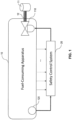
FIG. 1 is a block diagram of an example safety control system illustrated in conjunction with a fuel-consuming apparatus according to an embodiment of the present disclosure; -
FIG. 2A is a top elevation view of an example fuel cell system according to an embodiment of the present disclosure; -
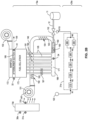
FIG. 2B is a block diagram of an example cell system illustrated in conjunction with a switching assembly of a safety control system according to an embodiment of the present disclosure; -
FIG. 3 is a block diagram of an example safety control system according to an embodiment of the present disclosure; -
FIG. 4A is a timing diagram of the afterburner temperature switch unit and the time-delay relay unit ofFIG. 3 according to an embodiment of the present disclosure; -
FIG. 4B is a timing diagram of the afterburner temperature switch unit and the time-delay relay unit ofFIG. 3 according to an embodiment of the present disclosure; -
FIG. 5 is a diagram illustrating example feedback signals provided from various nodes of the switching assembly ofFIG. 3 , according to an embodiment of the present disclosure; and -
FIG. 6 is a flowchart illustrating a safety control method according to an embodiment of the present disclosure. - It now has been discovered that the safety control system in accordance with present disclosure takes advantages of hardwire-based switching mechanism to provide a more reliable and intuitive control means for a fuel-consuming apparatus.
- The term "fuel-consuming apparatus" used herein refers to any apparatus operating based on any kinds of fuels.
- By way of examples only, the fuel-consuming apparatus may include, but are not limited to: combustion engines, or all kinds of apparatuses including the combustion engine(s) such as vehicles, electric generators, etc.; and fuel cell reformers that produces fuel cells based on fuels supplied thereto.
- For the sake of description, the present disclosure will be described with reference to the fuel cell reformer as an example of the fuel-consuming apparatus, however the scope or exemplary embodiments of the present disclosure are not limited thereto.
- Unlike the existing safety control schemes which employ a computer processor that collects sensed data from a fuel-consuming apparatus, process the data to detect safety hazards based on the collected data parameters and provide control feedback signals to a fuel safety shutoff valve of the fuel-consuming apparatus based on software (or program codes) executed by the processor, which makes it harder to troubleshoot or to pass safety testing required by many industries.
- On the contrary, the hardwire-based safety control system in accordance with the present disclosure employs electro-mechanical switches which each are adapted to be open or closed directly based on environmental data or conditions sensed from various locations of the fuel-consuming apparatus, allowing one identify responsible parts to particular operations of the safety control system to make it easier to troubleshooting in case of occurrence of fail during operation and perform the safety testing.
- The safety control system in accordance with the present disclosure provides a switching mechanism of electric power to be supplied to a fuel safety shutoff valve of a fuel-consuming apparatus. For example, as illustrated in
FIG. 1 , thesafety control system 20 includes aswitching assembly 21a between apower source node 120 and a fuel safety shutoff valve 1 10. When theswitching assembly 21a is switched on, thepower source node 120 is electrically connected to the fuelsafety shutoff valve 110, so that the power can be supplied into the fuelsafety shutoff valve 110 from thepower source node 120. However, when theswitching assembly 21a is switched off, thepower source node 120 is electrically disconnected from the fuelsafety shutoff valve 110, so that the power cannot be supplied into the fuelsafety shutoff valve 110 from thepower source node 120. - The term "switched on" used herein may refer to an operation that a switch system, a switch unit, a switch, or the like is "closed" to activate an electrical connection between both end nodes thereof, so that electric power can flow through the electrical connection. In addition, the term "switched off" used herein may refer to an operation that the switch system, the switch unit, the switch, or the like is "open" to deactivate an electrical connection between both end nodes thereof, so that no electric power can flow through the electrical connection. Therefore, throughout the present disclosure, the term "switched on" and "closed" are interchangeable, and the term "switched off" and "open" are interchangeable.
- The
safety control system 20 is configured to be switched off to stop supplying of the fuel from afuel storage 11 into the fuel-consumingapparatus 10 by closing a control valve of the fuelsafety shutoff valve 110, in case of detections of safety hazard conditions. - Whether the switching
assembly 21a to be switched on or switched off depends on one or more environmental conditions of the fuel-consuming apparatus 1 0. In other words, the fuelsafety shutoff valve 110 will be controlled to be open or closed depending on the one or more environmental conditions of the fuel-consumingapparatus 10. In one embodiment, the environmental conditions may include safety-related conditions such as an air flow amount, a pressure, a temperature, etc. - Thus, the fuel
safety shutoff valve 110 is shut off if the one or more of the environmental conditions do not meet corresponding preset requirements, so that the fuel-consumingapparatus 10 can be protected from being caught fire, exploded, or the like. - In one embodiment, the one or more switch units may be implemented using electro-mechanical switches. The electro-mechanical switches are deployed within or in the vicinity of the fuel-consuming
apparatus 10 to sense the environmental conditions directly therefrom, and switched on or off based on the sensed results. These features of the present disclosure are distinguishable from the existing art where the fuel safety shutoff valve is controlled based on software or program codes executed by a computer processor. In particular, in the existing art, a controller including a processor is employed to receive data regarding the environmental conditions and provide control feedback signals to the fuel safety shutoff valve, which makes the control mechanism more complicate. Moreover, such software-based approaches make it harder to link a particular function with a specific part(s) of the control system, and thus if a fail occurs, identifying parts associated with the fail may not be easy, and in some aspects, the software-based control system may not be appropriate for certain safety test cases required to be passed in many industries. - On the contrary, the safety control scheme based on the electro-mechanical switches in accordance with the present disclosure provides more direct, efficient, simpler interfaces to shut off the fuel supply into the fuel-consuming
apparatus 10, thus making it easier to troubleshooting or safety testing. - It is to be understood that the present disclosure herein is not limited to the particular procedures, materials, and modifications described and as such can vary. It is also to be understood that the terminology used is for purposes of describing particular embodiments only and is not intended to limit the scope of the present disclosure, which will be limited only by the appended claims.
- In the present disclosure, where an element or component is said to be included in, at least one of the recited element or and/or selected from a list of recited elements or components, it should be understood that the element or component can be any one of the recited elements or components, or the element or component can be selected from a group consisting of two or more of the recited elements or components. Further, it should be understood that elements and/or features of a composition, an apparatus, or a method described herein can be combined in a variety of ways without departing from the focus and scope of the present disclosure, whether explicit or implicit herein. For example, where reference is made to a particular structure, that structure can be used in various embodiments of apparatus of the present disclosure and/or in methods of the present disclosure.
- The use of the terms "include," "includes," "including," "have," "has," "having," "contain," "contains," or "containing," including grammatical equivalents thereof, should be generally understood as open-ended and non-limiting, for example, not excluding additional unrecited elements or steps, unless otherwise specifically stated or understood from the context.
- The use of the singular herein, for example, "a," "an," and "the," includes the plural (and vice versa) unless specifically stated otherwise.
- It should be understood that the order of steps or order for performing certain actions is immaterial so long as the present disclosure remain operable. For example, the methods described herein can be performed in any suitable order unless otherwise indicated herein or otherwise clearly contradicted by context. Moreover, two or more steps or actions can be conducted simultaneously.
- The use of any and all examples, or exemplary language provided herein, for example, "such as," is intended merely to better illuminate the present disclosure and does not pose a limitation on the scope of the invention unless claimed. No language in the specification should be construed as indicating any non-claimed element as essential to the practice of the present disclosure.
- The expression "fuel" shall be understood to include any kinds of liquid fuels and gaseous fuels.
- Further, the expression "liquid fuel" shall be understood to include a fuel in a liquid state at standard temperature and pressure (STP) conditions, for example, methanol, ethanol, naphtha, distillate, gasoline, kerosene, jet fuel, diesel, biodiesel, and the like. The expression "liquid fuel" shall be further understood to include such fuels whether they are in the liquid state or in the gaseous state, i.e., a vapor.
- Still further, the expression "gases fuel" shall be understood to include a fuel in a gas at STP conditions, for example, methane, ethane, propane, butane, isobutane, ethylene, propylene, butylene, isobutylene, dimethyl ether, their mixtures, such as natural gas and LNG, which are mainly methane, and petroleum gas and LPG, which are mainly propane or butane but include all mixtures made up primarily of propane and butane, and the like. The gaseous fuel also includes ammonia, which like other gaseous fuels, can be stored as a liquid.
- Exemplary embodiments where a safety control system in accordance with the present disclosure is applied for controlling a fuel reformer or a fuel cell system including the fuel reformer will be described hereinafter.
- Referring now to
FIG. 2A , illustrated is a top elevation view of a fuel cell system illustrated as an example of the fuel-consumingapparatus 10a according to an embodiment of the present disclosure. The example fuel cell system ofFIG. 2A is also described in Applicant's Provisional Application No.62/724,983 filed on August 30, 2018 - Referring to
FIG. 2A , the fuel cell system may include twothermal zones thermal zones air blower 730 and athermal insulation wall 760, such that there is no air or gas communication except through theair blower 730. Theblower 730 may be configured to provide a forced air flow from thezone 710 to thezone 720 where afuel cell stack 173 and other balance-of-plant (BOP) components such as a fuel reformer, chemical reactors, gaskets, pumps, heat exchangers, afterburner, air blowers, reactant conduits or the like are located. - Referring now to
FIG. 2B , an examplefuel cell system 10a is illustrated in conjunction with a switchingassembly 21a of asafety control system 20a according to an embodiment of the present disclosure. As shown inFIG. 2B , thefuel cell system 10a refers, but does not necessarily to, at least one of catalytic partial oxidation (CPOX) reformer-based fuel cell systems disclosed in theU.S. Patent Nos. 9,627,700 9,627,701 fuel cell system 10a includes anair blower 131 that receives the air provided from theair blower 730 and introduces oxygen-containing gas, exemplified here and in the other embodiments of the present disclosure by air, into aconduit 140, and for driving this and other gaseous streams (inclusive of gaseous fuel-air mixture(s) and hydrogen-rich reformates) through the various passageways, including open gaseous flow passageways, of a fuel reformer section of thefuel cell system 10a. In one embodiment, theair blower 131 can be used to provide CPOX air for being mixed with fuel, or for diluting fuel to satisfy a safety system requirement (e.g., LEL < 0.25 % for propane as fuel). In other embodiments, a separate blower (not shown) other than theair blower 131 can be used as a dilution blower. - The
fuel cell system 10a may include a plurality of micro electro-mechanical switches or at least a portion (e.g., sensing parts) thereof at locations, e.g., 30a, 31a, 31b, 32, 34, and 44 for measuring or monitoring the aforementioned environmental conditions. - In a start-up mode of operation of the exemplary fuel reformer section of the
fuel cell system 10a, air is introduced by theair blower 131 into theconduit 140 for being mixed with fuel as explained in theU.S. Patent Nos. 9,627,700 9,627,701 heat transfer zone 191 which is, in the steady-state mode, heated by heat of exotherm recovered from the CPOX reaction occurring within CPOX reaction zones 1 90 of tubular CPOX reactor units 196. - Once such steady-state operation of the fuel reformer section is achieved, e.g., upon the CPOX reaction within the CPOX reactor units 196 becoming self-sustaining, the thermal output of the first heater 193 can be reduced or its operation discontinued since the incoming air will have already been heated by a passage through the
heat transfer zone 191 to within, or approaching, its first range of elevated temperature. - Continuing further downstream within the
conduit 140, the heated air passes through asecond heating zone 194 where it is further heated by asecond heater 195 to within a second range of elevated temperature. Theheater 195 can operate to top-off the temperature of the previously heated air, thereby satisfying several operational requirements of thefuel cell system 10a, namely, assisting in the regulation and fine-tuning of the thermal requirements of thefuel cell system 10a on a rapid response and as-needed basis. - The fuel is introduced via a pump through a
fuel line 12 into theconduit 140 where the fuel is vaporized by avaporizer system 150 utilizing the heat from the heated air flowing from thesecond heating zone 194. The vaporized fuel is combined with the stream of heated air in amixing zone 160 in which an in-line mixer is disposed in order to provide a more uniform fuel-air gaseous CPOX reaction mixture. - The heated vaporized fuel-air mixture (e.g., heated gaseous CPOX reaction mixture) enters a manifold, or
plenum 171 which functions to distribute the reaction mixture more evenly and, for example, at a more uniform temperature, into the tubular CPOX reactor units 196. - From the manifold 171, the heated CPOX reaction mixture is introduced into the tubular CPOX reactor units 196. In a start-up mode of operation of the fuel reformer section, an igniter 197 initiates the CPOX reaction of the CPOX reaction mixture within the
CPOX reaction zones 190 of the tubular CPOX reactor units 196, thereby commencing the production of hydrogen-rich reformate. Once steady-state CPOX reaction temperatures have been achieved (e.g., 250 °C to 1,100 °C), the reaction becomes self-sustaining and operation of the igniter 197 can be discontinued. - The
fuel cell system 10a includes an electric power source unit (not shown) electrically connected to apower source node 120 to provide electric power to various electrically driven components of thefuel cell system 10a and/or thesafety control system 20a such as theair blower 131, theheaters safety shutoff valve 110, the igniter 197, andvarious switch units 210 to 260. - As further shown in
FIG. 2B , the hydrogen-rich reformate driven by theair blower 131 passes from the CPOX reactor units 196 into afuel cell stack 173 where the hydrogen and oxygen-containing gas introduced by anair blower 132 into a manifold 172 and thereafter into thefuel cell stack 173 undergo electrochemical conversion to electricity. Combustible gas(es), for example, hydrocarbon(s), unconsumed hydrogen, and the like, contained in the spent gas(es) resulting from such electrochemical conversion can be made to undergo combustion in anafterburner unit 180. Heat resulting from the combustion taking place in theafterburner unit 180 can be recovered, if desired, and utilized for the operation of the fuel reformer section, for example, to preheat oxygen-containing gas and/or fuel during a steady-state mode of operation of the fuel reformer section. Theair blower 132 may be used to provide cathode air via themanifold 172 and passageways (not shown) to the cathode side of thefuel cell stack 173. - The
safety control system 20a as shown inFIG. 2B may be disposed within thefuel cell system 10a or in the vicinity thereof. In one embodiment, thesafety control system 20a includes a switchingassembly 21a for controlling an electrical connection between an electricalpower source node 120 and the fuel safety shutoff valve 1 10, or any other devices capable of controlling fuel flowing into the fuel reformer section of thefuel cell system 10a. In an example illustrated inFIG. 2B , the switchingassembly 21a includes a plurality ofswitch units 210 to 240 serially connected one to another. One end of theswitch unit 210 is connected to thepower source node 120 through a node N1. Another end of theswitch unit 240 is serially connected to one end of a time-delay relay unit 250. The time-delay relay unit 250 is connected in parallel with atemperature switch unit 260. - In one embodiment, whether the switching
assembly 21a is switched on or off based on whether one or more environmental conditions sensed within or in the vicinity of thefuel cell system 10a. The one or more environmental conditions are associated with an amount of air flow, a pressure, a temperature, etc. By way of example only, when the switchingassembly 21a is switched on, the fuelsafety shutoff valve 110 is powered by thepower source node 120 to supply the fuel into thefuel cell system 10a from thefuel storage 11. In addition, when the switchingassembly 21a is switched off upon a detection of safety hazard conditions within thefuel cell system 10a, the fuelsafety shutoff valve 110 is not powered by thepower source node 120 to stop supplying of the fuel into thefuel cell system 10a to ensure the safe operation thereof. - Referring further to
FIGS. 2 and3 , the switchingassembly 21a may include aflow switch unit 210. The switching operation (e.g., switching on or switching off) of theflow switch unit 210 is performed based on whether a sufficient amount of dilution air flows into thefuel cell system 10a, e.g.,conduit 140. In one embodiment, whether the sufficient amount of dilution air flow into theconduit 140 is evaluated, for example, by monitoring an air flow rate (or an air flow velocity) at a certain location (e.g., an inlet side 30aof the air blower 730). - Referring further to
FIG. 3 , theflow switch unit 210 is configured to be switched on or off based on whether an air flow rate sensed at a certain location (e.g., 30a ofFIG. 2B ) of thefuel cell system 10a is equal to or more than a preset air flow rate threshold. Theflow switch unit 210 is configured to be switched off when the sensed air flow rate is less than the preset air flow rate threshold. For example, the preset air flow rate threshold is set to ensure a sufficient amount of dilution air is provided into thefuel cell system 10a to satisfy the system safety requirement (e.g., an LEL for fuel (propane) > 0.25 %) and/or ensure complete catalytic combustion. In a particular example where a part of thefuel cell system 10a is a passive orifice that limits a 100 % of full ventilation, a maximum inlet pressure of thefuel cell system 10a may be 14 inWC. at which the propane flow rate cannot exceed about 2 L/m. Thus, in this case, given the 2 L/m of propane flow rate, the minimum dilution air flow rate for satisfying the LEL of 0.25 % may be about 800 L/m, i.e., about 28 CFM, and thus, the preset air flow threshold can be set as 28 CFM. For more safety operation, the preset air flow rate can be set higher, e.g., 40 CFM. However, the preset air flow rate threshold may vary according to a specific design of a fuel-consuming apparatus. - In one embodiment, the
flow switch unit 210 can be implemented using arelay coil 212, a normallyopen switch 212, and aflow rate switch 213. Therelay coil 212 has oneterminal node 214 connected to a DC power 27 (e.g., 12 V) and anotherterminal node 215 connected to a ground GND through theflow rate switch 213. The normallyopen switch 212 is a mechanical switch that remains open normally, and turns to be switched on (e.g., closed) upon electric current flowing through the relay coil 211, so as to engage a connection between terminal nodes N1 and N2. - For example, upon the
flow rate switch 213 being switched on, electric current flows through both terminal nodes of the relay coil 211 to generate magnetic field therearound and force the normallyopen switch 212 to be closed, so the wholeflow switch unit 210 will be switched on. If theflow rate switch 213 is open, no current flows through the relay coil 211 and thus the normallyopen switch 212 will remain open. - In one embodiment, the
flow rate switch 213 can be implemented using a flap-type flow meter or flapper (e.g., 713 ofFIG. 2A ) that measures an air amount (or air flow rate) flowing through a specific location (e.g., 30a ofFIG. 2B ) of thefuel cell system 10a. If the air flow amount is equal to or more than a preset air flow rate threshold, theflow rate switch 213 based on the flap-type flow meter is configured to snap one contact (not shown) connected to oneterminal end node 214 to another contact (not shown) connected to anotherterminal end node 215, so as to switch on an electrical connection between the bothterminal end nodes flow rate switch 213 is configured to be switched off the electrical connection between theterminal end nodes - Although only the
flow switch unit 210 is illustrated in FIG. 3A, embodiments of the present disclosure are not limited thereto. In one aspect, thesafety control system 20a may further include one or more flow switch units, each of which is serially connected between theswitch units 210 to 250. Each of the optional flow switch units may be switched on or off based on an air flow rate at a location other than thelocation 30a to ensure that an appropriate amount of CPOX air flows into the CPOX reactor unit 196, and/or an appropriate amount of cathode air flows into thefuel cell stack 173. For example, one optional flow switch unit can be configured to measure an air flow rate at a location adjacent to the air blower 131 (e.g., inlet or outlet side of the air blower 131) and/or any locations in theconduit 140 and switched on or off based on the measured flow rate to ensure that the appropriate amount of CPOX air flows into the CPOX reactor unit 196, and/or another optional flow switch unit can be measured an air flow rate at a location adjacent to the air blower 132 (e.g., inlet or outlet side of the air blower 132) and/or any locations in the passageways at the cathode side of thefuel cell stack 173 to ensure that the appropriate amount of the cathode air flows into thefuel cell stack 173. - In addition, referring further to
FIG. 3 , the switchingassembly 21a may include apressure switch unit 220 checking if there is a substantial pressure change such as an abnormal pressure drop or rise. In particular, the abnormal pressure drop can take place as a result of a leak from thefuel cell system 10a, in more particularly, e.g., thezone 720 ofFIG. 2A where thefuel cell stack 173 and other BOP components are located. Thepressure switch unit 220 may be designed to ensure the box cover of thefuel cell system 10a being in place based on a pressure sensed at various locations. In one example, in order to protect thefuel cell system 10a from a situation where it leaks fuel and/or dilution air, thepressure switch unit 220 is configured to be switched off upon a differential pressure value (e.g., abnormal pressure drop) between separated locations (e.g., 31a and 31b) within or in the vicinity of thefuel cell system 10a being more than a preset differential pressure threshold. Here, thelocations air blower 730, and thus, as theair blower 730 runs, a pressure at thelocation 31b may get higher (e.g., positive differential pressure +ΔP) and a pressure at thelocation 31a may get lower (e.g., negative differential pressure -ΔP or vacuum). In addition, thepressure switch unit 220 is configured to be switched on if the sensed differential pressure value is less than the preset differential pressure threshold. - In one embodiment, the
pressure switch unit 220 can be implemented using a relay coil 221, a normallyopen switch 222, and adifferential pressure switch 223. - The
pressure switch unit 220 has substantially the same or approximate to theflow switch unit 210 except for the use of thedifferential pressure switch 223. Thus, duplicate description thereof will be omitted for the sake of simplicity. - In one embodiment, the
differential pressure switch 223 may be implemented using a sensor measuring a difference between two pressures sensed from two different locations within or in the vicinity of thefuel cell system 10a. One (e.g., 31a ofFIG. 2B ) of the locations may be an inlet side of theair blower 730 and another (31b ofFIG. 2B ) one may be an outlet side thereof, the differential pressure may correspond to a different pressure between thezones differential switch 223 is switched off and the wholepressure switch unit 220 will be switched off. For example, the preset differential pressure threshold may be about 0.25 to 0.3 in WC according to one design example of thefuel cell system 10a. However, an optimal differential pressure indicating that the box cover for thezone 720 is in place to keep the dilution therein may vary depending on a housing box design thereof, and the preset differential pressure threshold may vary accordingly. - Although only the
pressure switch unit 220 is illustrated in FIG. 3A, embodiments of the present disclosure are not limited thereto. In one aspect, thesafety control system 20a may further include one or more pressure switch units, each of which is serially connected between theswitch units 210 to 250. Each of the optional pressure switch units may be switched on or off based on a different pressure at a pair of two locations other than thelocations fuel cell stack 173. For example, one optional pressure switch unit can be configured to measure a differential pressure at locations adjacent to the air blower 131 (e.g., a differential pressure between inlet and outlet sides of the air blower 131) and/or any locations in theconduit 140 and switched on or off based on the measured differential pressure to ensure that the appropriate amount of CPOX air is present, and/or another optional pressure switch unit can be configured to measure a differential pressure at locations adjacent to the air blower 132 (e.g., a differential pressure between inlet and outlet sides of the air blower 132) and/or any locations in the passageways at the cathode side of thefuel cell stack 173 to ensure that the appropriate amount of cathode air is present. - In addition, referring further to
FIG. 3 , the switchingassembly 21a may include one or moreover-temperature switch units fuel cell system 10a from being overheated. Each of theover-temperature switch units FIG. 2B ) within or in the vicinity of thefuel cell system 10a being higher than a preset temperature threshold. In addition, each of thepressure switch units - In one embodiment, the
over-temperature switch unit 230 can be implemented using arelay coil 231, a normallyopen switch 232, and anover-temperature switch 233. - The
over-temperature switch unit 230 has substantially the same or approximate to theflow switch unit 210 except for the use of theover-temperature switch 233. Thus, duplicate description thereof will be omitted for the sake of simplicity. - The
over-temperature switch 233 may be configured to be open or closed depending on a temperature sensed at a certain location (e.g., 34 or 44 ofFIG. 2B ). Upon whether theover-temperature switch 233 being open or closed, the wholeover-temperature switch unit 230 will be switched off or on. - In one embodiment, the
over-temperature switch 233 may be a bimetallic switch designed to be open upon a sensed temperature is equal to or higher than a preset temperature threshold (e.g., 90 °C) and to be closed when the temperature drops below the preset temperature threshold. Exemplary embodiments of the present disclosure are not limited thereto. For example, the preset temperature threshold may vary according to a design of thefuel cell system 10a, but it should not reach an autoignition temperature of a flammable mixture in thefuel cell system 10a. For example, the over-temperature switch can be replaced with any equivalent or similar in functionality, such as thermocouple-based switches, a thermal fuse, or the like. In particular, the thermal fuse can be used in some circumstances requiring non-resetting functionality which is advantageous in terms of cost. - The
over-temperature switch unit 240 has substantially the same or approximate to theover-temperature switch unit 230. Thus, duplicate description thereof will be omitted for the sake of simplicity. - It is noted that the number of the over-temperature switch units of the present disclosure is not limited to what is illustrated in
FIG. 3 ; for example, only a singleover-temperature switch unit 230 can be used, or three or more over-temperature switch units can be used. - In addition, referring further to
FIG. 3 , the switchingassembly 21a may include a time-delay relay unit 250 and a temperature switch unit 260 (or afterburner temperature switch unit) which are connected in parallel with each other. This exemplary configuration of the time-delay relay unit 250 and thetemperature switch unit 260 are provided to ensure that the fuelsafety shutoff valve 110 is shut off if a temperature of theafterburner unit 180 drops below a preset afterburner temperature threshold, so as to prevent emission of undesired materials such as combustible gas(es), for example, hydrocarbon(s), unconsumed hydrogen, and the like. - Further to what are described with reference to
FIG. 2 , theafterburner unit 180 may be configured to directly burn the undesired materials with excess air at a certain temperature, or may include a catalytic bed (not shown) for catalytically oxidizing or burning the undesired materials with excess air. - The
temperature switch unit 260 is configured to be switched off upon the temperature of theafterburner unit 180 or the temperature of the afterburner catalytic bed is equal to or less than an auto-ignition temperature threshold, and otherwise, thetemperature switch unit 260 is configured to be switched on. The time-delay relay unit 250 is configured to be switched on for a preset time period after thefuel cell system 10a is powered on and switched off after the preset time period expires. - If all the
preceding switch units 210 to 240 ofFIG. 3 are switched on, the time-delay relay unit 250 provides a temporary electrical connection path to allow the electrical power from thepower source node 120 to be supplied to the fuelsafety shutoff valve 110 while the temperature of theafterburner unit 180 does not reach the auto-ignition temperature threshold and thetemperature switch unit 260 remains open. - The
temperature switch unit 260 and the time-delay relay unit 250 constitutes an afterburner switch section. - For example, as exemplary illustrated in
FIGS. 3 and4A , the time-delay relay unit 250 is switched on to activate the temporary path P1 between the terminal nodes N5 and N6 for a time period from T1 to T2 (see 410 ofFIG. 4A ). In this case, if the temperature of theafterburner unit 180 gradually rises above the auto-ignition temperature threshold at a time Tab_temp before T2 at which the time-delay relay unit 250 is switched off (see 420 ofFIG. 4A ), thetemperature switch unit 260 becomes switched on at Tab_temp (see 420 ofFIG. 4A ) and activates an electrical connection path P2 between the terminal nodes N5 and N6. In other words, during the period from T1 to Tab_temp, the path P1 across the time-delay relay unit 250 is activated. During the period from Tab_temp to T2, the parallel paths P1 and P2 are activated between the terminal nodes N5 and N6. During the period after T2, the time-delay relay unit 250 becomes switched off and thus only the path P2 is activated between the terminal nodes N5 and N6. In this case, the path P2 becomes a primary path for supplying the power to the fuelsafety shutoff valve 110. - In addition, as exemplary illustrated in
FIG. 4B , if the temperature of theafterburner unit 180 does not reach the auto-ignition temperature threshold during the time period T1 to T2 (see 460 ofFIG. 4B ), none of the paths P1 and P2 is activated until the temperature of theafterburner unit 180 reaches the auto-ignition temperature threshold (e.g., 455 °C for propane; 246 °C ~ 280 °C for gasoline; 336 °C for Gas oil; and 500 °C for Hydrogen) at a time Tab_temp' to make thetemperature switch unit 260 to be switched on. No power is supplied to the fuelsafety shutoff valve 110 during the period from T2 to Tab_temp' to shut off the fuel flowing into thefuel cell system 10a. - It shall be appreciated that the above-mentioned switching configuration and functions provide a mechanism for supplying fuel into the
fuel cell system 10a during a transient time from T1 to T2 until theafterburner unit 180 reaches a condition to able to take care of (e.g., burn) the undesired materials. Referring back toFIG. 4B , in case of the temperature of theafterburner unit 180 failing to reach the auto-ignition temperature before T2, the afterburner switch section is operated to cut off the power to the fuelsafety shutoff valve 110 to prevent theundesired materials 199 from being emitted from thefuel cell system 10a until thetemperature switch unit 260 is switched on at Tab_temp'. - Referring back to
FIG. 3 , the time-delay relay unit 250 may include arelay coil 251 and a normallyopen switch 252 of which configurations and functions are substantially the same or approximate to those of theflow switch unit 220 except for the use of a timer startsignal generation portion 253 for providing the time delay function. Duplicate descriptions thereof will be omitted for the sake of simplicity. Once thefuel cell system 10a is powered, the timer startsignal generation portion 253 may generate a start signal for a preset time period (e.g., see T1 to T2 ofFIG. 4A ) which is set by e.g., a fixed resistor, so it is not adjustable. Upon receiving the start signal during the period P1 to P2, therelay coil 251 may be powered to close the normallyopen switch 252, so as to activate the electrical connection path P1. Upon expiration of the timer start signal after P2, therelay coil 251 is not powered to make the normallyopen switch 252 remain open and thus deactivate the electrical connection path P1. - Referring still to
FIG. 3 , thetemperature switch unit 260 may include a relay coil 261 and a normallyopen switch 262 of which configurations and functions are substantially the same or approximate to theflow switch unit 220 except for the use of a thermo-couple (TC)device 263. Duplicate descriptions thereof will be omitted for the sake of simplicity. Thetemperature switch unit 260 may use an output voltage of theTC device 263 as an input to control the switch on or off operations thereof. The TC device 263 (e.g., K-type TC) may be configured to sense a temperature around or inside theafterburner unit 180 and output a voltage depending on the sensed temperature level. Any type of temperature measuring devices that could survive up to a high temperature (e.g., 1200 °C) may replace theTC device 263. - The relay coil 261 may be powered when the voltage outputted from the
TC device 263 exceeds a preset voltage threshold to close the normallyopen switch 262, so as to activate the electrical connection path P2. When the voltage outputted from theTC device 263 is less than the preset voltage threshold, the relay coil 261 may insufficiently be powered, so as to open the normallyopen switch 262 and deactivate the electrical connection path P2. - For example, the
temperature switch unit 260 may be configured to be switched on when the TC device-measured temperature is higher than a preset temperature threshold. If theTC device 263 measures the temperature inside theafterburner unit 180, the TC device-measured temperature may correspond to an internal temperature of theafterburner unit 180, and thus, the preset temperature threshold may be set equal to or greater than an ignition temperature (e.g., 455 °C for propane) of theafterburner unit 180. If the TC device measures a temperature around theafterburner unit 180, the TC device-measured temperature may be lower than the internal temperature of theafterburner unit 180; for example, for the propane, the TC device-measured temperature will be 250 °C degree when the internal temperature of theafterburner unit 180 reaches an ignition temperature (e.g., 455 °C), and thus, thetemperature switch unit 260 may be configured to switched on when the TC device-measured temperature is equal to or higher than 250 °C (e.g., the preset temperature threshold is 250 °C for propane). - It is noted that the
switches FIG. 2B ) within or in the vicinity of thefuel cell system 10a, and the switching part is separately assembled to the switchingassembly 21a; in another example, a switch can be deployed as a whole within or in the vicinity of thefuel cell system 10a. - It is further noted that an arranged order of the
switch units 210 to 240 and the afterburner switch section including thetemperature switch unit 260 and the time-delay relay unit 250 ofFIG. 3 are only illustrated as an example. They can be arranged and connected in an arbitrary order other than what is illustrated inFIG. 3 . - Referring further to
FIG. 3 , when all theswitch units 210 to 240 and either one of thetemperature switch unit 260 or the time-delay relay unit 250 are switched on, an electrical connection between thepower source node 120 and the fuelsafety shutoff valve 110 is established, supplying fuel into thefuel cell system 10a. All theswitch units 210 to 240 will be switched on when all the environmental conditions associated with the safety of thefuel cell system 10a meet respective safety requirements. - However, when at least one of the environmental conditions fails to meet a corresponding requirement, the corresponding switch unit becomes switched off and the electrical connection between the
power source node 120 and the fuel safety shutoff valve 1 10 is deactivated, thus shutting off the supplying of fuel into thefuel cell system 10a. - In one embodiment, as illustrated in
FIG. 3 , the switchingassembly 21a provides feedback signals FS1 to FS5, each of which indicates an operation status of a corresponding one of theswitch units 210 to 240 and 260. Thus, based on the feedback signals FS1 to FS5, a system or a user may determine whether a failure occurs in the linear chain of theswitch units 210 to 240 and 260 and/or where the failure occurs. This feature aids in the system or user to troubleshoot in case of occurrence of failure. In one embodiment, the switchingassembly 21a includes atroubleshoot section 290. Thetroubleshoot section 290 may receive the feedback signals FS1 to FS5. Thetroubleshoot section 290 may include a memory (not shown) storing information collected regarding the feedback signals FS1 to FS5; display the information to a user; and/or process the collected information using one or more processors (not shown) to find out locations being failed. - As further illustrated in
FIGS. 3 and5 , if theswitch unit 210 is switched off, none of the feedback signals FS1 to FS5 is provided, regardless respective switching statuses of the followingother switch units 220 to 240 and 260, because no electric current can flow through theswitch unit 210. The character "X" illustrated inFIG. 5 represents a case that a switching status of a corresponding switch unit can be either switched on or switched off. In addition, if theswitch unit 210 is switched on and theswitch unit 220 is switched off, the feedback signal FS1 is provided, but none of the FS2 to FS5 is provided, regardless respective switching statuses of the followingother switch units switch unit 220. Similarly, if theswitch units switch unit 230 is switched off, the feedback signals FS1 and FS2 are provided, but none of the FS3 to FS5 is provided, regardless respective switching statuses of the followingother switch units switch unit 230. In addition, if theswitch units 210 to 230 are switched on and theswitch unit 240 is switched off, the feedback signals FS1 to FS3 are provided, but none of the FS4 and FS5 is provided, regardless respective switching statuses of the followingother switch unit 260, because no electric current can flow through theswitch unit 240. Further, theswitch units 210 to 240 are switched on and theswitch unit 260 is switched off, the feedback signals FS1 to FS4 are provided, but the signal FS5 is not provided, because no electric current can flow through theswitch unit 260. Finally, theswitch units 210 to 240 and 260 are switched on, the feedback signals FS1 to FS5 are provided. - Thus, by way of example only, upon receiving none of the signals FS1 to FS5, the processor (not shown) of the
troubleshooting section 290 or a user may determine that theswitch unit 210 is switched off, and thus may check parts (e.g., 30a ofFIG. 2B ) associated with the air flow rate. Similarly, upon receiving only the signal FS1, the processor or the user may determine that theswitch unit 220 is switched off, and thus may check parts (e.g., 31a or 31b ofFIG. 2B ) associated with the differential pressure. Further, upon receiving only the signals FS1 and FS2, the processor or the user may determine that theswitch unit 230 is switched off, and thus may check parts (e.g., 44 ofFIG. 2B ) associated with the over-temperature at, e.g., thelocation 44. Still further, upon receiving only the signals FS1 to FS3, the processor or the user may determine that theswitch unit 240 is switched off, and thus may check parts (e.g., 34 ofFIG. 2B ) associated with the over-temperature at, e.g., thelocation 34. Still yet further, upon receiving only the signals FS1 to FS4, the processor or the user may determine that theswitch unit 260 and the time-delay unit 250 are switched off, and thus may check parts (e.g., 32 ofFIG. 2B ) associated with the afterburner temperature and/or the time-delay unit 250 itself. Finally, upon receiving all the signals FS1 to FS5, the processor or the user may determine that thefuel cell system 10a operates, meeting all the environment requirements with regard to the safety of the fuel-consumingapparatus 10a. -
FIG. 6 is a flow chart illustrating a safety control method for afuel cell system 10a according to an embodiment of the present disclosure. - Referring now to
FIGS. 3 and6 , the safety control method includes: turning on an air blower (e.g., 730) (S600); and providing power into an input node (e.g., N1 ofFIG. 3 ) of a flow switch unit (e.g., 210) from a power source node (e.g., 120) (S601). In addition, it is determined at the flow switch unit if an air flow rate associated with the dilution air amount at a certain location (e.g., 30a ofFIG. 2B ) of thefuel cell system 10a meets a preset flow rate requirement (S603). In one embodiment, independent from the step S601, the method includes starting an operation of the time-delay relay unit (e.g., 250) at T1 (seeFIG. 4A ) to activate an electrical connection between both terminal ends (e.g., N5 and N6) thereof (S602). The time-delay of the time-delay relay unit will end at T2 (seeFIG. 4A ) to disactivate the connection between the terminal ends (e.g., N5 and N6). In one embodiment, the preset flow rate requirement includes that an air flow rate at the location (e.g., 30a) is higher than a preset air flow rate threshold. If the air flow rate meets the preset air flow rate requirement (YES), the flow switch unit (e.g., 210 is switched on and the power supplied from thepower source node 120 is advanced into an input node (e.g., N3) of a pressure switch unit (e.g., 230) (S604). If the air flow rate does not meet the preset flow amount requirement (NO), the flow switch unit is switched off and the power into the fuel safety shutoff is cut off (S622) and the supplying of the fuel into thefuel cell system 10a stops (S624). - Further, the method includes a step S606 where it is determined at the pressure switch unit if a differential pressure between certain locations (e.g., 31a and 31b of
FIG. 2B ) of the fuel cell system10a meets a preset pressure requirement. In one embodiment, the preset pressure requirement includes that a differential pressure between two separated locations (31a and 31b) is lower than a preset differential pressure threshold. - If the sensed pressure meets the preset pressure requirement (YES), the pressure switch unit is switched on and the power is advanced into an input node (e.g., N4) of an over-temperature switch unit (e.g., 230) (S608). If the sensed pressure does not meet the pressure requirement (YES), the pressure switch unit is switched off and the power into the fuel
safety shutoff valve 110 is cut off (S622) and the supplying of the fuel into thefuel cell system 10a stops (S624). - Still further, the method includes a step S610 where it is determined at the over-temperature switch unit if a temperature at a certain location (e.g., 34 of
FIG. 2B ) of thefuel cell system 10a meets a preset temperature requirement. In one embodiment, the preset temperature requirement includes that a temperature sensed at the location (e.g., 34 or 44) is less than a preset temperature threshold. - The
location 44 may be where thefuel cell system 10a exhausts hot exhaust/dilution air mix before the exhaust/dilution air mix leaves the box of thefuel cell system 10a. Thelocation 34 may correspond to an inlet manifold to theCPOX unit 195. - For example, the preset temperature threshold may be set to be 90 °C in consideration of a specific temperature limitation on materials. However, the preset temperature threshold can be lowered up to, e.g., 80 °C for safety touch hazard where a temperature should be kept below 80 °C for sheet metal and even lower for other materials depending on how fast they could transfer heat to skin.
- If the sensed temperature meets the preset temperature requirement (YES), the over-temperature switch unit is switched on and the power is advanced into an input node (e.g., N5) of an afterburner switching section including the time-
delay relay unit 250 and the temperature switch unit 260 (S612). If the sensed temperature does not meet the preset temperature requirement (NO); e.g., if the temperature is equal to or higher than the preset temperature threshold, the over-temperature switch unit is switched off and the power into the fuelsafety shutoff valve 110 is cut off (S622) and the supplying of the fuel into thefuel cell system 10a stops (S624). - Still yet further, the method further includes determining if the time delay by the time-
delay relay unit 250 still runs or not (S614). If the time delay runs (YES), the method goes to a step S616 of providing the power into a power input node (e.g., N110 ofFIG. 2B ) of the fuelsafety shutoff valve 110 and a step S618 of supplying the fuel into thefuel cell system 10a. However, if the time delay by the time-delay relay unit does not run (NO), the method goes to a step S620 to determine if a temperature of the afterburner unit 1 80 meets a preset afterburner temperature requirement. In one embodiment, the preset afterburner temperature requirement includes that the afterburner temperature is equal to or more than a preset afterburner temperature threshold (e.g., auto-ignition temperature). If the sensed afterburner temperature meets the preset afterburner temperature requirement (YES), the method goes to the steps S616 and S618 to supply the fuel into thefuel cell system 10a. In addition, if the sensed afterburner temperature does not meet the preset afterburner temperature requirement (NO), the method goes to the steps S622 and S624 to stop the supplying of the fuel into thefuel cell system 10a. - The present disclosure encompasses embodiments in other specific forms without departing from the scope of the attached claims. The foregoing embodiments are therefore to be considered in all respects illustrative rather than limiting on the present disclosure described herein. Scope of the present invention is thus indicated by the appended claims rather than by the foregoing description, and all changes that come within the meaning and range of equivalency of the claims are intended to be embraced therein.
Claims (14)
- A safety control system (20, 20a) for a fuel-consuming apparatus (10, 10a), comprising:a first end electrically connectable to a power source node (120);a second end electrically connectable to an input power node (N110) of a fuel safety shutoff valve (110) of the fuel-consuming apparatus;one or more switch units (210-240) serially connected between the first and second ends, each of the switch units being configured to be switched on or off based on a corresponding one of one or more environmental conditions of the fuel-consuming apparatus, wherein an electrical connection path between the first and second ends is deactivated upon at least one of the one or more switch units being switched off to stop supplying of fuel into the fuel-consuming apparatus; and characterised by comprising:a time-delay relay unit (250) serially connected to one of the one or more switch units, the time-delay relay unit being configured to be switched on during a predetermined time period from a first time to a second time and switched off after the second time; anda temperature switch unit (260) serially connected to said one of the one or more switch units and connected in parallel to the time-delay relay unit, the temperature switch unit being configured to be switched on or switched off based on a temperature of an afterburner unit of the fuel-consuming apparatus.
- The safety control system of claim 1, wherein the one or more switch units are implemented with one or more electro-mechanical switches.
- The safety control system of claim 2, wherein the temperature switch unit is configured to be switched on upon the temperature of the afterburner unit exceeding a preset afterburner temperature threshold.
- The safety control system of claim 2, wherein when all of the switch units are switched on and the time-delay relay unit is switched on, the electrical connection path between the first and second ends is activated to provide electric power from the power source node into the fuel safety shutoff valve.
- The safety control system of claim 2, wherein when all of the switch units are switched on and the time-delay relay unit is switched off, the electrical connection path between the first and second ends is activated upon the temperature switch unit being switched on and deactivated upon the temperature switch unit being switched off.
- The safety control system of claim 5, wherein when all of the switch units are switched on, the time-delay relay unit is switched off and the temperature switch unit is switched on before the second time, the electrical connection path between the first and second ends remains activated without disconnection
- The safety control system of claim 5, wherein when all of the switch units are switched on, the time-delay relay unit is switched off and the temperature switch unit is switched on at a third time after the second time, the electrical connection path is deactivated during a period between the second time and the third time; and is reactivated after the third time.
- The safety control system of claim 1, wherein the one or more environmental conditions comprise an air flow amount, a pressure and a temperature.
- The safety control system of claim 1, wherein a flow switch unit of the one or more switch units includes a first electro-mechanical switch configured to be switched on or switched off based on whether an air flow rate sensed at a first location of the fuel-consuming apparatus meets a first preset requirement.
- The safety control system of claim 1, wherein a pressure switch unit of the one or more switch units includes a second electro-mechanical switch configured to be switched on or switched off based on whether a differential pressure between two separated locations of the fuel-consuming apparatus meets a second preset requirement.
- The safety control system of claim 10, wherein the two separated locations correspond to inlet and outlet locations of a blower of the fuel-consuming apparatus, respectively.
- The safety control system of claim 1, wherein an over-temperature switch unit of the one or more switch unit includes a third electro-mechanical switch configured to be switched on or switched off based on whether a temperature sensed at a third location of the fuel-consuming apparatus meets a third preset requirement.
- The safety control system of claim 1, wherein the third preset requirement comprises the temperature sensed at the third location being higher than a preset temperature threshold.
- A fuel-consuming apparatus comprising the safety control system of claim 1, the fuel-consuming apparatus further comprising one or more of a fuel combustion apparatus, a fuel reformer and a fuel cell system, wherein the fuel comprises a liquid fuel and a gaseous fuel.
Applications Claiming Priority (2)
| Application Number | Priority Date | Filing Date | Title |
|---|---|---|---|
| US201862724993P | 2018-08-30 | 2018-08-30 | |
| PCT/US2019/047878 WO2020046742A1 (en) | 2018-08-30 | 2019-08-23 | Safety control system and method for fuel-consuming apparatus |
Publications (3)
| Publication Number | Publication Date |
|---|---|
| EP3844376A1 EP3844376A1 (en) | 2021-07-07 |
| EP3844376A4 EP3844376A4 (en) | 2022-06-08 |
| EP3844376B1 true EP3844376B1 (en) | 2024-07-03 |
Family
ID=69643696
Family Applications (1)
| Application Number | Title | Priority Date | Filing Date |
|---|---|---|---|
| EP19853811.8A Active EP3844376B1 (en) | 2018-08-30 | 2019-08-23 | Safety control system and method for fuel-consuming apparatus |
Country Status (9)
| Country | Link |
|---|---|
| US (1) | US20210313603A1 (en) |
| EP (1) | EP3844376B1 (en) |
| JP (1) | JP7157491B2 (en) |
| KR (1) | KR102542108B1 (en) |
| CN (1) | CN112840109B (en) |
| AU (1) | AU2019330769B2 (en) |
| CA (1) | CA3110683C (en) |
| MX (1) | MX2021001926A (en) |
| WO (1) | WO2020046742A1 (en) |
Family Cites Families (19)
| Publication number | Priority date | Publication date | Assignee | Title |
|---|---|---|---|---|
| US2709335A (en) * | 1953-10-22 | 1955-05-31 | Nat Mine Service Co | Safety exhaust system |
| US4429670A (en) * | 1978-02-03 | 1984-02-07 | Ulanet George D | Engine protection systems |
| JPS5850051B2 (en) * | 1979-04-12 | 1983-11-08 | サンデン株式会社 | Self-holding switch circuit with built-in timer |
| CN2078810U (en) * | 1990-10-15 | 1991-06-12 | 吴存军 | Safety automatic protection for diesel engine |
| JP2000170583A (en) * | 1998-12-09 | 2000-06-20 | Seirei Ind Co Ltd | Emergency stop circuit device for engine |
| JP4271347B2 (en) * | 2000-06-12 | 2009-06-03 | 本田技研工業株式会社 | Fuel shut-off device for fuel cell vehicle |
| JP4692869B2 (en) * | 2003-10-24 | 2011-06-01 | トヨタ自動車株式会社 | Abnormality detection device for fuel cell system |
| US20060024551A1 (en) * | 2004-02-20 | 2006-02-02 | Nuvant Systems, Inc. | Array fuel cell reactors with a switching system |
| US8338044B2 (en) * | 2009-01-15 | 2012-12-25 | Ford Motor Company | System and method for detecting a fuel cell anode gas composition |
| US8685224B2 (en) * | 2009-09-04 | 2014-04-01 | Innovative Energy Systems And Design, Llc | Method and apparatus for hydrogen generation |
| DE102012103015B4 (en) * | 2012-04-05 | 2013-12-05 | Pilz Gmbh & Co. Kg | Safety switching device with switching element in the auxiliary contact current path |
| US10003190B2 (en) * | 2013-07-12 | 2018-06-19 | Linear Technology Corporation | Inrush control with multiple switches |
| EP3065854A2 (en) * | 2013-11-06 | 2016-09-14 | Watt Fuel Cell Corp. | Reformer with perovskite as structural component thereof |
| CN203670006U (en) * | 2013-12-03 | 2014-06-25 | 中冶集团资源开发有限公司 | Engine cylinder-scoring preventing automatic protection device |
| KR20150138762A (en) * | 2014-06-02 | 2015-12-10 | 현대자동차주식회사 | Safety system of fuel cell vehicle and control method for the same |
| US10391464B2 (en) * | 2015-03-16 | 2019-08-27 | Watt Fuel Cell Corp. | Centrifugal blower system with internal gas mixing and gas phase chemical reactor incorporating same |
| KR101822231B1 (en) * | 2015-06-24 | 2018-01-26 | 현대자동차주식회사 | Power net system of fuel cell vehicle and method for controlling the same |
| JP2018071882A (en) * | 2016-10-28 | 2018-05-10 | アイシン精機株式会社 | Combustion device and fuel cell system |
| GB2565141B (en) * | 2017-08-04 | 2021-09-22 | Intelligent Energy Ltd | Devices and methods for controlling a fluid module |
-
2019
- 2019-08-23 AU AU2019330769A patent/AU2019330769B2/en active Active
- 2019-08-23 CN CN201980066476.6A patent/CN112840109B/en active Active
- 2019-08-23 US US17/267,137 patent/US20210313603A1/en active Pending
- 2019-08-23 JP JP2021510677A patent/JP7157491B2/en active Active
- 2019-08-23 KR KR1020217006016A patent/KR102542108B1/en active Active
- 2019-08-23 CA CA3110683A patent/CA3110683C/en active Active
- 2019-08-23 MX MX2021001926A patent/MX2021001926A/en unknown
- 2019-08-23 EP EP19853811.8A patent/EP3844376B1/en active Active
- 2019-08-23 WO PCT/US2019/047878 patent/WO2020046742A1/en not_active Ceased
Also Published As
| Publication number | Publication date |
|---|---|
| US20210313603A1 (en) | 2021-10-07 |
| CA3110683C (en) | 2023-08-15 |
| AU2019330769A1 (en) | 2021-03-04 |
| MX2021001926A (en) | 2021-04-28 |
| CN112840109B (en) | 2022-11-25 |
| JP2021535561A (en) | 2021-12-16 |
| KR102542108B1 (en) | 2023-06-13 |
| AU2019330769B2 (en) | 2023-01-05 |
| EP3844376A4 (en) | 2022-06-08 |
| EP3844376A1 (en) | 2021-07-07 |
| WO2020046742A1 (en) | 2020-03-05 |
| JP7157491B2 (en) | 2022-10-20 |
| CA3110683A1 (en) | 2020-03-05 |
| CN112840109A (en) | 2021-05-25 |
| KR20210035288A (en) | 2021-03-31 |
Similar Documents
| Publication | Publication Date | Title |
|---|---|---|
| JP5274650B2 (en) | Fuel cell system | |
| JP5190561B2 (en) | Power generation system and operation method thereof | |
| US8846268B2 (en) | Combustion apparatus, combustion processor, and fuel cell generating system | |
| JP5874022B2 (en) | Power generation system and operation method thereof | |
| JP5336022B2 (en) | Power generation system and operation method thereof | |
| US20110039175A1 (en) | Method for operating indirect internal reforming solid oxide fuel cell system | |
| JP2009217951A (en) | Fuel cell system | |
| EP3844376B1 (en) | Safety control system and method for fuel-consuming apparatus | |
| JP4703409B2 (en) | Combustion device, reformer, fuel cell power generation system, and operation method of reformer | |
| US10833339B2 (en) | Fuel cell system and method of running fuel cell system | |
| EP2169753B1 (en) | Power generating system | |
| JP5376280B2 (en) | Simulated reformed gas production method and apparatus, and fuel cell test apparatus using the same | |
| JP6655451B2 (en) | Power generation system | |
| JP2016196384A (en) | Fuel supply system, reforming system, fuel cell system, and fluid fuel type discrimination method | |
| JP2007331951A (en) | Hydrogen generator and fuel cell system | |
| JP5853154B2 (en) | Hydrogen generator, fuel cell system including the same, method of operating hydrogen generator, and method of operating fuel cell system | |
| JP2010225284A (en) | Operation method of indirect internal reforming type solid oxide fuel cell system | |
| JP2014214049A (en) | Hydrogen generator |
Legal Events
| Date | Code | Title | Description |
|---|---|---|---|
| STAA | Information on the status of an ep patent application or granted ep patent |
Free format text: STATUS: THE INTERNATIONAL PUBLICATION HAS BEEN MADE |
|
| STAA | Information on the status of an ep patent application or granted ep patent |
Free format text: STATUS: REQUEST FOR EXAMINATION WAS MADE |
|
| PUAI | Public reference made under article 153(3) epc to a published international application that has entered the european phase |
Free format text: ORIGINAL CODE: 0009012 |
|
| 17P | Request for examination filed |
Effective date: 20210222 |
|
| AK | Designated contracting states |
Kind code of ref document: A1 Designated state(s): AL AT BE BG CH CY CZ DE DK EE ES FI FR GB GR HR HU IE IS IT LI LT LU LV MC MK MT NL NO PL PT RO RS SE SI SK SM TR |
|
| DAV | Request for validation of the european patent (deleted) | ||
| DAX | Request for extension of the european patent (deleted) | ||
| A4 | Supplementary search report drawn up and despatched |
Effective date: 20220504 |
|
| RIC1 | Information provided on ipc code assigned before grant |
Ipc: B60L 58/40 20190101ALI20220429BHEP Ipc: B60L 58/30 20190101ALI20220429BHEP Ipc: B60L 50/70 20190101ALI20220429BHEP Ipc: F02B 39/16 20060101ALI20220429BHEP Ipc: F02D 41/22 20060101ALI20220429BHEP Ipc: F02B 77/08 20060101AFI20220429BHEP |
|
| GRAP | Despatch of communication of intention to grant a patent |
Free format text: ORIGINAL CODE: EPIDOSNIGR1 |
|
| STAA | Information on the status of an ep patent application or granted ep patent |
Free format text: STATUS: GRANT OF PATENT IS INTENDED |
|
| INTG | Intention to grant announced |
Effective date: 20240201 |
|
| P01 | Opt-out of the competence of the unified patent court (upc) registered |
Effective date: 20240327 |
|
| GRAS | Grant fee paid |
Free format text: ORIGINAL CODE: EPIDOSNIGR3 |
|
| GRAA | (expected) grant |
Free format text: ORIGINAL CODE: 0009210 |
|
| STAA | Information on the status of an ep patent application or granted ep patent |
Free format text: STATUS: THE PATENT HAS BEEN GRANTED |
|
| AK | Designated contracting states |
Kind code of ref document: B1 Designated state(s): AL AT BE BG CH CY CZ DE DK EE ES FI FR GB GR HR HU IE IS IT LI LT LU LV MC MK MT NL NO PL PT RO RS SE SI SK SM TR |
|
| REG | Reference to a national code |
Ref country code: CH Ref legal event code: EP |
|
| REG | Reference to a national code |
Ref country code: DE Ref legal event code: R096 Ref document number: 602019054764 Country of ref document: DE |
|
| REG | Reference to a national code |
Ref country code: LT Ref legal event code: MG9D |
|
| REG | Reference to a national code |
Ref country code: NL Ref legal event code: MP Effective date: 20240703 |
|
| PG25 | Lapsed in a contracting state [announced via postgrant information from national office to epo] |
Ref country code: PT Free format text: LAPSE BECAUSE OF FAILURE TO SUBMIT A TRANSLATION OF THE DESCRIPTION OR TO PAY THE FEE WITHIN THE PRESCRIBED TIME-LIMIT Effective date: 20241104 |
|
| REG | Reference to a national code |
Ref country code: AT Ref legal event code: MK05 Ref document number: 1700034 Country of ref document: AT Kind code of ref document: T Effective date: 20240703 |
|
| PG25 | Lapsed in a contracting state [announced via postgrant information from national office to epo] |
Ref country code: NL Free format text: LAPSE BECAUSE OF FAILURE TO SUBMIT A TRANSLATION OF THE DESCRIPTION OR TO PAY THE FEE WITHIN THE PRESCRIBED TIME-LIMIT Effective date: 20240703 |
|
| PG25 | Lapsed in a contracting state [announced via postgrant information from national office to epo] |
Ref country code: PT Free format text: LAPSE BECAUSE OF FAILURE TO SUBMIT A TRANSLATION OF THE DESCRIPTION OR TO PAY THE FEE WITHIN THE PRESCRIBED TIME-LIMIT Effective date: 20241104 Ref country code: NL Free format text: LAPSE BECAUSE OF FAILURE TO SUBMIT A TRANSLATION OF THE DESCRIPTION OR TO PAY THE FEE WITHIN THE PRESCRIBED TIME-LIMIT Effective date: 20240703 |
|
| PG25 | Lapsed in a contracting state [announced via postgrant information from national office to epo] |
Ref country code: NO Free format text: LAPSE BECAUSE OF FAILURE TO SUBMIT A TRANSLATION OF THE DESCRIPTION OR TO PAY THE FEE WITHIN THE PRESCRIBED TIME-LIMIT Effective date: 20241003 |
|
| PG25 | Lapsed in a contracting state [announced via postgrant information from national office to epo] |
Ref country code: FI Free format text: LAPSE BECAUSE OF FAILURE TO SUBMIT A TRANSLATION OF THE DESCRIPTION OR TO PAY THE FEE WITHIN THE PRESCRIBED TIME-LIMIT Effective date: 20240703 Ref country code: GR Free format text: LAPSE BECAUSE OF FAILURE TO SUBMIT A TRANSLATION OF THE DESCRIPTION OR TO PAY THE FEE WITHIN THE PRESCRIBED TIME-LIMIT Effective date: 20241004 Ref country code: PL Free format text: LAPSE BECAUSE OF FAILURE TO SUBMIT A TRANSLATION OF THE DESCRIPTION OR TO PAY THE FEE WITHIN THE PRESCRIBED TIME-LIMIT Effective date: 20240703 |
|
| PG25 | Lapsed in a contracting state [announced via postgrant information from national office to epo] |
Ref country code: BG Free format text: LAPSE BECAUSE OF FAILURE TO SUBMIT A TRANSLATION OF THE DESCRIPTION OR TO PAY THE FEE WITHIN THE PRESCRIBED TIME-LIMIT Effective date: 20240703 |
|
| PG25 | Lapsed in a contracting state [announced via postgrant information from national office to epo] |
Ref country code: LV Free format text: LAPSE BECAUSE OF FAILURE TO SUBMIT A TRANSLATION OF THE DESCRIPTION OR TO PAY THE FEE WITHIN THE PRESCRIBED TIME-LIMIT Effective date: 20240703 |
|
| PG25 | Lapsed in a contracting state [announced via postgrant information from national office to epo] |
Ref country code: AT Free format text: LAPSE BECAUSE OF FAILURE TO SUBMIT A TRANSLATION OF THE DESCRIPTION OR TO PAY THE FEE WITHIN THE PRESCRIBED TIME-LIMIT Effective date: 20240703 Ref country code: IS Free format text: LAPSE BECAUSE OF FAILURE TO SUBMIT A TRANSLATION OF THE DESCRIPTION OR TO PAY THE FEE WITHIN THE PRESCRIBED TIME-LIMIT Effective date: 20241103 |
|
| PG25 | Lapsed in a contracting state [announced via postgrant information from national office to epo] |
Ref country code: HR Free format text: LAPSE BECAUSE OF FAILURE TO SUBMIT A TRANSLATION OF THE DESCRIPTION OR TO PAY THE FEE WITHIN THE PRESCRIBED TIME-LIMIT Effective date: 20240703 Ref country code: CZ Free format text: LAPSE BECAUSE OF FAILURE TO SUBMIT A TRANSLATION OF THE DESCRIPTION OR TO PAY THE FEE WITHIN THE PRESCRIBED TIME-LIMIT Effective date: 20240703 |
|
| PG25 | Lapsed in a contracting state [announced via postgrant information from national office to epo] |
Ref country code: ES Free format text: LAPSE BECAUSE OF FAILURE TO SUBMIT A TRANSLATION OF THE DESCRIPTION OR TO PAY THE FEE WITHIN THE PRESCRIBED TIME-LIMIT Effective date: 20240703 Ref country code: RS Free format text: LAPSE BECAUSE OF FAILURE TO SUBMIT A TRANSLATION OF THE DESCRIPTION OR TO PAY THE FEE WITHIN THE PRESCRIBED TIME-LIMIT Effective date: 20241003 |
|
| PG25 | Lapsed in a contracting state [announced via postgrant information from national office to epo] |
Ref country code: RS Free format text: LAPSE BECAUSE OF FAILURE TO SUBMIT A TRANSLATION OF THE DESCRIPTION OR TO PAY THE FEE WITHIN THE PRESCRIBED TIME-LIMIT Effective date: 20241003 Ref country code: PL Free format text: LAPSE BECAUSE OF FAILURE TO SUBMIT A TRANSLATION OF THE DESCRIPTION OR TO PAY THE FEE WITHIN THE PRESCRIBED TIME-LIMIT Effective date: 20240703 Ref country code: NO Free format text: LAPSE BECAUSE OF FAILURE TO SUBMIT A TRANSLATION OF THE DESCRIPTION OR TO PAY THE FEE WITHIN THE PRESCRIBED TIME-LIMIT Effective date: 20241003 Ref country code: LV Free format text: LAPSE BECAUSE OF FAILURE TO SUBMIT A TRANSLATION OF THE DESCRIPTION OR TO PAY THE FEE WITHIN THE PRESCRIBED TIME-LIMIT Effective date: 20240703 Ref country code: IS Free format text: LAPSE BECAUSE OF FAILURE TO SUBMIT A TRANSLATION OF THE DESCRIPTION OR TO PAY THE FEE WITHIN THE PRESCRIBED TIME-LIMIT Effective date: 20241103 Ref country code: HR Free format text: LAPSE BECAUSE OF FAILURE TO SUBMIT A TRANSLATION OF THE DESCRIPTION OR TO PAY THE FEE WITHIN THE PRESCRIBED TIME-LIMIT Effective date: 20240703 Ref country code: GR Free format text: LAPSE BECAUSE OF FAILURE TO SUBMIT A TRANSLATION OF THE DESCRIPTION OR TO PAY THE FEE WITHIN THE PRESCRIBED TIME-LIMIT Effective date: 20241004 Ref country code: FI Free format text: LAPSE BECAUSE OF FAILURE TO SUBMIT A TRANSLATION OF THE DESCRIPTION OR TO PAY THE FEE WITHIN THE PRESCRIBED TIME-LIMIT Effective date: 20240703 Ref country code: ES Free format text: LAPSE BECAUSE OF FAILURE TO SUBMIT A TRANSLATION OF THE DESCRIPTION OR TO PAY THE FEE WITHIN THE PRESCRIBED TIME-LIMIT Effective date: 20240703 Ref country code: CZ Free format text: LAPSE BECAUSE OF FAILURE TO SUBMIT A TRANSLATION OF THE DESCRIPTION OR TO PAY THE FEE WITHIN THE PRESCRIBED TIME-LIMIT Effective date: 20240703 Ref country code: BG Free format text: LAPSE BECAUSE OF FAILURE TO SUBMIT A TRANSLATION OF THE DESCRIPTION OR TO PAY THE FEE WITHIN THE PRESCRIBED TIME-LIMIT Effective date: 20240703 Ref country code: AT Free format text: LAPSE BECAUSE OF FAILURE TO SUBMIT A TRANSLATION OF THE DESCRIPTION OR TO PAY THE FEE WITHIN THE PRESCRIBED TIME-LIMIT Effective date: 20240703 |
|
| REG | Reference to a national code |
Ref country code: CH Ref legal event code: PL |
|
| REG | Reference to a national code |
Ref country code: DE Ref legal event code: R097 Ref document number: 602019054764 Country of ref document: DE |
|
| PG25 | Lapsed in a contracting state [announced via postgrant information from national office to epo] |
Ref country code: SM Free format text: LAPSE BECAUSE OF FAILURE TO SUBMIT A TRANSLATION OF THE DESCRIPTION OR TO PAY THE FEE WITHIN THE PRESCRIBED TIME-LIMIT Effective date: 20240703 Ref country code: DK Free format text: LAPSE BECAUSE OF FAILURE TO SUBMIT A TRANSLATION OF THE DESCRIPTION OR TO PAY THE FEE WITHIN THE PRESCRIBED TIME-LIMIT Effective date: 20240703 Ref country code: RO Free format text: LAPSE BECAUSE OF FAILURE TO SUBMIT A TRANSLATION OF THE DESCRIPTION OR TO PAY THE FEE WITHIN THE PRESCRIBED TIME-LIMIT Effective date: 20240703 |
|
| PG25 | Lapsed in a contracting state [announced via postgrant information from national office to epo] |
Ref country code: LU Free format text: LAPSE BECAUSE OF NON-PAYMENT OF DUE FEES Effective date: 20240823 |
|
| PG25 | Lapsed in a contracting state [announced via postgrant information from national office to epo] |
Ref country code: MC Free format text: LAPSE BECAUSE OF FAILURE TO SUBMIT A TRANSLATION OF THE DESCRIPTION OR TO PAY THE FEE WITHIN THE PRESCRIBED TIME-LIMIT Effective date: 20240703 Ref country code: CH Free format text: LAPSE BECAUSE OF NON-PAYMENT OF DUE FEES Effective date: 20240831 Ref country code: EE Free format text: LAPSE BECAUSE OF FAILURE TO SUBMIT A TRANSLATION OF THE DESCRIPTION OR TO PAY THE FEE WITHIN THE PRESCRIBED TIME-LIMIT Effective date: 20240703 |
|
| PG25 | Lapsed in a contracting state [announced via postgrant information from national office to epo] |
Ref country code: IT Free format text: LAPSE BECAUSE OF FAILURE TO SUBMIT A TRANSLATION OF THE DESCRIPTION OR TO PAY THE FEE WITHIN THE PRESCRIBED TIME-LIMIT Effective date: 20240703 Ref country code: SK Free format text: LAPSE BECAUSE OF FAILURE TO SUBMIT A TRANSLATION OF THE DESCRIPTION OR TO PAY THE FEE WITHIN THE PRESCRIBED TIME-LIMIT Effective date: 20240703 |
|
| PLBE | No opposition filed within time limit |
Free format text: ORIGINAL CODE: 0009261 |
|
| STAA | Information on the status of an ep patent application or granted ep patent |
Free format text: STATUS: NO OPPOSITION FILED WITHIN TIME LIMIT |
|
| 26N | No opposition filed |
Effective date: 20250404 |
|
| REG | Reference to a national code |
Ref country code: BE Ref legal event code: MM Effective date: 20240831 |
|
| PG25 | Lapsed in a contracting state [announced via postgrant information from national office to epo] |
Ref country code: BE Free format text: LAPSE BECAUSE OF NON-PAYMENT OF DUE FEES Effective date: 20240831 |
|
| PG25 | Lapsed in a contracting state [announced via postgrant information from national office to epo] |
Ref country code: IE Free format text: LAPSE BECAUSE OF NON-PAYMENT OF DUE FEES Effective date: 20240823 |
|
| PG25 | Lapsed in a contracting state [announced via postgrant information from national office to epo] |
Ref country code: SE Free format text: LAPSE BECAUSE OF FAILURE TO SUBMIT A TRANSLATION OF THE DESCRIPTION OR TO PAY THE FEE WITHIN THE PRESCRIBED TIME-LIMIT Effective date: 20240703 |
|
| PGFP | Annual fee paid to national office [announced via postgrant information from national office to epo] |
Ref country code: DE Payment date: 20250827 Year of fee payment: 7 |
|
| PGFP | Annual fee paid to national office [announced via postgrant information from national office to epo] |
Ref country code: GB Payment date: 20250827 Year of fee payment: 7 |
|
| PGFP | Annual fee paid to national office [announced via postgrant information from national office to epo] |
Ref country code: FR Payment date: 20250825 Year of fee payment: 7 |
|
| PG25 | Lapsed in a contracting state [announced via postgrant information from national office to epo] |
Ref country code: CY Free format text: LAPSE BECAUSE OF FAILURE TO SUBMIT A TRANSLATION OF THE DESCRIPTION OR TO PAY THE FEE WITHIN THE PRESCRIBED TIME-LIMIT; INVALID AB INITIO Effective date: 20190823 |
|
| PG25 | Lapsed in a contracting state [announced via postgrant information from national office to epo] |
Ref country code: HU Free format text: LAPSE BECAUSE OF FAILURE TO SUBMIT A TRANSLATION OF THE DESCRIPTION OR TO PAY THE FEE WITHIN THE PRESCRIBED TIME-LIMIT; INVALID AB INITIO Effective date: 20190823 |