EP3843330A1 - Method for setting control function, control device and control system - Google Patents
Method for setting control function, control device and control system Download PDFInfo
- Publication number
- EP3843330A1 EP3843330A1 EP18930554.3A EP18930554A EP3843330A1 EP 3843330 A1 EP3843330 A1 EP 3843330A1 EP 18930554 A EP18930554 A EP 18930554A EP 3843330 A1 EP3843330 A1 EP 3843330A1
- Authority
- EP
- European Patent Office
- Prior art keywords
- control device
- function
- control
- secondary control
- narrow
- Prior art date
- Legal status (The legal status is an assumption and is not a legal conclusion. Google has not performed a legal analysis and makes no representation as to the accuracy of the status listed.)
- Withdrawn
Links
- 238000000034 method Methods 0.000 title claims abstract description 95
- 238000004891 communication Methods 0.000 claims abstract description 235
- 230000006870 function Effects 0.000 claims description 780
- 230000008859 change Effects 0.000 claims description 18
- 238000004590 computer program Methods 0.000 claims description 8
- 230000001960 triggered effect Effects 0.000 claims description 5
- 238000010586 diagram Methods 0.000 description 22
- 230000000694 effects Effects 0.000 description 9
- 238000005516 engineering process Methods 0.000 description 5
- 230000007246 mechanism Effects 0.000 description 3
- 230000004048 modification Effects 0.000 description 2
- 238000012986 modification Methods 0.000 description 2
- 230000005540 biological transmission Effects 0.000 description 1
- 230000001934 delay Effects 0.000 description 1
- 239000002674 ointment Substances 0.000 description 1
- 230000003287 optical effect Effects 0.000 description 1
- 230000000737 periodic effect Effects 0.000 description 1
Images






Classifications
-
- H—ELECTRICITY
- H04—ELECTRIC COMMUNICATION TECHNIQUE
- H04W—WIRELESS COMMUNICATION NETWORKS
- H04W24/00—Supervisory, monitoring or testing arrangements
- H04W24/02—Arrangements for optimising operational condition
-
- H—ELECTRICITY
- H04—ELECTRIC COMMUNICATION TECHNIQUE
- H04W—WIRELESS COMMUNICATION NETWORKS
- H04W72/00—Local resource management
- H04W72/30—Resource management for broadcast services
-
- G—PHYSICS
- G08—SIGNALLING
- G08C—TRANSMISSION SYSTEMS FOR MEASURED VALUES, CONTROL OR SIMILAR SIGNALS
- G08C17/00—Arrangements for transmitting signals characterised by the use of a wireless electrical link
- G08C17/02—Arrangements for transmitting signals characterised by the use of a wireless electrical link using a radio link
-
- H—ELECTRICITY
- H04—ELECTRIC COMMUNICATION TECHNIQUE
- H04L—TRANSMISSION OF DIGITAL INFORMATION, e.g. TELEGRAPHIC COMMUNICATION
- H04L12/00—Data switching networks
- H04L12/02—Details
- H04L12/16—Arrangements for providing special services to substations
- H04L12/18—Arrangements for providing special services to substations for broadcast or conference, e.g. multicast
- H04L12/1895—Arrangements for providing special services to substations for broadcast or conference, e.g. multicast for short real-time information, e.g. alarms, notifications, alerts, updates
-
- H—ELECTRICITY
- H04—ELECTRIC COMMUNICATION TECHNIQUE
- H04W—WIRELESS COMMUNICATION NETWORKS
- H04W36/00—Hand-off or reselection arrangements
- H04W36/10—Reselecting an access point controller
-
- H—ELECTRICITY
- H04—ELECTRIC COMMUNICATION TECHNIQUE
- H04W—WIRELESS COMMUNICATION NETWORKS
- H04W72/00—Local resource management
- H04W72/04—Wireless resource allocation
- H04W72/044—Wireless resource allocation based on the type of the allocated resource
- H04W72/0453—Resources in frequency domain, e.g. a carrier in FDMA
-
- G—PHYSICS
- G08—SIGNALLING
- G08C—TRANSMISSION SYSTEMS FOR MEASURED VALUES, CONTROL OR SIMILAR SIGNALS
- G08C2201/00—Transmission systems of control signals via wireless link
- G08C2201/20—Binding and programming of remote control devices
-
- G—PHYSICS
- G08—SIGNALLING
- G08C—TRANSMISSION SYSTEMS FOR MEASURED VALUES, CONTROL OR SIMILAR SIGNALS
- G08C2201/00—Transmission systems of control signals via wireless link
- G08C2201/40—Remote control systems using repeaters, converters, gateways
- G08C2201/42—Transmitting or receiving remote control signals via a network
-
- H—ELECTRICITY
- H04—ELECTRIC COMMUNICATION TECHNIQUE
- H04W—WIRELESS COMMUNICATION NETWORKS
- H04W48/00—Access restriction; Network selection; Access point selection
- H04W48/08—Access restriction or access information delivery, e.g. discovery data delivery
- H04W48/12—Access restriction or access information delivery, e.g. discovery data delivery using downlink control channel
-
- H—ELECTRICITY
- H04—ELECTRIC COMMUNICATION TECHNIQUE
- H04W—WIRELESS COMMUNICATION NETWORKS
- H04W84/00—Network topologies
- H04W84/18—Self-organising networks, e.g. ad-hoc networks or sensor networks
- H04W84/20—Leader-follower arrangements
-
- H—ELECTRICITY
- H04—ELECTRIC COMMUNICATION TECHNIQUE
- H04W—WIRELESS COMMUNICATION NETWORKS
- H04W88/00—Devices specially adapted for wireless communication networks, e.g. terminals, base stations or access point devices
- H04W88/02—Terminal devices
Definitions
- the present disclosure relates to the technical field of movable platform and control and, more particularly, to a control function configuration method, a control device, and a control system.
- the use of multiple connected remote controllers for aerial photography is a control mechanism becoming more and more popular.
- the multiple connected remote controllers are assigned to control photographing devices with different roles (e.g., a UAV operator, a director, a gimbal operator, a focus puller, etc.).
- Each remote controller performs different control functions respectively.
- the remote controller assigned to the UAV operator controls the flight of the UAV
- the remote controller assigned to the focus puller controls parameters of a camera mounted at the UAV.
- the camera crew responsibilities are clearly defined, and hence the quality and flexibility of aerial photography are improved.
- Wi-Fi Wireless Fidelity
- the present disclosure provides a control function configuration method, a control device, and a control system, thereby improving the flexibility of configuring a control function of a secondary control device.
- control function configuration method includes:
- control function configuration method includes:
- control function configuration method includes:
- control function configuration method applied to a control system including a primary control device and at least one secondary control device.
- the method includes:
- control device includes a memory, a processor, and a transceiver.
- the memory is configured to store program code.
- the processor is configured to call the program code, when the program code is executed, control the transceiver to:
- control device includes a memory, a processor, and a transceiver.
- the memory is configured to store program code.
- the processor is configured to call the program code, when the program code is executed:
- control device includes a memory, a processor, and a transceiver.
- the memory is configured to store program code.
- the processor is configured to call the program code, when the program code is executed:
- control system includes a primary control device and at least one secondary control device.
- the primary control device or the at least one secondary control device is configured to:
- the storage medium includes a computer-readable storage medium and a computer program.
- the computer program is used to implement the disclosed control function configuration method.
- the program product includes a computer program (i.e., executive instructions).
- the computer program is stored in a computer-readable storage medium.
- a processor may retrieve the computer program from the computer-readable storage medium.
- the processor executes the computer program to implement the disclosed control function configuration method.
- the present disclosure provides a control function configuration method, a control device, and a control system.
- the primary control device and the secondary control device communicate with each other through the narrow-band communication network, which extends the communication distance, and shortens the communication delay.
- the first secondary control device configures its control function to be the target control function according to the control function message broadcasted by the primary control device, thereby simplifying the complexity of configuring the control function and improving the flexibility of configuring the control function of the secondary control device.
- FIG. 1 is a schematic structural diagram of a movable platform system according to an example embodiment of the present disclosure.
- the movable platform system may include a movable platform 100 and a control system 200.
- Types of the movable platform 100 are not limited by the present disclosure.
- the movable platform 100 may be an unmanned aerial vehicle (UAV), an unmanned automobile, etc.
- UAV unmanned aerial vehicle
- the movable platform 100 is a UAV.
- the control system 200 communicates with the movable platform 100.
- the control system 200 controls the movable platform 100. Taking the UAV as an example, the control system 200 may control the flight of the UAV, facilitate data transmission, configure photographing parameters of a photographing device mounted at the UAV, and control rotation of a gimbal mounted at the UAV.
- the control system 200 may include a plurality of control devices.
- One of the plurality of control devices is a primary control device.
- the primary control device communicates with the movable platform 100. Excluding the primary control device, the remaining control devices in the control system 200 are secondary control devices.
- the secondary control devices communicate with the primary control device through a narrow-band communication network.
- Each secondary control device may be configured with a control function to control the movable platform 100.
- different secondary control devices may be configured with different control functions.
- the primary control device may obtain status information of at least one salve control device by means of periodic polling or event triggering, and may broadcast the status information to the secondary control devices in the control system 200 through the narrow-band communication network.
- the status information includes at least a connection status of the secondary control device and a currently configured control function.
- the control system 200 includes a primary control device 201, a secondary control device 202, and a secondary control device 203.
- the secondary control device 202 and the secondary control device 203 may communicate with the primary control device 201 through the narrow-band communication network.
- the secondary control device 202 may be configured to control the flight of the UAV.
- the secondary control device 203 may be configured to configure the related parameters of the photographing device mounted at the UAV. Assuming that the control function of the secondary control device 201 is modified to control the rotation of the gimbal mounted at the UAV, the primary control device 201 may broadcast the modification of the control function of the secondary control device 202 through the narrow-band communication network.
- control device may be a remote controller, a computer, a smart phone, a tablet computer, etc.
- control device itself may include an input apparatus.
- the control device may be connected to an external input apparatus.
- the input apparatus may be a mouse, a keyboard, a touch display screen, an audio input device, etc.
- control device may be pre-installed with an application program (APP) for controlling the movable platform.
- APP application program
- control function configuration method, the control device, and the control system provided by the embodiments of the present disclosure achieve configuring and modifying the control function of the secondary control devices included in the control system, thereby improving the flexibility of the control function configuration.
- the detailed description will be given below with specific embodiments.
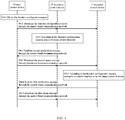
- FIG. 2 is a schematic diagram of message exchanges of a control function configuration method according to a first example embodiment of the present disclosure.
- the control function configuration method provided by the embodiment of the present disclosure may be applied to a control system.
- the control system may include a primary control device and at least one secondary control device.
- the control function configuration method provided by the embodiment of the present disclosure may include the following steps.
- the primary control device broadcasts a control function message to the at least one control device included in the control system through a narrow-band communication network.
- the control function message is used to configure the control function of a first secondary control device.
- the at least one control device included in the control system may receive the control function message broadcasted by the primary control device through the narrow-band communication network.
- the primary control device communicates with the at least one secondary control device through the narrow-band communication network.
- the narrow-band communication network supports long communication distances and short communication delays.
- roles of different nodes in the narrow-band communication network may be different.
- the control system consistent with the embodiments of the present disclosure may include the primary control device and the at least one secondary control device.
- the secondary control device of which the control function needs to be configured is called a first secondary control device
- the secondary control device of which the current control function is a target control function is called a second secondary control device.
- the first secondary control device may or may not have been configured with a control function.
- the primary control device broadcasts the control function message for configuring the control function of the first secondary control device through the narrow-band communication network.
- the first secondary control device configures the control function to be the target control function.
- the first secondary control device sends a first notification message to the primary control device through the narrow-band communication network.
- the first notification message is used to indicate that the control function of the first secondary control device has been configured to be the target control function.
- the primary control device receives the first notification message sent by the first secondary control device through the narrow-band communication network.
- the primary control device broadcasts a first status message to the secondary control device in the control system through the narrow-band communication network.
- the first status message is used to indicate that the control function of the first secondary control device has been configured to be the target control function.
- the secondary control devices in the control system receive the first status message broadcasted by the primary control device.
- the first secondary control device after the first secondary control device configures its control function to be the target control function according to the control function message, the first secondary control device notifies the primary control device of the change of the control function.
- the primary control device broadcasts the change of the control function for the first secondary control device to each secondary control device in the control system.
- each secondary control device may learn that the current control function of the first secondary control device is the target control function.
- the primary control device in the control system communicates with the secondary control devices in the control system through the narrow-band communication network, which extends the communication distance and shortens the communication delay.
- the first secondary control device configures its control function to be the target control function according to the control function message broadcasted by the primary control device, thereby simplifying the complexity of configuring the control function and improving the flexibility of configuring the control function by the secondary control device.
- control function configuration method may further include: obtaining, by the primary control device, the status information of the secondary control devices in the control system.
- the status information includes at least the connection status of the secondary control device and the corresponding control function.
- the primary control device broadcasts the status information to the secondary control devices through the narrow-band communication network.
- the secondary control devices in the control system may receive the status information broadcasted by the primary control device through the narrow-band communication network.
- each secondary control device may learn the current connection status and the current control function of other secondary control devices in the control system, thereby facilitating the secondary control device to configure its control function.
- broadcasting, by the primary control device, the status information to the secondary control devices through the narrow-band communication network may include: periodically broadcasting, by the primary control device, the status information to the secondary control devices through the narrow-band communication network, and/or broadcasting the status information to the secondary control devices through the narrow-band communication network after the primary control device is triggered by a status change of the secondary control device.
- the specific value of the interval for periodically broadcasting the status information by the primary control device is not limited by the present disclosure.
- the present disclosure provides a control function configuration method.
- the method includes the following steps.
- the primary control device broadcasts the control function message to the secondary control devices in the control system through the narrow-band communication network.
- the first secondary control device configures its control function to be the target control function according to the control function message.
- the first secondary control device sends the first notification message to the primary control device through the narrow-band communication network.
- the primary control device broadcasts the first status message to the secondary control devices in the control system through the narrow-band communication network.
- the first secondary control device configures its control function to be the target control function according to the control function message broadcasted by the primary control device through the narrow-band communication network, thereby simplifying the complexity of configuring the control function and improving the flexibility of configuring the control function.
- the communication distance is extended and the communication delay is shortened.
- FIG. 3 is a schematic diagram of message exchanges of a control function configuration method according to a second example embodiment of the present disclosure. Based on the embodiment shown in FIG. 2 , the present disclosure provides another embodiment of the control function configuration method. Specifically, the control function message is a function configuration request obtained by the primary control device. As shown in FIG. 3 , the control function method provided by the embodiment of the present disclosure may include the following steps.
- the primary control device obtains a function configuration request.
- the function configuration request is used to request to configure the control function of the first secondary control device to be the target control function.
- the primary control device broadcasts the function configuration request to the secondary control devices in the control system through the narrow-band communication network.
- the first secondary control device configures its control function to be the target control function according to the function configuration request.
- the first secondary control device sends the first notification message to the primary control device through the narrow-band communication network.
- the primary control device broadcasts the first status message to the secondary control devices in the control system through the narrow-band communication network.
- control function message is the function configuration request.
- the operation principle and technical effect are similar and the detailed description is omitted.
- the primary control device obtains the function configuration request.
- the function configuration request clearly indicates that the control function of the first secondary control device is configured to be the target control function.
- the first secondary control device receives the function configuration request broadcasted by the primary control device through the narrow-band communication network, and configures its control function to be the target control function.
- the clear indication of the function configuration request simplifies the complexity of configuring the control function by the secondary control device, and improves the flexibility of configuring the control function.
- the communication through the narrow-band communication network extends the communication distance and shortens the communication delay.
- obtaining the function control request by the primary control device at S301 may include: obtaining, by the primary control device, the function configuration request inputted by a user.
- the primary control device may obtain the function configuration request inputted by the user through a built-in input apparatus or an externally connected input apparatus.
- the input apparatus may be the touch display screen.
- the primary control device may obtain the function configuration request based on a touch operation input performed by the user on the touch display screen.
- obtaining the function control request by the primary control device at S301 may also include: obtaining, by the secondary control device, the function configuration request inputted by the user
- the secondary control device sends the function configuration request to the primary control device through the narrow-band communication network.
- obtaining, by the primary control device, the function configuration request may include: receiving, by the primary control device, the function configuration request sent by the secondary control device through the narrow-band communication network.
- the secondary control device may be the first secondary control device or other secondary control devices in the control system other than the first secondary control device.
- the method may also include the following steps.
- the first secondary control device obtains the function configuration request inputted by the user.
- the first secondary control device sends the function configuration request to the primary control device through the narrow-band communication network.
- the method may also include the following steps.
- the second secondary control device obtains the function configuration request inputted by the user.
- the second secondary control device sends the function configuration request to the primary control device through the narrow-band communication network.
- the primary control device obtains the function configuration request and broadcasts the function configuration request to the secondary control devices in the control system through the narrow-band communication network. Because the function configuration request clearly indicates that the control function of the first secondary control device is configured to be the target control function, the clear indication of the function configuration request simplifies the complexity of configuring the control function by the secondary control device, and improves the flexibility of configuring the control function. Moreover, the communication through the narrow-band communication network extends the communication distance and shortens the communication delay.
- control function configuration method is further described based on the embodiment shown in FIG. 3 .
- the second secondary control device with the target control function does not currently exist in the control system.
- the first secondary control device may or may have been configured with a control function.
- configuring, by the first secondary control device, its control function to be the target control function according to the function configuration request may include: directly configuring, by the first secondary control device, its control function to be the target control function according to the function configuration request.
- the first secondary control device may achieve configuring, by the secondary control device, its control function. If the first secondary control device has been currently configured with the control function, the first secondary control device may achieve modifying or switching, by the secondary control device, its control function, that is, switching from the originally configured control function to the target control function.
- FIG. 4 is a schematic diagram of message exchanges of a control function configuration method according to a third example embodiment of the present disclosure. As shown in FIG. 4 , before S403, the control function configuration method provided by the embodiment of the present disclosure may also include the following steps.
- the second secondary control device cancels its target control function.
- the second secondary control device sends a second notification message to the primary control device through the narrow-band communication network.
- the second notification message is used to indicate that the target control function of the second secondary control device has been cancelled.
- the primary control device receives the second notification message sent by the second secondary control device through the narrow-band communication network.
- the primary control device broadcasts a second status message to the secondary control devices in the control system through the narrow-band communication network.
- the second status message is used to indicate that the target control function of the second secondary control device has been cancelled.
- the secondary control devices in the control system receive the second status message broadcasted by the primary control device through the narrow-band communication network.
- each secondary control device in the control system learns that the control function of the first secondary control device needs to be configured to be the target control function. However, the control function of the second secondary control device is currently configured to be the target control function. Because different secondary control devices in the control system cannot be configured to have a same control function, the second secondary control device cancels its target control function and sends the second notification message to the primary control device.
- the primary control device broadcasts the second status message to the secondary control devices to notify each secondary control device of the change of the control function of the second secondary control device.
- the first secondary control device learns that no secondary control device currently configured with the target control function exists in the control system, and configures its control function to be the target control function, thereby completing the configuration of the control function.
- FIG. 5 is a schematic diagram of message exchanges of a control function configuration method according to a fourth example embodiment of the present disclosure.
- the control function configuration method provided by the embodiment of the present disclosure may also include the following steps.
- the second secondary control device configures its control function to be the first control function.
- the second secondary control device sends a third notification message to the primary control device through the narrow-band communication network.
- the third notification message is used to indicate that the control function of the second secondary control device has been configured to be the first control function.
- the primary control device receives the third notification message sent by the second secondary control device through the narrow-band communication network.
- the primary control device broadcasts a third status message to the secondary control devices in the control system through the narrow-band communication network.
- the third status message is used to indicate that the control function of the second secondary control device has been configured to be the first control function.
- the secondary control devices in the control system receive the third status message broadcasted by the primary control device through the narrow-band communication network.
- the first secondary control device is originally configured with the first control function.
- the first secondary control device switches its control function from the first control function to the target control function according to the function configuration request.
- the primary control device broadcasts the first status message to the secondary control devices to notify each secondary control device of the change of the control function of the first secondary control device.
- the second secondary control device may configure its control function to be the first control function, thereby achieving the function switching between the first secondary control device and the second secondary control device.
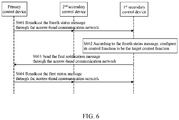
- FIG. 6 is a schematic diagram of message exchanges of a control function configuration method according to a fifth example embodiment of the present disclosure.
- the present disclosure provides another embodiment of the control function configuration method.
- the control function message is a status message.
- the status message includes the current control function of at least one secondary control device in the control system. To differentiate different status message, this status message is called a fourth status message.
- the control function configuration method provided by the embodiment of the present disclosure may also include the following steps.
- the primary control device broadcasts the fourth status message to the secondary control devices in the control system.
- the fourth status message includes the current control function of at least one secondary control device.
- the secondary control devices in the control system receive the fourth status message broadcasted by the primary control device through the narrow-band communication network.
- the first secondary control device configures its control function to be the target control function according to the fourth status message.
- the first secondary control device sends the first notification message to the primary control device through the narrow-band communication network.
- the primary control device broadcasts the first status message to the secondary control devices in the control system through the narrow-band communication network.
- control function message is the fourth status message.
- the operation principle and technical effect are similar and the detailed description is omitted.
- the primary control device broadcasts the fourth status message to notify each secondary control device of the current control function of at least one secondary control device in the control system.
- the first secondary control device may proactively configure its control function to be the target control function according to the current control function of at least one other secondary control device in the control system. Because the first secondary control device may proactively configure its control function according to the current control function configuration in the control system, the flexibility and autonomy of the configuring the control function by the secondary control device are improved.
- the communication through the narrow-band communication network extends the communication distance and shortens the communication delay.
- control function configuration method is further described based on the embodiment shown in FIG. 6 .
- the second secondary control device with the target control function does not currently exist in the control system.
- the first secondary control device may or may have been configured with a control function.
- configuring, by the first secondary control device, its control function to be the target control function according to the fourth status message may include: directly configuring, by the first secondary control device, its control function to be the target control function according to the fourth status message.
- the first secondary control device may achieve configuring, by the secondary control device, its control function. If the first secondary control device has been currently configured with the control function, the first secondary control device may achieve switching, by the secondary control device, its control function, that is, switching from the originally configured control function to the target control function.
- FIG. 7 is a schematic diagram of message exchanges of a control function configuration method according to a sixth example embodiment of the present disclosure.
- the control function configuration method provided by the embodiment of the present disclosure may also include the following steps.
- the first secondary control device sends the function configuration request to the primary control device through the narrow-band communication network.
- the primary control device receives the function configuration request sent by the first secondary control device through the narrow-band communication network.
- the function configuration request is used to request to configure the control function of the first secondary control device to be the target control function.
- the description of the embodiment shown in FIG. 3 can be referred to, and the detailed description is omitted herein.
- the primary control device broadcasts the function configuration request to the secondary control devices in the control system through the narrow-band communication network.
- the secondary control devices in the control system receives the function configuration request broadcasted by the primary control device through the narrow-band communication network.
- the second secondary control device cancels its target control function according to the function configuration request.
- the second secondary control device sends the second notification message to the primary control device through the narrow-band communication network.
- the second notification message is used to indicate that the target control function of the second secondary control device has been cancelled.
- the primary control device receives the second notification message sent by the second secondary control device through the narrow-band communication network.
- the primary control device broadcasts the second status message to the secondary control devices in the control system through the narrow-band communication network.
- the second status message is used to indicate that the target control function of the second secondary control device has been cancelled.
- the secondary control devices in the system receive the second status message broadcasted by the primary control device through the narrow-band communication network.
- S701 to S704 reference can be made to the description of S601 to S604 in the embodiment shown in FIG. 6 and for S712 to S714, reference can be made to the description of S410 to S412 in the embodiment shown in FIG. 4 .
- the operation principle and technical effect are similar and the detailed description is omitted.
- the first secondary control device learns that the current control function of the second secondary control device is the target control function. Because different secondary control devices in the control system cannot be configured with the same control function, the first secondary control device sends the function configuration request to the primary control device. Through the broadcasting by the primary control device, each secondary control device learns that the control function of the first secondary control device needs to be configured to be the target control function. The second secondary control device cancels its target control function and sends the second notification message to the primary control device. Through the broadcasting by the primary control device, the change of the control function of the second secondary control device is notified to each secondary control device. The first secondary control device learns that no secondary control device with the target control function currently exists in the control system, and configures its control function to be the target control function, thereby completing the configuration of the control function.
- FIG. 8 is a schematic diagram of message exchanges of a control function configuration method according to a seventh example embodiment of the present disclosure. As shown in FIG. 8 , after S804, the control function configuration method provided by the embodiment of the present disclosure may also include the following steps.
- the second secondary control device configures its control function to be the first control function.
- the second secondary control device sends the third notification message to the primary control device through the narrow-band communication network.
- the third notification message is used to indicate that the control function of the second secondary control device has been configured to be the first control function.
- the primary control device receives the third notification message sent by the second secondary control device through the narrow-band communication network.
- the primary control device broadcasts the third status message to the secondary control devices in the control system through the narrow-band communication network.
- the third status message is used to indicate that the control function of the second secondary control device has been configured to be the first control function.
- the secondary control devices in the control system receives the third status message broadcasted by the primary control device through the narrow-band communication network.
- S801 to S804 reference can be made to the description of S601 to S604 in the embodiment shown in FIG. 6
- S810 to S814 reference can be made to the description of S710 to S714 in the embodiment shown in FIG. 7
- S820 to S822 reference can be made to the description of S515 to S517 in the embodiment shown in FIG. 5 .
- the operation principle and technical effect are similar and the detailed description is omitted.
- the second secondary control device may configure its control function to the first control function, thereby achieving the function switching between the first secondary control device and the second secondary control device.
- FIG. 9 is a schematic diagram of message exchanges of a control function configuration method according to an eighth example embodiment of the present disclosure.
- the control function configuration method provided by the embodiment of teh present disclosure may be applied to the control system.
- the control system may include the primary control device and at least one secondary control device.
- the execution subject may be the primary control device or the secondary control device.
- the control function configuration method provided by the embodiment of the present disclosure may include the following steps.
- the function configuration request includes the target control function.
- the first secondary control device is the secondary control device in the control system, of which the control function needs to be configured.
- the first secondary control device may or may not have been configured with the control function.
- the function configuration request includes the target control function and is used to request to configure the control function of the first secondary control device to be the target control function.
- receiving the function configuration request for the first secondary control device may include: receiving the function configuration request by the first secondary control device, or receiving the function configuration request by the primary control device.
- the first secondary control device or the primary control device may receive the function configuration request through the built-in input apparatus or the externally connected input apparatus.
- the input apparatus may be the touch display screen.
- the first secondary control device or the primary control device may obtain the function configuration request based on the touch operation input performed by the user on the touch display screen.
- the input apparatus is the audio input device.
- the function configuration request may be a voice signal inputted by the user through the audio input device.
- the first secondary control device or the primary control device may receive the function configuration request inputted by the user.
- the control function of the first secondary control device is configured to be the target control function.
- the primary control device broadcasts the function configuration request for the first secondary control device to the secondary control devices in the control system through the narrow-band communication network, thereby achieving the function switching between the first secondary control device and the second secondary control device.
- the control function of the first secondary control device may be directly configured to be the target control function. If it does exist, the control functions of the first secondary control device and the second secondary control device may be switched.
- control function of the first secondary control device may be configured according to the function configuration request for the first secondary control device, thereby simplifying the complexity of configuring the control function and improving the flexibility of configuring the control function.
- communication through the narrow-band communication network extends the communication distance and shortens the communication delay.
- control function configuration method provided by the embodiment of the present disclosure may further include the following steps.
- the primary control device obtains the status information of the secondary control devices in the control system.
- the status information includes at least the connection status of the secondary control device and the corresponding control function.
- the primary control device broadcast the status information to the secondary control devices in the control system through the narrow-band communication network.
- configuring the control function of the first secondary control device to be the target control function includes the following steps.
- the first secondary control device If the first secondary control device receives the function configuration request, the first secondary control device directly configures its control function to the target control function according to be the function configuration request.
- the primary control device If the primary control device receives the function configuration request, the primary control device sends the function configuration request to the first secondary control device through the narrow-band communication network, such that the first secondary control device configures its control function to be the target control function according to the function configuration request.
- sending, by the primary control device, the function configuration request to the first secondary control device through the narrow-band communication network includes: sending, by the primary control device, the function configuration request in the form of broadcasting to the first secondary control device through the narrow-band communication network.
- broadcasting, by the primary control device, the function configuration request for the first secondary control device to the secondary control devices in the control system through the narrow-band communication network to achieve the function switching between the first secondary control device and the second secondary control device includes the following steps.
- the first secondary control device If the first secondary control device receives the function configuration request, the first secondary control device sends the function configuration request for the first secondary control device to the primary control device through the narrow-band communication network.
- the primary control device broadcasts the function configuration request for the first secondary control device to the secondary control devices in the control system through the narrow-band communication network.
- the primary control device If the primary control device receives the function configuration request, the primary control device directly broadcasts the function configuration request for the first secondary control device to the secondary control devices in the control system through the narrow-band communication network.
- broadcasting, by the primary control device, the function configuration request for the first secondary control device to the secondary control devices in the control system through the narrow-band communication network to achieve the function switching between the first secondary control device and the second secondary control device includes the following steps.
- the second secondary control device receives the function configuration request broadcasted by the primary control device through the narrow-band communication network.
- the second secondary control device cancels its target control function according to the function configuration request.
- the primary control device obtains the change of the control function of the second secondary control device and broadcasts the changed control function of the second secondary control device to the secondary control devices in the control system through the narrow-band communication network.
- the first secondary control device After the first secondary control device determines according to the changed control function of the second secondary control device that the second secondary control device has cancelled its target control function, the first secondary control device configures its control function to be the target control function according to the function configuration request.
- the primary control device obtains the change of the control function of the first secondary control device and broadcasts the changed control function of the first secondary control device to the secondary control devices in the control system through the narrow-band communication network.
- the second secondary control device After the second secondary control device determines according to the changed control function of the first secondary control device that the first secondary control device has configured its control function to be the target control function, the second secondary control device configures its control function to be the original control function of the first secondary control device, thereby achieving the function switching between the first secondary control device and the second secondary control device.
- broadcasting, by the primary control device, the status information to the secondary control devices in the control system through the narrow-band communication network includes: periodically broadcasting, by the primary control device, the status information to the secondary control devices in the control system through the narrow-band communication network, and/or when being triggered by the change of the control function of the secondary control device, broadcasting, by the primary control device, the status information to the secondary control devices in the control system through the narrow-band communication network.
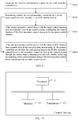
- FIG. 10 is a schematic structural diagram of a control device according to an example embodiment of the present disclosure.
- the control device may include a processor 11, a memory 12, and a transceiver 13.
- the memory 12 is used to store instructions.
- the transceiver 13 is used to communicate with other devices.
- the processor 11 is used to execute the instructions stored in the memory 12 to enable the control device to perform the operations that are performed by the primary control device or the secondary control device in the embodiments shown in FIGs. 2-9 .
- the operation principle and technical effect are similar and the detailed description is omitted.
- control device shown in FIG. 10 may be the primary control device.
- the processor 11 is configured to control the transceiver 13 to perform the following operations:
- the processor 11 is further configured to: obtain the function configuration request, where the function configuration request is used to request to configure the control function of the first secondary control device to be the target control function.
- the transceiver 13 is configured to: broadcast the function configuration request to the secondary control devices in the control system through the narrow-band communication network.
- the transceiver 13 is further configured to:
- the processor 11 is configured to:
- the transceiver 13 is configured to: broadcast the function configuration request to the secondary control devices in the control system through the narrow-band communication network.
- the transceiver 13 is configured to: broadcast the fourth status message to the secondary control devices in the control system through the narrow-band communication network, where the fourth status message includes the current control function of at least one secondary control device in the control system.
- the transceiver 13 is further configured to:
- the transceiver 13 is further configured to:
- the transceiver 13 is further configured to: broadcast the status information to the secondary control devices in the control system through the narrow-band communication network, where the status information includes the current control function of the secondary control device in the control system.
- control device shown in FIG. 10 may be the first secondary control device.
- the processor 11 is configured to:
- control function message is the function configuration request.
- the function configuration request is used to request to configure the control function of the first secondary control device to be the target control function.
- control function message is the first status message.
- the first status message includes the current control function of at least one secondary control device in the control system.
- the transceiver 13 is further configured to: receive the second status message broadcasted by the primary control device through the narrow-band communication network, where the second status message is used to indicate that the target control function of the second secondary control device has been cancelled.
- the transceiver 13 is further configured to: send the function configuration request to the primary control device through the narrow-band communication network.
- the processor 11 is configured to: configure the control function of the first secondary control device to be the target control function.
- the transceiver 13 is further configured to: receive the status information periodically broadcasted by the primary control device through the narrow-band communication network, where the status information includes the current control function of the secondary control device in the control system.
- control device shown in FIG. 10 may be the second secondary control device.
- the processor 11 is configured to:
- the transceiver 13 is further configured to receive the first status message broadcasted by the primary control device through the narrow-band communication device.
- the first status message is used to indicate that the control function of the first secondary control device has been configured to be the target control function.
- the processor 11 is further configured to configure the control function of the second secondary control device to be the first control function.
- the transceiver 13 is further configured to send the second notification message to the primary control device through the narrow-band communication network.
- the second notification message is used to indicate that the control function of the second secondary control device has been configured to be the first control function.
- FIG. 11 is a schematic structural diagram of a control system according to an example embodiment of the present disclosure.
- the control system provided by the embodiment of the present disclosure may include a primary control device 21 and at least one secondary control device 22.
- the primary control device 21 or the secondary control device 22 are configured to perform the operations that are performed by the primary control device or the secondary control device in the embodiments shown in FIGs. 2-9 .
- the primary control device 21 or the secondary control device 22 are configured to:
- the primary control device is further configured to obtain the status information of the secondary control device in the control system.
- the status information includes at least the connection status of the secondary control device and the corresponding control function.
- the primary control device is further configured to broadcast the status information to the secondary control devices in the control system through the narrow-band communication network.
- the first secondary control device is configured to receive the function configuration request.
- the primary control device is configured to receive the function configuration request.
- the first secondary control device receives the function configuration request, the first secondary control device is configured to directly configure its control function to be the target control function according to the function configuration request.
- the primary control device receives the function configuration request, the primary control device is configured to send the function configuration request to the first secondary control device through the narrow-band communication network, such that the first secondary control device configures its control function to be the target control function according to the function configuration request.
- the primary control device is configured to: send the function configuration request to the first secondary control device in teh form of broadcasting through the narrow-band communication network.
- the first secondary control device receives the function configuration request, the first secondary control device is configured to send the function configuration request for the first secondary control device to the primary control device through the narrow-band communication network.
- the primary control device broadcasts the function configuration request for the first secondary control device to the secondary control devices in the control system through the narrow-band communication network.
- the primary control device receives the function configuration request, the primary control device is configured to directly broadcast the function configuration request for the first secondary control device to the secondary control devices in the control system through the narrow-band communication network.
- the second secondary control device is configured to receive the function configuration request broadcasted by the primary control device through the narrow-band communication network.
- the second secondary control device is configured to cancel its target control function according to the function configuration request.
- the primary control device is configured to obtain the change of the control function of the second secondary control device and broadcast the changed control function of the second secondary control device to the secondary control devices in the control system through the narrow-band communication network.
- the first secondary control device is configured to, after determining that the target control function of the second secondary control device has been cancelled according to the changed control function of the second secondary control device, configure its control function to be the target control function according to the function configuration request.
- the primary control device is configured to obtain the change of the control function of the first secondary control device and broadcast the changed control function of the first secondary control device to the secondary control devices in the control system through the narrow-band communication network.
- the second secondary control device is configured to, after determining that the control function of the first secondary control device has been configured to be the target control function according to the changed control function of the first secondary control device, configure its control function to be the original control function of the first secondary control device, thereby achieving the function switching between the first secondary control device and the second secondary control device.
- the primary control device is configured to periodically broadcast the status information to the secondary control devices in the control system through the narrow-band communication network, and/or the primary control device is configured to broadcast the status information to the secondary control devices in the control system through the narrow-band communication network after the primary control device is triggered by the status change of the secondary control device.
- the primary control device or the secondary control device included in the control system provided by the embodiment of the present disclosure are configured to perform the operations that are performed by the primary control device or the secondary control device in the embodiments shown in FIGs. 2-9 .
- the operation principle and technical effect are similar and the detailed description is omitted.
- the program may be stored in a computer-readable storage medium.
- the storage medium includes: a read-only memory (ROM), a random-access memory (RAM), a magnetic disk, an optical disk, or other media that can store the program codes.
Landscapes
- Engineering & Computer Science (AREA)
- Computer Networks & Wireless Communication (AREA)
- Signal Processing (AREA)
- Physics & Mathematics (AREA)
- General Physics & Mathematics (AREA)
- Selective Calling Equipment (AREA)
- Mobile Radio Communication Systems (AREA)
Abstract
Description
- The present disclosure relates to the technical field of movable platform and control and, more particularly, to a control function configuration method, a control device, and a control system.
- With the development of unmanned aerial vehicle (UAV) technology and UAV control technology, the use of multiple connected remote controllers for aerial photography is a control mechanism becoming more and more popular. In the control mechanism, the multiple connected remote controllers are assigned to control photographing devices with different roles (e.g., a UAV operator, a director, a gimbal operator, a focus puller, etc.). Each remote controller performs different control functions respectively. For example, the remote controller assigned to the UAV operator controls the flight of the UAV, and the remote controller assigned to the focus puller controls parameters of a camera mounted at the UAV. The camera crew responsibilities are clearly defined, and hence the quality and flexibility of aerial photography are improved.
- Currently, the control mechanism based on multiple connected remote controllers uses Wireless Fidelity (Wi-Fi) technology. Each node in a Wi-Fi network functions identically. Configuring and modifying control functions of different remote controllers involves complicated software algorithm. Moreover, the Wi-Fi network only covers a limited communication distance, resulting in poor flexibility in configuring and modifying the control functions of the remote controllers.
- The present disclosure provides a control function configuration method, a control device, and a control system, thereby improving the flexibility of configuring a control function of a secondary control device.
- In accordance with the disclosure, there is provided a control function configuration method. The method includes:
- broadcasting a control function message to secondary control devices in a control system through a narrow-band communication network, wherein the control function message is used for a first secondary control device to configure its control function;
- receiving a first notification message sent by the first secondary control device through the narrow-band communication network, wherein the first notification message is used to indicate that the control function of the first secondary control device has been configured to be a target control function;
- broadcasting a first status message to the secondary control devices in the control system through the narrow-band communication network, wherein the first status message is used to indicate that the control function of the first secondary control device has been configured to be the target control function.
- Also in accordance with the disclosure, there is provided another control function configuration method. The method includes:
- receiving a control function message broadcasted by a primary control device through a narrow-band communication network, wherein the control function message is used for a first secondary control device to configure its control function;
- configuring the control function of the first secondary control device to be a target control function according to the control function message;
- sending a first notification message to the primary control device through the narrow-band communication network, wherein the first notification message is used to indicate that the control function of the first secondary control device has been configured to be the target control function.
- Also in accordance with the disclosure, there is provided another control function configuration method. The method includes:
- receiving a function configuration request broadcasted by a primary control device through a narrow-band communication network, wherein the function configuration request is used to request to configure a control function of a first secondary control device to be a target control function;
- if a current control function of a second secondary control device is the target control device, cancelling the target control function of the second secondary control device according to the function configuration request;
- sending a first notification message to the primary control device through the narrow-band communication network, wherein the first notification message is used to indicate that the control function of the second secondary control device has been cancelled.
- Also in accordance with the disclosure, there is provided another control function configuration method applied to a control system including a primary control device and at least one secondary control device. The method includes:
- receiving a function configuration request for a first secondary control device, wherein the function configuration request includes a target control function;
- determining whether a second secondary control device with the target control function currently exists in the control system;
- if the second secondary control device with the target control function does not currently exist in the control system, configuring a control function of the first secondary control device to be the target control function;
- if the second secondary control device with the target control function currently exists in the control system, broadcasting, by the primary control device, the function configuration request for the first secondary control device to secondary control devices in the control system through a narrow-band communication network to achieve function switching between the first secondary control device and the second secondary control device.
- Also in accordance with the disclosure, there is provided a control device. The control device includes a memory, a processor, and a transceiver.
- The memory is configured to store program code.
- The processor is configured to call the program code, when the program code is executed, control the transceiver to:
- broadcast a control function message to secondary control devices in a control system through a narrow-band communication network, wherein the control function message is used for a first secondary control device to configure its control function;
- receive a first notification message sent by the first secondary control device through the narrow-band communication network, wherein the first notification message is used to indicate that the control function of the first secondary control device has been configured to be a target control function;
- broadcast a first status message to the secondary control devices in the control system through the narrow-band communication network, wherein the first status message is used to indicate that the control function of the first secondary control device has been configured to be the target control function.
- Also in accordance with the disclosure, there is provided another control device. The control device includes a memory, a processor, and a transceiver.
- The memory is configured to store program code.
- The processor is configured to call the program code, when the program code is executed:
- control the transceiver to receive a control function message broadcasted by a primary control device through a narrow-band communication network, wherein the control function message is used for a first secondary control device to configure its control function;
- configure the control function of the first secondary control device to be a target control function according to the control function message;
- control the transceiver to send a first notification message to the primary control device through the narrow-band communication network, wherein the first notification message is used to indicate that the control function of the first secondary control device has been configured to be the target control function.
- Also in accordance with the disclosure, there is provided another control device. The control device includes a memory, a processor, and a transceiver.
- The memory is configured to store program code.
- The processor is configured to call the program code, when the program code is executed:
- receive a function configuration request broadcasted by a primary control device through a narrow-band communication network, wherein the function configuration request is used to request to configure a control function of a first secondary control device to be a target control function;
- if a current control function of a second secondary control device is the target control device, cancel the target control function of the second secondary control device according to the function configuration request;
- send a first notification message to the primary control device through the narrow-band communication network, wherein the first notification message is used to indicate that the control function of the second secondary control device has been cancelled.
- Also in accordance with the disclosure, there is provided a control system. The control system includes a primary control device and at least one secondary control device. The primary control device or the at least one secondary control device is configured to:
- receive a function configuration request for a first secondary control device, wherein the function configuration request includes a target control function;
- determine whether a second secondary control device with the target control function currently exists in the control system;
- if the second secondary control device with the target control function does not currently exist in the control system, configure a control function of the first secondary control device to be the target control function;
- if the second secondary control device with the target control function currently exists in the control system, broadcast, by the primary control device, the function configuration request for the first secondary control device to secondary control devices in the control system through a narrow-band communication network to achieve function switching between the first secondary control device and the second secondary control device.
- Also in accordance with the disclosure, there is provided a storage medium. The storage medium includes a computer-readable storage medium and a computer program. The computer program is used to implement the disclosed control function configuration method.
- Also in accordance with the disclosure, there is provided a program product. The program product includes a computer program (i.e., executive instructions). The computer program is stored in a computer-readable storage medium. A processor may retrieve the computer program from the computer-readable storage medium. The processor executes the computer program to implement the disclosed control function configuration method.
- The present disclosure provides a control function configuration method, a control device, and a control system. In the control system, the primary control device and the secondary control device communicate with each other through the narrow-band communication network, which extends the communication distance, and shortens the communication delay. Moreover, the first secondary control device configures its control function to be the target control function according to the control function message broadcasted by the primary control device, thereby simplifying the complexity of configuring the control function and improving the flexibility of configuring the control function of the secondary control device.
- To more clearly illustrate the technical solution of the present disclosure or the existing technology, the accompanying drawings used in the description of the disclosed embodiments or the existing technology are briefly described hereinafter. The drawings described below are merely some embodiments of the present disclosure. Other drawings may be derived from such drawings by a person with ordinary skill in the art without creative efforts and may be encompassed in the present disclosure.
-
FIG. 1 is a schematic structural diagram of a movable platform system according to an example embodiment of the present disclosure. -
FIG. 2 is a schematic diagram showing message exchanges of a control function configuration method according to a first example embodiment of the present disclosure. -
FIG. 3 is a schematic diagram showing message exchanges of a control function configuration method according to a second example embodiment of the present disclosure. -
FIG. 4 is a schematic diagram showing message exchanges of a control function configuration method according to a third example embodiment of the present disclosure. -
FIG. 5 is a schematic diagram showing message exchanges of a control function configuration method according to a fourth example embodiment of the present disclosure. -
FIG. 6 is a schematic diagram showing message exchanges of a control function configuration method according to a fifth example embodiment of the present disclosure. -
FIG. 7 is a schematic diagram showing message exchanges of a control function configuration method according to a sixth example embodiment of the present disclosure. -
FIG. 8 is a schematic diagram showing message exchanges of a control function configuration method according to a seventh example embodiment of the present disclosure. -
FIG. 9 is a schematic diagram showing message exchanges of a control function configuration method according to an eighth example embodiment of the present disclosure. -
FIG. 10 is a schematic structural diagram of a control device according to an example embodiment of the present disclosure. -
FIG. 11 is a schematic structural diagram of a control system according to an example embodiment of the present disclosure. - To make objectives, technical solutions, and advantages of the embodiments of the present disclosure clearer, the technical solutions of the embodiments of the present disclosure will be described clearly and completely with reference to the accompanying drawings. It will be appreciated that the described embodiments are some rather than all of the embodiments of the present disclosure. Other embodiments obtained by those having ordinary skills in the art on the basis of the described embodiments without inventive efforts should fall within the scope of the present disclosure.
-
FIG. 1 is a schematic structural diagram of a movable platform system according to an example embodiment of the present disclosure. As shown inFIG. 1 , the movable platform system may include amovable platform 100 and acontrol system 200. Types of themovable platform 100 are not limited by the present disclosure. For example, themovable platform 100 may be an unmanned aerial vehicle (UAV), an unmanned automobile, etc. For illustration purpose, as shown inFIG. 1 , themovable platform 100 is a UAV. Thecontrol system 200 communicates with themovable platform 100. Thecontrol system 200 controls themovable platform 100. Taking the UAV as an example, thecontrol system 200 may control the flight of the UAV, facilitate data transmission, configure photographing parameters of a photographing device mounted at the UAV, and control rotation of a gimbal mounted at the UAV. - The
control system 200 may include a plurality of control devices. One of the plurality of control devices is a primary control device. The primary control device communicates with themovable platform 100. Excluding the primary control device, the remaining control devices in thecontrol system 200 are secondary control devices. The secondary control devices communicate with the primary control device through a narrow-band communication network. Each secondary control device may be configured with a control function to control themovable platform 100. At the same time, different secondary control devices may be configured with different control functions. The primary control device may obtain status information of at least one salve control device by means of periodic polling or event triggering, and may broadcast the status information to the secondary control devices in thecontrol system 200 through the narrow-band communication network. The status information includes at least a connection status of the secondary control device and a currently configured control function. - For illustration purpose, as shown in
FIG. 1 , thecontrol system 200 includes aprimary control device 201, asecondary control device 202, and asecondary control device 203. Thesecondary control device 202 and thesecondary control device 203 may communicate with theprimary control device 201 through the narrow-band communication network. Thesecondary control device 202 may be configured to control the flight of the UAV. Thesecondary control device 203 may be configured to configure the related parameters of the photographing device mounted at the UAV. Assuming that the control function of thesecondary control device 201 is modified to control the rotation of the gimbal mounted at the UAV, theprimary control device 201 may broadcast the modification of the control function of thesecondary control device 202 through the narrow-band communication network. - It should be noted that the number of the secondary control devices included in the
control system 200 is not limited by the present disclosure. The types of the control devices are not limited present disclosure either. For example, the control device may be a remote controller, a computer, a smart phone, a tablet computer, etc. Optionally, the control device itself may include an input apparatus. Optionally, the control device may be connected to an external input apparatus. Optionally, the input apparatus may be a mouse, a keyboard, a touch display screen, an audio input device, etc. Optionally, the control device may be pre-installed with an application program (APP) for controlling the movable platform. - The control function configuration method, the control device, and the control system provided by the embodiments of the present disclosure achieve configuring and modifying the control function of the secondary control devices included in the control system, thereby improving the flexibility of the control function configuration. The detailed description will be given below with specific embodiments.
-
FIG. 2 is a schematic diagram of message exchanges of a control function configuration method according to a first example embodiment of the present disclosure. The control function configuration method provided by the embodiment of the present disclosure may be applied to a control system. The control system may include a primary control device and at least one secondary control device. As shown inFIG. 2 , the control function configuration method provided by the embodiment of the present disclosure may include the following steps. - At S201, the primary control device broadcasts a control function message to the at least one control device included in the control system through a narrow-band communication network.
- The control function message is used to configure the control function of a first secondary control device.
- Correspondingly, the at least one control device included in the control system may receive the control function message broadcasted by the primary control device through the narrow-band communication network.
- Specifically, the primary control device communicates with the at least one secondary control device through the narrow-band communication network. The narrow-band communication network supports long communication distances and short communication delays. Moreover, roles of different nodes in the narrow-band communication network may be different. For example, the control system consistent with the embodiments of the present disclosure may include the primary control device and the at least one secondary control device.
- To differentiate the secondary control devices in the control system, the secondary control device of which the control function needs to be configured is called a first secondary control device, and the secondary control device of which the current control function is a target control function is called a second secondary control device. The first secondary control device may or may not have been configured with a control function. The primary control device broadcasts the control function message for configuring the control function of the first secondary control device through the narrow-band communication network.
- At S202, according to the control function message, the first secondary control device configures the control function to be the target control function.
- At S203, the first secondary control device sends a first notification message to the primary control device through the narrow-band communication network.
- The first notification message is used to indicate that the control function of the first secondary control device has been configured to be the target control function.
- Correspondingly, the primary control device receives the first notification message sent by the first secondary control device through the narrow-band communication network.
- At S204, the primary control device broadcasts a first status message to the secondary control device in the control system through the narrow-band communication network.
- The first status message is used to indicate that the control function of the first secondary control device has been configured to be the target control function.
- Correspondingly, the secondary control devices in the control system receive the first status message broadcasted by the primary control device.
- Specifically, after the first secondary control device configures its control function to be the target control function according to the control function message, the first secondary control device notifies the primary control device of the change of the control function. The primary control device broadcasts the change of the control function for the first secondary control device to each secondary control device in the control system. Thus, each secondary control device may learn that the current control function of the first secondary control device is the target control function.
- It can be seen that, in the control function configuration method provided by the embodiment of the present disclosure, the primary control device in the control system communicates with the secondary control devices in the control system through the narrow-band communication network, which extends the communication distance and shortens the communication delay. Moreover, the first secondary control device configures its control function to be the target control function according to the control function message broadcasted by the primary control device, thereby simplifying the complexity of configuring the control function and improving the flexibility of configuring the control function by the secondary control device.
- Optionally, the control function configuration method may further include: obtaining, by the primary control device, the status information of the secondary control devices in the control system. The status information includes at least the connection status of the secondary control device and the corresponding control function.
- The primary control device broadcasts the status information to the secondary control devices through the narrow-band communication network.
- Correspondingly, the secondary control devices in the control system may receive the status information broadcasted by the primary control device through the narrow-band communication network.
- Through the status information broadcasted by the primary control device, each secondary control device may learn the current connection status and the current control function of other secondary control devices in the control system, thereby facilitating the secondary control device to configure its control function.
- Optionally, broadcasting, by the primary control device, the status information to the secondary control devices through the narrow-band communication network may include: periodically broadcasting, by the primary control device, the status information to the secondary control devices through the narrow-band communication network, and/or broadcasting the status information to the secondary control devices through the narrow-band communication network after the primary control device is triggered by a status change of the secondary control device.
- It should be noted that the specific value of the interval for periodically broadcasting the status information by the primary control device is not limited by the present disclosure.
- The present disclosure provides a control function configuration method. The method includes the following steps. The primary control device broadcasts the control function message to the secondary control devices in the control system through the narrow-band communication network. The first secondary control device configures its control function to be the target control function according to the control function message. The first secondary control device sends the first notification message to the primary control device through the narrow-band communication network. The primary control device broadcasts the first status message to the secondary control devices in the control system through the narrow-band communication network. In the control function configuration method, the first secondary control device configures its control function to be the target control function according to the control function message broadcasted by the primary control device through the narrow-band communication network, thereby simplifying the complexity of configuring the control function and improving the flexibility of configuring the control function. Moreover, the communication distance is extended and the communication delay is shortened.
-
FIG. 3 is a schematic diagram of message exchanges of a control function configuration method according to a second example embodiment of the present disclosure. Based on the embodiment shown inFIG. 2 , the present disclosure provides another embodiment of the control function configuration method. Specifically, the control function message is a function configuration request obtained by the primary control device. As shown inFIG. 3 , the control function method provided by the embodiment of the present disclosure may include the following steps. - At S301, the primary control device obtains a function configuration request.
- The function configuration request is used to request to configure the control function of the first secondary control device to be the target control function.
- At S302, the primary control device broadcasts the function configuration request to the secondary control devices in the control system through the narrow-band communication network.
- At S303, the first secondary control device configures its control function to be the target control function according to the function configuration request.
- At S304, the first secondary control device sends the first notification message to the primary control device through the narrow-band communication network.
- At S305, the primary control device broadcasts the first status message to the secondary control devices in the control system through the narrow-band communication network.
- For S302 to S305, reference can be made to the description of S201 to S204 in the embodiment shown in
FIG. 2 . Specifically, the control function message is the function configuration request. The operation principle and technical effect are similar and the detailed description is omitted. - In the control function configuration method provided by the embodiment of the present disclosure, the primary control device obtains the function configuration request. The function configuration request clearly indicates that the control function of the first secondary control device is configured to be the target control function. The first secondary control device receives the function configuration request broadcasted by the primary control device through the narrow-band communication network, and configures its control function to be the target control function. The clear indication of the function configuration request simplifies the complexity of configuring the control function by the secondary control device, and improves the flexibility of configuring the control function. Moreover, the communication through the narrow-band communication network extends the communication distance and shortens the communication delay.
- Optionally, in one embodiment, obtaining the function control request by the primary control device at S301 may include: obtaining, by the primary control device, the function configuration request inputted by a user.
- Specifically, the primary control device may obtain the function configuration request inputted by the user through a built-in input apparatus or an externally connected input apparatus. For example, the input apparatus may be the touch display screen. The primary control device may obtain the function configuration request based on a touch operation input performed by the user on the touch display screen.
- Optionally, in one embodiment, obtaining the function control request by the primary control device at S301 may also include: obtaining, by the secondary control device, the function configuration request inputted by the user
- The secondary control device sends the function configuration request to the primary control device through the narrow-band communication network.
- Correspondingly, obtaining, by the primary control device, the function configuration request may include: receiving, by the primary control device, the function configuration request sent by the secondary control device through the narrow-band communication network.
- The secondary control device may be the first secondary control device or other secondary control devices in the control system other than the first secondary control device.
- The embodiment is described below with reference to
FIG. 3 . - In one embodiment, before S301, the method may also include the following steps.
- At S306, the first secondary control device obtains the function configuration request inputted by the user.
- At S307, the first secondary control device sends the function configuration request to the primary control device through the narrow-band communication network.
- In another embodiment, before S301, the method may also include the following steps.
- At S308, the second secondary control device obtains the function configuration request inputted by the user.
- At S307, the second secondary control device sends the function configuration request to the primary control device through the narrow-band communication network.
- In the control function configuration method provided by the embodiment of the present disclosure, the primary control device obtains the function configuration request and broadcasts the function configuration request to the secondary control devices in the control system through the narrow-band communication network. Because the function configuration request clearly indicates that the control function of the first secondary control device is configured to be the target control function, the clear indication of the function configuration request simplifies the complexity of configuring the control function by the secondary control device, and improves the flexibility of configuring the control function. Moreover, the communication through the narrow-band communication network extends the communication distance and shortens the communication delay.
- With reference to different application scenarios, the control function configuration method is further described based on the embodiment shown in
FIG. 3 . - Optionally, in one application scenario, the second secondary control device with the target control function does not currently exist in the control system. The first secondary control device may or may have been configured with a control function. At S303, configuring, by the first secondary control device, its control function to be the target control function according to the function configuration request may include: directly configuring, by the first secondary control device, its control function to be the target control function according to the function configuration request.
- Specifically, if the first secondary control device has not been currently configured with any control function, the first secondary control device may achieve configuring, by the secondary control device, its control function. If the first secondary control device has been currently configured with the control function, the first secondary control device may achieve modifying or switching, by the secondary control device, its control function, that is, switching from the originally configured control function to the target control function.
- Optionally, in another application scenario, the second secondary control device with the target control function does currently exist in the control system, and the first secondary control device has not been currently configured with any control function. Referring to
FIG. 4, FIG. 4 is a schematic diagram of message exchanges of a control function configuration method according to a third example embodiment of the present disclosure. As shown inFIG. 4 , before S403, the control function configuration method provided by the embodiment of the present disclosure may also include the following steps. - At S410, the second secondary control device cancels its target control function.
- At S411, the second secondary control device sends a second notification message to the primary control device through the narrow-band communication network.
- The second notification message is used to indicate that the target control function of the second secondary control device has been cancelled.
- Correspondingly, the primary control device receives the second notification message sent by the second secondary control device through the narrow-band communication network.
- At S412, the primary control device broadcasts a second status message to the secondary control devices in the control system through the narrow-band communication network.
- The second status message is used to indicate that the target control function of the second secondary control device has been cancelled.
- Correspondingly, the secondary control devices in the control system receive the second status message broadcasted by the primary control device through the narrow-band communication network.
- For S401 to S405, reference can be made to the description of S301 to S305 in the embodiment shown in
FIG. 3 . The operation principle and technical effect are similar and the detailed description is omitted. - Specifically, through the function configuration request broadcasted by the primary control device, each secondary control device in the control system learns that the control function of the first secondary control device needs to be configured to be the target control function. However, the control function of the second secondary control device is currently configured to be the target control function. Because different secondary control devices in the control system cannot be configured to have a same control function, the second secondary control device cancels its target control function and sends the second notification message to the primary control device. The primary control device broadcasts the second status message to the secondary control devices to notify each secondary control device of the change of the control function of the second secondary control device. The first secondary control device learns that no secondary control device currently configured with the target control function exists in the control system, and configures its control function to be the target control function, thereby completing the configuration of the control function.
- Optionally, in another application scenario, the second secondary control device with the target control function does currently exist in the control system, and the first secondary control device is currently configured with a first control function. Referring to
FIG. 5, FIG. 5 is a schematic diagram of message exchanges of a control function configuration method according to a fourth example embodiment of the present disclosure. As shown inFIG. 5 , after S505, the control function configuration method provided by the embodiment of the present disclosure may also include the following steps. - At S515, the second secondary control device configures its control function to be the first control function.
- At S516, the second secondary control device sends a third notification message to the primary control device through the narrow-band communication network.
- The third notification message is used to indicate that the control function of the second secondary control device has been configured to be the first control function.
- Correspondingly, the primary control device receives the third notification message sent by the second secondary control device through the narrow-band communication network.
- At S517, the primary control device broadcasts a third status message to the secondary control devices in the control system through the narrow-band communication network.
- The third status message is used to indicate that the control function of the second secondary control device has been configured to be the first control function.
- Correspondingly, the secondary control devices in the control system receive the third status message broadcasted by the primary control device through the narrow-band communication network.
- For S501 to S505, reference can be made to the description of S301 to S305 in the embodiment shown in
FIG. 3 and for S510 to S512, reference can be made to the description of S410 to S412 in the embodiment shown inFIG. 4 . The operation principle and technical effect are similar and the detailed description is omitted. - Specifically, the first secondary control device is originally configured with the first control function. The first secondary control device switches its control function from the first control function to the target control function according to the function configuration request. The primary control device broadcasts the first status message to the secondary control devices to notify each secondary control device of the change of the control function of the first secondary control device. The second secondary control device may configure its control function to be the first control function, thereby achieving the function switching between the first secondary control device and the second secondary control device.
-
FIG. 6 is a schematic diagram of message exchanges of a control function configuration method according to a fifth example embodiment of the present disclosure. Based on the embodiment shown inFIG. 2 , the present disclosure provides another embodiment of the control function configuration method. Specifically, the control function message is a status message. The status message includes the current control function of at least one secondary control device in the control system. To differentiate different status message, this status message is called a fourth status message. As shown inFIG. 6 , the control function configuration method provided by the embodiment of the present disclosure may also include the following steps. - At S601, the primary control device broadcasts the fourth status message to the secondary control devices in the control system.
- The fourth status message includes the current control function of at least one secondary control device.
- Correspondingly, the secondary control devices in the control system receive the fourth status message broadcasted by the primary control device through the narrow-band communication network.
- At S602, the first secondary control device configures its control function to be the target control function according to the fourth status message.
- At S603, the first secondary control device sends the first notification message to the primary control device through the narrow-band communication network.
- At S604, the primary control device broadcasts the first status message to the secondary control devices in the control system through the narrow-band communication network.
- For S602 to S604, reference can be made to the description of S202 to S204 in the embodiment shown in
FIG. 2 . Specifically, the control function message is the fourth status message. The operation principle and technical effect are similar and the detailed description is omitted. - In the control function configuration method provided by the embodiment of the present disclosure, the primary control device broadcasts the fourth status message to notify each secondary control device of the current control function of at least one secondary control device in the control system. The first secondary control device may proactively configure its control function to be the target control function according to the current control function of at least one other secondary control device in the control system. Because the first secondary control device may proactively configure its control function according to the current control function configuration in the control system, the flexibility and autonomy of the configuring the control function by the secondary control device are improved. Moreover, the communication through the narrow-band communication network extends the communication distance and shortens the communication delay.
- With reference to different application scenarios, the control function configuration method is further described based on the embodiment shown in
FIG. 6 . - Optionally, in one application scenario, the second secondary control device with the target control function does not currently exist in the control system. The first secondary control device may or may have been configured with a control function. At S602, configuring, by the first secondary control device, its control function to be the target control function according to the fourth status message may include: directly configuring, by the first secondary control device, its control function to be the target control function according to the fourth status message.
- Specifically, if the first secondary control device has not been currently configured with any control function, the first secondary control device may achieve configuring, by the secondary control device, its control function. If the first secondary control device has been currently configured with the control function, the first secondary control device may achieve switching, by the secondary control device, its control function, that is, switching from the originally configured control function to the target control function.
- Optionally, in another application scenario, the second secondary control device with the target control function does currently exist in the control system, and the first secondary control device has not been currently configured with any control function. Referring to
FIG. 7, FIG. 7 is a schematic diagram of message exchanges of a control function configuration method according to a sixth example embodiment of the present disclosure. As shown inFIG. 7 , before S702, the control function configuration method provided by the embodiment of the present disclosure may also include the following steps. - At S710, the first secondary control device sends the function configuration request to the primary control device through the narrow-band communication network.
- Correspondingly, the primary control device receives the function configuration request sent by the first secondary control device through the narrow-band communication network.
- The function configuration request is used to request to configure the control function of the first secondary control device to be the target control function. The description of the embodiment shown in
FIG. 3 can be referred to, and the detailed description is omitted herein. - At S711, the primary control device broadcasts the function configuration request to the secondary control devices in the control system through the narrow-band communication network.
- Correspondingly, the secondary control devices in the control system receives the function configuration request broadcasted by the primary control device through the narrow-band communication network.
- At S712, the second secondary control device cancels its target control function according to the function configuration request.
- At S713, the second secondary control device sends the second notification message to the primary control device through the narrow-band communication network.
- The second notification message is used to indicate that the target control function of the second secondary control device has been cancelled.
- Correspondingly, the primary control device receives the second notification message sent by the second secondary control device through the narrow-band communication network.
- At S714, the primary control device broadcasts the second status message to the secondary control devices in the control system through the narrow-band communication network.
- The second status message is used to indicate that the target control function of the second secondary control device has been cancelled.
- Correspondingly, the secondary control devices in the system receive the second status message broadcasted by the primary control device through the narrow-band communication network.
- For S701 to S704, reference can be made to the description of S601 to S604 in the embodiment shown in
FIG. 6 and for S712 to S714, reference can be made to the description of S410 to S412 in the embodiment shown inFIG. 4 . The operation principle and technical effect are similar and the detailed description is omitted. - Specifically, through the fourth status message broadcasted by the primary control device, the first secondary control device learns that the current control function of the second secondary control device is the target control function. Because different secondary control devices in the control system cannot be configured with the same control function, the first secondary control device sends the function configuration request to the primary control device. Through the broadcasting by the primary control device, each secondary control device learns that the control function of the first secondary control device needs to be configured to be the target control function. The second secondary control device cancels its target control function and sends the second notification message to the primary control device. Through the broadcasting by the primary control device, the change of the control function of the second secondary control device is notified to each secondary control device. The first secondary control device learns that no secondary control device with the target control function currently exists in the control system, and configures its control function to be the target control function, thereby completing the configuration of the control function.
- Optionally, in another application scenario, the second secondary control device with the target control function does currently exist in the control system, and the first secondary control device is currently configured with the first control function. Referring to
FIG. 8, FIG. 8 is a schematic diagram of message exchanges of a control function configuration method according to a seventh example embodiment of the present disclosure. As shown inFIG. 8 , after S804, the control function configuration method provided by the embodiment of the present disclosure may also include the following steps. - At S820, the second secondary control device configures its control function to be the first control function.
- At S821, the second secondary control device sends the third notification message to the primary control device through the narrow-band communication network.
- The third notification message is used to indicate that the control function of the second secondary control device has been configured to be the first control function.
- Correspondingly, the primary control device receives the third notification message sent by the second secondary control device through the narrow-band communication network.
- At S822, the primary control device broadcasts the third status message to the secondary control devices in the control system through the narrow-band communication network.
- The third status message is used to indicate that the control function of the second secondary control device has been configured to be the first control function.
- Correspondingly, the secondary control devices in the control system receives the third status message broadcasted by the primary control device through the narrow-band communication network.
- For S801 to S804, reference can be made to the description of S601 to S604 in the embodiment shown in
FIG. 6 , for S810 to S814, reference can be made to the description of S710 to S714 in the embodiment shown inFIG. 7 , and for S820 to S822, reference can be made to the description of S515 to S517 in the embodiment shown inFIG. 5 . The operation principle and technical effect are similar and the detailed description is omitted. - Specifically, compared with the embodiment shown in
FIG. 7 , after the control function of the first secondary control device is switched from the first control function to the target control function, the second secondary control device may configure its control function to the first control function, thereby achieving the function switching between the first secondary control device and the second secondary control device. -
FIG. 9 is a schematic diagram of message exchanges of a control function configuration method according to an eighth example embodiment of the present disclosure. The control function configuration method provided by the embodiment of teh present disclosure may be applied to the control system. The control system may include the primary control device and at least one secondary control device. In the control function configuration method provided by the embodiment of the present disclosure, the execution subject may be the primary control device or the secondary control device. As shown inFIG. 9 , the control function configuration method provided by the embodiment of the present disclosure may include the following steps. - At S901, the function configuration request for the first secondary control device is received.
- The function configuration request includes the target control function.
- Specifically, the first secondary control device is the secondary control device in the control system, of which the control function needs to be configured. The first secondary control device may or may not have been configured with the control function. The function configuration request includes the target control function and is used to request to configure the control function of the first secondary control device to be the target control function.
- Optionally, receiving the function configuration request for the first secondary control device may include: receiving the function configuration request by the first secondary control device, or receiving the function configuration request by the primary control device.
- Specifically, the first secondary control device or the primary control device may receive the function configuration request through the built-in input apparatus or the externally connected input apparatus. For example, the input apparatus may be the touch display screen. The first secondary control device or the primary control device may obtain the function configuration request based on the touch operation input performed by the user on the touch display screen. In another example, the input apparatus is the audio input device. The function configuration request may be a voice signal inputted by the user through the audio input device. Thus, the first secondary control device or the primary control device may receive the function configuration request inputted by the user.
- At S902, whether the second secondary control device with the target control function currently exists in the control system is determined.
- At S903, if the second secondary control device with the target control function does not currently exist in the control system, the control function of the first secondary control device is configured to be the target control function.
- At S904, if the second secondary control device with the target control function currently exists in the control system, the primary control device broadcasts the function configuration request for the first secondary control device to the secondary control devices in the control system through the narrow-band communication network, thereby achieving the function switching between the first secondary control device and the second secondary control device.
- Specifically, because different secondary control devices in the control system cannot be configured to have the same control function, whether the second secondary control device with the target control function currently exists in the control system needs to be determined first. If it does not exist, the control function of the first secondary control device may be directly configured to be the target control function. If it does exist, the control functions of the first secondary control device and the second secondary control device may be switched.
- In the control function configuration method provided by the embodiment of the present disclosure, the control function of the first secondary control device may be configured according to the function configuration request for the first secondary control device, thereby simplifying the complexity of configuring the control function and improving the flexibility of configuring the control function. Moreover, the communication through the narrow-band communication network extends the communication distance and shortens the communication delay.
- Optionally, the control function configuration method provided by the embodiment of the present disclosure may further include the following steps.
- The primary control device obtains the status information of the secondary control devices in the control system. The status information includes at least the connection status of the secondary control device and the corresponding control function.
- The primary control device broadcast the status information to the secondary control devices in the control system through the narrow-band communication network.
- Optionally, if the second secondary control device with the target control function does not currently exist in the control system, configuring the control function of the first secondary control device to be the target control function includes the following steps.
- If the first secondary control device receives the function configuration request, the first secondary control device directly configures its control function to the target control function according to be the function configuration request.
- If the primary control device receives the function configuration request, the primary control device sends the function configuration request to the first secondary control device through the narrow-band communication network, such that the first secondary control device configures its control function to be the target control function according to the function configuration request.
- Optionally, sending, by the primary control device, the function configuration request to the first secondary control device through the narrow-band communication network includes: sending, by the primary control device, the function configuration request in the form of broadcasting to the first secondary control device through the narrow-band communication network.
- Optionally, if the second secondary control device with the target control function does currently exist in the control system, broadcasting, by the primary control device, the function configuration request for the first secondary control device to the secondary control devices in the control system through the narrow-band communication network to achieve the function switching between the first secondary control device and the second secondary control device includes the following steps.
- If the first secondary control device receives the function configuration request, the first secondary control device sends the function configuration request for the first secondary control device to the primary control device through the narrow-band communication network. The primary control device broadcasts the function configuration request for the first secondary control device to the secondary control devices in the control system through the narrow-band communication network.
- If the primary control device receives the function configuration request, the primary control device directly broadcasts the function configuration request for the first secondary control device to the secondary control devices in the control system through the narrow-band communication network.
- Optionally, broadcasting, by the primary control device, the function configuration request for the first secondary control device to the secondary control devices in the control system through the narrow-band communication network to achieve the function switching between the first secondary control device and the second secondary control device includes the following steps.
- The second secondary control device receives the function configuration request broadcasted by the primary control device through the narrow-band communication network.
- The second secondary control device cancels its target control function according to the function configuration request.
- The primary control device obtains the change of the control function of the second secondary control device and broadcasts the changed control function of the second secondary control device to the secondary control devices in the control system through the narrow-band communication network.
- After the first secondary control device determines according to the changed control function of the second secondary control device that the second secondary control device has cancelled its target control function, the first secondary control device configures its control function to be the target control function according to the function configuration request.
- The primary control device obtains the change of the control function of the first secondary control device and broadcasts the changed control function of the first secondary control device to the secondary control devices in the control system through the narrow-band communication network.
- After the second secondary control device determines according to the changed control function of the first secondary control device that the first secondary control device has configured its control function to be the target control function, the second secondary control device configures its control function to be the original control function of the first secondary control device, thereby achieving the function switching between the first secondary control device and the second secondary control device.
- Optionally, broadcasting, by the primary control device, the status information to the secondary control devices in the control system through the narrow-band communication network includes: periodically broadcasting, by the primary control device, the status information to the secondary control devices in the control system through the narrow-band communication network, and/or when being triggered by the change of the control function of the secondary control device, broadcasting, by the primary control device, the status information to the secondary control devices in the control system through the narrow-band communication network.
- It should be noted that for the description of this embodiment, reference can be made to the description of the embodiments shown in
FIGs. 2-8 . The operation principle and technical effect are similar and the detailed description is omitted. -
FIG. 10 is a schematic structural diagram of a control device according to an example embodiment of the present disclosure. As shown inFIG. 10 , the control device may include aprocessor 11, amemory 12, and atransceiver 13. Thememory 12 is used to store instructions. Thetransceiver 13 is used to communicate with other devices. Theprocessor 11 is used to execute the instructions stored in thememory 12 to enable the control device to perform the operations that are performed by the primary control device or the secondary control device in the embodiments shown inFIGs. 2-9 . The operation principle and technical effect are similar and the detailed description is omitted. - Specifically, the control device shown in
FIG. 10 may be the primary control device. - The
processor 11 is configured to control thetransceiver 13 to perform the following operations: - broadcasting the control function message to the secondary control devices in the control system through the narrow-band communication network, where the control function message is used for the first secondary control device to configure the control function;
- receiving the first notification message sent by the first secondary control device through the narrow-band communication network, where the first notification message is used to indicate that the control function of the first secondary control device has been configured to be the target control function;
- broadcasting the first status message to the secondary control devices in the control system through the narrow-band communication network, where the first status message is used to indicate that the control function of the first secondary control device has been configured to be the target control function.
- Optionally, the
processor 11 is further configured to:
obtain the function configuration request, where the function configuration request is used to request to configure the control function of the first secondary control device to be the target control function. - Specifically, the
transceiver 13 is configured to:
broadcast the function configuration request to the secondary control devices in the control system through the narrow-band communication network. - Optionally, if the second secondary control device with the target control function does currently exist in the control system, the
transceiver 13 is further configured to: - receive the second notification message sent by the second secondary control device through the narrow-band communication network, where the second notification message is used to indicate that the target control function of the second secondary control device has been cancelled;
- broadcast the second status message to the secondary control devices in the control system through the narrow-band communication network, where the second status message is used to indicate that the target control function of the second secondary control device has been cancelled.
- Optionally, the
processor 11 is configured to: - obtain the function configuration request inputted by the user; or
- control the
transceiver 13 to receive the function configuration request sent by the first secondary control device through the narrow-band communication network; or - control the
transceiver 13 to receive the function configuration request sent by the secondary control device other than the first secondary control device through the narrow-band communication network. - Specifically, the
transceiver 13 is configured to:
broadcast the function configuration request to the secondary control devices in the control system through the narrow-band communication network. - Optionally, the
transceiver 13 is configured to:
broadcast the fourth status message to the secondary control devices in the control system through the narrow-band communication network, where the fourth status message includes the current control function of at least one secondary control device in the control system. - Optionally, if the second secondary control device with the target control function does currently exist in the control system, the
transceiver 13 is further configured to: - receive the function configuration request sent by the first secondary control device through the narrow-band communication network, where the function configuration request is used to request to configure the control function of the first secondary control device to be the target control function;
- broadcast the function configuration request to the secondary control devices in the control system through the narrow-band communication network;
- receive the second notification message sent by the second secondary control device through the narrow-band communication network, where the second notification message is used to indicate that the target control function of the second secondary control device has been cancelled;
- broadcast the second status message to the secondary control devices in the control system through the narrow-band communication network, where the second status message is used to indicate that the target control function of the second secondary control device has been cancelled.
- Optionally, if the original control function of the first secondary control device is the first control function, the
transceiver 13 is further configured to: - receive the third notification message sent by the second secondary control device through the narrow-band communication network, where the third notification message is used to indicate that the control function of the second secondary control device has been configured to be the first control function;
- broadcast the third status message to the secondary control devices in the control system through the narrow-band communication network, where the third status message is used to indicate that the control function of the second secondary control device has been configured to be the first control function.
- Optionally, the
transceiver 13 is further configured to:
broadcast the status information to the secondary control devices in the control system through the narrow-band communication network, where the status information includes the current control function of the secondary control device in the control system. - Specifically, the control device shown in
FIG. 10 may be the first secondary control device. - The
processor 11 is configured to: - control the
transceiver 13 to receive the control function message broadcasted by the primary control device through the communication network, where the control function message is used for the first secondary control device to configure the control function; - according to the control function message, configure the control function of the first secondary control device to be the target control function;
- control the
transceiver 13 to send the first notification message to the primary control device through the narrow-band communication network, where the first notification message is used to indicate that the control function of the first secondary control device has been configured to be the target control function. - Optionally, the control function message is the function configuration request. The function configuration request is used to request to configure the control function of the first secondary control device to be the target control function. Alternatively, the control function message is the first status message. The first status message includes the current control function of at least one secondary control device in the control system.
- Optionally, if the second secondary control device with the target control function does currently exist in the control system, the
transceiver 13 is further configured to:
receive the second status message broadcasted by the primary control device through the narrow-band communication network, where the second status message is used to indicate that the target control function of the second secondary control device has been cancelled. - Optionally, if the control function message is the first status message, the
transceiver 13 is further configured to:
send the function configuration request to the primary control device through the narrow-band communication network. - Optionally, if the second secondary control device with the target control function does not currently exist in the control system, the
processor 11 is configured to:
configure the control function of the first secondary control device to be the target control function. - Optionally, the
transceiver 13 is further configured to:
receive the status information periodically broadcasted by the primary control device through the narrow-band communication network, where the status information includes the current control function of the secondary control device in the control system. - Specifically, the control device shown in
FIG. 10 may be the second secondary control device. - The
processor 11 is configured to: - control the
transceiver 13 to receive the function configuration request broadcasted by the primary control device through the narrow-band communication network, where the function configuration request is used to request to configure the control function of the first secondary control device in the control system to be the target control function; - if the current control function of the second secondary control device is the target control function, cancel the target control function of the second secondary control device according to the function configuration request;
- control the
transceiver 13 to send the first notification message to the primary control device through the narrow-band communication network, where the first notification message is used to indicate that the target control function of the second secondary control device has been cancelled. - Optionally, if the original control function of the first secondary control device is the first control function, the
transceiver 13 is further configured to receive the first status message broadcasted by the primary control device through the narrow-band communication device. The first status message is used to indicate that the control function of the first secondary control device has been configured to be the target control function. - The
processor 11 is further configured to configure the control function of the second secondary control device to be the first control function. - The
transceiver 13 is further configured to send the second notification message to the primary control device through the narrow-band communication network. The second notification message is used to indicate that the control function of the second secondary control device has been configured to be the first control function. -
FIG. 11 is a schematic structural diagram of a control system according to an example embodiment of the present disclosure. The control system provided by the embodiment of the present disclosure may include aprimary control device 21 and at least onesecondary control device 22. Theprimary control device 21 or thesecondary control device 22 are configured to perform the operations that are performed by the primary control device or the secondary control device in the embodiments shown inFIGs. 2-9 . As shown inFIG. 11 , theprimary control device 21 or thesecondary control device 22 are configured to: - receive the function configuration request for the first secondary control device, where the function configuration request includes the target control function;
- determine whether the second secondary control device with the target control function currently exists in the control system;
- if the second secondary control device with the target control function does not currently exist in the control system, configure the control function of the first secondary control device to be the target control function;
- if the second secondary control device with the target control function does currently exist in the control system, broadcast, by the primary control device, the function configuration request for the first secondary control device to the secondary control devices in the control system through the narrow-band communication network, thereby achieving the function switching between the first secondary control device and the second secondary control device.
- Optionally, the primary control device is further configured to obtain the status information of the secondary control device in the control system. The status information includes at least the connection status of the secondary control device and the corresponding control function.
- The primary control device is further configured to broadcast the status information to the secondary control devices in the control system through the narrow-band communication network.
- Optionally, the first secondary control device is configured to receive the function configuration request. Alternatively, the primary control device is configured to receive the function configuration request.
- Optionally, if the first secondary control device receives the function configuration request, the first secondary control device is configured to directly configure its control function to be the target control function according to the function configuration request.
- If the primary control device receives the function configuration request, the primary control device is configured to send the function configuration request to the first secondary control device through the narrow-band communication network, such that the first secondary control device configures its control function to be the target control function according to the function configuration request.
- Optionally, the primary control device is configured to:
send the function configuration request to the first secondary control device in teh form of broadcasting through the narrow-band communication network. - Optionally, if the first secondary control device receives the function configuration request, the first secondary control device is configured to send the function configuration request for the first secondary control device to the primary control device through the narrow-band communication network. The primary control device broadcasts the function configuration request for the first secondary control device to the secondary control devices in the control system through the narrow-band communication network.
- If the primary control device receives the function configuration request, the primary control device is configured to directly broadcast the function configuration request for the first secondary control device to the secondary control devices in the control system through the narrow-band communication network.
- Optionally, the second secondary control device is configured to receive the function configuration request broadcasted by the primary control device through the narrow-band communication network.
- The second secondary control device is configured to cancel its target control function according to the function configuration request.
- The primary control device is configured to obtain the change of the control function of the second secondary control device and broadcast the changed control function of the second secondary control device to the secondary control devices in the control system through the narrow-band communication network.
- The first secondary control device is configured to, after determining that the target control function of the second secondary control device has been cancelled according to the changed control function of the second secondary control device, configure its control function to be the target control function according to the function configuration request.
- The primary control device is configured to obtain the change of the control function of the first secondary control device and broadcast the changed control function of the first secondary control device to the secondary control devices in the control system through the narrow-band communication network.
- The second secondary control device is configured to, after determining that the control function of the first secondary control device has been configured to be the target control function according to the changed control function of the first secondary control device, configure its control function to be the original control function of the first secondary control device, thereby achieving the function switching between the first secondary control device and the second secondary control device.
- Optionally, the primary control device is configured to periodically broadcast the status information to the secondary control devices in the control system through the narrow-band communication network, and/or the primary control device is configured to broadcast the status information to the secondary control devices in the control system through the narrow-band communication network after the primary control device is triggered by the status change of the secondary control device.
- The primary control device or the secondary control device included in the control system provided by the embodiment of the present disclosure are configured to perform the operations that are performed by the primary control device or the secondary control device in the embodiments shown in
FIGs. 2-9 . The operation principle and technical effect are similar and the detailed description is omitted. - Those of ordinary skill in the art may understand that all or part of the steps of the in the method embodiments may be implemented by a program instructing relevant hardware. The program may be stored in a computer-readable storage medium. When the program is executed, the steps of the method embodiments are executed. The storage medium includes: a read-only memory (ROM), a random-access memory (RAM), a magnetic disk, an optical disk, or other media that can store the program codes.
- Finally, it should be noted that the above embodiments are only used to illustrate the technical solutions of the present disclosure, and not to limit them. Although the present disclosure has been described in detail with reference to the above embodiments, those of ordinary skill in the art should understand that it is still possible to modify the technical solutions described in the above embodiments, or to equivalently replace some or all of the technical features. These modifications or replacements made within the spirit and principle of the corresponding technical solutions still fall with the scope of the present disclosure.
Claims (49)
- A control function configuration method, comprising:broadcasting a control function message to secondary control devices in a control system through a narrow-band communication network, wherein the control function message is used for a first secondary control device to configure its control function;receiving a first notification message sent by the first secondary control device through the narrow-band communication network, wherein the first notification message is used to indicate that the control function of the first secondary control device has been configured to be a target control function;broadcasting a first status message to the secondary control devices in the control system through the narrow-band communication network, wherein the first status message is used to indicate that the control function of the first secondary control device has been configured to be the target control function.
- The method of claim 1, wherein before broadcasting the control function message to the secondary control devices in the control system through the narrow-band communication network, the method further includes:obtaining a function configuration request, wherein the function configuration request is used to request to configure the control function of the first secondary control device to be the target control function;broadcasting the control function message to the secondary control devices in the control system through the narrow-band communication network includes:
broadcasting the function configuration request to the secondary control devices in the control system through the narrow-band communication network. - The method of claim 2, wherein if a second secondary control device with the target control function currently exists in the control system, the method further includes:receiving a second notification message sent by the second secondary control device through the narrow-band communication network, wherein the second notification message is used to indicate that the target control function of the second secondary control device has been cancelled;broadcasting a second status message to the secondary control devices in the control system through the narrow-band communication network, wherein the second status message is used to indicate that the target control function of the second secondary control device has been cancelled.
- The method of any of claim 2 or 3, wherein obtaining the function configuration request includes:obtaining the function configuration request inputted by a user; orreceiving the function configuration request sent by the first secondary control device through the narrow-band communication network; orreceiving the function configuration request sent by a secondary control device other than the first secondary control device through the narrow-band communication network.
- The method of claim 1, wherein broadcasting the control function message to the secondary control devices in the control system through the narrow-band communication network includes:
broadcasting a fourth status message to the secondary control devices in the control system through the narrow-band communication network, wherein the fourth status message includes a current control function of at least one secondary control device in the control system. - The method of claim 5, wherein if a second secondary control device with the target control function currently exists in the control system, the method further includes:receiving a function configuration request sent by the first secondary control device through the narrow-band communication network, wherein the function configuration request is used to request to configure the control function of the first secondary control device to be the target control function;broadcasting the function configuration request to the secondary control devices in the control system through the narrow-band communication network;receiving a second notification message sent by the second secondary control device through the narrow-band communication network, wherein the second notification message is used to indicate that the target control function of the second secondary control device has been cancelled;broadcasting a second status message to the secondary control devices in the control system through the narrow-band communication network, wherein the second status message is used to indicate that the target control function of the second secondary control device has been cancelled.
- The method of any of claim 3 or 6, wherein if an original control function of the first secondary control device is a first control function, the method further includes:receiving a third notification message sent by the second secondary control device through the narrow-band communication network, wherein the third notification message is used to indicate that the control function of the second secondary control device has been configured to be the first control function;broadcasting a third status message to the secondary control devices in the control system through the narrow-band communication network, wherein the third status message is used to indicate that the control function of the second secondary control device has been configured to be the first control function.
- The method of any one of claims 1-7, further comprising:
broadcasting status information to the secondary control devices in the control system through the narrow-band communication network, wherein the status information includes the current control function of the secondary control device in the control system. - A control function configuration method, comprising:receiving a control function message broadcasted by a primary control device through a narrow-band communication network, wherein the control function message is used for a first secondary control device to configure its control function;configuring the control function of the first secondary control device to be a target control function according to the control function message;sending a first notification message to the primary control device through the narrow-band communication network, wherein the first notification message is used to indicate that the control function of the first secondary control device has been configured to be the target control function.
- The method of claim 9, wherein:the control function message is a function configuration request, wherein the function configuration request is used to request to configure the control function of the first secondary control device to be the target control function; orthe control function message is a first status message, wherein the first status message includes a current control function of at least one secondary control device in the control system.
- The method of any of claim 9 or 10, wherein if a second secondary control device with the target control function currently exists in the control system, before configuring the control function of the first secondary control device to be the target control function according to the control function message, the method further includes:
receiving a second status message sent by the primary control device through the narrow-band communication network, wherein the second status message is used to indicate that the target control function of the second secondary control device has been cancelled. - The method of claim 11, wherein if the control function message is the first status message, before configuring the control function of the first secondary control device to be the target control function according to the control function message, the method further includes:
sending the function configuration request to the primary control device through the narrow-band communication network. - The method of claim 9, wherein if a second secondary control device with the target control function does not currently exist in the control system, configuring the control function of the first secondary control device to be the target control function according to the control function message includes:
configuring the control function of the first secondary control device to be the target control function. - The method of any one of claims 9-13, further comprising:
receiving status information periodically broadcasted by the primary control device through the narrow-band communication network, wherein the status information includes a current control function of a secondary control device in the control system. - A control function configuration method, comprising:receiving a function configuration request broadcasted by a primary control device through a narrow-band communication network, wherein the function configuration request is used to request to configure a control function of a first secondary control device to be a target control function;if a current control function of a second secondary control device is the target control device, cancelling the target control function of the second secondary control device according to the function configuration request;sending a first notification message to the primary control device through the narrow-band communication network, wherein the first notification message is used to indicate that the control function of the second secondary control device has been cancelled.
- The method of claim 15, wherein if an original control function of the first secondary control device is a first control function, the method further includes:receiving a first status message broadcasted by the primary control device through the narrow-band communication network, wherein the first status message is used to indicate that the control function of the first secondary control device has been configured to be the target control function;configuring the control function of the second secondary control device to be the first control function;sending a second notification message to the primary control device through the narrow-band communication network, wherein the second notification message is used to indicate that the control function of the second secondary control device has been configured to be the first control function.
- A control function configuration method applied to a control system including a primary control device and at least one secondary control device, comprising:receiving a function configuration request for a first secondary control device, wherein the function configuration request includes a target control function;determining whether a second secondary control device with the target control function currently exists in the control system;if the second secondary control device with the target control function does not currently exist in the control system, configuring a control function of the first secondary control device to be the target control function;if the second secondary control device with the target control function currently exists in the control system, broadcasting, by the primary control device, the function configuration request for the first secondary control device to secondary control devices in the control system through a narrow-band communication network to achieve function switching between the first secondary control device and the second secondary control device.
- The method of claim 17, further comprising:obtaining, by the primary control device, status information of a secondary control device in the control system, wherein the status information includes at least a connection status of the secondary control device and the corresponding control function;broadcasting, by the primary control device, the status information to the secondary control devices through the narrow-band communication network.
- The method of claim 18, wherein receiving the function configuration request for the first secondary control device includes:receiving, by the first secondary control device, the function configuration request; orreceiving, by the primary control device, the function configuration request.
- The method of claim 19, wherein if the second secondary control device with the target control function does not currently exist in the control system, configuring the control function of the first secondary control device to be the target control function includes:if the first secondary control device receives the function configuration request, directly configuring, by the first secondary control device, its control function to be the target control function according to the function configuration request;if the primary control device receives the function configuration request, sending, by the primary control device, the function configuration request to the first secondary control device through the narrow-band communication network, such that the first secondary control device configures its control function to be the target control function according to the function configuration request.
- The method of claim 20, wherein sending, by the primary control device, the function configuration request to the first secondary control device through the narrow-band communication network includes:
sending the function configuration request to the first secondary control device in the form of broadcasting through the narrow-band communication network. - The method of claim 19, wherein if the second secondary control device with the target control function currently exists in the control system, broadcasting, by the primary control device, the function configuration request for the first secondary control device to the secondary control devices in the control system through the narrow-band communication network to achieve function switching between the first secondary control device and the second secondary control device includes:if the first secondary control device receives the function configuration request, sending, by the first secondary control device, the function configuration request for the first secondary control device to the primary control device through the narrow-band communication network, and broadcasting, by the primary control device, the function configuration request for the first secondary control device to the secondary control devices in the control system through the narrow-band communication network;if the primary control device receives the function configuration request, directly broadcasting, by the primary control device, the function configuration request for the first secondary control device to the secondary control devices in the control system through the narrow-band communication network.
- The method of any one of claims 18-22, wherein broadcasting, by the primary control device, the function configuration request for the first secondary control device to the secondary control devices in the control system through the narrow-band communication network to achieve the function switching between the first secondary control device and the second secondary control device includes:receiving, by the second secondary control device, the function configuration request broadcasted by the primary control device through the narrow-band communication network;cancelling, by the second secondary control device, its target control function according to the function configuration request;obtaining, by the primary control device, a status change of the second secondary control device, and broadcasting a changed status of the second secondary control device to the secondary control devices in the control system through the narrow-band communication network;after the first secondary control device determines that the target control function of the second secondary control device has been cancelled according to the changed status of the second secondary control device, configuring its control function to be the target control function according to the function configuration request;obtaining, by the primary control device, the status change of the first secondary control device, and broadcasting the changed status of the first secondary control device to the secondary control devices in the control system through the narrow-band communication network;after the second secondary control device determines that the control function of the first secondary control device has been configured to be the target control function according to the changed status of the first secondary control device, configuring its control function to be an original control function of the first secondary control device to complete the function switching between the first secondary control device and the second secondary control device.
- The method of claim 18, wherein broadcasting, by the primary control device, the status information to the secondary control devices through the narrow-band communication network includes:periodically broadcasting, by the primary control device, the status information to the secondary control devices through the narrow-band communication network; and/ortriggered by the status change of any secondary control device, broadcasting, by the primary control device, the status information to the secondary control devices through the narrow-band communication network.
- A control device comprising a memory, a processor, and a transceiver, wherein:the memory is configured to store program code;the processor is configured to call the program code, when the program code is executed, control the transceiver to:broadcast a control function message to secondary control devices in a control system through a narrow-band communication network, wherein the control function message is used for a first secondary control device to configure its control function;receive a first notification message sent by the first secondary control device through the narrow-band communication network, wherein the first notification message is used to indicate that the control function of the first secondary control device has been configured to be a target control function;broadcast a first status message to the secondary control devices in the control system through the narrow-band communication network, wherein the first status message is used to indicate that the control function of the first secondary control device has been configured to be the target control function.
- The control device of claim 25, wherein:the processor is further configured to obtain a function configuration request, wherein the function configuration request is used to request to configure the control function of the first secondary control device to be the target control function;the transceiver is configured to broadcast the function configuration request to the secondary control devices in the control system through the narrow-band communication network.
- The control device of claim 26, wherein if a second secondary control device with the target control function currently exists in the control system, the transceiver is further configured to:receive a second notification message sent by the second secondary control device through the narrow-band communication network, wherein the second notification message is used to indicate that the target control function of the second secondary control device has been cancelled;broadcast a second status message to the secondary control devices in the control system through the narrow-band communication network, wherein the second status message is used to indicate that the target control function of the second secondary control device has been cancelled.
- The control device of any of claim 26 or 27, wherein the processor is further configured to:obtain the function configuration request inputted by a user; orreceive the function configuration request sent by the first secondary control device through the narrow-band communication network; orreceive the function configuration request sent by a secondary control device other than the first secondary control device through the narrow-band communication network.
- The control device of claim 25, wherein the transceiver is further configured to:
broadcast a fourth status message to the secondary control devices in the control system through the narrow-band communication network, wherein the fourth status message includes a current control function of at least one secondary control device in the control system. - The control device of claim 29, wherein if a second secondary control device with the target control function currently exists in the control system, the transceiver is further configured to:receive a function configuration request sent by the first secondary control device through the narrow-band communication network, wherein the function configuration request is used to request to configure the control function of the first secondary control device to be the target control function;broadcast the function configuration request to the secondary control devices in the control system through the narrow-band communication network;receive a second notification message sent by the second secondary control device through the narrow-band communication network, wherein the second notification message is used to indicate that the target control function of the second secondary control device has been cancelled;broadcast a second status message to the secondary control devices in the control system through the narrow-band communication network, wherein the second status message is used to indicate that the target control function of the second secondary control device has been cancelled.
- The control device of any of claim 27 or 30, wherein if an original control function of the first secondary control device is a first control function, the transceiver is further configured to:receive a third notification message sent by the second secondary control device through the narrow-band communication network, wherein the third notification message is used to indicate that the control function of the second secondary control device has been configured to be the first control function;broadcast a third status message to the secondary control devices in the control system through the narrow-band communication network, wherein the third status message is used to indicate that the control function of the second secondary control device has been configured to be the first control function.
- The control device of any one of claims 25-31, wherein the transceiver is further configured to:
broadcast status information to the secondary control devices in the control system through the narrow-band communication network, wherein the status information includes the current control function of the secondary control device in the control system. - A control device comprising a memory, a processor, and a transceiver, wherein:the memory is configured to store program code;the processor is configured to call the program code, when the program code is executed:control the transceiver to receive a control function message broadcasted by a primary control device through a narrow-band communication network, wherein the control function message is used for a first secondary control device to configure its control function;configure the control function of the first secondary control device to be a target control function according to the control function message;control the transceiver to send a first notification message to the primary control device through the narrow-band communication network, wherein the first notification message is used to indicate that the control function of the first secondary control device has been configured to be the target control function.
- The control device of claim 33, wherein:the control function message is a function configuration request, wherein the function configuration request is used to request to configure the control function of the first secondary control device to be the target control function; orthe control function message is a first status message, wherein the first status message includes a current control function of at least one secondary control device in the control system.
- The control device of any of claim 33 or 34, wherein if a second secondary control device with the target control function currently exists in the control system, the transceiver is further configured to:
receive a second status message sent by the primary control device through the narrow-band communication network, wherein the second status message is used to indicate that the target control function of the second secondary control device has been cancelled. - The control device of claim 35, wherein if the control function message is the first status message, the transceiver is further configured to:
send the function configuration request to the primary control device through the narrow-band communication network. - The control device of claim 33, wherein if a second secondary control device with the target control function does not currently exist in the control system, the processor is further configured to:
configure the control function of the first secondary control device to be the target control function. - The control device of any one of claims 33-37, wherein the transceiver is further configured to:
receive status information periodically broadcasted by the primary control device through the narrow-band communication network, wherein the status information includes a current control function of a secondary control device in the control system. - A control device comprising a memory, a processor, and a transceiver, wherein:the memory is configured to store program code;the processor is configured to call the program code, when the program code is executed:receive a function configuration request broadcasted by a primary control device through a narrow-band communication network, wherein the function configuration request is used to request to configure a control function of a first secondary control device to be a target control function;if a current control function of a second secondary control device is the target control device, cancel the target control function of the second secondary control device according to the function configuration request;send a first notification message to the primary control device through the narrow-band communication network, wherein the first notification message is used to indicate that the control function of the second secondary control device has been cancelled.
- The control device of claim 39, wherein if an original control function of the first secondary control device is a first control function:the transceiver is configured to receive a first status message broadcasted by the primary control device through the narrow-band communication network, wherein the first status message is used to indicate that the control function of the first secondary control device has been configured to be the target control function;the processor is further configured to configure the control function of the second secondary control device to be the first control function;the transceiver is further configured to send a second notification message to the primary control device through the narrow-band communication network, wherein the second notification message is used to indicate that the control function of the second secondary control device has been configured to be the first control function.
- A control system comprising a primary control device and at least one secondary control device, wherein the primary control device or the at least one secondary control device is configured to:receive a function configuration request for a first secondary control device, wherein the function configuration request includes a target control function;determine whether a second secondary control device with the target control function currently exists in the control system;if the second secondary control device with the target control function does not currently exist in the control system, configure a control function of the first secondary control device to be the target control function;if the second secondary control device with the target control function currently exists in the control system, broadcast, by the primary control device, the function configuration request for the first secondary control device to secondary control devices in the control system through a narrow-band communication network to achieve function switching between the first secondary control device and the second secondary control device.
- The control system of claim 41, wherein:the primary control device is further configured to obtain status information of a secondary control device in the control system, wherein the status information includes at least a connection status of the secondary control device and the corresponding control function;the primary control device is further configured to send the status information to the secondary control devices through the narrow-band communication network.
- The control system of claim 42, wherein:the first secondary control device is configured to receive the function configuration request; orthe primary control device is further configured to receive the function configuration request.
- The control system of claim 43, wherein:if the first secondary control device receives the function configuration request, the first secondary control device is further configured to directly configure its control function to be the target control function according to the function configuration request;if the primary control device receives the function configuration request, the primary control device is further configured to send the function configuration request to the first secondary control device through the narrow-band communication network, such that the first secondary control device configures its control function to be the target control function according to the function configuration request.
- The control system of claim 44, wherein the primary control device is further configured to:
send the function configuration request to the first secondary control device in the form of broadcasting through the narrow-band communication network. - The control system of claim 43, wherein:if the first secondary control device receives the function configuration request, the first secondary control device is further configured to send the function configuration request for the first secondary control device to the primary control device through the narrow-band communication network, and the primary control device is further configured to broadcast the function configuration request for the first secondary control device to the secondary control devices in the control system through the narrow-band communication network;if the primary control device receives the function configuration request, the primary control device is further configured to directly broadcast the function configuration request for the first secondary control device to the secondary control devices in the control system through the narrow-band communication network.
- The control system of any one of claims 42-46, wherein:the second secondary control device is configured to receive the function configuration request broadcasted by the primary control device through the narrow-band communication network;the second secondary control device is further configured to cancel its target control function according to the function configuration request;the primary control device is further configured to obtain a status change of the second secondary control device, and broadcast a changed status of the second secondary control device to the secondary control devices in the control system through the narrow-band communication network;after the first secondary control device determines that the target control function of the second secondary control device has been cancelled according to the changed status of the second secondary control device, the first secondary control device is further configured to configure its control function to be the target control function according to the function configuration request;the primary control device is further configured to obtain the status change of the first secondary control device, and broadcast the changed status of the first secondary control device to the secondary control devices in the control system through the narrow-band communication network;after the second secondary control device determines that the control function of the first secondary control device has been configured to be the target control function according to the changed status of the first secondary control device, the second secondary control device is further configured to configure its control function to be an original control function of the first secondary control device to complete the function switching between the first secondary control device and the second secondary control device.
- The control system of claim 42, wherein:the primary control device is further configured to periodically broadcast the status information to the secondary control devices through the narrow-band communication network; and/ortriggered by the status change of any secondary control device, the primary control device is further configured to broadcast the status information to the secondary control devices through the narrow-band communication network.
- A storage medium comprising a computer-readable storage medium and a computer program, wherein:
the computer program is configured to implement the control function configuration method of any one of claims 1-24.
Applications Claiming Priority (1)
| Application Number | Priority Date | Filing Date | Title |
|---|---|---|---|
| PCT/CN2018/101447 WO2020037483A1 (en) | 2018-08-21 | 2018-08-21 | Method for setting control function, control device and control system |
Publications (2)
| Publication Number | Publication Date |
|---|---|
| EP3843330A1 true EP3843330A1 (en) | 2021-06-30 |
| EP3843330A4 EP3843330A4 (en) | 2021-09-08 |
Family
ID=69592345
Family Applications (1)
| Application Number | Title | Priority Date | Filing Date |
|---|---|---|---|
| EP18930554.3A Withdrawn EP3843330A4 (en) | 2018-08-21 | 2018-08-21 | Method for setting control function, control device and control system |
Country Status (4)
| Country | Link |
|---|---|
| US (1) | US20210176731A1 (en) |
| EP (1) | EP3843330A4 (en) |
| CN (1) | CN110999217B (en) |
| WO (1) | WO2020037483A1 (en) |
Families Citing this family (1)
| Publication number | Priority date | Publication date | Assignee | Title |
|---|---|---|---|---|
| CN109445464B (en) * | 2019-01-08 | 2021-06-25 | 深圳市道通智能航空技术股份有限公司 | Flight control method and flight control system |
Family Cites Families (13)
| Publication number | Priority date | Publication date | Assignee | Title |
|---|---|---|---|---|
| JP2004228647A (en) * | 2003-01-20 | 2004-08-12 | Toshiba Corp | Electronics and remote controllers |
| US20100053457A1 (en) * | 2008-08-27 | 2010-03-04 | International Business Machines Corporation | Network enabled remote controls and method for hierarchical structure |
| CN201584818U (en) * | 2009-12-10 | 2010-09-15 | 北京中电飞华通信股份有限公司 | Electric equipment control device |
| CN105491601B (en) * | 2014-09-16 | 2020-03-31 | 中兴通讯股份有限公司 | Method and system for positioning base station interference |
| WO2016076586A1 (en) * | 2014-11-14 | 2016-05-19 | Lg Electronics Inc. | Mobile terminal and controlling method thereof |
| CN105721524B (en) * | 2014-12-04 | 2019-05-07 | 深圳市大疆创新科技有限公司 | A multi-machine interconnection system, control device and multi-machine interconnection configuration method |
| JP6224050B2 (en) * | 2015-10-14 | 2017-11-01 | 株式会社プロドローン | Remotely-operated unmanned airplane and method for taking over control of remotely-operated unmanned airplane |
| CN205158165U (en) * | 2015-11-15 | 2016-04-13 | 科大智能电气技术有限公司 | A intelligent temperature controller for switch board temperature monitoring and system thereof |
| CN105261189A (en) * | 2015-11-16 | 2016-01-20 | 英华达(上海)科技有限公司 | Unmanned aerial vehicle flight control method and system |
| CN206431490U (en) * | 2016-07-14 | 2017-08-22 | 览意科技(上海)有限公司 | A kind of unmanned aerial vehicle control system and control device |
| CN107438801B (en) * | 2016-09-27 | 2019-11-22 | 深圳市大疆创新科技有限公司 | Aircraft control method, terminal and aircraft |
| CN106970562A (en) * | 2017-04-10 | 2017-07-21 | 北京国网盛源智能终端科技有限公司 | A kind of method that achievable platform area automatic identification is administered with line loss |
| CN107748507B (en) * | 2017-11-16 | 2020-10-27 | 炬大科技有限公司 | Massage device and control method thereof |
-
2018
- 2018-08-21 EP EP18930554.3A patent/EP3843330A4/en not_active Withdrawn
- 2018-08-21 CN CN201880042297.4A patent/CN110999217B/en not_active Expired - Fee Related
- 2018-08-21 WO PCT/CN2018/101447 patent/WO2020037483A1/en not_active Ceased
-
2021
- 2021-02-21 US US17/180,813 patent/US20210176731A1/en not_active Abandoned
Also Published As
| Publication number | Publication date |
|---|---|
| EP3843330A4 (en) | 2021-09-08 |
| CN110999217A (en) | 2020-04-10 |
| US20210176731A1 (en) | 2021-06-10 |
| CN110999217B (en) | 2021-08-13 |
| WO2020037483A1 (en) | 2020-02-27 |
Similar Documents
| Publication | Publication Date | Title |
|---|---|---|
| US12407474B2 (en) | Data transmission method and data transmission apparatus | |
| EP3792725B1 (en) | Method and apparatus for reporting flight route information, and method and apparatus for determining information | |
| CN113170335B (en) | Beam configuration method, beam configuration device and storage medium | |
| US10306437B2 (en) | Smart device grouping system, method and apparatus | |
| CN116830541A (en) | Life cycle management method, device and storage medium | |
| US9106337B2 (en) | Terminal apparatus for auto pairing, remote control apparatus and method thereof | |
| EP4181613A1 (en) | Beam failure recovery | |
| WO2020132885A1 (en) | Data transmission method, base station, user equipment and storage medium | |
| CN110471443B (en) | Route information transmission method, device and system, unmanned aerial vehicle, ground station and computer-readable storage medium | |
| US11843446B2 (en) | Method and device of controlling unmanned aerial vehicle to access network | |
| CN112965524B (en) | Unmanned aerial vehicle control method, device and system, storage medium and electronic equipment | |
| EP4216193A2 (en) | Systems and methods for remote pilot communication via ground-based communication gateway device(s) | |
| EP4546848A1 (en) | Air interface processing method and apparatus, and storage medium | |
| US20200302799A1 (en) | Unmanned aerial vehicle control method and device, and unmanned aerial vehicle operating method and device | |
| EP3809229B1 (en) | Flight mode report method and apparatus, and control policy change method and apparatus | |
| WO2019095738A1 (en) | Communication method and communication device for unmanned aerial vehicle, and unmanned aerial vehicle | |
| EP3876563B1 (en) | Method and apparatus for broadcasting configuration information of synchronizing signal block, and method and apparatus for receiving configuration information of synchronizing signal block | |
| US20230345469A1 (en) | Channel transmission method and apparatus, and storage medium | |
| KR20210003276A (en) | How to obtain and transmit the route information of the drone | |
| EP3843330A1 (en) | Method for setting control function, control device and control system | |
| US20240147451A1 (en) | Method and device for determining beam | |
| US10795552B2 (en) | Avionics device and method for sending a data message to at least one receiving electronic device, receiving electronic device, associated receiving method and computer program | |
| WO2020192473A1 (en) | Unmanned aerial vehicle control method and related apparatus | |
| US20240397503A1 (en) | Information reporting method and apparatus, beam switching method and apparatus, and storage medium | |
| US20210153153A1 (en) | Communication method, apparatus, and system |
Legal Events
| Date | Code | Title | Description |
|---|---|---|---|
| STAA | Information on the status of an ep patent application or granted ep patent |
Free format text: STATUS: THE INTERNATIONAL PUBLICATION HAS BEEN MADE |
|
| PUAI | Public reference made under article 153(3) epc to a published international application that has entered the european phase |
Free format text: ORIGINAL CODE: 0009012 |
|
| STAA | Information on the status of an ep patent application or granted ep patent |
Free format text: STATUS: REQUEST FOR EXAMINATION WAS MADE |
|
| 17P | Request for examination filed |
Effective date: 20210208 |
|
| AK | Designated contracting states |
Kind code of ref document: A1 Designated state(s): AL AT BE BG CH CY CZ DE DK EE ES FI FR GB GR HR HU IE IS IT LI LT LU LV MC MK MT NL NO PL PT RO RS SE SI SK SM TR |
|
| A4 | Supplementary search report drawn up and despatched |
Effective date: 20210809 |
|
| RIC1 | Information provided on ipc code assigned before grant |
Ipc: H04W 88/02 20090101ALI20210803BHEP Ipc: H04W 84/20 20090101ALI20210803BHEP Ipc: H04W 48/12 20090101ALI20210803BHEP Ipc: H04W 24/02 20090101ALI20210803BHEP Ipc: H04L 12/28 20060101ALI20210803BHEP Ipc: H04L 12/18 20060101ALI20210803BHEP Ipc: G08C 17/02 20060101AFI20210803BHEP |
|
| DAV | Request for validation of the european patent (deleted) | ||
| DAX | Request for extension of the european patent (deleted) | ||
| STAA | Information on the status of an ep patent application or granted ep patent |
Free format text: STATUS: THE APPLICATION IS DEEMED TO BE WITHDRAWN |
|
| 18D | Application deemed to be withdrawn |
Effective date: 20220308 |