EP3842140A1 - Single catalyst for converting carbon dioxide and carbon dioxide conversion method using the catalyst - Google Patents
Single catalyst for converting carbon dioxide and carbon dioxide conversion method using the catalyst Download PDFInfo
- Publication number
- EP3842140A1 EP3842140A1 EP20217016.3A EP20217016A EP3842140A1 EP 3842140 A1 EP3842140 A1 EP 3842140A1 EP 20217016 A EP20217016 A EP 20217016A EP 3842140 A1 EP3842140 A1 EP 3842140A1
- Authority
- EP
- European Patent Office
- Prior art keywords
- catalyst
- carbon dioxide
- selectivity
- fealo
- phase
- Prior art date
- Legal status (The legal status is an assumption and is not a legal conclusion. Google has not performed a legal analysis and makes no representation as to the accuracy of the status listed.)
- Granted
Links
Images










Classifications
-
- B—PERFORMING OPERATIONS; TRANSPORTING
- B01—PHYSICAL OR CHEMICAL PROCESSES OR APPARATUS IN GENERAL
- B01J—CHEMICAL OR PHYSICAL PROCESSES, e.g. CATALYSIS OR COLLOID CHEMISTRY; THEIR RELEVANT APPARATUS
- B01J23/00—Catalysts comprising metals or metal oxides or hydroxides, not provided for in group B01J21/00
- B01J23/70—Catalysts comprising metals or metal oxides or hydroxides, not provided for in group B01J21/00 of the iron group metals or copper
- B01J23/74—Iron group metals
- B01J23/755—Nickel
-
- B—PERFORMING OPERATIONS; TRANSPORTING
- B01—PHYSICAL OR CHEMICAL PROCESSES OR APPARATUS IN GENERAL
- B01J—CHEMICAL OR PHYSICAL PROCESSES, e.g. CATALYSIS OR COLLOID CHEMISTRY; THEIR RELEVANT APPARATUS
- B01J35/00—Catalysts, in general, characterised by their form or physical properties
- B01J35/70—Catalysts, in general, characterised by their form or physical properties characterised by their crystalline properties, e.g. semi-crystalline
- B01J35/77—Compounds characterised by their crystallite size
-
- B—PERFORMING OPERATIONS; TRANSPORTING
- B01—PHYSICAL OR CHEMICAL PROCESSES OR APPARATUS IN GENERAL
- B01J—CHEMICAL OR PHYSICAL PROCESSES, e.g. CATALYSIS OR COLLOID CHEMISTRY; THEIR RELEVANT APPARATUS
- B01J23/00—Catalysts comprising metals or metal oxides or hydroxides, not provided for in group B01J21/00
- B01J23/70—Catalysts comprising metals or metal oxides or hydroxides, not provided for in group B01J21/00 of the iron group metals or copper
- B01J23/74—Iron group metals
- B01J23/745—Iron
-
- B—PERFORMING OPERATIONS; TRANSPORTING
- B01—PHYSICAL OR CHEMICAL PROCESSES OR APPARATUS IN GENERAL
- B01J—CHEMICAL OR PHYSICAL PROCESSES, e.g. CATALYSIS OR COLLOID CHEMISTRY; THEIR RELEVANT APPARATUS
- B01J23/00—Catalysts comprising metals or metal oxides or hydroxides, not provided for in group B01J21/00
- B01J23/70—Catalysts comprising metals or metal oxides or hydroxides, not provided for in group B01J21/00 of the iron group metals or copper
- B01J23/76—Catalysts comprising metals or metal oxides or hydroxides, not provided for in group B01J21/00 of the iron group metals or copper combined with metals, oxides or hydroxides provided for in groups B01J23/02 - B01J23/36
- B01J23/78—Catalysts comprising metals or metal oxides or hydroxides, not provided for in group B01J21/00 of the iron group metals or copper combined with metals, oxides or hydroxides provided for in groups B01J23/02 - B01J23/36 with alkali- or alkaline earth metals
-
- B—PERFORMING OPERATIONS; TRANSPORTING
- B01—PHYSICAL OR CHEMICAL PROCESSES OR APPARATUS IN GENERAL
- B01J—CHEMICAL OR PHYSICAL PROCESSES, e.g. CATALYSIS OR COLLOID CHEMISTRY; THEIR RELEVANT APPARATUS
- B01J29/00—Catalysts comprising molecular sieves
- B01J29/04—Catalysts comprising molecular sieves having base-exchange properties, e.g. crystalline zeolites
- B01J29/06—Crystalline aluminosilicate zeolites; Isomorphous compounds thereof
- B01J29/40—Crystalline aluminosilicate zeolites; Isomorphous compounds thereof of the pentasil type, e.g. types ZSM-5, ZSM-8 or ZSM-11, as exemplified by patent documents US3702886, GB1334243 and US3709979, respectively
- B01J29/42—Crystalline aluminosilicate zeolites; Isomorphous compounds thereof of the pentasil type, e.g. types ZSM-5, ZSM-8 or ZSM-11, as exemplified by patent documents US3702886, GB1334243 and US3709979, respectively containing iron group metals, noble metals or copper
- B01J29/46—Iron group metals or copper
-
- B—PERFORMING OPERATIONS; TRANSPORTING
- B01—PHYSICAL OR CHEMICAL PROCESSES OR APPARATUS IN GENERAL
- B01J—CHEMICAL OR PHYSICAL PROCESSES, e.g. CATALYSIS OR COLLOID CHEMISTRY; THEIR RELEVANT APPARATUS
- B01J37/00—Processes, in general, for preparing catalysts; Processes, in general, for activation of catalysts
- B01J37/02—Impregnation, coating or precipitation
- B01J37/03—Precipitation; Co-precipitation
-
- C—CHEMISTRY; METALLURGY
- C07—ORGANIC CHEMISTRY
- C07C—ACYCLIC OR CARBOCYCLIC COMPOUNDS
- C07C1/00—Preparation of hydrocarbons from one or more compounds, none of them being a hydrocarbon
- C07C1/02—Preparation of hydrocarbons from one or more compounds, none of them being a hydrocarbon from oxides of a carbon
- C07C1/12—Preparation of hydrocarbons from one or more compounds, none of them being a hydrocarbon from oxides of a carbon from carbon dioxide with hydrogen
-
- C—CHEMISTRY; METALLURGY
- C10—PETROLEUM, GAS OR COKE INDUSTRIES; TECHNICAL GASES CONTAINING CARBON MONOXIDE; FUELS; LUBRICANTS; PEAT
- C10G—CRACKING HYDROCARBON OILS; PRODUCTION OF LIQUID HYDROCARBON MIXTURES, e.g. BY DESTRUCTIVE HYDROGENATION, OLIGOMERISATION, POLYMERISATION; RECOVERY OF HYDROCARBON OILS FROM OIL-SHALE, OIL-SAND, OR GASES; REFINING MIXTURES MAINLY CONSISTING OF HYDROCARBONS; REFORMING OF NAPHTHA; MINERAL WAXES
- C10G2/00—Production of liquid hydrocarbon mixtures of undefined composition from oxides of carbon
- C10G2/50—Production of liquid hydrocarbon mixtures of undefined composition from oxides of carbon from carbon dioxide with hydrogen
-
- B—PERFORMING OPERATIONS; TRANSPORTING
- B01—PHYSICAL OR CHEMICAL PROCESSES OR APPARATUS IN GENERAL
- B01J—CHEMICAL OR PHYSICAL PROCESSES, e.g. CATALYSIS OR COLLOID CHEMISTRY; THEIR RELEVANT APPARATUS
- B01J2235/00—Indexing scheme associated with group B01J35/00, related to the analysis techniques used to determine the catalysts form or properties
-
- B—PERFORMING OPERATIONS; TRANSPORTING
- B01—PHYSICAL OR CHEMICAL PROCESSES OR APPARATUS IN GENERAL
- B01J—CHEMICAL OR PHYSICAL PROCESSES, e.g. CATALYSIS OR COLLOID CHEMISTRY; THEIR RELEVANT APPARATUS
- B01J2235/00—Indexing scheme associated with group B01J35/00, related to the analysis techniques used to determine the catalysts form or properties
- B01J2235/15—X-ray diffraction
-
- B—PERFORMING OPERATIONS; TRANSPORTING
- B01—PHYSICAL OR CHEMICAL PROCESSES OR APPARATUS IN GENERAL
- B01J—CHEMICAL OR PHYSICAL PROCESSES, e.g. CATALYSIS OR COLLOID CHEMISTRY; THEIR RELEVANT APPARATUS
- B01J2235/00—Indexing scheme associated with group B01J35/00, related to the analysis techniques used to determine the catalysts form or properties
- B01J2235/30—Scanning electron microscopy; Transmission electron microscopy
-
- B—PERFORMING OPERATIONS; TRANSPORTING
- B01—PHYSICAL OR CHEMICAL PROCESSES OR APPARATUS IN GENERAL
- B01J—CHEMICAL OR PHYSICAL PROCESSES, e.g. CATALYSIS OR COLLOID CHEMISTRY; THEIR RELEVANT APPARATUS
- B01J2523/00—Constitutive chemical elements of heterogeneous catalysts
- B01J2523/30—Constitutive chemical elements of heterogeneous catalysts of Group III (IIIA or IIIB) of the Periodic Table
- B01J2523/31—Aluminium
-
- B—PERFORMING OPERATIONS; TRANSPORTING
- B01—PHYSICAL OR CHEMICAL PROCESSES OR APPARATUS IN GENERAL
- B01J—CHEMICAL OR PHYSICAL PROCESSES, e.g. CATALYSIS OR COLLOID CHEMISTRY; THEIR RELEVANT APPARATUS
- B01J2523/00—Constitutive chemical elements of heterogeneous catalysts
- B01J2523/80—Constitutive chemical elements of heterogeneous catalysts of Group VIII of the Periodic Table
- B01J2523/84—Metals of the iron group
- B01J2523/842—Iron
-
- B—PERFORMING OPERATIONS; TRANSPORTING
- B01—PHYSICAL OR CHEMICAL PROCESSES OR APPARATUS IN GENERAL
- B01J—CHEMICAL OR PHYSICAL PROCESSES, e.g. CATALYSIS OR COLLOID CHEMISTRY; THEIR RELEVANT APPARATUS
- B01J35/00—Catalysts, in general, characterised by their form or physical properties
- B01J35/70—Catalysts, in general, characterised by their form or physical properties characterised by their crystalline properties, e.g. semi-crystalline
-
- B—PERFORMING OPERATIONS; TRANSPORTING
- B01—PHYSICAL OR CHEMICAL PROCESSES OR APPARATUS IN GENERAL
- B01J—CHEMICAL OR PHYSICAL PROCESSES, e.g. CATALYSIS OR COLLOID CHEMISTRY; THEIR RELEVANT APPARATUS
- B01J35/00—Catalysts, in general, characterised by their form or physical properties
- B01J35/80—Catalysts, in general, characterised by their form or physical properties characterised by their amorphous structures
-
- C—CHEMISTRY; METALLURGY
- C07—ORGANIC CHEMISTRY
- C07C—ACYCLIC OR CARBOCYCLIC COMPOUNDS
- C07C2521/00—Catalysts comprising the elements, oxides or hydroxides of magnesium, boron, aluminium, carbon, silicon, titanium, zirconium or hafnium
- C07C2521/02—Boron or aluminium; Oxides or hydroxides thereof
- C07C2521/04—Alumina
-
- C—CHEMISTRY; METALLURGY
- C07—ORGANIC CHEMISTRY
- C07C—ACYCLIC OR CARBOCYCLIC COMPOUNDS
- C07C2523/00—Catalysts comprising metals or metal oxides or hydroxides, not provided for in group C07C2521/00
- C07C2523/70—Catalysts comprising metals or metal oxides or hydroxides, not provided for in group C07C2521/00 of the iron group metals or copper
- C07C2523/74—Iron group metals
- C07C2523/745—Iron
Definitions
- the present disclosure relates to a single catalyst for converting carbon dioxide into useful compounds and a method for conversion of carbon dioxide using the catalyst.
- Liquid hydrocarbons such as olefins and paraffins are essential compounds that are widely used as transportation fuels and raw materials for synthesis of many commercial compounds.
- liquid hydrocarbons are produced by crude distillation in petroleum refineries.
- carbon dioxide has been recognized as a potential source for production of not only fuels such as gases and liquid hydrocarbons but also chemical materials such as light olefin, aromatic compound and alcohols.
- carbon dioxide which is inherently thermodynamically very stable and inert may not be hydrogenated by adding a C-C coupling reaction thereto.
- carbon dioxide hydrogenation usually produces a product having a high H/C ratio because methane is formed rapidly in the carbon dioxide hydrogenation. This is due to low heat of adsorption of carbon dioxide on a surface of an active catalyst.
- C 1 compounds e.g., methanol, methane, formic acid, and carbon monoxide
- a concept of a catalyst composite using two types of catalysts has been applied to selectively convert not only CO 2 but also syngas to lower olefins (C 2 to C 4 ), gasoline (C 5+ ), and aromatics.
- the metal oxide/zeolite catalyst the metal oxide converts CO 2 to CO via the RWGS reaction, and zeolite (e.g., HZSM-5, beta-zeolite) provides an acidic moiety for the C-C coupling reaction to produce the C 5+ hydrocarbons and aromatics.
- the metal oxide/zeolite composite catalyst had the C 5+ selectivity greatly varying depending on an approach used to synthesize the metal oxide and the zeolite (e.g., double layer, granule lamination, and mortar mixing), and was very sensitive to formation of coke in pores of the zeolite. A size of the composite catalyst was limited.
- Control of a spacing between the active sites of the metal oxide and of the zeolite controls sequential diffusion of reaction intermediates and ultimately determines the selectivity of the product, and is by no means trivial. Therefore, it is very important in the field of CO 2 hydrogenation to develop a single type and bifunctional catalyst that may effectively promote the RWGS reaction and the subsequent C-C coupling reaction to produce the C 5+ liquid hydrocarbons.
- LAOs linear ⁇ -olefins
- LAOs are a valuable basic component in the production of synthetic lubricants, plasticizers, and common materials (e.g., linear low density polyethylene).
- C 4 to C 8 LAOs are widely used to produce polyethylene comonomers and low molecular weight fatty acids.
- C 6 to C 18 LAOs are used to produce plasticizer alcohols, dielectric chemical materials, and surfactants.
- Long-chain LAOs (C 20 to C 30 ) are widely used to produce dielectric chemical materials (e.g., linear low density polyethylene resins, waxes, and drilling fluids). Therefore, the selective formation of C 5+ LAOs from CO 2 is a very useful and economical technique for producing high value-added compounds in various industrial fields.
- dielectric chemical materials e.g., linear low density polyethylene resins, waxes, and drilling fluids. Therefore, the selective formation of C 5+ LAOs from CO 2 is a very useful and economical technique for producing high value-added compounds in various industrial fields.
- the selectivity thereof to C 5+ hydrocarbons exceeds the highest value as predicted in ASF as the model of contribution to the FT reaction.
- a selectivity 52.4% thereof to overall LAOs is achieved when the carbon distribution (except for CO) is considered. This value is the highest value as reported to date.
- the catalyst according to the present disclosure exhibited very high stability under stream for up to 450 hours while causing negligible change in the product composition. This supports the tremendous potential for practical application thereof.
- a purpose of the present disclosure is to provide a single catalyst that may increase the conversion percentage of carbon dioxide, and increase the yield of C 5+ liquid hydrocarbons and long-chain ⁇ -olefins from the carbon dioxide, and to provide a method for converting carbon dioxide using that catalyst.
- One aspect of the present disclosure provides a catalyst having two active sites and a carbon dioxide conversion method using the same.
- One aspect of the present disclosure provides a catalyst having a composition of Fe x Al y O z , wherein the catalyst may have two active sites including acidic and basic sites.
- the catalyst serves to hydrogenate the carbon dioxide and convert the carbon dioxide to C 5+ liquid hydrocarbons and C 5+ linear ⁇ -olefins at high yield.
- x may be a real number of 0.1 or greater to 0.8 or smaller
- y may be a real number of 0.2 or greater to 0.9 or smaller
- z is in a range in which the catalyst may form iron oxide and aluminum oxide, and may be a real number of 0.5 or greater to 3 or smaller.
- a ratio of Fe:Al may range from 10:90 to 80:20 based on at%. Preferably, the ratio may be 50:50.
- the percentage of iron increases to 50, carbon dioxide is more easily adsorbed on the catalyst, and thus the carbon dioxide conversion percentage increases. However, when the percentage of the iron exceeds 50, the carbon dioxide conversion percentage tends to decrease slightly.
- the percentage of aluminum increases to 50, a percentage at which hydrocarbons are resorbed thereon increases, so that the selectivity to C 5+ hydrocarbons increases. However, when the percentage of the aluminum exceeds 50, the selectivity to C 5+ hydrocarbons decreases slightly.
- a Fe:Al ratio range of 10:90 to 80:20 may be a range in which the conversion percentage and the selectivity to C 5+ hydrocarbons vary at an acceptable level.
- the most ideal Fe:Al ratio in terms of both of the carbon dioxide conversion and the selectivity to the product may be the 50:50 ratio.
- the catalyst may include a crystallized Fe 2 O 3 phase, which may a basic site in the carbon dioxide conversion process.
- the Fe 2 O 3 phase may act as a site where carbon dioxide is adsorbed and hydrocarbons are formed during the carbon dioxide conversion.
- the Fe 2 O 3 phase may be activated by being calcined at 400 to 1000°C.
- the Fe 2 O 3 phase may activated by being fired at 400 to 650°C.
- the catalyst may further include an alkali metal.
- the alkali metal may include at least one among sodium (Na), potassium (K), rubidium (Rb), and cesium (Cs).
- an amount of the alkali metal may be in a range of 0.5 to 10 wt% with respect to a total weight of the catalyst.
- a CO 2 conversion ratio may be decreased because an amount of carbon dioxide absorbed to a basic site of the alkali metal is decreased.
- the amount of the alkali metal is larger than 10 wt%, a selectivity may be decreased because RWGS active sites and FT active sites are decreased.
- the catalyst may contain amorphous aluminum oxide which corresponds to the acidic site in the process of carbon dioxide conversion.
- the aluminum oxide is a site where hydrogen desorption occurs in the process of the carbon dioxide conversion.
- the amorphous aluminum oxide may re-absorb C 2 to C 4 formed during the conversion process and thus plays an important role in the formation of C 5+ hydrocarbons.
- the amorphous aluminum oxide may be fired at 400 to 1000°C to act as the acidic site.
- the amorphous aluminum oxide may be calcined at 400 to 650°C to act as the acidic site.
- the aluminum oxide along with the Fe 2 O 3 phase may be contained in the catalyst.
- the aluminum oxide and the Fe 2 O 3 phase may be adjacent to each other.
- the catalyst may be combined with zeolite to form a composite which may be used as a carbon dioxide conversion catalyst.
- a conventional zeolite composite catalyst as the conventional carbon dioxide conversion catalyst was used to increase the selectivity to C 5+ hydrocarbons.
- the catalyst according to the present disclosure may be combined with the zeolite to improve the carbon dioxide conversion and the product yield.
- One aspect of the present disclosure provides a carbon dioxide conversion method using the catalyst, the method including reacting the catalyst with hydrogen gas to absorb hydrogen thereon, and injecting a mixture gas of carbon dioxide and hydrogen such that the mixture gas reacts with the hydrogen adsorbed catalyst.
- the carbon dioxide conversion method may be a method in which carbon dioxide is converted to compounds via a C-C coupling reaction by RWGS synthesis and FT synthesis on the catalyst.
- the mixing ratio of H 2 :CO 2 may be 3:1 to 1:3.
- the gas mixture of the carbon dioxide and the hydrogen may be injected at a space velocity of a range of 2000 to 10000 mL/g ⁇ h.
- the reaction pressure of the H 2 /CO 2 mixture gas may be in a range of 1.5 to 3.5 MPa.
- the conversion method may be carried out at 300 to 500°C, preferably, 330 to 450 ⁇ .
- the conversion method may result in selectively production of C 5+ liquid hydrocarbons and C 5+ linear ⁇ -olefins.
- the carbon dioxide conversion percentage, and the yield of C 5+ liquid hydrocarbons and C 5+ long chain ⁇ -olefins may be improved using only the single catalyst, without the use of the zeolite composite catalyst conventionally used to increase the yield.
- the terms “substantially,” “substantial,” “approximately,” and “about” are used to denote and account for small variations. When used in conjunction with an event or circumstance, the terms can refer to instances in which the event or circumstance occurs precisely, as well as instances in which the event or circumstance occurs to a close approximation.
- the terms can refer to a range of variation of less than or equal to ⁇ 10% of that numerical value, such as less than or equal to ⁇ 5%, less than or equal to ⁇ 4%, less than or equal to ⁇ 3%, less than or equal to ⁇ 2%, less than or equal to ⁇ 1%, less than or equal to ⁇ 0.5%, less than or equal to ⁇ 0.1%, or less than or equal to ⁇ 0.05%.
- a first numerical value can be "substantially" the same as a second numerical value if the first numerical value is within a range of variation of less than or equal to ⁇ 10% of the second numerical value, such as less than or equal to ⁇ 5%, less than or equal to ⁇ 4%, less than or equal to ⁇ 3%, less than or equal to ⁇ 2%, less than or equal to ⁇ 1%, less than or equal to ⁇ 0.5%, less than or equal to ⁇ 0.1%, or less than or equal to ⁇ 0.05%.
- substantially parallel can refer to a range of angular variation relative to 0° that is less than or equal to ⁇ 10°, such as less than or equal to ⁇ 5°, less than or equal to ⁇ 4°, less than or equal to ⁇ 3°, less than or equal to ⁇ 2°, less than or equal to ⁇ 1°, less than or equal to ⁇ 0.5°, less than or equal to ⁇ 0.1°, or less than or equal to ⁇ 0.05°.
- FeAlO x -number a ratio of Fe and Al is determined by “the number” appended to "FeAlO x " (for example, in FeAlO x -5, Fe 50at% and Al 50at%; and in FeAlO x -8, Fe 80at% and Al 20at%).
- Iron-aluminum oxide (FeAlO x ) catalysts having various Fe/Al ratios were synthesized using a co-precipitation method while controlling the ratio of iron and aluminum salts.
- Iron(III) nitrate nonahydrate (Fe(NO 3 ) 3 ⁇ 9H 2 O, 99.9%, Alfa Aesar, USA) 10g and aluminum(III) nitrate nonahydrate (Al(NO 3 ) 3 ⁇ 9H 2 O, 99.9%, Alfa Aesar, USA) 10 g were dissolved in 150 mL of DDI (distilled and deionized) water (solution 1).
- DDI distilled and deionized water
- the Na 2 CO 3 aqueous solution was added dropwise to the solution 1 while stirring at 80°C.
- Comparative examples were prepared for comparison with the FeAlO x catalyst and the FeAlO x -5/HZSM-5 composite catalyst.
- the magnetic iron oxide-promoted sodium (Na-Fe 3 O 4 ) catalyst was prepared using a conventionally reported method. Briefly, while 31.6 g of iron(III) chloride (FeCl 3 ⁇ 6H 2 O, 98%, Alfa Aesar) and 12.54 g of iron(II) chloride (FeCl 2 ⁇ 6H 2 O, 99.9%, Sigma Aldrich) were continuously mixed and stirred at room temperature (23 ⁇ 0.5 ⁇ ), 150 mL DDI water was added thereto, thus, to form a homogenous solution.
- iron(III) chloride FeCl 3 ⁇ 6H 2 O, 98%, Alfa Aesar
- iron(II) chloride FeCl 2 ⁇ 6H 2 O, 99.9%, Sigma Aldrich
- the FeAlO x catalysts with various Fe/Al ratios were synthesized while controlling the amounts of Fe(NO 3 ) 3 ⁇ 9H 2 O and Al(NO 3 ) 3 ⁇ 9H 2 O in the solution 1.
- the conditions except for the amounts of Fe(NO 3 ) 3 ⁇ 9H 2 O and Al(NO 3 ) 3 ⁇ 9H 2 O in the synthesis process are the same as those applied to the synthesis of FeAlO x -5.
- FeAlO x -10 (Fe 100%; Al 0%), 10 g of Fe(NO 3 ) 3 ⁇ 9H 2 O was dissolved in 100mL DDI water, and 5.3 g of Na 2 CO 3 dissolved in 25 mL of DDI water was used as a precipitant.
- FeAlO x -8 (Fe 80%; Al 20%)
- 16 g of Fe(NO 3 ) 3 ⁇ 9H 2 O and 4g of Al(NO 3 ) 3 ⁇ 9H 2 O were dissolved in 100mL DDI water.
- 11 g of Na 2 CO 3 dissolved in 52mL DDI water was used as a precipitant.
- FeAlO x -0 Fe 0%; Al 100%
- FeAlO x -0 Fe 0%; Al 100%
- 100mL DDI water a precipitant
- 5.7 g of Na 2 CO 3 dissolved in 27mL DDI water was used as a precipitant.
- catalysts with varying composition ratios FeAlO x -2, FeAlO x -1) were prepared while varying the weights of Fe(NO 3 ) 3 ⁇ 9H 2 O and Al(NO 3 ) 3 ⁇ 9H 2 O.
- the carbon dioxide conversion test was performed using the catalyst prepared in Example 1.
- Example 1 The catalyst of Example 1 was reduced at 450°C and 3.5 MPa H 2 pressure under H 2 at 30 mL/min for 10 hours. At this time, a crystalline Fe 2 O 3 was reduced to Fe 3 O 4 , and hydrogen was adsorbed to an AlO x site.
- the C 2 to C 4 hydrocarbon formed in the 2) is re-adsorbed to the amorphous AlO x site to form C 5+ liquid hydrocarbon and a C 5+ linear ⁇ -olefin via a C-C coupling reaction. After the reaction, the spent catalyst was collected and analyzed.
- the catalysts in the Example are intended for the active conversion of CO 2 to long chain ⁇ -olefins (LAOs) and C 5+ liquid hydrocarbons at high CO 2 conversion percentage and high selectivity to C 5+ . Therefore, in order to investigate the characteristics of the catalyst causing such conversion, a following test was performed.
- LAOs long chain ⁇ -olefins
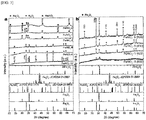
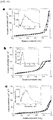
- FIG. 1 shows the HR-TEM and XRD results of FeAlO x -5 pure phase (a, fresh, the catalyst of Example 1), reduced catalyst (b, reduced catalyst of Example 1) and spent catalyst (c, reaction-completed catalyst of Example 1).
- the results in FIG. 1 show that the catalyst of Example 1 has two different phases, that is, a crystallized Fe 2 O 3 phase and an amorphous AlO x phase.
- the catalyst of Example 1 includes a hematite (Fe 2 O 3 ) phase with (104), (110), (116), and (214) faces. In the catalyst of Example 1, no peaks related to the crystallized Al 2 O 3 phase were found in the XRD pattern thereof.
- ICP-OES Inductively coupled plasma light emission spectroscopy shows that the amounts of Fe and Al are 21.8% and 21.1wt%, respectively, in the catalyst of Example 1, thus indicating that a phase including Al is sufficiently present therein.
- FIG. 2 shows a corresponding high-resolution Al 2p profile.
- a peak at the binding energy of 74.6 eV indicates that amorphous aluminum oxide exists in the catalyst of Example 1. This indicates that the catalyst of Example 1 is substantially composed of crystallized Fe 2 O 3 and amorphous aluminum oxide phase.
- the catalysts of the comparative examples (FeAlO x -1 and FeAlO x -2) having a high Al content exhibit 45.8° (400) and 66.8° (440) values at 2 ⁇ , respectively and thus have the peaks similar to that of the crystallized Al 2 O 3 (JCPDS No. 29-0063).
- the catalyst including a large amount of Al has a large amount of crystallized Al 2 O 3 phase ( FIG. 3(a) ).
- NaAlO 2 crystal phase (JCPDS No. 19-1179) was also found in an aluminum-rich catalyst. This indicates that Al and Na form an oxidized bimetallic phase.
- FIG. 3 shows the XRD results of catalysts calcined at 600 ⁇ for 6 hours
- FIG. 3 shows the XRD results of catalysts subjected to calcining at various calcining temperatures in a range of 500 to 900 ⁇ .
- the formation of the crystallized Al 2 O 3 phase was not found in the catalyst of Example 1.
- the crystallized Fe 2 O 3 increases with the increasing temperature. This indicates that in the catalyst of Example 1, the Fe 2 O 3 phase inhibits the crystallization of Al 2 O 3 .
- Example 1 In the catalyst of Example 1 calcined at 600°C, a crystal size of Fe 2 O 3 was calculated on all major planes ((102), (104), (110), (204), (116), (214), and (300)) using a Scherrer's equation. A calculated value was 25.3 nm.
- the crystal sizes of the catalysts as prepared while varying the ratio of Fe/Al are shown in Table 1.
- the catalysts other than the reduced catalyst and the spent catalyst were calcined with air at 600°C and 0.1 MPa for 6 hours and then tested.
- the reduced catalyst the hematite phase (Fe 2 O 3 ) was converted to the magnetite (Fe 3 O 4 ) phase. This was identified based on XRD peaks at 30.1° (202), 35.5° (311), 43.1° (400), 57.0° (511), and 62.6° (404).
- the XRD pattern of the reduced catalyst also indicates presence of an ⁇ -Fe phase (JPCDS No. 89-7194) based on a 44.7° peak. This indicates that activity of the catalyst may be improved for CO 2 hydrogenation.
- the (510) face may play a dominant role in exposing the surface area of ⁇ -Fe5C2 at a maximum degree due to low surface energy thereof.
- the presence of the (510) face demonstrates the high activity of the catalyst of Example 1 in hydrogenating CO 2 .
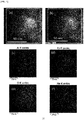
- FIG. 4 is a TEM image of the reduced catalyst.
- FIG. 5 is a TEM image of the spent catalyst.
- the spent catalyst was analyzed using Mössbauer spectroscopy. A result is shown in FIG. 1(e) and Table 2.
- the spent catalysts In most of the spent catalysts, two phases, that is, Fe 3 O 4 (RWGS reaction result) and ⁇ -Fe 5 C 2 (C-C coupling reaction result) coexist, which have active phases dispersed in the spent catalyst.
- the spectrum of the spent catalyst includes non-equivalent iron phases of Fe 3 O 4 -A (including tetrahedral Fe 3+ ions) and Fe 3 O 4 -B (including octahedral position Fe 3+ and Fe 2+ ions). This is the most optimal model of the iron on Fe 3 O 4 .
- the most common phase in the spent catalyst is ⁇ -Fe 5 C 2 , which includes three different non-equivalent phases and thus accounts for 64.7%.
- Fe 3 O 4 (35.3%) is the second most common phase in the spent catalyst.
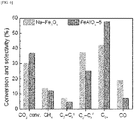
- FIG. 6 compares the catalyst performances of the catalyst of Example 1 and Na-Fe 3 O 4 as related to the effect of the amorphous AlO x phase on CO 2 hydrogenation and selectivity to products.
- the experiment was performed at 330°C and 3.5 MPa at a ratio of H 2 /CO 2 of 1:3 and using 4000mL ⁇ g-1 ⁇ h-1 (CO 2 1000mL/g ⁇ h, H 2 3000mL/g ⁇ h).
- the catalyst of Example 1 exhibited higher selectivity (57.6%, except for CO) to C 5+ than Na-Fe 3 O 4 (42.0%) did. This means that the catalyst of Example 1 is more advantageous in producing the long chain hydrocarbons.
- the amorphous AlO x may provide an effective active site for re-adsorption of C 2 to C 4 olefins. This may provide a platform to additionally perform C-C coupling to improve selectivity to C 6 to C 12 LAOs.
- the selectivity to CO is higher, the more additional FT synthesis must be performed to improve an overall yield of the liquid hydrocarbon.
- the catalyst of Example 1 has a lower selectivity to CO, compared to that of Na-Fe 3 O 4 to CO (19.0%). This is advantageous for producing liquid hydrocarbons.
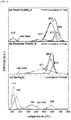
- FIG. 7 shows the H 2 -TPD profiles for (a) the catalyst of Example 1 (fresh), (b) reduced catalyst, and (c) Na-Fe 3 O 4 .
- the profile is intended to further investigate the unique properties of FeAlO x catalyst.
- H 2 -TPD analysis based on temperature change is performed to examine possibility of hydrogen spillover. When the hydrogen spillover is performed well, availability of H 2 adsorbed on the surface of the catalyst increases. This may be used for CO 2 hydrogenation via FT synthesis in the process of producing the long chain hydrocarbons at a high-yield.
- the H 2 -TPD profile is composed of a low temperature absorption region ( ⁇ 400°C) and a high temperature absorption region (401 to 800°C).
- a low temperature absorption peak is related to weak hydrogen desorption on the surface of the catalyst, while a high temperature absorption peak is related to the hydrogen spillover or hydrogen desorption beneath the surface and corresponds to strong desorption. It may be identified that in (a) and (b) in which the amorphous AlOx phase is present, H 2 spillover is improved. Detailed data thereof are shown in Table 3.
- the ranges of the amount of the hydrogen spillover thereof were similar to each other and the range was 0.27 to 0.40 mmol/g.
- the total desorbed hydrogen amount was in a range of 0.65 to 0.74 mmol/g.
- FeAlO x -0 pure Al 2 O 3
- the total desorbed hydrogen amount was 0.54 mmol/g.
- the hydrogen spillover in Na-Fe 3 O 4 exhibited an extremely small desorbed-hydrogen amount in the high temperature range. This means that the pure iron-based Na-Fe 3 O 4 catalyst is not effective in inducing the hydrogen spillover.
- FIG. 8 shows the NH 3 -TPD profile of the catalyst of Example 1 and Comparative Examples.
- the profile in FIG. 8 is intended to identify that the presence of the amorphous AlO x phase improves the acid strength of the FeAlO x catalyst.
- ammonia desorption (NH 3 -TPD) analysis based on a temperature was performed. Detailed data of the profile results are shown in Table 4.
- the acid strength was classified into weak (100 to 400°C), medium (401 to 650°C), and strong (651 to 1000°C) regions.
- the acid strength (0.34 mmol/g) of FeAlO x -10 (pure Fe 2 O 3 ) was relatively low, while the acid strength (2.35 mmol/g) of the catalyst of Example 1 was relatively high.
- the Al 2 O 3 component increased to 100% (FeAlO x -0)
- the acid strength increased to 2.48 mmol/g.
- the strength of most of the acidic sites decreased to a medium strength.
- the C-C coupling reaction was greatly influenced by the type and the strength of the acidic site. This ultimately determined the selectivity to the product in the course of CO 2 conversion via FT synthesis.
- a strong acidic site e.g., zeolite
- the weak acidic site is not very active in an oligomerization reaction. Therefore, the presence of a large number of strong or weak acidic sites is undesirable for selective production of C 5+ liquid hydrocarbons.
- the catalyst of Example 1 contains a relatively large amount of medium strength acidic sites (2.35 mmol/g) which may actively promote the C-C coupling reaction in producing the C 5+ liquid hydrocarbons and thus may be advantageous for CO 2 conversion.
- Al-rich catalysts (FeAlO x -1 and FeAlO x -0) contains a large number of medium-strength acidic sites. However, the content of compounds with iron oxide activity is close to zero (low-to-zero), thus limiting the RWGS reaction. This leads to low CO 2 conversion percentage and low selectivity to C 5+ .
- Na-Fe 3 O 4 contains very little medium strength acidic sites, such that the C-C coupling reaction may be promote , but the selectivity to the C 5+ liquid hydrocarbon is lowered.
- FIG. 9 shows the CO 2 -TPD profile of (a) the catalyst of Example 1, (b) the reduced catalyst and (c) Na-Fe 3 O 4 .
- Surface basicity of the catalyst of Example 1 and Na-Fe 3 O 4 catalyst was tested. To this end, CO 2 desorption analysis based on a temperature was performed. Detailed data thereof are shown in Table 5.
- the middle and strong basic sites may play an important role in the formation of Fe-C bonds when reactants and intermediates are adsorbed onto the FeAlO x catalyst.
- the formation of olefins in the CO 2 conversion is highly dependent on the strength of the Fe-C bond. Therefore, as the Fe-C bond strength increases, the CO/H 2 coverage ratio on the catalyst surface increases, thereby to inhibit excessive hydrogenation of the CH 2 -monomer, thereby preventing paraffin formation, thereby improving selectivity to olefins.
- the medium and strong strength basic sites may promote the formation of the Fe 5 C 2 phase and thus improves the C-C coupling reaction.
- FIG. 10 shows the nitrogen (N 2 ) adsorption-desorption isotherms and pore size distributions of (a) the catalyst of Example 1, (b) reduced catalyst and (c) spent catalyst.
- a BET Brunauer-Emmett-Teller
- surface area of the catalyst of Example 2 increased to 63.4m 2 /g, and a pore size thereof decreased to 10.0nm, compared to the catalyst of Example 1 having BET surface area of 35.6m2/g and the pore size of 31.7nm.
- increase in the BET surface area in the reduced catalyst means an increased likelihood of exposing the active site to the reaction gas mixture, thus improving adsorption, and increasing the CO 2 conversion percentage and the product yield.
- An amount of residual Na in the FeAlO x -5 catalyst as measured using ICP-OES (inductively coupled plasma-optical emission spectrometry) was 0.74 wt%. Since the presence of Na in FeAlO x -5 increases the basicity in relation to the alkali metal, the heat of adsorption of CO increases and the heat of adsorption of H 2 deceases. The preferential adsorption of CO selectively promotes C-C coupling via FT synthesis and suppresses excessive hydrogenation in producing the olefins, thus making it difficult to form other products such as CH 4 .
- the Fe 5 C 2 and AlO x active sites are adjacent to each other, such that the C 2 to C 4 olefins may be formed on FeAlO x -5, and then may be re-adsorbed to the amorphous AlO x site, thus leading to the selective formation of C 5 hydrocarbons (77.0%) via the chain growth mechanism.
- the Na-Fe 3 O 4 catalyst has high selectivity (34.5%) to C 2 to C 4 olefins, thus making the formation of C 5 hydrocarbons difficult due to a low percentage at which C 2 to C 4 olefins are resorbed thereto.
- FIG. 11 is an in situ NAP-XPS result, and is intended to investigate the change of the chemical environment of the catalyst of Example 1 during the CO 2 conversion (330 ⁇ , 0.1mbar CO 2 , 0.1mbar H 2 ).
- FIG. 11 shows a high-resolution O Is spectrum
- (b) shows a high-resolution C Is spectrum
- (c) shows a high-resolution Fe 2p spectrum.
- the data show that the catalyst of Example 1 is reduced during CO 2 conversion to create a significant amount of surface oxygen space (21.6%), which promotes the adsorption of CO 2 and H2 on the surface of the catalyst.
- FIG. 11 shows that the catalyst of Example 1 is reduced during CO 2 conversion to create a significant amount of surface oxygen space (21.6%), which promotes the adsorption of CO 2 and H2 on the surface of the catalyst.
- the O Is spectrum may include peaks corresponding to oxygen defects at 531.7 eV, oxygen lattice atoms at 530.5 eV, and oxygen (O Is) close to the metal-oxygen bond at 529.6 eV, respectively. Therefore, in the reaction condition, the catalyst of Example 1 has an oxygen defect to adsorb CO 2 . Referring to FIG. 12 where a binding energy of C Is was measured using UHV-XPS, the catalyst of Example 1 exhibited a weak peak at 284.6 eV. This means that sp 3 hybridized carbon is present. To the contrary, when a CO 2 /H 2 mixture was used, two additional peaks appeared at 282.9 and 287.7 eV ((b) in FIG.
- the metal carbide phase may correspond to ⁇ -Fe 5 C 2 and involve in a C-C coupling reaction.
- the XPS data in the Fe 2p region obtained under UHV and NAP conditions are shown in (c) in FIG. 1 . Under the UHV condition, binding energy peaks (Fe 2p 3/2 and Fe 2p 1/2 occurring at 709.8 and 723.5 eV, respectively) corresponding to Fe 2 O 3 appear.
- FIG. 13 shows the XAS of the catalyst of Example 2, in which the catalyst of Example 2 was tested with different references (Fe foil, FeO, and Fe 3 O 4 ) to further investigate the properties of the active site.
- FIG. 13 shows the X-ray absorption near edge structure (XANES) spectrum, which shows the standard spectrum of each of Fe 3 O 4 and the Fe foil. Based on (a) in FIG. 13 , it may be identified that Fe 2 O 3 is reduced to Fe 3 O 4 and a metallic ⁇ -Fe phase is formed.
- (b) in FIG. 13 shows the Fourier transform intensity of the extended X-ray absorption fine structure (EXAFS) spectrum.
- EXAFS extended X-ray absorption fine structure
- first hybrid shell corresponds to a Fe-O pathway of Fe 3 O 4
- second hybrid shell corresponds to a Fe-Fe pathway of metallic ⁇ -iron together with a BCC structure.
- a third shell corresponds to a Fe-Fe pathway on Fe 3 O 4 .
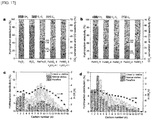
- FIG. 14 shows the result of performing carbon dioxide conversion with the catalyst of Example 1 while setting various H 2 /CO 2 ratios.
- (a) shows the CO 2 conversion and selectivity to CO at each of the ratios
- (b) to (d) show a distribution of a final product when the ratio of H 2 /CO 2 is 0.5, 1, 2, and 3, respectively.
- Increasing the H 2 /CO 2 ratio from 0.5:1 to 3:1 greatly increased the CO 2 conversion from 12.5% to 36.8%, and sharply decreased selectivity to CO from 28.9% to 7.2%.
- the H 2 /CO 2 ratio increased from 0.5:1 to 3:1, the C 5+ yield increased from 6.7% to 19.7%.
- FIG. 15 shows the result of carbon dioxide conversion with various pressure settings.
- the pressure was set in a range of 0.5 to 3.5 MPa (0.5 MPa unit) at 330°C at a ratio of H 2 /CO 2 of 2:1.
- the reaction pressure was increased from 0.5 to 2.5 MPa, the CO 2 conversion percentage increased noticeably from 2.6% to 25.7%, and C 5+ selectivity increased from 40.8 to 66.8%.
- Increasing the pressure to 3.5 MPa further increased the CO 2 conversion percentage to 26.7% and the C 5+ selectivity (that is, selectivity to C 5+ ) to 71.7%.
- a product distribution was slightly changed while the pressure changes. This indicates that the pressure does not have a significant effect on the product.
- FIG. 16 shows the results of carbon dioxide conversion with various space velocity settings.
- the H 2 /CO 2 ratio was fixed to 1:1 and the space velocity of the CO 2 and H 2 gas mixture was increased from 2000 to 10000ml/g ⁇ h.
- the space velocity becomes 10000ml/g ⁇ h
- the CO 2 conversion percentage decreased from 20.2% to 13.%
- CO selectivity increased from 16.8% to 35.6%.
- the C 5+ selectivity changed in a range of 71.0 to 77.0%, and thus there was no significant change in the C 5+ selectivity.
- FIG. 17 shows the CO 2 conversion percentage, the CO selectivity, and the hydrocarbon selectivity (including CO) after performing the CO 2 hydrogenation with various catalysts.
- the selectivity of the catalyst of Example 1 with a 1:1 Fe/Al ratio to C 5+ liquid hydrocarbon was 77.0%(excluding CO).
- the selectivity thereof to each of CO (16.8%), CH4 (5.4%), and C 2 to C 4 (17.6%) was reduced.
- the yield of C 5+ including CO was 12.6%.
- increasing the H 2 /CO 2 ratio to 3:1 significantly increased the CO 2 conversion percentage to 36.8%.
- Example 18 (including CO and using a single metal oxide catalyst) indicates that when CO is considered in the C 5+ selectivity calculation (when a perfect carbon balance for all CO 2 conversion products is provided), the catalyst of Example 1 has an unprecedented high C 5+ liquid hydrocarbon yield (19.7%) compared to those of the conventional catalysts (3.0 to 16.1%).
- the CO 2 conversion percentage of the FeAlO x -5/HZSM-5 composite catalyst and the selectivity of the FeAlO x -5/HZSM-5 composite catalyst to each of CO, CH 4 , and C 5+ hydrocarbons were similar to those of the single catalyst of the catalyst of Example 1 at a 1:1 ratio of H 2 /CO 2 .
- the ratio of H 2 /CO 2 was increased to 3:1, the selectivity of FeAlO x -5/HZSM-5 to C 5+ increased from 57.8% to 70.0% (excluding CO), and the C 5+ yield slightly increased from 19.7 to 21.6% (including CO), compared to that of the FeAlO x -5 single catalyst.
- (b) in FIG. 17 shows the results of evaluating the CO 2 conversion percentage and the products selectivity of the FeAlO x catalyst having a Fe/Al ratio of 1 to 9 based on contents of Fe and Al.
- the ratio of Fe/Al decreased from 9 to 5
- the CO 2 conversion percentage increased from 4.8% to 20.2%
- the C 5+ selectivity increased from 20.0% to 77.0%
- the CO selectivity decreased from 60.0% to 16.8%.
- the Fe/Al ratio was further reduced from 5 to 1
- the CO 2 conversion percentage decreased from 20.2% to 13.0%
- the C 5+ selectivity decreased from 77.0% to 58.4%
- the CO selectivity was significantly increased from 16.8% to 46.2%. This indicates that the ratio of Fe/Al plays an important role in determining the CO 2 conversion percentage and the products selectivity.
- the product distributions resulting from the catalyst reactions of the catalyst of Example 1 and the Na-Fe 3 O 4 catalyst are quantified using an effective carbon number method.
- the selectivity thereof to C 2 + olefin was high and was 78.5%, and C 4+ olefins accounted for 66.8%.
- the selectivity thereof to C 4+ LAOs was 52.4%.
- the selectivity thereof to liquid olefin (C 5 to C 18 ) was 62.3%. In this connection, the liquid LAOs accounted for 47.9%.
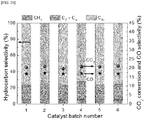
- FIG. 20 shows the result of evaluating the reproducibility of the catalyst of Example 1.
- CO 2 hydrogenation and product synthesis were tested in different batches at different times.
- FIG. 20 it may be seen that the reactivity of and selectivity to all components are almost unaffected by the time and are reproduced uniformly and ideally.
- FIG. 21 shows the result of evaluating the stability of the catalyst of Example 1.
- the CO 2 conversion percentage and the selectivity to each hydrocarbon rem are maintained at a similar level on the stream.
- the selectivity to CO increased slightly from 17.2% to 28.9% after the reaction time 450 hours haver lapsed.
Landscapes
- Chemical & Material Sciences (AREA)
- Organic Chemistry (AREA)
- Chemical Kinetics & Catalysis (AREA)
- Engineering & Computer Science (AREA)
- Materials Engineering (AREA)
- Oil, Petroleum & Natural Gas (AREA)
- General Chemical & Material Sciences (AREA)
- Crystallography & Structural Chemistry (AREA)
- Catalysts (AREA)
- Organic Low-Molecular-Weight Compounds And Preparation Thereof (AREA)
Abstract
Description
- The present disclosure relates to a single catalyst for converting carbon dioxide into useful compounds and a method for conversion of carbon dioxide using the catalyst.
- Liquid hydrocarbons such as olefins and paraffins are essential compounds that are widely used as transportation fuels and raw materials for synthesis of many commercial compounds. In industry, liquid hydrocarbons are produced by crude distillation in petroleum refineries. Recently, not only to reduce emission of carbon dioxide (about 400 ppm) by humans into the atmosphere, but also to provide a continuous solution to cope with lack of the fossil fuel reserves, carbon dioxide has been recognized as a potential source for production of not only fuels such as gases and liquid hydrocarbons but also chemical materials such as light olefin, aromatic compound and alcohols. However, carbon dioxide which is inherently thermodynamically very stable and inert may not be hydrogenated by adding a C-C coupling reaction thereto. Thus, carbon dioxide hydrogenation usually produces a product having a high H/C ratio because methane is formed rapidly in the carbon dioxide hydrogenation. This is due to low heat of adsorption of carbon dioxide on a surface of an active catalyst.
- To date, carbon dioxide has been converted to C1 compounds (e.g., methanol, methane, formic acid, and carbon monoxide) via several approaches.
- Research for converting thermodynamically stable carbon dioxide into liquid hydrocarbon using a metal oxide/zeolite composite catalyst has been attracting attention. Significant progress has been made on that research recently. However, producing a liquid hydrocarbon with a single catalyst without use of an additional C-C coupling agent was still a great challenge. However, a high mechanical barrier and inherent inertness of CO2 (ΔGf° = -396 kJ/mol) limits the C-C coupling reaction. As a result, selectivity of C5+ liquid hydrocarbon was reduced. Each of reverse-water-gas-shift (RWGS, CO2 + H2→CO + H2O, ΔH573K = 38.0kJ/mol) and Fischer-Tropsch reaction (FT, CO + H2→ CnHm, ΔH573K = -166.0 kJ/mol) is an expected strategy for direct production of long-chain hydrocarbons from CO2. Nevertheless, the selectivity of C5+ liquid hydrocarbons does not exceed 60%, due to limitation by an Anderson-Schulz-Flory (ASF) distribution. Therefore, despite several attempts to selectively convert CO2 to C5+ liquid hydrocarbons, the challenge to design a single type catalyst capable of inhibiting methane formation to produce the C5+ liquid hydrocarbons at a high yield and inhibiting excessive hydrogenation to enhance the C-C coupling reaction remains. Currently, the C5+ yield (CO2 conversion percentage × C5+ selectivity) due to a single type catalyst remains in a range of 3.0 to 16.1%.
- Recently, a concept of a catalyst composite using two types of catalysts (e.g., metal oxide/zeolite composite) has been applied to selectively convert not only CO2 but also syngas to lower olefins (C2 to C4), gasoline (C5+), and aromatics. In the metal oxide/zeolite catalyst, the metal oxide converts CO2 to CO via the RWGS reaction, and zeolite (e.g., HZSM-5, beta-zeolite) provides an acidic moiety for the C-C coupling reaction to produce the C5+ hydrocarbons and aromatics. Using this metal oxide/zeolite composite concept, considerable progress has been made in the conversion of CO2 to the C5+ liquid hydrocarbons at selectivity in a 55 to 80% range (except for CO). However, in some cases, the selectivity of CO is very high (32 to 57%), thus reducing the overall C5+ yield to 3.1 to 6.4%. Further, the metal oxide/zeolite composite catalyst had the C5+ selectivity greatly varying depending on an approach used to synthesize the metal oxide and the zeolite (e.g., double layer, granule lamination, and mortar mixing), and was very sensitive to formation of coke in pores of the zeolite. A size of the composite catalyst was limited. Control of a spacing between the active sites of the metal oxide and of the zeolite controls sequential diffusion of reaction intermediates and ultimately determines the selectivity of the product, and is by no means trivial. Therefore, it is very important in the field of CO2 hydrogenation to develop a single type and bifunctional catalyst that may effectively promote the RWGS reaction and the subsequent C-C coupling reaction to produce the C5+ liquid hydrocarbons.
- In addition to gasoline and diesel range hydrocarbons (C5+) and lower olefins (C2 to C4), higher olefins with terminal C=C double bonds (linear α-olefins: LAOs) are very important and expensive chemical raw materials. LAOs are a valuable basic component in the production of synthetic lubricants, plasticizers, and common materials (e.g., linear low density polyethylene). Depending on the number of carbons, C4 to C8 LAOs are widely used to produce polyethylene comonomers and low molecular weight fatty acids. C6 to C18 LAOs are used to produce plasticizer alcohols, dielectric chemical materials, and surfactants. Long-chain LAOs (C20 to C30) are widely used to produce dielectric chemical materials (e.g., linear low density polyethylene resins, waxes, and drilling fluids). Therefore, the selective formation of C5+ LAOs from CO2 is a very useful and economical technique for producing high value-added compounds in various industrial fields.
- This Summary is provided to introduce a selection of concepts in a simplified form that are further described below in the Detailed Description. This Summary is not intended to identify all key features or essential features of the claimed subject matter, nor is it intended to be used alone as an aid in determining the scope of the claimed subject matter.
- What the applicant wants to achieve in accordance with the present disclosure is a bifunctional salt promoted with FeAlOx which had high selectivity to C5+ LAOs without a C-C coupling catalyst such as zeolite, and promotes the formation of the C5+ hydrocarbons at the high yield. The FeAlOx catalyst has limited selectivity (7.2%) to CO and selectivity (12.1%) to CH4 at 36.8% CO2 conversion percentage, and realizes a high C5+ yield of 19.7% (including CO). In addition, under hydrogen-deficient conditions, the selectivity thereof to C5+ is very high, that is, 77.0% despite the CO2 conversion percentage of 20.2%. The selectivity thereof to C5+ hydrocarbons exceeds the highest value as predicted in ASF as the model of contribution to the FT reaction. A selectivity 52.4% thereof to overall LAOs is achieved when the carbon distribution (except for CO) is considered. This value is the highest value as reported to date. The catalyst according to the present disclosure exhibited very high stability under stream for up to 450 hours while causing negligible change in the product composition. This supports the tremendous potential for practical application thereof.
- A purpose of the present disclosure is to provide a single catalyst that may increase the conversion percentage of carbon dioxide, and increase the yield of C5+ liquid hydrocarbons and long-chain α-olefins from the carbon dioxide, and to provide a method for converting carbon dioxide using that catalyst.
- Purposes in accordance with the present disclosure are not limited to the above-mentioned purpose. Other purposes and advantages in accordance with the present disclosure as not mentioned above may be understood from following descriptions and more clearly understood from embodiments in accordance with the present disclosure. Further, it will be readily appreciated that the purposes and advantages in accordance with the present disclosure may be realized by features and combinations thereof as disclosed in the claims.
- One aspect of the present disclosure provides a catalyst having two active sites and a carbon dioxide conversion method using the same.
- One aspect of the present disclosure provides a catalyst having a composition of FexAlyOz, wherein the catalyst may have two active sites including acidic and basic sites. The catalyst serves to hydrogenate the carbon dioxide and convert the carbon dioxide to C5+ liquid hydrocarbons and C5+ linear α-olefins at high yield. In the composition of the catalyst, x may be a real number of 0.1 or greater to 0.8 or smaller, and y may be a real number of 0.2 or greater to 0.9 or smaller, and z is in a range in which the catalyst may form iron oxide and aluminum oxide, and may be a real number of 0.5 or greater to 3 or smaller.
- In one implementation, in the catalyst, a ratio of Fe:Al may range from 10:90 to 80:20 based on at%. Preferably, the ratio may be 50:50. As the percentage of iron increases to 50, carbon dioxide is more easily adsorbed on the catalyst, and thus the carbon dioxide conversion percentage increases. However, when the percentage of the iron exceeds 50, the carbon dioxide conversion percentage tends to decrease slightly. In addition, while the percentage of aluminum increases to 50, a percentage at which hydrocarbons are resorbed thereon increases, so that the selectivity to C5+ hydrocarbons increases. However, when the percentage of the aluminum exceeds 50, the selectivity to C5+ hydrocarbons decreases slightly. A Fe:Al ratio range of 10:90 to 80:20 may be a range in which the conversion percentage and the selectivity to C5+ hydrocarbons vary at an acceptable level. The most ideal Fe:Al ratio in terms of both of the carbon dioxide conversion and the selectivity to the product may be the 50:50 ratio.
- In one implementation, the catalyst may include a crystallized Fe2O3 phase, which may a basic site in the carbon dioxide conversion process. The Fe2O3 phase may act as a site where carbon dioxide is adsorbed and hydrocarbons are formed during the carbon dioxide conversion. In the catalyst, the Fe2O3 phase may be activated by being calcined at 400 to 1000°C. Preferably, the Fe2O3 phase may activated by being fired at 400 to 650°C.
- In one implementation, the catalyst may further include an alkali metal. The alkali metal may include at least one among sodium (Na), potassium (K), rubidium (Rb), and cesium (Cs). In the catalyst, an amount of the alkali metal may be in a range of 0.5 to 10 wt% with respect to a total weight of the catalyst. When the amount of the alkali metal is less than 0.5 wt%, a CO2 conversion ratio may be decreased because an amount of carbon dioxide absorbed to a basic site of the alkali metal is decreased. When the amount of the alkali metal is larger than 10 wt%, a selectivity may be decreased because RWGS active sites and FT active sites are decreased.
- In one implementation, the catalyst may contain amorphous aluminum oxide which corresponds to the acidic site in the process of carbon dioxide conversion. The aluminum oxide is a site where hydrogen desorption occurs in the process of the carbon dioxide conversion. The amorphous aluminum oxide may re-absorb C2 to C4 formed during the conversion process and thus plays an important role in the formation of C5+ hydrocarbons. The amorphous aluminum oxide may be fired at 400 to 1000°C to act as the acidic site. Preferably, the amorphous aluminum oxide may be calcined at 400 to 650°C to act as the acidic site.
- In one implementation, the aluminum oxide along with the Fe2O3 phase may be contained in the catalyst. The aluminum oxide and the Fe2O3 phase may be adjacent to each other.
- In one implementation, the catalyst may be combined with zeolite to form a composite which may be used as a carbon dioxide conversion catalyst. A conventional zeolite composite catalyst as the conventional carbon dioxide conversion catalyst was used to increase the selectivity to C5+ hydrocarbons. The catalyst according to the present disclosure may be combined with the zeolite to improve the carbon dioxide conversion and the product yield.
- One aspect of the present disclosure provides a carbon dioxide conversion method using the catalyst, the method including reacting the catalyst with hydrogen gas to absorb hydrogen thereon, and injecting a mixture gas of carbon dioxide and hydrogen such that the mixture gas reacts with the hydrogen adsorbed catalyst. The carbon dioxide conversion method may be a method in which carbon dioxide is converted to compounds via a C-C coupling reaction by RWGS synthesis and FT synthesis on the catalyst.
- In one implementation of the conversion method, the mixing ratio of H2:CO2 may be 3:1 to 1:3.
- In one implementation of the conversion method, the gas mixture of the carbon dioxide and the hydrogen may be injected at a space velocity of a range of 2000 to 10000 mL/g·h.
- In one implementation of the conversion method, the reaction pressure of the H2/CO2 mixture gas may be in a range of 1.5 to 3.5 MPa.
- In one implementation of the conversion method, the conversion method may be carried out at 300 to 500°C, preferably, 330 to 450 □.
- In one implementation of the conversion method, the conversion method may result in selectively production of C5+ liquid hydrocarbons and C5+ linear α-olefins.
- Effects in accordance with the present disclosure may be as follows but may not be limited thereto.
- According to the present disclosure, the carbon dioxide conversion percentage, and the yield of C5+ liquid hydrocarbons and C5+ long chain α-olefins may be improved using only the single catalyst, without the use of the zeolite composite catalyst conventionally used to increase the yield.
- In addition to the effects as described above, specific effects in accordance with the present disclosure will be described together with the detailed description for carrying out the disclosure.
-
-
FIG. 1 shows HT-TEM, and XRD results and a Mössbauer spectrum of a catalyst of Example 1 according to a carbon dioxide conversion step. -
FIG. 2 is a UHV-XPS result of aluminum. -
FIG. 3 is an XRD result based on a ratio of Fe:Al. -
FIG. 4 is a TEM result of a reduced catalyst. -
FIG. 5 is a TEM result of a spent catalyst. -
FIG. 6 is data evaluating an effect of amorphous aluminum on a CO2 conversion percentage and selectivity to products. -
FIG. 7 shows a result of a H2-TPD (temperature-programmed desorption) test. -
FIG. 8 shows a result of a NH3-TPD (temperature-programmed desorption) test. -
FIG. 9 shows a result of a CO2-TPD (temperature-programmed desorption) test. -
FIG. 10 shows a result of a nitrogen (N2) adsorption-desorption isotherm test. -
FIG. 11 shows a result of NAP-XPS (near-ambient pressure X-ray photoelectron spectroscopy) of the catalyst of Example 1. -
FIG. 12 is a result of UHV-XPS (ultra high vacuum X-ray photoelectron spectroscopy) of the catalyst of Example 1. -
FIG. 13 is an XAS (X-ray adsorption spectroscopy) result of a reduced catalyst. -
FIG. 14 shows a result of a carbon dioxide conversion test at various hydrogen : carbon dioxide ratios using the catalyst of Example 1. -
FIG. 15 shows a result of a carbon dioxide conversion test at various pressures using the catalyst of Example 1. -
FIG. 16 shows a result of a carbon dioxide conversion test at various space velocities using the catalyst of Example 1. -
FIG. 17 shows a carbon dioxide conversion test result of various catalysts including the catalyst of Example 1. -
FIG. 18 shows comparisons between CO2 conversion percentages of the catalyst of Example 1 and conventional catalysts, and between selectivities of the catalyst of Example 1 and conventional catalysts to C5+. -
FIG. 19 shows carbon dioxide conversion test results of the catalyst of Example 1 and a zeolite composite catalyst. -
FIG. 20 shows a result of evaluating reproducibility of the catalyst of Example 1. -
FIG. 21 shows a result of evaluating stability of the catalyst of Example 1. - For simplicity and clarity of illustration, elements in the figures are not necessarily drawn to scale. The same reference numbers in different figures represent the same or similar elements, and as such perform similar functionality. Further, descriptions and details of well-known steps and elements are omitted for simplicity of the description. Furthermore, in the following detailed description of the present disclosure, numerous specific details are set forth in order to provide a thorough understanding of the present disclosure. However, it will be understood that the present disclosure may be practiced without these specific details. In other instances, well-known methods, procedures, components, and circuits have not been described in detail so as not to unnecessarily obscure aspects of the present disclosure.
- Examples of various embodiments are illustrated and described further below. It will be understood that the description herein is not intended to limit the claims to the specific embodiments described. On the contrary, it is intended to cover alternatives, modifications, and equivalents as may be included within the spirit and scope of the present disclosure as defined by the appended claims.
- The terminology used herein is for the purpose of describing particular embodiments only and is not intended to limit the present disclosure. As used herein, the singular forms "a" and "an" are intended to include the plural forms as well, unless the context clearly indicates otherwise. It will be further understood that the terms "comprises", "comprising", "includes", and "including" when used in this specification, specify the presence of the stated features, integers, operations, elements, and/or components, but do not preclude the presence or addition of one or more other features, integers, operations, elements, components, and/or portions thereof. As used herein, the term "and/or" includes any and all combinations of one or more of the associated listed items. Expression such as "at least one of" when preceding a list of elements may modify the entire list of elements and may not modify the individual elements of the list.
- Unless otherwise defined, all terms including technical and scientific terms used herein have the same meaning as commonly understood by one of ordinary skill in the art to which this inventive concept belongs. It will be further understood that terms, such as those defined in commonly used dictionaries, should be interpreted as having a meaning that is consistent with their meaning in the context of the relevant art and will not be interpreted in an idealized or overly formal sense unless expressly so defined herein.
- As used herein, the terms "substantially," "substantial," "approximately," and "about" are used to denote and account for small variations. When used in conjunction with an event or circumstance, the terms can refer to instances in which the event or circumstance occurs precisely, as well as instances in which the event or circumstance occurs to a close approximation. For example, when used in conjunction with a numerical value, the terms can refer to a range of variation of less than or equal to ±10% of that numerical value, such as less than or equal to ±5%, less than or equal to ±4%, less than or equal to ±3%, less than or equal to ±2%, less than or equal to ±1%, less than or equal to ±0.5%, less than or equal to ±0.1%, or less than or equal to ±0.05%. For example, a first numerical value can be "substantially" the same as a second numerical value if the first numerical value is within a range of variation of less than or equal to ±10% of the second numerical value, such as less than or equal to ±5%, less than or equal to ±4%, less than or equal to ±3%, less than or equal to ±2%, less than or equal to ±1%, less than or equal to ±0.5%, less than or equal to ±0.1%, or less than or equal to ±0.05%. For example, "substantially" parallel can refer to a range of angular variation relative to 0° that is less than or equal to ±10°, such as less than or equal to ±5°, less than or equal to ±4°, less than or equal to ±3°, less than or equal to ±2°, less than or equal to ±1°, less than or equal to ±0.5°, less than or equal to ±0.1°, or less than or equal to ±0.05°.
- Additionally, amounts, ratios, and other numerical values are sometimes presented herein in a range format. It can be understood that such range formats are used for convenience and brevity, and should be understood flexibly to include not only numerical values explicitly specified as limits of a range, but also all individual numerical values or sub-ranges encompassed within that range as if each numerical value and sub-range is explicitly specified.
- In a "FeAlOx-number" as used herein, a ratio of Fe and Al is determined by "the number" appended to "FeAlOx" (for example, in FeAlOx-5, Fe 50at% and Al 50at%; and in FeAlOx-8, Fe 80at% and Al 20at%).
- Iron-aluminum oxide (FeAlOx) catalysts having various Fe/Al ratios were synthesized using a co-precipitation method while controlling the ratio of iron and aluminum salts.
- Iron(III) nitrate nonahydrate (Fe(NO3)3·9H2O, 99.9%, Alfa Aesar, USA) 10g and aluminum(III) nitrate nonahydrate (Al(NO3)3·9H2O, 99.9%, Alfa Aesar, USA) 10 g were dissolved in 150 mL of DDI (distilled and deionized) water (solution ①). A solution in which 11 g of sodium carbonate (Na2CO3, 99.98%, Sigma Aldrich, USA) was dissolved in 53mL DDI water was used as a precipitant. The Na2CO3 aqueous solution was added dropwise to the
solution ① while stirring at 80°C. During the dropwise addition of the precipitant, a dark brown precipitate was formed. The solution mixture was stirred continuously for 12 hours with a bar magnet while maintainingpH 8. Then, the mixture was aged at room temperature for 6 hours. When most of the precipitate was formed, the precipitate was filtered usingWhatman # 2 filter paper. After the filtration, the precipitate remaining on the filter paper was washed with 300 mL DDI water. Then, the filtered substance was placed in a drying oven at 80°C for 12 hours, and then, was calcined at 600°C for 6 hours in a static air condition. - In order to synthesize the FeAlOx-5/HZSM-5 composite catalyst, aluminum-ZSM-5 (NH4-ZSM-5) (Alfa Aesar, product #45882) with 80 of a Si/Al ratio was calcined to 550°C at 2°C/min under an airflow of 50 mL/min and thus was converted to NH4-ZSM-5 (HZSM-5) in a hydrogenated form. The calcined HZSM-5 powders were physically mixed with FeAlOx-5 at a mass ratio of 1:1 and with 3 mL silica particles (Fischer Chemical, S/0365/60) in a vial. The catalyst and silica mixture were shaken throughout and were homogenized and then, was transferred to a reactor. The catalyst mixture was reduced at 450°C and 3.5 MPa for 10 hours under H2 at a rate of 30 mL/min before reaction.
- Comparative examples were prepared for comparison with the FeAlOx catalyst and the FeAlOx-5/HZSM-5 composite catalyst.
- The magnetic iron oxide-promoted sodium (Na-Fe3O4) catalyst was prepared using a conventionally reported method. Briefly, while 31.6 g of iron(III) chloride (FeCl3·6H2O, 98%, Alfa Aesar) and 12.54 g of iron(II) chloride (FeCl2·6H2O, 99.9%, Sigma Aldrich) were continuously mixed and stirred at room temperature (23±0.5□), 150 mL DDI water was added thereto, thus, to form a homogenous solution. Thereafter, 5.1 mL of a concentrated hydrochloric acid (12.1 mol/L) solution was added dropwise to the homogeneous solution at room temperature (23±0.5°C) until a transparent solution was formed. Thereafter, a concentrated aqueous sodium hydroxide (NaOH, 1.5 mol/L) aqueous solution was added dropwise to the solution mixture at 60°C while continuously stirring the mixture. As the NaOH solution was added thereto, a black precipitate began to be formed. During the formation of the precipitate, a pH of the solution was maintained at 10. The mixture was stirred continuously for 1 hour. The black precipitate was separated therefrom using a magnet, and was washed with 800 mL of DDI water. The synthesized catalyst was dried at 60°C for 12 hours.
- The FeAlOx catalysts with various Fe/Al ratios were synthesized while controlling the amounts of Fe(NO3)3·9H2O and Al(NO3)3·9H2O in the
solution ①. The conditions except for the amounts of Fe(NO3)3·9H2O and Al(NO3)3·9H2O in the synthesis process are the same as those applied to the synthesis of FeAlOx-5. To synthesize FeAlOx-10 (Fe 100%;Al 0%), 10 g of Fe(NO3)3·9H2O was dissolved in 100mL DDI water, and 5.3 g of Na2CO3 dissolved in 25 mL of DDI water was used as a precipitant. To synthesize FeAlOx-8 (Fe 80%;Al 20%), 16 g of Fe(NO3)3·9H2O and 4g of Al(NO3)3·9H2O were dissolved in 100mL DDI water. When a transparent solution was formed, 11 g of Na2CO3 dissolved in 52mL DDI water was used as a precipitant. FeAlOx-0 (Fe 0%;Al 100%) was synthesized by dissolving Al(NO3)3·9H2O in 100mL DDI water. Thereafter, 5.7 g of Na2CO3 dissolved in 27mL DDI water was used as a precipitant. In addition, catalysts with varying composition ratios (FeAlOx-2, FeAlOx-1) were prepared while varying the weights of Fe(NO3)3·9H2O and Al(NO3)3·9H2O. - The carbon dioxide conversion test was performed using the catalyst prepared in Example 1.
- The catalyst of Example 1 was reduced at 450°C and 3.5 MPa H2 pressure under H2 at 30 mL/min for 10 hours. At this time, a crystalline Fe2O3 was reduced to Fe3O4, and hydrogen was adsorbed to an AlOx site.
- 2000mL/h·g (CO2 : 1000mL/h·g, H2 : 1000mL/h·g) of H2/CO2 in a 1:1 ratio was injected to the reactor at 330°C and 3.5 MPa such that the reduced catalyst was reacted therewith for 80 hours on stream. CO formed via RWGS of CO2 forms hydrocarbons (C2 to C4) via a C-C coupling reaction using the FT synthesis pathway, and a portion of Fe3O4 is converted to Fe5C2.
- The C2 to C4 hydrocarbon formed in the 2) is re-adsorbed to the amorphous AlOx site to form C5+ liquid hydrocarbon and a C5+ linear α-olefin via a C-C coupling reaction. After the reaction, the spent catalyst was collected and analyzed.
- The catalysts in the Example are intended for the active conversion of CO2 to long chain α-olefins (LAOs) and C5+ liquid hydrocarbons at high CO2 conversion percentage and high selectivity to C5+. Therefore, in order to investigate the characteristics of the catalyst causing such conversion, a following test was performed.
-
FIG. 1 shows the HR-TEM and XRD results of FeAlOx-5 pure phase (a, fresh, the catalyst of Example 1), reduced catalyst (b, reduced catalyst of Example 1) and spent catalyst (c, reaction-completed catalyst of Example 1). The results inFIG. 1 show that the catalyst of Example 1 has two different phases, that is, a crystallized Fe2O3 phase and an amorphous AlOx phase. The catalyst of Example 1 includes a hematite (Fe2O3) phase with (104), (110), (116), and (214) faces. In the catalyst of Example 1, no peaks related to the crystallized Al2O3 phase were found in the XRD pattern thereof. Inductively coupled plasma light emission spectroscopy (ICP-OES) shows that the amounts of Fe and Al are 21.8% and 21.1wt%, respectively, in the catalyst of Example 1, thus indicating that a phase including Al is sufficiently present therein. - In order to test the chemical properties of the Al-including phase, ultra-high vacuum X-ray photoelectron spectroscopy (UHV-XPS) analysis was performed.
FIG. 2 shows a corresponding high-resolution Al 2p profile. A peak at the binding energy of 74.6 eV indicates that amorphous aluminum oxide exists in the catalyst of Example 1. This indicates that the catalyst of Example 1 is substantially composed of crystallized Fe2O3 and amorphous aluminum oxide phase. - Further, in
FIG. 3 showing the XRD results based on the Fe/Al ratio, the catalysts of the comparative examples (FeAlOx-1 and FeAlOx-2) having a high Al content exhibit 45.8° (400) and 66.8° (440) values at 2θ, respectively and thus have the peaks similar to that of the crystallized Al2O3 (JCPDS No. 29-0063). This means that the catalyst including a large amount of Al has a large amount of crystallized Al2O3 phase (FIG. 3(a) ). Further, NaAlO2 crystal phase (JCPDS No. 19-1179) was also found in an aluminum-rich catalyst. This indicates that Al and Na form an oxidized bimetallic phase. - (a) in
FIG. 3 shows the XRD results of catalysts calcined at 600 □ for 6 hours, while (b) inFIG. 3 shows the XRD results of catalysts subjected to calcining at various calcining temperatures in a range of 500 to 900□. As shown in (b) inFIG. 3 , despite the high temperature of 900□, the formation of the crystallized Al2O3 phase was not found in the catalyst of Example 1. To the contrary, the crystallized Fe2O3 increases with the increasing temperature. This indicates that in the catalyst of Example 1, the Fe2O3 phase inhibits the crystallization of Al2O3. In the catalyst of Example 1 calcined at 600°C, a crystal size of Fe2O3 was calculated on all major planes ((102), (104), (110), (204), (116), (214), and (300)) using a Scherrer's equation. A calculated value was 25.3 nm. The crystal sizes of the catalysts as prepared while varying the ratio of Fe/Al are shown in Table 1.[Table 1] Catalysts BET surface area (m2g-1) Pore volume (cm3g-1) Average mesopore diameter (nm) Vm (cm3(STP)g-1) Crystal size (nm) FeAlOx-0 43.0 0.30 28.0 9.9 13.8 FeAlOx-1 40.9 0.24 23.5 9.4 19.6 FeAlOx-2 88.0 0.37 16.7 20.0 19.9 FeAlOx-5 (catalyst of Example 1) 35.6 0.28 31.7 8.2 25.3 FeAlOx-5 (Reduced Catalyst) 63.4 0.16 10.0 14.6 20.7 FeAlOx-5 (Spent Catalyst) 23.9 0.14 24.8 5.5 23.9 FeAlOx-8 50.5 0.18 14.2 11.6 23.0 FeAlOx-10 115.0 0.10 3.5 26.5 49.3 - In Table 1, the catalysts other than the reduced catalyst and the spent catalyst were calcined with air at 600°C and 0.1 MPa for 6 hours and then tested. In the reduced catalyst, the hematite phase (Fe2O3) was converted to the magnetite (Fe3O4) phase. This was identified based on XRD peaks at 30.1° (202), 35.5° (311), 43.1° (400), 57.0° (511), and 62.6° (404). The XRD pattern of the reduced catalyst also indicates presence of an α-Fe phase (JPCDS No. 89-7194) based on a 44.7° peak. This indicates that activity of the catalyst may be improved for CO2 hydrogenation. This is because metallic iron is rapidly converted into Fe5C2 and Fe3O4 phases under this test condition. In the reduced catalyst, the crystal size of Fe3O4 phase was slightly reduced to 20.7nm compared to that of Fe2O3 (25.3nm) in the catalyst of Example 1.
- (c) and (d) in
FIG. 1 show the XRD pattern of the spent catalyst and the peaks related to iron carbide (χ-Fe5C2, JCPDS, 51-0997). This result indicates that Hägg iron carbide may enhance the C-C coupling reaction via FT synthesis (Fischer Tropsch reaction) to actively mitigate CH4 formation. Recent cyclic spin polarization density functional theory (DFT) studies have shown that due to the high activation barrier of CH4 and the active participation in the coupling of compounds including C-CH and CH-CH in the formation of long-chain hydrocarbons, the CH4 formation may be effectively inhibited. The XRD pattern of the spent catalyst strongly exhibits a signal of a high Miller index (510) face, which indicates the abundance of this face. The (510) face may play a dominant role in exposing the surface area of χ-Fe5C2 at a maximum degree due to low surface energy thereof. Thus, the presence of the (510) face demonstrates the high activity of the catalyst of Example 1 in hydrogenating CO2. - A compound including iron and aluminum oxide was distributed in a uniform manner in the reduced catalyst and the spent catalyst.
FIG. 4 is a TEM image of the reduced catalyst.FIG. 5 is a TEM image of the spent catalyst. In order to quantify a phase of active iron in the CO2 hydrogenation, the spent catalyst was analyzed using Mössbauer spectroscopy. A result is shown inFIG. 1(e) and Table 2.[Table 2] Catalysts Mössbauer factors Spent Catalyst Types of phase IS(mm/s) QS(mm/s) Hhf(kOe) Spectral distribution Fe3O4(A) 0.26 -0.05 489 13.00 Fe3O4(B) 0.67 0.05 460 22.28 Fe5O2(□) 0.17 0.08 182 26.28 Fe5O2(□) 0.25 0.06 217 22.00 Fe5O2(□) 0.19 0.16 108 16.44 - In most of the spent catalysts, two phases, that is, Fe3O4 (RWGS reaction result) and χ-Fe5C2 (C-C coupling reaction result) coexist, which have active phases dispersed in the spent catalyst. The spectrum of the spent catalyst includes non-equivalent iron phases of Fe3O4-A (including tetrahedral Fe3+ ions) and Fe3O4-B (including octahedral position Fe3+ and Fe2+ ions). This is the most optimal model of the iron on Fe3O4. The most common phase in the spent catalyst is χ-Fe5C2, which includes three different non-equivalent phases and thus accounts for 64.7%. Fe3O4 (35.3%) is the second most common phase in the spent catalyst. These results indicate that excellent activity was imparted to the catalyst of Example 1 due to RWGS and following C-C coupling reaction on the catalyst surface.
-
FIG. 6 compares the catalyst performances of the catalyst of Example 1 and Na-Fe3O4 as related to the effect of the amorphous AlOx phase on CO2 hydrogenation and selectivity to products. The experiment was performed at 330°C and 3.5 MPa at a ratio of H2/CO2 of 1:3 and using 4000mL·g-1·h-1 (CO2 1000mL/g·h, H2 3000mL/g·h). The catalyst of Example 1 exhibited higher selectivity (57.6%, except for CO) to C5+ than Na-Fe3O4 (42.0%) did. This means that the catalyst of Example 1 is more advantageous in producing the long chain hydrocarbons. In addition, the above result proves that the amorphous AlOx may provide an effective active site for re-adsorption of C2 to C4 olefins. This may provide a platform to additionally perform C-C coupling to improve selectivity to C6 to C12 LAOs. In addition, as the selectivity to CO is higher, the more additional FT synthesis must be performed to improve an overall yield of the liquid hydrocarbon. In this connection, the catalyst of Example 1 has a lower selectivity to CO, compared to that of Na-Fe3O4 to CO (19.0%). This is advantageous for producing liquid hydrocarbons. -
FIG. 7 shows the H2-TPD profiles for (a) the catalyst of Example 1 (fresh), (b) reduced catalyst, and (c) Na-Fe3O4. The profile is intended to further investigate the unique properties of FeAlOx catalyst. To this end, H2-TPD analysis based on temperature change is performed to examine possibility of hydrogen spillover. When the hydrogen spillover is performed well, availability of H2 adsorbed on the surface of the catalyst increases. This may be used for CO2 hydrogenation via FT synthesis in the process of producing the long chain hydrocarbons at a high-yield. InFIG. 7 , the H2-TPD profile is composed of a low temperature absorption region (≥400°C) and a high temperature absorption region (401 to 800°C). A low temperature absorption peak is related to weak hydrogen desorption on the surface of the catalyst, while a high temperature absorption peak is related to the hydrogen spillover or hydrogen desorption beneath the surface and corresponds to strong desorption. It may be identified that in (a) and (b) in which the amorphous AlOx phase is present, H2 spillover is improved. Detailed data thereof are shown in Table 3.[Table 3] Catalysts Total desorbed H2 (mmol/g) Desorption temperature range (mmol/g) 100 to 400□ (Weak desorption) 401 to 800□ (Strong desorption) Catalyst of Example 1 0.74 0.34 0.40 Reduced catalyst 0.65 0.38 0.27 FeAlOx-10(Fe2O3) 0.11 0.03 0.09 FeAlOx-0(Al2O3) 0.54 - 0.54 Na-Fe3O4 0.11 0.03 0.08 - In the catalyst of Example 1 and the reduced catalyst, the ranges of the amount of the hydrogen spillover thereof were similar to each other and the range was 0.27 to 0.40 mmol/g. The total desorbed hydrogen amount was in a range of 0.65 to 0.74 mmol/g. In FeAlOx-0 (pure Al2O3), there was no evidence of weak hydrogen desorption, but the total desorbed hydrogen amount was 0.54 mmol/g. To the contrary, the hydrogen spillover in Na-Fe3O4 exhibited an extremely small desorbed-hydrogen amount in the high temperature range. This means that the pure iron-based Na-Fe3O4 catalyst is not effective in inducing the hydrogen spillover. When the above findings are taken together, an important factor contributing to the hydrogen spillover in the FeAlOx catalyst is the presence of the amorphous AlOx phase. Therefore, it may be identified that the catalyst of Example 1 and the reduced catalyst have high heat of hydrogen adsorption and improved hydrogen spillover effect due to the amorphous AlOx phase and thus are advantageous in converting CO2 to LAOs.
-
FIG. 8 shows the NH3-TPD profile of the catalyst of Example 1 and Comparative Examples. The profile inFIG. 8 is intended to identify that the presence of the amorphous AlOx phase improves the acid strength of the FeAlOx catalyst. To this end, ammonia desorption (NH3-TPD) analysis based on a temperature was performed. Detailed data of the profile results are shown in Table 4.[Table 4] Catalysts Total desorbed HN3(mmol/g) Desorption temperature range(acid strength, mmol/g) 100 to 400□ (Weak desorption) 401 to 650□ (Middle desorption) 651 to 1000□ (Strong desorption) FeAlOx-10(Fe2O3) 0.34 0.07 0.24 0.03 FeAlOx-8 0.38 0.06 0.26 0.03 FeAlOx-5(catalyst of Example 1) 2.35 - 2.35 - FeAlOx-1 1.82 - 1.38 0.44 FeAlOx-0(Al2O3) 2.48 - 1.65 0.83 Na-Fe3O4 0.09 0.05 0.04 - - In Table 4, the acid strength was classified into weak (100 to 400°C), medium (401 to 650°C), and strong (651 to 1000°C) regions. In the profile results, the acid strength (0.34 mmol/g) of FeAlOx-10 (pure Fe2O3) was relatively low, while the acid strength (2.35 mmol/g) of the catalyst of Example 1 was relatively high. As the Al2O3 component increased to 100% (FeAlOx-0), the acid strength increased to 2.48 mmol/g. In particular, in the catalyst of Example 1, FeAlOx-1, and FeAlOx-0 catalysts, the strength of most of the acidic sites decreased to a medium strength. The C-C coupling reaction was greatly influenced by the type and the strength of the acidic site. This ultimately determined the selectivity to the product in the course of CO2 conversion via FT synthesis. In general, a strong acidic site (e.g., zeolite) has very good reactivity, such that long chain hydrocarbons may be excessively decomposed into gases having C1 to C4, whereas the weak acidic site is not very active in an oligomerization reaction. Therefore, the presence of a large number of strong or weak acidic sites is undesirable for selective production of C5+ liquid hydrocarbons. The catalyst of Example 1 contains a relatively large amount of medium strength acidic sites (2.35 mmol/g) which may actively promote the C-C coupling reaction in producing the C5+ liquid hydrocarbons and thus may be advantageous for CO2 conversion. Al-rich catalysts (FeAlOx-1 and FeAlOx-0) contains a large number of medium-strength acidic sites. However, the content of compounds with iron oxide activity is close to zero (low-to-zero), thus limiting the RWGS reaction. This leads to low CO2 conversion percentage and low selectivity to C5+. Na-Fe3O4 contains very little medium strength acidic sites, such that the C-C coupling reaction may be promote , but the selectivity to the C5+ liquid hydrocarbon is lowered.
-
FIG. 9 shows the CO2-TPD profile of (a) the catalyst of Example 1, (b) the reduced catalyst and (c) Na-Fe3O4. Surface basicity of the catalyst of Example 1 and Na-Fe3O4 catalyst was tested. To this end, CO2 desorption analysis based on a temperature was performed. Detailed data thereof are shown in Table 5.[Table 5] Catalysts Total desorbed CO2 (mmol/g) Desorption temperature range(basicity, mmol/g) 100 to 400□ (Weak desorption) 401 to 6500□ (middle desorption) 651 to 1000□ (Strong desorption) Catalyst of Example 1 0.65 0.05 0.42 0.18 Reduced catalyst 0.62 - 0.48 0.14 Na-Fe3O4 0.13 0.12 0.01 - - In Table 5, basic sites were classified into three types: weak, medium and strong sites based on a strength thereof. In the catalyst of Example 1 and the reduced catalyst, CO2 desorption occurred mainly at the medium intensity. The total desorbed CO2 of the catalyst of Example 1 and that of the reduced catalyst were approximately the same as each other (0.65 to 0.62 mmol/g). The catalyst of Example 1 and the reduced catalyst have a medium basic portion of 0.42 to 0.48 mmol/g and a strong basic portion of 0.14 to 0.18 mmol/g. In contrast, in Na-Fe3O4, there was almost no middle basic portion (0.01 mmol/g) and no peaks related to the strong basic site were observed, while a weak base site (0.12 mmol/g) was dominant. The middle and strong basic sites may play an important role in the formation of Fe-C bonds when reactants and intermediates are adsorbed onto the FeAlOx catalyst. The formation of olefins in the CO2 conversion is highly dependent on the strength of the Fe-C bond. Therefore, as the Fe-C bond strength increases, the CO/H2 coverage ratio on the catalyst surface increases, thereby to inhibit excessive hydrogenation of the CH2-monomer, thereby preventing paraffin formation, thereby improving selectivity to olefins. In addition, in the catalyst of Example 1 and the reduced catalyst, the medium and strong strength basic sites may promote the formation of the Fe5C2 phase and thus improves the C-C coupling reaction.
-
FIG. 10 shows the nitrogen (N2) adsorption-desorption isotherms and pore size distributions of (a) the catalyst of Example 1, (b) reduced catalyst and (c) spent catalyst. Referring to Table 1, a BET (Brunauer-Emmett-Teller) surface area of the catalyst of Example 2 increased to 63.4m2/g, and a pore size thereof decreased to 10.0nm, compared to the catalyst of Example 1 having BET surface area of 35.6m2/g and the pore size of 31.7nm. increase in the BET surface area in the reduced catalyst means an increased likelihood of exposing the active site to the reaction gas mixture, thus improving adsorption, and increasing the CO2 conversion percentage and the product yield. An amount of residual Na in the FeAlOx-5 catalyst as measured using ICP-OES (inductively coupled plasma-optical emission spectrometry) was 0.74 wt%. Since the presence of Na in FeAlOx-5 increases the basicity in relation to the alkali metal, the heat of adsorption of CO increases and the heat of adsorption of H2 deceases. The preferential adsorption of CO selectively promotes C-C coupling via FT synthesis and suppresses excessive hydrogenation in producing the olefins, thus making it difficult to form other products such as CH4. In this connection, the Fe5C2 and AlOx active sites are adjacent to each other, such that the C2 to C4 olefins may be formed on FeAlOx-5, and then may be re-adsorbed to the amorphous AlOx site, thus leading to the selective formation of C5 hydrocarbons (77.0%) via the chain growth mechanism. To the contrary, the Na-Fe3O4 catalyst has high selectivity (34.5%) to C2 to C4 olefins, thus making the formation of C5 hydrocarbons difficult due to a low percentage at which C2 to C4 olefins are resorbed thereto. -
FIG. 11 is an in situ NAP-XPS result, and is intended to investigate the change of the chemical environment of the catalyst of Example 1 during the CO2 conversion (330□, 0.1mbar CO2, 0.1mbar H2). InFIG. 11, (a) shows a high-resolution O Is spectrum, (b) shows a high-resolution C Is spectrum, and (c) shows a high-resolution Fe 2p spectrum. The data show that the catalyst of Example 1 is reduced during CO2 conversion to create a significant amount of surface oxygen space (21.6%), which promotes the adsorption of CO2 and H2 on the surface of the catalyst. As shown in (a) inFIG. 11 , the O Is spectrum may include peaks corresponding to oxygen defects at 531.7 eV, oxygen lattice atoms at 530.5 eV, and oxygen (O Is) close to the metal-oxygen bond at 529.6 eV, respectively. Therefore, in the reaction condition, the catalyst of Example 1 has an oxygen defect to adsorb CO2. Referring toFIG. 12 where a binding energy of C Is was measured using UHV-XPS, the catalyst of Example 1 exhibited a weak peak at 284.6 eV. This means that sp3 hybridized carbon is present. To the contrary, when a CO2/H2 mixture was used, two additional peaks appeared at 282.9 and 287.7 eV ((b) inFIG. 11 ) respectively, corresponding to metal carbide and metal carboxylate, respectively. The metal carbide phase may correspond to χ-Fe5C2 and involve in a C-C coupling reaction. The XPS data in theFe 2p region obtained under UHV and NAP conditions are shown in (c) inFIG. 1 . Under the UHV condition, binding energy peaks (Fe 2p3/2 andFe 2p1/2 occurring at 709.8 and 723.5 eV, respectively) corresponding to Fe2O3 appear. To the contrary, when there is a reaction gas mixture, there is a peak shift to higher binding energy (Fe 2p3/2 andFe 2p1/2 shift to 711.0 and 724.2 eV, respectively), which means that in the RWGS process of hydrogenating CO2 using the catalyst of Example 1, Fe3O4 is formed. Thus, it may be identified that an active site for CO2 hydrogenation is present in the catalyst of Example 1. -
FIG. 13 shows the XAS of the catalyst of Example 2, in which the catalyst of Example 2 was tested with different references (Fe foil, FeO, and Fe3O4) to further investigate the properties of the active site. InFIG. 13, (a) shows the X-ray absorption near edge structure (XANES) spectrum, which shows the standard spectrum of each of Fe3O4 and the Fe foil. Based on (a) inFIG. 13 , it may be identified that Fe2O3 is reduced to Fe3O4 and a metallic α-Fe phase is formed. (b) inFIG. 13 shows the Fourier transform intensity of the extended X-ray absorption fine structure (EXAFS) spectrum. This shows that a first hybrid shell corresponds to a Fe-O pathway of Fe3O4, while a second hybrid shell corresponds to a Fe-Fe pathway of metallic α-iron together with a BCC structure. A third shell corresponds to a Fe-Fe pathway on Fe3O4. The presence of Fe3O4 and metallic iron phases in the reduced catalyst indicates that a reduction site in the RWGS reaction is present. This is in agreement with the NAP-XPS and XRD results. - In performing the carbon dioxide conversion using the catalysts of Examples, a test was performed to find out an optimum condition. Process parameters including the H2/CO2 ratio, the reaction pressure, and the space velocity were varied.
-
FIG. 14 shows the result of performing carbon dioxide conversion with the catalyst of Example 1 while setting various H2/CO2 ratios. InFIG. 14, (a) shows the CO2 conversion and selectivity to CO at each of the ratios, and (b) to (d) show a distribution of a final product when the ratio of H2/CO2 is 0.5, 1, 2, and 3, respectively. Increasing the H2/CO2 ratio from 0.5:1 to 3:1 greatly increased the CO2 conversion from 12.5% to 36.8%, and sharply decreased selectivity to CO from 28.9% to 7.2%. As a result, when the H2/CO2 ratio increased from 0.5:1 to 3:1, the C5+ yield increased from 6.7% to 19.7%. This indicates that a larger amount of CO2 is converted to liquid hydrocarbons via the FT mechanism in the presence of sufficient H2. In addition, when H2 was sufficiently present, the formation of oxygenated compounds (e.g., ethanol, acetic acid, 1-butanol) was suppressed from 3.2% to 0.7%. Referring to (b) to (d) inFIG. 14 , it may be identified that when the H2/CO2 ratio is reduced to 3:1, formation of paraffin is preferred via hydrogenation of olefins. In this connection, an O/P (oxygen/paraffin) ratio of C2 + was 5.1 when the H2/CO2 ratio was 1:0. However, the O/P (oxygen/paraffin) ratio of C2 + decreased to 2.3 when the H2/CO2 ratio was 3:1. -
FIG. 15 shows the result of carbon dioxide conversion with various pressure settings. The pressure was set in a range of 0.5 to 3.5 MPa (0.5 MPa unit) at 330°C at a ratio of H2/CO2 of 2:1. When the reaction pressure was increased from 0.5 to 2.5 MPa, the CO2 conversion percentage increased noticeably from 2.6% to 25.7%, and C5+ selectivity increased from 40.8 to 66.8%. Increasing the pressure to 3.5 MPa further increased the CO2 conversion percentage to 26.7% and the C5+ selectivity (that is, selectivity to C5+) to 71.7%. A product distribution was slightly changed while the pressure changes. This indicates that the pressure does not have a significant effect on the product. -
FIG. 16 shows the results of carbon dioxide conversion with various space velocity settings. The H2/CO2 ratio was fixed to 1:1 and the space velocity of the CO2 and H2 gas mixture was increased from 2000 to 10000ml/g·h. When the space velocity becomes 10000ml/g·h, the CO2 conversion percentage decreased from 20.2% to 13.%, and CO selectivity increased from 16.8% to 35.6%. However, the C5+ selectivity changed in a range of 71.0 to 77.0%, and thus there was no significant change in the C5+ selectivity. -
FIG. 17 shows the CO2 conversion percentage, the CO selectivity, and the hydrocarbon selectivity (including CO) after performing the CO2 hydrogenation with various catalysts. As shown in (a) inFIG. 17 , when the H2/CO2 ratio is 1:1 and the CO2 conversion percentage is 20.2%, the selectivity of the catalyst of Example 1 with a 1:1 Fe/Al ratio to C5+ liquid hydrocarbon was 77.0%(excluding CO). However, the selectivity thereof to each of CO (16.8%), CH4 (5.4%), and C2 to C4 (17.6%) was reduced. In addition, the yield of C5+ including CO was 12.6%. However, increasing the H2/CO2 ratio to 3:1 significantly increased the CO2 conversion percentage to 36.8%. In this case, the selectivity thereof to CO was reduced to 7.2%. The selectivity to C5+ hydrogenation decreased slightly to 57.8% (excluding CO), but the overall C5+ yield (including CO) increased to 19.7%. When the H2/CO2 ratio was 1:1 or 3:1, the high CO2 conversion percentage was achieved. The C5+ yield was higher, compared to that of the conventional catalyst Na-Fe3O4, which has a higher CO2 conversion percentage. - (a) in
FIG. 18 as a comparison result between the present disclosure and previous studies in terms of the CO2 conversion percentage and the C5+ selectivity (where a single metal oxide catalyst is used and CO is excluded) indicates that the best C5+ selectivity may be obtained using a FeAlOx-5 catalyst at 1:1 of a ratio of H2/CO2 without the use of an additional C-C coupling catalyst (e.g., zeolite), while CO is not taken into account in the C5+ selectivity calculation (as in the most of previous experiments). In addition, (b) inFIG. 18 (including CO and using a single metal oxide catalyst) indicates that when CO is considered in the C5+ selectivity calculation (when a perfect carbon balance for all CO2 conversion products is provided), the catalyst of Example 1 has an unprecedented high C5+ liquid hydrocarbon yield (19.7%) compared to those of the conventional catalysts (3.0 to 16.1%). - A formula for calculating the C5+ selectivity when the CO is not considered (Equation 1) and a formula for calculating the C5+ selectivity when the CO is considered (Equation 2) are as follows:


- Due to the low C5+ selectivity of the single type catalyst, most of the previous studies have employed a metal oxide/zeolite composite catalyst. Therefore, in order to see whether the catalyst properties are improved when zeolite is mixed with the catalyst of Example 1, FeAlOx-5/HZSM-5 (the catalyst of Example 2) was synthesized based on 80 of a SiO2/Al2O3 ratio. The CO2 conversion was performed using the FeAlOx-5/HZSM-5/. The results are shown in
FIG. 19 . Referring to (a) inFIG. 19 , the CO2 conversion percentage of the FeAlOx-5/HZSM-5 composite catalyst and the selectivity of the FeAlOx-5/HZSM-5 composite catalyst to each of CO, CH4, and C5+ hydrocarbons were similar to those of the single catalyst of the catalyst of Example 1 at a 1:1 ratio of H2/CO2. When the ratio of H2/CO2 was increased to 3:1, the selectivity of FeAlOx-5/HZSM-5 to C5+ increased from 57.8% to 70.0% (excluding CO), and the C5+ yield slightly increased from 19.7 to 21.6% (including CO), compared to that of the FeAlOx-5 single catalyst. When the conventional catalysts were combined with zeolite, the C5+ yield increased from 11.7% (Na-Fe3O4) to 21.2% (Na-Fe3O4/HZSM-5) and from 16.1% (ZnFeOx) to 24.3% (ZnFeOx/HZSM-5). However, when the catalyst of Example 1 of the present disclosure was combined with zeolite, a significant effect on the C5+ yield was not achieved. - In (a) in
FIG. 17 , the catalyst characteristics of FeAlOx were compared with those of single metal catalysts (Fe2O3, Al2O3, and Na-Fe3O4). This is intended to investigate the role of FeAlOx-5 in producing C5+ hydrocarbons at high yield without incorporating the zeolite therein. The Fe2O3 and Al2O3 catalysts exhibited very low CO2 conversion percentages (4.8% and 1.2%, respectively). This means that the CO2 activity was not significantly exhibited due to the Fe2O3 and Al2O3 phases. Regarding the Na-Fe3O4 catalyst, the selectivity thereof to C5+ (excluding CO) was much lower (57.1%) than that of the catalyst of Example 1. However, the selectivity thereof to C2 to C4 (excluding CO) and the selectivity thereof CO were much greater (34.5% and 28.6%, respectively) than those of the catalyst of Example 1 (17.6% and 16.8%, respectively). - (b) in
FIG. 17 shows the results of evaluating the CO2 conversion percentage and the products selectivity of the FeAlOx catalyst having a Fe/Al ratio of 1 to 9 based on contents of Fe and Al. When the ratio of Fe/Al decreased from 9 to 5, the CO2 conversion percentage increased from 4.8% to 20.2% and the C5+ selectivity increased from 20.0% to 77.0%, but the CO selectivity decreased from 60.0% to 16.8%. To the contrary, when the Fe/Al ratio was further reduced from 5 to 1, the CO2 conversion percentage decreased from 20.2% to 13.0%, and the C5+ selectivity decreased from 77.0% to 58.4%, whereas the CO selectivity was significantly increased from 16.8% to 46.2%. This indicates that the ratio of Fe/Al plays an important role in determining the CO2 conversion percentage and the products selectivity. - In (c) and (d) in
FIG. 17 , the product distributions resulting from the catalyst reactions of the catalyst of Example 1 and the Na-Fe3O4 catalyst are quantified using an effective carbon number method. Regarding the catalyst of Example 1, the selectivity thereof to C2 + olefin was high and was 78.5%, and C4+ olefins accounted for 66.8%. In particular, the selectivity thereof to C4+ LAOs was 52.4%. The selectivity thereof to liquid olefin (C5 to C18) was 62.3%. In this connection, the liquid LAOs accounted for 47.9%. Most of the LAOs in the liquid product were C6 to C11, which is an industrially important compound in the production of industrial plasticizers and lubricants. In the reaction using the catalyst of Example 1, the yields of C4+ LAOs and total C4+ olefins were 10.6% and 13.5%, respectively. These values are unprecedentedly high compared to those of previous studies. To the contrary, regarding Na-Fe3O4, the selectivity thereto of C4+ LAOs was much lower than that of FeAlOx-5 (4.8%) ((d) inFIG. 17 ). Thus, it may be identified that the catalysts in Examples of the present disclosure improves the chain growth reaction and the LAO production. -
FIG. 20 shows the result of evaluating the reproducibility of the catalyst of Example 1. CO2 hydrogenation and product synthesis were tested in different batches at different times. The reaction condition was as follows: a space velocity of 3000 mL/g·h (CO2 = 1000 mL/g·h, H2 = 2000 mL/g·h) at 330°C and 3.5 MPa at a ratio of H2/CO2 of 2:1. As shown inFIG. 20 , it may be seen that the reactivity of and selectivity to all components are almost unaffected by the time and are reproduced uniformly and ideally. -
FIG. 21 shows the result of evaluating the stability of the catalyst of Example 1. The reaction condition was as follows: a space velocity of 2000 mL/g·h (CO2 = 1000 mL/g·h, H2 = 1000 mL/g·h) at 330°C and 3.5 MPa at a ratio of H2/CO2 of 1:1. Until thereaction time 450 hours have lapsed, the CO2 conversion percentage and the selectivity to each hydrocarbon rem are maintained at a similar level on the stream. However. The selectivity to CO increased slightly from 17.2% to 28.9% after thereaction time 450 hours haver lapsed. This resulted in a slight decrease in the yield of C5+ liquid hydrocarbons from 11.9% to 10.1% at the end of the reaction on the stream for 450 hours. During the reaction using the catalyst of Example 1 for 450 hours, there was a slight change in the selectivity, but no noticeable change thereof was detected. Thus, it was identified that the catalyst of Example 1 had stable catalyst activity for a long time. - As described above, the present disclosure is described with reference to the drawings. However, the present disclosure is not limited to the embodiments and drawings disclosed in the present specification. It will be apparent that various modifications may be made thereto by those skilled in the art within the scope of the present disclosure. Furthermore, although the effect resulting from the features of the present disclosure has not been explicitly described in the description of the embodiments of the present disclosure, it is obvious that a predictable effect resulting from the features of the present disclosure should be recognized.
Claims (20)
- A catalyst for converting carbon dioxide, the catalyst being characterized in that the catalyst has a composition of FexAlyOz, wherein x is a real number of 0.1 inclusive to 0.8 inclusive, y is a real number of 0.2 inclusive to 0.9 inclusive, and z is a real number of 0.5 inclusive to 3 inclusive.
- The catalyst of claim 1, wherein an at% ratio of Fe and Al in the catalyst is in a range of 10:90 to 80:20.
- The catalyst of claim 2, wherein the at% ratio of Fe and Al is 50:50.
- The catalyst of claim 1, wherein the catalyst contains a crystallized Fe2O3 phase,
- The catalyst of claim 4, wherein the carbon dioxide is adsorbed to the Fe2O3 phase is during carbon dioxide conversion.
- The catalyst of claim 4, wherein the Fe2O3 phase is fired at 400 to 1000°C to act as a basic site.
- The catalyst of claim 1, further comprising an alkali metal which includes at least one selected from the group consisting of sodium (Na), potassium (K), rubidium (Rb), and cesium (Cs).
- The catalyst of claim 7, wherein an amount of the alkali metal is in a range of 0.5 to 10 wt% with respect to a total weight of the catalyst.
- The catalyst of claim 1, wherein the catalyst contains an aluminum oxide.
- The catalyst of claim 9, wherein the aluminum oxide is amorphous.
- The catalyst of claim 9, wherein hydrogen desorption occurs on the aluminum oxide.
- The catalyst of claim 9, wherein the aluminum oxide is fired at 400 to 1000□ to act as an acidic site.
- The catalyst of claim 1, wherein the catalyst contains a Fe2O3 phase and an aluminum oxide, wherein the Fe2O3 phase and the aluminum oxide are adjacent to each other.
- The catalyst of claim 1, wherein the catalyst is combined with zeolite to form a composite.
- A method for converting carbon dioxide using a catalyst, the method being characterized in that the method comprises:reacting the catalyst according to one of claims 1 to 13 with hydrogen gas to adsorb hydrogen thereon;injecting a gas mixture of carbon dioxide and hydrogen such that the gas mixture reacts with the hydrogen-adsorbed catalyst.
- The method of claim 15, wherein a mixing ratio of the carbon dioxide and the hydrogen in the gas mixture is in a range of 3:1 to 1:3.
- The method of claim 15, wherein the gas mixture is injected at a space velocity of a range of 2000 to 10000 mL/g·h.
- The method of claim 15, wherein a reaction pressure by the gas mixture is in a range of 1.5 to 3.5 MPa.
- The method of claim 15, wherein the method is carried out at a temperature of 300 to 500°C.
- The method of claim 15, wherein the carbon dioxide conversion results in selective production of C5+ liquid hydrocarbons and C5+ linear α-olefins.
Applications Claiming Priority (1)
| Application Number | Priority Date | Filing Date | Title |
|---|---|---|---|
| KR1020190175389A KR102305272B1 (en) | 2019-12-26 | 2019-12-26 | Single catalyst for converting carbon dioxide and carbon dioxide conversion method using the catalyst |
Publications (2)
| Publication Number | Publication Date |
|---|---|
| EP3842140A1 true EP3842140A1 (en) | 2021-06-30 |
| EP3842140B1 EP3842140B1 (en) | 2026-01-28 |
Family
ID=74103869
Family Applications (1)
| Application Number | Title | Priority Date | Filing Date |
|---|---|---|---|
| EP20217016.3A Active EP3842140B1 (en) | 2019-12-26 | 2020-12-23 | Method for converting carbon dioxide and carbon dioxide conversion method using a single catalyst |
Country Status (2)
| Country | Link |
|---|---|
| EP (1) | EP3842140B1 (en) |
| KR (1) | KR102305272B1 (en) |
Cited By (4)
| Publication number | Priority date | Publication date | Assignee | Title |
|---|---|---|---|---|
| EP4385620A1 (en) * | 2022-12-16 | 2024-06-19 | Industrial Technology Research Institute | Iron-based catalyst and method of hydrogenating carbon dioxide |
| EP4559574A1 (en) * | 2023-11-22 | 2025-05-28 | Industrial Technology Research Institute | Iron-based catalyst and method of hydrogenating carbon dioxide |
| WO2025141441A1 (en) * | 2023-12-29 | 2025-07-03 | Bp P.L.C. | Integrated fischer-tropsch processes |
| GB2636979A (en) * | 2023-12-12 | 2025-07-09 | Oxccu Tech Ltd | Catalyst composition, methods for its production and use thereof |
Families Citing this family (2)
| Publication number | Priority date | Publication date | Assignee | Title |
|---|---|---|---|---|
| KR102954789B1 (en) * | 2023-09-22 | 2026-04-21 | 지에스칼텍스 주식회사 | Catalyst for carbon dioxide conversion for production of petroleum substitute organic matter and manufacturing method thereof |
| KR20260024176A (en) * | 2024-08-13 | 2026-02-20 | 지에스칼텍스 주식회사 | Catalyst system for carbon dioxide conversion with improved selectivity of reaction products using zeolite |
Citations (2)
| Publication number | Priority date | Publication date | Assignee | Title |
|---|---|---|---|---|
| WO2014111919A2 (en) * | 2013-01-17 | 2014-07-24 | B.G. Negev Technologies And Applications Ltd. | A catalyst and a process for catalytic conversion of carbon dioxide-containing gas and hydrogen streams to hydrocarbons |
| US20190016964A1 (en) * | 2016-09-19 | 2019-01-17 | Dalian Institute Of Chemical Physics, Chinese Academy Of Sciences | Method for direct production of gasoline-range hydrocarbons from carbon dioxide hydrogenation |
-
2019
- 2019-12-26 KR KR1020190175389A patent/KR102305272B1/en active Active
-
2020
- 2020-12-23 EP EP20217016.3A patent/EP3842140B1/en active Active
Patent Citations (2)
| Publication number | Priority date | Publication date | Assignee | Title |
|---|---|---|---|---|
| WO2014111919A2 (en) * | 2013-01-17 | 2014-07-24 | B.G. Negev Technologies And Applications Ltd. | A catalyst and a process for catalytic conversion of carbon dioxide-containing gas and hydrogen streams to hydrocarbons |
| US20190016964A1 (en) * | 2016-09-19 | 2019-01-17 | Dalian Institute Of Chemical Physics, Chinese Academy Of Sciences | Method for direct production of gasoline-range hydrocarbons from carbon dioxide hydrogenation |
Non-Patent Citations (3)
| Title |
|---|
| B. D ROITER: "Phase Equilibria in the Spinel Region of the System FeO-Fe2O3-Al2O3", JOURNAL OF THE AMERICAN CERAMIC SOCIETY, 1 October 1964 (1964-10-01), pages 509 - 511, XP055117943, Retrieved from the Internet <URL:http://onlinelibrary.wiley.com/store/10.1111/j.1151-2916.1964.tb13799.x/asset/j.1151-2916.1964.tb13799.x.pdf?v=1&t=hv6k3ayu&s=f5e472eb3f24f5d653a5be17d26589e20f019d7c> DOI: 10.1111/j.1151-2916.1964.tb13799.x * |
| DING FANSHU ET AL: "CO 2 Hydrogenation to Hydrocarbons over Iron-based Catalyst: Effects of Physicochemical Properties of Al 2 O 3 Supports", INDUSTRIAL & ENGINEERING CHEMISTRY RESEARCH, vol. 53, no. 45, 12 November 2014 (2014-11-12), pages 17563 - 17569, XP055802988, ISSN: 0888-5885, DOI: 10.1021/ie5031166 * |
| MIRON V. LANDAU ET AL: "Sustainable Production of Green Feed from Carbon Dioxide and Hydrogen", CHEMSUSCHEM, vol. 7, no. 3, 23 February 2014 (2014-02-23), pages 785 - 794, XP055117993, ISSN: 1864-5631, DOI: 10.1002/cssc.201301181 * |
Cited By (4)
| Publication number | Priority date | Publication date | Assignee | Title |
|---|---|---|---|---|
| EP4385620A1 (en) * | 2022-12-16 | 2024-06-19 | Industrial Technology Research Institute | Iron-based catalyst and method of hydrogenating carbon dioxide |
| EP4559574A1 (en) * | 2023-11-22 | 2025-05-28 | Industrial Technology Research Institute | Iron-based catalyst and method of hydrogenating carbon dioxide |
| GB2636979A (en) * | 2023-12-12 | 2025-07-09 | Oxccu Tech Ltd | Catalyst composition, methods for its production and use thereof |
| WO2025141441A1 (en) * | 2023-12-29 | 2025-07-03 | Bp P.L.C. | Integrated fischer-tropsch processes |
Also Published As
| Publication number | Publication date |
|---|---|
| EP3842140B1 (en) | 2026-01-28 |
| KR20210082923A (en) | 2021-07-06 |
| KR102305272B1 (en) | 2021-09-24 |
Similar Documents
| Publication | Publication Date | Title |
|---|---|---|
| EP3842140B1 (en) | Method for converting carbon dioxide and carbon dioxide conversion method using a single catalyst | |
| Hu et al. | Transition metal nanoparticles supported La-promoted MgO as catalysts for hydrogen production via catalytic decomposition of ammonia | |
| Tian et al. | Fischer-Tropsch synthesis to light olefins over iron-based catalysts supported on KMnO4 modified activated carbon by a facile method | |
| Jiang et al. | Hydrogen production by chemical looping steam reforming of ethanol using NiO/montmorillonite oxygen carriers in a fixed-bed reactor | |
| CA2949157C (en) | Process for synthesizing iron carbide fischer-tropsch catalysts | |
| Wang et al. | Carbon dioxide hydrogenation to methanol over Cu/ZrO 2/CNTs: effect of carbon surface chemistry | |
| Ohishi et al. | Mg–Fe–Al mixed oxides with mesoporous properties prepared from hydrotalcite as precursors: Catalytic behavior in ethylbenzene dehydrogenation | |
| Lorenzut et al. | Hydrogen production through alcohol steam reforming on Cu/ZnO-based catalysts | |
| US20120190539A1 (en) | Catalyst for production of synthesis gas | |
| US20160045901A1 (en) | Iron-based catalyst and method for preparing the same and use thereof | |
| US20120115715A1 (en) | Method for producing a supported metal nitrate | |
| Zhang et al. | Promotional effects of Mn on SiO2-encapsulated iron-based spindles for catalytic production of liquid hydrocarbons | |
| Yuan et al. | Aerobic oxidation of cyclohexane over metal-organic framework-derived Ce, Ni-modified Co3O4 | |
| Perez et al. | Iron ore as precursor for preparation of highly active χ-Fe5C2 core-shell catalyst for Fischer-Tropsch synthesis | |
| Ding et al. | Revisiting the syngas conversion to olefins over Fe-Mn bimetallic catalysts: Insights from the proximity effects | |
| Dasireddy et al. | Direct methanol production from mixed methane/H2O/N2O feedstocks over Cu–Fe/Al2O3 catalysts | |
| KR102700864B1 (en) | Catalyst, method of manufacturing the catalyst, and method of synthesizing hydrocarbon compound from carbondioxide | |
| Razali et al. | Enhanced dry reforming toward hydrogen production over Ni/CeO2SiO2 via different catalyst synthesis routes | |
| Arundhathi et al. | Chromium-free Cu@ Mg/γ-Al 2 O 3–an active catalyst for selective hydrogenation of furfural to furfuryl alcohol | |
| Fu et al. | CO2 hydrogenation over CoAl based catalysts: Effects of cobalt-metal oxide interaction | |
| KR101847549B1 (en) | Methods of manufacturing iron-base catalysts and methods of manufacturing hydrocarbons using iron-base catalysts made by the method | |
| Qing et al. | Effect of the zirconia addition manner on the modification of Fe–SiO2 interaction | |
| Liu et al. | A fine dispersed cobalt catalyst with macro-pore for hydroformylation of 1-hexene | |
| Liu et al. | Hydrogenation of glucose to sorbitol catalyzed by Co supported on coconut-shell active carbon | |
| ZHENG | Influence of pretreatment conditions on the structure and catalytic performance of supported cobalt catalysts derived from metal-organic frameworks |
Legal Events
| Date | Code | Title | Description |
|---|---|---|---|
| PUAI | Public reference made under article 153(3) epc to a published international application that has entered the european phase |
Free format text: ORIGINAL CODE: 0009012 |
|
| STAA | Information on the status of an ep patent application or granted ep patent |
Free format text: STATUS: THE APPLICATION HAS BEEN PUBLISHED |
|
| AK | Designated contracting states |
Kind code of ref document: A1 Designated state(s): AL AT BE BG CH CY CZ DE DK EE ES FI FR GB GR HR HU IE IS IT LI LT LU LV MC MK MT NL NO PL PT RO RS SE SI SK SM TR |
|
| STAA | Information on the status of an ep patent application or granted ep patent |
Free format text: STATUS: REQUEST FOR EXAMINATION WAS MADE |
|
| 17P | Request for examination filed |
Effective date: 20211220 |
|
| RBV | Designated contracting states (corrected) |
Designated state(s): AL AT BE BG CH CY CZ DE DK EE ES FI FR GB GR HR HU IE IS IT LI LT LU LV MC MK MT NL NO PL PT RO RS SE SI SK SM TR |
|
| P01 | Opt-out of the competence of the unified patent court (upc) registered |
Effective date: 20230601 |
|
| STAA | Information on the status of an ep patent application or granted ep patent |
Free format text: STATUS: EXAMINATION IS IN PROGRESS |
|
| 17Q | First examination report despatched |
Effective date: 20231222 |
|
| GRAP | Despatch of communication of intention to grant a patent |
Free format text: ORIGINAL CODE: EPIDOSNIGR1 |
|
| STAA | Information on the status of an ep patent application or granted ep patent |
Free format text: STATUS: GRANT OF PATENT IS INTENDED |
|
| RIC1 | Information provided on ipc code assigned before grant |
Ipc: B01J 23/745 20060101AFI20250901BHEP Ipc: B01J 23/78 20060101ALI20250901BHEP Ipc: B01J 29/46 20060101ALI20250901BHEP Ipc: B01J 35/77 20240101ALI20250901BHEP Ipc: B01J 37/03 20060101ALI20250901BHEP Ipc: C07C 1/12 20060101ALI20250901BHEP Ipc: C10G 2/00 20060101ALI20250901BHEP |
|
| INTG | Intention to grant announced |
Effective date: 20250915 |
|
| GRAS | Grant fee paid |
Free format text: ORIGINAL CODE: EPIDOSNIGR3 |
|
| GRAA | (expected) grant |
Free format text: ORIGINAL CODE: 0009210 |
|
| STAA | Information on the status of an ep patent application or granted ep patent |
Free format text: STATUS: THE PATENT HAS BEEN GRANTED |
|
| AK | Designated contracting states |
Kind code of ref document: B1 Designated state(s): AL AT BE BG CH CY CZ DE DK EE ES FI FR GB GR HR HU IE IS IT LI LT LU LV MC MK MT NL NO PL PT RO RS SE SI SK SM TR |
|
| REG | Reference to a national code |
Ref country code: CH Ref legal event code: F10 Free format text: ST27 STATUS EVENT CODE: U-0-0-F10-F00 (AS PROVIDED BY THE NATIONAL OFFICE) Effective date: 20260128 Ref country code: GB Ref legal event code: FG4D |
|
| REG | Reference to a national code |
Ref country code: DE Ref legal event code: R096 Ref document number: 602020065845 Country of ref document: DE |
|
| REG | Reference to a national code |
Ref country code: IE Ref legal event code: FG4D |