EP3841487B1 - Host routed overlay with deterministic host learning and localized integrated routing and bridging - Google Patents
Host routed overlay with deterministic host learning and localized integrated routing and bridging Download PDFInfo
- Publication number
- EP3841487B1 EP3841487B1 EP19852798.8A EP19852798A EP3841487B1 EP 3841487 B1 EP3841487 B1 EP 3841487B1 EP 19852798 A EP19852798 A EP 19852798A EP 3841487 B1 EP3841487 B1 EP 3841487B1
- Authority
- EP
- European Patent Office
- Prior art keywords
- virtual
- host
- router
- bare metal
- customer edge
- Prior art date
- Legal status (The legal status is an assumption and is not a legal conclusion. Google has not performed a legal analysis and makes no representation as to the accuracy of the status listed.)
- Active
Links
Images





Classifications
-
- G—PHYSICS
- G06—COMPUTING OR CALCULATING; COUNTING
- G06F—ELECTRIC DIGITAL DATA PROCESSING
- G06F9/00—Arrangements for program control, e.g. control units
- G06F9/06—Arrangements for program control, e.g. control units using stored programs, i.e. using an internal store of processing equipment to receive or retain programs
- G06F9/44—Arrangements for executing specific programs
- G06F9/455—Emulation; Interpretation; Software simulation, e.g. virtualisation or emulation of application or operating system execution engines
- G06F9/45533—Hypervisors; Virtual machine monitors
- G06F9/45558—Hypervisor-specific management and integration aspects
-
- H—ELECTRICITY
- H04—ELECTRIC COMMUNICATION TECHNIQUE
- H04L—TRANSMISSION OF DIGITAL INFORMATION, e.g. TELEGRAPHIC COMMUNICATION
- H04L12/00—Data switching networks
- H04L12/28—Data switching networks characterised by path configuration, e.g. LAN [Local Area Networks] or WAN [Wide Area Networks]
- H04L12/44—Star or tree networks
-
- G—PHYSICS
- G06—COMPUTING OR CALCULATING; COUNTING
- G06F—ELECTRIC DIGITAL DATA PROCESSING
- G06F16/00—Information retrieval; Database structures therefor; File system structures therefor
- G06F16/20—Information retrieval; Database structures therefor; File system structures therefor of structured data, e.g. relational data
- G06F16/22—Indexing; Data structures therefor; Storage structures
- G06F16/2228—Indexing structures
- G06F16/2272—Management thereof
-
- G—PHYSICS
- G06—COMPUTING OR CALCULATING; COUNTING
- G06F—ELECTRIC DIGITAL DATA PROCESSING
- G06F16/00—Information retrieval; Database structures therefor; File system structures therefor
- G06F16/20—Information retrieval; Database structures therefor; File system structures therefor of structured data, e.g. relational data
- G06F16/23—Updating
- G06F16/2379—Updates performed during online database operations; commit processing
-
- G—PHYSICS
- G06—COMPUTING OR CALCULATING; COUNTING
- G06F—ELECTRIC DIGITAL DATA PROCESSING
- G06F16/00—Information retrieval; Database structures therefor; File system structures therefor
- G06F16/20—Information retrieval; Database structures therefor; File system structures therefor of structured data, e.g. relational data
- G06F16/27—Replication, distribution or synchronisation of data between databases or within a distributed database system; Distributed database system architectures therefor
-
- G—PHYSICS
- G06—COMPUTING OR CALCULATING; COUNTING
- G06F—ELECTRIC DIGITAL DATA PROCESSING
- G06F16/00—Information retrieval; Database structures therefor; File system structures therefor
- G06F16/20—Information retrieval; Database structures therefor; File system structures therefor of structured data, e.g. relational data
- G06F16/27—Replication, distribution or synchronisation of data between databases or within a distributed database system; Distributed database system architectures therefor
- G06F16/278—Data partitioning, e.g. horizontal or vertical partitioning
-
- G—PHYSICS
- G06—COMPUTING OR CALCULATING; COUNTING
- G06F—ELECTRIC DIGITAL DATA PROCESSING
- G06F9/00—Arrangements for program control, e.g. control units
- G06F9/06—Arrangements for program control, e.g. control units using stored programs, i.e. using an internal store of processing equipment to receive or retain programs
- G06F9/46—Multiprogramming arrangements
- G06F9/48—Program initiating; Program switching, e.g. by interrupt
- G06F9/4806—Task transfer initiation or dispatching
- G06F9/4843—Task transfer initiation or dispatching by program, e.g. task dispatcher, supervisor, operating system
- G06F9/4881—Scheduling strategies for dispatcher, e.g. round robin, multi-level priority queues
-
- G—PHYSICS
- G06—COMPUTING OR CALCULATING; COUNTING
- G06F—ELECTRIC DIGITAL DATA PROCESSING
- G06F9/00—Arrangements for program control, e.g. control units
- G06F9/06—Arrangements for program control, e.g. control units using stored programs, i.e. using an internal store of processing equipment to receive or retain programs
- G06F9/46—Multiprogramming arrangements
- G06F9/54—Interprogram communication
-
- G—PHYSICS
- G06—COMPUTING OR CALCULATING; COUNTING
- G06F—ELECTRIC DIGITAL DATA PROCESSING
- G06F9/00—Arrangements for program control, e.g. control units
- G06F9/06—Arrangements for program control, e.g. control units using stored programs, i.e. using an internal store of processing equipment to receive or retain programs
- G06F9/46—Multiprogramming arrangements
- G06F9/54—Interprogram communication
- G06F9/542—Event management; Broadcasting; Multicasting; Notifications
-
- H—ELECTRICITY
- H04—ELECTRIC COMMUNICATION TECHNIQUE
- H04L—TRANSMISSION OF DIGITAL INFORMATION, e.g. TELEGRAPHIC COMMUNICATION
- H04L12/00—Data switching networks
- H04L12/28—Data switching networks characterised by path configuration, e.g. LAN [Local Area Networks] or WAN [Wide Area Networks]
- H04L12/2854—Wide area networks, e.g. public data networks
- H04L12/2856—Access arrangements, e.g. Internet access
- H04L12/2869—Operational details of access network equipments
- H04L12/2878—Access multiplexer, e.g. DSLAM
- H04L12/2879—Access multiplexer, e.g. DSLAM characterised by the network type on the uplink side, i.e. towards the service provider network
- H04L12/2881—IP/Ethernet DSLAM
-
- H—ELECTRICITY
- H04—ELECTRIC COMMUNICATION TECHNIQUE
- H04L—TRANSMISSION OF DIGITAL INFORMATION, e.g. TELEGRAPHIC COMMUNICATION
- H04L12/00—Data switching networks
- H04L12/28—Data switching networks characterised by path configuration, e.g. LAN [Local Area Networks] or WAN [Wide Area Networks]
- H04L12/46—Interconnection of networks
- H04L12/4604—LAN interconnection over a backbone network, e.g. Internet, Frame Relay
- H04L12/462—LAN interconnection over a bridge based backbone
-
- H—ELECTRICITY
- H04—ELECTRIC COMMUNICATION TECHNIQUE
- H04L—TRANSMISSION OF DIGITAL INFORMATION, e.g. TELEGRAPHIC COMMUNICATION
- H04L12/00—Data switching networks
- H04L12/28—Data switching networks characterised by path configuration, e.g. LAN [Local Area Networks] or WAN [Wide Area Networks]
- H04L12/46—Interconnection of networks
- H04L12/4633—Interconnection of networks using encapsulation techniques, e.g. tunneling
-
- H—ELECTRICITY
- H04—ELECTRIC COMMUNICATION TECHNIQUE
- H04L—TRANSMISSION OF DIGITAL INFORMATION, e.g. TELEGRAPHIC COMMUNICATION
- H04L12/00—Data switching networks
- H04L12/28—Data switching networks characterised by path configuration, e.g. LAN [Local Area Networks] or WAN [Wide Area Networks]
- H04L12/46—Interconnection of networks
- H04L12/4641—Virtual LANs, VLANs, e.g. virtual private networks [VPN]
-
- H—ELECTRICITY
- H04—ELECTRIC COMMUNICATION TECHNIQUE
- H04L—TRANSMISSION OF DIGITAL INFORMATION, e.g. TELEGRAPHIC COMMUNICATION
- H04L12/00—Data switching networks
- H04L12/66—Arrangements for connecting between networks having differing types of switching systems, e.g. gateways
-
- H—ELECTRICITY
- H04—ELECTRIC COMMUNICATION TECHNIQUE
- H04L—TRANSMISSION OF DIGITAL INFORMATION, e.g. TELEGRAPHIC COMMUNICATION
- H04L45/00—Routing or path finding of packets in data switching networks
- H04L45/02—Topology update or discovery
-
- H—ELECTRICITY
- H04—ELECTRIC COMMUNICATION TECHNIQUE
- H04L—TRANSMISSION OF DIGITAL INFORMATION, e.g. TELEGRAPHIC COMMUNICATION
- H04L45/00—Routing or path finding of packets in data switching networks
- H04L45/02—Topology update or discovery
- H04L45/08—Learning-based routing, e.g. using neural networks or artificial intelligence
-
- H—ELECTRICITY
- H04—ELECTRIC COMMUNICATION TECHNIQUE
- H04L—TRANSMISSION OF DIGITAL INFORMATION, e.g. TELEGRAPHIC COMMUNICATION
- H04L45/00—Routing or path finding of packets in data switching networks
- H04L45/22—Alternate routing
-
- H—ELECTRICITY
- H04—ELECTRIC COMMUNICATION TECHNIQUE
- H04L—TRANSMISSION OF DIGITAL INFORMATION, e.g. TELEGRAPHIC COMMUNICATION
- H04L45/00—Routing or path finding of packets in data switching networks
- H04L45/24—Multipath
-
- H—ELECTRICITY
- H04—ELECTRIC COMMUNICATION TECHNIQUE
- H04L—TRANSMISSION OF DIGITAL INFORMATION, e.g. TELEGRAPHIC COMMUNICATION
- H04L45/00—Routing or path finding of packets in data switching networks
- H04L45/24—Multipath
- H04L45/247—Multipath using M:N active or standby paths
-
- H—ELECTRICITY
- H04—ELECTRIC COMMUNICATION TECHNIQUE
- H04L—TRANSMISSION OF DIGITAL INFORMATION, e.g. TELEGRAPHIC COMMUNICATION
- H04L45/00—Routing or path finding of packets in data switching networks
- H04L45/26—Route discovery packet
-
- H—ELECTRICITY
- H04—ELECTRIC COMMUNICATION TECHNIQUE
- H04L—TRANSMISSION OF DIGITAL INFORMATION, e.g. TELEGRAPHIC COMMUNICATION
- H04L45/00—Routing or path finding of packets in data switching networks
- H04L45/28—Routing or path finding of packets in data switching networks using route fault recovery
-
- H—ELECTRICITY
- H04—ELECTRIC COMMUNICATION TECHNIQUE
- H04L—TRANSMISSION OF DIGITAL INFORMATION, e.g. TELEGRAPHIC COMMUNICATION
- H04L45/00—Routing or path finding of packets in data switching networks
- H04L45/48—Routing tree calculation
-
- H—ELECTRICITY
- H04—ELECTRIC COMMUNICATION TECHNIQUE
- H04L—TRANSMISSION OF DIGITAL INFORMATION, e.g. TELEGRAPHIC COMMUNICATION
- H04L45/00—Routing or path finding of packets in data switching networks
- H04L45/50—Routing or path finding of packets in data switching networks using label swapping, e.g. multi-protocol label switch [MPLS]
-
- H—ELECTRICITY
- H04—ELECTRIC COMMUNICATION TECHNIQUE
- H04L—TRANSMISSION OF DIGITAL INFORMATION, e.g. TELEGRAPHIC COMMUNICATION
- H04L45/00—Routing or path finding of packets in data switching networks
- H04L45/58—Association of routers
- H04L45/586—Association of routers of virtual routers
-
- H—ELECTRICITY
- H04—ELECTRIC COMMUNICATION TECHNIQUE
- H04L—TRANSMISSION OF DIGITAL INFORMATION, e.g. TELEGRAPHIC COMMUNICATION
- H04L45/00—Routing or path finding of packets in data switching networks
- H04L45/66—Layer 2 routing, e.g. in Ethernet based MAN's
-
- H—ELECTRICITY
- H04—ELECTRIC COMMUNICATION TECHNIQUE
- H04L—TRANSMISSION OF DIGITAL INFORMATION, e.g. TELEGRAPHIC COMMUNICATION
- H04L45/00—Routing or path finding of packets in data switching networks
- H04L45/74—Address processing for routing
- H04L45/745—Address table lookup; Address filtering
-
- H—ELECTRICITY
- H04—ELECTRIC COMMUNICATION TECHNIQUE
- H04L—TRANSMISSION OF DIGITAL INFORMATION, e.g. TELEGRAPHIC COMMUNICATION
- H04L47/00—Traffic control in data switching networks
- H04L47/10—Flow control; Congestion control
- H04L47/12—Avoiding congestion; Recovering from congestion
- H04L47/125—Avoiding congestion; Recovering from congestion by balancing the load, e.g. traffic engineering
-
- H—ELECTRICITY
- H04—ELECTRIC COMMUNICATION TECHNIQUE
- H04L—TRANSMISSION OF DIGITAL INFORMATION, e.g. TELEGRAPHIC COMMUNICATION
- H04L49/00—Packet switching elements
- H04L49/15—Interconnection of switching modules
- H04L49/1515—Non-blocking multistage, e.g. Clos
-
- H—ELECTRICITY
- H04—ELECTRIC COMMUNICATION TECHNIQUE
- H04L—TRANSMISSION OF DIGITAL INFORMATION, e.g. TELEGRAPHIC COMMUNICATION
- H04L63/00—Network architectures or network communication protocols for network security
- H04L63/02—Network architectures or network communication protocols for network security for separating internal from external traffic, e.g. firewalls
- H04L63/0272—Virtual private networks
-
- H—ELECTRICITY
- H04—ELECTRIC COMMUNICATION TECHNIQUE
- H04L—TRANSMISSION OF DIGITAL INFORMATION, e.g. TELEGRAPHIC COMMUNICATION
- H04L67/00—Network arrangements or protocols for supporting network services or applications
- H04L67/01—Protocols
- H04L67/10—Protocols in which an application is distributed across nodes in the network
- H04L67/1097—Protocols in which an application is distributed across nodes in the network for distributed storage of data in networks, e.g. transport arrangements for network file system [NFS], storage area networks [SAN] or network attached storage [NAS]
-
- H—ELECTRICITY
- H04—ELECTRIC COMMUNICATION TECHNIQUE
- H04L—TRANSMISSION OF DIGITAL INFORMATION, e.g. TELEGRAPHIC COMMUNICATION
- H04L67/00—Network arrangements or protocols for supporting network services or applications
- H04L67/50—Network services
- H04L67/55—Push-based network services
-
- G—PHYSICS
- G06—COMPUTING OR CALCULATING; COUNTING
- G06F—ELECTRIC DIGITAL DATA PROCESSING
- G06F9/00—Arrangements for program control, e.g. control units
- G06F9/06—Arrangements for program control, e.g. control units using stored programs, i.e. using an internal store of processing equipment to receive or retain programs
- G06F9/44—Arrangements for executing specific programs
- G06F9/455—Emulation; Interpretation; Software simulation, e.g. virtualisation or emulation of application or operating system execution engines
- G06F9/45533—Hypervisors; Virtual machine monitors
- G06F9/45558—Hypervisor-specific management and integration aspects
- G06F2009/45595—Network integration; Enabling network access in virtual machine instances
-
- H—ELECTRICITY
- H04—ELECTRIC COMMUNICATION TECHNIQUE
- H04L—TRANSMISSION OF DIGITAL INFORMATION, e.g. TELEGRAPHIC COMMUNICATION
- H04L12/00—Data switching networks
- H04L12/28—Data switching networks characterised by path configuration, e.g. LAN [Local Area Networks] or WAN [Wide Area Networks]
- H04L12/46—Interconnection of networks
- H04L12/4604—LAN interconnection over a backbone network, e.g. Internet, Frame Relay
- H04L2012/4629—LAN interconnection over a backbone network, e.g. Internet, Frame Relay using multilayer switching, e.g. layer 3 switching
-
- H—ELECTRICITY
- H04—ELECTRIC COMMUNICATION TECHNIQUE
- H04L—TRANSMISSION OF DIGITAL INFORMATION, e.g. TELEGRAPHIC COMMUNICATION
- H04L49/00—Packet switching elements
- H04L49/25—Routing or path finding in a switch fabric
Definitions
- the disclosure relates to computing networks and particularly relates to network routing protocols.
- EP 3 070 877 A1 describes a method for configuring multicast forwarding in an Ethernet Virtual Private Network when delivering multicast traffic to receivers on a different IP subnet than the multicast source.
- US 2017/0171057 A1 describes a method for advertising an IP prefix for addressing connectivity in multi-chassis link aggregation.
- Network computing is a means for multiple computers or nodes to work together and communicate with one another over a network.
- WAN wide area networks
- LAN local area networks
- Both wide and local area networks allow for interconnectivity between computers.
- Local area networks are commonly used for smaller, more localized networks that may be used in a home, business, school, and so forth.
- Wide area networks cover larger areas such as cities and can even allow computers in different nations to connect.
- Local area networks are typically faster and more secure than wide area networks, but wide area networks enable widespread connectivity.
- Local area networks are typically owned, controlled, and managed inhouse by the organization where they are deployed, while wide area networks typically require two or more constituent local area networks to be connection over the public Internet or by way of a private connection established by a telecommunications provider.
- Routing is the process of selecting a path for traffic in a network or between or across multiple networks. The routing process usually directs forwarding on the basis of routing tables which maintain a record of the routes to various network destinations. Routing tables may be specified by an administrator, learned by observing network traffic, or built with the assistance of routing protocols.
- the multi-tenant datacenter defines an end- end system suitable for service deployment in a public or private cloud-based model.
- the multi-tenant datacenter may include a wide area network, multiple provider datacenters, and tenant resources.
- the multi-tenant datacenter may include a multi-layer hierarchical network model.
- the multi-layer hierarchy may include a core layer, an aggregation layer, and an access layer.
- the multiple layers may include a layer-2 overlay and a layer-3 overlay with an L2/L3 boundary.
- One datacenter overlay routing architecture is the centralized gateway architecture.
- Another datacenter overlay routing architecture is the distributed anycast gateway architecture.
- IP Internet Protocol
- IOB integrated routing and bridging
- the systems, methods, and devices disclosed herein provide a virtual first hop gateway on a virtual customer edge (CE) router on a bare metal server.
- the virtual CE router provides localized East-West integrated routing and bridging (IRB) service for local hosts.
- ECMP equal-cost multipath
- the systems, methods, and devices disclosed herein enable numerous networking benefits.
- the system does not require address resolution protocol (ARP)-based learning of routes and enables deterministic host learning.
- ARP address resolution protocol
- the improved systems discussed herein eliminate age- outs, probes, and syncs, and do not require media access control (MAC) entries on leaf node.
- the improved systems additionally eliminate complex multi-chassis link aggregation (MLAG) bridging functions at the leaf node.
- MLAG complex multi-chassis link aggregation
- the virtual CE router as discussed herein stores local Internet protocol (IP) and media access control (MAC) addresses along with the default ECMP route to the leaf nodes. Further, the improved systems discussed herein provide host routing at the leaf node for stretched subnets and enable host mobility.
- IP Internet protocol
- MAC media access control
- an architecture with distributed anycast layer-3 (L3) gateway on the leaf nodes provides first hop gateway function for workloads. This pushes a service layer L2-L3 boundary (layer-2 to layer-3 boundary) down to the leaf node.
- L3 service layer
- all inter-subnet virtual private network (VPN) traffic from workload host virtual machines is routed on the leaf nodes.
- Virtual machine mobility and flexible workload placement is achieved by stretching the layer-2 overlay across the routed network fabric.
- Intra-subnet traffic across the stretched layer-2 domain is overlay bridged on the leaf node.
- the leaf node provides an EVPN-IRB service for directly connected host virtual machines. This routes all overlay inter-subnet VPN traffic and bridges all overlay intra-subnet VPN traffic across a routed fabric underlay.
- the embodiments discussed herein eliminate the need for overlay bridging functions to be supported on the leaf nodes. Additionally, the embodiments discussed herein eliminate the need for layer-2 MLAG connectivity and related complex procedures between the leaf nodes and hosts. Further, the embodiments discussed herein eliminate the need for data plane and ARP-based host learning on the leaf nodes. These benefits are enabled by the embodiments disclosed herein while providing IP unicast inter-subnet and intrasubnet VPN connectivity, virtual machine mobility, and flexible workload placement across stretched IP subnets.
- the embodiments of the disclosure separate local layer-2 switching and IRB functions from the leaf node and localize them into a small virtual CE router on the bare metal server.
- This is achieved by running a small virtual router VM on the bare metal server that now acts as the first hop gateway for host virtual machines and provides local IRB switching across virtual machines local to the bare metal server.
- This virtual router acts as a traditional CE router that may be multihomed to multiple leaf nodes via a layer-3 routed interface on the leaf node, leaf nodes in the fabric function as pure layer-3 VPN PE routers that are free of any layer-2 bridging or IRB function.
- traffic can be host routed on the leaf nodes versus being subnet routed. This is also the case with EVPN-IRB.
- the improved routing architectures discussed herein can provide the benefit of a completely routed network fabric.
- the EVPN overlay must still provide both routing and bridging functions on the leaf nodes. Connectivity from leaf nodes to hosts is achieved via layer-2 ports and leaf nodes must provide local layer-2 switching, leaf nodes must support proprietary MLAG or EVPN-LAG functions to multi-home hosts across two or more leaf nodes. Further, ARP requests must initially be flooded across the overlay to bootstrap host learning.
- Multi-chassis link aggregation (MLAG) and ethernet virtual private network link aggregation (EVPN-LAG) based multi-homing result in a need for complex layer-2 functions to be supported on the leaf nodes.
- Host MACs must still be learnt in data-plane on either of the leaf nodes and synced across all redundant leaf nodes.
- Host ARP bindings must still be learnt via ARP flooding on either of the leaf nodes and synced across all redundant leaf nodes.
- a physical loop resulting from MLAG topology must be prevented for broadcast, unknown-unicast (BUM) traffic via split horizon filtering mechanism across redundant leaf nodes.
- BUM unknown-unicast
- a designated forwarder election mechanism must be supported on the leaf nodes to prevent duplicate BUM packets being forwarded to multi-homed hosts. While EVPN procedures have been specified for each of the above, overall implementation and operational complexity of an EVPN-IRB based solution may not be desirable for all use cases.
- a networking device such as a switch or router may be used to transmit information from one destination to a final destination.
- a data package and a message may be generated at a first location such as computer within a person's home.
- the data package and the message could be generated from the person interacting with a web browser and requesting information from or providing information to a remote server accessible over the Internet.
- the data package and the message could be information the person input into a form accessible on a webpage connected to the Internet.
- the data package and the message may need to be transmitted to the remote server that may be geographically located very far from the person's computer. It is very likely that there is no direct communication between the router at the person's home and the remote server.
- the data package and the message must travel by "hopping" to different networking devices until reaching the final destination at the remote server.
- the router at the person's home must determine a route for transmitting the data package and the message thru multiple different devices connected to the Internet until the data package and the message reach the final destination at the remote server.
- a switch (may alternatively be referred to as a switching hub, bridging hub, or MAC bridge) creates a network. Most internal networks use switches to connect computers, printers, phones, camera, lights, and servers in a building or campus. A switch serves as a controller that enables networked devices to talk to each other efficiently. Switches connect devices on a computer network by using packet switching to receive, process, and forward data to the destination device.
- a network switch is a multiport network bridge that uses hardware addresses to process and forward data at a data link layer (layer 2) of the Open Systems Interconnection (OSI) model. Some switches can also process data at the network layer (layer 3) by additionally incorporating routing functionality. Such switches are commonly known as layer-3 switches or multilayer switches.
- a router connects networks. Switches and routers perform similar functions, but each has its own distinct function to perform on a network.
- a router is a networking device that forwards data packets between computer networks. Routers perform the traffic directing functions on the Internet. Data sent through the Internet, such as a web page, email, or other form of information, is sent in the form of a data packet.
- a packet is typically forwarded from one router to another router through the networks that constitute an internetwork (e.g, the Internet) until the packet reaches its destination node.
- Routers are connected to two or more data lines from different networks. When a data packet comes in on one of the lines, the router reads the network address information in the packet to determine the ultimate destination. Then, using information in the router's routing table or routing policy, the router directs the packet to the next network on its journey.
- a BGP speaker is a router enabled with the Border Gateway Protocol (BGP).
- a customer edge router is a router located on the customer premises that provides an interface between the customer's LAN and the provider's core network.
- CE routers, provider routers, and provider edge routers are components in a multiprotocol label switching architecture.
- Provider routers are located in the core of the provider's or carrier's network.
- Provider edge routers sit at the edge of the network.
- Customer edge routers connect to provider edge routers and provider edge routers connect to other provider edge routers over provider routers.
- a routing table or routing information base is a data table stored in a router or a networked computer that lists the routes to particular network destinations.
- a routing table includes metrics for the routes such as distance, weight, and so forth.
- the routing table includes information about the topology of the network immediately around the router on which it is stored. The construction of routing tables is the primary goal of routing protocols. Static routes are entries made in a routing table by nonautomatic means and which are fixed rather than being the result of some network topology discovery procedure.
- a routing table may include at least three information fields, including a field for network ID, metric, and next hop.
- the network ID is the destination subnet.
- the metric is the routing metric of the path through which the packet is to be sent.
- the route will go in the direction of the gateway with the lowest metric.
- the next hop is the address of the next station to which the packet is to be sent on the way to its final destination.
- the routing table may further include quality of service associate with the route, links to filtering criteria lists associated with the route, interface for an Ethernet card, and so forth.
- Hop-by-hop is a characteristic of an IP Internetwork Layer and the Open Systems Interconnection (OSI) model.
- Some network communication systems are large, enterprise-level networks with thousands of processing nodes.
- the thousands of processing nodes share bandwidth from multiple Internet Service Providers (ISPs) and can process significant Internet traffic.
- ISPs Internet Service Providers
- Such systems can be extremely complex and must be properly configured to result in acceptable Internet performance. If the systems are not properly configured for optimal data transmission, the speed of Internet access can decrease, and the system can experience high bandwidth consumption and traffic.
- a set of services may be implemented to remove or reduce these concerns. This set of services may be referred to as routing control.
- An embodiment of a routing control mechanism is composed of hardware and software.
- the routing control mechanism monitors all outgoing traffic through its connection with an Internet Service Provider (ISP).
- ISP Internet Service Provider
- the routing control mechanism aids in selecting the best path for efficient transmission of data.
- the routing control mechanism may calculate the performance and efficiency of all ISPs and select only those ISPs that have performed optimally in applicable areas.
- Route control devices can be configured according to defined parameters pertaining to cost, performance, and bandwidth.
- Equal cost multipath (ECMP) routing is a routing strategy where next-hop packet forwarding to a single destination can occur over multiple "best paths.” The multiple best paths are equivalent based on routing metric calculations. Multiple path routing can be used in conjunction with many routing protocols because routing is a per-hop decision limited to a single router. Multiple path routing can substantially increase bandwidth by load-balancing traffic over multiple paths.
- ECMP Equal cost multipath
- FIG. 1 illustrates a schematic diagram of a system 100 for connecting devices to the Internet.
- the system 100 is presented as background information for illustrating certain concepts discussed herein.
- the system 100 includes multiple local area network 160 connected by a switch 106.
- Each of the multiple local area networks 160 can be connected to each other over the public Internet by way of a router 162.
- Each local area network 160 includes multiple computing devices 108 connected to each other by way of a switch 106.
- the multiple computing devices 108 may include, for example, desktop computers, laptops, printers, servers, and so forth.
- the local area network 160 can communicate with other networks over the public Internet by way of a router 162.
- the router 162 connects multiple networks to each other.
- the router 162 is connected to an internet service provider 102.
- the internet service provider 102 is connected to one or more network service providers 104.
- the network service providers 104 are in communication with other local network service providers 104 as shown in FIG. 1 .
- the switch 106 connects devices in the local area network 160 by using packet switching to receive, process, and forward data to a destination device.
- the switch 106 can be configured to, for example, receive data from a computer that is destined for a printer.
- the switch 106 can receive the data, process the data, and send the data to the printer.
- the switch 106 may be a layer-1 switch, a layer-2 switch, a layer-3 switch, a layer-4 switch, a layer-7 switch, and so forth.
- a layer-1 network device transfers data but does not manage any of the traffic coming through it.
- An example of a layer-1 network device is an Ethernet hub.
- a layer-2 network device is a multiport device that uses hardware addresses to process and forward data at the data link layer (layer 2).
- a layer-3 switch can perform some or all of the functions normally performed by a router. However, some network switches are limited to supporting a single type of physical network, typically Ethernet, whereas a router may support different kinds of physical networks on different ports.
- the router 162 is a networking device that forwards data packets between computer networks.
- the routers 162 are forwarding data packets between local area networks 160.
- the router 162 is not necessarily applied to forwarding data packets between local area networks 160 and may be used for forwarding data packets between wide area networks and so forth.
- the router 162 performs traffic direction functions on the Internet.
- the router 162 may have interfaces for different types of physical layer connections, such as copper cables, fiber optic, or wireless transmission.
- the router 162 can support different network layer transmission standards. Each network interface is used to enable data packets to be forwarded from one transmission system to another.
- Routers 162 may also be used to connect two or more logical groups of computer devices known as subnets, each with a different network prefix.
- the router 162 can provide connectivity within an enterprise, between enterprises and the Internet, or between internet service providers' networks as shown in FIG. 1 . Some routers 162 are configured to interconnecting various internet service providers or may be used in large enterprise networks. Smaller routers 162 typically provide connectivity for home and office networks to the Internet.
- the router 162 shown in FIG. 1 may represent any suitable router for network transmissions such as an edge router, subscriber edge router, inter-provider border router, core router, internet backbone, port forwarding, voice/data/fax/video processing routers, and so forth.
- the internet service provider (ISP) 102 is an organization that provides services for accessing, using, or participating in the Internet.
- the ISP 102 may be organized in various forms, such as commercial, community-owned, non-profit, or privately owned.
- Internet services typically provided by ISPs 102 include Internet access, Internet transit, domain name registration, web hosting, Usenet service, and colocation.
- the ISPs 102 shown in FIG. 1 may represent any suitable ISPs such as hosting ISPs, transit ISPs, virtual ISPs, free ISPs, wireless ISPs, and so forth.
- the network service provider (NSP) 104 is an organization that provides bandwidth or network access by providing direct Internet backbone access to Internet service providers.
- Network service providers may provide access to network access points (NAPs).
- Network service providers 104 are sometimes referred to as backbone providers or Internet providers.
- Network service providers 104 may include telecommunication companies, data carriers, wireless communication providers, Internet service providers, and cable television operators offering high-speed Internet access.
- Network service providers 104 can also include information technology companies.
- system 100 illustrated in FIG. 1 is exemplary only and that many different configurations and systems may be created for transmitting data between networks and computing devices. Because there is a great deal of customizability in network formation, there is a desire to create greater customizability in determining the best path for transmitting data between computers or between networks. In light of the foregoing, disclosed herein are systems, methods, and devices for offloading best path computations to an external device to enable greater customizability in determining a best path algorithm that is well suited to a certain grouping of computers or a certain enterprise.
- FIG. 2 is a schematic diagram of an architecture 200 with a centralized gateway as known in the prior art.
- the architecture 200 includes spine nodes and leaf nodes in a leaf-spine network topology. Inter-subnet routing is performed on the spine nodes or aggregation layer.
- the leaf nodes are connected to multiple virtual machines.
- the centralized gateway architecture 200 may include a spine layer, the leaf layer, and an access layer. There may be an L2-L3 boundary at the aggregation layer and the datacenter perimeter may exist at the core layer.
- the spine layer including spine SI and spine S2 may serve as the core layer.
- EVPN ethernet virtual private network
- the centralized gateway architecture 200 There are numerous drawbacks with the centralized gateway architecture 200. There may be an L3-L3 boundary on the spine layer that causes a scale bottleneck. This further causes a single point of failure in the architecture 200. Further, there are numerous operational complexities at the leaf node in the centralized gateway architecture 200. One complexity is that the architecture 200 must deal with the unpredictable nature of MAC and ARP age-outs, probes, silent hosts, and moves. Further, the architecture 200 must be configured to flood overlay ARP and populate both IP and MAC forwarding entries for all hosts across the overlay bridge. Additionally, the architecture 200 must be configured to sync MAC addresses and ARP for MLAG and perform filtering and election for MLAG.
- FIG. 3 is a schematic diagram of an architecture 300 with distributed anycast L3 gateways on distributed anycast routers as known in the prior art.
- the architecture 300 provides first hop gateway function for workloads.
- a service layer on an L2-L3 boundary is serviced by the distributed anycast router on the leaf nodes.
- all inter-subnet VPN information traffic from workload host virtual machines is routed at the distributed anycast routers.
- Virtual machine mobility and flexible workload placement is achieved via stretching the layer-2 overlay across the routed network fabric.
- Intra-subnet traffic across the stretched layer-2 domain is overlay bridged to the overlay bridged on the leaf nodes.
- the distributed anycast router may provide an EVPN-IRB service for directly connected host virtual machines, routing all overlay inter-subnet VPN traffic and bridging all overlay intra-subnet VPN traffic across a routed fabric underlay.
- the architecture 300 further illustrates an exemplary architecture for providing a completely routed network fabric.
- the EVPN overlay must still provide both routing and bridging functions on the distributed anycast router.
- connectivity from distributed anycast routers to hosts is achieved via layer 2 ports and leaf nodes must provide local layer-2 switching, leaf nodes must support proprietary MLAG or EVPN-LAG functions to be able to multi-home hosts across two or more distributed anycast routers.
- ARP requests must initially be flooded across the overlay to bootstrap host learning.
- MLAG or EVPN-LAG based multi-homing in particular results in a need for complex layer-2 functions to be supported on the distributed anycast routers.
- host MACs must still be learnt in data-plane on either of the leaf nodes and synced across all redundant distributed anycast routers.
- host ARP bindings must still be learnt via ARP flooding on either of the distributed anycast routers and synced across all redundant distributed anycast routers.
- a physical loop resulting from MLAG topology must be prevented for BUM traffic via split horizon filtering mechanism across redundant distributed anycast routers.
- a designated forwarder election mechanism must be supported on the distributed anycast routers to prevent duplicate BUM packets being forwarded to multi-homed hosts.
- EVPN procedures have been specified for each of the above, overall implementation and operational complexity of an EVPN-IRB based solution may not be desirable for all use cases. Accordingly, an alternate solution is provided and discussed herein. For example, the need for overlay bridging functions to be supported on the distributed anycast routers is eliminated. Similarly, this architecture eliminates the need for layer 2 MLAG connectivity and related complex procedures between the distributed anycast routers and hosts and also eliminates the need for data-plane and ARP based host learning on the distributed anycast routers while providing IP unicast inter-subnet and intra-subnet VPN connectivity, VM mobility, and flexible workload placement across stretched IP subnets.
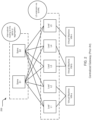
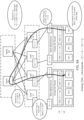
- FIG. 4 is a schematic diagram of an architecture 400 for host routed overlay with deterministic host learning and localized integrated routing and bridging on host machines.
- the architecture 400 includes virtual customer edge (CE) routers with leaf node links that serve as layer-3 interfaces. There are no layer-2 PE-CE.
- the leaf node layer-3 subnet addresses on the virtual CE routers are locally scoped and never redistributed in Border Gateway Protocol (BGP) routing.
- BGP Border Gateway Protocol
- the virtual CE routers are located on a bare metal server and are in communication with one or more virtual machines that are also located on the bare metal server.
- a virtual CE router and one or more virtual machines are located on the same physical bare metal server.
- the virtual CE router is in communication with the one or more virtual machines located on the same bare metal server.
- the virtual CE router is in communication with one or more leaf nodes in a leaf-spine network topology. Each leaf node in communication with the virtual CE router has a dedicated communication line to the virtual CE router as illustrated in FIGS. 4-10 .
- the layer-2 - layer-3 boundary (L2/L3 boundary) exists at the virtual CE router.
- the bare metal server further includes a plurality of virtual machines.
- the one virtual CE router has two subnets, including Anycast gateway MAC (AGM) 10.1.1.1/24 and 12.1.1.1/24.
- the anycast gateway MAC (AGM) boxes are internal to the virtual CE router.
- the interfaces between the virtual CE router and the one or more virtual machines on the bare metal server may be created in Linux hypervisor.
- the virtual CE router includes physical connections to leaf nodes.
- one virtual CE router includes physical connections to leaf nodes LI and L2. This is illustrated by the physical connection between leaf LI with address 15.1.1.1 terminating at the virtual CE router with address 15.1.1.2.
- the architecture illustrated in FIGS. 4-10 enables numerous benefits over the architectures known in the prior art, including those illustrated in FIGS. 2 and 3 .
- layer-2 links are created between a server and the leaf nodes. This layer-2 link causes numerous problems in the architectures known in the prior art.
- the architecture illustrated in FIGS. 4-10 moves the L2-L3 boundary to the virtual CE router and eliminates many of the issues known to exist with the architectures illustrated in FIGS. 2 and 3 .
- having the virtual CE router and the virtual machines on the same server box localizes functionality and eliminates the layer-2 link from the server to the leaf node as known in the prior art.
- the architecture shown in FIGS. 410 introduces layer-3 router links from the bare metal server to each of the plurality of leaf nodes. This simplifies leaf node functionality such that the same functionality is achieved without layer- 2 termination on each of the leaf nodes.
- the architecture 400 includes spine nodes S1 and S2 in communication with leaf nodes LI, L2, L3, and L4.
- the address for leaf node LI is 15.1.1.1, the address for leaf node L2 is 14.1.1.1, the address for leaf node L3 is 15.1.1.1, and the address for leaf node L4 is 14.1.1.1.
- the nodes LI and L2 are in communication with a virtual customer edge (CE) router.
- the virtual CE router is located on a bare metal server along with the virtual machines.
- the nodes L3 and L4 are in communication with a virtual customer edge (CE) router.
- the L2-L3 boundary exists at the virtual CE router level.
- the virtual CE routers are in communication with multiple virtual machines, including VM-a, VM-b, VM-c, VM-d, VM-e, VM-f, VM-g, and VM-h as illustrated.
- Host virtual machine IP-MAC bindings are traditionally learnt on the first hop gateway via ARP.
- ARP-based learning results in a need to flood ARP requests across the overlay to bootstrap host learning at the local virtual CE router.
- the host virtual machine IP and MAC binding configured on the virtual machine external interface and must be passively learnt by L3DL on the server via them being exposed to the hypervisor. This ensures that directly connected host virtual machine bindings are always known upfront. This further avoids any need for glean processing and flooding.
- Local VM IP host routes overlay host routes
- the architecture 400 introduces a small virtual CE router on the server that terminates layer-2 from the host.
- the virtual CE router provides IRB service for local host virtual machines.
- the virtual CE router routes all traffic to external host virtual machines via ECMP layer-3 links to leaf nodes via the default route.
- the virtual CE routers learn host virtual machine interface IP addresses and MAC addresses at host boot-up.
- Local VM IP host routes (overlay host routes) are relayed from the hypervisor to the leaf nodes by way of L3DL.
- the leaf nodes advertise local host routes to remote leaf nodes via Border Gateway Protocol (BGP).
- Border Gateway Protocol Border Gateway Protocol
- subnet stretch is enabled via host routing of both intra-subnet and inter-subnet flows at the leaf node.
- the virtual CE router is configured as a proxy ARP to host route intra-subnet flows via leaf node.
- the virtual CE router may be configured with the same anycast gateway IP addresses and MAC addresses everywhere.
- the architecture 400 provides EVPN host mobility procedures applied at the leaf nodes. The architecture 400 enables flexible workload placement and virtual machine mobility across the stretched subnet.
- end to end host routing is setup at boot-up. Both inter-subnet and intra-subnet traffic flows across stretched subnets enabled via end-to-end host routing. There is no reliance on indeterministic data plane and ARP-based learning.
- the architecture 400 provides local host learning via L3DL to the virtual customer edge (virtual CE router) router.
- the EVPN host routing is performed across the overlay.
- the EVPN has layer-3 host mobility and layer-3 mass withdraw.
- the architecture 400 provides private subnet that is never redistributed into Border Gateway Protocol (BGP). In the architecture 400, first hop anycast gateway provides a local IRB service.
- Border Gateway Protocol Border Gateway Protocol
- the virtual CE routers may be configured as an ARP proxy for all directly connected host virtual machines to that inter-subnet and intra-subnet traffic flows can be routed.
- the virtual CE routers may be configured with default route pointing to a set of upstream leaf nodes to which the virtual CE router is multihomed to.
- the virtual CE routers may be configured with the same anycast gateway MAC on all bare metal servers to enable host virtual machine mobility across the DC fabric.
- the virtual CE routers may not redistribute server-facing connected subnets into DC side routing protocol to avoid IP addressing overhead on server links.
- the virtual CE routers may reside in the hypervisor that is provisioned as the default gateway for the host virtual machines in a VLAN.
- the virtual CE routers may be separate router virtual machines such that the router virtual machine is provisioned as the default gateway for the host virtual machines in a VLAN.
- the leaf nodes must advertise host routes learnt from locally connected virtual CE routers as EVPN RT-5 across the EVPN overlay.
- the EVPN mobility procedure may be extended to EVPN RT-5 to achieve host virtual machine mobility.
- the EVPN mass withdraw procedures may be extended to EVPN RT-5 for faster convergence.
- the embodiments discussed herein eliminate the need for overlay bridging functions to be supported on the leaf nodes. Additionally, the embodiments discussed herein eliminate the need for layer-2 MLAG connectivity and related complex procedures between the leaf nodes and hosts. Further, the embodiments discussed herein eliminate the need for data plane and ARP-based host learning on the leaf nodes. These benefits are enabled by the embodiments disclosed herein while providing IP unicast inter-subnet and intrasubnet VPN connectivity, virtual machine mobility, and flexible workload placement across stretched IP subnets.
- the embodiments of the disclosure separate local layer-2 switching and IRB functions from the leaf node and localize them into a small virtual CE router on the bar metal server.
- This is achieved by running a small virtual router VM on the bare metal server that now acts as the first hop gateway for host virtual machines and provides local IRB switching across virtual machines local to the bare metal server.
- This virtual router acts as a traditional CE router that may be multihomed to multiple leaf nodes via a layer-3 routed interface on the leaf node, leaf nodes in the fabric function as pure layer-3 VPN PE routers that are free of any layer-2 bridging or IRB function.
- traffic can be host routed on the leaf nodes versus being subnet routed. This is the case with EVPN-IRB.
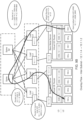
- FIG. 5 is a schematic diagram of the architecture 400 illustrating host learning at boot up.
- the host virtual machine routes learnt via L3DL are installed in the FIB and point to the virtual CE router as the next hop.
- host virtual machine routes are advertised via BGP global routing to remote leaf nodes.
- host virtual machine routes are advertised to remote leaf nodes via BGP-EVPN RT-5 with a VPN encapsulation such as VXLAN or MPLS.
- any other routing protocol may also be deployed as an overlay routing protocol.
- subnet extension across the overlay is enabled via routing intrasubnet traffic at the virtual CE router and then at the leaf node.
- the virtual CE router In order to terminate layer-2 at the virtual CE router, the virtual CE router must be configured as an ARP proxy for host virtual machine subnets such that both intrasubnet and inter-subnet traffic can be routed at the virtual CE router and then at the leaf node.
- the IP subnet used for layer-3 links to the server must be locally scoped to avoid IP addressing overhead.
- server facing connected subnets should not be redistributed into northbound routing protocol.
- overlay layer-3 VLAN/IRB interface on the virtual CE router first hop gateway must be attached to a tenant VRF. Further, routed VXLAN/VNI encapsulation is used between the virtual CE router and the leaf node to segregate multiple tenant traffic.
- the L3DL overlay hosts must also include the layer- 3 VNI ID. This VNI ID is then used at the leaf node to identify and install the route in the correct VRF.
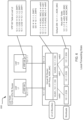
- FIG. 6 illustrates a protocol 600 for a PE distributed anycast router.
- FIG. 6 further illustrates the forwarding tables for the leaf nodes LI and L2.
- the host virtual machine routes learnt via L3DL are installed in the FIB pointing to the virtual CE router next hop in a resulting FIB state.
- host virtual machine routes are advertised via BGP global routing to remote distributed anycast routers.
- host virtual machine routes are advertised to remote distributed anycast routers via BGP- EVPN RT-5 with a VPN encapsulation such as VXLAN or MPLS.
- FIG. 7 is a schematic diagram of a protocol 700 for a virtual CE router as an ARP proxy.
- subnet extension across the overlay is enabled via routing intra-subnet traffic at the virtual CE router and then at the leaf node.
- the virtual CE router In order to terminate layer-2 at the hypervisor virtual CE router, the virtual CE router must be configured as an ARP proxy for host virtual machine subnets such that both intra-subnet and inter-subnet traffic can be routed at the virtual CE router and then at the distributed anycast router.
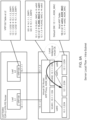
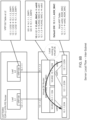
- FIGS. 8A and 8B illustrate protocols for server local flow.
- FIG. 8A illustrates a protocol for intrasubnet flow
- FIG. 8B illustrates a protocol for inter-subnet flow.
- the virtual CE router is configured with default route pointing to a set of upstream leaf nodes that it is multihomed toward.
- a host to host flows local to a bare metal server protocol, once virtual CE router has learnt all host VM adjacencies and is configured as an ARP proxy, both inter and intra subnet flows across host VMs local to the bare metal server are layer 2 terminated at the virtual CE router and routed to the local destination host VM.
- the default gateway (GW) for transmitting an object to 12.1.1.1 through the anycast gateway (AGW) is through 12.1.1.2 veth2, anycast gateway media access control (AGW_MAC).
- a host to host flows local to a bare metal server protocol, once virtual CE router has learnt all host VM adjacencies and is configured as an ARP proxy, both inter and intra subnet flows across host VMs local to the bare metal server are layer 2 terminated at the virtual CE router and routed to the local destination host VM.
- FIGS. 9A and 9B illustrated protocols for overlay flow.
- FIG. 9A illustrates a protocol for intra-subnet overlay flow from 12.1.1.4 to 12.1.1.2.
- FIG. 9B illustrates a protocol for intersubnet overlay flow from 12.1.1.4 to 10.1.1.2.
- a host to host overlay inter-subnet flow across the leaf nodes In the protocol illustrated in FIG. 9B , a host to host overlay inter-subnet flow across the leaf nodes.
- virtual CE router is configured with default route pointing to a set of upstream distributed anycast routers that it is multi-homed to. All out-bound inter-subnet and intra-subnet traffic from host VMs is now routed by this virtual CE across L3 ECMP links to upstream leaf nodes instead of being hashed across a layer-2 LAG, as shown in FIGS. 9A and 9B .
- leaf nodes act as pure layer-3 routers that are completely free of any layer-2 bridging or IRB function. East-west flows across servers connected to the same leaf node are routed locally by the leaf node to destination virtual CE next-hop.
- a protocol, shown in FIGS. 9A and 9B may include host to host overlay flows across leaf nodes.
- east-west flows both inter and intra-subnet
- Leaf node to leaf node routing may be based on a summarized or subnet route instead of host routes only if the subnet is not stretched across the overlay.
- North-south flows (to destinations external to the DC) may be routed via a per- VRF default route on the leaf nodes towards the border leaf / DCI GW.
- Another protocol identifies a leaf node server link failure.
- This protocol may be employed as an alternative redundancy mechanism.
- a routed backup link is configured between the leaf nodes and pre-programmed as a backup failure path for overlay host routes facing the server.
- the backup path is activated on the leaf node server link failure in a prefix independent manner for a given VRF that is associated with the same VLAN (VNI) encapsulation.
- VNI VLAN
- Inbound traffic from the DC overlay would convergence as a result of L3DL learnt host routes being deleted and withdrawn from the affected leaf node. This convergence, however, would be host route scale dependent. EVPN mass withdraw mechanism would need to be extended to IP host routes in order to achieve prefix independent convergence.
- An ESI construct is associated with the set of layer-3 from distributed anycast routers within a redundancy group. Local ESI reachability is advertised via per-ESI EAD RT-1 to remote distributed anycast routers. A forwarding indirection, as shown in FIG. 10 , is established at the remote distributed anycast routers via this route to enable fast convergence on single RT-1 withdraw from the local distributed anycast router, following ESI failure.
- the protocols illustrated in FIG. 10 may be implemented in the event of a server link failure.
- Outbound traffic from host virtual machines may converge as a result of a virtual CE router removing the failed path from default route ECMP path-set, following link failure.
- Inbound traffic from the DC overlay would convergence as a result of L3DL learnt host routes being deleted and withdrawn from the affected leaf node. This convergence, however, would be host route scale dependent.
- EVPN mass withdraw mechanism would need to be extended to IP host routes in order to achieve prefix independent convergence.
- An ESI construct is associated with the set of layer-3 links from leaf nodes within a redundancy group. Local ESI reachability is advertised via per-ESI EAD RT-1 to remote leaf nodes. A forwarding indirection is established at the remote leaf nodes via this route to enable fast convergence on single RT-1 withdraw from the local leaf node, following ESI failure.
- leaf nodes act as pure layer-3 routers that are completely free of any layer-2 bridging or IRB function. East-West flows across servers connected to the same leaf node are routed locally by the leaf node to destination virtual CE router next hop.
- East-West flows (both inter-subnet and intra-subnet) across servers connected to different leaf nodes are routed from virtual CE routers to the local leaf nodes via default route, and then routed at the leaf node across the routed overlay to the destination.
- the next hop leaf node is based on host routes learnt via EVPN RT-5.
- the leaf node to leaf node routing may be based on a summarized or subnet route instead of host routes only if the subnet is not stretched across the overlay.
- North-South flows to destinations external to the DC may be routed via a per-VRF default route on the leaf nodes toward the border leaf.
- Another protocol provides a simplicity and scaling embodiment.
- leaf nodes in response to a first-hop GW localized on the virtual CE, leaf nodes no longer install any host MAC routes, saving forwarding resources on the distributed anycast router.
- virtual CEs With default routing on the leaf nodes, virtual CEs only maintain adjacencies to host VMs local to each bare metal server. All bridging and MLAG functions are completely removed from the leaf nodes, resulting in operational simplicity and greater reliability.
- EVPN aliasing procedures are no longer required on the distributed anycast router and with deterministic protocol-based host route learning between the virtual CE and leaf node, ARP flooding is never required across the overlay.
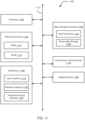
- Computing device 1100 may be used to perform various procedures, such as those discussed herein.
- the computing device 1100 can function to perform the functions of the asynchronous object manager and can execute one or more application programs.
- Computing device 1100 can be any of a wide variety of computing devices, such as a desktop computer, in-dash computer, vehicle control system, a notebook computer, a server computer, a handheld computer, tablet computer and the like.
- Computing device 1100 includes one or more processor(s) 1102, one or more memory device(s) 1104, one or more interface(s) 1106, one or more mass storage device(s) 1108, one or more Input/output (I/O) device(s) 1102, and a display device 1130 all of which are coupled to a bus 1112.
- Processor(s) 1102 include one or more processors or controllers that execute instructions stored in memory device(s) 1104 and/or mass storage device(s) 1108.
- Processor(s) 1102 may also include various types of computer-readable media, such as cache memory.
- Memory device(s) 1104 include various computer-readable media, such as volatile memory (e.g., random access memory (RAM) 1114) and/or nonvolatile memory (e.g., read-only memory (ROM) 1116). Memory device(s) 1104 may also include rewritable ROM, such as Flash memory.
- volatile memory e.g., random access memory (RAM) 111
- ROM read-only memory
- Memory device(s) 1104 may also include rewritable ROM, such as Flash memory.
- Mass storage device(s) 1108 include various computer readable media, such as magnetic tapes, magnetic disks, optical disks, solid-state memory (e.g., Flash memory), and so forth. As shown in FIG. 11 , a particular mass storage device is a hard disk drive 1124. Various drives may also be included in mass storage device(s) 1108 to enable reading from and/or writing to the various computer readable media. Mass storage device(s) 1108 include removable media 1126 and/or non-removable media.
- I/O device(s) 1102 include various devices that allow data and/or other information to be input to or retrieved from computing device 1100.
- Example VO device(s) 1102 include cursor control devices, keyboards, keypads, microphones, monitors or other display devices, speakers, printers, network interface cards, modems, and the like.
- Display device 1130 includes any type of device capable of displaying information to one or more users of computing device 1100. Examples of display device 1130 include a monitor, display terminal, video projection device, and the like.
- Interface(s) 1106 include various interfaces that allow computing device 1100 to interact with other systems, devices, or computing environments.
- Example interface(s) 1106 may include any number of different network interfaces 1120, such as interfaces to local area networks (LANs), wide area networks (WANs), wireless networks, and the Internet.
- Other interface(s) include user interface 1118 and peripheral device interface 1122.
- the interface(s) 1106 may also include one or more user interface elements 1118.
- the interface(s) 1106 may also include one or more peripheral interfaces such as interfaces for printers, pointing devices (mice, track pad, or any suitable user interface now known to those of ordinary skill in the field, or later discovered), keyboards, and the like.
- Bus 1112 allows processor(s) 1102, memory device(s) 1104, interface(s) 1106, mass storage device(s) 1108, and I/O device(s) 1102 to communicate with one another, as well as other devices or components coupled to bus 1112.
- Bus 1112 represents one or more of several types of bus structures, such as a system bus, PCI bus, IEEE bus, USB bus, and so forth.
- programs and other executable program components are shown herein as discrete blocks, although it is understood that such programs and components may reside at various times in different storage components of computing device 1100 and are executed by processor(s) 1102.
- the systems and procedures described herein can be implemented in hardware, or a combination of hardware, software, and/or firmware.
- one or more application specific integrated circuits (ASICs) can be programmed to carry out one or more of the systems and procedures described herein.
- ASICs application specific integrated circuits
- FPGAs field programmable gate arrays
Landscapes
- Engineering & Computer Science (AREA)
- Computer Networks & Wireless Communication (AREA)
- Signal Processing (AREA)
- Theoretical Computer Science (AREA)
- Software Systems (AREA)
- General Engineering & Computer Science (AREA)
- Physics & Mathematics (AREA)
- General Physics & Mathematics (AREA)
- Databases & Information Systems (AREA)
- Data Mining & Analysis (AREA)
- Computing Systems (AREA)
- Computer Security & Cryptography (AREA)
- Multimedia (AREA)
- Computer Hardware Design (AREA)
- Artificial Intelligence (AREA)
- Evolutionary Computation (AREA)
- Medical Informatics (AREA)
- Data Exchanges In Wide-Area Networks (AREA)
- Management, Administration, Business Operations System, And Electronic Commerce (AREA)
- Financial Or Insurance-Related Operations Such As Payment And Settlement (AREA)
- Inspection Of Paper Currency And Valuable Securities (AREA)
- Measurement And Recording Of Electrical Phenomena And Electrical Characteristics Of The Living Body (AREA)
- Mobile Radio Communication Systems (AREA)
- Hardware Redundancy (AREA)
- Information Retrieval, Db Structures And Fs Structures Therefor (AREA)
Description
- The disclosure relates to computing networks and particularly relates to network routing protocols.
-
EP 3 070 877 A1 describes a method for configuring multicast forwarding in an Ethernet Virtual Private Network when delivering multicast traffic to receivers on a different IP subnet than the multicast source.
US 2017/0171057 A1 describes a method for advertising an IP prefix for addressing connectivity in multi-chassis link aggregation. - Network computing is a means for multiple computers or nodes to work together and communicate with one another over a network. There exist wide area networks (WAN) and local area networks (LAN). Both wide and local area networks allow for interconnectivity between computers. Local area networks are commonly used for smaller, more localized networks that may be used in a home, business, school, and so forth. Wide area networks cover larger areas such as cities and can even allow computers in different nations to connect. Local area networks are typically faster and more secure than wide area networks, but wide area networks enable widespread connectivity. Local area networks are typically owned, controlled, and managed inhouse by the organization where they are deployed, while wide area networks typically require two or more constituent local area networks to be connection over the public Internet or by way of a private connection established by a telecommunications provider.
- Local and wide area networks enable computers to be connected to one another and transfer data and other information. For both local and wide area networks, there must be a means to determine a path by which data is passed from one compute instance to another compute instance. This is referred to as routing. Routing is the process of selecting a path for traffic in a network or between or across multiple networks. The routing process usually directs forwarding on the basis of routing tables which maintain a record of the routes to various network destinations. Routing tables may be specified by an administrator, learned by observing network traffic, or built with the assistance of routing protocols.
- One network architecture is a multi-tenant datacenter. The multi-tenant datacenter defines an end- end system suitable for service deployment in a public or private cloud-based model. The multi-tenant datacenter may include a wide area network, multiple provider datacenters, and tenant resources. The multi-tenant datacenter may include a multi-layer hierarchical network model. The multi-layer hierarchy may include a core layer, an aggregation layer, and an access layer. The multiple layers may include a layer-2 overlay and a layer-3 overlay with an L2/L3 boundary.
- One datacenter overlay routing architecture is the centralized gateway architecture. Another datacenter overlay routing architecture is the distributed anycast gateway architecture. These architectures have numerous drawbacks as will be discussed further herein. In light of the foregoing, disclosed herein are systems, methods, and devices for improved routing architectures.
- Non-limiting and non-exhaustive implementations of the disclosure are described with reference to the following figures, wherein like reference numerals refer to like parts throughout the various views unless otherwise specified. Advantages of the disclosure will become better understood with regard to the following description and accompanying drawings where:
-
FIG. 1 is a schematic diagram of a system of networked devices communicating over the Internet; -
FIG. 2 is a schematic diagram of a leaf-spine network topology with a centralized gateway datacenter overlay routing architecture as known in the prior art; -
FIG. 3 is a schematic diagram of a leaf-spine network topology with a distributed anycast gateway datacenter overlay routing architecture as known in the prior art; -
FIG. 4 is a schematic diagram of a datacenter fabric architecture with overlay routing at the L2-L3 boundary pushed to a virtual customer edge (CE) router gateway on a bare metal server; -
FIG. 5 is a schematic diagram of a datacenter fabric architecture with overlay routing at the L2-L3 boundary pushed to a virtual customer edge (CE) router gateway on a bare metal server illustrating host learning at boot up; -
FIG. 6 is a schematic diagram of a datacenter fabric architecture with overlay routing at the L2-L3 boundary pushed to a virtual customer edge (CE) router gateway on a bare metal server illustrating the local forwarding state; -
FIG. 7 is a schematic diagram of a datacenter fabric architecture with overlay routing at the L2-L3 boundary pushed to a virtual customer edge (CE) router gateway on a bare metal server illustrating the remote forwarding state; -
FIG. 8 A is a schematic diagram of a datacenter fabric architecture with overlay routing at the L2-L3 boundary pushed to a virtual customer edge (CE) router gateway on a bare metal server illustrating the intra-subnet server local flow; -
FIG. 8B is a schematic diagram of a datacenter fabric architecture with overlay routing at the L2-L3 boundary pushed to a virtual customer edge (CE) router gateway on a bare metal server illustrating the inter-subnet server local flow; -
FIG. 9A is a schematic diagram of a datacenter fabric architecture with overlay routing at the L2-L3 boundary pushed to a virtual customer edge (CE) router gateway on a bare metal server illustrating the intra-subnet overlay flow form address 12.1.1.4 to address 12.1.1.2; -
FIG. 9B is a schematic diagram of a datacenter fabric architecture with overlay routing at the L2-L3 boundary pushed to a virtual customer edge (CE) router gateway on a bare metal server illustrating the inter-subnet overlay flow from address 12.1.1.4 to address 10.1.1.2; -
FIG. 10 is a schematic diagram of a datacenter fabric architecture with overlay routing at the L2-L3 boundary pushed to a virtual customer edge (CE) router gateway on a bare metal server illustrating a server link failure; and -
FIG. 11 is a schematic diagram illustrating components of an example computing device. - Disclosed herein are systems, methods, and devices for a routed overlay solution for Internet Protocol (IP) subnet stretch using localized integrated routing and bridging (IRB) on host machines. The systems, methods, and devices disclosed herein provide a virtual first hop gateway on a virtual customer edge (CE) router on a bare metal server. The virtual CE router provides localized East-West integrated routing and bridging (IRB) service for local hosts. In an embodiment, a default routed equal-cost multipath (ECMP) uplinks from the virtual CE router to leaf nodes for North-South and East-West connectivity.
- The systems, methods, and devices disclosed herein enable numerous networking benefits. The system does not require address resolution protocol (ARP)-based learning of routes and enables deterministic host learning. The improved systems discussed herein eliminate age- outs, probes, and syncs, and do not require media access control (MAC) entries on leaf node. The improved systems additionally eliminate complex multi-chassis link aggregation (MLAG) bridging functions at the leaf node. Additionally, the virtual CE router as discussed herein stores local Internet protocol (IP) and media access control (MAC) addresses along with the default ECMP route to the leaf nodes. Further, the improved systems discussed herein provide host routing at the leaf node for stretched subnets and enable host mobility.
- In an Ethernet virtual private network (EVPN)-enabled multiple tenant data center overlay, an architecture with distributed anycast layer-3 (L3) gateway on the leaf nodes provides first hop gateway function for workloads. This pushes a service layer L2-L3 boundary (layer-2 to layer-3 boundary) down to the leaf node. In other words, all inter-subnet virtual private network (VPN) traffic from workload host virtual machines is routed on the leaf nodes. Virtual machine mobility and flexible workload placement is achieved by stretching the layer-2 overlay across the routed network fabric. Intra-subnet traffic across the stretched layer-2 domain is overlay bridged on the leaf node. The leaf node provides an EVPN-IRB service for directly connected host virtual machines. This routes all overlay inter-subnet VPN traffic and bridges all overlay intra-subnet VPN traffic across a routed fabric underlay.
- The embodiments discussed herein eliminate the need for overlay bridging functions to be supported on the leaf nodes. Additionally, the embodiments discussed herein eliminate the need for layer-2 MLAG connectivity and related complex procedures between the leaf nodes and hosts. Further, the embodiments discussed herein eliminate the need for data plane and ARP-based host learning on the leaf nodes. These benefits are enabled by the embodiments disclosed herein while providing IP unicast inter-subnet and intrasubnet VPN connectivity, virtual machine mobility, and flexible workload placement across stretched IP subnets.
- The embodiments of the disclosure separate local layer-2 switching and IRB functions from the leaf node and localize them into a small virtual CE router on the bare metal server. This is achieved by running a small virtual router VM on the bare metal server that now acts as the first hop gateway for host virtual machines and provides local IRB switching across virtual machines local to the bare metal server. This virtual router acts as a traditional CE router that may be multihomed to multiple leaf nodes via a layer-3 routed interface on the leaf node, leaf nodes in the fabric function as pure layer-3 VPN PE routers that are free of any layer-2 bridging or IRB function. To allow for flexible placement and mobility of layer-3 endpoints across the DC overlay, while providing optimal routing, traffic can be host routed on the leaf nodes versus being subnet routed. This is also the case with EVPN-IRB.
- The improved routing architectures discussed herein (see
FIGS. 4-10 ) can provide the benefit of a completely routed network fabric. However, the EVPN overlay must still provide both routing and bridging functions on the leaf nodes. Connectivity from leaf nodes to hosts is achieved via layer-2 ports and leaf nodes must provide local layer-2 switching, leaf nodes must support proprietary MLAG or EVPN-LAG functions to multi-home hosts across two or more leaf nodes. Further, ARP requests must initially be flooded across the overlay to bootstrap host learning. - Multi-chassis link aggregation (MLAG) and ethernet virtual private network link aggregation (EVPN-LAG) based multi-homing result in a need for complex layer-2 functions to be supported on the leaf nodes. Host MACs must still be learnt in data-plane on either of the leaf nodes and synced across all redundant leaf nodes. Host ARP bindings must still be learnt via ARP flooding on either of the leaf nodes and synced across all redundant leaf nodes. Further, a physical loop resulting from MLAG topology must be prevented for broadcast, unknown-unicast (BUM) traffic via split horizon filtering mechanism across redundant leaf nodes. Further, a designated forwarder election mechanism must be supported on the leaf nodes to prevent duplicate BUM packets being forwarded to multi-homed hosts. While EVPN procedures have been specified for each of the above, overall implementation and operational complexity of an EVPN-IRB based solution may not be desirable for all use cases.
- For purposes of furthering understanding of the disclosure, some explanation will be provided for numerous networking computing devices and protocols.
- In a computer network environment, a networking device such as a switch or router may be used to transmit information from one destination to a final destination. In an embodiment, a data package and a message may be generated at a first location such as computer within a person's home. The data package and the message could be generated from the person interacting with a web browser and requesting information from or providing information to a remote server accessible over the Internet. In an example, the data package and the message could be information the person input into a form accessible on a webpage connected to the Internet. The data package and the message may need to be transmitted to the remote server that may be geographically located very far from the person's computer. It is very likely that there is no direct communication between the router at the person's home and the remote server. Therefore, the data package and the message must travel by "hopping" to different networking devices until reaching the final destination at the remote server. The router at the person's home must determine a route for transmitting the data package and the message thru multiple different devices connected to the Internet until the data package and the message reach the final destination at the remote server.
- A switch (may alternatively be referred to as a switching hub, bridging hub, or MAC bridge) creates a network. Most internal networks use switches to connect computers, printers, phones, camera, lights, and servers in a building or campus. A switch serves as a controller that enables networked devices to talk to each other efficiently. Switches connect devices on a computer network by using packet switching to receive, process, and forward data to the destination device. A network switch is a multiport network bridge that uses hardware addresses to process and forward data at a data link layer (layer 2) of the Open Systems Interconnection (OSI) model. Some switches can also process data at the network layer (layer 3) by additionally incorporating routing functionality. Such switches are commonly known as layer-3 switches or multilayer switches.
- A router connects networks. Switches and routers perform similar functions, but each has its own distinct function to perform on a network. A router is a networking device that forwards data packets between computer networks. Routers perform the traffic directing functions on the Internet. Data sent through the Internet, such as a web page, email, or other form of information, is sent in the form of a data packet. A packet is typically forwarded from one router to another router through the networks that constitute an internetwork (e.g, the Internet) until the packet reaches its destination node. Routers are connected to two or more data lines from different networks. When a data packet comes in on one of the lines, the router reads the network address information in the packet to determine the ultimate destination. Then, using information in the router's routing table or routing policy, the router directs the packet to the next network on its journey. A BGP speaker is a router enabled with the Border Gateway Protocol (BGP).
- A customer edge router (CE router) is a router located on the customer premises that provides an interface between the customer's LAN and the provider's core network. CE routers, provider routers, and provider edge routers are components in a multiprotocol label switching architecture. Provider routers are located in the core of the provider's or carrier's network. Provider edge routers sit at the edge of the network. Customer edge routers connect to provider edge routers and provider edge routers connect to other provider edge routers over provider routers.
- A routing table or routing information base (RIB) is a data table stored in a router or a networked computer that lists the routes to particular network destinations. In some cases, a routing table includes metrics for the routes such as distance, weight, and so forth. The routing table includes information about the topology of the network immediately around the router on which it is stored. The construction of routing tables is the primary goal of routing protocols. Static routes are entries made in a routing table by nonautomatic means and which are fixed rather than being the result of some network topology discovery procedure. A routing table may include at least three information fields, including a field for network ID, metric, and next hop. The network ID is the destination subnet. The metric is the routing metric of the path through which the packet is to be sent. The route will go in the direction of the gateway with the lowest metric. The next hop is the address of the next station to which the packet is to be sent on the way to its final destination. The routing table may further include quality of service associate with the route, links to filtering criteria lists associated with the route, interface for an Ethernet card, and so forth.
- For hop-by-hop routing, each routing table lists, for all reachable destinations, the address of the next device along the path to that destination, i.e. the next hop. Assuming the routing tables are consistent, the algorithm of relaying packets to their destination's next hop thus suffices to deliver data anywhere in a network. Hop-by-hop is a characteristic of an IP Internetwork Layer and the Open Systems Interconnection (OSI) model.
- Some network communication systems are large, enterprise-level networks with thousands of processing nodes. The thousands of processing nodes share bandwidth from multiple Internet Service Providers (ISPs) and can process significant Internet traffic. Such systems can be extremely complex and must be properly configured to result in acceptable Internet performance. If the systems are not properly configured for optimal data transmission, the speed of Internet access can decrease, and the system can experience high bandwidth consumption and traffic. To counteract this problem, a set of services may be implemented to remove or reduce these concerns. This set of services may be referred to as routing control.
- An embodiment of a routing control mechanism is composed of hardware and software. The routing control mechanism monitors all outgoing traffic through its connection with an Internet Service Provider (ISP). The routing control mechanism aids in selecting the best path for efficient transmission of data. The routing control mechanism may calculate the performance and efficiency of all ISPs and select only those ISPs that have performed optimally in applicable areas. Route control devices can be configured according to defined parameters pertaining to cost, performance, and bandwidth.
- Equal cost multipath (ECMP) routing is a routing strategy where next-hop packet forwarding to a single destination can occur over multiple "best paths." The multiple best paths are equivalent based on routing metric calculations. Multiple path routing can be used in conjunction with many routing protocols because routing is a per-hop decision limited to a single router. Multiple path routing can substantially increase bandwidth by load-balancing traffic over multiple paths. However, there are numerous issues known with ECMP routing when the strategy is deployed in practice. Disclosed herein are systems, methods, and devices for improved ECMP routing.
- For the purposes of promoting an understanding of the principles in accordance with the disclosure, reference will now be made to the embodiments illustrated in the drawings and specific language will be used to describe the same. It will nevertheless be understood that no limitation of the scope of the disclosure is thereby intended. Any alterations and further modifications of the inventive features illustrated herein, and any additional applications of the principles of the disclosure as illustrated herein, which would normally occur to one skilled in the relevant art and having possession of this disclosure, are to be considered within the scope of the disclosure claimed.
- Before the structure, systems and methods for tracking the life cycle of objects in a network computing environment are disclosed and described, it is to be understood that this disclosure is not limited to the particular structures, configurations, process steps, and materials disclosed herein as such structures, configurations, process steps, and materials may vary somewhat. It is also to be understood that the terminology employed herein is used for the purpose of describing particular embodiments only and is not intended to be limiting since the scope of the disclosure will be limited only by the appended claims and equivalents thereof.
- In describing and claiming the subject matter of the disclosure, the following terminology will be used in accordance with the definitions set out below.
- It must be noted that, as used in this specification and the appended claims, the singular forms "a," "an," and "the" include plural referents unless the context clearly dictates otherwise.
- As used herein, the terms "comprising," "including," "containing," "characterized by," and grammatical equivalents thereof are inclusive or open-ended terms that do not exclude additional, unrecited elements or method steps.
- As used herein, the phrase "consisting of and grammatical equivalents thereof exclude any element or step not specified in the claim.
- As used herein, the phrase "consisting essentially of and grammatical equivalents thereof limit the scope of a claim to the specified materials or steps and those that do not materially affect the basic and novel characteristic or characteristics of the claimed disclosure.
- Referring now to the figures,
FIG. 1 illustrates a schematic diagram of asystem 100 for connecting devices to the Internet. Thesystem 100 is presented as background information for illustrating certain concepts discussed herein. Thesystem 100 includes multiple local area network 160 connected by aswitch 106. Each of the multiple local area networks 160 can be connected to each other over the public Internet by way of a router 162. In theexample system 100 illustrated inFIG. 1 , there are two local area networks 160. However, it should be appreciated that there may be many local area networks 160 connected to one another over the public Internet. Each local area network 160 includesmultiple computing devices 108 connected to each other by way of aswitch 106. Themultiple computing devices 108 may include, for example, desktop computers, laptops, printers, servers, and so forth. The local area network 160 can communicate with other networks over the public Internet by way of a router 162. The router 162 connects multiple networks to each other. The router 162 is connected to aninternet service provider 102. Theinternet service provider 102 is connected to one or morenetwork service providers 104. Thenetwork service providers 104 are in communication with other localnetwork service providers 104 as shown inFIG. 1 . - The
switch 106 connects devices in the local area network 160 by using packet switching to receive, process, and forward data to a destination device. Theswitch 106 can be configured to, for example, receive data from a computer that is destined for a printer. Theswitch 106 can receive the data, process the data, and send the data to the printer. Theswitch 106 may be a layer-1 switch, a layer-2 switch, a layer-3 switch, a layer-4 switch, a layer-7 switch, and so forth. A layer-1 network device transfers data but does not manage any of the traffic coming through it. An example of a layer-1 network device is an Ethernet hub. A layer-2 network device is a multiport device that uses hardware addresses to process and forward data at the data link layer (layer 2). A layer-3 switch can perform some or all of the functions normally performed by a router. However, some network switches are limited to supporting a single type of physical network, typically Ethernet, whereas a router may support different kinds of physical networks on different ports. - The router 162 is a networking device that forwards data packets between computer networks. In the
example system 100 shown inFIG. 1 , the routers 162 are forwarding data packets between local area networks 160. However, the router 162 is not necessarily applied to forwarding data packets between local area networks 160 and may be used for forwarding data packets between wide area networks and so forth. The router 162 performs traffic direction functions on the Internet. The router 162 may have interfaces for different types of physical layer connections, such as copper cables, fiber optic, or wireless transmission. The router 162 can support different network layer transmission standards. Each network interface is used to enable data packets to be forwarded from one transmission system to another. Routers 162 may also be used to connect two or more logical groups of computer devices known as subnets, each with a different network prefix. The router 162 can provide connectivity within an enterprise, between enterprises and the Internet, or between internet service providers' networks as shown inFIG. 1 . Some routers 162 are configured to interconnecting various internet service providers or may be used in large enterprise networks. Smaller routers 162 typically provide connectivity for home and office networks to the Internet. The router 162 shown inFIG. 1 may represent any suitable router for network transmissions such as an edge router, subscriber edge router, inter-provider border router, core router, internet backbone, port forwarding, voice/data/fax/video processing routers, and so forth. - The internet service provider (ISP) 102 is an organization that provides services for accessing, using, or participating in the Internet. The
ISP 102 may be organized in various forms, such as commercial, community-owned, non-profit, or privately owned. Internet services typically provided byISPs 102 include Internet access, Internet transit, domain name registration, web hosting, Usenet service, and colocation. TheISPs 102 shown inFIG. 1 may represent any suitable ISPs such as hosting ISPs, transit ISPs, virtual ISPs, free ISPs, wireless ISPs, and so forth. - The network service provider (NSP) 104 is an organization that provides bandwidth or network access by providing direct Internet backbone access to Internet service providers. Network service providers may provide access to network access points (NAPs).
Network service providers 104 are sometimes referred to as backbone providers or Internet providers.Network service providers 104 may include telecommunication companies, data carriers, wireless communication providers, Internet service providers, and cable television operators offering high-speed Internet access.Network service providers 104 can also include information technology companies. - It should be appreciated that the
system 100 illustrated inFIG. 1 is exemplary only and that many different configurations and systems may be created for transmitting data between networks and computing devices. Because there is a great deal of customizability in network formation, there is a desire to create greater customizability in determining the best path for transmitting data between computers or between networks. In light of the foregoing, disclosed herein are systems, methods, and devices for offloading best path computations to an external device to enable greater customizability in determining a best path algorithm that is well suited to a certain grouping of computers or a certain enterprise. -
FIG. 2 is a schematic diagram of anarchitecture 200 with a centralized gateway as known in the prior art. Thearchitecture 200 includes spine nodes and leaf nodes in a leaf-spine network topology. Inter-subnet routing is performed on the spine nodes or aggregation layer. The leaf nodes are connected to multiple virtual machines. Thecentralized gateway architecture 200 may include a spine layer, the leaf layer, and an access layer. There may be an L2-L3 boundary at the aggregation layer and the datacenter perimeter may exist at the core layer. In the architecture illustrated inFIG. 2 , the spine layer including spine SI and spine S2 may serve as the core layer. There is a layer-2 extension via an ethernet virtual private network (EVPN) on the leaf (aggregation) layer. - There are numerous drawbacks with the
centralized gateway architecture 200. There may be an L3-L3 boundary on the spine layer that causes a scale bottleneck. This further causes a single point of failure in thearchitecture 200. Further, there are numerous operational complexities at the leaf node in thecentralized gateway architecture 200. One complexity is that thearchitecture 200 must deal with the unpredictable nature of MAC and ARP age-outs, probes, silent hosts, and moves. Further, thearchitecture 200 must be configured to flood overlay ARP and populate both IP and MAC forwarding entries for all hosts across the overlay bridge. Additionally, thearchitecture 200 must be configured to sync MAC addresses and ARP for MLAG and perform filtering and election for MLAG. -
FIG. 3 is a schematic diagram of anarchitecture 300 with distributed anycast L3 gateways on distributed anycast routers as known in the prior art. Thearchitecture 300 provides first hop gateway function for workloads. As a result, a service layer on an L2-L3 boundary is serviced by the distributed anycast router on the leaf nodes. In other words, all inter-subnet VPN information traffic from workload host virtual machines is routed at the distributed anycast routers. Virtual machine mobility and flexible workload placement is achieved via stretching the layer-2 overlay across the routed network fabric. Intra-subnet traffic across the stretched layer-2 domain is overlay bridged to the overlay bridged on the leaf nodes. The distributed anycast router may provide an EVPN-IRB service for directly connected host virtual machines, routing all overlay inter-subnet VPN traffic and bridging all overlay intra-subnet VPN traffic across a routed fabric underlay. - The
architecture 300 further illustrates an exemplary architecture for providing a completely routed network fabric. However, certain drawbacks exist with thearchitecture 300 shown inFIG. 2 . For example, the EVPN overlay must still provide both routing and bridging functions on the distributed anycast router. Further, connectivity from distributed anycast routers to hosts is achieved vialayer 2 ports and leaf nodes must provide local layer-2 switching, leaf nodes must support proprietary MLAG or EVPN-LAG functions to be able to multi-home hosts across two or more distributed anycast routers. ARP requests must initially be flooded across the overlay to bootstrap host learning. - MLAG or EVPN-LAG based multi-homing in particular results in a need for complex layer-2 functions to be supported on the distributed anycast routers. For example, host MACs must still be learnt in data-plane on either of the leaf nodes and synced across all redundant distributed anycast routers. Similarly, host ARP bindings must still be learnt via ARP flooding on either of the distributed anycast routers and synced across all redundant distributed anycast routers. A physical loop resulting from MLAG topology must be prevented for BUM traffic via split horizon filtering mechanism across redundant distributed anycast routers. Further, a designated forwarder election mechanism must be supported on the distributed anycast routers to prevent duplicate BUM packets being forwarded to multi-homed hosts.
- While EVPN procedures have been specified for each of the above, overall implementation and operational complexity of an EVPN-IRB based solution may not be desirable for all use cases. Accordingly, an alternate solution is provided and discussed herein. For example, the need for overlay bridging functions to be supported on the distributed anycast routers is eliminated. Similarly, this architecture eliminates the need for
layer 2 MLAG connectivity and related complex procedures between the distributed anycast routers and hosts and also eliminates the need for data-plane and ARP based host learning on the distributed anycast routers while providing IP unicast inter-subnet and intra-subnet VPN connectivity, VM mobility, and flexible workload placement across stretched IP subnets. -
FIG. 4 is a schematic diagram of anarchitecture 400 for host routed overlay with deterministic host learning and localized integrated routing and bridging on host machines. Thearchitecture 400 includes virtual customer edge (CE) routers with leaf node links that serve as layer-3 interfaces. There are no layer-2 PE-CE. The leaf node layer-3 subnet addresses on the virtual CE routers are locally scoped and never redistributed in Border Gateway Protocol (BGP) routing. As shown, the virtual CE routers are located on a bare metal server and are in communication with one or more virtual machines that are also located on the bare metal server. In an embodiment, a virtual CE router and one or more virtual machines are located on the same physical bare metal server. The virtual CE router is in communication with the one or more virtual machines located on the same bare metal server. The virtual CE router is in communication with one or more leaf nodes in a leaf-spine network topology. Each leaf node in communication with the virtual CE router has a dedicated communication line to the virtual CE router as illustrated inFIGS. 4-10 . The layer-2 - layer-3 boundary (L2/L3 boundary) exists at the virtual CE router. - In the example illustrated in
FIG. 4 , there is one virtual CE router on each of the two bare metal servers. The bare metal server further includes a plurality of virtual machines. The one virtual CE router has two subnets, including Anycast gateway MAC (AGM) 10.1.1.1/24 and 12.1.1.1/24. The anycast gateway MAC (AGM) boxes are internal to the virtual CE router. The interfaces between the virtual CE router and the one or more virtual machines on the bare metal server may be created in Linux hypervisor. The virtual CE router includes physical connections to leaf nodes. In the example shown inFIG. 4 , one virtual CE router includes physical connections to leaf nodes LI and L2. This is illustrated by the physical connection between leaf LI with address 15.1.1.1 terminating at the virtual CE router with address 15.1.1.2. This is further illustrated by the physical connection between leaf L2 with address 14.1.1.1 terminating at the virtual CE router with address 14.1.1.2. This is further illustrated by the physical connection between leaf L3 with address 15.1.1.1 terminating at the virtual CE router with address 15.1.1.2. This is further illustrated by the physical connection between leaf L4 with address 14.1.1.1 terminating at the virtual CE router with address 14.1.1.2. - The architecture illustrated in
FIGS. 4-10 enables numerous benefits over the architectures known in the prior art, including those illustrated inFIGS. 2 and3 . Traditionally, layer-2 links are created between a server and the leaf nodes. This layer-2 link causes numerous problems in the architectures known in the prior art. The architecture illustrated inFIGS. 4-10 moves the L2-L3 boundary to the virtual CE router and eliminates many of the issues known to exist with the architectures illustrated inFIGS. 2 and3 . For example, having the virtual CE router and the virtual machines on the same server box localizes functionality and eliminates the layer-2 link from the server to the leaf node as known in the prior art. The architecture shown in FIGS. 410 introduces layer-3 router links from the bare metal server to each of the plurality of leaf nodes. This simplifies leaf node functionality such that the same functionality is achieved without layer- 2 termination on each of the leaf nodes. - The
architecture 400 includes spine nodes S1 and S2 in communication with leaf nodes LI, L2, L3, and L4. The address for leaf node LI is 15.1.1.1, the address for leaf node L2 is 14.1.1.1, the address for leaf node L3 is 15.1.1.1, and the address for leaf node L4 is 14.1.1.1. The nodes LI and L2 are in communication with a virtual customer edge (CE) router. The virtual CE router is located on a bare metal server along with the virtual machines. The nodes L3 and L4 are in communication with a virtual customer edge (CE) router. The L2-L3 boundary exists at the virtual CE router level. The virtual CE routers are in communication with multiple virtual machines, including VM-a, VM-b, VM-c, VM-d, VM-e, VM-f, VM-g, and VM-h as illustrated. - Host virtual machine IP-MAC bindings are traditionally learnt on the first hop gateway via ARP. However, in a stretched subnet scenario, ARP-based learning results in a need to flood ARP requests across the overlay to bootstrap host learning at the local virtual CE router. This requires a layer-2 overlay flood domain. To avoid a layer-2 overlay across the leaf nodes and reliance on ARP-based host learning, the host virtual machine IP and MAC binding configured on the virtual machine external interface and must be passively learnt by L3DL on the server via them being exposed to the hypervisor. This ensures that directly connected host virtual machine bindings are always known upfront. This further avoids any need for glean processing and flooding. Local VM IP host routes (overlay host routes) are relayed from hypervisor to the leaf nodes by way of L3DL.
- The
architecture 400 introduces a small virtual CE router on the server that terminates layer-2 from the host. The virtual CE router provides IRB service for local host virtual machines. The virtual CE router routes all traffic to external host virtual machines via ECMP layer-3 links to leaf nodes via the default route. The virtual CE routers learn host virtual machine interface IP addresses and MAC addresses at host boot-up. Local VM IP host routes (overlay host routes) are relayed from the hypervisor to the leaf nodes by way of L3DL. The leaf nodes advertise local host routes to remote leaf nodes via Border Gateway Protocol (BGP). - In an embodiment, subnet stretch is enabled via host routing of both intra-subnet and inter-subnet flows at the leaf node. The virtual CE router is configured as a proxy ARP to host route intra-subnet flows via leaf node. The virtual CE router may be configured with the same anycast gateway IP addresses and MAC addresses everywhere. The
architecture 400 provides EVPN host mobility procedures applied at the leaf nodes. Thearchitecture 400 enables flexible workload placement and virtual machine mobility across the stretched subnet. - In the
architecture 400, end to end host routing is setup at boot-up. Both inter-subnet and intra-subnet traffic flows across stretched subnets enabled via end-to-end host routing. There is no reliance on indeterministic data plane and ARP-based learning. - The
architecture 400 provides local host learning via L3DL to the virtual customer edge (virtual CE router) router. The EVPN host routing is performed across the overlay. The EVPN has layer-3 host mobility and layer-3 mass withdraw. Thearchitecture 400 provides private subnet that is never redistributed into Border Gateway Protocol (BGP). In thearchitecture 400, first hop anycast gateway provides a local IRB service. - The virtual CE routers may be configured as an ARP proxy for all directly connected host virtual machines to that inter-subnet and intra-subnet traffic flows can be routed. The virtual CE routers may be configured with default route pointing to a set of upstream leaf nodes to which the virtual CE router is multihomed to. The virtual CE routers may be configured with the same anycast gateway MAC on all bare metal servers to enable host virtual machine mobility across the DC fabric. The virtual CE routers may not redistribute server-facing connected subnets into DC side routing protocol to avoid IP addressing overhead on server links. The virtual CE routers may reside in the hypervisor that is provisioned as the default gateway for the host virtual machines in a VLAN. The virtual CE routers may be separate router virtual machines such that the router virtual machine is provisioned as the default gateway for the host virtual machines in a VLAN.
- In an embodiment, the leaf nodes must advertise host routes learnt from locally connected virtual CE routers as EVPN RT-5 across the EVPN overlay. The EVPN mobility procedure may be extended to EVPN RT-5 to achieve host virtual machine mobility. The EVPN mass withdraw procedures may be extended to EVPN RT-5 for faster convergence.
- The embodiments discussed herein eliminate the need for overlay bridging functions to be supported on the leaf nodes. Additionally, the embodiments discussed herein eliminate the need for layer-2 MLAG connectivity and related complex procedures between the leaf nodes and hosts. Further, the embodiments discussed herein eliminate the need for data plane and ARP-based host learning on the leaf nodes. These benefits are enabled by the embodiments disclosed herein while providing IP unicast inter-subnet and intrasubnet VPN connectivity, virtual machine mobility, and flexible workload placement across stretched IP subnets.
- The embodiments of the disclosure separate local layer-2 switching and IRB functions from the leaf node and localize them into a small virtual CE router on the bar metal server. This is achieved by running a small virtual router VM on the bare metal server that now acts as the first hop gateway for host virtual machines and provides local IRB switching across virtual machines local to the bare metal server. This virtual router acts as a traditional CE router that may be multihomed to multiple leaf nodes via a layer-3 routed interface on the leaf node, leaf nodes in the fabric function as pure layer-3 VPN PE routers that are free of any layer-2 bridging or IRB function. To allow for flexible placement and mobility of layer-3 endpoints across the DC overlay, while providing optimal routing, traffic can be host routed on the leaf nodes versus being subnet routed. This is the case with EVPN-IRB.
-
FIG. 5 is a schematic diagram of thearchitecture 400 illustrating host learning at boot up. The host virtual machine routes learnt via L3DL are installed in the FIB and point to the virtual CE router as the next hop. In the absence of multi-tenancy (no VPNs), host virtual machine routes are advertised via BGP global routing to remote leaf nodes. In the case of multiple tenancy, host virtual machine routes are advertised to remote leaf nodes via BGP-EVPN RT-5 with a VPN encapsulation such as VXLAN or MPLS. As such, any other routing protocol may also be deployed as an overlay routing protocol. - In an embodiment, subnet extension across the overlay is enabled via routing intrasubnet traffic at the virtual CE router and then at the leaf node. In order to terminate layer-2 at the virtual CE router, the virtual CE router must be configured as an ARP proxy for host virtual machine subnets such that both intrasubnet and inter-subnet traffic can be routed at the virtual CE router and then at the leaf node.
- In an embodiment, the IP subnet used for layer-3 links to the server must be locally scoped to avoid IP addressing overhead. In other words, server facing connected subnets should not be redistributed into northbound routing protocol.
- In an embodiment, to achieve multiple tenancy, overlay layer-3 VLAN/IRB interface on the virtual CE router first hop gateway must be attached to a tenant VRF. Further, routed VXLAN/VNI encapsulation is used between the virtual CE router and the leaf node to segregate multiple tenant traffic. In addition, for L3DL overlay host routes sent to the leaf node to be installed in the correct VPN/VRF table on the leaf node, the L3DL overlay hosts must also include the layer- 3 VNI ID. This VNI ID is then used at the leaf node to identify and install the route in the correct VRF.
-
FIG. 6 illustrates aprotocol 600 for a PE distributed anycast router.FIG. 6 further illustrates the forwarding tables for the leaf nodes LI and L2. In theprotocol 600, the host virtual machine routes learnt via L3DL are installed in the FIB pointing to the virtual CE router next hop in a resulting FIB state. In the absence of multiple tenancy (no VPNs), host virtual machine routes are advertised via BGP global routing to remote distributed anycast routers. In the case of multiple tenancy, host virtual machine routes are advertised to remote distributed anycast routers via BGP- EVPN RT-5 with a VPN encapsulation such as VXLAN or MPLS. -
FIG. 7 is a schematic diagram of aprotocol 700 for a virtual CE router as an ARP proxy. In theprotocol 700, subnet extension across the overlay is enabled via routing intra-subnet traffic at the virtual CE router and then at the leaf node. In order to terminate layer-2 at the hypervisor virtual CE router, the virtual CE router must be configured as an ARP proxy for host virtual machine subnets such that both intra-subnet and inter-subnet traffic can be routed at the virtual CE router and then at the distributed anycast router. -
FIGS. 8A and8B illustrate protocols for server local flow.FIG. 8A illustrates a protocol for intrasubnet flow andFIG. 8B illustrates a protocol for inter-subnet flow. The virtual CE router is configured with default route pointing to a set of upstream leaf nodes that it is multihomed toward. - In the protocol illustrated in
FIG. 8A , a host to host flows local to a bare metal server protocol, once virtual CE router has learnt all host VM adjacencies and is configured as an ARP proxy, both inter and intra subnet flows across host VMs local to the bare metal server arelayer 2 terminated at the virtual CE router and routed to the local destination host VM. InFIG. 8A , the default gateway (GW) for transmitting an object to 12.1.1.1 through the anycast gateway (AGW) is through 12.1.1.2 veth2, anycast gateway media access control (AGW_MAC). - In the inter-subnet flow protocol illustrated in
FIG. 8B , a host to host flows local to a bare metal server protocol, once virtual CE router has learnt all host VM adjacencies and is configured as an ARP proxy, both inter and intra subnet flows across host VMs local to the bare metal server arelayer 2 terminated at the virtual CE router and routed to the local destination host VM. -
FIGS. 9A and9B illustrated protocols for overlay flow.FIG. 9A illustrates a protocol for intra-subnet overlay flow from 12.1.1.4 to 12.1.1.2.FIG. 9B illustrates a protocol for intersubnet overlay flow from 12.1.1.4 to 10.1.1.2. - In the protocol illustrated in
FIG. 9B , a host to host overlay inter-subnet flow across the leaf nodes. In this protocol, virtual CE router is configured with default route pointing to a set of upstream distributed anycast routers that it is multi-homed to. All out-bound inter-subnet and intra-subnet traffic from host VMs is now routed by this virtual CE across L3 ECMP links to upstream leaf nodes instead of being hashed across a layer-2 LAG, as shown inFIGS. 9A and9B . leaf nodes act as pure layer-3 routers that are completely free of any layer-2 bridging or IRB function. East-west flows across servers connected to the same leaf node are routed locally by the leaf node to destination virtual CE next-hop. - A protocol, shown in
FIGS. 9A and9B may include host to host overlay flows across leaf nodes. In this protocol, east-west flows (both inter and intra-subnet) across servers connected to different distributed anycast routers are routed from virtual CE router to the local leaf nodes via default route, and then routed at the leaf node across the routed overlay to the destination / nexthop leaf node based on host routes learnt via EVPN RT-5. Leaf node to leaf node routing may be based on a summarized or subnet route instead of host routes only if the subnet is not stretched across the overlay. North-south flows (to destinations external to the DC) may be routed via a per- VRF default route on the leaf nodes towards the border leaf / DCI GW. - Another protocol, illustrated in
FIG. 10 , identifies a leaf node server link failure. This protocol may be employed as an alternative redundancy mechanism. A routed backup link is configured between the leaf nodes and pre-programmed as a backup failure path for overlay host routes facing the server. The backup path is activated on the leaf node server link failure in a prefix independent manner for a given VRF that is associated with the same VLAN (VNI) encapsulation. [0083] In the protocol illustrated inFIG. 10 , outbound traffic from host VMs would converge as a result of virtual CE router removing the failed path from default route ECMP path-set, following link failure. Inbound traffic from the DC overlay would convergence as a result of L3DL learnt host routes being deleted and withdrawn from the affected leaf node. This convergence, however, would be host route scale dependent. EVPN mass withdraw mechanism would need to be extended to IP host routes in order to achieve prefix independent convergence. An ESI construct is associated with the set of layer-3 from distributed anycast routers within a redundancy group. Local ESI reachability is advertised via per-ESI EAD RT-1 to remote distributed anycast routers. A forwarding indirection, as shown inFIG. 10 , is established at the remote distributed anycast routers via this route to enable fast convergence on single RT-1 withdraw from the local distributed anycast router, following ESI failure. - The protocols illustrated in
FIG. 10 may be implemented in the event of a server link failure. Outbound traffic from host virtual machines may converge as a result of a virtual CE router removing the failed path from default route ECMP path-set, following link failure. Inbound traffic from the DC overlay would convergence as a result of L3DL learnt host routes being deleted and withdrawn from the affected leaf node. This convergence, however, would be host route scale dependent. EVPN mass withdraw mechanism would need to be extended to IP host routes in order to achieve prefix independent convergence. An ESI construct is associated with the set of layer-3 links from leaf nodes within a redundancy group. Local ESI reachability is advertised via per-ESI EAD RT-1 to remote leaf nodes. A forwarding indirection is established at the remote leaf nodes via this route to enable fast convergence on single RT-1 withdraw from the local leaf node, following ESI failure. - All outbound inter-subnet and intra-subnet traffic from host virtual machines is now routed by this virtual CE router across layer-3 ECMP links to upstream leaf nodes instead of being hashed across a layer-2 LAG. leaf nodes act as pure layer-3 routers that are completely free of any layer-2 bridging or IRB function. East-West flows across servers connected to the same leaf node are routed locally by the leaf node to destination virtual CE router next hop.
- East-West flows (both inter-subnet and intra-subnet) across servers connected to different leaf nodes are routed from virtual CE routers to the local leaf nodes via default route, and then routed at the leaf node across the routed overlay to the destination. The next hop leaf node is based on host routes learnt via EVPN RT-5. The leaf node to leaf node routing may be based on a summarized or subnet route instead of host routes only if the subnet is not stretched across the overlay.
- North-South flows to destinations external to the DC may be routed via a per-VRF default route on the leaf nodes toward the border leaf.
- Another protocol provides a simplicity and scaling embodiment. In this embodiment, in response to a first-hop GW localized on the virtual CE, leaf nodes no longer install any host MAC routes, saving forwarding resources on the distributed anycast router. Further, with default routing on the leaf nodes, virtual CEs only maintain adjacencies to host VMs local to each bare metal server. All bridging and MLAG functions are completely removed from the leaf nodes, resulting in operational simplicity and greater reliability. Using deterministic protocol-based host route learning between the virtual CE and distributed anycast router, EVPN aliasing procedures are no longer required on the distributed anycast router and with deterministic protocol-based host route learning between the virtual CE and leaf node, ARP flooding is never required across the overlay. Further, using a deterministic protocol-based host route learning between the virtual CE and distributed anycast router, unknown unicast flooding is never required. Finally, with layer-3 ECMP links between the virtual CE and leaf nodes, EVPN DF election, and split horizon filtering procedures are no longer required.
- Referring now to
FIG. 11 , a block diagram of anexample computing device 1100 is illustrated.Computing device 1100 may be used to perform various procedures, such as those discussed herein. In one embodiment, thecomputing device 1100 can function to perform the functions of the asynchronous object manager and can execute one or more application programs.Computing device 1100 can be any of a wide variety of computing devices, such as a desktop computer, in-dash computer, vehicle control system, a notebook computer, a server computer, a handheld computer, tablet computer and the like. -
Computing device 1100 includes one or more processor(s) 1102, one or more memory device(s) 1104, one or more interface(s) 1106, one or more mass storage device(s) 1108, one or more Input/output (I/O) device(s) 1102, and adisplay device 1130 all of which are coupled to abus 1112. Processor(s) 1102 include one or more processors or controllers that execute instructions stored in memory device(s) 1104 and/or mass storage device(s) 1108. Processor(s) 1102 may also include various types of computer-readable media, such as cache memory. - Memory device(s) 1104 include various computer-readable media, such as volatile memory (e.g., random access memory (RAM) 1114) and/or nonvolatile memory (e.g., read-only memory (ROM) 1116). Memory device(s) 1104 may also include rewritable ROM, such as Flash memory.
- Mass storage device(s) 1108 include various computer readable media, such as magnetic tapes, magnetic disks, optical disks, solid-state memory (e.g., Flash memory), and so forth. As shown in
FIG. 11 , a particular mass storage device is ahard disk drive 1124. Various drives may also be included in mass storage device(s) 1108 to enable reading from and/or writing to the various computer readable media. Mass storage device(s) 1108 includeremovable media 1126 and/or non-removable media. - Input/output (I/O) device(s) 1102 include various devices that allow data and/or other information to be input to or retrieved from
computing device 1100. Example VO device(s) 1102 include cursor control devices, keyboards, keypads, microphones, monitors or other display devices, speakers, printers, network interface cards, modems, and the like. -
Display device 1130 includes any type of device capable of displaying information to one or more users ofcomputing device 1100. Examples ofdisplay device 1130 include a monitor, display terminal, video projection device, and the like. - Interface(s) 1106 include various interfaces that allow
computing device 1100 to interact with other systems, devices, or computing environments. Example interface(s) 1106 may include any number ofdifferent network interfaces 1120, such as interfaces to local area networks (LANs), wide area networks (WANs), wireless networks, and the Internet. Other interface(s) include user interface 1118 andperipheral device interface 1122. The interface(s) 1106 may also include one or more user interface elements 1118. The interface(s) 1106 may also include one or more peripheral interfaces such as interfaces for printers, pointing devices (mice, track pad, or any suitable user interface now known to those of ordinary skill in the field, or later discovered), keyboards, and the like. -
Bus 1112 allows processor(s) 1102, memory device(s) 1104, interface(s) 1106, mass storage device(s) 1108, and I/O device(s) 1102 to communicate with one another, as well as other devices or components coupled tobus 1112.Bus 1112 represents one or more of several types of bus structures, such as a system bus, PCI bus, IEEE bus, USB bus, and so forth. - For purposes of illustration, programs and other executable program components are shown herein as discrete blocks, although it is understood that such programs and components may reside at various times in different storage components of
computing device 1100 and are executed by processor(s) 1102. Alternatively, the systems and procedures described herein can be implemented in hardware, or a combination of hardware, software, and/or firmware. For example, one or more application specific integrated circuits (ASICs) can be programmed to carry out one or more of the systems and procedures described herein. - The foregoing description has been presented for the purposes of illustration and description. It is not intended to be exhaustive or to limit the disclosure to the precise form disclosed. Many modifications and variations are possible in light of the above teaching. Further, it should be noted that any or all of the aforementioned alternate implementations may be used in any combination desired to form additional hybrid implementations of the disclosure.
- Further, although specific implementations of the disclosure have been described and illustrated, the disclosure is not to be limited to the specific forms or arrangements of parts so described and illustrated. The scope of the disclosure is to be defined by the claims appended hereto, if any, any future claims submitted here and in different applications, and their equivalents.
- It is to be understood that any features of the above-described arrangements, examples, and embodiments may be combined in a single embodiment comprising a combination of features taken from any of the disclosed arrangements, examples, and embodiments.
- It will be appreciated that various features disclosed herein provide significant advantages and advancements in the art. The following claims are exemplary of some of those features.
- In the foregoing Detailed Description of the Disclosure, various features of the disclosure are grouped together in a single embodiment for the purpose of streamlining the disclosure. This method of disclosure is not to be interpreted as reflecting an intention that the claimed disclosure requires more features than are expressly recited in each claim. Rather, inventive aspects lie in less than all features of a single foregoing disclosed embodiment.
- Thus, while the disclosure has been shown in the drawings and described above with particularity and detail, it will be apparent to those of ordinary skill in the art that numerous modifications, including, but not limited to, variations in size, materials, shape, form, function and manner of operation, assembly and use may be made without departing from the principles and concepts set forth herein.
- Further, where appropriate, functions described herein can be performed in one or more of: hardware, software, firmware, digital components, or analog components. For example, one or more application specific integrated circuits (ASICs) or field programmable gate arrays (FPGAs) can be programmed to carry out one or more of the systems and procedures described herein. Certain terms are used throughout the following description and claims to refer to particular system components. As one skilled in the art will appreciate, components may be referred to by different names. This document does not intend to distinguish between components that differ in name, but not function.
- The foregoing description has been presented for the purposes of illustration and description. It is not intended to be exhaustive or to limit the disclosure to the precise form disclosed. Many modifications and variations are possible in light of the above teaching. Further, it should be noted that any or all the aforementioned alternate implementations may be used in any combination desired to form additional hybrid implementations of the disclosure.
- Further, although specific implementations of the disclosure have been described and illustrated, the disclosure is not to be limited to the specific forms or arrangements of parts so described and illustrated. The scope of the disclosure is to be defined by the claims appended hereto.
Claims (12)
- A system comprising:a plurality of bare metal servers each comprising a virtual customer edge router and a plurality of host virtual machines, wherein the virtual customer edge router is in communication with each of the plurality of host virtual machines on the same bare metal server, and wherein the virtual customer edge router comprises memory for storing adjacencies for one or more of the plurality of host virtual machines that are local to the same bare metal server on which the virtual customer edge router is located;a plurality of leaf nodes in a leaf-spine network topology;a host routed overlay (400) comprising the plurality of host virtual machines on the plurality of bare metal servers;a layer-3 routed uplink from the virtual customer edge router on each of the plurality of bare metal servers to one or more of the plurality of leaf nodes; anda distributed anycast router (600), wherein the virtual customer edge router on each of the plurality of bare metal servers is configured to enact deterministic protocol-based host route learning between the virtual customer edge router on each of the plurality of bare metal servers and the distributed anycast router;wherein the virtual customer edge routers located on two or more of the plurality of bare metal servers are configured with a same anycast gateway media access control address to enable host virtual machine mobility across the host routed overlay; andwherein the virtual customer edge router on each of the plurality of bare metal servers is configured to provide localized integrated routing and bridging service for the plurality of host virtual machines of the host routed overlay.
- The system of claim 1, wherein the host routed overlay is an Ethernet virtual private network layer-3 host.
- The system of claim 1, wherein the virtual customer edge router of each of the plurality of bare metal servers is a first hop anycast gateway for one or more of the plurality of leaf nodes; and.
wherein the virtual customer edge router of each of the plurality of bare metal servers routes traffic to external leaf nodes via equal-cost multipath routing links to leaf nodes. - The system of claim 1, wherein the virtual customer edge router of each of the plurality of bare metal servers is configured as a proxy address resolution protocol to host route intra-subnet flows in the host routed overlay.
- The system of claim 1, wherein the virtual customer edge router of each of the plurality of bare metal servers stores addresses locally and does not redistribute the addresses in Border Gateway Protocol routing.
- The system of claim 1, wherein the virtual customer edge router of each of the plurality of bare metal servers comprises memory storing one or more of: local Internet Protocol entries for the host routed overlay, media access control entries for the host routed overlay, or a default route to the host routed overlay.
- The system of claim 1, wherein the host routed overlay is configured to perform host routed for stretched subnets.
- The system of claim 1, wherein the virtual customer edge router of each of the plurality of bare metal servers is a virtual router virtual machine running on a single tenant physical server and is configured to act as a first hop gateway for one or more of the plurality of leaf nodes; and
wherein the plurality of host virtual machines are located on the single tenant physical server. - The system of claim 1, wherein the virtual customer edge router of each of the plurality of bare metal servers is multi-homed to multiple distributed anycast routers via a layer-3 routed interface on a distributed anycast router.
- The system of claim 1, wherein the virtual customer edge router of each of the plurality of bare metal servers is further configured to advertise local host virtual machine routes to a directly connected distributed anycast router.
- The system of claim 1, wherein the routed uplink from the virtual customer edge router of each of the plurality of bare metal servers to the one or more of the plurality of leaf nodes is a layer-3 equal-cost multipath routing link.
- The system of claim 1, wherein one or more of the plurality of leaf nodes comprises a virtual private network-virtual routing and forwarding table; and
wherein the one or more of the plurality of leaf nodes further comprises a layer-3 virtual network identifier used at the one or more of the plurality of leaf nodes to install a route in a correct virtual routing and forwarding table.
Priority Applications (1)
| Application Number | Priority Date | Filing Date | Title |
|---|---|---|---|
| EP24199062.1A EP4496275A3 (en) | 2018-08-23 | 2019-08-23 | Host routed overlay with deterministic host learning and localized integrated routing and bridging |
Applications Claiming Priority (2)
| Application Number | Priority Date | Filing Date | Title |
|---|---|---|---|
| US201862722003P | 2018-08-23 | 2018-08-23 | |
| PCT/US2019/047946 WO2020041727A1 (en) | 2018-08-23 | 2019-08-23 | Host routed overlay with deterministic host learning and localized integrated routing and bridging |
Related Child Applications (1)
| Application Number | Title | Priority Date | Filing Date |
|---|---|---|---|
| EP24199062.1A Division EP4496275A3 (en) | 2018-08-23 | 2019-08-23 | Host routed overlay with deterministic host learning and localized integrated routing and bridging |
Publications (3)
| Publication Number | Publication Date |
|---|---|
| EP3841487A1 EP3841487A1 (en) | 2021-06-30 |
| EP3841487A4 EP3841487A4 (en) | 2022-05-11 |
| EP3841487B1 true EP3841487B1 (en) | 2024-10-09 |
Family
ID=69583257
Family Applications (8)
| Application Number | Title | Priority Date | Filing Date |
|---|---|---|---|
| EP19852312.8A Active EP3841485B1 (en) | 2018-08-23 | 2019-08-23 | INDEPENDENT DATA STORAGE IN A NETWORK LINE ENVIRONMENT |
| EP19851627.0A Active EP3841711B1 (en) | 2018-08-23 | 2019-08-23 | Loop conflict avoidance in a network computing environment |
| EP19852313.6A Active EP3841471B1 (en) | 2018-08-23 | 2019-08-23 | Single node and multiple node datastore architecture in a network routing environment |
| EP19853164.2A Pending EP3841733A4 (en) | 2018-08-23 | 2019-08-23 | FIRST-HOP GATEWAY REDUNDANCY IN A NETWORK COMPUTER ENVIRONMENT |
| EP24199062.1A Pending EP4496275A3 (en) | 2018-08-23 | 2019-08-23 | Host routed overlay with deterministic host learning and localized integrated routing and bridging |
| EP19851479.6A Active EP3841709B1 (en) | 2018-08-23 | 2019-08-23 | Routing optimizations in a network computing environment |
| EP19852187.4A Active EP3841483B1 (en) | 2018-08-23 | 2019-08-23 | Asynchronous object manager in a network routing environment |
| EP19852798.8A Active EP3841487B1 (en) | 2018-08-23 | 2019-08-23 | Host routed overlay with deterministic host learning and localized integrated routing and bridging |
Family Applications Before (7)
| Application Number | Title | Priority Date | Filing Date |
|---|---|---|---|
| EP19852312.8A Active EP3841485B1 (en) | 2018-08-23 | 2019-08-23 | INDEPENDENT DATA STORAGE IN A NETWORK LINE ENVIRONMENT |
| EP19851627.0A Active EP3841711B1 (en) | 2018-08-23 | 2019-08-23 | Loop conflict avoidance in a network computing environment |
| EP19852313.6A Active EP3841471B1 (en) | 2018-08-23 | 2019-08-23 | Single node and multiple node datastore architecture in a network routing environment |
| EP19853164.2A Pending EP3841733A4 (en) | 2018-08-23 | 2019-08-23 | FIRST-HOP GATEWAY REDUNDANCY IN A NETWORK COMPUTER ENVIRONMENT |
| EP24199062.1A Pending EP4496275A3 (en) | 2018-08-23 | 2019-08-23 | Host routed overlay with deterministic host learning and localized integrated routing and bridging |
| EP19851479.6A Active EP3841709B1 (en) | 2018-08-23 | 2019-08-23 | Routing optimizations in a network computing environment |
| EP19852187.4A Active EP3841483B1 (en) | 2018-08-23 | 2019-08-23 | Asynchronous object manager in a network routing environment |
Country Status (8)
| Country | Link |
|---|---|
| US (17) | US11868824B2 (en) |
| EP (8) | EP3841485B1 (en) |
| JP (10) | JP7427672B2 (en) |
| KR (11) | KR102799650B1 (en) |
| CN (8) | CN112840322B (en) |
| CA (7) | CA3109950A1 (en) |
| TW (10) | TWI889632B (en) |
| WO (7) | WO2020041681A1 (en) |
Families Citing this family (83)
| Publication number | Priority date | Publication date | Assignee | Title |
|---|---|---|---|---|
| US10951463B2 (en) * | 2019-03-27 | 2021-03-16 | Cisco Technology, Inc. | BGP aggregation in Clos networks |
| US11799722B2 (en) | 2019-03-28 | 2023-10-24 | Harmonic, Inc. | Support for a scalable and highly available (HA) service platform |
| US11368553B1 (en) * | 2019-03-28 | 2022-06-21 | Harmonic, Inc. | Support for a scalable and high availability (HA) virtual cable modem termination system (VCMTS) |
| US11656992B2 (en) | 2019-05-03 | 2023-05-23 | Western Digital Technologies, Inc. | Distributed cache with in-network prefetch |
| US11240355B2 (en) | 2019-05-17 | 2022-02-01 | Arista Networks, Inc. | Platform agnostic abstraction for forwarding equivalence classes with hierarchy |
| US11683308B2 (en) * | 2019-06-06 | 2023-06-20 | Cisco Technology, Inc. | Systems and methods for generating contextual labels |
| CN114978988A (en) * | 2019-06-28 | 2022-08-30 | 华为技术有限公司 | A method and device for realizing table entry backup |
| US11228459B2 (en) * | 2019-10-25 | 2022-01-18 | Dell Products L.P. | Anycast address configuration for extended local area networks |
| US11567899B2 (en) * | 2019-12-03 | 2023-01-31 | Western Digital Technologies, Inc. | Managing dependent delete operations among data stores |
| US11409711B2 (en) | 2019-12-03 | 2022-08-09 | Western Digital Technologies, Inc. | Barriers for dependent operations among sharded data stores |
| US12111794B2 (en) | 2019-12-03 | 2024-10-08 | Western Digital Technologies, Inc. | Replication barriers for dependent data transfers between data stores |
| US12113770B2 (en) * | 2020-01-08 | 2024-10-08 | Cisco Technology, Inc. | DHCP snooping with host mobility |
| US11477643B2 (en) * | 2020-02-12 | 2022-10-18 | Charter Communications Operating, Llc | Systems and methods for access point device recovery using mobile devices |
| AU2021281028B2 (en) * | 2020-05-25 | 2023-05-11 | Airbus Defence And Space Sas | Method for routing packets in a communication network having a variable and predictable topology |
| WO2021249023A1 (en) * | 2020-06-08 | 2021-12-16 | 华为技术有限公司 | Control message processing method, apparatus and device in collective communication system, and system |
| US11924083B2 (en) | 2020-06-16 | 2024-03-05 | Cisco Technology, Inc. | Multiple network interfacing |
| CN113810275B (en) * | 2020-06-17 | 2023-08-04 | 华为技术有限公司 | Method and equipment for sending message |
| CN111800327B (en) * | 2020-06-19 | 2021-11-26 | 浪潮思科网络科技有限公司 | Traffic sharing method and equipment of VXLAN (virtual extensible local area network) |
| US11765250B2 (en) * | 2020-06-26 | 2023-09-19 | Western Digital Technologies, Inc. | Devices and methods for managing network traffic for a distributed cache |
| US12495104B2 (en) * | 2020-06-26 | 2025-12-09 | Ntt, Inc. | Data node, data node management method, and data node management program |
| US11675706B2 (en) | 2020-06-30 | 2023-06-13 | Western Digital Technologies, Inc. | Devices and methods for failure detection and recovery for a distributed cache |
| US11323392B1 (en) * | 2020-07-17 | 2022-05-03 | Juniper Networks, Inc. | Managing split-brain scenario in multi-homed environment |
| US11456941B2 (en) * | 2020-07-24 | 2022-09-27 | Nvidia Corporation | Extensible network traffic engineering platform for increasing network resiliency in cloud applications |
| US11736417B2 (en) | 2020-08-17 | 2023-08-22 | Western Digital Technologies, Inc. | Devices and methods for network message sequencing |
| US11575594B2 (en) * | 2020-09-10 | 2023-02-07 | Mellanox Technologies, Ltd. | Deadlock-free rerouting for resolving local link failures using detour paths |
| CN112187636B (en) * | 2020-09-22 | 2022-08-16 | 锐捷网络股份有限公司 | ECMP route storage method and device |
| US11418433B2 (en) * | 2020-10-13 | 2022-08-16 | Realtek Singapore Private Limited | Control method for spanning tree protocol of easymesh network and related system |
| US11411911B2 (en) | 2020-10-26 | 2022-08-09 | Mellanox Technologies, Ltd. | Routing across multiple subnetworks using address mapping |
| US11700178B2 (en) | 2020-10-30 | 2023-07-11 | Nutanix, Inc. | System and method for managing clusters in an edge network |
| US11153163B1 (en) | 2020-10-30 | 2021-10-19 | Nutanix, Inc. | Cloud-controlled configuration of edge processing units |
| US11290330B1 (en) | 2020-10-30 | 2022-03-29 | Nutanix, Inc. | Reconciliation of the edge state in a telemetry platform |
| US12088470B2 (en) | 2020-12-18 | 2024-09-10 | Western Digital Technologies, Inc. | Management of non-volatile memory express nodes |
| CN114697251A (en) * | 2020-12-28 | 2022-07-01 | 华为技术有限公司 | Routing processing method, related device and network system |
| CN114697250A (en) * | 2020-12-31 | 2022-07-01 | 华为技术有限公司 | A routing method and related equipment |
| WO2022157782A1 (en) | 2021-01-25 | 2022-07-28 | Volumez Technologies Ltd. | Published file system and method |
| US11431619B2 (en) | 2021-01-27 | 2022-08-30 | Cisco Technology, Inc. | Hierarchical ECMP control plane for dense topologies |
| TWI812920B (en) * | 2021-02-04 | 2023-08-21 | 凌華科技股份有限公司 | Automation equipment control system, system architecture and operation method thereof |
| US11716277B2 (en) | 2021-02-11 | 2023-08-01 | Cisco Technology, Inc. | Integrated routing and bridging route reduction in ethernet virtual private network |
| US12477033B2 (en) | 2021-04-26 | 2025-11-18 | Arrcus Inc. | PFCP session load balancer |
| US12301690B2 (en) | 2021-05-26 | 2025-05-13 | Western Digital Technologies, Inc. | Allocation of distributed cache |
| CN113364661B (en) * | 2021-06-11 | 2022-06-03 | 中国电信股份有限公司 | Comprehensive networking method and device, electronic equipment and computer readable medium |
| US11575541B1 (en) * | 2021-06-15 | 2023-02-07 | Juniper Networks, Inc. | Mapping of virtual routing and forwarding (VRF) instances using ethernet virtual private network (EVPN) instances |
| US12149358B2 (en) | 2021-06-21 | 2024-11-19 | Western Digital Technologies, Inc. | In-network failure indication and recovery |
| US11870682B2 (en) | 2021-06-22 | 2024-01-09 | Mellanox Technologies, Ltd. | Deadlock-free local rerouting for handling multiple local link failures in hierarchical network topologies |
| US11700201B2 (en) * | 2021-07-26 | 2023-07-11 | Arista Networks, Inc. | Mechanism to enforce consistent next hops in a multi-tier network |
| CN115842764A (en) * | 2021-08-25 | 2023-03-24 | 中兴通讯股份有限公司 | Method and device for issuing RT-5G routing message, storage medium and electronic device |
| US11831519B2 (en) * | 2021-09-13 | 2023-11-28 | Juniper Networks, Inc. | Configuration of EVPN topologies using a user interface |
| US11902160B2 (en) * | 2021-09-30 | 2024-02-13 | Juniper Networks, Inc. | EVPN host routed bridging (HRB) and EVPN cloud native data center |
| CN116069351B (en) * | 2021-11-02 | 2026-03-20 | 青岛海尔科技有限公司 | A system upgrade method, apparatus and equipment |
| US12010012B2 (en) * | 2021-11-05 | 2024-06-11 | At&T Intellectual Property I, L.P. | Application-aware BGP path selection and forwarding |
| US11765103B2 (en) | 2021-12-01 | 2023-09-19 | Mellanox Technologies, Ltd. | Large-scale network with high port utilization |
| TWI789169B (en) * | 2021-12-21 | 2023-01-01 | 大陸商達發科技(蘇州)有限公司 | Method for fowarding vector packet processing |
| CN114297109B (en) * | 2021-12-28 | 2024-05-24 | 中汽创智科技有限公司 | Data processing method and device based on subscription and release modes, electronic equipment and storage medium |
| US12493710B2 (en) | 2022-02-04 | 2025-12-09 | Bank Of America Corporation | System and method for data traffic control on a distributed network |
| US12047253B2 (en) | 2022-02-11 | 2024-07-23 | Nutanix, Inc. | System and method to provide priority based quality of service for telemetry data |
| US11765065B1 (en) | 2022-03-23 | 2023-09-19 | Nutanix, Inc. | System and method for scalable telemetry |
| US12316539B2 (en) * | 2022-03-24 | 2025-05-27 | Cisco Technology, Inc. | Inter-compatible forwarding modes in network fabric overlays |
| US11841856B2 (en) * | 2022-03-24 | 2023-12-12 | Visa International Service Association | System, method, and computer program product for efficiently joining time-series data tables |
| US12170608B2 (en) * | 2022-06-21 | 2024-12-17 | Juniper Networks, Inc. | Link behavior prediction for use in path selection |
| US20240031272A1 (en) * | 2022-07-19 | 2024-01-25 | Dell Products L.P. | Systems and methods for increasing network resource utilization in link aggregation group (lag) deployments |
| TWI802481B (en) * | 2022-08-04 | 2023-05-11 | 中華電信股份有限公司 | Electronic device and method for configuring anycast label of router |
| US12155563B2 (en) | 2022-09-05 | 2024-11-26 | Mellanox Technologies, Ltd. | Flexible per-flow multipath managed by sender-side network adapter |
| US12328251B2 (en) | 2022-09-08 | 2025-06-10 | Mellano Technologies, Ltd. | Marking of RDMA-over-converged-ethernet (RoCE) traffic eligible for adaptive routing |
| JP2024043975A (en) | 2022-09-20 | 2024-04-02 | 日本電気株式会社 | Communication control system, communication control device, and communication control method |
| US11895020B1 (en) * | 2022-09-30 | 2024-02-06 | Juniper Networks, Inc. | Virtualized cell site routers with layer 2 forwarding |
| CN115396365B (en) * | 2022-10-26 | 2023-04-07 | 中国人民解放军军事科学院系统工程研究院 | Scale-independent fast route convergence method |
| US12587466B2 (en) | 2022-11-09 | 2026-03-24 | Pensando Systems Inc. | Active-standby switchover in border gateway protocol (BGP) network using graceful attract community |
| US12273219B2 (en) * | 2022-11-30 | 2025-04-08 | Hewlett Packard Enterprise Development Lp | Efficient multicast packet forwarding in a distributed tunnel fabric |
| US12294510B2 (en) | 2022-12-20 | 2025-05-06 | Arrcus Inc. | Method and apparatus for telemetry monitoring of BGP prefixes in a network topology |
| US12113700B2 (en) * | 2022-12-20 | 2024-10-08 | Arrcus Inc. | Method and apparatus for telemetry monitoring of BGP prefixes in a network topology |
| CN118532266A (en) * | 2023-02-23 | 2024-08-23 | 通用电气公司 | Gas turbine engine and fuel cell components |
| US12562981B2 (en) | 2023-03-28 | 2026-02-24 | International Business Machines Corporation | Coordinating selection of a path between a source node and a destination node in a network |
| US12261905B2 (en) * | 2023-04-04 | 2025-03-25 | Sigma Computing, Inc. | Distributing dataset requests across service tiers |
| US12580854B2 (en) * | 2023-04-28 | 2026-03-17 | The Regents Of The University Of California | Techniques for loop-free multi-path inter-domain routing in communications networks |
| US12301465B2 (en) * | 2023-05-05 | 2025-05-13 | International Business Machines Corporation | Allocating network elements to slices of nodes in a network |
| US12381718B2 (en) * | 2023-07-07 | 2025-08-05 | Cisco Technology, Inc. | Secure EVPN with MKA over BGP |
| WO2025046776A1 (en) * | 2023-08-30 | 2025-03-06 | 日本電信電話株式会社 | Efficiency-improving device, efficiency-improving method, and efficiency-improving program |
| CN117278359A (en) * | 2023-09-22 | 2023-12-22 | 新华三技术有限公司 | A method and device for layer 2 and layer 3 VPN intercommunication |
| TWI872903B (en) * | 2024-01-03 | 2025-02-11 | 威剛科技股份有限公司 | Centralized management system and method for storage devices |
| CN118449900B (en) * | 2024-04-16 | 2025-12-05 | 新华三技术有限公司 | Communication methods and devices |
| US20260005891A1 (en) * | 2024-06-28 | 2026-01-01 | Cisco Technology, Inc. | Multi-tier optimized ingress replication for ethernet virtual private networks |
| US20260039578A1 (en) * | 2024-08-02 | 2026-02-05 | Cisco Technology, Inc. | Link status propagation in network fabric cluster |
| US12278761B1 (en) * | 2024-11-19 | 2025-04-15 | Bandwidth Inc. | Methods and systems for message routing using attributes associated with the source |
Family Cites Families (244)
| Publication number | Priority date | Publication date | Assignee | Title |
|---|---|---|---|---|
| JPH05167616A (en) * | 1991-12-12 | 1993-07-02 | Matsushita Electric Ind Co Ltd | Communication processing device |
| US5781537A (en) * | 1995-07-07 | 1998-07-14 | International Business Machines Corporation | Setting up, taking down and maintaining connections in a communications network |
| US5873076A (en) * | 1995-09-15 | 1999-02-16 | Infonautics Corporation | Architecture for processing search queries, retrieving documents identified thereby, and method for using same |
| JPH10190733A (en) | 1996-12-25 | 1998-07-21 | Hitachi Ltd | IP switch, interface circuit and ATM switch used for the IP switch, and IP switch network system |
| KR20000069024A (en) | 1996-11-18 | 2000-11-25 | 엠씨아이 월드콤 인코포레이티드 | A communication system architecture |
| GB2345162A (en) * | 1998-12-24 | 2000-06-28 | Ibm | Publish and subscribe data processing with distribution agents configured to support certain streams |
| JP2000305453A (en) * | 1999-04-21 | 2000-11-02 | Nec Corp | Ciphering device, deciphering device, and ciphering and deciphering device |
| US6879594B1 (en) | 1999-06-07 | 2005-04-12 | Nortel Networks Limited | System and method for loop avoidance in multi-protocol label switching |
| US6434568B1 (en) * | 1999-08-31 | 2002-08-13 | Accenture Llp | Information services patterns in a netcentric environment |
| US6842906B1 (en) * | 1999-08-31 | 2005-01-11 | Accenture Llp | System and method for a refreshable proxy pool in a communication services patterns environment |
| US6874010B1 (en) * | 1999-10-01 | 2005-03-29 | Accenture Llp | Base service architectures for netcentric computing systems |
| US7274869B1 (en) * | 1999-11-29 | 2007-09-25 | Nokia Networks Oy | System and method for providing destination-to-source protection switch setup in optical network topologies |
| FI109753B (en) * | 2000-01-14 | 2002-09-30 | Nokia Corp | Communication system with improved fault tolerance |
| US6681232B1 (en) * | 2000-06-07 | 2004-01-20 | Yipes Enterprise Services, Inc. | Operations and provisioning systems for service level management in an extended-area data communications network |
| US20030014483A1 (en) * | 2001-04-13 | 2003-01-16 | Stevenson Daniel C. | Dynamic networked content distribution |
| WO2002086712A1 (en) * | 2001-04-20 | 2002-10-31 | Egenera, Inc. | Virtual networking system and method in a processing system |
| DE10127880A1 (en) | 2001-06-11 | 2002-12-12 | Philips Corp Intellectual Pty | Dynamic network, especially ad hoc network, has routing information stored in local routing tables in nodes updated by exchanging update requests and responses between nodes |
| US7333487B2 (en) | 2001-07-16 | 2008-02-19 | International Business Machines Corporation | Methods and apparatus for updating subsource addressing multicast routing records in a communications network |
| US7406537B2 (en) | 2002-11-26 | 2008-07-29 | Progress Software Corporation | Dynamic subscription and message routing on a topic between publishing nodes and subscribing nodes |
| JP2003204332A (en) | 2002-01-07 | 2003-07-18 | Canon Inc | Network device management system and control method thereof |
| US7162524B2 (en) * | 2002-06-21 | 2007-01-09 | International Business Machines Corporation | Gapless delivery and durable subscriptions in a content-based publish/subscribe system |
| US7801857B2 (en) * | 2003-12-19 | 2010-09-21 | Solace Systems, Inc. | Implicit routing in content based networks |
| US7593320B1 (en) | 2004-04-30 | 2009-09-22 | Marvell International, Ltd. | Failover scheme for stackable network switches |
| GB0427798D0 (en) * | 2004-12-18 | 2005-01-19 | Ibm | Publish/subscribe messaging system |
| JP2008527538A (en) | 2005-01-06 | 2008-07-24 | テーベラ・インコーポレーテッド | Caching engine in the messaging system |
| US8064467B2 (en) | 2005-02-04 | 2011-11-22 | Level 3 Communications, Llc | Systems and methods for network routing in a multiple backbone network architecture |
| GB0506059D0 (en) * | 2005-03-24 | 2005-05-04 | Ibm | Methods and apparatus for switching between data streams |
| US7823170B2 (en) | 2005-08-31 | 2010-10-26 | Sap Ag | Queued asynchronous remote function call dependency management |
| US7852772B2 (en) | 2005-10-20 | 2010-12-14 | Cisco Technology, Inc. | Method of implementing a backup path in an autonomous system |
| KR100694296B1 (en) * | 2005-11-08 | 2007-03-14 | 한국전자통신연구원 | System for providing 2 layer multicast switching and 3 layer multicast routing simultaneously based on virtual interface |
| US9686183B2 (en) * | 2005-12-06 | 2017-06-20 | Zarbaña Digital Fund Llc | Digital object routing based on a service request |
| US7801912B2 (en) * | 2005-12-29 | 2010-09-21 | Amazon Technologies, Inc. | Method and apparatus for a searchable data service |
| US20070168420A1 (en) * | 2005-12-30 | 2007-07-19 | Morris Robert P | Method and apparatus for providing customized subscription data |
| CN101395592A (en) * | 2006-03-03 | 2009-03-25 | 美国唯美安视国际有限公司 | Network Distribution System and Method Based on Film Studio |
| US7813265B2 (en) | 2006-03-09 | 2010-10-12 | Cisco Technology, Inc. | Backup BGP paths for non-multipath BGP fast convergence |
| US7945813B1 (en) | 2006-12-16 | 2011-05-17 | United Services Automobile Association (Usaa) | Automated delayed message redelivery |
| US8259720B2 (en) * | 2007-02-02 | 2012-09-04 | Cisco Technology, Inc. | Triple-tier anycast addressing |
| US8320388B2 (en) | 2007-02-02 | 2012-11-27 | Groupe Des Ecoles Des Telecommunications (Get) | Autonomic network node system |
| US7693813B1 (en) * | 2007-03-30 | 2010-04-06 | Google Inc. | Index server architecture using tiered and sharded phrase posting lists |
| EP2153577A4 (en) | 2007-06-01 | 2011-08-24 | Nortel Networks Ltd | ESTABLISHMENT AND RESTORATION OF A CONNECTION IN A DISTRIBUTED ENVIRONMENT |
| US7769888B2 (en) | 2007-06-15 | 2010-08-03 | Silver Spring Networks, Inc. | Method and system for providing network and routing protocols for utility services |
| CN101335697B (en) | 2007-06-25 | 2012-04-04 | 华为技术有限公司 | Method for distributing routing information, method, system and device for realizing data packet routing |
| US20110004913A1 (en) | 2007-07-31 | 2011-01-06 | Symbol Technologies, Inc. | Architecture for seamless enforcement of security policies when roaming across ip subnets in ieee 802.11 wireless networks |
| WO2009054032A1 (en) | 2007-10-25 | 2009-04-30 | Fujitsu Limited | Communication device in label switching network |
| CN101976315A (en) | 2008-01-02 | 2011-02-16 | 桑迪士克以色列有限公司 | Storage device having direct user access |
| JP2009224866A (en) * | 2008-03-13 | 2009-10-01 | Nec Corp | Failure detector, failure detection system and failure detection method of stack configuration, and program |
| JP2009278261A (en) * | 2008-05-13 | 2009-11-26 | Toshiba Corp | Information processing device and communication control method |
| US8121032B2 (en) | 2008-05-30 | 2012-02-21 | Cisco Technology, Inc. | Efficient convergence of grouped VPN prefixes |
| US8250207B2 (en) | 2009-01-28 | 2012-08-21 | Headwater Partners I, Llc | Network based ambient services |
| US20100061366A1 (en) | 2008-09-08 | 2010-03-11 | Verizon Corporate Services Group Inc. | Method and apparatus for link sharing among logical routers |
| US8756656B1 (en) * | 2008-09-30 | 2014-06-17 | Symantec Corporation | Systems and methods for creating and synchronizing security metadata within synchronized-data networks |
| US8108908B2 (en) * | 2008-10-22 | 2012-01-31 | International Business Machines Corporation | Security methodology to prevent user from compromising throughput in a highly threaded network on a chip processor |
| US20100128638A1 (en) | 2008-11-20 | 2010-05-27 | Sap Ag | Hierarchical shortest path first network routing protocol |
| US7856024B1 (en) * | 2008-12-12 | 2010-12-21 | Tellabs San Jose, Inc. | Method and apparatus for integrating routing and bridging functions |
| US8166187B2 (en) * | 2009-01-28 | 2012-04-24 | Cisco Technology, Inc. | Distributed IP gateway based on sharing a MAC address and IP address concurrently between a first network switching device and a second network switching device |
| US9165154B2 (en) * | 2009-02-16 | 2015-10-20 | Microsoft Technology Licensing, Llc | Trusted cloud computing and services framework |
| US8972515B2 (en) | 2009-03-30 | 2015-03-03 | The Boeing Company | Computer architectures using shared storage |
| PL2254046T3 (en) | 2009-05-18 | 2014-12-31 | Amadeus Sas | A method and system for managing the order of messages |
| US8285681B2 (en) * | 2009-06-30 | 2012-10-09 | Commvault Systems, Inc. | Data object store and server for a cloud storage environment, including data deduplication and data management across multiple cloud storage sites |
| US9507856B1 (en) | 2009-12-07 | 2016-11-29 | D&B Business Information Solutions | System and method for discovering subscriber content affinity and making corresponding recommendations |
| US9317612B1 (en) | 2009-12-07 | 2016-04-19 | D&B Business Information Solutions | System and method for managing multiple content feeds |
| US9036504B1 (en) | 2009-12-07 | 2015-05-19 | Amazon Technologies, Inc. | Using virtual networking devices and routing information to associate network addresses with computing nodes |
| CN102201964B (en) * | 2010-03-22 | 2014-02-05 | 杭州华三通信技术有限公司 | Method for realizing rapid path switching and apparatus thereof |
| CN101848236A (en) * | 2010-05-06 | 2010-09-29 | 北京邮电大学 | Real-time data distribution system with distributed network architecture and working method thereof |
| US8838707B2 (en) | 2010-06-25 | 2014-09-16 | Twilio, Inc. | System and method for enabling real-time eventing |
| US9253016B2 (en) * | 2010-11-02 | 2016-02-02 | International Business Machines Corporation | Management of a data network of a computing environment |
| CN102137173B (en) * | 2010-12-27 | 2014-09-03 | 华为技术有限公司 | Routing information distributing method, equipment, virtual special network system |
| US9178944B2 (en) * | 2011-01-07 | 2015-11-03 | Jeda Networks, Inc. | Methods, systems and apparatus for the control of interconnection of fibre channel over ethernet devices |
| JP5812612B2 (en) * | 2011-01-19 | 2015-11-17 | 沖電気工業株式会社 | COMMUNICATION CONTROL DEVICE AND PROGRAM, AND COMMUNICATION SYSTEM |
| US8988984B2 (en) * | 2011-02-04 | 2015-03-24 | Cisco Technology, Inc. | Designated forwarder election for VPLS with BGP-based MAC learning |
| US8559414B2 (en) * | 2011-02-19 | 2013-10-15 | Cisco Technology, Inc. | Automatically detecting best paths from shadow route reflectors |
| US8953590B1 (en) * | 2011-03-23 | 2015-02-10 | Juniper Networks, Inc. | Layer two virtual private network having control plane address learning supporting multi-homed customer networks |
| US9270572B2 (en) * | 2011-05-02 | 2016-02-23 | Brocade Communications Systems Inc. | Layer-3 support in TRILL networks |
| US9100213B1 (en) * | 2011-06-08 | 2015-08-04 | Juniper Networks, Inc. | Synchronizing VPLS gateway MAC addresses |
| US8060533B1 (en) * | 2011-07-07 | 2011-11-15 | Google Inc. | Panel-based management of data objects from a plurality of data sources |
| US8537840B1 (en) | 2011-07-26 | 2013-09-17 | Cisco Technology, Inc. | Angular distance calculation for BGP best path selection |
| US8804490B2 (en) | 2011-07-29 | 2014-08-12 | Telefonaktiebolaget L M Ericsson (Publ) | Controller placement for fast failover in the split architecture |
| US9330154B2 (en) | 2011-08-22 | 2016-05-03 | Sybase, Inc. | Multicast database replication |
| US10044678B2 (en) | 2011-08-31 | 2018-08-07 | At&T Intellectual Property I, L.P. | Methods and apparatus to configure virtual private mobile networks with virtual private networks |
| US8717888B2 (en) * | 2011-10-18 | 2014-05-06 | Cisco Technology, Inc. | Optimizations for N-way gateway load balancing in fabric path switching networks |
| US9935781B2 (en) * | 2012-01-20 | 2018-04-03 | Arris Enterprises Llc | Managing a large network using a single point of configuration |
| US9049251B2 (en) * | 2012-02-28 | 2015-06-02 | Futurewei Technologies, Inc. | Method and apparatus for internet protocol based content router |
| US9485300B2 (en) | 2012-03-13 | 2016-11-01 | Yahoo! Inc. | Publish-subscribe platform for cloud file distribution |
| JP5873597B2 (en) * | 2012-03-27 | 2016-03-01 | アルカテル−ルーセント | System and method for virtual fabric link failure recovery |
| US9071541B2 (en) | 2012-04-25 | 2015-06-30 | Juniper Networks, Inc. | Path weighted equal-cost multipath |
| US8891540B2 (en) | 2012-05-14 | 2014-11-18 | Juniper Networks, Inc. | Inline network address translation within a mobile gateway router |
| US8755377B2 (en) * | 2012-06-06 | 2014-06-17 | Juniper Networks, Inc. | Facilitating operation of one or more virtual networks |
| US9191139B1 (en) * | 2012-06-12 | 2015-11-17 | Google Inc. | Systems and methods for reducing the computational resources for centralized control in a network |
| US8989049B2 (en) * | 2012-06-15 | 2015-03-24 | Cisco Technology, Inc. | System and method for virtual portchannel load balancing in a trill network |
| US8855117B2 (en) * | 2012-08-08 | 2014-10-07 | Cisco Technology, Inc. | Scalable media access control protocol synchronization techniques for fabric extender based emulated switch deployments |
| TWI445356B (en) * | 2012-08-13 | 2014-07-11 | Chunghwa Telecom Co Ltd | Optimal routing mechanism for video packets transmission in broadband networks |
| US9331940B2 (en) * | 2012-08-28 | 2016-05-03 | Alcatel Lucent | System and method providing distributed virtual routing and switching (DVRS) |
| EP2891276B1 (en) | 2012-08-28 | 2018-10-10 | Tata Consultancy Services Limited | Method and system for dynamic selection of reliability by data publishing protocol while publishing data |
| US9894040B2 (en) * | 2012-09-11 | 2018-02-13 | Microsoft Technology Licensing, Llc | Trust services for securing data in the cloud |
| US20140081685A1 (en) * | 2012-09-17 | 2014-03-20 | Salesforce.com. inc. | Computer implemented methods and apparatus for universal task management |
| US9008095B2 (en) * | 2012-10-02 | 2015-04-14 | Cisco Technology, Inc. | System and method for hardware-based learning of internet protocol addresses in a network environment |
| US8948181B2 (en) * | 2012-10-23 | 2015-02-03 | Cisco Technology, Inc. | System and method for optimizing next-hop table space in a dual-homed network environment |
| JP2014116668A (en) | 2012-12-06 | 2014-06-26 | Hitachi Metals Ltd | Communication system and network repeater |
| US9055000B1 (en) * | 2012-12-17 | 2015-06-09 | Juniper Networks, Inc. | Distributed network subnet |
| US9805078B2 (en) * | 2012-12-31 | 2017-10-31 | Ebay, Inc. | Next generation near real-time indexing |
| US9250954B2 (en) | 2013-01-17 | 2016-02-02 | Xockets, Inc. | Offload processor modules for connection to system memory, and corresponding methods and systems |
| US9594718B2 (en) | 2013-01-24 | 2017-03-14 | Qualcomm Innovation Center, Inc. | Hardware accelerated communications over a chip-to-chip interface |
| WO2014120137A1 (en) * | 2013-01-30 | 2014-08-07 | Hewlett-Packard Development Company, L.P. | Recovering pages of a database |
| KR20140101607A (en) * | 2013-02-12 | 2014-08-20 | 삼성테크윈 주식회사 | Apparatus and method for managing database in data distribution service |
| US9253035B2 (en) * | 2013-02-21 | 2016-02-02 | International Business Machines Corporation | Reducing switch state size in flow-based networks |
| US9137119B2 (en) | 2013-03-07 | 2015-09-15 | Cisco Technology, Inc. | Efficient handling of multi-destination traffic in an internet protocol fabric data center |
| CN104052666B (en) * | 2013-03-14 | 2018-05-11 | 新华三技术有限公司 | The method and apparatus for realizing host routing reachable |
| JP2016517596A (en) * | 2013-03-15 | 2016-06-16 | セールスフォース ドット コム インコーポレイティッド | Systems and methods for interacting with records via publishers and information feeds |
| US20140317616A1 (en) * | 2013-04-23 | 2014-10-23 | Thomas P. Chu | Cloud computing resource management |
| US9460474B2 (en) * | 2013-05-03 | 2016-10-04 | Salesforce.Com, Inc. | Providing access to a private resource in an enterprise social networking system |
| ITMI20130942A1 (en) * | 2013-06-07 | 2014-12-08 | Ibm | PLANNING OF EXECUTION OF ACTIVITIES WITH DEPENDENCIES RESOLUTION |
| US9118633B2 (en) * | 2013-06-18 | 2015-08-25 | International Business Machines Corporation | Topic protection policy for publish-subscribe messaging system |
| US9749231B2 (en) | 2013-07-02 | 2017-08-29 | Arista Networks, Inc. | Method and system for overlay routing with VXLAN on bare metal servers |
| US9892177B2 (en) * | 2013-07-11 | 2018-02-13 | Salesforce.Com, Inc. | Systems and methods for interacting with external content objects |
| US9282033B2 (en) | 2013-08-06 | 2016-03-08 | Cisco Technology, Inc. | Intelligent handling of virtual machine mobility in large data center environments |
| US9426060B2 (en) | 2013-08-07 | 2016-08-23 | International Business Machines Corporation | Software defined network (SDN) switch clusters having layer-3 distributed router functionality |
| JP6156737B2 (en) * | 2013-08-19 | 2017-07-05 | APRESIA Systems株式会社 | Network relay system and switch device |
| US9559951B1 (en) * | 2013-08-29 | 2017-01-31 | Cisco Technology, Inc. | Providing intra-subnet and inter-subnet data center connectivity |
| US9900366B2 (en) | 2013-09-17 | 2018-02-20 | Amazon Technologies, Inc. | Email webclient notification queuing |
| US9330155B1 (en) * | 2013-09-30 | 2016-05-03 | Emc Corporation | Unified management of sync and async replication for block and file objects |
| US9544185B1 (en) * | 2013-11-05 | 2017-01-10 | Cisco Technology, Inc. | Hardware based fast convergence for network failures |
| US9876711B2 (en) * | 2013-11-05 | 2018-01-23 | Cisco Technology, Inc. | Source address translation in overlay networks |
| IN2013CH05044A (en) * | 2013-11-08 | 2015-05-29 | Huawei Technologies India Pvt Ltd | |
| US10635644B2 (en) | 2013-11-11 | 2020-04-28 | Amazon Technologies, Inc. | Partition-based data stream processing framework |
| US9503358B2 (en) * | 2013-12-05 | 2016-11-22 | Palo Alto Research Center Incorporated | Distance-based routing in an information-centric network |
| EP3080973B1 (en) | 2013-12-11 | 2017-07-05 | Telefonaktiebolaget LM Ericsson (publ) | Proxy interception |
| US9300528B2 (en) | 2013-12-13 | 2016-03-29 | International Business Machines Corporation | Trill network with multipath redundancy |
| US9584397B2 (en) * | 2013-12-27 | 2017-02-28 | Dell Products L.P. | Routing in spine-leaf networking systems |
| US10277476B2 (en) | 2014-01-06 | 2019-04-30 | Cisco Technology, Inc. | Optimizing network parameters based on a learned network performance model |
| US9727625B2 (en) | 2014-01-16 | 2017-08-08 | International Business Machines Corporation | Parallel transaction messages for database replication |
| US9558000B2 (en) * | 2014-02-06 | 2017-01-31 | Optimum Semiconductor Technologies, Inc. | Multithreading using an ordered list of hardware contexts |
| US9225597B2 (en) | 2014-03-14 | 2015-12-29 | Nicira, Inc. | Managed gateways peering with external router to attract ingress packets |
| US9647926B2 (en) * | 2014-03-17 | 2017-05-09 | Telefonaktiebolaget L M Ericsson (Publ) | Procedure to identify multi-homed prefixes for IS-IS LFA |
| US9391876B2 (en) * | 2014-03-18 | 2016-07-12 | Telefonaktiebolaget L M Ericsson (Publ) | Better alternate paths for multi homed IS-IS prefixes |
| WO2015147942A1 (en) * | 2014-03-27 | 2015-10-01 | Nicira, Inc. | Ingress ecmp in virtual distributed routing environment |
| US9912577B2 (en) | 2014-04-17 | 2018-03-06 | Cisco Technology, Inc. | Segment routing—egress peer engineering (SP-EPE) |
| US9485115B2 (en) | 2014-04-23 | 2016-11-01 | Cisco Technology, Inc. | System and method for enabling conversational learning in a network environment |
| US9823864B2 (en) * | 2014-06-02 | 2017-11-21 | Micron Technology, Inc. | Systems and methods for throttling packet transmission in a scalable memory system protocol |
| US20150355946A1 (en) | 2014-06-10 | 2015-12-10 | Dan-Chyi Kang | “Systems of System” and method for Virtualization and Cloud Computing System |
| US9237078B1 (en) | 2014-06-26 | 2016-01-12 | Cisco Technology, Inc. | Path validation in segment routing networks |
| US9313044B2 (en) * | 2014-07-17 | 2016-04-12 | Cisco Technology, Inc. | Multiple mobility domains with VLAN translation in a multi-tenant network environment |
| US9699067B2 (en) | 2014-07-22 | 2017-07-04 | Mellanox Technologies, Ltd. | Dragonfly plus: communication over bipartite node groups connected by a mesh network |
| US20160065498A1 (en) | 2014-08-26 | 2016-03-03 | rift.IO, Inc. | Distributed transaction subsystem |
| US10826977B2 (en) * | 2014-09-25 | 2020-11-03 | Oracle International Corporation | System and method for supporting asynchronous request/response in a network environment |
| US10193932B2 (en) | 2014-11-11 | 2019-01-29 | Solarcity Corporation | Real-time energy data publishing systems and methods |
| US10116493B2 (en) * | 2014-11-21 | 2018-10-30 | Cisco Technology, Inc. | Recovering from virtual port channel peer failure |
| US10545987B2 (en) | 2014-12-19 | 2020-01-28 | Pure Storage, Inc. | Replication to the cloud |
| CN104486124B (en) * | 2014-12-19 | 2018-09-04 | 盛科网络(苏州)有限公司 | The device and method of multisystem link aggregation is realized using logic port |
| DE102015100208A1 (en) | 2015-01-09 | 2016-07-14 | Leonhard Kurz Stiftung & Co. Kg | Process for producing a composite article and a composite article |
| US9699116B2 (en) | 2015-01-26 | 2017-07-04 | Telefonaktiebolaget L M Ericsson (Publ) | SDN based interdomain and intradomain traffic engineering |
| US10129180B2 (en) * | 2015-01-30 | 2018-11-13 | Nicira, Inc. | Transit logical switch within logical router |
| US10015073B2 (en) * | 2015-02-20 | 2018-07-03 | Cisco Technology, Inc. | Automatic optimal route reflector root address assignment to route reflector clients and fast failover in a network environment |
| US10097449B2 (en) | 2015-02-20 | 2018-10-09 | Cisco Technology, Inc. | Optimized border gateway protocol best path selection for optimal route reflection |
| US9965541B2 (en) * | 2015-02-24 | 2018-05-08 | Salesforce.Com, Inc. | Interest groups based on network feed items |
| US10491546B2 (en) * | 2015-02-25 | 2019-11-26 | At&T Intellectual Property I, L.P. | Provider edge router system and provider edge router system controller for hybrid virtualization of provider edge router functions |
| US10116464B2 (en) | 2015-03-18 | 2018-10-30 | Juniper Networks, Inc. | EVPN inter-subnet multicast forwarding |
| US10142171B2 (en) | 2015-04-01 | 2018-11-27 | Nokia Of America Corporation | Selective configuration of packet engine for cable service flows |
| US10412157B2 (en) * | 2015-04-23 | 2019-09-10 | Cisco Technology, Inc. | Adaptive load balancing |
| JP6453154B2 (en) * | 2015-04-30 | 2019-01-16 | 日本電信電話株式会社 | Network management system and network management method |
| JP2016225721A (en) * | 2015-05-28 | 2016-12-28 | 株式会社日立製作所 | Network system |
| US9787575B2 (en) * | 2015-05-28 | 2017-10-10 | Arista Networks, Inc. | Method and system for programming equal-cost multi-path routes on network devices |
| US10210115B2 (en) * | 2015-06-02 | 2019-02-19 | Box, Inc. | System for handling event messages for file collaboration |
| US10572509B2 (en) * | 2015-07-27 | 2020-02-25 | Cisco Technology, Inc. | Scalable spine nodes with partial replication of routing information in a network environment |
| CN105007224B (en) * | 2015-07-28 | 2018-06-15 | 清华大学 | A kind of SDN network and IP network interconnected communication system, communication means |
| US10009277B2 (en) * | 2015-08-04 | 2018-06-26 | Mellanox Technologies Tlv Ltd. | Backward congestion notification in layer-3 networks |
| US9781037B2 (en) * | 2015-09-15 | 2017-10-03 | Cisco Technology, Inc. | Method and apparatus for advanced statistics collection |
| US10412012B2 (en) * | 2015-09-22 | 2019-09-10 | Arris Enterprises Llc | Intelligent, load adaptive, and self optimizing master node selection in an extended bridge |
| US10505802B2 (en) * | 2015-11-02 | 2019-12-10 | Cisco Technology, Inc. | Adaptive subscriber-driven resource allocation for push-based monitoring |
| CN105553849B (en) * | 2015-11-26 | 2019-05-17 | 北京邮电大学 | A kind of traditional IP and SPTN network intercommunication method and system |
| US9813286B2 (en) | 2015-11-26 | 2017-11-07 | Industrial Technology Research Institute | Method for virtual local area network fail-over management, system therefor and apparatus therewith |
| US9985867B2 (en) * | 2015-12-11 | 2018-05-29 | Cisco Technology, Inc. | Optimizing EVPN for data centers with redundant top-of-rack deployments |
| US10205994B2 (en) * | 2015-12-17 | 2019-02-12 | The Nielsen Company (Us), Llc | Methods and apparatus to collect distributed user information for media impressions |
| US10237163B2 (en) * | 2015-12-30 | 2019-03-19 | Juniper Networks, Inc. | Static route advertisement |
| US10397108B2 (en) * | 2016-01-25 | 2019-08-27 | Futurewei Technologies, Inc. | Service function chaining across multiple subnetworks |
| US20170222943A1 (en) * | 2016-01-29 | 2017-08-03 | Mediatek Inc. | Method and apparatus for reordering |
| US10225219B2 (en) | 2016-02-22 | 2019-03-05 | International Business Machines Corporation | Message delivery in a message system |
| US10187290B2 (en) * | 2016-03-24 | 2019-01-22 | Juniper Networks, Inc. | Method, system, and apparatus for preventing tromboning in inter-subnet traffic within data center architectures |
| US10649609B2 (en) * | 2016-03-31 | 2020-05-12 | Microsoft Technology Licensing, Llc | Universal notification pipeline |
| US10454766B2 (en) * | 2016-04-21 | 2019-10-22 | Super Micro Computer, Inc. | Automatic configuration of a network switch in a multi-chassis link aggregation group |
| US20170315882A1 (en) * | 2016-04-29 | 2017-11-02 | Netapp, Inc. | Protected write-back cache transaction replication |
| US10454877B2 (en) * | 2016-04-29 | 2019-10-22 | Cisco Technology, Inc. | Interoperability between data plane learning endpoints and control plane learning endpoints in overlay networks |
| CN107347032B (en) * | 2016-05-05 | 2019-09-10 | 中兴通讯股份有限公司 | Message forwarding method and device |
| US10756945B2 (en) | 2016-05-11 | 2020-08-25 | Cisco Technology, Inc. | Virtualized network management protocols |
| US9838314B1 (en) * | 2016-05-16 | 2017-12-05 | Cisco Technology, Inc. | Contextual service mobility in an enterprise fabric network environment |
| GB2551113A (en) * | 2016-05-27 | 2017-12-13 | Grypp Corp Ltd | Interactive display synchronisation |
| US10785299B2 (en) * | 2016-06-08 | 2020-09-22 | Nutanix, Inc. | Generating cloud-hosted storage objects from observed data access patterns |
| US10645631B2 (en) * | 2016-06-09 | 2020-05-05 | Qualcomm Incorporated | Device detection in mixed static and mobile device networks |
| US10084891B2 (en) * | 2016-06-22 | 2018-09-25 | RtBrick Inc. | Method to build a modular distributed network device using microservices architecture |
| US20170373973A1 (en) * | 2016-06-27 | 2017-12-28 | Juniper Networks, Inc. | Signaling ip address mobility in ethernet virtual private networks |
| US10686626B2 (en) * | 2016-07-08 | 2020-06-16 | Intel Corporation | Intelligent gateway configuration for internet-of-things networks |
| US10432532B2 (en) * | 2016-07-12 | 2019-10-01 | Cisco Technology, Inc. | Dynamically pinning micro-service to uplink port |
| US10291434B2 (en) * | 2016-07-26 | 2019-05-14 | Avago Technologies International Sales Pte. Limited | Multi-destination packet forwarding for a multi-homed device in a virtual network |
| US10153988B2 (en) * | 2016-08-10 | 2018-12-11 | Arista Networks, Inc. | Load balancing on multi-chip network switch without full bi-section bandwidth |
| JP6514158B2 (en) * | 2016-08-22 | 2019-05-15 | 日本電信電話株式会社 | Route propagation system and route propagation method |
| US10404593B2 (en) | 2016-08-29 | 2019-09-03 | Vmware, Inc. | Stateful connection optimization over stretched networks with temporary tromboning |
| CN107800625B (en) * | 2016-08-30 | 2020-07-07 | 新华三技术有限公司 | Message forwarding method and device |
| US10454758B2 (en) | 2016-08-31 | 2019-10-22 | Nicira, Inc. | Edge node cluster network redundancy and fast convergence using an underlay anycast VTEP IP |
| US10193805B2 (en) * | 2016-09-08 | 2019-01-29 | Futurewei Technologies, Inc. | User oriented IoT data discovery and retrieval in ICN networks |
| US10503933B2 (en) * | 2016-09-15 | 2019-12-10 | Nuts Holdings, Llc | Structured data folding with transmutations |
| US10348813B2 (en) * | 2016-10-28 | 2019-07-09 | International Business Machines Corporation | Provisioning a bare-metal server |
| CN108023832A (en) * | 2016-10-31 | 2018-05-11 | 中兴通讯股份有限公司 | Method for sending information, apparatus and system |
| US10552429B2 (en) * | 2016-11-02 | 2020-02-04 | Microsoft Technology Licensing, Llc | Discovery of data assets using metadata |
| CN108075969B (en) * | 2016-11-17 | 2020-01-03 | 新华三技术有限公司 | Message forwarding method and device |
| US10491698B2 (en) | 2016-12-08 | 2019-11-26 | International Business Machines Corporation | Dynamic distribution of persistent data |
| US10645181B2 (en) * | 2016-12-12 | 2020-05-05 | Sap Se | Meta broker for publish-subscribe-based messaging |
| US10044605B2 (en) * | 2016-12-23 | 2018-08-07 | Juniper Networks, Inc. | Apparatus, system, and method for distributing routing-protocol information in clos fabrics |
| US11284300B2 (en) * | 2016-12-30 | 2022-03-22 | Comcast Cable Communications, Llc | Efficiently managing network traffic |
| US11128528B2 (en) | 2016-12-30 | 2021-09-21 | Intel Corporation | Decentralized data storage and processing for IoT devices |
| US10397097B2 (en) | 2017-01-18 | 2019-08-27 | Futurewei Technologies, Inc. | Weighted next hop selection at a router using an equal cost multipath process |
| CN106878065B (en) * | 2017-01-18 | 2021-06-11 | 新华三技术有限公司 | Configuration method and device of distributed aggregation system |
| CN106878166B (en) * | 2017-01-22 | 2020-04-03 | 新华三技术有限公司 | Route notification method and device |
| US10966070B2 (en) * | 2017-01-30 | 2021-03-30 | Veniam, Inc. | Systems and methods for managing data with heterogeneous multi-paths and multi-networks in an internet of moving things |
| US10334055B2 (en) * | 2017-02-01 | 2019-06-25 | International Business Machines Corporation | Communication layer with dynamic multi-session management |
| US10200274B1 (en) | 2017-02-17 | 2019-02-05 | Juniper Networks, Inc. | Enhanced traffic flow in software-defined networking controller-based architecture |
| US10785296B1 (en) | 2017-03-09 | 2020-09-22 | X Development Llc | Dynamic exchange of data between processing units of a system |
| US10333836B2 (en) * | 2017-04-13 | 2019-06-25 | Cisco Technology, Inc. | Convergence for EVPN multi-homed networks |
| US10530873B1 (en) | 2017-04-28 | 2020-01-07 | Cisco Technology, Inc. | Techniques for optimizing EVPN-IRB for IPv6-enabled data centers with top-of-rack deployments |
| US10659352B2 (en) | 2017-05-31 | 2020-05-19 | Juniper Networks, Inc. | Signaling private context forwarding tables for a private forwarding layer |
| US10547509B2 (en) | 2017-06-19 | 2020-01-28 | Cisco Technology, Inc. | Validation of a virtual port channel (VPC) endpoint in the network fabric |
| GB201710158D0 (en) | 2017-06-26 | 2017-08-09 | United Kingdom Atomic Energy Authority | Communication system |
| US10931530B1 (en) | 2017-06-26 | 2021-02-23 | Amazon Technologies, Inc. | Managing routing resources of a network |
| US11074300B1 (en) | 2017-07-03 | 2021-07-27 | Palantir Technologies Inc. | Techniques for visualizing dependencies in a data analytics system |
| CN107547402B (en) * | 2017-07-19 | 2020-04-03 | 新华三技术有限公司 | Forwarding table generation method and device |
| JP7125788B2 (en) | 2017-07-21 | 2022-08-25 | インフラレッド5・インコーポレイテッド | System and method for communicating between secure and unsecure devices using proxies |
| US10445207B2 (en) * | 2017-07-31 | 2019-10-15 | Oracle International Corporation | System and method to execute and manage load tests using containers |
| US10452726B2 (en) | 2017-09-07 | 2019-10-22 | Futurewei Technologies, Inc. | In-network semantic mashup for an information-centric networking (ICN) network |
| US20190079948A1 (en) | 2017-09-14 | 2019-03-14 | Hewlett Packard Enterprise Development Lp | Directory tree clones |
| US10644931B2 (en) | 2017-09-15 | 2020-05-05 | Walmart Apollo, Llc | Event ordering framework in distributed asynchronous systems |
| US10721651B2 (en) | 2017-09-29 | 2020-07-21 | Arista Networks, Inc. | Method and system for steering bidirectional network traffic to a same service device |
| US10382346B2 (en) | 2017-10-24 | 2019-08-13 | Cisco Technology, Inc. | Method and device for offloading processing of data flows |
| US10652308B2 (en) | 2017-11-08 | 2020-05-12 | International Business Machines Corporation | Cognitive storage management for a mobile computing device |
| US10469921B2 (en) | 2017-11-10 | 2019-11-05 | Juniper Networks, Inc. | Data center packet optical transport failure protection |
| US10831670B2 (en) * | 2017-11-22 | 2020-11-10 | Blackberry Limited | Method and system for low latency data management |
| CN108173902A (en) * | 2017-11-29 | 2018-06-15 | 清华大学 | Data transmission, publication and method for subscribing and device |
| US20190182202A1 (en) * | 2017-12-12 | 2019-06-13 | Nokia Solutions And Networks Oy | System and method for route optimization in a multichasiss link aggregation configuration |
| US10880112B2 (en) | 2017-12-31 | 2020-12-29 | Arista Networks, Inc. | Multicast traffic in a virtual extensible local area network (VXLAN) |
| US20190207844A1 (en) | 2018-01-03 | 2019-07-04 | Hewlett Packard Enterprise Development Lp | Determining routing decisions in a software-defined wide area network |
| US10785145B2 (en) | 2018-02-19 | 2020-09-22 | Arista Networks, Inc. | System and method of flow aware resilient ECMP |
| US10587495B2 (en) | 2018-03-21 | 2020-03-10 | Nokia Solutions And Networks Oy | Hierarchical bit indexed replication of multicast packets |
| US10608921B2 (en) | 2018-04-19 | 2020-03-31 | Cisco Technology, Inc. | Routing in fat tree networks using negative disaggregation advertisements |
| US11258853B2 (en) | 2018-05-04 | 2022-02-22 | EMC IP Holding Company, LLC | Storage management system and method |
| US10574566B2 (en) * | 2018-05-25 | 2020-02-25 | Juniper Networks, Inc. | Reducing or eliminating routing microloops in networks having a CLOS topology, such as data center CLOS networks employing the exterior border gateway protocol (EBGP) for example |
| MX2020013304A (en) | 2018-06-05 | 2021-04-13 | Gramboo Inc | Directory assisted routing of content in an information centric network. |
| US10826823B2 (en) | 2018-07-31 | 2020-11-03 | Facebook, Inc. | Centralized label-based software defined network |
-
2019
- 2019-08-22 TW TW114102513A patent/TWI889632B/en active
- 2019-08-22 TW TW108130069A patent/TWI813744B/en active
- 2019-08-22 TW TW112138138A patent/TWI868966B/en active
- 2019-08-22 TW TW108130067A patent/TWI803687B/en active
- 2019-08-22 TW TW108130065A patent/TWI813743B/en active
- 2019-08-22 TW TW108130066A patent/TWI839379B/en active
- 2019-08-22 TW TW108130064A patent/TWI813742B/en active
- 2019-08-22 TW TW108130068A patent/TWI819072B/en active
- 2019-08-22 TW TW112127202A patent/TWI875093B/en active
- 2019-08-22 TW TW108130070A patent/TWI821373B/en active
- 2019-08-23 CA CA3109950A patent/CA3109950A1/en active Pending
- 2019-08-23 US US16/549,369 patent/US11868824B2/en active Active
- 2019-08-23 EP EP19852312.8A patent/EP3841485B1/en active Active
- 2019-08-23 CN CN201980054509.5A patent/CN112840322B/en active Active
- 2019-08-23 WO PCT/US2019/047873 patent/WO2020041681A1/en not_active Ceased
- 2019-08-23 KR KR1020217008455A patent/KR102799650B1/en active Active
- 2019-08-23 JP JP2021533401A patent/JP7427672B2/en active Active
- 2019-08-23 KR KR1020217008454A patent/KR102789153B1/en active Active
- 2019-08-23 KR KR1020217008634A patent/KR102794343B1/en active Active
- 2019-08-23 CA CA3109941A patent/CA3109941A1/en active Pending
- 2019-08-23 JP JP2021533397A patent/JP7448537B2/en active Active
- 2019-08-23 US US16/549,731 patent/US11206208B2/en active Active
- 2019-08-23 CN CN202410093783.6A patent/CN117914767A/en active Pending
- 2019-08-23 US US16/549,315 patent/US11140070B2/en active Active
- 2019-08-23 KR KR1020217008635A patent/KR102867345B1/en active Active
- 2019-08-23 CN CN201980054510.8A patent/CN112840604B/en active Active
- 2019-08-23 WO PCT/US2019/047970 patent/WO2020041742A1/en not_active Ceased
- 2019-08-23 JP JP2021533395A patent/JP7427671B2/en active Active
- 2019-08-23 WO PCT/US2019/047948 patent/WO2020041729A1/en not_active Ceased
- 2019-08-23 KR KR1020217008456A patent/KR102789154B1/en active Active
- 2019-08-23 CN CN201980054483.4A patent/CN112840332B/en active Active
- 2019-08-23 WO PCT/US2019/047902 patent/WO2020041699A1/en not_active Ceased
- 2019-08-23 CA CA3109946A patent/CA3109946A1/en active Pending
- 2019-08-23 CN CN201980054740.4A patent/CN112840625B/en active Active
- 2019-08-23 US US16/549,852 patent/US12106160B2/en active Active
- 2019-08-23 KR KR1020257010968A patent/KR20250053197A/en active Pending
- 2019-08-23 EP EP19851627.0A patent/EP3841711B1/en active Active
- 2019-08-23 JP JP2021533404A patent/JP7461355B2/en active Active
- 2019-08-23 WO PCT/US2019/047946 patent/WO2020041727A1/en not_active Ceased
- 2019-08-23 WO PCT/US2019/047844 patent/WO2020041666A1/en not_active Ceased
- 2019-08-23 US US16/549,752 patent/US11134006B2/en active Active
- 2019-08-23 EP EP19852313.6A patent/EP3841471B1/en active Active
- 2019-08-23 WO PCT/US2019/047857 patent/WO2020041674A1/en not_active Ceased
- 2019-08-23 CA CA3109939A patent/CA3109939A1/en active Pending
- 2019-08-23 US US16/549,215 patent/US11221893B2/en active Active
- 2019-08-23 CN CN201980054500.4A patent/CN112840606B/en active Active
- 2019-08-23 EP EP19853164.2A patent/EP3841733A4/en active Pending
- 2019-08-23 EP EP24199062.1A patent/EP4496275A3/en active Pending
- 2019-08-23 CA CA3109923A patent/CA3109923A1/en active Pending
- 2019-08-23 KR KR1020257016508A patent/KR20250078602A/en active Pending
- 2019-08-23 KR KR1020257012700A patent/KR20250059542A/en active Pending
- 2019-08-23 CA CA3109948A patent/CA3109948A1/en active Pending
- 2019-08-23 CN CN201980054521.6A patent/CN112840333B/en active Active
- 2019-08-23 JP JP2021533403A patent/JP7465878B2/en active Active
- 2019-08-23 EP EP19851479.6A patent/EP3841709B1/en active Active
- 2019-08-23 US US16/549,439 patent/US11212215B2/en active Active
- 2019-08-23 KR KR1020217008636A patent/KR102812233B1/en active Active
- 2019-08-23 CA CA3109935A patent/CA3109935A1/en active Pending
- 2019-08-23 KR KR1020217008637A patent/KR102798700B1/en active Active
- 2019-08-23 EP EP19852187.4A patent/EP3841483B1/en active Active
- 2019-08-23 EP EP19852798.8A patent/EP3841487B1/en active Active
- 2019-08-23 JP JP2021533396A patent/JP7461354B2/en active Active
- 2019-08-23 CN CN201980054518.4A patent/CN112840605B/en active Active
- 2019-08-23 JP JP2021533406A patent/JP7475349B2/en active Active
- 2019-08-23 KR KR1020257032407A patent/KR20250150671A/en active Pending
-
2021
- 2021-08-27 US US17/459,505 patent/US12020089B2/en active Active
- 2021-09-08 US US17/469,609 patent/US11693716B2/en active Active
- 2021-11-16 US US17/527,890 patent/US11675637B2/en active Active
- 2021-11-18 US US17/530,163 patent/US11972306B2/en active Active
- 2021-12-01 US US17/539,893 patent/US11861419B2/en active Active
-
2023
- 2023-04-05 US US18/296,149 patent/US11941460B2/en active Active
- 2023-05-23 US US18/322,340 patent/US20230367658A1/en active Pending
- 2023-11-21 US US18/516,173 patent/US12308997B2/en active Active
- 2023-11-29 US US18/523,295 patent/US12445324B2/en active Active
-
2024
- 2024-02-20 US US18/582,065 patent/US12242903B2/en active Active
- 2024-04-01 JP JP2024058927A patent/JP7728914B2/en active Active
- 2024-04-16 JP JP2024066370A patent/JP7727787B2/en active Active
-
2025
- 2025-08-13 JP JP2025134822A patent/JP2025166157A/en active Pending
Also Published As
Similar Documents
| Publication | Publication Date | Title |
|---|---|---|
| US12242903B2 (en) | Host routed overlay with deterministic host learning and localized integrated routing and bridging |
Legal Events
| Date | Code | Title | Description |
|---|---|---|---|
| STAA | Information on the status of an ep patent application or granted ep patent |
Free format text: STATUS: THE INTERNATIONAL PUBLICATION HAS BEEN MADE |
|
| PUAI | Public reference made under article 153(3) epc to a published international application that has entered the european phase |
Free format text: ORIGINAL CODE: 0009012 |
|
| STAA | Information on the status of an ep patent application or granted ep patent |
Free format text: STATUS: REQUEST FOR EXAMINATION WAS MADE |
|
| 17P | Request for examination filed |
Effective date: 20210316 |
|
| AK | Designated contracting states |
Kind code of ref document: A1 Designated state(s): AL AT BE BG CH CY CZ DE DK EE ES FI FR GB GR HR HU IE IS IT LI LT LU LV MC MK MT NL NO PL PT RO RS SE SI SK SM TR |
|
| DAV | Request for validation of the european patent (deleted) | ||
| DAX | Request for extension of the european patent (deleted) | ||
| A4 | Supplementary search report drawn up and despatched |
Effective date: 20220411 |
|
| RIC1 | Information provided on ipc code assigned before grant |
Ipc: H04L 12/46 20060101ALI20220405BHEP Ipc: G06F 15/177 20060101AFI20220405BHEP |
|
| GRAP | Despatch of communication of intention to grant a patent |
Free format text: ORIGINAL CODE: EPIDOSNIGR1 |
|
| STAA | Information on the status of an ep patent application or granted ep patent |
Free format text: STATUS: GRANT OF PATENT IS INTENDED |
|
| RIC1 | Information provided on ipc code assigned before grant |
Ipc: H04L 12/46 20060101ALI20240408BHEP Ipc: G06F 15/177 20060101AFI20240408BHEP |
|
| INTG | Intention to grant announced |
Effective date: 20240425 |
|
| GRAS | Grant fee paid |
Free format text: ORIGINAL CODE: EPIDOSNIGR3 |
|
| GRAA | (expected) grant |
Free format text: ORIGINAL CODE: 0009210 |
|
| STAA | Information on the status of an ep patent application or granted ep patent |
Free format text: STATUS: THE PATENT HAS BEEN GRANTED |
|
| AK | Designated contracting states |
Kind code of ref document: B1 Designated state(s): AL AT BE BG CH CY CZ DE DK EE ES FI FR GB GR HR HU IE IS IT LI LT LU LV MC MK MT NL NO PL PT RO RS SE SI SK SM TR |
|
| P01 | Opt-out of the competence of the unified patent court (upc) registered |
Free format text: CASE NUMBER: APP_49874/2024 Effective date: 20240903 |
|
| REG | Reference to a national code |
Ref country code: CH Ref legal event code: EP |
|
| REG | Reference to a national code |
Ref country code: DE Ref legal event code: R096 Ref document number: 602019060237 Country of ref document: DE |
|
| REG | Reference to a national code |
Ref country code: IE Ref legal event code: FG4D |
|
| REG | Reference to a national code |
Ref country code: LT Ref legal event code: MG9D |
|
| REG | Reference to a national code |
Ref country code: NL Ref legal event code: MP Effective date: 20241009 |
|
| REG | Reference to a national code |
Ref country code: AT Ref legal event code: MK05 Ref document number: 1731345 Country of ref document: AT Kind code of ref document: T Effective date: 20241009 |
|
| PG25 | Lapsed in a contracting state [announced via postgrant information from national office to epo] |
Ref country code: NL Free format text: LAPSE BECAUSE OF FAILURE TO SUBMIT A TRANSLATION OF THE DESCRIPTION OR TO PAY THE FEE WITHIN THE PRESCRIBED TIME-LIMIT Effective date: 20241009 |
|
| PG25 | Lapsed in a contracting state [announced via postgrant information from national office to epo] |
Ref country code: NL Free format text: LAPSE BECAUSE OF FAILURE TO SUBMIT A TRANSLATION OF THE DESCRIPTION OR TO PAY THE FEE WITHIN THE PRESCRIBED TIME-LIMIT Effective date: 20241009 |
|
| PG25 | Lapsed in a contracting state [announced via postgrant information from national office to epo] |
Ref country code: HR Free format text: LAPSE BECAUSE OF FAILURE TO SUBMIT A TRANSLATION OF THE DESCRIPTION OR TO PAY THE FEE WITHIN THE PRESCRIBED TIME-LIMIT Effective date: 20241009 Ref country code: IS Free format text: LAPSE BECAUSE OF FAILURE TO SUBMIT A TRANSLATION OF THE DESCRIPTION OR TO PAY THE FEE WITHIN THE PRESCRIBED TIME-LIMIT Effective date: 20250209 Ref country code: PT Free format text: LAPSE BECAUSE OF FAILURE TO SUBMIT A TRANSLATION OF THE DESCRIPTION OR TO PAY THE FEE WITHIN THE PRESCRIBED TIME-LIMIT Effective date: 20250210 |
|
| PG25 | Lapsed in a contracting state [announced via postgrant information from national office to epo] |
Ref country code: FI Free format text: LAPSE BECAUSE OF FAILURE TO SUBMIT A TRANSLATION OF THE DESCRIPTION OR TO PAY THE FEE WITHIN THE PRESCRIBED TIME-LIMIT Effective date: 20241009 |
|
| PG25 | Lapsed in a contracting state [announced via postgrant information from national office to epo] |
Ref country code: BG Free format text: LAPSE BECAUSE OF FAILURE TO SUBMIT A TRANSLATION OF THE DESCRIPTION OR TO PAY THE FEE WITHIN THE PRESCRIBED TIME-LIMIT Effective date: 20241009 |
|
| PG25 | Lapsed in a contracting state [announced via postgrant information from national office to epo] |
Ref country code: ES Free format text: LAPSE BECAUSE OF FAILURE TO SUBMIT A TRANSLATION OF THE DESCRIPTION OR TO PAY THE FEE WITHIN THE PRESCRIBED TIME-LIMIT Effective date: 20241009 |
|
| PG25 | Lapsed in a contracting state [announced via postgrant information from national office to epo] |
Ref country code: NO Free format text: LAPSE BECAUSE OF FAILURE TO SUBMIT A TRANSLATION OF THE DESCRIPTION OR TO PAY THE FEE WITHIN THE PRESCRIBED TIME-LIMIT Effective date: 20250109 |
|
| PG25 | Lapsed in a contracting state [announced via postgrant information from national office to epo] |
Ref country code: LV Free format text: LAPSE BECAUSE OF FAILURE TO SUBMIT A TRANSLATION OF THE DESCRIPTION OR TO PAY THE FEE WITHIN THE PRESCRIBED TIME-LIMIT Effective date: 20241009 Ref country code: GR Free format text: LAPSE BECAUSE OF FAILURE TO SUBMIT A TRANSLATION OF THE DESCRIPTION OR TO PAY THE FEE WITHIN THE PRESCRIBED TIME-LIMIT Effective date: 20250110 Ref country code: AT Free format text: LAPSE BECAUSE OF FAILURE TO SUBMIT A TRANSLATION OF THE DESCRIPTION OR TO PAY THE FEE WITHIN THE PRESCRIBED TIME-LIMIT Effective date: 20241009 |
|
| PG25 | Lapsed in a contracting state [announced via postgrant information from national office to epo] |
Ref country code: PL Free format text: LAPSE BECAUSE OF FAILURE TO SUBMIT A TRANSLATION OF THE DESCRIPTION OR TO PAY THE FEE WITHIN THE PRESCRIBED TIME-LIMIT Effective date: 20241009 |
|
| PG25 | Lapsed in a contracting state [announced via postgrant information from national office to epo] |
Ref country code: RS Free format text: LAPSE BECAUSE OF FAILURE TO SUBMIT A TRANSLATION OF THE DESCRIPTION OR TO PAY THE FEE WITHIN THE PRESCRIBED TIME-LIMIT Effective date: 20250109 |
|
| PG25 | Lapsed in a contracting state [announced via postgrant information from national office to epo] |
Ref country code: SM Free format text: LAPSE BECAUSE OF FAILURE TO SUBMIT A TRANSLATION OF THE DESCRIPTION OR TO PAY THE FEE WITHIN THE PRESCRIBED TIME-LIMIT Effective date: 20241009 |
|
| PG25 | Lapsed in a contracting state [announced via postgrant information from national office to epo] |
Ref country code: DK Free format text: LAPSE BECAUSE OF FAILURE TO SUBMIT A TRANSLATION OF THE DESCRIPTION OR TO PAY THE FEE WITHIN THE PRESCRIBED TIME-LIMIT Effective date: 20241009 |
|
| REG | Reference to a national code |
Ref country code: DE Ref legal event code: R097 Ref document number: 602019060237 Country of ref document: DE |
|
| PG25 | Lapsed in a contracting state [announced via postgrant information from national office to epo] |
Ref country code: EE Free format text: LAPSE BECAUSE OF FAILURE TO SUBMIT A TRANSLATION OF THE DESCRIPTION OR TO PAY THE FEE WITHIN THE PRESCRIBED TIME-LIMIT Effective date: 20241009 |
|
| PG25 | Lapsed in a contracting state [announced via postgrant information from national office to epo] |
Ref country code: RO Free format text: LAPSE BECAUSE OF FAILURE TO SUBMIT A TRANSLATION OF THE DESCRIPTION OR TO PAY THE FEE WITHIN THE PRESCRIBED TIME-LIMIT Effective date: 20241009 |
|
| PG25 | Lapsed in a contracting state [announced via postgrant information from national office to epo] |
Ref country code: SK Free format text: LAPSE BECAUSE OF FAILURE TO SUBMIT A TRANSLATION OF THE DESCRIPTION OR TO PAY THE FEE WITHIN THE PRESCRIBED TIME-LIMIT Effective date: 20241009 |
|
| PG25 | Lapsed in a contracting state [announced via postgrant information from national office to epo] |
Ref country code: CZ Free format text: LAPSE BECAUSE OF FAILURE TO SUBMIT A TRANSLATION OF THE DESCRIPTION OR TO PAY THE FEE WITHIN THE PRESCRIBED TIME-LIMIT Effective date: 20241009 |
|
| PG25 | Lapsed in a contracting state [announced via postgrant information from national office to epo] |
Ref country code: IT Free format text: LAPSE BECAUSE OF FAILURE TO SUBMIT A TRANSLATION OF THE DESCRIPTION OR TO PAY THE FEE WITHIN THE PRESCRIBED TIME-LIMIT Effective date: 20241009 |
|
| PLBE | No opposition filed within time limit |
Free format text: ORIGINAL CODE: 0009261 |
|
| STAA | Information on the status of an ep patent application or granted ep patent |
Free format text: STATUS: NO OPPOSITION FILED WITHIN TIME LIMIT |
|
| PG25 | Lapsed in a contracting state [announced via postgrant information from national office to epo] |
Ref country code: SE Free format text: LAPSE BECAUSE OF FAILURE TO SUBMIT A TRANSLATION OF THE DESCRIPTION OR TO PAY THE FEE WITHIN THE PRESCRIBED TIME-LIMIT Effective date: 20241009 |
|
| 26N | No opposition filed |
Effective date: 20250710 |
|
| PGFP | Annual fee paid to national office [announced via postgrant information from national office to epo] |
Ref country code: DE Payment date: 20250901 Year of fee payment: 7 |
|
| PGFP | Annual fee paid to national office [announced via postgrant information from national office to epo] |
Ref country code: GB Payment date: 20250825 Year of fee payment: 7 |
|
| PGFP | Annual fee paid to national office [announced via postgrant information from national office to epo] |
Ref country code: FR Payment date: 20250827 Year of fee payment: 7 |
|
| REG | Reference to a national code |
Ref country code: CH Ref legal event code: H13 Free format text: ST27 STATUS EVENT CODE: U-0-0-H10-H13 (AS PROVIDED BY THE NATIONAL OFFICE) Effective date: 20260324 |
|
| PG25 | Lapsed in a contracting state [announced via postgrant information from national office to epo] |
Ref country code: MC Free format text: LAPSE BECAUSE OF FAILURE TO SUBMIT A TRANSLATION OF THE DESCRIPTION OR TO PAY THE FEE WITHIN THE PRESCRIBED TIME-LIMIT Effective date: 20241009 |
|
| PG25 | Lapsed in a contracting state [announced via postgrant information from national office to epo] |
Ref country code: LU Free format text: LAPSE BECAUSE OF NON-PAYMENT OF DUE FEES Effective date: 20250823 |
|
| PG25 | Lapsed in a contracting state [announced via postgrant information from national office to epo] |
Ref country code: CH Free format text: LAPSE BECAUSE OF NON-PAYMENT OF DUE FEES Effective date: 20250831 |