EP3840967B1 - A method, performed by a control device, for controlling a vehicle height in relation to the road surface and a modularised vehicle comprising such a control device - Google Patents
A method, performed by a control device, for controlling a vehicle height in relation to the road surface and a modularised vehicle comprising such a control device Download PDFInfo
- Publication number
- EP3840967B1 EP3840967B1 EP19851258.4A EP19851258A EP3840967B1 EP 3840967 B1 EP3840967 B1 EP 3840967B1 EP 19851258 A EP19851258 A EP 19851258A EP 3840967 B1 EP3840967 B1 EP 3840967B1
- Authority
- EP
- European Patent Office
- Prior art keywords
- vehicle
- control device
- functional module
- height
- target destination
- Prior art date
- Legal status (The legal status is an assumption and is not a legal conclusion. Google has not performed a legal analysis and makes no representation as to the accuracy of the status listed.)
- Active
Links
Images


Classifications
-
- B—PERFORMING OPERATIONS; TRANSPORTING
- B62—LAND VEHICLES FOR TRAVELLING OTHERWISE THAN ON RAILS
- B62D—MOTOR VEHICLES; TRAILERS
- B62D63/00—Motor vehicles or trailers not otherwise provided for
- B62D63/02—Motor vehicles
- B62D63/025—Modular vehicles
-
- B—PERFORMING OPERATIONS; TRANSPORTING
- B60—VEHICLES IN GENERAL
- B60G—VEHICLE SUSPENSION ARRANGEMENTS
- B60G17/00—Resilient suspensions having means for adjusting the spring or vibration-damper characteristics, for regulating the distance between a supporting surface and a sprung part of vehicle or for locking suspension during use to meet varying vehicular or surface conditions, e.g. due to speed or load
- B60G17/015—Resilient suspensions having means for adjusting the spring or vibration-damper characteristics, for regulating the distance between a supporting surface and a sprung part of vehicle or for locking suspension during use to meet varying vehicular or surface conditions, e.g. due to speed or load the regulating means comprising electric or electronic elements
- B60G17/016—Resilient suspensions having means for adjusting the spring or vibration-damper characteristics, for regulating the distance between a supporting surface and a sprung part of vehicle or for locking suspension during use to meet varying vehicular or surface conditions, e.g. due to speed or load the regulating means comprising electric or electronic elements characterised by their responsiveness, when the vehicle is travelling, to specific motion, a specific condition, or driver input
-
- B—PERFORMING OPERATIONS; TRANSPORTING
- B60—VEHICLES IN GENERAL
- B60G—VEHICLE SUSPENSION ARRANGEMENTS
- B60G17/00—Resilient suspensions having means for adjusting the spring or vibration-damper characteristics, for regulating the distance between a supporting surface and a sprung part of vehicle or for locking suspension during use to meet varying vehicular or surface conditions, e.g. due to speed or load
- B60G17/015—Resilient suspensions having means for adjusting the spring or vibration-damper characteristics, for regulating the distance between a supporting surface and a sprung part of vehicle or for locking suspension during use to meet varying vehicular or surface conditions, e.g. due to speed or load the regulating means comprising electric or electronic elements
- B60G17/016—Resilient suspensions having means for adjusting the spring or vibration-damper characteristics, for regulating the distance between a supporting surface and a sprung part of vehicle or for locking suspension during use to meet varying vehicular or surface conditions, e.g. due to speed or load the regulating means comprising electric or electronic elements characterised by their responsiveness, when the vehicle is travelling, to specific motion, a specific condition, or driver input
- B60G17/0165—Resilient suspensions having means for adjusting the spring or vibration-damper characteristics, for regulating the distance between a supporting surface and a sprung part of vehicle or for locking suspension during use to meet varying vehicular or surface conditions, e.g. due to speed or load the regulating means comprising electric or electronic elements characterised by their responsiveness, when the vehicle is travelling, to specific motion, a specific condition, or driver input to an external condition, e.g. rough road surface, side wind
-
- B—PERFORMING OPERATIONS; TRANSPORTING
- B60—VEHICLES IN GENERAL
- B60W—CONJOINT CONTROL OF VEHICLE SUB-UNITS OF DIFFERENT TYPE OR DIFFERENT FUNCTION; CONTROL SYSTEMS SPECIALLY ADAPTED FOR HYBRID VEHICLES; ROAD VEHICLE DRIVE CONTROL SYSTEMS FOR PURPOSES NOT RELATED TO THE CONTROL OF A PARTICULAR SUB-UNIT
- B60W50/00—Details of control systems for road vehicle drive control not related to the control of a particular sub-unit, e.g. process diagnostic or vehicle driver interfaces
- B60W50/0097—Predicting future conditions
-
- G—PHYSICS
- G05—CONTROLLING; REGULATING
- G05D—SYSTEMS FOR CONTROLLING OR REGULATING NON-ELECTRIC VARIABLES
- G05D1/00—Control of position, course, altitude or attitude of land, water, air or space vehicles, e.g. using automatic pilots
- G05D1/40—Control within particular dimensions
- G05D1/43—Control of position or course in two dimensions [2D]
-
- G—PHYSICS
- G05—CONTROLLING; REGULATING
- G05D—SYSTEMS FOR CONTROLLING OR REGULATING NON-ELECTRIC VARIABLES
- G05D1/00—Control of position, course, altitude or attitude of land, water, air or space vehicles, e.g. using automatic pilots
- G05D1/60—Intended control result
- G05D1/656—Interaction with payloads or external entities
- G05D1/667—Delivering or retrieving payloads
-
- H—ELECTRICITY
- H04—ELECTRIC COMMUNICATION TECHNIQUE
- H04W—WIRELESS COMMUNICATION NETWORKS
- H04W4/00—Services specially adapted for wireless communication networks; Facilities therefor
- H04W4/30—Services specially adapted for particular environments, situations or purposes
- H04W4/40—Services specially adapted for particular environments, situations or purposes for vehicles, e.g. vehicle-to-pedestrians [V2P]
- H04W4/44—Services specially adapted for particular environments, situations or purposes for vehicles, e.g. vehicle-to-pedestrians [V2P] for communication between vehicles and infrastructures, e.g. vehicle-to-cloud [V2C] or vehicle-to-home [V2H]
-
- B—PERFORMING OPERATIONS; TRANSPORTING
- B60—VEHICLES IN GENERAL
- B60G—VEHICLE SUSPENSION ARRANGEMENTS
- B60G2202/00—Indexing codes relating to the type of spring, damper or actuator
- B60G2202/40—Type of actuator
-
- B—PERFORMING OPERATIONS; TRANSPORTING
- B60—VEHICLES IN GENERAL
- B60G—VEHICLE SUSPENSION ARRANGEMENTS
- B60G2206/00—Indexing codes related to the manufacturing of suspensions: constructional features, the materials used, procedures or tools
- B60G2206/01—Constructional features of suspension elements, e.g. arms, dampers, springs
- B60G2206/011—Modular constructions
-
- B—PERFORMING OPERATIONS; TRANSPORTING
- B60—VEHICLES IN GENERAL
- B60G—VEHICLE SUSPENSION ARRANGEMENTS
- B60G2400/00—Indexing codes relating to detected, measured or calculated conditions or factors
- B60G2400/25—Stroke; Height; Displacement
- B60G2400/252—Stroke; Height; Displacement vertical
-
- B—PERFORMING OPERATIONS; TRANSPORTING
- B60—VEHICLES IN GENERAL
- B60G—VEHICLE SUSPENSION ARRANGEMENTS
- B60G2400/00—Indexing codes relating to detected, measured or calculated conditions or factors
- B60G2400/90—Other conditions or factors
-
- B—PERFORMING OPERATIONS; TRANSPORTING
- B60—VEHICLES IN GENERAL
- B60G—VEHICLE SUSPENSION ARRANGEMENTS
- B60G2400/00—Indexing codes relating to detected, measured or calculated conditions or factors
- B60G2400/90—Other conditions or factors
- B60G2400/95—Position of vehicle body elements
- B60G2400/952—Position of vehicle body elements of door or bonnet
-
- B—PERFORMING OPERATIONS; TRANSPORTING
- B60—VEHICLES IN GENERAL
- B60G—VEHICLE SUSPENSION ARRANGEMENTS
- B60G2500/00—Indexing codes relating to the regulated action or device
- B60G2500/30—Height or ground clearance
-
- B—PERFORMING OPERATIONS; TRANSPORTING
- B60—VEHICLES IN GENERAL
- B60G—VEHICLE SUSPENSION ARRANGEMENTS
- B60G2800/00—Indexing codes relating to the type of movement or to the condition of the vehicle and to the end result to be achieved by the control action
- B60G2800/20—Stationary vehicle
- B60G2800/203—Stationary vehicle lowering the floor for loading/unloading
-
- B—PERFORMING OPERATIONS; TRANSPORTING
- B60—VEHICLES IN GENERAL
- B60G—VEHICLE SUSPENSION ARRANGEMENTS
- B60G2800/00—Indexing codes relating to the type of movement or to the condition of the vehicle and to the end result to be achieved by the control action
- B60G2800/20—Stationary vehicle
- B60G2800/204—Stationary vehicle adjusting floor height to the loading ramp level
-
- B—PERFORMING OPERATIONS; TRANSPORTING
- B60—VEHICLES IN GENERAL
- B60G—VEHICLE SUSPENSION ARRANGEMENTS
- B60G2800/00—Indexing codes relating to the type of movement or to the condition of the vehicle and to the end result to be achieved by the control action
- B60G2800/90—System Controller type
- B60G2800/91—Suspension Control
- B60G2800/914—Height Control System
-
- B—PERFORMING OPERATIONS; TRANSPORTING
- B60—VEHICLES IN GENERAL
- B60K—ARRANGEMENT OR MOUNTING OF PROPULSION UNITS OR OF TRANSMISSIONS IN VEHICLES; ARRANGEMENT OR MOUNTING OF PLURAL DIVERSE PRIME-MOVERS IN VEHICLES; AUXILIARY DRIVES FOR VEHICLES; INSTRUMENTATION OR DASHBOARDS FOR VEHICLES; ARRANGEMENTS IN CONNECTION WITH COOLING, AIR INTAKE, GAS EXHAUST OR FUEL SUPPLY OF PROPULSION UNITS IN VEHICLES
- B60K17/00—Arrangement or mounting of transmissions in vehicles
- B60K17/34—Arrangement or mounting of transmissions in vehicles for driving both front and rear wheels, e.g. four wheel drive vehicles
- B60K17/356—Arrangement or mounting of transmissions in vehicles for driving both front and rear wheels, e.g. four wheel drive vehicles having fluid or electric motor, for driving one or more wheels
-
- B—PERFORMING OPERATIONS; TRANSPORTING
- B60—VEHICLES IN GENERAL
- B60K—ARRANGEMENT OR MOUNTING OF PROPULSION UNITS OR OF TRANSMISSIONS IN VEHICLES; ARRANGEMENT OR MOUNTING OF PLURAL DIVERSE PRIME-MOVERS IN VEHICLES; AUXILIARY DRIVES FOR VEHICLES; INSTRUMENTATION OR DASHBOARDS FOR VEHICLES; ARRANGEMENTS IN CONNECTION WITH COOLING, AIR INTAKE, GAS EXHAUST OR FUEL SUPPLY OF PROPULSION UNITS IN VEHICLES
- B60K7/00—Disposition of motor in, or adjacent to, traction wheel
- B60K2007/0038—Disposition of motor in, or adjacent to, traction wheel the motor moving together with the wheel axle
-
- B—PERFORMING OPERATIONS; TRANSPORTING
- B60—VEHICLES IN GENERAL
- B60K—ARRANGEMENT OR MOUNTING OF PROPULSION UNITS OR OF TRANSMISSIONS IN VEHICLES; ARRANGEMENT OR MOUNTING OF PLURAL DIVERSE PRIME-MOVERS IN VEHICLES; AUXILIARY DRIVES FOR VEHICLES; INSTRUMENTATION OR DASHBOARDS FOR VEHICLES; ARRANGEMENTS IN CONNECTION WITH COOLING, AIR INTAKE, GAS EXHAUST OR FUEL SUPPLY OF PROPULSION UNITS IN VEHICLES
- B60K7/00—Disposition of motor in, or adjacent to, traction wheel
- B60K2007/0092—Disposition of motor in, or adjacent to, traction wheel the motor axle being coaxial to the wheel axle
-
- B—PERFORMING OPERATIONS; TRANSPORTING
- B60—VEHICLES IN GENERAL
- B60K—ARRANGEMENT OR MOUNTING OF PROPULSION UNITS OR OF TRANSMISSIONS IN VEHICLES; ARRANGEMENT OR MOUNTING OF PLURAL DIVERSE PRIME-MOVERS IN VEHICLES; AUXILIARY DRIVES FOR VEHICLES; INSTRUMENTATION OR DASHBOARDS FOR VEHICLES; ARRANGEMENTS IN CONNECTION WITH COOLING, AIR INTAKE, GAS EXHAUST OR FUEL SUPPLY OF PROPULSION UNITS IN VEHICLES
- B60K7/00—Disposition of motor in, or adjacent to, traction wheel
- B60K7/0007—Disposition of motor in, or adjacent to, traction wheel the motor being electric
-
- B—PERFORMING OPERATIONS; TRANSPORTING
- B60—VEHICLES IN GENERAL
- B60P—VEHICLES ADAPTED FOR LOAD TRANSPORTATION OR TO TRANSPORT, TO CARRY, OR TO COMPRISE SPECIAL LOADS OR OBJECTS
- B60P1/00—Vehicles predominantly for transporting loads and modified to facilitate loading, consolidating the load, or unloading
- B60P1/44—Vehicles predominantly for transporting loads and modified to facilitate loading, consolidating the load, or unloading having a loading platform thereon raising the load to the level of the load-transporting element
-
- B—PERFORMING OPERATIONS; TRANSPORTING
- B60—VEHICLES IN GENERAL
- B60P—VEHICLES ADAPTED FOR LOAD TRANSPORTATION OR TO TRANSPORT, TO CARRY, OR TO COMPRISE SPECIAL LOADS OR OBJECTS
- B60P3/00—Vehicles adapted to transport, to carry or to comprise special loads or objects
- B60P3/42—Vehicles adapted to transport, to carry or to comprise special loads or objects convertible from one use to a different one
-
- B—PERFORMING OPERATIONS; TRANSPORTING
- B60—VEHICLES IN GENERAL
- B60Y—INDEXING SCHEME RELATING TO ASPECTS CROSS-CUTTING VEHICLE TECHNOLOGY
- B60Y2200/00—Type of vehicle
- B60Y2200/10—Road Vehicles
- B60Y2200/16—Vehicles with lowerable bed or chassis, e.g. to facilitate loading
-
- H—ELECTRICITY
- H04—ELECTRIC COMMUNICATION TECHNIQUE
- H04L—TRANSMISSION OF DIGITAL INFORMATION, e.g. TELEGRAPHIC COMMUNICATION
- H04L67/00—Network arrangements or protocols for supporting network services or applications
- H04L67/01—Protocols
- H04L67/12—Protocols specially adapted for proprietary or special-purpose networking environments, e.g. medical networks, sensor networks, networks in vehicles or remote metering networks
- H04L67/125—Protocols specially adapted for proprietary or special-purpose networking environments, e.g. medical networks, sensor networks, networks in vehicles or remote metering networks involving control of end-device applications over a network
Definitions
- the invention relates to a method, performed by a control device, for controlling a vehicle height in relation to the road surface.
- the invention further relates to a computer program, a computer-readable medium, a control device and a modularised vehicle according to the appended claims.
- Vehicles of today are typically manufactured for a specific purpose, e.g. a bus is manufactured for transporting people and a truck is manufactured for transporting goods. Such vehicles are typically manufactured and completely assembled in a factory or they may be partly assembled in a factory and completed at a body manufacturer. Once the vehicle is assembled, the vehicle may be used for the specific purpose.
- a bus may be used as a bus and a garbage truck may be used as a garbage truck.
- Different vehicles are thus needed for different purposes, which may require a large fleet of vehicles and which may be very costly. It may therefore be desired to be able to customize a vehicle depending on different missions.
- An object of the invention is therefore to facilitate and minimize the time for boarding and exit a vehicle.
- Another object of the invention is to facilitate and minimize the time for loading and unloading of a vehicle.
- a further object of the invention is to increase security and minimize damages at boarding and exit a vehicle.
- a further object of the invention is to increase security and minimize damages at loading and unloading of a vehicle.
- the herein mentioned objects are achieved with a method, performed by a control device, for controlling a vehicle height in relation to the road surface.
- the herein mentioned objects are also achieved with a computer program, a computer-readable medium, a control device and a modularised vehicle, assembled from a set of modules according to the appended claims.
- a method is performed by a control device according to claim 1.
- control device is provided according to claim 7.
- the vehicle height is controlled before arriving at the target destination.
- the vehicle height may be so controlled that a specific component of the vehicle is changing height.
- vehicle height is controlled before arriving at the target destination, so that the floor surface of the at least one functional module may have a level above the road surface corresponding to the level of the platform surface above the road surface at the target destination.
- the level of the platform surface above the road surface may be the same level as the platform height above the road surface.
- the level of the floor surface above the road surface may be the same level as a floor surface height above the road surface.
- receiving information about a platform height at a target destination comprises receiving information about the platform height from an external control centre.
- Several vehicles such as modularised vehicles may have a driving path similar to the present vehicle.
- another vehicle may have stopped at the platform and may have information of the platform height.
- the information of the platform height received by the other vehicle may be transmitted directly to the control device of the present vehicle or via the control centre.
- the information about the platform height may be transmitted to the present vehicle each time another vehicle arrives at the platform or each time the there is a change in the platform height.
- the drive module 30 may be provided with a suspension system 52 for the wheels 8.
- the height of a body 26 of the drive module 30 may be adjusted in relation to the wheels 8 by means of the suspension system 52.
- the control device 100 may be configured to control the vehicle height Hv by means of the suspension system 52.
- the suspension system 52 of the driving module 30 is arranged between the wheels 8 and a body 26 of the driving module 30.
- the suspension system 52 may comprise springs 54 and dampers 56 for improving the driving characteristics of the driving module 30 and also of the assembled vehicle 1.
- the suspension system 52 of the driving module may comprise adjusting means 58 for controlling the vehicle height Hv.
- the control device 100 may be connected to the adjusting means 58 of the suspension system 52.
- the drive module 30 may comprise the control device 100.
- the control device 100 may be configured to operate the drive module 30 as an independently driven unit.
- the control device 100 may be configured to transmit and receive information and control signals to and from an external control centre 18.
- the control device 100 may be configured to transmit and receive information and control signals to and from another vehicle 32
- the programme P which comprises routines for performing the safety method.
- the programme P may be stored in an executable form or in a compressed form in a memory 560 and/or in a read/write memory 550.
Landscapes
- Engineering & Computer Science (AREA)
- Mechanical Engineering (AREA)
- Automation & Control Theory (AREA)
- Remote Sensing (AREA)
- Physics & Mathematics (AREA)
- General Physics & Mathematics (AREA)
- Radar, Positioning & Navigation (AREA)
- Transportation (AREA)
- Aviation & Aerospace Engineering (AREA)
- Computer Networks & Wireless Communication (AREA)
- Signal Processing (AREA)
- Human Computer Interaction (AREA)
- Chemical & Material Sciences (AREA)
- Combustion & Propulsion (AREA)
- Vehicle Body Suspensions (AREA)
Description
- The invention relates to a method, performed by a control device, for controlling a vehicle height in relation to the road surface. The invention further relates to a computer program, a computer-readable medium, a control device and a modularised vehicle according to the appended claims.
- Vehicles of today are typically manufactured for a specific purpose, e.g. a bus is manufactured for transporting people and a truck is manufactured for transporting goods. Such vehicles are typically manufactured and completely assembled in a factory or they may be partly assembled in a factory and completed at a body manufacturer. Once the vehicle is assembled, the vehicle may be used for the specific purpose. Thus, a bus may be used as a bus and a garbage truck may be used as a garbage truck. Different vehicles are thus needed for different purposes, which may require a large fleet of vehicles and which may be very costly. It may therefore be desired to be able to customize a vehicle depending on different missions.
- There are, for example, known solutions where a truck can be rebuilt by changing a concrete mixer to a loading platform. This increases the flexibility and two different functions can be achieved by means of one single vehicle. Also, document
US-2016/0129958 A discloses a modular electric vehicle using interchangeable vehicle assembly modules. The user can thereby disassemble and reassemble the vehicle for use in different applications. Disassembling and reassembling such a vehicle would, however, be a very cumbersome and time consuming work. Furthermore, when a failure occurs in one of the known vehicle modules it may be difficult to replace the failing module, which may result in that the vehicle may be unusable for a considerable period of time. It may also be cumbersome to transport the replacing module to the site of the vehicle with the failing module.US2017/197679 A1 discloses a method, performed by a control device, for controlling a vehicle height according to the preamble ofclaim 1. - Despite known solutions in the art, it is desired to facilitate and minimize the time for boarding and exit a vehicle. It is also desired to facilitate and minimize the time for loading and unloading of a vehicle. It is also desired to increase security and minimize damages at boarding and exit a vehicle. It is also desired to increase security and minimize damages at loading and unloading of a vehicle.
- An object of the invention is therefore to facilitate and minimize the time for boarding and exit a vehicle.
- Another object of the invention is to facilitate and minimize the time for loading and unloading of a vehicle.
- A further object of the invention is to increase security and minimize damages at boarding and exit a vehicle.
- A further object of the invention is to increase security and minimize damages at loading and unloading of a vehicle.
- The herein mentioned objects are achieved with a method, performed by a control device, for controlling a vehicle height in relation to the road surface. The herein mentioned objects are also achieved with a computer program, a computer-readable medium, a control device and a modularised vehicle, assembled from a set of modules according to the appended claims.
- According to the invention a method is performed by a control device according to
claim 1. - According to the invention a control device is provided according to claim 7.
- By such a method and control device, boarding and exit the vehicle is facilitated. The time is minimized, the security is increased and damages minimized boarding and exit the vehicle. Also, loading and unloading of the vehicle is facilitated. The time is minimized, the security is increased and damages minimized when loading and unloading of the vehicle.
- The information about a platform height above the road surface at a target destination is received before the vehicle is arriving at the target destination. The information may be received close to the moment when the vehicle is arriving at the target destination. However, it is also possible that the information about the platform height is received once the vehicle is assembled from the individual modules. As soon as there is a change in platform height above the road surface at a target destination, the vehicle may receive updated information about the platform height. A change in platform height above the road surface may take place due to reconstruction of the road and/or the platform.
- The vehicle height is controlled before arriving at the target destination. The vehicle height may be so controlled that a specific component of the vehicle is changing height. According to the invention vehicle height is controlled before arriving at the target destination, so that the floor surface of the at least one functional module may have a level above the road surface corresponding to the level of the platform surface above the road surface at the target destination. The level of the platform surface above the road surface may be the same level as the platform height above the road surface. The level of the floor surface above the road surface may be the same level as a floor surface height above the road surface.
- Additional objectives, advantages and novel features of the invention will be apparent to one skilled in the art from the following details, and through exercising the invention. While the invention is described below, it should be apparent that the invention may not be limited to the specifically described details. One skilled in the art, having access to the teachings herein, will recognize additional applications, modifications and incorporations in other areas.
- Below is a description of, as examples, preferred embodiments with reference to the enclosed drawings, in which:
-
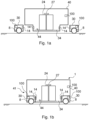
Figures 1a and 1b schematically illustrate side views of a modularised vehicle provided with a control device according to an embodiment; -
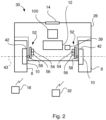
Figure 2 schematically illustrates a drive module provided with a control device according to an embodiment; -
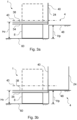
Figures 3a and 3b schematically illustrate section views of a modularised vehicle controlled at different heights according to an embodiment; -
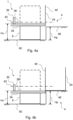
Figures 4a and 4b schematically illustrate section views of a modularised vehicle controlled at different heights according to an embodiment; -
Figure 5a illustrates a flow chart for a method, performed by a control device, for controlling the height of a modularised vehicle according to an embodiment; -
Figure 5b illustrates a flow chart for a method, performed by a control device, for controlling the height of a modularised vehicle according to an embodiment; and -
Figure 6 schematically illustrates a control device or computer according to an embodiment. - Modularised vehicles are typically assembled at the customer's premises and the customer may thus buy a set of modules from a manufacturer. The assembled vehicle may comprise at least two modules including at least one drive module and at least one functional module. Such a modularised vehicle is applicable on all sorts of road vehicles and may thus relate to heavy vehicles, such as buses, trucks etc., which may be used on public roads.
- The method, performed by the control device, for controlling the vehicle height in relation to the road surface will facilitate boarding and exit of the modularised vehicle. Boarding and exit of the modularised vehicle will be less time consuming. The security will be increased and damages minimized when boarding and exit the vehicle. Also, loading and unloading the modularised vehicle will be facilitated, the time for loading and unloading minimized, the security increased and damages minimized.
- According to an aspect, the present disclosure relates to a method, performed by a control device, for controlling a vehicle height in relation to the road surface, the vehicle comprising at least one drive module; and at least one functional module, wherein the at least one drive module comprises a pair of wheels and is configured to be autonomously operated and drive the vehicle; and wherein the control device is comprised in any of the modules, the method comprising: receiving information about a platform height above the road surface at a target destination; and controlling the vehicle height before arriving at the target destination, so that a floor surface of the at least one functional module has a level corresponding to the level of the platform surface at the target destination.
- By such a method, boarding and exit the vehicle is facilitated. The time is minimized, the security is increased and damages minimized boarding and exit the vehicle. Also, loading and unloading of the vehicle is facilitated. The time is minimized, the security is increased and damages minimized when loading and unloading of the vehicle.
- The information about a platform height above the road surface at a target destination is received before the vehicle is arriving at the target destination. The information may be received close to the moment when the vehicle is arriving at the target destination. However, it is also possible that the information about the platform height is received once the vehicle is assembled from the individual modules. As soon as there is a change in platform height above the road surface at a target destination, the vehicle may receive updated information about the platform height. A change in platform height above the road surface may take place due to reconstruction of the road and/or the platform.
- The vehicle height is controlled before arriving at the target destination. The vehicle height may be so controlled that a specific component of the vehicle is changing height. The vehicle height is controlled before arriving at the target destination, so that the floor surface of the at least one functional module may have a level above the road surface corresponding to the level of the platform surface above the road surface at the target destination. The level of the platform surface above the road surface may be the same level as the platform height above the road surface. The level of the floor surface above the road surface may be the same level as a floor surface height above the road surface. The definition that a floor surface of the at least one functional module has a level corresponding to the level of the platform surface at the target destination comprises that the levels correspond exactly to each other or that there is some difference between the levels. The difference between the levels may be very small, and will not affect boarding and exit the vehicle or loading and unloading of the vehicle. Controlling of the vehicle height may set a number of software marks (flags) of the control device. If the vehicle height is larger than the platform height a first flag may be set in a software of the control device. If the vehicle height is smaller than the platform height a second flag may be set in the software of the control device. If the vehicle height already correspond to the platform height a third flag may be set in the software of the control device. Depending on the flag set, the control device controls the vehicle to a vehicle height that correspond to the platform height at the target destination, so that the, so that a floor surface of the functional module has a level corresponding to the level of the platform surface at the target destination.
- At least one drive module may be used together with different functional modules. The functional modules may be designed for specific purposes. Therefore, by combining a drive module with a suitable functional module, it is possible to customize a vehicle depending on different missions. A functional module may be prepared to perform a specific function and the autonomously operated drive module may connect with the functional module to achieve an assembled vehicle customized for a certain mission. For example, the at least one functional module may be configured with a passenger compartment for accommodating passengers and may thus function as a bus when being assembled with the at least one drive module. According to another example, the at least one functional module may be configured with a load compartment for accommodating load and goods and may thus function as a truck when being assembled with the at least one drive module.
- The information received about a platform height above the road surface at a target destination may be compared to the actual vehicle height in relation to the road surface, which vehicle height is present when the vehicle approaching the platform with the specific platform height at the target destination. The vehicle height present when the vehicle approaching the platform may be a vehicle height used when driving the vehicle during normal driving conditions. However the vehicle height used when driving the vehicle during normal driving conditions may vary depending on the weight of the passengers and/or the loaded goods within the functional module. Thus, the vehicle height present when the vehicle approaching the platform may be detected by means of a height sensor device. The height sensor device may also be used during controlling the vehicle height before arriving at the target destination, so that a floor surface of the at least one functional module has a level corresponding to the level of the platform surface at the target destination. When receiving information about a platform height above the road surface at the target destination, the vehicle height may be controlled based on detected height information from the height sensor device.
- The at least one drive module and thus the assembled vehicle may be configured to be autonomously operated. The control device comprised in the functional module may be configured to receive commands and instructions from a control centre or an off-board system and to execute the commands/instructions for driving the vehicle and also for controlling the vehicle height in relation to the road surface. This way, the assembled vehicle can drive itself based on the received commands and instructions. The control device comprised in any one of the modules may control the assembled vehicle to be autonomously driven or operated also based on data from the at least one sensor element, taking situations that may happen during transportation into account. The autonomously operation of the modularised vehicle may thus comprise receiving information about a platform height above the road surface at a target destination; and controlling the vehicle height before arriving at the target destination, so that a floor surface of the at least one functional module has a level corresponding to the level of the platform surface at the target destination. Controlling the vehicle height in relation to the road surface according to the method may be performed, by the control device comprised in any one of the modules, without instructions from the control centre.
- The functional module is adapted to be releasably connected to the drive module for forming the assembled vehicle. The drive module comprises a pair of wheels and is configured to be autonomously operated and drive the assembled vehicle when the drive module and a functional module are connected. The functional module comprising at least one connecting means adapted for physically connecting the functional module to the drive module. The functional module may also comprise wheels.
- The connecting means may comprise a physical interface for the purpose of physically connecting and disconnecting the modules. The drive module and the functional module each suitably comprises at least one physical interface for the purpose of physically connecting and disconnecting the modules. The physical interface on the drive module is connected to the control device, which is configured to control the physical interface on the drive module to physically connect and disconnect the modules. The functional module may be provided with an indentation. The indentation may be adapted for the drive module. Due to the indentation the length of the assembled vehicle will coincide with the length of the functional module. However, the functional module may be configured without an indentation and the drive module may be connected directly to the front side or the rear side of the functional module.
- According to an example, controlling the vehicle height before arriving at the target destination, comprises controlling a suspension system of the at least one drive module, for adjusting the height of a body of the at least one drive module in relation to the pair of wheels.
- The suspension system of the driving module is arranged between the wheels and a body of the driving module. The suspension system may comprise springs and dampers for improving the driving characteristics of the driving module and also of the assembled vehicle. The suspension system of the driving module may comprise adjusting means for controlling the vehicle height before arriving at the target destination. The control device may receive information about the platform height above the road surface at a target destination and thereafter the control device controls the adjusting means of the suspension system to adjust the vehicle height before arriving at the target destination.
- According to an example, controlling the vehicle height before arriving at the target destination, comprises controlling a floor actuator of the at least one functional module, for adjusting the height of the floor of the functional module.
- The floor of the functional module, or at least a part of the floor of the functional module may be raised and lowered in order to controlling the vehicle height. The definition of vehicle height may comprise the height of a component of the vehicle above the road surface. The floor of the functional module, which may be raised and lowered in order to controlling the vehicle height may be an inner floor of a passenger compartment of the functional module, on which passengers are situated. The floor of the functional module may also be an inner floor of a loading compartment of the functional module, on which load and goods may be situated. The floor of the functional module may be raised and lowered by the floor actuator, which may be connected to the control device. Before arriving at the target destination the control device may receive information about the platform height above the road surface and thereafter the control device controls the floor actuator to adjust the vehicle height before arriving at the target destination.
- According to an example, receiving information about a platform height at a target destination comprises receiving information about the platform height from an external control centre.
- The control device comprised in the drive module and/or the functional module may be configured to receive commands and instructions from the control centre or an off-board system and to execute the commands/instructions for driving the vehicle and also for controlling other functions in the vehicle, such as controlling the vehicle height before arriving at the target destination. This way, the assembled vehicle can drive itself based on the received commands and instructions.
- According to an example, receiving information about a platform height comprises receiving information about the platform height from another vehicle.
- Several vehicles, such as modularised vehicles may have a driving path similar to the present vehicle. Thus, another vehicle may have stopped at the platform and may have information of the platform height. The information of the platform height received by the other vehicle may be transmitted directly to the control device of the present vehicle or via the control centre. The information about the platform height may be transmitted to the present vehicle each time another vehicle arrives at the platform or each time the there is a change in the platform height.
- The method further comprises, verifying that the level of the floor surface of the at least one functional module corresponds to the level of the platform surface at the target destination when the vehicle has arrived at the target destination.
- The verification that the level of the floor surface and the level of the platform surface correspond to each other is important of a security reason, of a convenient reason, of a technical reason and of a time consuming reason. The verification may be performed by at least one sensor device arranged on the vehicle and/or at the platform.
- The verification may alternatively, or in combination with the sensor device be performed by a verification software in the control device or in the control centre. The verification software may gathering all data and information about the platform height above the road surface at the target destination and the actual vehicle height above the road surface at the target destination and thus the floor surface of the at least one functional module corresponds to the level of the platform surface at the target destination. A secure boarding and exit of passengers to and from the functional module may thus be performed when the floor surface of the functional module corresponds to the level of the platform surface. If there for some reason should be a level difference between the floor surface and the platform surface passengers may stumble when boarding and exit the vehicle. A level difference between the floor surface and the platform surface may be inconvenient to pass for the passengers when boarding and exit the vehicle, which may also lead to an undesirable extension of time when boarding and exit the vehicle. Also, load and goods may safely be loaded and unloaded to and from the functional module. If there is a level difference between the floor surface and the platform surface load and goods may be destroyed when loaded and unloaded to and from the vehicle.
- A signal comprising the information about the platform height above the road surface at the target destination may be received by the control device. The control device may control the vehicle height before arriving at the target destination, so that a floor surface of the at least one functional module has a level corresponding to the level of the platform surface at the target destination. The control device may verify that the level of the floor surface of the at least one functional module corresponds to the level of the platform surface at the target destination when the vehicle has arrived at the target destination. The verification may set a software mark (flag) of the control device to indicate that the level of the floor surface of the at least one functional module corresponds to the level of the platform surface at the target destination. As an example, the flag may be set to 1 in the level of the floor surface of the at least one functional module corresponds to the level of the platform surface at the target destination and the flag may be set to 0 when the level of the floor surface of the at least one functional module do not correspond to the level of the platform surface at the target destination. The definition of the expression that the floor surface of the at least one functional module corresponds to the level of the platform surface at the target destination may be that there is a small margin of error between the levels of the floor surface and the platform surface.
- The method further comprises, controlling a door actuator for opening at least one door of the at least one functional module after verifying that the floor surface of the at least one functional module has a level corresponding to the level of the platform surface at the target destination. When it has been verified that the floor surface of the functional module corresponds to the level of the platform surface at the target destination doors of the functional module may be opened. The door actuator may be controlled by the control device. If the doors of the functional module are opened when there is a level difference between the floor surface and the platform surface the doors may be obstructed by the platform, which may lead to a technical malfunction of the doors and/or the door actuators. Opening of the doors after verifying that the floor surface of the at least one functional module has a level corresponding to the level of the platform surface may result in a secure and convenient boarding and exit of passengers to and from the functional module. Also, an undesirable extension of time when boarding and exit the vehicle may be avoided. Also, load and goods may safely be loaded and unloaded to and from the functional module if the doors are opened after verifying that the floor surface of the at least one functional module has a level corresponding to the level of the platform surface. If there is a level difference between the floor surface and the platform surface load and goods may be destroyed when loaded and unloaded to and from the vehicle.
- The present disclosure also relates to a computer program comprising instructions which, when the program is executed by a computer, causes the computer to carry out the method disclosed above. The invention further relates to a computer-readable medium comprising instructions, which when executed by a computer causes the computer to carry out the method disclosed above.
- Furthermore, the present disclosure relates to a control device for controlling a vehicle height in relation to the road surface of a modularised vehicle, the vehicle comprising: at least one drive module; and at least one functional module, wherein the at least one drive module comprises a pair of wheels and is configured to be autonomously operated and drive the assembled vehicle; and wherein the control device is comprised in any of the modules, the control device being configured to: receive information about a platform height above the road surface at a target destination; and control the vehicle height before arriving at the target destination, so that a floor surface of the at least one functional module has a level corresponding to the level of the platform surface at the target destination.
- By such control device, boarding and exit the vehicle is facilitated. The time is minimized, the security is increased and damages minimized boarding and exit the vehicle. Also, loading and unloading of the vehicle is facilitated. The time is minimized, the security is increased and damages minimized when loading and unloading of the vehicle.
- The control device is configured to receive information about a platform height above the road surface at a target destination before the vehicle is arriving at the target destination. The information may be received close to the moment when the vehicle is arriving at the target destination. However, it is also possible that the information about the platform height is received once the vehicle is assembled from the individual modules. As soon as there is a change in platform height above the road surface at a target destination, the control device may be configured to receive updated information about the platform height. A change in platform height above the road surface may take place due to reconstruction of the road and/or the platform.
- The control device is configured to control the vehicle height before the vehicle arrives at the target destination. The vehicle height may be so controlled that a specific component of the vehicle is changing height. The vehicle height is controlled before arriving at the target destination, so that the floor surface of the at least one functional module may have a level above the road surface corresponding to the level of the platform surface above the road surface at the target destination. The level of the platform surface above the road surface may be the same level as the platform height above the road surface. The level of the floor surface above the road surface may be the same level as a floor surface height above the road surface.
- The control device may be comprised in the drive module. However, the control device may alternatively be comprised in the functional module. Both the drive module and the functional module may be provided with a control device. The control device may be connected to a sensor device and to the connecting means.
- According to an aspect, the control device is configured to control the vehicle height before arriving at the target destination, by controlling a suspension system of the at least one drive module, to adjust the height of a body of the at least one drive module in relation to the pair of wheels.
- The suspension system of the driving module is arranged between the wheels and a body of the driving module. The suspension system may comprise springs and dampers for improving the driving characteristics of the driving module and also of the assembled vehicle. The suspension system of the driving module may comprise adjusting means for controlling the vehicle height before arriving at the target destination. The control device may be connected to the adjusting means of the suspension system. The control device may receive information about the platform height above the road surface at a target destination. The control device is configured to control the adjusting means of the suspension system based on the information about the platform height above the road surface at a target destination in order to adjust the vehicle height before arriving at the target destination.
- According to a further aspect, the control device is configured to control the vehicle height before arriving at the target destination, by controlling a floor actuator of the at least one functional module, to adjust the height of the floor of the functional module.
- The floor of the functional module, or at least a part of the floor of the functional module may be raised and lowered in order to controlling the vehicle height. The control device may be configured to raise and lower the floor of the functional module. The definition of vehicle height may comprise the height of a component of the vehicle above the road surface. The floor of the functional module, which may be raised and lowered in order to controlling the vehicle height may be an inner floor of a passenger compartment of the functional module, on which passengers are situated. The floor of the functional module may also be an inner floor of a loading compartment of the functional module, on which load and goods may be situated. The floor of the functional module may be raised and lowered by the floor actuator, which may be connected to the control device. Thus, the control device may be configured to control the floor actuator. Before arriving at the target destination the control device may be configured to receive information about the platform height above the road surface and thereafter the control device may be configured to control the floor actuator to adjust the vehicle height before arriving at the target destination.
- According to a further aspect, the control device is configured to receive information about a platform height from an external control centre.
- The control device comprised in the drive module and/or the functional module may be configured to receive commands and instructions from the control centre or an off-board system and to execute the commands/instructions for driving the vehicle and also for controlling other functions in the vehicle, such as controlling the vehicle height before arriving at the target destination. This way, the assembled vehicle can drive itself based on the received commands and instructions.
- According to a further aspect, the control device is configured to receive information about a platform height from another vehicle.
- Several vehicles, such as modularised vehicles may have a driving path similar to the present vehicle. Thus, another vehicle may have stopped at the platform and may have information of the platform height. The information of the platform height received by the other vehicle may be transmitted directly to the control device of the present vehicle or via the control centre. The control device is configured to receive information about a platform height from another vehicle each time another vehicle arrives at the platform or each time the there is a change in the platform height
- According to an aspect, the control device is further configured to: verify that the level of the floor surface of the at least one functional module corresponds to the level of the platform surface when the vehicle has arrived at the target destination.
- The control device may be configured to verify that the level of the floor surface and the level of the platform surface correspond to each other for of a security reason, of a convenient reason, of a technical reason and of a time consuming reason. At least one sensor device arranged on the vehicle and/or at the platform may provide the control device with information of the level of the floor surface of the functional module and the level of the platform surface. The verification may alternatively, or in combination with the sensor device be performed by a verification software in the control device or in the control centre. The verification software may gathering all data and information about the platform height above the road surface at the target destination and the actual vehicle height above the road surface at the target destination and thus the floor surface of the at least one functional module corresponds to the level of the platform surface at the target destination. A secure boarding and exit of passengers to and from the functional module may thus be performed when the floor surface of the functional module corresponds to the level of the platform surface. If there for some reason should be a level difference between the floor surface and the platform surface passengers may stumble when boarding and exit the vehicle. A level difference between the floor surface and the platform surface may be inconvenient to pass for the passengers when boarding and exit the vehicle, which may also lead to an undesirable extension of time when boarding and exit the vehicle. Also, load and goods may safely be loaded and unloaded to and from the functional module. If there is a level difference between the floor surface and the platform surface load and goods may be destroyed when loaded and unloaded to and from the vehicle.
- A signal comprising the information about the platform height above the road surface at the target destination may be received by the control device. The control device may control the vehicle height before arriving at the target destination, so that a floor surface of the at least one functional module has a level corresponding to the level of the platform surface at the target destination. The control device may be configured to verify that the level of the floor surface of the at least one functional module corresponds to the level of the platform surface at the target destination when the vehicle has arrived at the target destination. The verification may set a software mark (flag) of the control device to indicate that the level of the floor surface of the at least one functional module corresponds to the level of the platform surface at the target destination. As an example, the flag may be set to 1 in the level of the floor surface of the at least one functional module corresponds to the level of the platform surface at the target destination and the flag may be set to 0 when the level of the floor surface of the at least one functional module do not correspond to the level of the platform surface at the target destination.
- According to an aspect, the control device is further configured to: control a door actuator for opening at least one door of the at least one functional module after having verified that the floor surface of the at least one functional module has a level corresponding to the level of the platform surface at the target destination.
- When it has been verified that the floor surface of the functional module corresponds to the level of the platform surface at the target destination doors of the functional module may be opened. The control device may be configured to control the door actuator. If the doors of the functional module are opened when there is a level difference between the floor surface and the platform surface the doors may be obstructed by the platform, which may lead to a technical malfunction of the doors and/or the door actuators. Opening of the doors after verifying that the floor surface of the at least one functional module has a level corresponding to the level of the platform surface may result in a secure and convenient boarding and exit of passengers to and from the functional module. Also, an undesirable extension of time when boarding and exit the vehicle may be avoided. Also, load and goods may safely be loaded and unloaded to and from the functional module if the doors are opened after verifying that the floor surface of the at least one functional module has a level corresponding to the level of the platform surface. If there is a level difference between the floor surface and the platform surface load and goods may be destroyed when loaded and unloaded to and from the vehicle.
- Furthermore, the present disclosure relates to a modularised vehicle, assembled from a set of modules, wherein the modularised vehicle comprises a control device configured to control a vehicle height of the modularised vehicle.
- Boarding and exit such a modularised vehicle is facilitated. The time is minimized, the security is increased and damages minimized boarding and exit the modularised vehicle. Also, loading and unloading of the modularised vehicle is facilitated. The time is minimized, the security is increased and damages minimized when loading and unloading of the modularised vehicle.
- The present disclosure will now be further illustrated with reference to the appended figures.
-
Fig. 1a schematically illustrates a side view of twodrive modules 30 and afunctional module 40 provided with acontrol device 100 according to an embodiment. Thedrive modules 30 are adapted to be releasably connected to thefunctional module 40 for forming the assembledvehicle 1. Infig. 1a thedrive modules 30 and thefunctional module 40 are disconnected from each other. Eachdrive module 30 comprises a pair ofwheels 32 and is configured to be autonomously operated and drive the assembledvehicle 1 when thedrive modules 30 and afunctional module 40 are connected. Thefunctional module 40 comprising at least one connecting means 14 adapted for physically connecting thefunctional module 40 to thedrive module 30. Thecontrol device 100 is comprised in any of themodules control device 100 may be comprised in each of thedrive modules 30. Thecontrol device 100 may alternatively be comprised in thefunctional module 40. - The connecting means 14 may comprise a
physical interface 14 for the purpose of physically connecting and disconnecting themodules drive module 30 and thefunctional module 40 each suitably comprises at least onephysical interface 14 for the purpose of physically connecting and disconnecting themodules physical interface 14 on thedrive module 40 is connected to thecontrol device 100, which is configured to control thephysical interface 14 on thedrive module 30 to physically connect and disconnect themodules functional module 40 infig. 1 is provided with an indentation 16, which is adapted for eachdrive module 30. Due to the indentation 16 the length of the assembledvehicle 1 will coincide with the length of thefunctional module 40. However, thefunctional module 40 may be configured without an indentation 16 and thedrive modules 30 may be connected directly to the front side or the rear side of thefunctional module 40. - The functional module may be provided with at least one
door 24. According to the embodiment thefunctional module 40 is provided with twodoors 24. Adoor actuator 27 is arranged for opening and closing thedoors 24 of thefunctional module 40. - The
functional module 40 is provided with afloor 34. Afloor actuator 36 is arranged adjusting the height of thefloor 34. Thefloor 34 is provided with afloor surface 38. At least onesensor device 44 is arranged on thefunctional module 40. Thesensor device 44 may provide thecontrol device 100 with information of the level of thefloor surface 38 of thefunctional module 40. Thesensor device 44 may also provide thecontrol device 100 with information of the level of a platform surface 48 (fig. 4a ). Thesensor device 44 may also be arranged on thedrive modules 30. -
Fig. 1b schematically illustrates a side view of the twodrive modules 30 and thefunctional module 40 provided with acontrol device 100 according to an embodiment. Infig. 1b thedrive modules 30 and thefunctional module 40 are connected to each other. Theconnected drive modules 30 andfunctional module 40 together form the assembledvehicle 1. Thedrive modules 30 and thefunctional module 40 are connected by means of the connectingmeans 14. -
Fig. 2 schematically adrive module 30 provided with acontrol device 100 according to an embodiment. Thedrive module 30 may comprise a pair ofwheels 8. Asteering unit 39 may be connected to thewheels 8. Thesteering unit 39 may make thedrive module 30 steerable. The pair ofwheels 8 may be so arranged at thedrive module 30 that acentre axis 43 of eachwheel 8 coincides with each other. Eachwheel 8 has acentre axis 43 and may be arranged at thedrive module 30 so that eachwheel 8 may rotate about itscentre axis 43. When thecentre axis 43 of eachwheel 8 coincides with each other thedrive module 30 has good manoeuvring abilities. - The
drive module 30 may be provided with asuspension system 52 for thewheels 8. The height of abody 26 of thedrive module 30 may be adjusted in relation to thewheels 8 by means of thesuspension system 52. Thecontrol device 100 may be configured to control the vehicle height Hv by means of thesuspension system 52. Thesuspension system 52 of the drivingmodule 30 is arranged between thewheels 8 and abody 26 of the drivingmodule 30. Thesuspension system 52 may comprisesprings 54 anddampers 56 for improving the driving characteristics of the drivingmodule 30 and also of the assembledvehicle 1. Thesuspension system 52 of the driving module may comprise adjusting means 58 for controlling the vehicle height Hv. Thecontrol device 100 may be connected to the adjusting means 58 of thesuspension system 52. - The
drive module 30 may comprise at least two connectingmeans 14. The connecting means 14 may be configured as interfaces for transferring electric energy and/or transmitting electric signals, and for physically connection. - The
drive module 30 may comprise at least onepropulsion unit 10 connected to the pair ofwheels 8. Thepropulsion unit 10 may be an electric machine connected to thewheels 8. Two electric machines may be arranged aspropulsion units 10 in thedrive module 30. Oneelectric machine 10 may be connected to onewheel 8 and the otherelectric machine 10 may be connected to theother wheel 8. Theelectric machines 10 may be arranged in therim 42 of thewheels 8. Thewheels 8 may thereby be driven independently of each other. Theelectric machines 10 may also work as generators and generate electric energy when braking thewheels 8. Instead ofelectric machines 10 as apropulsion unit 10, the at least onepropulsion unit 10 may be an internal combustion engine, such as an otto engine or a diesel engine connected to thewheels 8. - The
drive module 30 may comprise at least oneenergy storage unit 12 for providing thepropulsion unit 10 with energy. - As mentioned above the
drive module 30 may comprise thecontrol device 100. Thecontrol device 100 may be configured to operate thedrive module 30 as an independently driven unit. Thecontrol device 100 may be configured to transmit and receive information and control signals to and from anexternal control centre 18. Thecontrol device 100 may be configured to transmit and receive information and control signals to and from anothervehicle 32 -
Fig. 3a schematically illustrate a section view of amodularised vehicle 1 controlled at different heights according to an embodiment. The control device 100 (fig. 1a ) being configured to receive information about a platform height Hp above aroad surface 60 at atarget destination 4 and control the vehicle height Hv before arriving at thetarget destination 4, so that thefloor surface 38 of thefloor 34 of thefunctional module 40 has a level corresponding to the level of theplatform surface 48 at thetarget destination 4. Infig. 3a thefloor surface 38 of thefunctional module 40 has a level which not correspond to the level of theplatform surface 48 at thetarget destination 4. The vehicle height Hv before arriving at thetarget destination 4 and during normal driving conditions of thevehicle 1 may be different to the vehicle height Hv, which corresponds to a level of thefloor surface 38 of thefunctional module 40, which corresponds to the level of theplatform surface 48 at thetarget destination 4. Therefore, the height of a body 26 (fig. 3 ) of the drive module 30 (fig. 3 ) may be adjusted in relation to thewheels 8 by means of thesuspension system 52, so that thefloor surface 38 of thefunctional module 40 has a level corresponding to the level of theplatform surface 48 at thetarget destination 4. Thecontrol device 100 receives information about the platform height Hp above theroad surface 60 at thetarget destination 4. Before arriving at thetarget destination 4 thecontrol device 100 is configured to control the adjusting means 58 (fig. 2 ) of thesuspension system 52 based on the information about the platform height Hp above theroad surface 60 at thetarget destination 4 in order to adjust the vehicle height Hv before arriving at thetarget destination 4. Thedoors 24 of the function module infig. 3a are closed. -
Fig. 3b schematically illustrate a section view of amodularised vehicle 1 controlled at different heights according to an embodiment. Infig. 3b the vehicle height Hv has been controlled before arriving at thetarget destination 4, so that afloor surface 38 of thefunctional module 40 has a level corresponding to the level of theplatform surface 48 at thetarget destination 4. Thedoors 24 of the function module infig. 3b are open. -
Fig. 4a schematically illustrate a section view of amodularised vehicle 1 controlled at different heights according to an embodiment. Infig. 4a thefloor surface 38 of thefloor 34 of thefunctional module 40 has a level which not correspond to the level of theplatform surface 48 at thetarget destination 4. The vehicle height Hv before arriving at thetarget destination 4 and during normal driving conditions of thevehicle 1 may be different to the vehicle height Hv, which corresponds to a level of thefloor surface 38 of thefunctional module 40, which corresponds to the level of theplatform surface 48 at thetarget destination 4. Therefore, the height of thefloor 34 may be adjusted in relation to thewheels 8 by means of afloor actuator 36 in thefunctional module 40, so that thefloor surface 38 of thefunctional module 40 has a level corresponding to the level of theplatform surface 48 at thetarget destination 4. Thecontrol device 100 may be configured to raise and lower thefloor 34 of thefunctional module 40. Before arriving at thetarget destination 4 thecontrol device 100 may be configured to receive information about the platform height Hp above theroad surface 60 and thereafter thecontrol device 100 may be configured to control thefloor actuator 36 to adjust the vehicle height Hv before arriving at thetarget destination 4. Thedoors 24 of the function module infig. 3a are closed. -
Fig. 4b schematically illustrate a section view of amodularised vehicle 1 controlled at different heights according to an embodiment. Infig. 4b the vehicle height Hv has been controlled before arriving at thetarget destination 4, so that afloor surface 38 of thefunctional module 40 has a level corresponding to the level of theplatform surface 48 at thetarget destination 4. Thedoors 24 of thefunction module 40 infig. 4b are open. -
Fig. 5a illustrates a flow chart for a method, performed by acontrol device 100, for controlling a vehicle height Hv in relation to theroad surface 60 of amodularised vehicle 1. The method thus relates to the controlling of the vehicle height Hv in relation to theroad surface 60 of themodularised vehicle 1 disclosed infigures 1a - 4b . Thevehicle 1 comprising at least onedrive module 30 and at least onefunctional module 40, wherein the at least onedrive module 30 comprises a pair ofwheels 8 and is configured to be autonomously operated and drive thevehicle 1; and wherein thecontrol device 100 is comprised in any of themodules road surface 60 at atarget destination 4; and controlling s102 the vehicle height Hv before arriving at thetarget destination 4, so that afloor surface 38 of the at least onefunctional module 40 has a level corresponding to the level of theplatform surface 48 at thetarget destination 4. - According to an aspect, controlling s102 the vehicle height Hv before arriving at the
target destination 4, comprises controlling asuspension system 52 of the at least onedrive module 30, for adjusting the height of abody 26 of the at least onedrive module 30 in relation to the pair ofwheels 32. According to an aspect, controlling s102 the vehicle height Hv before arriving at thetarget destination 4, comprises controlling afloor actuator 36 of the at least onefunctional module 40, for adjusting the height of thefloor 34 of thefunctional module 40. According to an aspect, receiving s101 information about a platform height Hp at atarget destination 4 comprises receiving information about the platform height Hp from anexternal control centre 18. According to an aspect, receiving s101 information about a platform height Hp comprises receiving information about the platform height Hp from anothervehicle 32. -
Fig. 5b illustrates a flow chart for a method, performed by acontrol device 100, for controlling a vehicle height Hv in relation to the road surface of amodularised vehicle 1. The method thus relates to the controlling of controlling a vehicle height Hv in relation to theroad surface 60 of themodularised vehicle 1 disclosed infigures 1a - 4b . The method comprises receiving s101 information about a platform height Hp above theroad surface 60 at atarget destination 4; controlling s102 the vehicle height Hv before arriving at thetarget destination 4, so that afloor surface 38 of the at least onefunctional module 40 has a level corresponding to the level of theplatform surface 48 at thetarget destination 4; verifying s103 that the level of thefloor surface 38 of the at least onefunctional module 40 corresponds to the level of theplatform surface 48 at thetarget destination 4 when thevehicle 1 has arrived at thetarget destination 4; and controlling s104 adoor actuator 27 for opening at least onedoor 24 of the at least onefunctional module 40 after verifying s103 that thefloor surface 38 of the at least onefunctional module 40 has a level corresponding to the level of theplatform surface 48 at thetarget destination 4. -
Figure 6 is a diagram of a version of adevice 500. Thecontrol device 100 of any one of thedrive modules 30 andfunctional module 40 may in a version comprise thedevice 500. Thedevice 500 comprises anon-volatile memory 520, adata processing unit 510 and a read/write memory 550. Thenon-volatile memory 520 has afirst memory element 530 in which a computer programme, e.g. an operating system, is stored for controlling the function of thedevice 500. Thedevice 500 further comprises a bus controller, a serial communication port, I/O means, an A/D converter, a time and date input and transfer unit, an event counter and an interruption controller (not depicted). Thenon-volatile memory 520 has also asecond memory element 540. - There is provided a computer programme P which comprises routines for performing the safety method. The programme P may be stored in an executable form or in a compressed form in a
memory 560 and/or in a read/write memory 550. - Where the
data processing unit 510 is described as performing a certain function, it means that thedata processing unit 510 effects a certain part of the programme stored in thememory 560 or a certain part of the programme stored in the read/write memory 550. - The
data processing device 510 can communicate with adata port 599 via adata bus 515. Thenon-volatile memory 520 is intended for communication with thedata processing unit 510 via adata bus 512. Theseparate memory 560 is intended to communicate with thedata processing unit 510 via adata bus 511. The read/write memory 550 is adapted to communicating with thedata processing unit 510 via adata bus 514. - When data are received on the
data port 599, they are stored temporarily in thesecond memory element 540. When input data received have been temporarily stored, thedata processing unit 510 is prepared to effect code execution as described above. - Parts of the methods herein described may be effected by the
device 500 by means of thedata processing unit 510 which runs the programme stored in thememory 560 or the read/write memory 550. When thedevice 500 runs the programme, methods herein described are executed. - The foregoing description of the embodiments has been furnished for illustrative and descriptive purposes. It is not intended to be exhaustive, or to limit the embodiments to the variants described. Many modifications and variations will obviously be apparent to one skilled in the art. The embodiments have been chosen and described in order to best explicate principles and practical applications, and to thereby enable one skilled in the art to understand the embodiments in terms of its various embodiments and with the various modifications that are applicable to its intended use. The components and features specified above may, within the framework of the embodiments, be combined between different embodiments specified.
Claims (11)
- A method, performed by a control device (100), for controlling a vehicle height (Hv) in relation to the road surface (60), the vehicle (1) comprisingat least one drive module (30); andat least one functional module (40),wherein the at least one drive module (30) comprises a pair of wheels (32) and is configured to be autonomously operated and drive the vehicle (1); andwherein the control device (100) is comprised in any of the modules (30, 40), the method being characterized by:receiving (s101) information from an external control centre (18) and/or from another vehicle about a platform height (Hp) above the road surface (60) at a target destination (4);controlling (s102) the vehicle height (Hv) before arriving at the target destination (4), so that a floor surface (38) of the at least one functional module (40) has a level corresponding to the level of the platform surface (48) at the target destination (4) ; andverifying (s103) that the level of the floor surface (38) of the at least one functional module (40) corresponds to the level of the platform surface (48) at the target destination (4) when the vehicle (1) has arrived at the target destination (4).
- The method according to claim 1, wherein controlling (s102) the vehicle height (Hv) before arriving at the target destination (4), comprises controlling a suspension system (52) of the at least one drive module (30), for adjusting the height of a body (26) of the at least one drive module (30) in relation to the pair of wheels (32).
- The method according to any one of claims 1 and 2, wherein controlling (s102) the vehicle height (Hv) before arriving at the target destination (4), comprises controlling a floor actuator (36) of the at least one functional module (40), for adjusting the height of the floor (34) of the functional module (40).
- The method according to claim any one of the preceding claims, wherein the method comprises the further step of:
controlling (s104) a door actuator (27) for opening at least one door (24) of the at least one functional module (40) after verifying (s103) that the floor surface (38) of the at least one functional module (40) has a level corresponding to the level of the platform surface (48) at the target destination (4). - A computer program (P) comprising instructions which, when the program is executed by a control device (100; 500) of the vehicle according to claim 1, cause the control device (100; 500) to carry out the method according to any one of the preceding claims.
- A computer-readable medium comprising instructions, which when executed by a computer (100; a control device (100; 500) of the vehicle according to claim 1, cause the control device (100; 500) to carry out the method according to any one of claims 1-4.
- A control device (100) controlling a vehicle height (Hv) in relation to the road surface (60) of a modularised vehicle (1), the vehicle (1) being the modularised vehicle, comprising:at least one drive module (30); andat least one functional module (40),wherein the at least one drive module (30) comprises a pair of wheels (32) and is configured to be autonomously operated and drive the assembled vehicle (1); andwherein the control device (100) is comprised in any of the modules (30, 40), characterized by the control device (100) being configured to:receive information from an external control centre (18) and/or from another vehicle about a platform height (Hp) above the road surface (60) at a target destination (4);control the vehicle height (Hv) before arriving at the target destination (4), so that a floor surface (38) of the at least one functional module (40) has a level corresponding to the level of the platform surface (48) at the target destination (4); andverify that the floor surface (38) of the at least one functional module (40) corresponds to the level of the platform surface (48) when the vehicle (1) has arrived at the target destination (4).
- The control device (100) according to claim 7, wherein the control device (100) is configured to control the vehicle height (Hv) before arriving at the target destination (4), by controlling a suspension system of the at least one drive module (30), to adjust the height of a body of the at least one drive module (30) in relation to the pair of wheels (32).
- The control device (100) according to any one of claims 7 and 8, wherein the control device (100) is configured to control the vehicle height (Hv) before arriving at the target destination (4), by controlling a floor actuator (36) of the at least one functional module (40), to adjust the height of the floor (34) of the functional module (40).
- The control device (100) according to any one of claims 7-9 wherein the control device (100) further is configured to:
control a door actuator (27) for opening at least one door (24) of the at least one functional module (40) after having verified that the floor surface (38) of the at least one functional module (40) has a level corresponding to the level of the platform surface (48) at the target destination (4). - A modularised vehicle (1), assembled from a set of modules (30, 40),
wherein the modularised vehicle (1) comprises a control device (100) configured to control a vehicle height (Hv) of the modularised vehicle (1) according to any one of the claims 7 - 10.
Applications Claiming Priority (2)
| Application Number | Priority Date | Filing Date | Title |
|---|---|---|---|
| SE1851007A SE542859C2 (en) | 2018-08-24 | 2018-08-24 | A method and a system for controlling a vehicle height of modularised vehicle in relation to the road surface |
| PCT/SE2019/050763 WO2020040685A1 (en) | 2018-08-24 | 2019-08-20 | A method, performed by a control device, for controlling a vehicle height in relation to the road surface and a modularised vehicle comprising such a control device |
Publications (3)
| Publication Number | Publication Date |
|---|---|
| EP3840967A1 EP3840967A1 (en) | 2021-06-30 |
| EP3840967A4 EP3840967A4 (en) | 2022-05-25 |
| EP3840967B1 true EP3840967B1 (en) | 2025-04-16 |
Family
ID=69592783
Family Applications (1)
| Application Number | Title | Priority Date | Filing Date |
|---|---|---|---|
| EP19851258.4A Active EP3840967B1 (en) | 2018-08-24 | 2019-08-20 | A method, performed by a control device, for controlling a vehicle height in relation to the road surface and a modularised vehicle comprising such a control device |
Country Status (4)
| Country | Link |
|---|---|
| EP (1) | EP3840967B1 (en) |
| CN (1) | CN112770923B (en) |
| SE (1) | SE542859C2 (en) |
| WO (1) | WO2020040685A1 (en) |
Families Citing this family (7)
| Publication number | Priority date | Publication date | Assignee | Title |
|---|---|---|---|---|
| US11702162B2 (en) | 2021-04-28 | 2023-07-18 | Ford Global Technologies, Llc | Configurable vehicle chassis and associated methods |
| US11518206B2 (en) | 2021-04-28 | 2022-12-06 | Ford Global Technologies, Llc | Configurable vehicle frames and associated methods |
| US11938802B2 (en) | 2021-04-28 | 2024-03-26 | Ford Global Technologies, Llc | Electric motorized wheel assemblies |
| US11866095B2 (en) | 2021-04-28 | 2024-01-09 | Ford Global Technologies, Llc | Multi-position wheel assembly mounts |
| US11807302B2 (en) | 2021-04-28 | 2023-11-07 | Ford Global Technologies, Llc | Methods and apparatus for scalable vehicle platforms |
| US11858571B2 (en) | 2021-04-28 | 2024-01-02 | Ford Global Technologies, Llc | Vehicle chassis with interchangeable performance packages and related methods |
| KR20230076047A (en) * | 2021-11-23 | 2023-05-31 | 현대모비스 주식회사 | Corner module apparatus for vehicle and vehicle having the same |
Family Cites Families (24)
| Publication number | Priority date | Publication date | Assignee | Title |
|---|---|---|---|---|
| JPH0825376B2 (en) * | 1985-05-20 | 1996-03-13 | 日野自動車工業株式会社 | Truck bed height adjuster |
| ES2159453B1 (en) * | 1998-06-08 | 2002-04-01 | Accesorios Y Elevadores Valenc | VEHICLE SUSPENSION CONTROL MECHANISM. |
| DE19841751A1 (en) * | 1998-09-11 | 2000-03-16 | Bayerische Motoren Werke Ag | Level control device for adjusting vehicle's height has detection device for generating data of object approaching vehicle and processing device to determine possible collision and probable impact point |
| JP3793418B2 (en) * | 2001-02-05 | 2006-07-05 | 日野自動車株式会社 | Vehicle height adjustment device |
| JP2003146201A (en) * | 2001-11-09 | 2003-05-21 | Mitsubishi Heavy Ind Ltd | Accident prevention device and accident prevention method when using platform door |
| JP2004345571A (en) * | 2003-05-23 | 2004-12-09 | Aisin Aw Co Ltd | Suspension control device of vehicle |
| US7744099B2 (en) * | 2004-11-04 | 2010-06-29 | Driveright Holdings, Ltd. | Method and system for adjusting a vehicle aligned with an artificial horizon |
| SE528864C2 (en) * | 2004-12-30 | 2007-02-27 | Volvo Lastvagnar Ab | Information-based control of the chassis height of a vehicle |
| SE0501432L (en) * | 2005-06-17 | 2006-12-18 | Volvo Lastvagnar Ab | Height control system for a vehicle |
| FR2893499B1 (en) * | 2005-11-21 | 2008-09-26 | Irisbus France Sa | VEHICLE, DEVICE AND METHOD FOR ACCESSING THE VEHICLE FOR PERSONS WITH REDUCED MOBILITY |
| SE530317C2 (en) * | 2006-09-25 | 2008-04-29 | Scania Cv Ab | Vehicle chassis element adjustment |
| JP4816577B2 (en) * | 2007-06-22 | 2011-11-16 | トヨタ自動車株式会社 | Vehicle height adjustment device |
| US8333390B2 (en) * | 2007-07-03 | 2012-12-18 | Oshkosh Corporation | Ride-height control system |
| SE536001C2 (en) * | 2011-08-31 | 2013-03-26 | Scania Cv Ab | Device and method for controlling the propulsion of a motor vehicle |
| CN105900031B (en) * | 2013-10-29 | 2019-06-18 | 沃尔沃建筑设备公司 | System for calculating expected ETA |
| BR112016027398B1 (en) * | 2014-05-22 | 2022-06-21 | Wabco Gmbh | Method for regulating the level of a motor vehicle with air suspension |
| SE541060C2 (en) * | 2014-05-28 | 2019-03-26 | Scania Cv Ab | Level adjustment of vehicles |
| US9233590B1 (en) * | 2014-06-27 | 2016-01-12 | GM Global Technology Operations LLC | Control of adjustable ride height suspension |
| JP6260607B2 (en) * | 2015-11-27 | 2018-01-17 | トヨタ自動車株式会社 | Suspension system |
| GB2545651B (en) * | 2015-12-18 | 2018-10-24 | Jaguar Land Rover Ltd | Door protection system and method |
| US10479427B2 (en) * | 2016-01-12 | 2019-11-19 | Rivian Ip Holdings, Llc | Systems and methods for modular components for electric vehicles |
| US10234870B2 (en) * | 2016-03-14 | 2019-03-19 | Yosef Benraz | Autonomous public transportation system |
| DE102016116856A1 (en) * | 2016-09-08 | 2018-03-08 | Knorr-Bremse Systeme für Nutzfahrzeuge GmbH | System and method for adjusting a height of at least a part of a commercial vehicle |
| FR3056183B1 (en) * | 2016-09-16 | 2019-08-23 | Maycar | SURBAISSE ROAD VEHICLE CHASSIS |
-
2018
- 2018-08-24 SE SE1851007A patent/SE542859C2/en unknown
-
2019
- 2019-08-20 WO PCT/SE2019/050763 patent/WO2020040685A1/en not_active Ceased
- 2019-08-20 EP EP19851258.4A patent/EP3840967B1/en active Active
- 2019-08-20 CN CN201980054192.5A patent/CN112770923B/en active Active
Also Published As
| Publication number | Publication date |
|---|---|
| SE542859C2 (en) | 2020-07-21 |
| CN112770923B (en) | 2024-08-09 |
| SE1851007A1 (en) | 2020-02-25 |
| CN112770923A (en) | 2021-05-07 |
| WO2020040685A1 (en) | 2020-02-27 |
| EP3840967A1 (en) | 2021-06-30 |
| EP3840967A4 (en) | 2022-05-25 |
Similar Documents
| Publication | Publication Date | Title |
|---|---|---|
| EP3840967A1 (en) | A method, performed by a control device, for controlling a vehicle height in relation to the road surface and a modularised vehicle comprising such a control device | |
| US11794773B2 (en) | Vehicle control interface and vehicle system | |
| EP3762257A1 (en) | A drive module for a vehicle and a vehicle assembled from a set of modules | |
| US5953978A (en) | Hydraulic power steering system | |
| US20190256061A1 (en) | System for driverless operation of utility vehicles | |
| KR102423715B1 (en) | A method for electrically connecting two modules of a vehicle, a control device, a vehicle, a system, a computer program and a computer-readable medium | |
| US20100036546A1 (en) | Security apparatus for pneumatically operated devices mounted on a vehicle | |
| US12583540B2 (en) | Method for controlling assembly of a vehicle from a set of modules, a control device, a system, a vehicle, a computer program and a computer-readable medium | |
| CN107757602A (en) | Automatic collaboration Driving control for autonomous vehicle | |
| CN113056380B (en) | Method for controlling the position of a vehicle relative to a platform, which is carried out by a control device, control device and vehicle comprising such a control device | |
| EP3814206B1 (en) | A method for controlling physically connecting a first and a second module to assemble a vehicle, a control device, a vehicle, a system, a computer program and a computer-readable medium | |
| US12240286B2 (en) | Air spring control system, air spring system, vehicle including same, and method for same | |
| CN112154095B (en) | Method, control device, vehicle, system, computer program and computer readable medium for electrically disconnecting two modules of a vehicle | |
| US12038762B2 (en) | Safety method, a control device, a vehicle, a computer program and a computer-readable medium | |
| WO2013158015A1 (en) | Method and system for safe loading and unloading of motor vehicles | |
| CN105936293A (en) | Steering systems including locking controls for a motor vehicle, and motor vehicles including steering systems | |
| US11318911B1 (en) | Remote starting and stopping engine | |
| CN113525295A (en) | Remote starting and stopping of an engine | |
| WO2020040686A1 (en) | A method, performed by a first control device, for physically connecting at least one drive module and a functional module to assemble a vehicle | |
| US20250092643A1 (en) | A work vehicle | |
| Weinmann et al. | Manoeuvring of long trucks by remote control | |
| KR20250035564A (en) | Method for operating a vehicle central computer |
Legal Events
| Date | Code | Title | Description |
|---|---|---|---|
| STAA | Information on the status of an ep patent application or granted ep patent |
Free format text: STATUS: THE INTERNATIONAL PUBLICATION HAS BEEN MADE |
|
| PUAI | Public reference made under article 153(3) epc to a published international application that has entered the european phase |
Free format text: ORIGINAL CODE: 0009012 |
|
| STAA | Information on the status of an ep patent application or granted ep patent |
Free format text: STATUS: REQUEST FOR EXAMINATION WAS MADE |
|
| 17P | Request for examination filed |
Effective date: 20210324 |
|
| AK | Designated contracting states |
Kind code of ref document: A1 Designated state(s): AL AT BE BG CH CY CZ DE DK EE ES FI FR GB GR HR HU IE IS IT LI LT LU LV MC MK MT NL NO PL PT RO RS SE SI SK SM TR |
|
| DAV | Request for validation of the european patent (deleted) | ||
| DAX | Request for extension of the european patent (deleted) | ||
| A4 | Supplementary search report drawn up and despatched |
Effective date: 20220425 |
|
| RIC1 | Information provided on ipc code assigned before grant |
Ipc: B60K 17/356 20060101ALI20220419BHEP Ipc: H04L 67/125 20220101ALI20220419BHEP Ipc: B60K 7/00 20060101ALI20220419BHEP Ipc: B60G 17/0165 20060101ALI20220419BHEP Ipc: G05D 1/02 20200101ALI20220419BHEP Ipc: B62D 63/02 20060101ALI20220419BHEP Ipc: B60P 3/42 20060101ALI20220419BHEP Ipc: B60P 1/44 20060101ALI20220419BHEP Ipc: H04W 4/44 20180101ALI20220419BHEP Ipc: B60W 50/00 20060101ALI20220419BHEP Ipc: B60G 17/016 20060101AFI20220419BHEP |
|
| P01 | Opt-out of the competence of the unified patent court (upc) registered |
Effective date: 20230518 |
|
| GRAP | Despatch of communication of intention to grant a patent |
Free format text: ORIGINAL CODE: EPIDOSNIGR1 |
|
| STAA | Information on the status of an ep patent application or granted ep patent |
Free format text: STATUS: GRANT OF PATENT IS INTENDED |
|
| RIC1 | Information provided on ipc code assigned before grant |
Ipc: B60K 17/356 20060101ALI20241025BHEP Ipc: H04L 67/125 20220101ALI20241025BHEP Ipc: B60K 7/00 20060101ALI20241025BHEP Ipc: B60G 17/0165 20060101ALI20241025BHEP Ipc: B62D 63/02 20060101ALI20241025BHEP Ipc: B60P 3/42 20060101ALI20241025BHEP Ipc: B60P 1/44 20060101ALI20241025BHEP Ipc: H04W 4/44 20180101ALI20241025BHEP Ipc: B60W 50/00 20060101ALI20241025BHEP Ipc: B60G 17/016 20060101AFI20241025BHEP |
|
| INTG | Intention to grant announced |
Effective date: 20241128 |
|
| GRAS | Grant fee paid |
Free format text: ORIGINAL CODE: EPIDOSNIGR3 |
|
| GRAA | (expected) grant |
Free format text: ORIGINAL CODE: 0009210 |
|
| STAA | Information on the status of an ep patent application or granted ep patent |
Free format text: STATUS: THE PATENT HAS BEEN GRANTED |
|
| AK | Designated contracting states |
Kind code of ref document: B1 Designated state(s): AL AT BE BG CH CY CZ DE DK EE ES FI FR GB GR HR HU IE IS IT LI LT LU LV MC MK MT NL NO PL PT RO RS SE SI SK SM TR |
|
| REG | Reference to a national code |
Ref country code: GB Ref legal event code: FG4D |
|
| REG | Reference to a national code |
Ref country code: CH Ref legal event code: EP |
|
| REG | Reference to a national code |
Ref country code: IE Ref legal event code: FG4D |
|
| REG | Reference to a national code |
Ref country code: DE Ref legal event code: R096 Ref document number: 602019068810 Country of ref document: DE |
|
| REG | Reference to a national code |
Ref country code: NL Ref legal event code: MP Effective date: 20250416 |
|
| PG25 | Lapsed in a contracting state [announced via postgrant information from national office to epo] |
Ref country code: NL Free format text: LAPSE BECAUSE OF FAILURE TO SUBMIT A TRANSLATION OF THE DESCRIPTION OR TO PAY THE FEE WITHIN THE PRESCRIBED TIME-LIMIT Effective date: 20250416 |
|
| REG | Reference to a national code |
Ref country code: AT Ref legal event code: MK05 Ref document number: 1785368 Country of ref document: AT Kind code of ref document: T Effective date: 20250416 |
|
| PG25 | Lapsed in a contracting state [announced via postgrant information from national office to epo] |
Ref country code: PT Free format text: LAPSE BECAUSE OF FAILURE TO SUBMIT A TRANSLATION OF THE DESCRIPTION OR TO PAY THE FEE WITHIN THE PRESCRIBED TIME-LIMIT Effective date: 20250818 Ref country code: ES Free format text: LAPSE BECAUSE OF FAILURE TO SUBMIT A TRANSLATION OF THE DESCRIPTION OR TO PAY THE FEE WITHIN THE PRESCRIBED TIME-LIMIT Effective date: 20250416 Ref country code: FI Free format text: LAPSE BECAUSE OF FAILURE TO SUBMIT A TRANSLATION OF THE DESCRIPTION OR TO PAY THE FEE WITHIN THE PRESCRIBED TIME-LIMIT Effective date: 20250416 |
|
| PGFP | Annual fee paid to national office [announced via postgrant information from national office to epo] |
Ref country code: DE Payment date: 20250702 Year of fee payment: 7 |
|
| REG | Reference to a national code |
Ref country code: LT Ref legal event code: MG9D |
|
| PG25 | Lapsed in a contracting state [announced via postgrant information from national office to epo] |
Ref country code: GR Free format text: LAPSE BECAUSE OF FAILURE TO SUBMIT A TRANSLATION OF THE DESCRIPTION OR TO PAY THE FEE WITHIN THE PRESCRIBED TIME-LIMIT Effective date: 20250717 Ref country code: NO Free format text: LAPSE BECAUSE OF FAILURE TO SUBMIT A TRANSLATION OF THE DESCRIPTION OR TO PAY THE FEE WITHIN THE PRESCRIBED TIME-LIMIT Effective date: 20250716 |
|
| PG25 | Lapsed in a contracting state [announced via postgrant information from national office to epo] |
Ref country code: PL Free format text: LAPSE BECAUSE OF FAILURE TO SUBMIT A TRANSLATION OF THE DESCRIPTION OR TO PAY THE FEE WITHIN THE PRESCRIBED TIME-LIMIT Effective date: 20250416 |
|
| PG25 | Lapsed in a contracting state [announced via postgrant information from national office to epo] |
Ref country code: BG Free format text: LAPSE BECAUSE OF FAILURE TO SUBMIT A TRANSLATION OF THE DESCRIPTION OR TO PAY THE FEE WITHIN THE PRESCRIBED TIME-LIMIT Effective date: 20250416 |
|
| PGFP | Annual fee paid to national office [announced via postgrant information from national office to epo] |
Ref country code: GB Payment date: 20250703 Year of fee payment: 7 |
|
| PG25 | Lapsed in a contracting state [announced via postgrant information from national office to epo] |
Ref country code: HR Free format text: LAPSE BECAUSE OF FAILURE TO SUBMIT A TRANSLATION OF THE DESCRIPTION OR TO PAY THE FEE WITHIN THE PRESCRIBED TIME-LIMIT Effective date: 20250416 |
|
| PG25 | Lapsed in a contracting state [announced via postgrant information from national office to epo] |
Ref country code: AT Free format text: LAPSE BECAUSE OF FAILURE TO SUBMIT A TRANSLATION OF THE DESCRIPTION OR TO PAY THE FEE WITHIN THE PRESCRIBED TIME-LIMIT Effective date: 20250416 |
|
| PGFP | Annual fee paid to national office [announced via postgrant information from national office to epo] |
Ref country code: FR Payment date: 20250703 Year of fee payment: 7 |
|
| PG25 | Lapsed in a contracting state [announced via postgrant information from national office to epo] |
Ref country code: RS Free format text: LAPSE BECAUSE OF FAILURE TO SUBMIT A TRANSLATION OF THE DESCRIPTION OR TO PAY THE FEE WITHIN THE PRESCRIBED TIME-LIMIT Effective date: 20250716 |
|
| PG25 | Lapsed in a contracting state [announced via postgrant information from national office to epo] |
Ref country code: IS Free format text: LAPSE BECAUSE OF FAILURE TO SUBMIT A TRANSLATION OF THE DESCRIPTION OR TO PAY THE FEE WITHIN THE PRESCRIBED TIME-LIMIT Effective date: 20250816 |
|
| PG25 | Lapsed in a contracting state [announced via postgrant information from national office to epo] |
Ref country code: LV Free format text: LAPSE BECAUSE OF FAILURE TO SUBMIT A TRANSLATION OF THE DESCRIPTION OR TO PAY THE FEE WITHIN THE PRESCRIBED TIME-LIMIT Effective date: 20250416 |
|
| PG25 | Lapsed in a contracting state [announced via postgrant information from national office to epo] |
Ref country code: DK Free format text: LAPSE BECAUSE OF FAILURE TO SUBMIT A TRANSLATION OF THE DESCRIPTION OR TO PAY THE FEE WITHIN THE PRESCRIBED TIME-LIMIT Effective date: 20250416 Ref country code: SM Free format text: LAPSE BECAUSE OF FAILURE TO SUBMIT A TRANSLATION OF THE DESCRIPTION OR TO PAY THE FEE WITHIN THE PRESCRIBED TIME-LIMIT Effective date: 20250416 |
|
| REG | Reference to a national code |
Ref country code: DE Ref legal event code: R097 Ref document number: 602019068810 Country of ref document: DE |
|
| PG25 | Lapsed in a contracting state [announced via postgrant information from national office to epo] |
Ref country code: CZ Free format text: LAPSE BECAUSE OF FAILURE TO SUBMIT A TRANSLATION OF THE DESCRIPTION OR TO PAY THE FEE WITHIN THE PRESCRIBED TIME-LIMIT Effective date: 20250416 |
|
| PG25 | Lapsed in a contracting state [announced via postgrant information from national office to epo] |
Ref country code: EE Free format text: LAPSE BECAUSE OF FAILURE TO SUBMIT A TRANSLATION OF THE DESCRIPTION OR TO PAY THE FEE WITHIN THE PRESCRIBED TIME-LIMIT Effective date: 20250416 |
|
| PG25 | Lapsed in a contracting state [announced via postgrant information from national office to epo] |
Ref country code: SK Free format text: LAPSE BECAUSE OF FAILURE TO SUBMIT A TRANSLATION OF THE DESCRIPTION OR TO PAY THE FEE WITHIN THE PRESCRIBED TIME-LIMIT Effective date: 20250416 Ref country code: RO Free format text: LAPSE BECAUSE OF FAILURE TO SUBMIT A TRANSLATION OF THE DESCRIPTION OR TO PAY THE FEE WITHIN THE PRESCRIBED TIME-LIMIT Effective date: 20250416 |
|
| PG25 | Lapsed in a contracting state [announced via postgrant information from national office to epo] |
Ref country code: IT Free format text: LAPSE BECAUSE OF FAILURE TO SUBMIT A TRANSLATION OF THE DESCRIPTION OR TO PAY THE FEE WITHIN THE PRESCRIBED TIME-LIMIT Effective date: 20250416 |
|
| PLBE | No opposition filed within time limit |
Free format text: ORIGINAL CODE: 0009261 |
|
| STAA | Information on the status of an ep patent application or granted ep patent |
Free format text: STATUS: NO OPPOSITION FILED WITHIN TIME LIMIT |
|
| REG | Reference to a national code |
Ref country code: CH Ref legal event code: L10 Free format text: ST27 STATUS EVENT CODE: U-0-0-L10-L00 (AS PROVIDED BY THE NATIONAL OFFICE) Effective date: 20260225 |
|
| REG | Reference to a national code |
Ref country code: CH Ref legal event code: H13 Free format text: ST27 STATUS EVENT CODE: U-0-0-H10-H13 (AS PROVIDED BY THE NATIONAL OFFICE) Effective date: 20260324 |
|
| 26N | No opposition filed |
Effective date: 20260119 |
|
| PG25 | Lapsed in a contracting state [announced via postgrant information from national office to epo] |
Ref country code: MC Free format text: LAPSE BECAUSE OF FAILURE TO SUBMIT A TRANSLATION OF THE DESCRIPTION OR TO PAY THE FEE WITHIN THE PRESCRIBED TIME-LIMIT Effective date: 20250416 |
|
| PG25 | Lapsed in a contracting state [announced via postgrant information from national office to epo] |
Ref country code: LU Free format text: LAPSE BECAUSE OF NON-PAYMENT OF DUE FEES Effective date: 20250820 |
|
| PG25 | Lapsed in a contracting state [announced via postgrant information from national office to epo] |
Ref country code: CH Free format text: LAPSE BECAUSE OF NON-PAYMENT OF DUE FEES Effective date: 20250831 |
|
| REG | Reference to a national code |
Ref country code: BE Ref legal event code: MM Effective date: 20250831 |
|
| PG25 | Lapsed in a contracting state [announced via postgrant information from national office to epo] |
Ref country code: LT Free format text: LAPSE BECAUSE OF FAILURE TO SUBMIT A TRANSLATION OF THE DESCRIPTION OR TO PAY THE FEE WITHIN THE PRESCRIBED TIME-LIMIT Effective date: 20250416 |
|
| PG25 | Lapsed in a contracting state [announced via postgrant information from national office to epo] |
Ref country code: BE Free format text: LAPSE BECAUSE OF NON-PAYMENT OF DUE FEES Effective date: 20250831 Ref country code: IE Free format text: LAPSE BECAUSE OF NON-PAYMENT OF DUE FEES Effective date: 20250820 |
|
| PG25 | Lapsed in a contracting state [announced via postgrant information from national office to epo] |
Ref country code: SE Free format text: LAPSE BECAUSE OF FAILURE TO SUBMIT A TRANSLATION OF THE DESCRIPTION OR TO PAY THE FEE WITHIN THE PRESCRIBED TIME-LIMIT Effective date: 20250416 |