EP3839818A2 - Method and apparatus for performing structured extraction of text, device and storage medium - Google Patents
Method and apparatus for performing structured extraction of text, device and storage medium Download PDFInfo
- Publication number
- EP3839818A2 EP3839818A2 EP21162002.6A EP21162002A EP3839818A2 EP 3839818 A2 EP3839818 A2 EP 3839818A2 EP 21162002 A EP21162002 A EP 21162002A EP 3839818 A2 EP3839818 A2 EP 3839818A2
- Authority
- EP
- European Patent Office
- Prior art keywords
- text
- text line
- relationship
- feature
- line
- Prior art date
- Legal status (The legal status is an assumption and is not a legal conclusion. Google has not performed a legal analysis and makes no representation as to the accuracy of the status listed.)
- Ceased
Links
Images


Classifications
-
- G—PHYSICS
- G06—COMPUTING OR CALCULATING; COUNTING
- G06V—IMAGE OR VIDEO RECOGNITION OR UNDERSTANDING
- G06V30/00—Character recognition; Recognising digital ink; Document-oriented image-based pattern recognition
- G06V30/40—Document-oriented image-based pattern recognition
- G06V30/41—Analysis of document content
- G06V30/414—Extracting the geometrical structure, e.g. layout tree; Block segmentation, e.g. bounding boxes for graphics or text
-
- G—PHYSICS
- G06—COMPUTING OR CALCULATING; COUNTING
- G06F—ELECTRIC DIGITAL DATA PROCESSING
- G06F16/00—Information retrieval; Database structures therefor; File system structures therefor
- G06F16/90—Details of database functions independent of the retrieved data types
- G06F16/901—Indexing; Data structures therefor; Storage structures
- G06F16/9024—Graphs; Linked lists
-
- G—PHYSICS
- G06—COMPUTING OR CALCULATING; COUNTING
- G06F—ELECTRIC DIGITAL DATA PROCESSING
- G06F18/00—Pattern recognition
- G06F18/20—Analysing
- G06F18/25—Fusion techniques
- G06F18/253—Fusion techniques of extracted features
-
- G—PHYSICS
- G06—COMPUTING OR CALCULATING; COUNTING
- G06F—ELECTRIC DIGITAL DATA PROCESSING
- G06F40/00—Handling natural language data
- G06F40/20—Natural language analysis
- G06F40/279—Recognition of textual entities
-
- G—PHYSICS
- G06—COMPUTING OR CALCULATING; COUNTING
- G06F—ELECTRIC DIGITAL DATA PROCESSING
- G06F40/00—Handling natural language data
- G06F40/30—Semantic analysis
-
- G—PHYSICS
- G06—COMPUTING OR CALCULATING; COUNTING
- G06N—COMPUTING ARRANGEMENTS BASED ON SPECIFIC COMPUTATIONAL MODELS
- G06N3/00—Computing arrangements based on biological models
- G06N3/02—Neural networks
- G06N3/04—Architecture, e.g. interconnection topology
- G06N3/044—Recurrent networks, e.g. Hopfield networks
-
- G—PHYSICS
- G06—COMPUTING OR CALCULATING; COUNTING
- G06N—COMPUTING ARRANGEMENTS BASED ON SPECIFIC COMPUTATIONAL MODELS
- G06N3/00—Computing arrangements based on biological models
- G06N3/02—Neural networks
- G06N3/04—Architecture, e.g. interconnection topology
- G06N3/044—Recurrent networks, e.g. Hopfield networks
- G06N3/0442—Recurrent networks, e.g. Hopfield networks characterised by memory or gating, e.g. long short-term memory [LSTM] or gated recurrent units [GRU]
-
- G—PHYSICS
- G06—COMPUTING OR CALCULATING; COUNTING
- G06N—COMPUTING ARRANGEMENTS BASED ON SPECIFIC COMPUTATIONAL MODELS
- G06N3/00—Computing arrangements based on biological models
- G06N3/02—Neural networks
- G06N3/04—Architecture, e.g. interconnection topology
- G06N3/045—Combinations of networks
-
- G—PHYSICS
- G06—COMPUTING OR CALCULATING; COUNTING
- G06N—COMPUTING ARRANGEMENTS BASED ON SPECIFIC COMPUTATIONAL MODELS
- G06N3/00—Computing arrangements based on biological models
- G06N3/02—Neural networks
- G06N3/04—Architecture, e.g. interconnection topology
- G06N3/0464—Convolutional networks [CNN, ConvNet]
-
- G—PHYSICS
- G06—COMPUTING OR CALCULATING; COUNTING
- G06N—COMPUTING ARRANGEMENTS BASED ON SPECIFIC COMPUTATIONAL MODELS
- G06N3/00—Computing arrangements based on biological models
- G06N3/02—Neural networks
- G06N3/04—Architecture, e.g. interconnection topology
- G06N3/047—Probabilistic or stochastic networks
-
- G—PHYSICS
- G06—COMPUTING OR CALCULATING; COUNTING
- G06N—COMPUTING ARRANGEMENTS BASED ON SPECIFIC COMPUTATIONAL MODELS
- G06N3/00—Computing arrangements based on biological models
- G06N3/02—Neural networks
- G06N3/08—Learning methods
-
- G—PHYSICS
- G06—COMPUTING OR CALCULATING; COUNTING
- G06N—COMPUTING ARRANGEMENTS BASED ON SPECIFIC COMPUTATIONAL MODELS
- G06N3/00—Computing arrangements based on biological models
- G06N3/02—Neural networks
- G06N3/08—Learning methods
- G06N3/09—Supervised learning
-
- G—PHYSICS
- G06—COMPUTING OR CALCULATING; COUNTING
- G06N—COMPUTING ARRANGEMENTS BASED ON SPECIFIC COMPUTATIONAL MODELS
- G06N5/00—Computing arrangements using knowledge-based models
- G06N5/04—Inference or reasoning models
-
- G—PHYSICS
- G06—COMPUTING OR CALCULATING; COUNTING
- G06N—COMPUTING ARRANGEMENTS BASED ON SPECIFIC COMPUTATIONAL MODELS
- G06N7/00—Computing arrangements based on specific mathematical models
- G06N7/01—Probabilistic graphical models, e.g. probabilistic networks
-
- G—PHYSICS
- G06—COMPUTING OR CALCULATING; COUNTING
- G06T—IMAGE DATA PROCESSING OR GENERATION, IN GENERAL
- G06T3/00—Geometric image transformations in the plane of the image
- G06T3/02—Affine transformations
-
- G—PHYSICS
- G06—COMPUTING OR CALCULATING; COUNTING
- G06V—IMAGE OR VIDEO RECOGNITION OR UNDERSTANDING
- G06V10/00—Arrangements for image or video recognition or understanding
- G06V10/20—Image preprocessing
- G06V10/22—Image preprocessing by selection of a specific region containing or referencing a pattern; Locating or processing of specific regions to guide the detection or recognition
-
- G—PHYSICS
- G06—COMPUTING OR CALCULATING; COUNTING
- G06V—IMAGE OR VIDEO RECOGNITION OR UNDERSTANDING
- G06V10/00—Arrangements for image or video recognition or understanding
- G06V10/70—Arrangements for image or video recognition or understanding using pattern recognition or machine learning
- G06V10/77—Processing image or video features in feature spaces; using data integration or data reduction, e.g. principal component analysis [PCA] or independent component analysis [ICA] or self-organising maps [SOM]; Blind source separation
- G06V10/80—Fusion, i.e. combining data from various sources at the sensor level, preprocessing level, feature extraction level or classification level
- G06V10/806—Fusion, i.e. combining data from various sources at the sensor level, preprocessing level, feature extraction level or classification level of extracted features
-
- G—PHYSICS
- G06—COMPUTING OR CALCULATING; COUNTING
- G06V—IMAGE OR VIDEO RECOGNITION OR UNDERSTANDING
- G06V30/00—Character recognition; Recognising digital ink; Document-oriented image-based pattern recognition
- G06V30/10—Character recognition
- G06V30/26—Techniques for post-processing, e.g. correcting the recognition result
- G06V30/262—Techniques for post-processing, e.g. correcting the recognition result using context analysis, e.g. lexical, syntactic or semantic context
- G06V30/274—Syntactic or semantic context, e.g. balancing
-
- G—PHYSICS
- G06—COMPUTING OR CALCULATING; COUNTING
- G06V—IMAGE OR VIDEO RECOGNITION OR UNDERSTANDING
- G06V10/00—Arrangements for image or video recognition or understanding
- G06V10/20—Image preprocessing
- G06V10/24—Aligning, centring, orientation detection or correction of the image
- G06V10/247—Aligning, centring, orientation detection or correction of the image by affine transforms, e.g. correction due to perspective effects; Quadrilaterals, e.g. trapezoids
-
- Y—GENERAL TAGGING OF NEW TECHNOLOGICAL DEVELOPMENTS; GENERAL TAGGING OF CROSS-SECTIONAL TECHNOLOGIES SPANNING OVER SEVERAL SECTIONS OF THE IPC; TECHNICAL SUBJECTS COVERED BY FORMER USPC CROSS-REFERENCE ART COLLECTIONS [XRACs] AND DIGESTS
- Y02—TECHNOLOGIES OR APPLICATIONS FOR MITIGATION OR ADAPTATION AGAINST CLIMATE CHANGE
- Y02D—CLIMATE CHANGE MITIGATION TECHNOLOGIES IN INFORMATION AND COMMUNICATION TECHNOLOGIES [ICT], I.E. INFORMATION AND COMMUNICATION TECHNOLOGIES AIMING AT THE REDUCTION OF THEIR OWN ENERGY USE
- Y02D10/00—Energy efficient computing, e.g. low power processors, power management or thermal management
Definitions
- Embodiments of the present disclosure relate to the field of computer technology, and specifically to the field of artificial intelligence such as computer vision, deep learning, and natural language processing.
- semantic content of an entity text image is extracted, and converted into a structured text, thus implementing the extraction for structured information.
- the following three schemes are generally adopted.
- Embodiments of the present disclosure propose a method and apparatus for performing a structured extraction on a text, a device, a storage medium, and a computer program product.
- an embodiment of the present disclosure provides a method for performing a structured extraction on a text, including: performing a text detection on an entity text image to obtain a position and content of a text line of the entity text image; extracting multivariate information of the text line based on the position and the content of the text line; performing a feature fusion on the multivariate information of the text line to obtain a multimodal fusion feature of the text line; performing category and relationship reasoning based on the multimodal fusion feature of the text line to obtain a category and a relationship probability matrix of the text line; and constructing structured information of the entity text image based on the category and the relationship probability matrix of the text line.
- an embodiment of the present disclosure provides an apparatus for performing a structured extraction on a text, including: a detecting module, configured to perform a text detection on an entity text image to obtain a position and content of a text line of the entity text image; an extracting module, configured to extract multivariate information of the text line based on the position and the content of the text line; a fusing module, configured to perform a feature fusion on the multivariate information of the text line to obtain a multimodal fusion feature of the text line; a reasoning module, configured to perform category and relationship reasoning based on the multimodal fusion feature of the text line to obtain a category and a relationship probability matrix of the text line; and a constructing module, configured to construct structured information of the entity text image based on the category and the relationship probability matrix of the text line.
- an embodiment of the present disclosure provides an electronic device, including: at least one processor; and a storage device communicated with the at least one processor.
- the storage device stores an instruction executable by the at least one processor, and the instruction when executed by the at least one processor, causes the at least one processor to perform the method according to any implementation in the first aspect.
- an embodiment of the present disclosure provides a non-transitory computer readable storage medium storing a computer instruction.
- the computer instruction is used to cause a computer to perform the method according to any implementation in the first aspect.
- an embodiment of the present disclosure provides a computer program product, including a computer program.
- the computer program when executed by a processor, causes the processor to implement the method according to any implementation in the first aspect.
- the text detection is first performed on the entity text image to obtain the position and the content of the text line of the entity text image. Then, the multivariate information of the text line is extracted based on the position and the content of the text line. Next, the feature fusion is performed on the multivariate information of the text line to obtain the multimodal fusion feature of the text line. Afterward, the category and relationship reasoning is performed based on the multimodal fusion feature of the text line to obtain the category and the relationship probability matrix of the text line. Finally, the structured information of the entity text image is constructed based on the category and the relationship probability matrix of the text line.
- the method for performing a structured extraction on a text based on relationship reasoning is provided, which is suitable for large-scale and automated processing and has a wide application range and a strong versatility.
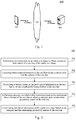
- Fig. 1 illustrates an example system architecture 100 in which a method for performing a structured extraction on a text or an apparatus for performing a structured extraction on a text according to embodiments of the present disclosure may be applied.
- the system architecture 100 may include a terminal device 101, a network 102, and a server 103.
- the network 102 serves as a medium providing a communication link between the terminal device 101 and the server 103.
- the network 102 may include various types of connections, for example, wired or wireless communication links, or optical fiber cables.
- a user may interact with the server 103 via the network 102 by using the terminal device 101, to receive or send a message, etc.
- Various client applications e.g., a document intelligent processing application, and an image processing application
- client applications may be installed on the terminal device 101.
- the terminal device 101 may be hardware or software. When being the hardware, the terminal device 101 may be various electronic devices, including, but not limited to, a smart phone, a tablet computer, a laptop portable computer, a desktop computer and the like. When being the software, the terminal device 101 may be installed in the above listed electronic devices.
- the terminal device may be implemented as a plurality of pieces of software or a plurality of software modules, or as a single piece of software or a single software module, which will not be specifically defined here.
- the server 103 may be a server providing various services.
- the server 103 may perform processing such as an analysis on data such as an entity text image acquired from the terminal device 101, and generate a processing result (e.g., structured information).
- the server 103 may be hardware or software.
- the server 103 may be implemented as a distributed server cluster composed of a plurality of servers, or as a single server.
- the server 103 is the software, the server 103 may be implemented as a plurality of pieces of software or a plurality of software modules (e.g., software or software modules for providing a distributed service), or as a single piece of software or a single software module, which will not be specifically defined here.
- the method for performing a structured extraction on a text provided by the embodiments of the present disclosure is generally performed by the server 103.
- the apparatus for performing a structured extraction on a text is generally provided in the server 103.
- the numbers of the terminal devices, the networks, and the servers in Fig. 1 are merely illustrative. Any numbers of terminal devices, networks, and servers may be provided based on actual requirements. In the situation where the server 103 stores the entity text image, the terminal device 101 and the network 102 may not be provided in the system architecture 100.
- Fig. 2 illustrates a flow 200 of a method for performing a structured extraction on a text according to an embodiment of the present disclosure.
- the method for performing a structured extraction on a text includes the following steps.
- Step 201 performing a text detection on an entity text image to obtain a position and content of a text line of the entity text image.
- an executing body e.g., the server 103 shown in Fig. 1
- the entity text image may be an image obtained by capturing or scanning the entity text, and is commonly an image of various card certificates and bills.
- the text line may refer to a text region in the entity text image, the shape of which is generally quadrilateral. Therefore, the position of the text line may be generally represented by the coordinates of the four corner points thereof.
- the content of the text line may be text content.
- Step 202 extracting multivariate information of the text line based on the position and the content of the text line.
- the executing body may extract the multivariate information of the text line based on the position and the content of the text line.
- the multivariate information may include a plurality of kinds of information of the text line, for example, a geometric feature, a visual feature, and a semantic feature.
- the geometric feature and the visual feature are obtained based on the position of the text line.
- the geometric feature is used to represent the position of the text line.
- the visual feature is used to represent the image visual information of the text line.
- the semantic feature is obtained based on the content of the text line and is used to represent the meaning of the text line.
- Step 203 performing a feature fusion on the multivariate information of the text line to obtain a multimodal fusion feature of the text line.
- the executing body may perform the feature fusion on the multivariate information of the text line to obtain the multimodal fusion feature of the text line.
- the multimodal fusion feature includes the multivariate information of the text line at the same time, and is obtained by stitching the multivariate information of the text line.
- Step 204 performing category and relationship reasoning based on the multimodal fusion feature of the text line to obtain a category and a relationship probability matrix of the text line.
- the above executing body may first determine the category and the relationship of the text line based on the multimodal fusion feature of the text line, and then perform the reasoning based on the category and the relationship of the text line to obtain the category and the relationship probability matrix of the text line.
- the text line of the entity text image is generally divided into four categories: an attribute of a field, a value of the field, a header of a table, and a cell of the table.
- the relationship of the text line may be a relationship between any two text lines.
- the attribute and the value of the field may represent a field corresponding relationship. There is a one-to-one relationship between the attribute of the field and the value of the field.
- the header and the cell of the table may represent a table corresponding relationship. There is a one-to-many relationship between the header of the table and the cell of the table.
- the relationship probability matrix may be used to represent the probability that there is a relationship between two text lines.
- Step 205 constructing structured information of the entity text image based on the category and the relationship probability matrix of the text line.
- the executing body may construct the structured information of the entity text image based on the category and the relationship probability matrix of the text line.
- the structured information may represent the category of the text line and the relationship between the any two text lines. For example, rectangles of different colors are used to frame text lines of different categories, and straight lines of different colors are used to connect any two text lines having different relationships.
- the text detection is first performed on the entity text image to obtain the position and the content of the text line of the entity text image. Then, the multivariate information of the text line is extracted based on the position and the content of the text line. Next, the feature fusion is performed on the multivariate information of the text line to obtain the multimodal fusion feature of the text line. Afterward, the category and relationship reasoning is performed based on the multimodal fusion feature of the text line to obtain the category and the relationship probability matrix of the text line. Finally, the structured information of the entity text image is constructed based on the category and the relationship probability matrix of the text line.
- a method for performing a structured extraction on a text based on category and relationship reasoning is provided, which is suitable for large-scale and automated processing and has a wide application range and a strong versatility.
- Fig. 3 illustrates an exploded flow 300 of the text detection step in Fig. 2 .
- the text detection step may be exploded as follows.
- Step 301 inputting an entity text image into a scene text detection model, and outputting coordinates of four corner points of a text line.
- the executing body may input the entity text image to the scene text detection model and output the coordinates of the four corner points of the text line.
- the scene text detection model may be, for example, an EAST (Efficient and Accuracy Scene Text detection pipeline), which can directly predict a text line having any direction and rectangular shape in the entity text image, and eliminate an unnecessary intermediate step such as candidate aggregation and word segmentation through a single neural network.
- the coordinates of the four corner points that are outputted by the EAST may be ordered in a clockwise direction.
- Step 302 performing an affine transformation on the coordinates of the four corner points of the text line, to generate coordinates of four corner points of a positive rectangle of the text line.
- the executing body may perform the affine transformation on the coordinates of the four corner points of the text line, to eliminate the interference caused by the distortion and print offset of the entity text image and generate the coordinates of the four corner points of the positive rectangle of the text line.
- the coordinates p i of the four corner points of the i th text line may be represented as p ⁇ i .
- Step 303 cutting out an image slice of the text line in the entity text image based on the coordinates of the four corner points of the positive rectangle of the text line.
- the executing body may first search the points corresponding to the coordinates of the four corner points of the positive rectangle of the text line, and then the connecting line of the cut points enclose an ROI region (region of interest), and thus, the image slice of the text line may be obtained.
- an image slice of a corresponding region that is cut out in the entity text image based on the coordinates p ⁇ i of the four corner points of the positive rectangle of the text line may be represented as I i .
- Step 304 inputting the image slice of the text line into a recurrent convolutional neural network, and outputting content of the text line.
- the executing body may input the image slice of the text line into the RCNN (Recurrent Convolutional Neural Network) and output the content of the text line.
- the RCNN Recurrent Convolutional Neural Network
- the content of the i th text line may be represented as c i .
- the RCNN applies a CNN (convolutional neural network) method to a target detection problem, to implement the conversion of the target detection problem through a Region Proposal method and with the help of the good feature extraction and classification performance of the CNN.
- the RCNN may include steps such as a candidate region selection, a CNN feature extraction and classification, a boundary regression, and the like.
- the entity text image is inputted into the scene text detection model, and the coordinates of the four corner points of the text line are outputted. Then, the affine transformation is performed on the coordinates of the four corner points of the text line, to generate the coordinates of the four corner points of the positive rectangle of the text line. Next, the image slice of the text line is cut out in the entity text image based on the coordinates of the four corner points of the positive rectangle of the text line. Finally, the image slice of the text line is inputted into the recurrent convolutional neural network, and the content of the text line is outputted. A method of acquiring the position and the content of the text line in the entity text image is provided.
- the coordinates of the four corner points of the text line are affine-transformed into the coordinates of the four corner points of the positive rectangle, and thus, the interference caused by the distortion and print offset of the entity text image may be eliminated, thereby improving the accuracy of text detection.
- the general relational structure of the entity text image may be pre-defined, thus giving a corresponding mathematical form.
- the relationship structure of the entity text image is predicted using a structured algorithm.
- a valid relationship structure is filtered out through the relationship definition, and structured information is outputted.
- the entity text image is generally composed of a field and a table.
- a structured text is divided into four categories: an attribute of a field, a value of the field, a header of a table, and a cell of the table.
- an attribute of a field a value of the field
- a header of a table a cell of the table.
- R represents a set of corresponding relationships of a field and is represented using the attribute and the value of the field
- M represents a set of corresponding relationships of a table and is represented using a header and a cell of the table
- T represents an element set of all the four categories
- K, V, H and C respectively represent the attribute of the field, the value of the field, the header of the table, and the cell of the table.
- ( v i , v j ) ( v j , v i ), v i is the i th text line, and v j is the j th text line (vertex).
- a ij ⁇ 1 if i ⁇ j and v i v j ⁇ E 0 otherwise .
- the structured form of the entity text image is defined as: V and A, and learned and predicted through a model algorithm in the subsequent process.
- Fig. 4 illustrates an exploded flow 400 of the multivariate information extraction step in Fig. 2 .
- the multivariate information extraction step may be exploded as follows.
- Step 401 determining, based on a position and content of a text line, an input triple of the text line and an input triple of a relationship between any two text lines.
- the executing body may determine the input triple of the text line and the input triple of the relationship between the any two text lines.
- the input triple of the text line may include coordinates of four corner points, the content and an image slice of the text line.
- the input triple of the relationship between the any two text lines may include a difference value between coordinates of four corner points of the any two text lines, an angle difference between center points of the any two text lines, and an Euclidean distance between the center points of the any two text lines.
- An embodiment of the present disclosure proposes a graph-based deep learning algorithm.
- the category V and the relationship probability matrix A of the text line are predicted through a fusion of multivariate information.
- the input of the algorithm is determined based on the result of the text detection. Specifically, the input triple of each text line v i is defined as ( p i , c i , I i ), which includes coordinates of four corner points, content and an image slice of the text line.
- d ij is the difference value between the coordinates of the four corner points of the text line v i and the text line v j on the two-dimensional coordinates
- r ij represents the angle difference between the center points of the text line v i and the text line v j , r ⁇ [- ⁇ , ⁇ ]
- e ij represents the Euclidean distance between the center points of the text line v i and the text line v j .
- the input triple of the text line and the input triple of the relationship between the any two text lines are used as an input of a multimodal feature extraction algorithm, to extract multivariate information of the text line, which is specifically shown in steps 402-405.
- Step 402 determining coordinates of four corner points of the text line as a geometric feature of the text line.
- the executing body may determine the coordinates of the four corner points of the text line as the geometric feature of the text line.
- the geometric feature thereof may be represented as p i .
- Step 403 inputting an entity text image into a convolutional neural network and outputting a visual two-dimensional feature map.
- the executing body may input the entity text image into the CNN, and the CNN performs a convolution operation on the entity text image to output the visual two-dimensional feature map.
- Step 404 calculating a region of the text line on the visual two-dimensional feature map based on the coordinates of the four corner points of the text line, and clipping a visual feature of the text line using a region-of-interest coordinate transform operation.
- the executing body may first find, in the visual two-dimensional feature map, the points corresponding to the coordinates of the four corner points of the text line, to obtain a region enclosed by the connecting line of the points. Then, the executing body may clip the visual feature of the text line using the region-of-interest coordinate transform (TransformROI) operation.
- TransformROI region-of-interest coordinate transform
- Step 405 inputting the content of the text line into a pre-trained model to perform a semantic information extraction, to obtain a semantic feature of the text line.
- the executing body may input the content of the text line into the pre-trained model to perform the semantic information extraction, to obtain the semantic feature of the text line.
- the pre-trained model may be used for the semantic information extraction, for example, specifically for an ERNIE pre-trained under a certain knowledge area (e.g., bill, card certificate or legal contract document).
- the ERNIE is capable of fully representing the text line in terms of vocabulary, syntax, and semantics, to obtain a semantic feature of a high-level understanding.
- the generalized linguistic knowledge domain contained in the ERNIE is transferred to the text structure, such that the scene knowledge and the text semantics can be better understood.
- the understanding for the knowledge is enhanced through the ERNIE, and thus, the structured analysis for vertical categories such as bills, card certificates, documents and the like in various scenarios can be more easily solved.
- the semantic feature obtained by performing the semantic information extraction on the content c i of text line may be represented as ( F i ) s .
- the executing body may perform multimodal stitching and fusion on the geometric feature, the visual feature and the semantic feature of the text line, to generate the multimodal feature of the text line.
- the multimodal features corresponding to the text lines and the input triple of the relationship between the any two text lines are stitched, to generate the relationship feature of the any two text lines, thereby providing a multivariate information fusion method.
- the multimodal stitching and fusion is performed on the geometric feature p i , the visual feature ( F i ) v and the semantic feature ( F i ) s , to generate the multimodal feature F i of the text line.
- E ij ( F i , F j , d ij , r ij , u ij ).
- Fig. 5 illustrates an application scenario of a multivariate information extraction.
- an OCR recognition is performed on a medical bill to obtain geometric information, visual information, and text information.
- the geometric information may be directly used as a geometric feature
- a visual feature can be obtained from the visual information through a CNN
- a semantic feature can be obtained from the text information through an ERNIE.
- a multimodal feature can be obtained by fusing the geometric feature, the visual feature and the semantic feature.
- a relationship probability matrix A can be obtained based on the multimodal feature.
- a node and an edge of an undirected graph are updated based on the relationship probability matrix A, and thus, the determination on a node classification and a connection state can be implemented.
- the input triple of the text line and the input triple of the relationship between the any two text lines are first determined. Then, the coordinates of the four corner points of the text line are determined as the geometric feature of the text line. Next, the entity text image is inputted into the convolutional neural network and the visual two-dimensional feature map is outputted. The region of the text line on the visual two-dimensional feature map is calculated based on the coordinates of the four corner points of the text line, and the visual feature of the text line is clipped using the region-of-interest coordinate transform operation.
- the content of the text line is inputted into the pre-trained model to perform the semantic information extraction, to obtain the semantic feature of the text line.
- the multivariate information of the text line is extracted based on a deep learning method, thereby improving the efficiency and precision of the extraction for the multivariate information.
- the category and the relationship probability matrix of the text line may be calculated using a graph neural network. Based on a large-scale semantic learning model, a deep learning network is built to reason the distribution of a relationship between text lines.
- the multimodal feature of the text line and the relationship feature of the any two text lines are inputted into the graph neural network, and the category and the relationship probability matrix of the text line are outputted.
- the category and relationship reasoning is performed based on the graph neural network, and the category and relationship of the text line are automatically learned, thereby improving the learning efficiency.
- the structure of the graph neural network may be formed by stacking a plurality of identical graph neural network layers.
- the graph neural network may include N graph neural network layers.
- N is a positive integer
- l is a positive integer.
- Fig. 6 illustrates an exploded flow 600 of the category and relationship reasoning step in Fig. 2 .
- the category and relational reasoning step may be exploded as follows.
- Step 601 inputting a relationship feature of any two text lines that is outputted from an ( l - 1) th layer into a multilayer perceptron model, to obtain a relationship probability matrix outputted from an l th layer.
- the input thereof is the multimodal feature F [ l - 1] of the text line and the relationship feature E [ l - 1] of the any two text lines that are outputted from the ( l - 1) th layer, and the output thereof is the multimodal feature F [ l ] of the text line and the relationship feature E [ l ] of the any two text lines.
- the executing body may input the relationship feature E [ l - 1] of the any two text lines that is outputted from the ( l - 1) th layer into the MLP (Multilayer Perceptron), to obtain the relationship probability matrix A [ l ] outputted from the l th layer.
- the MLP is also called an artificial neural network (ANN).
- ANN artificial neural network
- the MLP may have a plurality of hidden layers in the middle, and the simplest MLP contains only one hidden layer. The layers of the MLP are fully connected, i.e., any neuron in a previous layer is connected to all neurons in a next layer.
- Step 602 multiplying a multimodal feature of a text line that is outputted from the ( l - 1) th layer by the relationship probability matrix outputted from the l th layer, and performing a feature aggregation on the text line and a text line associated with the text line according to a probability distribution of the relationship probability matrix outputted from the l th layer, to obtain a multimodal feature of the text line that is hidden at the l th layer.
- the executing body may multiply the multimodal feature F [ l - 1] of the text line that is outputted from the ( l - 1) th layer by the relationship probability matrix A [ l ] outputted from the l th layer, and perform the feature aggregation on the text line and the text line associated with the text line according to the probability distribution of the relationship probability matrix A [ l ] outputted from the l th layer, to obtain the multimodal feature H [ l ] of the text line that is hidden at the l th layer.
- Step 603 multiplying the multimodal feature of the text line that is hidden at the l th layer and the relationship feature of the any two text lines that is outputted from the ( l - 1) th layer by a transpose of the multimodal feature of the text line that is hidden at the l th layer, and obtaining, through the multilayer perceptron model, a relationship feature of the any two text lines that is outputted from the l th layer.
- the above executing body may perform a three-term matrix multiplication on the multimodal feature H [ l ] of the text line that is hidden at the l th layer, the relationship feature E [ l - 1] of the any two text lines that is outputted from the ( l - 1) th layer and the transpose of the multimodal feature H [ l ] of the text line that is hidden at the l th layer, and obtain, through the MLP, the relationship feature E [l] of the any two text lines that is outputted from the l th layer.
- Step 604 using a single-layer gated recurrent unit to update the multimodal feature of the text line that is hidden at the l th layer to the multimodal feature of the text line that is outputted from the ( l - 1) th layer, to obtain a multimodal feature of the text line that is outputted from the l th layer.
- the executing body may use the single-layer GRU (gated recurrent unit) to update the multimodal feature H [ l ] of the text line that is hidden at the l th layer to the multimodal feature F [ l - 1] of the text line that is outputted from the ( l - 1) th layer, to obtain the multimodal feature F [ l ] of the text line that is outputted from the l th layer.
- GRU gated recurrent unit
- the relationship probability matrix A [ l ] outputted from the l th layer is the relationship probability matrix A' of the text line
- the feature F [ l ] of the text line that is outputted from the l th layer is the category V' of the text line.
- Fig. 7 illustrates a structure diagram of a graph neural network layer.
- the relationship feature E [ l - 1] of the any two text lines that is outputted from the ( l - 1) th layer is inputted into the MLP, to obtain the relationship probability matrix A [ l ] outputted from an l th layer.
- a matrix multiplication is performed on the multimodal feature F [ l - 1] of the text line that is outputted from the ( l - 1) th layer and the relationship probability matrix A [ l ] outputted from the l th layer, to obtain the multimodal feature H [ l ] of the text line that is hidden at the l th layer.
- the three-term matrix multiplication is performed on the multimodal feature H [ l ] of the text line that is hidden at the l th layer, the relationship feature E [ l - 1] of the any two text lines that is outputted from the ( l - 1) th layer and the transpose of the multimodal feature H [ l ] of the text line that is hidden at the l th layer.
- the relationship feature E [l] of the any two text lines that is outputted from the l th layer is obtained.
- the single-layer GRU is used to update the multimodal feature H [ l ] of the text line that is hidden at the l th layer to the multimodal feature F [ l - 1] of the text line that is outputted from the ( l - 1) th layer, to obtain the multimodal feature F [ l ] of the text line that is outputted from the l th layer.
- the relationship feature of the any two text lines that is outputted from the ( l - 1) th layer is first inputted into the multilayer perceptron model, to obtain the relationship probability matrix outputted from the l th layer. Then, the multimodal feature of the text line that is outputted from the ( l - 1) th layer is multiplied by the relationship probability matrix outputted from the l th layer, and the feature aggregation is performed on the text line and the text line associated with the text line according to the probability distribution of the relationship probability matrix outputted from the l th layer, to obtain the multimodal feature of the text line that is hidden at the l th layer.
- the multimodal feature of the text line that is hidden at the l th layer and the relationship feature of the any two text lines that is outputted from the ( l - 1) th layer are multiplied by the transpose of the multimodal feature of the text line that is hidden at the l th layer, and the relationship feature of the any two text lines that is outputted from the l th layer is obtained through the multilayer perceptron model.
- the single-layer gated recurrent unit is used to update the multimodal feature of the text line that is hidden at the l th layer to the multimodal feature of the text line that is outputted from the ( l - 1) th layer, to obtain the multimodal feature of the text line that is outputted from the l th layer.
- the category and relationship reasoning is performed based on the graph neural network, and the category and relationship of the text line are automatically learned, thereby improving the learning efficiency.
- Fig. 8 illustrates an exploded flow 800 of the structured information construction step in Fig. 2 .
- the structured information construction step may be exploded as follows.
- Step 801 traversing a text line to determine a category of the i th text line.
- the executing body may traverse the text line V', to determine the category of the i th text line.
- Step 802 extracting an element set greater than a preset threshold value from the i th row of a relationship probability matrix of the text line, and searching a candidate text line relationship set through an element subscript.
- the executing body may preset a threshold value t, where t ⁇ (0,1). Then, the above executing body may extract the element set A ij ⁇ greater than the preset threshold value t from the i th row of the relationship probability matrix A' of the text line, and search the candidate text line relationship set ⁇ ( v i , v j ) ⁇ through the element subscript.
- Step 803 screening a relationship set belonging to a field relationship or a table relationship from the candidate text line relationship set.
- the executing body may first determine the union set ( R U M ) of the field relationship R or the table relationship M , and then screen the relationship set ( R' , M' ) belonging to ( R U M ) from the candidate text line relationship set ⁇ ( v i , v j ) ⁇ .
- Step 804 if there is more than one group of relationships in the i th text line, extracting a new relationship set based on the category of the text line.
- the executing body may extract the new relationship set ( R" , M" ) based on the category of the text line.
- a text line corresponding to an element having a maximum probability value in the i th row A i ⁇ ⁇ of the relationship probability matrix A' of the text line is selected to represent a corresponding relationship with the i th text line.
- the i th text line v i belongs to the header H of the table, that is, v i ⁇ H, all elements A i ⁇ ⁇ of the relationship set are reserved to represent a corresponding relationship with the i th text line.
- the new relationship set may be generated by updating the text line and the relationship in the relationship set.
- Step 805 outputting structured information of a field and a table of the i th text line through mapping of a field relationship and a table relationship in the new relationship set and in combination with a position and content of the i th text line.
- the executing body may output the structured information of the field and the table of the i th text line through the mapping of the field relationship R" and the table relationship M" in the new relationship set ( R", M" ) and in combination with the position and the content of the i th text line.
- the text line is first traversed to determine the category of the i th text line. Then, the element set greater than the preset threshold value is extracted from the i th row of the relationship probability matrix of the text line, and the candidate text line relationship set is searched through the element subscript. Next, the relationship set belonging to the field relationship or the table relationship is screened from the candidate text line relationship set, and if there is more than one group of relationships in the i th text line, the new relationship set is acquired based on the relationship set.
- the structured information of the field and the table of the i th text line is outputted through the mapping of the field relationship and the table relationship in the new relationship set and in combination with the position and the content of the i th text line.
- the method for performing a structured extraction on a text performed based on the category and relationship reasoning has a wide application range and a strong versatility.
- the present disclosure provides an embodiment of an apparatus for performing a structured extraction on a text.
- the embodiment of the apparatus corresponds to the embodiment of the method shown in Fig. 2 , and the apparatus may be specifically applied to various electronic devices.
- the apparatus 900 for performing a structured extraction on a text in this embodiment may include: a detecting module 901, an extracting module 902, a fusing module 903, a reasoning module 904 and a constructing module 905.
- the detecting module 901 is configured to perform a text detection on an entity text image to obtain a position and content of a text line of the entity text image.
- the extracting module 902 is configured to extract multivariate information of the text line based on the position and the content of the text line.
- the fusing module 903 is configured to perform a feature fusion on the multivariate information of the text line to obtain a multimodal fusion feature of the text line.
- the reasoning module 904 is configured to perform category and relationship reasoning based on the multimodal fusion feature of the text line to obtain a category and a relationship probability matrix of the text line.
- the constructing module 905 is configured to construct structured information of the entity text image based on the category and the relationship probability matrix of the text line.
- the detecting module 901 is further configured to: input the entity text image into a scene text detection model, and output coordinates of four corner points of the text line; perform an affine transformation on the coordinates of the four corner points of the text line, to generate coordinates of four corner points of a positive rectangle of the text line; cut out an image slice of the text line in the entity text image based on the coordinates of the four corner points of the positive rectangle of the text line; and input the image slice of the text line into a recurrent convolutional neural network, and output the content of the text line.
- the extracting module 902 includes: a determining sub-module, configured to determine an input triple of the text line and an input triple of a relationship between any two text lines based on the position and the content of the text line, the input triple of the text line including the coordinates of the four corner points, the content and the image slice of the text line, and the input triple of the relationship between the any two text lines including a difference value between coordinates of four corner points of the any two text lines, an angle difference between center points of the any two text lines, and an Euclidean distance between the center points of the any two text lines; and an extracting sub-module, configured to use the input triple of the text line and the input triple of the relationship between the any two text lines as an input of a multimodal feature extraction algorithm to extract the multivariate information of the text line.
- a determining sub-module configured to determine an input triple of the text line and an input triple of a relationship between any two text lines based on the position and the content of the text line, the input triple of the text line including the
- the extracting sub-module is further configured to: determine the coordinates of the four corner points of the text line as a geometric feature of the text line; input the entity text image into a convolutional neural network and output a visual two-dimensional feature map; calculate a region of the text line on the visual two-dimensional feature map based on the coordinates of the four corner points of the text line, and clip a visual feature of the text line using a region-of-interest coordinate transform operation; and input the content of the text line into a pre-trained model to perform a semantic information extraction, to obtain a semantic feature of the text line.
- the fusing module 903 is further configured to: perform multimodal stitching and fusion on the geometric feature, the visual feature and the semantic feature of the text line, to generate a multimodal feature of the text line; and for a combination of the any two text lines, stitch multimodal features corresponding to the text lines and the input triple of the relationship between the any two text lines, to generate a relationship feature of the any two text lines.
- the reasoning module 904 includes: an outputting sub-module, configured to input the multimodal feature of the text line and the relationship feature of the any two text lines into a graph neural network and output the category and the relationship probability matrix of the text line.
- the graph neural network includes N graph neural network layers, and N is a positive integer.
- the outputting sub-module includes: an outputting unit, configured to, for an l th layer of the graph neural network, input a multimodal feature of the text line and a relationship feature of the any two text lines that are outputted from an ( l - 1) th layer into the l th layer to obtain a multimodal feature of the text line and a relationship feature of the any two text lines that are outputted from the l th layer, wherein 1 ⁇ l ⁇ N, and l is a positive integer.
- the outputting unit is further configured to: input the relationship feature of the any two text lines that is outputted from the ( l - 1) th layer into a multilayer perceptron model, to obtain a relationship probability matrix outputted from the l th layer; multiply the multimodal feature of the text line that is outputted from the ( l - 1) th layer by the relationship probability matrix outputted from the l th layer, and perform a feature aggregation on the text line and a text line associated with the text line according to a probability distribution of the relationship probability matrix outputted from the l th layer, to obtain a multimodal feature of the text line that is hidden at the l th layer; multiply the multimodal feature of the text line that is hidden at the l th layer and the relationship feature of the any two text lines that is outputted from the ( l - 1) th layer by a transpose of the multimodal feature of the text line that is hidden at the l th layer, and obtain, through the multilayer percept
- the category and the relationship probability matrix of the text line are outputted from the l th layer.
- the constructing module 905 includes: a traversing sub-module, configured to traverse the text line to determine a category of an i th text line, wherein i is a positive integer; a searching sub-module, configured to extract an element set greater than a preset threshold value from an i th row of the relationship probability matrix of the text line, and search a candidate text line relationship set through an element subscript; a screening sub-module, configured to screen a relationship set belonging to a field relationship or a table relationship from the candidate text line relationship set; an acquiring sub-module, configured to, in response to that there is more than one group of relationships in the i th text line, extract a new relationship set based on the category of the text line; and a mapping sub-module, configured to output structured information of a field and a table of the i th text line through mapping of a field relationship and a table relationship in the new relationship set and in combination with a position and content of the i th
- the acquiring sub-module is further configured to: in response to that the i th text line belongs to a union set of an attribute of the field, a value of the field and a cell of the table, select a text line corresponding to an element having a maximum probability value in the i th row of the relationship probability matrix of the text line to represent a corresponding relationship with the i th text line; in response to that the i th text line belongs to a header of the table, reserve a text line corresponding to all elements in the relationship set to represent a corresponding relationship with the i th text line; and generate the new relationship set based on the corresponding relationship.
- the category of the text line includes at least one of an attribute of a field, a value of the field, a header of a table or a cell of the table.
- the attribute and the value of the field represents a field corresponding relationship
- the header and the cell of the table represents a table corresponding relationship
- the text line represents a vertex of an undirected graph
- the field corresponding relationship and the table corresponding relationship represent an edge of the undirected graph
- the relationship probability matrix is constructed based on the edge of the undirected graph to represent whether there is a relationship between corresponding vertices.
- the present disclosure further provides an electronic device and a readable storage medium.
- Fig. 10 is a block diagram of an electronic device of a method for performing a structured extraction on a text according to embodiments of the present disclosure.
- the electronic device is intended to represent various forms of digital computers such as a laptop computer, a desktop computer, a workstation, a personal digital assistant, a server, a blade server, a mainframe computer, and other appropriate computers.
- the electronic device may also represent various forms of mobile apparatuses such as personal digital processing, a cellular telephone, a smart phone, a wearable device and other similar computing apparatuses.
- the parts shown herein, their connections and relationships, and their functions are only as examples, and not intended to limit implementations of the present disclosure as described and/or claimed herein.
- the electronic device includes: one or more processors 1001, a memory 1002, and interfaces for connecting various components, including high-speed interfaces and low-speed interfaces.
- the various components are connected to each other using different buses, and may be installed on a common motherboard or in other methods as needed.
- the processor may process instructions executed within the electronic device, including instructions stored in or on the memory to display graphic information of GUI on an external input/output apparatus (such as a display device coupled to the interface).
- a plurality of processors and/or a plurality of buses may be used together with a plurality of memories if desired.
- a plurality of electronic devices may be connected, and the devices provide some necessary operations (for example, as a server array, a set of blade servers, or a multi-processor system).
- the devices provide some necessary operations (for example, as a server array, a set of blade servers, or a multi-processor system).
- one processor 1001 is used as an example.
- the memory 1002 is a non-transitory computer readable storage medium provided by the present disclosure.
- the memory stores instructions executable by at least one processor, so that the at least one processor performs the method for performing a structured extraction on a text provided by the present disclosure.
- the non-transitory computer readable storage medium of the present disclosure stores computer instructions for causing a computer to perform the method for performing a structured extraction on a text provided by the present disclosure.
- the memory 1002 may be used to store non-transitory software programs, non-transitory computer executable programs and modules, such as program instructions/modules corresponding to the method for performing a structured extraction on a text in the embodiments of the present disclosure (for example, the detecting module 901, the extracting module 902, and the fusing module 903, the reasoning module 904, and the constructing module 905 shown in Fig. 9 ).
- the processor 1001 executes the non-transitory software programs, instructions, and modules stored in the memory 1002 to execute various functional applications and data processing of the server, that is, to implement the method for performing a structured extraction on a text in the foregoing method embodiment.
- the memory 1002 may include a storage program area and a storage data area, where the storage program area may store an operating system and at least one function required application program; and the storage data area may store data created by the use of the electronic device according to the method for performing a structured extraction on a text, etc.
- the memory 1002 may include a high-speed random access memory, and may also include a non-transitory memory, such as at least one magnetic disk storage device, a flash memory device, or other non-transitory solid-state storage devices.
- the memory 1002 may optionally include memories remotely provided with respect to the processor 1001, and these remote memories may be connected to the electronic device of the method for performing a structured extraction on a text through a network. Examples of the above network include but are not limited to the Internet, intranet, local area network, mobile communication network, and combinations thereof.
- the electronic device of the method for performing a structured extraction on a text may further include: an input apparatus 1003 and an output apparatus 1004.
- the processor 1001, the memory 1002, the input apparatus 1003, and the output apparatus 1004 may be connected through a bus or in other methods. In Fig. 10 , connection through a bus is used as an example.
- the input apparatus 1003 may receive input digital or character information, and generate key signal inputs related to user settings and function control of the electronic device of the method for performing a structured extraction on a text, such as touch screen, keypad, mouse, trackpad, touchpad, pointing stick, one or more mouse buttons, trackball, joystick and other input apparatuses.
- the output apparatus 1004 may include a display device, an auxiliary lighting apparatus (for example, LED), a tactile feedback apparatus (for example, a vibration motor), and the like.
- the display device may include, but is not limited to, a liquid crystal display (LCD), a light emitting diode (LED) display, and a plasma display. In some embodiments, the display device may be a touch screen.
- Various embodiments of the systems and technologies described herein may be implemented in digital electronic circuit systems, integrated circuit systems, dedicated ASICs (application specific integrated circuits), computer hardware, firmware, software, and/or combinations thereof. These various embodiments may include: being implemented in one or more computer programs that can be executed and/or interpreted on a programmable system that includes at least one programmable processor.
- the programmable processor may be a dedicated or general-purpose programmable processor, and may receive data and instructions from a storage system, at least one input apparatus, and at least one output apparatus, and transmit the data and instructions to the storage system, the at least one input apparatus, and the at least one output apparatus.
- These computing programs include machine instructions of the programmable processor and may use high-level processes and/or object-oriented programming languages, and/or assembly/machine languages to implement these computing programs.
- machine readable medium and “computer readable medium” refer to any computer program product, device, and/or apparatus (for example, magnetic disk, optical disk, memory, programmable logic apparatus (PLD)) used to provide machine instructions and/or data to the programmable processor, including machine readable medium that receives machine instructions as machine readable signals.
- machine readable signal refers to any signal used to provide machine instructions and/or data to the programmable processor.
- the systems and technologies described herein may be implemented on a computer, the computer has: a display apparatus for displaying information to the user (for example, CRT (cathode ray tube) or LCD (liquid crystal display) monitor); and a keyboard and a pointing apparatus (for example, mouse or trackball), and the user may use the keyboard and the pointing apparatus to provide input to the computer.
- a display apparatus for displaying information to the user
- LCD liquid crystal display
- keyboard and a pointing apparatus for example, mouse or trackball
- Other types of apparatuses may also be used to provide interaction with the user; for example, feedback provided to the user may be any form of sensory feedback (for example, visual feedback, auditory feedback, or tactile feedback); and any form (including acoustic input, voice input, or tactile input) may be used to receive input from the user.
- the systems and technologies described herein may be implemented in a computing system that includes backend components (e.g., as a data server), or a computing system that includes middleware components (e.g., application server), or a computing system that includes frontend components (for example, a user computer having a graphical user interface or a web browser, through which the user may interact with the implementations of the systems and the technologies described herein), or a computing system that includes any combination of such backend components, middleware components, or frontend components.
- the components of the system may be interconnected by any form or medium of digital data communication (e.g., communication network). Examples of the communication network include: local area networks (LAN), wide area networks (WAN), the Internet, and blockchain networks.
- the computer system may include a client and a server.
- the client and the server are generally far from each other and usually interact through the communication network.
- the relationship between the client and the server is generated by computer programs that run on the corresponding computer and have a client-server relationship with each other.
- An embodiment of the present disclosure further provides a computer program product, including a computer program.
- the computer program when executed by a processor, causes the processor to implement the method for performing a structured extraction on a text according to any embodiment of the present disclosure.
- the text detection is first performed on the entity text image to obtain the position and the content of the text line of the entity text image. Then, the multivariate information of the text line is extracted based on the position and the content of the text line. Next, the feature fusion is performed on the multivariate information of the text line to obtain the multimodal fusion feature of the text line. Afterward, the category and relationship reasoning is performed based on the multimodal fusion feature of the text line to obtain the category and the relationship probability matrix of the text line. Finally, the structured information of the entity text image is constructed based on the category and the relationship probability matrix of the text line.
- the method for performing a structured extraction on a text based on relationship reasoning is provided, which is suitable for large-scale and automated processing and has a wide application range and a strong versatility.
Landscapes
- Engineering & Computer Science (AREA)
- Theoretical Computer Science (AREA)
- Physics & Mathematics (AREA)
- General Physics & Mathematics (AREA)
- Artificial Intelligence (AREA)
- Computational Linguistics (AREA)
- General Engineering & Computer Science (AREA)
- Computer Vision & Pattern Recognition (AREA)
- Data Mining & Analysis (AREA)
- Evolutionary Computation (AREA)
- Software Systems (AREA)
- General Health & Medical Sciences (AREA)
- Health & Medical Sciences (AREA)
- Computing Systems (AREA)
- Multimedia (AREA)
- Mathematical Physics (AREA)
- Life Sciences & Earth Sciences (AREA)
- Biomedical Technology (AREA)
- Biophysics (AREA)
- Molecular Biology (AREA)
- Databases & Information Systems (AREA)
- Geometry (AREA)
- Computer Graphics (AREA)
- Audiology, Speech & Language Pathology (AREA)
- Probability & Statistics with Applications (AREA)
- Medical Informatics (AREA)
- Bioinformatics & Cheminformatics (AREA)
- Evolutionary Biology (AREA)
- Bioinformatics & Computational Biology (AREA)
- Algebra (AREA)
- Computational Mathematics (AREA)
- Mathematical Analysis (AREA)
- Mathematical Optimization (AREA)
- Pure & Applied Mathematics (AREA)
- Image Analysis (AREA)
- Machine Translation (AREA)
- Character Discrimination (AREA)
- Character Input (AREA)
- Information Retrieval, Db Structures And Fs Structures Therefor (AREA)
Abstract
Description
- Embodiments of the present disclosure relate to the field of computer technology, and specifically to the field of artificial intelligence such as computer vision, deep learning, and natural language processing.
- In modern society, in order to accelerate the efficiency of information circulation and transmission, a structured text becomes a mainstream information carrier in daily production instead of the natural language, and is widely used in digital and automated office procedures. Although the achievements of global information digitization are becoming more and more significant, there are still a large number of entity documents in life that need to be recorded, reviewed and digitized. For example, in a financial department, every day, there are a large number of entity bills that are manually entered a plurality of times for reimbursement. In a bank, there are also many personal businesses in which the registration of an identity card is required to bind identity information. With the help of an OCR (optical character recognition) technology, people may recognize and digitize an entity text. These unstructured texts are further processed into storable structured texts, and thus, a structured information extraction for the texts is implemented, and office intelligence of an enterprise is supported, thereby promoting the progress of information digitization.
- According to a text structured information extraction technology, semantic content of an entity text image is extracted, and converted into a structured text, thus implementing the extraction for structured information. At present, the following three schemes are generally adopted.
- 1) Manual entry: this method is based on a manual entry of a person.
- 2) Method based on template matching: this method is generally for a certificate with a simple structure. A to-be-recognized region thereof generally has a fixed geometric layout. By making a standard template file, corresponding text content is extracted at a specified position, and a text recognition is implemented using the OCR technology.
- 3) Strategy search based on a key symbol position: according to this method, information is searched in a surrounding region by positioning a key symbol. For example, around the key symbol "Date," the text "December 12, 2020" is searched through a strategy, and used as the attribute value of the field "Date."
- Embodiments of the present disclosure propose a method and apparatus for performing a structured extraction on a text, a device, a storage medium, and a computer program product.
- In a first aspect, an embodiment of the present disclosure provides a method for performing a structured extraction on a text, including: performing a text detection on an entity text image to obtain a position and content of a text line of the entity text image; extracting multivariate information of the text line based on the position and the content of the text line; performing a feature fusion on the multivariate information of the text line to obtain a multimodal fusion feature of the text line; performing category and relationship reasoning based on the multimodal fusion feature of the text line to obtain a category and a relationship probability matrix of the text line; and constructing structured information of the entity text image based on the category and the relationship probability matrix of the text line.
- In a second aspect, an embodiment of the present disclosure provides an apparatus for performing a structured extraction on a text, including: a detecting module, configured to perform a text detection on an entity text image to obtain a position and content of a text line of the entity text image; an extracting module, configured to extract multivariate information of the text line based on the position and the content of the text line; a fusing module, configured to perform a feature fusion on the multivariate information of the text line to obtain a multimodal fusion feature of the text line; a reasoning module, configured to perform category and relationship reasoning based on the multimodal fusion feature of the text line to obtain a category and a relationship probability matrix of the text line; and a constructing module, configured to construct structured information of the entity text image based on the category and the relationship probability matrix of the text line.
- In a third aspect, an embodiment of the present disclosure provides an electronic device, including: at least one processor; and a storage device communicated with the at least one processor. The storage device stores an instruction executable by the at least one processor, and the instruction when executed by the at least one processor, causes the at least one processor to perform the method according to any implementation in the first aspect.
- In a fourth aspect, an embodiment of the present disclosure provides a non-transitory computer readable storage medium storing a computer instruction. The computer instruction is used to cause a computer to perform the method according to any implementation in the first aspect.
- In a fifth aspect, an embodiment of the present disclosure provides a computer program product, including a computer program. The computer program, when executed by a processor, causes the processor to implement the method according to any implementation in the first aspect.
- According to the method and apparatus for performing a structured extraction on a text, the device and the storage medium provided in embodiments of the present disclosure, the text detection is first performed on the entity text image to obtain the position and the content of the text line of the entity text image. Then, the multivariate information of the text line is extracted based on the position and the content of the text line. Next, the feature fusion is performed on the multivariate information of the text line to obtain the multimodal fusion feature of the text line. Afterward, the category and relationship reasoning is performed based on the multimodal fusion feature of the text line to obtain the category and the relationship probability matrix of the text line. Finally, the structured information of the entity text image is constructed based on the category and the relationship probability matrix of the text line. The method for performing a structured extraction on a text based on relationship reasoning is provided, which is suitable for large-scale and automated processing and has a wide application range and a strong versatility.
- It should be understood that the content described in this section is not intended to identify key or important features of the embodiments of the present disclosure, and is not used to limit the scope of the present disclosure. Other features of the present disclosure will be easily understood through the following description.
- After reading detailed descriptions for non-limiting embodiments given with reference to the following accompanying drawings, other features, objectives and advantages of the present disclosure will be more apparent. The accompanying drawings are used for a better understanding of the scheme, and do not constitute a limitation to the present disclosure.
-
Fig. 1 illustrates an example system architecture in which some embodiments of the present disclosure may be applied; -
Fig. 2 is a flowchart of a method for performing a structured extraction on a text according to an embodiment of the present disclosure; -
Fig. 3 is an exploded flow diagram of a text detection step inFig. 2 ; -
Fig. 4 is an exploded flow diagram of a multivariate information extraction step inFig. 2 ; -
Fig. 5 is an application scenario of a multivariate information extraction; -
Fig. 6 is an exploded flow diagram of a category and relationship reasoning step inFig. 2 ; -
Fig. 7 is a structure diagram of a graph neural network layer; -
Fig. 8 is an exploded flow diagram of a structured information construction step inFig. 2 ; -
Fig. 9 is a schematic structural diagram of an apparatus for performing a structured extraction on a text according to an embodiment of the present disclosure; and -
Fig. 10 is a block diagram of an electronic device adapted to implement a method for performing a structured extraction on a text according to embodiments of the present disclosure. - Example embodiments of the present disclosure are described below in combination with accompanying drawings, and various details of embodiments of the present disclosure are included in the description to facilitate understanding, and should be considered as examples only. Accordingly, it should be recognized by one of ordinary skill in the art that various changes and modifications may be made to the embodiments described herein without departing from the scope and spirit of the present disclosure. Also, for clarity and conciseness, descriptions for well-known functions and structures are omitted in the following description.
- It should be noted that the embodiments in the present disclosure and the features in the embodiments may be combined with each other on a non-conflict basis. The present disclosure will be described below in detail with reference to the accompanying drawings and in combination with the embodiments.
-
Fig. 1 illustrates anexample system architecture 100 in which a method for performing a structured extraction on a text or an apparatus for performing a structured extraction on a text according to embodiments of the present disclosure may be applied. - As shown in
Fig. 1 , thesystem architecture 100 may include aterminal device 101, anetwork 102, and aserver 103. Thenetwork 102 serves as a medium providing a communication link between theterminal device 101 and theserver 103. Thenetwork 102 may include various types of connections, for example, wired or wireless communication links, or optical fiber cables. - A user may interact with the
server 103 via thenetwork 102 by using theterminal device 101, to receive or send a message, etc. Various client applications (e.g., a document intelligent processing application, and an image processing application) may be installed on theterminal device 101. - The
terminal device 101 may be hardware or software. When being the hardware, theterminal device 101 may be various electronic devices, including, but not limited to, a smart phone, a tablet computer, a laptop portable computer, a desktop computer and the like. When being the software, theterminal device 101 may be installed in the above listed electronic devices. The terminal device may be implemented as a plurality of pieces of software or a plurality of software modules, or as a single piece of software or a single software module, which will not be specifically defined here. - The
server 103 may be a server providing various services. For example, theserver 103 may perform processing such as an analysis on data such as an entity text image acquired from theterminal device 101, and generate a processing result (e.g., structured information). - It should be noted that the
server 103 may be hardware or software. When theserver 103 is the hardware, theserver 103 may be implemented as a distributed server cluster composed of a plurality of servers, or as a single server. When theserver 103 is the software, theserver 103 may be implemented as a plurality of pieces of software or a plurality of software modules (e.g., software or software modules for providing a distributed service), or as a single piece of software or a single software module, which will not be specifically defined here. - It should be noted that the method for performing a structured extraction on a text provided by the embodiments of the present disclosure is generally performed by the
server 103. Correspondingly, the apparatus for performing a structured extraction on a text is generally provided in theserver 103. - It should be appreciated that the numbers of the terminal devices, the networks, and the servers in
Fig. 1 are merely illustrative. Any numbers of terminal devices, networks, and servers may be provided based on actual requirements. In the situation where theserver 103 stores the entity text image, theterminal device 101 and thenetwork 102 may not be provided in thesystem architecture 100. - Further referring to
Fig. 2, Fig. 2 illustrates aflow 200 of a method for performing a structured extraction on a text according to an embodiment of the present disclosure. The method for performing a structured extraction on a text includes the following steps. -
Step 201, performing a text detection on an entity text image to obtain a position and content of a text line of the entity text image. - In this embodiment, an executing body (e.g., the
server 103 shown inFig. 1 ) of the method for performing a structured extraction on a text may acquire the entity text image, and perform the text detection on the entity text image using a text detection technology such as an OCR technology, to obtain the position and the content of the text line of the entity text image. Here, the entity text image may be an image obtained by capturing or scanning the entity text, and is commonly an image of various card certificates and bills. The text line may refer to a text region in the entity text image, the shape of which is generally quadrilateral. Therefore, the position of the text line may be generally represented by the coordinates of the four corner points thereof. The content of the text line may be text content. -
Step 202, extracting multivariate information of the text line based on the position and the content of the text line. - In this embodiment, the executing body may extract the multivariate information of the text line based on the position and the content of the text line. Here, the multivariate information may include a plurality of kinds of information of the text line, for example, a geometric feature, a visual feature, and a semantic feature. The geometric feature and the visual feature are obtained based on the position of the text line. The geometric feature is used to represent the position of the text line. The visual feature is used to represent the image visual information of the text line. The semantic feature is obtained based on the content of the text line and is used to represent the meaning of the text line.
-
Step 203, performing a feature fusion on the multivariate information of the text line to obtain a multimodal fusion feature of the text line. - In this embodiment, the executing body may perform the feature fusion on the multivariate information of the text line to obtain the multimodal fusion feature of the text line. Here, the multimodal fusion feature includes the multivariate information of the text line at the same time, and is obtained by stitching the multivariate information of the text line.
-
Step 204, performing category and relationship reasoning based on the multimodal fusion feature of the text line to obtain a category and a relationship probability matrix of the text line. - In this embodiment, the above executing body may first determine the category and the relationship of the text line based on the multimodal fusion feature of the text line, and then perform the reasoning based on the category and the relationship of the text line to obtain the category and the relationship probability matrix of the text line. Here, the text line of the entity text image is generally divided into four categories: an attribute of a field, a value of the field, a header of a table, and a cell of the table. The relationship of the text line may be a relationship between any two text lines. The attribute and the value of the field may represent a field corresponding relationship. There is a one-to-one relationship between the attribute of the field and the value of the field. The header and the cell of the table may represent a table corresponding relationship. There is a one-to-many relationship between the header of the table and the cell of the table. The relationship probability matrix may be used to represent the probability that there is a relationship between two text lines.
-
Step 205, constructing structured information of the entity text image based on the category and the relationship probability matrix of the text line. - In this embodiment, the executing body may construct the structured information of the entity text image based on the category and the relationship probability matrix of the text line. Here, the structured information may represent the category of the text line and the relationship between the any two text lines. For example, rectangles of different colors are used to frame text lines of different categories, and straight lines of different colors are used to connect any two text lines having different relationships.
- According to the method for performing a structured extraction on a text provided in the embodiment of the present disclosure, the text detection is first performed on the entity text image to obtain the position and the content of the text line of the entity text image. Then, the multivariate information of the text line is extracted based on the position and the content of the text line. Next, the feature fusion is performed on the multivariate information of the text line to obtain the multimodal fusion feature of the text line. Afterward, the category and relationship reasoning is performed based on the multimodal fusion feature of the text line to obtain the category and the relationship probability matrix of the text line. Finally, the structured information of the entity text image is constructed based on the category and the relationship probability matrix of the text line. A method for performing a structured extraction on a text based on category and relationship reasoning is provided, which is suitable for large-scale and automated processing and has a wide application range and a strong versatility.
- For ease of understanding, the steps of the method for performing a structured extraction on a text that are provided in
Fig. 2 are respectively described in detail below. It should be noted that the following decomposition method is only an example and is not specifically limited, and other feasible decomposition methods are also applicable. - Further referring to
Fig. 3, Fig. 3 illustrates an explodedflow 300 of the text detection step inFig. 2 . The text detection step may be exploded as follows. -
Step 301, inputting an entity text image into a scene text detection model, and outputting coordinates of four corner points of a text line. - In this embodiment, the executing body may input the entity text image to the scene text detection model and output the coordinates of the four corner points of the text line.
- Here, the scene text detection model may be, for example, an EAST (Efficient and Accuracy Scene Text detection pipeline), which can directly predict a text line having any direction and rectangular shape in the entity text image, and eliminate an unnecessary intermediate step such as candidate aggregation and word segmentation through a single neural network. The coordinates of the four corner points that are outputted by the EAST may be ordered in a clockwise direction. A set consisting of coordinates of four corner points of all text lines may be represented as P = {pi ; i ∈ N*}. Here, four corner points of the ith text line may be represented as pi = {(xj,yj ); j ∈ (1,4)}.
-
Step 302, performing an affine transformation on the coordinates of the four corner points of the text line, to generate coordinates of four corner points of a positive rectangle of the text line. - In this embodiment, in order to continue to acquire the content of the text line, the executing body may perform the affine transformation on the coordinates of the four corner points of the text line, to eliminate the interference caused by the distortion and print offset of the entity text image and generate the coordinates of the four corner points of the positive rectangle of the text line. Here, for the coordinates pi of the four corner points of the ith text line, the coordinates of the four corner points of the positive rectangle of the ith text line may be represented as p̂i .
-
Step 303, cutting out an image slice of the text line in the entity text image based on the coordinates of the four corner points of the positive rectangle of the text line. - In this embodiment, the executing body may first search the points corresponding to the coordinates of the four corner points of the positive rectangle of the text line, and then the connecting line of the cut points enclose an ROI region (region of interest), and thus, the image slice of the text line may be obtained. Here, for the ith text line, an image slice of a corresponding region that is cut out in the entity text image based on the coordinates p̂i of the four corner points of the positive rectangle of the text line may be represented as Ii .
-
Step 304, inputting the image slice of the text line into a recurrent convolutional neural network, and outputting content of the text line. - In this embodiment, the executing body may input the image slice of the text line into the RCNN (Recurrent Convolutional Neural Network) and output the content of the text line. Here, for the image slice Ii of the ith text line, the content of the ith text line may be represented as ci.
- Here, the RCNN applies a CNN (convolutional neural network) method to a target detection problem, to implement the conversion of the target detection problem through a Region Proposal method and with the help of the good feature extraction and classification performance of the CNN. The RCNN may include steps such as a candidate region selection, a CNN feature extraction and classification, a boundary regression, and the like.
- According to the method for detecting a text provided in the embodiment of the present disclosure, first, the entity text image is inputted into the scene text detection model, and the coordinates of the four corner points of the text line are outputted. Then, the affine transformation is performed on the coordinates of the four corner points of the text line, to generate the coordinates of the four corner points of the positive rectangle of the text line. Next, the image slice of the text line is cut out in the entity text image based on the coordinates of the four corner points of the positive rectangle of the text line. Finally, the image slice of the text line is inputted into the recurrent convolutional neural network, and the content of the text line is outputted. A method of acquiring the position and the content of the text line in the entity text image is provided. Moreover, before the content of the text line is acquired, the coordinates of the four corner points of the text line are affine-transformed into the coordinates of the four corner points of the positive rectangle, and thus, the interference caused by the distortion and print offset of the entity text image may be eliminated, thereby improving the accuracy of text detection.
- In order to facilitate a structured analysis, the general relational structure of the entity text image may be pre-defined, thus giving a corresponding mathematical form. Next, the relationship structure of the entity text image is predicted using a structured algorithm. Finally, a valid relationship structure is filtered out through the relationship definition, and structured information is outputted.
- Generally, the entity text image is generally composed of a field and a table. In order to better analyze the layout structure of the entity text image, a structured text is divided into four categories: an attribute of a field, a value of the field, a header of a table, and a cell of the table. In addition, it is assumed that there is a corresponding relationship between the attribute and the value of the field, there is a corresponding relationship between the header and the cell of the table that are in the same column, and there is no other combination of relationships except the above. According to the above rule, the structure of the entity text image is defined as follows:

- Here, R represents a set of corresponding relationships of a field and is represented using the attribute and the value of the field, M represents a set of corresponding relationships of a table and is represented using a header and a cell of the table, T represents an element set of all the four categories, and K, V, H and C respectively represent the attribute of the field, the value of the field, the header of the table, and the cell of the table.
- Further, an undirected graph G=(V, E) is defined for the structure of the entity text image. Here, a vertex V = T, that is, the text line represents the vertex of the undirected graph, which is collectively referred to as a text line. A set of edges E = (R U M), that is, the corresponding relationship of the field and the corresponding relationship of the table represent edges of the undirected graph. As can be seen from the definition of the undirected graph, (vi, vj )=(vj , vi ), vi is the ith text line, and vj is the jth text line (vertex).
- Further, a two-dimensional relationship probability matrix A ∈ N 2; Aij ∈ {0,1} is constructed for E, which represents whether there is a relationship between corresponding text lines (vertices). Here, 1 represents that there is a relationship, and 0 represents that there is no relationship. Since G is an undirected graph, and A is a symmetric matrix, the relationship probability matrix is defined as follows:

- In summary, the structured form of the entity text image is defined as: V and A, and learned and predicted through a model algorithm in the subsequent process.
- Further referring to
Fig. 4, Fig. 4 illustrates an explodedflow 400 of the multivariate information extraction step inFig. 2 . The multivariate information extraction step may be exploded as follows. -
Step 401, determining, based on a position and content of a text line, an input triple of the text line and an input triple of a relationship between any two text lines. - In this embodiment, based on the position and the content of the text line, the executing body may determine the input triple of the text line and the input triple of the relationship between the any two text lines.
- Here, the input triple of the text line may include coordinates of four corner points, the content and an image slice of the text line. The input triple of the relationship between the any two text lines may include a difference value between coordinates of four corner points of the any two text lines, an angle difference between center points of the any two text lines, and an Euclidean distance between the center points of the any two text lines.
- An embodiment of the present disclosure proposes a graph-based deep learning algorithm. The category V and the relationship probability matrix A of the text line are predicted through a fusion of multivariate information. The input of the algorithm is determined based on the result of the text detection. Specifically, the input triple of each text line vi is defined as (pi, ci, Ii ), which includes coordinates of four corner points, content and an image slice of the text line. In addition, the input triple of the relationship (vi , vj ) between any two text lines is defined as (dij , rij , uij ), the form of which is as follows:

- Here, dij is the difference value between the coordinates of the four corner points of the text line vi and the text line vj on the two-dimensional coordinates, rij represents the angle difference between the center points of the text line vi and the text line vj , r ∈ [-π, π], and eij represents the Euclidean distance between the center points of the text line vi and the text line vj.
- Next, the input triple of the text line and the input triple of the relationship between the any two text lines are used as an input of a multimodal feature extraction algorithm, to extract multivariate information of the text line, which is specifically shown in steps 402-405.
-
Step 402, determining coordinates of four corner points of the text line as a geometric feature of the text line. - In this embodiment, the executing body may determine the coordinates of the four corner points of the text line as the geometric feature of the text line. Here, for the i th text line vi , the geometric feature thereof may be represented as pi .
-
Step 403, inputting an entity text image into a convolutional neural network and outputting a visual two-dimensional feature map. - In this embodiment, the executing body may input the entity text image into the CNN, and the CNN performs a convolution operation on the entity text image to output the visual two-dimensional feature map.
-
Step 404, calculating a region of the text line on the visual two-dimensional feature map based on the coordinates of the four corner points of the text line, and clipping a visual feature of the text line using a region-of-interest coordinate transform operation. - In this embodiment, the executing body may first find, in the visual two-dimensional feature map, the points corresponding to the coordinates of the four corner points of the text line, to obtain a region enclosed by the connecting line of the points. Then, the executing body may clip the visual feature of the text line using the region-of-interest coordinate transform (TransformROI) operation. Here, for the i th text line vi , the visual feature thereof may be represented as (Fi ) v .
-
Step 405, inputting the content of the text line into a pre-trained model to perform a semantic information extraction, to obtain a semantic feature of the text line. - In this embodiment, the executing body may input the content of the text line into the pre-trained model to perform the semantic information extraction, to obtain the semantic feature of the text line.
- Here, the pre-trained model may be used for the semantic information extraction, for example, specifically for an ERNIE pre-trained under a certain knowledge area (e.g., bill, card certificate or legal contract document). The ERNIE is capable of fully representing the text line in terms of vocabulary, syntax, and semantics, to obtain a semantic feature of a high-level understanding. Thus, it is implemented that the generalized linguistic knowledge domain contained in the ERNIE is transferred to the text structure, such that the scene knowledge and the text semantics can be better understood. The understanding for the knowledge is enhanced through the ERNIE, and thus, the structured analysis for vertical categories such as bills, card certificates, documents and the like in various scenarios can be more easily solved. Here, for the i th text line vi , the semantic feature obtained by performing the semantic information extraction on the content ci of text line may be represented as (Fi ) s .
- Further, the executing body may perform multimodal stitching and fusion on the geometric feature, the visual feature and the semantic feature of the text line, to generate the multimodal feature of the text line. For the combination of the any two text lines, the multimodal features corresponding to the text lines and the input triple of the relationship between the any two text lines are stitched, to generate the relationship feature of the any two text lines, thereby providing a multivariate information fusion method. Here, for the i th text line vi , the multimodal stitching and fusion is performed on the geometric feature pi , the visual feature (Fi ) v and the semantic feature (Fi ) s , to generate the multimodal feature Fi of the text line. For the i th text line vi and a j th text line vj, the relationship feature thereof may be represented as Eij = (Fi , Fj , dij , rij , uij ).
- Further referring to
Fig. 5, Fig. 5 illustrates an application scenario of a multivariate information extraction. As shown inFig. 5 , an OCR recognition is performed on a medical bill to obtain geometric information, visual information, and text information. The geometric information may be directly used as a geometric feature, a visual feature can be obtained from the visual information through a CNN, and a semantic feature can be obtained from the text information through an ERNIE. A multimodal feature can be obtained by fusing the geometric feature, the visual feature and the semantic feature. A relationship probability matrix A can be obtained based on the multimodal feature. A node and an edge of an undirected graph are updated based on the relationship probability matrix A, and thus, the determination on a node classification and a connection state can be implemented. - According to the multivariate information extraction method provided in the embodiment of the present disclosure, based on the position and the content of the text line, the input triple of the text line and the input triple of the relationship between the any two text lines are first determined. Then, the coordinates of the four corner points of the text line are determined as the geometric feature of the text line. Next, the entity text image is inputted into the convolutional neural network and the visual two-dimensional feature map is outputted. The region of the text line on the visual two-dimensional feature map is calculated based on the coordinates of the four corner points of the text line, and the visual feature of the text line is clipped using the region-of-interest coordinate transform operation. Finally, the content of the text line is inputted into the pre-trained model to perform the semantic information extraction, to obtain the semantic feature of the text line. The multivariate information of the text line is extracted based on a deep learning method, thereby improving the efficiency and precision of the extraction for the multivariate information.
- In practical application, the category and the relationship probability matrix of the text line may be calculated using a graph neural network. Based on a large-scale semantic learning model, a deep learning network is built to reason the distribution of a relationship between text lines.
- Specifically, the multimodal feature of the text line and the relationship feature of the any two text lines are inputted into the graph neural network, and the category and the relationship probability matrix of the text line are outputted. The category and relationship reasoning is performed based on the graph neural network, and the category and relationship of the text line are automatically learned, thereby improving the learning efficiency.
- Here, the structure of the graph neural network may be formed by stacking a plurality of identical graph neural network layers. For example, the graph neural network may include N graph neural network layers. At this time, for the l th layer of the graph neural network, the multimodal feature of the text line and the relationship feature of the any two text lines that are outputted from the (l - 1)th layer are inputted into the l th layer, to obtain the multimodal feature of the text line and the relationship feature of the any two text lines that are outputted from the l th layer. Here, N is a positive integer, 1 ≤ l < N, and l is a positive integer.
- Further referring to
Fig. 6, Fig. 6 illustrates an explodedflow 600 of the category and relationship reasoning step inFig. 2 . The category and relational reasoning step may be exploded as follows. -
Step 601, inputting a relationship feature of any two text lines that is outputted from an (l - 1)th layer into a multilayer perceptron model, to obtain a relationship probability matrix outputted from an l th layer. - In this embodiment, for the l th layer of a graph neural network, the input thereof is the multimodal feature F[l - 1] of the text line and the relationship feature E[l - 1] of the any two text lines that are outputted from the (l - 1)th layer, and the output thereof is the multimodal feature F[l] of the text line and the relationship feature E[l] of the any two text lines.
- Specifically, the executing body may input the relationship feature E[l - 1] of the any two text lines that is outputted from the (l - 1)th layer into the MLP (Multilayer Perceptron), to obtain the relationship probability matrix A[l] outputted from the l th layer. Here, the MLP is also called an artificial neural network (ANN). In addition to the input layer and the output layer, the MLP may have a plurality of hidden layers in the middle, and the simplest MLP contains only one hidden layer. The layers of the MLP are fully connected, i.e., any neuron in a previous layer is connected to all neurons in a next layer.
-
Step 602, multiplying a multimodal feature of a text line that is outputted from the (l - 1)th layer by the relationship probability matrix outputted from the l th layer, and performing a feature aggregation on the text line and a text line associated with the text line according to a probability distribution of the relationship probability matrix outputted from the l th layer, to obtain a multimodal feature of the text line that is hidden at the l th layer. - In this embodiment, the executing body may multiply the multimodal feature F[l - 1] of the text line that is outputted from the (l - 1)th layer by the relationship probability matrix A [l] outputted from the l th layer, and perform the feature aggregation on the text line and the text line associated with the text line according to the probability distribution of the relationship probability matrix A [l] outputted from the l th layer, to obtain the multimodal feature H[l] of the text line that is hidden at the l th layer.
-
Step 603, multiplying the multimodal feature of the text line that is hidden at the l th layer and the relationship feature of the any two text lines that is outputted from the (l - 1)th layer by a transpose of the multimodal feature of the text line that is hidden at the l th layer, and obtaining, through the multilayer perceptron model, a relationship feature of the any two text lines that is outputted from the l th layer. - In this embodiment, the above executing body may perform a three-term matrix multiplication on the multimodal feature H[l] of the text line that is hidden at the l th layer, the relationship feature E[l - 1] of the any two text lines that is outputted from the (l - 1)th layer and the transpose of the multimodal feature H[l] of the text line that is hidden at the l th layer, and obtain, through the MLP, the relationship feature E[l] of the any two text lines that is outputted from the l th layer.
-
Step 604, using a single-layer gated recurrent unit to update the multimodal feature of the text line that is hidden at the l th layer to the multimodal feature of the text line that is outputted from the (l - 1)th layer, to obtain a multimodal feature of the text line that is outputted from the l th layer. - In this embodiment, the executing body may use the single-layer GRU (gated recurrent unit) to update the multimodal feature H[l] of the text line that is hidden at the l th layer to the multimodal feature F[l - 1] of the text line that is outputted from the (l - 1)th layer, to obtain the multimodal feature F[l] of the text line that is outputted from the l th layer.
- Here, if l = N, it indicates that the l th layer is the last layer of the graph neural network. Accordingly, the relationship probability matrix A [l] outputted from the l th layer is the relationship probability matrix A' of the text line, and the feature F[l] of the text line that is outputted from the l th layer is the category V' of the text line.
- Further referring to
Fig. 7, Fig. 7 illustrates a structure diagram of a graph neural network layer. As shown inFig. 7 , the relationship feature E[l - 1] of the any two text lines that is outputted from the (l - 1)th layer is inputted into the MLP, to obtain the relationship probability matrix A [l] outputted from an l th layer. A matrix multiplication is performed on the multimodal feature F[l - 1] of the text line that is outputted from the (l - 1)th layer and the relationship probability matrix A [l] outputted from the l th layer, to obtain the multimodal feature H[l] of the text line that is hidden at the l th layer. The three-term matrix multiplication is performed on the multimodal feature H[l] of the text line that is hidden at the l th layer, the relationship feature E[l - 1] of the any two text lines that is outputted from the (l - 1)th layer and the transpose of the multimodal feature H[l] of the text line that is hidden at the l th layer. Through the MLP, the relationship feature E[l] of the any two text lines that is outputted from the l th layer is obtained. The single-layer GRU is used to update the multimodal feature H[l] of the text line that is hidden at the l th layer to the multimodal feature F[l - 1] of the text line that is outputted from the (l - 1)th layer, to obtain the multimodal feature F[l] of the text line that is outputted from the l th layer. - According to the category and relationship reasoning method provided in the embodiment of the present disclosure, the relationship feature of the any two text lines that is outputted from the (l - 1)th layer is first inputted into the multilayer perceptron model, to obtain the relationship probability matrix outputted from the l th layer. Then, the multimodal feature of the text line that is outputted from the (l - 1)th layer is multiplied by the relationship probability matrix outputted from the l th layer, and the feature aggregation is performed on the text line and the text line associated with the text line according to the probability distribution of the relationship probability matrix outputted from the l th layer, to obtain the multimodal feature of the text line that is hidden at the l th layer. Next, the multimodal feature of the text line that is hidden at the l th layer and the relationship feature of the any two text lines that is outputted from the (l - 1)th layer are multiplied by the transpose of the multimodal feature of the text line that is hidden at the l th layer, and the relationship feature of the any two text lines that is outputted from the l th layer is obtained through the multilayer perceptron model. Finally, the single-layer gated recurrent unit is used to update the multimodal feature of the text line that is hidden at the l th layer to the multimodal feature of the text line that is outputted from the (l - 1)th layer, to obtain the multimodal feature of the text line that is outputted from the l th layer. The category and relationship reasoning is performed based on the graph neural network, and the category and relationship of the text line are automatically learned, thereby improving the learning efficiency.
- Further referring to
Fig. 8, Fig. 8 illustrates an explodedflow 800 of the structured information construction step inFig. 2 . The structured information construction step may be exploded as follows. -
Step 801, traversing a text line to determine a category of the i th text line. - In this embodiment, the executing body may traverse the text line V', to determine the category of the i th text line.
-
Step 802, extracting an element set greater than a preset threshold value from the i th row of a relationship probability matrix of the text line, and searching a candidate text line relationship set through an element subscript. - In this embodiment, the executing body may preset a threshold value t, where t ∈ (0,1). Then, the above executing body may extract the element set

-
Step 803, screening a relationship set belonging to a field relationship or a table relationship from the candidate text line relationship set. - In this embodiment, the executing body may first determine the union set (R U M) of the field relationship R or the table relationship M, and then screen the relationship set (R', M') belonging to (R U M) from the candidate text line relationship set {(vi, vj )}.
-
Step 804, if there is more than one group of relationships in the i th text line, extracting a new relationship set based on the category of the text line. - In this embodiment, if there is more than one group of relationships in the i th text line, the executing body may extract the new relationship set (R", M") based on the category of the text line.
- In some embodiments, if the i th text line vi belongs to the union set of an attribute K of a field, a value V of the field and a cell C of a table, that is, vi ∈ (K U V U C), a text line corresponding to an element having a maximum probability value in the i th row


-
Step 805, outputting structured information of a field and a table of the i th text line through mapping of a field relationship and a table relationship in the new relationship set and in combination with a position and content of the i th text line. - In this embodiment, the executing body may output the structured information of the field and the table of the i th text line through the mapping of the field relationship R" and the table relationship M" in the new relationship set (R", M") and in combination with the position and the content of the i th text line.
- According to the structured information construction method provided in the embodiment of the present disclosure, the text line is first traversed to determine the category of the i th text line. Then, the element set greater than the preset threshold value is extracted from the i th row of the relationship probability matrix of the text line, and the candidate text line relationship set is searched through the element subscript. Next, the relationship set belonging to the field relationship or the table relationship is screened from the candidate text line relationship set, and if there is more than one group of relationships in the i th text line, the new relationship set is acquired based on the relationship set. Finally, the structured information of the field and the table of the i th text line is outputted through the mapping of the field relationship and the table relationship in the new relationship set and in combination with the position and the content of the i th text line. The method for performing a structured extraction on a text performed based on the category and relationship reasoning has a wide application range and a strong versatility.
- Further referring to
Fig. 9 , as an implementation of the method shown in the above drawings, the present disclosure provides an embodiment of an apparatus for performing a structured extraction on a text. The embodiment of the apparatus corresponds to the embodiment of the method shown inFig. 2 , and the apparatus may be specifically applied to various electronic devices. - As shown in
Fig. 9 , theapparatus 900 for performing a structured extraction on a text in this embodiment may include: a detectingmodule 901, an extractingmodule 902, afusing module 903, areasoning module 904 and aconstructing module 905. Here, the detectingmodule 901 is configured to perform a text detection on an entity text image to obtain a position and content of a text line of the entity text image. The extractingmodule 902 is configured to extract multivariate information of the text line based on the position and the content of the text line. Thefusing module 903 is configured to perform a feature fusion on the multivariate information of the text line to obtain a multimodal fusion feature of the text line. Thereasoning module 904 is configured to perform category and relationship reasoning based on the multimodal fusion feature of the text line to obtain a category and a relationship probability matrix of the text line. Theconstructing module 905 is configured to construct structured information of the entity text image based on the category and the relationship probability matrix of the text line. - In this embodiment, for specific processes of the detecting
module 901, the extractingmodule 902, thefusing module 903, thereasoning module 904 and theconstructing module 905 in theapparatus 900 for performing a structured extraction on a text, and their technical effects, reference may be made to relative descriptions of steps 201-205 in the corresponding embodiment ofFig. 2 respectively, which will not be repeatedly described here. - In some alternative implementations of this embodiment, the detecting
module 901 is further configured to: input the entity text image into a scene text detection model, and output coordinates of four corner points of the text line; perform an affine transformation on the coordinates of the four corner points of the text line, to generate coordinates of four corner points of a positive rectangle of the text line; cut out an image slice of the text line in the entity text image based on the coordinates of the four corner points of the positive rectangle of the text line; and input the image slice of the text line into a recurrent convolutional neural network, and output the content of the text line. - In some alternative implementations of this embodiment, the extracting
module 902 includes: a determining sub-module, configured to determine an input triple of the text line and an input triple of a relationship between any two text lines based on the position and the content of the text line, the input triple of the text line including the coordinates of the four corner points, the content and the image slice of the text line, and the input triple of the relationship between the any two text lines including a difference value between coordinates of four corner points of the any two text lines, an angle difference between center points of the any two text lines, and an Euclidean distance between the center points of the any two text lines; and an extracting sub-module, configured to use the input triple of the text line and the input triple of the relationship between the any two text lines as an input of a multimodal feature extraction algorithm to extract the multivariate information of the text line. - In some alternative implementations of this embodiment, the extracting sub-module is further configured to: determine the coordinates of the four corner points of the text line as a geometric feature of the text line; input the entity text image into a convolutional neural network and output a visual two-dimensional feature map; calculate a region of the text line on the visual two-dimensional feature map based on the coordinates of the four corner points of the text line, and clip a visual feature of the text line using a region-of-interest coordinate transform operation; and input the content of the text line into a pre-trained model to perform a semantic information extraction, to obtain a semantic feature of the text line.
- In some alternative implementations of this embodiment, the
fusing module 903 is further configured to: perform multimodal stitching and fusion on the geometric feature, the visual feature and the semantic feature of the text line, to generate a multimodal feature of the text line; and for a combination of the any two text lines, stitch multimodal features corresponding to the text lines and the input triple of the relationship between the any two text lines, to generate a relationship feature of the any two text lines. - In some alternative implementations of this embodiment, the
reasoning module 904 includes: an outputting sub-module, configured to input the multimodal feature of the text line and the relationship feature of the any two text lines into a graph neural network and output the category and the relationship probability matrix of the text line. - In some alternative implementations of this embodiment, the graph neural network includes N graph neural network layers, and N is a positive integer. The outputting sub-module includes: an outputting unit, configured to, for an l th layer of the graph neural network, input a multimodal feature of the text line and a relationship feature of the any two text lines that are outputted from an (l - 1)th layer into the l th layer to obtain a multimodal feature of the text line and a relationship feature of the any two text lines that are outputted from the l th layer, wherein 1 ≤ l < N, and l is a positive integer.
- In some alternative implementations of this embodiment, the outputting unit is further configured to: input the relationship feature of the any two text lines that is outputted from the (l - 1)th layer into a multilayer perceptron model, to obtain a relationship probability matrix outputted from the l th layer; multiply the multimodal feature of the text line that is outputted from the (l - 1)th layer by the relationship probability matrix outputted from the l th layer, and perform a feature aggregation on the text line and a text line associated with the text line according to a probability distribution of the relationship probability matrix outputted from the l th layer, to obtain a multimodal feature of the text line that is hidden at the l th layer; multiply the multimodal feature of the text line that is hidden at the l th layer and the relationship feature of the any two text lines that is outputted from the (l - 1)th layer by a transpose of the multimodal feature of the text line that is hidden at the l th layer, and obtain, through the multilayer perceptron model, the relationship feature of the any two text lines that is outputted from the l th layer; and use a single-layer gated recurrent unit to update the multimodal feature of the text line that is hidden at the l th layer to the multimodal feature of the text line that is outputted from the (l - 1)th layer, to obtain the multimodal feature of the text line that is outputted from the l th layer.
- In some alternative implementations of this embodiment, in response to that l = N, the category and the relationship probability matrix of the text line are outputted from the l th layer.
- In some alternative implementations of this embodiment, the
constructing module 905 includes: a traversing sub-module, configured to traverse the text line to determine a category of an i th text line, wherein i is a positive integer; a searching sub-module, configured to extract an element set greater than a preset threshold value from an i th row of the relationship probability matrix of the text line, and search a candidate text line relationship set through an element subscript; a screening sub-module, configured to screen a relationship set belonging to a field relationship or a table relationship from the candidate text line relationship set; an acquiring sub-module, configured to, in response to that there is more than one group of relationships in the i th text line, extract a new relationship set based on the category of the text line; and a mapping sub-module, configured to output structured information of a field and a table of the i th text line through mapping of a field relationship and a table relationship in the new relationship set and in combination with a position and content of the i th text line. - In some alternative implementations of this embodiment, the acquiring sub-module is further configured to: in response to that the i th text line belongs to a union set of an attribute of the field, a value of the field and a cell of the table, select a text line corresponding to an element having a maximum probability value in the i th row of the relationship probability matrix of the text line to represent a corresponding relationship with the i th text line; in response to that the i th text line belongs to a header of the table, reserve a text line corresponding to all elements in the relationship set to represent a corresponding relationship with the i th text line; and generate the new relationship set based on the corresponding relationship.
- In some alternative implementations of this embodiment, the category of the text line includes at least one of an attribute of a field, a value of the field, a header of a table or a cell of the table. The attribute and the value of the field represents a field corresponding relationship, the header and the cell of the table represents a table corresponding relationship, the text line represents a vertex of an undirected graph, the field corresponding relationship and the table corresponding relationship represent an edge of the undirected graph, and the relationship probability matrix is constructed based on the edge of the undirected graph to represent whether there is a relationship between corresponding vertices.
- According to embodiments of the present disclosure, the present disclosure further provides an electronic device and a readable storage medium.
- As shown in
Fig. 10, Fig. 10 is a block diagram of an electronic device of a method for performing a structured extraction on a text according to embodiments of the present disclosure. The electronic device is intended to represent various forms of digital computers such as a laptop computer, a desktop computer, a workstation, a personal digital assistant, a server, a blade server, a mainframe computer, and other appropriate computers. The electronic device may also represent various forms of mobile apparatuses such as personal digital processing, a cellular telephone, a smart phone, a wearable device and other similar computing apparatuses. The parts shown herein, their connections and relationships, and their functions are only as examples, and not intended to limit implementations of the present disclosure as described and/or claimed herein. - As shown in
Fig. 10 , the electronic device includes: one ormore processors 1001, amemory 1002, and interfaces for connecting various components, including high-speed interfaces and low-speed interfaces. The various components are connected to each other using different buses, and may be installed on a common motherboard or in other methods as needed. The processor may process instructions executed within the electronic device, including instructions stored in or on the memory to display graphic information of GUI on an external input/output apparatus (such as a display device coupled to the interface). In other embodiments, a plurality of processors and/or a plurality of buses may be used together with a plurality of memories if desired. Similarly, a plurality of electronic devices may be connected, and the devices provide some necessary operations (for example, as a server array, a set of blade servers, or a multi-processor system). InFig. 10 , oneprocessor 1001 is used as an example. - The
memory 1002 is a non-transitory computer readable storage medium provided by the present disclosure. The memory stores instructions executable by at least one processor, so that the at least one processor performs the method for performing a structured extraction on a text provided by the present disclosure. The non-transitory computer readable storage medium of the present disclosure stores computer instructions for causing a computer to perform the method for performing a structured extraction on a text provided by the present disclosure. - The
memory 1002, as a non-transitory computer readable storage medium, may be used to store non-transitory software programs, non-transitory computer executable programs and modules, such as program instructions/modules corresponding to the method for performing a structured extraction on a text in the embodiments of the present disclosure (for example, the detectingmodule 901, the extractingmodule 902, and thefusing module 903, thereasoning module 904, and theconstructing module 905 shown inFig. 9 ). Theprocessor 1001 executes the non-transitory software programs, instructions, and modules stored in thememory 1002 to execute various functional applications and data processing of the server, that is, to implement the method for performing a structured extraction on a text in the foregoing method embodiment. - The
memory 1002 may include a storage program area and a storage data area, where the storage program area may store an operating system and at least one function required application program; and the storage data area may store data created by the use of the electronic device according to the method for performing a structured extraction on a text, etc. In addition, thememory 1002 may include a high-speed random access memory, and may also include a non-transitory memory, such as at least one magnetic disk storage device, a flash memory device, or other non-transitory solid-state storage devices. In some embodiments, thememory 1002 may optionally include memories remotely provided with respect to theprocessor 1001, and these remote memories may be connected to the electronic device of the method for performing a structured extraction on a text through a network. Examples of the above network include but are not limited to the Internet, intranet, local area network, mobile communication network, and combinations thereof. - The electronic device of the method for performing a structured extraction on a text may further include: an
input apparatus 1003 and anoutput apparatus 1004. Theprocessor 1001, thememory 1002, theinput apparatus 1003, and theoutput apparatus 1004 may be connected through a bus or in other methods. InFig. 10 , connection through a bus is used as an example. - The
input apparatus 1003 may receive input digital or character information, and generate key signal inputs related to user settings and function control of the electronic device of the method for performing a structured extraction on a text, such as touch screen, keypad, mouse, trackpad, touchpad, pointing stick, one or more mouse buttons, trackball, joystick and other input apparatuses. Theoutput apparatus 1004 may include a display device, an auxiliary lighting apparatus (for example, LED), a tactile feedback apparatus (for example, a vibration motor), and the like. The display device may include, but is not limited to, a liquid crystal display (LCD), a light emitting diode (LED) display, and a plasma display. In some embodiments, the display device may be a touch screen. - Various embodiments of the systems and technologies described herein may be implemented in digital electronic circuit systems, integrated circuit systems, dedicated ASICs (application specific integrated circuits), computer hardware, firmware, software, and/or combinations thereof. These various embodiments may include: being implemented in one or more computer programs that can be executed and/or interpreted on a programmable system that includes at least one programmable processor. The programmable processor may be a dedicated or general-purpose programmable processor, and may receive data and instructions from a storage system, at least one input apparatus, and at least one output apparatus, and transmit the data and instructions to the storage system, the at least one input apparatus, and the at least one output apparatus.
- These computing programs (also referred to as programs, software, software applications, or codes) include machine instructions of the programmable processor and may use high-level processes and/or object-oriented programming languages, and/or assembly/machine languages to implement these computing programs. As used herein, the terms "machine readable medium" and "computer readable medium" refer to any computer program product, device, and/or apparatus (for example, magnetic disk, optical disk, memory, programmable logic apparatus (PLD)) used to provide machine instructions and/or data to the programmable processor, including machine readable medium that receives machine instructions as machine readable signals. The term "machine readable signal" refers to any signal used to provide machine instructions and/or data to the programmable processor.
- In order to provide interaction with a user, the systems and technologies described herein may be implemented on a computer, the computer has: a display apparatus for displaying information to the user (for example, CRT (cathode ray tube) or LCD (liquid crystal display) monitor); and a keyboard and a pointing apparatus (for example, mouse or trackball), and the user may use the keyboard and the pointing apparatus to provide input to the computer. Other types of apparatuses may also be used to provide interaction with the user; for example, feedback provided to the user may be any form of sensory feedback (for example, visual feedback, auditory feedback, or tactile feedback); and any form (including acoustic input, voice input, or tactile input) may be used to receive input from the user.
- The systems and technologies described herein may be implemented in a computing system that includes backend components (e.g., as a data server), or a computing system that includes middleware components (e.g., application server), or a computing system that includes frontend components (for example, a user computer having a graphical user interface or a web browser, through which the user may interact with the implementations of the systems and the technologies described herein), or a computing system that includes any combination of such backend components, middleware components, or frontend components. The components of the system may be interconnected by any form or medium of digital data communication (e.g., communication network). Examples of the communication network include: local area networks (LAN), wide area networks (WAN), the Internet, and blockchain networks.
- The computer system may include a client and a server. The client and the server are generally far from each other and usually interact through the communication network. The relationship between the client and the server is generated by computer programs that run on the corresponding computer and have a client-server relationship with each other.
- An embodiment of the present disclosure further provides a computer program product, including a computer program. The computer program, when executed by a processor, causes the processor to implement the method for performing a structured extraction on a text according to any embodiment of the present disclosure.
- According to the technical solution of the present disclosure, the text detection is first performed on the entity text image to obtain the position and the content of the text line of the entity text image. Then, the multivariate information of the text line is extracted based on the position and the content of the text line. Next, the feature fusion is performed on the multivariate information of the text line to obtain the multimodal fusion feature of the text line. Afterward, the category and relationship reasoning is performed based on the multimodal fusion feature of the text line to obtain the category and the relationship probability matrix of the text line. Finally, the structured information of the entity text image is constructed based on the category and the relationship probability matrix of the text line. The method for performing a structured extraction on a text based on relationship reasoning is provided, which is suitable for large-scale and automated processing and has a wide application range and a strong versatility.
- It should be understood that the various forms of processes shown above may be used to reorder, add, or delete steps. For example, the steps described in the present disclosure may be performed in parallel, sequentially, or in different orders. As long as the desired results of the technical solution disclosed in the present disclosure can be achieved, no limitation is made herein.
- The above specific embodiments do not constitute limitation on the protection scope of the present disclosure. Those skilled in the art should understand that various modifications, combinations, sub-combinations and substitutions may be made according to design requirements and other factors. Any modification, equivalent replacement and improvement made within the spirit and principle of the present disclosure shall be included in the protection scope of the present disclosure.
Claims (15)
- A method for performing a structured extraction on a text, comprising:performing (201) a text detection on an entity text image to obtain a position and content of a text line of the entity text image;extracting (202) multivariate information of the text line based on the position and the content of the text line;performing (203) a feature fusion on the multivariate information of the text line to obtain a multimodal fusion feature of the text line;performing (204) category and relationship reasoning based on the multimodal fusion feature of the text line to obtain a category and a relationship probability matrix of the text line; andconstructing (205) structured information of the entity text image based on the category and the relationship probability matrix of the text line.
- The method according to claim 1, wherein the performing a text detection on an entity text image to obtain a position and content of a text line of the entity text image comprises:inputting the entity text image into a scene text detection model, and outputting coordinates of four corner points of the text line;performing an affine transformation on the coordinates of the four corner points of the text line, to generate coordinates of four corner points of a positive rectangle of the text line;cutting out an image slice of the text line in the entity text image based on the coordinates of the four corner points of the positive rectangle of the text line; andinputting the image slice of the text line into a recurrent convolutional neural network, and outputting the content of the text line.
- The method according to claim 2, wherein the extracting multivariate information of the text line based on the position and the content of the text line comprises:determining an input triple of the text line and an input triple of a relationship between any two text lines based on the position and the content of the text line, the input triple of the text line including the coordinates of the four corner points, the content and the image slice of the text line, and the input triple of the relationship between the any two text lines including a difference value between coordinates of four corner points of the any two text lines, an angle difference between center points of the any two text lines, and an Euclidean distance between the center points of the any two text lines; andusing the input triple of the text line and the input triple of the relationship between the any two text lines as an input of a multimodal feature extraction algorithm to extract the multivariate information of the text line.
- The method according to claim 3, wherein the using the input triple of the text line and the input triple of the relationship between the any two text lines as an input of a multimodal feature extraction algorithm to extract the multivariate information of the text line comprises:determining the coordinates of the four corner points of the text line as a geometric feature of the text line;inputting the entity text image into a convolutional neural network and outputting a visual two-dimensional feature map;calculating a region of the text line on the visual two-dimensional feature map based on the coordinates of the four corner points of the text line, and clipping a visual feature of the text line using a region-of-interest coordinate transform operation; andinputting the content of the text line into a pre-trained model to perform a semantic information extraction, to obtain a semantic feature of the text line.
- The method according to claim 4, wherein the performing a feature fusion on the multivariate information of the text line to obtain a multimodal fusion feature of the text line comprises:performing multimodal stitching and fusion on the geometric feature, the visual feature and the semantic feature of the text line, to generate a multimodal feature of the text line; andfor a combination of the any two text lines, stitching multimodal features corresponding to the text lines and the input triple of the relationship between the any two text lines, to generate a relationship feature of the any two text lines.
- The method according to claim 5, wherein the performing category and relationship reasoning based on the multimodal fusion feature of the text line to obtain a category and a relationship probability matrix of the text line comprises:
inputting the multimodal feature of the text line and the relationship feature of the any two text lines into a graph neural network and outputting the category and the relationship probability matrix of the text line. - The method according to claim 6, wherein the graph neural network comprises N graph neural network layers, wherein N is a positive integer, and
the inputting the multimodal feature of the text line and the relationship feature of the any two text lines into a graph neural network and outputting the category and the relationship probability matrix of the text line comprises:
for an l th layer of the graph neural network, inputting a multimodal feature of the text line and a relationship feature of the any two text lines that are outputted from an (l - 1)th layer into the l th layer to obtain a multimodal feature of the text line and a relationship feature of the any two text lines that are outputted from the l th layer, wherein 1 ≤ l < N, and l is a positive integer. - The method according to claim 7, wherein the inputting a multimodal feature of the text line and a relationship feature of the any two text lines that are outputted from an (l - 1)th layer into the l th layer to obtain a multimodal feature of the text line and a relationship feature of the any two text lines that are outputted from the l th layer comprises:inputting the relationship feature of the any two text lines that is outputted from the (l - 1)th layer into a multilayer perceptron model, to obtain a relationship probability matrix outputted from the l th layer;multiplying the multimodal feature of the text line that is outputted from the (l - 1)th layer by the relationship probability matrix outputted from the l th layer, and performing a feature aggregation on the text line and a text line associated with the text line according to a probability distribution of the relationship probability matrix outputted from the l th layer, to obtain a multimodal feature of the text line that is hidden at the l th layer;multiplying the multimodal feature of the text line that is hidden at the l th layer and the relationship feature of the any two text lines that is outputted from the (l - 1)th layer by a transpose of the multimodal feature of the text line that is hidden at the l th layer, and obtaining, through the multilayer perceptron model, the relationship feature of the any two text lines that is outputted from the l th layer; andusing a single-layer gated recurrent unit to update the multimodal feature of the text line that is hidden at the l th layer to the multimodal feature of the text line that is outputted from the (l - 1)th layer, to obtain the multimodal feature of the text line that is outputted from the l th layer.
- The method according to claim 8, wherein in response to that l = N, the category and the relationship probability matrix of the text line are outputted from the l th layer.
- The method according to any one of claims 1-9, wherein the constructing structured information of the entity text image based on the category and the relationship probability matrix of the text line comprises:traversing the text line to determine a category of an i th text line, wherein i is a positive integer;extracting an element set greater than a preset threshold value from an i th row of the relationship probability matrix of the text line, and searching a candidate text line relationship set through an element subscript;screening a relationship set belonging to a field relationship or a table relationship from the candidate text line relationship set;in response to that there is more than one group of relationships in the i th text line, extracting a new relationship set based on the category of the text line; andoutputting structured information of a field and a table of the i th text line through mapping of a field relationship and a table relationship in the new relationship set and in combination with a position and content of the i th text line.
- The method according to claim 10, wherein acquiring the new relationship set based on the relationship set comprises:in response to that the i th text line belongs to a union set of an attribute of the field, a value of the field and a cell of the table, selecting a text line corresponding to an element having a maximum probability value in the i th row of the relationship probability matrix of the text line to represent a corresponding relationship with the i th text line;in response to that the i th text line belongs to a header of the table, reserving a text line corresponding to all elements in the relationship set to represent a corresponding relationship with the i th text line; andgenerating the new relationship set based on the corresponding relationship.
- The method according to any one of claims 1-11, wherein the category of the text line comprises at least one of: an attribute of a field, a value of the field, a header of a table, or a cell of the table, and wherein the attribute and the value of the field represents a field corresponding relationship, the header and the cell of the table represents a table corresponding relationship, the text line represents a vertex of an undirected graph, the field corresponding relationship and the table corresponding relationship represent an edge of the undirected graph, and the relationship probability matrix is constructed based on the edge of the undirected graph to represent whether there is a relationship between corresponding vertices.
- An electronic device, comprising:at least one processor (1001); anda memory (1002) communicated with the at least one processor,wherein the memory stores an instruction executable by the at least one processor, and the instruction when executed by the at least one processor, causes the at least one processor to perform the method according to any one of claims 1-12.
- A non-transitory computer readable storage medium, storing a computer instruction, wherein the computer instruction is used to cause a computer to perform the method according to any one of claims 1-12.
- A computer program product, comprising a computer program, wherein the computer program, when executed by a processor, causes the processor to implement the method according to any one of claims 1-12.
Applications Claiming Priority (1)
| Application Number | Priority Date | Filing Date | Title |
|---|---|---|---|
| CN202011049097.7A CN112001368A (en) | 2020-09-29 | 2020-09-29 | Text structured extraction method, device, device and storage medium |
Publications (2)
| Publication Number | Publication Date |
|---|---|
| EP3839818A2 true EP3839818A2 (en) | 2021-06-23 |
| EP3839818A3 EP3839818A3 (en) | 2021-10-06 |
Family
ID=73475005
Family Applications (1)
| Application Number | Title | Priority Date | Filing Date |
|---|---|---|---|
| EP21162002.6A Ceased EP3839818A3 (en) | 2020-09-29 | 2021-03-11 | Method and apparatus for performing structured extraction of text, device and storage medium |
Country Status (5)
| Country | Link |
|---|---|
| US (1) | US12211304B2 (en) |
| EP (1) | EP3839818A3 (en) |
| JP (1) | JP7335907B2 (en) |
| KR (1) | KR102610518B1 (en) |
| CN (1) | CN112001368A (en) |
Cited By (6)
| Publication number | Priority date | Publication date | Assignee | Title |
|---|---|---|---|---|
| CN113641746A (en) * | 2021-08-20 | 2021-11-12 | 科大讯飞股份有限公司 | Document structuring method, apparatus, electronic device and storage medium |
| CN113822599A (en) * | 2021-10-27 | 2021-12-21 | 国网江苏省电力有限公司营销服务中心 | Power industry policy management method based on classification tree fusion technology |
| CN114092949A (en) * | 2021-11-23 | 2022-02-25 | 支付宝(杭州)信息技术有限公司 | Method and device for training class prediction model and identifying interface element class |
| EP3923185A3 (en) * | 2021-03-03 | 2022-04-27 | Beijing Baidu Netcom Science And Technology Co., Ltd. | Image classification method and apparatus, electronic device and storage medium |
| CN115797947A (en) * | 2022-12-06 | 2023-03-14 | 阿里巴巴(中国)有限公司 | Image-based font identification method and device, electronic equipment and storage medium |
| CN118657139A (en) * | 2024-08-20 | 2024-09-17 | 合肥大智慧财汇数据科技有限公司 | Table information extraction method and system based on position information and layout matching |
Families Citing this family (58)
| Publication number | Priority date | Publication date | Assignee | Title |
|---|---|---|---|---|
| US12462589B2 (en) * | 2020-01-17 | 2025-11-04 | Microsoft Technology Licensing, Llc | Text line detection |
| US11403488B2 (en) * | 2020-03-19 | 2022-08-02 | Hong Kong Applied Science and Technology Research Institute Company Limited | Apparatus and method for recognizing image-based content presented in a structured layout |
| CN112699234A (en) * | 2020-12-08 | 2021-04-23 | 上海深杳智能科技有限公司 | General document identification method, system, terminal and storage medium |
| CN114648769B (en) * | 2020-12-17 | 2025-11-07 | 阿里巴巴集团控股有限公司 | Method, device and equipment for detecting structured information |
| CN113553892A (en) * | 2020-12-31 | 2021-10-26 | 内蒙古卫数数据科技有限公司 | Inspection and physical examination report result extraction method based on deep learning and OCR |
| CN113536875B (en) * | 2021-01-07 | 2025-09-26 | 腾讯科技(深圳)有限公司 | ID card image recognition method, device, computer equipment and storage medium |
| CN112949415B (en) * | 2021-02-04 | 2023-03-24 | 北京百度网讯科技有限公司 | Image processing method, apparatus, device and medium |
| CN113033534B (en) * | 2021-03-10 | 2023-07-25 | 北京百度网讯科技有限公司 | Method and device for establishing bill type identification model and identifying bill type |
| CN113205041B (en) * | 2021-04-29 | 2023-07-28 | 百度在线网络技术(北京)有限公司 | Structured information extraction method, device, equipment and storage medium |
| CN113297975B (en) * | 2021-05-25 | 2024-03-26 | 新东方教育科技集团有限公司 | Method, device, storage medium and electronic equipment for table structure recognition |
| CN113326766B (en) * | 2021-05-27 | 2023-09-29 | 北京百度网讯科技有限公司 | Training method and device for text detection model, text detection method and device |
| CN113343982B (en) * | 2021-06-16 | 2023-07-25 | 北京百度网讯科技有限公司 | Entity relation extraction method, device and equipment for multi-modal feature fusion |
| CN113435331B (en) * | 2021-06-28 | 2023-06-09 | 平安科技(深圳)有限公司 | Image character recognition method, system, electronic equipment and storage medium |
| CN113822283B (en) * | 2021-06-30 | 2026-04-03 | 腾讯科技(深圳)有限公司 | Text content processing methods, apparatus, computer equipment and storage media |
| CN113568965A (en) * | 2021-07-29 | 2021-10-29 | 上海浦东发展银行股份有限公司 | A method, device, electronic device and storage medium for extracting structured information |
| CN113779934B (en) * | 2021-08-13 | 2024-04-26 | 远光软件股份有限公司 | Multi-mode information extraction method, device, equipment and computer readable storage medium |
| CN113657274B (en) * | 2021-08-17 | 2022-09-20 | 北京百度网讯科技有限公司 | Form generation method, device, electronic device and storage medium |
| CN114282013A (en) * | 2021-08-20 | 2022-04-05 | 腾讯科技(深圳)有限公司 | Data processing method, device and storage medium |
| CN113849577A (en) * | 2021-09-27 | 2021-12-28 | 联想(北京)有限公司 | Data enhancement method and device |
| CN113920293B (en) * | 2021-10-18 | 2025-06-10 | 北京达佳互联信息技术有限公司 | Information identification method, device, electronic equipment and storage medium |
| CN113971750B (en) * | 2021-10-19 | 2025-03-18 | 浙江诺诺网络科技有限公司 | Method, device, equipment and storage medium for extracting key information from bank receipt |
| CN114328679B (en) * | 2021-10-22 | 2025-08-08 | 腾讯科技(深圳)有限公司 | Image processing method, device, computer equipment and storage medium |
| CN114239598B (en) * | 2021-12-17 | 2024-12-03 | 上海高德威智能交通系统有限公司 | Method, device, electronic device and storage medium for determining text element reading order |
| WO2023128348A1 (en) * | 2021-12-28 | 2023-07-06 | 삼성전자 주식회사 | Electronic device for recognizing text in image and method for operating same |
| US20230206665A1 (en) * | 2021-12-28 | 2023-06-29 | Samsung Electronics Co., Ltd. | Method and electronic device for recognizing text in image |
| CN114299522B (en) * | 2022-01-10 | 2023-08-29 | 北京百度网讯科技有限公司 | Image recognition method device, equipment and storage medium |
| CN114419409B (en) * | 2022-01-12 | 2024-11-26 | 大连海事大学 | Multimodal malicious meme detection method based on face recognition and hierarchical fusion strategy |
| CN114419304B (en) * | 2022-01-18 | 2024-11-08 | 深圳前海环融联易信息科技服务有限公司 | A multimodal document information extraction method based on graph neural network |
| CN114511857B (en) * | 2022-01-25 | 2025-08-01 | 上海微问家信息技术有限公司 | OCR recognition result processing method, device, equipment and storage medium |
| CN114443916B (en) * | 2022-01-25 | 2024-02-06 | 中国人民解放军国防科技大学 | Supply and demand matching method and system for test data |
| CN114417875B (en) * | 2022-01-25 | 2024-09-13 | 腾讯科技(深圳)有限公司 | Data processing method, device, equipment, readable storage medium and program product |
| CN114491074A (en) * | 2022-01-28 | 2022-05-13 | 复旦大学 | Text relation extraction method based on graph network |
| CN114463768A (en) * | 2022-02-11 | 2022-05-10 | 北京有竹居网络技术有限公司 | Form recognition method and device, readable medium and electronic equipment |
| CN114581714B (en) * | 2022-03-08 | 2025-11-21 | 北京有竹居网络技术有限公司 | Image-based subject identification method and device, storage medium and electronic equipment |
| CN114821622B (en) * | 2022-03-10 | 2023-07-21 | 北京百度网讯科技有限公司 | Text extraction method, text extraction model training method, device and equipment |
| CN114332872B (en) * | 2022-03-14 | 2022-05-24 | 四川国路安数据技术有限公司 | Contract document fault-tolerant information extraction method based on graph attention network |
| CN114694158A (en) * | 2022-03-30 | 2022-07-01 | 上海弘玑信息技术有限公司 | Extraction method of structured information of bill and electronic equipment |
| CN114820211B (en) * | 2022-04-26 | 2024-06-14 | 中国平安人寿保险股份有限公司 | Method, device, computer equipment and storage medium for checking and verifying quality of claim data |
| CN116266259A (en) * | 2022-06-22 | 2023-06-20 | 中移(苏州)软件技术有限公司 | Image and text structured output method, device, electronic device and storage medium |
| CN115223182A (en) * | 2022-07-14 | 2022-10-21 | 河南中原消费金融股份有限公司 | Document layout identification method and related device |
| CN115270718B (en) * | 2022-07-26 | 2023-10-10 | 中国医学科学院阜外医院 | An automatic cataloging method and system for disease coding |
| WO2024043602A1 (en) * | 2022-08-26 | 2024-02-29 | 삼성전자 주식회사 | Method and server for acquiring text from image |
| CN115270645B (en) * | 2022-09-30 | 2022-12-27 | 南昌工程学院 | Design method and system based on ERNIE-DPCNN model |
| CN115545671B (en) * | 2022-11-02 | 2023-10-03 | 广州明动软件股份有限公司 | Legal and legal structured processing method and system |
| CN116071740B (en) * | 2023-03-06 | 2023-07-04 | 深圳前海环融联易信息科技服务有限公司 | Invoice identification method, computer equipment and storage medium |
| CN116453149A (en) * | 2023-04-18 | 2023-07-18 | 平安科技(深圳)有限公司 | Method, device, equipment and storage medium for identifying image text in inspection sheet |
| CN116343246B (en) * | 2023-04-19 | 2026-03-31 | 科大讯飞股份有限公司 | A method, apparatus, device, and storage medium for table structure recognition |
| US12536713B2 (en) * | 2023-05-16 | 2026-01-27 | Salesforce, Inc. | Systems and methods for controllable image generation |
| CN116740743B (en) * | 2023-06-01 | 2025-08-19 | 汕头大学 | OCR (optical character recognition) form semantic recognition method and device based on graphic neural network |
| CN116844182A (en) * | 2023-06-27 | 2023-10-03 | 浪潮软件股份有限公司 | A card text recognition method for automatic format recognition |
| CN117540802A (en) * | 2023-09-18 | 2024-02-09 | 杭州阿里云飞天信息技术有限公司 | Method, system, electronic device and storage medium for extracting information of document |
| CN117351324B (en) * | 2023-12-04 | 2024-03-01 | 支付宝(杭州)信息技术有限公司 | Method and device for processing document image through neural network model |
| CN117831056B (en) * | 2023-12-29 | 2024-11-08 | 广电运通集团股份有限公司 | Bill information extraction method, device and system |
| US12555400B2 (en) * | 2024-01-05 | 2026-02-17 | Sunia Pte. Ltd. | Online handwriting document layout analysis system |
| CN119540979A (en) * | 2024-05-20 | 2025-02-28 | 山东浪潮科学研究院有限公司 | Document information extraction method, device and storage medium based on image-text modality fusion |
| CN118568671B (en) * | 2024-08-01 | 2025-03-21 | 青岛海尔电冰箱有限公司 | Multimodal large model construction method, system, refrigeration equipment, and storage medium |
| CN120849649B (en) * | 2025-09-23 | 2026-02-06 | 杭州浩联智能科技有限公司 | Methods, apparatus, equipment, media, and products for extracting structured information from documents. |
| CN121616662B (en) * | 2026-01-30 | 2026-04-21 | 成都煜恒科技有限公司 | Intelligent positioning method and system for reference base |
Family Cites Families (15)
| Publication number | Priority date | Publication date | Assignee | Title |
|---|---|---|---|---|
| CN101504781B (en) * | 2009-03-10 | 2011-02-09 | 广州广电运通金融电子股份有限公司 | Valuable document recognition method and apparatus |
| JP6080580B2 (en) * | 2013-02-07 | 2017-02-15 | 三菱電機株式会社 | Pattern recognition device |
| US10740603B2 (en) | 2017-03-22 | 2020-08-11 | Drilling Info, Inc. | Extracting data from electronic documents |
| US10430455B2 (en) * | 2017-06-09 | 2019-10-01 | Adobe Inc. | Sketch and style based image retrieval |
| CN108614898B (en) * | 2018-05-10 | 2021-06-25 | 爱因互动科技发展(北京)有限公司 | Document analysis method and device |
| JP2019215647A (en) * | 2018-06-12 | 2019-12-19 | キヤノンマーケティングジャパン株式会社 | Information processing device, control method of the same and program |
| CN109711464B (en) * | 2018-12-25 | 2022-09-27 | 中山大学 | Image Description Method Based on Hierarchical Feature Relation Graph |
| CN110046355B (en) * | 2019-04-25 | 2023-02-24 | 讯飞智元信息科技有限公司 | Title paragraph detection method and device |
| CN110321918A (en) * | 2019-04-28 | 2019-10-11 | 厦门大学 | The method of public opinion robot system sentiment analysis and image labeling based on microblogging |
| CN110209721A (en) * | 2019-06-04 | 2019-09-06 | 南方科技大学 | Method and device for calling judgment document, server and storage medium |
| CN110609891B (en) * | 2019-09-18 | 2021-06-08 | 合肥工业大学 | Visual dialog generation method based on context awareness graph neural network |
| US11403488B2 (en) * | 2020-03-19 | 2022-08-02 | Hong Kong Applied Science and Technology Research Institute Company Limited | Apparatus and method for recognizing image-based content presented in a structured layout |
| CN111598093B (en) * | 2020-05-25 | 2024-05-14 | 深圳前海微众银行股份有限公司 | Method, device, equipment and medium for generating structured information of characters in picture |
| CN111626049B (en) * | 2020-05-27 | 2022-12-16 | 深圳市雅阅科技有限公司 | Title correction method and device for multimedia information, electronic equipment and storage medium |
| CN111709339B (en) * | 2020-06-09 | 2023-09-19 | 北京百度网讯科技有限公司 | A bill image recognition method, device, equipment and storage medium |
-
2020
- 2020-09-29 CN CN202011049097.7A patent/CN112001368A/en active Pending
-
2021
- 2021-03-05 KR KR1020210029549A patent/KR102610518B1/en active Active
- 2021-03-10 JP JP2021038794A patent/JP7335907B2/en active Active
- 2021-03-11 EP EP21162002.6A patent/EP3839818A3/en not_active Ceased
- 2021-03-12 US US17/200,448 patent/US12211304B2/en active Active
Cited By (7)
| Publication number | Priority date | Publication date | Assignee | Title |
|---|---|---|---|---|
| EP3923185A3 (en) * | 2021-03-03 | 2022-04-27 | Beijing Baidu Netcom Science And Technology Co., Ltd. | Image classification method and apparatus, electronic device and storage medium |
| CN113641746A (en) * | 2021-08-20 | 2021-11-12 | 科大讯飞股份有限公司 | Document structuring method, apparatus, electronic device and storage medium |
| CN113641746B (en) * | 2021-08-20 | 2024-02-20 | 科大讯飞股份有限公司 | Document structuring method, device, electronic device and storage medium |
| CN113822599A (en) * | 2021-10-27 | 2021-12-21 | 国网江苏省电力有限公司营销服务中心 | Power industry policy management method based on classification tree fusion technology |
| CN114092949A (en) * | 2021-11-23 | 2022-02-25 | 支付宝(杭州)信息技术有限公司 | Method and device for training class prediction model and identifying interface element class |
| CN115797947A (en) * | 2022-12-06 | 2023-03-14 | 阿里巴巴(中国)有限公司 | Image-based font identification method and device, electronic equipment and storage medium |
| CN118657139A (en) * | 2024-08-20 | 2024-09-17 | 合肥大智慧财汇数据科技有限公司 | Table information extraction method and system based on position information and layout matching |
Also Published As
| Publication number | Publication date |
|---|---|
| JP2022056316A (en) | 2022-04-08 |
| US12211304B2 (en) | 2025-01-28 |
| CN112001368A (en) | 2020-11-27 |
| EP3839818A3 (en) | 2021-10-06 |
| KR20220043824A (en) | 2022-04-05 |
| KR102610518B1 (en) | 2023-12-05 |
| JP7335907B2 (en) | 2023-08-30 |
| US20210201182A1 (en) | 2021-07-01 |
Similar Documents
| Publication | Publication Date | Title |
|---|---|---|
| US12211304B2 (en) | Method and apparatus for performing structured extraction on text, device and storage medium | |
| US11847164B2 (en) | Method, electronic device and storage medium for generating information | |
| US11854246B2 (en) | Method, apparatus, device and storage medium for recognizing bill image | |
| US12141674B2 (en) | Method for generating user interactive information processing model and method for processing user interactive information | |
| EP4006909B1 (en) | Method, apparatus and device for quality control and storage medium | |
| CN111783760B (en) | Character recognition method, device, electronic equipment and computer readable storage medium | |
| US20210312173A1 (en) | Method, apparatus and device for recognizing bill and storage medium | |
| US11087409B1 (en) | Systems and methods for generating accurate transaction data and manipulation | |
| US20220148324A1 (en) | Method and apparatus for extracting information about a negotiable instrument, electronic device and storage medium | |
| CN113627439A (en) | Text structured processing method, processing device, electronic device and storage medium | |
| US12211242B2 (en) | Implicit coordinates and local neighborhood | |
| US11468655B2 (en) | Method and apparatus for extracting information, device and storage medium | |
| US12417385B2 (en) | Systems and methods for learning unified representations of language, image, and point cloud for three-dimensional recognition | |
| US20220101642A1 (en) | Method for character recognition, electronic device, and storage medium | |
| CN117290478B (en) | A knowledge graph question answering method, apparatus, device, and storage medium | |
| US12197897B2 (en) | Image-based infrastructure-as-code processing based on predicted context | |
| CN114724156A (en) | Form identification method and device and electronic equipment | |
| EP3667547B1 (en) | User interface (ui) design compliance determination | |
| EP4664311A1 (en) | Producing and using a graph neural network that represents relationships among screenshots | |
| CN114842482A (en) | Image classification method, device, equipment and storage medium | |
| US12631459B2 (en) | Training method for map-generation large model and map generation method | |
| US20240344832A1 (en) | Training method for map-generation large model and map generation method | |
| CN116152819B (en) | Text relationship detection, model training method, device, equipment and medium | |
| Yang et al. | TGGLinesPlus: A Robust Topological Graph‐Guided Computer Vision Algorithm for Line Detection From Images | |
| Krčmar et al. | Beyond Traditional Business Intelligence: Large Language Models as Game-Changers in Document Processing |
Legal Events
| Date | Code | Title | Description |
|---|---|---|---|
| PUAI | Public reference made under article 153(3) epc to a published international application that has entered the european phase |
Free format text: ORIGINAL CODE: 0009012 |
|
| STAA | Information on the status of an ep patent application or granted ep patent |
Free format text: STATUS: REQUEST FOR EXAMINATION WAS MADE |
|
| 17P | Request for examination filed |
Effective date: 20210311 |
|
| AK | Designated contracting states |
Kind code of ref document: A2 Designated state(s): AL AT BE BG CH CY CZ DE DK EE ES FI FR GB GR HR HU IE IS IT LI LT LU LV MC MK MT NL NO PL PT RO RS SE SI SK SM TR |
|
| PUAL | Search report despatched |
Free format text: ORIGINAL CODE: 0009013 |
|
| AK | Designated contracting states |
Kind code of ref document: A3 Designated state(s): AL AT BE BG CH CY CZ DE DK EE ES FI FR GB GR HR HU IE IS IT LI LT LU LV MC MK MT NL NO PL PT RO RS SE SI SK SM TR |
|
| RIC1 | Information provided on ipc code assigned before grant |
Ipc: G06K 9/72 20060101ALI20210901BHEP Ipc: G06K 9/36 20060101ALI20210901BHEP Ipc: G06K 9/62 20060101ALI20210901BHEP Ipc: G06K 9/20 20060101ALI20210901BHEP Ipc: G06K 9/00 20060101AFI20210901BHEP |
|
| STAA | Information on the status of an ep patent application or granted ep patent |
Free format text: STATUS: EXAMINATION IS IN PROGRESS |
|
| 17Q | First examination report despatched |
Effective date: 20220621 |
|
| STAA | Information on the status of an ep patent application or granted ep patent |
Free format text: STATUS: THE APPLICATION HAS BEEN REFUSED |
|
| 18R | Application refused |
Effective date: 20231204 |