EP3839735A1 - Memory management method and device for browser, terminal, and storage medium - Google Patents
Memory management method and device for browser, terminal, and storage medium Download PDFInfo
- Publication number
- EP3839735A1 EP3839735A1 EP19856197.9A EP19856197A EP3839735A1 EP 3839735 A1 EP3839735 A1 EP 3839735A1 EP 19856197 A EP19856197 A EP 19856197A EP 3839735 A1 EP3839735 A1 EP 3839735A1
- Authority
- EP
- European Patent Office
- Prior art keywords
- browser
- memory
- running
- mode
- thread
- Prior art date
- Legal status (The legal status is an assumption and is not a legal conclusion. Google has not performed a legal analysis and makes no representation as to the accuracy of the status listed.)
- Granted
Links
Images

Classifications
-
- G—PHYSICS
- G06—COMPUTING OR CALCULATING; COUNTING
- G06F—ELECTRIC DIGITAL DATA PROCESSING
- G06F11/00—Error detection; Error correction; Monitoring
- G06F11/07—Responding to the occurrence of a fault, e.g. fault tolerance
- G06F11/14—Error detection or correction of the data by redundancy in operations
- G06F11/1402—Saving, restoring, recovering or retrying
- G06F11/1405—Saving, restoring, recovering or retrying at machine instruction level
- G06F11/141—Saving, restoring, recovering or retrying at machine instruction level for bus or memory accesses
-
- G—PHYSICS
- G06—COMPUTING OR CALCULATING; COUNTING
- G06F—ELECTRIC DIGITAL DATA PROCESSING
- G06F11/00—Error detection; Error correction; Monitoring
- G06F11/07—Responding to the occurrence of a fault, e.g. fault tolerance
- G06F11/14—Error detection or correction of the data by redundancy in operations
- G06F11/1402—Saving, restoring, recovering or retrying
- G06F11/1415—Saving, restoring, recovering or retrying at system level
- G06F11/1438—Restarting or rejuvenating
-
- G—PHYSICS
- G06—COMPUTING OR CALCULATING; COUNTING
- G06F—ELECTRIC DIGITAL DATA PROCESSING
- G06F11/00—Error detection; Error correction; Monitoring
- G06F11/30—Monitoring
- G06F11/3003—Monitoring arrangements specially adapted to the computing system or computing system component being monitored
- G06F11/3037—Monitoring arrangements specially adapted to the computing system or computing system component being monitored where the computing system component is a memory, e.g. virtual memory, cache
-
- G—PHYSICS
- G06—COMPUTING OR CALCULATING; COUNTING
- G06F—ELECTRIC DIGITAL DATA PROCESSING
- G06F12/00—Accessing, addressing or allocating within memory systems or architectures
- G06F12/02—Addressing or allocation; Relocation
-
- G—PHYSICS
- G06—COMPUTING OR CALCULATING; COUNTING
- G06F—ELECTRIC DIGITAL DATA PROCESSING
- G06F9/00—Arrangements for program control, e.g. control units
- G06F9/06—Arrangements for program control, e.g. control units using stored programs, i.e. using an internal store of processing equipment to receive or retain programs
- G06F9/46—Multiprogramming arrangements
- G06F9/50—Allocation of resources, e.g. of the central processing unit [CPU]
-
- G—PHYSICS
- G06—COMPUTING OR CALCULATING; COUNTING
- G06F—ELECTRIC DIGITAL DATA PROCESSING
- G06F9/00—Arrangements for program control, e.g. control units
- G06F9/06—Arrangements for program control, e.g. control units using stored programs, i.e. using an internal store of processing equipment to receive or retain programs
- G06F9/46—Multiprogramming arrangements
- G06F9/50—Allocation of resources, e.g. of the central processing unit [CPU]
- G06F9/5005—Allocation of resources, e.g. of the central processing unit [CPU] to service a request
- G06F9/5011—Allocation of resources, e.g. of the central processing unit [CPU] to service a request the resources being hardware resources other than CPUs, Servers and Terminals
- G06F9/5016—Allocation of resources, e.g. of the central processing unit [CPU] to service a request the resources being hardware resources other than CPUs, Servers and Terminals the resource being the memory
-
- G—PHYSICS
- G06—COMPUTING OR CALCULATING; COUNTING
- G06F—ELECTRIC DIGITAL DATA PROCESSING
- G06F9/00—Arrangements for program control, e.g. control units
- G06F9/06—Arrangements for program control, e.g. control units using stored programs, i.e. using an internal store of processing equipment to receive or retain programs
- G06F9/46—Multiprogramming arrangements
- G06F9/50—Allocation of resources, e.g. of the central processing unit [CPU]
- G06F9/5005—Allocation of resources, e.g. of the central processing unit [CPU] to service a request
- G06F9/5011—Allocation of resources, e.g. of the central processing unit [CPU] to service a request the resources being hardware resources other than CPUs, Servers and Terminals
- G06F9/5022—Mechanisms to release resources
-
- G—PHYSICS
- G06—COMPUTING OR CALCULATING; COUNTING
- G06F—ELECTRIC DIGITAL DATA PROCESSING
- G06F9/00—Arrangements for program control, e.g. control units
- G06F9/06—Arrangements for program control, e.g. control units using stored programs, i.e. using an internal store of processing equipment to receive or retain programs
- G06F9/46—Multiprogramming arrangements
- G06F9/54—Interprogram communication
- G06F9/547—Remote procedure calls [RPC]; Web services
-
- G—PHYSICS
- G06—COMPUTING OR CALCULATING; COUNTING
- G06F—ELECTRIC DIGITAL DATA PROCESSING
- G06F11/00—Error detection; Error correction; Monitoring
- G06F11/07—Responding to the occurrence of a fault, e.g. fault tolerance
- G06F11/0703—Error or fault processing not based on redundancy, i.e. by taking additional measures to deal with the error or fault not making use of redundancy in operation, in hardware, or in data representation
- G06F11/0751—Error or fault detection not based on redundancy
- G06F11/0754—Error or fault detection not based on redundancy by exceeding limits
- G06F11/076—Error or fault detection not based on redundancy by exceeding limits by exceeding a count or rate limit, e.g. word- or bit count limit
-
- G—PHYSICS
- G06—COMPUTING OR CALCULATING; COUNTING
- G06F—ELECTRIC DIGITAL DATA PROCESSING
- G06F11/00—Error detection; Error correction; Monitoring
- G06F11/30—Monitoring
- G06F11/34—Recording or statistical evaluation of computer activity, e.g. of down time, of input/output operation ; Recording or statistical evaluation of user activity, e.g. usability assessment
- G06F11/3442—Recording or statistical evaluation of computer activity, e.g. of down time, of input/output operation ; Recording or statistical evaluation of user activity, e.g. usability assessment for planning or managing the needed capacity
-
- G—PHYSICS
- G06—COMPUTING OR CALCULATING; COUNTING
- G06F—ELECTRIC DIGITAL DATA PROCESSING
- G06F12/00—Accessing, addressing or allocating within memory systems or architectures
- G06F12/02—Addressing or allocation; Relocation
- G06F12/0223—User address space allocation, e.g. contiguous or non contiguous base addressing
- G06F12/023—Free address space management
Definitions
- This disclosure relates to the field of browser technology, and more particularly to a method and device for memory management for a browser, a terminal, and a storage medium.
- Browser is software that can display hypertext markup language (HTML) files.
- HTML hypertext markup language
- Implementations of the disclosure provide a method and device for memory management for a browser, a device, and a storage medium.
- Technical solutions are as follows.
- a method for memory management for a browser includes the following. Run the browser. During the running of the browser, monitor whether an operating system of a terminal running the browser fails to allocate memory to the browser. Redundant memory of the browser is released upon monitoring that the operating system fails to allocate the memory to the browser.
- a device for memory management for a browser includes a browser running module, a memory monitoring module, and a memory releasing module.
- the browser running module is configured to run the browser.
- the memory monitoring module is configured to monitor whether an operating system of a terminal running the browser fails to allocate memory to the browser, during the running of the browser.
- the memory releasing module is configured to release redundant memory of the browser upon monitoring that the operating system fails to allocate the memory to the browser.
- a terminal includes a processor and a memory storing computer programs.
- the computer programs when loaded and executed by the processor, are operable with the processor to perform the method described above.
- a computer-readable storage medium stores computer programs which, when loaded and executed by a processor, are operable with the processor to perform the method described above.
- Implementations of the disclosure may have the following advantageous effects.
- the above-described terminal may be a mobile phone, a personal computer (PC), a tablet computer, an e-book reader, a multi-media playback device, a wearable device, or other electronic devices.
- a browser is installed in the terminal. All steps may be performed by the browser.
- the browser is software that can display contents of HTML files of a web server or a file system and allow users to interact with the contents.
- the browser is Firefox® browser, Chrome® browser, Opera® browser, UC® browser, or the like.
- the browser is taken as an example for performing various steps.
- the disclosure is not limited thereto.
- FIG. 1 is a flow chart illustrating a method for memory management for a browser according to implementations. As illustrated in FIG. 1 , the method begins at block 101.
- a user wants to run the browser, the user can click an icon of the browser in a terminal, such that the terminal can run the browser according to an operation signal received, which acts on the icon of the browser.
- the terminal can run the browser according to a running mode of the browser, where the running mode of the browser is determined according to a memory size of the terminal running the browser.
- operations at block 101 include operations at block 101a to block 101c.
- the memory information is indicative of the memory size.
- the memory size of the terminal may be 3 giga byte (GB), 4GB, 6GB, 8GB, or the like, which is not limited herein.
- a running mode of the browser is determined according to the memory information obtained.
- the running mode of the browser is a multi-process mode or a single-process and multi-thread mode.
- the process is a basic unit for allocating and managing resources during execution of concurrent programs.
- the thread is an execution unit in a process, and is a basic unit that is smaller than the process and can run independently.
- the thread is also termed as a "lightweight process".
- the browser when the running mode of the browser is the multi-process mode, the browser includes multiple processes that are executed concurrently.
- the multiple processes may include a main process (e.g., a browser process), a renderer process, a third party plug-in process, a graphics processing unit (GPU) process, and the like.
- the browser when the running mode of the browser is the single-process and multi-thread mode, the browser includes one process, and multiple threads are executed concurrently in a process space of the process.
- the multiple threads include a main thread (e.g., a browser thread), a renderer thread, a third party plug-in thread, a GPU thread, and the like.
- the memory size indicated by the memory information when the memory size indicated by the memory information is greater than a first threshold, determine that the running mode of the browser is the multi-process mode. In other implementations, when the memory size is less than a second threshold, determine that the running mode of the browser is the single-process and multi-thread mode. The first threshold is greater than the second threshold.
- the first threshold and the second threshold can be set according to experience.
- the disclosure is not limited thereto.
- the first threshold is 6GB and the second threshold is 4GB.
- the browser can run in the multi-process mode to enable safety and stability.
- the browser can run in the single-process and multi-thread mode, such that the browser requires a relatively small memory. Since the running mode of the browser is determined according to the memory size of the terminal, different performance requirements of the browser can be met, which is more flexible.
- the running mode of the browser when the running mode of the browser is the multi-process mode, run the browser according to the multi-process mode.
- the running mode of the browser when the running mode of the browser is the single-process and multi-thread mode, run the browser according to the single-process and multi-thread mode.
- the browser starts a memory detection mechanism.
- the browser requests from the operating system memory required for running, if the operating system determines that a memory size of available memory of the terminal is less than that of the memory requested by the browser, a memory processing callback function registered in advance may be invoked to send an allocation failure notification to the browser.
- the allocation failure notification is for indicating that the operating system fails to allocate the memory to the browser.
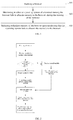
- FIG. 2 is a schematic diagram illustrating running of a browser according to implementations.
- a memory monitoring module in the browser determines whether the terminal is a high-performance mobile phone. As an example, if the terminal is a high-performance mobile phone, a process control module in the browser determines that the browser runs in the multi-process mode. On the other hand, if the terminal is not a high-performance mobile phone, the process control module determines that the browser runs in the single-process and multi-thread mode, and switches a memory allocation scheme from the memory allocation scheme in the system to the memory allocation scheme customized by developers, and then registers the memory processing callback function.
- redundant memory of the browser is released upon monitoring that the operating system fails to allocate the memory to the browser.
- the redundant memory includes one or more of the following: memory occupied by a kernel of the browser, memory occupied during picture decoding, memory occupied by scripts, memory occupied by cascading style sheets (CSS), memory occupied during script parsing, or memory occupied by a GPU.
- the kernel of the browser is also known as a rendering engine, and is configured to determine how the browser displays contents of a web page and a format of the web page.
- the script is a program saved in a plain text format, and used to determine a series of actions that control a computer to carry out operations. When executed, the script needs to be translated into machine-recognizable instructions by an interpreter.
- the CSS is a computer language used to describe styles for presenting files written in a markup language such as HTML or extensible markup language (XML).
- the memory occupied during script parsing is the memory occupied during script translation.
- the GPU which is also known as a display core or a display chip, is a microprocessor which is specially used for image operation on a personal computer (PC), a workstation, a game console, and a mobile device such as a tablet computer, a smart phone, and the like.
- PC personal computer
- workstation workstation
- game console game console
- mobile device such as a tablet computer, a smart phone, and the like.
- each time the browser releases one of the above redundant memory the browser monitors whether the operating system allocates the memory to the browser successfully. If the operating system allocates the memory to the browser successfully, the process is ended and the browser continues to run. Otherwise, proceed to the step of releasing one of the above redundant memory, to release another redundant memory. It should be noted that the redundant memory released by the browser each time is different from each other.
- each time the browser releases a preset size of redundant memory the browser monitors whether the operating system allocates the memory to the browser successfully. If the operating system allocates the memory to the browser successfully, the process is ended and the browser continues to run. Otherwise, proceed to the step of releasing the preset size of redundant memory, to release another preset size of the redundant memory.
- the preset size can be set according to actual needs, which is not limited herein. As an example, the preset size is 300MB.
- the operating system of the terminal running the browser fails to allocate the memory to the browser.
- the redundant memory of the browser is released in time. As such, there will always be sufficient available memory for the browser, which can avoid the slow response or even failure of the browser due to insufficient memory, so as to improve the performance of the browser.
- the running mode of the browser is determined according to the memory size of the terminal, that is, if the terminal has a relatively large memory, the browser runs in the multi-process mode; otherwise, the browser runs in the single-process and multi-thread mode, which can meet different performance requirements of the browser and is relatively flexible.
- FIG. 3 is a flow chart illustrating a method for memory management for a browser according to other implementations. The method begins at block 301.
- redundant memory of the browser is released upon monitoring that the operating system fails to allocate the memory to the browser.
- the redundant memory includes one or more of the following: memory occupied by a kernel of the browser, memory occupied during picture decoding, memory occupied by scripts, memory occupied by CSS, memory occupied during script parsing, or memory occupied by a GPU.
- a target object in the browser is restarted according to a running mode of the browser.
- Restarting refers to a process of closing the target object and then starting the target object. Memory occupied by the target object before restarting is greater than that occupied by the target object after restarting.
- the browser releases all memory occupied by the target object, and when the target object is restarted, the browser reallocates memory to the target object. Since some memory occupied by the target object during the running of the browser may become redundant memory, for example, over time or due to page jump, or the like, the browser does not take into account the above redundant memory when reallocating memory to the target object. As such, memory reallocated to the target object is less than that released by the browser from the target object, and thus can increase the available memory.
- the memory released by the browser which is occupied by the target object, is 100MB, and the memory reallocated to the target object by the browser is 20MB.
- the running mode of the browser is a multi-process mode
- operations at block 304 are implemented as follows.
- a target process of the browser is restarted, where the target process is a process other than a main process of the browser.
- the target process is one or more of following: a renderer process, a third party plug-in process, a GPU process, or the like.
- a process(es) of the browser other than the main process is restarted.
- the following describes the renderer process as an example of the target process.
- the browser requests memory for the renderer process again after releasing all memory occupied by the renderer process to reload a current page.
- the browser restarts the renderer process, it is also necessary to restore data and message communication in the browser.
- the operations at block 304 are implemented as follows.
- a target thread of the browser is restarted, where the target thread is a thread other than a main thread of the browser.
- the target thread is one or more of the following: a renderer thread, a third party plug-in thread, a GPU thread, or the like.
- the browser On condition that the running mode of the browser is the single-process and multi-thread mode, if the process or the main thread of the browser is restarted, the browser may be closed directly. Therefore, in implementations of the disclosure, a thread other than the main thread of the browser is restarted.
- the browser requests memory for the renderer thread again after releasing all memory occupied by the renderer thread to reload a current page.
- the browser restarts the renderer thread, it is also necessary to restore data and message communication in the browser.
- the target object in the browser is restarted according to the running mode of the browser, when the number of times of releasing the redundant memory of the browser is not less than a preset number.
- the terminal prior to performing the operation at block 304, the terminal further detects whether the number of times of releasing the redundant memory of the browser is less than the preset number. When the number of times is greater than or equal to the preset number, the method proceeds to the operation at block 304; otherwise, proceed to release the redundant memory.
- the preset number is set according to experience. The discourse is not limited thereto. In one example, the preset number is 5 times. In implementations of the disclosure, each time the redundant memory is released, the browser counts the number of times of releasing the redundant memory. The browser can detect whether the number of times is less than the preset number according to a counted number obtained and the preset number.
- the operation at block 305 can be further implemented as follows.
- the target object in the browser is restarted according to the running mode of the browser.
- the browser requests the available memory from the operating system again. If the operating system still fails to allocate the memory to the browser, a memory processing callback function is invoked to send an allocation failure notification to the browser, where the allocation failure notification is for indicating that the operating system fails to allocate the memory to the browser.
- the browser prior to restarting the target object in the browser according to the running mode of the browser, the browser first detects whether the number of times of releasing the redundant memory of the browser reaches the preset number and monitors whether the operating system fails to allocate the memory to the browser. Upon detecting that the number of times reaches the preset number and monitors that the operating system fails to allocate the memory to the browser, the browser proceeds to restarting the target object in the browser according to the running mode of the browser. In this way, it is possible to avoid continuing to perform the technical solution provided herein when the available memory is sufficient, which can improve running efficiency of the browser.
- the browser may only need to perform any one of the above operation at block 304 or block 305.
- the browser can perform the operation at block 304 or the operation at block 305, which is not limited herein.
- the browser can continue to monitor whether the operating system fails to allocate the memory to the browser. If yes, the browser collects abnormal information and stop running.
- the above-mentioned abnormal information may include a function (that is, stack information) invoked when the browser stops running, a last page or network address visited by the browser, or the like. The disclosure is not limited thereto.
- the browser releases the redundant memory, it further restarts an object of the browser according to the running mode of the browser. Since the memory occupied by the object will be released when the object is closed and the memory will be reallocated when the object is restarted, and the memory reallocated to the object is less than that released from the object, the available memory can be increased, which can further avoid that the operating system fails to allocate memory to the browser, thereby improving the performance of the browser.
- the browser in the terminal starts running and visits a page, and then requests the operating system to allocate memory.
- the browser monitors whether the operating system allocates the memory to the browser successfully. If the operating system fails to allocate the memory to the browser, a memory optimizing module in the browser responds and performs the following operations sequentially.
- Memory occupied by the kernel of the browser is optimized. Memory occupied by the CSS is cleared up. Memory occupied during picture decoding is cleared up. Memory occupied by javascript scripts is cleared up. Memory occupied by GPU layer composite of the browser is cleared up. Memory occupied during browser V8 script parsing is cleared up. Thereafter, the browser detects whether the number of times of releasing the redundant memory of the browser reaches the preset number.
- the browser If the number of times does not reach the preset number and the available memory of the operating system is sufficient, the browser returns to the step of requesting the operating system to allocate memory. On the contrary, if the number of times reaches the preset number and the available memory of the operating system is insufficient, the browser first determines whether the running mode is the multi-process mode. If the running mode is the multi-process mode, the browser restarts one or more processes (such as the renderer process) other than the main process. For example, restarting being performed on the renderer process is taken as an example. The browser exits the renderer process and then restores the data and message communication in the browser. Alternatively, if the running mode is the single-process and multi-thread mode, the browser restarts a thread(s) other than the main thread.
- the running mode is the single-process and multi-thread mode
- the restarting of the thread(s) other than the main thread is similar to that of the renderer process. That is, the browser exits the thread other than the main thread and then restores the data and message communication in the browser. Finally, the browser detects whether the available memory of the operating system is sufficient. If the available memory of the operating system is sufficient, the browser returns to the step of requesting the operating system to allocate memory. On the contrary, if the available memory of the operating system is still insufficient, an abnormal information collecting module in the browser responds and collects abnormal information of the browser, and a browser process can be existed.
- the following is a device implementation of the disclosure, which can be configured to implement the method implementations of the disclosure.
- the application method is not disclosed.
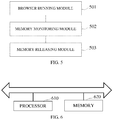
- FIG. 5 is a flow chart illustrating a device for memory management for a browser according to implementations.
- the device has functions for implementing operations in the above method implementations. The functions can be implemented by hardware or by executing corresponding software with the hardware.
- the device includes a browser running module 501, a memory monitoring module 502, and a memory releasing module 503.
- the browser running module 501 is configured to run the browser.
- the memory monitoring module 502 is configured to monitor whether an operating system of a terminal running the browser fails to allocate memory to the browser, during running of the browser.
- the memory releasing module 503 is configured to release redundant memory of the browser upon monitoring that the operating system fails to allocate the memory to the browser.
- the redundant memory includes one or more of the following: memory occupied by a kernel of the browser, memory occupied during picture decoding, memory occupied by scripts, memory occupied by CSS, memory occupied during script parsing, or memory occupied by a GPU.
- the device further includes a restarting module (not illustrated).
- the restarting module is configured to restart a target object in the browser according to a running mode of the browser.
- the running mode of the browser is a multi-process mode and the restarting module is configured to restart a target process of the browser, where the target process is a process other than a main process of the browser.
- the running mode of the browser is a single-process and multi-thread mode
- the restarting module is configured to restart a target thread of the browser, where the target thread is a thread other than a main thread of the browser.
- the device further includes a number-of-times detecting module (not illustrated).
- the number-of-times detecting module is configured to detect whether a number of times of releasing the redundant memory of the browser is less than a preset number.
- the restarting module is configured to proceed to restarting the target object in the browser according to the running mode of the browser based on a determination that the number of times is not less than the preset number.
- the browser running module is configured to: obtain memory information of the terminal upon receiving a running instruction for the browser, where the memory information is indicative of a memory size; determine a running mode of the browser according to the memory information obtained; run the browser according to the running mode of the browser.
- the browser running module 501 configured to determine the running mode of the browser according to the memory information obtained is configured to: determine that the running mode of the browser is a multi-process mode when the memory size indicated by the memory information is greater than a first threshold, or determine that the running mode of the browser is a single-process and multi-thread mode when the memory size is less than a second threshold, where the first threshold is greater than the second threshold.
- FIG. 6 is a structural block diagram illustrating a terminal according to implementations.
- the terminal provided herein may include one or more of the following components: a processor 610 and a memory 620.
- the processor 610 may include at least one core processing unit.
- the processor 610 is configured to connect various parts of the entire terminal through various interfaces and lines, and to execute various functions of the terminal and process data by running or executing instructions, programs, code sets, or instruction sets stored in the memory 620 and invoking data stored in the memory 620.
- the processor 610 can be implemented in at least one hardware form of digital signal processing (DSP), field programmable gate array (FPGA), and programmable logic array (PLA).
- DSP digital signal processing
- FPGA field programmable gate array
- PDA programmable logic array
- the processor 610 can be integrated with a central processing unit (CPU) and/or a modem, where the CPU is mainly configured to handle an operating system, applications, and so on, and the modem is mainly configured to process wireless communication. It will be appreciated that the modem mentioned above can also be implemented by a single chip without being integrated into the processor 610.
- the processor 601 is configured to invoke the program instructions stored in the memory 620 to perform the method for memory management for a browser provided by the above-mentioned method implementations.
- the memory 620 may include a random access memory (RAM), or may include a read-only memory (ROM). In one example, the memory 620 includes a non-transitory computer-readable storage medium.
- the memory 620 is configured to store instructions, programs, codes, code sets, or instruction sets.
- the memory 620 may include a program storage region and a data storage region, where the program storage region is used for storing instructions for implementing the operating system, instructions for at least one function, instructions for implementing the foregoing method implementations, and the like.
- the data storage region is used for storing data created according to the use of the terminal, and the like.
- the structure of the above terminal is only illustrative. In actual implementation, the terminal may include more or fewer components, such as a fingerprint sensor, and the like. The disclosure is not limited thereto.
- the terminal 600 illustrated in FIG. 6 does not constitute any limitation on the terminal.
- the terminal may include more or fewer components than illustrated, or may combine certain components, or may adopt different arrangements of components.
- Implementations further provide a computer-readable storage medium.
- the computer-readable storage medium stores computer programs.
- the computer programs when loaded and executed by a processor of a server, are operable with the processor to perform operations in the method implementations described above.
- the above-mentioned computer-readable storage medium can be ROM, a RAM, a CD-ROM, a magnetic tape, a floppy disk, an optical data storage device, etc.
- Implementations further provide a computer program product.
- the computer program product when executed, is configured to implement the functions of operations in the method implementations described above.
- multiple/a plurality of/a number of' means two or more than two.
- the term "and/or” describes relationships of associated objects, indicating that there may be three kinds of relationships, for example, A and/or B can indicate following three situations: A exists alone, A and B exist at the same time, and B exists alone.
- the character "/" generally indicates that associated objects are in an "or” relationship.
Landscapes
- Engineering & Computer Science (AREA)
- Theoretical Computer Science (AREA)
- Physics & Mathematics (AREA)
- Software Systems (AREA)
- General Engineering & Computer Science (AREA)
- General Physics & Mathematics (AREA)
- Quality & Reliability (AREA)
- Computing Systems (AREA)
- Mathematical Physics (AREA)
- Stored Programmes (AREA)
- Debugging And Monitoring (AREA)
- Retry When Errors Occur (AREA)
- Information Retrieval, Db Structures And Fs Structures Therefor (AREA)
Abstract
Description
- This application claims priority to
Chinese Patent Application No. 201810990014.0, filed on August 28, 2018 - This disclosure relates to the field of browser technology, and more particularly to a method and device for memory management for a browser, a terminal, and a storage medium.
- Browser is software that can display hypertext markup language (HTML) files.
- During running of the browser, due to the increasing number of web pages opened with the browser, memory occupied by the browser is also increasing. At this time, available memory of a terminal is decreasing, which leads to the browser opening web pages more slowly, even makes the browser unresponsive.
- Implementations of the disclosure provide a method and device for memory management for a browser, a device, and a storage medium. Technical solutions are as follows.
- According to one aspect, a method for memory management for a browser is provided. The method includes the following. Run the browser. During the running of the browser, monitor whether an operating system of a terminal running the browser fails to allocate memory to the browser. Redundant memory of the browser is released upon monitoring that the operating system fails to allocate the memory to the browser.
- According to another aspect, a device for memory management for a browser is provided. The device includes a browser running module, a memory monitoring module, and a memory releasing module. The browser running module is configured to run the browser. The memory monitoring module is configured to monitor whether an operating system of a terminal running the browser fails to allocate memory to the browser, during the running of the browser. The memory releasing module is configured to release redundant memory of the browser upon monitoring that the operating system fails to allocate the memory to the browser.
- According to yet another aspect, a terminal is provided. The terminal includes a processor and a memory storing computer programs. The computer programs, when loaded and executed by the processor, are operable with the processor to perform the method described above.
- According to yet another aspect, a computer-readable storage medium is provided. The computer-readable storage medium stores computer programs which, when loaded and executed by a processor, are operable with the processor to perform the method described above.
- Implementations of the disclosure may have the following advantageous effects.
- During the running of the browser, monitor whether the operating system of the terminal running the browser fails to allocate the memory to the browser. Upon monitoring that the operating system fails to allocate the memory to the browser, the redundant memory of the browser is released in time. As such, there will always be sufficient available memory for the browser, which can avoid the slow response or even failure of the browser due to insufficient memory, so as to improve the performance of the browser.
-
-
FIG. 1 is a flow chart illustrating a method for memory management for a browser according to implementations. -
FIG. 2 is a schematic diagram illustrating running of a browser according to implementations. -
FIG. 3 is a flow chart illustrating a method for memory management for a browser according to other implementations. -
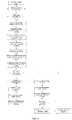
FIG. 4 is a flow chart illustrating a method for memory management for a browser according to other implementations. -
FIG. 5 is a flow chart illustrating a device for memory management for a browser according to implementations. -
FIG. 6 is a block diagram illustrating a terminal according to implementations. - For better understanding of objects, technical solutions, and advantages of the disclosure, the following will describe implementations of the disclosure in detail in conjunction with accompanying drawings.
- According to the technical solutions provided by implementations of the disclosure, during running of a browser, monitor whether an operating system of a terminal running the browser fails to allocate memory to the browser. Upon monitoring that the operating system fails to allocate the memory to the browser, redundant memory of the browser is released in time. As such, there will always be sufficient available memory for the browser, which can avoid the slow response or even failure of the browser due to insufficient memory, so as to improve the performance of the browser.
- In the technical solutions provided herein, various steps may be performed by a terminal. The above-described terminal may be a mobile phone, a personal computer (PC), a tablet computer, an e-book reader, a multi-media playback device, a wearable device, or other electronic devices.
- A browser is installed in the terminal. All steps may be performed by the browser. The browser is software that can display contents of HTML files of a web server or a file system and allow users to interact with the contents. For example, the browser is Firefox® browser, Chrome® browser, Opera® browser, UC® browser, or the like.
- For the convenience of description, in following implementations of the method, the browser is taken as an example for performing various steps. The disclosure is not limited thereto.
-
FIG. 1 is a flow chart illustrating a method for memory management for a browser according to implementations. As illustrated inFIG. 1 , the method begins atblock 101. - At
block 101, run the browser. - If a user wants to run the browser, the user can click an icon of the browser in a terminal, such that the terminal can run the browser according to an operation signal received, which acts on the icon of the browser.
- In one example, the terminal can run the browser according to a running mode of the browser, where the running mode of the browser is determined according to a memory size of the terminal running the browser. In at least one implementation, operations at
block 101 include operations at block 101a to block 101c. - At block 101a, upon receiving a running instruction for the browser, memory information of the terminal is obtained.
- The memory information is indicative of the memory size. The memory size of the terminal may be 3 giga byte (GB), 4GB, 6GB, 8GB, or the like, which is not limited herein.
- At block 101b, a running mode of the browser is determined according to the memory information obtained.
- The running mode of the browser is a multi-process mode or a single-process and multi-thread mode. The process is a basic unit for allocating and managing resources during execution of concurrent programs. The thread is an execution unit in a process, and is a basic unit that is smaller than the process and can run independently. The thread is also termed as a "lightweight process".
- For example, when the running mode of the browser is the multi-process mode, the browser includes multiple processes that are executed concurrently. The multiple processes may include a main process (e.g., a browser process), a renderer process, a third party plug-in process, a graphics processing unit (GPU) process, and the like. For another example, when the running mode of the browser is the single-process and multi-thread mode, the browser includes one process, and multiple threads are executed concurrently in a process space of the process. The multiple threads include a main thread (e.g., a browser thread), a renderer thread, a third party plug-in thread, a GPU thread, and the like. Compared with the single-process and multi-thread mode, when the browser runs in the multi-process mode, high security and stability can be achieved, but more memory are occupied.
- In some implementations, when the memory size indicated by the memory information is greater than a first threshold, determine that the running mode of the browser is the multi-process mode. In other implementations, when the memory size is less than a second threshold, determine that the running mode of the browser is the single-process and multi-thread mode. The first threshold is greater than the second threshold.
- The first threshold and the second threshold can be set according to experience. The disclosure is not limited thereto. In one example, the first threshold is 6GB and the second threshold is 4GB.
- Different memories are required in different running modes. In implementations of the disclosure, for a terminal having a relatively large memory, the browser can run in the multi-process mode to enable safety and stability. In contrast, for a terminal having a relatively small memory, the browser can run in the single-process and multi-thread mode, such that the browser requires a relatively small memory. Since the running mode of the browser is determined according to the memory size of the terminal, different performance requirements of the browser can be met, which is more flexible.
- At block 101c, run the browser according to the running mode of the browser.
- As an example, when the running mode of the browser is the multi-process mode, run the browser according to the multi-process mode. As another example, when the running mode of the browser is the single-process and multi-thread mode, run the browser according to the single-process and multi-thread mode.
- At
block 102, whether an operating system of the terminal running the browser fails to allocate memory to the browser is monitored, during running of the browser. - During running of the browser, the browser starts a memory detection mechanism. When the browser requests from the operating system memory required for running, if the operating system determines that a memory size of available memory of the terminal is less than that of the memory requested by the browser, a memory processing callback function registered in advance may be invoked to send an allocation failure notification to the browser. The allocation failure notification is for indicating that the operating system fails to allocate the memory to the browser.
- In addition, to allow the browser to register in advance the memory processing callback function, before running the browser, it is necessary to load a memory allocation scheme customized by developers rather than a memory allocation scheme in the system.
-
FIG. 2 is a schematic diagram illustrating running of a browser according to implementations. As illustrated inFIG.2 , when the terminal receives the running instruction for the browser, a memory monitoring module in the browser determines whether the terminal is a high-performance mobile phone. As an example, if the terminal is a high-performance mobile phone, a process control module in the browser determines that the browser runs in the multi-process mode. On the other hand, if the terminal is not a high-performance mobile phone, the process control module determines that the browser runs in the single-process and multi-thread mode, and switches a memory allocation scheme from the memory allocation scheme in the system to the memory allocation scheme customized by developers, and then registers the memory processing callback function. - At
block 103, redundant memory of the browser is released upon monitoring that the operating system fails to allocate the memory to the browser. - In at least one implementation, the redundant memory includes one or more of the following: memory occupied by a kernel of the browser, memory occupied during picture decoding, memory occupied by scripts, memory occupied by cascading style sheets (CSS), memory occupied during script parsing, or memory occupied by a GPU.
- The kernel of the browser is also known as a rendering engine, and is configured to determine how the browser displays contents of a web page and a format of the web page. The script is a program saved in a plain text format, and used to determine a series of actions that control a computer to carry out operations. When executed, the script needs to be translated into machine-recognizable instructions by an interpreter. The CSS is a computer language used to describe styles for presenting files written in a markup language such as HTML or extensible markup language (XML). The memory occupied during script parsing is the memory occupied during script translation. The GPU, which is also known as a display core or a display chip, is a microprocessor which is specially used for image operation on a personal computer (PC), a workstation, a game console, and a mobile device such as a tablet computer, a smart phone, and the like.
- In one example, each time the browser releases one of the above redundant memory, the browser monitors whether the operating system allocates the memory to the browser successfully. If the operating system allocates the memory to the browser successfully, the process is ended and the browser continues to run. Otherwise, proceed to the step of releasing one of the above redundant memory, to release another redundant memory. It should be noted that the redundant memory released by the browser each time is different from each other.
- In another example, each time the browser releases a preset size of redundant memory, the browser monitors whether the operating system allocates the memory to the browser successfully. If the operating system allocates the memory to the browser successfully, the process is ended and the browser continues to run. Otherwise, proceed to the step of releasing the preset size of redundant memory, to release another preset size of the redundant memory. It should be noted that the preset size can be set according to actual needs, which is not limited herein. As an example, the preset size is 300MB.
- It can be understood that when the browser releases the redundant memory according to the above two possible implementations, the number of times the redundant memory is released can be counted.
- In summary, according to the method provided herein, during the running of the browser, monitor whether the operating system of the terminal running the browser fails to allocate the memory to the browser. Upon monitoring that the operating system fails to allocate the memory to the browser, the redundant memory of the browser is released in time. As such, there will always be sufficient available memory for the browser, which can avoid the slow response or even failure of the browser due to insufficient memory, so as to improve the performance of the browser.
- In addition, since the running mode of the browser is determined according to the memory size of the terminal, that is, if the terminal has a relatively large memory, the browser runs in the multi-process mode; otherwise, the browser runs in the single-process and multi-thread mode, which can meet different performance requirements of the browser and is relatively flexible.
- However, after the browser releases all the redundant memory or the browser releases the redundant memory more times, a situation that the operating system fails to allocate the memory to the browser may still exist. The following explains how to deal with this situation.
-
FIG. 3 is a flow chart illustrating a method for memory management for a browser according to other implementations. The method begins atblock 301. - At
block 301, run the browser. - At
block 302, monitor whether an operating system of a terminal running the browser fails to allocate memory to the browser, during running of the browser. - At
block 303, redundant memory of the browser is released upon monitoring that the operating system fails to allocate the memory to the browser. - In at least one implementation, the redundant memory includes one or more of the following: memory occupied by a kernel of the browser, memory occupied during picture decoding, memory occupied by scripts, memory occupied by CSS, memory occupied during script parsing, or memory occupied by a GPU.
- At
block 304, a target object in the browser is restarted according to a running mode of the browser. - "Restarting" refers to a process of closing the target object and then starting the target object. Memory occupied by the target object before restarting is greater than that occupied by the target object after restarting. When the target object is closed, the browser releases all memory occupied by the target object, and when the target object is restarted, the browser reallocates memory to the target object. Since some memory occupied by the target object during the running of the browser may become redundant memory, for example, over time or due to page jump, or the like, the browser does not take into account the above redundant memory when reallocating memory to the target object. As such, memory reallocated to the target object is less than that released by the browser from the target object, and thus can increase the available memory.
- For example, during restarting the target object, the memory released by the browser, which is occupied by the target object, is 100MB, and the memory reallocated to the target object by the browser is 20MB.
- In some implementations, the running mode of the browser is a multi-process mode, operations at
block 304 are implemented as follows. A target process of the browser is restarted, where the target process is a process other than a main process of the browser. In one example, the target process is one or more of following: a renderer process, a third party plug-in process, a GPU process, or the like. - When the main process of the browser is closed, the browser will stop running. However, when a process(es) of the browser other than the main process is closed, the browser will not stop running. Therefore, in implementations of the disclosure, a process(es) of the browser other than the main process is restarted. The following describes the renderer process as an example of the target process. The browser requests memory for the renderer process again after releasing all memory occupied by the renderer process to reload a current page. In addition, when the browser restarts the renderer process, it is also necessary to restore data and message communication in the browser.
- In other implementations, when the running mode of the browser is a single-process and multi-thread mode, the operations at
block 304 are implemented as follows. A target thread of the browser is restarted, where the target thread is a thread other than a main thread of the browser. In one example, the target thread is one or more of the following: a renderer thread, a third party plug-in thread, a GPU thread, or the like. - On condition that the running mode of the browser is the single-process and multi-thread mode, if the process or the main thread of the browser is restarted, the browser may be closed directly. Therefore, in implementations of the disclosure, a thread other than the main thread of the browser is restarted. The following describes the renderer thread as an example of the target thread. The browser requests memory for the renderer thread again after releasing all memory occupied by the renderer thread to reload a current page. In addition, when the browser restarts the renderer thread, it is also necessary to restore data and message communication in the browser.
- At
block 305, the target object in the browser is restarted according to the running mode of the browser, when the number of times of releasing the redundant memory of the browser is not less than a preset number. - In at least one implementation, prior to performing the operation at
block 304, the terminal further detects whether the number of times of releasing the redundant memory of the browser is less than the preset number. When the number of times is greater than or equal to the preset number, the method proceeds to the operation atblock 304; otherwise, proceed to release the redundant memory. - The preset number is set according to experience. The discourse is not limited thereto. In one example, the preset number is 5 times. In implementations of the disclosure, each time the redundant memory is released, the browser counts the number of times of releasing the redundant memory. The browser can detect whether the number of times is less than the preset number according to a counted number obtained and the preset number.
- Furthermore, the operation at
block 305 can be further implemented as follows. When the number of times of releasing is not less than the preset number and it is monitored that the operating system fails to allocate the memory to the browser, the target object in the browser is restarted according to the running mode of the browser. In one example, after detecting that the number of times is not less than the preset number, the browser requests the available memory from the operating system again. If the operating system still fails to allocate the memory to the browser, a memory processing callback function is invoked to send an allocation failure notification to the browser, where the allocation failure notification is for indicating that the operating system fails to allocate the memory to the browser. - In some implementations, prior to restarting the target object in the browser according to the running mode of the browser, the browser first detects whether the number of times of releasing the redundant memory of the browser reaches the preset number and monitors whether the operating system fails to allocate the memory to the browser. Upon detecting that the number of times reaches the preset number and monitors that the operating system fails to allocate the memory to the browser, the browser proceeds to restarting the target object in the browser according to the running mode of the browser. In this way, it is possible to avoid continuing to perform the technical solution provided herein when the available memory is sufficient, which can improve running efficiency of the browser.
- It can be understood that the browser may only need to perform any one of the above operation at
block 304 or block 305. For example, the browser can perform the operation atblock 304 or the operation atblock 305, which is not limited herein. - In addition, after the browser restarts the target object, the browser can continue to monitor whether the operating system fails to allocate the memory to the browser. If yes, the browser collects abnormal information and stop running. The above-mentioned abnormal information may include a function (that is, stack information) invoked when the browser stops running, a last page or network address visited by the browser, or the like. The disclosure is not limited thereto.
- As such, after the browser releases the redundant memory, it further restarts an object of the browser according to the running mode of the browser. Since the memory occupied by the object will be released when the object is closed and the memory will be reallocated when the object is restarted, and the memory reallocated to the object is less than that released from the object, the available memory can be increased, which can further avoid that the operating system fails to allocate memory to the browser, thereby improving the performance of the browser.
- In one example, in combination with
FIG. 4 , the browser in the terminal starts running and visits a page, and then requests the operating system to allocate memory. The browser monitors whether the operating system allocates the memory to the browser successfully. If the operating system fails to allocate the memory to the browser, a memory optimizing module in the browser responds and performs the following operations sequentially. Memory occupied by the kernel of the browser is optimized. Memory occupied by the CSS is cleared up. Memory occupied during picture decoding is cleared up. Memory occupied by javascript scripts is cleared up. Memory occupied by GPU layer composite of the browser is cleared up. Memory occupied during browser V8 script parsing is cleared up. Thereafter, the browser detects whether the number of times of releasing the redundant memory of the browser reaches the preset number. If the number of times does not reach the preset number and the available memory of the operating system is sufficient, the browser returns to the step of requesting the operating system to allocate memory. On the contrary, if the number of times reaches the preset number and the available memory of the operating system is insufficient, the browser first determines whether the running mode is the multi-process mode. If the running mode is the multi-process mode, the browser restarts one or more processes (such as the renderer process) other than the main process. For example, restarting being performed on the renderer process is taken as an example. The browser exits the renderer process and then restores the data and message communication in the browser. Alternatively, if the running mode is the single-process and multi-thread mode, the browser restarts a thread(s) other than the main thread. The restarting of the thread(s) other than the main thread is similar to that of the renderer process. That is, the browser exits the thread other than the main thread and then restores the data and message communication in the browser. Finally, the browser detects whether the available memory of the operating system is sufficient. If the available memory of the operating system is sufficient, the browser returns to the step of requesting the operating system to allocate memory. On the contrary, if the available memory of the operating system is still insufficient, an abnormal information collecting module in the browser responds and collects abnormal information of the browser, and a browser process can be existed. - The following is a device implementation of the disclosure, which can be configured to implement the method implementations of the disclosure. In this example, the application method is not disclosed. For technical details not described in the device implementation, reference may be made to the method implementations.
-
FIG. 5 is a flow chart illustrating a device for memory management for a browser according to implementations. The device has functions for implementing operations in the above method implementations. The functions can be implemented by hardware or by executing corresponding software with the hardware. The device includes abrowser running module 501, amemory monitoring module 502, and amemory releasing module 503. Thebrowser running module 501 is configured to run the browser. Thememory monitoring module 502 is configured to monitor whether an operating system of a terminal running the browser fails to allocate memory to the browser, during running of the browser. Thememory releasing module 503 is configured to release redundant memory of the browser upon monitoring that the operating system fails to allocate the memory to the browser. - As such, according to the technical solutions of the disclosure, during running of the browser, monitor whether an operating system of a terminal running the browser fails to allocate memory to the browser. Upon monitoring that the operating system fails to allocate the memory to the browser, the redundant memory of the browser is released in time. As such, there will always be sufficient available memory for the browser, which can avoid the slow response or even failure of the browser due to insufficient memory, so as to improve the performance of the browser
- In at least one implementation based on the implementations in
FIG. 5 , the redundant memory includes one or more of the following: memory occupied by a kernel of the browser, memory occupied during picture decoding, memory occupied by scripts, memory occupied by CSS, memory occupied during script parsing, or memory occupied by a GPU. - In at least one implementation based on the implementations in
FIG. 5 , the device further includes a restarting module (not illustrated). The restarting module is configured to restart a target object in the browser according to a running mode of the browser. - In some implementations, the running mode of the browser is a multi-process mode and the restarting module is configured to restart a target process of the browser, where the target process is a process other than a main process of the browser.
- In other implementations, the running mode of the browser is a single-process and multi-thread mode, and the restarting module is configured to restart a target thread of the browser, where the target thread is a thread other than a main thread of the browser.
- In at least one implementation, the device further includes a number-of-times detecting module (not illustrated). The number-of-times detecting module is configured to detect whether a number of times of releasing the redundant memory of the browser is less than a preset number. The restarting module is configured to proceed to restarting the target object in the browser according to the running mode of the browser based on a determination that the number of times is not less than the preset number.
- In at least one implementation based on the implementations in
FIG. 5 , the browser running module is configured to: obtain memory information of the terminal upon receiving a running instruction for the browser, where the memory information is indicative of a memory size; determine a running mode of the browser according to the memory information obtained; run the browser according to the running mode of the browser. - In at least one implementation, the
browser running module 501 configured to determine the running mode of the browser according to the memory information obtained is configured to: determine that the running mode of the browser is a multi-process mode when the memory size indicated by the memory information is greater than a first threshold, or determine that the running mode of the browser is a single-process and multi-thread mode when the memory size is less than a second threshold, where the first threshold is greater than the second threshold. - It should be noted that, when the device provided in the above implementations realizes functions of the device, the division of the above functional modules is only used as an example. In actual applications, the above functions can be achieved by different functional modules as required, that is, internal structures of the device is divided into different functional modules to complete all or part of the functions described above. In addition, the device described above and method implementations belong to the same concept, and for technical details not described, reference may be made to the method implementations, which will not be repeated herein.
-
FIG. 6 is a structural block diagram illustrating a terminal according to implementations. The terminal provided herein may include one or more of the following components: aprocessor 610 and amemory 620. - The
processor 610 may include at least one core processing unit. Theprocessor 610 is configured to connect various parts of the entire terminal through various interfaces and lines, and to execute various functions of the terminal and process data by running or executing instructions, programs, code sets, or instruction sets stored in thememory 620 and invoking data stored in thememory 620. Theprocessor 610 can be implemented in at least one hardware form of digital signal processing (DSP), field programmable gate array (FPGA), and programmable logic array (PLA). For example, theprocessor 610 can be integrated with a central processing unit (CPU) and/or a modem, where the CPU is mainly configured to handle an operating system, applications, and so on, and the modem is mainly configured to process wireless communication. It will be appreciated that the modem mentioned above can also be implemented by a single chip without being integrated into theprocessor 610. - The processor 601 is configured to invoke the program instructions stored in the
memory 620 to perform the method for memory management for a browser provided by the above-mentioned method implementations. - The
memory 620 may include a random access memory (RAM), or may include a read-only memory (ROM). In one example, thememory 620 includes a non-transitory computer-readable storage medium. Thememory 620 is configured to store instructions, programs, codes, code sets, or instruction sets. Thememory 620 may include a program storage region and a data storage region, where the program storage region is used for storing instructions for implementing the operating system, instructions for at least one function, instructions for implementing the foregoing method implementations, and the like. The data storage region is used for storing data created according to the use of the terminal, and the like. - The structure of the above terminal is only illustrative. In actual implementation, the terminal may include more or fewer components, such as a fingerprint sensor, and the like. The disclosure is not limited thereto.
- Those skilled in the art can understand that the structure of the terminal 600 illustrated in
FIG. 6 does not constitute any limitation on the terminal. The terminal may include more or fewer components than illustrated, or may combine certain components, or may adopt different arrangements of components. - Implementations further provide a computer-readable storage medium. The computer-readable storage medium stores computer programs. The computer programs, when loaded and executed by a processor of a server, are operable with the processor to perform operations in the method implementations described above.
- In one example, the above-mentioned computer-readable storage medium can be ROM, a RAM, a CD-ROM, a magnetic tape, a floppy disk, an optical data storage device, etc.
- Implementations further provide a computer program product. The computer program product, when executed, is configured to implement the functions of operations in the method implementations described above.
- In the description of the disclosure, "multiple/a plurality of/a number of' means two or more than two. The term "and/or" describes relationships of associated objects, indicating that there may be three kinds of relationships, for example, A and/or B can indicate following three situations: A exists alone, A and B exist at the same time, and B exists alone. The character "/" generally indicates that associated objects are in an "or" relationship.
- The serial numbers of the foregoing implementations of the disclosure are merely for description, and do not intended to limit the disclosure.
- The foregoing illustrates some exemplary implementations of the disclosure, and does not limit the disclosure. Any modification, equivalent replacement, improvement, etc. made within the spirit and principles of the disclosure shall fall within the scope of protection of the disclosure.
Claims (18)
- A method for memory management for a browser, comprising:running the browser;monitoring whether an operating system of a terminal running the browser fails to allocate memory to the browser, during running of the browser; andreleasing redundant memory of the browser upon monitoring that the operating system fails to allocate the memory to the browser.
- The method of claim 1, wherein the redundant memory comprises one or more of the following: memory occupied by a kernel of the browser, memory occupied during picture decoding, memory occupied by scripts, memory occupied by cascading style sheets (CSS), memory occupied during script parsing, or memory occupied by a graphics processing unit (GPU).
- The method of claim 1, further comprising:
after releasing the redundant memory of the browser,
restarting a target object in the browser according to a running mode of the browser. - The method of claim 3, wherein the running mode of the browser is a multi-process mode and restarting the target object in the browser according to the running mode of the browser comprises:
restarting a target process of the browser, wherein the target process is a process other than a main process of the browser. - The method of claim 3, wherein the running mode of the browser is a single-process and multi-thread mode, and restarting the target object in the browser according to the running mode of the browser comprises:
restarting a target thread of the browser, wherein the target thread is a thread other than a main thread of the browser. - The method of claim 3, further comprising:prior to restarting the target object in the browser according to the running mode of the browser,detecting whether a number of times of releasing the redundant memory of the browser is less than a preset number; andproceeding to restarting the target object in the browser according to the running mode of the browser, upon detecting that the number of times is not less than the preset number.
- The method of any of claims 1 to 6, wherein running the browser comprises:obtaining memory information of the terminal upon receiving a running instruction for the browser, wherein the memory information is indicative of a memory size;determining a running mode of the browser according to the memory information obtained; andrunning the browser according to the running mode of the browser.
- The method of claim 7, wherein determining the running mode of the browser according to the memory information comprises one of:determining that the running mode of the browser is a multi-process mode when the memory size indicated by the memory information is greater than a first threshold; ordetermining that the running mode of the browser is a single-process and multi-thread mode when the memory size is less than a second threshold, whereinthe first threshold is greater than the second threshold.
- A device for memory management for a browser, comprising:a browser running module configured to run the browser;a memory monitoring module configured to monitor whether an operating system of a terminal running the browser fails to allocate memory to the browser, during running of the browser; anda memory releasing module configured to release redundant memory of the browser upon monitoring that the operating system fails to allocate the memory to the browser.
- The device of claim 9, wherein the redundant memory comprises one or more of the following: memory occupied by a kernel of the browser, memory occupied during picture decoding, memory occupied by scripts, memory occupied by cascading style sheets (CSS), memory occupied during script parsing, or memory occupied by a graphics processing unit (GPU).
- The device of claim 9, further comprising:
a restarting module configured to restart a target object in the browser according to a running mode of the browser. - The device of claim 11, wherein the running mode of the browser is a multi-process mode and the restarting module is configured to:
restart a target process of the browser, wherein the target process is a process other than a main process of the browser. - The device of claim 11, wherein the running mode of the browser is a single-process and multi-thread mode, and the restarting module is configured to:
restart a target thread of the browser, wherein the target thread is a thread other than a main thread of the browser. - The device of claim 11, further comprising:detecting whether a number of times of releasing the redundant memory of the browser is less than a preset number; andproceeding to restarting the target object in the browser according to the running mode of the browser based on a determination that the number of times is not less than the preset number.
- The device of any of claims 9 to 14, wherein the browser running module is configured to:obtain memory information of the terminal upon receiving a running instruction for the browser, wherein the memory information is indicative of a memory size;determine a running mode of the browser according to the memory information obtained; andrun the browser according to the running mode of the browser.
- The device of claim 15, wherein the browser running module configured to determine the running mode of the browser according to the memory information obtained is configured to:determine that the running mode of the browser is a multi-process mode when the memory size indicated by the memory information is greater than a first threshold; ordetermine that the running mode of the browser is a single-process and multi-thread mode when the memory size is less than a second threshold; whereinthe first threshold is greater than the second threshold.
- A terminal comprising:a processor; anda memory storing computer programs; whereinthe computer programs, when loaded and executed by the processor, are operable with the processor to perform the method of any of claims 1 to 8.
- A computer-readable storage medium storing computer programs, wherein the computer programs, when loaded and executed by a processor, are operable with the processor to perform the method of any of claims 1 to 8.
Applications Claiming Priority (2)
| Application Number | Priority Date | Filing Date | Title |
|---|---|---|---|
| CN201810990014.0A CN109117274B (en) | 2018-08-28 | 2018-08-28 | Memory management method and device applied to browser, terminal and storage medium |
| PCT/CN2019/096592 WO2020042818A1 (en) | 2018-08-28 | 2019-07-18 | Memory management method and device for browser, terminal, and storage medium |
Publications (3)
| Publication Number | Publication Date |
|---|---|
| EP3839735A1 true EP3839735A1 (en) | 2021-06-23 |
| EP3839735A4 EP3839735A4 (en) | 2021-08-25 |
| EP3839735B1 EP3839735B1 (en) | 2023-11-22 |
Family
ID=64860365
Family Applications (1)
| Application Number | Title | Priority Date | Filing Date |
|---|---|---|---|
| EP19856197.9A Active EP3839735B1 (en) | 2018-08-28 | 2019-07-18 | Memory management method and device for browser, terminal, and storage medium |
Country Status (4)
| Country | Link |
|---|---|
| US (1) | US20210182147A1 (en) |
| EP (1) | EP3839735B1 (en) |
| CN (2) | CN112882832B (en) |
| WO (1) | WO2020042818A1 (en) |
Families Citing this family (9)
| Publication number | Priority date | Publication date | Assignee | Title |
|---|---|---|---|---|
| CN112882832B (en) * | 2018-08-28 | 2024-06-21 | Oppo广东移动通信有限公司 | Memory management method, device, terminal and storage medium applied to browser |
| CN112306825B (en) * | 2019-07-31 | 2024-02-27 | 中科寒武纪科技股份有限公司 | Memory operation recording method and device and computer equipment |
| CN110516179A (en) * | 2019-08-07 | 2019-11-29 | Oppo广东移动通信有限公司 | Graphic rendering method, device, electronic device and storage medium |
| CN110968815B (en) * | 2019-12-04 | 2023-06-20 | 北京达佳互联信息技术有限公司 | Page refreshing method, device, terminal and storage medium |
| CN111580792B (en) * | 2020-04-29 | 2022-07-01 | 上海航天计算机技术研究所 | High-reliability satellite-borne software architecture design method based on operating system |
| CN111638956B (en) * | 2020-05-28 | 2024-08-27 | 腾讯科技(深圳)有限公司 | Application operation method, device and storage medium |
| CN111694713B (en) * | 2020-06-15 | 2023-04-11 | Oppo(重庆)智能科技有限公司 | Application operation optimization method and device and computer readable storage medium |
| CN113407346B (en) * | 2021-06-28 | 2023-04-07 | Vidaa(荷兰)国际控股有限公司 | Browser memory adjusting method and display device |
| CN114741208B (en) * | 2022-06-13 | 2022-09-23 | 北京智芯微电子科技有限公司 | Electric energy meter and its memory heap management method, memory heap management device, and storage medium |
Family Cites Families (15)
| Publication number | Priority date | Publication date | Assignee | Title |
|---|---|---|---|---|
| US7043606B2 (en) * | 2002-10-01 | 2006-05-09 | America Online, Inc. | Automatic browser web cache resizing system |
| US20060209695A1 (en) * | 2005-03-15 | 2006-09-21 | Archer Shafford R Jr | Load balancing in a distributed telecommunications platform |
| US7552293B2 (en) * | 2006-02-28 | 2009-06-23 | Red Hat, Inc. | Kernel and application cooperative memory management |
| CN101080055B (en) * | 2006-12-21 | 2010-06-16 | 腾讯科技(深圳)有限公司 | A method, system and device for quickly browsing webpage via mobile phone browser |
| US8341268B2 (en) * | 2009-08-28 | 2012-12-25 | Microsoft Corporation | Resource sharing in multi-principal browser |
| US8296783B1 (en) * | 2010-05-28 | 2012-10-23 | Adobe Systems Incorporated | Media player instance managed resource reduction |
| CN102436457B (en) * | 2011-02-18 | 2014-04-16 | 奇智软件(北京)有限公司 | A method and device for allocating browser processes |
| US9292359B2 (en) * | 2012-07-27 | 2016-03-22 | Intel Corporation | System and method for memory management |
| CN103634337B (en) * | 2012-08-22 | 2018-09-18 | 腾讯科技(深圳)有限公司 | Page recovery, device and mobile terminal |
| US9311236B2 (en) * | 2012-11-20 | 2016-04-12 | International Business Machines Corporation | Out-of-memory avoidance in dynamic virtual machine memory adjustment |
| CN104077191A (en) * | 2014-07-18 | 2014-10-01 | 广州金山网络科技有限公司 | Method and device used for managing memory resources |
| CN104503828B (en) * | 2014-12-12 | 2018-12-11 | 广东欧珀移动通信有限公司 | A kind of process management method and terminal |
| CN105100412B (en) * | 2015-05-27 | 2018-05-29 | 努比亚技术有限公司 | Terminal data sweep-out method and device |
| CN107329836B (en) * | 2017-07-13 | 2021-01-22 | 北京元心科技有限公司 | Multi-system memory management method and device and mobile terminal |
| CN112882832B (en) * | 2018-08-28 | 2024-06-21 | Oppo广东移动通信有限公司 | Memory management method, device, terminal and storage medium applied to browser |
-
2018
- 2018-08-28 CN CN202110168922.3A patent/CN112882832B/en active Active
- 2018-08-28 CN CN201810990014.0A patent/CN109117274B/en not_active Expired - Fee Related
-
2019
- 2019-07-18 WO PCT/CN2019/096592 patent/WO2020042818A1/en not_active Ceased
- 2019-07-18 EP EP19856197.9A patent/EP3839735B1/en active Active
-
2021
- 2021-02-24 US US17/184,097 patent/US20210182147A1/en not_active Abandoned
Also Published As
| Publication number | Publication date |
|---|---|
| WO2020042818A1 (en) | 2020-03-05 |
| US20210182147A1 (en) | 2021-06-17 |
| CN112882832A (en) | 2021-06-01 |
| CN109117274A (en) | 2019-01-01 |
| EP3839735A4 (en) | 2021-08-25 |
| EP3839735B1 (en) | 2023-11-22 |
| CN109117274B (en) | 2021-03-09 |
| CN112882832B (en) | 2024-06-21 |
Similar Documents
| Publication | Publication Date | Title |
|---|---|---|
| EP3839735B1 (en) | Memory management method and device for browser, terminal, and storage medium | |
| CN112035272B (en) | Method and device for interprocess communication and computer equipment | |
| JP3546678B2 (en) | Multi-OS configuration method | |
| EP2480972B1 (en) | System and method for synchronizing transient resource usage between virtual machines in a hypervisor environment | |
| CA2761563C (en) | Annotating virtual application processes | |
| EP3084615B1 (en) | Detection of unauthorized memory modification and access using transactional memory | |
| US9946870B2 (en) | Apparatus and method thereof for efficient execution of a guest in a virtualized enviroment | |
| US9021243B2 (en) | Method for increasing free memory amount of main memory and computer therefore | |
| CN108334779A (en) | A kind of processing method of application, equipment and computer storage media | |
| CN111831434A (en) | Resource allocation method, device, storage medium and electronic device | |
| US7552434B2 (en) | Method of performing kernel task upon initial execution of process at user level | |
| US7546600B2 (en) | Method of assigning virtual process identifier to process within process domain | |
| US11461104B2 (en) | Deferred system error exception handling in a data processing apparatus | |
| JP6198858B2 (en) | Resource scheduling method by computer and hypervisor | |
| US20130063444A1 (en) | Aligning Script Animations with Display Refresh | |
| CN103019846A (en) | Process multiplexing method for multi-core browser and multi-core browser | |
| JP5862722B2 (en) | Multi-core processor system, multi-core processor system control method, and multi-core processor system control program | |
| US20130007765A1 (en) | Software control device, software control method, and computer product | |
| JP4026667B2 (en) | Multi-OS configuration method | |
| CN107608756B (en) | CPU hardware characteristic-based virtual machine introspection triggering method and system | |
| CN119883581B (en) | Memory expansion method and related equipment | |
| CN115794664B (en) | Memory reclamation methods, apparatuses, computer-readable storage media, and electronic devices | |
| EP2972848B1 (en) | Completing asynchronous operations during program execution | |
| Li et al. | Enhancing security of embedded Linux on a multi-core processor | |
| CN121116547A (en) | Multi-core processors, methods for terminating computational tasks, computing devices |
Legal Events
| Date | Code | Title | Description |
|---|---|---|---|
| STAA | Information on the status of an ep patent application or granted ep patent |
Free format text: STATUS: THE INTERNATIONAL PUBLICATION HAS BEEN MADE |
|
| PUAI | Public reference made under article 153(3) epc to a published international application that has entered the european phase |
Free format text: ORIGINAL CODE: 0009012 |
|
| STAA | Information on the status of an ep patent application or granted ep patent |
Free format text: STATUS: REQUEST FOR EXAMINATION WAS MADE |
|
| 17P | Request for examination filed |
Effective date: 20210315 |
|
| AK | Designated contracting states |
Kind code of ref document: A1 Designated state(s): AL AT BE BG CH CY CZ DE DK EE ES FI FR GB GR HR HU IE IS IT LI LT LU LV MC MK MT NL NO PL PT RO RS SE SI SK SM TR |
|
| A4 | Supplementary search report drawn up and despatched |
Effective date: 20210727 |
|
| RIC1 | Information provided on ipc code assigned before grant |
Ipc: G06F 9/50 20060101AFI20210721BHEP |
|
| DAV | Request for validation of the european patent (deleted) | ||
| DAX | Request for extension of the european patent (deleted) | ||
| STAA | Information on the status of an ep patent application or granted ep patent |
Free format text: STATUS: EXAMINATION IS IN PROGRESS |
|
| 17Q | First examination report despatched |
Effective date: 20221102 |
|
| GRAP | Despatch of communication of intention to grant a patent |
Free format text: ORIGINAL CODE: EPIDOSNIGR1 |
|
| STAA | Information on the status of an ep patent application or granted ep patent |
Free format text: STATUS: GRANT OF PATENT IS INTENDED |
|
| INTG | Intention to grant announced |
Effective date: 20230523 |
|
| GRAS | Grant fee paid |
Free format text: ORIGINAL CODE: EPIDOSNIGR3 |
|
| GRAA | (expected) grant |
Free format text: ORIGINAL CODE: 0009210 |
|
| STAA | Information on the status of an ep patent application or granted ep patent |
Free format text: STATUS: THE PATENT HAS BEEN GRANTED |
|
| AK | Designated contracting states |
Kind code of ref document: B1 Designated state(s): AL AT BE BG CH CY CZ DE DK EE ES FI FR GB GR HR HU IE IS IT LI LT LU LV MC MK MT NL NO PL PT RO RS SE SI SK SM TR |
|
| REG | Reference to a national code |
Ref country code: GB Ref legal event code: FG4D |
|
| REG | Reference to a national code |
Ref country code: CH Ref legal event code: EP |
|
| REG | Reference to a national code |
Ref country code: DE Ref legal event code: R096 Ref document number: 602019042055 Country of ref document: DE |
|
| REG | Reference to a national code |
Ref country code: IE Ref legal event code: FG4D |
|
| P01 | Opt-out of the competence of the unified patent court (upc) registered |
Effective date: 20240110 |
|
| REG | Reference to a national code |
Ref country code: LT Ref legal event code: MG9D |
|
| REG | Reference to a national code |
Ref country code: NL Ref legal event code: MP Effective date: 20231122 |
|
| PG25 | Lapsed in a contracting state [announced via postgrant information from national office to epo] |
Ref country code: GR Free format text: LAPSE BECAUSE OF FAILURE TO SUBMIT A TRANSLATION OF THE DESCRIPTION OR TO PAY THE FEE WITHIN THE PRESCRIBED TIME-LIMIT Effective date: 20240223 |
|
| PG25 | Lapsed in a contracting state [announced via postgrant information from national office to epo] |
Ref country code: IS Free format text: LAPSE BECAUSE OF FAILURE TO SUBMIT A TRANSLATION OF THE DESCRIPTION OR TO PAY THE FEE WITHIN THE PRESCRIBED TIME-LIMIT Effective date: 20240322 |
|
| PG25 | Lapsed in a contracting state [announced via postgrant information from national office to epo] |
Ref country code: LT Free format text: LAPSE BECAUSE OF FAILURE TO SUBMIT A TRANSLATION OF THE DESCRIPTION OR TO PAY THE FEE WITHIN THE PRESCRIBED TIME-LIMIT Effective date: 20231122 |
|
| REG | Reference to a national code |
Ref country code: AT Ref legal event code: MK05 Ref document number: 1634461 Country of ref document: AT Kind code of ref document: T Effective date: 20231122 |
|
| PG25 | Lapsed in a contracting state [announced via postgrant information from national office to epo] |
Ref country code: NL Free format text: LAPSE BECAUSE OF FAILURE TO SUBMIT A TRANSLATION OF THE DESCRIPTION OR TO PAY THE FEE WITHIN THE PRESCRIBED TIME-LIMIT Effective date: 20231122 |
|
| PG25 | Lapsed in a contracting state [announced via postgrant information from national office to epo] |
Ref country code: AT Free format text: LAPSE BECAUSE OF FAILURE TO SUBMIT A TRANSLATION OF THE DESCRIPTION OR TO PAY THE FEE WITHIN THE PRESCRIBED TIME-LIMIT Effective date: 20231122 |
|
| PG25 | Lapsed in a contracting state [announced via postgrant information from national office to epo] |
Ref country code: ES Free format text: LAPSE BECAUSE OF FAILURE TO SUBMIT A TRANSLATION OF THE DESCRIPTION OR TO PAY THE FEE WITHIN THE PRESCRIBED TIME-LIMIT Effective date: 20231122 |
|
| PG25 | Lapsed in a contracting state [announced via postgrant information from national office to epo] |
Ref country code: NL Free format text: LAPSE BECAUSE OF FAILURE TO SUBMIT A TRANSLATION OF THE DESCRIPTION OR TO PAY THE FEE WITHIN THE PRESCRIBED TIME-LIMIT Effective date: 20231122 Ref country code: LT Free format text: LAPSE BECAUSE OF FAILURE TO SUBMIT A TRANSLATION OF THE DESCRIPTION OR TO PAY THE FEE WITHIN THE PRESCRIBED TIME-LIMIT Effective date: 20231122 Ref country code: IS Free format text: LAPSE BECAUSE OF FAILURE TO SUBMIT A TRANSLATION OF THE DESCRIPTION OR TO PAY THE FEE WITHIN THE PRESCRIBED TIME-LIMIT Effective date: 20240322 Ref country code: GR Free format text: LAPSE BECAUSE OF FAILURE TO SUBMIT A TRANSLATION OF THE DESCRIPTION OR TO PAY THE FEE WITHIN THE PRESCRIBED TIME-LIMIT Effective date: 20240223 Ref country code: ES Free format text: LAPSE BECAUSE OF FAILURE TO SUBMIT A TRANSLATION OF THE DESCRIPTION OR TO PAY THE FEE WITHIN THE PRESCRIBED TIME-LIMIT Effective date: 20231122 Ref country code: BG Free format text: LAPSE BECAUSE OF FAILURE TO SUBMIT A TRANSLATION OF THE DESCRIPTION OR TO PAY THE FEE WITHIN THE PRESCRIBED TIME-LIMIT Effective date: 20240222 Ref country code: AT Free format text: LAPSE BECAUSE OF FAILURE TO SUBMIT A TRANSLATION OF THE DESCRIPTION OR TO PAY THE FEE WITHIN THE PRESCRIBED TIME-LIMIT Effective date: 20231122 Ref country code: PT Free format text: LAPSE BECAUSE OF FAILURE TO SUBMIT A TRANSLATION OF THE DESCRIPTION OR TO PAY THE FEE WITHIN THE PRESCRIBED TIME-LIMIT Effective date: 20240322 |
|
| PG25 | Lapsed in a contracting state [announced via postgrant information from national office to epo] |
Ref country code: SE Free format text: LAPSE BECAUSE OF FAILURE TO SUBMIT A TRANSLATION OF THE DESCRIPTION OR TO PAY THE FEE WITHIN THE PRESCRIBED TIME-LIMIT Effective date: 20231122 Ref country code: RS Free format text: LAPSE BECAUSE OF FAILURE TO SUBMIT A TRANSLATION OF THE DESCRIPTION OR TO PAY THE FEE WITHIN THE PRESCRIBED TIME-LIMIT Effective date: 20231122 Ref country code: PL Free format text: LAPSE BECAUSE OF FAILURE TO SUBMIT A TRANSLATION OF THE DESCRIPTION OR TO PAY THE FEE WITHIN THE PRESCRIBED TIME-LIMIT Effective date: 20231122 Ref country code: NO Free format text: LAPSE BECAUSE OF FAILURE TO SUBMIT A TRANSLATION OF THE DESCRIPTION OR TO PAY THE FEE WITHIN THE PRESCRIBED TIME-LIMIT Effective date: 20240222 Ref country code: LV Free format text: LAPSE BECAUSE OF FAILURE TO SUBMIT A TRANSLATION OF THE DESCRIPTION OR TO PAY THE FEE WITHIN THE PRESCRIBED TIME-LIMIT Effective date: 20231122 Ref country code: HR Free format text: LAPSE BECAUSE OF FAILURE TO SUBMIT A TRANSLATION OF THE DESCRIPTION OR TO PAY THE FEE WITHIN THE PRESCRIBED TIME-LIMIT Effective date: 20231122 |
|
| PG25 | Lapsed in a contracting state [announced via postgrant information from national office to epo] |
Ref country code: DK Free format text: LAPSE BECAUSE OF FAILURE TO SUBMIT A TRANSLATION OF THE DESCRIPTION OR TO PAY THE FEE WITHIN THE PRESCRIBED TIME-LIMIT Effective date: 20231122 |
|
| PG25 | Lapsed in a contracting state [announced via postgrant information from national office to epo] |
Ref country code: CZ Free format text: LAPSE BECAUSE OF FAILURE TO SUBMIT A TRANSLATION OF THE DESCRIPTION OR TO PAY THE FEE WITHIN THE PRESCRIBED TIME-LIMIT Effective date: 20231122 |
|
| PG25 | Lapsed in a contracting state [announced via postgrant information from national office to epo] |
Ref country code: SK Free format text: LAPSE BECAUSE OF FAILURE TO SUBMIT A TRANSLATION OF THE DESCRIPTION OR TO PAY THE FEE WITHIN THE PRESCRIBED TIME-LIMIT Effective date: 20231122 |
|
| PG25 | Lapsed in a contracting state [announced via postgrant information from national office to epo] |
Ref country code: SM Free format text: LAPSE BECAUSE OF FAILURE TO SUBMIT A TRANSLATION OF THE DESCRIPTION OR TO PAY THE FEE WITHIN THE PRESCRIBED TIME-LIMIT Effective date: 20231122 Ref country code: SK Free format text: LAPSE BECAUSE OF FAILURE TO SUBMIT A TRANSLATION OF THE DESCRIPTION OR TO PAY THE FEE WITHIN THE PRESCRIBED TIME-LIMIT Effective date: 20231122 Ref country code: RO Free format text: LAPSE BECAUSE OF FAILURE TO SUBMIT A TRANSLATION OF THE DESCRIPTION OR TO PAY THE FEE WITHIN THE PRESCRIBED TIME-LIMIT Effective date: 20231122 Ref country code: IT Free format text: LAPSE BECAUSE OF FAILURE TO SUBMIT A TRANSLATION OF THE DESCRIPTION OR TO PAY THE FEE WITHIN THE PRESCRIBED TIME-LIMIT Effective date: 20231122 Ref country code: EE Free format text: LAPSE BECAUSE OF FAILURE TO SUBMIT A TRANSLATION OF THE DESCRIPTION OR TO PAY THE FEE WITHIN THE PRESCRIBED TIME-LIMIT Effective date: 20231122 Ref country code: DK Free format text: LAPSE BECAUSE OF FAILURE TO SUBMIT A TRANSLATION OF THE DESCRIPTION OR TO PAY THE FEE WITHIN THE PRESCRIBED TIME-LIMIT Effective date: 20231122 Ref country code: CZ Free format text: LAPSE BECAUSE OF FAILURE TO SUBMIT A TRANSLATION OF THE DESCRIPTION OR TO PAY THE FEE WITHIN THE PRESCRIBED TIME-LIMIT Effective date: 20231122 |
|
| REG | Reference to a national code |
Ref country code: DE Ref legal event code: R097 Ref document number: 602019042055 Country of ref document: DE |
|
| PLBE | No opposition filed within time limit |
Free format text: ORIGINAL CODE: 0009261 |
|
| STAA | Information on the status of an ep patent application or granted ep patent |
Free format text: STATUS: NO OPPOSITION FILED WITHIN TIME LIMIT |
|
| PG25 | Lapsed in a contracting state [announced via postgrant information from national office to epo] |
Ref country code: SI Free format text: LAPSE BECAUSE OF FAILURE TO SUBMIT A TRANSLATION OF THE DESCRIPTION OR TO PAY THE FEE WITHIN THE PRESCRIBED TIME-LIMIT Effective date: 20231122 |
|
| 26N | No opposition filed |
Effective date: 20240823 |
|
| PG25 | Lapsed in a contracting state [announced via postgrant information from national office to epo] |
Ref country code: SI Free format text: LAPSE BECAUSE OF FAILURE TO SUBMIT A TRANSLATION OF THE DESCRIPTION OR TO PAY THE FEE WITHIN THE PRESCRIBED TIME-LIMIT Effective date: 20231122 |
|
| REG | Reference to a national code |
Ref country code: DE Ref legal event code: R119 Ref document number: 602019042055 Country of ref document: DE |
|
| PG25 | Lapsed in a contracting state [announced via postgrant information from national office to epo] |
Ref country code: MC Free format text: LAPSE BECAUSE OF FAILURE TO SUBMIT A TRANSLATION OF THE DESCRIPTION OR TO PAY THE FEE WITHIN THE PRESCRIBED TIME-LIMIT Effective date: 20231122 |
|
| REG | Reference to a national code |
Ref country code: CH Ref legal event code: PL |
|
| PG25 | Lapsed in a contracting state [announced via postgrant information from national office to epo] |
Ref country code: LU Free format text: LAPSE BECAUSE OF NON-PAYMENT OF DUE FEES Effective date: 20240718 |
|
| GBPC | Gb: european patent ceased through non-payment of renewal fee |
Effective date: 20240718 |
|
| PG25 | Lapsed in a contracting state [announced via postgrant information from national office to epo] |
Ref country code: LU Free format text: LAPSE BECAUSE OF NON-PAYMENT OF DUE FEES Effective date: 20240718 |
|
| PG25 | Lapsed in a contracting state [announced via postgrant information from national office to epo] |
Ref country code: DE Free format text: LAPSE BECAUSE OF NON-PAYMENT OF DUE FEES Effective date: 20250201 |
|
| PG25 | Lapsed in a contracting state [announced via postgrant information from national office to epo] |
Ref country code: CH Free format text: LAPSE BECAUSE OF NON-PAYMENT OF DUE FEES Effective date: 20240731 Ref country code: BE Free format text: LAPSE BECAUSE OF NON-PAYMENT OF DUE FEES Effective date: 20240731 |
|
| PG25 | Lapsed in a contracting state [announced via postgrant information from national office to epo] |
Ref country code: FR Free format text: LAPSE BECAUSE OF NON-PAYMENT OF DUE FEES Effective date: 20240731 |
|
| PG25 | Lapsed in a contracting state [announced via postgrant information from national office to epo] |
Ref country code: GB Free format text: LAPSE BECAUSE OF NON-PAYMENT OF DUE FEES Effective date: 20240718 |
|
| REG | Reference to a national code |
Ref country code: BE Ref legal event code: MM Effective date: 20240731 |
|
| PG25 | Lapsed in a contracting state [announced via postgrant information from national office to epo] |
Ref country code: IE Free format text: LAPSE BECAUSE OF NON-PAYMENT OF DUE FEES Effective date: 20240718 |
|
| PG25 | Lapsed in a contracting state [announced via postgrant information from national office to epo] |
Ref country code: FI Free format text: LAPSE BECAUSE OF FAILURE TO SUBMIT A TRANSLATION OF THE DESCRIPTION OR TO PAY THE FEE WITHIN THE PRESCRIBED TIME-LIMIT Effective date: 20231122 |
|
| PG25 | Lapsed in a contracting state [announced via postgrant information from national office to epo] |
Ref country code: CY Free format text: LAPSE BECAUSE OF FAILURE TO SUBMIT A TRANSLATION OF THE DESCRIPTION OR TO PAY THE FEE WITHIN THE PRESCRIBED TIME-LIMIT; INVALID AB INITIO Effective date: 20190718 |
|
| PG25 | Lapsed in a contracting state [announced via postgrant information from national office to epo] |
Ref country code: HU Free format text: LAPSE BECAUSE OF FAILURE TO SUBMIT A TRANSLATION OF THE DESCRIPTION OR TO PAY THE FEE WITHIN THE PRESCRIBED TIME-LIMIT; INVALID AB INITIO Effective date: 20190718 |