EP3839506B1 - Method for examining cancer in pet animal - Google Patents
Method for examining cancer in pet animal Download PDFInfo
- Publication number
- EP3839506B1 EP3839506B1 EP19849382.7A EP19849382A EP3839506B1 EP 3839506 B1 EP3839506 B1 EP 3839506B1 EP 19849382 A EP19849382 A EP 19849382A EP 3839506 B1 EP3839506 B1 EP 3839506B1
- Authority
- EP
- European Patent Office
- Prior art keywords
- cancer
- nematodes
- behavior
- fold
- taxic
- Prior art date
- Legal status (The legal status is an assumption and is not a legal conclusion. Google has not performed a legal analysis and makes no representation as to the accuracy of the status listed.)
- Active
Links
Images
Classifications
-
- G—PHYSICS
- G01—MEASURING; TESTING
- G01N—INVESTIGATING OR ANALYSING MATERIALS BY DETERMINING THEIR CHEMICAL OR PHYSICAL PROPERTIES
- G01N33/00—Investigating or analysing materials by specific methods not covered by groups G01N1/00 - G01N31/00
- G01N33/48—Biological material, e.g. blood, urine; Haemocytometers
- G01N33/483—Physical analysis of biological material
- G01N33/487—Physical analysis of biological material of liquid biological material
- G01N33/493—Physical analysis of biological material of liquid biological material urine
-
- G—PHYSICS
- G01—MEASURING; TESTING
- G01N—INVESTIGATING OR ANALYSING MATERIALS BY DETERMINING THEIR CHEMICAL OR PHYSICAL PROPERTIES
- G01N33/00—Investigating or analysing materials by specific methods not covered by groups G01N1/00 - G01N31/00
- G01N33/48—Biological material, e.g. blood, urine; Haemocytometers
- G01N33/50—Chemical analysis of biological material, e.g. blood, urine; Testing involving biospecific ligand binding methods; Immunological testing
- G01N33/5005—Chemical analysis of biological material, e.g. blood, urine; Testing involving biospecific ligand binding methods; Immunological testing involving human or animal cells
- G01N33/5008—Chemical analysis of biological material, e.g. blood, urine; Testing involving biospecific ligand binding methods; Immunological testing involving human or animal cells for testing or evaluating the effect of chemical or biological compounds, e.g. drugs, cosmetics
- G01N33/502—Chemical analysis of biological material, e.g. blood, urine; Testing involving biospecific ligand binding methods; Immunological testing involving human or animal cells for testing or evaluating the effect of chemical or biological compounds, e.g. drugs, cosmetics for testing non-proliferative effects
- G01N33/5029—Chemical analysis of biological material, e.g. blood, urine; Testing involving biospecific ligand binding methods; Immunological testing involving human or animal cells for testing or evaluating the effect of chemical or biological compounds, e.g. drugs, cosmetics for testing non-proliferative effects on cell motility
-
- G—PHYSICS
- G01—MEASURING; TESTING
- G01N—INVESTIGATING OR ANALYSING MATERIALS BY DETERMINING THEIR CHEMICAL OR PHYSICAL PROPERTIES
- G01N33/00—Investigating or analysing materials by specific methods not covered by groups G01N1/00 - G01N31/00
- G01N33/48—Biological material, e.g. blood, urine; Haemocytometers
- G01N33/50—Chemical analysis of biological material, e.g. blood, urine; Testing involving biospecific ligand binding methods; Immunological testing
- G01N33/5005—Chemical analysis of biological material, e.g. blood, urine; Testing involving biospecific ligand binding methods; Immunological testing involving human or animal cells
- G01N33/5008—Chemical analysis of biological material, e.g. blood, urine; Testing involving biospecific ligand binding methods; Immunological testing involving human or animal cells for testing or evaluating the effect of chemical or biological compounds, e.g. drugs, cosmetics
- G01N33/5082—Supracellular entities, e.g. tissue, organisms
- G01N33/5085—Supracellular entities, e.g. tissue, organisms of invertebrates
-
- G—PHYSICS
- G01—MEASURING; TESTING
- G01N—INVESTIGATING OR ANALYSING MATERIALS BY DETERMINING THEIR CHEMICAL OR PHYSICAL PROPERTIES
- G01N2333/00—Assays involving biological materials from specific organisms or of a specific nature
- G01N2333/435—Assays involving biological materials from specific organisms or of a specific nature from animals; from humans
- G01N2333/43504—Assays involving biological materials from specific organisms or of a specific nature from animals; from humans from invertebrates
- G01N2333/43526—Assays involving biological materials from specific organisms or of a specific nature from animals; from humans from invertebrates from worms
- G01N2333/4353—Assays involving biological materials from specific organisms or of a specific nature from animals; from humans from invertebrates from worms from nematodes
- G01N2333/43534—Assays involving biological materials from specific organisms or of a specific nature from animals; from humans from invertebrates from worms from nematodes from Caenorhabditis
-
- G—PHYSICS
- G01—MEASURING; TESTING
- G01N—INVESTIGATING OR ANALYSING MATERIALS BY DETERMINING THEIR CHEMICAL OR PHYSICAL PROPERTIES
- G01N2800/00—Detection or diagnosis of diseases
- G01N2800/70—Mechanisms involved in disease identification
- G01N2800/7023—(Hyper)proliferation
- G01N2800/7028—Cancer
Definitions
- the present invention relates to a method of examining for cancer in a pet animal being a dog or a cat.
- Patent Literature 1 WO2015/088039
- Non-Patent Literature 1 TAKAAKI HIROTSU ET AL: "A Highly Accurate Inclusive Cancer Screening Test Using Caenorhabditis elegans Scent Detection", PLOS ONE, vol. 10, no. 3, 3 November 2015, pages 1-15
- the present invention relates to a method of examining for cancer in a pet animal being a dog or a cat.
- the present inventors have shown that nematodes exhibit taxic behavior toward urines from dogs and cats having cancer.
- the present invention has been based on this finding.
- the present invention provides the followings: A method of examining or diagnosing for cancer in a non-primate mammal, wherein the method is defined in independent claim 1.
- the term “subject” means a non-human mammal, such as a non-primate mammal, being a dog or a cat.
- the term “subject” is also used to mean a healthy subject, a subject suspected of having cancer, and a subject suffering from cancer.
- the term “subject suspected of having cancer” includes not only a subject that is clearly suspected of having cancer but also a subject that has not been specifically suspected of having cancer.
- cancer means a malignant tumor.
- Cancers can be broadly classified into hematopoietic tumors, epithelial cancers (carcinoma), and non-epithelial sarcomas (sarcomas).
- hematopoietic tumors include leukemia, malignant lymphoma, and myeloma.
- epithelial cancers include lung cancer, breast cancer, stomach cancer, colon cancer, liver cancer, uterine cancer, ovarian cancer, head and neck cancer, and tongue cancer.
- sarcomas examples include osteosarcomas, chondrosarcomas, rhabdomyosarcomas, leiomyosarcoma, fibrosarcomas, liposarcomas, and angiosarcomas.
- detecting cancer can be read as “detecting cancer cells”, “identifying cancer”, “judging cancer”, “method for assisting in cancer diagnosis”, or “method for obtaining preliminary information for cancer diagnosis”.
- the method of the present invention is an industrially applicable method.
- nematode means Caenorhabditis elegans.
- CGC Caenorhabditis Genetics Center
- Hermaphrodite can be preferably used from the viewpoint of being able to reproduce by self-fertilization.
- the term "taxic behavior” means attractive behavior or avoidance behavior.
- the attractive behavior means the behavior of decreasing the physical distance from a certain substance
- the avoidance behavior means the behavior of increasing the physical distance from a certain substance.
- a substance that induces attractive behavior is called an attractant
- a substance that induces avoidance behavior is called a repellent.
- Nematodes have the property of being attracted to attractants and repelling repellents by the sense of smell.
- attractive behavior sometimes referred to as "positive” in the present description
- the behavior of repelling repellents is referred to as avoidance behavior (sometimes referred to as "negative” in the present description).
- the attractive behavior and the avoidance behavior are collectively called taxic behavior.
- wild strain is a wild strain of nematodes, and an example thereof includes N2 Bristol strain, which is a general wild strain.
- the present invention provides a method for detecting cancer in a subject that has or is suspected of having cancer (or a method of prediction, a method of diagnosis, or a method for obtaining basic information on the therapeutic effect), comprising evaluating the taxic behavior of nematodes toward a urine sample from the subject.
- the subject is a dog or a cat which can be used as the subject in the present invention.
- Wild-type nematodes for example, N2 Bristol strain
- the nematode strain exhibits attractive behavior toward a urine from a cancer patient, and therefore such nematodes exhibiting the attractive behavior toward a urine from a cancer patient can be used as the nematodes in the present invention.
- a urine sample can be obtained from a subject.
- the urine sample may be diluted with a solvent such as water when evaluated by the method of the present invention.
- the dilution factor may be 5-fold to 20000-fold, for example, the dilution factor may be 10-fold to 10000-fold, for example, the dilution factor may be 10-fold to 5000-fold, the dilution factor may be 10-fold to 2000-fold, and for example, the dilution factor may be 100-fold to 1000-fold, and the nematode also exhibits taxic behavior toward diluted urine samples.
- the dilution factor of urine can be, for example, 100-fold or 1000-fold, or the dilution factors can be in combination of two or more, including 100-fold and 1000-fold.
- the dilution factor of the dog urine sample may be 10-fold to 2000-fold, for example, 100-fold to 1000-fold.
- the dilution factor of the cat may be 5-fold to 20000-fold, and the dilution factor may be 10-fold to 10000-fold, for example, 500-fold to 5000-fold.
- the taxic behavior of nematodes can be evaluated by placing a urine sample and nematodes at respective positions that are separated at a certain distance (for example, a distance of about 1 cm to about 5 cm) and then observing whether the nematodes exhibit attractive behavior toward or avoidance behavior against the urine sample.
- the taxic behavior can be observed on a solid medium such as an agar medium.
- the analysis of urine with nematodes can be performed by placing the test sample (for example, urine) obtained from the subject and the nematodes at respective positions that are separated at a certain distance, and then by observing whether the nematodes exhibit attractive behavior toward or avoidance behavior against the test sample.
- the test sample for example, urine
- the subject can be evaluated to suffer from cancer or to have the possibility of having cancer.
- the nematodes exhibit avoidance behavior the subject can be evaluated to have no cancer or to have the possibility of having no cancer.
- An example of the analysis method with a human specimen is as disclosed in WO2015/088039 .
- examples of the method of analyzing urine with nematodes can include:
- the method of analyzing urine with nematodes can include determining that the subject suffers from cancer or has the possibility of suffering from cancer when the nematodes exhibit taxic behavior toward the test sample.
- the taxic behavior of nematodes can be evaluated by a difference or ratio between the number of nematodes approaching the test sample and the number of nematodes far from the test sample.
- a plus value difference allows the test sample to be evaluated overall as inducing attractive behavior and being derived from a cancer patient, and/or a minus value difference allows the test sample to be evaluated overall as inducing avoidance behavior and being derived from a subject without cancer.
- a ratio of 1 or more allows the test sample to be evaluated as inducing attractive behavior and being derived from a subject having cancer, and/or a ratio of less than 1 allows the test sample to be evaluated as inducing avoidance behavior and being derived from a subject without cancer.
- a plus value of taxis index allows the test sample to be evaluated overall as inducing attractive behavior and being derived from the subject with cancer, and a minus value of taxis index allows the test sample to be evaluated as inducing avoidance behavior and being derived from the subject without cancer.
- the taxis index closer to 1 means a larger proportion of nematodes that exhibit attractive behavior
- the taxis index closer to -1 means a larger proportion of nematodes that exhibit avoidance behavior
- the taxis index closer to 0 means that nematodes exhibit neither attractive behavior nor avoidance behavior.
- a larger absolute value of the taxis index gives a clearer evaluation result of the behavior. If the nematodes that exhibit taxic behavior and the nematodes that exhibit avoidance behavior are similar in the number, it may be then evaluated as positive (in the case of positive, more detailed examination may be performed) or may be excluded from evaluation. In the present invention, an individual who is the source of a positive urine sample can be subjected to a further detailed examination to determine whether or not the individual has cancer.
- any one of the urine samples is positive, which may be determined as cancer from the viewpoint of improving sensitivity, or all of the urine samples are positive, which may be determined as cancer from the viewpoint of improving specificity.
- the subjects that have been evaluated to have cancer by the method of the present invention can then be treated for cancer (for example, chemotherapy, radiation therapy, surgical resection, and a combination thereof).
- the subjects that have been evaluated to have cancer by the method of the present invention may undergo more detailed examination to receive a definitive diagnosis of cancer.
- mice were used as a rodent.
- Urine samples were collected from healthy mice and mice having cancer.
- Mice having c-Met deficiency and developing no cancer were used as healthy mice, and mice having KrasG12D mutation (refer to Noguchi K. et al., Oncology Letters, 16: 1892-1898, 2018 ) were used as mice having cancer.
- the urine samples were diluted 100-fold and the taxic behavior of nematodes toward the urine samples were evaluated by the method described in WO2015/088039 . Wild-type nematodes (N2 Bristol strain) were used as the nematodes. The taxic behavior was evaluated by using the taxis index.
- Taxis Index A ⁇ B A + B
- A is the number of nematodes that exhibit attractive behavior toward the test sample
- B is the number of nematodes that exhibit avoidance behavior against the test sample.
- the taxis index of urine samples from healthy mice was a minus value or 0.05 or less for almost all cases, whereas the taxis index of urines from mice with cancer was more than 0.05 for urines from three strains.
- mice with cancer can be evaluated by evaluating the taxic behavior of nematodes toward urine samples.
- the PK - 60 + 98 urine sample was used at a 1000-fold dilution, the nematodes exhibited attractive behavior toward the urine sample (the taxis index was about 0.15).
- the taxis index was about 0.15
- the nematodes exhibited attractive behavior toward urine samples from mice with three cancers.
- the nematodes exhibited attractive behavior toward urines from the cancer mouse model in both the 100-fold dilution and the 1000-fold dilution.
- the plus taxis index was evaluated as positive and the minus taxis index was evaluated as negative, and as a result of such evaluation, 100-fold dilution showed a sensitivity of 28.6% and a specificity of 100%, and 1000-fold dilution showed a sensitivity of 42.8% and a specificity of 83.3%. It was thus revealed that the presence or absence of cancer can be evaluated by evaluating the taxic behavior of nematodes toward rodent urine.
- the plus taxis index is evaluated as positive in either the 100-fold dilution or the 1000-fold dilution
- the minus taxis index is evaluated as negative in both the 100-fold dilution and the 1000-fold dilution, and as a result of such evaluation, the sensitivity is 71.4% (five mice out of seven mice) and the specificity was 83.3% (10 mice out of 12 mice). This result revealed that the examination for cancer with the taxic behavior of nematodes as an index is effective for rodent mice.
- urine samples were collected from healthy cats and cats with cancer, respectively, and the taxic behavior of nematodes was evaluated by using urine diluted 1000-fold.
- the taxic behavior of nematodes was similarly detected by changing the dilution factor of urine.
- the urine samples derived from the dogs having liver tumors or angiosarcomas showed plus taxis indexes at least for 10-fold dilution to 1000-fold dilution.
- the urine samples derived from the cats having tumors showed plus taxis indexes at least for 10-fold dilution to 10000-fold dilution.
Landscapes
- Health & Medical Sciences (AREA)
- Life Sciences & Earth Sciences (AREA)
- Engineering & Computer Science (AREA)
- Biomedical Technology (AREA)
- Chemical & Material Sciences (AREA)
- Urology & Nephrology (AREA)
- Immunology (AREA)
- Physics & Mathematics (AREA)
- Hematology (AREA)
- Molecular Biology (AREA)
- Analytical Chemistry (AREA)
- Biochemistry (AREA)
- Pathology (AREA)
- General Physics & Mathematics (AREA)
- Food Science & Technology (AREA)
- Medicinal Chemistry (AREA)
- General Health & Medical Sciences (AREA)
- Cell Biology (AREA)
- Biophysics (AREA)
- Toxicology (AREA)
- Bioinformatics & Cheminformatics (AREA)
- Microbiology (AREA)
- Tropical Medicine & Parasitology (AREA)
- Biotechnology (AREA)
- Investigating Or Analysing Biological Materials (AREA)
Description
- The present invention relates to a method of examining for cancer in a pet animal being a dog or a cat.
- Various methods have been developed to detect cancer easily and inexpensively. Cancer in humans can be diagnosed by using the taxic behavior of nematodes as an index, that is, using the principle that nematodes show attractive behavior toward urines from human cancer patients and nematodes show avoidance behavior against urines from healthy subjects (refer to Patent Literature 1 and Non-Patent Literature 1).
- Patent Literature 1:
WO2015/088039 - Non-Patent Literature 1: TAKAAKI HIROTSU ET AL: "A Highly Accurate Inclusive Cancer Screening Test Using Caenorhabditis elegans Scent Detection", PLOS ONE, vol. 10, no. 3, 3 November 2015, pages 1-15
- The present invention relates to a method of examining for cancer in a pet animal being a dog or a cat.
- The present inventors have shown that nematodes exhibit taxic behavior toward urines from dogs and cats having cancer. The present invention has been based on this finding.
- More specifically, the present invention provides the followings:
A method of examining or diagnosing for cancer in a non-primate mammal, wherein the method is defined in independent claim 1. -
- [
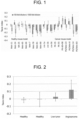
Figure 1] Figure 1 shows the taxic behavior of nematodes toward urine from rodents with cancer or rodents without cancer (healthy). One bar graph corresponds to each individual. - [
Figure 2] Figure 2 shows the taxic behavior of nematodes toward urines from dogs with cancer or dogs without cancer (healthy). One bar graph corresponds to each individual. - [
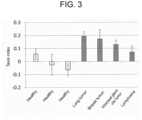
Figure 3] Figure 3 shows the taxic behavior of nematodes toward urines from cats with cancer or cats without cancer (healthy). One bar graph corresponds to each individual. - In the present description, the term "subject" means a non-human mammal, such as a non-primate mammal, being a dog or a cat. In the present description, the term "subject" is also used to mean a healthy subject, a subject suspected of having cancer, and a subject suffering from cancer. In the present description, the term "subject suspected of having cancer" includes not only a subject that is clearly suspected of having cancer but also a subject that has not been specifically suspected of having cancer.
- In the present description, the term "cancer" means a malignant tumor. Cancers can be broadly classified into hematopoietic tumors, epithelial cancers (carcinoma), and non-epithelial sarcomas (sarcomas). Examples of the hematopoietic tumors include leukemia, malignant lymphoma, and myeloma. Examples of the epithelial cancers include lung cancer, breast cancer, stomach cancer, colon cancer, liver cancer, uterine cancer, ovarian cancer, head and neck cancer, and tongue cancer. Examples of the sarcomas include osteosarcomas, chondrosarcomas, rhabdomyosarcomas, leiomyosarcoma, fibrosarcomas, liposarcomas, and angiosarcomas.
- In the present description, the term "detecting cancer" can be read as "detecting cancer cells", "identifying cancer", "judging cancer", "method for assisting in cancer diagnosis", or "method for obtaining preliminary information for cancer diagnosis". The method of the present invention is an industrially applicable method.
- In the present description, the term "nematode" means Caenorhabditis elegans. For the nematode, strains isolated from various environments are registered and published at the Caenorhabditis Genetics Center (CGC) of the Faculty of Biological Sciences, University of Minnesota, USA, and can be distributed. Therefore, those skilled in the art can obtain most of known strains from CGC. Hermaphrodite can be preferably used from the viewpoint of being able to reproduce by self-fertilization.
- In the present description, the term "taxic behavior" means attractive behavior or avoidance behavior. The attractive behavior means the behavior of decreasing the physical distance from a certain substance, and the avoidance behavior means the behavior of increasing the physical distance from a certain substance. A substance that induces attractive behavior is called an attractant, and a substance that induces avoidance behavior is called a repellent. Nematodes have the property of being attracted to attractants and repelling repellents by the sense of smell. The behavior of being attracted toward attractants is called attractive behavior (sometimes referred to as "positive" in the present description), and the behavior of repelling repellents is referred to as avoidance behavior (sometimes referred to as "negative" in the present description). In addition, the attractive behavior and the avoidance behavior are collectively called taxic behavior.
- In the present description, the term "wild strain" is a wild strain of nematodes, and an example thereof includes N2 Bristol strain, which is a general wild strain.
- The present invention provides a method for detecting cancer in a subject that has or is suspected of having cancer (or a method of prediction, a method of diagnosis, or a method for obtaining basic information on the therapeutic effect), comprising evaluating the taxic behavior of nematodes toward a urine sample from the subject.
- The subject is a dog or a cat which can be used as the subject in the present invention.
- Wild-type nematodes (for example, N2 Bristol strain) can be used as the nematodes. The nematode strain exhibits attractive behavior toward a urine from a cancer patient, and therefore such nematodes exhibiting the attractive behavior toward a urine from a cancer patient can be used as the nematodes in the present invention.
- A urine sample can be obtained from a subject. The urine sample may be diluted with a solvent such as water when evaluated by the method of the present invention. In the dilution, for example, the dilution factor may be 5-fold to 20000-fold, for example, the dilution factor may be 10-fold to 10000-fold, for example, the dilution factor may be 10-fold to 5000-fold, the dilution factor may be 10-fold to 2000-fold, and for example, the dilution factor may be 100-fold to 1000-fold, and the nematode also exhibits taxic behavior toward diluted urine samples. In some aspects of the present invention, the dilution factor of urine can be, for example, 100-fold or 1000-fold, or the dilution factors can be in combination of two or more, including 100-fold and 1000-fold. For example, the dilution factor of the dog urine sample may be 10-fold to 2000-fold, for example, 100-fold to 1000-fold. For example, the dilution factor of the cat may be 5-fold to 20000-fold, and the dilution factor may be 10-fold to 10000-fold, for example, 500-fold to 5000-fold.
- The taxic behavior of nematodes can be evaluated by placing a urine sample and nematodes at respective positions that are separated at a certain distance (for example, a distance of about 1 cm to about 5 cm) and then observing whether the nematodes exhibit attractive behavior toward or avoidance behavior against the urine sample. The taxic behavior can be observed on a solid medium such as an agar medium.
- The analysis of urine with nematodes can be performed by placing the test sample (for example, urine) obtained from the subject and the nematodes at respective positions that are separated at a certain distance, and then by observing whether the nematodes exhibit attractive behavior toward or avoidance behavior against the test sample. When the nematodes exhibit attractive behavior, the subject can be evaluated to suffer from cancer or to have the possibility of having cancer. When the nematodes exhibit avoidance behavior, the subject can be evaluated to have no cancer or to have the possibility of having no cancer. An example of the analysis method with a human specimen is as disclosed in
WO2015/088039 . - More specifically, examples of the method of analyzing urine with nematodes can include:
- placing the test sample (for example, urine sample) obtained from the subject onto a petri dish (for example, a petri dish into which a solid medium has been introduced);
- placing the nematodes separated at a certain distance from the test sample in the petri dish where the test sample has been placed; and then
- allowing the nematodes to move.
- The method of analyzing urine with nematodes can include determining that the subject suffers from cancer or has the possibility of suffering from cancer when the nematodes exhibit taxic behavior toward the test sample.
- The taxic behavior of nematodes can be evaluated by a difference or ratio between the number of nematodes approaching the test sample and the number of nematodes far from the test sample. In evaluation based on a difference in the numbers of nematodes, a plus value difference allows the test sample to be evaluated overall as inducing attractive behavior and being derived from a cancer patient, and/or a minus value difference allows the test sample to be evaluated overall as inducing avoidance behavior and being derived from a subject without cancer. In evaluation based on the ratio of the numbers of nematodes, a ratio of 1 or more allows the test sample to be evaluated as inducing attractive behavior and being derived from a subject having cancer, and/or a ratio of less than 1 allows the test sample to be evaluated as inducing avoidance behavior and being derived from a subject without cancer. In addition, the taxic behavior of nematodes can be evaluated by using the taxis index as an index, for example, as follows.

- A plus value of taxis index allows the test sample to be evaluated overall as inducing attractive behavior and being derived from the subject with cancer, and a minus value of taxis index allows the test sample to be evaluated as inducing avoidance behavior and being derived from the subject without cancer.
- The taxis index closer to 1 means a larger proportion of nematodes that exhibit attractive behavior, the taxis index closer to -1 means a larger proportion of nematodes that exhibit avoidance behavior, and the taxis index closer to 0 means that nematodes exhibit neither attractive behavior nor avoidance behavior. A larger absolute value of the taxis index gives a clearer evaluation result of the behavior. If the nematodes that exhibit taxic behavior and the nematodes that exhibit avoidance behavior are similar in the number, it may be then evaluated as positive (in the case of positive, more detailed examination may be performed) or may be excluded from evaluation. In the present invention, an individual who is the source of a positive urine sample can be subjected to a further detailed examination to determine whether or not the individual has cancer.
- In the case of examining urine samples with two or more of different dilution factors, any one of the urine samples is positive, which may be determined as cancer from the viewpoint of improving sensitivity, or all of the urine samples are positive, which may be determined as cancer from the viewpoint of improving specificity.
- The subjects that have been evaluated to have cancer by the method of the present invention can then be treated for cancer (for example, chemotherapy, radiation therapy, surgical resection, and a combination thereof). The subjects that have been evaluated to have cancer by the method of the present invention may undergo more detailed examination to receive a definitive diagnosis of cancer.
- In the reference example, the taxic behavior of nematodes toward rodent urine samples was evaluated.
- Mice were used as a rodent. Urine samples were collected from healthy mice and mice having cancer. Mice having c-Met deficiency and developing no cancer (C57Bl/6 strain) were used as healthy mice, and mice having KrasG12D mutation (refer to Noguchi K. et al., Oncology Letters, 16: 1892-1898, 2018) were used as mice having cancer. The urine samples were diluted 100-fold and the taxic behavior of nematodes toward the urine samples were evaluated by the method described in
WO2015/088039 . Wild-type nematodes (N2 Bristol strain) were used as the nematodes. The taxic behavior was evaluated by using the taxis index. Measurements were repeated 12 times (the same applies hereinafter) to obtain the average value of the taxis index for each individual. The results of taxic behavior toward the urine samples were as shown inFigure 1 .
- As shown in
Figure 1 , the taxis index of urine samples from healthy mice was a minus value or 0.05 or less for almost all cases, whereas the taxis index of urines from mice with cancer was more than 0.05 for urines from three strains. This revealed that mice with cancer can be evaluated by evaluating the taxic behavior of nematodes toward urine samples. When the PK - 60 + 98 urine sample was used at a 1000-fold dilution, the nematodes exhibited attractive behavior toward the urine sample (the taxis index was about 0.15). In the case of 1000-fold dilution, the nematodes exhibited attractive behavior toward urine samples from mice with three cancers. As described above, it was revealed that the nematodes exhibited attractive behavior toward urines from the cancer mouse model in both the 100-fold dilution and the 1000-fold dilution. The plus taxis index was evaluated as positive and the minus taxis index was evaluated as negative, and as a result of such evaluation, 100-fold dilution showed a sensitivity of 28.6% and a specificity of 100%, and 1000-fold dilution showed a sensitivity of 42.8% and a specificity of 83.3%. It was thus revealed that the presence or absence of cancer can be evaluated by evaluating the taxic behavior of nematodes toward rodent urine. - In addition, the plus taxis index is evaluated as positive in either the 100-fold dilution or the 1000-fold dilution, and the minus taxis index is evaluated as negative in both the 100-fold dilution and the 1000-fold dilution, and as a result of such evaluation, the sensitivity is 71.4% (five mice out of seven mice) and the specificity was 83.3% (10 mice out of 12 mice). This result revealed that the examination for cancer with the taxic behavior of nematodes as an index is effective for rodent mice.
- Thereafter, urine samples were collected from healthy dogs and dogs with cancer, respectively, and the taxic behavior of nematodes was evaluated by using urine diluted 1000-fold in the same manner as in Reference Example 1.
- Healthy Chihuahuas, healthy Jack Russell Terriers, golden retrievers with hemangiosarcoma, and Scottish terriers with liver tumors were used as dogs. The results were as shown in
Figure 2 . As shown inFigure 2 , the taxis index for urines from healthy dogs was minus, whereas the taxis index for urines from dogs with cancer was plus. In dogs, both sensitivity and specificity were 100%. This result revealed that the examination for cancer with the taxic behavior of nematodes as an index is effective for dogs. - Moreover, urine samples were collected from healthy cats and cats with cancer, respectively, and the taxic behavior of nematodes was evaluated by using urine diluted 1000-fold.
- Healthy exotic shorthair (two cats), healthy Mix, American shorthair with lung tumor, Mix with breast tumor, Mix with intranasal adenocarcinoma, and Persian with lymphoma were used as cats. The results were as shown in
Figure 3 . As shown inFigure 3 , the taxis index for urines from healthy cats was clearly lower than the taxis index for urines from cats with cancer. The plus taxis index was evaluated as positive and the minus taxis index was evaluated as negative, and as a result of such evaluation, the sensitivity was 100% (four cats out of four cats) and the specificity was 66.7% (two cats out of three cats). This result revealed that the examination for cancer with the taxic behavior of nematodes as an index is effective for cats. - The above results revealed that the examination for cancer with the taxic behavior of nematodes as an index is effective for dogs, cats, and rodent mice. As described above, dogs and cats can be diagnosed for cancer inexpensively and quickly by urinalysis using the taxic behavior of nematodes as an index.
- In the above urine samples from dogs and cats, the taxic behavior of nematodes was similarly detected by changing the dilution factor of urine. As for dogs, the urine samples derived from the dogs having liver tumors or angiosarcomas showed plus taxis indexes at least for 10-fold dilution to 1000-fold dilution. In addition, as for cats, the urine samples derived from the cats having tumors showed plus taxis indexes at least for 10-fold dilution to 10000-fold dilution.
Claims (1)
- A method of examining or diagnosing for cancer in a non-primate mammal, wherein the mammal is a dog or a cat, comprising:
evaluating taxic behavior of nematodes toward a urine sample from the subject, wherein the taxic behavior of nematodes is evaluated by measuring a difference or ratio between the number of nematodes approaching the test sample and the number of nematodes far from the test sample.
Priority Applications (1)
| Application Number | Priority Date | Filing Date | Title |
|---|---|---|---|
| EP24204188.7A EP4465042A3 (en) | 2018-08-14 | 2019-08-14 | Method for examining cancer in pet animal |
Applications Claiming Priority (2)
| Application Number | Priority Date | Filing Date | Title |
|---|---|---|---|
| JP2018152607 | 2018-08-14 | ||
| PCT/JP2019/031912 WO2020036187A1 (en) | 2018-08-14 | 2019-08-14 | Method for examining cancer in pet animal |
Related Child Applications (2)
| Application Number | Title | Priority Date | Filing Date |
|---|---|---|---|
| EP24204188.7A Division EP4465042A3 (en) | 2018-08-14 | 2019-08-14 | Method for examining cancer in pet animal |
| EP24204188.7A Division-Into EP4465042A3 (en) | 2018-08-14 | 2019-08-14 | Method for examining cancer in pet animal |
Publications (4)
| Publication Number | Publication Date |
|---|---|
| EP3839506A1 EP3839506A1 (en) | 2021-06-23 |
| EP3839506A4 EP3839506A4 (en) | 2022-04-06 |
| EP3839506B1 true EP3839506B1 (en) | 2025-01-08 |
| EP3839506C0 EP3839506C0 (en) | 2025-01-08 |
Family
ID=69524720
Family Applications (2)
| Application Number | Title | Priority Date | Filing Date |
|---|---|---|---|
| EP19849382.7A Active EP3839506B1 (en) | 2018-08-14 | 2019-08-14 | Method for examining cancer in pet animal |
| EP24204188.7A Pending EP4465042A3 (en) | 2018-08-14 | 2019-08-14 | Method for examining cancer in pet animal |
Family Applications After (1)
| Application Number | Title | Priority Date | Filing Date |
|---|---|---|---|
| EP24204188.7A Pending EP4465042A3 (en) | 2018-08-14 | 2019-08-14 | Method for examining cancer in pet animal |
Country Status (6)
| Country | Link |
|---|---|
| US (1) | US12498362B2 (en) |
| EP (2) | EP3839506B1 (en) |
| JP (1) | JP7397490B2 (en) |
| CN (1) | CN112703397A (en) |
| ES (1) | ES3010389T3 (en) |
| WO (1) | WO2020036187A1 (en) |
Families Citing this family (1)
| Publication number | Priority date | Publication date | Assignee | Title |
|---|---|---|---|---|
| KR20240087731A (en) * | 2021-08-24 | 2024-06-19 | 온코텍트, 인코포레이티드 | Cancer Screening in Pets |
Family Cites Families (5)
| Publication number | Priority date | Publication date | Assignee | Title |
|---|---|---|---|---|
| CN103487493A (en) * | 2012-06-14 | 2014-01-01 | 刘红莉 | Applications of urine molecule |
| JP6336481B2 (en) | 2013-12-10 | 2018-06-06 | 国立大学法人九州大学 | Cancer detection method using olfactory sense of nematode |
| WO2017213246A1 (en) * | 2016-06-10 | 2017-12-14 | 株式会社日立製作所 | Method for disease diagnosis based on metabolite in urine |
| WO2018047959A1 (en) | 2016-09-12 | 2018-03-15 | 株式会社Hirotsuバイオサイエンス | Method for evaluating taxic behavior in response to odor substance based on olfactory sense in nematodes, and dish and behavior evaluation system used in evaluation method |
| WO2020218501A1 (en) * | 2019-04-25 | 2020-10-29 | 国立研究開発法人量子科学技術研究開発機構 | Nematode trap plate and use therefor |
-
2019
- 2019-08-14 WO PCT/JP2019/031912 patent/WO2020036187A1/en not_active Ceased
- 2019-08-14 EP EP19849382.7A patent/EP3839506B1/en active Active
- 2019-08-14 EP EP24204188.7A patent/EP4465042A3/en active Pending
- 2019-08-14 US US17/268,164 patent/US12498362B2/en active Active
- 2019-08-14 JP JP2020537088A patent/JP7397490B2/en active Active
- 2019-08-14 ES ES19849382T patent/ES3010389T3/en active Active
- 2019-08-14 CN CN201980052011.5A patent/CN112703397A/en active Pending
Also Published As
| Publication number | Publication date |
|---|---|
| EP3839506A1 (en) | 2021-06-23 |
| EP3839506A4 (en) | 2022-04-06 |
| EP4465042A2 (en) | 2024-11-20 |
| ES3010389T3 (en) | 2025-04-02 |
| JPWO2020036187A1 (en) | 2021-08-12 |
| JP7397490B2 (en) | 2023-12-13 |
| CN112703397A (en) | 2021-04-23 |
| EP4465042A3 (en) | 2025-02-19 |
| WO2020036187A1 (en) | 2020-02-20 |
| US12498362B2 (en) | 2025-12-16 |
| US20210215669A1 (en) | 2021-07-15 |
| EP3839506C0 (en) | 2025-01-08 |
Similar Documents
| Publication | Publication Date | Title |
|---|---|---|
| JP2022140518A (en) | Cancer detection method using nematode olfactory sense | |
| Hirotsu et al. | A highly accurate inclusive cancer screening test using Caenorhabditis elegans scent detection | |
| Shugart | Environmental genotoxicology | |
| James et al. | Direct in vivo imaging of essential bioinorganics in Caenorhabditis elegans | |
| Madeira et al. | Parasitological diagnosis of canine visceral leishmaniasis: is intact skin a good target? | |
| Krucik et al. | Association between positive canine heartworm (Dirofilaria immitis) antigen results and presence of Acanthocheilonema odendhali microfilaria in California sea lions (Zalophus californianus) | |
| JP2019105456A (en) | Biomarker Search Method for Urinary Metabolites | |
| US12498362B2 (en) | Method for examining cancer in pet animal | |
| JP6782949B2 (en) | Predicting therapeutic effects and / or recurrence monitoring of cancer patients | |
| HK40118376A (en) | Method for examining cancer in pet animal | |
| Douanne et al. | High-throughput identification and quantification of Haemonchus contortus in fecal samples | |
| Dhandapani et al. | Investigations into the role of rats as intermediate hosts for Neospora caninum in Chennai, India | |
| JP7625283B2 (en) | Method for testing blood samples using nematode migration behavior | |
| US11479800B2 (en) | Cancer detection method using tissue specimen | |
| HK40048065A (en) | Method for examining cancer in pet animal | |
| O’Callaghan et al. | Dynamic biospeckle analysis, a new tool for the fast screening of plant nematicide selectivity | |
| Cappello et al. | NMR-based metabolomics: a holistic approach for monitoring complex biological systems | |
| EP4288780B1 (en) | Methods for cancer detection | |
| WO2018181869A1 (en) | Diagnostic agent for cancer containing nematode mutant, and method for assessing migratory behavior using said mutant | |
| Giubega et al. | Identity of Microfilariae Circulating in Dogs from Western and South-Western Romania in the Last Decade. Pathogens 2021, 10, 1400 | |
| Kaiglová et al. | Towards early cancer detection: the use of Caenorhabditis elegans chemotaxis to distinguish patient urine from that of healthy individuals | |
| HK40098647B (en) | Methods for cancer detection | |
| HK40098647A (en) | Methods for cancer detection |
Legal Events
| Date | Code | Title | Description |
|---|---|---|---|
| STAA | Information on the status of an ep patent application or granted ep patent |
Free format text: STATUS: THE INTERNATIONAL PUBLICATION HAS BEEN MADE |
|
| PUAI | Public reference made under article 153(3) epc to a published international application that has entered the european phase |
Free format text: ORIGINAL CODE: 0009012 |
|
| STAA | Information on the status of an ep patent application or granted ep patent |
Free format text: STATUS: REQUEST FOR EXAMINATION WAS MADE |
|
| 17P | Request for examination filed |
Effective date: 20210222 |
|
| AK | Designated contracting states |
Kind code of ref document: A1 Designated state(s): AL AT BE BG CH CY CZ DE DK EE ES FI FR GB GR HR HU IE IS IT LI LT LU LV MC MK MT NL NO PL PT RO RS SE SI SK SM TR |
|
| DAV | Request for validation of the european patent (deleted) | ||
| DAX | Request for extension of the european patent (deleted) | ||
| A4 | Supplementary search report drawn up and despatched |
Effective date: 20220310 |
|
| RIC1 | Information provided on ipc code assigned before grant |
Ipc: G01N 33/50 20060101ALI20220303BHEP Ipc: G01N 33/493 20060101AFI20220303BHEP |
|
| GRAP | Despatch of communication of intention to grant a patent |
Free format text: ORIGINAL CODE: EPIDOSNIGR1 |
|
| STAA | Information on the status of an ep patent application or granted ep patent |
Free format text: STATUS: GRANT OF PATENT IS INTENDED |
|
| INTG | Intention to grant announced |
Effective date: 20240605 |
|
| RIN1 | Information on inventor provided before grant (corrected) |
Inventor name: MORI MASAKI Inventor name: DOKI, YUICHIRO Inventor name: EGUCHI, HIDETOSHI Inventor name: KOBAYASHI, SHOGO Inventor name: UEDA, YUJI Inventor name: KONNO, MASAMITSU Inventor name: ISHII, HIDESHI Inventor name: SUGIMOTO, TOSHIMI Inventor name: KAIFUCHI, SATORU Inventor name: HIROTSU, TAKAAKI |
|
| GRAJ | Information related to disapproval of communication of intention to grant by the applicant or resumption of examination proceedings by the epo deleted |
Free format text: ORIGINAL CODE: EPIDOSDIGR1 |
|
| STAA | Information on the status of an ep patent application or granted ep patent |
Free format text: STATUS: REQUEST FOR EXAMINATION WAS MADE |
|
| GRAP | Despatch of communication of intention to grant a patent |
Free format text: ORIGINAL CODE: EPIDOSNIGR1 |
|
| STAA | Information on the status of an ep patent application or granted ep patent |
Free format text: STATUS: GRANT OF PATENT IS INTENDED |
|
| INTC | Intention to grant announced (deleted) | ||
| INTG | Intention to grant announced |
Effective date: 20241014 |
|
| GRAS | Grant fee paid |
Free format text: ORIGINAL CODE: EPIDOSNIGR3 |
|
| GRAA | (expected) grant |
Free format text: ORIGINAL CODE: 0009210 |
|
| STAA | Information on the status of an ep patent application or granted ep patent |
Free format text: STATUS: THE PATENT HAS BEEN GRANTED |
|
| AK | Designated contracting states |
Kind code of ref document: B1 Designated state(s): AL AT BE BG CH CY CZ DE DK EE ES FI FR GB GR HR HU IE IS IT LI LT LU LV MC MK MT NL NO PL PT RO RS SE SI SK SM TR |
|
| REG | Reference to a national code |
Ref country code: GB Ref legal event code: FG4D |
|
| REG | Reference to a national code |
Ref country code: CH Ref legal event code: EP |
|
| REG | Reference to a national code |
Ref country code: DE Ref legal event code: R096 Ref document number: 602019064709 Country of ref document: DE |
|
| REG | Reference to a national code |
Ref country code: IE Ref legal event code: FG4D |
|
| U01 | Request for unitary effect filed |
Effective date: 20250108 |
|
| U07 | Unitary effect registered |
Designated state(s): AT BE BG DE DK EE FI FR IT LT LU LV MT NL PT RO SE SI Effective date: 20250114 |
|
| REG | Reference to a national code |
Ref country code: ES Ref legal event code: FG2A Ref document number: 3010389 Country of ref document: ES Kind code of ref document: T3 Effective date: 20250402 |
|
| PG25 | Lapsed in a contracting state [announced via postgrant information from national office to epo] |
Ref country code: RS Free format text: LAPSE BECAUSE OF FAILURE TO SUBMIT A TRANSLATION OF THE DESCRIPTION OR TO PAY THE FEE WITHIN THE PRESCRIBED TIME-LIMIT Effective date: 20250408 |
|
| PG25 | Lapsed in a contracting state [announced via postgrant information from national office to epo] |
Ref country code: PL Free format text: LAPSE BECAUSE OF FAILURE TO SUBMIT A TRANSLATION OF THE DESCRIPTION OR TO PAY THE FEE WITHIN THE PRESCRIBED TIME-LIMIT Effective date: 20250108 |
|
| PG25 | Lapsed in a contracting state [announced via postgrant information from national office to epo] |
Ref country code: IS Free format text: LAPSE BECAUSE OF FAILURE TO SUBMIT A TRANSLATION OF THE DESCRIPTION OR TO PAY THE FEE WITHIN THE PRESCRIBED TIME-LIMIT Effective date: 20250508 |
|
| PG25 | Lapsed in a contracting state [announced via postgrant information from national office to epo] |
Ref country code: HR Free format text: LAPSE BECAUSE OF FAILURE TO SUBMIT A TRANSLATION OF THE DESCRIPTION OR TO PAY THE FEE WITHIN THE PRESCRIBED TIME-LIMIT Effective date: 20250108 |
|
| PG25 | Lapsed in a contracting state [announced via postgrant information from national office to epo] |
Ref country code: GR Free format text: LAPSE BECAUSE OF FAILURE TO SUBMIT A TRANSLATION OF THE DESCRIPTION OR TO PAY THE FEE WITHIN THE PRESCRIBED TIME-LIMIT Effective date: 20250409 |
|
| U20 | Renewal fee for the european patent with unitary effect paid |
Year of fee payment: 7 Effective date: 20250827 |
|
| PG25 | Lapsed in a contracting state [announced via postgrant information from national office to epo] |
Ref country code: SM Free format text: LAPSE BECAUSE OF FAILURE TO SUBMIT A TRANSLATION OF THE DESCRIPTION OR TO PAY THE FEE WITHIN THE PRESCRIBED TIME-LIMIT Effective date: 20250108 |
|
| PGFP | Annual fee paid to national office [announced via postgrant information from national office to epo] |
Ref country code: GB Payment date: 20250820 Year of fee payment: 7 |
|
| PG25 | Lapsed in a contracting state [announced via postgrant information from national office to epo] |
Ref country code: CZ Free format text: LAPSE BECAUSE OF FAILURE TO SUBMIT A TRANSLATION OF THE DESCRIPTION OR TO PAY THE FEE WITHIN THE PRESCRIBED TIME-LIMIT Effective date: 20250108 |
|
| PG25 | Lapsed in a contracting state [announced via postgrant information from national office to epo] |
Ref country code: SK Free format text: LAPSE BECAUSE OF FAILURE TO SUBMIT A TRANSLATION OF THE DESCRIPTION OR TO PAY THE FEE WITHIN THE PRESCRIBED TIME-LIMIT Effective date: 20250108 |
|
| PLBE | No opposition filed within time limit |
Free format text: ORIGINAL CODE: 0009261 |
|
| STAA | Information on the status of an ep patent application or granted ep patent |
Free format text: STATUS: NO OPPOSITION FILED WITHIN TIME LIMIT |
|
| REG | Reference to a national code |
Ref country code: CH Ref legal event code: L10 Free format text: ST27 STATUS EVENT CODE: U-0-0-L10-L00 (AS PROVIDED BY THE NATIONAL OFFICE) Effective date: 20251119 |
|
| 26N | No opposition filed |
Effective date: 20251009 |
|
| REG | Reference to a national code |
Ref country code: CH Ref legal event code: U11 Free format text: ST27 STATUS EVENT CODE: U-0-0-U10-U11 (AS PROVIDED BY THE NATIONAL OFFICE) Effective date: 20260225 |
|
| PG25 | Lapsed in a contracting state [announced via postgrant information from national office to epo] |
Ref country code: MC Free format text: LAPSE BECAUSE OF FAILURE TO SUBMIT A TRANSLATION OF THE DESCRIPTION OR TO PAY THE FEE WITHIN THE PRESCRIBED TIME-LIMIT Effective date: 20250108 |
|
| PGFP | Annual fee paid to national office [announced via postgrant information from national office to epo] |
Ref country code: ES Payment date: 20260226 Year of fee payment: 7 |
|
| PGFP | Annual fee paid to national office [announced via postgrant information from national office to epo] |
Ref country code: NO Payment date: 20260227 Year of fee payment: 7 |
|
| PGFP | Annual fee paid to national office [announced via postgrant information from national office to epo] |
Ref country code: TR Payment date: 20260210 Year of fee payment: 7 |
|
| PGFP | Annual fee paid to national office [announced via postgrant information from national office to epo] |
Ref country code: CH Payment date: 20260225 Year of fee payment: 7 |