EP3839112A1 - Filament materials comprising marking additives for extrusion-based additive manufacturing systems - Google Patents
Filament materials comprising marking additives for extrusion-based additive manufacturing systems Download PDFInfo
- Publication number
- EP3839112A1 EP3839112A1 EP20211722.2A EP20211722A EP3839112A1 EP 3839112 A1 EP3839112 A1 EP 3839112A1 EP 20211722 A EP20211722 A EP 20211722A EP 3839112 A1 EP3839112 A1 EP 3839112A1
- Authority
- EP
- European Patent Office
- Prior art keywords
- marking
- filament material
- poly
- marking additive
- light
- Prior art date
- Legal status (The legal status is an assumption and is not a legal conclusion. Google has not performed a legal analysis and makes no representation as to the accuracy of the status listed.)
- Granted
Links
Images


Classifications
-
- B—PERFORMING OPERATIONS; TRANSPORTING
- B29—WORKING OF PLASTICS; WORKING OF SUBSTANCES IN A PLASTIC STATE IN GENERAL
- B29C—SHAPING OR JOINING OF PLASTICS; SHAPING OF MATERIAL IN A PLASTIC STATE, NOT OTHERWISE PROVIDED FOR; AFTER-TREATMENT OF THE SHAPED PRODUCTS, e.g. REPAIRING
- B29C64/00—Additive manufacturing, i.e. manufacturing of three-dimensional [3D] objects by additive deposition, additive agglomeration or additive layering, e.g. by 3D printing, stereolithography or selective laser sintering
- B29C64/10—Processes of additive manufacturing
- B29C64/106—Processes of additive manufacturing using only liquids or viscous materials, e.g. depositing a continuous bead of viscous material
- B29C64/118—Processes of additive manufacturing using only liquids or viscous materials, e.g. depositing a continuous bead of viscous material using filamentary material being melted, e.g. fused deposition modelling [FDM]
-
- B—PERFORMING OPERATIONS; TRANSPORTING
- B29—WORKING OF PLASTICS; WORKING OF SUBSTANCES IN A PLASTIC STATE IN GENERAL
- B29C—SHAPING OR JOINING OF PLASTICS; SHAPING OF MATERIAL IN A PLASTIC STATE, NOT OTHERWISE PROVIDED FOR; AFTER-TREATMENT OF THE SHAPED PRODUCTS, e.g. REPAIRING
- B29C64/00—Additive manufacturing, i.e. manufacturing of three-dimensional [3D] objects by additive deposition, additive agglomeration or additive layering, e.g. by 3D printing, stereolithography or selective laser sintering
- B29C64/10—Processes of additive manufacturing
- B29C64/188—Processes of additive manufacturing involving additional operations performed on the added layers, e.g. smoothing, grinding or thickness control
-
- B—PERFORMING OPERATIONS; TRANSPORTING
- B29—WORKING OF PLASTICS; WORKING OF SUBSTANCES IN A PLASTIC STATE IN GENERAL
- B29C—SHAPING OR JOINING OF PLASTICS; SHAPING OF MATERIAL IN A PLASTIC STATE, NOT OTHERWISE PROVIDED FOR; AFTER-TREATMENT OF THE SHAPED PRODUCTS, e.g. REPAIRING
- B29C64/00—Additive manufacturing, i.e. manufacturing of three-dimensional [3D] objects by additive deposition, additive agglomeration or additive layering, e.g. by 3D printing, stereolithography or selective laser sintering
- B29C64/20—Apparatus for additive manufacturing; Details thereof or accessories therefor
-
- B—PERFORMING OPERATIONS; TRANSPORTING
- B29—WORKING OF PLASTICS; WORKING OF SUBSTANCES IN A PLASTIC STATE IN GENERAL
- B29C—SHAPING OR JOINING OF PLASTICS; SHAPING OF MATERIAL IN A PLASTIC STATE, NOT OTHERWISE PROVIDED FOR; AFTER-TREATMENT OF THE SHAPED PRODUCTS, e.g. REPAIRING
- B29C64/00—Additive manufacturing, i.e. manufacturing of three-dimensional [3D] objects by additive deposition, additive agglomeration or additive layering, e.g. by 3D printing, stereolithography or selective laser sintering
- B29C64/30—Auxiliary operations or equipment
- B29C64/307—Handling of material to be used in additive manufacturing
- B29C64/314—Preparation
-
- B—PERFORMING OPERATIONS; TRANSPORTING
- B29—WORKING OF PLASTICS; WORKING OF SUBSTANCES IN A PLASTIC STATE IN GENERAL
- B29C—SHAPING OR JOINING OF PLASTICS; SHAPING OF MATERIAL IN A PLASTIC STATE, NOT OTHERWISE PROVIDED FOR; AFTER-TREATMENT OF THE SHAPED PRODUCTS, e.g. REPAIRING
- B29C64/00—Additive manufacturing, i.e. manufacturing of three-dimensional [3D] objects by additive deposition, additive agglomeration or additive layering, e.g. by 3D printing, stereolithography or selective laser sintering
- B29C64/30—Auxiliary operations or equipment
- B29C64/386—Data acquisition or data processing for additive manufacturing
- B29C64/393—Data acquisition or data processing for additive manufacturing for controlling or regulating additive manufacturing processes
-
- B—PERFORMING OPERATIONS; TRANSPORTING
- B33—ADDITIVE MANUFACTURING TECHNOLOGY
- B33Y—ADDITIVE MANUFACTURING, i.e. MANUFACTURING OF THREE-DIMENSIONAL [3D] OBJECTS BY ADDITIVE DEPOSITION, ADDITIVE AGGLOMERATION OR ADDITIVE LAYERING, e.g. BY 3D PRINTING, STEREOLITHOGRAPHY OR SELECTIVE LASER SINTERING
- B33Y10/00—Processes of additive manufacturing
-
- B—PERFORMING OPERATIONS; TRANSPORTING
- B33—ADDITIVE MANUFACTURING TECHNOLOGY
- B33Y—ADDITIVE MANUFACTURING, i.e. MANUFACTURING OF THREE-DIMENSIONAL [3D] OBJECTS BY ADDITIVE DEPOSITION, ADDITIVE AGGLOMERATION OR ADDITIVE LAYERING, e.g. BY 3D PRINTING, STEREOLITHOGRAPHY OR SELECTIVE LASER SINTERING
- B33Y30/00—Apparatus for additive manufacturing; Details thereof or accessories therefor
-
- B—PERFORMING OPERATIONS; TRANSPORTING
- B33—ADDITIVE MANUFACTURING TECHNOLOGY
- B33Y—ADDITIVE MANUFACTURING, i.e. MANUFACTURING OF THREE-DIMENSIONAL [3D] OBJECTS BY ADDITIVE DEPOSITION, ADDITIVE AGGLOMERATION OR ADDITIVE LAYERING, e.g. BY 3D PRINTING, STEREOLITHOGRAPHY OR SELECTIVE LASER SINTERING
- B33Y40/00—Auxiliary operations or equipment, e.g. for material handling
- B33Y40/10—Pre-treatment
-
- B—PERFORMING OPERATIONS; TRANSPORTING
- B33—ADDITIVE MANUFACTURING TECHNOLOGY
- B33Y—ADDITIVE MANUFACTURING, i.e. MANUFACTURING OF THREE-DIMENSIONAL [3D] OBJECTS BY ADDITIVE DEPOSITION, ADDITIVE AGGLOMERATION OR ADDITIVE LAYERING, e.g. BY 3D PRINTING, STEREOLITHOGRAPHY OR SELECTIVE LASER SINTERING
- B33Y40/00—Auxiliary operations or equipment, e.g. for material handling
- B33Y40/20—Post-treatment, e.g. curing, coating or polishing
-
- B—PERFORMING OPERATIONS; TRANSPORTING
- B33—ADDITIVE MANUFACTURING TECHNOLOGY
- B33Y—ADDITIVE MANUFACTURING, i.e. MANUFACTURING OF THREE-DIMENSIONAL [3D] OBJECTS BY ADDITIVE DEPOSITION, ADDITIVE AGGLOMERATION OR ADDITIVE LAYERING, e.g. BY 3D PRINTING, STEREOLITHOGRAPHY OR SELECTIVE LASER SINTERING
- B33Y50/00—Data acquisition or data processing for additive manufacturing
- B33Y50/02—Data acquisition or data processing for additive manufacturing for controlling or regulating additive manufacturing processes
-
- B—PERFORMING OPERATIONS; TRANSPORTING
- B33—ADDITIVE MANUFACTURING TECHNOLOGY
- B33Y—ADDITIVE MANUFACTURING, i.e. MANUFACTURING OF THREE-DIMENSIONAL [3D] OBJECTS BY ADDITIVE DEPOSITION, ADDITIVE AGGLOMERATION OR ADDITIVE LAYERING, e.g. BY 3D PRINTING, STEREOLITHOGRAPHY OR SELECTIVE LASER SINTERING
- B33Y70/00—Materials specially adapted for additive manufacturing
-
- B—PERFORMING OPERATIONS; TRANSPORTING
- B33—ADDITIVE MANUFACTURING TECHNOLOGY
- B33Y—ADDITIVE MANUFACTURING, i.e. MANUFACTURING OF THREE-DIMENSIONAL [3D] OBJECTS BY ADDITIVE DEPOSITION, ADDITIVE AGGLOMERATION OR ADDITIVE LAYERING, e.g. BY 3D PRINTING, STEREOLITHOGRAPHY OR SELECTIVE LASER SINTERING
- B33Y70/00—Materials specially adapted for additive manufacturing
- B33Y70/10—Composites of different types of material, e.g. mixtures of ceramics and polymers or mixtures of metals and biomaterials
-
- C—CHEMISTRY; METALLURGY
- C08—ORGANIC MACROMOLECULAR COMPOUNDS; THEIR PREPARATION OR CHEMICAL WORKING-UP; COMPOSITIONS BASED THEREON
- C08K—Use of inorganic or non-macromolecular organic substances as compounding ingredients
- C08K3/00—Use of inorganic substances as compounding ingredients
- C08K3/01—Use of inorganic substances as compounding ingredients characterized by their specific function
- C08K3/013—Fillers, pigments or reinforcing additives
-
- C—CHEMISTRY; METALLURGY
- C08—ORGANIC MACROMOLECULAR COMPOUNDS; THEIR PREPARATION OR CHEMICAL WORKING-UP; COMPOSITIONS BASED THEREON
- C08K—Use of inorganic or non-macromolecular organic substances as compounding ingredients
- C08K3/00—Use of inorganic substances as compounding ingredients
- C08K3/02—Elements
- C08K3/04—Carbon
- C08K3/042—Graphene or derivatives, e.g. graphene oxides
-
- C—CHEMISTRY; METALLURGY
- C08—ORGANIC MACROMOLECULAR COMPOUNDS; THEIR PREPARATION OR CHEMICAL WORKING-UP; COMPOSITIONS BASED THEREON
- C08K—Use of inorganic or non-macromolecular organic substances as compounding ingredients
- C08K3/00—Use of inorganic substances as compounding ingredients
- C08K3/18—Oxygen-containing compounds, e.g. metal carbonyls
- C08K3/20—Oxides; Hydroxides
- C08K3/22—Oxides; Hydroxides of metals
-
- C—CHEMISTRY; METALLURGY
- C08—ORGANIC MACROMOLECULAR COMPOUNDS; THEIR PREPARATION OR CHEMICAL WORKING-UP; COMPOSITIONS BASED THEREON
- C08K—Use of inorganic or non-macromolecular organic substances as compounding ingredients
- C08K3/00—Use of inorganic substances as compounding ingredients
- C08K3/18—Oxygen-containing compounds, e.g. metal carbonyls
- C08K3/20—Oxides; Hydroxides
- C08K3/22—Oxides; Hydroxides of metals
- C08K3/2279—Oxides; Hydroxides of metals of antimony
-
- C—CHEMISTRY; METALLURGY
- C08—ORGANIC MACROMOLECULAR COMPOUNDS; THEIR PREPARATION OR CHEMICAL WORKING-UP; COMPOSITIONS BASED THEREON
- C08K—Use of inorganic or non-macromolecular organic substances as compounding ingredients
- C08K3/00—Use of inorganic substances as compounding ingredients
- C08K3/32—Phosphorus-containing compounds
-
- C—CHEMISTRY; METALLURGY
- C08—ORGANIC MACROMOLECULAR COMPOUNDS; THEIR PREPARATION OR CHEMICAL WORKING-UP; COMPOSITIONS BASED THEREON
- C08K—Use of inorganic or non-macromolecular organic substances as compounding ingredients
- C08K3/00—Use of inorganic substances as compounding ingredients
- C08K3/34—Silicon-containing compounds
-
- C—CHEMISTRY; METALLURGY
- C08—ORGANIC MACROMOLECULAR COMPOUNDS; THEIR PREPARATION OR CHEMICAL WORKING-UP; COMPOSITIONS BASED THEREON
- C08K—Use of inorganic or non-macromolecular organic substances as compounding ingredients
- C08K3/00—Use of inorganic substances as compounding ingredients
- C08K3/34—Silicon-containing compounds
- C08K3/36—Silica
-
- C—CHEMISTRY; METALLURGY
- C08—ORGANIC MACROMOLECULAR COMPOUNDS; THEIR PREPARATION OR CHEMICAL WORKING-UP; COMPOSITIONS BASED THEREON
- C08L—COMPOSITIONS OF MACROMOLECULAR COMPOUNDS
- C08L101/00—Compositions of unspecified macromolecular compounds
-
- C—CHEMISTRY; METALLURGY
- C08—ORGANIC MACROMOLECULAR COMPOUNDS; THEIR PREPARATION OR CHEMICAL WORKING-UP; COMPOSITIONS BASED THEREON
- C08L—COMPOSITIONS OF MACROMOLECULAR COMPOUNDS
- C08L5/00—Compositions of polysaccharides or of their derivatives not provided for in groups C08L1/00 or C08L3/00
-
- C—CHEMISTRY; METALLURGY
- C08—ORGANIC MACROMOLECULAR COMPOUNDS; THEIR PREPARATION OR CHEMICAL WORKING-UP; COMPOSITIONS BASED THEREON
- C08L—COMPOSITIONS OF MACROMOLECULAR COMPOUNDS
- C08L55/00—Compositions of homopolymers or copolymers, obtained by polymerisation reactions only involving carbon-to-carbon unsaturated bonds, not provided for in groups C08L23/00 - C08L53/00
- C08L55/02—ABS [Acrylonitrile-Butadiene-Styrene] polymers
-
- C—CHEMISTRY; METALLURGY
- C08—ORGANIC MACROMOLECULAR COMPOUNDS; THEIR PREPARATION OR CHEMICAL WORKING-UP; COMPOSITIONS BASED THEREON
- C08L—COMPOSITIONS OF MACROMOLECULAR COMPOUNDS
- C08L61/00—Compositions of condensation polymers of aldehydes or ketones; Compositions of derivatives of such polymers
- C08L61/20—Condensation polymers of aldehydes or ketones with only compounds containing hydrogen attached to nitrogen
- C08L61/26—Condensation polymers of aldehydes or ketones with only compounds containing hydrogen attached to nitrogen of aldehydes with heterocyclic compounds
- C08L61/28—Condensation polymers of aldehydes or ketones with only compounds containing hydrogen attached to nitrogen of aldehydes with heterocyclic compounds with melamine
-
- D—TEXTILES; PAPER
- D01—NATURAL OR MAN-MADE THREADS OR FIBRES; SPINNING
- D01F—CHEMICAL FEATURES IN THE MANUFACTURE OF ARTIFICIAL FILAMENTS, THREADS, FIBRES, BRISTLES OR RIBBONS; APPARATUS SPECIALLY ADAPTED FOR THE MANUFACTURE OF CARBON FILAMENTS
- D01F1/00—General methods for the manufacture of artificial filaments or the like
- D01F1/02—Addition of substances to the spinning solution or to the melt
- D01F1/10—Other agents for modifying properties
-
- B—PERFORMING OPERATIONS; TRANSPORTING
- B41—PRINTING; LINING MACHINES; TYPEWRITERS; STAMPS
- B41M—PRINTING, DUPLICATING, MARKING, OR COPYING PROCESSES; COLOUR PRINTING
- B41M5/00—Duplicating or marking methods; Sheet materials for use therein
- B41M5/26—Thermography ; Marking by high energetic means, e.g. laser otherwise than by burning, and characterised by the material used
- B41M5/267—Marking of plastic artifacts, e.g. with laser
-
- C—CHEMISTRY; METALLURGY
- C08—ORGANIC MACROMOLECULAR COMPOUNDS; THEIR PREPARATION OR CHEMICAL WORKING-UP; COMPOSITIONS BASED THEREON
- C08K—Use of inorganic or non-macromolecular organic substances as compounding ingredients
- C08K3/00—Use of inorganic substances as compounding ingredients
- C08K3/18—Oxygen-containing compounds, e.g. metal carbonyls
- C08K3/20—Oxides; Hydroxides
- C08K3/22—Oxides; Hydroxides of metals
- C08K2003/2231—Oxides; Hydroxides of metals of tin
-
- C—CHEMISTRY; METALLURGY
- C08—ORGANIC MACROMOLECULAR COMPOUNDS; THEIR PREPARATION OR CHEMICAL WORKING-UP; COMPOSITIONS BASED THEREON
- C08K—Use of inorganic or non-macromolecular organic substances as compounding ingredients
- C08K3/00—Use of inorganic substances as compounding ingredients
- C08K3/18—Oxygen-containing compounds, e.g. metal carbonyls
- C08K3/20—Oxides; Hydroxides
- C08K3/22—Oxides; Hydroxides of metals
- C08K2003/2237—Oxides; Hydroxides of metals of titanium
- C08K2003/2241—Titanium dioxide
-
- C—CHEMISTRY; METALLURGY
- C08—ORGANIC MACROMOLECULAR COMPOUNDS; THEIR PREPARATION OR CHEMICAL WORKING-UP; COMPOSITIONS BASED THEREON
- C08K—Use of inorganic or non-macromolecular organic substances as compounding ingredients
- C08K3/00—Use of inorganic substances as compounding ingredients
- C08K3/32—Phosphorus-containing compounds
- C08K2003/321—Phosphates
-
- C—CHEMISTRY; METALLURGY
- C08—ORGANIC MACROMOLECULAR COMPOUNDS; THEIR PREPARATION OR CHEMICAL WORKING-UP; COMPOSITIONS BASED THEREON
- C08K—Use of inorganic or non-macromolecular organic substances as compounding ingredients
- C08K2201/00—Specific properties of additives
- C08K2201/011—Nanostructured additives
Definitions
- the present disclosure relates generally to filament materials and, more particularly, to filament materials that include marking additives for extrusion-based additive manufacturing systems.
- Three-dimensional (3D) printing is a technology that allows 3D objects to be printed with controlled internal and external geometry layer-by-layer using a computer-aided design (CAD) file.
- CAD computer-aided design
- a starting material may be used and selectively melted and bonded to form a 3D object.
- Different types of 3D printers are available today.
- the different types of 3D printers may perform different types of additive printing.
- Examples of 3D printing technology may include extrusion-based printing, such as fused filament fabrication (FFF), also known as fused deposition modeling (FDM), selective laser sintering (SLS), selective laser melting (SLM), electronic beam melting (EBM), digital light processing (DLP), stereolithography (SLA), laminated object manufacturing (LOM), binder jetting, and the like.
- FFF fused filament fabrication
- FDM fused deposition modeling
- SLS selective laser sintering
- SLM selective laser melting
- EBM electronic beam melting
- DLP digital light processing
- SLA
- a filament material for use in an extrusion based printer.
- One disclosed feature of the embodiments is a filament material, comprising a polymer resin that is compatible with an extrusion based printing process and a marking additive that allows selective portions of the filament material to change color when exposed to a light, wherein the marking additive is added to approximately 0.01 to 25.00 weight percent (wt%).
- Another disclose feature of the embodiments is a method to produce a filament material with a marking additive for a fused deposition modeling (FDM) printer.
- the method comprises providing a polymer resin that is compatible with the FDM printer, mixing into the polymer resin the marking additive in amount of approximately 0.01 to 25.00 weight percent (wt%) to form the filament material with the marking additive, and exposing select portions of the filament material to a light to form a mark on a surface of the filament material, wherein the marking additive mixed into the polymer resin at the select portions absorbs the light to change color and form the mark.
- FDM fused deposition modeling
- Another disclosed feature of the embodiments is a method marking a three-dimensional (3D) printed object that is printed with a filament material with the marking additive.
- the method comprises receiving, by a processor, instructions to print the 3D printed object, controlling, by the processor, an extrusion based printer to print the 3D printed object in accordance with the instructions, wherein the 3D printed object is printed with the filament material with the marking additive, wherein the filament material with the marking additive comprises a polymer resin and 0.01 to 25.00 weight percent (wt) of the marking additive, receiving, by the processor, marking instructions associated with a marking for the 3D printed object, and controlling, by the processor, a laser to expose portions a surface of 3D printed object in accordance with the marking instructions to change a color of the portions of the surface of 3D printed object to write the marking on the surface of the 3D printed object.
- the present disclosure is related to a filament material with marking additives and a method for making the same.
- the filament material with marking additives can be used to print 3D objects and mark the 3D objects by changing the color of selected portions of the surface of the 3D object.
- various 3D printing technologies are used today.
- marking materials can be added to provide identification of the object, labeling information, security information, and the like.
- a separately printed label can be applied to the object.
- the label can be easily removed or damaged.
- Another example may be to physically print the label into the object as part of the printing process.
- the desired marks can be physically printed (e.g., the desired letters are raised portions on the surface of the 3D object) into the 3D printed object.
- Another example may be to etch away or melt away portions of the 3D printed object using, for example, laser engraving.
- these solutions may not be suitable to achieve high contrast markings for many areas of application. Further, these solutions may suffer from additional complexity, limitations on how small markings can be printed due to the physical properties of the material, and so forth.
- the present disclosure provides a filament material with marking additives that can be used in extrusion-based 3D printers, such as FFF or FDM 3D printers.
- the marking additives can absorb light to change the optical properties of the filament material. For example, certain marking additives can result in optical or color change of the filament material when exposed to infrared light.
- markings can be written directly into the surface of the filament or the 3D printed object by exposing desired locations on the surface to a light source.
- the portions that are exposed to the light source may change color, and the marking may be written on the surface of the filament or the 3D printed object.
- the markings may be written to any desired size.
- the markings may be added relatively quickly, as the marking additive may change color when exposed to light at speeds up to 8 meters per second.
- the markings created by the filament material with the marking additives may be more permanent and secure than currently available marking methods.
- FIG. 1 illustrates an example of a fused deposition modeling (FDM) printer 100 that uses filament materials with marking additives 110 (also herein referred to as a filament material 110) of the present disclosure.
- FDM fused deposition modeling
- FIG. 1 illustrates a particular type of extrusion based printer as an example, it should be noted that the filament material 110 can be used with any type of extrusion based printer or printing process.
- the FDM printer 100 may have a continuous roll of the filament materials 110 that is fed through a printhead 112.
- the printhead 112 may have a heater that melts the filament materials 110 and extrudes the filament materials 110.
- the filament materials 110 may be extruded layer by layer to form a 3D printed object 114.
- the filament materials 110 may be printed on a movable platform 116. After each layer of the 3D printed object 114 is printed, the platform 116 may be lowered, and the next layer of the 3D printed object 114 may be printed until the 3D printed object 114 is completely printed.
- the printhead 112 may be movable on a two-dimensional coordinate system (e.g., left and right along the page and into and out of the page).
- the FDM printer 100 may be controlled by a processor 102 that is communicatively coupled to the printhead 112 and a roller 118 of the filament materials 110.
- the FDM printer 100 may also include a memory 104 that is communicatively coupled to the processor 102.
- the memory 104 may be any type of non-transitory computer readable medium.
- the memory 104 may be a hard disk drive, a solid state drive, a random access memory, a read-only memory, and the like.
- the memory 104 may include instructions that are executed by the processor 102.
- the memory 104 may include print instructions 106 and marking instructions 108.
- the processor 102 may control the feed of the filament material 110 and control dispensing of the filament material 110 via movement of the printhead 112 in accordance with the print instructions 106 to print the 3D object 114.
- the processor 102 may also control a light source 120 to mark the 3D printed object 114 or the filament material 110 itself.
- the lights source 120 is illustrated as being part of the FDM printer 100 in FIG. 1 , it should be noted that the light source 120 may be a separate device or component that is independently controlled by another controller or processor.
- the 3D printed object 114 or the filament material 110 may be completed and then transferred to an apparatus with the light source to receive the light for marking.
- the processor 102 may mark the 3D printed object 114 or the filament material 110 in accordance with the marking instructions 108.
- the light source 120 may be a laser that may be operated at a wavelength in an infrared region ranging from approximately 700 nanometers (nm) to 10.6 microns ( ⁇ m). Examples of lasers may include solid-state lasers, diode or diode array lasers, yttrium aluminum garnet (YAG) lasers, fiber lasers, carbon dioxide (CO 2 ) lasers, and the like.
- the light source 120 may be operated in a pulsed mode or a continuous mode.
- the filament material 110 may include a marking additive.
- the marking additives 110 When the filament material with marking additives 110 is exposed to a certain wavelength of light from the light source 120, the surface of the filament material 110 or the 3D printed object 114 that is exposed to the light may change color. Thus, the marking can be directly "written" on the filament material 110 or the 3D printed object 114 by the light source 120. Notably, the marking is not being etched or physically formed by additional printing of the filament material 110. Rather, the physical properties of the filament material with marking additives 110 are being changed to create the markings. As a result, the markings may be more secure and permanent than can be produced using current methods to add markings to 3D printed objects.
- the filament material 110 may be formulated or created by mixing a polymer resin with a marking additive.
- the polymer resin may be any type of polymer resin that is compatible with the FDM printer 100.
- the polymer resin may have a melting temperature or a softening temperature and a viscosity that allows the FDM printer 100 to control how the polymer resin is dispensed.
- the polymer resin may be a thermoplastic, including crystalline, semi-crystalline, or amorphous polymer resins.
- polymer resins examples include acrylic resins; polymers or copolymers produced from the monomers selecting from the group consisting of acrylonitrile, butadiene, styrene, an acrylate, a methacrylate, and the mixture thereof; polyolefins; polyesters; polycarbonates; polylactic acid; thermoplastic polyurethanes; polyamides; polyimides; polysulfone; poly(aryl ethers); poly(aryl ether ketones); poly(aryl ether sulfones); poly(ether imide); polyarylenesulfides, poly(vinyl alcohol), polyvinylidene fluoride, or any combinations thereof.
- acrylic resins examples include acrylic resins; polymers or copolymers produced from the monomers selecting from the group consisting of acrylonitrile, butadiene, styrene, an acrylate, a methacrylate, and the mixture thereof; polyolefins; polyesters; polycarbonates; polylactic acid; thermo
- polymer resins are polymethyl methacrylate (PMMA), acrylonitrile butadiene styrene (ABS) resin, Nylon-6, nylon-12, polyethylene terephthalate (PET), polybutylene terephthalate (PBT), polyethylene, polypropylene, polypropylene, polyaryletherketones (PAEK), polylactic acid (PLA), thermoplastic polyurethanes (TPU), and the like, or any combinations thereof.
- PMMA polymethyl methacrylate
- ABS acrylonitrile butadiene styrene
- Nylon-6 Nylon-6
- PET polyethylene terephthalate
- PBT polybutylene terephthalate
- PAEK polyethylene
- PDA polylactic acid
- TPU thermoplastic polyurethanes
- the marking additives used in the filament material 110 of the present disclosure should possess good light fastness and weatherability.
- the marking additives should be compatible with the manufacturing processes of the filament material 110 and the 3D printing processes described herein.
- the marking additives may have good thermal stability at a temperature that is at least that of a melting point or softening temperature of the filament material 110.
- the marking additive may be compatible with the polymer resins used for the filament material 110, be environmentally friendly, readily available, and non-toxic.
- the marking additive may be a light absorbing marking additive. In one embodiment, the marking additive may be an infrared light absorbing marking additive. The marking additive may possess efficient absorption of the light radiation within a wavelength region of the FDM printer 100. The marking additive may possess efficient absorption of the light radiation within a wavelength region of the FDM printer 100.
- the marking additive may be added or mixed with the polymer resin at approximately 0.01 weight percent (wt%) to 25.00 wt%. In one embodiment, the marking additive may be added at approximately 0.10 wt% to 10.00 wt%. In one embodiment, the marking additive may be added at approximately 0.50 wt% to 5.00 wt%.
- the weight percentage may be a ratio of the marking additive to a total weight of the filament material.
- the amounts of the marking additives described herein may allow the polymer resin to maintain good printability in the FDM printer 100.
- the amounts of the marking additives may allow the polymer resins to maintain the same mechanical strengths of the 3D printed object 114 as compared to the polymer resins without the marking additives.
- the marking additive may be an additive that changes color or reacts when exposed to a light emitted by the light source 120.
- the marking additive may include an infrared absorption component that absorbs wavelengths of approximately 700 nanometers (nm) to 11,000 nm.
- the marking additive may absorb wavelengths of approximately 780 nm to about 2500 nm.
- the light may be emitted by a semiconducting laser beam that is continuously emitted or pulsed, as described above.
- examples of the infrared absorption component may include a metal oxide, a non-stoichiometric metal oxide, a metal hydroxide, a copper hydroxyphosphate, a copper pyrophosphate; a base copper carbonate, ammonium octamolebdate, a silver halide, a phthalocyanine, a naphthalocyanine, graphitic oxide, graphene oxide, carbon black, or a mixture thereof.
- metals for the metal oxide or the non-stoichiometric metal oxide may include tin, antimony, bismuth, boron, titanium, indium, iron, copper, molybdenum, tungsten, vanadium, or any combination thereof.
- metal oxide or non-stoichiometric metal oxide may include titanium oxide, boron anhydride, tin oxide, bismuth oxide, copper oxide, iron oxide, molybdenum oxide, vanadium oxide, antimony-doped tin oxide, antimony-doped indium tin oxide, reduced indium tin oxide, oxygen-deficient bismuth oxide, metal hydroxides, or any combination thereof.
- Examples of the metal hydroxide may include aluminum hydroxide, magnesium hydroxide, copper hydroxide, and a mixture thereof.
- Examples of the phthalocyanines include metal-free phthaocyanines and metal phthalocyanines such as copper phthocyanines.
- the example of the naphthalocyanines may include metal-free or metal naphthalocyanines.
- the filament material 110 may include a marking additive that absorbs light at wavelengths of approximately 780 nm to 2500 nm emitted by a near infrared laser.
- the near infrared laser may be a YAG laser which operates at a wavelength of approximately 1064 nm.
- the filament material 110 may include a marking additive that absorbs light at wavelengths above 2500 nm using a CO 2 laser operating at approximately 10.6 ⁇ m.
- the marking additive used for the filament material 110 disclosed herein may further comprise a developer component.
- the developer component itself may not be sensitive to the radiation emitted by the light source 120.
- the developer component may be reactive to assist color change of the filament material 110.
- Suitable developer components may include a polyphenol, a melamine resin, a polysaccharide, or any combination thereof.
- the marking additive may be provided in a particulate form.
- the marking additive may be particles having an average diameter of approximately 10 nm to 5000 nm. In one embodiment, the particles may have an average diameter of approximately 10 nm to 1000 nm.
- the marking additive may also include an inert support material.
- the inert support material may include silica, alumina, titanium oxide, zinc oxide, mica, calcium carbonate, kaolin, talc, ceramic, and the like.
- the filament material 110 may also include a pigment or a colorant.
- the pigment or colorant may be inert to the radiation received during the marking process. However, the pigment or colorant may provide a background to enhance the marking contrast or visibility. Examples of the pigment or colorant that can be used include titanium oxide, zinc oxide, iron oxide, carbon black, organic pigments, and the like.
- the mixture may be formed into a ribbon or cord of the filament material with marking additives 110.
- the continuous cord of the filament material with marking additives 110 may be stored on the roller 118 to be fed through the printhead 112 for extrusion, as discussed above.
- a Filabot EX6 extruder (purchased from Filbot Company) is used for the preparation of filament materials with laser marking additive composition. 100 parts of ABS (acrylonitrile butadiene styrene) resin pellets are blended with 3 parts of graphene oxide, and fed into the Filabot EX6 extruder. Under the vendor recommended extrusion settings, the resin blends were extruded into 2.85-mm filaments with light brownish color.
- ABS acrylonitrile butadiene styrene
- the resultant filaments can be used for 3D printing using an FDM printer.
- the printed parts may be marked using a marking equipment with a CO 2 laser operating at 10.6 ⁇ m to print dark marks on the exposed surface.
- a filament material is made in a similar manner according to Example 1, except that polybutylene terephthalate (PBT) is selected as the polymer resin and copper hydroxyphosphase as the marking additive composition.
- PBT polybutylene terephthalate
- the resultant filaments can be used for 3D printing using an FDM printer.
- the printed parts may be marked using a marking equipment with a YAG laser operating at 1064 nm to print dark marks on the exposed surface.
- a filament material is made in a similar manner according to Example 1, except that a mixture of copper hydroxyphosphase and ammonium octamolybdate is used as the marking additive composition.
- the resultant filaments can be used for 3D printing using an FDM printer.
- the printed parts may be marked using a marking equipment with a YAG laser operating at 1064 nm or a CO 2 laser to print dark marks on the exposed surface.
- FIG. 2 illustrates an example of the filament materials with marking additives 110 that has been marked.
- the light source 120 may be used to expose portions of the surface of the filament materials 110 with a marking 202.
- the marking 202 may be created by changing the color of selected portions of the surface of the filament material 110 with the light source 120.
- the markings 202 may be alphanumeric text. In one embodiment, the markings 202 may be a symbol or graphic. For example, the markings 202 may be a barcode or quick response (QR) code that can be read by a scanner.
- the markings 202 on the filament materials 110 may indicate processing parameters for the filament materials 110 when used in the FDM printer 100. For example, the markings 202 may be read or scanned to automatically configure the heaters to an appropriate temperature to melt the filament materials 110 for extrusion, and so forth.
- FIG. 3 illustrates an example of the 3D printed object 114 that is marked.
- the light source 120 may be used to expose portions of the surface of the 3D printed object 114 with a marking 302.
- the marking 302 may be created by changing the color of selected portions of the surface of the 3D printed object with the light source 120.
- the marking 302 may be alphanumeric text. In one embodiment, the marking 302 may be a symbol or graphic. For example, the marking 302 may be a barcode or quick response (QR) code that can be read by a scanner.
- the marking 302 on the 3D printed object 114 may provide identification information, security information, product information, and the like, associated with the 3D printed object 114.
- FIG. 4 illustrates an example process flow diagram 400 of marking the 3D printed object 114 that is printed with the filament materials with marking additives 110 of the present disclosure. It should be noted that the process flow diagram 400 may also be applied to marking the filament material 110 itself.
- the completed 3D printed object 114 may be provided.
- a light source 410 may emit light 412 onto the surface of the 3D printed object 114.
- the light source 410 and the light source 120 may be the same.
- the light source 410 may be a laser light source that provides pulsed laser light or continuous laser light.
- the light 412 may be emitted at wavelengths that cause the exposed portions of the filament materials with marking additives 110 to react and change color. In one embodiment, the light 412 may be emitted at wavelengths of approximately 1060 nm to 1070 nm.
- the light source 410 may be moved until the marking 302 is completed.
- the light source 410 may be moved in accordance with the marking instructions 108 or the 3D printed object 114 may be moved below the light source 410 in accordance with the marking instructions 108.
- the filament material with marking additives 110 may be marked efficiently with the light source 410.
- the marking 302 may be written at speeds of up to 8 meters per second (8 m/s).
- light source 410 may be able to "write" over 1,000 alphanumeric characters per second.
- the filament material with marking additives 110 allows the 3D printed object 114 and/or the filament material itself to be marked efficiently or more quickly than other currently used marking methods (e.g., etching, additional 3D printing, and the like).
- the filament material with marking additives 110 allows finer precision when writing the marking 302. This may allow the marking 302 to be written in much smaller sized fonts than are possible using current methods. For example, when etching, the materials may melt and the characters may be difficult to read when written too small. Alternatively, the printer may not be able to print markings that are too small (e.g., the marking may be smaller than a voxel printing size of the printer). Thus, the filament material with marking additives 110 provides more flexibility in the size and location of where the marking 302 can be printed.
- FIG. 5 illustrates a flow chart of an example method 500 for producing a filament material with a marking additive for an extrusion based printer (e.g., the FDM printer 100 illustrated in FIG. 1 ) of the present disclosure.
- the method 500 may be performed by tools under the control of a processor.
- the method 500 begins.
- the method 500 provides a polymer resin that is compatible with the extrusion based printer.
- the polymer resin may be any type of polymer resin that is compatible with the extrusion based printer.
- the polymer resin may have a melting temperature and a viscosity that allows the extrusion based printer to control how the polymer resin is dispensed.
- polymer resins examples include acrylic resins; polymers or copolymers produced from the monomers selecting from the group consisting of acrylonitrile, butadiene, styrene, an acrylate, a methacrylate, and a mixture thereof; polyolefins; polyesters; polycarbonates; polylactic acid; thermoplastic polyurethanes; polyamides; polyimides; polysulfone; poly(aryl ethers); poly(aryl ether ketones); poly(aryl ether sulfones); poly(ether imide); polyarylenesulfides, poly(vinyl alcohol), polyvinylidene fluoride, or any combinations thereof.
- polymer resins are polymethyl methacrylate (PMMA), acrylonitrile butadiene styrene (ABS) resin, Nylon-6, nylon-12, polyethylene terephthalate (PET), polybutylene terephthalate (PBT), polyethylene, polypropylene, polypropylene, polyaryletherketones (PAEK), polylactic acid (PLA), thermoplastic polyurethanes (TPU), and the like, or any combinations thereof.
- PMMA polymethyl methacrylate
- ABS acrylonitrile butadiene styrene
- Nylon-6 Nylon-6
- PET polyethylene terephthalate
- PBT polybutylene terephthalate
- PAEK polyethylene
- PDA polylactic acid
- TPU thermoplastic polyurethanes
- the method 500 mixes into the polymer resin the marking additive in an amount of approximately 0.01 to 25.00 weight percent (wt%) to form the filament material with the marking additive.
- the marking additive may be a light absorbing marking additive.
- the marking additive may be an infrared light absorbing marking additive.
- the amounts of the marking additives described herein may allow the polymer resin to maintain good printability in the FDM printer.
- the amounts of the marking additives may allow the polymer resins to maintain the same mechanical strengths of the 3D printed object as compared to the polymer resins without the marking additives.
- the marking additive may be an additive that changes color or reacts with light emitted at wavelengths of approximately 780 nanometers (nm) to 11,000 nm.
- the light may be emitted by a semiconducting laser beam that is continuously emitted or pulsed.
- suitable marking additives may include a metal oxide, a non-stoichiometric metal oxide, a metal hydroxide, a copper hydroxyphosphate, a copper pyrophosphate; a base copper carbonate, ammonium octamolebdate, a silver halide, a phthalocyanine, a naphthalocyanine, graphitic oxide, graphene oxide, carbon black, or a mixture thereof.
- the mixture may be formed into a ribbon or cord of the filament material with marking additives.
- the continuous cord of the filament material with marking additives may be stored on the roller to be fed through the printhead for extrusion, as discussed above.
- the method 500 exposes select portions of the filament material to light to form a mark on a surface of the filament material, wherein the marking additive mixed into the polymer resin at the select portions absorbs the light to change color and form the mark.
- a laser light source that provides pulsed laser light or continuous laser light may be applied to the select portions of the filament material.
- the light may be emitted at wavelengths of approximately 780 nm to 11,000 nm.
- the light source may be moved, the filament material may be moved, or both the light source and the filament material may be moved to "write" the mark onto the surface of the filament material.
- the mark may be formed by a reaction of the marking additive in the filament material to the light. The reaction may cause the marking additive to change color in the filament material.
- the method 500 ends.
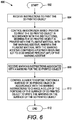
- FIG. 6 illustrates a flow chart of an example method 600 for marking a 3D printed object that is printed with the filament material with the marking additives.
- the method 600 may be performed by the FDM printer 100 or the processor 102 described above.
- the method 600 begins.
- the method 600 receives instructions to print the 3D printed object.
- the design of the 3D printed object may be created on a computing device (e.g., a computer aided drawing (CAD) program executed on the computing device).
- the design may include parameters for how much filament material is to be dispensed on each layer along an X-Y coordinate system.
- the design may be stored as print instructions that are provided to the FDM printer and stored in memory in the FDM printer.
- the method 600 controls an extrusion based printer to print the 3D printed object in accordance with the instructions, wherein the 3D printed object is printed with the filament material with the marking additive, wherein the filament material with the marking additive comprises a polymer resin and 0.01 to 25.00 weight percent (wt) of the marking additive.
- the filament material may include a polymer resin mixed with the marking additive.
- the polymer resin may be any type of polymer resin that is compatible with the extrusion based printer.
- the polymer resin may have a melting temperature and a viscosity that allows the extrusion based printer to control how the polymer resin is dispensed.
- polymer resins examples include acrylic resins; polymers or copolymers produced from the monomers selecting from the group consisting of acrylonitrile, butadiene, styrene, an acrylate, a methacrylate, and a mixture thereof; polyolefins; polyesters; polycarbonates; polylactic acid; thermoplastic polyurethanes; polyamides; polyimides; polysulfone; poly(aryl ethers); poly(aryl ether ketones); poly(aryl ether sulfones); poly(ether imide); polyarylenesulfides, poly(vinyl alcohol), polyvinylidene fluoride, or any combinations thereof.
- polymer resins are polymethyl methacrylate (PMMA), acrylonitrile butadiene styrene (ABS) resin, Nylon-6, nylon-12, polyethylene terephthalate (PET), polybutylene terephthalate (PBT), polyethylene, polypropylene, polypropylene, polyaryletherketones (PAEK), polylactic acid (PLA), thermoplastic polyurethanes (TPU), and the like or any combinations thereof.
- PMMA polymethyl methacrylate
- ABS acrylonitrile butadiene styrene
- Nylon-6 Nylon-6
- PET polyethylene terephthalate
- PBT polybutylene terephthalate
- PAEK polyethylene
- PDA polylactic acid
- TPU thermoplastic polyurethanes
- the marking additive may be a light absorbing marking additive. In one embodiment, the marking additive may be an infrared light absorbing marking additive.
- the amounts of the marking additives described herein may allow the polymer resin to maintain good printability in the extrusion based printer.
- the amounts of the marking additives may allow the polymer resins to maintain the same mechanical strengths of the 3D printed object as compared to the polymer resins without the marking additives.
- the marking additive may be an additive that changes color or reacts with light emitted at wavelengths of approximately 780 nanometers (nm) to 11,000 nm.
- the light may be emitted by a semiconducting laser beam that is continuously emitted or pulsed.
- suitable marking additives may include a metal oxide, a non-stoichiometric metal oxide, a metal hydroxide, a copper hydroxyphosphate, a copper pyrophosphate; a base copper carbonate, ammonium octamolebdate, a silver halide, a phthalocyanine, a naphthalocyanine, graphitic oxide, graphene oxide, carbon black, or a mixture thereof.
- the filament material may be melted by the extrusion based printer and extruded through a printhead.
- the filament material may be dispensed in accordance with the print instructions layer by layer to print the 3D printed object.
- the method 600 receives marking instructions associated with a marking for the 3D printed object.
- the marking instructions may be provided through a user interface of the extrusion based printer.
- the marking instructions may be created on a separate computing device and transmitted to the extrusion based printer and stored in memory.
- the marking for the 3D printed object may be alphanumeric text, a graphic, an image, or any combination thereof.
- the marking may include process parameters for the extrusion based printer (e.g., when on the filament material itself), identification information, security information, product information, and the like.
- the marking may be a bar code or a QR code that can be scanned by a reader.
- the marking may be a company logo, and so forth.
- the method 600 controls a laser to expose portions a surface of 3D printed object in accordance with the marking instructions to change a color of the portions of the surface of 3D printed object to write the marking on the surface of the 3D printed object.
- the extrusion based printer may include the laser to create the marking in accordance with the marking instructions.
- the processor that controls the extrusion based printer may be communicatively coupled to the laser.
- the 3D printed object may be moved from the extrusion based printer to a marking apparatus that includes the laser.
- a laser may provide pulsed laser light or continuous laser light that may be applied to the select portions of the filament material.
- the light may be emitted at wavelengths of approximately 780 nm to 11,000 nm.
- the laser may be moved, the 3D printed object may be moved, or both the laser and the 3D printed object may be moved to "write" the marking onto the surface of the 3D printed object.
- the marking may be formed by a reaction of the marking additive in the filament material to the light emitted by the laser. The reaction may cause the marking additive to change color in the filament material.
- the method 600 ends.
Landscapes
- Chemical & Material Sciences (AREA)
- Engineering & Computer Science (AREA)
- Materials Engineering (AREA)
- Manufacturing & Machinery (AREA)
- Chemical Kinetics & Catalysis (AREA)
- Medicinal Chemistry (AREA)
- Polymers & Plastics (AREA)
- Organic Chemistry (AREA)
- Health & Medical Sciences (AREA)
- Optics & Photonics (AREA)
- Physics & Mathematics (AREA)
- Mechanical Engineering (AREA)
- Structural Engineering (AREA)
- Composite Materials (AREA)
- Civil Engineering (AREA)
- Ceramic Engineering (AREA)
- General Chemical & Material Sciences (AREA)
- Textile Engineering (AREA)
- Compositions Of Macromolecular Compounds (AREA)
- Thermal Transfer Or Thermal Recording In General (AREA)
- Laser Beam Processing (AREA)
Abstract
Description
- The present disclosure relates generally to filament materials and, more particularly, to filament materials that include marking additives for extrusion-based additive manufacturing systems.
- Three-dimensional (3D) printing is a technology that allows 3D objects to be printed with controlled internal and external geometry layer-by-layer using a computer-aided design (CAD) file. For example, a starting material may be used and selectively melted and bonded to form a 3D object. Different types of 3D printers are available today. The different types of 3D printers may perform different types of additive printing. Examples of 3D printing technology may include extrusion-based printing, such as fused filament fabrication (FFF), also known as fused deposition modeling (FDM), selective laser sintering (SLS), selective laser melting (SLM), electronic beam melting (EBM), digital light processing (DLP), stereolithography (SLA), laminated object manufacturing (LOM), binder jetting, and the like.
- According to aspects illustrated herein, there is provided a filament material for use in an extrusion based printer. One disclosed feature of the embodiments is a filament material, comprising a polymer resin that is compatible with an extrusion based printing process and a marking additive that allows selective portions of the filament material to change color when exposed to a light, wherein the marking additive is added to approximately 0.01 to 25.00 weight percent (wt%).
- Another disclose feature of the embodiments is a method to produce a filament material with a marking additive for a fused deposition modeling (FDM) printer. The method comprises providing a polymer resin that is compatible with the FDM printer, mixing into the polymer resin the marking additive in amount of approximately 0.01 to 25.00 weight percent (wt%) to form the filament material with the marking additive, and exposing select portions of the filament material to a light to form a mark on a surface of the filament material, wherein the marking additive mixed into the polymer resin at the select portions absorbs the light to change color and form the mark.
- Another disclosed feature of the embodiments is a method marking a three-dimensional (3D) printed object that is printed with a filament material with the marking additive. The method comprises receiving, by a processor, instructions to print the 3D printed object, controlling, by the processor, an extrusion based printer to print the 3D printed object in accordance with the instructions, wherein the 3D printed object is printed with the filament material with the marking additive, wherein the filament material with the marking additive comprises a polymer resin and 0.01 to 25.00 weight percent (wt) of the marking additive, receiving, by the processor, marking instructions associated with a marking for the 3D printed object, and controlling, by the processor, a laser to expose portions a surface of 3D printed object in accordance with the marking instructions to change a color of the portions of the surface of 3D printed object to write the marking on the surface of the 3D printed object.
- The teaching of the present disclosure can be readily understood by considering the following detailed description in conjunction with the accompanying drawings, in which:
-
FIG. 1 illustrates an example of a fused deposition modeling (FDM) printer that uses the filament materials with the marking additives of the present disclosure; -
FIG. 2 illustrates an example of the filament materials with the marking additives of the present disclosure that are marked; -
FIG. 3 illustrates an object that is printed with the filament materials with the marking additives of the present disclosure that is marked; -
FIG. 4 illustrates an example process flow diagram of marking the filament material with the marking additives of the present disclosure; -
FIG. 5 illustrates a flow chart of an example method for producing a filament material with a marking additive for a FDM printer; and -
FIG. 6 illustrates a flow chart of an example method for marking a 3D printed object that is printed with the filament material with the marking additives. - To facilitate understanding, identical reference numerals have been used, where possible, to designate identical elements that are common to the figures.
- The present disclosure is related to a filament material with marking additives and a method for making the same. In addition, the filament material with marking additives can be used to print 3D objects and mark the 3D objects by changing the color of selected portions of the surface of the 3D object. As discussed above, various 3D printing technologies are used today. However, after the 3D object is printed, marking materials can be added to provide identification of the object, labeling information, security information, and the like.
- Currently available ways of marking a 3D printed object have many drawbacks. For example, a separately printed label can be applied to the object. However, the label can be easily removed or damaged. Another example may be to physically print the label into the object as part of the printing process. In other words, the desired marks can be physically printed (e.g., the desired letters are raised portions on the surface of the 3D object) into the 3D printed object. Another example may be to etch away or melt away portions of the 3D printed object using, for example, laser engraving. However, since most 3D printed objects have a rough surface texture, these solutions may not be suitable to achieve high contrast markings for many areas of application. Further, these solutions may suffer from additional complexity, limitations on how small markings can be printed due to the physical properties of the material, and so forth.
- The present disclosure provides a filament material with marking additives that can be used in extrusion-based 3D printers, such as FFF or
FDM 3D printers. The marking additives can absorb light to change the optical properties of the filament material. For example, certain marking additives can result in optical or color change of the filament material when exposed to infrared light. - Thus, markings can be written directly into the surface of the filament or the 3D printed object by exposing desired locations on the surface to a light source. The portions that are exposed to the light source may change color, and the marking may be written on the surface of the filament or the 3D printed object. The markings may be written to any desired size. In addition, the markings may be added relatively quickly, as the marking additive may change color when exposed to light at speeds up to 8 meters per second. Thus, the markings created by the filament material with the marking additives may be more permanent and secure than currently available marking methods.
-
FIG. 1 illustrates an example of a fused deposition modeling (FDM)printer 100 that uses filament materials with marking additives 110 (also herein referred to as a filament material 110) of the present disclosure. AlthoughFIG. 1 illustrates a particular type of extrusion based printer as an example, it should be noted that thefilament material 110 can be used with any type of extrusion based printer or printing process. In one embodiment, theFDM printer 100 may have a continuous roll of thefilament materials 110 that is fed through aprinthead 112. Theprinthead 112 may have a heater that melts thefilament materials 110 and extrudes thefilament materials 110. - The
filament materials 110 may be extruded layer by layer to form a 3D printedobject 114. For example, thefilament materials 110 may be printed on amovable platform 116. After each layer of the 3Dprinted object 114 is printed, theplatform 116 may be lowered, and the next layer of the 3D printedobject 114 may be printed until the 3Dprinted object 114 is completely printed. In one embodiment, theprinthead 112 may be movable on a two-dimensional coordinate system (e.g., left and right along the page and into and out of the page). - In one embodiment, the
FDM printer 100 may be controlled by aprocessor 102 that is communicatively coupled to theprinthead 112 and aroller 118 of thefilament materials 110. TheFDM printer 100 may also include amemory 104 that is communicatively coupled to theprocessor 102. Thememory 104 may be any type of non-transitory computer readable medium. For example, thememory 104 may be a hard disk drive, a solid state drive, a random access memory, a read-only memory, and the like. - In one embodiment, the
memory 104 may include instructions that are executed by theprocessor 102. For example, thememory 104 may includeprint instructions 106 and markinginstructions 108. In one embodiment, theprocessor 102 may control the feed of thefilament material 110 and control dispensing of thefilament material 110 via movement of theprinthead 112 in accordance with theprint instructions 106 to print the3D object 114. - In one embodiment, the
processor 102 may also control alight source 120 to mark the 3D printedobject 114 or thefilament material 110 itself. Although thelights source 120 is illustrated as being part of theFDM printer 100 inFIG. 1 , it should be noted that thelight source 120 may be a separate device or component that is independently controlled by another controller or processor. In other words, the 3D printedobject 114 or thefilament material 110 may be completed and then transferred to an apparatus with the light source to receive the light for marking. - In one embodiment, the
processor 102 may mark the 3D printedobject 114 or thefilament material 110 in accordance with themarking instructions 108. Thelight source 120 may be a laser that may be operated at a wavelength in an infrared region ranging from approximately 700 nanometers (nm) to 10.6 microns (µm). Examples of lasers may include solid-state lasers, diode or diode array lasers, yttrium aluminum garnet (YAG) lasers, fiber lasers, carbon dioxide (CO2) lasers, and the like. Thelight source 120 may be operated in a pulsed mode or a continuous mode. - As noted above, the
filament material 110 may include a marking additive. When the filament material with markingadditives 110 is exposed to a certain wavelength of light from thelight source 120, the surface of thefilament material 110 or the 3D printedobject 114 that is exposed to the light may change color. Thus, the marking can be directly "written" on thefilament material 110 or the 3D printedobject 114 by thelight source 120. Notably, the marking is not being etched or physically formed by additional printing of thefilament material 110. Rather, the physical properties of the filament material with markingadditives 110 are being changed to create the markings. As a result, the markings may be more secure and permanent than can be produced using current methods to add markings to 3D printed objects. - In one embodiment, the
filament material 110 may be formulated or created by mixing a polymer resin with a marking additive. The polymer resin may be any type of polymer resin that is compatible with theFDM printer 100. For example, the polymer resin may have a melting temperature or a softening temperature and a viscosity that allows theFDM printer 100 to control how the polymer resin is dispensed. The polymer resin may be a thermoplastic, including crystalline, semi-crystalline, or amorphous polymer resins. Examples of polymer resins that can be used include acrylic resins; polymers or copolymers produced from the monomers selecting from the group consisting of acrylonitrile, butadiene, styrene, an acrylate, a methacrylate, and the mixture thereof; polyolefins; polyesters; polycarbonates; polylactic acid; thermoplastic polyurethanes; polyamides; polyimides; polysulfone; poly(aryl ethers); poly(aryl ether ketones); poly(aryl ether sulfones); poly(ether imide); polyarylenesulfides, poly(vinyl alcohol), polyvinylidene fluoride, or any combinations thereof. Specific examples of the polymer resins are polymethyl methacrylate (PMMA), acrylonitrile butadiene styrene (ABS) resin, Nylon-6, nylon-12, polyethylene terephthalate (PET), polybutylene terephthalate (PBT), polyethylene, polypropylene, polypropylene, polyaryletherketones (PAEK), polylactic acid (PLA), thermoplastic polyurethanes (TPU), and the like, or any combinations thereof. - In one embodiment, the marking additives used in the
filament material 110 of the present disclosure should possess good light fastness and weatherability. In addition, the marking additives should be compatible with the manufacturing processes of thefilament material 110 and the 3D printing processes described herein. For example, the marking additives may have good thermal stability at a temperature that is at least that of a melting point or softening temperature of thefilament material 110. Furthermore, the marking additive may be compatible with the polymer resins used for thefilament material 110, be environmentally friendly, readily available, and non-toxic. - In one embodiment, the marking additive may be a light absorbing marking additive. In one embodiment, the marking additive may be an infrared light absorbing marking additive. The marking additive may possess efficient absorption of the light radiation within a wavelength region of the
FDM printer 100. The marking additive may possess efficient absorption of the light radiation within a wavelength region of theFDM printer 100. The marking additive may be added or mixed with the polymer resin at approximately 0.01 weight percent (wt%) to 25.00 wt%. In one embodiment, the marking additive may be added at approximately 0.10 wt% to 10.00 wt%. In one embodiment, the marking additive may be added at approximately 0.50 wt% to 5.00 wt%. The weight percentage may be a ratio of the marking additive to a total weight of the filament material. - In one embodiment, the amounts of the marking additives described herein may allow the polymer resin to maintain good printability in the
FDM printer 100. In addition, the amounts of the marking additives may allow the polymer resins to maintain the same mechanical strengths of the 3D printedobject 114 as compared to the polymer resins without the marking additives. - In one embodiment, the marking additive may be an additive that changes color or reacts when exposed to a light emitted by the
light source 120. In one embodiment, the marking additive may include an infrared absorption component that absorbs wavelengths of approximately 700 nanometers (nm) to 11,000 nm. In one embodiment, the marking additive may absorb wavelengths of approximately 780 nm to about 2500 nm. For example, the light may be emitted by a semiconducting laser beam that is continuously emitted or pulsed, as described above. In one embodiment, examples of the infrared absorption component may include a metal oxide, a non-stoichiometric metal oxide, a metal hydroxide, a copper hydroxyphosphate, a copper pyrophosphate; a base copper carbonate, ammonium octamolebdate, a silver halide, a phthalocyanine, a naphthalocyanine, graphitic oxide, graphene oxide, carbon black, or a mixture thereof. - Examples of metals for the metal oxide or the non-stoichiometric metal oxide may include tin, antimony, bismuth, boron, titanium, indium, iron, copper, molybdenum, tungsten, vanadium, or any combination thereof. Examples of the metal oxide or non-stoichiometric metal oxide may include titanium oxide, boron anhydride, tin oxide, bismuth oxide, copper oxide, iron oxide, molybdenum oxide, vanadium oxide, antimony-doped tin oxide, antimony-doped indium tin oxide, reduced indium tin oxide, oxygen-deficient bismuth oxide, metal hydroxides, or any combination thereof. Examples of the metal hydroxide may include aluminum hydroxide, magnesium hydroxide, copper hydroxide, and a mixture thereof. Examples of the phthalocyanines include metal-free phthaocyanines and metal phthalocyanines such as copper phthocyanines. Similarly, the example of the naphthalocyanines may include metal-free or metal naphthalocyanines.
- In one embodiment, the
filament material 110 may include a marking additive that absorbs light at wavelengths of approximately 780 nm to 2500 nm emitted by a near infrared laser. For example, the near infrared laser may be a YAG laser which operates at a wavelength of approximately 1064 nm. In one embodiment, thefilament material 110 may include a marking additive that absorbs light at wavelengths above 2500 nm using a CO2 laser operating at approximately 10.6 µm. - In one embodiment, the marking additive used for the
filament material 110 disclosed herein may further comprise a developer component. The developer component itself may not be sensitive to the radiation emitted by thelight source 120. However, when used in combination with marking additives described above (e.g., the metal oxides, metal salts, and/or the metal compounds, carbon black, graphene oxide, or any combination thereof), the developer component may be reactive to assist color change of thefilament material 110. Suitable developer components may include a polyphenol, a melamine resin, a polysaccharide, or any combination thereof. - In one embodiment, the marking additive may be provided in a particulate form. The marking additive may be particles having an average diameter of approximately 10 nm to 5000 nm. In one embodiment, the particles may have an average diameter of approximately 10 nm to 1000 nm.
- In one embodiment, the marking additive may also include an inert support material. Examples of the inert support material may include silica, alumina, titanium oxide, zinc oxide, mica, calcium carbonate, kaolin, talc, ceramic, and the like.
- In one embodiment, the
filament material 110 may also include a pigment or a colorant. The pigment or colorant may be inert to the radiation received during the marking process. However, the pigment or colorant may provide a background to enhance the marking contrast or visibility. Examples of the pigment or colorant that can be used include titanium oxide, zinc oxide, iron oxide, carbon black, organic pigments, and the like. - In one embodiment, after the polymer resin and the marking additive are mixed together to form a mixture, the mixture may be formed into a ribbon or cord of the filament material with marking
additives 110. The continuous cord of the filament material with markingadditives 110 may be stored on theroller 118 to be fed through theprinthead 112 for extrusion, as discussed above. - Examples are provided below of the
filament materials 110 that can be produced. - A Filabot EX6 extruder (purchased from Filbot Company) is used for the preparation of filament materials with laser marking additive composition. 100 parts of ABS (acrylonitrile butadiene styrene) resin pellets are blended with 3 parts of graphene oxide, and fed into the Filabot EX6 extruder. Under the vendor recommended extrusion settings, the resin blends were extruded into 2.85-mm filaments with light brownish color.
- The resultant filaments can be used for 3D printing using an FDM printer. The printed parts may be marked using a marking equipment with a CO2 laser operating at 10.6 µm to print dark marks on the exposed surface.
- A filament material is made in a similar manner according to Example 1, except that polybutylene terephthalate (PBT) is selected as the polymer resin and copper hydroxyphosphase as the marking additive composition.
- The resultant filaments can be used for 3D printing using an FDM printer. The printed parts may be marked using a marking equipment with a YAG laser operating at 1064 nm to print dark marks on the exposed surface.
- A filament material is made in a similar manner according to Example 1, except that a mixture of copper hydroxyphosphase and ammonium octamolybdate is used as the marking additive composition.
- The resultant filaments can be used for 3D printing using an FDM printer. The printed parts may be marked using a marking equipment with a YAG laser operating at 1064 nm or a CO2 laser to print dark marks on the exposed surface.
-
FIG. 2 illustrates an example of the filament materials with markingadditives 110 that has been marked. For example, thelight source 120 may be used to expose portions of the surface of thefilament materials 110 with a marking 202. The marking 202 may be created by changing the color of selected portions of the surface of thefilament material 110 with thelight source 120. - In one embodiment, the
markings 202 may be alphanumeric text. In one embodiment, themarkings 202 may be a symbol or graphic. For example, themarkings 202 may be a barcode or quick response (QR) code that can be read by a scanner. Themarkings 202 on thefilament materials 110 may indicate processing parameters for thefilament materials 110 when used in theFDM printer 100. For example, themarkings 202 may be read or scanned to automatically configure the heaters to an appropriate temperature to melt thefilament materials 110 for extrusion, and so forth. -
FIG. 3 illustrates an example of the 3D printedobject 114 that is marked. For example, thelight source 120 may be used to expose portions of the surface of the 3D printedobject 114 with a marking 302. The marking 302 may be created by changing the color of selected portions of the surface of the 3D printed object with thelight source 120. - In one embodiment, the marking 302 may be alphanumeric text. In one embodiment, the marking 302 may be a symbol or graphic. For example, the marking 302 may be a barcode or quick response (QR) code that can be read by a scanner. The marking 302 on the 3D printed
object 114 may provide identification information, security information, product information, and the like, associated with the 3D printedobject 114. -
FIG. 4 illustrates an example process flow diagram 400 of marking the 3D printedobject 114 that is printed with the filament materials with markingadditives 110 of the present disclosure. It should be noted that the process flow diagram 400 may also be applied to marking thefilament material 110 itself. - At
block 402, the completed 3D printedobject 114 may be provided. Atblock 404, alight source 410 may emit light 412 onto the surface of the 3D printedobject 114. Thelight source 410 and thelight source 120 may be the same. For example, thelight source 410 may be a laser light source that provides pulsed laser light or continuous laser light. The light 412 may be emitted at wavelengths that cause the exposed portions of the filament materials with markingadditives 110 to react and change color. In one embodiment, the light 412 may be emitted at wavelengths of approximately 1060 nm to 1070 nm. - At
block 406, thelight source 410 may be moved until the marking 302 is completed. For example, thelight source 410 may be moved in accordance with the markinginstructions 108 or the 3D printedobject 114 may be moved below thelight source 410 in accordance with the markinginstructions 108. - In one embodiment, the filament material with marking
additives 110 may be marked efficiently with thelight source 410. For example, the marking 302 may be written at speeds of up to 8 meters per second (8 m/s). Thus,light source 410 may be able to "write" over 1,000 alphanumeric characters per second. Thus, the filament material with markingadditives 110 allows the 3D printedobject 114 and/or the filament material itself to be marked efficiently or more quickly than other currently used marking methods (e.g., etching, additional 3D printing, and the like). - In addition, the filament material with marking
additives 110 allows finer precision when writing the marking 302. This may allow the marking 302 to be written in much smaller sized fonts than are possible using current methods. For example, when etching, the materials may melt and the characters may be difficult to read when written too small. Alternatively, the printer may not be able to print markings that are too small (e.g., the marking may be smaller than a voxel printing size of the printer). Thus, the filament material with markingadditives 110 provides more flexibility in the size and location of where the marking 302 can be printed. -
FIG. 5 illustrates a flow chart of anexample method 500 for producing a filament material with a marking additive for an extrusion based printer (e.g., theFDM printer 100 illustrated inFIG. 1 ) of the present disclosure. Themethod 500 may be performed by tools under the control of a processor. - At
block 502, themethod 500 begins. Atblock 504, themethod 500 provides a polymer resin that is compatible with the extrusion based printer. The polymer resin may be any type of polymer resin that is compatible with the extrusion based printer. For example, the polymer resin may have a melting temperature and a viscosity that allows the extrusion based printer to control how the polymer resin is dispensed. Examples of polymer resins that can be used include acrylic resins; polymers or copolymers produced from the monomers selecting from the group consisting of acrylonitrile, butadiene, styrene, an acrylate, a methacrylate, and a mixture thereof; polyolefins; polyesters; polycarbonates; polylactic acid; thermoplastic polyurethanes; polyamides; polyimides; polysulfone; poly(aryl ethers); poly(aryl ether ketones); poly(aryl ether sulfones); poly(ether imide); polyarylenesulfides, poly(vinyl alcohol), polyvinylidene fluoride, or any combinations thereof. Specific examples of the polymer resins are polymethyl methacrylate (PMMA), acrylonitrile butadiene styrene (ABS) resin, Nylon-6, nylon-12, polyethylene terephthalate (PET), polybutylene terephthalate (PBT), polyethylene, polypropylene, polypropylene, polyaryletherketones (PAEK), polylactic acid (PLA), thermoplastic polyurethanes (TPU), and the like, or any combinations thereof. - At
block 506, themethod 500 mixes into the polymer resin the marking additive in an amount of approximately 0.01 to 25.00 weight percent (wt%) to form the filament material with the marking additive. In one embodiment, the marking additive may be a light absorbing marking additive. In one embodiment, the marking additive may be an infrared light absorbing marking additive. - In one embodiment, the amounts of the marking additives described herein may allow the polymer resin to maintain good printability in the FDM printer. In addition, the amounts of the marking additives may allow the polymer resins to maintain the same mechanical strengths of the 3D printed object as compared to the polymer resins without the marking additives.
- In one embodiment, the marking additive may be an additive that changes color or reacts with light emitted at wavelengths of approximately 780 nanometers (nm) to 11,000 nm. For example, the light may be emitted by a semiconducting laser beam that is continuously emitted or pulsed. Examples of suitable marking additives may include a metal oxide, a non-stoichiometric metal oxide, a metal hydroxide, a copper hydroxyphosphate, a copper pyrophosphate; a base copper carbonate, ammonium octamolebdate, a silver halide, a phthalocyanine, a naphthalocyanine, graphitic oxide, graphene oxide, carbon black, or a mixture thereof.
- In one embodiment, after the polymer resin and the marking additive are mixed together to form a mixture, the mixture may be formed into a ribbon or cord of the filament material with marking additives. The continuous cord of the filament material with marking additives may be stored on the roller to be fed through the printhead for extrusion, as discussed above.
- At
block 508, themethod 500 exposes select portions of the filament material to light to form a mark on a surface of the filament material, wherein the marking additive mixed into the polymer resin at the select portions absorbs the light to change color and form the mark. For example, a laser light source that provides pulsed laser light or continuous laser light may be applied to the select portions of the filament material. The light may be emitted at wavelengths of approximately 780 nm to 11,000 nm. The light source may be moved, the filament material may be moved, or both the light source and the filament material may be moved to "write" the mark onto the surface of the filament material. The mark may be formed by a reaction of the marking additive in the filament material to the light. The reaction may cause the marking additive to change color in the filament material. Atblock 510, themethod 500 ends. -
FIG. 6 illustrates a flow chart of anexample method 600 for marking a 3D printed object that is printed with the filament material with the marking additives. Themethod 600 may be performed by theFDM printer 100 or theprocessor 102 described above. - At
block 602, themethod 600 begins. Atblock 604, themethod 600 receives instructions to print the 3D printed object. For example, the design of the 3D printed object may be created on a computing device (e.g., a computer aided drawing (CAD) program executed on the computing device). The design may include parameters for how much filament material is to be dispensed on each layer along an X-Y coordinate system. The design may be stored as print instructions that are provided to the FDM printer and stored in memory in the FDM printer. - At
block 606, themethod 600 controls an extrusion based printer to print the 3D printed object in accordance with the instructions, wherein the 3D printed object is printed with the filament material with the marking additive, wherein the filament material with the marking additive comprises a polymer resin and 0.01 to 25.00 weight percent (wt) of the marking additive. The filament material may include a polymer resin mixed with the marking additive. The polymer resin may be any type of polymer resin that is compatible with the extrusion based printer. For example, the polymer resin may have a melting temperature and a viscosity that allows the extrusion based printer to control how the polymer resin is dispensed. Examples of polymer resins that can be used include acrylic resins; polymers or copolymers produced from the monomers selecting from the group consisting of acrylonitrile, butadiene, styrene, an acrylate, a methacrylate, and a mixture thereof; polyolefins; polyesters; polycarbonates; polylactic acid; thermoplastic polyurethanes; polyamides; polyimides; polysulfone; poly(aryl ethers); poly(aryl ether ketones); poly(aryl ether sulfones); poly(ether imide); polyarylenesulfides, poly(vinyl alcohol), polyvinylidene fluoride, or any combinations thereof. Specific examples of the polymer resins are polymethyl methacrylate (PMMA), acrylonitrile butadiene styrene (ABS) resin, Nylon-6, nylon-12, polyethylene terephthalate (PET), polybutylene terephthalate (PBT), polyethylene, polypropylene, polypropylene, polyaryletherketones (PAEK), polylactic acid (PLA), thermoplastic polyurethanes (TPU), and the like or any combinations thereof. - In one embodiment, the marking additive may be a light absorbing marking additive. In one embodiment, the marking additive may be an infrared light absorbing marking additive.
- In one embodiment, the amounts of the marking additives described herein may allow the polymer resin to maintain good printability in the extrusion based printer. In addition, the amounts of the marking additives may allow the polymer resins to maintain the same mechanical strengths of the 3D printed object as compared to the polymer resins without the marking additives.
- In one embodiment, the marking additive may be an additive that changes color or reacts with light emitted at wavelengths of approximately 780 nanometers (nm) to 11,000 nm. For example, the light may be emitted by a semiconducting laser beam that is continuously emitted or pulsed. Examples of suitable marking additives may include a metal oxide, a non-stoichiometric metal oxide, a metal hydroxide, a copper hydroxyphosphate, a copper pyrophosphate; a base copper carbonate, ammonium octamolebdate, a silver halide, a phthalocyanine, a naphthalocyanine, graphitic oxide, graphene oxide, carbon black, or a mixture thereof.
- The filament material may be melted by the extrusion based printer and extruded through a printhead. The filament material may be dispensed in accordance with the print instructions layer by layer to print the 3D printed object.
- At
block 608, themethod 600 receives marking instructions associated with a marking for the 3D printed object. In one embodiment, the marking instructions may be provided through a user interface of the extrusion based printer. In one embodiment, the marking instructions may be created on a separate computing device and transmitted to the extrusion based printer and stored in memory. - The marking for the 3D printed object may be alphanumeric text, a graphic, an image, or any combination thereof. The marking may include process parameters for the extrusion based printer (e.g., when on the filament material itself), identification information, security information, product information, and the like. The marking may be a bar code or a QR code that can be scanned by a reader. The marking may be a company logo, and so forth.
- At
block 610, themethod 600 controls a laser to expose portions a surface of 3D printed object in accordance with the marking instructions to change a color of the portions of the surface of 3D printed object to write the marking on the surface of the 3D printed object. In one embodiment, the extrusion based printer may include the laser to create the marking in accordance with the marking instructions. In one embodiment, the processor that controls the extrusion based printer may be communicatively coupled to the laser. In one embodiment, the 3D printed object may be moved from the extrusion based printer to a marking apparatus that includes the laser. - In one embodiment, a laser may provide pulsed laser light or continuous laser light that may be applied to the select portions of the filament material. The light may be emitted at wavelengths of approximately 780 nm to 11,000 nm. The laser may be moved, the 3D printed object may be moved, or both the laser and the 3D printed object may be moved to "write" the marking onto the surface of the 3D printed object. The marking may be formed by a reaction of the marking additive in the filament material to the light emitted by the laser. The reaction may cause the marking additive to change color in the filament material. At
block 612, themethod 600 ends. - It will be appreciated that variants of the above-disclosed and other features and functions, or alternatives thereof, may be combined into many other different systems or applications. Various presently unforeseen or unanticipated alternatives, modifications, variations, or improvements therein may be subsequently made by those skilled in the art which are also intended to be encompassed by the following claims.
Claims (20)
- A filament material, comprising:a polymer resin that is compatible with an extrusion based printing process; anda marking additive that allows selective portions of the filament material to change color when exposed to a light, wherein the marking additive is added to approximately 0.01 to 25.00 weight percent (wt%).
- The filament material of claim 1, wherein the polymer resin comprises at least one of: acrylic resins; polymers or copolymers produced from the monomers selecting from the group consisting of acrylonitrile, butadiene, styrene, an acrylate, a methacrylate, and the mixture thereof; polyolefins; polyesters; polycarbonates; polylactic acid; thermoplastic polyurethanes; polyamides; polyimides; polysulfone; poly(aryl ethers); poly(aryl ether ketones); poly(aryl ether sulfones); poly(ether imide); polyarylenesulfides, poly(vinyl alcohol), or polyvinylidene fluoride.
- The filament material of claim 1, wherein the marking additive comprises an infrared absorption component that absorbs the light at wavelengths of approximately 780 nanometers (nm) to 11000 nm.
- The filament material of claim 1, wherein the marking additive comprises at least one of: a metal oxide, a non-stoichiometric metal oxide, a metal hydroxide, a copper hydroxyphosphate, a copper pyrophosphate; a base copper carbonate, ammonium octamolebdate, a silver halide, a phthalocyanine, a naphthalocyanine, graphitic oxide, graphene oxide, or carbon black
- The filament material of claim 4, wherein the metal oxide or the non-stoichiometric metal oxide comprise at least one of: tin, antimony, bismuth, boron, titanium, indium, iron, copper, molybdenum, tungsten, or vanadium.
- The filament material of claim 4, wherein the metal hydroxide comprises at least one of: aluminum hydroxide, magnesium hydroxide, or copper hydroxide.
- The filament material of claim 1, further comprising:
a developer component comprising at least one of: a polyphenol, a melamine resin, or a polysaccharide. - The filament material of claim 1, further comprising:
a support material comprising at least one of: silica, alumina, titanium oxide, mica, kaolin, zinc oxide, calcium carbonate, talc, or ceramic. - The filament material of claim 1, further comprising:
a pigment or a colorant. - The filament material of claim 1, wherein the filament material is formed into a filament for a fused deposition modeling printer.
- A method for producing a filament material with a marking additive for an extrusion basedprinter, comprising:providing a polymer resin that is compatible with the extrusion based printer;mixing into the polymer resin the marking additive in amount of approximately 0.01 to 25.00 weight percent (wt%) to form the filament material with the marking additive; andexposing select portions of the filament material to a light to form a mark on a surface of the filament material, wherein the marking additive mixed into the polymer resin at the select portions absorbs the light to change color and form the mark.
- The method of claim 11, wherein the polymer resin comprises at least one of: acrylic resins; polymers or copolymers produced from the monomers selecting from the group consisting of acrylonitrile, butadiene, styrene, an acrylate, a methacrylate, and the mixture thereof; polyolefins; polyesters; polycarbonates; polylactic acid; thermoplastic polyurethanes; polyamides; polyimides; polysulfone; poly(aryl ethers); poly(aryl ether ketones); poly(aryl ether sulfones); poly(ether imide); polyarylenesulfides, or poly(vinyl alcohol), polyvinylidene fluoride.
- The method of claim 11, wherein the marking additive comprises at least one of: a metal oxide, a non-stoichiometric metal oxide, a metal hydroxide, a copper hydroxyphosphate, a copper pyrophosphate; a base copper carbonate, ammonium octamolebdate, a silver halide, a phthalocyanine, a naphthalocyanine, graphitic oxide, graphene oxide, or carbon black.
- The method of claim 11, wherein the light comprises light from a pulsed laser light source or a continuous laser light source.
- The method of claim 11, wherein the light comprises a wavelength of approximately 780 nanometers (nm) to 11,000 nm.
- The method of claim 11, wherein the mark comprises information related to processing parameters of the filament material with the marking additive in the FDM printer to automatically set the processing parameters in the FDM printer.
- A method for marking a three-dimensional (3D) printed object that is printed with a filament material with the marking additive, comprising:receiving, by a processor, instructions to print the 3D printed object;controlling, by the processor, an extrusion based printer to print the 3D printed object in accordance with the instructions, wherein the 3D printed object is printed with the filament material with the marking additive, wherein the filament material with the marking additive comprises a polymer resin and 0.01 to 25.00 weight percent (wt%) of the marking additive;receiving, by the processor, marking instructions associated with a marking for the 3D printed object; andcontrolling, by the processor, a laser to expose portions a surface of 3D printed object in accordance with the marking instructions to change a color of the portions of the surface of 3D printed object to write the marking on the surface of the 3D printed object.
- The method of claim 17, wherein the laser comprises at least one of a fiber laser, a diode laser, a diode array laser, a yttrium aluminum garnet (YAG) laser, or a carbon dioxide laser that emits light at approximately 780 nanometers (nm) to 11,000 nm.
- The method of claim 17, wherein the polymer resin comprises at least one of: acrylic resins; polymers or copolymers produced from the monomers selecting from the group consisting of acrylonitrile, butadiene, styrene, an acrylate, a methacrylate, and the mixture thereof; polyolefins; polyesters; polycarbonates; polylactic acid; thermoplastic polyurethanes; polyamides; polyimides; polysulfone; poly(aryl ethers); poly(aryl ether ketones); poly(aryl ether sulfones); poly(ether imide); polyarylenesulfides, or poly(vinyl alcohol), polyvinylidene fluoride.
- The method of claim 17, wherein the marking additive comprises at least one of: a metal oxide, a non-stoichiometric metal oxide, a metal hydroxide, a copper hydroxyphosphate, a copper pyrophosphate; a base copper carbonate, ammonium octamolebdate, a silver halide, a phthalocyanine, a naphthalocyanine, graphitic oxide, graphene oxide, or carbon black.
Applications Claiming Priority (1)
| Application Number | Priority Date | Filing Date | Title |
|---|---|---|---|
| US16/722,907 US11433605B2 (en) | 2019-12-20 | 2019-12-20 | Filament materials comprising marking additives for extrusion-based additive manufacturing systems |
Publications (2)
| Publication Number | Publication Date |
|---|---|
| EP3839112A1 true EP3839112A1 (en) | 2021-06-23 |
| EP3839112B1 EP3839112B1 (en) | 2024-02-07 |
Family
ID=73726558
Family Applications (1)
| Application Number | Title | Priority Date | Filing Date |
|---|---|---|---|
| EP20211722.2A Active EP3839112B1 (en) | 2019-12-20 | 2020-12-03 | Filament materials comprising marking additives for extrusion-based additive manufacturing systems |
Country Status (6)
| Country | Link |
|---|---|
| US (2) | US11433605B2 (en) |
| EP (1) | EP3839112B1 (en) |
| JP (1) | JP7516226B2 (en) |
| KR (1) | KR102644773B1 (en) |
| CN (1) | CN113001965A (en) |
| CA (1) | CA3102016A1 (en) |
Families Citing this family (1)
| Publication number | Priority date | Publication date | Assignee | Title |
|---|---|---|---|---|
| CN117227162A (en) * | 2023-07-07 | 2023-12-15 | 北京工业大学 | A method to use an oxygen-free environment to improve the mechanical properties of 3D printed elastomeric polymer materials |
Citations (6)
| Publication number | Priority date | Publication date | Assignee | Title |
|---|---|---|---|---|
| EP0708147A1 (en) * | 1994-10-21 | 1996-04-24 | Japan Synthetic Rubber Co., Ltd. | Laser marking resin composition |
| US6482511B1 (en) * | 1999-08-06 | 2002-11-19 | E.I. Du Pont De Nemours & Company | Laser markable monofilaments |
| US20130188003A1 (en) * | 2012-01-23 | 2013-07-25 | Jagdip Thaker | Doped Oxide powders in laser markings and methods of use |
| EP3265293A1 (en) * | 2015-03-06 | 2018-01-10 | Philips Lighting Holding B.V. | 3d printing of graphene (oxide) composites |
| WO2018052899A1 (en) * | 2016-09-14 | 2018-03-22 | Sabic Global Technologies B.V. | Additive manufacturing process using printing material of unequal composition, and article obtainable by said process |
| US20180273730A1 (en) * | 2014-11-05 | 2018-09-27 | Merck Patent Gmbh | Laser-markable and laser-weldable polymeric materials |
Family Cites Families (20)
| Publication number | Priority date | Publication date | Assignee | Title |
|---|---|---|---|---|
| CH677756A5 (en) * | 1989-01-26 | 1991-06-28 | Ciba Geigy Ag | |
| US5445923A (en) * | 1992-09-30 | 1995-08-29 | Somar Corporation | Laser beam absorbing resin composition and laser beam marking method |
| JPH10305661A (en) * | 1997-05-09 | 1998-11-17 | Dainippon Ink & Chem Inc | Laser marking method and laser marking resin composition |
| PL1664172T3 (en) * | 2003-09-17 | 2007-05-31 | Ciba Specialty Chemicals Holding Inc | Laser markable polymeric compositions |
| DE102004045305A1 (en) * | 2004-09-16 | 2006-03-23 | Merck Patent Gmbh | Laser-markable and laser-weldable polymeric materials |
| CN101396883B (en) * | 2007-09-24 | 2012-10-17 | 3M创新有限公司 | Label capable of non-contact marking with laser, method for producing same and marking method |
| CN103619970A (en) * | 2011-08-12 | 2014-03-05 | 利乐拉瓦尔集团及财务有限公司 | Novel Labeled Compounds |
| JP5931569B2 (en) * | 2012-04-26 | 2016-06-08 | ダンロップスポーツ株式会社 | Golf club |
| WO2014186452A1 (en) * | 2013-05-14 | 2014-11-20 | Ilhan Aksay | Graphene dispersions |
| CN204036858U (en) * | 2014-08-19 | 2014-12-24 | 珠海天威飞马打印耗材有限公司 | Color three-dimensional printer |
| KR20160059302A (en) * | 2014-11-18 | 2016-05-26 | 한국세라믹기술원 | Composition of filament resin for FDM-3D print, Filament for FDM-3D print containing the same and FDM-3D printing shaped article |
| WO2016089838A1 (en) | 2014-12-01 | 2016-06-09 | Savannah River Nuclear Solutions, Llc | Additive manufactured serialization |
| US10017690B2 (en) * | 2015-05-28 | 2018-07-10 | Xerox Corporation | Photochromatic composition for 3D printing |
| JP6552727B2 (en) | 2015-09-04 | 2019-07-31 | サビック グローバル テクノロジーズ ベスローテン フェンノートシャップ | Powder composition, method of preparing articles and coatings from powder composition, and articles prepared therefrom |
| CN105504517B (en) * | 2016-01-20 | 2019-03-08 | 四川大学 | Graphene as an additive in the preparation of laser-markable polymer materials |
| US11008458B2 (en) * | 2016-03-17 | 2021-05-18 | Qed Labs Inc. | Articles with improved flame retardancy and/or melt dripping properties |
| JP6925545B2 (en) | 2018-05-07 | 2021-08-25 | シグニファイ ホールディング ビー ヴィSignify Holding B.V. | Color mixing nozzle |
| CN112188953A (en) | 2018-05-25 | 2021-01-05 | 昕诺飞控股有限公司 | Thermally conductive composites printed by FDM and strategies for efficient heat dissipation |
| US20200102453A1 (en) * | 2018-10-02 | 2020-04-02 | Lockheed Martin Corporation | Conductive thermoplastic polycarbonate/acrylonitrile butadiene styrene (pc/abs) polymer with nanomaterials and articles and methods thereof |
| CN110437385B (en) * | 2019-07-09 | 2022-04-22 | 湖南昇微新材料有限公司 | Photochromic material for 3D printing and preparation method and application method thereof |
-
2019
- 2019-12-20 US US16/722,907 patent/US11433605B2/en active Active
-
2020
- 2020-11-18 CN CN202011291115.2A patent/CN113001965A/en active Pending
- 2020-11-26 KR KR1020200161232A patent/KR102644773B1/en active Active
- 2020-11-27 JP JP2020197535A patent/JP7516226B2/en active Active
- 2020-12-03 EP EP20211722.2A patent/EP3839112B1/en active Active
- 2020-12-09 CA CA3102016A patent/CA3102016A1/en active Pending
-
2022
- 2022-07-26 US US17/815,144 patent/US11999103B2/en active Active
Patent Citations (6)
| Publication number | Priority date | Publication date | Assignee | Title |
|---|---|---|---|---|
| EP0708147A1 (en) * | 1994-10-21 | 1996-04-24 | Japan Synthetic Rubber Co., Ltd. | Laser marking resin composition |
| US6482511B1 (en) * | 1999-08-06 | 2002-11-19 | E.I. Du Pont De Nemours & Company | Laser markable monofilaments |
| US20130188003A1 (en) * | 2012-01-23 | 2013-07-25 | Jagdip Thaker | Doped Oxide powders in laser markings and methods of use |
| US20180273730A1 (en) * | 2014-11-05 | 2018-09-27 | Merck Patent Gmbh | Laser-markable and laser-weldable polymeric materials |
| EP3265293A1 (en) * | 2015-03-06 | 2018-01-10 | Philips Lighting Holding B.V. | 3d printing of graphene (oxide) composites |
| WO2018052899A1 (en) * | 2016-09-14 | 2018-03-22 | Sabic Global Technologies B.V. | Additive manufacturing process using printing material of unequal composition, and article obtainable by said process |
Also Published As
| Publication number | Publication date |
|---|---|
| EP3839112B1 (en) | 2024-02-07 |
| US11433605B2 (en) | 2022-09-06 |
| KR102644773B1 (en) | 2024-03-08 |
| KR20210080207A (en) | 2021-06-30 |
| JP2021098840A (en) | 2021-07-01 |
| US20210187841A1 (en) | 2021-06-24 |
| US11999103B2 (en) | 2024-06-04 |
| CN113001965A (en) | 2021-06-22 |
| JP7516226B2 (en) | 2024-07-16 |
| US20220362993A1 (en) | 2022-11-17 |
| CA3102016A1 (en) | 2021-06-20 |
Similar Documents
| Publication | Publication Date | Title |
|---|---|---|
| US12103237B2 (en) | Particles comprising marking additives for selective laser sintering-based additive manufacturing systems | |
| CN108349156B (en) | Three-dimensional (3D) printing | |
| EP3230047B1 (en) | System, method and computer storage medium for generating three-dimensional objects | |
| EP2908937B1 (en) | Microspheres | |
| US6133355A (en) | Selective deposition modeling materials and method | |
| CN109476083B (en) | Quality level determination of layers of build material | |
| JP6502932B2 (en) | Microsphere | |
| US11077612B2 (en) | Forming microstructures in 3D printing by fusing and sintering using a fusing agent | |
| US11999103B2 (en) | Filament materials comprising marking additives for extrusion-based additive manufacturing systems | |
| WO2021023492A1 (en) | Laser markable label and tag | |
| EP3964350A1 (en) | Thermal marking of 3d printed objects | |
| WO2005000969A1 (en) | Resin composition for light amplification beam by stimulated emission of radiation and use thereof | |
| JP2021098840A5 (en) | ||
| US20220251399A1 (en) | Variable Color 3D Printer Material Using Reversible Thermochromic Additive | |
| WO2023149883A1 (en) | Embedded features in three dimensional printed parts |
Legal Events
| Date | Code | Title | Description |
|---|---|---|---|
| PUAI | Public reference made under article 153(3) epc to a published international application that has entered the european phase |
Free format text: ORIGINAL CODE: 0009012 |
|
| STAA | Information on the status of an ep patent application or granted ep patent |
Free format text: STATUS: THE APPLICATION HAS BEEN PUBLISHED |
|
| AK | Designated contracting states |
Kind code of ref document: A1 Designated state(s): AL AT BE BG CH CY CZ DE DK EE ES FI FR GB GR HR HU IE IS IT LI LT LU LV MC MK MT NL NO PL PT RO RS SE SI SK SM TR |
|
| STAA | Information on the status of an ep patent application or granted ep patent |
Free format text: STATUS: REQUEST FOR EXAMINATION WAS MADE |
|
| 17P | Request for examination filed |
Effective date: 20211223 |
|
| RBV | Designated contracting states (corrected) |
Designated state(s): AL AT BE BG CH CY CZ DE DK EE ES FI FR GB GR HR HU IE IS IT LI LT LU LV MC MK MT NL NO PL PT RO RS SE SI SK SM TR |
|
| STAA | Information on the status of an ep patent application or granted ep patent |
Free format text: STATUS: EXAMINATION IS IN PROGRESS |
|
| 17Q | First examination report despatched |
Effective date: 20230323 |
|
| REG | Reference to a national code |
Ref country code: DE Ipc: B29C0064118000 Ref country code: DE Ref legal event code: R079 Ref document number: 602020025283 Country of ref document: DE Free format text: PREVIOUS MAIN CLASS: D01F0001100000 Ipc: B29C0064118000 |
|
| GRAP | Despatch of communication of intention to grant a patent |
Free format text: ORIGINAL CODE: EPIDOSNIGR1 |
|
| STAA | Information on the status of an ep patent application or granted ep patent |
Free format text: STATUS: GRANT OF PATENT IS INTENDED |
|
| RIC1 | Information provided on ipc code assigned before grant |
Ipc: B41M 5/26 20060101ALN20230724BHEP Ipc: B33Y 40/20 20200101ALI20230724BHEP Ipc: B33Y 70/00 20200101ALI20230724BHEP Ipc: B33Y 10/00 20150101ALI20230724BHEP Ipc: D01F 1/10 20060101ALI20230724BHEP Ipc: C08K 3/36 20060101ALI20230724BHEP Ipc: C08K 3/32 20060101ALI20230724BHEP Ipc: C08K 3/22 20060101ALI20230724BHEP Ipc: B29C 64/188 20170101ALI20230724BHEP Ipc: B29C 64/118 20170101AFI20230724BHEP |
|
| INTG | Intention to grant announced |
Effective date: 20230810 |
|
| RIN1 | Information on inventor provided before grant (corrected) |
Inventor name: HU, NAN XING |
|
| GRAS | Grant fee paid |
Free format text: ORIGINAL CODE: EPIDOSNIGR3 |
|
| GRAA | (expected) grant |
Free format text: ORIGINAL CODE: 0009210 |
|
| STAA | Information on the status of an ep patent application or granted ep patent |
Free format text: STATUS: THE PATENT HAS BEEN GRANTED |
|
| AK | Designated contracting states |
Kind code of ref document: B1 Designated state(s): AL AT BE BG CH CY CZ DE DK EE ES FI FR GB GR HR HU IE IS IT LI LT LU LV MC MK MT NL NO PL PT RO RS SE SI SK SM TR |
|
| REG | Reference to a national code |
Ref country code: GB Ref legal event code: FG4D |
|
| REG | Reference to a national code |
Ref country code: CH Ref legal event code: EP |
|
| REG | Reference to a national code |
Ref country code: DE Ref legal event code: R096 Ref document number: 602020025283 Country of ref document: DE |
|
| REG | Reference to a national code |
Ref country code: IE Ref legal event code: FG4D |
|
| REG | Reference to a national code |
Ref country code: LT Ref legal event code: MG9D |
|
| REG | Reference to a national code |
Ref country code: NL Ref legal event code: MP Effective date: 20240207 |
|
| PG25 | Lapsed in a contracting state [announced via postgrant information from national office to epo] |
Ref country code: IS Free format text: LAPSE BECAUSE OF FAILURE TO SUBMIT A TRANSLATION OF THE DESCRIPTION OR TO PAY THE FEE WITHIN THE PRESCRIBED TIME-LIMIT Effective date: 20240607 |
|
| PG25 | Lapsed in a contracting state [announced via postgrant information from national office to epo] |
Ref country code: LT Free format text: LAPSE BECAUSE OF FAILURE TO SUBMIT A TRANSLATION OF THE DESCRIPTION OR TO PAY THE FEE WITHIN THE PRESCRIBED TIME-LIMIT Effective date: 20240207 |
|
| PG25 | Lapsed in a contracting state [announced via postgrant information from national office to epo] |
Ref country code: GR Free format text: LAPSE BECAUSE OF FAILURE TO SUBMIT A TRANSLATION OF THE DESCRIPTION OR TO PAY THE FEE WITHIN THE PRESCRIBED TIME-LIMIT Effective date: 20240508 |
|
| REG | Reference to a national code |
Ref country code: AT Ref legal event code: MK05 Ref document number: 1655101 Country of ref document: AT Kind code of ref document: T Effective date: 20240207 |
|
| PG25 | Lapsed in a contracting state [announced via postgrant information from national office to epo] |
Ref country code: HR Free format text: LAPSE BECAUSE OF FAILURE TO SUBMIT A TRANSLATION OF THE DESCRIPTION OR TO PAY THE FEE WITHIN THE PRESCRIBED TIME-LIMIT Effective date: 20240207 Ref country code: RS Free format text: LAPSE BECAUSE OF FAILURE TO SUBMIT A TRANSLATION OF THE DESCRIPTION OR TO PAY THE FEE WITHIN THE PRESCRIBED TIME-LIMIT Effective date: 20240507 Ref country code: NL Free format text: LAPSE BECAUSE OF FAILURE TO SUBMIT A TRANSLATION OF THE DESCRIPTION OR TO PAY THE FEE WITHIN THE PRESCRIBED TIME-LIMIT Effective date: 20240207 |
|
| PG25 | Lapsed in a contracting state [announced via postgrant information from national office to epo] |
Ref country code: ES Free format text: LAPSE BECAUSE OF FAILURE TO SUBMIT A TRANSLATION OF THE DESCRIPTION OR TO PAY THE FEE WITHIN THE PRESCRIBED TIME-LIMIT Effective date: 20240207 |
|
| PG25 | Lapsed in a contracting state [announced via postgrant information from national office to epo] |
Ref country code: AT Free format text: LAPSE BECAUSE OF FAILURE TO SUBMIT A TRANSLATION OF THE DESCRIPTION OR TO PAY THE FEE WITHIN THE PRESCRIBED TIME-LIMIT Effective date: 20240207 |
|
| PG25 | Lapsed in a contracting state [announced via postgrant information from national office to epo] |
Ref country code: RS Free format text: LAPSE BECAUSE OF FAILURE TO SUBMIT A TRANSLATION OF THE DESCRIPTION OR TO PAY THE FEE WITHIN THE PRESCRIBED TIME-LIMIT Effective date: 20240507 Ref country code: NO Free format text: LAPSE BECAUSE OF FAILURE TO SUBMIT A TRANSLATION OF THE DESCRIPTION OR TO PAY THE FEE WITHIN THE PRESCRIBED TIME-LIMIT Effective date: 20240507 Ref country code: NL Free format text: LAPSE BECAUSE OF FAILURE TO SUBMIT A TRANSLATION OF THE DESCRIPTION OR TO PAY THE FEE WITHIN THE PRESCRIBED TIME-LIMIT Effective date: 20240207 Ref country code: LT Free format text: LAPSE BECAUSE OF FAILURE TO SUBMIT A TRANSLATION OF THE DESCRIPTION OR TO PAY THE FEE WITHIN THE PRESCRIBED TIME-LIMIT Effective date: 20240207 Ref country code: IS Free format text: LAPSE BECAUSE OF FAILURE TO SUBMIT A TRANSLATION OF THE DESCRIPTION OR TO PAY THE FEE WITHIN THE PRESCRIBED TIME-LIMIT Effective date: 20240607 Ref country code: HR Free format text: LAPSE BECAUSE OF FAILURE TO SUBMIT A TRANSLATION OF THE DESCRIPTION OR TO PAY THE FEE WITHIN THE PRESCRIBED TIME-LIMIT Effective date: 20240207 Ref country code: GR Free format text: LAPSE BECAUSE OF FAILURE TO SUBMIT A TRANSLATION OF THE DESCRIPTION OR TO PAY THE FEE WITHIN THE PRESCRIBED TIME-LIMIT Effective date: 20240508 Ref country code: FI Free format text: LAPSE BECAUSE OF FAILURE TO SUBMIT A TRANSLATION OF THE DESCRIPTION OR TO PAY THE FEE WITHIN THE PRESCRIBED TIME-LIMIT Effective date: 20240207 Ref country code: ES Free format text: LAPSE BECAUSE OF FAILURE TO SUBMIT A TRANSLATION OF THE DESCRIPTION OR TO PAY THE FEE WITHIN THE PRESCRIBED TIME-LIMIT Effective date: 20240207 Ref country code: BG Free format text: LAPSE BECAUSE OF FAILURE TO SUBMIT A TRANSLATION OF THE DESCRIPTION OR TO PAY THE FEE WITHIN THE PRESCRIBED TIME-LIMIT Effective date: 20240207 Ref country code: AT Free format text: LAPSE BECAUSE OF FAILURE TO SUBMIT A TRANSLATION OF THE DESCRIPTION OR TO PAY THE FEE WITHIN THE PRESCRIBED TIME-LIMIT Effective date: 20240207 |
|
| PG25 | Lapsed in a contracting state [announced via postgrant information from national office to epo] |
Ref country code: PT Free format text: LAPSE BECAUSE OF FAILURE TO SUBMIT A TRANSLATION OF THE DESCRIPTION OR TO PAY THE FEE WITHIN THE PRESCRIBED TIME-LIMIT Effective date: 20240607 Ref country code: PL Free format text: LAPSE BECAUSE OF FAILURE TO SUBMIT A TRANSLATION OF THE DESCRIPTION OR TO PAY THE FEE WITHIN THE PRESCRIBED TIME-LIMIT Effective date: 20240207 |
|
| PG25 | Lapsed in a contracting state [announced via postgrant information from national office to epo] |
Ref country code: SE Free format text: LAPSE BECAUSE OF FAILURE TO SUBMIT A TRANSLATION OF THE DESCRIPTION OR TO PAY THE FEE WITHIN THE PRESCRIBED TIME-LIMIT Effective date: 20240207 Ref country code: PT Free format text: LAPSE BECAUSE OF FAILURE TO SUBMIT A TRANSLATION OF THE DESCRIPTION OR TO PAY THE FEE WITHIN THE PRESCRIBED TIME-LIMIT Effective date: 20240607 Ref country code: PL Free format text: LAPSE BECAUSE OF FAILURE TO SUBMIT A TRANSLATION OF THE DESCRIPTION OR TO PAY THE FEE WITHIN THE PRESCRIBED TIME-LIMIT Effective date: 20240207 Ref country code: LV Free format text: LAPSE BECAUSE OF FAILURE TO SUBMIT A TRANSLATION OF THE DESCRIPTION OR TO PAY THE FEE WITHIN THE PRESCRIBED TIME-LIMIT Effective date: 20240207 |
|
| PG25 | Lapsed in a contracting state [announced via postgrant information from national office to epo] |
Ref country code: DK Free format text: LAPSE BECAUSE OF FAILURE TO SUBMIT A TRANSLATION OF THE DESCRIPTION OR TO PAY THE FEE WITHIN THE PRESCRIBED TIME-LIMIT Effective date: 20240207 |
|
| PG25 | Lapsed in a contracting state [announced via postgrant information from national office to epo] |
Ref country code: SM Free format text: LAPSE BECAUSE OF FAILURE TO SUBMIT A TRANSLATION OF THE DESCRIPTION OR TO PAY THE FEE WITHIN THE PRESCRIBED TIME-LIMIT Effective date: 20240207 |
|
| PG25 | Lapsed in a contracting state [announced via postgrant information from national office to epo] |
Ref country code: CZ Free format text: LAPSE BECAUSE OF FAILURE TO SUBMIT A TRANSLATION OF THE DESCRIPTION OR TO PAY THE FEE WITHIN THE PRESCRIBED TIME-LIMIT Effective date: 20240207 Ref country code: EE Free format text: LAPSE BECAUSE OF FAILURE TO SUBMIT A TRANSLATION OF THE DESCRIPTION OR TO PAY THE FEE WITHIN THE PRESCRIBED TIME-LIMIT Effective date: 20240207 |
|
| PG25 | Lapsed in a contracting state [announced via postgrant information from national office to epo] |
Ref country code: SK Free format text: LAPSE BECAUSE OF FAILURE TO SUBMIT A TRANSLATION OF THE DESCRIPTION OR TO PAY THE FEE WITHIN THE PRESCRIBED TIME-LIMIT Effective date: 20240207 |
|
| PG25 | Lapsed in a contracting state [announced via postgrant information from national office to epo] |
Ref country code: SM Free format text: LAPSE BECAUSE OF FAILURE TO SUBMIT A TRANSLATION OF THE DESCRIPTION OR TO PAY THE FEE WITHIN THE PRESCRIBED TIME-LIMIT Effective date: 20240207 Ref country code: SK Free format text: LAPSE BECAUSE OF FAILURE TO SUBMIT A TRANSLATION OF THE DESCRIPTION OR TO PAY THE FEE WITHIN THE PRESCRIBED TIME-LIMIT Effective date: 20240207 Ref country code: RO Free format text: LAPSE BECAUSE OF FAILURE TO SUBMIT A TRANSLATION OF THE DESCRIPTION OR TO PAY THE FEE WITHIN THE PRESCRIBED TIME-LIMIT Effective date: 20240207 Ref country code: EE Free format text: LAPSE BECAUSE OF FAILURE TO SUBMIT A TRANSLATION OF THE DESCRIPTION OR TO PAY THE FEE WITHIN THE PRESCRIBED TIME-LIMIT Effective date: 20240207 Ref country code: DK Free format text: LAPSE BECAUSE OF FAILURE TO SUBMIT A TRANSLATION OF THE DESCRIPTION OR TO PAY THE FEE WITHIN THE PRESCRIBED TIME-LIMIT Effective date: 20240207 Ref country code: CZ Free format text: LAPSE BECAUSE OF FAILURE TO SUBMIT A TRANSLATION OF THE DESCRIPTION OR TO PAY THE FEE WITHIN THE PRESCRIBED TIME-LIMIT Effective date: 20240207 |
|
| REG | Reference to a national code |
Ref country code: DE Ref legal event code: R097 Ref document number: 602020025283 Country of ref document: DE |
|
| PG25 | Lapsed in a contracting state [announced via postgrant information from national office to epo] |
Ref country code: IT Free format text: LAPSE BECAUSE OF FAILURE TO SUBMIT A TRANSLATION OF THE DESCRIPTION OR TO PAY THE FEE WITHIN THE PRESCRIBED TIME-LIMIT Effective date: 20240207 |
|
| PLBE | No opposition filed within time limit |
Free format text: ORIGINAL CODE: 0009261 |
|
| STAA | Information on the status of an ep patent application or granted ep patent |
Free format text: STATUS: NO OPPOSITION FILED WITHIN TIME LIMIT |
|
| PG25 | Lapsed in a contracting state [announced via postgrant information from national office to epo] |
Ref country code: IT Free format text: LAPSE BECAUSE OF FAILURE TO SUBMIT A TRANSLATION OF THE DESCRIPTION OR TO PAY THE FEE WITHIN THE PRESCRIBED TIME-LIMIT Effective date: 20240207 |
|
| 26N | No opposition filed |
Effective date: 20241108 |
|
| PG25 | Lapsed in a contracting state [announced via postgrant information from national office to epo] |
Ref country code: SI Free format text: LAPSE BECAUSE OF FAILURE TO SUBMIT A TRANSLATION OF THE DESCRIPTION OR TO PAY THE FEE WITHIN THE PRESCRIBED TIME-LIMIT Effective date: 20240207 |
|
| REG | Reference to a national code |
Ref country code: DE Ref legal event code: R119 Ref document number: 602020025283 Country of ref document: DE |
|
| PG25 | Lapsed in a contracting state [announced via postgrant information from national office to epo] |
Ref country code: MC Free format text: LAPSE BECAUSE OF FAILURE TO SUBMIT A TRANSLATION OF THE DESCRIPTION OR TO PAY THE FEE WITHIN THE PRESCRIBED TIME-LIMIT Effective date: 20240207 |
|
| REG | Reference to a national code |
Ref country code: CH Ref legal event code: PL |
|
| PG25 | Lapsed in a contracting state [announced via postgrant information from national office to epo] |
Ref country code: LU Free format text: LAPSE BECAUSE OF NON-PAYMENT OF DUE FEES Effective date: 20241203 |
|
| GBPC | Gb: european patent ceased through non-payment of renewal fee |
Effective date: 20241203 |
|
| REG | Reference to a national code |
Ref country code: BE Ref legal event code: MM Effective date: 20241231 |
|
| PG25 | Lapsed in a contracting state [announced via postgrant information from national office to epo] |
Ref country code: DE Free format text: LAPSE BECAUSE OF NON-PAYMENT OF DUE FEES Effective date: 20250701 |
|
| PG25 | Lapsed in a contracting state [announced via postgrant information from national office to epo] |
Ref country code: GB Free format text: LAPSE BECAUSE OF NON-PAYMENT OF DUE FEES Effective date: 20241203 Ref country code: BE Free format text: LAPSE BECAUSE OF NON-PAYMENT OF DUE FEES Effective date: 20241231 |
|
| PG25 | Lapsed in a contracting state [announced via postgrant information from national office to epo] |
Ref country code: FR Free format text: LAPSE BECAUSE OF NON-PAYMENT OF DUE FEES Effective date: 20241231 |
|
| PG25 | Lapsed in a contracting state [announced via postgrant information from national office to epo] |
Ref country code: CH Free format text: LAPSE BECAUSE OF NON-PAYMENT OF DUE FEES Effective date: 20241231 |
|
| PG25 | Lapsed in a contracting state [announced via postgrant information from national office to epo] |
Ref country code: IE Free format text: LAPSE BECAUSE OF NON-PAYMENT OF DUE FEES Effective date: 20241203 |
|
| PG25 | Lapsed in a contracting state [announced via postgrant information from national office to epo] |
Ref country code: CY Free format text: LAPSE BECAUSE OF FAILURE TO SUBMIT A TRANSLATION OF THE DESCRIPTION OR TO PAY THE FEE WITHIN THE PRESCRIBED TIME-LIMIT; INVALID AB INITIO Effective date: 20201203 |