EP3838847A1 - Composite material and method of removing fluorine in waste liquid - Google Patents
Composite material and method of removing fluorine in waste liquid Download PDFInfo
- Publication number
- EP3838847A1 EP3838847A1 EP19219135.1A EP19219135A EP3838847A1 EP 3838847 A1 EP3838847 A1 EP 3838847A1 EP 19219135 A EP19219135 A EP 19219135A EP 3838847 A1 EP3838847 A1 EP 3838847A1
- Authority
- EP
- European Patent Office
- Prior art keywords
- weight
- ceramic particles
- parts
- calcium
- waste liquid
- Prior art date
- Legal status (The legal status is an assumption and is not a legal conclusion. Google has not performed a legal analysis and makes no representation as to the accuracy of the status listed.)
- Granted
Links
Images


Classifications
-
- C—CHEMISTRY; METALLURGY
- C04—CEMENTS; CONCRETE; ARTIFICIAL STONE; CERAMICS; REFRACTORIES
- C04B—LIME, MAGNESIA; SLAG; CEMENTS; COMPOSITIONS THEREOF, e.g. MORTARS, CONCRETE OR LIKE BUILDING MATERIALS; ARTIFICIAL STONE; CERAMICS; REFRACTORIES; TREATMENT OF NATURAL STONE
- C04B35/00—Shaped ceramic products characterised by their composition; Ceramics compositions; Processing powders of inorganic compounds preparatory to the manufacturing of ceramic products
- C04B35/515—Shaped ceramic products characterised by their composition; Ceramics compositions; Processing powders of inorganic compounds preparatory to the manufacturing of ceramic products based on non-oxide ceramics
- C04B35/553—Shaped ceramic products characterised by their composition; Ceramics compositions; Processing powders of inorganic compounds preparatory to the manufacturing of ceramic products based on non-oxide ceramics based on fluorides
-
- C—CHEMISTRY; METALLURGY
- C01—INORGANIC CHEMISTRY
- C01F—COMPOUNDS OF THE METALS BERYLLIUM, MAGNESIUM, ALUMINIUM, CALCIUM, STRONTIUM, BARIUM, RADIUM, THORIUM, OR OF THE RARE-EARTH METALS
- C01F11/00—Compounds of calcium, strontium, or barium
- C01F11/20—Halides
- C01F11/22—Fluorides
-
- C—CHEMISTRY; METALLURGY
- C02—TREATMENT OF WATER, WASTE WATER, SEWAGE, OR SLUDGE
- C02F—TREATMENT OF WATER, WASTE WATER, SEWAGE, OR SLUDGE
- C02F1/00—Treatment of water, waste water, or sewage
- C02F1/28—Treatment of water, waste water, or sewage by sorption
- C02F1/281—Treatment of water, waste water, or sewage by sorption using inorganic sorbents
-
- C—CHEMISTRY; METALLURGY
- C02—TREATMENT OF WATER, WASTE WATER, SEWAGE, OR SLUDGE
- C02F—TREATMENT OF WATER, WASTE WATER, SEWAGE, OR SLUDGE
- C02F1/00—Treatment of water, waste water, or sewage
- C02F1/28—Treatment of water, waste water, or sewage by sorption
- C02F1/288—Treatment of water, waste water, or sewage by sorption using composite sorbents, e.g. coated, impregnated, multi-layered
-
- C—CHEMISTRY; METALLURGY
- C04—CEMENTS; CONCRETE; ARTIFICIAL STONE; CERAMICS; REFRACTORIES
- C04B—LIME, MAGNESIA; SLAG; CEMENTS; COMPOSITIONS THEREOF, e.g. MORTARS, CONCRETE OR LIKE BUILDING MATERIALS; ARTIFICIAL STONE; CERAMICS; REFRACTORIES; TREATMENT OF NATURAL STONE
- C04B33/00—Clay-wares
- C04B33/02—Preparing or treating the raw materials individually or as batches
- C04B33/13—Compounding ingredients
- C04B33/132—Waste materials; Refuse ; Residues
- C04B33/1321—Waste slurries, e.g. harbour sludge, industrial muds
-
- C—CHEMISTRY; METALLURGY
- C04—CEMENTS; CONCRETE; ARTIFICIAL STONE; CERAMICS; REFRACTORIES
- C04B—LIME, MAGNESIA; SLAG; CEMENTS; COMPOSITIONS THEREOF, e.g. MORTARS, CONCRETE OR LIKE BUILDING MATERIALS; ARTIFICIAL STONE; CERAMICS; REFRACTORIES; TREATMENT OF NATURAL STONE
- C04B35/00—Shaped ceramic products characterised by their composition; Ceramics compositions; Processing powders of inorganic compounds preparatory to the manufacturing of ceramic products
- C04B35/622—Forming processes; Processing powders of inorganic compounds preparatory to the manufacturing of ceramic products
- C04B35/626—Preparing or treating the powders individually or as batches ; preparing or treating macroscopic reinforcing agents for ceramic products, e.g. fibres; mechanical aspects section B
- C04B35/63—Preparing or treating the powders individually or as batches ; preparing or treating macroscopic reinforcing agents for ceramic products, e.g. fibres; mechanical aspects section B using additives specially adapted for forming the products, e.g.. binder binders
- C04B35/6303—Inorganic additives
-
- C—CHEMISTRY; METALLURGY
- C02—TREATMENT OF WATER, WASTE WATER, SEWAGE, OR SLUDGE
- C02F—TREATMENT OF WATER, WASTE WATER, SEWAGE, OR SLUDGE
- C02F2101/00—Nature of the contaminant
- C02F2101/10—Inorganic compounds
- C02F2101/12—Halogens or halogen-containing compounds
- C02F2101/14—Fluorine or fluorine-containing compounds
-
- C—CHEMISTRY; METALLURGY
- C02—TREATMENT OF WATER, WASTE WATER, SEWAGE, OR SLUDGE
- C02F—TREATMENT OF WATER, WASTE WATER, SEWAGE, OR SLUDGE
- C02F2103/00—Nature of the water, waste water, sewage or sludge to be treated
- C02F2103/34—Nature of the water, waste water, sewage or sludge to be treated from industrial activities not provided for in groups C02F2103/12 - C02F2103/32
- C02F2103/346—Nature of the water, waste water, sewage or sludge to be treated from industrial activities not provided for in groups C02F2103/12 - C02F2103/32 from semiconductor processing, e.g. waste water from polishing of wafers
-
- C—CHEMISTRY; METALLURGY
- C04—CEMENTS; CONCRETE; ARTIFICIAL STONE; CERAMICS; REFRACTORIES
- C04B—LIME, MAGNESIA; SLAG; CEMENTS; COMPOSITIONS THEREOF, e.g. MORTARS, CONCRETE OR LIKE BUILDING MATERIALS; ARTIFICIAL STONE; CERAMICS; REFRACTORIES; TREATMENT OF NATURAL STONE
- C04B2235/00—Aspects relating to ceramic starting mixtures or sintered ceramic products
- C04B2235/02—Composition of constituents of the starting material or of secondary phases of the final product
- C04B2235/30—Constituents and secondary phases not being of a fibrous nature
- C04B2235/32—Metal oxides, mixed metal oxides, or oxide-forming salts thereof, e.g. carbonates, nitrates, (oxy)hydroxides, chlorides
- C04B2235/3205—Alkaline earth oxides or oxide forming salts thereof, e.g. beryllium oxide
- C04B2235/3206—Magnesium oxides or oxide-forming salts thereof
-
- C—CHEMISTRY; METALLURGY
- C04—CEMENTS; CONCRETE; ARTIFICIAL STONE; CERAMICS; REFRACTORIES
- C04B—LIME, MAGNESIA; SLAG; CEMENTS; COMPOSITIONS THEREOF, e.g. MORTARS, CONCRETE OR LIKE BUILDING MATERIALS; ARTIFICIAL STONE; CERAMICS; REFRACTORIES; TREATMENT OF NATURAL STONE
- C04B2235/00—Aspects relating to ceramic starting mixtures or sintered ceramic products
- C04B2235/02—Composition of constituents of the starting material or of secondary phases of the final product
- C04B2235/30—Constituents and secondary phases not being of a fibrous nature
- C04B2235/32—Metal oxides, mixed metal oxides, or oxide-forming salts thereof, e.g. carbonates, nitrates, (oxy)hydroxides, chlorides
- C04B2235/3205—Alkaline earth oxides or oxide forming salts thereof, e.g. beryllium oxide
- C04B2235/3208—Calcium oxide or oxide-forming salts thereof, e.g. lime
-
- C—CHEMISTRY; METALLURGY
- C04—CEMENTS; CONCRETE; ARTIFICIAL STONE; CERAMICS; REFRACTORIES
- C04B—LIME, MAGNESIA; SLAG; CEMENTS; COMPOSITIONS THEREOF, e.g. MORTARS, CONCRETE OR LIKE BUILDING MATERIALS; ARTIFICIAL STONE; CERAMICS; REFRACTORIES; TREATMENT OF NATURAL STONE
- C04B2235/00—Aspects relating to ceramic starting mixtures or sintered ceramic products
- C04B2235/02—Composition of constituents of the starting material or of secondary phases of the final product
- C04B2235/30—Constituents and secondary phases not being of a fibrous nature
- C04B2235/32—Metal oxides, mixed metal oxides, or oxide-forming salts thereof, e.g. carbonates, nitrates, (oxy)hydroxides, chlorides
- C04B2235/3217—Aluminum oxide or oxide forming salts thereof, e.g. bauxite, alpha-alumina
-
- C—CHEMISTRY; METALLURGY
- C04—CEMENTS; CONCRETE; ARTIFICIAL STONE; CERAMICS; REFRACTORIES
- C04B—LIME, MAGNESIA; SLAG; CEMENTS; COMPOSITIONS THEREOF, e.g. MORTARS, CONCRETE OR LIKE BUILDING MATERIALS; ARTIFICIAL STONE; CERAMICS; REFRACTORIES; TREATMENT OF NATURAL STONE
- C04B2235/00—Aspects relating to ceramic starting mixtures or sintered ceramic products
- C04B2235/02—Composition of constituents of the starting material or of secondary phases of the final product
- C04B2235/30—Constituents and secondary phases not being of a fibrous nature
- C04B2235/32—Metal oxides, mixed metal oxides, or oxide-forming salts thereof, e.g. carbonates, nitrates, (oxy)hydroxides, chlorides
- C04B2235/3217—Aluminum oxide or oxide forming salts thereof, e.g. bauxite, alpha-alumina
- C04B2235/3222—Aluminates other than alumino-silicates, e.g. spinel (MgAl2O4)
-
- C—CHEMISTRY; METALLURGY
- C04—CEMENTS; CONCRETE; ARTIFICIAL STONE; CERAMICS; REFRACTORIES
- C04B—LIME, MAGNESIA; SLAG; CEMENTS; COMPOSITIONS THEREOF, e.g. MORTARS, CONCRETE OR LIKE BUILDING MATERIALS; ARTIFICIAL STONE; CERAMICS; REFRACTORIES; TREATMENT OF NATURAL STONE
- C04B2235/00—Aspects relating to ceramic starting mixtures or sintered ceramic products
- C04B2235/02—Composition of constituents of the starting material or of secondary phases of the final product
- C04B2235/30—Constituents and secondary phases not being of a fibrous nature
- C04B2235/32—Metal oxides, mixed metal oxides, or oxide-forming salts thereof, e.g. carbonates, nitrates, (oxy)hydroxides, chlorides
- C04B2235/3262—Manganese oxides, manganates, rhenium oxides or oxide-forming salts thereof, e.g. MnO
-
- C—CHEMISTRY; METALLURGY
- C04—CEMENTS; CONCRETE; ARTIFICIAL STONE; CERAMICS; REFRACTORIES
- C04B—LIME, MAGNESIA; SLAG; CEMENTS; COMPOSITIONS THEREOF, e.g. MORTARS, CONCRETE OR LIKE BUILDING MATERIALS; ARTIFICIAL STONE; CERAMICS; REFRACTORIES; TREATMENT OF NATURAL STONE
- C04B2235/00—Aspects relating to ceramic starting mixtures or sintered ceramic products
- C04B2235/02—Composition of constituents of the starting material or of secondary phases of the final product
- C04B2235/30—Constituents and secondary phases not being of a fibrous nature
- C04B2235/32—Metal oxides, mixed metal oxides, or oxide-forming salts thereof, e.g. carbonates, nitrates, (oxy)hydroxides, chlorides
- C04B2235/327—Iron group oxides, their mixed metal oxides, or oxide-forming salts thereof
- C04B2235/3272—Iron oxides or oxide forming salts thereof, e.g. hematite, magnetite
-
- C—CHEMISTRY; METALLURGY
- C04—CEMENTS; CONCRETE; ARTIFICIAL STONE; CERAMICS; REFRACTORIES
- C04B—LIME, MAGNESIA; SLAG; CEMENTS; COMPOSITIONS THEREOF, e.g. MORTARS, CONCRETE OR LIKE BUILDING MATERIALS; ARTIFICIAL STONE; CERAMICS; REFRACTORIES; TREATMENT OF NATURAL STONE
- C04B2235/00—Aspects relating to ceramic starting mixtures or sintered ceramic products
- C04B2235/02—Composition of constituents of the starting material or of secondary phases of the final product
- C04B2235/30—Constituents and secondary phases not being of a fibrous nature
- C04B2235/34—Non-metal oxides, non-metal mixed oxides, or salts thereof that form the non-metal oxides upon heating, e.g. carbonates, nitrates, (oxy)hydroxides, chlorides
- C04B2235/3418—Silicon oxide, silicic acids or oxide forming salts thereof, e.g. silica sol, fused silica, silica fume, cristobalite, quartz or flint
-
- C—CHEMISTRY; METALLURGY
- C04—CEMENTS; CONCRETE; ARTIFICIAL STONE; CERAMICS; REFRACTORIES
- C04B—LIME, MAGNESIA; SLAG; CEMENTS; COMPOSITIONS THEREOF, e.g. MORTARS, CONCRETE OR LIKE BUILDING MATERIALS; ARTIFICIAL STONE; CERAMICS; REFRACTORIES; TREATMENT OF NATURAL STONE
- C04B2235/00—Aspects relating to ceramic starting mixtures or sintered ceramic products
- C04B2235/02—Composition of constituents of the starting material or of secondary phases of the final product
- C04B2235/50—Constituents or additives of the starting mixture chosen for their shape or used because of their shape or their physical appearance
- C04B2235/54—Particle size related information
- C04B2235/5418—Particle size related information expressed by the size of the particles or aggregates thereof
- C04B2235/5427—Particle size related information expressed by the size of the particles or aggregates thereof millimeter or submillimeter sized, i.e. larger than 0,1 mm
-
- C—CHEMISTRY; METALLURGY
- C04—CEMENTS; CONCRETE; ARTIFICIAL STONE; CERAMICS; REFRACTORIES
- C04B—LIME, MAGNESIA; SLAG; CEMENTS; COMPOSITIONS THEREOF, e.g. MORTARS, CONCRETE OR LIKE BUILDING MATERIALS; ARTIFICIAL STONE; CERAMICS; REFRACTORIES; TREATMENT OF NATURAL STONE
- C04B2235/00—Aspects relating to ceramic starting mixtures or sintered ceramic products
- C04B2235/02—Composition of constituents of the starting material or of secondary phases of the final product
- C04B2235/50—Constituents or additives of the starting mixture chosen for their shape or used because of their shape or their physical appearance
- C04B2235/54—Particle size related information
- C04B2235/5418—Particle size related information expressed by the size of the particles or aggregates thereof
- C04B2235/5436—Particle size related information expressed by the size of the particles or aggregates thereof micrometer sized, i.e. from 1 to 100 micron
-
- C—CHEMISTRY; METALLURGY
- C04—CEMENTS; CONCRETE; ARTIFICIAL STONE; CERAMICS; REFRACTORIES
- C04B—LIME, MAGNESIA; SLAG; CEMENTS; COMPOSITIONS THEREOF, e.g. MORTARS, CONCRETE OR LIKE BUILDING MATERIALS; ARTIFICIAL STONE; CERAMICS; REFRACTORIES; TREATMENT OF NATURAL STONE
- C04B2235/00—Aspects relating to ceramic starting mixtures or sintered ceramic products
- C04B2235/02—Composition of constituents of the starting material or of secondary phases of the final product
- C04B2235/50—Constituents or additives of the starting mixture chosen for their shape or used because of their shape or their physical appearance
- C04B2235/54—Particle size related information
- C04B2235/5418—Particle size related information expressed by the size of the particles or aggregates thereof
- C04B2235/5445—Particle size related information expressed by the size of the particles or aggregates thereof submicron sized, i.e. from 0,1 to 1 micron
-
- C—CHEMISTRY; METALLURGY
- C04—CEMENTS; CONCRETE; ARTIFICIAL STONE; CERAMICS; REFRACTORIES
- C04B—LIME, MAGNESIA; SLAG; CEMENTS; COMPOSITIONS THEREOF, e.g. MORTARS, CONCRETE OR LIKE BUILDING MATERIALS; ARTIFICIAL STONE; CERAMICS; REFRACTORIES; TREATMENT OF NATURAL STONE
- C04B2235/00—Aspects relating to ceramic starting mixtures or sintered ceramic products
- C04B2235/70—Aspects relating to sintered or melt-casted ceramic products
- C04B2235/74—Physical characteristics
- C04B2235/76—Crystal structural characteristics, e.g. symmetry
- C04B2235/762—Cubic symmetry, e.g. beta-SiC
- C04B2235/763—Spinel structure AB2O4
-
- C—CHEMISTRY; METALLURGY
- C04—CEMENTS; CONCRETE; ARTIFICIAL STONE; CERAMICS; REFRACTORIES
- C04B—LIME, MAGNESIA; SLAG; CEMENTS; COMPOSITIONS THEREOF, e.g. MORTARS, CONCRETE OR LIKE BUILDING MATERIALS; ARTIFICIAL STONE; CERAMICS; REFRACTORIES; TREATMENT OF NATURAL STONE
- C04B2235/00—Aspects relating to ceramic starting mixtures or sintered ceramic products
- C04B2235/70—Aspects relating to sintered or melt-casted ceramic products
- C04B2235/74—Physical characteristics
- C04B2235/77—Density
-
- C—CHEMISTRY; METALLURGY
- C04—CEMENTS; CONCRETE; ARTIFICIAL STONE; CERAMICS; REFRACTORIES
- C04B—LIME, MAGNESIA; SLAG; CEMENTS; COMPOSITIONS THEREOF, e.g. MORTARS, CONCRETE OR LIKE BUILDING MATERIALS; ARTIFICIAL STONE; CERAMICS; REFRACTORIES; TREATMENT OF NATURAL STONE
- C04B2235/00—Aspects relating to ceramic starting mixtures or sintered ceramic products
- C04B2235/70—Aspects relating to sintered or melt-casted ceramic products
- C04B2235/80—Phases present in the sintered or melt-cast ceramic products other than the main phase
-
- Y—GENERAL TAGGING OF NEW TECHNOLOGICAL DEVELOPMENTS; GENERAL TAGGING OF CROSS-SECTIONAL TECHNOLOGIES SPANNING OVER SEVERAL SECTIONS OF THE IPC; TECHNICAL SUBJECTS COVERED BY FORMER USPC CROSS-REFERENCE ART COLLECTIONS [XRACs] AND DIGESTS
- Y02—TECHNOLOGIES OR APPLICATIONS FOR MITIGATION OR ADAPTATION AGAINST CLIMATE CHANGE
- Y02P—CLIMATE CHANGE MITIGATION TECHNOLOGIES IN THE PRODUCTION OR PROCESSING OF GOODS
- Y02P40/00—Technologies relating to the processing of minerals
- Y02P40/60—Production of ceramic materials or ceramic elements, e.g. substitution of clay or shale by alternative raw materials, e.g. ashes
-
- Y—GENERAL TAGGING OF NEW TECHNOLOGICAL DEVELOPMENTS; GENERAL TAGGING OF CROSS-SECTIONAL TECHNOLOGIES SPANNING OVER SEVERAL SECTIONS OF THE IPC; TECHNICAL SUBJECTS COVERED BY FORMER USPC CROSS-REFERENCE ART COLLECTIONS [XRACs] AND DIGESTS
- Y02—TECHNOLOGIES OR APPLICATIONS FOR MITIGATION OR ADAPTATION AGAINST CLIMATE CHANGE
- Y02W—CLIMATE CHANGE MITIGATION TECHNOLOGIES RELATED TO WASTEWATER TREATMENT OR WASTE MANAGEMENT
- Y02W10/00—Technologies for wastewater treatment
- Y02W10/30—Wastewater or sewage treatment systems using renewable energies
- Y02W10/37—Wastewater or sewage treatment systems using renewable energies using solar energy
Definitions
- the technical field relates to method of removing fluorine in waste liquid, and in particular, it relates to the ceramic particles thereof.
- hydrofluoric acid is widely used in cleaning a large number of wafers or substrates, especially for semiconductors, photovoltaic panels, solar cells, etc., in Taiwan, for example, the use of hydrofluoric acid is extremely high (at least 50,000 tons to 100,000 tons depending on the capacity utilization rate). In metric tons per year, the waste hydrofluoric acid discharged is a multiple of the amount used, because the cleaning process will be washed with ultrapure water, and naturally more hydrofluoric acid-containing waste liquid will be discharged. Waste water containing hydrofluoric acid must be recycled and treated, otherwise it will cause environmental pollution and damage.
- One embodiment of the disclosure provides a composite material, including: a plurality of ceramic particles (13) embedded in a calcium fluoride bulk (15), wherein the ceramic particles (13) and the calcium fluoride bulk (15) have a weight ratio of 1:4 to 1:20.
- the ceramic particles (13) include oxides of 100 parts by weight of calcium, 30 to 95 parts by weight of iron, 15 to 50 parts by weight of silicon, 2 to 15 parts by weight of magnesium, 2 to 20 parts by weight of aluminum, and 2 to 10 parts by weight of manganese.
- each of the ceramic particles (13) includes a plurality of spinels distributed therein.
- the ceramic particles and the spinels have a weight ratio of 1:0.2 to 1:0.5.
- the ceramic particles (13) have a diameter of 0.1 ⁇ m to 1000 ⁇ m.
- the density of the ceramic particles (13) is between 3g/cm 3 to 6g/cm 3 .
- One embodiment of the disclosure provides a method of removing fluorine in waste liquid, including: providing a calcium source and a plurality of ceramic particles (13) to a waste liquid containing fluorine for forming a plurality of calcium fluoride layers (11) wrapping each of the ceramic particles (13), wherein the calcium fluoride layers (11) are connected to form a calcium fluoride bulk (15), and the ceramic particles (13) are embedded in the calcium fluoride bulk (15), wherein the ceramic particles (13) and the calcium fluoride bulk (15) have a weight ratio of 1:4 to 1:20.
- the calcium source includes calcium chloride, calcium hydroxide, calcium carbonate, or a combination thereof.
- the ceramic particles (13) include oxide of 100 parts by weight of calcium, 50 to 95 parts by weight of iron, 40 to 50 parts by weight of silicon, 2 to 15 parts by weight of magnesium, 2 to 20 parts by weight of aluminum, and 2 to 10 parts by weight of manganese.
- each of the ceramic particles (13) includes a plurality of spinels distributed therein.
- the ceramic particles (13) and the spinels have a weight ratio of 1:0.2 to 1:0.5.
- the ceramic particles (13) have a diameter of 0.1 ⁇ m to 1000 ⁇ m.
- the method further includes providing a pH adjuster to the waste liquid to adjust the pH value of the waste liquid to 7 to 10.
- One embodiment of the disclosure provides a method of removing fluorine in waste liquid. First, providing a calcium source and a plurality of ceramic particles to a waste liquid containing fluorine, thereby forming a plurality of calcium fluoride layers 11 wrapping each of the ceramic particles 13, as shown in Fig. 1 .
- the ceramic particles 13 are ball-shaped in Fig. 1
- the ceramic particles 13 can be other shapes such as oval, polygon shaped, or another suitable shape.
- the surface of the ceramic particles 13 is rough, which is beneficial for growing calcium fluoride layer 13 thereon.
- the waste liquid is aqueous solution.
- the waste liquid can be mainly composed of organic solvent, such as alcohol, acetone, and other polar solvent that is used in semiconductor industry and polluted by fluorine source (e.g. hydrofluoric acid).
- fluorine source e.g. hydrofluoric acid
- the fluorine concentration can be 100 mg/L to 10000 mg/L. If the fluorine concentration is too low, calcium fluoride layer cannot grow on the ceramic particles. If the fluorine concentration is too high, calcium fluoride layer will grow not only on the ceramic but also on the tank surface. However, the fluoride waste liquid should not be diluted before treatment, which may save water during the treatment.
- the calcium source should be added to fluorine-containing waste liquid, and the calcium source and the waste liquid have a weight ratio of 7:3 to save water.
- the calcium source added to the waste liquid can be calcium chloride, calcium hydroxide, calcium carbonate, or a combination thereof.
- the ceramic particles may serve as a seed to grow the calcium fluoride layer thereon.
- the ceramic particles include oxide of 100 parts by weight of calcium, 50 to 95 parts by weight of iron, 40 to 50 parts by weight of silicon, 2 to 15 parts by weight of magnesium, 2 to 20 parts by weight of aluminum, and 2 to 10 parts by weight of manganese. If the iron ratio is too low, the density of ceramic particles will be lower than 3g/cm 3 . If the iron ratio is too high, iron ion could be dissolved into the waste water. If the silicon ratio is too low, the strength of the ceramic powder will be not good enough. If the silicon ratio is too high, the fluorine resistance of the ceramic powder will be not enough, and the ceramic powder could be dissolved into the waste water.
- the magnesium ratio is too low, the ratio of the spinel will be insufficient. If the magnesium ratio is too high, the expansion rate of the ceramic particles will increases. If the aluminum ratio is too low, the hardness of the ceramic particles will be insufficient. If the aluminum ratio is too high, fluorine resistance of the ceramic powder will be not enough, and the ceramic powder could be dissolved into the waste water. If the manganese ratio is too low, the ratio of the spinel will be insufficient and the density of the ceramic powder will be lower than 3g/cm 3 . If the manganese ratio is too high, the cost of ceramic particles will increase. For example, calcium source (e.g. calcium carbonate, calcium hydroxide, or calcium oxide), iron source (e.g.
- iron nitrate, ferric oxide, or ferrous oxide silicon source (e.g. silicon oxide, or silica sand), magnesium source (e.g. magnesium carbonate, magnesium oxide, or magnesium acetate), aluminum source (e.g. aluminum nitrate, aluminum hydroxide, or aluminum oxide), and manganese (e.g. manganese nitrate, manganese dioxide, or manganese(III) oxide) of chemical stoichiometry are mixed, and sintered at 1000°C to 1500°C for 1.5 hours to 5 hours to obtain the ceramic particles.
- some raw materials of the elements may simultaneously contain at least two elements, such as calcium silicate (containing silicon and calcium).
- the sintering temperature is too low or the sintering period is too short, the ratio of the spinel will be insufficient. If the sintering temperature is too high or the sintering period is too long, the crystal will be too large and the size of the powder will increase, or the ceramic powder will react with crucible and cause pollutant.
- the calcium fluoride layers 11 (wrapping the ceramic particles 13, respectively) in Fig. 1 are further connected to form a calcium fluoride bulk 15, and the ceramic particles 13 are embedded in the calcium fluoride bulk 15.
- the ceramic particles 13 and the calcium fluoride bulk 15 have a weight ratio of 1:4 to 1:20. If the ratio of the calcium fluoride bulk 15 is too high, the calcium fluoride bulk 15 will be difficult to be dried due to overly high water content. If the ratio of the calcium fluoride bulk 15 is too low, the cost of removing fluorine will be too high.
- each of the ceramic particles includes a plurality of spinels distributed therein.
- the ceramic particles and the spinels have a weight ratio of 1:0.2 to 1:0.5. If the ratio of the spinels is too low, the density of the ceramic powder will be low and the fluorine resistance of the ceramic powder will be weak. If the ratio of the spinels is too high, the ceramic particles will have higher density as well as its weight. In some embodiments, the ceramic particles have a diameter of 0.1 ⁇ m to 1000 ⁇ m. If the diameters of the ceramic particles are too small, the thickness of the shell layer will be insufficient, therefore, the water resistance will be lower and result in the expansion of the ceramic particles.
- the density of the ceramic particles (13) is between 3g/cm 3 to 6g/cm 3 . If the density of the ceramic particles (13) is too low, the ceramic particles will easily float over the waste liquid, and it will be difficult to crystallize calcium fluoride. If the density of the ceramic particles (13) is too high, the ceramic particles will easily sink into the waste liquid, and it will be also difficult to crystallize calcium fluoride.
- a pH adjuster is further provided to the waste liquid to adjust the pH value of the waste liquid to 7 to 10. If the pH value of the waste liquid is too low, the growth rate of calcium fluoride will be too slow. If the pH value of the waste liquid is too high, the calcium fluoride will become porous.
- the calcium source added to the waste liquid is alkaline (e.g. Ca(OH) 2 )
- the step of providing the pH adjuster can be omitted.
- the temperature of the above method of removing fluorine in the waste liquid can be controlled (e.g. to 15°C to 30 °C) by a cooler for safety.
- the fluorine concentration of the waste liquid can be greatly reduced by the above method.
- the original waste water may contain a hydrofluoric acid concentration of 100 mg/L to 10000 mg/L
- the treated waste water may contain a hydrofluoric acid concentration lower than 15 mg/L.
- the treated waste water can be recycled for other application.
- the composite material of the calcium fluoride bulk with ceramic particles embedded therein can be easily dried due to its low water content (e.g. ⁇ 15%), which can be used in other applications.
- the ceramic powder may efficiently simplify the process of removing fluorine in waste liquid.
- the above method of removing fluorine from waste liquid can be performed in batch-type or continuous-type.
- the reader may refer to Taiwan Patent No. 310313 , Taiwan Patent No. 1449668 , or TW patent No. 1591022 , or another suitable apparatus disclosed in the art.
- Ceramic cores which could include an oxide of 100 parts by weight of calcium, 75 parts by weight of iron, 19 parts by weight of silicon, 8 parts by weight of magnesium, 6 parts by weight of aluminum, and 6 parts by weight of manganese.
- the ceramic cores (particles) were analyzed by XRD to observe diffraction peaks at 30.1 degrees and 35.4 degrees, as shown in Fig.3 , which means that the ceramic cores had spinels therein.
- the ceramic cores had a diameter of 0.1 ⁇ m to 40 ⁇ m.
- pH value of hydrofluoric acid-containing waste water (obtained from semiconductor manufacture) was first adjusted to 7.7 by NaOH, and the waste water had a fluorine concentration of 800 mg/L and a volume of 100 mL (determined by fluoride ion meter).
- 40 mL of CaCl 2 solution (3000 mg/L) 30g of the ceramic particles were added into the waste water and stirred at room temperature for 24 hours.
- the fluorine in the waste water and the calcium ions were bonded to form a CaF 2 layer to wrap the ceramic powders, and the CaF 2 layer was connected to form a CaF 2 bulk, and the ceramic particles were embedded in the CaF 2 bulk.
- the CaF 2 bulk was a dense solid that was easily collected from the waste water.
- the waste water after the above treatment had a fluorine concentration of 6.4 mg/L (determined by fluoride ion meter). Accordingly, the ceramic particles could efficiently remove fluorine in the waste water.
- Ceramic cores which could include an oxide of 100 parts by weight of calcium, 81 parts by weight of iron, 19 parts by weight of silicon, 10 parts by weight of magnesium, 7 parts by weight of aluminum, and 7 parts by weight of manganese.
- the ceramic cores (particles) were analyzed by XRD to observe diffraction peaks at 30.1 degrees and 35.4 degrees, which means that the ceramic cores had spinels therein.
- the ceramic cores had a diameter of 1 ⁇ m to 50 ⁇ m.
- pH value of hydrofluoric acid-containing waste water (obtained from semiconductor manufacture) was first adjusted to 7.7 by NaOH, and the waste water had a fluorine concentration of 800 mg/L and a volume of 100 mL (determined by fluoride ion meter).
- 40 mL of CaCl 2 solution (3000 mg/L) 30g of the ceramic particles were added into the waste water and stirred at room temperature for 24 hours.
- the fluorine in the waste water and the calcium ions were bonded to form a CaF 2 layer to wrap the ceramic powders, and the CaF 2 layer was connected to form a CaF 2 bulk, and the ceramic particles were embedded in the CaF 2 bulk.
- the CaF 2 bulk was a dense solid that was easily collected from the waste water.
- the waste water after the above treatment had a fluorine concentration of 5.9 mg/L (determined by fluoride ion meter). Accordingly, the ceramic particles could efficiently remove fluorine in the waste water.
- Ceramic cores which could include an oxide of 100 parts by weight of calcium, 95 parts by weight of iron, 20 parts by weight of silicon, 8 parts by weight of magnesium, 19 parts by weight of aluminum, and 6 parts by weight of manganese.
- the ceramic cores (particles) were analyzed by XRD to observe diffraction peaks at 30.1 degrees and 35.4 degrees, which means that the ceramic cores had spinels therein.
- the ceramic cores had a diameter of 0.8 ⁇ m to 30 ⁇ m.
- pH value of hydrofluoric acid-containing waste water (obtained from semiconductor manufacture) was first adjusted to 7.7 by adding NaOH, and the waste water had a fluorine concentration of 800 mg/L and a volume of 100 mL (determined by fluoride ion meter).
- 40 mL of CaCh solution (3000 mg/L) 30g of the ceramic particles were added into the waste water and stirred at room temperature for 24 hours.
- the fluorine in the waste water and the calcium ions were bonded to form a CaF 2 layer to wrap the ceramic powders, and the CaF 2 layer was connected to form a CaF 2 bulk, and the ceramic particles were embedded in the CaF 2 bulk.
- the CaF 2 bulk was a dense solid that was easily collected from the waste water.
- the waste water after the above treatment had a fluorine concentration of 6.2 mg/L (determined by fluoride ion meter). Accordingly, the ceramic particles could efficiently remove fluorine in the waste water.
- pH value of hydrofluoric acid-containing waste water (obtained from semiconductor manufacture) was first adjusted to 7.7 by NaOH, and the waste water had a fluorine concentration of 800 mg/L and a volume of 100 mL (determined by fluoride ion meter).
- the silicon dioxide particles were dissolved in the waste water.
- the fluorine in the waste water and the calcium ions were bonded to form CaF 2 sludge.
- the CaF 2 sludge was difficult to be collected from the waste water.
- the CaF 2 sludge contains at least 70wt% of water, it consumed additional time and energy to dry the CaF 2 sludge.
- the CaF 2 sludge would remain (e.g. suspend) in the waste water, which is difficult to remove. Accordingly, the silicon oxide particles were not suitable to remove fluorine in the waste water.
- pH value of hydrofluoric acid-containing waste water was first adjusted to 7.7 by adding NaOH and the waste water had a fluorine concentration of 800 mg/L and a volume of 100 mL (determined by fluoride ion meter).
- 40 mL of CaCl 2 solution (3000 mg/L), 30g of the 325 mesh CaF 2 (Sigma-Aldrich 01905) were added into the waste water and stirred at room temperature for 24 hours.
- the fluorine in the waste water and the calcium ions were bonded to form a CaF 2 layer to wrap the CaF 2 particles, and the CaF 2 layer was connected to form CaF 2 bulk, and the CaF 2 particles were embedded in the CaF 2 bulk.
- the CaF 2 bulk was a dense solid that was easily collected from the waste water.
- the waste water after the above treatment had a fluorine concentration of 6 mg/L (determined by fluoride ion meter).
- the CaF 2 particles could efficiently remove fluorine in the waste water, the cost of CaF 2 is much higher than that of the ceramic particles. For example, the CaF 2 costs 10 USD/kg, and the ceramic particles costs 1 USD/kg.
- Example 1 An oxide of 100 parts by weight of calcium, 75 parts by weight of iron, 19 parts by weight of silicon, 8 parts by weight of magnesium, 6 parts by weight of aluminum, and 6 parts by weight of manganese
- Example 2 an oxide of 100 parts by weight of calcium, 81 parts by weight of iron, 19 parts by weight of silicon, 10 parts by weight of magnesium, 7 parts by weight of aluminum, and 7 parts by weight of manganese
- Example 3 an oxide of 100 parts by weight of calcium, 95 parts by weight of iron, 20 parts by weight of silicon, 8 parts by weight of magnesium, 19 parts by weight of aluminum, and 6 parts by weight of manganese Comparative Example 1 silicon dioxide Comparative Example 2 CaF 2
Landscapes
- Chemical & Material Sciences (AREA)
- Engineering & Computer Science (AREA)
- Ceramic Engineering (AREA)
- Organic Chemistry (AREA)
- Manufacturing & Machinery (AREA)
- Materials Engineering (AREA)
- Structural Engineering (AREA)
- Inorganic Chemistry (AREA)
- Life Sciences & Earth Sciences (AREA)
- Environmental & Geological Engineering (AREA)
- Hydrology & Water Resources (AREA)
- Water Supply & Treatment (AREA)
- Dispersion Chemistry (AREA)
- Geology (AREA)
- Removal Of Specific Substances (AREA)
- Solid-Sorbent Or Filter-Aiding Compositions (AREA)
- Compositions Of Oxide Ceramics (AREA)
- Water Treatment By Sorption (AREA)
Abstract
Description
- The technical field relates to method of removing fluorine in waste liquid, and in particular, it relates to the ceramic particles thereof.
- Since hydrofluoric acid (HF) is widely used in cleaning a large number of wafers or substrates, especially for semiconductors, photovoltaic panels, solar cells, etc., in Taiwan, for example, the use of hydrofluoric acid is extremely high (at least 50,000 tons to 100,000 tons depending on the capacity utilization rate). In metric tons per year, the waste hydrofluoric acid discharged is a multiple of the amount used, because the cleaning process will be washed with ultrapure water, and naturally more hydrofluoric acid-containing waste liquid will be discharged. Waste water containing hydrofluoric acid must be recycled and treated, otherwise it will cause environmental pollution and damage.
- In general, when hydrofluoric acid-containing waste is treated, a large amount of alkali must be used for neutralization treatment, and a lot of fine sludge is produced, which is very difficult and costly to handle. Moreover, if it is impossible to reproduce as industrially usable product such as calcium fluoride (CaF2), it can only be treated as sludge, which is very wasteful of resources and uneconomical.
- One embodiment of the disclosure provides a composite material, including: a plurality of ceramic particles (13) embedded in a calcium fluoride bulk (15), wherein the ceramic particles (13) and the calcium fluoride bulk (15) have a weight ratio of 1:4 to 1:20.
- In some embodiments, the ceramic particles (13) include oxides of 100 parts by weight of calcium, 30 to 95 parts by weight of iron, 15 to 50 parts by weight of silicon, 2 to 15 parts by weight of magnesium, 2 to 20 parts by weight of aluminum, and 2 to 10 parts by weight of manganese.
- In some embodiments, each of the ceramic particles (13) includes a plurality of spinels distributed therein.
- In some embodiments, the ceramic particles and the spinels have a weight ratio of 1:0.2 to 1:0.5.
- In some embodiments, the ceramic particles (13) have a diameter of 0.1µm to 1000µm.
- In some embodiments, the density of the ceramic particles (13) is between 3g/cm3 to 6g/cm3.
- One embodiment of the disclosure provides a method of removing fluorine in waste liquid, including: providing a calcium source and a plurality of ceramic particles (13) to a waste liquid containing fluorine for forming a plurality of calcium fluoride layers (11) wrapping each of the ceramic particles (13), wherein the calcium fluoride layers (11) are connected to form a calcium fluoride bulk (15), and the ceramic particles (13) are embedded in the calcium fluoride bulk (15), wherein the ceramic particles (13) and the calcium fluoride bulk (15) have a weight ratio of 1:4 to 1:20.
- In some embodiments, the calcium source includes calcium chloride, calcium hydroxide, calcium carbonate, or a combination thereof.
- In some embodiments, the ceramic particles (13) include oxide of 100 parts by weight of calcium, 50 to 95 parts by weight of iron, 40 to 50 parts by weight of silicon, 2 to 15 parts by weight of magnesium, 2 to 20 parts by weight of aluminum, and 2 to 10 parts by weight of manganese.
- In some embodiments, each of the ceramic particles (13) includes a plurality of spinels distributed therein.
- In some embodiments, the ceramic particles (13) and the spinels have a weight ratio of 1:0.2 to 1:0.5.
- In some embodiments, the ceramic particles (13) have a diameter of 0.1µm to 1000µm.
- In some embodiments, the method further includes providing a pH adjuster to the waste liquid to adjust the pH value of the waste liquid to 7 to 10.
- A detailed description is given in the following embodiments with reference to the accompanying drawings.
- The disclosure can be more fully understood by reading the subsequent detailed description and examples with references made to the accompanying drawings, wherein:
-
Fig. 1 shows a calcium fluoride layer wrapping a ceramic particle in one embodiment. -
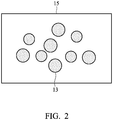
Fig. 2 shows a composite of calcium fluoride bulk with ceramic particles embedded therein in one embodiment. -
Fig. 3 shows an X-ray diffraction (XRD) spectrum of ceramic cores in one embodiment. - In the following detailed description, for purposes of explanation, numerous specific details are set forth in order to provide a thorough understanding of the disclosed embodiments. It will be apparent, however, that one or more embodiments may be practiced without these specific details. In other instances, well-known structures and devices are schematically shown in order to simplify the drawing.
- One embodiment of the disclosure provides a method of removing fluorine in waste liquid. First, providing a calcium source and a plurality of ceramic particles to a waste liquid containing fluorine, thereby forming a plurality of
calcium fluoride layers 11 wrapping each of theceramic particles 13, as shown inFig. 1 . Although theceramic particles 13 are ball-shaped inFig. 1 , theceramic particles 13 can be other shapes such as oval, polygon shaped, or another suitable shape. In addition, the surface of theceramic particles 13 is rough, which is beneficial for growingcalcium fluoride layer 13 thereon. - In some embodiment, the waste liquid is aqueous solution. Alternatively, the waste liquid can be mainly composed of organic solvent, such as alcohol, acetone, and other polar solvent that is used in semiconductor industry and polluted by fluorine source (e.g. hydrofluoric acid). In the waste liquid containing fluorine, the fluorine concentration can be 100 mg/L to 10000 mg/L. If the fluorine concentration is too low, calcium fluoride layer cannot grow on the ceramic particles. If the fluorine concentration is too high, calcium fluoride layer will grow not only on the ceramic but also on the tank surface. However, the fluoride waste liquid should not be diluted before treatment, which may save water during the treatment. The calcium source should be added to fluorine-containing waste liquid, and the calcium source and the waste liquid have a weight ratio of 7:3 to save water. In some embodiments, the calcium source added to the waste liquid can be calcium chloride, calcium hydroxide, calcium carbonate, or a combination thereof.
- The ceramic particles may serve as a seed to grow the calcium fluoride layer thereon. In some embodiments, the ceramic particles include oxide of 100 parts by weight of calcium, 50 to 95 parts by weight of iron, 40 to 50 parts by weight of silicon, 2 to 15 parts by weight of magnesium, 2 to 20 parts by weight of aluminum, and 2 to 10 parts by weight of manganese. If the iron ratio is too low, the density of ceramic particles will be lower than 3g/cm3. If the iron ratio is too high, iron ion could be dissolved into the waste water. If the silicon ratio is too low, the strength of the ceramic powder will be not good enough. If the silicon ratio is too high, the fluorine resistance of the ceramic powder will be not enough, and the ceramic powder could be dissolved into the waste water. If the magnesium ratio is too low, the ratio of the spinel will be insufficient. If the magnesium ratio is too high, the expansion rate of the ceramic particles will increases. If the aluminum ratio is too low, the hardness of the ceramic particles will be insufficient. If the aluminum ratio is too high, fluorine resistance of the ceramic powder will be not enough, and the ceramic powder could be dissolved into the waste water. If the manganese ratio is too low, the ratio of the spinel will be insufficient and the density of the ceramic powder will be lower than 3g/cm3. If the manganese ratio is too high, the cost of ceramic particles will increase. For example, calcium source (e.g. calcium carbonate, calcium hydroxide, or calcium oxide), iron source (e.g. iron nitrate, ferric oxide, or ferrous oxide), silicon source (e.g. silicon oxide, or silica sand), magnesium source (e.g. magnesium carbonate, magnesium oxide, or magnesium acetate), aluminum source (e.g. aluminum nitrate, aluminum hydroxide, or aluminum oxide), and manganese (e.g. manganese nitrate, manganese dioxide, or manganese(III) oxide) of chemical stoichiometry are mixed, and sintered at 1000°C to 1500°C for 1.5 hours to 5 hours to obtain the ceramic particles. Alternatively, some raw materials of the elements may simultaneously contain at least two elements, such as calcium silicate (containing silicon and calcium). If the sintering temperature is too low or the sintering period is too short, the ratio of the spinel will be insufficient. If the sintering temperature is too high or the sintering period is too long, the crystal will be too large and the size of the powder will increase, or the ceramic powder will react with crucible and cause pollutant.
- As shown in
Fig. 2 , the calcium fluoride layers 11 (wrapping theceramic particles 13, respectively) inFig. 1 are further connected to form acalcium fluoride bulk 15, and theceramic particles 13 are embedded in thecalcium fluoride bulk 15. Theceramic particles 13 and thecalcium fluoride bulk 15 have a weight ratio of 1:4 to 1:20. If the ratio of thecalcium fluoride bulk 15 is too high, thecalcium fluoride bulk 15 will be difficult to be dried due to overly high water content. If the ratio of thecalcium fluoride bulk 15 is too low, the cost of removing fluorine will be too high. - In some embodiments, each of the ceramic particles includes a plurality of spinels distributed therein. In some embodiments, the ceramic particles and the spinels have a weight ratio of 1:0.2 to 1:0.5. If the ratio of the spinels is too low, the density of the ceramic powder will be low and the fluorine resistance of the ceramic powder will be weak. If the ratio of the spinels is too high, the ceramic particles will have higher density as well as its weight. In some embodiments, the ceramic particles have a diameter of 0.1µm to 1000µm. If the diameters of the ceramic particles are too small, the thickness of the shell layer will be insufficient, therefore, the water resistance will be lower and result in the expansion of the ceramic particles. If the diameters of the ceramic particles are too large, the reactive surface of the ceramic particles will be too low, and calcium fluoride crystallization rate will be therefore slow. In some embodiments, the density of the ceramic particles (13) is between 3g/cm3 to 6g/cm3. If the density of the ceramic particles (13) is too low, the ceramic particles will easily float over the waste liquid, and it will be difficult to crystallize calcium fluoride. If the density of the ceramic particles (13) is too high, the ceramic particles will easily sink into the waste liquid, and it will be also difficult to crystallize calcium fluoride.
- In some embodiments, a pH adjuster is further provided to the waste liquid to adjust the pH value of the waste liquid to 7 to 10. If the pH value of the waste liquid is too low, the growth rate of calcium fluoride will be too slow. If the pH value of the waste liquid is too high, the calcium fluoride will become porous. In some embodiment, if the calcium source added to the waste liquid is alkaline (e.g. Ca(OH)2), the step of providing the pH adjuster can be omitted. In addition, when the calcium of the calcium source and the fluorine of the waste liquid are reacted to form the calcium fluoride layer, and the acid and alkaline are neutralized, a large heat may be generated. As such, the temperature of the above method of removing fluorine in the waste liquid can be controlled (e.g. to 15°C to 30 °C) by a cooler for safety.
- The fluorine concentration of the waste liquid can be greatly reduced by the above method. For example, the original waste water may contain a hydrofluoric acid concentration of 100 mg/L to 10000 mg/L, and the treated waste water may contain a hydrofluoric acid concentration lower than 15 mg/L. The treated waste water can be recycled for other application. Moreover, the composite material of the calcium fluoride bulk with ceramic particles embedded therein can be easily dried due to its low water content (e.g. <15%), which can be used in other applications.
- Note if only the calcium source is added to the waste liquid containing fluorine to form the calcium fluoride, it will form a sludge of the calcium fluoride rather than the calcium fluoride bulk (solid). The sludge is difficult to be collected and dried due to its large amount of water, and the sludge may suspend in the waste liquid and be difficult to remove. In other words, the ceramic powder may efficiently simplify the process of removing fluorine in waste liquid.
- The above method of removing fluorine from waste liquid can be performed in batch-type or continuous-type. For a suitable apparatus of performing the method, the reader may refer to Taiwan Patent No.
310313 1449668 TW patent No. 1591022 - Below, exemplary embodiments will be described in detail with reference to accompanying drawings so as to be easily realized by a person having ordinary knowledge in the art. The inventive concept may be embodied in various forms without being limited to the exemplary embodiments set forth herein. Descriptions of well-known parts are omitted for clarity, and like reference numerals refer to like elements throughout.
- Calcium carbonate, iron oxide, silicon oxide, magnesium oxide, aluminum oxide, and manganese dioxide were mixed according to chemical stoichiometry, then heated to 1200°C and sintered for 3 hours to form ceramic cores, which could include an oxide of 100 parts by weight of calcium, 75 parts by weight of iron, 19 parts by weight of silicon, 8 parts by weight of magnesium, 6 parts by weight of aluminum, and 6 parts by weight of manganese. The ceramic cores (particles) were analyzed by XRD to observe diffraction peaks at 30.1 degrees and 35.4 degrees, as shown in
Fig.3 , which means that the ceramic cores had spinels therein. The ceramic cores had a diameter of 0.1 µm to 40 µm. pH value of hydrofluoric acid-containing waste water (obtained from semiconductor manufacture) was first adjusted to 7.7 by NaOH, and the waste water had a fluorine concentration of 800 mg/L and a volume of 100 mL (determined by fluoride ion meter). 40 mL of CaCl2 solution (3000 mg/L), 30g of the ceramic particles were added into the waste water and stirred at room temperature for 24 hours. The fluorine in the waste water and the calcium ions were bonded to form a CaF2 layer to wrap the ceramic powders, and the CaF2 layer was connected to form a CaF2 bulk, and the ceramic particles were embedded in the CaF2 bulk. The CaF2 bulk was a dense solid that was easily collected from the waste water. The waste water after the above treatment had a fluorine concentration of 6.4 mg/L (determined by fluoride ion meter). Accordingly, the ceramic particles could efficiently remove fluorine in the waste water. - Calcium oxide, ferrous oxide, silicon oxide, magnesium acetate, aluminum hydroxide, and manganese acetate were mixed according to chemical stoichiometry, then heated to 1100°C and sintered for 5 hours to form ceramic cores, which could include an oxide of 100 parts by weight of calcium, 81 parts by weight of iron, 19 parts by weight of silicon, 10 parts by weight of magnesium, 7 parts by weight of aluminum, and 7 parts by weight of manganese. The ceramic cores (particles) were analyzed by XRD to observe diffraction peaks at 30.1 degrees and 35.4 degrees, which means that the ceramic cores had spinels therein. The ceramic cores had a diameter of 1 µm to 50 µm.
- pH value of hydrofluoric acid-containing waste water (obtained from semiconductor manufacture) was first adjusted to 7.7 by NaOH, and the waste water had a fluorine concentration of 800 mg/L and a volume of 100 mL (determined by fluoride ion meter). 40 mL of CaCl2 solution (3000 mg/L), 30g of the ceramic particles were added into the waste water and stirred at room temperature for 24 hours. The fluorine in the waste water and the calcium ions were bonded to form a CaF2 layer to wrap the ceramic powders, and the CaF2 layer was connected to form a CaF2 bulk, and the ceramic particles were embedded in the CaF2 bulk. The CaF2 bulk was a dense solid that was easily collected from the waste water. The waste water after the above treatment had a fluorine concentration of 5.9 mg/L (determined by fluoride ion meter). Accordingly, the ceramic particles could efficiently remove fluorine in the waste water.
- Calcium carbonate, iron powder, silicon oxide, magnesium hydroxide, aluminum nitrate, and manganic oxide were mixed according to chemical stoichiometry, then heated to 1300°C and sintered for 1 hour to form ceramic cores, which could include an oxide of 100 parts by weight of calcium, 95 parts by weight of iron, 20 parts by weight of silicon, 8 parts by weight of magnesium, 19 parts by weight of aluminum, and 6 parts by weight of manganese. The ceramic cores (particles) were analyzed by XRD to observe diffraction peaks at 30.1 degrees and 35.4 degrees, which means that the ceramic cores had spinels therein. The ceramic cores had a diameter of 0.8 µm to 30 µm.
- pH value of hydrofluoric acid-containing waste water (obtained from semiconductor manufacture) was first adjusted to 7.7 by adding NaOH, and the waste water had a fluorine concentration of 800 mg/L and a volume of 100 mL (determined by fluoride ion meter). 40 mL of CaCh solution (3000 mg/L), 30g of the ceramic particles were added into the waste water and stirred at room temperature for 24 hours. The fluorine in the waste water and the calcium ions were bonded to form a CaF2 layer to wrap the ceramic powders, and the CaF2 layer was connected to form a CaF2 bulk, and the ceramic particles were embedded in the CaF2 bulk. The CaF2 bulk was a dense solid that was easily collected from the waste water. The waste water after the above treatment had a fluorine concentration of 6.2 mg/L (determined by fluoride ion meter). Accordingly, the ceramic particles could efficiently remove fluorine in the waste water.
- pH value of hydrofluoric acid-containing waste water (obtained from semiconductor manufacture) was first adjusted to 7.7 by NaOH, and the waste water had a fluorine concentration of 800 mg/L and a volume of 100 mL (determined by fluoride ion meter). 40 mL of CaCh solution (3000 mg/L), 30g of the 325 mesh silicon dioxide (Sigma-Aldrich 342890) were added into the waste water and stirred at room temperature for 24 hours. The silicon dioxide particles were dissolved in the waste water. As such, the fluorine in the waste water and the calcium ions were bonded to form CaF2 sludge. The CaF2 sludge was difficult to be collected from the waste water. For example, the CaF2 sludge contains at least 70wt% of water, it consumed additional time and energy to dry the CaF2 sludge. In addition, the CaF2 sludge would remain (e.g. suspend) in the waste water, which is difficult to remove. Accordingly, the silicon oxide particles were not suitable to remove fluorine in the waste water.
- pH value of hydrofluoric acid-containing waste water (obtained from semiconductor manufacture) was first adjusted to 7.7 by adding NaOH and the waste water had a fluorine concentration of 800 mg/L and a volume of 100 mL (determined by fluoride ion meter). 40 mL of CaCl2 solution (3000 mg/L), 30g of the 325 mesh CaF2 (Sigma-Aldrich 01905) were added into the waste water and stirred at room temperature for 24 hours. The fluorine in the waste water and the calcium ions were bonded to form a CaF2 layer to wrap the CaF2 particles, and the CaF2 layer was connected to form CaF2 bulk, and the CaF2 particles were embedded in the CaF2 bulk. The CaF2 bulk was a dense solid that was easily collected from the waste water. The waste water after the above treatment had a fluorine concentration of 6 mg/L (determined by fluoride ion meter). Although the CaF2 particles could efficiently remove fluorine in the waste water, the cost of CaF2 is much higher than that of the ceramic particles. For example, the CaF2 costs 10 USD/kg, and the ceramic particles costs 1 USD/kg.
- The compositions of Example 1, Example 2, Example 3, Comparative Example 1 and Comparative Example 2 were summarized as Table 1 to make it easy to understand this disclosure.
Table 1 Composition Example 1 an oxide of 100 parts by weight of calcium, 75 parts by weight of iron, 19 parts by weight of silicon, 8 parts by weight of magnesium, 6 parts by weight of aluminum, and 6 parts by weight of manganese Example 2 an oxide of 100 parts by weight of calcium, 81 parts by weight of iron, 19 parts by weight of silicon, 10 parts by weight of magnesium, 7 parts by weight of aluminum, and 7 parts by weight of manganese Example 3 an oxide of 100 parts by weight of calcium, 95 parts by weight of iron, 20 parts by weight of silicon, 8 parts by weight of magnesium, 19 parts by weight of aluminum, and 6 parts by weight of manganese Comparative Example 1 silicon dioxide Comparative Example 2 CaF2 - It will be apparent to those skilled in the art that various modifications and variations can be made to the disclosed methods and materials. It is intended that the specification and examples be considered as exemplary only, with the true scope of the disclosure being indicated by the following claims and their equivalents.
Claims (13)
- A composite material, comprising:
a plurality of ceramic particles (13) embedded in a calcium fluoride bulk (15), wherein the ceramic particles (13) and the calcium fluoride bulk (15) have a weight ratio of 1:4 to 1:20. - The composite material as claimed in claim 1, wherein the ceramic particles (13) comprise oxides of 100 parts by weight of calcium, 50 to 95 parts by weight of iron, 15 to 40 parts by weight of silicon, 2 to 15 parts by weight of magnesium, 2 to 20 parts by weight of aluminum, and 2 to 10 parts by weight of manganese.
- The composite material as claimed in claim 1 or 2, wherein each of the ceramic particles (13) includes a plurality of spinels distributed therein.
- The composite material as claimed in claim 3, wherein the ceramic particles (13) and the spinels have a weight ratio of 1:0.2 to 1:0.5.
- The composite material as claimed in any one of claims 1 to 4, wherein the ceramic particles (13) have a diameter of 0.1µm to 1000µm.
- The composite material as claimed in any one of claims 1 to 4, wherein the density of the ceramic particles (13) is between 3g/cm3 to 6g/cm3.
- A method of removing fluorine in waste liquid, comprising:providing a calcium source and a plurality of ceramic particles (13) to a waste liquid containing fluorine for forming a plurality of calcium fluoride layers (11) wrapping each of the ceramic particles (13),wherein the calcium fluoride layers (11) are connected to form a calcium fluoride bulk (15), and the ceramic particles (13) are embedded in the calcium fluoride bulk (15),wherein the ceramic particles (13) and the calcium fluoride bulk (15) have a weight ratio of 1:4 to 1:20.
- The method as claimed in claim 7, wherein the calcium source comprises calcium chloride, calcium hydroxide, calcium carbonate, or a combination thereof.
- The method as claimed in claim 7 or 8, wherein the ceramic particles (13) comprise oxides of 100 parts by weight of calcium, 50 to 95 parts by weight of iron, 15 to 40 parts by weight of silicon, 2 to 15 parts by weight of magnesium, 2 to 20 parts by weight of aluminum, and 2 to 10 parts by weight of manganese.
- The method as claimed in any one of claims 7 to 9, wherein each of the ceramic particles (13) includes a plurality of spinels distributed therein.
- The method as claimed in claim 10, wherein the ceramic particles (13) and the spinels have a weight ratio of 1:0.2 to 1:0.5.
- The method as claimed in any one of claims 7 to 11, wherein the ceramic particles (13) have a diameter of 0.1µm to 1000µm.
- The method as claimed in any one of claims 7 to 12, further comprising providing a pH adjuster to the waste liquid to adjust the pH value of the waste liquid to 7 to 10.
Priority Applications (3)
| Application Number | Priority Date | Filing Date | Title |
|---|---|---|---|
| EP19219135.1A EP3838847B1 (en) | 2019-12-20 | 2019-12-20 | Composite material and method of removing fluorine in waste liquid |
| TW109115182A TWI733438B (en) | 2019-12-20 | 2020-05-07 | Composite material and method of removing fluorine in waste liquid |
| US17/036,801 US11773028B2 (en) | 2019-12-20 | 2020-09-29 | Composite material and method of removing fluoride ion in waste liquid |
Applications Claiming Priority (1)
| Application Number | Priority Date | Filing Date | Title |
|---|---|---|---|
| EP19219135.1A EP3838847B1 (en) | 2019-12-20 | 2019-12-20 | Composite material and method of removing fluorine in waste liquid |
Publications (2)
| Publication Number | Publication Date |
|---|---|
| EP3838847A1 true EP3838847A1 (en) | 2021-06-23 |
| EP3838847B1 EP3838847B1 (en) | 2024-04-17 |
Family
ID=69157575
Family Applications (1)
| Application Number | Title | Priority Date | Filing Date |
|---|---|---|---|
| EP19219135.1A Active EP3838847B1 (en) | 2019-12-20 | 2019-12-20 | Composite material and method of removing fluorine in waste liquid |
Country Status (3)
| Country | Link |
|---|---|
| US (1) | US11773028B2 (en) |
| EP (1) | EP3838847B1 (en) |
| TW (1) | TWI733438B (en) |
Families Citing this family (2)
| Publication number | Priority date | Publication date | Assignee | Title |
|---|---|---|---|---|
| CN113816480B (en) * | 2021-10-09 | 2023-10-24 | 中国铝业股份有限公司 | A kind of agent and method for removing fluorine from a mixture containing sulfate and fluoride ions |
| CN119285161B (en) * | 2024-11-18 | 2026-01-13 | 河海大学 | Fluidized bed-double membrane method deep defluorination device and use method thereof |
Citations (4)
| Publication number | Priority date | Publication date | Assignee | Title |
|---|---|---|---|---|
| US4226710A (en) * | 1979-02-12 | 1980-10-07 | Andco Industries, Inc. | Process for purifying water containing fluoride ion |
| TW310313B (en) | 1995-06-30 | 1997-07-11 | Ind Tech Res Inst | Apparatus provided with a fluidized bed crystallizer for treating wastewater |
| TW449668B (en) | 1998-10-22 | 2001-08-11 | Thomas & Amp Betts Internation | Add/drop filters and multiplexers fabricated from cladding mode couplers and fiber Bragg gratings |
| TW591022B (en) | 2000-07-05 | 2004-06-11 | Taisho Pharmaceutical Co Ltd | Tetrahydropyridino or piperidino heterocyclic derivatives |
Family Cites Families (12)
| Publication number | Priority date | Publication date | Assignee | Title |
|---|---|---|---|---|
| CN1332118A (en) * | 2001-08-03 | 2002-01-23 | 刘定忠 | Method for producing cryolite from fluorine-containing wastewater |
| CN1332116A (en) | 2001-08-20 | 2002-01-23 | 杜以波 | Homogeneous fluid process of preparing nanometer magnesium hydroxide |
| TWI280951B (en) | 2003-05-12 | 2007-05-11 | Earthrive Technologies Inc | Fluidized-bed process drain treatment system |
| JP2005021855A (en) * | 2003-07-02 | 2005-01-27 | Japan Organo Co Ltd | Crystallization method of silicon/fluorine-containing wastewater |
| KR100951290B1 (en) | 2007-05-16 | 2010-04-02 | 주식회사 엘지화학 | Anti-glare composition and anti-glare film prepared using the same |
| JP5440095B2 (en) | 2009-10-22 | 2014-03-12 | 栗田工業株式会社 | Method and apparatus for treating fluorine-containing water |
| CN102432276B (en) * | 2011-09-13 | 2013-08-14 | 苏州市亨文环保水业有限公司 | Application of CaF2 Sludge in Ceramics |
| KR101264596B1 (en) | 2011-11-29 | 2013-05-27 | 재단법인 포항산업과학연구원 | Method for removing fluorine from waste water by using blast furnace slag |
| TWI449668B (en) | 2012-04-09 | 2014-08-21 | 姚正義 | Preparation method of calcium fluoride |
| TWI498129B (en) | 2012-10-26 | 2015-09-01 | Syneurx Internat Corp | Core-shell particles, preparation process thereof, and composition containing the same |
| CN104835545B (en) | 2015-03-19 | 2017-03-29 | 西南科技大学 | A kind of deep purifying and recovery method of the fluorine-containing uranium radioactive liquid waste of high salt |
| CN105664842B (en) * | 2016-04-07 | 2019-03-15 | 景德镇陶瓷大学 | A kind of calcium-based adsorbent for defluorination and its application |
-
2019
- 2019-12-20 EP EP19219135.1A patent/EP3838847B1/en active Active
-
2020
- 2020-05-07 TW TW109115182A patent/TWI733438B/en active
- 2020-09-29 US US17/036,801 patent/US11773028B2/en active Active
Patent Citations (4)
| Publication number | Priority date | Publication date | Assignee | Title |
|---|---|---|---|---|
| US4226710A (en) * | 1979-02-12 | 1980-10-07 | Andco Industries, Inc. | Process for purifying water containing fluoride ion |
| TW310313B (en) | 1995-06-30 | 1997-07-11 | Ind Tech Res Inst | Apparatus provided with a fluidized bed crystallizer for treating wastewater |
| TW449668B (en) | 1998-10-22 | 2001-08-11 | Thomas & Amp Betts Internation | Add/drop filters and multiplexers fabricated from cladding mode couplers and fiber Bragg gratings |
| TW591022B (en) | 2000-07-05 | 2004-06-11 | Taisho Pharmaceutical Co Ltd | Tetrahydropyridino or piperidino heterocyclic derivatives |
Non-Patent Citations (2)
| Title |
|---|
| ALDACO ET AL: "Calcium fluoride recovery from fluoride wastewater in a fluidized bed reactor", WATER RESEARCH, ELSEVIER, AMSTERDAM, NL, vol. 41, no. 4, 25 January 2007 (2007-01-25), pages 810 - 818, XP005858592, ISSN: 0043-1354, DOI: 10.1016/J.WATRES.2006.11.040 * |
| GIESEN A ET AL: "Sustainable treatment of HF wastewaters from semiconductor industry with a fluidized bed reactor", IEEE TRANSACTIONS ON SEMICONDUCTOR MANUFACTURING, IEEE SERVICE CENTER, PISCATAWAY, NJ, US, vol. 16, no. 3, 1 August 2003 (2003-08-01), pages 423 - 428, XP011099483, ISSN: 0894-6507, DOI: 10.1109/TSM.2003.815624 * |
Also Published As
| Publication number | Publication date |
|---|---|
| US20210188715A1 (en) | 2021-06-24 |
| EP3838847B1 (en) | 2024-04-17 |
| TWI733438B (en) | 2021-07-11 |
| US11773028B2 (en) | 2023-10-03 |
| TW202124330A (en) | 2021-07-01 |
Similar Documents
| Publication | Publication Date | Title |
|---|---|---|
| CN115947374B (en) | High-purity nano tungsten oxide, preparation method thereof, electrode material and battery | |
| CN104701491A (en) | Nano-porous silica lithium battery anode material and preparation method and application thereof | |
| US11773028B2 (en) | Composite material and method of removing fluoride ion in waste liquid | |
| JP5778342B2 (en) | Method for producing zeolite A using aluminoborosilicate glass as a raw material | |
| CN117229056B (en) | High-dielectric aluminum-doped perovskite structure high-entropy microwave dielectric ceramic and preparation method thereof | |
| CN114288983A (en) | Titanium-based lithium ion exchanger and preparation method thereof | |
| KR101647747B1 (en) | Surface modification method of aluminum oxide carrier | |
| CN111825475A (en) | A kind of modified red mud porous ceramic and its preparation method and application | |
| CN108467019A (en) | A kind of Ti2The preparation method of N two-dimensional materials | |
| Toda et al. | Novel soft chemical synthesis methods of ceramic materials | |
| CN103449511A (en) | Strontium titanate submicron crystal and preparation method thereof | |
| CN102351224A (en) | Process for preparing active alumina from aluminum section industrial wastewater alkaline residues | |
| CN100479921C (en) | Sphericity spinel material with cage construction and method for preparing the same | |
| CN107473242A (en) | A kind of method that high-purity lithium oxide is prepared using lithium carbonate | |
| CN1312774A (en) | Method for producing lithium mangaese oxide intercalation compounds and compounds produced thereby | |
| CN111646493A (en) | Hydrothermal preparation method of yttrium oxide nano powder | |
| CN114566639B (en) | SiO (silicon dioxide)xComposite material/C, preparation method and application thereof | |
| CN106892450B (en) | One kind synthesizing PbTiO by La ion dopings3The method of disk | |
| CN112645333B (en) | Preparation method of nano silicon powder, prepared nano silicon powder and application | |
| CN120346779B (en) | A titanium-based lithium adsorbent and preparation method thereof | |
| CN113019158A (en) | Method for preparing porous wollastonite ceramic membrane for membrane distillation desalination by dry pressing and molding blast furnace slag as main raw material | |
| CN114560716B (en) | Forsterite honeycomb body, preparation method and application thereof | |
| CN110227489A (en) | A kind of high quantum conversion ratio photochemical catalyst of nanoscale and its preparation process | |
| CN114054084B (en) | Preparation method of epoxidation catalyst | |
| CN115312728B (en) | Silicon anode material and preparation method thereof |
Legal Events
| Date | Code | Title | Description |
|---|---|---|---|
| PUAI | Public reference made under article 153(3) epc to a published international application that has entered the european phase |
Free format text: ORIGINAL CODE: 0009012 |
|
| STAA | Information on the status of an ep patent application or granted ep patent |
Free format text: STATUS: REQUEST FOR EXAMINATION WAS MADE |
|
| 17P | Request for examination filed |
Effective date: 20191220 |
|
| AK | Designated contracting states |
Kind code of ref document: A1 Designated state(s): AL AT BE BG CH CY CZ DE DK EE ES FI FR GB GR HR HU IE IS IT LI LT LU LV MC MK MT NL NO PL PT RO RS SE SI SK SM TR |
|
| STAA | Information on the status of an ep patent application or granted ep patent |
Free format text: STATUS: EXAMINATION IS IN PROGRESS |
|
| 17Q | First examination report despatched |
Effective date: 20230811 |
|
| GRAP | Despatch of communication of intention to grant a patent |
Free format text: ORIGINAL CODE: EPIDOSNIGR1 |
|
| STAA | Information on the status of an ep patent application or granted ep patent |
Free format text: STATUS: GRANT OF PATENT IS INTENDED |
|
| INTG | Intention to grant announced |
Effective date: 20231204 |
|
| GRAS | Grant fee paid |
Free format text: ORIGINAL CODE: EPIDOSNIGR3 |
|
| GRAA | (expected) grant |
Free format text: ORIGINAL CODE: 0009210 |
|
| STAA | Information on the status of an ep patent application or granted ep patent |
Free format text: STATUS: THE PATENT HAS BEEN GRANTED |
|
| AK | Designated contracting states |
Kind code of ref document: B1 Designated state(s): AL AT BE BG CH CY CZ DE DK EE ES FI FR GB GR HR HU IE IS IT LI LT LU LV MC MK MT NL NO PL PT RO RS SE SI SK SM TR |
|
| REG | Reference to a national code |
Ref country code: GB Ref legal event code: FG4D |
|
| REG | Reference to a national code |
Ref country code: CH Ref legal event code: EP |
|
| REG | Reference to a national code |
Ref country code: DE Ref legal event code: R096 Ref document number: 602019050376 Country of ref document: DE |
|
| REG | Reference to a national code |
Ref country code: IE Ref legal event code: FG4D |
|
| REG | Reference to a national code |
Ref country code: LT Ref legal event code: MG9D |
|
| REG | Reference to a national code |
Ref country code: NL Ref legal event code: MP Effective date: 20240417 |
|
| REG | Reference to a national code |
Ref country code: AT Ref legal event code: MK05 Ref document number: 1677119 Country of ref document: AT Kind code of ref document: T Effective date: 20240417 |
|
| PG25 | Lapsed in a contracting state [announced via postgrant information from national office to epo] |
Ref country code: NL Free format text: LAPSE BECAUSE OF FAILURE TO SUBMIT A TRANSLATION OF THE DESCRIPTION OR TO PAY THE FEE WITHIN THE PRESCRIBED TIME-LIMIT Effective date: 20240417 |
|
| PG25 | Lapsed in a contracting state [announced via postgrant information from national office to epo] |
Ref country code: NL Free format text: LAPSE BECAUSE OF FAILURE TO SUBMIT A TRANSLATION OF THE DESCRIPTION OR TO PAY THE FEE WITHIN THE PRESCRIBED TIME-LIMIT Effective date: 20240417 |
|
| PG25 | Lapsed in a contracting state [announced via postgrant information from national office to epo] |
Ref country code: IS Free format text: LAPSE BECAUSE OF FAILURE TO SUBMIT A TRANSLATION OF THE DESCRIPTION OR TO PAY THE FEE WITHIN THE PRESCRIBED TIME-LIMIT Effective date: 20240817 |
|
| PG25 | Lapsed in a contracting state [announced via postgrant information from national office to epo] |
Ref country code: BG Free format text: LAPSE BECAUSE OF FAILURE TO SUBMIT A TRANSLATION OF THE DESCRIPTION OR TO PAY THE FEE WITHIN THE PRESCRIBED TIME-LIMIT Effective date: 20240417 |
|
| PG25 | Lapsed in a contracting state [announced via postgrant information from national office to epo] |
Ref country code: HR Free format text: LAPSE BECAUSE OF FAILURE TO SUBMIT A TRANSLATION OF THE DESCRIPTION OR TO PAY THE FEE WITHIN THE PRESCRIBED TIME-LIMIT Effective date: 20240417 Ref country code: FI Free format text: LAPSE BECAUSE OF FAILURE TO SUBMIT A TRANSLATION OF THE DESCRIPTION OR TO PAY THE FEE WITHIN THE PRESCRIBED TIME-LIMIT Effective date: 20240417 |
|
| PG25 | Lapsed in a contracting state [announced via postgrant information from national office to epo] |
Ref country code: GR Free format text: LAPSE BECAUSE OF FAILURE TO SUBMIT A TRANSLATION OF THE DESCRIPTION OR TO PAY THE FEE WITHIN THE PRESCRIBED TIME-LIMIT Effective date: 20240718 |
|
| PG25 | Lapsed in a contracting state [announced via postgrant information from national office to epo] |
Ref country code: PT Free format text: LAPSE BECAUSE OF FAILURE TO SUBMIT A TRANSLATION OF THE DESCRIPTION OR TO PAY THE FEE WITHIN THE PRESCRIBED TIME-LIMIT Effective date: 20240819 |
|
| PG25 | Lapsed in a contracting state [announced via postgrant information from national office to epo] |
Ref country code: ES Free format text: LAPSE BECAUSE OF FAILURE TO SUBMIT A TRANSLATION OF THE DESCRIPTION OR TO PAY THE FEE WITHIN THE PRESCRIBED TIME-LIMIT Effective date: 20240417 |
|
| PG25 | Lapsed in a contracting state [announced via postgrant information from national office to epo] |
Ref country code: AT Free format text: LAPSE BECAUSE OF FAILURE TO SUBMIT A TRANSLATION OF THE DESCRIPTION OR TO PAY THE FEE WITHIN THE PRESCRIBED TIME-LIMIT Effective date: 20240417 |
|
| PG25 | Lapsed in a contracting state [announced via postgrant information from national office to epo] |
Ref country code: PL Free format text: LAPSE BECAUSE OF FAILURE TO SUBMIT A TRANSLATION OF THE DESCRIPTION OR TO PAY THE FEE WITHIN THE PRESCRIBED TIME-LIMIT Effective date: 20240417 |
|
| PG25 | Lapsed in a contracting state [announced via postgrant information from national office to epo] |
Ref country code: LV Free format text: LAPSE BECAUSE OF FAILURE TO SUBMIT A TRANSLATION OF THE DESCRIPTION OR TO PAY THE FEE WITHIN THE PRESCRIBED TIME-LIMIT Effective date: 20240417 |
|
| PG25 | Lapsed in a contracting state [announced via postgrant information from national office to epo] |
Ref country code: PT Free format text: LAPSE BECAUSE OF FAILURE TO SUBMIT A TRANSLATION OF THE DESCRIPTION OR TO PAY THE FEE WITHIN THE PRESCRIBED TIME-LIMIT Effective date: 20240819 Ref country code: PL Free format text: LAPSE BECAUSE OF FAILURE TO SUBMIT A TRANSLATION OF THE DESCRIPTION OR TO PAY THE FEE WITHIN THE PRESCRIBED TIME-LIMIT Effective date: 20240417 Ref country code: NO Free format text: LAPSE BECAUSE OF FAILURE TO SUBMIT A TRANSLATION OF THE DESCRIPTION OR TO PAY THE FEE WITHIN THE PRESCRIBED TIME-LIMIT Effective date: 20240717 Ref country code: LV Free format text: LAPSE BECAUSE OF FAILURE TO SUBMIT A TRANSLATION OF THE DESCRIPTION OR TO PAY THE FEE WITHIN THE PRESCRIBED TIME-LIMIT Effective date: 20240417 Ref country code: IS Free format text: LAPSE BECAUSE OF FAILURE TO SUBMIT A TRANSLATION OF THE DESCRIPTION OR TO PAY THE FEE WITHIN THE PRESCRIBED TIME-LIMIT Effective date: 20240817 Ref country code: HR Free format text: LAPSE BECAUSE OF FAILURE TO SUBMIT A TRANSLATION OF THE DESCRIPTION OR TO PAY THE FEE WITHIN THE PRESCRIBED TIME-LIMIT Effective date: 20240417 Ref country code: GR Free format text: LAPSE BECAUSE OF FAILURE TO SUBMIT A TRANSLATION OF THE DESCRIPTION OR TO PAY THE FEE WITHIN THE PRESCRIBED TIME-LIMIT Effective date: 20240718 Ref country code: FI Free format text: LAPSE BECAUSE OF FAILURE TO SUBMIT A TRANSLATION OF THE DESCRIPTION OR TO PAY THE FEE WITHIN THE PRESCRIBED TIME-LIMIT Effective date: 20240417 Ref country code: ES Free format text: LAPSE BECAUSE OF FAILURE TO SUBMIT A TRANSLATION OF THE DESCRIPTION OR TO PAY THE FEE WITHIN THE PRESCRIBED TIME-LIMIT Effective date: 20240417 Ref country code: BG Free format text: LAPSE BECAUSE OF FAILURE TO SUBMIT A TRANSLATION OF THE DESCRIPTION OR TO PAY THE FEE WITHIN THE PRESCRIBED TIME-LIMIT Effective date: 20240417 Ref country code: AT Free format text: LAPSE BECAUSE OF FAILURE TO SUBMIT A TRANSLATION OF THE DESCRIPTION OR TO PAY THE FEE WITHIN THE PRESCRIBED TIME-LIMIT Effective date: 20240417 Ref country code: RS Free format text: LAPSE BECAUSE OF FAILURE TO SUBMIT A TRANSLATION OF THE DESCRIPTION OR TO PAY THE FEE WITHIN THE PRESCRIBED TIME-LIMIT Effective date: 20240717 |
|
| PG25 | Lapsed in a contracting state [announced via postgrant information from national office to epo] |
Ref country code: DK Free format text: LAPSE BECAUSE OF FAILURE TO SUBMIT A TRANSLATION OF THE DESCRIPTION OR TO PAY THE FEE WITHIN THE PRESCRIBED TIME-LIMIT Effective date: 20240417 |
|
| REG | Reference to a national code |
Ref country code: DE Ref legal event code: R097 Ref document number: 602019050376 Country of ref document: DE |
|
| PG25 | Lapsed in a contracting state [announced via postgrant information from national office to epo] |
Ref country code: EE Free format text: LAPSE BECAUSE OF FAILURE TO SUBMIT A TRANSLATION OF THE DESCRIPTION OR TO PAY THE FEE WITHIN THE PRESCRIBED TIME-LIMIT Effective date: 20240417 |
|
| PG25 | Lapsed in a contracting state [announced via postgrant information from national office to epo] |
Ref country code: CZ Free format text: LAPSE BECAUSE OF FAILURE TO SUBMIT A TRANSLATION OF THE DESCRIPTION OR TO PAY THE FEE WITHIN THE PRESCRIBED TIME-LIMIT Effective date: 20240417 |
|
| PG25 | Lapsed in a contracting state [announced via postgrant information from national office to epo] |
Ref country code: SK Free format text: LAPSE BECAUSE OF FAILURE TO SUBMIT A TRANSLATION OF THE DESCRIPTION OR TO PAY THE FEE WITHIN THE PRESCRIBED TIME-LIMIT Effective date: 20240417 Ref country code: RO Free format text: LAPSE BECAUSE OF FAILURE TO SUBMIT A TRANSLATION OF THE DESCRIPTION OR TO PAY THE FEE WITHIN THE PRESCRIBED TIME-LIMIT Effective date: 20240417 |
|
| PG25 | Lapsed in a contracting state [announced via postgrant information from national office to epo] |
Ref country code: SM Free format text: LAPSE BECAUSE OF FAILURE TO SUBMIT A TRANSLATION OF THE DESCRIPTION OR TO PAY THE FEE WITHIN THE PRESCRIBED TIME-LIMIT Effective date: 20240417 |
|
| PG25 | Lapsed in a contracting state [announced via postgrant information from national office to epo] |
Ref country code: SM Free format text: LAPSE BECAUSE OF FAILURE TO SUBMIT A TRANSLATION OF THE DESCRIPTION OR TO PAY THE FEE WITHIN THE PRESCRIBED TIME-LIMIT Effective date: 20240417 Ref country code: SK Free format text: LAPSE BECAUSE OF FAILURE TO SUBMIT A TRANSLATION OF THE DESCRIPTION OR TO PAY THE FEE WITHIN THE PRESCRIBED TIME-LIMIT Effective date: 20240417 Ref country code: RO Free format text: LAPSE BECAUSE OF FAILURE TO SUBMIT A TRANSLATION OF THE DESCRIPTION OR TO PAY THE FEE WITHIN THE PRESCRIBED TIME-LIMIT Effective date: 20240417 Ref country code: EE Free format text: LAPSE BECAUSE OF FAILURE TO SUBMIT A TRANSLATION OF THE DESCRIPTION OR TO PAY THE FEE WITHIN THE PRESCRIBED TIME-LIMIT Effective date: 20240417 Ref country code: DK Free format text: LAPSE BECAUSE OF FAILURE TO SUBMIT A TRANSLATION OF THE DESCRIPTION OR TO PAY THE FEE WITHIN THE PRESCRIBED TIME-LIMIT Effective date: 20240417 Ref country code: CZ Free format text: LAPSE BECAUSE OF FAILURE TO SUBMIT A TRANSLATION OF THE DESCRIPTION OR TO PAY THE FEE WITHIN THE PRESCRIBED TIME-LIMIT Effective date: 20240417 |
|
| PLBE | No opposition filed within time limit |
Free format text: ORIGINAL CODE: 0009261 |
|
| STAA | Information on the status of an ep patent application or granted ep patent |
Free format text: STATUS: NO OPPOSITION FILED WITHIN TIME LIMIT |
|
| 26N | No opposition filed |
Effective date: 20250120 |
|
| PG25 | Lapsed in a contracting state [announced via postgrant information from national office to epo] |
Ref country code: SI Free format text: LAPSE BECAUSE OF FAILURE TO SUBMIT A TRANSLATION OF THE DESCRIPTION OR TO PAY THE FEE WITHIN THE PRESCRIBED TIME-LIMIT Effective date: 20240417 |
|
| PG25 | Lapsed in a contracting state [announced via postgrant information from national office to epo] |
Ref country code: MC Free format text: LAPSE BECAUSE OF FAILURE TO SUBMIT A TRANSLATION OF THE DESCRIPTION OR TO PAY THE FEE WITHIN THE PRESCRIBED TIME-LIMIT Effective date: 20240417 |
|
| REG | Reference to a national code |
Ref country code: CH Ref legal event code: PL |
|
| PG25 | Lapsed in a contracting state [announced via postgrant information from national office to epo] |
Ref country code: LU Free format text: LAPSE BECAUSE OF NON-PAYMENT OF DUE FEES Effective date: 20241220 |
|
| PG25 | Lapsed in a contracting state [announced via postgrant information from national office to epo] |
Ref country code: SE Free format text: LAPSE BECAUSE OF FAILURE TO SUBMIT A TRANSLATION OF THE DESCRIPTION OR TO PAY THE FEE WITHIN THE PRESCRIBED TIME-LIMIT Effective date: 20240417 |
|
| REG | Reference to a national code |
Ref country code: BE Ref legal event code: MM Effective date: 20241231 |
|
| PG25 | Lapsed in a contracting state [announced via postgrant information from national office to epo] |
Ref country code: BE Free format text: LAPSE BECAUSE OF NON-PAYMENT OF DUE FEES Effective date: 20241231 |
|
| PG25 | Lapsed in a contracting state [announced via postgrant information from national office to epo] |
Ref country code: CH Free format text: LAPSE BECAUSE OF NON-PAYMENT OF DUE FEES Effective date: 20241231 |
|
| PG25 | Lapsed in a contracting state [announced via postgrant information from national office to epo] |
Ref country code: IE Free format text: LAPSE BECAUSE OF NON-PAYMENT OF DUE FEES Effective date: 20241220 |
|
| PGFP | Annual fee paid to national office [announced via postgrant information from national office to epo] |
Ref country code: GB Payment date: 20251229 Year of fee payment: 7 |
|
| PGFP | Annual fee paid to national office [announced via postgrant information from national office to epo] |
Ref country code: IT Payment date: 20251219 Year of fee payment: 7 |
|
| PGFP | Annual fee paid to national office [announced via postgrant information from national office to epo] |
Ref country code: FR Payment date: 20251226 Year of fee payment: 7 |
|
| PGFP | Annual fee paid to national office [announced via postgrant information from national office to epo] |
Ref country code: DE Payment date: 20251229 Year of fee payment: 7 |