EP3838699B1 - Vehicle and method for controlling body thereof - Google Patents
Vehicle and method for controlling body thereof Download PDFInfo
- Publication number
- EP3838699B1 EP3838699B1 EP20213047.2A EP20213047A EP3838699B1 EP 3838699 B1 EP3838699 B1 EP 3838699B1 EP 20213047 A EP20213047 A EP 20213047A EP 3838699 B1 EP3838699 B1 EP 3838699B1
- Authority
- EP
- European Patent Office
- Prior art keywords
- operation mode
- convenience device
- autonomous driving
- controller
- convenience
- Prior art date
- Legal status (The legal status is an assumption and is not a legal conclusion. Google has not performed a legal analysis and makes no representation as to the accuracy of the status listed.)
- Active
Links
Images



Classifications
-
- B—PERFORMING OPERATIONS; TRANSPORTING
- B60—VEHICLES IN GENERAL
- B60W—CONJOINT CONTROL OF VEHICLE SUB-UNITS OF DIFFERENT TYPE OR DIFFERENT FUNCTION; CONTROL SYSTEMS SPECIALLY ADAPTED FOR HYBRID VEHICLES; ROAD VEHICLE DRIVE CONTROL SYSTEMS FOR PURPOSES NOT RELATED TO THE CONTROL OF A PARTICULAR SUB-UNIT
- B60W10/00—Conjoint control of vehicle sub-units of different type or different function
- B60W10/22—Conjoint control of vehicle sub-units of different type or different function including control of suspension systems
-
- B—PERFORMING OPERATIONS; TRANSPORTING
- B60—VEHICLES IN GENERAL
- B60R—VEHICLES, VEHICLE FITTINGS, OR VEHICLE PARTS, NOT OTHERWISE PROVIDED FOR
- B60R16/00—Electric or fluid circuits specially adapted for vehicles and not otherwise provided for; Arrangement of elements of electric or fluid circuits specially adapted for vehicles and not otherwise provided for
- B60R16/02—Electric or fluid circuits specially adapted for vehicles and not otherwise provided for; Arrangement of elements of electric or fluid circuits specially adapted for vehicles and not otherwise provided for electric constitutive elements
- B60R16/023—Electric or fluid circuits specially adapted for vehicles and not otherwise provided for; Arrangement of elements of electric or fluid circuits specially adapted for vehicles and not otherwise provided for electric constitutive elements for transmission of signals between vehicle parts or subsystems
- B60R16/0231—Circuits relating to the driving or the functioning of the vehicle
-
- B—PERFORMING OPERATIONS; TRANSPORTING
- B60—VEHICLES IN GENERAL
- B60W—CONJOINT CONTROL OF VEHICLE SUB-UNITS OF DIFFERENT TYPE OR DIFFERENT FUNCTION; CONTROL SYSTEMS SPECIALLY ADAPTED FOR HYBRID VEHICLES; ROAD VEHICLE DRIVE CONTROL SYSTEMS FOR PURPOSES NOT RELATED TO THE CONTROL OF A PARTICULAR SUB-UNIT
- B60W40/00—Estimation or calculation of non-directly measurable driving parameters for road vehicle drive control systems not related to the control of a particular sub unit, e.g. by using mathematical models
- B60W40/02—Estimation or calculation of non-directly measurable driving parameters for road vehicle drive control systems not related to the control of a particular sub unit, e.g. by using mathematical models related to ambient conditions
-
- B—PERFORMING OPERATIONS; TRANSPORTING
- B60—VEHICLES IN GENERAL
- B60Q—ARRANGEMENT OF SIGNALLING OR LIGHTING DEVICES, THE MOUNTING OR SUPPORTING THEREOF OR CIRCUITS THEREFOR, FOR VEHICLES IN GENERAL
- B60Q1/00—Arrangement of optical signalling or lighting devices, the mounting or supporting thereof or circuits therefor
- B60Q1/02—Arrangement of optical signalling or lighting devices, the mounting or supporting thereof or circuits therefor the devices being primarily intended to illuminate the way ahead or to illuminate other areas of way or environments
- B60Q1/04—Arrangement of optical signalling or lighting devices, the mounting or supporting thereof or circuits therefor the devices being primarily intended to illuminate the way ahead or to illuminate other areas of way or environments the devices being headlights
-
- B—PERFORMING OPERATIONS; TRANSPORTING
- B60—VEHICLES IN GENERAL
- B60S—SERVICING, CLEANING, REPAIRING, SUPPORTING, LIFTING, OR MANOEUVRING OF VEHICLES, NOT OTHERWISE PROVIDED FOR
- B60S1/00—Cleaning of vehicles
- B60S1/02—Cleaning windscreens, windows or optical devices
- B60S1/04—Wipers or the like, e.g. scrapers
- B60S1/06—Wipers or the like, e.g. scrapers characterised by the drive
- B60S1/08—Wipers or the like, e.g. scrapers characterised by the drive electrically driven
- B60S1/0818—Wipers or the like, e.g. scrapers characterised by the drive electrically driven including control systems responsive to external conditions, e.g. by detection of moisture, dirt or the like
- B60S1/0822—Wipers or the like, e.g. scrapers characterised by the drive electrically driven including control systems responsive to external conditions, e.g. by detection of moisture, dirt or the like characterized by the arrangement or type of detection means
- B60S1/0825—Capacitive rain sensor
-
- B—PERFORMING OPERATIONS; TRANSPORTING
- B60—VEHICLES IN GENERAL
- B60S—SERVICING, CLEANING, REPAIRING, SUPPORTING, LIFTING, OR MANOEUVRING OF VEHICLES, NOT OTHERWISE PROVIDED FOR
- B60S1/00—Cleaning of vehicles
- B60S1/02—Cleaning windscreens, windows or optical devices
- B60S1/04—Wipers or the like, e.g. scrapers
- B60S1/06—Wipers or the like, e.g. scrapers characterised by the drive
- B60S1/08—Wipers or the like, e.g. scrapers characterised by the drive electrically driven
- B60S1/0818—Wipers or the like, e.g. scrapers characterised by the drive electrically driven including control systems responsive to external conditions, e.g. by detection of moisture, dirt or the like
- B60S1/0822—Wipers or the like, e.g. scrapers characterised by the drive electrically driven including control systems responsive to external conditions, e.g. by detection of moisture, dirt or the like characterized by the arrangement or type of detection means
- B60S1/0862—Wipers or the like, e.g. scrapers characterised by the drive electrically driven including control systems responsive to external conditions, e.g. by detection of moisture, dirt or the like characterized by the arrangement or type of detection means including additional sensors
- B60S1/087—Wipers or the like, e.g. scrapers characterised by the drive electrically driven including control systems responsive to external conditions, e.g. by detection of moisture, dirt or the like characterized by the arrangement or type of detection means including additional sensors including an ambient light sensor
-
- B—PERFORMING OPERATIONS; TRANSPORTING
- B60—VEHICLES IN GENERAL
- B60W—CONJOINT CONTROL OF VEHICLE SUB-UNITS OF DIFFERENT TYPE OR DIFFERENT FUNCTION; CONTROL SYSTEMS SPECIALLY ADAPTED FOR HYBRID VEHICLES; ROAD VEHICLE DRIVE CONTROL SYSTEMS FOR PURPOSES NOT RELATED TO THE CONTROL OF A PARTICULAR SUB-UNIT
- B60W10/00—Conjoint control of vehicle sub-units of different type or different function
- B60W10/30—Conjoint control of vehicle sub-units of different type or different function including control of auxiliary equipment, e.g. air-conditioning compressors or oil pumps
-
- B—PERFORMING OPERATIONS; TRANSPORTING
- B60—VEHICLES IN GENERAL
- B60W—CONJOINT CONTROL OF VEHICLE SUB-UNITS OF DIFFERENT TYPE OR DIFFERENT FUNCTION; CONTROL SYSTEMS SPECIALLY ADAPTED FOR HYBRID VEHICLES; ROAD VEHICLE DRIVE CONTROL SYSTEMS FOR PURPOSES NOT RELATED TO THE CONTROL OF A PARTICULAR SUB-UNIT
- B60W50/00—Details of control systems for road vehicle drive control not related to the control of a particular sub-unit, e.g. process diagnostic or vehicle driver interfaces
- B60W50/08—Interaction between the driver and the control system
- B60W50/14—Means for informing the driver, warning the driver or prompting a driver intervention
-
- B—PERFORMING OPERATIONS; TRANSPORTING
- B60—VEHICLES IN GENERAL
- B60W—CONJOINT CONTROL OF VEHICLE SUB-UNITS OF DIFFERENT TYPE OR DIFFERENT FUNCTION; CONTROL SYSTEMS SPECIALLY ADAPTED FOR HYBRID VEHICLES; ROAD VEHICLE DRIVE CONTROL SYSTEMS FOR PURPOSES NOT RELATED TO THE CONTROL OF A PARTICULAR SUB-UNIT
- B60W60/00—Drive control systems specially adapted for autonomous road vehicles
- B60W60/005—Handover processes
- B60W60/0051—Handover processes from occupants to vehicle
-
- B—PERFORMING OPERATIONS; TRANSPORTING
- B60—VEHICLES IN GENERAL
- B60W—CONJOINT CONTROL OF VEHICLE SUB-UNITS OF DIFFERENT TYPE OR DIFFERENT FUNCTION; CONTROL SYSTEMS SPECIALLY ADAPTED FOR HYBRID VEHICLES; ROAD VEHICLE DRIVE CONTROL SYSTEMS FOR PURPOSES NOT RELATED TO THE CONTROL OF A PARTICULAR SUB-UNIT
- B60W60/00—Drive control systems specially adapted for autonomous road vehicles
- B60W60/005—Handover processes
- B60W60/0053—Handover processes from vehicle to occupant
-
- B—PERFORMING OPERATIONS; TRANSPORTING
- B60—VEHICLES IN GENERAL
- B60W—CONJOINT CONTROL OF VEHICLE SUB-UNITS OF DIFFERENT TYPE OR DIFFERENT FUNCTION; CONTROL SYSTEMS SPECIALLY ADAPTED FOR HYBRID VEHICLES; ROAD VEHICLE DRIVE CONTROL SYSTEMS FOR PURPOSES NOT RELATED TO THE CONTROL OF A PARTICULAR SUB-UNIT
- B60W50/00—Details of control systems for road vehicle drive control not related to the control of a particular sub-unit, e.g. process diagnostic or vehicle driver interfaces
- B60W50/08—Interaction between the driver and the control system
- B60W50/14—Means for informing the driver, warning the driver or prompting a driver intervention
- B60W2050/146—Display means
-
- B—PERFORMING OPERATIONS; TRANSPORTING
- B60—VEHICLES IN GENERAL
- B60W—CONJOINT CONTROL OF VEHICLE SUB-UNITS OF DIFFERENT TYPE OR DIFFERENT FUNCTION; CONTROL SYSTEMS SPECIALLY ADAPTED FOR HYBRID VEHICLES; ROAD VEHICLE DRIVE CONTROL SYSTEMS FOR PURPOSES NOT RELATED TO THE CONTROL OF A PARTICULAR SUB-UNIT
- B60W2420/00—Indexing codes relating to the type of sensors based on the principle of their operation
- B60W2420/40—Photo, light or radio wave sensitive means, e.g. infrared sensors
-
- B—PERFORMING OPERATIONS; TRANSPORTING
- B60—VEHICLES IN GENERAL
- B60W—CONJOINT CONTROL OF VEHICLE SUB-UNITS OF DIFFERENT TYPE OR DIFFERENT FUNCTION; CONTROL SYSTEMS SPECIALLY ADAPTED FOR HYBRID VEHICLES; ROAD VEHICLE DRIVE CONTROL SYSTEMS FOR PURPOSES NOT RELATED TO THE CONTROL OF A PARTICULAR SUB-UNIT
- B60W2540/00—Input parameters relating to occupants
- B60W2540/215—Selection or confirmation of options
-
- B—PERFORMING OPERATIONS; TRANSPORTING
- B60—VEHICLES IN GENERAL
- B60W—CONJOINT CONTROL OF VEHICLE SUB-UNITS OF DIFFERENT TYPE OR DIFFERENT FUNCTION; CONTROL SYSTEMS SPECIALLY ADAPTED FOR HYBRID VEHICLES; ROAD VEHICLE DRIVE CONTROL SYSTEMS FOR PURPOSES NOT RELATED TO THE CONTROL OF A PARTICULAR SUB-UNIT
- B60W2555/00—Input parameters relating to exterior conditions, not covered by groups B60W2552/00, B60W2554/00
- B60W2555/20—Ambient conditions, e.g. wind or rain
-
- B—PERFORMING OPERATIONS; TRANSPORTING
- B60—VEHICLES IN GENERAL
- B60W—CONJOINT CONTROL OF VEHICLE SUB-UNITS OF DIFFERENT TYPE OR DIFFERENT FUNCTION; CONTROL SYSTEMS SPECIALLY ADAPTED FOR HYBRID VEHICLES; ROAD VEHICLE DRIVE CONTROL SYSTEMS FOR PURPOSES NOT RELATED TO THE CONTROL OF A PARTICULAR SUB-UNIT
- B60W2556/00—Input parameters relating to data
- B60W2556/45—External transmission of data to or from the vehicle
- B60W2556/50—External transmission of data to or from the vehicle of positioning data, e.g. GPS [Global Positioning System] data
Definitions
- the present invention relates to a vehicle that controls an operation of a convenience device when converting an autonomous driving state, and a method for controlling a body thereof.
- a body control module is an electronic control unit (ECU) that monitors and controls various convenience devices (electronic accessories) in a body of a vehicle.
- the BCM may control a lamp, a wiper, a power window, a seat, central lock, and/or a sunroof.
- the BCM controls operations of the lamp and the wiper based on an operation mode (e.g., a manual mode, an automatic mode, and the like) set by a driver.
- EP 3 190 025 A1 relates to a method and a system for switching to an autonomous driving mode from a manual driving mode by conducting a series of environmental, system and driver checks to identify certain conditions, correcting these conditions, providing the driver with a checklist of tasks and allowing the driver to switch from manual to autonomous driving switch once the conditions are changed and the tasks have been completed.
- EP 3 552 913 A2 relates to an apparatus for controlling to enable an autonomous system in a vehicle, wherein the apparatus includes a sensor, an input device configured to receive an input from a driver of the vehicle, an output device configured to output a notification in the vehicle, and a control circuit configured to be electrically connected with the sensor, the input device, and the output device.
- the control circuit is configured to activate an autonomous control in response to an input of the driver to the input device, detect a critical situation of the vehicle using the sensor, output a notification to transfer a control authority using the output device in response to the detected critical situation, and automatically reactivate the autonomous control when the critical situation is solved after temporarily releasing the autonomous control, when the critical situation corresponds to a critical situation of a specified type.
- WO 2017/138681 A1 relates to methods and apparatuses for controlling a vehicle, wherein the vehicle is controlled to operate in an autonomous driving mode in which the vehicle is driven without a manipulation by an operator of the vehicle. A request to switch to a manual driving mode, in which the vehicle is driven with the manipulation by the operator, is received. A range of the manipulation regarding a function of the vehicle is determined according to a driving situation of the vehicle in response to the request. The vehicle is controlled to operate in the manual driving mode in which the manipulation by the operator is limited according to the range of the manipulation.
- An aspect of the present invention provides a vehicle that controls an operation of a convenience device in consideration of an external environment of the vehicle and a manipulation input of the convenience device of a user when converting an autonomous driving state, and a method for controlling a body thereof.
- a vehicle includes a processor, and a memory for storing instructions executed by the processor, and the processor determines a first operation mode of a convenience device based on external environment information obtained by a sensor device when converting an autonomous driving state, determines a second operation mode of the convenience device based on an input of a convenience device manipulator, compares the first operation mode with the second operation mode, and controls an operation of the convenience device in the first operation mode or the second operation mode based on the comparison result.
- the autonomous driving state conversion may include at least one of autonomous driving activation, autonomous driving control right transfer, or autonomous driving deactivation.
- the sensor device may include at least one of an illuminance sensor or a rain sensor.
- the convenience device manipulator may be implemented as a multi-function switch or input device generating data based on manipulation of a user.
- the convenience device may be at least one of a head lamp or a wiper.
- the processor may control the operation of the convenience device in the first operation mode when the first operation mode and the second operation mode are different in a state where an autonomous driving request is received, control the operation of the convenience device in the second operation mode when the first operation mode and the second operation mode match each other, and compare a convenience device operation level based on the second operation mode with a convenience device operation level based on the external environment information to determine whether the convenience device in the second operation mode is suitable for an external environment, and set an operation mode of the convenience device to the first operation mode when it is determined that the convenience device in the second operation mode is not suitable for the external environment.
- the processor may output a request to convert an operation mode of the convenience device when the first operation mode and the second operation mode are different in a state where an autonomous driving deactivation request is received, determine whether there is a change in the input of the convenience device manipulator, control the operation of the convenience device in the first operation mode when there is no change in the input, and immediately give up a control right of the convenience device and control the operation of the convenience device in the second operation mode when there is the change in the input.
- a method for controlling a body of a vehicle includes determining a first operation mode of a convenience device based on external environment information obtained by a sensor device when converting an autonomous driving state, determining a second operation mode of the convenience device based on an input of a convenience device manipulator, comparing the first operation mode with the second operation mode, and controlling an operation of the convenience device in the first operation mode or the second operation mode based on the comparison result of the first operation mode and the second operation mode.
- the autonomous driving state conversion may include at least one of autonomous driving activation, autonomous driving control right transfer, or autonomous driving deactivation.
- the determining of the first operation mode may include determining the first operation mode based on an external environment recognized using at least one of an illuminance sensor or a rain sensor.
- the determining of the second operation mode may include determining the second operation mode of the convenience device based on a location of a multi-function switch resulted from manipulation of a user.
- controlling of the operation of the convenience device may include controlling the operation of the convenience device in the first operation mode when the first operation mode and the second operation mode are different in a state where an autonomous driving request is received, and controlling the operation of the convenience device in the second operation mode when the first operation mode and the second operation mode match each other.
- the controlling of the operation of the convenience device may further include comparing a convenience device operation level based on the second operation mode with a convenience device operation level based on the external environment information to determine whether the operation of the convenience device in the second operation mode is suitable for an external environment, setting an operation mode of the convenience device to the first operation mode when it is determined that the operation of the convenience device in the second operation mode is suitable for the external environment, and setting the operation mode of the convenience device to the second operation mode when the convenience device in the second operation mode is suitable for the external environment.
- the controlling of the operation of the convenience device may include outputting a request to convert an operation mode of the convenience device when the first operation mode and the second operation mode are different in a state where an autonomous driving deactivation request is received.
- controlling of the operation of the convenience device may further include determining whether there is a change in the input of the convenience device manipulator, controlling the operation of the convenience device in the first operation mode when there is no change in the input, and immediately giving up a control right of the convenience device and controlling the operation of the convenience device in the second operation mode when there is the change in the input.
- FIG. 1 shows a block diagram of a vehicle in some forms of the present invention.
- FIG. 2 is a diagram for illustrating convenience device control based on an external environment according to embodiments of the present invention.
- a vehicle 100 may include a sensor device 110, a positioning device 120, storage 130, a human interface device 140, a lamp driver 150, a wiper driver 160, a chassis controller 170, and a controller 180.
- the sensor device 110 may detect (sense) exterior information and interior information of the vehicle.
- the exterior information may include illuminance and/or an amount of precipitation
- the interior information may include a vehicle speed and/or a steering angle.
- the sensor device 110 may include an illuminance sensor, a rain sensor, a radio detecting and ranging (RADAR), a light detection and ranging (LiDAR), an image sensor, an ultrasonic sensor, a shock sensor, a speed sensor, a wheel speed sensor, a steering angle sensor, and/or an acceleration sensor.
- the sensor device 110 may sense the illuminance outside the vehicle using the illuminance sensor and transmit the sensed illuminance information to the controller 180.
- the sensor device 110 may sense an amount and a speed of rainwater using the rain sensor located on a top outer face of a windshield glass and transmit the sensed precipitation information to the controller 180.
- the positioning device 120 may measure a current location of the vehicle 100.
- the positioning device 120 may be implemented as a global positioning system (GPS) receiver.
- the GPS receiver may calculate the current location of the vehicle using signals transmitted from at least three GPS satellites.
- the GPS receiver may calculate a distance between the satellite and the GPS receiver using a time difference between a time when the signal is transmitted from the satellite and a time when the signal is received by the GPS receiver.
- the GPS receiver may calculate the current location of the vehicle using the calculated distance between the satellite and the GPS receiver and location information of the satellite contained in the transmitted signal. In this connection, the GPS receiver may calculate the current location using triangulation.
- the storage 130 may store map data.
- the storage 130 may be implemented as at least one of storage media (recording media) such as a flash memory, a hard disk, a secure digital card (SD card), a removable disk, web storage, or the like.
- storage media such as a flash memory, a hard disk, a secure digital card (SD card), a removable disk, web storage, or the like.
- the human interface device (HID) 140 may generate data based on manipulation of a user or output information such as visual information, auditory information, and/or tactile information.
- the human interface device 140 may include a multi-function switch (MFSW) 141 and a display 142.
- MFSW multi-function switch
- the multi-function switch 141 is a convenience device manipulator for manipulating a convenience device such as a lamp and/or a wiper of the vehicle 100.
- the multi-function switch 141 may include a lamp operation switch and a wiper operation switch.
- the lamp operation switch may manipulate lamps such as a head lamp (a head light), a taillight, and/or a turn signal light. Based on a location of the lamp operation switch, the lamp operation switch may generate an operation stop signal, a taillight lighting signal, a headlight lighting signal, or an automatic lighting signal.
- the wiper operation switch may manipulate an operation and/or a speed of the wiper.
- the wiper operation switch may generate an automatic operation signal, a wiper one-time operation (MIST) signal, an operation stop signal, an intermittent operation (INT) signal, a low speed operation signal, or a high speed operation signal.
- MIST wiper one-time operation
- INT intermittent operation
- the display 142 may output the visual information in response to an instruction of the controller 180.
- the display 142 may display a control state of an air conditioner, the wiper, and/or the lamp.
- the display 142 may display information requesting a driver to transfer a control right.
- the display 142 may include at least one of a liquid crystal display (LCD), a thin film transistor-liquid crystal display (TFT-LCD), an organic light-emitting diode (OLED) display, a flexible display, a 3-dimensional (3D) display, a transparent display, a head-up display (HUD), a touch screen, or a cluster.
- the display 142 may include a sound output module such as a speaker capable of outputting the auditory information (e.g., audio data and/or voice data), and/or a tactile signal output module capable of outputting the tactile information.
- the lamp driver 150 may turn on, flicker, or turn off the lamp in response to the instruction of the controller 180.
- the lamp driver 150 may operate or stop the head lamp and/or the turn signal light based on a lamp control signal transmitted from the controller 180.
- the lamp driver 150 may adjust a brightness and/or a direction (an angle) of the lamp (e.g., the head lamp) in response to the instruction of the controller 180.
- the wiper driver 160 may operate or stop the wiper under control of the controller 180.
- the wiper driver 160 may adjust the operation speed of the wiper in response to the instruction of the controller 180.
- the wiper driver 160 may change an operation and an operation speed of a wiper motor based on a wiper operation signal transmitted from the controller 180 to transmit a rotational force to a wiper arm.
- the chassis controller 170 which controls steering, braking, suspension, and/or driving of the vehicle 100 in response to the control of the controller 180, may include a driving device (a power transmission device), a steering device, a suspension device, a braking device, and the like.
- the driving device may generate power by controlling a power source (e.g., an engine or a motor) of the vehicle 100 and transmit the generated power to a wheel.
- the driving device may be implemented as an engine management system (EMS), a traction control system (TCS), and/or an all wheel drive system (AWD).
- EMS engine management system
- TCS traction control system
- ATD all wheel drive system
- the steering device may change a traveling direction of the vehicle 100 that is traveling.
- the steering device may be implemented as a four wheel steering system (4WS), an electric power steering (EPS), an active front steering (AFS), and/or a steer by wire (SBW).
- the suspension device may connect a vehicle body and an axle with each other to mitigate a vibration and a shock occurring on a road face and maintain a posture of the vehicle.
- the suspension device may be composed of a spring that relieves the shock transmitted from the road face, a damper that suppresses a free vibration, and a stabilizer bar that suppresses a roll motion to improve traveling stability of the vehicle.
- the suspension device may actively change a height of the vehicle body as well as a damping force of the damper and a rigidity of the stabilizer bar based on a traveling environment.
- the braking device may decelerate or stop the vehicle 100.
- the braking device may monitor a vehicle state in real time during the travel and control the braking based on the vehicle state.
- the braking device may include an anti-lock braking system (ABS), an electronic stability control (ESC), and/or an electronic parking brake (EPB) system.
- ABS anti-lock braking system
- ESC electronic stability control
- EPB electronic parking brake
- the controller 180 is an electronic control unit (ECU) that controls autonomous driving and/or a body part of the vehicle 100.
- the controller 180 may exchange data (information and/or a signal) with each of components 110 to 170 through a vehicle network.
- the vehicle network may be implemented as a controller area network (CAN), a media oriented systems transport (MOST) network, a local interconnect network (LIN), an ethernet, and/or an X-by-Wire (a Flexray) .
- the controller 180 may include a processor 181 and a memory 182.
- the processor 181 controls an overall operation of the controller 180.
- the processor 181 may be implemented as at least one of an application specific integrated circuit (ASIC), a digital signal processor (DSP), a programmable logic device (PLD), a field programmable gate array (FPGA), a central processing unit (CPU), a microcontroller, and/or a microprocessor.
- the memory 182 may be a non-transitory storage medium that stores instructions executed by the processor 181.
- the memory 182 may store logic (algorithm) for performing a predetermined function and setting information.
- the memory 182 may be implemented as at least one of storage media (recording media) such as a flash memory, a hard disk, a secure digital card (SD card), a random access memory (RAM), a static random access memory (SRAM), a read only memory (ROM), a programmable read only memory (PROM), an electrically erasable and programmable ROM (EEPROM), an erasable and programmable ROM (EPROM), and/or a register.
- the memory 182 may store external environment recognition logic, travel state recognition logic, display control logic, lighting control logic, vehicle location recognition logic, collision determination prediction logic, vehicle travel control logic, body system control logic, and/or autonomous driving control logic. Each logic may be executed by the processor 181.
- the controller 180 may change the autonomous driving state in response to the request.
- the autonomous driving state conversion may include at least one of autonomous driving activation, autonomous driving control right transfer, or autonomous driving deactivation.
- the controller 180 may generate a head lamp lighting signal or a head lamp turn off signal in response to an input (e.g., the location information) of the lamp operation switch. In addition, the controller 180 may set an operation mode of the head lamp to an automatic mode based on the input of the lamp operation switch. When receiving the automatic lighting signal from the lamp operation switch, the controller 180 may set the operation mode of the head lamp to the automatic mode. When the operation mode of the head lamp is set to the automatic mode, the controller 180 may transmit a head lamp lighting command or a head lamp turn off command (the control signal) to the lamp driver 150 based on the illuminance measured by the illuminance sensor.
- a head lamp lighting command or a head lamp turn off command the control signal
- the controller 180 may set a lamp operation mode (the head lamp operation mode) based on the location of the lamp operation switch, and control the lamp driver 150 based on the set lamp operation mode to turn on or turn off the head lamp.
- the controller 180 may set the lamp operation mode to an operation stop mode, a taillight lighting mode, a head lamp lighting mode, or an automatic lighting mode based on the location of the lamp operation switch.
- the controller 180 may generate a control signal for controlling the operation of the wiper based on an input of the wiper operation switch.
- the controller 180 may set an operation mode of the wiper to an automatic mode in response to an input of the wiper operation switch (e.g., an automatic operation signal).
- the controller 180 may operate the wiper by controlling the wiper driver 160 based on the precipitation information (e.g., the amount of precipitation) detected by the rain sensor, and adjust the operation speed of the wiper.
- the controller 180 may control the wiper driver 160 based on the input of the wiper operation switch to control whether to operate the wiper and the operation speed of the wiper.
- the manual mode may include a wiper one-time operation (MIST) mode, a wiper stop mode, an intermittent operation (INT) mode, a low speed operation mode, and a high speed operation mode.
- the controller 180 may set the wiper operation mode to the wiper one-time operation (MIST) mode, the wiper stop mode, the intermittent operation (INT) mode, the low speed operation mode, or the high speed operation mode based on the input of the wiper operation switch, and may transmit a command (a control signal) mapped to the set operation mode to the wiper driver 160.
- the controller 180 may determine whether the user is holding a steering handle through the sensor device 110, and may perform automatic steering, automatic inter-vehicle distance control, and/or lane change functions based on the determination result. In addition, the controller 180 may warn the driver when a system critical situation occurs and perform a control right transfer function.
- the system critical situation refers to a situation of deviating from a region designed by a developer.
- the controller 180 may set a driving mode of the vehicle 100 to a manual driving mode or an autonomous driving (automatic driving) mode based on a user input received from the human interface device 140.
- an autonomous driving request e.g., a command to activate an autonomous driving function
- the controller 180 may convert the driving mode of the vehicle 100 from the manual driving mode to the autonomous driving mode.
- the controller 180 may set an operation mode of the convenience device (e.g., the head lamp and/or the wiper) to an automatic mode regardless of external environment information of the vehicle 100.
- the controller 180 may recognize a surrounding vehicle and a surrounding environment of the vehicle 100 using the sensor device 110, and control the travel (the automatic driving) of the vehicle 100 based on the recognized information of the surrounding vehicle and the surrounding environment.
- the controller 180 may convert the driving mode of the vehicle 100 from the autonomous driving mode to the manual driving mode.
- the controller 180 may transfer the convenience device control right to the user after stopping the vehicle 100.
- the controller 180 may convert the lamp operation mode to the automatic mode (the automatic lighting mode). Further, when the wiper operation mode is the manual mode when converting from the manual driving mode to the autonomous driving mode, the controller 180 may convert the wiper operation mode and set the wiper operation mode to the automatic mode (the automatic operation mode).
- the controller 180 may request the user to transfer a control right of the lamp and the wiper, and convert the lamp operation mode and the wiper operation mode from the automatic mode to the manual mode upon user consent.
- the controller 180 converts the lamp operation mode and the wiper operation mode from the automatic mode to the manual mode after stopping the vehicle 100, so that the control right may be transferred to the user.
- the controller 180 may detect the exterior information (external environment information) of the vehicle 100 using the sensor device 110, and detect location information of the multi-function switch 141 based on manipulation of the multi-function switch 141.
- the controller 180 may transmit an operation command for controlling the operation of the convenience device based on the external environment information and the location information of the multi-function switch 141. For example, when a rainy situation is sensed, the controller 180 may transmit a control command "high" for the wiper operation even when the wiper operation switch is located at an operation stop location.
- the controller 180 may determine an operation mode (hereinafter, referred to as a first operation mode) of the convenience device based on the external environment information obtained by the sensor device 110.
- the controller 180 may determine an operation mode (hereinafter, referred to as a second operation mode) of the convenience device based on the input of the multi-function switch 141.
- the controller 180 may compare the first operation mode and the second operation mode with each other, and control the operation of the convenience device in the first operation mode or the second operation mode based on the comparison result. When the first operation mode and the second operation mode are different, the controller 180 may control the operation of the convenience device in the first operation mode.
- the controller 180 may set the operation mode of the convenience device to the first operation mode.
- the controller 180 may set the operation mode of the convenience device to the second operation mode.
- the controller 180 may control the operation of the convenience device in the second operation mode. In other words, when the first operation mode and the second operation mode match, the controller 180 may control the operation of the convenience device based on the location information of the multi-function switch 141. For example, when the first operation mode is the wiper low speed operation mode, and the second operation mode is the wiper low speed operation mode, the controller 180 may operate the wiper at a low speed by controlling the wiper driver 160 based on the input of the wiper operation switch.
- the controller 180 may output a request to transfer the control right of the convenience device (a request to convert the operation mode).
- the controller 180 may determine whether there is a change in the input of the multi-function switch 141 after requesting the control right transfer, and may control the operation of the convenience device in the first operation mode when there is no change in the input.
- the controller 180 may control the convenience device in the operation mode determined by the controller 180.
- the controller 180 may immediately give up the control right of the convenience device and control the operation of the convenience device in the second operation mode.
- the controller 180 may control the convenience device based on the input of the multi-function switch 141.
- the controller 180 may transmit a control command mapped to the input of the multi-function switch 141 of the driver to the lamp driver 150 and/or the wiper driver 160.
- the controller 180 may transmit a control command based on the current external environment state to the lamp driver 150 and/or the wiper driver 160.
- the controller 180 may maintain the operation mode of the convenience device as a control mode (the automatic mode) based on the current external environment state. In addition, the controller 180 may output the request to transfer the control right of the convenience device on the display 142. When the current external environment state is below the external environment state "a" mapped to the input of the multi-function switch 141 of the driver, the controller 180 may deactivate the autonomous driving mode and at the same time deactivate the automatic mode of the convenience device.
- controller 180 in which an autonomous driving controller and a body controller are integrated is disclosed, the present invention may not be limited thereto, and the autonomous driving controller and the body controller may be implemented as separate control devices.
- FIG. 3 is a flowchart illustrating a method for controlling a vehicle body in an example facilitating the understanding of the present invention.
- the controller 180 may receive the autonomous driving request while the vehicle 100 is operating in the manual driving mode (S110).
- the controller 180 may receive an autonomous driving request signal from the human interface device 140 in response to the manipulation of the user (e.g., the driver).
- the controller 180 may determine whether the operation mode of the convenience device is the automatic mode based on the location information of the convenience device manipulator (S120). When there is the autonomous driving request, the controller 180 may determine whether the operation mode of the head lamp is the automatic mode based on the location information of the lamp operation switch. Further, the controller 180 may determine whether the wiper operation mode is the automatic mode based on location information of the wiper operation switch.
- the controller 180 may convert the operation mode of the convenience device to the automatic mode (S130).
- the controller 180 may convert the operation mode of the convenience device from the manual mode to the automatic mode.
- the controller 180 may perform the autonomous driving (S140).
- the controller 180 may obtain the exterior information and the interior information of the vehicle through the sensor device 110, and control the chassis controller 170 based on the obtained exterior information and interior information, thereby performing the autonomous driving.
- the controller 180 may obtain the vehicle exterior illuminance and/or the precipitation information through the illuminance sensor and/or the rain sensor during the autonomous driving, and control the lamp driver 150 and/or the wiper driver 160 based on the illuminance and/or the precipitation information, thereby lighting the head lamp or operating the wiper.
- the controller 180 may receive the autonomous driving deactivation request during the autonomous driving (S150).
- the controller 180 may receive an autonomous driving deactivation request signal output from the human interface device 140 in response to the user input while the vehicle 100 is operating in the autonomous driving mode.
- the controller 180 may set the operation mode of the convenience device based on the external environment information (S160).
- the controller 180 may maintain a current operation mode of the convenience device based on the external environment information or restore an operation mode prior to the autonomous driving.
- the controller 180 may deactivate the autonomous driving (S170).
- the controller 180 may terminate the autonomous driving and convert the driving mode of the vehicle 100 from the autonomous driving mode to the manual driving mode.
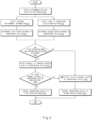
- FIG. 4 is a flowchart illustrating a method for controlling a vehicle body when initiating autonomous driving in some forms of the present invention.
- the controller 180 may receive the autonomous driving request during the manual driving (S210).
- the controller 180 may receive the autonomous driving request signal from the human interface device 140 while the vehicle 100 is operating in the manual driving mode.
- the controller 180 may detect the external environment information using the sensor device 110 (S220) .
- the controller 180 may obtain the vehicle exterior illuminance and/or the precipitation information using at least one of the illuminance sensor or the rain sensor.
- the controller 180 may determine the first operation mode of the convenience device based on the external environment information (S230).
- the controller 180 may determine the operation mode (that is, the first operation mode) of the convenience device based on the illuminance information and/or the precipitation information.
- the controller 180 may detect the input of the convenience device manipulator (S240) while performing S220 and S230.
- the controller 180 may obtain the location information of the lamp operation switch and the location information of the wiper operation switch in the multi-function switch 141.
- the controller 180 may determine the second operation mode of the convenience device based on the input of the convenience device manipulator (S250).
- the controller 180 may determine the operation mode (the second operation mode) of the head lamp based to the manipulation (the input) of the lamp operation switch, and determine the operation mode (the second operation mode) of the wiper based on the manipulation of the wiper operation switch.
- the controller 180 may determine whether the first operation mode and the second operation mode are different (S260). The controller 180 may compare the operation mode determined by the controller 180 with an operation mode determined by the user.
- the controller 180 may determine whether it is impossible to cope with the external environment in the second operation mode (S270).
- the controller 180 may determine whether the operation mode of the convenience device input by the user may cover the current external environment state.
- the controller 180 may compare a convenience device operation level based on the second operation mode and a convenience device operation level based on the external environment information.
- the convenience device operation level e.g., a wiper low speed
- the convenience device operation level e.g., a wiper high speed
- the controller 180 may control the convenience device in the first operation mode (S280). For example, when the operation mode of the wiper determined based on the current external environment information is the high speed operation mode, and when the operation mode of the wiper input by the user is the low speed operation mode, the controller 180 may determine the operation mode of the wiper as the high speed operation mode and instruct the wiper driver 160 to perform a high speed operation of the wiper.
- the controller 180 may control the convenience device in the second operation mode (S290). For example, when the operation mode of the wiper determined based on the current external environment information is the low speed operation mode, and when the operation mode of the wiper input by the user is the high speed operation mode, the controller 180 may determine the wiper operation mode as the high speed operation mode determined by the user input, and may instruct the wiper driver 160 to perform the high speed operation of the wiper.
- FIG. 5 is a flowchart illustrating a method for controlling a vehicle body when deactivating autonomous driving in some forms of the present invention.
- the controller 180 may receive the autonomous driving deactivation request during the autonomous driving (S310).
- the controller 180 may receive the autonomous driving deactivation request signal from the human interface device 140 during the autonomous driving.
- the controller 180 may detect the external environment information using the sensor device 110 (S320) .
- the controller 180 may obtain the vehicle exterior illuminance information and/or the precipitation information through the illuminance sensor and/or the rain sensor.
- the controller 180 may determine the first operation mode of the convenience device based on the external environment information (S325).
- the controller 180 may determine the operation mode (that is, the first operation mode) of the convenience device based on the illuminance information and/or the precipitation information.
- the controller 180 may detect the input of the convenience device manipulator (S330).
- the controller 180 may detect the location information of the multi-function switch 141 based on the user manipulation. In other words, the controller 180 may obtain the location information of the lamp operation switch and the location information of the wiper operation switch.
- the controller 180 may determine the second operation mode of the convenience device based on the input of the convenience device manipulator (S335).
- the controller 180 may determine the operation mode (the second operation mode) of the head lamp based on the input of the lamp operation switch, and may determine the operation mode (the second operation mode) of the wiper based on the input of the wiper operation switch.
- the controller 180 may determine whether the first operation mode and the second operation mode are different (S340). The controller 180 may compare the operation mode determined by the controller 180 with the operation mode determined by the user.
- the controller 180 may output the request to transfer the control right of the convenience device (S350).
- the controller 180 may output a message requesting the transfer of the control right of the convenience device on the display 142.
- the controller 180 may determine whether there is the change in the input of the convenience device manipulator after outputting the control right transfer request (S360).
- the controller 180 may sense the manipulation of the multi-function switch 141.
- the controller 180 may control the convenience device in the first operation mode (S370).
- the controller 180 may maintain the operation mode determined by the controller 180. That is, the controller 180 may suspend the transfer of the control right of the convenience device.
- the controller 180 may immediately give up the control right of the convenience device (S380).
- the controller 180 may immediately give up the control right of the convenience device and transfer the control right of the convenience device to the user.
- the controller 180 may control the convenience device in the second operation mode (S390).
- the controller 180 may control the operation of the convenience device based on the input of the multi-function switch 141 based on the user manipulation.
- FIG. 6 is a block diagram illustrating a computing system executing a method for controlling a vehicle body in some forms of the present invention.
- a computing system 1000 may include at least one processor 1100, a memory 1300, a user interface input device 1400, a user interface output device 1500, storage 1600, or a network interface 1700 connected via a bus 1200.
- the processor 1100 may be a central processing unit (CPU) or a semiconductor device that performs processing on commands stored in the memory 1300 and/or the storage 1600.
- the memory 1300 and the storage 1600 may include various types of volatile or nonvolatile storage media.
- the memory 1300 may include a ROM (Read Only Memory) 1310 and a RAM (Random Access Memory) 1320.
- the operations of the method or the algorithm described in connection with the embodiments disclosed herein may be embodied directly in hardware or a software module executed by the processor 1100, or in a combination thereof.
- the software module may reside on a storage medium (that is, the memory 1300 and/or the storage 1600) such as a RAM, a flash memory, a ROM, an EPROM, an EEPROM, a register, a hard disk, a removable disk, and a CD-ROM.
- the exemplary storage medium is coupled to the processor 1100, which may read information from, and write information to, the storage medium.
- the storage medium may be integral with the processor 1100.
- the processor 1100 and the storage medium may reside within an application specific integrated circuit (ASIC).
- the ASIC may reside within the user terminal.
- the processor and the storage medium may reside as individual components in the user terminal.
- the operation mode of the convenience device is controlled in consideration of the external environment of the vehicle and the convenience device manipulation input of the user during the autonomous driving, a dangerous situation may be avoided and control convenience may be increased.
- the control right of the convenience device may be safely transferred to the driver in consideration of the external environment of the vehicle and the convenience device manipulation input of the user.
Landscapes
- Engineering & Computer Science (AREA)
- Mechanical Engineering (AREA)
- Automation & Control Theory (AREA)
- Transportation (AREA)
- Human Computer Interaction (AREA)
- Chemical & Material Sciences (AREA)
- Combustion & Propulsion (AREA)
- Physics & Mathematics (AREA)
- Mathematical Physics (AREA)
- Lighting Device Outwards From Vehicle And Optical Signal (AREA)
- Control Of Position, Course, Altitude, Or Attitude Of Moving Bodies (AREA)
Description
- This application claims priority to and the benefit of
United States Provisional Patent Application No. 62/950,087, filed on December 18, 2019 Korean Patent Application No. 10-2020-0138203, filed on October 23, 2020 - The present invention relates to a vehicle that controls an operation of a convenience device when converting an autonomous driving state, and a method for controlling a body thereof.
- A body control module (BCM) is an electronic control unit (ECU) that monitors and controls various convenience devices (electronic accessories) in a body of a vehicle. In the vehicle, the BCM may control a lamp, a wiper, a power window, a seat, central lock, and/or a sunroof. In particular, when controlling the lamp and the wiper, the BCM controls operations of the lamp and the wiper based on an operation mode (e.g., a manual mode, an automatic mode, and the like) set by a driver.
EP 3 190 025 A1 relates to a method and a system for switching to an autonomous driving mode from a manual driving mode by conducting a series of environmental, system and driver checks to identify certain conditions, correcting these conditions, providing the driver with a checklist of tasks and allowing the driver to switch from manual to autonomous driving switch once the conditions are changed and the tasks have been completed.
EP 3 552 913 A2 relates to an apparatus for controlling to enable an autonomous system in a vehicle, wherein the apparatus includes a sensor, an input device configured to receive an input from a driver of the vehicle, an output device configured to output a notification in the vehicle, and a control circuit configured to be electrically connected with the sensor, the input device, and the output device. The control circuit is configured to activate an autonomous control in response to an input of the driver to the input device, detect a critical situation of the vehicle using the sensor, output a notification to transfer a control authority using the output device in response to the detected critical situation, and automatically reactivate the autonomous control when the critical situation is solved after temporarily releasing the autonomous control, when the critical situation corresponds to a critical situation of a specified type.
WO 2017/138681 A1 relates to methods and apparatuses for controlling a vehicle, wherein the vehicle is controlled to operate in an autonomous driving mode in which the vehicle is driven without a manipulation by an operator of the vehicle. A request to switch to a manual driving mode, in which the vehicle is driven with the manipulation by the operator, is received. A range of the manipulation regarding a function of the vehicle is determined according to a driving situation of the vehicle in response to the request. The vehicle is controlled to operate in the manual driving mode in which the manipulation by the operator is limited according to the range of the manipulation. - An aspect of the present invention provides a vehicle that controls an operation of a convenience device in consideration of an external environment of the vehicle and a manipulation input of the convenience device of a user when converting an autonomous driving state, and a method for controlling a body thereof.
- The technical problems to be solved by the present inventive concept are not limited to the aforementioned problems, and any other technical problems not mentioned herein will be clearly understood from the following description by those skilled in the art to which the present invention pertains.
- According to an aspect of the present invention, a vehicle includes a processor, and a memory for storing instructions executed by the processor, and the processor determines a first operation mode of a convenience device based on external environment information obtained by a sensor device when converting an autonomous driving state, determines a second operation mode of the convenience device based on an input of a convenience device manipulator, compares the first operation mode with the second operation mode, and controls an operation of the convenience device in the first operation mode or the second operation mode based on the comparison result.
- In one implementation, the autonomous driving state conversion may include at least one of autonomous driving activation, autonomous driving control right transfer, or autonomous driving deactivation.
- In one implementation, the sensor device may include at least one of an illuminance sensor or a rain sensor.
- In one implementation, the convenience device manipulator may be implemented as a multi-function switch or input device generating data based on manipulation of a user.
- In one implementation, the convenience device may be at least one of a head lamp or a wiper.
- In one implementation, the processor may control the operation of the convenience device in the first operation mode when the first operation mode and the second operation mode are different in a state where an autonomous driving request is received, control the operation of the convenience device in the second operation mode when the first operation mode and the second operation mode match each other, and compare a convenience device operation level based on the second operation mode with a convenience device operation level based on the external environment information to determine whether the convenience device in the second operation mode is suitable for an external environment, and set an operation mode of the convenience device to the first operation mode when it is determined that the convenience device in the second operation mode is not suitable for the external environment.
- In one implementation, the processor may output a request to convert an operation mode of the convenience device when the first operation mode and the second operation mode are different in a state where an autonomous driving deactivation request is received, determine whether there is a change in the input of the convenience device manipulator, control the operation of the convenience device in the first operation mode when there is no change in the input, and immediately give up a control right of the convenience device and control the operation of the convenience device in the second operation mode when there is the change in the input.
- According to another aspect of the present invention, a method for controlling a body of a vehicle includes determining a first operation mode of a convenience device based on external environment information obtained by a sensor device when converting an autonomous driving state, determining a second operation mode of the convenience device based on an input of a convenience device manipulator, comparing the first operation mode with the second operation mode, and controlling an operation of the convenience device in the first operation mode or the second operation mode based on the comparison result of the first operation mode and the second operation mode.
- In one implementation, the autonomous driving state conversion may include at least one of autonomous driving activation, autonomous driving control right transfer, or autonomous driving deactivation.
- In one implementation, the determining of the first operation mode may include determining the first operation mode based on an external environment recognized using at least one of an illuminance sensor or a rain sensor.
- In one implementation, the determining of the second operation mode may include determining the second operation mode of the convenience device based on a location of a multi-function switch resulted from manipulation of a user.
- In one implementation, the controlling of the operation of the convenience device may include controlling the operation of the convenience device in the first operation mode when the first operation mode and the second operation mode are different in a state where an autonomous driving request is received, and controlling the operation of the convenience device in the second operation mode when the first operation mode and the second operation mode match each other.
- In one implementation, the controlling of the operation of the convenience device may further include comparing a convenience device operation level based on the second operation mode with a convenience device operation level based on the external environment information to determine whether the operation of the convenience device in the second operation mode is suitable for an external environment, setting an operation mode of the convenience device to the first operation mode when it is determined that the operation of the convenience device in the second operation mode is suitable for the external environment, and setting the operation mode of the convenience device to the second operation mode when the convenience device in the second operation mode is suitable for the external environment.
- In one implementation, the controlling of the operation of the convenience device may include outputting a request to convert an operation mode of the convenience device when the first operation mode and the second operation mode are different in a state where an autonomous driving deactivation request is received.
- In one implementation, the controlling of the operation of the convenience device may further include determining whether there is a change in the input of the convenience device manipulator, controlling the operation of the convenience device in the first operation mode when there is no change in the input, and immediately giving up a control right of the convenience device and controlling the operation of the convenience device in the second operation mode when there is the change in the input.
- The above and other objects, features and advantages of the present invention will be more apparent from the following detailed description taken in conjunction with the accompanying drawings:
-
FIG. 1 shows a block diagram of a vehicle in one form of the present invention; -
FIG. 2 is a diagram for illustrating convenience device control based on an external environment i one form of the present invention; -
FIG. 3 is a flowchart illustrating a method for controlling a vehicle body in one example facilitating the understanding of the present invention; -
FIG. 4 is a flowchart illustrating a method for controlling a vehicle body when initiating autonomous driving in one form of the present invention; -
FIG. 5 is a flowchart illustrating a method for controlling a vehicle body when deactivating autonomous driving in one form of the present invention; and -
FIG. 6 is a block diagram illustrating a computing system executing a method for controlling a vehicle body in one form of the present invention. - Hereinafter, some embodiments of the present invention will be described in detail with reference to the exemplary drawings. In adding the reference numerals to the components of each drawing, it should be noted that the identical or equivalent component is designated by the identical numeral even when they are displayed on other drawings. Further, in describing the embodiment of the present invention, a detailed description of the related known configuration or function will be omitted when it is determined that it interferes with the understanding of the embodiment of the present invention.
- In describing the components of the embodiment according to the present invention, terms such as first, second, A, B, (a), (b), and the like may be used. These terms are merely intended to distinguish the components from other components, and the terms do not limit the nature, order or sequence of the components. Unless otherwise defined, all terms including technical and scientific terms used herein have the same meaning as commonly understood by one of ordinary skill in the art to which this invention belongs. It will be further understood that terms, such as those defined in commonly used dictionaries, should be interpreted as having a meaning that is consistent with their meaning in the context of the relevant art and will not be interpreted in an idealized or overly formal sense unless expressly so defined herein.
-
FIG. 1 shows a block diagram of a vehicle in some forms of the present invention. In addition,FIG. 2 is a diagram for illustrating convenience device control based on an external environment according to embodiments of the present invention. - Referring to
FIG. 1 , avehicle 100 may include asensor device 110, apositioning device 120,storage 130, ahuman interface device 140, alamp driver 150, awiper driver 160, achassis controller 170, and acontroller 180. - The
sensor device 110 may detect (sense) exterior information and interior information of the vehicle. The exterior information may include illuminance and/or an amount of precipitation, and the interior information may include a vehicle speed and/or a steering angle. Thesensor device 110 may include an illuminance sensor, a rain sensor, a radio detecting and ranging (RADAR), a light detection and ranging (LiDAR), an image sensor, an ultrasonic sensor, a shock sensor, a speed sensor, a wheel speed sensor, a steering angle sensor, and/or an acceleration sensor. Thesensor device 110 may sense the illuminance outside the vehicle using the illuminance sensor and transmit the sensed illuminance information to thecontroller 180. In addition, thesensor device 110 may sense an amount and a speed of rainwater using the rain sensor located on a top outer face of a windshield glass and transmit the sensed precipitation information to thecontroller 180. - The
positioning device 120 may measure a current location of thevehicle 100. Thepositioning device 120 may be implemented as a global positioning system (GPS) receiver. The GPS receiver may calculate the current location of the vehicle using signals transmitted from at least three GPS satellites. The GPS receiver may calculate a distance between the satellite and the GPS receiver using a time difference between a time when the signal is transmitted from the satellite and a time when the signal is received by the GPS receiver. The GPS receiver may calculate the current location of the vehicle using the calculated distance between the satellite and the GPS receiver and location information of the satellite contained in the transmitted signal. In this connection, the GPS receiver may calculate the current location using triangulation. - The
storage 130 may store map data. Thestorage 130 may be implemented as at least one of storage media (recording media) such as a flash memory, a hard disk, a secure digital card (SD card), a removable disk, web storage, or the like. - The human interface device (HID) 140 may generate data based on manipulation of a user or output information such as visual information, auditory information, and/or tactile information. The
human interface device 140 may include a multi-function switch (MFSW) 141 and adisplay 142. - The
multi-function switch 141 is a convenience device manipulator for manipulating a convenience device such as a lamp and/or a wiper of thevehicle 100. Themulti-function switch 141 may include a lamp operation switch and a wiper operation switch. The lamp operation switch may manipulate lamps such as a head lamp (a head light), a taillight, and/or a turn signal light. Based on a location of the lamp operation switch, the lamp operation switch may generate an operation stop signal, a taillight lighting signal, a headlight lighting signal, or an automatic lighting signal. The wiper operation switch may manipulate an operation and/or a speed of the wiper. Based on the location of the wiper operation switch, the wiper operation switch may generate an automatic operation signal, a wiper one-time operation (MIST) signal, an operation stop signal, an intermittent operation (INT) signal, a low speed operation signal, or a high speed operation signal. - The
display 142 may output the visual information in response to an instruction of thecontroller 180. Thedisplay 142 may display a control state of an air conditioner, the wiper, and/or the lamp. In addition, thedisplay 142 may display information requesting a driver to transfer a control right. Thedisplay 142 may include at least one of a liquid crystal display (LCD), a thin film transistor-liquid crystal display (TFT-LCD), an organic light-emitting diode (OLED) display, a flexible display, a 3-dimensional (3D) display, a transparent display, a head-up display (HUD), a touch screen, or a cluster. Thedisplay 142 may include a sound output module such as a speaker capable of outputting the auditory information (e.g., audio data and/or voice data), and/or a tactile signal output module capable of outputting the tactile information. - The
lamp driver 150 may turn on, flicker, or turn off the lamp in response to the instruction of thecontroller 180. For example, thelamp driver 150 may operate or stop the head lamp and/or the turn signal light based on a lamp control signal transmitted from thecontroller 180. Thelamp driver 150 may adjust a brightness and/or a direction (an angle) of the lamp (e.g., the head lamp) in response to the instruction of thecontroller 180. - The
wiper driver 160 may operate or stop the wiper under control of thecontroller 180. Thewiper driver 160 may adjust the operation speed of the wiper in response to the instruction of thecontroller 180. Thewiper driver 160 may change an operation and an operation speed of a wiper motor based on a wiper operation signal transmitted from thecontroller 180 to transmit a rotational force to a wiper arm. - The
chassis controller 170, which controls steering, braking, suspension, and/or driving of thevehicle 100 in response to the control of thecontroller 180, may include a driving device (a power transmission device), a steering device, a suspension device, a braking device, and the like. The driving device may generate power by controlling a power source (e.g., an engine or a motor) of thevehicle 100 and transmit the generated power to a wheel. The driving device may be implemented as an engine management system (EMS), a traction control system (TCS), and/or an all wheel drive system (AWD). The steering device may change a traveling direction of thevehicle 100 that is traveling. The steering device may be implemented as a four wheel steering system (4WS), an electric power steering (EPS), an active front steering (AFS), and/or a steer by wire (SBW). The suspension device may connect a vehicle body and an axle with each other to mitigate a vibration and a shock occurring on a road face and maintain a posture of the vehicle. The suspension device may be composed of a spring that relieves the shock transmitted from the road face, a damper that suppresses a free vibration, and a stabilizer bar that suppresses a roll motion to improve traveling stability of the vehicle. In addition, the suspension device may actively change a height of the vehicle body as well as a damping force of the damper and a rigidity of the stabilizer bar based on a traveling environment. The braking device may decelerate or stop thevehicle 100. The braking device may monitor a vehicle state in real time during the travel and control the braking based on the vehicle state. The braking device may include an anti-lock braking system (ABS), an electronic stability control (ESC), and/or an electronic parking brake (EPB) system. - The
controller 180 is an electronic control unit (ECU) that controls autonomous driving and/or a body part of thevehicle 100. Thecontroller 180 may exchange data (information and/or a signal) with each ofcomponents 110 to 170 through a vehicle network. The vehicle network may be implemented as a controller area network (CAN), a media oriented systems transport (MOST) network, a local interconnect network (LIN), an ethernet, and/or an X-by-Wire (a Flexray) . - The
controller 180 may include aprocessor 181 and amemory 182. Theprocessor 181 controls an overall operation of thecontroller 180. Theprocessor 181 may be implemented as at least one of an application specific integrated circuit (ASIC), a digital signal processor (DSP), a programmable logic device (PLD), a field programmable gate array (FPGA), a central processing unit (CPU), a microcontroller, and/or a microprocessor. Thememory 182 may be a non-transitory storage medium that stores instructions executed by theprocessor 181. Thememory 182 may store logic (algorithm) for performing a predetermined function and setting information. Thememory 182 may be implemented as at least one of storage media (recording media) such as a flash memory, a hard disk, a secure digital card (SD card), a random access memory (RAM), a static random access memory (SRAM), a read only memory (ROM), a programmable read only memory (PROM), an electrically erasable and programmable ROM (EEPROM), an erasable and programmable ROM (EPROM), and/or a register. Thememory 182 may store external environment recognition logic, travel state recognition logic, display control logic, lighting control logic, vehicle location recognition logic, collision determination prediction logic, vehicle travel control logic, body system control logic, and/or autonomous driving control logic. Each logic may be executed by theprocessor 181. - When autonomous driving state conversion is requested through the
human interface device 140 or the autonomous driving control logic, thecontroller 180 may change the autonomous driving state in response to the request. In this connection, the autonomous driving state conversion may include at least one of autonomous driving activation, autonomous driving control right transfer, or autonomous driving deactivation. - The
controller 180 may generate a head lamp lighting signal or a head lamp turn off signal in response to an input (e.g., the location information) of the lamp operation switch. In addition, thecontroller 180 may set an operation mode of the head lamp to an automatic mode based on the input of the lamp operation switch. When receiving the automatic lighting signal from the lamp operation switch, thecontroller 180 may set the operation mode of the head lamp to the automatic mode. When the operation mode of the head lamp is set to the automatic mode, thecontroller 180 may transmit a head lamp lighting command or a head lamp turn off command (the control signal) to thelamp driver 150 based on the illuminance measured by the illuminance sensor. When the operation mode of the head lamp is converted from the automatic mode to a manual mode (that is, when the head lamp automatic mode is deactivated), thecontroller 180 may set a lamp operation mode (the head lamp operation mode) based on the location of the lamp operation switch, and control thelamp driver 150 based on the set lamp operation mode to turn on or turn off the head lamp. Thecontroller 180 may set the lamp operation mode to an operation stop mode, a taillight lighting mode, a head lamp lighting mode, or an automatic lighting mode based on the location of the lamp operation switch. - The
controller 180 may generate a control signal for controlling the operation of the wiper based on an input of the wiper operation switch. Thecontroller 180 may set an operation mode of the wiper to an automatic mode in response to an input of the wiper operation switch (e.g., an automatic operation signal). When the operation mode of the wiper is set to the automatic mode, thecontroller 180 may operate the wiper by controlling thewiper driver 160 based on the precipitation information (e.g., the amount of precipitation) detected by the rain sensor, and adjust the operation speed of the wiper. When the operation mode of the wiper is set to the manual mode, thecontroller 180 may control thewiper driver 160 based on the input of the wiper operation switch to control whether to operate the wiper and the operation speed of the wiper. In this connection, the manual mode may include a wiper one-time operation (MIST) mode, a wiper stop mode, an intermittent operation (INT) mode, a low speed operation mode, and a high speed operation mode. Thecontroller 180 may set the wiper operation mode to the wiper one-time operation (MIST) mode, the wiper stop mode, the intermittent operation (INT) mode, the low speed operation mode, or the high speed operation mode based on the input of the wiper operation switch, and may transmit a command (a control signal) mapped to the set operation mode to thewiper driver 160. - The
controller 180 may determine whether the user is holding a steering handle through thesensor device 110, and may perform automatic steering, automatic inter-vehicle distance control, and/or lane change functions based on the determination result. In addition, thecontroller 180 may warn the driver when a system critical situation occurs and perform a control right transfer function. The system critical situation refers to a situation of deviating from a region designed by a developer. - The
controller 180 may set a driving mode of thevehicle 100 to a manual driving mode or an autonomous driving (automatic driving) mode based on a user input received from thehuman interface device 140. When receiving an autonomous driving request (e.g., a command to activate an autonomous driving function) from thehuman interface device 140, thecontroller 180 may convert the driving mode of thevehicle 100 from the manual driving mode to the autonomous driving mode. When converting the driving mode ofvehicle 100 to the autonomous driving mode, thecontroller 180 may set an operation mode of the convenience device (e.g., the head lamp and/or the wiper) to an automatic mode regardless of external environment information of thevehicle 100. Thecontroller 180 may recognize a surrounding vehicle and a surrounding environment of thevehicle 100 using thesensor device 110, and control the travel (the automatic driving) of thevehicle 100 based on the recognized information of the surrounding vehicle and the surrounding environment. - When receiving an autonomous driving deactivation command (a request to terminate the autonomous driving) during the autonomous driving, the
controller 180 may convert the driving mode of thevehicle 100 from the autonomous driving mode to the manual driving mode. When the user does not transfer a convenience device control right for a predetermined time when converting to the manual driving mode, thecontroller 180 may transfer the convenience device control right to the user after stopping thevehicle 100. - For example, when the lamp operation mode is set to the manual mode when converting from the manual driving mode to the autonomous driving mode, the
controller 180 may convert the lamp operation mode to the automatic mode (the automatic lighting mode). Further, when the wiper operation mode is the manual mode when converting from the manual driving mode to the autonomous driving mode, thecontroller 180 may convert the wiper operation mode and set the wiper operation mode to the automatic mode (the automatic operation mode). When converting from the autonomous driving mode to the manual driving mode, thecontroller 180 may request the user to transfer a control right of the lamp and the wiper, and convert the lamp operation mode and the wiper operation mode from the automatic mode to the manual mode upon user consent. When there is no user response to the transfer of the control for a predetermined time, thecontroller 180 converts the lamp operation mode and the wiper operation mode from the automatic mode to the manual mode after stopping thevehicle 100, so that the control right may be transferred to the user. - When receiving a signal requesting operation of the autonomous driving function, the
controller 180 may detect the exterior information (external environment information) of thevehicle 100 using thesensor device 110, and detect location information of themulti-function switch 141 based on manipulation of themulti-function switch 141. Thecontroller 180 may transmit an operation command for controlling the operation of the convenience device based on the external environment information and the location information of themulti-function switch 141. For example, when a rainy situation is sensed, thecontroller 180 may transmit a control command "high" for the wiper operation even when the wiper operation switch is located at an operation stop location. - The
controller 180 may determine an operation mode (hereinafter, referred to as a first operation mode) of the convenience device based on the external environment information obtained by thesensor device 110. Thecontroller 180 may determine an operation mode (hereinafter, referred to as a second operation mode) of the convenience device based on the input of themulti-function switch 141. Thecontroller 180 may compare the first operation mode and the second operation mode with each other, and control the operation of the convenience device in the first operation mode or the second operation mode based on the comparison result. When the first operation mode and the second operation mode are different, thecontroller 180 may control the operation of the convenience device in the first operation mode. When it is impossible to cope with the external environment of thevehicle 100 by controlling the operation of the convenience device in the second operation mode, thecontroller 180 may set the operation mode of the convenience device to the first operation mode. When it is possible to cope with the external environment of thevehicle 100 by controlling the operation of the convenience device in the second operation mode, thecontroller 180 may set the operation mode of the convenience device to the second operation mode. - When the first operation mode and the second operation mode match, the
controller 180 may control the operation of the convenience device in the second operation mode. In other words, when the first operation mode and the second operation mode match, thecontroller 180 may control the operation of the convenience device based on the location information of themulti-function switch 141. For example, when the first operation mode is the wiper low speed operation mode, and the second operation mode is the wiper low speed operation mode, thecontroller 180 may operate the wiper at a low speed by controlling thewiper driver 160 based on the input of the wiper operation switch. - When the first operation mode and the second operation mode are different in a state in which a request to deactivate the autonomous driving is received, the
controller 180 may output a request to transfer the control right of the convenience device (a request to convert the operation mode). Thecontroller 180 may determine whether there is a change in the input of themulti-function switch 141 after requesting the control right transfer, and may control the operation of the convenience device in the first operation mode when there is no change in the input. When there is no change in the input, thecontroller 180 may control the convenience device in the operation mode determined by thecontroller 180. When there is the change in the input, thecontroller 180 may immediately give up the control right of the convenience device and control the operation of the convenience device in the second operation mode. When there is the change in the input, thecontroller 180 may control the convenience device based on the input of themulti-function switch 141. - Referring to
FIG. 2 , when a current external environment state recognized by thesensor device 110 is below an external environment state "a" mapped to the input of themulti-function switch 141 of the driver, thecontroller 180 may transmit a control command mapped to the input of themulti-function switch 141 of the driver to thelamp driver 150 and/or thewiper driver 160. When the current external environment state is equal to or above external environment state +α mapped to the input of themulti-function switch 141, that is, when the current external environment state is equal to or above "b", thecontroller 180 may transmit a control command based on the current external environment state to thelamp driver 150 and/or thewiper driver 160. - When the current external environment state is equal to or above "b" when deactivating the autonomous driving, the
controller 180 may maintain the operation mode of the convenience device as a control mode (the automatic mode) based on the current external environment state. In addition, thecontroller 180 may output the request to transfer the control right of the convenience device on thedisplay 142. When the current external environment state is below the external environment state "a" mapped to the input of themulti-function switch 141 of the driver, thecontroller 180 may deactivate the autonomous driving mode and at the same time deactivate the automatic mode of the convenience device. - According to the above embodiment, although a form of the
controller 180 in which an autonomous driving controller and a body controller are integrated is disclosed, the present invention may not be limited thereto, and the autonomous driving controller and the body controller may be implemented as separate control devices. -
FIG. 3 is a flowchart illustrating a method for controlling a vehicle body in an example facilitating the understanding of the present invention. - The
controller 180 may receive the autonomous driving request while thevehicle 100 is operating in the manual driving mode (S110). Thecontroller 180 may receive an autonomous driving request signal from thehuman interface device 140 in response to the manipulation of the user (e.g., the driver). - When the autonomous driving request is received, the
controller 180 may determine whether the operation mode of the convenience device is the automatic mode based on the location information of the convenience device manipulator (S120). When there is the autonomous driving request, thecontroller 180 may determine whether the operation mode of the head lamp is the automatic mode based on the location information of the lamp operation switch. Further, thecontroller 180 may determine whether the wiper operation mode is the automatic mode based on location information of the wiper operation switch. - When the operation mode of the convenience device is not the automatic mode, the
controller 180 may convert the operation mode of the convenience device to the automatic mode (S130). When the operation mode of the convenience device is the manual mode, thecontroller 180 may convert the operation mode of the convenience device from the manual mode to the automatic mode. - When it is identified in S120 that the operation mode of the convenience device is the automatic mode, the
controller 180 may perform the autonomous driving (S140). Thecontroller 180 may obtain the exterior information and the interior information of the vehicle through thesensor device 110, and control thechassis controller 170 based on the obtained exterior information and interior information, thereby performing the autonomous driving. Thecontroller 180 may obtain the vehicle exterior illuminance and/or the precipitation information through the illuminance sensor and/or the rain sensor during the autonomous driving, and control thelamp driver 150 and/or thewiper driver 160 based on the illuminance and/or the precipitation information, thereby lighting the head lamp or operating the wiper. - The
controller 180 may receive the autonomous driving deactivation request during the autonomous driving (S150). Thecontroller 180 may receive an autonomous driving deactivation request signal output from thehuman interface device 140 in response to the user input while thevehicle 100 is operating in the autonomous driving mode. - When the autonomous driving deactivation request is received, the
controller 180 may set the operation mode of the convenience device based on the external environment information (S160). Thecontroller 180 may maintain a current operation mode of the convenience device based on the external environment information or restore an operation mode prior to the autonomous driving. - When the setting of the operation mode of the convenience device is completed, the
controller 180 may deactivate the autonomous driving (S170). Thecontroller 180 may terminate the autonomous driving and convert the driving mode of thevehicle 100 from the autonomous driving mode to the manual driving mode. -
FIG. 4 is a flowchart illustrating a method for controlling a vehicle body when initiating autonomous driving in some forms of the present invention. - The
controller 180 may receive the autonomous driving request during the manual driving (S210). Thecontroller 180 may receive the autonomous driving request signal from thehuman interface device 140 while thevehicle 100 is operating in the manual driving mode. - The
controller 180 may detect the external environment information using the sensor device 110 (S220) . Thecontroller 180 may obtain the vehicle exterior illuminance and/or the precipitation information using at least one of the illuminance sensor or the rain sensor. - The
controller 180 may determine the first operation mode of the convenience device based on the external environment information (S230). Thecontroller 180 may determine the operation mode (that is, the first operation mode) of the convenience device based on the illuminance information and/or the precipitation information. - The
controller 180 may detect the input of the convenience device manipulator (S240) while performing S220 and S230. Thecontroller 180 may obtain the location information of the lamp operation switch and the location information of the wiper operation switch in themulti-function switch 141. - The
controller 180 may determine the second operation mode of the convenience device based on the input of the convenience device manipulator (S250). Thecontroller 180 may determine the operation mode (the second operation mode) of the head lamp based to the manipulation (the input) of the lamp operation switch, and determine the operation mode (the second operation mode) of the wiper based on the manipulation of the wiper operation switch. - The
controller 180 may determine whether the first operation mode and the second operation mode are different (S260). Thecontroller 180 may compare the operation mode determined by thecontroller 180 with an operation mode determined by the user. - When the first operation mode and the second operation mode are different, the
controller 180 may determine whether it is impossible to cope with the external environment in the second operation mode (S270). Thecontroller 180 may determine whether the operation mode of the convenience device input by the user may cover the current external environment state. Thecontroller 180 may compare a convenience device operation level based on the second operation mode and a convenience device operation level based on the external environment information. When the convenience device operation level (e.g., a wiper low speed) based on the second operation mode is less than the convenience device operation level (e.g., a wiper high speed) based on the external environment information, thecontroller 180 may determine that it is impossible to cope with the external environment by controlling the operation of the convenience device in the second operation mode. - When it is impossible to cope with the external environment in the second operation mode, the
controller 180 may control the convenience device in the first operation mode (S280). For example, when the operation mode of the wiper determined based on the current external environment information is the high speed operation mode, and when the operation mode of the wiper input by the user is the low speed operation mode, thecontroller 180 may determine the operation mode of the wiper as the high speed operation mode and instruct thewiper driver 160 to perform a high speed operation of the wiper. - When the first operation mode and the second operation mode are identical in S260 or the external environment is able to be coped in the second operation mode in S270, the
controller 180 may control the convenience device in the second operation mode (S290). For example, when the operation mode of the wiper determined based on the current external environment information is the low speed operation mode, and when the operation mode of the wiper input by the user is the high speed operation mode, thecontroller 180 may determine the wiper operation mode as the high speed operation mode determined by the user input, and may instruct thewiper driver 160 to perform the high speed operation of the wiper. -
FIG. 5 is a flowchart illustrating a method for controlling a vehicle body when deactivating autonomous driving in some forms of the present invention. - The
controller 180 may receive the autonomous driving deactivation request during the autonomous driving (S310). Thecontroller 180 may receive the autonomous driving deactivation request signal from thehuman interface device 140 during the autonomous driving. - The
controller 180 may detect the external environment information using the sensor device 110 (S320) . Thecontroller 180 may obtain the vehicle exterior illuminance information and/or the precipitation information through the illuminance sensor and/or the rain sensor. - The
controller 180 may determine the first operation mode of the convenience device based on the external environment information (S325). Thecontroller 180 may determine the operation mode (that is, the first operation mode) of the convenience device based on the illuminance information and/or the precipitation information. - The
controller 180 may detect the input of the convenience device manipulator (S330). Thecontroller 180 may detect the location information of themulti-function switch 141 based on the user manipulation. In other words, thecontroller 180 may obtain the location information of the lamp operation switch and the location information of the wiper operation switch. - The
controller 180 may determine the second operation mode of the convenience device based on the input of the convenience device manipulator (S335). Thecontroller 180 may determine the operation mode (the second operation mode) of the head lamp based on the input of the lamp operation switch, and may determine the operation mode (the second operation mode) of the wiper based on the input of the wiper operation switch. - The
controller 180 may determine whether the first operation mode and the second operation mode are different (S340). Thecontroller 180 may compare the operation mode determined by thecontroller 180 with the operation mode determined by the user. - When the first operation mode and the second operation mode are different, the
controller 180 may output the request to transfer the control right of the convenience device (S350). When the operation mode determined by thecontroller 180 and the operation mode determined by the user are different, thecontroller 180 may output a message requesting the transfer of the control right of the convenience device on thedisplay 142. - The
controller 180 may determine whether there is the change in the input of the convenience device manipulator after outputting the control right transfer request (S360). Thecontroller 180 may sense the manipulation of themulti-function switch 141. - When there is no change in the input, the
controller 180 may control the convenience device in the first operation mode (S370). When the manipulation of themulti-function switch 141 is not sensed for a predetermined time, thecontroller 180 may maintain the operation mode determined by thecontroller 180. That is, thecontroller 180 may suspend the transfer of the control right of the convenience device. - When the first operation mode and the second operation mode are identical in S340 or there is the change in the input in S360, the
controller 180 may immediately give up the control right of the convenience device (S380). When the manipulation of themulti-function switch 141 is sensed, thecontroller 180 may immediately give up the control right of the convenience device and transfer the control right of the convenience device to the user. - When giving up the control right of the convenience device, the
controller 180 may control the convenience device in the second operation mode (S390). Thecontroller 180 may control the operation of the convenience device based on the input of themulti-function switch 141 based on the user manipulation. -
FIG. 6 is a block diagram illustrating a computing system executing a method for controlling a vehicle body in some forms of the present invention. - With reference to
FIG. 6 , acomputing system 1000 may include at least oneprocessor 1100, amemory 1300, a userinterface input device 1400, a userinterface output device 1500,storage 1600, or anetwork interface 1700 connected via abus 1200. - The
processor 1100 may be a central processing unit (CPU) or a semiconductor device that performs processing on commands stored in thememory 1300 and/or thestorage 1600. Thememory 1300 and thestorage 1600 may include various types of volatile or nonvolatile storage media. For example, thememory 1300 may include a ROM (Read Only Memory) 1310 and a RAM (Random Access Memory) 1320. - Thus, the operations of the method or the algorithm described in connection with the embodiments disclosed herein may be embodied directly in hardware or a software module executed by the
processor 1100, or in a combination thereof. The software module may reside on a storage medium (that is, thememory 1300 and/or the storage 1600) such as a RAM, a flash memory, a ROM, an EPROM, an EEPROM, a register, a hard disk, a removable disk, and a CD-ROM. The exemplary storage medium is coupled to theprocessor 1100, which may read information from, and write information to, the storage medium. In another method, the storage medium may be integral with theprocessor 1100. Theprocessor 1100 and the storage medium may reside within an application specific integrated circuit (ASIC). The ASIC may reside within the user terminal. In another method, the processor and the storage medium may reside as individual components in the user terminal. - The description above is merely illustrative of the technical idea of the present invention.
- According to the present invention, because the operation mode of the convenience device is controlled in consideration of the external environment of the vehicle and the convenience device manipulation input of the user during the autonomous driving, a dangerous situation may be avoided and control convenience may be increased.
- According to the present invention, when the autonomous driving is deactivated, the control right of the convenience device may be safely transferred to the driver in consideration of the external environment of the vehicle and the convenience device manipulation input of the user.
- Hereinabove, although the present invention has been described with reference to exemplary embodiments and the accompanying drawings, the present invention is not limited thereto.
-
- 100:
- VEHICLE
- 110:
- SENSOR DEVICE
- 120:
- POSITIONING DEVICE
- 130:
- STORAGE
- 140:
- HUMAN INTERFACE DEVICE
- 141:
- MULTI-FUNCTION SWITCH
- 142:
- DISPLAY
- 150:
- LAMP DRIVER
- 160:
- WIPER DRIVER
- 170:
- CHASSIS CONTROLLER
- 180:
- CONTROLLER
- 181:
- PROCESSOR
- 182:
- MEMORY
Claims (15)
- A vehicle (100) comprising:a processor (181); andnon-transitory memory (182) storing instructions executed by the processor (181),wherein the processor (181) is configured to:determine a first operation mode of a convenience device based on external environment information obtained by a sensor device (110) when converting to an autonomous driving state;determine a second operation mode of the convenience device based on an input of a convenience device manipulator;compare the first operation mode with the second operation mode; andcontrol the convenience device in the first operation mode or the second operation mode based on a comparison result.
- The vehicle (100) of claim 1, wherein the processor (181) is configured to:
convert to the autonomous driving state including at least one of an autonomous driving activation, an autonomous driving control right transfer, or an autonomous driving deactivation. - The vehicle (100) of claim 1 or 2, wherein the sensor device (110) includes at least one of an illuminance sensor or a rain sensor.
- The vehicle (100) of one of claims 1 to 3, wherein the convenience device manipulator is configured as a multi-function switch (141) or an input device that is configured to generate data based on manipulation of a user.
- The vehicle (100) of one of claims 1 to 4, wherein the convenience device is at least one of a head lamp or a wiper.
- The vehicle (100) of one of claims 1 to 5, wherein the processor (181) is configured to:control the convenience device in the first operation mode when the first operation mode does not match with the second operation mode in a state where an autonomous driving request is received;control the convenience device in the second operation mode when the first operation mode matches with the second operation mode; andcompare a convenience device operation level based on the second operation mode with a convenience device operation level based on the external environment information;determine whether the convenience device in the second operation mode is suitable for an external environment; andset an operation mode of the convenience device to the first operation mode when it is determined that the convenience device in the second operation mode is not suitable for the external environment.
- The vehicle (100) of one of claims 1 to 6, wherein the processor (181) is configured to:output a request to convert an operation mode of the convenience device when the first operation mode does not match with the second operation mode in a state where an autonomous driving deactivation request is received;determine whether there is a change in the input of the convenience device manipulator;control the convenience device in the first operation mode when it is determined that there is no change in the input; andcontrol the convenience device in the second operation mode when it is determined that there is the change in the input.
- A method for controlling a body of a vehicle (100), the method comprising:determining a first operation mode of a convenience device based on external environment information obtained by a sensor device (110) when converting to an autonomous driving state;determining a second operation mode of the convenience device based on an input of a convenience device manipulator;comparing the first operation mode with the second operation mode; andcontrolling the convenience device in the first operation mode or the second operation mode based on a comparison result.
- The method of claim 8, wherein the autonomous driving state includes at least one of an autonomous driving activation, an autonomous driving control right transfer, or an autonomous driving deactivation.
- The method of claim 8 or 9, wherein determining the first operation mode includes:
determining the first operation mode based on an external environment using at least one of an illuminance sensor or a rain sensor. - The method of one of claims 8 to 10, wherein determining the second operation mode includes:
determining the second operation mode based on a location of a multi-function switch manipulated by a user. - The method of one of claims 8 to 11, wherein controlling the convenience device includes:controlling the convenience device in the first operation mode when the first operation mode does not match with the second operation mode in a state where an autonomous driving request is received; andcontrolling the convenience device in the second operation mode when the first operation mode matches with the second operation mode.
- The method of claim 12, wherein controlling the convenience device further includes:comparing a convenience device operation level based on the second operation mode with a convenience device operation level based on the external environment information;determining whether the convenience device in the second operation mode is suitable for an external environment;setting an operation mode of the convenience device to the first operation mode when it is determined that the convenience device in the second operation mode is not suitable for the external environment; andsetting the operation mode of the convenience device to the second operation mode when it is determined that the convenience device in the second operation mode is suitable for the external environment.
- The method of one of claims 8 to 13, wherein controlling the convenience device includes:
outputting a request to convert an operation mode of the convenience device when the first operation mode does not match with the second operation mode in a state where an autonomous driving deactivation request is received. - The method of claim 14, wherein controlling the convenience device further includes:determining whether there is a change in the input of the convenience device manipulator;controlling the convenience device in the first operation mode when it is determined that there is no change in the input; andcontrolling the convenience device in the second operation mode when it is determined that there is the change in the input.
Applications Claiming Priority (2)
| Application Number | Priority Date | Filing Date | Title |
|---|---|---|---|
| US201962950087P | 2019-12-18 | 2019-12-18 | |
| KR1020200138203A KR20210078391A (en) | 2019-12-18 | 2020-10-23 | Vehicle and method for controlling body thereof |
Publications (2)
| Publication Number | Publication Date |
|---|---|
| EP3838699A1 EP3838699A1 (en) | 2021-06-23 |
| EP3838699B1 true EP3838699B1 (en) | 2024-08-28 |
Family
ID=73793043
Family Applications (1)
| Application Number | Title | Priority Date | Filing Date |
|---|---|---|---|
| EP20213047.2A Active EP3838699B1 (en) | 2019-12-18 | 2020-12-10 | Vehicle and method for controlling body thereof |
Country Status (3)
| Country | Link |
|---|---|
| US (1) | US11851066B2 (en) |
| EP (1) | EP3838699B1 (en) |
| CN (1) | CN113002451B (en) |
Families Citing this family (5)
| Publication number | Priority date | Publication date | Assignee | Title |
|---|---|---|---|---|
| JP7139901B2 (en) | 2018-11-14 | 2022-09-21 | トヨタ自動車株式会社 | vehicle control system |
| JP7052684B2 (en) * | 2018-11-14 | 2022-04-12 | トヨタ自動車株式会社 | Vehicle control system |
| US11597370B2 (en) * | 2020-03-26 | 2023-03-07 | Toyota Jidosha Kabushiki Kaisha | Electrical control device for headlight of wiper of autonomous vehicle based on driving state |
| JP7812760B2 (en) | 2022-08-25 | 2026-02-10 | トヨタ自動車株式会社 | Vehicle control device, vehicle control method, and vehicle control computer program |
| JP2025018293A (en) * | 2023-07-26 | 2025-02-06 | トヨタ自動車株式会社 | Vehicle equipped with a vehicle control device |
Family Cites Families (9)
| Publication number | Priority date | Publication date | Assignee | Title |
|---|---|---|---|---|
| US8825258B2 (en) | 2012-11-30 | 2014-09-02 | Google Inc. | Engaging and disengaging for autonomous driving |
| KR102464926B1 (en) | 2016-02-11 | 2022-11-08 | 삼성전자주식회사 | Apparatus and Method for controlling a vehicle thereof |
| CN108778801B (en) | 2016-03-16 | 2021-10-01 | 本田技研工业株式会社 | vehicle control system |
| KR20180026243A (en) * | 2016-09-02 | 2018-03-12 | 엘지전자 주식회사 | Autonomous vehicle and control method thereof |
| US10086839B2 (en) * | 2016-09-21 | 2018-10-02 | Ford Global Technologies, Llc | Semiautonomous vehicle control system |
| KR101891612B1 (en) * | 2016-09-30 | 2018-08-24 | 엘지전자 주식회사 | Autonomous vehicle |
| KR101951424B1 (en) * | 2016-10-27 | 2019-02-22 | 엘지전자 주식회사 | Vehicle control device mounted at vehicle and method for controlling the vehicle |
| ES2889930T3 (en) * | 2018-04-11 | 2022-01-14 | Hyundai Motor Co Ltd | Apparatus and method for control to enable an autonomous system in a vehicle |
| US11144053B2 (en) * | 2019-04-04 | 2021-10-12 | Toyota Research Institute, Inc. | Controlling driving condition components of an autonomous vehicle based on a current driving mode and current conditions |
-
2020
- 2020-12-10 EP EP20213047.2A patent/EP3838699B1/en active Active
- 2020-12-14 US US17/121,178 patent/US11851066B2/en active Active
- 2020-12-14 CN CN202011471640.2A patent/CN113002451B/en active Active
Also Published As
| Publication number | Publication date |
|---|---|
| US20210188281A1 (en) | 2021-06-24 |
| CN113002451A (en) | 2021-06-22 |
| US11851066B2 (en) | 2023-12-26 |
| EP3838699A1 (en) | 2021-06-23 |
| CN113002451B (en) | 2026-04-07 |
Similar Documents
| Publication | Publication Date | Title |
|---|---|---|
| EP3838699B1 (en) | Vehicle and method for controlling body thereof | |
| US10579056B2 (en) | Control system for vehicle | |
| CN107399326B (en) | Gradable driver assistance system | |
| US11327485B2 (en) | Control device for vehicle, and vehicle | |
| US10583835B2 (en) | Method for automatically adapting acceleration in a motor vehicle | |
| CN113246993B (en) | driving support system | |
| US10705540B2 (en) | Apparatus for controlling platooning based on weather information, system including the same, and method thereof | |
| US9798323B2 (en) | Crowd-sourced transfer-of-control policy for automated vehicles | |
| US10372131B2 (en) | Vehicles changing lanes based on trailing vehicles | |
| KR102673297B1 (en) | Apparatus for controlling driving of vehicle, system having the same and method thereof | |
| KR20210014433A (en) | Apparatus for controlling platooning driving of vehicle, system having the same and method thereof | |
| US11560176B2 (en) | Driver assistance apparatus and method thereof | |
| US11383636B2 (en) | Autonomous vehicle and method for controlling thereof | |
| KR20190004567A (en) | System and Method for Autonomous Diving Of Vehicle | |
| CN110371126B (en) | Device and method for controlling the travel of a vehicle | |
| CN106945663B (en) | Anti-collision method for turning vehicle | |
| US12240431B2 (en) | Activation of primary and secondary brake systems for autonomous vehicles | |
| CN118082812A (en) | Vehicle and vehicle operation method for avoiding collision | |
| CN118234651A (en) | Driving control method and driving control device | |
| KR102909019B1 (en) | Autonomous vehicle and method for controlling indicator thereof | |
| US11654955B2 (en) | Vehicle and control apparatus of vehicle | |
| KR20210078391A (en) | Vehicle and method for controlling body thereof | |
| US12179659B2 (en) | Control device | |
| KR20250153364A (en) | Apparatus for controlling autonomous vehicle and method thereof | |
| US12221034B2 (en) | Control device |
Legal Events
| Date | Code | Title | Description |
|---|---|---|---|
| PUAI | Public reference made under article 153(3) epc to a published international application that has entered the european phase |
Free format text: ORIGINAL CODE: 0009012 |
|
| STAA | Information on the status of an ep patent application or granted ep patent |
Free format text: STATUS: THE APPLICATION HAS BEEN PUBLISHED |
|
| AK | Designated contracting states |
Kind code of ref document: A1 Designated state(s): AL AT BE BG CH CY CZ DE DK EE ES FI FR GB GR HR HU IE IS IT LI LT LU LV MC MK MT NL NO PL PT RO RS SE SI SK SM TR |
|
| RAP3 | Party data changed (applicant data changed or rights of an application transferred) |
Owner name: KIA CORPORATION Owner name: HYUNDAI MOTOR COMPANY |
|
| STAA | Information on the status of an ep patent application or granted ep patent |
Free format text: STATUS: REQUEST FOR EXAMINATION WAS MADE |
|
| 17P | Request for examination filed |
Effective date: 20210818 |
|
| RBV | Designated contracting states (corrected) |
Designated state(s): AL AT BE BG CH CY CZ DE DK EE ES FI FR GB GR HR HU IE IS IT LI LT LU LV MC MK MT NL NO PL PT RO RS SE SI SK SM TR |
|
| P01 | Opt-out of the competence of the unified patent court (upc) registered |
Effective date: 20230505 |
|
| REG | Reference to a national code |
Ref country code: DE Ref legal event code: R079 Free format text: PREVIOUS MAIN CLASS: B60W0050080000 Ipc: B60W0010300000 Ref document number: 602020036575 Country of ref document: DE |
|
| GRAP | Despatch of communication of intention to grant a patent |
Free format text: ORIGINAL CODE: EPIDOSNIGR1 |
|
| STAA | Information on the status of an ep patent application or granted ep patent |
Free format text: STATUS: GRANT OF PATENT IS INTENDED |
|
| RIC1 | Information provided on ipc code assigned before grant |
Ipc: B60W 10/22 20060101ALI20240226BHEP Ipc: B60W 50/14 20200101ALI20240226BHEP Ipc: B60W 10/30 20060101AFI20240226BHEP |
|
| INTG | Intention to grant announced |
Effective date: 20240325 |
|
| GRAS | Grant fee paid |
Free format text: ORIGINAL CODE: EPIDOSNIGR3 |
|
| GRAA | (expected) grant |
Free format text: ORIGINAL CODE: 0009210 |
|
| STAA | Information on the status of an ep patent application or granted ep patent |
Free format text: STATUS: THE PATENT HAS BEEN GRANTED |
|
| AK | Designated contracting states |
Kind code of ref document: B1 Designated state(s): AL AT BE BG CH CY CZ DE DK EE ES FI FR GB GR HR HU IE IS IT LI LT LU LV MC MK MT NL NO PL PT RO RS SE SI SK SM TR |
|
| REG | Reference to a national code |
Ref country code: CH Ref legal event code: EP |
|
| REG | Reference to a national code |
Ref country code: DE Ref legal event code: R096 Ref document number: 602020036575 Country of ref document: DE |
|
| REG | Reference to a national code |
Ref country code: IE Ref legal event code: FG4D |
|
| REG | Reference to a national code |
Ref country code: LT Ref legal event code: MG9D |
|
| PG25 | Lapsed in a contracting state [announced via postgrant information from national office to epo] |
Ref country code: NO Free format text: LAPSE BECAUSE OF FAILURE TO SUBMIT A TRANSLATION OF THE DESCRIPTION OR TO PAY THE FEE WITHIN THE PRESCRIBED TIME-LIMIT Effective date: 20241128 |
|
| REG | Reference to a national code |
Ref country code: AT Ref legal event code: MK05 Ref document number: 1717651 Country of ref document: AT Kind code of ref document: T Effective date: 20240828 |
|
| PG25 | Lapsed in a contracting state [announced via postgrant information from national office to epo] |
Ref country code: NL Free format text: LAPSE BECAUSE OF FAILURE TO SUBMIT A TRANSLATION OF THE DESCRIPTION OR TO PAY THE FEE WITHIN THE PRESCRIBED TIME-LIMIT Effective date: 20240828 Ref country code: FI Free format text: LAPSE BECAUSE OF FAILURE TO SUBMIT A TRANSLATION OF THE DESCRIPTION OR TO PAY THE FEE WITHIN THE PRESCRIBED TIME-LIMIT Effective date: 20240828 Ref country code: GR Free format text: LAPSE BECAUSE OF FAILURE TO SUBMIT A TRANSLATION OF THE DESCRIPTION OR TO PAY THE FEE WITHIN THE PRESCRIBED TIME-LIMIT Effective date: 20241129 Ref country code: PT Free format text: LAPSE BECAUSE OF FAILURE TO SUBMIT A TRANSLATION OF THE DESCRIPTION OR TO PAY THE FEE WITHIN THE PRESCRIBED TIME-LIMIT Effective date: 20241230 Ref country code: PL Free format text: LAPSE BECAUSE OF FAILURE TO SUBMIT A TRANSLATION OF THE DESCRIPTION OR TO PAY THE FEE WITHIN THE PRESCRIBED TIME-LIMIT Effective date: 20240828 |
|
| PG25 | Lapsed in a contracting state [announced via postgrant information from national office to epo] |
Ref country code: BG Free format text: LAPSE BECAUSE OF FAILURE TO SUBMIT A TRANSLATION OF THE DESCRIPTION OR TO PAY THE FEE WITHIN THE PRESCRIBED TIME-LIMIT Effective date: 20240828 |
|
| PG25 | Lapsed in a contracting state [announced via postgrant information from national office to epo] |
Ref country code: LV Free format text: LAPSE BECAUSE OF FAILURE TO SUBMIT A TRANSLATION OF THE DESCRIPTION OR TO PAY THE FEE WITHIN THE PRESCRIBED TIME-LIMIT Effective date: 20240828 |
|
| REG | Reference to a national code |
Ref country code: NL Ref legal event code: MP Effective date: 20240828 |
|
| PG25 | Lapsed in a contracting state [announced via postgrant information from national office to epo] |
Ref country code: AT Free format text: LAPSE BECAUSE OF FAILURE TO SUBMIT A TRANSLATION OF THE DESCRIPTION OR TO PAY THE FEE WITHIN THE PRESCRIBED TIME-LIMIT Effective date: 20240828 Ref country code: IS Free format text: LAPSE BECAUSE OF FAILURE TO SUBMIT A TRANSLATION OF THE DESCRIPTION OR TO PAY THE FEE WITHIN THE PRESCRIBED TIME-LIMIT Effective date: 20241228 |
|
| PG25 | Lapsed in a contracting state [announced via postgrant information from national office to epo] |
Ref country code: HR Free format text: LAPSE BECAUSE OF FAILURE TO SUBMIT A TRANSLATION OF THE DESCRIPTION OR TO PAY THE FEE WITHIN THE PRESCRIBED TIME-LIMIT Effective date: 20240828 |
|
| PG25 | Lapsed in a contracting state [announced via postgrant information from national office to epo] |
Ref country code: RS Free format text: LAPSE BECAUSE OF FAILURE TO SUBMIT A TRANSLATION OF THE DESCRIPTION OR TO PAY THE FEE WITHIN THE PRESCRIBED TIME-LIMIT Effective date: 20241128 Ref country code: ES Free format text: LAPSE BECAUSE OF FAILURE TO SUBMIT A TRANSLATION OF THE DESCRIPTION OR TO PAY THE FEE WITHIN THE PRESCRIBED TIME-LIMIT Effective date: 20240828 |
|
| PG25 | Lapsed in a contracting state [announced via postgrant information from national office to epo] |
Ref country code: RS Free format text: LAPSE BECAUSE OF FAILURE TO SUBMIT A TRANSLATION OF THE DESCRIPTION OR TO PAY THE FEE WITHIN THE PRESCRIBED TIME-LIMIT Effective date: 20241128 Ref country code: PT Free format text: LAPSE BECAUSE OF FAILURE TO SUBMIT A TRANSLATION OF THE DESCRIPTION OR TO PAY THE FEE WITHIN THE PRESCRIBED TIME-LIMIT Effective date: 20241230 Ref country code: PL Free format text: LAPSE BECAUSE OF FAILURE TO SUBMIT A TRANSLATION OF THE DESCRIPTION OR TO PAY THE FEE WITHIN THE PRESCRIBED TIME-LIMIT Effective date: 20240828 Ref country code: NO Free format text: LAPSE BECAUSE OF FAILURE TO SUBMIT A TRANSLATION OF THE DESCRIPTION OR TO PAY THE FEE WITHIN THE PRESCRIBED TIME-LIMIT Effective date: 20241128 Ref country code: NL Free format text: LAPSE BECAUSE OF FAILURE TO SUBMIT A TRANSLATION OF THE DESCRIPTION OR TO PAY THE FEE WITHIN THE PRESCRIBED TIME-LIMIT Effective date: 20240828 Ref country code: LV Free format text: LAPSE BECAUSE OF FAILURE TO SUBMIT A TRANSLATION OF THE DESCRIPTION OR TO PAY THE FEE WITHIN THE PRESCRIBED TIME-LIMIT Effective date: 20240828 Ref country code: IS Free format text: LAPSE BECAUSE OF FAILURE TO SUBMIT A TRANSLATION OF THE DESCRIPTION OR TO PAY THE FEE WITHIN THE PRESCRIBED TIME-LIMIT Effective date: 20241228 Ref country code: HR Free format text: LAPSE BECAUSE OF FAILURE TO SUBMIT A TRANSLATION OF THE DESCRIPTION OR TO PAY THE FEE WITHIN THE PRESCRIBED TIME-LIMIT Effective date: 20240828 Ref country code: GR Free format text: LAPSE BECAUSE OF FAILURE TO SUBMIT A TRANSLATION OF THE DESCRIPTION OR TO PAY THE FEE WITHIN THE PRESCRIBED TIME-LIMIT Effective date: 20241129 Ref country code: FI Free format text: LAPSE BECAUSE OF FAILURE TO SUBMIT A TRANSLATION OF THE DESCRIPTION OR TO PAY THE FEE WITHIN THE PRESCRIBED TIME-LIMIT Effective date: 20240828 Ref country code: ES Free format text: LAPSE BECAUSE OF FAILURE TO SUBMIT A TRANSLATION OF THE DESCRIPTION OR TO PAY THE FEE WITHIN THE PRESCRIBED TIME-LIMIT Effective date: 20240828 Ref country code: BG Free format text: LAPSE BECAUSE OF FAILURE TO SUBMIT A TRANSLATION OF THE DESCRIPTION OR TO PAY THE FEE WITHIN THE PRESCRIBED TIME-LIMIT Effective date: 20240828 Ref country code: AT Free format text: LAPSE BECAUSE OF FAILURE TO SUBMIT A TRANSLATION OF THE DESCRIPTION OR TO PAY THE FEE WITHIN THE PRESCRIBED TIME-LIMIT Effective date: 20240828 |
|
| PG25 | Lapsed in a contracting state [announced via postgrant information from national office to epo] |
Ref country code: DK Free format text: LAPSE BECAUSE OF FAILURE TO SUBMIT A TRANSLATION OF THE DESCRIPTION OR TO PAY THE FEE WITHIN THE PRESCRIBED TIME-LIMIT Effective date: 20240828 Ref country code: SM Free format text: LAPSE BECAUSE OF FAILURE TO SUBMIT A TRANSLATION OF THE DESCRIPTION OR TO PAY THE FEE WITHIN THE PRESCRIBED TIME-LIMIT Effective date: 20240828 Ref country code: RO Free format text: LAPSE BECAUSE OF FAILURE TO SUBMIT A TRANSLATION OF THE DESCRIPTION OR TO PAY THE FEE WITHIN THE PRESCRIBED TIME-LIMIT Effective date: 20240828 |
|
| PG25 | Lapsed in a contracting state [announced via postgrant information from national office to epo] |
Ref country code: EE Free format text: LAPSE BECAUSE OF FAILURE TO SUBMIT A TRANSLATION OF THE DESCRIPTION OR TO PAY THE FEE WITHIN THE PRESCRIBED TIME-LIMIT Effective date: 20240828 |
|
| PG25 | Lapsed in a contracting state [announced via postgrant information from national office to epo] |
Ref country code: CZ Free format text: LAPSE BECAUSE OF FAILURE TO SUBMIT A TRANSLATION OF THE DESCRIPTION OR TO PAY THE FEE WITHIN THE PRESCRIBED TIME-LIMIT Effective date: 20240828 |
|
| PG25 | Lapsed in a contracting state [announced via postgrant information from national office to epo] |
Ref country code: SK Free format text: LAPSE BECAUSE OF FAILURE TO SUBMIT A TRANSLATION OF THE DESCRIPTION OR TO PAY THE FEE WITHIN THE PRESCRIBED TIME-LIMIT Effective date: 20240828 Ref country code: IT Free format text: LAPSE BECAUSE OF FAILURE TO SUBMIT A TRANSLATION OF THE DESCRIPTION OR TO PAY THE FEE WITHIN THE PRESCRIBED TIME-LIMIT Effective date: 20240828 |
|
| REG | Reference to a national code |
Ref country code: DE Ref legal event code: R097 Ref document number: 602020036575 Country of ref document: DE |
|
| PLBE | No opposition filed within time limit |
Free format text: ORIGINAL CODE: 0009261 |
|
| STAA | Information on the status of an ep patent application or granted ep patent |
Free format text: STATUS: NO OPPOSITION FILED WITHIN TIME LIMIT |
|
| PG25 | Lapsed in a contracting state [announced via postgrant information from national office to epo] |
Ref country code: MC Free format text: LAPSE BECAUSE OF FAILURE TO SUBMIT A TRANSLATION OF THE DESCRIPTION OR TO PAY THE FEE WITHIN THE PRESCRIBED TIME-LIMIT Effective date: 20240828 |
|
| REG | Reference to a national code |
Ref country code: CH Ref legal event code: PL |
|
| 26N | No opposition filed |
Effective date: 20250530 |
|
| PG25 | Lapsed in a contracting state [announced via postgrant information from national office to epo] |
Ref country code: LU Free format text: LAPSE BECAUSE OF NON-PAYMENT OF DUE FEES Effective date: 20241210 |
|
| PG25 | Lapsed in a contracting state [announced via postgrant information from national office to epo] |
Ref country code: SE Free format text: LAPSE BECAUSE OF FAILURE TO SUBMIT A TRANSLATION OF THE DESCRIPTION OR TO PAY THE FEE WITHIN THE PRESCRIBED TIME-LIMIT Effective date: 20240828 |
|
| REG | Reference to a national code |
Ref country code: BE Ref legal event code: MM Effective date: 20241231 |
|
| PG25 | Lapsed in a contracting state [announced via postgrant information from national office to epo] |
Ref country code: BE Free format text: LAPSE BECAUSE OF NON-PAYMENT OF DUE FEES Effective date: 20241231 |
|
| PG25 | Lapsed in a contracting state [announced via postgrant information from national office to epo] |
Ref country code: CH Free format text: LAPSE BECAUSE OF NON-PAYMENT OF DUE FEES Effective date: 20241231 |
|
| PG25 | Lapsed in a contracting state [announced via postgrant information from national office to epo] |
Ref country code: IE Free format text: LAPSE BECAUSE OF NON-PAYMENT OF DUE FEES Effective date: 20241210 |
|
| PGFP | Annual fee paid to national office [announced via postgrant information from national office to epo] |
Ref country code: DE Payment date: 20251120 Year of fee payment: 6 |
|
| PGFP | Annual fee paid to national office [announced via postgrant information from national office to epo] |
Ref country code: GB Payment date: 20251120 Year of fee payment: 6 |
|
| PGFP | Annual fee paid to national office [announced via postgrant information from national office to epo] |
Ref country code: FR Payment date: 20251125 Year of fee payment: 6 |