EP3836479A1 - Server device, communication terminal, communication system, and program - Google Patents
Server device, communication terminal, communication system, and program Download PDFInfo
- Publication number
- EP3836479A1 EP3836479A1 EP19876442.5A EP19876442A EP3836479A1 EP 3836479 A1 EP3836479 A1 EP 3836479A1 EP 19876442 A EP19876442 A EP 19876442A EP 3836479 A1 EP3836479 A1 EP 3836479A1
- Authority
- EP
- European Patent Office
- Prior art keywords
- key
- message
- encrypted
- encryption
- server device
- Prior art date
- Legal status (The legal status is an assumption and is not a legal conclusion. Google has not performed a legal analysis and makes no representation as to the accuracy of the status listed.)
- Granted
Links
Images








Classifications
-
- H—ELECTRICITY
- H04—ELECTRIC COMMUNICATION TECHNIQUE
- H04L—TRANSMISSION OF DIGITAL INFORMATION, e.g. TELEGRAPHIC COMMUNICATION
- H04L9/00—Cryptographic mechanisms or cryptographic arrangements for secret or secure communications; Network security protocols
- H04L9/06—Cryptographic mechanisms or cryptographic arrangements for secret or secure communications; Network security protocols the encryption apparatus using shift registers or memories for block-wise or stream coding, e.g. DES systems or RC4; Hash functions; Pseudorandom sequence generators
- H04L9/065—Encryption by serially and continuously modifying data stream elements, e.g. stream cipher systems, RC4, SEAL or A5/3
- H04L9/0656—Pseudorandom key sequence combined element-for-element with data sequence, e.g. one-time-pad [OTP] or Vernam's cipher
- H04L9/0662—Pseudorandom key sequence combined element-for-element with data sequence, e.g. one-time-pad [OTP] or Vernam's cipher with particular pseudorandom sequence generator
-
- H—ELECTRICITY
- H04—ELECTRIC COMMUNICATION TECHNIQUE
- H04L—TRANSMISSION OF DIGITAL INFORMATION, e.g. TELEGRAPHIC COMMUNICATION
- H04L63/00—Network architectures or network communication protocols for network security
- H04L63/04—Network architectures or network communication protocols for network security for providing a confidential data exchange among entities communicating through data packet networks
- H04L63/0428—Network architectures or network communication protocols for network security for providing a confidential data exchange among entities communicating through data packet networks wherein the data content is protected, e.g. by encrypting or encapsulating the payload
- H04L63/0471—Network architectures or network communication protocols for network security for providing a confidential data exchange among entities communicating through data packet networks wherein the data content is protected, e.g. by encrypting or encapsulating the payload applying encryption by an intermediary, e.g. receiving clear information at the intermediary and encrypting the received information at the intermediary before forwarding
-
- H—ELECTRICITY
- H04—ELECTRIC COMMUNICATION TECHNIQUE
- H04L—TRANSMISSION OF DIGITAL INFORMATION, e.g. TELEGRAPHIC COMMUNICATION
- H04L63/00—Network architectures or network communication protocols for network security
- H04L63/06—Network architectures or network communication protocols for network security for supporting key management in a packet data network
- H04L63/065—Network architectures or network communication protocols for network security for supporting key management in a packet data network for group communications
-
- H—ELECTRICITY
- H04—ELECTRIC COMMUNICATION TECHNIQUE
- H04L—TRANSMISSION OF DIGITAL INFORMATION, e.g. TELEGRAPHIC COMMUNICATION
- H04L9/00—Cryptographic mechanisms or cryptographic arrangements for secret or secure communications; Network security protocols
- H04L9/08—Key distribution or management, e.g. generation, sharing or updating, of cryptographic keys or passwords
- H04L9/0816—Key establishment, i.e. cryptographic processes or cryptographic protocols whereby a shared secret becomes available to two or more parties, for subsequent use
- H04L9/0819—Key transport or distribution, i.e. key establishment techniques where one party creates or otherwise obtains a secret value, and securely transfers it to the other(s)
- H04L9/083—Key transport or distribution, i.e. key establishment techniques where one party creates or otherwise obtains a secret value, and securely transfers it to the other(s) involving central third party, e.g. key distribution center [KDC] or trusted third party [TTP]
- H04L9/0833—Key transport or distribution, i.e. key establishment techniques where one party creates or otherwise obtains a secret value, and securely transfers it to the other(s) involving central third party, e.g. key distribution center [KDC] or trusted third party [TTP] involving conference or group key
-
- H—ELECTRICITY
- H04—ELECTRIC COMMUNICATION TECHNIQUE
- H04L—TRANSMISSION OF DIGITAL INFORMATION, e.g. TELEGRAPHIC COMMUNICATION
- H04L9/00—Cryptographic mechanisms or cryptographic arrangements for secret or secure communications; Network security protocols
- H04L9/08—Key distribution or management, e.g. generation, sharing or updating, of cryptographic keys or passwords
- H04L9/0861—Generation of secret information including derivation or calculation of cryptographic keys or passwords
- H04L9/0869—Generation of secret information including derivation or calculation of cryptographic keys or passwords involving random numbers or seeds
-
- H—ELECTRICITY
- H04—ELECTRIC COMMUNICATION TECHNIQUE
- H04L—TRANSMISSION OF DIGITAL INFORMATION, e.g. TELEGRAPHIC COMMUNICATION
- H04L9/00—Cryptographic mechanisms or cryptographic arrangements for secret or secure communications; Network security protocols
- H04L9/08—Key distribution or management, e.g. generation, sharing or updating, of cryptographic keys or passwords
- H04L9/0891—Revocation or update of secret information, e.g. encryption key update or rekeying
-
- H—ELECTRICITY
- H04—ELECTRIC COMMUNICATION TECHNIQUE
- H04L—TRANSMISSION OF DIGITAL INFORMATION, e.g. TELEGRAPHIC COMMUNICATION
- H04L9/00—Cryptographic mechanisms or cryptographic arrangements for secret or secure communications; Network security protocols
- H04L9/08—Key distribution or management, e.g. generation, sharing or updating, of cryptographic keys or passwords
- H04L9/0894—Escrow, recovery or storing of secret information, e.g. secret key escrow or cryptographic key storage
Definitions
- the present invention relates to a technique for exchanging messages between communication terminals while concealing the messages from a server device.
- group chat systems e.g. Non-Patent Document 1
- group chat system e.g. Non-Patent Document 1
- a group chat system is built as a cloud-based system that leaves no data on communication terminals.
- Data in such a group chat system is saved in the cloud; therefore, all previous data items can be browsed even in the case where a user joins a group midway through, or changes his or her communication terminal. This allows, even in the case where, for example, the user has been transferred to a new department or has joined a project midway through due to personnel changes, by reviewing the data exchanged in the past, he or she can easily grasp the state of the group in which he or she is now working.
- Non-Patent Document 2 In Non-Patent Document 2, in a star network that has an authentication server at the center, a protocol is proposed for sharing a key among users (hereafter, referred to as a shared key) without leaking any information to the authentication server.
- a protocol is proposed for sharing a key among users (hereafter, referred to as a shared key) without leaking any information to the authentication server.
- a shared key is shared so as to make messages readable only on the currently participating communication terminals; therefore, the shared key is updated upon an event such as addition and deletion of a user.
- Non-Patent Document 2 by sharing a shared key among communication terminals that is kept undisclosed to a server device, messages can be exchanged while being concealed from the server device.
- a communication system as described above linked with update of the shared key, there are cases where additional processing is required on the server device, the load on the server device may be increased.
- processing on a server device takes a long time.
- the present invention has been made in view of the above, and has an object to provide a technique that can reduce the load on a server device in a system in which messages are exchanged among communication terminals while concealing the messages to the server device.
- a server device that is used in a communication system that executes transmission and reception of messages via the server device among a plurality of communication terminals forming a group to which a group identifier is assigned, while concealing the messages to the server device.
- the server device includes:
- a technique can be provided that can reduce the load on a server device in a system in which messages are exchanged among communication terminals while concealing messages to the server device.
- Non-Patent Document 2 by sharing a key among communication terminals that is kept undisclosed to a server device, messages can be exchanged while being concealed from the server device.
- the shared key is shared among only currently participating members; therefore, there are cases where the shared key is updated upon addition or deletion of a user, such as an event of login or logout of a user, or other than such an event, updated regularly. Therefore, in order to make messages that have been accumulated in the past readable only on currently participating communication terminals, it is necessary to update data saved on the server device in the past to be decryptable on the communication terminal side by using the updated shared key, without decrypting the data on the server device side. This will be referred to as re-encryption.
- each communication terminal having both key 1 and key 2 after a shared key has been updated from a key 1 to a key 2, each communication terminal having both key 1 and key 2 generates a re-encryption key ("key 1 ⁇ 2"), and transmits the re-encryption key to a server device.
- the server device executes re-encryption by using the re-encryption key.
- the re-encrypted data can be decrypted by the updated key 2.
- a message is encrypted with a message key by using common key cryptography such as Camellia, and at the same time, the message key is encrypted with a shared key, to generate an encrypted text in which the encrypted message key is combined with the encrypted message. Then, upon decryption, the message key is decrypted with the shared key, and the message is decrypted with the decrypted message key.
- common key cryptography such as Camellia
- re-encryption with a re-encryption key is applied only to the encrypted message key. Accordingly, re-encryption can be executed efficiently.
- a message key can be used commonly by all users in the same chat group in accordance with the lifetime of the shared key. Accordingly, encrypted texts to be re-encrypted can be reduced, and thereby, the load on the server device can be reduced.
- a message key is generated by mixing a shared key shared in a chat group, and a group identifier denoted as groupID shared among a server device and the chat group. More specifically, as an example, as illustrated in FIG. 4 , in order to prevent the message key from leaking even if either of the shared key or groupID is leaked, these are mixed by using a twisted pseudorandom function (or a pseudorandom function).
- a message key is generated to be common in a group in accordance with an update of the shared key. Therefore, although in the related technique, the processing time of re-encryption depends on "the number of updates of a shared key until the current time” times "the number of users", in the technique according to the present invention, the processing time of re-encryption depends on "the number of updates of a shared key until the current time", and thereby, the processing time of re-encryption can be reduced significantly.
- the encrypted text of a message corresponds to the encrypted text of a message key one-to-one; therefore, for as many messages as there are, encrypted texts of message keys need to be re-encrypted, which results in a heavy load.
- KEM.Enc KEM.Dec
- KEM.ReKeyGen KEM.ReEnc
- KEM.Enc KEM.Enc(SK i1 , K) ⁇ C 1 (i1)
- This algorithm takes as input an element SK i1 in Kspace 1 and an element K in Kspace 2 , and outputs an encrypted text C 1 (i1) .
- KEM.Dec(SK j , C 1 (i) ) ⁇ K' This algorithm takes as input an element SK in Kspace 1 and an encrypted text C 1 (i) , and outputs an element K in Kspace 2 .
- KEM.ReKeyGen(SK i1 , SK i2 ) ⁇ RK i1,i2 This algorithm takes as input two elements SK i1 and SK i2 in Kspace 1 , and outputs a re-encryption key RK i1,i2 .
- KEM.ReEnc (RK i1,i2 , C 1 (i1) ) ⁇ C 1 (i2)
- This algorithm takes as input a re-encryption key RK i1,i2 and an encrypted text C 1 (i1) , and outputs a re-encrypted encrypted text C 1 (i2) .
- the re-encryptable cryptographic scheme KEM.Enc, KEM.Dec, KEM.ReKeyGen, KEM.ReEnc
- the technique disclosed in Reference 1 is taken, the re-encryptable cryptographic scheme may be implemented by a method other than the above, and the re-encryptable cryptographic scheme is not limited to any particular method.
- the common key cryptography used in the implementation example is constituted with the following two algorithms (Enc, Dec), each having the following input and output.
- Enc (K, m) ⁇ C 2 This algorithm takes as input an element K in Kspace 2 and a message m, and outputs an encrypted text C 2 .
- Dec(K, C 2 ) ⁇ m This algorithm takes as input an element K in Kspace 2 and an encrypted text C 2 , and outputs a message m.
- FS k be a key space dependent on k
- FIG. 7 is a diagram illustrating a configuration of a communication system in the present implementation example.
- this communication system includes a server device 100 and communication terminals 11, 12, and 13. These devices are communicably connected via a network 1.
- Each of the communication terminal 11, communication terminal 12, and communication terminal 13 is, for example, a personal computer, a smartphone, or the like, but are not limited to any particular type of device.
- a user A uses the communication terminal 11
- a user B uses the communication terminal 12
- a user C uses the communication terminal 13.
- the communication terminal 11, communication terminal 12, and communication terminal 13 can form a group of users that exchange chat messages.
- chat a "chat" message as the message to be exchanged is merely an example, and messages of applications other than "chat" can also be exchanged.
- FIG. 8 is a block diagram illustrating a configuration of the server device 100.
- the server device 100 includes an encrypted message storage unit 101 to save a pair of encrypted text of a message and message key identifier; an encrypted message key storage unit 102 to save a pair of encrypted text of a message key and message key identifier; a group user storage unit 103 to save user information for each group; a re-encryption processing unit 104; an encrypted text receiving unit 105; and an encrypted text transmitting unit 106.
- the re-encryption processing unit 104 is a processing unit to generate, in response to receiving a re-encryption key from a communication terminal, from an encrypted text of a message key and the re-encryption key, a new encrypted text of the message key from which the encrypted text of the message key can be decrypted with the updated shared key.
- FIG. 9 in the encrypted message storage unit 101 of the server device 100, encrypted texts of messages are associated with message key identifiers (one message key is used for multiple messages) and stored. Also, as illustrated in FIG. 10 , in the encrypted message key storage unit 102, a message key identifier is associated with an encrypted text of a message key and stored. Note that FIG. 10 illustrates a state before and after re-encryption.
- FIG. 11 is a block diagram illustrating a configuration of the communication terminals 11, 12, and 13.
- each of the communication terminals 11, 12, and 13 includes a shared key storage unit 111 to save a shared key; a message key storage unit 112 to save a message key; a message key identifier storage unit 113 to save a message key identifier; a message key generation unit 121 to generate a message key from a shared key and a group identifier; a message key identifier generation unit 122 to generate a message key identifier from a message key; a message key management unit 123 to determine whether a message to be transmitted is the first message after updating a shared key; a re-encryption key generation unit 124 to generate a re-encryption key from a shared key before update and the shared key after update when the shared key is updated; a message encryption unit 125 to generate an encrypted text of a message from a message key and the message based on common key cryptography; a message de
- the communication terminals 11, 12, and 13 are assumed to have the same functional configuration.
- an alternative system configuration may be adopted in which a certain communication terminal does not include the re-encryption key generation unit 124, whereas another communication terminal includes the re-encryption key generation unit 124.
- Any one of the server device 100 and the communication terminals 11, 12, and 13 can be implemented by executing a program corresponding to the processing executed on the device using hardware resources such as a CPU and a memory built in the computer.
- the program can be recorded on a computer-readable recording medium (a portable memory, or the like), to be saved or delivered. Also, it is also possible to provide the program described above via a network such as the Internet or e-mail.
- FIG. 12 is a diagram illustrating an example of a hardware configuration of the computer described above.
- the computer in FIG. 12 includes a drive device 150, an auxiliary storage device 152, a memory device 153, a CPU 154, an interface device 155, a display device 156, an input device 157, and the like; these units are mutually connected via a bus B.
- a program for implementing processing on the computer is provided with a recording medium 151, for example, a CD-ROM, memory card, or the like.
- a recording medium 151 for example, a CD-ROM, memory card, or the like.
- the program is installed in the auxiliary storage device 152 from the recording medium 151 via the drive device 150.
- installation of the program does not need not be executed with the recording medium 151, and may be downloaded from another computer via the network.
- the auxiliary storage device 152 stores the installed program, and stores necessary files, data, and the like.
- the memory device 153 reads and stores the program from the auxiliary storage device 152, in the case of receiving a start command of a program.
- the CPU 154 implements functions related to the device, according to a program stored in the memory device 153.
- the interface device 155 is used as an interface for connecting to a network, and functions as an input unit and an output unit via the network.
- the display device 156 displays a GUI (Graphical User Interface) or the like by the program.
- the display device 156 is also an example of an output unit.
- the input device 157 is constituted with a keyboard and a mouse, buttons, or a touch panel or the like, and used for receiving various operating commands as input.
- the communication terminals in the present implementation example form a group of users who exchange chat messages. Each group is given an identifier.
- the users of the communication terminal 11, communication terminal 12, and communication terminal 13 are the user A, user B, and user C, respectively.
- the user A, user B, and user C belong to a group having a group identifier of groupID, and assume that each communication terminal saves groupID in the memory or the like.
- groupID is generated by the server device 10 using a pseudo-random number generator. Also, it is desirable that groupID is not disclosed to a party other than the users belonging to this group (including A, B, and C) and the server device 10. Therefore, for example, when the server device 10 is going to share groupID with the communication terminals, groupID is concealed using an encrypted communication protocol such as TLS, and transmitted.
- a shared key refers to a key generated for each group, and shared among communication terminals used by users belonging to the group.
- a protocol for sharing a key without leaking any information to a party other than the communication terminals for example, to the server device 10, for example, a method described in Reference 3 may be considered; however the method of sharing a shared key is not limited to a particular method.
- a shared key is generated each time a user is added to the group; a user leaves the group; a certain period of time has elapsed; and a user logs in or logs out.
- GID group identifiers of groupID
- F s Kspace 2 ⁇ Kspace be a pseudorandom function.
- a seed s ⁇ 0, 1 ⁇ k is shared in advance among the communication terminals 11, 12, and 13.
- ⁇ 0, 1 ⁇ k denotes a set of binary sequences having a length of k bits.
- the message key K 1 is saved in the message key storage unit 112.
- the message key identifier generation unit 122 generates a message key identifier ID K1 for K 1 .
- ID K1 is generated to be the same value on each communication terminal.
- the method of generating ID K1 for example, there is a method that uses the SHA256 hash function, inputs K 1 into the SHA256 hash function, and sets the output value as ID K1 .
- the method of generating ID K1 is not limited to a particular method.
- the communication terminals 11, 12, and 13 save ID K1 in the respective message key identifier storage units 113.
- the message key management unit 123 determines whether the message to be transmitted is the first message transmitted from the communication terminal 11 after the shared key SK 1 was generated.
- the process proceeds to S202, and the message encryption unit 125 of the communication terminal 11 generates an encrypted text of the message m as C 2,m ⁇ Enc (K 1 , m) .
- the message key encryption unit 127 generates an encrypted text of the message key as C (1) 1,K1 ⁇ KEM. Enc (SK 1 ,K 1 ).
- the encrypted text transmitting unit 129 transmits (groupID, ID K1 , C (1) 1,K1 , C 2,m ) to the server device 10.
- the encrypted text receiving unit 105 of the server device 10 receives the transmitted (groupID, ID K1 , C (1) 1,K1 , C 2,m ) ⁇ K 1 and m are expressed for the sake of convenience to distinguish (C (1) 1,K1 , C 2,m ) from encrypted texts of other messages and other message keys, and K 1 and m are not immediately inferred from the encrypted text.
- the process proceeds to S211, and the message encryption unit 125 of the communication terminal 11 generates an encrypted text of the message m as C 2,m ⁇ Enc (K 1 , m).
- the encrypted text transmitting unit 129 of the communication terminal 11 retrieves the message key identifier ID K1 from the message key identifier storage unit 113 at S212, and transmits (groupID, ID K1 , C 2,m ) to the server device 10 at S213.
- the transmitted (groupID, ID K1 , C 2,m ) is received by the encrypted text receiving unit 105 of the server device 10.
- the server device 10 executes processing for delivery at S105 to S107 in FIG. 13 .
- delivery operations to the other communication terminals are triggered by the reception of the message, this is merely an example.
- the server may deliver a saved encrypted message to a communication terminal, in response to addition or login of a user, or other requests from a communication terminal.
- the server device 10 determines the format of the message that has been transmitted from the communication terminal 11 and received by the encrypted text receiving unit 105 of the server device 10.
- the server device 10 saves (ID K1 , C (1) 1,K1 ) in the encrypted message key storage unit 102. Note that if a message is received from another communication terminal and (ID K1 , C (1) 1,K1 ) has already been saved, the message is not saved here.
- the encrypted text transmitting unit 106 of the server device 10 retrieves information (e.g., destination address) on the users (including the users B and C) belonging to the group of groupID saved in the group user storage unit 103, and by using the information, transmits (C (1) 1,K1 , C 2,m ) to each user. Note that in the present implementation example, the encrypted text transmitting unit 106 of the server device 10 transmits (C (1) 1,K1 , C 2,m ) to the communication terminal 12 and the communication terminal 13.
- information e.g., destination address
- the encrypted text transmitting unit 106 of the server device 10 transmits (C (1) 1,K1 , C 2,m ) to the communication terminal 12 and the communication terminal 13.
- the process proceeds to S311.
- the server device 10 saves (ID K1 , C 2,m ) in the encrypted message storage unit 101.
- the encrypted text transmitting unit 106 of the server device 10 retrieves the encrypted message key C (1) 1,K1 associated with ID K1 from the encrypted message key storage unit 102 at S312; retrieves information on the users (including the users B and C) belonging to the group of groupID saved in the group user storage unit 103, and by using the information, transmits (C (1) 1,K1 , C 2,m ) to each user at S313.
- the server device 10 transmits (C (1) 1,K1 , C 2,m ) to the communication terminal 12 and the communication terminal 13.
- the message key decryption unit 128 retrieves the latest shared key SK 2 from the shared key storage unit 111, and calculates K 1 ⁇ KEM.Dec (SK 2 , C (2) 1,K1 ) to decrypt the message key K 1 .
- the message decryption unit 126 uses the message key K 1 decrypted at S108, to calculate m ⁇ Dec(K 1 , m) so as to decrypt the message m. This enables the communication terminal 12 to correctly display the message m transmitted from the communication terminal 11.
- the communication terminal 13 also holds the shared key SK a before the update in the shared key storage unit 11. Note that the shared keys SK a and SK b are undisclosed to the server device 10.
- the server device 10 holds encrypted texts associated with groupID, namely, the encrypted texts of message keys C (a) 1,Ki1 , ..., C (a) 1,Kin that have been transmitted to the group of groupID, in the encrypted message key storage unit 102.
- i 1 , ..., i n subscripts for distinguishing message keys one another, used for describing the present implementation example.
- the example illustrated in FIG. 10 illustrates that K 1 , K 2 , and K 3 have been used as the message keys.
- the re-encryption key generation unit 124 of the communication terminal 13 calculates RK a,b ⁇ KEM.ReyGen (SK a , SK b ) to generate a re-encryption key RK a,b .
- the encrypted text transmitting unit 129 (or any other functional unit for transmission) of the communication terminal 13 transmits a pair of group identifier and re-encryption key (groupID, RK a,b ) to the server device 10.
- the encrypted text receiving unit 105 of the server device 10 receives the pair of group identifier and re-encryption key (groupID, RK a,b ) from the communication terminal 13.
- the re-encryption processing unit 104 repeatedly executes the following processing at S404 to S406 for each j ⁇ ⁇ i 1 , ..., i n ⁇ .
- the re-encryption processing unit 104 retrieves the encrypted text of the message key C (a) 1,Kj from the encrypted message key storage unit 102 at S404; executes C (b) 1,Kj ⁇ KEM.ReEnc (RK a,b , C (a) 1,Kj ), and calculates an encrypted text of the message key C (b) 1,Kj after re-encryption at S406.
- the re-encryption processing unit 104 overwrites the encrypted text of the message key C (a) 1,Kj with the re-encrypted encrypted text of the message key C (b) 1,Kj to be saved, in the encrypted message key storage unit 102 at S405.
- FIG. 10 illustrates overwriting with the encrypted text of the re-encrypted message key C (b) 1,Kj to be saved.
- each message key identifier remains unchanged. Therefore, the correspondence between an encrypted text of a message in the encrypted message storage unit 101 and an encrypted text of a corresponding message key in the encrypted message key storage unit 102 remains unchanged.
- a communication terminal that has received the encrypted text associated with groupID delivered from the server device 10 can decrypt each message correctly by the same operations as executed when the message was received, as long as holding the latest shared key SK b .
- group identifier that is a unique ID for each group, and the group identifier is shared in advance among the server device and the users that are present in the group.
- a common key cryptography is used for encrypting a message, and a message key used for encrypting the message is encrypted with a shared key by using a common key-based re-encryptable cryptographic scheme.
- a message key obtained as the output a pseudorandom function or a twisted pseudorandom function taking as input the shared key and the group identifier is commonly used in the group. Accordingly, the message key will not be leaked even if either of the shared key or the group identifier is leaked; therefore, all users in the group can safely share the message key.
- the server device saves an encrypted text of a message and an encrypted text of a corresponding message key in separate tables (e.g., FIG. 9 and FIG. 10 ), and at this time, in order to enable the server device to recognize which key is being used around for which message, an identifier of the key (key ID) is added and saved in a separate table.
- key ID an identifier of the key
- the server device when executing a re-encryption process, the server device only updates the table in which encrypted texts of message keys are saved (e.g., FIG. 10 ).
- the number of encrypted texts of message keys to be re-encrypted is equivalent to the number of updates of the shared key up to the present; therefore, the load on the server device for executing a re-encryption process can be reduced compared to the related technique.
- the efficiency of re-encryption processing is improved; therefore, processing time can be reduced when downloading multiple messages upon a login of a user, and/or when multiple users log out at short intervals, and thereby, reduction in time as perceived by the user can be realized.
- a message key is not generated for each message, but used commonly for multiple messages; therefore, time taken for encryption processing when posting messages can also be reduced.
- time as perceived by a user in login/logout/message posting in a business chat service in which the present technique is implemented can be made closer to the time as perceived in login/logout/message posting in a conventional business chat service in which end-to-end encryption is not implemented, and thus, an encrypted business chat service that is safe and efficient can be implemented.
Landscapes
- Engineering & Computer Science (AREA)
- Computer Security & Cryptography (AREA)
- Computer Networks & Wireless Communication (AREA)
- Signal Processing (AREA)
- Computer Hardware Design (AREA)
- Computing Systems (AREA)
- General Engineering & Computer Science (AREA)
- Information Transfer Between Computers (AREA)
Abstract
Description
- The present invention relates to a technique for exchanging messages between communication terminals while concealing the messages from a server device.
- With the spread of smartphones and tablets, as messaging systems that would replace e-mails, in recent years, systems that are capable of exchanging messages by simple operations have become available for general use.
- Thereupon, thanks to advantages in convenience and promptness of information sharing, group chat systems (e.g. Non-Patent Document 1) supposed to be used in business have also emerged. Taking into account risk of leakage of confidential information of corporations, such a group chat system is built as a cloud-based system that leaves no data on communication terminals.
- Data in such a group chat system is saved in the cloud; therefore, all previous data items can be browsed even in the case where a user joins a group midway through, or changes his or her communication terminal. This allows, even in the case where, for example, the user has been transferred to a new department or has joined a project midway through due to personnel changes, by reviewing the data exchanged in the past, he or she can easily grasp the state of the group in which he or she is now working.
- In such a cloud-based group chat system, by encrypting communication channels, wiretapping on the communication channels is prevented, or as already described above, by not leaving data items on communication terminals, information leakage is prevented that would be caused by loss of a communication terminal and/or data improperly brought out of the premises. In this way, conventional group chat systems take countermeasures to deal with threats to "communication channels" and "communication terminals"; on the other hand, countermeasures to deal with threats to server devices are not sufficient.
- As the threats to server devices mentioned here, "an attack against a server device by an external party", "an internal fraud committed by a server administrator", and the like may be enumerated. In order to deal with these threats, one may consider taking a measure of encrypting and saving messages. However, provided that a message can be decrypted on the server device side, there is still likelihood of leakage of the message from the server device with respect to the threats described above. It is important that messages transmitted to the server device that executes transmitting/receiving/saving data are kept concealed from the server device (so as not to be wiretapped on the server device side).
- As one method, one may consider concealing messages from the server device and implementing end-to-end encrypted communication that can be decrypted only on communication terminals. In this case, how to share a key used among the communication terminals becomes a problem. As a solution to this problem, for example, Non-Patent
Document 2 has been disclosed. In Non-PatentDocument 2, in a star network that has an authentication server at the center, a protocol is proposed for sharing a key among users (hereafter, referred to as a shared key) without leaking any information to the authentication server. - This allows the users to exchange messages among their communication terminals while concealing messages to the server device. Also, a shared key is shared so as to make messages readable only on the currently participating communication terminals; therefore, the shared key is updated upon an event such as addition and deletion of a user.
-
- [Non-Patent Document 1] NTT Software, "A group chat for business: TopicRoom", [online], NTT Software, [searched on September 28, 2017], Internet<URL:https://www.ntt-yx.co.jp/products/topicroom/index.html>
- [Non-Patent Document 2] Tetsutaro Kobayashi, Kazuki Yoneyama, Reo Yoshida, Yuto Kawahara, Hitoshi Fuji, and Tomohide Yamamoto, "Scalable Dynamic Multi-Person Key Distribution Protocol"; SCIS 2016-Symposium on Cryptography and Information Security-Paper Collection, General Incorporated Association of Inst. of Electronics, January 2016, 4E2-3
- According to the technique of Non-Patent
Document 2 described above, by sharing a shared key among communication terminals that is kept undisclosed to a server device, messages can be exchanged while being concealed from the server device. However, in a communication system as described above, linked with update of the shared key, there are cases where additional processing is required on the server device, the load on the server device may be increased. In particular, in a system in which operations need to be executed in real time as in group chat systems, it is undesirable that processing on a server device takes a long time. - The present invention has been made in view of the above, and has an object to provide a technique that can reduce the load on a server device in a system in which messages are exchanged among communication terminals while concealing the messages to the server device.
- According to the disclosed technique, a server device is provided that is used in a communication system that executes transmission and reception of messages via the server device among a plurality of communication terminals forming a group to which a group identifier is assigned, while concealing the messages to the server device. The server device includes:
- an encrypted message storage unit configured to save an encrypted text of a message generated by encrypting the message with a message key generated from a shared key shared among the plurality of communication terminals belonging to the group and the group identifier, by using a message key identifier as an identifier of the message key as a key;
- an encrypted message key storage unit configured to save an encrypted text of the message key generated by encrypting the message key to be re-encryptable by using the shared key, by using the message key identifier as a key; and
- a re-encryption processing unit configured to receive, after the shared key has been updated, a re-encryption key from a communication terminal that has generated the re-encryption key by using the shared key and the updated shared key, use the re-encryption key to generate a re-encrypted encrypted text of the message key, and overwrite the encrypted text of the message key before re-encryption with the re-encrypted encrypted text of the message key to be saved, in the encrypted message key storage unit.
- According to the disclosed technique, a technique can be provided that can reduce the load on a server device in a system in which messages are exchanged among communication terminals while concealing messages to the server device.
-
-
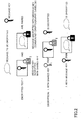
FIG. 1 is a diagram illustrating a related technique; -
FIG. 2 is a diagram illustrating a related technique; -
FIG. 3 is a diagram illustrating a related technique; -
FIG. 4 is a diagram for describing an outline of techniques according to the present invention; -
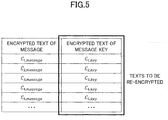
FIG. 5 is a diagram for describing an outline of techniques according to the present invention; -
FIG. 6 is a diagram for describing an outline of techniques according to the present invention; -
FIG. 7 is a block diagram illustrating a configuration of a communication system in an implementation example; -
FIG. 8 is a block diagram illustrating a configuration of a server device in an implementation example; -
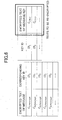
FIG. 9 is a diagram illustrating an example of a data table in an encrypted message storage unit; -
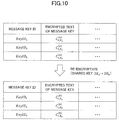
FIG. 10 is a diagram illustrating an example of a data table in an encrypted message key storage unit; -
FIG. 11 is a block diagram illustrating a configuration of a communication terminal in an implementation example; -
FIG. 12 is a diagram illustrating an example of a hardware configuration of devices; -
FIG. 13 is a sequence chart for describing operations in an implementation example; -
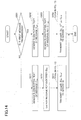
FIG. 14 is a flow chart for describing operations in an implementation example; -
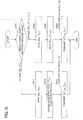
FIG. 15 is a flow chart for describing operations in an implementation example; and -
FIG. 16 is a sequence chart for describing operations in an implementation example. - In the following, an embodiment according to the present invention will be described with reference to the drawings. The embodiment to be described below is merely an example, and an embodiment to which the present invention can be applied is not limited to the following embodiment.
- Upon describing an embodiment according to the present invention, first, assumed related techniques and their problems will be described. However, the problem to be solved by the present invention is not limited to the problems of the related technique described below.
- According to the technique of Non-Patent
Document 2 described earlier, by sharing a key among communication terminals that is kept undisclosed to a server device, messages can be exchanged while being concealed from the server device. However, in Non-PatentDocument 2, the shared key is shared among only currently participating members; therefore, there are cases where the shared key is updated upon addition or deletion of a user, such as an event of login or logout of a user, or other than such an event, updated regularly. Therefore, in order to make messages that have been accumulated in the past readable only on currently participating communication terminals, it is necessary to update data saved on the server device in the past to be decryptable on the communication terminal side by using the updated shared key, without decrypting the data on the server device side. This will be referred to as re-encryption. - A related technique that is assumed for implementing this re-encryption will be described with reference to
FIGs. 1 to 3 . In the present related technique, as illustrated on the right-hand side inFIG. 1 , after a shared key has been updated from akey 1 to akey 2, each communication terminal having bothkey 1 andkey 2 generates a re-encryption key ("key 1→2"), and transmits the re-encryption key to a server device. The server device executes re-encryption by using the re-encryption key. the re-encrypted data can be decrypted by the updatedkey 2. A more detailed example will be described with reference toFIGs. 2 and3 . - In the present related technique, as illustrated in
FIG. 2 , a message is encrypted with a message key by using common key cryptography such as Camellia, and at the same time, the message key is encrypted with a shared key, to generate an encrypted text in which the encrypted message key is combined with the encrypted message. Then, upon decryption, the message key is decrypted with the shared key, and the message is decrypted with the decrypted message key. - As illustrated in
FIG. 3 , re-encryption with a re-encryption key is applied only to the encrypted message key. Accordingly, re-encryption can be executed efficiently. - In the related technique presented, from the viewpoint of safety upon leakage of a message key, it is assumed that the message key is generated for each communication terminal used by a user. However, if the message key is generated for each communication terminal used by a user, processing time of re-encryption on a server device is proportional to the number of updates of the shared key times the number of users. Therefore, there is a problem that the load on the server device increases. In particular, in the case where there are a large number of people in a chat group, the effect of the increased load on the server device becomes greater.
- In the technique according to the present invention, a message key can be used commonly by all users in the same chat group in accordance with the lifetime of the shared key. Accordingly, encrypted texts to be re-encrypted can be reduced, and thereby, the load on the server device can be reduced.
- For this purpose, a message key is generated by mixing a shared key shared in a chat group, and a group identifier denoted as groupID shared among a server device and the chat group. More specifically, as an example, as illustrated in
FIG. 4 , in order to prevent the message key from leaking even if either of the shared key or groupID is leaked, these are mixed by using a twisted pseudorandom function (or a pseudorandom function). - In the technique according to the present invention, a message key is generated to be common in a group in accordance with an update of the shared key. Therefore, although in the related technique, the processing time of re-encryption depends on "the number of updates of a shared key until the current time" times "the number of users", in the technique according to the present invention, the processing time of re-encryption depends on "the number of updates of a shared key until the current time", and thereby, the processing time of re-encryption can be reduced significantly.
- In other words, in the related technique, as illustrated in
FIG. 5 , the encrypted text of a message corresponds to the encrypted text of a message key one-to-one; therefore, for as many messages as there are, encrypted texts of message keys need to be re-encrypted, which results in a heavy load. - In contrast, in the technique according to the present invention, as illustrated in
FIG. 6 , multiple messages that share the same shared key are associated with one message key (identified by a key ID); therefore, the number of encrypted texts of message keys to be re-encrypted can be reduced significantly. - In the following, an implementation example according to the present invention will be described.
- First, preparation to be understood in advance for implementing operations described in the implementation example will be explained.
- Let a set N be the set of all positive integers. Let Kspace1 and Kspace2 denote key spaces. A common key-based re-encryptable cryptographic scheme used in the implementation example is constituted with the following four algorithms: KEM.Enc, KEM.Dec, KEM.ReKeyGen, and KEM.ReEnc. In the following, each algorithm will be described. Note that an algorithm here may also be referred to as a "function".
KEM.Enc(SKi1, K)→C1 (i1)
This algorithm takes as input an element SKi1 in Kspace1 and an element K in Kspace2, and outputs an encrypted text C1 (i1).
KEM.Dec(SKj, C1 (i))→K'
This algorithm takes as input an element SK in Kspace1 and an encrypted text C1 (i), and outputs an element K in Kspace2.
KEM.ReKeyGen(SKi1, SKi2)→RKi1,i2
This algorithm takes as input two elements SKi1 and SKi2 in Kspace1, and outputs a re-encryption key RKi1,i2.
KEM.ReEnc (RKi1,i2, C1 (i1))→C1 (i2)
This algorithm takes as input a re-encryption key RKi1,i2 and an encrypted text C1 (i1), and outputs a re-encrypted encrypted text C1 (i2). - Note that for the sake of convenience of notation of characters in the specification, although a subscript is written as "i1", such as "SKi1", this means "i1". In the present specification, for a subscript of a subscript, substantially the same way of notation is used. For example, a subscript "K1" of "IDK1" that will be described later is intended to be "K1".
- The algorithms described above are assumed to satisfy the following two conditions.
- Condition 1: for any element SK in Kspace1 and any element K in Kspace2, KEM.Dec(SK, KEM.Enc(SK, K)) = K
Condition 2: for a sequence of re-encryption keys RK1,2, ..., RKn-1,n each output by KEM.ReKeyGen(SKi, SKi+1) for any integer n>1, any sequence of keys SK1, ..., SKn in Kspace1, and any i ∈ {1, ..., n-1}; any element K in Kspace1; and any i1 and i2 that satisfy 1≤i1<i2≤n,
KEM.Dec (SKi2, KEM.ReEnc (RKi2-1,i2, ..., KEM.ReEnc(RKi1,i1+1, KEM.Enc(SKi1, K)))) = K - As an example of a re-encryption scheme that satisfies the above conditions, a scheme in
Reference 1 can be considered. Note that titles of references are collectively listed at the end of the specification. - This is constructed as follows. First, let q be a prime number, and Zq be a residue class ring modulus q with respect to the integer ring Z. Let G be a cyclic group of an order q, and Kspace2 = G. Here, although the cyclic group G is considered as a multiplicative group, it may be considered as an additive group. Also, let Kspace1 = Zq. Further, let Rand be a space of random numbers, and let H:Rand→G be a hash function having Rand as the domain and G as the range. A function F:Kspace× Rand→G having a direct product of Kspace1 = Zq and Rand as the domain and G as the range, is defined as F (SK, r) = H(r)SK.
KEM.Enc(SKi1, K)→C1 (i1)
This function extracts r∈Rand as a uniform random number, and outputs C1 (i1) = (r, K+F(SK, r)).
KEM.Dec(SKj, C1 (i))→K'
This function decomposes C1 (i) = (r, C), and outputs K' = C-F(SK, r).
KEM.ReKeyGen(SKi1, SKi2)→RKi1,i2
This function outputs RKi1,i2 = SKi2 -SKi1.
KEM.ReEnc(RKi1,i2, C1 (i1))→C1 (i2)
This function decomposes C1 (i1) = (r, C), and outputs C1 (i2) = (r, C+F (RKi1,i2, r)). - Note that as an example of the re-encryptable cryptographic scheme (KEM.Enc, KEM.Dec, KEM.ReKeyGen, KEM.ReEnc), although the technique disclosed in
Reference 1 is taken, the re-encryptable cryptographic scheme may be implemented by a method other than the above, and the re-encryptable cryptographic scheme is not limited to any particular method. - The common key cryptography used in the implementation example is constituted with the following two algorithms (Enc, Dec), each having the following input and output.
Enc (K, m)→C2
This algorithm takes as input an element K in Kspace2 and a message m, and outputs an encrypted text C2.
Dec(K, C2)→m This algorithm takes as input an element K in Kspace2 and an encrypted text C2, and outputs a message m.
- The algorithms described above are assumed to satisfy the following condition.
- For any element K in Kspace2 and any message m, Dec(K, Enc(K, m)) = m
- As an example of a cryptographic scheme that satisfies the above, although AES, Camellia, and the like may be enumerated, the scheme is not limited to a particular method.
- Let k be a security parameter; let Domk and Rngk be spaces whose sizes depend on k; and let F = {Fs:Domk→Rngk}s∈{0,1}k be a family of functions. If it is difficult for any polynomial-time identifier D to distinguish this family of functions from a family of random functions RFk = {f:Domk→Rngk}, the family of functions F is called a family of pseudorandom functions, and an element thereof is called a pseudorandom function. Examples of pseudorandom functions are described in
Reference 2. - Let FSk be a key space dependent on k, and for a pseudorandom function Fs:{0, 1} k × FSk→Rngk, a twisted pseudorandom function tPRF:{0, 1}k × FSk 2 {0, 1}k→Rngk is defined as follows:


- As taken in Reference 3, it has been understood that an output value of a twisted pseudorandom function cannot be distinguished from a number selected as a uniform random number, even if the input (a, a') or (b, b') is leaked.
- Next, a system configuration of the implementation example will be described.
FIG. 7 is a diagram illustrating a configuration of a communication system in the present implementation example. - As illustrated in
FIG. 7 , this communication system includes a server device 100 andcommunication terminals network 1. Each of thecommunication terminal 11,communication terminal 12, andcommunication terminal 13 is, for example, a personal computer, a smartphone, or the like, but are not limited to any particular type of device. As illustrated inFIG. 7 , assume that a user A uses thecommunication terminal 11, a user B uses thecommunication terminal 12, and a user C uses thecommunication terminal 13. - In the communication system of the present implementation example, the
communication terminal 11,communication terminal 12, andcommunication terminal 13 can form a group of users that exchange chat messages. Note that a "chat" message as the message to be exchanged is merely an example, and messages of applications other than "chat" can also be exchanged. - In the following, functional configurations of the respective devices will be described. Specific processing operations of functional units of each device will be described later with reference to a sequence chart and a flow chart in an operation example.
-
FIG. 8 is a block diagram illustrating a configuration of the server device 100. As illustrated inFIG. 8 , the server device 100 includes an encryptedmessage storage unit 101 to save a pair of encrypted text of a message and message key identifier; an encrypted messagekey storage unit 102 to save a pair of encrypted text of a message key and message key identifier; a groupuser storage unit 103 to save user information for each group; are-encryption processing unit 104; an encryptedtext receiving unit 105; and an encryptedtext transmitting unit 106. - The
re-encryption processing unit 104 is a processing unit to generate, in response to receiving a re-encryption key from a communication terminal, from an encrypted text of a message key and the re-encryption key, a new encrypted text of the message key from which the encrypted text of the message key can be decrypted with the updated shared key. - As illustrated in
FIG. 9 , in the encryptedmessage storage unit 101 of the server device 100, encrypted texts of messages are associated with message key identifiers (one message key is used for multiple messages) and stored. Also, as illustrated inFIG. 10 , in the encrypted messagekey storage unit 102, a message key identifier is associated with an encrypted text of a message key and stored. Note thatFIG. 10 illustrates a state before and after re-encryption. -
FIG. 11 is a block diagram illustrating a configuration of thecommunication terminals FIG. 11 , each of the communication terminals 11, 12, and 13 includes a shared key storage unit 111 to save a shared key; a message key storage unit 112 to save a message key; a message key identifier storage unit 113 to save a message key identifier; a message key generation unit 121 to generate a message key from a shared key and a group identifier; a message key identifier generation unit 122 to generate a message key identifier from a message key; a message key management unit 123 to determine whether a message to be transmitted is the first message after updating a shared key; a re-encryption key generation unit 124 to generate a re-encryption key from a shared key before update and the shared key after update when the shared key is updated; a message encryption unit 125 to generate an encrypted text of a message from a message key and the message based on common key cryptography; a message decryption unit 126 to decrypt a messages from a message key and an encrypted text of the message, based on the common key cryptography; a message key encryption unit 127 to generate an encrypted text of a message key from a shared key and the message key, based on re-encryptable common key cryptography; a message key decryption unit 128 to decrypt a message key from a shared key and an encrypted text of the message key, based on the re-encryptable common key cryptography; an encrypted text transmitting unit 129; and an encrypted text receiving unit 130. - In the present implementation example, the
communication terminals key generation unit 124, whereas another communication terminal includes the re-encryptionkey generation unit 124. - Any one of the server device 100 and the
communication terminals -
FIG. 12 is a diagram illustrating an example of a hardware configuration of the computer described above. The computer inFIG. 12 includes adrive device 150, anauxiliary storage device 152, amemory device 153, aCPU 154, aninterface device 155, adisplay device 156, aninput device 157, and the like; these units are mutually connected via a bus B. - A program for implementing processing on the computer is provided with a
recording medium 151, for example, a CD-ROM, memory card, or the like. When therecording medium 151 on which the program is recorded is set in thedrive device 150, the program is installed in theauxiliary storage device 152 from therecording medium 151 via thedrive device 150. However, installation of the program does not need not be executed with therecording medium 151, and may be downloaded from another computer via the network. Theauxiliary storage device 152 stores the installed program, and stores necessary files, data, and the like. - The
memory device 153 reads and stores the program from theauxiliary storage device 152, in the case of receiving a start command of a program. TheCPU 154 implements functions related to the device, according to a program stored in thememory device 153. Theinterface device 155 is used as an interface for connecting to a network, and functions as an input unit and an output unit via the network. Thedisplay device 156 displays a GUI (Graphical User Interface) or the like by the program. Thedisplay device 156 is also an example of an output unit. Theinput device 157 is constituted with a keyboard and a mouse, buttons, or a touch panel or the like, and used for receiving various operating commands as input. - In the following, operations of the communication system according to the present implementation example will be described in detail.
- As described earlier, the communication terminals in the present implementation example form a group of users who exchange chat messages. Each group is given an identifier.
- As illustrated in
FIG. 7 , assume that the users of thecommunication terminal 11,communication terminal 12, andcommunication terminal 13 are the user A, user B, and user C, respectively. Assume that the user A, user B, and user C belong to a group having a group identifier of groupID, and assume that each communication terminal saves groupID in the memory or the like. - Note that although the method of generating groupID is not limited to a particular method, it is desirable that groupID is generated by the
server device 10 using a pseudo-random number generator. Also, it is desirable that groupID is not disclosed to a party other than the users belonging to this group (including A, B, and C) and theserver device 10. Therefore, for example, when theserver device 10 is going to share groupID with the communication terminals, groupID is concealed using an encrypted communication protocol such as TLS, and transmitted. - Next, a shared key used in the implementation example will be described. A shared key refers to a key generated for each group, and shared among communication terminals used by users belonging to the group. As a protocol for sharing a key without leaking any information to a party other than the communication terminals, for example, to the
server device 10, for example, a method described in Reference 3 may be considered; however the method of sharing a shared key is not limited to a particular method. - Note that in the present implementation example, in order to safely share a shared key, a shared key is generated each time a user is added to the group; a user leaves the group; a certain period of time has elapsed; and a user logs in or logs out. However, these are merely examples, and the timing at which a shared key is generated may be other than these timings. Hereafter, a set of group identifiers of groupID is denoted as GID.
- In the following, assume that Kspace = Kspace1 = Kspace2 = GID.
- In the following, operations of the communication system in the present implementation example will be described, along steps illustrated in sequence charts and flow charts in
FIGs. 13 to 16 . - As a prerequisite for operations illustrated in
FIG. 13 , assume that the users A, B, and C are logged in on a group chat system, by using thecommunication terminal 11,communication terminal 12, andcommunication terminal 13, respectively. Also, assume that a shared key SK1 has been generated in a group of groupID to which thecommunication terminal 11,communication terminal 12, andcommunication terminal 13 belong. Assume that the space of shared keys is Kspace1 = Kspace. Assume that thecommunication terminals key storage units 111. - Here, let Fs: Kspace2→Kspace be a pseudorandom function. Assume that a seed s∈{0, 1}k is shared in advance among the
communication terminals - At S101 in
FIG. 13 , on each of thecommunication terminals key generation unit 121 calculates a message key K1:= Fs (groupID, SK1). The message key K1 is saved in the messagekey storage unit 112. - This message key may be generated by a twisted pseudorandom function instead of the pseudorandom function. For example, it may be generated as K1:= tPRF (groupID, groupID, SK1, SK1).
- At S102, on each of the
communication terminals identifier generation unit 122 generates a message key identifier IDK1 for K1. Assume that IDK1 is generated to be the same value on each communication terminal. As the method of generating IDK1, for example, there is a method that uses the SHA256 hash function, inputs K1 into the SHA256 hash function, and sets the output value as IDK1. However, the method of generating IDK1 is not limited to a particular method. - The
communication terminals identifier storage units 113. - In the present implementation example, assume that the user A uses the
communication terminal 11 to transmit a message m to the group of groupID (S103 and S104 inFIG. 13 ). Note that at this point in time, assume that thecommunication terminal 11 has generated the message key K1 and its identifier IDK1. - Processing contents at S103 and S104 in
FIG. 13 will be described with reference to a flow chart inFIG. 14 . - When the
communication terminal 11 transmits the message m, first, at S201, the messagekey management unit 123 determines whether the message to be transmitted is the first message transmitted from thecommunication terminal 11 after the shared key SK1 was generated. - If the determination result at S201 is YES, the process proceeds to S202, and the
message encryption unit 125 of thecommunication terminal 11 generates an encrypted text of the message m as C2,m←Enc (K1, m) . - Also, at S203, the message
key encryption unit 127 generates an encrypted text of the message key as C (1) 1,K1←KEM. Enc (SK1,K1). - Then, at S204, the encrypted
text transmitting unit 129 transmits (groupID, IDK1, C(1) 1,K1, C2,m) to theserver device 10. The encryptedtext receiving unit 105 of theserver device 10 receives the transmitted (groupID, IDK1, C(1) 1,K1, C2,m) ·K1 and m are expressed for the sake of convenience to distinguish (C(1) 1,K1, C2,m) from encrypted texts of other messages and other message keys, and K1 and m are not immediately inferred from the encrypted text. - If the determination result at S201 is NO, the process proceeds to S211, and the
message encryption unit 125 of thecommunication terminal 11 generates an encrypted text of the message m as C2,m←Enc (K1, m). The encryptedtext transmitting unit 129 of thecommunication terminal 11 retrieves the message key identifier IDK1 from the message keyidentifier storage unit 113 at S212, and transmits (groupID, IDK1, C2,m) to theserver device 10 at S213. The transmitted (groupID, IDK1, C2,m) is received by the encryptedtext receiving unit 105 of theserver device 10. - Once having received the encrypted message described above from the
communication terminal 11, theserver device 10 executes processing for delivery at S105 to S107 inFIG. 13 . Note that here, although delivery operations to the other communication terminals are triggered by the reception of the message, this is merely an example. The server may deliver a saved encrypted message to a communication terminal, in response to addition or login of a user, or other requests from a communication terminal. - The operations at S105 to S107 in
FIG. 13 will be described with reference to a flow chart inFIG. 15 . - First, the
server device 10 determines the format of the message that has been transmitted from thecommunication terminal 11 and received by the encryptedtext receiving unit 105 of theserver device 10. - If the format of the message transmitted from the
communication terminal 11 is (groupID, IDK1, C(1) 1,K1, C2,m) the process proceeds to S302, and (IDK1, C2,m) is saved in the encryptedmessage storage unit 101. - Also, at S303, the
server device 10 saves (IDK1, C(1) 1,K1) in the encrypted messagekey storage unit 102. Note that if a message is received from another communication terminal and (IDK1, C(1) 1,K1) has already been saved, the message is not saved here. - At S304 (S106 and S107 in
FIG. 13 ), the encryptedtext transmitting unit 106 of theserver device 10 retrieves information (e.g., destination address) on the users (including the users B and C) belonging to the group of groupID saved in the groupuser storage unit 103, and by using the information, transmits (C(1) 1,K1, C2,m) to each user. Note that in the present implementation example, the encryptedtext transmitting unit 106 of theserver device 10 transmits (C(1) 1,K1, C2,m) to thecommunication terminal 12 and thecommunication terminal 13. - As a result of determination at S301, if the format of the message transmitted from the
communication terminal 11 is (groupID, IDK1, C2,m), the process proceeds to S311. At S311, theserver device 10 saves (IDK1, C2,m) in the encryptedmessage storage unit 101. - Next, the encrypted
text transmitting unit 106 of theserver device 10 retrieves the encrypted message key C(1) 1,K1 associated with IDK1 from the encrypted messagekey storage unit 102 at S312; retrieves information on the users (including the users B and C) belonging to the group of groupID saved in the groupuser storage unit 103, and by using the information, transmits (C(1) 1,K1, C2,m) to each user at S313. Note that in the present implementation example, theserver device 10 transmits (C(1) 1,K1, C2,m) to thecommunication terminal 12 and thecommunication terminal 13. - Next, reception of message will be described. Assume that a shared key shared by the chat group is SK2 at this point in time. Although each of the
communication terminals communication terminal 12 will be described with reference toFIG. 13 . Substantially the same operations are executed on thecommunication terminal 13. Note that the message key K1 used here is not necessarily a message key generated with the shared key SK2. - Once the encrypted
text receiving unit 130 of thecommunication terminal 12 receives (C(2) 1,K1, C2,m) from theserver device 10 at S106 inFIG. 13 , then, at S108, the messagekey decryption unit 128 retrieves the latest shared key SK2 from the sharedkey storage unit 111, and calculates K1←KEM.Dec (SK2, C(2) 1,K1) to decrypt the message key K1. - Thereafter, at S109, the
message decryption unit 126 uses the message key K1 decrypted at S108, to calculate m←Dec(K1, m) so as to decrypt the message m. This enables thecommunication terminal 12 to correctly display the message m transmitted from thecommunication terminal 11. - Operations of updating a shared key and of generating a re-encryption key will be described with reference to a sequence chart in
FIG. 16 . Here, shared keys before and after an update are denoted as SKa and SKb, respectively. - At S401, assume that the shared key used for encrypting a message key has been updated from SKa to SKb in the group of groupID to which the
communication terminal 11,communication terminal 12, andcommunication terminal 13 belong. At this time, thecommunication terminal 11,communication terminal 12, andcommunication terminal 13 share the latest shared key SKb, and hold the shared key SKb in the respective sharedkey storage units 111. - Also, assume that the
communication terminal 13 also holds the shared key SKa before the update in the sharedkey storage unit 11. Note that the shared keys SKa and SKb are undisclosed to theserver device 10. - Also, assume that the
server device 10 holds encrypted texts associated with groupID, namely, the encrypted texts of message keys C(a) 1,Ki1, ..., C(a) 1,Kin that have been transmitted to the group of groupID, in the encrypted messagekey storage unit 102. Note that here, i1, ..., in subscripts for distinguishing message keys one another, used for describing the present implementation example. For example, the example illustrated inFIG. 10 illustrates that K1, K2, and K3 have been used as the message keys. - At S402, the re-encryption
key generation unit 124 of thecommunication terminal 13 calculates RKa,b←KEM.ReyGen (SKa, SKb) to generate a re-encryption key RKa,b. At S403, the encrypted text transmitting unit 129 (or any other functional unit for transmission) of thecommunication terminal 13 transmits a pair of group identifier and re-encryption key (groupID, RKa,b) to theserver device 10. - At S403, the encrypted
text receiving unit 105 of the server device 10 (or any other functional unit for reception) receives the pair of group identifier and re-encryption key (groupID, RKa,b) from thecommunication terminal 13. - Next, the
re-encryption processing unit 104 repeatedly executes the following processing at S404 to S406 for each j ∈ {i1, ..., in}. - The
re-encryption processing unit 104 retrieves the encrypted text of the message key C(a) 1,Kj from the encrypted messagekey storage unit 102 at S404; executes C(b) 1,Kj←KEM.ReEnc (RKa,b, C(a) 1,Kj), and calculates an encrypted text of the message key C(b) 1,Kj after re-encryption at S406. - The
re-encryption processing unit 104 overwrites the encrypted text of the message key C(a) 1,Kj with the re-encrypted encrypted text of the message key C(b) 1,Kj to be saved, in the encrypted messagekey storage unit 102 at S405.FIG. 10 illustrates overwriting with the encrypted text of the re-encrypted message key C(b) 1,Kj to be saved. - As illustrated in
FIG. 10 , after this processing, each message key identifier remains unchanged. Therefore, the correspondence between an encrypted text of a message in the encryptedmessage storage unit 101 and an encrypted text of a corresponding message key in the encrypted messagekey storage unit 102 remains unchanged. After the processing described above, a communication terminal that has received the encrypted text associated with groupID delivered from theserver device 10 can decrypt each message correctly by the same operations as executed when the message was received, as long as holding the latest shared key SKb. - As described above, in the present implementation example, there is a group identifier that is a unique ID for each group, and the group identifier is shared in advance among the server device and the users that are present in the group.
- A common key cryptography is used for encrypting a message, and a message key used for encrypting the message is encrypted with a shared key by using a common key-based re-encryptable cryptographic scheme. In the present implementation example, instead of generating a message key upon encrypting each message, a message key obtained as the output a pseudorandom function or a twisted pseudorandom function taking as input the shared key and the group identifier, is commonly used in the group. Accordingly, the message key will not be leaked even if either of the shared key or the group identifier is leaked; therefore, all users in the group can safely share the message key.
- The server device saves an encrypted text of a message and an encrypted text of a corresponding message key in separate tables (e.g.,
FIG. 9 andFIG. 10 ), and at this time, in order to enable the server device to recognize which key is being used around for which message, an identifier of the key (key ID) is added and saved in a separate table. - As has been already described, when executing a re-encryption process, the server device only updates the table in which encrypted texts of message keys are saved (e.g.,
FIG. 10 ). The number of encrypted texts of message keys to be re-encrypted is equivalent to the number of updates of the shared key up to the present; therefore, the load on the server device for executing a re-encryption process can be reduced compared to the related technique. - In other words, the efficiency of re-encryption processing is improved; therefore, processing time can be reduced when downloading multiple messages upon a login of a user, and/or when multiple users log out at short intervals, and thereby, reduction in time as perceived by the user can be realized.
- Also, a message key is not generated for each message, but used commonly for multiple messages; therefore, time taken for encryption processing when posting messages can also be reduced.
- Therefore, time as perceived by a user in login/logout/message posting in a business chat service in which the present technique is implemented, can be made closer to the time as perceived in login/logout/message posting in a conventional business chat service in which end-to-end encryption is not implemented, and thus, an encrypted business chat service that is safe and efficient can be implemented.
- The present specification discloses at least the following matters:
- (Matter 1)
A server device used in a communication system that executes transmission and reception of messages via the server device among a plurality of communication terminals forming a group to which a group identifier is assigned, while concealing the messages to the server device, the server device comprising:- an encrypted message storage unit configured to save an encrypted text of a message generated by encrypting the message with a message key generated from a shared key shared among the plurality of communication terminals belonging to the group and the group identifier, by using a message key identifier as an identifier of the message key as a key;
- an encrypted message key storage unit configured to save an encrypted text of the message key generated by encrypting the message key to be re-encryptable by using the shared key, by using the message key identifier as a key; and
- a re-encryption processing unit configured to receive, after the shared key has been updated, a re-encryption key from a communication terminal that has generated the re-encryption key by using the shared key and the updated shared key, use the re-encryption key to generate a re-encrypted encrypted text of the message key, and overwrite the encrypted text of the message key before re-encryption with the re-encrypted encrypted text of the message key to be saved, in the encrypted message key storage unit.
- (Matter 2)
The server device as described inMatter 1, wherein the message key is a key generated by inputting the shared key and the group identifier into a twisted pseudorandom function or a pseudorandom function. - (Matter 3)
A communication terminal used in a communication system that executes transmission and reception of messages via a server device among a plurality of communication terminals forming a group to which a group identifier is assigned, while concealing the messages to the server device, the communication terminal comprising:- a message key generation unit configured to generate a message key from a shared key shared among the plurality of communication terminals belonging to the group, and the group identifier;
- a message key encryption unit configured to generate an encrypted text of the message key by encrypting the message key to be re-encryptable, by using the shared key;
- a message key identifier generation unit configured to generate a message key identifier as an identifier of the message key;
- a message encryption unit configured to generate an encrypted text of a message by encrypting the message with the message key; and
- a transmitting unit configured to transmit the encrypted text of the message key, the message key identifier, and the encrypted text of the message to the server device.
- (Matter 4)
The communication terminal as described in Matter 3, further comprising:- a re-encryption key generation unit configured to generate, after the shared key has been updated, a re-encryption key by using the shared key and the updated shared key,
- wherein the transmitting unit transmits the re-encryption key to the server device.
- (Matter 5)
A communication system that executes transmission and reception of messages via a server device among a plurality of communication terminals forming a group to which a group identifier is assigned, while concealing the messages to the server device,
wherein each of the plurality of communication terminals belonging to the group includes- a message key generation unit configured to generate a message key from a shared key shared among the plurality of communication terminals belonging to the group, and the group identifier,
- a message key encryption unit configured to generate an encrypted text of the message key by encrypting the message key to be re-encryptable, by using the shared key,
- a message key identifier generation unit configured to generate a message key identifier as an identifier of the message key,
- a message encryption unit configured to generate an encrypted text of a message by encrypting the message with the message key, and
- a transmitting unit configured to transmit the encrypted text of the message key, the message key identifier, and the encrypted text of the message to the server device,
- an encrypted message storage unit configured to save the encrypted text of the message by using the message key identifier as a key,
- an encrypted message key storage unit configured to save the encrypted text of the message key by using the message key identifier as a key,
- a transmitting unit configured to transmit the encrypted text of the message key and the encrypted text of the message to a communication terminal belonging to the group, and
- a re-encryption processing unit configured to receive, after the shared key has been updated, a re-encryption key from a communication terminal that has generated the re-encryption key by using the shared key and the updated shared key, use the re-encryption key to generate a re-encrypted encrypted text of the message key, and overwrite the encrypted text of the message key before re-encryption with the re-encrypted encrypted text of the message key to be saved, in the encrypted message key storage unit.
- (Matter 6)
A program for causing a computer to function as respective units of the server device as described inMatter - (Matter 7)
A program for causing a computer to function as respective units of the communication terminal as described in Matter 3 or 4. - As described above, the present embodiment has been described. Note that the present invention is not limited to such a specific embodiment, and various modifications and alterations can be made within the scope of the subject matters of the present invention described in the claims.
-
- Reference 1: D. Boneh, K. Lewi, H. Montgomery, and A. Raghunathan, "2015.Key Homomorphic PRFs and Their Applications", CryptologyePrint Archive, Report 2015/220, (2015), http://eprint.iacr.org/2015/220
- References 2: Daisuke Moriyama, Ryo Nishimaki, Tatsuaki Okamoto, "Mathematics of public key cryptography", Kyoritsu Publishing, 2011
- Reference 3: YONEYAMA, K., YOSHIDA, R., KAWAHARA, Y., KOBAYASHI, T., FUJI, H., and YAMAMOTO, T, (2018) "Exposure-Resilient Identity-Based Dynamic MultiCast Key Distribution", IEICE TRANSACTIONS on Fundamentals of Electronics, Communications and Computer Sciences, 101(6), 929-944
- The present patent application claims priority based on Japanese Patent Application No.
2018-200333 filed on October 24, 2018 2018-200333 -
- 1 Network
- 11, 12, 13 communication terminal
- 100 server device
- 101 encrypted message storage unit
- 102 encrypted message key storage unit
- 103 group user storage unit
- 104 re-encryption processing unit
- 105 encrypted text receiving unit
- 106 encrypted text transmitting unit
- 111 shared key storage unit
- 112 message key storage unit
- 113 message key identifier storage unit
- 121 message key generation unit
- 122 message key identifier generation unit
- 123 message key management unit
- 124 re-encryption key generation unit
- 125 message encryption unit
- 126 message decryption unit
- 127 message key encryption unit
- 128 message key decryption unit
- 129 encrypted text transmitting unit
- 150 drive device
- 151 recording medium
- 152 auxiliary storage device
- 153 memory device
- 154 CPU
- 155 interface device
- 156 display device
- 157 input device
Claims (7)
- A server device used in a communication system that executes transmission and reception of messages via the server device among a plurality of communication terminals forming a group to which a group identifier is assigned, while concealing the messages to the server device, the server device comprising:an encrypted message storage unit configured to save an encrypted text of a message generated by encrypting the message with a message key generated from a shared key shared among the plurality of communication terminals belonging to the group and the group identifier, by using a message key identifier as an identifier of the message key as a key;an encrypted message key storage unit configured to save an encrypted text of the message key generated by encrypting the message key to be re-encryptable by using the shared key, by using the message key identifier as a key; anda re-encryption processing unit configured to receive, after the shared key has been updated, a re-encryption key from a communication terminal that has generated the re-encryption key by using the shared key and the updated shared key, use the re-encryption key to generate a re-encrypted encrypted text of the message key, and overwrite the encrypted text of the message key before re-encryption with the re-encrypted encrypted text of the message key to be saved, in the encrypted message key storage unit.
- The server device as claimed in claim 1, wherein the message key is a key generated by inputting the shared key and the group identifier into a twisted pseudorandom function or a pseudorandom function.
- A communication terminal used in a communication system that executes transmission and reception of messages via a server device among a plurality of communication terminals forming a group to which a group identifier is assigned, while concealing the messages to the server device, the communication terminal comprising:a message key generation unit configured to generate a message key from a shared key shared among the plurality of communication terminals belonging to the group, and the group identifier;a message key encryption unit configured to generate an encrypted text of the message key by encrypting the message key to be re-encryptable, by using the shared key;a message key identifier generation unit configured to generate a message key identifier as an identifier of the message key;a message encryption unit configured to generate an encrypted text of a message by encrypting the message with the message key; anda transmitting unit configured to transmit the encrypted text of the message key, the message key identifier, and the encrypted text of the message to the server device.
- The communication terminal as claimed in claim 3, further comprising:a re-encryption key generation unit configured to generate, after the shared key has been updated, a re-encryption key by using the shared key and the updated shared key,wherein the transmitting unit transmits the re-encryption key to the server device.
- A communication system that executes transmission and reception of messages via a server device among a plurality of communication terminals forming a group to which a group identifier is assigned, while concealing the messages to the server device,
wherein each of the plurality of communication terminals belonging to the group includesa message key generation unit configured to generate a message key from a shared key shared among the plurality of communication terminals belonging to the group, and the group identifier,a message key encryption unit configured to generate an encrypted text of the message key by encrypting the message key to be re-encryptable, by using the shared key,a message key identifier generation unit configured to generate a message key identifier as an identifier of the message key,a message encryption unit configured to generate an encrypted text of a message by encrypting the message with the message key, anda transmitting unit configured to transmit the encrypted text of the message key, the message key identifier, and the encrypted text of the message to the server device,wherein the server device includesan encrypted message storage unit configured to save the encrypted text of the message by using the message key identifier as a key,an encrypted message key storage unit configured to save the encrypted text of the message key by using the message key identifier as a key,a transmitting unit configured to transmit the encrypted text of the message key and the encrypted text of the message to a communication terminal belonging to the group, anda re-encryption processing unit configured to receive, after the shared key has been updated, a re-encryption key from a communication terminal that has generated the re-encryption key by using the shared key and the updated shared key, use the re-encryption key to generate a re-encrypted encrypted text of the message key, and overwrite the encrypted text of the message key before re-encryption with the re-encrypted encrypted text of the message key to be saved, in the encrypted message key storage unit. - A program for causing a computer to function as respective units of the server device as claimed in claim 1 or 2.
- A program for causing a computer to function as respective units of the communication terminal as claimed in claim 3 or 4.
Applications Claiming Priority (2)
| Application Number | Priority Date | Filing Date | Title |
|---|---|---|---|
| JP2018200333 | 2018-10-24 | ||
| PCT/JP2019/040512 WO2020085151A1 (en) | 2018-10-24 | 2019-10-15 | Server device, communication terminal, communication system, and program |
Publications (3)
| Publication Number | Publication Date |
|---|---|
| EP3836479A1 true EP3836479A1 (en) | 2021-06-16 |
| EP3836479A4 EP3836479A4 (en) | 2022-05-04 |
| EP3836479B1 EP3836479B1 (en) | 2025-08-06 |
Family
ID=70332009
Family Applications (1)
| Application Number | Title | Priority Date | Filing Date |
|---|---|---|---|
| EP19876442.5A Active EP3836479B1 (en) | 2018-10-24 | 2019-10-15 | Server device, communication terminal, communication system, and program |
Country Status (5)
| Country | Link |
|---|---|
| US (1) | US11902421B2 (en) |
| EP (1) | EP3836479B1 (en) |
| JP (1) | JP7212697B2 (en) |
| CN (1) | CN112889240B (en) |
| WO (1) | WO2020085151A1 (en) |
Families Citing this family (4)
| Publication number | Priority date | Publication date | Assignee | Title |
|---|---|---|---|---|
| JPWO2019198516A1 (en) * | 2018-04-11 | 2021-04-01 | 日本電信電話株式会社 | Key distribution system, terminal device, key distribution method, and program |
| KR20220024210A (en) * | 2019-06-26 | 2022-03-03 | 광동 오포 모바일 텔레커뮤니케이션즈 코포레이션 리미티드 | How to Provision Internet of Things Devices and Internet of Things Devices |
| US12438697B2 (en) | 2021-01-14 | 2025-10-07 | Ntt, Inc. | Communication system, information processing apparatus, communication method and program |
| US20230353349A1 (en) * | 2022-04-27 | 2023-11-02 | Qusecure, Inc | Forward secrecy qsl |
Family Cites Families (10)
| Publication number | Priority date | Publication date | Assignee | Title |
|---|---|---|---|---|
| JP4985312B2 (en) | 2007-10-24 | 2012-07-25 | セイコーエプソン株式会社 | Data management apparatus, data management system, and program |
| WO2012077999A2 (en) * | 2010-12-08 | 2012-06-14 | Lg Electronics Inc. | Traffic encryption key management for machine to machine multicast group |
| JP2015033068A (en) * | 2013-08-06 | 2015-02-16 | 日本電信電話株式会社 | File sharing system, information providing apparatus, information acquiring apparatus, method thereof, and program |
| JP6058514B2 (en) * | 2013-10-04 | 2017-01-11 | 株式会社日立製作所 | Cryptographic processing method, cryptographic system, and server |
| JP2015201773A (en) * | 2014-04-09 | 2015-11-12 | 株式会社日立製作所 | Re-encryption method, re-encryption system, and re-encryption device |
| FR3024533B1 (en) * | 2014-07-31 | 2016-08-26 | Commissariat Energie Atomique | IMPROVED ENTHALPIC EXCHANGER |
| US9756024B2 (en) * | 2015-09-18 | 2017-09-05 | Trillium Incorporated | Computer-implemented cryptographic method for improving a computer network, and terminal, system and computer-readable medium for the same |
| US9584493B1 (en) * | 2015-12-18 | 2017-02-28 | Wickr Inc. | Decentralized authoritative messaging |
| EP3879750B1 (en) | 2016-07-19 | 2022-09-07 | Nippon Telegraph And Telephone Corporation | Communication terminals and programs |
| JP6909637B2 (en) | 2017-05-25 | 2021-07-28 | 新光電気工業株式会社 | Optical waveguide device and its manufacturing method |
-
2019
- 2019-10-15 JP JP2020553203A patent/JP7212697B2/en active Active
- 2019-10-15 WO PCT/JP2019/040512 patent/WO2020085151A1/en not_active Ceased
- 2019-10-15 CN CN201980069579.8A patent/CN112889240B/en active Active
- 2019-10-15 EP EP19876442.5A patent/EP3836479B1/en active Active
- 2019-10-15 US US17/287,101 patent/US11902421B2/en active Active
Also Published As
| Publication number | Publication date |
|---|---|
| CN112889240A (en) | 2021-06-01 |
| EP3836479A4 (en) | 2022-05-04 |
| US11902421B2 (en) | 2024-02-13 |
| JP7212697B2 (en) | 2023-01-25 |
| EP3836479B1 (en) | 2025-08-06 |
| CN112889240B (en) | 2024-05-31 |
| WO2020085151A1 (en) | 2020-04-30 |
| US20210391981A1 (en) | 2021-12-16 |
| JPWO2020085151A1 (en) | 2021-09-09 |
Similar Documents
| Publication | Publication Date | Title |
|---|---|---|
| US10187361B2 (en) | Method for secure communication using asymmetric and symmetric encryption over insecure communications | |
| EP3836479B1 (en) | Server device, communication terminal, communication system, and program | |
| CN104219051B (en) | The communication means and system of a kind of inner group message | |
| Es-Sabry et al. | A novel text encryption algorithm based on the two-square cipher and Caesar cipher | |
| CN105610789B (en) | A kind of data ciphering method for chatting instant messaging suitable for more crowds | |
| Kolesnikov et al. | On the limits of privacy provided by order-preserving encryption | |
| US11336441B2 (en) | Communication terminal, server apparatus, and program | |
| Agrawal et al. | Analysis and review of encryption and decryption for secure communication | |
| US11190499B2 (en) | Communication terminals, server devices, and programs | |
| Mitra et al. | Prevention of the man-in-the-middle attack on Diffie–Hellman key exchange algorithm: A review | |
| EP2680528B1 (en) | Method, device and system for proxy transformation | |
| US20220109657A1 (en) | Email encryption system | |
| Zhu et al. | Peksrand: Providing predicate privacy in public-key encryption with keyword search | |
| EP3709564B1 (en) | Data sharing method, data sharing system, data sharing server, communication terminal, and program | |
| Zhang et al. | The security analysis of popular instant messaging applications | |
| US20190215148A1 (en) | Method of establishing anti-attack public key cryptogram | |
| Adomey | Introduction to cryptography | |
| Schillinger et al. | Recovering Private User Storages in Online Social Networks | |
| JP2009182375A (en) | Distributed information generating apparatus, secret information restoring apparatus, shared information generating method, secret information restoring method, and program | |
| Nataraja et al. | Encrypted Instant Messaging Service Using XMPP Protocol | |
| Limmanee et al. | Hybrid Encryption Scheme for Digital Content with Key Partitioning and Secret Mixing: Design and Implementation | |
| JP2024506026A (en) | Threshold key exchange | |
| Vedaraj et al. | A Survey on Data Security in Cloud Computing using Cryptography | |
| Parsharamulu et al. | A New Design of Algorithm for Enhancing Security in Bluetooth Communication with Triple DES | |
| Reddy et al. | A new design of algorithm for enhancing security in bluetooth communication with triple DES |
Legal Events
| Date | Code | Title | Description |
|---|---|---|---|
| STAA | Information on the status of an ep patent application or granted ep patent |
Free format text: STATUS: THE INTERNATIONAL PUBLICATION HAS BEEN MADE |
|
| PUAI | Public reference made under article 153(3) epc to a published international application that has entered the european phase |
Free format text: ORIGINAL CODE: 0009012 |
|
| STAA | Information on the status of an ep patent application or granted ep patent |
Free format text: STATUS: REQUEST FOR EXAMINATION WAS MADE |
|
| 17P | Request for examination filed |
Effective date: 20210312 |
|
| AK | Designated contracting states |
Kind code of ref document: A1 Designated state(s): AL AT BE BG CH CY CZ DE DK EE ES FI FR GB GR HR HU IE IS IT LI LT LU LV MC MK MT NL NO PL PT RO RS SE SI SK SM TR |
|
| DAV | Request for validation of the european patent (deleted) | ||
| DAX | Request for extension of the european patent (deleted) | ||
| A4 | Supplementary search report drawn up and despatched |
Effective date: 20220405 |
|
| RIC1 | Information provided on ipc code assigned before grant |
Ipc: H04L 9/16 20060101ALI20220330BHEP Ipc: H04L 9/08 20060101AFI20220330BHEP |
|
| GRAP | Despatch of communication of intention to grant a patent |
Free format text: ORIGINAL CODE: EPIDOSNIGR1 |
|
| STAA | Information on the status of an ep patent application or granted ep patent |
Free format text: STATUS: GRANT OF PATENT IS INTENDED |
|
| INTG | Intention to grant announced |
Effective date: 20250317 |
|
| RAP3 | Party data changed (applicant data changed or rights of an application transferred) |
Owner name: NIPPON TELEGRAPH AND TELEPHONE CORPORATION |
|
| RIN1 | Information on inventor provided before grant (corrected) |
Inventor name: KOBAYASHI, TETSUTARO Inventor name: YOSHIDA, REO Inventor name: OKANO, YUKI |
|
| GRAS | Grant fee paid |
Free format text: ORIGINAL CODE: EPIDOSNIGR3 |
|
| GRAA | (expected) grant |
Free format text: ORIGINAL CODE: 0009210 |
|
| STAA | Information on the status of an ep patent application or granted ep patent |
Free format text: STATUS: THE PATENT HAS BEEN GRANTED |
|
| AK | Designated contracting states |
Kind code of ref document: B1 Designated state(s): AL AT BE BG CH CY CZ DE DK EE ES FI FR GB GR HR HU IE IS IT LI LT LU LV MC MK MT NL NO PL PT RO RS SE SI SK SM TR |
|
| REG | Reference to a national code |
Ref country code: GB Ref legal event code: FG4D |
|
| REG | Reference to a national code |
Ref country code: CH Ref legal event code: EP |
|
| REG | Reference to a national code |
Ref country code: IE Ref legal event code: FG4D |
|
| REG | Reference to a national code |
Ref country code: DE Ref legal event code: R096 Ref document number: 602019073868 Country of ref document: DE |
|
| RAP4 | Party data changed (patent owner data changed or rights of a patent transferred) |
Owner name: NTT, INC. |
|
| PGFP | Annual fee paid to national office [announced via postgrant information from national office to epo] |
Ref country code: FR Payment date: 20250722 Year of fee payment: 7 |
|
| REG | Reference to a national code |
Ref country code: NL Ref legal event code: MP Effective date: 20250806 |
|
| PG25 | Lapsed in a contracting state [announced via postgrant information from national office to epo] |
Ref country code: IS Free format text: LAPSE BECAUSE OF FAILURE TO SUBMIT A TRANSLATION OF THE DESCRIPTION OR TO PAY THE FEE WITHIN THE PRESCRIBED TIME-LIMIT Effective date: 20251206 |
|
| PGFP | Annual fee paid to national office [announced via postgrant information from national office to epo] |
Ref country code: DE Payment date: 20251028 Year of fee payment: 7 |
|
| PGFP | Annual fee paid to national office [announced via postgrant information from national office to epo] |
Ref country code: GB Payment date: 20251031 Year of fee payment: 7 |
|
| PG25 | Lapsed in a contracting state [announced via postgrant information from national office to epo] |
Ref country code: NO Free format text: LAPSE BECAUSE OF FAILURE TO SUBMIT A TRANSLATION OF THE DESCRIPTION OR TO PAY THE FEE WITHIN THE PRESCRIBED TIME-LIMIT Effective date: 20251106 |
|
| REG | Reference to a national code |
Ref country code: LT Ref legal event code: MG9D |
|
| PG25 | Lapsed in a contracting state [announced via postgrant information from national office to epo] |
Ref country code: PT Free format text: LAPSE BECAUSE OF FAILURE TO SUBMIT A TRANSLATION OF THE DESCRIPTION OR TO PAY THE FEE WITHIN THE PRESCRIBED TIME-LIMIT Effective date: 20251209 |
|
| REG | Reference to a national code |
Ref country code: DE Ref legal event code: R081 Ref document number: 602019073868 Country of ref document: DE Owner name: NTT, INC., JP Free format text: FORMER OWNER: NIPPON TELEGRAPH AND TELEPHONE CORPORATION, TOKYO, JP |
|
| PG25 | Lapsed in a contracting state [announced via postgrant information from national office to epo] |
Ref country code: FI Free format text: LAPSE BECAUSE OF FAILURE TO SUBMIT A TRANSLATION OF THE DESCRIPTION OR TO PAY THE FEE WITHIN THE PRESCRIBED TIME-LIMIT Effective date: 20250806 |
|
| PG25 | Lapsed in a contracting state [announced via postgrant information from national office to epo] |
Ref country code: NL Free format text: LAPSE BECAUSE OF FAILURE TO SUBMIT A TRANSLATION OF THE DESCRIPTION OR TO PAY THE FEE WITHIN THE PRESCRIBED TIME-LIMIT Effective date: 20250806 Ref country code: HR Free format text: LAPSE BECAUSE OF FAILURE TO SUBMIT A TRANSLATION OF THE DESCRIPTION OR TO PAY THE FEE WITHIN THE PRESCRIBED TIME-LIMIT Effective date: 20250806 |
|
| PG25 | Lapsed in a contracting state [announced via postgrant information from national office to epo] |
Ref country code: GR Free format text: LAPSE BECAUSE OF FAILURE TO SUBMIT A TRANSLATION OF THE DESCRIPTION OR TO PAY THE FEE WITHIN THE PRESCRIBED TIME-LIMIT Effective date: 20251107 |
|
| PG25 | Lapsed in a contracting state [announced via postgrant information from national office to epo] |
Ref country code: SE Free format text: LAPSE BECAUSE OF FAILURE TO SUBMIT A TRANSLATION OF THE DESCRIPTION OR TO PAY THE FEE WITHIN THE PRESCRIBED TIME-LIMIT Effective date: 20250806 |
|
| PG25 | Lapsed in a contracting state [announced via postgrant information from national office to epo] |
Ref country code: LV Free format text: LAPSE BECAUSE OF FAILURE TO SUBMIT A TRANSLATION OF THE DESCRIPTION OR TO PAY THE FEE WITHIN THE PRESCRIBED TIME-LIMIT Effective date: 20250806 |
|
| PG25 | Lapsed in a contracting state [announced via postgrant information from national office to epo] |
Ref country code: BG Free format text: LAPSE BECAUSE OF FAILURE TO SUBMIT A TRANSLATION OF THE DESCRIPTION OR TO PAY THE FEE WITHIN THE PRESCRIBED TIME-LIMIT Effective date: 20250806 Ref country code: PL Free format text: LAPSE BECAUSE OF FAILURE TO SUBMIT A TRANSLATION OF THE DESCRIPTION OR TO PAY THE FEE WITHIN THE PRESCRIBED TIME-LIMIT Effective date: 20250806 |
|
| PG25 | Lapsed in a contracting state [announced via postgrant information from national office to epo] |
Ref country code: RS Free format text: LAPSE BECAUSE OF FAILURE TO SUBMIT A TRANSLATION OF THE DESCRIPTION OR TO PAY THE FEE WITHIN THE PRESCRIBED TIME-LIMIT Effective date: 20251106 |
|
| PG25 | Lapsed in a contracting state [announced via postgrant information from national office to epo] |
Ref country code: ES Free format text: LAPSE BECAUSE OF FAILURE TO SUBMIT A TRANSLATION OF THE DESCRIPTION OR TO PAY THE FEE WITHIN THE PRESCRIBED TIME-LIMIT Effective date: 20250806 |
|
| REG | Reference to a national code |
Ref country code: AT Ref legal event code: MK05 Ref document number: 1823256 Country of ref document: AT Kind code of ref document: T Effective date: 20250806 |
|
| PG25 | Lapsed in a contracting state [announced via postgrant information from national office to epo] |
Ref country code: RO Free format text: LAPSE BECAUSE OF FAILURE TO SUBMIT A TRANSLATION OF THE DESCRIPTION OR TO PAY THE FEE WITHIN THE PRESCRIBED TIME-LIMIT Effective date: 20250806 |
|
| PG25 | Lapsed in a contracting state [announced via postgrant information from national office to epo] |
Ref country code: SM Free format text: LAPSE BECAUSE OF FAILURE TO SUBMIT A TRANSLATION OF THE DESCRIPTION OR TO PAY THE FEE WITHIN THE PRESCRIBED TIME-LIMIT Effective date: 20250806 |
|
| PG25 | Lapsed in a contracting state [announced via postgrant information from national office to epo] |
Ref country code: DK Free format text: LAPSE BECAUSE OF FAILURE TO SUBMIT A TRANSLATION OF THE DESCRIPTION OR TO PAY THE FEE WITHIN THE PRESCRIBED TIME-LIMIT Effective date: 20250806 |
|
| PG25 | Lapsed in a contracting state [announced via postgrant information from national office to epo] |
Ref country code: AT Free format text: LAPSE BECAUSE OF FAILURE TO SUBMIT A TRANSLATION OF THE DESCRIPTION OR TO PAY THE FEE WITHIN THE PRESCRIBED TIME-LIMIT Effective date: 20250806 |
|
| PG25 | Lapsed in a contracting state [announced via postgrant information from national office to epo] |
Ref country code: IT Free format text: LAPSE BECAUSE OF FAILURE TO SUBMIT A TRANSLATION OF THE DESCRIPTION OR TO PAY THE FEE WITHIN THE PRESCRIBED TIME-LIMIT Effective date: 20250806 |
|
| PG25 | Lapsed in a contracting state [announced via postgrant information from national office to epo] |
Ref country code: CZ Free format text: LAPSE BECAUSE OF FAILURE TO SUBMIT A TRANSLATION OF THE DESCRIPTION OR TO PAY THE FEE WITHIN THE PRESCRIBED TIME-LIMIT Effective date: 20250806 |
|
| PG25 | Lapsed in a contracting state [announced via postgrant information from national office to epo] |
Ref country code: EE Free format text: LAPSE BECAUSE OF FAILURE TO SUBMIT A TRANSLATION OF THE DESCRIPTION OR TO PAY THE FEE WITHIN THE PRESCRIBED TIME-LIMIT Effective date: 20250806 Ref country code: SK Free format text: LAPSE BECAUSE OF FAILURE TO SUBMIT A TRANSLATION OF THE DESCRIPTION OR TO PAY THE FEE WITHIN THE PRESCRIBED TIME-LIMIT Effective date: 20250806 |