EP3836264B1 - Electrolyte solution for lithium secondary batteries and lithium secondary battery including the same - Google Patents
Electrolyte solution for lithium secondary batteries and lithium secondary battery including the same Download PDFInfo
- Publication number
- EP3836264B1 EP3836264B1 EP20180040.6A EP20180040A EP3836264B1 EP 3836264 B1 EP3836264 B1 EP 3836264B1 EP 20180040 A EP20180040 A EP 20180040A EP 3836264 B1 EP3836264 B1 EP 3836264B1
- Authority
- EP
- European Patent Office
- Prior art keywords
- electrolyte solution
- lithium secondary
- electrode
- secondary battery
- positive
- Prior art date
- Legal status (The legal status is an assumption and is not a legal conclusion. Google has not performed a legal analysis and makes no representation as to the accuracy of the status listed.)
- Active
Links
Images


Classifications
-
- H—ELECTRICITY
- H01—ELECTRIC ELEMENTS
- H01M—PROCESSES OR MEANS, e.g. BATTERIES, FOR THE DIRECT CONVERSION OF CHEMICAL ENERGY INTO ELECTRICAL ENERGY
- H01M10/00—Secondary cells; Manufacture thereof
- H01M10/05—Accumulators with non-aqueous electrolyte
- H01M10/056—Accumulators with non-aqueous electrolyte characterised by the materials used as electrolytes, e.g. mixed inorganic/organic electrolytes
- H01M10/0564—Accumulators with non-aqueous electrolyte characterised by the materials used as electrolytes, e.g. mixed inorganic/organic electrolytes the electrolyte being constituted of organic materials only
- H01M10/0566—Liquid materials
- H01M10/0567—Liquid materials characterised by the additives
-
- H—ELECTRICITY
- H01—ELECTRIC ELEMENTS
- H01M—PROCESSES OR MEANS, e.g. BATTERIES, FOR THE DIRECT CONVERSION OF CHEMICAL ENERGY INTO ELECTRICAL ENERGY
- H01M10/00—Secondary cells; Manufacture thereof
- H01M10/05—Accumulators with non-aqueous electrolyte
- H01M10/056—Accumulators with non-aqueous electrolyte characterised by the materials used as electrolytes, e.g. mixed inorganic/organic electrolytes
- H01M10/0564—Accumulators with non-aqueous electrolyte characterised by the materials used as electrolytes, e.g. mixed inorganic/organic electrolytes the electrolyte being constituted of organic materials only
- H01M10/0566—Liquid materials
- H01M10/0569—Liquid materials characterised by the solvents
-
- H—ELECTRICITY
- H01—ELECTRIC ELEMENTS
- H01M—PROCESSES OR MEANS, e.g. BATTERIES, FOR THE DIRECT CONVERSION OF CHEMICAL ENERGY INTO ELECTRICAL ENERGY
- H01M10/00—Secondary cells; Manufacture thereof
- H01M10/05—Accumulators with non-aqueous electrolyte
- H01M10/052—Li-accumulators
-
- H—ELECTRICITY
- H01—ELECTRIC ELEMENTS
- H01M—PROCESSES OR MEANS, e.g. BATTERIES, FOR THE DIRECT CONVERSION OF CHEMICAL ENERGY INTO ELECTRICAL ENERGY
- H01M10/00—Secondary cells; Manufacture thereof
- H01M10/05—Accumulators with non-aqueous electrolyte
- H01M10/052—Li-accumulators
- H01M10/0525—Rocking-chair batteries, i.e. batteries with lithium insertion or intercalation in both electrodes; Lithium-ion batteries
-
- H—ELECTRICITY
- H01—ELECTRIC ELEMENTS
- H01M—PROCESSES OR MEANS, e.g. BATTERIES, FOR THE DIRECT CONVERSION OF CHEMICAL ENERGY INTO ELECTRICAL ENERGY
- H01M10/00—Secondary cells; Manufacture thereof
- H01M10/05—Accumulators with non-aqueous electrolyte
- H01M10/056—Accumulators with non-aqueous electrolyte characterised by the materials used as electrolytes, e.g. mixed inorganic/organic electrolytes
- H01M10/0564—Accumulators with non-aqueous electrolyte characterised by the materials used as electrolytes, e.g. mixed inorganic/organic electrolytes the electrolyte being constituted of organic materials only
- H01M10/0566—Liquid materials
- H01M10/0568—Liquid materials characterised by the solutes
-
- H—ELECTRICITY
- H01—ELECTRIC ELEMENTS
- H01M—PROCESSES OR MEANS, e.g. BATTERIES, FOR THE DIRECT CONVERSION OF CHEMICAL ENERGY INTO ELECTRICAL ENERGY
- H01M10/00—Secondary cells; Manufacture thereof
- H01M10/05—Accumulators with non-aqueous electrolyte
- H01M10/058—Construction or manufacture
-
- H—ELECTRICITY
- H01—ELECTRIC ELEMENTS
- H01M—PROCESSES OR MEANS, e.g. BATTERIES, FOR THE DIRECT CONVERSION OF CHEMICAL ENERGY INTO ELECTRICAL ENERGY
- H01M10/00—Secondary cells; Manufacture thereof
- H01M10/42—Methods or arrangements for servicing or maintenance of secondary cells or secondary half-cells
- H01M10/4235—Safety or regulating additives or arrangements in electrodes, separators or electrolyte
-
- H—ELECTRICITY
- H01—ELECTRIC ELEMENTS
- H01M—PROCESSES OR MEANS, e.g. BATTERIES, FOR THE DIRECT CONVERSION OF CHEMICAL ENERGY INTO ELECTRICAL ENERGY
- H01M4/00—Electrodes
- H01M4/02—Electrodes composed of, or comprising, active material
- H01M4/13—Electrodes for accumulators with non-aqueous electrolyte, e.g. for lithium-accumulators; Processes of manufacture thereof
- H01M4/131—Electrodes based on mixed oxides or hydroxides, or on mixtures of oxides or hydroxides, e.g. LiCoOx
-
- H—ELECTRICITY
- H01—ELECTRIC ELEMENTS
- H01M—PROCESSES OR MEANS, e.g. BATTERIES, FOR THE DIRECT CONVERSION OF CHEMICAL ENERGY INTO ELECTRICAL ENERGY
- H01M4/00—Electrodes
- H01M4/02—Electrodes composed of, or comprising, active material
- H01M4/13—Electrodes for accumulators with non-aqueous electrolyte, e.g. for lithium-accumulators; Processes of manufacture thereof
- H01M4/133—Electrodes based on carbonaceous material, e.g. graphite-intercalation compounds or CFx
-
- H—ELECTRICITY
- H01—ELECTRIC ELEMENTS
- H01M—PROCESSES OR MEANS, e.g. BATTERIES, FOR THE DIRECT CONVERSION OF CHEMICAL ENERGY INTO ELECTRICAL ENERGY
- H01M4/00—Electrodes
- H01M4/02—Electrodes composed of, or comprising, active material
- H01M4/36—Selection of substances as active materials, active masses, active liquids
- H01M4/362—Composites
- H01M4/364—Composites as mixtures
-
- H—ELECTRICITY
- H01—ELECTRIC ELEMENTS
- H01M—PROCESSES OR MEANS, e.g. BATTERIES, FOR THE DIRECT CONVERSION OF CHEMICAL ENERGY INTO ELECTRICAL ENERGY
- H01M4/00—Electrodes
- H01M4/02—Electrodes composed of, or comprising, active material
- H01M4/36—Selection of substances as active materials, active masses, active liquids
- H01M4/48—Selection of substances as active materials, active masses, active liquids of inorganic oxides or hydroxides
- H01M4/50—Selection of substances as active materials, active masses, active liquids of inorganic oxides or hydroxides of manganese
- H01M4/505—Selection of substances as active materials, active masses, active liquids of inorganic oxides or hydroxides of manganese of mixed oxides or hydroxides containing manganese for inserting or intercalating light metals, e.g. LiMn2O4 or LiMn2OxFy
-
- H—ELECTRICITY
- H01—ELECTRIC ELEMENTS
- H01M—PROCESSES OR MEANS, e.g. BATTERIES, FOR THE DIRECT CONVERSION OF CHEMICAL ENERGY INTO ELECTRICAL ENERGY
- H01M4/00—Electrodes
- H01M4/02—Electrodes composed of, or comprising, active material
- H01M4/36—Selection of substances as active materials, active masses, active liquids
- H01M4/48—Selection of substances as active materials, active masses, active liquids of inorganic oxides or hydroxides
- H01M4/52—Selection of substances as active materials, active masses, active liquids of inorganic oxides or hydroxides of nickel, cobalt or iron
- H01M4/525—Selection of substances as active materials, active masses, active liquids of inorganic oxides or hydroxides of nickel, cobalt or iron of mixed oxides or hydroxides containing iron, cobalt or nickel for inserting or intercalating light metals, e.g. LiNiO2, LiCoO2 or LiCoOxFy
-
- H—ELECTRICITY
- H01—ELECTRIC ELEMENTS
- H01M—PROCESSES OR MEANS, e.g. BATTERIES, FOR THE DIRECT CONVERSION OF CHEMICAL ENERGY INTO ELECTRICAL ENERGY
- H01M4/00—Electrodes
- H01M4/02—Electrodes composed of, or comprising, active material
- H01M4/36—Selection of substances as active materials, active masses, active liquids
- H01M4/58—Selection of substances as active materials, active masses, active liquids of inorganic compounds other than oxides or hydroxides, e.g. sulfides, selenides, tellurides, halogenides or LiCoFy; of polyanionic structures, e.g. phosphates, silicates or borates
- H01M4/583—Carbonaceous material, e.g. graphite-intercalation compounds or CFx
- H01M4/587—Carbonaceous material, e.g. graphite-intercalation compounds or CFx for inserting or intercalating light metals
-
- H—ELECTRICITY
- H01—ELECTRIC ELEMENTS
- H01M—PROCESSES OR MEANS, e.g. BATTERIES, FOR THE DIRECT CONVERSION OF CHEMICAL ENERGY INTO ELECTRICAL ENERGY
- H01M50/00—Constructional details or processes of manufacture of the non-active parts of electrochemical cells other than fuel cells, e.g. hybrid cells
- H01M50/40—Separators; Membranes; Diaphragms; Spacing elements inside cells
- H01M50/46—Separators, membranes or diaphragms characterised by their combination with electrodes
-
- H—ELECTRICITY
- H01—ELECTRIC ELEMENTS
- H01M—PROCESSES OR MEANS, e.g. BATTERIES, FOR THE DIRECT CONVERSION OF CHEMICAL ENERGY INTO ELECTRICAL ENERGY
- H01M4/00—Electrodes
- H01M4/02—Electrodes composed of, or comprising, active material
- H01M2004/021—Physical characteristics, e.g. porosity, surface area
-
- H—ELECTRICITY
- H01—ELECTRIC ELEMENTS
- H01M—PROCESSES OR MEANS, e.g. BATTERIES, FOR THE DIRECT CONVERSION OF CHEMICAL ENERGY INTO ELECTRICAL ENERGY
- H01M4/00—Electrodes
- H01M4/02—Electrodes composed of, or comprising, active material
- H01M2004/026—Electrodes composed of, or comprising, active material characterised by the polarity
- H01M2004/027—Negative electrodes
-
- H—ELECTRICITY
- H01—ELECTRIC ELEMENTS
- H01M—PROCESSES OR MEANS, e.g. BATTERIES, FOR THE DIRECT CONVERSION OF CHEMICAL ENERGY INTO ELECTRICAL ENERGY
- H01M4/00—Electrodes
- H01M4/02—Electrodes composed of, or comprising, active material
- H01M2004/026—Electrodes composed of, or comprising, active material characterised by the polarity
- H01M2004/028—Positive electrodes
-
- H—ELECTRICITY
- H01—ELECTRIC ELEMENTS
- H01M—PROCESSES OR MEANS, e.g. BATTERIES, FOR THE DIRECT CONVERSION OF CHEMICAL ENERGY INTO ELECTRICAL ENERGY
- H01M2220/00—Batteries for particular applications
- H01M2220/20—Batteries in motive systems, e.g. vehicle, ship, plane
-
- Y—GENERAL TAGGING OF NEW TECHNOLOGICAL DEVELOPMENTS; GENERAL TAGGING OF CROSS-SECTIONAL TECHNOLOGIES SPANNING OVER SEVERAL SECTIONS OF THE IPC; TECHNICAL SUBJECTS COVERED BY FORMER USPC CROSS-REFERENCE ART COLLECTIONS [XRACs] AND DIGESTS
- Y02—TECHNOLOGIES OR APPLICATIONS FOR MITIGATION OR ADAPTATION AGAINST CLIMATE CHANGE
- Y02E—REDUCTION OF GREENHOUSE GAS [GHG] EMISSIONS, RELATED TO ENERGY GENERATION, TRANSMISSION OR DISTRIBUTION
- Y02E60/00—Enabling technologies; Technologies with a potential or indirect contribution to GHG emissions mitigation
- Y02E60/10—Energy storage using batteries
Definitions
- the present invention relates to an electrolyte solution for lithium secondary batteries and a lithium secondary battery including the same.
- the electrolyte solution for lithium secondary batteries may increase the lifetime of the lithium secondary batteries.
- a lithium secondary battery is an energy storage device that includes a positive electrode for supplying lithium and a negative electrode for receiving lithium during charging, an electrolyte serving as a medium for transferring a lithium ion, and a separator for separating the positive electrode and the negative electrode from each other.
- the lithium secondary battery generates electrical energy and stores the same through a change in chemical potential when the lithium ion is intercalated or de-intercalated on the positive electrode or the negative electrode.
- Such a lithium secondary battery has mainly been used in portable electronic devices, but has recently come to be used as energy storage means for electric vehicles (EVs) and hybrid electric vehicles (HEVs) in response to recent commercialization of electric vehicles (EVs) and hybrid electric vehicles (HEVs).
- EVs electric vehicles
- HEVs hybrid electric vehicles
- the increase in the capacity of the positive electrode can be achieved through Ni enrichment.
- the method may include increasing the Ni content of Ni-Co-Mn-based oxide constituting a positive-electrode active material, or may be achieved by increasing the positive-electrode charging voltage.
- Ni-enriched Ni-Co-Mn-based oxides have high interfacial reactivity and an unstable crystal structure, disadvantageously accelerating deterioration during cycles and making it difficult to secure long-life performance.
- JP2019087497 teaches a lithium-ion battery wherein the electrolyte comprises a LiPF 6 1M in a mixture of ethylene carbonate (EC) and ethyl methyl carbonate (EMC) (volume ratio 30:70).
- EC ethylene carbonate
- EMC ethyl methyl carbonate
- Bis(4-(methoxy)phenyl) oxalate is used as an additive.
- an electrolyte solution for lithium secondary batteries capable of increasing the lifetime of the lithium secondary batteries and a lithium secondary battery including the electrolyte.
- an electrolyte composition or solution for lithium secondary batteries including a lithium salt, a solvent and bis(4-(trifluoromethoxy)phenyl) oxalate represented by the following Formula 1.
- the electrolyte composition comprises a negative electrode additive that includes the bis(4-(trifluoromethoxy)phenyl) oxalate.
- the bis(4-(trifluoromethoxy)phenyl) oxalate may suitably be added in an amount of about 3.0% by weight or less with respect to the total weight of the electrolyte solution.
- the bis(4-(trifluoromethoxy)phenyl) oxalate may suitably be added in an amount of about 0.2 to 2.0% by weight with respect to the total weight of the electrolyte solution.
- the lithium salt may suitably include one or more selected from the group consisting of LiPF 6 , LiBF 4 , LiClO 4 , LiCl, LiBr, LiI, LiB 10 Cl 10 , LiCF 3 SO 3 , LiCF 3 CO 2 , LiAsF 6 , LiSbF 6 , LiAlCl 4 , CH 3 SO 3 Li, CF 3 SO 3 Li, LiN(SO 2 C 2 F 5 ) 2 , Li(CF 3 SO 2 ) 2 N, LiC 4 F 9 SO 3 , LiB(C 6 H 5 ) 4 , Li(SO 2 F) 2 N (LiFSI) and (CF 3 SO 2 ) 2 NLi.
- LiPF 6 LiBF 4 , LiClO 4 , LiCl, LiBr, LiI, LiB 10 Cl 10 , LiCF 3 SO 3 , LiCF 3 CO 2 , LiAsF 6 , LiSbF 6 , LiAlCl 4 , CH 3 SO 3 Li, CF 3
- the solvent may suitably include one or more selected from the group consisting of carbonate solvents, ester solvents, ether solvents and ketone solvents. Other solvents also may be utilized
- the electrolyte solution for lithium secondary batteries may further include a positive-electrode additive.
- the positive-electrode additive may include LiPO 2 F 2 .
- a lithium secondary battery including the electrolyte solution as described herein.
- the lithium secondary battery may further include a positive electrode including a positive-electrode active material containing Ni, Co and Mn, a negative electrode including a carbon (C)-based negative-electrode active material, and a separator interposed between the positive electrode and the negative electrode.
- the lithium secondary battery may be a discharge retention of about 94% or greater, which is measured after 200 cycles, each cycle including 0.5C cc/cv charging and 0.5C cc/cv discharging at 2.5 to 4.2V (cut-off) and at a temperature of 45 °C.
- Vehicles that comp[rises a lithium secondary battery as disclosed herein also are provided.
- vehicle or “vehicular” or other similar term as used herein is inclusive of motor vehicles in general such as passenger automobiles including sports utility vehicles (SUV), buses, trucks, various commercial vehicles, watercraft including a variety of boats and ships, aircraft, and the like, and includes hybrid vehicles, electric vehicles, combustion, plug-in hybrid electric vehicles, hydrogen-powered vehicles and other alternative fuel vehicles (e.g. fuels derived from resources other than petroleum).
- motor vehicles in general such as passenger automobiles including sports utility vehicles (SUV), buses, trucks, various commercial vehicles, watercraft including a variety of boats and ships, aircraft, and the like, and includes hybrid vehicles, electric vehicles, combustion, plug-in hybrid electric vehicles, hydrogen-powered vehicles and other alternative fuel vehicles (e.g. fuels derived from resources other than petroleum).
- SUV sports utility vehicles
- plug-in hybrid electric vehicles e.g. fuels derived from resources other than petroleum
- the term “about” is understood as within a range of normal tolerance in the art, for example within 2 standard deviations of the mean. “About” can be understood as within 10%, 9%, 8%, 7%, 6%, 5%, 4%, 3%, 2%, 1%, 0.5%, 0.1%, 0.05%, or 0.01% of the stated value. Unless otherwise clear from the context, all numerical values provided herein are modified by the term "about.”
- the electrolyte solution for lithium secondary batteries may be a material constituting an electrolyte applicable to lithium secondary batteries and includes a lithium salt, a solvent and a negative-electrode additive.
- the electrolyte solution may further include a positive-electrode additive.
- the lithium salt may be one or more selected from the group consisting of LiPF 6 , LiBF 4 , LiClO 4 , LiCl, LiBr, LiI, LiB 10 Cl 10 , LiCF 3 SO 3 , LiCF 3 CO 2 , LiAsF 6 , LiSbF 6 , LiAlCl 4 , CH 3 SO 3 Li, CF 3 SO 3 Li, LiN(SO 2 C 2 F 5 ) 2 , Li(CF 3 SO 2 ) 2 N, LiC 4 F 9 SO 3 , LiB(C 6 H 5 ) 4 , Li(SO 2 F) 2 N (LiFSI) and (CF 3 SO 2 ) 2 NLi.
- LiPF 6 LiBF 4 , LiClO 4 , LiCl, LiBr, LiI, LiB 10 Cl 10 , LiCF 3 SO 3 , LiCF 3 CO 2 , LiAsF 6 , LiSbF 6 , LiAlCl 4 , CH 3 SO 3 Li, CF 3 SO 3
- the lithium salt may suitably be present at a concentration of about 0.2 to 1.2 moles in the electrolyte solution.
- the solvent may be one more selected from the group consisting of carbonate solvents, ester solvents, ether solvents and ketone solvents.
- the carbonate solvent may suitably include dimethyl carbonate (DMC), diethyl carbonate (DEC), dipropyl carbonate (DPC), methylpropyl carbonate (MPC), ethylpropyl carbonate (EPC), ethylmethyl carbonate (EMC), ethylene carbonate (EC), propylene carbonate (PC), butylene carbonate (BC), fluoroethylene carbonate (FEC), vinylene carbonate (VC) or the like.
- DMC dimethyl carbonate
- DEC diethyl carbonate
- DPC dipropyl carbonate
- MPC methylpropyl carbonate
- EPC methylpropyl carbonate
- EPC ethylpropyl carbonate
- EMC ethylmethyl carbonate
- EMC ethylmethyl carbonate
- EC ethylene carbonate
- PC propylene carbonate
- BC butylene carbonate
- FEC fluoroethylene carbonate
- VVC vinylene carbonate
- the carbonate solvent may be an ester solvent such as ⁇ -butyrolactone (GBL), n-methyl acetate, n-ethyl acetate or n-propyl acetate, or an ether solvent such as dibutyl ether, but is not limited thereto.
- GBL ⁇ -butyrolactone
- n-methyl acetate n-ethyl acetate or n-propyl acetate
- ether solvent such as dibutyl ether
- the solvent may further include an aromatic hydrocarbon-based organic solvent.
- the aromatic hydrocarbon-based organic solvent may suitably include benzene, fluorobenzene, bromobenzene, chlorobenzene, cyclohexylbenzene, isopropylbenzene, n-butylbenzene, octylbenzene, toluene, xylene, mesitylene, and the like, and this solvent may be used alone or in combination.
- LiPO 2 F 2 may suitably be used as the positive-electrode additive.
- bis(4-(trifluoromethoxy)phenyl) oxalate represented by the following Formula 1, may be used as the negative-electrode additive added to the electrolyte solution according to the embodiment of the present invention.
- the negative-electrode additive may improve the low-resistance characteristics and increase the lifespan by forming a solid electrolyte interphase (SEI) on the negative electrode.
- SEI solid electrolyte interphase
- the negative-electrode additive may suitably be added in an amount of about 3.0% by weight or less, or particularly, in an amount of about 0.2 to 2.0% by weight, with respect to the total weight of the electrolyte solution.
- the coating film may be excessively formed, disadvantageously resulting in high cell resistance and thus decreased cell power. More precisely, when the amount of the negative-electrode additive is less than about 0.2% by weight, there is a problem in that the SEI, which is a protective film of the negative electrode, may not be insufficiently formed and thus the lifespan of the cell is greatly reduced. When the amount of the negative-electrode additive is greater than about 2.0% by weight, there occurs a problem in that cell power required for vehicles may decreased.
- the lithium secondary battery according to an embodiment of the present invention includes a positive electrode, a negative electrode and a separator, in addition to the above-described electrolyte solution.
- the positive electrode includes an NCM-based positive-electrode active material containing Ni, Co and Mn.
- the positive-electrode active material included in the positive electrode preferably may include only an NCM-based positive-electrode active material containing Ni in an amount of about 60% by weight or greater based on the total weight of the NCM-based positive-electrode active material.
- the negative electrode may include carbon (C)-based negative-electrode active material alone or includes a carbon (C)-based negative-electrode active material.
- the carbon (C)-based negative-electrode active material may include one or more material selected from the group consisting of artificial graphite, natural graphite, graphitized carbon fiber, graphitized mesocarbon microbeads, fullerene and amorphous carbon.
- the positive electrode and the negative electrode are produced by mixing each of active materials with a conductive material, a binder and a solvent to prepare an electrode slurry, and then directly coating a current collector with the electrode slurry, followed by drying.
- aluminum (Al) may be used as the current collector, but the present invention is not limited thereto. Since such an electrode production method is well known in the art, a detailed description thereof will be omitted.
- the binder may facilitate adhesion between particles of each active material or adhesion thereof to the current collector.
- the binder may suitably include polyvinyl alcohol, carboxymethyl cellulose, hydroxypropyl cellulose, diacetyl cellulose, polyvinyl chloride, carboxylated polyvinylchloride, polyvinylfluoride, an ethylene-oxide-containing polymer, polyvinylpyrrolidone, polyurethane, polytetrafluoroethylene, polyvinylidene fluoride, polyethylene, polypropylene, styrenebutadiene rubber, acrylated styrene butadiene rubber, an epoxy resin, nylon, or the like, but is not limited thereto.
- the conductive material may be used to impart conductivity to the electrode, and any one can be used as long as it is an electrically conductive material that does not cause any chemical change in the battery to be produced, and examples thereof include natural graphite, artificial graphite, carbon black, acetylene black, Ketjen black, carbon fibers, metal powders, such as copper, nickel, aluminum and silver powders, metal fibers and the like.
- a conductive material such as a polyphenylene derivative may be used alone or in combination thereof.
- the separator prevents a short circuit between the positive electrode and the negative electrode, and provides a passage for lithium ions.
- a separator may suitably include a well-known separator selected from polyolefin-based polymer membranes such as polypropylene, polyethylene, polyethylene/polypropylene, polyethylene/polypropylene/polyethylene and polypropylene/polyethylene/polypropylene, and multiple membranes, microporous films, woven fabrics and nonwoven fabrics thereof.
- a porous polyolefin film coated with a resin having excellent stability may be used.
- the lithium salts used to prepare the electrolyte solution were 0.5M LiPF 6 and 0.5M LiFSI, and the solvent herein used was a mixture of ethylene carbonate (EC), ethyl methyl carbonate (EMC) and diethyl carbonate (DEC) present at a volume ratio of 25:45:30.
- EC ethylene carbonate
- EMC ethyl methyl carbonate
- DEC diethyl carbonate
- LiPO 2 F 2 was used as a positive-electrode additive.
- NCM811 was used as the positive electrode and graphite was used as the negative electrode.
- Examples 1 to 5 using bis(4-(trifluoromethoxy)phenyl) oxalate represented by Formula 1 according to the present Example as a negative-electrode additive exhibit improvement in ion conductivity, high-temperature durability and high-rate characteristics, compared to Comparative Example using a conventional general additive VC as a negative-electrode additive under the same conditions.
- Example 2 in which the amount of bis(4-(trifluoromethoxy)phenyl) oxalate that was added was 0.2% by weight, and Example 1, in which the amount of bis(4-(trifluoromethoxy)phenyl) oxalate that was added was 2.0% by weight, the degree of improvement in high-temperature durability was maintained constant even though the amount of the negative-electrode additive that was added was changed.
- the amount of bis(4- (trifluoromethoxy)phenyl) oxalate that was added is greater than about 2.0% by weight, the ion conductivity and initial cell resistance can be further improved.
- the improvement in high-temperature durability may not be insufficient, and the amount that is used is greater than the amount of VC that is used as the conventional negative-electrode additive.
- the upper limit of the amount of bis(4-(trifluoromethoxy)phenyl) oxalate added is preferably of about 2.0% by weight.
- the negative-electrode additive may be preferably added in an amount of 0.2 to 2.0% by weight with respect to the total weight of the electrolyte solution.
- the effect of increasing the long-term lifespan of lithium secondary batteries can be expected.
Landscapes
- Chemical & Material Sciences (AREA)
- General Chemical & Material Sciences (AREA)
- Chemical Kinetics & Catalysis (AREA)
- Electrochemistry (AREA)
- Engineering & Computer Science (AREA)
- Inorganic Chemistry (AREA)
- Manufacturing & Machinery (AREA)
- Physics & Mathematics (AREA)
- Condensed Matter Physics & Semiconductors (AREA)
- General Physics & Mathematics (AREA)
- Materials Engineering (AREA)
- Composite Materials (AREA)
- Secondary Cells (AREA)
Description
- The present invention relates to an electrolyte solution for lithium secondary batteries and a lithium secondary battery including the same. Particularly, the electrolyte solution for lithium secondary batteries may increase the lifetime of the lithium secondary batteries.
- A lithium secondary battery is an energy storage device that includes a positive electrode for supplying lithium and a negative electrode for receiving lithium during charging, an electrolyte serving as a medium for transferring a lithium ion, and a separator for separating the positive electrode and the negative electrode from each other. The lithium secondary battery generates electrical energy and stores the same through a change in chemical potential when the lithium ion is intercalated or de-intercalated on the positive electrode or the negative electrode.
- Such a lithium secondary battery has mainly been used in portable electronic devices, but has recently come to be used as energy storage means for electric vehicles (EVs) and hybrid electric vehicles (HEVs) in response to recent commercialization of electric vehicles (EVs) and hybrid electric vehicles (HEVs).
- Meanwhile, research on increasing the energy density of the lithium secondary battery has been conducted in order to increase the driving distance of electric vehicles, and increasing the energy density of lithium secondary batteries is possible by increasing the capacity of the positive electrode.
- The increase in the capacity of the positive electrode can be achieved through Ni enrichment. For example, the method may include increasing the Ni content of Ni-Co-Mn-based oxide constituting a positive-electrode active material, or may be achieved by increasing the positive-electrode charging voltage.
- However, Ni-enriched Ni-Co-Mn-based oxides have high interfacial reactivity and an unstable crystal structure, disadvantageously accelerating deterioration during cycles and making it difficult to secure long-life performance.
-
JP2019087497 - The above information disclosed in this Background section is provided only for enhancement of understanding of the background of the invention and therefore it may contain information that does not form the prior art that is already known in this country to a person of ordinary skill in the art.
- In preferred aspect, provided are, inter alia, an electrolyte solution for lithium secondary batteries capable of increasing the lifetime of the lithium secondary batteries and a lithium secondary battery including the electrolyte.
- In one aspect, provided is an electrolyte composition or solution for lithium secondary batteries including a lithium salt, a solvent and bis(4-(trifluoromethoxy)phenyl) oxalate represented by the following
Formula 1.
- In ceretain aspect, the electrolyte composition comprises a negative electrode additive that includes the bis(4-(trifluoromethoxy)phenyl) oxalate.
- The bis(4-(trifluoromethoxy)phenyl) oxalate may suitably be added in an amount of about 3.0% by weight or less with respect to the total weight of the electrolyte solution.
- The bis(4-(trifluoromethoxy)phenyl) oxalate may suitably be added in an amount of about 0.2 to 2.0% by weight with respect to the total weight of the electrolyte solution.
- The lithium salt may suitably include one or more selected from the group consisting of LiPF6, LiBF4, LiClO4, LiCl, LiBr, LiI, LiB10Cl10, LiCF3SO3, LiCF3CO2, LiAsF6, LiSbF6, LiAlCl4, CH3SO3Li, CF3SO3Li, LiN(SO2C2F5)2, Li(CF3SO2)2N, LiC4F9SO3, LiB(C6H5)4, Li(SO2F)2N (LiFSI) and (CF3SO2)2NLi.
- The solvent may suitably include one or more selected from the group consisting of carbonate solvents, ester solvents, ether solvents and ketone solvents. Other solvents also may be utilized
- The electrolyte solution for lithium secondary batteries may further include a positive-electrode additive. Preferably, the positive-electrode additive may include LiPO2F2.
- In an aspect, provided is a lithium secondary battery including the electrolyte solution as described herein. The lithium secondary battery may further include a positive electrode including a positive-electrode active material containing Ni, Co and Mn, a negative electrode including a carbon (C)-based negative-electrode active material, and a separator interposed between the positive electrode and the negative electrode.
- The lithium secondary battery may be a discharge retention of about 94% or greater, which is measured after 200 cycles, each cycle including 0.5C cc/cv charging and 0.5C cc/cv discharging at 2.5 to 4.2V (cut-off) and at a temperature of 45 °C.
- Vehicles that comp[rises a lithium secondary battery as disclosed herein also are provided.
- Other aspect of the invention are disclosed infra.
- The above and other objects, features and other advantages of the present invention will be more clearly understood from the following detailed description taken in conjunction with the accompanying drawings, in which:
-
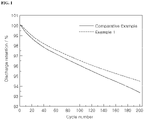
FIG. 1 is a graph showing the evaluation results of characteristics after addition of additives demonstrated inExperiment 1 and Table 2 according to an exemplary embodiment of the present invention in comparison to the Comparative Example. -
FIG. 2 is a graph showing the evaluation results of characteristics after addition of additives demonstrated inExperiment 2 according to an exemplary embodiment of the present invention in comparison to the Comparative Example. -
FIG. 3 is a graph showing the evaluation results of characteristics after addition of additives inExperiment 3 according to an exemplary embodiment of the present invention in comparison to the Comparative Example. - It is understood that the term "vehicle" or "vehicular" or other similar term as used herein is inclusive of motor vehicles in general such as passenger automobiles including sports utility vehicles (SUV), buses, trucks, various commercial vehicles, watercraft including a variety of boats and ships, aircraft, and the like, and includes hybrid vehicles, electric vehicles, combustion, plug-in hybrid electric vehicles, hydrogen-powered vehicles and other alternative fuel vehicles (e.g. fuels derived from resources other than petroleum).
- The terminology used herein is for the purpose of describing particular embodiments only and is not intended to be limiting. As used herein, the singular forms "a," "an" and "the" are intended to include the plural forms as well, unless the context clearly indicates otherwise. It will be further understood that the terms "comprise", "include", "have", etc. when used in this specification, specify the presence of stated features, regions, integers, steps, operations, elements and/or components but do not preclude the presence or addition of one or more other features, regions, integers, steps, operations, elements, components, and/or combinations thereof.
- Further, unless specifically stated or obvious from context, as used herein, the term "about" is understood as within a range of normal tolerance in the art, for example within 2 standard deviations of the mean. "About" can be understood as within 10%, 9%, 8%, 7%, 6%, 5%, 4%, 3%, 2%, 1%, 0.5%, 0.1%, 0.05%, or 0.01% of the stated value. Unless otherwise clear from the context, all numerical values provided herein are modified by the term "about."
- Reference will now be made in detail to the preferred embodiments of the present invention, examples of which are illustrated in the accompanying drawings. However, the present invention is not limited to the embodiments, and may be implemented in various forms. The embodiments are provided only to fully illustrate the present invention and to completely inform those having ordinary knowledge in the art of the scope of the present invention.
- In one aspect, the electrolyte solution for lithium secondary batteries may be a material constituting an electrolyte applicable to lithium secondary batteries and includes a lithium salt, a solvent and a negative-electrode additive. In addition, the electrolyte solution may further include a positive-electrode additive.
- Preferably, the lithium salt may be one or more selected from the group consisting of LiPF6, LiBF4, LiClO4, LiCl, LiBr, LiI, LiB10Cl10, LiCF3SO3, LiCF3CO2, LiAsF6, LiSbF6, LiAlCl4, CH3SO3Li, CF3SO3Li, LiN(SO2C2F5)2, Li(CF3SO2)2N, LiC4F9SO3, LiB(C6H5)4, Li(SO2F)2N (LiFSI) and (CF3SO2)2NLi.
- The lithium salt may suitably be present at a concentration of about 0.2 to 1.2 moles in the electrolyte solution.
- Preferably, the solvent may be one more selected from the group consisting of carbonate solvents, ester solvents, ether solvents and ketone solvents.
- The carbonate solvent may suitably include dimethyl carbonate (DMC), diethyl carbonate (DEC), dipropyl carbonate (DPC), methylpropyl carbonate (MPC), ethylpropyl carbonate (EPC), ethylmethyl carbonate (EMC), ethylene carbonate (EC), propylene carbonate (PC), butylene carbonate (BC), fluoroethylene carbonate (FEC), vinylene carbonate (VC) or the like. In addition, the carbonate solvent may be an ester solvent such as γ-butyrolactone (GBL), n-methyl acetate, n-ethyl acetate or n-propyl acetate, or an ether solvent such as dibutyl ether, but is not limited thereto.
- In addition, the solvent may further include an aromatic hydrocarbon-based organic solvent. For example, the aromatic hydrocarbon-based organic solvent may suitably include benzene, fluorobenzene, bromobenzene, chlorobenzene, cyclohexylbenzene, isopropylbenzene, n-butylbenzene, octylbenzene, toluene, xylene, mesitylene, and the like, and this solvent may be used alone or in combination.
- In addition, LiPO2F2 may suitably be used as the positive-electrode additive.
- Meanwhile, bis(4-(trifluoromethoxy)phenyl) oxalate, represented by the following
Formula 1, may be used as the negative-electrode additive added to the electrolyte solution according to the embodiment of the present invention.
- In this case, the negative-electrode additive may improve the low-resistance characteristics and increase the lifespan by forming a solid electrolyte interphase (SEI) on the negative electrode. The negative-electrode additive may suitably be added in an amount of about 3.0% by weight or less, or particularly, in an amount of about 0.2 to 2.0% by weight, with respect to the total weight of the electrolyte solution.
- When the amount of the negative-electrode additive added is greater than about 3.0% by weight, the coating film may be excessively formed, disadvantageously resulting in high cell resistance and thus decreased cell power. More precisely, when the amount of the negative-electrode additive is less than about 0.2% by weight, there is a problem in that the SEI, which is a protective film of the negative electrode, may not be insufficiently formed and thus the lifespan of the cell is greatly reduced. When the amount of the negative-electrode additive is greater than about 2.0% by weight, there occurs a problem in that cell power required for vehicles may decreased.
- Meanwhile, the lithium secondary battery according to an embodiment of the present invention includes a positive electrode, a negative electrode and a separator, in addition to the above-described electrolyte solution.
- The positive electrode includes an NCM-based positive-electrode active material containing Ni, Co and Mn. In particular, the positive-electrode active material included in the positive electrode preferably may include only an NCM-based positive-electrode active material containing Ni in an amount of about 60% by weight or greater based on the total weight of the NCM-based positive-electrode active material.
- In addition, the negative electrode may include carbon (C)-based negative-electrode active material alone or includes a carbon (C)-based negative-electrode active material.
- The carbon (C)-based negative-electrode active material may include one or more material selected from the group consisting of artificial graphite, natural graphite, graphitized carbon fiber, graphitized mesocarbon microbeads, fullerene and amorphous carbon.
- For example, the positive electrode and the negative electrode are produced by mixing each of active materials with a conductive material, a binder and a solvent to prepare an electrode slurry, and then directly coating a current collector with the electrode slurry, followed by drying. In this case, aluminum (Al) may be used as the current collector, but the present invention is not limited thereto. Since such an electrode production method is well known in the art, a detailed description thereof will be omitted.
- The binder may facilitate adhesion between particles of each active material or adhesion thereof to the current collector. For example, the binder may suitably include polyvinyl alcohol, carboxymethyl cellulose, hydroxypropyl cellulose, diacetyl cellulose, polyvinyl chloride, carboxylated polyvinylchloride, polyvinylfluoride, an ethylene-oxide-containing polymer, polyvinylpyrrolidone, polyurethane, polytetrafluoroethylene, polyvinylidene fluoride, polyethylene, polypropylene, styrenebutadiene rubber, acrylated styrene butadiene rubber, an epoxy resin, nylon, or the like, but is not limited thereto.
- In addition, the conductive material may be used to impart conductivity to the electrode, and any one can be used as long as it is an electrically conductive material that does not cause any chemical change in the battery to be produced, and examples thereof include natural graphite, artificial graphite, carbon black, acetylene black, Ketjen black, carbon fibers, metal powders, such as copper, nickel, aluminum and silver powders, metal fibers and the like. In addition, a conductive material such as a polyphenylene derivative may be used alone or in combination thereof.
- The separator prevents a short circuit between the positive electrode and the negative electrode, and provides a passage for lithium ions. Such a separator may suitably include a well-known separator selected from polyolefin-based polymer membranes such as polypropylene, polyethylene, polyethylene/polypropylene, polyethylene/polypropylene/polyethylene and polypropylene/polyethylene/polypropylene, and multiple membranes, microporous films, woven fabrics and nonwoven fabrics thereof. In addition, a porous polyolefin film coated with a resin having excellent stability may be used.
- Hereinafter, the present invention will be described with reference to Examples and Comparative Examples according to the present invention.
- In order to determine various characteristics depending on the type of the negative-electrode additive added to the electrolyte solution, ion conductivity, initial cell resistance, high-temperature durability and high-rate characteristics were measured while changing the type of the negative-electrode additive as shown in Table 1 below, and the result is shown in Table 2 and
FIG. 1 . - At this time, the lithium salts used to prepare the electrolyte solution were 0.5M LiPF6 and 0.5M LiFSI, and the solvent herein used was a mixture of ethylene carbonate (EC), ethyl methyl carbonate (EMC) and diethyl carbonate (DEC) present at a volume ratio of 25:45:30. In addition, LiPO2F2 was used as a positive-electrode additive.
- NCM811 was used as the positive electrode and graphite was used as the negative electrode.
- At this time, the measurement conditions of ion conductivity, initial cell resistance, high-temperature durability and high-rate characteristics are as follows.
- Ion conductivity: measured at room temperature (25°C)
- Initial cell resistance: cell DC-IR measured after formation
- High-temperature durability: charging at 0.5C cc/cv and then discharging at 0.5C cc, at 2.5 to 4.2V (cut-off) and at high temperature of 45°C during each cycle
- High-rate characteristics: capacity expression value determined while increasing discharge after charging only 0.1C cc/cv during every cycleTable 1 Item Lithium salt (M) Solvent (weight ratio) Positive-electrode additive (wt%) Negative-electrode additive (wt%) LiPF6 LiFSI EC EMC DEC LiPO2F2 VC [Formula 1] Additive Comparative Example 0.5 0.5 25 45 30 1 2.0 - Example 1 0.5 0.5 25 45 30 1 - 2.0 Table 2 Item Ionic conductivity (mS/cm) Initial cell resistance (%) High-temperature durability (%)@200cyc High-rate characteristics 2C(%) Comparative Example 8.19 100 93.4 35.4 Example 1 8.24 99.4 94.7 42.4 - As shown in Table 2 and
FIG. 1 , when bis(4-(trifluoromethoxy)phenyl) oxalate, represented byFormula 1 according to the present Example was used as a negative-electrode additive, improvement in ion conductivity, high-temperature durability and high-rate characteristics were obtained, compared to Comparative Example using a conventional general additive VC as a negative-electrode additive under the same conditions. In particular, improved high-rate characteristics along with excellent lifetime in the same content can satisfy the performance suitable for vehicle batteries. - Charging and discharging were performed at 0.5C, 1.0C, 2.0C and 0.1C on Comparative Example and Example 1 of <
Experiment 1>, respectively, the corresponding capacity expression values were determined, and the results are shown inFIG. 2 . - As shown in
FIG. 2 , when bis(4-(trifluoromethoxy)phenyl) oxalate, represented byFormula 1 according to the present Example, as a negative-electrode additive, improved high-rate characteristics can be obtained as compared to Comparative Example using a conventional general additive VC as a negative-electrode additive under the same conditions. This means that the improved high-rate characteristics can be based on excellent ion conductivity. - In order to determine various characteristics depending on the type of the negative-electrode additive that is added to the electrolyte solution, ion conductivity, initial cell resistance, high-temperature durability and high-rate characteristics were measured while changing the type of the negative-electrode additive as shown in Table 3 below, and the result is shown in Table 4 and
FIG. 3 . In this case, other conditions and measurement methods are the same as in <Experiment 1>.Table 3 Item Lithium salt (M) Solvent (Weight ratio) Positive-electrode additive (wt%) Negative-electrode additive (wt%) LiPF6 LiFSI EC EMC DEC LiPO2F2 VC [Formula 1] Additive Comparative Example 0.5 0.5 25 45 30 1 2 - Example 2 0.5 0.5 25 45 30 1 - 0.2 Example 3 0.5 0.5 25 45 30 1 - 0.5 Example 4 0.5 0.5 25 45 30 1 - 1.0 Example 5 0.5 0.5 25 45 30 1 - 1.5 Example 1 0.5 0.5 25 45 30 1 - 2.0 Table 4 Item Ionic conductivity (mS/cm) Initial cell resistance (%) High-temperature durability (%)@200cyc Comparative Example 8.19 100 93.4 Example 2 8.73 94.1 94.3 Example 3 8.68 95.9 94.4 Example 4 8.51 96.3 94.5 Example 5 8.47 97.4 94.5 Example 1 8.32 98.5 94.5 - As shown in Table 4 and
FIG. 2 , Examples 1 to 5 using bis(4-(trifluoromethoxy)phenyl) oxalate represented byFormula 1 according to the present Example as a negative-electrode additive exhibit improvement in ion conductivity, high-temperature durability and high-rate characteristics, compared to Comparative Example using a conventional general additive VC as a negative-electrode additive under the same conditions. - In particular, as shown in Examples 1 to 5, gradual improvements in ionic conductivity and initial cell resistance can be obtained as the amount of bis(4-(trifluoromethoxy)phenyl) oxalate that is added increases.
- However, as shown in Example 2, in which the amount of bis(4-(trifluoromethoxy)phenyl) oxalate that was added was 0.2% by weight, and Example 1, in which the amount of bis(4-(trifluoromethoxy)phenyl) oxalate that was added was 2.0% by weight, the degree of improvement in high-temperature durability was maintained constant even though the amount of the negative-electrode additive that was added was changed.
- Therefore, when the amount of bis(4- (trifluoromethoxy)phenyl) oxalate that was added is greater than about 2.0% by weight, the ion conductivity and initial cell resistance can be further improved. However, the improvement in high-temperature durability may not be insufficient, and the amount that is used is greater than the amount of VC that is used as the conventional negative-electrode additive. Thus, the upper limit of the amount of bis(4-(trifluoromethoxy)phenyl) oxalate added is preferably of about 2.0% by weight.
- Therefore, the negative-electrode additive may be preferably added in an amount of 0.2 to 2.0% by weight with respect to the total weight of the electrolyte solution.
- According to various exemplary embodiments of the present invention, by adding an additive for forming an SEI film on a negative electrode to an electrolyte solution, the effect of increasing the long-term lifespan of lithium secondary batteries can be expected.
- In addition, by using an electrolyte solution containing a high-voltage additive, an effect of reducing the cell resistance of the lithium secondary battery and thus improving the power characteristics can be expected.
Claims (10)
- An electrolyte solution for lithium secondary batteries, comprising:a lithium salt;a solvent; andbis(4-(trifluoromethoxy)phenyl) oxalate represented by the following Formula 1.

- The electrolyte solution according to claim 1, wherein the bis(4-(trifluoromethoxy)phenyl) oxalate is present in an amount of about 3.0% by weight or less with respect to the total weight of the electrolyte solution.
- The electrolyte solution according to claim 2, wherein the bis(4-(trifluoromethoxy)phenyl) oxalate is present in an amount of about 0.2 to 2.0% by weight with respect to the total weight of the electrolyte solution.
- The electrolyte solution according to claim 1, wherein the lithium salt comprises one or a mixture of two or more selected from the group consisting of LiPF6, LiBF4, LiClO4, LiCl, LiBr, LiI, LiB10Cl10, LiCF3SO3, LiCF3CO2, LiAsF6, LiSbF6, LiAlCl4, CH3SO3Li, CF3SO3Li, LiN(SO2C2F5)2, Li(CF3SO2)2N, LiC4F9SO3, LiB(C6H5)4, Li(SO2F)2N (LiFSI) and (CF3SO2)2NLi.
- The electrolyte solution according to claim 1, wherein the solvent comprises one or a mixture of two or more selected from the group consisting of carbonate solvents, ester solvents, ether solvents and ketone solvents.
- The electrolyte solution according to claim 1, further comprising a positive-electrode additive,
wherein the positive-electrode additive is LiPO2F2. - A lithium secondary battery comprising an electrolyte solution according to claim 1.
- The lithium secondary battery according to claim 7, further comprising:a positive electrode comprising a positive-electrode active material containing Ni, Co and Mn;a negative electrode comprising a carbon (C)-based negative-electrode active material; anda separator interposed between the positive electrode and the negative electrode.
- The lithium secondary battery according to claim 7, wherein the lithium secondary battery has a discharge retention of about 94% or greater, which is measured after 200 cycles, each cycle including 0.5C cc/cv charging and 0.5C cc/cv discharging at 2.5 to 4.2V (cut-off) and at a temperature of 45 °C
- A vehicle comprising a lithium secondary battery of claim 7.
Applications Claiming Priority (1)
| Application Number | Priority Date | Filing Date | Title |
|---|---|---|---|
| KR1020190167254A KR102845705B1 (en) | 2019-12-13 | 2019-12-13 | Electrolyte solution for lithium secondary battery and Lithium secondary battery comprising the same |
Publications (2)
| Publication Number | Publication Date |
|---|---|
| EP3836264A1 EP3836264A1 (en) | 2021-06-16 |
| EP3836264B1 true EP3836264B1 (en) | 2022-09-21 |
Family
ID=71096609
Family Applications (1)
| Application Number | Title | Priority Date | Filing Date |
|---|---|---|---|
| EP20180040.6A Active EP3836264B1 (en) | 2019-12-13 | 2020-06-15 | Electrolyte solution for lithium secondary batteries and lithium secondary battery including the same |
Country Status (4)
| Country | Link |
|---|---|
| US (1) | US20210184264A1 (en) |
| EP (1) | EP3836264B1 (en) |
| KR (1) | KR102845705B1 (en) |
| CN (1) | CN112993403B (en) |
Families Citing this family (1)
| Publication number | Priority date | Publication date | Assignee | Title |
|---|---|---|---|---|
| CN117543078A (en) * | 2023-11-22 | 2024-02-09 | 惠州锂威新能源科技有限公司 | Electrolyte and preparation method and application thereof |
Family Cites Families (10)
| Publication number | Priority date | Publication date | Assignee | Title |
|---|---|---|---|---|
| KR100605060B1 (en) * | 1998-08-31 | 2006-07-26 | 엔이씨 도킨 도치기 가부시키가이샤 | Non-aqueous electrolyte battery |
| KR100472512B1 (en) * | 2002-11-15 | 2005-03-11 | 삼성에스디아이 주식회사 | Organic electrolytic solution and lithium battery employing the same |
| JP5120596B2 (en) * | 2006-11-22 | 2013-01-16 | ソニー株式会社 | Non-aqueous electrolyte, electrochemical device and non-aqueous secondary battery |
| EP2978059B1 (en) * | 2013-05-16 | 2018-01-31 | LG Chem, Ltd. | Non-aqueous electrolytic solution and lithium secondary battery comprising same |
| KR20150072188A (en) * | 2013-12-19 | 2015-06-29 | 에스케이이노베이션 주식회사 | Electrolyte for Lithium Secondary Battery and Lithium Secondary Battery Containing the Same |
| JP6361518B2 (en) * | 2014-01-22 | 2018-07-25 | 三菱ケミカル株式会社 | Non-aqueous electrolyte and non-aqueous electrolyte secondary battery using the same |
| CN104362346A (en) * | 2014-10-14 | 2015-02-18 | 东莞新能源科技有限公司 | Lithium ion battery |
| JP2019087497A (en) * | 2017-11-09 | 2019-06-06 | ダイキン工業株式会社 | Electrolyte, electrochemical device, lithium ion secondary battery and module |
| KR20190092149A (en) | 2018-01-30 | 2019-08-07 | 파낙스 이텍(주) | Electrolyte for secondary battery and secondary battery containing the same |
| CN113228373A (en) * | 2019-02-19 | 2021-08-06 | 株式会社Adeka | Composition for electrolyte, nonaqueous electrolyte, and nonaqueous electrolyte secondary battery |
-
2019
- 2019-12-13 KR KR1020190167254A patent/KR102845705B1/en active Active
-
2020
- 2020-06-15 EP EP20180040.6A patent/EP3836264B1/en active Active
- 2020-06-15 US US16/901,569 patent/US20210184264A1/en not_active Abandoned
- 2020-06-29 CN CN202010606861.XA patent/CN112993403B/en active Active
Also Published As
| Publication number | Publication date |
|---|---|
| KR102845705B1 (en) | 2025-08-12 |
| US20210184264A1 (en) | 2021-06-17 |
| EP3836264A1 (en) | 2021-06-16 |
| CN112993403A (en) | 2021-06-18 |
| CN112993403B (en) | 2025-11-11 |
| KR20210075775A (en) | 2021-06-23 |
Similar Documents
| Publication | Publication Date | Title |
|---|---|---|
| EP3742537B1 (en) | Non-aqueous electrolyte solution for lithium secondary battery and lithium secondary battery including the same | |
| KR101135605B1 (en) | Non-aqueous electrolyte solution for lithium secondary battery and lithium secondary battery comprising the same | |
| KR20240062915A (en) | Electrolyte Solution Additive, Electrolyte Solution For Battery And Secondary Battery Comprising The Same | |
| EP3985774B1 (en) | Electrolyte for lithium secondary battery and lithium secondary battery comprising the same | |
| KR102473691B1 (en) | Electrolyte for lithium secondary battery | |
| EP3836264B1 (en) | Electrolyte solution for lithium secondary batteries and lithium secondary battery including the same | |
| EP3836273B1 (en) | Electrolyte solution for lithium secondary batteries and lithium secondary battery including the same | |
| US20240162492A1 (en) | Electrolyte solution for lithium secondary battery and lithium secondary battery comprising the same | |
| EP3836263A1 (en) | Electrolyte solution for lithium secondary batteries and lithium secondary battery including the same | |
| KR20230101255A (en) | Electrolyte solution for lithium secondary battery and Lithium secondary battery comprising the same | |
| KR20220056578A (en) | Electrolyte solution for lithium secondary battery and Lithium secondary battery comprising the same | |
| KR20220048803A (en) | Electrolyte solution for lithium secondary battery and Lithium secondary battery comprising the same | |
| KR20220048784A (en) | Electrolyte solution for lithium secondary battery and Lithium secondary battery comprising the same | |
| US20240170724A1 (en) | Electrolyte solution for lithium secondary battery and lithium secondary battery comprising the same | |
| US12183886B2 (en) | Electrolyte solution for lithium secondary battery and lithium secondary battery including the same | |
| KR102939173B1 (en) | Electrolyte solution for lithium secondary battery and Lithium secondary battery comprising the same | |
| KR102931335B1 (en) | Electrolyte solution for lithium secondary battery and Lithium secondary battery comprising the same | |
| US20240178450A1 (en) | Electrolyte solution for lithium secondary battery and lithium secondary battery including same | |
| US20240162491A1 (en) | Electrolyte solution for lithium secondary battery and lithium secondary battery comprising the same | |
| US20220328875A1 (en) | Electrolyte solution for lithium secondary battery and lithium secondary battery including the same | |
| US20210151796A1 (en) | Electrolytic Solution for Lithium Secondary Batteries and Lithium Secondary Battery Including the Same | |
| KR20230133602A (en) | Electrolyte solution for lithium secondary battery and Lithium secondary battery comprising the same | |
| KR20230133603A (en) | Electrolyte solution for lithium secondary battery and Lithium secondary battery comprising the same | |
| KR20260025497A (en) | Electrolyte Solution Additive, Electrolyte Solution For Battery And Secondary Battery Comprising The Same |
Legal Events
| Date | Code | Title | Description |
|---|---|---|---|
| PUAI | Public reference made under article 153(3) epc to a published international application that has entered the european phase |
Free format text: ORIGINAL CODE: 0009012 |
|
| STAA | Information on the status of an ep patent application or granted ep patent |
Free format text: STATUS: THE APPLICATION HAS BEEN PUBLISHED |
|
| AK | Designated contracting states |
Kind code of ref document: A1 Designated state(s): AL AT BE BG CH CY CZ DE DK EE ES FI FR GB GR HR HU IE IS IT LI LT LU LV MC MK MT NL NO PL PT RO RS SE SI SK SM TR |
|
| RAP3 | Party data changed (applicant data changed or rights of an application transferred) |
Owner name: HYUNDAI MOTOR COMPANY Owner name: KIA CORPORATION |
|
| STAA | Information on the status of an ep patent application or granted ep patent |
Free format text: STATUS: REQUEST FOR EXAMINATION WAS MADE |
|
| 17P | Request for examination filed |
Effective date: 20210920 |
|
| RBV | Designated contracting states (corrected) |
Designated state(s): AL AT BE BG CH CY CZ DE DK EE ES FI FR GB GR HR HU IE IS IT LI LT LU LV MC MK MT NL NO PL PT RO RS SE SI SK SM TR |
|
| GRAP | Despatch of communication of intention to grant a patent |
Free format text: ORIGINAL CODE: EPIDOSNIGR1 |
|
| STAA | Information on the status of an ep patent application or granted ep patent |
Free format text: STATUS: GRANT OF PATENT IS INTENDED |
|
| INTG | Intention to grant announced |
Effective date: 20220302 |
|
| GRAJ | Information related to disapproval of communication of intention to grant by the applicant or resumption of examination proceedings by the epo deleted |
Free format text: ORIGINAL CODE: EPIDOSDIGR1 |
|
| STAA | Information on the status of an ep patent application or granted ep patent |
Free format text: STATUS: REQUEST FOR EXAMINATION WAS MADE |
|
| INTC | Intention to grant announced (deleted) | ||
| GRAP | Despatch of communication of intention to grant a patent |
Free format text: ORIGINAL CODE: EPIDOSNIGR1 |
|
| STAA | Information on the status of an ep patent application or granted ep patent |
Free format text: STATUS: GRANT OF PATENT IS INTENDED |
|
| GRAS | Grant fee paid |
Free format text: ORIGINAL CODE: EPIDOSNIGR3 |
|
| GRAA | (expected) grant |
Free format text: ORIGINAL CODE: 0009210 |
|
| STAA | Information on the status of an ep patent application or granted ep patent |
Free format text: STATUS: THE PATENT HAS BEEN GRANTED |
|
| INTG | Intention to grant announced |
Effective date: 20220728 |
|
| AK | Designated contracting states |
Kind code of ref document: B1 Designated state(s): AL AT BE BG CH CY CZ DE DK EE ES FI FR GB GR HR HU IE IS IT LI LT LU LV MC MK MT NL NO PL PT RO RS SE SI SK SM TR |
|
| REG | Reference to a national code |
Ref country code: GB Ref legal event code: FG4D |
|
| REG | Reference to a national code |
Ref country code: CH Ref legal event code: EP |
|
| REG | Reference to a national code |
Ref country code: IE Ref legal event code: FG4D |
|
| REG | Reference to a national code |
Ref country code: DE Ref legal event code: R096 Ref document number: 602020005210 Country of ref document: DE |
|
| REG | Reference to a national code |
Ref country code: AT Ref legal event code: REF Ref document number: 1520409 Country of ref document: AT Kind code of ref document: T Effective date: 20221015 |
|
| REG | Reference to a national code |
Ref country code: LT Ref legal event code: MG9D |
|
| REG | Reference to a national code |
Ref country code: NL Ref legal event code: MP Effective date: 20220921 |
|
| PG25 | Lapsed in a contracting state [announced via postgrant information from national office to epo] |
Ref country code: SE Free format text: LAPSE BECAUSE OF FAILURE TO SUBMIT A TRANSLATION OF THE DESCRIPTION OR TO PAY THE FEE WITHIN THE PRESCRIBED TIME-LIMIT Effective date: 20220921 Ref country code: RS Free format text: LAPSE BECAUSE OF FAILURE TO SUBMIT A TRANSLATION OF THE DESCRIPTION OR TO PAY THE FEE WITHIN THE PRESCRIBED TIME-LIMIT Effective date: 20220921 Ref country code: NO Free format text: LAPSE BECAUSE OF FAILURE TO SUBMIT A TRANSLATION OF THE DESCRIPTION OR TO PAY THE FEE WITHIN THE PRESCRIBED TIME-LIMIT Effective date: 20221221 Ref country code: LV Free format text: LAPSE BECAUSE OF FAILURE TO SUBMIT A TRANSLATION OF THE DESCRIPTION OR TO PAY THE FEE WITHIN THE PRESCRIBED TIME-LIMIT Effective date: 20220921 Ref country code: LT Free format text: LAPSE BECAUSE OF FAILURE TO SUBMIT A TRANSLATION OF THE DESCRIPTION OR TO PAY THE FEE WITHIN THE PRESCRIBED TIME-LIMIT Effective date: 20220921 Ref country code: FI Free format text: LAPSE BECAUSE OF FAILURE TO SUBMIT A TRANSLATION OF THE DESCRIPTION OR TO PAY THE FEE WITHIN THE PRESCRIBED TIME-LIMIT Effective date: 20220921 |
|
| REG | Reference to a national code |
Ref country code: AT Ref legal event code: MK05 Ref document number: 1520409 Country of ref document: AT Kind code of ref document: T Effective date: 20220921 |
|
| PG25 | Lapsed in a contracting state [announced via postgrant information from national office to epo] |
Ref country code: HR Free format text: LAPSE BECAUSE OF FAILURE TO SUBMIT A TRANSLATION OF THE DESCRIPTION OR TO PAY THE FEE WITHIN THE PRESCRIBED TIME-LIMIT Effective date: 20220921 Ref country code: GR Free format text: LAPSE BECAUSE OF FAILURE TO SUBMIT A TRANSLATION OF THE DESCRIPTION OR TO PAY THE FEE WITHIN THE PRESCRIBED TIME-LIMIT Effective date: 20221222 |
|
| PG25 | Lapsed in a contracting state [announced via postgrant information from national office to epo] |
Ref country code: SM Free format text: LAPSE BECAUSE OF FAILURE TO SUBMIT A TRANSLATION OF THE DESCRIPTION OR TO PAY THE FEE WITHIN THE PRESCRIBED TIME-LIMIT Effective date: 20220921 Ref country code: RO Free format text: LAPSE BECAUSE OF FAILURE TO SUBMIT A TRANSLATION OF THE DESCRIPTION OR TO PAY THE FEE WITHIN THE PRESCRIBED TIME-LIMIT Effective date: 20220921 Ref country code: PT Free format text: LAPSE BECAUSE OF FAILURE TO SUBMIT A TRANSLATION OF THE DESCRIPTION OR TO PAY THE FEE WITHIN THE PRESCRIBED TIME-LIMIT Effective date: 20230123 Ref country code: ES Free format text: LAPSE BECAUSE OF FAILURE TO SUBMIT A TRANSLATION OF THE DESCRIPTION OR TO PAY THE FEE WITHIN THE PRESCRIBED TIME-LIMIT Effective date: 20220921 Ref country code: CZ Free format text: LAPSE BECAUSE OF FAILURE TO SUBMIT A TRANSLATION OF THE DESCRIPTION OR TO PAY THE FEE WITHIN THE PRESCRIBED TIME-LIMIT Effective date: 20220921 Ref country code: AT Free format text: LAPSE BECAUSE OF FAILURE TO SUBMIT A TRANSLATION OF THE DESCRIPTION OR TO PAY THE FEE WITHIN THE PRESCRIBED TIME-LIMIT Effective date: 20220921 |
|
| PG25 | Lapsed in a contracting state [announced via postgrant information from national office to epo] |
Ref country code: SK Free format text: LAPSE BECAUSE OF FAILURE TO SUBMIT A TRANSLATION OF THE DESCRIPTION OR TO PAY THE FEE WITHIN THE PRESCRIBED TIME-LIMIT Effective date: 20220921 Ref country code: PL Free format text: LAPSE BECAUSE OF FAILURE TO SUBMIT A TRANSLATION OF THE DESCRIPTION OR TO PAY THE FEE WITHIN THE PRESCRIBED TIME-LIMIT Effective date: 20220921 Ref country code: IS Free format text: LAPSE BECAUSE OF FAILURE TO SUBMIT A TRANSLATION OF THE DESCRIPTION OR TO PAY THE FEE WITHIN THE PRESCRIBED TIME-LIMIT Effective date: 20230121 Ref country code: EE Free format text: LAPSE BECAUSE OF FAILURE TO SUBMIT A TRANSLATION OF THE DESCRIPTION OR TO PAY THE FEE WITHIN THE PRESCRIBED TIME-LIMIT Effective date: 20220921 |
|
| P01 | Opt-out of the competence of the unified patent court (upc) registered |
Effective date: 20230510 |
|
| REG | Reference to a national code |
Ref country code: DE Ref legal event code: R097 Ref document number: 602020005210 Country of ref document: DE |
|
| PG25 | Lapsed in a contracting state [announced via postgrant information from national office to epo] |
Ref country code: NL Free format text: LAPSE BECAUSE OF FAILURE TO SUBMIT A TRANSLATION OF THE DESCRIPTION OR TO PAY THE FEE WITHIN THE PRESCRIBED TIME-LIMIT Effective date: 20220921 Ref country code: AL Free format text: LAPSE BECAUSE OF FAILURE TO SUBMIT A TRANSLATION OF THE DESCRIPTION OR TO PAY THE FEE WITHIN THE PRESCRIBED TIME-LIMIT Effective date: 20220921 |
|
| PLBE | No opposition filed within time limit |
Free format text: ORIGINAL CODE: 0009261 |
|
| STAA | Information on the status of an ep patent application or granted ep patent |
Free format text: STATUS: NO OPPOSITION FILED WITHIN TIME LIMIT |
|
| PG25 | Lapsed in a contracting state [announced via postgrant information from national office to epo] |
Ref country code: DK Free format text: LAPSE BECAUSE OF FAILURE TO SUBMIT A TRANSLATION OF THE DESCRIPTION OR TO PAY THE FEE WITHIN THE PRESCRIBED TIME-LIMIT Effective date: 20220921 |
|
| 26N | No opposition filed |
Effective date: 20230622 |
|
| PG25 | Lapsed in a contracting state [announced via postgrant information from national office to epo] |
Ref country code: SI Free format text: LAPSE BECAUSE OF FAILURE TO SUBMIT A TRANSLATION OF THE DESCRIPTION OR TO PAY THE FEE WITHIN THE PRESCRIBED TIME-LIMIT Effective date: 20220921 |
|
| PG25 | Lapsed in a contracting state [announced via postgrant information from national office to epo] |
Ref country code: MC Free format text: LAPSE BECAUSE OF FAILURE TO SUBMIT A TRANSLATION OF THE DESCRIPTION OR TO PAY THE FEE WITHIN THE PRESCRIBED TIME-LIMIT Effective date: 20220921 |
|
| PG25 | Lapsed in a contracting state [announced via postgrant information from national office to epo] |
Ref country code: MC Free format text: LAPSE BECAUSE OF FAILURE TO SUBMIT A TRANSLATION OF THE DESCRIPTION OR TO PAY THE FEE WITHIN THE PRESCRIBED TIME-LIMIT Effective date: 20220921 |
|
| REG | Reference to a national code |
Ref country code: CH Ref legal event code: PL |
|
| REG | Reference to a national code |
Ref country code: BE Ref legal event code: MM Effective date: 20230630 |
|
| PG25 | Lapsed in a contracting state [announced via postgrant information from national office to epo] |
Ref country code: LU Free format text: LAPSE BECAUSE OF NON-PAYMENT OF DUE FEES Effective date: 20230615 |
|
| REG | Reference to a national code |
Ref country code: IE Ref legal event code: MM4A |
|
| PG25 | Lapsed in a contracting state [announced via postgrant information from national office to epo] |
Ref country code: LU Free format text: LAPSE BECAUSE OF NON-PAYMENT OF DUE FEES Effective date: 20230615 |
|
| PG25 | Lapsed in a contracting state [announced via postgrant information from national office to epo] |
Ref country code: IE Free format text: LAPSE BECAUSE OF NON-PAYMENT OF DUE FEES Effective date: 20230615 |
|
| PG25 | Lapsed in a contracting state [announced via postgrant information from national office to epo] |
Ref country code: IE Free format text: LAPSE BECAUSE OF NON-PAYMENT OF DUE FEES Effective date: 20230615 Ref country code: CH Free format text: LAPSE BECAUSE OF NON-PAYMENT OF DUE FEES Effective date: 20230630 |
|
| PG25 | Lapsed in a contracting state [announced via postgrant information from national office to epo] |
Ref country code: IT Free format text: LAPSE BECAUSE OF FAILURE TO SUBMIT A TRANSLATION OF THE DESCRIPTION OR TO PAY THE FEE WITHIN THE PRESCRIBED TIME-LIMIT Effective date: 20220921 Ref country code: BE Free format text: LAPSE BECAUSE OF NON-PAYMENT OF DUE FEES Effective date: 20230630 |
|
| PG25 | Lapsed in a contracting state [announced via postgrant information from national office to epo] |
Ref country code: BG Free format text: LAPSE BECAUSE OF FAILURE TO SUBMIT A TRANSLATION OF THE DESCRIPTION OR TO PAY THE FEE WITHIN THE PRESCRIBED TIME-LIMIT Effective date: 20220921 |
|
| PG25 | Lapsed in a contracting state [announced via postgrant information from national office to epo] |
Ref country code: BG Free format text: LAPSE BECAUSE OF FAILURE TO SUBMIT A TRANSLATION OF THE DESCRIPTION OR TO PAY THE FEE WITHIN THE PRESCRIBED TIME-LIMIT Effective date: 20220921 |
|
| PGFP | Annual fee paid to national office [announced via postgrant information from national office to epo] |
Ref country code: DE Payment date: 20250520 Year of fee payment: 6 |
|
| PGFP | Annual fee paid to national office [announced via postgrant information from national office to epo] |
Ref country code: GB Payment date: 20250520 Year of fee payment: 6 |
|
| PGFP | Annual fee paid to national office [announced via postgrant information from national office to epo] |
Ref country code: FR Payment date: 20250521 Year of fee payment: 6 |
|
| PG25 | Lapsed in a contracting state [announced via postgrant information from national office to epo] |
Ref country code: CY Free format text: LAPSE BECAUSE OF FAILURE TO SUBMIT A TRANSLATION OF THE DESCRIPTION OR TO PAY THE FEE WITHIN THE PRESCRIBED TIME-LIMIT; INVALID AB INITIO Effective date: 20200615 |
|
| PG25 | Lapsed in a contracting state [announced via postgrant information from national office to epo] |
Ref country code: HU Free format text: LAPSE BECAUSE OF FAILURE TO SUBMIT A TRANSLATION OF THE DESCRIPTION OR TO PAY THE FEE WITHIN THE PRESCRIBED TIME-LIMIT; INVALID AB INITIO Effective date: 20200615 |
|
| PG25 | Lapsed in a contracting state [announced via postgrant information from national office to epo] |
Ref country code: TR Free format text: LAPSE BECAUSE OF FAILURE TO SUBMIT A TRANSLATION OF THE DESCRIPTION OR TO PAY THE FEE WITHIN THE PRESCRIBED TIME-LIMIT Effective date: 20220921 |