EP3836072A1 - Image processing method and apparatus, and storage medium - Google Patents
Image processing method and apparatus, and storage medium Download PDFInfo
- Publication number
- EP3836072A1 EP3836072A1 EP20177460.1A EP20177460A EP3836072A1 EP 3836072 A1 EP3836072 A1 EP 3836072A1 EP 20177460 A EP20177460 A EP 20177460A EP 3836072 A1 EP3836072 A1 EP 3836072A1
- Authority
- EP
- European Patent Office
- Prior art keywords
- image
- character
- region
- threshold
- sharpness
- Prior art date
- Legal status (The legal status is an assumption and is not a legal conclusion. Google has not performed a legal analysis and makes no representation as to the accuracy of the status listed.)
- Granted
Links
Images



Classifications
-
- G—PHYSICS
- G06—COMPUTING OR CALCULATING; COUNTING
- G06T—IMAGE DATA PROCESSING OR GENERATION, IN GENERAL
- G06T5/00—Image enhancement or restoration
- G06T5/73—Deblurring; Sharpening
-
- G—PHYSICS
- G06—COMPUTING OR CALCULATING; COUNTING
- G06V—IMAGE OR VIDEO RECOGNITION OR UNDERSTANDING
- G06V30/00—Character recognition; Recognising digital ink; Document-oriented image-based pattern recognition
- G06V30/10—Character recognition
- G06V30/14—Image acquisition
- G06V30/148—Segmentation of character regions
- G06V30/153—Segmentation of character regions using recognition of characters or words
-
- G—PHYSICS
- G06—COMPUTING OR CALCULATING; COUNTING
- G06T—IMAGE DATA PROCESSING OR GENERATION, IN GENERAL
- G06T5/00—Image enhancement or restoration
- G06T5/50—Image enhancement or restoration using two or more images, e.g. averaging or subtraction
-
- G—PHYSICS
- G06—COMPUTING OR CALCULATING; COUNTING
- G06T—IMAGE DATA PROCESSING OR GENERATION, IN GENERAL
- G06T7/00—Image analysis
- G06T7/10—Segmentation; Edge detection
- G06T7/12—Edge-based segmentation
-
- G—PHYSICS
- G06—COMPUTING OR CALCULATING; COUNTING
- G06T—IMAGE DATA PROCESSING OR GENERATION, IN GENERAL
- G06T9/00—Image coding
- G06T9/20—Contour coding, e.g. using detection of edges
-
- G—PHYSICS
- G06—COMPUTING OR CALCULATING; COUNTING
- G06V—IMAGE OR VIDEO RECOGNITION OR UNDERSTANDING
- G06V10/00—Arrangements for image or video recognition or understanding
- G06V10/20—Image preprocessing
-
- G—PHYSICS
- G06—COMPUTING OR CALCULATING; COUNTING
- G06V—IMAGE OR VIDEO RECOGNITION OR UNDERSTANDING
- G06V30/00—Character recognition; Recognising digital ink; Document-oriented image-based pattern recognition
- G06V30/10—Character recognition
- G06V30/12—Detection or correction of errors, e.g. by rescanning the pattern
- G06V30/133—Evaluation of quality of the acquired characters
-
- G—PHYSICS
- G06—COMPUTING OR CALCULATING; COUNTING
- G06T—IMAGE DATA PROCESSING OR GENERATION, IN GENERAL
- G06T2207/00—Indexing scheme for image analysis or image enhancement
- G06T2207/20—Special algorithmic details
- G06T2207/20092—Interactive image processing based on input by user
-
- G—PHYSICS
- G06—COMPUTING OR CALCULATING; COUNTING
- G06T—IMAGE DATA PROCESSING OR GENERATION, IN GENERAL
- G06T2207/00—Indexing scheme for image analysis or image enhancement
- G06T2207/20—Special algorithmic details
- G06T2207/20172—Image enhancement details
- G06T2207/20192—Edge enhancement; Edge preservation
-
- G—PHYSICS
- G06—COMPUTING OR CALCULATING; COUNTING
- G06V—IMAGE OR VIDEO RECOGNITION OR UNDERSTANDING
- G06V30/00—Character recognition; Recognising digital ink; Document-oriented image-based pattern recognition
- G06V30/10—Character recognition
Definitions
- the present disclosure generally relates to a computer technology, and more particularly, to an image processing method and apparatus as well as a storage medium.
- Mobile terminals have become an indispensable part of people's lives, work and study. More and more users select cameras of mobile terminals for image collection and store collected image information into the mobile terminals.
- a memory of a mobile terminal is limited. There is no solution about how to store as much image information as possible using a limited memory resource without impacting reading of the image information by a user.
- the present disclosure provides an image processing method and apparatus as well as a storage medium.
- an image processing method may include that:
- the method may further include that:
- the operation that the first image is segmented to acquire the at least one character in the first image and the peripheral image region of the at least one character may include that:
- the operation that optical character recognition is performed on the sub images within the different image regions to acquire the region of the at least one character and the peripheral image region of the at least one character in the first image may include that:
- the method may further include that: the first image is compressed when the confidence of the sub image of the image region including the at least one character is higher than a second threshold, the second threshold being greater than the first threshold.
- the operation that the sharpness of the at least one character is improved to obtain the second image may include that: the sharpness of the at least one character is improved to obtain the second image when the confidence is lower than or equal to the second threshold.
- the method may further include that:
- the operation that the second image is compressed and stored may include at least one of the following operations:
- an image processing apparatus may include:
- the device may further include:
- the acquisition module may specifically be configured to segment the first image to acquire different image regions, and perform optical character recognition on sub images within the different image regions to acquire the region of the at least one character and the peripheral image region of the at least one character in the first image.
- the acquisition module may specifically be configured to recognize the sub images within the different image regions based on optical character recognition to obtain character recognition results of the sub images within the different image regions and confidences of the at least one character recognition results; when a confidence of a sub image within an image region is higher than a first threshold, determine that the image region is the region including the at least one character in the first image, otherwise, when the confidence of the sub image of the image region is lower than or equal to the first threshold, determine that the image region is the peripheral image region of the at least one character.
- the device may further include: a compression module, configured to compress the first image when the confidence of the sub image of the image region including the at least one character is higher than a second threshold, the second threshold being greater than the first threshold.
- a compression module configured to compress the first image when the confidence of the sub image of the image region including the at least one character is higher than a second threshold, the second threshold being greater than the first threshold.
- the processing module may specifically be configured to, when the confidence is lower than or equal to the second threshold, improve the sharpness of the at least one character to obtain the second image.
- the device may further include:
- the processing module may specifically be configured to convert the second image with color into a black-and-white image for storage and/or convert the second image with color into a gray image for storage.
- an image processing apparatus may include:
- a non-transitory computer-readable storage medium which has instructions stored thereon that, when executed by a processor of an image processing apparatus, enable the apparatus to implement the image processing method in the first aspect.
- a terminal device when collecting images in real time and after determining based on a collected first image that the first image includes at least one character, may output prompt information, improve the sharpness of the at least one character according to a setting instruction and compress and store the processed image, so that the image processing apparatus may alleviate the impact on reading of a user due to the image quality damage caused by image compression or impact on reading of the user because of low quality of the collected first image. Accordingly, the sharpness of at least one character may be improved to mitigate the impact on reading of a user and improve a user experience while reducing memory occupied by the image.
- first, second, third and so on may be used in the disclosure to describe various information, such information shall not be limited to these terms. These terms are used only to distinguish information of the same type from each other.
- first information may also be referred to as second information.
- second information may also be referred to as first information.
- word “if” as used herein may be explained as “when", “while” or “in response to".
- FIG. 1 is a flowchart showing an image processing method according to embodiments of the present disclosure.
- the method is applied to a terminal device. As shown in FIG. 1 , the method may mainly include the following operations.
- At least one image within a field of view of an image collection device is collected in real time through the image collection device of the terminal device.
- sharpness of the at least one character is improved according to the setting instruction to obtain a second image, and the second image is compressed and stored.
- the terminal device may be a mobile device or fixed device with a storage function, such as a mobile phone, a tablet computer, a Personal Computer (PC) and the like.
- a mobile device or fixed device with a storage function such as a mobile phone, a tablet computer, a Personal Computer (PC) and the like.
- PC Personal Computer
- the terminal device may include the image collection device, which may collect images in real time.
- the image collection device is a camera.
- the image collection device of the terminal device may collect the images within the field of view in real time.
- the field of view may be a spatial range that may be collected in a present orientation and in a collection time range of the image collection device.
- the terminal device may determine whether the first image includes the at least one character based on the first image collected in real time.
- the at least one character may be graphics formed by character collection.
- the terminal device after determining that the obtained first image includes the at least one character, may output the prompt information to a user.
- the terminal device may display the prompt information on a display screen, or the terminal device may output the prompt information in a voice broadcast manner.
- the terminal device may receive the setting instruction input by the user, then improve the sharpness of the at least one character according to the setting instruction and compress and store the second image, so that the image processing apparatus may improve a reading experience of the user while saving a storage space.
- the operation that the terminal device receives the setting instruction input by the user may include that: the terminal device receives a voice instruction or a click instruction input by the user.
- a time length of receiving the setting instruction may also be set in the terminal device. In an example, if the setting instruction is received within a predetermined time length (for example, 3s), the sharpness of the at least one character may be improved for compression and storage.
- the terminal device may be a mobile phone.
- FIG. 2 is a schematic diagram illustrating an image acquisition interface in a mobile phone according to embodiments of the present disclosure.
- the prompt information "document mode is suggested” may be output on the interface.
- the mobile phone may improve the sharpness of the at least one character according to the setting instruction to obtain the second image and then compress and store the second image.
- the image processing method may further include that:
- the terminal device after determining that the first image includes at least one character, may determine the at least one character region or the non-character peripheral image region based on an image segmentation algorithm.
- the image segmentation algorithm may be a watershed algorithm, an edge segmentation algorithm or a threshold segmentation algorithm, and so on. The detailed introductions are omitted in the embodiments of the present disclosure.
- segmentation may be performed based on constraints including a stroke characteristic, a length-width ratio structural characteristic and the like of the at least one character to determine the at least one character region and the peripheral image region of the at least one character in a process of adopting the image segmentation algorithm.
- the stroke characteristic may refer to a basic stroke of Chinese characters, including basic strokes such as "a dot stroke ( ), a horizontal stroke ( ), a vertical stroke ( ), a left-falling stroke ( ), a right-falling stroke ( ), a rising stroke ( ), a turning stroke ( ⁇ ) and a hook stroke ( )".
- the length-width ratio structural characteristic may include that a length-width ratio of a Chinese character is usually between 1.0 and 1.4.
- an image requiring improved sharpness of at least one character and then being subjected to compression and storage is mainly at least one character-based image, for example, a document image.
- the first image collected by the terminal device in real time may not be a document image with many characters.
- the first image may be a billboard image that is mainly based on a picture but also includes a few slogans.
- the billboard image is not a document image. Therefore, for highlighting the necessity of the sharpness of characters, the terminal device may determine whether the first image includes at least one character of which the at least one character region is larger than the preset area threshold.
- the at least one character region is larger than the preset area threshold, it is determined that the first image includes the at least one character, otherwise, when the at least one character region is smaller than or equal to the preset area threshold, it is determined that the first image does not include the at least one character.
- the terminal device may output the prompt information and, after the user determines that the first image is an important document image, may improve the sharpness of the at least one character based on the setting instruction of the user and compresses and stores the processed image.
- an image enhancement algorithm may be adopted.
- the edge of the at least one character may be sharpened through an image sharpening algorithm to highlight the edge of the at least one character more obviously.
- the contrast between the at least one character and the peripheral image region of the at least one character may be increased through a contrast stretching algorithm to highlight the at least one character based on the increased contrast.
- noises of the at least one character and the peripheral image region of the at least one character may further be reduced through an image denoising algorithm to make the whole first image clearer, thereby improving a reading experience of the user.
- the operation that the first image is segmented to acquire the at least one character and a peripheral image region of the at least one character in the first image may include that:
- the region of the at least one character and the peripheral image region of the at least one character in the first image be acquired based on the image segmentation algorithm, but also the region of the at least one character and the peripheral image region of the at least one character may be acquired by combining the image segmentation algorithm and an optical character recognition method.
- the different image regions may be acquired by a threshold segmentation method, and optical character recognition may be sequentially performed on the sub images within the different image regions obtained by segmentation to distinguish the region of the at least one character from the peripheral image region of the at least one character.
- the terminal device may also determine whether the first image includes the at least one character based on a neural network.
- the terminal device may determine whether the first image includes the at least one character by use of an image classification model which is pre-trained by a neural network algorithm.
- the image classification model may be trained by the terminal device or may be obtained from another device through the terminal device.
- the image classification model may be trained based on a large amount of non-character image data and image data including characters.
- the non-character image data may include a face image, an animal image, a fruit image and the like, and images including characters may include a WORD document image, a press/book page image, a presentation file image and the like.
- the operation that optical character recognition is performed on the sub images within the different image regions to acquire the region of the at least one character and the peripheral image region of the at least one character in the first image may include that:
- At least one character recognition result may be null, or, the at least one character recognition result may be not null but a confidence of the at least one character recognition result may be low; and if the image includes at least one character, the at least one character recognition result may be not null and the confidence may be high. Determining whether the at least one character is included in combination with the confidence may improve accuracy of determining whether the image includes the at least one character.
- the sub images within the different image regions in the first image may be recognized based on an optical character recognition algorithm and whether each image region is the region including the at least one character may be determined according to the confidence of the at least one character recognition result.
- the first threshold is 0.5
- the confidence of the at least one character recognition result of the sub image of the image region is greater than 0.5
- it may be determined that the image region is the region including the at least one character
- it may be determined that the image region is the peripheral image region of the at least one character.
- the confidence of the recognition result usually also may reflect sharpness of the image.
- the at least one character when the at least one character is sharp, the at least one character recognition result can be relatively accurate and the confidence of the at least one character recognition result can be relatively high.
- the at least one character is not sharp enough, the at least one character recognition result may not be so accurate and the confidence of the at least one character recognition result may be relatively low.
- the at least one character that is not sharp enough still includes at least one character characteristic, which includes the stroke characteristic and a structural characteristic such as the length-width ratio or other characteristics, therefore, compared with a non-character image including no character characteristic, the confidence of the recognition result thereof may be higher than a confidence of a recognition result of the non-character image.
- the method may further include that: the first image is compressed when the confidence of the sub image of the image region including the at least one character is higher than a second threshold, the second threshold being greater than the first threshold.
- the second threshold may be a numerical value greater than the first threshold. In an example, the second threshold is 0.9.
- the confidence of the at least one character recognition result of the sub image of the image region including at least one character in the first image is higher than the second threshold, it may be indicated that the at least one character in the image region is sharp, so that the first image may be directly compressed without improving the sharpness of the at least one character in the first image.
- memory increase caused by improvement of the sharpness of at least one character in the first image may be reduced, and in addition, directly compressing the first image may also not bring any impact to the reading experience of a user.
- the operation that the sharpness of the at least one character is improved to obtain the second image may include that: when the confidence is lower than or equal to the second threshold, the sharpness of the at least one character is improved to obtain the second image.
- the at least one character recognition result of the first image is lower than or equal to the second threshold, it may be indicated that at least one character in the first image is not sharp enough, so that the sharpness of the at least one character is required to be improved.
- an optical character recognition manner not only may whether the first image includes at least one character be determined based on the confidence of the at least one character recognition result, but also whether the sharpness of the at least one character in the first image is required to be improved may be determined based on the confidence, so that intelligence of the image processing apparatus is improved.
- the image processing method may further include that: whether an image compression function is enabled is determined according to image compression information in the setting instruction.
- S15 may include that: when the image compression function is enabled and the first image includes the at least one character, the sharpness of the at least one character is improved to obtain the second image, and the second image is compressed and stored.
- the setting instruction received by the terminal device may contain the image compression information, and the compression information may be used to indicate whether the image compression function is enabled.
- the terminal device when determining according to the received image compression information that the image compression function is enabled, in response to determining the first image includes the at least one character, may improve the sharpness of the at least one character to obtain the second image and compress and store the second image. Enabling or disabling of the image compression function may be set based on a requirement of a user. Compared with enhancing the at least one character of the first image for compression in a unified manner no matter whether the function is enabled, this manner has the advantage that unnecessary processing for sharpness enhancement of the at least one character may be reduced.
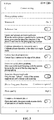
- FIG. 3 is a schematic diagram illustrating an interface for setting an image compression function in a mobile phone according to embodiments of the present disclosure.
- a "compress document photo” function may be set in a camera setting column.
- the “compress document photo” function may be the image compression function, and a user may set whether to enable the "compress document photo” function.
- character sharpness improvement and compression may be performed on a photo shot in a document mode to reduce occupied memory and simultaneously ensure the sharpness.
- the "compress document photo” function is disabled, character sharpness improvement may be performed on the photo shot in the document mode, but no compression is executed.
- a user may set the "compress document photo" function to be enabled to avoid occupation of large memory when the large number of documents are stored after character sharpness improvement.
- documents required to be shot include many characters in complex layouts and have relatively small font sizes, but the number of the shot documents is small and a shooting purpose is sharing and sending to others or for consultation in the future, the "compress document photo" function may be set to be disabled to improve sharpness of the at least one characters for convenient reading of the user in response to determining the small number of shot documents may not occupy large memory.
- the image compression function may be set to improve the sharpness of the at least one character to obtain the second image and simultaneously make it convenient for the user to determine whether to further compress the second image according to different usage scenarios, so that the user experience is improved.
- the operation that the second image is compressed and stored may include at least one of the following operations:
- an image with a lower resolution may be acquired in a clipping compression manner.
- an image is down-sampled to obtain an image with a lower resolution, or an image is clipped to obtain an image with a smaller size.
- adopting the two manners in scenarios that at least one character is small, a page background is complex and a shooting distance is long may make a user difficult to recognize the content of the at least one character in the image.
- the first image including at least one character a user may pay more attention to the content of the at least one character rather than richness of displayed colors.
- the second image is displayed through a black-and-white image, the at least one character may further be highlighted. Therefore, in the present disclosure, after the sharpness of the at least one character in the first image is improved to obtain the second image, the colored second image may be converted into the black-and-white image or the gray image to reduce the occupied memory.
- the second image converted into the black-and-white image or the gray image may further be clipped.
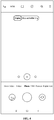
- FIG. 4 is a schematic diagram illustrating a shooting interface in a mobile phone according to embodiments of the present disclosure.
- a user may set different compression manners such as "original”, “black-and-white", "gray” or the like to be selected to compress the second image.
- the compressed second image may be a clipped colored image.
- the compressed second image may be a clipped or unclipped black-and-white image.
- the compressed second image may be a clipped or unclipped gray image.
- the image processing apparatus may, after determining that the first image includes at least one character, improve the sharpness of the at least one character and compress and store the processed image, so that the memory occupied by the image can be reduced, and meanwhile, impact on reading of a user is reduced. Furthermore, during compression, the colored second image may be further converted into a black-and-white image or gray image occupying a smaller amount of data and store the converted image, and a display effect of the at least one character may further be highlighted in case of being displayed with the black-and-white image, so that the user experience may be improved.
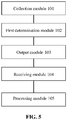
- FIG. 5 is a block diagram of an image processing apparatus according to an exemplary embodiment.
- the image processing apparatus 800 is applied to a terminal device, and as shown in FIG. 5 , mainly includes:
- the apparatus may further include:
- the acquisition module 106 may be specifically configured to segment the first image to acquire different image regions and perform optical character recognition on sub images within the different image regions to acquire the region of the at least one character and the peripheral image region of the at least one character in the first image.
- the acquisition module 106 may be specifically configured to recognize the sub images within the different image regions based on optical character recognition to obtain character recognition results of the sub images within the different image regions and confidences of the at least one character recognition results; when a confidence of a sub image within an image region is higher than a first threshold, determine that the image region is the region including the at least one character in the first image, otherwise, when the confidence of the sub image of the image region is lower than or equal to the first threshold, determine that the image region is the peripheral image region of the at least one character.
- the apparatus may further include: a compression module 107, configured to compress the first image when the confidence of the sub image of the image region including the at least one character is higher than a second threshold, the second threshold being greater than the first threshold.
- a compression module 107 configured to compress the first image when the confidence of the sub image of the image region including the at least one character is higher than a second threshold, the second threshold being greater than the first threshold.
- the processing module 105 may be specifically configured to, when the confidence is lower than or equal to the second threshold, improve the sharpness of the at least one character to obtain the second image.
- the apparatus may further include:
- the processing module 105 may be specifically configured to convert the colored second image into a black-and-white image for storage and/or convert the colored second image into a gray image for storage.
- the present disclosure also provides an image processing apparatus, which includes: a processor; and a memory configured to store instructions executable by the processor, wherein the processor is configured to execute the operations in any image processing method in the abovementioned embodiments.
- FIG. 6 is a block diagram of an image processing apparatus 1500 according to an exemplary embodiment.
- the device 1500 may be a mobile phone, a computer, a digital broadcast terminal, a messaging device, a gaming console, a tablet, a medical device, exercise equipment, a personal digital assistant and the like.
- the device 1500 may include one or more of the following components: a processing component 1502, a memory 1504, a power component 1506, a multimedia component 1508, an audio component 1510, an Input/Output (I/O) interface 1512, a sensor component 1514, and a communication component 1516.
- a processing component 1502 a memory 1504
- a power component 1506 a multimedia component 1508, an audio component 1510, an Input/Output (I/O) interface 1512, a sensor component 1514, and a communication component 1516.
- I/O Input/Output
- the processing component 1502 is typically configured to control overall operations of the device 1500, such as the operations associated with display, telephone calls, data communications, camera operations, and recording operations.
- the processing component 1502 may include one or more processors 1520 to execute instructions to perform all or part of the operations in the abovementioned method.
- the processing component 1502 may further include one or more modules which facilitate interaction between the processing component 1502 and the other components.
- the processing component 1502 may include a multimedia module to facilitate interaction between the multimedia component 1508 and the processing component 1502.
- the memory 1504 is configured to store various types of data to support the operation of the device 1500. Examples of such data include instructions for any applications or methods operated on the device 1500, contact data, phonebook data, messages, pictures, video, etc.
- the memory 1504 may be implemented by any type of volatile or non-volatile memory devices, or a combination thereof, such as a Static Random Access Memory (SRAM), an Electrically Erasable Programmable Read-Only Memory (EEPROM), an Erasable Programmable Read-Only Memory (EPROM), a Programmable Read-Only Memory (PROM), a Read-Only Memory (ROM), a magnetic memory, a flash memory, and a magnetic or optical disk.
- SRAM Static Random Access Memory
- EEPROM Electrically Erasable Programmable Read-Only Memory
- EPROM Erasable Programmable Read-Only Memory
- PROM Programmable Read-Only Memory
- ROM Read-Only Memory
- magnetic memory a magnetic memory
- flash memory and a magnetic or optical disk.
- the power component 1506 is configured to provide power for various components of the device 1500.
- the power component 1506 may include a power management system, one or more power supplies, and other components associated with generation, management and distribution of power for the device 1500.
- the multimedia component 1508 may include a screen providing an output interface between the device 1500 and a user.
- the screen may include a Liquid Crystal Display (LCD) and a Touch Panel (TP). If the screen includes the TP, the screen may be implemented as a touch screen to receive an input signal from the user.
- the TP includes one or more touch sensors to sense touches, swipes and gestures on the TP. The touch sensors may not only sense a boundary of a touch or swipe action but also detect a duration and pressure associated with the touch or swipe action.
- the multimedia component 1508 includes a front camera and/or a rear camera.
- the front camera and/or the rear camera may receive external multimedia data when the device 1500 is in an operation mode, such as a photographing mode or a video mode.
- an operation mode such as a photographing mode or a video mode.
- Each of the front camera and/or the rear camera may be a fixed optical lens system or have focusing and optical zooming capabilities.
- the audio component 1510 is configured to output and/or input an audio signal.
- the audio component 1510 may include a Microphone (MIC), and the MIC is configured to receive an external audio signal when the device 1500 is in the operation mode, such as a call mode, a recording mode and a voice recognition mode.
- the received audio signal may further be stored in the memory 1504 or sent through the communication component 1516.
- the audio component 1510 further includes a speaker configured to output the audio signal.
- the I/O interface 1512 may provide an interface between the processing component 1502 and a peripheral interface module, and the peripheral interface module may be a keyboard, a click wheel, a button and the like.
- the button may include, but not limited to: a home button, a volume button, a starting button and a locking button.
- the sensor component 1514 may include one or more sensors configured to provide status assessment in various aspects for the device 1500. For instance, the sensor component 1514 may detect an on/off status of the device 1500 and relative positioning of components, such as a display and small keyboard of the device 1500, and the sensor component 1514 may further detect a change in a position of the device 1500 or a component of the device 1500, presence or absence of contact between the user and the device 1500, orientation or acceleration/deceleration of the device 1500 and a change in temperature of the device 1500.
- the sensor component 1514 may include a proximity sensor configured to detect presence of an object nearby without any physical contact.
- the sensor component 1514 may also include a light sensor, such as a Complementary Metal Oxide Semiconductor (CMOS) or Charge Coupled Device (CCD) image sensor, configured for use in an imaging application.
- CMOS Complementary Metal Oxide Semiconductor
- CCD Charge Coupled Device
- the sensor component 1514 may also include an acceleration sensor, a gyroscope sensor, a magnetic sensor, a pressure sensor or a temperature sensor.
- the communication component 1516 is configured to facilitate wired or wireless communication between the device 1500 and another device.
- the device 1500 may access a communication-standard-based wireless network, such as a Wireless Fidelity (WiFi) network, a 2nd-Generation (2G) or 3rd-Generation (3G) network or a combination thereof.
- WiFi Wireless Fidelity
- 2G 2nd-Generation
- 3G 3rd-Generation
- the communication component 1516 receives a broadcast signal or broadcast associated information from an external broadcast management system through a broadcast channel.
- the communication component 1516 further includes a Near Field Communication (NFC) module to facilitate short-range communication.
- NFC Near Field Communication
- the NFC module may be implemented based on a Radio Frequency Identification (RFID) technology, an Infrared Data Association (IrDA) technology, an Ultra-WideBand (UWB) technology, a Bluetooth (BT) technology or another technology.
- RFID Radio Frequency Identification
- IrDA Infrared Data Association
- UWB Ultra-WideBand
- BT Bluetooth
- the device 1500 may be implemented by one or more Application Specific Integrated Circuits (ASICs), Digital Signal Processors (DSPs), Digital Signal Processing Devices (DSPDs), Programmable Logic Devices (PLDs), Field Programmable Gate Arrays (FPGAs), controllers, micro-controllers, microprocessors or other electronic components, and is configured to execute the abovementioned method.
- ASICs Application Specific Integrated Circuits
- DSPs Digital Signal Processors
- DSPDs Digital Signal Processing Devices
- PLDs Programmable Logic Devices
- FPGAs Field Programmable Gate Arrays
- controllers micro-controllers, microprocessors or other electronic components, and is configured to execute the abovementioned method.
- non-transitory computer-readable storage medium including instructions, such as the memory 1504 including instructions, and the instructions may be executed by the processor 1520 of the device 1500 to implement the abovementioned method.
- the non-transitory computer-readable storage medium may be a ROM, a Random Access Memory (RAM), a Compact Disc Read-Only Memory (CD-ROM), a magnetic tape, a floppy disc, an optical data storage device and the like.
- the present disclosure also provides a non-transitory computer-readable storage medium.
- the instructions in the storage medium when executed by a processor of an image processing apparatus, enable the image processing apparatus to implement the image processing method including:
Landscapes
- Engineering & Computer Science (AREA)
- Physics & Mathematics (AREA)
- General Physics & Mathematics (AREA)
- Theoretical Computer Science (AREA)
- Multimedia (AREA)
- Computer Vision & Pattern Recognition (AREA)
- Quality & Reliability (AREA)
- Compression Of Band Width Or Redundancy In Fax (AREA)
- Image Processing (AREA)
Abstract
Description
- The present disclosure generally relates to a computer technology, and more particularly, to an image processing method and apparatus as well as a storage medium.
- Mobile terminals have become an indispensable part of people's lives, work and study. More and more users select cameras of mobile terminals for image collection and store collected image information into the mobile terminals.
- However, a memory of a mobile terminal is limited. There is no solution about how to store as much image information as possible using a limited memory resource without impacting reading of the image information by a user.
- The present disclosure provides an image processing method and apparatus as well as a storage medium.
- According to a first aspect of embodiments of the present disclosure, an image processing method may include that:
- an image within a field of view of an image collection device is collected in real time through the image collection device of a terminal device;
- whether a first image includes at least one character is determined based on the collected first image;
- in response to determining that the collected first image includes the at least one character, prompt information is output to a user;
- a setting instruction input by the user is received; and
- sharpness of the at least one character is improved according to the setting instruction to obtain a second image, and the second image is compressed and stored.
- In an implementation, the method may further include that:
- the first image is segmented to acquire the at least one character and a peripheral image region of the at least one character in the first image;
- the operation that whether the first image includes the at least one character is determined based on the collected first image may include that:
- whether the first image includes the at least one character which has a region larger than a preset area threshold is determined; and
- the operation that the sharpness of the at least one character is improved may include that:
- an edge of the at least one character is sharpened, and
- a contrast between the at least one character and the peripheral image region of the at least one character is increased.
- In an implementation, the operation that the first image is segmented to acquire the at least one character in the first image and the peripheral image region of the at least one character may include that:
- the first image is segmented to acquire different image regions; and
- optical character recognition is performed on sub images within the different image regions to acquire the region of the at least one character and the peripheral image region of the at least one character in the first image.
- In an implementation, the operation that optical character recognition is performed on the sub images within the different image regions to acquire the region of the at least one character and the peripheral image region of the at least one character in the first image may include that:
- the sub images within the different image regions are recognized based on optical character recognition to obtain character recognition results of the sub images within the different image regions and confidences of the at least one character recognition results; and
- when a confidence of a sub image within an image region is higher than a first threshold, it is determined that the image region is the region including the at least one character in the first image, otherwise, when the confidence of the sub image of the image region is lower than or equal to the first threshold, it is determined that the image region is the peripheral image region of the at least one character.
- In an implementation, the method may further include that:
the first image is compressed when the confidence of the sub image of the image region including the at least one character is higher than a second threshold, the second threshold being greater than the first threshold. - In an implementation, the operation that the sharpness of the at least one character is improved to obtain the second image may include that:
the sharpness of the at least one character is improved to obtain the second image when the confidence is lower than or equal to the second threshold. - In an implementation, the method may further include that:
- whether an image compression function is enabled is determined according to image compression information in the setting instruction; and
- the operation that the sharpness of the at least one character is improved to obtain the second image and the second image is compressed and stored may include that:
- when the image compression function is enabled and if the first image includes the at least one character, the sharpness of the at least one character is improved to obtain the second image, and the second image is compressed and stored.
- In an implementation, the operation that the second image is compressed and stored may include at least one of the following operations:
- the second image with color is converted into a black-and-white image for storage; and
- the second image with color is converted into a gray image for storage.
- According to a second aspect of the embodiments of the present disclosure, an image processing apparatus may include:
- a collection module, configured to collect at least one image within a field of view of an image collection device in real time through the image collection device of a terminal device;
- a first determination module, configured to determine whether a first image includes at least one character based on the collected first image;
- an output module, configured to, in response to determining the collected first image includes the at least one character, output prompt information to a user;
- a receiving module, configured to receive a setting instruction input by the user; and
- a processing module, configured to improve sharpness of the at least one character according to the setting instruction to obtain a second image and compress and store the second image.
- In an implementation, the device may further include:
- an acquisition module, configured to segment the first image to acquire the at least one character and a peripheral image region of the at least one character in the first image;
- the first determination module may specifically be configured to determine whether the first image includes the at least one character which has a region larger than a preset area threshold; and
- the processing module may specifically be configured to sharpen an edge of the at least one character and/or increase a contrast between the at least one character and the peripheral image region of the at least one character.
- In an implementation, the acquisition module may specifically be configured to segment the first image to acquire different image regions, and perform optical character recognition on sub images within the different image regions to acquire the region of the at least one character and the peripheral image region of the at least one character in the first image.
- In an implementation, the acquisition module may specifically be configured to recognize the sub images within the different image regions based on optical character recognition to obtain character recognition results of the sub images within the different image regions and confidences of the at least one character recognition results; when a confidence of a sub image within an image region is higher than a first threshold, determine that the image region is the region including the at least one character in the first image, otherwise, when the confidence of the sub image of the image region is lower than or equal to the first threshold, determine that the image region is the peripheral image region of the at least one character.
- In an implementation, the device may further include:
a compression module, configured to compress the first image when the confidence of the sub image of the image region including the at least one character is higher than a second threshold, the second threshold being greater than the first threshold. - In an implementation, the processing module may specifically be configured to, when the confidence is lower than or equal to the second threshold, improve the sharpness of the at least one character to obtain the second image.
- In an implementation, the device may further include:
- a second determination module, configured to determine whether an image compression function is enabled according to image compression information in the setting instruction; and
- the processing module may specifically be configured to, when the image compression function is enabled and the first image includes the at least one character, improve the sharpness of the at least one character to obtain the second image and compress and store the second image.
- In an implementation, the processing module may specifically be configured to convert the second image with color into a black-and-white image for storage and/or convert the second image with color into a gray image for storage.
- According to a third aspect of the embodiments of the present disclosure, an image processing apparatus may include:
- a processor; and
- a memory configured to store instructions executable by the processor,
- wherein the processor may be configured to execute the operations of the image processing method in the first aspect.
- According to a fourth aspect of the embodiments of the present disclosure, a non-transitory computer-readable storage medium is provided, which has instructions stored thereon that, when executed by a processor of an image processing apparatus, enable the apparatus to implement the image processing method in the first aspect.
- The technical solutions provided by embodiments of the present disclosure may have beneficial effects.
- A terminal device, when collecting images in real time and after determining based on a collected first image that the first image includes at least one character, may output prompt information, improve the sharpness of the at least one character according to a setting instruction and compress and store the processed image, so that the image processing apparatus may alleviate the impact on reading of a user due to the image quality damage caused by image compression or impact on reading of the user because of low quality of the collected first image. Accordingly, the sharpness of at least one character may be improved to mitigate the impact on reading of a user and improve a user experience while reducing memory occupied by the image.
- It is to be understood that the above general descriptions and detailed descriptions below are only exemplary and explanatory and not intended to limit the present disclosure.
- The accompanying drawings, which are incorporated in and constitute a part of this specification, illustrate embodiments consistent with the present disclosure and, together with the description, serve to explain the principles of the present disclosure.
-
FIG. 1 is a flowchart showing an image processing method according to embodiments of the present disclosure. -
FIG. 2 is a schematic diagram illustrating an image acquisition interface in a mobile phone according to embodiments of the present disclosure. -
FIG. 3 is a schematic diagram illustrating an interface for setting an image compression function in a mobile phone according to embodiments of the present disclosure. -
FIG. 4 is a schematic diagram illustrating a shooting interface in a mobile phone according to embodiments of the present disclosure. -
FIG. 5 is a block diagram of an image processing apparatus according to an exemplary embodiment. -
FIG. 6 is a block diagram of an image processing apparatus according to an exemplary embodiment. - Reference will now be made in detail to exemplary embodiments, examples of which are illustrated in the accompanying drawings. The following description refers to the accompanying drawings in which the same numbers in different drawings represent the same or similar elements unless otherwise represented. The implementations set forth in the following description of exemplary embodiments do not represent all implementations consistent with the present disclosure. Instead, they are merely examples of apparatuses and methods consistent with aspects related to the present disclosure as recited in the appended claims.
- The terminologies used in the disclosure are for the purpose of describing the specific embodiments only and are not intended to limit the disclosure. The singular forms "one", "the" and "this" used in the disclosure and the appended claims are intended to include the plural forms, unless the context clearly indicates other meanings. It should also be understood that the term "and/or" as used herein refers to and includes any or all possible combinations of one or more associated listed items.
- It should be understood that, although the terminologies "first", "second", "third" and so on may be used in the disclosure to describe various information, such information shall not be limited to these terms. These terms are used only to distinguish information of the same type from each other. In an example, without departing from the scope of the disclosure, first information may also be referred to as second information. Similarly, second information may also be referred to as first information. Depending on the context, the word "if" as used herein may be explained as "when...", "while" or "in response to...".
- The embodiments of the present disclosure provide an image processing method, which is applied to an image processing apparatus.
FIG. 1 is a flowchart showing an image processing method according to embodiments of the present disclosure. The method is applied to a terminal device. As shown inFIG. 1 , the method may mainly include the following operations. - In S11, at least one image within a field of view of an image collection device is collected in real time through the image collection device of the terminal device.
- In S12, whether a first image includes at least one character is determined based on the collected first image.
- In S13, in response to determining the collected first image includes the at least one character, prompt information is output to a user.
- In
S 14, a setting instruction input by the user is received. - In S15, sharpness of the at least one character is improved according to the setting instruction to obtain a second image, and the second image is compressed and stored.
- The terminal device may be a mobile device or fixed device with a storage function, such as a mobile phone, a tablet computer, a Personal Computer (PC) and the like.
- The terminal device may include the image collection device, which may collect images in real time. In an example, the image collection device is a camera.
- In S11, the image collection device of the terminal device may collect the images within the field of view in real time. The field of view may be a spatial range that may be collected in a present orientation and in a collection time range of the image collection device.
- In S12, the terminal device may determine whether the first image includes the at least one character based on the first image collected in real time. The at least one character may be graphics formed by character collection.
- In S13, the terminal device, after determining that the obtained first image includes the at least one character, may output the prompt information to a user. In an example, the terminal device may display the prompt information on a display screen, or the terminal device may output the prompt information in a voice broadcast manner.
- In S14 and S15, the terminal device may receive the setting instruction input by the user, then improve the sharpness of the at least one character according to the setting instruction and compress and store the second image, so that the image processing apparatus may improve a reading experience of the user while saving a storage space.
- It is to be noted that the operation that the terminal device receives the setting instruction input by the user may include that: the terminal device receives a voice instruction or a click instruction input by the user. Moreover, a time length of receiving the setting instruction may also be set in the terminal device. In an example, if the setting instruction is received within a predetermined time length (for example, 3s), the sharpness of the at least one character may be improved for compression and storage.
- In an example, the terminal device may be a mobile phone.
FIG. 2 is a schematic diagram illustrating an image acquisition interface in a mobile phone according to embodiments of the present disclosure. As shown inFIG. 2 , when the mobile phone shoots images in real time, after it is determined that the collected first image includes at least one character, the prompt information "document mode is suggested" may be output on the interface. After the user inputs the setting instruction "use the document mode" based on the prompt information, the mobile phone may improve the sharpness of the at least one character according to the setting instruction to obtain the second image and then compress and store the second image. - In an example, the image processing method may further include that:
- the first image is segmented to acquire the at least one character and a peripheral image region of the at least one character in the first image;
- the operation that whether the first image includes the at least one character is determined based on the collected first image may include that:
- whether the first image includes the at least one character which has a region larger than a preset area threshold is determined; and
- the operation that the sharpness of the at least one character is improved may include that:
- an edge of the at least one character is sharpened, and
- a contrast between the at least one character and the peripheral image region of the at least one character is increased.
- The terminal device, after determining that the first image includes at least one character, may determine the at least one character region or the non-character peripheral image region based on an image segmentation algorithm. The image segmentation algorithm may be a watershed algorithm, an edge segmentation algorithm or a threshold segmentation algorithm, and so on. The detailed introductions are omitted in the embodiments of the present disclosure.
- When the at least one character and a peripheral image region of the at least one character in the first image are acquired by the image segmentation algorithm, segmentation may be performed based on constraints including a stroke characteristic, a length-width ratio structural characteristic and the like of the at least one character to determine the at least one character region and the peripheral image region of the at least one character in a process of adopting the image segmentation algorithm. The stroke characteristic may refer to a basic stroke of Chinese characters, including basic strokes such as "a dot stroke (), a horizontal stroke (
 ), a vertical stroke (
 ), a left-falling stroke (
 ), a right-falling stroke (
 ), a rising stroke (
 ), a turning stroke (Í) and a hook stroke (
 )". The length-width ratio structural characteristic may include that a length-width ratio of a Chinese character is usually between 1.0 and 1.4.
- Under a normal condition, an image requiring improved sharpness of at least one character and then being subjected to compression and storage is mainly at least one character-based image, for example, a document image. The first image collected by the terminal device in real time may not be a document image with many characters. In an example, the first image may be a billboard image that is mainly based on a picture but also includes a few slogans. However, the billboard image is not a document image. Therefore, for highlighting the necessity of the sharpness of characters, the terminal device may determine whether the first image includes at least one character of which the at least one character region is larger than the preset area threshold.
- In an example, when the at least one character region is larger than the preset area threshold, it is determined that the first image includes the at least one character, otherwise, when the at least one character region is smaller than or equal to the preset area threshold, it is determined that the first image does not include the at least one character.
- After determining that the first image includes the at least one character, the terminal device may output the prompt information and, after the user determines that the first image is an important document image, may improve the sharpness of the at least one character based on the setting instruction of the user and compresses and stores the processed image. When the sharpness of the at least one character is improved, an image enhancement algorithm may be adopted. In an example, the edge of the at least one character may be sharpened through an image sharpening algorithm to highlight the edge of the at least one character more obviously. For another example, the contrast between the at least one character and the peripheral image region of the at least one character may be increased through a contrast stretching algorithm to highlight the at least one character based on the increased contrast.
- Furthermore, noises of the at least one character and the peripheral image region of the at least one character may further be reduced through an image denoising algorithm to make the whole first image clearer, thereby improving a reading experience of the user.
- In an example, the operation that the first image is segmented to acquire the at least one character and a peripheral image region of the at least one character in the first image may include that:
- the first image is segmented to acquire different image regions; and
- optical character recognition is performed on sub images within the different image regions to acquire the region of the at least one character and the peripheral image region of the at least one character in the first image.
- Not only may the region of the at least one character and the peripheral image region of the at least one character in the first image be acquired based on the image segmentation algorithm, but also the region of the at least one character and the peripheral image region of the at least one character may be acquired by combining the image segmentation algorithm and an optical character recognition method.
- In an example, when the first image is segmented, the different image regions may be acquired by a threshold segmentation method, and optical character recognition may be sequentially performed on the sub images within the different image regions obtained by segmentation to distinguish the region of the at least one character from the peripheral image region of the at least one character.
- In addition, the terminal device may also determine whether the first image includes the at least one character based on a neural network. In an example, the terminal device may determine whether the first image includes the at least one character by use of an image classification model which is pre-trained by a neural network algorithm. The image classification model may be trained by the terminal device or may be obtained from another device through the terminal device. There are no limits made in the embodiment of the present disclosure.
- In an example, the image classification model may be trained based on a large amount of non-character image data and image data including characters. The non-character image data may include a face image, an animal image, a fruit image and the like, and images including characters may include a WORD document image, a press/book page image, a presentation file image and the like.
- In an implementation, the operation that optical character recognition is performed on the sub images within the different image regions to acquire the region of the at least one character and the peripheral image region of the at least one character in the first image may include that:
- the sub images within the different image regions are recognized based on optical character recognition to obtain character recognition results of the sub images within the different image regions and confidences of the at least one character recognition results; and
- when a confidence of a sub image within an image region is higher than a first threshold, it is determined that the image region is the region including the at least one character in the first image, otherwise, when the confidence of the sub image of the image region is lower than or equal to the first threshold, it is determined that the image region is the peripheral image region of the at least one character.
- Under a normal condition, when an image is recognized based on the optical character recognition method, if the image includes no character, at least one character recognition result may be null, or, the at least one character recognition result may be not null but a confidence of the at least one character recognition result may be low; and if the image includes at least one character, the at least one character recognition result may be not null and the confidence may be high. Determining whether the at least one character is included in combination with the confidence may improve accuracy of determining whether the image includes the at least one character.
- Therefore, the sub images within the different image regions in the first image may be recognized based on an optical character recognition algorithm and whether each image region is the region including the at least one character may be determined according to the confidence of the at least one character recognition result.
- In an example, if the first threshold is 0.5, when the confidence of the at least one character recognition result of the sub image of the image region is greater than 0.5, it may be determined that the image region is the region including the at least one character, otherwise, when the confidence of the at least one character recognition result of the sub image of the image region is lower than or equal to 0.5, it may be determined that the image region is the peripheral image region of the at least one character.
- When the image is recognized by the optical character recognition method, the confidence of the recognition result usually also may reflect sharpness of the image. Under a normal condition, when the at least one character is sharp, the at least one character recognition result can be relatively accurate and the confidence of the at least one character recognition result can be relatively high. When the at least one character is not sharp enough, the at least one character recognition result may not be so accurate and the confidence of the at least one character recognition result may be relatively low. In response to determining the at least one character is not sharp enough, the at least one character that is not sharp enough still includes at least one character characteristic, which includes the stroke characteristic and a structural characteristic such as the length-width ratio or other characteristics, therefore, compared with a non-character image including no character characteristic, the confidence of the recognition result thereof may be higher than a confidence of a recognition result of the non-character image.
- In an implementation, the method may further include that:
the first image is compressed when the confidence of the sub image of the image region including the at least one character is higher than a second threshold, the second threshold being greater than the first threshold. - In the implementation, the second threshold may be a numerical value greater than the first threshold. In an example, the second threshold is 0.9. When the confidence of the at least one character recognition result of the sub image of the image region including at least one character in the first image is higher than the second threshold, it may be indicated that the at least one character in the image region is sharp, so that the first image may be directly compressed without improving the sharpness of the at least one character in the first image.
- According to the method, memory increase caused by improvement of the sharpness of at least one character in the first image may be reduced, and in addition, directly compressing the first image may also not bring any impact to the reading experience of a user.
- In an implementation, the operation that the sharpness of the at least one character is improved to obtain the second image may include that:
when the confidence is lower than or equal to the second threshold, the sharpness of the at least one character is improved to obtain the second image. - When the at least one character recognition result of the first image is lower than or equal to the second threshold, it may be indicated that at least one character in the first image is not sharp enough, so that the sharpness of the at least one character is required to be improved.
- In an optical character recognition manner, not only may whether the first image includes at least one character be determined based on the confidence of the at least one character recognition result, but also whether the sharpness of the at least one character in the first image is required to be improved may be determined based on the confidence, so that intelligence of the image processing apparatus is improved.
- In an implementation, the image processing method may further include that:
whether an image compression function is enabled is determined according to image compression information in the setting instruction. - S15 may include that:
when the image compression function is enabled and the first image includes the at least one character, the sharpness of the at least one character is improved to obtain the second image, and the second image is compressed and stored. - In the implementations, the setting instruction received by the terminal device may contain the image compression information, and the compression information may be used to indicate whether the image compression function is enabled. The terminal device, when determining according to the received image compression information that the image compression function is enabled, in response to determining the first image includes the at least one character, may improve the sharpness of the at least one character to obtain the second image and compress and store the second image. Enabling or disabling of the image compression function may be set based on a requirement of a user. Compared with enhancing the at least one character of the first image for compression in a unified manner no matter whether the function is enabled, this manner has the advantage that unnecessary processing for sharpness enhancement of the at least one character may be reduced.
-
FIG. 3 is a schematic diagram illustrating an interface for setting an image compression function in a mobile phone according to embodiments of the present disclosure. As shown inFIG. 3 , a "compress document photo" function may be set in a camera setting column. The "compress document photo" function may be the image compression function, and a user may set whether to enable the "compress document photo" function. When the "compress document photo" function is enabled, character sharpness improvement and compression may be performed on a photo shot in a document mode to reduce occupied memory and simultaneously ensure the sharpness. When the "compress document photo" function is disabled, character sharpness improvement may be performed on the photo shot in the document mode, but no compression is executed. - In an application scenario, when a large number of character-based documents such as book pages, journals and data are required to be shot, a user may set the "compress document photo" function to be enabled to avoid occupation of large memory when the large number of documents are stored after character sharpness improvement. When documents required to be shot include many characters in complex layouts and have relatively small font sizes, but the number of the shot documents is small and a shooting purpose is sharing and sending to others or for consultation in the future, the "compress document photo" function may be set to be disabled to improve sharpness of the at least one characters for convenient reading of the user in response to determining the small number of shot documents may not occupy large memory.
- It can be understood that, the image compression function may be set to improve the sharpness of the at least one character to obtain the second image and simultaneously make it convenient for the user to determine whether to further compress the second image according to different usage scenarios, so that the user experience is improved.
- In an implementation, the operation that the second image is compressed and stored may include at least one of the following operations:
- the colored second image is converted into a black-and-white image for storage; and
- the colored second image is converted into a gray image for storage.
- When the image is compressed, an image with a lower resolution may be acquired in a clipping compression manner. In an example, an image is down-sampled to obtain an image with a lower resolution, or an image is clipped to obtain an image with a smaller size. However, adopting the two manners in scenarios that at least one character is small, a page background is complex and a shooting distance is long may make a user difficult to recognize the content of the at least one character in the image.
- For the first image including at least one character, a user may pay more attention to the content of the at least one character rather than richness of displayed colors. When the second image is displayed through a black-and-white image, the at least one character may further be highlighted. Therefore, in the present disclosure, after the sharpness of the at least one character in the first image is improved to obtain the second image, the colored second image may be converted into the black-and-white image or the gray image to reduce the occupied memory. The second image converted into the black-and-white image or the gray image may further be clipped.
- A manner for compressing the second image may also be set by a user.
FIG. 4 is a schematic diagram illustrating a shooting interface in a mobile phone according to embodiments of the present disclosure. As shown inFIG. 4 , a user may set different compression manners such as "original", "black-and-white", "gray" or the like to be selected to compress the second image. When the user sets the "original" manner, the compressed second image may be a clipped colored image. When the user sets the "black-and-white" manner, the compressed second image may be a clipped or unclipped black-and-white image. When the user sets the "gray" manner, the compressed second image may be a clipped or unclipped gray image. - The image processing apparatus may, after determining that the first image includes at least one character, improve the sharpness of the at least one character and compress and store the processed image, so that the memory occupied by the image can be reduced, and meanwhile, impact on reading of a user is reduced. Furthermore, during compression, the colored second image may be further converted into a black-and-white image or gray image occupying a smaller amount of data and store the converted image, and a display effect of the at least one character may further be highlighted in case of being displayed with the black-and-white image, so that the user experience may be improved.
-
FIG. 5 is a block diagram of an image processing apparatus according to an exemplary embodiment. The image processing apparatus 800 is applied to a terminal device, and as shown inFIG. 5 , mainly includes: - a
collection module 101, configured to collect at least one image within a field of view of an image collection device in real time through the image collection device of a terminal device; - a
first determination module 102, configured to determine whether a first image includes at least one character based on the collected first image; - an
output module 103, configured to, in response to determining the collected first image includes the at least one character, output prompt information to a user; - a
receiving module 104, configured to receive a setting instruction input by the user; and - a
processing module 105, configured to improve sharpness of the at least one character according to the setting instruction to obtain a second image and compress and store the second image. - In an implementation, the apparatus may further include:
- an acquisition module 106, configured to segment the first image to acquire the at least one character and a peripheral image region of the at least one character in the first image;
- the
first determination module 102 is specifically configured to determine whether the first image includes the at least one character which has a region larger than a preset area threshold; and - the
processing module 105 is specifically configured to sharpen an edge of the at least one character and/or increase a contrast between the at least one character and the peripheral image region of the at least one character. - In an implementation, the acquisition module 106 may be specifically configured to segment the first image to acquire different image regions and perform optical character recognition on sub images within the different image regions to acquire the region of the at least one character and the peripheral image region of the at least one character in the first image.
- In an implementation, the acquisition module 106 may be specifically configured to recognize the sub images within the different image regions based on optical character recognition to obtain character recognition results of the sub images within the different image regions and confidences of the at least one character recognition results; when a confidence of a sub image within an image region is higher than a first threshold, determine that the image region is the region including the at least one character in the first image, otherwise, when the confidence of the sub image of the image region is lower than or equal to the first threshold, determine that the image region is the peripheral image region of the at least one character.
- In an implementation, the apparatus may further include:
a compression module 107, configured to compress the first image when the confidence of the sub image of the image region including the at least one character is higher than a second threshold, the second threshold being greater than the first threshold. - In an implementation, the
processing module 105 may be specifically configured to, when the confidence is lower than or equal to the second threshold, improve the sharpness of the at least one character to obtain the second image. - In an implementation, the apparatus may further include:
- a second determination module 108, configured to determine whether an image compression function is enabled according to image compression information in the setting instruction; and
- the
processing module 105 is specifically configured to, when the image compression function is enabled and the first image includes the at least one character, improve the sharpness of the at least one character to obtain the second image and compress and store the second image. - In an implementation, the
processing module 105 may be specifically configured to convert the colored second image into a black-and-white image for storage and/or convert the colored second image into a gray image for storage. - With respect to the apparatus in the above embodiments, the specific manners for performing operations for individual modules therein have been described in detail in the embodiment regarding the method, which will not be elaborated herein.
- Correspondingly, the present disclosure also provides an image processing apparatus, which includes: a processor; and a memory configured to store instructions executable by the processor, wherein the processor is configured to execute the operations in any image processing method in the abovementioned embodiments.
-
FIG. 6 is a block diagram of animage processing apparatus 1500 according to an exemplary embodiment. Thedevice 1500 may be a mobile phone, a computer, a digital broadcast terminal, a messaging device, a gaming console, a tablet, a medical device, exercise equipment, a personal digital assistant and the like. - The
device 1500 may include one or more of the following components: aprocessing component 1502, amemory 1504, apower component 1506, amultimedia component 1508, anaudio component 1510, an Input/Output (I/O)interface 1512, asensor component 1514, and acommunication component 1516. - The
processing component 1502 is typically configured to control overall operations of thedevice 1500, such as the operations associated with display, telephone calls, data communications, camera operations, and recording operations. Theprocessing component 1502 may include one ormore processors 1520 to execute instructions to perform all or part of the operations in the abovementioned method. Moreover, theprocessing component 1502 may further include one or more modules which facilitate interaction between theprocessing component 1502 and the other components. For instance, theprocessing component 1502 may include a multimedia module to facilitate interaction between themultimedia component 1508 and theprocessing component 1502. - The
memory 1504 is configured to store various types of data to support the operation of thedevice 1500. Examples of such data include instructions for any applications or methods operated on thedevice 1500, contact data, phonebook data, messages, pictures, video, etc. Thememory 1504 may be implemented by any type of volatile or non-volatile memory devices, or a combination thereof, such as a Static Random Access Memory (SRAM), an Electrically Erasable Programmable Read-Only Memory (EEPROM), an Erasable Programmable Read-Only Memory (EPROM), a Programmable Read-Only Memory (PROM), a Read-Only Memory (ROM), a magnetic memory, a flash memory, and a magnetic or optical disk. - The
power component 1506 is configured to provide power for various components of thedevice 1500. Thepower component 1506 may include a power management system, one or more power supplies, and other components associated with generation, management and distribution of power for thedevice 1500. - The
multimedia component 1508 may include a screen providing an output interface between thedevice 1500 and a user. In some embodiments, the screen may include a Liquid Crystal Display (LCD) and a Touch Panel (TP). If the screen includes the TP, the screen may be implemented as a touch screen to receive an input signal from the user. The TP includes one or more touch sensors to sense touches, swipes and gestures on the TP. The touch sensors may not only sense a boundary of a touch or swipe action but also detect a duration and pressure associated with the touch or swipe action. In some embodiments, themultimedia component 1508 includes a front camera and/or a rear camera. The front camera and/or the rear camera may receive external multimedia data when thedevice 1500 is in an operation mode, such as a photographing mode or a video mode. Each of the front camera and/or the rear camera may be a fixed optical lens system or have focusing and optical zooming capabilities. - The
audio component 1510 is configured to output and/or input an audio signal. In an example, theaudio component 1510 may include a Microphone (MIC), and the MIC is configured to receive an external audio signal when thedevice 1500 is in the operation mode, such as a call mode, a recording mode and a voice recognition mode. The received audio signal may further be stored in thememory 1504 or sent through thecommunication component 1516. In some embodiments, theaudio component 1510 further includes a speaker configured to output the audio signal. - The I/
O interface 1512 may provide an interface between theprocessing component 1502 and a peripheral interface module, and the peripheral interface module may be a keyboard, a click wheel, a button and the like. The button may include, but not limited to: a home button, a volume button, a starting button and a locking button. - The
sensor component 1514 may include one or more sensors configured to provide status assessment in various aspects for thedevice 1500. For instance, thesensor component 1514 may detect an on/off status of thedevice 1500 and relative positioning of components, such as a display and small keyboard of thedevice 1500, and thesensor component 1514 may further detect a change in a position of thedevice 1500 or a component of thedevice 1500, presence or absence of contact between the user and thedevice 1500, orientation or acceleration/deceleration of thedevice 1500 and a change in temperature of thedevice 1500. Thesensor component 1514 may include a proximity sensor configured to detect presence of an object nearby without any physical contact. Thesensor component 1514 may also include a light sensor, such as a Complementary Metal Oxide Semiconductor (CMOS) or Charge Coupled Device (CCD) image sensor, configured for use in an imaging application. In some embodiments, thesensor component 1514 may also include an acceleration sensor, a gyroscope sensor, a magnetic sensor, a pressure sensor or a temperature sensor. - The
communication component 1516 is configured to facilitate wired or wireless communication between thedevice 1500 and another device. Thedevice 1500 may access a communication-standard-based wireless network, such as a Wireless Fidelity (WiFi) network, a 2nd-Generation (2G) or 3rd-Generation (3G) network or a combination thereof. In an example, thecommunication component 1516 receives a broadcast signal or broadcast associated information from an external broadcast management system through a broadcast channel. In an example, thecommunication component 1516 further includes a Near Field Communication (NFC) module to facilitate short-range communication. In an example, the NFC module may be implemented based on a Radio Frequency Identification (RFID) technology, an Infrared Data Association (IrDA) technology, an Ultra-WideBand (UWB) technology, a Bluetooth (BT) technology or another technology. - In an example, the
device 1500 may be implemented by one or more Application Specific Integrated Circuits (ASICs), Digital Signal Processors (DSPs), Digital Signal Processing Devices (DSPDs), Programmable Logic Devices (PLDs), Field Programmable Gate Arrays (FPGAs), controllers, micro-controllers, microprocessors or other electronic components, and is configured to execute the abovementioned method. - In an example, there is also provided a non-transitory computer-readable storage medium including instructions, such as the
memory 1504 including instructions, and the instructions may be executed by theprocessor 1520 of thedevice 1500 to implement the abovementioned method. In an example, the non-transitory computer-readable storage medium may be a ROM, a Random Access Memory (RAM), a Compact Disc Read-Only Memory (CD-ROM), a magnetic tape, a floppy disc, an optical data storage device and the like. - Correspondingly, the present disclosure also provides a non-transitory computer-readable storage medium. The instructions in the storage medium, when executed by a processor of an image processing apparatus, enable the image processing apparatus to implement the image processing method including:
- collecting at least one image within a field of view of an image collection device in real time through the image collection device of a terminal device;
- determining whether a first image includes at least one character based on the collected first image;
- in response to determining the collected first image includes the at least one character, outputting prompt information to a user;
- receiving a setting instruction input by the user; and
- improving sharpness of the at least one character according to the setting instruction to obtain a second image, and compressing and storing the second image.
- Other implementation solutions of the present disclosure will be apparent to those skilled in the art from consideration of the specification and practice of the present disclosure. This present disclosure is intended to cover any variations, uses, or adaptations of the present disclosure following the general principles thereof and including such departures from the present disclosure as come within known or customary practice in the art. It is intended that the specification and examples be considered as exemplary only, with a true scope and spirit of the present disclosure being indicated by the following claims.
- It will be appreciated that the present disclosure is not limited to the exact construction that has been described above and illustrated in the accompanying drawings, and that various modifications and changes may be made without departing from the scope thereof. It is intended that the scope of the present disclosure only be limited by the appended claims.
Claims (15)
- An image processing method, implemented by a terminal device, characterized by the method comprising:collecting (S11) at least one image within a field of view of an image collection device in real time through the image collection device of the terminal device;determining (S12) whether a first image comprises at least one character based on the collected first image;in response to determining that the collected first image comprises the at least one character, outputting (S13) prompt information to a user;receiving (S14) a setting instruction input by the user; andimproving (S15) sharpness of the at least one character according to the setting instruction to obtain a second image, and compressing and storing the second image.
- The image processing method of claim 1, further comprising:segmenting the first image to acquire the at least one character and a peripheral image region of the at least one character in the first image, whereindetermining whether the first image comprises the at least one character based on the collected first image comprises:
determining whether the first image comprises the at least one character which has a region larger than a preset area threshold; andimproving the sharpness of the at least one character comprises:sharpening an edge of the at least one character, and/orincreasing a contrast between the at least one character and the peripheral image region of the at least one character. - The image processing method of claim 2, wherein the step of segmenting the first image to acquire the at least one character and the peripheral image region of the at least one character in the first image comprises:segmenting the first image to acquire different image regions; andperforming optical character recognition on sub images within the different image regions to acquire the region of the at least one character and the peripheral image region of the at least one character in the first image.
- The image processing method of claim 3, wherein the step of performing optical character recognition on the sub images within the different image regions to acquire the region of the at least one character and the peripheral image region of the at least one character in the first image comprises:recognizing the sub images within the different image regions based on optical character recognition to obtain character recognition results of the sub images within the different image regions and confidences of the at least one character recognition results; andwhen a confidence of a sub image within an image region is higher than a first threshold, determining that the image region is the region comprising the at least one character in the first image, otherwise, when the confidence of the sub image of the image region is lower than or equal to the first threshold, determining that the image region is the peripheral image region of the at least one character.
- The image processing method of claim 4, further comprising:compressing the first image when the confidence of the sub image of the image region comprising the at least one character is higher than a second threshold, wherein the second threshold is greater than the first threshold,wherein improving the sharpness of the at least one character to obtain the second image comprises:
improving the sharpness of the at least one character to obtain the second image when the confidence is lower than or equal to the second threshold. - The image processing method of claim 1, further comprising:
determining whether an image compression function is enabled according to image compression information in the setting instruction, and wherein the step of improving the sharpness of the at least one character to obtain the second image and compressing and storing the second image comprises:
improving the sharpness of the at least one character to obtain the second image, and compressing and storing the second image, when the image compression function is enabled and the first image comprises the at least one character. - The image processing method of claim 1, wherein the step of compressing and storing the second image comprises:converting the second image with color into a black-and-white image for storage; and/orconverting the second image with color into a gray image for storage.
- An image processing apparatus, implemented by a terminal device, characterized by the image processing apparatus comprising:a collection module(101), configured to collect at least one image within a field of view of an image collection device in real time through the image collection device of the terminal device;a first determination module(102), configured to determine whether a first image comprises at least one character based on the collected first image;an output module(103), configured to, in response to determining the collected first image comprises the at least one character, output prompt information to a user;a receiving module(104), configured to receive a setting instruction input by the user; anda processing module(105), configured to improve sharpness of the at least one character according to the setting instruction to obtain a second image and compress and store the second image.
- The image processing apparatus of claim 8, further comprising:an acquisition module, configured to segment the first image to acquire the at least one character and a peripheral image region of the at least one character in the first image, whereinthe first determination module is specifically configured to determine whether the first image comprises the at least one character which has a region larger than a preset area threshold; andthe processing module is specifically configured to sharpen an edge of the at least one character and/or increase a contrast between the at least one character and the peripheral image region of the at least one character.
- The image processing apparatus of claim 9, wherein
the acquisition module is specifically configured to segment the first image to acquire different image regions, and perform optical character recognition on sub images within the different image regions to acquire the region of the at least one character and the peripheral image region of the at least one character in the first image. - The image processing apparatus of claim 10, wherein
the acquisition module is specifically configured to recognize the sub images within the different image regions based on optical character recognition to obtain character recognition results of the sub images within the different image regions and confidences of the at least one character recognition results; when a confidence of a sub image within an image region is higher than a first threshold, determine that the image region is the region comprising the at least one character in the first image, otherwise, when the confidence of the sub image of the image region is lower than or equal to the first threshold, determine that the image region is the peripheral image region of the at least one character. - The image processing apparatus of claim 11, further comprising:a compression module, configured to compress the first image when the confidence of the sub image of the image region comprising the at least one character is higher than a second threshold, the second threshold being greater than the first threshold,wherein the processing module is specifically configured to improve the sharpness of the at least one character to obtain the second image when the confidence is lower than or equal to the second threshold.
- The image processing apparatus of claim 8, further comprising:a second determination module, configured to determine whether an image compression function is enabled according to image compression information in the setting instruction,wherein the processing module is specifically configured to improve the sharpness of the at least one character to obtain the second image and compress and store the second image, when the image compression function is enabled and the first image comprises the at least one character.
- The image processing apparatus of claim 8, wherein
the processing module is specifically configured to convert the second image with color into a black-and-white image for storage and/or convert the second image with color into a gray image for storage. - A non-transitory computer-readable storage medium, having instructions stored thereon that, when executed by a processor of an image processing apparatus, cause the image processing apparatus to implement the image processing method according to any one of claims 1-7.
Applications Claiming Priority (1)
| Application Number | Priority Date | Filing Date | Title |
|---|---|---|---|
| CN201911260802.5A CN112954110A (en) | 2019-12-10 | 2019-12-10 | Image processing method, device and storage medium |
Publications (2)
| Publication Number | Publication Date |
|---|---|
| EP3836072A1 true EP3836072A1 (en) | 2021-06-16 |
| EP3836072B1 EP3836072B1 (en) | 2025-08-20 |
Family
ID=70968771
Family Applications (1)
| Application Number | Title | Priority Date | Filing Date |
|---|---|---|---|
| EP20177460.1A Active EP3836072B1 (en) | 2019-12-10 | 2020-05-29 | Image processing method and apparatus, and storage medium |
Country Status (3)
| Country | Link |
|---|---|
| US (1) | US11417028B2 (en) |
| EP (1) | EP3836072B1 (en) |
| CN (1) | CN112954110A (en) |
Families Citing this family (3)
| Publication number | Priority date | Publication date | Assignee | Title |
|---|---|---|---|---|
| USD1009073S1 (en) * | 2021-03-17 | 2023-12-26 | Beijing Xiaomi Mobile Software Co., Ltd. | Pair of display screens with animated graphical user interface |
| CN117333421A (en) * | 2022-06-24 | 2024-01-02 | 北京京东振世信息技术有限公司 | An image sharpness determination method, device, equipment and storage medium |
| US20240032819A1 (en) * | 2023-08-14 | 2024-02-01 | Regents Of The University Of Minnesota | Method, apparatus and system for recognizing tremor symptom, recognition terminal and storage medium |
Citations (7)
| Publication number | Priority date | Publication date | Assignee | Title |
|---|---|---|---|---|
| US20120087551A1 (en) * | 2010-10-12 | 2012-04-12 | International Business Machines Corporation | Deconvolution of digital images |
| US20140032406A1 (en) * | 2008-01-18 | 2014-01-30 | Mitek Systems | Systems for Mobile Image Capture and Remittance Processing of Documents on a Mobile Device |
| US20140270528A1 (en) * | 2013-03-13 | 2014-09-18 | Amazon Technologies, Inc. | Local image enhancement for text recognition |
| US20140333971A1 (en) * | 2005-03-24 | 2014-11-13 | Kofax, Inc. | Systems and methods of processing scanned data |
| US20150178895A1 (en) * | 2012-12-27 | 2015-06-25 | Panasonic Intellectual Property Management Co., Ltd. | Image processing device and image processing method |
| WO2019022725A1 (en) * | 2017-07-25 | 2019-01-31 | Hewlett-Packard Development Company, L.P. | Character-recognition sharpness determinations |
| CN106296665B (en) * | 2016-07-29 | 2019-05-14 | 北京小米移动软件有限公司 | Card image fuzzy detection method and apparatus |
Family Cites Families (4)
| Publication number | Priority date | Publication date | Assignee | Title |
|---|---|---|---|---|
| US6175663B1 (en) * | 1998-02-24 | 2001-01-16 | Paravision Imaging, Inc. | Method and apparatus for preserving background continuity in images |
| CN104484867A (en) * | 2014-12-30 | 2015-04-01 | 小米科技有限责任公司 | Picture processing method and device |
| CN107948460B (en) * | 2017-11-30 | 2019-10-18 | Oppo广东移动通信有限公司 | Image processing method and apparatus, computer device, computer-readable storage medium |
| CN108764261A (en) * | 2018-05-31 | 2018-11-06 | 努比亚技术有限公司 | A kind of image processing method, mobile terminal and storage medium |
-
2019
- 2019-12-10 CN CN201911260802.5A patent/CN112954110A/en active Pending
-
2020
- 2020-05-12 US US15/930,256 patent/US11417028B2/en active Active
- 2020-05-29 EP EP20177460.1A patent/EP3836072B1/en active Active
Patent Citations (7)
| Publication number | Priority date | Publication date | Assignee | Title |
|---|---|---|---|---|
| US20140333971A1 (en) * | 2005-03-24 | 2014-11-13 | Kofax, Inc. | Systems and methods of processing scanned data |
| US20140032406A1 (en) * | 2008-01-18 | 2014-01-30 | Mitek Systems | Systems for Mobile Image Capture and Remittance Processing of Documents on a Mobile Device |
| US20120087551A1 (en) * | 2010-10-12 | 2012-04-12 | International Business Machines Corporation | Deconvolution of digital images |
| US20150178895A1 (en) * | 2012-12-27 | 2015-06-25 | Panasonic Intellectual Property Management Co., Ltd. | Image processing device and image processing method |
| US20140270528A1 (en) * | 2013-03-13 | 2014-09-18 | Amazon Technologies, Inc. | Local image enhancement for text recognition |
| CN106296665B (en) * | 2016-07-29 | 2019-05-14 | 北京小米移动软件有限公司 | Card image fuzzy detection method and apparatus |
| WO2019022725A1 (en) * | 2017-07-25 | 2019-01-31 | Hewlett-Packard Development Company, L.P. | Character-recognition sharpness determinations |
Also Published As
| Publication number | Publication date |
|---|---|
| US20210174553A1 (en) | 2021-06-10 |
| US11417028B2 (en) | 2022-08-16 |
| CN112954110A (en) | 2021-06-11 |
| EP3836072B1 (en) | 2025-08-20 |
Similar Documents
| Publication | Publication Date | Title |
|---|---|---|
| CN110619350B (en) | Image detection method, device and storage medium | |
| CN105095881B (en) | Face recognition method, face recognition device and terminal | |
| CN105654039B (en) | The method and apparatus of image procossing | |
| US20170124386A1 (en) | Method, device and computer-readable medium for region recognition | |
| CN113409342B (en) | Image style transfer model training method, device and electronic device | |
| CN107480665B (en) | Character detection method, device and computer readable storage medium | |
| CN106127751B (en) | Image detection method, device and system | |
| US11699276B2 (en) | Character recognition method and apparatus, electronic device, and storage medium | |
| CN111461182B (en) | Image processing method, image processing apparatus, and storage medium | |
| RU2643464C2 (en) | Method and apparatus for classification of images | |
| CN109784164B (en) | Foreground identification method and device, electronic equipment and storage medium | |
| CN113920465B (en) | Tail identification method and device, electronic equipment and storage medium | |
| CN108717542B (en) | Method, apparatus and computer-readable storage medium for identifying text region | |
| CN106228168A (en) | The reflective detection method of card image and device | |
| EP3836072B1 (en) | Image processing method and apparatus, and storage medium | |
| CN112116670B (en) | Information processing method and device, electronic device and storage medium | |
| CN104050645B (en) | Image processing method and device | |
| CN108038431A (en) | Image processing method, image processing device, computer equipment and computer readable storage medium | |
| CN109509195B (en) | Foreground processing method and device, electronic equipment and storage medium | |
| CN106296665A (en) | Card image obscures detection method and device | |
| CN105528765A (en) | Method and device for processing image | |
| CN117953508A (en) | Text image OCR recognition method, electronic device and medium | |
| CN106485246B (en) | Character identifying method and device | |
| CN108010009A (en) | A kind of method and device for removing interference figure picture | |
| CN113255412B (en) | Document image processing method, device and medium |
Legal Events
| Date | Code | Title | Description |
|---|---|---|---|
| PUAI | Public reference made under article 153(3) epc to a published international application that has entered the european phase |
Free format text: ORIGINAL CODE: 0009012 |
|
| STAA | Information on the status of an ep patent application or granted ep patent |
Free format text: STATUS: THE APPLICATION HAS BEEN PUBLISHED |
|
| AK | Designated contracting states |
Kind code of ref document: A1 Designated state(s): AL AT BE BG CH CY CZ DE DK EE ES FI FR GB GR HR HU IE IS IT LI LT LU LV MC MK MT NL NO PL PT RO RS SE SI SK SM TR |
|
| STAA | Information on the status of an ep patent application or granted ep patent |
Free format text: STATUS: REQUEST FOR EXAMINATION WAS MADE |
|
| 17P | Request for examination filed |
Effective date: 20210805 |
|
| RBV | Designated contracting states (corrected) |
Designated state(s): AL AT BE BG CH CY CZ DE DK EE ES FI FR GB GR HR HU IE IS IT LI LT LU LV MC MK MT NL NO PL PT RO RS SE SI SK SM TR |
|
| STAA | Information on the status of an ep patent application or granted ep patent |
Free format text: STATUS: EXAMINATION IS IN PROGRESS |
|
| 17Q | First examination report despatched |
Effective date: 20230602 |
|
| REG | Reference to a national code |
Ref legal event code: R079 Ipc: G06T0005730000 Ref country code: DE Ref legal event code: R079 Ref document number: 602020056835 Country of ref document: DE Free format text: PREVIOUS MAIN CLASS: G06T0005000000 Ipc: G06T0005730000 |
|
| GRAP | Despatch of communication of intention to grant a patent |
Free format text: ORIGINAL CODE: EPIDOSNIGR1 |
|
| STAA | Information on the status of an ep patent application or granted ep patent |
Free format text: STATUS: GRANT OF PATENT IS INTENDED |
|
| RIC1 | Information provided on ipc code assigned before grant |
Ipc: G06V 30/10 20220101ALN20250304BHEP Ipc: G06V 30/12 20220101ALI20250304BHEP Ipc: G06V 10/20 20220101ALI20250304BHEP Ipc: G06T 5/73 20240101AFI20250304BHEP |
|
| INTG | Intention to grant announced |
Effective date: 20250318 |
|
| P01 | Opt-out of the competence of the unified patent court (upc) registered |
Free format text: CASE NUMBER: APP_21404/2025 Effective date: 20250506 |
|
| GRAS | Grant fee paid |
Free format text: ORIGINAL CODE: EPIDOSNIGR3 |
|
| GRAA | (expected) grant |
Free format text: ORIGINAL CODE: 0009210 |
|
| STAA | Information on the status of an ep patent application or granted ep patent |
Free format text: STATUS: THE PATENT HAS BEEN GRANTED |
|
| AK | Designated contracting states |
Kind code of ref document: B1 Designated state(s): AL AT BE BG CH CY CZ DE DK EE ES FI FR GB GR HR HU IE IS IT LI LT LU LV MC MK MT NL NO PL PT RO RS SE SI SK SM TR |
|
| REG | Reference to a national code |
Ref country code: GB Ref legal event code: FG4D |
|
| REG | Reference to a national code |
Ref country code: CH Ref legal event code: EP |
|
| REG | Reference to a national code |
Ref country code: IE Ref legal event code: FG4D |
|
| REG | Reference to a national code |
Ref country code: DE Ref legal event code: R096 Ref document number: 602020056835 Country of ref document: DE |
|
| REG | Reference to a national code |
Ref country code: NL Ref legal event code: MP Effective date: 20250820 |
|
| PG25 | Lapsed in a contracting state [announced via postgrant information from national office to epo] |
Ref country code: IS Free format text: LAPSE BECAUSE OF FAILURE TO SUBMIT A TRANSLATION OF THE DESCRIPTION OR TO PAY THE FEE WITHIN THE PRESCRIBED TIME-LIMIT Effective date: 20251220 |
|
| PG25 | Lapsed in a contracting state [announced via postgrant information from national office to epo] |
Ref country code: NO Free format text: LAPSE BECAUSE OF FAILURE TO SUBMIT A TRANSLATION OF THE DESCRIPTION OR TO PAY THE FEE WITHIN THE PRESCRIBED TIME-LIMIT Effective date: 20251120 |
|
| REG | Reference to a national code |
Ref country code: LT Ref legal event code: MG9D |
|
| PG25 | Lapsed in a contracting state [announced via postgrant information from national office to epo] |
Ref country code: PT Free format text: LAPSE BECAUSE OF FAILURE TO SUBMIT A TRANSLATION OF THE DESCRIPTION OR TO PAY THE FEE WITHIN THE PRESCRIBED TIME-LIMIT Effective date: 20251222 |
|
| PG25 | Lapsed in a contracting state [announced via postgrant information from national office to epo] |
Ref country code: FI Free format text: LAPSE BECAUSE OF FAILURE TO SUBMIT A TRANSLATION OF THE DESCRIPTION OR TO PAY THE FEE WITHIN THE PRESCRIBED TIME-LIMIT Effective date: 20250820 |
|
| PG25 | Lapsed in a contracting state [announced via postgrant information from national office to epo] |
Ref country code: HR Free format text: LAPSE BECAUSE OF FAILURE TO SUBMIT A TRANSLATION OF THE DESCRIPTION OR TO PAY THE FEE WITHIN THE PRESCRIBED TIME-LIMIT Effective date: 20250820 Ref country code: NL Free format text: LAPSE BECAUSE OF FAILURE TO SUBMIT A TRANSLATION OF THE DESCRIPTION OR TO PAY THE FEE WITHIN THE PRESCRIBED TIME-LIMIT Effective date: 20250820 |
|
| PG25 | Lapsed in a contracting state [announced via postgrant information from national office to epo] |
Ref country code: GR Free format text: LAPSE BECAUSE OF FAILURE TO SUBMIT A TRANSLATION OF THE DESCRIPTION OR TO PAY THE FEE WITHIN THE PRESCRIBED TIME-LIMIT Effective date: 20251121 |
|
| PG25 | Lapsed in a contracting state [announced via postgrant information from national office to epo] |
Ref country code: SE Free format text: LAPSE BECAUSE OF FAILURE TO SUBMIT A TRANSLATION OF THE DESCRIPTION OR TO PAY THE FEE WITHIN THE PRESCRIBED TIME-LIMIT Effective date: 20250820 |
|
| PG25 | Lapsed in a contracting state [announced via postgrant information from national office to epo] |
Ref country code: LV Free format text: LAPSE BECAUSE OF FAILURE TO SUBMIT A TRANSLATION OF THE DESCRIPTION OR TO PAY THE FEE WITHIN THE PRESCRIBED TIME-LIMIT Effective date: 20250820 |
|
| PG25 | Lapsed in a contracting state [announced via postgrant information from national office to epo] |
Ref country code: BG Free format text: LAPSE BECAUSE OF FAILURE TO SUBMIT A TRANSLATION OF THE DESCRIPTION OR TO PAY THE FEE WITHIN THE PRESCRIBED TIME-LIMIT Effective date: 20250820 Ref country code: PL Free format text: LAPSE BECAUSE OF FAILURE TO SUBMIT A TRANSLATION OF THE DESCRIPTION OR TO PAY THE FEE WITHIN THE PRESCRIBED TIME-LIMIT Effective date: 20250820 |
|
| PG25 | Lapsed in a contracting state [announced via postgrant information from national office to epo] |
Ref country code: RS Free format text: LAPSE BECAUSE OF FAILURE TO SUBMIT A TRANSLATION OF THE DESCRIPTION OR TO PAY THE FEE WITHIN THE PRESCRIBED TIME-LIMIT Effective date: 20251120 |
|
| PG25 | Lapsed in a contracting state [announced via postgrant information from national office to epo] |
Ref country code: ES Free format text: LAPSE BECAUSE OF FAILURE TO SUBMIT A TRANSLATION OF THE DESCRIPTION OR TO PAY THE FEE WITHIN THE PRESCRIBED TIME-LIMIT Effective date: 20250820 |
|
| REG | Reference to a national code |
Ref country code: AT Ref legal event code: MK05 Ref document number: 1828137 Country of ref document: AT Kind code of ref document: T Effective date: 20250820 |
|
| PG25 | Lapsed in a contracting state [announced via postgrant information from national office to epo] |
Ref country code: SM Free format text: LAPSE BECAUSE OF FAILURE TO SUBMIT A TRANSLATION OF THE DESCRIPTION OR TO PAY THE FEE WITHIN THE PRESCRIBED TIME-LIMIT Effective date: 20250820 |
|
| PGFP | Annual fee paid to national office [announced via postgrant information from national office to epo] |
Ref country code: GB Payment date: 20260324 Year of fee payment: 7 |
|
| PG25 | Lapsed in a contracting state [announced via postgrant information from national office to epo] |
Ref country code: DK Free format text: LAPSE BECAUSE OF FAILURE TO SUBMIT A TRANSLATION OF THE DESCRIPTION OR TO PAY THE FEE WITHIN THE PRESCRIBED TIME-LIMIT Effective date: 20250820 |
|
| PG25 | Lapsed in a contracting state [announced via postgrant information from national office to epo] |
Ref country code: AT Free format text: LAPSE BECAUSE OF FAILURE TO SUBMIT A TRANSLATION OF THE DESCRIPTION OR TO PAY THE FEE WITHIN THE PRESCRIBED TIME-LIMIT Effective date: 20250820 |
|
| PG25 | Lapsed in a contracting state [announced via postgrant information from national office to epo] |
Ref country code: IT Free format text: LAPSE BECAUSE OF FAILURE TO SUBMIT A TRANSLATION OF THE DESCRIPTION OR TO PAY THE FEE WITHIN THE PRESCRIBED TIME-LIMIT Effective date: 20250820 |
|
| PG25 | Lapsed in a contracting state [announced via postgrant information from national office to epo] |
Ref country code: CZ Free format text: LAPSE BECAUSE OF FAILURE TO SUBMIT A TRANSLATION OF THE DESCRIPTION OR TO PAY THE FEE WITHIN THE PRESCRIBED TIME-LIMIT Effective date: 20250820 |
|
| PG25 | Lapsed in a contracting state [announced via postgrant information from national office to epo] |
Ref country code: EE Free format text: LAPSE BECAUSE OF FAILURE TO SUBMIT A TRANSLATION OF THE DESCRIPTION OR TO PAY THE FEE WITHIN THE PRESCRIBED TIME-LIMIT Effective date: 20250820 Ref country code: SK Free format text: LAPSE BECAUSE OF FAILURE TO SUBMIT A TRANSLATION OF THE DESCRIPTION OR TO PAY THE FEE WITHIN THE PRESCRIBED TIME-LIMIT Effective date: 20250820 |