EP3835946A1 - Unified installer - Google Patents
Unified installer Download PDFInfo
- Publication number
- EP3835946A1 EP3835946A1 EP20203031.8A EP20203031A EP3835946A1 EP 3835946 A1 EP3835946 A1 EP 3835946A1 EP 20203031 A EP20203031 A EP 20203031A EP 3835946 A1 EP3835946 A1 EP 3835946A1
- Authority
- EP
- European Patent Office
- Prior art keywords
- seed file
- software product
- unified
- installer
- product
- Prior art date
- Legal status (The legal status is an assumption and is not a legal conclusion. Google has not performed a legal analysis and makes no representation as to the accuracy of the status listed.)
- Ceased
Links
Images



Classifications
-
- G—PHYSICS
- G06—COMPUTING OR CALCULATING; COUNTING
- G06F—ELECTRIC DIGITAL DATA PROCESSING
- G06F8/00—Arrangements for software engineering
- G06F8/60—Software deployment
- G06F8/61—Installation
-
- G—PHYSICS
- G06—COMPUTING OR CALCULATING; COUNTING
- G06F—ELECTRIC DIGITAL DATA PROCESSING
- G06F7/00—Methods or arrangements for processing data by operating upon the order or content of the data handled
- G06F7/06—Arrangements for sorting, selecting, merging, or comparing data on individual record carriers
- G06F7/14—Merging, i.e. combining at least two sets of record carriers each arranged in the same ordered sequence to produce a single set having the same ordered sequence
Definitions
- Software packages offer complex features that periodically need upgrading. Accordingly, the software vendor releases patches, service packs, and major releases, in order to address these demands.
- a unified installer reduces system down time attributable to product installation, by eliminating redundant activities.
- An engine receives a request to install a first software product and a second software product.
- the engine references respective seed files of the first and second products to confirm their membership in a same family, and also to confirm compatibility between the product versions.
- the engine first performs a logical merger to create a merged seed file identifying components (e.g., deployment units, prerequisites, properties, features) that are duplicated between the products.
- the engine performs a second, physical merger of the products to create a unified installer which avoids redundant components.
- the unified installer is passed by the engine to the installation procedure, which installs the components only once, thereby promoting efficiency and reducing system down time incurred by product installation.
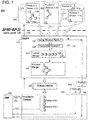
- Figure 1 shows a simplified view of an example system that is configured to implement product installation according to an embodiment.
- system 100 comprises a storage layer 102 comprising a database 104 with a plurality of products.
- product 1 106 represents a base product of version 2.0
- product 2 108 represents an add-on to the base product.
- Product 3 110 belongs to a same product family as products 1 and 2, but in a version (v. 1.0) incompatible with version 2.0.
- Product 4 112 does not belong to the same product family as products 1, 2, and 3.
- a user 120 seeks to install the products 1, 2, 3, and 4 in an efficient manner resulting in as little system downtime as possible. Accordingly, the user issues a request 122 to installation process 124 that is located in an application layer 126.
- the installation process then forwards the request to an engine 130.
- the engine receives the request, and in response sends a query 132 to the database to identify the products stored therein.
- each of the products includes a respective seed file 134.
- Those seed files identify one or more various attributes of the products, including but not limited to:
- the engine compares 136 the product families of the products to determine membership in a same family.
- this comparison reveals product 4 to belong to a family different from products 1, 2, and 3.
- the engine passes 138 the product 4 to the installation process for direct installation.
- the engine compares 140 the versions of the products to determine compatibility of versions.
- this comparison reveals product 3 to be of a version incompatible with products 1 and 2. Accordingly, the engine passes 142 the product 3 to the installation process for direct installation.
- the engine next performs a logical merger 144. Specifically, this logical merger creates a merged seed file 146 from the seed files of the products 1 and 2. This logical merger identifies redundant components between the two products.
- the engine performs a physical merger 148. That physical merger considers a hierarchical structure of product components such as DUs, in order to create a unified installer 150 that avoids duplicate components.
- the engine then communicates the unified installer to the installation process. Rather than separately installing the products 1 and 2, the installation process executes the unified installer. This installation avoids installation delays attributable to redundancies between the products 1 and 2, with no change in function or availability of those products to the end user.
- Figure 1A shows an overview of the flow of information according to an embodiment.
- Figure 1A shows that the installation process referencing the unified installer according to embodiments, accomplishes the same result as separately installing each of the products of the same family, but with greater efficiency.
- embodiments receive the installer path of the needed products as input.
- the engine will analyze the input products to confirm that they are of compatible versions.
- the engine will intelligently, logically, and dynamically merge the necessary files and deployment units of all the products.
- Embodiments will generate a unified installer, which is combination of the products.
- the Unified Installer will have one setup.exe or setup.sh.
- setup.exe or setup.sh installation will proceed as with a single product. This single installation will internally install all of the selected products.
- FIG. 2 is a flow diagram showing an overview of various actions taken in a method 200 according to an embodiment.
- a seed file of a first product is received.
- a seed file of a second product is received.
- the first and the second products are confirmed to be of a same product family.
- the versions of the first and the second products are confirmed to be compatible.
- the first and second product are merged to create a unified installer according to embodiments.
- this merger may comprise a logical merger followed by a physical merger.
- the unified installer is communicated to an installation procedure for installation.
- Embodiments may offer certain benefits over conventional approaches. For example, certain embodiments may conserve processing resources. That is, installation of multiple copies of elements shared by more than one product, is avoided.
- Enterprise-based software may have several add-ons, which belong to same family. Membership to the same family indicates that the software installation happens with same backend procedure (setup-engine). However, one or more of the following factors may differ as between the main product and various add-ons.
- a complex enterprise-based software may be the sum of all of the Deployment Units.
- One Deployment Unit e.g., DU A
- another Deployment Unit e.g., DU B
- DU A is dependent of DU B.
- DU B needs to be installed.
- Every product has a product-seed file. And, every Deployment unit will have one seed file.
- a unified installer seeks to merge two or more products of same family together at the runtime. As an initial case, the following indicates the result of simply merging two products of a same family, and installing.
- setup-engine will execute only once (rather than two times).
- embodiments relate to a tool which allows the user to select multiple products of same family, for installation in a single event. Initially, this tool can identify if the products are from same family.
- the tool can intelligently merge the various:
- the tool will fire the installation as single unified installer merging all the products.
- embodiments may perform two different sets of mergers.
- a first merging involves the logical merging of configuration, seed and sequence files.
- a second merging involves physical merging of all DUs.
- This first merger involves analyzing the configuration, seed, and sequence files for the differences.
- a procedure is composed for merging the files logically to a single file for a separate unified product - which is the merger of the separate individual products (belong to the same family).
- Figure 4 is a code snippet of a product-seed file of a first product. This shows for the feature "installer.runtime", the DU references required.
- Figure 5 is a code snippet of a product-seed file of a second product belonging to the same product family as the first product of Figure 4 .
- Figure 5 shows the list of DU references for the "installer.runtime" feature.
- Figure 4 reveals Figure 4 to have four extra DU references (compare to Figure 5 for the feature "installer.runtime”). According to this example, these four extra DU references are all named with product. explorer.*
- Logic is referenced to merge the features and create the new product seed for the unified installer. Similarly, embodiments can logically merge other configuration files, seed files, and sequence files.
- a merged product will have all of these DUs ⁇ a, b, c, d, e, f, k, m, n, y, z ⁇ .
- the entire installation time is segregated into the following:
- Embodiments may offer benefits over alternative approaches.
- one alternative approach could be to merge different possible combinations of products, providing that to the customer as a single package.
- a large number of such combinations could exist, and is difficult for any software vendor to maintain all of the packages generated and provide support for each of them.
- embodiments as described herein focus on merging of software products at runtime. This makes it possible to provide customers an option of combining the products belonging to a same family at their own choice.
- an in-memory database engine e.g., the in-memory database engine of the HANA in-memory database available from SAP SE, in order to perform various functions.
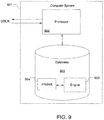
- Figure 9 illustrates hardware of a special purpose computing machine configured to implement software product installation according to an embodiment.
- computer system 901 comprises a processor 902 that is in electronic communication with a non-transitory computer-readable storage medium comprising a database 903.
- This computer-readable storage medium has stored thereon code 905 corresponding to an engine.
- Code 904 corresponds to a stored product (including its Deployment Units).
- Code may be configured to reference data stored in a database of a non-transitory computer-readable storage medium, for example as may be present locally or in a remote database server.
- Software servers together may form a cluster or logical network of computer systems programmed with software programs that communicate with each other and work together in order to process requests.
- Computer system 1010 includes a bus 1005 or other communication mechanism for communicating information, and a processor 1001 coupled with bus 1005 for processing information.
- Computer system 1010 also includes a memory 1002 coupled to bus 1005 for storing information and instructions to be executed by processor 1001, including information and instructions for performing the techniques described above, for example.
- This memory may also be used for storing variables or other intermediate information during execution of instructions to be executed by processor 1001. Possible implementations of this memory may be, but are not limited to, random access memory (RAM), read only memory (ROM), or both.
- a storage device 1003 is also provided for storing information and instructions.
- Storage devices include, for example, a hard drive, a magnetic disk, an optical disk, a CD-ROM, a DVD, a flash memory, a USB memory card, or any other medium from which a computer can read.
- Storage device 1003 may include source code, binary code, or software files for performing the techniques above, for example.
- Storage device and memory are both examples of computer readable mediums.
- Computer system 1010 may be coupled via bus 1005 to a display 1012, such as a cathode ray tube (CRT) or liquid crystal display (LCD), for displaying information to a computer user.
- a display 1012 such as a cathode ray tube (CRT) or liquid crystal display (LCD)
- An input device 1011 such as a keyboard and/or mouse is coupled to bus 1005 for communicating information and command selections from the user to processor 1001.
- bus 1005 may be divided into multiple specialized buses.
- Computer system 1010 also includes a network interface 1004 coupled with bus 1005.
- Network interface 1004 may provide two-way data communication between computer system 1010 and the local network 1020.
- the network interface 1004 may be a digital subscriber line (DSL) or a modem to provide data communication connection over a telephone line, for example.
- DSL digital subscriber line
- Another example of the network interface is a local area network (LAN) card to provide a data communication connection to a compatible LAN.
- LAN local area network
- Wireless links are another example.
- network interface 504 sends and receives electrical, electromagnetic, or optical signals that carry digital data streams representing various types of information.
- Computer system 1010 can send and receive information, including messages or other interface actions, through the network interface 1004 across a local network 1020, an Intranet, or the Internet 1030.
- computer system 1010 may communicate with a plurality of other computer machines, such as server 1015.
- server 1015 may form a cloud computing network, which may be programmed with processes described herein.
- software components or services may reside on multiple different computer systems 1010 or servers 1031-1035 across the network.
- the processes described above may be implemented on one or more servers, for example.
- a server 1031 may transmit actions or messages from one component, through Internet 1030, local network 520, and network interface 1004 to a component on computer system 1010.
- the software components and processes described above may be implemented on any computer system and send and/or receive information across a network, for example.
Landscapes
- Engineering & Computer Science (AREA)
- Theoretical Computer Science (AREA)
- General Engineering & Computer Science (AREA)
- Software Systems (AREA)
- Physics & Mathematics (AREA)
- General Physics & Mathematics (AREA)
- Stored Programmes (AREA)
Abstract
Description
- Unless otherwise indicated herein, the approaches described in this section are not prior art to the claims in this application and are not admitted to be prior art by inclusion in this section.
- Software packages offer complex features that periodically need upgrading. Accordingly, the software vendor releases patches, service packs, and major releases, in order to address these demands.
- In-order to upgrade the existing software solution to a newer version, customers may bring offline their live system. The delta time, when the system is not accessible, is called downtime.
- The length of system downtime to accommodate updates, poses a challenge to the software industry. The business of customer can be directly and indirectly affected at the time of software update, and accordingly customers seek software with reduced downtime.
- A unified installer reduces system down time attributable to product installation, by eliminating redundant activities. An engine receives a request to install a first software product and a second software product. The engine references respective seed files of the first and second products to confirm their membership in a same family, and also to confirm compatibility between the product versions. The engine first performs a logical merger to create a merged seed file identifying components (e.g., deployment units, prerequisites, properties, features) that are duplicated between the products. Next, the engine performs a second, physical merger of the products to create a unified installer which avoids redundant components. The unified installer is passed by the engine to the installation procedure, which installs the components only once, thereby promoting efficiency and reducing system down time incurred by product installation.
- The following detailed description and accompanying drawings provide a better understanding of the nature and advantages of various embodiments.
-
-
Figure 1 shows a simplified diagram of a system according to an embodiment. -
Figure 1A shows an overview of the flow of information in the system ofFigure 1 . -
Figure 2 shows a simplified diagram of a method according to an embodiment. -
Figure 3 shows a simplified diagram of a software installation process. -
Figure 4 shows code for a product-seed of a first product to be installed according to an example. -
Figure 5 shows code for a product-seed of a second product to be installed according to the example. -
Figure 6 shows code for a merged product-seed of a unified installer according to the example. -
Figure 7 is a table showing installation statistics for one use case. -
Figure 8 is a table showing installation statistics for another use case. -
Figure 9 illustrates hardware of a special purpose computing machine according to an embodiment that is configured to implement installation of software products. -
Figure 10 illustrates an example computer system. - Described herein are methods and apparatuses implementing runtime compilation of bytecodes. In the following description, for purposes of explanation, numerous examples and specific details are set forth in order to provide a thorough understanding of embodiments according to the present invention. It will be evident, however, to one skilled in the art that embodiments as defined by the claims may include some or all of the features in these examples alone or in combination with other features described below, and may further include modifications and equivalents of the features and concepts described herein.
-
Figure 1 shows a simplified view of an example system that is configured to implement product installation according to an embodiment. Specifically,system 100 comprises astorage layer 102 comprising adatabase 104 with a plurality of products. - In particular,
product 1 106 represents a base product of version 2.0, andproduct 2 108 represents an add-on to the base product.Product 3 110 belongs to a same product family asproducts Product 4 112 does not belong to the same product family asproducts - A
user 120 seeks to install theproducts request 122 toinstallation process 124 that is located in anapplication layer 126. - The installation process then forwards the request to an
engine 130. The engine receives the request, and in response sends aquery 132 to the database to identify the products stored therein. - Specifically, each of the products includes a
respective seed file 134. Those seed files identify one or more various attributes of the products, including but not limited to: - family;
- version;
- Deployment Units (DUs) 135;
- prerequisites;
- properties;
- functions.
- Based upon database information, the engine compares 136 the product families of the products to determine membership in a same family. Here, this comparison reveals
product 4 to belong to a family different fromproducts product 4 to the installation process for direct installation. - The engine then compares 140 the versions of the products to determine compatibility of versions. Here, this comparison reveals
product 3 to be of a version incompatible withproducts product 3 to the installation process for direct installation. - Having determined
products seed file 146 from the seed files of theproducts - Next, the engine performs a
physical merger 148. That physical merger considers a hierarchical structure of product components such as DUs, in order to create aunified installer 150 that avoids duplicate components. - The engine then communicates the unified installer to the installation process. Rather than separately installing the
products products -
Figure 1A shows an overview of the flow of information according to an embodiment.Figure 1A shows that the installation process referencing the unified installer according to embodiments, accomplishes the same result as separately installing each of the products of the same family, but with greater efficiency. - As indicated in
Figure 1A , embodiments receive the installer path of the needed products as input. The engine will analyze the input products to confirm that they are of compatible versions. - If all the input products are of the same product family and are compatible versions, the engine will intelligently, logically, and dynamically merge the necessary files and deployment units of all the products.
- Embodiments will generate a unified installer, which is combination of the products. The Unified Installer will have one setup.exe or setup.sh.
- With triggering this setup.exe or setup.sh, installation will proceed as with a single product. This single installation will internally install all of the selected products.
- After installation completes, all the individual products entry will be present in the machine, and all the products will behave independently. So, features of all the N products will be available. It is noted that all separate entries of N product would also be present in the Add Remove Program (ARP) as well.
-
Figure 2 is a flow diagram showing an overview of various actions taken in amethod 200 according to an embodiment. At 202, a seed file of a first product is received. At 204, a seed file of a second product is received. - At 206, the first and the second products are confirmed to be of a same product family. At 208, the versions of the first and the second products are confirmed to be compatible.
- At 210, the first and second product are merged to create a unified installer according to embodiments. As described herein, this merger may comprise a logical merger followed by a physical merger.
- At 212, the unified installer is communicated to an installation procedure for installation.
- Embodiments may offer certain benefits over conventional approaches. For example, certain embodiments may conserve processing resources. That is, installation of multiple copies of elements shared by more than one product, is avoided.
- Moreover, other resources may also be conserved. That is, storage resources are utilized efficiently by avoiding storage of multiple copies of a same element common between compatible versions of products of a same product family.
- Further details regarding specific embodiments, are now provided in connection with a particular example utilizing the Business Intelligence (BI) family of products available from SAP SE of Walldorf, Germany.
- Enterprise-based software may have several add-ons, which belong to same family. Membership to the same family indicates that the software installation happens with same backend procedure (setup-engine). However, one or more of the following factors may differ as between the main product and various add-ons.
- Configuration file. There may be multiple files where several configuration parameters are written.
- Deployment units (DU). This factor reflects grouping of the dependent internal software in a modular way. Internal software can be third party dependent software, or it can be proprietary software. More specifically, a DU carries a set of files, with actions to direct the files to place in proper location with necessary rights, along with instructions to write in registry and few necessary commands to execute.
- Thus, a complex enterprise-based software may be the sum of all of the Deployment Units. One Deployment Unit (e.g., DU A) can reference another Deployment Unit (e.g., DU B). This indicates that DU A is dependent of DU B. Accordingly, before DU A is installed, DU B needs to be installed. This modular grouping of units helps in parallel and distributed development of software products.
- Prerequisite List. This factor is based upon software having lists of prerequisites. This factor decides upon those pre-dependent software/configuration/actions that are required before installing the software.
- Feature List. This is a list of features and its subtree belongs to each software component.
- Property. Each software component has some list of properties. These may be similar to a key-value pair.
- Product Seed. A DU can refer to one or more other DUs. So, there are few DUs which lie at the head of the DU reference chain. Such a head DU is referred to as a DU seed. The product seed file defines which of all DU seeds, need to consider based-on features. So, based on the features selected, setup-engine will install those DU(s) and their dependent referenced DUs.
- Every product has a product-seed file. And, every Deployment unit will have one seed file.
- Product Sequence. This factor defines the sequence of screens need to display for a product.
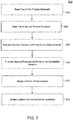
- Segregating the installation steps of a product update at a high level, results in the process flow of
Figure 3 . - A unified installer according to embodiments seeks to merge two or more products of same family together at the runtime. As an initial case, the following indicates the result of simply merging two products of a same family, and installing.
- As threshold matter, it is noted that the setup-engine will execute only once (rather than two times).
- • Configuration file. Several configurations may be common for both of the products. So, the union of configurations of both the products would be less than or equal to sum of configurations of the two products. This is similarly true for:
- Prerequisite list,
- Feature list,
- Property.
- Regarding actions taken, a few common operations will be executed only once. Examples include deploying a war file in an application server, and the restarting of servers.
- Deployment Units. Several DUs may be common between both the products. So, merging all the DUs will be less than or equal to sum of DUs of both the product. In that case, Installing or processing of duplicates DUs time will get saved.
- Product Seed. There may be common features or common DUs. So there is probability that the merged product seed may be lesser in size as compared to the sum of two product seed files.
- Product Sequence: There may be common screens. In this case also, embodiments are afforded the benefit of time to process. Another way, in general add-on install screens are a subset of the main enterprise solution. So, in that case, the add-on product sequence file may be ignored. However, if extra entries are present in the add-on, both of the files can be merged intelligently.
- From analysis of the above factors, some benefit in installation time will accrue if the products can be merged and installed at one time.
- Accordingly, embodiments relate to a tool which allows the user to select multiple products of same family, for installation in a single event. Initially, this tool can identify if the products are from same family.
- If the products are from the same family, the tool can intelligently merge the various:
- Configuration files,
- Deployment Units,
- Product Seed, and
- Product Sequences,
- Then, the tool will fire the installation as single unified installer merging all the products.
- Summarizing, embodiments may perform two different sets of mergers. A first merging involves the logical merging of configuration, seed and sequence files. A second merging involves physical merging of all DUs.
- Details regarding the first, logical merging of files according to this example, are now provided. This first merger involves analyzing the configuration, seed, and sequence files for the differences. A procedure is composed for merging the files logically to a single file for a separate unified product - which is the merger of the separate individual products (belong to the same family).
- The code excerpts shown in
Figures 4-6 , illustrate how this first merger is occurring.Figure 4 is a code snippet of a product-seed file of a first product. This shows for the feature "installer.runtime", the DU references required. -
Figure 5 is a code snippet of a product-seed file of a second product belonging to the same product family as the first product ofFigure 4 .Figure 5 shows the list of DU references for the "installer.runtime" feature. - Contrasting
Figures 4 and5 , revealsFigure 4 to have four extra DU references (compare toFigure 5 for the feature "installer.runtime"). According to this example, these four extra DU references are all named with product. explorer.* - Merging the product-seed files of the first and second products, produces the code excerpt of
Figure 6 for the merged product-seed file of the unified installer. It is seen thatFigure 6 is the union of all the Deployment Unit references for both the first and second products considering the feature "installer.runtime". - Logic is referenced to merge the features and create the new product seed for the unified installer. Similarly, embodiments can logically merge other configuration files, seed files, and sequence files.
- In drafting logic to merge any of the above factors of multiple products, some parameters may conflict. Depending upon the conflicting parameter type, embodiments may need to analyze and compose intelligent logic in order to consider the value of the parameter in the merged product.
- Details regarding the second, physical merging of DUs according to this example, are now provided. The products have their own set of DUs.
- Out of those DU sets, relatively few individual DUs may be common between the merged products. This example focuses on copying all the DU together, to behave as DUs of a separate product merge of all of them.
- For purposes of illustrating this second merger, consider the following.
- Product "A" has five DUs {a, b, c, d, e}.
- Product "B" has five DUs {c, e, k, m, n}.
- Product "C" has five DUs {e, f, n, y, z}.
- Accordingly, a merged product will have all of these DUs {a, b, c, d, e, f, k, m, n, y, z}.
- An analytical model according to this specific example is now discussed. In particular, the SAP Business Intelligent family of products was used. Server downtime was only required at the time of software update. Merging of products (in terms of files, DUs) at runtime does not involve downtime, as that process is creating another product from the merger of all of the products. Downtime is only applicable when the newly merged product is getting installed.
- The entire installation time is segregated into the following:
- p = Processing of DUs to install,
- a = Execution of setup engine core procedure,
- s = server stop and start,
- w = War file packaging and deploying for application servers,
- r = Copying necessary contents to repository.
- Then, the total installation time taken by three individual products is:
- Product "A" = p1 + a1 + s1 + w1 + r1
- Product "B" = p2 + a2 + s2 + w2 + r2
- Product "C" = p3 + a3 + s3 + w3 + r3
- Now, after merging the three products, comparing the time taken by the unified installer:
Merged Product = pu + au + su + wu + ru - Analysis reveals the following A. - E.
- A. As, number of DUs in the merged product is less than or equal to the sum of numbers of DUs of individual products,

- B. As the setup engine core procedure is running only once (instead of multiple times for the number of products),

- C. All the servers will get only restarted once, instead for each of the multiple number of products,

- D. War file packaging and deployment will also happen once,

- E. Copying content to the repository will also happens once. This is an Input/Output (IO) operation, and will also save time.

- From the above logic, it is demonstrated that: "Time taken for Unified Installer installation is less than the sum of time taken by the individual products installation."
- Experimental results according to the example, are now discussed. In particular, above it is demonstrated that the merged product of a unified installer according to embodiments, has reduced time consumption than installation of an individual product installation one after another.
- With practical implementation of unified installer considering SAP BI products, this example assumes:
- Product "X" = SAP Business Object (BOE)
- Product "Y" = SAP Business Object Explorer
- Product "Z" = SAP Business Object BI client
- Considering the Products "X" and "Y", observed statistics are listed in the table of
Figure 7 . That figure shows an improvement of about 31% in installation time. - Considering the Products "X", "Y", and "Z", observed statistics are listed in the table of
Figure 8 . That figure shows an improvement of about 43% in installation time. - The result of improvement varies based on the number of common factors, the size of the products, and the number of products that are unified. As seen in the above results in
Figures 7-8 , significant improvement in reduced software downtime can be achieved. - Embodiments may offer benefits over alternative approaches. For example, one alternative approach could be to merge different possible combinations of products, providing that to the customer as a single package. However, a large number of such combinations could exist, and is difficult for any software vendor to maintain all of the packages generated and provide support for each of them.
- By contrast, embodiments as described herein focus on merging of software products at runtime. This makes it possible to provide customers an option of combining the products belonging to a same family at their own choice.
- Returning to
Figure 1 , there the particular embodiment depicted with the engine responsible for providing the unified installer being located outside of the database. However, this is not required. - Rather, alternative embodiments could leverage the processing power of an in-memory database engine (e.g., the in-memory database engine of the HANA in-memory database available from SAP SE), in order to perform various functions.
- Thus
Figure 9 illustrates hardware of a special purpose computing machine configured to implement software product installation according to an embodiment. In particular,computer system 901 comprises aprocessor 902 that is in electronic communication with a non-transitory computer-readable storage medium comprising adatabase 903. This computer-readable storage medium has stored thereoncode 905 corresponding to an engine.Code 904 corresponds to a stored product (including its Deployment Units). Code may be configured to reference data stored in a database of a non-transitory computer-readable storage medium, for example as may be present locally or in a remote database server. Software servers together may form a cluster or logical network of computer systems programmed with software programs that communicate with each other and work together in order to process requests. - An
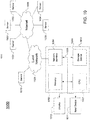
example computer system 1000 is illustrated inFigure 10 .Computer system 1010 includes abus 1005 or other communication mechanism for communicating information, and aprocessor 1001 coupled withbus 1005 for processing information.Computer system 1010 also includes amemory 1002 coupled tobus 1005 for storing information and instructions to be executed byprocessor 1001, including information and instructions for performing the techniques described above, for example. This memory may also be used for storing variables or other intermediate information during execution of instructions to be executed byprocessor 1001. Possible implementations of this memory may be, but are not limited to, random access memory (RAM), read only memory (ROM), or both. Astorage device 1003 is also provided for storing information and instructions. Common forms of storage devices include, for example, a hard drive, a magnetic disk, an optical disk, a CD-ROM, a DVD, a flash memory, a USB memory card, or any other medium from which a computer can read.Storage device 1003 may include source code, binary code, or software files for performing the techniques above, for example. Storage device and memory are both examples of computer readable mediums. -
Computer system 1010 may be coupled viabus 1005 to adisplay 1012, such as a cathode ray tube (CRT) or liquid crystal display (LCD), for displaying information to a computer user. Aninput device 1011 such as a keyboard and/or mouse is coupled tobus 1005 for communicating information and command selections from the user toprocessor 1001. The combination of these components allows the user to communicate with the system. In some systems,bus 1005 may be divided into multiple specialized buses. -
Computer system 1010 also includes anetwork interface 1004 coupled withbus 1005.Network interface 1004 may provide two-way data communication betweencomputer system 1010 and thelocal network 1020. Thenetwork interface 1004 may be a digital subscriber line (DSL) or a modem to provide data communication connection over a telephone line, for example. Another example of the network interface is a local area network (LAN) card to provide a data communication connection to a compatible LAN. Wireless links are another example. In any such implementation, network interface 504 sends and receives electrical, electromagnetic, or optical signals that carry digital data streams representing various types of information. -
Computer system 1010 can send and receive information, including messages or other interface actions, through thenetwork interface 1004 across alocal network 1020, an Intranet, or theInternet 1030. For a local network,computer system 1010 may communicate with a plurality of other computer machines, such asserver 1015. Accordingly,computer system 1010 and server computer systems represented byserver 1015 may form a cloud computing network, which may be programmed with processes described herein. In the Internet example, software components or services may reside on multipledifferent computer systems 1010 or servers 1031-1035 across the network. The processes described above may be implemented on one or more servers, for example. Aserver 1031 may transmit actions or messages from one component, throughInternet 1030, local network 520, andnetwork interface 1004 to a component oncomputer system 1010. The software components and processes described above may be implemented on any computer system and send and/or receive information across a network, for example. - The above description illustrates various embodiments of the present invention along with examples of how aspects of the present invention may be implemented. The above examples and embodiments should not be deemed to be the only embodiments, and are presented to illustrate the flexibility and advantages of the present invention as defined by the following claims. Based on the above disclosure and the following claims, other arrangements, embodiments, implementations and equivalents will be evident to those skilled in the art and may be employed without departing from the spirit and scope of the invention as defined by the claims.
Claims (15)
- A computer-implemented method comprising:receiving a first software product including a first seed file listing a deployment unit;receiving a second software product including a second seed file also listing the deployment unit;merging the first software product and the second software product according to the first seed file and the second seed file to create a unified installer, the unified installer including a single instance of the deployment unit; andforwarding the unified installer to a procedure to install the first software product and the second software product by running the single instance of the deployment unit.
- A method as in claim 1 further comprising:
prior to the merging, determining from the first seed file and the second seed file that the first software product and the second software product belong to a same product family. - A method as in claim 1 or 2 further comprising:
prior to the merging, determining from the first seed file and the second seed file that a version of the first software product is compatible with a version of the second software product. - A method as in any one of claims 1 to 3 wherein the merging comprises performing a first, logical merging of the first seed file and the second seed file to create a merged seed file;
wherein the merging optionally further comprises referencing the merged seed file to perform a second, physical merging to create the unified installer including the single instance of the deployment unit. - A method as in any one of claims 1 to 4 wherein the merging further considers a prerequisite;
and/or
wherein the merging further considers a property. - A method as in any one of claims 1 to 5 wherein:the first software product is stored in an in-memory database; andthe merging is performed by an in-memory database engine of the in-memory database.
- A non-transitory computer readable storage medium embodying a computer program for performing a method, said method comprising:receiving a first software product including a first seed file listing a deployment unit;receiving a second software product including a second seed file also listing the deployment unit;performing a first, logical merging of the first seed file and the second seed file to create a merged seed file;referencing the merged seed file to perform a second, physical merging to create a unified installer including the single instance of the deployment unit; andforwarding the unified installer to a procedure to install the first software product and the second software product by running the single instance of the deployment unit.
- A non-transitory computer readable storage medium as in claim 7 wherein the method further comprises:
prior to the first, logical merging, determining from the first seed file and the second seed file that the first software product and the second software product belong to a same product family. - A non-transitory computer readable storage medium as in claim 7 or 8 wherein the method further comprises:
prior to the first, logical merging, determining from the first seed file and the second seed file that a version of the first software product is compatible with a version of the second software product. - A non-transitory computer readable storage medium as in any one of claims 7 to 9 wherein the second, physical merger considers a prerequisite;
and/or
wherein the second, physical merger considers a property. - A computer system comprising:one or more processors;a software program, executable on said computer system, the software program configured to cause an in-memory database engine of an in-memory source database to:receive from the in-memory database, a first software product including a first seed file listing a deployment unit;receive a second software product including a second seed file also listing the deployment unit;merge the first software product and the second software product according to the first seed file and the second seed file to create a unified installer, the unified installer including a single instance of the deployment unit; andforward the unified installer to a procedure to install the first software product and the second software product by running the single instance of the deployment unit.
- A computer system as in claim 11 wherein prior to the merge, the in-memory database engine is further configured to:
determine from the first seed file and the second seed file that the first software product and the second software product belong to a same product family. - A computer system as in claim 11 or 12 wherein prior to the merge, the in-memory database engine is further configured to:
determine from the first seed file and the second seed file that a version of the first software product is compatible with a version of the second software product; - A computer system as in any one of claims 11 to 13 wherein:the merge comprises the in-memory database engine performing a first, logical merge of the first seed file and the second seed file to create a merged seed file; andthe merge optionally further comprises the in-memory database engine referencing the merged seed file to perform a second, physical merge to create the unified installer including the single instance of the deployment unit.
- A computer system as in any one of claims 11 to 14 further comprising the in-memory database engine considering a prerequisite in performing the merge;
and/or
further comprising the in-memory database engine considering a property in performing the merge.
Applications Claiming Priority (1)
| Application Number | Priority Date | Filing Date | Title |
|---|---|---|---|
| US16/714,362 US11275571B2 (en) | 2019-12-13 | 2019-12-13 | Unified installer |
Publications (1)
| Publication Number | Publication Date |
|---|---|
| EP3835946A1 true EP3835946A1 (en) | 2021-06-16 |
Family
ID=73005393
Family Applications (1)
| Application Number | Title | Priority Date | Filing Date |
|---|---|---|---|
| EP20203031.8A Ceased EP3835946A1 (en) | 2019-12-13 | 2020-10-21 | Unified installer |
Country Status (2)
| Country | Link |
|---|---|
| US (1) | US11275571B2 (en) |
| EP (1) | EP3835946A1 (en) |
Families Citing this family (2)
| Publication number | Priority date | Publication date | Assignee | Title |
|---|---|---|---|---|
| US11797284B2 (en) * | 2021-07-22 | 2023-10-24 | International Business Machines Corporation | Composable deployer architecture |
| US12182560B2 (en) * | 2021-09-09 | 2024-12-31 | International Business Machines Corporation | Dependency-based software upgrading |
Citations (4)
| Publication number | Priority date | Publication date | Assignee | Title |
|---|---|---|---|---|
| EP1492002A2 (en) * | 2003-06-20 | 2004-12-29 | Microsoft Corporation | Dependency based deployment of packages in a computing environment |
| US20060048140A1 (en) * | 2004-08-31 | 2006-03-02 | International Business Machines Corporation | Method, system and article for generating installation merge packages |
| US8365164B1 (en) * | 2008-02-21 | 2013-01-29 | T-APP Ltd. | Portable software applications |
| US20190324733A1 (en) * | 2018-04-20 | 2019-10-24 | Red Hat, Inc. | Managing software installation |
Family Cites Families (18)
| Publication number | Priority date | Publication date | Assignee | Title |
|---|---|---|---|---|
| US5842024A (en) | 1995-02-27 | 1998-11-24 | Ast Research, Inc. | Method of software installation |
| US6075943A (en) | 1997-08-13 | 2000-06-13 | International Business Machines Corporation | System and method for client server software installation |
| US20070277170A1 (en) * | 2006-05-25 | 2007-11-29 | International Business Machines Corporation | Merger driven application installation |
| JP2009146122A (en) * | 2007-12-13 | 2009-07-02 | Nec Infrontia Corp | Installation method, installer and installation program |
| US8291403B2 (en) * | 2008-06-30 | 2012-10-16 | Symantec Operating Corporation | Install-unit upgrade using dynamic configuration data manipulation and merging |
| US8752015B2 (en) * | 2011-12-05 | 2014-06-10 | Ca, Inc. | Metadata merging in agent configuration files |
| CN104854558B (en) * | 2012-12-14 | 2018-10-23 | 瑞典爱立信有限公司 | For using compiling and deployment services to carry out system, the method and computer program product of software building and load processing |
| US20150082298A1 (en) * | 2013-09-19 | 2015-03-19 | Qiu Shi WANG | Packaging and deploying hybrid applications |
| US9182966B2 (en) * | 2013-12-31 | 2015-11-10 | International Business Machines Corporation | Enabling dynamic software installer requirement dependency checks |
| US9218176B1 (en) * | 2014-06-13 | 2015-12-22 | International Business Machines Corporation | Software deployment in a distributed virtual machine environment |
| WO2016120885A1 (en) * | 2015-01-30 | 2016-08-04 | Hewlett Packard Enterprise Development Lp | Deploying software products |
| US10768961B2 (en) * | 2016-07-14 | 2020-09-08 | International Business Machines Corporation | Virtual machine seed image replication through parallel deployment |
| US10001982B1 (en) * | 2016-12-16 | 2018-06-19 | Palantir Technologies, Inc. | Imposing a common build system for services from disparate sources |
| CN108958742A (en) * | 2017-05-26 | 2018-12-07 | 华为技术有限公司 | A kind of method of batch installing operating system, relevant device and system |
| JP2019040400A (en) * | 2017-08-25 | 2019-03-14 | 富士通株式会社 | Installation control program, installation control method, and information processing apparatus |
| US10963423B2 (en) * | 2018-02-06 | 2021-03-30 | Bank Of America Corporation | Generating and identifying distinct portions of a merged file |
| CN110389859B (en) * | 2018-04-20 | 2023-07-07 | 伊姆西Ip控股有限责任公司 | Method, device and computer program product for copying data blocks |
| US20210099590A1 (en) * | 2019-09-26 | 2021-04-01 | Toshiba Tec Kabushiki Kaisha | System and method for uniform software deployment to devices with different configurations |
-
2019
- 2019-12-13 US US16/714,362 patent/US11275571B2/en active Active
-
2020
- 2020-10-21 EP EP20203031.8A patent/EP3835946A1/en not_active Ceased
Patent Citations (4)
| Publication number | Priority date | Publication date | Assignee | Title |
|---|---|---|---|---|
| EP1492002A2 (en) * | 2003-06-20 | 2004-12-29 | Microsoft Corporation | Dependency based deployment of packages in a computing environment |
| US20060048140A1 (en) * | 2004-08-31 | 2006-03-02 | International Business Machines Corporation | Method, system and article for generating installation merge packages |
| US8365164B1 (en) * | 2008-02-21 | 2013-01-29 | T-APP Ltd. | Portable software applications |
| US20190324733A1 (en) * | 2018-04-20 | 2019-10-24 | Red Hat, Inc. | Managing software installation |
Also Published As
| Publication number | Publication date |
|---|---|
| US20210182042A1 (en) | 2021-06-17 |
| US11275571B2 (en) | 2022-03-15 |
Similar Documents
| Publication | Publication Date | Title |
|---|---|---|
| US12498915B2 (en) | Systems and methods for transformation of reporting schema | |
| EP3477499B1 (en) | EXCHANGE OF SHARED DATA CONTAINERS AND ALIGNMENT OF CLIENTS IN MULTI-CENT DATABASE SYSTEMS | |
| EP3477504B1 (en) | Data separation and write redirection in multi-tenancy database systems | |
| US10091120B2 (en) | Secondary input queues for maintaining a consistent network state | |
| US9280554B2 (en) | Using confidence values for synchronizing file systems | |
| EP3477498A1 (en) | Transitioning between system sharing types in multi-tenancy database systems | |
| EP3477503A1 (en) | Key pattern management in multi-tenancy database systems | |
| EP3477502A1 (en) | Patching content across shared and tenant containers in multi-tenancy database systems | |
| US10310900B2 (en) | Operating programs on a computer cluster | |
| US20130047161A1 (en) | Selecting processing techniques for a data flow task | |
| US10338910B2 (en) | Multi-tenant upgrading | |
| US20170351506A1 (en) | Automating feature graduation | |
| US9542173B2 (en) | Dependency handling for software extensions | |
| US11275571B2 (en) | Unified installer | |
| US20220326927A1 (en) | Abort installation of firmware bundles | |
| US12475123B2 (en) | Proactive query plan compilation | |
| US20090254896A1 (en) | Simplifying Bundling Of Fixes Used To Resolve Errors In Pre-Installed Software | |
| US20210303339A1 (en) | Data backup method, electronic device and computer program product | |
| JPH1091405A (en) | Software maintenance method | |
| US20260111213A1 (en) | Automatic firmware update in an industrial system | |
| US20240289662A1 (en) | Dynamic quantum instruction file customization | |
| CN119829417A (en) | Distributed case execution method and case execution system based on case dependence | |
| WO2007144891A1 (en) | A method for the distribution of software processes to a plurality of computers | |
| CN109582330A (en) | Data model upgrade method, device, equipment and readable storage medium storing program for executing | |
| US20220237021A1 (en) | Systems and methods of telemetry diagnostics |
Legal Events
| Date | Code | Title | Description |
|---|---|---|---|
| PUAI | Public reference made under article 153(3) epc to a published international application that has entered the european phase |
Free format text: ORIGINAL CODE: 0009012 |
|
| STAA | Information on the status of an ep patent application or granted ep patent |
Free format text: STATUS: THE APPLICATION HAS BEEN PUBLISHED |
|
| AK | Designated contracting states |
Kind code of ref document: A1 Designated state(s): AL AT BE BG CH CY CZ DE DK EE ES FI FR GB GR HR HU IE IS IT LI LT LU LV MC MK MT NL NO PL PT RO RS SE SI SK SM TR |
|
| STAA | Information on the status of an ep patent application or granted ep patent |
Free format text: STATUS: REQUEST FOR EXAMINATION WAS MADE |
|
| 17P | Request for examination filed |
Effective date: 20211209 |
|
| RBV | Designated contracting states (corrected) |
Designated state(s): AL AT BE BG CH CY CZ DE DK EE ES FI FR GB GR HR HU IE IS IT LI LT LU LV MC MK MT NL NO PL PT RO RS SE SI SK SM TR |
|
| STAA | Information on the status of an ep patent application or granted ep patent |
Free format text: STATUS: EXAMINATION IS IN PROGRESS |
|
| 17Q | First examination report despatched |
Effective date: 20221123 |
|
| STAA | Information on the status of an ep patent application or granted ep patent |
Free format text: STATUS: THE APPLICATION HAS BEEN REFUSED |
|
| 18R | Application refused |
Effective date: 20240603 |