EP3835146A1 - Reversible motor configured with motion stops for aircraft windshield wiper system - Google Patents
Reversible motor configured with motion stops for aircraft windshield wiper system Download PDFInfo
- Publication number
- EP3835146A1 EP3835146A1 EP20212482.2A EP20212482A EP3835146A1 EP 3835146 A1 EP3835146 A1 EP 3835146A1 EP 20212482 A EP20212482 A EP 20212482A EP 3835146 A1 EP3835146 A1 EP 3835146A1
- Authority
- EP
- European Patent Office
- Prior art keywords
- aft
- shaft segment
- ball nut
- stop
- motor
- Prior art date
- Legal status (The legal status is an assumption and is not a legal conclusion. Google has not performed a legal analysis and makes no representation as to the accuracy of the status listed.)
- Granted
Links
Images


Classifications
-
- B—PERFORMING OPERATIONS; TRANSPORTING
- B60—VEHICLES IN GENERAL
- B60S—SERVICING, CLEANING, REPAIRING, SUPPORTING, LIFTING, OR MANOEUVRING OF VEHICLES, NOT OTHERWISE PROVIDED FOR
- B60S1/00—Cleaning of vehicles
- B60S1/02—Cleaning windscreens, windows or optical devices
- B60S1/04—Wipers or the like, e.g. scrapers
- B60S1/06—Wipers or the like, e.g. scrapers characterised by the drive
- B60S1/08—Wipers or the like, e.g. scrapers characterised by the drive electrically driven
-
- B—PERFORMING OPERATIONS; TRANSPORTING
- B60—VEHICLES IN GENERAL
- B60S—SERVICING, CLEANING, REPAIRING, SUPPORTING, LIFTING, OR MANOEUVRING OF VEHICLES, NOT OTHERWISE PROVIDED FOR
- B60S1/00—Cleaning of vehicles
- B60S1/02—Cleaning windscreens, windows or optical devices
- B60S1/04—Wipers or the like, e.g. scrapers
- B60S1/06—Wipers or the like, e.g. scrapers characterised by the drive
- B60S1/16—Means for transmitting drive
- B60S1/18—Means for transmitting drive mechanically
- B60S1/185—Means for transmitting drive mechanically with means for stopping or setting the wipers at their limit of movement
-
- B—PERFORMING OPERATIONS; TRANSPORTING
- B64—AIRCRAFT; AVIATION; COSMONAUTICS
- B64C—AEROPLANES; HELICOPTERS
- B64C1/00—Fuselages; Constructional features common to fuselages, wings, stabilising surfaces or the like
- B64C1/14—Windows; Doors; Hatch covers or access panels; Surrounding frame structures; Canopies; Windscreens accessories therefor, e.g. pressure sensors, water deflectors, hinges, seals, handles, latches, windscreen wipers
-
- H—ELECTRICITY
- H02—GENERATION; CONVERSION OR DISTRIBUTION OF ELECTRIC POWER
- H02K—DYNAMO-ELECTRIC MACHINES
- H02K7/00—Arrangements for handling mechanical energy structurally associated with dynamo-electric machines, e.g. structural association with mechanical driving motors or auxiliary dynamo-electric machines
- H02K7/003—Couplings; Details of shafts
-
- H—ELECTRICITY
- H02—GENERATION; CONVERSION OR DISTRIBUTION OF ELECTRIC POWER
- H02K—DYNAMO-ELECTRIC MACHINES
- H02K7/00—Arrangements for handling mechanical energy structurally associated with dynamo-electric machines, e.g. structural association with mechanical driving motors or auxiliary dynamo-electric machines
- H02K7/06—Means for converting reciprocating motion into rotary motion or vice versa
-
- H—ELECTRICITY
- H02—GENERATION; CONVERSION OR DISTRIBUTION OF ELECTRIC POWER
- H02K—DYNAMO-ELECTRIC MACHINES
- H02K7/00—Arrangements for handling mechanical energy structurally associated with dynamo-electric machines, e.g. structural association with mechanical driving motors or auxiliary dynamo-electric machines
- H02K7/08—Structural association with bearings
- H02K7/083—Structural association with bearings radially supporting the rotary shaft at both ends of the rotor
-
- H—ELECTRICITY
- H02—GENERATION; CONVERSION OR DISTRIBUTION OF ELECTRIC POWER
- H02K—DYNAMO-ELECTRIC MACHINES
- H02K7/00—Arrangements for handling mechanical energy structurally associated with dynamo-electric machines, e.g. structural association with mechanical driving motors or auxiliary dynamo-electric machines
- H02K7/10—Structural association with clutches, brakes, gears, pulleys or mechanical starters
- H02K7/116—Structural association with clutches, brakes, gears, pulleys or mechanical starters with gears
-
- B—PERFORMING OPERATIONS; TRANSPORTING
- B60—VEHICLES IN GENERAL
- B60S—SERVICING, CLEANING, REPAIRING, SUPPORTING, LIFTING, OR MANOEUVRING OF VEHICLES, NOT OTHERWISE PROVIDED FOR
- B60S1/00—Cleaning of vehicles
- B60S1/02—Cleaning windscreens, windows or optical devices
- B60S1/04—Wipers or the like, e.g. scrapers
- B60S1/06—Wipers or the like, e.g. scrapers characterised by the drive
- B60S1/16—Means for transmitting drive
- B60S1/166—Means for transmitting drive characterised by the combination of a motor-reduction unit and a mechanism for converting rotary into oscillatory movement
Definitions
- the embodiments herein relate to windshield wiper systems for an aircraft and more specifically to a reversible motor configured with motion stops for such windshield wiper system.
- a windshield wiper system is used on an aircraft to clean a wind shield of the aircraft, e.g., during rain.
- One type of windshield wiper system utilizes a crank rocker mechanism. In such a system, continuous rotation of a motor of the windshield wiper system is converted to oscillatory motion at a wiper shaft that is connected the crank rocker mechanism.
- a sweep angle of the crank rocker mechanism is fixed mechanically. From this, the wiper shaft is constrained within the intended sweep angle.
- Another type of windshield wiper system utilizes a reversible brushless direct-current motor (reversible motor). Through electronic controls, the reversible motor achieves oscillatory motion directly from the motor shaft.
- a windshield wiper system for an aircraft, comprising: a wiper arm; a reversible motor that drives the wiper arm, the reversible motor including: a stator; a rotor configured to rotate relative to the stator; a forward shaft segment, wherein the forward shaft segment is driven by the rotor and is rotationally connected to the wiper arm; an aft shaft segment, wherein the aft shaft segment is driven by the rotor, the aft shaft segment including a forward end and an aft end; a ball nut, wherein the ball nut translates along the aft shaft segment from rotation of the aft shaft segment; a forward stop at a forward end of the aft shaft segment, configured to stop forward translational motion of the ball nut along the aft shaft segment; and an aft stop at an aft end of the aft shaft segment, configured to stop aft translational motion of the ball nut along the aft
- the forward shaft segment and the aft shaft segment are segments of a motor shaft.
- the motor further includes: a housing, wherein the housing has a forward end wall and an aft end wall, wherein: the stator and the rotor are disposed within the housing; the forward shaft segment extends through the forward end wall of the housing; the aft shaft segment extends through the aft end wall of the housing; and the forward stop surface is formed by the aft end wall of the housing.
- the windshield wiper system further includes: an endcap fixed to the aft end wall of the housing, the endcap including an aft end wall spaced apart from the aft end wall of the housing, wherein: the aft shaft segment is disposed within the endcap; and the aft stop surface is defined by the aft end wall of the endcap.
- the ball nut includes a flange that defines a first passage
- the windshield wiper system further includes: a first guide pin extending from the aft end wall of the housing to the aft end wall of the endcap such that the first guide pin is parallel to the aft shaft, wherein the first guide pin extends through the first passage in the flange of the ball nut and prevents rotation of the ball nut relative to the stator when the aft shaft segment rotates.
- a second passage is defined by the flange of the ball nut; and the windshield wiper system further includes: a second guide pin extending from the aft end wall of the housing to the aft end wall of the endcap such that the second guide pin is parallel to the aft shaft segment and is spaced apart from the first guide pin, wherein the second guide pin extends through the second passage in the flange of the ball nut.
- first guide pin and the second guide pin are connected to the aft end wall of the housing.
- the reversible motor is a reversible brushless direct-current motor.
- the reversible motor is configured to stop responsive to the ball nut contacting the aft stop while the aft shaft segment rotates.
- the reversible motor is configured to stop responsive to sensing an increase in current drawn by the motor when the ball nut contacts the aft stop while the aft shaft segment rotates.
- the reversible motor is configured to stop responsive to the ball nut contacting the forward stop while the aft shaft segment rotates.
- the reversible motor is configured to stop responsive to sensing an increase in current drawn by the motor when the ball nut contacts the forward stop while the aft shaft segment rotates.
- the aft shaft segment is threaded, and the system further includes balls within the ball nut that engage the threads on the aft shaft segment, whereby the ball nut translates forward and aft when the aft shaft segment rotates.
- the windshield wiper system further includes: a reduction gear that rotationally couples the aft shaft segment to the wiper arm.
- a pinion gear is defined by the forward shaft segment, and the pinion gear is rotationally coupled to the reduction gear.
- an aircraft including a windshield wiper system having one or more of the above disclosed aspects.
- a method of operating a windshield wiper system comprising: driving a rotor of a reversible motor relative to a stator of the reversible motor; driving an aft shaft segment of a motor shaft with the rotor; translating a ball nut from rotation of the aft shaft segment between a forward stop and an aft stop; and stopping the reversible motor when the ball nut contacts either of the forward stop and the aft stop while the aft shaft segment rotates.
- the method further includes: driving a reduction gear with a forward shaft segment of the motor shaft and driving a wiper arm with the reduction gear.
- the method further includes: preventing rotation of the ball nut relative to the stator with a guide pin extending through a passage defined in a flange of the ball nut, from the forward stop to the aft stop.
- the method further includes: stopping the reversible motor responsive to sensing an increase in current draw by the motor when the ball nut contacts either of the forward stop and the aft stop while the aft shaft segment rotates.
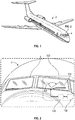
- FIG. 1 shows an aircraft 2 having a windshield 4.
- the aircraft 2 includes a windshield wiper system 100 for cleaning the windshield 4, e.g., during rain.
- the windshield wiper system 100 includes a wiper arm 110 driven by a reduction gear 120 that is powered by a motor 130.
- the wiper arm 110 can traverse a sweep angle (SA) during operation.
- SA sweep angle
- the wiper arm 110 is configured to sweep within a sweep angle SA of, e.g., (60) sixty degrees per sweep cycle at a rate of one hundred (100) cycles per minute (CPM).
- SA sweep angle
- CPM cycles per minute
- the motor 130 includes a motor housing 160.
- the motor housing 160 includes forward and aft ends 150a, 150b. As illustrated, the forward and aft ends 150a, 150b of the motor housing 160 are spaced apart along an axis 145.
- the motor 130 includes a stator 155a with associated coil windings ( FIGS. 4-5 ).
- a rotor 155b ( FIGS. 4-5 ) is configured to rotate relative to the stator 155a based on electrical power receive through one or more leads 156 ( FIG. 3 ) extending through the housing 160.
- the rotor 155b drives a motor shaft 140a ( FIGS. 4-5 ), which may be supported on a shaft bearing 155c ( FIGS.
- the motor shaft 140a defines a forward shaft segment 140b extending along the axis 145 through the forward end 150a of the housing 160.
- the motor shaft 140 also defines an aft shaft segment 140c ( FIGS. 4-5 ) extending along the axis 145 through the aft end 150b of the housing 160.
- the motor 130 of the windshield wiper system 100 may be a reversible brushless direct-current motor. Through electronic control of the motor 130, the motor 130 achieves oscillatory motion with the forward shaft segment 140b of the motor shaft 140a. As illustrated, the forward shaft segment 140b drives the reduction gear 120 ( FIGS. 2-3 ). In addition, the forward shaft segment 140b includes a pinion gear profile ( FIG. 3 ) for meshing with the reduction gear 120.
- the windshield wiper system 100 includes a ball nut 210.
- the ball nut 210 translates along the aft shaft segment 140c from rotation of the aft shaft segment 140c.
- This configuration forms a ball screw type linear actuator.
- a ball screw is a mechanical linear actuator that translates rotational motion, i.e., the aft shaft segment 140c, to linear motion of the ball nut 210 with little friction.
- a ball screw is able to apply or withstand high thrust loads with minimum internal friction and is machinable to close tolerances. The ball screw is therefore is generally suitable for use in situations in which require high precision.
- the aft shaft segment 140c is formed with a helical raceway for engaging ball bearings 200 in the ball nut 210, which acts as a precision screw.
- the rotation of the aft shaft segment 140c is converted to linear motion of the ball nut 210 along the axis 145.
- a forward stop 165a is formed by the aft end 150b of the housing 160.
- the forward stop 165a is configured to stop forward translational motion of the ball nut 210 along the aft shaft segment 140c.
- An aft stop 165b is located at an aft end 190 of the aft shaft segment 165b.
- the aft stop 165b is configured to stop aft translational motion of the ball nut 210 along the aft shaft segment 140c.
- the aft shaft segment 140c, the ball nut 210, and the forward and aft stops 165a, 165b together form a motion limiter located at the aft end 150b of the motor housing 160.
- This configuration prevents over rotation of the motor shaft 140a. This prevents over sweep of the wiper arm 110 ( FIG. 2 ). As a result, damage to the wiper arm 110 and aircraft 2 around the windshield 4 ( FIG. 2 ) is potentially avoided.
- the motor 130 is stopped.
- the windshield wiper system 100 may thereafter be serviced as needed to restore a desired operational state.
- the guide pins 220 extend from the aft end 150b of the motor housing 160, parallel with and along-side the aft shaft segment 140c.
- the ball nut 210 includes a flange 210a, which is cylindrical and defines one or more passages 210b through which the respective one or more guide pins 220 extend.
- the one or more guide pins 220 may have a same length as the aft shaft segment 140c to prevent run-off of the flange 210a as the ball nut 210 moves along the aft shaft segment 140c. In the illustrated embodiment a pair of the guide pins 220 are utilized, though this is not intended on limiting the scope of the disclosed embodiments.
- the aft shaft segment 140c with the ball nut 210 and the guide pins 220 are encased against the aft end 150b of the motor housing 160 by an endcap 230.
- the endcap 230 is cylindrical having a sidewall 240 with an inner diameter that is larger than the flange 210a of the ball nut 210.
- An aft wall 250 of the endcap 230 is located near or against an aft end 190 of the aft shaft segment 140c.
- the aft wall 250 of the endcap 230 forms the aft stop 165b.
- the opposing radial directions in which the motor 130 rotates per wiper sweep cycle are illustrated in FIGS. 4-5 .
- the opposing radial directions include a first rotational direction R1 (as illustrated in FIG. 4 ) and a second rotational direction R2 (as illustrated in FIG. 5 ).
- the direction of translation D of the ball nut 210 will reverse when rotation of the aft shaft segment 140c reverses, e.g., at each wiper sweep cycle.
- the ball nut 210 translates toward the aft end 150b of the motor housing when the motor 130 rotates the aft shaft segment 140c in the direction R1 during one wiper sweep cycle.
- the ball nut 210 translates toward the aft wall 250 of the endcap 230 when the motor 130 rotates the aft shaft segment 140c in the direction R2 during another wiper sweep cycle.
- the ball nut 210 translates, during each wiper sweep cycle, by travel distance DT along the aft shaft segment 140c.
- the travel distance DT is a function of on a thread pitch of the aft shaft segment 140c.
- the aft end 150b of the motor housing 160 and the aft wall 250 of the endcap 230 may respectively form the forward stop and the aft stop (e.g. motion stops).
- This configuration may prevent over travel of the ball nut 210 against the aft shaft segment 140c during each wiper sweep cycle. Preventing the ball nut 210 from traveling beyond the travel distance DT during each wiper sweep cycle may prevent over rotation of the wiper arm 110.
- the following non-limiting example demonstrates a process in determining the travel distance DT to restrict the linear travel of the ball nut 210.
- the process requires determining the number of complete rotations of the aft shaft segment 140c per wiper sweep cycle. This is a function of the gear reduction ratio and the sweep angle SA.
- the process then requires determining the travel distance DT as a function of the number of complete rotations of the aft shaft segment 140c per wiper sweep cycle (calculated) and the thread pitch for the aft shaft segment 140c.
- the windshield wiper system 100 is configured as follows: a sweep speed of the wiper arm 110 ( FIG. 2 ) is one hundred (100) cycles per minute (CPM); a total sweep angle SA of the wiper arm 110 is sixty (60) degrees ( FIG. 2 ); the reduction gear 120 is configured to provide a reduction gear ratio of fifty to one (50:1); and the aft shaft segment 140c is threaded, e.g., with a helical groove, at ten (10) threads per inch (TPI).
- the number of complete rotations of the aft shaft segment 140c per wiper sweep cycle is calculated by a first formula of: gear reduction ⁇ sweep angle ⁇ 360 degrees per rotation .
- the gear reduction of fifty to one (50:1) and the sweep angle SA of the wiper arm 110 is sixty (60) degrees.
- the travel distance DT of the ball nut 210 per wiper sweep cycle is calculated by a second formula of: number of completed rotations of the aft shaft segment 140 c per wiper sweep cycle calculated above ⁇ the thread pitch of the aft shaft segment 140 c .
- the thread pitch on the aft shaft segment 140c is ten (10) TPI.
- a height HC of the endcap 230, and length L of the aft shaft segment 140c that extends beyond the aft end 150b of the motor housing 160 are properly sized.
- the height HC of the endcap 230 may differ from the length L of the aft shaft segment 140c by the thickness of the aft wall 250 of the endcap 230, which may be considered nominal so these two measurements may be substantially the same.
- the height HC of the endcap 230 may be a total distance between the aft end 150b of the motor housing 160 and the aft wall 250 of the endcap 230.
- the height HC would be the travel distance DT (calculated above), combined with a height HB ( FIG. 5 ) of the ball nut 210, which may be measured.
- the speed in revolutions per minute (RPM) of the aft shaft segment 140c per wiper sweep cycle is a function of the gear reduction ratio and the sweep speed. That is, the gear reduction ratio is fifty to one (50:1) and the sweep speed of the wiper arm 110 is one hundred (100) CPM. With this, the aft shaft segment 140c will have a speed of: gear reduction ⁇ sweep speed of wiper arm 110.
- the ball nut 210 will be prevented from traveling more than the travel distance DT.
- the motor 130 will be unable to produce over rotation in either direction R1 or R2 and instead will experience an over current draw.
- An over current trip logic which may be programmed into the motor 130, may execute upon sensing an over current draw from the motor 130, shutting down the motor 130.
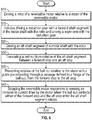
- FIG. 6 a flowchart shows a method of operating the system 100.
- the method includes driving a rotor 155b of a reversible motor 130 relative to a stator 155a of the reversible motor 130.
- the method includes driving a reduction gear 120 with a forward shaft segment 140b of the motor shaft 140a with the rotor 155b and driving a wiper arm 110 with the reduction gear 120.
- the method includes driving an aft shaft segment 140c of a motor shaft 140a with the rotor 155b.
- the method includes translating a ball nut 210 from rotation of the aft shaft segment 140c between a forward stop 165a and an aft stop 165b.
- the method includes preventing rotation of the ball nut 210 relative to the stator 155a with a guide pin 220 extending through a flange 210a of the ball nut 210, from the forward stop 165a to the aft stop 165b.
- the method includes stopping the reversible motor responsive to sensing an increase in current draw by the motor when the ball nut contacts either of the forward stop and the aft stop while the aft shaft segment rotates.
- the disclosed embodiments provide for stopping/halting rotation of a motor shaft using ball screw mechanism.
- the disclosed embodiments utilize an over current-trip of the motor, where the over current-trip is activated at a locked rotor condition that occurs from stoppage of the ball nut.
- the system is formed and assembled utilizing common manufacturing techniques.
- the system is relatively easily configurable, depending largely on a sweep angle of the wiper blade arm.
- One benefit of the disclosed embodiments includes protecting aircraft, wiper components and related hardware from damage that could result from over sweep.
- a stopping torque required to engage the over current-trip of the motor with the disclosed embodiments is significantly decreased compared with motion limiters located away from the motor. The reduced wear on the motor results in a more reliable system.
Landscapes
- Engineering & Computer Science (AREA)
- Power Engineering (AREA)
- Mechanical Engineering (AREA)
- Aviation & Aerospace Engineering (AREA)
- Connection Of Motors, Electrical Generators, Mechanical Devices, And The Like (AREA)
- Transmission Devices (AREA)
Abstract
Description
- This application claims the benefit of Indian Application No.
201911050812, filed December 9, 2019 - The embodiments herein relate to windshield wiper systems for an aircraft and more specifically to a reversible motor configured with motion stops for such windshield wiper system.
- A windshield wiper system is used on an aircraft to clean a wind shield of the aircraft, e.g., during rain. One type of windshield wiper system utilizes a crank rocker mechanism. In such a system, continuous rotation of a motor of the windshield wiper system is converted to oscillatory motion at a wiper shaft that is connected the crank rocker mechanism. For such a windshield wiper system, a sweep angle of the crank rocker mechanism is fixed mechanically. From this, the wiper shaft is constrained within the intended sweep angle. Another type of windshield wiper system utilizes a reversible brushless direct-current motor (reversible motor). Through electronic controls, the reversible motor achieves oscillatory motion directly from the motor shaft.
- Disclosed is a windshield wiper system for an aircraft, comprising: a wiper arm; a reversible motor that drives the wiper arm, the reversible motor including: a stator; a rotor configured to rotate relative to the stator; a forward shaft segment, wherein the forward shaft segment is driven by the rotor and is rotationally connected to the wiper arm; an aft shaft segment, wherein the aft shaft segment is driven by the rotor, the aft shaft segment including a forward end and an aft end; a ball nut, wherein the ball nut translates along the aft shaft segment from rotation of the aft shaft segment; a forward stop at a forward end of the aft shaft segment, configured to stop forward translational motion of the ball nut along the aft shaft segment; and an aft stop at an aft end of the aft shaft segment, configured to stop aft translational motion of the ball nut along the aft shaft segment.
- In addition to one or more of the above disclosed aspects, or as an alternate, the forward shaft segment and the aft shaft segment are segments of a motor shaft.
- In addition to one or more of the above disclosed aspects, or as an alternate, the motor further includes: a housing, wherein the housing has a forward end wall and an aft end wall, wherein: the stator and the rotor are disposed within the housing; the forward shaft segment extends through the forward end wall of the housing; the aft shaft segment extends through the aft end wall of the housing; and the forward stop surface is formed by the aft end wall of the housing.
- In addition to one or more of the above disclosed aspects, or as an alternate, the windshield wiper system further includes: an endcap fixed to the aft end wall of the housing, the endcap including an aft end wall spaced apart from the aft end wall of the housing, wherein: the aft shaft segment is disposed within the endcap; and the aft stop surface is defined by the aft end wall of the endcap.
- In addition to one or more of the above disclosed aspects, or as an alternate: the ball nut includes a flange that defines a first passage; the windshield wiper system further includes: a first guide pin extending from the aft end wall of the housing to the aft end wall of the endcap such that the first guide pin is parallel to the aft shaft, wherein the first guide pin extends through the first passage in the flange of the ball nut and prevents rotation of the ball nut relative to the stator when the aft shaft segment rotates.
- In addition to one or more of the above disclosed aspects, or as an alternate: a second passage is defined by the flange of the ball nut; and the windshield wiper system further includes: a second guide pin extending from the aft end wall of the housing to the aft end wall of the endcap such that the second guide pin is parallel to the aft shaft segment and is spaced apart from the first guide pin, wherein the second guide pin extends through the second passage in the flange of the ball nut.
- In addition to one or more of the above disclosed aspects, or as an alternate, the first guide pin and the second guide pin are connected to the aft end wall of the housing.
- In addition to one or more of the above disclosed aspects, or as an alternate, the reversible motor is a reversible brushless direct-current motor.
- In addition to one or more of the above disclosed aspects, or as an alternate, the reversible motor is configured to stop responsive to the ball nut contacting the aft stop while the aft shaft segment rotates.
- In addition to one or more of the above disclosed aspects, or as an alternate, the reversible motor is configured to stop responsive to sensing an increase in current drawn by the motor when the ball nut contacts the aft stop while the aft shaft segment rotates.
- In addition to one or more of the above disclosed aspects, or as an alternate, the reversible motor is configured to stop responsive to the ball nut contacting the forward stop while the aft shaft segment rotates.
- In addition to one or more of the above disclosed aspects, or as an alternate, the reversible motor is configured to stop responsive to sensing an increase in current drawn by the motor when the ball nut contacts the forward stop while the aft shaft segment rotates.
- In addition to one or more of the above disclosed aspects, or as an alternate, the aft shaft segment is threaded, and the system further includes balls within the ball nut that engage the threads on the aft shaft segment, whereby the ball nut translates forward and aft when the aft shaft segment rotates.
- In addition to one or more of the above disclosed aspects, or as an alternate, the windshield wiper system further includes: a reduction gear that rotationally couples the aft shaft segment to the wiper arm.
- In addition to one or more of the above disclosed aspects, or as an alternate, a pinion gear is defined by the forward shaft segment, and the pinion gear is rotationally coupled to the reduction gear.
- Further disclosed is an aircraft including a windshield wiper system having one or more of the above disclosed aspects.
- Further disclosed is a method of operating a windshield wiper system, comprising: driving a rotor of a reversible motor relative to a stator of the reversible motor; driving an aft shaft segment of a motor shaft with the rotor; translating a ball nut from rotation of the aft shaft segment between a forward stop and an aft stop; and stopping the reversible motor when the ball nut contacts either of the forward stop and the aft stop while the aft shaft segment rotates.
- In addition to one or more of the above disclosed aspects, or as an alternate, the method further includes: driving a reduction gear with a forward shaft segment of the motor shaft and driving a wiper arm with the reduction gear.
- In addition to one or more of the above disclosed aspects, or as an alternate, the method further includes: preventing rotation of the ball nut relative to the stator with a guide pin extending through a passage defined in a flange of the ball nut, from the forward stop to the aft stop.
- In addition to one or more of the above disclosed aspects, or as an alternate, the method further includes: stopping the reversible motor responsive to sensing an increase in current draw by the motor when the ball nut contacts either of the forward stop and the aft stop while the aft shaft segment rotates.
- The following descriptions should not be considered limiting in any way. With reference to the accompanying drawings, like elements are numbered alike:
-
FIG. 1 is a perspective view of an aircraft that may include a windshield wiper system according to a disclosed embodiment; -
FIG. 2 shows a detail of section A ofFIG. 1 , showing aspects of a windshield wiper system according to a disclosed embodiment; -
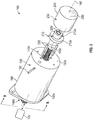
FIG. 3 shows a motor of the windshield wiper system according to a disclosed embodiment; -
FIG. 4 shows a cross section of the motor along section lines B-B ofFIG. 3 , showing a ball nut in a forward position, disposed against an aft end of the motor housing; -
FIG. 5 shows the cross section of the motor along section lines B-B ofFIG. 3 , showing the ball nut in an aft position and disposed against an aft surface of an endcap connected to the motor housing; and -
FIG. 6 is a flowchart showing a method of operating a windshield wiper system according to a disclosed embodiment. - A detailed description of one or more embodiments of the disclosed apparatus and method are presented herein by way of exemplification and not limitation with reference to the Figures.
-
FIG. 1 shows anaircraft 2 having awindshield 4. As shown inFIG. 2 , theaircraft 2 includes awindshield wiper system 100 for cleaning thewindshield 4, e.g., during rain. Thewindshield wiper system 100 includes awiper arm 110 driven by areduction gear 120 that is powered by amotor 130. In such systems, thewiper arm 110 can traverse a sweep angle (SA) during operation. According to one non-limiting embodiment thewiper arm 110 is configured to sweep within a sweep angle SA of, e.g., (60) sixty degrees per sweep cycle at a rate of one hundred (100) cycles per minute (CPM). - Turning to
FIG. 3-5 themotor 130 includes amotor housing 160. Themotor housing 160 includes forward andaft ends motor housing 160 are spaced apart along anaxis 145. Within thehousing 160, themotor 130 includes astator 155a with associated coil windings (FIGS. 4-5 ). Arotor 155b (FIGS. 4-5 ) is configured to rotate relative to thestator 155a based on electrical power receive through one or more leads 156 (FIG. 3 ) extending through thehousing 160. Therotor 155b drives amotor shaft 140a (FIGS. 4-5 ), which may be supported on a shaft bearing 155c (FIGS. 4-5 ). Themotor shaft 140a defines aforward shaft segment 140b extending along theaxis 145 through theforward end 150a of thehousing 160. The motor shaft 140 also defines anaft shaft segment 140c (FIGS. 4-5 ) extending along theaxis 145 through theaft end 150b of thehousing 160. - The
motor 130 of thewindshield wiper system 100 may be a reversible brushless direct-current motor. Through electronic control of themotor 130, themotor 130 achieves oscillatory motion with theforward shaft segment 140b of themotor shaft 140a. As illustrated, theforward shaft segment 140b drives the reduction gear 120 (FIGS. 2-3 ). In addition, theforward shaft segment 140b includes a pinion gear profile (FIG. 3 ) for meshing with thereduction gear 120. - The
windshield wiper system 100 includes aball nut 210. Theball nut 210 translates along theaft shaft segment 140c from rotation of theaft shaft segment 140c. This configuration forms a ball screw type linear actuator. A ball screw is a mechanical linear actuator that translates rotational motion, i.e., theaft shaft segment 140c, to linear motion of theball nut 210 with little friction. A ball screw is able to apply or withstand high thrust loads with minimum internal friction and is machinable to close tolerances. The ball screw is therefore is generally suitable for use in situations in which require high precision. Theaft shaft segment 140c is formed with a helical raceway for engagingball bearings 200 in theball nut 210, which acts as a precision screw. Thus, as theaft shaft segment 140c rotates with themotor shaft 140a, the rotation of theaft shaft segment 140c is converted to linear motion of theball nut 210 along theaxis 145. - As more clearly shown in
FIGS. 4-5 , aforward stop 165a is formed by theaft end 150b of thehousing 160. Theforward stop 165a is configured to stop forward translational motion of theball nut 210 along theaft shaft segment 140c. Anaft stop 165b is located at anaft end 190 of theaft shaft segment 165b. Theaft stop 165b is configured to stop aft translational motion of theball nut 210 along theaft shaft segment 140c. With this configuration, theaft shaft segment 140c, theball nut 210, and the forward andaft stops aft end 150b of themotor housing 160. This configuration prevents over rotation of themotor shaft 140a. This prevents over sweep of the wiper arm 110 (FIG. 2 ). As a result, damage to thewiper arm 110 andaircraft 2 around the windshield 4 (FIG. 2 ) is potentially avoided. As disclosed herein, when over rotation of themotor shaft 140a in either direction is encountered, themotor 130 is stopped. Thewindshield wiper system 100 may thereafter be serviced as needed to restore a desired operational state. - Rotational motion of the
ball nut 210, e.g., relative to thestator 155a is prevented with one or more guide pins 220. The guide pins 220 extend from theaft end 150b of themotor housing 160, parallel with and along-side theaft shaft segment 140c. Theball nut 210 includes aflange 210a, which is cylindrical and defines one ormore passages 210b through which the respective one or more guide pins 220 extend. The one or more guide pins 220 may have a same length as theaft shaft segment 140c to prevent run-off of theflange 210a as theball nut 210 moves along theaft shaft segment 140c. In the illustrated embodiment a pair of the guide pins 220 are utilized, though this is not intended on limiting the scope of the disclosed embodiments. - The
aft shaft segment 140c with theball nut 210 and the guide pins 220 are encased against theaft end 150b of themotor housing 160 by anendcap 230. Theendcap 230 is cylindrical having asidewall 240 with an inner diameter that is larger than theflange 210a of theball nut 210. Anaft wall 250 of theendcap 230 is located near or against anaft end 190 of theaft shaft segment 140c. Theaft wall 250 of theendcap 230 forms theaft stop 165b. - The opposing radial directions in which the
motor 130 rotates per wiper sweep cycle are illustrated inFIGS. 4-5 . The opposing radial directions include a first rotational direction R1 (as illustrated inFIG. 4 ) and a second rotational direction R2 (as illustrated inFIG. 5 ). The direction of translation D of theball nut 210 will reverse when rotation of theaft shaft segment 140c reverses, e.g., at each wiper sweep cycle. Theball nut 210 translates toward theaft end 150b of the motor housing when themotor 130 rotates theaft shaft segment 140c in the direction R1 during one wiper sweep cycle. Theball nut 210 translates toward theaft wall 250 of theendcap 230 when themotor 130 rotates theaft shaft segment 140c in the direction R2 during another wiper sweep cycle. - Further, the
ball nut 210 translates, during each wiper sweep cycle, by travel distance DT along theaft shaft segment 140c. The travel distance DT is a function of on a thread pitch of theaft shaft segment 140c. During movement of theball nut 210, theaft end 150b of themotor housing 160 and theaft wall 250 of theendcap 230, as indicated above, may respectively form the forward stop and the aft stop (e.g. motion stops). This configuration may prevent over travel of theball nut 210 against theaft shaft segment 140c during each wiper sweep cycle. Preventing theball nut 210 from traveling beyond the travel distance DT during each wiper sweep cycle may prevent over rotation of thewiper arm 110. - The following non-limiting example demonstrates a process in determining the travel distance DT to restrict the linear travel of the
ball nut 210. The process requires determining the number of complete rotations of theaft shaft segment 140c per wiper sweep cycle. This is a function of the gear reduction ratio and the sweep angle SA. The process then requires determining the travel distance DT as a function of the number of complete rotations of theaft shaft segment 140c per wiper sweep cycle (calculated) and the thread pitch for theaft shaft segment 140c. - In one non-limiting embodiment the
windshield wiper system 100 is configured as follows: a sweep speed of the wiper arm 110 (FIG. 2 ) is one hundred (100) cycles per minute (CPM); a total sweep angle SA of thewiper arm 110 is sixty (60) degrees (FIG. 2 ); thereduction gear 120 is configured to provide a reduction gear ratio of fifty to one (50:1); and theaft shaft segment 140c is threaded, e.g., with a helical groove, at ten (10) threads per inch (TPI). - The number of complete rotations of the
aft shaft segment 140c per wiper sweep cycle is calculated by a first formula of:
- The gear reduction of fifty to one (50:1) and the sweep angle SA of the
wiper arm 110 is sixty (60) degrees. Thus the first formula provides (50 x 60 / 360) = eight and a third (8.33) rotations per wiper sweep cycle. - The travel distance DT of the
ball nut 210 per wiper sweep cycle is calculated by a second formula of:
- The thread pitch on the
aft shaft segment 140c is ten (10) TPI. Thus the second formula provides (8.33/10) = (0.833) inches of travel for theball nut 210 per wiper sweep cycle. Therefore, a travel distance DT of theball nut 210 can be (0.850) inches per wiper sweep cycle, accounting for clearance. - To provide the travel distance DT for the
ball nut 210, a height HC of theendcap 230, and length L of theaft shaft segment 140c that extends beyond theaft end 150b of themotor housing 160, are properly sized. The height HC of theendcap 230 may differ from the length L of theaft shaft segment 140c by the thickness of theaft wall 250 of theendcap 230, which may be considered nominal so these two measurements may be substantially the same. Thus, the height HC of theendcap 230 may be a total distance between theaft end 150b of themotor housing 160 and theaft wall 250 of theendcap 230. Thus, the height HC would be the travel distance DT (calculated above), combined with a height HB (FIG. 5 ) of theball nut 210, which may be measured. - For design of the
motor 130, it is noted that the speed in revolutions per minute (RPM) of theaft shaft segment 140c per wiper sweep cycle is a function of the gear reduction ratio and the sweep speed. That is, the gear reduction ratio is fifty to one (50:1) and the sweep speed of thewiper arm 110 is one hundred (100) CPM. With this, theaft shaft segment 140c will have a speed of:
- This results in (50 x 100), or five thousand (5000) RPM.
- With the above configuration, as indicated, the
ball nut 210 will be prevented from traveling more than the travel distance DT. Themotor 130 will be unable to produce over rotation in either direction R1 or R2 and instead will experience an over current draw. An over current trip logic, which may be programmed into themotor 130, may execute upon sensing an over current draw from themotor 130, shutting down themotor 130. - Turning to
FIG. 6 a flowchart shows a method of operating thesystem 100. As shown inblock 510 the method includes driving arotor 155b of areversible motor 130 relative to astator 155a of thereversible motor 130. As shown inblock 515 the method includes driving areduction gear 120 with aforward shaft segment 140b of themotor shaft 140a with therotor 155b and driving awiper arm 110 with thereduction gear 120. As shown inblock 520 the method includes driving anaft shaft segment 140c of amotor shaft 140a with therotor 155b. As shown inblock 530 the method includes translating aball nut 210 from rotation of theaft shaft segment 140c between aforward stop 165a and anaft stop 165b. As shown inblock 535 the method includes preventing rotation of theball nut 210 relative to thestator 155a with aguide pin 220 extending through aflange 210a of theball nut 210, from theforward stop 165a to theaft stop 165b. As shown inblock 540 the method includes stopping the reversible motor responsive to sensing an increase in current draw by the motor when the ball nut contacts either of the forward stop and the aft stop while the aft shaft segment rotates. - In sum the disclosed embodiments provide for stopping/halting rotation of a motor shaft using ball screw mechanism. The disclosed embodiments utilize an over current-trip of the motor, where the over current-trip is activated at a locked rotor condition that occurs from stoppage of the ball nut. The system is formed and assembled utilizing common manufacturing techniques. The system is relatively easily configurable, depending largely on a sweep angle of the wiper blade arm. One benefit of the disclosed embodiments includes protecting aircraft, wiper components and related hardware from damage that could result from over sweep. A stopping torque required to engage the over current-trip of the motor with the disclosed embodiments is significantly decreased compared with motion limiters located away from the motor. The reduced wear on the motor results in a more reliable system.
- The terminology used herein is for the purpose of describing particular embodiments only and is not intended to be limiting of the present disclosure. As used herein, the singular forms "a", "an" and "the" are intended to include the plural forms as well, unless the context clearly indicates otherwise. It will be further understood that the terms "comprises" and/or "comprising," when used in this specification, specify the presence of stated features, integers, steps, operations, elements, and/or components, but do not preclude the presence or addition of one or more other features, integers, steps, operations, element components, and/or groups thereof.
- Those of skill in the art will appreciate that various example embodiments are shown and described herein, each having certain features in the particular embodiments, but the present disclosure is not thus limited. Rather, the present disclosure can be modified to incorporate any number of variations, alterations, substitutions, combinations, sub-combinations, or equivalent arrangements not heretofore described, but which are commensurate with the scope of the present disclosure. Additionally, while various embodiments of the present disclosure have been described, it is to be understood that aspects of the present disclosure may include only some of the described embodiments. Accordingly, the present disclosure is not to be seen as limited by the foregoing description, but is only limited by the scope of the appended claims.
Claims (15)
- A windshield wiper system for an aircraft, comprising:a wiper arm (110);a reversible motor (130) that drives the wiper arm, the reversible motor including:a stator (155a);a rotor (155b) configured to rotate relative to the stator;a forward shaft segment (140b), wherein the forward shaft segment is driven by the rotor and is rotationally connected to the wiper arm;an aft shaft segment, wherein the aft shaft segment (140c) is driven by the rotor, the aft shaft segment including a forward end and an aft end;a ball nut (210), wherein the ball nut translates along the aft shaft segment from rotation of the aft shaft segment;a forward stop (165a) at a forward end of the aft shaft segment, configured to stop forward translational motion of the ball nut along the aft shaft segment; andan aft stop (165b) at an aft end of the aft shaft segment, configured to stop aft translational motion of the ball nut along the aft shaft segment.
- The windshield wiper system of claim 1, wherein the forward shaft segment and the aft shaft segment are segments of a motor shaft.
- The windshield wiper system of claim 1 or 2, wherein the motor further includes:
a housing, wherein the housing has a forward end wall and an aft end wall, wherein:the stator and the rotor are disposed within the housing;the forward shaft segment extends through the forward end wall of the housing;the aft shaft segment extends through the aft end wall of the housing; andthe forward stop surface is formed by the aft end wall of the housing. - The windshield wiper system of claim 3, further comprising:
an endcap fixed to the aft end wall of the housing, the endcap including an aft end wall spaced apart from the aft end wall of the housing, wherein:the aft shaft segment is disposed within the endcap; andthe aft stop surface is defined by the aft end wall of the endcap. - The windshield wiper system of claim 4, wherein:the ball nut includes a flange that defines a first passage;the windshield wiper system further includes:a first guide pin extending from the aft end wall of the housing to the aft end wall of the endcap such that the first guide pin is parallel to the aft shaft,wherein the first guide pin extends through the first passage in the flange of the ball nut and prevents rotation of the ball nut relative to the stator when the aft shaft segment rotates.
- The windshield wiper system of claim 5, wherein:a second passage is defined by the flange of the ball nut; andthe windshield wiper system further includes:a second guide pin extending from the aft end wall of the housing to the aft end wall of the endcap such that the second guide pin is parallel to the aft shaft segment and is spaced apart from the first guide pin,wherein the second guide pin extends through the second passage in the flange of the ball nut, and optionally wherein the first guide pin and the second guide pin are connected to the aft end wall of the housing.
- The windshield wiper system of any preceding claim, wherein the reversible motor is a reversible brushless direct-current motor.
- The windshield wiper system of any preceding claim, wherein the reversible motor is configured to stop responsive to the ball nut contacting the aft stop while the aft shaft segment rotates, and optionally wherein the reversible motor is configured to stop responsive to sensing an increase in current drawn by the motor when the ball nut contacts the aft stop while the aft shaft segment rotates.
- The windshield wiper system of any preceding claim, wherein the reversible motor is configured to stop responsive to the ball nut contacting the forward stop while the aft shaft segment rotates, and optionally wherein the reversible motor is configured to stop responsive to sensing an increase in current drawn by the motor when the ball nut contacts the forward stop while the aft shaft segment rotates.
- The windshield wiper system of any preceding claim, wherein the aft shaft segment is threaded, and the system further includes balls within the ball nut that engage the threads on the aft shaft segment, whereby the ball nut translates forward and aft when the aft shaft segment rotates.
- The windshield wiper system of any preceding claim, further comprising:
a reduction gear that rotationally couples the aft shaft segment to the wiper arm, and optionally wherein a pinion gear is defined by the forward shaft segment, and the pinion gear is rotationally coupled to the reduction gear. - An aircraft including the windshield wiper system of any preceding claim.
- A method of operating a windshield wiper system, comprising:driving a rotor (155b) of a reversible motor (130) relative to a stator of the reversible motor;driving an aft shaft segment (165b) of a motor shaft with the rotor;translating a ball nut (210) from rotation of the aft shaft segment between a forward stop and an aft stop; andstopping the reversible motor (130) when the ball nut contacts either of the forward stop and the aft stop while the aft shaft segment rotates.
- The method of claim 13, further comprising:
driving a reduction gear with a forward shaft segment of the motor shaft and driving a wiper arm with the reduction gear. - The method of claim 13 or 14, further comprising:
preventing rotation of the ball nut relative to the stator with a guide pin extending through a passage defined in a flange of the ball nut, from the forward stop to the aft stop, and/or further comprising:
stopping the reversible motor responsive to sensing an increase in current draw by the motor when the ball nut contacts either of the forward stop and the aft stop while the aft shaft segment rotates.
Applications Claiming Priority (1)
| Application Number | Priority Date | Filing Date | Title |
|---|---|---|---|
| IN201911050812 | 2019-12-09 |
Publications (2)
| Publication Number | Publication Date |
|---|---|
| EP3835146A1 true EP3835146A1 (en) | 2021-06-16 |
| EP3835146B1 EP3835146B1 (en) | 2024-03-20 |
Family
ID=73747964
Family Applications (1)
| Application Number | Title | Priority Date | Filing Date |
|---|---|---|---|
| EP20212482.2A Active EP3835146B1 (en) | 2019-12-09 | 2020-12-08 | Reversible motor configured with motion stops for aircraft windshield wiper system |
Country Status (2)
| Country | Link |
|---|---|
| US (2) | US11772606B2 (en) |
| EP (1) | EP3835146B1 (en) |
Families Citing this family (2)
| Publication number | Priority date | Publication date | Assignee | Title |
|---|---|---|---|---|
| US11772606B2 (en) | 2019-12-09 | 2023-10-03 | Rosemount Aerospace Inc. | Reversible motor configured with motion stops for aircraft windshield wiper system |
| EP4509372A1 (en) * | 2023-07-25 | 2025-02-19 | Rosemount Aerospace Inc. | Mechanical hard stop for wiper |
Citations (2)
| Publication number | Priority date | Publication date | Assignee | Title |
|---|---|---|---|---|
| US20060053577A1 (en) * | 2002-05-15 | 2006-03-16 | Arman Moein | Direct drive windshield wiper assembly |
| KR20170101720A (en) * | 2016-02-29 | 2017-09-06 | 건양대학교산학협력단 | Ball screw with stop stopper |
Family Cites Families (11)
| Publication number | Priority date | Publication date | Assignee | Title |
|---|---|---|---|---|
| IT207928Z2 (en) * | 1986-02-21 | 1988-02-22 | Roltra Spa | WINDSCREEN WIPER FOR VEHICLES |
| JPH03239174A (en) * | 1990-02-16 | 1991-10-24 | Jidosha Denki Kogyo Co Ltd | Wiper control system |
| DE19908489A1 (en) | 1998-03-04 | 2000-05-18 | Asmo Co Ltd | Wiper Apparatus |
| US6799654B2 (en) | 2002-02-05 | 2004-10-05 | Delphi Technologies, Inc. | Hand wheel actuator |
| DE10242298A1 (en) * | 2002-09-12 | 2004-03-18 | Robert Bosch Gmbh | Wiper unit for a motor vehicle's front/rear windscreens has a wiper drive with a wiper motor, a gearing mechanism and a drive shaft for the gearing to drive a wiper arm shaft for a wiper arm |
| JP5434339B2 (en) * | 2009-07-29 | 2014-03-05 | ソニー株式会社 | Imaging control apparatus, imaging system, imaging method, program |
| FR2972410B1 (en) * | 2011-03-10 | 2013-03-22 | Falgayras Sas | ICE WIPER DEVICE WITH BALL SCREWS AND FORK |
| KR101484765B1 (en) * | 2014-06-03 | 2015-01-21 | 디와이오토 주식회사 | Wiper motor apparatus for a vehicle |
| US10106127B2 (en) | 2015-12-18 | 2018-10-23 | Goodrich Aerospace Services Private Limited | Wiper system with variable sweep angle motor drive |
| US20200391699A1 (en) | 2019-06-14 | 2020-12-17 | Rosemount Aerospace Inc. | Windshield wiper assemblies, windshield wiper systems, and methods of controlling wiper blade sweep in windshield wiper systems |
| US11772606B2 (en) | 2019-12-09 | 2023-10-03 | Rosemount Aerospace Inc. | Reversible motor configured with motion stops for aircraft windshield wiper system |
-
2020
- 2020-02-03 US US16/779,804 patent/US11772606B2/en active Active
- 2020-12-08 EP EP20212482.2A patent/EP3835146B1/en active Active
-
2023
- 2023-09-28 US US18/476,583 patent/US12168423B2/en active Active
Patent Citations (2)
| Publication number | Priority date | Publication date | Assignee | Title |
|---|---|---|---|---|
| US20060053577A1 (en) * | 2002-05-15 | 2006-03-16 | Arman Moein | Direct drive windshield wiper assembly |
| KR20170101720A (en) * | 2016-02-29 | 2017-09-06 | 건양대학교산학협력단 | Ball screw with stop stopper |
Also Published As
| Publication number | Publication date |
|---|---|
| US20210170993A1 (en) | 2021-06-10 |
| US20240025375A1 (en) | 2024-01-25 |
| US12168423B2 (en) | 2024-12-17 |
| EP3835146B1 (en) | 2024-03-20 |
| US11772606B2 (en) | 2023-10-03 |
Similar Documents
| Publication | Publication Date | Title |
|---|---|---|
| US12168423B2 (en) | Reversible motor configured with motion stops for aircraft windshield wiper system | |
| US8001861B2 (en) | High force electro-mechanical actuator | |
| DE112011102143T5 (en) | Electric actuator | |
| US12535123B2 (en) | Electric motor having stationary drive mechanism | |
| JPS63260741A (en) | drive device | |
| US12049200B2 (en) | Direct drive for a windshield wiper system | |
| US20150353186A1 (en) | Actuators for flight control surfaces | |
| CN108724160B (en) | A rope drive device with improved control accuracy | |
| EP2729361B1 (en) | Actuator device | |
| US20220034390A1 (en) | Angular transmission device | |
| US20250033599A1 (en) | Mechanical hard stop for wiper | |
| CN115215254A (en) | Screw lift with telescopic and rotary lead screw | |
| EP3611374A1 (en) | Rotary actuator | |
| EP1418336B1 (en) | Progressive cavity pump with integrated electrical motor | |
| US6748816B2 (en) | Self-backdriving jackscrew apparatus | |
| US20200017075A1 (en) | Compact gearbox design for windshield wiper system | |
| CN215114577U (en) | Small indexing mechanism for positioning and orienting | |
| CN111002297A (en) | Ball Spline Robot | |
| CN104482158B (en) | A kind of accurately rotating mechanism | |
| KR101235871B1 (en) | Linear and rotational motion apparatus | |
| CN1195203C (en) | Wirerope transmission | |
| EP4509372A1 (en) | Mechanical hard stop for wiper | |
| DE10109185A1 (en) | Actuator drive has remotely controled coupling between drive motor and position detector, which produces signals for evaluation using emergency current supply if motor current not supplied | |
| RU2827640C1 (en) | Lead screw with nut | |
| DE102006027319A1 (en) | Centrifugal motor pump with rotation-directed start |
Legal Events
| Date | Code | Title | Description |
|---|---|---|---|
| PUAI | Public reference made under article 153(3) epc to a published international application that has entered the european phase |
Free format text: ORIGINAL CODE: 0009012 |
|
| STAA | Information on the status of an ep patent application or granted ep patent |
Free format text: STATUS: THE APPLICATION HAS BEEN PUBLISHED |
|
| AK | Designated contracting states |
Kind code of ref document: A1 Designated state(s): AL AT BE BG CH CY CZ DE DK EE ES FI FR GB GR HR HU IE IS IT LI LT LU LV MC MK MT NL NO PL PT RO RS SE SI SK SM TR |
|
| STAA | Information on the status of an ep patent application or granted ep patent |
Free format text: STATUS: REQUEST FOR EXAMINATION WAS MADE |
|
| 17P | Request for examination filed |
Effective date: 20211215 |
|
| RBV | Designated contracting states (corrected) |
Designated state(s): AL AT BE BG CH CY CZ DE DK EE ES FI FR GB GR HR HU IE IS IT LI LT LU LV MC MK MT NL NO PL PT RO RS SE SI SK SM TR |
|
| RIC1 | Information provided on ipc code assigned before grant |
Ipc: H02K 7/116 20060101ALN20230907BHEP Ipc: H02K 7/08 20060101ALI20230907BHEP Ipc: H02K 7/00 20060101ALI20230907BHEP Ipc: H02K 7/06 20060101ALI20230907BHEP Ipc: B60S 1/08 20060101AFI20230907BHEP |
|
| GRAP | Despatch of communication of intention to grant a patent |
Free format text: ORIGINAL CODE: EPIDOSNIGR1 |
|
| STAA | Information on the status of an ep patent application or granted ep patent |
Free format text: STATUS: GRANT OF PATENT IS INTENDED |
|
| RIC1 | Information provided on ipc code assigned before grant |
Ipc: H02K 7/116 20060101ALN20231006BHEP Ipc: H02K 7/08 20060101ALI20231006BHEP Ipc: H02K 7/00 20060101ALI20231006BHEP Ipc: H02K 7/06 20060101ALI20231006BHEP Ipc: B60S 1/08 20060101AFI20231006BHEP |
|
| INTG | Intention to grant announced |
Effective date: 20231031 |
|
| GRAS | Grant fee paid |
Free format text: ORIGINAL CODE: EPIDOSNIGR3 |
|
| GRAA | (expected) grant |
Free format text: ORIGINAL CODE: 0009210 |
|
| STAA | Information on the status of an ep patent application or granted ep patent |
Free format text: STATUS: THE PATENT HAS BEEN GRANTED |
|
| AK | Designated contracting states |
Kind code of ref document: B1 Designated state(s): AL AT BE BG CH CY CZ DE DK EE ES FI FR GB GR HR HU IE IS IT LI LT LU LV MC MK MT NL NO PL PT RO RS SE SI SK SM TR |
|
| REG | Reference to a national code |
Ref country code: GB Ref legal event code: FG4D |
|
| REG | Reference to a national code |
Ref country code: CH Ref legal event code: EP |
|
| REG | Reference to a national code |
Ref country code: IE Ref legal event code: FG4D |
|
| REG | Reference to a national code |
Ref country code: DE Ref legal event code: R096 Ref document number: 602020027464 Country of ref document: DE |
|
| PG25 | Lapsed in a contracting state [announced via postgrant information from national office to epo] |
Ref country code: LT Free format text: LAPSE BECAUSE OF FAILURE TO SUBMIT A TRANSLATION OF THE DESCRIPTION OR TO PAY THE FEE WITHIN THE PRESCRIBED TIME-LIMIT Effective date: 20240320 |
|
| REG | Reference to a national code |
Ref country code: LT Ref legal event code: MG9D |
|
| PG25 | Lapsed in a contracting state [announced via postgrant information from national office to epo] |
Ref country code: GR Free format text: LAPSE BECAUSE OF FAILURE TO SUBMIT A TRANSLATION OF THE DESCRIPTION OR TO PAY THE FEE WITHIN THE PRESCRIBED TIME-LIMIT Effective date: 20240621 |
|
| PG25 | Lapsed in a contracting state [announced via postgrant information from national office to epo] |
Ref country code: RS Free format text: LAPSE BECAUSE OF FAILURE TO SUBMIT A TRANSLATION OF THE DESCRIPTION OR TO PAY THE FEE WITHIN THE PRESCRIBED TIME-LIMIT Effective date: 20240620 Ref country code: HR Free format text: LAPSE BECAUSE OF FAILURE TO SUBMIT A TRANSLATION OF THE DESCRIPTION OR TO PAY THE FEE WITHIN THE PRESCRIBED TIME-LIMIT Effective date: 20240320 |
|
| REG | Reference to a national code |
Ref country code: NL Ref legal event code: MP Effective date: 20240320 |
|
| PG25 | Lapsed in a contracting state [announced via postgrant information from national office to epo] |
Ref country code: RS Free format text: LAPSE BECAUSE OF FAILURE TO SUBMIT A TRANSLATION OF THE DESCRIPTION OR TO PAY THE FEE WITHIN THE PRESCRIBED TIME-LIMIT Effective date: 20240620 Ref country code: NO Free format text: LAPSE BECAUSE OF FAILURE TO SUBMIT A TRANSLATION OF THE DESCRIPTION OR TO PAY THE FEE WITHIN THE PRESCRIBED TIME-LIMIT Effective date: 20240620 Ref country code: LT Free format text: LAPSE BECAUSE OF FAILURE TO SUBMIT A TRANSLATION OF THE DESCRIPTION OR TO PAY THE FEE WITHIN THE PRESCRIBED TIME-LIMIT Effective date: 20240320 Ref country code: HR Free format text: LAPSE BECAUSE OF FAILURE TO SUBMIT A TRANSLATION OF THE DESCRIPTION OR TO PAY THE FEE WITHIN THE PRESCRIBED TIME-LIMIT Effective date: 20240320 Ref country code: GR Free format text: LAPSE BECAUSE OF FAILURE TO SUBMIT A TRANSLATION OF THE DESCRIPTION OR TO PAY THE FEE WITHIN THE PRESCRIBED TIME-LIMIT Effective date: 20240621 Ref country code: FI Free format text: LAPSE BECAUSE OF FAILURE TO SUBMIT A TRANSLATION OF THE DESCRIPTION OR TO PAY THE FEE WITHIN THE PRESCRIBED TIME-LIMIT Effective date: 20240320 Ref country code: BG Free format text: LAPSE BECAUSE OF FAILURE TO SUBMIT A TRANSLATION OF THE DESCRIPTION OR TO PAY THE FEE WITHIN THE PRESCRIBED TIME-LIMIT Effective date: 20240320 |
|
| REG | Reference to a national code |
Ref country code: AT Ref legal event code: MK05 Ref document number: 1667565 Country of ref document: AT Kind code of ref document: T Effective date: 20240320 |
|
| PG25 | Lapsed in a contracting state [announced via postgrant information from national office to epo] |
Ref country code: SE Free format text: LAPSE BECAUSE OF FAILURE TO SUBMIT A TRANSLATION OF THE DESCRIPTION OR TO PAY THE FEE WITHIN THE PRESCRIBED TIME-LIMIT Effective date: 20240320 Ref country code: LV Free format text: LAPSE BECAUSE OF FAILURE TO SUBMIT A TRANSLATION OF THE DESCRIPTION OR TO PAY THE FEE WITHIN THE PRESCRIBED TIME-LIMIT Effective date: 20240320 |
|
| PG25 | Lapsed in a contracting state [announced via postgrant information from national office to epo] |
Ref country code: NL Free format text: LAPSE BECAUSE OF FAILURE TO SUBMIT A TRANSLATION OF THE DESCRIPTION OR TO PAY THE FEE WITHIN THE PRESCRIBED TIME-LIMIT Effective date: 20240320 |
|
| PG25 | Lapsed in a contracting state [announced via postgrant information from national office to epo] |
Ref country code: NL Free format text: LAPSE BECAUSE OF FAILURE TO SUBMIT A TRANSLATION OF THE DESCRIPTION OR TO PAY THE FEE WITHIN THE PRESCRIBED TIME-LIMIT Effective date: 20240320 |
|
| PG25 | Lapsed in a contracting state [announced via postgrant information from national office to epo] |
Ref country code: IS Free format text: LAPSE BECAUSE OF FAILURE TO SUBMIT A TRANSLATION OF THE DESCRIPTION OR TO PAY THE FEE WITHIN THE PRESCRIBED TIME-LIMIT Effective date: 20240720 |
|
| PG25 | Lapsed in a contracting state [announced via postgrant information from national office to epo] |
Ref country code: SM Free format text: LAPSE BECAUSE OF FAILURE TO SUBMIT A TRANSLATION OF THE DESCRIPTION OR TO PAY THE FEE WITHIN THE PRESCRIBED TIME-LIMIT Effective date: 20240320 Ref country code: PT Free format text: LAPSE BECAUSE OF FAILURE TO SUBMIT A TRANSLATION OF THE DESCRIPTION OR TO PAY THE FEE WITHIN THE PRESCRIBED TIME-LIMIT Effective date: 20240722 |
|
| PG25 | Lapsed in a contracting state [announced via postgrant information from national office to epo] |
Ref country code: ES Free format text: LAPSE BECAUSE OF FAILURE TO SUBMIT A TRANSLATION OF THE DESCRIPTION OR TO PAY THE FEE WITHIN THE PRESCRIBED TIME-LIMIT Effective date: 20240320 |
|
| PG25 | Lapsed in a contracting state [announced via postgrant information from national office to epo] |
Ref country code: CZ Free format text: LAPSE BECAUSE OF FAILURE TO SUBMIT A TRANSLATION OF THE DESCRIPTION OR TO PAY THE FEE WITHIN THE PRESCRIBED TIME-LIMIT Effective date: 20240320 Ref country code: EE Free format text: LAPSE BECAUSE OF FAILURE TO SUBMIT A TRANSLATION OF THE DESCRIPTION OR TO PAY THE FEE WITHIN THE PRESCRIBED TIME-LIMIT Effective date: 20240320 |
|
| PG25 | Lapsed in a contracting state [announced via postgrant information from national office to epo] |
Ref country code: AT Free format text: LAPSE BECAUSE OF FAILURE TO SUBMIT A TRANSLATION OF THE DESCRIPTION OR TO PAY THE FEE WITHIN THE PRESCRIBED TIME-LIMIT Effective date: 20240320 |
|
| PG25 | Lapsed in a contracting state [announced via postgrant information from national office to epo] |
Ref country code: PL Free format text: LAPSE BECAUSE OF FAILURE TO SUBMIT A TRANSLATION OF THE DESCRIPTION OR TO PAY THE FEE WITHIN THE PRESCRIBED TIME-LIMIT Effective date: 20240320 |
|
| PG25 | Lapsed in a contracting state [announced via postgrant information from national office to epo] |
Ref country code: SK Free format text: LAPSE BECAUSE OF FAILURE TO SUBMIT A TRANSLATION OF THE DESCRIPTION OR TO PAY THE FEE WITHIN THE PRESCRIBED TIME-LIMIT Effective date: 20240320 |
|
| PG25 | Lapsed in a contracting state [announced via postgrant information from national office to epo] |
Ref country code: SM Free format text: LAPSE BECAUSE OF FAILURE TO SUBMIT A TRANSLATION OF THE DESCRIPTION OR TO PAY THE FEE WITHIN THE PRESCRIBED TIME-LIMIT Effective date: 20240320 Ref country code: SK Free format text: LAPSE BECAUSE OF FAILURE TO SUBMIT A TRANSLATION OF THE DESCRIPTION OR TO PAY THE FEE WITHIN THE PRESCRIBED TIME-LIMIT Effective date: 20240320 Ref country code: RO Free format text: LAPSE BECAUSE OF FAILURE TO SUBMIT A TRANSLATION OF THE DESCRIPTION OR TO PAY THE FEE WITHIN THE PRESCRIBED TIME-LIMIT Effective date: 20240320 Ref country code: PT Free format text: LAPSE BECAUSE OF FAILURE TO SUBMIT A TRANSLATION OF THE DESCRIPTION OR TO PAY THE FEE WITHIN THE PRESCRIBED TIME-LIMIT Effective date: 20240722 Ref country code: PL Free format text: LAPSE BECAUSE OF FAILURE TO SUBMIT A TRANSLATION OF THE DESCRIPTION OR TO PAY THE FEE WITHIN THE PRESCRIBED TIME-LIMIT Effective date: 20240320 Ref country code: IS Free format text: LAPSE BECAUSE OF FAILURE TO SUBMIT A TRANSLATION OF THE DESCRIPTION OR TO PAY THE FEE WITHIN THE PRESCRIBED TIME-LIMIT Effective date: 20240720 Ref country code: ES Free format text: LAPSE BECAUSE OF FAILURE TO SUBMIT A TRANSLATION OF THE DESCRIPTION OR TO PAY THE FEE WITHIN THE PRESCRIBED TIME-LIMIT Effective date: 20240320 Ref country code: EE Free format text: LAPSE BECAUSE OF FAILURE TO SUBMIT A TRANSLATION OF THE DESCRIPTION OR TO PAY THE FEE WITHIN THE PRESCRIBED TIME-LIMIT Effective date: 20240320 Ref country code: CZ Free format text: LAPSE BECAUSE OF FAILURE TO SUBMIT A TRANSLATION OF THE DESCRIPTION OR TO PAY THE FEE WITHIN THE PRESCRIBED TIME-LIMIT Effective date: 20240320 Ref country code: AT Free format text: LAPSE BECAUSE OF FAILURE TO SUBMIT A TRANSLATION OF THE DESCRIPTION OR TO PAY THE FEE WITHIN THE PRESCRIBED TIME-LIMIT Effective date: 20240320 |
|
| PG25 | Lapsed in a contracting state [announced via postgrant information from national office to epo] |
Ref country code: IT Free format text: LAPSE BECAUSE OF FAILURE TO SUBMIT A TRANSLATION OF THE DESCRIPTION OR TO PAY THE FEE WITHIN THE PRESCRIBED TIME-LIMIT Effective date: 20240320 |
|
| REG | Reference to a national code |
Ref country code: DE Ref legal event code: R097 Ref document number: 602020027464 Country of ref document: DE |
|
| PG25 | Lapsed in a contracting state [announced via postgrant information from national office to epo] |
Ref country code: IT Free format text: LAPSE BECAUSE OF FAILURE TO SUBMIT A TRANSLATION OF THE DESCRIPTION OR TO PAY THE FEE WITHIN THE PRESCRIBED TIME-LIMIT Effective date: 20240320 |
|
| PG25 | Lapsed in a contracting state [announced via postgrant information from national office to epo] |
Ref country code: DK Free format text: LAPSE BECAUSE OF FAILURE TO SUBMIT A TRANSLATION OF THE DESCRIPTION OR TO PAY THE FEE WITHIN THE PRESCRIBED TIME-LIMIT Effective date: 20240320 |
|
| PLBE | No opposition filed within time limit |
Free format text: ORIGINAL CODE: 0009261 |
|
| STAA | Information on the status of an ep patent application or granted ep patent |
Free format text: STATUS: NO OPPOSITION FILED WITHIN TIME LIMIT |
|
| PG25 | Lapsed in a contracting state [announced via postgrant information from national office to epo] |
Ref country code: DK Free format text: LAPSE BECAUSE OF FAILURE TO SUBMIT A TRANSLATION OF THE DESCRIPTION OR TO PAY THE FEE WITHIN THE PRESCRIBED TIME-LIMIT Effective date: 20240320 |
|
| 26N | No opposition filed |
Effective date: 20241223 |
|
| PG25 | Lapsed in a contracting state [announced via postgrant information from national office to epo] |
Ref country code: SI Free format text: LAPSE BECAUSE OF FAILURE TO SUBMIT A TRANSLATION OF THE DESCRIPTION OR TO PAY THE FEE WITHIN THE PRESCRIBED TIME-LIMIT Effective date: 20240320 |
|
| PG25 | Lapsed in a contracting state [announced via postgrant information from national office to epo] |
Ref country code: MC Free format text: LAPSE BECAUSE OF FAILURE TO SUBMIT A TRANSLATION OF THE DESCRIPTION OR TO PAY THE FEE WITHIN THE PRESCRIBED TIME-LIMIT Effective date: 20240320 |
|
| REG | Reference to a national code |
Ref country code: CH Ref legal event code: PL |
|
| PG25 | Lapsed in a contracting state [announced via postgrant information from national office to epo] |
Ref country code: LU Free format text: LAPSE BECAUSE OF NON-PAYMENT OF DUE FEES Effective date: 20241208 |
|
| REG | Reference to a national code |
Ref country code: BE Ref legal event code: MM Effective date: 20241231 |
|
| PG25 | Lapsed in a contracting state [announced via postgrant information from national office to epo] |
Ref country code: BE Free format text: LAPSE BECAUSE OF NON-PAYMENT OF DUE FEES Effective date: 20241231 |
|
| PG25 | Lapsed in a contracting state [announced via postgrant information from national office to epo] |
Ref country code: CH Free format text: LAPSE BECAUSE OF NON-PAYMENT OF DUE FEES Effective date: 20241231 |
|
| PG25 | Lapsed in a contracting state [announced via postgrant information from national office to epo] |
Ref country code: IE Free format text: LAPSE BECAUSE OF NON-PAYMENT OF DUE FEES Effective date: 20241208 |
|
| PGFP | Annual fee paid to national office [announced via postgrant information from national office to epo] |
Ref country code: DE Payment date: 20251126 Year of fee payment: 6 |
|
| PGFP | Annual fee paid to national office [announced via postgrant information from national office to epo] |
Ref country code: GB Payment date: 20251119 Year of fee payment: 6 |
|
| PGFP | Annual fee paid to national office [announced via postgrant information from national office to epo] |
Ref country code: FR Payment date: 20251120 Year of fee payment: 6 |