EP3835065A2 - Processable polymer, method, and apparatus for additive manufacture - Google Patents
Processable polymer, method, and apparatus for additive manufacture Download PDFInfo
- Publication number
- EP3835065A2 EP3835065A2 EP20208929.8A EP20208929A EP3835065A2 EP 3835065 A2 EP3835065 A2 EP 3835065A2 EP 20208929 A EP20208929 A EP 20208929A EP 3835065 A2 EP3835065 A2 EP 3835065A2
- Authority
- EP
- European Patent Office
- Prior art keywords
- additive
- alignment
- polymer matrix
- nozzle
- polymeric chains
- Prior art date
- Legal status (The legal status is an assumption and is not a legal conclusion. Google has not performed a legal analysis and makes no representation as to the accuracy of the status listed.)
- Granted
Links
Images




Classifications
-
- C—CHEMISTRY; METALLURGY
- C09—DYES; PAINTS; POLISHES; NATURAL RESINS; ADHESIVES; COMPOSITIONS NOT OTHERWISE PROVIDED FOR; APPLICATIONS OF MATERIALS NOT OTHERWISE PROVIDED FOR
- C09D—COATING COMPOSITIONS, e.g. PAINTS, VARNISHES OR LACQUERS; FILLING PASTES; CHEMICAL PAINT OR INK REMOVERS; INKS; CORRECTING FLUIDS; WOODSTAINS; PASTES OR SOLIDS FOR COLOURING OR PRINTING; USE OF MATERIALS THEREFOR
- C09D11/00—Inks
- C09D11/02—Printing inks
- C09D11/10—Printing inks based on artificial resins
- C09D11/102—Printing inks based on artificial resins containing macromolecular compounds obtained by reactions other than those only involving unsaturated carbon-to-carbon bonds
-
- C—CHEMISTRY; METALLURGY
- C08—ORGANIC MACROMOLECULAR COMPOUNDS; THEIR PREPARATION OR CHEMICAL WORKING-UP; COMPOSITIONS BASED THEREON
- C08L—COMPOSITIONS OF MACROMOLECULAR COMPOUNDS
- C08L61/00—Compositions of condensation polymers of aldehydes or ketones; Compositions of derivatives of such polymers
- C08L61/04—Condensation polymers of aldehydes or ketones with phenols only
- C08L61/16—Condensation polymers of aldehydes or ketones with phenols only of ketones with phenols
-
- B—PERFORMING OPERATIONS; TRANSPORTING
- B29—WORKING OF PLASTICS; WORKING OF SUBSTANCES IN A PLASTIC STATE IN GENERAL
- B29C—SHAPING OR JOINING OF PLASTICS; SHAPING OF MATERIAL IN A PLASTIC STATE, NOT OTHERWISE PROVIDED FOR; AFTER-TREATMENT OF THE SHAPED PRODUCTS, e.g. REPAIRING
- B29C64/00—Additive manufacturing, i.e. manufacturing of three-dimensional [3D] objects by additive deposition, additive agglomeration or additive layering, e.g. by 3D printing, stereolithography or selective laser sintering
- B29C64/10—Processes of additive manufacturing
- B29C64/106—Processes of additive manufacturing using only liquids or viscous materials, e.g. depositing a continuous bead of viscous material
-
- B—PERFORMING OPERATIONS; TRANSPORTING
- B29—WORKING OF PLASTICS; WORKING OF SUBSTANCES IN A PLASTIC STATE IN GENERAL
- B29C—SHAPING OR JOINING OF PLASTICS; SHAPING OF MATERIAL IN A PLASTIC STATE, NOT OTHERWISE PROVIDED FOR; AFTER-TREATMENT OF THE SHAPED PRODUCTS, e.g. REPAIRING
- B29C64/00—Additive manufacturing, i.e. manufacturing of three-dimensional [3D] objects by additive deposition, additive agglomeration or additive layering, e.g. by 3D printing, stereolithography or selective laser sintering
- B29C64/10—Processes of additive manufacturing
- B29C64/106—Processes of additive manufacturing using only liquids or viscous materials, e.g. depositing a continuous bead of viscous material
- B29C64/118—Processes of additive manufacturing using only liquids or viscous materials, e.g. depositing a continuous bead of viscous material using filamentary material being melted, e.g. fused deposition modelling [FDM]
-
- B—PERFORMING OPERATIONS; TRANSPORTING
- B29—WORKING OF PLASTICS; WORKING OF SUBSTANCES IN A PLASTIC STATE IN GENERAL
- B29C—SHAPING OR JOINING OF PLASTICS; SHAPING OF MATERIAL IN A PLASTIC STATE, NOT OTHERWISE PROVIDED FOR; AFTER-TREATMENT OF THE SHAPED PRODUCTS, e.g. REPAIRING
- B29C64/00—Additive manufacturing, i.e. manufacturing of three-dimensional [3D] objects by additive deposition, additive agglomeration or additive layering, e.g. by 3D printing, stereolithography or selective laser sintering
- B29C64/20—Apparatus for additive manufacturing; Details thereof or accessories therefor
-
- B—PERFORMING OPERATIONS; TRANSPORTING
- B29—WORKING OF PLASTICS; WORKING OF SUBSTANCES IN A PLASTIC STATE IN GENERAL
- B29C—SHAPING OR JOINING OF PLASTICS; SHAPING OF MATERIAL IN A PLASTIC STATE, NOT OTHERWISE PROVIDED FOR; AFTER-TREATMENT OF THE SHAPED PRODUCTS, e.g. REPAIRING
- B29C64/00—Additive manufacturing, i.e. manufacturing of three-dimensional [3D] objects by additive deposition, additive agglomeration or additive layering, e.g. by 3D printing, stereolithography or selective laser sintering
- B29C64/20—Apparatus for additive manufacturing; Details thereof or accessories therefor
- B29C64/205—Means for applying layers
- B29C64/209—Heads; Nozzles
-
- B—PERFORMING OPERATIONS; TRANSPORTING
- B33—ADDITIVE MANUFACTURING TECHNOLOGY
- B33Y—ADDITIVE MANUFACTURING, i.e. MANUFACTURING OF THREE-DIMENSIONAL [3D] OBJECTS BY ADDITIVE DEPOSITION, ADDITIVE AGGLOMERATION OR ADDITIVE LAYERING, e.g. BY 3D PRINTING, STEREOLITHOGRAPHY OR SELECTIVE LASER SINTERING
- B33Y10/00—Processes of additive manufacturing
-
- B—PERFORMING OPERATIONS; TRANSPORTING
- B33—ADDITIVE MANUFACTURING TECHNOLOGY
- B33Y—ADDITIVE MANUFACTURING, i.e. MANUFACTURING OF THREE-DIMENSIONAL [3D] OBJECTS BY ADDITIVE DEPOSITION, ADDITIVE AGGLOMERATION OR ADDITIVE LAYERING, e.g. BY 3D PRINTING, STEREOLITHOGRAPHY OR SELECTIVE LASER SINTERING
- B33Y30/00—Apparatus for additive manufacturing; Details thereof or accessories therefor
-
- B—PERFORMING OPERATIONS; TRANSPORTING
- B33—ADDITIVE MANUFACTURING TECHNOLOGY
- B33Y—ADDITIVE MANUFACTURING, i.e. MANUFACTURING OF THREE-DIMENSIONAL [3D] OBJECTS BY ADDITIVE DEPOSITION, ADDITIVE AGGLOMERATION OR ADDITIVE LAYERING, e.g. BY 3D PRINTING, STEREOLITHOGRAPHY OR SELECTIVE LASER SINTERING
- B33Y70/00—Materials specially adapted for additive manufacturing
-
- B—PERFORMING OPERATIONS; TRANSPORTING
- B33—ADDITIVE MANUFACTURING TECHNOLOGY
- B33Y—ADDITIVE MANUFACTURING, i.e. MANUFACTURING OF THREE-DIMENSIONAL [3D] OBJECTS BY ADDITIVE DEPOSITION, ADDITIVE AGGLOMERATION OR ADDITIVE LAYERING, e.g. BY 3D PRINTING, STEREOLITHOGRAPHY OR SELECTIVE LASER SINTERING
- B33Y70/00—Materials specially adapted for additive manufacturing
- B33Y70/10—Composites of different types of material, e.g. mixtures of ceramics and polymers or mixtures of metals and biomaterials
-
- B—PERFORMING OPERATIONS; TRANSPORTING
- B33—ADDITIVE MANUFACTURING TECHNOLOGY
- B33Y—ADDITIVE MANUFACTURING, i.e. MANUFACTURING OF THREE-DIMENSIONAL [3D] OBJECTS BY ADDITIVE DEPOSITION, ADDITIVE AGGLOMERATION OR ADDITIVE LAYERING, e.g. BY 3D PRINTING, STEREOLITHOGRAPHY OR SELECTIVE LASER SINTERING
- B33Y80/00—Products made by additive manufacturing
-
- C—CHEMISTRY; METALLURGY
- C08—ORGANIC MACROMOLECULAR COMPOUNDS; THEIR PREPARATION OR CHEMICAL WORKING-UP; COMPOSITIONS BASED THEREON
- C08K—Use of inorganic or non-macromolecular organic substances as compounding ingredients
- C08K5/00—Use of organic ingredients
- C08K5/04—Oxygen-containing compounds
- C08K5/09—Carboxylic acids; Metal salts thereof; Anhydrides thereof
-
- C—CHEMISTRY; METALLURGY
- C08—ORGANIC MACROMOLECULAR COMPOUNDS; THEIR PREPARATION OR CHEMICAL WORKING-UP; COMPOSITIONS BASED THEREON
- C08K—Use of inorganic or non-macromolecular organic substances as compounding ingredients
- C08K5/00—Use of organic ingredients
- C08K5/04—Oxygen-containing compounds
- C08K5/13—Phenols; Phenolates
- C08K5/134—Phenols containing ester groups
- C08K5/1345—Carboxylic esters of phenolcarboxylic acids
-
- C—CHEMISTRY; METALLURGY
- C08—ORGANIC MACROMOLECULAR COMPOUNDS; THEIR PREPARATION OR CHEMICAL WORKING-UP; COMPOSITIONS BASED THEREON
- C08K—Use of inorganic or non-macromolecular organic substances as compounding ingredients
- C08K7/00—Use of ingredients characterised by shape
- C08K7/02—Fibres or whiskers
-
- C—CHEMISTRY; METALLURGY
- C08—ORGANIC MACROMOLECULAR COMPOUNDS; THEIR PREPARATION OR CHEMICAL WORKING-UP; COMPOSITIONS BASED THEREON
- C08L—COMPOSITIONS OF MACROMOLECULAR COMPOUNDS
- C08L101/00—Compositions of unspecified macromolecular compounds
-
- C—CHEMISTRY; METALLURGY
- C08—ORGANIC MACROMOLECULAR COMPOUNDS; THEIR PREPARATION OR CHEMICAL WORKING-UP; COMPOSITIONS BASED THEREON
- C08L—COMPOSITIONS OF MACROMOLECULAR COMPOUNDS
- C08L71/00—Compositions of polyethers obtained by reactions forming an ether link in the main chain; Compositions of derivatives of such polymers
- C08L71/08—Polyethers derived from hydroxy compounds or from their metallic derivatives
- C08L71/10—Polyethers derived from hydroxy compounds or from their metallic derivatives from phenols
-
- C—CHEMISTRY; METALLURGY
- C08—ORGANIC MACROMOLECULAR COMPOUNDS; THEIR PREPARATION OR CHEMICAL WORKING-UP; COMPOSITIONS BASED THEREON
- C08L—COMPOSITIONS OF MACROMOLECULAR COMPOUNDS
- C08L77/00—Compositions of polyamides obtained by reactions forming a carboxylic amide link in the main chain; Compositions of derivatives of such polymers
- C08L77/02—Polyamides derived from omega-amino carboxylic acids or from lactams thereof
-
- C—CHEMISTRY; METALLURGY
- C08—ORGANIC MACROMOLECULAR COMPOUNDS; THEIR PREPARATION OR CHEMICAL WORKING-UP; COMPOSITIONS BASED THEREON
- C08L—COMPOSITIONS OF MACROMOLECULAR COMPOUNDS
- C08L79/00—Compositions of macromolecular compounds obtained by reactions forming in the main chain of the macromolecule a linkage containing nitrogen with or without oxygen or carbon only, not provided for in groups C08L61/00 - C08L77/00
- C08L79/02—Polyamines
-
- C—CHEMISTRY; METALLURGY
- C09—DYES; PAINTS; POLISHES; NATURAL RESINS; ADHESIVES; COMPOSITIONS NOT OTHERWISE PROVIDED FOR; APPLICATIONS OF MATERIALS NOT OTHERWISE PROVIDED FOR
- C09D—COATING COMPOSITIONS, e.g. PAINTS, VARNISHES OR LACQUERS; FILLING PASTES; CHEMICAL PAINT OR INK REMOVERS; INKS; CORRECTING FLUIDS; WOODSTAINS; PASTES OR SOLIDS FOR COLOURING OR PRINTING; USE OF MATERIALS THEREFOR
- C09D171/00—Coating compositions based on polyethers obtained by reactions forming an ether link in the main chain; Coating compositions based on derivatives of such polymers
-
- B—PERFORMING OPERATIONS; TRANSPORTING
- B29—WORKING OF PLASTICS; WORKING OF SUBSTANCES IN A PLASTIC STATE IN GENERAL
- B29K—INDEXING SCHEME ASSOCIATED WITH SUBCLASSES B29B, B29C OR B29D, RELATING TO MOULDING MATERIALS OR TO MATERIALS FOR MOULDS, REINFORCEMENTS, FILLERS OR PREFORMED PARTS, e.g. INSERTS
- B29K2071/00—Use of polyethers, e.g. PEEK, i.e. polyether-etherketone or PEK, i.e. polyetherketone or derivatives thereof, as moulding material
-
- B—PERFORMING OPERATIONS; TRANSPORTING
- B29—WORKING OF PLASTICS; WORKING OF SUBSTANCES IN A PLASTIC STATE IN GENERAL
- B29K—INDEXING SCHEME ASSOCIATED WITH SUBCLASSES B29B, B29C OR B29D, RELATING TO MOULDING MATERIALS OR TO MATERIALS FOR MOULDS, REINFORCEMENTS, FILLERS OR PREFORMED PARTS, e.g. INSERTS
- B29K2105/00—Condition, form or state of moulded material or of the material to be shaped
- B29K2105/06—Condition, form or state of moulded material or of the material to be shaped containing reinforcements, fillers or inserts
- B29K2105/16—Fillers
- B29K2105/165—Hollow fillers, e.g. microballoons or expanded particles
- B29K2105/167—Nanotubes
-
- B—PERFORMING OPERATIONS; TRANSPORTING
- B29—WORKING OF PLASTICS; WORKING OF SUBSTANCES IN A PLASTIC STATE IN GENERAL
- B29L—INDEXING SCHEME ASSOCIATED WITH SUBCLASS B29C, RELATING TO PARTICULAR ARTICLES
- B29L2031/00—Other particular articles
- B29L2031/30—Vehicles, e.g. ships or aircraft, or body parts thereof
- B29L2031/3097—Cosmonautical vehicles; Rockets
-
- C—CHEMISTRY; METALLURGY
- C08—ORGANIC MACROMOLECULAR COMPOUNDS; THEIR PREPARATION OR CHEMICAL WORKING-UP; COMPOSITIONS BASED THEREON
- C08G—MACROMOLECULAR COMPOUNDS OBTAINED OTHERWISE THAN BY REACTIONS ONLY INVOLVING UNSATURATED CARBON-TO-CARBON BONDS
- C08G2650/00—Macromolecular compounds obtained by reactions forming an ether link in the main chain of the macromolecule
- C08G2650/28—Macromolecular compounds obtained by reactions forming an ether link in the main chain of the macromolecule characterised by the polymer type
- C08G2650/38—Macromolecular compounds obtained by reactions forming an ether link in the main chain of the macromolecule characterised by the polymer type containing oxygen in addition to the ether group
- C08G2650/40—Macromolecular compounds obtained by reactions forming an ether link in the main chain of the macromolecule characterised by the polymer type containing oxygen in addition to the ether group containing ketone groups, e.g. polyarylethylketones, PEEK or PEK
-
- C—CHEMISTRY; METALLURGY
- C08—ORGANIC MACROMOLECULAR COMPOUNDS; THEIR PREPARATION OR CHEMICAL WORKING-UP; COMPOSITIONS BASED THEREON
- C08G—MACROMOLECULAR COMPOUNDS OBTAINED OTHERWISE THAN BY REACTIONS ONLY INVOLVING UNSATURATED CARBON-TO-CARBON BONDS
- C08G65/00—Macromolecular compounds obtained by reactions forming an ether link in the main chain of the macromolecule
- C08G65/34—Macromolecular compounds obtained by reactions forming an ether link in the main chain of the macromolecule from hydroxy compounds or their metallic derivatives
- C08G65/38—Macromolecular compounds obtained by reactions forming an ether link in the main chain of the macromolecule from hydroxy compounds or their metallic derivatives derived from phenols
- C08G65/40—Macromolecular compounds obtained by reactions forming an ether link in the main chain of the macromolecule from hydroxy compounds or their metallic derivatives derived from phenols from phenols (I) and other compounds (II), e.g. OH-Ar-OH + X-Ar-X, where X is halogen atom, i.e. leaving group
- C08G65/4012—Other compound (II) containing a ketone group, e.g. X-Ar-C(=O)-Ar-X for polyetherketones
-
- C—CHEMISTRY; METALLURGY
- C08—ORGANIC MACROMOLECULAR COMPOUNDS; THEIR PREPARATION OR CHEMICAL WORKING-UP; COMPOSITIONS BASED THEREON
- C08L—COMPOSITIONS OF MACROMOLECULAR COMPOUNDS
- C08L101/00—Compositions of unspecified macromolecular compounds
- C08L101/005—Dendritic macromolecules
Definitions
- This disclosure relates generally to the field of polymer engineering and, more particularly, to polymer materials having improved processability and the use of such materials in additive manufacturing.
- Additive manufacture, or '3D printing' can been used to make articles of almost arbitrary shape and size.
- a solid, real-world article is built up, layer-by-layer, based on a digital model that defines the topology of the article.
- the result is a high-fidelity realization of the digital model, obtained without dedicated tooling and with minimal human intervention.
- a thermoplastic-polymer article is desired, a thermoplastic-polymer feedstock is conducted through a heated nozzle positioned at a locus of the article where material is to be deposited. The position of the locus is controlled in real time by moving the article with respect to the nozzle and/or rastering the nozzle over the article. Upon exiting the nozzle, the thermoplastic-polymer material cools and adheres to the underlying layer of the article.
- thermoplastic-polymer materials have been used in additive manufacture, but some materials present particular challenges.
- One challenge relates to the additive manufacture of articles comprising high molecular-weight polymers that exhibit desirable mechanical properties, thermal stability, and/or chemical resistance. Similar challenges occur with polymers having functional groups that impart rheologically significant steric bulk.
- the material comprises a polymer matrix and an alignment additive.
- the polymer matrix includes a plurality of polymeric chains and is configured to form a flowable mass at an elevated temperature.
- the alignment additive is dispersible within the polymer matrix and configured to align the plurality of polymeric chains in a direction of flow through a conduit of an additive-manufacture apparatus.
- the process comprises conveying a material through a heated nozzle to form a flowing mass of the material.
- the material comprises a polymer matrix including a plurality of polymeric chains and an alignment additive dispersible within the polymer matrix.
- the alignment additive is configured to align the plurality of polymeric chains in a flow direction of the flowing mass of the material.
- the process further comprises aligning at least a portion of the polymeric chains, via the alignment additive, along a direction of flow through the heated nozzle, releasing the flowing mass of the material from the heated nozzle, and allowing the material to solidify.
- the inventors herein have recognized the above issues and have discovered several related innovations that may improve the processability of thermoplastic polymers in additive manufacturing.
- the disclosed examples utilize the incorporation of an alignment additive into the polymer matrix of the thermoplastic-polymer feedstock provided to an additive-manufacture apparatus.
- the alignment additive is a molecular or macromolecular species configured to induce alignment of the polymeric chains in the flowing polymer. In some examples, alignment parallel to the flow direction is achieved. In the aligned state, the polymeric chains are more flowable than in the randomly oriented, entangled state. Accordingly, a polymer matrix comprising the alignment additive can provide a suitable feedstock for additive manufacture of thermoplastic articles.
- a phrase of the form, 'one or more of A and B' equates to 'one or more members of the set ⁇ A , B ⁇ . That phrase neither excludes nor requires one or more instances of A concurrent with one or more instances of B.
- FIG. 1 shows aspects of an example manufactured product in the form of an aircraft 100.
- the aircraft includes, inter alia, an aerostructure 102, power plant 104, skin 106, and cabin interior 108.
- Virtually all of the structural and/or functional components of aircraft 100 may be optimized for mechanical strength. In addition, many of the same components, among others, may be optimized for reduced weight. As such, various airframe components are constructed from high-strength metals, such as steel and titanium, whereas other components may be constructed from so-called 'performance polymers', a term that includes selected high molecular-weight, thermoplastic polymer materials.
- PEEK polyether ether ketone
- T m melting temperature
- T g glass-transition temperature
- the molecular weight of a high molecular-weight polymer can be 10,000 Daltons or greater.
- PEEK is a semi-crystalline thermoplastic exhibiting high thermal resistance, chemical resistance, and wear resistance, in addition to fatigue and creep resistance. PEEK exhibits exceptional tensile properties, which are retained even at elevated temperatures. Accordingly, the service temperature range of a PEEK article may extend to 260 °C. Above the service temperature range, the material remains virtually non-flammable and emits very little smoke or gas when burned. PEEK articles can be further strengthened via fiber reinforcement. When reinforced with carbon fiber, for example, a tensile strength of 29,000 psi (lbf/in 2 ) can be achieved. Additional properties of filled and unfilled PEEK materials are summarized in Table 1. Table 1. Selected properties of high molecular-weight PEEK polymer.
- thermoplastic-polymer articles may be used for bearings and bushings, and as reinforcement for composite panels including hard points, thermal isolators, and fasteners.
- heat- and chemical-resistant thermoplastic-polymer articles may be used in fuel systems, turbines, and nacelles, and for dry and lubricated material contacts.
- ultraviolet (UV)-stable and moisture-resistant thermoplastic-polymer articles may provide superior resistance to weathering.
- thermoplastic polymer articles may also be used in cabin interior 108 and in conduits to protect wires and fiber optic filaments.
- a thermoplastic polymer such as PEEK may be processed conventionally via injection molding, extrusion molding, and compression molding.
- thermoplastics such as PEEK
- the use of some thermoplastics, such as PEEK, in state-of-the-art additive manufacture is problematic for the reasons discussed hereinabove.
- the same limitations and many of the same benefits may exist for various other thermoplastics, such as polyether ketone ketone (PEKK), having the structure shown in FIG. 2B , and various nylon compounds, such as nylon-12 (poly(dodecano-12-lactam)).
- FIG. 3A shows aspects of an example apparatus 300 configured for additive manufacture of a thermoplastic-polymer article 310.
- Apparatus 300 includes a chamber 312 that supports the article during the additive-manufacture process.
- the chamber includes a platen 314 to which the article is secured during the additive-manufacture process.
- substrate 316 of article 310 is secured to a rotating chuck 318, which is coupled mechanically to platen 314.
- a 'substrate' is a base portion of the article to be formed via additive manufacture.
- the substrate is a portion of relatively simple topology, which can be formed by conventional processing.
- Rotating chuck 318 can be used for the additive manufacture of articles having rotational symmetry, such as a bushing. In other examples, a vice or clamp can be used in lieu of the chuck to secure the substrate or any other portion of the article to the platen.
- apparatus 300 article 310 is formed in layers by spatially selective addition of thermoplastic-polymer material to the underlying layer of the article, starting with substrate 316.
- apparatus 300 includes a material reservoir 320 configured to store a supply of thermoplastic-polymer material 322.
- the thermoplastic-polymer material can comprise a filament, pellets of any dimension, granules, or a coarse or fine powder, for example.
- Apparatus 300 includes a material conveyor 324 configured to convey thermoplastic-polymer material 322 from material reservoir 320 and to deliver the thermoplastic-polymer material to nozzle 326.
- the nozzle comprises an aperture in the conduit through which the thermoplastic-polymer material is conducted.
- the nozzle aperture is normal to the direction of flow through the conduit and cuts across the full diameter of the conduit, while in other implementations the nozzle aperture may have any other suitable configuration.
- the nozzle-aperture diameter can be about one millimeter in some examples. In other examples, the nozzle-aperture diameter can be about five millimeters, or larger.
- the material conveyor can be configured to forcibly conduct thermoplastic-polymer material 322 through nozzle 326.
- nozzle 326 of apparatus 300 is arranged over locus 336 where thermoplastic-polymer material is to be added to article 310.
- Nozzle heater 338 is coupled thermally to nozzle 326.
- the nozzle heater is configured to heat the nozzle and thereby heat the thermoplastic-polymer material flowing through the nozzle to a desired setpoint temperature or range of temperatures.
- nozzle heater 338 is a resistive heater powered electrically via a proportional-integral-derivative (PID) -based temperature controller, which is operatively coupled to a thermocouple or other form of temperature sensor. In this manner, the setpoint temperature of the flowing thermoplastic-polymer material is achieved via closed-loop control.
- apparatus 300 may include additional heaters, as described hereinafter.
- a substrate of the article is secured to a platen of an additive-manufacture apparatus.
- the substrate can be secured via a vice, clamp, or chuck, for instance.
- the substrate may comprise a thermoplastic polymer, although that aspect is not strictly necessary. More generally, the substrate may comprise any structure to which the thermoplastic feedstock material will adhere upon solidification.
- the substrate is milled, lathed, or abrasively roughened, or chemically treated to promote adhesion of the thermoplastic feedstock material to be added.
- the thermoplastic-polymer material conveyed at 438 comprises a polymer matrix including a plurality of polymeric chains.
- the polymer matrix is configured, by virtue of its macromolecular structure, to form a flowable mass at an elevated temperature. Aspects of the macromolecular structure that provide this feature include, for instance, the backbone structure including heteroatoms (if any), pendent side-chains and functional groups (if any), and the extent of cross-linking (if any), which influence both T m and the viscosity at temperatures above T m .
- the polymer matrix comprises PEEK or PEKK.
- the polymer matrix comprises a nylon polymer.
- the polymer matrix comprises two or more different thermoplastic polymers.
- An example 'elevated temperature' is any temperature in a range extending from the melting temperature T m of the polymer matrix to a temperature at which the polymer decomposes observably on the timescale of processing.
- an elevated temperature by include a temperature of 30 °C above T m .
- the thermoplastic-polymer material conveyed at 438 further comprises an alignment additive dispersible within the polymer matrix.
- the alignment additive comprises between 0.01 and 25% by mass of the thermoplastic-polymer material. In more particular examples, the alignment additive comprises between 0.01 and 10% by mass of the thermoplastic-polymer material.
- the alignment additive is configured, by virtue of its molecular or macromolecular structure, to align the plurality of polymeric chains in a direction of flow through a conduit of the additive-manufacture apparatus.
- the alignment additive may increase the melt-flow index of the thermoplastic-polymer material beyond that of polymer matrix having no alignment additive.
- a particular alignment additive incorporated in a thermoplastic-polymer material can be chosen empirically in some examples, based on its ability to do so.
- a dendrimer Due to its steric morphology, a dendrimer typically exhibits low intrinsic viscosity and depresses the viscosity of the polymer matrix into which it is dissolved. Furthermore, the intermolecular interactions between a dendrimer and a high molecular-weight thermoplastic matrix may be tuned by controlling the surface functionality of the dendrimer.
- the thermoplastic-polymer material conveyed at 438 is a composite material, such as a fiber-composite material. More particularly, the thermoplastic-polymer material, in some examples, further comprises a reinforcing additive or filler, such as a fiber additive. Glass fibers and carbon fibers are among the fiber additives envisaged herein.
- the alignment additive may align naturally in the flow direction of the polymer under fluid-dynamic forces within and fluidically upstream of the heated nozzle.
- the alignment additive may induce alignment of neighboring polymeric chains via intermolecular forces, such as the van der Waals force, molecular dipole force, hydrogen bonding, etc.
- the alignment additive may reduce the viscosity of a flowing high molecular-weight polymer and thereby accelerate the alignment of the polymeric chains due to shear forces within and fluidically upstream of the heated nozzle.
- thermoplastic-polymer material is released from the heated nozzle at the intended locus position of the article being formed- e.g., on the substrate of the article.
- thermoplastic-polymer material is allowed to solidify at the locus.
- the article is removed from the additive-manufacture apparatus and optionally annealed under controlled-temperature conditions for an appropriate period of time. Annealing may serve to reduce the density of defect sites in the additively manufactured article and thereby increase the strength of the article.
- apparatus 300 can be adapted to the process of additive manufacture from a thermoplastic-polymer feedstock comprising a polymer matrix and an alignment additive as described herein. More particularly, apparatus 300, in some examples, includes an elongate conduit 360 coupled to nozzle 326, fluidically upstream of the nozzle.
- the elongate conduit may be one to four inches long, for instance. In other examples, the elongate conduit may be up to thirty inches long. Elongate conduits of other length ranges are also envisaged.
- the elongate conduit may be of sufficient length to promote at least partial alignment of the polymeric chains of the thermoplastic-polymer material, via the influence of the alignment additive, when the thermoplastic-polymer material flows through the elongate conduit at the elevated temperature.
- the cross-sectional dimensions of the elongate conduit may correspond to the cross-sectional dimensions of the feedstock material, and the extrusion rate can be unchanged relative to the rate of extrusion of the unmodified feedstock. Nevertheless, faster and slower rates of extrusion are also envisaged.
- the setpoint temperature of the elongate conduit is greater than the melting temperature of the thermoplastic-polymer material.
- conduit heater 362 and nozzle heater 338 can be separate heating units, as illustrated. In other examples, the conduit heater and nozzle heater may be integrated into a single heating unit capable of providing a desired temperature of nozzle 326 and a desired temperature of elongate conduit 360, even if those temperatures are different.
- FIG. 7 shows aspects of an example additively manufactured article 710 that can be formed according to process 400 of FIG. 4 .
- article 710 includes a substrate 716 in addition to thermoplastic-polymer material 762, which is added to the substrate via additive manufacture.
- the article can be formed without a substrate and may comprise only the thermoplastic-polymer material.
- thermoplastic-polymer material 762 comprises a polymer matrix 764 including a plurality of aligned polymeric chains 766.
- the polymer matrix can include PEEK or PEKK, but other polymers are also envisaged.
- the plurality of polymeric chains 766 need not be perfectly aligned, but may be partially aligned. In other words, alignment may be observed between a portion of one polymeric chain and a portion of another polymeric chain. The alignment may involve many such chains and may extend over relatively long distances in polymer matrix 764.
- the degree of alignment of the polymeric chains in article 710 can be assessed via x-ray diffractometery and/or other methods that differentiate between isotropic and ordered molecular configurations, as understood in the art of condensed-phase chemistry. For instance, a matrix of aligned polymeric chains may give rise to relatively sharp peaks in an x-ray diffraction spectrum, whereas an isotropic matrix of identical composition may give rise to a more featureless x-ray diffraction spectrum.
- the thermoplastic-polymer material also includes an alignment additive 768 dispersed within polymer matrix 764.
- the alignment additive comprises between 0.1 and 25% by mass of thermoplastic-polymer material 762, or between 0.01 and 10% by mass of thermoplastic-polymer material in more particular examples.
- the alignment additive includes one or more of a liquid-crystal molecule, nanotube, and nanowire.
- alignment additive 768 includes a plurality of liquid-crystal molecules
- the liquid-crystal molecules and at least some of the polymeric chains may be aligned substantially in parallel. This feature also can be assessed using x-ray diffractometry and other suitable analytical methods.
- alignment additive 768 can include a hyperbranched macromolecule, as noted above.
- thermoplastic-polymer material 762 also includes a strengthening filler in the form of a fiber additive 770.
- the fiber additive may be omitted.
- the fiber additive can include glass and/or carbon fibers, for instance.
- Table 5 presents test data collected on an article that was additively manufactured according to the process of FIG. 4 .
- Table 5 presents test data collected on an article that was additively manufactured according to the process of FIG. 4 .
- Table 5 Tensile strength of a PEEK article as a function of the percentage of a liquid-crystal alignment additive. matrix % LC tensile strength / MPa PEEK 0 78.19 PEEK 5 65.77 PEEK 7.5 70.25 PEEK 10 64.56
- Table 5 The data in Table 5 were acquired in accordance with American Society for Testing and Materials (ASTM) standard protocol ASTM D638 (Standard Test Method for Tensile Properties of Plastics), using a constant-rate-of-crosshead-movement type testing machine. The data reveal that the tensile strength of the PEEK matrix is degraded only marginally even at significant concentrations of the alignment additive. These data can be examined in view of the data from Table 2, which show a 2.4-fold improvement in the flowability of the PEEK feedstock with 7.5% of the alignment additive.
- thermoplastic-polymer material 762 with alignment additive 768 in any suitable physical form, is conducted through a heated elongate conduit and nozzle analogous to elongate conduit 360 and nozzle 326 of additive-manufacture apparatus 300.
- the alignment additive may cause the polymeric chains of the polymer matrix to align in the direction of flow through the nozzle.
- the alignment of the polymeric chains in the above feedstock may be further increased by mechanically drawing the partially solidified feedstock material downstream of the nozzle.
- the extruded, drawn filament pre-processed in this manner may also be used as a feedstock in the additive-manufacture apparatus.
- filaments as described above may even be used in additive-manufacture apparatuses not specifically adapted with elongate conduit 360, as the increased flowability is already provided by virtue of the pre-processing.
Landscapes
- Chemical & Material Sciences (AREA)
- Engineering & Computer Science (AREA)
- Materials Engineering (AREA)
- Manufacturing & Machinery (AREA)
- Organic Chemistry (AREA)
- Chemical Kinetics & Catalysis (AREA)
- Polymers & Plastics (AREA)
- Medicinal Chemistry (AREA)
- Health & Medical Sciences (AREA)
- Mechanical Engineering (AREA)
- Optics & Photonics (AREA)
- Physics & Mathematics (AREA)
- Wood Science & Technology (AREA)
- Life Sciences & Earth Sciences (AREA)
- Ceramic Engineering (AREA)
- Civil Engineering (AREA)
- Composite Materials (AREA)
- Structural Engineering (AREA)
- Compositions Of Macromolecular Compounds (AREA)
- Processing And Handling Of Plastics And Other Materials For Molding In General (AREA)
- Processes Of Treating Macromolecular Substances (AREA)
Abstract
Description
- This disclosure relates generally to the field of polymer engineering and, more particularly, to polymer materials having improved processability and the use of such materials in additive manufacturing.
- Additive manufacture, or '3D printing' can been used to make articles of almost arbitrary shape and size. In additive manufacture, a solid, real-world article is built up, layer-by-layer, based on a digital model that defines the topology of the article. The result is a high-fidelity realization of the digital model, obtained without dedicated tooling and with minimal human intervention. In variants in which a thermoplastic-polymer article is desired, a thermoplastic-polymer feedstock is conducted through a heated nozzle positioned at a locus of the article where material is to be deposited. The position of the locus is controlled in real time by moving the article with respect to the nozzle and/or rastering the nozzle over the article. Upon exiting the nozzle, the thermoplastic-polymer material cools and adheres to the underlying layer of the article.
- A wide range of thermoplastic-polymer materials have been used in additive manufacture, but some materials present particular challenges. One challenge relates to the additive manufacture of articles comprising high molecular-weight polymers that exhibit desirable mechanical properties, thermal stability, and/or chemical resistance. Similar challenges occur with polymers having functional groups that impart rheologically significant steric bulk.
- In view of the context above, some of the examples disclosed herein relate to an additively manufactured article comprising a polymer matrix and an alignment additive. The polymer matrix includes a plurality of aligned polymeric chains. Dispersed within the polymer matrix, the alignment additive includes one or more of a liquid-crystal molecule, a hyperbranched macromolecule, a nanotube, and a nanowire.
- Other examples relate to a material adapted as a feedstock for additive manufacture. The material comprises a polymer matrix and an alignment additive. The polymer matrix includes a plurality of polymeric chains and is configured to form a flowable mass at an elevated temperature. The alignment additive is dispersible within the polymer matrix and configured to align the plurality of polymeric chains in a direction of flow through a conduit of an additive-manufacture apparatus.
- Other examples relate to a process for additive manufacture of an article. The process comprises conveying a material through a heated nozzle to form a flowing mass of the material. The material comprises a polymer matrix including a plurality of polymeric chains and an alignment additive dispersible within the polymer matrix. The alignment additive is configured to align the plurality of polymeric chains in a flow direction of the flowing mass of the material. The process further comprises aligning at least a portion of the polymeric chains, via the alignment additive, along a direction of flow through the heated nozzle, releasing the flowing mass of the material from the heated nozzle, and allowing the material to solidify.
- Still other examples relate to an apparatus for additive manufacture of an article from a material comprising a polymer matrix having a plurality of polymeric chains and an alignment additive. The apparatus comprises a nozzle, an elongate conduit, one or more heaters, and a material conveyor configured to convey the material through the elongate conduit and nozzle. Coupled fluidically to the nozzle, the elongate conduit is of sufficient length to achieve alignment of the plurality of the polymeric chains, via the alignment additive, when the material flows through the conduit at elevated temperature. The one or more heaters are configured to heat the elongate conduit and the nozzle to allow the material to flow within the conduit and through the nozzle.
- This Summary is not intended to identify key features or essential features of the claimed subject matter. Indeed, the scope of the claimed subject matter is limited neither to the content of this Summary nor to implementations that address any problems or disadvantages noted in any part of this disclosure. The features, functions, and advantages described in this disclosure may be achieved independently in some implementations and may be combined in other implementations.
- This disclosure will be better understood from reading the following Detailed Description with reference to the attached drawing figures, wherein:
-
FIG. 1 shows aspects of an example manufactured product that may include an additively manufactured polymer article; -
FIGS. 2A and 2B show molecular structures of example polymers adaptable to additive manufacture as disclosed herein; -
FIG. 3A shows aspects of an example apparatus configured for additive manufacture of a polymer article; -
FIGS. 3B and 3C show aspects of example material reservoirs and material conveyors of the apparatus ofFIG. 3A . -
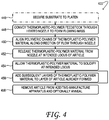
FIG. 4 illustrates aspects of an example process for additive manufacture of a polymer article; -
FIGS. 5A through 5F show molecular structures of example liquid-crystal materials usable as alignment additives in the method ofFIG. 4 ; -
FIG. 6 shows a molecular structure of an example dendrimer usable as an alignment additive in the method ofFIG. 4 ; and -
FIG. 7 shows aspects of an example polymer article that may be formed according to the method ofFIG. 4 . - Additive manufacture of articles comprising thermoplastic polymers can be problematic due to the limited flowability of the polymer feedstock. Generally speaking, the polymer chains of many commonly available, high molecular-weight polymers are randomly oriented and significantly entangled. These features reduce the flowability of such polymers at all temperatures. Steric bulk in polymer sidechains may also reduce flowability, even in relatively lower molecular-weight polymers. Due to the decreased flowability, undesirably high temperature and/or pressure may be required in order to conduct a thermoplastic polymer through the nozzle of an additive-manufacture apparatus. Such conditions may increase manufacturing costs and, in scenarios in which very high temperatures are employed, may limit the range of usable polymers and/or degrade the desirable material properties of the polymers, such as optical transparency.
- The inventors herein have recognized the above issues and have discovered several related innovations that may improve the processability of thermoplastic polymers in additive manufacturing. The disclosed examples utilize the incorporation of an alignment additive into the polymer matrix of the thermoplastic-polymer feedstock provided to an additive-manufacture apparatus. The alignment additive is a molecular or macromolecular species configured to induce alignment of the polymeric chains in the flowing polymer. In some examples, alignment parallel to the flow direction is achieved. In the aligned state, the polymeric chains are more flowable than in the randomly oriented, entangled state. Accordingly, a polymer matrix comprising the alignment additive can provide a suitable feedstock for additive manufacture of thermoplastic articles.
- Alignment additives of various kinds may be incorporated into the polymer matrix of the feedstock. Example alignment additives include liquid-crystal molecules, nanotubes, and/or nanowires having a high aspect ratio. These species align naturally in the flow direction of the polymer under fluid-dynamic forces and induce alignment of neighboring polymeric chains via intermolecular forces. Alternatively, or in addition, an alignment additive may include a hyperbranched macromolecule, such as a dendrimer. Hyperbranched macromolecules may reduce the viscosity of a flowing high molecular-weight polymer and thereby accelerate the alignment of the polymeric chains due to shear forces.
- This disclosure is presented by way of example and with reference to the attached drawing figures. Components, process steps, and other elements that may be substantially the same in one or more of the figures are identified coordinately and are described with minimal repetition. It will be noted, however, that elements identified coordinately may also differ to some degree. It will be further noted that the figures are schematic and generally not drawn to scale. Rather, the various drawing scales, aspect ratios, and numbers of components shown in the figures may be purposely distorted to make certain features or relationships easier to see. As used herein, the phrase 'one or more of prepends an inclusive enumeration of options. Accordingly, a phrase of the form, 'one or more of A and B' equates to 'one or more members of the set {A, B}. That phrase neither excludes nor requires one or more instances of A concurrent with one or more instances of B.
- Before describing in detail, the additive manufacture of a thermoplastic article, an example application context for such an article will be presented.
FIG. 1 shows aspects of an example manufactured product in the form of anaircraft 100. The aircraft includes, inter alia, anaerostructure 102,power plant 104,skin 106, andcabin interior 108. - Virtually all of the structural and/or functional components of
aircraft 100 may be optimized for mechanical strength. In addition, many of the same components, among others, may be optimized for reduced weight. As such, various airframe components are constructed from high-strength metals, such as steel and titanium, whereas other components may be constructed from so-called 'performance polymers', a term that includes selected high molecular-weight, thermoplastic polymer materials. - One non-limiting example of a high molecular-weight, thermoplastic polymer material with applicability to aircraft manufacture is polyether ether ketone (PEEK). The chemical structure of PEEK is shown in
FIG. 2A . PEEK has a melting temperature (Tm) of 341 °C and a glass-transition temperature (Tg) of 143 °C. In some examples, the molecular weight of a high molecular-weight polymer can be 10,000 Daltons or greater. - PEEK is a semi-crystalline thermoplastic exhibiting high thermal resistance, chemical resistance, and wear resistance, in addition to fatigue and creep resistance. PEEK exhibits exceptional tensile properties, which are retained even at elevated temperatures. Accordingly, the service temperature range of a PEEK article may extend to 260 °C. Above the service temperature range, the material remains virtually non-flammable and emits very little smoke or gas when burned. PEEK articles can be further strengthened via fiber reinforcement. When reinforced with carbon fiber, for example, a tensile strength of 29,000 psi (lbf/in2) can be achieved. Additional properties of filled and unfilled PEEK materials are summarized in Table 1.
Table 1. Selected properties of high molecular-weight PEEK polymer. Property unfilled 30% carbon fiber 30% glass fiber dielectric constant 3.2 3.2 - 3.4 3.3 - 4.2 dielectric strength (kV/mm) 20 18.5 - 19 15 - 24 volume resistivity / 1015 ohm cm 16 - 17 1 - 8 15 - 16 elongation % at break 30 - 150 1 - 3 2 - 3 flexibility (flexural modulus) / GPa 3.7 - 4 13 - 19 9 - 10 Young modulus / GPa 3.5 - 3.9 13 - 22.3 9 - 11.4 toughness (notched Izod impact at room temperature) / J m-1 80 - 94 85 - 120 95 - 130 density / g cm-3 1.26 - 1.32 1.4 - 1.44 1.49 - 1.54 thermal insulation (thermal conductivity) / W m-1K-1 0.25 0.9 - 0.95 0.43 - Returning to
FIG. 1 , polymer articles comprising PEEK and/or other suitable thermoplastics may be incorporated into various portions ofaircraft 100, to exploit desirable material properties as noted above. Inaerostructure 102, for example, thermoplastic-polymer articles may be used for bearings and bushings, and as reinforcement for composite panels including hard points, thermal isolators, and fasteners. Inpower plant 104, heat- and chemical-resistant thermoplastic-polymer articles may be used in fuel systems, turbines, and nacelles, and for dry and lubricated material contacts. Inskin 106, ultraviolet (UV)-stable and moisture-resistant thermoplastic-polymer articles may provide superior resistance to weathering. Low-flammability thermoplastic polymer articles may also be used incabin interior 108 and in conduits to protect wires and fiber optic filaments. To form such components, a thermoplastic polymer such as PEEK may be processed conventionally via injection molding, extrusion molding, and compression molding. However, the use of some thermoplastics, such as PEEK, in state-of-the-art additive manufacture is problematic for the reasons discussed hereinabove. The same limitations and many of the same benefits may exist for various other thermoplastics, such as polyether ketone ketone (PEKK), having the structure shown inFIG. 2B , and various nylon compounds, such as nylon-12 (poly(dodecano-12-lactam)). - It will be understood that the examples illustrated in this disclosure in no way limit the applicability of the underlying methodologies. Indeed, the processes described herein can be applied to the additive manufacture of a wide range of articles. Such articles may or may not be specifically configured to optimize mechanical strength relative to weight, or to provide heat, chemical, or weather resistance, or fire safety.
-
FIG. 3A shows aspects of anexample apparatus 300 configured for additive manufacture of a thermoplastic-polymer article 310.Apparatus 300 includes achamber 312 that supports the article during the additive-manufacture process. The chamber includes aplaten 314 to which the article is secured during the additive-manufacture process. In the particular example illustrated inFIG. 3A ,substrate 316 ofarticle 310 is secured to arotating chuck 318, which is coupled mechanically toplaten 314. A 'substrate', as used herein, is a base portion of the article to be formed via additive manufacture. In some examples, the substrate is a portion of relatively simple topology, which can be formed by conventional processing.Rotating chuck 318 can be used for the additive manufacture of articles having rotational symmetry, such as a bushing. In other examples, a vice or clamp can be used in lieu of the chuck to secure the substrate or any other portion of the article to the platen. - In
apparatus 300,article 310 is formed in layers by spatially selective addition of thermoplastic-polymer material to the underlying layer of the article, starting withsubstrate 316. Accordingly,apparatus 300 includes amaterial reservoir 320 configured to store a supply of thermoplastic-polymer material 322. The thermoplastic-polymer material can comprise a filament, pellets of any dimension, granules, or a coarse or fine powder, for example. -
Apparatus 300 includes amaterial conveyor 324 configured to convey thermoplastic-polymer material 322 frommaterial reservoir 320 and to deliver the thermoplastic-polymer material tonozzle 326. The nozzle comprises an aperture in the conduit through which the thermoplastic-polymer material is conducted. In some implementations, the nozzle aperture is normal to the direction of flow through the conduit and cuts across the full diameter of the conduit, while in other implementations the nozzle aperture may have any other suitable configuration. The nozzle-aperture diameter can be about one millimeter in some examples. In other examples, the nozzle-aperture diameter can be about five millimeters, or larger. In some implementations, the material conveyor can be configured to forcibly conduct thermoplastic-polymer material 322 throughnozzle 326. -
FIG. 3B shows aspects of anexample material reservoir 320B andmaterial conveyor 324B suitable for storing and conveyingthermoplastic polymer material 322B in the form of pellets, granules, and/or powders. In this example,material conveyor 324B includes ascrew feeder 328. -
FIG. 3C shows aspects of anotherexample material reservoir 320C andmaterial conveyor 324C suitable for storing and conveying thermoplastic-polymer material 322C in the form of a filament. In this example,material reservoir 320C includes aspool 330 around which the filament is wound, andmaterial conveyor 324C includes afilament feeder 332. - Returning now to
FIG. 3A ,nozzle 326 ofapparatus 300 is arranged overlocus 336 where thermoplastic-polymer material is to be added toarticle 310.Nozzle heater 338 is coupled thermally tonozzle 326. The nozzle heater is configured to heat the nozzle and thereby heat the thermoplastic-polymer material flowing through the nozzle to a desired setpoint temperature or range of temperatures. In some examples,nozzle heater 338 is a resistive heater powered electrically via a proportional-integral-derivative (PID) -based temperature controller, which is operatively coupled to a thermocouple or other form of temperature sensor. In this manner, the setpoint temperature of the flowing thermoplastic-polymer material is achieved via closed-loop control. In some examples,apparatus 300 may include additional heaters, as described hereinafter. -
Apparatus 300 includes atranslational stage 340 mechanically coupled toplaten 314. As articles are formed layer-by-layer inapparatus 300, the translational stage can be configured to gradually lower the height of the platen as successive layers of the article are built up. The translational stage can also be configured to move the platen laterally to controllably vary the relative position oflocus 336 relative to the frame of reference of the platen and, accordingly, ofarticle 310. The translational stage can include two or more component translational stages (e.g., linear actuators) configured to move the platen in two or more corresponding directions, which may include Cartesian X, Y, and Z axes, for instance. In some examples, one or more component rotational stages are used in lieu of, or in addition to the one or more component translational stages. In other examples equally consonant with this disclosure, a translational or rotational stage is coupled mechanically tonozzle 326, and the platen may be stationary. In still other examples, the platen as well as the nozzle can be controllably actuated. -
Apparatus 300 further includes acomputer 342.Computer 342 is operatively coupled totranslational stage 340 and configured to control in real time the relative position oflocus 336 relative to the frame of reference ofplaten 314, via a series of actuator-control signals. In addition, the computer is operatively coupled tomaterial conveyor 324 and configured to control in real time, via one or more material-conveyance control signals, the rate of flow of the thermoplastic-polymer material throughnozzle 326.Computer 342 is further configured to receive adigital model 344 that represents the topology of the article to be formed. The nature and/or digital data structure of the digital model is not particularly limited. The digital model may include a CAD file in some examples. The computer is configured to vary the actuator- and material-conveyance control-signal outputs based on the digital model, so as to achieve additive manufacture of the article as defined by the digital model. -
FIG. 4 illustrates aspects of anexample process 400 for additive manufacture of a thermoplastic-polymer article.Process 400 can be implemented usingapparatus 300 ofFIG. 3A , as described hereinabove. It will be understood, however, thatprocess 400 may implemented using any other suitable apparatus, which, in some implementations, may differ significantly fromapparatus 300. - At
optional step 446 ofprocess 400, a substrate of the article is secured to a platen of an additive-manufacture apparatus. The substrate can be secured via a vice, clamp, or chuck, for instance. In some examples, the substrate may comprise a thermoplastic polymer, although that aspect is not strictly necessary. More generally, the substrate may comprise any structure to which the thermoplastic feedstock material will adhere upon solidification. In some examples, the substrate is milled, lathed, or abrasively roughened, or chemically treated to promote adhesion of the thermoplastic feedstock material to be added. - At 448 of
process 400, a thermoplastic-polymer material adapted as a feedstock for additive manufacture is conveyed through a heated nozzle to form a flowing mass. In examples in which the thermoplastic-polymer material takes the form of a filament or wire, the thermoplastic-polymer material is conveyed via a filament feeder. In some examples in which the thermoplastic-polymer material takes the form of a pellet, granule or powder, the thermoplastic-polymer material is conveyed via a screw feeder. - The thermoplastic-polymer material conveyed at 438 comprises a polymer matrix including a plurality of polymeric chains. The polymer matrix is configured, by virtue of its macromolecular structure, to form a flowable mass at an elevated temperature. Aspects of the macromolecular structure that provide this feature include, for instance, the backbone structure including heteroatoms (if any), pendent side-chains and functional groups (if any), and the extent of cross-linking (if any), which influence both Tm and the viscosity at temperatures above Tm. In some examples, the polymer matrix comprises PEEK or PEKK. In some examples, the polymer matrix comprises a nylon polymer. In some examples, the polymer matrix comprises two or more different thermoplastic polymers. An example 'elevated temperature', as used herein, is any temperature in a range extending from the melting temperature Tm of the polymer matrix to a temperature at which the polymer decomposes observably on the timescale of processing. In one particular example, an elevated temperature by include a temperature of 30 °C above Tm.
- The thermoplastic-polymer material conveyed at 438 further comprises an alignment additive dispersible within the polymer matrix. In some examples, the alignment additive comprises between 0.01 and 25% by mass of the thermoplastic-polymer material. In more particular examples, the alignment additive comprises between 0.01 and 10% by mass of the thermoplastic-polymer material. The alignment additive is configured, by virtue of its molecular or macromolecular structure, to align the plurality of polymeric chains in a direction of flow through a conduit of the additive-manufacture apparatus. The alignment additive may increase the melt-flow index of the thermoplastic-polymer material beyond that of polymer matrix having no alignment additive. A particular alignment additive incorporated in a thermoplastic-polymer material can be chosen empirically in some examples, based on its ability to do so.
- In some examples, the alignment additive comprises a liquid-crystal (LC) material comprising numerous liquid-crystal molecules. Both smectic and nematic liquid crystals may be used. Examples of smectic liquid-crystal materials suitable for use as an alignment additive include 4-(heptyloxy)benzoic acid, 4-(octyloxy)benzoic acid, and 4-(decyloxy)benzoic acid. Having the structure shown in
FIG. 5A , 4-(heptyloxy)benzoic acid exhibits a melting point of 146 °C and a transition to the isotropic phase at 146 °C. Having the structure shown inFIG. 5B , 4-(octyloxy)benzoic acid exhibits a melting point of 101 to 105 °C and a transition to the isotropic phase at 147 °C. Having the structure shown inFIG. 5C , 4-(decyloxy)benzoic acid exhibits a melting point of 143 °C and a transition to the isotropic phase at 117 to 143 °C. Examples of nematic liquid crystal materials suitable for use as alignment additives include 4,4'-azoxyanisole, 4-isothiocyanatophenyl-4-pentylbicyclo[2.2.2]octane-1-carboxylate, and 4-methoxycinnamic acid. Having the structure shown inFIG. 5D ,4 , 4'-azoxyanisole exhibits a melting point of 117 to 119 °C and a transition to the isotropic phase at 136 °C. Having the structure shown inFIG. 5E , 4-isothiocyanatophenyl-4-pentylbicyclo[2.2.2]octane-1-carboxylate exhibits a melting point of 73 to 113.5 °C and a transition to the isotropic phase at 113.5 °C. Having the structure shown inFIG. 5F , 4-methoxycinnamic acid exhibits a melting point of 170 to 173 °C and a transition to the isotropic phase at 190 °C. - In some examples in which the alignment additive comprises a liquid-crystal material, the liquid-crystal material, is selected such that it undergoes a phase transition between an aligned (e.g., smectic or nematic) phase and an isotropic phase at or below the melting temperature Tm of the polymer matrix into which the alignment additive is incorporated. Such liquid crystal materials can be dispersed in the isotropic phase at elevated processing temperatures and transition to an aligned phase prior to solidification of the thermoplastic-polymer material, and can help to align the polymer chains via this transition.
- Table 2 presents melt-flow data collected on thermoplastic feedstock materials having different concentrations of 4-(heptyloxy)benzoic acid as a liquid-crystal alignment additive.
Table 2. Melt-flow data for thermoplastic feedstock materials observed at 5 °C above Tm. polymer matrix liquid-crystal % concentration by mass melt-flow index (g / 10 min) PEEK 0 2.80 PEEK 5 4.43 PEEK 7.5 6.76 PEEK 10 10.21 Nylon-12 0 5.12 Nylon-12 5 40.2 Nylon-12 5 57.4 - The data in Table 2 demonstrate significant increase in flowability with increasing concentration of the alignment additive, both for PEEK and Nylon-12 polymers. Table 3 presents additional data on the PEEK feedstock material.
Table 3. Differential scanning calorimetry (DSC) and thermogravimetric analysis (TGA) on PEEK feedstock material. matrix % LC DSC TGA Tm/°C Tg/°C IDT (5 wt % loss) /°C % char at 800 °C PEEK 0 342.96 248.48 559.40 49.54 PEEK 5 341.68 247.35 546.29 48.95 PEEK 7.5 341.88 245.54 533.28 53.46 - More specifically, the data in Table 3 show that the thermal resistance of PEEK is substantially unchanged upon addition of the alignment additive, even at 7.5%.
- It will be understood that other suitable high-aspect ratio species can be incorporated into a thermoplastic-polymer matrix as an alignment additive to promote alignment of the polymer chains therein. In other examples, the alignment additive comprises a nanotube or nanowire material comprising numerous nanotubes or nanowires, respectively. More particular examples include carbon nanotubes and silver nanowires, although nanotubes and nanowires comprising other elements are also envisaged.
- Further, in some examples, the alignment additive comprises a plurality of hyperbranched macromolecules, such as a dendrimers. Example dendrimers include poly(amidoamine) (PAMAM) and poly(propylene imine) (PPI). The macromolecular structure of a PPI dendrimer is shown in
FIG. 6 . As shown in Table 4, PPI dendrimers may be nanosized, with a diameter that varies smoothly with generation number.Table 4. Molecular weight and diameter of a PPI dendrimer versus generation number. generation Molecular weight diameter / Å 0 517 15 1 1,430 22 2 3,256 29 3 6,909 36 4 14,215 45 5 28,826 54 6 58,048 67 7 116,493 81 8 233,383 97 9 467,162 114 10 934,720 135 - Due to its steric morphology, a dendrimer typically exhibits low intrinsic viscosity and depresses the viscosity of the polymer matrix into which it is dissolved. Furthermore, the intermolecular interactions between a dendrimer and a high molecular-weight thermoplastic matrix may be tuned by controlling the surface functionality of the dendrimer.
- In some examples, the thermoplastic-polymer material conveyed at 438 is a composite material, such as a fiber-composite material. More particularly, the thermoplastic-polymer material, in some examples, further comprises a reinforcing additive or filler, such as a fiber additive. Glass fibers and carbon fibers are among the fiber additives envisaged herein.
- Continuing now in
FIG. 4 , at 450 ofprocess 400, at least a portion of the polymeric chains of the thermoplastic-polymer material are spontaneously aligned along a direction of flow through the heated nozzle, via the influence of the alignment additive. - In examples in which alignment additive includes a molecular or macromolecular species having a high aspect ratio, such as a liquid-crystal molecule, nanotube, and/or nanowire, the alignment additive may align naturally in the flow direction of the polymer under fluid-dynamic forces within and fluidically upstream of the heated nozzle. When aligned in this manner, the alignment additive may induce alignment of neighboring polymeric chains via intermolecular forces, such as the van der Waals force, molecular dipole force, hydrogen bonding, etc. In examples in which the alignment additive includes a relatively low molecular-weight, hyperbranched macromolecule, such as a dendrimer, the alignment additive may reduce the viscosity of a flowing high molecular-weight polymer and thereby accelerate the alignment of the polymeric chains due to shear forces within and fluidically upstream of the heated nozzle.
- At 452 of
process 400, the flowing mass of the thermoplastic-polymer material is released from the heated nozzle at the intended locus position of the article being formed-e.g., on the substrate of the article. At 454, the thermoplastic-polymer material is allowed to solidify at the locus. - At 456 subsequent layers of the thermoplastic-polymer material are added to the layer of the thermoplastic-polymer material already formed. This step can be repeated any number of times, based on the article topology as defined in the digital model, until the desired article has been built up.
- At 458 the article is removed from the additive-manufacture apparatus and optionally annealed under controlled-temperature conditions for an appropriate period of time. Annealing may serve to reduce the density of defect sites in the additively manufactured article and thereby increase the strength of the article.
- Returning now to
FIG. 3A ,apparatus 300 can be adapted to the process of additive manufacture from a thermoplastic-polymer feedstock comprising a polymer matrix and an alignment additive as described herein. More particularly,apparatus 300, in some examples, includes anelongate conduit 360 coupled tonozzle 326, fluidically upstream of the nozzle. The elongate conduit may be one to four inches long, for instance. In other examples, the elongate conduit may be up to thirty inches long. Elongate conduits of other length ranges are also envisaged. More generally, the elongate conduit may be of sufficient length to promote at least partial alignment of the polymeric chains of the thermoplastic-polymer material, via the influence of the alignment additive, when the thermoplastic-polymer material flows through the elongate conduit at the elevated temperature. In this adaptation, the cross-sectional dimensions of the elongate conduit may correspond to the cross-sectional dimensions of the feedstock material, and the extrusion rate can be unchanged relative to the rate of extrusion of the unmodified feedstock. Nevertheless, faster and slower rates of extrusion are also envisaged. The setpoint temperature of the elongate conduit is greater than the melting temperature of the thermoplastic-polymer material. - In these and other examples,
material conveyor 324 is configured to convey the thermoplastic-polymer material through the elongate conduit and through the nozzle. The apparatus as illustrated also includes aconduit heater 362 coupled thermally to elongateconduit 360 and configured to heat the elongate conduit to an elevated temperature. Taken together,conduit heater 362 andnozzle heater 338 are configured to heat theelongate conduit 360 andnozzle 326 to allow the material to flow within the conduit and through the nozzle.Elongate conduit 360 is of sufficient length to promote at least partial alignment of the polymeric chains of the thermoplastic-polymer material, via the influence of the alignment additive, when the thermoplastic-polymer material flows through the elongate conduit at the elevated temperature. In some examples,conduit heater 362 andnozzle heater 338 can be separate heating units, as illustrated. In other examples, the conduit heater and nozzle heater may be integrated into a single heating unit capable of providing a desired temperature ofnozzle 326 and a desired temperature ofelongate conduit 360, even if those temperatures are different. -
FIG. 7 shows aspects of an example additively manufacturedarticle 710 that can be formed according toprocess 400 ofFIG. 4 . In the illustrated example,article 710 includes asubstrate 716 in addition to thermoplastic-polymer material 762, which is added to the substrate via additive manufacture. In some examples, the article can be formed without a substrate and may comprise only the thermoplastic-polymer material. In either case, thermoplastic-polymer material 762 comprises apolymer matrix 764 including a plurality of alignedpolymeric chains 766. The polymer matrix can include PEEK or PEKK, but other polymers are also envisaged. - It will be understood that the illustration in
FIG. 7 is highly schematic. In real-world examples, the plurality ofpolymeric chains 766 need not be perfectly aligned, but may be partially aligned. In other words, alignment may be observed between a portion of one polymeric chain and a portion of another polymeric chain. The alignment may involve many such chains and may extend over relatively long distances inpolymer matrix 764. In some examples, the degree of alignment of the polymeric chains inarticle 710 can be assessed via x-ray diffractometery and/or other methods that differentiate between isotropic and ordered molecular configurations, as understood in the art of condensed-phase chemistry. For instance, a matrix of aligned polymeric chains may give rise to relatively sharp peaks in an x-ray diffraction spectrum, whereas an isotropic matrix of identical composition may give rise to a more featureless x-ray diffraction spectrum. - The thermoplastic-polymer material also includes an
alignment additive 768 dispersed withinpolymer matrix 764. In some examples, the alignment additive comprises between 0.1 and 25% by mass of thermoplastic-polymer material 762, or between 0.01 and 10% by mass of thermoplastic-polymer material in more particular examples. In some examples, the alignment additive includes one or more of a liquid-crystal molecule, nanotube, and nanowire. In some of the examples in whichalignment additive 768 includes a plurality of liquid-crystal molecules, the liquid-crystal molecules and at least some of the polymeric chains may be aligned substantially in parallel. This feature also can be assessed using x-ray diffractometry and other suitable analytical methods. Alternatively, or in addition,alignment additive 768 can include a hyperbranched macromolecule, as noted above. In the example shown inFIG. 7 , thermoplastic-polymer material 762 also includes a strengthening filler in the form of afiber additive 770. In other examples, the fiber additive may be omitted. When included, the fiber additive can include glass and/or carbon fibers, for instance. - Table 5 presents test data collected on an article that was additively manufactured according to the process of
FIG. 4 .Table 5. Tensile strength of a PEEK article as a function of the percentage of a liquid-crystal alignment additive. matrix % LC tensile strength / MPa PEEK 0 78.19 PEEK 5 65.77 PEEK 7.5 70.25 PEEK 10 64.56 - The data in Table 5 were acquired in accordance with American Society for Testing and Materials (ASTM) standard protocol ASTM D638 (Standard Test Method for Tensile Properties of Plastics), using a constant-rate-of-crosshead-movement type testing machine. The data reveal that the tensile strength of the PEEK matrix is degraded only marginally even at significant concentrations of the alignment additive. These data can be examined in view of the data from Table 2, which show a 2.4-fold improvement in the flowability of the PEEK feedstock with 7.5% of the alignment additive.
- No aspect of the foregoing drawings or description should be construed in a limiting sense, because numerous variations, extensions, and omissions are also envisaged.
- For instance, in implementations in which the feedstock material takes the form of a filament, that filament may be pre-processed in order to provide still greater flowability when used in an additive-manufacture apparatus. In the process of forming such a filament, thermoplastic-
polymer material 762 withalignment additive 768, in any suitable physical form, is conducted through a heated elongate conduit and nozzle analogous to elongateconduit 360 andnozzle 326 of additive-manufacture apparatus 300. In flowing through the elongate conduit and nozzle, the alignment additive may cause the polymeric chains of the polymer matrix to align in the direction of flow through the nozzle. When the feedstock material emerges from the nozzle and subsequently cools, the alignment of the polymeric chains in the length direction of the cooled filament is locked in. The extruded filament pre-processed in this manner is now usable as a feedstock in the additive-manufacture apparatus. - In some examples, the alignment of the polymeric chains in the above feedstock may be further increased by mechanically drawing the partially solidified feedstock material downstream of the nozzle. The extruded, drawn filament pre-processed in this manner may also be used as a feedstock in the additive-manufacture apparatus. In some scenarios, filaments as described above may even be used in additive-manufacture apparatuses not specifically adapted with
elongate conduit 360, as the increased flowability is already provided by virtue of the pre-processing. - Further, the disclosure comprises examples according to the following clauses:
-
Clause 1. An additively manufactured article comprising: a polymer matrix including a plurality of aligned polymeric chains; and an alignment additive dispersed within the polymer matrix and including one or more of a liquid-crystal molecule, a hyperbranched macromolecule, a nanotube, and a nanowire. - Clause 2. The additively manufactured article of
Clause 1, wherein the alignment additive comprises a liquid-crystal molecule, and wherein the liquid-crystal molecule and the plurality of aligned polymeric chains are aligned in parallel. - Clause 3. The additively manufactured article of Clause 2, wherein the liquid-crystal molecule is a molecule of a material having a phase transition between an aligned phase and an isotropic phase at or below a melting temperature of the polymer matrix.
-
Clause 4. The additively manufactured article ofClause 1 or 2, wherein the polymer matrix comprises polyether ether ketone. - Clause 5. The additively manufactured article of any of Clauses 1-4, wherein the alignment additive comprises between 0.01 and 25% by mass of the additively manufactured article.
- Clause 6. The additively manufactured article of any of Clauses 1-5, wherein the polymer matrix comprises a thermoplastic polymer.
- Clause 7. The additively manufactured article of any of Clauses 1-6, further comprising a reinforcing additive.
- Clause 8. A material adapted as a feedstock for additive manufacture, the material comprising: a polymer matrix including a plurality of polymeric chains, the polymer matrix configured to form a flowable mass at an elevated temperature; and an alignment additive dispersible within the polymer matrix, the alignment additive being configured to align the plurality of polymeric chains in a direction of flow through a conduit of an additive-manufacture apparatus.
- Clause 9. The material of Clause 8, wherein the alignment additive comprises a liquid-crystal material that undergoes a phase transition between an aligned phase and an isotropic phase at or below the elevated temperature.
- Clause 10. The material of Clause 8 or 9, wherein the alignment additive comprises one or more of a hyperbranched macromolecule, a nanotube, and a nanowire.
- Clause 11. The material of any of Clauses 8-10, wherein the polymer matrix comprises polyether ether ketone.
- Clause 12. The material of any of Clauses 8-11, wherein the alignment additive comprises between 0.01 and 25% by mass of the material.
- Clause 13. The material of any of Clauses 8-12, wherein a melt-flow index of the material is greater than a melt-flow index of the polymer matrix without the alignment additive.
- Clause 14. The material of any of Clauses 8-13, wherein the material is a composite material comprising a fiber additive.
- Clause 15. The material of any of Clauses 8-14, wherein the material comprises one or more of a powder, a pellet, and a filament.
- Clause 16. The material of any of Clauses 8-15, wherein the material comprises a filament in which the plurality of polymeric chains are aligned in a length direction of the filament.
- Clause 17. A process for additive manufacture of an article, the process comprising: conveying a material through a heated nozzle to form a flowing mass of the material, the material comprising: a polymer matrix including a plurality of polymeric chains, and an alignment additive dispersible within the polymer matrix, the alignment additive being configured to align the plurality of polymeric chains in a flow direction of the flowing mass of the material; aligning at least a portion of the polymeric chains along a direction of flow through the heated nozzle via the alignment additive; releasing the flowing mass of the material from the heated nozzle; and allowing the material to solidify.
- Clause 18. The process of Clause 17, wherein the alignment additive comprises one or more of a liquid-crystal molecule, a hyperbranched macromolecule, a nanotube, and a nanowire.
- Clause 19. The process of Clause 17 or 18, wherein the polymer matrix comprises polyether ether ketone.
- Clause 20. The process of any of Clauses 17-19, wherein conveying the material comprises conveying one or more of a powder and a pellet, via a screw feeder.
- Clause 21. The process of any of Clauses 17-20, wherein conveying the material comprises conveying a filament, via a filament feeder.
- Clause 22. An apparatus for additive manufacture of an article from a material comprising a polymer matrix having a plurality of polymeric chains and an alignment additive, the apparatus comprising: a nozzle; an elongate conduit fluidically coupled to the nozzle, the elongate conduit comprising a length sufficient to achieve, via the alignment additive, alignment of the plurality of the polymeric chains when the material flows through the conduit at elevated temperature; one or more heaters configured to heat the elongate conduit and the nozzle to allow the material to flow within the conduit and through the nozzle; and a material conveyor configured to convey the material through the elongate conduit and nozzle.
- Clause 23. The apparatus of Clause 22, wherein the material conveyor comprises a screw feeder.
- Clause 24. The apparatus of Clause 22 or 23, wherein the material conveyor comprises a filament feeder.
- It will be understood that the configurations and/or approaches described herein are exemplary in nature, and that these specific embodiments or examples are not to be considered in a limiting sense, because numerous variations are possible. The specific routines or processes described herein may represent one or more of any number of processing strategies. As such, various acts illustrated and/or described may be performed in the sequence illustrated and/or described, in other sequences, in parallel, or omitted. Likewise, the order of the above-described processes may be changed.
- The subject matter of the present disclosure includes all novel and non-obvious combinations and sub-combinations of the various processes, systems and configurations, and other features, functions, acts, and/or properties disclosed herein, as well as any and all equivalents thereof.
Claims (15)
- A material (322, 762) adapted as a feedstock for additive manufacture, the material comprising:a polymer matrix (764) including a plurality of polymeric chains (766), the polymer matrix configured to form a flowable mass at an elevated temperature; andan alignment additive (768) dispersible within the polymer matrix, the alignment additive being configured to align the plurality of polymeric chains in a direction of flow through a conduit (360) of an additive-manufacture apparatus (300), wherein a melt-flow index of the material is preferably greater than a melt-flow index of the polymer matrix (764) without the alignment additive (768).
- The material (322, 762) of claim 1, wherein the alignment additive (768) comprises a liquid-crystal material that undergoes a phase transition between an aligned phase and an isotropic phase at or below the elevated temperature and/or one or more of a hyperbranched macromolecule, a nanotube, and a nanowire, and wherein the alignment additive (768) preferably comprises between 0.01 and 25% by mass of the material..
- The material (322, 762) of claim 1 or 2, wherein the polymer matrix (764) comprises polyether ether ketone.
- The material (322, 762) of any of claims 1-3, wherein the material is a composite material comprising a fiber additive (770).
- The material (322, 762) of any of claims 1-4, wherein the material comprises one or more of a powder, a pellet (322B), and a filament (322C), or the material optionally comprises a filament (322C) in which the plurality of polymeric chains (766) are aligned in a length direction of the filament.
- A process (400) for additive manufacture of an article (310, 710), the process comprising:conveying (448) a material (322, 762) through a heated nozzle (326) to form a flowing mass of the material, the material comprisinga polymer matrix (764) including a plurality of polymeric chains (766), andan alignment additive (768) dispersible within the polymer matrix, the alignment additive being configured to align the plurality of polymeric chains in a flow direction of the flowing mass of the material;aligning (450) at least a portion of the polymeric chains along a direction of flow through the heated nozzle via the alignment additive;releasing (452) the flowing mass of the material from the heated nozzle; andallowing (454) the material to solidify.
- The process (400) of claim 6, wherein the alignment additive (768) comprises one or more of a liquid-crystal molecule, a hyperbranched macromolecule, a nanotube, and a nanowire.
- The process (400) of claim 6 or 7, wherein the polymer matrix (764) comprises polyether ether ketone.
- The process (400) of any of claims 6-8, wherein conveying (448) the material (322, 762) comprises conveying one or more of a powder and a pellet (322B), via a screw feeder (328) or comprises conveying a filament (322C), via a filament feeder (332).
- An additively manufactured article (310, 710) comprising:a polymer matrix (764) including a plurality of aligned polymeric chains (766); andan alignment additive (768) dispersed within the polymer matrix and including one or more of a liquid-crystal molecule, a hyperbranched macromolecule, a nanotube, and a nanowire preferably according to any of claims 1-5, wherein the alignment additive (768) optionally comprises between 0.01 and 25% by mass of the additively manufactured article.
- The additively manufactured article (310, 710) of claim 10, wherein the alignment additive (768) comprises a liquid-crystal molecule, and wherein the liquid-crystal molecule and the plurality of aligned polymeric chains (766) are aligned in parallel.
- The additively manufactured article (310, 710) of claim 10 or 11, wherein the liquid-crystal molecule is a molecule of a material having a phase transition between an aligned phase and an isotropic phase at or below a melting temperature of the polymer matrix (764).
- The additively manufactured article (310, 710) of any of claims 10-12, wherein the polymer matrix (764) comprises polyether ether ketone and/or a thermoplastic polymer.
- The additively manufactured article (310, 710) of any of claims 10-13, further comprising a reinforcing additive (770).
- An apparatus (300) for additive manufacture of an article (310, 710) from a material (322, 762) comprising a polymer matrix (764) having a plurality of polymeric chains (766) and an alignment additive (768), the apparatus comprising:a nozzle (326);an elongate conduit (360) fluidically coupled to the nozzle, the elongate conduit comprising a length sufficient to achieve, via the alignment additive, alignment of the plurality of the polymeric chains when the material flows through the conduit at elevated temperature;one or more heaters (338, 362) configured to heat the elongate conduit and the nozzle to allow the material to flow within the conduit and through the nozzle; anda material conveyor (324B, 324C) configured to convey the material through the elongate conduit and nozzle, wherein the material conveyor (324B, 324C) preferably comprises a screw feeder (328) or a filament feeder (332).
Priority Applications (2)
| Application Number | Priority Date | Filing Date | Title |
|---|---|---|---|
| EP24191982.8A EP4431568A3 (en) | 2019-12-11 | 2020-11-20 | Processable polymer, method, and apparatus for additive manufacture |
| EP23181972.3A EP4269107A1 (en) | 2019-12-11 | 2020-11-20 | Processable polymer, method, and apparatus for additive manufacture |
Applications Claiming Priority (1)
| Application Number | Priority Date | Filing Date | Title |
|---|---|---|---|
| US16/710,978 US12037499B2 (en) | 2019-12-11 | 2019-12-11 | Processable polymer, method, and apparatus for additive manufacture |
Related Child Applications (4)
| Application Number | Title | Priority Date | Filing Date |
|---|---|---|---|
| EP23181972.3A Division-Into EP4269107A1 (en) | 2019-12-11 | 2020-11-20 | Processable polymer, method, and apparatus for additive manufacture |
| EP23181972.3A Division EP4269107A1 (en) | 2019-12-11 | 2020-11-20 | Processable polymer, method, and apparatus for additive manufacture |
| EP24191982.8A Division EP4431568A3 (en) | 2019-12-11 | 2020-11-20 | Processable polymer, method, and apparatus for additive manufacture |
| EP24191982.8A Division-Into EP4431568A3 (en) | 2019-12-11 | 2020-11-20 | Processable polymer, method, and apparatus for additive manufacture |
Publications (3)
| Publication Number | Publication Date |
|---|---|
| EP3835065A2 true EP3835065A2 (en) | 2021-06-16 |
| EP3835065A3 EP3835065A3 (en) | 2021-09-01 |
| EP3835065B1 EP3835065B1 (en) | 2025-01-01 |
Family
ID=73543128
Family Applications (3)
| Application Number | Title | Priority Date | Filing Date |
|---|---|---|---|
| EP23181972.3A Pending EP4269107A1 (en) | 2019-12-11 | 2020-11-20 | Processable polymer, method, and apparatus for additive manufacture |
| EP24191982.8A Pending EP4431568A3 (en) | 2019-12-11 | 2020-11-20 | Processable polymer, method, and apparatus for additive manufacture |
| EP20208929.8A Active EP3835065B1 (en) | 2019-12-11 | 2020-11-20 | Processable polymer, method, and apparatus for additive manufacture |
Family Applications Before (2)
| Application Number | Title | Priority Date | Filing Date |
|---|---|---|---|
| EP23181972.3A Pending EP4269107A1 (en) | 2019-12-11 | 2020-11-20 | Processable polymer, method, and apparatus for additive manufacture |
| EP24191982.8A Pending EP4431568A3 (en) | 2019-12-11 | 2020-11-20 | Processable polymer, method, and apparatus for additive manufacture |
Country Status (4)
| Country | Link |
|---|---|
| US (1) | US12037499B2 (en) |
| EP (3) | EP4269107A1 (en) |
| JP (1) | JP2021102339A (en) |
| CN (1) | CN112940449B (en) |
Families Citing this family (1)
| Publication number | Priority date | Publication date | Assignee | Title |
|---|---|---|---|---|
| CN114773838B (en) * | 2022-03-24 | 2024-02-13 | 金发科技股份有限公司 | Application of a 3-phenyl-2 acrylic acid structural compound in weather-resistant polyamide materials |
Family Cites Families (32)
| Publication number | Priority date | Publication date | Assignee | Title |
|---|---|---|---|---|
| US3871904A (en) * | 1971-08-20 | 1975-03-18 | Xerox Corp | Method for providing a liquid crystalline film |
| WO1996005253A1 (en) * | 1994-08-15 | 1996-02-22 | Akzo Nobel Nv | Melt viscosity reduction of polycarbonate containing liquid crystalline block copolymer |
| US6093777A (en) | 1994-12-21 | 2000-07-25 | Perstorp Ab | Dendritic polyester macromolecule in thermosetting resin matrix |
| US6497959B1 (en) | 2000-03-30 | 2002-12-24 | General Electric Company | Use of dendrimers as a processing aid and surface modifier for thermoplastic resins |
| US6414084B1 (en) | 2000-04-13 | 2002-07-02 | General Electric Company | High flow polyphenylene ether formulations with dendritic polymers |
| DE10132928A1 (en) | 2001-07-03 | 2003-01-16 | Buehler Ag | Modified post-condensed polyester |
| JP2003041032A (en) * | 2001-07-31 | 2003-02-13 | Sumitomo Chem Co Ltd | Method for producing thermoplastic resin film |
| US6934600B2 (en) | 2002-03-14 | 2005-08-23 | Auburn University | Nanotube fiber reinforced composite materials and method of producing fiber reinforced composites |
| CN1187410C (en) * | 2002-09-13 | 2005-02-02 | 中国科学院化学研究所 | Composite material containing short fibre and thermotropic liquid crystal polymer |
| DE102004059243A1 (en) | 2004-08-10 | 2006-02-23 | Basf Ag | Thermoplastic molding compounds with improved flow and release properties |
| DE102005002044A1 (en) | 2005-01-14 | 2006-07-20 | Basf Ag | Flowable polyesters with hydrolysis protection |
| US8206827B2 (en) | 2007-03-15 | 2012-06-26 | Nanovere Technologies, Llc | Dendritic polyurethane coating |
| DE102008022946B4 (en) * | 2008-05-09 | 2014-02-13 | Fit Fruth Innovative Technologien Gmbh | Apparatus and method for applying powders or pastes |
| US20120181487A1 (en) | 2011-01-18 | 2012-07-19 | Basf Se | Thermoplastic molding composition |
| CN102337018B (en) | 2011-07-29 | 2013-01-09 | 吉林大学 | Polyaryletherketone sheet or plate |
| GB201210851D0 (en) * | 2012-06-19 | 2012-08-01 | Eads Uk Ltd | Extrusion-based additive manufacturing system |
| GB201304968D0 (en) * | 2013-03-19 | 2013-05-01 | Eads Uk Ltd | Extrusion-based additive manufacturing |
| US10682844B2 (en) * | 2013-03-22 | 2020-06-16 | Markforged, Inc. | Embedding 3D printed fiber reinforcement in molded articles |
| US9126367B1 (en) * | 2013-03-22 | 2015-09-08 | Markforged, Inc. | Three dimensional printer for fiber reinforced composite filament fabrication |
| GB2526328A (en) | 2014-05-21 | 2015-11-25 | Bae Systems Plc | Additive manufacture of composite materials |
| US9808993B2 (en) * | 2015-03-03 | 2017-11-07 | Ricoh Co., Ltd. | Method for solid freeform fabrication |
| US10968539B2 (en) | 2015-03-27 | 2021-04-06 | The United States Of America As Represented By The Secretary Of The Army | Process for creating a filament |
| US10137617B2 (en) | 2015-04-17 | 2018-11-27 | Ut-Battelle, Llc | Low shear process for producing polymer composite fibers |
| WO2018031184A1 (en) * | 2016-08-12 | 2018-02-15 | Wal-Mart Stores, Inc. | Systems and methods for detecting missing labels |
| KR101915530B1 (en) | 2016-11-25 | 2018-11-06 | 재단법인 한국탄소융합기술원 | Polymer composite with carbon fiber for 3D printers |
| CN106750258B (en) * | 2017-01-24 | 2019-09-03 | 吉林大学 | Film grade polyether ether ketone resin special material, preparation method and application in preparation of polyether ether ketone/polyetherimide alloy film |
| JP2018123263A (en) | 2017-02-02 | 2018-08-09 | 株式会社リコー | 3D modeling resin composition, 3D manufacturing method, 3D manufacturing filament, and 3D manufacturing apparatus |
| US9833986B1 (en) * | 2017-06-29 | 2017-12-05 | Thermwood Corporation | Methods and apparatus for compensating for thermal expansion during additive manufacturing |
| WO2019118954A1 (en) * | 2017-12-15 | 2019-06-20 | New York University | System and method for extruding composite filament |
| JPWO2020138174A1 (en) * | 2018-12-28 | 2021-10-21 | 三井化学株式会社 | Manufacturing method of resin molded product and resin molded product |
| US20200207022A1 (en) | 2018-12-31 | 2020-07-02 | Palo Alto Research Center Incorporated | Additive manufacturing device that applies a field to provide directional control of functional material |
| CN110193894B (en) | 2019-06-06 | 2021-07-06 | 武汉萨普科技股份有限公司 | Recovery method of SLS nylon waste powder |
-
2019
- 2019-12-11 US US16/710,978 patent/US12037499B2/en active Active
-
2020
- 2020-11-20 EP EP23181972.3A patent/EP4269107A1/en active Pending
- 2020-11-20 EP EP24191982.8A patent/EP4431568A3/en active Pending
- 2020-11-20 EP EP20208929.8A patent/EP3835065B1/en active Active
- 2020-12-09 CN CN202011424550.8A patent/CN112940449B/en active Active
- 2020-12-10 JP JP2020204756A patent/JP2021102339A/en active Pending
Also Published As
| Publication number | Publication date |
|---|---|
| CN112940449B (en) | 2025-01-24 |
| JP2021102339A (en) | 2021-07-15 |
| EP3835065A3 (en) | 2021-09-01 |
| EP4431568A3 (en) | 2024-11-20 |
| EP3835065B1 (en) | 2025-01-01 |
| EP4269107A1 (en) | 2023-11-01 |
| CN112940449A (en) | 2021-06-11 |
| US20210179869A1 (en) | 2021-06-17 |
| EP4431568A2 (en) | 2024-09-18 |
| US12037499B2 (en) | 2024-07-16 |
Similar Documents
| Publication | Publication Date | Title |
|---|---|---|
| Gao et al. | The role of poly (ethylene glycol) on crystallization, interlayer bond and mechanical performance of polylactide parts fabricated by fused filament fabrication | |
| Rahmatabadi et al. | 4D printing of PLA-TPU blends: Effect of PLA concentration, loading mode, and programming temperature on the shape memory effect | |
| JP7529656B2 (en) | Crosslinkable aromatic polymer compositions for use in additive manufacturing processes and methods for forming same | |
| KR101944140B1 (en) | Nanotube and finely milled carbon fiber polymer composite compositions and methods of making | |
| TWI343315B (en) | Method for manufacturing liquid crystalline resin composition | |
| Turan et al. | Effects of POSS particles on the mechanical, thermal, and morphological properties of PLA and plasticised PLA | |
| US20150073088A1 (en) | Composite of filler and polymer resin and method for preparing the same | |
| KR20080107382A (en) | Nanotube Polymer Composite Compositions and Methods of Preparation | |
| US10906238B1 (en) | Shape memory polymer inks and methods of printing the same | |
| JP2003534955A (en) | Oriented nanofibers embedded in a polymer matrix | |
| KR20090071602A (en) | Conductive Composites Containing Thermoplastic Polymers and Carbon Nanotubes | |
| Alam et al. | Microstructure and fractography of multiwalled carbon nanotube reinforced unsaturated polyester nanocomposites | |
| McCardle et al. | Effect of Reinforcement Orientation on the Mechanical Properties of Microfibrillar PP/PET and PET Single‐Polymer Composites | |
| Ramanathan et al. | Highly loaded carbon fiber filaments for 3D‐printed composites | |
| Zhou et al. | Morphologies, interfacial interaction and mechanical performance of super-tough nanostructured PK/PA6 blends | |
| CN114787279B (en) | Filled polyaryletherketone powder, method for the production thereof and use thereof | |
| EP4431568A2 (en) | Processable polymer, method, and apparatus for additive manufacture | |
| Li et al. | A review of the mechanical properties of additively manufactured fiber reinforced composites | |
| de Melo et al. | Effects of filament extrusion temperature and 3D printing parameters on the structure and mechanical properties of poly (butylene adipate‐co‐terephthalate)/poly (lactic acid) blends | |
| JP6873360B2 (en) | Thermoplastic resin composition | |
| JPH05214253A (en) | Polymer composite of thermoplastic polymer and liquid crystal polymer and method for producing the same | |
| CN110315785B (en) | A kind of annealing treatment method of bimodal polyethylene product | |
| Kim et al. | Compatibilizing effects of polypropylene-g-itaconic acid on the polypropylene composites | |
| KR101715865B1 (en) | Polymer for 3D printing and printing method by use of it | |
| WO2019138361A1 (en) | Polymeric blend composite and a process for preparing the same |
Legal Events
| Date | Code | Title | Description |
|---|---|---|---|
| PUAI | Public reference made under article 153(3) epc to a published international application that has entered the european phase |
Free format text: ORIGINAL CODE: 0009012 |
|
| STAA | Information on the status of an ep patent application or granted ep patent |
Free format text: STATUS: THE APPLICATION HAS BEEN PUBLISHED |
|
| AK | Designated contracting states |
Kind code of ref document: A2 Designated state(s): AL AT BE BG CH CY CZ DE DK EE ES FI FR GB GR HR HU IE IS IT LI LT LU LV MC MK MT NL NO PL PT RO RS SE SI SK SM TR |
|
| PUAL | Search report despatched |
Free format text: ORIGINAL CODE: 0009013 |
|
| AK | Designated contracting states |
Kind code of ref document: A3 Designated state(s): AL AT BE BG CH CY CZ DE DK EE ES FI FR GB GR HR HU IE IS IT LI LT LU LV MC MK MT NL NO PL PT RO RS SE SI SK SM TR |
|
| RIC1 | Information provided on ipc code assigned before grant |
Ipc: B33Y 30/00 20150101AFI20210727BHEP Ipc: B29C 64/118 20170101ALI20210727BHEP Ipc: B29C 64/209 20170101ALI20210727BHEP Ipc: B33Y 70/00 20200101ALI20210727BHEP Ipc: C08K 3/04 20060101ALI20210727BHEP Ipc: C08K 5/09 20060101ALI20210727BHEP Ipc: C08L 71/00 20060101ALI20210727BHEP |
|
| STAA | Information on the status of an ep patent application or granted ep patent |
Free format text: STATUS: REQUEST FOR EXAMINATION WAS MADE |
|
| 17P | Request for examination filed |
Effective date: 20220214 |
|
| RBV | Designated contracting states (corrected) |
Designated state(s): AL AT BE BG CH CY CZ DE DK EE ES FI FR GB GR HR HU IE IS IT LI LT LU LV MC MK MT NL NO PL PT RO RS SE SI SK SM TR |
|
| STAA | Information on the status of an ep patent application or granted ep patent |
Free format text: STATUS: EXAMINATION IS IN PROGRESS |
|
| RAP3 | Party data changed (applicant data changed or rights of an application transferred) |
Owner name: THE BOEING COMPANY |
|
| 17Q | First examination report despatched |
Effective date: 20230301 |
|
| GRAP | Despatch of communication of intention to grant a patent |
Free format text: ORIGINAL CODE: EPIDOSNIGR1 |
|
| STAA | Information on the status of an ep patent application or granted ep patent |
Free format text: STATUS: GRANT OF PATENT IS INTENDED |
|
| INTG | Intention to grant announced |
Effective date: 20240719 |
|
| RIN1 | Information on inventor provided before grant (corrected) |
Inventor name: PRAKASH, OM Inventor name: SAHU, MEGHA |
|
| P01 | Opt-out of the competence of the unified patent court (upc) registered |
Free format text: CASE NUMBER: APP_44538/2024 Effective date: 20240731 |
|
| GRAS | Grant fee paid |
Free format text: ORIGINAL CODE: EPIDOSNIGR3 |
|
| GRAA | (expected) grant |
Free format text: ORIGINAL CODE: 0009210 |
|
| STAA | Information on the status of an ep patent application or granted ep patent |
Free format text: STATUS: THE PATENT HAS BEEN GRANTED |
|
| AK | Designated contracting states |
Kind code of ref document: B1 Designated state(s): AL AT BE BG CH CY CZ DE DK EE ES FI FR GB GR HR HU IE IS IT LI LT LU LV MC MK MT NL NO PL PT RO RS SE SI SK SM TR |
|
| REG | Reference to a national code |
Ref country code: GB Ref legal event code: FG4D |
|
| REG | Reference to a national code |
Ref country code: CH Ref legal event code: EP |
|
| REG | Reference to a national code |
Ref country code: DE Ref legal event code: R096 Ref document number: 602020043975 Country of ref document: DE |
|
| REG | Reference to a national code |
Ref country code: IE Ref legal event code: FG4D |
|
| REG | Reference to a national code |
Ref country code: LT Ref legal event code: MG9D |
|
| REG | Reference to a national code |
Ref country code: NL Ref legal event code: MP Effective date: 20250101 |
|
| REG | Reference to a national code |
Ref country code: AT Ref legal event code: MK05 Ref document number: 1755845 Country of ref document: AT Kind code of ref document: T Effective date: 20250101 |
|
| PG25 | Lapsed in a contracting state [announced via postgrant information from national office to epo] |
Ref country code: NL Free format text: LAPSE BECAUSE OF FAILURE TO SUBMIT A TRANSLATION OF THE DESCRIPTION OR TO PAY THE FEE WITHIN THE PRESCRIBED TIME-LIMIT Effective date: 20250101 |
|
| PG25 | Lapsed in a contracting state [announced via postgrant information from national office to epo] |
Ref country code: FI Free format text: LAPSE BECAUSE OF FAILURE TO SUBMIT A TRANSLATION OF THE DESCRIPTION OR TO PAY THE FEE WITHIN THE PRESCRIBED TIME-LIMIT Effective date: 20250101 |
|
| PG25 | Lapsed in a contracting state [announced via postgrant information from national office to epo] |
Ref country code: PL Free format text: LAPSE BECAUSE OF FAILURE TO SUBMIT A TRANSLATION OF THE DESCRIPTION OR TO PAY THE FEE WITHIN THE PRESCRIBED TIME-LIMIT Effective date: 20250101 |
|
| PG25 | Lapsed in a contracting state [announced via postgrant information from national office to epo] |
Ref country code: ES Free format text: LAPSE BECAUSE OF FAILURE TO SUBMIT A TRANSLATION OF THE DESCRIPTION OR TO PAY THE FEE WITHIN THE PRESCRIBED TIME-LIMIT Effective date: 20250101 |
|
| PG25 | Lapsed in a contracting state [announced via postgrant information from national office to epo] |
Ref country code: IS Free format text: LAPSE BECAUSE OF FAILURE TO SUBMIT A TRANSLATION OF THE DESCRIPTION OR TO PAY THE FEE WITHIN THE PRESCRIBED TIME-LIMIT Effective date: 20250501 Ref country code: NO Free format text: LAPSE BECAUSE OF FAILURE TO SUBMIT A TRANSLATION OF THE DESCRIPTION OR TO PAY THE FEE WITHIN THE PRESCRIBED TIME-LIMIT Effective date: 20250401 |
|
| PG25 | Lapsed in a contracting state [announced via postgrant information from national office to epo] |
Ref country code: HR Free format text: LAPSE BECAUSE OF FAILURE TO SUBMIT A TRANSLATION OF THE DESCRIPTION OR TO PAY THE FEE WITHIN THE PRESCRIBED TIME-LIMIT Effective date: 20250101 |
|
| PG25 | Lapsed in a contracting state [announced via postgrant information from national office to epo] |
Ref country code: LV Free format text: LAPSE BECAUSE OF FAILURE TO SUBMIT A TRANSLATION OF THE DESCRIPTION OR TO PAY THE FEE WITHIN THE PRESCRIBED TIME-LIMIT Effective date: 20250101 Ref country code: PT Free format text: LAPSE BECAUSE OF FAILURE TO SUBMIT A TRANSLATION OF THE DESCRIPTION OR TO PAY THE FEE WITHIN THE PRESCRIBED TIME-LIMIT Effective date: 20250502 |
|
| PG25 | Lapsed in a contracting state [announced via postgrant information from national office to epo] |
Ref country code: GR Free format text: LAPSE BECAUSE OF FAILURE TO SUBMIT A TRANSLATION OF THE DESCRIPTION OR TO PAY THE FEE WITHIN THE PRESCRIBED TIME-LIMIT Effective date: 20250402 Ref country code: BG Free format text: LAPSE BECAUSE OF FAILURE TO SUBMIT A TRANSLATION OF THE DESCRIPTION OR TO PAY THE FEE WITHIN THE PRESCRIBED TIME-LIMIT Effective date: 20250101 |
|
| PG25 | Lapsed in a contracting state [announced via postgrant information from national office to epo] |
Ref country code: AT Free format text: LAPSE BECAUSE OF FAILURE TO SUBMIT A TRANSLATION OF THE DESCRIPTION OR TO PAY THE FEE WITHIN THE PRESCRIBED TIME-LIMIT Effective date: 20250101 |
|
| PG25 | Lapsed in a contracting state [announced via postgrant information from national office to epo] |
Ref country code: CZ Free format text: LAPSE BECAUSE OF FAILURE TO SUBMIT A TRANSLATION OF THE DESCRIPTION OR TO PAY THE FEE WITHIN THE PRESCRIBED TIME-LIMIT Effective date: 20250101 |
|
| PG25 | Lapsed in a contracting state [announced via postgrant information from national office to epo] |
Ref country code: SE Free format text: LAPSE BECAUSE OF FAILURE TO SUBMIT A TRANSLATION OF THE DESCRIPTION OR TO PAY THE FEE WITHIN THE PRESCRIBED TIME-LIMIT Effective date: 20250101 |
|
| REG | Reference to a national code |
Ref country code: DE Ref legal event code: R097 Ref document number: 602020043975 Country of ref document: DE |
|
| PG25 | Lapsed in a contracting state [announced via postgrant information from national office to epo] |
Ref country code: SM Free format text: LAPSE BECAUSE OF FAILURE TO SUBMIT A TRANSLATION OF THE DESCRIPTION OR TO PAY THE FEE WITHIN THE PRESCRIBED TIME-LIMIT Effective date: 20250101 |
|
| PG25 | Lapsed in a contracting state [announced via postgrant information from national office to epo] |
Ref country code: DK Free format text: LAPSE BECAUSE OF FAILURE TO SUBMIT A TRANSLATION OF THE DESCRIPTION OR TO PAY THE FEE WITHIN THE PRESCRIBED TIME-LIMIT Effective date: 20250101 |
|
| PG25 | Lapsed in a contracting state [announced via postgrant information from national office to epo] |
Ref country code: IT Free format text: LAPSE BECAUSE OF FAILURE TO SUBMIT A TRANSLATION OF THE DESCRIPTION OR TO PAY THE FEE WITHIN THE PRESCRIBED TIME-LIMIT Effective date: 20250101 |
|
| PG25 | Lapsed in a contracting state [announced via postgrant information from national office to epo] |
Ref country code: EE Free format text: LAPSE BECAUSE OF FAILURE TO SUBMIT A TRANSLATION OF THE DESCRIPTION OR TO PAY THE FEE WITHIN THE PRESCRIBED TIME-LIMIT Effective date: 20250101 |
|
| PG25 | Lapsed in a contracting state [announced via postgrant information from national office to epo] |
Ref country code: RO Free format text: LAPSE BECAUSE OF FAILURE TO SUBMIT A TRANSLATION OF THE DESCRIPTION OR TO PAY THE FEE WITHIN THE PRESCRIBED TIME-LIMIT Effective date: 20250101 |
|
| PG25 | Lapsed in a contracting state [announced via postgrant information from national office to epo] |
Ref country code: SK Free format text: LAPSE BECAUSE OF FAILURE TO SUBMIT A TRANSLATION OF THE DESCRIPTION OR TO PAY THE FEE WITHIN THE PRESCRIBED TIME-LIMIT Effective date: 20250101 |
|
| PLBE | No opposition filed within time limit |
Free format text: ORIGINAL CODE: 0009261 |
|
| STAA | Information on the status of an ep patent application or granted ep patent |
Free format text: STATUS: NO OPPOSITION FILED WITHIN TIME LIMIT |
|
| 26N | No opposition filed |
Effective date: 20251002 |
|
| PGFP | Annual fee paid to national office [announced via postgrant information from national office to epo] |
Ref country code: DE Payment date: 20251128 Year of fee payment: 6 |
|
| PGFP | Annual fee paid to national office [announced via postgrant information from national office to epo] |
Ref country code: GB Payment date: 20251127 Year of fee payment: 6 |
|
| PGFP | Annual fee paid to national office [announced via postgrant information from national office to epo] |
Ref country code: FR Payment date: 20251125 Year of fee payment: 6 |