EP3834105B1 - Anti cloning for white box protected data - Google Patents
Anti cloning for white box protected data Download PDFInfo
- Publication number
- EP3834105B1 EP3834105B1 EP19737786.4A EP19737786A EP3834105B1 EP 3834105 B1 EP3834105 B1 EP 3834105B1 EP 19737786 A EP19737786 A EP 19737786A EP 3834105 B1 EP3834105 B1 EP 3834105B1
- Authority
- EP
- European Patent Office
- Prior art keywords
- unique identifier
- data
- data file
- wbc
- software application
- Prior art date
- Legal status (The legal status is an assumption and is not a legal conclusion. Google has not performed a legal analysis and makes no representation as to the accuracy of the status listed.)
- Active
Links
Images
Classifications
-
- G—PHYSICS
- G06—COMPUTING OR CALCULATING; COUNTING
- G06F—ELECTRIC DIGITAL DATA PROCESSING
- G06F21/00—Security arrangements for protecting computers, components thereof, programs or data against unauthorised activity
- G06F21/10—Protecting distributed programs or content, e.g. vending or licensing of copyrighted material ; Digital rights management [DRM]
- G06F21/12—Protecting executable software
- G06F21/14—Protecting executable software against software analysis or reverse engineering, e.g. by obfuscation
-
- G—PHYSICS
- G06—COMPUTING OR CALCULATING; COUNTING
- G06F—ELECTRIC DIGITAL DATA PROCESSING
- G06F21/00—Security arrangements for protecting computers, components thereof, programs or data against unauthorised activity
- G06F21/50—Monitoring users, programs or devices to maintain the integrity of platforms, e.g. of processors, firmware or operating systems
- G06F21/52—Monitoring users, programs or devices to maintain the integrity of platforms, e.g. of processors, firmware or operating systems during program execution, e.g. stack integrity ; Preventing unwanted data erasure; Buffer overflow
- G06F21/53—Monitoring users, programs or devices to maintain the integrity of platforms, e.g. of processors, firmware or operating systems during program execution, e.g. stack integrity ; Preventing unwanted data erasure; Buffer overflow by executing in a restricted environment, e.g. sandbox or secure virtual machine
-
- G—PHYSICS
- G06—COMPUTING OR CALCULATING; COUNTING
- G06F—ELECTRIC DIGITAL DATA PROCESSING
- G06F21/00—Security arrangements for protecting computers, components thereof, programs or data against unauthorised activity
- G06F21/50—Monitoring users, programs or devices to maintain the integrity of platforms, e.g. of processors, firmware or operating systems
- G06F21/55—Detecting local intrusion or implementing counter-measures
- G06F21/554—Detecting local intrusion or implementing counter-measures involving event detection and direct action
-
- G—PHYSICS
- G06—COMPUTING OR CALCULATING; COUNTING
- G06F—ELECTRIC DIGITAL DATA PROCESSING
- G06F21/00—Security arrangements for protecting computers, components thereof, programs or data against unauthorised activity
- G06F21/70—Protecting specific internal or peripheral components, in which the protection of a component leads to protection of the entire computer
- G06F21/71—Protecting specific internal or peripheral components, in which the protection of a component leads to protection of the entire computer to assure secure computing or processing of information
- G06F21/72—Protecting specific internal or peripheral components, in which the protection of a component leads to protection of the entire computer to assure secure computing or processing of information in cryptographic circuits
- G06F21/725—Protecting specific internal or peripheral components, in which the protection of a component leads to protection of the entire computer to assure secure computing or processing of information in cryptographic circuits operating on a secure reference time value
-
- G—PHYSICS
- G06—COMPUTING OR CALCULATING; COUNTING
- G06F—ELECTRIC DIGITAL DATA PROCESSING
- G06F21/00—Security arrangements for protecting computers, components thereof, programs or data against unauthorised activity
- G06F21/70—Protecting specific internal or peripheral components, in which the protection of a component leads to protection of the entire computer
- G06F21/71—Protecting specific internal or peripheral components, in which the protection of a component leads to protection of the entire computer to assure secure computing or processing of information
- G06F21/73—Protecting specific internal or peripheral components, in which the protection of a component leads to protection of the entire computer to assure secure computing or processing of information by creating or determining hardware identification, e.g. serial numbers
-
- H—ELECTRICITY
- H04—ELECTRIC COMMUNICATION TECHNIQUE
- H04L—TRANSMISSION OF DIGITAL INFORMATION, e.g. TELEGRAPHIC COMMUNICATION
- H04L63/00—Network architectures or network communication protocols for network security
- H04L63/08—Network architectures or network communication protocols for network security for authentication of entities
- H04L63/0876—Network architectures or network communication protocols for network security for authentication of entities based on the identity of the terminal or configuration, e.g. MAC address, hardware or software configuration or device fingerprint
-
- H—ELECTRICITY
- H04—ELECTRIC COMMUNICATION TECHNIQUE
- H04L—TRANSMISSION OF DIGITAL INFORMATION, e.g. TELEGRAPHIC COMMUNICATION
- H04L9/00—Cryptographic mechanisms or cryptographic arrangements for secret or secure communications; Network security protocols
- H04L9/08—Key distribution or management, e.g. generation, sharing or updating, of cryptographic keys or passwords
- H04L9/0861—Generation of secret information including derivation or calculation of cryptographic keys or passwords
- H04L9/0866—Generation of secret information including derivation or calculation of cryptographic keys or passwords involving user or device identifiers, e.g. serial number, physical or biometrical information, DNA, hand-signature or measurable physical characteristics
-
- H—ELECTRICITY
- H04—ELECTRIC COMMUNICATION TECHNIQUE
- H04L—TRANSMISSION OF DIGITAL INFORMATION, e.g. TELEGRAPHIC COMMUNICATION
- H04L9/00—Cryptographic mechanisms or cryptographic arrangements for secret or secure communications; Network security protocols
- H04L9/08—Key distribution or management, e.g. generation, sharing or updating, of cryptographic keys or passwords
- H04L9/0861—Generation of secret information including derivation or calculation of cryptographic keys or passwords
- H04L9/0869—Generation of secret information including derivation or calculation of cryptographic keys or passwords involving random numbers or seeds
-
- H—ELECTRICITY
- H04—ELECTRIC COMMUNICATION TECHNIQUE
- H04W—WIRELESS COMMUNICATION NETWORKS
- H04W12/00—Security arrangements; Authentication; Protecting privacy or anonymity
- H04W12/60—Context-dependent security
- H04W12/69—Identity-dependent
- H04W12/71—Hardware identity
-
- G—PHYSICS
- G06—COMPUTING OR CALCULATING; COUNTING
- G06F—ELECTRIC DIGITAL DATA PROCESSING
- G06F2221/00—Indexing scheme relating to security arrangements for protecting computers, components thereof, programs or data against unauthorised activity
- G06F2221/21—Indexing scheme relating to G06F21/00 and subgroups addressing additional information or applications relating to security arrangements for protecting computers, components thereof, programs or data against unauthorised activity
- G06F2221/2149—Restricted operating environment
-
- H—ELECTRICITY
- H04—ELECTRIC COMMUNICATION TECHNIQUE
- H04L—TRANSMISSION OF DIGITAL INFORMATION, e.g. TELEGRAPHIC COMMUNICATION
- H04L2209/00—Additional information or applications relating to cryptographic mechanisms or cryptographic arrangements for secret or secure communication H04L9/00
- H04L2209/04—Masking or blinding
-
- H—ELECTRICITY
- H04—ELECTRIC COMMUNICATION TECHNIQUE
- H04L—TRANSMISSION OF DIGITAL INFORMATION, e.g. TELEGRAPHIC COMMUNICATION
- H04L2209/00—Additional information or applications relating to cryptographic mechanisms or cryptographic arrangements for secret or secure communication H04L9/00
- H04L2209/16—Obfuscation or hiding, e.g. involving white box
Definitions
- the present invention relates to a method to protect a data file to be used by a white-box cryptography software application installed in memory of a device to prevent the malevolent use of a digital copy of the data file by a white-box cryptography software application installed in memory of another device.
- the invention also pertains to a White Box Cryptography software application and to a device implementing said method.
- the invention concerns the software protection features for mobile application or other software applications related to server security or to Internet of Things devices.
- the invention concerns any software running in an untrusted environment like for instance servers or IoT devices.
- the invention deals with a specific software technique known under the name "anti-cloning” or “device binding” or “application Binding”.
- This software protection technique is used to prevent execution of a binary on a non-genuine device. Strictly speaking the binary knows the fingerprints of the execution environment like the MAC address, CPU ID, HDD serial number, instance ID, etc. and verify this integrity during execution. If the fingerprints do not match, the device is seen as “cloned” and the program can react in several ways. This technology can be used to help protecting code lifting. This technic can also be extend on different instances of the same application on the same device, a unique number per instance.
- the attacker gets the possibility to in fine clone the legitimate cryptographic functionalities, including the ones using keys, without cloning/modifying any code or software, just by using/loading the legitimate application with copied data file.
- the technical problem solved by this invention is a software technique that prevent this specific attack path concerning the data files used by a WBC application.
- Document EP3179690 published 14-06-2017 $ from GEMALTO SA discloses: A mechanism for securing a mobile app for execution on a mobile device.
- the mechanism includes loading a non-trusted portion of the mobile app from a non-trusted application provider onto the mobile device, operating a key provisioning server to generate keys associated with a trusted execution environment, transmitting the keys associated with the trusted execution environment to the mobile device and to a key directory server, authenticate the mobile device, and upon authenticating the mobile device, transmitting a trusted portion of the mobile app including a trusted application to the mobile device, and installing the trusted portion of the mobile app on the mobile device thereby providing a trusted execution environment.
- the present invention aims at avoiding the above-mentioned malicious attacks by making them unsuccessful.
- the present invention is defined, in its broadest sense, as a method to protect a data file to be used by a white-box cryptography software application installed in memory of a device to prevent the malevolent use of a digital copy of the data file by a white-box cryptography software application installed in memory of another device, said method comprising the steps of:
- the invention thus consists in providing an additional layer of anti-cloning on data to the classical anti-cloning protections for protecting code.
- the goal of the invention is to add a new layer of software security at the data level.
- the unique identifier is different from the ones used in other anti-cloning features used in code of the available white-box cryptography software application.
- the data in the data file are typically encoded using the unique identifier.
- the data are then decoded before being used by the application. It is here noted that the identifier could go through different types of functions before getting the data.
- the data are accessed encoded and the decoding occurs in the execution of the application itself.
- This embodiment enables the unique identifier to be stored and then extracted.
- the unique identifier for the device is a confidential value stored in the environment of the device or a function applied to this confidential value.
- This embodiment is adapted in device having a secure environment. It is here noted that the unique identifier can be calculated/generated by the back end server and provisioned by the back end server in a secure way to the environment of the device.
- the unique identifier for the device is a MAC address, a CPU ID, a HDD serial number, an application instance ID, another value used in anti-cloning technique or whatever combination of these values.
- the unique identifier for the device is a user data known by user such as PIN, passphrase, answer to questions.
- the invention requires user interaction.
- the unique identifier for the device is biometric data such as fingerprint, face, voice.
- biometric data enables to check the presence of the user.
- the unique identifier for the device is a secret data coming from another application.
- This embodiment implies that a right other application is present in the environment of the device.
- the method comprises a preliminary step of installing a dedicated application to store the unique identifier securely.
- the unique identifier for the device is constructed using a random value generated by the environment of the device.
- Such an embodiment introduces a randomness in the generation of the unique identifier.
- this random value has to be stored in the environment to be retrieved by the instance of the application to be executed. It is here noted that the unique identifier is indeed specific to an instance of the application.
- the unique identifier for the device is computed on-the-fly using a combination of values chosen among the ones listed in previous embodiments.
- Such an on-the-fly computation enables to have a variety in the constitution of the unique identifier.
- the composite nature of the unique identifier is here an advantage as several right retrieved values are necessary to rebuild the unique identifier.
- the modification is chosen among a key based random permutation of data in the data file, typically WBC protected keys, based on the unique identifier, a simple XOR operation with the unique identifier, a PRNG seeded with the unique identifier, an encryption mechanism keyed with the unique identifier.
- Such operations on the data file enable the implementation of the anti-cloning additional layer of the invention.
- the data file comprises WBC protected keys
- the invention is particularly original and useful.
- the mechanism of the WBC software application being dependent on the WBC protected keys is conceived depending on the invention, taking into account the modification of the WBC protected keys according to the unique identifier.
- the step of modification of data in the data file according to the unique identifier every time the WBC software application is provisioned with new WBC data in the data file.
- the step of modification of data in the data file according to the unique identifier is performed by the WBC software application installed in the device.
- the data file is locally modified. It enables that the unique identifier remains inside the device.
- the method comprises a step of, for the device, sending the unique identifier or elements as extracted to construct the unique identifier, to a data file provisioning back-end server, the step of modification of data in the data file to be provisioned according to the unique identifier is performed by the back-end server before sending the data file and the method further comprises a step of, for the data file provisioning back-end server, sending the modified data file to the device by a secure channel.
- This embodiment enables the data file provisioning back-end server to have full control of the provision and treatment of data.
- the WBC software application is such that it uses a combination of data modified using at least two unique identifiers of the device, one, named back-end calculated unique identifier, being constructed by the data file provisioning back-end server and one, named device calculated unique identifier, being constructed by the WBC software application, combined operations consecutively performed by the data file provisioning back-end server and by the device using back-end and device calculated unique identifiers respectively corresponding to the operation performed by the device during the running time using combined back-end and device calculated unique identifier.
- This implementation is advantageous as it makes a mixed usage of unique identifiers, one being calculated locally in the device and the other being calculated based on information retrieved from the device to the data file provisioning back-end server.
- the invention also concerns a White Box Cryptography software application comprising a code anti-cloning feature to be activated when the WBC software application is installed on a device having an environment, said WBC software application further comprising a data anti-cloning feature to be activated at each WBC data provisioning in a data file, said data anti-cloning feature being adapted to, each time a WBC data provisioning is triggered, retrieve a unique identifier from the environment of the device, modifying the provisioned data using the unique identifier before storage of the data file, said WBC software application being adapted to, when it is executed, extract the unique identifier from the environment of the device in which it is installed and to use this unique identifier in combination with the stored WBC data in the data file in its execution, the result of the execution being correct only in case where the correct unique identifier has been extracted by the executed WBC software application.
- Such an application is autonomously able to protect the data file as received from a data file provisioning back-end server.
- the invention concerns a White Box Cryptography software application comprising a code anti-cloning feature to be activated when the WBC software application is installed on a device having an environment, said WBC software application further comprising a data anti-cloning feature to be activated at each WBC data provisioning in a data file, said data anti-cloning feature being adapted to, each time a WBC data provisioning is triggered, retrieve a unique identifier from the environment of the device, sending said unique identifier to a back-end provisioning server for it to modify data to be provisioned in the data file using said unique identifier, receiving and storing the provisioned modified data in the data file, said WBC software application being adapted to, when it is executed, extract the unique identifier from the environment of the device in which it is installed and to use this unique identifier in combination with the stored WBC data in the data file in its execution, the result of the execution being correct only in case where the correct unique identifier has been extracted by the executed WBC software application.
- the invention also relates to a device having an environment and comprising a memory where a White Box Cryptography software application comprising a code anti-cloning feature to be activated when the WBC software application is installed, said WBC software application further comprising a data anti-cloning feature to be activated at each WBC data provisioning in a data file, said data anti-cloning feature being adapted to, each time a WBC data provisioning is triggered, retrieve a unique identifier from the environment of the device, modifying the provisioned data in the data file using the unique identifier before storage, said WBC software application being adapted to, when it is then executed, extract the unique identifier from the environment of the device in which it is installed and to use this unique identifier in combination with the stored WBC data in the data file in its execution, the result of the execution being correct only in case where the correct unique identifier has been extracted by the executed WBC software application.
- a White Box Cryptography software application comprising a code anti-cloning feature to be activate
- the invention also relates to another embodiment of a device, this device having an environment and comprising a memory where a White Box Cryptography software application comprising a code anti-cloning feature to be activated when the WBC software application is installed, said WBC software application further comprising a data anti-cloning feature to be activated at each WBC data provisioning in a data file, said data anti-cloning feature being adapted to, each time a WBC data provisioning is triggered, retrieve a unique identifier from the environment of the device, sending said unique identifier to a data file back-end provisioning server for it to modify data to be provisioned in the data file using said unique identifier, receiving and storing the provisioned modified data in the data file, said WBC software application being adapted to, when it is executed, extract the unique identifier from the environment of the device in which it is installed and to use this unique identifier in combination with the stored WBC data in the data file in its execution, the result of the execution being correct only in case where the correct unique
- one or more embodiments comprise the features hereinafter fully described and particularly pointed out in the claims.
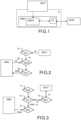
- FIG. 1 schematically shows a device D of the type where the invention is advantageously implemented.
- a device D is related to an environment ENVT.
- the device comprises at least a memory MEM where a white box cryptography (WBC) application WBCA is installed.
- the memory MEM also stores at least one data file DF to be used during the execution of the WBC application WBCA.
- WBC white box cryptography
- FIG. 2 shows schematically a flowchart of the method of the invention.
- a step S1 an unique identifier ID is extracted from the environment ENVT of the device D.
- the data file DF as stored in memory MEM is modified and, in a step S3, is stored as a modified data file DFM in memory MEM.
- the anti-cloning feature for data protection is then initialized.
- a random value is generated in the environment of the device, for example in the companion secure environment.
- the unique identifier ID is constructed.
- the construction of the unique identifier ID depends on a combination of values where the end-user may be involved or not.
- step S2 data contained in data files are modified by the WBC software application itself either to make the access to data dependent on the unique identifier ID or using the inverse function of the selected function and the unique identifier ID.
- the data modification/re-ordering is done by the back-end.
- the WBC software application is loaded onto the device, for example from an applications' store.
- the anti-cloning feature for data protection is initialized according to the same cases than in the first mode with a random value or depending on a combination of values.
- the random value or values of the combination are collected and transmitted to a data file provisioning back-end server DFPS by a secure channel.
- the unique identifier ID is computed by the data file provisioning back-end server DFPS.
- device specific data typically containing secret key of the WBC computation, are generated by the data file provisioning back-end server DFPS using the unique identifier ID.
- the device specific data are transmitted to the device by a secure channel.
- device specific data typically containing secret key useful for the computation in the WBC software application, are generated by the data file provisioning back-end server DFPS using the first unique identifier ID_1.
- Two steps of the first mode of set-up phase are then performed in a second phase of the anti-cloning feature for data protection is initialized.
- a second phase of the anti-cloning feature for data protection is initialized.
- data contained in data files are modified by the application itself either to make the access to data dependent on the second unique identifier ID_2 or using the inverse function of the selected function to modify the data and second unique identifier ID_2.
- Figure 3 schematically shows the execution of the WBC application WBCA according to the invention at running time, assuming that the set-up phase is already done.
- data file DF is schematically shown as being needed in a step T2. This step triggers a step T3 of retrieval of the unique identifier ID in the environment ENVT.
- a unique identifier ID can be locally retrieved by the device.
- This unique identifier ID can be retrieved from a companion secure environment, e.g. secure storage, secure enclave or keystore techniques, SE, TEE, etc., retrieved as a confidential value provided by a secure storage or other secure environment when the software application is executed.
- the value of the unique identified ID can be equal to this confidential value or a function can be applied on this confidential value to get the unique identified ID.
- the unique identifier can also be computed on-the-fly using a combination of values, which may include MAC address, CPU ID, HDD serial number, application instance ID or other values used in standard anti-cloning technique, user data known by user like PIN, passphrase, questions, biometric data: fingerprint, face, voice, data provided by a secure environment, e.g. by a secure storage, a secure enclave or a keystore, a secret data coming from another application. In this last case, during provisioning, another application is installed to store securely a unique identified ID.
- values which may include MAC address, CPU ID, HDD serial number, application instance ID or other values used in standard anti-cloning technique, user data known by user like PIN, passphrase, questions, biometric data: fingerprint, face, voice, data provided by a secure environment, e.g. by a secure storage, a secure enclave or a keystore, a secret data coming from another application.
- a secure environment e.g. by a
- the execution is pursued as schematically shown by a step T4 where the modified data file DFM is read in the memory MEM.
- the access to data contained in data file DF of the software application is either modified depending on the unique identifier ID or the access to data files DF is regular and the modification/re-ordering occurs only in volatile memory during the execution.
- the modification/re-ordering is based on both a dedicated function and the unique identifier ID.
- the modification can be a permutation of white-box protected keys based on the unique identifier ID and typically a Key Based Random Permutation. Specifically some white-box protected key values are permutated according to the Key Based Random permutation and the unique identifier ID as parameter.
- the modification can also be a simple XOR operation with the unique identified ID or a function applied on the unique identifier ID such as a pseudo random number generator (PRNG) seeded with the unique identifier ID or another classical encryption mechanism keyed with the unique identifier ID applied on white-box protected data including key.
- PRNG pseudo random number generator
- any function can be applied to the unique identifier ID performing a XOR operation with the white-box protected data.
- the modification can be a permutation of tables based on the unique identifier ID and a Key Based Random Permutation.
- the first layers of tables are modified using the Key Based Random permutation and the unique identifier ID as parameter.
- the operation can also be a simple XOR operation with a PRNG seeded with the unique identifier ID or another classical encryption mechanism keyed with the unique identifier ID.
- the modification can also be a removal of external anti-cloning encodings based on the unique identifier ID and a generator of external encoding for anti-cloning feature.
- the White-box cryptography function is executed and the result of the execution is correct only if a right unique identifier ID was retrieved at step T3. Otherwise, the output of the white-box crypto function will be wrong.
- the advantages of the invention is to add a new layer of anti-cloning or binding at the white-box cryptography level. This prevents some attack paths like copy-paste white-box protected keys from one application to another application.
Landscapes
- Engineering & Computer Science (AREA)
- Computer Security & Cryptography (AREA)
- Theoretical Computer Science (AREA)
- Software Systems (AREA)
- Computer Hardware Design (AREA)
- Physics & Mathematics (AREA)
- General Engineering & Computer Science (AREA)
- General Physics & Mathematics (AREA)
- Computer Networks & Wireless Communication (AREA)
- Signal Processing (AREA)
- Multimedia (AREA)
- Technology Law (AREA)
- Mathematical Physics (AREA)
- Computing Systems (AREA)
- Power Engineering (AREA)
- Storage Device Security (AREA)
Description
- The present invention relates to a method to protect a data file to be used by a white-box cryptography software application installed in memory of a device to prevent the malevolent use of a digital copy of the data file by a white-box cryptography software application installed in memory of another device.
- The invention also pertains to a White Box Cryptography software application and to a device implementing said method.
- The invention concerns the software protection features for mobile application or other software applications related to server security or to Internet of Things devices. In general the invention concerns any software running in an untrusted environment like for instance servers or IoT devices.
- The invention deals with a specific software technique known under the name "anti-cloning" or "device binding" or "application Binding". This software protection technique is used to prevent execution of a binary on a non-genuine device. Strictly speaking the binary knows the fingerprints of the execution environment like the MAC address, CPU ID, HDD serial number, instance ID, etc. and verify this integrity during execution. If the fingerprints do not match, the device is seen as "cloned" and the program can react in several ways. This technology can be used to help protecting code lifting. This technic can also be extend on different instances of the same application on the same device, a unique number per instance.
- However the classical anti-cloning protection does not prevent the following white-box attack path where the attacker download the legitimate application from an app store on its own device/mobile phone.
- The principle of the attack is:
- 1. To locate the data files containing the white-box protected data, including key and parameters, on a target device of an end-user;
- 2. To load/copy these data files on the attacker's device/mobile;
- 3. To run the legitimate application using the copied data files.
- Using this simple attack path, the attacker gets the possibility to in fine clone the legitimate cryptographic functionalities, including the ones using keys, without cloning/modifying any code or software, just by using/loading the legitimate application with copied data file.
- The technical problem solved by this invention is a software technique that prevent this specific attack path concerning the data files used by a WBC application.
- Document
EP3179690 published 14-06-2017 $ from GEMALTO SA discloses: A mechanism for securing a mobile app for execution on a mobile device. The mechanism includes loading a non-trusted portion of the mobile app from a non-trusted application provider onto the mobile device, operating a key provisioning server to generate keys associated with a trusted execution environment, transmitting the keys associated with the trusted execution environment to the mobile device and to a key directory server, authenticate the mobile device, and upon authenticating the mobile device, transmitting a trusted portion of the mobile app including a trusted application to the mobile device, and installing the trusted portion of the mobile app on the mobile device thereby providing a trusted execution environment. - Document XP055553945 by Lionel M Rivier published 23-09-2015"Sécurisation des implémentations logicielles face aux attaques par injection de faute sur systèmes embarqués".
-
- Document XP055253587 published 10-10-2014 "A Generic Approach for Protecting Java Card TM Smart Card Against Software Attacks A Generic Approach for Protecting Java Card".
- Document XP033185830 19-05-2015 published "Using Virtual Machine Protections to Enhance Whitebox Cryptography" by "Gan JosephKok RoddyKohli PankajDing YunMah Benjamin"
- The present invention aims at avoiding the above-mentioned malicious attacks by making them unsuccessful.
- The present invention is defined, in its broadest sense, as a method to protect a data file to be used by a white-box cryptography software application installed in memory of a device to prevent the malevolent use of a digital copy of the data file by a white-box cryptography software application installed in memory of another device, said method comprising the steps of:
- extracting an unique identifier for the device from the environment of the device,
- modifying data in the data file according to the unique identifier, the available white-box cryptography software application being such that it comprises a software security layer adapted to, when the WBC software application is executed, retrieve the unique identifier from the environment of the device in which it is installed and to use this unique identifier in combination with the data file in its execution, the result of the execution being correct only in case where the correct unique identifier has been extracted by the executed WBC software application.
- The invention thus consists in providing an additional layer of anti-cloning on data to the classical anti-cloning protections for protecting code. The goal of the invention is to add a new layer of software security at the data level.
- According to an advantageous feature, the unique identifier is different from the ones used in other anti-cloning features used in code of the available white-box cryptography software application.
- It is indeed important that the additional software security layer of the invention does not weaken the security of the classical anti-cloning protection applied on code. Using the same fingerprint/mobile/device ID for the two techniques could thus constitute a weakness that is avoided with this feature.
- According to a specific embodiment, the access to provisioned data contained in data file of the WBC software application is modified depending on the unique identifier.
- In this case, the data in the data file are typically encoded using the unique identifier. The data are then decoded before being used by the application. It is here noted that the identifier could go through different types of functions before getting the data.
- According to another specific embodiment, the access to provisioned data contained in data file of the WBC software application is direct and the modification of the provisioned data contained in data file occurs only in volatile memory.
- In this case, the data are accessed encoded and the decoding occurs in the execution of the application itself.
- In an embodiment, the environment of the device is a companion secure environment.
- This embodiment enables the unique identifier to be stored and then extracted.
- Such a companion secure environment is advantageously chosen among: a secure storage, a secure enclave, a secure keystore, a Secure Element, a Trusted Execution Environment.
- In an embodiment of the invention, the unique identifier for the device is a confidential value stored in the environment of the device or a function applied to this confidential value.
- This embodiment is adapted in device having a secure environment. It is here noted that the unique identifier can be calculated/generated by the back end server and provisioned by the back end server in a secure way to the environment of the device.
- Advantageously, the unique identifier for the device is a MAC address, a CPU ID, a HDD serial number, an application instance ID, another value used in anti-cloning technique or whatever combination of these values.
- According to another type of embodiment, the unique identifier for the device is a user data known by user such as PIN, passphrase, answer to questions.
- In such a case the invention requires user interaction.
- In another embodiment requiring user interaction, the unique identifier for the device is biometric data such as fingerprint, face, voice.
- The use of such biometric data enables to check the presence of the user.
- According to another type of embodiment, the unique identifier for the device is a secret data coming from another application.
- This embodiment implies that a right other application is present in the environment of the device.
- According to a specific embodiment, the method comprises a preliminary step of installing a dedicated application to store the unique identifier securely.
- According to another kind of embodiment of the invention, the unique identifier for the device is constructed using a random value generated by the environment of the device.
- Such an embodiment introduces a randomness in the generation of the unique identifier. However this random value has to be stored in the environment to be retrieved by the instance of the application to be executed. It is here noted that the unique identifier is indeed specific to an instance of the application.
- Advantageously, the unique identifier for the device is computed on-the-fly using a combination of values chosen among the ones listed in previous embodiments.
- Such an on-the-fly computation enables to have a variety in the constitution of the unique identifier. The composite nature of the unique identifier is here an advantage as several right retrieved values are necessary to rebuild the unique identifier.
- According to a preferred embodiment, the modification is chosen among a key based random permutation of data in the data file, typically WBC protected keys, based on the unique identifier, a simple XOR operation with the unique identifier, a PRNG seeded with the unique identifier, an encryption mechanism keyed with the unique identifier.
- Such operations on the data file enable the implementation of the anti-cloning additional layer of the invention. When the data file comprises WBC protected keys, the invention is particularly original and useful. In this case the mechanism of the WBC software application being dependent on the WBC protected keys is conceived depending on the invention, taking into account the modification of the WBC protected keys according to the unique identifier.
- According to an advantageous implementation, the step of modification of data in the data file according to the unique identifier every time the WBC software application is provisioned with new WBC data in the data file.
- This implementation enables to confer a temporary character to the unique identifier. In WBC implementation such a temporary character is an advantage in terms of security.
- According to an implementation of the invention, the step of modification of data in the data file according to the unique identifier is performed by the WBC software application installed in the device.
- In this case, the data file is locally modified. It enables that the unique identifier remains inside the device.
- According to another implementation, the method comprises a step of, for the device, sending the unique identifier or elements as extracted to construct the unique identifier, to a data file provisioning back-end server, the step of modification of data in the data file to be provisioned according to the unique identifier is performed by the back-end server before sending the data file and the method further comprises a step of, for the data file provisioning back-end server, sending the modified data file to the device by a secure channel.
- This embodiment enables the data file provisioning back-end server to have full control of the provision and treatment of data.
- According to a last advantageous implementation, the WBC software application is such that it uses a combination of data modified using at least two unique identifiers of the device, one, named back-end calculated unique identifier, being constructed by the data file provisioning back-end server and one, named device calculated unique identifier, being constructed by the WBC software application, combined operations consecutively performed by the data file provisioning back-end server and by the device using back-end and device calculated unique identifiers respectively corresponding to the operation performed by the device during the running time using combined back-end and device calculated unique identifier.
- This implementation is advantageous as it makes a mixed usage of unique identifiers, one being calculated locally in the device and the other being calculated based on information retrieved from the device to the data file provisioning back-end server.
- The invention also concerns a White Box Cryptography software application comprising a code anti-cloning feature to be activated when the WBC software application is installed on a device having an environment, said WBC software application further comprising a data anti-cloning feature to be activated at each WBC data provisioning in a data file, said data anti-cloning feature being adapted to, each time a WBC data provisioning is triggered, retrieve a unique identifier from the environment of the device, modifying the provisioned data using the unique identifier before storage of the data file, said WBC software application being adapted to, when it is executed, extract the unique identifier from the environment of the device in which it is installed and to use this unique identifier in combination with the stored WBC data in the data file in its execution, the result of the execution being correct only in case where the correct unique identifier has been extracted by the executed WBC software application.
- Such an application is autonomously able to protect the data file as received from a data file provisioning back-end server.
- In another implementation, the invention concerns a White Box Cryptography software application comprising a code anti-cloning feature to be activated when the WBC software application is installed on a device having an environment, said WBC software application further comprising a data anti-cloning feature to be activated at each WBC data provisioning in a data file, said data anti-cloning feature being adapted to, each time a WBC data provisioning is triggered, retrieve a unique identifier from the environment of the device, sending said unique identifier to a back-end provisioning server for it to modify data to be provisioned in the data file using said unique identifier, receiving and storing the provisioned modified data in the data file, said WBC software application being adapted to, when it is executed, extract the unique identifier from the environment of the device in which it is installed and to use this unique identifier in combination with the stored WBC data in the data file in its execution, the result of the execution being correct only in case where the correct unique identifier has been extracted by the executed WBC software application.
- This implementation implies the back-end to be implicated in the construction of the modified data file.
- The invention also relates to a device having an environment and comprising a memory where a White Box Cryptography software application comprising a code anti-cloning feature to be activated when the WBC software application is installed, said WBC software application further comprising a data anti-cloning feature to be activated at each WBC data provisioning in a data file, said data anti-cloning feature being adapted to, each time a WBC data provisioning is triggered, retrieve a unique identifier from the environment of the device, modifying the provisioned data in the data file using the unique identifier before storage, said WBC software application being adapted to, when it is then executed, extract the unique identifier from the environment of the device in which it is installed and to use this unique identifier in combination with the stored WBC data in the data file in its execution, the result of the execution being correct only in case where the correct unique identifier has been extracted by the executed WBC software application.
- The invention also relates to another embodiment of a device, this device having an environment and comprising a memory where a White Box Cryptography software application comprising a code anti-cloning feature to be activated when the WBC software application is installed, said WBC software application further comprising a data anti-cloning feature to be activated at each WBC data provisioning in a data file, said data anti-cloning feature being adapted to, each time a WBC data provisioning is triggered, retrieve a unique identifier from the environment of the device, sending said unique identifier to a data file back-end provisioning server for it to modify data to be provisioned in the data file using said unique identifier, receiving and storing the provisioned modified data in the data file, said WBC software application being adapted to, when it is executed, extract the unique identifier from the environment of the device in which it is installed and to use this unique identifier in combination with the stored WBC data in the data file in its execution, the result of the execution being correct only in case where the correct unique identifier has been extracted by the executed WBC software application.
- To the accomplishment of the foregoing and related ends, one or more embodiments comprise the features hereinafter fully described and particularly pointed out in the claims.
- The following description and the annexed drawings set forth in detail certain illustrative aspects and are indicative of but a few of the various ways in which the principles of the embodiments may be employed. Other advantages and novel features will become apparent from the following detailed description when considered in conjunction with the drawings and the disclosed embodiments are intended to include all such aspects and their equivalents.
-
Figure 1 represents a device where the present invention is advantageously implemented; -
Figure 2 shows schematically a flowchart of the method of the invention; -
Figure 3 shows schematically a flowchart of the execution of a white box cryptography software application. - For a more complete understanding of the invention, the invention will now be described in detail with reference to the accompanying drawing. The detailed description will illustrate and describe what is considered as a preferred embodiment of the invention. It should of course be understood that various modifications and changes in form or detail could readily be made without departing from the scope of the invention. It is therefore intended that the invention may not be limited to the exact form and detail shown and described herein, nor to anything less than the whole of the invention disclosed herein and as claimed hereinafter. The same elements have been designated with the same references in the different drawings. For clarity, only those elements and steps which are useful to the understanding of the present invention have been shown in the drawings and will be described.
-
Figure 1 schematically shows a device D of the type where the invention is advantageously implemented. Such a device D is related to an environment ENVT. The device comprises at least a memory MEM where a white box cryptography (WBC) application WBCA is installed. The memory MEM also stores at least one data file DF to be used during the execution of the WBC application WBCA. -
Figure 2 shows schematically a flowchart of the method of the invention. In a step S1, an unique identifier ID is extracted from the environment ENVT of the device D. In a step S2, the data file DF as stored in memory MEM is modified and, in a step S3, is stored as a modified data file DFM in memory MEM. - Depending on the entity that performs the modification of the data, several implementations of the set-up phase of the invention are possible.
- In a first mode of this set-up phase, the data modification/re-ordering is done by the software application. In this mode, the WBC software application is loaded onto the device, typically from an applications' store.
- The anti-cloning feature for data protection is then initialized. In a first case, a random value is generated in the environment of the device, for example in the companion secure environment. Then, the unique identifier ID is constructed. In a second case, the construction of the unique identifier ID depends on a combination of values where the end-user may be involved or not.
- In step S2, data contained in data files are modified by the WBC software application itself either to make the access to data dependent on the unique identifier ID or using the inverse function of the selected function and the unique identifier ID.
- In an advantageous option, every time the software application is provisioned with new white-box protected data or keys, the received data/key are modified/re-ordered by the software application itself.
- In a second mode of the set-up phase, the data modification/re-ordering is done by the back-end. In this mode too, the WBC software application is loaded onto the device, for example from an applications' store.
- Then the anti-cloning feature for data protection is initialized according to the same cases than in the first mode with a random value or depending on a combination of values. Here however, the random value or values of the combination are collected and transmitted to a data file provisioning back-end server DFPS by a secure channel.
- In this second mode, the unique identifier ID is computed by the data file provisioning back-end server DFPS. Thus device specific data, typically containing secret key of the WBC computation, are generated by the data file provisioning back-end server DFPS using the unique identifier ID. At last, the device specific data are transmitted to the device by a secure channel.
- A third mode of the set-up phase is a combination of the first and second modes. In this third mode, the WBC software application is loaded onto the device, for example from an applications' store. A first phase of the anti-cloning feature for data protection is initialized according one of the two cases presented above, using a generated random value or a combination of values.
- The following steps of the second mode are then performed. Data, or a value generated from the data, to be used in the computation of the unique identifier ID are collected and transmitted to the data file provisioning back-end server DFPS by a secure channel. Then a first unique identifier ID_1 is computed by the data file provisioning back-end server DFPS.
- Then device specific data, typically containing secret key useful for the computation in the WBC software application, are generated by the data file provisioning back-end server DFPS using the first unique identifier ID_1.
- These device specific data are then transmitted to the device by a secure channel.
- Two steps of the first mode of set-up phase are then performed in a second phase of the anti-cloning feature for data protection is initialized. Again, the two above mentioned cases, use of a random value extracted from the environment and use of a combination of values, can be implemented. A second unique identifier ID_2 is thus accordingly generated or constructed.
- Then data contained in data files are modified by the application itself either to make the access to data dependent on the second unique identifier ID_2 or using the inverse function of the selected function to modify the data and second unique identifier ID_2.
- Combined operations consecutively performed by the data file provisioning back-end server DFPS and by the device using the two values of the first unique identifier ID_1 and of the unique identifier ID_2 respectively has to correspond to the operations performed by the device during the running time using combined first and second unique identifiers ID_1 and ID_2, both retrieved from the environment of the device. In this third mode, the two values of the first and second unique identifiers ID_1 and ID_2 are locally generated or computed. It is thus necessary for the WBC software application to be adapted to compute them or to integrate all computation enabling to use the locally retrieved data in order to obtain the right WBC computation when right locally retrieved data are applied in the computation.
-
Figure 3 schematically shows the execution of the WBC application WBCA according to the invention at running time, assuming that the set-up phase is already done. In the run of the execution T1 of the application WBCA, data file DF is schematically shown as being needed in a step T2. This step triggers a step T3 of retrieval of the unique identifier ID in the environment ENVT. - A unique identifier ID can be locally retrieved by the device. This unique identifier ID can be retrieved from a companion secure environment, e.g. secure storage, secure enclave or keystore techniques, SE, TEE, etc., retrieved as a confidential value provided by a secure storage or other secure environment when the software application is executed. The value of the unique identified ID can be equal to this confidential value or a function can be applied on this confidential value to get the unique identified ID.
- The unique identifier can also be computed on-the-fly using a combination of values, which may include MAC address, CPU ID, HDD serial number, application instance ID or other values used in standard anti-cloning technique, user data known by user like PIN, passphrase, questions, biometric data: fingerprint, face, voice, data provided by a secure environment, e.g. by a secure storage, a secure enclave or a keystore, a secret data coming from another application. In this last case, during provisioning, another application is installed to store securely a unique identified ID.
- Once the unique identifier ID is retrieved, the execution is pursued as schematically shown by a step T4 where the modified data file DFM is read in the memory MEM. The access to data contained in data file DF of the software application is either modified depending on the unique identifier ID or the access to data files DF is regular and the modification/re-ordering occurs only in volatile memory during the execution. The modification/re-ordering is based on both a dedicated function and the unique identifier ID.
- Depending on the type of implementation, different types of modifications can be applied.
- In the case of functions for generic white-box implementation, the modification can be a permutation of white-box protected keys based on the unique identifier ID and typically a Key Based Random Permutation. Specifically some white-box protected key values are permutated according to the Key Based Random permutation and the unique identifier ID as parameter.
- For such function for generic WBC implementation, the modification can also be a simple XOR operation with the unique identified ID or a function applied on the unique identifier ID such as a pseudo random number generator (PRNG) seeded with the unique identifier ID or another classical encryption mechanism keyed with the unique identifier ID applied on white-box protected data including key. More generally, any function can be applied to the unique identifier ID performing a XOR operation with the white-box protected data.
- For functions for table-based WBC implementation, the modification can be a permutation of tables based on the unique identifier ID and a Key Based Random Permutation. Typically the first layers of tables are modified using the Key Based Random permutation and the unique identifier ID as parameter.
- The operation can also be a simple XOR operation with a PRNG seeded with the unique identifier ID or another classical encryption mechanism keyed with the unique identifier ID. The modification can also be a removal of external anti-cloning encodings based on the unique identifier ID and a generator of external encoding for anti-cloning feature.
- Then the White-box cryptography function is executed and the result of the execution is correct only if a right unique identifier ID was retrieved at step T3. Otherwise, the output of the white-box crypto function will be wrong.
- The advantages of the invention is to add a new layer of anti-cloning or binding at the white-box cryptography level. This prevents some attack paths like copy-paste white-box protected keys from one application to another application.
- In the above detailed description, reference is made to the accompanying drawings that show, by way of illustration, specific embodiments in which the invention may be practiced. These embodiments are described in sufficient detail to enable those skilled in the art to practice the invention.
- It is to be understood that the various embodiments of the invention, although different, are not necessarily mutually exclusive. For example, a particular feature, structure, or characteristic described herein in connection with one embodiment may be implemented within other embodiments without departing from the scope of the invention.
Claims (11)
- Method to protect a data file (DF) to be used by a white-box cryptography software application (WBCA) installed in memory (MEM) of a device (D) to prevent the malevolent use of a digital copy of the data file (DF) by a white-box cryptography software application installed in memory of another device, said method comprising the steps of:- extracting (S1) a unique identifier (ID) for the device (D) from the environment (ENVT) of the device (D),- modifying (S2) data in the data file (DF) according to the unique identifier (ID),- the available white-box cryptography software application (WBCA) being such that it comprises a software security layer adapted to, when the WBC software application (WBCA) is executed (T1), retrieve (T3) the unique identifier (ID) from the environment (ENVT) of the device (D) in which it is installed and to use (T2) this unique identifier (ID) in combination with the stored data file (DF) in its execution (T4), modifying the access to provisioned data contained in data file (DF) of the WBC software application (WBCA) depending on the unique identifier (ID),wherein the modification is chosen among a key based random permutation of data in the data file (DF) based on the unique identifier (ID), a XOR operation with the unique identifier (ID), a Pseudo Random Number Generation seeded with the unique identifier (ID), an encryption mechanism keyed with the unique identifier (ID).
- Method according to claim 1, wherein said white-box cryptography software application (WBCA) comprises a code anti-cloning feature and the unique identifier (ID) is different from the one used in said anti-cloning feature used in code of the available white-box cryptography software application (WBCA).
- Method according to claim 1, wherein the environment (ENVT) of the device (D) is a companion secure environment.
- Method according to claim 1, wherein the unique identifier (ID) for the device (D) is constructed using a random value generated by the environment (ENVT) of the device (D).
- Method according to claim 1, wherein the unique identifier (ID) for the device (D) is computed on-the-fly using a combination of values chosen among: a confidential value stored in the environment of the device or a function applied to this confidential value, a MAC address, a CPU ID, a HDD serial number, an application instance ID or another value used in anti-cloning technique, a user data known by user such as PIN, passphrase, answer to questions, biometric data such as fingerprint, face, voice, a secret data coming from another application.
- Method according to claim 1, wherein the step of modification of data in the data file (DF) according to the unique identifier (ID) every time the WBC software application (WBCA) is provisioned with new WBC data in the data file (DF).
- Method according to claim 1, wherein the step of modification of data in the data file (DF) according to the unique identifier (ID) is performed by the WBC software application (WBCA) installed in the device (D).
- Method according to claim 1, said method comprising a step of, for the device (D), sending, in a secure channel, the unique identifier (ID) or elements as extracted to construct the unique identifier (ID), to a data file provisioning back-end server (DFPS), the step of modification of data in the data file (DF) to be provisioned according to the unique identifier (ID) is performed by the back-end server (DFPS) before sending the data file (DF) and the method further comprises a step of, for the data file provisioning back-end server (DFPS), sending the modified data file (DFM) to the device (D) in a secure channel.
- Method according to claim 1, wherein the WBC software application (WBCA) uses a combination of data modified using at least two unique identifiers (ID_1, ID_2) of the device (D), one, named back-end calculated unique identifier (ID_1), being constructed by the data file provisioning back-end server (DFPS) and one, named device calculated unique identifier (ID_2), being constructed by the WBC software application (WBCA), combined operations consecutively performed by the data file provisioning back-end server (DFPS) and by the device (D) using back-end and device calculated unique identifiers (ID_1,ID_2) respectively corresponding to the operation performed by the device (D) during the running time using combined back-end and device calculated unique identifier (ID_1,ID_2).
- Device (D) having an environment (ENVT) and comprising a memory (MEM) where a White Box Cryptography software application (WBCA) comprising a code anti-cloning feature to be activated when the WBC software application (WBCA) is installed, said WBC software application (WBCA) further comprising a data anti-cloning feature to be activated at each WBC data provisioning in a data file (DF), said data anti-cloning feature being adapted to, each time a WBC data provisioning is triggered, retrieve a unique identifier (ID) from the environment (ENVT) of the device (D), modifying the provisioned data in the data file (DF) using the unique identifier (ID) before storage, said WBC software application (WBCA) being adapted to, when it is then executed, extract the unique identifier (ID) from the environment (ENVT) of the device (D) in which it is installed and to use this unique identifier (ID) in combination with the stored WBC data in the data file (DF) in its execution, access to provisioned data contained in data file (DF) of the WBC software application (WBCA) being modified depending on the unique identifier (ID), and the modification being chosen among a key based random permutation of data in the data file (DF) based on the unique identifier (ID), a XOR operation with the unique identifier (ID), a Pseudo Random Number Generation seeded with the unique identifier (ID), an encryption mechanism keyed with the unique identifier (ID).
- The device of claim 10 wherein after retrieving a unique identifier (ID) from the environment (ENVT) of the device (D), said device sends said unique identifier (ID) to a data file back-end provisioning device (DFPS) for it to modify data to be provisioned in the data file (DF) using said unique identifier (ID), receiving and storing the provisioned modified data in the data file (DF).
Applications Claiming Priority (2)
| Application Number | Priority Date | Filing Date | Title |
|---|---|---|---|
| EP18306094.6A EP3608806A1 (en) | 2018-08-09 | 2018-08-09 | Anti cloning for white box protected data |
| PCT/EP2019/069097 WO2020030387A1 (en) | 2018-08-09 | 2019-07-16 | Anti cloning for white box protected data |
Publications (2)
| Publication Number | Publication Date |
|---|---|
| EP3834105A1 EP3834105A1 (en) | 2021-06-16 |
| EP3834105B1 true EP3834105B1 (en) | 2025-01-29 |
Family
ID=63896074
Family Applications (2)
| Application Number | Title | Priority Date | Filing Date |
|---|---|---|---|
| EP18306094.6A Withdrawn EP3608806A1 (en) | 2018-08-09 | 2018-08-09 | Anti cloning for white box protected data |
| EP19737786.4A Active EP3834105B1 (en) | 2018-08-09 | 2019-07-16 | Anti cloning for white box protected data |
Family Applications Before (1)
| Application Number | Title | Priority Date | Filing Date |
|---|---|---|---|
| EP18306094.6A Withdrawn EP3608806A1 (en) | 2018-08-09 | 2018-08-09 | Anti cloning for white box protected data |
Country Status (3)
| Country | Link |
|---|---|
| US (1) | US11604857B2 (en) |
| EP (2) | EP3608806A1 (en) |
| WO (1) | WO2020030387A1 (en) |
Families Citing this family (3)
| Publication number | Priority date | Publication date | Assignee | Title |
|---|---|---|---|---|
| WO2022231875A1 (en) | 2021-04-29 | 2022-11-03 | Arris Enterprises Llc | Cloud-based whitebox node locking |
| US12445269B2 (en) * | 2022-10-17 | 2025-10-14 | Thales Dis Cpl Usa, Inc. | System and method of application resource binding |
| EP4730692A1 (en) * | 2024-10-17 | 2026-04-22 | Thales Dis France Sas | Method for protecting a software code implementing a cryptographic algorithm against cloning attacks |
Citations (3)
| Publication number | Priority date | Publication date | Assignee | Title |
|---|---|---|---|---|
| EP3178690A1 (en) * | 2015-12-11 | 2017-06-14 | Aisin Seiki Kabushiki Kaisha | Seating detection device |
| DE102018126136A1 (en) * | 2018-01-12 | 2019-07-18 | Intel Corporation | Biometric authentication technologies before booting |
| DE102019113510A1 (en) * | 2018-10-04 | 2020-04-09 | Samsung Electronics Co., Ltd. | Device and method for providing protected information |
Family Cites Families (2)
| Publication number | Priority date | Publication date | Assignee | Title |
|---|---|---|---|---|
| JP5460699B2 (en) * | 2008-05-23 | 2014-04-02 | イルデト カナダ コーポレーション | System and method for generating a white-box implementation of a software application |
| EP3179690A1 (en) * | 2015-12-11 | 2017-06-14 | Gemalto Sa | Mobile device having trusted execution environment |
-
2018
- 2018-08-09 EP EP18306094.6A patent/EP3608806A1/en not_active Withdrawn
-
2019
- 2019-07-16 EP EP19737786.4A patent/EP3834105B1/en active Active
- 2019-07-16 WO PCT/EP2019/069097 patent/WO2020030387A1/en not_active Ceased
- 2019-07-16 US US17/266,930 patent/US11604857B2/en active Active
Patent Citations (3)
| Publication number | Priority date | Publication date | Assignee | Title |
|---|---|---|---|---|
| EP3178690A1 (en) * | 2015-12-11 | 2017-06-14 | Aisin Seiki Kabushiki Kaisha | Seating detection device |
| DE102018126136A1 (en) * | 2018-01-12 | 2019-07-18 | Intel Corporation | Biometric authentication technologies before booting |
| DE102019113510A1 (en) * | 2018-10-04 | 2020-04-09 | Samsung Electronics Co., Ltd. | Device and method for providing protected information |
Non-Patent Citations (1)
| Title |
|---|
| GAN JOSEPH ET AL: "Using Virtual Machine Protections to Enhance Whitebox Cryptography", 2015 IEEE/ACM 1ST INTERNATIONAL WORKSHOP ON SOFTWARE PROTECTION, IEEE, 19 May 2015 (2015-05-19), pages 17 - 23, XP033185830, DOI: 10.1109/SPRO.2015.12 * |
Also Published As
| Publication number | Publication date |
|---|---|
| EP3834105A1 (en) | 2021-06-16 |
| WO2020030387A1 (en) | 2020-02-13 |
| US11604857B2 (en) | 2023-03-14 |
| US20210312018A1 (en) | 2021-10-07 |
| EP3608806A1 (en) | 2020-02-12 |
Similar Documents
| Publication | Publication Date | Title |
|---|---|---|
| US9367701B2 (en) | Systems and methods for maintaining integrity and secrecy in untrusted computing platforms | |
| US20250260574A1 (en) | Data format-preserving encryption, tokenization, and access control for vaultless systems and methods | |
| CN108768963B (en) | Communication method and system of trusted application and secure element | |
| CN102084313B (en) | Systems and methods for data security | |
| US8775794B2 (en) | System and method for end to end encryption | |
| US9298947B2 (en) | Method for protecting the integrity of a fixed-length data structure | |
| US20140223580A1 (en) | Method of and apparatus for processing software using hash function to secure software, and computer-readable medium storing executable instructions for performing the method | |
| CN106533663B (en) | Data ciphering method, encryption method, apparatus and data decryption method, decryption method, apparatus | |
| WO2008034900A1 (en) | Fabrication of computer executable program files from source code | |
| US11604857B2 (en) | Anti cloning for white box protected data | |
| US9003197B2 (en) | Methods, apparatus and system for authenticating a programmable hardware device and for authenticating commands received in the programmable hardware device from a secure processor | |
| CN105978680B (en) | Encryption operation method for encryption key | |
| US9594918B1 (en) | Computer data protection using tunable key derivation function | |
| US20100169657A1 (en) | Message authentication code with blind factorization and randomization | |
| CN117874721B (en) | A method to prevent JAR packages from being decompiled | |
| CN120342691A (en) | Information publishing method, system, medium, terminal and program product based on two-factor authentication mechanism and national secret algorithm | |
| US20250023736A1 (en) | Protocols with noisy response-based cryptographic subkeys | |
| Dalskov et al. | Can you trust your encrypted cloud? An assessment of spideroakone's security | |
| US12003614B2 (en) | Infective countermeasures | |
| Ziegler et al. | Do you think your passwords are secure? | |
| Andersson | Optimizing the computation of password hashes | |
| CN120091314B (en) | Key processing methods and related devices | |
| EP4546705A1 (en) | System and method for providing keyless encryption and decryption | |
| KR102145679B1 (en) | Method for evading mitm attack for https protocol | |
| Pane et al. | Security Analysis of Two-Factor Authentication Applications: Vulnerabilities in Data Storage and Management |
Legal Events
| Date | Code | Title | Description |
|---|---|---|---|
| STAA | Information on the status of an ep patent application or granted ep patent |
Free format text: STATUS: UNKNOWN |
|
| STAA | Information on the status of an ep patent application or granted ep patent |
Free format text: STATUS: THE INTERNATIONAL PUBLICATION HAS BEEN MADE |
|
| PUAI | Public reference made under article 153(3) epc to a published international application that has entered the european phase |
Free format text: ORIGINAL CODE: 0009012 |
|
| STAA | Information on the status of an ep patent application or granted ep patent |
Free format text: STATUS: REQUEST FOR EXAMINATION WAS MADE |
|
| 17P | Request for examination filed |
Effective date: 20210309 |
|
| AK | Designated contracting states |
Kind code of ref document: A1 Designated state(s): AL AT BE BG CH CY CZ DE DK EE ES FI FR GB GR HR HU IE IS IT LI LT LU LV MC MK MT NL NO PL PT RO RS SE SI SK SM TR |
|
| DAV | Request for validation of the european patent (deleted) | ||
| DAX | Request for extension of the european patent (deleted) | ||
| RAP1 | Party data changed (applicant data changed or rights of an application transferred) |
Owner name: THALES DIS FRANCE SAS |
|
| STAA | Information on the status of an ep patent application or granted ep patent |
Free format text: STATUS: EXAMINATION IS IN PROGRESS |
|
| 17Q | First examination report despatched |
Effective date: 20230206 |
|
| REG | Reference to a national code |
Ref legal event code: R079 Free format text: PREVIOUS MAIN CLASS: G06F0021140000 Ref country code: DE Ref legal event code: R079 Ref document number: 602019065395 Country of ref document: DE Free format text: PREVIOUS MAIN CLASS: G06F0021140000 Ipc: H04L0009400000 |
|
| GRAP | Despatch of communication of intention to grant a patent |
Free format text: ORIGINAL CODE: EPIDOSNIGR1 |
|
| STAA | Information on the status of an ep patent application or granted ep patent |
Free format text: STATUS: GRANT OF PATENT IS INTENDED |
|
| RIC1 | Information provided on ipc code assigned before grant |
Ipc: G06F 21/72 20130101ALI20241001BHEP Ipc: G06F 21/55 20130101ALI20241001BHEP Ipc: G06F 21/53 20130101ALI20241001BHEP Ipc: G06F 21/14 20130101ALI20241001BHEP Ipc: H04W 12/71 20210101ALI20241001BHEP Ipc: H04L 9/40 20220101AFI20241001BHEP |
|
| INTG | Intention to grant announced |
Effective date: 20241014 |
|
| GRAS | Grant fee paid |
Free format text: ORIGINAL CODE: EPIDOSNIGR3 |
|
| GRAA | (expected) grant |
Free format text: ORIGINAL CODE: 0009210 |
|
| STAA | Information on the status of an ep patent application or granted ep patent |
Free format text: STATUS: THE PATENT HAS BEEN GRANTED |
|
| P01 | Opt-out of the competence of the unified patent court (upc) registered |
Free format text: CASE NUMBER: APP_66919/2024 Effective date: 20241218 |
|
| AK | Designated contracting states |
Kind code of ref document: B1 Designated state(s): AL AT BE BG CH CY CZ DE DK EE ES FI FR GB GR HR HU IE IS IT LI LT LU LV MC MK MT NL NO PL PT RO RS SE SI SK SM TR |
|
| REG | Reference to a national code |
Ref country code: GB Ref legal event code: FG4D |
|
| REG | Reference to a national code |
Ref country code: CH Ref legal event code: EP |
|
| REG | Reference to a national code |
Ref country code: DE Ref legal event code: R096 Ref document number: 602019065395 Country of ref document: DE |
|
| REG | Reference to a national code |
Ref country code: IE Ref legal event code: FG4D |
|
| REG | Reference to a national code |
Ref country code: NL Ref legal event code: MP Effective date: 20250129 |
|
| PG25 | Lapsed in a contracting state [announced via postgrant information from national office to epo] |
Ref country code: NL Free format text: LAPSE BECAUSE OF FAILURE TO SUBMIT A TRANSLATION OF THE DESCRIPTION OR TO PAY THE FEE WITHIN THE PRESCRIBED TIME-LIMIT Effective date: 20250129 |
|
| PG25 | Lapsed in a contracting state [announced via postgrant information from national office to epo] |
Ref country code: RS Free format text: LAPSE BECAUSE OF FAILURE TO SUBMIT A TRANSLATION OF THE DESCRIPTION OR TO PAY THE FEE WITHIN THE PRESCRIBED TIME-LIMIT Effective date: 20250429 |
|
| PG25 | Lapsed in a contracting state [announced via postgrant information from national office to epo] |
Ref country code: FI Free format text: LAPSE BECAUSE OF FAILURE TO SUBMIT A TRANSLATION OF THE DESCRIPTION OR TO PAY THE FEE WITHIN THE PRESCRIBED TIME-LIMIT Effective date: 20250129 |
|
| PG25 | Lapsed in a contracting state [announced via postgrant information from national office to epo] |
Ref country code: PL Free format text: LAPSE BECAUSE OF FAILURE TO SUBMIT A TRANSLATION OF THE DESCRIPTION OR TO PAY THE FEE WITHIN THE PRESCRIBED TIME-LIMIT Effective date: 20250129 |
|
| PG25 | Lapsed in a contracting state [announced via postgrant information from national office to epo] |
Ref country code: ES Free format text: LAPSE BECAUSE OF FAILURE TO SUBMIT A TRANSLATION OF THE DESCRIPTION OR TO PAY THE FEE WITHIN THE PRESCRIBED TIME-LIMIT Effective date: 20250129 |
|
| PGFP | Annual fee paid to national office [announced via postgrant information from national office to epo] |
Ref country code: GB Payment date: 20250619 Year of fee payment: 7 |
|
| REG | Reference to a national code |
Ref country code: LT Ref legal event code: MG9D |
|
| PG25 | Lapsed in a contracting state [announced via postgrant information from national office to epo] |
Ref country code: NO Free format text: LAPSE BECAUSE OF FAILURE TO SUBMIT A TRANSLATION OF THE DESCRIPTION OR TO PAY THE FEE WITHIN THE PRESCRIBED TIME-LIMIT Effective date: 20250429 Ref country code: IS Free format text: LAPSE BECAUSE OF FAILURE TO SUBMIT A TRANSLATION OF THE DESCRIPTION OR TO PAY THE FEE WITHIN THE PRESCRIBED TIME-LIMIT Effective date: 20250529 |
|
| REG | Reference to a national code |
Ref country code: AT Ref legal event code: MK05 Ref document number: 1764532 Country of ref document: AT Kind code of ref document: T Effective date: 20250129 |
|
| PG25 | Lapsed in a contracting state [announced via postgrant information from national office to epo] |
Ref country code: HR Free format text: LAPSE BECAUSE OF FAILURE TO SUBMIT A TRANSLATION OF THE DESCRIPTION OR TO PAY THE FEE WITHIN THE PRESCRIBED TIME-LIMIT Effective date: 20250129 |
|
| PG25 | Lapsed in a contracting state [announced via postgrant information from national office to epo] |
Ref country code: LV Free format text: LAPSE BECAUSE OF FAILURE TO SUBMIT A TRANSLATION OF THE DESCRIPTION OR TO PAY THE FEE WITHIN THE PRESCRIBED TIME-LIMIT Effective date: 20250129 Ref country code: PT Free format text: LAPSE BECAUSE OF FAILURE TO SUBMIT A TRANSLATION OF THE DESCRIPTION OR TO PAY THE FEE WITHIN THE PRESCRIBED TIME-LIMIT Effective date: 20250529 |
|
| PGFP | Annual fee paid to national office [announced via postgrant information from national office to epo] |
Ref country code: FR Payment date: 20250620 Year of fee payment: 7 |
|
| PG25 | Lapsed in a contracting state [announced via postgrant information from national office to epo] |
Ref country code: BG Free format text: LAPSE BECAUSE OF FAILURE TO SUBMIT A TRANSLATION OF THE DESCRIPTION OR TO PAY THE FEE WITHIN THE PRESCRIBED TIME-LIMIT Effective date: 20250129 Ref country code: GR Free format text: LAPSE BECAUSE OF FAILURE TO SUBMIT A TRANSLATION OF THE DESCRIPTION OR TO PAY THE FEE WITHIN THE PRESCRIBED TIME-LIMIT Effective date: 20250430 |
|
| PG25 | Lapsed in a contracting state [announced via postgrant information from national office to epo] |
Ref country code: AT Free format text: LAPSE BECAUSE OF FAILURE TO SUBMIT A TRANSLATION OF THE DESCRIPTION OR TO PAY THE FEE WITHIN THE PRESCRIBED TIME-LIMIT Effective date: 20250129 |
|
| PG25 | Lapsed in a contracting state [announced via postgrant information from national office to epo] |
Ref country code: SE Free format text: LAPSE BECAUSE OF FAILURE TO SUBMIT A TRANSLATION OF THE DESCRIPTION OR TO PAY THE FEE WITHIN THE PRESCRIBED TIME-LIMIT Effective date: 20250129 |
|
| PG25 | Lapsed in a contracting state [announced via postgrant information from national office to epo] |
Ref country code: SM Free format text: LAPSE BECAUSE OF FAILURE TO SUBMIT A TRANSLATION OF THE DESCRIPTION OR TO PAY THE FEE WITHIN THE PRESCRIBED TIME-LIMIT Effective date: 20250129 |
|
| PG25 | Lapsed in a contracting state [announced via postgrant information from national office to epo] |
Ref country code: DK Free format text: LAPSE BECAUSE OF FAILURE TO SUBMIT A TRANSLATION OF THE DESCRIPTION OR TO PAY THE FEE WITHIN THE PRESCRIBED TIME-LIMIT Effective date: 20250129 |
|
| PGFP | Annual fee paid to national office [announced via postgrant information from national office to epo] |
Ref country code: DE Payment date: 20250620 Year of fee payment: 7 |
|
| PG25 | Lapsed in a contracting state [announced via postgrant information from national office to epo] |
Ref country code: IT Free format text: LAPSE BECAUSE OF FAILURE TO SUBMIT A TRANSLATION OF THE DESCRIPTION OR TO PAY THE FEE WITHIN THE PRESCRIBED TIME-LIMIT Effective date: 20250129 |
|
| PG25 | Lapsed in a contracting state [announced via postgrant information from national office to epo] |
Ref country code: CZ Free format text: LAPSE BECAUSE OF FAILURE TO SUBMIT A TRANSLATION OF THE DESCRIPTION OR TO PAY THE FEE WITHIN THE PRESCRIBED TIME-LIMIT Effective date: 20250129 Ref country code: EE Free format text: LAPSE BECAUSE OF FAILURE TO SUBMIT A TRANSLATION OF THE DESCRIPTION OR TO PAY THE FEE WITHIN THE PRESCRIBED TIME-LIMIT Effective date: 20250129 |
|
| PG25 | Lapsed in a contracting state [announced via postgrant information from national office to epo] |
Ref country code: RO Free format text: LAPSE BECAUSE OF FAILURE TO SUBMIT A TRANSLATION OF THE DESCRIPTION OR TO PAY THE FEE WITHIN THE PRESCRIBED TIME-LIMIT Effective date: 20250129 |
|
| PG25 | Lapsed in a contracting state [announced via postgrant information from national office to epo] |
Ref country code: SK Free format text: LAPSE BECAUSE OF FAILURE TO SUBMIT A TRANSLATION OF THE DESCRIPTION OR TO PAY THE FEE WITHIN THE PRESCRIBED TIME-LIMIT Effective date: 20250129 |
|
| REG | Reference to a national code |
Ref country code: DE Ref legal event code: R097 Ref document number: 602019065395 Country of ref document: DE |
|
| PLBE | No opposition filed within time limit |
Free format text: ORIGINAL CODE: 0009261 |
|
| STAA | Information on the status of an ep patent application or granted ep patent |
Free format text: STATUS: NO OPPOSITION FILED WITHIN TIME LIMIT |
|
| REG | Reference to a national code |
Ref country code: CH Ref legal event code: L10 Free format text: ST27 STATUS EVENT CODE: U-0-0-L10-L00 (AS PROVIDED BY THE NATIONAL OFFICE) Effective date: 20251210 |
|
| 26N | No opposition filed |
Effective date: 20251030 |
|
| REG | Reference to a national code |
Ref country code: CH Ref legal event code: H13 Free format text: ST27 STATUS EVENT CODE: U-0-0-H10-H13 (AS PROVIDED BY THE NATIONAL OFFICE) Effective date: 20260224 |
|
| PG25 | Lapsed in a contracting state [announced via postgrant information from national office to epo] |
Ref country code: LU Free format text: LAPSE BECAUSE OF NON-PAYMENT OF DUE FEES Effective date: 20250716 |
|
| REG | Reference to a national code |
Ref country code: BE Ref legal event code: MM Effective date: 20250731 |
|
| PG25 | Lapsed in a contracting state [announced via postgrant information from national office to epo] |
Ref country code: BE Free format text: LAPSE BECAUSE OF NON-PAYMENT OF DUE FEES Effective date: 20250731 |
|
| PG25 | Lapsed in a contracting state [announced via postgrant information from national office to epo] |
Ref country code: CH Free format text: LAPSE BECAUSE OF NON-PAYMENT OF DUE FEES Effective date: 20250731 |